Article

Synergistic Modification of Cement-Based Materials with Nano-ZnO and Nano-ZrO2 Under Carbonation Mixing: A Response Surface Methodology Study


1
School of Materials and Architectural Engineering, Guizhou Normal University, Guiyang 550025, China
2
Guizhou School of Emergency Management, Guizhou Normal University, Guiyang 550025, China
3
Academic Affairs Office, Guizhou Normal University, Guiyang 550025, China
*
Author to whom correspondence should be addressed.
Sustainability 2026, 18(14), 7420; https://doi.org/10.3390/su18147420
Submission received: 16 June 2026 / Revised: 14 July 2026 / Accepted: 16 July 2026 / Published: 20 July 2026
(This article belongs to the Section Sustainable Materials)

Abstract

Against the backdrop of global climate change and the urgent need to decarbonize the construction sector, cement production remains a major contributor to anthropogenic CO2 emissions, accounting for over 7% of the global total. Carbonation mixing has emerged as a promising green technology that integrates CO2 sequestration with performance enhancement of cement-based materials. However, the combined effects of carbonation mixing and binary nano-oxide modification on the multi-performance attributes of cement mortars have not been systematically explored. This study aims to address this gap by investigating the synergistic modification of cement-based materials with nano-zinc oxide (nano-ZnO) and nano-zirconia (nano-ZrO2) under carbonation mixing conditions. The results indicate that the quadratic polynomial models exhibit good-to-excellent goodness-of-fit, with the 28-day saturated water absorption model achieving an R2 of 0.9650 and an adequate precision of 16.47, confirming reliable predictive capability. Compressive strength ranged from 62.29 to 116.45 MPa, representing a 90.05% increase in the lower limit and a 22.37% increase in the upper limit relative to the reference group. Nano-ZnO generally reduced early-age strength due to its retarding effect, while nano-ZrO2 exhibited a continuous strengthening effect across the 0–10% dosage range. The optimal synergistic range for early-age strength was identified as 0–0.2% nano-ZnO and 0–2% nano-ZrO2, whereas nano-ZrO2 dominated long-term performance enhancement. Saturated water absorption decreased significantly from 3 to 28 days, reflecting progressive pore refinement through continued hydration and carbonation product filling. Autogenous shrinkage showed a non-monotonic trend with nano-ZnO content—initially increasing then decreasing—while drying shrinkage increased predominantly with nano-ZrO2 dosage, attributed to increased capillary tension resulting from pore structure refinement. The carbonation environment accelerates CO2 diffusion and reaction, generating stable calcium carbonate that partially fills microcracks and further refines the pore structure, which provides a viable technical pathway for developing low-carbon, high-performance cement-based composites, with the RSM-based optimization framework offering an optimization tool for tailored mix design in applications such as high-strength concrete, repair mortars, and prefabricated elements where early strength and dimensional stability are critical.

1. Introduction

Against the backdrop of global climate change and the promotion of sustainable development, carbonation mixing for cement-based materials, as a green technology integrating carbon sequestration and performance enhancement, has become a frontier research topic in international building materials. Cement-based materials are the most widely used structural materials globally. The production of traditional Portland cement accounts for over 7% of global anthropogenic CO2 emissions [1], and CO2 emissions constitute 73% of global greenhouse gas emissions. Therefore, carbon capture, utilization, and storage (CCUS) technology is recognized as the most effective path for achieving large-scale CO2 emission reduction in the future [2]. Concurrently, as countries worldwide continuously raise their requirements for infrastructure durability and functionality, the performance improvement of traditional cement-based materials in terms of mechanical strength and durability has been relatively slow [3], making it difficult to meet the increasingly complex demands of engineering applications. Thus, exploring modification technologies that combine low-carbon characteristics with performance enhancement has become a key issue in promoting the green transformation of the construction industry globally.
Carbonation mixing for cement-based materials, as a green process with both carbon sequestration potential and performance improvement capabilities, has become a research hotspot in the international building materials field. Current research in this area is characterized by multidisciplinary intersections, multi-scale characterization, and the concurrent development of innovative materials, systematically advancing from multiple dimensions such as fundamental materials science, chemical reaction engineering, and sustainable development. In terms of carbonation mechanism research, by combining multi-scale experiments with thermodynamic simulations, researchers have revealed the degradation mechanism of cement in a CO2 environment, identifying a three-stage carbonation process: calcium hydroxide (CH) dissolution, calcium silicate hydrate (C-S-H) decalcification, and structural weakening [4]. Thermodynamic simulation platforms such as GEM-Selektor [5] and PHREEQC [6] are widely used to predict reaction paths, mineral phase stability, and volume changes during carbonation, providing a theoretical foundation for material design and performance prediction. Regarding carbonation behavior in extreme environments, researchers have focused on the long-term stability of cement under CO2 sequestration conditions, providing important references for ensuring wellbore integrity in carbon sequestration applications. Additionally, carbonation mixing has been applied in the preparation of 3D-printed concrete materials [7], effectively enhancing the strength and buildability of the materials.
In terms of carbonation processes and engineering applications, researchers have introduced CO2 directly into the early preparation stage of cement-based materials by optimizing mixing parameters and carbonation conditions, achieving dual benefits of carbon sequestration and performance improvement. CCUS technology and the development of low-carbon alternative cements have become key pathways for reducing the carbon footprint of the cement industry [8]. Among these, mineral carbonation technology forms stable carbonate minerals through the reaction of CO2 with metal cations such as calcium and magnesium, and these minerals can be reused as building materials or other valuable products [9]. The carbonation process can occur during the concrete curing stage or during mixing, involving the reaction of CO2 with divalent cations such as Ca2+ and Mg2+ to form stable carbonates [10]. Regarding magnesium-based cement systems, studies have found that free MgO/Mg(OH)2 can be converted into stable carbonates through carbonation, effectively avoiding volume expansion and microcracking issues during long-term hydration. Through the synergistic effects of multi-level pore structure regulation and fiber reinforcement, the carbon sequestration capacity and long-term durability of the material can be significantly improved [11].
The application of nanomaterials in carbonated cement-based materials has been continuously deepening, becoming an important direction for enhancing material properties. Studies have shown that nanomaterials such as nano-silica, carbon nanotubes, and graphene oxide can significantly improve the mechanical properties and durability of materials, and impart additional functions such as thermal insulation [12], fire resistance [13], self-cleaning ability [14], electromagnetic shielding, ion immobilization [15], and air purification [16]. Regarding nano-zinc oxide research, its addition can improve the setting time, dimensional changes, and compressive strength of cement [17]. High-resolution field emission scanning electron microscopy (FE-SEM) analysis has revealed that nano-zinc oxide has positive effects on the mechanical properties, microstructure, and setting time of cement mortar [18]. Research on nano-zirconia has shown that its incorporation can significantly improve the physical properties and bond strength of Portland cement [19], while also enhancing the fracture toughness, compressive strength, diametral tensile strength, and microhardness of resin cements [20]. Nano-zinc oxide and nano-zirconia possess different surface effects and chemical activities. The former can serve as nucleation sites for cement hydration products, promoting hydration reactions and improving the stability of hydration products, while the latter can interact with other components in the cement-based material to form a more stable network structure [21].
Overall, although abundant research results have been achieved internationally on carbonation curing, carbonation mixing, and nanomaterial modification of cement-based materials, a series of challenges still remain. (1) Carbonation curing enhances the densification of cement-based materials through carbonation reactions during the curing process, whereas carbonation mixing introduces CO2 during mixing to achieve internal carbonation of concrete; however, carbonation mixing shortens the setting time of cement-based materials. (2) Our previous research found that nano-ZnO accelerates the setting of cement-based materials, while nano-ZrO2 exhibits a reinforcing effect; nevertheless, studies on the performance of cement-based materials modified with nanomaterials under carbonation mixing have not been reported. In view of this, building on our previous research on nanomaterial-modified cement-based materials, we selected nano-ZnO and nano-ZrO2 to investigate the performance of cement-based materials modified with these nanomaterials under carbonation mixing. Using response surface design, we evaluated the mechanical properties, water absorption, shrinkage, and the evolution of hydration products of the cement-based materials, and conducted an in-depth analysis of the potential for synergistic modification by carbonation mixing and nanomaterials, aiming to provide solutions for the low-carbon development of cement-based materials.

2. Materials and Methods

2.1. Raw Materials

The cement used was ordinary Portland cement produced by a cement plant in Southwest China, conforming to the Chinese national standard GB 175 “Common Portland Cement”. Its composition was: CaO: 65.41%, SiO2: 22.21%, SO3: 1.6%, Fe2O3: 3.42%, Al2O3: 4.81%, MgO: 1.63%, K2O: 0.18%, Na2O: 0.41%. It has a specific surface area of 384 m2/kg and a density of 3.07 g/cm3. Nano-zinc oxide is a spherical white powder obtained from Guangzhou Metallurgical Co., Ltd. (Guangzhou, China). Its average particle size is 20 nm, purity 99.99%, specific surface area 100 m2/g, bulk density 0.41 g/cm3, and density 5.6 g/cm3. Nano-zirconia is a monoclinic white powder obtained from Shanghai Yao Yi Alloy Material Co., Ltd. (Shanghai, China). Its average particle size is 20 nm, purity 99.99%, specific surface area 95 m2/g, bulk density 1.98 g/cm3, and density 6.0 g/cm3. The sand was ISO standard sand from Xiamen ISO Standard Sand Co., Ltd. (Xiamen, China). Its particle size distribution ranged from 0.08 to 2.0 mm, and its water absorption rate was 0.12%. The water used in the experiments was laboratory tap water. The water-reducing agent (WR, Guizhou Shi doctor technology co., ltd, Guiyang, China) was a polycarboxylate superplasticizer with a water-reducing efficiency of 30%.

2.2. Experimental Design

Response surface methodology (RSM) is an experimental technique used to reduce the number of experiments and the extent of research costs, design experiments, and evaluate and optimize results [18]. The type and dosage of nanomaterials and the water–cement ratio (w/c) in the mix proportion have significant effects on the mechanical properties, saturated water absorption, autogenous shrinkage, drying shrinkage, and chemical composition of concrete. Based on the research of Wang et al. [22], the dosage of nano-zinc oxide was set at three levels: 0%, 0.5%, and 1% by mass of cement replacement. To obtain a wider range of influence patterns, based on the research of Chen et al. [19] and Behnam et al. [23], the dosage of nano-zirconia was set at three levels: 0%, 5%, and 10% by mass of cement replacement. The water-to-cement ratios were set at 0.2, 0.3, and 0.4, corresponding to water-reducer dosages (based on the total weight of cement and nanomaterials) of 0.8%, 0.4%, and 0%, respectively. The coded value for nano-zinc oxide dosage was A, for nano-zirconia dosage was B, and for w/c was C. The response surface experimental factors and levels are shown in Table 1.
The response values were 28-day compressive strength (Y1), 28-day saturated water absorption (Y2), 28-day autogenous shrinkage (Y3), 28-day drying shrinkage (Y4), 28-day CSH (Y5), 28-day CH (Y6). For each case, 17 groups of experiments were designed, including 12 factorial experiments and 5 replicate experiments at the center point of the design region, used to detect the fit at the center region and determine experimental error. Each batch of experiments was repeated three times, and the results were averaged.

2.3. Specimen Preparation

The cement mortar was prepared according to the mix proportions from the experimental design. In order to disperse nanomaterials, firstly, nanomaterials and cement were mixed and stirred slowly to make them uniform, and then for the mixing process the standard GB/T 17671 “Method of testing cements—Determination of strength (ISO method)” was followed. Subsequently, the cement-based materials in the mixer were placed in a sealed space, and CO2 with a concentration of 90% was injected at a flow rate of 6 L/min, and the injection time of CO2 was 1 min, followed by rapid stirring for 1 min. The mixed cement mortar was poured into molds with dimensions of 40 mm × 40 mm × 40 mm and 25 mm × 25 mm × 285 mm, then compacted, leveled, and covered with plastic film. After hardening at room temperature for 24 h, the specimens were demolded and placed in a standard curing room (temperature: 20 ± 2 °C; relative humidity: 95% ± 5%) until reaching the corresponding age.

2.4. Experimental Methods

Compressive strength was tested according to the Chinese national standard GB/T 50081-2019 “Standard for test methods of concrete physical and mechanical properties” using a YAW-300B computer-controlled electro-hydraulic cement compression testing machine manufactured by Jinan Shidai Golden Testing Machine Co., Ltd. (Jinan, China).
Shrinkage performance was tested according to the Chinese national standard GB/T 50081-2019 “Standard for test methods of long-term performance and durability of concrete”, which was divided into two groups: autogenous shrinkage specimens were completely sealed with paraffin to isolate moisture exchange with the external environment; drying shrinkage specimens were directly placed in a dry environment for exposure curing. All specimens were placed horizontally on laboratory racks. During the age of 1 to 28 days, the length and mass changes of the specimens were periodically measured using an electronic caliper and an electronic balance. The placement position and measurement posture were standardized during the measurement process to minimize systematic errors.
Saturated water absorption was measured using 40 mm × 40 mm × 40 mm cube specimens, with three specimens per group. First, the specimens were dried in an oven at 65 ± 5 °C for 24 h [24]. After drying, the specimens were removed, and their mass was accurately recorded as md. Subsequently, the specimens were completely immersed in water at room temperature for 24 h to achieve full saturation. After soaking, the cube specimens were removed, placed on a sieve, and allowed to drain naturally at room temperature until no continuous water droplets fell from the bottom of the specimens. The mass was then recorded as mw. The saturated water absorption rate was calculated using Equation (1):
α   =   m w m d m d × 100 %
In this equation, α is the water absorption rate, mw is the mass of the specimen in the wet state, and md is the mass of the specimen in the dry state.
Typically, the mass loss of cement-based materials at 105 °C is attributed to the evaporation of free water, the mass loss at around 420 °C originates from the dehydration reaction of C-S-H gel, and the mass loss near 550 °C is caused by the decomposition of CH. Therefore, the contents of CH and C-S-H were calculated based on the mass loss intervals during high-temperature calcination. The specific procedure was as follows: Each group of samples was dried in an oven at 65 ± 5 °C for 10 h, then divided into three parallel specimens, each with a mass controlled at 10 ± 0.5 g. The parallel specimens were placed in a muffle furnace and sequentially heated at three characteristic temperatures: 105 °C, 420 °C, and 550 °C. At each temperature stage, the specimens were first held at constant temperature for 1 h, then the heating device was turned off. After maintaining the constant temperature for another 1 h, the specimens were removed and quickly weighed, and the data were recorded [25,26]. The contents of C-S-H and CH were calculated using Equations (2) and (3):
W CSH   =   m 105 m 420 m 105 × 100 %
W CH = m 420 m 550 m 105 × 100 %
In these equations, m105, m420, and m550 represent the mass of the cement paste at 105 °C, 420 °C, and 550 °C, respectively.

3. Results and Discussion

3.1. Model Fitting

RSM is widely used in the study of multi-component synergistic modification of cement-based materials. To deeply investigate the performance variation patterns of cement-based materials under carbonation mixing, this study employed Design-Expert 13 software to perform response surface regression fitting analysis on the experimental results. During the fitting analysis using the least squares method, the influence of single-factor main effects and quadratic interactions between two factors on the response values was considered. The results show that the second-order regression model provided the best fit, accurately characterizing the quadratic functional relationships between the compressive strength and saturated water absorption of cement mortar specimens at different ages under carbonation mixing and the nano-zinc oxide dosage (A), nano-zirconia dosage (B), and w/c (C). The established regression equations are shown in Equations (4)–(9).
Compressive strength (28 days) Y1:
Y1 = 93.16 + 5.83 × A − 1.13 × B − 16.59 × C + 9.79 × AB + 1.36 × AC − 3.61 × BC − 5.2 × A2 − 5.74 × B2 + 2.78 × C2
Saturated water absorption (28 days) Y2:
Y2 = 3.57 + 0.035 × A + 0.0688 × B + 1.75 × C − 0.09 × AB + 0.445 × AC + 0.3875 × BC + 0.1123 × A2 + 0.0197 × B2 + 0.0897 × C2
Autogenous shrinkage (28 days) Y3:
Y3 = 0.1780 + 0.1200 × A + 0.0600 × B + 0.0300 × C + 0.1775 × AB + 0.0375 × AC − 0.0025 × BC + 0.0573 × A2 + 0.0273 × B2 − 0.1027 × C2
Drying shrinkage (28 days) Y4:
Y4 = 0.3160 + 0.0987 × A + 0.1913 × B + 0.2475 × C − 0.0425 × AB + 0.0050 × AC + 0.4100 × BC − 0.1518 × A2 + 0.0783 × B2 + 0.1757 × C2
CSH (28 days) Y5:
Y5 = 1.27 − 0.1150 × A + 0.1563 × B − 0.1187 × C + 0.0650 × AB + 0.0500 × AC + 0.2175 × BC − 0.0093 × A2 + 0.0532 × B2 − 0.1417 × C2
CH (28 days) Y6:
Y6 = 1.85 − 0.1537 × A + 0.2075 × B − 0.1413 × C + 0.1775 × AB + 0.1500 × AC + 0.3775 × BC + 0.0145 × A2 + 0.1020 × B2 − 0.2255 × C2
The analysis of variance (ANOVA) results (Table 2) show that the p-values for all established regression models are less than 0.0500, with the 28-day saturated water absorption model reaching significant levels, indicating the overall statistical significance of the models. The 28-day compressive strength model, 28-day autogenous shrinkage model, 28-day drying shrinkage model, and 28-day CH model are relatively acceptable. However, the 28-day CSH model is unsatisfactory and needs to be optimized.
The lack-of-fit p-values for all models are greater than 0.0500 (0.8728, 0.4316, 0.1054, 0.1386, 0.7842, 0.8368, respectively), indicating that the lack-of-fit effect is not significant relative to the pure error, further proving that the constructed response surface models fit well and do not exhibit obvious model specification bias [27]. This finding aligns with the model validity judgment criteria proposed by Montgomery [28], i.e., a significant model with a non-significant lack-of-fit is a basic condition for a usable response surface model.
From the fit statistics (Table 3), the determination coefficients R2 are 0.8277 (28-day compressive strength), 0.9650 (28-day saturated water absorption), 0.7306 (28-day autogenous shrinkage), 0.7247 (28-day drying shrinkage), 0.5276 (28-day CSH), and 0.7892 (28-day CH). The adjusted R2 values are 0.6062, 0.9441, 0.7841, 0.7708, 0.6663 and 0.6370, respectively. Notably, the R2 for the 28-day saturated water absorption model is as high as 0.9650, indicating that this model can explain 96.50% of the response value variation, demonstrating extremely high fitting accuracy. Wang et al. [29] obtained similar goodness-of-fit (R2 = 0.91–0.97) in their study optimizing nanomaterial-modified cement-based composites using RSM, validating the applicability of second-order regression models for performance prediction of nanomaterial-modified cement-based materials. The differences between the adjusted R2 and the predicted R2 for each group are all less than 0.2, indicating that the models do not exhibit overfitting and that the predictions are reliable [30].
The signal-to-noise ratios (Adeq Precision) for the models are 8.9125 (28-day compressive strength), 16.4728 (28-day saturated water absorption), 6.4182 (28-day autogenous shrinkage), and 5.8924 (28-day drying shrinkage) respectively, all significantly greater than the critical value of 4, indicating sufficient signal strength for reliable response prediction [31,32]. But the signal-to-noise ratios (Adeq Precision) for 28-day CSH and 28-day CH are 2.0542 and 1.9783. The coefficients of variation (C.V.%) are 10.95%, 9.47%, 84.18%, 80.33%, 43.25% and 43.98%, respectively. The 28-day saturated water absorption model has a C.V.% of only 9.47%, demonstrating exceptionally high experimental precision and model stability.
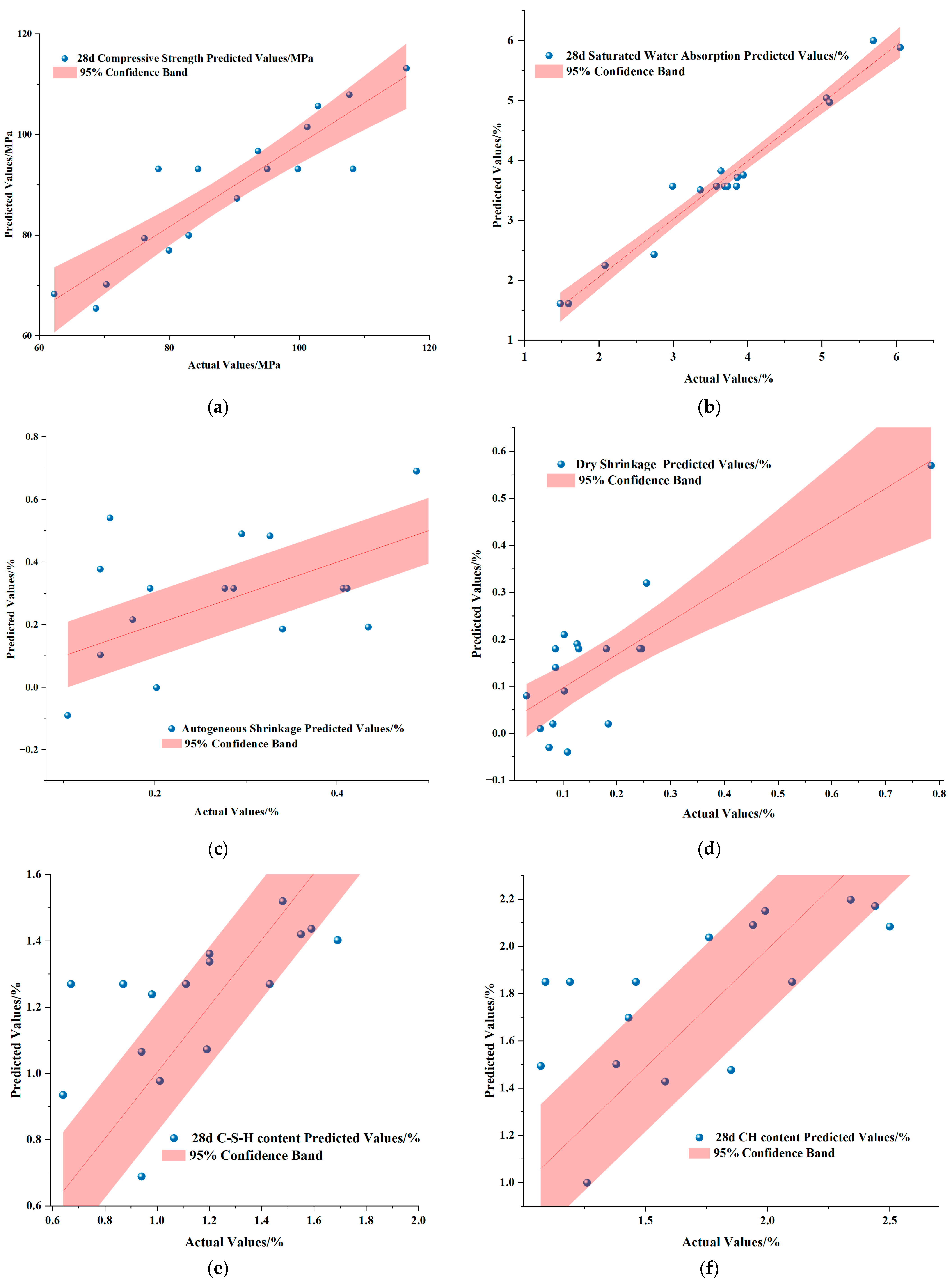
From Figure 1a,b, it can be seen that the predicted and measured values for the 28-day compressive strengths and 28-day saturated water absorption are both closely distributed around the diagonal, validating the effectiveness of regression Equations (4) and (5). In particular, in Figure 1b, the predicted points for the 28-day saturated water absorption almost all fall near the diagonal, consistent with the highest R2 value (0.9650) and the lowest C.V.% (9.47%) for this model, further confirming the high-precision prediction capability of the model. Kaliyavaradhan et al. [33], when optimizing CO2 uptake using waste concrete powder with RSM, obtained models with an R2 of 0.91, slightly lower than the 28-day saturated water absorption model in this study (0.9650), but comparable to the other models in this study. Kumar et al. [34], in their study on performance optimization of concrete with combined nano-zinc oxide and silica fume, established strength prediction models using central composite design with R2 ranging from 0.85 to 0.92, which is comparable to the 3-day compressive strength model (R2 = 0.9364) in this study. This indicates that the response surface models constructed in this study possess high fitting accuracy and predictive reliability, making them suitable for quantitative analysis and optimization design of the performance of cement-based materials under carbonation mixing.

3.2. Compressive Strength

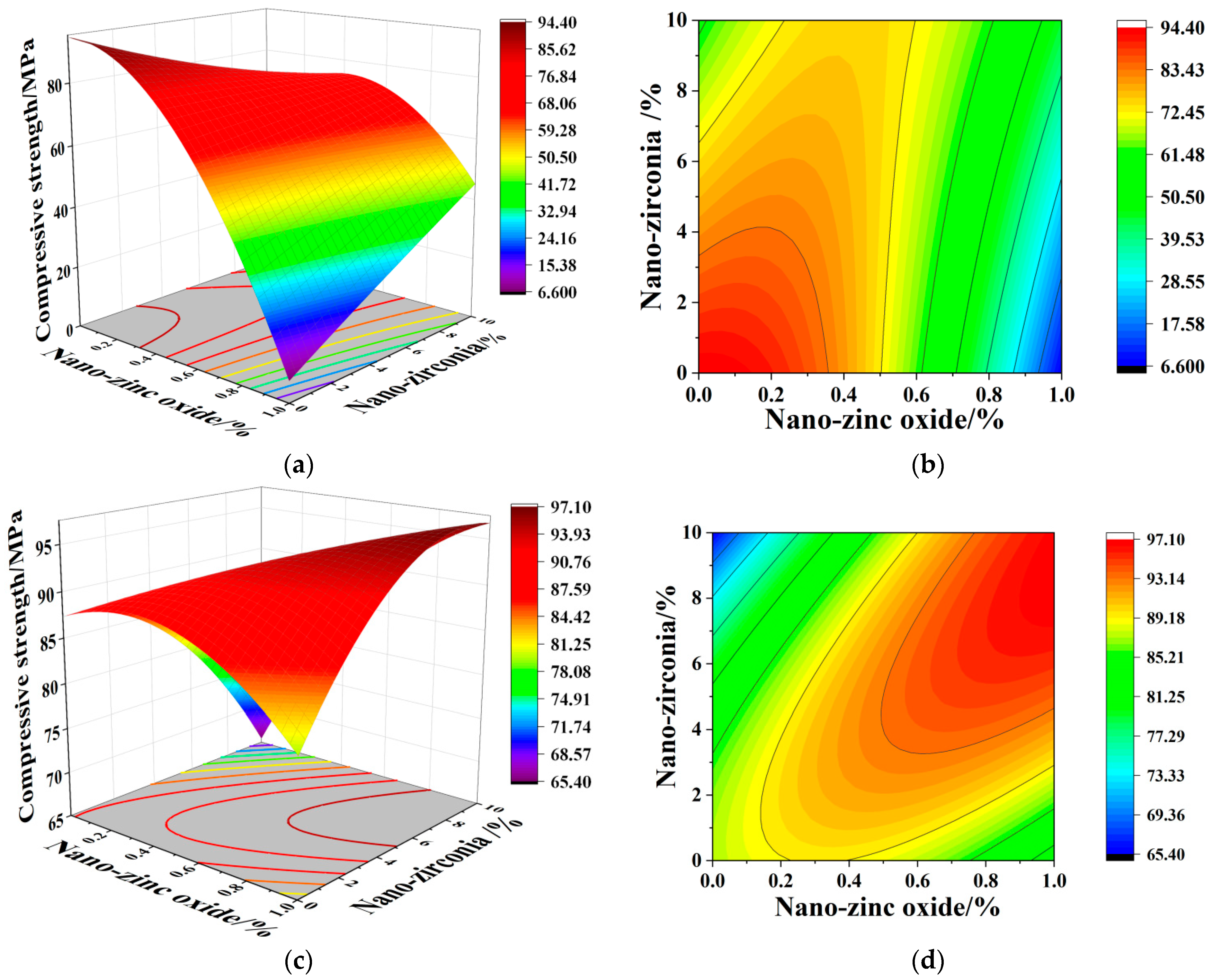
The compressive strength of cement-based materials is a macroscopic manifestation of their microstructural characteristics, directly reflecting the material’s internal density, hydration reaction progress, and bonding quality of the interfacial transition zone (ITZ). As shown in Figure 2, this study systematically investigated the effects of combined nano-zinc oxide and nano-zirconia incorporation on the 3-day and 28-day compressive strength of cement-based materials under carbonation mixing conditions using RSM.
With an increasing nano-zinc oxide replacement ratio, the compressive strength of the cement-based materials generally showed a decreasing trend. This is primarily because nano-zinc oxide has a large specific surface area, which absorbs a significant amount of water during the carbonation mixing process, leading to a lower effective water–cement ratio, insufficient hydration, and the introduction of microcracks within the specimen, thereby weakening the mechanical properties [35]. However, at the age of 28 days, within the 0–1% range, the compressive strength first increased and then decreased with nano-zinc oxide dosage. This suggests that a low dosage of nano-zinc oxide may provide a certain strengthening effect through filling, but excessive dosage makes it difficult for the cement paste to completely coat its surface, forming locally weak bonding zones and leading to strength reduction [36]. This phenomenon is consistent with the findings of Li et al. [37], who found that nano-zinc oxide delays the hydration reaction of C3S during the early hydration of cement paste, resulting in slow early strength development. However, as the age increases, ZnO particles can act as nucleation sites to promote uniform precipitation of hydration products. Additionally, Ataie et al. [38] pointed out that the retarding effect of ZnO on cement hydration is related to the formation of a Zn(OH)2 surface film in the alkaline environment, which temporarily hinders contact between water and cement particles.
In contrast to nano-zinc oxide, the compressive strength of cement-based materials gradually increased with an increasing nano-zirconia replacement ratio. In this experiment, the compressive strength ranged from 62.29 to 116.45 MPa, with the lower limit increased by 90.05% and the upper limit by 22.37% compared to the reference group. This enhancement is attributed to the more uniform distribution of nano-zirconia under carbonation mixing, its effective filling of micropores within the cement matrix, the improvement of the microstructure, and the promotion of more hydration products (such as C-S-H gel), enhancing the bonding strength of the ITZ [39]. Hu et al. [40] confirmed that incorporating 3% nano-zirconia increased the 28-day compressive strength of ultra-high-performance concrete by 19.5% and the flexural strength by 20.8% compared to the control group. Under the synergistic effect of carbonation mixing, the dispersibility of nano-zirconia is further improved, allowing its filling and nucleation effects to be more fully realized [41].
From the morphology of the response surfaces, steeper slopes indicate more significant interactions between the two factors and a greater impact on compressive strength. In this experiment, at 3 days, the optimal interaction range for compressive strength was a nano-zinc oxide replacement ratio of 0–0.2% and a nano-zirconia replacement ratio of 0–2%. At 28 days, nano-zirconia exhibited a continuous strengthening effect across a broad range of 0–10%. This result indicates that under carbonation mixing, a reasonable combination of nano-zinc oxide and nano-zirconia can fully leverage their synergistic effects: an appropriate amount of nano-zinc oxide aids in early hydration regulation, while nano-zirconia continuously optimizes the microstructure through filling and nucleation effects, collectively enhancing the compressive strength of the cement-based materials. Kumar et al. [34] also pointed out that the combination of nano-zinc oxide and silica fume can produce a synergistic strengthening effect, increasing concrete compressive strength by 8.96%, attributed to ZnO acting as a nucleating agent to promote early hydration product formation and silica fume continuously consuming CH through a pozzolanic reaction to generate additional C-S-H gel.

3.3. Saturated Water Absorption

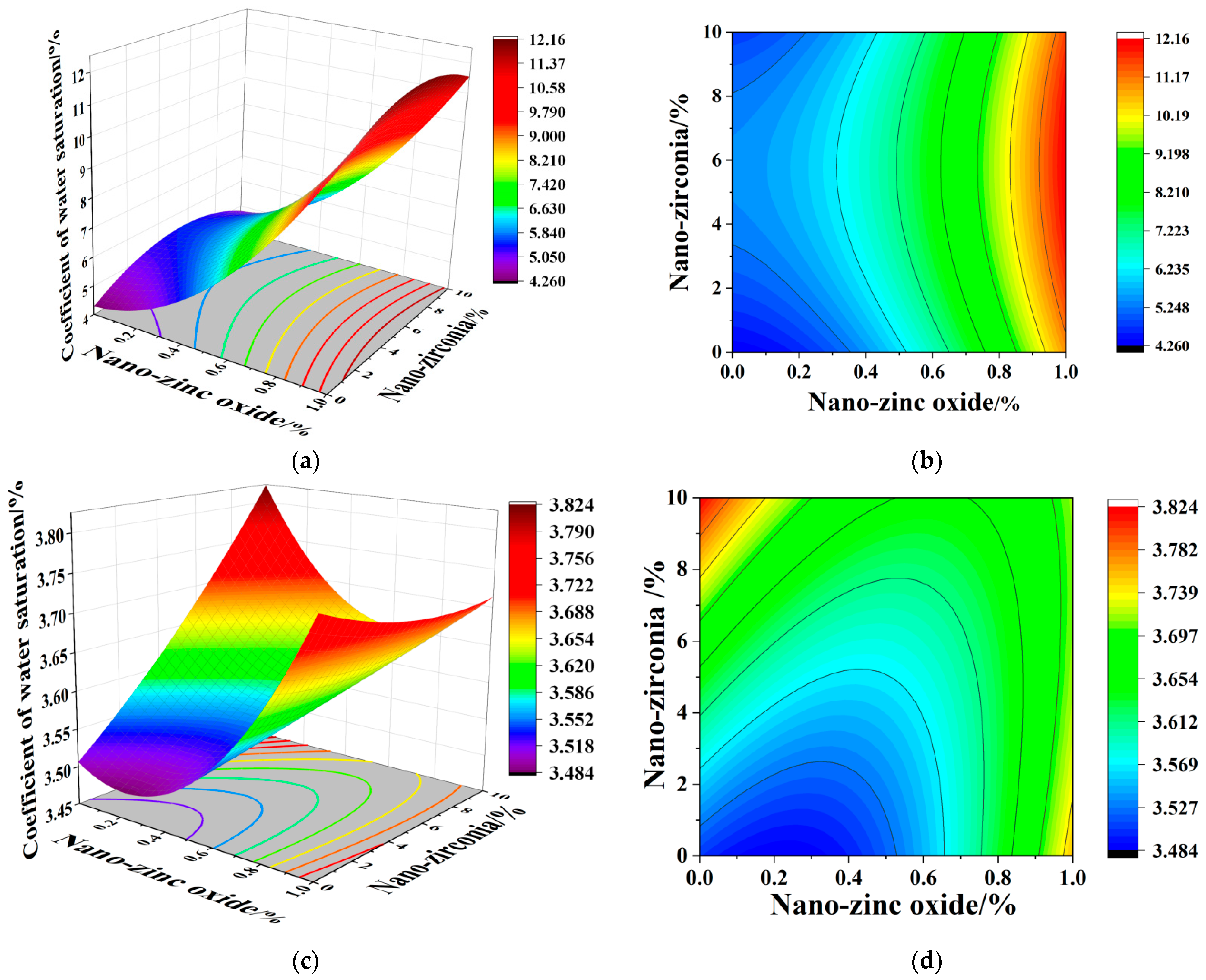
Saturated water absorption is an important macroscopic indicator characterizing the pore characteristics of a material, comprehensively reflecting the total pore volume, pore size distribution, and pore connectivity within the material [42]. Generally, the higher the porosity, the easier it is for water to enter the material through capillary action, resulting in higher saturated water absorption. Conversely, if the porosity decreases, the pore size refines, the pore structure becomes more closed, or the tortuosity increases, water penetration becomes difficult, and saturated water absorption decreases accordingly [42]. Therefore, changes in saturated water absorption can be used to indirectly infer the evolution of the pore structure. Under carbonation mixing, a series of physicochemical changes occur within the cement-based material. On the one hand, the carbonation reaction consumes CH in the cement paste to generate calcium carbonate (CaCO3), which may fill some pores and refine the pore structure. On the other hand, carbonation may also cause damage to the material’s microstructure, especially under the dynamic environment of mixing, where the carbonation reaction is more complete, making the evolution of the pore structure in the ITZ and the matrix more complex [43]. As a comprehensive indicator of the macroscopic response of the pore structure, saturated water absorption can effectively reflect the net result of these two effects. If the saturated water absorption decreases after carbonation mixing, it indicates that the filling effect of the carbonation products dominates, leading to a denser pore structure. Conversely, an increase suggests that carbonation may have introduced microcracks or increased pore connectivity, enhancing material permeability [39]. As shown in Figure 3, this study systematically investigated the effects of combined nano-zinc oxide and nano-zirconia incorporation on the 3-day and 28-day saturated water absorption of cement-based materials under carbonation mixing conditions using RSM.
As shown in Figure 3a,b, at 3 days, the saturated water absorption of the cement-based materials showed clear patterns with changes in nanomaterial dosage. When the nano-zirconia replacement ratio was constant, the saturated water absorption gradually increased with the increase in the nano-zinc oxide replacement ratio (0–1%). This phenomenon is consistent with the findings of Mukesh et al. [44], who found that due to its large specific surface area, nano-zinc oxide adsorbs a large amount of free water during early hydration, leading to insufficient hydration and an increase in the number of capillary pores, thereby increasing the water absorption capacity of the material. Zhang et al. [45] also confirmed that the incorporation of nano-zinc oxide delays early cement hydration, increasing the proportion of large pores in the hardened cement paste and thus increasing saturated water absorption. As the nano-zirconia replacement ratio increased, the saturated water absorption first increased and then decreased. This pattern indicates that the number of capillary pores within the cement-based material decreases with an appropriate amount of nano-zirconia, resulting in a denser pore structure [40]. Hu et al. [40] pointed out that the nucleation and filling effects of nano-zirconia can play a role early on. The nanoparticles can fill micropores within the cement matrix and simultaneously provide nucleation sites for hydration products, promoting the early formation of C-S-H gel, thereby improving the pore structure. However, when the nano-zirconia dosage is low, poor dispersion or insufficient filling may lead to increased porosity in some areas, manifesting as a temporary increase in saturated water absorption. As the dosage increases, the filling effect gradually dominates, and the saturated water absorption subsequently decreases [36]. In this experiment, the maximum saturated water absorption at 3 days reached 15.93%, indicating that the cement-based material still possessed a strong water absorption capacity at this age, which is related to the incomplete filling of pores by early hydration products [37].
As shown in Figure 3c,d, at 28 days, the pattern of saturated water absorption differed significantly from that at 3 days. When the nano-zirconia replacement ratio was 0%, as the nano-zinc oxide replacement ratio increased, the saturated water absorption first decreased and then increased. The decrease in water absorption indicates that with a small amount of nano-zinc oxide, it becomes more difficult for liquid water to enter the cement-based material [41]. This finding is consistent with Li et al. [37], who found that an appropriate amount of nano-zinc oxide (0.5–1%) can exert a filling effect in the later stage, refining the pore structure and reducing water absorption. However, when the dosage is too high (>1.5%), nanoparticle agglomeration leads to increased local defects, causing water absorption to rise again. Trtnik et al. [46] also confirmed that the optimal dosage range for nano-zinc oxide is 0.5–1%, beyond which the improvement effect on the pore structure weakens. Compared to nano-zinc oxide, the influence of nano-zirconia dosage on saturated water absorption was less variable, showing stable pore structure improvement over a broad range of 0–10%. This result is consistent with Wetwet et al. [41], who found that nano-zirconia has good dispersibility and chemical stability in cement-based materials, allowing it to continuously optimize the pore structure over a wide dosage range.
Analysis of the contour plots reveals a significant interaction between nano-zinc oxide (A) and nano-zirconia (B) on the saturated water absorption of cement-based materials, indicating a synergistic effect between the two nanomaterials in pore structure regulation [15]. Compared to the saturated water absorption at 3 days, the value at 28 days decreased. This phenomenon is primarily attributed to the continuous progress of the hydration reaction. When water molecules enter the mortar, they pass through capillary pores and gel pores. When water migrates to gel pores, its movement is restricted due to the small volume of gel pores; thus, under favorable hydration conditions, the water absorption rate is relatively lower [35]. As the hydration age extends, C-S-H gel continues to form, capillary pores are gradually filled, the pore structure refines, and the water migration path becomes more tortuous, leading to a decrease in water absorption capacity [47]. Chen et al. [48] further pointed out that as saturation increases, water entering pores must overcome greater capillary resistance; therefore, the longer the curing age and the higher the degree of hydration, the lower the saturated water absorption of the material. Moradpour et al. [49] also confirmed that the saturated water absorption of cement-based materials at 28 days can be reduced by 30–50% compared to 3 days, which is consistent with the observations in this experiment.

3.4. Shrinkage Performance

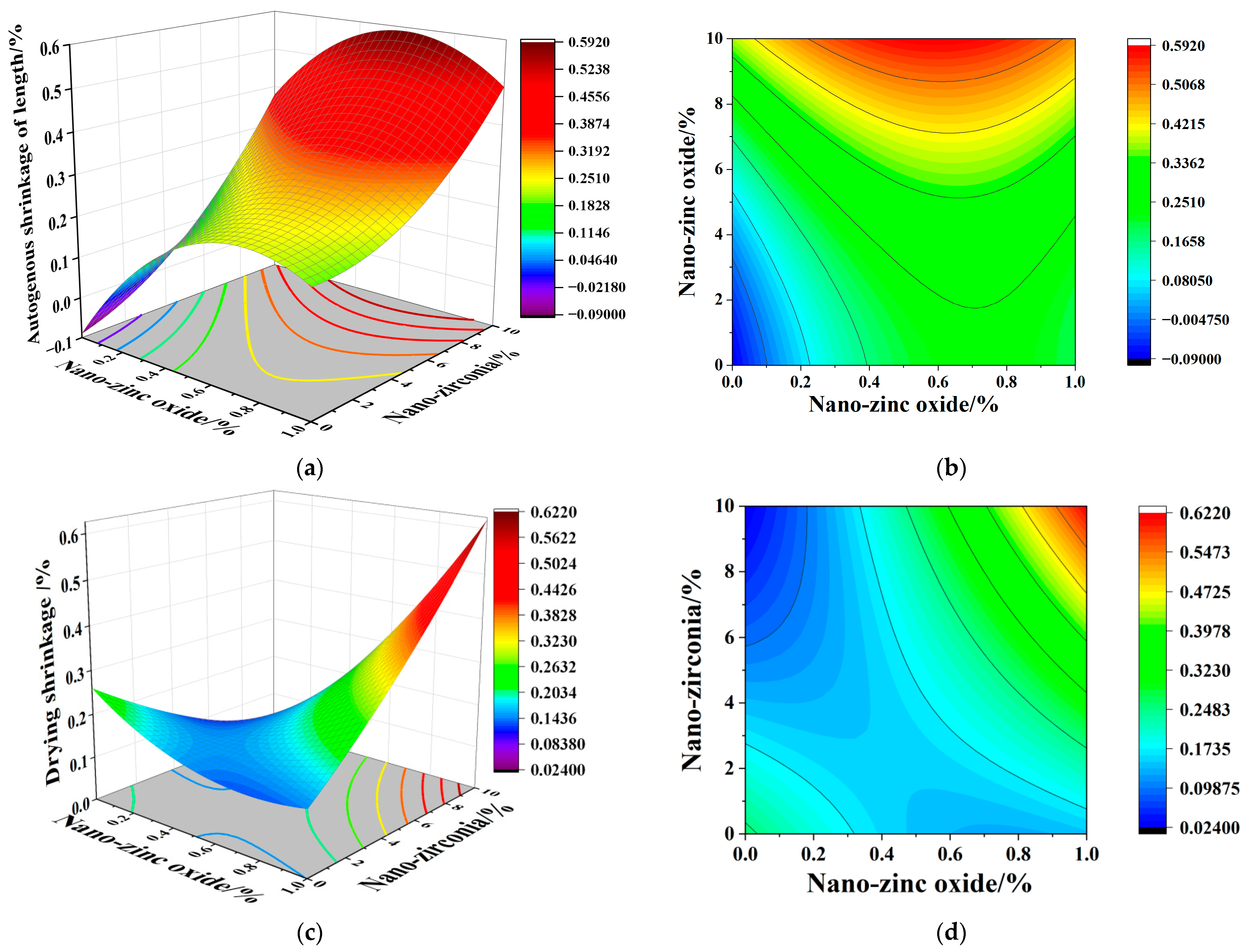
The shrinkage performance of cement-based materials is a macroscopic manifestation of their volume stability, comprehensively reflecting the internal water migration, pore structure characteristics, and evolution patterns of hydration products [42]. Shrinkage deformation is primarily caused by factors such as changes in capillary tension, chemical shrinkage, and drying water loss. Its magnitude is closely related to the proportion of capillary pores, pore size distribution, and total porosity within the material [47]. Generally, a smaller shrinkage value indicates a more refined and closed pore structure, reduced capillary connectivity, and impeded water migration paths. It also reflects significant filling effects of hydration products, good bonding in the ITZ, and an overall dense structure [35]. Therefore, through shrinkage performance testing, one can not only evaluate the cracking risk of the material in service environments but also indirectly infer the optimization effect of the pore structure and volume stability [39]. Based on this, this study indirectly characterized the volume stability of cement-based materials under carbonation mixing through autogenous shrinkage and drying shrinkage tests, with results shown in Figure 4.
As shown in Figure 4a,b, under carbonation mixing conditions, the autogenous shrinkage of the cement-based materials exhibited a non-linear pattern with changes in nanomaterial dosage. With increasing nano-zinc oxide dosage, the autogenous shrinkage first increased and then decreased. Li et al. [50] found that nano-zinc oxide rapidly dissolves in the alkaline environment of the cement paste, forming an amorphous Zn(OH)2 layer on the surface of the clinker particles. This deposited layer hinders the migration of water and ions, thereby delaying the early hydration reaction. This early hydration retardation leads to reduced free water consumption and lower autogenous desiccation, thus decreasing autogenous shrinkage; because of the formation of Zn(OH)2, it even swells. However, as the hydration reaction progresses, the Zn(OH)2 layer further reacts with CH to form an intermediate product, Ca(Zn(OH)3)2·2H2O, breaking the original Zn(OH)2 coating and accelerating the later hydration reaction [50]. This hydration characteristic of initial retardation followed by acceleration results in autogenous shrinkage first increasing and then decreasing with increasing nano-zinc oxide dosage.
Unlike nano-zinc oxide, nano-zirconia exhibited a continuously increasing effect on autogenous shrinkage. As shown in Figure 4b, the effect of nano-zirconia on length autogenous shrinkage gradually increased with dosage. Zhang et al. [51] pointed out that nano-zirconia, as a chemically inert material, does not directly participate in the cement hydration reaction, but its physical nucleation effect is significant. Nano-zirconia particles can provide a large number of nucleation sites for hydration products, promoting the early and uniform precipitation of C-S-H gel and accelerating the cement hydration process [51]. This process leads to increased early hydration heat release and intensified autogenous desiccation, thereby increasing autogenous shrinkage. Simultaneously, the filling effect of nano-zirconia refines the pore structure, but the autogenous desiccation effect from accelerated early hydration dominates, so autogenous shrinkage increases with dosage. The study by Hu et al. [40] also confirmed that nano-zirconia has a significant effect on the autogenous shrinkage mass loss of cement-based materials, validating the observations in this experiment.
From Figure 4b, it can be seen that the interaction between nano-zinc oxide and nano-zirconia significantly affects the autogenous shrinkage mass loss. This indicates a synergistic effect between the two nanomaterials in regulating autogenous shrinkage, where the retarding effect of low-dosage nano-zinc oxide and the nucleation effect of nano-zirconia interact to determine the final evolution pattern of autogenous shrinkage. As shown in Figure 4c,d, nano-zinc oxide had a minor effect on drying shrinkage, while the dosage of nano-zirconia had a significant impact, with the drying shrinkage rate increasing with the amount of nano-zirconia. This phenomenon is consistent with the findings of Wetwet et al. [41], who reported that the incorporation of nano-zirconia significantly affects the drying shrinkage behavior of cement-based materials. According to capillary tension theory, when water evaporates from the material, the curvature of the meniscus in the capillary pores increases, and the generated capillary tension is inversely proportional to the pore diameter; the smaller the pore diameter, the greater the capillary tension, and the larger the resulting shrinkage deformation [36]. Therefore, although the filling effect of nano-zirconia reduces total porosity and refines the pore structure, this refinement increases the proportion of small capillary pores, leading to increased drying shrinkage. Islam et al. [52] also observed a similar phenomenon in their study using natural zeolite as fine aggregate: the relationship between material densification and drying shrinkage is not simply linear; pore structure refinement can have the adverse effect of increasing drying shrinkage. From the contour plot in Figure 4d, it can be seen that the interaction between nano-zinc oxide and nano-zirconia also significantly affects drying shrinkage. In the region with higher nano-zirconia dosage, the slope of the drying shrinkage response surface is steeper, indicating that nano-zirconia is the main factor influencing drying shrinkage. This result is consistent with the study by Hu et al. [40].

3.5. Calcium Hydroxide and Calcium Silicate Hydrate

CH and C-S-H are the two most important hydration product phases in cement-based materials. Their relative content, micromorphology, and distribution characteristics comprehensively reflect the hydration progress, microstructure, and durability potential of the material [42,47]. As the primary source of strength, an increase in the amount of C-S-H gel and the densification of its structure signify sufficient hydration and effective filling of micropores, directly determining the mechanical properties and impermeability of the material [35]. CH, which forms hexagonal plate-like crystals, is not only a characteristic product of cement hydration, providing a high-alkaline environment to protect reinforcement, but also a weak point in the microstructure. Its enrichment and oriented arrangement often lead to defects in the ITZ. Studying the effect of nanomaterials on CH content helps us to understand their impact on the microstructure and construction of the cement paste [36]. To this end, this study quantitatively measured the changes in calcium hydroxide and calcium silicate hydrate in cement-based materials under carbonation mixing, with results shown in Figure 5 and Figure 6.
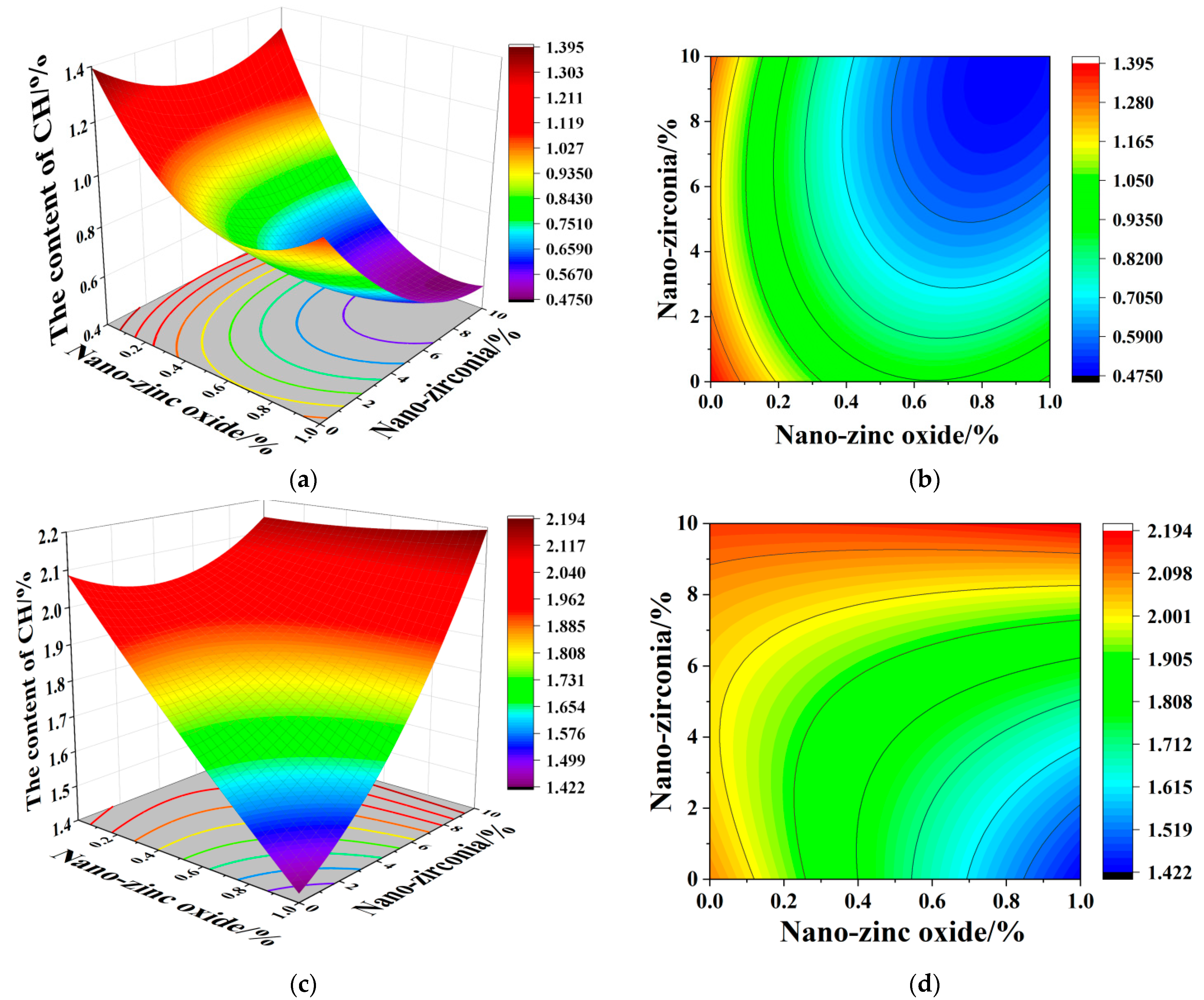
As shown in Figure 5a,b, at 3 days, the interaction between nano-zinc oxide and nano-zirconia had a significant effect on CH content. As the nano-zirconia dosage increased, the CH content gradually decreased. With an increasing nano-zinc oxide replacement ratio, the CH content first decreased and then increased. Zhang et al. [51] pointed out that nano-zirconia particles can provide a large number of nucleation sites for C-S-H gel, promoting its rapid formation on the surface of cement particles. This process consumes a significant amount of Ca2+ and SiO32−, thereby inhibiting the growth of CH crystals and leading to a decrease in CH content. Furthermore, Wetwet et al. [41] also confirmed that the incorporation of nano-zirconia changes the relative proportion of cement hydration products, increasing C-S-H content while relatively decreasing CH content. The initial decrease followed by an increase in CH content with nano-zinc oxide dosage is related to its two-stage hydration characteristics of retardation followed by acceleration. Li et al. [50] found that nano-zinc oxide rapidly dissolves in the alkaline environment of the cement paste, forming an amorphous Zn(OH)2 layer on the surface of the clinker particles. This deposited layer temporarily hinders the migration of water and ions, delaying the early hydration reaction and resulting in reduced CH generation. As the hydration reaction progresses, the Zn(OH)2 layer further reacts with CH to form an intermediate product, Ca(Zn(OH)3)2·2H2O, breaking the original coating and accelerating the later hydration reaction, leading to a subsequent increase in CH generation [52].
As shown in Figure 5c,d, at 28 days, the pattern of CH content differed significantly from that at 3 days. CH content gradually decreased with an increasing nano-zinc oxide replacement ratio and gradually increased with an increasing nano-zirconia replacement ratio. The degree of hydration was higher when the nano-zinc oxide replacement ratio was 0–0.2% and the nano-zirconia replacement ratio was 8–10%. The continued decrease in CH content with nano-zinc oxide at 28 days is primarily attributed to the long-term effect of the pozzolanic reaction. Mukesh et al. [44] showed that although nano-zinc oxide exhibits a retarding effect early on, as the age extends, its surface active sites can adsorb Ca2+, promoting the conversion of CH to C-S-H, thereby reducing CH content. Additionally, the carbonation mixing environment further accelerates this conversion process. Lin et al. [43] pointed out that the carbonation reaction consumes CH to form CaCO3, creating a concentration gradient from the surface to the interior, promoting the continuous consumption of CH. The increase in CH content with nano-zirconia at 28 days reflects the sustained influence of its physical nucleation effect. On the one hand, nano-zirconia promotes the rapid early formation of C-S-H, consuming a large amount of Ca2+. On the other hand, as the hydration reaction proceeds, the C3S and C2S in the cement clinker continue to hydrate, continuously generating new CH [45]. Since nano-zirconia itself does not participate in chemical reactions, its consumption of CH is limited; therefore, as the degree of hydration increases, the net CH content gradually increases. Comparing CH content at 3 days and 28 days, it can be observed that the later CH content is generally higher than the earlier content. This phenomenon is consistent with the basic pattern of the hydration process: CH content increases with the extension of curing age due to the continuous increase in the degree of hydration [37].
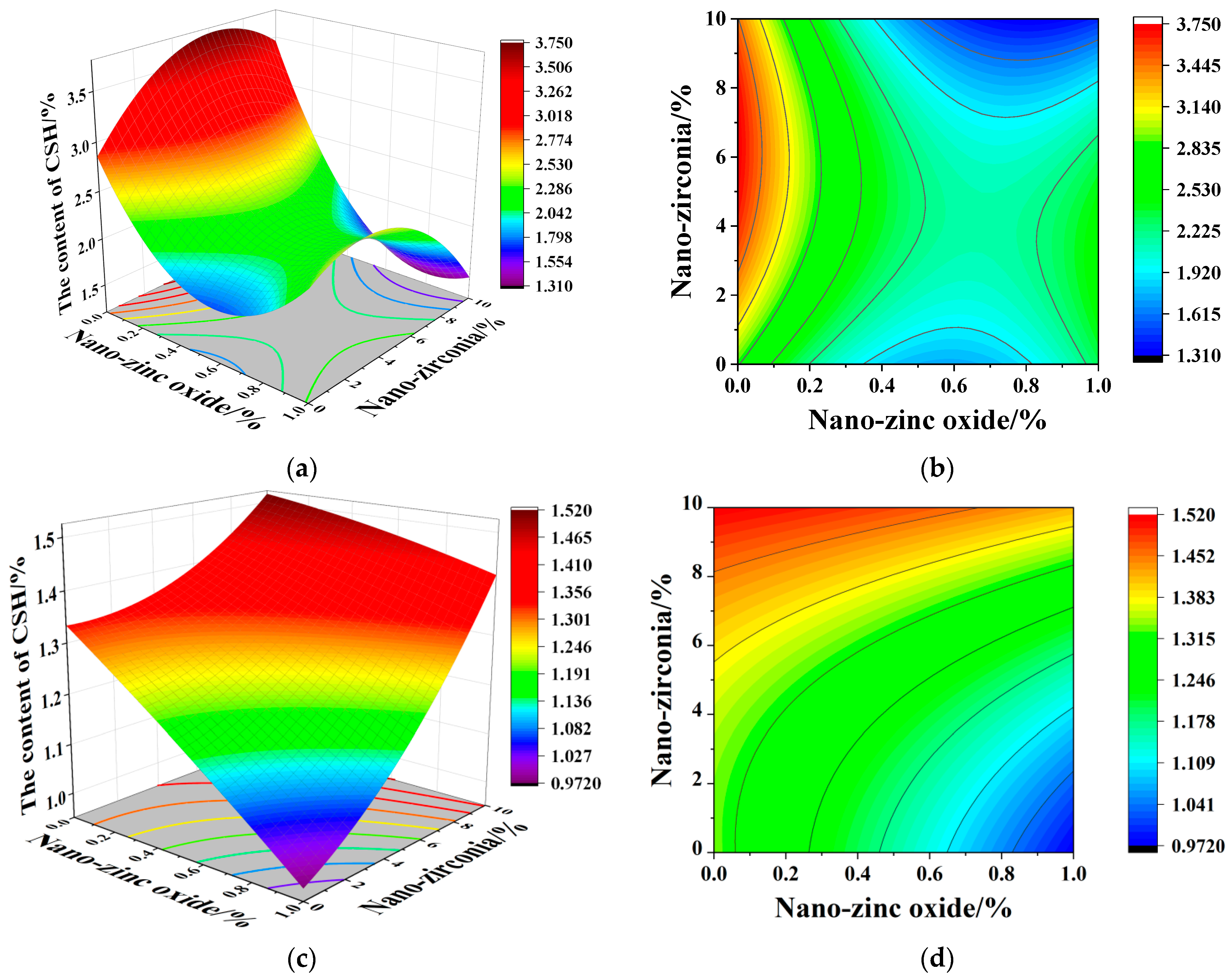
As shown in Figure 6a,b, at 3 days, the C-S-H content first decreased and then increased with increasing nano-zinc oxide dosage, while it first increased and then decreased with increasing nano-zirconia dosage. The pattern of C-S-H content first decreasing and then increasing with nano-zinc oxide dosage echoes the pattern observed for CH content, further validating the retarding–accelerating hydration mechanism of nano-zinc oxide. At low dosages, the Zn(OH)2 coating formed by nano-zinc oxide retards the hydration of C3S, reducing C-S-H formation. When the dosage exceeds a certain threshold, the coating is destroyed, the hydration reaction accelerates, and C-S-H formation recovers [38].
The pattern of C-S-H content first increasing and then decreasing with nano-zirconia dosage reflects the balance between nanoparticle dispersibility and nucleation effects. An appropriate amount of nano-zirconia (typically 2–5%) can provide a large number of nucleation sites for C-S-H, promoting its rapid early formation. However, when the dosage is too high, nanoparticles tend to agglomerate, which weakens the nucleation effect and may lead to non-uniform local hydration, resulting in decreased C-S-H formation [41]. This phenomenon is consistent with the findings of Hu et al. [40], who reported that the optimal dosage range for nano-zirconia is 2–5%, within which the increase in C-S-H content is maximized.
As shown in Figure 6c,d, at 28 days, the C-S-H content gradually decreased with increasing nano-zinc oxide dosage and gradually increased with increasing nano-zirconia dosage. The C-S-H content was highest when the nano-zinc oxide replacement ratio was 0–0.2% and the nano-zirconia replacement ratio was 8–10%. The decrease in C-S-H content with nano-zinc oxide at 28 days indicates that, despite its pozzolanic reaction potential, nano-zinc oxide has a limited promoting effect on calcium silicate hydrate formation. Trtnik et al. [46] pointed out that Zn2+ can competitively adsorb on the C-S-H surface with Ca2+, altering the Ca/Si ratio and structural stability of C-S-H, thereby affecting its formation and evolution. The sustained increase in C-S-H content with nano-zirconia at 28 days confirms its continuous strengthening effect in the later stage of hydration. Kumar et al. [34] found that the physical nucleation effect of nano-zirconia not only promotes early hydration but also continuously facilitates later hydration reactions by optimizing the pore structure and improving ion transport channels. This mechanism is consistent with the rule that higher C-S-H content corresponds to higher strength of cement-based materials; the formation of C-S-H increases the hydration rate and cumulative heat release of cement, contributing to early strength development [53].

4. Conclusions

This study systematically investigated, for the first time, the synergistic modification of cement-based materials through the combined incorporation of nano-ZnO and nano-ZrO2 under carbonation mixing conditions, using a response surface methodology (RSM) approach. The novelty lies in the integration of CO2 internal carbonation during mixing with binary nano-oxides, aiming to simultaneously enhance mechanical performance, durability, and volume stability while contributing to carbon sequestration.
(1) The established quadratic regression models demonstrated good predictive capability for compressive strength and saturated water absorption, with R2 values reaching 0.9364 (3-day strength) and 0.9650 (28-day water absorption), respectively. Compressive strength ranged from 62.29 to 116.45 MPa, with the lower and upper limits improved by 90.05% and 22.37% over the reference group. Saturated water absorption at 28 days was significantly reduced, indicating pore refinement and densification. Autogenous shrinkage exhibited a non-monotonic trend with nano-ZnO content, while drying shrinkage increased primarily with nano-ZrO2 dosage, attributed to enhanced capillary tension from pore structure refinement. Optimization analysis identified the best synergistic range as 0–0.2% nano-ZnO and 0–2% nano-ZrO2 for early-age strength, and a broader 0–10% nano-ZrO2 range for long-term performance enhancement.
(2) The observed performance improvements are likely attributable to a combination of physical and chemical mechanisms. Nano-ZnO appears to act as nucleation sites that promote early hydration, though its retarding effect at higher dosages suggests a dosage-dependent behavior. Nano-ZrO2 seems to exert a persistent filling and interfacial strengthening effect, refining the pore structure and promoting C-S-H formation. Under carbonation mixing, the accelerated CO2 diffusion and reaction may generate stable calcium carbonate that partially fills microcracks.
(3) The findings offer a promising technical pathway for developing low-carbon, high-performance cement-based composites. By integrating carbonation mixing with nano-modification, this approach not only improves mechanical strength and durability but also reduces the carbon footprint of cement production through in situ CO2 utilization. The RSM-based optimization framework provides a practical tool for mix design, enabling tailored performance for specific engineering applications such as high-strength concrete, repair mortars, or prefabricated elements where early strength and dimensional stability are critical.
Although the results are encouraging, this study still has some limitations, including the experimental validation of the optimized experimental groups, life cycle or carbon footprint assessment, and microstructural characterization tests (e.g., SEM, MIP, and XRD). In particular, the evaluation of hydration and carbonation products lacks verification by TG tests. In future experiments, further validation in these aspects will be strengthened.

Author Contributions

F.W.: Writing—original draft, Investigation, Methodology, Resources. S.D.: Writing—review and editing, Project administration, Investigation, Funding acquisition. J.W., H.H., C.W. and J.S.: Investigation, Methodology, Software. All authors have read and agreed to the published version of the manuscript.

Funding

This research was supported by Guizhou Provincial Basic Research Program (Natural Science) (Qiankehe Foundation MS[2025]250) and 2026 Central Government-guided Local Science and Technology Development Fund (Qian Ke He Zhong Yin Di [2026]024).

Institutional Review Board Statement

Not applicable.

Informed Consent Statement

Not applicable.

Data Availability Statement

Some or all data, models, or code that support the findings of this study are available from the corresponding author upon reasonable request.

Acknowledgments

The authors would like to extend their sincere appreciation to the reviewers and editors for their valuable contributions in enhancing the quality of this paper.

Conflicts of Interest

The authors declare no conflicts of interest.

References

  1. Ye, Y. The Effects of Green Place-Based Policy on Carbon Emission: Evidence from the National Eco-Industrial Exemplary Park. Master’s Thesis, Hunan University, Changsha, China, February 2025. [Google Scholar] [CrossRef]
  2. Wu, F.; Zhang, Q.; Dong, S.; Cai, Y.; Yang, S.; Xu, F.; Luo, P.; Jiang, J. Biochar modification enhances mechanical and durability properties of cement-based materials. Sci. Rep. 2025, 15, 22174. [Google Scholar] [CrossRef] [PubMed]
  3. Zhang, J.; Xiao, M.; Feng, Y. A review on nanomaterials and polymers modified cementitious materials with high performances. J. Build. Eng. 2025, 104, 112331. [Google Scholar] [CrossRef]
  4. Krunoslav, S.; Neven, U.; Vilko, M.; Nediljka, G.M.; Šipušić, J. Carbonation of Portland-Zeolite and geopolymer well-cement composites under geologic CO2 sequestration conditions. Cem. Concr. Compos. 2020, 111, 103615. [Google Scholar] [CrossRef]
  5. Marinich, O.; Miron, D.G.; Kulik, A.D.; Fernandes, M.M.; Baeyens, B. ClaySor 2023: Implementation of the 2SPNE SC/CE sorption model and database for deep geological repository safety assessment. Appl. Geochem. 2025, 191, 106510. [Google Scholar] [CrossRef]
  6. Niall, H.; Mark, T.; Denis, K. Thermodynamic modelling of harsh environments on the solid phase assemblage of hydrating cements using PHREEQC. Appl. Sci. 2022, 13, 135. [Google Scholar] [CrossRef]
  7. Lim, G.S.; Lee, J.; Bawarith, A.K.N.; Paul, S.C.; Jhun, J.; Amr, T.I.; Fadhel, A.B.; Tan, M.J. The efficacy of self-curing agents on enhanced internal curing and accelerated carbonation with CO2-steam integrated 3D concrete printing. Addit. Manuf. Lett. 2025, 15, 100339. [Google Scholar] [CrossRef]
  8. Hanifa, M.; Agarwal, R.; Sharma, U.; Thapliyal, P.; Singh, L. A review on CO2 capture and sequestration in the construction industry: Emerging approaches and commercialised technologies. J. CO2 Util. 2023, 67, 102292. [Google Scholar] [CrossRef]
  9. Sanna, A.; Uibu, M.; Caramanna, G.; Kuusik, R.; Maroto-Valer, M. A review of mineral carbonation technologies to sequester CO2. Chem. Soc. Rev. 2014, 43, 8049–8080. [Google Scholar] [CrossRef] [PubMed]
  10. Hosseini, T.; Selomulya, C.; Haque, N.; Zhang, L. Investigating the effect of the Mg2+/Ca2+ molar ratio on the carbonate speciation during the mild mineral carbonation process at atmospheric pressure. Energy Fuels 2015, 29, 7483–7496. [Google Scholar] [CrossRef]
  11. You, J.; Zhang, Y.; Yang, C.; Song, Q.; Sun, Y. Hierarchical pore structure for enhanced carbonation in basic magnesium sulfate cement: Mechanisms from modification to post-carbonation evolution. Cem. Concr. Res. 2025, 193, 107876. [Google Scholar] [CrossRef]
  12. Wang, L.; Li, Y.; Wang, F.; Liu, Z.; Jiang, J. A novel energy-saving and emission-reduction strategy based on facile preparation of thermal insulation coatings doped with modified vacuum ceramic microbeads for concrete protection. J. Mater. Res. Technol. 2024, 33, 5299–5310. [Google Scholar] [CrossRef]
  13. Arunothayan, R.A.; Ramesh, A.; Sanjayan, G.J. Fire resistance of 3D printed ultra-high performance concrete panels. J. Build. Eng. 2024, 98, 111100. [Google Scholar] [CrossRef]
  14. Pereira Lessa, F.; Lima, O., Jr.; Margalho, É.; Pinheiro, C.; Rocha Segundo, I.; Oliveira Carneiro, J. Application of nano-TiO2 and micro-ZnO on cementitious surfaces for self-cleaning façades by spray coating and dip coating: A comparative study. J. Build. Pathol. Rehabil. 2024, 10, 16. [Google Scholar] [CrossRef]
  15. Yu, J.; Hou, D.; Ma, H.; Wang, P. Nanomodified cement-based materials: Review (2015–2020) of molecular dynamics studies. J. Mater. Civ. Eng. 2022, 34, 4056. [Google Scholar] [CrossRef]
  16. Chilmon, K.; Kalinowski, M.; Jackiewicz-Rek, W. Predictive modeling of air purification efficiency in nano-TiO2-Modified photocatalytic cementitious composites using high-resolution EDS mapping and mercury intrusion porosimetry. Purification 2025, 1, 1. [Google Scholar] [CrossRef]
  17. Freitas, D.R.A.; Schmitz, A.T.; Eduarda, P.D.M.; Santos, G.T.; Luís, R.H.; Antunes, B.E.; da Silveira, T.C.; Roberti, G.L.d.F. Physicochemical properties of a calcium aluminate cement containing nanoparticles of zinc oxide. Restor. Dent. Endod. 2023, 48, e3. [Google Scholar] [CrossRef] [PubMed]
  18. Abbas, B.; Mahmoud, G.; Navid, G. Experimental investigation of nano-ZnO effect on mechanical properties of cemented clayey sand. Bull. Eng. Geol. Environ. 2022, 81, 73. [Google Scholar] [CrossRef]
  19. Chen, Y.Z.; Yong, M.J.; Tan, V.Y.; Soon, K.S.L.; Abdelrazek, E.H.M.; Azlin, Y.N.; Govindan, K.M.; Aly, A.H.M. The effect of a setting accelerator on the physical and mechanical properties of a fast-set white portland cement mixed with nano-zirconium oxide. Eur. Endod. J. 2023, 8, 215–224. [Google Scholar] [CrossRef] [PubMed]
  20. ElKemary Baraa, M.; ElBorady Ola, M.; Abdel Gaber Sara, A.; Beltagy Talat, M. Role of nano-zirconia in the mechanical properties improvement of resin cement used for tooth fragment reattachment. Polym. Compos. 2021, 42, 3307–3319. [Google Scholar] [CrossRef]
  21. Trejo-Arroyo Danna, L.; Acosta Karen, E.; Cruz Julio, C.; Valenzuela-Muñiz Ana, M.; Vega-Azamar Ricardo, E.; Jiménez Luis, F. Influence of ZrO2 Nanoparticles on the Microstructural Development of Cement Mortars with Limestone Aggregates. Appl. Sci. 2019, 9, 598. [Google Scholar] [CrossRef]
  22. Wang, L.; Aslani, F. Piezoresistivity performance of cementitious composites containing activated carbon powder, nano zinc oxide and carbon fibre. Constr. Build. Mater. 2021, 278, 122375. [Google Scholar] [CrossRef]
  23. Behnia, B.; Aali Anvari, A.; Safardoust-Hojaghan, H.; Salavati-Niasari, M. Positive effects of novel nano-zirconia on flexural and compressive strength of portland cement paste. Polyhedron 2020, 177, 114317. [Google Scholar] [CrossRef]
  24. Christoph, S.; Tim, K. Comparison of the calcium carbide method and Darr drying to quantify the amount of chemically bound water in early age concrete. Materials 2022, 15, 8422. [Google Scholar] [CrossRef] [PubMed]
  25. Raju, S.; Hyeju, K.; Kon, L.N.; Jung-Jun, P.; Jeong Gook, J. Microstructural characteristics and CO2 uptake of calcium sulfoaluminate cement by carbonation curing at different water-to-cement ratios. Cem. Concr. Res. 2023, 163, 107012. [Google Scholar] [CrossRef]
  26. Wu, F.; Yang, B.; Luo, P.; Dong, S.; Wang, H.; Zhang, Q.; Huang, Z.; Jiang, J.; Cai, Y.; Yang, S.; et al. Improving the performance of mortar under carbonization curing by adjusting the composition of ternary binders. Materials 2024, 17, 5037. [Google Scholar] [CrossRef] [PubMed]
  27. Myers, R.H.; Montgomery, D.C.; Anderson-Cook, C.M. Response Surface Methodology: Process and Product Optimization Using Designed Experiments, 4th ed.; John Wiley & Sons: New York, NY, USA, 2016; pp. 247–289. Available online: https://www.wiley.com/en-us/shop/general-introductory-statistics/response-surface-methodology-process-and-product-optimization-using-designed-experiments-4th-edition-p-9781118916018 (accessed on 2 June 2025).
  28. Montgomery, D.C. Design and Analysis of Experiments, 9th ed.; John Wiley & Sons: New York, NY, USA, 2017; pp. 489–496. Available online: https://bcs.wiley.com/he-bcs/Books?action=index&itemId=1119320933&bcsId=10790 (accessed on 2 June 2025).
  29. Zhang, X.; Lin, L.; Bi, M.; Sun, H.; Chen, H.; Li, Q.; Mu, R. Multi-Objective Optimization of Nano-Silica Modified Cement-Based Materials Mixed With Supplementary Cementitious Materials Based on Response Surface Method. Front. Mater. 2021, 8, 712551. [Google Scholar] [CrossRef]
  30. Khuri, A.I.; Mukhopadhyay, S. Response surface methodology. WIREs Comput. Stat. 2010, 2, 128–149. [Google Scholar] [CrossRef]
  31. Anderson, M.J.; Whitcomb, P.J. RSM Simplified: Optimizing Processes Using Response Surface Methods for Design of Experiments, 2nd ed.; Productivity Press: New York, NY, USA, 2016; pp. 135–158. [Google Scholar] [CrossRef]
  32. Seo, J.; Kim, G.M.; Park, J.; Bae, J.-H.; Kim, N.; Choi, S.; Lee, H.K. Carbonation curing of ultra-high-performance concrete produced with Portland cement of varying belite content. Case Stud. Constr. Mater. 2026, 24, e05875. [Google Scholar] [CrossRef]
  33. Senthil Kumar, K.; Lufan, L.; Tung-Chai, L. Response surface methodology for the optimization of CO2 uptake using waste concrete powder. Constr. Build. Mater. 2022, 340, 127758. [Google Scholar] [CrossRef]
  34. Mukesh, K.; Manjeet, B.; Bal, K.; Rishav, G.; Abdullah Naser, M.A.; Saiful, I.; Ahmad, K.W. Simultaneous effect of ZnO nanoparticles and silica fume on the mechanical properties of the concrete. Sci. Rep. 2026, 16, 12936. [Google Scholar] [CrossRef] [PubMed]
  35. Wang, Z. Preparation, Performance and Mechanism of NR Composite Cement-Based Materials. Master’s Thesis, Dalian University of Technology, Dalian, China, 2017. Available online: https://kns.cnki.net/kcms2/article/abstract?v=f9AMVDUgxC_pt40fpQoRMZiqKVmOYgMiWztVgsBjZDF1CKVTmCnfrUvbB1UsJUaxyvRyvbnDPrQ0k99B0Sb0fqWOv3SMuX_r5Wv9kLs1iMjnez1Ewu_BA5iLcdB7nPW4L47tSP4by95tTEpUbjo5FTmG9BIGSM_eZ9KYISOIG0fPY05DbO_6Pf7ESOdxdci2&uniplatform=NZKPT&language=CHS (accessed on 2 June 2025).
  36. Tian, S.; Yang, Y.; Huang, W.; Wang, J.; Liu, Z.; Ma, J.; Liu, Y. Hydration and microscopic analysis of nano-ZrO2 modified cement-based composites. Sci. Technol. Eng. 2020, 20, 6599–6605. [Google Scholar]
  37. Xuerun, L.; Scrivener, K.L. Impact of ZnO on C3S hydration and C-S-H morphology at early ages. Cem. Concr. Res. 2022, 154, 106734. [Google Scholar] [CrossRef]
  38. Ataie, F.F.; Juenger, M.C.G.; Taylor-Lange, S.C.; Riding, K.A. Comparison of the retarding mechanisms of zinc oxide and sucrose on cement hydration and interactions with supplementary cementitious materials. Cem. Concr. Res. 2015, 72, 128–136. [Google Scholar] [CrossRef]
  39. The Chinese Ceramic Society. Discussion on the Mechanism of Nano-ZrO2 Improving the Compressive Strength of Cement. In Proceedings of the 2003 Annual Conference of the Chinese Ceramic Society, Beijing, China, 19–21 September 2003; Available online: https://kns.cnki.net/kcms2/article/abstract?v=f9AMVDUgxC9Ka-as22dTr8QcQP1eNkMYL9IdJOcdQULuZtEFm3XZIbVX22XbHtTO70lX5B5CIRCKbA94B81ENGnp65R9iOdded2JcXjhnb-ybw-q-Y-uDir4c0c9DpiHQvpJPxb35DXw_V5mRh-gokgFfxLAGteEXi76AyAxa9EDL_Gi4lzroA==&uniplatform=NZKPT&language=CHS (accessed on 2 June 2025).
  40. Hu, H.; Wu, F.; Chen, J.; Guan, S.; Qu, P.; Zhang, H.; Chen, Y.; Xu, Z.; Huang, C.; Pu, S. Experimental study on cement-based materials modified by Nano-Zinc Oxide and Nano-Zirconia based on response surface optimization design. Materials 2025, 18, 1515. [Google Scholar] [CrossRef] [PubMed]
  41. Wetwet Mona, M.; El-Gamal, S.M.A.; Ramadan, M.; Hazem, M.M. Multifunctional cementitious blends containing zirconia nanoparticles: Mechanical characteristics, gamma attenuation behavior, and self-cleaning performance. J. Build. Eng. 2023, 65, 105736. [Google Scholar] [CrossRef]
  42. Mehta, P.K.; Monteiro, P.J.M. Concrete: Microstructure, Properties, and Materials, 4th ed.; McGraw-Hill: New York, NY, USA, 2014; pp. 23–56. Available online: https://www.accessengineeringlibrary.com/content/book/9780071797870 (accessed on 2 June 2025).
  43. Lin, L.; Xie, M.; Li, X.; Zheng, K.; Wang, J.; Yu, K.; Wang, Y.; Xing, F.; Bai, Y. Carbonation of cement-based materials under different conditions: From multi-characterizations to mechanism exploration. Constr. Build. Mater. 2025, 491, 142764. [Google Scholar] [CrossRef]
  44. Mukesh, K.; Manjeet, B.; Rishav, G. An overview of beneficiary aspects of zinc oxide nanoparticles on performance of cement composites. Mater. Today Proc. 2021, 43, 892–898. [Google Scholar] [CrossRef]
  45. Zhang, M.-H.; Jahidul, I.; Sulapha, P. Use of nano-silica to reduce setting time and increase early strength of concretes with high volumes of fly ash or slag. Constr. Build. Mater. 2012, 29, 573–580. [Google Scholar] [CrossRef]
  46. Trtnik, G.; Turk, G.; Kavčič, F.; Bokan Bosiljkov, V. Possibilities of using the ultrasonic wave transmission method to estimate initial setting time of cement paste. Cem. Concr. Res. 2008, 38, 1336–1342. [Google Scholar] [CrossRef]
  47. Scrivener, K.L.; Crumbie, A.K.; Laugesen, P. The interfacial transition zone (ITZ) between cement paste and aggregate in concrete. Interface Sci. 2004, 12, 411–421. [Google Scholar] [CrossRef]
  48. Yang, L.; Gao, D.; Zhang, Y.; Tang, J.; Li, Y. Relationship between sorptivity and capillary coefficient for water absorption of cement-based materials: Theory analysis and experiment. R. Soc. Open Sci. 2019, 6, 190112. [Google Scholar] [CrossRef]
  49. Moradpour, R.; Taheri-Nassaj, E.; Parhizkar, T.; Ghodsian, M. The effects of nanoscale expansive agents on the mechanical properties of non-shrink cement-based composites: The influence of nano-MgO addition. Compos. Part B Eng. 2013, 55, 193–202. [Google Scholar] [CrossRef]
  50. Li, X.; Li, J.; Lu, Z.; Chen, J. Properties and hydration mechanism of cement pastes in presence of nano-ZnO. Constr. Build. Mater. 2021, 289, 123080. [Google Scholar] [CrossRef]
  51. Zhang, G.; Lee, H.; Wang, X. Autogenous shrinkage, strength, and hydration heat of ultra-high-strength paste incorporating nano-zirconium dioxide. Sustainability 2020, 12, 9372. [Google Scholar] [CrossRef]
  52. Islam, M.S.; Mohr, B.J. Strength, microstructure, and durability performance of cementitious materials containing natural zeolite as fine aggregate. Constr. Build. Mater. 2024, 457, 139326. [Google Scholar] [CrossRef]
  53. Feng, C.; Cui, B.; Huang, Y.; Guo, H.; Zhang, W.; Zhu, J. Enhancement technologies of recycled aggregate-Enhancement mechanism, influencing factors, improvement effects, technical difficulties, life cycle assessment. Constr. Build. Mater. 2022, 317, 126168. [Google Scholar] [CrossRef]
Figure 1. Predicted vs. actual values for saturated water absorption of cement-based materials under carbonation mixing: (a) 28-day compressive strength; (b) 28-day saturated water absorption; (c) 28-day autogenous shrinkage; (d) 28-day drying shrinkage; (e) 28-day CSH; (f) 28-day CH.
Sustainability 18 07420 g001
Figure 2. Compressive strength of cement-based materials under carbonation mixing: (a) 3-day compressive strength response surface; (b) 3-day compressive strength contour plot; (c) 28-day compressive strength response surface; (d) 28-day compressive strength contour plot.
Sustainability 18 07420 g002
Figure 3. Saturated water absorption of cement-based materials under carbonation mixing: (a) 3-day saturated water absorption response surface; (b) 3-day saturated water absorption contour plot; (c) 28-day saturated water absorption response surface; (d) 28-day saturated water absorption contour plot.
Sustainability 18 07420 g003
Figure 4. Autogenous shrinkage and drying shrinkage of cement-based materials under carbonation mixing. (a) Autogenous shrinkage response surface; (b) autogenous shrinkage contour plot; (c) drying shrinkage response surface; (d) drying shrinkage contour plot.
Sustainability 18 07420 g004
Figure 5. CH content of cement-based materials under carbonation mixing: (a) 3-day CH content response surface; (b) 3-day CH content contour plot; (c) 28-day CH content response surface; (d) 28-day CH content contour plot.
Sustainability 18 07420 g005
Figure 6. C-S-H content of cement-based materials under carbonation mixing: (a) 3-day C-S-H content response surface; (b) 3-day C-S-H content contour plot; (c) 28-day C-S-H content response surface; (d) 28-day C-S-H content contour plot.
Sustainability 18 07420 g006
Table 1. Response surface experimental factors and levels.
LevelFactor A/%Factor B/%Factor C
−1000.2
00.550.3
11100.4
Table 2. Analysis of variance (ANOVA).
SourceY1Y2Y3Y4Y5Y6
F-Valuep-ValueF-Valuep-ValueF-Valuep-ValueF-Valuep-ValueF-Valuep-ValueF-Valuep-Value
Model3.740.048123.980.00022.110.16882.050.17850.28910.35630.30820.4480
A2.850.13550.0810.78410.83040.39246.220.04130.38010.55710.30360.5988
B0.10690.75330.31260.59353.110.12091.560.25250.70160.42990.55300.4813
C23.040.002202.86<0.00015.220.05630.38880.55270.40520.54460.25620.6283
AB4.020.08510.26790.62070.07690.78956.810.03500.06070.81240.20230.6665
AC0.07790.78836.550.03760.00110.97490.30370.59870.03590.85510.14450.7151
BC0.54440.48464.970.06117.160.03180.00130.97170.67970.43690.91510.3706
A21.190.31140.43870.5291.030.34350.74520.41660.00130.97230.00140.9710
B21.450.26740.01360.91050.27440.61650.16880.69340.04290.84180.07030.7985
C20.33990.57820.28040.61281.380.27782.400.16520.30390.59860.34370.5761
Lack of Fit0.22780.87281.150.431623.350.10547.730.13860.36310.78420.28190.8368
Table 3. Fit statistics.
ResponseR2Adjusted R2Predicted R2Adeq PrecisionC.V./%
Y10.82770.60620.40628.912510.95
Y20.96500.94410.896116.47289.47
Y30.73060.78410.59086.418284.18
Y40.72470.77080.62245.892480.33
Y50.52760.66630.69212.054243.25
Y60.78920.63700.72371.978343.98
Disclaimer/Publisher’s Note: The statements, opinions and data contained in all publications are solely those of the individual author(s) and contributor(s) and not of MDPI and/or the editor(s). MDPI and/or the editor(s) disclaim responsibility for any injury to people or property resulting from any ideas, methods, instructions or products referred to in the content.