Article

Street Waste Pickers and Collection and Sorting Facilities: Economic Impact on Packaging Waste Recycling in Mersin, Türkiye


by
Mutlu Yalvaç
*,
Emine Sultan Sanrı
and
Erkan Aktaş
Department of Environmental Engineering, Faculty of Engineering, Mersin University, Mersin 33343, Türkiye
*
Author to whom correspondence should be addressed.
Sustainability 2026, 18(14), 7173; https://doi.org/10.3390/su18147173
Submission received: 8 May 2026 / Revised: 29 June 2026 / Accepted: 10 July 2026 / Published: 14 July 2026
(This article belongs to the Section Waste and Recycling)

Abstract

Informal waste picking has become a persistent informal sector in many developing countries. Waste pickers, among the most socially and economically disadvantaged groups in society, attempt to generate income by selling packaging waste collected from containers, while licensed recovery facilities obtain significantly higher economic returns from the same material flows. The aim of this study is to comparatively evaluate the economic and recycling impacts of informal waste pickers and licensed collection-sorting facilities on packaging waste recovery in Mersin, Türkiye. This study was conducted at a licensed medium-scale collection-sorting facility located in the Toroslar district of Mersin, Türkiye. The dataset consists of surveys conducted with 200 informal waste pickers, a one-year waste characterization study carried out at the facility, plastic fraction analyses for four selected months, facility records, and municipal solid waste recycling data calculated from official reports. Using these data, the economic and recycling impacts of informal waste pickers and formal recycling infrastructure were comparatively assessed. The findings indicated that waste pickers were predominantly male, unskilled, and lacked social security coverage. While the average monthly income of waste pickers was approximately USD 650, the facility generated a net monthly income of approximately USD 37,000 from recyclable packaging waste. The results revealed that the economic returns obtained from the same material flows were substantially higher within the formal recycling infrastructure. This study contributes to addressing a gap in the literature by providing real-time, micro-scale field data on the economic differences between informal waste collection activities and formal recycling infrastructure.

1. Introduction

The impact of informal waste pickers on municipal solid waste management has long been debated in both public discourse and the academic literature. This activity emerged with the recognition of the economic value of municipal waste [1,2,3], one of the most prominent environmental outcomes of urbanization, which accelerated with industrialization in the late eighteenth century [4]. The increasing volume of waste at the global scale and the limited implementation of source separation practices have led to the emergence of the informal recycling sector.
While it is widely acknowledged across countries that informal waste pickers perform functions beneficial to both people and the environment [5], these individuals are largely overlooked by public policies and institutional structures and rank among the poorest segments of society.
In many developing and middle-income countries, informal waste pickers collect a significant share of recyclable packaging waste prior to its inclusion in formal collection processes [6]; despite operating outside the legal framework, they effectively become part of the recycling chain [7,8]. The literature indicates that these actors, on the one hand, effectively increase recovery rates while, on the other, render visible the institutional and structural weaknesses in municipal solid waste management [9,10,11]. However, although existing legal systems indirectly benefit from this activity, interventions aimed at alleviating the disadvantaged conditions faced by informal waste pickers remain limited [12].
The literature on informal waste pickers largely consists of survey-based studies or statistical analyses based on large datasets. In contrast, field-based studies relying on real-time data that examine the economic interactions between informal waste pickers and licensed collection–sorting facilities remain quite limited [13].
Globally, municipal solid waste generation has reached alarming levels. The United Nations Environment Programme (UNEP) [5] reports that approximately 2.1 billion tons of municipal solid waste were generated worldwide in 2023, with per capita generation ranging from 0.11 to 4.54 kg per day and an average of 0.74 kg per day. The global waste composition is reported to consist of 17% paper and cardboard, 12% plastics, 5% glass, and 4% metals [6]. However, only approximately 21% of the waste generated is recovered through recycling and composting [14]. This indicates that significant challenges remain in improving resource efficiency and advancing the transition toward a circular economy.
European Union (EU) countries generated approximately 186.5 kg of packaging waste per capita in 2022. This mainly consisted of paper and cardboard (40.8%), plastics (19.4%), glass (18.8%), wood (16.0%), and metals (4.9%) [7]. Packaging waste exhibited the highest recycling performance among all waste streams in the EU in 2023, with a recycling rate of 67.5% [13]. This highlights the substantial recovery potential of packaging waste and the environmental and economic benefits that can be achieved through effective collection and sorting systems.
The laws and regulations currently in force in Türkiye concerning packaging waste and municipal waste management largely align with European Union legislation [15,16,17,18,19]. Under this legal framework, the management of solid waste falls under the authority of the Ministry of Environment, Urbanization and Climate Change (MoEUCC) [15], while the collection, sorting, recycling, and disposal of municipal solid waste in urban areas, including packaging waste, are the responsibility of municipalities [16]. However, informal waste pickers, who play a de facto significant role in the collection, sorting, and recycling of packaging waste, are not defined within this comprehensive legal framework. As a result, the collection of economically valuable packaging waste as secondary raw materials has gradually evolved into an informal activity in Türkiye, as observed in many countries worldwide [20,21].
Despite operating informally, waste pickers establish a regular and functional interaction with the formal system by selling the packaging waste they collect to licensed facilities [22]. Lacking social protection, occupational safety, and income stability, informal waste pickers constitute the lowest-income group within this system [23]. In contrast, licensed recovery facilities generate substantially higher profits from marketable materials and from revenues associated with documenting and certifying packaging waste recovery for obligated producers within the formal recycling system [17]. Although this informal network contributes to recycling, it also hinders progress toward sustainable waste management goals [23,24]. This situation indicates the presence of economic, governance, and social contradictions within Türkiye’s waste management system.
In Türkiye, packaging waste accounts for approximately 28–32% of the nearly 30.3 million tons of municipal solid waste collected by municipalities, with an estimated composition of paper/cardboard (10–12%), plastic (12–15%), glass (3–4%), and metal (1–2%) [25]. Of this amount, 7.6% is directed to recycling facilities, while 89.5% is sent to sanitary landfills and 2.9% to uncontrolled dumping sites [26]. In Mersin, where the study was conducted, only 0.2% of the 333,685.7 tons of municipal solid waste collected by the municipality was recycled, whereas 99.8% was disposed of in sanitary landfills [27]. However, these official statistics reflect only the waste flows included in the municipal collection system. These figures do not include packaging waste recovered through separate collection systems, zero-waste practices, recycling bins, or other recovery channels operating outside the municipal mixed waste collection system. Therefore, the scope of this study is limited to packaging waste discarded in municipal waste containers. Reliable and systematic data on the amount of packaging waste effectively introduced into the recycling chain by informal waste pickers are not available.
In this study, micro-scale, real-time data enable a more realistic assessment of the differences between the responsibilities stipulated in legislation and actual practices observed in the field.
The objective of this study is to comparatively evaluate the economic impacts and contributions to packaging waste recycling of informal waste pickers and licensed collection and sorting facilities in Mersin, Türkiye. To achieve this objective, survey data collected from 200 informal waste pickers were analyzed together with facility records, a one-year packaging waste characterization study, plastic fraction analyses, and municipal recycling data.

2. Study Area

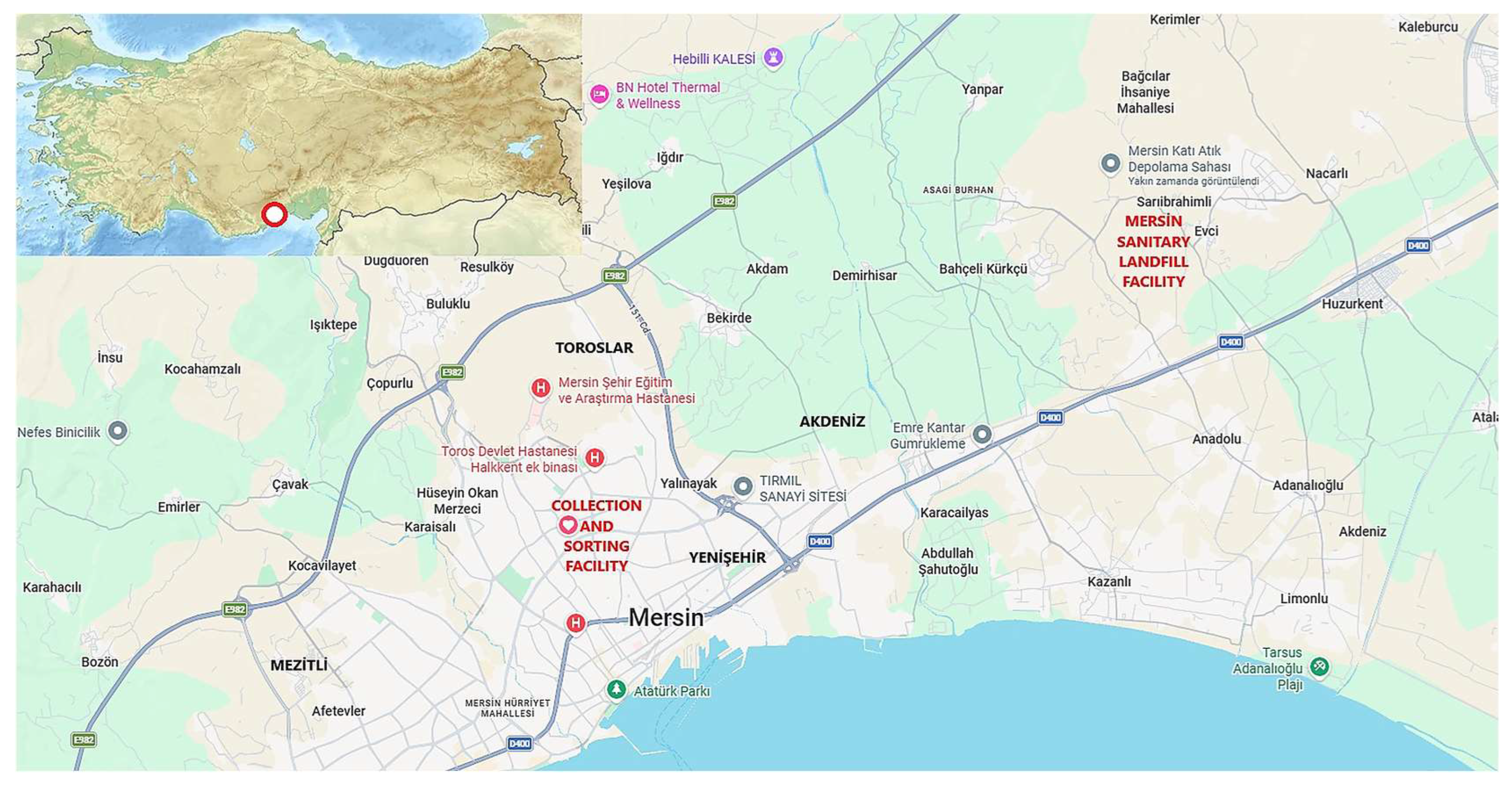
The packaging waste collection and sorting facility where this study was conducted (Figure 1) is one of ten licensed facilities operating in the Yalınayak district of Toroslar, Mersin, Türkiye [28]. Data were collected from only one licensed collection and sorting facility, and no data were obtained from the other licensed facilities operating in the study area. The facility is responsible for sorting packaging waste and transferring it to licensed recycling facilities; however, it does not carry out recycling activities on-site. The data obtained from the facility, including annual quantities of plastic, paper/cardboard, and metal waste (kg), purchase and sales prices, and the number of employees, were used anonymously with the permission of the facility management.
The municipal solid waste characterization used in this study is based on household solid waste collected from the municipalities of Yenişehir, Toroslar, Akdeniz, and Mezitli, which constitute the city center of Mersin. The local authorities collect municipal waste by combining the Toroslar–Akdeniz region and the Yenişehir–Mezitli region [27]. Collected household waste is transported to the Mersin Sanitary Landfill Facility, where it is weighed and subjected to limited separation of recyclable materials before being disposed of in the landfill. The amount of waste generated in these municipalities is 0.85 kg/person-day (0.3 ton/person-year), and the total waste quantity in 2022 was 333,685.67 tons, of which 0.2% was recycled [27]. The populations of the Yenişehir, Toroslar, Akdeniz, and Mezitli municipalities in 2022 were 277,445, 319,711, 255,946, and 222,436, respectively, resulting in a total population of 1,075,538 [29].
The recycling rates of packaging waste are applicable only to the waste reaching the landfill site and do not include materials that were previously separated and recovered through recycling. No data were available on the quantity of recyclable packaging waste diverted from the formal system by street waste pickers. These datasets were used for the comparative evaluation of the findings obtained from the field study.

3. Materials and Methods

3.1. Data on the Waste Collection and Sorting Facility

Technical infrastructure information regarding the facility was obtained from the capacity report issued by the Mersin Chamber of Commerce and Industry. According to the capacity report, the facility has an annual processing capacity of 7392 tons for plastic waste, 9855 tons for paper/cardboard waste, 2909 tons for metal waste, and 2177 tons for glass, textile, and wood waste. The facility is equipped with one hydraulic paper and plastic baling press, one sorting belt, one conveyor belt, one electronic scale, one loader, and one vehicle weighbridge. Based on the processing capacities and equipment infrastructure specified in the capacity report, the facility where the study was conducted is considered to be a small-to-medium-sized waste collection and sorting facility.
Data on municipal waste composition and the proportions of recyclable materials recovered at the landfill site were obtained from the operational records of the Mersin Sanitary Landfill Facility within the framework of the institutional collaboration established during the research period [30]. Access to these records was granted with the knowledge and approval of the facility management, and all information was used in an anonymized form. In addition, supporting data regarding municipal waste management practices were compiled from the Turkish Statistical Institute’s 2022 Municipal Waste Statistics Bulletin and official reports of the Ministry of Environment, Urbanization and Climate Change [27,28,31].

3.2. Survey Study

A face-to-face survey was conducted with 200 waste pickers aged 18 and above, who were randomly selected among those bringing packaging waste to the study area, on a voluntary basis. Although other collection and sorting facilities are located near the study area, the waste pickers included in the survey regularly delivered recyclable materials to the selected facility. Since informal waste pickers are not officially registered in the study area, the total study population is unknown and a statistical sample size calculation could not be performed. Therefore, all accessible and willing waste pickers who regularly delivered recyclable materials to the selected facility during the survey period were invited to participate, resulting in a final sample of 200 respondents. The questionnaire consisted of 30 questions designed to assess the participants’ demographic characteristics, working habits, waste collection methods and income status, types of waste collected and loss rates, seasonal income and problems encountered, and criminal background (Table S3). The survey and facility data cover a 12-month period between August 2020 and July 2021.
Ethical approval for this study was obtained from the Ethics Committee of Science and Engineering Sciences at Mersin University (Decision No. 15, dated 10 November 2021). Informed consent was obtained from all participants prior to their inclusion in the study. Participation was voluntary, and respondents were informed about the purpose of the research.

3.3. Waste Characterization and Plastic Fraction Analysis

The periodic records of packaging waste quantities delivered to the facility and the corresponding purchase prices paid by the facility were reviewed. The price is determined according to the general condition of the delivered waste and the predominant type of plastic. Plastic types were classified in accordance with local sectoral terminology as Elteks (low-density polyethylene—LDPE films, such as shopping bags, stretch and shrink films), Moblen (rigid polypropylene—PP products, such as crates, basins, and toys), PET (polyethylene terephthalate, such as beverage bottles and containers), PVC (polyvinyl chloride products, such as pipes and profiles), and mixed plastics [32,33]. The facility where the study was conducted does not accept PVC waste.
Street waste pickers tend to separate plastic types with relatively higher economic value; however, this separation does not constitute a precise classification. Within the scope of the study, mixed packaging waste delivered to the facility was manually separated and weighed on a daily basis over a 12-month period by a graduate student together with facility staff into plastic, paper/cardboard, and metal fractions, (ASTM D5231 [34], EN 14899 [35]). In addition, plastic packaging waste was characterized by plastic type during four months selected within the study period (October 2020; January, April, and July 2021). These analyses were conducted independently of the facility’s routine operations, as the facility did not classify plastic waste according to polymer type. The classification of plastic types and the associated economic evaluation were performed specifically for the purposes of this study using market prices.

3.4. Statistical Analysis

The survey data were analyzed using the Statistical Package for the Social Sciences (SPSS) software, version 26.0. The chi-square (χ2) test was applied to examine the relationships between categorical variables obtained from the questionnaire, including gender, nationality, age group, educational status, and income level. These variables were analyzed using the response categories defined in the questionnaire. A p-value of less than 0.05 was considered statistically significant. In addition, descriptive statistical analyses (percentage distributions) were conducted to evaluate the overall distribution of the data. The results of the analyses were presented in tables.

3.5. Comparative Economic Analysis

In the comparative economic analysis, the income of street waste pickers and the income generated from packaging waste delivered by street waste pickers to the licensed collection-sorting facility were compared. The average monthly income of street waste pickers was calculated using daily income and working period data obtained from the survey. The facility provided sales prices only for paper/cardboard waste. Sales prices for different plastic types were determined using data from TURKSTAT (2022), OECD (2022), ICIS (2021), PlasticsEurope (2023), Argus Media (2023), and RecyclingMarkets.net (2024) [25,36,37,38,39,40]. Prices for metal waste were determined based on values reported in the literature and sectoral sources. The monthly gross income of the facility was calculated using only the quantities and sales prices of recyclable packaging waste delivered by street waste pickers, while revenues generated from other waste sources were excluded from the evaluation. Payments made to street waste pickers were assumed to account for approximately 45% of the gross income. This proportion was determined based on information provided by the facility management and data obtained from similar collection-sorting facilities operating in the same region. The monthly net income of the facility was estimated by deducting personnel costs and operating expenses related to electricity, water, and consumable materials, obtained from the facility management, from the monthly gross income. The consistency of personnel costs with the minimum wage levels applicable during the study period was verified. All monetary values were expressed in USD using the average exchange rate for 2021.

3.6. Loss of Recyclable Materials and the Increasing Dependence on Landfilling

Municipal solid waste generation data for Mersin were obtained from the records of the Turkish Statistical Institute (TURKSTAT) [25]. Waste composition data were obtained from routine characterization studies conducted on municipal solid waste at the Mersin Sanitary Landfill Facility with permission from the facility management [30]. Recycling rates for each material type were calculated using official recycling data published by the Ministry of Environment, Urbanization and Climate Change [27]. Annual quantities of recycled materials were determined by multiplying recyclable material quantities by the corresponding recycling rates. The quantities of materials not recovered through recycling were calculated as the difference between the total recyclable material quantities and the recycled quantities. These calculations were used to estimate recyclable material losses and the quantities of potentially recyclable materials directed to landfill disposal.

4. Results and Discussion

The results are presented following the methodological framework described in Section 3. First, information on the licensed collection–sorting facility and the formal recycling infrastructure is presented. Subsequently, the demographic characteristics, working conditions, and waste collection practices of street waste pickers are evaluated using survey data, followed by an analysis of the statistical relationships between key variables. Packaging waste quantities and plastic fraction characteristics determined through characterization studies conducted at the facility are then presented and discussed. The economic performance of street waste pickers and the licensed collection–sorting facility is subsequently compared. Finally, recyclable material losses and the increasing dependence on landfilling are examined using municipal waste generation, waste composition, and recycling data for Mersin.

4.1. Data on Formal Infrastructure

Following the necessary permissions, anonymized data were obtained from one of the 10 licensed collection-sorting facilities operating in Yalınayak District of Toroslar, Mersin, and all analyses presented in this study were based solely on data obtained from this single facility. Packaging waste is supplied both from contracted commercial enterprises (such as factories, markets, and shopping centers) and from street waste pickers. In this study, only the packaging waste delivered by street pickers was analyzed. At the facility, materials are separated into main categories, and plastics are further classified into subtypes (e.g., Elteks, Moblen, PET). Plastics are sent to recycling plants, paper and cardboard are baled and delivered to paper mills, and metals are sold as scrap. Glass waste is not accepted by the facility.
Municipal waste composition and the proportions of recyclable materials recovered at the landfill site are presented in Supplementary Tables S1 and S2. These data were obtained from the operational records of the Mersin Sanitary Landfill Facility with the knowledge and approval of the facility management and were used in anonymized form.

4.2. Survey Study

The detailed results of the survey conducted with 200 waste pickers supplying packaging waste to a licensed collection-sorting facility in the Toroslar district of Mersin are presented in Supplementary Materials (Table S4), classified under thematic categories. The key and distinctive findings are summarized in Table 1. Among the participants, 71.5% were of foreign nationality, the majority being Syrians (51%) and Iraqis (20.5%). Similar trends have been reported in studies conducted both in Türkiye [41,42] and internationally [43,44]. Following the mass migration wave after 2011, the proportion of Syrian and Iraqi individuals in the sector increased rapidly, surpassing local collectors in number [45,46]. This demographic shift is also consistent with national migration data [47,48].
A statistically significant relationship was found between gender and nationality (χ2 = 6.37; p = 0.041). It was observed that foreign male participants (79%) were more likely to engage in this sector. This pattern has also been reported in previous studies [49,50,51,52]. According to a study conducted by AGED (2022) across 13 provinces, 94.7% of waste pickers were male [53]. This distribution varies across countries and may differ depending on cultural and environmental conditions [11]. In terms of age, 74.5% of participants were young adults [54]. (Table 1). A total of 62.5% were married, which differs from the findings of Schenck and Blaauw (2011) and AGED (2022) [52,53]. This may be associated with the prevalence of early marriage among migrant populations, shaped by cultural factors [55,56]. Moreover, 53.5% of the respondents lived in large households consisting of eight or more members, a result consistent with the extended family structure commonly observed among Syrian communities [57,58].
In terms of education level, 36% of the participants had no formal education, while only 5% were high school graduates (Table 1). This finding highlights the low educational attainment and limited access to vocational training opportunities among waste pickers [46,53,59,60]. The data indicate that waste picking is sustained through a cycle of poverty and intergenerational socio-economic disadvantage.
The vast majority of participants (87.5%) reported waste picking as their main occupation, and 20% indicated that their family members were also engaged in the same activity. This finding suggests that waste picking constitutes a compulsory means of livelihood for most participants [61]. Accordingly, waste picking appears to have evolved into an intergenerational form of subsistence, limiting individuals’ opportunities to pursue alternative occupations [46,53,62].
One-fourth of street waste pickers live in unhealthy and insecure housing conditions (Table S4) [63]. Among the participants, 73% work 6–7 days a week, while 56.5% work 7–9 h per day. This indicates that street waste picking is not a temporary activity but, as highlighted in previous studies [64], a full-time yet insecure form of employment. Moreover, 89.5% of pickers start working between 5:00 a.m. and 12:00 p.m., aiming to access waste before municipal collection vehicles [45,65,66,67].
Among the vehicles used for waste collection, motorized vehicles (50.5%) are predominant, while traditional methods such as rickshaws (28.5%) and wheelbarrows (15.5%) are still widely used. This distribution aligns with findings from other countries [68,69]. Motorized vehicles are mostly electric motorcycles equipped with small two-wheeled trailers that do not require a driver’s license [69,70]. The use of trucks or vans is limited to 6%, which is noteworthy given Turkish income tax exemption regulations. Only manual labor-based activities fall under the artisan exemption, whereas those conducted with motorized vehicles may be subject to taxation [71].
Among the participants, 95.0% stated that they obtain waste directly from the streets, while only 5.0% reported collecting materials from factories, markets, or other pickers (Table S4). This indicates that waste picking is largely a direct-access activity and structurally maintains its informal character [72,73]. Additionally, only 7.0% of the respondents reported purchasing waste for money, suggesting that the use of capital within the sector remains highly limited [53,74].
In terms of income level, 89.5% of the participants earn less than 29 USD per day (Table 1). The income of waste pickers varies considerably across countries [23,52,75,76,77,78]. During the study period, the official minimum wage for insured workers was approximately 420 USD per month [79], which roughly corresponds to the average monthly income of a street picker. Nevertheless, 51.5% of the participants stated that they would continue waste picking even if offered a minimum-wage job (Table S4). As reported in previous studies, this tendency is associated with factors such as legal invisibility, fear of detention, desire for autonomy, and the inadequacy of the minimum wage [21,80,81].
According to the survey results, 96% of the participants collect plastic waste and 92% collect paper/cardboard waste. Other materials such as metal (15.5%) and glass (8.0%) are collected less frequently. About 79.5% of the participants identified plastic as the most profitable material (Table 1). This finding shows that plastic is still the waste type with the highest economic value [53,82]. According to the OECD (2022) [36], plastics remain an important secondary raw material even for countries with high recycling capacity. When income-generating plastic types are examined, Elteks, Moblen, and PET (Table S4) stand out with a share of 81.5% [83]. This indicates that waste pickers focus on the types of plastics that bring higher income. In contrast, 18.5% of the participants still collect mixed plastics (Table S4), which leads to a loss of material quality. In addition, 71.5% of the participants reported a loss rate between 2% and 5%. The loss rate is a critical indicator of collection efficiency and separation quality, and similar rates have been reported in the literature [73,84].
The largest share of the waste remaining in containers consists of food waste (69.5%), followed by composite waste (e.g., multilayer packaging such as milk cartons) at 57.5%, and glass waste at 17.0% (Table S4). This indicates that waste pickers do not take relatively worthless and difficult-to-transport materials [72,85]. The collection-sorting facility examined in this study does not accept glass materials. Previous studies in Türkiye have also reported that glass packaging recycling rates remain relatively low [53,86,87]. One reason for this is that many collection-sorting facilities do not purchase glass waste, even though it is 100% recyclable [88].
A total of 98.5% of participants stated that their income fluctuates seasonally, with 77.0% reporting the highest earnings during the summer months. Increased consumption in summer leads to greater packaging waste generation, thereby expanding the available waste volume and income potential [72,89,90].
The most common problem encountered during waste collection activities is conflicts with other waste pickers (61.5%) (Table 1). The main reason for this is the competition to access the most profitable materials. Conflicts with local residents (30.5%) and facility workers (8.0%) (Table S4) are associated with the lack of social acceptance of waste pickers [73,81,91].
Seventy percent of waste pickers stated that the environment remains unclean after waste collection (Table S4). During the removal of packaging waste, bags are often torn and materials taken out of containers, leaving residual waste that causes odor and visual pollution [53].
About 16.5% of participants reported having a criminal record (Table 1), and 10% said a family member had one (Table S4). These shares exceed national averages for former inmates in Türkiye [25]. Individuals with criminal records face barriers to formal employment and often rely on informal work for income [92]. Thus, waste collection reflects not only economic need but also broader social vulnerability [93].

4.3. Results of Waste Characterization and Plastic Fraction Analysis

The inflow of packaging waste delivered by street pickers to the facility in 2020–2021 is shown in Table 2, and the monthly distribution of plastic sub-fractions is shown in Table S11. The facility employs eight insured workers receiving the minimum wage (~420 USD) and seven daily workers earning about 11 USD per day. Monetary values were calculated using the 2021 average exchange rate (1 USD ≈ 8.5 TRY) [94].
During the field study, waste collected by street pickers mainly comprised paper and cardboard (5,787,494 kg/year), followed by plastics (1,384,225 kg/year) and metals (161,636 kg/year) (Table 2). This composition aligns with European data showing that paper and cardboard dominate packaging waste by mass, followed by plastics [95].
As shown in Table S11, the average composition of plastic fractions consists of Elteks (36%), Moblen (26%), PET (6%), and mixed plastics (32%). This distribution reflects the tendency of street pickers to collect more accessible materials with higher market demand [96,97]. However, film and mixed plastic fractions exhibit high loss rates during recycling processes [36].
The literature indicates that a significant share of plastics worldwide is recovered through informal waste pickers [98]. This finding aligns with the operational dependence of the studied facility on street pickers. However, such dependence poses risks related to occupational safety, lack of social protection, and environmental oversight [99,100]. In conclusion, facility data reveal the key role of street pickers in the recycling system and highlight the diversity of plastic flows. Yet, high recycling efficiency cannot be inferred, because both unrecyclable fractions and recoverable materials mixed with other waste are ultimately disposed of in landfills [96].

4.4. Results of Statistical Analysis

The responses of informal street waste pickers to the survey questions were analyzed using the chi-square (χ2) test of independence in SPSS (version 26.0). The detailed cross-tabulations are presented in the Supplementary Material Section, while a summary of the significant relationships between variables is provided in Table 3.
When the relationship between gender and collection tools is examined (Table 3), it appears that women mostly use simple, manually operated carts requiring physical effort, whereas men have greater access to motorized vehicles [101]. Wibin and Kalina (2025) note that women face additional barriers even in accessing non-motorized means of transport and that gender-based inequalities persist [102]. This situation is closely linked to traditional gender roles and the dynamics of vehicle ownership within the sector [53]. Unlike men [103], women usually work within shorter distances and often hand over the collected materials to their male relatives, which limits their direct access to collection–sorting facilities and prevents them from receiving the full value of their labor. Consequently, women earn less than men despite performing the same work, indicating that structural gender inequality persists even in the waste sector [104].
A statistically significant relationship was found between the age of waste pickers and the type of collection vehicle used (χ2 = 29.68; df = 16; p = 0.020) (Table 3). This indicates a non-random pattern between age groups and vehicle choice. Younger pickers more often use motorcycles, while older ones rely on handcarts or pull carts. This difference may reflect younger workers’ greater mobility, efficiency concerns, and willingness to acquire vehicles [102,105]. However, those unable to afford a motorcycle continue using physically demanding carts. Among older workers, the persistence of traditional tools is linked to limited financial means and established work habits. Economic capacity also plays a determining role [106]. Younger workers lacking capital or external support tend to rely on traditional carts, whereas some older pickers owning small trucks or vans hire others and deliver recyclables to facilities themselves [78,101]. Hence, the relationship between age and vehicle type is shaped not only by physical capacity but also by economic conditions and work organization.
The relationship between waste pickers’ age groups and the type of plastic generating the highest income (Table 3) is linked to economic value, physical effort, and sorting skills. Younger pickers tend to focus on lighter and more accessible plastics such as Elteks and PET, reflecting a better cost–benefit balance. In contrast, older pickers often prefer Moblen and mixed plastics, indicating greater experience in selective sorting (Table S7).
The relationship between occupational status and daily working hours (Table 3) shows that individuals with regular employment spend less time collecting waste. While 58.6% of those with an occupation work 1–6 h per day, 70.7% of those without an occupation work more than 7 h per day (Table S8). A chi-square test (χ2 = 11.349; p = 0.023) confirms that the relationship is statistically significant.
This finding suggests that individuals whose sole source of income is waste collection are compelled to work longer hours. Similarly, Medina (2008) and Gutberlet and Uddin (2017) reported that collectors lacking alternative income opportunities are subject to extended working hours due to low income and the absence of social protection [72,107]. In contrast, participants with secondary employment tend to engage in waste collection as a supplementary activity [11]. The results highlight that improving access to alternative income and employment opportunities is crucial both for individual well-being and for reducing informality in the waste sector.
A non-random association was identified between waste pickers’ occupational status and the type of plastic from which they earn the highest income (Table 3). Those with a formal occupation obtain higher earnings from PET (55.2%) and Moblen (20.7%), which have higher market value and stable demand (Table S9). This can be attributed to their better market knowledge, direct links with facilities, and engagement in waste collection as a supplementary income activity [21]. In contrast, those without a formal occupation tend to collect Elteks (29.2%) and Moblen (28.1%), which are more voluminous but yield lower profit margins (Table S9). This pattern reflects the low-selectivity, cash-flow-oriented strategies of individuals who rely solely on waste collection for their livelihoods [107]. Moreover, the share of income derived from PET among the non-employed (28.3%) is considerably lower than among those with a profession (55.2%), indicating that PET recovery requires greater selectivity and stronger facility connections due to its quality and purity requirements [72].
Table 3 shows a statistically significant relationship between the number of weekly working days and daily income (χ2 = 13.340; df = 6; p = 0.038). All participants in the highest income group (47–71 USD) worked 6–7 days per week, while a considerable proportion of those working the same period (81.2%) remained within the lower income range of 12–29 USD. This indicates that in waste picking, longer working hours do not necessarily lead to higher income, and many workers remain trapped in a cycle of low earnings. In the literature, this phenomenon is referred to as the informal recycling poverty trap [107]. The dominance of intermediaries and fluctuations in material values contribute to the mismatch between labor input and income [21]. Similar results have been reported in Bangladesh [72], Indonesia [108], and Nigeria [75].

4.5. Results of Comparative Economic Analysis

According to the survey results, 73% of the 200 waste pickers work 6–7 days a week, and 89.5% of them earn less than 29 USD per day (Table 1). Based on these data, assuming an average earning of 25 USD per day and 26 working days per month, the estimated monthly income is approximately 650 USD.
The facility reported sales prices only for paper/cardboard, which were 0.13 USD/kg in 2020 and 0.14 USD/kg in 2021, respectively. Estimated price ranges for different types of plastics presented in Table 4 were derived from data provided by TURKSTAT (2022), OECD (2022), ICIS (2021), PlasticsEurope (2023), Argus Media (2023), and RecyclingMarkets.net (2024) [25,36,37,38,39,40]. For metal waste, prices were based on figures reported in the literature and industry sources [32,33,46,51,53,109]. The facility’s gross income, including all plastic fractions, was approximately 106,250 USD per month (Table S12).
The prices paid by the facility to street pickers for packaging waste are not based on a measurable standard and are determined through negotiation [110]. However, the facility resells these materials with a minimum profit margin of 45%. Three other nearby facilities reported operating with similar margins. Assuming that payments to street pickers account for approximately 45% of the facility’s gross income, the monthly revenue was estimated at ≈48,000 USD.
The facility employs eight insured workers with an average monthly salary of 420 USD and seven daily workers earning about 76–82 USD per week (≈80 USD). There is no equipment that significantly contributes to water or electricity consumption other than for personal use, and utility and material expenses are based on the facility’s declared invoices. All monetary values were calculated using the average exchange rate of 2021 [93]. Consequently, the net monthly income of a single facility is approximately equivalent to the combined earnings of 57 street pickers (Table 5).
Licensed collection–sorting facilities are not solely dependent on street pickers for the supply of packaging waste. Deposit–return systems, industrial facilities, retail chains, and municipal agreements provide higher-volume and lower-loss waste streams, thereby increasing overall facility revenues [111,112,113]. Therefore, the difference shown in the table represents only a partial reflection of reality; the actual income advantage of facilities is considerably greater.
In the recycling chain of packaging waste, producers, street pickers, collection–sorting facilities, storage operators, and recycling companies constitute interconnected components. Waste collected under precarious working conditions yields low income for pickers, while the same materials generate high profit margins for formal recycling companies at later stages of the process [97,114].
In developed countries, significant progress has been made in packaging waste recycling, and informal collection has largely declined or been prohibited [115]. In contrast, in developing countries, this transformation remains at an early stage [99,116,117]. Studies from Latin America and Asia show that although informal waste pickers play a central role in the recycling chain, they remain the lowest-income link [24,107,118]. The Turkish case confirms this global trend: while high profits accumulate at the facility level, street pickers who bear the main workload remain trapped in a cycle of low income.

4.6. Results of the Analysis of Recyclable Material Losses and Increasing Dependence on Landfilling

In 2022, a total of 333,685.7 tons of municipal solid waste was generated in Mersin [27]. Its composition consisted of 53.6% organic waste, 16.5% plastics, 20.1% mixed waste (composites, hygienic waste, etc.), 5.5% paper/cardboard, 4.0% glass, and 0.4% metals [30]. This composition is consistent with the national municipal waste characterization reported for Türkiye [25,119]. Table 6 was prepared by the author using operational records from the Mersin Sanitary Landfill Facility [30]. The reported total municipal solid waste quantities were verified using data obtained from TURKSTAT [25] and the MoEUCC Mersin Provincial Directorate [27]. According to these calculations, only 0.62% of plastics, 1.57% of paper/cardboard, 2.7% of metals, and 0.03% of glass were recycled [27]. Accordingly, only 672.5 tons of waste were recovered, while 333,013 tons (about 99.8%) were sent to landfills. In other words, only 0.2% of total municipal waste was recycled. Waste collected separately at the source (via zero waste bins, public recycling containers, deposit-return systems, or informal waste pickers) was not included in this calculation. Therefore, the recycling rate presented here represents only the secondary sorting activities carried out at disposal facilities, which makes the overall urban recycling performance appear lower than it actually is [25]. Field observations indicate that economically valuable materials such as plastics, paper, and metals are removed from the waste stream by informal waste pickers before entering the formal municipal collection system [2,36,119]. A significant portion of the remaining waste cannot be further separated due to its organic content and contamination, and is therefore sent directly to landfills [120]. As a result, a portion of technically recyclable materials is lost from the recycling chain, limiting the overall recovery of recyclable materials and reducing the effectiveness of the recycling system [121]. During field observations, it was noted that easily accessible and high-value recyclable materials were often removed from the waste stream before reaching the landfill facility. Consequently, the remaining recyclable materials were generally contaminated or more difficult to separate, reducing the economic feasibility of recovery operations at the landfill stage. Although this observation could not be quantified within the scope of the present study, it may partly explain why a portion of potentially recyclable materials ultimately remains unrecovered and is disposed of in landfills.

5. Conclusions

This study comparatively evaluated the economic and recycling impacts of street waste pickers and a licensed collection-sorting facility within the packaging waste recycling system in Mersin, Türkiye, using survey data, facility records, and waste characterization data. The findings showed that most waste pickers were male, immigrants, had low levels of education, and worked under precarious and uninsured conditions. Statistical analyses further revealed significant relationships between demographic and occupational characteristics, collection practices, income levels, and material preferences, indicating that access to equipment, work experience, and alternative income sources influence collection strategies and economic outcomes.
Facility data showed that paper/cardboard constituted the largest fraction of packaging waste delivered by street waste pickers, followed by plastics and metals. Plastic waste was mainly composed of Elteks and Moblen fractions, while PET accounted for a relatively small share. These findings confirm the important role of street waste pickers in supplying recyclable materials to the formal recycling chain and highlight the diversity of material flows entering collection-sorting facilities.
The comparative economic analysis revealed a substantial income disparity between street waste pickers and the licensed collection-sorting facility. Although waste pickers constitute the primary source of recyclable packaging waste entering the facility, the economic value generated along the recycling chain is not distributed equally. The results indicate that the actors performing the most labor-intensive stage of waste recovery receive the lowest economic return, whereas higher profits accumulate at later stages of the recycling process.
The analysis of municipal waste generation, waste composition, and recycling data showed that only a limited portion of recyclable materials is recovered through formal recycling channels, while a large quantity of potentially recyclable materials is ultimately directed to landfill disposal. As a result, a significant proportion of recyclable materials is not incorporated into the recovery chain, increasing dependence on landfill disposal and reducing the overall efficiency of resource recovery within the municipal waste management system.
Street waste collection should be integrated into a formal framework supported by social protection measures and occupational health and safety standards in order to achieve a more equitable and efficient system. The findings highlight the urgent need for a comprehensive waste management policy that strengthens the principle of extended producer responsibility and enhances the capacity of local authorities.
Although Türkiye has established a strong legal foundation for waste management through Environmental Law No. 2872 and related regulations, the level of implementation and enforcement remains insufficient. Recycling activities should be carried out not only for economic gain but also within the framework of environmental responsibility and circular economy principles.
The sustainability of environmental awareness depends not only on technical regulations but also on education, public participation, and effective implementation. This study was based on a single licensed collection-sorting facility in one city. Future studies should validate these findings using data from multiple facilities and different regions.

Supplementary Materials

The following supporting information can be downloaded at: https://www.mdpi.com/article/10.3390/su18147173/s1, Table S1: Composition of Municipal Solid Waste in the Toroslar–Akdeniz and Yenişehir–Mezitli Districts (%); Table S2: Recycling Rates of Recyclable Materials Recovered from Municipal Solid Waste Disposed at the Landfill (%); Table S3: Survey Questionnaire; Table S4: Descriptive Statistics of the Waste Pickers Surveyed (n = 200); Table S5: Relationship between Gender and Type of Collection Vehicle; Table S6: Relationship between Age Group and Type of Collection Vehicle; Table S7: Relationship between Age Group and Most Profitable Plastic Type; Table S8: Relationship between Occupation Status and Daily Working Hours; Table S9: Relationship between Occupation Status and Most Profitable Plastic Type; Table S10: Relationship between Daily Average Income and Weekly Working Days; Table S11: Selected months’ plastic fraction quantities and percentages (October 2020–July 2021); Table S12: Monthly gross revenues of the licensed collection–sorting facility by plastic fraction and material type (2020–2021. USD/kg).

Author Contributions

Conceptualization, M.Y.; Methodology, M.Y.; Investigation, E.S.S.; Formal analysis, E.S.S.; Writing—original draft preparation, M.Y.; Writing—review and editing, M.Y.; Supervision, E.A. All authors have read and agreed to the published version of the manuscript.

Funding

This research received no external funding.

Institutional Review Board Statement

This study was conducted in accordance with the Declaration of Helsinki and approved by the Ethics Committee of the Natural and Engineering Sciences, Mersin University (Decision Date: 10 November 2021, Decision No: 15). The research was carried out in accordance with the ethical standards of the committee and relevant institutional guidelines. The survey was not conducted with individuals aged 18 years or younger.

Informed Consent Statement

Informed consent was obtained from all subjects involved in the study.

Data Availability Statement

The data supporting the findings of this study are not publicly available due to participant confidentiality but may be made available from the corresponding author upon reasonable request.

Acknowledgments

This article is derived from the master’s thesis titled “Street Waste Pickers and Collection–Sorting Facilities: Economic and Environmental Impacts on Packaging Waste Recycling in Mersin, Türkiye” conducted by Emine Sultan Sanrı. The author served as the thesis supervisor, and the study was carried out under the co-supervision of Erkan Aktaş. The thesis was completed in 2022 at the Department of Environmental Engineering, Institute of Science, Mersin University, Türkiye. The full text of the thesis is openly accessible through the Council of Higher Education Thesis Center (YÖK Ulusal Tez Merkezi; Thesis No. 783200): https://tez.yok.gov.tr/, accessed on 7 May 2026.

Conflicts of Interest

The authors declare no conflicts of interest.

References

  1. Melosi, M.V. Garbage in the Cities: Refuse, Reform, and the Environment, 1880–1980, Rev. ed.; University of Pittsburgh Press: Pittsburgh, PA, USA, 2005. [Google Scholar]
  2. Wilson, D.C. Development drivers for waste management. Waste Manag. Res. 2007, 25, 198–207. [Google Scholar] [CrossRef] [PubMed]
  3. Srivastava, V.; Ismail, S.A.; Singh, P.; Singh, R.P. Urban solid waste management in the developing world with emphasis on India: Challenges and opportunities. Rev. Environ. Sci. Bio/Technol. 2015, 14, 317–337. [Google Scholar]
  4. Cook, E.; Cano, N.S.D.S.L.; Velis, C.A. Informal recycling sector contribution to plastic pollution mitigation: A systematic scoping review and quantitative analysis of prevalence and productivity. Resour. Conserv. Recycl. 2024, 206, 107588. [Google Scholar] [CrossRef]
  5. de Castro, A.M.R.C.; Martins, A.M.; Gonçalves, A.P.; Gutberlet, J.; Siman, R.R.; Schalch, V. Integration of waste pickers in waste management systems worldwide: A review of approaches and outcomes. Waste Manag. Res. 2025, 44, 30–51. [Google Scholar] [CrossRef]
  6. Wilson, D.C.; Velis, C.; Cheeseman, C. Role of informal sector recycling in waste management in developing countries. Habitat Int. 2006, 30, 797–808. [Google Scholar] [CrossRef]
  7. Medina, M. The World’s Scavengers: Salvaging for Sustainable Consumption and Production; AltaMira Press: Lanham, MD, USA, 2007. [Google Scholar]
  8. Velis, C. Waste pickers in Global South: Informal recycling sector in a circular economy era. Waste Manag. Res. 2017, 35, 329–331. [Google Scholar] [CrossRef] [PubMed]
  9. Scheinberg, A.; Simpson, M.H.; Gupt, Y.; Anschütz, J.; Haenen, I.; Tasheva, E.; Hecke, J.; Soos, R.; Chaturvedi, B.; Garcia-Cortes, S. Economic Aspects of the Informal Sector in Solid Waste; GTZ (German Technical Cooperation): Eschborn, Germany, 2010. [Google Scholar]
  10. Gutberlet, J. Recovering Resources-Recycling Citizenship: Urban Poverty Reduction in Latin America; Ashgate: Burlington, VT, USA, 2008. [Google Scholar]
  11. Dias, S.M. Waste pickers and cities. Environ. Urban. 2016, 28, 375–390. [Google Scholar] [CrossRef]
  12. Gutberlet, J. Waste, poverty and recycling. Waste Manag. 2010, 30, 171–173. [Google Scholar] [CrossRef] [PubMed]
  13. European Environment Agency. Waste Recycling in Europe. (3 December 2025). Available online: https://www.eea.europa.eu/en/analysis/indicators/waste-recycling-in-europe (accessed on 7 May 2026).
  14. Cook, E.; Ionkova, K.; Bhada-Tata, P.; Yadav, S.; van Woerden, F. What a Waste 3.0: Global Snapshot of Solid Waste Management Toward Circularity Until 2050; World Bank: Washington, DC, USA, 2026. [Google Scholar] [CrossRef]
  15. Republic of Turkey Official Gazette. Environmental Law No. 2872 (Issue No. 18132). 11 August 1983. Available online: https://www.resmigazete.gov.tr (accessed on 9 July 2025).
  16. Republic of Turkey Official Gazette. Waste Management Regulation (Issue No. 29314). 2 April 2015. Available online: https://www.resmigazete.gov.tr (accessed on 9 July 2025).
  17. Republic of Turkey Official Gazette. Regulation on Control of Packaging Waste (Issue No. 30283). 27 December 2017. Available online: https://www.resmigazete.gov.tr (accessed on 9 July 2025).
  18. European Commission. Directive 94/62/EC on Packaging and Packaging Waste. 1994. Available online: https://eur-lex.europa.eu/legal-content/EN/TXT/?uri=CELEX%3A31994L0062 (accessed on 9 July 2025).
  19. Republic of Turkey Official Gazette. Zero Waste Regulation (Issue No. 30829). 12 July 2019. Available online: https://www.resmigazete.gov.tr (accessed on 9 July 2025).
  20. Koroma, A.; Scott, R.E.; Esson, J. The Invisible Workforce: Informal Waste Pickers and the Challenges of Sustainable Waste Management in Freetown, Sierra Leone. 2025. Available online: http://brinemining.ntua.gr/cyprus2025/files/proceedings/The-Invisible-Workforce_-Informal-Waste-Pickers-and-the-Challenges-of-Sustainable-Waste-Management-in-Freetown-Sierra-Leone-A.pdf (accessed on 7 May 2026).
  21. Karlsson, T. Waste Pickers and the Politics of Formalization: Recycling Cooperatives and Urban Livelihoods in Istanbul. Master’s Thesis, Lund University, Lund, Sweden, 2025. [Google Scholar]
  22. Güneş, H.; Uysal, F.F. Costs of collection and separation facilities and problems faced in collection of packaging wastes. In Theory and Research in Engineering; Temana, C.C.S., Ed.; Serüven Yayınevi: Ankara, Turkey, 2022; pp. 17–31. ISBN 978-625-7721-87-5. [Google Scholar]
  23. Hidalgo-Crespo, J.; Amaya-Rivas, J.L.; Ribeiro, I.; Soto, M.; Riel, A.; Zwolinski, P. Informal Waste Pickers in Guayaquil: Recycling Rates, Environmental Benefits, Main Barriers, and Troubles. Heliyon 2023, 9, e19775. [Google Scholar] [CrossRef] [PubMed]
  24. Wilson, D.C.; Rodic, L.; Scheinberg, A.; Velis, C.A.; Alabaster, G. Comparative analysis of solid waste management in 20 cities. Waste Manag. Res. 2012, 30, 237–254. [Google Scholar] [CrossRef] [PubMed]
  25. Turkish Statistical Institute (TURKSTAT). Municipal Waste Statistics, 2022 [Database]. 2022. Available online: https://data.tuik.gov.tr/Search/Search?text=n%C3%BCfus (accessed on 7 October 2025).
  26. Ministry of Environment; Urbanization and Climate Change. General Directorate of Environmental Management (MoEUCC, 2023). 2021 Packaging Bulletin. Available online: https://webdosya.csb.gov.tr/db/cygm/icerikler/ambalajbulten-2021-20230228-20230228144450.pdf (accessed on 10 October 2025).
  27. Ministry of Environment; Urbanization and Climate Change; Mersin Provincial Directorate (MoEUCC, 2024). Mersin Province Environmental Status Report 2023 (p. 96, Table 49). Available online: https://webdosya.csb.gov.tr/db/ced/icerikler/mersin-ilcdr-2023-20241230134157.pdf (accessed on 7 May 2026).
  28. Ministry of Environment, Urbanization and Climate Change (MoEUCC, 2025). Environmental Permit and License Query System: Licensed Collection-Separation Facilities in Mersin Province [Database]. Available online: https://eizin.cevre.gov.tr (accessed on 2 October 2025).
  29. Turkish Statistical Institute (TURKSTAT). Address Based Population Registration System (ABPRS) Results, 2022. 2023. Available online: https://data.tuik.gov.tr (accessed on 15 June 2026).
  30. Mersin Landfill Facility. Operational Records (2022–2023) [Data Set]. Obtained with Permission. 2023. [CrossRef] [PubMed]
  31. Turkish Statistical Institute (TURKSTAT). Foreign Trade Statistics—Plastic and Rubber Products (GTIP 39). 2023. Available online: https://data.tuik.gov.tr (accessed on 18 July 2025).
  32. Göztepe Hurdacı. Hurda Fiyatları 2019 [2019 Scrap Prices]. 2019. Available online: https://goztepehurdaci.com/hurda-fiyatlari-2019/ (accessed on 17 July 2025).
  33. Mertsan Hurda. Scrap Price List. [PDF File]. 2021. Available online: https://www.mertsanhurda.com/wp-content/uploads/2021/03/hurdacı-hurda-fiyatları.pdf (accessed on 14 July 2025).
  34. ASTM D5231-92; Standard Test Method for Determination of the Composition of Unprocessed Municipal Solid Waste. ASTM International: West Conshohocken, PA, USA, 2016.
  35. EN 14899:2005; Characterization of Waste—Sampling of Waste Materials—Framework for the Preparation and Application of a Sampling Plan. CEN: Brussels, Belgium, 2005.
  36. OECD. Global Plastics Outlook: Economic Drivers, Environmental Impacts and Policy Options; OECD Publishing: Paris, France, 2022. [Google Scholar] [CrossRef]
  37. ICIS. ICIS Petrochemicals and Plastics Pricing Database. 2021. Available online: https://www.icis.com (accessed on 24 July 2025).
  38. PlasticsEurope. Plastics—The Facts 2023: An Analysis of European Plastics Production, Demand and Waste Data. 2023. Available online: https://plasticseurope.org (accessed on 24 July 2025).
  39. Argus Media. Argus Polymers and Recycled Plastics Price Assessments. 2023. Available online: https://www.argusmedia.com (accessed on 24 July 2025).
  40. RecyclingMarkets.net. Historical Plastic Price Tracker. 2024. Available online: https://www.recyclingmarkets.net (accessed on 24 July 2025).
  41. Yıldırım, K. Denial of moral complexity: Turkish scrap dealers’ accusations against migrant waste pickers in Istanbul. J. Cult. Econ. 2025, 1–15. [Google Scholar] [CrossRef]
  42. Ozdemir, S.; Sever, M.; Agcasulu, H. “Talking to garbage”: A photo elicitation study on Syrian and Afghan migrant waste collectors in Isparta Turkey. Local Environ. 2025, 31, 741–759. [Google Scholar] [CrossRef]
  43. Michael, K.; Deshpande, T.; Ziervogel, G. Examining vulnerability in a dynamic urban setting: The case of Bangalore’s interstate migrant waste pickers. Clim. Dev. 2018, 11, 667–678. [Google Scholar] [CrossRef]
  44. Nawaz, M.; Yousafzai, M.T.; Shah, T.; Xin, C.; Ahmad, W. Sustainability of Recycling Waste Picker Sustainopreneurs for Prevention and Mitigation of Municipal Solid Waste in Swat. Sustainability 2021, 13, 6533. [Google Scholar] [CrossRef]
  45. Çeken, G. Recycling workers through the eyes of university students: The cases of Ankara University and Bilkent University. Sinop. Univ. J. Soc. Sci. 2018, 2, 109–125. [Google Scholar] [CrossRef][Green Version]
  46. Tutar, M. The Social and Economic Profile of Waste Collectors as an Informal Type of Employment: The Case of Ankara. Master’s Thesis, Uludağ University, Institute of Social Sciences, Bursa, Turkey, 2020. Unpublished. [Google Scholar]
  47. United Nations High Commissioner for Refugees (UNHCR). Global Trends: Forced Displacement in 2019. 2019. Available online: https://reporting.unhcr.org/sites/default/files/gr2019/pdf/GR2019_English_Full_lowres.pdf (accessed on 7 May 2026).
  48. Refugee Solidarity Association (Mülteci-Der). Number of Syrians in Turkey-October 2022. Available online: https://multeciler.org.tr/eng/number-of-syrians-in-turkey/ (accessed on 7 May 2026).
  49. Chvátal, J. A Study of Waste Management Policy Implications for Landfill Waste Salvagers in the Western Cape. Master’s Thesis, University of Cape Town, Cape Town, South Africa, 2010. [Google Scholar]
  50. Özsoy, D. New Urban Poverty, Waste Collectors and the Problem of Representation: An Analysis of Katık Magazine. Istanb. Univ. Fac. Commun. J. 2013, 43, 105–121. [Google Scholar]
  51. Çınar, S. The Transformation of Waste into Economic Value and the Role of Waste Collectors in This Process. Master’s Thesis, İstanbul University, Institute of Social Sciences, İstanbul, Turkey, 2019. Unpublished. Thesis No. 575405. Available online: https://tez.yok.gov.tr/UlusalTezMerkezi/ (accessed on 7 May 2026).
  52. Schenck, R.; Blaauw, P.F. The work and lives of street waste pickers in Pretoria-A case study of recycling in South Africa’s urban informal economy. Urban Forum 2011, 22, 411–430. [Google Scholar] [CrossRef]
  53. AGED. Socio-Economic Research Report on Street Waste Pickers (Prepared by Şeker, M., Tanyeri, F.N.). 2022. Available online: https://aged.org.tr/raporlar/AGED_sokak_toplayicilari_raporu.pdf (accessed on 7 May 2026).
  54. Dyussenbayev, A. The main periods of human life. Glob. J. Hum. Soc. Sci. Arts Humanit.-Psychol. 2017, 17, 33–36. [Google Scholar]
  55. Gül, M. Child marriage during the migration process: The case of Syrian children living in Turkey. Pamukkale Univ. J. Soc. Sci. Inst. 2022, 49, 573–588. [Google Scholar] [CrossRef]
  56. Buke Okyar, D.İ.; Öğüt, S. The use of grounded theory in social sciences: The case of Syrian refugees under temporary protection and child marriages. Üsküdar Univ. J. Soc. Sci. 2022, 8, 109–132. [Google Scholar] [CrossRef]
  57. Çetin, İ. Labor force participation and integration of Syrian refugees: The case of Adana-Mersin. Gaziantep Univ. J. Soc. Sci. 2016, 35, 1001–1016. [Google Scholar] [CrossRef]
  58. Hacettepe University Institute of Population Studies. 2018 Turkey Demographic and Health Survey: Syrian Migrant Sample, Key Findings; Hacettepe University Institute of Population Studies: Ankara, Turkey; Presidency of the Republic of Türkiye Directorate of Strategy and Budget: Ankara, Turkey; TÜBİTAK: Ankara, Turkey, 2019.
  59. Centenaro, A.P.F.C.; Beck, C.L.C.; Silva, R.M.D.; Andrade, A.; Costa, M.C.D.; Silva, E.B.D. Recyclable waste pickers: Life and work in light of the social determinants of health. Rev. Bras. Enferm. 2021, 74, e20200902. [Google Scholar] [CrossRef] [PubMed]
  60. Dada, O.T.; Faniran, G.B.; Ojo, D.B.; Taiwo, A.O. Waste pickers’ perception of occupational hazards and well-being in a Nigerian megacity. Int. J. Environ. Stud. 2022, 80, 933–947. [Google Scholar] [CrossRef]
  61. Gallego, C.J.; David, J.C.; Gomez-Miranda, I.N.; Jaén, S. Quantitative Analysis of Colombian Waste Picker’s Profile. Sustainability 2023, 15, 9397. [Google Scholar] [CrossRef]
  62. Hartmann, C. Waste picker livelihoods and inclusive neoliberal municipal solid waste management policies: The case of the La Chureca garbage dump site in Managua, Nicaragua. Waste Manag. 2018, 71, 565–577. [Google Scholar] [CrossRef] [PubMed]
  63. Gutberlet, J. Grassroots waste picker organizations addressing the UN sustainable development goals. World Dev. 2021, 138, 105195. [Google Scholar] [CrossRef]
  64. Maneen, S.; Botha, N.N.; Amoadu, M.; Ansah, E.W. Physical safety climate, safety practices and perceived well-being of informal solid waste collectors in the Cape Coast Metropolis. Discov. Soc. Sci. Health 2025, 5, 13. [Google Scholar] [CrossRef]
  65. Schenck, C.J.; Blaauw, P.F.; Viljoen, J.M. The socio-economic differences between landfill and street waste pickers in the Free State province of South Africa. Dev. S. Afr. 2016, 33, 532–547. [Google Scholar] [CrossRef]
  66. Parra, F. The Struggle of Waste Pickers in Colombia: From being considered trash, to being recognised as workers. Anti-Traffick. Rev. 2020, 122–136. [Google Scholar] [CrossRef]
  67. Toroslar Municipality. Garbage Collection Hours. 2022. Available online: https://toroslar-bld.gov.tr/upload/files/621876bfbad5e.pdf (accessed on 28 July 2025).
  68. Chikarmane, P.; Narayan, L. Statistics on Waste Pickers: A Case Studies Guide; WIEGO Statistical Brief No 39; WIEGO: Manchester, UK, 2024. [Google Scholar]
  69. Ramos, N.F.; de Castilhos, A.B., Jr.; Forcellini, F.A.; Graciolli, O.D. Profile survey of waste pickers in Brazil: Requirements for the development of a collection vehicle and optimized routing. J. Urban Environ. Eng. 2013, 7, 231–246. [Google Scholar] [CrossRef]
  70. Çabuk, G.; Öncel, S.; Atamtürk, E. A quest for the future among families migrating from Syria to Antalya: A phenomenological study. Tıbbi Sos. Hizmet Derg. 2022, 92–111. [Google Scholar]
  71. Revenue Administration of the Republic of Türkiye. Tax Exemption for Peddlers Operating Without Motor Vehicles: Official Tax Ruling (Document No. B.07.1.GİB.03.43/4341-5/056711). 24 July 2006. Available online: https://www.gib.gov.tr (accessed on 28 July 2025).
  72. Gutberlet, J.; Uddin, S.M.N. Household waste and health risks affecting waste pickers and the environment in low-and middle-income countries. Int. J. Occup. Environ. Health 2017, 23, 299–310. [Google Scholar] [CrossRef] [PubMed]
  73. Crivellari, H.M.T.; Dias, S.M.; Pena Ad, S. Informação e Trabalho: Uma Leitura Sobre os Catadores de Material Reciclável a Partir Das Bases Públicas de Dados. Catadores na Cena Urbana: Construção de Políticas Socioambientais; Autêntica Editora: Belo Horizonte, Brazil, 2008; Available online: https://www.wiego.org/using-and-citing-material-wiego/ (accessed on 7 May 2026).
  74. Nesheim, I.; Szulecka, J.; Phoo, M.T.; Nøklebye, E.; San, K.M. Complex waste management in Myanmar: Role of the actors, relationships, and social capital. Environ. Dev. Sustain. 2025, 27, 15909–15930. [Google Scholar] [CrossRef]
  75. Omosimua, I.J.; Oluranti, O.I.; Obindah, G.; Busayo, A. Working conditions and career aspirations of waste pickers in lagos state. Recycling 2021, 6, 1. [Google Scholar] [CrossRef]
  76. Buch, R.; Marseille, A.; Williams, M.; Aggarwal, R.; Sharma, A. From Waste Pickers to Producers: An Inclusive Circular Economy Solution through Development of Cooperatives in Waste Management. Sustainability 2021, 13, 8925. [Google Scholar] [CrossRef]
  77. Fair Circularity Initiative. A Living Income for the Informal Waste Sector: A Methodology to Assess the Living Income of Waste Workers in the Context of the Global Plastics Treaty; Fair Circularity Initiative: San Francisco, CA, USA; Systemiq: London, UK, 2024. [Google Scholar]
  78. Sasaki, S.; Choi, Y.; Watanabe, K. Economic status of waste pickers in Bantar Gebang compared to other workers in Indonesia. Habitat Int. 2022, 119, 102501. [Google Scholar] [CrossRef]
  79. Republic of Türkiye; Ministry of Family and Social Services [RT-MFSS]. Minimum Wage 2021. 2021. Available online: https://www.aile.gov.tr/asgari-ucret/asgari-ucret-2021/ (accessed on 16 October 2025).
  80. Oran, S. Will Waste Pickers in Turkey Join the Unemployed Army? International Alliance of Waste Pickers. 5 February 2016. Available online: https://globalrec.org/2016/02/05/will-waste-pickers-in-turkey-join-unemployed-army/ (accessed on 28 July 2025).
  81. Porras Bulla, J.; Rendon, M.; Espluga Trenc, J. Policing the stigma in our waste: What we know about informal waste pickers in the Global North. Local Environ. 2021, 26, 1299–1312. [Google Scholar] [CrossRef]
  82. Zhao, C.; Liu, M.; Du, H.; Gong, Y. The Evolutionary Trend and Impact of Global Plastic Waste Trade Network. Sustainability 2021, 13, 3662. [Google Scholar] [CrossRef]
  83. Pilapitiya, P.G.C.N.T.; Ratnayake, A.S. The world of plastic waste: A review. Clean. Mater. 2024, 11, 100220. [Google Scholar] [CrossRef]
  84. Malele, V. Street waste pickers: A case for Appropriate Technology, Social Entrepreneurship and Innovation. Waste Technol. 2022, 10, 17–23. [Google Scholar] [CrossRef]
  85. Rispo, A.; Williams, I.D.; Shaw, P.J. Source segregation and food waste prevention activities in high-density households in a deprived urban area. Waste Manag. 2015, 44, 15–27. [Google Scholar] [CrossRef] [PubMed]
  86. Turkish Competition Authority. Decision No. 22-32/498-200. 2023. Available online: https://www.rekabet.gov.tr/Karar?kararId=3df1a7c9-70f5-442d-89b7-06dacdca69bb (accessed on 30 September 2025).
  87. Şişecam. Glass Again: Project Reports 2011–2015; Şişecam Group: Istanbul, Turkey, 2015; Available online: https://www.sisecam.com (accessed on 30 September 2025).
  88. Baek, C.R.; Kim, H.D.; Jang, Y.C. Exploring glass recycling: Trends, technologies, and future trajectories. Environ. Eng. Res. 2025, 30, 240241. [Google Scholar] [CrossRef]
  89. Yalvaç, M.; Günaydın, S.; Saleh, M.; Yaylacı, D. Solid waste seasonal characteristics related to economic conditions: Hatay northern west as case study. J. Mater. Cycles Waste Manag. 2019, 21, 743–752. [Google Scholar] [CrossRef]
  90. El Hallab, R.; Kammou, L.; El Hamdouni, D.; El Jalil, M.H. Municipal solid waste management in Rabat City, Morocco. Euro-Mediterr. J. Environ. Integr. 2025, 10, 2505–2520. [Google Scholar] [CrossRef]
  91. Saritaş, S.; Oran, S. The Nature of Society, the Technology of Nature: A Study on Kurdish Waste Paper Pickers. In Proceedings of the 7th Karaburun Science Congress, İzmir, Türkiye, 7–9 September 2012. [Google Scholar]
  92. Gören, C.D. The Waste Collection Sector and the Waste Pickers: A Case Study. Master’s Thesis, Boğaziçi University, Atatürk Institute for the Study of Atatürk’s Principles and Reforms, Istanbul, Turkey, 2010. [Google Scholar]
  93. Gutberlet, J.; de Carvalho Vallin, I. Waste picker rights and social inclusion: The creation of a university with knowledge democracy. Detritus 2024, 26, 114–122. [Google Scholar] [CrossRef]
  94. Central Bank of the Republic of Turkey. Electronic Data Delivery System (EDDS). 2021. Available online: https://evds2.tcmb.gov.tr/ (accessed on 17 July 2025).
  95. Eurostat. Packaging Waste Generation with Record Increase. Eurostat News. 19 October 2023. Available online: https://ec.europa.eu/eurostat/web/products-eurostat-news/w/ddn-20231019-1 (accessed on 7 May 2026).
  96. Nandy, B.; Sharma, G.; Garg, S.; Kumari, S.; George, T.; Sunanda, Y.; Sinha, B. Recovery of consumer waste in India—A mass flow analysis for paper, plastic and glass and the contribution of households and the informal sector. Resour. Conserv. Recycl. 2015, 101, 167–181. [Google Scholar] [CrossRef]
  97. de Bercegol, R. From Trash to Cash, recovering practices, wholesale markets and industrial recycling in Delhi. Sci. J. Archit. Constr.-Tạp Chí Kiến Trúc Xây Dựng 2020, 38, 21–27. [Google Scholar]
  98. Tsakona, M.; Mafuta, C.; Rucevska, I.; Macmillan-Lawler, M.; Skripnikova, N. A Seat at the Table-The Role of the Informal Recycling Sector in Plastic Pollution Reduction, and Recommended Policy Changes; GRID-Arendal: Arendal, Norway, 2022. [Google Scholar]
  99. Sanders, T. Cologne & Waste Pickers: The Evolution of Waste Collection; BVRio: Rio de Janeiro, Brazil, 2022; Available online: https://www.bvrio.org/cologne-waste-pickers-the-evolution-of-waste-collection/ (accessed on 30 September 2025).
  100. Badal, S.; Holland, K.; Foster, M.; Le, A.B. The occupational safety and health risks of informal waste workers in nepal: A mapping review. Saf. Health Work 2025, 16, 325–332. [Google Scholar] [CrossRef] [PubMed]
  101. Calafate-Faria, F. Countercycling: An Ethnographic Study of Waste, Recycling, and Waste-Pickers in Curitiba, Brazil. Doctoral Dissertation, Goldsmiths, University of London, London, UK, 2013. [Google Scholar]
  102. Wibin, P.; Kalina, M. Informal waste pickers and non-motorised transport: A mini-review of contemporary literature. Waste Manag. Res. 2025, 44, 154–165. [Google Scholar] [CrossRef] [PubMed]
  103. Rendon, M. Municipal Waste, Environmental Justice, Right to the City and the Irregular Economy: Valuing the Work of Informal Waste Pickers in the Catalan Recycling Sector. Doctoral Dissertation, Universitat Autònoma de Barcelona, Barcelona, Spain, 2020. [Google Scholar]
  104. Wittmer, J. “We live and we do this work”: Women waste pickers’ experiences of wellbeing in Ahmedabad, India. World Dev. 2021, 140, 105253. [Google Scholar] [CrossRef]
  105. Kain, J.H.; Zapata, P.; de Azevedo, A.M.M.; Carenzo, S.; Charles, G.; Gutberlet, J.; Oloko, M.; Pérez Reynosa, J.; Zapata Campos, M.J. Characteristics, challenges and innovations of waste picker organizations: A comparative perspective between Latin American and East African countries. PLoS ONE 2022, 17, e0265889. [Google Scholar] [CrossRef] [PubMed]
  106. Cantürk, S. The Role of Social Media in the Transition from a Sustainable Environment to Decent Work: The Case of Street Collectors in Turkey. Turk. Rev. Commun. Stud. 2022, 104–119. [Google Scholar] [CrossRef]
  107. Medina, M. The Informal Recycling Sector in Developing Countries: Organizing Waste Pickers to Enhance Their Impact; Public-Private Infrastructure Advisory Facility (PPIAF): Washington, DC, USA; World Bank: Washington, DC, USA, 2008. [Google Scholar]
  108. Sasaki, S.; Araki, T.; Tambunan, A.H.; Prasadja, H. Household income, living and working conditions of dumpsite waste pickers in Bantar Gebang: Toward integrated waste management in Indonesia. Resour. Conserv. Recycl. 2014, 89, 11–21. [Google Scholar] [CrossRef]
  109. Köse, N.; Sun, D.; Tulum, M.; Türegün, A.Y.; Yamaner, C.; Kırca, Ö.; Süral, H. Design of a recyclable packaging waste management system. End. Mühendisliği Derg. 2015, 26, 35–51. [Google Scholar]
  110. Dinler, D. New forms of wage labour and struggle in the informal sector: The case of waste pickers in Turkey. Third World Q. 2016, 37, 1834–1854. [Google Scholar] [CrossRef]
  111. Kaza, S.; Yao, L.; Bhada-Tata, P.; Van Woerden, F. What a Waste 2.0: A Global Snapshot of Solid Waste Management to 2050; World Bank Publications: Washington, DC, USA, 2018. [Google Scholar]
  112. Gupt, Y.; Sahay, S. Review of extended producer responsibility: A case study approach. Waste Manag. Res. 2015, 33, 595–611. [Google Scholar] [CrossRef] [PubMed]
  113. Sembiring, E.; Nitivattananon, V. Sustainable solid waste management toward an inclusive society: Integration of the informal sector. Resour. Conserv. Recycl. 2010, 54, 802–809. [Google Scholar] [CrossRef]
  114. Florin, B.; Cirelli, C.; Troin, F. (Eds.) Sociétés Urbaines et Déchets: Eclairages Internationaux; Presses Universitaires François-Rabelais: Tours, France, 2018. [Google Scholar]
  115. European Environment Agency (EEA). Many EU Member States Not on Track to Meet Recycling Targets for Municipal Waste and Packaging Waste. Available online: https://www.eea.europa.eu/publications/many-eu-member-states (accessed on 15 October 2025).
  116. Anh, T.T.Y.; Herat, S.; Prasad, K. A Review on Extended Producer Responsibility Schemes for Packaging Waste Management and Research Gaps in the Field. Nat. Environ. Pollut. Technol. 2025, 24, D1662. [Google Scholar] [CrossRef]
  117. Kadam, M.; Bochare, R. Packaging waste trends in the age of sustainability: A case study of online shopping behaviour pre and post-COVID. Environ. Dev. Sustain. 2025, 27, 9501–9513. [Google Scholar]
  118. Gutberlet, J. Urban Recycling Cooperatives: Building Resilient Communities; Taylor & Francis: Abingdon, UK, 2016; p. 188. [Google Scholar]
  119. Ministry of Environment; Urbanization and Climate Change (MoEUCC). National Waste Management Strategy and Action Plan (2025–2035). 2025. Available online: https://cygm.csb.gov.tr/ulusal-atik-yonetimi-stratejisi-ve-plani-ile-2035-e-kadar-atik-yonetiminde-yeni-donem-duyuru-466099 (accessed on 7 May 2026).
  120. Nations Environment Program (UNEP). Global Waste Management Outlook 2024: Beyond an Age of Waste—Turning Rubbish into a Resource; UNEP: Nairobi, Kenya, 2024. [Google Scholar]
  121. Arena, U.; Di Gregorio, F. A waste management planning based on substance flow analysis. Resour. Conserv. Recycl. 2014, 85, 54–66. [Google Scholar] [CrossRef]
Figure 1. Study Area.
Sustainability 18 07173 g001
Table 1. Key Descriptive Findings of Waste Pickers (n = 200).
VariableCategory(%)Key Observation
NationalitySyrian51.0The majority of participants are Syrian migrants, indicating the dependence of informal labor on migrant workers.
Turkish28.5
Iraqi20.5
GenderMale90.5Waste picking is predominantly carried out by men.
Female9.5
Age group19–35 years74.5Most participants are young and within the early working-age group.
Marital statusMarried62.5Most participants are married, indicating increased household responsibilities.
Household size5–10 persons78.0Large households reflect shared income dependency.
Education levelPrimary school graduate49.5Low education level limits access to formal employment.
No formal education36.0
Having another professionNo87.5Waste picking is the main source of livelihood.
Parents’ occupationWaste picker/None70.0Indicates intergenerational continuity of informal labor.
Working frequency (per week)6–7 days73.0Intensive and unregulated working patterns observed.
Working hours per day7–9 h56.5Long working hours with limited rest periods.
Collection vehicleMotorcycle50.5Use of mechanized collection vehicles is relatively common.
Average daily income (USD)≤2989.5Income is below the minimum wage, reflecting economic vulnerability.
Main waste types collectedPlastic96.0Plastics dominate the recyclable materials recovered.
Paper/Cardboard92.0
Main income-generating materialPlastic79.5The majority of income is derived from plastics.
Loss rate (fire ratio)2–5%71.5Minor but consistent material losses occur during sorting.
Does income vary by season?Yes98.5Income fluctuates significantly depending on seasonal demand.
Season with highest incomeSummer77.0Higher collection and resale rates are observed in summer.
Main problem encountered while collectingWith other waste pickers61.5Indicates competition and conflict within the informal sector.
Criminal recordEver convicted16.5A portion of participants has a criminal record, reflecting social vulnerability.
Table 2. Annual inflow of packaging waste delivered by street pickers to the licensed collection-sorting facility (2020–2021).
YearMonthPlastic (kg)Paper/Cardboard (kg)Metal (kg)
2020August104,431368,0505876
September109,126391,37018,700
October191,507386,97015,600
November132,821391,39017,600
December110,825447,78018,700
2021January126,663476,66016,780
February111,346451,26017,890
March117,800654,70015,900
April90,320549,38010,600
May76,376439,2609870
June115,395633,4606870
July97,615597,2147250
Total1,384,2255,787,494161,636
Table 3. Summary of Significant Relationships between Variables (n = 200).
Variable Pairχ2dfpObserved Trend/DirectionSupplementary Table
Gender × Collection Vehicle17.22940.002Among men, 54.4% use motor vehicles; among women, 78.0% use handcarts or trolleys.Table S5
Age Group × Collection Vehicle29.680160.020Motor use is 57.9% in ages 18–25, while 36.8% of those aged 46+ use handcarts/trolleys.Table S6
Age Group × Most Profitable Plastic Type40.521240.019Ages 18–25 earn mainly from Elteks (32.9%) and PET (29.7%), while ages 46+ prefer Moblen (52.7%).Table S7
Occupation Status × Daily Working Hours11.34940.0237–9 h: 37.9% (with job), 59.6% (without job)Table S8
Occupation Status × Most Profitable Plastic Type15.65860.016Workers with an occupation mainly earn from PET (55.2%), while others from Elteks (29.2%).Table S9
Daily Income × Weekly Working Days13.34060.038Among those working 6–7 days per week, 81.2% earn 12–29 USD.Table S10
Note: All relationships were found statistically significant at the p < 0.05 level according to Pearson’s chi-square test. See Supplementary Materials (Tables S5–S10) for detailed cross-tabulations.
Table 4. Estimated Selling Prices of Packaging Waste (2020–2021, USD/kg).
Type of Material2020 (USD/kg)2021 (USD/kg)
Elteks (LDPE film)0.350.38
Moblen (PP)0.300.32
PET0.350.35
Mixed Plastic0.250.28
Paper/Cardboard0.130.14
Metal0.250.28
Table 5. Comparison of Monthly Income Between Waste Pickers and the Collection-Sorting Facility.
Income/Expense ItemWaste Picker (USD/Month)Collection-Sorting Facility (USD/Month)
Gross income≈650≈106,250
Total payment to waste pickers≈48,000
Personnel expenses (8 insured + 7 daily workers)≈5600
Electricity, water, consumables, etc.≈3400
Net profit (before taxes)≈650≈49,250
Net profit (after taxes)≈650≈37,000
Table 6. Recycling Rate and Annual Quantity Distribution of Municipal Waste Reaching Landfill Sites.
Waste TypeTotal Waste (Tons/Year) *Recycling Rate (%) **Recycled (Tons/Year) ***Non-Recycled (Tons/Year) ***
Plastic55,072.80.6341.554,731.4
Paper/Cardboard18,587.91.6292.818,295.1
Metal1268.02.734.21233.8
Glass13,365.60.034.013,361.6
Subtotal (Packaging Waste)88,294.3-672.587,621.9
Kitchen (Organic)178,734.9--178,734.9
Other (Composite, Hygienic, etc.)67,171.4--67,171.4
Total333,685.7-672.5333,013.2
* Total municipal solid waste quantities reaching the landfill were obtained from the operational records of the Mersin Sanitary Landfill Facility and verified using data from other relevant sources [25,27,30]. ** Municipal solid waste composition data were obtained from the operational records of the Mersin Sanitary Landfill Facility and are presented in Supplementary Table S1 [30]. *** Recycled and non-recycled waste quantities were calculated by the author using the municipal solid waste quantities and recycling rates. Municipal waste composition and recycling rates are presented in Supplementary Tables S1 and S2, respectively.
Disclaimer/Publisher’s Note: The statements, opinions and data contained in all publications are solely those of the individual author(s) and contributor(s) and not of MDPI and/or the editor(s). MDPI and/or the editor(s) disclaim responsibility for any injury to people or property resulting from any ideas, methods, instructions or products referred to in the content.