1. Introduction
Community-based tourism (CBT) has become an increasingly important approach for promoting sustainable tourism because it integrates environmental conservation, cultural preservation, community participation, and responsible visitor behavior. Unlike conventional mass tourism, CBT emphasizes meaningful interactions between visitors and host communities, enabling tourists to experience local traditions, indigenous knowledge, and everyday cultural practices while simultaneously generating economic and social benefits for local residents [
1,
2]. Within this context, cultural authenticity has emerged as a central determinant of tourism experiences because tourists increasingly seek genuine encounters that reflect the true identity, traditions, and values of host communities rather than staged or commercialized cultural performances [
3]. Authentic cultural experiences not only enhance tourists’ appreciation of local heritage but also encourage greater respect for community values, cultural resources, and environmental sustainability [
4].
Among various forms of community-based tourism, nomadic community-based tourism represents a particularly distinctive context because cultural authenticity is continuously reproduced through everyday life rather than preserved as static cultural heritage. Nomadic communities maintain traditional livelihoods, seasonal mobility, pastoral practices, indigenous ecological knowledge, and long-standing human–nature relationships that collectively form living cultural heritage [
5]. Mongolia provides one of the world’s most representative examples of this tourism context, where visitors participate in traditional ger accommodation, pastoral activities, local ceremonies, and everyday interactions with nomadic families [
6]. Unlike conventional heritage destinations characterized by permanent monuments or museums, Mongolian nomadic tourism offers dynamic cultural landscapes in which authenticity is embedded in ongoing cultural practices and mobile lifestyles [
7]. However, the increasing commercialization of tourism also raises concerns regarding cultural commodification, loss of authenticity, and the long-term sustainability of fragile socio-cultural environments [
8]. Consequently, understanding how tourists respond to authentic nomadic experiences has become an increasingly important issue for sustainable tourism research.
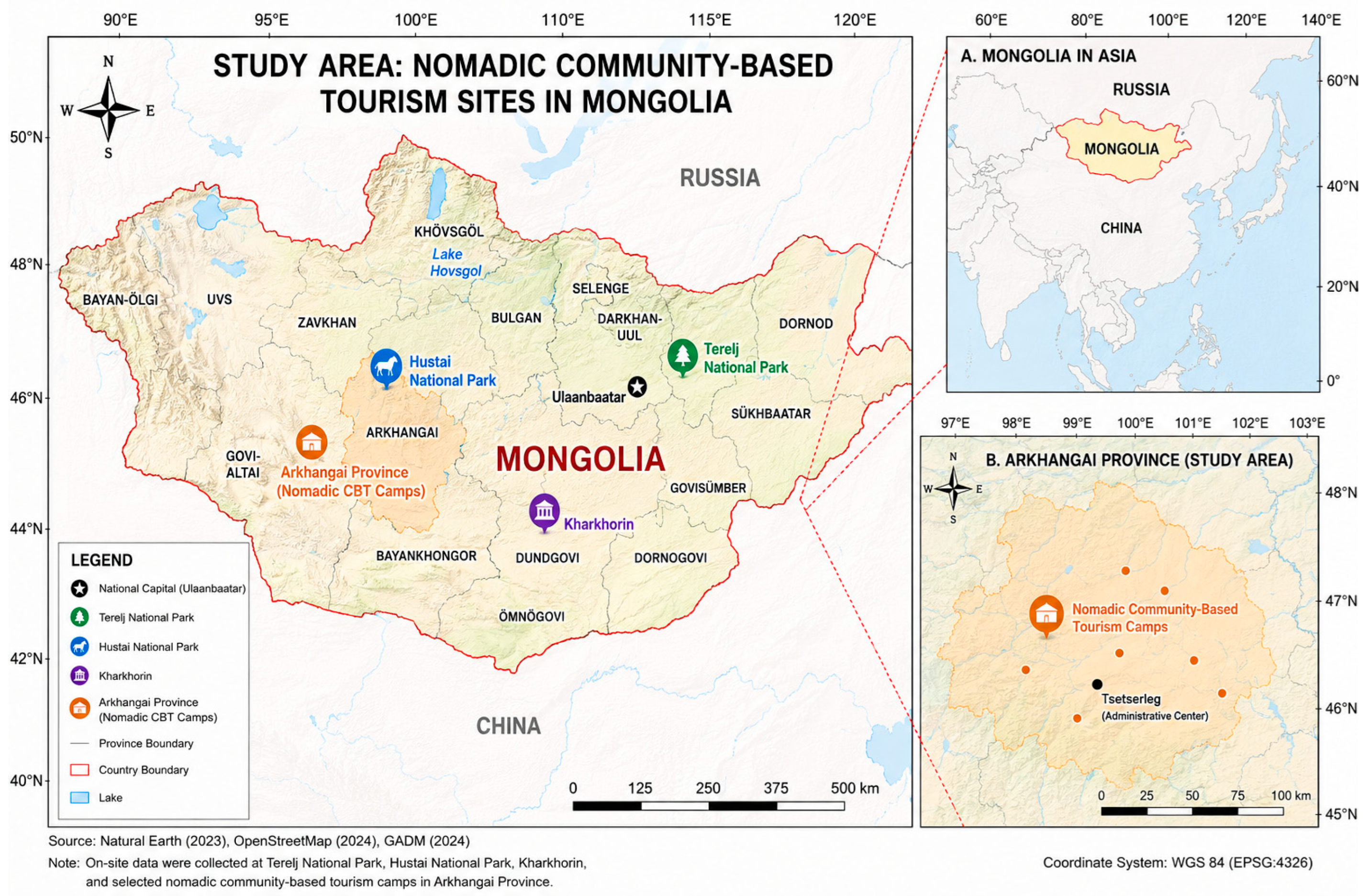
As illustrated in
Figure 1, the study was conducted at four major nomadic community-based tourism destinations in Mongolia, including Terelj National Park, Hustai National Park, Kharkhorin, and selected nomadic tourism camps in Arkhangai Province. These destinations represent some of the most popular nomadic tourism sites visited by Chinese tourists and provide an appropriate setting for examining how cultural authenticity shapes sustainable tourist behavior within living heritage and mobile cultural landscapes.
Previous studies have consistently demonstrated that cultural authenticity positively influences tourists’ perceptions, emotions, and post-visit behavioral intentions [
9,
10]. Authentic tourism experiences enhance tourists’ perceived value, strengthen emotional attachment to destinations, and improve overall satisfaction with travel experiences [
11]. In heritage and community-based tourism, tourists who perceive authentic cultural experiences are generally more likely to support destination conservation, recommend destinations to others, and express intentions to revisit [
12]. These findings suggest that authenticity plays a fundamental role in shaping tourists’ psychological responses and behavioral outcomes.
Despite this growing body of literature, several important theoretical limitations remain. First, previous authenticity research has focused predominantly on traditional tourism outcomes, including destination loyalty, revisit intention, recommendation intention, and tourist satisfaction, whereas sustainable tourist behavior has received comparatively limited attention [
13]. As sustainable tourism increasingly emphasizes tourists’ responsibility toward environmental conservation, cultural preservation, and community well-being, a better understanding of how authenticity contributes to sustainability-oriented behavior has become necessary.
Second, most existing authenticity studies have been conducted in urban heritage sites, museums, historical attractions, or well-established cultural destinations [
14]. Comparatively little empirical evidence exists for nomadic community-based tourism, despite the fact that authenticity in nomadic societies differs fundamentally from authenticity in conventional heritage tourism. Rather than being represented by fixed cultural assets, authenticity within nomadic communities is continuously enacted through living heritage, seasonal mobility, traditional livelihoods, and everyday interactions between visitors and local residents. These distinctive contextual characteristics may alter the psychological processes through which authenticity influences tourist behavior.
Third, although previous studies have acknowledged that authenticity affects tourists’ experiences and behavioral intentions, relatively little attention has been devoted to explaining the psychological mechanisms underlying this relationship [
15]. Existing studies typically investigate isolated mediators, such as perceived value, satisfaction, or attachment, rather than integrating multiple psychological responses within a coherent theoretical framework. Consequently, current knowledge provides only a partial explanation of how authentic cultural experiences are translated into sustainability-oriented behavioral outcomes, particularly in culturally dynamic tourism environments.
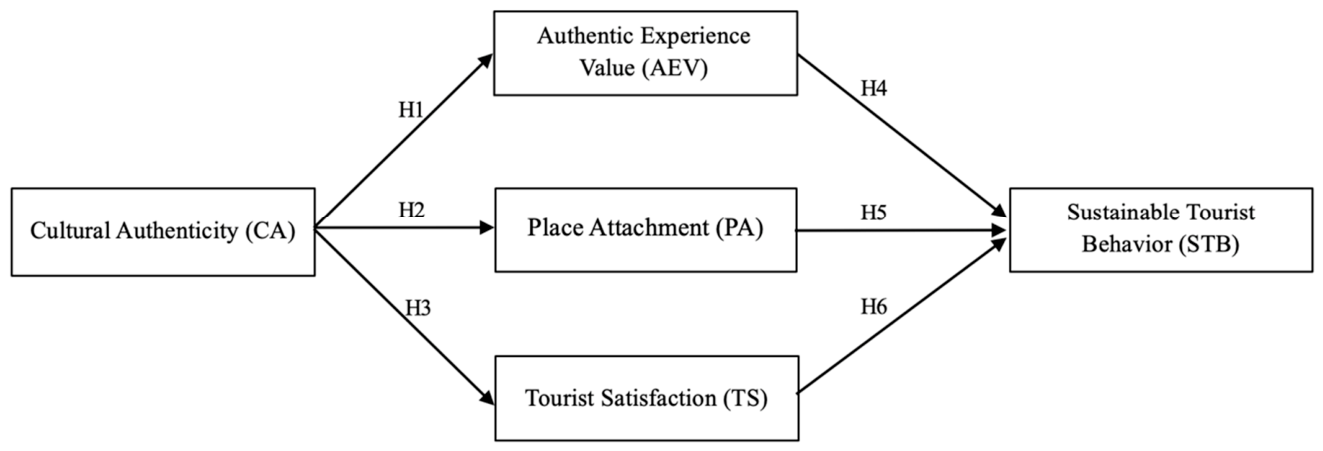
To address these limitations, this study develops an integrated conceptual framework grounded in the Stimulus–Organism–Response (S–O–R) theory [
16,
17,
18]. Within this framework, cultural authenticity is conceptualized as the external stimulus that shapes tourists’ internal psychological responses, which subsequently explain sustainable tourist behavior. Specifically, authentic experience value represents tourists’ cognitive evaluation of meaningful cultural encounters, place attachment reflects emotional bonding and psychological connectedness with nomadic destinations, whereas tourist satisfaction represents tourists’ overall evaluative judgment following the tourism experience [
19,
20,
21].
Although authentic experience value, place attachment, and tourist satisfaction are all conceptualized as organismic responses within the S–O–R framework, they represent complementary rather than sequential psychological processes. Authentic experience value captures tourists’ cognitive appraisal of the significance and meaningfulness of authentic cultural encounters. Place attachment reflects affective responses characterized by emotional bonding and a sense of belonging toward the destination. Tourist satisfaction, in contrast, represents an overall evaluative assessment of the tourism experience after comparing expectations with perceived performance. Because these three constructs reflect distinct cognitive, affective, and evaluative dimensions of tourists’ internal responses rather than successive stages of psychological development, they are modeled as parallel mediators in the present study. This multidimensional conceptualization provides a more comprehensive explanation of how authenticity shapes sustainable tourist behavior than models relying on a single psychological mechanism [
22].
Accordingly, the objective of this study is to examine how cultural authenticity is associated with sustainable tourist behavior among Chinese tourists participating in Mongolian nomadic community-based tourism by investigating the mediating roles of authentic experience value, place attachment, and tourist satisfaction within the Stimulus–Organism–Response framework.
This study contributes to the sustainable tourism literature in three important ways. First, theoretically, it extends Authenticity Theory by demonstrating that cultural authenticity functions not merely as a perceptual evaluation of tourism experiences but also as a psychological mechanism through which tourists develop sustainability-oriented behavioral responses. Unlike previous studies that primarily focused on destination loyalty, revisit intention, or satisfaction, this study explains how authenticity is translated into sustainable tourist behavior through multiple cognitive, affective, and evaluative processes.
Second, conceptually, this study advances the Stimulus–Organism–Response framework by integrating authentic experience value, place attachment, and tourist satisfaction as complementary organismic responses that collectively explain the psychological pathway linking authenticity and sustainable tourist behavior. This multidimensional conceptualization extends the explanatory capability of the S–O–R framework beyond conventional tourism behavior research and provides a more comprehensive understanding of tourists’ internal psychological processes.
Third, contextually, this study provides empirical evidence from Mongolian nomadic community-based tourism, where authenticity is continuously reproduced through living heritage, nomadic lifestyles, and mobile cultural landscapes rather than preserved as fixed cultural resources. By examining authenticity within this distinctive tourism setting, the study demonstrates how cultural context influences the relationship between authenticity and sustainable tourist behavior, thereby enriching current theoretical understanding of sustainable tourism in culturally dynamic destinations.
3. Methodology
3.1. Research Design and Research Instrument
This study employed a quantitative research design to investigate the influence of cultural authenticity on sustainable tourist behavior among Chinese tourists participating in nomadic community-based tourism in Mongolia. The study specifically examined the effects of cultural authenticity on authentic experience value, place attachment, and tourist satisfaction, as well as the subsequent influence of these constructs on sustainable tourist behavior. A quantitative approach was considered appropriate because it enables the empirical testing of theoretical relationships among multiple latent constructs and facilitates the validation of the proposed conceptual framework through statistical analysis [
114].
The study was grounded in the Stimulus–Organism–Response (S–O–R) framework, which has been widely applied in tourism and consumer behavior research [
114]. Within this framework, cultural authenticity was conceptualized as the external stimulus; authentic experience value, place attachment, and tourist satisfaction represented internal psychological responses, and sustainable tourist behavior was considered the behavioral response.
Data were collected using a structured questionnaire developed from an extensive review of the literature on authenticity, tourist experience, place attachment, tourist satisfaction, and sustainable tourism behavior. The questionnaire consisted of two sections. The first section gathered demographic and travel-related information, including gender, age, educational background, occupation, travel frequency, and previous community-based tourism experience. The second section measured the five latent constructs included in the proposed research model.
Cultural authenticity was measured using five items adapted from previous authenticity studies. Authentic experience value was assessed using five items reflecting tourists’ perceptions of meaningful cultural, emotional, and educational experiences. Place attachment was measured through five items evaluating emotional and symbolic bonds with nomadic tourism destinations. Tourist satisfaction was assessed using five items examining overall evaluations of tourism experiences, while sustainable tourist behavior was measured using five items reflecting environmentally responsible, culturally respectful, and community-supportive behaviors.
All measurement items were evaluated using a five-point Likert scale ranging from 1 (strongly disagree) to 5 (strongly agree). To ensure linguistic equivalence, the original English questionnaire was translated into Chinese using the back-translation method. Prior to the main survey, the questionnaire was reviewed by three academic experts specializing in tourism management, sustainable tourism, and quantitative research methods. Their recommendations were incorporated to improve content validity, contextual relevance, and item clarity. Subsequently, a pilot study involving 30 Chinese tourists was conducted to assess reliability and comprehensibility. The pilot results indicated satisfactory reliability, with Cronbach’s alpha values exceeding the recommended threshold of 0.70 for all constructs [
114].
3.2. Population, Sample, and Data Collection Procedure
The target population consisted of Chinese tourists who had participated in nomadic community-based tourism activities in Mongolia. Eligible respondents were required to have direct experience with nomadic tourism activities, including cultural interactions with local communities, traditional accommodation, participation in local customs, and community-based tourism programs.
The sample size was determined based on the recommendations for Partial Least Squares Structural Equation Modeling (PLS-SEM) proposed by Hair et al. [
114,
115]. Considering the complexity of the proposed model, the number of latent constructs, and the number of measurement indicators, a minimum sample size of 250 respondents was deemed adequate. To improve statistical robustness and predictive accuracy, the study targeted a larger sample.
Data collection was conducted between May and June 2026 using a purposive sampling approach. Respondents were recruited from major nomadic tourism destinations and community-based tourism sites across Mongolia. Specifically, onsite data were collected at Terelj National Park, Hustai National Park, Kharkhorin, and selected nomadic community-based tourism camps in Arkhangai Province, which are among the major destinations frequently visited by Chinese tourists. Survey administration was conducted through both onsite and online channels. Onsite questionnaires were distributed to tourists immediately after they had participated in nomadic tourism activities, whereas online questionnaires were disseminated through Chinese travel communities, tourism forums, and social media platforms targeting individuals who had recently visited Mongolia.
Before accessing the questionnaire, respondents were required to complete a screening question confirming that they had visited a Mongolian nomadic community-based tourism destination within the previous 12 months. Only respondents who answered “Yes” were allowed to proceed with the survey. This screening procedure ensured that all participants possessed relevant firsthand travel experience and were able to evaluate cultural authenticity based on their own experiences. Respondents who indicated that they had never visited a Mongolian nomadic community-based tourism destination or failed to complete the screening question were automatically excluded from the survey.
A total of 328 questionnaires were collected; 182 were obtained through onsite surveys (55.5%), whereas 146 were collected through online surveys (44.5%). Following data screening procedures, questionnaires containing excessive missing values, incomplete responses, or response patterns indicating low-quality data were removed. In addition, duplicate submissions were minimized by screening IP addresses and response patterns, and questionnaires exhibiting straight-lining responses or unrealistically short completion times were excluded from the final dataset. After the screening process, 300 valid questionnaires were retained for analysis, resulting in a valid response rate of 91.46%.
The final sample size exceeded the minimum requirements for PLS-SEM analysis and was considered sufficient to ensure stable parameter estimation, reliable hypothesis testing, and adequate statistical power [
115].
3.3. Data Analysis
Data analysis was conducted using SmartPLS 4.1.1.7 software following the two-step analytical procedure recommended for Partial Least Squares Structural Equation Modeling (PLS-SEM) [
115,
116]. The first stage involved evaluating the measurement model, while the second stage focused on assessing the structural model.
The measurement model was assessed through indicator reliability, internal consistency reliability, convergent validity, and discriminant validity. Indicator reliability was evaluated using factor loadings, with values exceeding 0.70 considered acceptable. Internal consistency reliability was assessed using Cronbach’s alpha and composite reliability (CR), where values above 0.70 indicated satisfactory reliability. Convergent validity was evaluated using average variance extracted (AVE), with values greater than 0.50 demonstrating adequate convergent validity [
114,
115].
Discriminant validity was examined using both the Fornell–Larcker criterion [
116] and the heterotrait–monotrait ratio (HTMT) [
117]. HTMT values below 0.85 were considered evidence of satisfactory discriminant validity [
117].
Following confirmation of the measurement model, the structural model was evaluated using standardized path coefficients (β), coefficients of determination (R
2), effect sizes (f
2), predictive relevance (Q
2), and variance inflation factor (VIF) statistics [
117,
118]. A bootstrapping procedure with 5000 resamples was employed to assess the significance of direct and indirect effects. Statistical significance was determined using
t-values,
p-values, and confidence intervals generated through the bootstrapping procedure [
116,
117].
In addition, model fit was assessed using the standardized root mean square residual (SRMR), while predictive performance was evaluated using PLSpredict and the cross-validated predictive ability test (CVPAT) to examine the model’s out-of-sample predictive capability [
117,
118,
119].
To minimize the potential for common method bias, several procedural remedies were implemented during data collection, including anonymous participation, voluntary participation, and assurances of confidentiality. In addition, full collinearity variance inflation factor (VIF) values were examined following the recommendation of Kock [
120]. All full collinearity VIF values were below the recommended threshold of 3.3, indicating that common method bias was unlikely to pose a serious threat to the validity of the findings.
3.4. Ethical Considerations
This study was conducted in accordance with internationally accepted ethical principles governing research involving human participants. Prior to participation, all respondents were informed about the purpose of the study, the voluntary nature of participation, confidentiality procedures, and their right to withdraw from the research at any stage without penalty.
Participation was entirely voluntary, and informed consent was obtained from all respondents before the survey commenced. No personally identifiable information, including names, contact details, identification numbers, or addresses, was collected during the data collection process. All responses were anonymized and analyzed only in aggregate form for academic purposes.
The collected data were securely stored and accessed exclusively by the research team. Appropriate measures were implemented throughout the study to ensure confidentiality, privacy protection, and compliance with ethical research standards.
This study received ethical approval from the Human Research Ethics Committee of the University of the Thai Chamber of Commerce under Project Code G0008/2026 and Approval Number UTCCEC/Exemp053/2026. The research was conducted in accordance with the approved ethical guidelines and internationally recognized standards for research involving human participants.
4. Results
4.1. Demographic Characteristics of the Respondents
A total of 300 valid questionnaires were included in the analysis. As presented in
Table 1, male respondents accounted for 54.0% of the sample, while female respondents represented 44.7%. The largest age group was 30–39 years (34.0%), followed by 40–49 years (27.0%) and 20–29 years (22.0%). Most respondents were single (53.7%) and held an undergraduate degree (54.0%).
Regarding socioeconomic characteristics, private company employees represented the largest occupational group (32.0%), followed by self-employed/business owners (24.0%). Most respondents reported a monthly income between RMB 10,001 and 15,000 (29.0%). Furthermore, 61.0% of respondents were first-time visitors to nomadic tourism destinations in Mongolia, while 72.0% reported previous experience with community-based or sustainable tourism activities. Overall, the sample was dominated by working-age tourists with relatively high educational attainment and prior exposure to sustainable tourism experiences.
4.2. Measurement Model Assessment
The measurement model was evaluated by examining indicator reliability, internal consistency reliability, convergent validity, and discriminant validity. Indicator reliability was assessed using factor loadings, while internal consistency reliability and convergent validity were evaluated through Cronbach’s alpha (α), composite reliability (CR), and average variance extracted (AVE). The recommended thresholds were 0.70 for factor loadings and reliability coefficients, and 0.50 for AVE [
116,
117].
As shown in
Table 2, all factor loadings exceeded the recommended threshold of 0.70, ranging from 0.715 to 0.927, thereby confirming indicator reliability. Cronbach’s alpha values ranged from 0.837 to 0.945, while composite reliability values ranged from 0.883 to 0.958, both exceeding the recommended value of 0.70. Furthermore, AVE values ranged from 0.601 to 0.820, surpassing the minimum criterion of 0.50 and confirming convergent validity [
116,
117]. Therefore, the measurement model demonstrated satisfactory reliability and validity for subsequent structural model assessment.
4.3. Discriminant Validity Assessment
Discriminant validity was assessed using the Fornell–Larcker criterion and the heterotrait–monotrait ratio (HTMT).
As shown in
Table 3, the square root of AVE for each construct exceeded its correlations with other constructs, thereby satisfying the Fornell–Larcker criterion and confirming discriminant validity [
116].
As shown in
Table 4, all HTMT values were below the recommended threshold of 0.85, indicating satisfactory discriminant validity [
116].
4.4. Collinearity Assessment
Prior to evaluating the structural model, multicollinearity among predictor constructs was examined using variance inflation factor (VIF) values.
The collinearity statistics are presented in
Table 4.
As shown in
Table 5, all VIF values were substantially below the threshold of 3.30, indicating the absence of multicollinearity issues [
118].
4.5. Structural Model Assessment
As shown in
Table 6, the model explained 53.3% of the variance in authentic experience value, 45.6% of the variance in place attachment, 28.5% of the variance in tourist satisfaction, and 53.1% of the variance in sustainable tourist behavior. According to Hair et al. [
115], these values indicate moderate explanatory power.
Interpretation. The R2 results suggest that the proposed Stimulus–Organism–Response (S–O–R) framework provides satisfactory explanatory capability for the endogenous constructs. Overall, the model demonstrates stronger explanatory power for authentic experience value and sustainable tourist behavior than for tourist satisfaction. These findings indicate that the proposed framework is particularly effective in explaining tourists’ experiential and behavioral outcomes within the context of Mongolian nomadic community-based tourism and supports the suitability of the conceptual model for investigating sustainability-oriented tourist behavior.
As shown in
Table 7, cultural authenticity exerted large effects on authentic experience value, place attachment, and tourist satisfaction. Place attachment demonstrated a substantial effect on sustainable tourist behavior, whereas tourist satisfaction exhibited only a negligible effect [
115].
Interpretation. The effect size analysis indicates that cultural authenticity is the dominant explanatory construct within the proposed conceptual framework, exerting substantial practical influence on tourists’ cognitive, affective, and evaluative responses. Among the organismic responses, place attachment demonstrates the strongest practical contribution to sustainable tourist behavior, highlighting the importance of emotional bonding in encouraging responsible tourism practices. In contrast, the negligible effect size of tourist satisfaction further supports the finding that overall satisfaction alone is insufficient to explain sustainability-oriented behavior in the context of Mongolian nomadic community-based tourism.
4.6. Model Fit Assessment
As shown in
Table 8, the estimated SRMR value was 0.083, which was below the recommended threshold of 0.10, indicating an acceptable model fit [
114,
115]. Furthermore, the NFI value of 0.851 suggested an adequate level of model quality for PLS-SEM analysis.
Interpretation. The model fit assessment indicates that the proposed structural model adequately represents the observed data. The acceptable SRMR value and satisfactory NFI suggest that the conceptual framework provides a reasonable approximation of the relationships among cultural authenticity, authentic experience value, place attachment, tourist satisfaction, and sustainable tourist behavior. Overall, these findings support the suitability of the proposed Stimulus–Organism–Response (S–O–R) framework for examining sustainable tourist behavior in the context of Mongolian nomadic community-based tourism.
4.7. Predictive Assessment
To evaluate predictive performance, PLSpredict and CVPAT analyses were conducted.
As shown in
Table 9, all Q
2predict values were greater than zero, confirming that the model possessed satisfactory predictive relevance and predictive capability [
116].
Interpretation. The PLSpredict results indicate that the proposed model possesses satisfactory predictive relevance for all endogenous constructs. The positive Q2predict values suggest that the Stimulus–Organism–Response (S–O–R) framework is capable of predicting tourists’ psychological responses and sustainability-oriented behavior beyond the estimation sample. These findings provide additional support for the robustness and practical applicability of the proposed conceptual model in the context of Mongolian nomadic community-based tourism.
As shown in
Table 10, the PLS-SEM model significantly outperformed the indicator average benchmark across all endogenous constructs, confirming strong out-of-sample predictive performance [
115].
Interpretation. The CVPAT results further confirm the predictive robustness of the proposed PLS-SEM model. The significant negative loss differences indicate that the model consistently outperforms the benchmark model in predicting the endogenous constructs, demonstrating strong out-of-sample predictive capability. Together with the PLSpredict results, these findings support the reliability and generalizability of the proposed framework for explaining sustainable tourist behavior in Mongolian nomadic community-based tourism.
4.8. Hypothesis Testing
Hypothesis testing was performed using bootstrapping with 5000 resamples.
As shown in
Table 11, cultural authenticity significantly enhanced authentic experience value, place attachment, and tourist satisfaction. Furthermore, authentic experience value and place attachment significantly influenced sustainable tourist behavior. However, tourist satisfaction did not exert a significant effect on sustainable tourist behavior. Consequently, H1–H5 were supported, whereas H6 was not supported.
4.9. Mediation Analysis
Mediation effects were assessed using the bootstrapping procedure.
As shown in
Table 12, place attachment significantly mediated the relationship between cultural authenticity and sustainable tourist behavior, followed by authentic experience value. In contrast, tourist satisfaction did not function as a significant mediator. These findings indicate that emotional attachment and meaningful experiential value are the primary mechanisms through which cultural authenticity promotes sustainable tourist behavior.
4.10. Summary of Findings
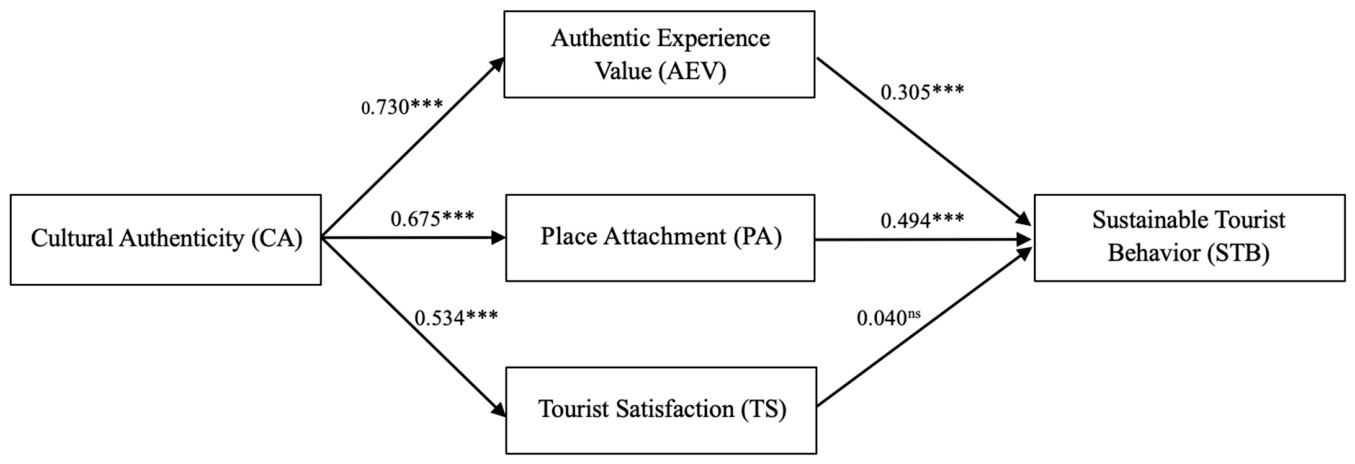
Figure 3 illustrates the final structural model explaining the relationship between cultural authenticity and sustainable tourist behavior in Mongolian nomadic community-based tourism. The findings reveal that cultural authenticity (CA) plays a fundamental role in shaping tourists’ psychological responses and subsequent sustainable behavioral outcomes.
As shown in
Figure 2, cultural authenticity significantly influenced authentic experience value (AEV) (β = 0.730), place attachment (PA) (β = 0.675), and tourist satisfaction (TS) (β = 0.534). Among these relationships, the strongest effect was observed between cultural authenticity and authentic experience value, indicating that tourists who perceive nomadic cultural experiences as genuine and representative of local traditions are more likely to derive meaningful value from their travel experiences. Cultural authenticity also contributed substantially to the development of place attachment and tourist satisfaction, suggesting that authentic interactions with nomadic communities enhance both emotional connections and positive evaluations of the destination.
Regarding sustainable tourist behavior (STB), place attachment emerged as the strongest predictor (β = 0.494), followed by authentic experience value (β = 0.305). These findings suggest that tourists who develop emotional bonds with nomadic destinations and perceive high experiential value are more likely to engage in responsible behaviors that support environmental conservation, cultural preservation, and community sustainability. In contrast, tourist satisfaction exhibited only a weak and non-significant influence on sustainable tourist behavior (β = 0.040), indicating that satisfaction alone may not be sufficient to motivate sustainability-oriented actions.
The results therefore demonstrate that the pathway from cultural authenticity to sustainable tourist behavior is primarily driven by emotional and experiential mechanisms. Specifically, authentic cultural experiences encourage sustainable behavior by strengthening tourists’ perceived value of the experience and fostering emotional attachment to the destination. Among the mediating constructs, place attachment appears to be the most influential mechanism linking authenticity to sustainability outcomes.
Overall,
Figure 3 supports the proposed Stimulus–Organism–Response (S–O–R) framework by confirming that cultural authenticity acts as an external stimulus that shapes tourists’ internal psychological responses, which subsequently influence sustainable behavioral outcomes. Furthermore, the mediation analysis revealed that place attachment represented the strongest indirect pathway linking cultural authenticity and sustainable tourist behavior (β = 0.334 ***), followed by authentic experience value (β = 0.222 ***). In contrast, tourist satisfaction did not exhibit a significant mediating effect. These findings suggest that emotional attachment and meaningful experiential value are the primary psychological mechanisms through which authenticity translates into sustainable tourist behavior. Therefore, preserving authentic nomadic cultural experiences and facilitating meaningful visitor–community interactions should be regarded as essential strategies for promoting sustainable tourism development in community-based tourism destinations.
5. Discussion
The present study examined the relationships among cultural authenticity, authentic experience value, place attachment, tourist satisfaction, and sustainable tourist behavior within the context of Mongolian nomadic community-based tourism. Drawing upon Authenticity Theory and the Stimulus–Organism–Response (S–O–R) framework, the findings provide empirical evidence that cultural authenticity is positively associated with tourists’ internal psychological responses, which subsequently explain sustainability-oriented behavioral outcomes. More importantly, the results demonstrate that the mechanisms linking authenticity and sustainable tourist behavior are not uniform. Rather, tourists’ cognitive appraisal of authentic experiences and emotional attachment to destinations play more prominent roles than their overall satisfaction in explaining sustainable tourist behavior. These findings extend current understanding of how authenticity contributes to sustainable tourism by emphasizing the importance of psychological transformation rather than simple post-consumption evaluation.
The findings indicate that cultural authenticity is positively associated with authentic experience value, place attachment, and tourist satisfaction, supporting the proposition that authenticity functions as the external stimulus within the S–O–R framework. Among these relationships, cultural authenticity exhibited the strongest association with authentic experience value, suggesting that authenticity primarily enhances tourists’ perceptions of meaningfulness rather than merely improving destination evaluations. This finding is consistent with Authenticity Theory, which argues that genuine cultural encounters create symbolic, educational, and emotional value beyond the functional benefits of tourism experiences [
3,
20,
35]. In the context of Mongolian nomadic community-based tourism, authentic interactions with nomadic families, participation in pastoral traditions, and engagement with living heritage enable visitors to experience culture as an ongoing way of life rather than as a staged performance. Consequently, authenticity enriches tourists’ perceptions of experiential value and provides a cognitive foundation for subsequent sustainability-oriented behavior.
The significant relationship between cultural authenticity and place attachment further extends previous tourism research by demonstrating that emotional attachment can develop not only toward destinations characterized by permanent physical attractions but also toward dynamic cultural environments. Unlike conventional heritage tourism, where attachment is often associated with monuments or historical sites, nomadic tourism is characterized by living heritage, seasonal mobility, and continuous interaction between people, culture, and nature. The findings therefore suggest that tourists develop attachment through meaningful social relationships, shared cultural experiences, and appreciation of nomadic ways of life rather than through physical settings alone. This result broadens existing interpretations of place attachment by showing that emotional bonds can emerge within mobile cultural landscapes where cultural identity is continuously reproduced through everyday practices [
55,
56,
57].
The findings also reveal that place attachment is the strongest predictor of sustainable tourist behavior. This result suggests that sustainability-oriented behavior is primarily driven by emotional commitment rather than by destination evaluation alone. Tourists who establish emotional bonds with nomadic communities appear more willing to respect local traditions, support community-based tourism enterprises, protect cultural heritage, and minimize behaviors that may negatively affect local environments. These findings are consistent with previous studies reporting that emotional attachment encourages individuals to protect places they value [
93,
97,
101]. More importantly, the present study demonstrates that this relationship remains valid within nomadic community-based tourism, where attachment is directed toward cultural relationships and living heritage rather than solely toward physical destinations. This contextual evidence extends existing sustainable tourism literature by highlighting the importance of emotional connectedness in culturally dynamic tourism environments.
Authentic experience value was also positively associated with sustainable tourist behavior, indicating that meaningful cultural experiences encourage tourists to move beyond passive consumption toward responsible participation. Rather than simply providing enjoyable experiences, authentic encounters appear to increase tourists’ awareness of the cultural and environmental significance of nomadic communities. As visitors perceive greater educational, symbolic, and personal value from these experiences, they become more inclined to adopt behaviors that support cultural preservation and community well-being. This finding supports recent arguments that tourism experiences should be evaluated not only according to visitor satisfaction but also according to their ability to foster sustainability awareness and responsible behavior [
20,
37,
82]. Accordingly, authentic experience value represents an important cognitive mechanism through which authenticity contributes to sustainable tourism development.
One of the most theoretically meaningful findings of this study is the non-significant relationship between tourist satisfaction and sustainable tourist behavior. Although previous tourism research frequently reports that satisfied tourists are more likely to revisit destinations, recommend them to others, and express favorable attitudes [
102,
103,
104,
105,
106,
107,
108,
109,
110], the present findings suggest that satisfaction alone may not be sufficient to explain sustainability-oriented behavior in community-based tourism contexts. A plausible explanation is that tourist satisfaction primarily reflects an overall post-consumption evaluation of the tourism experience, whereas sustainable tourist behavior requires deeper psychological processes associated with emotional commitment, cultural empathy, and responsibility toward host communities. Therefore, satisfaction alone may be insufficient to motivate sustainability-oriented actions in nomadic community-based tourism. Consequently, tourists may report high levels of satisfaction while remaining passive with respect to environmental protection or community support.
Another possible explanation relates to the complementary roles of authentic experience value and place attachment. When these cognitive and affective responses are considered simultaneously, they may account for much of the variance in sustainable tourist behavior, thereby reducing the independent explanatory contribution of tourist satisfaction. In other words, tourists appear to engage in sustainable behavior not simply because they are satisfied with their experiences but because they perceive authentic cultural encounters as meaningful and develop emotional bonds with local communities. This interpretation is consistent with the S–O–R framework, which proposes that different organismic responses contribute differently to behavioral outcomes depending on their psychological functions.
The findings also suggest that the characteristics of Chinese tourists visiting Mongolian nomadic communities may help explain the non-significant effect of tourist satisfaction. Many visitors participate in relatively short-term cultural experiences, allowing them to evaluate the quality of their visit but providing limited opportunity to develop long-term responsibility toward destination conservation. Under these circumstances, satisfaction may represent a positive evaluation of the travel experience without necessarily motivating behaviors aimed at protecting cultural heritage or supporting local communities. This contextual interpretation highlights the importance of considering both cultural settings and visitor characteristics when explaining sustainable tourist behavior.
The mediation analysis provides additional theoretical insight by demonstrating that authentic experience value and place attachment significantly mediate the relationship between cultural authenticity and sustainable tourist behavior, whereas tourist satisfaction does not. These findings indicate that authenticity is associated with sustainable behavior primarily through cognitive and affective psychological pathways rather than through evaluative judgments alone. This distinction represents an important theoretical contribution because it shifts attention from traditional tourism performance indicators toward the psychological mechanisms through which authentic cultural experiences encourage responsible visitor behavior.
Overall, this study extends both Authenticity Theory and the Stimulus–Organism–Response framework by demonstrating that cultural authenticity is associated with sustainable tourist behavior through multiple psychological mechanisms within nomadic community-based tourism. The findings further suggest that authenticity should be understood not merely as a characteristic of tourism destinations but as a strategic resource capable of fostering meaningful experiences, emotional attachment, and sustainability-oriented behavior in culturally dynamic environments.
5.1. Theoretical Implications
This study makes four important theoretical contributions.
First, this study extends Authenticity Theory by demonstrating that cultural authenticity is positively associated with sustainable tourist behavior rather than being limited to traditional tourism outcomes such as tourist satisfaction, destination loyalty, and revisit intention. While previous studies have primarily conceptualized authenticity as an antecedent of favorable destination evaluations, the present study suggests that authenticity is also associated with sustainability-oriented behavioral responses through tourists’ cognitive and affective psychological processes. Furthermore, by examining authenticity within the context of Mongolian nomadic community-based tourism, where living heritage, mobile cultural landscapes, and continuous host–guest interactions characterize the tourism experience, this study broadens the applicability of Authenticity Theory beyond conventional heritage tourism settings.
Second, the study advances the application of the Stimulus–Organism–Response framework within sustainable tourism research. The findings confirm that authenticity operates as a stimulus, while authentic experience value and place attachment function as critical organism variables translating cultural experiences into behavioral responses. The results therefore provide empirical evidence supporting the explanatory capability of the S–O–R framework in community-based tourism settings.
Third, the findings identify place attachment as the dominant mediating mechanism linking authenticity and sustainable tourist behavior. This contribution is theoretically significant because it demonstrates that emotional bonds exert greater influence on sustainability-oriented behavior than satisfaction-based evaluations. Consequently, future tourism research should place greater emphasis on emotional attachment processes when explaining responsible tourist behavior.
Fourth, the study contributes to the limited literature on nomadic tourism by providing empirical evidence from Mongolia, a context that remains underrepresented in tourism research. The findings broaden the geographical and cultural applicability of authenticity and sustainable tourism theories and demonstrate that the mechanisms underlying sustainable behavior are also relevant within mobile cultural landscapes and living heritage environments.
5.2. Practical Implications
The findings provide several practical implications for policymakers, destination managers, and community stakeholders involved in the development of nomadic community-based tourism. First, destination managers should move beyond traditional visitor satisfaction strategies and instead prioritize tourism experiences that foster meaningful emotional connections between tourists and nomadic communities. Because place attachment emerged as the strongest predictor of sustainable tourist behavior, tourism development should focus on creating opportunities for visitors to build long-lasting emotional relationships with local people, cultural traditions, and the surrounding natural environment rather than emphasizing service quality alone.
Second, community-based tourism operators should design immersive tourism programs that encourage active participation in everyday nomadic life. Experiences such as staying in traditional ger camps, accompanying nomadic families during livestock herding, learning traditional dairy production, participating in seasonal cultural festivals, and engaging in storytelling sessions led by local elders can strengthen both authentic experience value and place attachment. These activities allow tourists to experience living heritage directly, thereby encouraging greater appreciation of nomadic culture and more responsible visitor behavior.
Third, policymakers should recognize that preserving cultural authenticity is not only a heritage conservation objective but also a strategy for promoting sustainable tourism. Government agencies should therefore provide financial and technical support for community-led tourism initiatives that safeguard traditional knowledge, pastoral lifestyles, indigenous ecological practices, and mobile cultural landscapes while avoiding excessive commercialization that may undermine cultural authenticity. Establishing guidelines for culturally appropriate tourism activities and limiting visitor numbers in environmentally and culturally sensitive nomadic areas may further contribute to long-term sustainability.
Fourth, destination marketing organizations should shift from conventional promotional campaigns emphasizing scenery and visitor enjoyment toward narratives that communicate the cultural significance of Mongolia’s nomadic heritage. Marketing materials should highlight authentic interactions with local communities, traditional ecological knowledge, and the importance of preserving living heritage. Such interpretation-based marketing may encourage visitors to perceive themselves not merely as tourists but also as temporary custodians of cultural and environmental resources.
Finally, local communities should be actively involved in tourism planning, interpretation, and visitor management. Training local residents as cultural interpreters, storytelling guides, and community hosts can enhance the authenticity of tourism experiences while ensuring that economic benefits are distributed directly to nomadic households. In addition, introducing visitor guidelines that explain appropriate cultural etiquette, environmental responsibilities, and respectful interactions with nomadic families may further encourage sustainable tourist behavior throughout the visitor experience.
5.3. Limitations and Future Research
This study has several limitations that should be acknowledged. First, the research employed a cross-sectional design; therefore, the observed relationships should be interpreted as statistical associations consistent with the proposed theoretical framework rather than definitive causal relationships. Future research could adopt longitudinal or experimental designs to examine how authentic experience value, place attachment, and sustainable tourist behavior evolve over time and to provide stronger evidence regarding causal mechanisms.
Second, the study focused exclusively on Chinese tourists who had participated in nomadic community-based tourism in Mongolia. Although this context provides valuable insights into living heritage tourism, the findings may not be directly generalizable to other tourist populations or cultural settings. Future studies are encouraged to validate the proposed model in other forms of community-based tourism, including indigenous tourism, rural tourism, pastoral tourism, and cultural heritage destinations across different countries.
Third, the study relied on self-reported questionnaire data, which may be subject to common method bias and social desirability bias despite the procedural and statistical remedies implemented during data collection and analysis. Future studies could combine survey data with qualitative interviews, observational methods, or behavioral measures to provide a more comprehensive understanding of sustainable tourist behavior.
Fourth, although the proposed model explained a substantial proportion of the variance in sustainable tourist behavior, additional psychological and contextual factors may further improve its explanatory power. Future research may consider incorporating constructs such as environmental concern, destination psychological ownership, cultural identity, moral obligation, environmental values, tourist engagement, and perceived destination stewardship to provide a more comprehensive explanation of sustainability-oriented behavior.
Finally, future studies should investigate potential moderating effects associated with tourists’ nationality, previous travel experience, cultural background, visit frequency, and length of stay. Such analyses may reveal whether the relationships identified in the present study vary across different visitor segments and tourism contexts, thereby improving the generalizability of the proposed theoretical framework.
6. Conclusions
This study examined the associations between cultural authenticity, authentic experience value, place attachment, tourist satisfaction, and sustainable tourist behavior within the context of Mongolian nomadic community-based tourism by integrating Authenticity Theory and the Stimulus–Organism–Response (S–O–R) framework. The findings indicate that cultural authenticity is positively associated with authentic experience value, place attachment, and tourist satisfaction. Among the proposed organismic responses, authentic experience value and place attachment were positively associated with sustainable tourist behavior, whereas tourist satisfaction did not demonstrate a statistically significant relationship.
The findings suggest that sustainable tourist behavior is more closely associated with meaningful cultural experiences and emotional attachment than with overall satisfaction alone. In particular, place attachment emerged as the strongest predictor of sustainable tourist behavior, highlighting the importance of emotional connectedness in encouraging responsible tourism practices. These results further suggest that cultural authenticity contributes to sustainable tourism primarily through cognitive and affective psychological mechanisms rather than through evaluative judgments alone.
From a theoretical perspective, this study extends Authenticity Theory by demonstrating that authenticity is associated not only with traditional tourism outcomes, such as satisfaction and loyalty, but also with sustainability-oriented behavior through multiple psychological pathways. The findings also advance the Stimulus–Organism–Response framework by illustrating that authentic experience value, place attachment, and tourist satisfaction represent complementary cognitive, affective, and evaluative organismic responses that explain how cultural authenticity is associated with sustainable tourist behavior in community-based tourism settings.
From a practical perspective, the findings suggest that tourism development strategies should move beyond improving visitor satisfaction alone and instead prioritize authentic cultural engagement and opportunities for emotional connection between tourists and host communities. Preserving living heritage, supporting community participation, and facilitating meaningful interactions between visitors and local residents may strengthen sustainability-oriented behavior while contributing to the long-term preservation of nomadic cultural heritage.
Overall, this study provides empirical evidence that cultural authenticity represents an important psychological resource for promoting sustainable tourist behavior in nomadic community-based tourism. By highlighting the complementary roles of authentic experience value and place attachment, the study contributes to a more comprehensive understanding of the psychological processes through which authentic cultural experiences are associated with sustainability-oriented behavior in culturally dynamic tourism environments.