A Systematic Review of Vertical Greenery: Environmental Impacts, Architectural Innovations, and Future Directions



Abstract
1. Introduction
- Summarizing and analyzing the various impacts of vertical greenery on the urban built environment, covering not only thermal environments but also sound, wind, building energy consumption, air quality, ecological environments, and psychological effects.
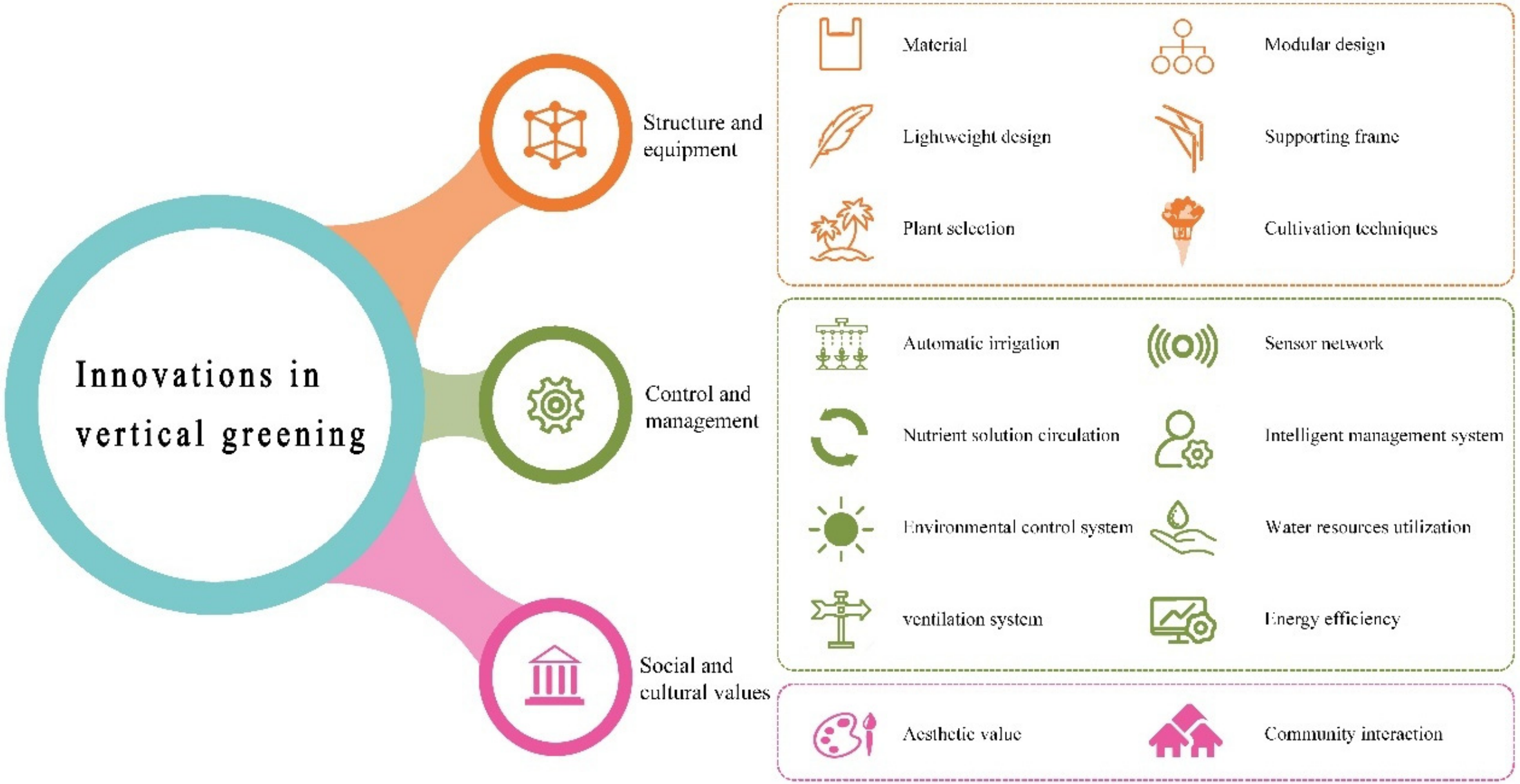
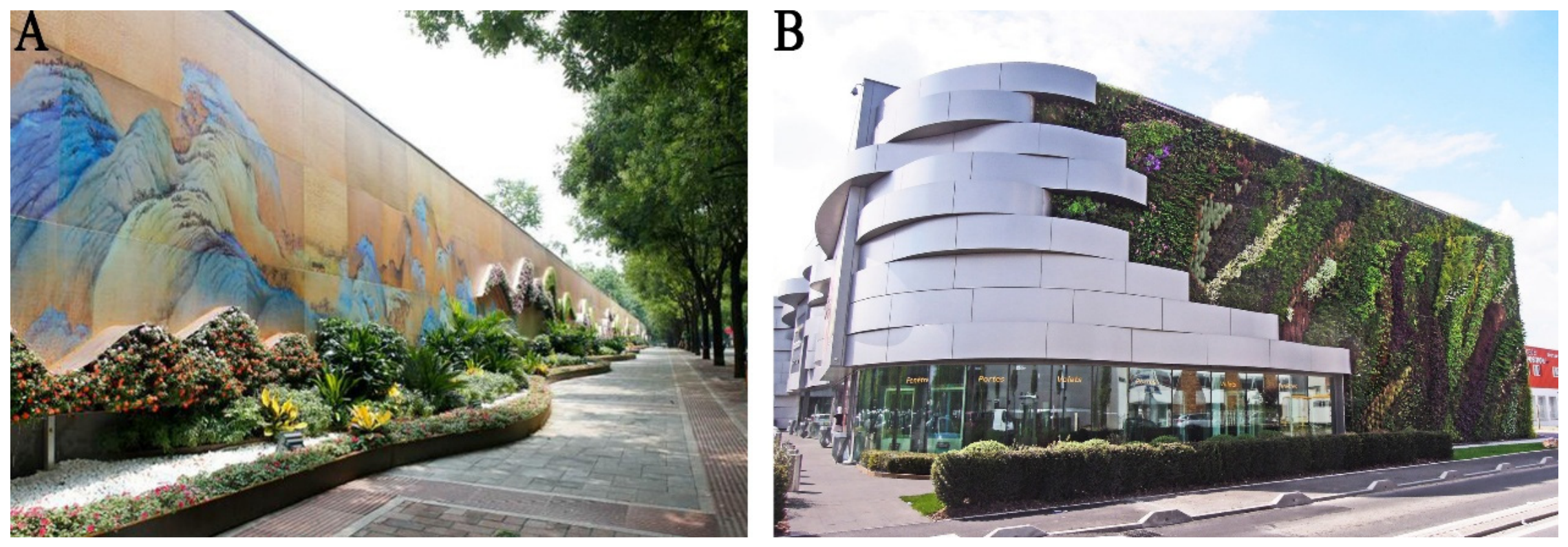
- Reviewing and analyzing classic cases and patent innovations, categorizing the development of vertical greenery into structure and equipment, control and management, and social and cultural values, and summarizing current trends and future directions.
2. Methods
3. Results and Analysis
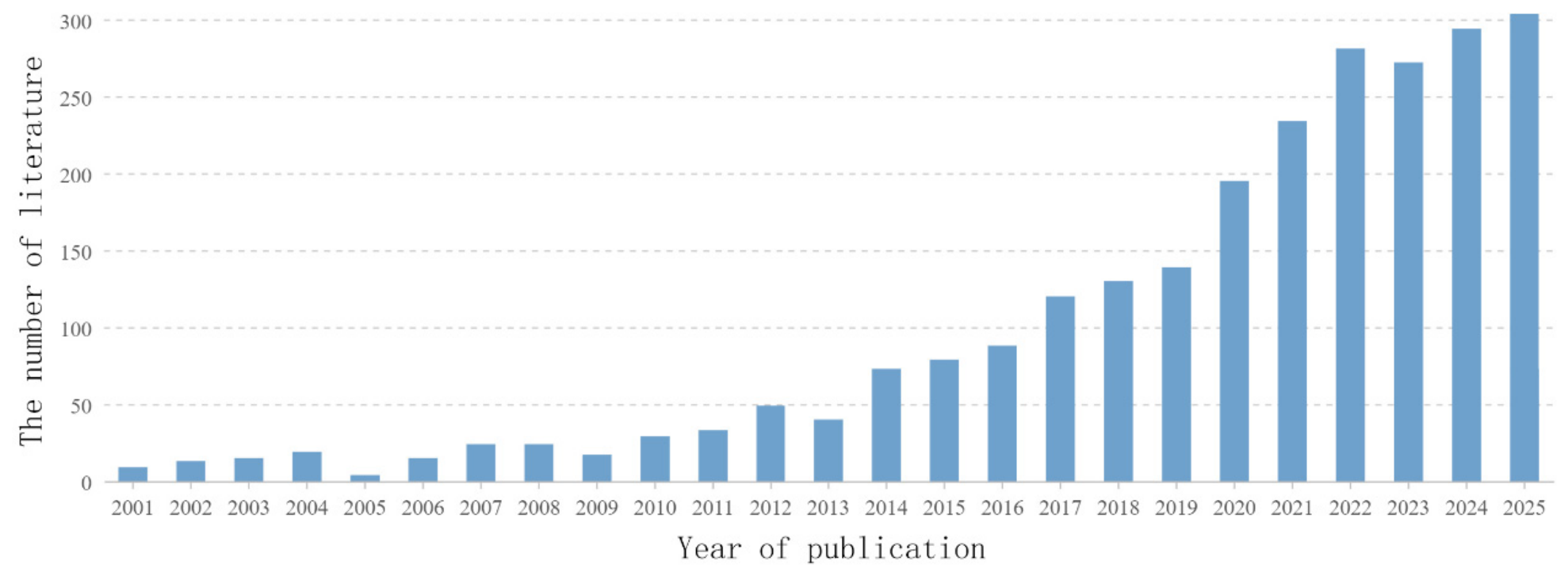
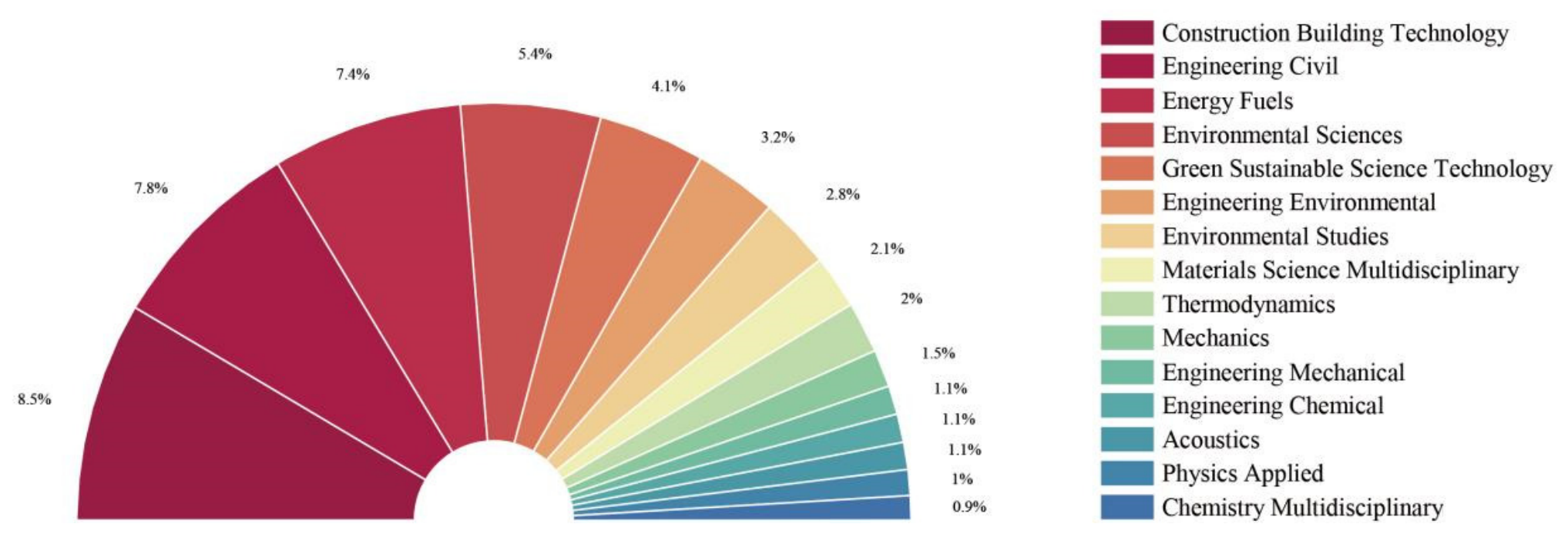
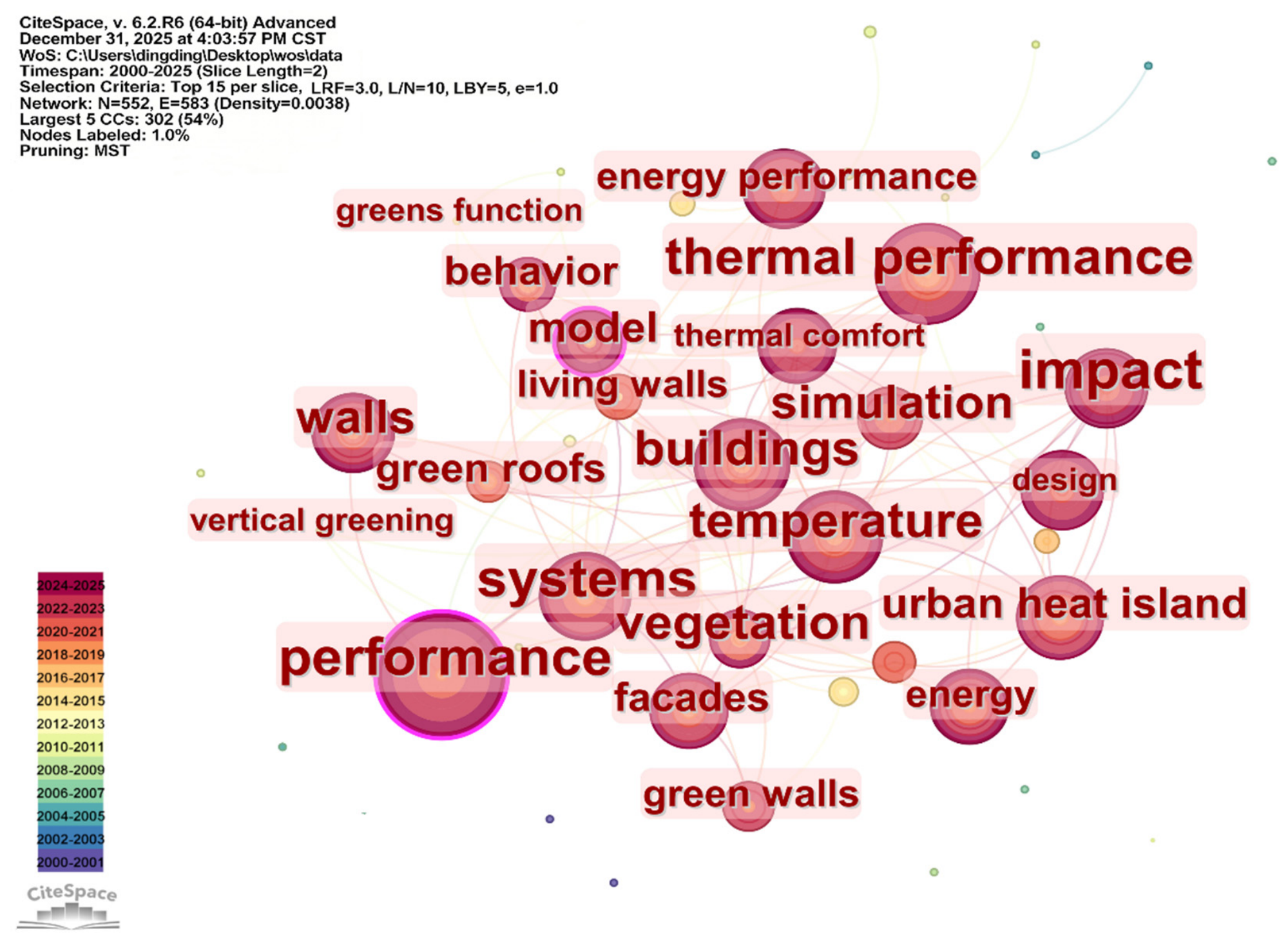
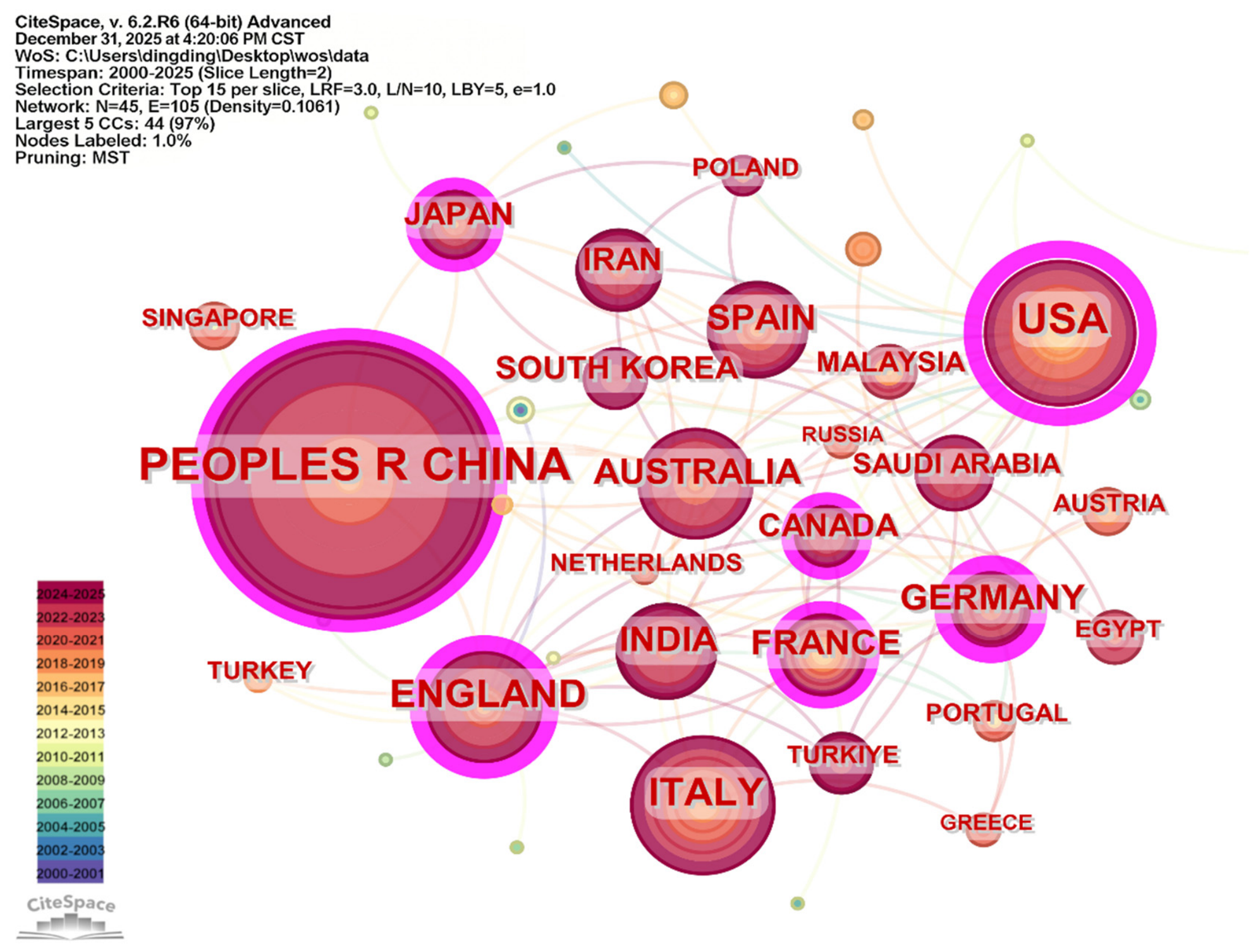
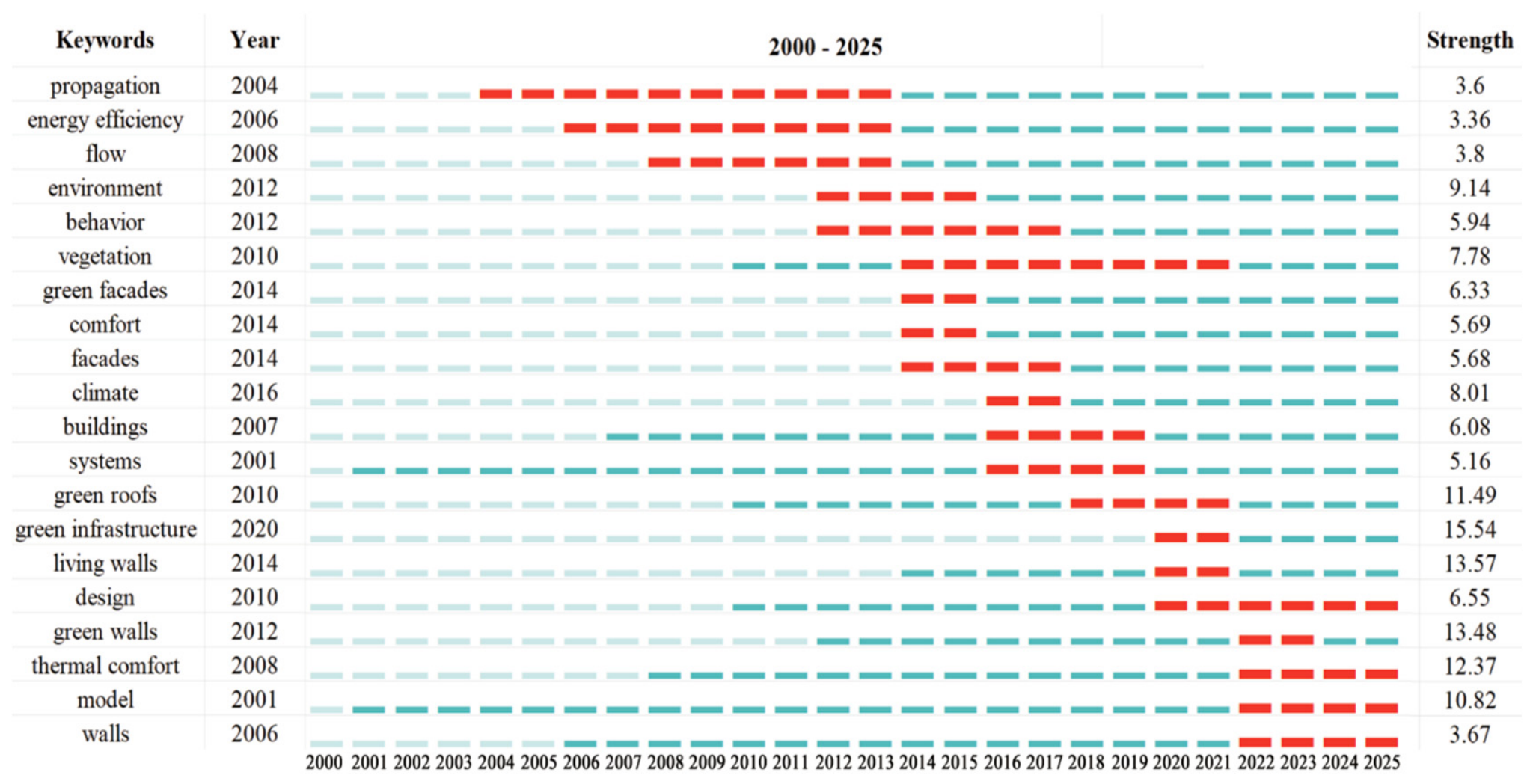
3.1. Literature Search Results
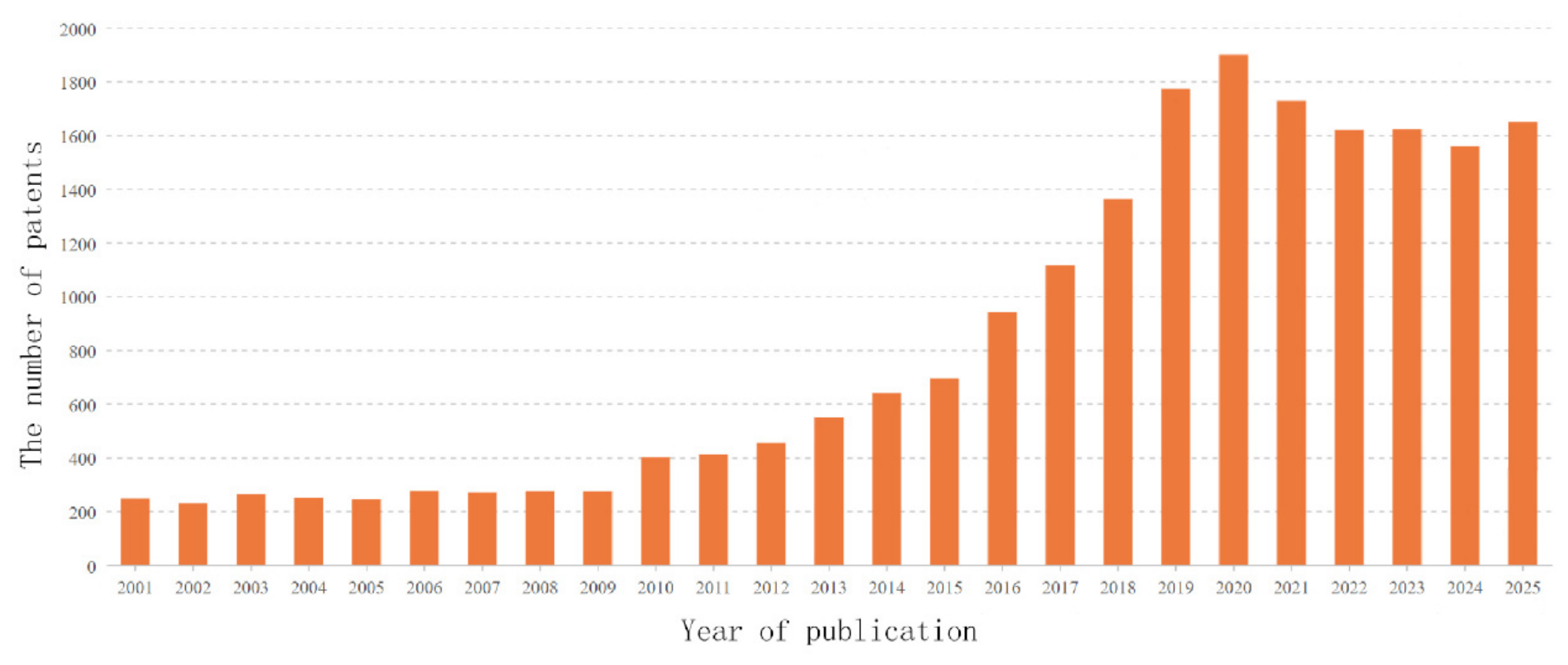
3.2. Case and Patent Search Results
4. Discussion
4.1. The Impact of Vertical Greenery on the Built Environment
- ▪
- Thermal environments, encompassing both surface temperature modulation and ambient microclimate cooling;
- ▪
- Acoustic environments, focusing on noise attenuation mechanisms and frequency-dependent performance;
- ▪
- Wind environments, where vegetation is conceptualized as a porous medium influencing airflow and ventilation;
- ▪
- Building energy consumption, which integrates thermal and aerodynamic effects to assess net heating and cooling demand;
- ▪
- Air quality and ecological value, including particulate matter capture, gaseous pollutant removal, and biodiversity support.
- ▪
- Thermal environment and human comfort, examining how active and passive systems modify temperature, humidity, and occupant satisfaction;
- ▪
- Acoustic environment, evaluating sound absorption contributions to interior acoustic quality;
- ▪
- Air quality, with particular attention to CO2, VOCs, and formaldehyde remediation;
- ▪
- Psychological well-being and health, a category that has gained prominence in the post-2020 literature and addresses stress reduction, cognitive performance, and biophilic responses.
4.1.1. Research Methods and Equipment for Existing Studies
4.1.2. The Impact of Outdoor Vertical Greenery on the Built Environment
Impact of Thermal Environments

| Location | Climate | Type | Season | Findings | Instrument/ Software | Reference |
|---|---|---|---|---|---|---|
| Nagoya, Japan | Cfa | Green facades | Summer | Per 10% increase in coverage, wall surface temperature ↓0.6–0.9 °C. Maximum reduction ↓10.2 °C at 36.1% coverage. | Infrared thermometer | [38] |
| Brighton, UK | Cfb | Green facades | Year-round | GF reduced solar radiation by 70% via multilayered foliage. | Thermistor Heat flux meter | [39] |
| Berlin, Germany | Cfb | Green facades | Summer | Exterior wall temperature ↓15.5 °C (80% shading). Irrigation demand: 2.5 L·d−1·m−2. | Pyrheliometer | [40] |
| La Rochelle, France | Cfb | Living wall | Summer & Winter | Summer: Façade temperature ↓15 °C; Heat gain ↓97%. Winter: Heat loss ↓30%; Heat gain ↓40% (insulation/shading effects). | Solar flux sensor | [41] |
| Hong Kong, China | Cwa | Green facades | Winter | Air cavity temperature ↑4–6 °C by passive indoor warming. | Portable transpiration measuring instrument | [42] |
| Baishizhou, Shenzhen | Cwa | Green facades | Summer | Outdoor air temperature ↓16.2 °C; Building surface temperature ↓37 °C. | Rhino7 grasshopper ENVI-met | [19] |
| Alaba, Spain | Cfb | Living wall | Summer & Winter | Summer: External wall temperature ↓10 °C; Solar absorptivity↓85%. Thermal resistance ↑49%. | Surface temperature sensors Heat flux sensor | [43] |
| Toronto, Canada, | Dfb | Green facades | Summer | Surface temperature ↓7.0 °C (enhanced efficacy on south-oriented façades). | HOBO Temperature Data Loggers Radiation Shield Weather Station | [44] |
| Seville, Spain | Csa | Living wall | Summer | MRT ↓5 °C UTCI ↓0.4–1.2 °C. | Thermo-Hygrometer Anemometer Testo 905 T2 Thermometer ENVI-met (version 5.1.1) | [37] |
| Turin, Italy | Cfa | Living wall | Year-round | Peak summer: MRT ↓1.6–2.27 °C. Winter: Air temperature ↓1.6 °C; UTCI improvement (↓0.55 °C thermal stress). | Landsat-9 satellite EnergyPlus ArcGIS Pro Anemometers, pyranometers | [45] |
Impact of Outdoor Vertical Greenery on Acoustic Environment
Impact of Outdoor Vertical Greenery on Wind Environment
Impact of Outdoor Vertical Greenery on Building Energy Consumption
Impact of Outdoor Vertical Greenery on Air Quality and Ecology
| Location | Climate | Type | Season | Findings | Instrument/ Software | Reference |
|---|---|---|---|---|---|---|
| Siena, Italy | Csa | Living wall | Year-round | CO2 capture: 0.44–3.18 kg CO2-eq/m2 (long-term accumulation). | STELLA (version 8.1.4) | [53] |
| Staffordshire, UK | Cfb | Green facades | Year-round | Avian activity ↑ vs. bare walls (winter habitat value ↑). | Binoculars SPSS | [9] |
| Antwerp, Belgium | Cfb | Living Wall | Summer | Planter-based LW: PM0.1 ↓2%; PM2.5 ↓4% Textile LW: PM0.1 ↓23%; PM2.5 ↓5% Moss substrate LW: PM0.1 ↑2%; PM2.5 ↑5%. | Scanning Mobility Particle Sizer Optical Particle Sizer Leaf Area Meter (Li-3100) Contact Angle Goniometer Molspin Pulse Magnetiser JR-6 Spinner | [25] |
| Cologne, Germany | Cfb | Green facades | Year-round | Annual absorption: ~5 kg NO2/ha, ~13 kg O3/ha, ~6000 kg CO2/ha., with species-dependent variation (max 0.20 µg O3/m2/s). | Mid-infrared direct laser absorption spectrometer Cavity-ring-down spectrometer Photosynthetic lamp Levenberg–Marquardt algorithm | [52] |
4.1.3. The Impact of Indoor Vertical Greenery on the Built Environment
Impact of Indoor Vertical Greenery on Thermal Environment and Human Comfort
| Location | Climate | Type | Season | Findings | Instrument/ Software | Reference |
|---|---|---|---|---|---|---|
| Seville, Spain | Csa | Living wall | Summer | Temp ↓0.8–4.8 °C (distance-dependent). | Automatic temperature and humidity recorder | [29] |
| Sydney, Australia | Cfa | Living wall | Year-round | Active system: Temp ↓1–3 °C; Humidity ↑ Passive system: Temp ↓0.5–2 °C; Humidity ↑. | Infrared laser thermometer gas analyzer, test chamber | [55] |
| Delft, Netherlands | Cfb | Living wall | Year-round | Plant shading vs. blinds: Temp increase 50%. | Test chamber, Stec Simulink | [57] |
| Rehovot, Israel | Csa | Living wall | Long-term | VGS: Thermal comfort ↑. IAQ ↑; Energy consumption ↓20%. | Temperature, humidity, air velocity and other sensors | [30] |
| Changzhou, China | Cfa | Living wall | Spring and summer | Indoor temp ↓0.7 °C (seasonal average). | Multi-in-one IEQ monitoring device, outdoor weather station | [59] |
| Qingdao, China | Cwa | Living wall | Winter | ILW-SAC: Freshness sensation ↑1.32 Thermal comfort ↑1.10. | Indoor thermal environment tester Button skin thermometer Intelligent electric meter | [31] |
| Florence, Italy | Csa | Living wall | Summer and winter | Summer: Air temp ↓0.6 °C Winter: Heating demand ↑4%. | Thermometer Design builder Energy plus | [58] |
| Catania, Italy | Csa | Green façades | Summer | Peak temp ↓1.9 °C (lightweight wall) Other walls ↓1.0 °C. | TRNSYS Software Heat Flux Measurements Experimental Mock-ups | [54] |
| Chennai, India. | Aw | Green facades & living wall | Summer | Indoor air temperature ↓2.3 °C (day)/1.8 °C (night); Indoor relative humidity ↑73.2%. | Temperature and Humidity Sensors Weather Station | [56] |
Impact of Indoor Vertical Greenery on Acoustic Environment
Impact of Indoor Vertical Greenery on Air Quality
Impact of Indoor Greenery on Psychological Well-Being and Health
4.2. Configurations and Innovations
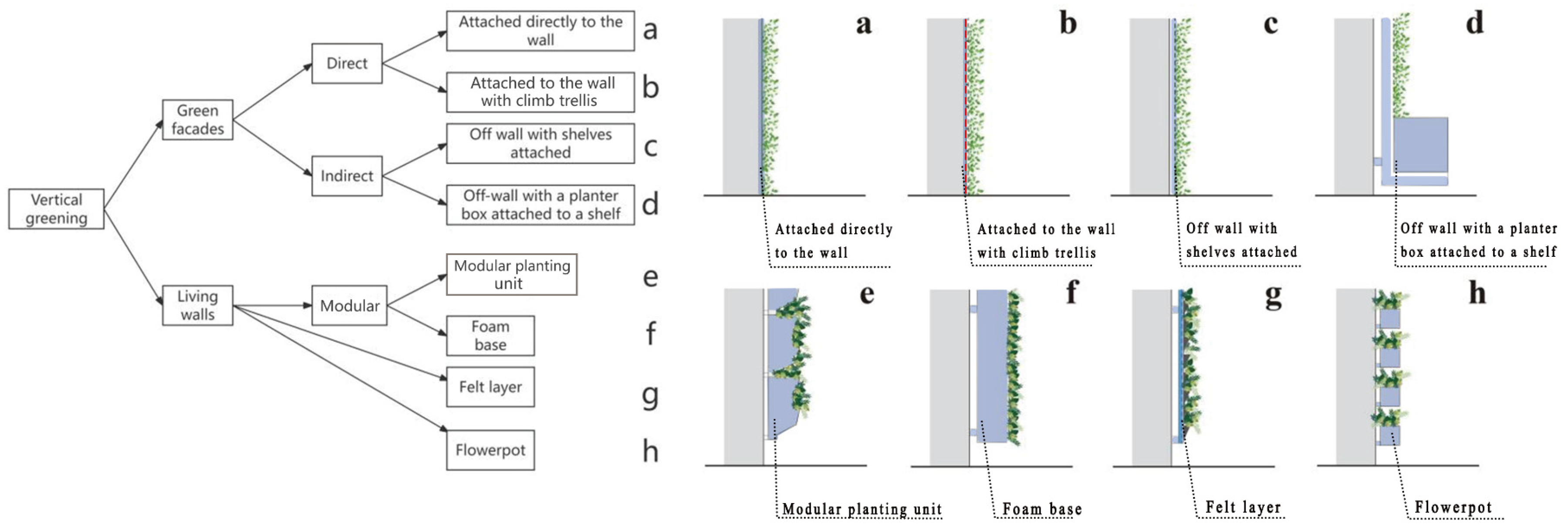
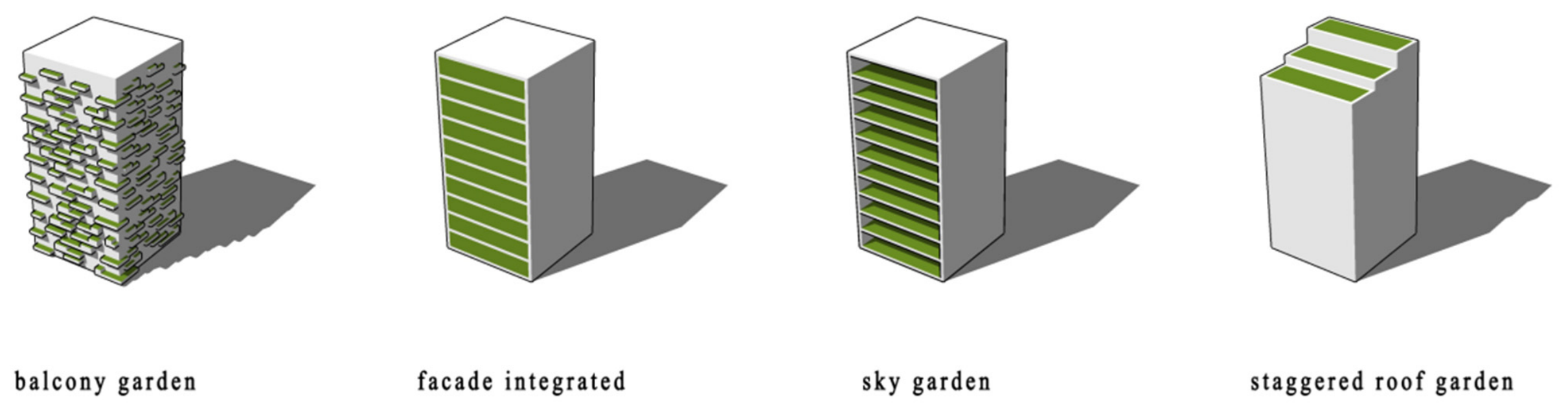
4.2.1. Configurations
4.2.2. Patents and Innovations
Hardware Structure Innovations (Structure and Equipment)
- (a)
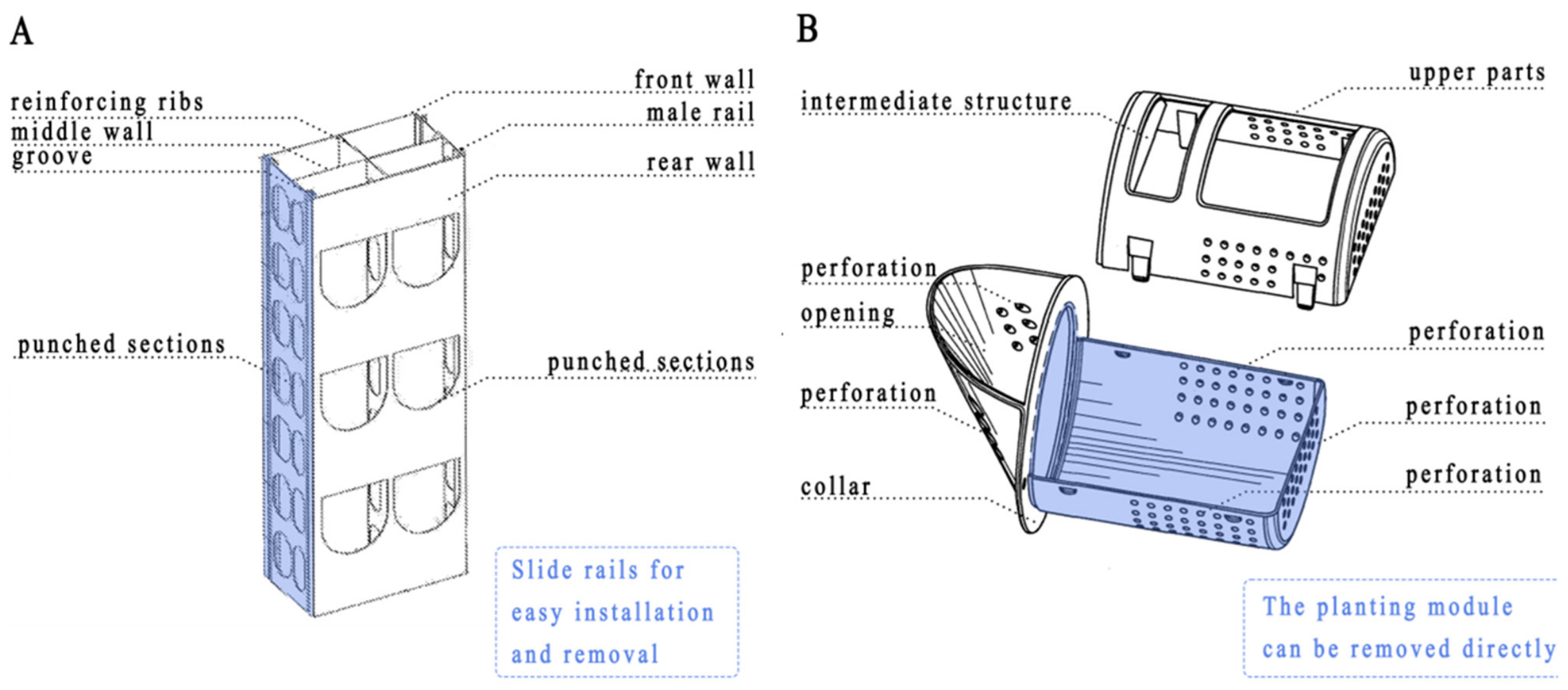
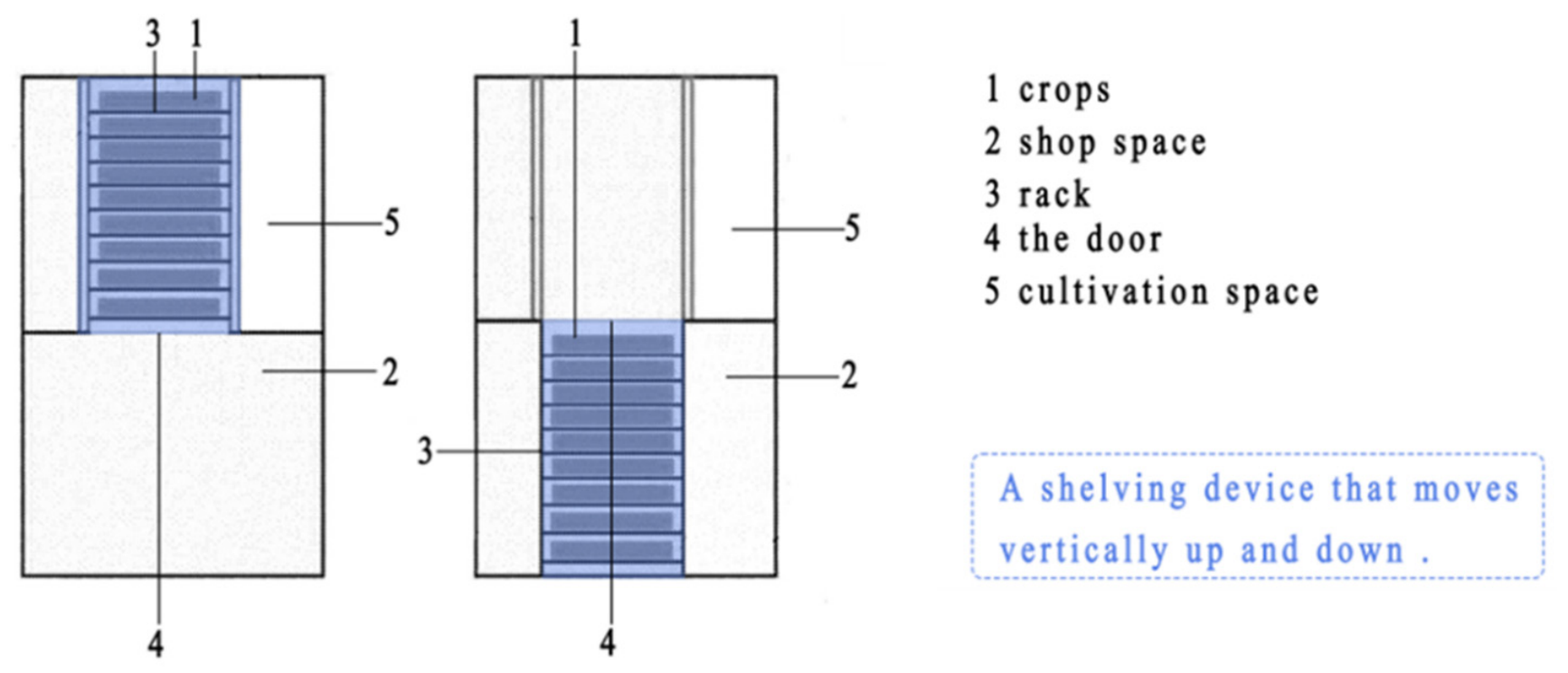
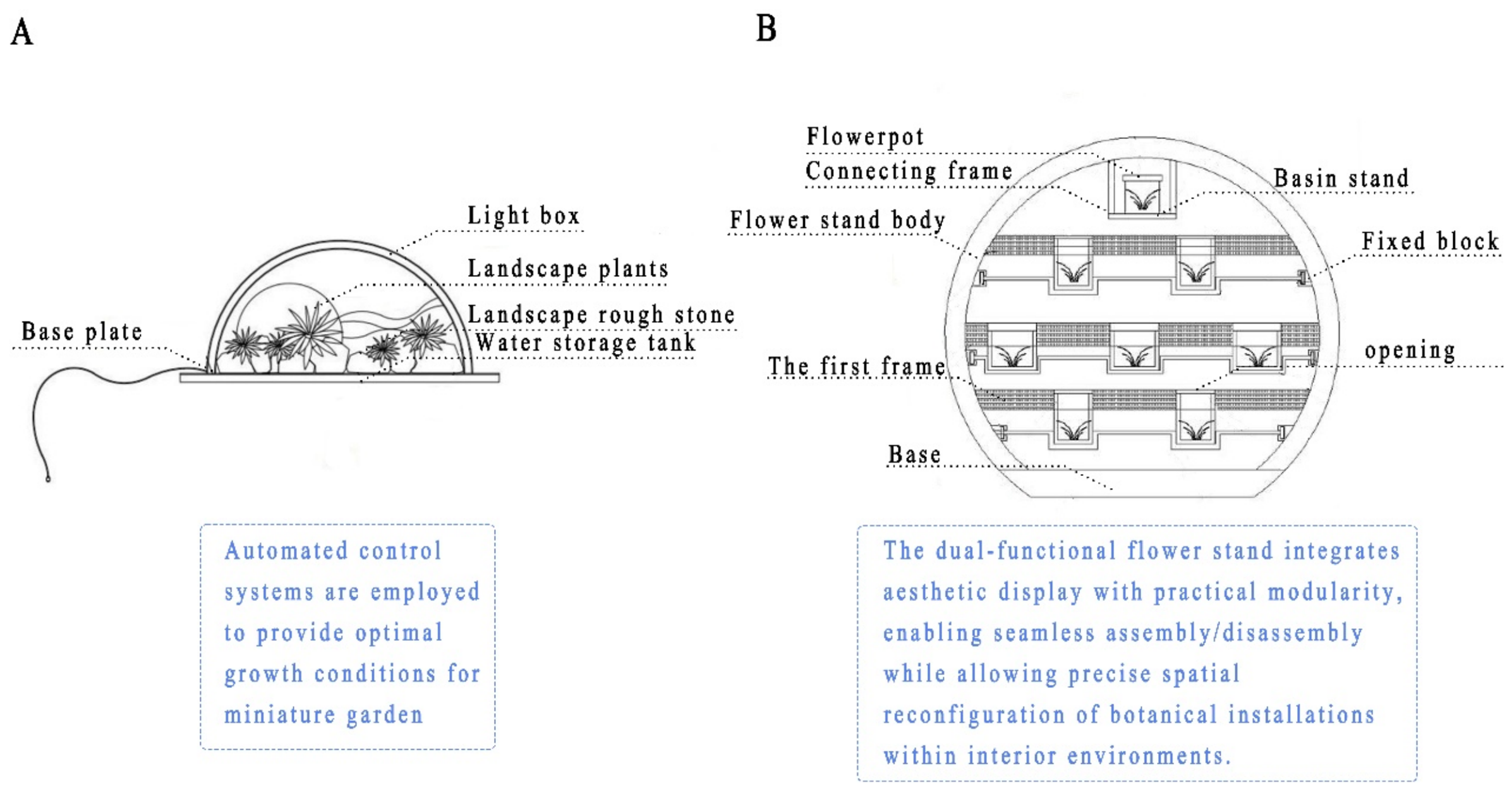
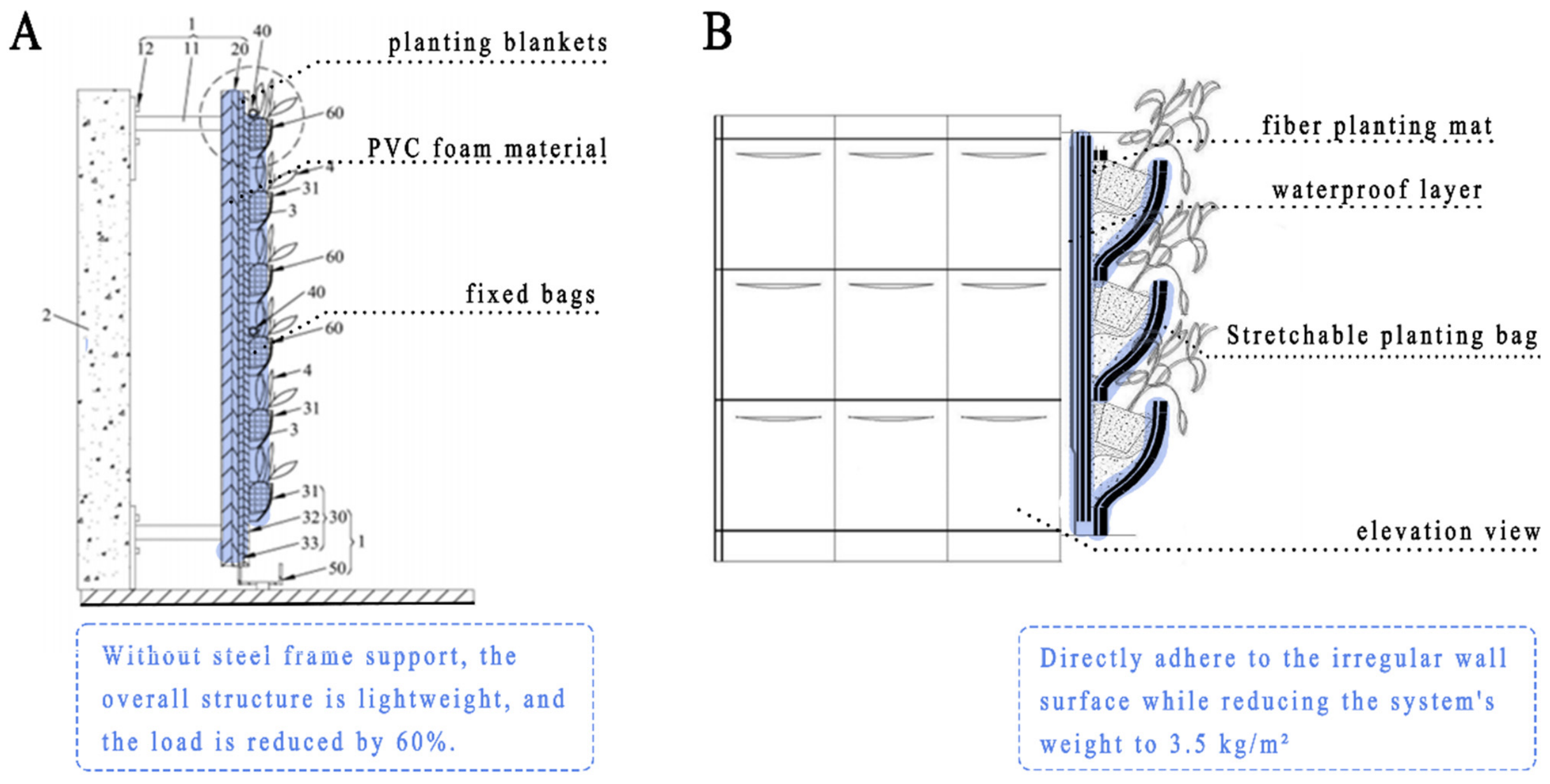
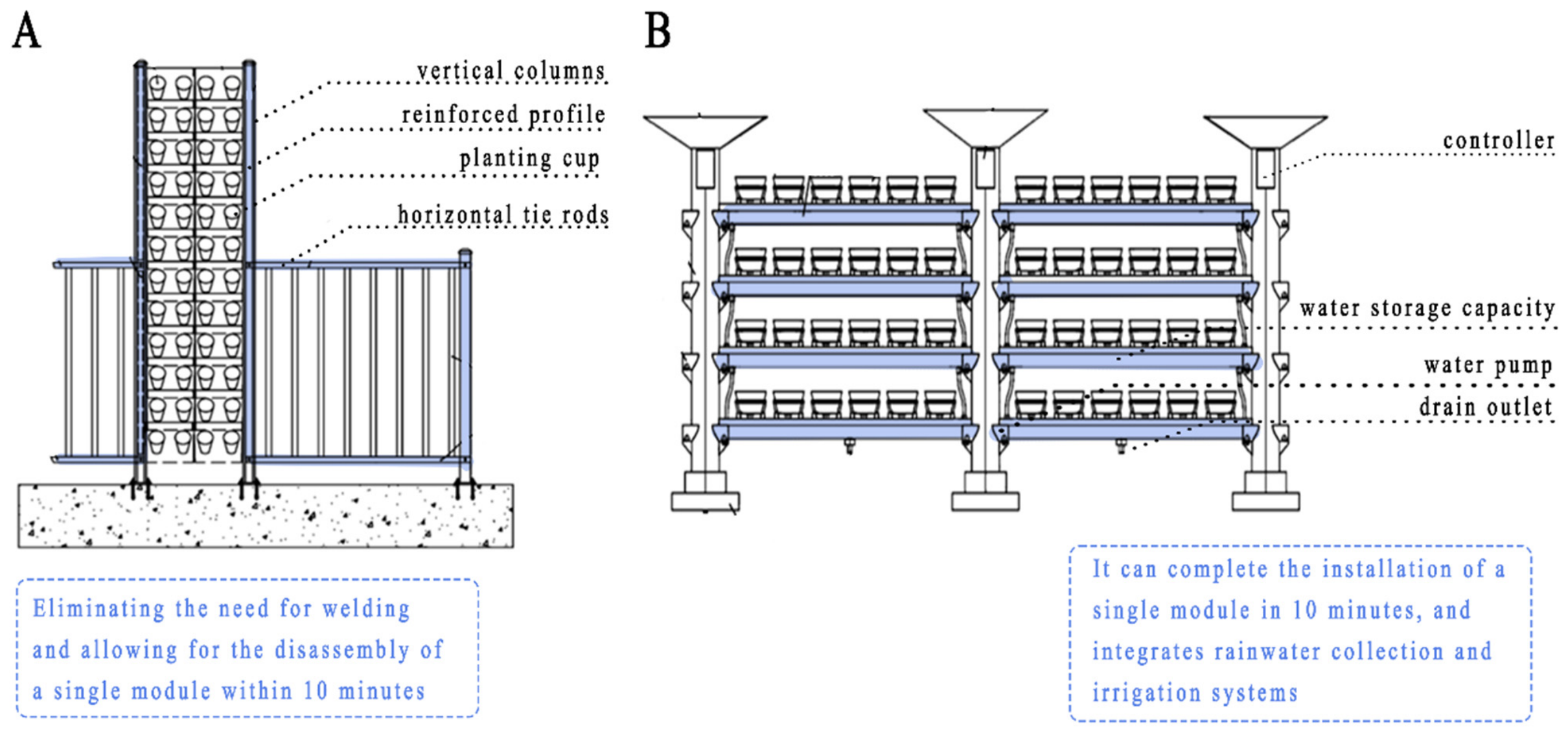
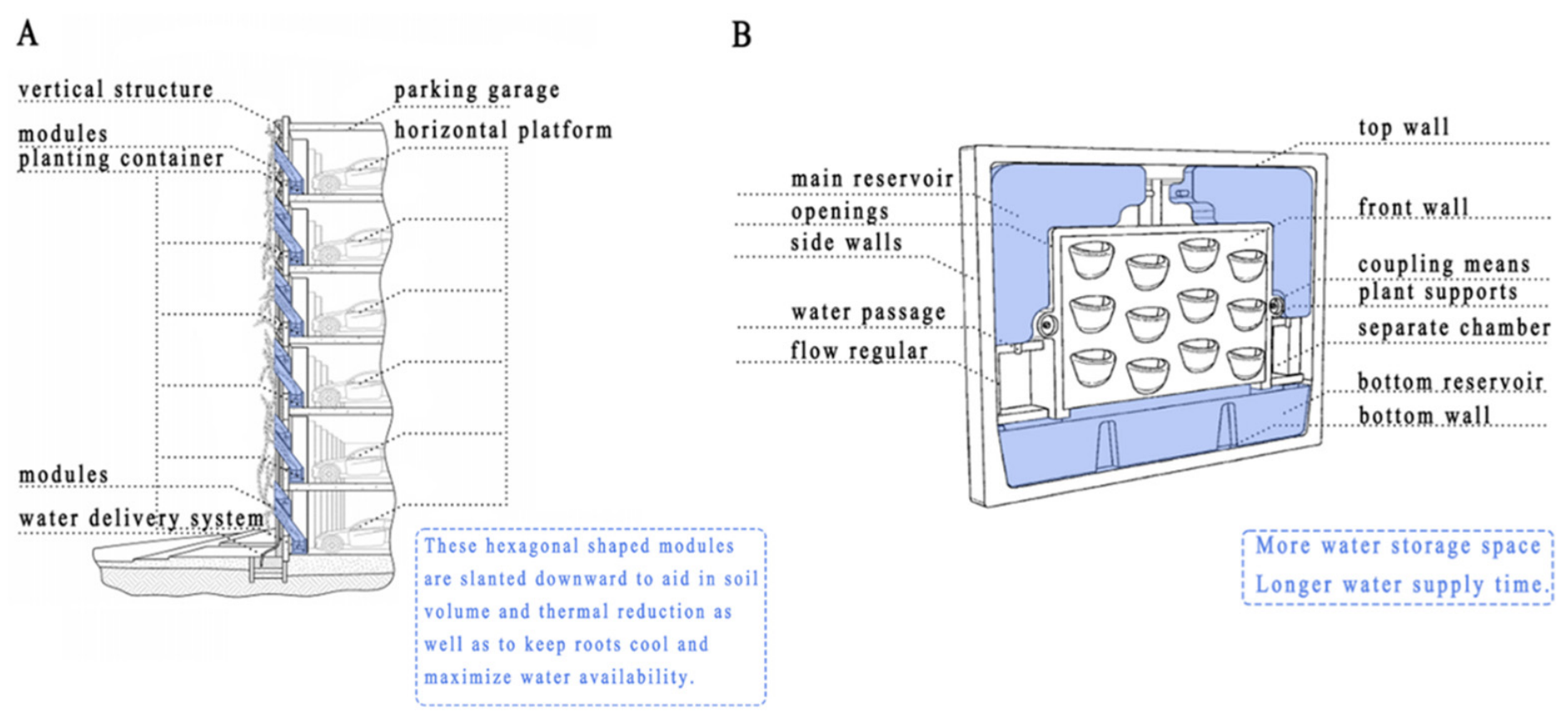
- Structural design innovation: encompassing modular design, lightweight design, and support-frame design, among others.
- (b)
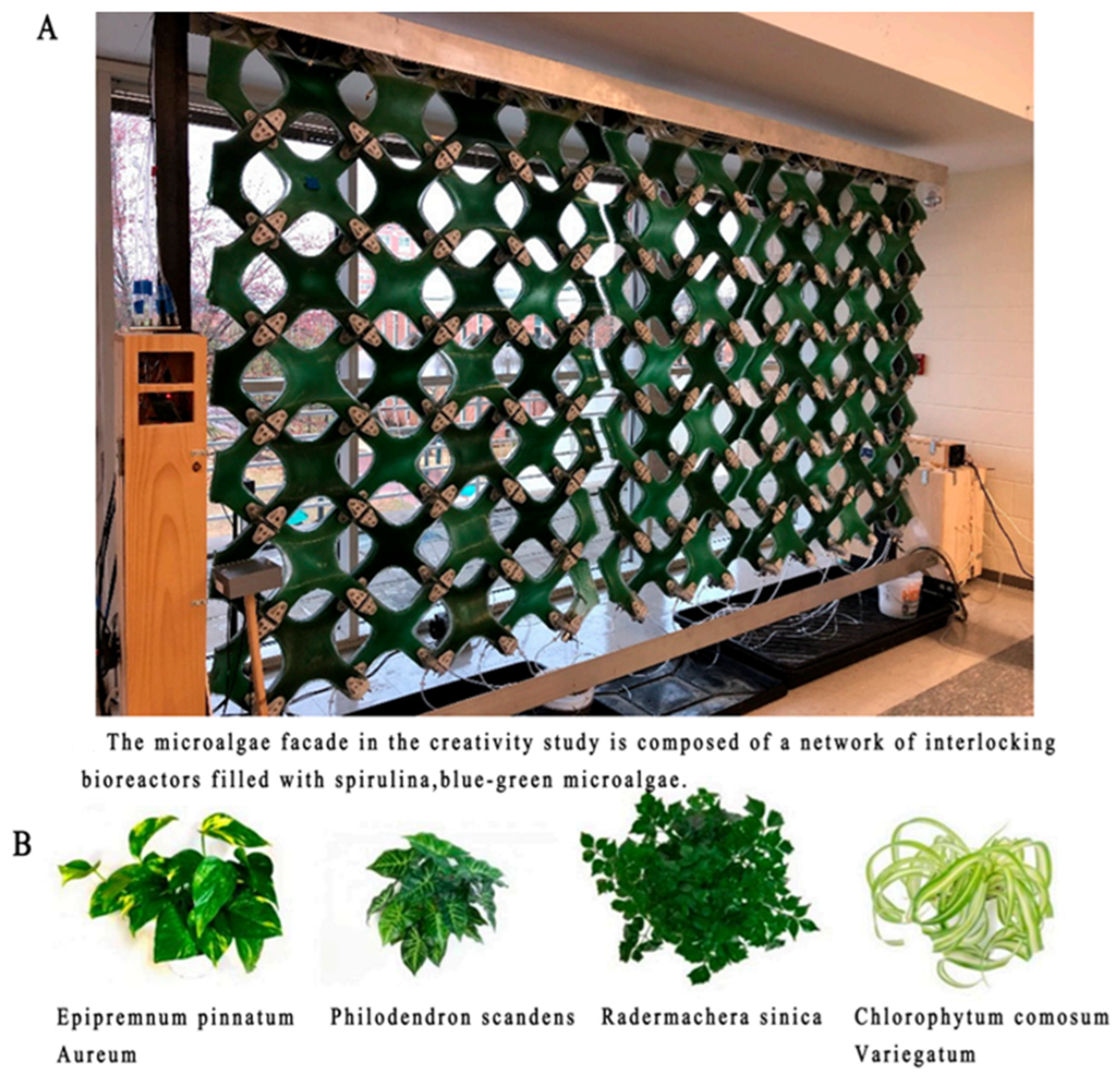
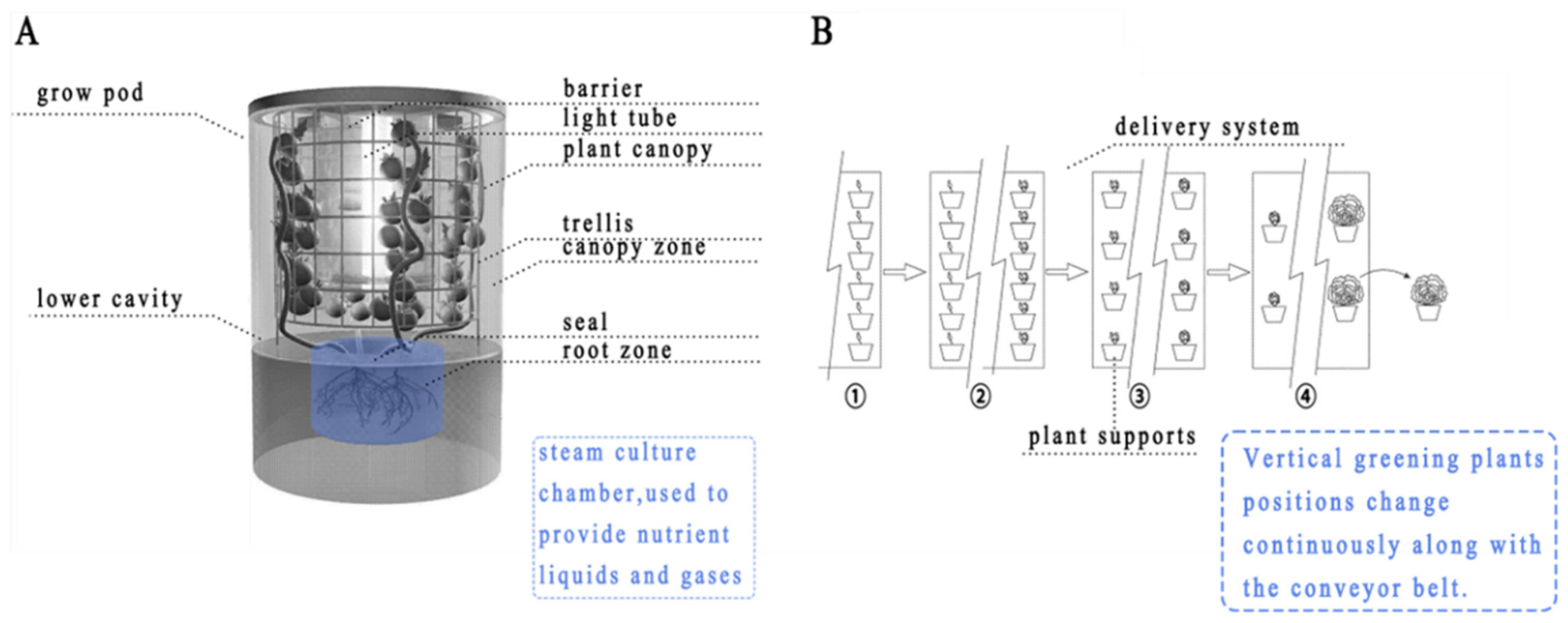
- Plant selection and cultivation: including adaptive plant selection, soilless cultivation techniques, and so forth. In terms of adaptive plant selection, traditional vertical greenery systems typically employ climbing plants, but the future trend could be more diversified. People tend to select more attractive and diverse plants, including flowers, ornamental plants, and those with ecological value, to create more esthetically pleasing and eco-friendly vertical greenery landscapes. Regarding soilless cultivation techniques, aeroponics or hydroponics have matured increasingly, which can reduce pests and diseases or soil pollution, and enable precise nutrient adjustment for plants.
- (c)
- Other creative structures: often combined vertical greenery with other functions.
System Innovations (Control and Management)
- (a)
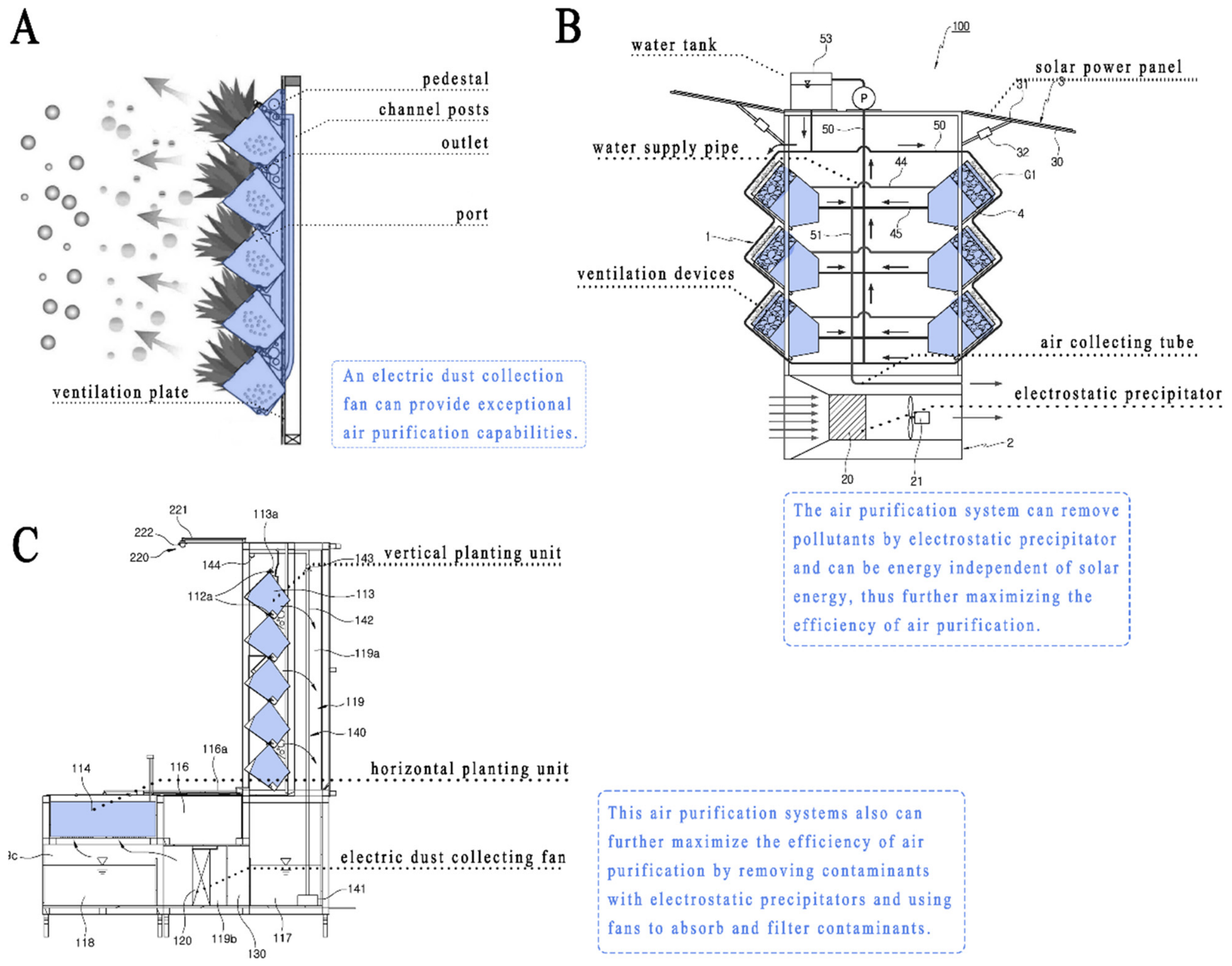
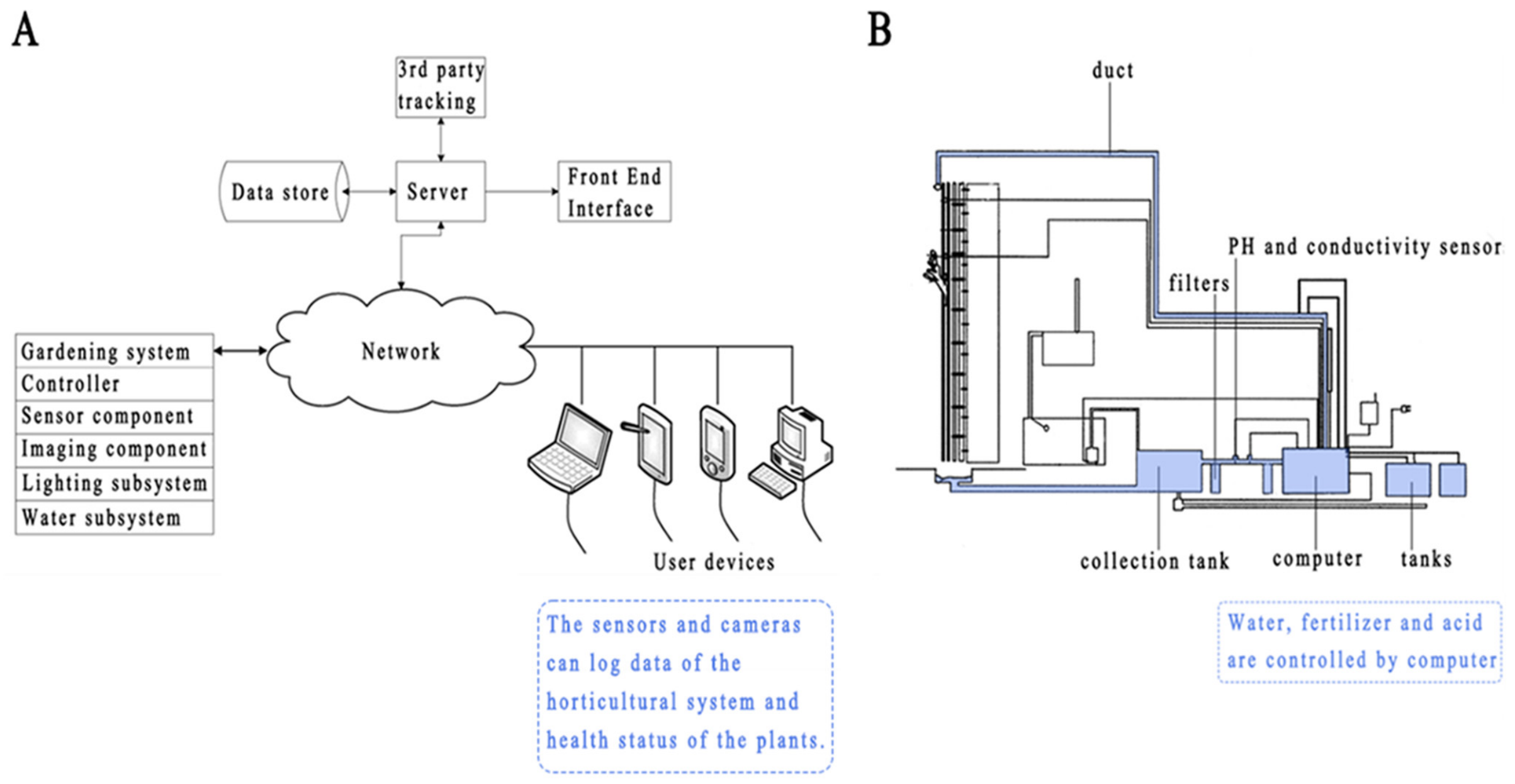
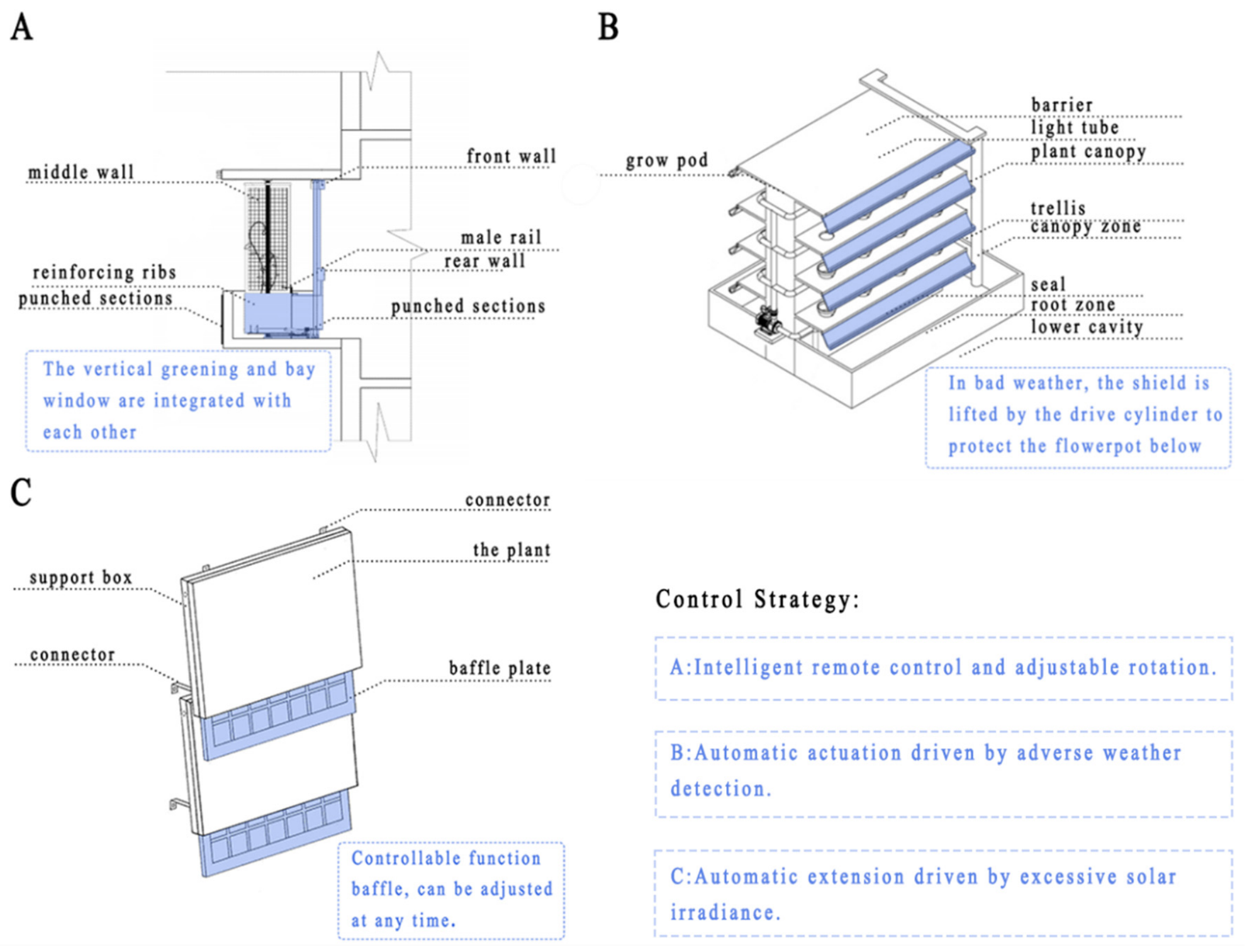
- Environmental Control. In climate control systems, innovations are typically achieved through the integration of temperature, humidity, and lighting control systems to create optimal growing environments. For ventilation control systems, innovations generally involve designing structures that effectively guide and regulate airflow to enhance plant ventilation.
- (b)
- Irrigation System. Beyond structural innovations in planting containers such as planting bags or boxes, automatic irrigation systems can be integrated with sensors and controllers to achieve precise water and nutrient delivery. Nutrient solution circulation systems can be designed to efficiently recycle nutrient solutions, ensuring continuous nutrient supply for plants.
- (c)
- Intelligentization and Internet of Things (IoT). Innovations frequently combine sensor networks and intelligent management systems. The former involves deploying sensors to monitor plant growth environments, including moisture, temperature, and light intensity. The latter integrates IoT technology to enable remote monitoring and management, thereby improving maintenance efficiency and operational effectiveness.
- (d)
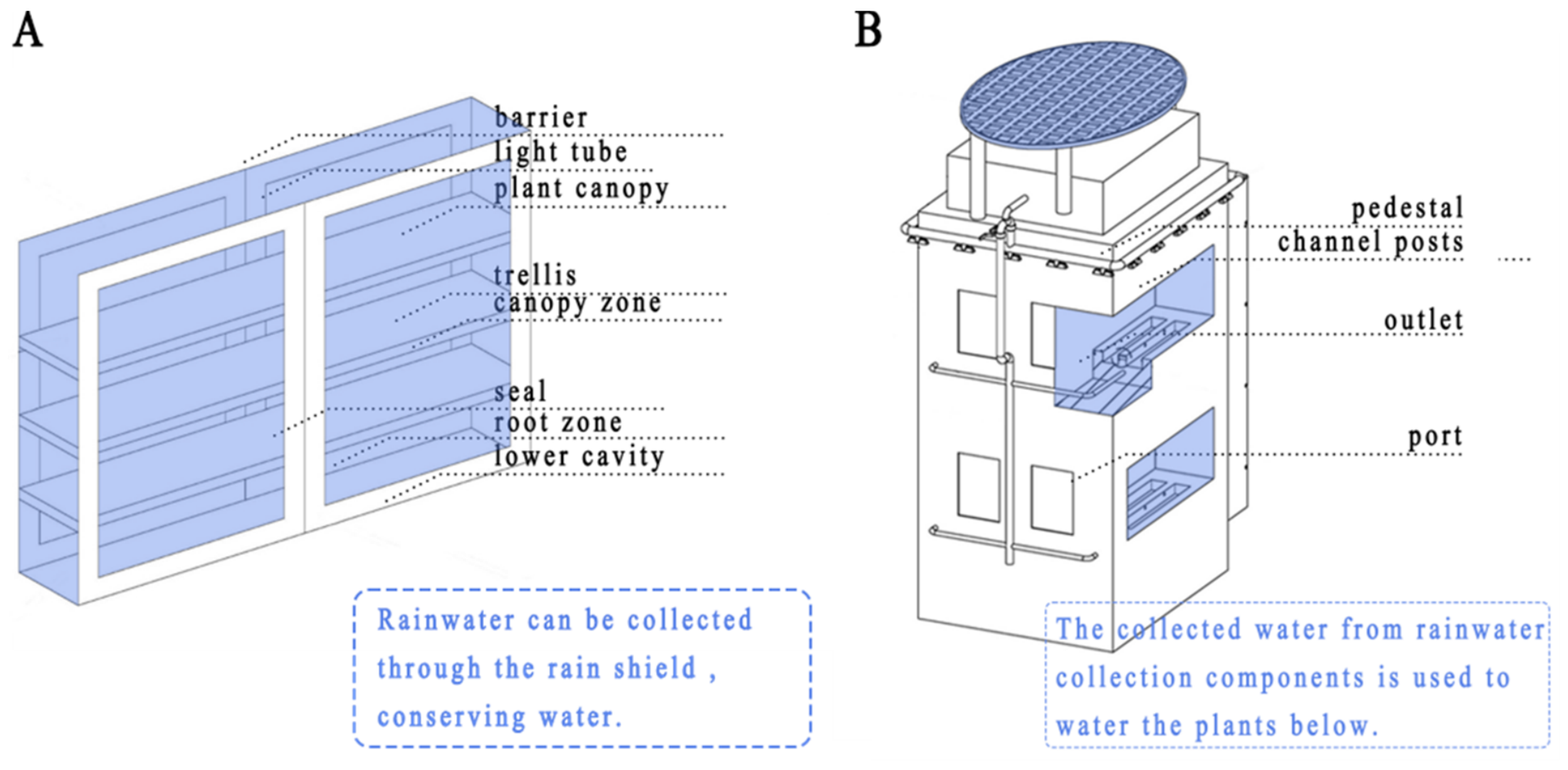
- Sustainability and Ecology. In water resource utilization, innovative vertical greenery systems often incorporate rainwater harvesting and utilization systems to reduce dependence on municipal water supplies. Regarding energy efficiency, renewable energy sources such as solar power are employed to energize irrigation and environmental control systems, thereby enhancing energy utilization efficiency.
Social and Cultural Values
4.3. Research Gaps, Development Challenges and Academic Debates
5. Conclusions
- (a)
- Impact of outdoor vertical greenery
- ‑
- Vertical greenery regulates the urban microclimate by absorbing solar radiation through the photosynthesis and transpiration of plants; it reduces the temperature of building surfaces and interiors through the shading effect of plant leaves and transpiration, thereby lowering building energy consumption and enhancing the durability of building envelopes.
- ‑
- The species of plants, leaf area index (LAI), coverage area, and plant thickness significantly affect the efficiency of vertical greenery in regulating the microenvironment.
- ‑
- Vertical greenery has a significant positive effect on noise absorption. At high frequencies, noise reduction is mainly achieved through the scattering effect of plants; at medium and low frequencies, it is mainly through the absorption effect of the substrate. Since the background noise in cities mostly falls within the medium and low frequency range, which is also within the effective absorption and attenuation range of vertical greening, it can be an effective measure for noise reduction in public places.
- ‑
- Vertical greenery can trap, adhere, and absorb fine particulate matter through plants. It absorbs carbon dioxide and releases oxygen through photosynthesis, maintaining the carbon–oxygen balance in a certain area.
- (b)
- Impact of indoor vertical greenery
- ‑
- Vertical greenery regulates indoor air temperature and humidity through the transpiration of plants and the moisture in the substrate, significantly improving human comfort.
- ‑
- Vertical greenery improves the acoustic comfort of indoor spaces by increasing the sound absorption area.
- ‑
- Vertical greenery can purify indoor air quality, effectively removing or reducing most air pollutants, including VOCs, CO2, PM, etc.
- ‑
- Indoor plants can create an interesting environment, not only alleviating fatigue and anxiety in learning and working environments but also improving learning concentration and work productivity. The potential of vertical greenery in this aspect still needs to be confirmed by research.
- (c)
- Innovations in vertical greenery
- ‑
- Structural and Equipment Design: Novel lightweight, modular and flexible structures have replaced traditional rigid designs. Optimized components and soilless cultivation resolve the drawbacks of conventional planting. Integrated water management systems greatly boost water self-sufficiency.
- ‑
- Monitoring and Operational Management: Smart technologies including IoT and machine learning achieve refined monitoring and automatic control. Hybrid vertical greenery systems are effective in removing airborne pollutants.
- ‑
- Socio-Cultural Value: Vertical greenery has become a multi-functional carrier of ecology, production and culture. It meets residents’ diverse demands and presents distinctive regional artistic features.
6. Limitations and Future Directions
6.1. Limitations of the Study
- (a)
- Literature coverage: The literature search was mainly based on Web of Science and Google Patents, which may have missed non-English literature or local practice cases (such as small-scale innovations in developing countries).
- (b)
- Data comparability: Experimental conditions in different cases (such as climate types and measurement methods) vary significantly, and some conclusions need to be interpreted in the context of specific situations.
- (c)
- Limitation in economic evaluation: Comprehensive quantitative economic and cost–benefit analysis was precluded because key on-site economic parameters were inaccessible for collation.
6.2. Future Directions
- (a)
- Interdisciplinary integration
- (b)
- Technological innovation
- (c)
- Social participation
- (d)
- Climate adaptability research
Supplementary Materials
Author Contributions
Funding
Institutional Review Board Statement
Informed Consent Statement
Data Availability Statement
Conflicts of Interest
Abbreviations
| AI | Artificial Intelligence |
| CFD | Computational Fluid Dynamics |
| CO2 | Carbon Dioxide |
| ENVI-met | Urban Microclimate Simulation Software |
| EnergyPlus | Building Energy Simulation Software |
| GF | Green Facades |
| GW | Green Wall |
| HVAC | Heating, Ventilation, and Air Conditioning |
| IAQ | Indoor Air Quality |
| ILW-SAC | Indoor Living Wall-Split Air Conditioners |
| IoT | Internet of Things |
| LAD | Leaf Area Density |
| LAI | Leaf Area Index |
| LW | Living Wall |
| MRT | Mean Radiant Temperature |
| NOₓ | Nitrogen Oxides |
| PM | Particulate Matter |
| PRISMA | Preferred Reporting Items for Systematic Reviews and Meta-Analyses |
| PTFE | Polytetrafluoroethylene |
| SSP | Shared Socioeconomic Pathways |
| TAS | Thermal Analysis Software |
| UTCI | Universal Thermal Climate Index |
| UV | Ultraviolet |
| VGS | Vertical Greenery Systems |
| VOCs | Volatile Organic Compounds |
Appendix A
| Code | Ecological Climate Type |
|---|---|
| Af | Equatorial, fully humid |
| Am | Equatorial, monsoonal |
| Aw | Equatorial, winter dry |
| BWh | Arid, desert, hot arid |
| BWk | Arid, desert, cold arid |
| BSk | Arid, steppe, cold arid |
| BSh | Arid, steppe, hot arid |
| Cfa | Warm temperate, fully humid, hot summer |
| Cfb | Warm temperate, fully humid, warm summer |
| Csa | Warm temperate, summer dry, hot summer |
| Csb | Warm temperate, summer dry, warm summer |
| Cwa | Warm temperate, winter dry, hot summer |
| Dfa | Snow, fully humid, hot summer |
| Dfb | Snow, fully humid, warm summer |
| Dwa | Snow, winter dry, hot summer |
References
- Medl, A.; Stangl, R.; Florineth, F. Vertical greening systems—A review on recent technologies and research advancement. Build. Environ. 2017, 125, 227–239. [Google Scholar] [CrossRef]
- Fuller, D. The NBS Guide to Façade Greening. Available online: https://www.thenbs.com/authors/david-fuller (accessed on 31 December 2025).
- Zaid, S.M.; Perisamy, E.; Hussein, H.; Myeda, N.E.; Zainon, N. Vertical greenery system in urban tropical climate and its carbon sequestration potential: A review. Ecol. Indic. 2018, 91, 57–70. [Google Scholar] [CrossRef]
- Ghazalli, A.J.; Brack, C.; Bai, X.; Said, I. Alterations in use of space, air quality, temperature and humidity by the presence of vertical greenery system in a building corridor. Urban For. Urban Green. 2018, 32, 177–184. [Google Scholar] [CrossRef]
- Wong, N.H.; Tan, A.Y.K.; Tan, P.Y.; Chiang, K.; Wong, N.C. Acoustics evaluation of vertical greenery systems for building walls. Build. Environ. 2010, 45, 411–420. [Google Scholar] [CrossRef]
- Oh, R.R.Y.; Richards, D.R.; Yee, A.T.K. Community-driven skyrise greenery in a dense tropical city provides biodiversity and ecosystem service benefits. Landsc. Urban Plan. 2018, 169, 115–123. [Google Scholar] [CrossRef]
- Liang, T.C.; Hien, W.N.; Jusuf, S.K. Effects of vertical greenery on mean radiant temperature in the tropical urban environment. Landsc. Urban Plan. 2014, 127, 52–64. [Google Scholar] [CrossRef]
- Wong, N.H.; Tan, A.Y.K.; Chen, Y.; Sekar, K.; Tan, P.Y.; Chan, D.; Chiang, K.; Wong, N.C. Thermal evaluation of vertical greenery systems for building walls. Build. Environ. 2010, 45, 663–672. [Google Scholar] [CrossRef]
- Chiquet, C.; Dover, J.W.; Mitchell, P. Birds and the urban environment: The value of green walls. Urban Ecosyst. 2013, 16, 453–462. [Google Scholar] [CrossRef]
- Carlos, J.S. Simulation assessment of living wall thermal performance in winter in the climate of portugal. Build. Simul. 2015, 8, 3–11. [Google Scholar] [CrossRef]
- Omrany, H.; Ghaffarianhoseini, A.; Ghaffarianhoseini, A.; Raahemifar, K.; Tookey, J. Application of passive wall systems for improving the energy efficiency in buildings: A comprehensive review. Renew. Sustain. Energy Rev. 2016, 62, 1252–1269. [Google Scholar] [CrossRef]
- van den Bogerd, N.; Dijkstra, S.C.; Tanja-Dijkstra, K.; de Boer, M.R.; Seidell, J.C.; Koole, S.L.; Maas, J. Greening the classroom: Three field experiments on the effects of indoor nature on students’ attention, well-being, and perceived environmental quality. Build. Environ. 2020, 171, 106675. [Google Scholar] [CrossRef]
- Zhang, D.; Zhang, L.; Zhang, Y. Investigation of the indoor CO2 removal efficiency and fresh air energy savings of living walls in office spaces. J. Build. Eng. 2024, 90, 109422. [Google Scholar] [CrossRef]
- Cuce, P.M.; Cuce, E.; Santamouris, M. Towards sustainable and climate-resilient cities: Mitigating urban heat islands through green infrastructure. Sustainability 2025, 17, 1303. [Google Scholar] [CrossRef]
- Azkorra, Z.; Pérez, G.; Coma, J.; Cabeza, L.F.; Bures, S.; Alvaro, J.E.; Erkoreka, A.; Urrestarazu, M. Evaluation of green walls as a passive acoustic insulation system for buildings. Appl. Acoust. 2015, 89, 46–56. [Google Scholar] [CrossRef]
- Wong, N.H.; Tan, A.Y.K.; Tan, P.Y.; Wong, N.C. Energy simulation of vertical greenery systems. Energy Build. 2009, 41, 1401–1408. [Google Scholar] [CrossRef]
- Arenghi, A.; Perra, C.; Caffi, M. Simulating and comparing different vertical greenery systems grouped into categories using energyplus. Appl. Sci. 2021, 11, 4802. [Google Scholar] [CrossRef]
- Alvarado-Alvarado, A.A.; De Bock, A.; Ysebaert, T.; Belmans, B.; Denys, S. Modeling the hygrothermal behavior of green walls in comsol multiphysics®: Validation against measurements in a climate chamber. Build. Environ. 2023, 238, 110377. [Google Scholar] [CrossRef]
- Zheng, Y.; Keeffe, G.; Mariotti, J. Nature-based solutions for cooling in high-density neighbourhoods in Shenzhen: A case study of Baishizhou. Sustainability 2023, 15, 5509. [Google Scholar] [CrossRef]
- Mannan, M.; Al-Ghamdi, S.G. Life cycle embodied energy analysis of indoor active living wall system. Energy Rep. 2020, 6, 391–395. [Google Scholar] [CrossRef]
- Perez, G.; Coma, J.; Barreneche, C.; de Gracia, A.; Urrestarazu, M.; Bures, S.; Cabeza, L.F. Acoustic insulation capacity of vertical greenery systems for buildings. Appl. Acoust. 2016, 110, 218–226. [Google Scholar] [CrossRef]
- Tang, V.T.; Rene, E.R.; Hu, L.; Behera, S.K.; Phong, N.T.; Thi Da, C. Vertical green walls for noise and temperature reduction—An experimental investigation. Sci. Technol. Built Environ. 2021, 27, 806–818. [Google Scholar] [CrossRef]
- Oquendo-Di Cosola, V.; Navacerrada, M.A.; Ruiz-Garcia, L.; Olivieri, F. Evaluating the acoustic absorption of modular vegetation systems: Laboratory and field assessments using an impedance gun. Buildings 2025, 15, 389. [Google Scholar] [CrossRef]
- Susorova, I.; Azimi, P.; Stephens, B. The effects of climbing vegetation on the local microclimate, thermal performance, and air infiltration of four building facade orientations. Build. Environ. 2014, 76, 113–124. [Google Scholar] [CrossRef]
- Ysebaert, T.; Koch, K.; Samson, R.; Denys, S. Assessing particulate matter deposition and resuspension by living wall systems in a wind tunnel setup. Sustainability 2024, 16, 10733. [Google Scholar] [CrossRef]
- Koch, K.; Samson, R.; Denys, S. Aerodynamic characterisation of green wall vegetation based on plant morphology: An experimental and computational fluid dynamics approach. Biosyst. Eng. 2019, 178, 34–51. [Google Scholar] [CrossRef]
- Meng, X.; Yan, L.; Liu, F. A new method to improve indoor environment: Combining the living wall with air-conditioning. Build. Environ. 2022, 216, 108981. [Google Scholar] [CrossRef]
- Torpy, F.; Clements, N.; Pollinger, M.; Dengel, A.; Mulvihill, I.; He, C.; Irga, P. Testing the single-pass VOC removal efficiency of an active green wall using methyl ethyl ketone (MEK). Air Qual. Atmos. Health 2018, 11, 163–170. [Google Scholar] [CrossRef] [PubMed]
- Perez-Urrestarazu, L.; Fernandez-Canero, R.; Franco, A.; Egea, G. Influence of an active living wall on indoor temperature and humidity conditions. Ecol. Eng. 2016, 90, 120–124. [Google Scholar] [CrossRef]
- Yungstein, Y.; Helman, D. Cooling, CO2 reduction, and energy-saving benefits of a green-living wall in an actual workplace. Build. Environ. 2023, 236, 110220. [Google Scholar] [CrossRef]
- Ding, N.; Liu, F.; Pang, F.; Su, J.; Yan, L.; Meng, X. Integrating the living wall with the split air conditioner towards indoor heating environment improvement in winter. Case Stud. Therm. Eng. 2023, 47, 103061. [Google Scholar] [CrossRef]
- Oh, Y.A.; Kim, S.O.; Park, S.A.E. Real foliage plants as visual stimuli to improve concentration and attention in elementary students. Int. J. Environ. Res. Public Health 2019, 16, 796. [Google Scholar] [CrossRef] [PubMed]
- Yin, J.; Yuan, J.; Arfaei, N.; Catalano, P.J.; Allen, J.G.; Spengler, J.D. Effects of biophilic indoor environment on stress and anxiety recovery: A between-subjects experiment in virtual reality. Environ. Int. 2020, 136, 105427. [Google Scholar] [CrossRef] [PubMed]
- Helman, D.; Yungstein, Y.; Mulero, G.; Michael, Y. High-throughput remote sensing of vertical green living walls (VGWs) in workplaces. Remote Sens. 2022, 14, 3485. [Google Scholar] [CrossRef]
- Coma, J.; Perez, G.; de Gracia, A.; Bures, S.; Urrestarazu, M.; Cabeza, L.F. Vertical greenery systems for energy savings in buildings: A comparative study between green walls and green facades. Build. Environ. 2017, 111, 228–237. [Google Scholar] [CrossRef]
- Dahanayake, K.W.D.K.; Chow, C.L. Studying the potential of energy saving through vertical greenery systems: Using EnergyPlus simulation program. Energy Build. 2017, 138, 47–59. [Google Scholar] [CrossRef]
- Rezaie, P.; Lopez-Cabeza, V.P.; Sola-Caraballo, J.; Galan-Marin, C. Cooling heritage scenarios: Transforming historic squares for thermal comfort. Buildings 2025, 15, 564. [Google Scholar] [CrossRef]
- Koyama, T.; Yoshinaga, M.; Hayashi, H.; Maeda, K.I.; Yamauchi, A. Identification of key plant traits contributing to the cooling effects of green facades using freestanding walls. Build. Environ. 2013, 66, 96–103. [Google Scholar] [CrossRef]
- Ip, K.; Lam, M.; Miller, A. Shading performance of a vertical deciduous climbing plant canopy. Build. Environ. 2010, 45, 81–88. [Google Scholar] [CrossRef]
- Hoelscher, M.R.E.T.; Nehls, T.; Jaenicke, B.; Wessolek, G. Quantifying cooling effects of facade greening: Shading, transpiration and insulation. Energy Build. 2016, 114, 283–290. [Google Scholar] [CrossRef]
- Djedjig, R.; Belarbi, R.; Bozonnet, E. Experimental study of green walls impacts on buildings in summer and winter under an oceanic climate. Energy Build. 2017, 150, 403–411. [Google Scholar] [CrossRef]
- Jim, C.Y. Cold-season solar input and ambivalent thermal behavior brought by climber greenwalls. Energy 2015, 90, 926–938. [Google Scholar] [CrossRef]
- Azkorra-Larrinaga, Z.; Erkoreka-Gonzalez, A.; Martin-Escudero, K.; Perez-Iribarren, E.; Romero-Anton, N. Thermal characterization of a modular living wall for improved energy performance in buildings. Build. Environ. 2023, 234, 110102. [Google Scholar] [CrossRef]
- Millward, A.A.; Blake, M. When trees are not an option: Perennial vines as a complementary strategy for mitigating the summer warming of an urban microclimate. Buildings 2024, 14, 416. [Google Scholar] [CrossRef]
- Lotfabad, A.D.; Hosseini, S.M.; Dabove, P.; Heiranipour, M.; Sommese, F. Impacts of vertical greenery on outdoor thermal comfort and carbon emission reduction at the urban scale in Turin, Italy. Buildings 2025, 15, 450. [Google Scholar] [CrossRef]
- Perez, G.; Rincon, L.; Vila, A.; Gonzalez, J.M.; Cabeza, L.F. Green vertical systems for buildings as passive systems for energy savings. Appl. Energy 2011, 88, 4854–4859. [Google Scholar] [CrossRef]
- Nesci, V.; Ballarini, I.; Mazzarino, P.R.; Corrado, V. Living walls and green façades: An implementation code for energy simulation. Buildings 2024, 14, 2040. [Google Scholar] [CrossRef]
- Radujkovic, M.; Versele, A.; Breesch, H. Exploratory analysis of a novel modular green wall’s impact on indoor temperature and energy consumption in residential buildings: A case study from Belgium. Energies 2024, 17, 5267. [Google Scholar] [CrossRef]
- Scamoni, F.; Scrosati, C.; Depalma, M.; Barozzi, B. Experimental evaluations of acoustic properties and long-term analysis of a novel indoor living wall. J. Build. Eng. 2022, 47, 103890. [Google Scholar] [CrossRef]
- Sundell, J. Reflections on the history of indoor air science, focusing on the last 50years. Indoor Air 2017, 27, 708–724. [Google Scholar] [CrossRef] [PubMed]
- Weerakkody, U.; Dover, J.W.; Mitchell, P.; Reiling, K. Particulate matter pollution capture by leaves of seventeen living wall species with special reference to rail-traffic at a metropolitan station. Urban For. Urban Green. 2017, 27, 173–186. [Google Scholar] [CrossRef]
- Aduse-Poku, M.; Edelmann, H.G. Quantifying the potential of façade climbing plants in reducing air pollution: A novel investigation into the absorption capabilities of three climbers for CO2, NO2, and O3 in urban environments. Urban Ecosyst. 2025, 28, 76. [Google Scholar] [CrossRef]
- Marchi, M.; Pulselli, R.M.; Marchettini, N.; Pulselli, F.M.; Bastianoni, S. Carbon dioxide sequestration model of a vertical greenery system. Ecol. Modell. 2015, 306, 46–56. [Google Scholar] [CrossRef]
- Nocera, F.; Costanzo, V.; Detommaso, M.; Evola, G. Assessing the impact of vertical greenery systems on the thermal performance of walls in mediterranean climates. Energies 2024, 17, 5090. [Google Scholar] [CrossRef]
- Abdo, P.; Huynh, B.P. An experimental investigation of green wall bio-filter towards air temperature and humidity variation. J. Build. Eng. 2021, 39, 102244. [Google Scholar] [CrossRef]
- Priya, U.K.; Senthil, R. Enhancing sustainable thermal comfort of tropical urban buildings with indoor plants. Buildings 2024, 14, 2353. [Google Scholar] [CrossRef]
- Stec, W.J.; van Paassen, A.; Maziarz, A. Modelling the double skin facade with plants. Energy Build. 2005, 37, 419–427. [Google Scholar] [CrossRef]
- Banti, N.; Ciacci, C.; Di Naso, V.; Bazzocchi, F. Green walls as retrofitting measure: Influence on energy performance of existing industrial buildings in central italy. Buildings 2023, 13, 369. [Google Scholar] [CrossRef]
- Yang, Y.; Hu, K.; Liu, Y.; Wang, Z.; Dong, K.; Lv, P.; Shi, X. Optimisation of building green performances using vertical greening systems: A case study in Changzhou, China. Sustainability 2023, 15, 4494. [Google Scholar] [CrossRef]
- Mangone, G.; Kurvers, S.R.; Luscuere, P.G. Constructing thermal comfort: Investigating the effect of vegetation on indoor thermal comfort through a four season thermal comfort quasi-experiment. Build. Environ. 2014, 81, 410–426. [Google Scholar] [CrossRef]
- Wu, D.; Yu, L. Effects of airflow rate and plant species on formaldehyde removal by active green walls. Environ. Sci. Pollut. Res. Int. 2022, 29, 88812–88822. [Google Scholar] [CrossRef] [PubMed]
- Shushunova, N.; Korol, E.; Luzay, E.; Shafieva, D. Impact of the innovative green wall modular systems on the urban air. Sustainability 2023, 15, 9732. [Google Scholar] [CrossRef]
- Teiri, H.; Pourzamani, H.; Hajizadeh, Y. Phytoremediation of VOCs from indoor air by ornamental potted plants: A pilot study using a palm species under the controlled environment. Chemosphere 2018, 197, 375–381. [Google Scholar] [CrossRef] [PubMed]
- Shao, Y.; Li, J.; Zhou, Z.; Zhang, F.; Cui, Y. The impact of indoor living wall system on air quality: A comparative monitoring test in building corridors. Sustainability 2021, 13, 7884. [Google Scholar] [CrossRef]
- Yan, L.; Liu, F.; Meng, X. Questionnaires assessing the anxiety alleviation benefits of indoor plants for self-isolated population during COVID-19. Int. J. Low-Carbon Technol. 2022, 17, 300–307. [Google Scholar] [CrossRef]
- Bringslimark, T.; Hartig, T.; Patil, G.G. Psychological benefits of indoor plants in workplaces: Putting experimental results into context. HortScience 2007, 42, 581–587. [Google Scholar] [CrossRef]
- Warren, K.; Milovanovic, J.; Kim, K.H. Effect of a microalgae facade on design behaviors: A pilot study with architecture students. Buildings 2023, 13, 611. [Google Scholar] [CrossRef]
- Hunter, A.M.; Williams, N.; Rayner, J.P.; Aye, L.; Hes, D.; Livesley, S.J. Quantifying the thermal performance of green facades: A critical review. Ecol. Eng. 2014, 63, 102–113. [Google Scholar] [CrossRef]
- Mark, S.; Danelle, B. Green Wall with Overlapping Hexagonal Shaped Modules on a Vertical Structure. US20180255711A1, 13 September 2018. [Google Scholar]
- Martin, J.P.A. Systems, Methods, and Devices for Aeroponic Plant Growth. US9974243B2, 22 May 2018. [Google Scholar]
- Barker, S.F.; Kaplan, Y. Apparatus and Method for Automated Aeroponic Systems for Growing Plants. US10681881B2, 16 June 2020. [Google Scholar]
- Otamendi, E.L. Ecological Construction Systems for Buildings with Green Walls. US9359759B2, 7 June 2016. [Google Scholar]
- Janssen, H.W.T. Growth Device for Crops, Use of Such a Device, and a Series of Growth Devices. US11291173B2, 5 April 2022. [Google Scholar]
- Järvinen, N.; Soudunsaari, A. Vorrichtung Zum Züchten von Pflanzen. EP2734034B1, 27 June 2018. [Google Scholar]
- Wang, K.; Shi, Y.X.; Song, Z.N.; Zhang, T.; Ji, W.Z.; Wang, B.H. Three-Dimensional Greening Device Combined with Functional Baffle and Method. CN102177821A, 18 April 2012. [Google Scholar] [CrossRef]
- An, Y. Double-Layer Window Suitable for Green Building. CN212079128U, 4 December 2020. [Google Scholar]
- Sheng, M.; Gao, M.; Hu, C. Ecological Garden Landscape Wall. CN212414007U, 29 January 2021. [Google Scholar]
- Wo, G.; Qiu, Z.; Xiao, K. Green Building Structure and Construction Method Thereof. CN112177098A, 5 January 2021. [Google Scholar]
- Wang, X.; Yuan, W. Climb a Vegetables Balcony and Plant Frame. CN205491894U, 24 August 2016. [Google Scholar]
- Zhang, L.; Liang, L.; Zhang, Y.; Meng, Q. Solar-Driven Intelligent Vertical Greening Ecological Sunshade Device. WO2019137063A, 24 October 2018. [Google Scholar]
- Lu, Y.; Wang, J.; Luan, Y.; Li, C.; Chen, P.; Huang, W.; Cui, X. Vertical Greening System for Curved Building Facades. CN221615666U, 30 August 2024. [Google Scholar]
- Wu, J. Prefabricated Vertical Greening Flexible Modules, Systems, and Construction Methods. CN109691327A, 30 April 2019. [Google Scholar]
- Qu, Y. A Green Wall System that Can Be Quickly Assembled and Disassembled. CN104871865A, 12 June 2015. [Google Scholar]
- He, P.; Luo, X.; Fang, T. A Quickly Detachable Rainwater Collection Green Wall. CN109041898A, 21 December 2018. [Google Scholar]
- Benne, J.; Meikleham, D. Method and Apparatus for Growing Plants. US10271485B2, 30 April 2019. [Google Scholar]
- Han, S.; Choi, I.; Song, K.; Lee, B.; Park, J. Indoor Wall Greening Maintenance System to Reduce Fine Dust. KR102238511B1, 13 April 2021. [Google Scholar]
- Man, C.C.; Lee, S. Air Cleaning System and Method Having Electrostatic Precipitator and Vegetation Filters. KR102136364B1, 21 July 2020. [Google Scholar]
- Han, S.; Song, K.; Lee, B.; Park, J.; Uhm, Y. Wall Planting Structure with Air Purification. KR102268653B1, 23 June 2021. [Google Scholar]
- Sim, S.K. Sustainable Tandem Vertical Farming System for Urban Shopping Centers. US20200163285A1, 28 May 2020. [Google Scholar]
- Khwaja, A.; Henderson, J.; Cottreau, P.; Bailey, M. System and Method for Growing Plants and Monitoring Growth of Plants. US11771016B2, 3 October 2023. [Google Scholar]
- Cabello, I.S. Green Wall System. WO2011148011A1, 1 December 2011. [Google Scholar]
- Zhang, C.; Cheng, Y.; Zhao, X. Art Pergola Based on Indoor Decoration. CN213030385U, 23 April 2021. [Google Scholar]
- Qiu, Z.; Du, J.; Zhao, G.; Wang, Q.; Yang, L.; Yang, H.; Ling, X.; Yang, T.; Qin, M.; Liao, P.; et al. Indoor View Device. CN220586953U, 15 March 2024. [Google Scholar]
- Toxigon. Exploring the Art of Japanese Gardens: Design and Philosophy. Available online: https://toxigon.com/the-art-of-japanese-gardens-design-and-philosophy (accessed on 31 December 2025).
- Harshan, A. Go Green with GBO: How Singapore Became ‘City in a Garden’. Available online: https://globalbusinessoutlook.com/energy/go-green-with-gbo-how-singapore-became-city-in-a-garden/ (accessed on 31 December 2025).
- Multinational Business.uk. Leading German Green Companies Transforming Sustainability. Available online: https://multinationalbusiness.uk/blog/german-green-companies/ (accessed on 31 December 2025).






| Climate | Thermal Environment | Acoustic Environment | Wind Environment | Energy Consumption | Air Quality | Health |
|---|---|---|---|---|---|---|
| Af | — | — | — | 1 | — | — |
| Aw | 1 | — | — | — | — | — |
| BWk | — | — | — | — | 1 | — |
| BSk | — | — | — | 2 | — | — |
| Cfa | 4 | 1 | — | 2 | 2 | 2 |
| Cfb | 5 | — | 1 | 1 | 4 | 1 |
| Csa | 5 | 2 | — | 1 | 1 | — |
| Cwa | 3 | — | — | 1 | 2 | 1 |
| Dfa | — | — | 1 | — | — | — |
| Dfb | 1 | — | — | — | 1 | 1 |
| Dwa | — | — | — | — | — | 1 |
| Location | Climate | Type | Season | Findings | Instrument/ Software | Reference |
|---|---|---|---|---|---|---|
| Nanjing, China | Cfa | Green facades & living wall | Year-round | Noise reduction: GF: ↓12.4 dB (in 75–80 dB), ↓7.5 dB (in 50–55 dB), ↓5.7 dB (in 30–35 dB) LW: ↓15.6 dB (in 75–80 dB), ↓9.3 dB (in 50–55 dB), ↓7.0 dB (in 30–35 dB). | Loudspeaker Acoustic analyzer | [22] |
| Lelida, Spain | Csa | Living wall | Year-round | Thin vegetation (20–30 cm), sound insulation ↑1–3 dB. | Sound level meter Acoustic analyzer | [21] |
| Madrid, Spain | Csa | Green facades | Autumn | Sound absorption ↑4–20%; 80% from substrate, 5–20% from vegetation. | Impedance gun Pressure-particle velocity probe Loudspeaker Velo software | [23] |
| Location | Climate | Type | Season | Findings | Instrument/ Software | Reference |
|---|---|---|---|---|---|---|
| Antwerp, Belgium | Cfb | Living wall | Year-round | Plant species variation complicates airflow calculation. | Darcy–Forchheimer equation CFD | [26] |
| Chicago, USA | Dfa | Green facades | Summer | Air velocity ↓0–43% vs. exposed facade (direction-dependent). | Humidity and temperature data logger Thermoelectric couple Meteorological microstation Pyrheliometer Wind speed sensor | [24] |
| Location | Climate | Type | Season | Findings | Instrument/ Software | Reference |
|---|---|---|---|---|---|---|
| Lelida, Spain | BSk | Green facades | Summer | Indoor temp and air conditioner energy ↓ (dependent on plants coverage & moisture). | Illuminometer Digital hygrograph Infrared thermometer | [46] |
| Hong Kong & Wuhan, China | Cwa & Cfa | Green facades | Summer | Summer: Passive benefit ↑. Winter: Heating demand ↑ (net reduction ↓3%). | EnergyPlus T-thermocouples | [36] |
| Ghent, Belgium | Cfb | Living wall | Summer & winter | Summer: Indoor temp ↓3.5 °C Winter: Indoor temp ↑1.4 °C Annual energy ↓6%. | Crodeon Reporter Temperature Sensors Weather Station | [48] |
| Turin, Italy | Cfa | Green facades & living wall | Year-round | Surface temp: GF ↓41% (summer)/26% (winter); LW ↓30% (summer)/18% (winter) Cooling energy: GF ↓15.2%; LW ↓8.5% Heating energy: GF ↑4.5%; LW ↑3.2%. | EnergyPlus Python | [47] |
| Catalonia, Spain | Csa | Green facades & living wall | Summer & Winter | Summer: Energy saving: LW 58.9%; GF 33.8% Winter: No extra consumption. | Pyranometer Temperature probes | [35] |
| Singapore | Af | Living wall | Summer | MRT ↓18 °C (74%); Cooling load ↓32%. | Thermal Analysis Software | [16] |
| Lelida, Spain | BSk | Green facades | Summer | Indoor temp and air conditioner energy ↓ (dependent on plants coverage & moisture). | Illuminometer Digital hygrograph Infrared thermometer | [49] |
| Location | Climate | Type | Season | Findings | Instrument/ Software | Reference |
|---|---|---|---|---|---|---|
| Nanjing, China | Cfa | Living wall | Year-round | CO2 concentration ↓from 12 to 17% in corridors with vertical green walls. | CO2 steel cylinder Air quality monitor Photosynthetically active Radiometer Anemograph | [64] |
| Qingdao, China | Cwa | Living wall | Summer | In the uninhabited environment, CO2 levels ↓10% | Thermal environment tester Indoor environmental monitoring instrument Laboratory | [27] |
| Watford, UK | Cfb | Living wall | Year-round | VOCs ↓57% (activated carbon medium). | PTFE tube Adsorbent tube Sampling pump flowmeter | [28] |
| Chengdu, China | Cwa | Living wall | Year-round | Formaldehyde removal ↑ (flow rate- & species-dependent). | Formaldehyde generator flowmeter Axial flow ventilator Gas sampler Test chamber | [61] |
| Isfahan, Iran | BWk | Potted plant | Summer | Formaldehyde removal: 65–100%, (max 1.47 mg/m2·h at 14.6 mg/m3 input). Removal was higher in light than dark. | Photometer Air flow meter Test chamber | [63] |
| Moscow, Russia | Dfb | Green facades & living walls | Year-round | Biotecture with gerbera daisy: Trichloroethylene ↓ 2336 μg/m2; Benzene ↓ 6459 μg/m2. Combining gerbera daisy and bamboo palm: Formaldehyde ↓ below limits by 3.85 mg/m3. | Temperature Sensors Weather Station, Air Quality Monitors ENVI-met | [62] |
| Guangzhou, China | Cfa | Green facades & living walls | Year-round | CO2 removal ↑1176 mg/h; Fresh air demand ↓13.9–38.5%; Energy consumption ↓28.2%. | Temperature and Humidity Sensors Weather Station, Air Quality Monitors ENVI-met | [13] |
| Location | Climate | Type | Findings | Instrument/ Software | Reference |
|---|---|---|---|---|---|
| Qingdao, China | Cwa | Potted plant | Indoor plants can relieve anxiety caused by self-isolation. | Questionnaire | [65] |
| Oslo, Norway | Dfb | Potted plant | More plants in the field of vision are associated with higher productivity. | Questionnaire | [66] |
| Amsterdam, Netherlands | Cfb | Potted plant | Students are more active and attentive to learning in an indoor green environment | Questionnaire Scale | [12] |
| Seoul, Korea | Dwa | Potted plant | The visual stimulation of green leafy plants improves students’ concentration. | Anthropometer Body fat analyzer Wireless electroencephalogram Questionnaire | [32] |
| Boston, USA | Cfa | Living wall | Participants exposed to indoor greenery had better recovery responses after stressors. | Physiological index measuring instrument Rhino5 VR | [33] |
| Carolina, USA | Cfa | Living wall | Microalgae appearance had no direct effect on convergent or divergent diversity or mood. Encouraging designers to incorporate biophilic elements into their designs. | Brainstorming for sustainable design | [67] |
| Project Name | Location | Climate | Designer | Completion Year | Type |
|---|---|---|---|---|---|
| The Spiral (New York) | New York, USA | Cfa | BIG (Bjarke Ingels Group) | 2023 | Balcony Garden |
| Pixel Building | Melbourne, Australia | Cfb | Studio505 | 2010 | Balcony Garden |
| Marco Polo Tower | Hamburg, Germany | Cfb | Behnisch Architekten | 2010 | Balcony Garden |
| CaixaForum Madrid | Madrid, Spain | Csa | Herzog & de Meuron | 2008 | Facade Integrated Garden |
| Bosco Verticale | Milan, Italy | Cfb | Stefano Boeri Architetti | 2014 | Facade Integrated Garden |
| One Central Park | Sydney, Australia | Cfa | Ateliers Jean Nouvel | 2013 | Facade Integrated Garden |
| EDITT Tower | Singapore | Af | TR Hamzah & Yeang | Uncompleted | Facade Integrated Garden |
| Quai Branly Museum | Paris, France | Cfb | Jean Nouvel | 2006 | Facade Integrated Garden |
| The Vertical Forest (Nanjing) | Nanjing, China | Cfa | Stefano Boeri Architetti | 2018 | Facade Integrated Garden |
| Oasia Hotel Downtown | Singapore | Af | WOHA Architects | 2016 | Facade Integrated Garden |
| PARKROYAL on Pickering | Singapore | Af | WOHA Architects | 2013 | Sky Garden |
| Sky Garden at 20 Fenchurch Street | London, UK | Cfb | Rafael Viñoly Architects | 2014 | Sky Garden |
| Gardens by the Bay | Singapore | Af | Grant Associates, Wilkinson Eyre | 2012 | Sky Garden |
| The Interlace | Singapore | Af | OMA/Buro Ole Scheeren | 2013 | Staggered Roof Garden |
| ACROS Fukuoka Prefectural Hall | Fukuoka, Japan | Cfa | Emilio Ambasz & Associates | 1995 | Staggered Roof Garden |
| Patent | Citation | Title of the Patent | Category | Publication Date |
|---|---|---|---|---|
| US20180255711A1 | [69] | Green wall with overlapping hexagonal shaped modules on a vertical structure | Structure and equipment | 13 September 2018 |
| US9974243B2 | [70] | Systems, methods, and devices for aeroponic plant growth | Structure and equipment | 22 May 2018 |
| US10681881B2 | [71] | Apparatus and method for automated aeroponic systems for growing plants | Structure and equipment | 16 June 2020 |
| US9359759B2 | [72] | Ecological construction systems for buildings with green walls | Structure and equipment | 7 June 2016 |
| US11291173B2 | [73] | Growth device for crops, use of such a device, and a series of growth devices | Structure and equipment | 5 April 2022 |
| EP2734034B1 | [74] | Vorrichtung zum züchten von pflanzen | Structure and equipment | 27 June 2018 |
| CN102177821A | [75] | Three-dimensional greening device combined with functional baffle and method | Structure and equipment | 18 April 2012 |
| CN212079128U | [76] | Double-layer window suitable for green building | Structure and equipment | 4 December 2020 |
| CN212414007U | [77] | Ecological garden landscape wall | Structure and equipment | 29 January 2021 |
| CN112177098A | [78] | Green building structure and construction method thereof | Structure and equipment | 5 January 2021 |
| CN205491894U | [79] | Climb a vegetables balcony and plant frame | Structure and equipment | 24 August 2016 |
| WO2019137063A | [80] | Solar-driven intelligent vertical greenery ecological sunshade device | Structure and equipment | 18 July 2019 |
| CN221615666U | [81] | Vertical greenery system for curved building facades | Structure and equipment | 30 August 2024 |
| CN109691327A | [82] | Prefabricated vertical greenery flexible modules, systems, and construction methods | Structure and equipment | 30 April 2019 |
| CN104871865A | [83] | A green wall system that can be quickly assembled and disassembled | Structure and equipment | 12 June 2015 |
| CN109041898A | [84] | A quickly detachable rainwater collection green wall | Structure and equipment | 21 December 2018 |
| US10271485B2 | [85] | Method and apparatus for growing plants | Control and management | 30 April 2019 |
| KR102238511B1 | [86] | Indoor wall greening maintenance system to reduce fine dust | Control and management | 13 April 2021 |
| KR102136364B1 | [87] | Air Cleaning System and Method having Electrostatic Precipitator and Vegetation Filters | Control and management | 21 July 2020 |
| KR102268653B1 | [88] | Wall planting structure with air purification | Control and management | 23 June 2021 |
| US20200163285A1 | [89] | Sustainable tandem vertical farming system for urban shopping centers | Control and management | 28 May 2020 |
| US11771016B2 | [90] | System and method for growing plants and monitoring growth of plants | Control and management | 3 October 2023 |
| WO2011148011A1 | [91] | Green wall system | Control and management | 1 December 2011 |
| CN213030385U | [92] | Art pergola based on indoor decoration | Social and cultural values | 23 April 2021 |
| CN220586953U | [93] | Indoor view device | Social and cultural values | 15 March 2024 |
Disclaimer/Publisher’s Note: The statements, opinions and data contained in all publications are solely those of the individual author(s) and contributor(s) and not of MDPI and/or the editor(s). MDPI and/or the editor(s) disclaim responsibility for any injury to people or property resulting from any ideas, methods, instructions or products referred to in the content. |
© 2026 by the authors. Licensee MDPI, Basel, Switzerland. This article is an open access article distributed under the terms and conditions of the Creative Commons Attribution (CC BY) license.
Share and Cite
Shao, Y.; Ding, D.; Zhao, J. A Systematic Review of Vertical Greenery: Environmental Impacts, Architectural Innovations, and Future Directions. Sustainability 2026, 18, 7153. https://doi.org/10.3390/su18147153
Shao Y, Ding D, Zhao J. A Systematic Review of Vertical Greenery: Environmental Impacts, Architectural Innovations, and Future Directions. Sustainability. 2026; 18(14):7153. https://doi.org/10.3390/su18147153
Chicago/Turabian StyleShao, Yiming, Ding Ding, and Jingyang Zhao. 2026. "A Systematic Review of Vertical Greenery: Environmental Impacts, Architectural Innovations, and Future Directions" Sustainability 18, no. 14: 7153. https://doi.org/10.3390/su18147153
APA StyleShao, Y., Ding, D., & Zhao, J. (2026). A Systematic Review of Vertical Greenery: Environmental Impacts, Architectural Innovations, and Future Directions. Sustainability, 18(14), 7153. https://doi.org/10.3390/su18147153