1. Introduction
The confluence of global challenges, including climate change and the imperative for sustained food production, has necessitated a critical re-evaluation and restructuring of traditionally conducted activities. Globally, cattle raising represents an activity with substantial economic repercussions, significantly influencing interconnected social, economic, and environmental systems. Furthermore, it exerts a considerable influence on global food chains, serving as a primary source of sustenance for a large proportion of the world’s population. In the Colombian context, cattle raising constitutes a pivotal agricultural sector, characterized by its adaptability to diverse soil conditions and climates, and deeply rooted in the country’s traditions [
1].
In Colombia, the number of families engaged in this agricultural activity exceeds 500,000, positioning the country as the 11th leading producer of meat and the 12th leading producer of milk on a global scale. However, a significant portion of the territory designated for livestock production in Colombia is not conducive to this purpose [
2]. The nation’s regulatory framework pertaining to land use for livestock purposes imposes certain limitations on the development of this industry. For instance, the cultivation of livestock is prohibited in areas characterized by particularly precipitous topography. The steeper the slope, the more intensive grazing becomes. Consequently, in Colombia, the total area suitable for livestock production is estimated at 15,192 ha. A total of 738 hectares are designated for livestock husbandry, encompassing silvopastoral lands [
3]. However, according to the findings of the nationwide agricultural and livestock census, 34,898,456 hectares are currently utilized for livestock purposes. The land allocated to livestock production exceeds twice the area considered necessary for agricultural purposes.
This uncontrolled expansion together with its traditional production techniques and models resulting in poor management has caused several negative environmental impacts such as deforestation of native forests, erosion and loss of soil fertility, contamination of natural water sources, and air pollution. As noted, the “expansion of the plantations has caused a significant reduction of the soil’s fertility and the loss of biodiversity” [
3]. Therefore, it is important to seek and implement new production techniques to reduce and repair these negative impacts.
Implementing livestock farming in an environmentally conscious manner is a great option for the different entities that develop this activity. For this reason, we seek to identify the different possibilities of developing this activity in the Colombian environment, looking for the best strategies, technologies, and models, defining the pros and cons of each one of them and the environmental and social impacts generated by them, to thereby establish specific application models for Colombia; this will allow the recovery of soil fertility, the reduction in erosion, reintegration of trees and native flora to the productive system, and recovery of water sources, among others, and thus be able to migrate from livestock farming that generates negative impacts on the environment to one that is environmentally friendly, thus transforming traditional livestock farming into a more sustainable one, improving social, economic and environmental aspects.
This research seeks to develop a data-driven strategy that aligns environmental restoration with regional social needs. Consequently, this article aims to bridge the gap between theoretical regenerative principles and their practical implementation in specific geographic contexts. To achieve this, the research addresses three guiding questions: 1. Identify the most prominent global regenerative techniques. 2. Evaluate their adaptability within Colombian territory. 3. Outline the procedural sequence necessary for their local integration. Furthermore, a central research question guides this investigation: What are the most prominent emerging regenerative technologies in global livestock systems, and how can a structured technical procedural sequence be formulated to ensure their successful adaptability and implementation within the Colombian livestock sector?
This study is developed in four phases. The first part considers the theoretical framework, which includes some of the main concepts about regenerative livestock farming, its practice, and its context in some countries. The second part explains the methodology applied in three stages, highlighting the construction of search equations in Scopus, the use of Vantage Point V15.1 text mining software through natural language processing (NLP), cluster analysis, word cloud, and co-occurrence matrices. The third stage presents the results, detailing countries, the relationship between country and keywords, authors and keywords, main organizations, and a summary of the technologies or activities related to regenerative livestock farming. Finally, the discussion, main conclusions, recommendations, limitations and references of the study are presented.
2. Theoretical Framework
2.1. The Livestock Sector and Its Context
Nationally and internationally, livestock farming, a sector of great importance for various communities, is going through a crisis due to the many challenges generated by bad practices. This crisis can be noted in the environmental, economic, food, and energy sectors, among others, thus affecting or generating an impact on the food and health of the population [
4]. These crises are causing producers to begin to reflect and rethink livestock practices in the sociocultural, environmental, and political context, leading to the search for different alternatives to continue livestock production while reducing the impact on the environment, and one of these alternatives is regenerative livestock farming, which is a production system that is articulated with nature and helps to increase productivity while reducing costs [
1].
Worldwide, a technique that has shown better yields; for example, based on the product/economic input ratio (O/I EmV), the yield of the Sistani breed (Bos indicus) in the semi-intensive system as a regenerative technique was 62% higher than that of the breed in the open system and 84% higher than that of the exotic breeds in the intensive system. The semi-intensive production system as a regenerative technique for Sistani cattle could be carried out by making several changes to the open (extensive) production system of these animals; the changes included the construction of shelters to protect the cattle from heat, wind and drought conditions of the environment, the provision of part of the cattle feed outside the natural pastures and wetland systems to protect the areas of influence mainly of the wetlands, which allow a good form of irrigation in times of drought; native plants that are edible for cattle and also help protect the soil from erosion were implemented [
5]. In addition to these benefits, the semi-intensive, adaptive, or rotational system shows other advantages as a regenerative system; this grazing system improved vegetation biomass and plant dominance diversity, improved water infiltration rates and soil carbon levels, and higher stocking rates [
6].
In recent years, Latin America has shown great demographic growth, which brings with it an increase in the demand for food, requiring greater technological adoption and production in the primary sector. Traditional extensive livestock farming has negative effects on the soil and generates environmental deterioration, increasing the emission of greenhouse gases. According to the above, a system that can help counteract these effects is the silvopastoral system, which allows the integration of trees, shrubs, and livestock breeds adapted to the environment and thus mitigates the environmental impact of traditional livestock farming [
7]. In addition to improving soil and environmental conditions, this system can provide feed for livestock, generating economic viability in its implementation. Although economic indicators are negatively affected in the early years, these results become positive over time. Apart from this, a silvopastoral system can provide up to 70% of feed for livestock mainly in the dry season, positioning this system as an economically viable option [
8].
If we examine the ongoing transformation of livestock farming, we can see how droughts and climate change together with corporate fences and land conversion to tree plantations have been affecting regional production in Brazil; in response, many producers have migrated to a more intense form of livestock farming combined with forestry, thus generating an agroforestry system with a more socio-ecological approach that obtains good yields and protects the environment [
8]. This livestock system can also be implemented together with a cropping system; in this way moderate animal grazing, root development, and soil structure can be stimulated, soil compaction by animal trampling is restricted to the topsoil, and the soil is helped to regenerate after an annual crop cycle in integrated crop–livestock systems [
9].
In Brazil, methods have also been sought to increase productivity and food supply; however, some of these, such as monoculture and traditional livestock farming, as elsewhere, have brought saturation in negative environmental impacts, which is why the system of integration of crops and livestock has been taken as an alternative, to offer greater productivity and greater environmental sustainability, presenting an evaluation of economic viability and financial risk focused on beef production, showing as a result that the investment is economically viable, with a higher rate of return than the traditional system, also showing that the integration system presents lower market risk compared to the traditional system [
10].
Uruguay is another Latin American country where the environmental and productive advantages of the regenerative livestock system have been studied. In this case, the implementation of an eucalyptus forest in what was previously only pasture was studied to determine various factors and environmental behavior, such as the microclimate that is formed, forage production, and the capture of CO
2 from the air, comparing some variables such as temperature, relative humidity, wind speed, photosynthetic active radiation flow, and total radiation, obtaining as a result that the areas where the eucalyptus forest was established presented a greater CO
2 capture and greater thermal comfort for the cattle during heat waves [
11].
In Colombia, a project sought to contribute to the natural regeneration of soils used in livestock farming, and thus improved the competitiveness and sustainability of the agricultural sector through training and socialization of experiences to achieve a correct application of this type of management in livestock soils. Through holistic management, a planning and decision-making system, and the elimination of the use of chemical fertilizers and herbicides, it was possible to maintain the carrying capacity per hectare of the livestock enterprises throughout the year, increase the biological activity of the soil, improve the incorporation of manure and increase the diversity of forage plants, which was identified through ecological monitoring carried out in the field [
12].
2.2. Some Concepts on Regenerative Livestock Farming
Regenerative livestock production can be described as a production based on the use of different ecosystem services and natural processes, helping to optimize renewable resources and creating advantages such as an increase in the carrying capacity of the unit, higher productivity reflected in the economic aspect; besides showing positive factors such as cleaner meat production without damaging the environment [
13]. Regenerative livestock farming allows the articulation of three fundamental pillars of sustainability, which are economic, social, and environmental. From an economic point of view, we are always looking for higher production and profitability. From the environmental point of view, it seeks to reduce air and water pollution, decrease soil erosion, and conserve forests and biodiversity, and on the social side, it seeks to improve access to social services and organizational capacity, since in this way the commercialization of the products generated can be made much more efficient [
14].
Regenerative livestock farming involves grazing management and practices that seek to restore soil health and ecosystem services, increasing infiltration, carbon accumulation, and biodiversity [
15]. Regenerative livestock farming has been discussed within the framework of regenerative agriculture, explaining that the latter is an approach that uses soil conservation as input to regenerate multiple ecosystem services; a framework applicable to integrated livestock systems [
16]. On the other hand, a critical analysis explains that regenerative livestock farming is a rebranding that naturalizes livestock farming using arguments of carbon sequestration and soil health [
17]. They argue that the term ‘regenerative’ functions as a narrative to legitimize production models.
Regenerative livestock farming is a set of practices (silvopastoralism, manure management, crop rotation) aimed at closing nutrient cycles and improving ecosystem services in livestock systems [
18]. Regenerative livestock farming refers to a set of practices and objectives to improve soil, biodiversity, resilience, and profitability in livestock production [
19].
Regenerative livestock farming has been described as a set of practices, including adaptive grazing and agro–silvo–pastoral integration, while also being conceptualized as an approach that integrates ecological restoration with sustainable production [
20]. Meanwhile, regenerative livestock farming emphasizes animal welfare, biodiversity, and rural development [
21].
Regenerative livestock farming presents great opportunities for progress in terms of sustainability. It has been shown that with the implementation of these practices, livestock production maintains its productive yields and in turn protects the environment because they do not use polluting practices or resources [
10]. On the other hand, the good incorporation of plant species that function as feed for cattle and tree species is another opportunity to improve biodiversity and become another source of income for producers [
8].
Regenerative livestock farming is presented as a comprehensive response to the crisis of the traditional livestock model, as it proposes a transformation that not only improves productivity but also restores ecosystems and strengthens long-term sustainability. Based on the evidence presented, it is observed that systems such as silvopastoral practices and crop–livestock integration manage to balance economic profitability with environmental conservation, increasing biodiversity, carbon sequestration, and resilience to climate change. However, its implementation involves initial challenges, such as higher investments and the need for technical training, which may limit its adoption in the short term. Additionally, the conceptual debate on whether “regenerative livestock farming” represents a true innovation or a discursive reconfiguration of the production model highlights the importance of critically analyzing its scope. In this sense, its success will depend not only on its technical and ecological benefits, but also on public policies, institutional support, and adoption by producers [
14].
3. Materials and Methods
To enhance the methodological robustness of the research and ensure a systematic implementation process, the study was informed by previous investigations that successfully employed comparable methodological frameworks. These investigations covered diverse fields, including university technology transfer, electrodynamic drying in agribusiness, cereal screening, and infrared fruit drying, thereby providing empirical support for the suitability of the adopted approach [
22,
23,
24,
25]. Drawing on these experiences, the research was structured into four sequential stages, as outlined below.
Stage 1. This stage is one of the most important of the project, since it is where the research topic is analyzed and defined. After the analysis, the topic of regenerative livestock was chosen as an alternative to traditional production systems that, due to bad practices, have caused environmental deterioration; with the analysis of this topic keywords were chosen in the English language such as cattle raising, sustainable, silvopastoral, agroforestry and regenerative livestock. The bibliographic search was carried out working with the keywords “livestock, sustainable breeding, silvopastoral, agroforestry and regenerative livestock”, words that are related to the topic, then in the databases different equations were executed using these keywords and some Boolean operators.
Stage 2. After running different search equations, 5 were selected that offered the most articles after applying the filter where all articles mentioned the keywords, which are:
- -
TITLE-ABS-KEY (“cattle raising”) AND sustainable;
- -
TITLE-ABS-KEY (“cattle raising”) AND silvopastoral;
- -
TITLE-ABS-KEY (“cattle raising”) AND agroforestry;
- -
TITLE-ABS-KEY (“regenerative livestock farming” OR “regenerative livestock”) AND barrier* and
- -
TITLE-ABS-KEY (“regenerative livestock”).
These equations were implemented in databases such as SCOPUS, SCIENCE DIRECT, Databases of broad scientific interest, and as a support method a search was performed in Google Scholar.
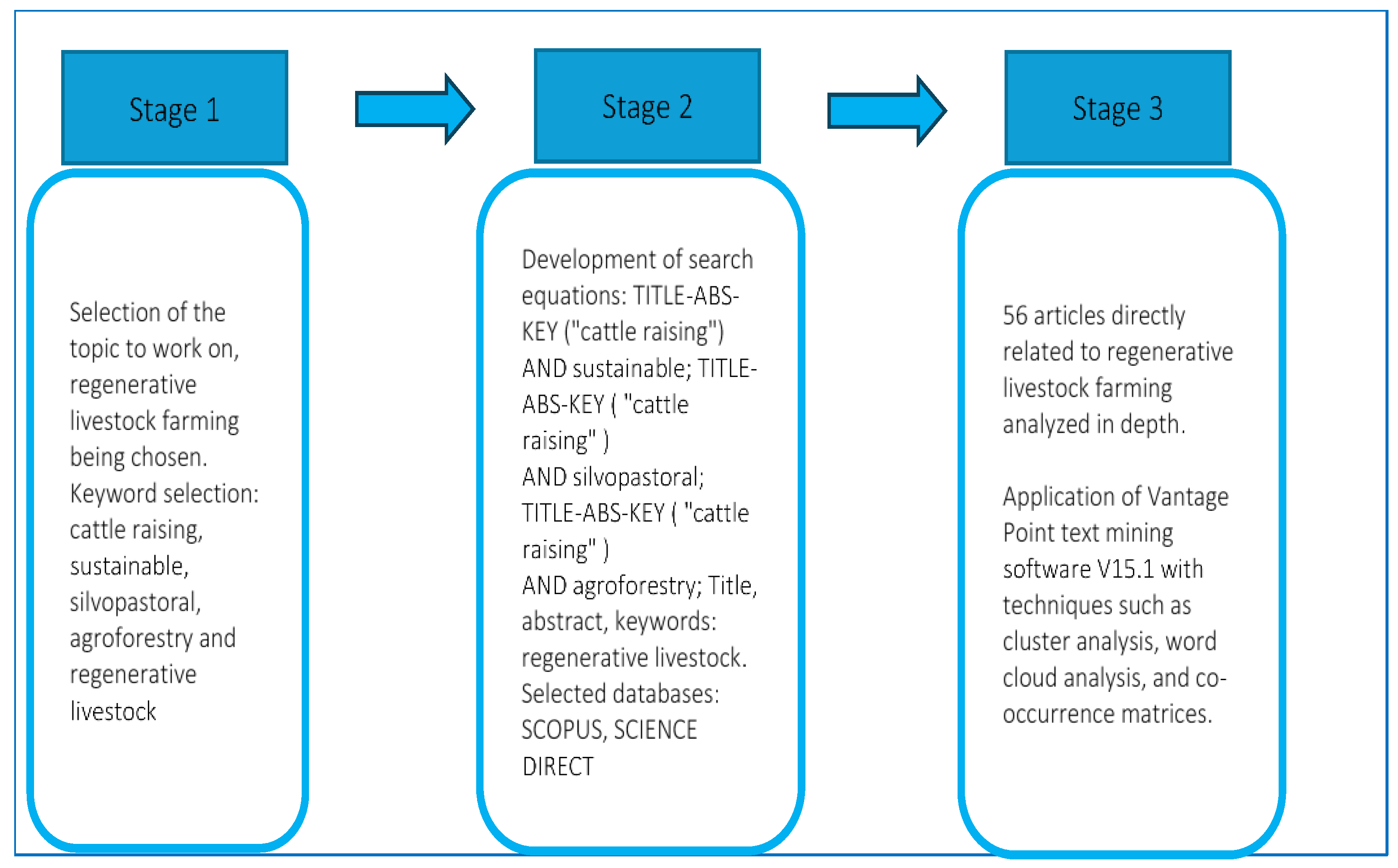
Stage 3. After reading and analyzing the documents, articles that were not relevant (articles that did not present adequate information for the study) and those that were repeated in the different searches were discarded, leaving a total of 56 articles, after which the collected information was graphed in the Vantage Point V15.1 text mining software with techniques such as cluster analysis, word cloud analysis and co-occurrence matrices.
Following the categorization of data, Stage 4 (Strategic Frontiers Analysis) was executed.
This stage is directly linked to and dependent upon the outputs derived from Stage 3, as it translates the identified technology archetypes into long-term foresight scenarios. This operational nexus, visually mapped in
Figure 1, ensures that the strategic boundaries are anchored strictly to the empirical literature analyzed in the preceding phase.
The 3 stages of the methodology are shown in
Figure 1.
4. Results
Figure 2 shows the main countries in which the development of the different papers took place and is represented in the number of times it is found in the different papers, thus the countries with the highest number of repetitions or the most important ones are shown with a larger size than those with a lower number of repetitions, in this way, the most repeated or most important countries are United States, India and United Kingdom. This information is relevant because it allows us to see where the greatest number of re-search projects are conducted and also enables a more in-depth analysis of the studies carried out in Latin American countries. It also allows us to implement these techniques in Colombia, which has a climate very similar to other countries in the region.
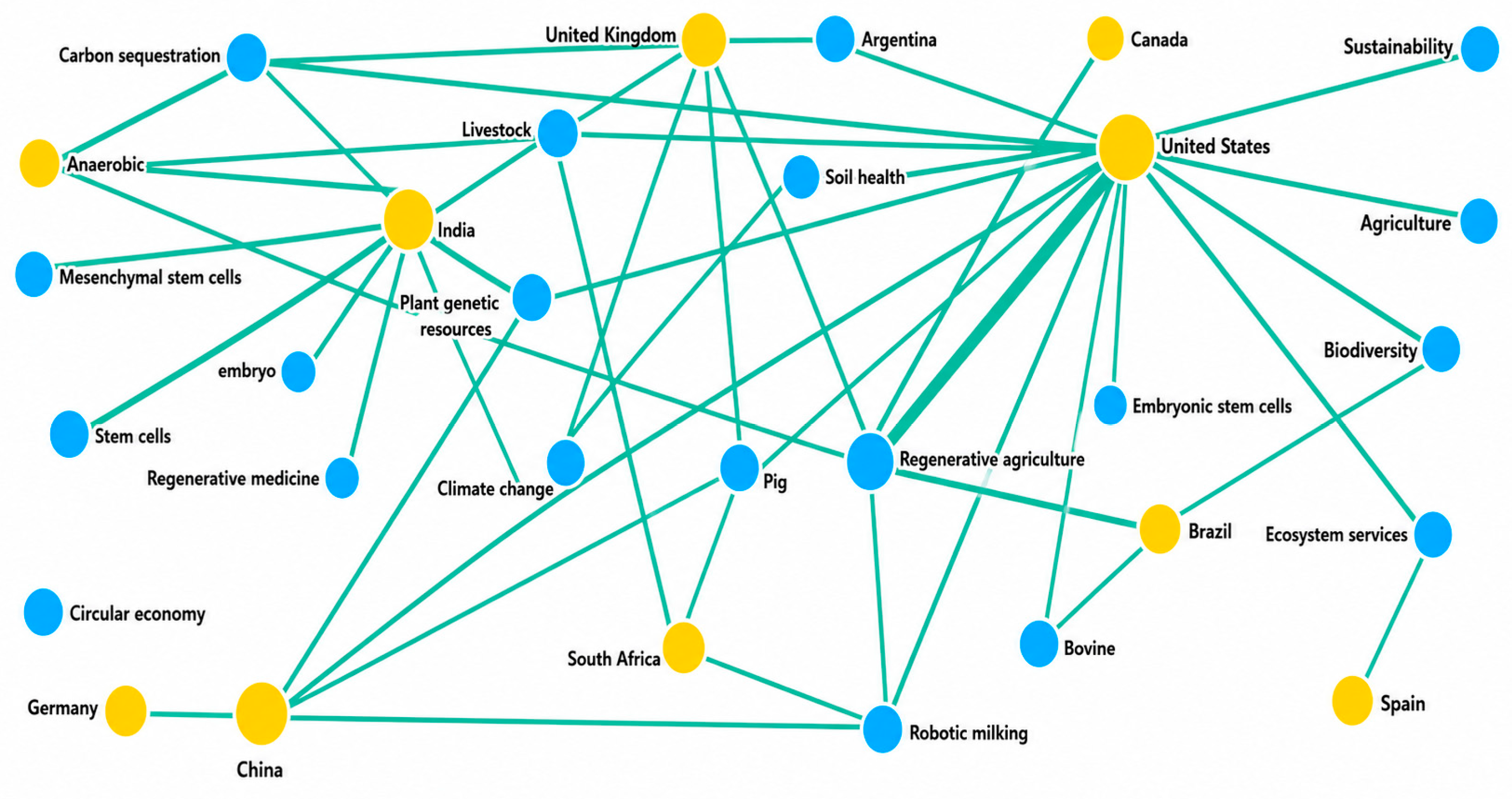
Figure 3 shows the relationship between some of the most mentioned countries and some of the keywords, being the countries with the yellow dots and the keywords with the blue dots, generating lines between them, showing that some of these keywords are repeatedly integrated into the papers of the different countries, some of these words are regenerative agriculture, holistic grazing, climate change and biodiversity; in this way it can be seen which are the main topics worked on in the different countries.
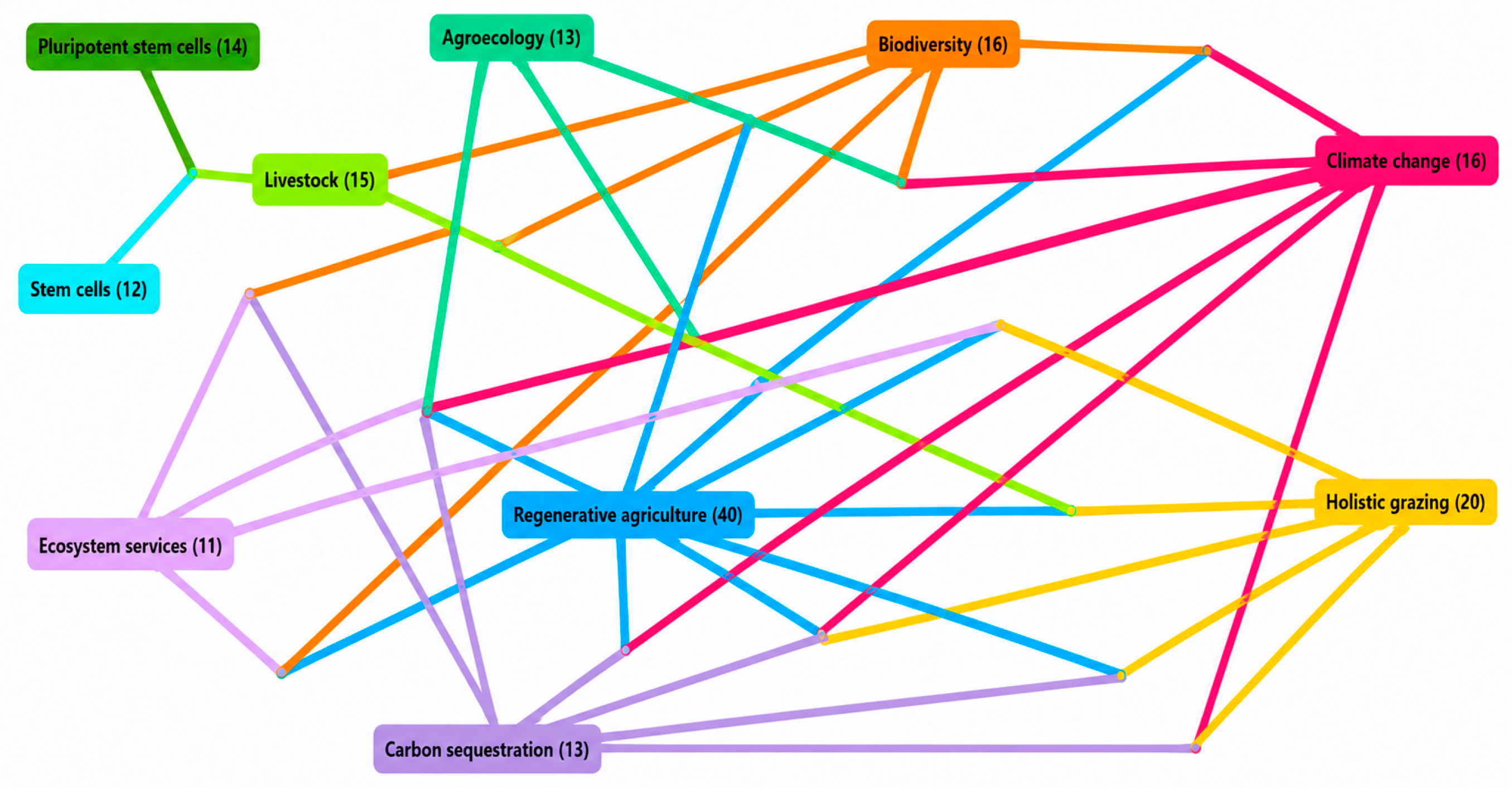
Figure 4 shows the group of keywords most used in the different papers, as we can see, the authors present more studies on the topics of Regenerative agriculture and Holistic grazing. Keywords are an important part of the articles since they can provide us with information on the topics they deal with and allow us to find the articles of interest in the databases in a more efficient way by means of search equations. The analysis of keyword clusters constitutes a fundamental tool for identifying the main thematic areas, as well as the relationships among the different topics addressed. It also enables the recognition of research patterns, prevailing trends, and potential emerging or underexplored areas.
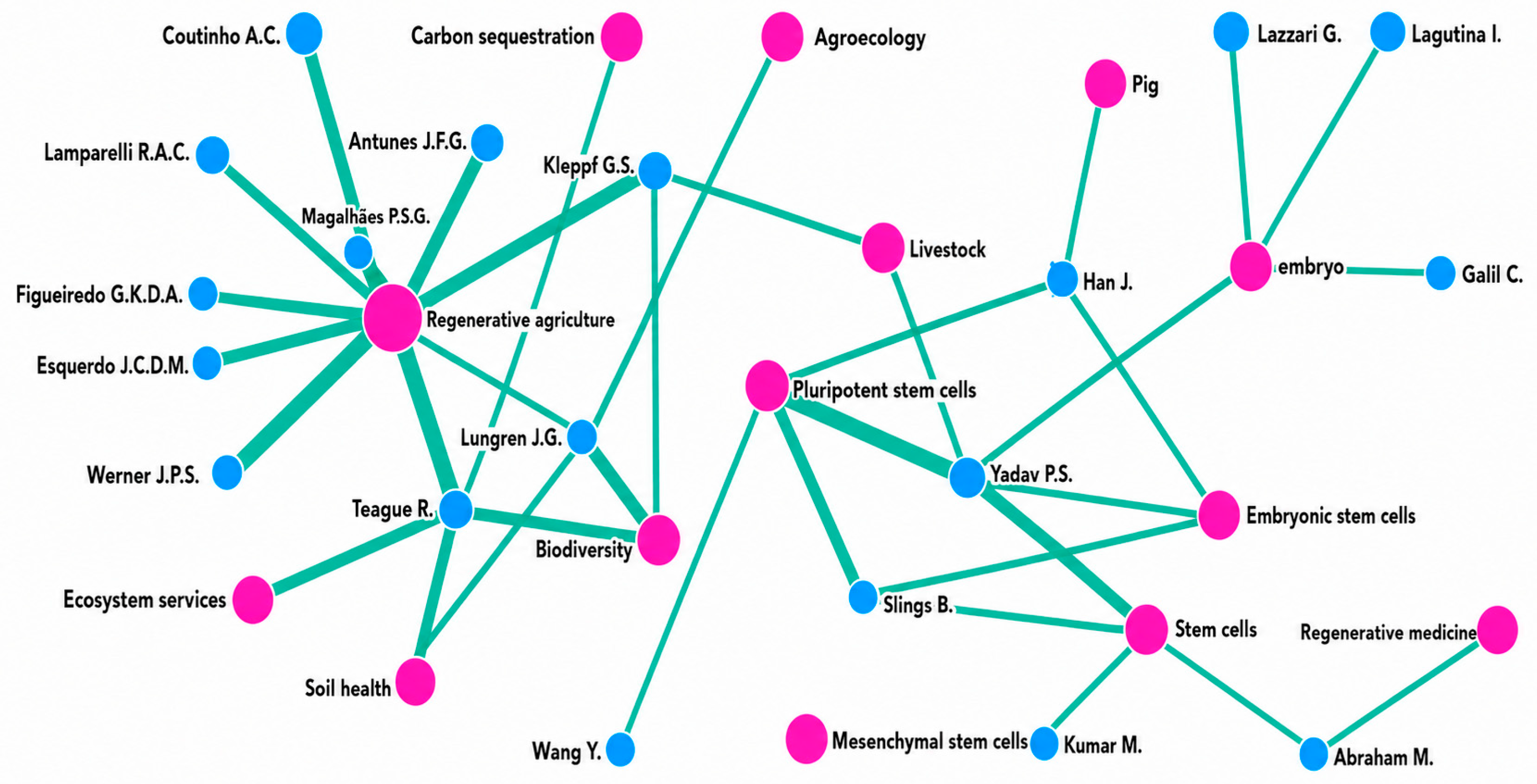
Figure 5 shows the co-occurrence of keywords among different authors in their research lines, suggesting the existence of shared thematic clusters and potential areas of scientific convergence. The most frequently occurring keyword is regenerative agriculture, appearing in 10 authors. Additionally, other relevant keywords such as ecosystem services and biodiversity also exhibit high recurrence across the analyzed publications. Overall, these patterns reflect established trends within the field and help identify priority research axes, as well as potential opportunities for interdisciplinary collaboration.
The previous
Figure 6 presents the authors with the highest number of studies or those who participate in the greatest number of investigations. An author cloud is displayed in which font size proportionally represents the level of participation or scientific productivity, such that larger fonts correspond to authors with a higher number of contributions. The analysis revealed a concentration of scientific production among a limited number of researchers, with one author exhibiting the highest level of participation across the reviewed studies, followed by other prominent contributors in the field [
26,
27]. Such representations provide valuable insights into the intellectual structure of the research domain by identifying leading scholars, highlighting collaboration networks, and illustrating the distribution of scientific output among key actors.
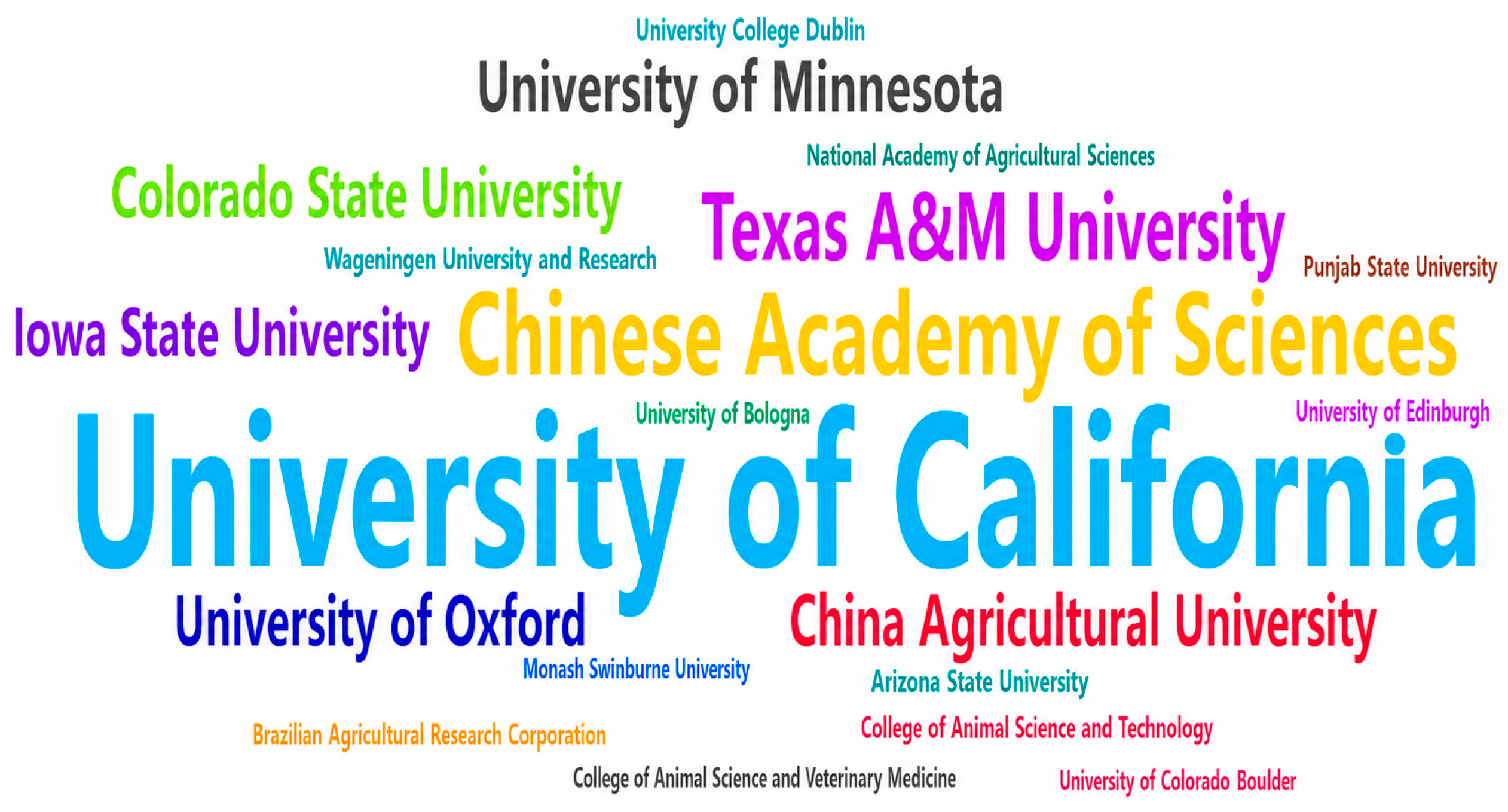
The figure above shows the different organizations that participated in the research. The University of California is the institution with the highest level of participation in the various projects analyzed, followed by the Chinese Academy of Sciences, Texas A&M University, the University of Oxford, and China Agricultural University, among others. This distribution pattern highlights a concentration of scientific output within highly research-intensive academic institutions, suggesting their leading role in the development of the field of study. Likewise, the presence of organizations from different geographic regions reflects the international and collaborative nature of the reviewed research, contributing to the diversity of approaches and strengthening global research networks.
Table 1 shows the list of technologies or regenerative practices on which the consulted research is based. In this regard, it is identified that the silvopastoral system is the most recurrent topic, with 22 occurrences, followed by pasture rotation with 11 occurrences and crop livestock integration with 6 occurrences. Meanwhile, the replacement of agrochemicals and the evaluation of the benefits of regenerative systems each present 3 occurrences. Ecological livestock and adaptive grazing register 2 occurrences, while other practices such as growth-promoting fungi, microbial enhancement, conservation of natural pastures, mutagenesis, mob grazing, leguminous pastures, and ammonia absorbers appear only once each.
These results show a clear predominance of approaches focused on optimizing soil management, improving production efficiency, and reducing the environmental impact associated with conventional livestock systems. In particular, the high frequency of the silvopastoral system suggests its consolidation as one of the most widely studied strategies within regenerative livestock farming, due to its benefits in terms of carbon sequestration, biodiversity, and ecosystem resilience.
Overall, the identified regenerative livestock systems are mainly conceptual and experimental in nature, developed from on-farm trials that demonstrated positive outcomes. These advances have facilitated their adaptation and scaling into more technical, systematized, and potentially reproducible frameworks, applicable both in research contexts and real production systems by different researchers and producers.
5. Discussion
5.1. Main Advances in Regenerative Technologies or Activities in Livestock Farming
Since regenerative livestock farming is the central theme of this research, it is very important to identify the different regenerative livestock farming activities on which the research consulted is based. This section of
Table 2 identifies each author consulted, the country of origin, the year of the research, and the regenerative activity or technology investigated.
The results presented in
Table 2 correspond to the subset of 44 papers, from the total of 56 identified, that explicitly mention regenerative livestock farming technologies and activities. The main technology or regenerative activity investigated is silvopastoral and/or agroforestry systems, although there are many other activities on the rise such as the integration of crops and livestock, implementation of pasture rotation systems, implementation of pasture systems including leguminous plants, establishment of live fences, among others. It can also be seen that the research was carried out in different parts of the planet because it includes both tropical and seasonal countries and there are also representations of the different continents.
The information presented in the table indicates that, during the period from 2000 to 2010, silvopastoral systems were primarily regarded as a strategy for improving livestock production. Evidence from the literature suggests that, although their implementation requires an initial investment that may negatively affect short-term economic indicators, these systems can generate long-term input savings of up to 30% and provide as much as 70% of animal feed requirements [
44]. Furthermore, studies highlighted the implementation of live fences as an effective practice for reducing maintenance costs while contributing to farm reforestation efforts [
42].
Advances in livestock production during this period were also associated with improvements in grazing and herd management practices. Among these, increasing the number of paddocks within the same land area was identified as a strategy for enhancing production efficiency and optimizing resource use [
41]. In addition, the literature demonstrated that livestock systems can contribute positively to biodiversity conservation when appropriate management practices are adopted [
40].
In the decade spanning the years from 2011 to 2020, there is also much mention of silvopastoral systems and their economic and environmental advantages as mentioned by authors [
39]. Related studies have highlighted the ecological benefits associated with different silvopastoral configurations. In particular, research comparing forest patches and scattered trees has shown that the latter can improve microclimatic conditions and reduce soil compaction, thereby contributing to the sustainability of livestock systems [
70].
Similarly, live fences have been identified as a traditional form of silvopastoral system. However, the literature suggests that these conventional arrangements should progressively evolve toward intensive silvopastoral systems in order to enhance their environmental, productive, and socioeconomic performance [
39,
69]. In this regard, intensive silvopastoral systems are considered a more suitable pathway toward sustainable rural development, requiring the commitment and shared responsibility of all stakeholders involved in the livestock value chain [
69].
Furthermore, these systems have been proposed as a viable alternative to organic livestock production, particularly because they promote management practices that reduce or eliminate the use of pesticides and synthetic fertilizers, thereby minimizing environmental contamination and supporting ecosystem conservation [
36].
Several studies have proposed strategies to enhance the sustainability of livestock production systems. These include the use of plant-based extracts for tick control in cattle, providing an environmentally friendly alternative to conventional chemical treatments [
30]. Likewise, low-impact livestock systems have been promoted through the conservation and incorporation of forested areas within grazing landscapes, contributing to ecosystem preservation and improved environmental performance [
35].
Other approaches emphasize the implementation of silvopastoral systems based on native trees and shrubs, together with the use of local zoogenetic resources as key elements for achieving sustainable livestock development [
7]. In addition, integrated crop–livestock systems, whether implemented simultaneously or through rotational schemes, have been identified as effective strategies for improving resource-use efficiency and strengthening system resilience [
9,
10].
The integration of livestock production with agroforestry systems has also received considerable attention due to its environmental benefits. Evidence suggests that these systems can reduce greenhouse gas emissions compared with conventional livestock production models while simultaneously enhancing carbon sequestration capacity, thereby contributing to climate change mitigation efforts [
37,
43].
During the period from 2021 to 2024, silvopastoral systems continued to receive considerable attention in the scientific literature. Recent studies have highlighted their potential to improve soil quality and enhance the sustainability of livestock production systems [
60,
63]. In this regard, evidence indicates that trees dispersed at relatively low densities can increase soil infiltration capacity in flood-prone areas, thereby contributing to improved hydrological regulation and soil conservation [
31].
Furthermore, the incorporation of trees into pasturelands has been associated with important economic benefits, as producers can diversify their sources of income through the utilization of timber, fruit, forage, and medicinal resources. These findings reinforce the multifunctional role of silvopastoral systems in promoting both environmental sustainability and economic resilience within livestock production systems [
8].
Similar attention has been given to integrated crop–livestock systems, which have been recognized as promising alternatives for improving the sustainability and efficiency of agricultural production. Recent studies have demonstrated their potential to reduce freshwater demand in livestock systems while enhancing resource-use efficiency through the integration of complementary productive activities [
69].
Research has also highlighted opportunities to optimize the use of agricultural by-products, such as solid residues derived from palm oil production, as alternative feed resources for cattle, thereby promoting circularity within agroecosystems [
30]. Furthermore, these integrated systems allow the combination of livestock production with a variety of crops, generating additional economic and environmental benefits. Examples include the integration of cattle production with eucalyptus plantations for timber production and with oil palm cultivation for the utilization of palm-derived products [
29,
52].
Beyond productive diversification, integrated crop–livestock systems have been associated with important ecological benefits, including the regeneration of soil organic carbon stocks and the promotion of forest regeneration through appropriately managed grazing practices [
49,
56]. These findings underscore the potential of integrated systems to contribute simultaneously to agricultural productivity, environmental conservation, and climate change mitigation.
Rotational grazing remains one of the most widely adopted livestock management practices due to its numerous productive and environmental advantages [
61,
65]. Over time, this approach has evolved through the incorporation of complementary strategies, such as the integration of legumes into pasture systems, which can enhance forage quality and improve overall system performance [
65].
The development of rotational grazing has also given rise to more advanced management approaches, including adaptive grazing and mob grazing, both of which seek to optimize forage utilization while improving ecosystem functioning [
6,
54,
59]. In addition, the science of rangeland management has gained prominence as a comprehensive framework encompassing native grassland restoration, improved rangeland management, integrated crop–livestock systems, and regenerative agricultural practices aimed at conserving soils and rangeland ecosystems [
55].
These grazing and rangeland management strategies have demonstrated a wide range of benefits. Reported outcomes include improved forage availability and utilization, increased soil organic carbon accumulation, enhanced vegetation management through shrub control, and more effective control of external parasites such as ticks [
32,
48,
50,
53]. Collectively, these findings highlight the important role of sustainable grazing practices in promoting livestock productivity, ecosystem conservation, and long-term agricultural resilience.
A wide range of technologies and management strategies have been developed to promote the transition toward more sustainable livestock production systems. Among these, particular attention has been given to the assessment of environmental impacts, including carbon sequestration and the mitigation of climate change through livestock management practices and ecosystem-based approaches [
4,
33,
64].
Another key principle underlying sustainable livestock technologies is the use of resources and biological organisms naturally present within production systems to reduce dependence on synthetic agrochemicals and minimize environmental impacts [
34,
71]. In this context, research has demonstrated that the conservation and management of dung beetle populations can improve soil quality and ecosystem functioning, while the application of filamentous fungi can enhance pasture productivity and support sustainable forage management [
72,
73].
Similarly, natural alternatives for pest control have received increasing attention. Studies have shown that plant-derived extracts can serve as effective acaricides for tick management, reducing the need for conventional chemical treatments [
30]. In addition, nature-based solutions have been proposed as valuable tools for land restoration, contributing to ecosystem recovery and the long-term sustainability of livestock production landscapes [
47].
Collectively, these technological and ecological innovations highlight the growing emphasis on environmentally responsible livestock systems that integrate productivity goals with ecosystem conservation and climate change mitigation.
To assess whether the identified technologies and practices have been examined and implemented at both research and practical levels, an analysis was conducted using information from three relevant institutions. The findings derived from this assessment are presented in
Table 3 [
74,
75,
76,
77,
78,
79].
Table 3 identifies the relationship between the main regenerative livestock technologies and activities and three of the most influential international institutions in this field: Wageningen University & Research, Rodale Institute and Savory Institute. The results show that practices such as silvopastoral systems, rotational grazing, crop–livestock integration, and adaptive grazing present a strong institutional convergence, demonstrating that these technologies currently represent the technical core of the transition toward regenerative livestock systems. The institutional analysis revealed diverse approaches to sustainable and regenerative livestock development. Wageningen University & Research has contributed significantly to the advancement of circular livestock systems and integrated soil–pasture management strategies. Similarly, the Rodale Institute has focused on regenerative agriculture and livestock production practices that prioritize soil health and the reduction in agrochemical inputs. In contrast, the Savory Institute has promoted holistic management and regenerative grazing approaches aimed at restoring ecosystem functions and enhancing ecological resilience [
76,
77,
78,
79]. This convergence supports the argument that an emerging international consensus exists regarding technologies with the greatest potential to regenerate livestock ecosystems while simultaneously improving productivity and climate resilience.
5.2. Identification of the Main Regenerative Technologies and Their Implementation Model
5.2.1. Paddock Rotation
As a result of overgrazing, which occurs when cattle spend more time than indicated in a pasture, problems arise such as the slow recovery of pastures because cattle exceed the minimum height of the grasses, eating the areas where they accumulate their reserve nutrients, causing the pastures to degrade slowly and favoring the proliferation of weeds, and in dry seasons overgrazing can cause the soil to be exposed without plant material to protect it so that the arrival of rains can cause erosion in these areas [
80].
Therefore, paddock rotation represents a solution to these problems and consists of alternating the use of pastures and dividing them into two periods, an occupation period and a rest period, for which the grazing area is divided into different paddocks where one will be in the occupation period and the others will be in rest periods. During the period of occupation, the animals enter to feed in a paddock from which they must be removed at a certain time to ensure that the grasses in this paddock maintain the nutrient reserve zones that are usually near the roots and also maintain sufficient leaves to accumulate solar energy and be able to develop their metabolic processes to achieve faster recovery, In the rest period, pastures should be left alone for a certain period that depends on the species of grasses, soil conditions, and climatic conditions, where a very short time can lead to overgrazing by not allowing the pastures to recover adequately or where a very long time can cause a loss in the quality of the pastures since they become lignified and lose nutrients, lowering their palatability [
81].
Among the main benefits of pasture rotation systems are the rapid recovery of pastures as mentioned above, as well as a better use of pastures since they are consumed by the animals at their optimum maturity time, improving their nutritional quality. Another advantage is that seed production and natural reseeding of pastures are promoted. In the same way in which the pastures have a better recovery and a natural reseeding, weeds are hindered in their growth and dispersion, which facilitates their control. By constantly changing pastures, the cycles of external parasites are cut, hindering their proliferation, which is reflected in the reduction in agrochemicals and costs in the control of these parasites [
82].
For a pasture rotation system to be successful, the following steps are necessary:
Stage 1. Define the species of grasses that will be used for grazing and their optimal resting times.
Stage 2. Calculate how many paddocks will be needed and how long they will be occupied to ensure that the rest period is met and to avoid overgrazing.
Stage 3. Physically divide the paddocks and ensure that each has access to clean water and sufficient shade to ensure the welfare of the animals.
Stage 4. Calculate the animal load that can be kept in the system, to ensure the best use of the pasture and again to avoid overgrazing, for this it is necessary to take into account factors such as the capacity of the pasture, i.e., the amount of food the pasture is capable of producing and also take into account the live weight of the animals, since it is based on this the amount of grass required by each individual.
5.2.2. Silvopastoral Systems and Implementation Models
Silvopastoral systems are a combination of trees, shrubs, pastures, and livestock. These resources must be managed in such a way that they remain stable over time while providing both feed for livestock and vegetative cover for the soil, thereby improving soil fertility in the medium and long term [
83].
Another definition of silvopastoral systems describes them as a livestock production alternative in which trees and shrubs are integrated with the traditional components of grazing systems, namely pastures and animals. This integration provides several advantages, including increased productivity and more efficient use of soil resources. In addition, trees capture carbon dioxide, regulate temperature, and reduce the risk of soil erosion, making these systems an effective strategy for climate change adaptation and mitigation [
84].
The appeal of silvopastoral systems lies in the wide range of benefits they provide. These include improved animal welfare through greater availability and diversity of forage; enhanced soil quality resulting from increased water infiltration and retention, which also reduces erosion risk and mitigates the effects of drought; increased biodiversity due to the presence of trees; carbon sequestration; and diversification of farm income through the production of timber or fruits, generating additional economic benefits [
85].
Ideally, all components of a silvopastoral system occupy the same space simultaneously. For example, livestock, pastures, and trees or shrubs coexist within the same production unit, allowing animals to directly browse tree and shrub foliage as a feed source. However, this is not the only implementation strategy. The components may also be spatially separated by physical barriers, preventing direct interaction between livestock and woody vegetation. In such cases, forage or fruits are harvested and subsequently supplied to the animals, either under grazing or confinement systems [
84].
Because there are several ways to integrate trees and shrubs into conventional livestock systems, different silvopastoral models have been developed. Furthermore, the structural optimization of these models relies heavily on specialized agroforestry configurations. The establishment of living fences serves a dual purpose by functioning as biological corridors that enhance landscape connectivity while also providing localized shade and alternative forage sources. Complementarily, the implementation of riparian buffer zones along streams and other internal water bodies is essential. These buffer strips reduce nutrient runoff, protect water resources from soil compaction caused by livestock, and help stabilize the soil microclimate, thereby addressing operational limitations commonly associated with traditional extensive grazing systems.
Another implementation model consists of establishing scattered trees throughout grazing paddocks. In this approach, the lower branches are pruned while the upper canopy is maintained to provide partial shade and allow sufficient sunlight to reach the pasture. Likewise, the use of leguminous tree species promotes more stable and productive pastures during the dry season because of their capacity to fix atmospheric nitrogen. Another strategy involves preserving or establishing forested areas within the farm, particularly along riverbanks and streams. These areas stabilize the soil, prevent landslides, and contribute to biodiversity conservation [
86].
Another type of silvopastoral system is the protein bank. This approach allocates part of the farm to cultivating highly digestible, protein-rich forage species that are inaccessible to livestock. The forage is harvested at scheduled intervals and subsequently supplied to the animals as supplemental feed. Another model is the three-strata silvopastoral system, which integrates grasses, forage shrubs, and forage trees within the same pasture. As its name indicates, livestock have access to three forage layers: the lower layer consists of grasses, the middle layer of palatable and nutritious shrubs, and the upper layer of trees that provide fruits, seeds, or foliage as additional feed resources [
87].
A final silvopastoral modality is the integration of livestock with crop production. This system can be divided into two variants: integration with fruit trees and integration with timber trees. In both cases, trees are planted at appropriate spacing to allow sufficient sunlight to reach the pasture. Among the advantages of this system is the reduction in maintenance requirements, since livestock contribute to vegetation control. In addition, fallen fruits can be consumed by the animals, thereby reducing the proliferation of pests associated with fruit decomposition [
88].
Although silvopastoral systems offer numerous advantages, they also present several limitations that may hinder their adoption. One common concern is the perception that pasture production declines under tree shade. Although this may occur depending on tree characteristics such as canopy size, crown density, and foliage distribution, the effect can be minimized through appropriate selection of tree and forage species. Another important limitation is the initial investment and the time required for trees to reach sufficient size and resilience to withstand livestock grazing and trampling [
86].
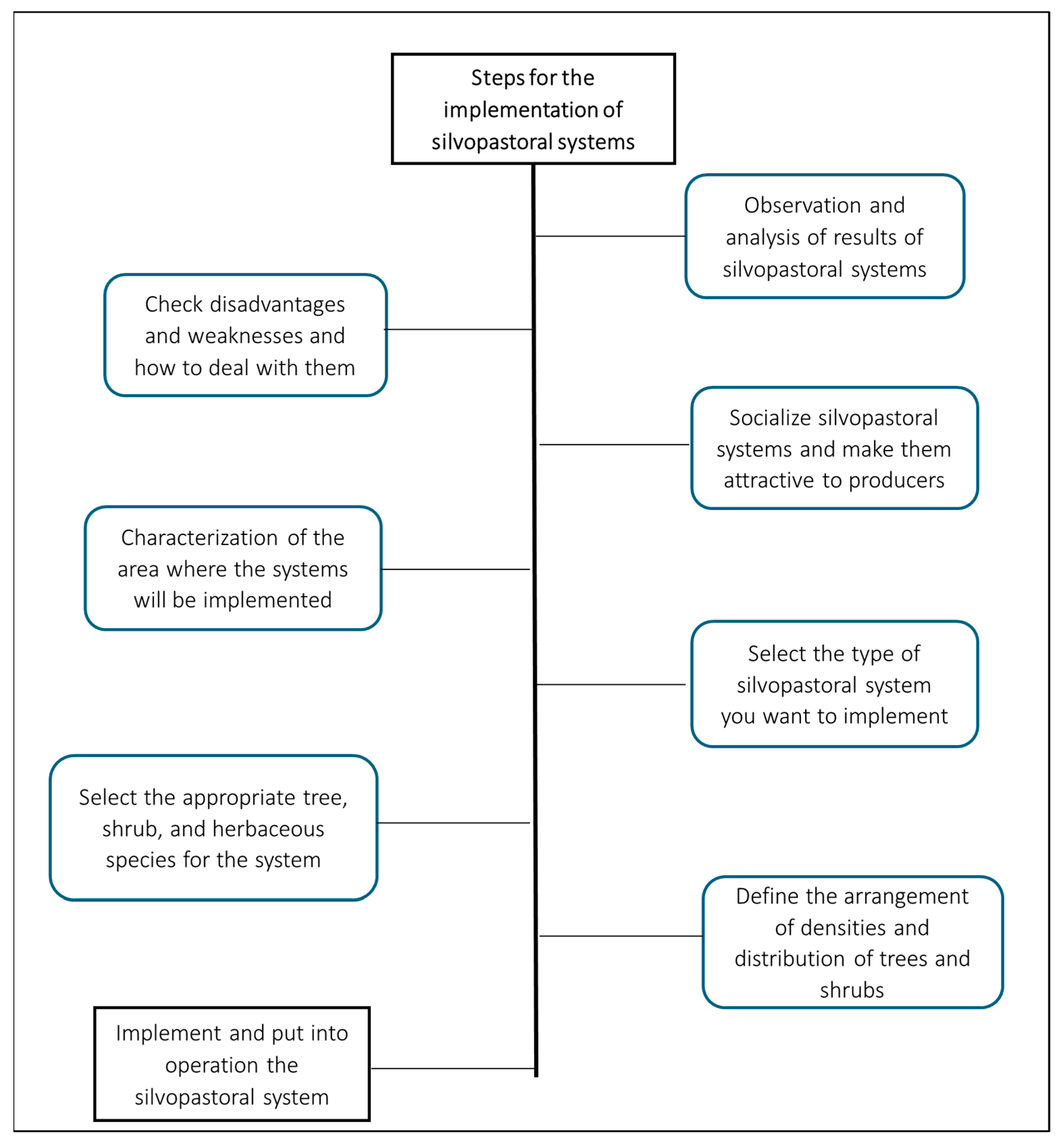
Therefore, the successful implementation of silvopastoral systems in Colombia requires following a series of planning and establishment stages to optimize system performance while minimizing economic losses and implementation delays.
Figure 8 summarizes the recommended steps for the efficient establishment of these systems.
According to the previous figure, the eight stages required to better implement silvopastoral systems are:
Stage 1. The first thing to do is to do some research on how these systems work elsewhere and see which methods give the best results.
Stage 2. Following this, the main weaknesses of these systems should be studied in order to analyze them and provide the best possible solutions, being clear about the main strengths and weaknesses of these systems and how to address the weaknesses.
Stage 3. The next step will be the socialization of these systems so that local producers are aware of this knowledge, dispel doubts, and find these systems attractive.
Stage 4. After this, it would be necessary to characterize the areas where these systems will be implemented, since, as we know, Colombia is a very diverse country and therefore it would be incorrect to implement the same system in all regions.
Stage 5. The next step after the characterization of the area would be to choose the type of silvopastoral system to be implemented, and then analyze and choose the herbaceous, shrub, and tree species that are best suited to these systems.
Stage 6. Once this has been defined, the type of arrangement to be used will be defined, that is, the density of trees per hectare and how they will be distributed.
Stage 7. After this, the maturity of the trees and shrubs must be awaited and it is necessary to define whether to create systems in which the forage is harvested or associated with crops, to take advantage of the space during this time.
Stage 8. Implement the silvopastoral system.
5.3. Regenerative Livestock as a Process of Socio-Ecological and Political Transformation
The transition toward regenerative livestock systems transcends mere technical adoption; it represents a profound socio-ecological and political transformation. Our analysis identifies 14 key variables of regenerative innovation, which align with recent frameworks proposing that sustainability in animal agriculture must be understood through a lens of multifunctionality. The concept of regenerative innovation emphasizes the integration of technological, ecological, and social dimensions as a means of restoring soil health and biodiversity while enhancing the resilience and sustainability of regional supply chains [
88]. This integrative approach suggests that the success of regenerative models depends on “place-making” processes where communities define desired outcomes based on their specific social and ecological contexts.
Furthermore, the discussion must address the discursive tensions between transition and transformation. Current discussions on sustainable protein systems reveal the existence of competing transition pathways. These are commonly framed as a dichotomy between “no cow” futures, which emphasize alternative protein sources, and “clean cow” futures, which advocate regenerative livestock production as a strategy for improving environmental sustainability within animal agriculture [
89]. For the livestock sector, the “clean cow” frame is not merely about carbon sequestration but about reconfiguring the interdependence between producer autonomy and public policy. The implementation of technologies such as silvopastoral systems (SPS) and integrated pasture management acts as a catalyst for shifting social norms and power dynamics within the value chain, moving from extractive practices toward a model rooted in ecological resilience and socio-political agency.
The literature conceptualizes regenerative livestock systems as multidimensional processes that integrate social, ecological, and technological innovation while addressing issues such as soil health, biodiversity, productivity, input costs, regional development, governance, and supply-chain sustainability [
88]. Furthermore, contemporary debates have highlighted competing visions of sustainable protein futures, emphasizing actor dynamics, the distinction between transition and transformation, and the balance between individual freedom and interdependent forms of autonomy [
89].
5.4. Variables on Regenerative Livestock
A complementary analysis was carried out using a highly specific search equation aimed at identifying variables related to barriers within regenerative livestock systems. The results highlighted the need to transform livestock production systems in ways that not only address increasing food demand but also generate environmental and social benefits, including improved soil health, enhanced nutrient retention, reduced flooding, greater biodiversity, and strengthened community development outcomes [
88]. The authors argue that emerging agroecological innovation systems for livestock must be designed and managed to ensure responsible and diverse outcomes that are compatible with the social and ecological contexts in which they operate, as well as with management approaches and technologies aligned with the values and objectives of local communities.
Research on sustainable protein sourcing has highlighted the diversity of viewpoints surrounding regenerative protein production. Based on evidence gathered from fifty-eight participants in California and Colorado, the study revealed the coexistence of livestock-based and alternative protein perspectives, reflecting the complexity of ongoing debates regarding the future of sustainable food systems [
89].
To evaluate the multidimensional impacts of these technological archetypes, a structured framework of metrics is required. As detailed in
Table 4, the primary operational variables governing regenerative livestock production systems can be classified into environmental, zootechnical, and socio-economic dimensions.
This matrix compiles the multidimensional variables governing regenerative livestock setups. Environmental parameters denote soil organic matter and biodiversity indexes; zootechnical parameters track carrying capacity and forage efficiency; socio-economic parameters isolate market access and institutional support requirements.
Table 5 compares the regenerative innovation variables identified in
Table 4 with the conceptual frameworks proposed by key contributors to regeneration and systems thinking. This analysis enables the assessment of theoretical convergence between the identified variables and the perspectives advanced by Daniel Christian Wahl, Bill Reed, and Medard Gabel [
90,
91,
92].
The structural convergence of these indicators yields a predictive roadmap for technological scaling, which is systematically synthesized and categorized in
Table 5.
The results indicate that variables such as soil health, biodiversity, multifunctionality, place-making, and systemic transformation are consistently addressed across the examined theoretical frameworks, although from complementary perspectives. The literature conceptualizes regeneration as a co-evolutionary process involving ecological, social, and economic systems; a transition from sustainability-oriented models toward systems capable of restoring living capacities; and an approach grounded in systems thinking and integral planning for addressing complex global challenges [
90,
91,
92].
Taken together, these findings suggest that regenerative livestock farming should not be understood merely as a collection of productive techniques. Rather, it represents a socio-ecological and territorial transformation process that integrates systemic, regenerative, and multidimensional perspectives to enhance the resilience and adaptive capacity of both human and natural systems [
90,
91,
92].
5.5. Addressing the Research Gap: From Global Frontiers to Tropical Implementation
A critical contribution of this research is the identification of the implementation gap between theoretical regenerative principles and their practical execution in specific geographical contexts. While our mapping reveals a robust global frontier of emerging technologies, a significant disconnect persists when translating these innovations to the biophysical and socioeconomic realities of the tropics, particularly in countries like Colombia.
Recent evidence from the Colombian Amazon suggests that despite the high potential for climate-smart livestock, adoption rates of sustainable practices like paddock division and silvopastoral systems remain low due to structural barriers, including technical capacity and gender-based disparities in decision-making [
93]. This study addresses this specific gap by proposing a systematic technical roadmap and a procedural sequence for implementation. Our results suggest that the research void is not defined by a lack of technology per se, but by the absence of localized governance frameworks that facilitate the transition. By aligning the 14 identified regenerative activities with the Colombian context, this paper provides a bridge between global innovation trends and the on-the-ground technical requirements necessary for scalable transformation in tropical landscapes.
6. Conclusions
There is a wide variety of methods, technologies, and practices that are part of regenerative livestock farming, which provide not only environmental benefits but also economic and socio-cultural benefits, so a correct method of information and dissemination must be carried out to reduce as much as possible the abstention or resistance to change due to factors such as generational shock and thus lead this productive sector to a sustainable development.
There are countries where livestock farming and agriculture play a fundamental role in the economy, highlighting the importance of this sector for economic growth. Regenerative livestock farming, along with practices such as silvopastoral systems, integrated crop–livestock systems, and agroforestry systems, offers an alternative for achieving economic growth in this sector by increasing productivity, reducing costs, and improving ecosystem services.
Livestock farming is a fundamental pillar of the economy in several countries and regions, and sustainability is an aspect that must be considered today to reduce pollution and negative environmental impacts. This research demonstrates that it is possible to achieve sustainable livestock production that also continues to contribute to the economy. Various techniques can be used to achieve this, such as silvopastoral systems and crop–livestock intercropping.
Silvopastoral systems are consolidating as one of the most promising techniques for sustainable livestock farming. This technique creates an association between livestock and forestry systems; on the one hand, livestock farming provides a more constant cash flow for the producer’s economy, while the forestry system provides protection to water sources and increases the biodiversity of the areas.
The analysis of the relationship between regenerative technologies and leading international research institutions reveals the emergence of a global technological convergence around silvopastoral systems, adaptive grazing, crop–livestock integration, and integrated pasture management. The alignment identified between institutions such as Wageningen University & Research, Rodale Institute, and Savory Institute demonstrates that regenerative livestock systems are evolving from isolated experimental practices toward internationally validated technological frameworks with growing scientific legitimacy. This convergence suggests that regenerative livestock farming is no longer limited to localized ecological initiatives, but is progressively consolidating as a globally coordinated sustainability transition model capable of simultaneously addressing soil degradation, climate resilience, biodiversity restoration, and productive efficiency. Consequently, the study contributes a strategic perspective by positioning regenerative livestock technologies as part of an emerging international innovation ecosystem with strong potential for replication in tropical regions such as Colombia.
The articulation between regenerative livestock variables and seminal regenerative thinkers such as Daniel Christian Wahl, Bill Reed, and Medard Gabel demonstrates that regenerative livestock farming should not be interpreted solely as a productive or environmental improvement strategy, but rather as a systemic transformation paradigm grounded in living systems thinking, multifunctionality, and socio-ecological regeneration. Variables such as soil health, biodiversity, regional place-making, governance, and transformational change exhibit strong conceptual coherence with regenerative development theory, reinforcing the idea that livestock sustainability requires structural changes in production logic, institutional arrangements, and territorial governance. This theoretical alignment provides a novel contribution to the literature by connecting operational livestock practices with broader regenerative transition frameworks, thereby strengthening the conceptual maturity of regenerative livestock studies and expanding their relevance within sustainability science.
7. Recommendations
Based on the findings of this study, several strategic recommendations can be proposed to strengthen the adoption and scalability of regenerative livestock systems, particularly in tropical regions such as Colombia.
First, it is recommended that public institutions, universities, and agricultural extension agencies promote technical training programs focused on regenerative livestock practices. The successful implementation of silvopastoral systems, adaptive grazing, and crop–livestock integration requires specialized knowledge in pasture management, soil restoration, biodiversity conservation, and ecosystem-based production strategies. Capacity-building initiatives should therefore prioritize practical field-based learning adapted to regional environmental conditions.
Second, policymakers should design incentive mechanisms that facilitate the transition from conventional to regenerative livestock systems. Although regenerative practices generate long-term environmental and economic benefits, their initial implementation often involves high investment costs and delayed financial returns. Consequently, access to low-interest credit, subsidies for ecological restoration, and payment schemes for ecosystem services could significantly enhance producer adoption.
Third, future research should focus on the development of localized implementation frameworks for tropical livestock systems. While regenerative livestock farming has demonstrated positive outcomes in multiple international contexts, this study identified a persistent gap between theoretical models and practical adaptation in specific geographical regions. Therefore, additional studies are needed to evaluate the performance of regenerative technologies under diverse climatic, social, and productive conditions within Colombia and other tropical countries.
Furthermore, greater interdisciplinary collaboration between researchers, producers, environmental organizations, and governmental institutions is strongly recommended. Regenerative livestock farming should not be understood solely as a technical innovation, but rather as a socio-ecological transformation process that integrates environmental sustainability, economic resilience, and rural development. Strengthening collaborative networks may accelerate knowledge transfer and improve the scalability of successful regenerative practices.
It is also recommended to expand research on emerging regenerative technologies that remain underexplored in the scientific literature, including the use of fungi as pasture growth promoters, ammonia-absorbing systems, biological pest control through plant extracts, and soil restoration through macroorganisms. These technologies may provide complementary solutions for reducing agrochemical dependency and improving ecosystem functionality.
Additionally, monitoring and evaluation systems should be incorporated into regenerative livestock projects to quantify long-term impacts on soil health, carbon sequestration, biodiversity, water conservation, and animal welfare. The generation of reliable environmental indicators would contribute to evidence-based decision-making and strengthen public confidence in regenerative production models.
Finally, this study recommends promoting regenerative livestock farming as part of broader national sustainability and climate adaptation strategies. Given its potential to restore degraded ecosystems, reduce greenhouse gas emissions, and improve the resilience of rural communities, regenerative livestock farming represents a viable pathway toward sustainable agricultural development in tropical regions.
8. Limitations
While the research identified and classified the main regenerative livestock technologies, the study did not include direct field experimentation or longitudinal validation under real-world production conditions. Therefore, the proposed implementation frameworks and procedural sequences remain conceptual and require empirical testing in different agroecological contexts to confirm their technical and economic feasibility.
Another limitation relates to the geographical variability of regenerative livestock systems. The effectiveness of practices such as silvopastoral systems, adaptive grazing, and crop–livestock integration depends heavily on climatic conditions, soil characteristics, water availability, socioeconomic factors, and local management capacities. Consequently, the transferability of some findings to other tropical or non-tropical regions may require contextual adaptation.
Furthermore, this study focused primarily on environmental, technical, and productive dimensions, while the social, cultural, and political factors influencing adoption were only partially addressed. Variables such as land tenure, producers’ perceptions, institutional support, gender dynamics, and market access can significantly affect the implementation of regenerative livestock systems and warrant further exploration in future studies.
Finally, while the study proposes implementation pathways for the Colombian context, the diversity of ecosystems and production systems within the country presents a challenge to standardizing regenerative models. Therefore, regional pilot projects and adaptive management strategies will be necessary to ensure successful implementation on a larger scale.




 ,
,