Review

A Critical Review of Porous Asphalt Mixtures Incorporating Waste Materials: Integrating Functional Performance with Life Cycle Sustainability


CONSTRUCT—Institute of R&D in Structures and Construction, Faculty of Engineering, University of Porto, R. Dr. Roberto Frias, 4200-465 Porto, Portugal
*
Authors to whom correspondence should be addressed.
Sustainability 2026, 18(14), 7059; https://doi.org/10.3390/su18147059
Submission received: 29 April 2026 / Revised: 23 May 2026 / Accepted: 28 May 2026 / Published: 10 July 2026

Abstract

Porous asphalt (PA) mixtures offer multifunctional benefits, yet their long-term durability remains a challenge. This study presents a systematic review of recent developments in waste-modified PA, following PRISMA guidelines and analyzing 123 high-impact documents published between 2015 and 2025 across the Web of Science and Scopus databases. Unlike previous works, this paper adopts a multi-waste perspective to synthesize the interactions between recycled modifiers and the open-graded skeleton. Quantitative analysis reveals that incorporating crumb rubber can improve sound absorption by up to 30%, while specific recycled plastics enhance rutting resistance by 15–20% compared to conventional mixtures. However, Life Cycle Assessment (LCA) data indicates that these environmental gains, reducing carbon footprints by up to 25%, are highly sensitive to the chosen system boundaries. The review identifies a critical need for standardization in clogging protocols and ‘cradle-to-grave’ environmental modeling to bridge the gap between laboratory results and large-scale engineering practice. Finally, this research demonstrates how the adoption of waste-modified porous asphalt mixtures directly contributes to the United Nations Sustainable Development Goals (SDGs), particularly SDG 9 (Industry, Innovation, and Infrastructure), SDG 11 (Sustainable Cities and Communities), and SDG 12 (Responsible Consumption and Production), by fostering circular economy principles in pavement engineering.

1. Introduction

Road transportation infrastructure plays a critical role in modern societies, enabling economic development and social connectivity. However, it is also associated with significant environmental, economic, and social impacts. Rapid urbanization, increasing traffic volumes, and climate change effects have intensified challenges related to noise pollution, stormwater management, urban heat accumulation and consumption of non-renewable resources. In response, pavement engineering is undergoing a paradigm shift toward sustainable solutions that extend beyond traditional structural performance. Within this context, porous asphalt mixtures, particularly when combined with waste-derived materials, have emerged as a promising strategy to address multiple environmental and functional challenges while aligning with circular economy principles. This review examines recent advances in porous asphalt mixtures incorporating waste-derived materials, focusing on performance, sustainability and life cycle assessment aspects.

1.1. Background and Advantages of Porous Asphalt

Over the last five decades, porous asphalt (PA) mixtures have received increasing attention due to their multifunctional performance and environmental benefits. This type of asphalt mixture is mainly used as a wearing course and is characterized by a high interconnected air void content. This open structure is responsible for several advantages related to comfort and environmental sustainability. By allowing water to drain through the pavement surface, these mixtures significantly reduce tire-pavement noise [1,2], eliminate splash and spray and minimize the risk of hydroplaning during wet weather [3].
Furthermore, PA mixtures contribute to mitigating the urban heat islands (UHI) effect, a phenomenon characterized by higher surface and atmospheric temperatures in urban areas compared to surrounding rural zones, whose intensity can reach up to 6 °C during summer periods [4]. Due to their porous structure, PA mixtures exhibit lower heat absorption and enhanced heat dissipation capacity compared to conventional dense-graded asphalt mixtures, such as Asphalt Concrete. This facilitates thermal exchange between the surface and the underlying layers, resulting in reduced pavement surface temperatures [5]. This thermal regulation is primarily attributed to the insulating properties of the air trapped within the interconnected voids, which reduce the material’s overall thermal conductivity and prevent the pavement from acting as thermal mass. Consequently, by maintaining the lower surface temperature of the pavement, the asphalt mixture preserves its viscoelastic stiffness, mitigating rutting, which is commonly associated with extreme pavement heating [6].

1.2. Importance of Sustainability and Circular Economy in Current Pavement Engineering

Current pavement construction and maintenance practices are increasingly intertwined with sustainability considerations, as the sector accounts for a substantial share of global energy consumption, raw material use, and greenhouse gas emissions [7]. It is estimated that approximately 10% of greenhouse gas emissions produced in the transportation sector originate from road construction [8]; the paving stage alone is responsible for more than one-third of the total environmental impact of road construction projects [9].
This high environmental impact stems from the traditional linear “take–make–dispose” model. This model is increasingly recognized as unsustainable due to the depletion of non-renewable resources such as aggregates, bitumen, and polymer modifiers, and the rising energy costs for material extraction and processing. In response, the circular economy has emerged as a key paradigm shift promoting the reuse, recycling and valorization of materials while minimizing the extraction of virgin resources and waste generation [10]. In this context, porous asphalt (PA) pavements represent a particularly promising application of these principles. Beyond their well-established hydrological benefits, such as enhanced stormwater infiltration, groundwater recharge and reduction in surface runoff, PAs are candidates for the incorporation of recycled materials.

1.3. Rising Interest in the Use of Waste-Derived Materials to Reduce Environmental Impacts and Cost

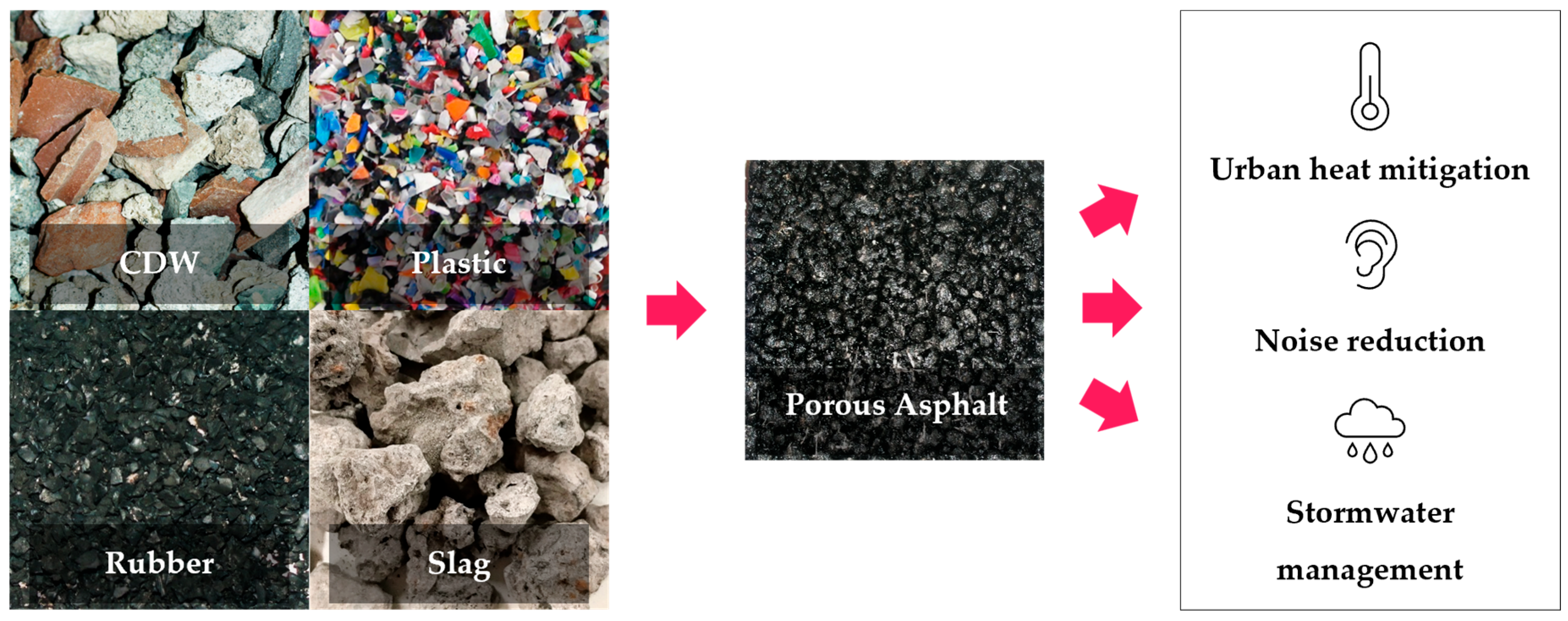
A wide range of waste-derived materials has been investigated for asphalt applications, including rubber from end-of-life tires, waste plastics, industrial ashes, slags and construction and demolition waste. Parallel research efforts have expanded toward bio-based binders, such as those derived from vegetable oils, tall oil, microalgae oil, tree and plant resins, sugar, and molasses [11], as well as polymer-modified and plastic-based binders utilizing recycled polymers and engineered waste materials [12]. Furthermore, the reuse of reclaimed asphalt pavement (RAP) remains one of the most established practices for retaining valuable aggregates and aged binders from existing infrastructure [13].
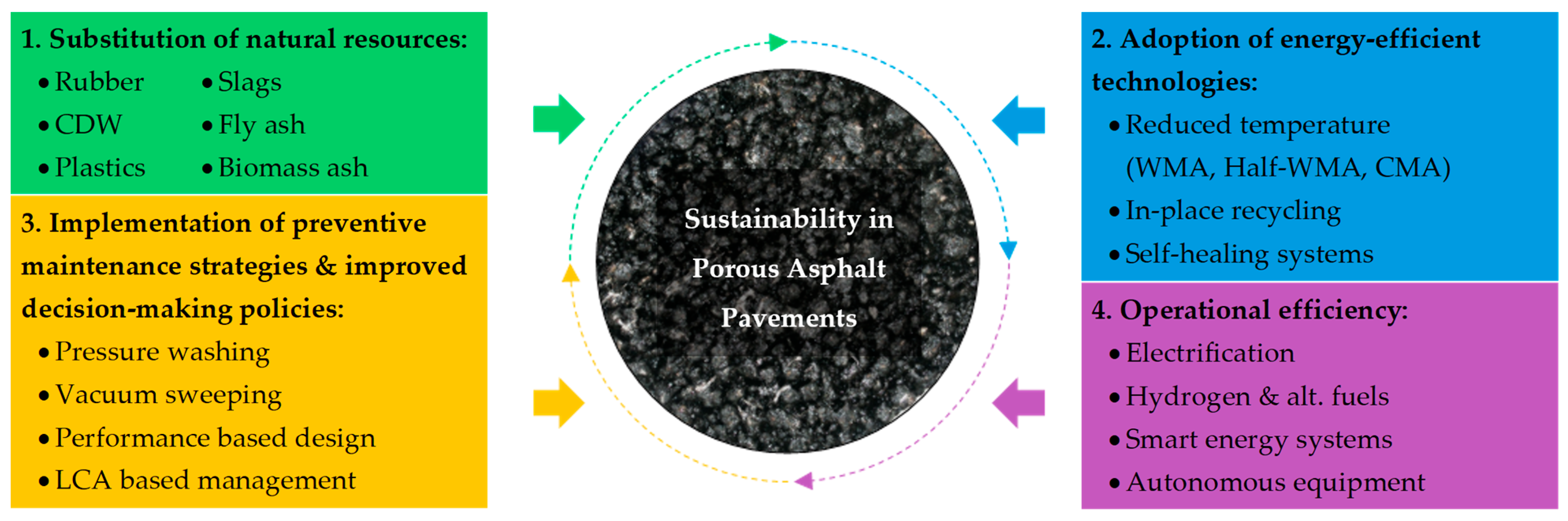
These material-focused advancements align with a broader shift in the industry, where sustainability in pavement engineering is promoted through several complementary strategies (Figure 1), including:
  • Substitution of natural resources: Utilizing recycled or waste-derived materials, whether treated [14] or untreated [15] or industrial by-products [16];
  • Adoption of energy-efficient technologies: Implementing warm (WMA), half-warm (WMA), and cold mix asphalt (CMA) in-place recycling, and self-healing materials [17,18,19];
  • Implementation of preventive maintenance strategies, such as pressure washing, vacuum sweeping and improved decision-making policies [20,21], like performance-based design and LCA-based management;
  • Operational efficiency: Using more productive, energy-efficient, and less polluting equipment [22].
Figure 1. Conceptual framework of key complementary strategies for enhancing sustainability in pavement engineering.
Sustainability 18 07059 g001
Collectively, these approaches enhance material circularity, reduce environmental impacts, optimize functional performance, and improve the economic efficiency of pavement systems across their full life cycle.
Despite the clear environmental and technical benefits of incorporating waste-derived materials into porous asphalt (PA), their practical implementation remains challenging. Existing research is still fragmented, with studies often focusing on specific waste types, performance indicators, or testing conditions. In addition, the lack of standardized methods for performance evaluation and life cycle assessment limits the comparability and transferability of findings to engineering practice.
Given the rapid development of sustainable materials and assessment tools, there is a clear need to consolidate and update current knowledge. This review addresses this gap by providing a comprehensive synthesis of recent studies on waste-incorporated PA, integrating mechanical performance, functional properties, durability, and environmental impacts. It also highlights how waste materials interact with the open-graded structure of PA, influencing key functions such as permeability, noise reduction, and urban heat mitigation, as well as long-term service life.
Overall, the study offers a structured framework to balance environmental benefits with technical performance requirements, while identifying key methodological gaps, standardization issues, and emerging trends. By supporting the valorization of industrial by-products in pavement systems, this work aligns with circular economy principles and contributes to several United Nations Sustainable Development Goals (SDGs), particularly SDG 9, SDG 11, and SDG 12.
This paper is organized as follows: Section 2 describes the methodology adopted for the systematic literature review; Section 3 presents the bibliometric analysis; Section 4 discusses the performance of PA mixtures incorporating different types of waste materials; Section 5 addresses the sustainability and Life Cycle Assessment (LCA) aspects; and Section 6 summarizes the main conclusions and provides recommendations for future research.

2. Methodology of the Literature Review

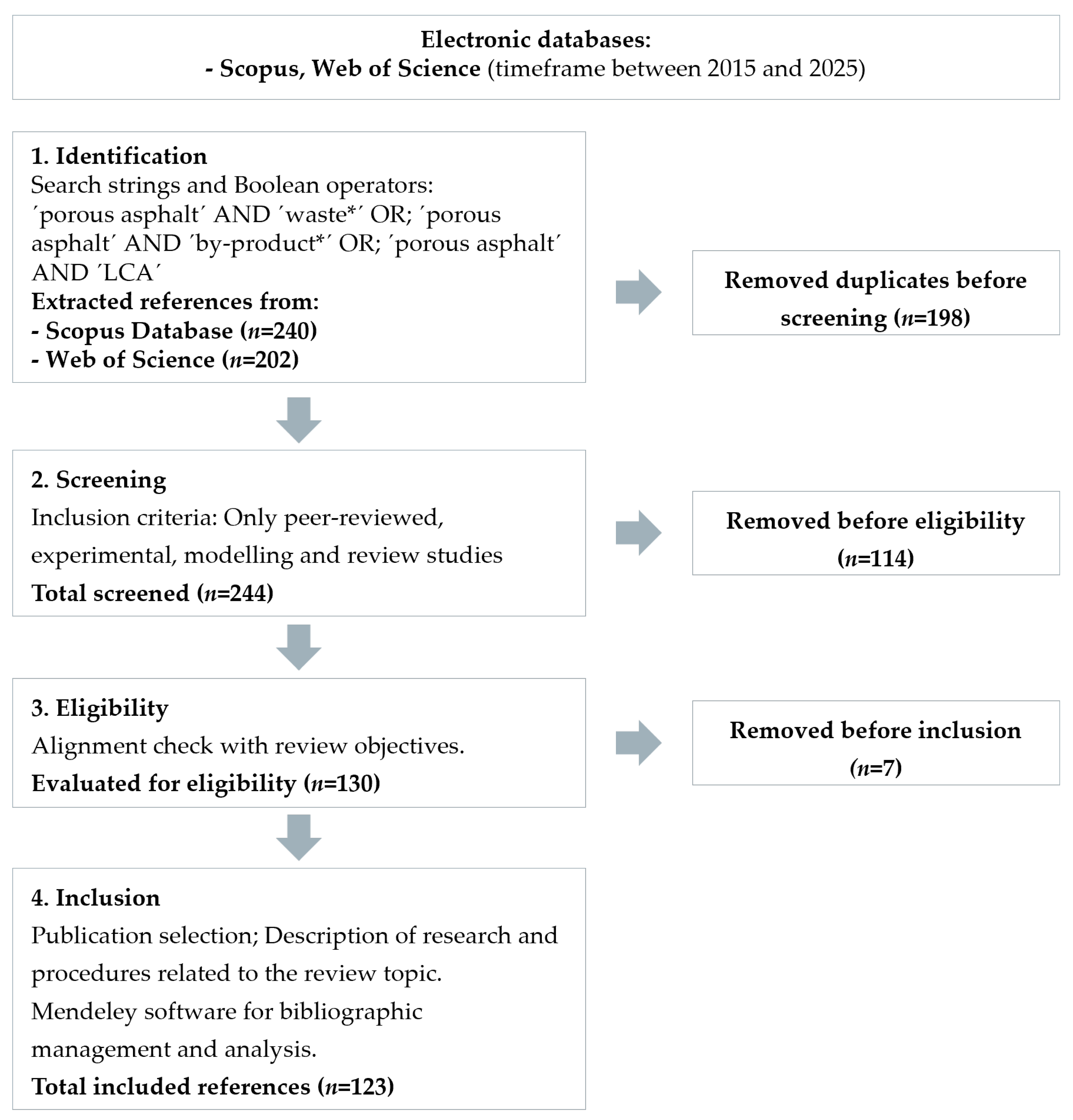
This literature review focuses on PA mixtures incorporating waste-derived materials and by-products. The analysis addresses both the effects of these materials on mechanical and functional performance and their environmental impacts. The literature selection process followed the four stages established in the Preferred Reporting Items for Systematic Reviews and Meta-Analyses (PRISMA) 2020 protocol [23]: (1) identification, (2) screening, (3) eligibility verification, and (4) inclusion. The approach for the references’ selection process is summarized in Figure 2.
As to the identification process, publications were initially searched across two databases: Scopus and Web of Science (WoS), using a keyword search in the fields “Article title, Abstract or Keywords” in the case of Scopus, and a keyword search in “All Fields” in Web of Science. Search queries combine keywords and Boolean operators AND, OR. In the first field, keywords and operator used were ‘porous asphalt’ AND ‘waste*’, to which was added a second field using the operator OR matching the keywords and operator ‘porous asphalt’ AND ‘by-product*’, to which was added a third field using the operator OR matching the keywords and operator ‘porous asphalt’ AND ‘LCA’. The same search queries were applied in both databases, and the timeframe was limited to publications between 2015 and 2025. The initial search has identified 240 references in Scopus and 202 references in Web of Science. After removing duplicates by analyzing article titles, 245 references were retained for the screening stage.
During the screening stage, the inclusion criteria were applied to retain only peer-reviewed articles, review papers, experimental and modeling studies, and other relevant reports, while excluding publications in languages other than English. The eligibility stage involved title and abstract screening to ensure alignment with the review objectives, leading to the exclusion of irrelevant publications. The final set of studies that passed the screening and eligibility stages, in accordance with the PRISMA protocol, was included in the review. As a result of the PRISMA process, a total of 123 documents were included in this review, comprising 97 research articles, 11 review papers, 7 governmental or interagency reports, and 8 international standards.

Bibliometric Analysis

After defining the research domain and keywords, collecting the literature data from databases and organizing data, a bibliometric analysis was performed using VOSviewer 1.6.20 software to uncover patterns, trends and relationships in the scientific review. This bibliometric approach provides a quantitative and systematic overview of the field, offering evidence-based insights into its current status and potential directions for future research.
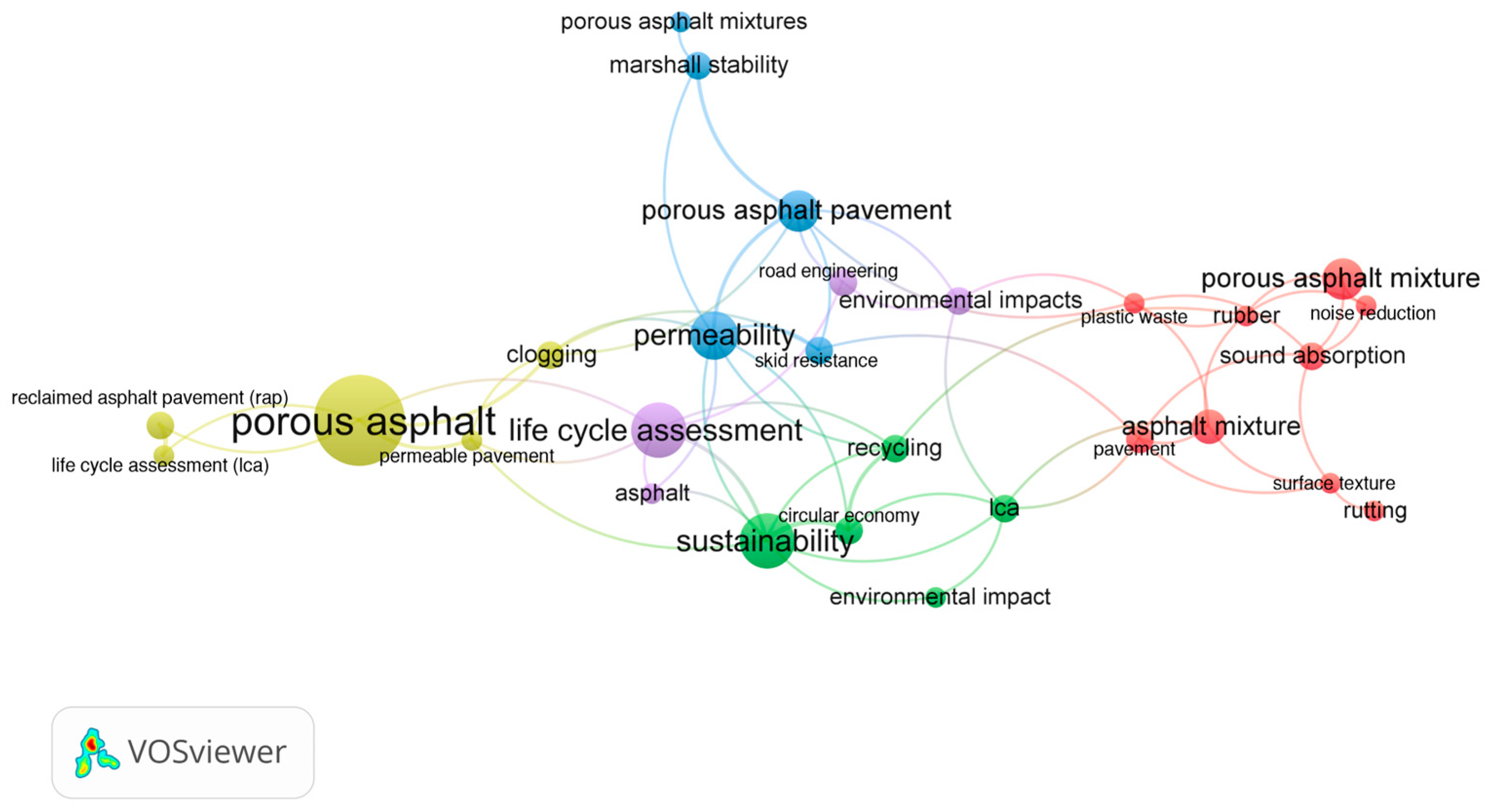
Figure 3 presents the results of the bibliometric analysis, identifying 28 keyword items grouped into five clusters. The keywords included in the analysis were selected based on a minimum occurrence threshold of three across the 123 documents included in the review. The clusters were automatically generated using the VOS clustering algorithm, which groups keywords according to the strength of their co-occurrence relationships.
Cluster 1 comprises nine items, namely asphalt mixture, noise reduction, pavement, plastic waste, porous asphalt mixture, rubber, rutting, sound absorption, and surface texture. This cluster reflects studies focused on the composition and functional performance of asphalt mixtures, particularly in terms of acoustic behavior and mechanical durability.
Cluster 2 consists of five items: clogging, life cycle assessment, permeable pavement, porous asphalt, and reclaimed asphalt pavement. It is mainly associated with sustainability assessment and performance-related challenges of permeable pavement systems.
Cluster 3 includes five items—circular economy, environmental impact, recycling, lca and sustainability—highlighting broader environmental and sustainability-driven research themes.
Cluster 4 comprises five items: Marshall stability, permeability, porous asphalt mixtures, porous asphalt pavement, and skid resistance. This cluster emphasizes the engineering properties and performance evaluation of porous asphalt materials.
Finally, Cluster 5 contains four items: asphalt, environmental impacts, life-cycle assessment, and road engineering, representing a more general perspective that connects asphalt technologies with environmental assessment and infrastructure engineering.
The bibliometric analysis presented in Figure 3 illustrates the intrinsic synergy between performance, waste-material integration and sustainability in the evolution of porous asphalt (PA) research. For instance, the acoustic behavior and mechanical durability identified in Cluster 1, specifically noise reduction and rutting resistance, are increasingly optimized through the addition of waste-derived modifiers that improve the elastic response of the binder. Simultaneously, Cluster 4 focuses on engineering properties like permeability and skid resistance, highlighting that the structural integrity of these new mixtures must be met. This technical performance is then validated through the sustainability frameworks found in Cluster 5, where Life Cycle Assessment (LCA) and circular economy principles evaluate the long-term environmental benefits against performance-related challenges like clogging. It should be noted that this study focuses primarily on keyword frequency and co-occurrence analysis to identify the main research themes in the field. Although the temporal evolution of keywords and annual research trends could provide additional insights into the development of research hotspots, such an analysis is beyond the scope of this study. The objective of this section is to provide a structural overview of the research landscape rather than a longitudinal trend analysis. Future work may consider incorporating temporal dynamics to further explore the evolution of research topics.

3. Background and Technical Overview of Porous Asphalt Mixtures

3.1. Composition and Structure

Porous asphalt mixtures are composed of multiple fractions of crushed aggregates to fulfill specific geometrical, physical, mechanical and chemical requirements and a hydrocarbon binder. Unlike other bituminous mixtures, PA is designed to exhibit significantly higher air void content, typically about 20% [24] so that permeability becomes a key functional characteristic of this type of asphalt mixture. Such permeability results from a mixture design that combines a high proportion of coarse aggregate particles (>2 mm) with a minimal fraction of fine aggregate particles (<2 mm), forming a bitumen-treated skeleton with interconnected voids engineered to allow water infiltration at the desired permeability rate. Coarse and fine aggregate particles assume different roles: coarse aggregate provides the load-bearing capacity and maintains interconnected voids for water drainage, while fine aggregates improve workability and surface cohesion and contribute to a slightly smoother texture.
The European standard EN 13108-7 [24] defines the general grading of the aggregates for PA. However, variations are observed among national specifications; for instance, the Dutch document CROW [25] defines sieve D/2 as the characteristic coarse sieve, contrary to the provisions of EN 13108-7 [24].
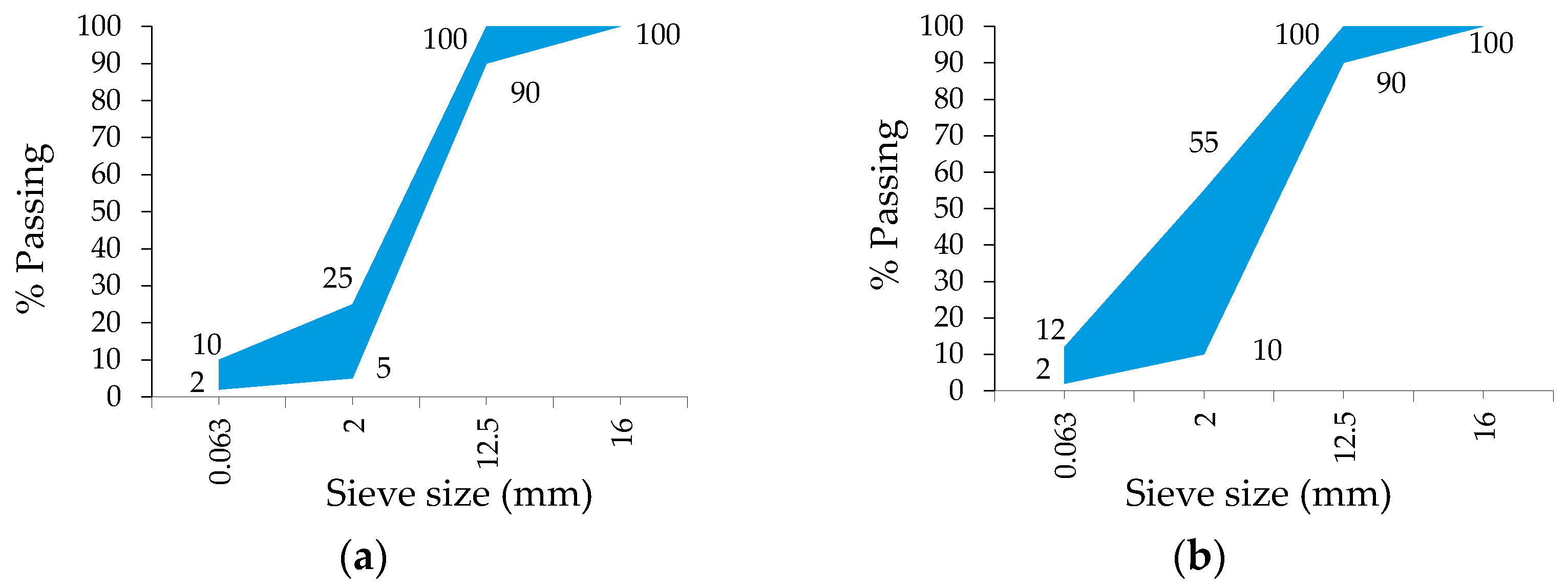
In comparison with asphalt concrete (AC), the grading of PA is intentionally designed to maintain interconnected air voids, thereby ensuring permeability, albeit at the expense of mechanical performance. Figure 4 illustrates this distinction by comparing the grading envelopes of porous asphalt (PA) and asphalt concrete (AC), both with an identical nominal maximum aggregate size (D) of 12.5 mm, according to EN 13108-7 [24] and EN 13108-1 [26], respectively.

3.2. Functional Properties

Porous asphalt exhibits several functional properties that distinguish it from conventional bituminous mixtures, notably permeability, noise absorption, skid resistance and improved visibility.
Permeability depends on the volume of connected voids, pore characteristics, such as area, length, equivalent diameter and tortuosity of the pore structure. Two European standard methods are used to evaluate the hydraulic conductivity in a bituminous mixture: constant head [27] and falling head [28], with the latter being more representative of field conditions [29]. The standard EN 13108-7 [21] presents the minimum and maximum limits for porosity in a PA mixture (between 14% and 32%), and establishes horizontal and vertical permeability categories (Khmin and Kvmin) ranging from 0.1 m/s to 4.0 m/s.
Characteristics and number of pores influence the hydraulic performance of PA. Chen et al. [30], after scanning by computational tomography, open-graded mixtures, found that pores have different characteristics in vertical and horizontal directions. Horizontal pores are larger in length and curvature but have a smaller diameter than vertical pores. After conducting two-dimensional computational simulations, the authors [30] observed that, when gravity is not considered, water flow rate in the horizontal direction is greater than in the vertical direction and also concluded that the decrease in void ratio and pressure amplifies the discrepancies between directions of the water flow. Aboufoul et al. [31] demonstrated, using 3D-printed resin samples and virtual networks, that networks with fewer large-diameter channels present higher hydraulic conductivity than networks with many small-diameter channels.
Permeability rates decrease due to clogging. Brugin et al. [32] demonstrated this effect within a PA containing 15% voids, which exhibited a fivefold increase in water discharge time after applying just 0.5 kg/m2 of an unclogging agent. Consequently, maintenance operations are essential to preserve PA permeability, with the most effective approach combining vacuum cleaning and pressure washing of the pavement surface. Winston et al. [33] reported that permeability on site increased from 0.57 mm/min after vacuum cleaning to 24.8–37.4 mm/min when complemented with pressure washing.
Beyond hydraulic performance, clogging also affects the acoustic behavior of PA. The reduced tire–pavement contact points of PA decrease noise generation, particularly in the 2–5 kHz frequency range, which is most perceptible to humans. Additionally, the pore structure of porous asphalt contributes to sound absorption across both high and low range frequencies [34,35]. However, progressive clogging also diminishes noise reduction capability [36].
In addition, surface functional performance is strongly influenced by skid resistance, which depends on pavement macro texture, facilitating water drainage beneath the tires, and micro texture, defined as the fine-scale roughness of individual aggregate particles. PA generally improves skid resistance under wet conditions; however, in dry conditions, its performance is comparable to or slightly lower than that of dense-graded mixtures [37]. Skid resistance is also affected by the type of aggregate, with basalt and steel slag performing better than granite [38] or limestone [39].
These surface characteristics are also directly related to driving visibility under wet-weather conditions. The improved drainage capacity and open structure of PA reduce splash and spray generated by tire–pavement interaction during rainfall, thereby enhancing visibility. Rungruangvirojn et al. [40] compared dense-graded asphalt, Stone Matrix Asphalt (SMA), and PA mixtures, concluding that water thrown by tires in the shape of larger drops (splash effect) and finer drops (spray effect) at 80 km/h reduced visibility by 55% on dense-graded asphalt, 30% on SMA, and 28% on PA. Furthermore, Yu et al. [41] demonstrated a correlation between surface texture and light reflection, showing that PA maintains a darker and less reflective surface, which improves driver visibility compared to the smoother surfaces of asphalt concrete and SMA.

3.3. Applications

Porous asphalt (PA) is an effective technology for addressing key urban challenges, including waterlogging, traffic noise, and stormwater runoff pollution. Its versatility allows its application in high- and low-traffic roads, parking areas, and pedestrian infrastructures. A summary of representative applications is presented in Table 1, highlighting pavement type, functional objectives, and the main hydraulic and mechanical outcomes, as well as maintenance considerations.
Regarding stormwater management, Zhu et al. [42] evaluated different permeable pavement configurations on a six-lane urban road in Nanjing, China. The study showed that performance strongly depends on structural design: drainage-surface pavements reduced surface runoff by more than 10%, semi-permeable systems achieved reductions above 50% and effectively mitigated peak flooding, while fully permeable pavements nearly eliminated surface runoff.
In terms of acoustic performance, PA has consistently demonstrated significant noise reduction capacity. Miera-Domingues et al. [43] reported a reduction of approximately 3 dB compared to conventional asphalt on an urban road in Florence, Italy, at speeds near 50 km/h. Similarly, Gardziejczyk [44] found that PA can reduce maximum sound levels by up to 6 dB compared to dense-graded mixtures such as Stone Matrix Asphalt (SMA) and Very Thin Asphalt Concrete (VTAC). However, this acoustic benefit is strongly influenced by clogging, aging, and inadequate maintenance practices, which can significantly reduce performance within a short service period.
PA also contributes to water reuse strategies, pollutant mitigation and urban heat mitigation (UHI). Hammes [45] investigated a pilot parking lot at the Technology Center of the Federal University of Santa Catarina (UFSC), Brazil, demonstrating that PA systems can enable potable water savings of up to 54% through rainwater harvesting. In addition, Jayakaran et al. [46] confirmed that PA is effective in removing pollutants such as suspended solids, heavy metals, and hydrocarbons, based on experimental cells located in controlled pavement test sections, although maintenance interventions such as air sweeping did not significantly improve removal efficiency. In terms of UHI mitigation, Ranieri et al. [47] found that light-colored and permeable asphalt (PA) pavements reduced air temperature by up to approximately 1.2 °C and contributed to more stable relative humidity levels.
From a durability perspective, Maia et al. [48] analyzed field cores extracted from in-service porous asphalt pavements in the Chicago region (USA). Results showed increased macrotexture due to raveling, non-uniform void distribution, and significant binder aging after extended service life, indicating that superficial resurfacing strategies are generally not suitable for PA systems. Finally, reinforcement strategies using polyacrylonitrile and aramid fibers were investigated by Qiu et al. [49], demonstrating improved stiffness and mortar strength, as well as reduced production temperatures, offering both mechanical and environmental benefits in laboratory and pilot-scale mixtures.

4. Waste-Derived Materials in Porous Asphalt Mixtures

4.1. Rubber Waste

Rubber waste, mainly from end-of-life tires, represents a potential significant secondary resource, with approximately 3.5 Mt generated annually in the EU [50]. Properties of rubber waste are influenced by polymer type, vulcanization network, fillers (e.g., carbon black, silica) and stabilizing additives [51]. While these properties offer opportunities for asphalt modification, recycling rubber waste is challenging due to tires’ engineered durability.
Rubber waste processing includes cryogenic and ambient temperature grinding. Cryogenic grinding produces angular, smooth particles, while ambient grinding results in irregular, soft particles [52]. The main approaches for asphalt modification using rubber waste are terminal blending and wet and dry processes. Terminal blending involves combining bitumen with fully digested crumb rubber at the refinery stage. Wet blending improves binder–rubber interaction but increases production complexity, whereas dry processes are simpler to implement but generally less effective in enhancing fatigue resistance [53]. Table 2 summarizes the limitations of incorporating rubber waste in porous asphalt reported in the literature.
Rubber-modified porous asphalt consistently enhances acoustic performance, particularly when using coarser rubber particles (2–5 mm) and moderate contents (2–4%) [55]. According to [56], the combined use of rubber and waste cooking oil can further improve pavement damping capacity by increasing binder softening. In addition, rubber incorporation increases the elasticity of bitumen, thereby improving the durability of PA against abrasion and moisture damage. Kabir et al. [58] reported that rubber addition enhances resistance to stripping-induced abrasion and significantly improves raveling resistance, with optimal performance observed at approximately 33% rubber content.
Despite the aforementioned advantages, several limitations associated with rubber waste modification remain. The fatigue and rutting resistance of rubber-modified PA are often lower than those of SBS-modified mixtures, particularly when dry or wet incorporation methods are used [59,60]. Xie et al. [61] compared rut depths using the Hamburg Wheel Tracking Test and found that rubber-modified PA produced via dry or wet processes exhibited nearly twice the rut depth of SBS-modified mixtures. This difference is primarily attributed to the more stable and continuous polymer network formed by SBS modifiers, which provides superior elastic recovery and resistance to permanent deformation compared to the more heterogeneous interaction between crumb rubber particles and the bituminous matrix.
This underscores that rubber waste is most effective as a function-specific modifier, enhancing acoustics and certain durability aspects but not fully replacing conventional polymer modifiers.
The results reported in the literature further indicate that optimizing rubber content, rubber waste particle size and the processing method is essential to balance environmental benefits with pavement performance. In this context, harmonized testing protocols and long-term field studies are required to fully quantify lifecycle gains associated with rubber-modified porous asphalt.

4.2. Plastic Waste

Plastic waste represents a major global challenge, with over 32.3 Mt of post-consumer plastic collected in the EU 27+3 in 2022 [62]. Separate collection significantly improves recycling efficiency, as recovery rates are up to 13 times higher than those of mixed plastic waste streams [63]. Among polymers, polypropylene (PP) and polyethylene (PE) account for 36.5% of European production, followed by Polyvinyl Chloride (PVC, 9.1%), polystyrene (PS, 5.4%), polyurethane (PUR, 5.2%), and polyethylene terephthalate (PET, 5.0%) [63].
To be incorporated into bituminous mixtures, plastic wastes require treatment (washing, sorting, air classification) and size reduction into fibers, fragments, pellets, or shredded sheets. Most common thermoplastics, including PP, low-density polyethylene (LDPE), high-density polyethylene (HDPE), PET and PS, can be used either as partial aggregate replacements [64,65,66,67] or as bitumen modifiers [68], whereas PVC is generally avoided due to toxic gas emissions when heated during asphalt production [69].
The polymer melting point is a key factor in determining the appropriate incorporation method in PA. Low-melting-point plastics such as LDPE, HDPE and PP are more suitable for wet processes. In contrast, high-melting-point polymers such as PS and PET tend to preserve their shape at typical mixing temperatures and are therefore more appropriate for dry processes.
Although the plastic incorporation can enhance the mechanical performance of porous asphalt mixtures, the effects of their incorporation depend on polymer type, plastic content, and incorporation method, as shown in Table 3.
Using PET via dry process in a mixture with 6% bitumen content, Mabui et al. [65] reported that Marshall stability and Marshall quotient (MQ) increase up to an optimum value at 2% PET by total aggregate, followed by a decreasing trend. Specifically, each 0.5% increment of PET led to an average increase of approximately 0.2 kN to stability and 0.07 kN/mm to MQ. In a related study, Sofri et al. [64], investigated the incorporation of HDPE via the wet process at 3% of the total mass of bitumen, reporting a 73% increase in stability. However, higher contents (6–9%) resulted in reduced stability, indicating an optimal dosage range. Conversely, PP and LDPE generally tend to reduce PA stability, although the incorporation of alternative fillers has been shown to mitigate these negative effects [70,71].
In terms of functional performance, permanent deformation resistance is generally improved by adding plastics to PA. Hao [72] demonstrated that incorporating LDPE, HDPE, and PP via a wet process at 5–15% of the bitumen mass reduced rutting of the asphalt mixture, with HDPE and PP being the most effective. The fatigue life of the asphalt mixture depends on polymer type and content, with LDPE showing minimal improvement, while HDPE and PP at 15% markedly enhance fatigue resistance [72,73].
Regarding the acoustic performance of PA, the incorporation of plastic wastes can influence noise-reduction characteristics such as porosity, surface texture, and sound absorption. The study reported by Poulikakos et al. [74] revealed that the addition of PET (dry process, 5% of mixture) increased the porosity by ~6%, indirectly enhancing noise absorption, whereas the addition of PE (3% semi-wet process) had minimal effect on noise reduction. Narendra Goud et al. [75] conclude that combining PET with cellulose fibers further improved the sound absorption of PA by 3.5 dB. However, excessive incorporation of PE can reduce surface texture at fine wavelengths, potentially increasing high-frequency noise and slightly lowering skid resistance [73]. Optimized dosages of plastics, such as LDPE coating at 0.5%, can reduce noise levels by 4–5% in PA, without compromising mixture integrity [76].
While plastic incorporation offers performance benefits to the PA, environmental and health concerns must be considered. It is well known that microplastics may pose risks to ecosystems and human health. Their toxicity depends on both polymer type and particle size, with PVC and PU generally considered more hazardous than PE or PP [69,77].
Overall, plastic waste provides a sustainable path for resource recovery in asphalt mixtures, improving some mechanical, durability, and acoustic properties. Nevertheless, the excessive plastic content in the mixture may reduce stability, raveling resistance, or long-term abrasion performance [65,78]. Optimized incorporation strategies are essential to balance performance gains with environmental and health considerations.
Table 3. Summary of key findings on plastic waste incorporation in porous asphalt mixtures.
AspectCommentLimitationsRef.
Waste
availability
32.3 Mt of post-consumer plastics collected in the EUSeparate collection needed for high recycling efficiency.
PVC excluded due to toxicity
[62,63]
IncorporationWet process: low-melting polymers fully digested;
Dry process: high-melting polymers remain solid
Process depending on the plastic type [69]
Acoustic
performce
PET increases porosity and noise absorption; LDPE coating may reduce noise by 4–5%PE may reduce surface texture, affecting high-frequency noise[74,75,76]
PA durability PET increases raveling resistance at low content, but higher contents decrease the tensile strength of PA2–3% of PET can reduce abrasion resistance and cracking resistance[65,66,67,68,69,70,71,72,73,74,75,76,77,78]
Structural
performance
PET and HDPE may increase Marshall stability; PP and LDPE often decrease stability
HDPE, PP and LDPE reduce rutting;
HDPE and PP increase fatigue life; LDPE minimal effect
High-content plastic may reduce Marshall stability;
Limited further gains beyond 10–15%
Content-sensitive
[64,65,67,70,71,72,73]

4.3. Recycled Aggregates Coming from Construction and Demolition Waste (CDW)

Construction and demolition waste (CDW) represents one of the largest waste streams in Europe, accounting for nearly 40% of total generated waste [79,80]. Its composition varies widely depending on the origin (construction, rehabilitation or demolition), region, structure’s age or construction type. Typical constituents include concrete and mortars, ceramics, natural stone, glass, metal, plastic, bitumen mixture, wood, rubber, gypsum and other materials. Most studies dedicated to aggregate recycling in PA focus on the use of RCA and RAP, with fewer addressing the incorporation of ceramics, glass or mixed aggregates.
Recycled concrete aggregates (RCA) commonly have highly angular shapes and exhibit lower density than natural aggregates [81,82,83], higher water absorption (up to 14.5 times) than that of natural aggregates [84], and reduced resistance due to fragmentation and abrasion [81,82,83]. According to Elmagarhe et al. [84] Limiting RCA replacement to less than 30% of total aggregates for PA helps control water absorption, maintain permeability, and ensure moisture resistance.
Reclaimed Asphalt Pavement (RAP) contains aged bitumen and may be contaminated with organics, soil, or other debris [85], affecting adhesion with the new binder. Rejuvenating agents are often used to restore binder properties and improve stripping resistance [85,86].
The effects of the incorporation of RCA, RAP, ceramics, and mixed aggregates on Marshall stability, resistance to permanent deformation, resistance to fatigue, resistance to cracking, durability, moisture damage, permeability and leachate potential harm of PA are discussed herein and summarized on Table 4.
For clarity of presentation, the effects of each recycled material are discussed separately, focusing on RCA, RAP, ceramics, and mixed aggregates and their respective impacts on the key performance indicators of porous asphalt (PA).
The incorporation of RCA in PA generally increases Marshall stability due to the higher surface roughness of the aggregate, with maximum stability often achieved at replacement levels above 30% of coarse aggregate, depending on binder optimization [81,82,83,84,87,88]. In Elmagarhe et al.’s [81] study, the optimum binder content was found to increase by 0.4% for each additional 10% of RCA. The incorporation of fine RCA or mixed recycled aggregates may slightly reduce rutting resistance [89]. The effects on permanent deformation resistance in different mixtures where natural aggregates were partially replaced by fine or coarse RCAs in a semi-dense asphalt mixture were studied by Mikhailenko et al. [89]. Rutting depth was not affected by coarse RCA, but was reduced with fine RCA, a behavior attributed to the higher angularity of the sand fraction, as indicated by the aggregate flow coefficient [90]. Nwalkaire et al. [88] observed a detrimental effect with coarse RCA and a tendency for a reduction in the resilient modulus, which means a higher rutting potential. A maximum result was obtained with the control mixture (7419 MPa), while the minimum value (6035 MPa) was recorded for full replacement of coarse aggregate. However, fracture toughness in PA mixtures containing coarse RCA is approximately 10% lower than that obtained with fine RCA, although overall crack resistance may decrease at lower temperatures, as reported by Mikhailenko et al. [89].
RCA substitution rates below 20% have a negligible effect on water sensitivity [91]. Nevertheless, polymer-modified binders can mitigate adverse effects, achieving a Tensile Strength Ratio (TSR) above 90% [81,84]. Raveling resistance follows a similar trend. In addition, hybrid aggregates combining RCA with fillers such as fly ash improve tensile strength and moisture resistance due to enhanced aggregate–binder bonding [84,92].
Moving to alternative recycled materials, ceramic aggregates combined with bio-based binders have also shown significant performance improvements. Lu et al. [93] combined ceramic aggregates with bio-based polyurethane binders resulting in PA mixtures with double compressive strength, approximately twice that of the reference mixtures. Moreover, the use of coarse ceramic aggregates at 70% replacement resulted in fatigue performance comparable to that of the conventional PA mixture.
Finally, recycled asphalt pavement (RAP) has been widely studied as an alternative aggregate source in PA mixtures. Its incorporation of RAP generally improves stability and Marshall quotient, although to a lesser extent than RCA addition [94]. Rutting resistance was evaluated in mixtures combining RAP and slag aggregates with cellulose fibers to replace natural aggregate [95]. Compared with a mixture containing only basalt aggregates, the Hamburg wheel tracking test results showed acceptable structural performance, although rut depths remained higher than those of the control mixture. RAP incorporation typically reduces failure strain by 20–30% with increasing contents; however, this effect can be partially mitigated through the use of rejuvenating agents [96,97]. Mousavi Rad et al. [97] reported that fatigue in a PA decreases by approximately 46% for each 25% increase in RAP content. However, the addition of nano zinc oxide as a bitumen modifier, at 6% content of the total binder, significantly improved fatigue life.
Table 4. Summary of key findings on CDW incorporation in porous asphalt mixtures.
Recycled MaterialIncorporationEffects on PerformanceLimitationsRef.
RCACoarseAggregate
replacement
Increase in Marshall stability, fracture toughness, and tensile strengthHigh water absorption, lower density, increased rutting potential[81,82,83,84,87,88,89,91]
FineAggregate
replacement
Moderate rutting improvementHigh water absorption, lower density[89]
RAPCoarse/fineAggregate
replacement
Increase in Marshall stability and variable rutting, fatigue mitigation and permeability with rejuvenatorsVariable grading, requirement of higher mixing temperature, decreased tensile strength[86,92,94,96,97]
CeramicCoarseAggregate
replacement
Increase in compressive strength and permeabilityRequirement of a modified binder for optimal performance[93]
GlassFillerFiller
replacement
Maintains strength, moderate permeability improvementBrittleness; limited studies[98]
Mixed CDWCoarse/fineAggregate
replacement
Balanced mechanical properties, moderate permeabilityVariable composition, grading control essential;
decrease in tensile strength and permeability
[89,99,100]
Regarding permeability, the key characteristic of PA, ceramic aggregates increase hydraulic conductivity (~80 × 10−4 m/s compared to 30 × 10−4 m/s reference) due to smoother surfaces and higher void content [93]. The influence of RCA on PA’s permeability depends on its fraction and grading. Coarse RCA promotes higher hydraulic conductivity than finer fractions [87]. Mousavi Rad et al. [97] observed a significant decrease in hydraulic conductivity of PA with mixed recycled aggregates (MRA), suggesting that a mixture with 25% MRA satisfies both durability requirements and interconnected air voids content of PA mixes. The incorporation of RAP also decreases PA’s permeability due to agglomeration, though rejuvenators can partially restore flow capacity [96].
Leaching is also a critical aspect in PA mixtures since they can absorb large quantities of contaminants, which are released after intense rainfall [101], and hence posing potential harm to human health and the environment close to water resources. Hung et al. [102] investigated metals leaching characteristics from RCA and RAP and observed that critical levels of Al and Fe were released from RCA to water, hindering its use for recreational purposes, and Ni, Cu, and Pb leaching from both RCA and RAP. Jayaneththi et al. [103] notes, however, that RAP does not pose environmental risks unless exposed to acidic environments that increase higher levels of Pb, Fe and Mn.

4.4. Other Industrial By-Products (e.g., Slags, Fly Ash, Biomass Ash)

Industrial by-products such as steel slags, coal fly ash and biomass ash present promising opportunities for sustainable asphalt modification by partially replacing aggregates or mineral fillers.
Steel slags, a by-product of steel production, vary in composition. White slags are characterized by high lime content, making them prone to volumetric expansion and increasing susceptibility to water-induced distresses [104], which limits their application in bituminous mixtures.
Chen et al. [105] evaluated the hydrostatic stability of steel-slag-based porous asphalt under extended freeze–thaw cycles, reporting a decrease in stability alongside increased maximum flexural strain and bending stiffness with successive cycles. Leaching concerns, often cited as a potential barrier to the incorporation of steel slags, may be mitigated by limiting their content. Skaf et al. [106] observed that PA mixtures containing 10% of white slag remained within safe limits for hazardous element release.
Coal fly ash or biomass ash can serve as fillers or bitumen modifiers, offering both functional and environmental benefits. Andrés-Valeri et al. [107] reported that biomass combustion soot and cellulose ash effectively replaced conventional fillers in PA mixtures, maintaining or improving mechanical strength and durability relative to reference mixtures. However, the presence of iron oxide (Fe2O3) in combustion soot may stiffen the binder and accelerate long-term aging, potentially reducing durability.
Fly ash can further act as a micro-filler in polymer-modified binders. Lagos-Varas et al. [108] studied the effect of low-content fly ash (3% and 5%) in 5% SBS-modified bitumen, observing that micro fly ash reduced porosity, thickened the binder, and minimized binder runoff of PA mixes.

5. Life Cycle Assessment of Porous Asphalt with Recycled Materials

Life Cycle Assessment (LCA) has emerged as a critical tool for sustainable infrastructure planning, allowing for the quantification of the environmental footprint of pavements from material extraction to end-of-life disposal or recycling. By considering the full life cycle, LCA facilitates evidence-based decisions that balance technical performance, cost, and environmental sustainability. Road infrastructure has significant environmental impacts due to material extraction, energy-intensive asphalt production, transportation, construction, maintenance, and demolition. Applying LCA identifies the stages or activities with the highest environmental burden, supporting strategies to reduce energy consumption, greenhouse gas emissions, and resource depletion.

5.1. LCA Standards and Databases

European Standards EN 14040 [109] and EN 14044 [110] provide requirements and guidelines for performing LCA while EN 15804 [111] details procedures for Environmental Product Declarations (EPD) specifically for construction products. LCAs can be conducted using commercial software (e.g., SimaPro, GaBi) or analytical methods [112,113]. Commonly used databases include Ecoinvent (comprehensive resource and emission inventories), Eurobitume (bitumen and asphalt-specific data across production, transport, paving, and service life) [114], ELCD, and industry-specific sources such as PlasticsEurope or Slag Cement Association.

5.2. Key Performance Indicators (KPIs) for Sustainability Assessment

The selection of environmental impact categories in LCA depends on the study’s goal and scope. In PA with recycled content, several categories, such as Global Warming Potential (GWP), Primary Energy Demand (PED), Resource Depletion, Human and Ecological Toxicity, Particulate Matter Formation, Acidification, Photochemical Ozone Formation, and Water Use/Scarcity [115] are particularly relevant (Table 5). These impact categories provide a direct basis for defining measurable KPIs, which allow for systematic benchmarking of environmental performance.
Competing environmental effects are a recurring theme in the LCA of porous asphalt with recycled content. For example, incorporating CDW or rubber can significantly reduce resource depletion and GWP but may increase human and ecological toxicity due to leaching of heavy metals or additives. Similarly, recycling plastics into PA mixtures reduces virgin polymer consumption but may release volatile organic compounds during high-temperature mixing.
Table 5. Most frequently reported environmental impact categories in porous asphalt mixture studies.
Impact CategoryRelevance to Porous Asphalt with WastePotential KPI/Metric [111]
Global Warming Potential (GWP)Sensitive to material choice, recycled content, and energy use in production and transportkg CO2-eq per m2
Primary Energy Demand (PED)Quantifies fossil and renewable energy use across the life cycleMJ per m2 or MJ per ton
Resource DepletionAssesses virgin aggregate, bitumen, and water consumptionkg of virgin aggregate per m2
Human and Ecological ToxicityToxic emissions from binder, plastic additives, or industrial by-productskg 1.4-DCB per m2
Particulate Matter FormationDust from aggregate processing and asphalt plants impacts public healthkg PM2.5 -eq per m2
Acidification PotentialEmissions of NOx and SOx from fuel combustion and asphalt productionkg SO2-eq per m2
Photochemical Ozone
Formation
NOx and Volatile Organic Compounds (VOC) emissions affecting urban air qualitykg NMVOC-eq per m2

5.3. Review of Recent LCA Studies Including a Table with LCA Comparisons of Conventional vs. Recycled Porous Asphalt Materials

The latest LCA on PA was able to provide quantitative analysis about the environmental benefits of waste materials recycling (Table 6). System boundaries are typically defined as cradle-to-gate, although Eurobitume recommends that LCAs for binder products containing bio-bases or secondary feedstocks should include the full life cycle, including the end-of-life stage [114].
Using EAF slag and RAP, totally replacing natural aggregates for the production of warm mix PA, resulted in a 12% reduction in the environmental impacts according to [116]. De Pascale [117] confirms the benefits associated with the use of CDW, noting a decrease in all environmental impacts; however, the author warns about potential additional impacts of CDW aggregates, associated with their management and recommends further attention to the Cumulative Energy Indicator. Reference [117] also concludes that replacing bitumen with polyolefin-based synthetic binders increases the environmental burden in the impacts related to GWP, which is especially affected by the production phase and transport of its constituents.
The production of PA mixtures with RAP (33%) and steel slag (20%) resulted in a 25% reduction in the impacts associated with human health, ecosystems and resources, as referred by [95]. Further [118] conducted an LCA on a warm mix porous asphalt with RAP, aramid pulp fibers and steel slag, reporting an approximately 40% reduction in Global Warming Potential (GWP).
Landi [119] presents a comparative LCA on PA mixtures with three binder types: unmodified, cellulose-reinforced and end-of-life-tire fiber-reinforced binder. The results showed environmental impact reductions of approximately 10% and 25%, respectively, compared with the unmodified binder.
Table 6. Summary of recent life cycle assessment (LCA) studies on porous asphalt incorporating recycled materials.
GoalScopeDatabasesSoftware/
Methodology
ResultsReference
Evaluate PA with CDW (50%)Cradle-to-gateEcoinvent 3.7; USLCISimaPro 9.2/
ReCipe 2016
Use of CDW aggregates is beneficial. The impact of CDW management requires further investigation[117]
Compare three PAs mixtures with high contents of slag and RAPCradle-to-graveGabiGabi/ReCiPe 2016Up to 12% reduction in environmental impacts[116]
Compare three PAs mixtures with different contents of slag and RAPCradle-to-gateEcoinvent 3.8SimaPro 9/IPCC 2021, ReCiPe 2016Up to 25% reduction[95]
Compare Warm mix PAs with multiple contents of RAP, aramid pulp fibers and steel slagCradle-to-cradleEcoinvent 3.8SimaPro 9.2/
IPCC 2021, GWP100a, CED, CML-IA 2016
Up to 40% reduction[118]
Compare the environmental loads of three binder types in PAs mixturesCradle-to-gateGabi 2016Gabi 2016/ Recipe 2008, CED, GWPUp to 25% reduction for end-of-life-tire fiber-reinforced binder[119]
A key challenge in synthesizing LCA results for waste-modified porous asphalt (PA) lies in the variability of system boundaries adopted across studies. Some studies use a cradle-to-gate approach, focusing only on material extraction and production, whereas others adopt a cradle-to-grave perspective that includes the use phase and end-of-life stages. Cradle-to-gate assessments often indicate notable environmental advantages for incorporating waste materials such as construction and demolition waste (CDW) or slag, mainly due to the avoided impacts of virgin aggregate extraction and processing. However, these apparent benefits may be overstated when long-term performance is not considered, particularly if reduced durability in porous structures leads to increased maintenance needs or earlier replacement. Such effects are only fully captured in cradle-to-grave or cradle-to-cradle assessments, which therefore provide a more comprehensive representation of the overall environmental impacts.

6. Research Gaps and Future Directions

Despite the growing body of literature demonstrating the technical feasibility and potential sustainability benefits of incorporating waste materials into porous asphalt mixtures, the current state of knowledge remains fragmented. Addressing these gaps, related to long-term performance, methodological standardization, sustainability assessment frameworks, material synergies, and real-world validation, is essential to optimize PA performance, ensure sustainability and support broader implementation.

6.1. Need for Long-Term Performance Studies of Porous Asphalt Mixtures with Waste

Most published studies focus on laboratory studies or short-term observations, which are insufficient to capture the complex degradation mechanisms governing PA behavior over its service life. Long-term performance data considering aging, traffic loading, climatic variability, clogging, moisture damage, and maintenance interventions remain scarce.

6.2. Lack of Standardized Mix Design and Testing Protocols

The absence of harmonized mix design methodologies and testing protocols for porous asphalt mixtures incorporating waste materials significantly limits the comparability of results across different studies and creates barriers to the widespread adoption of these sustainable solutions. Existing studies employ diverse aggregate gradations, waste processing routes, incorporation methods (wet, dry, hybrid), and performance indicators, often adapted from dense-graded asphalt specifications that are not fully appropriate for PA systems.
To advance in this field, it is essential to develop standardized mix design procedures dedicated to porous asphalt containing waste materials, alongside performance-based testing protocols that reflect both laboratory and field conditions. Such standardization would not only facilitate reliable benchmarking of material properties and long-term behavior but also support regulatory approval, quality control, and technology transfer from research to practical applications. Ultimately, it would enable engineers and stakeholders to confidently implement sustainable porous asphalt solutions at a larger scale, ensuring both functional performance and environmental benefits.
To transition waste-modified PA from experimental research to large-scale infrastructure projects, the industry must move beyond general calls for sustainability and establish rigorous technical standards. Specifically, standardization is required in three critical areas: material classification, durability testing, and environmental benchmarking. First, a unified classification system for waste-derived modifiers, such as standardized purity levels for recycled polymers and specific mesh sizes for crumb rubber, is essential to ensure predictable chemical interaction with the asphalt binder and consistent skeletal stability. Second, because the high air-void content of PA renders it more susceptible to environmental degradation, standardized accelerated aging protocols must be developed to evaluate how waste-modified binders maintain adhesion over time. Finally, to resolve the current fragmentation in LCA findings, a standardized ‘Cradle-to-Grave’ framework should be mandated. This framework must include a minimum 10-year service life boundary and a mandatory functional unit that accounts for maintenance cycles and clogging potential. Establishing these benchmarks will ensure that the environmental benefits of waste valorization are never achieved at the expense of the long-term functional performance and safety of the pavement structure.

6.3. Comprehensive Life Cycle Assessment

While environmental life cycle assessments (LCA) of porous asphalt mixtures incorporating waste materials are becoming more common, most studies focus primarily on energy consumption and greenhouse gas emissions [117,120,121]. Although these metrics are important, they capture only a limited aspect of the overall sustainability of such materials. Future LCA should adopt a more holistic basis that integrates social indicators, establishing the Social Life Cycle Assessment [122,123].
From an environmental perspective, this broader approach should include not only carbon footprint and energy use, but also water consumption, air pollutant emissions, land use, potential impacts on biodiversity, and contributions to urban heat island mitigation. In addition, end-of-life considerations must be systematically incorporated, addressing recyclability, circularity, and the potential for material recovery at the end of the pavement’s service life. By considering these aspects, future assessments can provide more accurate guidance for sustainable design, material selection, and policy decisions in the field of waste-based porous asphalt.
Beyond technical and environmental assessments, an important research gap remains in the life cycle cost analysis (LCCA) of PA mixtures incorporating waste-derived materials. While recent studies increasingly report carbon footprint reductions and mechanical performance improvements, the long-term economic viability of these solutions is still insufficiently explored. In particular, limited attention has been given to balancing initial construction costs with maintenance requirements and potential end-of-life value.
Future research should therefore focus on developing integrated LCA–LCCA frameworks that jointly evaluate environmental and economic performance. A key priority is the quantification of maintenance-related costs, such as the cost of clogging, to determine whether increased maintenance interventions are economically justified by the reduced use of virgin materials such as polymers and aggregates.
Establishing such economic benchmarks is essential to support the transition of waste-modified porous asphalt from experimental research to practical implementation in public procurement and large-scale infrastructure projects.

6.4. Exploration of Hybrid Mixtures with Multiple Waste Types

Research to date has primarily focused on evaluating separate waste materials in isolation. There is, however, increasing potential to investigate hybrid mixtures that combine multiple and different waste materials, offering the possibility of synergistic improvements in mechanical performance, permeability, and overall sustainability (Figure 5). However, such combinations introduce additional complexity related to material compatibility, processing requirements, and performance trade-offs. Targeted research is needed to identify optimal combinations and dosage ranges, supported by multi-criteria decision frameworks.

6.5. Pilot Projects and Field Validations in Diverse Climates and Regions

Despite promising laboratory results, large-scale implementation remains limited. Pilot projects and field trials across diverse climatic regions and pavement conditions are essential to validate laboratory findings, identify practical challenges, and assess long-term performance under real traffic and environmental conditions.

7. Conclusions

The extraction and processing of natural aggregates are energy-intensive processes associated with significant greenhouse gas emissions and environmental impacts. At the same time, increasing volumes of industrial and urban waste represent an underutilized resource with strong potential for valorization. In this context, the literature confirms that PA mixtures offer a promising pathway for integrating waste materials, supporting circular economy principles while maintaining multifunctional pavement performance.
Recent studies show that a wide range of waste-derived materials—including crumb rubber, recycled plastics, construction and demolition waste, reclaimed asphalt pavement, and various industrial by-products—can be successfully incorporated into PA mixtures using wet, dry, or hybrid processes. Depending on the material type and design strategy, incorporation levels vary from low percentages of binder modification to partial or even full replacement of aggregate fractions.
When properly designed, these mixtures can enhance key functional properties such as noise reduction, permeability, and rutting resistance. However, performance trade-offs remain a critical challenge. Elastic modifiers such as crumb rubber tend to improve acoustic damping and resistance to raveling, while rigid industrial by-products like slags can increase structural stability but may also introduce brittleness if not balanced with appropriate binder selection. Similarly, improvements in one property can be offset by reductions in fatigue resistance, cracking performance, or moisture durability if material compatibility, gradation, and mix design are not carefully optimized.
A major issue affecting long-term sustainability is not initial mechanical performance but the progressive loss of functionality, particularly permeability reduction due to clogging, which remains underrepresented in many waste-replacement studies. This highlights the need to move beyond short-term performance evaluation and consider the full-service life of porous systems.
From an environmental perspective, LCA studies consistently identify raw material extraction, production, and transportation as the dominant contributors to environmental impacts. While incorporating waste materials generally reduces the cradle-to-gate environmental footprint, sometimes by up to 30%, these benefits are highly sensitive to methodological choices such as system boundaries and assumptions about service life and maintenance. In some cases, reduced durability can offset initial environmental gains if pavement service life is shortened.
Overall, the findings highlight a sustainability paradox: recycling can only be considered truly sustainable if it preserves or enhances long-term pavement functionality. This reinforces the importance of evaluating not only initial performance but also durability and maintenance requirements over time.
From a sustainability perspective, the findings of this review directly support several United Nations Sustainable Development Goals (SDGs), notably SDG 9 (Industry, Innovation and Infrastructure) through the development of resilient and innovative pavement systems; SDG 11 (Sustainable Cities and Communities) via noise mitigation, stormwater management, and urban heat island reduction; SDG 12 (Responsible Consumption and Production) by promoting waste reuse and resource efficiency; and SDG 13 (Climate Action) through reductions in greenhouse gas emissions and energy particularly by reducing the extraction of virgin raw materials and diverting waste from landfilling.
Future research should move beyond feasibility studies and focus more on optimization and real-world applicability. In particular, there is a strong need for multi-scale modeling approaches that can better predict how different waste gradations influence pore structure connectivity and how this evolves over time. In addition, developing smart maintenance tools—such as sensor-embedded porous asphalt—could help monitor performance in service and ensure that key functional benefits, including noise reduction and drainage capacity, are maintained throughout the pavement’s lifespan.
Overall, the large-scale adoption of waste-based porous asphalt will require a shift away from a material-focused perspective toward a more integrated system approach, where long-term durability, functional performance, and circular economy principles are considered together.

Author Contributions

Conceptualization, M.C., C.V. and C.S.V.; methodology, M.C.; validation, M.C., C.V. and C.S.V.; formal analysis, M.C.; writing—original draft preparation, M.C. and C.V.; writing—review and editing, C.V. and C.S.V.; supervision, C.V. and C.S.V.; project administration C.V. and C.S.V.; funding acquisition, C.V. All authors have read and agreed to the published version of the manuscript.

Funding

This work is a result of project “TechRoad”, with nr. 14471 and operation code at the Funds Platform (Balcão dos Fundos) COMPETE2030-FEDER-00589300, co-financed by COMPETE 2030, by Portugal 2030 and by the European Union. This work was also supported by UID/04708/2025 and https://doi.org/10.54499/UID/04708/2025, accessed on 12 January 2026, of the CONSTRUCT—Instituto de I&D em Estruturas e Construções—funded by Fundação para a Ciência e a Tecnologia, I.P./MECI, through the national funds.

Institutional Review Board Statement

Not applicable.

Informed Consent Statement

Not applicable.

Data Availability Statement

The original contributions presented in this study are included in the article material. Further inquiries can be directed to the corresponding authors.

Conflicts of Interest

The authors declare no conflicts of interest.

References

  1. Xu, G.; Li, K.; Li, C.; Wang, H.; Leng, Z.; Chen, X. Noise reduction performance and maintenance time of porous asphalt pavement. Constr. Build. Mater. 2024, 452, 138913. [Google Scholar] [CrossRef]
  2. Ren, W.; Han, S.; Ji, J.; Wang, Z.; Wang, J. Laboratory evaluation method of tire-pavement noise deterioration combining Rolling Tire down Tester with accelerated abrasion machine. Measurement 2022, 202, 111831. [Google Scholar] [CrossRef]
  3. Ilić, V.; Gavran, D.; Fric, S.; Trpčevski, F.; Vranjevac, S.; Lukić, M.; Milovanović, N. Addressing aquaplaning challenges on wide motorway pavements: A review of pavement superelevation methods in poorly drained zones. Transp. Res. Procedia 2025, 90, 726–733. [Google Scholar] [CrossRef]
  4. European Comission. Urban Heat Islands: Managing Extreme Heat to Keep Cities Cool. Available online: https://joint-research-centre.ec.europa.eu/jrc-news-and-updates/urban-heat-islands-managing-extreme-heat-keep-cities-cool-2024-07-22_en (accessed on 12 January 2026).
  5. Yang, H.; Yang, K.; Miao, Y.; Wang, L.; Ye, C. Comparison of potential contribution of typical pavement materials to heat Island effect. Sustainability 2020, 12, 4752. [Google Scholar] [CrossRef]
  6. Du, Y.; Dai, M.; Deng, H.; Deng, D.; Wei, T.; Li, W. Evaluation of thermal and anti-rutting behaviors of thermal resistance asphalt pavement with glass microsphere. Constr. Build. Mater. 2020, 263, 120609. [Google Scholar] [CrossRef]
  7. Grossegger, D.; MacAskill, K.; Al-Tabbaa, A. A critical review of road network material stocks and flows: Current progress and what we can learn from it. Resour. Conserv. Recycl. 2024, 205, 107584. [Google Scholar] [CrossRef]
  8. Sollazzo, G.; Longo, S.; Cellura, M.; Celauro, C. Impact analysis using life cycle assessment of asphalt production from primary data. Sustainability 2020, 12, 10171. [Google Scholar] [CrossRef]
  9. Park, J.-Y.; Kim, B.-S.; Lee, D.-E. Environmental and cost impact assessment of pavement materials using ibees method. Sustainability 2021, 13, 1836. [Google Scholar] [CrossRef]
  10. Liu, Z.; Kringos, N. Transition from linear to circular economy in pavement engineering: A historical review. J. Clean. Prod. 2024, 449, 141809. [Google Scholar] [CrossRef]
  11. Praticò, F.G.; Perri, G.; De Rose, M.; Vaiana, R. Comparing bio-binders, rubberised asphalts, and traditional pavement technologies. Constr. Build. Mater. 2023, 400, 132813. [Google Scholar] [CrossRef]
  12. Ingrassia, L.P.; Lu, X.; Ferrotti, G.; Canestrari, F. Renewable materials in bituminous binders and mixtures: Speculative pretext or reliable opportunity? Resour. Conserv. Recycl. 2019, 144, 209–222. [Google Scholar] [CrossRef]
  13. Antunes, V.; Neves, J.; Freire, A.C. Performance assessment of reclaimed asphalt pavement (RAP) in road surface mixtures. Recycling 2021, 6, 32. [Google Scholar] [CrossRef]
  14. Mantalovas, K.; Di Mino, G. Integrating circularity in the sustainability assessment of asphalt mixtures. Sustainability 2020, 12, 594. [Google Scholar] [CrossRef]
  15. Punetha, P.; Nimbalkar, S. Utilisation of construction and demolition waste and recycled glass for sustainable flexible pavements: A critical review. Transp. Geotech. 2025, 54, 101612. [Google Scholar] [CrossRef]
  16. Xu, J.; Chen, Z.; Zou, F.; Leng, Z.; Fan, Z.; Lu, G.; Wang, D. Recycling solid wastes into asphalt mastics for low-carbon pavements: Performance investigation and environmental impact assessment. J. Clean. Prod. 2025, 530, 146851. [Google Scholar] [CrossRef]
  17. Li, H.; Jiang, J.; Li, Q. Economic and environmental assessment of a green pavement recycling solution using foamed asphalt binder based on LCA and LCCA. Transp. Eng. 2023, 13, 100185. [Google Scholar] [CrossRef]
  18. Xia, X.; Zhao, Y.; Tang, D. The state-of-the-art review on the utilization of reclaimed asphalt pavement via hot in-place recycling technology. J. Clean. Prod. 2025, 492, 144887. [Google Scholar] [CrossRef]
  19. Anupam, B.; Sahoo, U.C.; Chandrappa, A.K. A methodological review on self-healing asphalt pavements. Constr. Build. Mater. 2022, 321, 126395. [Google Scholar] [CrossRef]
  20. Wu, Y.; Li, J.; Zhang, X.; Lin, C.; Guo, X.; Zhang, X. A systematic field effectiveness evaluation of three maintenance measures for three permeable pavements. Constr. Build. Mater. 2022, 352, 128821. [Google Scholar] [CrossRef]
  21. Simpson, I.M.; Winston, R.J.; Tirpak, R.A. Assessing maintenance techniques and in-situ pavement conditions to restore hydraulic function of permeable interlocking concrete pavements. J. Environ. Manag. 2021, 294, 112990. [Google Scholar] [CrossRef] [PubMed]
  22. Li, X.; Yang, L.; Liu, Y.; Zhang, C.; Xu, X.; Mao, H.; Jin, T. Emissions of air pollutants from non-road construction machinery in Beijing from 2015 to 2019. Environ. Pollut. 2022, 317, 120729. [Google Scholar] [CrossRef] [PubMed]
  23. Page, M.J.; McKenzie, J.E.; Bossuyt, P.M.; Boutron, I.; Hoffmann, T.C.; Mulrow, C.D.; Shamseer, L.; Tetzlaff, J.M.; Akl, E.A.; Brennan, S.E.; et al. The PRISMA 2020 statement: An updated guideline for reporting systematic reviews. BMJ 2021, 372, 71. [Google Scholar] [CrossRef] [PubMed]
  24. EN 13108-7:2016; Bituminous Mixtures—Material Specifications—Part 7: Porous Asphalt. European Committee for Standardization: Brussels, Belgium, 2016.
  25. CROW. Geactualiseerde Deelhoofdstukken 81.1, 81.2 en 81.3 Bitumineuze Verhardingen. Ede: CROW. 2026. Available online: https://www.raw.nl/documenten (accessed on 5 December 2025).
  26. EN 13108-1:2016; Bituminous Mixtures—Material Specifications—Part 1: Asphalt Concrete. European Committee for Standardization: Brussels, Belgium, 2016.
  27. EN 12697-19:2020; Bituminous Mixtures—Test Methods—Part 19: Permeability of Specimen. European Committee for Standardization: Brussels, Belgium, 2004.
  28. EN 12697-40:2020; Bituminous Mixtures—Test Methods—Part 40: In Situ Drainability. European Committee for Standardization: Brussels, Belgium, 2020.
  29. Alvarado-Vicencio, R.; Linnemann, V.; Garcia, A.; Wintgens, T. Investigation of the saturated hydraulic conductivity of a novel permeable pavement bonded with polyurethane binder. Constr. Build. Mater. 2025, 471, 140637. [Google Scholar] [CrossRef]
  30. Chen, J.; Wang, J.; Wang, H.; Xie, P.; Guo, L. Analysis of Pore Characteristics and Flow Pattern of Open-Graded Asphalt Mixture in Different Directions. J. Mater. Civ. Eng. 2020, 32, 04020256. [Google Scholar] [CrossRef]
  31. Aboufoul, M.; Chiarelli, A.; Triguero, I.; Garcia, A. Virtual porous materials to predict the air void topology and hydraulic conductivity of asphalt roads. Powder Technol. 2019, 352, 294–304. [Google Scholar] [CrossRef]
  32. Brugin, M.; Marchioni, M.; Becciu, G.; Giustozzi, F.; Toraldo, E.; Andrés-Valeri, V.C. Clogging potential evaluation of porous mixture surfaces used in permeable pavement systems. Eur. J. Environ. Civ. Eng. 2017, 24, 620–630. [Google Scholar] [CrossRef]
  33. Winston, R.J.; Al-Rubaei, A.M.; Blecken, G.T.; Viklander, M.; Hunt, W.F. Maintenance measures for preservation and recovery of permeable pavement surface infiltration rate—The effects of street sweeping, vacuum cleaning, high pressure washing, and milling. J. Environ. Manag. 2016, 169, 132–144. [Google Scholar] [CrossRef] [PubMed]
  34. Lou, K.; Xiao, P.; Kang, A.; Wu, Z.; Dong, X. Effects of asphalt pavement characteristics on traffic noise reduction in different frequencies. Transp. Res. D Transp. Environ. 2022, 106, 103259. [Google Scholar] [CrossRef]
  35. Song, W.; Zhang, M.; Wu, H.; Zhu, P.; Liu, Z.; Yin, J. Effect of Pore Characteristics on Sound Absorption Ability of Permeable Pavement Materials. Adv. Civ. Eng. 2023, 2023, 7678006. [Google Scholar] [CrossRef]
  36. Chu, L.; Fwa, T. Functional sustainability of single- and double-layer porous asphalt pavements. Constr. Build. Mater. 2019, 197, 436–443. [Google Scholar] [CrossRef]
  37. Luo, Y.; Zhao, X.; Zhang, K.; Shi, X.; Li, G. Research on skid-resistance durability of high viscosity modified asphalt mixture by accelerated abrasion test. Case Stud. Constr. Mater. 2024, 20, e02878. [Google Scholar] [CrossRef]
  38. Wu, X.; Chen, C.; Zheng, Y.; Chen, S.; Luo, H.; Chen, S.; Huang, X.; Ma, T. Impact of aggregate types, dosages, and binder levels on pavement early bonding and skid resistance: An enhanced laboratory wear analysis. Case Stud. Constr. Mater. 2025, 22, e04584. [Google Scholar] [CrossRef]
  39. Wang, H.; Qian, J.; Zhang, H.; Nan, X.; Chen, G.; Li, X. Exploring skid resistance over time: Steel slag as a pavement aggregate—Comparative study and morphological analysis. J. Clean. Prod. 2024, 464, 142779. [Google Scholar] [CrossRef]
  40. Rungruangvirojn, P.; Kanitpong, K. Measurement of visibility loss due to splash and spray: Porous, SMA and conventional asphalt pavements. Int. J. Pavement Eng. 2010, 11, 499–510. [Google Scholar] [CrossRef]
  41. Yu, H.; Xiao, Z.; Zhang, C.; Qian, G.; Xu, P.; Ge, J.; Dai, W. Research on the correlation between asphalt mixture surface texture and the light reflection coefficient of pavement. Constr. Build. Mater. 2024, 459, 139715. [Google Scholar] [CrossRef]
  42. Zhu, H.; Yu, M.; Zhu, J.; Lu, H.; Cao, R. Simulation study on effect of permeable pavement on reducing flood risk of urban runoff. Int. J. Transp. Sci. Technol. 2019, 8, 373–382. [Google Scholar] [CrossRef]
  43. Miera-Dominguez, H.; Lastra-González, P.; Indacoechea-Vega, I.; van Loon, R.; van Blokland, G.; Licitra, G.; Moro, A.; Castro-Fresno, D.; Kanka, S. Design and validation of a new asphalt mixture to reduce road traffic noise pollution in urban areas. Case Stud. Constr. Mater. 2024, 20, e03107. [Google Scholar] [CrossRef]
  44. Gardziejczyk, W. The effect of time on acoustic durability of low noise pavements—The case studies in Poland. Transp. Res. D Transp. Environ. 2016, 44, 93–104. [Google Scholar] [CrossRef]
  45. Hammes, G.; Thives, L.P.; Ghisi, E. Application of stormwater collected from porous asphalt pavements for non-potable uses in buildings. J. Environ. Manag. 2018, 222, 338–347. [Google Scholar] [CrossRef] [PubMed]
  46. Jayakaran, A.D.; Knappenberger, T.; Stark, J.D.; Hinman, C. Remediation of stormwater pollutants by porous asphalt pavement. Water 2019, 11, 520. [Google Scholar] [CrossRef]
  47. Ranieri, V.; Coropulis, S.; Berloco, N.; Fedele, V.; Intini, P.; Laricchia, C.; Colonna, P. The effect of different road pavement typologies on urban heat island: A case study. Sustain. Resilient Infrastruct. 2022, 7, 803–822. [Google Scholar] [CrossRef]
  48. Maia, R.S.; Lu, Y.; Hajj, R. Porous asphalt mixture performance in cold regions: Case study of Chicago. Case Stud. Constr. Mater. 2024, 20, e03250. [Google Scholar] [CrossRef]
  49. Qiu, J.; Huurman, R.; Frunt, M.; Vreugdenhil, B.; Lucas, J.; Lastra-González, P.; Indacochea-Vega, I.; Castro-Fresno, D. Laboratory and field characterisations of fibre-reinforced porous asphalt: A Dutch case study. Road Mater. Pavement Des. 2023, 24, 608–625. [Google Scholar] [CrossRef]
  50. Manufacture Française des Pneumatiques Michelin, for the Circular Economy of Tyre Domain: Recycling End of Life Tyres into Secondary Raw Materials for Tyres and Other Product Applications. Available online: https://cordis.europa.eu/article/id/454286-end-of-life-tyres-from-waste-to-a-valuable-resource (accessed on 5 December 2025).
  51. Xiao, Z.; Pramanik, A.; Basak, A.; Prakash, C.; Shankar, S. Material recovery and recycling of waste tyres-A review. Clean. Mater. 2022, 5, 100115. [Google Scholar] [CrossRef]
  52. Thives, L.P.; Pais, J.C.; Pereira, P.A.; Trichês, G.; Amorim, S.R. Assessment of the digestion time of asphalt rubber binder based on microscopy analysis. Constr. Build. Mater. 2013, 47, 431–440. [Google Scholar] [CrossRef]
  53. Picado-Santos, L.G.; Capitão, S.D.; Neves, J.M. Crumb rubber asphalt mixtures: A literature review. Constr. Build. Mater. 2020, 247, 118577. [Google Scholar] [CrossRef]
  54. Chen, N.; Wang, H.; Liu, Q.; Norambuena-Contreras, J.; Wu, S. The Production of Porous Asphalt Mixtures with Damping Noise Reduction and Self-Healing Properties through the Addition of Rubber Granules and Steel Wool Fibers. Polymers 2024, 16, 2408. [Google Scholar] [CrossRef] [PubMed]
  55. Quan, E.; Xu, H.; Sun, Z. Composition Optimization and Damping Performance Evaluation of Porous Asphalt Mixture Containing Recycled Crumb Rubber. Sustainability 2022, 14, 2696. [Google Scholar] [CrossRef]
  56. Xu, L.; Ni, H.; Zhang, Y.; Sun, D.; Zheng, Y.; Hu, M. Porous asphalt mixture use asphalt rubber binders: Preparation and noise reduction evaluation. J. Clean. Prod. 2022, 376, 134119. [Google Scholar] [CrossRef]
  57. Xu, L.; Zhang, Y.; Zhang, Z.; Ni, H.; Hu, M.; Sun, D. Optimization design of rubberized porous asphalt mixture based on noise reduction and pavement performance. Constr. Build. Mater. 2023, 389, 131551. [Google Scholar] [CrossRef]
  58. Kabir, T.; Tighe, S. Durability Evaluation of Polyurethane-Bound Porous Rubber Pavement for Sustainable Urban Infrastructure. Constr. Mater. 2024, 4, 382–400. [Google Scholar] [CrossRef]
  59. Sangiorgi, C.; Eskandarsefat, S.; Tataranni, P.; Simone, A.; Vignali, V.; Lantieri, C.; Dondi, G. A complete laboratory assessment of crumb rubber porous asphalt. Constr. Build. Mater. 2017, 132, 500–507. [Google Scholar] [CrossRef]
  60. Xie, Z.; Shen, J.; Earnest, M.; Li, B.; Jackson, M. Fatigue performance evaluation of rubberized porous european mixture by simplified vis-coelastic continuum damage model. Transp. Res. Rec. J. Transp. Res. Board 2015, 2506, 90–99. [Google Scholar] [CrossRef]
  61. Xie, Z.; Shen, J. Effect of Weathering on Rubberized Porous European Mixture. J. Mater. Civ. Eng. 2016, 28, 04016043. [Google Scholar] [CrossRef]
  62. Plasctics Europe. Plastics—The Facts 2021 an Analysis of European Plastics Production, Demand and Waste Data; Plasctics Europe: Brussels, Belgium, 2021. [Google Scholar]
  63. Plastics Europe. The Circular Economy for Plastics a European Analysis; Plastics Europe: Brussels, Belgium, 2024. [Google Scholar]
  64. Sofri, L.; Ganesan, D.; Abdullah, M.A.B.; Chan, C.-M.; Osman, M.; Garus, J.; Garus, S. The effect of recycled high-density polyethylene (HDPE) as an additional binder in porous asphalt pavement. Arch. Met. Mater. 2024, 69, 289–295. [Google Scholar] [CrossRef]
  65. Mabui, D.S.; Tjaronge, M.W.; Adisasmita, S.A.; Pasra, M. Performance of porous asphalt containing modificated buton asphalt and plastic waste. Int. J. GEOMATE 2020, 18, 118–123. [Google Scholar] [CrossRef]
  66. Singh, A.; Gupta, A. Upcycling of plastic waste in bituminous mixes using dry process: Review of laboratory to field performance. Constr. Build. Mater. 2024, 425, 136005. [Google Scholar] [CrossRef]
  67. Lastra-González, P.; Calzada-Pérez, M.A.; Castro-Fresno, D.; Vega-Zamanillo, Á.; Indacoechea-Vega, I. Comparative analysis of the performance of asphalt concretes modified by dry way with polymeric waste. Constr. Build. Mater. 2016, 112, 1133–1140. [Google Scholar] [CrossRef]
  68. Ashish, P.K.; Sreeram, A.; Xu, X.; Chandrasekar, P.; Jagadeesh, A.; Adwani, D.; Padhan, R.K. Closing the Loop: Harnessing Waste Plastics for Sustainable Asphalt Mixtures—A Com-prehensive Review. Constr. Build. Mater. 2023, 400, 132858. [Google Scholar] [CrossRef]
  69. Xu, F.; Zhao, Y.; Li, K. Using waste plastics as asphalt modifier: A review. Materials 2021, 15, 110. [Google Scholar] [CrossRef] [PubMed]
  70. Gundrathi, N.G.; Swetha, K.; Sriharsha, G.; Sabitha, G.; Ruchitha, G. Feasibility study and mix design of porous asphalt with waste plastics. Mater. Today Proc. 2023; in press, corrected proof. [CrossRef]
  71. Aceh, U.M.; Syahbana, M.; Rachman, F.; Syammaun, T.; Munanda, F. Paving the Way for Sustainability: A Study on Porous Asphalt Mixtures Reinforced with LDPE Plastic Waste and Freshwater Mussel (Pilsbryoconcha Exilis) Shell Filler. Int. J. Integr. Eng. 2024, 16, 47–55. [Google Scholar] [CrossRef]
  72. Hao, G.; He, M.; Lim, S.M.; Ong, G.P.; Zulkati, A.; Kapilan, S. Recycling of plastic waste in porous asphalt pavement: Engineering, environmental, and economic implications. J. Clean. Prod. 2024, 440, 140865. [Google Scholar] [CrossRef]
  73. Kakar, M.R.; Mikhailenko, P.; Piao, Z.; Poulikakos, L.D. High and low temperature performance of polyethylene waste plastic modified low noise asphalt mixtures. Constr. Build. Mater. 2022, 348, 128633. [Google Scholar] [CrossRef]
  74. Poulikakos, L.; Athari, S.; Mikhailenko, P.; Kakar, M.R.; Bueno, M.; Piao, Z.; Pieren, R.; Heutschi, K. Effect of waste materials on acoustical properties of semi-dense asphalt mixtures. Transp. Res. D Transp. Environ. 2022, 102, 103154. [Google Scholar] [CrossRef]
  75. Goud, G.N.; Praveen, S.; Swathi, S.; Kumar, R.D.; Abinav, B.S.; Abishek, G.S. Study on low noise pavements using waste plastics. Mater. Today Proc. 2023; in press, corrected proof. [CrossRef]
  76. Karmakar, D.; Pal, M.; Majumdar, K.; Suresh, M.; Roy, P.K. Utilization of porous asphalt material in road construction for reducing the vehicular noise. Mater. Today Proc. 2022, 65, 3602–3609. [Google Scholar] [CrossRef]
  77. Yee, M.S.-L.; Hii, L.-W.; Looi, C.K.; Lim, W.-M.; Wong, S.-F.; Kok, Y.-Y.; Tan, B.-K.; Wong, C.-Y.; Leong, C.-O. Impact of microplastics and nanoplastics on human health. Nanomaterials 2021, 11, 496. [Google Scholar] [CrossRef] [PubMed]
  78. Hao, G.; Lim, S.M.; He, M.; Ong, G.P.; Zulkati, A.; Kapilan, S.; Tan, J.H. Long-term performance of porous asphalt pavement incorporating recycled plastics. Resour. Conserv. Recycl. 2024, 212, 107979. [Google Scholar] [CrossRef]
  79. Eurostat. Waste Statistics. Available online: https://ec.europa.eu/eurostat/statistics-explained/index.php?title=Waste_statistics (accessed on 23 October 2025).
  80. United Nations. Work of the Statistical Commission Pertaining to the 2030 Agenda for Sustainable Development, Global Indicator Framework for the Sustainable Development Goals and Targets of the 2030 Agenda for Sustainable Development. 2017, Volume 11371, No. July. pp. 4–25. Available online: https://upload.wikimedia.org/wikipedia/commons/9/9d/A_RES_71_313_E.pdf (accessed on 18 January 2026).
  81. Elmagarhe, A.; Lu, Q.; Alamri, M.; Alharthai, M.; Elnihum, A. Laboratory performance evaluation of porous asphalt mixture containing recycled concrete aggregate and fly ash. Case Stud. Constr. Mater. 2024, 20, e02849. [Google Scholar] [CrossRef]
  82. Akhtar, M.N.; Albatayneh, O.; Akhtar, J.N.; Koting, S. Porous asphalt pavement design by incorporating recycled coarse aggregate for sustainable urban drainage: An experimental study. Results Eng. 2024, 25, 103751. [Google Scholar] [CrossRef]
  83. Akhtar, M.N.; Bani-Hani, K.A.; Malkawi, D.A.H.; Malkawi, A.I.H. Porous Asphalt Mix Design Pavement by Incorporating a Precise Proportion of Recycled Coarse Aggregate. Int. J. Pavement Res. Technol. 2023, 18, 1175–1186. [Google Scholar] [CrossRef]
  84. Elmagarhe, A.; Lu, Q.; Alharthai, M.; Alamri, M.; Elnihum, A. Performance of Porous Asphalt Mixtures Containing Recycled Concrete Aggregate and Fly Ash. Materials 2022, 15, 6363. [Google Scholar] [CrossRef] [PubMed]
  85. Alvis, M.A.; Pape, S.; Xue, L.G.; Castorena, C. Effects of Asphalt Mixture Constituents on the Recycled Binder Contribution. Transp. Res. Rec. J. Transp. Res. Board 2023, 2677, 192–204. [Google Scholar] [CrossRef]
  86. Transportation Research Board. Application of Reclaimed Asphalt Pavement and Recycled Asphalt Shingles in Hot-Mix Asphalt: National and International Perspectives on Current Practice; Transportation Research Circular E-C188; National Academies of Sciences, Engineering, and Medicine: Washington, DC, USA, 2014; pp. 28–41. [Google Scholar]
  87. Nejem, J.K.; Akhtar, M.N. An Experimental Study of Permeable Asphalt Pavement Incorporating Recycled Concrete Coarse Aggregates. Sustainability 2025, 17, 7323. [Google Scholar] [CrossRef]
  88. Nwakaire, C.M.; Yap, S.P.; Onn, C.C.; Yuen, C.W.; Moosavi, S.M.H. Utilisation of recycled concrete aggregates for sustainable porous asphalt pavements. Balt. J. Road Bridg. Eng. 2022, 17, 117–142. [Google Scholar] [CrossRef]
  89. Mikhailenko, P.; Piao, Z.; Kakar, M.R.; Bueno, M.; Poulikakos, L.D. Durability and surface properties of low-noise pavements with recycled concrete aggregates. J. Clean. Prod. 2021, 319, 128788. [Google Scholar] [CrossRef]
  90. EN 933-6:2022; Tests for Geometrical Properties of Aggregates—Part 6: Assessment of Surface Characteristics—Flow Coefficient of Aggregates. European Committee for Standardization: Brussels, Belgium, 2022.
  91. Mikhailenko, P.; Kakar, M.R.; Piao, Z.; Bueno, M.; Poulikakos, L. Incorporation of recycled concrete aggregate (RCA) fractions in semi-dense asphalt (SDA) pavements: Volumetrics, durability and mechanical properties. Constr. Build. Mater. 2020, 264, 120166. [Google Scholar] [CrossRef]
  92. Frigio, F.; Pasquini, E.; Ferrotti, G.; Canestrari, F. Improved durability of recycled porous asphalt. Constr. Build. Mater. 2013, 48, 755–763. [Google Scholar] [CrossRef]
  93. Lu, G.; Liu, P.; Wang, Y.; Faßbender, S.; Wang, D.; Oeser, M. Development of a sustainable pervious pavement material using recycled ceramic aggregate and bio-based polyurethane binder. J. Clean. Prod. 2019, 220, 1052–1060. [Google Scholar] [CrossRef]
  94. Praticò, F.G.; Vaiana, R.; Iuele, T. Permeable wearing courses from recycling reclaimed asphalt pavement for low-volume roads. Transp. Res. Rec. J. Transp. Res. Board 2015, 2474, 65–72. [Google Scholar] [CrossRef]
  95. De Pascale, B.; Tataranni, P.; Lantieri, C.; Bonoli, A.; Vignali, V. Mechanical performance and environmental assessment of porous asphalt mixtures produced with EAF steel slags and RAP aggregates. Constr. Build. Mater. 2023, 400, 132889. [Google Scholar] [CrossRef]
  96. Tang, F.; Fan, J.; Ma, T.; Sun, Y. Study on the Performances of PAC-13 Asphalt Mixture Containing Reclaimed Porous Asphalt Pavement. Buildings 2025, 15, 1395. [Google Scholar] [CrossRef]
  97. Rad, S.M.; Kamboozia, N.; Anupam, K.; Saed, S.A. Experimental Evaluation of the Fatigue Performance and Self-Healing Behavior of Nanomodified Porous Asphalt Mixtures Containing RAP Materials under the Aging Condition and Freeze–Thaw Cycle. J. Mater. Civ. Eng. 2022, 34, 04022323. [Google Scholar] [CrossRef]
  98. Al-Nawasir, R.; Al-Humeidawi, B.; Khan, M.I.; Khahro, S.H.; Memon, Z.A. Effect of glass waste powder and date palm seed ash based sustainable cementitious grouts on the performance of semi-flexible pavement. Case Stud. Constr. Mater. 2024, 21, e03453. [Google Scholar] [CrossRef]
  99. Carmo, J.L.; Rohden, A.B.; Garcez, M.R. Recycling Construction and Demolition Waste as Aggregate in Porous Asphalt Pavement for Urban Stormwater Management. J. Mater. Civ. Eng. 2022, 34, 04022258. [Google Scholar] [CrossRef]
  100. Shamsaei, M.; Carter, A.; Vaillancourt, M. Using construction and demolition waste materials to alleviate the negative effect of pavements on the urban heat island: A laboratory, field, and numerical study. Case Stud. Constr. Mater. 2024, 20, e03346. [Google Scholar] [CrossRef]
  101. Hernández-Crespo, C.; Fernández-Gonzalvo, M.; Martín, M.; Andrés-Doménech, I. Influence of rainfall intensity and pollution build-up levels on water quality and quantity response of permeable pavements. Sci. Total Environ. 2019, 684, 303–313. [Google Scholar] [CrossRef] [PubMed]
  102. Hung, V.Q.; Jayarathne, A.; Gallage, C.; Dawes, L.; Egodawatta, P.; Jayakody, S. Leaching characteristics of metals from recycled concrete aggregates (RCA) and reclaimed asphalt pavements (RAP). Heliyon 2024, 10, e30407. [Google Scholar] [CrossRef] [PubMed]
  103. Jayaneththi, Y.H.; Robert, D.; Giustozzi, F. A critical review on leaching of contaminants from asphalt pavements. Sci. Total. Environ. 2024, 950, 174967. [Google Scholar] [CrossRef] [PubMed]
  104. Zhang, J.; Guo, N.; Cui, S.; You, Z. A comprehensive evaluation of steel slag asphalt mixtures: Performance, functional applications, and ecological considerations. J. Mater. Cycles Waste Manag. 2025, 27, 2032–2053. [Google Scholar] [CrossRef]
  105. Chen, X.; Mao, L.; Zhang, M.; Zhao, R.; Zhang, X.; Tong, J.; Wen, W. Hydrostatic stability of steel-slag porous asphalt mixture based on freeze-thaw cycle testing. Case Stud. Constr. Mater. 2024, 21, e03731. [Google Scholar] [CrossRef]
  106. Skaf, M.; Espinosa, A.; Ortega-López, V.; Revilla-Cuesta, V.; Manso, J. Field study evolution on a porous asphalt mixture pavement containing ladle furnace slag. Case Stud. Constr. Mater. 2024, 22, e04115. [Google Scholar] [CrossRef]
  107. Andrés-Valeri, V.C.; Muñoz-Cáceres, O.; Raposeiras, A.C.; Castro-Fresno, D.; Lagos-Varas, M.; Movilla-Quesada, D. Laboratory Evaluation of Porous Asphalt Mixtures with Cellulose Ash or Combustion Soot as a Filler Replacement. Sustainability 2023, 15, 15509. [Google Scholar] [CrossRef]
  108. Lagos-Varas, M.; Movilla-Quesada, D.; Raposeiras, A.C.; Villarroel, M.; Ramos-Gavilán, A.B.; Castro-Fresno, D. Experimental Study on Styrene–Butadiene–Styrene-Modified Binders and Fly Ash Micro-Filler Contributions for Implementation in Porous Asphalt Mixes. Sustainability 2024, 16, 1131. [Google Scholar] [CrossRef]
  109. EN ISO 14040:2006; Environmental Management—Life Cycle Assessment—Principles and Framework. Instituto Português da Qualidade: Geneva, Switzerland, 2006.
  110. EN ISO 14044:2006; Environmental Management—Life Cycle Assessment—Requirements and Guidelines. Instituto Português da Qualidade: Geneva, Switzerland, 2006.
  111. EN 15804:2012+A2:2019; Sustainability of Construction Works—Environmental Product Declarations—Core Rules for the Product Category of Construction Products. European Committee for Standardization: Brussels, Belgium, 2012.
  112. Hasheminezhad, A.; Ceylan, H.; Kim, S. Sustainability promotion through asphalt pavements: A review of existing tools and innovations. Sustain. Mater. Technol. 2024, 42, e01162. [Google Scholar] [CrossRef]
  113. Vandewalle, D.; Antunes, V.; Neves, J.; Freire, A.C. Assessment of eco-friendly pavement construction and maintenance using multi-recycled rap mixtures. Recycling 2020, 5, 17. [Google Scholar] [CrossRef]
  114. Eurobitume. The Eurobitume Life Cycle Assessment 4.0 for Bitumen Oil Extraction Refining Storage Transport. 2025. Available online: www.eurobitume.eu (accessed on 18 January 2026).
  115. Mattinzioli, T.; Sol-Sanchez, M.; Moreno-Navarro, F.; Rubio-Gamez, M.; Martinez, G. Benchmarking the embodied environmental impacts of the design parameters for asphalt mixtures. Sustain. Mater. Technol. 2022, 32, e00395. [Google Scholar] [CrossRef]
  116. Rodríguez-Fernández, I.; Lizasoain-Arteaga, E.; Lastra-González, P.; Castro-Fresno, D. Mechanical, environmental and economic feasibility of highly sustainable porous asphalt mixtures. Constr. Build. Mater. 2020, 251, 118982. [Google Scholar] [CrossRef]
  117. De Pascale, B.; Tataranni, P.; Bonoli, A.; Lantieri, C. Comparative Life Cycle Assessment (LCA) of Porous Asphalt Mixtures with Sustainable and Recycled Materials: A Cradle-to-Gate Approach. Materials 2023, 16, 6540. [Google Scholar] [CrossRef] [PubMed]
  118. De Pascale, B.; Tataranni, P.; Indacoechea-Vega, I.; Rodriguez-Hernandez, J.; Lantieri, C.; Bonoli, A. Enhancing road performance and sustainability: A study on recycled porous warm mix asphalt. Sci. Total Environ. 2025, 960, 178370. [Google Scholar] [CrossRef] [PubMed]
  119. Landi, D.; Marconi, M.; Bocci, E.; Germani, M. Comparative life cycle assessment of standard, cellulose-reinforced and end of life tires fiber-reinforced hot mix asphalt mixtures. J. Clean. Prod. 2020, 248, 119295. [Google Scholar] [CrossRef]
  120. Medina, T.; Calmon, J.L.; Vieira, D.; Bravo, A.; Vieira, T. Life Cycle Assessment of Road Pavements That Incorporate Waste Reuse: A Systematic Review and Guidelines Proposal. Sustainability 2023, 15, 14892. [Google Scholar] [CrossRef]
  121. Antunes, L.N.; Ghisi, E.; Thives, L.P. Permeable pavements life cycle assessment: A literature review. Water 2018, 10, 1575. [Google Scholar] [CrossRef]
  122. Okte, E.; Boakye, J.; Behrend, M. A quantitative methodology for measuring the social sustainability of pavement deterioration. Sci. Rep. 2024, 14, 2112. [Google Scholar] [CrossRef] [PubMed]
  123. Blaauw, S.A.; Maina, J.W.; Grobler, L.J. Social Life Cycle Inventory for Pavements—A Case Study of South Africa. Transp. Eng. 2021, 4, 100060. [Google Scholar] [CrossRef]
Figure 2. Methodological approach for the literature review.
Sustainability 18 07059 g002
Figure 3. Keywords—Network Visualization.
Sustainability 18 07059 g003
Figure 4. Aggregate grading envelopes for: (a) Porous Asphalt mixtures, in accordance with EN 13108-7 [24]; and (b) Asphalt Concrete mixtures in accordance with EN 13108-1 [26].
Sustainability 18 07059 g004
Figure 5. Waste-Based Porous Asphalt: circular economy and functional performance.
Sustainability 18 07059 g005
Table 1. PA applications.
ApplicationPavement TypeObjectiveResultsRef.
HighwayThree types: Permeable top layer and impermeable base layer for driveway, Permeable top and base layers for cycle path, Full-depth permeable for sidewalksCompare surface runoff and flood peakDrainage surface reduces runoff >10% but has no influence on flood peak; Semi-permeable pavement reduces runoff by 50% and has an influence on flood peak; Fully permeable pavement has a better effect on runoff and flood peak flow reduction.[42]
Urban roadPavement with PA as the top layerEvaluate acoustic performanceBest acoustic performance
(3 dB reduction compared to conventional pavement) with D = 4 mm and 16% voids.
[43]
HighwayPavements with different mixtures as top layer: PA, VTAC (Very Thin Asphalt Concrete) and SMA (Stone Matrix Concrete)Evaluate by comparison of the acoustic durability between the mixturesLow-noise mixtures (PA and VTAC) decrease maximum sound level by up to 6 dB compared to dense mixtures. However, without road maintenance, noise generation does not differ greatly from dense mixtures.[44]
Parking lotPavement with PA as the top layerWater recoveringSavings up to 54% in potable water.[45]
Parking lotSix PA cells and three dense mixture cellsQuantify pollutant removal efficiencies by porous asphalt systemsPA pavements are efficient in removing some pollutants. Removal efficiencies for some pollutants improve with time.[46]
Parking lotSix pavement materials to replace current Macadam: impervious asphalt, PA, green pavement, green pavement + permeable asphalt, gray porous concrete blocks and light permeable concreteEvaluate pavement materials in terms of their potential air temperatureThe greatest air temperature decrease was detected for porous light-colored materials (gray porous concrete blocks, light permeable concrete and green pavement).[47]
HighwayMultiple PA mixtures as the pavement’s top layerEvaluate the to-date experience with PA mixtures in pavements constructed between 2008 and 2020 in the Chicago regionTime influences surface texture and PA’s void content and stiffness. Milling and resurfacing just the top inches of the layer is not feasible for PA. Binder content is crucial for durability. [48]
HighwayPavement with PA 8 as the top layerEvaluate the performance and production process of PA with fiber reinforcement as an alternative for polymer modified bitumenFibers contribute positively to PA’s mechanical performance, durability, workability and lower energy consumption.[49]
Table 2. Summary of key findings on rubber waste incorporation in porous asphalt mixtures.
AspectCommentLimitationsReference
Waste
availability
~3.5 Mt/year in EUQuantity does not
guarantee applicability
[50]
Processing
rubber waste
Cryogenic: angular, smooth particles;
Ambient: irregular, soft particles
Limited field correlation[52]
IncorporationWet and terminal blending: improved binder–rubber interaction but involves higher production complexity.
Dry processes: simpler but less effective in enhancing fatigue resistance
Compromise between incorporation complexity and performance[50,53]
PA acoustic performanceImprovedFine rubber is less
effective
[54,55]
Combined
asphalt
modifiers
Rubber and waste cooking oil enhance dampingIncreased temperature sensitivity[56,57]
Durability of PA Abrasion and moisture resistance improvedHigh contents affect workability[58,59]
Structural
performance
Fatigue/rutting resistance is often reduced vs. SBS-modifiedLab-field discrepancies[59,60,61]
Disclaimer/Publisher’s Note: The statements, opinions and data contained in all publications are solely those of the individual author(s) and contributor(s) and not of MDPI and/or the editor(s). MDPI and/or the editor(s) disclaim responsibility for any injury to people or property resulting from any ideas, methods, instructions or products referred to in the content.