1. Introduction
Global climate change, environmental pollution, and ecological degradation are profoundly affecting the sustainability of economic and social development. Green and low-carbon transition has therefore become an important strategic choice for countries seeking to respond to climate risks and reshape their development models [
1]. For China, the “dual carbon” goals and the construction of a Beautiful China require not only a reduction in carbon emission intensity, but also a more coordinated governance system that integrates pollution control, ecological restoration, and high-quality economic development. The report of the 20th National Congress of the Communist Party of China explicitly calls for “coordinated efforts to reduce carbon emissions, cut pollution, expand green development, and promote growth.” The 2024 Central Economic Work Conference further emphasized the need to “coordinate carbon reduction, pollution reduction, green growth, and accelerate the comprehensive green transformation of economic and social development.” These policy signals indicate that China’s environmental governance is shifting from single-pollutant control toward a systematic governance stage that coordinates pollution reduction, carbon reduction, ecological greening, and economic growth. Against this background, cities, as the core spatial carriers of socioeconomic activities, resource and energy consumption, and environmental policy implementation, are not only key areas where pollutants and carbon emissions are concentrated, but also crucial actors in promoting green and low-carbon transition and achieving coordinated governance [
2]. Therefore, how to promote urban green and low-carbon transition has become an important issue for China in advancing high-quality development and ecological civilization.
More specifically, urban green transition is not a simple aggregation of pollution control, carbon mitigation, ecological greening, and economic growth, but a systematic governance process in which multiple objectives are mutually embedded and mutually constrained. Pollutants and carbon emissions share common sources in energy consumption, industrial production, and transportation activities, and coordinated governance can help reduce policy implementation costs and improve the efficiency of environmental governance [
3,
4]. In practice, however, pollution–carbon reduction and green growth do not always move in the same direction. Environmental regulation may increase firms’ compliance costs in the short term; ecological restoration and green infrastructure construction require sustained investment; and economic growth depends on the efficient allocation of resources and factors. Therefore, the key to urban green transition lies not merely in reducing pollution or lowering carbon emissions, but in building a coordinated governance capacity that simultaneously accounts for environmental quality, ecological welfare, and development performance. As an institutional arrangement that connects technological innovation with financial resources, sci-tech finance can, to some extent, alleviate financing constraints, risk mismatches, and insufficient long-term investment in the green transition, thereby providing important support for cities to move from single-objective environmental governance toward multi-objective coordinated governance [
5,
6]. Accordingly, sci-tech finance policy may become an important policy instrument for promoting the coordinated transition of pollution–carbon reduction and green growth.
Existing studies on urban pollution–carbon reduction, green growth, and sci-tech finance can be summarized into three strands. First, research on pollution–carbon co-governance has gradually shifted from single-pollutant control or isolated carbon mitigation toward the joint control of air pollutants and carbon emissions. Existing studies have developed indicators of synergistic governance efficiency and co-benefits, examined the effects of green finance, environmental regulation, and low-carbon policies on coordinated governance performance, and further explored their spatial dependence and regional disparities [
7,
8,
9]. However, most studies focus on pollution–carbon governance performance itself, while its integration with green growth under an innovation-oriented financial policy framework remains insufficiently examined.
Second, regarding green growth efficiency and broader green development performance, green total factor productivity and green inclusive growth are commonly used to capture the coordination between economic growth and ecological improvement. Evidence suggests that the digital economy and data element allocation can enhance urban green development by improving resource allocation, stimulating green technological innovation, and strengthening ecological governance investment. Artificial intelligence has also been found to increase industrial output while reducing pollution emissions, with positive spatial spillovers on green total factor productivity in neighboring regions [
10,
11]. More recent work further shows that the dual-pilot policy combining low-carbon city pilots and sci-tech finance pilots can generate synergistic gains in urban green total factor productivity beyond the effect of a single policy [
12]. Nevertheless, this strand of literature mainly emphasizes the measurement, driving factors, and policy determinants of green growth efficiency. It has not fully explained whether green growth improvement can occur simultaneously with the alleviation of pollution–carbon pressure. Therefore, a more integrated framework is needed to examine whether cities can achieve both environmental pressure reduction and green growth improvement under the same policy shock.
Third, the role of sci-tech finance and financial development in green transition has also received increasing attention. Existing evidence indicates that green finance, digital finance, and financial technology can promote green innovation, improve energy efficiency, and reduce carbon emissions by easing financing constraints, mitigating information asymmetry, and optimizing resource allocation. Sci-tech finance policies, by integrating financial services with technological innovation, have also been shown to support industrial upgrading, resource allocation optimization, and low-carbon transformation [
5,
6,
13]. However, the environmental effect of sci-tech finance is not necessarily uniform across cities. Sci-tech finance can support emission reduction and green growth by expanding long-term capital supply, lowering financing barriers for green innovation, and improving the allocation of technological resources. Yet its effectiveness may depend on whether financial resources are matched with local innovation capacity, industrial foundations, and policy implementation conditions. Recent evidence suggests that sci-tech finance affects carbon emissions through innovation, structural adjustment, and scale expansion, and the final environmental outcome depends on the relative strength of these channels [
5]. In addition, when financial support is misallocated, absorbed by short-term projects, or repeatedly targeted at similar policy areas, its green benefits may be weakened by resource mismatch, regional absorptive-capacity constraints, or policy overlap [
14]. Therefore, whether sci-tech finance can consistently promote sustainable urban transition remains an empirical question that requires further investigation.
Despite these advances, three gaps remain in the literature. First, in terms of measurement and outcome integration, existing studies have mainly examined the effects of financial or technological policies on single environmental outcomes, such as carbon emissions, energy efficiency, green innovation, or green total factor productivity. Less attention has been paid to whether an innovation-oriented financial policy can simultaneously alleviate pollution–carbon pressure and improve green growth efficiency within a unified sustainable urban transition framework [
5,
9]. This leaves unresolved whether pollution–carbon reduction and green growth are parallel policy outcomes or whether they can be jointly promoted by the same institutional intervention. Second, in terms of mechanism testing, the mechanisms through which sci-tech finance supports urban sustainability remain insufficiently clarified. Prior research has largely emphasized financing constraints, green innovation, or carbon reduction, but has not fully explained how sci-tech finance transforms financial support into green industrial entrepreneurship, technological upgrading, and the agglomeration of capital, talent, and technology factors. Thus, the internal process through which sci-tech finance converts financial resources into industrial, technological, and factor-based support for sustainable urban transition still requires clearer empirical evidence. Third, in terms of spatial spillovers and policy-combination effects, the spatial and policy-combination effects of sci-tech finance are still underexplored. Although some studies have examined the joint effects of sci-tech finance and other green policies, limited evidence exists on whether sci-tech finance generates spillover effects across cities or forms complementary or substitutive relationships with other urban sustainability pilots, such as the Zero-Waste City pilot, the Low-Carbon City pilot, and green finance policy [
12,
15]. This is particularly important because urban green transition is shaped not only by a single policy, but also by cross-city diffusion and the interaction among multiple policy instruments.
To address these gaps, this study takes the Pilot Program for Promoting the Integration of Science, Technology, and Finance as a quasi-natural experiment and uses panel data for 284 Chinese prefecture-level cities from 2008 to 2023 to examine whether and how sci-tech finance accelerates sustainable urban transition. The main research question is: Can sci-tech finance simultaneously reduce pollution–carbon pressure and improve green growth efficiency? To answer this question, this study identifies the policy effect using a multi-period difference-in-differences model, evaluates its impacts on the pollution–carbon synergistic pressure index and the green growth efficiency index, and further examines three secondary questions: Through which mechanisms does sci-tech finance work? Do its effects vary across different types of cities? Does it generate spatial spillovers or interact with other urban sustainability policies?
This study contributes to the literature in three ways. The central innovation of this paper lies in constructing an integrated evaluation framework that jointly considers pollution–carbon synergistic pressure and green growth efficiency. First, it provides new evidence on sci-tech finance as an institutional instrument for sustainable urban transition. Unlike studies focusing on single outcomes such as carbon reduction, energy efficiency, or green innovation, this study jointly examines pollution–carbon pressure, green growth efficiency, and their coordinated improvement, thereby offering a more integrated assessment of how innovation-oriented financial policy supports urban environmental governance and green development. Second, this study reveals the internal pathways through which sci-tech finance promotes urban sustainability. By constructing a mechanism framework of “green industrial entrepreneurship–technological innovation–factor agglomeration,” it explains how financial support is transformed into green industrial carriers, technological upgrading, and innovation-resource concentration. Third, based on this integrated evaluation framework, this study extends the policy evaluation of sci-tech finance by incorporating urban heterogeneity, spatial externalities, and policy interactions. It identifies the urban conditions under which sci-tech finance works more effectively, tests whether its effects spill over to neighboring cities, and compares its complementary or substitutive relationships with other sustainability-oriented pilot policies. These findings provide policy-relevant evidence for designing integrated financial, technological, and environmental governance strategies for sustainable cities.
4. Empirical Results and Analyses
4.1. Benchmark Regression
Benchmark regression results are reported in
Table 3. Columns (1) and (2) use the pollution–carbon synergistic pressure index (PCSP) as the dependent variable, while columns (3) and (4) use the green growth efficiency index (GGEI) as the dependent variable. This setting allows us to examine whether the sci-tech finance pilot policy affects the environmental and growth dimensions of sustainable urban transition separately. The coefficients of STFP in columns (1) and (2) are significantly negative at the 1% level, indicating that the policy effectively reduces urban pollution–carbon synergistic pressure. After adding control variables, the coefficient remains negative at −0.0845. Since PCSP is log-transformed, the percentage effect is calculated as exp(β) − 1; thus, exp(−0.0845) − 1 = −0.0810, suggesting that treated cities experience an average reduction of approximately 8.10% in pollution–carbon synergistic pressure. This finding implies that sci-tech finance helps alleviate the combined environmental burden of air pollution and carbon emissions.
Columns (3) and (4) show that the coefficients of STFP are significantly positive when GGEI is used as the dependent variable. In column (4), the coefficient is 0.0350, suggesting that the policy also improves urban green growth efficiency. Overall, the benchmark results indicate that STFP contributes to both pollution–carbon reduction and green growth, thereby providing preliminary empirical support for the role of sci-tech finance in accelerating sustainable urban transition.
4.2. Robustness Test
4.2.1. Parallel Trend Test
Satisfying the parallel trends assumption is a prerequisite for the validity of the multi-period DID model. Specifically, in the absence of sci-tech finance policy, pilot and non-pilot cities should have followed comparable pre-policy trends in PCSP and GGEI. To examine this assumption, this paper adopts a dynamic DID specification based on the event-study approach [
42], taking the year immediately before policy implementation as the benchmark period.
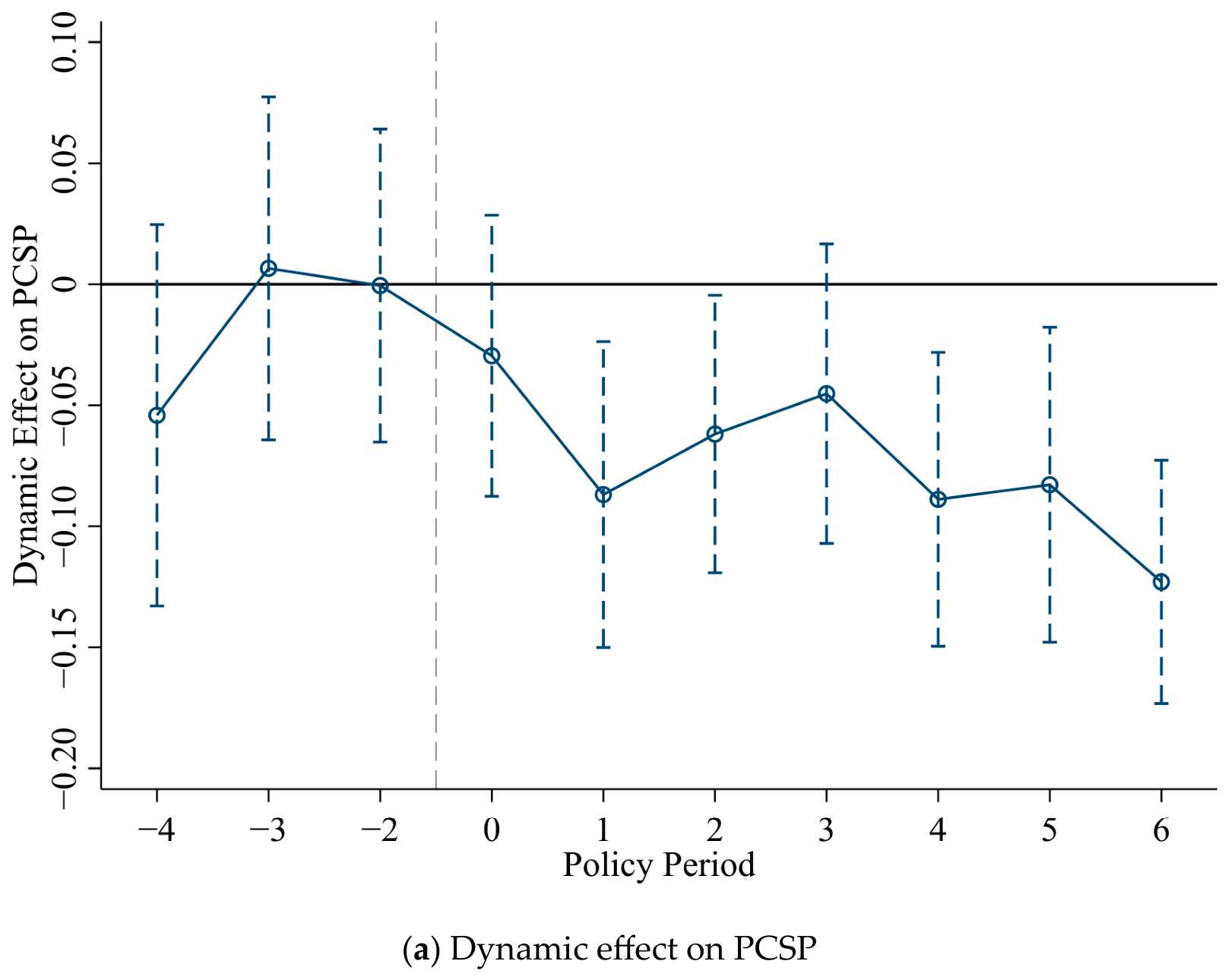
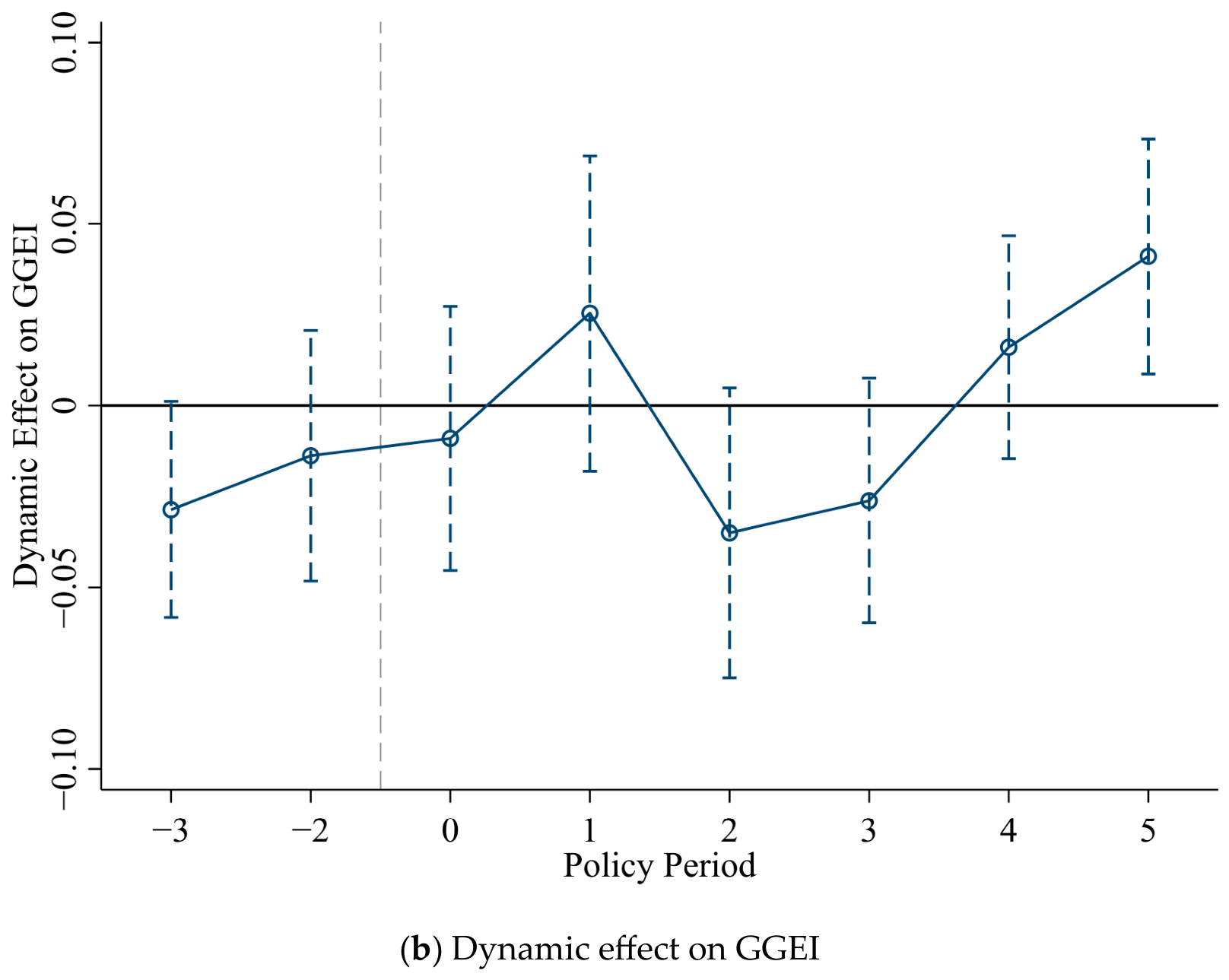
Figure 2 presents the results of the parallel trend test. Before the implementation of the sci-tech finance pilot policy, the estimated coefficients fluctuate around zero, and their confidence intervals generally include zero, indicating no systematic pre-policy difference between the treatment and control groups. After policy implementation, the coefficients for PCSP are generally negative, suggesting a reduction in pollution–carbon synergistic pressure. In contrast, the coefficients for GGEI gradually turn positive in the post-policy periods, indicating an improvement in urban green growth efficiency. These findings support the parallel trends assumption and confirm the validity of the multi-period DID estimation.
In addition to visual inspection, we further conduct joint significance tests for the pre-treatment coefficients. The
p-values are 0.4774 for PCSP and 0.1388 for GGEI, respectively, indicating that the pre-treatment coefficients are jointly insignificant. Therefore, there is no evidence of systematic differences in pre-policy trends between the treated and control cities before the implementation of the sci-tech finance pilot policy. Moreover, because the sci-tech finance pilot policy was implemented in different batches, we further use the Callaway and Sant’Anna staggered DID estimator to address potential bias arising from heterogeneous treatment timing. The detailed results are reported in
Supplementary Material S1, Table S1.
4.2.2. Placebo Test
To further rule out the possibility that the benchmark results are driven by random policy shocks, this paper conducts a placebo test, following Ye et al. [
43]. Specifically, pilot cities and policy implementation years are randomly reassigned, and the regression is repeated 500 times. If the estimated effects are not caused by random factors, the placebo coefficients should be concentrated around zero and clearly separated from the benchmark estimates.
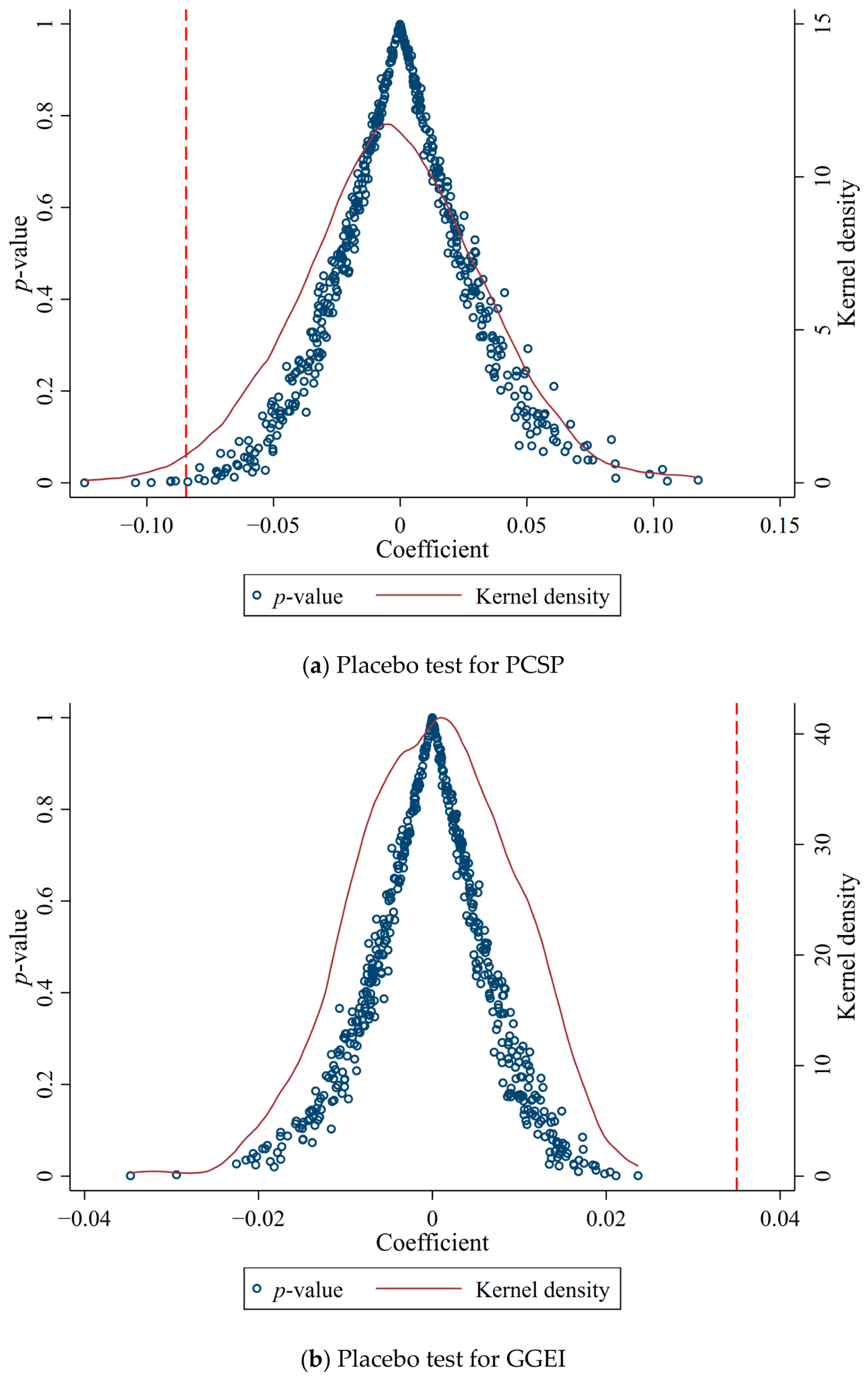
Figure 3 reports the placebo test results. The simulated coefficients are mainly distributed around zero, while the benchmark estimates are located in the tails of the simulated distributions. For PCSP, the benchmark coefficient lies on the left side of the placebo distribution, indicating a significant reduction in pollution–carbon synergistic pressure. For GGEI, the benchmark coefficient lies on the right side, indicating a significant improvement in green growth efficiency. These results suggest that the estimated effects of STFP on PCSP and GGEI are unlikely to be driven by randomly assigned policy shocks, thereby strengthening the credibility of the benchmark findings.
The red dashed vertical line represents the true estimated coefficient, while the scatter points and kernel density curve show the distribution of placebo estimates. We further calculate the empirical pseudo-p-value as the proportion of placebo coefficients whose absolute values are greater than or equal to the absolute value of the true estimated coefficient. The empirical pseudo-p-values are 0.0240 for PCSP and 0.0000 for GGEI, respectively, indicating that the true estimated effects are unlikely to be generated by random policy assignment.
4.2.3. Propensity Score Matching
Although the multi-period DID model identifies the policy effect of sci-tech finance, the selection of pilot cities may not be completely random. Observable differences between pilot and non-pilot cities may therefore lead to potential sample selection bias. To address this concern, this paper adopts a PSM-DID approach. Specifically, the propensity score is estimated using the main control variables, including lnGDP, lnWage, Loan, Edu, Env, and Open, and kernel matching is used to construct a comparable control group under the common support condition. We further check the covariate balance before and after matching, and the detailed balance diagnostics are reported in
Supplementary Material S2, Table S2. The results show that the differences in observable characteristics between pilot and non-pilot cities are substantially reduced after matching.
The results are reported in columns (1) and (2) of
Table 4. After kernel matching, the coefficient of STFP for PCSP is −0.0727 and significant at the 10% level, indicating that the sci-tech finance pilot policy continues to reduce pollution–carbon synergistic pressure. The coefficient of STFP for GGEI is 0.0297 and significant at the 1% level, suggesting that the policy also improves urban green growth efficiency. Overall, the PSM-DID results are consistent with the benchmark regressions, indicating that the main findings are not driven by observable differences between pilot and non-pilot cities.
4.2.4. Excluding Confounding Policy Shocks
During the sample period, several urban pilot policies related to green transformation and environmental governance may overlap with the implementation of the sci-tech finance pilot policy. The low-carbon city, zero-waste city, and smart city pilot policies may affect urban environmental performance through carbon reduction, waste governance, resource recycling, digital governance, and infrastructure upgrading. Specifically, the low-carbon city pilot policy was implemented in several batches, mainly in 2010, 2012, and 2017; the smart city pilot policy was launched in several batches from 2013 onward; and the zero-waste city pilot policy was launched in 2019. Based on the official pilot lists, this paper constructs city-year dummy variables for these three types of pilot policies, with each dummy equal to 1 for pilot cities from the approval year onward and 0 otherwise. To alleviate concerns that the benchmark results are confounded by these concurrent policy shocks, this paper further controls for these three types of pilot policies.
The results are reported in columns (3) and (4) of
Table 4. After controlling for low-carbon city pilots, zero-waste city pilots, and smart city pilots, the coefficient of STFP remains negative for PCSP and positive for GGEI, with statistical significance broadly consistent with the benchmark results. This suggests that the estimated effects of sci-tech finance policy on reducing PCSP and improving GGEI are not driven by overlapping urban pilot policies.
4.2.5. Excluding Municipalities
Municipalities directly under the central government may differ from ordinary prefecture-level cities in administrative status, policy resources, fiscal capacity, and development patterns. To avoid the possibility that the benchmark results are driven by these special cities, this paper further excludes Beijing, Tianjin, Shanghai, and Chongqing from the sample and re-estimates the baseline model.
The results are reported in columns (5) and (6) of
Table 4. After excluding the four municipalities, the coefficient of STFP remains negative for PCSP and positive for GGEI, and the significance levels are broadly consistent with the benchmark results. This indicates that the estimated effects of sci-tech finance policy are not driven by the special administrative and economic characteristics of municipalities.
4.2.6. Province-by-Year Fixed Effects
To further control for province-level time-varying shocks, this paper includes province-by-year fixed effects in the baseline specification. This setting helps absorb unobserved shocks that vary across provinces over time, such as province-specific environmental regulation, industrial policy adjustments, and regional development strategies. After introducing province-by-year fixed effects, the identification of STFP mainly comes from differences between pilot and non-pilot cities within the same province and year, rather than from cross-province variation.
The results are reported in columns (1) and (2) of
Table 5. After controlling for province-by-year fixed effects, the coefficient of (STFP) remains significantly negative for PCSP and significantly positive for GGEI. This indicates that the benchmark findings are not driven by province-level time-varying factors, further confirming the robustness of the estimated policy effects.
4.2.7. Double Machine Learning
Traditional linear regressions may be affected by functional-form misspecification when the relationships between control variables and the outcome variables are nonlinear. To address this concern, this paper further adopts a double machine learning approach [
44]. Specifically, the neural network algorithm is used to estimate the nuisance functions, and five-fold cross-fitting is applied to reduce overfitting bias. The estimation is implemented in Stata 17, and the main tuning parameters follow the default settings of the implemented package. In addition, both the linear and quadratic terms of the control variables are included to better capture potential nonlinear effects.
The results are reported in columns (3) and (4) of
Table 5. The coefficient of STFP remains significantly negative for PCSP and significantly positive for GGEI. Compared with the benchmark estimate, the DML coefficient for GGEI is larger, which may be because the DML specification flexibly captures nonlinear relationships between city-level covariates and green growth efficiency. Therefore, the DML result should be interpreted as additional robustness evidence rather than as a replacement for the benchmark estimate. Overall, the direction and statistical significance remain consistent with the baseline findings, indicating that the main conclusions are robust to nonlinear model specifications.
4.2.8. Alternative Construction of the Pollution–Carbon Indicator
To further examine whether the baseline result is sensitive to the construction of the pollution–carbon indicator, this paper further replaces the original PCSP with a pollution–carbon coupling coordination index. Following Zhang, Deng, Yan, Feng and Sun [
9], the alternative index is constructed based on the coupling coordination model. Specifically, the carbon-reduction subsystem includes carbon emissions and carbon intensity, while the pollution-reduction subsystem includes PM2.5 concentration, PM2.5 intensity, and NOx intensity. Since all indicators represent environmental pressure, they are treated as negative indicators and transformed into positive indicators before aggregation. The final index ranges from 0 to 1, with a larger value indicating a higher level of coordinated pollution and carbon reduction.
The result is reported in column (5) of
Table 5. After replacing the dependent variable with the pollution–carbon coupling coordination index, the coefficient of STFP is 0.0106 and is significant at the 5% level. This indicates that the sci-tech finance pilot policy significantly improves the coordinated level of pollution and carbon reduction. Therefore, the baseline conclusion remains robust after using an alternative construction of the pollution–carbon indicator.
4.3. Endogeneity Test
To further alleviate potential endogeneity arising from the non-random selection of pilot cities, this paper conducts an instrumental-variable estimation following Zhou, Ning, Huang, Zhou, Shi and Qin [
13] and Li, Ding and Guo [
32]. Specifically, the spherical distance from each city to Hangzhou is used as an instrument for the sci-tech finance pilot policy. This instrumental-variable strategy has also been adopted in recent studies on sci-tech finance policy evaluation and digital–green coordinated development. Hangzhou is one of China’s representative centers of e-commerce, digital finance, and technology-finance innovation. Cities closer to Hangzhou are more likely to be affected by financial-resource diffusion, policy learning, and technology-finance networks, and therefore have a higher probability of being selected as sci-tech finance pilot cities. This supports the relevance condition of the instrument. Since the distance to Hangzhou is time-invariant, its level effect is absorbed by city fixed effects in the fixed-effects IV specification, while the identifying variation comes from cross-city differences in distance-based policy exposure. Regarding the exclusion restriction, geographical distance is exogenously given and does not vary with cities’ current environmental performance. Moreover, a shorter distance to Hangzhou does not necessarily imply lower pollution–carbon synergistic pressure or higher green growth efficiency. Therefore, the distance to Hangzhou is expected to affect PCSP and GGEI mainly through its influence on the sci-tech finance pilot policy. Nevertheless, the IV results are interpreted as supplementary endogeneity evidence rather than as the sole basis for causal identification.
Table 6 reports the instrumental variable estimates. Columns (1) and (3) present the first-stage results for the PCSP and GGEI specifications, while columns (2) and (4) report the corresponding second-stage estimates. The coefficients of Distance to Hangzhou are significantly negative in both first-stage regressions, indicating that cities farther from Hangzhou are less likely to be selected as sci-tech finance pilot cities, which is consistent with theoretical expectations. The first-stage F-statistic is 17.69, exceeding the conventional threshold of 10. The Kleibergen–Paap rk LM statistics are also significant, rejecting the null hypothesis of underidentification. These results indicate that the instrument is relevant and that weak-instrument concerns are not serious. After addressing potential endogeneity, the second-stage coefficient of STFP remains significantly negative for PCSP and significantly positive for GGEI, further supporting the robustness of the main conclusions.
4.4. Mechanism Analysis
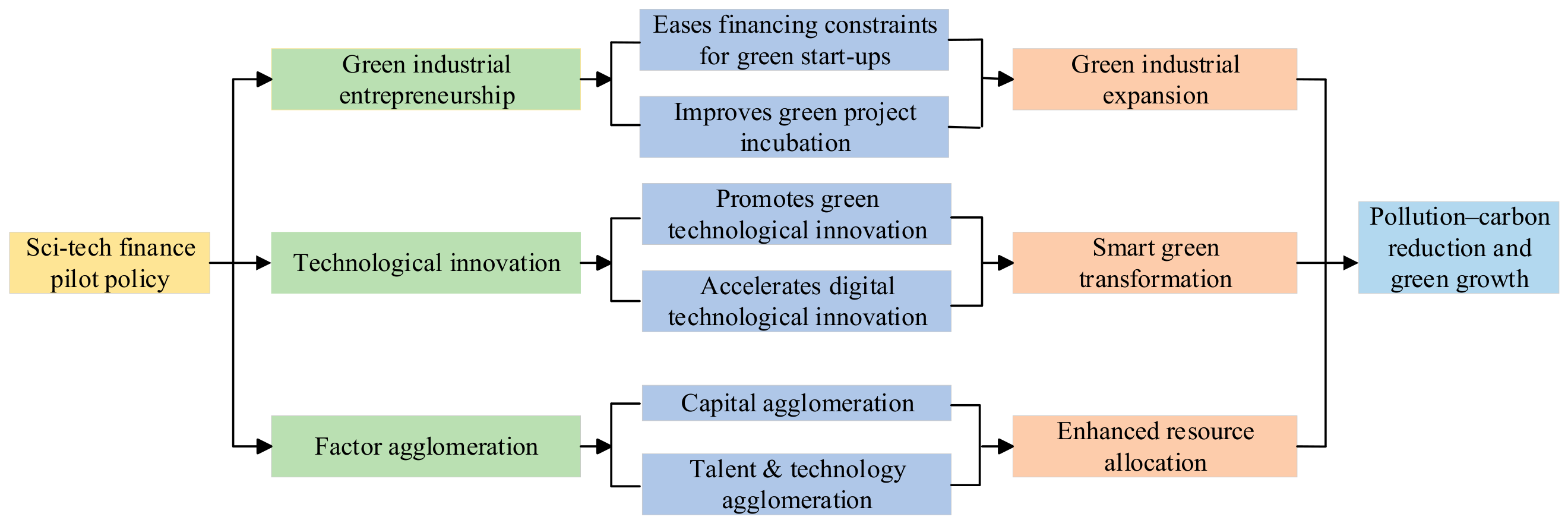
Based on the preceding theoretical analysis, the sci-tech finance pilot policy may affect sustainable urban transition through three channels: green industrial entrepreneurship, technological innovation, and innovation factor agglomeration. Following the mechanism-test logic commonly used in the DID literature, this section replaces the dependent variable with each mechanism variable to examine whether the policy significantly promotes these channels. The results are reported in
Table 7.
4.4.1. Green Industrial Entrepreneurship Effect
Column (1) of
Table 7 reports the result for green industrial entrepreneurship. The coefficient of STFP is 0.0967 and significant at the 1% level, indicating that the sci-tech finance pilot policy significantly increases the entry of green industrial firms. This finding suggests that sci-tech finance improves the entrepreneurial environment for green industries by expanding financing channels, lowering entry barriers, and strengthening market expectations for green development. The growth of green industrial firms can enlarge the supply of clean production services, energy-saving technologies, pollution-control solutions, ecological restoration services, and resource-recycling activities. It also intensifies market competition in green sectors and encourages traditional firms to adopt cleaner production modes. Therefore, green industrial entrepreneurship provides an important industrial foundation for reducing pollution and carbon emissions while supporting green growth. Accordingly, the result is consistent with Hypothesis 2 and provides supportive evidence for the green industrial entrepreneurship channel.
4.4.2. Technological Innovation Effect
Columns (2) and (3) of
Table 7 report the results for technological innovation. The coefficient of STFP is 0.0862 for GTI and significant at the 1% level, while the coefficient for DTI is 0.1724 and significant at the 5% level. These results indicate that sci-tech finance promotes both green technological innovation and digital technological innovation. Green technological innovation directly improves cleaner production processes, energy-saving equipment, end-of-pipe treatment technologies, and low-carbon production capacity, thereby reducing pollution and carbon emissions at the production stage. Digital technological innovation further enhances data collection, environmental monitoring, intelligent regulation, and resource allocation efficiency, enabling firms and governments to identify emission sources more accurately and improve the precision of environmental governance. The joint advancement of GTI and DTI therefore helps shift urban green transformation from single pollution control to full-process coordinated governance, providing technological support for pollution reduction, carbon reduction, and green growth. For example, Gao et al. [
45] show that digital twin technology and distributed model predictive control can coordinate electricity, heating, and gas networks under a dynamic carbon trading mechanism, thereby improving real-time energy optimization and reducing carbon emissions. More broadly, recent process-level studies also show that digital monitoring, intelligent optimization, and low-carbon energy-system integration can improve production efficiency and reduce carbon emissions in specific industrial links [
46,
47]. These studies provide micro-level industrial evidence for the broader mechanism through which digital and green technologies contribute to pollution–carbon reduction. Accordingly, the results are consistent with Hypotheses 3a and 3b and provide supportive evidence for the technological innovation channel.
4.4.3. Factor Agglomeration Effect
Columns (4)–(6) of
Table 7 report the results for innovation factor agglomeration. The coefficients of STFP on Capital, Talent, and Tech are 0.2820, 0.0093, and 0.7072, respectively, and all are significant at the 1% level. These results indicate that the sci-tech finance pilot policy significantly promotes the agglomeration of venture capital, talent, and technological resources. Venture capital agglomeration provides long-term financial support for green innovation and low-carbon industrialization, reducing the financing uncertainty faced by technology-based firms. Talent agglomeration increases the density of knowledge exchange and strengthens firms’ capacity to absorb and apply green and digital technologies. Technological agglomeration accelerates the transformation of scientific achievements and promotes knowledge spillovers across firms and industries. Through the joint concentration of capital, talent, and technology, sci-tech finance improves the efficiency of innovation resource allocation and enhances cities’ capacity for coordinated green transformation. Accordingly, the results are consistent with Hypothesis 4 and provide supportive evidence for the factor-agglomeration channel.
Overall, the mechanism results show that the sci-tech finance pilot policy promotes the coordinated improvement of pollution and carbon reduction and green growth efficiency by activating green industrial entrepreneurship, stimulating green and digital technological innovation, and gathering key innovation factors. Relative to these sample means, the estimated coefficients suggest that the effects of STFP on the proposed mechanism variables are economically meaningful. These findings provide empirical support for the proposed mechanism hypotheses.
4.5. Heterogeneity Analysis
The effect of sci-tech finance may vary across cities because the transformation of financial support into green and low-carbon outcomes depends on local market scale, governance capacity, and innovation conditions [
24,
48]. Therefore, following the logic that city characteristics shape policy absorption and implementation efficiency, this paper examines the heterogeneous effects of STFP from the perspectives of city-scale, collaborative governance capacity and innovation environments.
4.5.1. City-Scale Heterogeneity
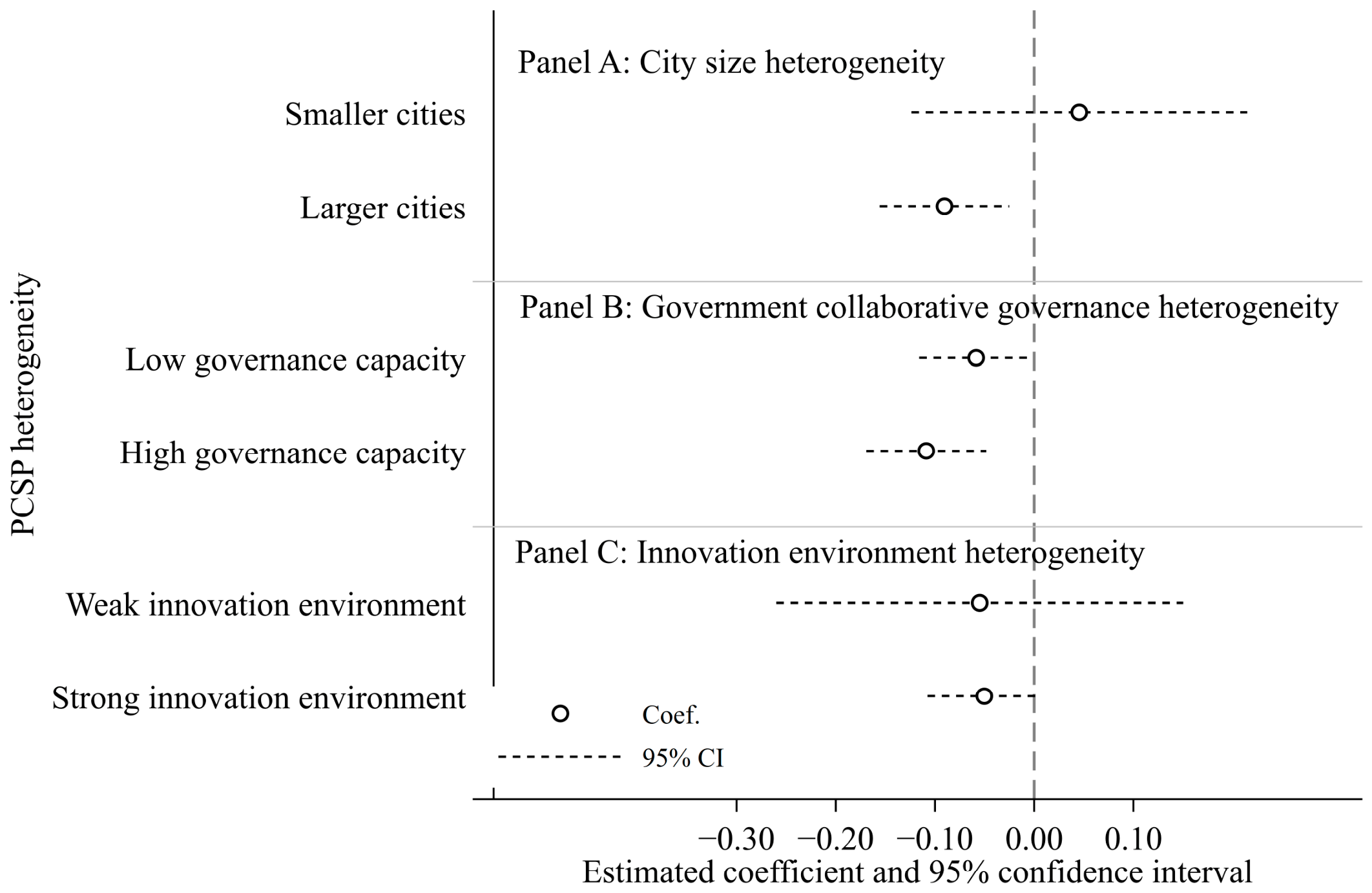
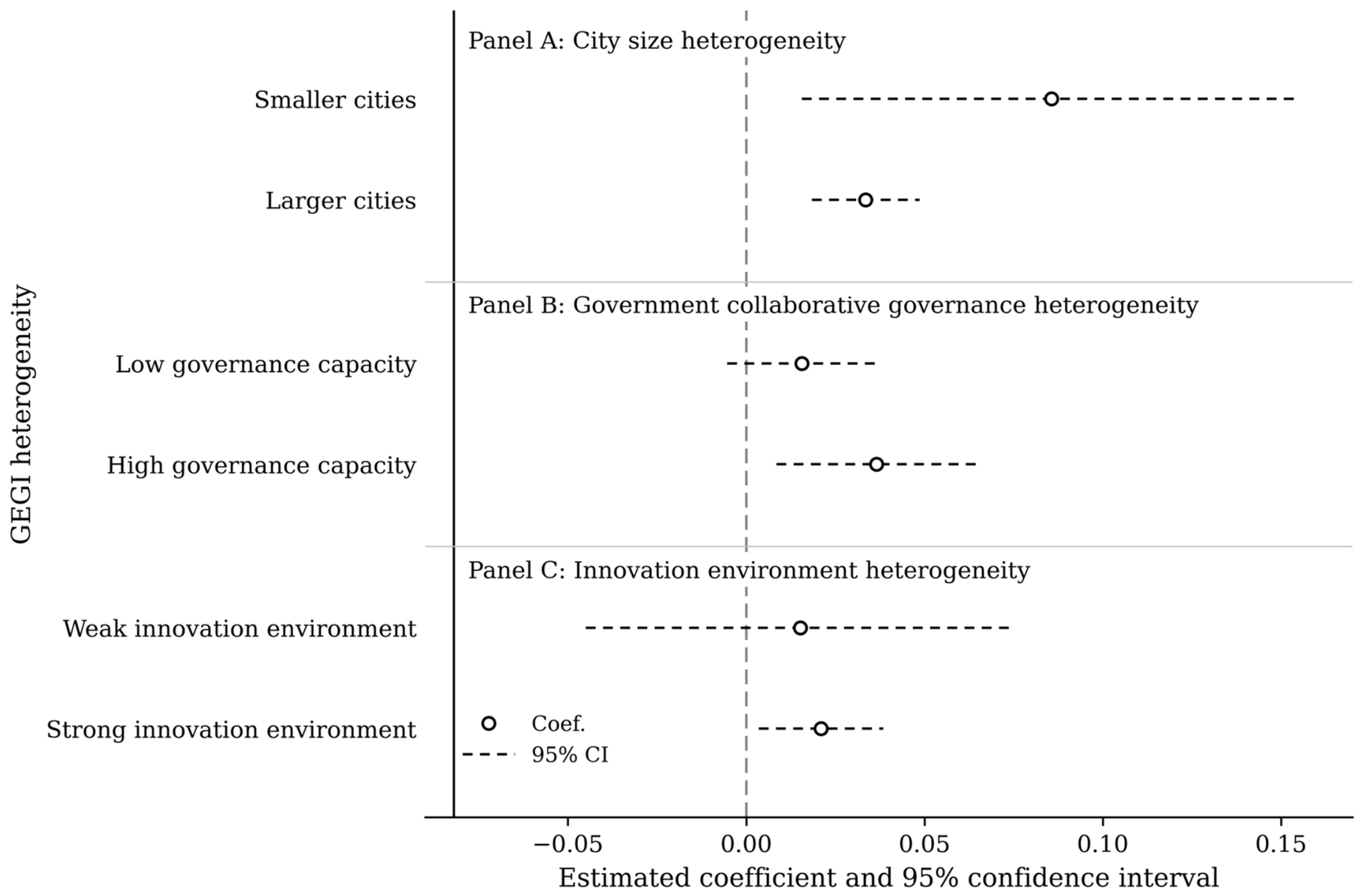
Cities with different population sizes differ substantially in market capacity, factor concentration, industrial foundation, and policy absorption capacity, which may lead to heterogeneous effects of sci-tech finance. To examine this issue, this paper classifies cities with a year-end total population below one million as smaller cities and the remaining cities as larger cities. The results are shown in
Figure 4 and
Figure 5.
For PCSP, the estimated coefficient of STFP in larger cities is −0.0904 and is significantly negative at the 1% level, while the coefficient in smaller cities is 0.0455 and statistically insignificant. This indicates that the pollution–carbon reduction effect of sci-tech finance is mainly reflected in larger cities. For GGEI, the estimated coefficient of STFP in larger cities is 0.0335 and is significantly positive at the 1% level, while the coefficient in smaller cities is 0.0856 and is significantly positive at the 5% level. These results suggest that sci-tech finance improves green growth efficiency in both larger and smaller cities, but the policy effect in larger cities is more statistically stable. Overall, larger cities show a more balanced effect in reducing pollution–carbon pressure and improving green growth efficiency.
This may be because larger cities usually have deeper financial markets, stronger industrial foundations, more abundant innovation resources, and more complete green infrastructure, which help transform sci-tech financial support into green investment, technological application, and industrial upgrading. In contrast, smaller cities may have a stronger marginal response in green growth efficiency, but their limited financial supply, insufficient innovation carriers, and weaker green project reserves constrain the conversion of sci-tech finance into pollution–carbon reduction outcomes.
4.5.2. Government Collaborative Governance Heterogeneity
Effective governance can strengthen low-carbon transition by improving policy enforcement and enhancing the allocation efficiency of financial resources [
48]. Since sci-tech finance involves finance, science and technology, environmental protection, industry, and fiscal authorities, local collaborative governance capacity may further shape its policy effect. This paper measures collaborative governance capacity using the ratio of collaborative-governance-related keywords in government work reports to total word frequency. The keywords include “complementary advantages,” “collaborative governance,” “win-win cooperation,” and “resource sharing.” A higher value indicates stronger collaborative governance capacity. The results are shown in
Figure 4 and
Figure 5.
For PCSP, the estimated coefficient of STFP in cities with stronger collaborative governance capacity is −0.1088 and is significantly negative at the 1% level, while the coefficient in cities with weaker collaborative governance capacity is −0.0584 and is significantly negative at the 5% level. For GGEI, the estimated coefficient of STFP in cities with stronger collaborative governance capacity is 0.0365 and is significantly positive at the 5% level, while the coefficient in cities with weaker collaborative governance capacity is 0.0156 and statistically insignificant. These results indicate that stronger collaborative governance capacity enhances both the pollution–carbon reduction effect and the green growth effect of sci-tech finance.
This finding indicates that the effectiveness of sci-tech finance depends not only on financial resource supply, but also on the ability of local governments to coordinate policy instruments and guide resources toward green innovation and industrial transformation. Cities with stronger collaborative governance can reduce departmental fragmentation, improve project screening, and enhance the linkage among financial support, technological innovation, and environmental governance. By contrast, weak collaborative governance may result in fragmented implementation and lower resource allocation efficiency, thereby weakening the policy effect.
4.5.3. Innovation Environment Heterogeneity
Sci-tech finance is essentially an innovation-oriented financial policy, and its effectiveness may depend on the local innovation environment. This paper uses the city innovation index from the China City and Industry Innovation Power Report released by Fudan University as a proxy for the urban innovation environment. Cities are divided into strong and weak innovation environment groups according to whether their annual innovation index is above the annual median.
The results are shown in
Figure 4 and
Figure 5. The results show that the policy effect is stronger in cities with a better innovation environment. In these cities, STFP significantly reduces PCSP and improves GGEI, indicating that a sound innovation environment enhances the conversion of sci-tech financial support into green and low-carbon outcomes. This may be because cities with stronger innovation environments have better innovation networks, higher technology absorption capacity, and more mature channels for commercializing research outcomes. These conditions help financial resources flow more accurately to projects with technological potential and environmental benefits. In contrast, in cities with weaker innovation environments, limited innovation carriers and insufficient high-quality projects may weaken the actual effect of financial support. These findings suggest that the innovation environment is an important condition for amplifying the pollution–carbon reduction and green growth effects of sci-tech finance.
4.6. Spatial Spillover Effects
Before estimating the spatial model, this paper first examines spatial dependence using Global Moran’s I based on the row-standardized inverse squared geographic distance matrix.
Appendix A Table A1 shows that PCSP exhibits persistent and significant positive spatial autocorrelation during 2008–2023, with Moran’s I ranging from 0.272 to 0.310 and all
p-values below 0.001. By contrast, the spatial correlation of GGEI is weaker and less stable. These results indicate that pollution–carbon synergistic pressure is more spatially clustered than green growth efficiency, providing a stronger basis for further examining the spatial spillover effect of PCSP.
Table 8 shows that the local and indirect effects of STFP on PCSP are significantly negative. Since a lower PCSP indicates lower pollution–carbon synergistic pressure, the negative indirect effect implies that sci-tech finance generates a positive spatial spillover in substantive terms. That is, the policy not only reduces local pollution–carbon pressure, but also alleviates pollution–carbon pressure in geographically connected cities through policy demonstration, technology diffusion, and cross-city environmental governance.
For GGEI, the direct effect of STFP is significantly positive, whereas the indirect effect is statistically insignificant. This indicates that sci-tech finance improves local green growth efficiency, but does not generate a clear spillover effect on neighboring cities. The difference between PCSP and GGEI suggests that pollution–carbon governance is more likely to diffuse across cities, while green growth efficiency depends more on local industrial foundations, innovation capacity, and resource absorption conditions.
4.7. Further Analysis: Synergy Effects
This section further examines whether sci-tech finance promotes synergy from two dimensions: outcome coordination and policy complementarity. First, because PCSP is a pressure index, lower values indicate better pollution-carbon reduction performance. Therefore, PCSP is normalized and reverse-coded, and the transformed indicator is multiplied by GGEI to construct an outcome synergy index. A larger value indicates stronger joint improvement in pollution-carbon reduction and green growth efficiency. Second, this paper examines whether STFP forms complementary or substitutive relationships with other urban environmental pilot policies. Following the policy-interaction framework, DDD terms are constructed by interacting STFP with the Zero-Waste City pilot, the Low-Carbon City pilot, and the green finance policy. Since the dependent variables are positively oriented, a significantly positive DDD coefficient indicates a complementary policy effect.
Column (1) of
Table 9 reports the outcome synergy result. The coefficient of STFP is 0.0358 and significant at the 1% level, indicating that the sci-tech finance pilot policy significantly enhances the joint improvement of pollution-carbon reduction and green growth efficiency. This result suggests that STFP not only affects individual environmental or growth dimensions, but also strengthens their coordinated improvement.
For policy interactions, the Zero-Waste City pilot has a significantly positive DDD coefficient, supporting a clear “1 + 1 > 2” complementary effect. The Low-Carbon City interaction is positive but insignificant. In contrast, the STFP-green finance interaction is significantly negative, indicating a marginal substitution effect rather than policy complementarity.
The marginal substitution effect between STFP and green finance policy may stem from overlaps in implementing entities, service scopes, and capital investment directions. Sci-tech finance is mainly implemented through science-and-technology departments, financial institutions, and local governments, with a focus on supporting technology-based firms, R&D activities, and the commercialization of scientific achievements. Green finance policy mainly guides financial institutions to allocate capital to green credit, environmental protection, clean energy, pollution control, and low-carbon projects. Although the two policies differ in their primary objectives, they both target green technology firms, clean production projects, and low-carbon industrial transformation. Under the constraints of limited local financial resources and qualified green project reserves, such policy overlap may lead to repeated targeting, competition for similar financial resources, and marginal resource crowding-out, thereby weakening the additional effect of policy combination. In addition, differences in project-screening standards, policy evaluation criteria, and administrative coordination procedures may generate implementation frictions, further reducing the marginal synergy between the two financial policies.
By contrast, the Low-Carbon City pilot focuses more on carbon-emission targets, industrial restructuring, energy conservation, and administrative governance, rather than direct financial-resource allocation. Therefore, its interaction with STFP may operate through more indirect and longer-term channels, which helps explain why the STFP–Low-Carbon City interaction is positive but statistically insignificant.
5. Research Conclusions and Policy Recommendations
5.1. Conclusions
From the perspective of sustainable urban transition, this paper takes the sci-tech finance pilot policy as a quasi-natural experiment and uses panel data of Chinese prefecture-level cities from 2008 to 2023 to examine its policy effect, mechanisms, heterogeneity, spatial spillovers, and policy synergy. The main conclusions are as follows: (1) Sci-tech finance significantly reduces pollution–carbon synergistic pressure and improves green growth efficiency. This conclusion remains robust after parallel trend tests, placebo tests, PSM-DID, and double machine learning estimation. (2) The mechanism analysis reveals that sci-tech finance promotes urban green transformation through three channels: green industrial entrepreneurship, technological innovation, and innovation factor agglomeration. Specifically, the policy increases the entry of green industrial firms, promotes green and digital technological innovation, and strengthens the agglomeration of venture capital, talent, and technological resources. (3) The heterogeneity analysis shows that the effect of sci-tech finance is more pronounced in larger cities, cities with stronger government collaborative governance capacity, and cities with better innovation environments. This indicates that market scale, administrative coordination, and innovation conditions are important factors shaping the effectiveness of sci-tech finance. (4) The spatial spillover results indicate that sci-tech finance has a positive spatial spillover effect on PCSP, while its spillover effect on GGEI is not significant. In other words, sci-tech finance in pilot cities contributes to reducing pollution–carbon synergistic pressure in neighboring cities, but its effect on green growth efficiency is mainly reflected within local cities. (5) The policy-interaction results show that the Zero-Waste City pilot forms a significant “1 + 1 > 2” complementary effect with sci-tech finance, whereas the Low-Carbon City pilot does not generate a statistically significant additional effect. In contrast, the interaction between sci-tech finance and green finance policy is significantly negative, suggesting a marginal substitution effect rather than policy complementarity.
5.2. Policy Recommendations
First, the policy evaluation system for sci-tech finance should be improved. Local governments should move beyond single indicators such as carbon reduction or economic growth and incorporate the joint performance of pollution reduction, carbon reduction, and green growth into policy assessment. In practice, pilot cities should establish project-level evaluation criteria covering technological potential, expected emission-reduction benefits, green growth value, and commercialization feasibility. Financial resources should be directed toward projects that simultaneously generate environmental benefits and long-term economic returns, so that sci-tech finance can better serve the coordinated transition of pollution–carbon reduction and green growth.
Second, differentiated implementation strategies should be adopted across cities with different scales and governance capacities. Larger cities should play a leading role in green technology diffusion, green project incubation, and regional demonstration by relying on their stronger financial markets, industrial foundations, and innovation resources. Smaller cities should focus on improving basic financial service capacity, expanding qualified green project reserves, and strengthening local innovation carriers. For cities with weaker collaborative governance capacity, coordination mechanisms among finance, science and technology, environmental protection, industry, and fiscal departments should be strengthened. Joint project-screening platforms, interdepartmental information sharing, and coordinated subsidy arrangements can be established to improve the conversion efficiency of sci-tech financial support.
Third, the key transmission mechanisms of sci-tech finance should be strengthened. Local governments should improve green entrepreneurship services, reduce financing barriers for green industrial firms, and support the marketization of green and digital technologies. Financial institutions should develop credit products, guarantee tools, and risk-compensation mechanisms suitable for long-cycle and high-risk innovation projects. Meanwhile, pilot cities should attract venture capital, skilled talent, and technological resources through innovation platforms, industry–university–research cooperation, and green project databases. These measures can strengthen the pathways of green industrial entrepreneurship, technological innovation, and factor agglomeration.
Fourth, regional coordination and policy combinations should be enhanced according to the spatial spillover and policy-interaction results. Since sci-tech finance has a significant spatial spillover effect on pollution–carbon synergistic pressure, pilot cities should strengthen cross-city cooperation in pollution–carbon governance, green technology transfer, environmental information sharing, and joint project financing. A “leading cities helping neighboring cities” mechanism can be established to promote the diffusion of capital, technology, and governance experience. In terms of policy combinations, sci-tech finance should be closely linked with Zero-Waste City construction, especially in source reduction, resource recycling, clean production, and green infrastructure investment. The coordination with Low-Carbon City pilots should focus on longer-term links between financial support, industrial restructuring, and energy-efficiency improvement. For green finance policy, local governments should avoid repeated project targeting and resource crowding-out by clarifying policy boundaries, differentiating funding priorities, and improving coordination among financial instruments.
The findings also have comparative implications for other countries pursuing green transition. For economies seeking to coordinate environmental governance and green growth, the Chinese experience suggests that innovation-oriented financial policy can be an effective instrument when financial resources are linked with technological innovation, green entrepreneurship, and local industrial upgrading. However, the applicability of this policy logic may depend on country-specific institutional conditions. In countries with more market-oriented financial systems, similar policy effects may require stronger green information disclosure, risk-sharing mechanisms, and public–private cooperation to guide capital toward green and technological projects. In developing economies with weaker financial infrastructure or limited innovation capacity, the priority may be to build project-screening platforms, strengthen local innovation carriers, and improve coordination among financial, industrial, and environmental authorities. Therefore, the broader lesson is not to replicate China’s sci-tech finance pilot model mechanically, but to adapt innovation-oriented financial instruments to each country’s financial structure, governance capacity, and stage of green transition.
5.3. Limitations and Future Research
Although this study provides city-level evidence on the effect of sci-tech finance on pollution–carbon reduction and green growth, several limitations remain. First, due to data availability, this paper mainly evaluates urban-level policy effects and cannot fully capture firm-level behavioral responses, such as changes in green investment, financing structure, and technology adoption. Second, although the event-study results support the parallel trends assumption, the DID design may still be affected by potential anticipatory responses or pre-treatment spillovers. Local governments, financial institutions, or firms may adjust their behavior before formal pilot approval due to policy expectations or learning from nearby pilot candidates. Non-pilot cities may also be indirectly affected through regional policy learning, factor mobility, or green technology diffusion. Although the placebo tests and insignificant pre-treatment coefficients help reduce this concern, such potential anticipation and diffusion effects cannot be completely ruled out. Third, although this study examines spatial spillovers and policy interactions, the longer-term dynamic effects of sci-tech finance and its coordination with other sustainability-oriented policies require further investigation. Future research can use micro-level enterprise data, longer observation periods, and more refined policy-interaction designs to further examine how sci-tech finance affects firms’ green transformation decisions and how different policy instruments can be better coordinated to promote sustainable urban transition.