


Abstract
This study examines how village spatial institutional capacity (knowledge resources, relational resources, and mobilization capacity) and intra-organizational collaboration jointly shape the governance of agricultural irrigation systems. Using survey data from 840 households in six provinces of China’s Yellow River Basin, we employ OLS regression, bootstrapped quantile regression and moderation analysis. The empirical results indicate that both village spatial institutional capacity and internal collaboration significantly and positively affect comprehensive irrigation governance performance. Specifically, OLS results reveal that knowledge resources ( = 0.0029, p < 0.1), relational resources ( = 0.0711, p < 0.01), and mobilization capacity ( = 0.0236, p < 0.05) significantly enhance comprehensive performance, and internal collaboration exerts a significant positive moderating effect between institutional capacity and governance performance. Furthermore, quantile regression analysis reveals a non-linear distribution of this effect: the safeguarding role of institutional capacity is more prominent in the early stages of governance, whereas the driving role of internal collaboration shows an increasing trend in the middle and later stages. This study theoretically addresses the limitations of past reliance solely on the concept of “social capital” and provides robust empirical evidence for transitioning irrigation management from traditional top-down administrative dominance to a multi-centered, participatory self-governance model.
1. Introduction
Against the background of intensifying global climate change and frequent extreme weather events, agricultural irrigation systems serve as core infrastructure for buffering precipitation uncertainty, maintaining agricultural resilience, and ensuring global food security [1]. However, their governance efficiency is facing unprecedented challenges. The global agricultural sector is under severe water stress. To address this systemic crisis, Sustainable Development Goal (SDG) Target 6.4 explicitly emphasizes substantially increasing water-use efficiency across all sectors to alleviate water scarcity, while Target 6.b further indicates that supporting and strengthening the participation of local communities in water and sanitation management is a critical prerequisite to ensure long-term sustainability [2].
In China, this macro-level challenge is particularly intense and typical. As a highly populous country, China’s per capita water resources are less than a quarter of the global average. Nevertheless, to secure national food safety, China has established an extensive agricultural irrigation network [3], with the current irrigated arable land area reaching 10.9 billion mu. In major grain-producing regions such as the Yellow River Basin, agricultural water consumption accounts for more than 70% of the basin’s total water withdrawals. In recent years, although the Chinese government has vigorously promoted water-saving facility construction and raised the national effective utilization coefficient of farmland irrigation water to 0.58 [4], terminal water allocation faces a deep structural bottleneck at the micro-governance level. Specifically, the “last-mile” micro-water infrastructure, which connects main canals with individual farm plots, remains trapped in a gridlock of state “suspension” and market failure [5]. Aging facilities, lack of maintenance responsibility, and the common-pool resource attributes of water lead to massive water losses at the conveyance end and trigger frequent water-grabbing conflicts and disorderly competition among farmers during peak demand periods [6,7], severely hindering the transformation of agricultural systems toward sustainable and green modernization.
Effectively resolving the collective action dilemma in irrigation systems has become a central focus of international academia in recent years. A substantial body of international comparative research demonstrates that top-down management models or purely “parachuted” technological inputs detached from the local social-ecological context often yield limited success. For example, in southern Mexico’s large-scale irrigation districts, empirical research confirms that village-based community institutions, through their social capital and group size, play a more central role in daily water scheduling than official administrative bureaucrats [8]. In Zimbabwe, the fragmentation of formal institutions and overlapping departmental mandates reduce the binding force of formal rules, leading to low infrastructure utilization under informal institution dominance [9]. European studies also corroborate this: in Spain, state-led drip irrigation modernization can cause system rigidity and trigger community resistance if it lacks the “social control” and deep integration of local irrigation communities [10]. In Asia, case studies from the Philippines and Chile demonstrate that integrating traditional institutions into modern water user associations and leveraging the public leadership of community managers are key drivers of internal social learning, enhancing farmers’ compliance and delaying water crises [11,12].
Although the existing literature on common-pool resource governance and farmers’ collective action has yielded rich findings, several limitations persist. First, studies often isolate macro-level national policy frameworks from micro-level individual behavioral decisions of farmers, lacking a meso-level analytical tool to integrate village-level structural constraints and dynamic organizational collaboration. Second, purely institutional analyses fail to fully reveal the non-linear mechanisms through which institutional arrangements operate across different resource endowments and household heterogeneities. To fill this theoretical gap and respond to the empirical demand for improving the “last-mile” governance performance through multi-centered collaboration, this study constructs a dual-dimensional quantitative analytical framework integrating village spatial institutional capacity and intra-organizational collaboration based on micro-survey data from 840 households across six provinces in the Yellow River Basin of China.
This study offers three distinct marginal contributions to the existing literature. From a theoretical perspective, we pioneer the integration of institutional capacity at the village level into the analysis of governance performance. This integration not only enriches the scholarship on governance determinants but also extends the application of institutional capacity theories within public affairs, thereby establishing a robust theoretical foundation for advancing farmers’ self-organized irrigation management. Additionally, drawing upon Ostrom’s common-pool resource theory, we construct a comprehensive analytical framework to systematically examine how village-level institutional capacity and internal collaboration within irrigation organizations jointly enhance self-governance outcomes. Finally, our findings do more than just explain the efficacy of self-organized governance; they provide practical insights for transitioning agricultural irrigation from traditional, top-down hierarchical management toward a dynamic, polycentric governance model.
The remainder of this paper is organized as follows: Section 2 presents the theoretical analysis and research hypotheses. Section 3 describes the research design. Section 4 describes the empirical testing and analysis results as well as the robustness tests. Section 5 provides the main conclusions and implications.
2. Mechanism Analysis and Research Hypotheses
2.1. Framework for Analysing Governance Performance
Due to the high mobility and rivalry of irrigation water resources, alongside the high exclusion costs of physical facilities, the governance system faces two core challenges [13]: first, how to motivate farmers to invest in and maintain infrastructure to overcome the pervasive “free-rider” incentive (the supply-side dilemma); and second, how to effectively constrain individual farmers’ over-extraction behaviors during peak irrigation periods to maintain equity and order in water allocation (the order-side challenge). Accordingly, this study conceptualizes the comprehensive governance performance of agricultural irrigation systems by integrating two core dimensions: supply-side capacity and water-use order. Achieving effective governance in these two dimensions depends on deep-seated operational mechanisms within the community.
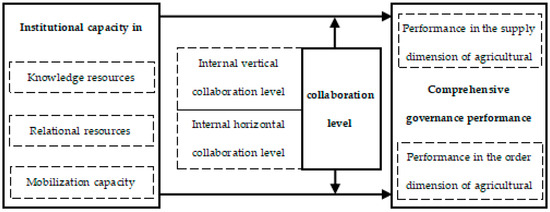
Established literature collectively conceptualizes trust, reciprocal norms, and interpersonal networks as ‘social capital,’ demonstrating how these elements minimize transaction costs and curb information asymmetry [14,15,16]. However, as a static, stock-based resource, social capital does not automatically translate into the actual capacity for collective action to resolve specific public dilemmas. “Institutional capacity” refers to a structural, normative, and goal-oriented framework developed within a specific spatial domain by integrating and guiding local social capital and cultural traditions [17]. To operationalize village institutional capacity, our framework integrates three progressive dimensions [18]: ‘knowledge resources,’ which represent the ability to cultivate and update local consensus; ‘relational resources,’ denoting the network structures that connect diverse stakeholder groups; and ‘mobilization capacity,’ which enables the coordination of internal and external resources during emergencies. However, translating this static structural framework into actual governance outcomes requires dynamic agency from local actors, a process that inherently introduces the concept of ‘collaboration level.’ The collaboration level represents the continuous, high-frequency interactive process among organizational members at the intersection of the micro- and meso-levels to achieve specific goals. It comprises vertical collaboration between farmers and management, and horizontal collaboration among farmers. Based on the nature of the public-pool resources in these systems, this study constructed a logical framework to analyse governance performance, as shown in Figure 1.
Figure 1.
Framework for Analyzing the Governance Performance of Agricultural Irrigation Systems. Note: Rectangular boxes represent core variables/constructs, and arrows represent the directional paths of theoretical influence analyzed in this study.
2.2. Impact of Institutional Capacity on Governance Performance
Formal and informal institutional arrangements play an indispensable role in coordinating stakeholder relationships and preventing short-term opportunistic dilemmas. In rural public affairs governance, institutional capacity within the village spatial domain is a core structural variable for deepening collective action.
2.2.1. Impact of Knowledge Resources on Governance Performance
Specific cultural traditions and social interactions deeply shape knowledge resources. In irrigation management, knowledge resources represent not only the acquisition of hydrological and agricultural information but also the ability of grassroots managers to creatively construct a local consensus based on the local socio-economic context. Village leaders with higher educational capacity can significantly enhance farmers’ participation in irrigation governance; they are often able to translate complex external macro-policies into easily understood and accepted village regulations, thereby providing crucial knowledge inputs for system operations [19]. Compared to complex indicators, such as resource endowment, local consensus built on traditional customs and cohesion plays a significant role in enhancing the performance of public affairs governance [20]. Based on the above discussion, this study proposes the following hypothesis:
Hypothesis 1.
Knowledge resources within the village spatial domain positively affect the supply and order performance of agricultural irrigation systems, thereby influencing overall governance performance.
2.2.2. Impact of Relational Resources on Governance Performance
Specific spatial domains generate distinct power relations and role positionings [21]. In Chinese rural societies characterized by relatively low physical mobility, relational resources embedded within “networks of acquaintances” serve as the core bond for maintaining communication and conveying trust [22]. Across different group sizes of irrigation communities, a hybrid management model based on trust and control can effectively drive collective action in public environmental affairs [23]. Strong relational resources can provide farmers not only with technical and market information support for agricultural production but also prevent opportunistic behaviors through deep emotional bonds and mutual reciprocity norms [24]. The strengthening of such trust networks establishes a solid foundation of order for facility maintenance and water allocation. Based on the above discussion, this study proposes the following hypothesis:
Hypothesis 2.
Relational resources within the village spatial domain positively affect both the supply and order performance of agricultural irrigation systems, thereby influencing their overall governance performance.
2.2.3. Impact of Mobilization Capacity on Governance Performance
In grassroots self-governance environments where formal institutions may be weakened or a governance vacuum occurs, the mobilization capacity of an organization is the “hard currency” for triggering and sustaining collective action. In public affairs governance, organizations can mobilize internal or external resources as required to achieve common goals or interests [25]. Outstanding public leadership can significantly drive and sustain collective action in participatory irrigation management by improving cadre–mass relationships and cultivating grassroots democracy [26]. Particularly when facing crises such as water depletion, extreme drought, or sudden infrastructure damage, polycentric governance networks urgently require robust mobilization capacity to coordinate internal and external resources, enforce water-sharing orders, and effectively suppress individual free-riding. Based on the above discussion, this study proposes the following hypothesis:
Hypothesis 3.
Mobilization capacity within the village spatial domain positively affects the supply and order performance of agricultural irrigation systems, thereby positively influencing their overall governance performance.
2.3. Impact of Collaboration Level on Governance Performance
If institutional capacity sets the rules and boundaries for how a system operates, sustained, high-level collaboration within the organization is what truly embeds these rules in practice. Through effective collaboration and information sharing, members can pool their distinctive capabilities and resources, unlock the collective potential of the organization, and generate greater collaborative benefits [27].
2.3.1. Impact of Vertical Collaboration on Governance Performance
Vertical collaboration focuses on the vertical flow of information and high-frequency interaction between farmers and management. A high level of vertical collaboration implies that farmers are not merely passive rule-recipients but active co-builders of public affairs. The excellent performance of managers at the operational level can significantly enhance farmers’ compliance with rules at both the operational and collective-choice levels [12,28]. This close vertical coordination endows management decisions with high legitimacy, structurally connecting resource supply and execution from a vertical dimension. Based on the above discussion, the following hypothesis is proposed:
Hypothesis 4.
The level of vertical collaboration within agricultural irrigation organizations positively affects the supply and order performance of the irrigation system, further influencing its overall governance performance.
2.3.2. Impact of Horizontal Collaboration on Governance Performance
Horizontal collaboration refers to horizontal mutual assistance and interactions among farmers who share the same irrigation canal and operate under the same physical and ecological constraints. High-frequency daily communication can not only forge a development consensus within the group but also generate a strong “sense of interpersonal control,” prompting individuals to abandon short-term self-serving behaviors [29,30]. Such tight horizontal collaboration based on geographical proximity strengthens community identity and fends off individualistic resource predation. The horizontal peer-monitoring mechanism ensures that any behavior damaging facilities or cutting water queues faces severe social reputational risks, thereby stabilizing the governance order from the bottom up. Based on the above discussion, the following hypothesis is proposed:
Hypothesis 5.
The level of horizontal collaboration within agricultural irrigation organizations positively affects the supply and order performance of the irrigation system, further influencing its overall governance performance.
2.4. Moderating Role of Collaboration Level
In complex irrigation governance networks, institutional capacity and collaboration levels do not operate in isolation; rather, a deep non-linear interaction exists between them. Combining formal institutional arrangements with informal moral obligations can significantly promote and sustain the long-term stability of collective action in grassroots water resource management [31]. More importantly, high-frequency and in-depth collaborative interactions within the organization can effectively mitigate the paradox of farmers’ subjective support but objective inaction in public affairs participation, internalizing external compulsory institutional pressures into the villagers’ self-conscious normative consensus [32]. Vertical collaboration establishes smooth bridges of communication, aligning long-term goals; horizontal collaboration softens the friction of harsh systems through a spirit of collaboration. As the collaboration level rises, farmers’ identification with the institutional framework strengthens, causing the actual efficacy of institutional capacity in preventing crises and allocating resources to be exponentially amplified. Based on the above discussion, the following hypothesis is proposed:
Hypothesis 6.
The collaboration level within the agricultural irrigation organization has a positive moderating effect on the relationship between the irrigation system’s institutional capacity and governance performance.
3. Research Design
3.1. Data Source
The agricultural irrigation systems of interest here mainly refer to irrigation-related infrastructure closely linked with farmers. These include canals, ditches, farm channels, and small-scale pumping stations below the main canal in the Yellow River irrigation agricultural production area, as well as small rivers that directly serve the irrigation and drainage of farmlands.
Our research team collected the data between June and August 2018 through a fieldwork initiative funded by the National Natural Science Foundation of China (NSFC). The survey covered 100 villages across 36 townships and 12 counties within six major agricultural provinces and autonomous regions, including Shaanxi, Gansu, Ningxia, Inner Mongolia, Henan, and Shandong. To ensure regional representativeness, we employed a hierarchical, multistage random and quota-sampling approach, descending from the provincial level down to counties, townships, and villages. At the village level, interviews with two or more committee members provided insights into basic village characteristics and collective irrigation management. At the household level, the survey captured demographics, individual participation in governance, and perceptions of local irrigation institutions. Ultimately, the fieldwork yielded 97 valid village questionnaires (out of 100) and 840 valid household questionnaires (out of 1042). This 81% effective response rate establishes a robust empirical foundation for our analysis.
3.2. Variable Description
We developed the survey instrument by synthesizing extensive domestic and international literature, expert consultations, and established scales from irrigation governance research. We then tailored the items to fit the specific characteristics of our study sites. Except for governance performance, baseline identification, and control variables, a five-point Likert scale captured all remaining constructs, with responses ranging from 1 (strongly disagree) to 5 (strongly agree).
3.2.1. Irrigation System Governance Performance
Effective management of irrigation systems is a crucial challenge because of their inherent weak exclusivity and competitive resource acquisition, leading to difficulties related to facility provision, maintenance, and disorderly water use [33]. The essence of public affairs governance performance is to overcome deficiencies or problems through specific means to achieve ideal goals. Therefore, this study adopted a multifactor evaluation method to assess the governance performance of irrigation systems and the backpropagation neural network method (the backpropagation neural network method is a computer-based approach that mimics artificial intelligence to determine the weights of various indicators. This method effectively avoids the subjective arbitrariness associated with assigning equal weights and the linear assumption in weight assignment using principal component analysis).
The principle of the neural network method is that during forward propagation, the input signal acts on the output nodes through the hidden layer, generating an output signal after a non-linear transformation. When the desired output cannot be achieved through the output layer, backpropagation is performed along the original path, and the weights of each neuron are adjusted to minimize the error. Equations (1)–(4) are the calculation formulas
where is the activation function, represents the input weight, δj is the bias value, and is the input data. Furthermore, i represents the number of input layer nodes, j represents the number of hidden layer nodes, and p represents the number of output layer nodes. The variable represents the weight coefficient between the input layer i and the hidden layer j, while represents the weight coefficient between the hidden layer j and the output layer p. In this paper, the 8 selected tertiary indicators for evaluating the governance performance of farmland irrigation systems serve as the input vectors for the backpropagation neural network calculation. Through iterative calculation using Equations (1)–(4), the final evaluation indicator weights for the governance performance of various farmland irrigation systems are obtained, as shown in Table 1.
Table 1.
Weights of Evaluation Indicators for Farmland Irrigation System Governance Performance.
The system’s governance performance was evaluated in terms of two dimensions: facility provision and water order. In the facility provision dimension, four indicators were selected: effectiveness of provision, timeliness of maintenance, excessive costs, and transparency of fund utilization. In the water order dimension, four indicators were chosen: water supply adequacy and timeliness, fairness of water resource allocation, and frequency of disputes. The measurement results indicate that the comprehensive governance performance ranged from 1 to 5, with a mean value of 3.34 and a variance of 0.50. The Shapiro–Wilk and D’Agostino tests rejected the normality assumption for the comprehensive governance performance variable of the agricultural irrigation system (in this study, the specific procedures of descriptive statistics and tests for normality for the governance performance of the agricultural irrigation system are omitted. Further details can be provided by the corresponding author upon reasonable request). Although the comprehensive governance performance variable is not perfectly normally distributed, under the Central Limit Theorem, this is highly common and fully acceptable in empirical research utilizing micro-level household large-sample cross-sectional data.
3.2.2. Institutional Capacity
According to the static three-level model of institutional capacity, village institutional capacity encompasses three dimensions within its spatial domain: knowledge resources, relational resources, and mobilization capacity. This study developed measurement items for knowledge resources based on the perspective of Bowles and Gintis [34], by focusing on village and irrigation system management regulations as well as mutual assistance among villagers. Moreover, drawing on Read’s [35] perspective, measurement items for relational resources were established by focusing on the provision of agricultural production techniques and market information by the village committee or farmers’ water-user association, as well as on the village cadres gaining the farmers’ trust. Measurement items for mobilization capacity were set based on Liu’s [36] view by focusing on promoting collective action by the village committee or farmers’ water-user association, organizing farmers to acquire irrigation knowledge, and involving them in irrigation system maintenance. Results of the factor analysis showed that all measurement indicators for institutional capacity had sufficient sample adequacy. The Kaiser–Meyer–Olkin (KMO) value was 0.732, and Bartlett’s test of sphericity was significant at the 1% level, indicating that the data were suitable for factor analysis. The reliability and validity were satisfactory.
3.2.3. Collaboration Level
This study measured the level of vertical collaboration within an irrigation organization based on farmers’ responses to the village committee or farmers’ water-user association. The measurement items were designed to assess farmers’ participation in village public affairs and irrigation system management meetings along with their related opinions. The horizontal collaboration level within the irrigation organization was measured based on farmers’ behaviours and subjective perceptions toward others. Measurement items were set to evaluate the levels of farmer coordination, unity with other members, and self-identification as a member of the irrigation organization. Results obtained through a factor analysis showed that all measurement indicators for the collaboration level within the irrigation organization had sufficient sample adequacy. The KMO value was 0.689, and the Bartlett test of sphericity was significant at the 1% level, indicating that the data could be subjected to factor analysis. The reliability and validity tests were satisfactory. We acknowledge that the KMO value for the ‘collaboration level’ variable (0.689) is marginally acceptable according to Kaiser’s criteria. However, considering the highly informal and dynamic nature of micro-level social interactions in rural China, and given the high significance of Bartlett’s test of sphericity, this construct remains reliable for factor extraction”.
3.2.4. Control Variables
Drawing on Wang, Huang, and Rozelle [37], we selected control variables that potentially influence irrigation governance performance. Since our evaluation relies on micro-level farmer surveys, we first controlled for individual heterogeneity, including gender, age, education, occupation, and water manager status. Guided by the Institutional Analysis and Development (IAD) framework, we also accounted for resource-system attributes: the natural characteristics of the irrigation area, cropland fragmentation, and soil quality. Finally, we incorporated variables measuring government support and infrastructure investment. Table 2 details the definitions and descriptions of these variables.
Table 2.
Variable Definitions, Values, and Descriptive Statistics.
3.3. Methodology
This study considered the theoretical analysis, research hypotheses, non-normal distribution, and a large sample size of variables related to the performance of agricultural irrigation system governance when selecting the methodology. The ordinary least squares (OLS) regression estimation method was employed to quantitatively analyse how the village’s institutional capacity and internal collaboration level affected the system’s governance performance. Subsequently, the quantile regression method was used to further analyse the quantile effects of village institutional capacity and internal collaboration level on the performance. The following estimation equation was designed for this purpose:
where represents the agricultural irrigation system’s governance performance, represents the knowledge resources, represents the relational resources, represents the mobilization capacity, represents the vertical collaboration level, represents the horizontal collaboration level, represents the control variables, is the constant term, to are parameters, and is the random error term satisfying the assumptions of mutual independence, zero mean, and homoscedasticity.
The OLS estimation can only provide the average effect of explanatory variables on the dependent variable and is susceptible to the influence of outliers when minimizing the sum of the squared residuals. Therefore, this study adopted the quantile regression method. By minimizing the weighted average of absolute residuals as the estimation objective function, quantile regression overcomes the influence of outliers and captures the complete information of the conditional distribution.
Let denote the dependent variable and denote a vector of explanatory variables. The -th conditional quantile of given is defined as
where 0 < < 1 and represents the conditional cumulative distribution function of .
Unlike OLS regression, which focuses on the conditional mean, quantile regression estimates the effects of explanatory variables at different points of the conditional distribution of the dependent variable. This approach is more robust to outliers and allows the identification of heterogeneous effects across low-, medium-, and high-performance groups.
This study established the following quantile regression model to analyse the effects of the village’s institutional capacity and agricultural irrigation organizations’ internal collaboration level on the governance performance of agricultural irrigation systems at different quantiles:
where theta corresponds to quantile point . Coefficient vector corresponding to was obtained by minimizing the absolute deviation, which is formulated as follows:
When estimating the coefficients of the quantile regression (), the literature predominantly employs the bootstrap resampling technique. This technique involves repeatedly drawing samples with replacement to obtain the coefficients’ confidence intervals, thereby enabling inference of the regression coefficients.
In this study, we used SPSS 20.0 and Stata 14.0 software for the analysis.
4. Empirical Testing and Analysis Results
To mitigate potential issues of multicollinearity and heteroscedasticity, this study first employed a stepwise regression approach. Having verified that the regression model satisfied the strict exogeneity assumption, we applied Ordinary Least Squares (OLS) estimation to evaluate how village institutional capacity and internal collaboration levels affect the governance performance of irrigation systems. Furthermore, quantile regression was utilized to capture the distributional effects across different segments of the dependent variable. Finally, we examined the interaction effect between village institutional capacity and internal collaboration.
4.1. Baseline Regression Results of Institutional Capacity
Table 3 shows that, regardless of whether an OLS regression or bootstrap-based quantile regression was employed, the three types of village institutional capacity significantly and positively affect governance performance. The specific findings are as follows.
Table 3.
Institutional Capacity and Governance Performance of Agricultural Irrigation Systems.
The OLS estimates in Model (1) of Table 3 show that village-level knowledge resources positively influence the supply dimension, order dimension, and overall governance performance of irrigation systems. Notably, these resources exert a comparable impact on both supply and order. Furthermore, the quantile regression in Model (2) captures clear distributional effects: the positive impact of knowledge resources strengthens progressively across the quantiles, becoming highly significant at the 75th percentile. This pattern implies that informal knowledge resources embedded in village culture—such as shared values, customary regulations, and localized beliefs—successfully mitigate the inherent tension between the public and private attributes of common-pool water resources. By doing so, they resolve long-standing issues of facility underprovision and chaotic water allocation. This governance dividend manifests most strongly in irrigation systems with mature organizational management, thereby providing solid empirical support for Hypothesis 1.
The OLS estimates in Model (1) of Table 3 demonstrate that village-level relational resources significantly enhance irrigation governance across the supply, order, and comprehensive dimensions. Notably, this positive impact is substantially stronger for the order dimension than for supply. The quantile regression in Model (2) further confirms this significant positive effect on comprehensive performance while unveiling its distributional trajectory. Specifically, the impact remains highly significant across the 25th, 50th, and 75th percentiles, following an inverted U-shaped pattern. This non-linear trend indicates that within traditional, acquaintance-based rural societies, relational assets—such as social ties, reputation, and reciprocal trust embedded in long-term networks—anchor local collective action. They play a unique, sustained role in maintaining water allocation order and mobilizing infrastructure provision. However, as formal irrigation management systems mature, the marginal returns of these informal relational resources begin to diminish. These findings thus validate Hypothesis 2.
The OLS estimates in Model (1) of Table 3 show that village organizational mobilization capacity significantly enhances irrigation governance across the supply, order, and comprehensive dimensions. Similar to the previous variables, this capacity shapes water allocation order more pronouncedly than it secures infrastructure supply. To explore the distributional nuances, Model (2) applies a quantile framework, revealing that this positive influence manifests significantly at the 50th and 75th percentiles, following a logistic-type trajectory. This pattern implies that as formal institutions wane within self-governed irrigation networks, organizational mobilization capacity serves as a critical catalyst for collective action. Leveraging organizational authority and community cohesion, this capacity enables a full-lifecycle intervention—spanning ex ante prevention, concurrent operation, and ex-post relationship repair—to stabilize water allocation and safeguard facility supply. While this governance dividend peaks in organizationally mature irrigation systems, its ultimate reach remains bounded. These outcomes thus firmly validate Hypothesis 3.
4.2. Baseline Regression Results of Collaboration Level
Table 4 shows that the vertical and horizontal collaboration levels within the agricultural irrigation organization have a significant positive impact on its governance performance, as indicated by both the OLS regression and quantile regression coefficients obtained through the bootstrap method. The findings can be summarized as follows:
Table 4.
Collaboration level and Irrigation System Governance Performance.
Based on the OLS estimation results in Model (1) of Table 4, the vertical collaboration level within the organization has a significant positive impact on the supply dimension, order dimension, and comprehensive governance performances of the system. Furthermore, the influence on the order dimension is noticeably stronger than that on the supply dimension. The quantile estimation results in Model (2) further confirm the significant positive effect of the vertical collaboration level on the comprehensive governance performance while also revealing the distribution pattern of its impact. The vertical collaboration level within the agricultural irrigation organization significantly impacts the comprehensive governance performance at the 50th and 75th percentiles, with relatively stable regression coefficients across different percentiles. This suggests that interactive collaboration between farmers and the village committee or the farmers’ water-users association within the irrigation organization effectively facilitates sufficient communication and information exchange regarding the irrigation facility supply and water order matters. This enables the achievement of irrigation goals for the entire village. Compared to the supply of irrigation facilities, the vertical collaboration level within the agricultural irrigation organization has more substantial impacts on the irrigation water order. The role of vertical collaboration level has become crucial in steadily enhancing the comprehensive governance performance of agricultural irrigation systems in the middle and later stages of governance. Thus, Hypothesis 4 is supported.
The OLS estimates in Model (1) of Table 4 show that an organization’s horizontal collaboration level significantly enhances irrigation governance across the supply, order, and comprehensive dimensions. Consistent with previous patterns, this collaborative effect weighs heavier on shaping water order than on securing facility supply. Furthermore, the quantile regression in Model (2) confirms this positive impact on comprehensive performance while revealing a remarkably stable distributional trajectory. Across the 25th, 50th, and 75th percentiles, the regression coefficients remain highly significant and uniform. Mechanistically, these results indicate that everyday interactions among farmers sharing the same irrigation channel cultivate cohesive perceptions, experiences, and beliefs. This shared cognitive foundation effectively aligns individual actions with collective goals, namely facility provision and order maintenance. Because this horizontal cohesion systematically drives down coordination costs, its positive dividend persists across all governance stages, thereby providing robust empirical backing for Hypothesis 5.
4.3. Interaction Effects
Regression results in Table 5 and Table 6 reveal that institutional capacity, internal collaboration, and their interaction jointly shape irrigation governance performance. To formally test this moderating mechanism, we employ a three-step hierarchical moderated regression framework. Specifically, we first estimate the baseline impact of institutional capacity, then introduce the collaboration level, and finally incorporate the interaction term into the equation. A statistically significant interaction coefficient in the third step—conditional on significant main effects in the preceding steps—establishes the moderating role of internal collaboration. Table 5 presents the empirical outcomes of this hierarchical framework. Model (1) shows that institutional capacity significantly drives the supply, order, and comprehensive governance performance of the irrigation system. Model (2) further demonstrates that both institutional capacity and collaboration level exert significant positive impacts across all three dimensions. These initial findings successfully validate the prerequisites for the first two steps of our moderation analysis.
Table 5.
Institutional Capacity, Collaboration Level, and Irrigation System Governance Performance.
Table 6.
Analysis of Interaction Effects.
Based on the regression results in Model (1) of Table 6, the variables of village institutional capacity, internal collaboration level of agricultural irrigation organizations, and their interaction terms significantly affect the supply, order, and overall governance performances. This validates the third step of the hierarchical moderation regression analysis, which examines the internal collaboration level of agricultural irrigation organizations. Therefore, it can be concluded that the internal collaboration level moderates the link between village institutional capacity and systems’ governance performance, thus confirming Hypothesis 6. The results from Model (2) in Table 6, using quantile regression, support Hypothesis 6 and provide complementary evidence. This indicates that extensive collaboration within agricultural irrigation organizations, through enhanced communication and negotiation on internal matters as well as mitigation of conflicts among stakeholders, strengthens village institutional capacity’s impact on the governance performance.
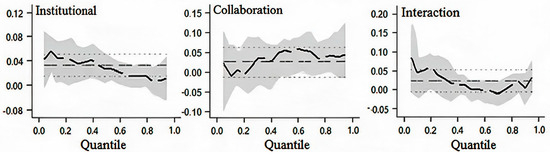
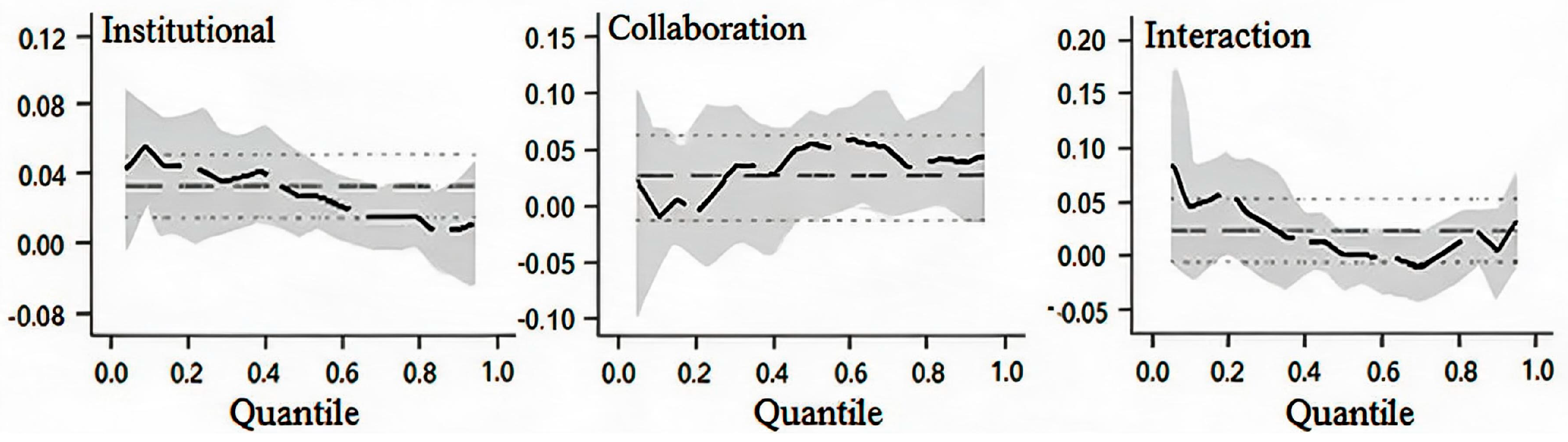
Figure 2 illustrates the quantile regression trend plots, tracking how the impacts of village institutional capacity, internal collaboration, and their interaction vary across the conditional distribution of overall governance performance. Below the 47th percentile, the marginal effect of institutional capacity exceeds the baseline OLS estimate, although this impact steadily diminishes at higher quantiles. This pattern indicates that institutional capacity serves as a vital safeguard during the initial stages of infrastructure provision and water allocation enforcement. As physical infrastructure improves and water-use behavior regularizes, this safeguarding role naturally tapers off. Conversely, the effect of internal collaboration surpasses the OLS baseline beyond the 30th percentile and trends upward across the distribution. This upward trajectory confirms that internal collaboration acts as the primary driver for sustaining irrigation governance, particularly when the village’s institutional safety net recedes as system operations mature. Meanwhile, the interaction term falls below the OLS baseline past the 38th percentile and traces a clear U-shaped trajectory. This non-linear pattern reveals that the interaction primarily binds at the extremes of the conditional distribution, highlighting the distinct, complementary roles that institutional capacity and internal collaboration play across different governance stages.
Figure 2.
Variation in Quantile Regression Estimates for the Overall Governance Performance of Agricultural Irrigation Systems. The thicker dashed line represents the ordinary least squares (OLS) regression estimate of the corresponding explanatory variable, and the shaded region between the two dashed lines represents the confidence interval (with a confidence level of 0.95) for the OLS regression estimate. The solid line represents the quantile regression estimates of each explanatory variable, and the shaded area represents the confidence interval (with a confidence level of 0.95) for the quantile regression estimates. The horizontal axis represents the different quantile points of the overall governance performance of agricultural irrigation systems, whereas the vertical axis represents the regression coefficients of each variable.
Especially, in Table 3, Table 4 and Table 5, the Adjusted R2 values of the OLS regression models are relatively small, reflecting their limitations and the presence of omitted variables. Nevertheless, the F-test values across all models are highly significant at the 1% statistical level (e.g., F = 7.23, p < 0.01 in Table 3), demonstrating that the explanatory and control variables have strong joint explanatory power. In social science and public policy evaluation, the primary objective of empirical research is to obtain unbiased and consistent estimates of the partial effects of key explanatory variables by strictly controlling for major confounding factors, rather than pursuing highly predictive R2 values [38]. Due to high individual heterogeneity and measurement noise, a low R2 value is highly common and econometrically fully acceptable in empirical studies utilizing micro-level household large-sample cross-sectional data. Future research can further improve model explanatory power by integrating high-resolution geographic, meteorological, and infrastructure census data.
4.4. Robustness Tests
To enhance our findings’ robustness and reliability, we employed a new approach to measure the variables of village institutional capacity and internal collaboration levels in agricultural irrigation organizations. Specifically, a scoring method was used to aggregate and average the scores of nine measurement indicators of village institutional capacity on an original five-point Likert scale. Descriptive statistics reveal that the minimum score for village institutional capacity is 1.22, the maximum score is 4.44, the mean score is 2.65, and the standard error is 0.60. Similarly, a scoring method was applied to aggregate and average the scores of six measurement indicators of the internal collaboration level in agricultural irrigation organizations using an original five-point Likert scale. Descriptive statistics show that the minimum score for the internal collaboration level is 1.17, the maximum score is 4.83, the mean score is 2.92, and the standard error is 0.65.
Using the newly measured variables of village institutional capacity and internal collaboration level, OLS and quantile regressions were conducted. The estimation results are presented in Table 7. A comparison with the results in Table 6 shows that the regression results in both tables are consistent. This indicates that village institutional capacity and internal collaboration level significantly and positively affect the supply, order, and overall governance performances of agricultural irrigation systems. Moreover, the interaction term between institutional capacity and collaboration level significantly impacts the same performances. Therefore, the internal collaboration level in agricultural irrigation organizations positively moderates the relationship between village institutional capacity and governance performance.
Table 7.
Robustness Check: Alternative Measurement of Key Variables.
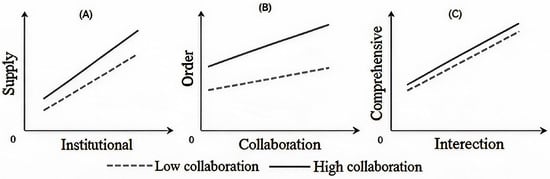
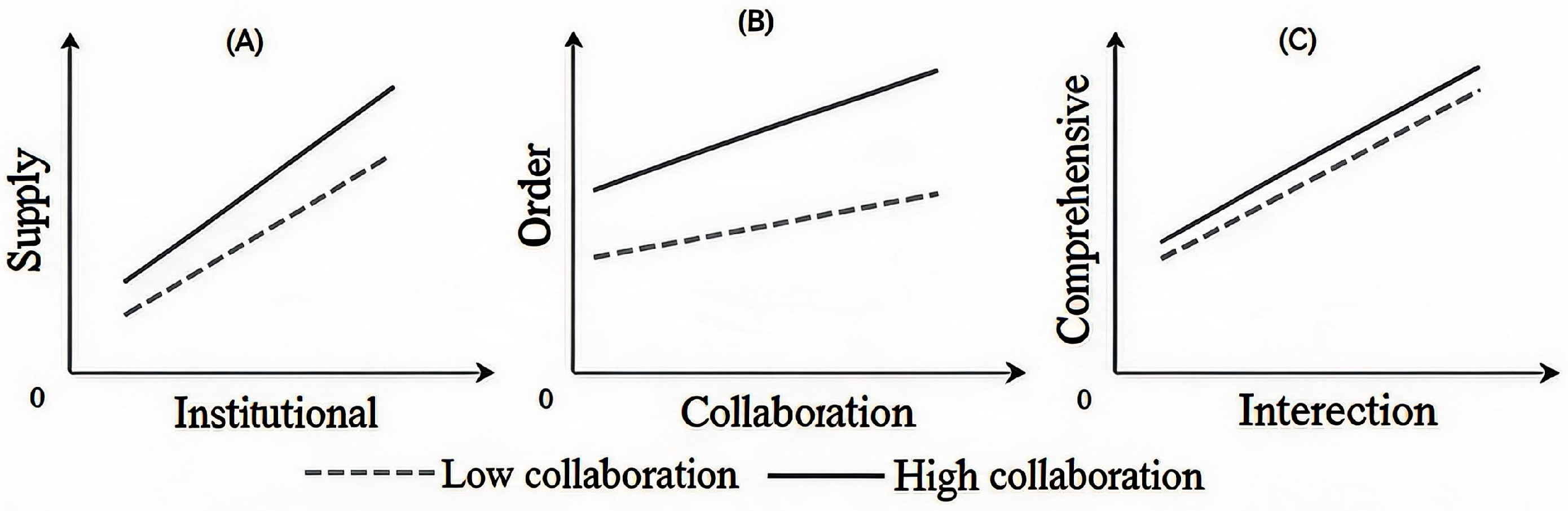
To visually illustrate the moderating effect of the internal collaboration level in agricultural irrigation organizations, this study conducted re-estimations by incorporating the newly measured variables of village institutional capacity and internal collaboration level. The average plus/minus one standard deviation of the internal collaboration level variable was added to the regression equation to plot the internal collaboration level’s moderating effect on the relationship between village institutional capacity and governance performance. Figure 3 illustrates the results. As observed in Figure 3A–C, the internal collaboration level in agricultural irrigation organizations positively moderates the relationship between village institutional capacity and the supply, order, and overall governance performances. These findings demonstrate the robustness of the conclusions drawn here.
Figure 3.
Moderating Effect of Internal Collaboration Level: (A) Supply dimension performance; (B) Order dimension performance; (C) Comprehensive performance.
5. Discussion and Conclusions
This study empirically examines the impact of village spatial institutional capacity and intra-organizational collaboration on the governance performance of agricultural irrigation systems, using micro-survey data from rural China. Our empirical analysis yields three core findings: (1) knowledge resources, relational resources, and mobilization capacity within the village spatial domain significantly and positively enhance irrigation governance performance; (2) both vertical and horizontal collaboration levels positively drive governance outcomes; and (3) intra-organizational collaboration significantly and positively moderates the relationship between institutional capacity and governance performance, showing a non-linear trajectory across performance quantiles.
5.1. Critical Discussion of the Results in Relation to the Literature
By moving beyond the limitations of traditional technological and engineering determinism, this study provides an interactive explanatory framework that organically integrates meso-level spatial institutional capacity and micro-level intra-organizational collaboration. In common-pool resource (CPR) governance contexts like agricultural irrigation, our empirical findings confirm that these two core factors exert significant and robust positive driving effects on supply performance, order performance, and comprehensive governance performance. This discovery deepens the application of classical self-governance theory in rural micro-level irrigation settings.
First, regarding the three-dimensional structural functions of village-level institutional capacity, we find that knowledge resources (with an impact coefficient of 0.0408, p < 0.05 on supply and 0.0466, p < 0.1 on order) serve as a fundamental rule template in improving supply-side outcomes such as canal maintenance and maintaining water allocation order. This aligns closely with international findings that local institutions must be deeply integrated with local geographic and cultural contexts [16] and that integrating traditional norms into modern self-organized associations facilitates social learning [11]. Conversely, when such localized knowledge is absent as a lubricant, even the forceful introduction of modernized technologies can trigger severe institutional friction and local resistance. The positive effect of relational resources on comprehensive performance (with an OLS coefficient of 0.0711, p < 0.01) exhibits an inverted-U trajectory in the quantile regressions. This indicates that in rural close-knit societies, informal trust networks built on mutual reciprocity and face-saving norms possess unique binding capacities to prevent order crises like water-grabbing [8]. However, as irrigation systems mature, excessive reliance on such interpersonal trust can generate exclusion or free-riding issues, causing its marginal utility to decline. This is consistent with empirical discussions in Northwest China regarding trust and control mechanisms, which suggest that trust-based modes work well in small groups, whereas rigid regulations and control-based modes are more effective in large, highly heterogeneous irrigation networks [23]. Mobilization capacity is highly significant in both the OLS and mid-to-high quantile regressions (p < 0.05). In grassroots infrastructure maintenance and emergency canal dredging, mobilization capacity represents the collective “organizational authority” [24]. In Chilean water user associations, the excellent mobilization and daily maintenance performance of community managers is the key determinant of farmers’ high compliance rates and timely water fee payments [12]. Strong mobilization capacity successfully suppresses the “tragedy of the commons” by establishing clear boundaries of punishment.
Second, regarding the dual dimensions of intra-organizational collaboration. Continuous drive of vertical (H4) and horizontal (H5) collaboration: The empirical results indicate that vertical collaboration (with an OLS coefficient of 0.0492, p < 0.05) and horizontal collaboration (with an OLS coefficient of 0.0519, p < 0.01) make continuous and robust positive contributions to comprehensive performance. High vertical collaboration indicates that the technical and administrative support provided by grassroots organizations can be successfully converted into farmers’ rule compliance [39]. Meanwhile, horizontal collaboration, by generating a sense of interpersonal control [30], motivates peer farmers who share the same canal to carry out mutual assistance, which effectively offsets the high transaction costs brought by biophysical constraints like cultivated land fragmentation [40].
Third, The moderating effect of collaboration (H6) and the dynamic evolutionary pattern of “time/maturity” revealed by quantile regression: In the moderating effect model, the interaction term is significantly positive at the 10% level (interaction coefficient of 0.0408). This empirical outcome strongly validates Hypothesis 6. Collaboration, as a form of agent-based action, effectively softens the friction of rigid regulations, resolving the common “attitude-behavior paradox” where farmers subjectively support water regulations but objectively refuse to contribute labor or fees [20]. More theoretically, the quantile regression trajectory reveals the asymmetrical roles played by these two forces at different stages of irrigation governance: At lower quantiles, the coefficient of institutional capacity is significantly larger than the OLS conditional mean, indicating that institutional capacity plays a dominant role as a “safety net” and baseline guarantee, while the effect of collaboration is relatively weak. At higher quantiles, the impact of institutional capacity begins to decline, while the coefficient of collaboration level exhibits an increasing trend.
This dynamic evolutionary mechanism greatly enriches Ostrom’s classical static analytical framework. It demonstrates that when water infrastructure is extremely scarce and water distribution order is chaotic, formal institutional capacity is crucial for external intervention and resource integration [41]. However, as governance enters a regular, mature, and standardized stage, compulsory regulatory boundaries should gradually weaken and transition toward relying on deep community horizontal collaboration and democratic discussion, thereby establishing a self-evolving “polycentric self-governance network” [42]. This also provides key empirical evidence for the hybrid governance models currently implemented in Burkina Faso [43] and the Nile Delta of Egypt [44], which combine top-down administration with local water self-governance.
5.2. Limitations of the Study
Despite its theoretical mechanisms, rigorous measurements, and large sample size, this study candidly acknowledges the following limitations:
First, the cross-sectional nature of our data limits our ability to observe long-term dynamic changes. While the social networks and structures of agricultural irrigation systems are deeply embedded in long-term social evolution and exhibit strong path-dependency and temporal stability, our cross-sectional survey cannot completely rule out the statistical influence of annual exogenous climatic shocks on farmers’ collaboration decisions [45].
Second, the sample’s geographical distribution is highly specific. The 840 households in this study are located entirely in the rainfed and canal-irrigated agricultural regions of six provinces along the Yellow River Basin, representing a typical water-scarce smallholder farming context of northern China. Conversely, water resource management in southern China primarily faces water-quality-induced water scarcity and dense drainage-and-storage systems dominated by paddy rice cultivation. Given the massive differences in natural endowments, water rights institutions, and household heterogeneities between northern and southern China, caution is required when generalizing these findings to water-rich southern regions [17].
Third, our econometric models may omit relevant environmental variables. Although we control for cultivated land fragmentation, cultivated land quality, and government support, the survey’s boundaries prevented us from fully controlling for micro-meteorological and hydrological data, such as historical baseline water infrastructure conditions, precise monsoon precipitation probabilities, and crop-stage water deficits.
Fourth, institutional capacity and collaboration may be endogenous to governance performance due to reverse causality, simultaneity, or omitted variables. While we cannot fully eliminate these concerns with cross-sectional data, our robustness checks using alternative measures and specifications yield consistent results. The moderation effects we identify are difficult to explain through reverse causality, providing additional confidence. Future research should employ instrumental variable approaches using exogenous sources of variation.
Finally, the explanatory power of the models is relatively modest. In Table 3 and Table 4, the Adjusted R2 values of the models hover primarily between 0.05 and 0.15. Although this is highly common and acceptable in empirical research using micro-level, large-sample, household cross-sectional data, it suggests that a significant portion of unobservable factors driving local water governance performance has not been fully captured by our model.
5.3. Future Research Directions
Based on the aforementioned limitations, this study proposes five forward-looking avenues for future research in agricultural water governance:
Utilize long-term panel data to track temporal stability: Future research should establish multi-period longitudinal tracking databases of farming households, employing panel econometrics or difference-in-differences (DID) models to capture the inter-temporal path-dependency of collaboration behaviors under climate change and extreme drought–flood cycles, thereby establishing more robust causal inferences.
Expand cross-regional and cross-country comparative studies: Future research should expand the geographic scope to southern China’s major paddy rice production areas to compare rainfed and paddy systems. Additionally, active participation in cross-national comparative studies of agricultural communities in Asia, Africa, and Latin America, using a unified, polycentric Social-Ecological Systems (SES) framework, would help verify the global generalizability of our findings.
Develop refined instrumental variables to overcome endogeneity: Future studies should identify village-level historical lineage distributions, natural topographical slopes, or historical water-engineering relics as instrumental variables for key explanatory variables, employing Two-Stage Least Squares (2SLS), Three-Stage Least Squares (3SLS), or structural equation modeling (SEM) to isolate the clean causal impact of institutional capacity on governance performance while controlling for measurement errors.
Explore the institutional co-production effects of digital twins and high-efficiency water-saving technologies: With China’s comprehensive push toward building “digital twin irrigation districts” and the large-scale promotion of highly efficient drip irrigation, future studies should focus on how these new “parachuted” technologies interact with traditional grassroots water user associations and assess their impacts on farmers’ mental accounting and behavioral rebound effects.
Deepen research on translating macro-policies into micro-level “last-mile” behavioral guidance: In response to the strategic shift in China’s agricultural policy from purely technical supply to soft behavioral guidance, future research should explore how to optimize high-quality farmer training programs—such as the “expert + demonstration base + technician + model farm + radiating households” model—and grassroots socialized services to activate village-level collaboration networks and successfully bridge the “last mile” of water governance implementation.
Author Contributions
Design of the research: B.W. and Q.L. Data collection and analysis: Y.Z. and Y.M. Critical revision: Y.M. Final manuscript preparation: B.W. and Q.L. All authors have read and agreed to the published version of the manuscript.
Funding
The project is funded by the National Natural Science Foundation of China (71273210), the National Social Science Foundation Project of Western Regions (25XGL034), the Strategic Priority Research Program of the Chinese Academy of Science (XDB0720303), the Key Project of Gansu Provincial Social Science Planning (2024ZD003), the Gansu Provincial Soft Science Project (24JRZA039) and the Gansu Provincial Key R&D Plan–Special Project on Ecological Civilization (24YFFA009).
Institutional Review Board Statement
Not applicable.
Informed Consent Statement
Not applicable.
Data Availability Statement
The data used in this study were collected through a large-scale field survey. The dataset contains detailed village-level and household-level information, including sensitive socioeconomic and governance-related variables. Due to the nature of the data, there is a risk of indirect identification of participants, particularly when combined with geographic or contextual information. These restrictions constitute formal ethical and legal constraints, rather than a preference of the authors. Therefore, the underlying datasets, survey instruments, and supporting materials cannot be made publicly available.
Acknowledgments
We gratefully acknowledge Lanzhou University and Northwest A&F University for their administrative assistance, technical support, and the donation of experimental materials.
Conflicts of Interest
The authors declare that there are no conflicts of interest for this manuscript. The funders had no role in the design of the study; in the collection, analyses, or interpretation of data; in the writing of the manuscript; or in the decision to publish the results.
References
- Ahmed, M.H. Impact of irrigation on farm household diet quality: Evidence from Ethiopia. Irrig. Drain. 2022, 71, 1089–1106. [Google Scholar] [CrossRef] [Scilit]
- United Nations. Sustainable Development Goal 6: Ensure Availability and Sustainable Management of Water and Sanitation for All; UN: New York, NY, USA, 2015. [Google Scholar]
- Yang, R.; Gao, Q. Water-Saving Irrigation Promotion and Food Security: A Study for China. Sustainability 2021, 13, 12212. [Google Scholar] [CrossRef] [Scilit]
- Ministry of Water Resources of the PRC. Water Resource Bulletin; MWR: Beijing, China, 2024. [Google Scholar]
- Jiao, C. “Floating” government and “gridlocked” market: A frame of explanation for farmer petition. Open Times 2010, 6, 39–51. [Google Scholar]
- Nazari, B.; Liaghat, A.; Akbari, M.R.; Keshavarz, M. Irrigation water management in Iran: Implications for water use efficiency improvement. Agric. Water Manag. 2018, 208, 7–18. [Google Scholar] [CrossRef] [Scilit]
- Parihar, C.M.; Jat, S.L.; Singh, A.K.; Majumdar, K.; Jat, M.L.; Saharawat, Y.S.; Pradhan, S.; Kuri, B.R. Bio-energy, water-use efficiency and economics of maize-wheat-mungbean system under precision-conservation agriculture in semi-arid agro-ecosystem. Energy 2017, 119, 245–256. [Google Scholar] [CrossRef] [Scilit]
- Leroy, D. An empirical assessment of the institutional performance of community-based water management in a large-scale irrigation system in southern Mexico. Agric. Water Manag. 2023, 276, 108051. [Google Scholar] [CrossRef] [Scilit]
- Mwafuka, J.; Mabiza, C.; Madyiwa, S.; Kujinga, K.; Chitata, T. Institutional fragmentation and smallholder irrigation performance: A case of Mkoba and Silalatshani Irrigation Schemes, Zimbabwe. Water Int. 2024, 49, 823–845. [Google Scholar] [CrossRef] [Scilit]
- Poblador, N.; Sanchis-Ibor, C.; Kuper, M. The landing of parachuted technology: Appropriation of centralised drip irrigation systems by irrigation communities in the region of Valencia (Spain). Water Altern. 2021, 14, 228–247. [Google Scholar]
- Allasiw, D.I.; Tanaka, T.; Kudo, S.; Mino, T. Opportunities and limitations to social learning for sustainability: Empirical insights from a participatory approach to community-based resource management in the Philippines. Int. J. Agric. Sustain. 2023, 21, 2239075. [Google Scholar] [CrossRef] [Scilit]
- Bopp, C.; Villamayor-Tomás, S.; Jordán, C.; Engler, A.; Jara-Rojas, R. What’s the role of community managers in collective action? An empirical analysis of irrigators’ collaboration decisions in Chilean water user associations. Irrig. Sci. 2025, 44, 22. [Google Scholar] [CrossRef] [Scilit]
- Gardner, R.; Ostrom, E.; Walker, J.M. The nature of common-pool resource problems. Ration. Soc. 1990, 2, 335–358. [Google Scholar] [CrossRef] [Scilit]
- Aoyagi, K.; Sawada, Y.; Shoji, M. Irrigation infrastructure and trust: Evidence from natural and lab-in-the-field experiments in rural communities. World Dev. 2022, 156, 105906. [Google Scholar] [CrossRef] [Scilit]
- Leroy, D.; García, S.B.; Porto Tapiquén, E. Understanding institutional changes in irrigation management: A comparative case study of two communities in the Venezuelan Andes. Water Int. 2022, 47, 1287–1309. [Google Scholar] [CrossRef] [Scilit]
- Putnam, R.D. Tuning in, tuning out: The strange disappearance of social capital in America. PS Political Sci. Politics 1995, 28, 664–683. [Google Scholar] [CrossRef] [Scilit]
- Wang, Y.; Chen, S.; Araral, E. The mediated effects of urban proximity on collective action in the commons: Theory and evidence from China. World Dev. 2021, 142, 105444. [Google Scholar] [CrossRef] [Scilit]
- González, S.; Healey, P. A sociological institutionalist approach to the study of innovation in governance capacity. Urban Stud. 2005, 42, 2055–2069. [Google Scholar] [CrossRef] [Scilit]
- Dangui, K.; Zhu, Y.; Myint, K.T. Village leaders’ educational capacity and participatory irrigation under the background of college graduate village officials program: Effects on farm output in rural China. Agric. Food Econ. 2026, 14, 44. [Google Scholar] [CrossRef] [Scilit]
- Lou, S. Capability challenges of local governance: Analytical framework of governance capability and its key elements. Chin. Public Adm. 2010, 9, 13–18. [Google Scholar]
- Barry, J. Indigenous state planning as inter-institutional capacity development: The evolution of ‘government-to-government’ relations in coastal British Columbia, Canada. Plan. Theory Pract. 2012, 13, 213–231. [Google Scholar] [CrossRef] [Scilit]
- Li, T.; Wu, B.; Guo, L.; Shi, H.; Chen, N.C.; Hall, C.M. Semi-Acquaintance Society in Rural Community-Based Tourism: Case Study of Moon Village, China. Sustainability 2023, 15, 5000. [Google Scholar] [CrossRef] [Scilit]
- Miao, S.; Zhu, X.; Heijman, W.; Xu, Z.; Lu, Q. Trust or Control? The Role of Group Size in Governing Small-scale Irrigation Facilities. Rural Sociol. 2021, 86, 357–384. [Google Scholar] [CrossRef] [Scilit]
- Mueller, E. How to manage networks? The role of network attributes and incentives in network governance. Int. J. Entrep. Small Bus. 2012, 15, 57–75. [Google Scholar] [CrossRef] [Scilit]
- Magalhaes, C.D.; Healey, P.; Madanipour, A. Assessing institutional capacity for city centre regeneration: Newcastle’s Grainger town. In Urban Governance, Institutional Capacity and Social Milieux; Cars, G., Healey, P., Madanipour, A., De Magalhaes, C., Eds.; Routledge: London, UK, 2002; pp. 45–62. [Google Scholar]
- Ren, Y.; Yang, L. How Does Public Leadership Affect Collective Action of Participatory Irrigation Management? Agriculture 2026, 16, 680. [Google Scholar] [CrossRef] [Scilit]
- Ariyawanshe, I.D.K.S.D.; Fujimura, M.; Abeyrathne, A.H.M.S.W.B.; Kazunari, T. Fostering Collective Action in a Village-Tank Cascade-Based Community in Sri Lanka: An Illusion or Reality? Sustainability 2023, 15, 15168. [Google Scholar] [CrossRef] [Scilit]
- Wang, J. Inter-organizational resources and inter-firm collaboration—Based on relational view. China Ind. Econ. 2006, 4, 44–51. [Google Scholar]
- Liu, Y.; Dou, K. The effect of perceived interpersonal control on cooperation behavior: An ERP investigation using the prisoner’s dilemma game. Psychol. Sci. 2015, 3, 643–650. [Google Scholar]
- De, I.; Chattopadhyay, S.; Nathan, H.S.K.; Mishra, P.; Parey, A.; Dutta, S. Structural and institutional arrangements impacting collective actions in WUAs of West Bengal, India. Int. J. Water Resour. Dev. 2023, 39, 433–458. [Google Scholar] [CrossRef] [Scilit]
- Yang, L.; Rezitis, A.; Ren, Y. How Significant Are the Roles Moral Obligation and Formal Institutions Play in Participatory Irrigation Management? Agriculture 2022, 12, 1847. [Google Scholar] [CrossRef] [Scilit]
- Miao, S.; Zhu, X.; Heijman, W.; Xu, Z.; Lu, Q. Deeds and Words: Farmers’ Attitude-Paradox in Collective Action for Small-Scale Irrigation. Int. J. Environ. Res. Public Health 2023, 20, 549. [Google Scholar] [CrossRef] [Scilit] [PubMed]
- Wang, Y. Enhancing the Governance of Public Affairs: Exploring and Applying Elinor Ostrom’s Contributions; Tsinghua University Press: Beijing, China, 2017. [Google Scholar]
- Bowles, S.; Gintis, H. Social capital and community governance. Econ. J. 2002, 112, F419–F436. [Google Scholar] [CrossRef] [Scilit]
- Read, B.L. The Multiple Uses of Local Networks: State Cultivation of Neighborhood Social Capital in China and Taiwan; Routledge: New York, NY, USA, 2009. [Google Scholar]
- Liu, C. The Political Construction of Community Power: A Comparative Case Study of Neighborhood Governance Formations in Shanghai (1996–2003). Doctoral Dissertation, City University of Hong Kong, Hong Kong, China, 2005. [Google Scholar]
- Wang, J.; Huang, J.; Rozelle, S. Incentive, participation of farmers and water savings: Empirical research on the reform of water management institution in the irrigation districts of the Yellow River Basin. China Soft Sci. 2004, 11, 8–14. [Google Scholar]
- Wooldridge, J.M. Introductory Econometrics: A Modern Approach; Cengage Learning: Boston, MA, USA, 2015. [Google Scholar]
- Fu, Y.Q.; Zhu, Y.C. Does organizational support affect the governance performance of the farm irrigation system? Evidence from the Yellow River basin in China. Irrig. Drain. 2024, 73, 711–726. [Google Scholar] [CrossRef] [Scilit]
- Wang, Y.; Zang, L.; Araral, E. The impacts of land fragmentation on irrigation collective action: Empirical test of the social-ecological system framework in China. J. Rural Stud. 2020, 78, 234–244. [Google Scholar] [CrossRef] [Scilit]
- Bruns, B. Polycentric Solutions for Groundwater Governance in Sub-Saharan Africa: Encouraging Institutional Artisanship in an Extended Ladder of Participation. Water 2021, 13, 630. [Google Scholar] [CrossRef] [Scilit]
- Shin, H.C.; Vallury, S.; Abbott, J.K.; Anderies, J.M.; Yu, D.J. Understanding the effects of institutional diversity on irrigation systems dynamics. Ecol. Econ. 2022, 191, 107221. [Google Scholar] [CrossRef] [Scilit]
- Baki, C.B.; Keita, A.; Pale, S.; Traore, F.; Bambara, A.; Moyenga, A.R.; Wellens, J.; Djaby, B.; Tychon, B. Community Management of Irrigation Infrastructure in Burkina Faso: A Diagnostic Study of Six Dam-Adjacent Irrigation Areas. Agriculture 2025, 15, 477. [Google Scholar] [CrossRef] [Scilit]
- Soliman, A.; Thiel, A.; Roggero, M. Institutional Performance of Collective Irrigation Systems: A Fuzzy Set Qualitative Comparative Analysis in the Nile Delta of Egypt. Sustainability 2021, 13, 1103. [Google Scholar] [CrossRef] [Scilit]
- Hoffmann, P.; Villamayor-Tomas, S. Does Modernization of Irrigation Infrastructure Create Mental Accounts? Insights from an Exploratory Experiment with Spanish Water User Associations. Water Econ. Policy 2025, 11, 2440002. [Google Scholar] [CrossRef] [Scilit]

Disclaimer/Publisher’s Note: The statements, opinions and data contained in all publications are solely those of the individual author(s) and contributor(s) and not of MDPI and/or the editor(s). MDPI and/or the editor(s) disclaim responsibility for any injury to people or property resulting from any ideas, methods, instructions or products referred to in the content. |
© 2026 by the authors. Licensee MDPI, Basel, Switzerland. This article is an open access article distributed under the terms and conditions of the Creative Commons Attribution (CC BY) license.