1. Introduction
Family farming is widely recognized as a pillar of global food systems and sustainable rural development. According to the Food and Agriculture Organisation of the United Nations (FAO), family farming represents the predominant form of agriculture worldwide and is fundamental in food production, poverty reduction, biodiversity conservation, natural resource management, and the preservation of cultural heritage [
1,
2,
3,
4,
5]. In addition to its productive function, family farming contributes significantly to social cohesion, rural employment, and the resilience of food systems. Its multifunctional nature has led to increasing international recognition of its strategic role in achieving sustainable development and strengthening food security [
4,
6,
7,
8,
9].
Recognising this importance, the United Nations declared the Decade of Family Farming (2019–2028), promoting family farming as a fundamental pathway to more inclusive, resilient, and sustainable agri-food systems [
10]. In this context, family farmers are recognized not only as food producers, but also as guardians of ecosystems, holders of traditional knowledge, and drivers of rural development. The Family Farming Engagement Platform highlights the need to strengthen family farming through improved policies, knowledge exchange, innovation, and institutional support in order to address global challenges related to food security, climate change, and sustainable development [
3,
5,
8,
10].
The importance of family farming is particularly evident in developing countries, where rural livelihoods, job creation, and local food systems depend heavily on small-scale agricultural production. In many regions of Sub-Saharan Africa, family farming remains the dominant agricultural model and serves as the main source of income and food security for rural families [
6,
8]. However, family farmers often face significant structural constraints, including limited access to financial services, agricultural inputs, rural extension services, markets, and infrastructure. These challenges reduce productivity and increase the vulnerability of rural families to economic and environmental shocks [
4,
7,
11,
12,
13].
These constraints are even more pronounced in Small Island Developing States (SIDS), where geographic isolation, small domestic markets, dependence on imported food, and exposure to climate-related risks create additional barriers to agricultural development [
14,
15]. In these contexts, strengthening family farming is increasingly recognized as an important strategy to increase food security, promote sustainable livelihoods, and improve resilience to external shocks [
1,
10,
14,
15].
In São Tomé and Príncipe, family farming forms the fundamental basis of the agricultural sector and remains essential for food security, employment, and rural development [
16,
17,
18]. Agricultural production is largely based on small family farms that combine crop cultivation vegetables, livestock production, and family labour. These systems contribute to household consumption, income generation, and supplying local markets [
19,
20]. However, they continue to face multiple challenges, including limited access to credit, weak market integration, inadequate infrastructure, low levels of mechanization, and increasing climate vulnerability [
8,
13,
17]. Despite the socioeconomic relevance of family farming in the country, empirical evidence is still limited regarding the interactions between economic performance, social organization, livelihood resilience, and environmental sustainability.
Although family farming has received increasing attention in international academic and policy debates, significant knowledge gaps remain regarding the integrated assessment of family farming systems in small island contexts. Existing studies often address economic, social, or environmental dimensions separately, providing a limited understanding of how these dimensions interact to influence sustainability outcomes [
21,
22,
23]. Therefore, there is a need for holistic analyses capable of examining the contribution of family farming to sustainable rural development, identifying the factors that influence resilience, productivity, and long-term viability.
In this context, this study aims to analyse the socioeconomic, environmental, and livelihood dimensions of family farming systems in São Tomé and Príncipe. By adopting an integrated approach, the research seeks to contribute to a better understanding of how family farming can promote sustainable rural development, strengthen food security, and enhance resilience in small island contexts.
By providing empirical evidence based on field data collected across the seven districts of the country, this study contributes to the literature in three main ways. First, it offers a comprehensive analysis of family farming systems in an under-researched context. Second, it integrates multiple dimensions of sustainability, bridging gaps between economic, social, and environmental analyses. Third, it provides insights that can support the design of more effective and context-sensitive public policies.
The remainder of the paper is structured as follows.
Section 2 presents the theoretical framework on family farming and sustainable development.
Section 3 describes the methodology and data collection procedures.
Section 4 presents the empirical results.
Section 5 discusses the findings considering existing literature, and
Section 6 concludes with policy implications and directions for future research.
2. Theoretical Framework: Family Farming, Sustainability and Rural Development
Family farming has increasingly been recognized as a central component of global food systems and rural development strategies [
1]. Rather than representing a homogeneous category, it encompasses a wide diversity of production systems, institutional arrangements, and socio-economic contexts. At its core, family farming is defined by the household as the main unit organizing production, labour, and resource management, combining economic activities with social reproduction and cultural practices [
24,
25]. This multifunctional character places family farming at the intersection of economic, social, environmental, and political dimensions of sustainability.
From an economic perspective, family farming systems are often analysed in relation to their infrastructures and capacity to access markets, generate income, and efficiently allocate resources [
26]. Market participation is not determined solely by production levels but also depends on access to infrastructure, assets, and institutional support. In this context, collective action mechanisms, such as cooperatives and farmer organizations, are essential for strengthening bargaining power, reducing transaction costs, and enhancing market integration [
27,
28,
29]. However, structural constraints, such as limited access to land, credit, and technology, continue to hinder productivity and income generation, particularly in developing countries [
30]. These limitations highlight that the performance of family farming systems is not merely a function of individual efficiency but is deeply embedded in broader structural and institutional conditions [
31] and agroecological transition [
32].
Beyond economic considerations, family farming is closely linked to rural livelihoods and strategies of social reproduction. The livelihoods approach emphasizes that rural households rely on a combination of assets and activities to sustain their well-being, often diversifying income sources to reduce vulnerability [
24,
25]. In this sense, pluri-activity, defined as the combination of agricultural and non-agricultural activities, emerges as a key strategy for risk management and income stabilization This diversification reflects not only adaptive responses to economic uncertainty but also structural transformations in rural economies, where agriculture alone is often insufficient to ensure household resilience [
33,
34]. At the same time, these strategies are shaped by unequal access to resources and opportunities, leading to differentiated trajectories among rural households [
34].
The environmental dimension of family farming has gained prominence in recent years, particularly through the lens of agroecology and sustainable land management [
35]. Agroecological approaches emphasise the integration of ecological principles into agricultural practices, traditional knowledge, and participatory methodologies, promoting biodiversity, soil conservation, and less dependence on external inputs, reconfiguring food systems in response to the interlinked crises of climate change, biodiversity loss, and socioeconomic inequality [
36]. Family farming systems are often seen as particularly compatible with these practices due to their reliance on diversified production and local knowledge. However, the transition to more sustainable systems is not purely technical; it involves social, institutional, and political processes. Moreover, smallholder farmers are especially vulnerable to climate change, facing increasing exposure to extreme weather events, shifting rainfall patterns, and ecological degradation [
37]. Their capacity to adapt depends on access to information, financial resources, and supportive institutional frameworks [
38] and on farmers’ perception of risk [
39,
40].
Closely related to these dimensions is the role of governance and public policies in shaping the development trajectories, the local dynamics, the wellbeing and the succession of family farming [
41,
42]. The recognition and support of family farming are the result of political processes involving multiple actors and competing interests. Public policies, such as credit programs, extension services, and market support mechanisms, can significantly enhance the capacity of family farmers to overcome structural constraints [
43]. However, the effectiveness of these policies often depends on their design, implementation, and continuity over time. Fragmented or inconsistent policy frameworks may limit long-term impacts, while participatory approaches can either empower local actors or reproduce existing inequalities, depending on local power dynamics [
41].
In addition to economic, environmental, and institutional aspects, family farming is deeply embedded in social and territorial contexts. It contributes to social cohesion, a sense of cultural identity and belonging, and the continuity of rural communities. Gender dynamics are particularly relevant, as women make substantial, yet frequently underrecognized, contributions to both productive and reproductive activities. Their involvement is essential to household food security and overall system sustainability, although it is often constrained by unequal access to resources and decision-making power [
44,
45,
46]. Evidence from Pakistan further highlights constraints related to limited access to quality education, discrimination, violence, and gender-based disparities in daily wage rates [
47]. Furthermore, local food systems and short supply chains have emerged as important spaces of interaction, cooperation, and territorial governance, reinforcing the link between agriculture and local development [
48,
49].
Recent literature has also highlighted emerging challenges and adaptation strategies within family farming systems. These include generational renewal, technological innovation, and diversification into new activities such as agritourism [
50,
51]. While these strategies can enhance resilience and create new economic opportunities, they also introduce new risks and dependencies. The ability of family farming systems to adapt to these changing conditions depends on a complex interplay of economic incentives, social structures, and institutional support [
21,
52,
53,
54].
Overall, the literature demonstrates that family farming is a multifaceted and dynamic system that cannot be fully understood through a single analytical lens [
38]. Its survival depends on the interaction between economic viability, intra and intergenerational equity, environmental resilience, and institutional support. However, significant gaps remain, particularly regarding the integration of these dimensions in empirical analyses and the understanding of context-specific dynamics [
24,
25,
38].
In this regard, the case of São Tomé and Príncipe provides a relevant context for advancing this debate. As a small island developing state with a predominantly family-based agricultural sector, it offers an opportunity to explore how these theoretical dimensions manifest in practice. To capture the complexity of family farming systems and to generate insights that can inform both academic discussions and policy design, an integrated analytical approach is therefore essential.
3. Methodology
3.1. Research Design and Analytical Approach
This study adopts a mixed-methods research design, combining quantitative economic analysis, statistical inference, and qualitative field-based insights to examine the structure, performance, and sustainability of family farming systems in São Tomé and Príncipe. The choice of a mixed-methods approach is justified by the multidimensional nature of the research problem, which requires the simultaneous examination of economic performance, social organization, and environmental practices [
55,
56].
The research follows a predominantly inductive logic, grounded in empirical observation, while also drawing on existing theoretical frameworks to guide interpretation. The study is cross-sectional in nature, with data collected at a single point in time, and has both descriptive and exploratory purposes. The integration of quantitative and qualitative data allows for cross-validation of results, enhancing the robustness and validity of the findings.
The research design is structured into two complementary stages. In Stage 1, a structural and analytical characterization of the family farming system was conducted, focusing on production patterns, resource use, and economic performance. This stage integrates principles from agricultural economics and farming systems analysis, particularly regarding profitability assessment, cost structures, and production efficiency. The concept of sustainability is approached in a multidimensional perspective, encompassing economic, social, and environmental dimensions, in line with established sustainability frameworks.
In Stage 2, the study explores the determinants, constraints, and outcomes of the farming system through empirical analysis, combining descriptive statistics and inferential methods. Particular attention is given to the role of diversification, pluri-activity, human capital, and structural conditions in shaping system performance and resilience. This analytical framework allows for the integration of system-level dynamics with household-level decision-making processes, reflecting the complexity of smallholder agriculture.
Table 1 summarizes the methodological approach adopted in this study.
This study does not aim to provide a quantitative assessment of the overall sustainability performance of the farming systems, nor to develop an integrated sustainability index. Instead, sustainability is used as an analytical framework to examine selected economic, social, and environmental topics related to the functioning and resilience of the farming systems analysed. Accordingly, the variables considered in this study should be interpreted as sustainability-related dimensions rather than as standardized indicators composing a formal sustainability assessment tool.
3.2. Study Area
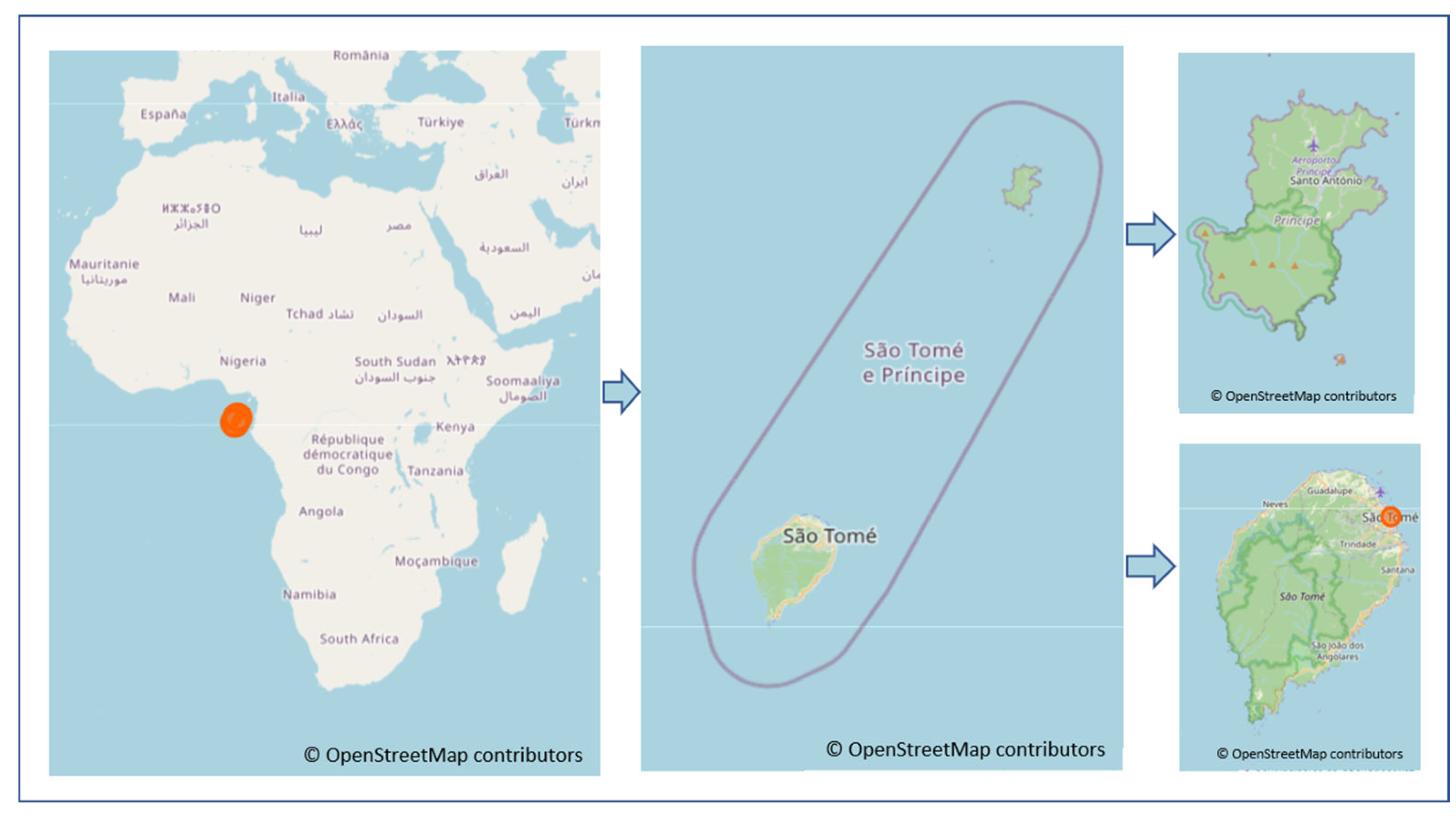
The study was conducted in São Tomé and Príncipe, a small island developing state located in the Gulf of Guinea, Central Africa (
Figure 1). The country consists of two main islands—São Tomé and Príncipe—with a total area of approximately 1001 km
2 and a population of around 200,000 inhabitants.
Administratively, the country is divided into seven districts: Água Grande, Mé-Zóchi, Cantagalo, Caué, Lobata, and Lembá (on São Tomé Island), and Pagué (on Príncipe Island). The national economy is largely dependent on agriculture, particularly cocoa production, alongside with emerging sectors such as tourism. The climate is equatorial, characterized by high humidity, average temperatures between 25 °C and 30 °C, and strong spatial variation in annual rainfall, ranging from approximately 1000 mm to up 7000 mm. The distinct rainy and dry seasons strongly influence agricultural activities and practices.
3.3. Population, Sampling, and Unit of Analysis
The target population of this study comprises family farming households in São Tomé and Príncipe, estimated at approximately 20,000 units, representing about 99% of the country’s agricultural sector [
19,
58]. The average area of the farms is around 1.32 hectares [
20].
The sample consists of 50 family farming households distributed across the seven districts: Mé-Zóchi (30%), Cantagalo (22%), Caué (14%), Pagué (10%), Água Grande (8%), Lobata (8%), and Lembá (8%). The household was used as the main unit of analysis and was defined as the group of family members living in the same dwelling who work on the farm and share resources, income, and decision-making.
The sampling strategy was non-probabilistic and based on accessibility and willingness to participate, reflecting logistical constraints and field conditions. Participants were identified with the support of local agricultural services, community leaders, and farmers’ associations, allowing the inclusion of diverse household and production profiles. The final sample was not determined through formal power analysis, as the study was exploratory and was not intended to generate statistically representative estimates or test hypotheses at the national level. Instead, it was defined based on fieldwork feasibility, territorial coverage across all districts, and informational saturation observed during household surveys, focus group discussions, and field observations. Although this sampling approach does not allow for statistical generalization to the entire population of family farmers, it captures diversity in socio-economic conditions, production systems, agroecological contexts, and livelihood strategies. Therefore, the findings should be interpreted as exploratory, analytical, and context-specific rather than nationally representative.
3.4. Data Collection Methods
Data collection was conducted between October and December 2024, combining primary and secondary sources. Although the survey was conducted during a specific seasonal window, the data collection strategy was designed to capture annual and usual patterns rather than only short-term seasonal conditions.
Secondary data were collected from institutional reports, academic studies, and official statistics related to agriculture, rural development, and socio-economic conditions in São Tomé and Príncipe. These data were used to contextualize the study and support the interpretation of empirical findings.
Primary quantitative data were collected through a field survey conducted with 50 family farmers across different production systems. The survey instrument—a questionnaire adapted from previous similar research [
24,
25] and adjusted to local conditions—was structured to capture detailed information on agricultural production, input use, costs, revenues, crop and livestock activities, household characteristics, and consumption patterns.
The data collection process included: (i) Agricultural production systems: crop yields, cultivated area, diversification activities and environmental practices; (ii) Economic data: input costs, family structure and labour organization (including family labour), access to credit and technical assistance, revenues sources, and profitability indicators; (iii) Livestock systems: production, costs, environmental impacts, and returns for different animal species; (iv) Socioeconomic characteristics: household size, education level, gender participation, and income diversification; and, (v) Consumption data: food consumption patterns and expenditure patterns structure. The questionnaire included closed-ended questions, categorical variables, and quantitative indicators, enabling systematic data analysis and comparison across households. This multidimensional framework reflects the complexity of family farming systems and supports an integrated analysis aligned with sustainable development principles.
To complement the quantitative data, focus group discussions were conducted in all seven districts, with two to five participants per session. Each session lasted approximately one and a half to two hours. The anonymity of the participants was preserved, and prior to the group discussions, all the participants received a short concept note with background information detailing the motivation and aim of the study. They also signed a consent form informing them of their rights and the ethical guidelines of the research.
Participants were selected based on criteria such as farming experience, community involvement, and diversity of socio-economic profiles. A semi-structured discussion guide was used to explore key themes, including production practices, livelihood strategies, challenges, and perceptions of food security.
Due to participants’ preferences, sessions were not audio-recorded. Instead, detailed notes were taken during the discussions, ensuring confidentiality and adherence to ethical compliance.
In addition, field observation was conducted throughout the data collection period to contextualize farming practices, resource use, and environmental conditions.
3.5. Data Processing and Analysis
The analysis combines economic evaluation methods with statistical analysis and system analysis and sustainability assessment which enclosed thematic analysis.
The economic performance of agricultural and livestock activities was assessed using standard rural economic indicators, including total revenue, total cost (fixed and variable), net income, and net profit margin. These indicators were calculated for individual crops, livestock activities, and the overall farming system, enabling a comparative analysis of economic efficiency across production components.
Data from quantitative survey were coded, validated, and processed using IBM SPSS software, version 25 (IBM Corp., Armonk, NY, USA). Variables were classified as nominal, ordinal, and scale variables, allowing for different levels of statistical analysis. Descriptive statistics were used to characterize the sample, including frequencies, percentages, means, and standard deviations. These analyses allowed to assess system performance and identify key relationships and provided an overview of the socio-economic and production characteristics of family farming households.
To examine relationships between selected variables, inferential statistical methods were applied with an exploratory purpose. Specifically, Pearson’s Chi-square (χ2) test was applied to assess associations between education level and production patterns, gender and economic participation, and household size and production output. Given the non-probabilistic nature of the sample and the relatively small number of observations, these tests were used to identify statistically significant associations rather than to support causal inference or population-level generalisation. A 5% significance level was adopted as the threshold for statistical significance.
A systems-based approach was used to integrate the different quantitative research components, including farming systems—crops and livestock—income sources, consumption patterns with the thematic analysis of the qualitative components. This included collective and individual perspective of resilience mechanisms (e.g., diversification, pluri-activity, livelihood strategies), structural constraints (e.g., market access, credit limitations), challenges, development opportunities (e.g., value addition, agroecological transition) and perceptions of food security and sustainability, obtained from the focus groups and complemented by field observation evidence.
The qualitative data were organized into categories based on recurring themes, such as livelihood strategies, gender roles, access to resources, and perceived challenges and opportunities. This approach enabled the identification of patterns and complementarities with quantitative findings, contributing to a deeper understanding of the social and institutional context of family farming.
The analysis of sustainability was based on three interrelated dimensions: economic, social, and environmental. Economic sustainability was analysed through profitability, income generation, and market integration. Social sustainability was examined through livelihoods, food security, gender participation, and household well-being. Environmental sustainability was analysed through agroecological practices, biodiversity, soil conservation, and input use. This conceptual integration enables a comprehensive analysis of the farming system by capturing both current performance and long-term viability. The framework links key drivers, such as diversification and human capital, with system characteristics, including family farming structures, as well as constraints, such as market and institutional limitations, and outcomes, including food security, income, sustainability. It therefore supports the interpretation of results and the formulation of policy and practical recommendations.
While the study’s cross-sectional design may not fully capture inter-annual variability and temporal dynamics, other methodological limitations were proactively addressed. The risk of measurement bias in self-reported data was minimised through methodological triangulation and the use of standardised research instruments. Whilst a non-probabilistic sampling approach was employed, socio-economic and geographic diversity was secured through rigorous selection criteria across all seven districts. Regarding the qualitative component, the absence of audio recordings—in deference to participant preference—was addressed through systematic real-time note-taking and immediate post-session validation. This mixed-methods approach effectively mitigated individual constraints, enhancing the internal validity and analytical depth of the conclusions.
4. Results
This section presents the empirical findings according to the methodological approach adopted, distinguishing between quantitative results, economic analysis, statistical inference, and qualitative insights.
4.1. Socio-Demographic and Household Characteristics
The descriptive analysis of the 50 surveyed households reveals that family farming in São Tomé and Príncipe is predominantly small-scale, labour-intensive, and socially organized around the household unit.
The sample characteristics show a slight predominance of male respondents (56%), although women are actively involved in both agricultural and domestic activities. Most farmers belong to the economically active age group (30–50 years), representing 82% of the sample. This suggests the availability of household labour for agricultural activities. Regarding education, 44% of respondents have basic or lower secondary education, which may influence the adoption of agricultural technologies and management practices. Household decision-making is predominantly joint (69%), indicating a cooperative governance structure within families. However, gendered divisions of labour persist, particularly in relation to domestic and reproductive tasks. In terms of housing conditions, 72% of households own their homes. Nevertheless, infrastructure gaps remain, particularly regarding electricity, sanitation, access to water and other essential services.
4.2. Agricultural Production Systems and Economic Performance
The analysis of family farming in São Tomé and Príncipe reveals highly diversified production systems centred on traditional agroforestry systems. These systems constitute the backbone of the national food system and are consistent with the country’s ambition to transition towards a “100% organic” model. The analysis of 33 crops reveals a complex and resilient production structure characterised by low mechanization, strong reliance on family labour, and limited local value addition.
Production is organized into three main groups: staple crops, horticultural products, and perennial crops. Staple crops, such as maize, cassava, sweet potato, yam, and breadfruit, play a central role in ensuring household food security. Among these, maize and sweet potato also show relatively strong economic returns. Horticulture emerges as the most dynamic and profitable short-term activity, particularly for crops such as chili, tomato, and pepper. However, horticultural production is more sensitive to climatic conditions and water availability. Perennial crops, including cocoa and coffee, retain strategic importance and export potential. Nevertheless, their economic contribution remains constrained by limited processing capacity and market access. Guava show comparatively stronger economic performance, whereas other crops face constraints related to commercialization, storage and market access.
At the same time, agroforestry integration contributes to soil conservation, nutrient cycling, and ecological stability. These functions are particularly important in small-island contexts, where environmental fragility and limited land availability increase the need for sustainable production systems. However, profitability across agricultural activities is affected by a high dependence on family labour, limited mechanisation, and low levels of value addition.
At the aggregate level, family farming systems demonstrate strong economic viability. Total revenues amount to São Tomé and Príncipe New Dobra (STN) is the official currency of São Tomé and Príncipe: 1 EUR = STN 24.5.) 854,125 while total costs are estimated at STN 363,888. Based on these figures, the system generates a positive net income of STN 490,237, indicating that family farming extends beyond subsistence production. With a net profit margin of 57.40% and a revenue-to-cost ratio of 235. It produces marketable surpluses that support household access to essential goods and services. Nevertheless, this performance remains constrained by structural limitations, including weak market integration, limited processing capital, low levels of mechanisation, and limited product processing.
The economic structure reflects a rational diversification strategy, in which highly profitable crops coexist with lower-return crops that fulfil subsistence, cultural, or ecological functions. This diversity should therefore be interpreted as a source of resilience rather than as an indication of inefficiency.
Livestock production is predominantly small-scale and traditional, with poultry, pigs, goats, and ducks being the main species raised (
Table 2). Economic performance varies significantly across species. Pig production shows the highest profitability (28.05%), reflecting high gross efficiency and strong market potential. However, pig farming also involves relatively high production costs. In contrast, goats and ducks exhibit low profitability (5.38% and 6.07%, respectively), while poultry provides moderate but stable returns (11.99%), contributing to food security.
The analysis of cost structure and adaptation to local conditions indicates that these livestock systems are generally characterized by low productivity and limited profitability. Nevertheless, they have a modest economic impact and are primarily commercially oriented, while also playing an important role in household food security by providing meat and eggs. Despite its limited scale, livestock production makes a meaningfully contribution to household resilience, market diversification, adaptation to climatic shocks, animal health management, and price variability. These factors reinforce the importance of profitability as a relevant criterion in decision-making within small-scale farming systems.
These results reinforce the importance of jointly evaluating costs, revenues, and risks when defining production priorities. This analysis is based on the principles of profitability assessment in the rural economy [
59,
60,
61]. Pig production exhibits the strongest performance, with a total cost of STN 158,857.33 and total revenue of STN 220,800, resulting in a net income of STN 61,942.67 and a net profit margin of 28.05%. This value exceeds the threshold generally considered outstanding, demonstrating higher productive efficiency and a greater capacity to withstand market fluctuations.
Chicken farming shows intermediate performance, with a net profit margin of 11.99% and a net income of STN 1846.67. Despite its smaller scale of production and revenue generation, effective cost management enables a satisfactory return, making it a viable activity with moderate profitability.
In contrast, duck and goat production demonstrate lower levels of economic performance. Ducks farming generates a net income of STN 1011.67 and a net profitability margin of 6.07%, while goat farming yields a net income of STN 4113.33 and a net profit margin of 5.38%. In both cases, total costs are relatively close to total revenues, decreasing economic efficiency and increasing vulnerability to price and cost fluctuations.
Nevertheless, profitability levels above 20% are generally regarded as highly beneficial in the primary sector, as they help compensate producers for inherent risks associated with agricultural activities [
62].
4.3. Productive Assets, Income Sources, and Household Expenditures
Family farming systems in São Tomé and Príncipe demonstrate considerable land-use efficiency, with an average utilisation rate of 87.6%, despite the challenges associated with fragmented land tenure and labour-intensive production methods. While agricultural production is constrained by low levels of mechanisation and inadequate infrastructure, the strategic use of basic equipment and supplementary irrigation systems helps enhance yield stability. However, persistent dependence on rainfall and external logistics continues to represent a major structural bottleneck, limiting both operational resilience and the overall efficiency of the farming system.
Households adopt diversified livelihood strategies by integrating agricultural production with non-farm activities. Off-farm income, averaging STN 32,667, serves as a vital stabilising factor, mitigating vulnerability to systemic agricultural shocks. Key non-farm activities include transport services, trade, construction, and education, underscoring the importance of robust rural–urban linkages in strengthening household resilience.
Although agricultural production is primarily market-oriented, a substantial share of output is retained for household consumption. On average, households allocate approximately STN 33,338 annually to food expenditures, while non-food expenditures reach STN 31,252. This balance highlights the dynamic interplay between market-dependent and self-provisioning, optimising the equilibrium between commercial sales and household consumption. Such a strategy is essential for enhancing long-term food security and livelihood sustainability.
Beyond economic functions, social and cultural dynamics constitute a fundamental pillar of household and community resilience, fostering social cohesion while facilitating the circulation of financial and material resources. Traditional community events, such as weddings, baptisms, and collective celebrations, act as significant economic drivers, enabling the exchange and mobilisation of agricultural products and livestock, particularly pigs and goats. These social gatherings reinforce community bonds and generate local economic spillovers. However, despite the robustness of these informal support networks, engagement in formal agricultural organisations remains comparatively low.
Overall, the family farming sector in São Tomé and Príncipe operates within a complex environment characterised by high land-use efficiency and ecological sustainability. However, its development continues to be constrained by several structural bottlenecks. Farmers face persistent challenges, including crop theft, pest infestations, and limited access to formal agricultural credit. In addition, they operate within a market environment where direct price negotiation offers a degree of flexibility but often comes at the expense of bargaining power and price stability.
From an environmental standpoint, the agroecological foundation of the farming system and its reliance on low-input practices contribute positively to its long-term sustainability. However, emerging risks associated with horticultural intensification and increased pesticide use call for the implementation of more robust management and monitoring protocols. Ultimately, household resilience is largely underpinned by pluriactivity. By integrating agricultural production with off-farm income-generating activities in trade, construction, and services, households are better able to mitigate economic risks and cope with external shocks. Nevertheless, the continued dependence on external markets for food and essential services emphasises the need for policies that strengthen local value chains and promote a more stable balance between commercial production and household food security.
4.4. Statistical Analysis of Relationships Between Variables
To examine the relationships among key variables, Fisher’s exact test and Pearson’s chi-square test were employed. The results presented in
Table 3 indicate statistically significant associations between education level and crop productivity for beans, sweet potato, cocoa, cassava, cabbage, parsley and lettuce. For other crops such as onions, tomatoes, peppers, pineapple, coconut, mango, carrots, green beans, papaya, oranges, lemons, avocados, breadfruit, starfruit, and cajamenga, the results are not statistically significant, suggesting that production may rely more on traditional knowledge than formal education.
The integrated analysis therefore shows that schooling has a significant impact not only on strategic and higher-value crops, such as cocoa, but also on some traditional crops. This confirms that agricultural production results from the combination of formal knowledge and practical experience, highlighting the importance of knowledge and skills in improving productivity and value addition. In contrast, most traditional crops show no significant relationship with education, reflecting a strong reliance on local knowledge systems.
Education levels has no significant effect on farm size and crop diversification.
Household size has limited influence on productivity, with no significant association observed in most cases (
Table 4). Only specific crops, such as cabbage (
p = 0.065), lettuce (
p = 0.061), orange (
p = 0.037) avocado (0.024) and cajamanga (
p = 0.025), show significant or marginally relationships. This suggests that labour availability may act as a complementary factor influencing production in specific cases, but it is not a determining factor overall. In general, agricultural production appears to depend more on structural factors, such as access to land, inputs, technology, and technical knowledge, than on household size, with labour playing only a complementary role.
Household size has no significant effect on farm size or crop diversification.
Gender-based analysis reveals significant differences in both landholding scale and production strategies. Female-led farms manage larger land areas, with a mean of 1.5 ha, compared to their male counterparts, with a mean of 1.2 ha, an F-statistic of 4.404, and a p-value of 0.041. Furthermore, a pronounced gap exists in crop diversification: female-managed systems cultivate an average of 24 crops, while male-managed systems cultivate an average of 14 crops, with an F-statistic of 11.073 and a p-value of 0.002.
Despite these structural differences, the effect of gender on productivity is crop-specific rather than systemic. Significant productivity differences were observed only for sweet potato, onion, coffee, parsley, and cajamanga (
Table 5). Notably, women’s productivity exceeded men’s only in the case of cajamanga. For all other cultivated species, no clear gender-based productivity trend was identified.
Regarding labour dynamics, participation is widespread and relatively inclusive across the value chain, reflecting a cooperative household model. Women maintain consistent involvement in production, management, and commercialisation. However, a gendered division of labour remains evident in tasks requiring high physical exertion, such as land preparation, irrigation, and harvesting, where male participation remains more pronounced.
4.5. Qualitative Results: Systems Analysis and Livelihood Strategies and Perceptions
The qualitative analysis provides valuable insights into farmers’ perceptions of food security, system sustainability, and the mechanisms underpinning household resilience. Beyond economic considerations, socio-cultural dynamics emerge as a critical component of stability. Community events and informal social networks facilitate both social cohesion and resource redistribution across the rural landscape.
Findings from focus group discussions indicate that, although food security is generally maintained through diversified self-production, systemic vulnerabilities emerge during seasonal shortages, periods of reduced yields, and adverse climatic events. To mitigate these pressures, households adopt a range of coping strategies, including livelihood diversification, reduced caloric intake, and increased reliance on communal safety nets. While these measures help strengthen short-term resilience, they primarily serve as reactive responses and do not adequately address the underlying structural vulnerabilities of the agricultural system.
Field observations validated the identification of three distinct family farming archetypes within the study area: (i) subsistence-oriented diversified systems, (ii) pluriactive systems with partial market integration, and (iii) emerging market-oriented systems. While these typologies diverge in terms of operational scale, commercial integration, and income-generating capacity, they are unified by a set of structural bottlenecks. Specifically, all systems exhibit restricted access to financial capital, particularly credit, minimal technological adoption, low mechanization, and acute vulnerability to exogenous shocks, most notably those driven by climate change.
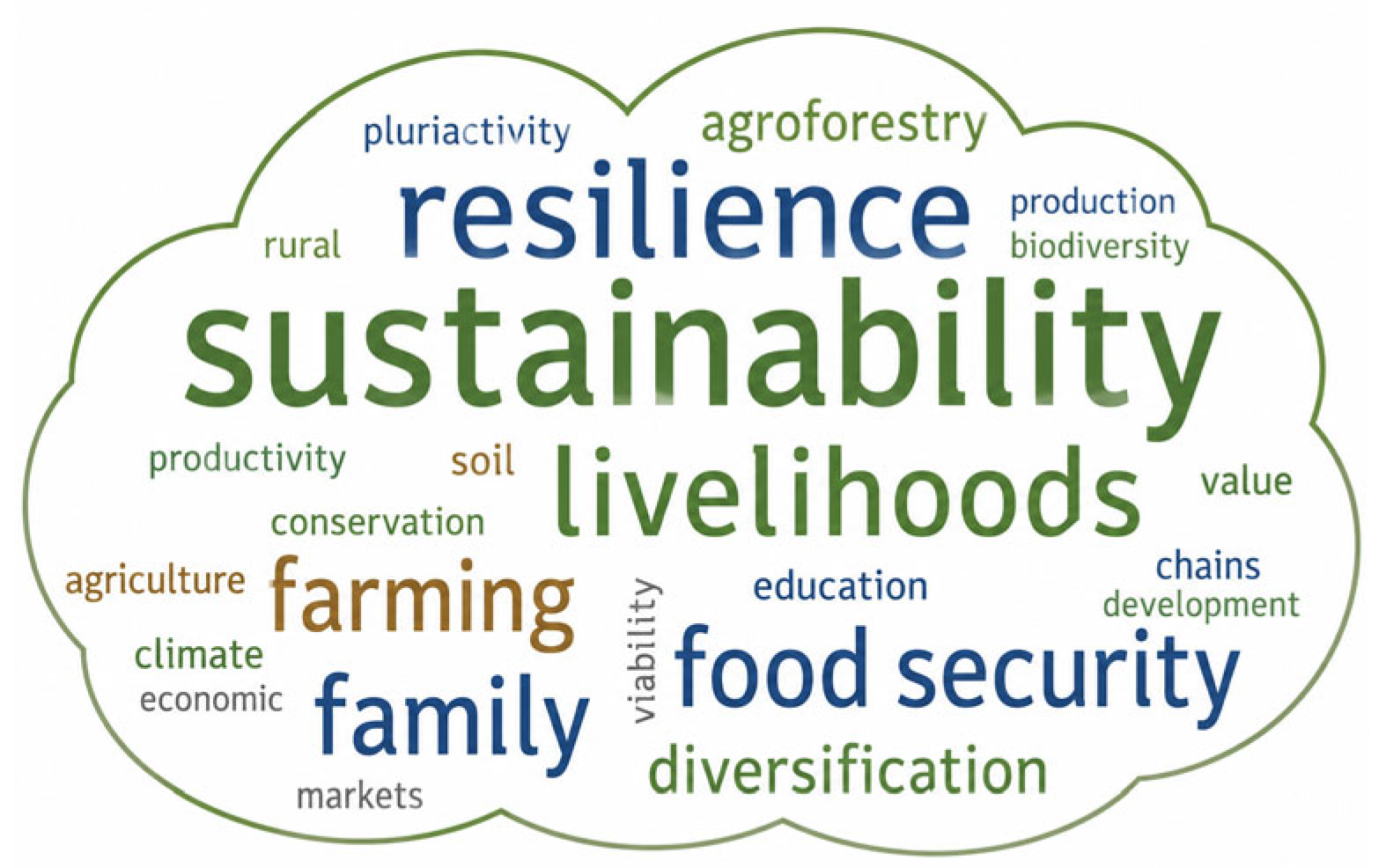
To capture farmers’ conceptualisation of sustainability,
Figure 2 presents a word cloud generated from focus group discussions. This visualisation provides a condensed thematic representation of the most recurrent concepts shaping local perceptions of long-term viability. An analytical interpretation of the frequency and prominence of these terms reveals several important insights into the producers’ subjective priorities and perspectives regarding sustainable development.
At its core, the prominence of terms such as sustainability, resilience, family, and livelihoods reflects a holistic understanding that extends well beyond agricultural productivity. Farmers perceive their vocation as a multidimensional system that must simultaneously ensure economic survival, social continuity, and environmental balance. Within this framework, sustainability is not regarded as an abstract academic concept; rather, it is viewed as a practical necessity for preserving both their way of life and the long-term viability of their communities.
A secondary cluster of dominant terms, including food security, income, and markets, underscores the central importance of economic stability. The consistent association between sustainability and the capacity to generate reliable household income suggests that, in this context, sustainability is closely linked to livelihood security rather than being perceived solely as an environmental objective. Furthermore, references to value chains and specific commodities, such as cocoa, coffee, pepper, and vanilla indicate a nuanced awareness of both the challenges and opportunities associated with market integration and value-added processing.
The word cloud also highlights production diversity and pluriactivity, which emerge as the primary adaptive strategies discussed in the focus groups. This diversification is a deliberate risk-management mechanism, whereby farmers actively integrate multiple crop varieties, livestock species, and non-agricultural income streams to buffer against climatic variability, price volatility, and structural impediments. This reinforces the paradigm of family farming as an inherently resilient and flexible system.
While environmental dimensions, represented by terms such as agroforestry, biodiversity, and soil conservation, are present, they appear less frequently than economic indicators. This suggests that, although farmers recognise the ecological foundations of their systems, environmental stewardship is often mediated through its direct contribution to productivity and long-term economic viability. Finally, the emergence of education and productivity aligns with statistical findings, pointing to the role of human capital in enhancing efficiency. Ultimately, the farmers’ vision is one of grounded multidimensionality, where sustainability is defined by the capacity to balance immediate risk with the long-term maintenance of productive resources.
Farmers identified several structural constraints in São Tomé and Príncipe, including: (i) limited access to credit; (ii) lack of irrigation infrastructure; (iii) crop losses due to pests and theft; and (iv) weak market organisation. To cope with these challenges, households adopt multifaceted strategies, including crop diversification, the combination of agricultural and non-agricultural activities, and reliance on social networks.
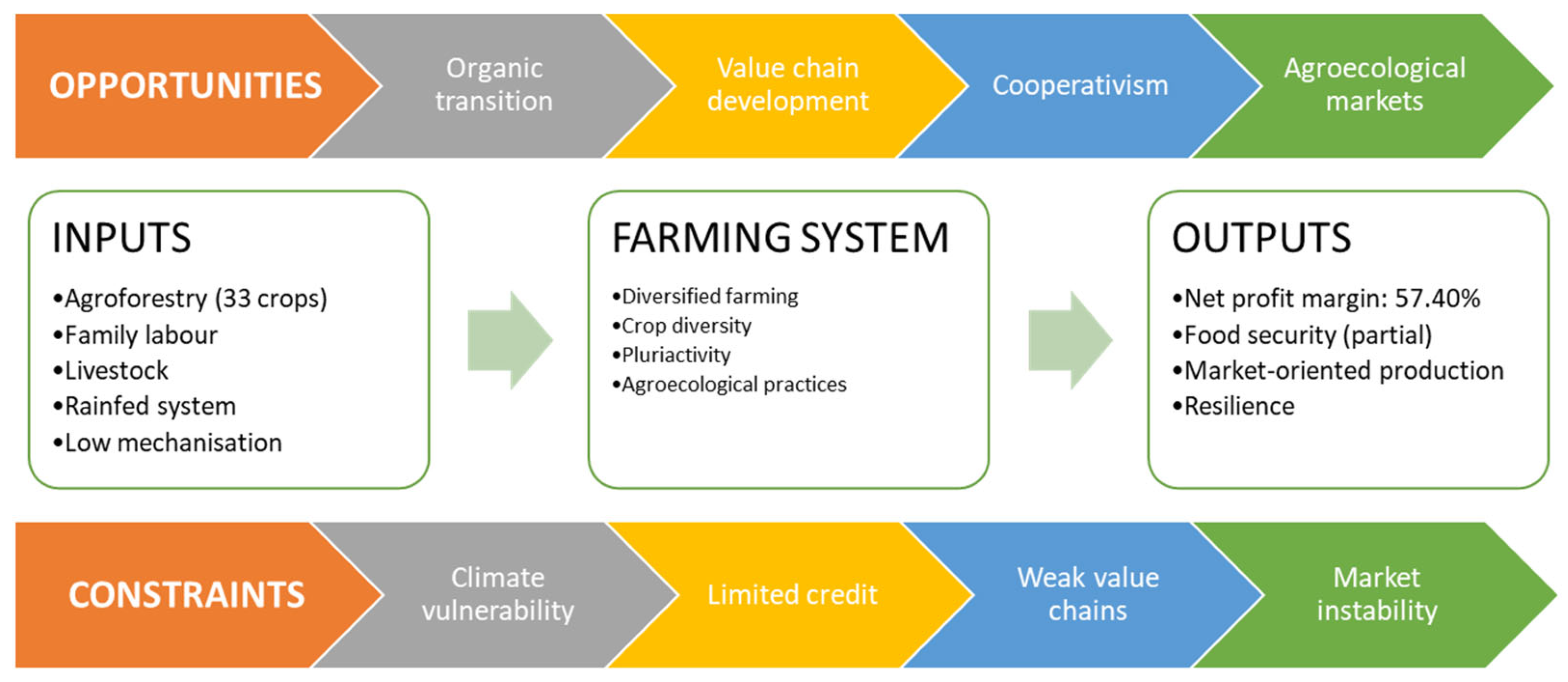
Figure 3 illustrates this framework through a graphical abstract. The primary inputs consist of a diverse agroforestry paradigm, with an average 33 crops, reliance on family labour, and small-scale livestock integration, within a context of rainfed agriculture and limited mechanisation. At the system’s core lies a robust agroecological framework characterised by high agrobiodiversity and the integration of on-farm and off-farm income streams.
These inputs generate significant outputs, most notably a 57.4% net profit margin, enhanced livelihood resilience, and a predominantly market-oriented production model that contributes to partial food security. The system’s performance is moderated by human and social capital: education acts as a driver of productivity, while gender dynamics influence task differentiation.
Despite these strengths, the system is hindered by persistent constraints, including stagnant value chains, limited processing capacity, and climate vulnerability. Conversely, strategic opportunities lie in the near-universal adoption of organic practices, including organic certification, the strengthening of cooperative networks, and the expansion of agroecological markets driven by the emerging tourism sector. Ultimately, the model represents a sustainable yet constrained system with significant untapped potential for transformative rural development.
5. Discussion
This section presents the empirical findings structured according to the methodological approach adopted, distinguishing between quantitative results, economic analysis, statistical analysis, and qualitative insights.
5.1. Economic Viability and Structural Constraints
The results demonstrate that highly biodiverse and multifunctional systems are strongly aligned with the principles of food sovereignty and socio-ecological resilience [
3,
53,
63]. Family farming systems generate a positive economic surplus, with an overall profitability of 57.40%. This finding indicates that, despite structural limitations, family farming remains economically viable within the studied context. However, this aggregate profitability masks significant heterogeneity across production systems, crops, and activities. While horticultural production emerges as the primary source of short-term income, staple crops remain fundamental to food security despite their lower economic returns. This dual structure reflects a strategic balance between subsistence and market-oriented production [
5,
39]. These findings are consistent with the theory of the peasant economy, which argues that family farming is not primarily oriented toward profit maximization, but rather towards balancing labour effort, risks, and household consumption needs [
64]. Similarly, the results support the argument that smallholders can be economically rational, with performance constraints largely determined by structural factors such as limited access to markets, technology, and infrastructure [
65]. The limited processing of agricultural products and weak market integration further constrain income generation [
66,
67]. Despite producing economically valuable crops such as cocoa, coffee, and fruits, the lack of value addition reduces farmers’ capacity to capture higher returns [
67]. This suggests that improving agro-processing and market access could significantly enhance economic outcomes [
66]. Furthermore, integration into agricultural value chains has the potential to increase smallholders’ participation in international markets and enhance the benefits derived from such participation [
2,
20,
68,
69].
5.2. Livelihood Strategies and Rural Resilience
The results highlight the importance of diversification and pluriactivity as key livelihood strategies, in line with other studies [
70,
71]. Households combine agricultural production with non-agricultural activities, reducing income volatility and increasing resilience to external shocks [
72].
This diversification is not merely a choice, but a necessity in contexts characterised by economic uncertainty and structural vulnerability. The diversification of livelihood strategies can contribute to improved wellbeing, poverty reduction, and climate change mitigation [
73]. It reflects the broader dynamics described in the livelihoods approach, whereby rural households mobilise multiple assets and strategies to sustain and enhance their wellbeing [
74]. This is consistent with other studies, which suggest that, to achieve improved living standards, rural family households must generate income, build assets, and diversify their income sources through a combination of farm and non-farm activities [
75].
At the same time, the findings reveal that increased labour availability does not necessarily translate into higher production levels, as evidenced by the weak statistical relationship between household size and output. This suggests that productivity is more strongly influenced by access to resources, technology, and knowledge than by labour alone. This observation underscores a critical distinction between labour quantity and productivity, a pattern widely observed in development and agricultural economics [
76].
These results reinforce the idea that resilience in family farming systems depends not only on internal household dynamics, but also on external enabling conditions, including access to infrastructure, extension services, and financial support [
1]. Furthermore, the cultivation of higher-value crops, such as cocoa and coffee in São Tomé and Príncipe, significantly contributes to enhancing labour productivity [
77].
5.3. Human Capital and Knowledge Systems
The results reveal that education has a significant impact on the production of certain crops, particularly those with higher economic value or requiring more technical knowledge [
78,
79]. At the same time, many traditional crops show no significant association with formal education, indicating the continued relevance of local knowledge systems. This finding is consistent with studies conducted in other contexts [
80], as well as in São Tomé and Príncipe, where variables such as gender, age, family size, on-farm and off-farm labour participation, and professional training do not significantly influence livelihood strategies. Instead, key determinants include education level, perceived social class, access to insurance and credit, and availability of services [
73]. This duality underscores the coexistence and complementarity of formal and informal knowledge systems within family farming.
Some authors argue that education positively affects the output of farming households by enabling them to manage their farms more effectively and combine inputs in a more efficient and optimal manner [
79]. However, while education can enhance productivity and foster innovation, traditional knowledge remains essential for the management of diversified agroecological systems [
81].
These findings align with studies that emphasise the importance of knowledge access and diffusion in improving agricultural performance [
82]. They also suggest that policies aimed at strengthening agricultural education and extension services should be designed to complement, rather than replace, local knowledge practices. This is consistent with the literature [
83], which suggests that the effective use of local knowledge requires a realistic perspective that recognises that some combination of local and scientific knowledge, developed through a participatory process, is likely to enable extension services to deliver better outcomes for farmers [
83].
5.4. Gender Dynamics and Household Organization
The household structure reveals a pattern of high demographic dependency, characterised by a large proportion of children and young people relative to a smaller share of economically active adults. This configuration, as confirmed by the literature [
21,
59,
84], increases pressure on the available workforce and reinforces households’ economic vulnerability. The literature also shows that such household structures frequently exhibit a high dependency ratio, characterised by a large proportion of children, young people, or elderly members relative to the number of economically active adults, often driven by the need for family labour. This frequently results in high labour demand, particularly during peak seasons, while the immediate availability of working-age adults may remain limited [
84,
85]. Both men and women participate in agricultural production, although their roles are differentiated. Men tend to be more involved in physically demanding tasks, while women play a central role in both productive and reproductive activities. This pattern is consistent with global studies on agriculture, which show that, although both men and women actively contribute, their roles are often highly gendered: men typically dominate technical tasks and commercial decision-making, whereas women are more engaged in manual, unpaid, and processing activities [
86]. Similarly, this pattern reflects a functional division of labour rather than strict exclusion [
87]. However, the qualitative findings confirm that women’s contributions, particularly in domestic and care-related activities, remain largely invisible in economic terms [
88].
The findings are also consistent with the literature on gender in rural development, which highlights the central but often under-recognised role of women in sustaining family farming systems [
89]. The persistence of gender inequalities, particularly in access to resources and workload distribution, suggests the need for more gender-sensitive policies and interventions [
90]. This perspective reflects a core characteristic of family farming identified in the literature, whereby the household operates simultaneously as a productive unit, generating income and food, and as a unit of social reproduction, caring for, educating, and feeding family members [
91,
92]. This results in a unique, integrated system in which the farm functions both as a workplace and as a home [
93,
94].
In addition to their agricultural role, the findings show a heavy reliance on women’s labour in activities essential to household survival, such as transporting water and firewood, preparing food, caring for children, and cleaning the house. These tasks, which are mostly unpaid and rendered invisible in traditional economic calculations, confirm the literature on the care economy and the productive invisibility of women in family farming [
15,
44,
45]. Although strategic decisions are predominantly made jointly by women and men, women’s workload remains disproportionate, limiting their economic autonomy and reproducing structural gender inequalities [
95]. This statement accurately reflects findings in agricultural sociology regarding gendered labour in family farming. Although women are key agents for sustainable development and are increasingly involved in agricultural decision-making, with crucial contributions to achieving economic and social change, they face a “double burden” of unpaid reproductive labour, namely domestic work, and intensive agricultural labour, which perpetuates structural inequalities [
96,
97].
Because farming combines productive and social reproductive functions, family absorb costs, such as childcare, eldercare, and healthcare, that might otherwise be provided by the state or the private market. In the literature, evidence of these findings—namely, that the absorption of care costs functions as an “internalised” service expense—is shown through its effects on reducing financial resources available for capital investment, decreasing productive decision-making capacity, and explaining the persistence of low-risk and low-intensity livelihood strategies [
98]. The limited formal agricultural succession in São Tomé and Principe, together with the lower motivation of younger generations to take over family farms, is indeed linked to their early involvement in domestic and productive tasks. This reinforces the perception of an intergenerational reproduction of work patterns and highlights existing vulnerabilities, as noted by studies on family farming systems and child labour in the region [
99,
100]. This practice, described as a “blueprint” or traditional succession path, often means that children begin learning skills and accumulating responsibilities during childhood [
100].
5.5. Food Security and Vulnerability
Although agricultural production is diversified and economically viable on average and provides the basis for household food supply, the results also indicate the persistence of seasonal food insecurity or vulnerability. Households experience periods of reduced food availability, particularly during off-season periods or in response to climatic shocks, income irregularities, and production seasonality. This evidence confirms findings from other studies, which suggest that food insecurity results less from the physical absence of food than from instability in economic, environmental and social access [
92,
101,
102].
This finding supports the argument that food security is not determined solely by production levels but also by access, stability, and distribution. Even in contexts where food is available, households may face difficulties in maintaining adequate and stable consumption patterns. This perspective aligns with the widely accepted four-pillars framework of food security—availability, access, utilization and stability –established by the World Food Summit in 1996. This framework emphasises that food availability is only one component of a functioning food system, and that policy inefficiencies and institutional responses may contribute to food insecurity and poverty outcomes [
98,
100,
102].
The recurring episodes of food scarcity that occur during off-seasons and following climate shocks manifest themselves, in line with the literature, as situations of moderate food insecurity [
2], reduced dietary diversity, postponement of meals, and prioritisation of children’s consumption, rather than as outright famine [
21,
37]. The strategies adopted by households, such as diversification, prioritisation of self-consumption, reduced consumption among adults, and reliance on social networks and community solidarity, reveal a high adaptive capacity, but also highlight structural vulnerability and the absence of institutional protection mechanisms. These strategies are essentially defensive and short-term, and do not enable households to break structural cycles of vulnerability, as argued in the literature [
21,
37].
5.6. Environmental Sustainability and Agroecological Potential
The results indicate that family farming systems in São Tomé and Príncipe are characterised by a relatively low use of chemical inputs and high levels of crop diversity. These findings are aligned with other studies on sustainability, particularly those focusing on agroforestry systems, which are low dependence on chemical inputs, high biological diversity, and ecological resilience [
32,
92,
102,
103].
At the same time, although these features are consistent with agroecological principles and contribute to environmental sustainability, family farming remains a critical component of agricultural systems, positioned at the intersection between traditional sustainable practices and, paradoxically, a transition towards more intensive practices. This is particularly evident in horticulture, where moderate chemical input use may increase vulnerability to environmental degradation and climate change.
In the context of São Tomé and Príncipe, the intensification of horticulture through increased productivity may require the use of more modern inputs, with potential negative impacts on environmental sustainability. However, the use of organic fertilisers, biological pest and disease control, and appropriate cropping sequences can contribute to a more positive balance between productivity and environmental sustainability.
While family farming is recognised for its potential to enhance environmental sustainability through local knowledge and agroecological practices, it also faces significant barriers, including limited resources, insufficient technical support, and market volatility. These constraints create potential risks related to soil degradation, water contamination, and biodiversity loss.
The observation accurately highlights a critical and often paradoxical trend identified in the literature, whereby the adoption of certain agroecological practices, such as diversification, coexists with, or is overshadowed by, the continued or increased use of synthetic inputs in high-value, intensive sectors such as horticulture [
104,
105]. Similarly to the literature, the coexistence of sustainable practices and emerging environmental risks highlights the need for improved management strategies and technical support. Strengthening agroecological practices could enhance both environmental sustainability and long-term productivity [
1]. The environmental resilience of family farming is not sufficient to guarantee social and economic sustainability. The absence of adequate infrastructure, adaptive climate policies, access to credit, and technical assistance limits the ability of households to convert ecological resilience into lasting economic well-being, reinforcing a need that is clearly identified in the literature [
1,
3,
44]. This statement highlights a critical gap in the rural development literature: while family farming often displays high levels of environmental resilience, such as biodiversity preservation and agroecological adaptation, this does not automatically translate into long-term social and economic sustainability.
5.7. Structural Typologies and Contribution to SDGs
The identification of three main types of family farming systems—subsistence-oriented, pluri-active, and market-oriented—confirms the heterogeneity of the sector. These typologies reflect different levels of market integration, income generation, and vulnerability. These findings are consistent with the typologies of small-scale farmers identified in other studies across the African continent [
106].
Similar to previous research [
1], despite internal diversity in terms of income, levels of modernisation, and market integration, these typologies are shaped by common structural constraints. These core challenges include vulnerability to climate change, limited investment capital, and restricted access to formal credit and land, all of which collectively hinder long-term productivity [
1,
20].
The literature suggests that these findings call for differentiated policy interventions that also address the systemic challenges affecting the sector. Effective policy design must therefore move beyond “one-size-fits-all” approaches by combining targeted support with broader systemic reform [
107,
108]. The results further suggest that the emergence of market-oriented systems in rural areas presents significant opportunities for shifting from subsistence to commercial production, thereby driving economic diversification and strengthening local agri-food systems. However, as the premise suggests, the consolidation of these systems requires targeted and critical improvements to bridge existing gaps. This is consistent with other studies confirming that local markets are not only guardians of tradition, but also drivers of modernization and economic growth [
109].
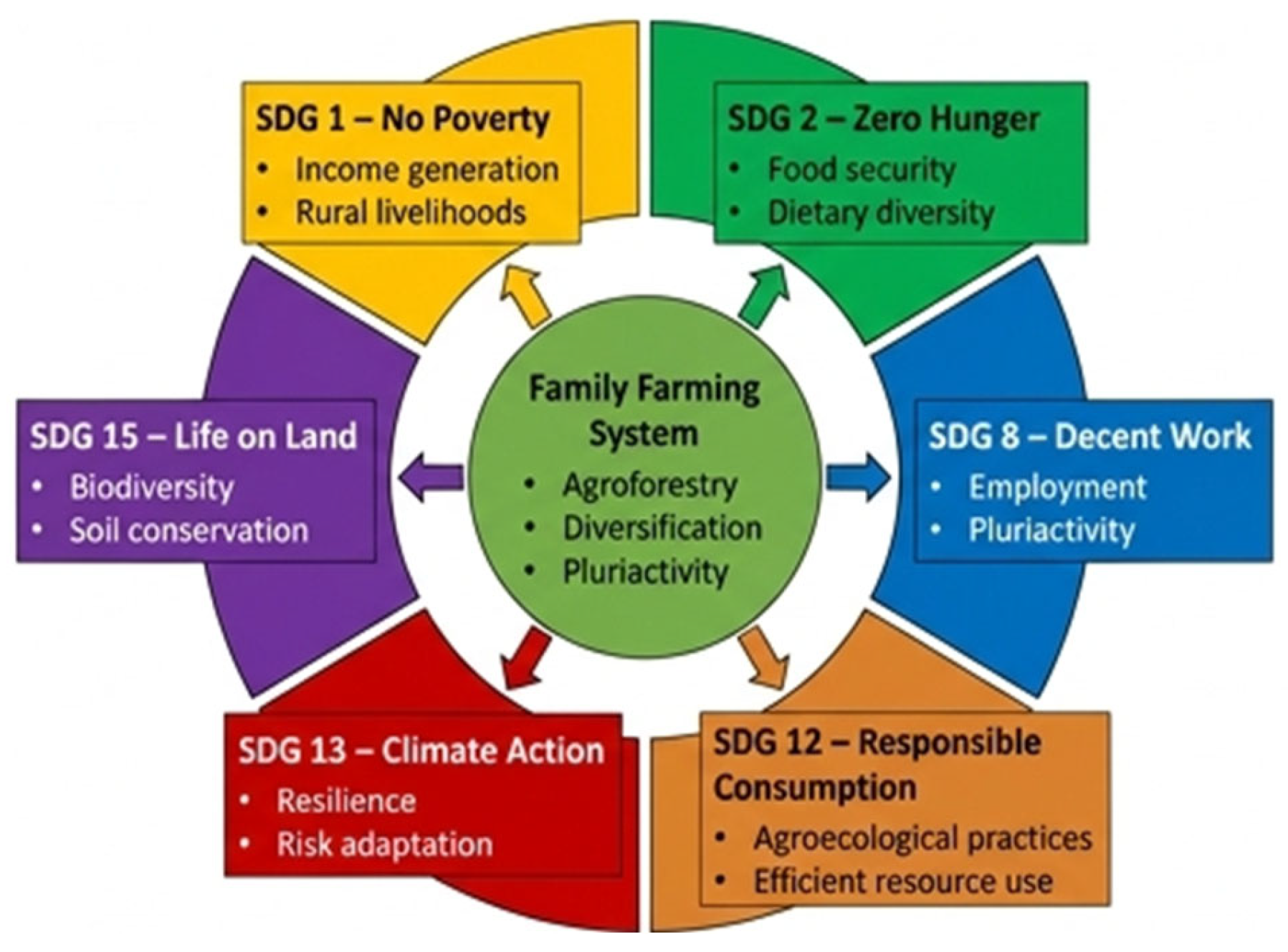
Figure 4, supported by the study’s findings, illustrates the systemic importance of family farming systems as a primary engine and holistic foundation for sustainable development in the archipelago of São Tomé and Príncipe. It presents a conceptual framework in which resilient and sustainable family systems underpin rural development and contribute to the achievement of the Sustainable Development Goals (SDGs). The figure portrays family farming as a multidimensional driver of sustainable development, highlighting how a core of traditional and sustainable practices extends outward to influence progress.
At the heart of the figure lies the family farming system, defined by its three pillars: agroforestry, which utilises the island’s natural forest structure, such as shade-grown cocoa and coffee, to balance production with conservation; diversification, which moves away from monocultures toward the cultivation of multiple crops, thereby stabilising local food supplies; and pluriactivity, understood as the integration of multiple economic activities within farming households, which reduces financial risk and strengthens rural resilience.
The arrows flowing from the centre signify the strategic contributions and direct impact of these farming practices on six specific global goals: (i) SDG 1 (No Poverty) and SDG 8 (Decent Work and Economic Growth), by providing stable rural livelihoods and opportunities for self-employment, family farming acts as a safety net against poverty while fostering local economic development; (ii) SDG 2 (Zero Hunger): the system prioritises food security, and crop diversification ensures that local communities have access to a more varied and nutrient-dense diet, reducing dependence on expensive food imports; (iii) SDG 12 (Responsible Consumption and Production): the use of agroecological practices promotes the efficient use of resources, such as water and organic matter, thereby minimising the environmental footprint of food production; and, (iv) SDG 13 (Climate Action) and SDG 15 (Life on Land): family farmers act as stewards of the land, with their practices enhancing soil conservation and carbon sequestration, providing a natural buffer against climate-related risks while protecting the islands’ unique biodiversity.
The key message is that a resilient and sustainable family farming system drives rural development and contributes to the achievement of the SDGs. It confirms that, in São Tomé and Príncipe, family farming is not merely an economic sector, but a vital and integrated system that harmonises social equity, economic viability, and environmental preservation. Unlocking the full potential of family farming in São Tomé and Príncipe therefore requires integrated policies that simultaneously address economic, social, and environmental dimensions.
6. Conclusions and Implications
This study provides a comprehensive assessment of family farming in São Tomé and Príncipe through a mixed-methods approach integrating economic analysis, descriptive statistics and exploratory comparative procedures, focus groups, and field observations. The results demonstrate that family farming constitutes a resilient and multifunctional socio-ecological system that contributes simultaneously to food security, income generation, biodiversity conservation, and rural livelihoods. The diversified agroforestry systems identified, integrating up to 33 crops and small-scale livestock production, represent an important adaptive strategy that enhances resilience to climatic, economic, and market shocks, while supporting both subsistence and market-oriented production. From an economic perspective, the high profitability observed (57.40%) confirms that these systems extend beyond subsistence and generate significant marketable surpluses capable of supporting household welfare and local economic development.
The findings also reveal that diversification and pluriactivity are central pillars of resilience. By combining agricultural production with off-farm activities, households reduce income volatility and strengthen their capacity to cope with uncertainty. Likewise, education emerged as a significant determinant of productivity for several strategic crops, highlighting the importance of human capital in improving farm performance and enhancing value creation. In contrast, household size showed limited influence on productivity, suggesting that access to knowledge, technology, and resources is more important than labour availability alone. Gender analysis further revealed the important contribution of women to farm diversification and agricultural management, emphasising the need for more inclusive rural development strategies.
Despite these strengths, the study identified several structural constraints that limit the long-term sustainability and development potential of family farming systems. Farmers consistently reported limited access to credit, weak market organisation, low levels of mechanisation, insufficient irrigation infrastructure, crop losses caused by pests and theft, inadequate processing capacity, and vulnerability to climate variability. Although agroforestry systems provide ecological stability and contribute to environmental sustainability, these institutional and market-related constraints prevent producers from capturing a larger share of the value generated by their production systems. The findings therefore suggest that the main challenge facing family farming in São Tomé and Príncipe is not productivity itself, but rather the transformation of productive potential into sustainable economic opportunities through stronger value chains, better infrastructure, and improved institutional support.
The study contributes to the literature by providing empirical evidence from a small island developing state, demonstrating that the sustainability of family farming depends on the interaction between economic viability, livelihood diversification, human capital, environmental stewardship, and institutional support. The results reinforce the argument that family farming should be viewed not merely as an agricultural activity but as a strategic development pathway capable of promoting inclusive rural development, food security, climate resilience, and territorial sustainability.
Drawing directly from the empirical findings, a set of priority interventions emerges: First, strengthening agricultural extension and advisory services should be considered a priority, particularly for horticultural crops, cocoa, coffee, and livestock production, given the positive relationship identified between education and productivity. Second, improving access to rural finance through adapted credit mechanisms and financial inclusion programmes is essential to overcoming one of the most frequently reported constraints affecting investment and innovation. Third, investment in irrigation systems, water management infrastructure, and climate adaptation measures is necessary to reduce dependence on rainfall and increase resilience to climate variability. Fourth, policies should focus on strengthening agricultural value chains through local processing, storage facilities, quality certification, and market organisation, particularly for cocoa, coffee, fruits, vegetables, and other high-value products. This would allow farmers to capture a greater share of added value and increase rural incomes. Fifth, promoting farmer cooperatives and producer organisations would enhance collective bargaining power, facilitate access to inputs and services, improve market integration, and support participation in certification and export schemes. Sixth, support for agroecological and organic production systems should build upon the country’s diversified agroforestry tradition and capitalise on emerging opportunities associated with sustainable tourism and niche markets. Seventh, investments in rural infrastructure, including feeder roads, storage facilities, transportation networks, and digital market information systems, are necessary to reduce transaction costs and improve market access. Eighth, targeted programmes addressing pest management, crop theft, and post-harvest losses should be developed to reduce production risks and improve farm profitability.
Finally, long-term investments in agricultural education, vocational training, and youth engagement are critical for strengthening human capital, promoting innovation, and ensuring the generational renewal of family farming.
Taken together, these measures form an integrated policy framework that addresses the principal constraints identified in the study while leveraging the existing strengths of family farming systems. Their implementation would contribute not only to improving the sustainability and competitiveness of family farming in São Tomé and Príncipe, but also to advancing broader objectives related to food security, climate resilience, poverty reduction, and sustainable rural development.