Article

Carbon Emissions Trading and Corporate Low-Carbon Transition Risk: Evidence from China’s Pilot Carbon Markets

Business School, Shandong University, Weihai 264209, China
*
Author to whom correspondence should be addressed.
Sustainability 2026, 18(13), 6723; https://doi.org/10.3390/su18136723
Submission received: 20 May 2026 / Revised: 21 June 2026 / Accepted: 24 June 2026 / Published: 2 July 2026

Abstract

Under China’s dual carbon goals, low-carbon transition risk has become an important source of corporate sustainability risk and climate-related financial risk. This study treats the carbon emissions trading pilot (CETP) as a quasi-natural experiment and uses panel data of Chinese A-share listed firms from 2006 to 2024 to examine whether carbon trading reduces corporate low-carbon transition risk (CTR). CTR is measured as the sensitivity of firm stock returns to return shocks from a stranded-asset portfolio, thereby capturing market-implied exposure to high-carbon asset revaluation risk. The results show that the CETP significantly reduces corporate CTR. Economically, the fully controlled DID coefficient is about one tenth of the standard deviation of CTR, indicating a meaningful decline in firms’ exposure to stranded-asset shocks. The conclusion remains robust after using alternative CTR measures, shortening the sample period, applying staggered DID based on actual pilot launch years, controlling for province-level time-varying factors and province-specific trends, controlling for concurrent green policies, conducting placebo tests, applying PSM-DID, and retaining the instrumental-variable test. Mechanism tests provide evidence consistent with a carbon performance channel. Evidence on capital expenditure is interpreted cautiously because Capex is a broad proxy for investment intensity and asset adjustment rather than a direct measure of green upgrading. Heterogeneity analysis shows that the risk-reducing effect is stronger among non-state-owned firms, high-tech firms, and firms located in eastern China. These findings suggest that carbon pricing can serve not only as an emissions-reduction instrument but also as a mechanism for mitigating climate-related financial risk.

1. Introduction

Low-carbon transition has become a core issue in corporate sustainability. It is also an important source of financial risk. In this paper, corporate low-carbon transition risk (CTR) refers to firms’ exposure to the economic and financial shocks caused by the shift from a high-carbon economy to a low-carbon economy. This risk is closely related to stranded assets. When carbon prices rise or climate regulation becomes stricter, high-carbon assets may lose value earlier than expected. Firms that rely on fossil fuels, energy-intensive equipment, or high-carbon production may face asset impairment, higher compliance costs, tighter financing conditions, and lower market valuation [1,2,3]. These shocks are also priced by financial markets through equity returns, bank loan pricing, bond spreads, and default risk [4,5,6]. Therefore, a firm’s CTR can be reflected by the sensitivity of its stock returns to stranded-asset shocks [7].
Carbon emissions trading is a market-based policy that turns carbon emissions into explicit economic costs. It changes the cost of using high-carbon assets. It also affects firms’ production, investment, and financing decisions. In October 2011, China approved carbon emissions trading pilot programs in Beijing, Tianjin, Shanghai, Chongqing, Hubei, Guangdong, and Shenzhen. Shenzhen launched the first pilot market in 2013, and the other pilot markets began operating afterward. The carbon emissions trading pilot (CETP) uses emissions caps, allowance allocation, and market transactions to shape firms’ low-carbon incentives [8,9,10]. It raises the opportunity cost of high-emission production. It also encourages firms to save energy, reduce emissions, upgrade technology, and adjust capital allocation. China is a suitable setting for this study. First, the pilot regions and implementation timing were determined by policy arrangements. They were not chosen by individual firms. This provides quasi-natural experimental variation across regions and time. Second, China has a high-carbon energy structure and clear regional differences in carbon-market development. These features make China useful for examining how carbon pricing affects firm-level transition-risk exposure.
Two strands of literature are closely related to this study. The first strand examines the economic effects of the CETP. Existing studies show that carbon trading can reduce carbon intensity, promote green innovation, improve total factor productivity, affect firm performance, ease financing constraints, and improve sustainability performance [8,9,11,12,13,14,15,16]. These studies provide important evidence on the environmental and real economic effects of carbon trading. However, they mainly focus on emissions, innovation, productivity, and firm performance. They pay less attention to whether carbon trading can reduce firms’ exposure to climate-related financial risk. The second strand focuses on CTR and climate-related asset pricing. Prior studies show that transition risk is priced in equity markets, bank loans, debt financing costs, and capital structure decisions [4,5,6,7,17,18]. However, this literature rarely examines whether a market-based environmental policy can actively reduce corporate CTR. Therefore, an important research gap remains. We still know little about whether carbon markets can reduce firms’ exposure to stranded-asset shocks.
To fill this gap, this study treats the CETP as a quasi-natural experiment. We use panel data of Chinese A-share listed firms from 2006 to 2024. We apply a two-way fixed-effects difference-in-differences model to examine whether the CETP reduces corporate CTR. Following the climate beta framework, this study measures CTR by firms’ stock-return exposure to stranded-asset return shocks [7]. This measure captures how strongly a firm’s market value responds to high-carbon asset revaluation risk. The CETP provides useful policy variation. Its pilot regions and policy timing were determined by government arrangements rather than by firm-level choices. However, pilot selection was not fully random. To address this concern, this study uses firm and year fixed effects, PSM-DID estimation, placebo tests, and instrumental-variable tests.
This study makes three contributions. First, it extends the literature on market-based environmental regulation. Existing studies mainly examine the effects of carbon trading on emissions reduction, green innovation, productivity, financing conditions, and firm performance [8,9,11,12,13,14,15,16]. This study shifts the focus to climate-related financial risk. It shows that the CETP can reduce firms’ exposure to stranded-asset shocks. This provides new evidence on the risk-mitigation function of carbon pricing.
Second, this study contributes to the climate-finance literature. Existing studies show that carbon transition risk is priced in financial markets. It affects loan pricing, debt financing costs, default risk, and capital structure [4,5,6,17,18]. This study links transition-risk pricing to a specific carbon-market policy. It shows that institutional carbon pricing can shape firms’ market-implied exposure to low-carbon transition risk.
Third, this study explains how the CETP may affect CTR. It examines carbon performance and capital expenditure as two channels. Higher carbon performance means that firms create more economic output per unit of carbon emissions. It reflects weaker dependence on high-emission production. Higher capital expenditure may reflect investment responses and asset adjustment under carbon constraints [19,20,21,22]. These channels help explain why carbon trading can weaken firms’ sensitivity to high-carbon and stranded-asset shocks.
The remainder of this paper is organized as follows. Section 2 presents the literature review and research hypotheses. Section 3 describes the research design, including sample selection, variable definitions, and model specification. Section 4 reports the empirical results, including baseline regressions, robustness tests, endogeneity tests, and mechanism analysis. Section 5 presents the heterogeneity analysis. Section 6 concludes the paper and discusses policy implications.

2. Literature Review and Research Hypotheses

2.1. Economic Consequences of the Carbon Emissions Trading Pilot

Carbon emissions trading is a typical market-based environmental regulation. Its core logic is to turn carbon emissions into a priced economic decision. Under a cap-and-trade system, firms face emission caps, allowance allocation, and market transactions. These rules change the cost–benefit structure of corporate emissions. Unlike command-and-control regulation, carbon trading gives firms more flexibility in how they respond. It uses carbon prices, allowance scarcity, and trading incentives to shape production, investment, innovation, and asset-allocation decisions.
Prior studies show that the CETP affects firms through several channels. It can reduce carbon intensity, promote green innovation, improve total factor productivity, affect firm performance, ease financing constraints, and improve sustainability performance [8,9,11,12,13,14,15,16]. These findings confirm that carbon trading changes both real activities and market evaluation. For this study, the key implication is that carbon pricing can alter firms’ incentives and resource allocation. It may therefore affect firms’ exposure to high-carbon assets and transition-related financial shocks.
More closely related to this study, the CETP may reshape transition-risk exposure through carbon performance and capital investment. Carbon trading can improve carbon productivity and carbon emission performance by changing firms’ energy use, production efficiency, and emissions behavior [19,20]. It can also affect investment decisions and asset adjustment under carbon constraints [21,22]. These effects are important because CTR depends not only on current emissions, but also on whether firms can reduce their dependence on high-carbon assets and respond to stranded-asset shocks.
Overall, the CETP literature has provided rich evidence on emissions reduction, green innovation, productivity, financing conditions, and firm performance. However, most studies focus on environmental or operating outcomes. They pay less attention to whether carbon trading can reduce firms’ capital-market exposure to low-carbon transition risk. In particular, it remains unclear whether the CETP can reduce firms’ sensitivity to high-carbon and stranded-asset shocks. This gap provides the starting point for this study.

2.2. Determinants of Corporate Low-Carbon Transition Risk

CTR arises when a firm’s existing assets, production system, and cash flows are tied to high-carbon activities. As carbon prices rise and climate regulation becomes stricter, firms with high-emission production may face higher compliance costs and stronger asset revaluation pressure. Some fossil fuel reserves, energy-intensive equipment, and high-carbon assets may lose economic value earlier than expected. This creates stranded-asset risk, cash-flow uncertainty, and potential financial losses [1,2,3].
Financial markets increasingly price CTR. Investors and creditors do not treat transition risk as a distant environmental issue. They incorporate it into equity returns, loan contracts, bond spreads, financing costs, and default expectations [4,5,6,17,18]. The climate beta framework also shows that asset-return sensitivity to stranded-asset shocks can be used to measure transition-risk exposure [7]. Therefore, CTR has both a real-side foundation and a market-pricing dimension.
Firm characteristics also affect CTR. Firms with higher carbon exposure, heavier fixed assets, and stronger fossil-fuel dependence are more vulnerable to transition shocks. These firms may face stronger asset lock-in and higher adjustment costs. By contrast, firms with better profitability, stronger financing capacity, and more flexible asset structures may absorb transition costs more easily. Therefore, CTR depends on both external carbon-policy shocks and internal firm resilience.
Carbon performance is not ordinary operating performance. It measures the economic output created per unit of carbon emissions. Higher carbon performance means that a firm can generate more revenue with less carbon dependence. It also means that the firm is less tied to high-emission production paths. When carbon prices rise, firms with better carbon performance face lower compliance pressure and weaker high-carbon asset revaluation risk. Prior studies show that carbon trading can improve carbon productivity and carbon emission performance [19,20]. Therefore, carbon performance is a key channel through which the CETP may reduce CTR.
Capital expenditure is another important factor related to CTR. It should be interpreted as a proxy for real investment and long-term asset adjustment. It is not direct evidence that all investment is green upgrading. However, higher capital expenditure may be consistent with equipment renewal, process improvement, and the accumulation of assets that are more compatible with low-carbon transition. These adjustments can reduce high-carbon asset lock-in. They may also make future cash flows less sensitive to carbon-price shocks. Therefore, capital expenditure may serve as a channel through which the CETP lowers firms’ exposure to stranded-asset shocks.
In sum, CTR is shaped by high-carbon asset dependence, asset lock-in, cash-flow uncertainty, financing conditions, and capital-market pricing. Existing studies have explained these determinants mainly from the perspective of firm exposure and financial markets. However, less is known about whether market-based environmental regulation can actively reduce CTR. This study addresses this issue by introducing the CETP into the formation mechanism of corporate CTR.

2.3. The Carbon Emissions Trading Pilot and Corporate Low-Carbon Transition Risk

Existing studies have not fully examined whether the CETP can reduce corporate CTR. However, two lines of research provide a clear theoretical basis. The first line shows that carbon trading can affect corporate emissions behavior, green innovation, carbon performance, financing conditions, and capital allocation through carbon price signals, allowance constraints, and market transactions. The second line shows that CTR is affected by carbon exposure, high-carbon asset dependence, financing conditions, asset structure, and market expectations. Combining these two lines of evidence, the CETP may reduce firms’ exposure to shocks from high-carbon and stranded assets by changing their low-carbon transition behavior.
The effect of the CETP on CTR is not only a cost-increasing process. On the one hand, the CETP raises the opportunity cost of high-emission production. Firms that continue to rely on high-carbon assets face stronger external constraints. On the other hand, the CETP also creates incentives for firms to benefit from energy conservation, emission reduction, technological upgrading, and the sale of surplus allowances. If firms can transform external carbon constraints into internal efficiency gains and asset structure adjustment, their future cash flows will become less sensitive to high-carbon asset shocks. Capital markets may then lower their pricing of firms’ CTR.
Based on this logic, this study proposes the following hypothesis:
Hypothesis 1.
The CETP significantly reduces corporate CTR.
Carbon performance is a key channel. The CETP increases the opportunity cost of carbon emissions through allowance constraints and carbon price signals. To reduce allowance costs or gain benefits from surplus allowances, firms have incentives to improve energy use and production efficiency. This can increase the economic output created per unit of carbon emissions. Better carbon performance weakens firms’ dependence on high-emission production. It also reduces their exposure to future carbon-price shocks and high-carbon asset revaluation. Therefore, the CETP may reduce CTR by improving corporate carbon performance.
Based on this logic, this study proposes the following hypothesis:
Hypothesis 2.
The CETP reduces corporate CTR by improving corporate carbon performance.
Capital expenditure is another possible channel. Low-carbon transition often requires real investment. Firms may need to renew equipment, improve production processes, and adjust long-term asset structures. Under the CETP, continued reliance on energy-intensive equipment may lead to higher carbon costs. By contrast, capital investment may help firms reduce high-carbon asset lock-in and build stronger transition capacity. Prior studies show that capital investment is an important channel through which carbon trading improves carbon productivity. Carbon trading can also affect corporate investment risk and asset structure adjustment [19,21,22]. Therefore, higher capital expenditure under the CETP may be consistent with long-term asset adjustment. This can reduce firms’ exposure to stranded-asset shocks.
Based on this logic, this study proposes the following hypothesis:
Hypothesis 3.
The CETP may reduce corporate CTR by encouraging investment intensity and asset adjustment.
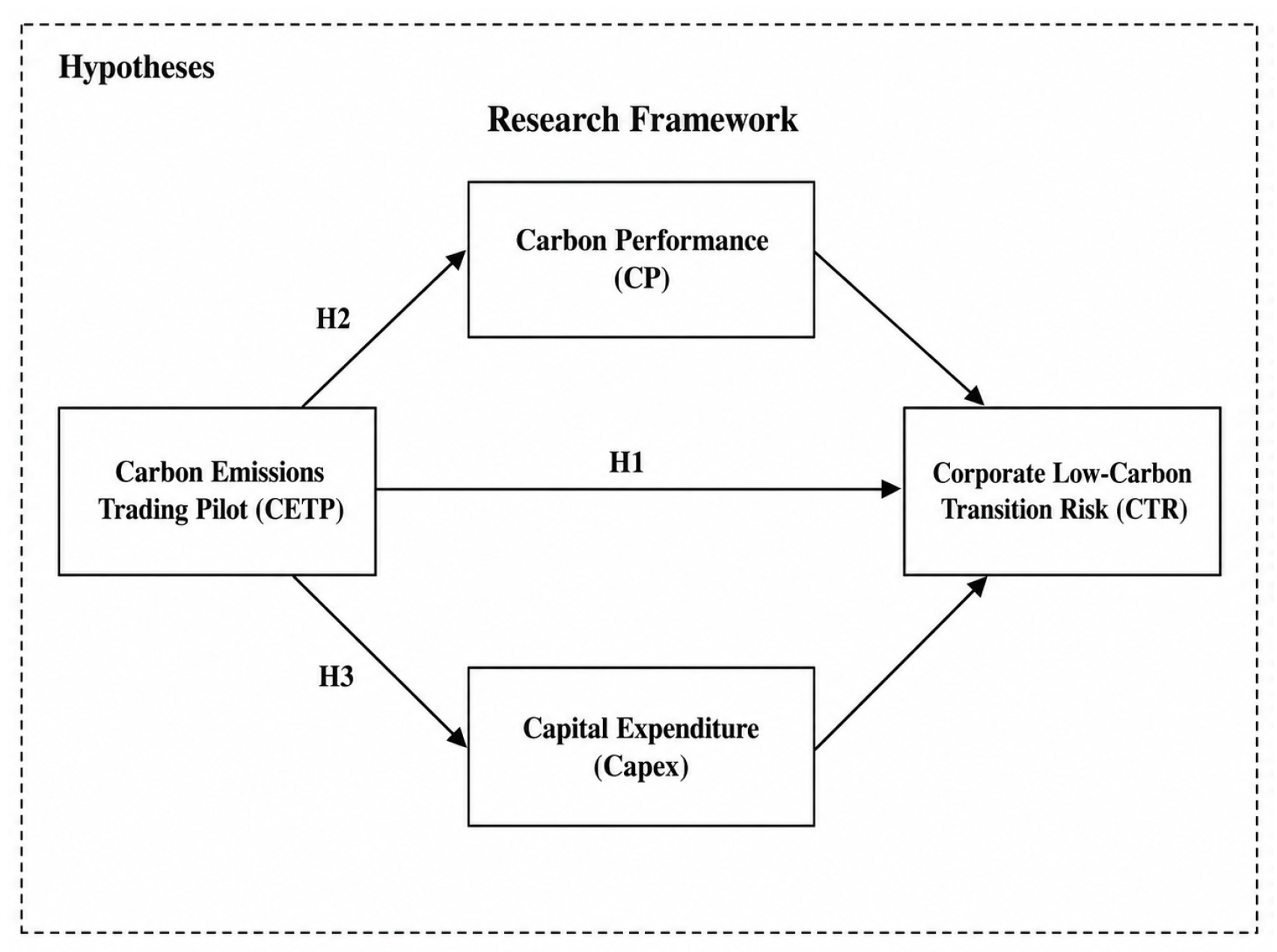
Figure 1 summarizes the research framework. It shows the direct CETP–CTR relationship and the two proposed transmission channels.

3. Empirical Design

3.1. Sample Selection and Data Sources

This study uses Chinese A-share listed firms as the research sample. The firm–year panel data are collected from the China Stock Market and Accounting Research Database (CSMAR). All data are organized and matched at the firm–year level.
The sample period covers 2006 to 2024. This period is suitable for two reasons. First, the measurement of corporate low-carbon transition risk (CTR) relies on monthly stock returns and rolling-window regressions. A relatively long time series is therefore required. Second, the sample period provides enough observations before and after the implementation of the carbon emissions trading pilot (CETP). This helps identify how firms’ risk exposure changes after carbon trading begins. The initial sample is refined using the following procedures. First, firms in the financial and insurance industries are excluded due to their distinct capital structures and regulatory environments [9,14]. Second, firms classified as ST (special treatment) or *ST (delisting risk) are removed, as their abnormal financial conditions may distort the estimation of transition-risk exposure [8,9]. Third, observations with missing data on key variables—including stock returns, carbon emissions, financial indicators, and policy status—are excluded. Fourth, to mitigate the influence of outliers, all continuous variables are winsorized at the 1st and 99th percentiles [8,9,23]. Fifth, firm-level data are matched with city-level policy data based on firms’ registered locations. After these cleaning steps and variable matching, the final baseline sample includes 4687 listed firms and 44,920 firm–year observations from 2006 to 2024.

3.2. Variable Definitions

3.2.1. Dependent Variable: Low-Carbon Transition Risk

The dependent variable is firms’ low-carbon transition risk (CTR). CTR captures the exposure of firms to the economic and financial shocks caused by the transition from a high-carbon economy to a low-carbon economy. These shocks may arise from stricter climate regulation, carbon price changes, clean technology substitution, shifts in market demand, and stronger investor preferences for low-carbon assets.
For firms that rely heavily on fossil fuels, energy-intensive equipment, or high-carbon production processes, the low-carbon transition may lead to asset impairment, weaker profitability, higher financing costs, and greater uncertainty in future cash flows. From the perspective of capital markets, firms whose stock returns are more sensitive to high-carbon or stranded-asset shocks are more exposed to CTR.
Following the climate beta framework of Jung et al. (2025) [7] and the approach of Wang et al. (2025) [23], this paper measures CTR using the sensitivity of firm-level stock returns to return shocks from stranded assets. This approach has three advantages. First, the stranded-asset portfolio is constructed from high-carbon assets, such as the energy and coal industries. It can capture the value changes of assets that are most exposed to carbon constraints, technological substitution, and divestment pressure [7,23]. Second, after controlling for market returns, the coefficient on stranded-asset returns reflects firms’ specific exposure to high-carbon asset shocks. Third, stock prices incorporate investors’ expectations about future cash flows, asset impairment, and transition costs. Therefore, this measure has a forward-looking feature [7].
Specifically, this paper first constructs the return of the stranded-asset portfolio based on energy industry returns and coal industry returns. Following Wang et al. (2025) [23], the stranded-asset portfolio return is calculated as
R t S t r a n d e d = 0.3 × R t E n e r g y + 0.7 × R t C o a l R t M a r k e t
where R t E n e r g y is the monthly return of the Energy Sector Index, R t C o a l is the monthly return of the Coal Industry Index, and R t M a r k e t is the monthly return of the CSI 300 Index. The energy and coal sectors are selected because they are the most directly exposed to carbon constraints and stranded-asset risks [23]. These industries face the strongest pressure from climate regulation, technological substitution by renewables, and divestment movements [1,2,7]. Thus, their return shocks serve as a valid proxy for economy-wide stranded-asset risk [7,23].
Next, this paper estimates rolling regressions at the monthly stock return level:
R i , m = α i + β i M M a r k e t m + β i S S t r a n d e d m + ϵ i , m
where R i , m is the stock return of firm i in month m, M a r k e t m is the CSI 300 index return, and S t r a n d e d m is the stranded-asset portfolio return. The coefficient β i S measures the monthly exposure of firm i to stranded-asset shocks. A larger β i S indicates that the firm’s stock returns co-move more strongly with high-carbon asset shocks, implying higher low-carbon transition risk [7,23].
This paper uses a 24-month rolling window as the baseline specification, following Wang et al. (2025) [23] and Jung et al. (2025) [7]. The 24-month window captures more-timely changes in firms’ transition-risk exposure. In robustness tests, this paper uses a 60-month rolling window to capture more stable long-run exposure to stranded-asset shocks [23]. The estimated monthly coefficients are averaged at the firm-year level to obtain the annual CTR measure. The baseline dependent variables are CTR1_24 and CTR2_24. CTR1_60 and CTR2_60 are used as alternative measures in robustness checks.

3.2.2. Core Explanatory Variable: CETP

The core explanatory variable is CETP, measured by the DID variable. CETP is a key market-based environmental regulation in China. Its basic logic is to transform firms’ carbon emissions into economic decisions with explicit price constraints through emission caps, allowance allocation, and market trading.
Existing studies usually regard CETP as a quasi-natural experiment and use DID or PSM-DID models to identify its policy effects. For example, Zhou et al. (2019) [8] use CETP as an external shock to examine its effect on carbon intensity. Yang et al. (2020) [10] treat the 2013 CETP implementation as a quasi-natural experiment and examine its effects on employment and emission reduction. Pan et al. (2022) [9] and Zhang and Xi [14] also use DID or PSM-DID methods to evaluate the effects of CETP on firm total factor productivity and sustainable development performance.
Following these studies, this paper constructs the DID variable as follows. If a firm is registered in a CETP region the treatment variable Treat equals 1, and it equals 0 otherwise. If the year is 2013 or later, the time variable Post equals 1, and it equals 0 otherwise. The interaction term is defined as
D I D i t = T r e a t i × P o s t t
If D I D i t equals 1, firm i is located in a CETP region after the start of carbon trading. Otherwise, it equals 0. A significantly negative coefficient on D I D i t indicates that the CETP reduces corporate CTR.
This study acknowledges that the seven pilot markets did not all start in the same year. Shenzhen launched the first pilot market in June 2013, followed by Shanghai, Beijing, Guangdong, and Tianjin later in 2013. Hubei and Chongqing launched in 2014, and Fujian joined in 2016 [10]. In the baseline specification, this paper uses a uniform post-treatment indicator (2013 and later) to maintain comparability with the majority of existing CETP studies [8,9,14]. In robustness checks, this paper further employs a staggered DID specification based on the actual launch year of each pilot region, following the approach of recent studies on multi-period policy evaluation [8,10].

3.2.3. Mechanism Variables

This paper examines two mechanism variables: carbon performance and capital expenditure.
The first mechanism variable is carbon performance (CP). CP measures the economic output created per unit of carbon emissions. Following Zhou et al. (2019) [8] and Ren et al. (2021) [24], this paper measures CP as the ratio of operating revenue to carbon emissions. Since direct corporate carbon emissions data are not publicly available for all firms, this study adopts the estimation approach proposed by Ren et al. (2021) [24], which approximates corporate carbon emissions based on industry-level emissions and corporate operating costs:
C a r b o n E m i s s i o n s i t = O p e r a t i n g C o s t s i t × I n d u s t r y C a r b o n E m i s s i o n s i t I n d u s t r y O p e r a t i n g C o s t s i t
C P i t = O p e r a t i n g R e v e n u e i t C a r b o n E m i s s i o n s i t
A higher CP value indicates that a firm generates more economic output with the same amount of carbon emissions. It also indicates stronger low-carbon production efficiency. Prior studies show that CETP can improve carbon productivity and carbon emission performance [19,20]. These studies provide support for using CP as a mechanism variable.
Compared with total carbon emissions, CP better reflects firms’ ability to decouple economic output from carbon emissions. Zhou et al. (2020) [19] and Zheng et al. (2021) [20] show that CETP can improve carbon productivity or carbon emission performance. These studies provide support for using CP as a mechanism variable. If CETP improves firms’ CP, it means that the policy reduces firms’ dependence on high-carbon production and thereby lowers their CTR.
The second mechanism variable is capital expenditure (Capex). Capex reflects firms’ investment intensity in fixed asset renewal, equipment upgrading, production process improvement, and long-term asset adjustment. Following Zhou et al. (2020) [19] and Zhang et al. (2025) [21], this paper measures Capex as capital expenditure scaled by total assets:
C a p e x i t = C a p i t a l E x p e n d i t u r e i t T o t a l A s s e t s i t
It serves as a proxy for real investment and long-term asset adjustment under carbon constraints. Higher capital expenditure may be consistent with equipment renewal, process improvement, and the accumulation of assets that are more compatible with low-carbon transition. These adjustments can reduce high-carbon asset lock-in and make future cash flows less sensitive to carbon-price shocks [19,21,22].
Zhou et al. (2020) [19] identify capital input as an important mechanism through which CETP improves carbon productivity. Zhang et al. (2025) [21] also show that CETP can affect firms’ investment risk. Based on this logic, this paper uses Capex as another mechanism variable. If CETP increases firms’ Capex and higher Capex reduces CTR, it indicates that CETP mitigates CTR by encouraging real investment, equipment renewal, and low-carbon asset accumulation.

3.2.4. Control Variables

Following studies on CETP, firm low-carbon transition, and climate risk pricing, this paper controls for firm-level characteristics, industry attributes, and regional policy conditions.
Firm-level controls include state ownership (SOE), firm size (Size), leverage (Lev), profitability (ROA), fixed asset ratio (Fixed), growth ability (Growth), and listing age (ListAge). These variables are widely used in studies on CETP and firm behavior. Firm-level controls are also consistent with prior CETP studies, which account for comparable firm characteristics when examining the effects of CETP on green innovation, total factor productivity, sustainable development performance, and capital-market information [9,11,12,14,16]. Luan et al. (2025) [13] also include firm size, leverage, ownership, and revenue growth when studying the impact of carbon-market pilots on firm performance.
SOE controls for the differences between state-owned and non-state-owned firms in policy resources, financing conditions, and environmental responsibilities. Size captures firms’ information transparency, resource access, and risk absorption capacity. Lev reflects financial leverage and debt pressure. ROA measures firms’ ability to absorb transition costs and support low-carbon investment. Fixed captures asset structure and capital lock-in. Firms with a higher fixed asset ratio may face greater stranded-asset risk. Growth reflects expansion capacity and future cash-flow expectations. ListAge controls for firms’ life cycle, market experience, and disclosure maturity.
This paper also controls for whether a firm belongs to a heavily polluting industry (Pollute). High-pollution and high-emission firms naturally face stronger carbon constraints and transition pressure. Their stock returns may be more sensitive to high-carbon asset shocks. Chen et al. (2021) [11] emphasize that industry carbon attributes may affect the policy effect of CETP. Shen et al. (2024) [25] also show that CETP effects may differ across industries. Therefore, this paper includes Pollute to control for industry-level carbon attributes.
Finally, this paper controls for regional environmental regulation intensity (Reg). CETP is not the only environmental constraint faced by firms. Local environmental governance and regulatory pressure may also affect firms’ emission behavior, low-carbon investment, and risk exposure. Following CETP-related studies that account for environmental regulation intensity or regional policy conditions, this paper measures Reg by the frequency of environmental regulation-related keywords in regional government texts [8,10,14].

3.3. Model Specification

To test the effect of the CETP on corporate CTR, this study constructs the following two-way fixed-effects difference-in-differences model:
C T R i t = α + β D I D i t + γ C o n t r o l s i t + μ i + λ t + ε i t
where C T R i t denotes the low-carbon transition risk of firm i in year t. D I D i t is the CETP treatment variable. Controlsit denotes the set of control variables. μ i represents firm fixed effects, and λ t represents year fixed effects. ε i t is the error term.
The coefficient of interest is β. It captures the average effect of the CETP on corporate CTR. If β is significantly negative, the CETP reduces corporate CTR. This supports the main hypothesis of this study. In all baseline regressions, firm fixed effects and year fixed effects are included. Standard errors are clustered at the firm level.
This study treats the CETP as a quasi-natural experiment. Pilot regions and implementation timing were determined by policy arrangements rather than by individual firm choices [8,9,10]. However, pilot selection was not fully random. To address this concern, this study uses firm fixed effects and year fixed effects to control for time-invariant firm heterogeneity and common time trends. In addition, robustness checks include PSM-DID estimation, placebo tests, instrumental-variable tests, provincial-level controls, and controlling for other concurrent policies [8,9,10,14]. These strategies help mitigate potential selection bias and omitted-variable bias.
To examine the mechanism of carbon performance, this study estimates the following models:
C P i t = α + β 1 D I D i t + γ C o n t r o l s i t + μ i + λ t + ε i t
C T R i t = α + β 2 D I D i t + δ C P i t + γ C o n t r o l s i t + μ i + λ t + ε i t
where C P i t denotes corporate carbon performance. The first equation tests whether the CETP improves CP. The second equation tests whether CP is associated with lower CTR after controlling for the CETP and other firm characteristics. If D I D i t significantly increases CP and CP significantly reduces CTR, the carbon performance mechanism is supported.
To examine the mechanism of capital expenditure, this study estimates the following models:
C a p e x i t = α + β 3 D I D i t + γ C o n t r o l s i t + μ i + λ t + ε i t ω
C T R i t = α + β 4 D I D i t + θ C a p e x i t + γ C o n t r o l s i t + μ i + λ t + ε i t
where C a p e x i t denotes corporate capital expenditure. The first equation tests whether the CETP promotes Capex. The second equation tests whether Capex is associated with lower CTR. If D I D i t significantly increases Capex and Capex significantly reduces CTR, the capital expenditure mechanism is supported.
To provide a more rigorous test of the mediation effects, this study further employs the Bootstrap method with 500replications to test the significance of the indirect effects ( a × b ) for both mechanism variables, following the approach of Baron and Kenny (1986) [26] and recent practice in the environmental policy literature [9,16,23]. The Bootstrap test does not rely on the assumption of normal distribution for the indirect effect and thus provides more reliable inference. A significant indirect effect confirms that the mechanism variable serves as a significant channel through which the CETP affects CTR.
Overall, this empirical design identifies the effect of the CETP on corporate CTR and further examines whether carbon performance and capital expenditure serve as transmission channels. This framework is consistent with the logic that market-based environmental regulation may affect not only emissions behavior but also firms’ capital-market risk exposure.
Table 1 defines the variables used in the empirical analysis and clarifies their measurement.
Table 2 reports descriptive statistics for the main variables from 2006 to 2024. It gives a first view of the sample distribution.

4. Empirical Analysis

4.1. Baseline Regression Results

Table 3 reports the baseline DID estimates. Columns (1) and (3) use CTR1_24 and CTR2_24 as the dependent variables and include year fixed effects. Columns (2) and (4) further include firm-level controls, the heavy-polluting industry dummy, regional environmental regulation intensity, firm fixed effects, and year fixed effects. The coefficients of DID are negative in all columns and are significant at the 1% level. In the fully controlled specifications, the DID coefficients are −0.076 for CTR1_24 and −0.074 for CTR2_24. These results support Hypothesis 1.
The effect is economically meaningful. The standard deviation of the baseline CTR variable is 0.756. Thus, the coefficient of −0.076 is equal to about 10.1% of one standard deviation of CTR, while the coefficient of −0.074 is equal to about 9.8% of one standard deviation. Because CTR measures the sensitivity of firm stock returns to stranded-asset portfolio shocks, the estimates imply that the CETP reduces firms’ market-implied exposure to high-carbon asset shocks by around one tenth of a standard deviation. The baseline result therefore has both statistical and economic significance.
This finding is consistent with the theoretical mechanism. The CETP works through carbon price signals, allowance constraints, and trading incentives. These mechanisms raise the opportunity cost of high-emission production and reduce the attractiveness of maintaining high-carbon assets. Firms exposed to the policy have stronger incentives to improve energy efficiency, adjust production decisions, and reduce dependence on carbon-intensive assets. As a result, their stock returns become less sensitive to shocks from the stranded-asset portfolio.

4.2. Robustness Tests

4.2.1. Alternative CTR Measures and Sample Period

This study first replaces the dependent variable with two CTR indicators constructed from a 60-month rolling window. The baseline measures use a 24-month rolling window and can capture more-timely changes in firms’ risk exposure. The 60-month window smooths short-term volatility and captures more stable long-run exposure to stranded-asset shocks. Columns (1) and (2) of Table 4 show that the DID coefficients remain significantly negative when CTR1_60 and CTR2_60 are used. The coefficients are −0.097 and −0.096, respectively. Their magnitudes are about 12.8% and 12.7% of one standard deviation of the baseline CTR variable.
Columns (3) and (4) further restrict the sample period to 2015–2024. This test reduces the influence of the early adjustment period of the pilot carbon markets. It also focuses on the period when low-carbon transition expectations became more salient. The coefficients remain negative and significant at the 10% level. Although the shorter sample reduces precision, the direction and magnitude remain consistent with the baseline results.

4.2.2. Staggered Policy Timing and Province-Level Confounders

The baseline DID variable treats 2013 as the common policy year. However, the pilot carbon markets were not launched on exactly the same date. To address this concern, this study constructs a staggered DID variable based on the actual starting year of each pilot region. The variable equals one only after the corresponding pilot market begins operation in the firm’s registered region. Columns (1) and (2) of Table 5 show that the coefficients of DID_staggered are −0.072 and −0.070, both significant at the 1% level. This indicates that the main conclusion still holds after accounting for heterogeneous policy timing.
This study also addresses the concern that pilot regions may have other time-varying characteristics that affect CTR. Pilot provinces may differ in economic development, industrial structure, energy structure, fiscal environmental expenditure, green-finance development, regional innovation, and environmental governance. Columns (3) and (4) add province-level time-varying controls. Columns (5) and (6) further add province-specific linear time trends. The DID coefficients remain negative and significant in both settings. These results reduce the concern that the baseline estimates only capture pre-existing provincial trends or broader regional transition dynamics.

4.2.3. Other Concurrent Green Policies

China implemented several green and low-carbon policies during the sample period. These policies may also affect firms’ transition-risk exposure. To ensure that the estimated effect is not driven by concurrent policies, this study controls for representative green-policy shocks that can be matched to firm locations, including the Low-Carbon City Pilot, the Green Finance Reform and Innovation Pilot Zone, and the emission permit trading policy. Table 6 shows that the DID coefficients remain negative and significant after adding these policy controls. For CTR1_24, the DID coefficients range from −0.083 to −0.072. For CTR2_24, the coefficients range from −0.081 to −0.070. These estimates are close to the baseline coefficients.

4.2.4. Placebo Tests

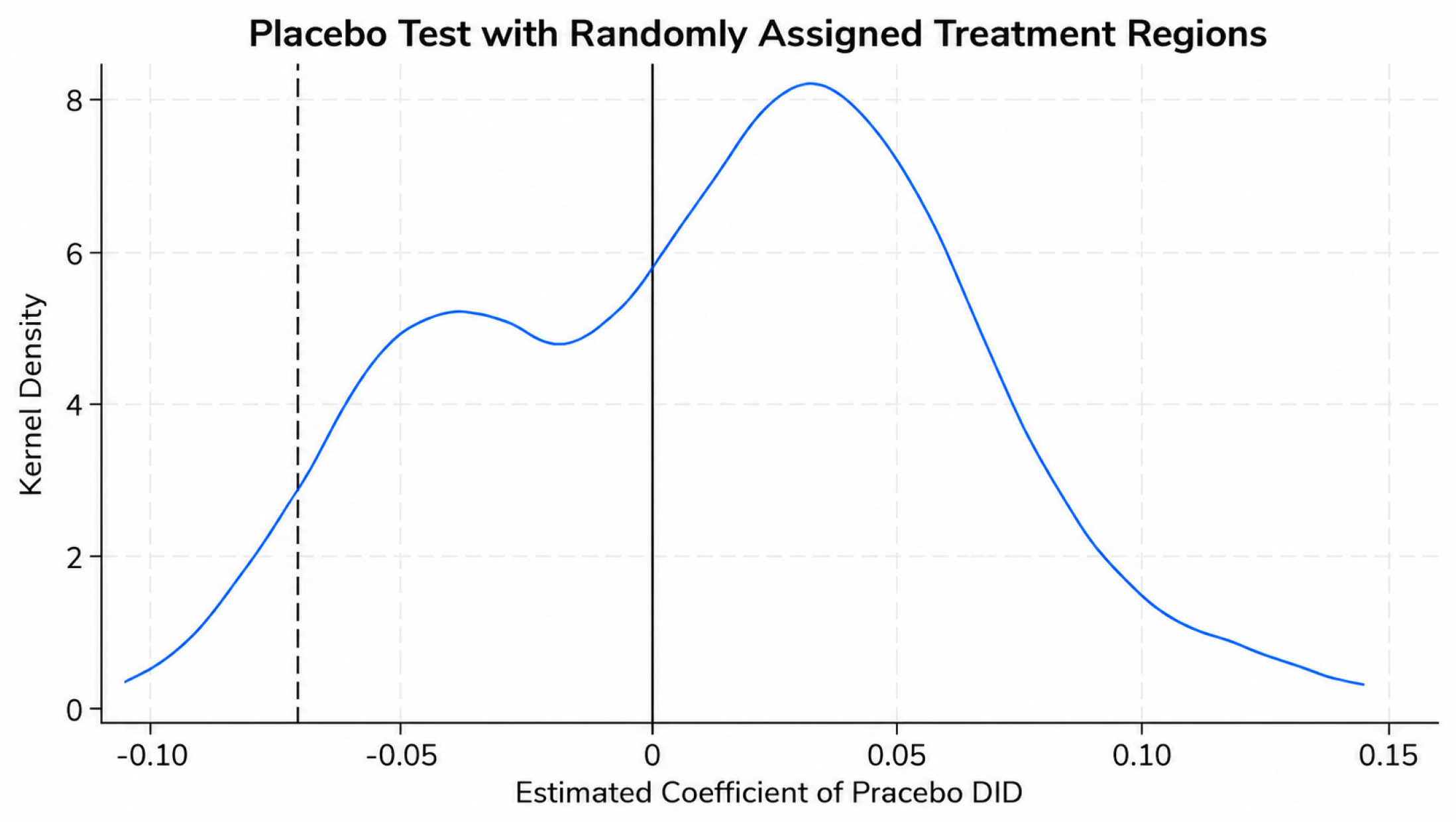
This study conducts a random-treatment placebo test to examine whether the baseline result is driven by random assignment rather than by the CETP itself. In each replication, this study randomly selects pseudo-treatment regions with the same number as the actual CETP regions. The pseudo-treatment indicator is then interacted with the actual post-policy period to construct a placebo DID variable. The baseline DID model is re-estimated using this placebo variable. This procedure is repeated 500 times, and the distribution of the placebo DID coefficients is obtained.
Figure 2 reports the distribution of the estimated placebo coefficients. The solid vertical line marks zero, and the dashed vertical line marks the actual DID coefficient. The actual DID coefficient is −0.0756 and lies in the left tail of the placebo coefficient distribution. The left-tail empirical p-value is 0.034, which means that only 3.4% of the randomly generated placebo coefficients are smaller than or equal to the actual estimate. This result indicates that the baseline effect is unlikely to be driven by random treatment assignment. It provides further support for the robustness of the main conclusion.

4.3. Identification and Endogeneity Tests

4.3.1. Parallel-Trend Test

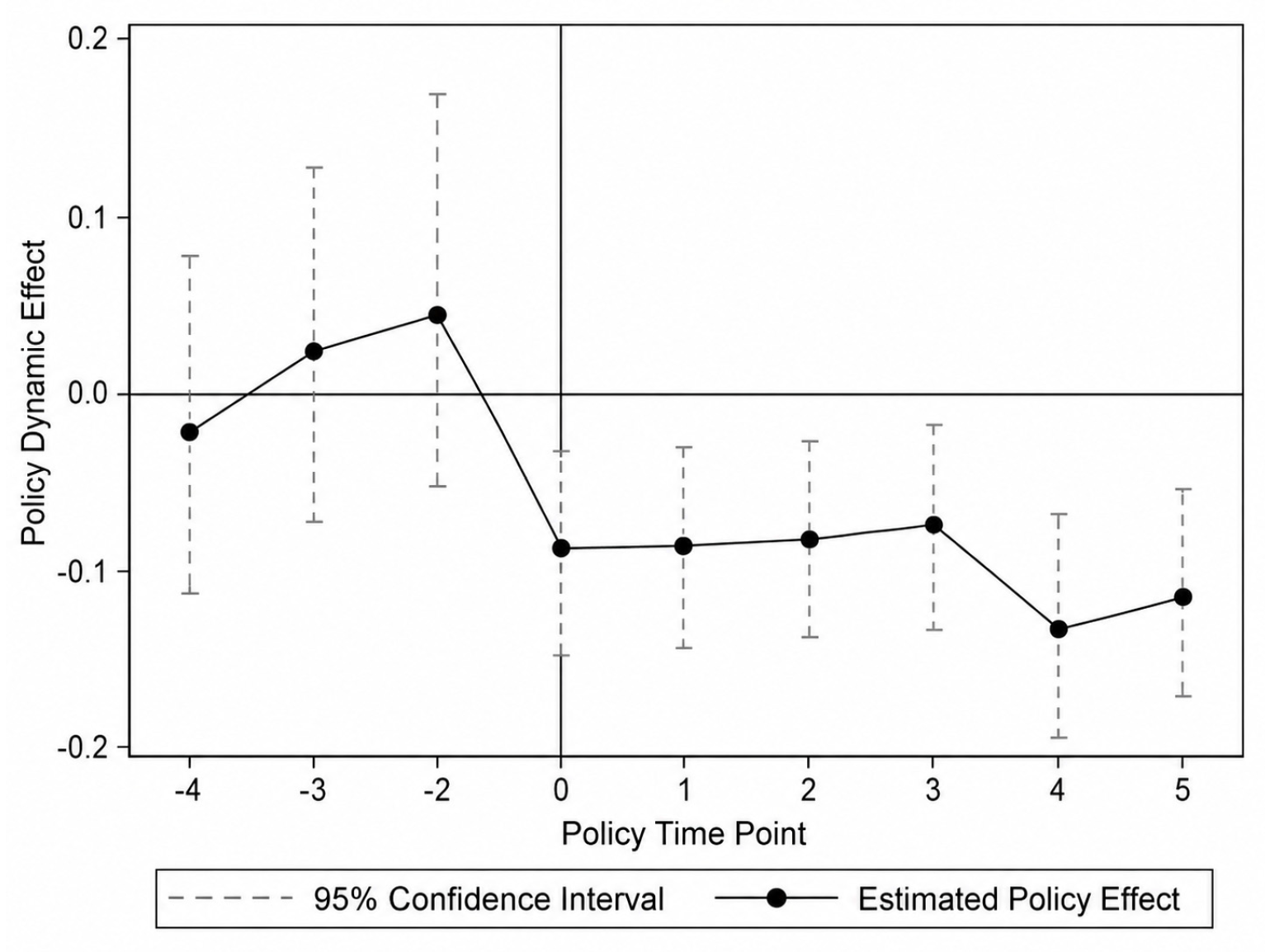
The validity of the DID model depends on the parallel trend assumption. This study uses an event-study specification to test this assumption. The year immediately before policy implementation is omitted as the reference period. The estimated coefficients of the pre-policy lead terms are not statistically different from zero, which indicates that treated and control firms do not show systematic differences in CTR before the CETP. After policy implementation, the coefficients become negative and remain relatively stable. This pattern supports the parallel trend assumption and suggests that the risk-reducing effect appears after the CETP begins. Figure 3 reports the event-study estimates.

4.3.2. PSM-DID Test

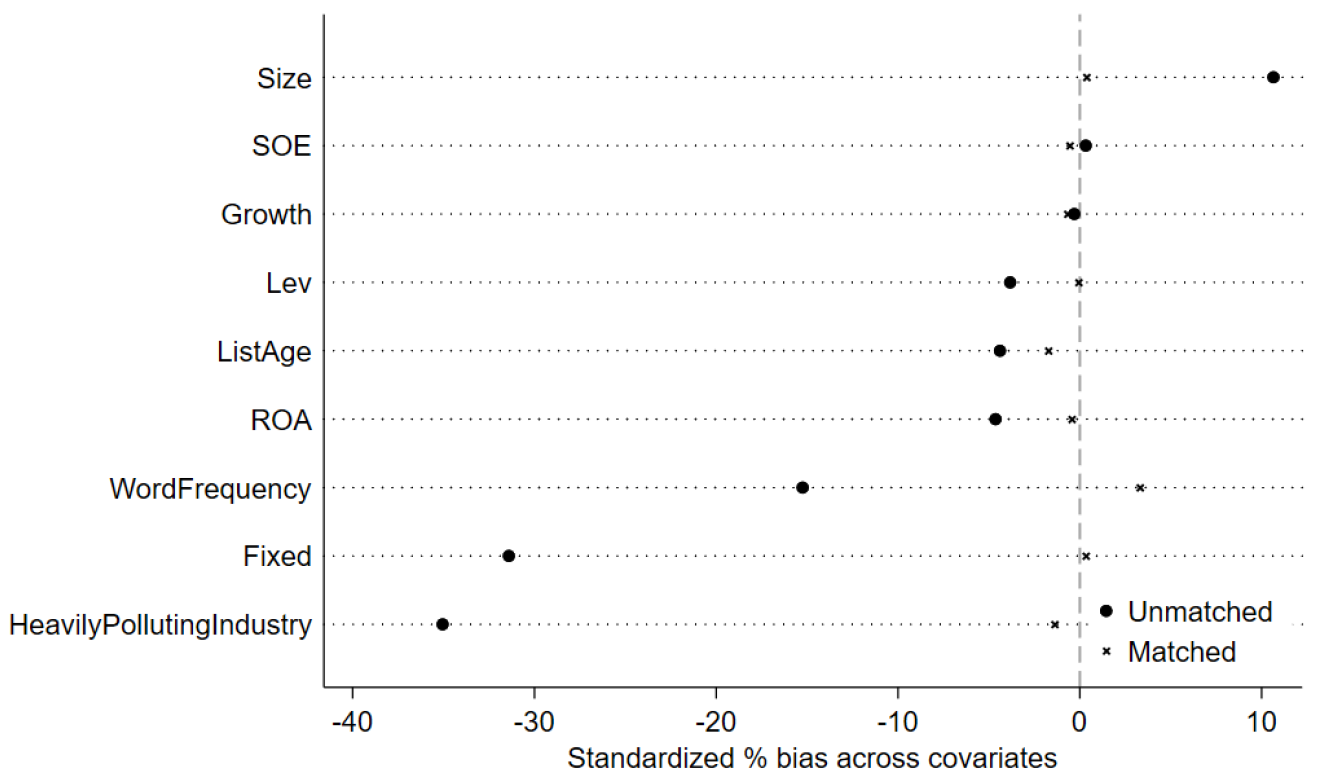
There may be differences in initial firm characteristics between pilot regions and non-pilot regions. To reduce selection bias, this study uses propensity score matching with a DID specification. Figure 4 reports the standardized covariate bias before and after matching. After matching, the bias of each covariate declines substantially. This suggests that the treated and control firms are more balanced.
Table 7 reports the PSM-DID regression results. In the matched sample, the coefficient of DID is −0.078 and remains significant at the 1% level. This coefficient is close to the full-sample estimate of −0.076. Therefore, after reducing sample selection bias, the conclusion remains unchanged. The CETP still significantly reduces corporate CTR.
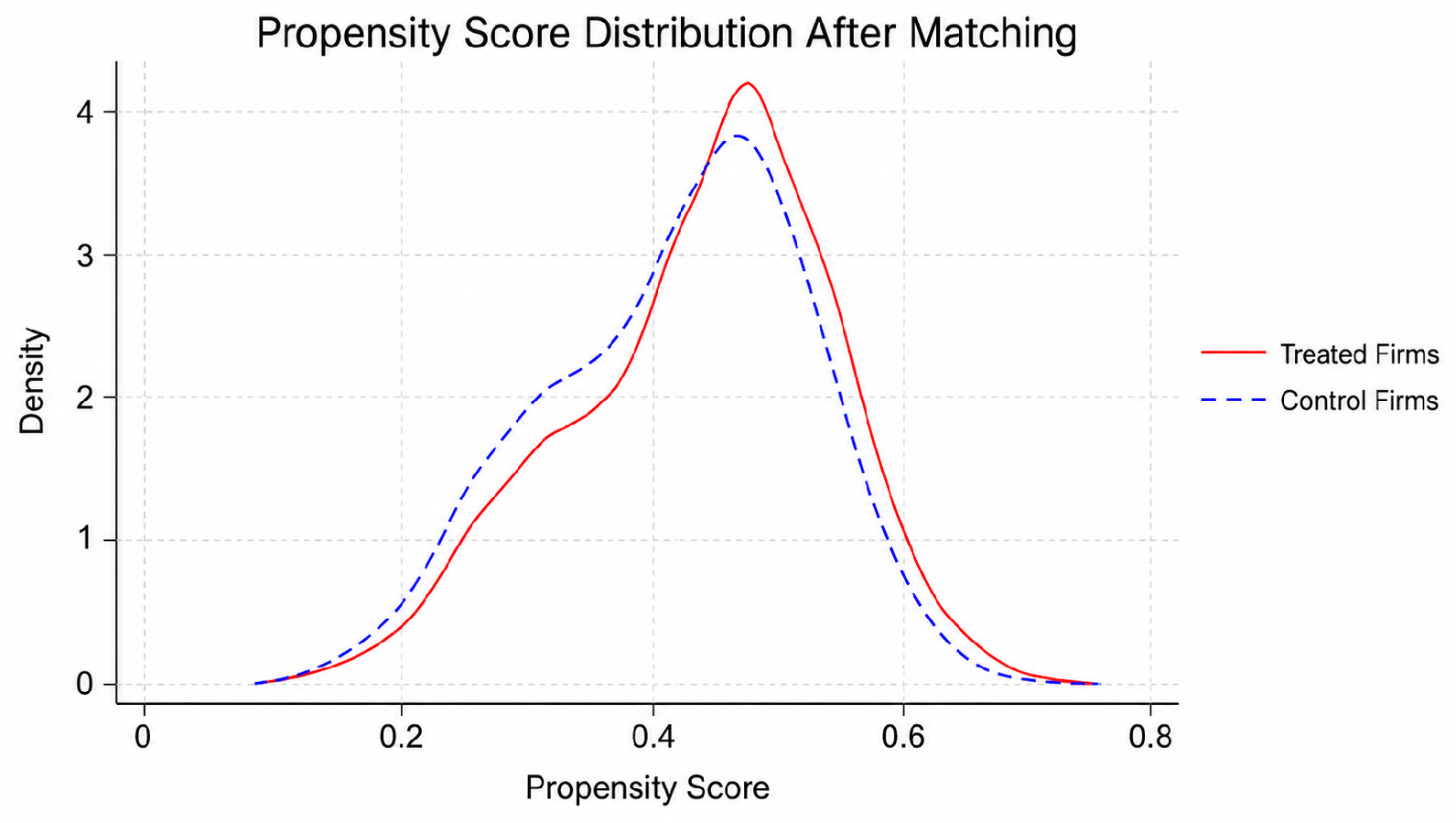
Figure 5 shows the distribution of propensity scores after matching. It confirms strong overlap between the treatment and control groups.
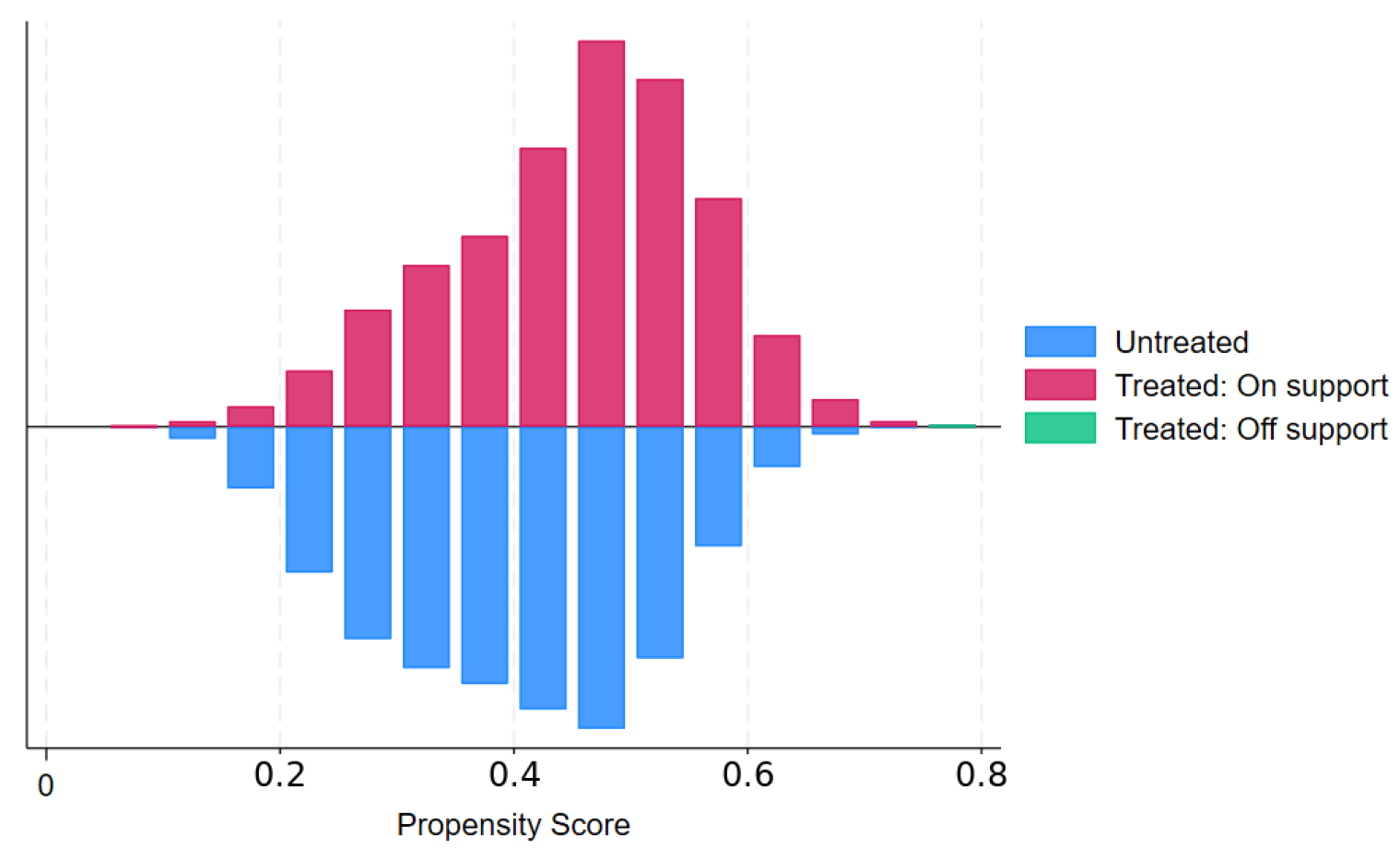
Figure 6 presents the joint support intervals. It further confirms that the matched sample satisfies the common support condition.

4.3.3. Instrumental-Variable Test

Although the parallel-trend test, placebo tests, and PSM-DID estimation help mitigate identification concerns, pilot selection may still be endogenous. The CETP was not assigned randomly across regions. Provinces with higher historical carbon pressure may also differ in industrial upgrading, environmental governance, green-finance development, and investor attention. These factors may affect both CETP exposure and firms’ market-implied transition-risk exposure. This concern is important because CTR reflects the sensitivity of firm value to stranded-asset shocks and can be priced by capital markets [7].
To address this concern, this study uses an instrumental-variable strategy. The instrument combines cross-sectional variation in pre-policy provincial carbon pressure with time-series variation in national policy timing. This design follows the logic of policy-evaluation studies that use predetermined regional exposure to strengthen identification in carbon-market settings [8,9,10,14].
Specifically, let p denote province, i denote firm, and t denote year. First, this study calculates the average carbon emission intensity of each province before the CETP. Provinces are then ranked according to this pre-policy carbon pressure. The instrumental variable is constructed as follows:
I V p t = R a n k C a r b o n p p r e × P o s t t ,
where RankCarbonprep denotes the pre-policy provincial carbon emission intensity rank, and Postt equals one for 2013 and later years. The instrument is expected to satisfy the relevance condition because provinces with higher historical carbon intensity faced stronger pressure and stronger policy incentives to enter the carbon trading pilot after 2013. The instrument is predetermined relative to the post-policy changes in firm-level CTR. It is therefore less likely to be affected by firms’ post-policy risk adjustment.
The two-stage least squares model is specified as follows:
First stage: DIDipt = α0 + α1IVpt + βXit + ρZpt + μi + λt + εipt,
Second stage: CTRipt = θ0 + θ1DI D ^ ipt + βXit + ρZpt + μi + λt + νipt.
In these equations, DIDipt is the CETP treatment variable, CTRipt is the low-carbon transition risk of firm i in province p and year t, Xit denotes firm-level controls, and Zpt denotes province-level time-varying controls. Firm fixed effects μi absorb time-invariant firm characteristics. Year fixed effects λt absorb common macro shocks. Standard errors are clustered at the firm level. The coefficient θ1 is the main IV estimate. A negative θ1 indicates that the CETP reduces firms’ stock-return exposure to stranded-asset shocks.
The exclusion restriction requires that the instrument affect firm-level CTR only through CETP exposure. This is a strong assumption. High-carbon provinces may also have different economic growth, fiscal support, industrial structures, environmental expenditures, and energy compositions. To reduce this concern, the IV regression further controls for province-level time-varying factors, including fiscal support, economic development, tertiary-industry share, environmental protection expenditure, and coal share in energy consumption. These controls help separate the CETP channel from broader provincial development and energy-transition trends.
Table 8 reports the IV estimates. Columns (1) and (2) present the original 2SLS estimates. Columns (3) and (4) add province-level controls. In the first stage, the instrument is strongly and positively associated with DID. After adding province-level controls, the first-stage coefficient is 0.8687 and is significant at the 1% level. The first-stage F-statistic is 678.53, far above conventional weak-instrument thresholds. This supports the relevance of the instrument.
The second-stage result remains consistent with the baseline conclusion. In Column (4), the coefficient of DID is −0.1626 and is significant at the 1% level after province-level controls are included. This coefficient is negative and economically meaningful. It indicates that the CETP reduces firms’ exposure to high-carbon and stranded-asset shocks after the endogenous component of policy exposure is instrumented. The result is also consistent with the view that carbon trading affects not only emissions and operating decisions but also firms’ risk exposure in capital markets [14,15,16].
This study also conducts a pre-policy IV falsification test. This test asks whether the instrument predicts firm-level CTR before the real CETP begins. The sample is restricted to the pre-policy period. A false policy year is set at 2011. The false treatment variable and the false instrument are defined as follows:
DIDfakeipt = Treati × 1 (t ≥ 2011),
IVfakept = RankCarbonprep × 1 (t ≥ 2011).
The placebo 2SLS model uses the same logic as the main IV model but is estimated only before the actual policy shock:
First stage: DIDfakeipt = δ0 + δ1IVfakept + βXit + ρZpt + μi + λt + uipt,
Second stage: CTRipt = φ0 + φ1DI D ^ fakeipt + βXit + ρZpt + μi + λt + eipt.
If the instrument mainly captured a pre-existing provincial CTR trend, the placebo design would show predictive power before the CETP was implemented. Table 9 summarizes the falsification design and conclusion. The diagnostic check passes. This supports the exclusion argument and reduces the concern that the IV result is driven by province-specific trends that existed before the policy.
Taken together, the IV estimates and the pre-policy falsification test support the baseline conclusion. The CETP reduces corporate low-carbon transition risk. The evidence remains after controlling for observable province-level confounders and after checking whether the instrument operates through pre-policy risk trends.
This instrument satisfies the relevance condition. Provinces with higher pre-policy carbon emission intensity usually faced stronger emission-reduction pressure and were more likely to be included in CETPs. After interacting this historical exposure with the post-policy dummy, the instrument can capture the stronger CETP shock faced by high-carbon provinces after 2013. The instrument also satisfies a plausible-exclusion restriction. The carbon emission intensity rank is measured before CETP implementation and is therefore predetermined. It cannot be affected by the policy after 2013. After controlling for firm fixed effects, year fixed effects, firm characteristics, industry pollution attributes, and regional environmental regulation intensity, pre-policy provincial carbon emission intensity should affect firms’ subsequent CTR mainly through its effect on CETP exposure.
Table 8 reports the 2SLS results. In the first stage, the coefficient of the instrumental variable is 0.8741 and is significant at the 1% level. This indicates that provinces with higher pre-policy carbon emission intensity ranks were more likely to be affected by CETP after 2013. The first-stage F-statistic is 650.53, which is far above the Stock-Yogo 10% critical value of 16.38. Thus, the instrument does not suffer from a weak-instrument problem.
In the second stage, the coefficient of DID is −0.1583 and is significant at the 1% level. This result shows that CETP still significantly reduces firms’ CTR after addressing potential pilot selection bias, omitted variables, and reverse causality. The absolute value of the 2SLS estimate is larger than that of the baseline estimate. This suggests that the baseline regression may underestimate the risk-reducing effect of CETP. Overall, the instrumental-variable test further confirms the main conclusion. CETP reduces firms’ exposure to high-carbon asset shocks and helps mitigate firms’ CTR.

4.4. Mechanism Analysis

4.4.1. Carbon Performance Improvement Mechanism

Columns (1)–(3) of Table 10 report the carbon performance channel. Column (2) shows that the CETP is positively associated with corporate carbon performance. The DID coefficient is 0.033 and is significant at the 5% level. Column (3) adds carbon performance to the CTR regression. The coefficient of carbon performance is −0.012 and is significant at the 10% level. The DID coefficient decreases in absolute value from −0.077 to −0.065. These results indicate that the CETP improves the economic output created per unit of carbon emissions and better carbon performance is associated with lower transition-risk exposure.

4.4.2. Capital Expenditure Increase Mechanism

Columns (4) and (5) examine the capital expenditure channel. The CETP coefficient in the Capex regression is 0.003 and is significant at the 1% level. This suggests that firms exposed to the CETP increase investment intensity. When Capex is added to the CTR regression, its coefficient is −0.317 and is significant at the 1% level. The result is consistent with the view that real investment and asset adjustment may help firms reduce exposure to stranded-asset shocks. However, Capex does not distinguish green equipment renewal from general investment expansion. Thus, the result should be interpreted as evidence that investment intensity and asset adjustment are associated with lower CTR, rather than proof that all additional investment represents green upgrading.

4.4.3. Bootstrap Mediation Test

To provide a more formal test of the mediation paths, this study conducts bootstrap mediation tests with 500 replications. Table 11 reports the indirect effects. For the carbon performance channel, the indirect effect is −0.0004 and is significant at the 10% level. The direct effect remains negative and significant. This supports a partial-mediation interpretation. The CETP is associated with higher carbon performance, and higher carbon performance is associated with lower CTR.
For the Capex channel, the indirect effect is not statistically significant. Therefore, Capex is interpreted only as a supplementary investment-adjustment channel rather than a formally supported mediation channel. This cautious interpretation avoids treating all capital expenditure as green upgrading.

5. Heterogeneity Analysis

The previous results show that the carbon emissions trading pilot (CETP) significantly reduces corporate low-carbon transition risk (CTR) overall. However, carbon trading, as a market-based environmental regulation, may not have a homogeneous effect on all firms. Whether its effect can be fully released depends on whether firms have the internal incentives, capability base, and external conditions to translate carbon price signals into low-carbon adjustment behavior. Based on this logic, this study conducts heterogeneity analysis from three dimensions: ownership structure, technological attributes, and regional location.
These three dimensions are selected for the following reasons. First, ownership structure reflects differences in market-oriented incentives and risk constraints. Compared with state-owned enterprises, private enterprises usually lack implicit guarantees and resource protection. Their financing conditions, market valuation, and operating risks are more vulnerable to low-carbon transition shocks. Therefore, they may be more sensitive to carbon price signals and allowance constraints. Existing studies also find that carbon trading or low-carbon policies tend to have stronger effects among non-state-owned or private enterprises [27,28].
Second, technological attributes reflect the foundation for firms to transform environmental constraints into low-carbon capabilities. The CETP does not automatically reduce firms’ transition risk. External carbon constraints are more likely to improve carbon performance and asset structure only when firms have strong technology absorption, process upgrading, and equipment renewal capabilities. Zhao et al. (2025) [29] show that high-tech firms, due to their R&D capabilities and technological reserves, are better able to mitigate the adverse impact of climate policy shocks on carbon performance.
Third, regional location reflects differences in policy implementation and market environments. Eastern China usually has a higher degree of marketization, a more developed green-finance system, and a stronger information disclosure environment. Firms in this region are more likely to obtain the capital, technology, and market feedback needed for low-carbon transition. Existing studies also show that carbon trading has stronger effects in eastern regions or regions with higher marketization levels [28,30].

5.1. Heterogeneity in Ownership Structure

From the perspective of ownership structure, the CETP has a stronger risk-mitigating effect on private enterprises. Table 12 shows that the DID coefficient is −0.118 in the private enterprise sample and is significant at the 1% level. In the state-owned enterprise sample, the DID coefficient is −0.046 and is significant only at the 10% level. The between-group-difference test further shows that the ownership difference term is significant. This indicates that the CETP has a significantly stronger risk-reducing effect on CTR among private enterprises than among state-owned enterprises.
This result suggests that the effectiveness of market-based environmental regulation depends on firms’ incentives for market-oriented responses. State-owned enterprises usually have stronger resource acquisition capacity and policy implementation capacity. However, their sensitivity to carbon price signals may be weakened by financing convenience, soft budget constraints, and administrative target constraints. By contrast, private enterprises face stronger market competition and financing constraints. Their asset values and financing conditions are more likely to be affected by CTR. Therefore, after the implementation of the CETP, private enterprises have stronger incentives to reduce dependence on high-carbon assets through energy-saving retrofits, equipment renewal, and capital allocation adjustment. This leads to a stronger risk-mitigation effect.

5.2. Heterogeneity in Technological Attributes

From the perspective of technological attributes, the CETP has a more pronounced risk-reducing effect on CTR among high-tech firms. Table 12 shows that the DID coefficient for high-tech firms is −0.113 and is significant at the 1% level. For non-high-tech firms, the DID coefficient is −0.052 and is significant only at the 10% level. The between-group-difference test shows that the high-tech difference term is significantly negative. This indicates that the effect of the CETP is significantly stronger among high-tech firms.
This result shows that the risk governance function of carbon trading does not arise solely from the strength of external constraints. It depends more on firms’ technological transformation capability. High-tech firms usually have stronger R&D foundations, technology absorption capacity, and equipment renewal capacity. They can more quickly transform carbon price signals into green process upgrading, carbon performance improvement, and low-carbon asset allocation. This reduces the sensitivity of firm stock returns to shocks from high-carbon assets. In contrast, non-high-tech firms may be constrained by technological path dependence and capital adjustment costs. When facing the CETP, they are more likely to experience short-term compliance pressure rather than a substantial improvement in low-carbon transition capacity. Therefore, their risk-mitigation effect is relatively limited.

5.3. Regional Heterogeneity

From the perspective of regional location, the CETP has a stronger risk-reducing effect on CTR among firms in eastern China. Table 12 reports the eastern-region estimate, which is negative and significant. The between-group comparison also supports a stronger effect in the eastern region. This pattern is consistent with the stronger market infrastructure, better green-finance supply, and more developed environmental information systems in eastern China.
This result suggests that the effect of carbon trading requires support from corresponding market foundations and institutional environments. Eastern China has a higher degree of marketization. It also has a more developed green-finance supply, stronger environmental governance capacity, and better information disclosure quality. Firms in this region can identify carbon price signals more quickly. They can also reduce transition risk through financing support, technological upgrading, and asset structure adjustment. At the same time, firms in eastern China usually receive more attention from capital markets. Their low-carbon transition behavior is more likely to be recognized by investors and reflected in risk pricing.
This regional pattern also has a clear policy meaning. Carbon markets reduce firms’ transition-risk exposure more effectively when carbon price signals are supported by active market participation, information disclosure, and complementary green-finance services. Therefore, improving regional carbon-market infrastructure is important for strengthening the risk-mitigation function of carbon pricing. Table 12 summarizes the heterogeneity results across ownership, technological attributes, and regional location.

6. Conclusions

6.1. Research Findings

This study examines whether the CETP reduces corporate low-carbon transition risk. Using Chinese A-share listed firms from 2006 to 2024, this study treats the CETP as a quasi-natural experiment and measures CTR as the sensitivity of firm stock returns to shocks from a stranded-asset portfolio. This measure captures market-implied exposure to high-carbon asset revaluation risk.
The main finding is that the CETP significantly reduces corporate CTR. The baseline DID coefficient is −0.076 in the fully controlled specification. Given that the standard deviation of CTR is 0.756, this estimate corresponds to about 10% of one standard deviation. This magnitude is economically meaningful. It shows that carbon trading not only affects emissions and compliance costs but also weakens firms’ stock-return sensitivity to stranded-asset shocks.
The conclusion is robust across multiple tests. It holds when alternative CTR measures are used and when the sample period is shortened. It also remains stable after using staggered DID based on actual pilot launch years, adding province-level time-varying controls, adding province-specific linear trends, controlling for other concurrent green policies, conducting placebo tests, applying PSM-DID, and retaining the instrumental-variable test. These results indicate that the estimated effect is unlikely to be driven by policy timing differences, regional trends, or other green-policy shocks.
The mechanism evidence shows that carbon performance is an important channel. The CETP improves firms’ economic output per unit of carbon emissions. Better carbon performance means that firms are less dependent on high-emission production and are less exposed to carbon-cost shocks and high-carbon asset revaluation. The evidence on capital expenditure should be interpreted more carefully. Capex reflects investment intensity and potential asset adjustment, but it does not directly identify green investment. Therefore, this study treats Capex as a supplementary channel related to asset adjustment rather than as direct proof of green upgrading.
The heterogeneity results show that the risk-reducing effect is stronger among non-state-owned firms, high-tech firms, and firms located in eastern China. These firms are more sensitive to market incentives, have stronger technological capabilities, or operate in more developed institutional environments. They can therefore translate carbon price signals into lower transition-risk exposure more effectively.

6.2. Theoretical Contributions and Practical Implications

This study contributes to the literature in three ways. First, it extends research on market-based environmental regulation by shifting attention from emissions reduction and productivity outcomes to climate-related financial risk. Second, it contributes to climate-finance research by showing that a carbon-market policy can reduce market-implied transition-risk exposure. Third, it clarifies the channels and boundary conditions of the CETP effect by showing the role of carbon performance, the cautious role of Capex, and the importance of ownership, technology, and regional institutions.
For managers, carbon trading should be treated as part of long-term risk management rather than only as a compliance issue. Firms should identify their carbon-emission structure, high-carbon assets, energy-intensive equipment, and potential stranded-asset exposure. They should also improve carbon performance and disclose the quality of their low-carbon investment.
For investors and financial institutions, CTR provides useful information about climate-related financial risk. Investors should pay attention not only to current emissions but also to the sensitivity of firm value to stranded-asset shocks. Carbon performance, transition investment, and the credibility of low-carbon adjustment should be included in valuation, credit assessment, and portfolio risk management.
For policymakers, the results suggest that carbon markets should be designed not only to reduce emissions but also to manage climate-related financial risk. A stable and credible carbon price is essential. Allowance allocation should become more transparent and more binding. Monitoring, reporting, and verification systems should be strengthened. Carbon trading should also be coordinated with green finance, green credit, fiscal incentives, and carbon-asset financing to reduce the cost of low-carbon investment.
The findings also offer international implications. Many economies are building carbon markets. China’s pilot experience suggests that a carbon market cannot reduce transition-risk exposure by creating a trading platform alone. It also needs credible price signals, transparent allowance rules, strict information disclosure, effective MRV systems, and financial support for corporate transition. At the same time, the international relevance of the findings should be interpreted with caution because China’s carbon markets were introduced through government-led pilot programs and operate in a specific institutional context.

6.3. Limitations and Future Research

This study has several limitations. First, CTR is measured through firms’ stock-return exposure to a stranded-asset portfolio. Future studies could use alternative stranded-asset portfolios or more direct firm-level carbon asset data to test the robustness of this measure. Second, capital expenditure is a broad proxy. It cannot distinguish green equipment renewal from general investment expansion. Future research could use data on environmental investment, green patents, project-level low-carbon capital expenditure, or equipment renewal to identify this channel more precisely. Third, future research could further examine more detailed industry-level and city-level heterogeneity and strengthen endogeneity tests when more suitable instruments or natural experiments become available.

Author Contributions

Conceptualization, Y.S. and S.L.; methodology, Y.S.; software, Y.S.; validation, Y.S. and S.L.; formal analysis, Y.S.; investigation, Y.S. and S.L.; data curation, Y.S.; writing—original draft preparation, Y.S.; writing—review and editing, Y.S. and S.L.; supervision, S.L.; project administration, Y.S. and S.L.; funding acquisition, S.L. All authors have read and agreed to the published version of the manuscript.

Funding

This research was funded by the China National Social Science Fund, grant number 21BJY146.

Institutional Review Board Statement

Not applicable.

Informed Consent Statement

Not applicable.

Data Availability Statement

The raw data supporting the conclusions of this article will be made available by the authors on request.

Conflicts of Interest

The authors declare no conflicts of interest.

References

  1. Van Der Ploeg, F.; Rezai, A. Stranded assets in the transition to a carbon-free economy. Annu. Rev. Resour. Econ. 2020, 12, 281–298. [Google Scholar] [CrossRef]
  2. Rozenberg, J.; Vogt-Schilb, A.; Hallegatte, S. Instrument choice and stranded assets in the transition to clean capital. IDB Publ. Work. Pap. 2020, 100, 102183. [Google Scholar] [CrossRef]
  3. Battiston, S.; Dafermos, Y.; Monasterolo, I. Climate risks and financial stability. J. Financ. Stab. 2021, 54, 100867. [Google Scholar] [CrossRef]
  4. Bolton, P.; Kacperczyk, M. Global pricing of carbon-transition risk. J. Financ. 2023, 78, 3677–3754. [Google Scholar] [CrossRef]
  5. Delis, M.D.; Greiff, K.D.; Iosifidi, M.; Ongena, S. Being stranded with fossil fuel reserves? Climate policy risk and the pricing of bank loans. Financ. Mark. Inst. Instrum. 2024, 33, 239–265. [Google Scholar] [CrossRef]
  6. Costola, M.; Vozian, K. Pricing climate transition risk: Evidence from European corporate CDS. Energy Econ. 2025, 143, 108248. [Google Scholar] [CrossRef]
  7. Jung, H.; Engle, R.F.; Berner, R. CRISK: Measuring the climate risk exposure of the financial system. J. Financ. Econ. 2025, 171, 104076. [Google Scholar] [CrossRef]
  8. Zhou, B.; Zhang, C.; Song, H.; Wang, Q. How does emission trading reduce China’s carbon intensity? An exploration using a decomposition and difference-in-differences approach. Sci. Total Environ. 2019, 676, 514–523. [Google Scholar] [PubMed]
  9. Pan, X.; Pu, C.; Yuan, S.; Xu, H.; Sun, D. Effect of Chinese pilots carbon emission trading scheme on enterprises’ total factor productivity: The moderating role of government participation and carbon trading market efficiency. J. Environ. Manag. 2022, 316, 115228. [Google Scholar] [CrossRef]
  10. Yang, X.; Jiang, P.; Pan, Y. Does China’s carbon emission trading policy have an employment double dividend and a Porter effect? Energy Policy 2020, 142, 111492. [Google Scholar] [CrossRef]
  11. Chen, Z.; Zhang, X.; Chen, F. Do carbon emission trading schemes stimulate green innovation in enterprises? Evidence from China. Technol. Forecast. Soc. Chang. 2021, 168, 120744. [Google Scholar] [CrossRef]
  12. Lv, M.; Bai, M. Evaluation of China’s carbon emission trading policy from corporate innovation. Financ. Res. Lett. 2021, 39, 101565. [Google Scholar] [CrossRef]
  13. Luan, L.; Liu, P.; Mei, Y. The impact of pilot carbon market on firms’ performance in China. Energy Econ. 2025, 142, 108164. [Google Scholar] [CrossRef]
  14. Zhang, W.; Xi, B. The effect of carbon emission trading on enterprises’ sustainable development performance: A quasi-natural experiment based on carbon emission trading pilot in China. Energy Policy 2024, 185, 113960. [Google Scholar] [CrossRef]
  15. He, C.; Zhang, W. The impact of carbon emission trading on the financing constraints of high-emission enterprises: Evidence from China. Financ. Res. Lett. 2024, 67, 105927. [Google Scholar] [CrossRef]
  16. Yuan, X.; Dong, Y.; Liang, L.; Zhang, H. The impact of carbon emission trading scheme policy on information asymmetry in the stock market: Evidence from China. Energy Policy 2025, 198, 114502. [Google Scholar] [CrossRef]
  17. Ren, Y.S.; Boubaker, S.; Liu, P.Z.; Zhang, Y. How does carbon regulatory policy affect debt financing costs? Empirical evidence from China. Q. Rev. Econ. Financ. 2023, 90, 77–90. [Google Scholar] [CrossRef]
  18. Lu, H.; Wang, X. Stranded asset risk and corporate capital structure: Evidence from China’s low-carbon transition. Res. Int. Bus. Financ. 2025, 80, 103144. [Google Scholar] [CrossRef]
  19. Zhou, D.; Liang, X.; Zhou, Y.; Tang, K. Does emission trading boost carbon productivity? Evidence from China’s pilot emission trading scheme. Int. J. Environ. Res. Public Health 2020, 17, 5522. [Google Scholar] [CrossRef] [PubMed]
  20. Zheng, Y.; Sun, X.; Zhang, C.; Wang, Q. Can emission trading scheme improve carbon emission performance? Evidence from China. Front. Energy Res. 2021, 9, 759572. [Google Scholar] [CrossRef]
  21. Zhang, G.; Zhou, B.; Ren, Y.; Wang, Y. Does carbon emission trading mitigate the level of enterprise investment risk? Evidence from China. Int. Rev. Econ. Financ. 2025, 105, 104860. [Google Scholar] [CrossRef]
  22. Chen, M.; Liu, Y.; Zhang, W.; Li, X. Climate policy risk and corporate asset structure upgrading: The rise of asset-light operations. Int. Rev. Econ. Financ. 2026, 107, 105103. [Google Scholar] [CrossRef]
  23. Wang, J.; Han, Y.; Long, H.; Zhang, X. Digital intelligence and low-carbon transition risk: Evidence from China. Financ. Res. Lett. 2025, 86, 108436. [Google Scholar] [CrossRef]
  24. Ren, X.; Li, Y.; Shahbaz, M.; Dong, K.; Lu, Z. Climate risk and corporate environmental performance: Empirical evidence from China. Sustain. Prod. Consum. 2021, 30, 467–477. [Google Scholar] [CrossRef]
  25. Shen, Y.; Ma, J.; Song, M.; Zhang, L. Does the pilot trading of carbon emission rights cause domestic or international pollution transfer? J. Environ. Manag. 2024, 370, 122538. [Google Scholar] [CrossRef]
  26. Baron, R.M.; Kenny, D.A. The moderator-mediator variable distinction in social psychological research: Conceptual, strategic, and statistical considerations. J. Pers. Soc. Psychol. 1986, 51, 1173–1182. [Google Scholar] [CrossRef] [PubMed]
  27. Ge, W.; Xu, Y.; Razzaq, A.; Li, J. What drives the green transformation of enterprises? A case of carbon emissions trading pilot policy in China. Environ. Sci. Pollut. Res. 2023, 30, 56743–56758. [Google Scholar] [CrossRef]
  28. Zhang, Z.; Chen, S.; Huang, Y. How the dual pilot policy impacts corporate low-carbon transition: Evidence from energy use rights and carbon emission rights trading in China. Econ. Anal. Policy 2025, 88, 661–686. [Google Scholar] [CrossRef]
  29. Zhao, L.; Liu, Z.; Xie, C.; Wang, Y. Climate policy uncertainty and corporate carbon performance: Evidence from transportation enterprises. J. Environ. Manag. 2025, 390, 126346. [Google Scholar] [CrossRef]
  30. Zhang, Y.; Li, S.; Luo, T.; Gao, J. The effect of emission trading policy on carbon emission reduction: Evidence from an integrated study of pilot regions in China. J. Clean. Prod. 2020, 265, 121843. [Google Scholar] [CrossRef]
Figure 1. Research framework of the CETP, mechanism variables, and corporate CTR.
Sustainability 18 06723 g001
Figure 2. Placebo test based on random treatment assignment.
Sustainability 18 06723 g002
Figure 3. Results of the parallel-trend test.
Sustainability 18 06723 g003
Figure 4. Standardized deviations of covariates before and after PSM matching.
Sustainability 18 06723 g004
Figure 5. Distribution of propensity scores after matching.
Sustainability 18 06723 g005
Figure 6. PSM joint support intervals.
Sustainability 18 06723 g006
Table 1. Variable definition.
VariableSymbolDefinition
Low-carbon transition riskCTRBaseline measure is CTR1_24, calculated from firms’ rolling stock-return exposure to stranded-asset shocks.
Carbon emissions trading pilotDIDTreat × Post. It equals 1 for firms in CETP regions after 2013 and 0 otherwise.
Carbon performanceCPOperating revenue relative to total carbon emissions.
Capital expenditureCapexCapital expenditure intensity of the firm.
State ownershipSOEEquals 1 for state-owned enterprises and 0 otherwise.
Firm sizeSizeNatural logarithm of total assets.
LeverageLevTotal liabilities divided by total assets.
ProfitabilityROANet profit divided by average total assets.
Fixed asset ratioFixedFixed assets divided by total assets.
GrowthGrowthRevenue growth rate.
Listing ageListAgeNatural logarithm of firm listing age.
Heavily polluting industryPolluteEquals 1 if the firm belongs to a heavily polluting industry and 0 otherwise.
Environmental regulation intensityRegRegional environmental regulation keyword frequency index.
Instrumental variableIVPre-policy provincial carbon emission intensity ranking interacted with the post-policy dummy.
Table 2. Descriptive statistics of variables (2006–2024).
VariableObsMeanStd. Dev.MinMax
CTR44,920−0.0180.756−5.4928.003
DID44,9200.3380.4730.0001.000
CP28,4460.6571.0760.00070.740
Capex44,9200.0460.047−0.0470.288
SOE44,9200.3850.4870.0001.000
Size44,92022.2401.31219.41526.452
Lev44,9200.4340.2050.0280.910
ROA44,9200.0310.067−0.5560.222
Fixed44,9200.2100.1620.0010.807
Growth44,9200.1510.431−0.6735.076
ListAge44,9202.2110.7680.6933.555
Pollute44,9200.2130.4100.0001.000
Reg44,9200.5740.1790.0001.967
Table 3. Results of the baseline regression.
Variables(1)(2)(3)(4)
CTR1_24CTR1_24CTR2_24CTR2_24
DID−0.108 ***−0.076 ***−0.106 ***−0.074 ***
(0.010)(0.021)(0.010)(0.021)
SOE −0.025 −0.027
(0.024) (0.023)
Size −0.012 −0.012
(0.010) (0.010)
Lev 0.011 0.010
(0.044) (0.043)
ROA −0.191 ** −0.186 **
(0.075) (0.073)
Fixed 0.126 ** 0.123 **
(0.050) (0.049)
Growth −0.007 −0.006
(0.010) (0.010)
ListAge 0.205 *** 0.199 ***
(0.023) (0.022)
Pollute 0.146 *** 0.144 ***
(0.030) (0.029)
Reg −0.008 −0.008
(0.028) (0.027)
Constant−0.057 ***−0.134−0.068 ***−0.146
(0.020)(0.201)(0.020)(0.198)
Year FEYesYesYesYes
Firm FENoYesNoYes
Observations44,92044,92044,92044,920
Adjusted R20.2910.2990.2870.295
Notes: Standard errors in brackets are cluster-robust standard errors; **, *** denote significance at the 5% and 1% levels, respectively.
Table 4. Robustness tests using alternative CTR measures and a shortened sample period.
Variables(1)(2)(3)(4)
CTR1_60CTR2_60CTR1_24CTR2_24
SampleFull sampleFull sample2015–20242015–2024
DID−0.097 ***−0.096 ***−0.186 *−0.183 *
(0.020)(0.019)(0.104)(0.102)
SOE−0.018−0.019−0.054−0.053
(0.023)(0.023)(0.038)(0.037)
Size−0.023 **−0.022 **−0.007−0.006
(0.010)(0.009)(0.018)(0.017)
Lev0.0600.055−0.072−0.066
(0.038)(0.038)(0.062)(0.060)
ROA−0.178 ***−0.171 ***−0.077−0.074
(0.059)(0.058)(0.085)(0.083)
Fixed0.0690.0680.225 **0.221 **
(0.044)(0.043)(0.092)(0.090)
Growth0.0090.008−0.001−0.001
(0.006)(0.006)(0.012)(0.012)
ListAge0.272 ***0.261 ***0.228 ***0.225 ***
(0.023)(0.023)(0.039)(0.038)
Pollute0.067 **0.067 **0.132 **0.129 **
(0.028)(0.027)(0.064)(0.063)
Reg0.0150.015−0.038−0.037
(0.024)(0.024)(0.033)(0.032)
Constant−0.092−0.0960.5620.533
(0.199)(0.195)(0.392)(0.384)
ControlsYesYesYesYes
Year FEYesYesYesYes
Firm FEYesYesYesYes
Observations44,92044,9203167331673
Adjusted R20.2220.2160.3020.302
Notes: Figures in brackets represent cluster-robust standard errors; *, **, *** denote significance at the 10%, 5% and 1% levels, respectively.
Table 5. Robustness tests considering staggered timing and province-level confounders.
Variables(1)(2)(3)(4)(5)(6)
SpecificationStaggered DIDStaggered DIDProvince controlsProvince controlsProvince trendsProvince trends
Dependent variableCTR1_24CTR2_24CTR1_24CTR2_24CTR1_24CTR2_24
DID_staggered−0.072 ***−0.070 ***
(0.021)(0.020)
DID −0.058 **−0.057 **−0.133 ***−0.129 ***
(0.024)(0.024)(0.033)(0.033)
Firm-level controlsYesYesYesYesYesYes
Province-level controlsNoNoYesYesNoNo
Province linear trendsNoNoNoNoYesYes
Firm FEYesYesYesYesYesYes
Year FEYesYesYesYesYesYes
Observations44,92044,92035,37235,37244,92044,920
Adjusted R20.2980.2950.3180.3140.3000.296
Notes: Figures in brackets are cluster-robust standard errors; **, *** denote significance at the 5% and 1% levels, respectively.
Table 6. Robustness tests controlling for other concurrent green policies.
Variables(1) CTR1_24(2) CTR1_24(3) CTR1_24(4) CTR2_24(5) CTR2_24(6) CTR2_24
DID−0.083 ***−0.074 ***−0.072 ***−0.081 ***−0.072 ***−0.070 ***
(0.022)(0.021)(0.022)(0.022)(0.021)(0.021)
Concurrent policy controlledLow-carbon cityGreen financePermit tradingLow-carbon cityGreen financePermit trading
Firm-level controlsYesYesYesYesYesYes
Firm FEYesYesYesYesYesYes
Year FEYesYesYesYesYesYes
Observations44,92044,92044,92044,92044,92044,920
Adj. R20.2990.2990.2990.2950.2950.295
Notes: Figures in brackets are cluster-robust standard errors; *** denotes significance at the 1% levels, respectively.
Table 7. PSM-DID test results.
Variables(1)(2)
Full-sample FEPSM-DID
DID−0.076 ***−0.078 ***
(0.021)(0.025)
SOE−0.025−0.009
(0.024)(0.026)
Size−0.012−0.003
(0.010)(0.012)
Lev0.0110.018
(0.044)(0.051)
ROA−0.191 **−0.269 ***
(0.075)(0.089)
Fixed0.126 **0.144 **
(0.050)(0.062)
Growth−0.007−0.025 **
(0.010)(0.011)
ListAge0.205 ***0.174 ***
(0.023)(0.026)
Pollute0.146 ***0.145 ***
(0.030)(0.035)
Reg−0.008−0.023
(0.028)(0.034)
Constant−0.134−0.270
(0.201)(0.246)
ControlsYesYes
Year FEYesYes
Firm FEYesYes
Observations44,92030,287
Adjusted R20.2990.312
Notes: Standard errors in brackets are cluster-robust; **, *** denote significance at the 5% and 1% levels, respectively.
Table 8. Instrumental-variable estimates with province-level controls.
Variables(1)(2)(3)(4)
Dependent variableDIDCTR1_24DIDCTR1_24
SpecificationFirst stageSecond stageFirst stage + province controlsSecond stage + province controls
IV0.8741 *** 0.8687 ***
(0.0333) (0.0333)
DID −0.1583 *** −0.1626 ***
(0.0509) (0.0509)
Firm-level controlsYesYesYesYes
Province-level controlsNoNoYesYes
Firm FEYesYesYesYes
Year FEYesYesYesYes
Observations44,60444,60435,12435,124
First-stage F-statistic650.53 678.53
R2 0.5990.318
Notes: Standard errors are reported in parentheses. *** indicates significance at the 1% level, respectively. Columns (3) and (4) include province-level time-varying controls.
Table 9. Pre-policy IV falsification test.
Diagnostic ItemDesign and Result
Sample restrictionPre-policy years only
False policy year2011
False treatment variableTreati × 1 (t ≥ 2011)
False instrumentRankCarbonprep × 1 (t ≥ 2011)
Firm and year fixed effectsYes
Province-level controlsYes
Falsification checkPassed
InterpretationSupports the exclusion argument
Observations8072
Notes: This table reports the design and diagnostic conclusion of the pre-policy IV falsification test. The detailed coefficient output is used as a diagnostic check and is not interpreted as a policy-effect estimate.
Table 10. Results of mechanism tests.
Variables(1)(2)(3)(4)(5)
CTR1_24CPCTR1_24CapexCTR1_24
DID−0.077 ***0.033 **−0.065 ***0.003 ***−0.076 ***
(0.015)(0.017)(0.016)(0.001)(0.015)
CP −0.012 *
(0.006)
Capex −0.317 ***
(0.082)
ControlsYesYesYesYesYes
Year FEYesYesYesYesYes
Firm FEYesYesYesYesYes
Observations44,92028,44628,44644,92044,920
R20.2990.6460.3110.1230.299
Notes: Figures in brackets are cluster-robust standard errors; all regressions include control variables, firm fixed effects, and year fixed effects; ***, **, and * denote significance at the 1%, 5%, and 10% levels, respectively.
Table 11. Bootstrap mediation test results.
Variables(1)(2)
MechanismCarbon performanceCapex
Indirect effect−0.0004 *−0.0010
(0.0002)(0.0007)
a path0.0327 *0.0031 *
(0.0171)(0.0017)
b path−0.0116 *−0.3185 ***
(0.0070)(0.1118)
Direct effect−0.0645 ***−0.0754 ***
(0.0241)(0.0202)
Bootstrap replications500500
Observations28,44644,920
Notes: Standard errors are reported in parentheses. * and *** indicate significance at the 10% and 1% levels, respectively. The bootstrap test uses 500 replications.
Table 12. Heterogeneity test results.
Variables(1)(2)(3)(4)(5)(6)
SOEPrivateHigh-techNon-high-techEasternCentral-western
DID−0.046 *−0.118 ***−0.113 ***−0.052 *−0.083 ***0.039
(0.027)(0.036)(0.031)(0.030)(0.026)(0.051)
Group difference0.082 *** −0.127 *** −0.115 **
(0.031) (0.030) (0.048)
ControlsYesYesYesYesYesYes
Year FEYesYesYesYesYesYes
Firm FEYesYesYesYesYesYes
Observations17,28727,63326,19518,72531,65213,268
R20.2990.3120.3090.3040.3070.287
Note: Figures in brackets represent cluster-robust standard errors; *, **, *** denote significance at the 10%, 5% and 1% levels, respectively. The column for the between-group-difference test reports the corresponding interaction coefficients.
Disclaimer/Publisher’s Note: The statements, opinions and data contained in all publications are solely those of the individual author(s) and contributor(s) and not of MDPI and/or the editor(s). MDPI and/or the editor(s) disclaim responsibility for any injury to people or property resulting from any ideas, methods, instructions or products referred to in the content.