Model-Aware Predictive Control for Occupant-Centric Environment Optimization in Room-Level Scenarios
 , ,
, ,
Abstract
1. Introduction
- We propose a model-aware predictive control framework oriented to OCC named MAPC, addressing the challenges of constructing credible thermal dynamic models with limited data, and providing adaptive room-level environmental control strategies that meet dynamic requirements.
- To construct credible thermal dynamic models, we propose a novel modeling approach that integrates the data-driven subspace projection method with physical priors that can decouple abstract system states from limited data and utilize physical constraints to fine-tune the baseline model, effectively enhancing its reliability and interpretability.
- We propose a hierarchical framework and an adaptive room-level decision-making mechanism to balance the potential conflicts associated with distributed control and facilitate the dynamic adaptation of system objectives and constraints by allowing for occupant comfort and energy consumption requirements.
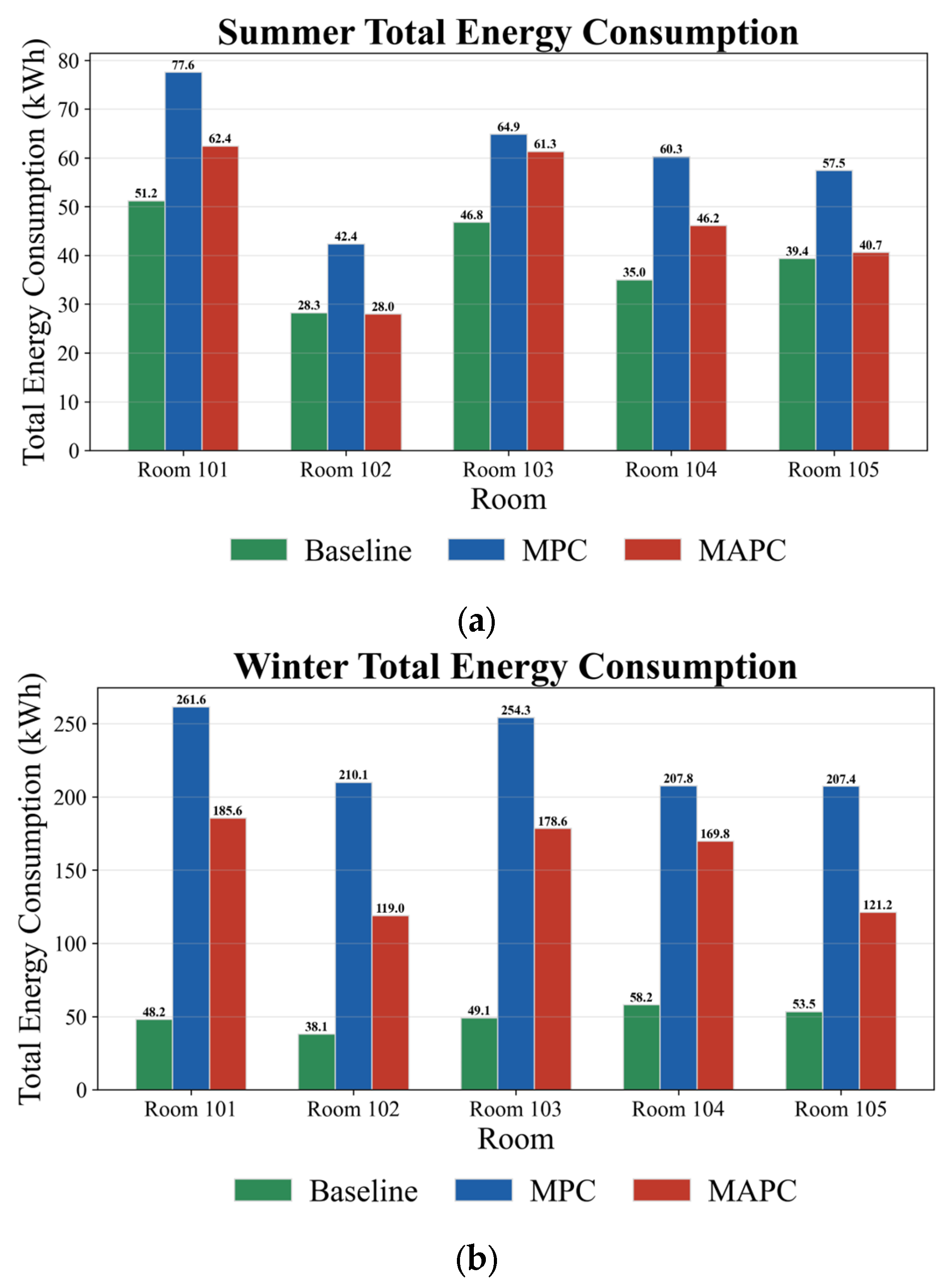
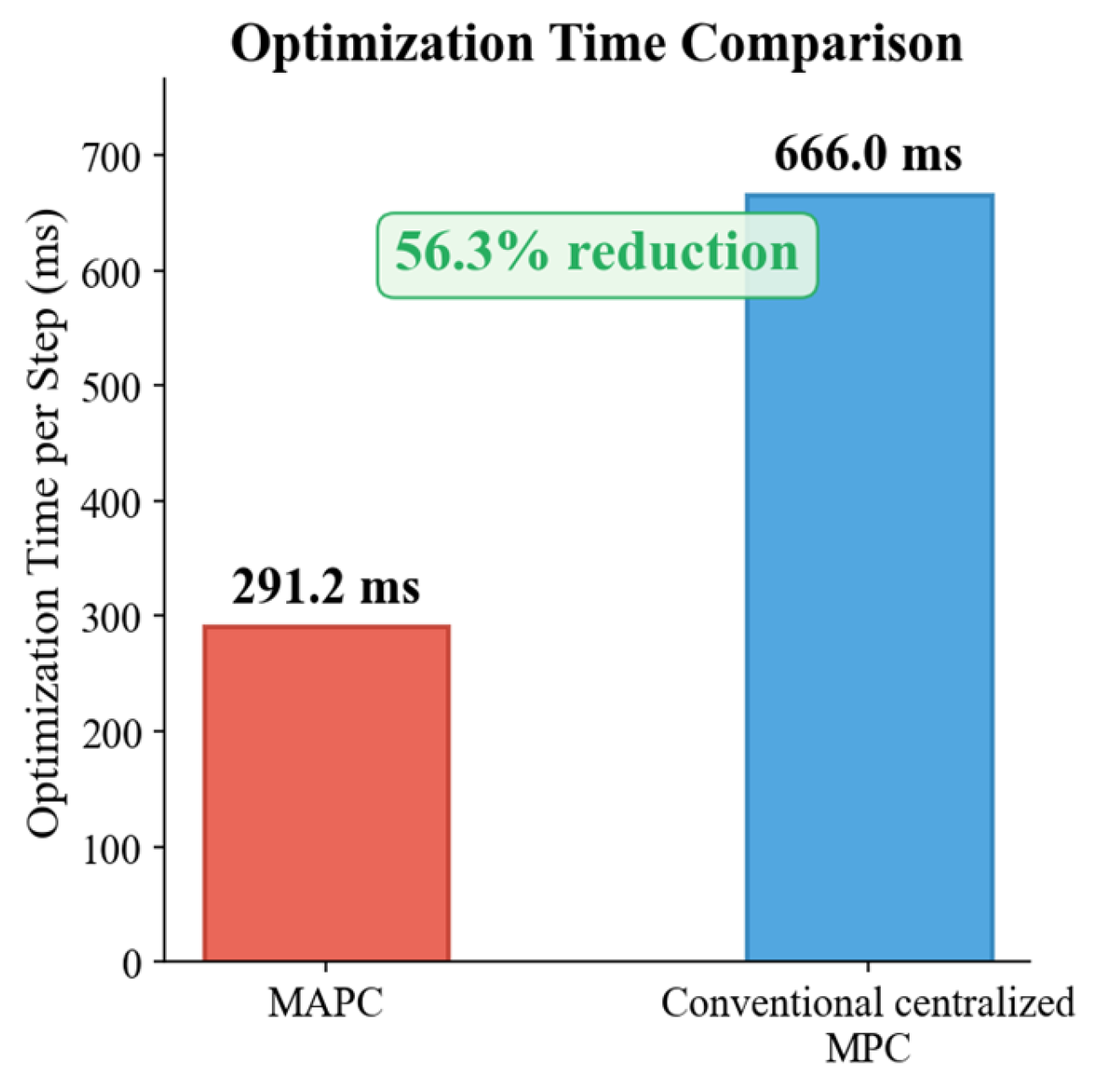
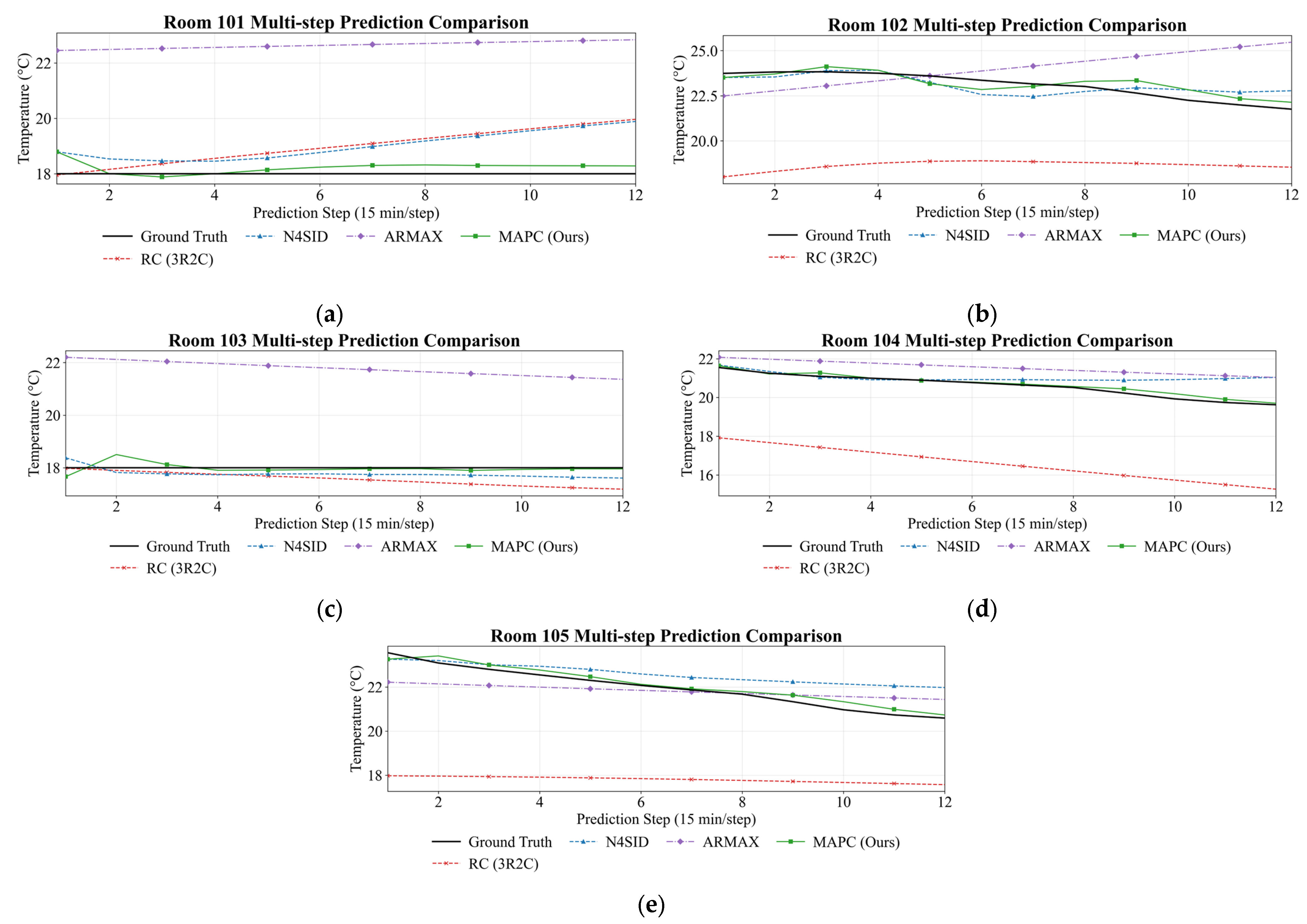
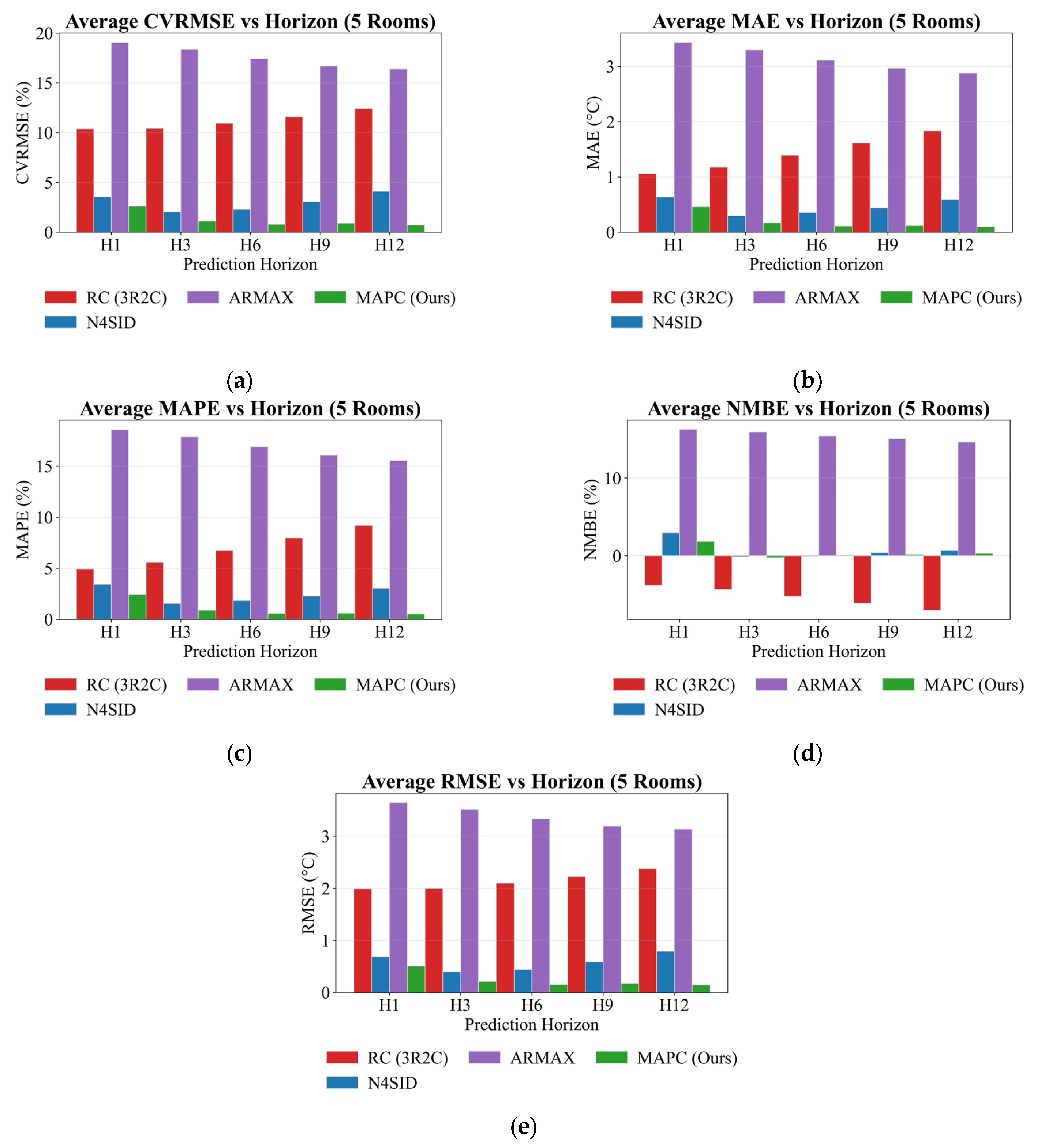
- MAPC is implemented utilizing data from an EnergyPlus simulation dataset and a publicly available dataset. It is extensively compared with different methods, and ablation experiments are conducted. The experimental results demonstrate the superiority of the MAPC method in thermal dynamics modeling and its capability to achieve better trade-offs between occupant comfort and energy consumption.
2. Literature Review
2.1. Conventional Methods
2.2. Model-Driven Control
2.3. Data-Driven Control
2.4. Existing Challenges
3. Methodology
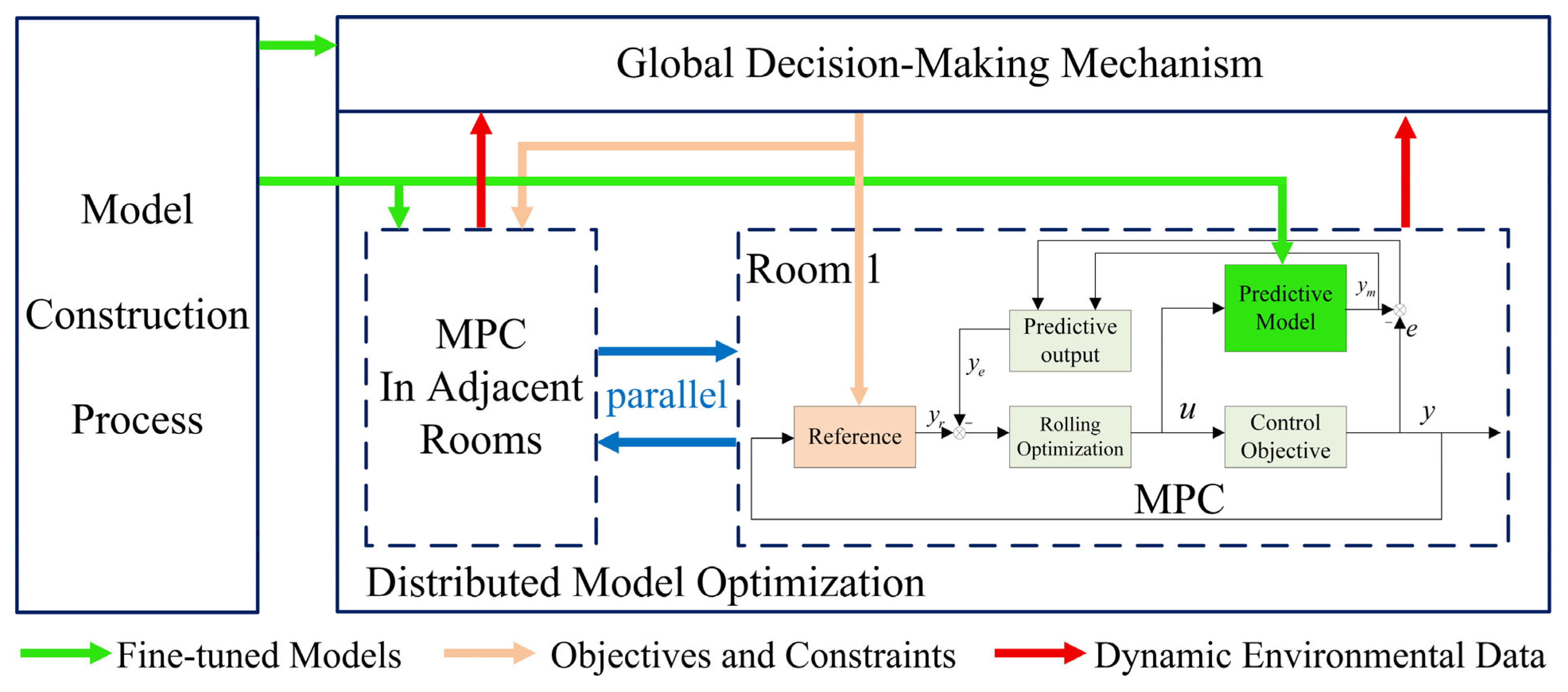
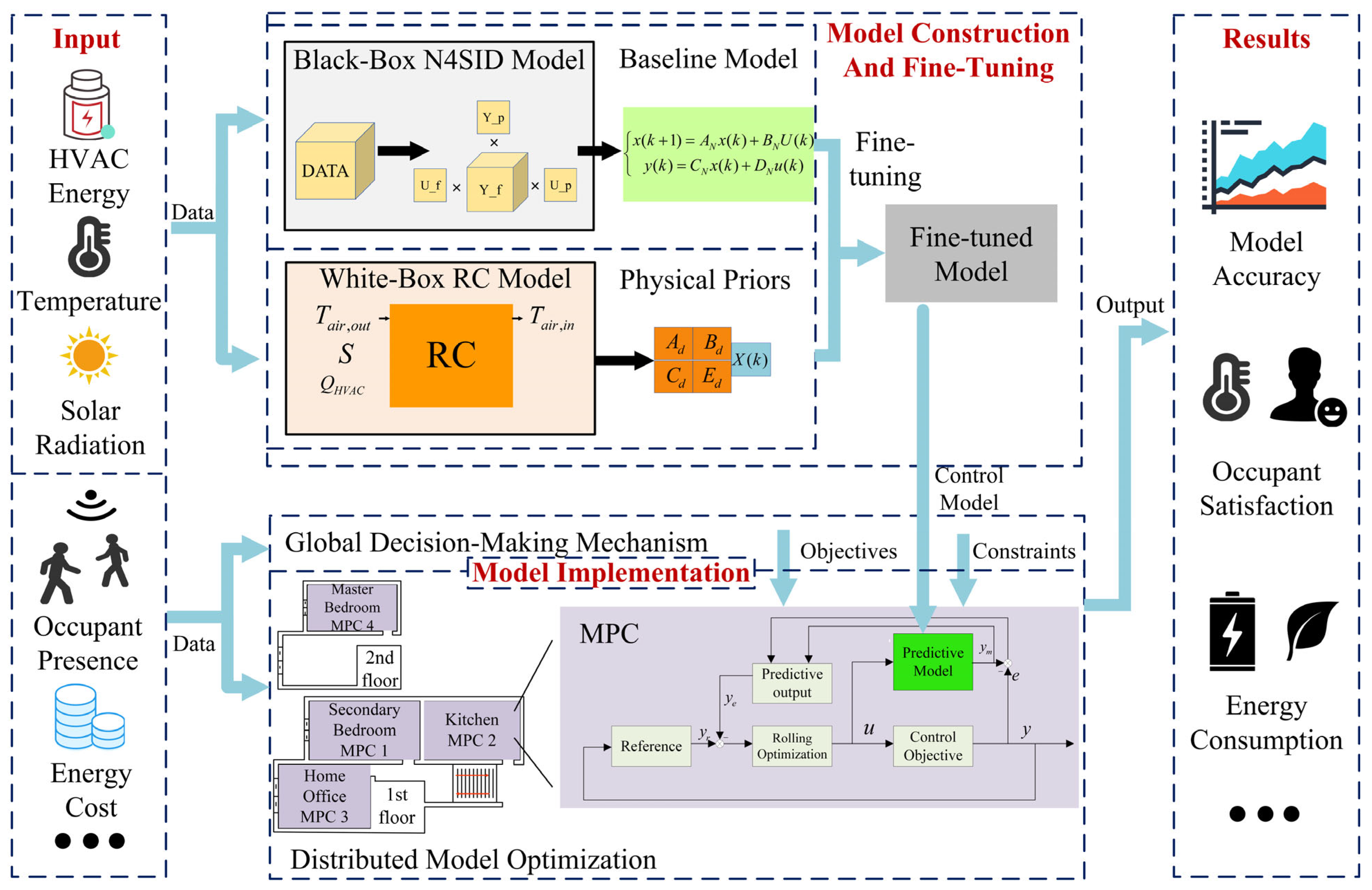
3.1. Overview
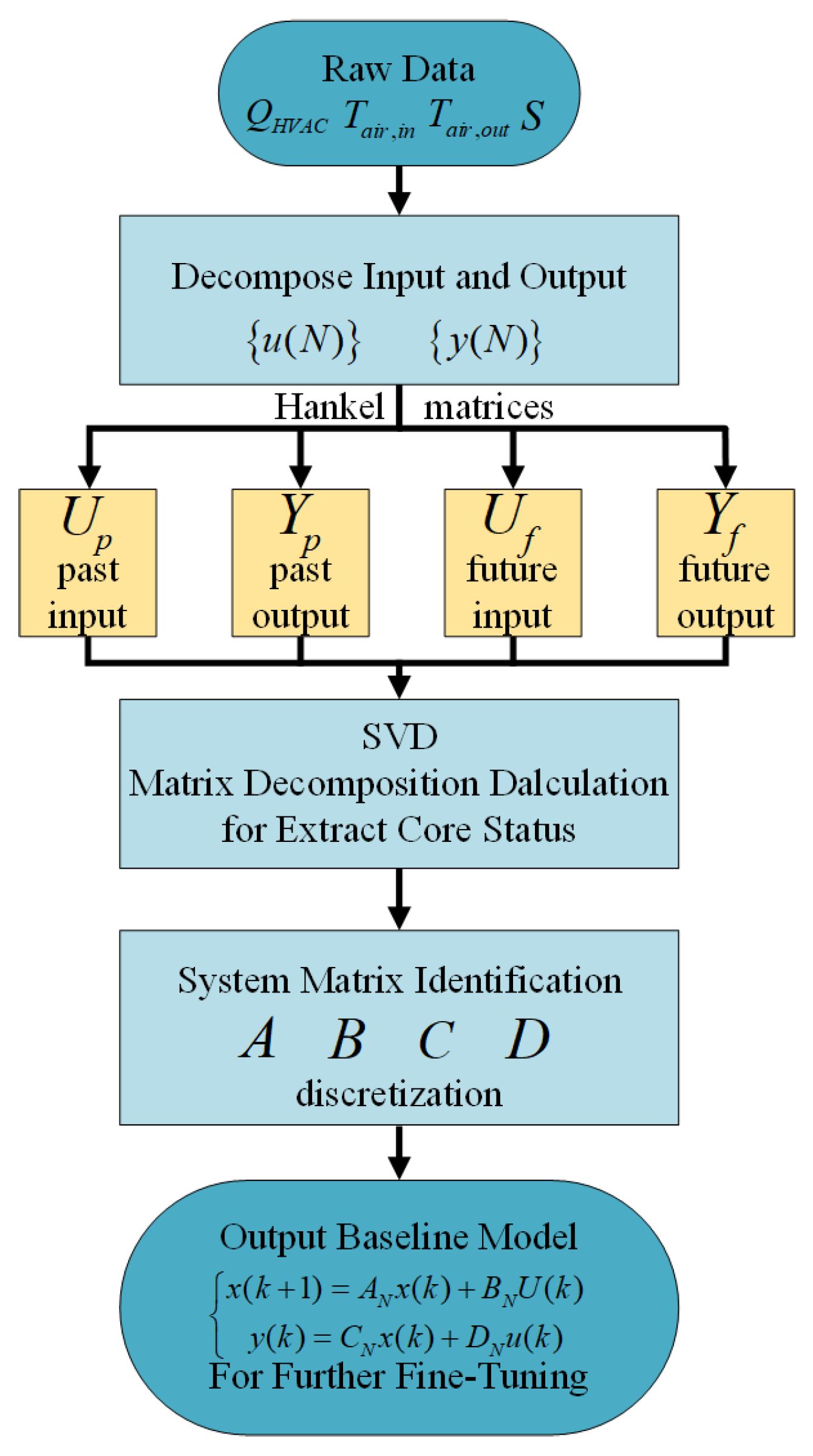
3.2. Baseline Model Construction
3.3. RC-Model-Based Model Fine-Tuning
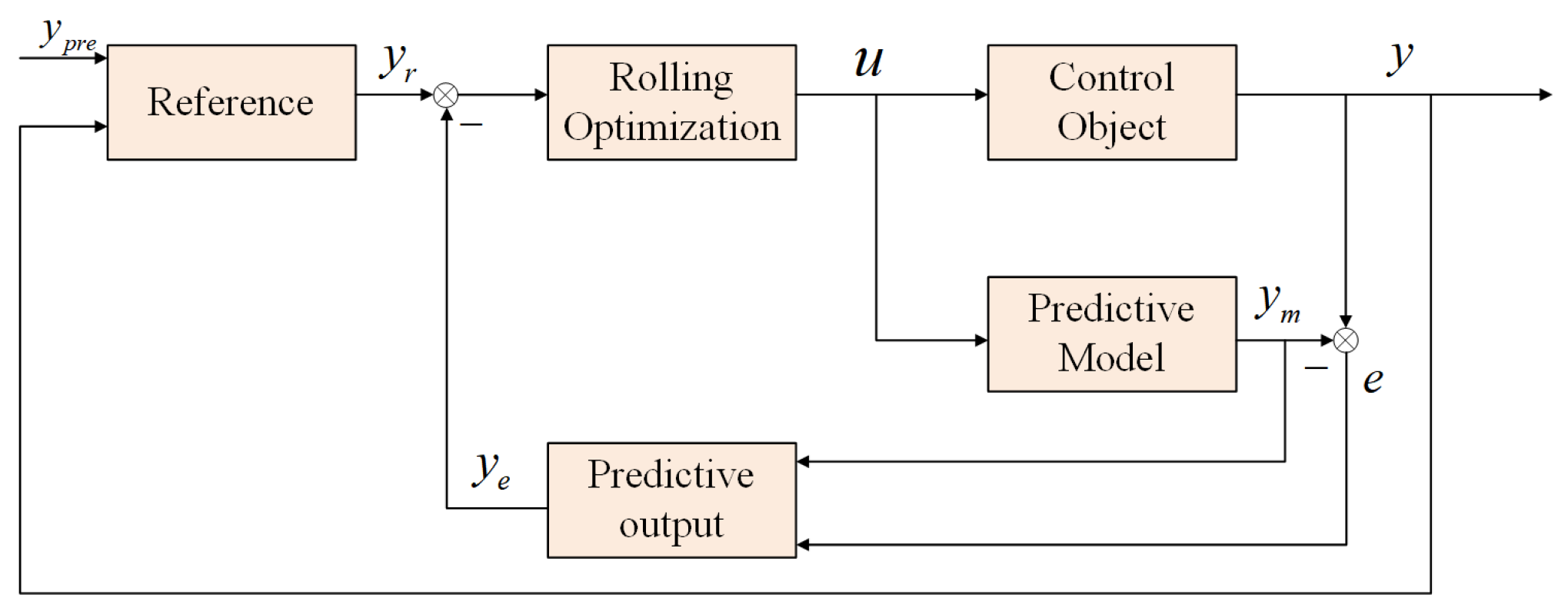
3.4. Model Implementation
| Algorithm 1 Working process of MAPC |
| Input: Diverse environmental data Output: Adaptive room-level HVAC control strategy that balances objectives such as personnel comfort and energy consumption and simulated control results 1: MAPC uses the N4SID method to identify the base model of each room 2: MAPC identifies RC models for each room 3: MAPC selects candidate values for 4: MAPC minimizes the loss function and obtains the optimal model for 5: MAPC selects the best model and the corresponding 6: MPC controllers perform rolling optimization 7: for () 8: The MPC controllers acquire and report dynamic environmental data 9: The MPC controllers solve Equation (20) and obtain the control sequence 10: The MPC controllers execute and calculate the simulation results 11: The MPC controllers pass to the next step and continue optimization 12: end for 13: The MPC controllers obtain the final control strategy and simulation results |
4. Experimental Studies
4.1. Simulation Experiment Based on EnergyPlus
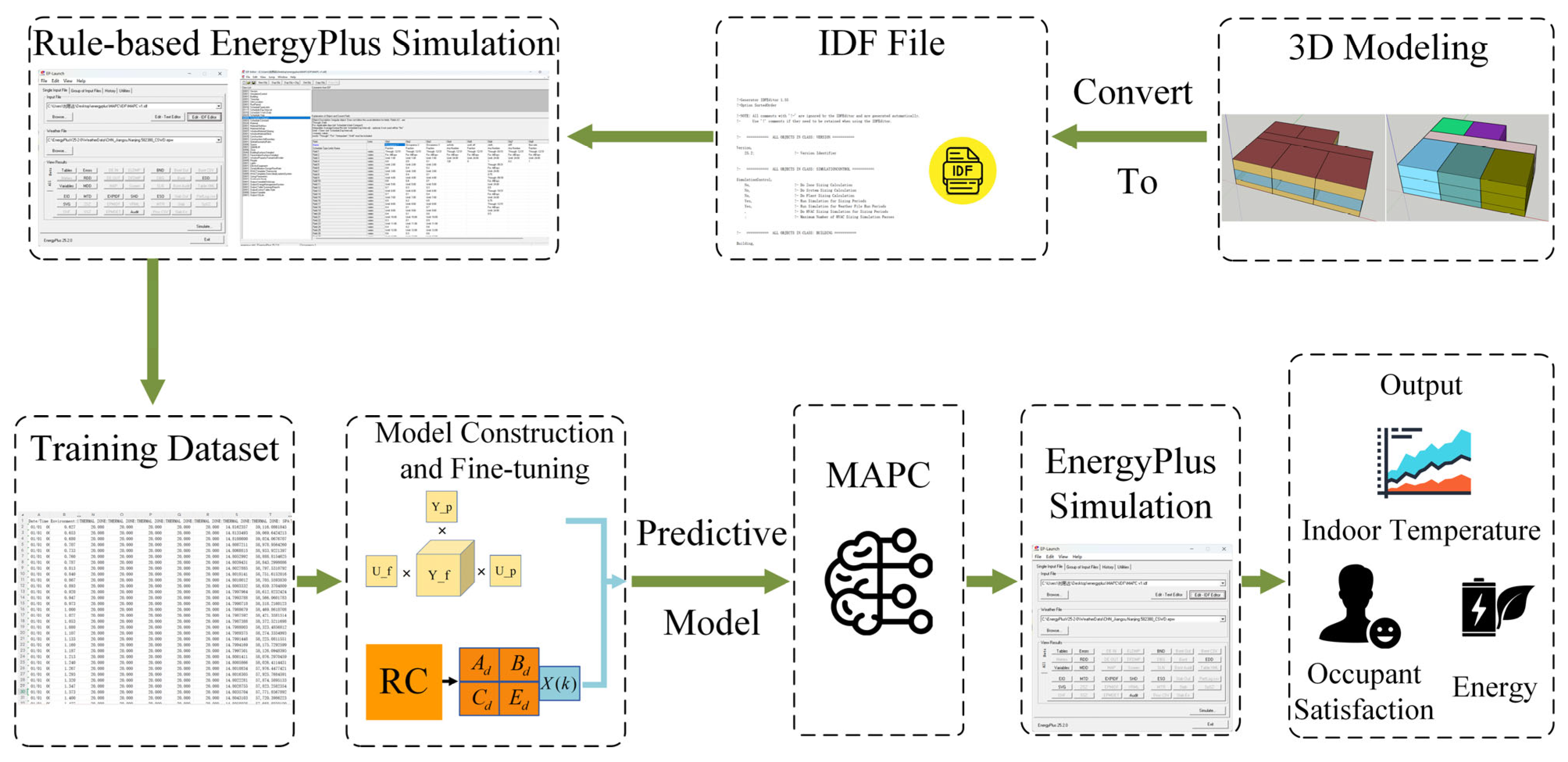
4.1.1. Experimental Configuration
4.1.2. Evaluation Metrics
4.1.3. Overall Performance
4.1.4. Ablation Experiments
4.2. Simulation Experiment Based on CN-OBEE
4.2.1. Experimental Configuration
4.2.2. Evaluation Metrics
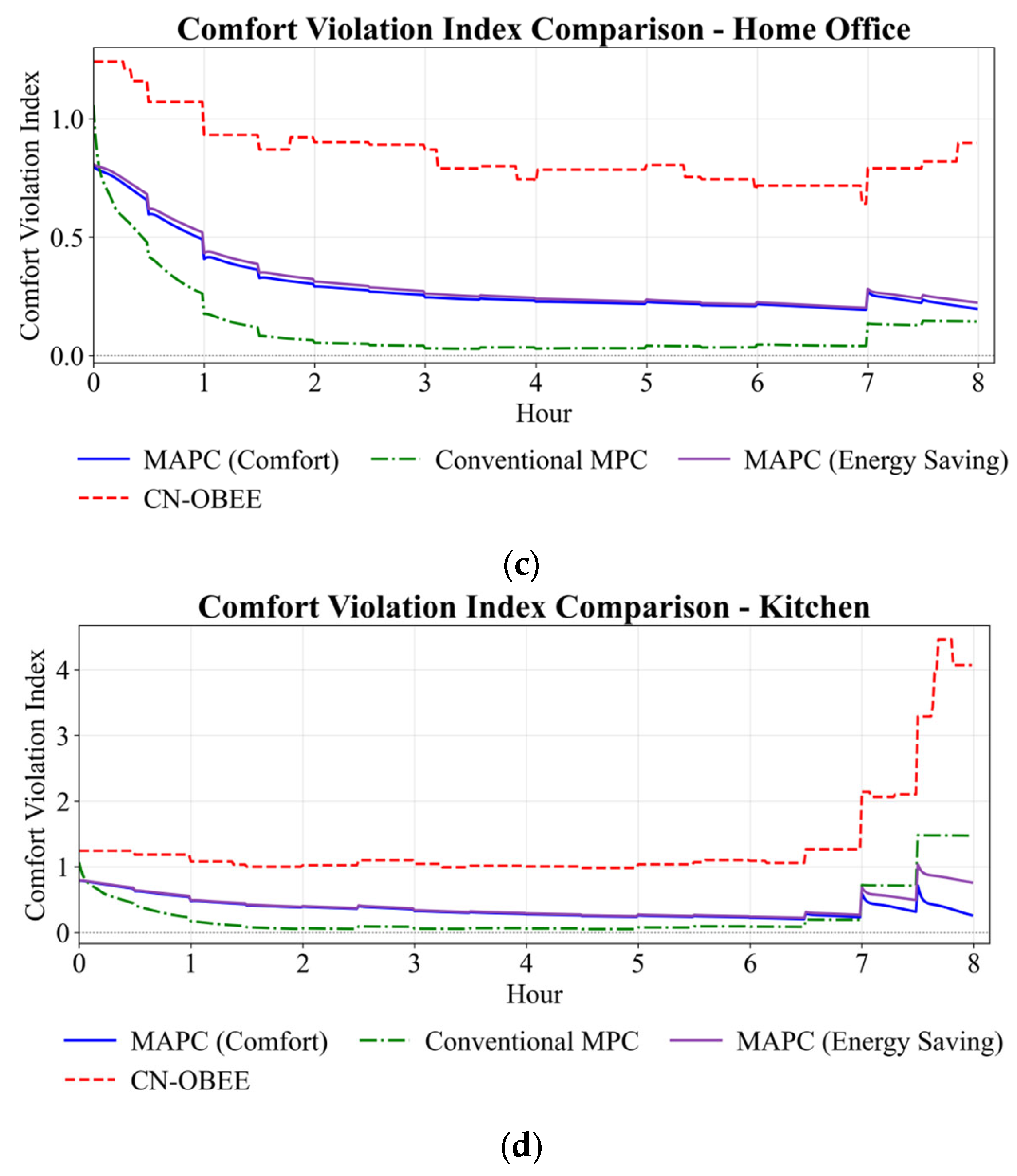
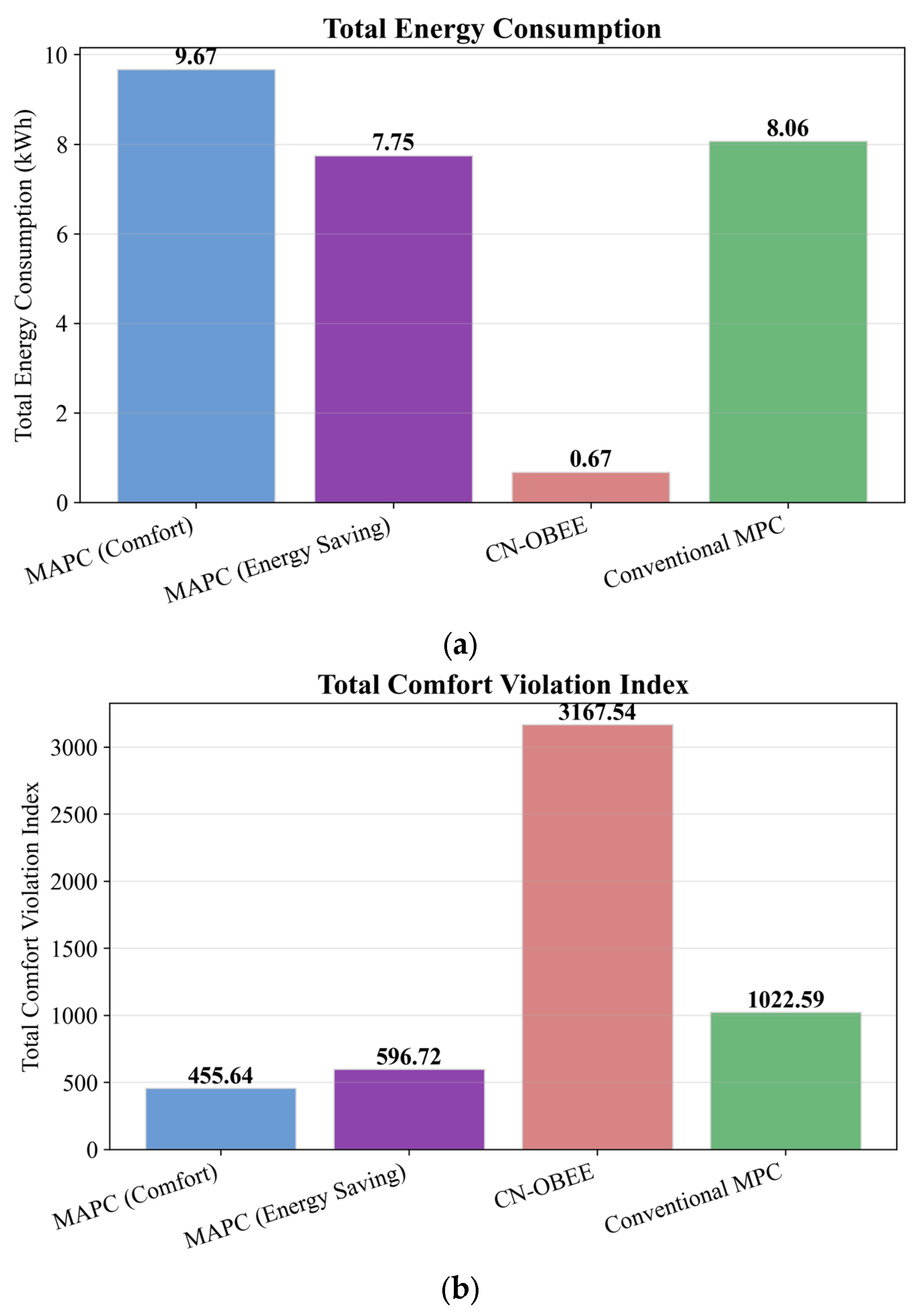
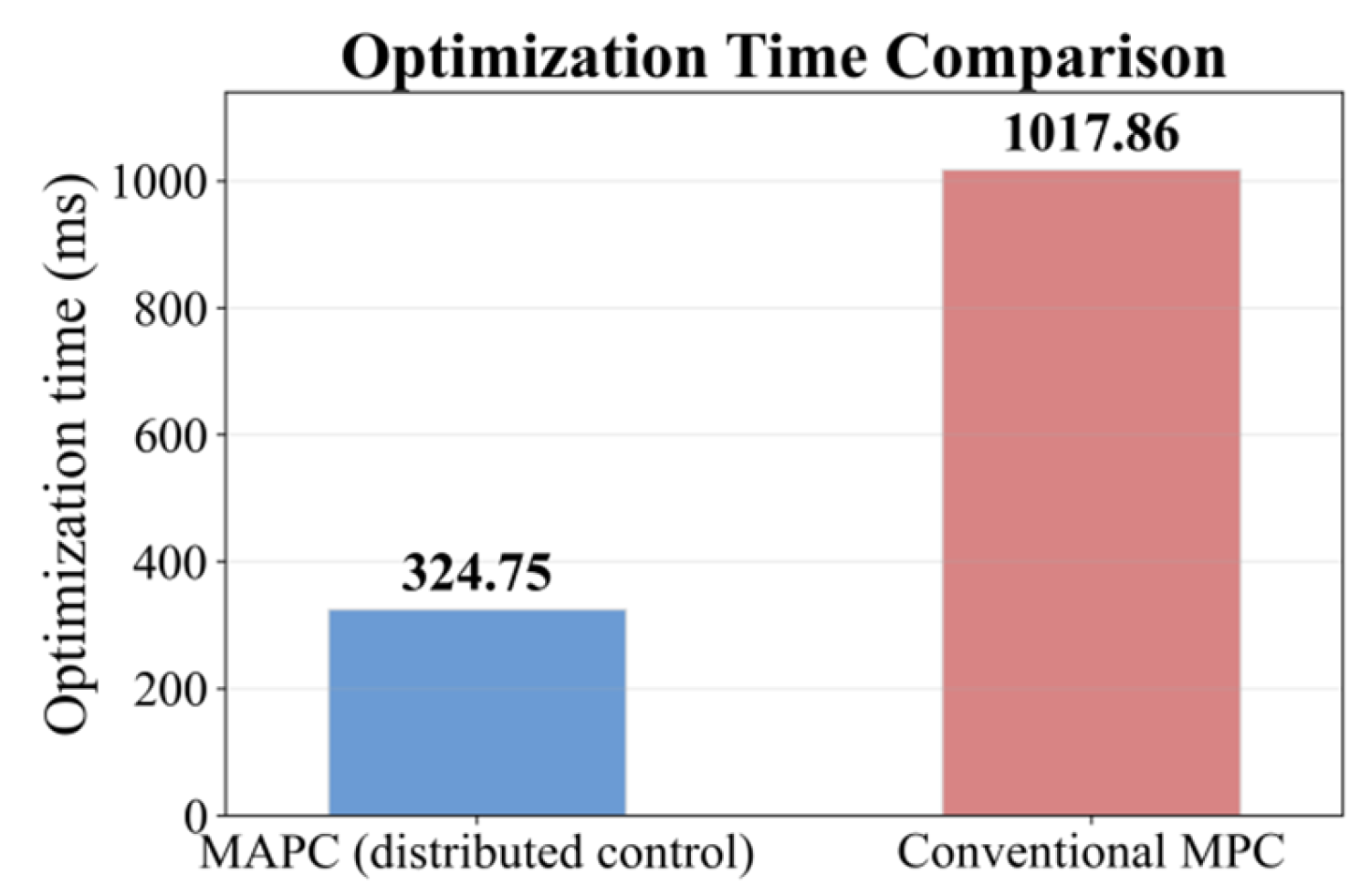
4.2.3. Overall Performance
5. Discussion
6. Conclusions
Author Contributions
Funding
Institutional Review Board Statement
Informed Consent Statement
Data Availability Statement
Conflicts of Interest
References
- Das, D.K. Integrating iot and ai for sustainable energy-efficient smart building: Potential, barriers and strategic pathways. Sustainability 2025, 17, 10313. [Google Scholar] [CrossRef]
- Iea. Developing a Global Energy Efficiency Workforce in the Buildings Sector. 2024. Available online: https://www.Iea.Org/reports/developing-a-global-energy-efficiency-workforce-in-the-buildings-sector (accessed on 17 June 2026).
- Vurusan, O.; Nafa, H. Improving the energy performance of residential buildings through solar renewable energy systems and smart building technologies: The Cyprus example. Sustainability 2026, 18, 1195. [Google Scholar] [CrossRef]
- Alotaibi, B.S. Context-aware smart energy management system: A reinforcement learning and iot-based framework for enhancing energy efficiency and thermal comfort in sustainable buildings. Energy Build. 2025, 340, 115804. [Google Scholar] [CrossRef]
- Turhan, C.; Saleh, Y.A.S.; Turhan, B. Simulation-based optimization of hvac systems in aging educational facilities: Addressing iaq challenges through retrofitting. Sustainability 2026, 18, 3079. [Google Scholar] [CrossRef]
- Alshammari, A.; Elhadi, A.A.E.; Ibrahim, A.O. Environmentally sustainable hvac management in smart buildings using a reinforcement learning framework sacem. Sustainability 2026, 18, 1036. [Google Scholar] [CrossRef]
- Harputlugil, T.; De Wilde, P. Building occupant energy labels (OEL): Capturing the human factors in buildings for energy efficiency. Sustainability 2025, 17, 1216. [Google Scholar] [CrossRef]
- Yuan, Y.; Song, C.; Gao, L.; Zeng, K.; Chen, Y. A review of current research on occupant-centric control for improving comfort and energy efficiency. Build. Simul. 2024, 17, 1675–1692. [Google Scholar] [CrossRef]
- Mohammed, K.; Luo, W.; Walker, S.; Kramer, R. Developing key performance indicators for occupant-centric buildings using occupant feedback: A scoping review and methodological framework. Energy Build. 2025, 347, 116228. [Google Scholar] [CrossRef]
- Huang, G.; Ng, S.T.; Li, D.; Zhang, Y. State of the art review on the hvac occupant-centric control in different commercial buildings. J. Build. Eng. 2024, 96, 110445. [Google Scholar] [CrossRef]
- Soleimanijavid, A.; Konstantzos, I.; Liu, X. Challenges and opportunities of occupant-centric building controls in real-world implementation: A critical review. Energy Build. 2024, 308, 113958. [Google Scholar] [CrossRef]
- Liu, X.; Gou, Z. Occupant-centric hvac and window control: A reinforcement learning model for enhancing indoor thermal comfort and energy efficiency. Build. Environ. 2024, 250, 111197. [Google Scholar] [CrossRef]
- Jiang, Z.; Deng, Z.; Wang, X.; Dong, B. Pandemic: Occupancy driven predictive ventilation control to minimize energy consumption and infection risk. Appl. Energy 2023, 334, 120676. [Google Scholar] [CrossRef] [PubMed]
- Qaisar, I.; Liang, W.; Sun, K.; Xing, T.; Zhao, Q. An experimental comparative study of energy saving based on occupancy-centric control in smart buildings. Build. Environ. 2025, 268, 112322. [Google Scholar] [CrossRef]
- Adesanya, M.A.; Obasekore, H.; Rabiu, A.; Na, W.-H.; Ogunlowo, Q.O.; Akpenpuun, T.D.; Kim, M.-H.; Kim, H.-T.; Kang, B.-Y.; Lee, H.-W. Deep reinforcement learning for pid parameter tuning in greenhouse hvac system energy optimization: A trnsys-python cosimulation approach. Expert Syst. Appl. 2024, 252, 124126. [Google Scholar] [CrossRef]
- Alghamdi, S.M.; Ajour, M.N.; Abu-Hamdeh, N.H.; Karimipour, A. Using pcm for building energy management to postpone the electricity demand peak load and approving a new pid controller to activate alternative chiller. J. Build. Eng. 2022, 57, 104884. [Google Scholar] [CrossRef]
- Alghamdi, S.M.; Ajour, M.N.; Abu-Hamdeh, N.H.; Karimipour, A. Introducing a new pid controller to control the addition of pcm to the building with ventilation heat recovery installation to reduce the energy demand of the cooling system. J. Build. Eng. 2022, 56, 104766. [Google Scholar] [CrossRef]
- Ulpiani, G.; Borgognoni, M.; Romagnoli, A.; Di Perna, C. Comparing the performance of on/off, pid and fuzzy controllers applied to the heating system of an energy-efficient building. Energy Build. 2016, 116, 1–17. [Google Scholar] [CrossRef]
- Jafarinejad, T.; Erfani, A.; Saelens, D. Impact of district building features on energy flexibility: Mpc-driven demand response across multiple time scales. Energy Build. 2026, 350, 116626. [Google Scholar] [CrossRef]
- Serale, G.; Fiorentini, M.; Capozzoli, A.; Bernardini, D.; Bemporad, A. Model predictive control (mpc) for enhancing building and hvac system energy efficiency: Problem formulation, applications and opportunities. Energies 2018, 11, 631. [Google Scholar] [CrossRef]
- Arroyo, J.; Manna, C.; Spiessens, F.; Helsen, L. Reinforced model predictive control (rl-mpc) for building energy management. Appl. Energy 2022, 309, 118346. [Google Scholar] [CrossRef]
- Engel, J.; Schmitt, T.; Rodemann, T.; Adamy, J. Hierarchical mpc for building energy management: Incorporating data-driven error compensation and mitigating information asymmetry. Appl. Energy 2024, 372, 123780. [Google Scholar] [CrossRef]
- Jin, Y.; Yan, D.; Zhang, X.; An, J.; Han, M. A data-driven model predictive control for lighting system based on historical occupancy in an office building: Methodology development. Build. Simul. 2020, 14, 219–235. [Google Scholar] [CrossRef]
- Yang, S.; Wan, M.P.; Chen, W.; Ng, B.F.; Dubey, S. Model predictive control with adaptive machine-learning-based model for building energy efficiency and comfort optimization. Appl. Energy 2020, 271, 115147. [Google Scholar] [CrossRef]
- Lu, D.; Augenbroe, G.; Zeng, Z. An occupants’ diversity-aware discussion on the economic benefits of model predictive control in buildings. Energy Build. 2025, 337, 115668. [Google Scholar] [CrossRef]
- Wang, C.; Wang, B.; You, F. Demand response for residential buildings using hierarchical nonlinear model predictive control for plug-and-play. Appl. Energy 2024, 369, 123581. [Google Scholar] [CrossRef]
- Chen, W.; Rong, F.; Lin, C. Short-term building electricity load forecasting with a hybrid deep learning method. Energy Build. 2025, 330, 115342. [Google Scholar] [CrossRef]
- Zhang, Z.; Chang, X.; Ma, H.; An, H.; Lang, L. Model predictive control of quadruped robot based on reinforcement learning. Appl. Sci. 2022, 13, 154. [Google Scholar] [CrossRef]
- Elehwany, H.; Ouf, M.; Gunay, B.; Cotrufo, N.; Venne, J.-S. A reinforcement learning approach for thermostat setpoint preference learning. Build. Simul. 2023, 17, 131–146. [Google Scholar] [CrossRef]
- Liu, X.; Wu, Y.; Wu, H. Enhancing hvac energy management through multi-zone occupant-centric approach: A multi-agent deep reinforcement learning solution. Energy Build. 2024, 303, 113770. [Google Scholar] [CrossRef]
- Yu, H.; Xu, X. Reinforcement learning for occupant behavior modeling in public buildings: Why, what and how? J. Build. Eng. 2024, 96, 110491. [Google Scholar] [CrossRef]
- Hajialigol, P.; Papadopoulos, P.; Moazami, A.; Aghaei, M. A hierarchical energy management system for a cluster of buildings: Reinforcement learning and model predictive control (rl-mpc) approach. Energy Build. 2026, 353, 116879. [Google Scholar] [CrossRef]
- Hunde, J.M.; Ochono, T.S.; Senevirathne, D.; Eneyew, D.D.; Bitsuamlak, G.T.; Capretz, M.A.; Grolinger, K. Data-driven and physics-based modeling approaches and their integration in building digital twins: A systematic review. J. Build. Eng. 2025, 114, 114214. [Google Scholar] [CrossRef]
- Yang, M.; Quan, Z.; Zhao, Y.; Xing, L.; Xuan, J.; Wang, L. A framework integrating multi-physic and data-driven models and optimization approaches to maximize electrical efficiency and power of pemfc. Energy 2026, 342, 139758. [Google Scholar] [CrossRef]
- Wang, C.; Li, X.; Sun, W.; An, J.; Gao, S. Occupant behavior, thermal environment, and appliance electricity use of a single-family apartment in china. Sci. Data 2024, 11, 65. [Google Scholar] [CrossRef] [PubMed]
- ANSI/ASHRAE 55-2023; Thermal Environmental Conditions for Human Occupancy. ASHRAE: Atlanta, GA, USA, 2023. Available online: https://www.ashrae.org/technical-resources/bookstore/standard-55-thermal-environmental-conditions-for-human-occupancy (accessed on 17 June 2026).
- Zhang, S.; Su, H.; Wu, M.; Yang, B. An empirical study on energy usage and occupant comfort of occupant-centric control systems in offices. Build. Environ. 2025, 278, 112954. [Google Scholar] [CrossRef]
- Yuan, Y.; Song, C.; Zeng, K.; Gao, L.; Huang, Y.; Chen, Y. An occupant-centric control case study based on internet of things and data mining for an office space. J. Build. Eng. 2025, 101, 111925. [Google Scholar] [CrossRef]
- Wang, Y.; Zhang, X.; Chen, H. From needs to control: A review of indicators and sensing technologies for occupant-centric smart lighting systems. Energy Build. 2025, 339, 115740. [Google Scholar] [CrossRef]
- Tang, H.; Yu, J.; Geng, Y.; Liu, X.; Huang, Z.; Yang, Y.; Wang, Z.; Chen, Y.; Lin, B. Enhancing occupant-centric ventilation control in airport terminals: A predictive optimization framework integrating agent-based simulation. Build. Environ. 2025, 276, 112829. [Google Scholar] [CrossRef]
- Cuerda, E.; Guerra-Santin, O.; Sendra, J.J.; González, F.J.N. Comparing the impact of presence patterns on energy demand in residential buildings using measured data and simulation models. Build. Simul. 2019, 12, 985–998. [Google Scholar] [CrossRef]
- Ma, Z.; Jiang, G.; Chen, J. Physics-informed ensemble learning with residual modeling for enhanced building energy prediction. Energy Build. 2024, 323, 114853. [Google Scholar] [CrossRef]
- Copot, C.; Thi, T.M.; Ionescu, C. Pid based particle swarm optimization in offices light control. IFAC-Pap. 2018, 51, 382–387. [Google Scholar] [CrossRef]
- Durand-Estebe, B.; Le Bot, C.; Mancos, J.N.; Arquis, E. Data center optimization using pid regulation in cfd simulations. Energy Build. 2013, 66, 154–164. [Google Scholar] [CrossRef]
- Goyal, S.; Ingley, H.A.; Barooah, P. Occupancy-based zone-climate control for energy-efficient buildings: Complexity vs. Performance. Appl. Energy 2013, 106, 209–221. [Google Scholar] [CrossRef]
- Mirakhorli, A.; Dong, B. Occupancy behavior based model predictive control for building indoor climate—A critical review. Energy Build. 2016, 129, 499–513. [Google Scholar] [CrossRef]
- Gupta, M.; Intille, S.S.; Larson, K. Adding gps-control to traditional thermostats: An exploration of potential energy savings and design challenges. In Pervasive Computing, Proceedings of the 7th International Conference, Pervasive Nara, Japan, 13–16 May 2009; Springer: Berlin/Heidelberg, Germany, 2009; pp. 95–114. [Google Scholar] [CrossRef]
- Deng, Z.; Chen, Q. Reinforcement learning of occupant behavior model for cross-building transfer learning to various hvac control systems. Energy Build. 2021, 238, 110860. [Google Scholar] [CrossRef]
- Liu, M.; Gou, Z. Real-time occupant-centric hvac optimization via fast deep-learning field prediction. Build. Environ. 2026, 293, 114313. [Google Scholar] [CrossRef]
- Chen, C.; An, J.; Wang, C.; Duan, X.; Lu, S.; Che, H.; Qi, M.; Yan, D. Deep Reinforcement Learning-Based Joint Optimization Control of Indoor Temperature and Relative Humidity in Office Buildings. Buildings 2023, 13, 438. [Google Scholar] [CrossRef]
- Zhang, J.; Zhang, C.; Lu, J.; Zhao, Y. Domain-specific large language models for fault diagnosis of heating, ventilation, and air conditioning systems by labeled-data-supervised fine-tuning. Appl. Energy 2025, 377, 124378. [Google Scholar] [CrossRef]
- ASHRAE ANSI/ASHRAE Guideline 14-2023. Measurement of Energy, Demand, and Water Savings, Peachtree Corners, GA: ASHRAE. 2023. Available online: https://www.ashrae.org/technical-resources/bookstore/guideline-14-measurement-of-energy-demand-and-water-savings (accessed on 17 June 2026).
- ISO7730:2025; ISO Ergonomics of the Thermal Environment—Analytical Determination and Interpretation of Thermal Comfort using Calculation of the PMV and PPD Indices and Local Thermal Comfort Criteria. ISO: Geneva, Switzerland, 2025. Available online: https://www.iso.org/standard/85803.html (accessed on 17 June 2026).
- Justinas, S.; Peder, B.; Erik, L. Conditional parametric ARMAX models for observed hourly heat-load dynamics in apartment buildings. Sustain. Cities Soc. 2025, 122, 106235. [Google Scholar] [CrossRef]
- Wang, Y.; Guo, J.; Jiang, Y.; Sun, C. PINN with dynamic constraint optimization for complex air-based TABS thermal dynamics prediction. Energy 2026, 353, 140989. [Google Scholar] [CrossRef]
- Chen, Y.; Wang, H.; Chen, Z. Sensitivity analysis of physical regularization in physics-informed neural networks (PINNs) of building thermal modeling. Build. Environ. 2025, 273, 112693. [Google Scholar] [CrossRef]
- Li, Z.; Xing, S.; Zhang, J.; Chen, Z.; Wang, S. Quantification of energy flexibility and uncertainty in airport terminals unlocked by occupancy-based multi-zone indoor temperature set-point optimization. Build. Simul. 2026, 19, 427–449. [Google Scholar] [CrossRef]
- Liu, G.; Gao, J.; Han, Z.; Yuan, Y. Hybrid model-based predictive hvac control through fast prediction of transient indoor temperature fields. Build. Environ. 2025, 267, 112253. [Google Scholar] [CrossRef]





| EnergyPlus Parameters | Configuration/Value |
|---|---|
| Number of Timesteps per Hour | 4 |
| Location | Nanjing, China |
| Number of Thermal Zones | 5 |
| Maximum Number of Occupants in Rooms | 10 |
| Constant Heating Setpoint | 20 |
| Constant Cooling Setpoint | 26 |
| Outputs | outdoor air temperature |
| indoor air temperature | |
| HVAC energy consumption | |
| absorbed solar radiation |
| Hardware/Parameters | Configuration/Value |
|---|---|
| 3 | |
| 1 | |
| 2 | |
| 1 | |
| 5 | |
| 50 | |
| 1 | |
| 5 | |
| Solver | PyTorch Adam (PyTorch 2.9.1, CUDA12.6) |
| Iterations | 80 |
| Learning Rate | 2.2 |
| Prediction Horizon | 12 (3 h) |
| CPU | Intel Core i5-10400 |
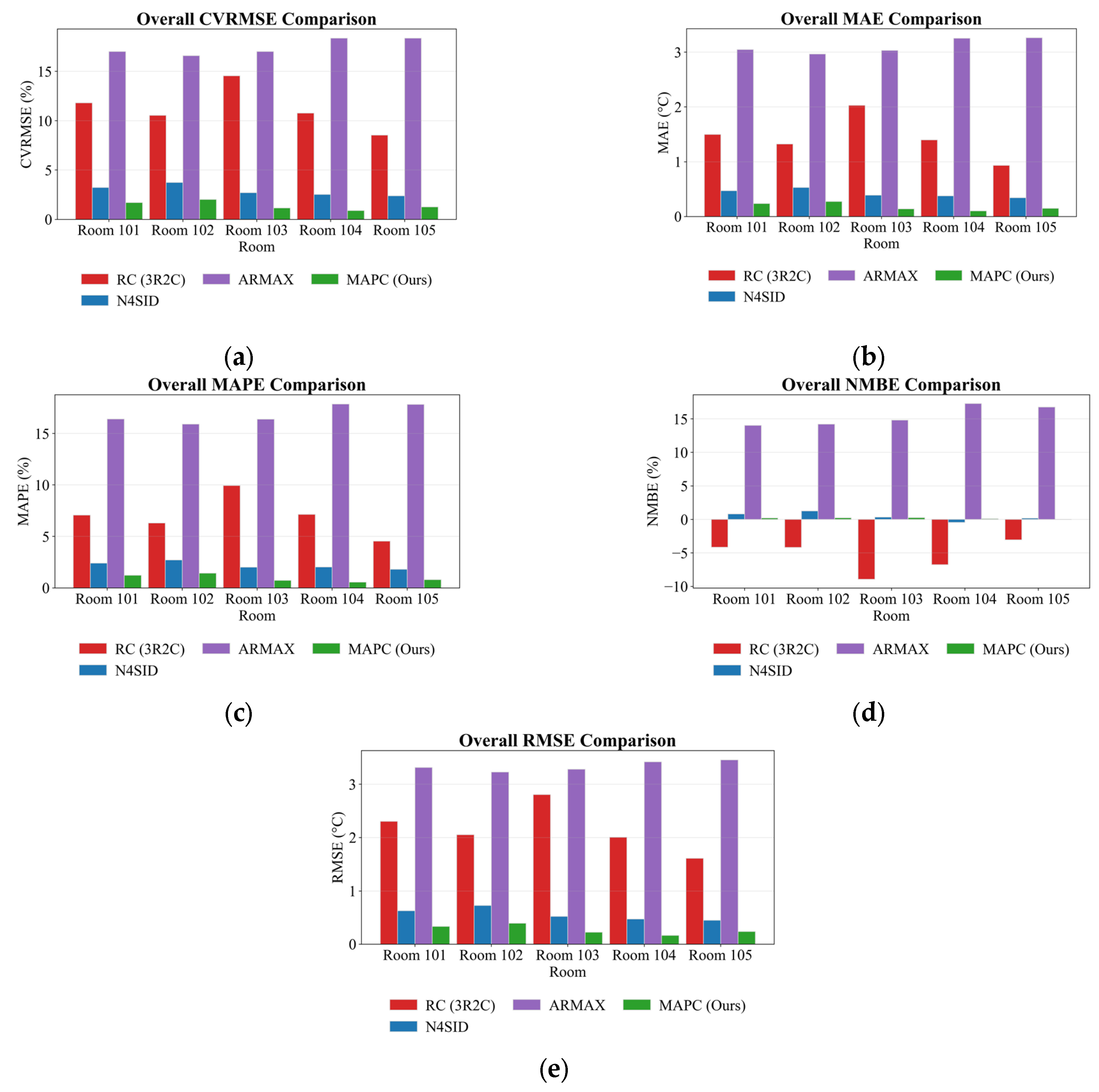
| Model | ARMAX | RC | N4SID | MAPC |
|---|---|---|---|---|
| CVRMSE | 18.1723 | 14.4627 | 6.7010 | 1.1166 |
| MAE | 2.9992 | 2.0908 | 0.8520 | 0.1409 |
| MAPE | 16.0505 | 10.5972 | 4.3961 | 0.7306 |
| NMBE | 14.0126 | −7.8184 | 1.3251 | 0.1720 |
| RMSE | 3.4817 | 2.7680 | 1.2846 | 0.2147 |
Disclaimer/Publisher’s Note: The statements, opinions and data contained in all publications are solely those of the individual author(s) and contributor(s) and not of MDPI and/or the editor(s). MDPI and/or the editor(s) disclaim responsibility for any injury to people or property resulting from any ideas, methods, instructions or products referred to in the content. |
© 2026 by the authors. Licensee MDPI, Basel, Switzerland. This article is an open access article distributed under the terms and conditions of the Creative Commons Attribution (CC BY) license.
Share and Cite
Liu, S.; Yang, Q.; Wang, R.; Jia, H.; Zhang, X.; Deng, Z.; Wu, Y.; Zhou, Q. Model-Aware Predictive Control for Occupant-Centric Environment Optimization in Room-Level Scenarios. Sustainability 2026, 18, 6411. https://doi.org/10.3390/su18136411
Liu S, Yang Q, Wang R, Jia H, Zhang X, Deng Z, Wu Y, Zhou Q. Model-Aware Predictive Control for Occupant-Centric Environment Optimization in Room-Level Scenarios. Sustainability. 2026; 18(13):6411. https://doi.org/10.3390/su18136411
Chicago/Turabian StyleLiu, Siyuan, Qiliang Yang, Ronghao Wang, Haining Jia, Xuewei Zhang, Zhongkai Deng, Yong Wu, and Qizhen Zhou. 2026. "Model-Aware Predictive Control for Occupant-Centric Environment Optimization in Room-Level Scenarios" Sustainability 18, no. 13: 6411. https://doi.org/10.3390/su18136411
APA StyleLiu, S., Yang, Q., Wang, R., Jia, H., Zhang, X., Deng, Z., Wu, Y., & Zhou, Q. (2026). Model-Aware Predictive Control for Occupant-Centric Environment Optimization in Room-Level Scenarios. Sustainability, 18(13), 6411. https://doi.org/10.3390/su18136411