1. Introduction
Total Factor Productivity (TFP), widely regarded as a central measure of firms’ efficiency in resource allocation and their capacity for innovation, has emerged as a fundamental driver of high-quality economic growth at the national level (Pan et al., 2022) [
1]. TFP is defined as the portion of output that cannot be explained by capital and labor inputs, reflecting both technological progress and efficiency improvements (Solow, 1957) [
2]. For firms, gains in TFP are reflected not only in higher output efficiency but also in enhanced managerial effectiveness, improved organizational design, the adoption and diffusion of technological innovation, and more efficient resource allocation (Bender et al., 2018; Bloom et al., 2019) [
3,
4]. Given its multidimensional nature, the determinants of TFP are inherently complex and multifaceted (Autor et al., 2020) [
5]. The determinants of TFP reflect both internal and external dimensions. Internally, governance structures, organizational design, technological progress, and human capital accumulation shape the efficiency with which resources are utilized (Cammeraat et al., 2024; Lei et al., 2025) [
6,
7]. Externally, institutional arrangements, policy environments, and socio-ecological constraints play a critical role in shaping firms’ productivity outcomes (Kafouros et al., 2024) [
8]. As the pursuit of balanced environmental protection and economic growth intensifies, firms aiming for long-term development can no longer concentrate solely on internal governance efficiency or the narrow expansion of productivity. Rather, they must incorporate the broader institutional, policy, and ecological context into their strategic considerations, recognizing the profound influence of social responsibility and external constraints on productivity (Baker et al., 2016) [
9]. Moreover, treating TFP as the sole benchmark of corporate development is overly narrow. Firms should not only strive for efficiency gains but also align their strategies with broader goals of social responsibility and sustainable development (Edmans, 2023; Ioannou and Serafeim, 2015) [
10,
11]. Against this backdrop, environmental protection policies, as critical external institutional arrangements, have emerged as an increasingly important force shaping firms’ Total Factor Productivity.
Regarding the relationship between environmental regulations and firm productivity, existing research has not reached a unanimous conclusion but has instead yielded two competing explanations: the “compliance cost effect” and the “innovation compensation effect.” The Porter hypothesis, proposed by Porter (1991) [
12] and Porter and van der Linde (1995) [
13], posits that well-designed and effectively enforced environmental regulations do not necessarily weaken firm competitiveness. Instead, they may drive firms to engage in technological innovation, improve resource efficiency, and optimize production processes, thereby generating an innovation compensation effect that partially or even fully offsets the compliance costs associated with environmental regulations. Subsequently, studies by Jaffe and Palmer (1997) [
14], Acemoglu et al. (2012) [
15], He et al. (2020) [
16], and Colmer et al. (2025) [
17], among others, conducted extensive empirical tests on whether environmental regulations can promote innovation and productivity gains. Some of these studies found that environmental regulations can stimulate R&D investment and green innovation, thereby supporting the Porter hypothesis.
Within China’s institutional context, environmental policies are predominantly enforced through administrative constraints, whereas market-based incentive mechanisms remain underdeveloped. Existing research has largely examined the impact of environmental regulation on firm productivity, with a substantial body of evidence suggesting that stringent environmental policies tend to suppress Total Factor Productivity (Becker and Henderson, 2000; Gollop and Roberts, 1983; Gray, 1987) [
18,
19,
20]. On the one hand, environmental regulations increase firms’ compliance costs (Jensen and Meckling, 1976; Jorgenson and Wilcoxen, 1990) [
21,
22], forcing additional investments in pollution abatement, equipment renewal, and emission control. These expenditures crowd out resources that might otherwise be devoted to technological innovation and productivity-enhancing activities (Barbera and McConnell, 1986) [
23]. On the other hand, environmental policies may generate uneven inter-industry resource flows, imposing constraints on high-pollution firms in access to finance, land, and labor. Such distortions in capital allocation efficiency ultimately depress firms’ productivity (Li et al., 2016; Palmer et al., 1995) [
24,
25]. Furthermore, frequent or intensive policy interventions exacerbate uncertainty in the external business environment, weakening firms’ investment willingness and innovation incentives, and further impeding productivity growth (Baker et al., 2016; Bloom, N., 2009; Gulen and Ion, 2015) [
9,
26,
27].
Although a substantial body of literature has examined the relationship between environmental policies and firm productivity, the focus has largely been on traditional policy instruments—such as regulatory stringency, pollution levies, and green credit—while institutional reforms in the governance structure of environmental agencies have received comparatively little attention. In this regard, the Vertical Management Reform of Environmental Protection Agencies, as an innovative institutional arrangement in environmental governance, is likely to constitute an important determinant of firm productivity by reshaping corporate decision-making processes and external constraints. Unlike conventional environmental policies (Wang and Chen, 2010; Zhang and Wen, 2008) [
28,
29], the vertical reform does not rely on decentralized local governance but instead dismantles local protectionist barriers. At its core, the reform enhances governance effectiveness through four institutional mechanisms—provincial-level centralization, direct data reporting, centralized law enforcement, and joint accountability of party and government officials. These arrangements fundamentally address the entrenched dilemma in which environmental protection has historically yielded to GDP growth. By shifting environmental governance from “technical execution” to “political accountability,” the reform has significantly strengthened regulatory effectiveness. Against this backdrop, investigating how the vertical management reform of environmental protection agencies shapes firms’ Total Factor Productivity through institutional design and policy enforcement not only deepens our understanding of the interaction between environmental protection and firm efficiency but also offers a theoretical foundation for improving China’s national environmental governance system.
Current research on environmental policies reveals two major gaps. First, much of the existing literature focuses on the micro-operational aspects of policy—such as technological implementation and practical application—while neglecting institutional deficiencies in the governance systems of environmental agencies. This narrow perspective may account for certain partial effects of environmental policies but remains trapped in a vicious cycle of “local protectionism → data distortion → weak enforcement → diluted accountability,” thereby limiting a comprehensive evaluation of policy effectiveness. Therefore, further research is needed to examine how environmental governance systems, in the context of institutional restructuring, influence economic development and firm-level efficiency. Second, the existing literature has predominantly evaluated firms through indicators such as production efficiency and resource allocation outcomes, while overlooking the social responsibilities firms ought to bear in environmental protection. Indeed, treating TFP as the sole benchmark of corporate performance yields a partial and incomplete assessment. Firms striving for efficiency gains must simultaneously integrate social responsibility and sustainable development considerations into their objectives. Neglecting this dimension risks producing biased assessments of policy effectiveness. Against this backdrop, this paper investigates the vertical management reform of environmental protection agencies and employs a multi-period difference-in-differences (DID) approach to empirically assess its impact on firms’ Total Factor Productivity (TFP). In doing so, it seeks to bridge the gap at the intersection of institutional policy design, social responsibility constraints, and efficiency outcomes.
Drawing on panel data of Chinese A-share listed firms from 2012 to 2022, this study implements a multi-period difference-in-differences framework to rigorously analyze the relationship between the vertical management reform of environmental protection agencies and firms’ Total Factor Productivity. The main findings can be summarized as follows. First, the reform significantly depressed firms’ Total Factor Productivity in pilot regions, and this result remains robust across a battery of robustness tests. Second, the mechanism analysis reveals that the reform reduces TFP primarily by constraining technological innovation and distorting capital allocation efficiency. Third, the heterogeneity analysis demonstrates that the adverse effects are more pronounced among state-owned enterprises, firms operating under weaker regulatory scrutiny, and those located in China’s eastern region. These findings suggest that policymakers should be cautious about the short-term productivity costs of the vertical management reform. By adopting a “three-pillar” strategy of targeted buffers, innovation incentives, and precise interventions, firms can be guided to shift from “passive compliance” to “proactive upgrading,” ultimately achieving a win–win outcome of strengthened environmental governance and enhanced productivity growth.
This study makes several contributions. First, from an institutional perspective, it uncovers a novel mechanism through which environmental policies affect firms’ total factor productivity. By extending the analytical lens to the governance system itself, this paper systematically examines how the vertical management reform of environmental protection agencies influences firm efficiency through institutional restructuring, thereby broadening the institutional dimension of environmental policy research. Second, this paper identifies a novel mechanism whereby the vertical management reform of environmental protection agencies affects firms’ TFP through technological innovation capacity and capital allocation efficiency. This finding highlights the profound impact of institutional policies on firms’ internal factor operations and provides new mechanism-based evidence for understanding the transmission channels between environmental governance and firm efficiency, thereby enriching the theoretical connotation of the “regulation–innovation–efficiency” nexus. Third, this study provides new evidence on the relationship between the vertical management reform of environmental protection agencies and firm efficiency from a multidimensional heterogeneity perspective. Specifically, it examines the heterogeneous effects of environmental policies on TFP across firms, industries, and regions. This not only enriches the existing literature at the academic frontier (Brown et al., 2022) [
30] but also offers valuable policy insights into reconciling environmental protection with sustained economic growth. Fourth, by combining theoretical reasoning with rigorous empirical testing, this paper confirms a novel conclusion: the vertical management reform of environmental protection agencies exerts a significantly negative effect on firms’ TFP. This finding challenges the partial understandings of environmental policy effects in prior studies (Xu and Kim, 2022) [
31] and provides more compelling empirical evidence for understanding the complex relationship between environmental governance institutions and firm efficiency.
The remainder of the paper is structured as follows.
Section 2 introduces the policy background and theoretical framework.
Section 3 describes the research design.
Section 4 presents the empirical results, and
Section 5 conducts the heterogeneity analysis.
Section 6 concludes with the main findings and their policy implications.
5. Heterogeneity Analysis
Before conducting the heterogeneity test, this paper first presents theoretical expectations based on three dimensions: enterprise ownership, regional governance capacity, and the existing regulatory foundation. First, state-owned enterprises typically bear greater responsibilities for policy responsiveness and environmental governance. Following the reform of vertical management in environmental protection agencies, they face stronger political accountability pressures, compliance requirements, and administrative constraints. Consequently, they are more likely to allocate resources to environmental compliance and pollution control activities, which in turn exerts a more pronounced dampening effect on productivity. Second, the eastern region features a higher degree of marketization, stronger environmental enforcement capabilities, and more robust social oversight and information disclosure mechanisms. Consequently, the vertical management reform is more likely to translate into actual regulatory pressure in this region, resulting in a stronger compliance shock for enterprises. Finally, for firms that had a weak regulatory foundation prior to the reform, the vertical management reform significantly reduced the scope for local protectionism and selective enforcement, causing their existing “weak regulation dividend” to rapidly disappear; consequently, the marginal impact of the policy shock is greater. Based on the above analysis, this paper expects that the vertical management reform of environmental protection agencies will have a more pronounced suppressing effect on total factor productivity for state-owned enterprises, firms in the eastern region, and firms with weak regulatory oversight.
5.1. Ownership-Based Heterogeneity
The sample is partitioned into state-owned enterprises (SOEs), private enterprises, and foreign-funded enterprises, and regressions are estimated separately for each group. Columns (1) and (2) of
Table 8 report
VMR-
EPA coefficients of −0.0656 and −0.0261, significant at the 1% and 10% levels, respectively. These results suggest that the vertical management reform of environmental protection agencies significantly depresses TFP in both SOEs and private firms, with the effect being more pronounced among SOEs. By contrast, Column (3) shows a coefficient of 0.051 for foreign-funded enterprises, which is statistically insignificant, indicating that the reform has no measurable impact on their productivity. Taken together, the evidence implies that relative to non-SOEs, the vertical reform imposes a disproportionately stronger productivity penalty on state-owned enterprises.
This divergence mainly arises from differences in organizational flexibility associated with ownership structure. According to the theory of organizational ambidexterity (Tushman and O’Reilly, 1996) [
90], non-SOEs possess greater autonomy and agility in strategic decision-making, enabling them to quickly adjust investment priorities and allocate resources more efficiently. By contrast, SOEs not only face market pressures but also carry government-imposed mandates such as maintaining employment stability and supporting economic growth. These additional responsibilities often force SOEs to deviate from efficiency-oriented investment principles, leading to greater distortions in capital allocation. Moreover, investment decisions in SOEs are typically subject to approval by the State-owned Assets Supervision and Administration Commission (SASAC) or local governments, slowing down their policy responses. As a result, SOEs are constrained by complex decision-making procedures, resource allocation inertia, and lengthy evaluation cycles, all of which weaken their adaptability to changing conditions and undermine their efficiency.
5.2. Regulatory Intensity Perspective
Following the Catalogue for Classified Administration of Environmental Verification of Listed Companies by Industry (2008), the Comprehensive Catalogue for Environmental Protection (2021 Edition), and the Guidelines for the Classification of Listed Companies by Industry (2012 Revision), we classify industries subject to high environmental regulatory intensity as those in mining (Code B), manufacturing (Code C), and electricity, heat, gas, and water production and supply (Code D). Specifically, based on nineteen major industry codes, firms are categorized into the high-intensity group if they fall within the following sectors: B06, B07, B08, B09, C17, C19, C22, C25, C26, C27, C28, C30, C31, C32, C33, and D44). Accordingly, the sample is divided into firms operating in high- and low-intensity regulatory environments. Regression results are presented in Columns (1) and (2) of
Table 9. For firms in industries with lower regulatory intensity, the coefficient of VMR-EPA is −0.0393 and statistically significant at the 1% level. For firms in high-intensity industries, the coefficient is −0.0357 and significant at the 5% level. These findings suggest that the negative effect of the vertical management reform of environmental protection agencies is more pronounced for firms in industries with relatively low regulatory intensity.
This difference can be explained by the Porter Hypothesis (Porter and Linde, 1995) [
13], which posits that effective environmental regulations stimulate firms’ innovation activities, ultimately offsetting compliance costs and enhancing profitability (Luo et al., 2022) [
91]. Firms in highly regulated industries have long invested in environmental technological upgrades, accumulated pollution control patents, and developed efficient end-of-pipe treatment processes, making the new reform only a marginal adjustment. Moreover, these firms often maintain comprehensive environmental management systems (e.g., ISO 14001 certification) and employ dedicated environmental teams, enabling them to respond quickly and adjust effectively to policy changes. In contrast, firms in weakly regulated industries typically suffer from low utilization rates of environmental facilities, underdeveloped circular economy practices, and limited access to green finance. As a result, when confronted with the new policy shock, they experience a more substantial negative impact.
5.3. Regional Location Perspective
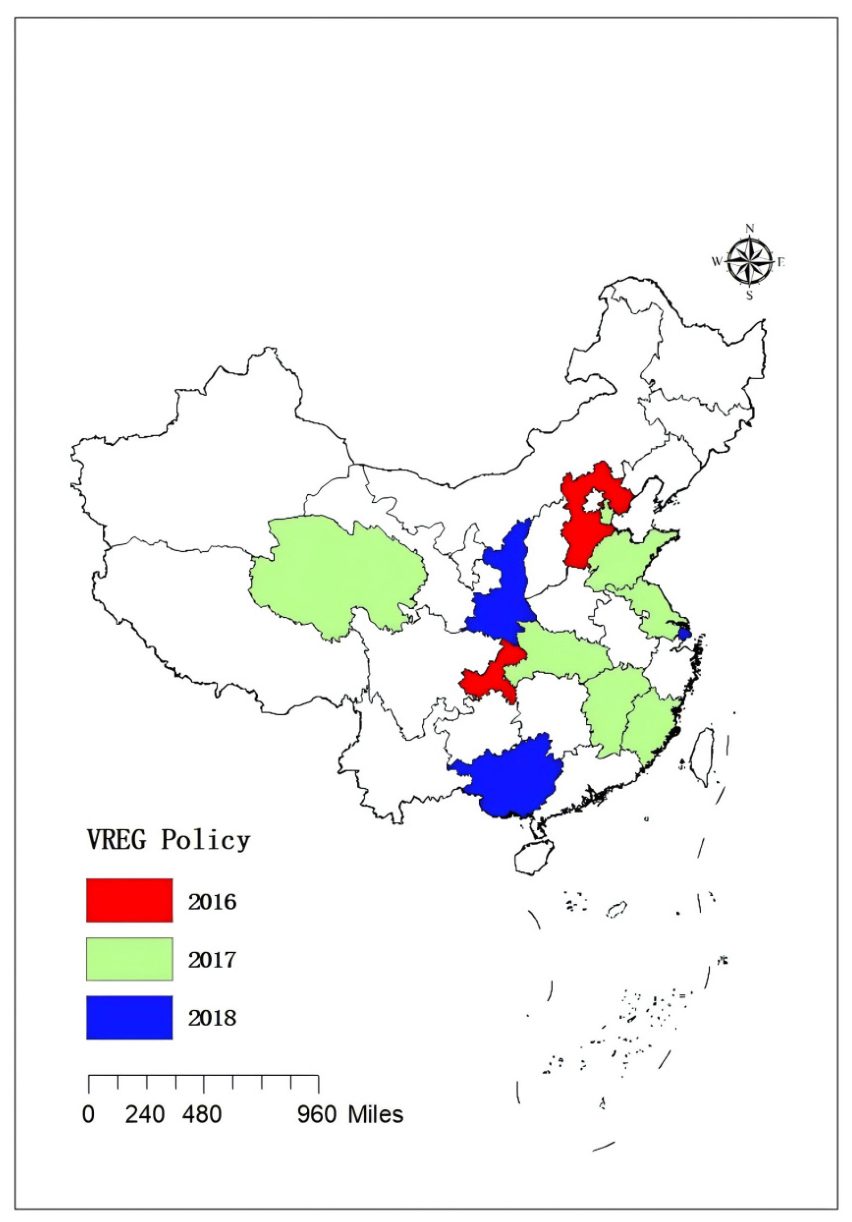
China’s regions exhibit substantial differences in economic development, resource allocation, and institutional frameworks, which lead to heterogeneous effects of the VMR-EPA policy on firms’ TFP. To capture these differences, the sample is divided into eastern and non-eastern regions, and regressions are conducted separately for each subsample. The results are reported in
Table 9, Columns (3) and (4). In the eastern region, the coefficient of
VMR-
EPA is −0.0564, significant at the 1% level, while in the non-eastern regions, the coefficient is −0.0096 and statistically insignificant. These findings suggest that the negative impact of the VMR-EPA policy on firms’ TFP is more pronounced in the eastern region than in the non-eastern regions.
Two main factors account for these differences. First, the eastern region is characterized by a more developed rule-of-law environment, stronger government enforcement capacity, and more active social supervision. Under vertical management, policies are implemented more rigorously, environmental law enforcement is more independent, and administrative discretion is more limited. Firms face “hard constraints,” and local governments have little room to shield enterprises through discretionary protection, sharply increasing compliance pressures. In contrast, environmental agencies in central and western regions face shortages of personnel, technology, and equipment, which restrict their monitoring capacity. Moreover, economic growth and employment stability remain priority objectives, and local governments may weaken the policy’s impact through informal channels, particularly for pillar enterprises. This fosters stronger local protectionist networks, and vertical management agencies may be compelled or inclined to seek compromises. Second, eastern regions are dominated by technology-intensive and export-oriented enterprises, where labor costs, land costs, and environmental compliance costs account for a large share of total expenses. When environmental regulations tighten, the high industrial concentration and resource scarcity (land and labor) leave firms with little room for relocation or production adjustments. Additional compliance costs thus directly squeeze already thin profit margins. By contrast, central and western regions are dominated by resource-intensive and domestically oriented enterprises, where energy and raw material costs account for a larger proportion, making them relatively less sensitive to rising environmental costs. Stricter regulations may instead accelerate “pollution gradient transfer,” allowing affected firms to relocate across regions to mitigate compliance pressures, thereby preventing significant declines in TFP.
6. Conclusions and Policy Recommendations
6.1. Conclusions
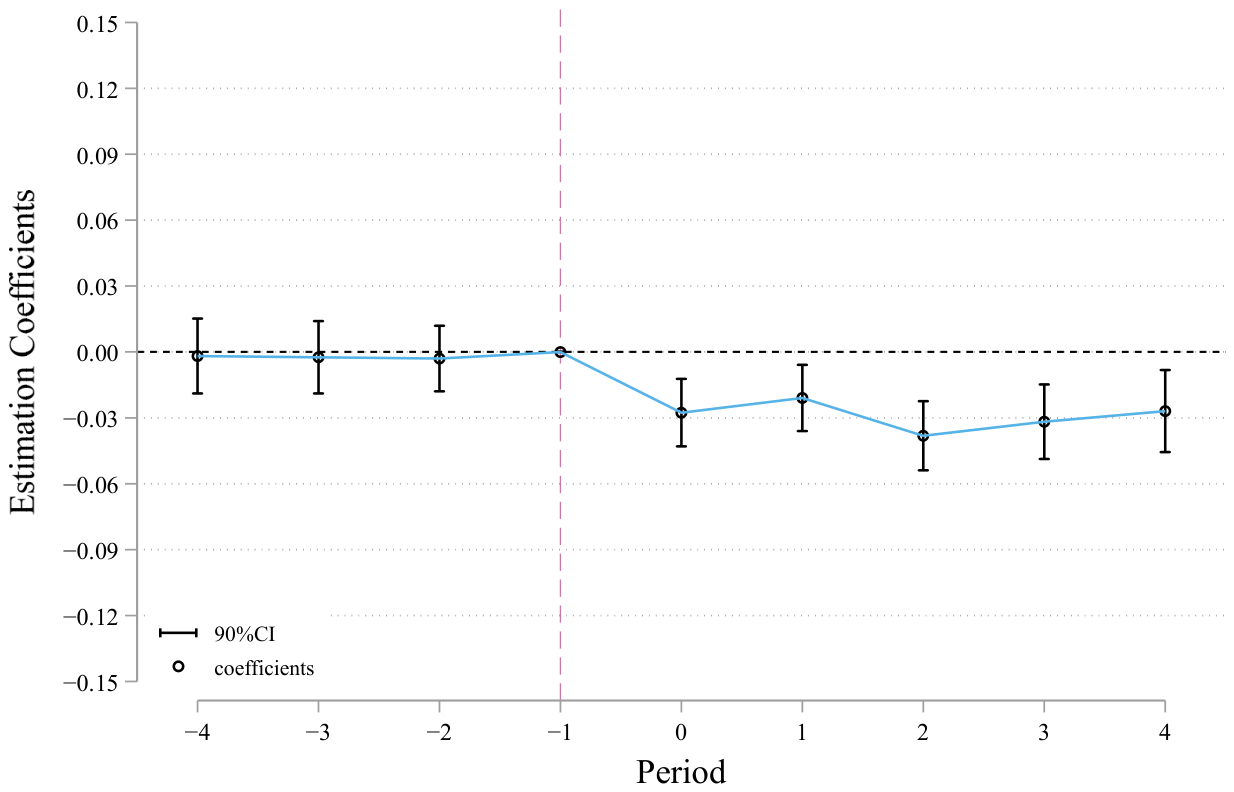
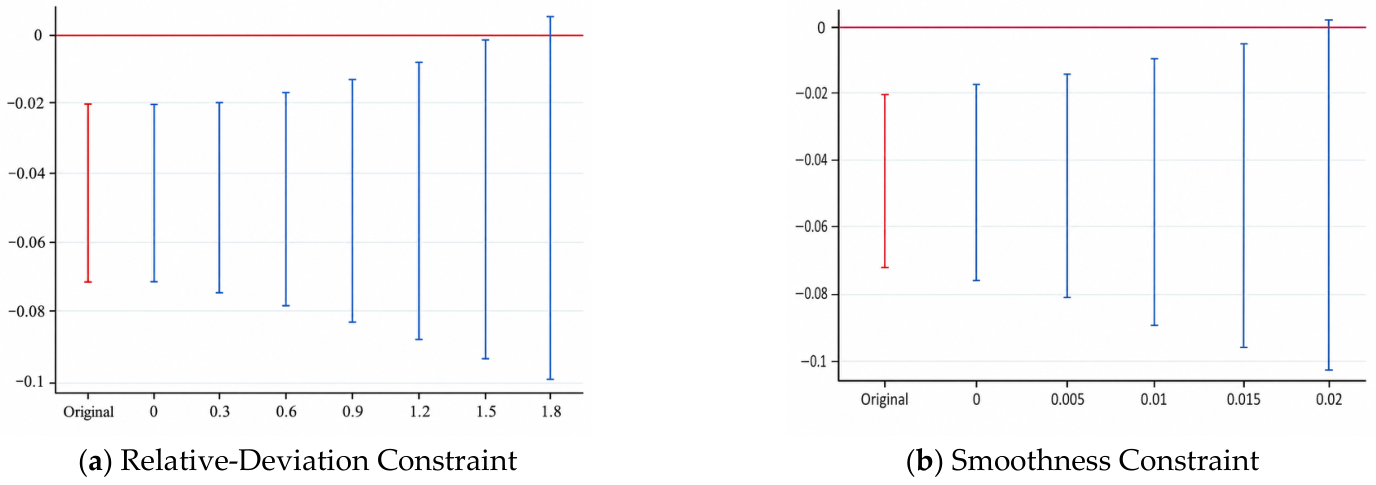
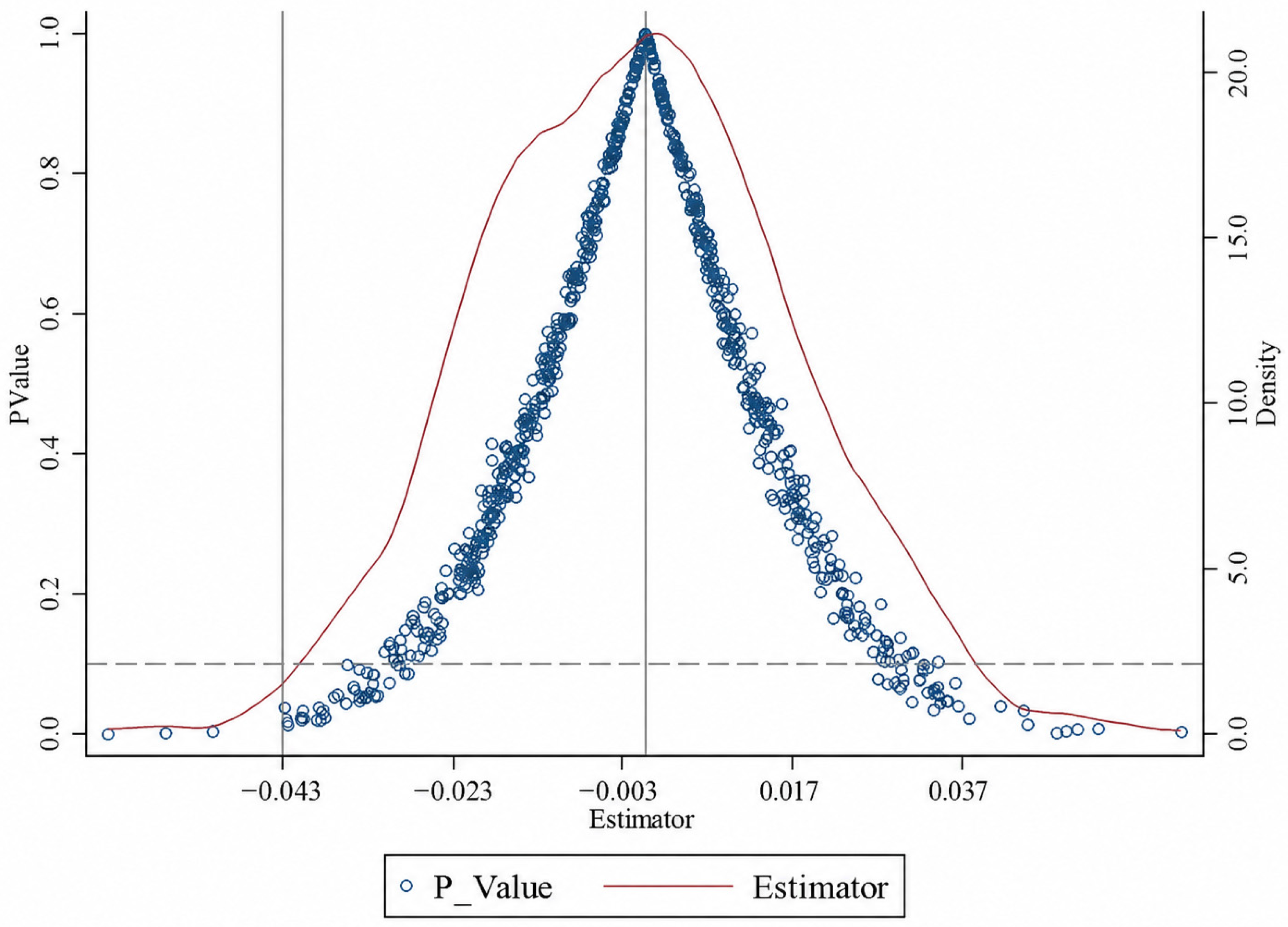
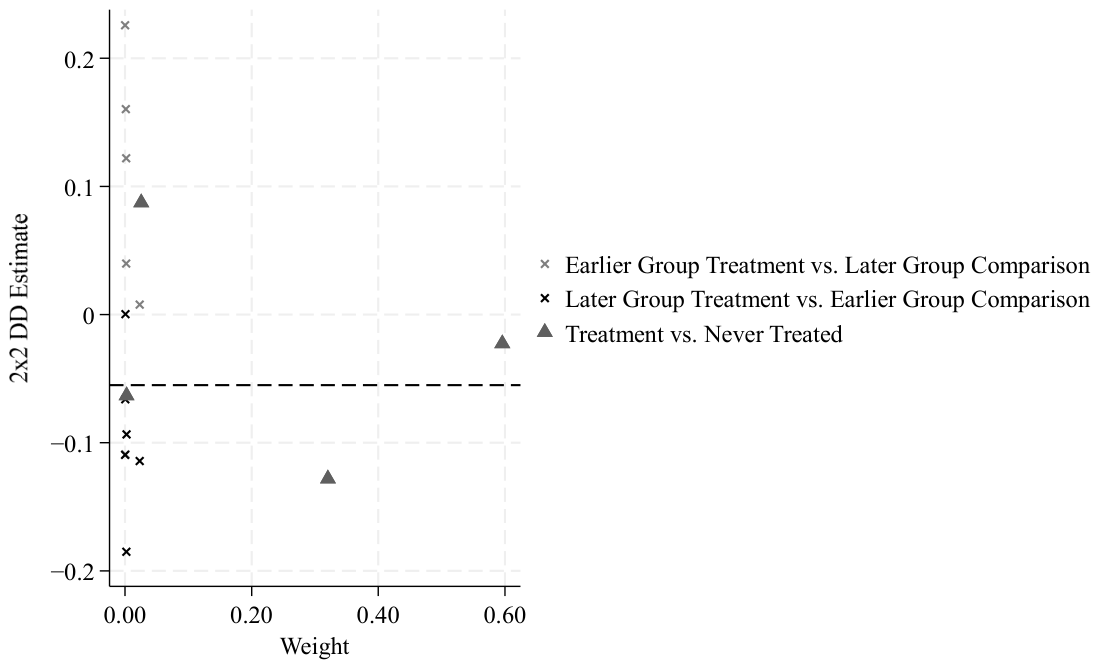
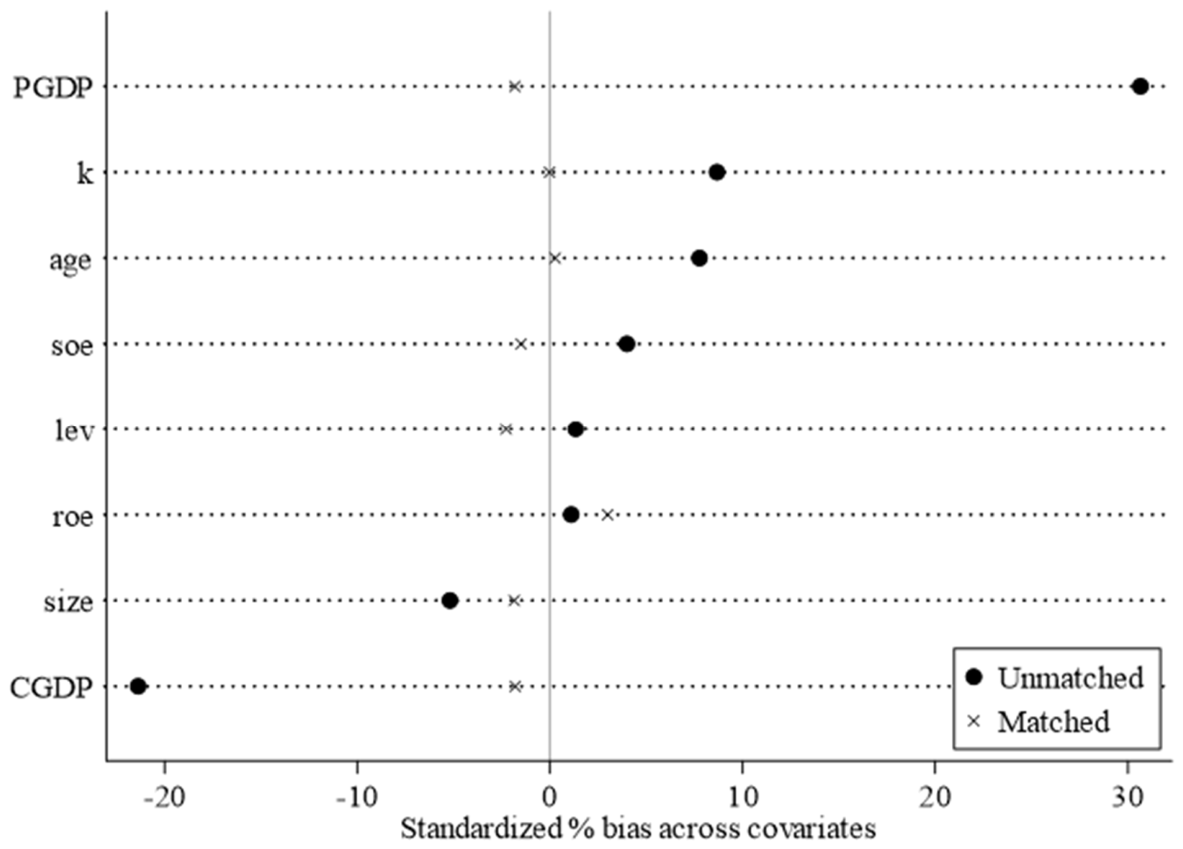
Using panel data of Chinese A-share-listed firms from 2012 to 2022, this study empirically examines the impact of the vertical management reform of environmental protection agencies on firms’ total factor productivity (TFP). The main findings are as follows: first, the reform significantly reduces the TFP of firms in pilot regions, and this result remains robust after a series of robustness checks, including sensitivity analysis, placebo tests, Bacon decomposition, and PSM-DID. Second, the reform suppresses firms’ TFP primarily by weakening technological innovation and distorting capital allocation efficiency. Finally, heterogeneity analysis shows that the negative effect of the reform is more pronounced for state-owned enterprises, firms in weakly regulated industries, and firms located in eastern regions.
6.2. Policy Recommendations
Based on these findings, the following policy recommendations are offered:
- (1)
Improve supporting mechanisms for reform to alleviate short-term compliance pressures on businesses
The vertical management reform of environmental protection agencies helps reduce local protectionism and enhance the independence and effectiveness of environmental regulation; however, empirical evidence suggests that it may have a certain dampening effect on firms’ total factor productivity in the short term. Therefore, when advancing reforms to the environmental governance structure, policymakers should avoid fostering a policy bias that “prioritizes regulation over support.” Based on enterprises’ pollution intensity, financial capacity, and foundation for transformation, policymakers should explore differentiated mechanisms for fiscal support, tax incentives, green credit, and environmental technology services to help enterprises smoothly complete the upgrading of environmental protection equipment and adjustments to compliance management. In particular, for enterprises facing severe resource constraints and weak financing capabilities, more targeted transitional support should be provided to mitigate the short-term crowding-out effect of compliance costs on R&D investment and production efficiency.
- (2)
Promote synergy between environmental regulation and incentives for green innovation to facilitate the realization of the benefits of innovation
This study finds that the vertical management reform of environmental protection agencies did not significantly promote corporate green innovation during the sample period, suggesting that relying solely on regulatory pressure does not necessarily lead to productivity gains. Future policy design should strengthen the independence of law enforcement while further refining incentive mechanisms for green technological innovation. For example, measures such as green R&D subsidies, loans for environmental technology upgrades, support for the commercialization of green patents, and incentives for green supply chains could be employed to guide enterprises toward shifting from end-of-pipe compliance to process upgrades and clean technology innovation. Policy priorities should not be limited to meeting pollution standards and enforcement penalties; rather, they should leverage the synergy between market-based tools and institutional regulation to encourage enterprises to transform environmental pressures into drivers of technological upgrading and efficiency improvements.
- (3)
Optimize capital allocation mechanisms to reduce resource misallocation caused by environmental compliance requirements
Mechanism tests indicate that reforms to the vertical management of environmental protection agencies may affect firms’ total factor productivity by reducing the efficiency of capital allocation. Therefore, environmental governance reforms need to be coordinated with policies in the financial, industrial, and factor markets. On the one hand, efforts should be made to incorporate environmental performance, investment in green technologies, and governance outcomes into the risk assessment and credit approval systems of financial institutions, thereby providing more stable financing support to enterprises with strong environmental performance and a strong willingness to transition. On the other hand, we should avoid simply replacing market-based resource allocation with environmental constraints, and prevent capital from flowing excessively into inefficient end-of-pipe treatment projects. In industrial clusters, industrial parks can be encouraged to jointly build and share environmental infrastructure such as wastewater treatment, pollution monitoring, and solid waste disposal facilities. By leveraging economies of scale, this approach reduces the compliance burden on individual enterprises, thereby mitigating the duplicate investments and resource waste that may result from decentralized pollution control efforts.
- (4)
Implement differentiated regulation to avoid the negative impact of “one-size-fits-all” policies
Heterogeneous results indicate that the reform has had a more significant impact on state-owned enterprises, firms with weak regulatory compliance, and enterprises in the eastern region. Therefore, policy implementation requires fine-tuning based on enterprise type and regional characteristics. For state-owned enterprises, while strengthening environmental accountability, greater emphasis should be placed on the efficiency of environmental investments and the effectiveness of technological upgrades, to prevent them from merely increasing compliance expenditures as a response to regulatory pressure. For enterprises with a weak regulatory foundation prior to the reform, compliance guidance, technical training, and disclosure requirements should be strengthened to help them gradually adapt to a stricter environmental governance system. For enterprises in the eastern regions and industrial clusters, greater attention should be paid to the impact of high factor costs, high compliance costs, and supply chain pressures on corporate productivity. Regional collaborative governance, public environmental facilities in industrial parks, and green technology service platforms should be leveraged to mitigate the concentrated impact of policy shocks. In central and western regions, efforts to enhance regulatory capacity must be balanced with measures to prevent pollution displacement and the resurgence of local protectionism.
- (5)
Promote reforms in the vertical management of environmental protection, shifting the focus from strengthening law enforcement to improving governance effectiveness
The institutional value of the vertical management reform of environmental protection agencies lies not only in strengthening the rigor of environmental oversight but also in enhancing the effectiveness of environmental governance through the restructuring of governance mechanisms. In the future, a balance must be maintained between provincial-level coordination and grassroots-level implementation. While ensuring the independence and authority of monitoring, supervision, and law enforcement, it is also essential to strengthen the capacity of grassroots environmental protection departments in terms of personnel, technology, and data management to avoid the problem of “strengthened provincial-level coordination but weakened grassroots-level implementation.” At the same time, efforts should be made to encourage the joint participation of the government, enterprises, the public, and third-party institutions in environmental governance. Through environmental information disclosure, third-party monitoring, public oversight, and corporate environmental responsibility assessments, the transparency and predictability of environmental governance can be improved. Only by establishing effective synergy among institutional rigidity, market incentives, and public oversight can the reform of vertical management in environmental protection be transformed from institutional restructuring into enhanced governance effectiveness.
6.3. Limitations of the Study and Directions for Future Research
First, this study uses companies listed on the Shanghai and Shenzhen A-share markets in China as its research sample. Since listed companies are typically large in scale, adhere to standardized information disclosure practices, and have relatively abundant financing channels, the findings of this study are primarily applicable to the population of listed companies. For unlisted companies, small and medium-sized enterprises (SMEs), and private enterprises with limited financing capacity, the impact of the reform of the vertical management of environmental protection agencies may be more complex; therefore, caution should be exercised when generalizing the conclusions of this study to these enterprises.
Second, this study examines the institutional shock resulting from China’s environmental governance structural reforms, and its conclusions are to some extent context-dependent. The reform of vertical management of environmental protection agencies is built upon China’s specific central–local relations, administrative accountability system, and environmental governance framework; therefore, the findings of this study may not be directly applicable to other countries or governance systems. Future research could further compare the policy effects of environmental governance structural reforms across different countries to test the applicability of these conclusions in diverse institutional environments.
Third, although this study has made every effort to mitigate identification bias through pre-policy trend tests, sensitivity analyses, PSM-DID, Bacon decomposition, and various robustness tests, the pilot provinces for the vertical management reform of environmental protection agencies were not selected entirely at random, and unobserved regional characteristics may still exert an influence. Future research could further integrate finer-grained data on firm-level emissions, enforcement penalties, environmental inspection activities, and local government behavior to more accurately identify the mechanisms underlying environmental governance structural reforms.
Fourth, the mechanism tests in this paper primarily provide empirical evidence regarding technological innovation capacity and capital allocation efficiency; however, there may be a bidirectional relationship between these factors and firms’ total factor productivity. Therefore, this paper does not interpret the mechanism tests as strict causal mediation identification. Future research could utilize data with longer time spans, higher frequency, or exogenous instrumental variables to further identify the dynamic mechanisms through which environmental governance reforms affect firm innovation, investment, and productivity.
Fifth, the sample period of this study allows for the observation of short- to medium-term effects in the years following the implementation of reforms, but observations regarding longer-term green technology accumulation, industrial restructuring, and innovation compensation effects remain limited. As the data time window expands in the future, it will be possible to further examine whether firms will gradually offset short-term compliance costs over a longer period through green innovation, production process optimization, and management improvements, thereby achieving a dynamic coordination between environmental governance and productivity enhancement.