1. Introduction
Globally, the installed solar photovoltaic (PV) capacity is expected to surpass coal by 2027 [
1]. In a net zero emission (NZE) scenario, it is projected that the total energy generation from solar PV would reach >9000 TWh [
1]. By the same year, the world is aiming to double agricultural productivity through sustainable and resilient food systems [
2]. As the world moves toward renewable technologies and targets zero hunger, it becomes increasingly important to identify strategies that address the issue of land use competition with energy infrastructure [
3]. Agrivoltaic (AV) systems address this by collocating PV electricity production with agricultural cultivation. This dual-use system has gained traction as a viable economic framework for navigating the complexities of the food–energy–land nexus [
4]. The primary components of an agrivoltaic system includes PV modules, mounting structure/rack supporting the PV modules, electrical infrastructure (inverters, wiring, interconnection equipment, etc.) along with an agricultural system where crops are cultivated. By allowing simultaneous production of crops and solar power on the same parcel of land, AV systems offer a potential pathway to balance the imperatives of climate change mitigation [
5], food security [
6], and rural economic development [
7].
Farmers [
8], and the general public [
9] support AV because it maintains agricultural employment and food sovereignty while expanding solar electricity generation and combating carbon emissions and climate change. The system has been particularly favored for enhancing sustainability in hot arid and semi-arid climates [
10]. As opposed to a single land use system, the duality of AV systems have shown immense potential with the land equivalent ratio reaching 1.97 according to one study [
11]. In addition, the technology can result in increased net revenue of up to 5000% [
12]. Similarly, a 35 kW AV system has reported a five-fold increase in farmers’ income in China [
13]. Shading offered by the PV modules also improve animal health with lower respiration rate and body temperatures noted for cows [
14]. Despite this promise and widespread support, the agronomic feasibility of AV systems is highly context-specific [
15], depending on the crop species—where reduced yields have been observed in pears (16%) [
16], apples (24%) [
17], grapes (12.6%) [
18], and turmeric (4.5%) [
19], but increased yields reported for strawberries (4–18%) [
20], wheat (2.7%) [
21], corn (5.5%) [
22], peppers (300%) [
23], chicory (69%) [
6])—as well as PV module characteristics [
20], and local environmental conditions [
15]. Overall, through increased productivity, AV integration can result in more than 1800 million tonnes of additional crop yield and generate upwards of
$1 trillion in economic output [
24].
Leguminous crops, such as green beans, are important in terms of agronomy and nutrition worldwide [
25]. Apart from being a protein source [
25], beans contribute to soil fertility through biological nitrogen fixation [
26]. This, in turn, supports diversified and sustainable farming systems [
27]. Beans are also sensitive to reductions in photosynthetically active radiation (PAR), which makes them potentially vulnerable to shading effects introduced by PV modules [
28]. For instance, under a 21.3% shading ratio, mung bean, red bean, and soybean yields declined by 21%, 26%, and 13%, respectively [
29]. Other studies highlight similarly variable responses [
30]; red bean yields were reduced by 11% under full sun compared with AV conditions [
31]; and in arid environments such as Tanzania, yields increased by as much as 123.7% [
32]. Moreover, in another study, smaller yield declines of 4.6%, 8.6%, and 11.8% have been reported for mung beans, moth beans, and cluster beans, respectively [
33]. Beans are a highly nutritious and ecologically valuable crop but are also susceptible to shading; this contrast makes them an interesting case to study under an AV system.
A critical consideration in agrivoltaic research is the establishment of standards for agricultural performance. Although Canada currently lacks coherent policy [
34], other countries have developed policies that have spurred substantial growth. For instance, in Germany—where agrivoltaic capacity is projected to reach 1 GW by 2025 [
35]—policy frameworks stipulate that an AV system must achieve at least 66% of the reference crop yield obtained under conventional (non-AV) conditions in order to be deemed acceptable [
36]. These benchmark and frameworks are important to guide responsible technological development as well as for informing policy while ensuring that renewable energy expansion does not undermine agricultural productivity [
37]. Research has also looked at agrivoltaics to facilitate a “just transition”, particularly for large-scale solar projects [
34]. Although past scholarship has examined the influence of shading on legumes such as mung bean, red bean, soybean, and cluster bean, evidence remains limited and highly context-specific. Only one study by Cossu et al. [
28] has focused on green beans; consequently, green beans’ performance under diverse PV module designs when evaluated against policy-driven thresholds is unknown.
This study provides an exploratory comparative assessment of green bean yield performance under multiple PV module types with varying spectral characteristics and transparencies. Although prior AV studies have investigated crop–energy trade-offs, and AV greenhouses growing green beans showed negative yields [
28] no work has compared outdoor AV production of green bush beans across a broad range of semitransparent crystalline silicon and thin-film PV modules within a policy-oriented framework. The productivity levels under AV systems are compared with both national average yields and international policy standards. In this study, it is hypothesized that although beans are sensitive to light attenuation as shown by Cossu et al. [
28], certain PV module designs can nonetheless enable yields above minimum (66% of the reference or traditional farming productivity) German policy thresholds [
36], thereby allowing their consideration in dual-use land systems. Furthermore, it is also proposed that integrating yield standards into the evaluation framework for AV systems could serve as an important tool to inform policy decisions.
The contributions of this work are threefold. First, it provides empirical agronomic data on bean cultivation under outdoor AV conditions characterized by a range of PV module configurations. No prior study has investigated green bean performance under such a diverse AV architecture. Second, it bridges the gap between engineering and land-use policy by validating yield outcomes against mature agrivoltaic standards. By doing so, the study highlights the role of minimum-yield thresholds in shaping the feasibility of AV adoption. Third, through systems-level modeling using a test case of AV deployment on one acre of land, the study offers an integrated assessment of agricultural, energy, and economic outcomes relative to a non-AV baseline. The results of this technoeconomic assessment provide insights into the trade-offs and synergies relevant to sustainable land-use planning and developing policy and regulatory frameworks.
2. Materials and Methods
The field experiments were carried out at the Western Innovation for Renewable Energy Deployment (WIRED) facility, situated at the Western University Field Station in Ilderton, Ontario, Canada. The site is situated 250 m above sea-level and located at 43.04° N latitude and 81.33° W longitude. London/Ilderton has a continental climate which is warm in summers and cold in winters. With a PV potential of 1100–1200 kWh/kWp, the region has considerable solar energy potential [
38]. The facility is equipped with a custom-built, ballast-mounted [
39], fixed-tilt agrivoltaic racking system designed to support elevated crop production trials under PV modules [
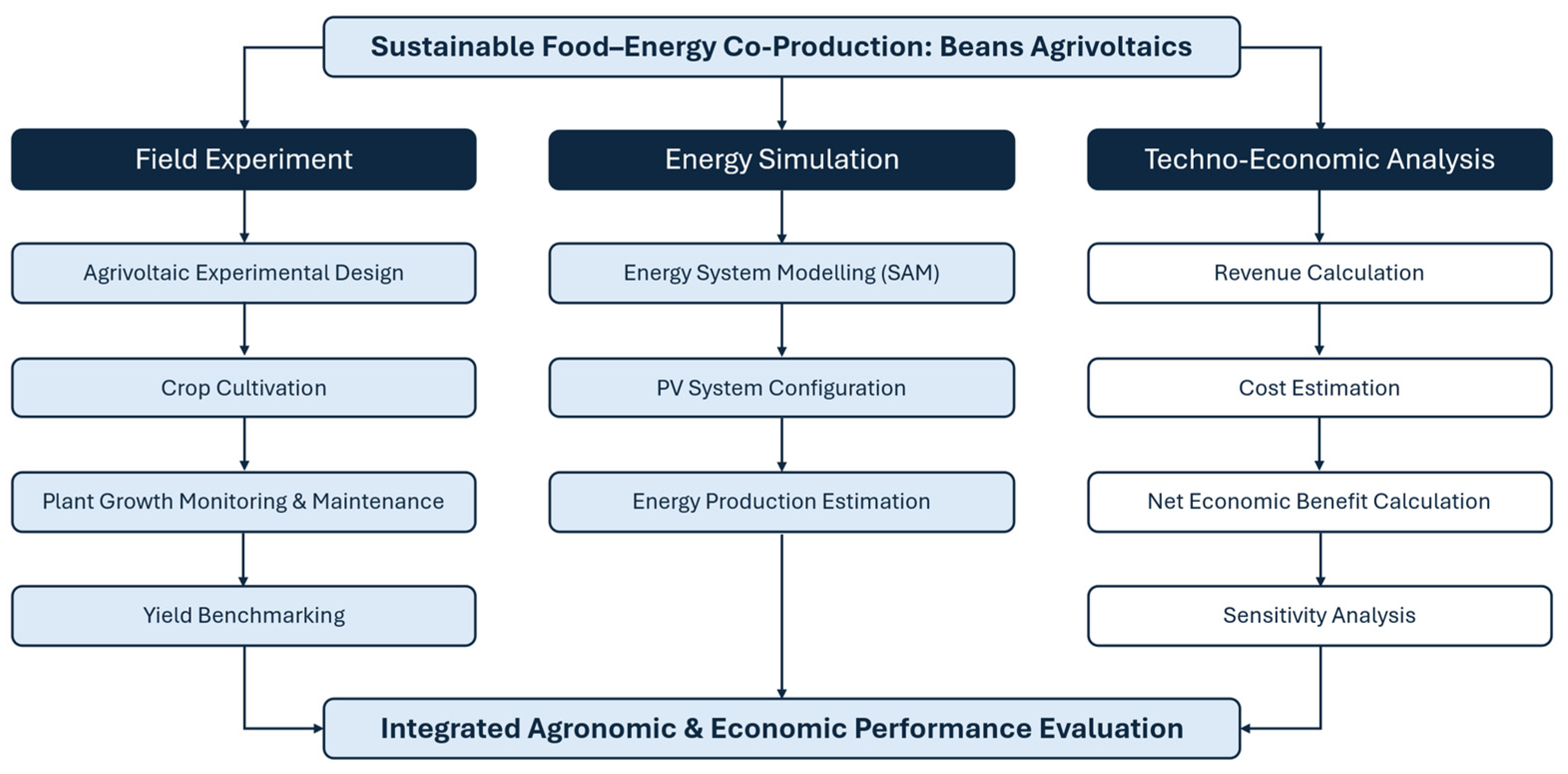
40]. Thirteen agrivoltaic treatments were established, employing crystalline silicon (c-Si) wafer-based and cadmium telluride (CdTe) thin-film modules with varying transparency levels and spectral transmission properties. The trial was conducted from 21 May to 14 August 2025, corresponding to the typical summer growing season in southwestern Ontario. The yield under each AV treatment was benchmarked against the national average yield for green beans in Canada. By comparing AV yields with traditional farming thresholds and contextualizing it with reference to the Germany’s 66% performance standard, this approach provides a standardized, policy-relevant assessment. Workflow of the methodological framework used in this study is shown in
Figure 1.
The c-Si treatments consisted of modules with nominal light transmittance of 8%, 44%, and 69% (Brite Solar, Thessaloniki, Greece). The CdTe treatments (SolarFirst, Xiamen, China) included ten variants distinguished by spectral coloration (blue, green, or red) and transmittance levels ranging from 40% to 80%. Specifically, CdTe configurations included: blue (60%, 70%, 80%), green (60%, 70%, 80%), and red (40%, 50%, 70%, 80%).
The number of plant replicates allocated to each treatment was determined by module dimensions and availability: six pots for the 8% and 69% c-Si modules (two modules per type), three pots for the 44% c-Si module (single module) and two pots for each of the ten CdTe variants. The experimental design aimed to provide exploratory, comparative insights rather than statistical conclusions. The replicates count was limited by the availability and dimensions of the PV modules used in the experimental setup. Because the study was exploratory in nature where different AV configurations were being evaluated, the goal was to identify relative agronomic trends instead of ascertaining statistically definitive treatment effects.
2.1. Crop Cultivation
The trial was conducted on bush beans (Masai), a popular green bean cultivar known for its nutritional benefits and widespread cultivation. Green beans are a highly nutritious crop [
41]. A 100 g serving provides approximately 1.8 g of protein, 2.7 g of dietary fiber, and essential vitamins such as vitamin C and K [
41]. Bush bean seeds were obtained from a local commercial supplier from London, ON, Canada, and were not pretreated. The beans were sown into 1.5 gallon pots filled with ProMix BX growing medium (Premier Horticulture Inc., Rivière-du-Loup, QC, Canada). To minimize variability, all plants were cultivated in standardized pots using the same growing medium. The irrigation regime adopted across all treatments was identical too. This approach reduced soil-related variability and enabled clearer comparison of agrivoltaic treatment effects.
Each pot was initially seeded with two beans at a depth of approximately 3 cm following the guidelines provided by the seed supplier. The seedlings were later thinned to a single plant following germination. Cultivation followed organic practices, with no fertilizers, pesticides, or herbicides applied. Irrigation was performed manually using well water twice a week. All pots were maintained using the same irrigation and maintenance routines ensuring consistency across all treatments for comparative analysis.
At harvest, plants were assessed for yield. Fresh biomass (g) was measured using a digital scale sourced from China (AccuWeight IC201, ±0.5 g precision). Following quantified agronomics, the digital mass values were used to evaluate relative yield performance across agrivoltaic treatments in comparison to the non-AV condition (national average yield per pot). In addition, weekly measurements were taken to record plant height (using a metric ruler) and leaf number. Both crop morphological measurements of plant height and leaf count were taken every week until harvest.
Crop yield performance was determined by benchmarking the total fresh weight of beans under AV systems against the national average. Because each pot contained a single plant, the measured biomass corresponded to yield per plant. The replicates under each AV treatment were averaged to determine a single yield for each AV configuration. Using below equation, the AV yield performance was expressed relative to the national average:
where
represents the average bean biomass measured under a specific AV treatment and
represents the national average bean biomass.
The national average yield was used as a policy-oriented reference rather than an agronomic control benchmark. Although control measurement provides a more direct agronomic comparison, the national average was considered the more relevant benchmark because the study’s primary objective was to evaluate AV system performance against established policy thresholds which are themselves defined relative to national productivity standards rather than individual site controls.
2.2. Energy Simulation
Energy generation potential was estimated using the System Advisor Model (SAM) Version 2025.4.16 [
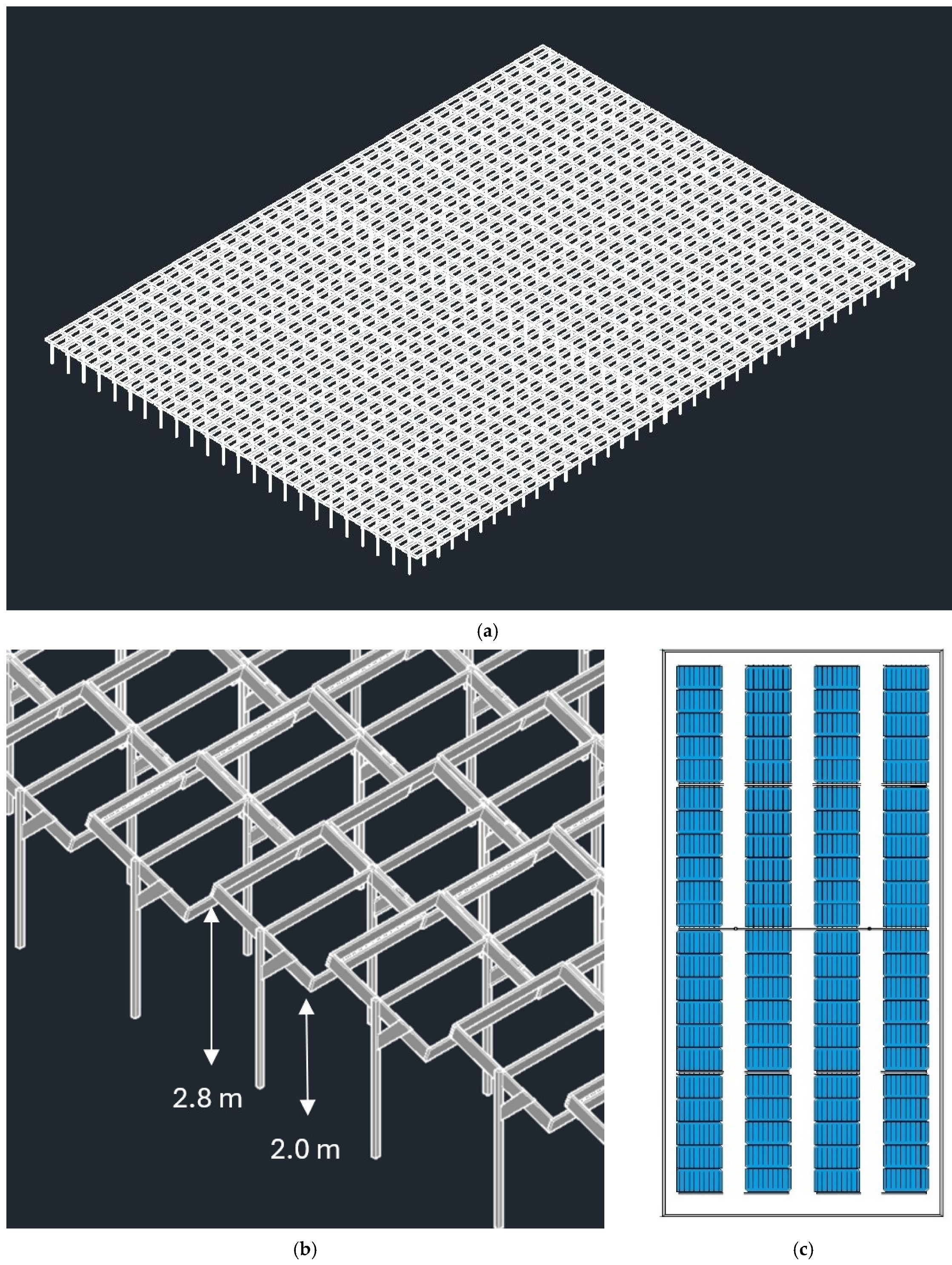
42]. For the simulation, a representative one-acre plot in London, Ontario, was assumed to be fully covered by AV modules corresponding to the best-performing configurations identified in the experimental setup. The model considered a complete “solar roof” structure above bean cultivation, equipped with irrigation infrastructure (
Figure 2). The concept of ‘solar roof’ represents a theoretical maximum-coverage scenario. This provides an upper-bound energy generation potential by integrating agrivoltaics. Practical AV deployments may differ considering maintenance, crop management, and optimized light distribution. Therefore, the modeled energy output would be expected to be higher compared to commercial systems. This represents the maximum amount of solar energy ignoring all AV tradeoffs. Moreover, the spectral analysis of CdTe modules has already been performed in a previous study [
43].
The details of SAM input parameters are mentioned in
Table 1. The SAM simulations represent simplified energy estimates. It does not include AV-specific factors such as -induced microclimate effects, or spectral shading interactions.
Module specifications used for calculations included:
The number of modules per acre was calculated based on these dimensions. The c-Si PV modules have an area of 2.18 m
2 while CdTe thin film modules have an area of 0.72 m
2. Using these module areas, the total number of PV modules and subsequently, the total installed PV capacity was determined for 1-acre (4046.9 m
2) farmland. Almost 1859 c-Si (275 W each) and 5620 CdTe (24 W each) modules can be accommodated in a 1-acre area which would result in an installed capacity of 511.2 kW and 134.9 kW, respectively (Equation (1)).
where
is the total installed PV capacity (kW),
are the number of PV modules installed per acre, and
is the rated power of each module (W).
Annual energy output, as shown in Equation (2), was estimated by multiplying the energy yield (kWh/kW) of a 1 kW PV system in the region by the installed system capacity.
where
is the annual electricity generation (kWh/yr),
is the annual energy yield of a 1 kW PV system (kWh/kW-yr), and
is the installed PV capacity (kW).
The energy generation calculation presented above provides a simplified method for ascertaining the electrical output from a one-acre agrivoltaic plot. The capacity of PV systems depend primarily on two parameters: (1) the power rating of PV modules used, and (2) the total number of PV modules installed in the system. In the study, two different types of PV modules—c-Si and CdTe—were used; both of which vary in terms of power rating as well as dimensions. This resulted in differing system sizes or installed capacities. Compared to the CdTe thin film modules, c-Si PV modules resulted in a greater installed capacity due to their higher rated power. Yearly electrical generation potential further integrates the solar irradiance potential in addition to the installed PV capacity. Incorporating solar resource with installed PV capacity provides an estimates of the total electricity potential for agrivoltaic configuration. During cultivation, each pot was ensured to have a single plant. This meant that the harvested biomass represented bean yield per plant. For comparative analysis with traditional or non-agrivoltaic farming, these biomass measurements were contextualized with the national average yield for green beans in Canada. The planting density of bean crops is approximately 12,000 plants per acre [
44]. The mean yield at the national level is estimated at 4400 kg per hectare (1780.6 kg/acre) [
45]. Based on this yield and planting density, the corresponding average yield per pot was calculated, resulting in an estimated national average of 148.4 g. Agrivoltaic treatment yields were also expressed as a percentage of this national average to assess their relative performance. This normalization enables comparison across agrivoltaic configurations and facilitates evaluation against agrivoltaic policy thresholds such as Germany’s 66% yield requirement to meet agrivoltaic regulatory requirements.
To address the limitations of the solar roof scenario and provide a more conservative deployment estimate, a second configuration was modeled using standard inter-row spacing. An inter-row spacing of 5 m was adopted, consistent with values reported in prior agrivoltaic studies for bifacial and semitransparent modules, to allow for farm machinery access, maintenance pathways, and light penetration between rows [
20]. For the c-Si modules, three modules were stacked in landscape orientation per row, while the CdTe modules were arranged in stacks of six. Based on these stacking configurations and module dimensions, 8 rows could be accommodated within the one-acre plot. This resulted in 720 c-Si modules and 2544 CdTe modules being installed, corresponding to installed capacities of 198.0 kW and 61.1 kW, respectively. This conservative scenario accounts for practical economic/spacing constraints. The remaining energy generation and economic analyses were carried out using the same methodology as described for the solar roof scenario.
2.3. Economic Analysis
To contextualize the dual-use potential, both energy and crop revenues were estimated. Prior literature has also looked at the technoeconomic evaluation of automated AV systems [
46]. In this study, for electricity, the average residential tariff in Canada (
) (CAD
$0.192/kWh) was applied to the simulated energy output (
) [
47]. Electricity revenue (
) was calculated using Equation (3):
Agricultural revenue from beans production was estimated using:
where
is the annual agricultural revenue (CAD/acre-yr),
is the beans yield (kg/acre), and
is the market price of beans (CAD/kg). Agrivotlaic agricultural revenue (
) was ascertained by integrating the percentage increase or decrease (A) in beans yield under solar PV modules in Equation (4).
The installation cost of the agrivoltaic systems was estimated using an average installation rate of CAD
$2.16/W [
20] and the total installed PV capacity per acre of farmland (Equation (6)).
where
is the total installation cost (CAD),
is the installed PV capacity (kW), and
is the installation cost per watt (CAD/kW).
To annualize this investment over the 30-year system lifetime, the total installation cost was divided by 30 (Equation (7)).
where
is the annualized capital cost (CAD/yr),
is the total installation cost (CAD), and
is the system lifetime (years).
This annualized value was then subtracted from the annual electrical revenue to obtain the net economic gain from the agrivoltaic system. In addition, the operation and maintenance (O&M) cost for agrivoltaic installations was estimated at CAD
$491/acre-yr (equivalent to USD
$350/acre-yr, assuming 1 USD = 1.4 CAD) [
48]. This recurring cost was also deducted from the annual electrical revenue to calculate the net revenue of the agrivoltaic systems.
The net economic benefit from the AV system was determined using Equation (8):
where
is the net annual revenue (CAD/yr),
is the annual electricity revenue (CAD/yr),
is the annual agrivoltaic agricultural revenue (CAD/yr),
is the annualized capital cost (CAD/yr), and
is the annual operation and maintenance cost (CAD/yr). For bean production, an average market price of CAD
$8.79/kg was used to calculate potential agricultural revenue [
49]. These values provided a basis for comparing agronomic and economic trade-offs under AV and non-AV land-use scenarios.
Because these values are not static, a sensitivity analysis was conducted to account for market variability. The analysis highlighted how changes in economic metrics effect the financial performance of agrivoltaics system. The economics of agrivoltaic systems depend on various parameters including electricity prices [
50], PV systems costs [
51], government policies [
52], and PV-crop land sharing model [
53]. These indices vary over time due to market fluctuations, regulations and policy changes. By adopting this approach, i.e., using sensitivity analysis, the strength of the economic analysis is improved. It also helps identify which factors have the strongest impact on project viability. By examining the implications of the changes in these variables on financial revenue, the economic resilience of agrivoltaics is gauged under future scenarios. The price of green beans was varied between CAD
$2.93/kg to CAD
$4.36/kg representing the lowest and the highest values reported over the past eight years (2017–2025) in the Government of Canada dataset for frozen green beans [
54]. Similarly, electricity prices were modeled across a range from CAD
$0.078/kWh (Quebec–lowest) to CAD
$0.41/kWh (Northwest Territories–highest) reflecting the variation observed among Canadian provinces [
47].
The analytical framework used in this study is supported by established modeling tools and empirical benchmarks. PV energy generation was simulated using SAM developed by the National Laboratory of the Rockies (NLR) (previously National Renewable Energy Laboratory (NREL)) [
42]. This software has been previously used in academic studies to estimate PV system performance under different system configurations [
55]. Crop yield performance was evaluated relative to the national average yield for green beans reported by Statistics Canada, which provides a consistent agricultural benchmark. The combination of empirical biomass measurements and validated PV simulation tools provides a reasonable basis for evaluating agrivoltaic performance in this study.
3. Results
3.1. Agronomic Properties
3.1.1. Plant Height
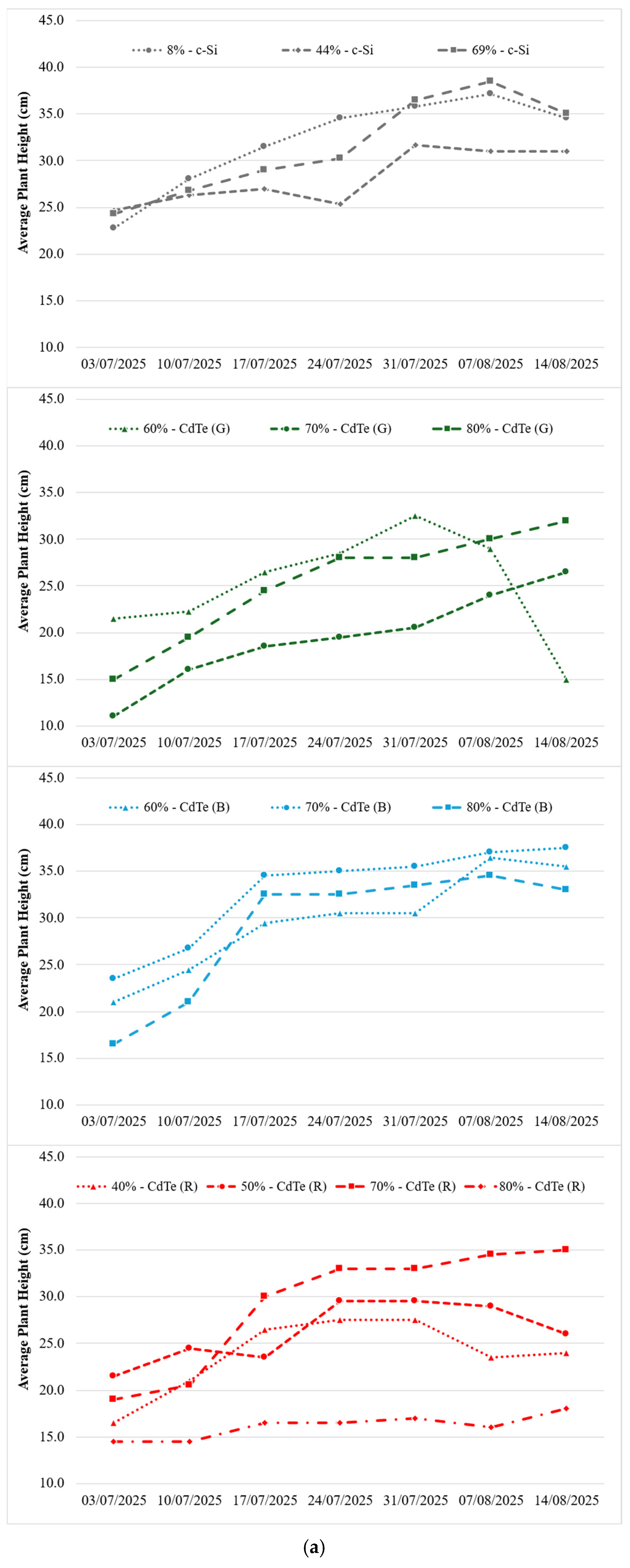
Bean height trajectories differed markedly among treatments (
Figure 3a). In general, plants under the non-uniform shading of crystalline silicon modules grew taller than those under uniform-shading cadmium telluride modules, although none matched the control. For instance, plants under the 44% c-Si module attained an average maximum height of 38.5 cm. The 8% c-Si module also showed relatively stable growth, reaching 37.2 cm. The 69% c-Si module, however, produced the tallest plants with a height of 38.5 cm.
In contrast, cadmium telluride treatments produced shorter plants, particularly under green and red modules. The 70% CdTe (G) treatment, for example, reached only 30.0–32.0 cm, while the 40% CdTe (R) treatment maximized at 27.5 cm. By comparison, the blue-spectrum modules allowed for better growth: for instance, the 70% CdTe (B) reached 37.5 cm. The lowest plant height overall was observed under 60% CdTe (G), where plants averaged only 15.0 cm at the final harvest. These patterns are consistent with previous findings that beans often elongate under partial shade (50–70%) [
56]. Similar results were observed in South Africa where plants grown under heavy shade tended to elongate more. In contrast, those exposed to moderate or no shading produced more pods, seeds per plant, and ultimately higher grain yields than plants under dense shade [
57].
3.1.2. Number of Leaves
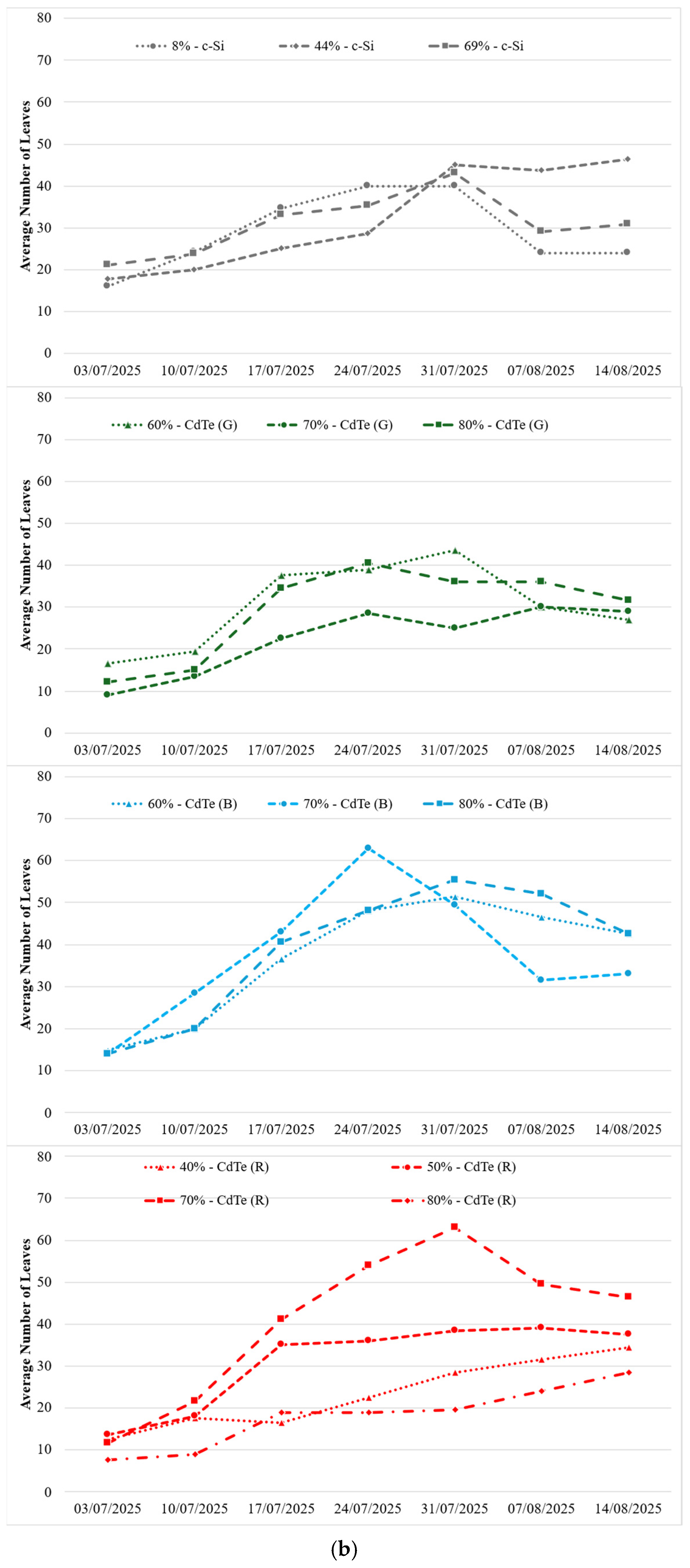
Leaf development followed similar trends in line with plant height. The 44% c-Si and 69% c-Si treatments supported moderate leaf production, reaching 43–46 leaves (
Figure 3b). The 8% c-Si treatment also performed relatively well, reaching 40 leaves till end of July.
Among the CdTe modules, the CdTe (B) provided the best results. The 70% CdTe (B) treatment yielded up to 63 leaves, while the 60% CdTe (B) achieved 52 leaves. In contrast, plants under green-spectrum treatments produced fewer leaves. The maximum number of leaves reached under CdTe (G) were recorded to be between 30 and 44 leaves. The red-spectrum treatments also showed substantial reductions, with some replicates averaging only 34–39 leaves. The 80% CdTe (R) treatment performed particularly poorly, producing a maximum of 29 leaves on average across all replicates. Number of leaves was used as an indicator of vegetative development under different AV configurations. Treatments that showed better vegetative growth generally maintained higher leaf counts. This was particularly evident for the blue CdTe and intermediate-transparency c-Si treatments. A reduction in leaf number under shaded conditions can likely be attributed to decreased photosynthate production when light availability is limited [
58]. Consistent with this, Crookston et al. (1975) observed fewer leaves in shaded dry bean [
59]. Similar trends have been reported across other legume species as well (moth bean, Centrosema pascuorum cv. Cavalcade and Stylosanthes guianensis cv. Tha pra) [
60]. Furthermore, leaf senescence defined as “the deteriorative processes that are the natural causes of death” ultimately resulting in decline in leaf number [
61], have also been documented in earlier studies [
62], reinforcing the pattern observed in the current experiment. There were no morphological measurements undertaken during the experiment, however, to confirm the impact of blue spectrum on bean growth.
Overall, both plant height and leaf number patterns support the yield results discussed in the next section, indicating that blue-spectrum CdTe and intermediate-transparency c-Si modules were the most conducive to beans growth. Conversely, green and red CdTe treatments imposed significant limitations on vegetative development.
3.2. Crop Yield Performance
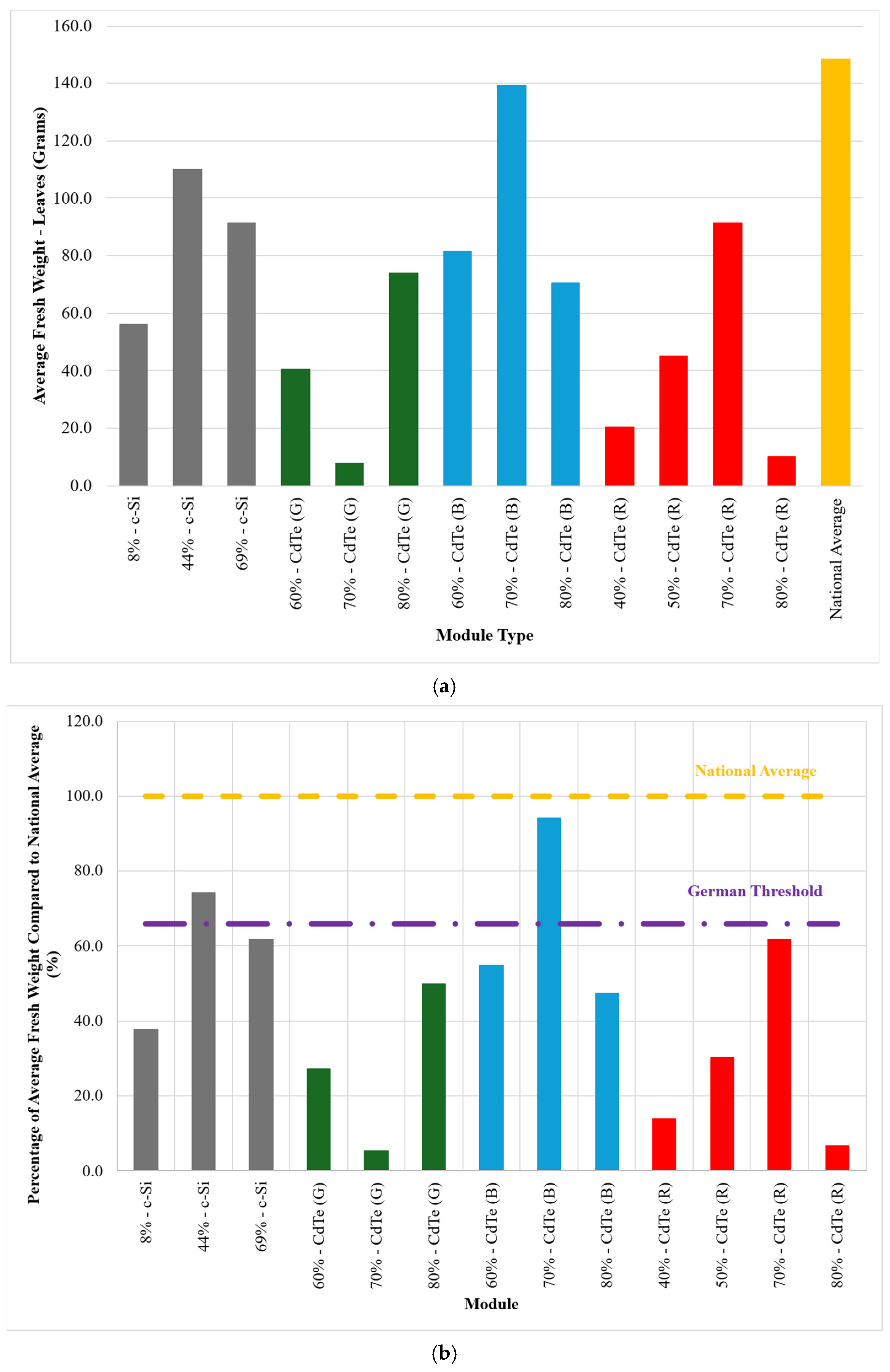
Bean yields were strongly influenced by module type, transparency, and spectral properties. Among the c-Si modules, the lowest-transparency design produced an average fresh weight of 56 g, corresponding to only 37.7% of the national benchmark. In contrast, the intermediate-transparency c-Si module with 44% transparency reached 110 g, or 74.1% of the Canadian national average. If it is assumed that Canada follows Germany and creates national agrivoltaic standards, this would place it above the 66% tolerability threshold of the German standard. The highest-transparency c-Si module performed moderately, averaging 91.5 g (61.7% of the national benchmark) but falling just below the German standard’s threshold. This may still be tolerable because of crop rotation where other crops perform better and the combined crop yield averages out to be greater than 66%.
The CdTe treatments showed even greater variability. Blue-spectrum modules performed best, with the 70% CdTe (Blue) treatment producing an average fresh weight of 139.5 g, equivalent to 94.0% of the national average. Other blue treatments yielded moderately: 81.5 g (54.9%) at 60% transparency and 70.5 g (47.5%) at 80% transparency. CdTe (G) modules were poorly suited to bean growth, with fresh weights as low as 8 g (5.4%) at 70% transparency and only 40.5 g (27.3%) at 60%. Even at 80% transparency, green treatments reached just 74 g (49.9%), well below the 66% threshold. Red-spectrum treatments ranged widely: the lowest-transparency configuration produced only 20.5 g (13.8%), while the highest-performing red treatment, at 70% transparency, yielded 91.5 g (61.7%). The remaining red modules produced between 45 g (30.3%) and 10 g (6.7%), none of which met the German criterion (
Figure 4).
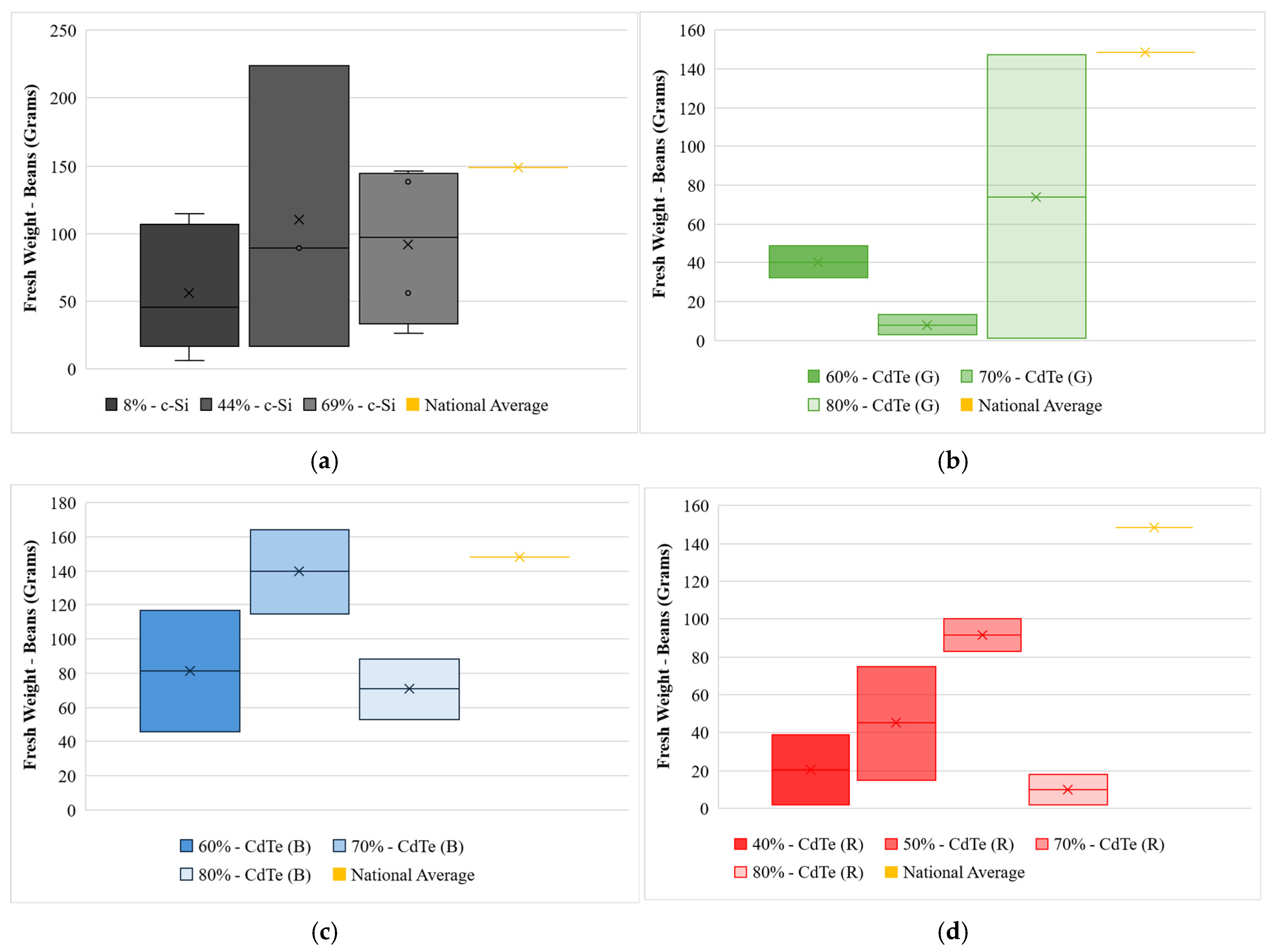
Within-treatment variability was evident across several module types (
Figure 5). For example, replicates under the 44% c-Si treatment ranged from 17 g to 224 g, while the 70% CdTe (B) treatment ranged from 115 g to 164 g. By contrast, some treatments such as the 70% CdTe (G) exhibited similar reductions in fresh weight, with replicates’ biomass recorded as low as 1 g and 13 g. This reinforces the crop’s poor performance under the green spectrum.
When compared to the national average fresh weight of 148.4 g, most of the treatments fell below it. For reference, a control plant grown at the same site in open-field conditions yielded 107 g which is lower than national average. Therefore, this study used the national average as the policy-relevant benchmark and for comparative evaluation. Only the 70% CdTe (B) module approached parity, at 94.0% of the benchmark. The 44% c-Si module also performed comparatively well, with yields at 74.1% of the national reference, surpassing the German 66% tolerability threshold. In contrast, all other treatments remained below this benchmark, with several—particularly the green and red cadmium telluride modules—falling far below 50% of the national average.
Considering the exploratory nature of the study and limited number of replicates for each treatment, statistical analyses (e.g., ANOVA) were not performed. The study therefore includes descriptive comparisons and configuration trends. It is also important to acknowledge that the German threshold of 66% may account for multi-year agricultural productivity and crop rotations rather than single-season single-crop trials as bench marked in the current study.
3.3. Energy and Economic Analysis
The integration of agrivoltaic systems altered both the energy yield and the revenue profile of the 1-acre land use scenarios.
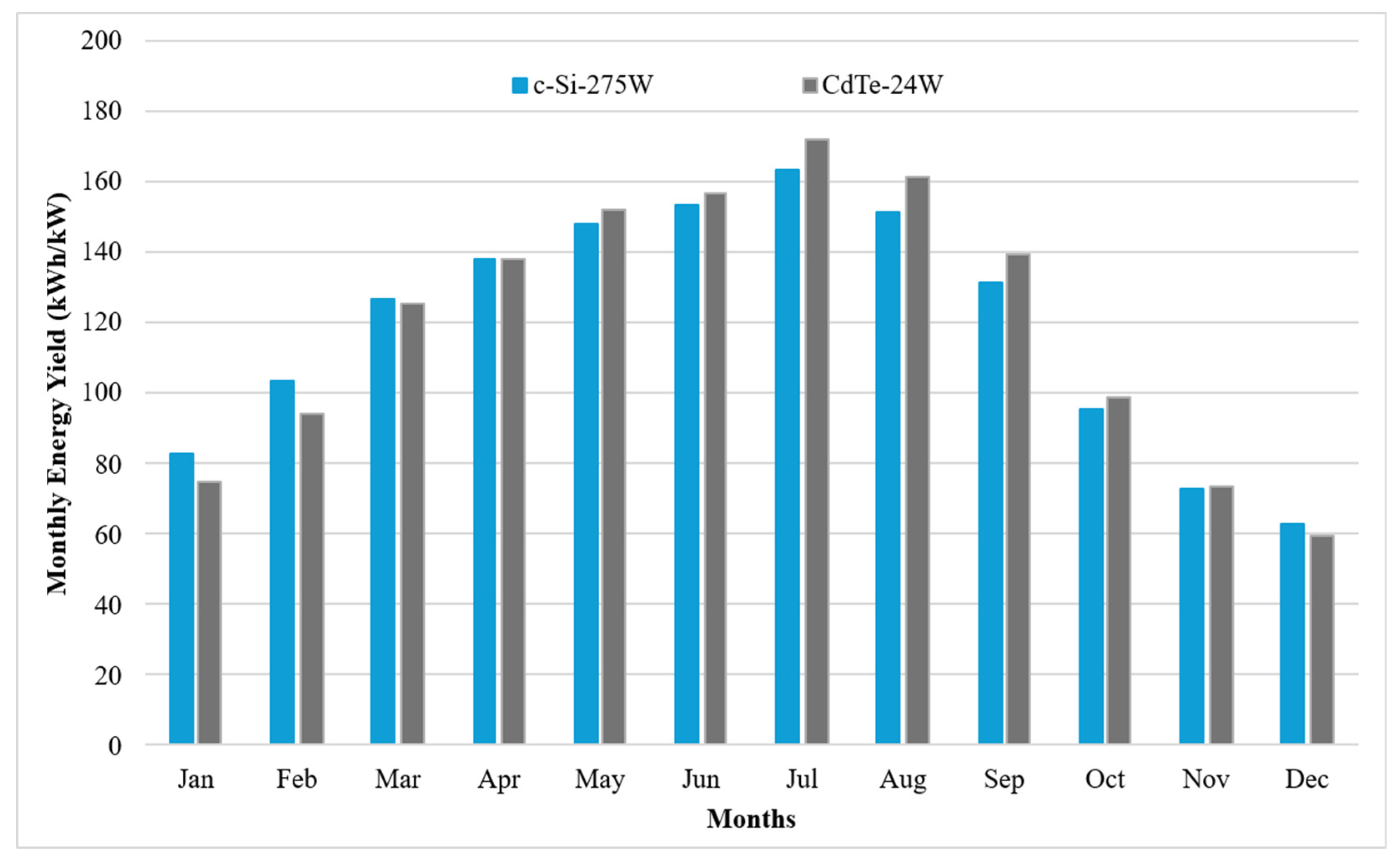
Figure 6 shows the monthly energy generation potential of a 1 kW PV system using 70% CdTe (B) and 44% c-Si modules. With an installed capacity of 511.2 kW, the 44% c-Si configuration produced the highest energy output, generating approximately 729,956 kWh annually. The 70% CdTe (B) system, with an installed capacity of 134.9 kW, yielded a lower but still considerable output of nearly 194,833 kWh. These differences translated directly into revenue streams: the 44% c-Si system achieved an estimated CAD
$102,852 in electrical revenue, compared with CAD
$27,206 from the 70% CdTe (B) system (
Table 2).
Agricultural returns exhibited an inverse pattern. Traditional farming without modules generated the greatest agricultural revenue (CAD $38,676), followed closely by the 70% CdTe (B) configuration (CAD $36,360). In contrast, the 44% c-Si system, due to its higher shading and lower crop yield, produced comparatively lower agricultural revenue (CAD $28,671).
When agricultural and energy revenues were combined, both agrivoltaic systems outperformed the traditional farming. The 44% c-Si configuration yielded a total revenue of CAD $131,523, representing more than a threefold increase (340.1%) over traditional farming. The 70% CdTe (B) configuration provided a lower total revenue of CAD $63,566—164.4% of the conventional farming system.
To contextualize the solar roof results within a practically deployable framework, the economic analysis was repeated for the 5 m inter-row spacing scenario. With a reduced installed capacity of 198.0 kW for the 44% c-Si system and 61.1 kW for the 70% CdTe (B) system, annual energy outputs and revenues were scaled accordingly. The 44% c-Si system achieved an estimated CAD $39,534 in electrical revenue under this configuration, while the 70% CdTe (B) system generated CAD $12,010 in electrical revenue. Agricultural revenues remained unchanged from the solar roof scenario.
When agricultural and energy revenues were combined, the 44% c-Si configuration yielded a combined total revenue of CAD $68,205 per acre—representing a 76.4% increase over conventional farming. The 70% CdTe (B) configuration achieved a total revenue of CAD $48,407 per acre, equivalent to 125.2% of traditional farm revenue.
3.4. Sensitivity Analysis of Revenue Under Varying Bean and Electricity Prices
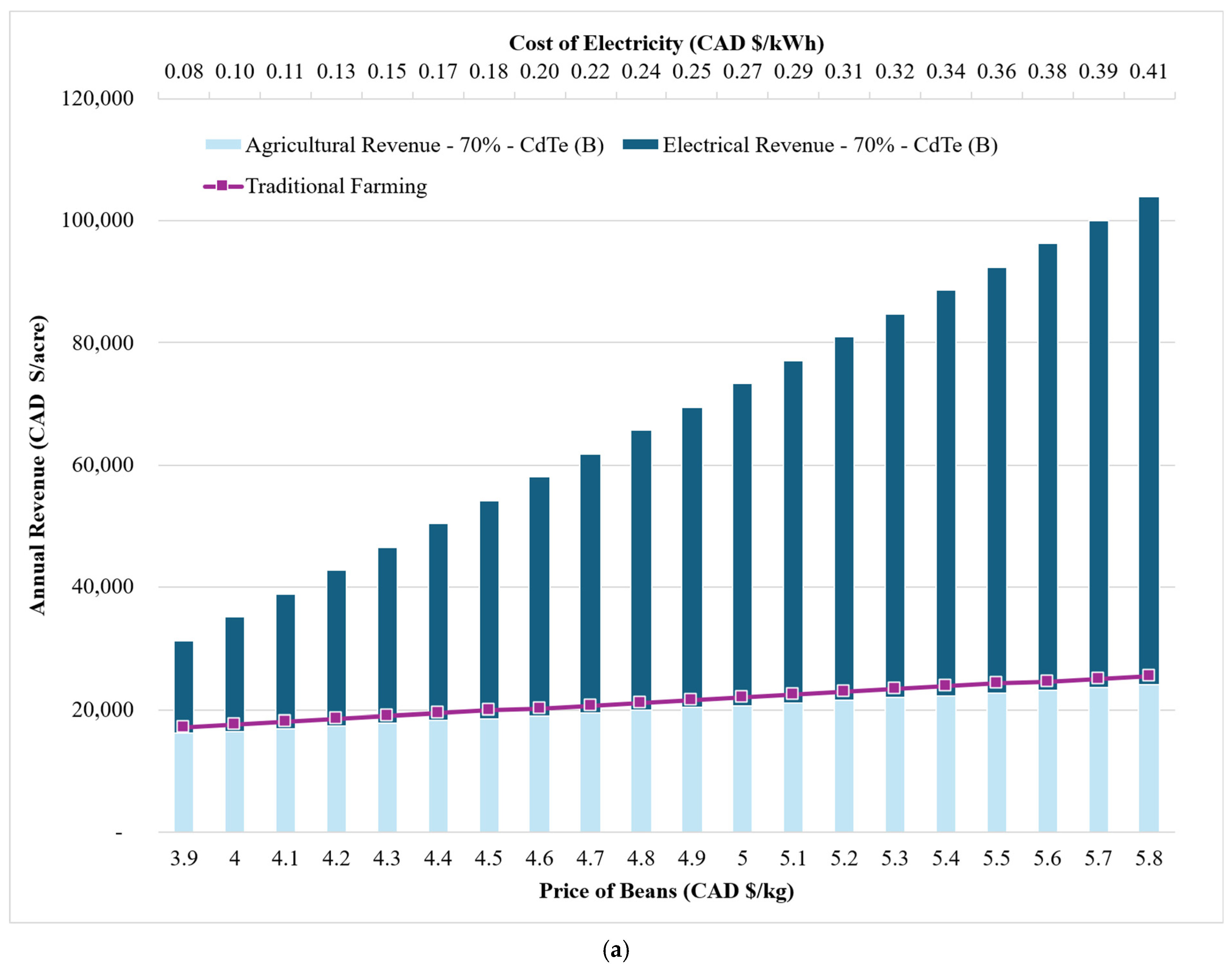
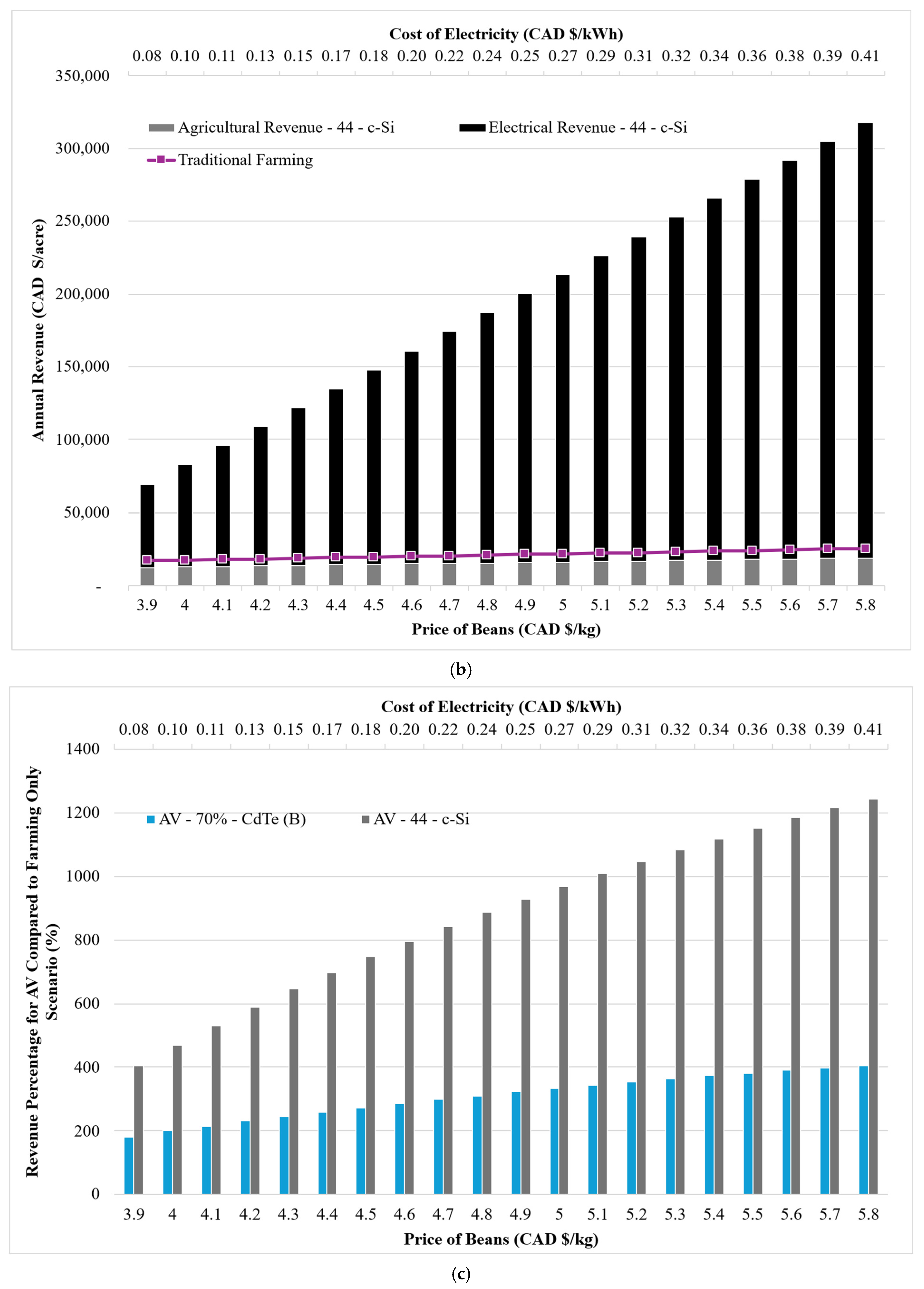
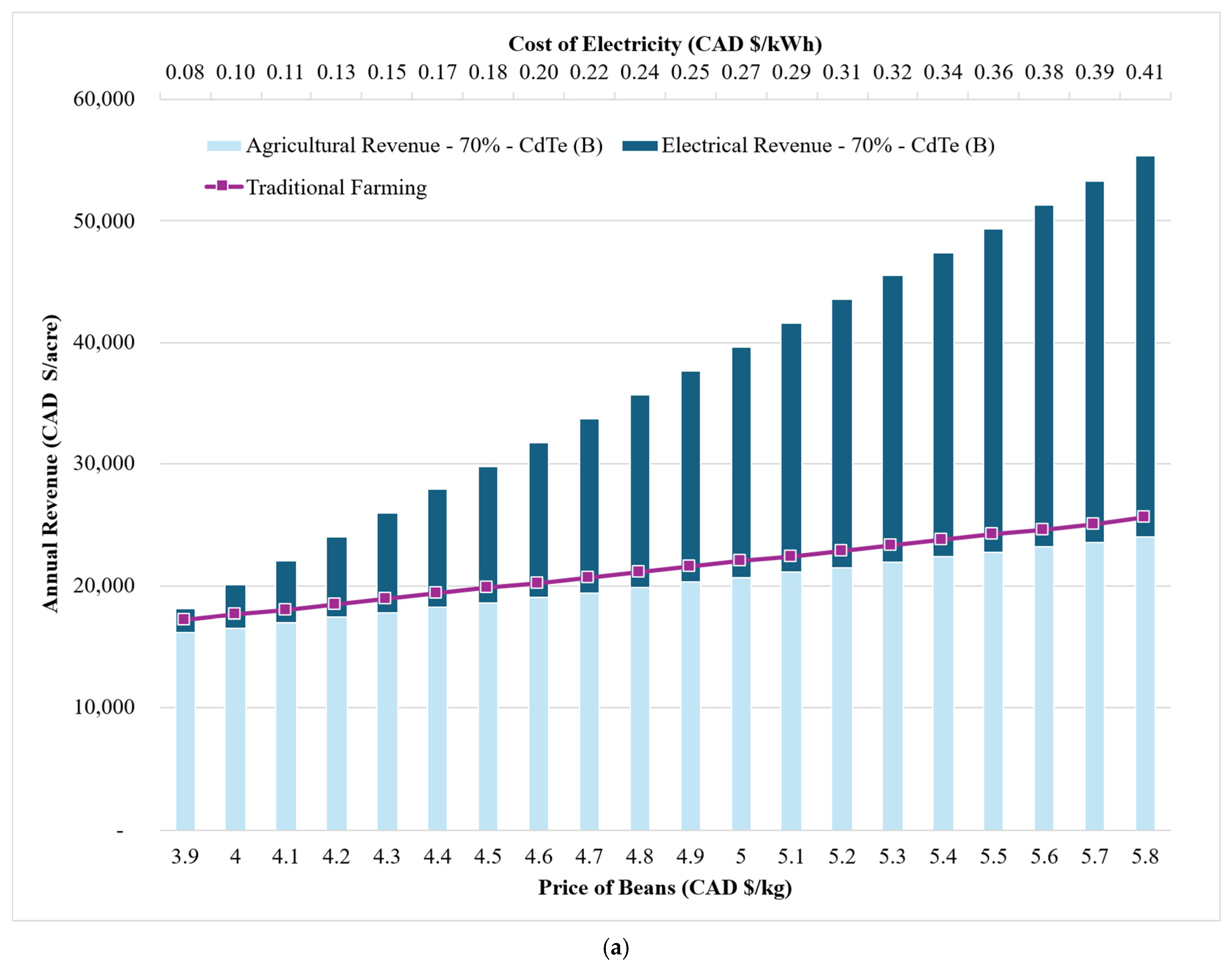
Figure 7 presents the sensitivity analysis of agricultural, electrical, and total revenues for agrivoltaic systems using CdTe modules at 70% transparency and c-Si modules at 44% transparency. These were the best performing modules in terms of agricultural productivity passing the threshold of German standard compared with traditional farming. Revenues were calculated across a range of bean prices and electricity prices, reflecting market variability observed in Canada.
Results indicate that for CdTe AV, the total revenue ranged from CAD $21,155 to $93,726, while c-Si AV produced higher totals, from CAD $32,380 to $280,945, as electricity generation at 44% transparency offset the relatively lower agricultural yield. By contrast, traditional farming revenues remained limited to CAD $17,189 to $25,579 over the same bean price range.
The relative advantage of AV systems becomes increasingly pronounced at higher electricity prices. At the lowest tested electricity price (CAD $0.08/kWh), CdTe AV already outperformed traditional farming by 123%, and c-Si AV by 188%. At the highest electricity price (CAD $0.41/kWh), the revenue premium rose to 366% for CdTe AV and 1098% for c-Si AV. The analysis revealed that even under conservative assumptions of bean and electricity prices, both AV configurations consistently surpassed traditional farming in terms of total revenue.
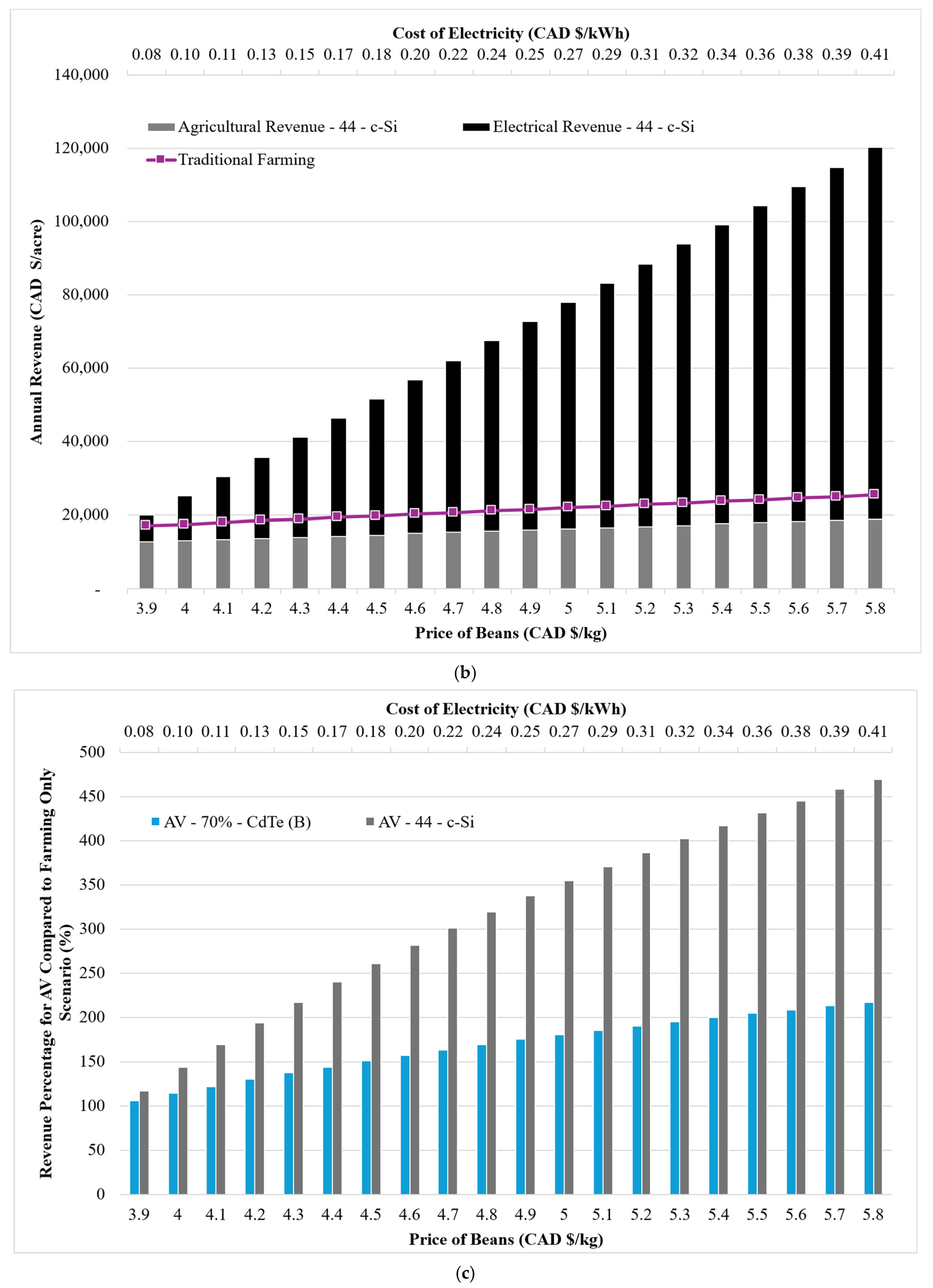
The sensitivity analysis for the conservative deployment scenario is presented in
Figure 8, examining the same range of bean and electricity prices as applied to the solar roof case. The total revenue for CdTe modules ranges from 106% to 216%, while c-Si modules ranges from 117% and 470%. Even at the lowest tested electricity price (CAD
$0.08/kWh), both AV configurations under the conservative scenario outperformed traditional farming in total revenue, confirming the economic resilience of the systems across market conditions.
From the results of this study, it is clear that the economic viability of AV systems depends on the combined value of agricultural production and energy generation. The results also provide preliminary insights into the economic implications of integrating agrivoltaics in bean cultivation. It also highlights that the additional revenue from electricity generation not only offsets any agricultural losses but surpasses it by becoming the majority share in the overall financial equation. Thus, the experiment demonstrated that land productivity as well as efficiency has a potential to be improved through agrivotlaics. AV systems, therefore, present an opportunity for farmers to diversify their income sources while maintaining agricultural production. The economic analysis, however, should be interpreted as an exploratory technoeconomic comparison rather than a detailed commercial feasibility assessment. Actual farm compensation rates, utility-scale electricity prices, net-metering structures, financing mechanisms, and policy incentives may differ on a case-to-case basis and impact the economics of AV plot.
4. Discussion
4.1. Energy–Food–Revenue Trade-Offs
The combined energy and economic analysis provided clear evidence of system-level trade-offs. PV modules intercept some of the sunlight available to plants and convert it to clean electricity. This results in the reduction in PAR available for crops to perform photosynthesis [
63]. The amount of this reduction, however, depends on several factors including system design, module transparency, and module spectral properties. In the current study for example, the 44% c-Si PV modules provided the highest electrical output due to higher installed capacity but also resulted in larger yield reductions because of stronger shading. Conversely, the 70% CdTe modules provided greater light transmission resulting in lower electrical output but close-to-national agricultural yields. These results illustrate that agrivoltaic system design must carefully balance light sharing between crops and energy generation to optimize overall land productivity.
The 44% c-Si system generated the highest energy output (≈730,000 kWh per acre) and electrical revenue ($102,852 CAD), yet its agricultural performance was the weakest, producing the lowest crop revenue ($28,671 CAD). In contrast, the 70% CdTe (B) configuration delivered more balanced results, sustaining higher agricultural revenue ($36,360 CAD) while also producing meaningful energy output (≈195,000 kWh per acre), for a combined total of $63,566 CAD. Compared to traditional farming ($38,676 CAD), both AV systems enhanced revenue. The 44% c-Si achieved a 3.4-fold increase and 70% CdTe (B)—nearly a 1.6 times increase in the total returns. This demonstrates that while crop yields may decline (~26% for 44% c-Si and ~6% for 70% CdTe (B), the added value from electricity generation can far outweigh modest agricultural losses.
The sensitivity analysis further demonstrates the economic resilience of AV under fluctuating market conditions. When varying bean prices between CAD $3.90/kg and CAD $5.80/kg, traditional farming outperformed AV systems in terms of crop-only revenue. When electricity revenue was factored in, however, both AV systems consistently outperformed conventional farming. CdTe AV annual revenue ranged from CAD $21,155 to $93,726, while c-Si AV annual ranged from CAD $32,380 to $280,945 for one acre of bean farmland. Traditional farming remained far more modest, between CAD $17,189/acre and 25,579/acre annually.
Importantly, the electricity price emerged as the primary lever influencing total system profitability. At the lowest electricity rate tested (CAD 0.08/kWh), CdTe AV delivered 123% more revenue than traditional farming, and c-Si AV 188% more. At the highest rate (CAD 0.41/kWh), CdTe AV climbed to 366%, and c-Si AV to 1098% revenue compared to traditional farming. These results align with prior agrivoltaic economic assessments showing increased farmer income with AV [
13]. Moreover, it also shows that electricity pricing critically shapes AV system feasibility [
51].
The data also illustrates a vital insight: agricultural revenue alone remains relatively resilient under AV systems. For instance, under the 70% CdTe (B) and 44% c-Si configuration, a small yield decline was observed, maintaining crop income levels comparable to traditional farming practices. This underscores that well-integrated agrivoltaic designs can sustain much of the agricultural productivity while simultaneously providing substantial energy revenues and environmental gains [
64].
In summary, these findings suggest a potential trade-off between system types: CdTe AV systems offer a more balanced relationship between crop yield preservation and energy generation, while c-Si AV systems appear more suited to scenarios prioritizing maximum energy output, with greater agronomic trade-offs. Therefore, the deployment of AV systems must be strategic and aligned with local priorities. Decision-makers must weigh whether the primary goal is food production, energy generation, or synergistic co-production.
The beans in this study were cultivated organically—with no fertilizer, pesticides, or herbicide inputs. This farming technique has important economic implications. Retail data from Canada indicate that organic produce typically carries a price premium ranging from 35% to over 100% compared to conventional products. For example, Canadian organic grains like corn and wheat have received premiums between 39% and 165% between 2018 and 2022 [
65]. Similarly, in the U.S., organic price premiums for organic corn, soybean and winter wheat ranged between 139 and 198% [
66]. Moreover, a U.S. Economic Research Service review found that organic products generally sold at more than 20% higher retail prices for 17 produce items between 2004 and 2010 [
67].
Accounting for such premiums would further enhance the economic attractiveness of both traditional and AV-based bean systems. Since electricity revenue already forms the dominant share of total agrivoltaic income, elevated crop pricing under organic production would not only reinforce the main conclusion that AV configurations surpass conventional farming in total returns, but it would strengthen the competitive advantage of bean-based AV, especially in markets with high organic demand. It can also be hypothesized that organic agrivoltaic produce could command an even greater premium as indicated by the strong public support for agrivoltaics [
9]. Further work is needed in this area. Also, the results indicate that both transparency (with c-Si module) and light spectrum (with CdTe module) influence bean growth. But since PAR values and physiological parameters were not quantified, correlations between optical properties and crop performance remain preliminary.
4.2. System Design, Policy, and Broader Implications
Ultimately, the choice between high-density c-Si and balanced CdTe configurations is driven by local priorities. In regions where food security is paramount [
68], CdTe systems that better preserve crop yield may be preferred. On the contrary, areas emphasizing rapid renewable energy deployment may justify high-density c-Si with slightly greater yield declines [
69]. Policy frameworks are likely to influence this balance [
70]. Prior studies, have shown how agrivoltaics is becoming a central land-use strategy in some countries [
71]. In such contexts, maximizing land-use efficiency through systems that integrate food and energy production becomes increasingly critical [
72].
The findings from this study show that beans are not an ideal candidate for intensive AV shading. Still, two configurations—44% c-Si and 70% CdTe (B)—emerged as viable pathways. Both configurations show potential to enhance land-use efficiency, increase total revenue, and align with broader policy goals of integrating renewable energy with agriculture [
73]. The results also highlight that agrivoltaics may not be a one-size-fits-all solution. Success depends on calibrating system design to crop type [
74], local climate [
74], and socio-economic priorities [
75], with material choice proving just as influential as shading fraction in determining outcomes.
For beans, this optimization is somewhat complex; because of their nitrogen-fixing capability beans are normally grown in a rotation with other crops [
76]. The value of the bean agrivoltaics thus also includes the value of ‘free’ nitrogen fertilization [
77]. Common beans can biologically fix between 20 and 80 kg N per hectare depending on cultivar and growing conditions, substantially reducing the need for synthetic nitrogen inputs [
78]. In Canada, green beans are grown on approximately 19,620 acres [
79]—primarily in Ontario, Quebec, and British Columbia—where bush types yield typically 4–6 tonnes per hectare, with total production worth around
$25–30 million annually [
80]. The most common rotational partners for green bush beans include cereals such as corn, and wheat, which complement the beans biologically and economically [
81]. Moreover, studies from Western Canada demonstrate that including legumes in rotation sequences with wheat–canola not only reduces the optimal nitrogen rate but also enhances overall yield stability and economic returns [
82]. The fact that beans are often rotated with other crops makes the design of an optimal AV system more complicated as the impacts of AV on corn, wheat and canola are also important for Canadian agrivoltaic designers. For instance, previous studies report a 5.6% yield increase in yield for corn with modules installed at a height of 2.7 m and 1.67 m row spacing [
22], as well as yield gains of 2.7% [
21] to 3% [
83] for winter wheat with bifacial modules installed at 5 m clearance and inter-row spacings of 6.3 m and 5 m, respectively.
The study also provides insights into the type of PV technologies which may be suitable for AV systems. Semitransparent PVs [
84] or spaced PV modules [
85] are considered well-suited for agrivoltaic systems. These systems allow sufficient light transmission for crop productivity while also generating clean electricity [
85]. Bifacial modules [
86], thin-films PVs [
87] and other emergent technologies may provide improved light distribution conducive for agrivoltaic applications. Moreover, the effect spectral properties (particularly blue light) has shown positive effects on lettuce [
88] and turnip [
43] productivity in prior studies. This could be attributed to the higher photosynthetic rates [
89] as well as improved carboxylation [
90] associated with blue light which in turn improves the productivity of crops. On the contrary, green light could have detrimental effects on plant growth due to restricted chlorophyll absorption, particularly under low lighting flux [
91], which subsequently reduces quantum yield [
92].
Another important consideration to make when setting up an agrivoltaic system is the type of crops to be planted. Shade tolerant crops seem to be an obvious choice for cultivation beneath PV arrays. Previous studies have shown that for strawberries [
20], lettuce [
88], wheat [
21], corn [
22], peppers [
23], tomatoes [
23], chicory [
6], and amaranth [
5] have performed well under partial shading. This study demonstrated that bean cultivation can be compatible with partial shading using elevated racking configurations.
From a policy perspective, agrivoltaic systems represent a potential strategy for addressing land-use conflicts between agricultural production and renewable energy deployment [
93]. The technology aligns with several United Nations’ Sustainable Development Goals (SDGs) [
94]. As many regions seek to expand solar energy capacity while preserving farmland, the technology offers an integrated approach that enables simultaneous food and energy production [
95]—addressing two of the seventeen UN’s SDGs: Zero Hunger [
2] and Clean and Affordable Energy [
96]. From a scalability perspective, the integration of PV systems with agriculture has the potential to be expanded across existing farmland without requiring additional land conversion. Supportive policies such as dual-use land classification, agrivoltaic incentives, and updated zoning regulations could facilitate wider adoption of these systems. In regions such as Canada and the United States, agricultural land protection is an important policy objective [
97]. AV systems, therefore, may provide an opportunity to accelerate renewable energy deployment while maintaining productive farmland. The sensitivity analysis also suggests an important role for policy in shaping AV adoption. Results from this study indicate the potential of AV system to deliver up to 730 MWh of renewable energy per acre and increase farm revenues by nearly 150–1100% compared to traditional farming. Under higher electricity price scenarios, the profitability of AV increases considerably. This means that supporting energy policies, such as valuing reductions in carbon emissions or renewable energy incentives could accelerate AV’s adoption.
4.3. Limitations and Future Work
This study presents several limitations. First, it is based on a small-scale, single-location experiment using organic farming practices. This restricts the generalizability of the findings across different soil types, climates, and management regimes. Second, the trials were conducted on one bean type—green bush beans. Hence, the study does not capture potential performance differences across multiple bean cultivars or other legume species that might be well-suited to agrivoltaic integration. Similarly, it did not include crop rotation with the three most common crops to do so in Canada. The limited replication per treatment represents a significant constraint of this study. The number of replicates varied across configurations—ranging from two pots for each CdTe variant to six pots for the 8% and 69% c-Si modules—resulting in a highly unbalanced dataset. Because only a small number of plants could be placed under each module configuration, the statistical power to detect subtle treatment effects was limited. Therefore, the results may be influenced by individual plant variability. This imbalance precluded the use of formal inferential statistics such as ANOVA, and all comparisons should therefore be interpreted as exploratory rather than statistically conclusive. The wide within-treatment variability observed in some configurations further reflects the influence cultivation factors that could not be fully isolated given the experimental design. Future studies should employ an experimental design with sufficient replicates per treatment to enable statistical analysis and improve confidence in yield comparisons across AV configurations. It should also be recognized that the study did not include a field-based control treatment, and results are therefore interpreted relative to a calculated national average yield rather than a locally grown baseline. This limits direct attribution of yield variation solely to shading effects. While benchmarking against national averages provides policy context, future studies should incorporate control replicates to better understand the AV-specific treatment effects under identical growing conditions. The approach, however, facilitates policy-relevant interpretation and aligns with current international agrivoltaic benchmarks. In addition, the primary focus of the research was investigating beans’ morphological and yield-based indicators instead of the physiological and microclimatic mechanisms driving those outcomes. The study therefore remains phenomenological in nature: while treatment-level differences in plant height, leaf count, and fresh weight were documented, the causal pathways linking PV spectral and transparency properties to crop responses were not directly measured. Parameters including chlorophyll fluorescence, photosynthetic rate, stomatal conductance, transpiration were not recorded and left for future work.
To address these limitations, future agrivoltaic trials could be conducted on larger PV installations. Moreover, experiments can be performed on different sites spanning across key bean-growing regions in Canada (e.g., Ontario and Québec) [
98]. These studies should be run for multiple years with the historical crop rotations included. The trials should evaluate AV performance across complete crop rotations involving other crops in addition to legumes, as rotational productivity is highly relevant for practical farm-level AV adoption. Such studies would improve understanding of agronomic and energy synergies across diverse conditions. Additionally, testing a wide range of crops under various agrivoltaic designs—including vertical or tracking PV configurations—will help identify optimal systems that support crop performance and energy output [
99]. Future research should also employ a larger sample size of replicates to account for within-treatment variability and enhance the confidence of yield comparisons. Furthermore, future research incorporating physiological measurements could improve understanding of crop responses under AV-specific environments, especially related to spectral shifting of light spectrum. Similarly, since the study did not measure and log PAR and photon flux density, future work should validate the findings using these measurements. Future technoeconomic studies should also incorporate economic metrics including net present value (NPV), internal rate of return (IRR), financing assumptions, and policy incentive structures to provide a more comprehensive financial analysis. Furthermore, while this study references Germany’s 66% yield threshold as a policy benchmark, it is acknowledged that drawing firm policy-oriented conclusions from a single-season, limited-replication trial is premature. The observed yield outcomes may not be representative of long-term agronomic performance. This is because crop responses under AV systems may vary substantially across seasons due to variation in temperature, precipitation, solar irradiance, etc. Multi-season field trials with adequate replication and site-specific controls are essential before AV configurations can be reliably recommended for integration into policy frameworks. The policy comparisons presented here should therefore be interpreted as illustrative rather than definitive.
As climate change alters temperature [
100] and precipitation regimes [
101], future studies should evaluate the climate-mitigation potential of agrivoltaics. The focus should be on identifying if shading-induced reductions in evaporative stress and heat damage is possible using AV systems. Meta-analyses show that modest shading (e.g., up to 15%) can preserve yields in many crops, while excessive shading, particularly for legumes, can incur yield losses [
102]. Another study depicted that agrivoltaic systems enhance heat stress tolerance in lettuce under high temperatures [
88]. Incorporating climate resilience metrics into agrivoltaic trials will help assess their buffering capacity against heatwaves, drought, and vapor pressure-driven stress [
103]. On the socio-policy front, Canada currently lags behind the European Union in agrivoltaic deployment and supportive governance [
34]. In Europe, agrivoltaics is actively integrated into solar energy strategies to meet emissions and land-use goals [
104]. Canadian provinces, such as Ontario, have exhibited regulatory resistance to ground-mounted solar on farmland despite evidence that agrivoltaics can enhance yields, conserve water, and provide dual-use land value [
105]. Future work could include policy analysis and stakeholder engagement to better align agrivoltaic regulations with agricultural and energy priorities. This work could draw on lessons from EU frameworks and Canadian pilot initiatives.
5. Conclusions
This study evaluated the performance of green bush beans cultivation under multiple PV module configurations to assess the agronomic and economic potential of AV systems. The results indicate that carefully selected AV designs can enable simultaneous food and energy production. Among the thirteen configurations tested, 44% c-Si and 70% CdTe, (B) demonstrated the most promising performance meeting Germany’s 66% reference yield standard. The 44% c-Si system produced approximately 730,000 kWh per acre annually, resulting in electrical revenue of $102,852 CAD. Even with ~26% reduction in crop yield, the total farm revenue reached $131,523 CAD per acre—a 3.4-fold increase compared to traditional bean farming. In contrast, the 70% CdTe (B) configuration maintained agricultural productivity close to the national average while still producing 195,000 kWh of clean electricity and $27,206 CAD in energy revenue. Agricultural revenue under this system ($36,360 CAD) was much closer to the traditional control ($38,676 CAD). Overall farm returns were calculated to be $63,566 CAD per acre—nearly 1.6 times the baseline. Under a more conservative deployment scenario incorporating 5 m inter-row spacing for farm accessibility and maintenance, total revenues were more modest but remained competitive: the 44% c-Si configuration achieved CAD $68,205 per acre (a 76.4% increase over traditional farming) and the 70% CdTe (B) configuration reached CAD $48,407 per acre (a 25.2% increase), confirming that agrivoltaic economic benefits persist even under practical installation constraints. The results also show that although beans are sensitive to shading, carefully designed AV systems can deliver synergies between food and energy. Both 44% c-Si and 70% CdTe (B) maintained crop yields above the 66% agricultural productivity threshold set by Germany’s AV policy framework. These findings suggest that agrivoltaic configurations may support simultaneous food and energy production for green beans, although performance was highly configuration-specific and several treatments also resulted in considerable yield reductions.
The study also highlights several advantages of the proposed agrivoltaic approach. First, it provides a comparative assessment of different PV technologies, transparency levels and spectral configurations in relation to crop performance and energy production. Second, it integrates agronomic observations with an economic evaluation of electricity generation. Third, it demonstrated the potential for substantial increases in total farm revenue via this integration. Lastly, the results provide practical insights for selecting PV module configurations that balance bean productivity with energy output. In this regard, two module types (44% c-Si and 70% CdTe (B)) emerged as potentially viable configurations under the tested conditions. This is particularly important for the scalable implementation of agrivoltaic systems. Thus, agrivoltaics can play an important role in advancing sustainable agriculture, renewable energy, and land-use efficiency. While these findings highlight promising trends, they should be interpreted as exploratory due to the limited replication and lack of a site-specific control. Further multi-year, large-scale trials are needed to validate the observed patterns and assess their broader agronomic and economic relevance.