1. Introduction
As global climate change intensifies, it is essential to accelerate the transition toward zero-emission technologies to mitigate anthropogenic greenhouse gas (GHG) emissions and support the United Nations 2030 Agenda for Sustainable Development [
1,
2,
3,
4]. While significant strides have been made in decarbonizing on-road vehicles—with the combined shares of battery electric (BEV) and plug-in hybrid electric vehicles (PHEVs) representing 49% of new car registrations in China, 21% in Europe, and 10% in the United States in 2024 [
5,
6]—progress remains highly uneven across broader applications. Although global electric truck sales grew by nearly 80% in 2024, over 80% of these were concentrated in China, buoyed by state-sponsored vehicle scrappage initiatives. By contrast, the sale of zero-emission off-road machinery, particularly in the construction sector, has lagged far behind; current projections suggest that this sector may not achieve comparable electrification milestones until 2030 at the earliest [
7].
This delay represents a notable hurdle to achieving global sustainability targets. Construction equipment emits approximately 400 million metric tons of CO
2 per year, which constitutes roughly 1.1% of global annual CO
2 emissions [
8,
9]. Beyond global warming, the operation of heavy machinery exacerbates air pollution by releasing fine particulate matter (PM
2.5), nitrogen oxides (NO
x), and sulfur dioxide (SO
2), in addition to noise pollution, which disproportionately affect public health in densely populated urban areas [
10]. Electrifying construction machinery thus offers an opportunity to reduce air pollution, safeguard human health, and promote sustainable cities. Although hydrogen fuel cell machinery is emerging as a potential zero-emission alternative, we focus here on battery-electric solutions because they currently represent the most commercially and technically viable zero-emission alternative for construction equipment [
4,
11].
Electrifying construction equipment, however, presents unique challenges compared to electrifying on-road vehicles. Construction machinery such as wheel loaders and excavators require robust and versatile electric drivetrains and energy systems to handle their intensive use in often challenging environments [
12,
13]. These units typically log around 1000 h annually, often operating in conditions that require durability and high torque [
14,
15]. Harsh environments—dusty, cold, or hot—necessitate ruggedized components and sophisticated thermal management to ensure safety and functionality [
16,
17]. From an energy perspective, the limited and costly access to the power grid at most construction sites seriously complicates recharging operations [
10,
17]. Together, these factors contribute to higher acquisition and operating costs compared to equivalent diesel machinery [
10,
15].
However, a holistic assessment shows that electric equipment offers substantial operational and environmental advantages [
10]. The relative simplicity of electric motors—which have fewer moving parts than internal combustion engines—significantly reduces the likelihood of component failure, and eliminates the need for maintenance fluids like engine oil and coolants [
4,
18]. By eliminating diesel consumption, electric machinery isolates operators from fossil fuel price volatility while capturing higher powertrain efficiencies, further enhanced by regenerative energy recovery systems. Driven by global climate policies, corporate Environmental, Social, and Governance (ESG) frameworks, and advances in battery technology and costs due to manufacturing economies of scale, the lifecycle cost of electric equipment is steadily improving [
19].
Although the literature has established the technical feasibility and environmental benefits of electrifying construction equipment, evidence of lifecycle cost competitiveness remains limited. In particular, we are not aware of a published study that combines direct model-by-model comparisons using data from commercially available electric construction machinery with a realistic representation of charging constraints, and an uncertainty analysis that preserves key dependencies among major cost drivers. This gap limits the ability of contractors, fleet managers, and policymakers to accurately evaluate the conditions under which zero-emission machinery achieves economic viability.
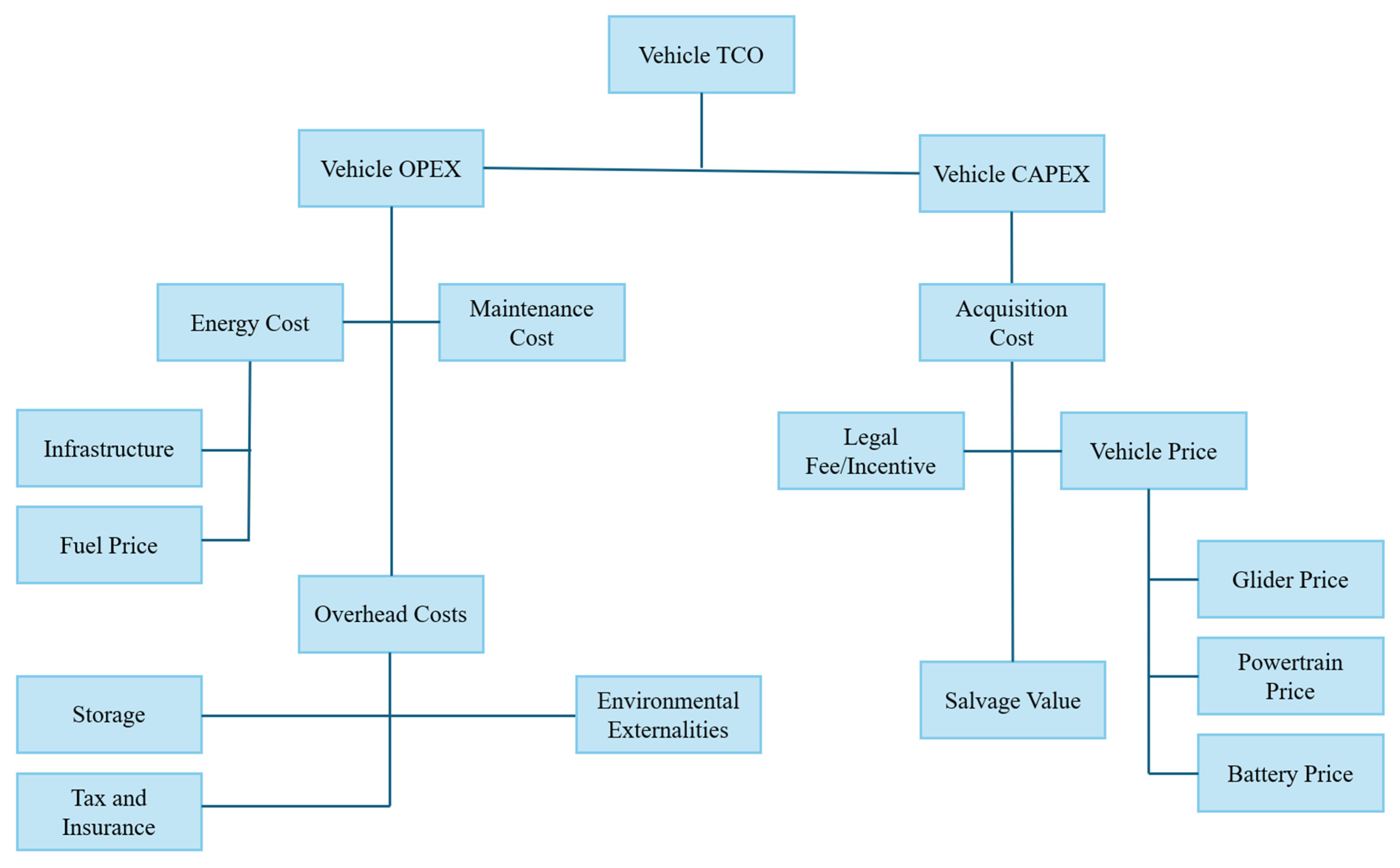
To address these limitations, this paper presents a transdisciplinary assessment of construction machinery electrification by developing an Annualized Cost of Ownership (ACO) framework. We evaluate a dataset comprising twenty distinct excavator and wheel-loader models that includes functionally equivalent diesel and battery-electric equipment. These equipment categories are among the largest contributors to the construction-sector GHG emissions [
20].
Compared to currently published studies, we advance the state of knowledge by considering mobile charging solutions and formalizing the coupling between stochastic variables via Monte Carlo simulation and Cholesky decomposition. Finally, we internalize environmental and public health operating externalities by monetizing CO2, PM2.5, NOx, and SO2 emissions in diverse environments, illustrating how targeted policy interventions can accelerate sustainable market adoption. Ultimately, this framework provides decisionmakers with a transparent tool to assess the economic and environmental trade-offs of decarbonizing construction equipment, thus supporting a transition toward sustainable construction practices aligned with global climate targets.
The rest of this paper is organized as follows.
Section 2 provides an overview of selected studies and identifies research gaps to contextualize our contributions.
Section 3 outlines our model, and the data used for this analysis.
Section 4 presents and discusses our findings and sensitivity analyses.
Section 5 summarizes our main conclusions, outlines some limitations of this study, and proposes directions for future work.
2. Literature Review
The push towards alternative fuels in the off-road sector restarted recently with the introduction of hybrid technologies in the early 2000s, with research in hydrogen fuel cell equipment to replace diesel-powered machinery [
11,
21]. Early initiatives were detailed in Wang et al. [
13], who reviewed the state-of-the-art for hybrid wheel loaders and excavators with a focus on powertrain configuration and energy storage devices, and Ahluwalia et al. [
18], who offered a techno-economic comparison of hydrogen fuel cell with traditional diesel powertrains. These analyses illuminate the potential cost-effectiveness of fuel cell technologies.
While hydrogen fuel cell technology currently offers advantages such as faster refueling and longer operational ranges compared to battery-electric machinery, its widespread adoption remains limited due to high fuel costs and a lack of refueling infrastructure [
11]. Recent TCO studies of commercial vehicles similarly show that hydrogen fuel cell options remain highly sensitive to fuel cost, infrastructure availability, and operating context [
22,
23,
24]. Additionally, the energy conversion efficiency of hydrogen fuel cells is lower than that of battery-electric alternatives, making their economic viability highly dependent on future advances in hydrogen production and distribution [
25,
26]. Given these challenges, we focus primarily on battery-electric machinery, which is currently the most commercially feasible zero-emission alternative for off-road construction equipment.
In addition to Environmental, Social, and Corporate Governance (ESG) goals and the promise of lower operating costs, the main drivers of the electrification of construction equipment are government incentives and carbon credits & offsets [
27], but the pace of this shift depends on advances in batteries and electric powertrain technology [
28,
29]. Well-established manufacturers like Volvo CE, Caterpillar, and Komatsu have significantly expanded their electric equipment portfolios, signaling a transition towards electrification [
30].
The early 2010s saw an awakening of academic research on electrifying off-road construction equipment as a way to address global climate change. In 2010, Mol et al. [
14] laid the groundwork by discussing the electrification of heavy-duty and off-road vehicles, emphasizing the potential for various powertrain systems to enhance efficiency and reduce emissions. They highlighted the need for international collaboration to overcome the economic and technological challenges of electrification. Wagh and Sane [
31] further contributed to this discussion by exploring the benefits of electrifying drive systems in off-highway vehicles, underscoring the reliability, efficiency, and cost savings from electrification.
Karlsson et al. [
3] demonstrated the technical feasibility of halving CO
2 emissions from electric construction equipment and proposed strategies to achieve near net-zero emissions by 2045. The narrative of sustainable construction continued to evolve with Ribberink et al. [
15], who analyzed the feasibility of electrifying both on- and off-road heavy-duty vehicles in Canada, highlighting the environmental and operational benefits while noting the challenges associated with on-site recharging in remote areas. Note, however, that their study was based on prototypes and conceptual models rather than actual construction equipment. Khan et al. [
32] confirmed, however, that the environmental benefits from electrifying construction loaders and trucks could be substantial after analyzing data from 30 years of excavation projects for roadway tunnels ranging from 500 m to 5 km in Norway using life cycle assessment. They found that, compared to diesel equipment, battery-powered equipment could reduce global warming potential by ~80%, ozone depletion potential by ~73%, particulate matter formation by ~76%, and terrestrial acidification potential ~71%, although terrestrial ecotoxicity could increase 10-fold and human toxicity could rise by 6% to 7%.
Also in 2021, Beltrami et al. [
33] reviewed progress in electrifying compact off-highway vehicles, and discussed the impact of stringent emission regulations and the ongoing shift towards environmental sustainability. Their work shed more light on the challenges and trends in hybridization and energy recovery systems, offering insights into the sector’s current state and its future direction.
Un-Noor et al. [
34] provided a comprehensive review of the electrification trends in construction and agriculture. They called for advances in electric equipment to reduce air pollution. Their analysis outlined both the potential environmental benefits and the substantial challenges that lie ahead. The following year, Burke et al. [
35] delivered an optimistic economic forecast for medium- and heavy-duty electric vehicles, predicting that electric trucks could reach cost parity with diesel trucks by 2025. More recent TCO studies confirm that cost competitiveness varies substantially by vehicle class, duty cycle, energy prices, incentives, and battery-related assumptions [
22,
24,
36].
A few papers addressed the specific challenges of recharging electric equipment. Aris and Shabani [
37] explored sustainable power solutions for off-grid applications in the telecommunication sector, which can provide valuable insights into similar challenges in the construction sector. Their review highlighted the transition towards renewable energy solutions and hybrid systems. Similarly, Saldarini et al. [
38] examined Mobile Electric Storage Systems (MESS) and their role in enhancing grid stability and integrating renewable energy. Their findings underline the operational advantages of mobile versus stationary energy storage systems, especially in scenarios requiring flexible grid support and emergency response capabilities.
Collectively, these studies motivate a transition towards sustainable construction practices, with a strong emphasis on electrification. However, current research lacks a comprehensive economic model that integrates the variable costs associated with electric construction equipment—such as fluctuating operational costs and complex refueling logistics—across the equipment’s lifecycle. To the best of our knowledge, no published study has conducted a cost of ownership analysis using actual data from electric construction equipment using a Monte Carlo analysis that reflects the coupling between costs. To address this gap, we propose an ACO model that includes stochastic cost factors and offers a robust economic rationale for investing in electric technologies by considering both procurement and operational costs.
4. Results and Discussion
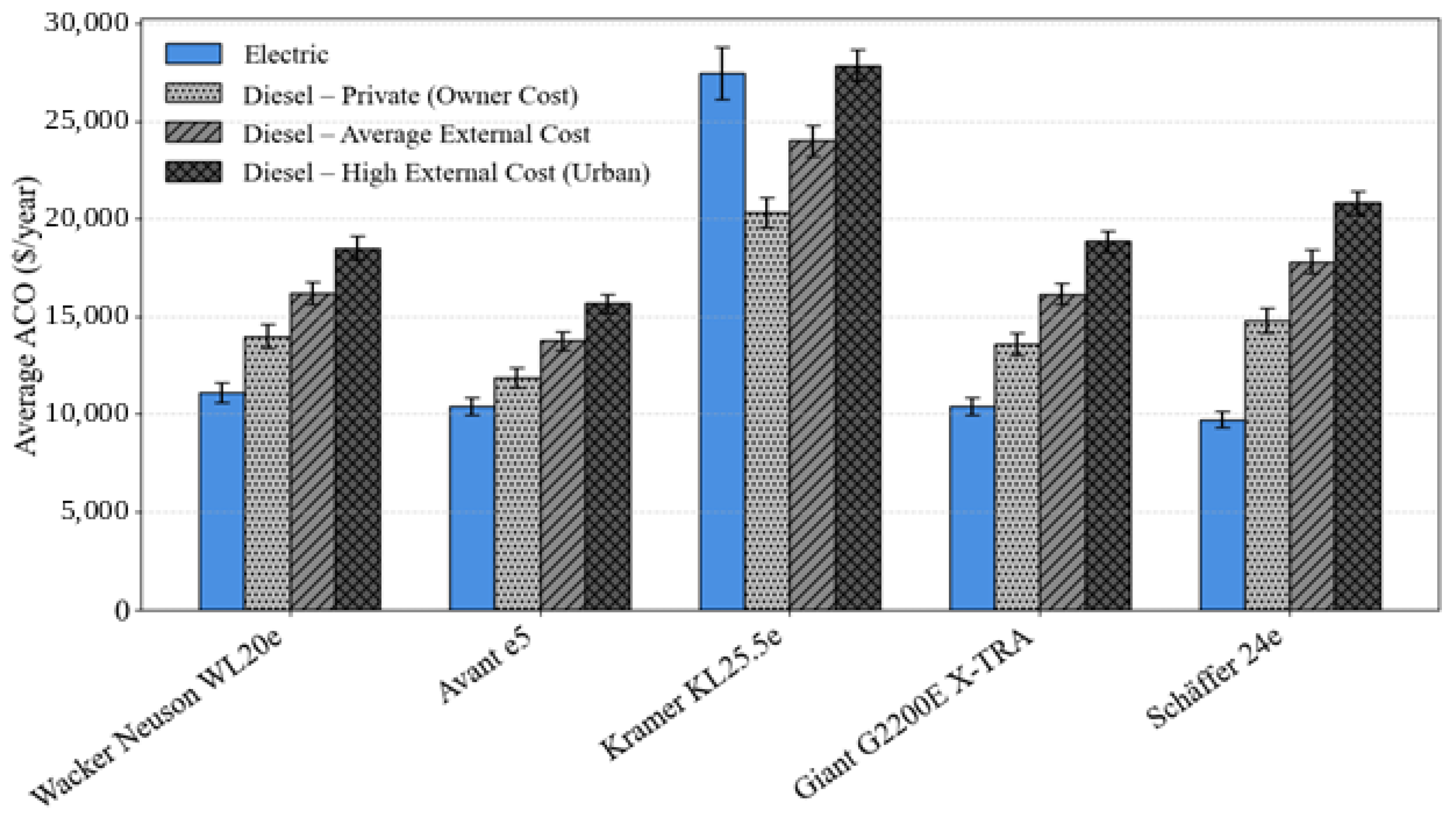
Figure 2 and
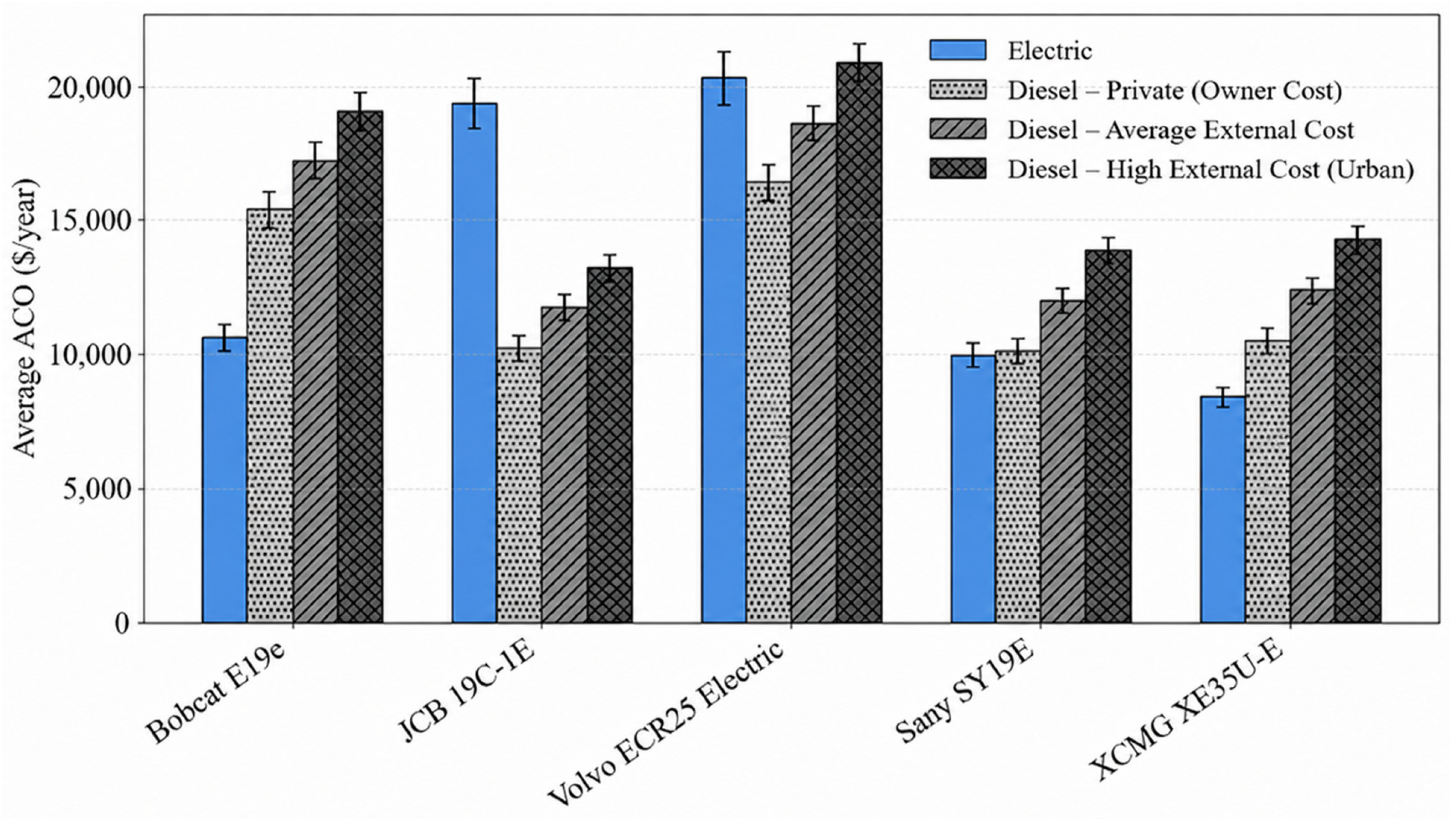
Figure 3 compare the annualized cost of ownership (ACO) between electric and diesel models for wheel loaders and excavators, respectively, for the following cases: (i) private costs only (i.e., excluding operational externalities), (ii) diesel equipment with average operating external costs, and (iii) diesel equipment with high urban operating external costs. The mean ACO values and uncertainty intervals shown in
Figure 2 and
Figure 3 were estimated using 1000 Monte Carlo simulations for each equipment model and cost scenario. Electric models are shown on a private-cost basis, reflecting their negligible local pollutant emissions during operation.
When considering only private costs, electric loaders and excavators are already cost-competitive in many cases. Among wheel loaders, the Wacker Neuson WL20e, Avant e5, Giant G2200E X-TRA, and Schäffer 24e exhibit lower ACOs than their diesel counterparts even without internalizing operating environmental damages. By contrast, the Kramer KL25.5e remains more expensive than the Kramer KL25.5, primarily due to its substantially higher capital cost.
Likewise, for excavators (
Figure 3), the Bobcat E19e, Sany SY19E, and XCMG XE35U-E have lower private ACOs than their diesel equivalents. In contrast, the JCB 19C-1E and Volvo ECR25 Electric maintain cost premiums relative to their diesel counterparts, mainly because of their substantially higher purchase prices.
With average operating external costs, diesel ACO increases across all models. This increase narrows cost gaps where diesel was previously cheaper and strengthens the advantage of electric models when they were already more attractive. The inclusion of operational damages from CO2, PM2.5, NOx, and SO2 shifts the relative ranking in favor of electric equipment in nearly all compact categories.
Under the high urban external cost scenario, which reflects elevated pollutant damage valuations in densely populated areas, the diesel ACO rises further. In this case, electric models exhibit clear economic advantages in most equipment classes. The cost premium associated with high-capital electric units, such as the Kramer KL25.5e and Volvo ECR25 Electric, is substantially reduced, although not fully eliminated. For compact loaders and excavators, the urban damage valuation significantly amplifies the case for electrification.
Additionally, electric equipment generally displays smaller error bars across scenarios, reflecting lower variability in annual ownership costs. This reduced uncertainty may provide operational value for fleet operators seeking more predictable lifecycle expenditures in volatile fuel and regulatory environments. However, for higher-cost electric equipment that remains uneconomical under private costs, some policy intervention is needed to foster their market adoption.
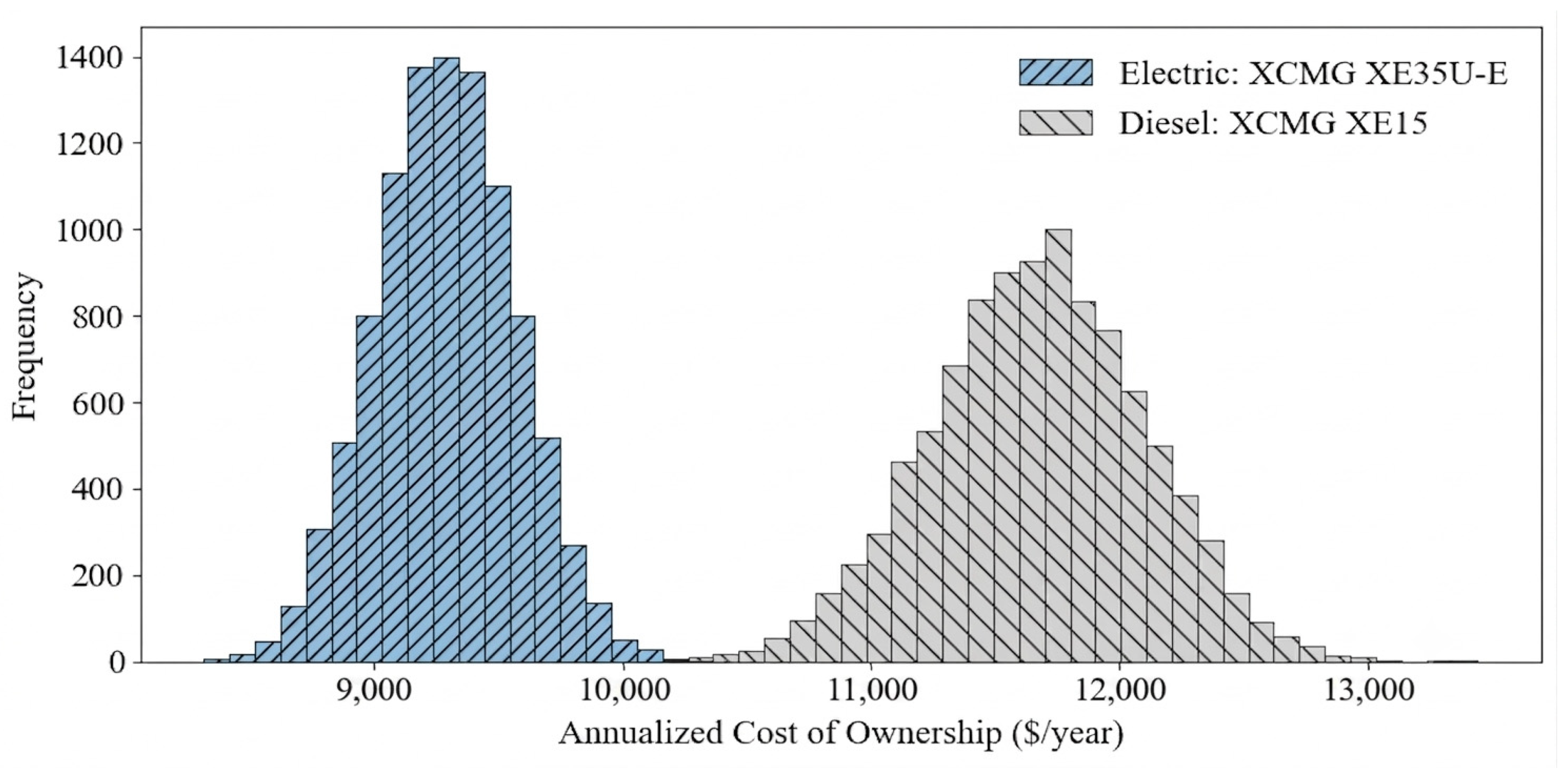
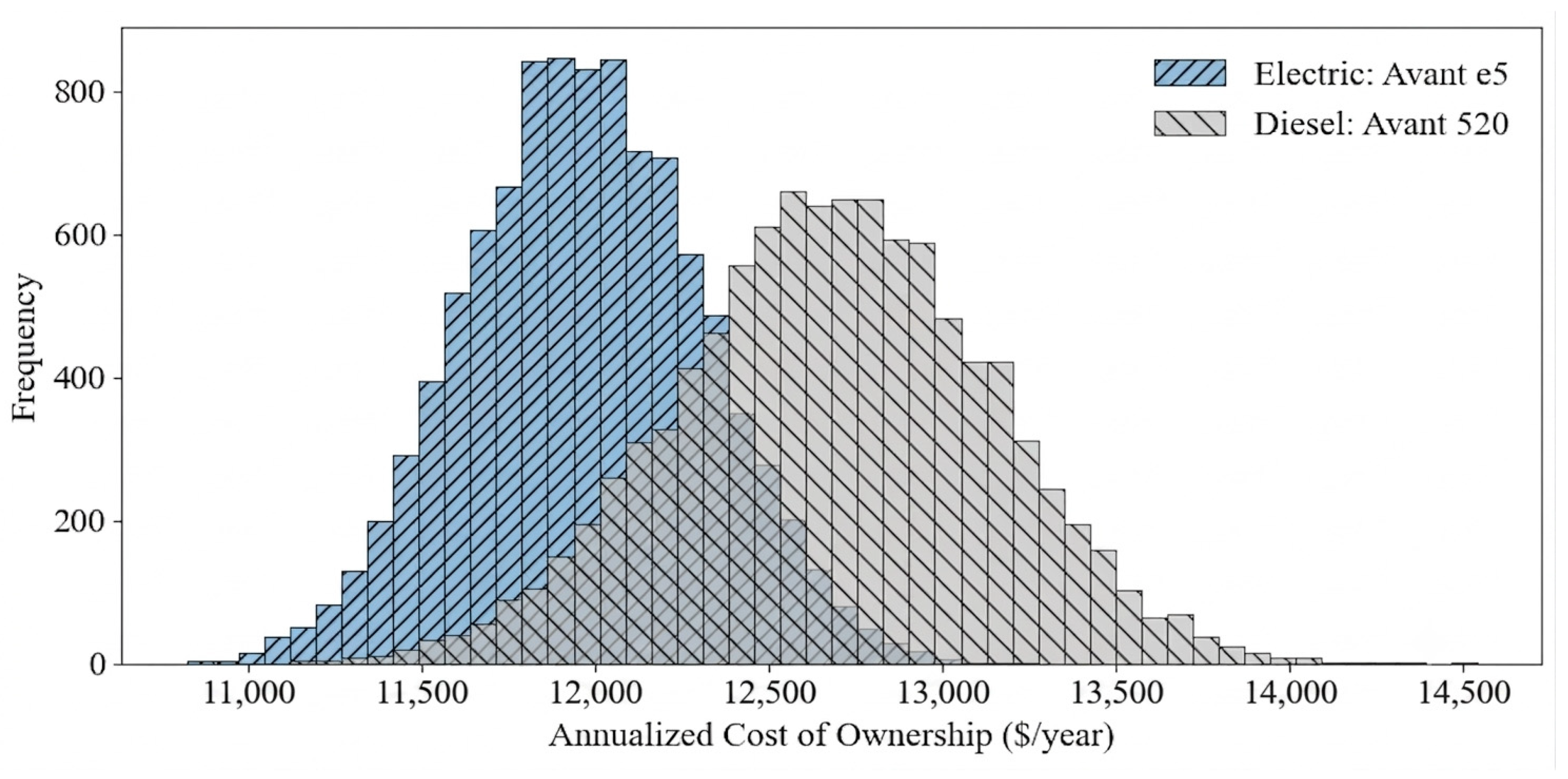
Figure 4 and
Figure 5 present the frequency distributions of the ACO for the Avant e5 versus the Avant 520 and the XCMG XE35U-E versus the XCMG XE15, respectively. Each histogram was generated using 10,000 simulations incorporating uncertainty in capital costs, energy prices, and maintenance expenses, along with their assumed correlations. The resulting distributions were consistent with the original 1000-run results, confirming that our results are stable. These plots offer a granular view of the variability in lifecycle costs across the two equipment types.
For both
Figure 4 and
Figure 5, the electric models exhibit narrower distributions centered around lower or comparable ACO values, indicating reduced volatility and more predictable costs of ownership. This aligns with the inherent mechanical simplicity of electric drivetrains, which generally translate to more stable maintenance expenditures and lower sensitivity to energy price fluctuations. Conversely, the diesel models have broader ACO distributions, revealing greater exposure to fuel market volatility and maintenance variability. For example, the diesel Avant 520 shows a noticeably wider spread than the electric Avant e5 in
Figure 4, while a similar dispersion is observed in the XCMG comparison in
Figure 5. These findings underscore the value of incorporating risk profiles, not just average costs, into procurement and fleet planning decisions, particularly for agencies or contractors facing uncertain fuel costs and tight operating margins.
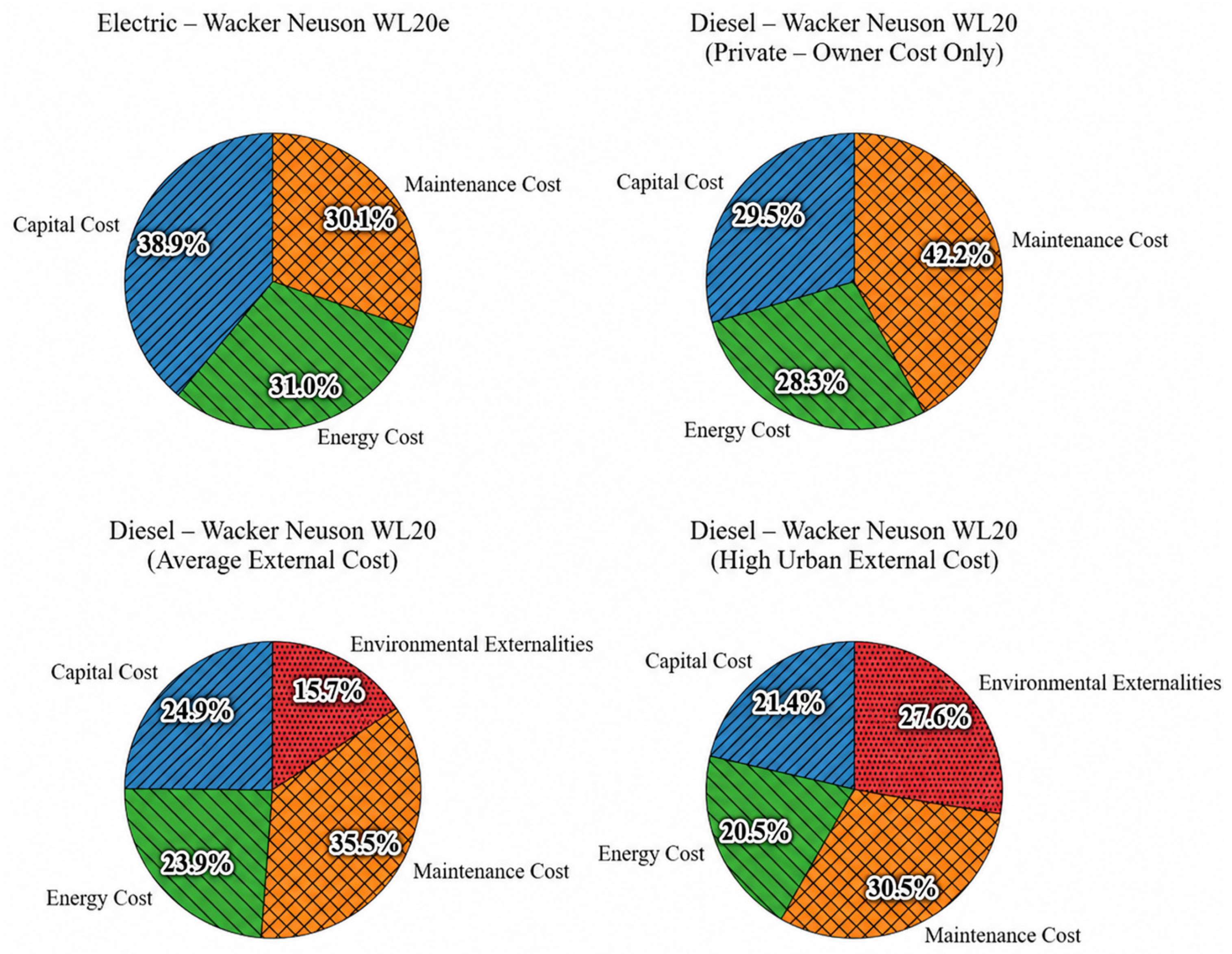
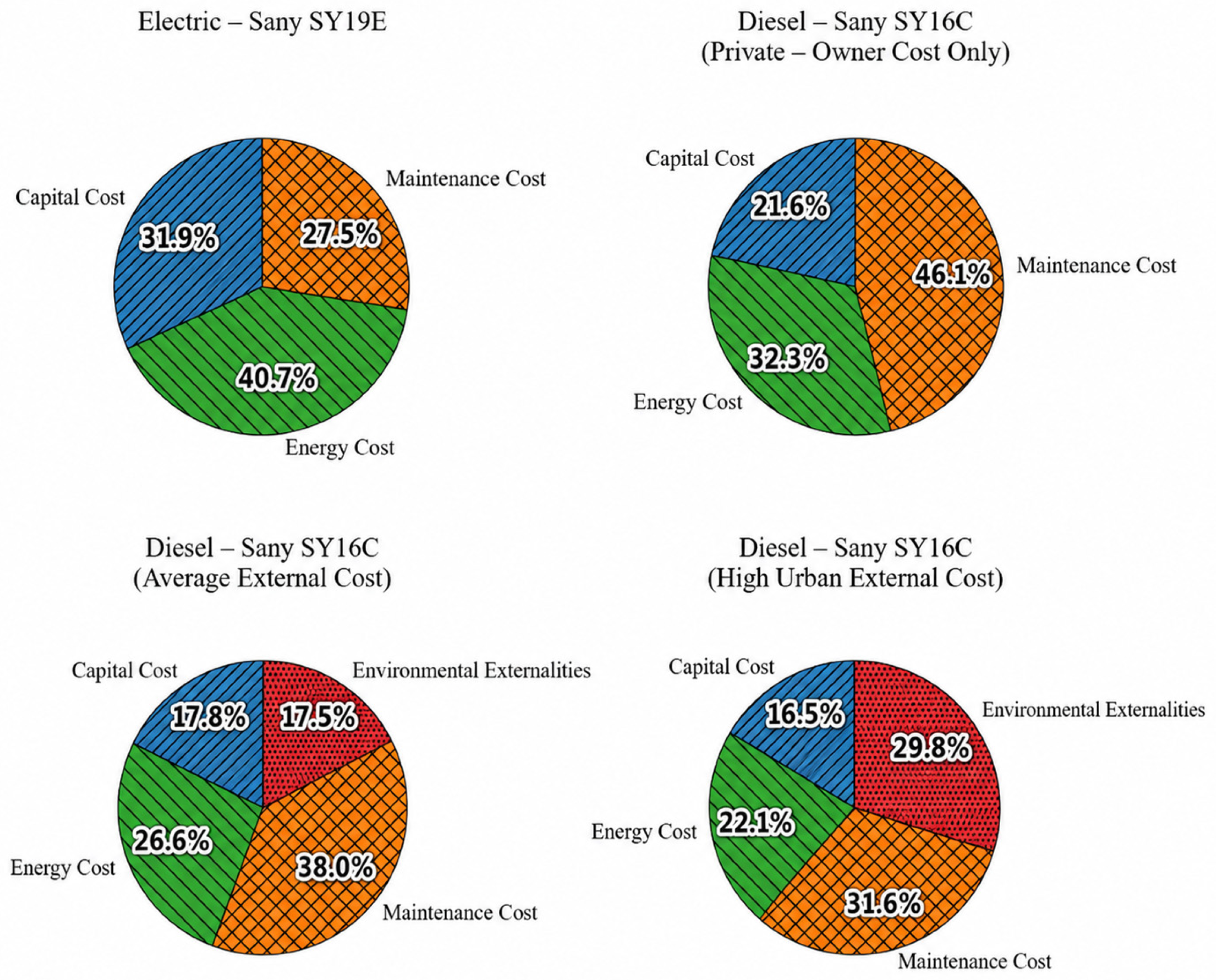
Figure 6 and
Figure 7 decompose the ACO into four major components (capital cost, maintenance, energy, and operational environmental externalities) for two representative equipment pairs: the Wacker Neuson WL20e versus the WL20 diesel (both wheel loaders), and the Sany SY19E versus the SY16C (both excavators). For the diesel models, three scenarios are presented: private cost only, average operational external cost, and high urban operational external cost.
For the electric WL20e (
Figure 6, top left), capital costs account for 38.9% of total ACO, followed by energy (31.0%) and maintenance (30.1%) costs. Since electric equipment does not incur combustion-related emissions, no operational environmental externality component appears in its cost structure. Under the private cost scenario (
Figure 6, top right), the diesel WL20 exhibits a distribution dominated by maintenance (42.2%), followed by capital cost (29.5%) and energy cost (28.3%). In this case, operational environmental externalities are excluded, reflecting the cost perspective of a private fleet operator.
When average operational external costs are added (
Figure 6, bottom left), environmental externalities become a substantial cost component, accounting for 15.7% of total diesel ACO. The shares of capital, energy, and maintenance costs decline proportionally, even though their absolute values remain unchanged. This illustrates how monetizing operational emissions meaningfully alters the cost structure of diesel equipment. Under the high urban operational external cost scenario (
Figure 6, bottom right), environmental externalities increase further, reaching 27.6% of total ACO. In this case, environmental damages become one of the largest cost components for diesel equipment, comparable to or exceeding maintenance and energy costs. Similar patterns can be seen for Sany excavators (
Figure 7). This structural shift highlights the sensitivity of diesel equipment ACO to pollutant damage in densely populated areas.
These findings show that several models of electric wheel loaders and excavators are already competitive with equivalent diesel models, even before accounting for operational external (environmental) costs.
Compared with prior studies, these results both confirm and refine the existing evidence on construction-equipment electrification. First, they are consistent with Ribberink et al. [
15], who emphasized the environmental and operational potential of electric construction equipment but also highlighted on-site recharging as a major barrier. Our analysis extends that work by explicitly annualizing mobile refueling and charging infrastructure costs and applying them to commercially available diesel-electric equipment pairs. Second, our findings complement Khan et al. [
32], who found substantial life-cycle environmental benefits from electric loaders and trucks in Norwegian tunnel construction. By monetizing operational emissions, we show how those environmental benefits can materially affect ownership-cost comparisons, especially in dense urban settings. Third, our results are consistent with broader TCO evidence from heavy-duty vehicle studies [
4,
24], which shows that electric equipment cost competitiveness is highly application- and size-dependent. In our case, several compact loaders and excavators are already competitive under private costs, while higher-capital models such as the Kramer KL25.5e, JCB 19C-1E, and Volvo ECR25 Electric remain more expensive without stronger cost reductions, externality internalization, or policy support.
This study also revises several simplifying assumptions common in prior TCO and construction-equipment electrification studies. First, instead of treating charging access as external, we explicitly analyzed mobile refueling/charging, which is essential for construction sites where grid access is limited. Second, rather than evaluating environmental benefits separately, we monetized operational damages from CO2, PM2.5, NOx, and SO2 and incorporated them directly into the ACO comparison. Third, instead of relying only on representative or conceptual equipment cases, we compared commercially available electric models with functionally equivalent diesel equipment. Finally, we relaxed the common assumption that cost drivers vary independently by using correlated Monte Carlo simulation with Cholesky decomposition. Together, these changes adapt conventional TCO/ACO methods to the operational conditions of off-road construction machinery.
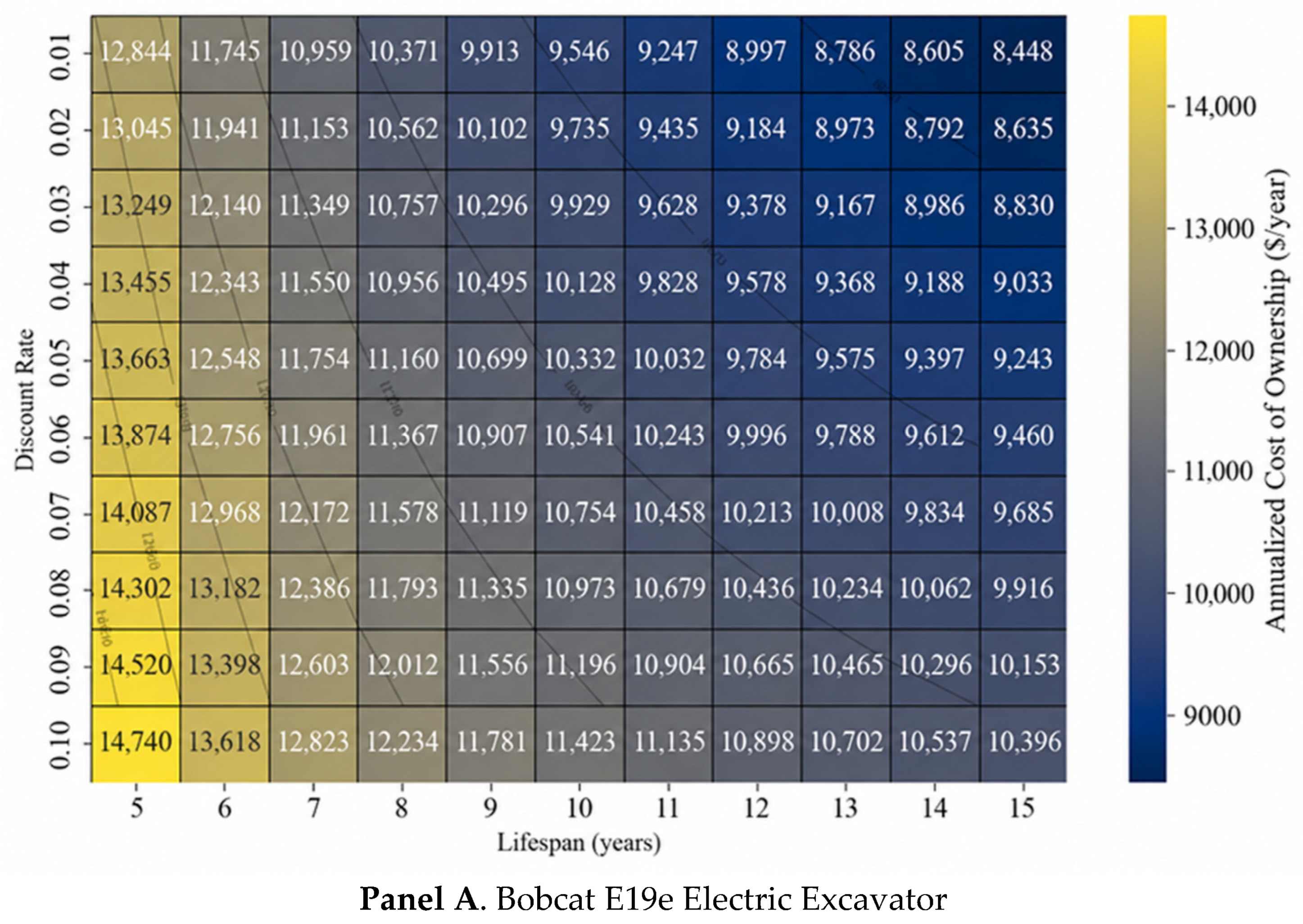
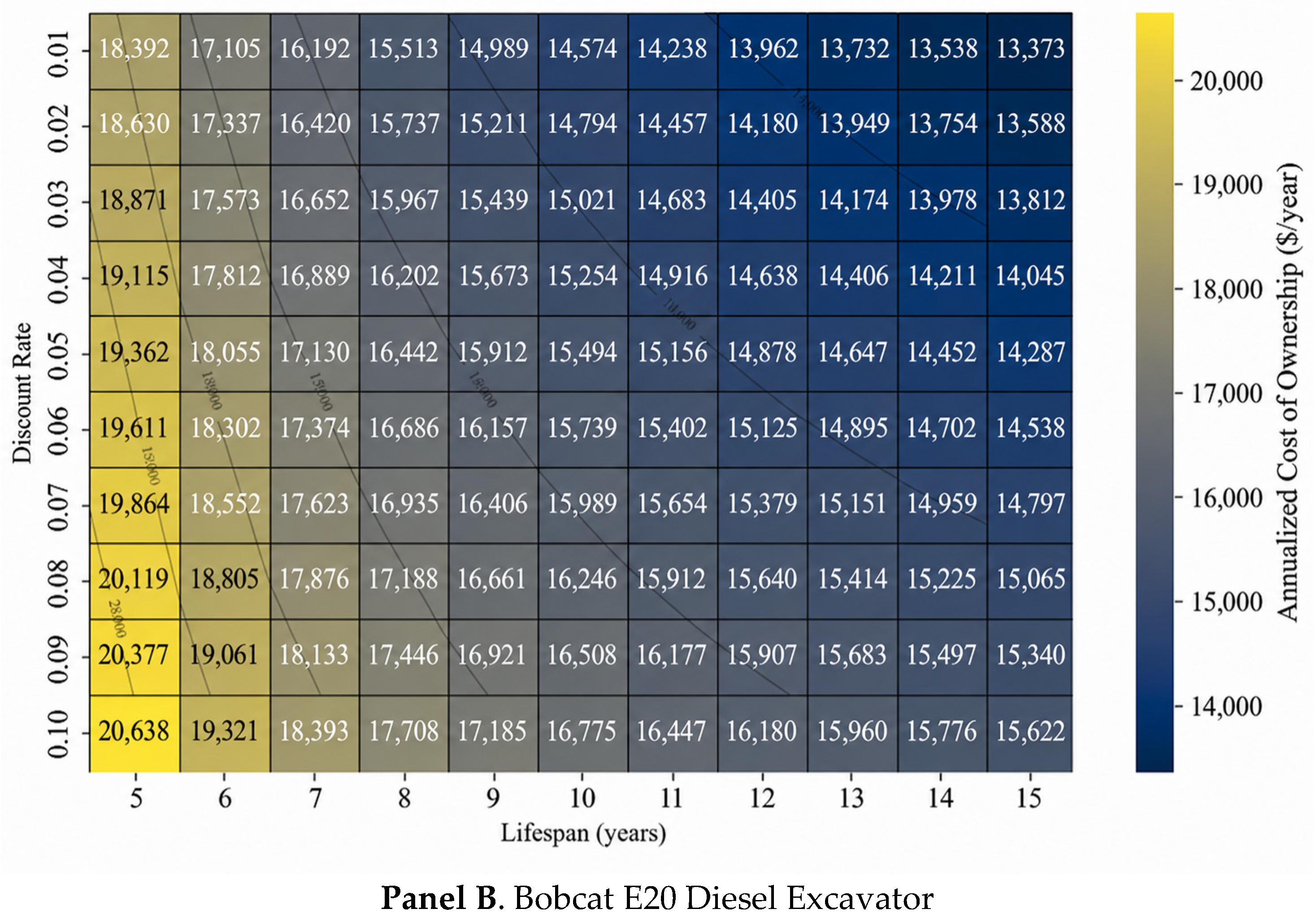
Figure 8 illustrates how the ACO for the Bobcat E19e electric excavator (Panel A) and the Bobcat E20 diesel excavator (Panel B) vary under different assumptions for equipment lifespan and discount rate. This sensitivity analysis is conducted under the average environmental external cost scenario, ensuring that the diesel ACO reflects monetized damages from CO
2 and local pollutant emissions. As expected, the ACO increases with shorter lifespans and higher discount rates for both models. However, the electric version consistently exhibits lower ACO values across the entire grid. For instance, at a 5-year lifespan and a 1% discount rate, the electric model’s ACO is approximately
$12,844, compared to
$18,392 for its diesel counterpart. Even with longer lifespans and higher discount rates (e.g., 15 years at 10%), the electric E19e maintains a cost advantage with an ACO of
$10,396, compared to
$15,622 for the diesel E20.
This gap highlights not only the reduced operational and maintenance burden of electric models but also their lower exposure to long-term financial risk. The relatively smoother gradient observed for the electric model indicates greater robustness to variations in lifespan and discount-rate assumptions. Importantly, the competitiveness of the electric excavator also reflects the inclusion of operational environmental externalities in the diesel ACO, capturing social costs associated with carbon and local pollutant emissions. These results reinforce the case for electrification when both financial and environmental considerations are integrated into equipment investment decisions.
To evaluate the robustness of our ACO estimates to uncertainty in cost interdependencies, we conducted a Monte Carlo-based correlation sensitivity analysis. All ACO values in this analysis were computed under the average environmental external cost scenario, ensuring consistency with our baseline framework. Rather than fixing a single dependence structure, we generated 64 feasible correlation matrices by independently sampling the off-diagonal correlation terms from triangular distributions defined by defensible lower bounds, midpoints (used in the main analysis), and upper bounds. These correlations govern relationships among capital cost, maintenance cost, electricity price (for electric equipment), and fuel price (for diesel equipment). Only correlation matrices satisfying the positive semi-definiteness condition were retained.
Using common random numbers for consistency across scenarios, we simulated 800 runs per correlation configuration and computed ACO values for each sampled dependence structure for all equipment types. The results, summarized in
Table 4, indicate that the sensitivity of ACO to plausible variations in the correlation structure is small. Across all loaders and excavators analyzed, the span between the minimum and maximum ACO values remains within 0.4% of baseline estimates. These findings confirm that the estimated ACOs are robust to common levels of uncertainty in the assumed correlations among cost components.
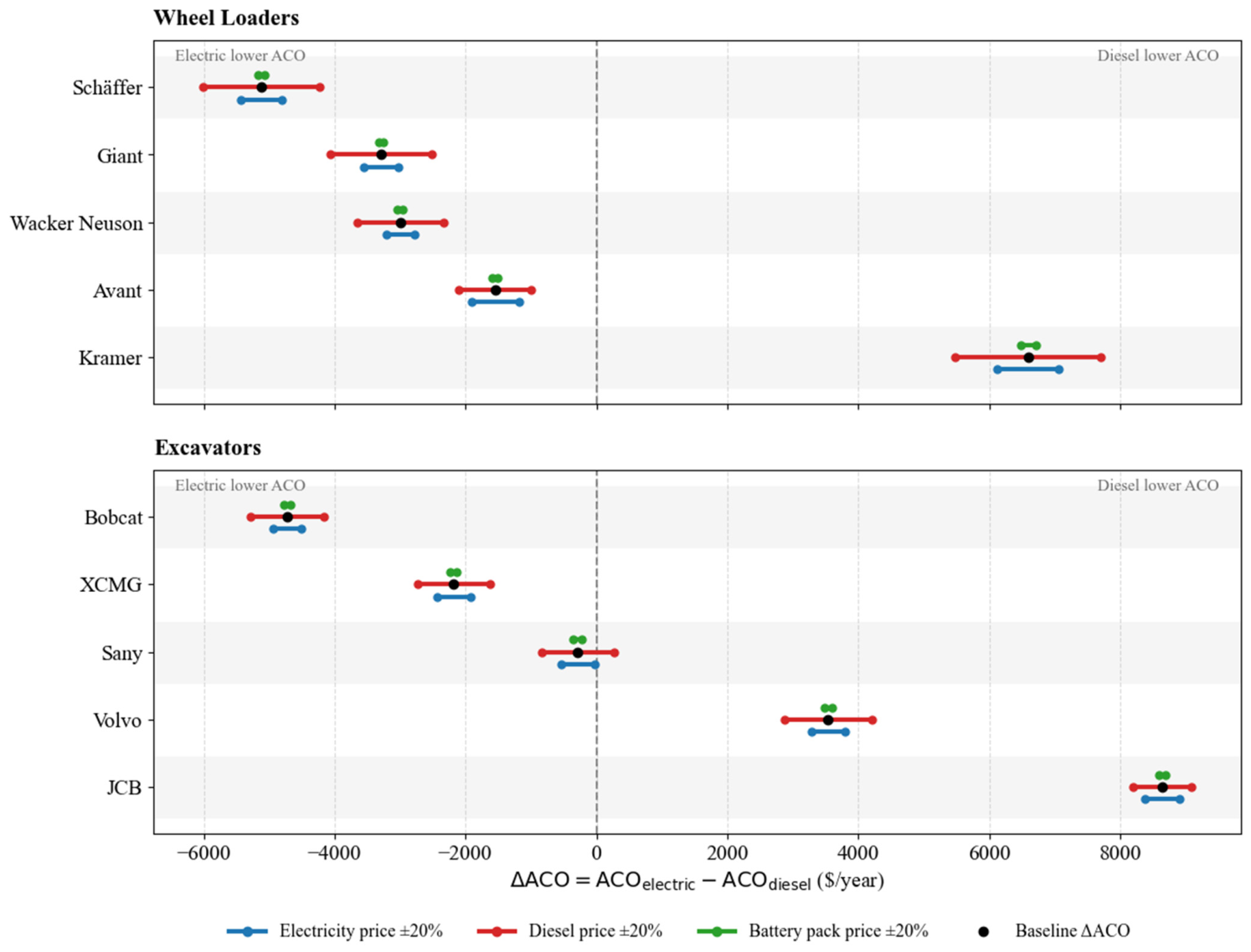
To complement the Monte Carlo and correlation-sensitivity analyses, we conducted a deterministic one-at-a-time sensitivity analysis under the private-cost scenario only. Electricity price, diesel price, and battery pack price were each varied by ±20% around their baseline values while all other inputs were held fixed.
Figure 9 reports the resulting electric–diesel ACO difference, defined as ΔACO = ACO
electric – ACO
diesel. Negative values indicate that the electric model has lower private ACO than its diesel counterpart, while positive values indicate that the diesel model remains cheaper.
Figure 9 shows that the main private-cost rankings are generally robust to the tested price changes. Electric models that already have a private-cost advantage, such as Schäffer, Giant, Wacker Neuson, Bobcat, and XCMG, remain on the negative side of the parity line. Diesel price variation produces the widest shifts in ΔACO, indicating that diesel equipment is more exposed to fuel-price changes. Battery pack price variation has a relatively small effect compared with diesel price variation, which supports the finding that battery price reductions alone are unlikely to substantially change cost rankings under the private-cost framework. Higher-capital electric models, including Kramer, Volvo, and JCB, remain above parity because their purchase-price premiums dominate the ±20% changes in energy and battery prices.
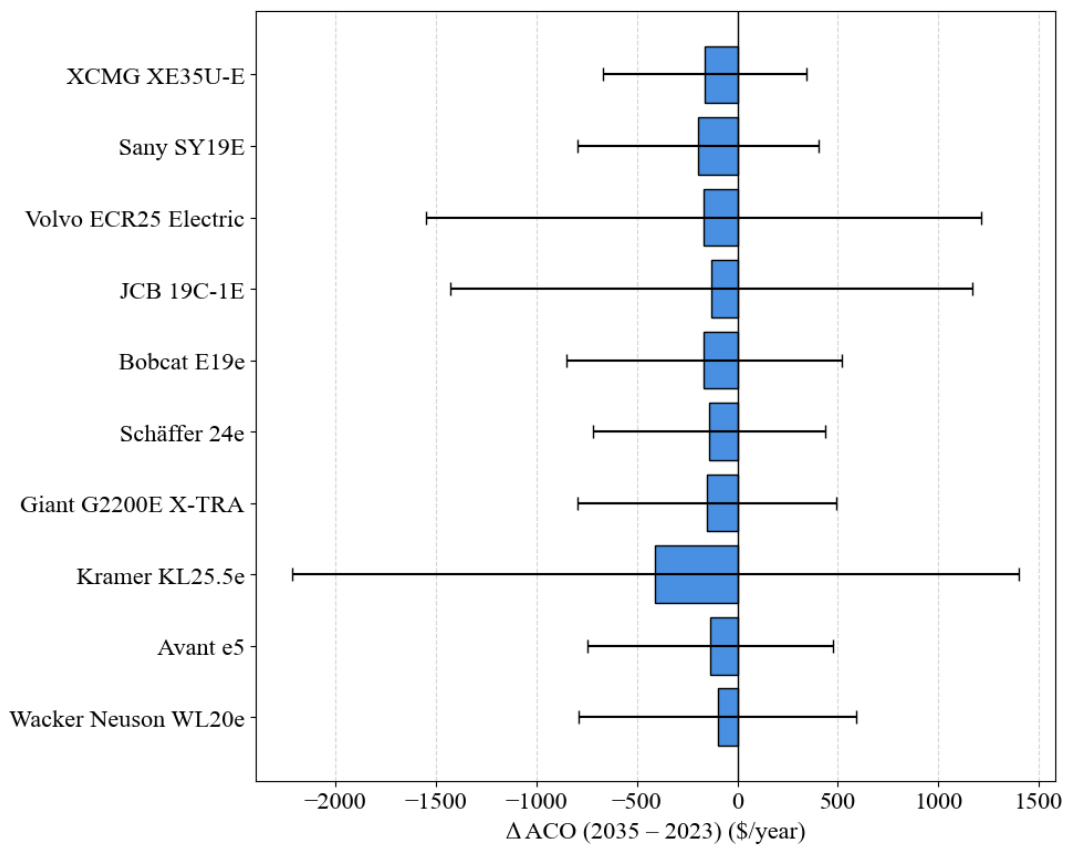
To evaluate how future battery cost trajectories may influence the economic competitiveness of electric construction equipment, we recalculated the ACO under projected 2035 market conditions using a private cost perspective only. The 2035 projection reflects California’s Executive Order N-79-20 [
57] and incorporates a reduction in battery pack prices from
$115/kWh in 2024 to
$65/kWh in 2035. Environmental externalities were excluded from this scenario to reflect the decision-making framework of equipment rental companies and private fleet operators.
Figure 10 presents the change in ACO attributable solely to battery cost reduction (ΔACO = ACO
2035 – ACO
2023). Across all models, the reduction in annualized cost is modest. For most equipment types, the decrease ranges from approximately
$100 to
$500 per year. The Kramer KL25.5e exhibits the largest absolute reduction, approaching roughly
$1000–
$1500 per year, reflecting its comparatively large battery capacity. However, even in this case, the reduction represents a relatively small fraction of the ACO.
Importantly, the battery cost decline does not materially alter the relative competitiveness between electric and diesel alternatives. Models that were cost-competitive under the 2023 private-cost scenario remain so, and models that were less competitive do not experience sufficient improvement to improve their ranking. The uncertainty intervals for several models overlap zero, indicating that the battery cost effect is small relative to overall cost variability driven by capital, maintenance, and energy price uncertainty.
These findings suggest, under the private-cost framework used for the 2035 projection, that battery cost reductions alone are insufficient to substantially shift the economic balance between electric and diesel construction equipment under a purely private cost framework. While declining battery prices modestly improve electric ACO, the overall cost structure remains dominated by capital intensity and operational assumptions. In contrast, earlier scenarios that internalize operational environmental externalities produced more pronounced competitiveness gains for electric models. This comparison indicates that expected market-driven battery cost improvements may not be sufficient to accelerate widespread adoption on their own. Targeted government incentives, such as purchase subsidies, tax credits, accelerated depreciation, or low-interest financing, can therefore play an important role in narrowing remaining capital cost gaps and facilitating a faster transition toward electric construction equipment.
5. Conclusions
This study developed an annualized cost of ownership framework for off-road construction equipment and analyzed 20 models of wheel loaders and excavators powered by diesel or electricity. Our framework incorporates vehicle purchase costs, operational costs (refueling and maintenance), infrastructure requirements, and monetized operational environmental damages from CO2, PM2.5, NOx, and SO2 emissions. Uncertainty was addressed through Monte Carlo simulation with correlated parameters, enabling the estimation of both expected costs and cost variability. We also accounted for external costs from GHG emissions and key air pollutants from diesel engines in denser urban areas.
The results show that electric construction equipment is already economically competitive in several compact segments even without accounting for operational external costs. When operational external costs are accounted for, diesel ACO increases substantially, particularly under high urban damage valuations, and operational environmental externalities become a major cost component of diesel machinery ownership. In densely populated settings, monetized emissions account for up to one-third of diesel lifecycle cost, fundamentally altering the comparative economics. These findings indicate that electric machinery competitiveness is not solely driven by policy assumptions; rather, many compact models are financially viable even before externalities are considered, and environmental cost internalization further strengthens this advantage.
Our analysis also highlights structural differences in cost composition and risk profiles. Electric equipment concentrates costs in capital and energy components and consistently exhibits narrower ACO distributions, reflecting greater cost predictability and reduced exposure to volatile fuel markets. Diesel equipment, in contrast, shows higher variability due to fuel price uncertainty and sensitivity to environmental damage valuation. Correlation sensitivity analysis confirms that the overall results are robust to plausible variations in cost interdependencies, with ACO variation remaining below 0.4% across the correlation structures we tested. The one-at-a-time price sensitivity analysis further shows that private-cost rankings are generally robust to ±20% changes in electricity, diesel, and battery prices, with diesel-price variation producing the largest shifts and battery-price variation having a comparatively modest effect.
Under the private-cost framework used for the 2035 projection, battery cost reductions were found to have only a modest effect on electric ACO. Although lower battery prices reduce annualized costs slightly, particularly for larger-battery-capacity models, the magnitude of this change is small relative to total lifecycle cost and does not alter the relative ranking between electric and diesel alternatives. This indicates that technological cost improvements alone may not be sufficient to accelerate widespread electrification in higher-capital equipment categories.
Given that a number of models of electric loaders and excavators are economically attractive, it may seem surprising that U.S. adoption remains stalled at less than 2% of the total equipment fleet [
58]. This discrepancy is driven by structural barriers, starting with a high initial acquisition cost that can be double for electric than for equivalent diesel construction machinery, creating a capital expenditure hurdle that requires incentives or regulatory mandates to overcome [
59].
A second major hurdle is providing the charging infrastructure, which is a critical operational challenge, especially for job sites lacking grid access. Unlike mature diesel refueling networks, electric machinery necessitates complex planning to align job-site operations with recharging constraints. It also requires investments in onsite power solutions, such as temporary grid connections or mobile battery storage, which are costly and can be very time consuming to obtain, particularly for the former [
59].
Third, scaling issues also persist for larger equipment, as the size and weight of lithium-ion packs for heavy-duty excavators can limit runtime and payload capacity [
60]. Uncertainty about battery degradation and resale value further discourages investment, particularly in the absence of subsidies seen in European and Asian markets [
58,
59,
60].
Finally, it is important to acknowledge that the construction industry is deeply risk-averse and slow to change due to the narrow profit margins and rigid project timelines that characterize civil engineering contracting [
59]. Taking full advantage of current electric construction equipment may require changing some construction practices to allow for charging the equipment, which is likely daunting to many contractors.
In this context, equipment rental firms are uniquely positioned to foster the adoption of electric construction equipment by serving as a financial and operational bridge. By absorbing high initial capital costs, they offer contractors access to zero-emission technology without the risks associated with long-term ownership or technological obsolescence, creating a low-risk testing ground [
61]. Industry leaders have already formalized this role through strategic partnerships with original equipment manufacturers to secure exclusive access to advanced electric platforms and mobile battery energy storage systems, effectively closing the infrastructure gap for individual contractors [
62,
63]. Moreover, rental firms can accelerate this transition by providing the telematics data and expertise required to meet changing environmental standards.
Unfortunately, the acquisition of electric construction equipment has been hampered by trade measures and import duties implemented between 2024 and early 2026, as many of the leading manufacturers are headquartered in Sweden (Volvo CE), Japan (Komatsu and Hitachi), the United Kingdom (JCB), and China (SANY and XCMG). These duties have neutralized some of the operational savings of electric equipment by inflating the initial sticker price.
Policy design should be differentiated by equipment class and construction context: more compact equipment in dense urban projects is best suited for low-emission zones, green procurement, and noise-based incentives, while larger machines and remote or off-grid sites may require stronger purchase incentives, mobile charging support, BESS deployment, or transitional low-carbon fuels. To further catalyze the adoption of electric construction equipment in the U.S., a multi-faceted policy approach should prioritize public health while addressing these operational hurdles. Because the elimination of tailpipe emissions and noise is most impactful in densely populated areas, regulatory support should be concentrated in urban areas and disadvantaged communities that have long been disproportionately exposed to air pollution. Establishing low-emission zones for construction projects and revising local noise ordinances to permit extended operating hours for quieter electric machinery would give contractors a tangible competitive advantage that could help offset higher upfront costs. For example, in 2017 the City of Oslo (Norway) required all municipal projects to use, where possible, electric technology for construction machinery. By 2024, 85% of the work at municipal construction sites in Oslo was carried out using zero-emission machinery, 14% used biofuels, and only 1% used fossil fuels [
64].
Simultaneously, infrastructure cost barriers could be addressed by expanding utility programs—such as California’s Electric Rule 29—to cover more of the infrastructure costs for grid connections for large urban construction projects. Encouraging utilities to integrate temporary, high-power construction loads into long-term demand planning would ensure reliable energy access for large-scale projects and decrease connecting time, while consistent statewide permitting standards for battery storage would reduce administrative uncertainty.
A successful transition would likely need to rely on a combination of interim technical solutions and stable financial signals. Targeted incentives for mobile power units and Battery Energy Storage Systems (BESS) would provide critical flexibility for jobsites that lack immediate grid access, while the temporary use of renewable diesel can serve as a pragmatic bridge in remote regions where electrification is currently unfeasible. Ultimately, maintaining stable, long-term funding through state agencies like the California Air Resources Board is vital to sustaining market confidence as electric machinery moves toward full cost competitiveness.
This study is not without limitations. Projections for battery cost and technological characteristics remain uncertain, long-term maintenance data for electric machinery are still emerging, and utilization variability across construction sites may influence lifecycle cost outcomes. Infrastructure deployment challenges, including mobile charging logistics and permitting constraints, were treated in simplified form. Our analysis was performed before the sharp rise in diesel fuel prices associated with 2026 Middle East tensions; accounting for this increased volatility would likely reinforce our main conclusions.
Future research should expand the empirical basis of this analysis by collecting field data on electric construction equipment, including real-world energy use, maintenance costs, charging downtime, and battery degradation. Future work should also develop duty-cycle-specific cost models, evaluate battery replacement and second-life value under different utilization patterns, and compare battery-electric equipment with hydrogen fuel cell alternatives for larger machines and remote job sites.