Article

Forest Bathing Associated with Increased Human Well-Being in a Rural Community of Chile

by
Brenda Buscaglione
1,
Rodrigo Vargas-Gaete
2,3,4,*,
Natalia Gertner
2,3,
Paula Cantarutti
1,
Carlos Inaipil
1 and
Christian Salas-Eljatib
5
1
Al Aire Libre Chile, km 1 Camino Laguna Negra s/n, Sector Queule, Comuna de Curacautín 4700000, Chile
2
Laboratorio de Ecosistemas y Bosques (EcoBos), Departamento de Ciencias Forestales, Facultad de Ciencias Agropecuarias y Medioambiente, Universidad de La Frontera, Casilla 54-D, Francisco Salazar 01145, Temuco 4811230, Chile
3
Centro Nacional de Excelencia para la Industria de la Madera (CENAMAD), Pontificia Universidad Católica de Chile, Santiago 8320000, Chile
4
Center for Biodiversity and Ecological Sustainability (C-BEST), Facultad de Ciencias Agropecuarias y Medioambiente, Universidad de La Frontera, Temuco 4811230, Chile
5
Laboratorio de Biometría y Modelación Forestal, Departamento de Gestión Forestal y su Medio Ambiente, Universidad de Chile, Santiago 8820808, Chile
*
Author to whom correspondence should be addressed.
Sustainability 2026, 18(12), 6314; https://doi.org/10.3390/su18126314 (registering DOI)
Submission received: 7 October 2025 / Revised: 11 November 2025 / Accepted: 16 November 2025 / Published: 19 June 2026

Abstract

There is growing recognition of the health benefits that forests and green spaces provide to people. Forest bathing is a practice that promotes relaxation and human well-being through immersive, mindful experiences in forest environments. How forest bathing affects distinct dimensions of well-being is still not fully understood. In this study, we assessed changes in well-being before and after two and four forest bathing sessions and examined whether a brief introductory session on forest ecosystem services enhanced participants’ overall perception of well-being. Forty adults from a rural community in southern Chile completed the Warwick–Edinburgh Mental Well-being Scale to assess perceived well-being. Participants showed improvements in overall well-being after two sessions, with the most significant gains in relaxation, optimism, clarity of thought, and social connection. Scores remained stable between the second and fourth sessions, suggesting that initial exposure offers the most substantial benefits, while continued practice helps maintain them. Although the introductory session did not significantly affect overall well-being scores, it showed positive effects on optimism and social connection. These findings highlight forest bathing as an effective nature-based intervention to promote emotional and social well-being, with implications for policies advancing public health and sustainability goals.

1. Introduction

Population growth has significantly altered original forest environments, limiting access to natural areas even in rural landscapes, increasingly affected by development and land-use pressures [1,2]. Native tree-dominated areas have been transformed, leading to a substantial loss of forest cover [3,4]. As a result, society now places greater value on natural forest environments, for their ability to conserve and provide ecosystem services, which are crucial for recreation and leisure, benefiting human physical and mental health as well as social well-being [5,6]. This pattern has become particularly pronounced in recent years, following the COVID-19 pandemic, during which millions of people experienced prolonged periods of physical distancing and lock-downs [7]. Consequently, the demand for access to native forests and natural green spaces increased significantly, with broader societal recognition of their benefits for both physical and mental well-being [8,9].
In terms of mental health, experiences in Asia, Europe, Africa and North America indicate that exposure of people to forest environments are associated with lower prevalence rates of mental illness [10]. The simple act of calmly and quietly experiencing forest environments appears to activate intrinsic motivations, reduce anxiety, strengthen personal identity and place attachment, and enhance social interaction, factors widely recognized as key components of psychological well-being [11,12]. Evidence linking forest environments to improved health and well-being has been associated with individual perception and sense of connection to nature [13,14]. Other studies have reported positive effects from consciously spending time, and walking through forest areas, including stress recovery and enhanced psychological health [15,16]. However, despite this broad evidence base, most studies have been conducted in Asia and other developed regions [7], with limited information from rural or Latin-American contexts [9,15].
Forest baths or forest bathing (i.e., Shinrin-yoku) was first introduced in Japan by its Forestry Agency in 1982, as a form of recreation that involves walking in a forest environment in a calm way [17]. The goal is to breathe naturally while walking slowly in the forest, allowing for the inhalation of volatile organic compounds that are naturally released by trees, such as terpenes and phytoncides, which have been associated with potential health-promoting effects [18,19]. Additionally, forest bathing has been linked to increased cerebral blood flow, which contributes to immune system balance and improved mental health [14,20]. It has been reported that terpenes and phytoncides released by long-lived trees can directly promote relaxation and contribute to overall well-being [19]. Other studies have shown that forest environments provide greater short-term physiological benefits, such as lower blood pressure, reduced stress related biomarkers, and improved immune function, compared to urban settings [21]. Similarly, psychological improvements as reduced negative emotions and increased positive emotions have been reported [22,23]. After forest bathing experiences in Korea, adult men and women exhibited decreased cortisol levels, a hormone associated with stress [24]. Similarly, studies in China found lower cortisol levels and improved mood in individuals exposed to forest environments compared to those in urban settings [25,26]. Moreover, alternative treatment guidelines for depression have identified that exposure to the outdoors, especially forest environments promotes resilience, alleviates depressed states and improves mental health [27]. Therapies in forest environments such as forest bathing have demonstrated lower rates of recurrence of depressive symptoms and higher rates of remission than traditional treatments [28]. Consequently in countries such as Japan and South Korea, forest bathing is a well-established practice considered a natural therapy for stress and burnout, with evidence supporting physical and mental health benefits, and even prescribed by healthcare professionals [29,30]. Globally, there are different institutions like the Forest Therapy Hub and the Association of Nature and Forest Therapy, that promote training and certification for the practical implementation of forest bathing, based on scientific evidence [17]. While there is strong evidence mostly from Asia demonstrating the health benefits of forest bathing, significant gaps remain in understanding whether these effects extend across different cultural and ecological contexts.
In Chile, several pilot experiences of forest bathing have been promoted by CONAF, the institution in charge of National Parks and Reserves (i.e., Corporación Nacional Forestal) [30]. In 2020, CONAF published a guide, using the term: “nature bathing” [baños de naturaleza] to encourage people to experience national parks through this practice, underlining the positive effects over the well-being of participants [30]. Although a growing amount of research links forest bathing with health promotion and stress prevention, there are still few studies involving empirical evidence and systematized evaluation in South America [31]. This information is relevant for clarifying the relationships between forest bathing and well-being, which may eventually inform therapeutic or medical practice guidelines, as has happened in Japan over the past decades [32]. To our knowledge, no studies in Chile have specifically evaluated the effects of forest bathing on the well-being of people. Furthermore, there are few studies that have comprehensively analyzed changes in well-being perception before and after forest bathing experiences, or identified the psychological attributes most affected by this practice [31,33]. By addressing this gap, we advance on the understanding of forest exposure and human well-being in a Chilean rural context, contributing to knowledge and practice linking conservation and public health.
This study provides an empirical assessment of forest bathing effects on psychological well-being in Chile, contributing to the scarce body of Latin-American research on nature-based interventions [34,35]. Focusing on a rural community, we examined how exposure to native forests and an introductory session on forest ecosystem services can enhance well-being, potentially contributing to the integration of conservation and health promotion strategies.
We evaluated the effect of forest bathing over the well-being of rural inhabitants in a small town of south Chile (i.e., Malalcahuello, ~737 inhabitants, La Araucanía Region, 38° S). By using the Warwick—Edinburgh Mental Well-Being Scale we (a) analyzed changes in the psychological well-being of 40 participants before and after two and four forest bathing sessions, (b) identified well-being dimensions mostly affected by forest bathing experiences, and (c) evaluated the effect of a brief introductory session on forest ecosystem services on participants’ personal well-being scores. Our study aims to link forest bathing with increased psychological well-being in adults who, despite living in a rural town, may experience relaxation and motivation when visiting natural forest environments. Moreover, we hypothesize that a brief introductory session on forest ecosystem services may enhance personal well-being perception, given that education has been linked with greater awareness of the benefits provided by forests [36,37].

2. Methodology

2.1. Participants and Forest Bathing Experiences

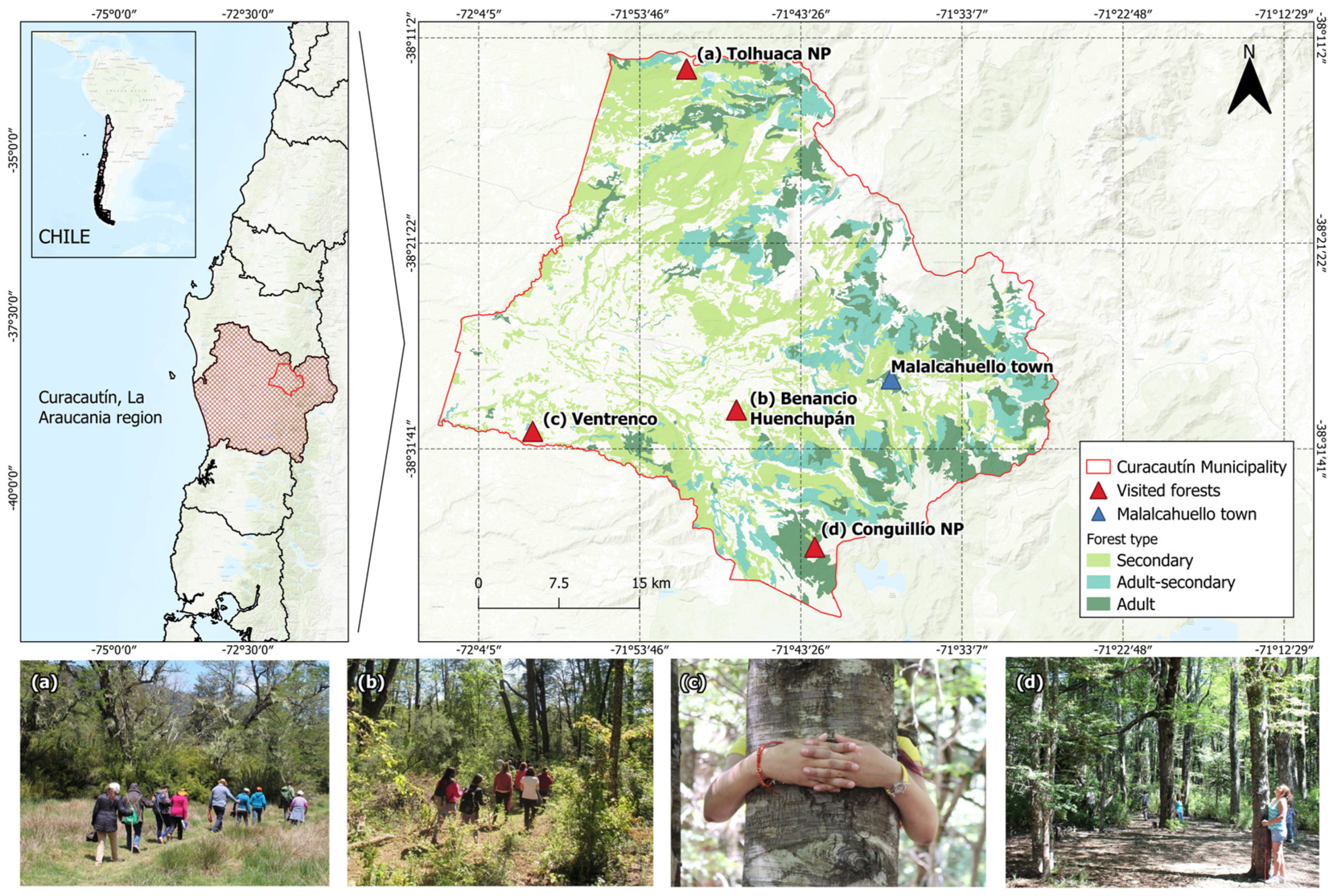
Sixty adult people voluntarily enrolled in the initiative “Forest bathing program, a new proposal in public health” led by the Health Department of the Curacautín Municipality, Chile (38° S, Figure 1). Informed consent was signed by each participant to authorize the use of the data collected through the survey, which was treated anonymously using an ID number to ensure confidentiality, in accordance with the Declaration of Helsinki, Chilean national regulations, and institutional ethics standards [38]. Forest bathing sessions took place on weekend days (i.e., Saturday and Sunday) between November and December 2019 (southern spring), under clear skies with temperatures ranging from 18 to 23 degrees Celsius. These sessions were held in four different native forest areas near the town of Malalcahuello, each approximately a one-hour bus ride away (Figure 1). Of the original sixty participants, only forty attended all four sessions, forming the final dataset for analysis (n = 40, Table 1).
During each forest bathing session, participants took a slow walk along flat trails, covering no more than two kilometers per session (Figure 1, Table 2). There were designated rest and “nature connection” stations, where two facilitators (the same persons throughout) guided participants to engage their senses, focusing on sight, hearing, smell, and taste. All forest bathing sessions lasted approximately two and a half hours (~150 min) and were conducted on the same day and at the same time each weekend for all groups, following standard forest therapy guidelines [17,30].

2.2. Well-Being Assessment

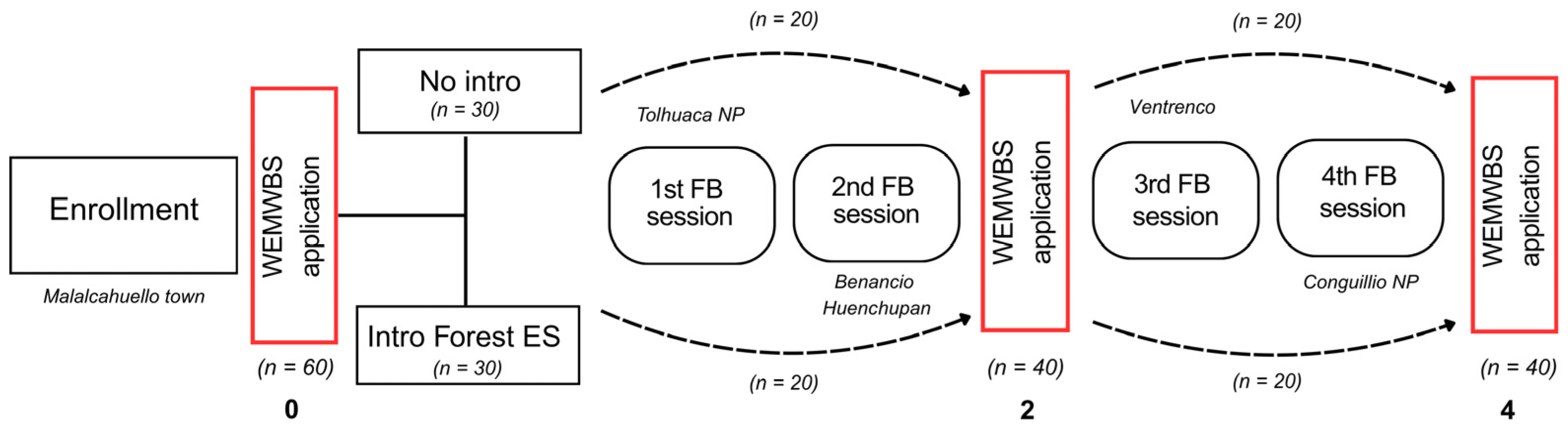
The Warwick–Edinburgh Mental Well-Being Scale (WEMWBS) was used to evaluate participants’ overall perception of well-being both before and after the forest bathing sessions. This scale allows the assessment of specific dimensions of well-being including motivation, anxiety, personal identity, place attachment, and social interaction [41,42]. The version used was based on the Spanish adaptation of the WEMWBS, which has been validated in Chile and is considered a simple and accessible psychometric instrument to assess subjective mental well-being in adults [43] (see Table S1a,b in the Supplementary Material for details). It is a brief easy- to-complete instrument that has been widely used and validated across diverse populations, and is sensitive to change even within short-term periods, making it a good tool for monitoring the impact of interventions such as physical activity or wellness strategies [42,44]. To reduce common method bias, we ensured anonymity, standardized instructions, and used the validated unidimensional WEMWBS with consistently phrased items and response formats, as recommended by Podsakoff et al. [45]. The scale uses statements written with the same directionality and yields a total score ranging from 14 to 70 points, which can be interpreted as low (14 to 42), moderate (43 to 59), and high subjective well-being (60 to 70). Individuals with high scores generally exhibit no signs of depression or anxiety [42,43]. Prior to any forest bathing activity, all participants were assessed on well-being using the same WEMWBS in the town of Malalcahuello. These baseline scores served as a reference or “control” for each participant’s initial well-being condition (n = 40, Figure 2).

2.3. Introduction to Forest Ecosystem Services

For each forest bathing session, participants were divided into two similar groups by age and gender to ensure balance and adhere to the recommended group size of 20 or fewer [17,30]. One group received a brief introductory session prior to the activity (n = 20), while the other received no information (n = 20, Table 1). The introductory sessions lasted approximately ten minutes and focused on functions and the ecosystem services provided by native forests. All introductory sessions were delivered by the same facilitator, who explained in accessible language the importance of native forests for water and carbon regulation, soil retention, and wildlife habitat. The facilitator also highlighted specific attributes of the forest area to be visited during each session (Table 2).

2.4. Data Analysis

The WEMWBS questionnaires were applied to each participant at enrollment (0) and after two (2) and four forest bathing sessions (4), analyzing a total of 120 individual responses (Figure 2). We used contingency tables to explore the association between the number of forest bathing sessions (0= control, two, or four) and psychological well-being scores. To assess statistical differences, we applied the Friedman rank sum test for repeated measures [46]. Additionally, we employed the Wilcoxon signed-rank test for post hoc comparisons, estimating p-values at a 95% confidence level (p < 0.05). These methods do not rely on the assumption of normality and are well-suited for small datasets, as well as for variables treated as interval data, such as those derived from Likert-type scales [47,48]. To identify the well-being dimensions most impacted by forest bathing, we analyzed average responses across three time points: before any sessions (control), after two sessions, and after four forest bathing sessions. Similarly, we assessed the impact and statistical significance of the brief introductory session on forest ecosystem services on participants’ well-being scores. To complement significance testing, we calculated effect sizes (Kendall’s W for Friedman tests and rank-biserial correlation for Wilcoxon tests) and assessed instrument reliability within our sample. All statistical analyses were performed in R version 4.5.2 [49], and maps were produced using QGIS version 3.40.8 [50].

3. Results

3.1. Changes in Well-Being Scores After Forest Bathing Sessions

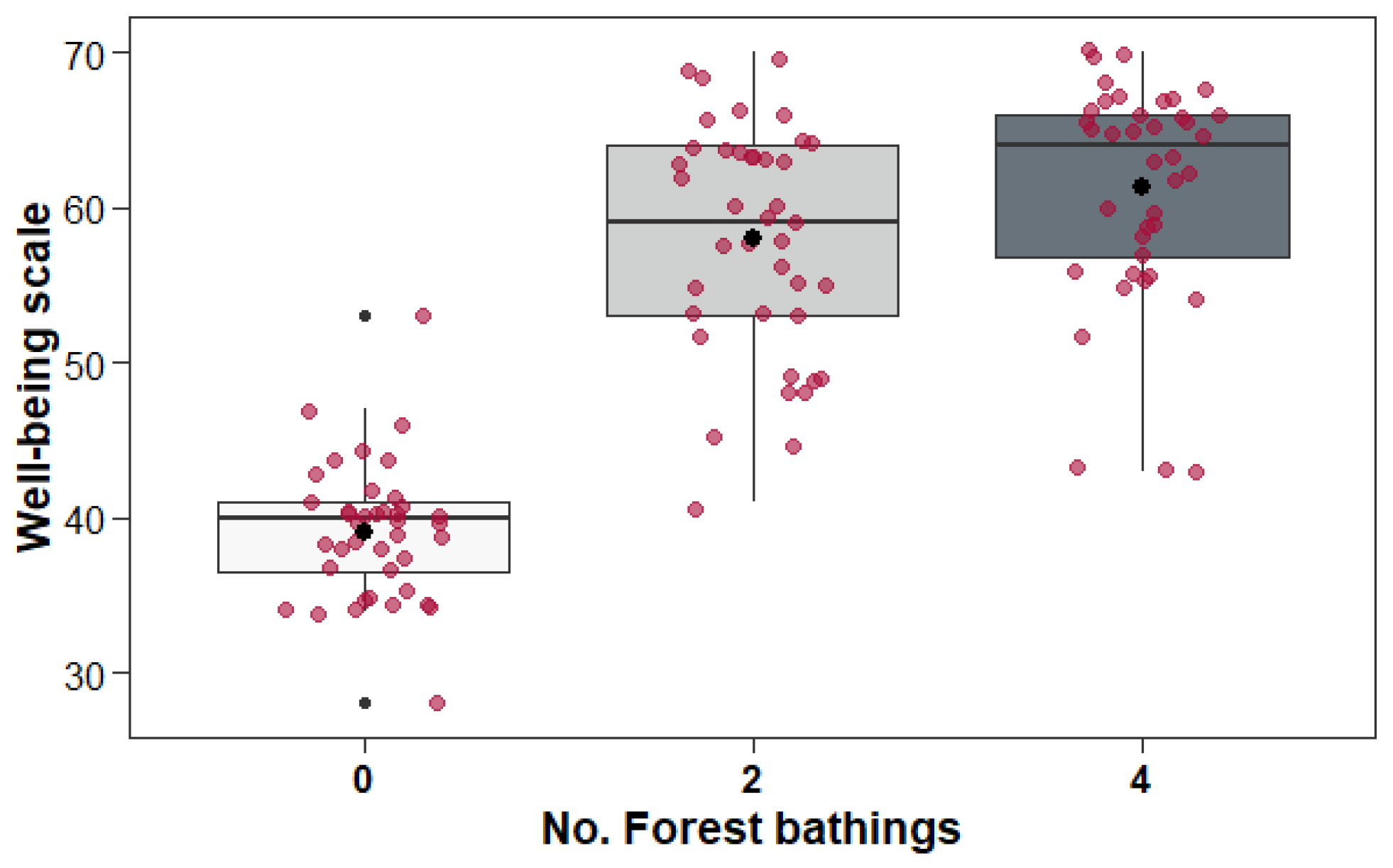
Well-being scores before forest bathing were generally low to moderate, averaging below 40 points on the scale. After the second session, all participants showed a marked improvement, with scores increasing to around 60 points, demonstrating significant differences compared to the initial scores (p < 0.05). This improvement was maintained after four sessions, with a slight increase, although the difference between the second and fourth session was not statistically significant (Figure 3). The distribution of the scores widened with more sessions, indicating a greater variation over the individual perceived well-being compared to the initial condition (Figure 3).
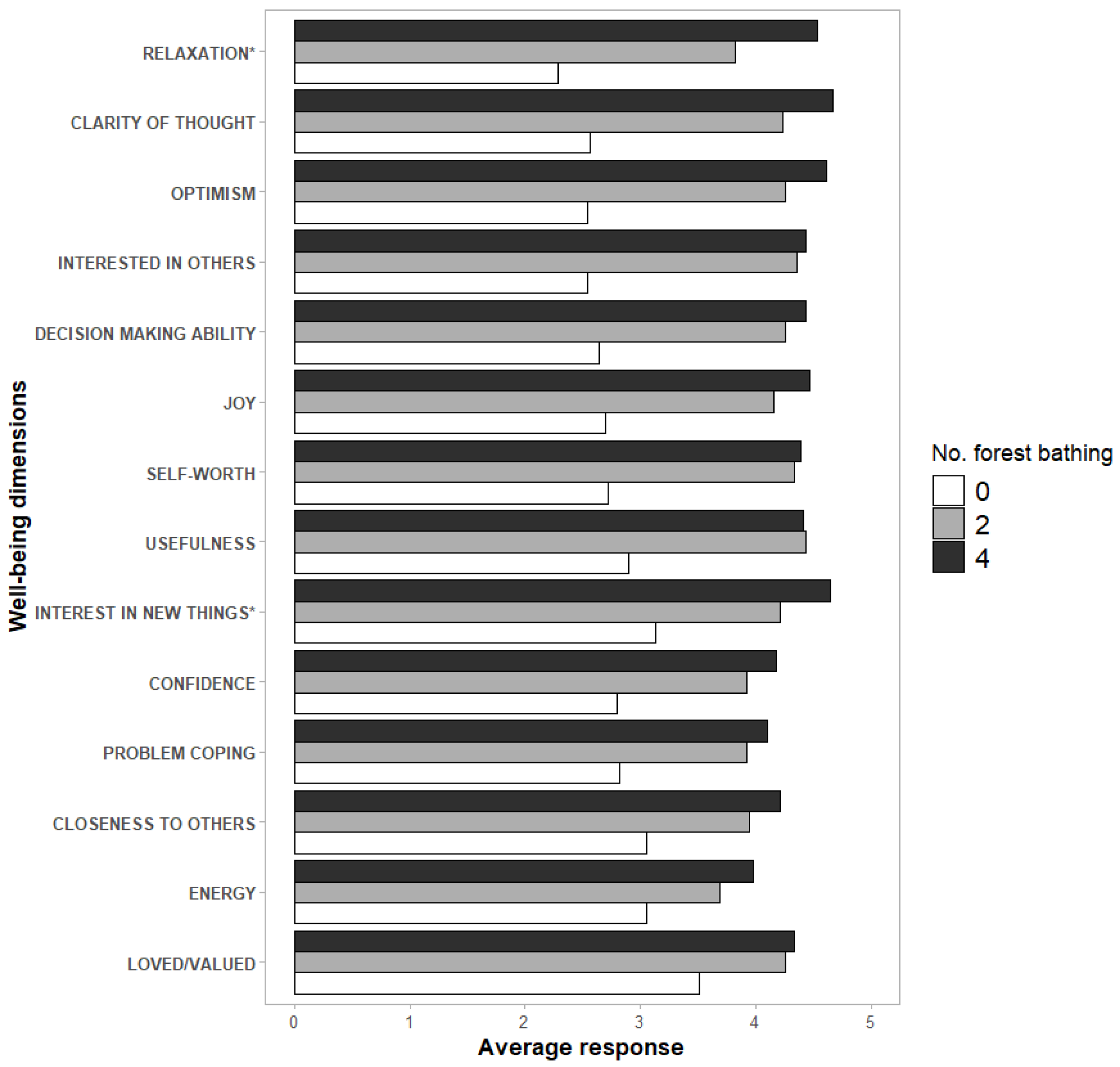
When analyzing the variation in the different well-being dimensions across forest bathing sessions, we observed that prior to any sessions, scores were generally low, particularly for relaxation, optimism, and self-esteem (i.e., self-worth, Figure 4). After two forest bathing sessions, overall well-being showed a significant increase (p < 0.05). The dimensions that showed the greatest average increase in scores after all forest bathing sessions were relaxation, clarity of thought, optimism, and interest in others (Figure 4). Although further improvements were observed between two and four sessions, most differences were not statistically significant. However, relaxation and interest in new things continued to increase (p < 0.05) indicating ongoing enhancement in these particular well-being statements (Figure 4).

3.2. Changes in Well-Being Scores Associated with the Introduction to Forest Ecosystem Services

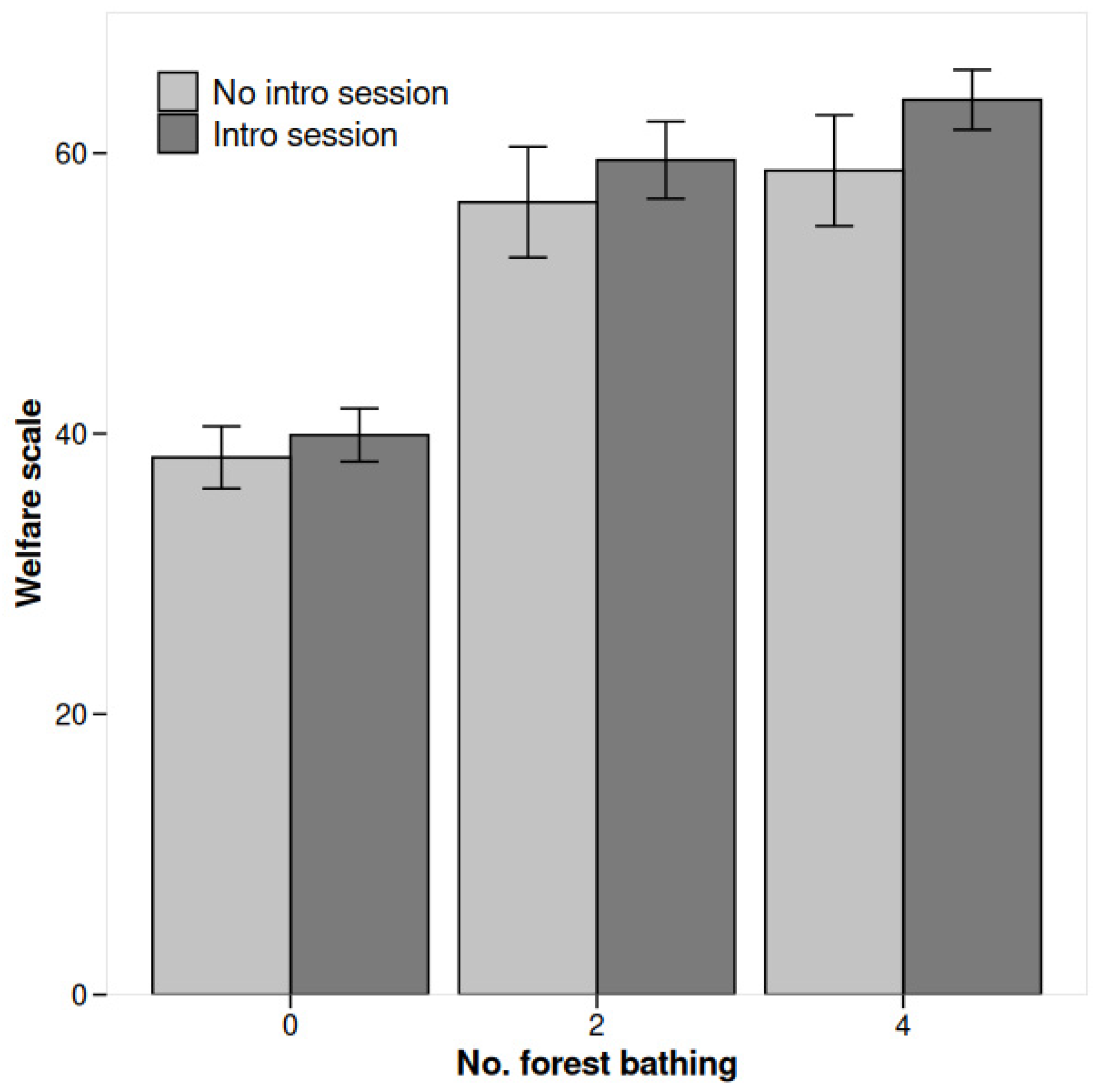
When analyzing overall well-being perception scores, no significant differences were found between participants who received the introductory session on forest ecosystem services, and those who did not. However, participants who received the introductory session consistently showed slightly higher average well-being scores (Figure 5).
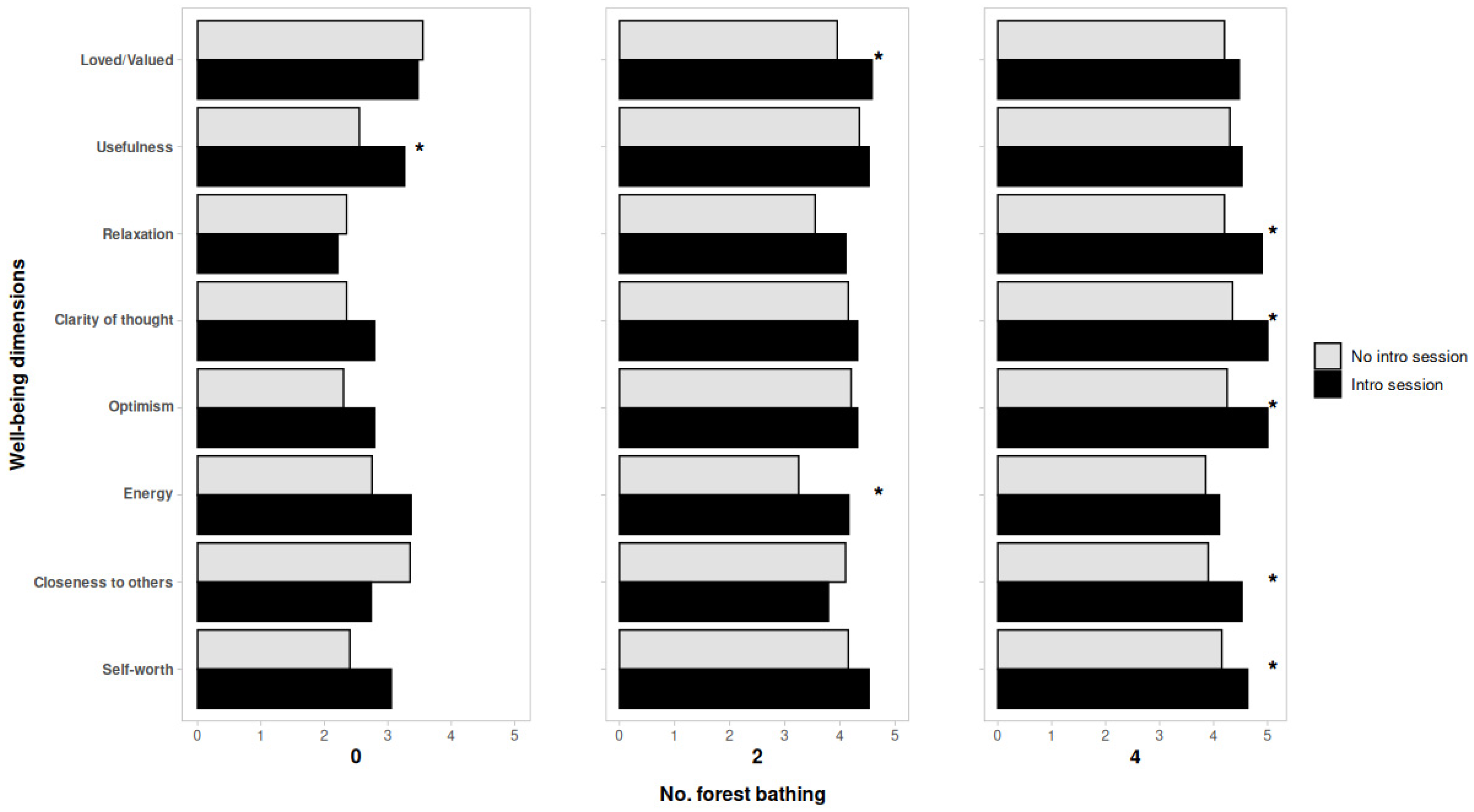
When we analyzed individual well-being dimensions, there were several aspects that showed significant increases following the introductory session (p < 0.05). This trend became more evident with additional forest bathing sessions. While the control (i.e., before any forest bathing) showed significant differences in only one dimension, limited changes were observed after the second session (two dimensions, 14%). However, by session four, five out of the 14 dimensions (36%) demonstrated a significant increase indicating a positive effect of the introductory session on participant outcomes, particularly in areas such as optimism, clarity of thought, and sense of closeness to others (Figure 6). Despite the significant increase in certain dimensions, the effect does not appear strong enough to impact overall well-being (Figure 4 and Figure 6).

4. Discussion

4.1. Impact of Forest Bathing on Perceived Well-Being

We found a positive effect on the perceived well-being of participants associated with forest bathing. The significant improvement in well-being scores after two forest bathing sessions supports the notion that this type of intervention can effectively enhance psychological well-being of participants. This result aligns with the comprehensive review developed by Hansen et al. [29], that analyzed over hundred studies across different countries of Asia, and Europe, including the US and Canada, reporting positive effects of forest bathing over holistic well-being. Previous studies align with our findings, showing that forest bathing can strengthen personal identity, place attachment, and social interaction as key components of psychological well-being [10,11,51].
We found significant differences in overall well-being scores, with the greatest improvements occurring early on. However, the lack of statistical differences between two and four forest bathing sessions suggests a plateau effect, indicating that later sessions mainly maintain the benefits rather than add substantial gains. Similarly, White et al. [52] found no further well-being improvements beyond 200–300 min of nature exposure, indicating a threshold where additional time only helps to sustain initial well-being gains [48].

4.2. Key Well-Being Dimensions Affected by Forest Bathing

All dimensions of well-being increased substantially after forest bathing. The well-being dimensions most impacted in our study were: relaxation, optimism, clarity of thought, and social connection (i.e., interested in others), which showed the greatest improvements after four forest bathing. Several works have suggested that nature immersion can enhance psychological well-being by fostering positive emotions, reducing stress, and promoting a sense of connection to others and the environment [6,9]. The significant gains in these specific areas indicate that forest bathing may be particularly effective in addressing mental health dimensions related to emotional and social well-being [53,54]. Similarly, other studies have linked forest bathing to physiological mechanisms related to well-being, such as increased cerebral blood flow, which supports immune system balance and enhances mental health [14]. Among the well-being dimensions that showed the greatest improvement, relaxation and social connection continued to increase significantly between the second and fourth forest bathing sessions. This suggests a cumulative effect of nature-based recreation in enhancing these aspects of well-being particularly through its role in reducing stress and anxiety [26,31].

4.3. Effect of an Introductory Session on Forest Ecosystem Services on Well-Being

The analysis of overall well-being scores showed no significant differences between participants who received the introductory session on forest ecosystem services and those who did not. The expectation that a brief introduction on forest ecosystem services would enhance well-being, reflects the idea that environmental education can increase appreciation and perceived benefits from nature [55,56]. However, our findings indicate that a brief introductory session alone, does not significantly impact overall well-being. Nevertheless, participants who received the introductory session, consistently exhibited slightly higher scores. This suggests that while awareness-raising is valuable, it may require more sustained efforts to achieve noticeable well-being improvements, similar to how long-term environmental education fosters meaningful changes in attitudes and behaviors [36,55].
When examining individual well-being dimensions, the introductory session had a more pronounced effect. After two sessions, less than 15% of the well-being dimensions showed a significant increase in the average scores of participants who received the introductory session. By four sessions, over 35% of the well-being dimensions showed increased scores, indicating a positive effect of the session, particularly in areas such as optimism, clarity of thought, and a sense of closeness to others. These results are consistent with findings from similar studies, which have also reported improvements in these dimensions following nature-based interventions [6,15,44]. Consequently, although the introductory session had a positive effect on specific dimensions, its relationship with overall well-being scores was weak, and therefore we cannot conclude that it leads to a meaningful change.
While the limited number of participants constrains the generalization of our results, this study provides valuable insights into the psychological benefits of forest bathing in a rural community context. Regardless of participant setting, forest bathing and other nature-based interventions rarely involve large samples due to their experiential and small-group nature [32,53]. To address this limitation, we applied a robust statistical approach suited for small samples, ensuring the reliability of the observed trends.

5. Conclusions

We found that forest bathing significantly improves perceived well-being, as observed in 40 adult rural inhabitants of southern Chile, with the greatest gains occurring after two sessions. The lack of further improvement between the second and fourth forest bathing session suggests a plateau effect, which should be explored to better understand the long-term impact of continued exposure.
When analyzing well-being dimensions, our results indicated that forest bathing may be particularly associated with improvements in emotional and social well-being. Notable increases were observed in relaxation, optimism, clarity of thought, and social connection. The sustained increases in relaxation and social connection between the second and fourth sessions suggest a potential incremental effect, where repeated exposure to forest could support further gains in these dimensions.
Our findings showed that a brief introductory session on forest ecosystem services did not have a significant impact on overall well-being. Nevertheless, participants who received the session consistently exhibited slightly higher scores. While awareness-raising may offer some benefits, more sustained efforts are likely required to achieve meaningful improvements. Certain well-being dimensions, such as optimism, clarity of thought, and social connection, showed positive effects, however the overall impact remained limited. Further research should explore whether repeated forest bathing sessions sustain well-being gains, and how different introductory approaches, forest types, and participants may influence outcomes. Overall, this study underscores the value of forest bathing as a nature-based practice that strengthens the link between human well-being and ecological awareness, supporting the integration of health promotion and environmental education within broader sustainable development frameworks.

Supplementary Materials

The following supporting information can be downloaded at: https://www.mdpi.com/article/10.3390/su18126314/s1. The supplementary material includes the Warwick–Edinburgh Mental Well-being Scale (WEMWBS; sensu Tennant et al. [41]) and its Spanish version adapted for Chile [43].

Author Contributions

B.B.: conceptualization, data collection, first data analysis. R.V.-G.: conceptualization, study-design and methodological approach, data analyses, writing of the original draft. N.G.: data analyses, figures design, writing, critical review and editing. P.C.: data collection, critical review and editing, C.I.: data collection, critical review and editing. C.S.-E.: writing, critical review and editing. All authors have read and agreed to the published version of the manuscript.

Funding

We thank the financial support provided by Centro ANID Basal CENAMAD (FB210015) and Universidad de La Frontera (DIUFRO DI22-0042).

Institutional Review Board Statement

Ethical review and approval were waived for this study by the Universidad de La Frontera (UFRO) Master’s Program Academic Committee. According to UFRO’s institutional policy in effect at the time, anonymous survey-based studies conducted within Undergraduate or Master’s programs were exempt from formal ethics committee review. Therefore, this study qualified for the exemption and did not require separate approval. All procedures complied with UFRO guidelines for research involving human participants, Chilean national regulations, and the Declaration of Helsinki. Written informed consent was obtained from all participants, and all data were collected and analyzed anonymously.

Informed Consent Statement

Informed consent was obtained from all subjects involved in the study. Each participant provided written informed consent authorizing the use of their survey data, which were anonymized using identification codes to ensure confidentiality, in accordance with the Declaration of Helsinki, Chilean national regulations, and institutional ethical standards [38]).

Data Availability Statement

Data supporting the findings of this study are available from the corresponding author upon reasonable request.

Acknowledgments

We thank the support of Centro ANID Basal CENAMAD (FB210015) and Vicerrectoría de Investigación y Postgrado, Universidad de La Frontera. We are also grateful to the forest rangers of the various National Parks and protected areas visited on the forest bathing sessions, as well as personnel of the Health Department of the Curacautín Municipality. Special thanks go to Javiera Córdova-Ibañez (EcoBos, UFRO) for assistance in editing earlier versions of the manuscript, as well as Paula Guarda-Saavedra (Universidad de La Frontera) for her suggestions on the methodology. We also thank Daniel P. Soto (Pontificia Universidad Católica de Chile) and Cara Nelson (University of Montana), for their valuable comments.

Conflicts of Interest

Authors Brenda Buscaglione, Paula Cantarutti and Carlos Inaipil were employed by the company Al Aire Libre Chile, a regional company in environmental education and sustainable tourism. The remaining authors declare that the research was conducted in the absence of any commercial or financial relationships that could be construed as a potential conflict of interest.

References

  1. Pereira, H.M.; Leadley, P.W.; Proença, V.; Alkemade, R.; Scharlemann, J.P.W.; Fernandez-Manjarrés, J.F.; Araújo, M.B.; Balvanera, P.; Biggs, R.; Cheung, W.W.L.; et al. Scenarios for Global Biodiversity in the 21st Century. Science 2010, 330, 1496–1501. [Google Scholar] [CrossRef]
  2. Vargas-Gaete, R.; Muñoz, B.; Penneckamp, D.N. Degradación de Ecosistemas Forestales, Definiciones y Conceptos Aplicados a Los Bosques de Chile. In Restauración de Ecosistemas Forestales; Ed. Universitaria: Santiago, Chile, 2024; pp. 27–58. ISBN 978-956-11-3085-2. [Google Scholar]
  3. Pauchard, A.; Aguayo, M.; Peña, E.; Urrutia, R. Multiple Effects of Urbanization on the Biodiversity of Developing Countries: The Case of a Fast-Growing Metropolitan Area (Concepción, Chile). Biol. Conserv. 2006, 127, 272–281. [Google Scholar] [CrossRef]
  4. Fuentealba, A.; Duran, L.; Morales, N.S. The Impact of Forest Science in Chile: History, Contribution, and Challenges. Can. J. For. Res. 2021, 51, 753–765. [Google Scholar] [CrossRef]
  5. Shanahan, D.; Fuller, R.; Bush, R.; Lin, B.; Gaston, K. The Health Benefits of Urban Nature: How Much Do We Need? BioScience 2015, 65, 476–485. [Google Scholar] [CrossRef]
  6. Chiesura, A. The Role of Urban Parks for the Sustainable City. Landsc. Urban Plan. 2004, 68, 129–138. [Google Scholar] [CrossRef]
  7. Rice, W.L.; Mateer, T.J.; Reigner, N.; Newman, P.; Lawhon, B.; Taff, B.D. Changes in Recreational Behaviors of Outdoor Enthusiasts during the COVID-19 Pandemic: Analysis across Urban and Rural Communities. J. Urban. Ecol. 2020, 6, juaa020. [Google Scholar] [CrossRef]
  8. Ugolini, F.; Massetti, L.; Calaza-Martínez, P.; Cariñanos, P.; Dobbs, C.; Ostoić, S.K.; Marin, A.M.; Pearlmutter, D.; Saaroni, H.; Šaulienė, I.; et al. Effects of the COVID-19 Pandemic on the Use and Perceptions of Urban Green Space: An International Exploratory Study. Urban For. Urban Green. 2020, 56, 126888. [Google Scholar] [CrossRef]
  9. Guarda-Saavedra, P.; Muñoz-Quezada, M.T.; Aguilar-Farías, N.; Vargas-Gaete, R. Beneficios de Los Espacios Verdes y Actividad Física En El Bienestar y Salud de Las Personas. Rev. Médica Chile 2022, 150, 1095–1107. [Google Scholar] [CrossRef] [PubMed]
  10. Zhang, Y.; van Dijk, T.; Tang, J.; van den Berg, A.E. Green Space Attachment and Health: A Comparative Study in Two Urban Neighborhoods. Int. J. Environ. Res. Public Health 2015, 12, 14342–14363. [Google Scholar] [CrossRef]
  11. Mukerjee, S. An Empirical Analysis of the Association between Social Interaction and Self-Rated Health. Am. J. Health Promot. 2013, 27, 231–239. [Google Scholar] [CrossRef]
  12. Ryff, C.D.; Keyes, C.L. The Structure of Psychological Well-Being Revisited. J. Pers. Soc. Psychol. 1995, 69, 719–727. [Google Scholar] [CrossRef]
  13. Jia, B.B.; Yang, Z.X.; Mao, G.X.; Lyu, Y.D.; Wen, X.L.; Xu, W.H.; Lyu, X.L.; Cao, Y.B.; Wang, G.F. Health Effect of Forest Bathing Trip on Elderly Patients with Chronic Obstructive Pulmonary Disease. Biomed. Environ. Sci. 2016, 29, 212–218. [Google Scholar] [CrossRef] [PubMed]
  14. Peterfalvi, A.; Meggyes, M.; Makszin, L.; Farkas, N.; Miko, E.; Miseta, A.; Szereday, L. Forest Bathing Always Makes Sense: Blood Pressure-Lowering and Immune System-Balancing Effects in Late Spring and Winter in Central Europe. Int. J. Environ. Res. Public Health 2021, 18, 2067. [Google Scholar] [CrossRef]
  15. Ulrich, R.S. Aesthetic and Affective Response to Natural Environment. In Behavior and the Natural Environment; Altman, I., Wohlwill, J.F., Eds.; Springer: Boston, MA, USA, 1983; pp. 85–125. ISBN 978-1-4613-3539-9. [Google Scholar]
  16. Kaplan, S. The Restorative Benefits of Nature: Toward an Integrative Framework. J. Environ. Psychol. 1995, 15, 169–182. [Google Scholar] [CrossRef]
  17. Clifford, M.A. Your Guide to Forest Bathing (Expanded Edition): Experience the Healing Power of Nature; Red Wheel: Newburyport, MA, USA, 2021. [Google Scholar]
  18. Antonelli, M.; Donelli, D.; Barbieri, G.; Valussi, M.; Maggini, V.; Firenzuoli, F. Forest Volatile Organic Compounds and Their Effects on Human Health: A State-of-the-Art Review. Int. J. Environ. Res. Public Health 2020, 17, 6506. [Google Scholar] [CrossRef]
  19. Matsubara, E.; Kawai, S. Gender Differences in the Psychophysiological Effects Induced by VOCs Emitted from Japanese Cedar (Cryptomeria japonica). Environ. Health Prev. Med. 2018, 23, 10. [Google Scholar] [CrossRef] [PubMed]
  20. Selhub, E.M.; Logan, A.C. Your Brain on Nature: The Science of Nature’s Influence on Your Health, Happiness and Vitality; John Wiley&Sons: Hoboken, NJ, USA, 2014; ISBN 978-1-4434-2808-8. [Google Scholar]
  21. Park, B.J.; Tsunetsugu, Y.; Kasetani, T.; Kagawa, T.; Miyazaki, Y. The Physiological Effects of Shinrin-Yoku (Taking in the Forest Atmosphere or Forest Bathing): Evidence from Field Experiments in 24 Forests across Japan. Environ. Health Prev. Med. 2010, 15, 18–26. [Google Scholar] [CrossRef]
  22. Tsunetsugu, Y.; Park, B.-J.; Lee, J.; Kagawa, T.; Miyazaki, Y. Psychological Relaxation Effect of Forest Therapy: Results of Field Experiments in 19 Forests in Japan Involving 228 Participants. Nihon Eiseigaku Zasshi. Jpn. J. Hyg. 2011, 66, 670–676. [Google Scholar] [CrossRef]
  23. Li, Q.; Kawada, T. Possibility of clinical applications of forest medicine. Nihon Eiseigaku Zasshi 2014, 69, 117–121. [Google Scholar] [CrossRef]
  24. Sin, B.; Im, D.; Lee, K.K. Changes of Stress Hormone Cortisol After Visiting the Gotjawal Forest in Jejudo. J. Korea Acad.-Ind. Coop. Soc. 2017, 18, 471–479. [Google Scholar] [CrossRef]
  25. Mao, G.-X.; Cao, Y.-B.; Lan, X.-G.; He, Z.-H.; Chen, Z.-M.; Wang, Y.-Z.; Hu, X.-L.; Lv, Y.-D.; Wang, G.-F.; Yan, J. Therapeutic Effect of Forest Bathing on Human Hypertension in the Elderly. J. Cardiol. 2012, 60, 495–502. [Google Scholar] [CrossRef]
  26. Furuyashiki, A.; Tabuchi, K.; Norikoshi, K.; Kobayashi, T.; Oriyama, S. A Comparative Study of the Physiological and Psychological Effects of Forest Bathing (Shinrin-Yoku) on Working Age People with and without Depressive Tendencies. Environ. Health Prev. Med. 2019, 24, 46. [Google Scholar] [CrossRef]
  27. Brown, K.W.; Ryan, R.M.; Creswell, J.D. Mindfulness: Theoretical Foundations and Evidence for Its Salutary Effects. Psychol. Inq. 2007, 18, 211–237. [Google Scholar] [CrossRef]
  28. Kim, W.; Lim, S.-K.; Chung, E.-J.; Woo, J.-M. The Effect of Cognitive Behavior Therapy-Based Psychotherapy Applied in a Forest Environment on Physiological Changes and Remission of Major Depressive Disorder. Psychiatry Investig. 2009, 6, 245–254. [Google Scholar] [CrossRef]
  29. Hansen, M.M.; Jones, R.; Tocchini, K. Shinrin-Yoku (Forest Bathing) and Nature Therapy: A State-of-the-Art Review. Int. J. Environ. Res. Public Health 2017, 14, 851. [Google Scholar] [CrossRef] [PubMed]
  30. CONAF. Guía para la Práctica del Shinrin Yoku en Áreas Silvestres Protegidas del Estado. 2020. Available online: https://www.conaf.cl/wp-content/uploads/2024/10/GUIA-PARA-LA-PRACTICA-DE-SHINRIN-YOKU-2020-1.pdf (accessed on 10 June 2024).
  31. Langer, Á.I.; Solano, E.; Bacigalupe, L.D.; Soto, B.; Asenjo, A.; Cifuentes, A.; Navarrete, I.; Vergara, R.C.; Steinebach, C. Forest Bathing Diminishes Anxiety in Undergraduate Students: A Pilot Study in the Valdivian Temperate Rainforest. J. For. Res. 2023, 28, 463–467. [Google Scholar] [CrossRef]
  32. Oh, B.; Lee, K.J.; Zaslawski, C.; Yeung, A.; Rosenthal, D.; Larkey, L.; Back, M. Health and Well-Being Benefits of Spending Time in Forests: Systematic Review. Environ. Health Prev. Med. 2017, 22, 71. [Google Scholar] [CrossRef] [PubMed]
  33. Lazo, A.C.; Ednie, A.; Gale-Detrich, T. Contributions of Nature Bathing to Resilience and Sustainability. In Tourism and Conservation-Based Development in the Periphery: Lessons from Patagonia for a Rapidly Changing World; Springer International Publishing: Cham, Switzerland, 2023; pp. 389–408. [Google Scholar]
  34. Avecillas-Torres, I.; Herrera-Puente, S.; Galarza-Cordero, M.; Coello-Nieto, F.; Farfán-Pacheco, K.; Alvarado-Vanegas, B.; Ordóñez-Ordóñez, S.; Espinoza-Figueroa, F. Nature Tourism and Mental Well-Being: Insights from a Controlled Context on Reducing Depression, Anxiety, and Stress. Sustainability 2025, 17, 654. [Google Scholar] [CrossRef]
  35. Janeczko, E.; Czyżyk, K.; Woźnicka, M.; Wiśniewska, A. The Impact of Open Forest Habitats on Psychological Well-Being. Sustainability. Sustainability 2025, 17, 6233. [Google Scholar] [CrossRef]
  36. Lima, F.P.; Bastos, R.P. Perceiving the Invisible: Formal Education Affects the Perception of Ecosystem Services Provided by Native Areas. Ecosyst. Serv. 2019, 40, 101029. [Google Scholar] [CrossRef]
  37. Torkar, G.; Krašovec, U. Students’ Attitudes toward Forest Ecosystem Services, Knowledge about Ecology, and Direct Experience with Forests. Ecosyst. Serv. 2019, 37, 100916. [Google Scholar] [CrossRef]
  38. World Medical Association. World Medical Association Declaration of Helsinki: Ethical Principles for Medical Research Involving Human Subjects. J. Am. Coll. Dent. 2014, 81, 14. [Google Scholar]
  39. Donoso, C. Bosques Templados de Chile y Argentina. Variación, Estructura y Dinámica; Editorial Universitaria: Santiago, Chile, 1993. [Google Scholar]
  40. Jahn, R.; Blume, H.P.; Asio, V.B.; Spaargaren, O.; Schad, P. Guidelines for Soil Description, 4th ed.; FAO: Rome, Italy, 2006; ISBN 978-92-5-105521-2. [Google Scholar]
  41. Tennant, R.; Hiller, L.; Fishwick, R.; Platt, S.; Joseph, S.; Weich, S.; Parkinson, J.; Secker, J.; Stewart-Brown, S. The Warwick-Edinburgh Mental Well-Being Scale (WEMWBS): Development and UK Validation. Health Qual. Life Outcomes 2007, 5, 63. [Google Scholar] [CrossRef]
  42. Stewart-Brown, S. Measuring Wellbeing: What Does the Warwick-Edinburgh Mental Well-Being Scale Have to Offer Integrated Care? Eur. J. Integr. Med. 2015, 7, 384–388. [Google Scholar] [CrossRef]
  43. Carvajal, D.; Aboaja, A.; Alvarado, R. Validación de la Escala de bienestar mental de Wareick-Edinburgo, en Chile. Rev. Salud Pública 2015, 19, 13–21. [Google Scholar]
  44. Blodgett, J.M.; Birch, J.M.; Musella, M.; Harkness, F.; Kaushal, A. What Works to Improve Wellbeing? A Rapid Systematic Review of 223 Interventions Evaluated with the Warwick-Edinburgh Mental Well-Being Scales. Int. J. Environ. Res. Public Health 2022, 19, 15845. [Google Scholar] [CrossRef]
  45. Podsakoff, P.M.; MacKenzie, S.B.; Lee, J.-Y.; Podsakoff, N.P. Common Method Biases in Behavioral Research: A Critical Review of the Literature and Recommended Remedies. J. Appl. Psychol. 2003, 88, 879. [Google Scholar] [CrossRef]
  46. Scheff, S.W. Fundamental Statistical Principles for the Neurobiologist: A Survival Guide; Academic Press: Amsterdam, The Netherlands, 2016. [Google Scholar]
  47. Mehta, C.R.; Patel, N.R. A Network Algorithm for Performing Fisher’s Exact Test in r × c Contingency Tables. J. Am. Stat. Assoc. 1983, 78, 427–434. [Google Scholar] [CrossRef]
  48. Buckland, S.T.; Marsden, S.J.; Green, R.E. Estimating Bird Abundance: Making Methods Work. Bird. Conserv. Int. 2008, 18, S91–S108. [Google Scholar] [CrossRef]
  49. R Core Team. R: The R Project for Statistical Computing. Available online: https://www.r-project.org/ (accessed on 10 June 2024).
  50. QGIS Development Team. QGIS Geographic Information System, (version 3.40.8); Open Source Geospatial Foundation; QGIS Association: Zürich, Switzerland, 2024; Available online: https://qgis.org (accessed on 10 June 2024).
  51. Schipperijn, J.; Cerin, E.; Adams, M.A.; Reis, R.; Smith, G.; Cain, K.; Christiansen, L.B.; Dyck, D.; van Gidlow, C.; Frank, L.D.; et al. Access to Parks and Physical Activity: An Eight Country Comparison. Urban For. Urban Green. 2017, 27, 253–263. [Google Scholar] [CrossRef] [PubMed]
  52. White, M.P.; Alcock, I.; Grellier, J.; Wheeler, B.W.; Hartig, T.; Warber, S.L.; Bone, A.; Depledge, M.H.; Fleming, L.E. Spending at least 120 minutes a week in nature is associated with good health and wellbeing. Sci. Rep. 2019, 9, 7730. [Google Scholar] [CrossRef]
  53. Ryff, C.D. Happiness Is Everything, or Is It? Explorations on the Meaning of Psychological Well-Being. J. Personal. Soc. Psychol. 1989, 57, 1069–1081. [Google Scholar] [CrossRef]
  54. Irvine, K.N.; Warber, S.L.; Devine-Wright, P.; Gaston, K.J. Understanding Urban Green Space as a Health Resource: A Qualitative Comparison of Visit Motivation and Derived Effects among Park Users in Sheffield, UK. Int. J. Environ. Res. Public Health 2013, 10, 417–442. [Google Scholar] [CrossRef] [PubMed]
  55. Tilbury, D. Environmental Education for Sustainability: Defining the New Focus of Environmental Education in the 1990s. Environ. Educ. Res. 1995, 1, 195–212. [Google Scholar] [CrossRef]
  56. Vargas, R.; Bustamante, P. Silvicultura Social: Un Estudio de Caso En El Sector Llanquén, Lonquimay. Rev. Bosque Nativ. 2007, 41, 3–9. [Google Scholar]
Figure 1. Locations of forest bathing sessions across different temperate forests in La Araucanía region (38° S), including (a) Tolhuaca National Park (NP), (b) Comunity Benancio Huenchupán, (c) Ventrenco, and (d) Conguillio National Park (NP). The town of Malalcahuello was where participants completed the initial well-being evaluation, prior to any forest bathing session (see Table 2 for details). All photos by B. Buscaglione.
Sustainability 18 06314 g001
Figure 2. Study design and participant flow across forest bathing sessions (dashed line). Sixty participants from Malalcahuello were assigned to two groups (without or with an introduction to forest ecosystem services). WEMWBS was applied before (0), after the second (2), and fourth (4) forest bathing sessions. Forty participants completed all sessions and were included in the final analysis, with 20 having received the introductory session.
Sustainability 18 06314 g002
Figure 3. Well-being scores measured before (0), after two (2), and four (4) forest bathing sessions. Boxplots show the median, interquartile range, and mean (black dot) for each condition. Red dots represent individual participant scores (n = 40).
Sustainability 18 06314 g003
Figure 4. Scores across specific well-being dimensions before (0), after two (2), and after four (4) forest bathing sessions. Bars represent the average responses of participants (n = 40). Responses were rated on a scale where 1 = never, 2 = very rarely, 3 = sometimes, 4 = often, and 5 = always, reflecting participant perceptions on each well-being aspect. Dimensions were ranked by the greatest variation from the control after four forest bathing sessions. All dimensions showed significant differences when comparing scores between no sessions (0) and two sessions (2), with those marked (*) also exhibiting a significant increase between the second and fourth sessions (p < 0.05).
Sustainability 18 06314 g004
Figure 5. Mean perceived well-being scores before (0), after two (2) and after four (4) forest bathing sessions. Bar colors distinguish participants who received a brief introductory session on forest ecosystem services from those who did not. Error bars represent confidence intervals of the mean well-being scores (95%).
Sustainability 18 06314 g005
Figure 6. Scores across specific well-being dimensions for participants without the introductory session on forest ecosystem services (gray and black bars, respectively). The eight well-being dimensions with the greatest differences between participants with and without the introductory session on forest ecosystem services are shown before (0), after two (2), and after four (4) forest bathing sessions. Responses were rated on a scale from 1 to 5, where 1 = never, 2 = very rarely, 3 = sometimes, 4 = often, and 5 = always, reflecting participants’ perceptions of each aspect of well-being. Significant differences between participants with and without the introductory session are indicated (*; p < 0.05).
Sustainability 18 06314 g006
Table 1. Participant characteristics. Age is shown as median (min–max); gender and education level are presented as percentages. G1 and G2 correspond to groups with and without the introductory session on forest ecosystem services.
ParticipantsG1 (n = 20)G2 (n = 20)
Age45 (19–79)49 (29–76)
Gender
Woman57%46.6%
Man43%53.3%
Education level
High education (University)15%20%
Secondary education (High school)29%33%
Primary education (Elementary school)56%47%
Table 2. Main attributes of the forest areas visited on each forest bathing session. Vegetation and relief descriptions follow Donoso [39] and Jahn et al. [40], respectively.
Forest AreaReliefVegetationLandscape Diversity
Tolhuaca National ParkMountainous terrain with steep slopes (>50%), 1150 m.a.s.lNative primary forest (~150-year-old) dominated by Nothofagus dombeyi, ~25 m of dominant canopy high.High landscape diversity and distinctiveness, characterized by glacial valleys, the Malleco Lagoon, and waterfalls.
Benancio Huenchupan CommunityGentle to moderate slopes (25–30%), 608 m.a.s.lNative secondary forests (~50 years old) dominated by Nothofagus obliqua, ~25 m of dominant canopy high.High landscape diversity. Mix of natural and cultural features, including distinct rock formations, a beach area, and a significant indigenous Mapuche cultural site.
VentrencoGentle slopes (25%), 851 m.a.s.lNative and planted forest dominated by Nothofagus alpina (~70-year-old), and plantations of Eucalyptus spp., ~30 m of dominant canopy high.Low landscape diversity and distinctiveness, with notable presence of aromatic plants.
Conguillio National ParkMountainous terrain with steep slopes (>55%),1435 m.a.s.lNative primary forests dominated by Araucaria araucana (~200–700 years old), ~40 m of dominant canopy highHigh landscape diversity and distinctiveness, featuring the Llaima volcano, slag heaps, and ancient Araucaria araucana trees
Disclaimer/Publisher’s Note: The statements, opinions and data contained in all publications are solely those of the individual author(s) and contributor(s) and not of MDPI and/or the editor(s). MDPI and/or the editor(s) disclaim responsibility for any injury to people or property resulting from any ideas, methods, instructions or products referred to in the content.