1. Introduction
In recent years, with the improvement of residents’ living standards and the rise in low-carbon consumption concepts, the “greenness” and “freshness” of fresh agriproducts have become important factors influencing consumers’ purchasing decisions. Against this backdrop, promoting the transformation of fresh agri-food supply chains toward green and high-quality development is a key pathway to enhancing the value of the agricultural industry chain. Currently, consumers are not only concerned about the price of fresh products but are also more willing to purchase high-quality green fresh agri-food products [
1]. Due to the long production cycles and the characteristics of perishability, timeliness, and seasonality of fresh agriproducts, strict preservation requirements impose considerable financial pressure on farmers during green production and circulation [
2]. The level of preservation effort directly determines the loss rate and final market sales of fresh products. However, in practice, capital shortages have become a major challenge constraining farmers’ ability to improve green levels and preservation efforts. Limited by small asset sizes and lack of collateral, farmers often face severe financing difficulties [
3]. Traditionally, farmers request loans from banks to alleviate financial pressure [
4,
5]. For example, in the “Shouguang Financing Model” in Shandong, China, fresh produce suppliers apply for bank loans based on purchase orders from retailers, and farmers use these loans to engage in green production, preservation, and delivery of ordered agricultural products. When farmers face capital constraints, the effective supply of fresh products may be disrupted, causing other supply chain members to suffer losses from order delays. To enhance supply chain reliability, retailers, as participants in supply chain operations, may choose to provide operating funds to farmers [
6,
7,
8]. For instance, Walmart has established working capital programs to support small suppliers. Under this financing model, the retailers are responsible for the procurement and sales of fresh agriproducts, and they provide financing services to suppliers in the early stage of agricultural production, effectively solving the difficulties and high costs of financing for farmers. However, the retailer’s lending services may affect supply chain operational decisions.
In this study, ‘consumers’ dual sensitivity’ refers to consumers’ simultaneous concern for two key attributes of fresh agri-food products: ‘freshness’ and ‘greenness’. This dual sensitivity is critical because it directly shapes market demand and thus influences the effectiveness of different financing strategies. When consumers are highly sensitive to both attributes, farmers face stronger incentives to invest in preservation and green technologies, but such investments require capital. Therefore, how the financing model influences the decisions of farmers and retailers in the presence of dual sensitivity is a pressing question. The research objective of this paper is threefold: (1) to examine how consumers’ dual sensitivity to freshness and greenness influences the comparative performance of internal financing versus external financing in a capital-constrained green fresh agri-food supply chain; (2) to determine the optimal financing rate strategy for retailers, specifically whether a low- or zero-interest financing approach can maximize overall supply chain profit; and (3) to identify boundary conditions under which external financing may dominate internal financing, particularly in markets with extremely high freshness sensitivity.
Based on this, this paper constructs a green fresh agrifood supply chain system consisting of a single retailer and a single capital-constrained farmer. Using a Stackelberg game model, it deeply investigates the optimal decisions under three scenarios: no capital constraint, internal financing, and external financing. The main contributions of this paper are as follows: First, it considers consumers’ sensitivity to freshness and greenness (i.e., dual sensitivity) and analyzes its impact on the choice of financing mode. Second, it reveals the rational logic behind the retailer’s “low-interest strategy”—i.e., how sacrificing some financial income can lead to higher channel operational profit. Third, through numerical simulation, it identifies the limitations of internal financing, thereby providing theoretical support for firms to formulate precise financial strategies. We emphasize that this study develops a general theoretical framework that is not limited to any specific country or region. Although the institutional context (e.g., the “Shouguang Financing Model”) is inspired by the Chinese agricultural sector, the model’s structure—capital-constrained farmer, retailer financing, consumer sensitivity to freshness and greenness—is universally applicable to green fresh agri-food supply chains in both developed and developing economies.
2. Literature Review
To ensure a comprehensive and rigorous analysis, the literature for this study was systematically identified and selected using the Web of Science and Scopus databases. The search strategy employed combinations of keywords such as “green agri-food supply chain”, “fresh agricultural products”, “supply chain finance”, “capital constraints”, and “consumer preference”, targeting publications spanning from 2010 to early 2026. After summarizing the search results, we found that existing research on agricultural supply chain operations primarily concentrates on two areas: operational optimization of green fresh agri-food supply chains, and supply chain financing under capital constraints.
2.1. Research on Operational Optimization of Green Fresh Agri-Food Supply Chains
At present, the management of green fresh agriproducts has attracted extensive attention from academia. Fresh agriproducts are highly perishable, and their freshness is an important factor stimulating consumer purchases [
9,
10]. Xi et al. (2025) investigated how preservation efforts of supply chain participants in a fresh produce supply chain affect pricing decisions and thus market demand, pointing out that coordination mechanisms are key to improving overall supply chain performance [
11]. Furthermore, Wang et al. (2026) showed that a preservation cost sharing contract can incentivize supply chain members to increase preservation efforts, thereby achieving profit improvements at both the firm and overall supply chain levels [
12]. Increasing global environmental concerns have brought unprecedented challenges to the industry [
13]. Wang et al. (2024) pointed out that the trend of agricultural industry development is the green transformation of agricultural products [
14]. In the context of greening, Wei et al. (2025) demonstrated that consumers’ environmental awareness affects the decisions of supply chain participants [
15]. Consumer preferences for green agriproducts will enhance green quality levels [
16]. Li et al. (2025) investigated the effect of consumer green preferences on supply chain members’ decisions, revealing that when consumers are highly sensitive to “greenness,” manufacturers have greater incentives to invest in green production [
17].
Methodologically, many of these studies employ Stackelberg game models, where a leader (e.g., farmer or manufacturer) decides on preservation effort or green investment first, and a follower (e.g., retailer) sets the selling price. Numerical simulation is also widely used to illustrate theoretical results. Our study builds directly on this tradition: we use a farmer-led Stackelberg game to capture the sequential decision-making in fresh agri-food supply chains, and we employ numerical simulation to explore parameter sensitivity.
However, most existing studies assume sufficient working capital, ignoring that green inputs and preservation efforts require substantial upfront investment—a gap we address by modeling capital constraints.
2.2. Research on Supply Chain Financing Strategies Under Capital Constraints
Capital constraints significantly affect supply chain decisions [
18], thereby influencing the earnings levels of participants and the supply chain as a whole. In green supply chains, development has always been constrained due to investments in green technologies [
19]. Supply chain financing has become a strategic solution to alleviate capital constraints faced by upstream small-scale farmers [
20,
21,
22,
23,
24], and the development of supply chain financing has also significantly promoted green transformation [
25]. Supply chain financing models include external supply chain financing and internal supply chain financing [
26]. External supply chain financing refers to banks providing loan services to capital-constrained firms. However, due to the limited guarantees of many small and medium-sized enterprises [
27,
28], banks set loan limits to mitigate risks [
29]. Moreover, Xie et al. (2022) found that under information asymmetry among supply chain members, the default risk of supply chain members prompts banks to raise loan financing rates [
30]. Under the external financing model, the optimal decisions of supply chain participants are influenced by bank loan financing rates and the bargaining power of supply chain participants [
31]. Increasing the guarantee ratio of supply chain members can effectively raise banks’ reasonable profit margins and improve the profits of supply chain participants [
4]. Internal supply chain financing means that a supplier can provide funds to a capital-constrained retailer (or vice versa) [
32,
33], addressing capital shortages within the system [
34]. Zhang et al. (2026) developed a Stackelberg game model to compare bank financing and e-platform (internal) financing in a blockchain-enabled green supply chain [
35]. Yang et al. (2020) discussed the importance of retail bankruptcy costs on the selection of different supply chain financing models, assuming that the retailer faces bankruptcy risk, and after bankruptcy, limited funds are first repaid to banks, with remaining funds then repaid to suppliers [
36]. Wang et al. (2025) found that retailers only consider providing funding for the supply chain when consumers have a low preference for green products [
37].
The above research largely relies on game theory methods to explore financing equilibrium. Although these studies provide a solid mathematical foundation for modeling financial interactions, our model structure differs significantly from these existing methods in two key aspects and builds upon them. Firstly, existing Stackelberg models in supply chain finance typically position well-funded retailers or manufacturers as absolute leaders. However, in the context of high-quality green agriculture, the initial product quality is fundamentally determined by the source. Therefore, unlike traditional assumptions, our model formally designates capital-constrained farmers as Stackelberg leaders. This structural transformation mathematically reflects a reality that upstream green investment and conservation efforts must come before downstream pricing strategies. Secondly, although previous game models typically assumed a standard demand function driven by price or a single quality attribute, we directly incorporated consumers’ dual sensitivity (freshness and greenness) parameters into the demand response function. This specific structural assumption enables the model to explain how retailers balance internal financing rates with end market demand.
3. Methods
3.1. Problem Description
This article investigates a fresh agri-food supply chain characterized by green attributes, which includes a capital-constrained farmer and one retailer. The farmer must adopt green production technologies and undertake preservation measures to meet consumer demand for high-quality goods. Because initial capital is lacking, the farmer faces financial constraints. These capital pressures can be mitigated via two alternative financing mechanisms: external supply chain financing (namely, bank credit) and internal financing, in which a member of the supply chain extends funds to the capital-constrained party.
The Stackelberg game approach is adopted to analyze the decisions in the supply chain. First, as the leader, the farmer decides the preservation effort level and the wholesale price based on factors such as market demand. Then, the retailer, as the follower, determines the selling price. Finally, at the end of the sales period, the farmer repays the principal and interest of the loan to the bank or the retailer according to different financing methods.
Referring to the study by [
38], the freshness function of agricultural products is defined as:
. Where
represents the initial freshness;
denotes the sensitivity coefficient of freshness with respect to preservation effort; and
represents the preservation effort level. Referring to the study by [
39], it is assumed that the final greenness
of agricultural products depends on the farmer’s green effort level
and the retailer’s green effort level
, i.e.,
. Where
is the contribution coefficient of the farmer’s green production effort to the final product greenness, and
is the contribution coefficient of the retailer’s green effort to the final product greenness.
According to the market characteristics of green fresh agriproducts, the demand function
is sensitive to the retail price
, product freshness, and product greenness [
40]. Therefore, the demand function is assumed as:
, where
represents the potential demand for agricultural products;
is the consumer sensitivity coefficient to greenness; and
is the consumer sensitivity coefficient to freshness.
3.2. Basic Assumptions
To ensure that the model is mathematically interpretable and consistent with actual operational conditions, this paper proposes the following assumptions:
Assumption 1. Both the retailer and the farmer are risk-neutral and aim to maximize their own profits. Information between the two parties is symmetric. This assumption enables us to analyze the impact of financing on operational decisions without behavioral complexity. In fact, farmers may be averse to risks and information asymmetry may exist. We note these limitations in Section 5. Assumption 2. The farmer has zero initial capital and must finance all production, preservation, and green input costs. This extreme assumption represents the worst-case capital constraint and simplifies the analysis. In practice, farmers may have some initial capital, but positive initial capital would only reduce the financing need and not change the qualitative insights of the model.
Assumption 3. The preservation cost is a quadratic function of the preservation effort level, and the preservation cost is given by . Where denotes the coefficient of the impact of preservation effort on preservation cost.
Assumption 4. Drawing on the literature [
3]
, the green input cost is a quadratic function of the green input level. The green input cost for farmers is . The green investment cost of retailers is . Where denotes the coefficient of the impact of farmers’ green input level on their green input cost. denotes the coefficient of the impact of a retailer’s level of green investment on their green costs. 3.3. Model Development
This paper analyzes the following three scenarios:
- (1)
Scenario N (No Capital Constraint): Benchmark model, assuming that the farmer has sufficient self-owned funds.
- (2)
Scenario BF (External Supply Chain Financing): The farmer borrows funds from a bank at an financing rate .
- (3)
Scenario RF (Internal Supply Chain Financing): The retailer provides financing support to the farmer at an internal financing rate , with a cost of funds equal to .
3.3.1. No Capital Constraint
In this model, the farmer has sufficient funds. First, the farmer decides the preservation effort level
and the wholesale price
of the agricultural product. Then, the retailer decides the selling price
. The unit production cost of the agricultural product is
. The profit functions of the farmer and the retailer are as follows:
Using backward induction, the farmer’s wholesale price , preservation effort , and the retailer’s selling price can be derived, as shown in Theorem 1.
Theorem 1. , , .
Proof. Taking the first-order partial derivative of with respect to yields: . Setting , we obtain: . Substituting into , and taking partial derivatives with respect to and , the Hessian matrix is obtained as: , It is easy to see that when , the Hessian matrix is negative definite, so the farmer’s profit function is strictly concave in and . Taking the first-order partial derivatives of with respect to and , and setting them equal to zero, solving the simultaneous equations yields and . Substituting and into , gives . This completes the proof. □
Proposition 1. In the green agricultural supply chain without capital constraints, provided that , the farmer’s wholesale price and preservation effort, as well as the retailer’s selling price, are mainly affected by the green input level, consumers’ sensitivity to freshness, and consumers’ sensitivity to greenness; and these decisions increase with each of those factors.
Proof. When , , , , , , , , , , , , . □
Proposition 1 implies that the greater the consumers’ sensitivity to freshness and greenness, the larger the marginal benefit the farmer obtains from preservation effort and green investment. As the farmer increases green input and preservation effort, the comprehensive production cost rises accordingly. To maintain the profit level, the farmer has to raise the wholesale price. Faced with a higher procurement cost and a product of greater value, the retailer also raises the selling price. This finding matches actual business practices.
3.3.2. External Supply Chain Financing
When adopting the External financing mode, the farmer borrows from a bank at a loan rate
to cover production, preservation, and green input. The profit functions of the farmer and the retailer are as follows:
Using backward induction, the farmer’s wholesale price , preservation effort , and the retailer’s selling price are obtained as shown in Theorem 2.
Theorem 2. , , .
Proof. The proof process is the same as that of Theorem 1. □
Proposition 2. When, the farmer’s preservation effort decreases as the financing rate rises, whereas the farmer’s wholesale price and the retailer’s selling price both increase with .
Proof. From , we get: , , . □
Proposition 2 shows that in a green fresh agri-food supply chain under external financing, the farmer’s wholesale price, preservation effort, and the retailer’s selling price are influenced not only by the level of green input, consumers’ sensitivity to freshness, and consumers’ sensitivity to greenness, but also by the bank financing rate. A higher financing rate means the farmer has to pay more interest on the funds used for green input and preservation, which pushes the farmer to reduce preservation effort in order to lower financing costs. In practice, when the loan rate is high, a rational farmer tends to sacrifice product quality. Under such circumstances, the farmer has to raise the wholesale price to cover production costs and the interest paid to the bank. The higher wholesale price then forces the retailer to increase the retail price, which in turn dampens total market demand.
3.3.3. Internal Supply Chain Financing
When adopting the internal financing mode, the farmer obtains funds from the retailer at the early production stage to cover production, preservation, and green input. The profit functions of the farmer and the retailer are as follows:
Using backward induction, the farmer’s wholesale price , preservation effort , and the retailer’s selling price are obtained as shown in Theorem 3.
Theorem 3. , , .
Proof. The proof process is the same as that of Theorem 1. □
Proposition 3. Under internal supply chain financing, when condition holds, the farmer’s wholesale price, preservation effort, and the retailer’s selling price all go down as the retailer’s financing rate rises.
Proof. When , , , . □
Proposition 3 states: As in the external financing case, when the retailer raises the internal financing rate, the farmer’s financing cost goes up. Worried about lower profits, the farmer tends to cut spending on preservation technology and the like, which reduces the freshness of the product. Unlike in external financing, however, as the financing rate rises, both the farmer’s wholesale price and the retailer’s selling price fall. The reason is that under the RF model, a higher financing rate significantly lowers product quality, so the farmer will reduce the wholesale price to keep the retailer willing to buy the lower-quality products. Moreover, as the financing rate increases, the retailer’s financing revenue grows. When the farmer’s preservation effort drops and consumers perceive poorer quality, the retailer is willing to lower the selling price to maintain sales volume and offset the negative effect of reduced freshness.
4. Numerical Simulation Analysis
To demonstrate the internal logic and feasibility of the proposed theoretical game model, a numerical simulation is conducted in this section. The parameters used in this simulation are hypothetical. The rationale for selecting these specific baseline values is twofold. First, they are mathematically calibrated to strictly satisfy the underlying constraints of the theoretical model (e.g., ensuring non-negative prices, positive demands, and the concavity of the profit functions). Second, the relative magnitudes of the parameters—such as setting the quadratic cost coefficients of preservation and green efforts significantly higher than the linear sensitivity parameters—follow the standard parameter-setting logic widely adopted in classic theoretical literature on green supply chains and fresh agri-food operations. This theoretical approach allows us to effectively observe and analyze how changes in key variables, particularly financing rates and consumer dual sensitivity, impact the optimal decisions and profits of the supply chain members. The baseline parameter values are set as follows: potential market demand , unit production cost (to ensure a basic profit margin); preservation effort and green input costs are quadratic, with cost coefficient ; the green input cost coefficients for the farmer and the retailer are , , respectively. Other parameters are: consumer sensitivity to greenness , consumer sensitivity to freshness , sensitivity of freshness to preservation effort , initial freshness contribution coefficient of the farmer’s green production effort to final product greenness , farmer’s green effort level , retailer’s green effort level , and the retailer’s cost of funds .
4.1. Analysis of the Impact of Financing Rates
4.1.1. Impact of Financing Rates on Financing Strategies
First, our study analyzes the effect of financing rates on the financing strategies of the farmer and the retailer. In
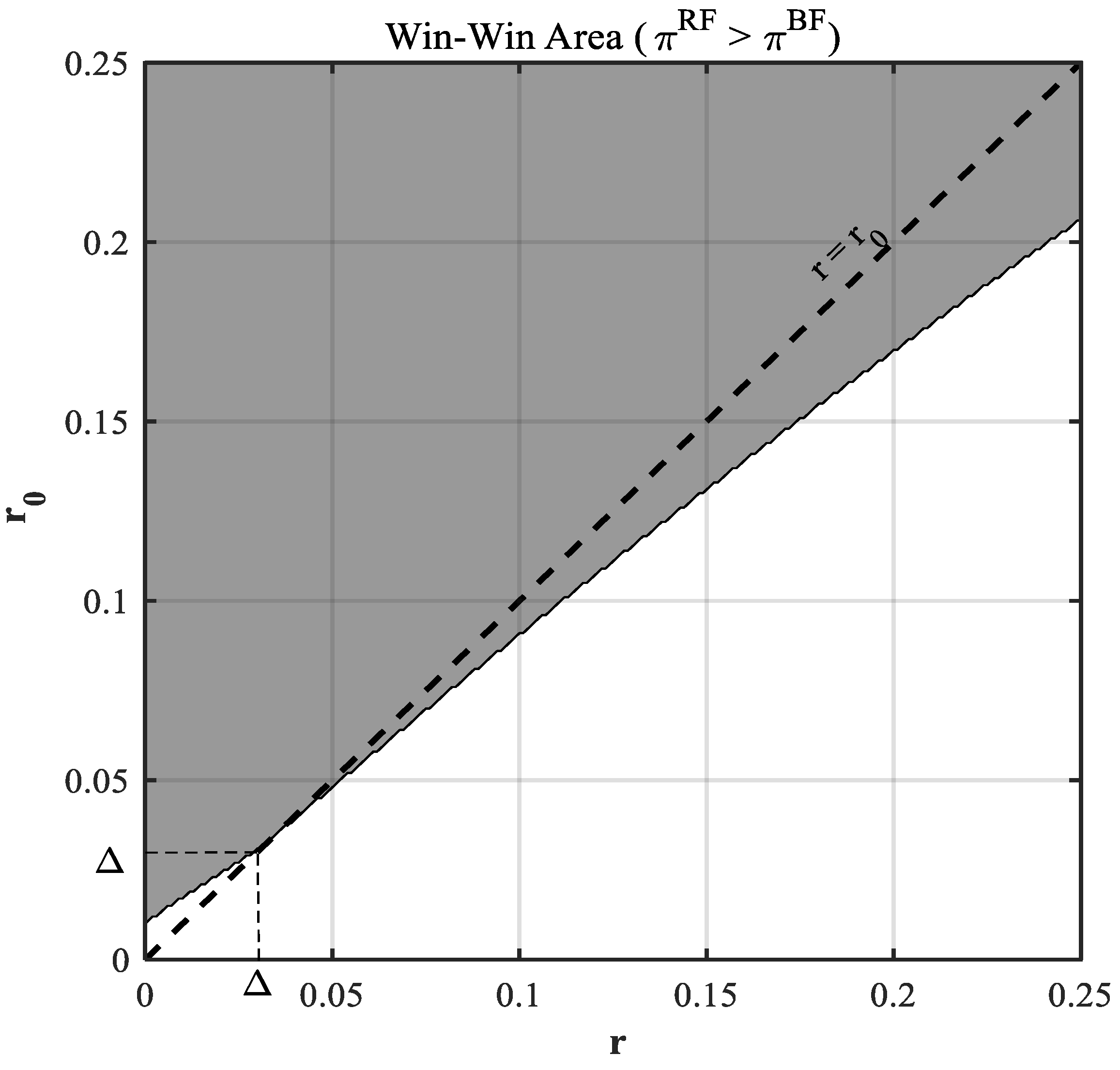
Figure 1, the gray area indicates that under the internal financing mode, both the farmer’s and the retailer’s profits are higher than those under the external financing mode. That is, for any point
in the gray area, both
and
hold. The dashed line in the figure represents the iso-cost line of
. Observing
Figure 1, we find that when the internal financing rate is below the critical value
, the retailer faces opportunity cost pressure from tied-up funds. At this point, only when the financing cost in the external financial market
is significantly higher than the internal financing rate
can the internal financing mode compensate for the retailer’s capital cost by substantially alleviating the farmer’s capital pressure, thereby achieving a Pareto improvement. Notably, when
holds, the win-win region expands below the
line. This indicates that under specific conditions, even if the internal financing cost is higher than external supply chain financing, internal financing remains the better choice. The reason behind this counter-intuitive conclusion is that the retailer is not only a capital provider but also a downstream seller. Through internal supply chain financing, the firm can effectively internalize the farmer’s bankruptcy risk and incentivize the farmer to increase green preservation efforts. By increasing sales volume, the aggregate profit of the supply chain is enhanced.
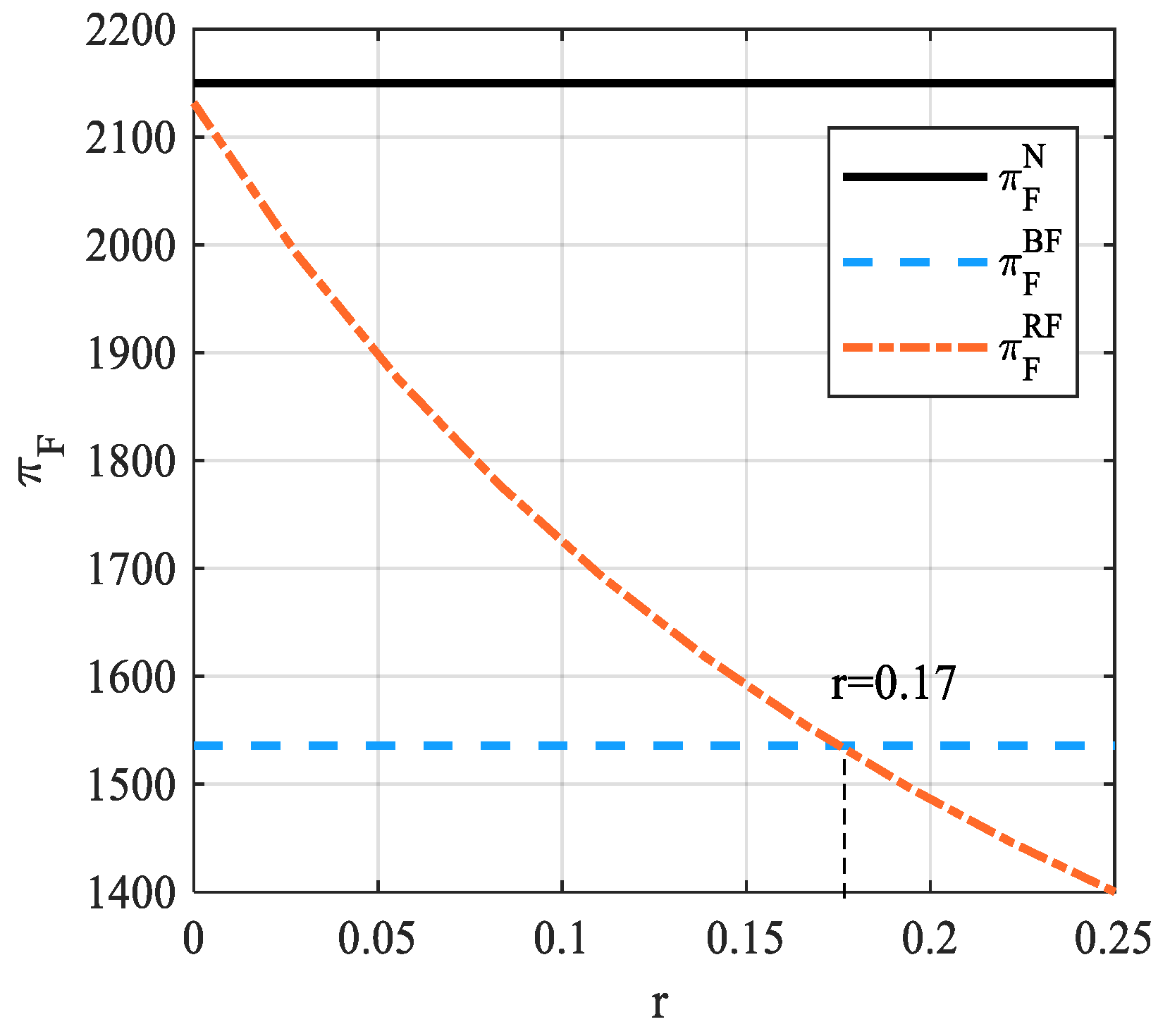
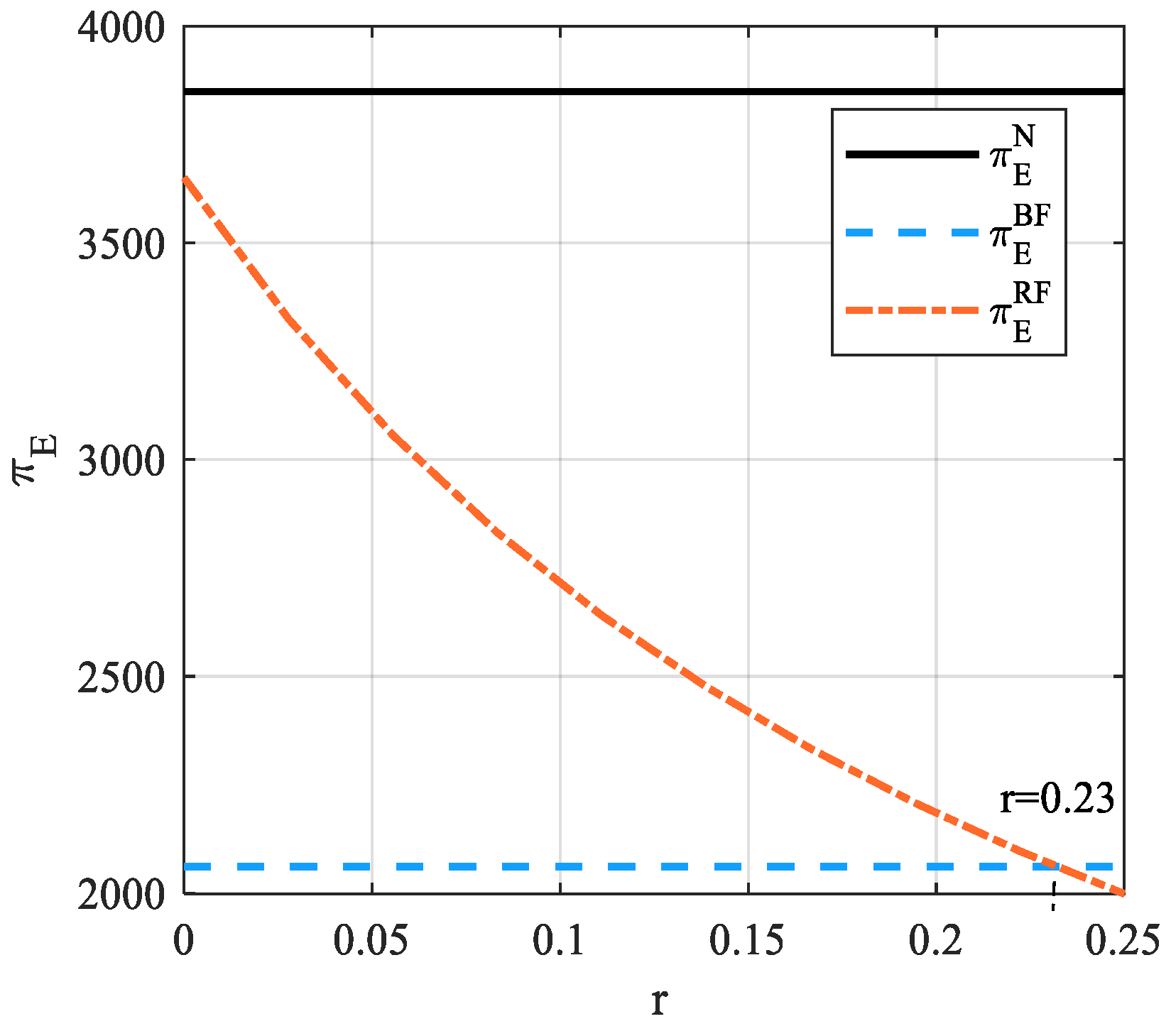
Figure 2 and
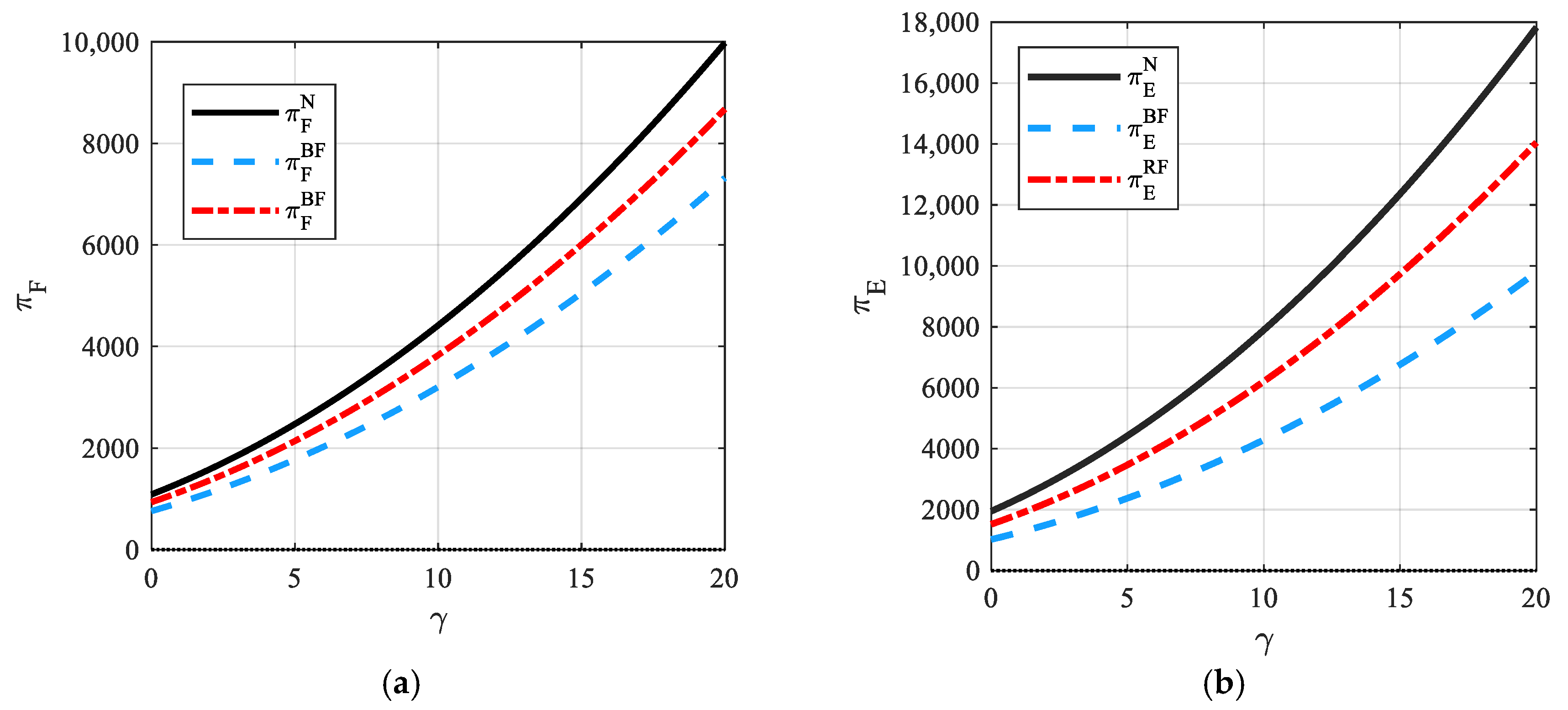
Figure 3 illustrate the impact of changes in the retailer’s financing rate on the profits of the farmer and the retailer, respectively. Under the no-capital-constraint scenario, the returns of both the farmer and the retailer are always higher than those under the two capital-constrained scenarios, indicating that the existence of financing costs inevitably reduces the value of the supply chain.
According to
Figure 2, as the financing rate increases, the farmer’s profit declines. This is because, as the borrower, a rise in the financing rate directly increases the farmer’s financial cost, forcing the farmer to reduce preservation effort and green input. Consequently, product competitiveness decreases, the farmer faces higher costs, and the profit also decreases. However, as long as the financing rate of retailers is below a certain threshold (
), farmers are still willing to choose the internal financing mode of the supply chain. This is because although farmers need to pay higher capital costs for retailers, retailers also provide farmers with higher wholesale prices, helping them obtain higher returns than under external financing models in the supply chain.
Intuitively, as
rises, the retailer charging high financing rates to the farmer will increase the retailer’s profits. However,
Figure 3 shows that the retailer’s total profit actually decreases as
increases. This indicates that the loss caused by the farmer reducing green input and preservation effort—due to the higher financing rate—leading to a contraction in market demand, far outweighs the profit the retailer gains from interest income. Therefore, for the retailer, raising the financing rate to earn financial income is not worthwhile; a low-interest strategy is more effective in energizing the supply chain.
Moreover, both figures show that as approaches zero, the profits of both parties approach the optimal values under the no-capital-constraint case. This confirms that in a green agriproduct supply chain, a low- or even zero-interest financing arrangement is not an act of charity by the retailer, but a rational profit-maximizing strategy. By lowering the cost of funds, the retailer encourages the farmer to maximize preservation effort, thereby expanding market demand. The operating profit the retailer gains from this expansion far exceeds the interest income that would have been earned from financing.
4.1.2. Impact of Financing Rate on Optimal Supply Chain Decisions
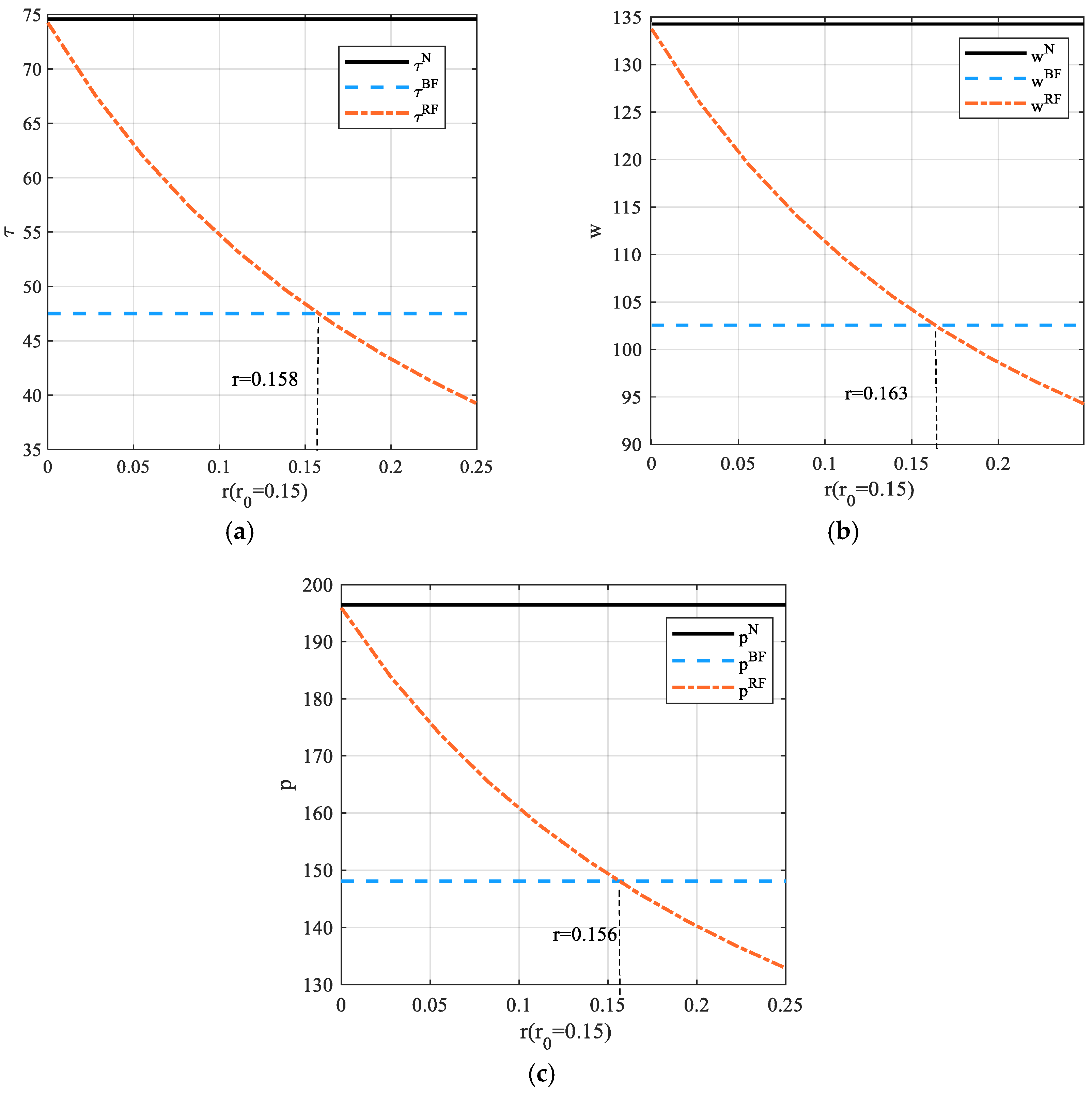
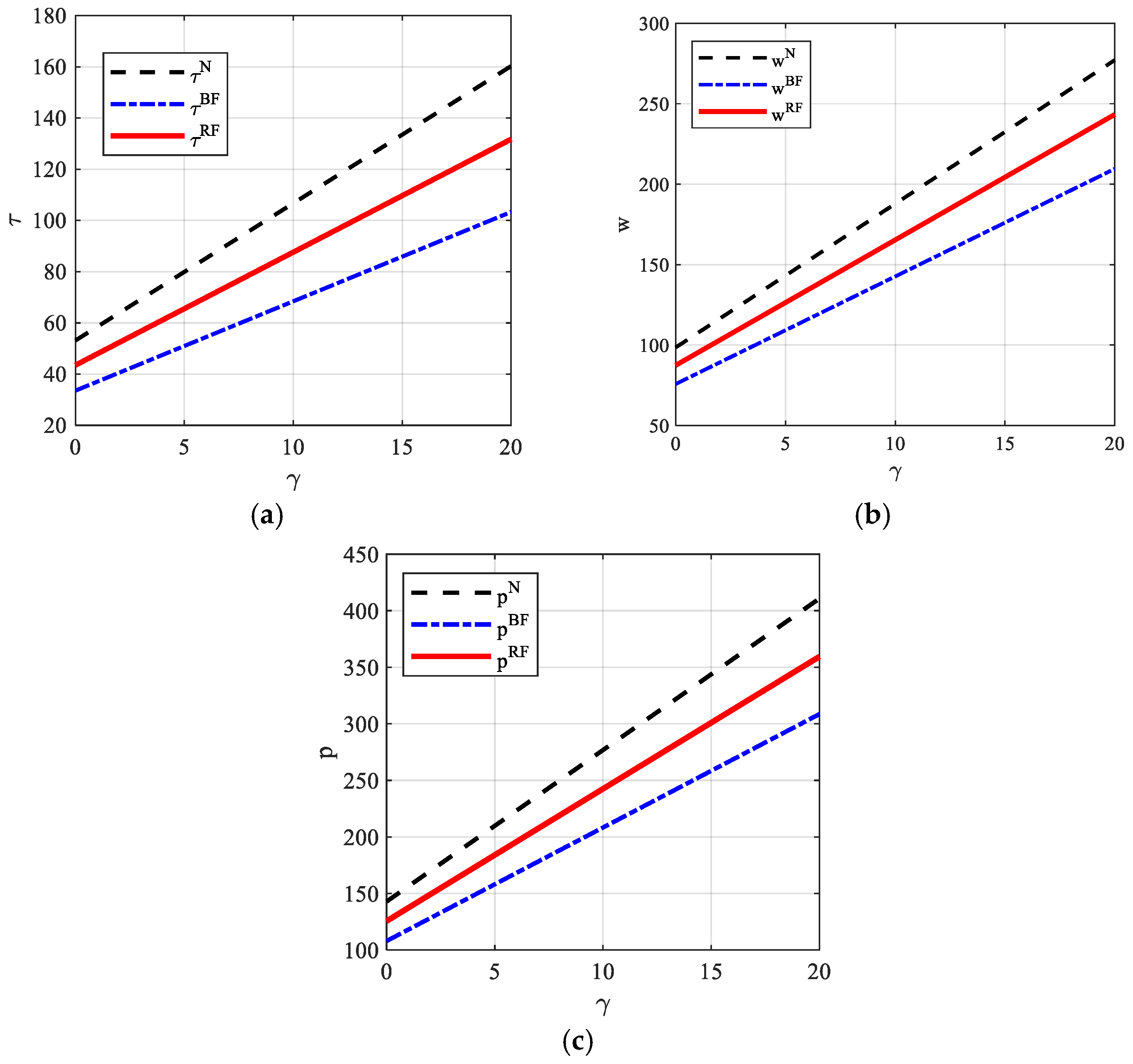
Figure 4a,
Figure 4b and
Figure 4c, respectively, show the impact of the retailer’s financing rate on the farmer’s preservation effort decision, the wholesale price decision, and the retailer’s selling price decision.
Figure 4a shows that as the financing rate increases, the farmer’s preservation effort decreases. This indicates that a higher financing cost leads to lower quality of fresh agriproducts. Only when the internal financing rate is below a certain threshold is the preservation effort under the internal financing mode higher than that under the external financing mode. This is because under external financing, the bank only collects interest and does not participate in supply chain operations; whereas under internal financing, the retailer earns both the price margin and the interest. The presence of this dual role reduces the marginal benefit the farmer gains from preservation effort, causing the farmer to “slack off” under the same financing rate and significantly cut preservation input. In other words, under internal financing, unless the retailer offers a low financing rate, internal financing will harm product quality.
According to
Figure 4b, although the farmer’s preservation effort declines, as long as the internal financing rate is below a certain threshold, although within the threshold
, the farmer’s preservation effort under internal financing is lower than that under external financing, and the wholesale price under internal financing remains higher than that under external financing. This is an interesting phenomenon of “low quality at a high price”. Why does the farmer charge more while putting in less effort? The reason lies in risk premium and cost shifting. Since the farmer borrows directly from the retailer, the farmer effectively transfers part of the financing pressure to the retailer by raising the wholesale price
. Only when the financing rate becomes sufficiently high is the farmer forced to lower the price to survive.
As shown in
Figure 4c, the trend of
closely follows the change in
. This is because when the farmer’s wholesale price drops, the retailer correspondingly lowers the selling price to boost sales. However, within the interval
, a situation unfavorable to consumers appears: consumers pay a higher price but receive a product with lower freshness. This indicates that in this interval, although internal financing may increase the profits of the supply chain firms, part of this profit increase comes at the expense of consumers.
4.2. Analysis of the Impact of Green Input
Next, under the conditions where the financing rate is fixed at and , we analyze the impact of green input on financing strategies and optimal decisions, respectively.
4.2.1. Impact of Green Input on Financing Strategies
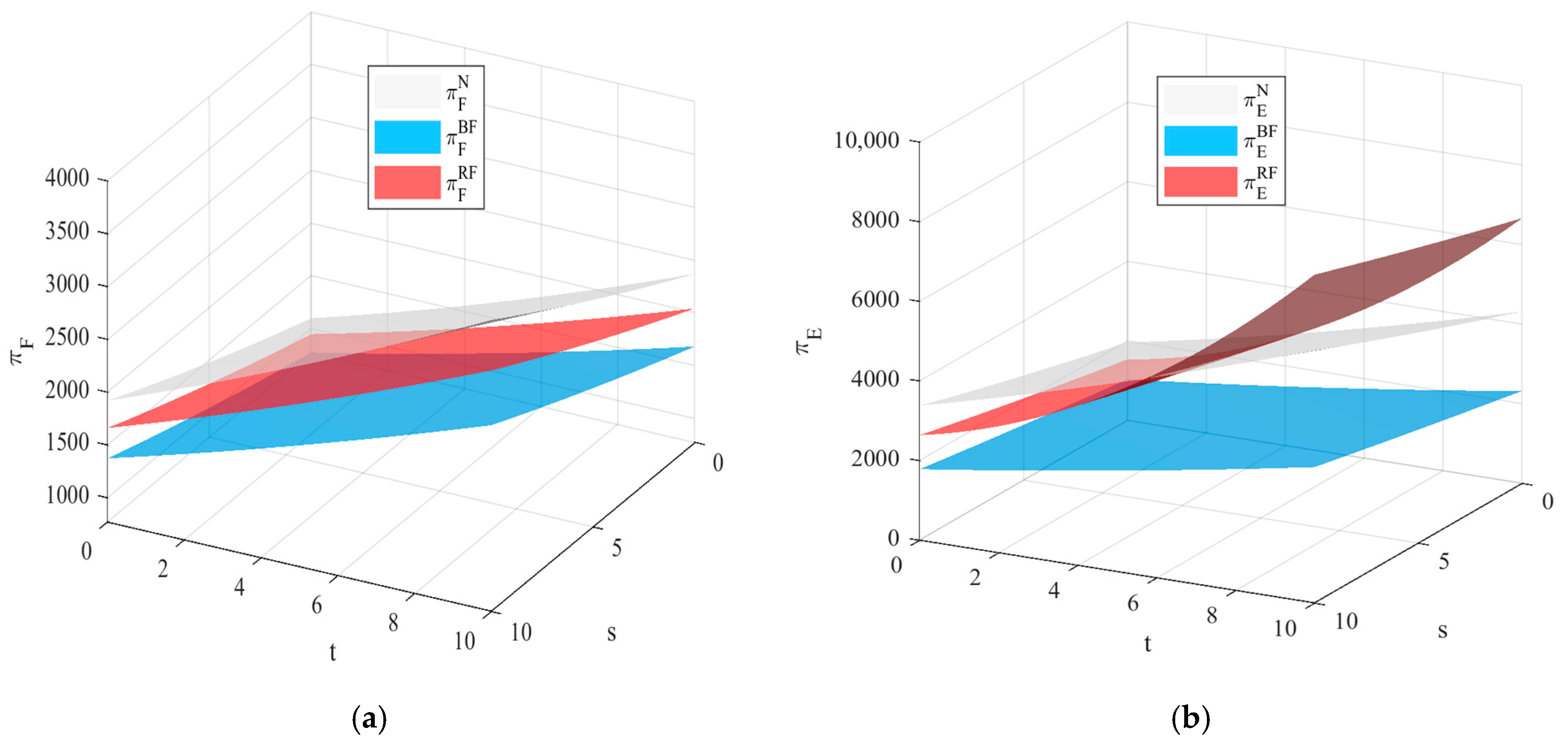
Figure 5a,b show the impact of green input on the profits of the farmer and the retailer.
In both figures, we find that under constant internal and external financing rates, all profits increase as and rise. This indicates that higher input leads to higher product greenness, stronger consumer recognition and willingness to pay, and thus drives up the profit of the entire supply chain. In other words, green input creates value rather than merely being a cost burden.
It is worth noting that, from the farmer’s perspective, the profit surface under the no capital constraint scenario always lies at the top, representing the ideal situation without financing costs. The profit surface under internal financing is noticeably higher than that under external financing and stays close to the no capital constraint surface. The profit surface under external financing (BF) lies at the bottom. This suggests that the green input of the retailer and the farmer is complementary. When the retailer increases green input s, it not only raises its own profit but also significantly improves the farmer’s input output ratio. This feature is especially pronounced under internal financing. This further confirms that retailer led internal financing can better promote upstream downstream cooperation in the green agriproduct supply chain.
4.2.2. Impact of the Farmer’s Green Input on Optimal Decisions
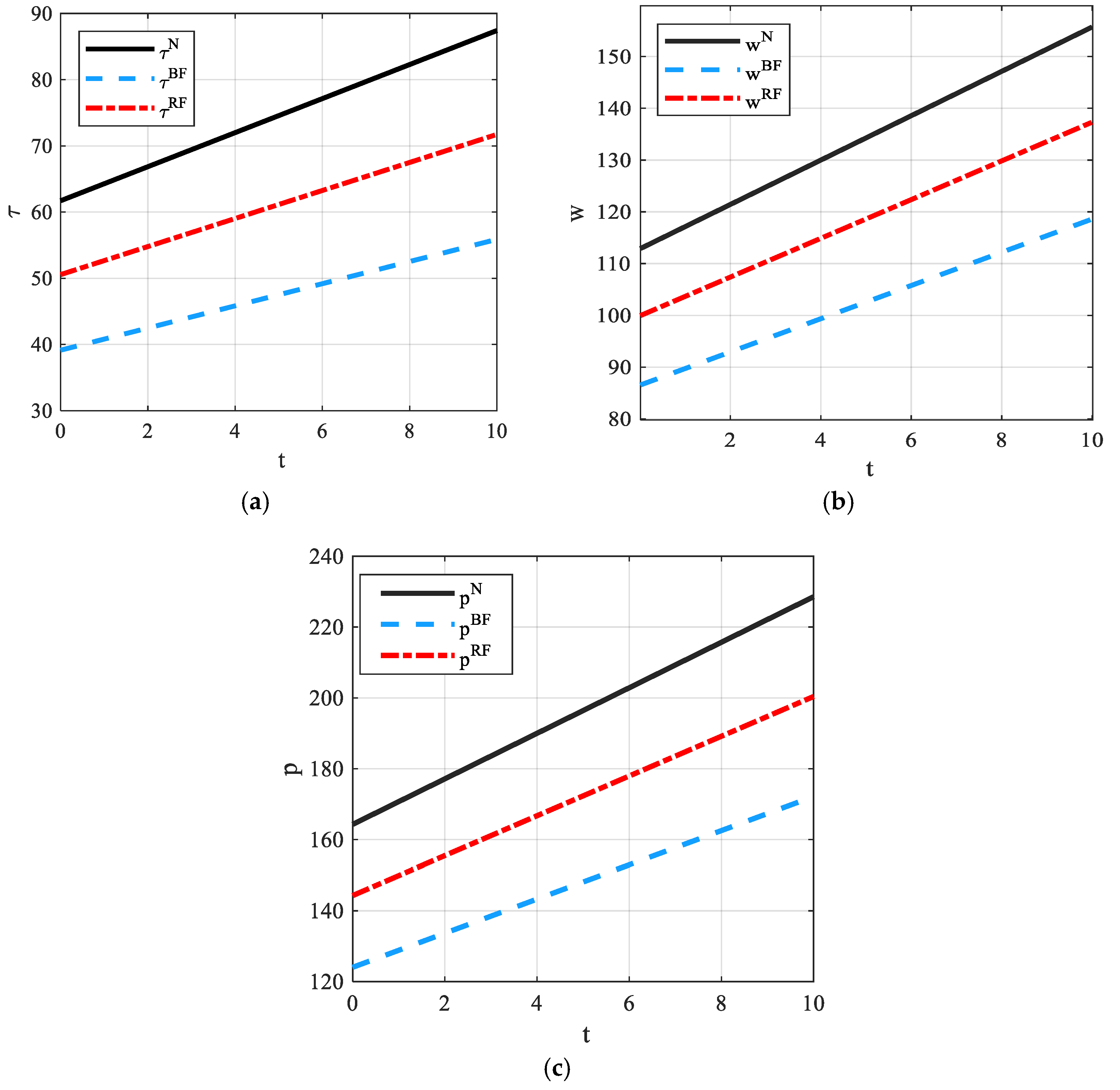
Figure 6a–c show the effect of the farmer’s green input on supply chain decisions.
From
Figure 6a, we can see that preservation effort increases with green input. This suggests that the higher the initial green input, the more willing the farmer is to exert greater preservation effort to maintain the high quality of fresh agriproducts. Preservation effort under no capital constraint is significantly higher than under the two constrained modes, indicating that capital shortage remains a key barrier to improving the quality of fresh agriproducts. When
, preservation effort under internal financing is higher than under external financing. This also confirms the finding in
Figure 4a.
From
Figure 6b, we can see that under the no-capital-constraint mode, the wholesale price
stays at the highest level, reflecting that under ideal conditions the farmer gets the highest return on inputs. Comparing the two capital-constrained modes, the wholesale price under internal financing is always higher than under external financing. This means that as the farmer puts more into green production at the source, the unit production cost rises, and the farmer must pass this cost pressure downstream by raising the wholesale price.
From
Figure 6c, we can see that the selling price
also rises monotonically as
increases. This is the “higher quality, higher price” effect. The farmer’s green input improves the latent quality of the product, making consumers in the final market willing to pay a higher price, which supports the price increase at the retail end. Compared with external financing, internal financing not only pushes up the intermediate wholesale price but also supports a higher final selling price. This suggests that by offering internal financing, the retailer and the farmer form a tighter community of shared interests. Both sides then have more incentive to maintain a high brand premium, avoiding the “low-price dumping” or price competition that can occur under external financing due to financial pressure.
4.3. Analysis of the Influence of Consumer Sensitivity to Freshness
Next, under the conditions, where and are fixed, we analyze how consumer sensitivity to freshness affects financing strategies and optimal decisions, respectively.
4.3.1. Analysis of the Influence of Consumer Sensitivity to Freshness on Financing Strategies
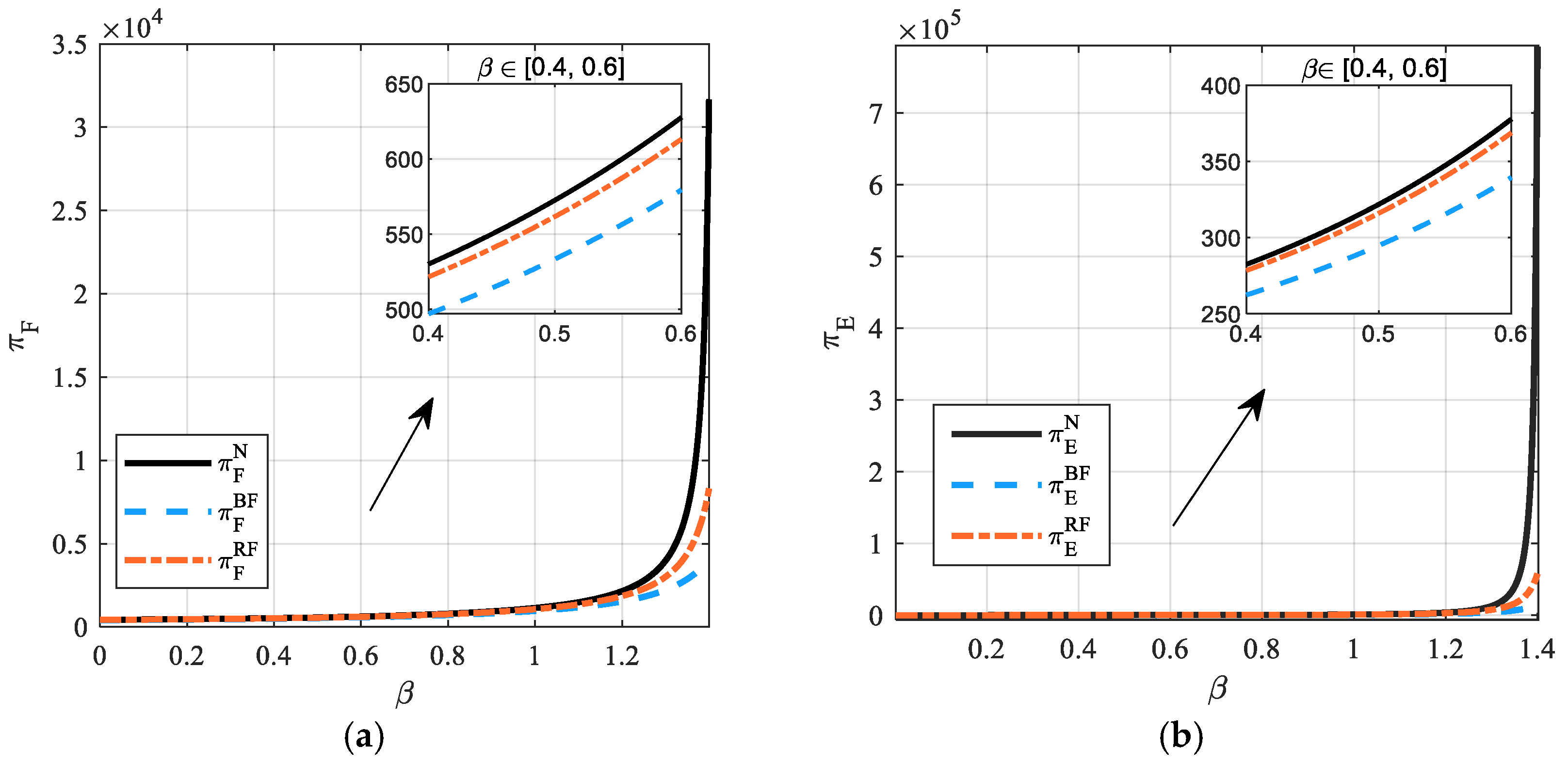
Figure 7a,b show how consumer sensitivity to freshness affects the profits of the farmer and the retailer.
Figure 7a,b show the impact of consumer sensitivity to freshness on the profits of the farmer and the retailer. As the consumer sensitivity coefficient for freshness increases, the profit curves under all three financing modes show clear convex growth for both the farmer and the retailer. When
is small, the curves are relatively flat, indicating that the premium from green input is limited and the choice of financing mode does not matter much. But once
passes a certain threshold, the curves rise steeply, showing that in a consumption-upgrading environment, consumers’ high willingness to pay for high-quality fresh products greatly amplifies the potential profits of the supply chain. When
is small (for example
), the profit curve under internal financing is already steadily above that under external financing. This suggests that internal financing is more competitive in the high-end market. When consumers are very picky (i.e., when
is very large), the core of the market competition lies in who can supply fresher products. Since internal financing gives the farmer a much stronger incentive to increase preservation effort than external financing does, the higher the market’s quality standard (i.e., the larger
is), the greater the profit loss under external financing due to underinvestment, and the stronger the ability of internal financing to capture excess profits. This implies that for fresh agriproducts that emphasize high quality and green concepts, retailers and farmers should choose internal supply chain financing; otherwise, they should choose external financing.
4.3.2. Analysis of the Influence of Consumer Sensitivity to Freshness on Optimal Decisions
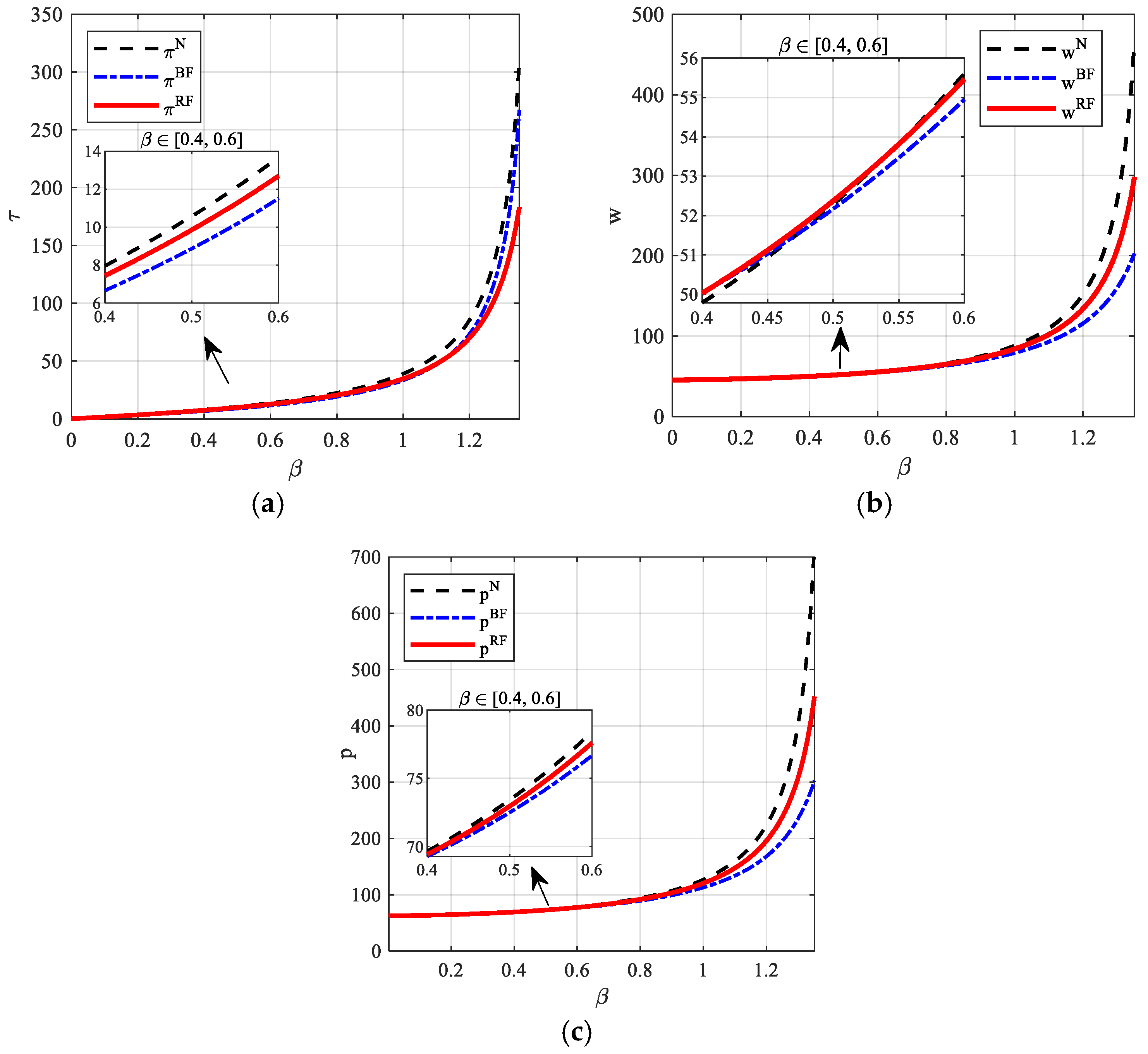
Figure 8a–c show how consumer sensitivity to freshness affects supply chain decisions.
As shown in
Figure 8a, the farmer’s preservation effort increases with the coefficient of consumer awareness regarding freshness. Comparing different financing modes, we find that across the whole range, preservation effort under both financing modes is lower than the ideal case without capital constraints, due to the cost of financing. When the consumer sensitivity to freshness is low, preservation effort under internal financing is better than under external financing. This is because the low financing rate under internal financing encourages the supplier to improve product quality. However, once the consumer sensitivity to freshness exceeds a certain threshold, external financing shows a higher marginal incentive effect, and preservation effort overtakes that under internal financing. The reason is that when consumers are extremely sensitive to freshness, the marginal cost of preservation input rises quickly. Under internal financing, the retailer usually has strong bargaining power and extracts part of the profit through interest, so the farmer’s incentive to further increase preservation effort is limited in a highly sensitive market. Under external financing, although there is a fixed financing cost, the farmer can keep more of the excess profit generated by “high quality,” which provides a stronger incentive for preservation.
Figure 8b, shows how the wholesale price changes with the consumer sensitivity to freshness. At low levels of consumer sensitivity, the wholesale price under internal financing is the highest, even exceeding that under the no-capital-constraint mode. In practice, for example, when JD Fresh provides financing to upstream bases, the farmer faces both debt pressure and preservation costs, and often passes the financing cost on by raising the wholesale price. But as consumer sensitivity to freshness increases, the wholesale price under no capital constraint surpasses that under internal financing. This happens because when consumers are extremely sensitive to freshness, the cost of further improving preservation is extremely high. The farmer realizes that even if more effort is put into quality, most of the premium will be taken away by the retailer through financing income. Therefore, at high levels of consumer sensitivity, the capital-constrained farmer actively limits preservation input. Since product quality cannot reach the level under no capital constraint, the farmer’s bargaining power is limited. In comparison, the wholesale price under external financing stays the lowest across the whole range. This is because under external financing, the farmer is forced to adopt a “low-price strategy” to sell quickly and ensure cash flow for bank interest repayment.
From
Figure 8c, we see that the retail price increases as consumer sensitivity to freshness goes up. Across the three modes, the retail price follows this pattern: no capital constraint > internal financing > external financing. With strong self-owned funds, the no-capital-constraint mode achieves the highest preservation input and the best product quality, thus having the greatest premium power in the final market. Under internal financing, the retailer provides funds to ease the farmer’s capital pressure and ensures a stable supply of high-quality products. This combination of “finance plus business” leads to a retail price that, while lower than under no capital constraint, is still significantly higher than that of ordinary fresh products maintained only by external financing.
4.4. Analysis of the Influence of Consumer Sensitivity to Greenness
Next, under the given conditions, we explore how consumer sensitivity to greenness influences the choice of financing approaches and optimal decisions, respectively.
4.4.1. Analysis of the Influence of Consumer Sensitivity to Greenness on Financing Strategies
Figure 9a,b show the effect of consumer sensitivity to greenness on the returns of the farmer and the retailer.
As the consumer sensitivity coefficient for greenness increases, the profits of both the retailer and the farmer rise under all financing modes. Profits are highest under the no-capital-constraint scenario, and under internal financing, both the farmer’s and the retailer’s profits are consistently higher than under external financing. This suggests that in markets where green consumption awareness is strong, the advantage of internal financing is amplified. Internal financing more effectively encourages the farmer to increase green input (as shown earlier), and a high sensitivity value magnifies the market returns from those extra inputs. In contrast, external financing, with its higher cost of funds and weaker incentives, leads the farmer to invest conservatively, missing out on the large market gains that come with high sensitivity to greenness.
4.4.2. Analysis of the Impact of Consumer Sensitivity to Greenness on Optimal Decisions
Figure 10a,
Figure 10b and
Figure 10c respectively show how consumer sensitivity to greenness influences the optimal supply chain decisions.
From
Figure 10a, we can see that across the entire range, preservation effort ranks consistently as follows: no capital constraint > internal financing > external financing. This indicates that in the face of consumption upgrading, internal financing is better than external financing at alleviating the underinvestment problem. Through internal contract design, the retailer partially internalizes the farmer’s input costs and risks, thereby motivating the farmer to supply fresher products than under the bank loan model.
From
Figure 10b, we see that as consumer sensitivity to greenness increases, the wholesale price rises. This is because higher sensitivity drives higher preservation effort, which increases the farmer’s production cost, and this cost is passed downstream through a higher wholesale price. The wholesale price under internal financing is higher than under external financing. This does not mean lower supply chain efficiency; rather, it reflects the market logic of “higher quality, higher price.” Because internal financing encourages higher preservation effort, the farmer delivers products with greater market value and is therefore able to obtain a higher settlement price at the wholesale stage.
From
Figure 10c, we see that the selling price for agriproducts also rises linearly with consumer sensitivity to greenness. Moreover, the selling price under no capital constraint is higher than under internal financing, which in turn is higher than under external financing. This is because although internal financing leads to a higher final price, the increase comes not from monopoly pricing but from a significant improvement in product quality. Consumers pay a higher price, but they also receive a much better freshness experience than the price alone would suggest. Therefore, for retailers targeting the green and high-end market, adopting internal financing helps support a higher brand position and avoid the homogeneous “low price, low quality” competition trap that can arise under external financing.
5. Discussion
This study investigates financing strategies in a green fresh agri-food supply chain under capital constraints and consumers’ dual sensitivity. The key findings are discussed in relation to the prior literature.
First, we find that internal financing generally outperforms external financing in terms of both parties’ profits and product quality, especially when the internal financing rate is low. This extends the work of Xing et al. (2019) [
19], who studied a green supply chain in which a manufacturer shares green investment with a financially constrained supplier. Our result that a low-interest strategy benefits the retailer—even though interest income is sacrificed—contrasts with the traditional view that lenders maximize interest revenue.
Second, we find that the retailer’s profit decreases as the internal financing rate rises. This may seem counterintuitive, but it is explained by the farmer’s reduced preservation effort under higher financing costs, which shrinks market demand. This finding complements the empirical work of Fan and Peng (2025) [
25], who used Chinese listed firm data to show that supply chain finance promotes corporate green transition. While their study identifies a positive correlation, our theoretical model quantifies the underlying mechanism: internal financing with a low financing rate encourages preservation effort, and a low-interest strategy maximizes total profit. Our contribution is to prove that zero-interest financing can approximate the optimal outcome under no capital constraint, thereby offering a theoretical explanation for the empirical finding that supply chain finance promotes green transformation.
Third, our analysis of consumer sensitivity reveals a non-monotonic pattern: under extremely high freshness sensitivity, external financing can provide stronger incentives for preservation effort than internal financing. This is because under internal financing, the retailer’s bargaining power may limit the farmer’s marginal gain from quality improvement. This nuance has not been reported in previous studies.
Comparison with the existing literature: Unlike studies that ignore dual sensitivity (e.g., Zhang et al. (2025) [
34], who only considered a low-carbon supply chain), we introduce consumer dual sensitivity as a demand-side driver and identify a boundary condition (extreme freshness sensitivity) under which external financing may outperform internal financing.
The limitations of this study are as follows: Our model assumes risk neutrality, symmetric information, and deterministic demand. In reality, farmers may be risk-averse, and banks may face adverse selection. Future research could introduce uncertainty in output or demand, as well as asymmetric information. Moreover, our supply chain consists of only one farmer and one retailer; competition among multiple farmers or retailers could alter the financing equilibrium. Finally, the numerical simulation uses hypothetical parameters; empirical calibration using real-world data would strengthen external validity.
6. Conclusions
6.1. Summary of Findings
This paper examined financing strategies for a capital-constrained farmer in a green fresh agri-food supply chain under consumers’ dual sensitivity to freshness and greenness. Using a Stackelberg game model and numerical simulation, we derived three main conclusions: (1) internal financing outperforms external financing in most scenarios, and a low- or zero-interest strategy is rational for the retailer; (2) as consumer sensitivity to freshness and greenness increases, profits rise significantly, but under extremely high freshness sensitivity, external financing may provide stronger preservation incentives; (3) internal financing supports higher wholesale and retail prices while delivering better product quality, avoiding a “low-price, low-quality” trap.
6.2. Practical Implications
For retailers: Do not treat interest as a profit center. Offer low- or zero-interest financing to encourage the farmer’s preservation and green efforts. The resulting increase in sales volume and brand premium will more than compensate for foregone interest income. In high-end markets where consumers are extremely sensitive to freshness, consider sharing more of the quality premium with the farmer to maintain incentives.
For farmers: Prioritize internal financing from downstream partners who offer operational synergies. Use the financing to improve greenness and freshness, which justifies higher wholesale prices and offsets financing costs.
For governments: Provide interest subsidies or credit guarantees for retailer-led green financing programs. Such policies can reduce overall supply chain costs and accelerate the green transformation of the fresh food industry.
6.3. Contribution to Sustainability
Our findings have direct implications for sustainable development. By selecting appropriate financing strategies and making rational decisions, the supply chain can achieve: (i) reducing food waste by improving preservation efforts for fresh agri-products; (ii) lowering the carbon footprint through green production technologies, thereby contributing to the Sustainable Development Goals (SDGs). Thus, the financing strategies proposed in this study are not only economically beneficial but also environmentally and socially sustainable.
Author Contributions
Conceptualization, L.X.; methodology, X.J.; software, X.J.; validation, Y.W.; data curation, X.J.; writing—original draft preparation, X.J.; writing—review and editing, Y.W. All authors have read and agreed to the published version of the manuscript.
Funding
This research was funded by Fundamental Research Funds in Universities of Heilongjiang Province in 2024, grant number 2024-KYYWF-0959; Funding from the Basic Research Support Program for Outstanding Young Teachers in Provincial Undergraduate Universities in Heilongjiang Province in 2025 grant number YQJH2025088; Heilongjiang Province Philosophy and Social Science Research Planning Project, grant number 24JYE010.
Institutional Review Board Statement
Not applicable.
Informed Consent Statement
Not applicable.
Data Availability Statement
The original contributions presented in this study are included in the article. Further inquiries can be directed to the author.
Conflicts of Interest
The authors declare no conflicts of interest.
Abbreviations
The following abbreviations are used in this manuscript:
| Abbreviation/Symbol | Description |
| No capital constraint scenario |
| External financing of the supply chain |
| Internal financing within the supply chain |
| The demand for fresh agricultural products |
| Potential demand for agricultural products |
| Unit production cost |
| The preservation effort level |
| The wholesale price |
| The sales price |
| Coefficient of the impact of a retailer’s level of green investment on their green costs |
| Coefficient of the impact of farmers’ green input level on their green input cost |
| Sensitivity coefficient of freshness with respect to preservation effort |
| Farmer’s green effort level |
| The retailer’s green effort level |
| Contribution coefficient of the farmer’s green production effort to the final product greenness |
| Consumer sensitivity coefficient to greenness |
| Consumer sensitivity coefficient to freshness. |
| Initial freshness |
| Financing rates under internal financing in the supply chain |
| Financing rates under external financing of the supply chain |
| The cost of funds under internal financing in the supply chain |
References
- Shyu, C.S.; Yen, C.C.; Lin, C.S. The impact of consumer loyalty and customer satisfaction in the new agricultural value chain. Agriculture 2023, 13, 1803. [Google Scholar] [CrossRef]
- Šatvar, V.M.; Čoga, L.; Špicnagel, A.M.; Vugrin, N.; Meers, E.; Čop, T. Farmers’ Preferences and Practices Regarding Bio-Based Fertilizers: A Croatian Perspective. Sustainability 2025, 17, 3367. [Google Scholar] [CrossRef]
- Zhang, C.; Lan, H.; Lyu, Z. Pricing and coordination decisions in fresh agricultural product supply chain with government subsidy. J. Syst. Sci. Syst. Eng. 2026, 35, 109–128. [Google Scholar] [CrossRef]
- Yan, Q.; Ye, F. Financing equilibrium in a three-echelon supply chain: The impact of a limited bank loan. Appl. Econ. 2020, 52, 5756–5769. [Google Scholar] [CrossRef]
- Lu, Q.; Liao, C.; Chen, M.; Shi, V.; Hu, X.; Hu, W. Platform financing or bank financing in agricultural supply chains: The impact of platform digital empowerment. Eur. J. Oper. Res. 2024, 315, 952–964. [Google Scholar] [CrossRef]
- Gupta, D.; Chen, Y. Retailer-direct financing contracts under consignment. Manuf. Serv. Oper. Manag. 2020, 22, 528–544. [Google Scholar] [CrossRef]
- Yi, Z.; Wang, Y.; Chen, Y.J. Financing an agricultural supply chain with a capital-constrained smallholder farmer in developing economies. Prod. Oper. Manag. 2021, 30, 2102–2121. [Google Scholar] [CrossRef]
- Deng, L.; Cao, C.; Wang, S. Spillover effects of government subsidies on agricultural supply chains under risk-sharing mechanisms. RAIRO Oper. Res. 2024, 58, 881–908. [Google Scholar] [CrossRef]
- Chen, J.; Gui, P.F.; Ding, T.; Na, S.; Zhou, Y. Optimization of transportation routing problem for fresh food by improved ant colony algorithm based on tabu search. Sustainability 2019, 11, 6584. [Google Scholar] [CrossRef]
- Wang, H.; Li, W.; Zhao, Z.; Wang, Z.W.; Li, M.; Li, D. Intelligent distribution of fresh agricultural products in smart city. IEEE Trans. Ind. Inform. 2021, 18, 1220–1230. [Google Scholar] [CrossRef]
- Xi, J.; Lai, L.L.; Li, Y.; Yang, D. The coordination mechanism of fresh agricultural products supply chain: A game-theoretic approach considering retailer’s fairness concern and price competition. Econ. Comput. Econ. Cybern. Stud. Res. 2025, 59, 120–137. [Google Scholar] [CrossRef]
- Wang, X.; Xiong, M.; Yang, F.; Shi, W. Decision-making and coordination of a three-tier fresh agricultural product supply chain considering dynamic freshness-keeping effort. Int. Trans. Oper. Res. 2026, 33, 2052–2081. [Google Scholar] [CrossRef]
- Hamidoğlu, A.; Weber, G.W. A novel Nash-based low-carbon implementation in agricultural supply chain management. J. Clean. Prod. 2024, 449, 141846. [Google Scholar] [CrossRef]
- Wang, Q.; Ni, M.; Wen, W.; Qi, R.; Zhang, Q. Study on sustainable operation mechanism of green agricultural supply chain based on uncertainty of output and demand. Sustainability 2024, 16, 5460. [Google Scholar] [CrossRef]
- Wei, G.; Zhang, X.; Bary, B. Enhancing Greenness and Performance of Agricultural Supply Chains with Nash Bargaining Contract Under Consumer Environmental Awareness. Systems 2025, 13, 337. [Google Scholar] [CrossRef]
- Wu, R.; Chen, Y.; Jiang, M.; Zhang, Z. Research on Government Green Subsidy Strategy of Heterogeneous Agricultural Product Supply Chain. Discret. Dyn. Nat. Soc. 2023, 2023, 8040707. [Google Scholar] [CrossRef]
- Li, Y.; Luo, J.; Zhao, P.; Yong, L. Blockchain technology adoption decision and coordination contract in green supply chain. Int. J. Ind. Eng. Comput. 2025, 16, 1177–1196. [Google Scholar] [CrossRef]
- Kouvelis, P.; Zhao, W. Supply chain contract design under financial constraints and bankruptcy costs. Manag. Sci. 2016, 62, 2341–2357. [Google Scholar] [CrossRef]
- Xing, G.; Xia, B.; Guo, J. Sustainable Cooperation in the Green Supply Chain under Financial Constraints. Sustainability 2019, 11, 5977. [Google Scholar] [CrossRef]
- Nguema, J.-N.B.B.; Bi, G.; Ali, Z.; Mehreen, A.; Rukundo, C.; Ke, Y. Exploring the factors influencing the adoption of supply chain finance in supply chain effectiveness: Evidence from manufacturing firms. J. Bus. Ind. Mark. 2021, 36, 706–716. [Google Scholar] [CrossRef]
- Azizian, M.; Sepehri, M.M.; Rastegar, M.A. A Convex Dynamic Approach for Globally Optimal Profit in Supply Chains. Mathematics 2022, 10, 498. [Google Scholar] [CrossRef]
- Zhao, C. The impact of supply chain finance on enterprise supply chain resilience. Appl. Econ. Lett. 2025, 1–6. [Google Scholar] [CrossRef]
- Liu, L.; Zhu, Y.; Miao, Y. Unlocking the financing dilemma of small and medium-sized enterprises: A study on the mechanism and effects of supply chain finance. J. Asia Pac. Econ. 2025, 1–31. [Google Scholar] [CrossRef]
- Zheng, M.; Wang, R.; Ye, J.; Li, T. How does supply chain finance enhance firms’ supply chain resilience? Int. Rev. Econ. Financ. 2025, 102, 104231. [Google Scholar] [CrossRef]
- Fan, C.; Peng, K. How does supply chain finance drive corporate green transition? The role of credit resource availability. Financ. Res. Lett. 2025, 86, 108381. [Google Scholar] [CrossRef]
- Boissay, F.; Patel, N.; Shin, H.S. Trade credit, trade finance, and the COVID-19 Crisis. BIS Bull. 2021, 13. [Google Scholar] [CrossRef]
- Hu, H.; Li, Y.; Tian, M.; Cai, X. Evolutionary game of small and medium-sized enterprises’ accounts-receivable pledge financing in the supply chain. System 2022, 10, 21. [Google Scholar] [CrossRef]
- Yan, B.; Luo, K.; Liu, L.F.; Chen, Y.R.; Yang, Y.F. Supply chain finance: A three-party decision model with suppliers’ guarantees for retailers. Manag. Decis. Econ. 2020, 41, 1174–1194. [Google Scholar] [CrossRef]
- Wang, W.; Cai, G. Curtailing bank loan and loan insurance under risk regulations in supply chain finance. Manag. Sci. 2024, 70, 2682–2698. [Google Scholar] [CrossRef]
- Xie, X.; Yang, Y.; Lyu, X.; Zhang, F.; Hu, X.; Zhou, Z. The Impact of Trade Credit on Financing Strategy in a Dual Capital-Constrained Supply Chain. Int. J. Inf. Technol. Decis. Mak. 2022, 24, 223–257. [Google Scholar] [CrossRef]
- Yan, Q.; Ye, F. Manufacturer’s channel selection in a capital-constrained supply chain under bargaining game. RAIRO-Oper. Res. 2021, 55, S2161–S2179. [Google Scholar] [CrossRef]
- Martin, J.; Hofmann, E. Towards a framework for supply chain finance for the supply side. J. Purch. Supply Manag. 2019, 25, 157–171. [Google Scholar] [CrossRef]
- Nigro, G.L.; Favara, G.; Abbate, L. Supply chain finance: The role of credit rating and retailer effort on optimal contracts. Int. J. Prod. Econ. 2021, 240, 108235. [Google Scholar] [CrossRef]
- Zhang, X.; Zhang, L.; Duan, C. Inclusive Internal Financing, Selective Internal Financing, or Hybrid Financing? A Competitive Low-Carbon Supply Chain Operational and Financing Strategies. Systems 2025, 13, 531. [Google Scholar] [CrossRef]
- Zhang, Y.; Kou, H. Bank financing or e-commerce platform financing: Green supply chain financing strategies with blockchain integration. Expert Syst. Appl. 2026, 299, 129912. [Google Scholar] [CrossRef]
- Yang, S.A.; Birge, J.R. Trade credit in supply chains: Multiple creditors and priority rules. Found. Trends Technol. Inf. Oper. Manag. 2020, 14, 7–29. [Google Scholar] [CrossRef]
- Wang, L.; Bo, M. Research on Green Supply Chain Financing Decisions Based on Inter-Chain Competition and Implicit Equity Consideration. Mathematics 2025, 13, 3316. [Google Scholar] [CrossRef]
- Cai, X.; Chen, J.; Xiao, Y.; Xu, X. Optimization and coordination of fresh product supply chains with freshness-keeping effort. Prod. Oper. Manag. 2010, 19, 261–278. [Google Scholar] [CrossRef]
- Cao, Y.; Yi, C.; Wan, G.; Hu, H.; Li, Q.; Wang, S. An analysis on the role of blockchain-based platforms in agricultural supply chains. Transp. Res. Part E Logist. Transp. Rev. 2022, 163, 102731. [Google Scholar] [CrossRef]
- Cao, Y.; Tao, L.; Wu, K.; Wan, G. Coordinating joint greening efforts in an agri-food supply chain with environmentally sensitive demand. J. Clean. Prod. 2020, 277, 123883. [Google Scholar] [CrossRef]
| Disclaimer/Publisher’s Note: The statements, opinions and data contained in all publications are solely those of the individual author(s) and contributor(s) and not of MDPI and/or the editor(s). MDPI and/or the editor(s) disclaim responsibility for any injury to people or property resulting from any ideas, methods, instructions or products referred to in the content. |