Systematic Review

Digital Technologies in the Management of Smart Tourism Destinations: A Systematic Review

Projeto FAST-Agenda ATT-PRR, CITUR–Tourism Research, Development and Innovation, Polytechnic University of Leiria, 2411-901 Leiria, Portugal
*
Author to whom correspondence should be addressed.
Sustainability 2026, 18(12), 6095; https://doi.org/10.3390/su18126095 (registering DOI)
Submission received: 18 May 2026 / Revised: 5 June 2026 / Accepted: 10 June 2026 / Published: 13 June 2026

Abstract

Smart tourism destinations, embedded by the internet and information and communication technologies, have been improving tourists’ experiences and connectivity. However, Destination Management Organisations (DMOs) still lack knowledge of how digital technologies can enhance their role and bring greater competitive advantage to destinations. In this sense, this study aims to develop an integrated smart tourism destination management ecosystem model that clarifies the relationships between digital technologies, managerial functions, benefits and implementation barriers within the broader smart city context. The study adopts a mixed-review design, combining bibliometric analysis and a systematic literature review. Bibliometric mapping was conducted using VOSviewer to analyse co-occurrence networks, thematic clusters and research trends. At the same time, the systematic review, with a systems thinking approach, enabled an in-depth qualitative examination of technological applications, managerial roles and governance implications. Data was gathered from 29 Scopus-indexed articles. The analysis identifies key benefits, including enhanced visitor experiences, improved decision-making and increased destination competitiveness, alongside persistent barriers related to governance, digital literacy, interoperability and cybersecurity. Based on these findings, the study proposes a conceptual ecosystem model that illustrates how DMOs can orchestrate digital technologies to support smart, sustainable and adaptive destination management. This research contributes to the smart tourism and smart cities literature by integrating bibliometric insights with a systems thinking perspective to develop a holistic destination management ecosystem model. Unlike prior reviews that address technologies or outcomes in isolation, this study offers a structured and actionable framework that advances theoretical understanding of smart tourism destinations while providing practical guidance for DMOs engaged in digital transformation.

1. Introduction

The expansion of digital Information and Communication Technologies (ICTs) has been widely recognised as a fundamental condition for improving tourism destinations by fostering their competitiveness and resilience [1,2,3,4,5,6]. Rather than constituting a peripheral support function, ICTs increasingly shape the structural organisation of tourism systems, influencing how destinations are planned, managed and experienced. Within this context, the tourism sector—long characterised by globalisation and demand-driven dynamics—is undergoing a profound transformation marked by digitalisation, datafication and intensified connectivity.
These processes have altered not only operational practices but also the nature of tourist–destination interactions, as tourists now engage with destinations through both physical and digital interfaces [7]. Consequently, Destination Management Organisations (DMOs) are confronted with the strategic challenge of integrating digital technologies in ways that go beyond operational efficiency, requiring a reconfiguration of destination governance, competitiveness strategies and responsiveness.
Such strategic reconfigurations have prompted a reconceptualisation of destinations as smart systems, giving rise to the Smart Tourism Destination (STD) paradigm. As highlighted by Coca-Stefaniak (2020) [8], STD research increasingly engages with strategic questions related to place marketing, territorial branding and destination identity, thereby reinforcing the need to situate smart tourism within broader place-based development debates. In this regard, the role of ESG-oriented indicators and environmental accounting systems is highlighted as a means of supporting transparency, performance monitoring and integrated governance models in urban systems [9].
Simultaneously, STDs must respond to the expectations of “smart tourists”, who are predominantly digital natives accustomed to real-time, personalised and seamless digital interactions [10], reinforcing the notion that smart tourism represents an integrated and continuously evolving system rather than a static technological solution [11]. Additionally, tourism destinations operate within characteristically multi-stakeholder environments, where divergent interests among residents, businesses, policymakers and visitors may hinder coordinated development [12].
These challenges increased responsibility on political leaders and DMOs to strategically integrate technology into tourism planning, particularly as information systems become more user-centric and data-driven [13]. However, for that to happen, a deep understanding of the theme is needed.
Although research on smart tourism destinations, digital transformation and destination management organisations has expanded in recent years, existing reviews remain largely fragmented. Several studies have examined specific technological applications in tourism, including Big Data, IoT, blockchain, artificial intelligence and virtual reality (e.g., [14,15,16]), while others have focused primarily on visitor experiences, destination competitiveness or sustainability outcomes (e.g., [17,18]). Likewise, reviews such as those by Baggio et al. (2020) [19], Coca-Stefaniak (2020) [8] and Kalia et al. (2022) [20] have provided valuable insights into the evolution of smart tourism and digital tourism research; however, they largely concentrate on conceptual developments, technological trends or bibliometric patterns rather than examining how digital technologies are strategically integrated into destination management processes. Consequently, there is still a lack of consolidated conceptual frameworks explaining how DMOs can strategically orchestrate digital technologies to support smart, sustainable and adaptive destination management. Furthermore, previous reviews have generally relied either on bibliometric techniques to map the intellectual structure of the field or on narrative and systematic reviews to synthesise conceptual knowledge, rarely combining both approaches to generate an integrated understanding of the phenomenon.
To address these limitations, this study adopts a mixed-review design that combines bibliometric analysis, systematic literature review and a systems thinking perspective. This research is systematically anchored around a central inquiry: How are digital technologies integrated into a destination management ecosystem model? Rather than treating digital tools or destination outcomes in isolation, this core objective seeks to decode the functional mechanisms that bind them together. Specifically, this paper investigates how digital infrastructures (such as IoT and Big Data analytics) serve as the operational vehicle for DMO managerial functions, how this alignment generates measurable competitive benefits, and how systemic implementation barriers disrupt this loop within the broader smart city context. By centring the inquiry on these interrelationships, this research provides the necessary theoretical justification for an integrated, adaptive destination management ecosystem. It discusses the path towards building a smart tourism destination management ecosystem model, with the goal of guiding DMOs in discerning the critical nexus between enabling technologies and their subsequent impact on the tourism industry’s performance and the competitiveness of the destination. Methodologically, the study combines a bibliometric analysis and a systematic literature review. The bibliometric analysis exposes data-driven insights into knowledge evolution and influential papers, further conducted using VOSviewer version 1.6.20. It maps the intellectual structure of the field and identifies key themes and research trends, while the systematic literature review provides an in-depth qualitative synthesis of core concepts, technologies, governance approaches, benefits and challenges. Adopting a systems thinking perspective, the study proposes an initial conceptual model that illustrates these interconnections. The final section of the paper presents the main contributions, implications, limitations and recommendations for future research gathered from the systematic literature review.

2. Literature Review

2.1. Digital Technologies and ICTs in Smart Tourism Destinations

The impact of digital technologies on society is undeniable, with their extensive dissemination influencing virtually every sector of the global economy—including tourism [19]. The integration of ICTs has already enabled tangible transformations in tourism practices, including the development of personalised services, improved resource efficiency, accelerated information flows and differentiation strategies in highly competitive markets [12,21,22].
From the demand side, before a trip, expectations are influenced by online reputation management and the transparency of the destinations and their suppliers. During the trip, tourists increasingly expect real-time access to information, seamless digital connectivity and mobile-enabled services [1,23]. Consequently, destinations are required to reinvent their communication infrastructures and service offerings to incorporate convenience, innovation and interactivity. When a destination successfully meets these demands, it effectively becomes a smart tourism destination [1].
By leveraging large-scale, real-time data on tourist behaviours, preferences and flows, DMOs can make evidence-based decisions that improve both visitor experiences and operational efficiency [14,24]. This rapid evolution of technologies is reshaping how destinations are experienced, promoted and managed, placing them on the path to becoming Smart Tourism Destinations [25].
The concept of STD has emerged as a response to the increasing digitalisation of the tourism sector, leveraging technology and data to optimise destination management and enhance the overall visitor experience [17,26].
The origins of STDs can be traced to the development of smart cities, where the prevalent use of technology simplifies everyday life and improves urban services [27]. Many smart tourism initiatives have their roots in smart city projects [28] and some researchers argue that the transition towards becoming a STD requires first having the technological infrastructure of a smart city [29].
Nevertheless, STD research has progressively moved beyond experience design or sustainability as isolated outcomes, instead emphasising technology-enabled management practices that simultaneously enhance visitor experiences, destination efficiency and the quality of life for residents [18,30]. Therefore, STDs include technological dimensions, as well as sociocultural, psychological and educational dimensions [7,11,17,31], and strategic management aspects, fostering collaborative and participatory governance models [31].
Through using smart tools in data collection and analysis, destinations can personalise tourist services, improve real-time communication and make informed decisions. Such processes benefit both temporary and permanent populations, while also promoting cooperation among local stakeholders, who collaborate by sharing data, information and knowledge [2,14,26].
However, the mere deployment of technology does not guarantee smart adoption. Without interoperability between systems and platforms, digital solutions remain fragmented and ineffective [16,18]. DMOs therefore have a strong influence on how smart technologies are implemented, used and disseminated in a tourism destination.

2.2. Destination Management Organisations and Smart Governance in Tourism

Within smart tourism ecosystems, DMOs play a central role in coordinating stakeholders, aligning technological innovation with strategic objectives and ensuring effective destination governance. Effective tourism management is fundamentally rooted in the principles of planning, which involve anticipating and regulating changes within a system to foster orderly development and increase the social, economic and environmental benefits of tourism [21]. As the tourism sector undergoes profound transformations driven by digitalisation, destination management must adapt to increasingly complex ecosystems that rely on the interaction between various stakeholders, including tourists, service providers, local authorities and communities. In this process, DMOs emerge as central actors.
However, as highlighted in the core purpose of this study, a critical knowledge gap remains—many DMOs still adopt a passive approach to digital transformation and lack a technical and strategic understanding of how digital technologies can enhance their managerial functions to generate a competitive advantage. The structural dynamics of a smart destination function as an interconnected system where each component directly influences or inhibits the other (Smart City --» Digital Technologies --» (+Smart Governance) --» Managerial Functions --» Destination Benefits).
As noted by Gretzel (2022) [32], DMOs are expected to perform six key functions to support the development of smart destinations: the mobilisation of resources, connection between stakeholders, management of smart tourism activities, monitoring through data collection, adaptability to dynamic contexts and stewardship to foster trust and ensure continuity.
Digital technologies serve as the direct mechanisms that allow DMOs to transition these functions from passive, traditional methods into active, smart capabilities:
  • By integrating urban sensor networks, IoT devices, and tourist tracking techniques (such as GPS-based apps, mobile network data, and Wi-Fi signals), managers can transition from retrospective data-gathering to real-time spatial and temporal behavioural mapping.
  • The integration of Big Data analytics and geo-dashboards provides a central framework for data-driven destination intelligence. This satisfies the function of connecting stakeholders by creating open-data spaces where businesses, public authorities, and DMOs can share real-time insights, aligning separate operational strategies with unified destination planning.
  • Artificial Intelligence and predictive networks allow DMOs to anticipate shifts in visitor flows and environmental pressures, moving from a reactive stance to proactive, adaptive management.
When a DMO successfully orchestrates technology to execute these managerial functions, it triggers mutually reinforcing benefits across the entire destination ecosystem:
  • Using AI-powered personalisation, smart signage and extended reality (VR/AR/XR) directly elevates the visitor journey.
  • Integrated data spaces allow for the optimisation of public utilities, transit routing and energy resource allocation.
  • By utilising real-time monitoring to intentionally redirect tourist flows away from congested, fragile hotspots toward underutilised rural or cultural alternatives, smart management mitigates overtourism.
The ideal ecosystem loop is frequently disrupted because existing structural, financial and human barriers act as direct inhibitors to a DMO’s managerial capacity:
  • High upfront digital infrastructure costs and a lack of pre-existing sensor grids mean that many destinations cannot collect large-scale data. Consequently, tourist information remains inaccessible, fragmented and disorganised across multi-format silos, reducing the DMO’s ability to execute evidence-based planning.
  • Low digital literacy and a lack of structured innovation incentives among local tourism actors create an organisational bottleneck.
  • Insufficient cybersecurity and a lack of protective digital protocols fuel anxieties surrounding data breaches. This directly undermines the DMO’s function of stewardship, blocking the collaborative trust needed for public–private data partnerships.
  • An over-reliance on digital interfaces risks user fatigue and the disappearance of the personal touch between hosts and guests, which can ultimately damage overall destination branding.
For destinations to become truly “smart”, DMOs must engage actively and continuously in monitoring, knowledge exchange and strategic partnerships, alongside a stronger collaboration between public authorities, academia and industry stakeholders to foster resilient and sustainable development [33].
From a management perspective, the operational effectiveness of STDs is closely linked to processes of value co-creation, wherein residents, businesses, tourists and public authorities actively contribute knowledge, resources and capabilities to destination development [33,34].
Empirical examples across Europe and beyond demonstrate the operationalisation of smart destination principles through targeted technological adoption. These can be categorised into three functional domains—integrated data management, AI-driven operational efficiency and immersive cultural storytelling.
Cities like Porto, Gaziantep and Genoa use Big Data, IoT and Cloud Computing to monitor the entire travel cycle [35]. These systems enable the real-time tracking of tourism flows, transport and environmental quality. They also leverage these technologies to create channels of communication between citizens and public authorities and provide information and analysis as well as automation and control [1,12].
Artificial Intelligence has also emerged as a key enabler of smart destination management, particularly in enhancing visitor experience and operational efficiency. For instance, Kaunas employs AI-powered chatbots to provide personalised recommendations, which simultaneously improves the visitor experience and reduces staff workloads through automation [35].
VR, XR and 5G connectivity are reshaping cultural tourism by fostering engagement and identity. Initiatives such as Braga’s “Viewpoint of Time” and Torino’s integrated cultural ecosystem allow visitors to immerse themselves in historical narratives, strengthening the bond between the destination, its heritage and its residents [35].
However, while such examples demonstrate technological feasibility, they also raise questions regarding scalability, governance capacity and long-term sustainability beyond infrastructure provision. Moreover, while digital promotion and online communication have advanced considerably, significant untapped potential remains in the development of innovative digital tools, immersive platforms and strategic branding solutions that reflect emerging technological trends [36]. Also, DMOs do not make full use of ITCs to encourage visitor participation and the co-creation of tourism services, as we see limited examples of destinations and sites using VR and AR technology for interpretation of local heritage [37]. Technologies such as smart signage, interactive platforms and virtual experiences should be aligned with the broader objectives of community engagement, sustainability and regional identity, contributing simultaneously to place branding and data-driven decision-making [38]. Ultimately, the digital transformation of tourism must be understood as a technical, strategic and cultural shift requiring continuous adaptation, investment and collaborative governance [20].
This understanding sets the basis for the exploration of the present research, which intends to provide a comprehensive overview of how technological advances are shaping the tourism sector and its capacity to enhance both visitor experience and sustainable destination management. Specifically, this study aims to trace the evolution of digital transformation in tourism through analysis of the existing literature, to define the fundamental pillars underpinning the development of smart tourism destinations and to identify the range of digital technologies that are currently integrated into tourism activities. In addition, this paper intends to examine the benefits and barriers associated with the adoption of these technologies, while also considering potential solutions that may facilitate their more effective implementation. By doing so, this research contributes to a deeper conceptual understanding of digital transformation in tourism and offers practical insights for stakeholders engaged in navigating the complexities of this transition.

3. Methodology

To conduct the systematic literature review, the Scopus database was selected as the primary source for document retrieval, since this is the database with the highest number of high-quality documentations [39]. Guided by PRISMA (Preferred Reporting Items for Systematic Reviews and Meta-Analyses), which aims to enhance transparency and reporting quality in systematic reviews and meta-analyses [40], this document search aimed to answer the question: “How are digital technologies integrated into a destination management ecosystem model?” Therefore, the following keywords, applied to the document title, abstract and keywords fields, were considered in the search: (“digital*” AND “technolog*” AND “touris*” AND “smart*” AND “destination*” AND “manag*”). These keywords were chosen to capture research specifically focused the evolution of digital technologies, particularly in their context in tourism and the management of destinations. In order to include all possible word endings, the asterisk (*) was used (e.g., “touris” captures “tourism”, “tourist”, “touristic”; “technolog*” captures “technologic”, “technologies”, “technological”, etc.).
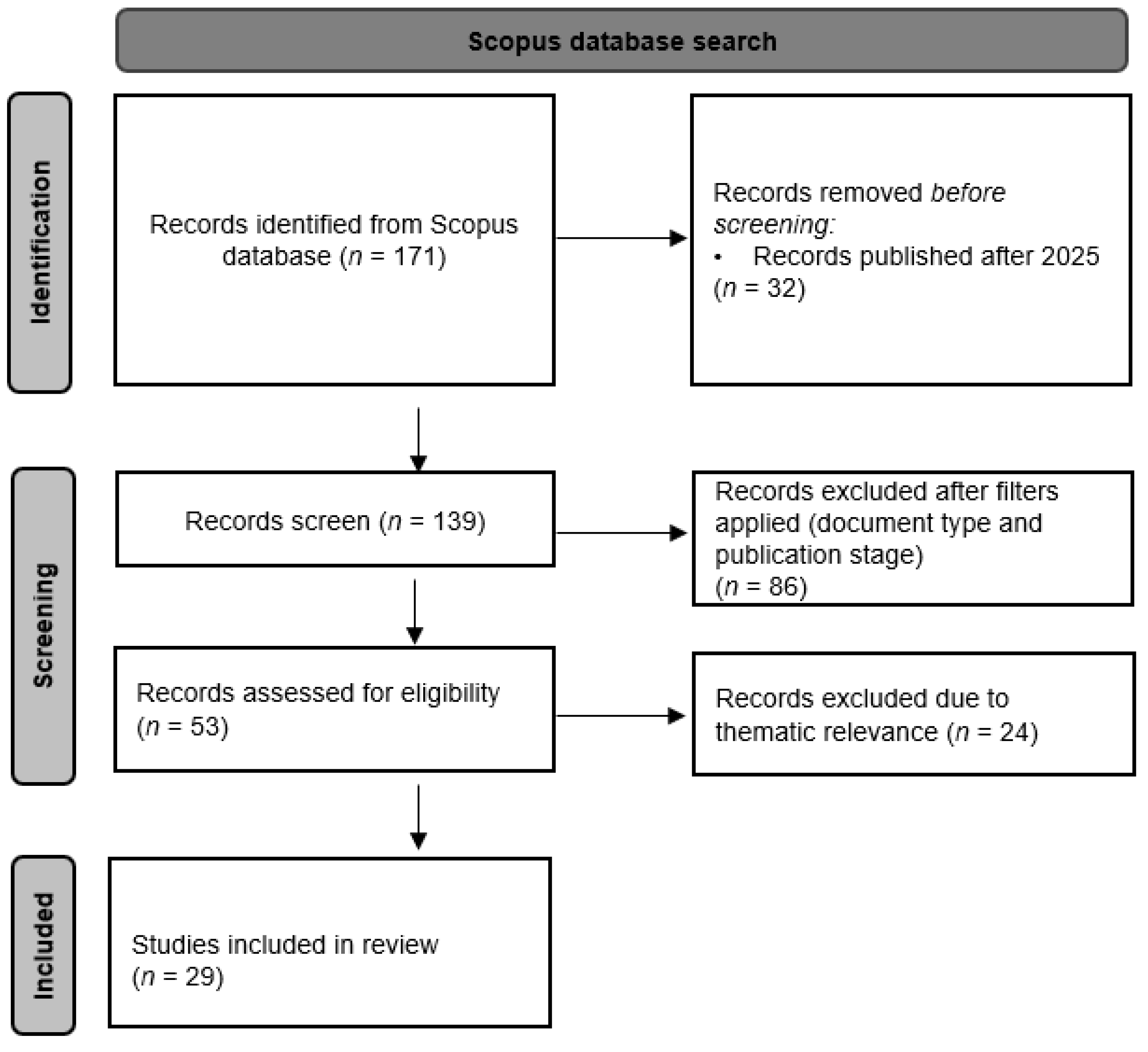
The initial query returned 171 records from the Scopus database (Figure 1). Only documents published until 2025 (inclusive) were considered (n = 139). To refine the sample, filters were applied based on document type and publication stage, retaining only peer-reviewed journal articles and excluding non-journal publications and articles in the press. This process resulted in the removal of 86 records, leaving 53 articles for further assessment.
These 53 articles were subsequently assessed for thematic relevance through full-text screening. During the eligibility stage, 24 articles were excluded because they did not directly address the integration of digital technologies into destination management within smart tourism contexts. Consequently, 29 studies were deemed suitable and included in the final analysis. The PRISMA 2020 checklist is provided in the Supplementary Materials (see Supplementary Materials File S1).
There was no exclusion regarding language; the languages of the selected articles were English (27), Portuguese (1) and Spanish (1). Following this selection, a bibliometric and systematic analysis of the 29 documents was carried out (Table 1), adopting a systems thinking perspective. The bibliometric analysis, conducted using VOSviewer version 1.6.20, provides a quantitative overview of the scientific landscape by identifying influential publications, co-authorship networks, keyword co-occurrences and thematic evolution within the field of smart tourism destinations. In parallel, a systematic literature review was applied to critically analyse and synthesise selected studies, enabling a deeper understanding of how digital technologies are applied in destination management, as well as the benefits, barriers and governance implications associated with smart tourism development. A systems thinking approach facilitates the understanding of interconnections among variables across distinct systems, enabling the identification of feedback loops rather than isolating individual components [5]. The analysis was subsequently integrated into a conceptual model designed to elucidate the dynamics of a smart tourism destination ecosystem from the perspective of technological use.

4. Results

After the selection and validation of the documents, a bibliometric analysis was conducted to map and evaluate the scientific production on this topic, with a calculation of metrics such as number of articles, authors, keywords, most relevant journals and methodologies applied. This effort was the start of a systematic analysis, that, from a systems thinking perspective, emphasises the interconnections and relationships within a system [5]. This further enables the identification of clusters and key elements, supporting the development of a model to strengthen the integration of digital technologies in the management of smart destinations.

4.1. Bibliometric Analysis

Within the dataset selected for review, the author Micera, Roberto emerged as the most recurrent contributor to the theme, being the only researcher with more than one publication included. Regarding the distribution of publications, three journals have more than one publication on this specific subject, namely, Sustainability (Switzerland), with five publications, Geojournal of Tourism and Geosites, with three publications, and International Journal of Tourism Cities, with two publications. The remaining publications were dispersed across a wide range of journals and academic conferences. As for the countries, Italy showed the most contributions, with five articles, followed by Brazil and the United Kingdom, with three publications each.
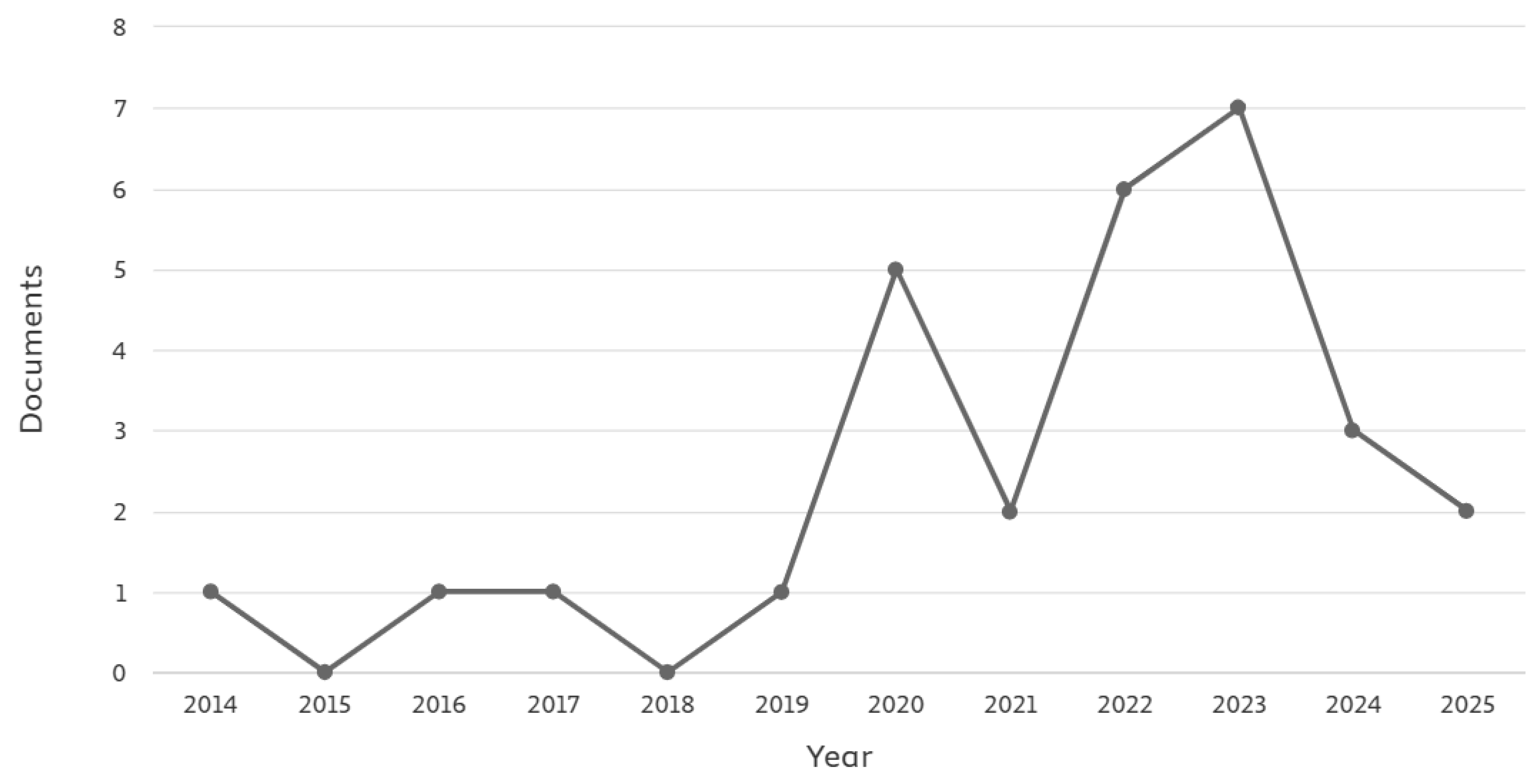
The temporal analysis of publications from 2014 to 2025, as illustrated in Figure 2, reveals a modest but gradually expanding research trajectory. The initial appearance of the topic in 2014 was marked by a single article. It was in 2020 onwards that the integration of digital technologies into destination management began to attract more sustained attention, with 2023 being the year with the most publications on this theme. Nonetheless, the relatively small volume of publications over the past decade underscores the recent emergence of this phenomenon and suggests that the field remains underexplored, with substantial potential for further academic investigation.
In terms of methodological approaches, a diverse selection of strategies was identified among the 29 documents reviewed. A significant number of documents consisted of systematic literature reviews (31%), pointing to an ongoing effort to consolidate the existing knowledge and map the conceptual boundaries of the subject. Four studies adopted mixed-methods designs, combining quantitative and qualitative techniques to achieve a more comprehensive understanding of the dynamics of smart tourism development. In contrast, eight studies employed exclusively quantitative methods, while an equal number relied on purely qualitative approaches, reflecting the exploratory and context-specific nature of much of the research conducted to date.
A wide range of data collection techniques was identified across the selected studies. Within qualitative research, interviews emerged as the most frequently used method, with four studies conducting interviews with key stakeholders, such as policymakers, destination managers and community members. These were followed by observation, content analysis and the Delphi method, each applied in two studies to capture contextual insights and expert perspectives. Regarding quantitative research, questionnaires were the most used instrument, employed in eight studies, while three studies relied on secondary data sources in different ways. In addition, four studies used questionnaires to collect data from broader audiences, and one study applied the Delphi method to achieve expert consensus, which is particularly valuable in emerging research areas such as smart tourism. Together, these findings suggest that research into digital technologies and destination management is still in a developmental phase, with researchers predominantly seeking to explore foundational concepts, build theoretical frameworks and reflect on practical challenges.
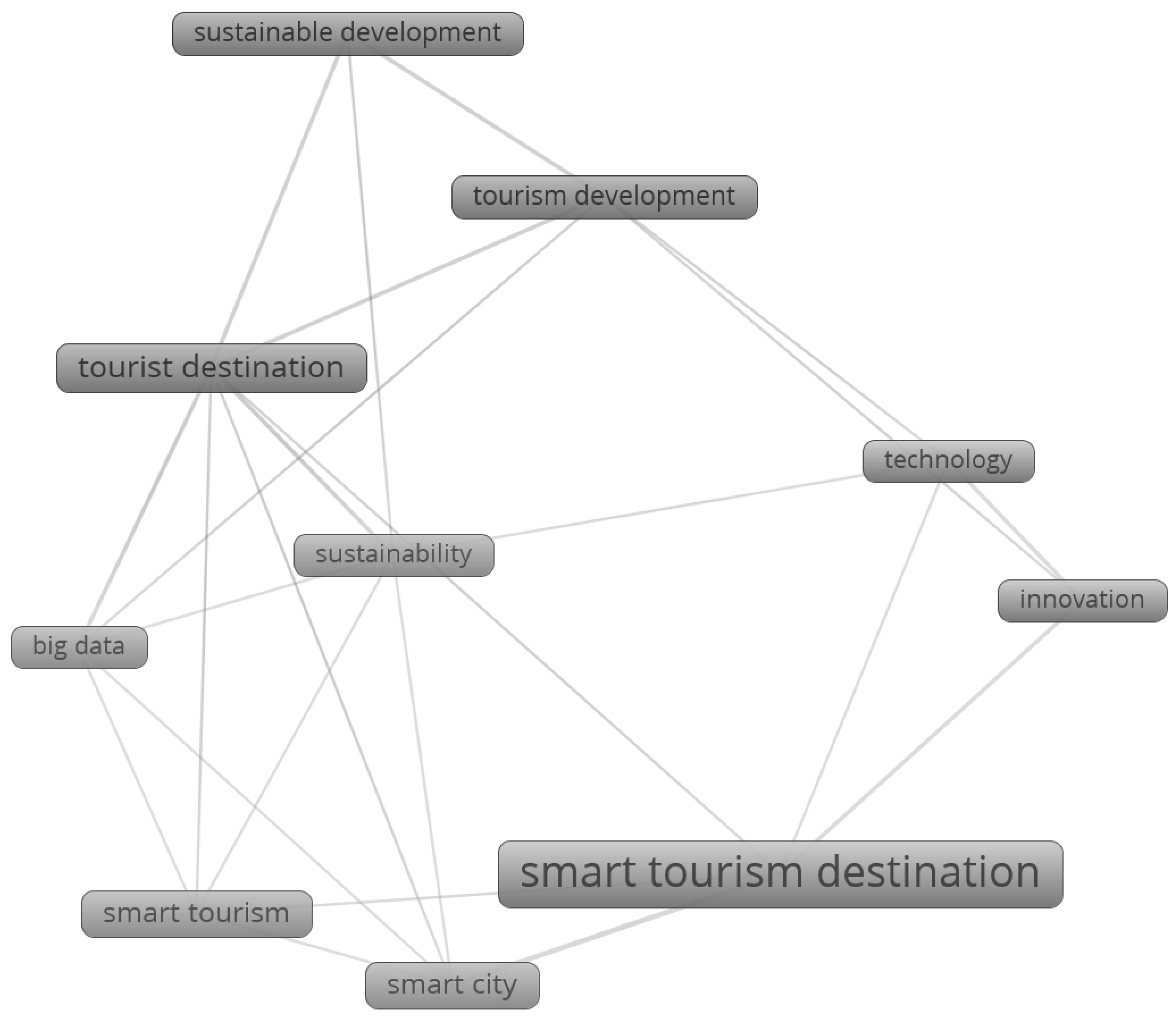
To better understand the dominant themes and their interrelationships, a network representation of keyword co-occurrence was developed using VOSviewer (Figure 3). This visualisation highlights the structure of the research field by mapping the most frequent and strongly connected keywords, thereby revealing the main conceptual focus and their interconnections within the literature on smart and sustainable tourism destinations.
The co-occurrence map reveals an insightful structure surrounding tourism destinations, sustainability and technology. Notably, “tourist destination” engages directly to almost all other keywords, except for “technology” and “innovation”. These two concepts are only indirectly linked to “tourist destination” through “smart tourism destination”, suggesting that technology and innovation are not typically discussed as isolated drivers of destination development, but rather as integral components of the smart destination paradigm. This finding reinforces the idea that a tourist destination is conceptualised as “smart” precisely when technological and innovative elements are embedded within its governance, management and service provision.
The keyword “smart tourism destination” emerges as the node with the highest total link strength, indicating its pivotal role in connecting different thematic strands. Although it is not directly connected to all keywords, its strong ties to “technology”, “innovation”, “smart city”, “smart tourism” and “sustainability” position it as a bridging concept that integrates technological advancement with broader sustainability and development goals.
As for the grouping of concepts, Cluster 1, comprising “big data”, “smart city”, “smart tourism” and “sustainability”, centres on the technological and data-driven foundations of smart tourism. This cluster reflects research focused on how digital infrastructures, data analytics and smart city frameworks support more efficient, responsive and sustainable tourism systems. The presence of “sustainability” within this cluster suggests that technological solutions are increasingly framed as enablers of sustainable outcomes, rather than as ends in themselves.
In contrast, Cluster 2, which includes “sustainable development”, “tourism development” and “tourist destination”, reflects a more traditional and policy-oriented perspective. This cluster emphasises long-term development objectives, destination planning and the integration of tourism growth with broader sustainability principles. The strong internal connections within this cluster indicate a well-established body of literature that conceptualises destinations primarily through development and sustainability lenses, often without an explicit technological focus.
Finally, Cluster 3 incorporates “innovation”, “technology” and “smart tourism destination”, highlighting a more contemporary and forward-looking research component. This cluster underlines the role of innovation and technological advancement as key drivers of transformation in tourism destinations, reinforcing the centrality of the smart destination concept as the convergence point between technological progress and destination management. The close association among these keywords suggests that innovation is predominantly discussed in relation to digital technologies and smart systems, rather than as a standalone organisational or social process.

4.2. Systematic Content Analysis

4.2.1. Digital Technologies in Tourism

The systematic content analysis revealed a diverse and evolving set of technologies (Table 2) currently integrated, or with strong potential for integration, within smart tourism destinations. These technologies are central to enhancing digitalisation, personalisation and sustainability in destination management.
The advancement of digitalisation in tourism depends on the adoption of various tools, including tourist tracking techniques with satellite navigation systems like GPS, mobile data, social media and Wi-Fi; artificial intelligence; cloud computing; and distributed registry technologies such as blockchain, the Internet of Things (IoT), big data, augmented reality and virtual reality [2,6,14,16,26,30,46,47].
Among the most transformative technological tools are tourist tracking techniques, which offer critical insights into spatial and temporal visitor behaviour. These include GPS-based apps, providing high-resolution data for spatial analysis; mobile network data, passively collected via telecom operators for large-scale behavioural mapping; Wi-Fi signals, used for real-time crowd movement and density analysis; and social media platforms, such as Instagram or Facebook, which offer geotagged content reflecting user preferences [26]. Such technologies enable the identification of high-traffic areas or “hotspots”, and the segmentation of tourists based on behaviour and, with the use of artificial intelligence, they simplify the design of new or optimised routes, since they collect various information on tourists, their preferences, the places they visit, and how long they stay, among others [16]. Moreover, the use of cloud technologies permits the storage of all this information, for real-time use and to fulfil future needs. In turn, this significantly contributes to sustainable destination planning, as these tracking methods are not merely supportive tools, but indeed foundational to transform conventional destinations into smart ones [26].
In terms of emerging technologies, blockchain and IoT emerge as promising areas [14,15,16,47]. Blockchain technologies, in particular, are being applied across various domains, including digital payments, credential and identity management, inventory and reservation systems and loyalty programmes [15]. These technologies enhance transaction transparency and reduce inefficiencies, such as baggage loss, hotel overbooking and disputes in service delivery. Moreover, blockchain technology can be used to create decentralised tourism platforms that connect tourists directly with local providers, potentially enabling better control over visitor numbers and promoting sustainable, community-based tourism practices [15]. The Internet of Things and Big Data play vital roles in creating responsive and adaptive management frameworks. These tools support operational efficiency and risk mitigation as well as enabling predictive capabilities and real-time monitoring of destination dynamics [14,45,47].
Additionally, extended reality technologies offer immersive visitor experiences. For example, augmented reality overlays digital information on real-world settings and virtual reality creates fully immersive virtual experiences [44]. Virtual reality offers an alternative method for potential visitors to experience a destination early and quickly and facilitates deep engagement through visual and auditory inputs, often utilised via web-based platforms or wearable technology [2]. Despite the understanding of each technology and its applicability and benefits for tourism management, significant barriers to implementation still exist, hindering the transition towards effective smart tourism destination management.

4.2.2. Benefits and Challenges of Digital Technologies in Tourism

As previously reported, the integration of digital technologies in the tourism sector has revolutionised the way destinations operate and the way they engage with visitors. Several authors have highlighted the main benefits of using digital technologies, which spread across visitors, the destination and its residents (Table 3).
Among the principal benefits, destination competitiveness is the one most referenced by the authors. Destinations that successfully harness digital technologies stand out in a highly saturated global tourism market and position themselves as resilient, sustainable and innovative [2,10,30,38]. Moreover, the culmination of all benefits of using digital technology in tourism destinations is what elevates their competitiveness. By optimising management processes, these technologies simultaneously enrich the visitor experience and augment the quality of life for local residents [15,16,48].
From a management perspective, digital solutions facilitate the more effective and efficient administration of tourism resources and operations [30,38]. Moreover, these technologies improve decision-making [16]. For instance, real-time data collection provides stakeholders with “first-hand” information about epidemics and public concerns, backing better policy responses [45]. This supports evidence-based policy design and business strategies, empowering stakeholders to anticipate trends, address risks and leverage emerging opportunities with greater confidence. Digital technologies also promote collaboration among diverse actors within the tourism ecosystem. DMOs, local businesses, policymakers and residents can use shared platforms and data-driven tools to exchange information and coordinate strategies more effectively. Such collaborative efforts create synergies that strengthen governance models and ensure that the development of tourism remains inclusive and sustainable [21,31]. Additionally, technologies such as Big Data analytics, the Internet of Things (IoT) and blockchain enable the monitoring of tourist flows, optimisation of resources and a reduction in inefficiencies, contributing to the creation of more sustainable “Smart Cities”, allowing for the development of services that balance offers to tourists with the quality of life of residents [42].
Such improvements are resonated in the enhancement of visitor experiences. Through tools such as mobile applications, augmented reality, or personalised recommendation systems, tourists are able to access tailored services and enjoy more engaging and immersive interactions with destinations [2,10,15,24,43,46]. This not only enriches individual experiences but also fosters stronger emotional connections between visitors and the places they explore.
This improved management capability is also crucial for the quality of life of the local community [42]. By facilitating sustainable resource use, reducing congestion and promoting inclusive participation in tourism planning, digital tools help balance the needs of residents with those of visitors [21,31]. Ultimately, this enhances the well-being of host communities while preserving the cultural and environmental integrity of destinations.
Overtourism is one of the biggest barriers to residents’ quality of life [3]. The use of digital tools allows for greater agility in responding to this challenge and also others such as environmental pressures or changes in visitor demand, reinforcing the adaptability of destinations in a constantly evolving market [30,38]. Consequently, the mitigation of overtourism is also a benefit of using digital tools, as it allows tourists to be redirected from congested areas to less saturated areas, protecting cultural heritage and biodiversity [3], and thus balancing tourist flows and managing risks intelligently, avoiding purely physical restrictions [48]. Despite these advantages, the utilisation of digital technologies in tourism faces several significant challenges (Table 4).
A primary barrier is the high costs associated with the necessary digital infrastructure, especially for smaller or less developed destinations [30]. This barrier is linked to lack of sensor infrastructure at destinations, which limits the integration and potential of advanced technologies such as smart systems [46]. Sensor networks, IoT devices and data-collection technologies are essential for the real-time monitoring of visitor flows, environmental conditions and operational efficiency. The actual implementation of technologies that improve the user experience is still uneven and depends heavily on pre-existing local infrastructure [4]. Their absence restricts the capacity for data-driven management, making it difficult to implement proactive solutions that enhance sustainability and visitor satisfaction. For destinations with limited budgets, this cost barrier slows digital transformation and may expand the gap between technologically advanced and less developed regions.
Collaborative efforts among stakeholders are also frequently inadequate, obstructing unified progress and shared benefits [46]. Fragmented governance structures, competing commercial interests and poor communication channels reduce the potential for joint initiatives, such as shared digital platforms or destination-wide smart systems. The impact is twofold: innovation is slowed and the benefits of digital technologies—such as integrated visitor services—remain limited [4].
Concerns over cybersecurity also pose barriers, with low levels of protection potentially deterring adoption due to fears of data breaches and cyber threats [3,22]. This barrier exists because many tourism operators lack robust IT security measures, awareness of cyber risks or digital literacy. In turn, a single security incident can undermine tourist trust, damage reputations and deter both businesses and visitors from engaging with digital services [3,30].
Therefore, digital literacy is also one of the biggest barriers to the adoption of digital technologies in tourism and all sectors. Although digital technologies are rapidly reshaping organisations, business practices and society at large, knowledge of digital technologies and their use remains low among many tourism actors. This limits their capacity to effectively use and benefit from technological advancements [3,6,30,41]. This barrier arises from insufficient training opportunities, limited exposure to emerging technologies and the generational gap in digital skills. Low digital literacy restricts the ability of tourism businesses to adopt innovative tools, implement smart solutions and engage effectively with digitally savvy tourists, thereby constraining competitiveness and innovation at the destination level. Such consequences are also achieved through a lack of innovation processes and incentives [46]. Many organisations operate with traditional, risk-averse structures that discourage experimentation. As a result, promising technologies are underutilised and destinations struggle to remain competitive in a rapidly evolving digital landscape.
Technological advancements have also driven the proliferation of mobile applications designed for tourism. However, the inaccessibility, fragmentation and disorganisation of tourist information remain a challenge for many DMOs [16]. Tourist data are often dispersed across multiple sources and formats, with inconsistent standards, making it difficult for digital platforms to aggregate and deliver coherent, reliable information. This barrier exists because many destinations lack centralised information management systems and standardised data protocols, which makes it harder for destinations to leverage digital tools to optimise visitor flows and resource management [50]. Moreover, the saturation of digital applications in everyday life can lead to user fatigue, reducing the perceived novelty and engagement with tourism-related technologies [24]. With tourists already immersed in social media, e-commerce and mobile apps, additional digital interactions in tourism may feel redundant or intrusive. This fatigue reduces adoption rates and limits the effectiveness of new tools in enhancing the visitor experience.
Finally, the increasing reliance on digital interfaces risks the disappearance of the personal touch in tourism experiences, which remains a vital component of visitor satisfaction [22].
The barriers to digital technology adoption in tourism are multidimensional, surrounding structural, financial, organisational, human and experiential factors, but when these barriers are identified and overcome due to the potential of its use, digital technologies allow destinations to differentiate themselves and remain attractive in an increasingly saturated market [2,10,30,38].

4.2.3. A Model for the Management of Smart Tourism Destinations

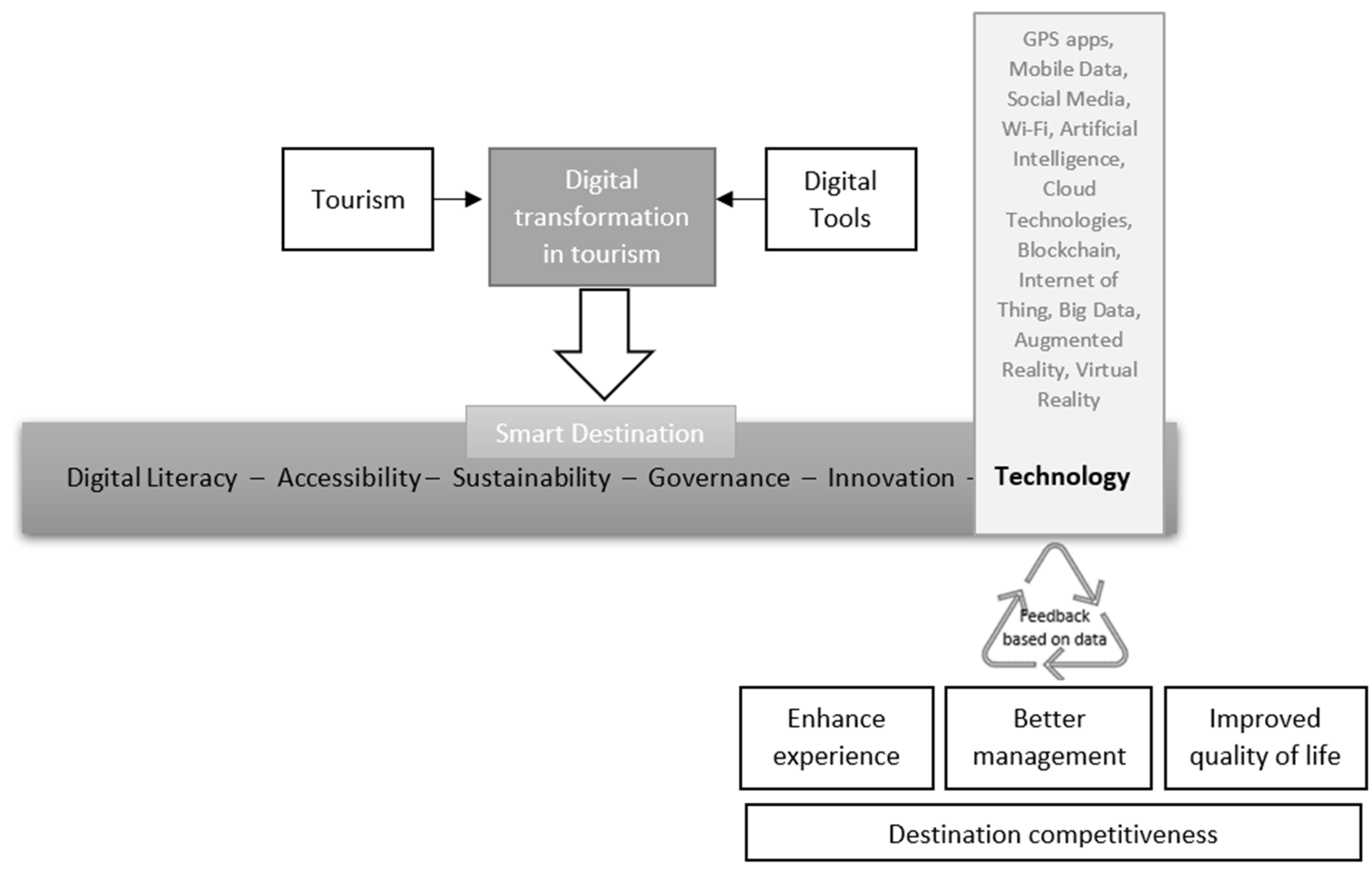
In this context, the development of smart tourism destinations through digital transformation in tourism rests upon six interdependent pillars, as seen in the conceptual model (Figure 4). Such pillars were mentioned by Bussador et al. (2023) [31] and Chapa et al. 2023) [46], who highlighted the following: accessibility, which guarantees inclusivity and the removal of barriers; sustainability, which embeds environmental responsibility into destination management; governance, which ensures transparent and participative management; innovation, which encourages creativity and the adoption of original practices; and technology, which enables intelligent decision-making and efficient service delivery. To these, digital literacy must be added, as this constitutes the foundation that allows both managers and visitors to use and benefit from digital technologies effectively [3].
This research emphasises the technological dimension of smart destinations, suggesting that the essential first step towards their effective management is the integration of digital tools in tourism planning and operations. Among digital technologies, diverse existing tools were identified. When applied in the tourism sector, they enable DMOs to gain real-time information, provide personalised suggestions, understand their tourists, create consumption patterns, better manage their resources, promote other sites and design distinctive experiences. For instance, while connectivity tools (Wi-Fi, GPS) establish the necessary infrastructure, advanced analytical tools (AI, Big Data, Blockchain) provide the intelligence required for integrated governance models. AI and Big Data analytics can enhance the deployment of destination services, ranging from public transportation scheduling to waste management, which, in turn, leads to an enhanced quality of life for residents and reduced carbon emissions. AI applications can also dynamically predict demand for services, such as parking zones, allowing authorities to adjust availability and pricing in real-time to optimise traffic flow and resource allocation [51]. They can also analyse users’ preferences and use real-time environment scanning to recommend relevant restaurants, activities and attractions, often providing personalised discounts and customised itineraries. This tailored information access is crucial for visitors conducting extensive research both before and during their trip [51].
Consequently, smart destinations facilitate the co-creation of value, acting as ecosystems where all stakeholders—including tourists, residents and management—are resource-integrating actors connected through service exchange [17]. Technology enables this by facilitating the sharing of visitor impressions (e.g., social media feedback) and supporting real-time interactions between visitors and the physical environment [17]. Collectively, these factors culminate in an improved tourist experience, more efficient destination management, and enhanced quality of life for residents due to the strategic improvements applied to their area and their greater involvement [52]. Ultimately, this leads to an increase in the destination’s own competitiveness. Crucially, the ability of digital technologies to provide real-time data ensures that DMOs receive immediate feedback on tourist behaviour, emerging risks, or opportunities, allowing them to continuously adapt and refine their strategies. This creates a cycle of modernisation and responsiveness that is indispensable in increasingly complex and competitive tourism environments. The application of these technologies within a destination is what transforms it into a smart destination.

5. Discussion and Conclusions

This research examined the digital transformation in tourism through the integration of digital technologies capable of collecting, analysing and storing visitor data, thereby enabling DMOs to access valuable information that supports more effective management, strategy development and decision-making. As a key contribution, this study proposes an integrated smart tourism destination management ecosystem model that clarifies the relationships between digital technologies, managerial functions, expected benefits and implementation barriers within the broader smart city context.
The results show that technology is a central enabler of the transition towards smart destinations, where digital tools and strategies play a fundamental role in shaping competitiveness, innovation and sustainability in tourism. This dynamic exchange creates an environment of cooperation, data sharing and knowledge integration that is essential for generating innovation.
The central role of the smart tourism destination concept, as highlighted by the keyword co-occurrence (Figure 3), confirms earlier conceptualisations by Buhalis and Amaranggana (2015) [12], who frame smart destinations as integrative systems where technology, innovation and governance converge to enhance sustainability and competitiveness. Similarly, the strong association between technology, innovation and smart tourism destination emphasises the enabling role of digital technologies and data-driven solutions in smart destination development.
Beyond infrastructure, these technologies function as strategic “soft” management tools capable of mitigating overtourism and strengthening long-term resilience and effective e-marketing in rural destinations. This technological alignment is crucial as “smart” perceptions attract modern travellers seeking safe and environmentally responsible experiences, while the rise in the “SoLoMo” (Social, Local, Mobile) traveller reinforces the need for strategies that prioritise quality of life [3]. In this sense, the transition towards the Smart Tourism Destination model is no longer optional but increasingly perceived as a requirement within the European tourism market to ensure long-term sustainability and competitiveness.
However, despite their evident potential, the implementation of STDs faces several complex challenges [49]. For instance, adopting such technologies requires significant investment, while the incentives for doing so remain remarkably low. The extensive deficit in cybersecurity knowledge further underscores the necessity of embedding digital literacy as a fundamental STD pillar. Moreover, the absence of structured innovation processes complicates the integration of these technologies into strategic DMO planning. While digital tools aim to enhance the visitor journey, an oversaturation of apps can create “noise” and reduce the personal interaction between tourists and residents—elements that are equally essential for ensuring a high-quality tourism experience and positively promoting a destination [22,53]. Consequently, the non-technological pillars of a smart destination must be leveraged to overcome these specific technological barriers. Ultimately, the transition towards smart tourism destinations should be understood as an organisational and governance transformation supported by technology rather than a purely technological process. The long-term success of smart destinations will depend on their ability to balance innovation, sustainability, inclusiveness and competitiveness while responding adaptively to changing tourism environments.

5.1. Pratical Implications

The model presented in this research reflects the current state of knowledge and provides a practical guide for DMOs seeking to implement smart destination strategies in real-world contexts. From a governance perspective, governments and public institutions play a central role in creating the necessary regulatory and ethical foundations for digital transformation. It is essential to establish robust governance frameworks to guide the responsible deployment of emerging technologies.
Navigating data-driven ecosystems requires smart governance anchored in open-data and interoperability principles to facilitate secure stakeholder sharing. As evidenced in Barcelona and Amsterdam, integrated platforms enable evidence-based decision-making and real-time monitoring under strict oversight [54]. However, the viability of these systems depends on ‘secure-by-design’ infrastructures and proactive cybersecurity protocols. By prioritising digital literacy among officials and SMEs, DMOs can ensure the transition toward transparent data environments remains both resilient and responsible.
At the operational level, DMOs should focus on adopting participatory and experimental approaches to innovation. Living Labs, for example, enable stakeholders, including tourists, residents, businesses and policymakers, to co-create value through collaborative experimentation and iterative design. This bottom-up approach empowers local communities to develop and test smart solutions that respond directly to contextual needs, while a top-down strategy ensures the existence of institutional and financial support to scale successful initiatives [34]. Through this dual approach, destinations can build inclusive ecosystems that balance technological advancement with social innovation. Importantly, smart destination strategies must explicitly address residents’ quality of life and social inclusion.
Digital solutions should adhere to universal design and accessibility principles to ensure that marginalised groups—including the elderly and those with sensory or mobility impairments—benefit equally from smart tourism. Practical applications include real-time barrier-free routing, audio-navigation for visually impaired users and age-friendly smart kiosks. As demonstrated in Vienna and Stockholm, these inclusive digital services enhance accessibility while reinforcing social equity within urban tourism [35]. As Shafiee et al. (2022) [13] emphasise, government involvement in articulating a shared vision for tourism development ensures that all stakeholders work collectively towards long-term sustainable priorities. Establishing a clear strategic direction strengthens the resilience of tourism systems against external shocks and rapid technological change.
Public–private partnerships (PPPs) can also accelerate innovation by pooling resources, expertise and data, ensuring that technological adoption aligns with broader economic, social and environmental objectives. Furthermore, destination managers and tourism policymakers must prioritise sustained investment in technological infrastructure, recognising it as a core driver of smart tourism development. Integrating digital platforms for real-time information exchange, mobile accessibility and personalised service delivery can significantly enhance tourist satisfaction and operational efficiency.
These recommendations and the proposed ecosystem model are structurally versatile, meaning they can be applied globally across diverse continents, wherever destination authorities are actively pursuing digital transformation. Geographically, this framework is scalable and equally applicable to dense urban municipalities, peripheral rural territories, or broader macro-regions, provided they adapt the strategies to their territorial constraints. Crucially, to successfully operationalise these recommendations, target destinations must possess a foundational baseline of core resources: physically, they require reliable network connectivity (such as public Wi-Fi or cellular grids) and basic smart city or sensory infrastructure to enable real-time data collection; technologically, they must adopt interoperable data spaces or dashboards that are capable of aggregating fragmented tourist information; and financially, they need sustained public or private investment to fund their initial digital deployments. Most importantly, however, these destinations must possess the necessary human resources, specifically in the form of enhanced digital literacy among DMO officials and local hospitality actors, alongside a collaborative governance mindset that fosters active stakeholder partnerships to drive value co-creation.

5.2. Theoretical Implications

This study contributes to the theoretical understanding of digital transformation in tourism by framing smart tourism destinations as complex socio-technical systems rather than merely technological constructs. Recent research highlights that the integration of smart technologies is shaped by organisational, technological and environmental drivers. Such drivers influence adoption and implementation pathways in destination ecosystems, particularly through the interplay among data infrastructures, stakeholder roles and institutional capacities [4,32].
Furthermore, the study deepens the theoretical discourse surrounding destination management by positioning digitalisation as a strategic process to improve decision-making. Another theoretical contribution lies in the identification and consolidation of the core pillars of smart destinations, which provide a structured foundation for future research.
This study further contributes to the theoretical understanding of digital transformation in tourism by moving beyond descriptive technological accounts to explicitly extend three foundational frameworks, framing the smart tourism destination as a complex, coupled socio-technical system where technical infrastructures are structurally interdependent with social subsystems, human skill sets and DMO managerial functions. Furthermore, grounded in the dynamic capabilities framework, this research advances smart governance theory by positioning digital transformation as an active, organisational capability rather than a static IT implementation, explicitly mapping how DMOs must deploy sensing, seizing and transforming mechanisms—operationalised through core managerial functions—to overcome structural barriers, build public–private trust and maintain strategic agility in highly volatile, data-driven environments.
Lastly, by analysing both the benefits and barriers of digital transformation, this research contributes to theory-building on the conditions necessary for successful technological integration in tourism. It proposes that smartness in destinations emerges not from the mere adoption of digital tools but from the co-evolution of technology. In doing so, it extends existing theoretical debates on governance and socio-technical transition by emphasising adaptive capabilities, interoperability challenges and inclusivity as crucial conditions for successful smart destination implementation—moving beyond a technology-centric view toward an integrated socio-organisational perspective.

5.3. Limitations and Future Studies Recommendations

Nevertheless, while the focus of this work was on technology, it is important to recognise that a truly smart destination also requires accessibility, a strong commitment to sustainability, effective governance and continuous innovation to ensure long-term resilience, inclusivity and a high quality of experience for both tourists and local communities. So, future studies should aim to develop integrative models that link smart tourism with sustainable management practices, ensuring both growth and responsibility. Furthermore, future studies should explore how digital transformation reshapes governance in tourism and investigate the long-term impacts of smart destinations on both tourists and host communities. This should be a particular focus in terms of fostering inclusivity, strengthening stakeholder collaboration and ensuring that technological innovation aligns with sustainable development goals. Such research could also examine the potential unintended consequences of digitalisation, including issues of data privacy, digital divides and over-reliance on technology. This would provides a more comprehensive understanding of the opportunities and challenges inherent in the transition towards smart tourism destinations.

Supplementary Materials

The following supporting information can be downloaded at: https://www.mdpi.com/article/10.3390/su18126095/s1, File S1: PRISMA 2020 checklist.

Author Contributions

Conceptualization, D.G., P.E., A.L. and P.A.; methodology, D.G., P.E., A.L. and P.A.; software, D.G., P.E., A.L. and P.A.; validation, D.G.; formal analysis, D.G.; investigation, D.G., P.E., A.L. and P.A.; resources, D.G., P.E., A.L. and P.A.; data curation, D.G., P.E., A.L. and P.A.; writing—original draft preparation, D.G., P.E. and A.L.; writing—review and editing, D.G.; visualization, D.G.; supervision, P.A.; project administration, P.A.; funding acquisition, P.A. All authors have read and agreed to the published version of the manuscript; and all authors agree to be accountable for all aspects of the work.

Funding

This project was funded by Project Fast-Agenda ATT|PRR.

Institutional Review Board Statement

Not applicable.

Informed Consent Statement

Not applicable.

Data Availability Statement

No new data were created or analysed in this study. Data sharing is not applicable to this article.

Conflicts of Interest

The authors declare no conflicts of interest.

References

  1. da Costa Liberato, P.M.; Alén-González, E.; de Azevedo Liberato, D.F.V. Digital Technology in a Smart Tourist Destination: The Case of Porto. J. Urban Technol. 2018, 25, 75–97. [Google Scholar] [CrossRef]
  2. Irtyshcheva, I.; Nadtochii, I.; Popadynets, N.; Hryshyna, N.; Sirenko, I. European vector of economic development and management of tourist destinations’ competitiveness in digital economy. Int. J. Qual. Res. 2022, 16, 1211–1226. [Google Scholar] [CrossRef]
  3. Issakov, Y.; Lečić, B.; Spasojević, A.; Knežević, S.; Mandarić, M.; Stojanović, K.; Gajić, T.; Vukolić, D. Security and Sustainability of Tourist Destinations Through Digital Technologies: A Comparative Analysis of Almaty and Belgrade. Sustainability 2025, 17, 9126. [Google Scholar] [CrossRef]
  4. Marinac, A.; Budić, H.; Ergović, A. Spatial conditionality of tourism supply with a focus on smart destinations: The case of croatia and the european perspective. Geoj. Tour. Geosites 2025, 61, 1952–1958. [Google Scholar] [CrossRef]
  5. Sacoto-Cabrera, E.J.; Perez-Torres, A.; Tello-Oquendo, L.; Cerrada, M. IoT, AI, and Digital Twins in Smart Cities: A Systematic Review for a Thematic Mapping and Research Agenda. Smart Cities 2025, 8, 175. [Google Scholar] [CrossRef]
  6. Pencarelli, T. The digital revolution in the travel and tourism industry. Inf. Technol. Tour. 2020, 22, 455–476. [Google Scholar] [CrossRef]
  7. Neuburger, L.; Beck, J.; Egger, R. The ‘Phygital’ Tourist Experience: The Use of Augmented and Virtual Reality in Destination Marketing. In Tourism Planning and Destination Marketing; Emerald Publishing Limited: Leeds, UK, 2018; pp. 183–202. [Google Scholar] [CrossRef]
  8. Coca-Stefaniak, J.A. Beyond smart tourism cities—Towards a new generation of “wise” tourism destinations. J. Tour. Futur. 2020, 7, 251–258. [Google Scholar] [CrossRef]
  9. Sklavos, G.; Zournatzidou, G.; Ragazou, K.; Spinthiropoulos, K.; Sariannidis, N. Next-Generation Urbanism: ESG Strategies, Green Accounting, and the Future of Sustainable City Governance—A PRISMA-Guided Bibliometric Analysis. Urban Sci. 2025, 9, 261. [Google Scholar] [CrossRef]
  10. Seraphin, H.; Green, S. The significance of the contribution of children to conceptualising the destination of the future. Int. J. Tour. Cities 2019, 5, 544–559. [Google Scholar] [CrossRef]
  11. Li, Y.; Hu, C.; Huang, C.; Duan, L. The concept of smart tourism in the context of tourism information services. Tour. Manag. 2017, 58, 293–300. [Google Scholar] [CrossRef]
  12. Buhalis, D.; Amaranggana, A. Smart Tourism Destinations Enhancing Tourism Experience Through Personalisation of Services. In Information and Communication Technologies in Tourism 2015; Spring: Berlin/Heidelberg, Germany, 2015; pp. 377–389. [Google Scholar] [CrossRef]
  13. Shafiee, S.; Ghatari, A.R.; Hasanzadeh, A.; Jahanyan, S. Developing a model for smart tourism destinations: An interpretive structural modelling approach. Inf. Technol. Tour. 2022, 24, 511–546. [Google Scholar] [CrossRef]
  14. Mariani, M.; Bresciani, S.; Dagnino, G.B. The competitive productivity (CP) of tourism destinations: An integrative conceptual framework and a reflection on big data and analytics. Int. J. Contemp. Hosp. Manag. 2021, 33, 2970–3002. [Google Scholar] [CrossRef]
  15. Pranita, D.; Sarjana, S.; Musthofa, B.M.; Kusumastuti, H.; Rasul, M.S. Blockchain Technology to Enhance Integrated Blue Economy: A Case Study in Strengthening Sustainable Tourism on Smart Islands. Sustainability 2023, 15, 5342. [Google Scholar] [CrossRef]
  16. Ordóñez-Martínez, D.; Seguí-Pons, J.M.; Ruiz-Pérez, M. Toward Establishing a Tourism Data Space: Innovative Geo-Dashboard Development for Tourism Research and Management. Smart Cities 2024, 7, 633–661. [Google Scholar] [CrossRef]
  17. Jovicic, D.Z. From the traditional understanding of tourism destination to the smart tourism destination. Curr. Issues Tour. 2019, 22, 276–282. [Google Scholar] [CrossRef]
  18. Neuhofer, B.; Buhalis, D. Experience design in the smart tourism destination. In Routledge Handbook of the Tourist Experience; Routledge: New York, NY, USA, 2021; pp. 616–629. [Google Scholar] [CrossRef]
  19. Baggio, R.; Micera, R.; Del Chiappa, G. Smart tourism destinations: A critical reflection. J. Hosp. Tour. Technol. 2020, 11, 407–423. [Google Scholar] [CrossRef]
  20. Kalia, P.; Mladenović, D.; Acevedo-Duque, Á. Decoding the Trends and the Emerging Research Directions of Digital Tourism in the Last Three Decades: A Bibliometric Analysis. Sage Open 2022, 12, 21582440221128179. [Google Scholar] [CrossRef]
  21. Presenza, A.; Micera, R.; Splendiani, S.; Del Chiappa, G. Stakeholder e-involvement and participatory tourism planning: Analysis of an Italian case study. Int. J. Knowl.-Based Dev. 2014, 5, 311–328. [Google Scholar] [CrossRef]
  22. Popova, K.K.; Malcheva, M.M. Assessment of the potential of Varna city as a smart tourist destination. Tour. Int. Interdiscip. J. 2020, 68, 308–321. [Google Scholar] [CrossRef]
  23. Ratnayaka, R.; Tham, J.; Azam, F.; Shukri, S.M. Empirical review on evolution of internet and the online reputation of destination management companies; with special reference to sri lanka tourism industry. Rev. Gest. Soc. Ambient. 2024, 18, e6184. [Google Scholar] [CrossRef]
  24. Gračan, D.; Zadel, Z.; Pavlović, D. Management Of Visitor Satisfaction By Using Mobile Digital Tools And Services To Create Concept Of Smart Destination. Ekon. Pregl. 2021, 72, 185–198. [Google Scholar] [CrossRef]
  25. Karpova, G.A.; Kuchumov, A.V.; Testina, Y.S.; Voloshinova, M.V. Digitalization of a Tourist Destination. In Proceedings of the 2019 International SPBPU Scientific Conference on Innovations in Digital Economy, St. Petersburg, Russia, 24–25 October 2019; ACM International Conference Proceeding Series; ACM: New York, NY, USA, 2019. [Google Scholar] [CrossRef]
  26. Julio Guerrero, Y.I.; Dias, F.T.P. Tourist Tracking Techniques and Their Role in Destination Management: A Bibliometric Study, 2007–2023. Sustainability 2024, 16, 3708. [Google Scholar] [CrossRef]
  27. Lopes, R.O.; Malik, O.A.; Kumpoh, A.A.Z.A.; Keasberry, C.; Hong, O.W.; Lee, S.C.W.; Liu, Y. Exploring digital architectural heritage in Brunei Darussalam: Towards heritage safeguarding, smart tourism, and interactive education. In Proceedings of the 2019 IEEE 5th International Conference on Multimedia Big Data, BigMM, Singapore, 11–13 September 2019; pp. 383–390. [Google Scholar] [CrossRef]
  28. Roopchund, R. Mauritius as a Smart Tourism Destination: Technology for Enhancing Tourism Experience. In Advances in Intelligent Systems and Computing; Springer: Singapore, 2020; Volume 1089, pp. 519–535. [Google Scholar] [CrossRef]
  29. Liberato, P.; Alén, E.; Liberato, D. Porto as a Smart Destination. A Qualitative Approach. In Smart Tourism as a Driver for Culture and Sustainability; Springer Proceedings in Business and Economics; Springer: Cham, Switzerland, 2019; pp. 419–431. [Google Scholar] [CrossRef]
  30. Bazazo, I.K.; Alananzeh, O.A.; Alrefaie, S.R. Applications of digital models in integrated management in smart tourist cities: Aqaba city of Jordan as a case study. Geoj. Tour. Geosites 2022, 40, 313–318. [Google Scholar] [CrossRef]
  31. Bussador, A.; Bauermann, B.F.C.; Matrakas, M.D.; Padilha, J.C.; de Freitas Zara, K.R. DTI-BR model applied in Foz do Iguaçu, Brazil, for its transformation into a smart tourism destination. J. Infrastruct. Policy Dev. 2023, 7, 2152. [Google Scholar] [CrossRef]
  32. Gretzel, U. The smart dmo: A new step in the digital transformation of destination management organizations. Eur. J. Tour. Res. 2022, 30, 3002. [Google Scholar] [CrossRef]
  33. da Silva Tomadon, L.; do Couto, E.V.; de Vries, W.T.; Moretto, Y. Smart city and sustainability indicators: A bibliometric literature review. Discov. Sustain. 2024, 5, 143. [Google Scholar] [CrossRef]
  34. Boes, K.; Buhalis, D.; Inversini, A. Smart tourism destinations: Ecosystems for tourism destination competitiveness. Int. J. Tour. Cities 2016, 2, 108–124. [Google Scholar] [CrossRef]
  35. European Comission. Leading Examples of Smart Tourism Practices in Europe from the 2023 European Capital of Smart Tourism Competition. February 2023. Available online: https://smart-tourism-capital.ec.europa.eu/system/files/2023-02/2023-leading-practices-in-smart-tourism.pdf (accessed on 10 February 2026).
  36. Floričić, T.; Šker, I.; Benassi, H.M. Enhancing Digital Promotion of Cultural Attractions: Assessing Websites, Online Marketing Tools and Smart Technologies. Bus. Syst. Res. 2023, 14, 72–92. [Google Scholar] [CrossRef]
  37. Mandić, A.; Garbin Praničević, D. Progress on the role of ICTs in establishing destination appeal: Implications for smart tourism destination development. J. Hosp. Tour. Technol. 2019, 10, 791–813. [Google Scholar] [CrossRef]
  38. Imbert-Bouchard, D. Del rótulo a la señalización inteligente. Una Transform. Digit. Aún Por Explot. Rev. Tur. Desenvolv. 2023, 40, 35–46. [Google Scholar] [CrossRef]
  39. Baas, J.; Schotten, M.; Plume, A.; Côté, G.; Karimi, R. Scopus as a curated, high-quality bibliometric data source for academic research in quantitative science studies. Quant. Sci. Stud. 2020, 1, 377–386. [Google Scholar] [CrossRef]
  40. Page, M.J.; McKenzie, J.E.; Bossuyt, P.M.; Boutron, I.; Hoffmann, T.C.; Mulrow, C.D.; Shamseer, L.; Tetzlaff, J.M.; Akl, E.A.; Brennan, S.E.; et al. The PRISMA 2020 statement: An updated guideline for reporting systematic reviews. BMJ 2021, 372, n71. [Google Scholar] [CrossRef] [PubMed]
  41. Cacho, A.; Mendes-Filho, L.; Estaregue, D.; Moura, B.; Cacho, N.; Lopes, F.; Alves, C. Mobile tourist guide supporting a smart city initiative: A Brazilian case study. Int. J. Tour. Cities 2016, 2, 164–183. [Google Scholar] [CrossRef]
  42. Encalada, L.; Boavida-Portugal, I.; Ferreira, C.C.; Rocha, J. Identifying tourist places of interest based on digital imprints: Towards a sustainable smart City. Sustainability 2017, 9, 2317. [Google Scholar] [CrossRef]
  43. Nunes, R.F.; Medaglia, J.; Stadler, A. Smart tourist destinations and knowledge management: Possible convergences. AtoZ 2020, 9, 61–73. [Google Scholar] [CrossRef]
  44. Choirisa, S.F. What drives gen-z to visit tourist destinations using virtual reality? the stimulus-organism-response approach. Geoj. Tour. Geosites 2022, 45, 1633–1642. [Google Scholar] [CrossRef]
  45. Solazzo, G.; Maruccia, Y.; Ndou, V.; Del Vecchio, P. How to exploit Big Social Data in the Covid-19 pandemic: The case of the Italian tourism industry. Serv. Bus. 2022, 16, 417. [Google Scholar] [CrossRef]
  46. Chapa, P.M.L.; Lojano, J.F.B.; Ceballos, G.P.G. Tecnología e innovación en destinos turísticos inteligentes. Caso Cuenca, Ecuador. Pasos Rev. Tur. Patrim. Cult. 2023, 21, 195–212. [Google Scholar] [CrossRef]
  47. Popova, P.; Marinova, K.; Popov, V. Internet of Things and Big Data Analytics for Risk Management in Digital Tourism Ecosystems. Risks 2023, 11, 180. [Google Scholar] [CrossRef]
  48. Fontanari, M.; Traskevich, A. Smart-Solutions for Handling Overtourism and Developing Destination Resilience for the Post-Covid-19 Era. Tour. Plan. Dev. 2023, 20, 86–107. [Google Scholar] [CrossRef]
  49. Gómez-Ceballos, G.; Menoya-Zayas, S.; Pablo Vázquez-Loaiza, J. ICT as a Support for Value Chain Management in Tourism Destinations: The Case of the City of Cuenca, Ecuador. Sustainability 2023, 15, 10181. [Google Scholar] [CrossRef]
  50. Momeni, M.; Nobari, A.; Afsharnejad, A.; Shafizadeh Garousi, R. Validation of the Smart Tourism Model. Digit. Transform. Adm. Innov. 2025, 3, 1–12. [Google Scholar] [CrossRef]
  51. Florido-Benítez, L.; del Alcázar Martínez, B. How Artificial Intelligence (AI) Is Powering New Tourism Marketing and the Future Agenda for Smart Tourist Destinations. Electronics 2024, 13, 4151. [Google Scholar] [CrossRef]
  52. Esteves, P.; Gomes, D.; Lavaredas, A.; Almeida, P. Participatory Governance: Providing Tools for Local Communities to Engage in Tourism Management. In Proceedings of the 8th International Conference on Tourism Research, Jyväskylä, Finland, 24–25 April 2025; Academic Conferences and Publishing International Limited (ACI): Reading, UK, 2025; pp. 99–108. [Google Scholar] [CrossRef]
  53. Gomes, D.; Kastenholz, E.; Ferreira, A.G. Host-Guest Interactions as a Key to Enhancing Tourists WOM Communication About Mediterranean Destinations. Tourism Governance Approaches for Facing the New Challenges of the Tourism Industry in the Mediterranean Region. 2024. Available online: https://www.mheducation.it/tourism-governance-approaches-for-facing-the-new-challenges-of-the-tourism-industry-in-the-9788838612787-italy (accessed on 10 February 2026).
  54. Vujko, A.; Knežević, M.; Arsić, M. The Future Is in Sustainable Urban Tourism: Technological Innovations, Emerging Mobility Systems and Their Role in Shaping Smart Cities. Urban Sci. 2025, 9, 169. [Google Scholar] [CrossRef]
Figure 1. PRISMA flow diagram illustrating the study selection process.
Sustainability 18 06095 g001
Figure 2. Number of documents per year.
Sustainability 18 06095 g002
Figure 3. Co-occurrence of keywords in the selected articles.
Sustainability 18 06095 g003
Figure 4. Smart Tourism Destination Management Model.
Sustainability 18 06095 g004
Table 1. Selected articles for the bibliometric and systematic review literature.
Article NumberTitleAuthorsYearSource
1Stakeholder e-involvement and participatory tourism planning: Analysis of an Italian case studyPresenza, A.; Micera, R; Splendiani, S.; Del Chiappa, G. [21] 2014International Journal of Knowledge Based Developments
2Mobile tourist guide supporting a smart city initiative: a Brazilian case studyCacho, A.; Mendes-Filho, L.; Estaregue, D.; Moura, B.;
Cacho, N.; Lopes, F.;
Alves, C. [41]
2016International Journal of Tourism Cities
3Identifying Tourist Places of Interest Based on Digital Imprints: Towards a Sustainable Smart CityEncalada, L.;
Boavida-Portugal, I.; Cardoso Ferreira, C.; Rocha, J. [42]
2017Sustainability
4The significance of the contribution of children to conceptualising the destination of the futureSeraphin, H.; Green, S. [10]2019International Journal of Tourism Cities
5Assessment of the potential of Varna city as a smart tourist destinationKostadinova Popova, K.;
Malcheva, M.M. [22]
2020Tourism
6The digital revolution in the travel and tourism industryPencarelli, T. [6]2020Information Technology and Tourism
7Beyond smart tourism cities—towards a new generation of “wise” tourism destinationsCoca-Stefaniak, J.A. [8]2020Journal of Tourism Futures
8Smart tourist destinations and knowledge management: possible convergencesNunes, R.F.; Medaglia, J.; Stadler, A. [43]2020Atoz
9Smart tourism destinations: a critical reflectionBaggio, R.; Micera, R.;
Del Chiappa, G. [19]
2020Journal of Hospitality and Tourism Technology
10Management of visitor satisfaction by using mobile digital tools and services to create concept of smart destinationGračan, D.; Zadel, Z.;
Pavlović, D. [24]
2021Ekonomski Pregled
11The competitive productivity (CP) of tourism destinations: an integrative conceptual framework and a reflection on big data and analyticsMariani, M.; Bresciani, S.; Dagnino, G.B. [14]2021International Journal of Contemporary Hospitality Management
12Applications of digital models in integrated management in smart tourist cities: aqaba city of jordan as a case studyBazazo, I.K.; Alananzeh, O.A.; Alrefaie, S.R. [30]2022Geojournal of Tourism and Geosites
13European vector of economic development and management of tourist destinations’ competitiveness in digital economyIrtyshcheva, I.; Nadtochii, I.;
Popadynets, N.; Hryshyna, N.; Sirenko, I. [2]
2022International Journal for Quality Research
14The smart DMO: A new step in the digital transformation of destination management organisationsGretzel, U. [32]2022European Journal of Tourism Research
15What drives Gen-Z to visit tourist destinations using virtual reality? The stimulus-organism-response approach. Choirisa, S.F. [44]2022Geo Journal of Tourism and Geosites
16Decoding the Trends and the Emerging Research Directions of Digital Tourism in the Last Three Decades: A Bibliometric AnalysisKalia, P.; Mladenović, D.; Acevedo-Duque, Á. [20]2022Sage Open
17How to exploit Big Social Data in the COVID-19 pandemic: the case of the Italian tourism industry.Solazzo, G.; Maruccia, Y.; Ndou, V.; Del Vecchio, P. [45]2022Service Business
18DTI-BR model applied in Foz do Iguaçu, Brazil, for its transformation into a smart tourism destinationBussador, A.;
Bauermann, B.F.C.; Matrakas, M.D.; Padilha, J.C.; Zara, K.R.F. [31]
2023Journal of Infrastructure Policy and Development
19Technology and innovation in smart tourist destinations. Case of Cuenca, EcuadorChapa, P.M.L.; Lojano, J.F.B.; Ceballos, G.P.G. [46]2023Pasos Revista De Turismo Y Patrimonio Cultural
20From the label to smart signage. A digital transformation yet to be developedImbert-Bouchard, D. [38]2023Journal of Tourism and Development
21Blockchain Technology to Enhance Integrated Blue Economy: A Case Study in Strengthening Sustainable Tourism on Smart IslandsPranita, D.; Sarjana, S.;
Musthofa, B.M.; Kusumastuti, H.; Rasul, M.S. [15]
2023Sustainability
22Internet of Things and Big Data Analytics for Risk Management in Digital Tourism EcosystemsPopova, P.; Marinova, K.;
Popov, V. [47]
2023Risks
23Smart-Solutions for Handling Overtourism and Developing Destination Resilience for the Post-COVID-19 EraFontanari, M.; Traskevich, A. [48] 2023Tourism Planning and Development
24ICT as a Support for Value Chain Management in Tourism Destinations: The Case of the City of Cuenca, Ecuador.Gómez-Ceballos, G.;
Menoya-Zayas, S.;
Vázquez-Loaiza, J.P. [49]
2023Sustainability
25Empirical review on evolution of internet and the online reputation of destination management companies; with special reference to Sri Lanka tourism industryRatnayaka, R.; Tham, J.,
Azam, F.; Shukri, S.M. [23]
2024Revista De Gestão Social E Ambiental
26Toward Establishing a Tourism Data Space: Innovative Geo-Dashboard Development for Tourism Research and ManagementOrdóñez-Martínez, D.;
Seguí-Pons, J.M.; Ruiz-Pérez, M. [16]
2024Smart Cities
27Tourist Tracking Techniques and Their Role in Destination Management: A Bibliometric Study, 2007–2023Julio Guerrero, Y.I.; Dias, F.T.P. [26]2024Sustainability
28Spatial conditionality of tourism supply with a focus on smart destinations: the case of croatia and the european perspectiveMarinac, A.; Budić, H.;
Ergović, A. [4]
2025Geo Journal of Tourism and Geosites
29Security and Sustainability of Tourist Destinations Through Digital Technologies: A Comparative Analysis of Almaty and BelgradeIssakov, Y.; Lečić, B.;
Spasojević, A.; Knežević, S.; Mandarić, M.; Stojanović, K.; Gajic, T.; Vukolić, D. [3]
2025Sustainability
Table 2. Digital technologies in tourism.
Digital TechnologiesAuthor
GPS[26,30]
Mobile Data[16,26]
Wi-Fi[26,30]
Social Media[26,46]
Artificial Intelligence[16]
Cloud Computing[6,42]
Blockchain[15]
Internet of Thing[14,16,47]
Big Data[2,14,16,42,47]
Augmented Reality[44]
Virtual Reality[2]
Table 3. Benefits of using digital technologies in tourism.
Benefits of Using Digital Technologies in TourismAuthors
Reinforces destination competitiveness[2,3,10,30,38,49]
Creates a better management[16,21,30,31,38,45]
Enhance visitor experiences[2,10,15,24,42,46]
Better quality of life[21,31,42,48]
Mitigation of overtourism[3,48]
Table 4. Challenges to the use of digital technologies in tourism.
Challenges to the Use of Digital Technologies in TourismAuthors
High costs associated with infrastructure[4,30,46,49]
Insufficient collaborative efforts[4,46]
Low levels of cybersecurity[3,22]
Low digital literacy[3,30]
Inaccessibility, fragmentation and disorganisation of tourist information[16,24]
The disappearance of personal touch[22]
Disclaimer/Publisher’s Note: The statements, opinions and data contained in all publications are solely those of the individual author(s) and contributor(s) and not of MDPI and/or the editor(s). MDPI and/or the editor(s) disclaim responsibility for any injury to people or property resulting from any ideas, methods, instructions or products referred to in the content.