Article

Women’s Cooperatives and Silvopastoralism in the Mediterranean: A Strategic Approach to Service Provision in Lebanon and Turkey


1
Department of Animal Science, Faculty of Agricultural, University of Cukurova, Adana 01380, Turkey
2
Faculty of Agronomy, University of Lebanon, Beirut P.O. Box 6573/14, Lebanon
3
Department of Agriculture, School of Agricultural Sciences, University of Western Macedonia, 531 00 Florina, Greece
4
Agricultural Economics Research Institute, Hellenic Agriculture Organization “Demeter”, 115 28 Athens, Greece
*
Author to whom correspondence should be addressed.
Sustainability 2026, 18(12), 5995; https://doi.org/10.3390/su18125995
Submission received: 20 June 2025 / Revised: 2 August 2025 / Accepted: 13 August 2025 / Published: 11 June 2026

Abstract

Cooperatives play a significant role within organizational models by providing essential services such as technical support, advocacy, information, knowledge, and guidance, which contribute to the production of high-quality animal products in a safe, efficient, and responsible manner. Furthermore, cooperatives aim to enhance the livelihoods of marginalized populations and address consumer needs. In this context, a study focusing on the status of women’s cooperatives in the Eastern Mediterranean offers valuable insights into women’s participation in economic and social life, as well as their challenges and expectations. This research aims to evaluate the status, perspectives, participation, activities, and expectations of women’s cooperatives in Lebanon and Turkey. The findings indicate that 90% of respondents in Lebanon and 45.5% in Turkey expressed satisfaction with their respective cooperatives. Additionally, 90% of Lebanese respondents and 59.1% of Turkish respondents would recommend that women establish their own cooperatives. The most common motivation for forming cooperatives in both countries was the belief that women are stronger when they collaborate. Furthermore, 75% of respondents in Lebanon and 45.4% in Turkey believe that cooperatives are suitable for conducting business, while those who disagreed emphasized the need for specialized traders to address specific business requirements. Respondents who expressed dissatisfaction with cooperative collaboration often mentioned difficulties in making joint decisions and challenges in group cohesion. These findings underline the importance of cooperatives in enhancing women’s roles in economic activities and the challenges they face in both Lebanon and Turkey. Despite these challenges, women’s cooperatives continue to be perceived as a valuable means of empowerment and a key strategy for fostering collaboration and economic growth.

1. Introduction

Animal production stands out for the benefits it provides in the healthy nutrition of people around the world. While the world population is increasing rapidly, it is necessary to provide conditions for animal production to provide healthy nutrition for people who live in different conditions. Animals become stressed outside the ideal conditions in which they feel comfortable. Under non-ideal environmental conditions, animal survival, performance and efficiency are reduced. The Mediterranean region is also a stress zone for animals due to the hot and humid climate conditions that prevail. Regions with relatively cool and comfortable environmental conditions are advanced in terms of animal production and cooperativism [1]. Livestock production and development levels also show significant differences between regions. Therefore, people living in a region have to work in animal breeding and production systems that adapt to that region. Even so, animal husbandry has existed in marginal areas for centuries and has contributed to the lives of the people of a region together with other activities as an important source of livelihood.
Production has been provided through intensive, extensive and separate intensive systems that have been able to produce solutions suitable for the conditions. In countries with developing animal husbandry, more than 80% of animal production is generally provided by small-scale and dispersed enterprises. In such a production system, productivity and efficiency are extremely low [2]. In addition, especially in small-scale family enterprises, the female labor force takes a significant workload. These enterprises, which contribute to production in the form of small-scale and family businesses, need to achieve profitable and sustainable production [3,4].
Women, who play important roles in agricultural activities in rural areas, also play a significant role in animal production. However, women who see animal production as a source of livelihood have difficulty finding a return for their labor and receiving a share of the income due to the socio-cultural structure. Unfortunately, although these women contribute to production, family and livelihood, they remain in the position of ‘unpaid family laborer’ [5]. As everywhere, women in rural and agricultural areas often have the lowest quality jobs and are paid less (if at all). They also have to cope with compounding challenges, inequalities and discrimination [6].
Animal production is a production sector that consists of work that goes on every day, all year round. Regardless of the system and scale, it is essential that animal production systems are economically, socially and environmentally sustainable. At this point, organization is an important solution [7].
Within organization models, cooperatives play an important role in providing technical support, advocacy, information, knowledge and guidance to help produce high-quality animal products in a safe, efficient and responsible manner, as well as to improve the livelihoods of poor people and meet the needs of consumers [8,9,10]. This is because cooperatives are organizational structures established to meet the common needs or occupational requirements of their members at minimum cost [11]. Specifically, according to the USDA Rural Development Census, in 2019 there were a total of 521 registered organized agricultural cooperatives in the United States, which had USD 983.7 million in total gross business volume and counted 132,942 members [12]. In 2012, the Food and Agriculture Organization (FAO) of the United Nations opened a liaison office in Rome to strengthen global collaboration with cooperatives and producer organizations, recognizing their vital role in achieving a world without hunger (https://www.fao.org/newsroom/detail/FAO-opens-new-liaison-office-for-agricultural-cooperatives/fr, accessed on 25 May 2025). According to FAO Representative Nora Ourabah Haddad, cooperatives are essential for empowering small and family farmers, creating sustainable rural jobs and building resilient, innovative business models that support the transformation of food systems [13].
The Food and Agriculture Organization of the United Nations (FAO), which has been supporting the cooperatives in Turkey from their beginning, after the devastating earthquake struck in 2023, ensured that women-led cooperatives received the help they needed to rebuild and recover [14]. Women’s cooperatives were established to alleviate women’s poverty and utilize women’s labor in Turkey and around the world. Women’s cooperatives are organizations that transcend the boundary between purely economic and purely social institutional structures. Here, the generally accepted definition of a cooperative is ‘an autonomous association of persons voluntarily joined together to meet their common economic, social and cultural needs and aspirations through a jointly owned and democratically controlled enterprise’ [15,16]. There is a total of 154 cooperatives in the Mediterranean region, 47 of which are in Adana [17]. Studies have associated women’s empowerment with women’s cooperatives and emphasized the importance of women’s cooperatives [7,18]. According to the results of the study conducted by Vakoufaris et al. [19], the economic performance of women’s cooperatives is satisfactory; the use of local resources and ‘know-how’ contributes to the development of the region. However, interpersonal problems, cooperative members’ inability to fully understand their new roles as business women and the low participation of rural women have been listed as the main problems.
This study aims to assess the empowerment potential of women’s cooperatives by providing a comparative analysis of their current status in Lebanon and Turkey. To achieve this, the research focuses on examining women’s participation in economic and social life through cooperatives, identifying the challenges they face and understanding their expectations. By evaluating the status, perspectives, participation levels, activities and future outlook of women’s cooperatives in both countries, the study seeks to generate insights that can guide strategies for enhancing women’s empowerment through cooperative structures.

2. Materials and Methods

This study was conducted in August 2024 using face-to-face surveys with members of women’s cooperatives operating in the Mediterranean regions of Lebanon and Turkey. Lebanon and Turkey were selected as research sites due to their geographical proximity within the Eastern Mediterranean and their similar climatic, agricultural and socio-economic structures. In both countries, women play an active role in rural agriculture, take on critical responsibilities within the production chain and find opportunities for economic, social and communal empowerment through cooperatives [20].
Beyond income generation, women in rural areas join cooperatives to participate in local development, engage in decision-making processes and benefit from social solidarity. Especially in sectors such as agricultural production, food processing, handicraft marketing and local development initiatives, cooperatives established and led by women are seen as a reflection of their efforts to transform their own lives. Therefore, this study aimed to explore not only economic outcomes but also the dynamics of solidarity and the process of becoming empowered agents [21].
In Turkey, research was conducted in the province of Adana, a key agricultural region. Adana hosts a total of 164 cooperatives, including 129 Agricultural Development Cooperatives, 23 Irrigation Cooperatives, and 12 Aquatic Product Cooperatives. Among these, approximately 47 women’s cooperatives were legally active at the time of data collection. Based on activity level, legal status, sectoral diversity and voluntary participation, 8 women’s cooperatives were selected [22]. A total of 22 individuals, including cooperatives and members, were surveyed in Turkey. In Lebanon, a similar approach was followed. Cooperatives with female membership and active involvement in agriculture were identified through local NGOs and official registries. Selection was based on regional diversity, cooperative activities and accessibility of members. A total of 40 members from women’s cooperatives in Lebanon participated in the survey. In both countries, participation was entirely voluntary. The cooperatives involved in this study include a diverse range of models for women’s empowerment and sustainable rural development. In Lebanon, participating cooperatives include WADA, the Women’s Association of Deir El Ahmar, Betmouneh Ainata, Agro Paola, GOURMET CP, the Committee of Employee Women Union (NGO)/Akkar Dairy Factory and Malika Chama. These cooperatives are engaged in various forms of empowerment and rural development initiatives. WADA promotes sustainable farming and traditional knowledge, while the Women’s Association of Deir El Ahmar supports cultural preservation and innovative agricultural practices. Betmouneh Ainata focuses on traditional farming, training and economic independence. Agro Paola helps women adopt sustainable practices and access broader markets, and GOURMET CP develops niche markets for high-quality agricultural products. The Committee of Employee Women Union and Akkar Dairy Factory focus on community support and dairy production training, while Malika Chama enhances women’s participation through skill development.
In Turkey, the participating cooperatives include Kıvılcım, S.S.G.A.K.G.T.K. (Limited Liability South Adana Women Entrepreneurs Agricultural Cooperative) and the Güney Adana Women’s Cooperatives. These cooperatives also showcase a variety of approaches to women’s empowerment, entrepreneurship and sustainable rural development. Kıvılcım focuses on entrepreneurship through capacity-building programs, S.S.G.A.K.G.T.K. integrates traditional and modern agricultural practices to achieve market success and the Güney Adana Women’s Cooperatives promote sustainable production and market access in Adana.
All participants in the study were from rural areas, reflecting the community-based and agrarian nature of the cooperatives involved. Initial contact with cooperatives was established through their presidents. Face-to-face surveys were conducted on-site at cooperative centers or in the areas where members worked. Structured surveys were conducted to quantitatively evaluate cooperative members’ experiences, challenges faced and their perspectives on participation and satisfaction within the cooperatives.
The main limitation of this study is that the sample is not statistically representative of the broader population of women’s cooperatives. However, the purposive sampling approach provided rich and in-depth insights into the structure, functioning and lived experiences of cooperative members. The findings offer valuable guidance for future research and policy-making in regions with similar socio-economic conditions.
The questionnaire was developed based on a review of the relevant literature and preliminary interviews. The questionnaire consisted of a total of 49 questions, of which 36 were directed to cooperative members and 13 were specifically administered to cooperative managers. The survey was piloted with a small volunteer group to assess clarity and relevance; necessary revisions were made before administering the final version.
This study employs a comparative cross-sectional design to examine differences between women’s cooperatives in Lebanon and Turkey. The primary hypothesis (H1) posits that there are statistically significant differences between the two countries regarding survey variables related to demographic characteristics, cooperative and farm structures and socio-economic contexts.
The survey data were analyzed using descriptive statistics (frequencies and percentages), and differences between the two countries were evaluated using the Chi-square test. In this analysis, the grouping variable was the country (Lebanon vs. Turkey), while the outcome variables comprised all categorical survey items, including demographic characteristics, farm operations, cooperative structure and management, participation and satisfaction levels and future plans. Additionally, Cramer’s V coefficients were calculated to evaluate the strength of these associations. Significance levels of p < 0.05 and p < 0.01 were used. Collected data were analyzed using Excel and SPSS software (Version 22).
This study was approved by the Ethics Committee of Cukurova University (date: 17 June 2025; decision no: 1334656). Verbal informed consent was obtained from all participants, and confidentiality was maintained throughout the research process.

3. Results and Discussion

This study offers a comparative perspective on women’s cooperatives in Lebanon and Turkey, revealing how demographic characteristics, cooperative structures and socio-economic contexts influence women’s participation, satisfaction and empowerment within these organizations. While many similarities emerge in terms of the challenges faced by cooperatives across both countries, key differences in membership duration, organizational structure, satisfaction levels and perceptions of effectiveness point to the importance of local contexts in shaping cooperative experiences.

3.1. Demographic Profiles and Membership Characteristics

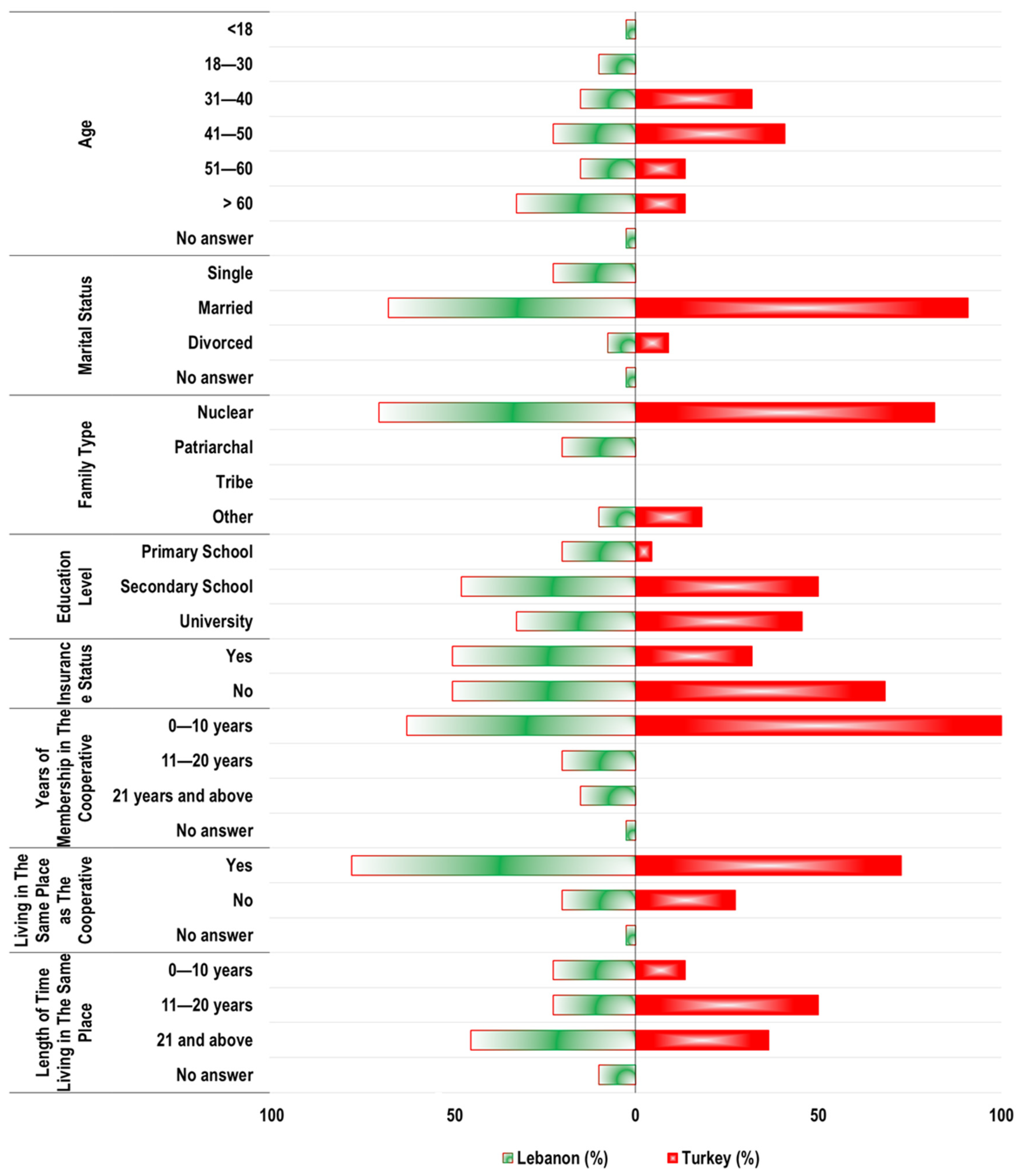
The age distribution of cooperative members reveals different demographic patterns across the two countries (Figure 1). In Lebanon, participation spans a wider range of age groups, with 32.5% of respondents aged over 60. In contrast, participation in Turkey is heavily concentrated between the ages of 31 and 50 (72.8%). These results align with those of Ozyücel et al. [23], who found that cooperative membership is generally highest among middle-aged individuals (40–60). When the educational levels of the two countries are examined, 32.5% of the Lebanese participants and 45.5% of the Turkish participants are university graduates. The majority of participants are married in both countries, though more significantly in Turkey (90.9% vs. 67.5%). Nuclear families dominate family structures in both contexts (70% in Lebanon, 81.8% in Turkey). Insured employment is more prevalent in Lebanon (50%) than in Turkey (31.8%). There were no statistically significant differences between the two countries with respect to demographic characteristics, including age, marital status, family structure, educational level, insurance coverage and proximity to the cooperative (p > 0.05); however, a significant difference was observed in the duration of cooperative membership (p < 0.05, Cramer’s V = 0.41). While 35% of Lebanese participants have been members for over 10 years, all Turkish respondents reported membership durations of less than 10 years, highlighting the relatively recent development of cooperatives in Turkey. These factors may contribute to the greater institutional stability observed in Lebanon’s cooperatives, as members potentially have more experience, resources and long-term commitment.

3.2. Cooperative Structures, Objectives and Activities

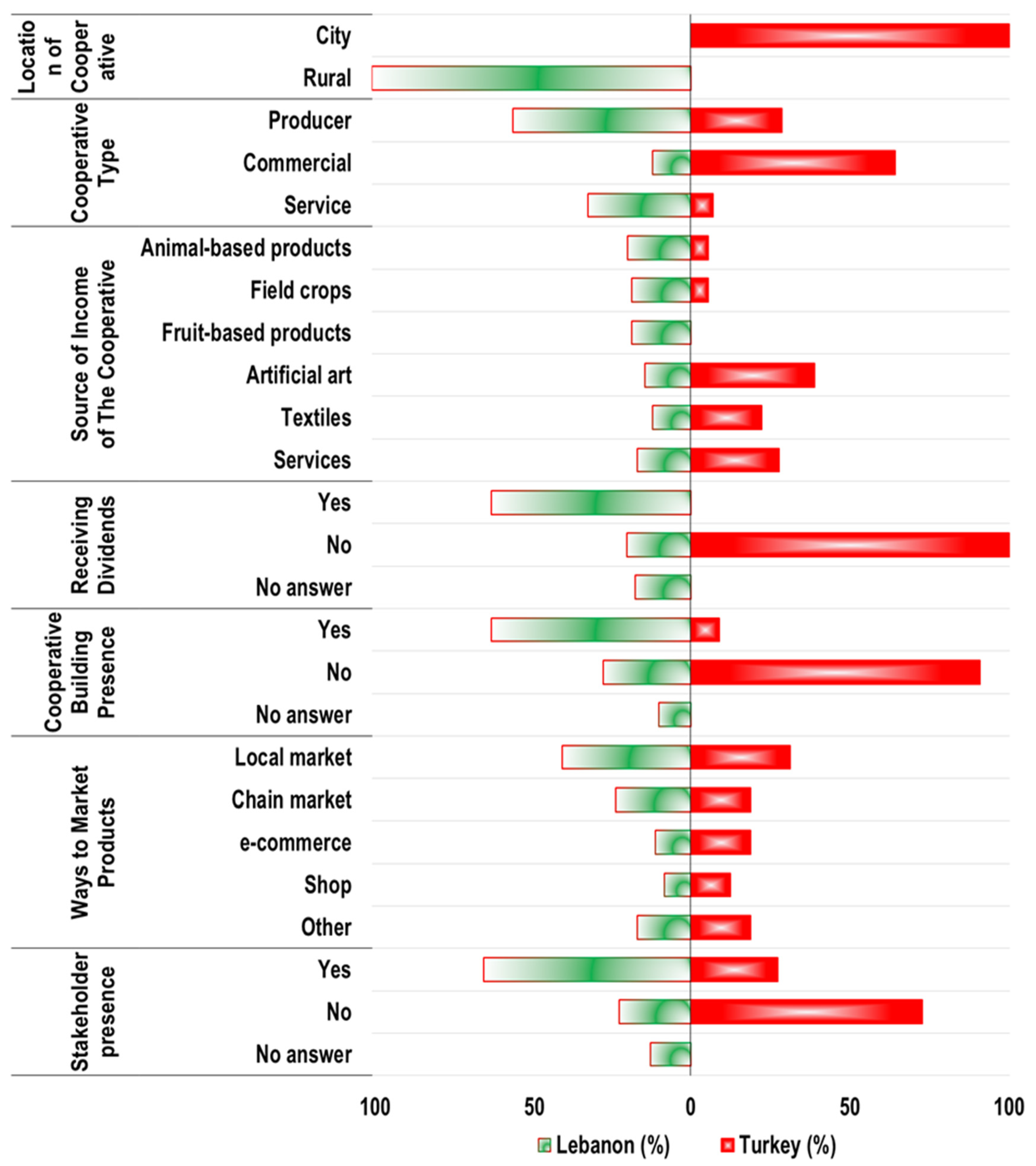
Cooperative types and structures vary notably between countries (Figure 2). In Lebanon, producer cooperatives make up the majority (55.9%), whereas in Turkey, commercial cooperatives dominate (64.3%). These distinctions are also reflected in income sources: Lebanese cooperatives rely mainly on agriculture and fruit products (18.6%), while Turkish cooperatives generate the most income from handcrafted goods (38.8%). The availability of dedicated cooperative buildings illustrates differences in organizational capacity: 62.5% of Lebanese cooperatives have their own facilities, compared to just 9.1% in Turkey. Stakeholder involvement in production, marketing and finance is reported by 65% of Lebanese cooperatives but only 27.3% of Turkish ones.
Decision-making processes in both countries are primarily handled by the cooperative president and board of directors. However, Lebanese cooperatives sometimes involve external advisors, which is rare in Turkish cooperatives.
In Lebanon, the primary source of income for cooperatives was reported as field crops and fruit-based products, which accounted for 18.6% of income. In contrast, handcrafted arts and crafts represented the largest source of income in Turkey, contributing 38.8%. Additionally, 62.5% of Lebanese respondents reported receiving dividends, while none of the Turkish respondents indicated receiving dividends. Regarding cooperative facilities, 62.5% of Lebanese cooperatives had a dedicated cooperative building, whereas 90.9% of Turkish cooperatives did not have such facilities. In terms of product distribution, 40.3% of Lebanese cooperatives sold their products in local markets, 23.6% in chain markets, 11.1% via e-commerce platforms and 8.3% in physical shops. Another 16% of Lebanese cooperatives marked ‘Other’ and reported selling their products at expos, exhibitions and similar events.
On the other hand, 65% of Lebanese cooperatives involved stakeholders in various aspects of production, marketing and finance, while 72.7% of Turkish cooperatives reported having no such stakeholders.
There were statistically significant differences between Lebanon and Turkey in terms of certain cooperative characteristics, such as marketing methods (p < 0.05), the location of the cooperative, the type of cooperative, the source of income, the receipt of dividends, the presence of cooperative buildings and the involvement of stakeholders (p < 0.01, with Cramer’s V values ranging from 0.46 to 1.00). These differences underscore the contrasting cooperative structures and operations between Lebanon and Turkey (Figure 3).
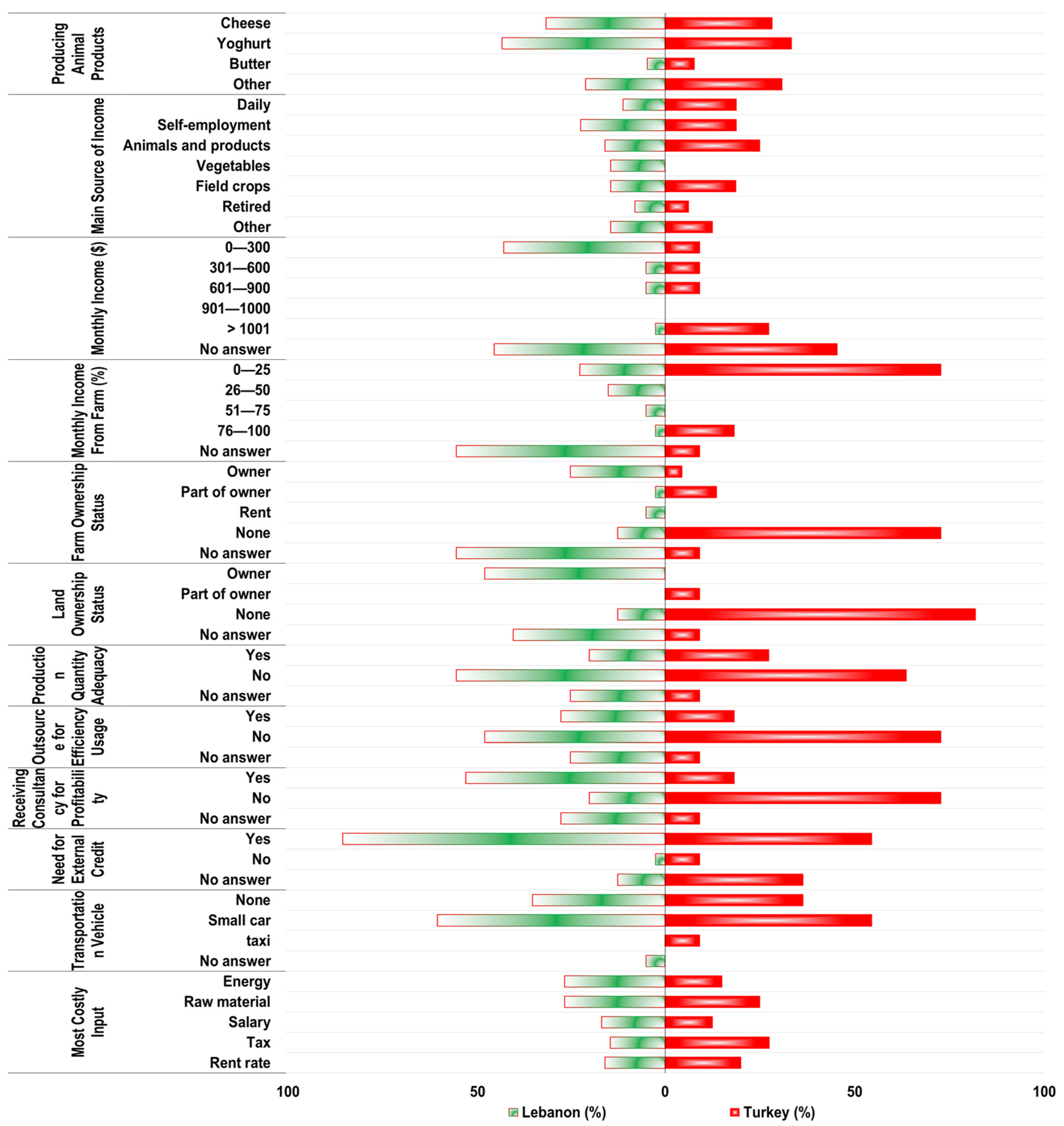
Regarding external financing, 85% of respondents in Lebanon and 54.5% in Turkey indicated the need for external credit (Figure 3). Those who did not seek loans in both countries cited challenges in accessing credit. In Turkey, the primary barrier to obtaining loans was the lack of collateral. In terms of transportation, small cars were the most common means of transport for farmers in both countries, with 60% of Lebanese respondents and 54.5% of Turkish respondents reporting this.
The most significant input costs reported in Lebanon were energy and raw materials, both at 26.5%. In Turkey, the highest input cost was taxes, reported by 27.5% of participants. Overall, there were no statistically significant differences between Lebanon and Turkey in farm-related factors such as the adequacy of production levels, the use of outsourcing for efficiency, the need for external credit, transportation vehicles, the production of animal products, the input and the primary source of income (p > 0.05). However, statistically significant differences were observed in terms of monthly income, income derived from farming activities, farm ownership status, land ownership status and the use of consultancy services to improve profitability (p < 0.01, with Cramer’s V values ranging from 0.51 to 0.80).
Seghirate [6] noted that while gender disparities in economic, social and political participation exist globally, they are particularly pronounced in the Southern Mediterranean region. Women’s land ownership in the Mediterranean is minimal, with only 6.4% of property owners in Tunisia, 4.4% in Morocco, 4.1% in Algeria, 4% in Egypt and 3% in Jordan being women.
The cooperatives in Lebanon were established between 1994 and 2021, while those in Turkey were founded between 2018 and 2019. The average membership size is 25.8 in Lebanon and 16.63 in Turkey. In Lebanon, 55.9% of cooperatives are producer cooperatives, 11.9% are commercial cooperatives and 32.2% are service cooperatives. In contrast, 28.6% of Turkish cooperatives are producer cooperatives, 64.3% are commercial cooperatives and 7.1% are service cooperatives.
Regarding their missions, cooperatives in Lebanon most frequently mentioned continuing product production and supporting women as their goals, whereas cooperatives in Turkey primarily focused on supporting women.
In terms of cooperative management, six respondents from Lebanon and two from Turkey identified themselves as cooperative managers. The information gathered from these managers is presented in Table 1.
When the six managers from six different cooperatives in Lebanon were surveyed, one manager did not respond to any of the questions in this section. The remaining cooperatives reported annual turnovers ranging from USD 5000 to USD 20,000. In these cooperatives, decisions regarding production and product sales are made by the cooperative president, the board of directors, external advisors, and cooperative members. Expenditure decisions are similarly made by the president, board of directors, external advisors and cooperative members. The capital of these cooperatives ranged from USD 556 to USD 2500. Four cooperatives had previously participated in EU or national projects, and these cooperatives organized training for their members and hired transport services.

3.3. Challenges and Support Needs

The challenges faced by cooperatives include financial constraints, marketing difficulties, legal procedures, promotional and advertising issues, raw material supply, lack of technical expertise and competition. A study conducted in Greece in 2023 revealed that while leadership roles were limited, active participation in cooperative activities was high. The women in these cooperatives viewed the organizations positively and felt empowered both economically and socially [24]. Similarly, a study in Serbia indicated that despite government support for businesses, the available measures and financial assistance have not been fully developed, and coordination between institutions such as financing, education, innovation and economic associations remains insufficient. Women entrepreneurs noted that there were not enough gender-responsive policies [25]. In Morocco, agricultural cooperatives face similar challenges, particularly the lack of access to finance and the complexity of the financial assistance system, which hinders the entrepreneurial intentions of new cooperatives [26].
Five cooperatives do not export their products, although four expressed interest in doing so. Four cooperatives employ workers, with the number of employees ranging from 2 to 10. Two cooperatives receive consultancy services. Despite these structural and demographic variations, women in both countries face similar barriers to cooperative success. Chief among these are financial limitations, marketing challenges, lack of access to raw materials and uncertainties around legal and bureaucratic procedures. These findings mirror regional studies that have identified systemic challenges such as limited financing options, lack of technical expertise and gender barriers to land and asset ownership [6,27]. In both Lebanon and Turkey, women cited the need for external credit as a pressing concern, yet structural obstacles—most notably, the lack of collateral—prevent many from accessing loans.
In Turkey, two managers from two different cooperatives provided information about their organizations. The first cooperative reported an annual turnover of USD 20,493, while the second had an annual turnover of USD 8783. In both cooperatives, decisions about production and product sales are made by the cooperative president and the board of directors. In the first cooperative, only the board of directors makes expenditure decisions, whereas in the second cooperative, both the board of directors and the cooperative president are involved in expenditure decisions. The capital of both cooperatives is USD 5855.
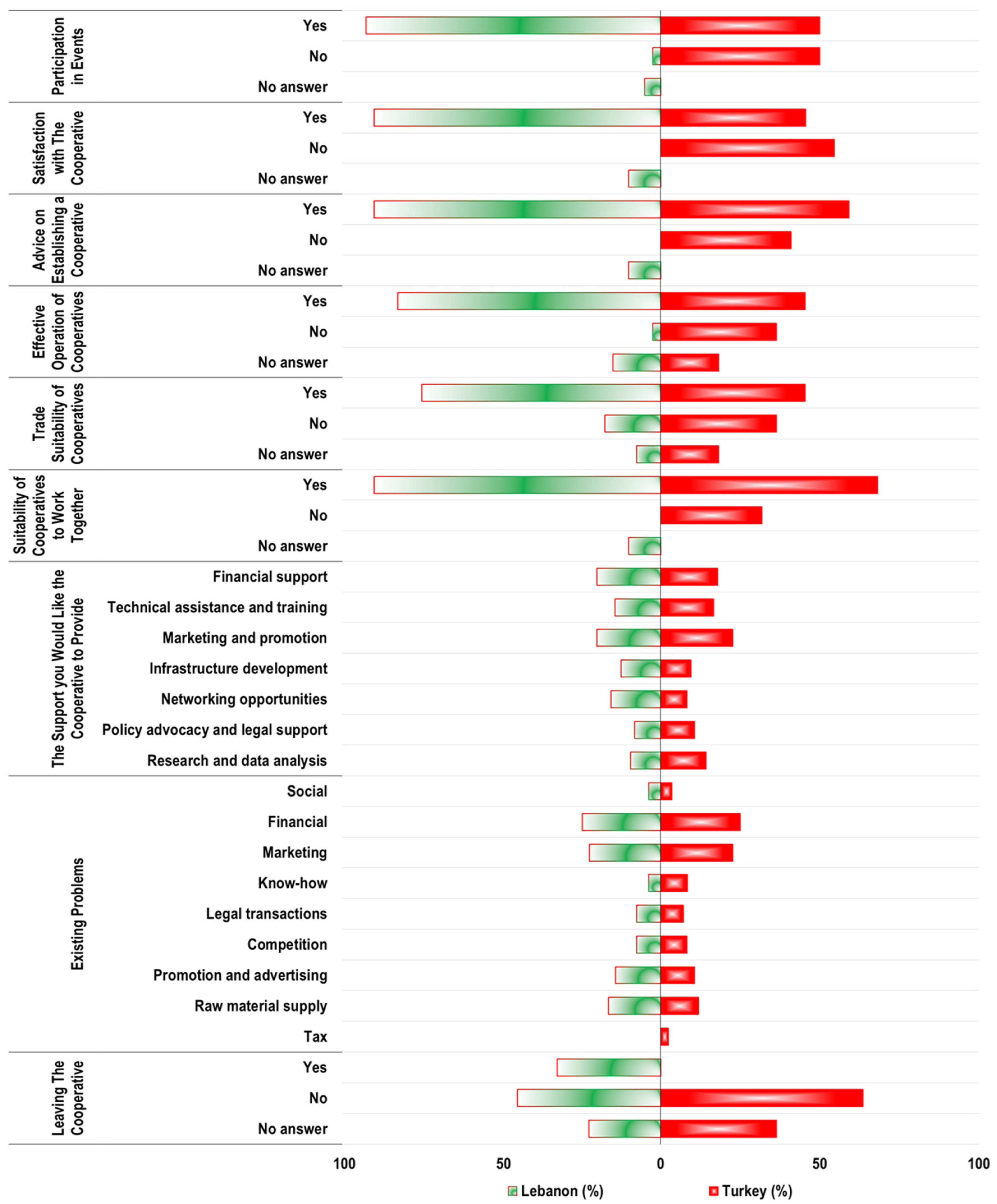
The first cooperative has 25 direct beneficiaries and 8 indirect beneficiaries, while the second cooperative has similar numbers but did not specify the exact breakdown. The first cooperative has never participated in EU or national projects, while the second cooperative has completed an EU project (SEICO) and a project supported by the Ministry of Trade. Both cooperatives organize training for their members. Neither cooperative exports products, employs workers nor receives consultancy services, but both hire transport services. The challenges faced by these cooperatives are similar to those in Lebanon, including financial issues, marketing difficulties, lack of know-how, legal challenges, competition, promotional and advertising issues, raw material supply and taxes. Information on the future plans of the cooperatives from both countries is provided in Figure 4.
Participation in training and educational activities organized by cooperatives is notably higher in Lebanon (92.5%) compared to Turkey (50%). In terms of satisfaction with their respective cooperatives, 90% of respondents in Lebanon expressed satisfaction, while only 45.5% of respondents in Turkey reported the same. Similarly, 90% of Lebanese respondents would recommend that women start a cooperative, compared to 59.1% in Turkey. The most commonly cited reason for forming a cooperative in both countries is the belief that they are stronger together.
Regarding the effectiveness of women’s cooperatives, 82.5% of Lebanese respondents and 45.4% of Turkish respondents believe that women’s cooperatives are as effective as men’s or mixed-gender cooperatives. Those who disagreed often attributed this to the perceived lack of experience among women compared to men. In terms of the suitability of cooperatives for business, 75% of respondents in Lebanon and 45.4% in Turkey feel that cooperatives are suitable for business. Those who disagreed cited the need for specialized traders for certain tasks. However, a majority in both countries (90% in Lebanon and 68.2% in Turkey) felt that cooperatives are suitable for collaborative work, with dissenters mentioning challenges in making joint decisions and coming together as a group.
In terms of support, respondents in both Lebanon and Turkey highlighted marketing, promotion and financial support as the most important types of assistance their cooperatives should provide. This aligns with the primary challenges identified, as marketing and financial issues were the most prevalent concerns faced by cooperatives in both countries.
When asked about how they communicate their needs to the cooperative, Lebanese respondents most commonly indicated cooperation among members as the primary method, while Turkish respondents predominantly mentioned meetings and telephone calls as their main communication channels. Finally, when asked about their intention to leave the cooperative, 45% of respondents in Lebanon and 62.6% of respondents in Turkey stated that they do not plan to leave their cooperatives.
There was no statistically significant difference between Lebanon and Turkey regarding the support that participants want to receive for the future plans of their cooperatives (p > 0.05). However, statistically significant differences were observed between the two countries regarding other aspects of future plans, such as existing problems, participation in events, satisfaction with the cooperative, recommendations for starting a cooperative, the perceived effectiveness of cooperatives, their suitability for collaborative work and the intention to leave the cooperative (p < 0.01, with Cramer’s V values ranging from 0.42 to 0.65). These differences highlight distinct perceptions and experiences in Lebanon and Turkey, with participants in Lebanon generally expressing higher levels of satisfaction, stronger support for cooperatives and more favorable views on the operational effectiveness and collaborative potential of cooperatives compared to their Turkish counterparts.
Women’s cooperatives face a range of challenges, with the three most prominent being a lack of funding and financial support, uncertainty regarding legislation and procedures and political interference in cooperative operations. Despite these challenges, women’s cooperatives play a vital role in women’s empowerment and enhancing their visibility in the public sphere. With improved legal regulations and financial backing, these cooperatives could have a far greater positive impact on women’s lives in Turkey, gaining more respect and influence [28]. Furthermore, to increase their effectiveness, there is a belief that cooperatives should be strengthened, with more women encouraged to take on leadership roles and additional training opportunities provided.

4. Conclusions

This study provides a comparative overview of women’s cooperatives in Lebanon and Turkey, focusing on their structural characteristics, areas of activity and key challenges. The findings reveal that cooperatives in Lebanon generally have a larger membership and are primarily oriented toward production activities. In contrast, Turkish cooperatives tend to focus more on commercial operations. While none of the surveyed cooperatives engage in export activities, several—particularly in Lebanon—expressed a clear interest in accessing international markets.
Despite differences in structure and focus, cooperatives in both countries face similar challenges, including financial constraints, limited marketing and promotional capacity, legal and bureaucratic obstacles, insufficient technical expertise and intense market competition. Although the majority of participants view cooperatives as suitable for collaborative work, difficulties related to decision-making and coordination remain significant concerns.
Participants identified marketing support, financial assistance and promotional activities as their most pressing needs. Addressing these areas could substantially enhance the sustainability and impact of women’s cooperatives. Strengthening these cooperatives has the potential not only to improve local economic development but also to promote greater gender equality and empower women within rural communities.

Author Contributions

Conceptualization, N.K. and L.C.; methodology, S.G.; validation, N.K., L.C., C.E. and A.R.; formal analysis, G.K. and M.C.G.; investigation, N.K., L.C., S.G., C.E. and A.R.; data curation, M.C.G.; writing—original draft preparation, N.K., S.G. and M.C.G.; writing—review and editing, L.C., G.K., C.E. and A.R. All authors have read and agreed to the published version of the manuscript.

Funding

This research received no external funding.

Institutional Review Board Statement

The study was approved by the Ethics Committee of Cukurova University under protocol number 1334656 and approval date: 17 June 2025.

Informed Consent Statement

Informed consent was obtained from all subjects involved in the study.

Data Availability Statement

The data presented in this study are available on request from the corresponding author.

Conflicts of Interest

The authors declare no conflicts of interest.

References

  1. Unsan, A.; Sülkü, S.N. Determination and Comparison of Development Levels’ Across Regions: Turkey Case. Bilig Dergisi 2020, 95, 177–209. [Google Scholar] [CrossRef]
  2. Alkan, S.; Toksoy, D. Women and Rural Development in Forest Villages (The Case of Trabzon Province). In Proceedings of the Second Forestry Socio-Economic Problems Congress 2009, Isparta, Turkey, 19–21 February 2009. [Google Scholar]
  3. Arıkan, G. Being a Woman in Rural Areas. Hacet. Univ. Fac. Arts J. 1988, 5, 1–16. [Google Scholar]
  4. Yanık, D. The Cooperative System Supports the Economic Development of Women. 2022. Available online: https://aile.gov.tr/ksgm/haberler/bakanimiz-derya-yanik-kooperatifcilik-sistemi-kadinlarin-ekonomik-yonden-kalkinmasini-destekliyor/ (accessed on 30 June 2024).
  5. Daglı, A.; Akıllı, A. The Role of Female Labor in Animal Production Activities: The Case of Eskil District. Ahi Agric. J. 2022, 2, 56–70. [Google Scholar]
  6. Seghirate, Y. Strategic Sectors-Economy & Territory Panorama Mediterranean Women in Rural and Agricultural Communities: Double Jeopardy, Multiple Opportunities. Available online: https://www.iemed.org/wp-content/uploads/2021/01/Mediterranean-Women-in-Rural-and-Agricultural-Communities-Double-Jeopardy-Multiple-Opportunities.pdf (accessed on 30 June 2024).
  7. Gönüllü Atakan, A.; Çoban, A. Empowerment of Women in Turkey through Cooperatives: Legal and Structural Strategies Reports; International Labour Organization, ILO Office for Turkey: Ankara, Turkey, 2022; ISBN 9789220370438/9789220370445. [Google Scholar]
  8. Cetin, H. A General Evaluation of the Social, Economic, and Democratic Impacts of Cooperatives in the Development Process. Entrep. Dev. J. 2009, 4, 35–50. [Google Scholar]
  9. Ozcan, O. The Historical Development of Cooperatives in Turkey and Cooperative Movement in the Republican Era. Master’s Thesis, Marmara University, Institute of Social Sciences, Istanbul, Turkey, 2007; p. 108. [Google Scholar]
  10. KEIG. Women’s Cooperatives Guide. Women’s Labor and Employment Initiative. 2018. Available online: www.keig.org (accessed on 15 October 2024).
  11. Mulayim, Z.G. Cooperatives; No. 11; Yetkin Publications: Ankara, Türkiye, 2006. [Google Scholar]
  12. USDA. Agricultural Cooperative Statistics. USDA Rural Development Service Report 83. 2019. Available online: https://www.rd.usda.gov/sites/default/files/publications/sr83_agriculturalcooperativestatistics_2019.pdf (accessed on 30 June 2024).
  13. FAO. Lebanon Supports Cooperatives Through Capacity Building and Grants. 2023. Available online: https://www.fao.org/neareast/news/details/FAO-Lebanon-supports-cooperatives-through-capacity-building-and-grants/en (accessed on 4 April 2025).
  14. FAO. Women-Led Cooperatives Foster Resilience Amidst Adversity in Türkiye. 2024. Available online: https://www.fao.org/newsroom/story/Women-led-cooperatives-foster-resilience-amidst-adversity-in-T%C3%BCrkiye/en (accessed on 4 April 2025).
  15. ICA. Co-Operation: Empowering Women, Empowering Humanity. 2015. Available online: https://ica.coop/en/media/library/2015-international-womens-day-message-ica-gender-equality-committee (accessed on 4 April 2025).
  16. ILO. World Employment and Social Outlook: Trends for Women 2018—Global Snapshot. 2018. Available online: https://www.ilo.org/publications/world-employment-and-social-outlook-trends-women-2018-%E2%80%93-global-snapshot (accessed on 4 April 2025).
  17. Sahankaya Adar, A.; Dedeoglu, S.; Kurtulus, G. Türkiye’de Kadın Kooperatifleri: Mevcut Durum Analizi, Kadın Güçlenmesi ve İstihdam Yaratma Potansiyeli. Çalışma ve Toplum 2023, 2, 1171–1208. [Google Scholar] [CrossRef]
  18. ILO. Asia–Pacific Employment and Social Outlook 2022: Rethinking Sectoral Strategies for a Human-Centred Future of Work. 2022. Available online: https://www.ilo.org/publications/major-publications/asia-pacific-employment-and-social-outlook-2022-rethinking-sectoral (accessed on 4 April 2025).
  19. Vakoufaris, H.; Kizos, T.; Spilanis, I.; Koulouri, M.; Zacharaki, A. Women’s Cooperatives and their Contribution to the Local Development of the North Aegean Region, Greece. J. Rural. Coop. Hebr. Univ. Cent. Agric. Econ. Res. 2007, 35, 19–41. [Google Scholar]
  20. FAO. The State of Food and Agriculture 2020: Overcoming Water Challenges in Agriculture. 2020. Available online: https://www.fao.org/interactive/state-of-food-agriculture/2020/en/ (accessed on 4 April 2025).
  21. Turkish Statistical Institute (TURKSTAT). Agriculture. 2022. Available online: https://data.tuik.gov.tr/Search/Search?text=tar%C4%B1m&dil=1 (accessed on 4 April 2025).
  22. TKB. Livestock Data. 2025. Available online: https://www.tarimorman.gov.tr/Konular/Hayvancilik?Ziyaretci=Ciftci (accessed on 4 April 2025).
  23. Ozyücel, M. The Role of Women’s Cooperatives in Local Development: Search of Yalvaç Pisidia Antiokheia Women Entrepreneurs Cooperative. Süleyman Demirel Univ. Vision. J. 2023, 14, 516–529. [Google Scholar] [CrossRef]
  24. Tselempi, S.; Frantzis, M.; Sergaki, P. Assessing Economic and Social Security in Agricultural Cooperatives: Two Case Studies from Cooperatives in Northern and Southern Greece. Proceedings 2024, 94, 24. [Google Scholar] [CrossRef]
  25. Ćurčić, N.V.; Grubor, A.; Muhović, A. Customer Relationship Marketing and Institutional Support Influence on the Women’s Companies Sustainability in Serbia. Sustainability 2021, 13, 10824. [Google Scholar] [CrossRef]
  26. Bouichou, E.H.; Abdoulaye, T.; Allali, K.; Bouayad, A.; Fadlaoui, A. Entrepreneurial Intention among Rural Youth in Moroccan Agricultural Cooperatives: The Future of Rural Entrepreneurship. Sustainability 2021, 13, 9247. [Google Scholar] [CrossRef]
  27. Sahin, E. Kadın girişimcilik ve Konya ilinde kadın girişimcilik profili üzerine bir uygulama. Sos. Ekon. Araştırmalar Derg. 2009, 9, 286–309. [Google Scholar]
  28. MWMN. Research on Women Cooperatives 2023. 2024. Available online: https://womenmediators.net/wp-content/uploads/2023/05/FINAL_EN_Turkey_Antenna_Report_compressed.pdf (accessed on 12 May 2024).
Figure 1. Demographic characteristics.
Sustainability 18 05995 g001
Figure 2. Cooperative overview.
Sustainability 18 05995 g002
Figure 3. Farm operation overview.
Sustainability 18 05995 g003
Figure 4. Future plans of the participants.
Sustainability 18 05995 g004
Table 1. Information obtained from cooperative managers.
QuestionsLebanon Turkey
M1M2M3M4M5M6M1M2
Annual turnover-12,000 USD-5000 USD16,696 USD20,000 USD20,493 USD8783 USD
Person who makes decisions about production and product salesCP, CMCP, CM, BD, EA-CP, BDBDBDCP, BDCP, BD
Person who decides on expensesCPCP, CM, BD, EA-CP, BDBDCPBDCP, BD
Capital-200,000 USD-2000 USD556 USD10,000 USD5855 USD5855 USD
Number of people who benefit directly and indirectly from the cooperative-500 beneficiary/year-4 woman, 3 man-10 woman, 2 man258
Participation in the projectYesYes-NoYesYesNoYes
Organizing training for members-Yes-YesYesYesYesYes
Exporting productsNoNo-NoNoNoNoNo
Willingness to export products-Yes-YesYesYes--
Employing workersNoYes, 10 Worker-Yes, 2 WorkerYes, 10 WorkerYes, 6 WorkerNoNo
Renting transportation-Yes-YesYesYesYesYes
Receiving consultancyNoYes, Per hour 35 USD-NoYes, 300 USD per dayNoNoNo
ProblemsF, MF, MKT, LT, P&A, RMS-F, MKT, P&AKnow-how, CM, RMS, CF, MKT, P&A, RMS, Know-howF, MKT, C, RMS
M: manager; CP: cooperative president; CM: cooperative member; BD: board of directors; EA: external advisors; F: financial; MKT: marketing; LT: legal transactions; P&A: promotion and advertising; RMS: raw material supply; C: competition.
Disclaimer/Publisher’s Note: The statements, opinions and data contained in all publications are solely those of the individual author(s) and contributor(s) and not of MDPI and/or the editor(s). MDPI and/or the editor(s) disclaim responsibility for any injury to people or property resulting from any ideas, methods, instructions or products referred to in the content.