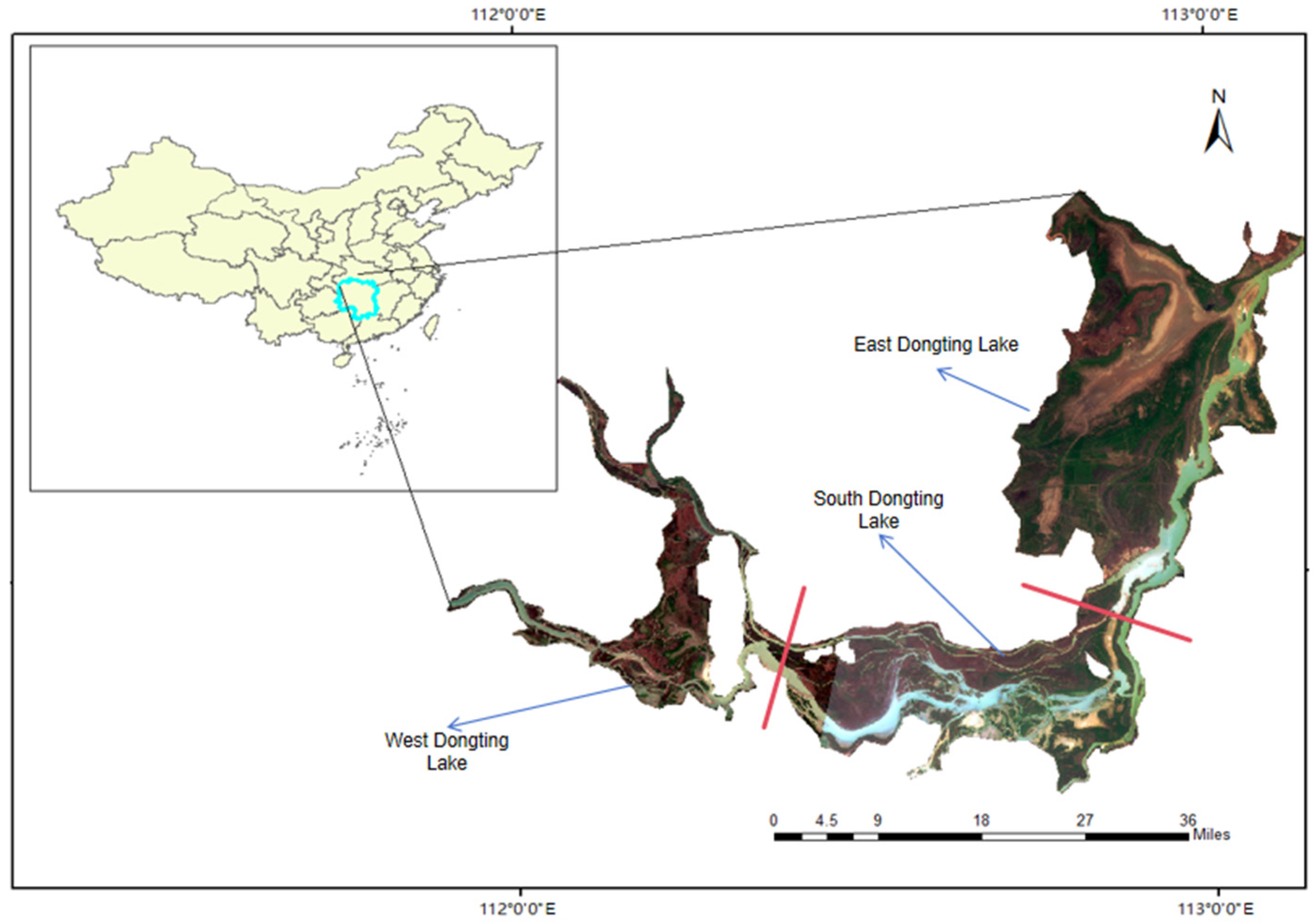
1. Introduction
Wetlands are among the most important ecosystems on Earth [
1,
2], providing multiple ecological, economic, and social values. The Dongting Lake wetland, as a wetland of international importance and a key floodplain wetland in the middle reaches of the Yangtze River basin [
3], is a core component of the ecological security barrier in the middle and lower Yangtze River [
4]. Its unique hydrological rhythm (especially the seasonal inundation process) shapes diverse wetland landscape patterns, supports rich biodiversity, and plays an irreplaceable role in regulating Yangtze River floods, purifying water quality, and modulating regional climate. Therefore, the ecological health of the Dongting Lake wetland is of strategic significance for the sustainable development of the Yangtze River Economic Belt [
5,
6,
7].
There is a close coupling relationship between wetland landscape patterns and inundation processes [
8]. Changes in inundation processes (such as inundation duration, depth, and frequency) directly alter the hydromorphological conditions of wetlands [
9], thereby driving vegetation community succession and changes in soil physicochemical properties, ultimately leading to responses in landscape pattern characteristics such as patch type, patch area, and connectivity [
4,
10,
11]. For a long time, the inundation process of the Dongting Lake wetland was mainly regulated by the natural hydrological rhythm of the Yangtze River and the incoming water from the four rivers (Xiang, Zi, Yuan, and Li), forming a relatively stable landscape dynamic characterized by “lake during high water and floodplain during low water.” This dynamic balance is the basis for the stable functioning of the wetland ecosystem services [
12,
13].
After the Three Gorges Project (TGP) officially began impoundment and operation in 2003, its strong regulation capacity changed the natural hydrological regime of the middle Yangtze River [
14], directly affecting the water and sediment inflow processes to Dongting Lake, thereby breaking the original balance of the wetland inundation process [
15,
16,
17]. On the one hand, the pre-flood drawdown of the TGP (May–June) reduces the inflow from the Yangtze River to Dongting Lake, causing the wetland to enter the recession period earlier and shortening the inundation duration. On the other hand, the post-flood impoundment (September–October) delays the recession of Yangtze River floods, prolonging the high-water-level inundation time of the Dongting Lake wetland. This hydrological change, characterized by earlier recession before floods and prolonged impoundment after floods, has already exerted significant impacts on the Dongting Lake wetland, such as expansion of exposed floodplain areas, vegetation expansion toward the lake center, shrinkage of submerged plant distribution areas, and even ecological problems like wetland degradation and biodiversity decline [
18,
19].
Current research on the impacts of the TGP on the Dongting Lake wetland has mostly focused on hydrological regime changes, water quality changes, and habitat suitability for single species (e.g., migratory birds and fish) [
20,
21]. Over the past decades, satellite remote sensing has become an indispensable tool for tracking these dynamics. Prior studies successfully utilized multi-source imagery (such as Landsat, MODIS, and Sentinel) to capture macro-scale water surface fluctuations and vegetation greenness trends in Dongting Lake. Methodologically, early efforts predominantly relied on manual visual interpretation and single-index thresholds (e.g., NDVI, MNDWI). Recently, this has evolved toward automated machine learning classification algorithms paired with spatial landscape metrics (e.g., Fragstats evaluation), enabling researchers to quantify internal landscape fragmentation and structural connectivity. However, studies on the long-term, systematic response mechanism between dynamic changes in inundation processes and wetland landscape patterns remain insufficient [
5,
22]. Existing studies often use short time-series data, making it difficult to fully reflect the cumulative changes in wetland landscape patterns over nearly 30 years after the TGP operation [
23]. Moreover, the correlation analysis between quantitative indicators of inundation processes (e.g., inundation frequency, duration, depth) and landscape pattern indices (e.g., patch density, aggregation index) is not sufficiently in-depth, failing to clearly reveal the response patterns of wetland landscape patterns under different inundation gradients [
6,
24].
With the further implementation of the Yangtze River Protection Strategy, the ecological restoration and scientific management of the Dongting Lake wetland urgently require clarification of the internal logic of hydrological driving, landscape response, and ecological effect. This study takes the Dongting Lake wetland as the research object, based on daily measured water level data from 1992 to 2023 and multi-temporal satellite remote sensing images from 1997 to 2022, to analyze and verify the changing patterns of the inundation process in Dongting Lake. On this basis, the study investigates the changing patterns of vegetation landscape patterns in the Dongting Lake wetland and finally explores the impacts of water level and inundation processes on wetland vegetation landscape patterns. Understanding these patterns is not only a regional ecological concern but also aligns with the United Nations Sustainable Development Goals (SDGs), specifically SDG 15 (Life on Land) and SDG 6 (Clean Water and Sanitation), by providing evidence-based strategies for sustainable wetland management under human-induced hydrological alterations.
3. Results
3.1. Spatiotemporal Evolution of the Inundation Process
3.1.1. Interannual and Intra-Annual Water Level Changes
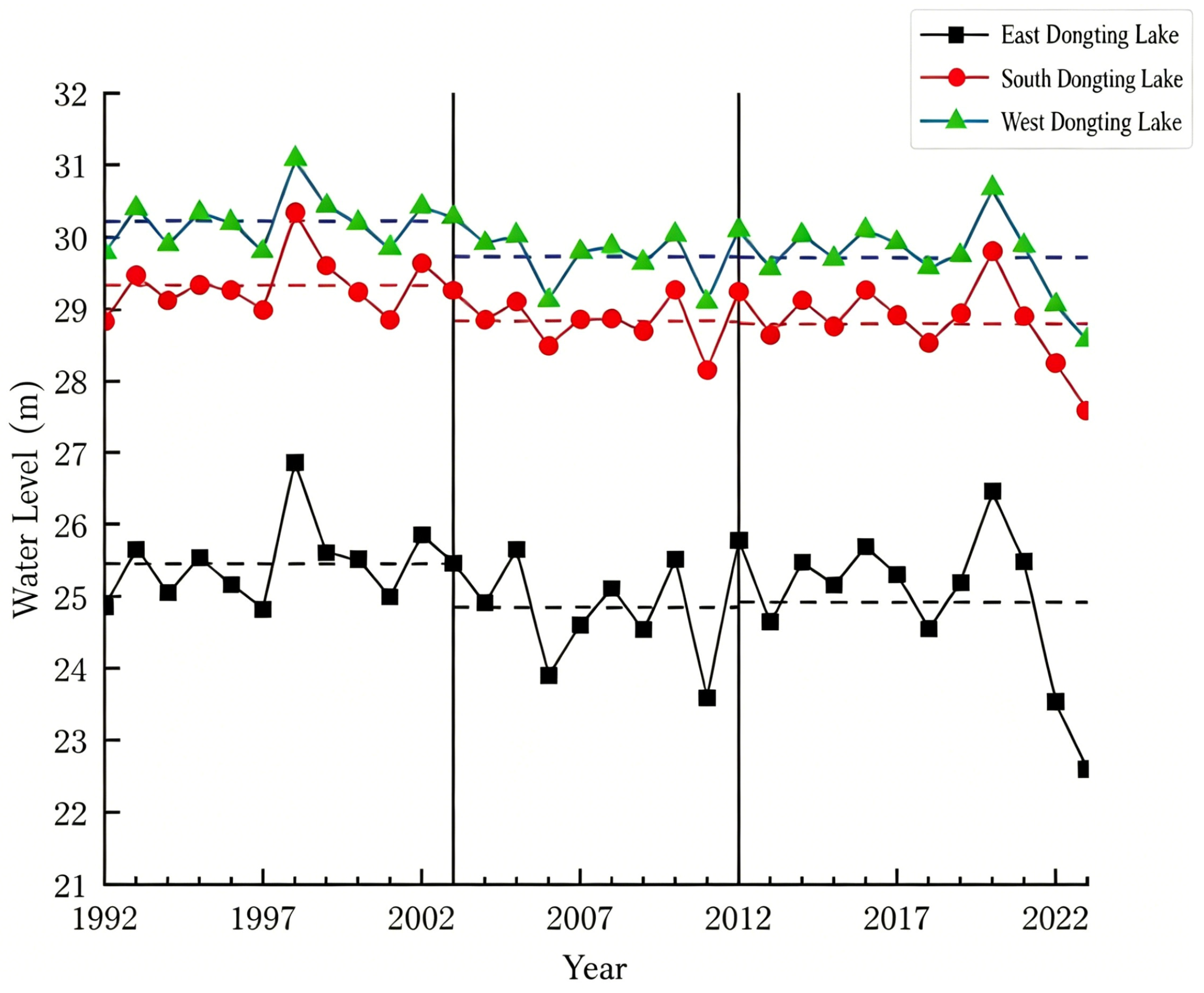
From the perspective of interannual water levels (
Figure 2), the water levels in the three regions of Dongting Lake all showed a gradual decreasing trend, with the most significant decline in Phase II (2004–2012). The decline in East Dongting Lake (0.7 m) was greater than that in South and West Dongting Lakes (0.49 m). In Phase III, water levels tended to stabilize, but low-water events became more frequent. The frequency of low water levels (<23 m) in East Dongting Lake increased from twice in Phase II to five times in Phase III. The standard deviation of water levels showed that Phase I had the largest fluctuation, Phase II had the smallest fluctuation, and Phase III saw a rebound in fluctuation, reflecting that the regulatory effect of the TGP on water levels was most significant in Phase II, while the influence of other factors such as climate change increased fluctuations in Phase III.
To further verify the statistical significance of the differences among these three phases, a One-way ANOVA paired with a post-hoc Tukey’s HSD test was conducted on the annual mean water levels. The results indicated no statistically significant differences across Phase I, Phase II, and Phase III (p > 0.05). The rationale for dividing the study period into these three specific stages is strictly based on the key historical milestones of the Three Gorges Project (TGP)—considering that Dongting Lake is the first large river-connected lake directly downstream of the TGP. Specifically, 2003 marks the completion and initial impoundment of the TGP, and 2012 marks the impoundment reaching the maximum designed water level of 175 m. This non-significant statistical difference suggests that while the absolute interannual mean water levels remained relatively stable without drastic long-term fluctuations, the core impacts of the TGP on the downstream wetland are not merely reflected in the average water level, but rather in the profound alteration of intra-annual hydrological rhythms and specific inundation processes (e.g., inundation duration, frequency, and depth), which forms the core focus of the subsequent sections.
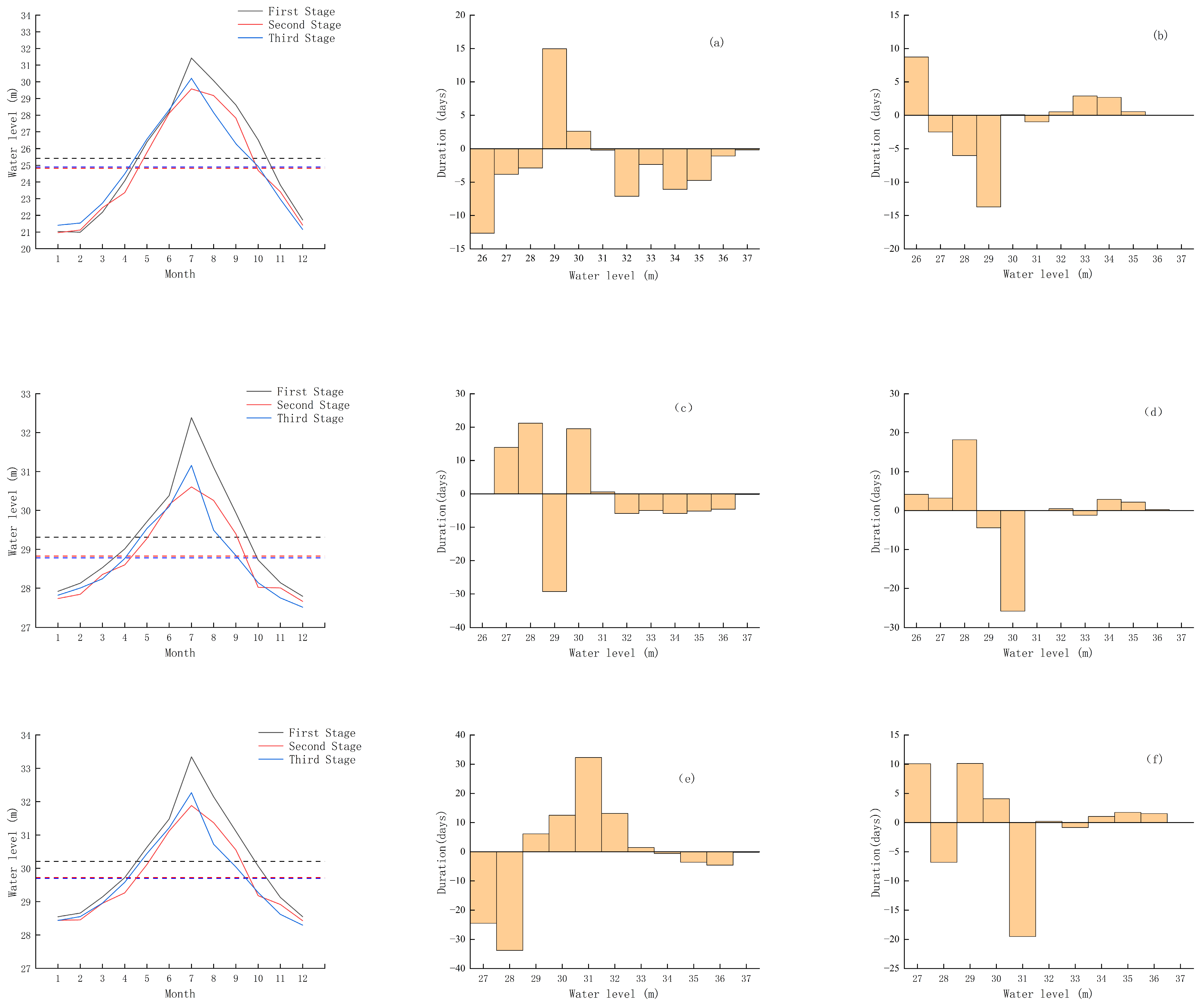
From the perspective of intra-annual hydrological rhythm (
Figure 3, where a and b are for East Dongting Lake, c and d for South Dongting Lake, e and f for West Dongting Lake), all three phases followed the typical seasonal fluctuation pattern of lakes in the monsoon region of the middle and lower Yangtze River: water levels remained low with slight variation during the non-flood season (January–March, November–December), mostly in the range of 21–25 m; during the flood season (June–September), water levels rose rapidly, peaked, and then gradually receded. After TGP operation, the maximum water level during the flood season (June–September) decreased significantly (by 1.46–1.85 m from Phase I to Phase II), and the duration of high water levels was markedly shortened. The recession rate of water levels increased, leading to an earlier arrival of the dry season and a substantial increase in the duration of low water levels, completely altering the natural hydrological process of “rapid rise during flood season and slow recession during dry season.”
3.1.2. Spatiotemporal Dynamics of Inundation Process Elements (Frequency, Duration, Depth)
The inundation process of Dongting Lake exhibited significant spatiotemporal differentiation and drying characteristics after TGP operation (
Table 2). Spatially, the high-frequency zone (F ≥ 0.6) of inundation frequency (F) contracted from a contiguous distribution at elevations of 19–23 m during the natural hydrological period toward the lake center, becoming reduced to discrete patchy distribution by Phase III (2013–2023). Inundation duration (T) showed a gradient pattern decreasing from the lake center to the margins, with the mid-elevation zone (22–28 m) being most severely affected, exhibiting greatly increased fluctuations in inundation time. In terms of evolution trends, with the decline in mean water level, the lake-wide average inundation duration and frequency both showed a fluctuating decrease. In particular, the inundation time at characteristic elevations of 25 m and 30 m was greatly reduced compared to the natural period. Meanwhile, due to the flood-peak clipping effect of the TGP, the maximum inundation depth (H) tended to stabilize after an initial decline, and the extreme deep-water stress (>6 m) in the 19–25 m elevation zone was significantly alleviated. Overall, the inundation process shifted from a long-duration, high-frequency, deep inundation pattern under natural conditions to a short-duration, low-frequency, shallow inundation pattern under engineering intervention. The drying evolution of wetland habitats broke the original hydrological homogeneity.
3.2. Distribution of Vegetation Types
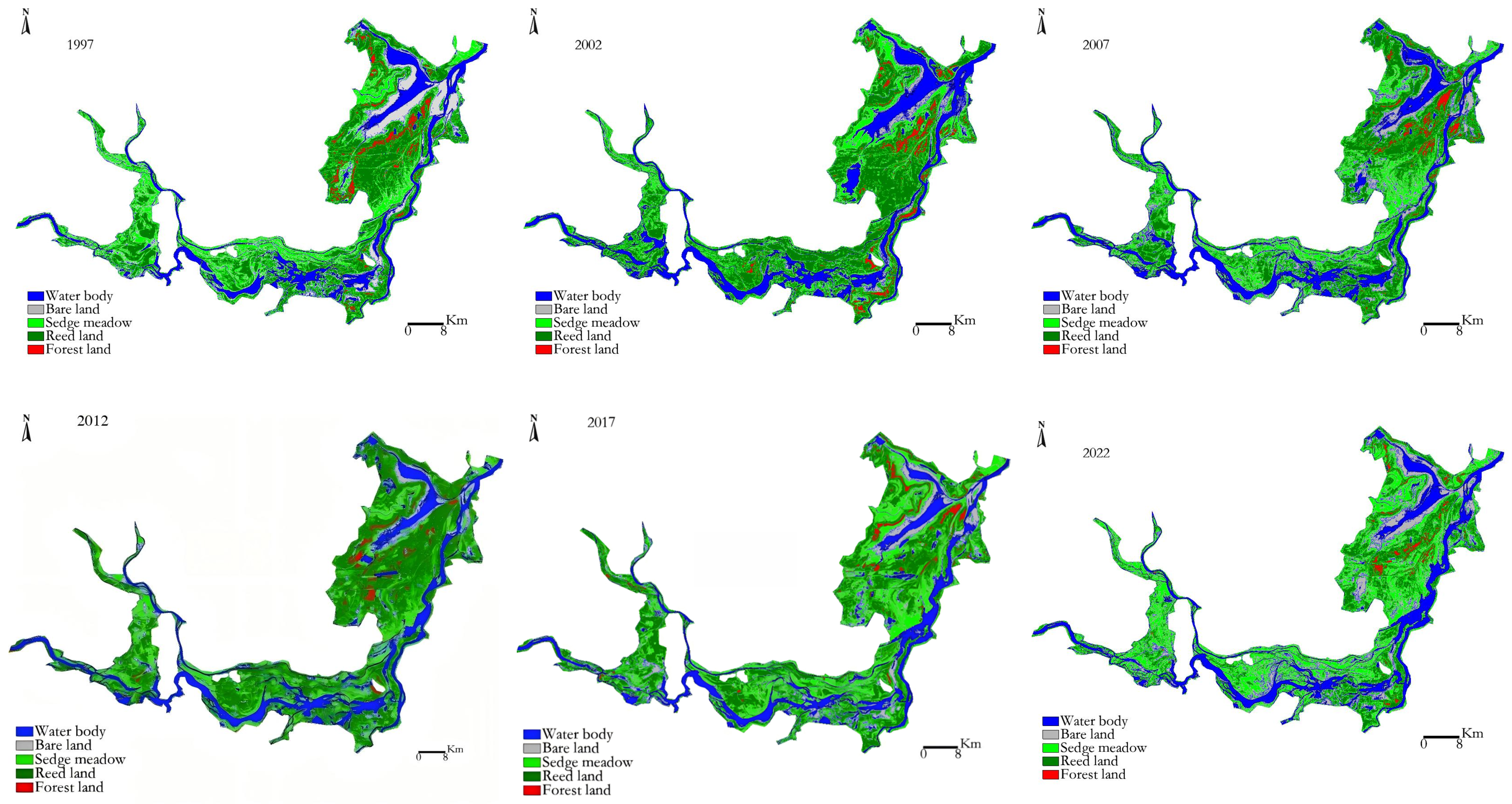
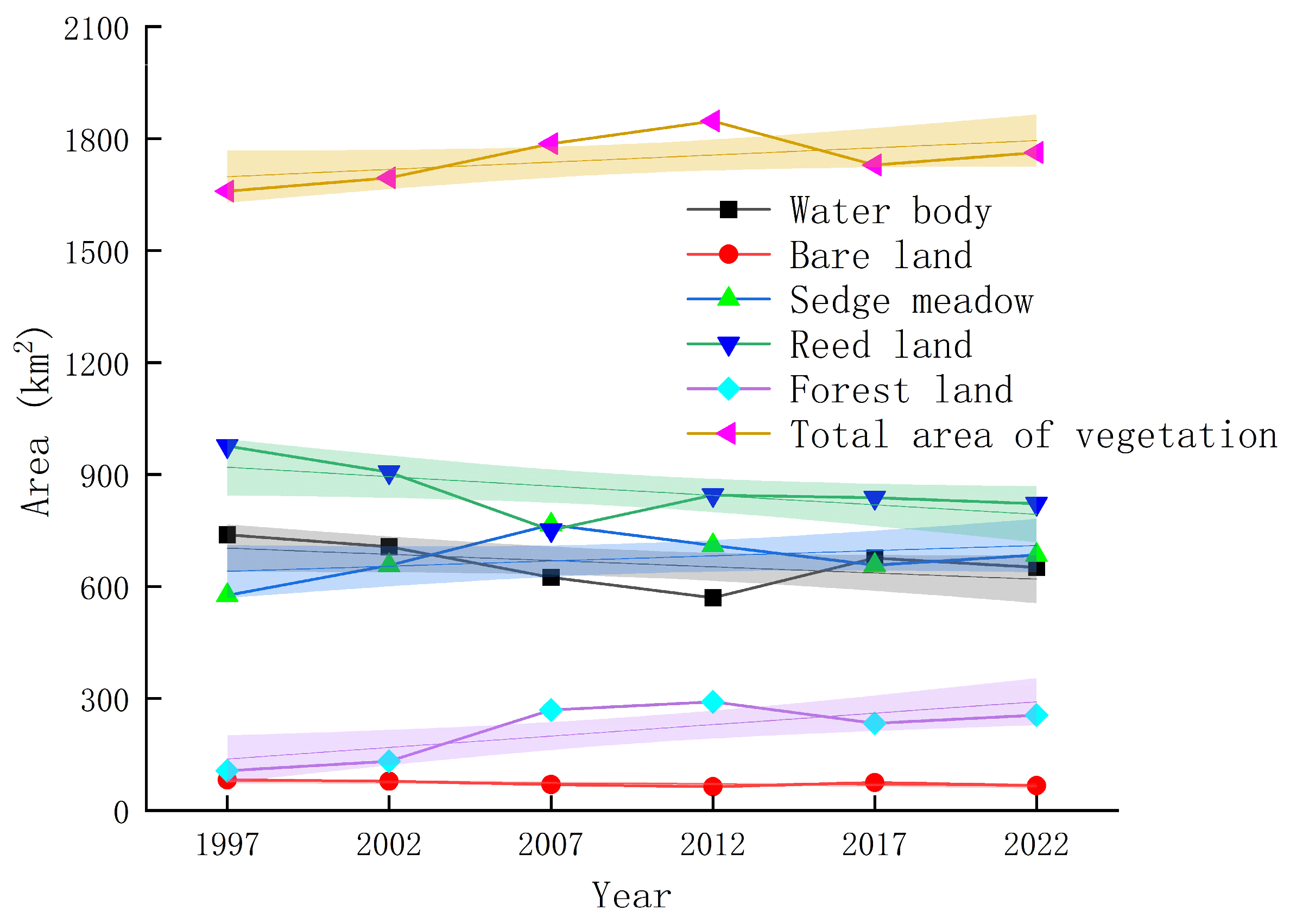
Figure 4 shows the composition and distribution of landscape elements in the Dongting Lake wetland during the flood season from 1997 to 2022. As shown in
Table 3, during the dry season, water bodies accounted for more than 29% of the area in each year, sedge meadow accounted for more than 23%, and reed land accounted for up to 30%. The combined area proportion of these three landscape types exceeded 82%, indicating that water bodies, sedge meadow, and reed land are the dominant landscape types in this wetland. Spatially, water bodies and mudflats exhibited good connectivity, forming a natural corridor for the Dongting Lake wetland landscape, exerting high control over other landscape element types, and serving as the matrix of the entire watershed landscape. Reed land showed an aggregated distribution pattern, while forest land and sedge meadow displayed scattered patchy patterns throughout the landscape.
From
Table 3 and
Figure 5, the total vegetation area in Dongting Lake showed an overall increasing trend, from 66.90% in 1997 to 71.05% in 2022, reaching an area of 1762.30 km
2. Specifically, vegetation area continued to expand from 1997 to 2012, peaking at 1846.87 km
2 (74.47%) in 2012. From 2012 to 2017, affected by multiple factors, vegetation area declined to 1729.02 km
2, then slightly rebounded to 1762.30 km
2.
Overall, from 1997 to 2022, the area of sedge meadow changed relatively smoothly. From 1997 to 2007, the sedge meadow area increased by 188.95 km2, accounting for 32.78% of its area in 1997. The increase mainly came from the conversion of reed land and poplar forest. However, from 2007 to 2022, the sedge meadow area decreased by 80.74 km2, accounting for 11.79% of its area in 2007, mainly converting to reed land and water bodies. Overall, the total area of reed land decreased by 154.33 km2 from 1997 to 2022, accounting for 15.81% of its area in 2017. From 1997 to 2007, reed land area decreased by 255.14 km2, accounting for 23.06% of sedge meadow area in 1997, mainly converting to sedge meadow and poplar forest. From 2007 to 2012, reed land area increased by 93.91 km2, accounting for 12.50% of its area in 2007, mainly from sedge meadow and water bodies. From 2012 to 2022, reed land area decreased by 23.10 km2, accounting for 2.07% of its area in 2012, mainly converting to sedge meadow and poplar forest. Overall, the proportion of poplar forest area was relatively small compared to other communities. From 1997 to 2012, the total area of poplar forest increased by 184.9 km2, accounting for 173.78% of its area in 1997, mainly converted from reed land. From 2012 to 2022, the total area of poplar forest decreased by 35.78 km2, accounting for 12.28% of its area in 2012, mainly converting to reed land.
3.3. Dynamic Characteristics of Wetland Landscape Patterns in Dongting Lake
As shown in
Table 4, from 1997 to 2007, Patch Density (PD) and Landscape Shape Index (LSI) decreased, while Largest Patch Index (LPI), Contagion Index (CONTAG), and Aggregation Index (AI) increased, and Shannon’s Diversity Index (SHDI) dropped sharply. This reflects that the dominance of the dominant landscape type increased during this period, patch geometry edges tended to simplify, landscape fragmentation showed a decreasing trend, landscape diversity decreased, the aggregation degree of various patch types increased, and the landscape ecosystem tended to stabilize. From 2007 to 2017, PD and LSI increased, while LPI, CONTAG, AI, and Cohesion Index (COHESION) decreased, and SHDI rebounded. This indicates that the dominant landscape patches were severely fragmented, patch geometry edges tended to become complex, the degree of landscape fragmentation greatly increased, landscape diversity somewhat recovered, the aggregation degree of various patch types decreased, and the landscape ecosystem showed a deteriorating trend. From 2017 to 2022, PD and LSI decreased, while LPI, CONTAG, AI, and COHESION increased, and SHDI slightly decreased. This indicates that patch geometry edges tended to become regular, the degree of landscape fragmentation decreased, the dominance of the dominant type was reestablished, the clustering degree of various patch types increased, and the landscape ecosystem gradually improved.
Overall, from 1997 to 2022, landscape fragmentation in the region showed a trend of first decreasing, then increasing, and then decreasing. Patch shape and structure first tended to simplify, then become complex, and then become regular. Landscape diversity first decreased, then rebounded, and then slightly declined. From 2017 to 2022, the landscape ecosystem showed a clear trend of improvement.
3.4. Nonlinear Dynamic Characteristics of Wetland Landscape Fragmentation and Stability
The landscape pattern of the Dongting Lake wetland underwent a nonlinear evolution process of relative stability, severe fragmentation, and gradual recovery during the study period (
Table 5 and
Table 6). In the early stable period after TGP operation (1997–2007), PD and LSI steadily decreased, patch connectivity increased, and the landscape stability index (S) rose to 0.68, indicating the system remained in a relatively high natural steady state. During the high-disturbance period after TGP operation (2007–2017), driven by the dual factors of hydrological drying and uncontrolled expansion of forest land (poplar), PD surged to 109.42, CONTAG plummeted, and S dropped to a trough of 0.35, showing high heterogeneity and spatial fragmentation of the landscape. In the recovery period with ecological restoration intervention (2017–2022), with the implementation of policies such as “returning forest to wetland,” PD effectively decreased, dominant patches (e.g., reed and sedge) reconnected and aggregated, landscape structure returned to a more regular pattern, and S strongly rebounded to 0.58. Overall, this nonlinear fluctuation confirms the dynamic response of landscape patterns to changes in hydrological rhythm and habitat gradients.
3.5. Convergent Migration of Vegetation Distribution Centroids
The change in hydrological rhythm drove the spatial reconstruction of vegetation centroids (
Table 7). The centroid of reed land continuously migrated toward the northwest lake center from 1997 to 2022 (up to 1250 m) to adjust to habitat changes caused by earlier recession, and later migrated back toward the shore due to ecological restoration. The centroid of sedge meadow experienced a wave-like trajectory of “expansion toward margins—compression and retreat toward lake center—return to margins.” The centroid of forest land, after encountering obstacles to blind expansion toward the lake center, fully retreated to higher floodplains.
3.6. Sensitivity of Vegetation Distribution to Inundation Processes
The response of different vegetation communities to hydrological factors showed significant sensitivity differentiation (
Table 8). Reed land and sedge meadow both belong to highly sensitive types, but due to distinct physiological niches, their response directions are completely opposite. As a typical mesophyte, reed land suffers from prolonged inundation (>6 months) causing soil hypoxia and inhibiting root respiration, resulting in a significant negative correlation between its distribution area and inundation frequency (r = −0.75,
p < 0.01) and inundation duration (r = −0.78,
p < 0.01). In contrast, sedge is a hygrophyte that highly depends on and is suitable for moderate inundation of 3–6 months; its area significantly expands with increasing inundation frequency (r = 0.71,
p < 0.01) and duration (r = 0.73,
p < 0.01). In comparison, forest land (poplar) showed a moderate sensitivity to hydrological changes. As a terrestrial plant, poplar is only suitable for dry high floodplain habitats with less than 3 months of inundation. Its area expansion was not significantly correlated with maximum inundation depth (r = 0.32,
p > 0.05), but showed significant negative correlations with inundation duration (r = −0.58,
p < 0.01) and frequency (r = −0.55,
p < 0.01), indicating that substantial improvement in hydrological inundation conditions is the most effective natural factor restraining its blind expansion.
3.7. Contribution Rates Quantified by Stepwise Regression Model
The stepwise regression model quantitatively revealed that the three elements of the inundation process have a factor differentiation driving pattern on the variation in the Dongting Lake wetland landscape pattern (
Table 9). Among them, inundation frequency (F) was the primary negative driving factor limiting wetland landscape diversity (contribution rate to SHDI of 43.3%). High-frequency inundation eliminates sensitive species through a strong “environmental filtering” effect, promoting the contiguous distribution of dominant species such as reed, leading to simplification of community structure and a sharp increase in landscape contagion (CONTAG). At the same time, high-frequency disturbance exacerbates habitat fragmentation in the aquatic-terrestrial ecotone, significantly inhibiting the aggregation (AI) of similar patches. On the other hand, maximum inundation depth (H) was the core support for maintaining landscape physical connectivity, significantly positively driving patch cohesion (COHESION, contribution rate 23.1%) and largest patch index (LPI, contribution rate 15.1%). The maintenance of deep-water environments not only ensures the overall structural integrity of water bodies and wetland patches but also provides sufficient ecological space for maintaining a diversified vegetation belt of “submerged–floating-leaved–emergent–wet” plants. Although inundation duration (T) was excluded from some models due to strong statistical collinearity with inundation frequency (F), the two always exert an inseparable synergistic disturbance effect in real ecosystems.
3.8. Identification of Response Thresholds
Based on nonlinear fitting between landscape characteristics and hydrological factors, this study further identified key hydrological response thresholds for maintaining the stability of the wetland ecosystem (
Table 10). These thresholds define the critical inflection points at which the wetland ecosystem shifts from a steady state to “degradation” or “succession.” The analysis revealed that landscape diversity (SHDI) exhibits a typical unimodal curve response to inundation frequency (F), verifying the “intermediate disturbance hypothesis.” When F is in the optimal disturbance range of 0.45–0.55 (equivalent to an annual inundation duration of 165–200 days), habitat heterogeneity reaches its highest level (SHDI up to 0.70). If F falls below 0.40, it leads to habitat drying and homogenization, while exceeding 0.60 results in landscape degradation to a single water body due to extreme deep-water stress. At the community niche scale, the tolerance limits of dominant vegetation differ significantly. The upper threshold for poplar forest establishment is inundation duration (T) < 100 days. The optimal hydrological range for sedge meadow is strictly between 150 and 210 days, while that for reed land is 120–180 days. The earlier dry season caused by the TGP caused the inundation duration at mid-elevations to fall below 100 days, which was the direct trigger for the early explosive spread of poplar forest.
4. Discussion
This study shows that after the operation of the Three Gorges Project, the inundation pattern of Dongting Lake exhibited a significant drying trend, with a notable reduction in the lake-wide average inundation duration and frequency, consistent with previous studies on the changes in hydrological rhythm of river-connected lakes in the middle and lower Yangtze River [
29,
30]. The alteration of the hydrological rhythm, especially the earlier pre-flood recession and the prolonged dry season, has broken the natural balance of lake during high water and floodplain during low water [
31]. This long-term negative hydrological driving force directly changed the micro-topographic moisture gradient of the floodplain wetland, prompting a “convergent migration” of vegetation community centroids toward lower elevations in the lake center. Essentially, this is an adaptive adjustment of plant communities to track suitable niches [
32,
33]: hygrophytes and emergent plants such as sedge and reed, in order to meet their rigid requirements for inundation duration (suitable period 150–210 days for sedge, 120–180 days for reed), must retreat toward the lake center, thereby encroaching on the habitats of submerged plants in deeper waters. Meanwhile, the sharp decline in inundation frequency on high floodplains (F < 0.35) provided an ecological window for the uncontrolled invasion of xeric forest land (poplar). Crucially, this landscape shift was heavily accelerated by local human interference, specifically industrial poplar cultivation driven by short-term economic benefits before ecological clearance policies were implemented. Poplar expansion is thus a joint product of localized commercial afforestation and engineering-induced hydrological drying, rather than a purely natural ecological succession. This constitutes the deep hydrological driving mechanism behind the macro-succession trend of “forest expansion, reed expansion, and sedge retreat” in Dongting Lake.
The study found that the wetland landscape pattern of Dongting Lake underwent a nonlinear response process of “stability–fragmentation–recovery,” which strongly confirms the applicability of the “intermediate disturbance hypothesis” in large floodplain wetlands [
4,
34]. The stepwise regression model revealed that inundation frequency (F) regulates landscape diversity (SHDI) and contagion (CONTAG) through an “environmental filtering” effect [
35]. When F is in the moderate disturbance range of 0.45–0.55, habitat heterogeneity reaches its highest level (SHDI up to 0.70), and the system perfectly maintains a composite diversity landscape of “mudflat–meadow–reed–forest.” However, during 2007–2017, excessive hydrological variation combined with human-induced afforestation exceeded this disturbance threshold, leading to a sharp increase in landscape fragmentation (PD). At the same time, maximum inundation depth (H), as the core support for maintaining landscape physical connectivity (COHESION), declined under the flood-peak clipping effect of the TGP, weakening the overall structural integrity of water bodies and wetland patches. This indicates that either too strong or too weak hydrological disturbance leads to habitat degradation, and only moderate hydrological pulses can maintain the healthy steady state of the wetland landscape.
The quantified suitable hydrological thresholds provide clear quantitative control targets for the current ecological operation of the TGP and the management of the Dongting Lake wetland. The steady-state hydrological range defined in this study (inundation frequency 0.40–0.50, annual inundation duration 4–5 months) and the warning red lines (F < 0.35 or T < 90 days) scientifically explain the historical causes of the early blind expansion of poplar. For the current management of the Dongting Lake wetland, it is recommended that in the joint operation of the TGP and upstream cascade reservoirs, special attention should be paid to the ecological flow release during the non-flood season and recession period to ensure that the mid- to low-elevation floodplains (19–25 m) have the minimum inundation duration (≥120 days) required for the growth of sedge and reed. At the same time, the physical connectivity red line of growing season mean water level >24.5 m should be strictly adhered to, preventing the isolation of dish-shaped lake habitats and achieving a shift from “qualitative protection” to “quantitative regulation.”
Due to limitations in data acquisition and research methods, this study still has some limitations. First, the identification accuracy of micro-community ecotones based on 30 m-resolution Landsat data needs improvement. Second, the study did not deeply integrate the synergistic driving effects of subsurface processes such as soil moisture content, groundwater level, and nutrient cycling on vegetation succession. Finally, the attribution analysis of the superposition of climate change and water conservancy projects is not sufficiently refined. Future research should strengthen the integration of multi-source high-resolution remote sensing data (e.g., UAV hyperspectral data) and introduce ecohydrological models such as Soil–Vegetation–Atmosphere Transfer (SVAT) to provide more three-dimensional and dynamic decision support for the precise restoration of wetlands in the middle and lower Yangtze River.