1. Introduction
The persistence of urban–rural disparities remains a major challenge for sustainable development in many developing and emerging economies [
1]. Such structural gaps between urban and rural areas are reflected not only in income and employment opportunities but also in infrastructure, public services, environmental conditions, and access to development resources [
2,
3]. These imbalances are linked to weaker social inclusion, less balanced regional development, and a slower transition toward sustainable growth [
4]. In this sense, narrowing the urban–rural divide and advancing coordinated development are closely aligned with Sustainable Development Goal 10 (Reduced Inequalities) and Sustainable Development Goal 11 (Sustainable Cities and Communities).
At the same time, the green transition has become an increasingly important policy priority worldwide [
5]. As climate risks, environmental degradation, and resource constraints have intensified, green finance has emerged as an important policy and market-based instrument for environmentally sustainable development [
6]. By allocating financial resources to low-carbon, energy-saving, and environmentally beneficial activities, green finance is expected to be related to more efficient resource allocation, cleaner production, and higher-quality economic development [
7]. In China, the rapid expansion of green credit, green bonds, green insurance, green funds, and related policy support has created new opportunities to connect environmental governance with broader development objectives [
8,
9].
These developments raise an important question: how is green finance related to urban–rural integration? This issue is important because sustainable urban–rural development involves more than narrowing income gaps. It also requires ecological improvement, stronger industrial coordination, broader development opportunities in rural areas, and closer linkages between urban and rural sectors [
10]. Through its connections with green agriculture, rural environmental governance, ecological restoration, renewable energy, and sustainable infrastructure, green finance is expected to be linked to better rural production conditions, a stronger environmental foundation for development, and new pathways for inclusive growth [
11,
12]. Green finance may therefore be relevant not only to ecological objectives but also to the broader goal of coordinated urban–rural development.
However, the existing literature has not yet provided a sufficiently clear answer to this question. A large body of recent research has examined the environmental and economic implications of green finance, including carbon reduction, green innovation, industrial upgrading, green total factor productivity, and sustainable growth [
13,
14,
15,
16]. In addition, studies published over the past five years have begun to investigate the distributional and rural-development implications of green finance. Some studies analyze the potential relevance of green finance to the urban–rural income gap, with attention to infrastructure improvement, employment restructuring, and spatial spillovers [
17,
18]. Other recent studies consider the relationship between green finance, related financial instruments, and agricultural green development, rural sustainable development, and agricultural climate resilience [
11,
12,
19]. These studies provide valuable evidence that green finance may have broader social and rural-development implications beyond environmental dimensions alone. However, they have not fully addressed the relationship between green finance and multidimensional urban–rural integration from nonlinear, institutional, and spatial perspectives.
Meanwhile, studies on urban–rural integration have focused on infrastructure connectivity, public service equalization, industrial development, institutional reform, and digital transformation [
20,
21,
22,
23]. In addition, research on finance and urban–rural development has mainly examined rural finance, inclusive finance, and digital finance [
19,
24,
25,
26]. These studies generally interpret urban–rural coordination from the perspectives of financial access, credit availability, service coverage, and transaction-cost reduction. Although this literature provides important insights into the relationship between finance and urban–rural disparities, it does not fully capture the distinctive logic of green finance. Unlike rural finance, inclusive finance, or digital finance, green finance is not primarily defined by expanded financial access, rural financial service provision, or the digitalization of financial services. Rather, it incorporates environmental objectives, sustainability-oriented screening, and policy-guided capital allocation into the financial system [
27]. Its developmental relevance is linked not only to credit expansion and financial inclusion but also to ecological improvement, green industrial transformation, and environmentally oriented capital reallocation [
28,
29]. More specifically, green finance can be connected with capital allocation toward green agriculture, rural environmental governance, renewable energy, ecological restoration, low-carbon infrastructure, and sustainable rural industries. These areas are closely aligned with the ecological, industrial, and spatial dimensions of urban–rural integration. Therefore, whether and how green finance is related to urban–rural integration is not merely an extension of the literature on rural finance, inclusive finance, or digital finance, but a distinct question concerning the relationship between sustainability-oriented capital allocation and coordinated urban–rural development.
The relationship between green finance and urban–rural integration is unlikely to be uniform across different structural and institutional conditions [
30]. Green capital is not automatically linked to broad developmental gains simply because it is present in a local economy. Its developmental relevance depends on whether local conditions are sufficient to absorb, allocate, and connect financial support with sustainable production, technological upgrading, and stronger urban–rural linkages. Where industrial coordination remains weak or innovation capability is limited, green finance is more likely to be concentrated in a narrow range of projects and to show weaker spillover relevance. By contrast, where innovation systems are stronger and structural conditions are more favorable, green finance is more likely to show a stronger relationship with urban–rural integration. In addition, because factor flows, industrial linkages, and policy diffusion frequently span administrative boundaries, the relevance of green finance may extend beyond local jurisdictions and be reflected in neighboring regions [
31]. These considerations indicate that the relationship between green finance and urban–rural integration should be understood not only through the average estimated association but also through threshold conditions, institutional heterogeneity, and spatial interdependence.
China presents a particularly fitting empirical setting for investigating these dynamics. As a large developing economy with marked regional heterogeneity, China combines rapid green finance development with persistent urban–rural disparities and substantial cross-provincial differences in industrial structure, innovation capability, institutional environment, and market development [
17]. At the same time, these differences exist within a broadly unified national policy framework. This makes China a valuable context for evaluating how and under what conditions green finance is related to urban–rural integration. The results may also offer useful implications for other developing economies pursuing environmental transition and inclusive development simultaneously.
Against this background, this study examines the relationship between green finance and urban–rural integration using panel data for 30 Chinese provinces from 2013 to 2022. Urban–rural integration is measured using a multidimensional composite index covering economic, social, demographic, and ecological dimensions, while green finance is captured by a comprehensive provincial index. To provide a more complete assessment, this study employs fixed-effects models, threshold regressions, interaction models for moderating conditions, and spatial econometric models to assess the baseline association, nonlinear patterns, institutional interactions, and spatial spillovers across regions.
The results indicate a stable positive relationship between green finance and urban–rural integration across alternative specifications and various sensitivity checks, including lagged specifications, the Oster bounds test, and placebo tests. The threshold estimates provide mixed evidence on nonlinear heterogeneity. The innovation-capability threshold offers relatively robust evidence that the positive association is stronger in the upper regime, whereas the rationalization of industrial structure threshold produces a larger positive upper-regime point estimate but with limited statistical precision. Therefore, the ris threshold result is interpreted cautiously as suggestive rather than conclusive. In addition, the interaction models suggest that the interaction terms involving intellectual property protection intensity and marketization level are positive and statistically significant. The spatial results further indicate that green finance is related to both higher local urban–rural integration and significant positive spatial spillovers across neighboring provinces.
This study contributes to the existing literature in four distinct ways. First, it extends the green finance literature by examining the relationship between green finance and multidimensional urban–rural integration, thereby broadening the relevance of green finance beyond environmental and economic dimensions alone. More importantly, it distinguishes green finance from related forms of finance, including rural finance, inclusive finance, and digital finance. Whereas these related forms of finance mainly emphasize financial access, credit availability, service coverage, transaction-cost reduction, or digital financial inclusion, this study conceptualizes green finance as a sustainability-oriented capital allocation arrangement that connects environmental governance with coordinated urban–rural development.
Second, this study contributes to the urban–rural integration literature by considering green finance as a financial factor related to coordinated development. Urban–rural integration is not limited to income convergence. It also involves economic restructuring, social welfare convergence, demographic integration, and ecological coordination. The ecological dimension is particularly relevant to green finance because green financial resources may be linked to urban–rural integration not only through income-related aspects but also through ecological governance, green infrastructure, environmental public services, and sustainable rural development. Therefore, compared with income-gap studies represented by Wang (2025) [
17] and Li et al. (2025) [
18], a multidimensional uri index helps assess whether green finance is related to broader urban–rural coordination, including ecological integration patterns that income-gap indicators cannot capture.
Third, this study moves beyond average associations by analyzing threshold patterns related to the rationalization of industrial structure (ris) and innovation capability (inn), as well as interaction patterns involving intellectual property protection and marketization. The threshold logic of green finance differs from that of the digital economy. The digital economy is primarily characterized by information connectivity, platform participation, digital infrastructure, lower information frictions, and network externalities. By contrast, green finance is more closely linked to green capital allocation, financing conditions for green projects, ecological governance investment, green industrial upgrading, and the connection between financial resources and green technologies. Although ris also appears in the prior digital economy study [
3], its economic interpretation differs across the two contexts. In the digital economy setting, ris is mainly related to the efficiency of digital matching, network diffusion, and platform-based resource allocation. In the green finance setting, ris captures whether green financial resources are more closely connected with the real economy and more productively allocated across agriculture, manufacturing, and services, rather than concentrated in financial circulation or isolated green projects. The inn threshold further captures whether regions have sufficient technological absorptive capacity for green finance to be linked to green innovation, cleaner production, and ecological governance dimensions.
Fourth, this study incorporates spatial interdependence into the analysis and assesses whether green finance is related to cross-regional spatial spillovers, including potential connections with factor mobility, knowledge diffusion, industrial linkages, ecological governance cooperation, and interregional policy learning. Beyond reporting positive estimated spillovers related to green finance, the spatial analysis further distinguishes between conditional spatial competition in uri trends and positive net spillovers. This distinction helps explain why geographically proximate provinces may exhibit competitive uri dynamics while green finance remains linked to positive cross-regional spillovers.
To further clarify this study’s contribution relative to closely related literature,
Appendix A Table A1 provides a point-by-point comparison with Niu et al. (2026) [
3], Wang (2025) [
17], and Li et al. (2025) [
18].
2. Theoretical Analysis and Research Hypotheses
This section develops an integrated theoretical framework rather than treating different theories as separate explanatory perspectives. The theoretical logic proceeds in four steps. First, Financial Development Theory and Resource Allocation Theory provide a foundation for understanding why green finance may be positively related to urban–rural integration through the allocation of capital toward green agriculture, rural environmental governance, green infrastructure, and sustainable industries. Second, the absorptive capacity perspective explains why this relationship is unlikely to be uniform across regions: green finance is more likely to be linked to higher levels of urban–rural integration when the rationalization of industrial structure and innovation capability provide sufficient local conditions. Third, Property Rights Theory and Transaction Cost Theory help clarify why institutional conditions may positively shape the relationship between green finance and urban–rural integration, not simply because “better institutions support development,” but because intellectual property protection and marketization may strengthen the connections between green capital and innovation, technology diffusion, factor mobility, and coordinated development. Fourth, New Economic Geography and Knowledge Spillover Theory provide theoretical grounds for expecting green finance to be related to patterns beyond local administrative boundaries through cross-regional investment, technology diffusion, ecological externalities, green supply chain linkages, and policy learning.
This integrated framework yields three types of theoretical expectations: a baseline association prediction, conditional association predictions, and a differentiated spatial prediction. The spatial prediction is particularly important for distinguishing green finance from conventional and inclusive finance. Whereas conventional and inclusive finance are mainly related to relaxed local credit constraints and broader access to financial services, green finance is more closely linked to environmental externalities, green technologies, ecological governance, and cross-regional industrial linkages. Therefore, its relationship with urban–rural integration may be reflected not only locally but also across neighboring regions.
2.1. Direct Association Between Green Finance and Urban–Rural Integration
Persistent urban–rural disparities are reflected not only in income, infrastructure, and public services but also in unequal access to capital and development opportunities. In many regions, rural sectors and environmentally oriented projects face greater financing constraints because of higher perceived risks, longer investment horizons, and weaker collateral conditions [
32,
33,
34]. According to Financial Development Theory and Resource Allocation Theory, when financial systems do not allocate resources toward productive but underserved sectors, factor mismatches may persist, development opportunities may remain unevenly distributed, and coordinated urban–rural development may be constrained [
35,
36].
Against this background, green finance can be viewed as an institutional arrangement that may help alleviate these structural constraints. By incorporating environmental criteria into credit allocation, investment decisions, insurance arrangements, and fiscal support, green finance is designed to guide financial resources toward low-carbon, environmentally friendly, and socially beneficial activities. In this sense, green finance may be relevant not only to ecological goals but also to the broader objective of coordinated regional development.
First, resource allocation represents one theoretical channel through which green finance may be related to urban–rural integration [
17]. By reallocating capital away from highly polluting and low-efficiency sectors and toward green agriculture, rural environmental governance, renewable energy, ecological restoration, and sustainable infrastructure, green finance may be linked to the reorientation of investment across regions and industries. This theoretical channel is consistent with the core logic of Resource Allocation Theory: when financial resources are allocated toward more efficient and development-relevant uses, the quality of economic coordination is expected to be higher. Where rural areas have greater access to green investment and environmentally oriented projects, their integration into broader regional development processes may be stronger.
Second, factor allocation efficiency represents another theoretical channel through which green finance may be related to urban–rural integration, particularly through lower financing frictions and a better match between capital and green development needs [
37,
38]. Compared with conventional finance, green finance places greater emphasis on long-term sustainability and the environmental performance of projects, which may be linked to reduced exclusion of rural green projects from formal financial systems. Through its connection with lower credit constraints and broader financing options, green finance may be linked to the more efficient deployment of capital, technology, and infrastructure across urban and rural areas. In this regard, green finance may correspond to lower resource misallocation and better coordination of production factors between urban and rural sectors.
Third, industrial upgrading and income restructuring represent a further theoretical pathway through which green finance may be connected with a more balanced pattern of urban–rural development [
39]. Existing studies on sustainable development suggest that green investment and environmentally oriented financial support are associated with technological upgrading, cleaner production, and the development of new green industries. These patterns may correspond to more nonagricultural employment opportunities, more diversified rural income sources, and higher-quality local development. Because urban–rural integration involves not only spatial linkages but also convergence in development opportunities and living standards, this structural pattern provides a theoretical basis for understanding why green finance may be related to urban–rural integration.
In addition, ecological improvement and the provision of environmental public goods represent another theoretical channel through which green finance may be related to sustainable urban–rural integration [
40,
41]. Rural revitalization and urban–rural coordination are increasingly linked to ecological conditions, including pollution treatment, waste management, and green infrastructure. Through such connections, green finance may be tied to a more favorable environmental foundation for integrated development. This theoretical perspective is particularly relevant in the context of sustainable development, where economic coordination and ecological quality are increasingly intertwined.
Overall, green finance may be related to urban–rural integration through several theoretical pathways, including capital allocation, efficiency-related patterns, industrial upgrading, and ecological improvement. These pathways provide the theoretical basis for expecting a positive association between green finance and urban–rural integration. This baseline prediction should be understood as an average association rather than a definitive causal claim. In the present study, the proposed pathways are used to motivate the empirical analysis rather than to constitute a separate causal mediation design. Given the provincial panel structure and the limited availability of direct measures for each intermediate process, the empirical analysis focuses on the overall association, threshold conditions, institutional interactions, and model-based spatial spillovers implied by the theoretical framework. Whether the relationship between green finance and urban–rural integration is stronger may therefore depend on the structural, institutional, and spatial conditions developed in the following hypotheses.
Accordingly, this study proposes Hypothesis 1:
Hypothesis 1. Green finance is positively associated with urban–rural integration.
2.2. Nonlinear Association and Threshold Patterns
Although green finance may be positively associated with urban–rural integration, this relationship is unlikely to be spatially uniform. Its strength may depend not only on the availability of green financial resources but also on whether local economic systems have the structural and technological conditions needed to absorb and use green capital effectively [
42]. From this perspective, the relationship between green finance and urban–rural integration may exhibit threshold-type nonlinear patterns.
This logic is grounded in absorptive capacity and structural complementarity. Green finance is not automatically related to broad-based developmental patterns simply because financial resources are present in a region. Rather, the relationship may depend on whether those resources are embedded in local production systems, aligned with existing industrial structures, and tied to higher levels of efficiency, sustainability, and regional coordination. Where these supporting conditions remain weak, the association between green finance and urban–rural integration may also be relatively weak. By contrast, where local structural and technological foundations are stronger, green financial support may be more closely linked to coordinated urban–rural development.
One important threshold condition is the rationalization of industrial structure. In regions where industrial linkages remain fragmented and resource allocation across sectors is inefficient, the relationship between green finance and broader developmental patterns may be constrained. Under such conditions, green capital may be concentrated in a limited number of sectors or projects and show weaker spillover relevance across agriculture, manufacturing, and services. In these scenarios, the association between green finance and urban–rural coordination may be relatively weak. Where the rationalization of industrial structure is higher, however, intersectoral connections are expected to be more coherent, and the circulation of capital, labor, and technology across sectors may be more efficient [
43,
44]. In such settings, green finance may be more closely tied to greater production efficiency, industrial coordination, and urban–rural connectivity. Therefore, the degree of rationalization of industrial structure may shape whether green finance is associated with higher levels of urban–rural integration.
A second threshold condition concerns innovation capability. The developmental relevance of green finance may also depend on whether a region has sufficient technological absorptive capacity to align green investment with cleaner production processes, greener technologies, and new development opportunities [
45,
46]. In regions with weak innovation systems, financial support may be concentrated at the level of capital input and show weaker links to technological upgrading or wider developmental spillovers. In these cases, green finance may be less closely associated with higher levels of urban–rural integration. Where innovation capability is higher, however, local actors may be better positioned to identify, adapt, and diffuse green technologies in ways that fit local economic and environmental conditions. Stronger innovation systems may therefore provide conditions under which green capital is more closely tied to sustainable productivity patterns and broader urban–rural development.
From a sustainability perspective, these threshold patterns imply that the relationship between green finance and urban–rural integration may be stronger only where green finance is embedded in supportive structural conditions. Sustainable urban–rural integration involves more than the availability of financial resources alone; it is also likely to be tied to the productive interaction among green capital, local industrial systems, and innovation ecosystems. Therefore, the theoretical prediction is not simply that green finance is positively associated with urban–rural integration, but that this relationship may be stronger in regions with higher levels of the rationalization of industrial structure and innovation capability.
Accordingly, this study proposes Hypothesis 2:
Hypothesis 2. The association between green finance and urban–rural integration is nonlinear, and the positive association is expected to be stronger under more favorable structural and technological conditions, represented by higher levels of the rationalization of industrial structure and innovation capability.
2.3. Moderating Conditions
The moderating hypotheses are designed to distinguish institutional complementarity from the generic argument that “better institutions are associated with better developmental patterns.” The key prediction is not merely that regions with stronger institutions have higher levels of urban–rural integration. Rather, stronger institutions are expected to positively shape the association between green finance and urban–rural integration by supporting the links between green financial resources and technological upgrading, factor mobility, industrial coordination, and integration-related patterns. Therefore, the empirical focus is placed on the interaction between green finance and institutional conditions rather than on the direct relationship between institutions and urban–rural integration alone.
2.3.1. Intellectual Property Protection Intensity as a Moderating Condition (ipp)
The association between green finance and urban–rural integration may depend not only on financial provision but also on an institutional environment conducive to protecting innovation-related returns and facilitating the circulation of technology assets [
47,
48]. In regions where intellectual property protection is weak, green innovation may be exposed to higher risks of imitation, appropriation, and uncertain returns. Under such conditions, firms may have weaker incentives for long-term technological investment, and financial institutions may face greater uncertainty in allocating resources to innovation-oriented green projects. In this context, the developmental relevance of green finance may be constrained.
This theoretical logic is grounded in Property Rights Theory [
49,
50]. Clear and enforceable property rights are linked to greater appropriability of innovation-related returns, stronger investment incentives, and lower levels of opportunistic behavior. In the context of green development, this logic is especially relevant because many green projects involve high upfront costs, long payback periods, and substantial technological uncertainty. Stronger intellectual property protection is expected to be tied to more stable anticipated returns to green innovation and greater firm willingness to engage in research, technology upgrading, and knowledge-intensive transformation. It may also be coupled with higher confidence among financial institutions in such projects. In this sense, intellectual property protection may positively shape the association between green finance and innovation-driven activities with longer-term developmental value.
This interaction expectation is further consistent with the principle of institutional complementarity. Green finance and intellectual property protection are unlikely to operate independently. Green finance is expected to reflect financial arrangements for green transformation, while intellectual property protection is expected to provide institutional safeguards for innovation incentives and technology commercialization. Where these two conditions are aligned, financial support may be more closely connected with green technologies, cleaner production processes, and higher-quality developmental patterns. Therefore, stronger intellectual property protection may positively shape the association between green finance and urban–rural integration rather than merely represent a separate institutional factor.
This logic is particularly relevant to the measure of intellectual property protection intensity used in this study, namely the ratio of technology market transaction volume to GDP. This indicator reflects not only the strength of innovation protection but also the extent to which technology assets are traded and commercialized within the regional economy. A more active technology market indicates that innovation-related returns are more directly aligned with market transactions, which may be tied to the circulation and diffusion of technological knowledge. In such settings, green finance may be more closely linked to the development, transfer, and application of green technologies and may show a stronger association with structural upgrading and coordinated urban–rural integration.
The relevance of this institutional condition to urban–rural integration lies in the interplay between green finance and substantive development patterns. Stronger intellectual property protection does not merely represent a generally favorable institutional environment. More specifically, it is tied to greater appropriability of green innovation, more active technology commercialization, and closer connections between green financial resources and green technologies, cleaner production, sustainable rural industries, and wider technological diffusion. Therefore, the theoretical prediction is that intellectual property protection may positively shape the marginal association between green finance and urban–rural integration.
Accordingly, this study proposes Hypothesis 3:
Hypothesis 3. The positive association between green finance and urban–rural integration is stronger in regions with higher intellectual property protection intensity.
2.3.2. Marketization Level as a Moderating Condition (mar)
The association between green finance and urban–rural integration may depend not only on the availability of green capital but also on whether market institutions support the efficient allocation of these resources across sectors and regions. According to Transaction Cost Theory, where marketization remains weak, administrative segmentation may be linked to restricted factor mobility, higher transaction costs, and a weaker connection between capital and productive uses [
51]. Under such conditions, even when green financial support is available, its relationship with urban–rural integration may be limited.
This moderating condition is closely related to factor mobility and price signals. A higher level of marketization reflects a more mature institutional environment in which price signals are more relevant to factor flows, entry barriers tend to be lower, and resource transactions tend to be more efficient [
52]. In such a setting, green finance is more likely to be tied to projects and sectors characterized by higher productivity, stronger environmental performance, and greater developmental relevance. Green financial support may therefore be more closely aligned with industrial upgrading, ecological improvement, and coordinated urban–rural development.
The relevance of marketization is also consistent with the logic of institutional efficiency. Green finance alone is not necessarily linked to effective developmental patterns where green capital is constrained by rigid administrative structures or affected by local protectionism [
53]. A more market-oriented institutional environment is expected to correspond to smoother circulation of capital, labor, and technology, thereby providing a more favorable context in which green finance may be related to urban–rural integration [
18]. Where market mechanisms function more effectively, green capital may exhibit enhanced mobility across urban and rural sectors, closer alignment with green industrial upgrading, and stronger relevance to the connections between rural revitalization and broader regional transformation.
This institutional condition is especially relevant to urban–rural integration because narrowing urban–rural gaps involves not only financial support but also the effective integration of regional factors and product markets. A higher level of marketization does not merely indicate a generally favorable institutional environment. More specifically, it is tied to lower transaction costs, weaker administrative segmentation, more efficient factor mobility, and smoother allocation of green financial resources toward projects and sectors with stronger ecological and developmental relevance. Therefore, the key prediction is that marketization may positively shape the marginal association between green finance and urban–rural integration by providing a more supportive environment for the allocation and transmission of green capital.
Accordingly, this study proposes Hypothesis 4:
Hypothesis 4. The positive association between green finance and urban–rural integration is stronger in regions with higher marketization levels.
2.4. Spatial Spillovers and Regional Linkages
The relationship between green finance and urban–rural integration may not be confined to a single region. Urban–rural development is embedded in broader regional systems in which capital, technology, labor, information, and policy experience circulate across geographic space. In this context, both green finance and urban–rural integration may exhibit spatial dependence. From this perspective, this relationship should be understood not only in terms of local patterns but also in terms of possible spatial spillovers across neighboring regions.
This logic is consistent with insights from New Economic Geography [
54]. Regional development does not occur in isolation; rather, it is shaped by spatial proximity, interregional connections, and the circulation of production factors across locations [
55]. In regions with stronger green financial systems, related financial resources, technologies, and governance experience may extend to adjacent regions through interprovincial investment, industrial cooperation, and geographically proximate market interactions. Because neighboring areas often share similar development conditions, transportation networks, and industrial ties, these elements related to green finance may be more closely interwoven across nearby areas than across distant ones. In this sense, geographic proximity serves as an important foundation for such regional dynamics.
A first possible source of spatial spillovers lies in the cross-regional circulation of capital and other production factors [
56]. Green finance is expected to correspond to capital allocation toward low-carbon and environmentally efficient activities, but such capital is not necessarily confined to the region where it is initially mobilized. Through interregional investment networks, supply chain finance, and coordinated industrial development, green capital may also be connected with projects and industries in surrounding regions. At the same time, labor, managerial resources, and technical expertise may circulate alongside capital, with potential relevance for cross-regional green development. This suggests that stronger green financial capacity in one region may be related to broader patterns of urban–rural coordination across adjacent areas.
A second possible source of spatial spillovers is consistent with Knowledge Spillover Theory [
57]. Green finance is often tied to projects involving renewable energy, green infrastructure, ecological restoration, cleaner production, and sustainable agriculture [
58,
59]. Where such projects are present in one region, related technologies, organizational practices, and governance experience may be shared with nearby regions through enterprise networks, market exchanges, policy learning, and intergovernmental interaction. In this process, neighboring regions may not need to bear the full cost of initial experimentation. Instead, they may build on existing experience, adapt mature practices, and become more closely aligned with green transformation. This theoretical logic provides an important basis for expecting spatial spillovers related to green finance.
Knowledge spillovers are particularly relevant to urban–rural integration because this process may involve not only green financial support but also the cross-regional circulation of productive capacity, institutional arrangements, and sustainable development practices. Where neighboring regions draw on green financial arrangements and green project experience, they may be better positioned to exhibit improved ecological governance, closer industrial coordination, and broader green development opportunities in both urban and rural sectors. By extension, the relationship between green finance and urban–rural integration may extend beyond the region in which green financial resources are initially mobilized and may be reflected in wider patterns of regional coordination.
Spatial dependence is also closely tied to the nature of urban–rural integration itself. This structural dimension is linked to infrastructure connectivity, labor mobility, market interaction, ecological governance, and public service coordination, all of which frequently span administrative borders [
60,
61,
62]. A locality’s level of urban–rural integration may therefore be related not only to its own development conditions but also to those of surrounding regions. This suggests that the core variables of interest may exhibit spatial clustering and regional interdependence.
From a sustainability perspective, these spatial linkages suggest that green finance may be related to coordinated urban–rural development through both direct local associations and indirect regional spillovers. In geographically connected regions, the interregional circulation of capital, knowledge, and institutional experience may correspond to spillovers beyond those reflected in direct local patterns alone. Therefore, the relationship between green finance and urban–rural integration should be analyzed within a spatial framework that accounts for regional interactions and potential cross-regional spillovers.
This spatial prediction marks a key distinction between green finance and conventional or inclusive finance. Conventional and inclusive finance are mainly characterized by broader financial access, greater credit availability, and lower transaction costs within local jurisdictions. Their developmental relevance is therefore expected to be primarily local unless financial access itself is present across regions. Green finance, by contrast, is more closely tied to projects and activities involving environmental externalities, technological demonstration patterns, ecological governance spillovers, renewable energy networks, and green supply chain linkages. These characteristics suggest that green finance may entail stronger cross-regional spillovers than purely access-oriented financial mechanisms. In particular, where green finance involves projects whose relevance extends beyond administrative boundaries, its indirect spatial association may be larger than its direct local association.
Accordingly, this study proposes Hypothesis 5:
Hypothesis 5. Distinct from conventional and inclusive financial mechanisms that are mainly characterized by local financial access, green finance exhibits positive cross-regional spatial spillovers, and its indirect spatial association is larger than its direct local association.
2.5. Falsification Conditions for the Theoretical Hypotheses
To ensure that the hypothesis structure is not purely confirmatory and to clarify the conditions under which the theoretical predictions would not be supported, this study establishes the following empirical falsification criteria. H1 would not be supported if the estimated coefficient of green finance were statistically insignificant or negative. H2 would not be supported if no significant threshold pattern were detected or if the coefficient of green finance did not become larger under more favorable structural or technological regimes. Partial support would be indicated if this pattern were supported for one threshold condition but not for the other. Conversely, if the upper-regime coefficient were statistically imprecise or sensitive to a small number of observations, the corresponding threshold result would be interpreted as suggestive rather than conclusive. H3 and H4 would not be supported if the respective interaction terms were statistically insignificant or negative, suggesting that the association between green finance and urban–rural integration is not conditional on intellectual property protection intensity or marketization level. Finally, the central differentiating prediction in H5 would not be supported if the indirect spatial association of green finance were statistically insignificant, negative, or not larger than the direct local association. Such a pattern would suggest that green finance is better understood in localized financial terms rather than through cross-regional environmental and developmental linkages.
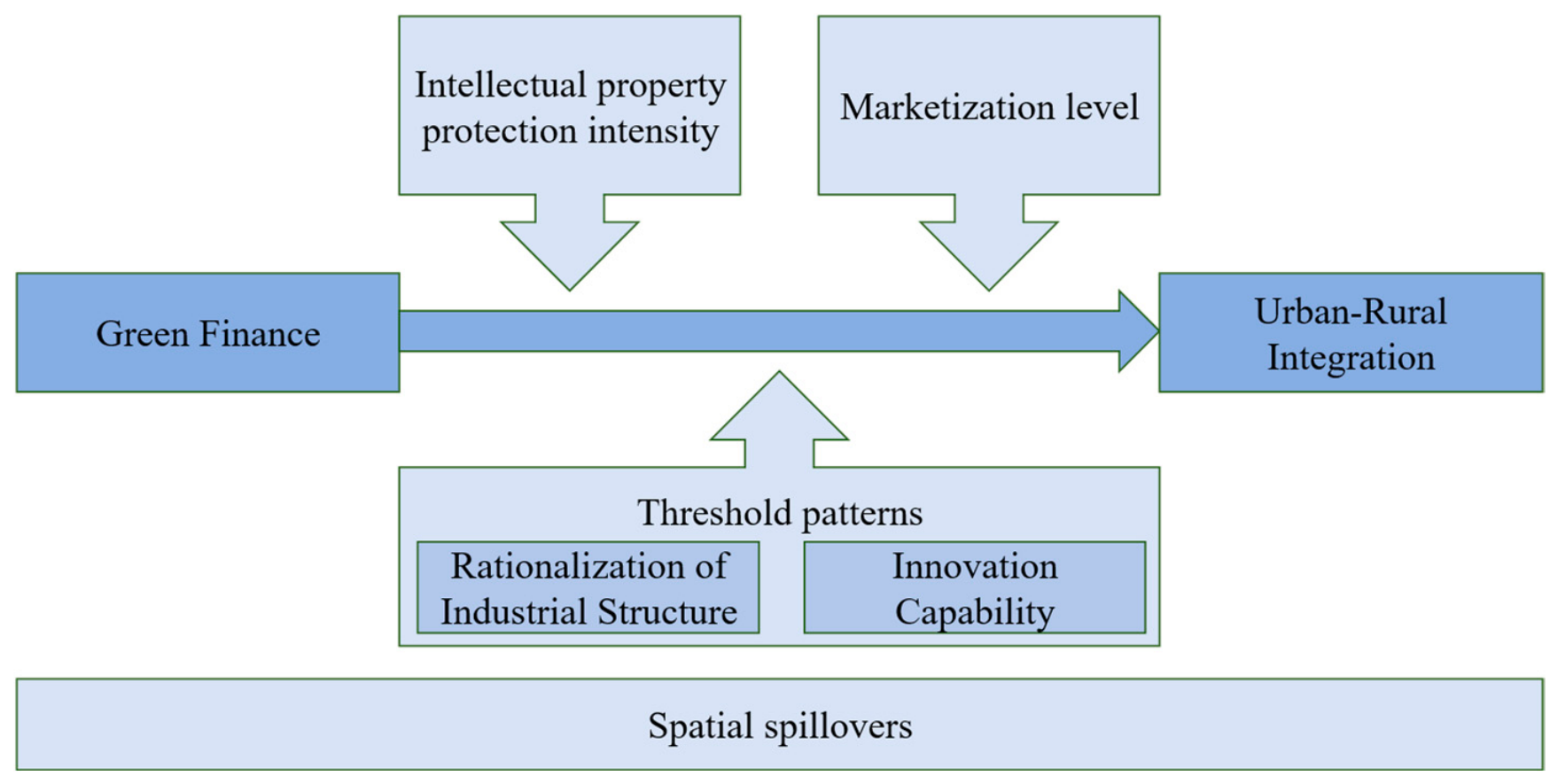
Figure 1 summarizes the analytical framework and the hypothesized associations examined in this study.
4. Results
4.1. Baseline Regression Results
Before estimating the baseline regression, this study conducts model selection tests to support the use of the fixed-effects specification. The F-test for province-specific effects rejects the null hypothesis that all provincial effects are jointly zero (F = 40.30, p < 0.001), indicating the presence of unobserved provincial heterogeneity and suggesting that pooled OLS is inappropriate. In addition, the Hausman test rejects the null hypothesis that the difference between the fixed-effects and random-effects estimates is not systematic ( = 86.35, p < 0.001). This suggests that unobserved province-specific effects are correlated with the explanatory variables; therefore, the fixed-effects estimator is preferred to the random-effects estimator. Accordingly, the two-way fixed-effects model is adopted as the baseline specification. As an additional comparison, the coefficient of green finance remains positive and statistically significant in the random-effects specification, suggesting that the positive association is not specific to the fixed-effects model.
The benchmark regression results are reported in
Table 4. Column (1) reports the baseline specification without control variables, whereas Column (2) includes the control variables. The coefficient of green finance (gf) is positive and statistically significant in both columns. Specifically, the coefficient is 0.255 in Column (1) and is significant at the 10% level; in Column (2), it remains positive at 0.201 and is significant at the 5% level. This suggests that green finance is positively associated with urban–rural integration, and this pattern remains robust when additional control variables are included. Overall, the benchmark results provide preliminary empirical support for Hypothesis 1.
To further assess the economic significance of the association, this study interprets the coefficient using a one-standard-deviation change in green finance rather than a one-unit change in the index. Based on the descriptive statistics, the standard deviation of green finance is 0.152, while the mean and standard deviation of urban–rural integration are 0.193 and 0.114, respectively. Using the coefficient from the specification with control variables, a one-standard-deviation higher value of green finance is associated with an approximately 0.0306 higher value of the urban–rural integration index (0.201 × 0.152). This corresponds to about 15.8% of the sample mean of urban–rural integration and about 26.8% of its standard deviation. Therefore, the association is not only statistically significant but also economically meaningful in the context of provincial differences in urban–rural integration.
4.2. Robustness Checks and Endogeneity Analysis
Although the baseline two-way fixed-effects model controls for time-invariant unobserved provincial heterogeneity and common year shocks, endogeneity concerns may still arise from reverse causality and time-varying omitted variables. For example, provinces with higher urban–rural integration may have stronger institutional capacity, better policy implementation, more developed financial systems, and greater demand for green development, all of which could also be associated with green finance. Therefore, the following analyses are intended to alleviate, rather than fully eliminate, endogeneity concerns. Specifically, the regression with the lagged explanatory variable is used to reduce concerns about contemporaneous reverse causality, the Oster bounds test evaluates the sensitivity of the coefficient to potential omitted-variable bias, and the placebo test examines whether the association may reflect random patterns. Accordingly, these results should be interpreted as robustness evidence for the positive association between green finance and urban–rural integration, rather than as definitive causal proof.
4.2.1. Alternative Explanatory Variable
To assess whether the baseline results are sensitive to the measurement of the core explanatory variable, green finance is remeasured using principal component analysis (PCA). As shown in Column (1) of
Table 5, the coefficient of the remeasured green finance variable remains positive and statistically significant at the 5% level, with a value of 0.031. These results suggest that the positive association between green finance and urban–rural integration is robust to an alternative measurement of the core explanatory variable.
4.2.2. Alternative Dependent Variable
To examine whether the results depend on the specific measurement of the dependent variable, urban–rural integration is reconstructed using principal component analysis (PCA). The results reported in Column (2) of
Table 5 show that the coefficient of green finance remains positive and statistically significant at the 5% level, with a value of 1.666. This result indicates that the positive association between green finance and urban–rural integration remains robust when an alternative measure of the dependent variable is adopted.
4.2.3. Excluding Centrally Administered Municipalities
Given their special administrative status and distinctive socioeconomic characteristics, the four municipalities directly under the central government—Beijing, Tianjin, Shanghai, and Chongqing—are excluded from the sample. As reported in Column (3) of
Table 5, the coefficient of green finance remains positive and statistically significant at the 5% level, with a value of 0.050. This result suggests that the baseline results are not specific to the inclusion of centrally administered municipalities.
4.2.4. Regression with the Lagged Explanatory Variable
To alleviate potential reverse causality concerns, the contemporaneous green finance variable is replaced by its one-period lagged term. As shown in Column (4) of
Table 5, the coefficient of lagged green finance remains positive and statistically significant at the 10% level, with a value of 0.196. This result indicates that the positive association between green finance and urban–rural integration remains robust after accounting for the lag structure. It also suggests that the association between green finance and urban–rural integration may exhibit a certain degree of temporal persistence.
4.2.5. Oster Bounds Test
To further assess the sensitivity of the baseline results to omitted-variable bias, this study employs the Oster bounds test. The test is implemented using variables residualized with respect to province and year fixed effects; therefore, the reported
values reflect explanatory power after accounting for time-invariant unobserved provincial heterogeneity and common year shocks. In this context, setting
to 1.3 times the
of the full specification is appropriate for two reasons. First, the full specification already includes the main observable provincial characteristics commonly associated with urban–rural integration, including economic development, openness, education, industrial structure, innovation capability, and environmental regulation. Second, an
value of 0.468 implies that unobserved factors would need to explain about 30% more residual variation than the full set of observed controls, providing a reasonably conservative benchmark without imposing excessively high explanatory power in the residualized fixed-effects setting. Accordingly,
is set to 1.3 times the full-specification
, following the logic of Oster [
66] while adapting it to the present fixed-effects setting.
As shown in
Table 6, the adjusted coefficient bound remains positive (
= 0.181), whereas the corresponding delta value is 10.460, substantially greater than 1. This indicates that unobserved factors would need to be much stronger than the observed controls to fully explain away the coefficient of green finance. Therefore, the Oster bounds results suggest that the baseline result is unlikely to be fully explained by omitted-variable bias.
4.2.6. Placebo Test
To further examine whether the benchmark results may reflect random variation or spurious correlations, this study conducts a placebo test by randomly permuting the green finance variable within each year and reestimating the benchmark model 500 times. As shown in
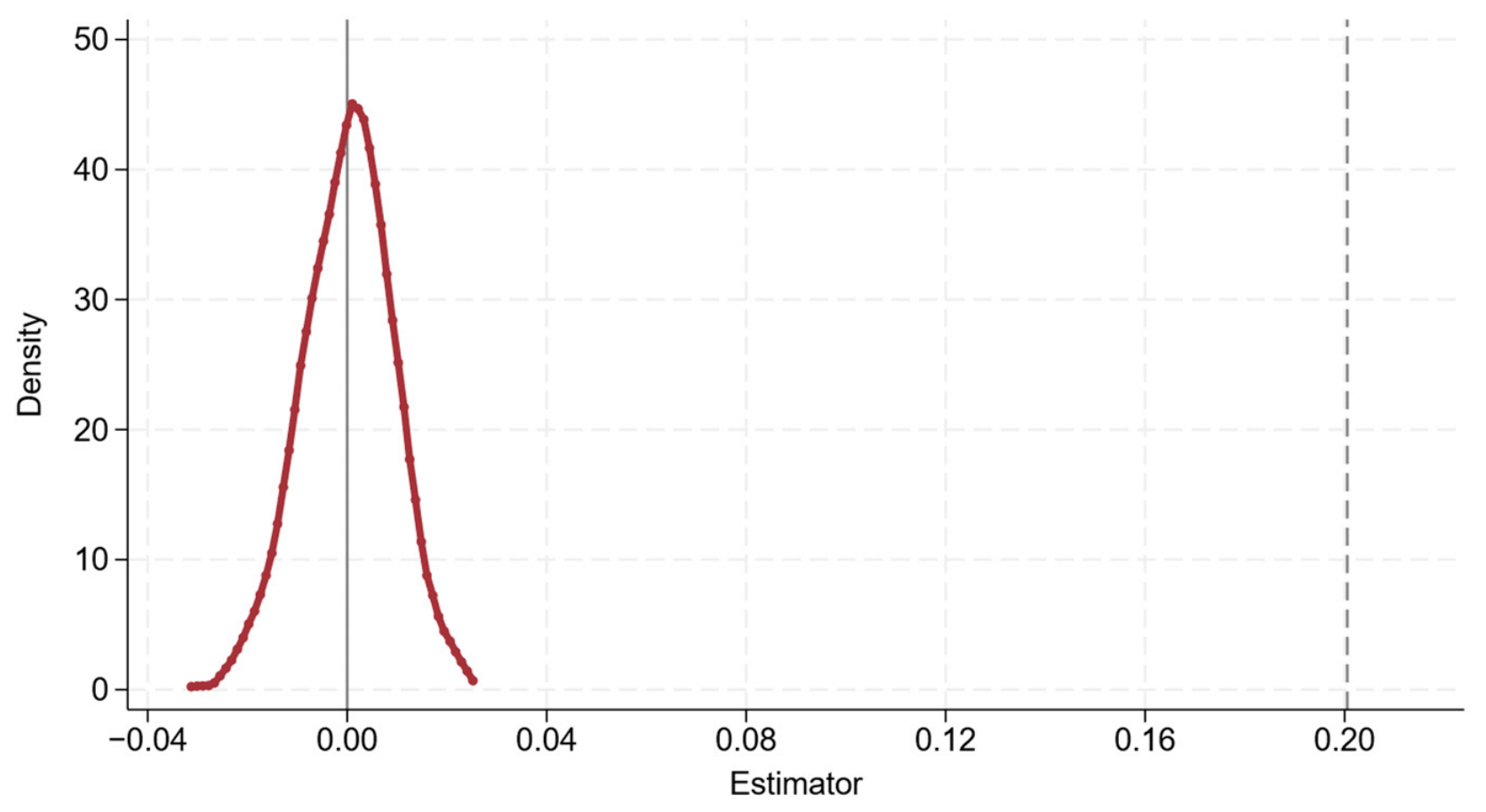
Figure 3, the distribution of the placebo coefficients is tightly centered around zero, with a mean of 0.00018 and a standard deviation of 0.00886. By contrast, the observed coefficient from the baseline regression is 0.2005, which lies far outside the placebo distribution. Moreover, none of the placebo coefficients exceeds the observed coefficient in absolute value, implying an empirical
p-value of less than 0.002. These results provide further evidence that the positive association between green finance and urban–rural integration is unlikely to reflect random variation.
4.2.7. Alternative uri Construction
Because both the green finance index and the urban–rural integration index contain environmentally related indicators, a potential concern is that the observed association may partly reflect mechanical overlap in index construction. Specifically, the urban–rural integration index includes ecological indicators such as green space area in built-up areas, green coverage area in built-up areas, and the urban–rural gap in harmless domestic waste treatment capacity, whereas the green finance index contains indicators related to environmental pollution treatment investment and fiscal expenditure on environmental protection. To address this concern, this study reconstructs alternative urban–rural integration indices and reestimates the baseline model.
In the original urban–rural integration index, the three ecological indicators together account for 32.3% of the total entropy weight. Specifically, green space area in built-up areas, green coverage area in built-up areas, and the urban–rural gap in harmless domestic waste treatment capacity account for 9.7%, 9.7%, and 12.9% of the total urban–rural integration weight, respectively. Given that the ecological block has a non-negligible weight, this study first removes the three ecological indicators and recalculates the urban–rural integration index using the entropy weight method. Second, to address the potential double-counting concern between the nonagricultural-to-agricultural output ratio and the industrial synchronization index, a further revised urban–rural integration index is constructed by removing the three ecological indicators and retaining only the nonagricultural-to-agricultural output ratio while excluding the industrial synchronization index.
The results are reported in
Table 7. In the original baseline model, the coefficient of green finance is 0.201 and statistically significant at the 5% level. When the three ecological indicators are removed from the urban–rural integration index, the coefficient of green finance remains positive at 0.271 and is marginally statistically significant at the 10% level. When the ecological indicators are removed and the potentially duplicated inverse industrial-structure indicator is also excluded, the coefficient remains positive at 0.262 and is again marginally statistically significant at the 10% level.
These results suggest that the positive association between green finance and urban–rural integration is not specific to the ecological component of the urban–rural integration index or to the potential double-counting of inverse industrial-structure indicators. However, the statistical significance becomes weaker after removing the ecological block, suggesting that the ecological dimension may represent one relevant component of the association between green finance and urban–rural integration. Therefore, the results based on alternative index construction support the directional robustness of the baseline result while also highlighting the importance of transparent index construction.
4.3. Threshold Regression Results
Before estimating the threshold regression model, it is necessary to determine the number of threshold points and identify an appropriate model specification. Following Hansen’s threshold regression methodology, the significance of the single-, double-, and triple-threshold models is tested sequentially using bootstrap procedures. This step helps ensure that the final threshold specification is supported by statistical evidence while avoiding an unnecessarily complex model.
According to the results reported in
Table 8, when the threshold variable is the rationalization of industrial structure (ris), the single-threshold model is statistically significant, with an F-statistic of 80.22 and a bootstrap
p-value of 0.0100, indicating significance at the 1% level. By contrast, the double-threshold and triple-threshold models are not statistically significant, with
p-values of 0.2133 and 0.1900, respectively. This result indicates that the rationalization of industrial structure exhibits a single-threshold pattern rather than multiple-threshold patterns.
A similar pattern is observed for innovation capability (inn). The single-threshold model is statistically significant, with an F-statistic of 103.63 and a bootstrap p-value of 0.0000, supporting the presence of a threshold pattern. Although the double-threshold model yields a p-value of 0.0867 and is marginally statistically significant at the 10% level, the evidence is relatively weak, and the triple-threshold model is statistically insignificant, with a p-value of 0.7000. Therefore, from the perspective of statistical significance and model parsimony, innovation capability is also more appropriately modeled using a single-threshold specification in the subsequent analysis.
Taken together, these results suggest that both the rationalization of industrial structure and innovation capability are characterized by a single-threshold structure. Accordingly, the subsequent threshold regression is estimated using the single-threshold model.
Table 9 reports the results of the single-threshold regression models using the rationalization of industrial structure (ris) and innovation capability (inn) as threshold variables. The results show that the coefficient of green finance varies across threshold regimes, indicating nonlinear heterogeneity in the association between green finance and urban–rural integration.
When the rationalization of industrial structure (ris) is used as the threshold variable, the threshold value is 31.5200, with a 95% confidence interval of [31.2851, 31.7836]. Among the 300 observations, 275 fall into the lower-threshold regime and 25 fall into the upper-threshold regime. The coefficient of green finance is 0.192 when ris ≤ 31.5200 and 0.458 when ris > 31.5200; both regime-specific coefficients are statistically significant in the fixed-threshold specification. This point estimate suggests a stronger association in the upper-ris regime. However, given the small number of upper-regime observations, this result should be interpreted cautiously and further assessed using additional checks below.
A similar threshold pattern is observed when innovation capability (inn) is used as the threshold variable. The threshold value is 11.1845, with a 95% confidence interval of [11.1799, 11.2881]. In this specification, 252 observations fall into the lower-threshold regime and 48 fall into the upper-threshold regime. The coefficient of green finance is 0.214 when inn ≤ 11.1845 and 0.366 when inn > 11.1845; both coefficients are statistically significant at the 1% level. This result indicates that the positive association between green finance and urban–rural integration is also stronger in the upper-inn regime.
The threshold values also provide meaningful economic interpretations. Since the rationalization of industrial structure (ris) is measured as the inverse of the Theil index, a higher value indicates a more rationalized industrial structure and a lower degree of intersectoral resource mismatch. Therefore, the threshold value of 31.5200 can be interpreted as a possible structural condition under which green finance may be associated with stronger urban–rural integration, although the upper-ris estimate should be interpreted cautiously because of limited statistical precision. When ris is below this threshold, green finance remains positively associated with urban–rural integration, but this association is relatively limited, possibly because green capital may remain concentrated in specific projects or sectors and may not be fully connected across agriculture, manufacturing, and services. In the upper-ris regime, stronger intersectoral coordination may be linked to closer embedding of green finance in agricultural modernization, green manufacturing, sustainable infrastructure, and service-sector linkages, potentially corresponding to a stronger association with broader urban–rural integration.
The innovation capability threshold also provides an economically meaningful interpretation. Since innovation capability (inn) is measured by the number of patents per 10,000 people, the threshold value of 11.1845 suggests that the association between green finance and urban–rural integration is stronger where a region has a higher level of technological absorptive capacity. In regions below this threshold, limited innovation capability may be linked to a weaker connection between green financial resources and green technologies, cleaner production, ecological governance, and sustainable rural industries. In contrast, regions in the upper-inn regime may be better positioned to absorb, adapt, and diffuse green technologies, with green finance being more closely associated with industrial upgrading, ecological improvement, and urban–rural coordination.
The distribution of observations across regimes further reflects regional heterogeneity in China’s development conditions. For the rationalization of industrial structure, 275 observations fall below the threshold and 25 observations are above it, indicating that only a limited number of province-year observations are in the relatively high industrial-rationalization regime during the sample period. For innovation capability, 252 observations fall below the threshold and 48 observations are above it, suggesting that the high-innovation-capability regime is also concentrated among a smaller group of more innovative regions. This unequal distribution should be interpreted in light of China’s regional heterogeneity rather than as a purely technical imbalance. This pattern suggests that the association of green finance may be conditional on relatively advanced structural and technological conditions, with stronger evidence for the innovation-capability threshold than for the rationalization of industrial structure threshold. Nevertheless, the results for the upper regimes should be interpreted as evidence of conditional heterogeneity rather than as a uniform association applicable to all regions.
Taken together, the threshold regression results indicate nonlinear heterogeneity in the association between green finance and urban–rural integration. However, the strength of the evidence differs across the two threshold variables. For innovation capability, the coefficient of green finance is larger in the upper regime and is further supported by the additional checks reported below. For the rationalization of industrial structure, the upper-regime point estimate is also larger than the lower-regime estimate, but the upper regime contains only a limited number of observations. Therefore, the ris threshold result should be interpreted cautiously and requires further assessment using additional checks for regime imbalance and influential observations. Overall, the threshold evidence provides partial support for Hypothesis 2, with stronger support from the innovation-capability threshold.
4.3.1. Additional Checks for Threshold-Regime Imbalance
Because the upper regimes contain relatively few observations, especially for the rationalization of industrial structure threshold, this study conducts additional checks to examine whether the upper-regime coefficients are overly sensitive to a small number of province-year cells. Specifically, this study identifies all upper-regime province-year cells, conducts leave-one-province-out checks for provinces in the upper regimes, and reports cluster bootstrap confidence intervals for the upper-regime coefficients. The full list of upper-regime province-year cells is reported in
Appendix A Table A2, and the detailed leave-one-province-out results are reported in
Appendix A Table A3.
Table 10 summarizes the main results. Note that the upper-regime coefficients in
Table 10 differ slightly from those in
Table 9 because
Table 10 is based on fixed-threshold diagnostic specifications constructed with regime-specific green finance variables, whereas
Table 9 reports the main Hansen threshold regression estimates.
For the rationalization of industrial structure threshold of 31.5200, 25 out of 300 observations fall into the upper regime. These observations are from Beijing, Tianjin, and Shanghai and are distributed across the full sample period from 2013 to 2022, rather than being concentrated only in the later years. The leave-one-province-out checks show that the upper-regime coefficient remains positive after excluding each upper-regime province in turn, with values ranging from 0.3326 to 1.0432. However, the bootstrap confidence interval is relatively wide and includes zero, suggesting that the precise magnitude of this upper-regime coefficient should be interpreted cautiously.
For the innovation capability threshold of 11.1845, 48 out of 300 observations fall into the upper regime. These observations are from Beijing, Tianjin, Shanghai, Jiangsu, Zhejiang, Anhui, Fujian, and Guangdong. The upper-regime coefficient remains positive in all leave-one-province-out checks, with values ranging from 0.2053 to 0.3242. The bootstrap percentile and bias-corrected confidence intervals are both above zero, providing stronger evidence for the upper-regime estimate in the innovation capability threshold model.
Overall, the additional checks indicate that the innovation-capability threshold result is relatively stable across both the province-exclusion and bootstrap checks. By contrast, the rationalization of industrial structure threshold result should be interpreted more cautiously. Although the upper-regime coefficient remains positive in the leave-one-province-out checks, the upper regime contains only 25 observations from three provinces/municipalities, and the bootstrap confidence intervals include zero. This suggests that the ris upper-regime estimate is statistically imprecise and may be sensitive to the limited composition of the upper-regime sample. Therefore, the ris threshold result is treated as suggestive evidence of possible conditional heterogeneity rather than conclusive support for Hypothesis 2.
4.3.2. Alternative Threshold Specifications Excluding Overlapping Controls
In the main threshold models, the rationalization of industrial structure and innovation capability are included in the control set while also serving as threshold variables in their respective specifications. These specifications control for the direct linear association of the threshold variables with urban–rural integration while allowing these variables to define the regime-dependent coefficient of green finance. Nevertheless, to address the potential concern that the threshold results may be sensitive to the overlap between the threshold variable and the control set, this study further estimates alternative threshold specifications in which the corresponding threshold variable is excluded from the control variables.
Specifically, when the rationalization of industrial structure is used as the threshold variable, it is removed from the control set. When innovation capability is used as the threshold variable, it is likewise removed from the control set. The results are reported in
Table 11. The alternative specifications are generally consistent with the main threshold estimates in terms of coefficient signs and relative magnitudes. For the rationalization of industrial structure threshold, the threshold value remains 31.520, and the single-threshold pattern remains statistically significant, with a bootstrap
p-value of 0.010. The coefficient of green finance is 0.169 in the lower regime and 0.421 in the upper regime; both coefficients are statistically significant at the 1% level. For the innovation capability threshold, the threshold value remains 11.185, and the single-threshold pattern remains statistically significant, with a bootstrap
p-value below 0.001. The coefficient of green finance is 0.216 in the lower regime and 0.376 in the upper regime; both coefficients are statistically significant at the 1% level.
These results indicate that the nonlinear threshold pattern is not mechanically tied to the inclusion of the threshold variable itself in the control set. However, for the rationalization of industrial structure threshold, this alternative specification does not remove the concern arising from the small upper-regime sample and the bootstrap confidence interval that includes zero. Therefore, it should be viewed as a supplementary specification check rather than conclusive evidence for the ris threshold. The innovation-capability threshold remains the more robust source of evidence for Hypothesis 2.
4.4. Interaction Results for Moderating Conditions
To further examine whether institutional conditions moderate the association between green finance and urban–rural integration, this study introduces intellectual property protection intensity (ipp) and marketization level (mar) as moderating conditions.
Table 12 reports the corresponding interaction results. To reduce potential multicollinearity arising from the interaction terms, the explanatory variable and moderating conditions are mean-centered before the interaction terms are constructed. Accordingly, centered green finance is denoted as c_gf, centered intellectual property protection intensity as c_ipp, and centered marketization level as c_mar.
Column (1) presents the results when intellectual property protection intensity is included as the moderating condition. The coefficient of c_gf remains positive but is statistically insignificant in this specification. More importantly, the coefficient of the interaction term between green finance and intellectual property protection intensity (c_gf × c_ipp) is 7.457 and is statistically significant at the 1% level. This result indicates that intellectual property protection intensity positively moderates the association between green finance and urban–rural integration.
Column (2) reports the interaction results for marketization level. Although the coefficient of c_gf remains positive, it is statistically insignificant in this specification. However, the coefficient of the interaction term between green finance and marketization level (c_gf × c_mar) is 0.062 and is statistically significant at the 10% level, suggesting that marketization level also positively moderates the association between green finance and urban–rural integration, although the statistical evidence is weaker than that for intellectual property protection intensity. In other words, the positive association between green finance and urban–rural integration is stronger under higher levels of marketization.
Overall, the results in
Table 12 show that both intellectual property protection intensity and marketization level correspond to a stronger positive association between green finance and urban–rural integration. The evidence is stronger for intellectual property protection intensity and relatively weaker for marketization level. These results provide strong empirical support for Hypothesis 3 and modest empirical support for Hypothesis 4.
4.5. Spatial Econometric Results
4.5.1. Global Moran’s I Test Results
Table 13 reports the results of the global Moran’s I tests based on the row-standardized inverse-distance spatial weight matrix with a 1500-km distance threshold. The Moran’s I statistics for both urban–rural integration (uri) and green finance (gf) are positive and statistically significant in all sample years, indicating positive spatial autocorrelation. Specifically, the Moran’s I values for uri range from 0.1024 to 0.1981, whereas those for gf range from 0.0882 to 0.1477. These results suggest that both urban–rural integration and green finance exhibit spatial clustering rather than random spatial distributions, thereby providing empirical support for the use of spatial econometric models.
4.5.2. SAR and SDM Estimation Results
Table 14 presents the results of the spatial autoregressive model (SAR) and spatial Durbin model (SDM) specifications based on the row-standardized inverse-distance spatial weight matrix with a 1500-km distance threshold. Before interpreting the coefficients, it is necessary to determine the appropriate spatial model specification. The Wald test for the null hypothesis that the SDM can be simplified to the SAR model is statistically significant (
= 20.13,
p < 0.001). In addition, the likelihood ratio (LR) test comparing the SAR and SDM specifications is also statistically significant (LR = 19.11,
p < 0.001). These results indicate that the SDM is more appropriate for characterizing the spatial dependence structure in the sample.
In both models, the coefficient of green finance is positive and statistically significant at the 1% level. Specifically, the coefficient of green finance is 0.2769 in the SAR model and 0.2421 in the SDM, indicating that green finance is positively associated with urban–rural integration after accounting for spatial dependence.
Regarding the spatial terms, the coefficient of the spatially lagged dependent variable (W × uri) is negative and statistically significant in both specifications. This negative conditional spatial autoregressive coefficient deserves explicit attention because it differs from the positive unconditional spatial clustering indicated by the global Moran’s I statistics. However, this apparent divergence is not contradictory. The Moran’s I statistics describe the unconditional spatial clustering of urban–rural integration, whereas the spatial autoregressive coefficient in the SAR and SDM specifications captures conditional spatial dependence after accounting for local green finance, neighboring green finance, socioeconomic characteristics, and fixed effects.
The negative coefficient of W × uri suggests that, conditional on these factors, higher urban–rural integration in geographically proximate provinces may be associated with competition or substitution in relation to local urban–rural integration. Economically, this pattern may be related to the possibility that more integrated nearby provinces are more attractive to capital, labor, technology, public resources, green industries, and policy attention, thereby corresponding to short-term spatial competition in development opportunities. Therefore, the negative spatial autoregressive coefficient should be interpreted as evidence of conditional spatial substitution or competition in urban–rural integration, rather than as evidence against the existence of unconditional spatial clustering.
In contrast, the coefficient of the spatially lagged green finance term (W × gf) in the SDM is positive and statistically significant. This result indicates that green finance is associated with positive cross-regional spatial spillovers in urban–rural integration beyond the local region. Such positive spatial spillovers may be connected with cross-regional green investment, the diffusion of green technologies, interregional industrial linkages, policy learning, and shared ecological governance. Therefore, the negative coefficient of W × uri and the positive coefficient of W × gf reflect two different spatial patterns: urban–rural integration itself may involve interregional competition or substitution after accounting for observed factors and fixed effects, whereas green finance may be associated with cross-regional spatial spillovers related to coordinated development beyond local boundaries.
Because the SDM accounts for the spatial dependence of both the dependent variable and the core explanatory variable, and because the coefficients in spatial models cannot be interpreted directly as partial derivatives due to spatial feedback loops, the following analysis focuses on the decomposition of model-based spatial results from the SDM, following LeSage and Pace [
65].
4.5.3. Decomposition of Spatial Effects
Table 15 reports the decomposition results of the SDM into direct, indirect, and total effects based on the row-standardized inverse-distance spatial weight matrix with a 1500-km distance threshold. Because the spatial autoregressive coefficient of urban–rural integration is negative, the decomposition results should be interpreted with caution. In the LeSage–Pace framework [
65], the indirect effect is not simply the coefficient of the spatially lagged explanatory variable. Instead, it reflects the combined contribution of the spatially lagged green finance term and the feedback process associated with the spatially lagged dependent variable. Therefore, the indirect effect in
Table 15 should be understood as a net spatial estimate associated with green finance after accounting for negative conditional spatial dependence in urban–rural integration.
The direct effect of green finance is 0.2194 and is statistically significant at the 1% level, indicating that green finance is positively associated with urban–rural integration within a region. The indirect effect is 0.3646 and is also statistically significant at the 1% level, indicating a positive net spatial spillover associated with green finance in the urban–rural integration of other regions after accounting for spatial feedback. This result is consistent with the positive and statistically significant coefficient of the spatially lagged green finance term in the SDM. Possible linkages include cross-regional green investment, the diffusion of green technologies, interregional green industrial linkages, ecological governance cooperation, and intergovernmental policy learning.
Importantly, the negative spatial autoregressive coefficient does not mechanically inflate the model-based positive indirect effect. Under a row-standardized spatial weight matrix, the average total effect can be approximated by . In the benchmark SDM, = 0.2421, = 0.7335, and = −0.6706, so the denominator is = 1.6706. Therefore, the negative spatial autoregressive coefficient attenuates, rather than amplifies, the positive contribution of local and spatially lagged green finance. If were zero, the approximate total effect would be , whereas the model-based total effect after accounting for negative spatial feedback is 0.5840. Thus, in this specification, the positive indirect effect is unlikely to be merely a mechanical artifact of negative spatial autoregression.
The economic meaning of the positive indirect effect is further supported by the positive and statistically significant coefficient of spatially lagged green finance (
0.7335). This suggests that green finance in neighboring regions is positively associated with local urban–rural integration, consistent with a spatial spillover channel, after controlling for local green finance, socioeconomic characteristics, province and year fixed effects, and conditional spatial dependence. In terms of magnitude, using the standard deviation of green finance reported in
Table 3 as a reference, the indirect effect of 0.3646 implies that an increase in spatially lagged green finance equivalent to one standard deviation of green finance is associated with an approximately 0.055 higher value of the urban–rural integration index (
), equivalent to about 28.7% of the sample mean and 48.6% of its standard deviation. Therefore, the estimated indirect effect appears economically meaningful, not merely mathematically positive.
However, the fact that the indirect effect is larger than the direct effect should not be interpreted mechanically as evidence that cross-regional transmission is necessarily stronger than the local association in a causal sense. Because the coefficient of the spatially lagged dependent variable is negative, the decomposition incorporates a spatial feedback process that may reflect interregional substitution or competition in urban–rural integration. Therefore, the larger indirect effect should be interpreted as evidence of a positive net spatial association related to green finance after accounting for negative conditional spatial dependence in urban–rural integration, rather than as an unconditional indication of uniformly reinforcing spatial clustering.
Taken together, the decomposition results suggest that green finance is positively associated with both local urban–rural integration and the urban–rural integration of other regions. At the same time, the negative spatial autoregressive coefficient indicates that urban–rural integration itself may exhibit conditional spatial competition after accounting for green finance, neighboring green finance, socioeconomic characteristics, and fixed effects. Thus, the spatial results point to the coexistence of two spatial patterns: competitive spatial dependence in urban–rural integration and positive net cross-regional spatial spillovers associated with green finance.
4.6. Robustness Check: Alternative Spatial Weight Matrices
To complement the benchmark spatial analysis, this study recalculates the global Moran’s I statistics based on the conventional row-standardized inverse-distance matrix and the economic-distance matrix. The summary results are reported in
Appendix A Table A4. Overall, urban–rural integration continues to exhibit positive spatial autocorrelation under the alternative matrices. Using the conventional inverse-distance matrix, the Moran’s I statistics for urban–rural integration are positive in all years and statistically significant from 2013 to 2017. Using the economic-distance matrix, they are positive in all years, statistically significant at the 5% level in eight years, and marginally statistically significant in two years.
By contrast, the unconditional spatial clustering of green finance is weaker under the alternative matrices. The Moran’s I statistics for green finance are not statistically significant when the conventional inverse-distance matrix is used, and they are positive but statistically insignificant when the economic-distance matrix is used. Therefore, the alternative Moran’s I results are interpreted as supplementary evidence on spatial dependence, whereas the subsequent SAR and SDM specifications further examine conditional spatial spillovers within the spatial panel framework after accounting for socioeconomic characteristics, province fixed effects, and year fixed effects.
4.6.1. SAR and SDM Estimation Results Based on the Conventional Row-Standardized Inverse-Distance Spatial Weight Matrix
To further examine whether the spatial results are sensitive to the specification of the spatial weight matrix, this study replaces the benchmark matrix with a conventional row-standardized inverse-distance spatial weight matrix and reestimates the SAR and SDM specifications. The corresponding results are reported in
Table 16. In both specifications, the coefficient of green finance remains positive and statistically significant at the 1% level, indicating that the positive association between green finance and urban–rural integration is consistent under the alternative spatial weight specification. Specifically, the coefficient of green finance is 0.2823 in the SAR model and 0.2369 in the SDM.
Regarding the spatial terms, the coefficient of the spatially lagged dependent variable (W × uri) remains negative and statistically significant in both specifications, whereas the coefficient of the spatially lagged green finance term (W × gf) in the SDM remains positive and statistically significant at the 1% level. These results are consistent with the benchmark spatial regression results, suggesting that urban–rural integration exhibits negative and statistically significant conditional spatial dependence and that green finance is associated with positive cross-regional spatial spillovers. Overall, the use of the conventional row-standardized inverse-distance spatial weight matrix does not alter the main spatial econometric results.
4.6.2. Decomposition of Spatial Effects Based on the Conventional Row-Standardized Inverse-Distance Spatial Weight Matrix
Table 17 reports the decomposition results of the SDM into direct, indirect, and total effects based on the conventional row-standardized inverse-distance spatial weight matrix. The direct effect of green finance is 0.2060 and remains statistically significant at the 1% level, indicating that green finance continues to be positively associated with urban–rural integration within a region. The indirect effect is 0.4436 and is also statistically significant at the 1% level, indicating a positive net spatial spillover associated with green finance in the urban–rural integration of other regions after accounting for spatial feedback. Accordingly, the total effect is 0.6496 and remains positive and statistically significant.
Compared with the benchmark spatial results, the signs and significance levels of the direct, indirect, and total effects remain largely unchanged. In particular, the indirect effect of green finance remains larger than its direct effect. However, as discussed above, this comparison should be interpreted cautiously because the SDM reports a negative spatial autoregressive coefficient for urban–rural integration. The larger indirect effect therefore indicates a positive net spatial association related to green finance after accounting for negative conditional spatial dependence, rather than a simple one-way reinforcement pattern. The consistency between the benchmark and alternative spatial weight matrix results further suggests that the coexistence of negative conditional spatial dependence in urban–rural integration and positive net cross-regional spatial spillovers associated with green finance is not specific to a particular definition of spatial proximity.
4.6.3. SAR and SDM Estimation Results Based on the Economic-Distance Spatial Weight Matrix
To further address the concern that geographic-distance-based matrices may not fully capture interregional economic linkages, this study constructs an economic-distance spatial weight matrix and reestimates the SAR and SDM specifications. Unlike the geographic-distance matrix, which captures spatial dependence based on physical proximity, the economic-distance matrix captures potential spatial linkages among provinces with similar levels of economic development. Specifically, the matrix is constructed using the inverse absolute difference in the sample-period average level of economic development across provinces, measured by the mean value of the natural logarithm of regional GDP. The diagonal elements are set to zero, and the matrix is row-standardized for spatial econometric estimation. The corresponding results are reported in
Table 18.
In both specifications, the coefficient of green finance remains positive and statistically significant at the 1% level, indicating that the positive association between green finance and urban–rural integration is consistent under the economic-distance spatial weight specification. Specifically, the coefficient of green finance is 0.223 in the SAR model and 0.200 in the SDM.
Regarding the spatial terms, the coefficient of the spatially lagged dependent variable (W × uri) is positive and marginally statistically significant in the SAR model but becomes statistically insignificant in the SDM after the spatially lagged green finance term is included. More importantly, the coefficient of the spatially lagged green finance term (W × gf) in the SDM is positive and statistically significant at the 1% level, with a value of 0.441. This result indicates that green finance is associated with positive spatial spillovers across economically proximate provinces. In addition, the Wald test rejects the null hypothesis that the coefficient of W × gf equals zero, with = 7.00 and p = 0.008. The LR test comparing the SAR and SDM specifications also rejects the restriction that the SDM can be simplified to the SAR model, with = 6.954 and p = 0.008. These results suggest that incorporating the spatially lagged green finance term remains empirically relevant when spatial dependence is defined by economic distance rather than geographic distance. Overall, the use of the economic-distance spatial weight matrix does not alter the main spatial econometric result that green finance is associated with positive cross-regional spatial spillovers.
4.6.4. Decomposition of Spatial Effects Based on the Economic-Distance Spatial Weight Matrix
Table 19 reports the decomposition results of the SDM into direct, indirect, and total effects based on the economic-distance spatial weight matrix. The direct effect of green finance is 0.204 and remains statistically significant at the 1% level, indicating that green finance continues to be positively associated with urban–rural integration within a region. The indirect effect is 0.483 and is also statistically significant at the 1% level, indicating a positive net spatial spillover associated with green finance in the urban–rural integration of economically proximate regions after accounting for spatial feedback. Accordingly, the total effect is 0.687 and remains positive and statistically significant.
Compared with the benchmark spatial results, the signs and significance levels of the direct, indirect, and total effects of green finance remain unchanged. In particular, the indirect effect of green finance remains larger than its direct effect based on the economic-distance matrix, which is consistent with the benchmark spatial results, although this comparison should again be interpreted as a net spatial association rather than as a simple causal ranking between indirect and direct transmission. This result further suggests that the relevance of green finance to urban–rural integration is not confined to local associations but is also reflected in cross-regional spatial spillovers associated with economic proximity. Overall, the consistency among the benchmark geographic-distance matrix, the conventional inverse-distance matrix, and the economic-distance matrix suggests that the positive net cross-regional spatial spillovers associated with green finance are not specific to a particular definition of spatial proximity.
4.7. Small-Cluster Inference Checks
Because the empirical analysis is based on 30 provincial clusters, conventional cluster-robust standard errors may be downward biased in finite samples, leading to overrejection of the null hypothesis. To address this concern, this study conducts additional small-cluster inference checks using wild-cluster bootstrap procedures, which are widely recommended for cluster-robust inference with a small number of clusters [
67,
68]. Specifically, for the baseline and threshold specifications, wild-cluster bootstrap
p-values are computed using Webb weights with 9999 replications, with clustering at the provincial level.
For the threshold specifications, regime-specific green finance variables are constructed using the threshold values from the main threshold specifications and then reestimated with two-way fixed effects for wild-cluster bootstrap inference. Therefore, the coefficients reported in
Table 20 are used for small-cluster inference diagnostics and may differ slightly from the threshold estimates reported in
Table 9.
For the spatial Durbin model, wild-cluster bootstrap inference cannot be directly implemented after the maximum-likelihood-based spatial panel estimator. Therefore, as a feasible small-cluster inference diagnostic for the spatial terms related to green finance, this study reports an auxiliary two-way fixed-effects spatial-lag specification that includes both local green finance and the spatially lagged green finance term based on the benchmark spatial weight matrix. This auxiliary specification is used only as a small-cluster diagnostic and does not replace the SDM estimates or the spatial decomposition reported in
Section 4.5.
The results are reported in
Table 20. For the baseline two-way fixed-effects specification, the coefficient of green finance remains statistically significant under wild-cluster bootstrap inference. The conventional clustered
p-value is 0.034, whereas the wild-cluster bootstrap
p-value is 0.0193. This result suggests that the baseline positive association is unlikely to be driven by potential overrejection associated with conventional cluster-robust inference.
For the threshold specifications, the regime-specific coefficients of green finance remain statistically significant under wild-cluster bootstrap inference. However, these results should be interpreted as small-cluster inference diagnostics for the fixed-threshold regime-specific coefficients rather than as evidence resolving the regime-imbalance concern. In particular, for the rationalization of industrial structure threshold, the small upper-regime sample and the cluster bootstrap confidence interval reported in
Table 10 still imply limited statistical precision. Therefore, the wild-cluster bootstrap result does not change the cautious interpretation of the ris threshold as suggestive rather than conclusive. By contrast, the innovation-capability threshold is supported by both the regime-specific inference checks and the additional confidence-interval evidence reported above.
For the auxiliary spatial-lag diagnostic, the local green finance coefficient remains positive and statistically significant, with a wild-cluster bootstrap p-value of 0.0220. The spatially lagged green finance term is positive but not statistically significant, with a wild-cluster bootstrap p-value of 0.3905. This auxiliary result suggests that the local green finance association is not sensitive to small-cluster inference adjustments, whereas the spatially lagged green finance term is not statistically supported in this linear diagnostic. Because this auxiliary specification does not model spatial feedback in the same way as the SDM, the spatial spillover interpretation continues to rely primarily on the SDM estimates, the spatial decomposition from the SDM, and the robustness checks based on the alternative spatial weight matrices.
4.8. Robustness Check: Excluding the COVID-19 Period
The sample period includes the COVID-19 pandemic years of 2020–2022, during which urban–rural mobility, local public finance, infrastructure investment, and green financial activities may have been associated with pandemic-related disruptions and countercyclical policy responses. To examine whether the main results are specific to this unusual period, this study conducts an additional robustness check by excluding 2020–2022 and reestimating the baseline, threshold, and spatial specifications using the pre-COVID subsample from 2013 to 2019. Because the COVID-19 period of 2020–2022 contains only three years and 90 province-year observations, separate threshold and spatial estimations for 2020–2022 would provide limited degrees of freedom and may produce unstable regime and spatial spillover estimates. Therefore, the pre-COVID exclusion test is used as the main feasible subsample robustness check, whereas the COVID-19 period of 2020–2022 is discussed as a potential source of disturbance rather than being estimated as a separate threshold or spatial panel. The results are summarized in
Table 21.
The baseline fixed-effects result shows that the coefficient of green finance remains positive but is statistically insignificant in the pre-COVID subsample. Specifically, the coefficient is 0.0787, with a p-value of 0.219. This result suggests that the direction of the association is consistent with the full-sample result, but its statistical significance is weaker after excluding 2020–2022. This weakening may be related to the shorter time dimension of the subsample, the reduction in observations from 300 to 210, and the relatively limited within-province variation in green finance before 2020. Therefore, the pre-COVID baseline result should be interpreted cautiously. It does not fully reproduce the full-sample average association, but it suggests that the positive direction of the coefficient is not reversed after excluding the pandemic years.
To further examine whether and how the full-sample association differs after 2020, this study additionally estimates a post-2020 interaction specification by interacting green finance with an indicator for the years 2020–2022. The results show that the coefficient of green finance for the pre-2020 period is positive but statistically insignificant (0.0808, p = 0.185), while the interaction term between green finance and the post-2020 indicator is positive and marginally significant (0.0857, p = 0.065). The implied coefficient of green finance during 2020–2022 is 0.1665 and statistically significant at the 5% level (p = 0.019). These results suggest that the association between green finance and urban–rural integration became stronger after 2020. Therefore, the full-sample baseline association is partly related to the strengthened post-2020 policy and development environment, rather than being equally strong across the entire sample period.
At the same time, the post-2020 strengthening should not be interpreted solely as a short-term COVID-period co-movement. In China, 2020 was also the year in which the national dual-carbon goals were announced, marking a stronger strategic orientation toward carbon peaking, carbon neutrality, and green low-carbon development. The stronger post-2020 association may therefore reflect not only pandemic-related countercyclical policy responses, but also the broader strengthening of China’s green development policy environment. Overall, this additional diagnostic indicates that the baseline association is temporally heterogeneous and stronger in the post-2020 period, which should be considered when interpreting the full-sample result.
The threshold results remain directionally consistent with the full-sample results, but they should be interpreted cautiously. When the rationalization of industrial structure is used as the threshold variable, the upper-regime coefficient is positive and statistically significant in the pre-COVID subsample. However, because the upper-ris regime is likely to contain an even smaller set of province-year observations in the shorter subsample, this result does not remove the concern about limited upper-regime support and potential sensitivity to influential observations. Therefore, the pre-COVID ris result is treated as supplementary directional evidence rather than as conclusive robustness evidence. For innovation capability, the threshold pattern remains positive and is marginally supported by the bootstrap threshold test, suggesting more consistent evidence of technological conditionality. Given the shorter pre-COVID sample and the likely smaller number of observations in the upper-threshold regimes, the exact magnitude of the coefficients should be interpreted cautiously. Nevertheless, the direction of the threshold pattern is consistent with the full-sample results, although the innovation threshold is only marginally statistically significant and the coefficient magnitudes differ.
The spatial results also remain directionally consistent with the full-sample results, although the statistical support is weaker in the shorter subsample. In the pre-COVID SDM, the coefficient of local green finance is positive and marginally statistically significant, whereas the spatially lagged green finance term is positive but not statistically significant. The spatial decomposition further shows that the direct, indirect, and total effects of green finance are all positive. The direct effect is 0.0944 and marginally statistically significant at the 10% level, the indirect effect is 0.2623 and also marginally statistically significant at the 10% level, and the total effect is 0.3567 and statistically significant at the 5% level. Moreover, the indirect effect remains larger than the direct effect, which is consistent with the full-sample spatial pattern. These results suggest that the spatial spillover pattern is not specific to the COVID-19 period, although the shorter pre-COVID window is associated with less precise spatial estimates. Compared with the full-sample results, the pre-COVID estimates preserve the same qualitative spatial pattern—positive direct, indirect, and total effects, with the indirect effect larger than the direct effect—but the statistical significance is weaker, suggesting that the spatial results are directionally stable but less precisely estimated in the shorter subsample.
Overall, the additional pre-COVID analysis suggests that the main structural results are directionally stable after excluding 2020–2022, although the shorter subsample leads to weaker statistical precision and does not fully resolve the uncertainty surrounding the ris threshold. The baseline average association is less pronounced and statistically insignificant, but the threshold estimates and the larger indirect spatial association remain directionally consistent with the full-sample results. These results suggest that the full-sample association should not be interpreted as equally strong throughout the entire sample period; rather, it is partly related to the strengthened post-2020 policy and development environment. Regarding the COVID-19 period of 2020–2022, directly comparing parameters between the pre-COVID subsample and a separate 2020–2022 subsample presents both statistical and economic challenges. Statistically, because the 2020–2022 period contains only three years of observations, separately estimating data-intensive threshold and spatial specifications would be unstable and potentially misleading. Economically, the 2020–2022 period was characterized by countercyclical green stimulus and related policy responses, alongside substantial pandemic-related disruptions to interregional mobility, supply chains, and local development conditions. These unusual macro-level conditions may have been associated with temporary changes in both the scale of green finance and its spatial transmission patterns. Future research with a longer post-pandemic panel could more systematically examine whether and how the association between green finance and urban–rural integration differs in the post-pandemic era.
4.9. Regional and Functional-Zone Heterogeneity
To further examine whether the association between green finance and urban–rural integration differs across regions and functional zones, this study conducts grouped regressions by eastern, central, and western regions, and further distinguishes between major grain-producing areas and non-major grain-producing areas. The results are reported in
Table 22.
The regional heterogeneity results show that the coefficient of green finance is positive in the eastern and western regions, and it is statistically significant only in the eastern region. Specifically, the coefficient of green finance is 0.245 in the eastern region and is significant at the 10% level, suggesting that the association between green finance and urban–rural integration is relatively more evident in eastern provinces. This may be because eastern provinces generally have more developed green financial markets, stronger innovation capacity, more diversified industrial structures, and better institutional conditions, under which green financial resources may be more closely connected with ecological governance, green industrial upgrading, and coordinated urban–rural development. This pattern is broadly consistent with the conditionality logic discussed earlier: green finance may be more closely associated with urban–rural integration when regions possess stronger innovation capability and more favorable structural conditions, although the evidence for the ris threshold remains suggestive rather than conclusive.
The coefficient in the western region is also positive, although it is not statistically significant at conventional levels. This suggests that the estimated association is positive but less precisely estimated in western provinces and may be constrained by weaker industrial foundations, lower financial development, and more limited absorptive capacity. In contrast, the coefficient in the central region is negative but statistically insignificant. Since it is not statistically different from zero, it should not be interpreted as evidence of a negative association. Rather, it suggests that the association between green finance and urban–rural integration may be weaker or less stable in this region.
The functional-zone heterogeneity results further show that the coefficient of green finance is insignificant in major grain-producing areas but positive and marginally significant in non-major grain-producing areas. Specifically, the coefficient is 0.042 in major grain-producing areas and 0.270 in non-major grain-producing areas. This pattern suggests that the association between green finance and urban–rural integration is more evident in non-major grain-producing areas. One possible explanation is that non-major grain-producing areas may have more diversified industrial structures and greater flexibility to develop green manufacturing, renewable energy, green services, ecological industries, and low-carbon infrastructure. Under these conditions, green finance may be more closely linked to broader urban–rural integration patterns. In this sense, the stronger association observed in non-major grain-producing areas may partly reflect the broader structural and technological absorptive-capacity logic discussed in the threshold analysis. However, because the evidence for the ris threshold remains suggestive rather than conclusive, this interpretation should be understood as a possible explanation rather than definitive evidence that industrial-structure rationalization strengthens the association.
By contrast, major grain-producing areas undertake important food-security and agricultural production functions. In these areas, green finance may be more closely related to agricultural stability, farmland protection, ecological conservation, and green production practices. These dimensions may be important, but they may not be fully reflected in the aggregate urban–rural integration index in the short run. Moreover, because the developmental priorities of major grain-producing areas are more closely tied to agricultural production stability and food-security functions, the connection between green finance and broader industrial upgrading and urban–rural integration patterns may require stronger complementary conditions, such as higher innovation capability, more diversified industrial linkages, and more effective cross-sectoral resource allocation.
Overall, the heterogeneity analysis indicates that the association between green finance and urban–rural integration is not spatially uniform. The estimated association is relatively more evident in eastern provinces and non-major grain-producing areas, while it is statistically insignificant or less precisely estimated in the central and western regions and in major grain-producing areas. These findings highlight the practical relevance of the study by suggesting that green finance policies should be designed according to regional development conditions and functional-zone characteristics rather than implemented as a uniform policy package across all provinces. They also echo the broader conditionality logic of the threshold analysis by indicating that the developmental relevance of green finance depends not only on financial resources themselves, but also on whether local innovation systems and industrial structures provide sufficient absorptive capacity, with stronger empirical support for the innovation-capability condition.
4.10. Sensitivity Check Using Logarithmic Transformations of Skewed Variables
As reported in
Table 3, innovation capability and intellectual property protection intensity have relatively wide ranges. Innovation capability ranges from 0.456 to 28.01, whereas intellectual property protection intensity ranges from 0.000186 to 0.191. These ranges suggest that the two variables may exhibit skewed distributions. To address this concern, this study conducts an additional sensitivity check by applying logarithmic transformations to both variables. Specifically, innovation capability and intellectual property protection intensity are transformed as ln(1 + x), and the threshold and interaction specifications are reestimated using the transformed variables.
The results are reported in
Table 23. Column (1) presents the threshold regression results using logarithmically transformed innovation capability. To maintain consistency with the main threshold specification, ln(1 + inn) is used both as the threshold variable and as the corresponding linear control term. The single-threshold pattern remains statistically significant, with a threshold value of 2.5002 and a bootstrap
p-value of 0.0000. The coefficient of green finance is 0.220 in the lower regime and 0.378 in the upper regime, and both coefficients are statistically significant at the 1% level. These results suggest that the nonlinear threshold pattern associated with innovation capability remains after the logarithmic transformation.
Column (2) presents the interaction results using logarithmically transformed intellectual property protection intensity. Before constructing the interaction term, green finance and ln(1 + ipp) are mean-centered. The interaction term between green finance and ln(1 + ipp) is positive and statistically significant at the 1% level, with a coefficient of 7.865. This result suggests that the interaction between green finance and intellectual property protection intensity remains positive and statistically significant after the logarithmic transformation.
Overall, the sensitivity check suggests that the main results related to the innovation threshold and the moderating condition of intellectual property protection intensity are materially similar after the logarithmic transformations. Green finance continues to exhibit a stronger positive association with urban–rural integration in the upper innovation regime, and the interaction between green finance and intellectual property protection intensity remains positive and statistically significant.
5. Discussion
5.1. Main Results and Interpretations
The empirical results suggest that green finance is positively associated with urban–rural integration in China, highlighting its relevance not only to environmental governance but also to broader patterns of coordinated urban–rural development.
This positive association is consistent with the theoretical expectation that sustainability-oriented financial resources may be connected with more efficient resource allocation. By directing capital toward green industries, ecological projects, and low-carbon infrastructure, green finance may be linked to better coordination between urban and rural areas. In this regard, its relevance extends beyond environmental protection and relates more broadly to balanced and sustainable development.
This association can be interpreted through several development-related linkages, including investment in green agriculture, rural environmental improvement, renewable energy, ecological restoration, and green transportation infrastructure. These forms of investment may correspond to better rural production conditions and living environments, as well as stronger economic and functional linkages between urban and rural areas. From this perspective, green finance is not limited to a narrow environmental financing role; it may also serve as an institutional arrangement that connects ecological objectives with developmental needs.
The robustness checks and supplementary analyses provide additional empirical support for the stability of this association. The coefficient of green finance remains positive when alternative measures of green finance and urban–rural integration are used, when centrally administered municipalities are excluded, and when the explanatory variable is lagged. Moreover, the Oster bounds test suggests that the main result is unlikely to be fully explained by omitted variables, whereas the placebo test suggests that the observed coefficient is unlikely to reflect random factors. Taken together, these results indicate that the positive association between green finance and urban–rural integration is relatively stable across alternative specifications.
The spatial analysis offers further insight into the broader significance of green finance. Both green finance and urban–rural integration exhibit positive and statistically significant spatial autocorrelation, suggesting spatial clustering rather than random spatial distributions. More importantly, the SDM results suggest that green finance is associated not only with higher urban–rural integration within a region but also with positive net cross-regional spatial spillovers. The larger indirect effect should be interpreted as evidence that the association between green finance and urban–rural integration extends beyond local jurisdictions, rather than as a simple causal ranking between local and cross-regional transmission. These cross-regional patterns may be connected with environmental externalities, technology diffusion, interregional capital flows, green supply-chain linkages, and policy learning. Overall, these results suggest that the relevance of green finance to urban–rural integration is reflected at both local and regional scales.
5.2. Threshold Patterns and Moderating Conditions
An important implication of this study concerns the conditions under which the association between green finance and urban–rural integration is stronger. The threshold results suggest that this association is not constant across regions. Rather, it varies across identifiable structural regimes.
With respect to the rationalization of industrial structure, the threshold analysis provides some suggestive evidence that the association between green finance and urban–rural integration may vary across structural conditions. The upper-ris point estimate is larger than the lower-regime estimate, which is consistent with the theoretical expectation that more coherent intersectoral linkages may help connect green finance with urban–rural coordination. However, this result should not be interpreted as conclusive evidence, because the upper-ris regime contains only a small number of observations and the bootstrap confidence interval includes zero. Therefore, the ris-related result is best understood as an indication of possible conditional heterogeneity that requires further verification in future research.
By contrast, the innovation-capability threshold provides relatively stronger evidence. In the upper-inn regime, the coefficient of green finance is larger than that in the lower regime, and the additional checks indicate that this result is more stable. This suggests that technological capacity is an important condition shaping the strength of the association between green finance and urban–rural integration. Where innovation systems are stronger, green finance may be more closely connected with cleaner production processes, green technology applications, and more sustainable forms of development. Accordingly, innovation capability provides a more reliable threshold condition under which green finance exhibits a stronger positive association with urban–rural integration.
In addition, the interaction analysis points to the complementary roles of intellectual property protection intensity and marketization level. The positive interaction coefficient for intellectual property protection intensity suggests that stronger protection of innovation-related returns may be associated with stronger incentives for green technological investment and greater relevance of green finance to longer-term development. Similarly, the positive interaction coefficient for marketization suggests that more mature market institutions may support better factor mobility and resource allocation efficiency, under which green finance may be more closely linked to urban–rural integration. Together, these results suggest that the developmental relevance of green finance depends not only on the availability of financial support but also on the broader technological, structural, and institutional environment in which it is embedded, although the evidence for the ris threshold should be interpreted cautiously.
5.3. Policy Implications
In light of these results, several policy implications emerge for better connecting green finance with urban–rural integration.
First, green finance can be positioned not only as an environmental policy instrument but also as a development-oriented tool for coordinated urban–rural integration. The baseline results suggest that green finance is positively associated with urban–rural integration, implying that green financial resources may be relevant to broader development objectives beyond pollution control and carbon reduction. In practical terms, green financial policies could give greater priority to projects that combine ecological improvement with urban–rural integration goals, such as green agriculture, rural environmental governance, ecological restoration, renewable energy deployment, green infrastructure, and sustainable rural industries. Such an orientation may help strengthen the connections among ecological improvement, rural development, industrial coordination, and urban–rural linkages.
Second, policy design could pay closer attention to the structural conditions suggested by the threshold results. The empirical results suggest that the effectiveness of green finance may depend on supporting structural and technological conditions, but the strength of the evidence differs across these conditions. The innovation-capability threshold provides relatively robust evidence that green finance is more strongly associated with urban–rural integration in regions with stronger technological capacity. The rationalization of industrial structure threshold, by contrast, offers only suggestive evidence because the upper-regime estimate is statistically imprecise. Therefore, policy design should not focus only on expanding the scale of green finance, but should also strengthen innovation systems and improve industrial coordination so that green financial resources can be more effectively connected with real economic transformation and urban–rural integration. To enhance the developmental relevance of green finance, local governments could place greater emphasis on industrial coordination among agriculture, manufacturing, and services, the extension of green industrial chains, and the integration of green finance with agricultural modernization, green manufacturing, and service-sector development. At the same time, greater attention could be given to regional innovation systems, including green technology research, technology diffusion platforms, and the application of cleaner production technologies. These measures may strengthen local absorptive capacity and improve the relevance of green financial resources for urban–rural integration.
Third, the interaction results suggest that institutional conditions are relevant to the developmental role of green finance. Given that the interaction between green finance and intellectual property protection intensity is positive and statistically significant, policymakers could place greater emphasis on the protection, transaction, and commercialization of green technologies. Stronger protection of innovation-related returns may be associated with stronger firm incentives to invest in green technologies and greater confidence among financial institutions in innovation-oriented green projects. In addition, because the interaction between green finance and marketization level is positive and statistically significant, further market-oriented reforms could be directed toward reducing transaction costs, weakening administrative segmentation, and improving the mobility of capital, labor, technology, and other production factors between urban and rural areas. A more mature market environment may support closer connections between green finance and projects with stronger ecological and developmental relevance.
Fourth, the spatial results indicate that green finance policy could be designed from an interregional perspective rather than only within individual administrative boundaries. The SDM results suggest that green finance is associated with positive net cross-regional spatial spillovers, with the indirect effect exceeding the direct effect in terms of the model-based net spatial association. This pattern implies that the developmental relevance of green finance may extend across regions through capital flows, green technology diffusion, industrial linkages, ecological governance cooperation, and policy learning. Accordingly, policymakers could place greater emphasis on cross-regional coordination mechanisms for green finance, including interprovincial green investment cooperation, shared information platforms for green projects, coordinated green infrastructure planning, regional environmental governance partnerships, and mechanisms for exchanging green development experience. Such policies may enhance the cross-regional relevance of green finance and support more balanced urban–rural development.
Overall, these policy implications indicate that the developmental relevance of green finance depends not only on the expansion of green financial resources but also on the structural, institutional, and spatial conditions under which these resources are allocated and used. Accordingly, green finance policies could be better coordinated with industrial upgrading, innovation enhancement, institutional reform, and regional coordination, so that green financial resources are better aligned with sustainable urban–rural integration.
5.4. Limitations and Future Directions
Although this study provides empirical evidence on the association between green finance and urban–rural integration, several limitations should be acknowledged, and they also point to directions for future research.
First, the analysis is conducted at the provincial level due to limitations in data availability and consistency. Although provincial panel data make it possible to examine broad regional patterns over time, substantial heterogeneity still exists within provinces. As a result, macro-level indicators may not fully capture local variation at the prefecture, county, or township level. Future research based on more fine-grained city- or county-level data could provide a more detailed picture of how green finance is associated with urban–rural integration in different local contexts.
Second, although this study employs comprehensive, multidimensional indicator systems to approximate the complexity of both green finance and urban–rural integration, these measures remain constrained by their reliance on provincial-level statistical aggregates. The urban–rural integration index covers economic, social, demographic, and ecological dimensions, and the green finance index includes green credit, green investment, green insurance, green bonds, green fiscal support, green funds, and green equity. However, both indices inevitably rely on proxy indicators. Due to limitations in consistent province-level data, the green finance index cannot directly include more targeted rural indicators such as rural green credit ratios or green inclusive finance, and the urban–rural integration index cannot fully reflect grassroots-level differences in public service equalization or the urban–rural digital infrastructure gap. Consequently, while this approach offers macro-level comprehensiveness and comparability, it cannot fully capture qualitative differences in policy implementation, the efficiency of capital allocation, or the actual accessibility of green financial resources at the grassroots level. Future studies could address these limitations by incorporating transaction-level financial data, rural financial institution records, county-level public service indicators, digital infrastructure measures, institutional text analysis, or micro-survey evidence to better capture the operational quality of green finance and the micro-level dynamics of urban–rural integration.
Third, the present analysis mainly focuses on macro-level structural and institutional factors and does not directly examine micro-level behavioral processes. The ways in which green finance may relate to the behavior of rural households, local firms, and grassroots governments are not directly addressed by the regression results. For example, this study does not specifically investigate how green finance is linked to agricultural production decisions, rural entrepreneurship, green technology adoption, or access to public services. Future research combining macro-level evidence with household surveys, firm-level data, or administrative records could help clarify these micro-level processes.
Fourth, although the spatial analysis suggests positive net cross-regional spatial spillovers, the specific linkages through which these spillovers may arise are not directly tested in this study. Future work could examine whether the observed spatial spillovers are mainly related to industrial relocation, technology diffusion, policy learning, transportation linkages, financial networks, or other forms of interregional connection. Such analyses could deepen the understanding of how green finance relates to regional sustainability beyond local boundaries.
Fifth, although this study employs province and year fixed effects, lagged explanatory variables, the Oster bounds test, and placebo tests to alleviate potential endogeneity concerns, these approaches cannot fully eliminate reverse causality or all time-varying omitted variables. Therefore, the empirical results should be interpreted as robust associations rather than definitive causal estimates. This limitation is particularly relevant because provinces with higher levels of urban–rural integration may also have stronger institutional capacity, better policy implementation, more developed financial systems, and greater demand for green development, all of which may also be related to green finance.
In addition, the threshold results should be interpreted with caution, especially for the rationalization of industrial structure threshold. Because the upper-ris regime contains a small number of observations and the corresponding bootstrap confidence interval includes zero, this result should be viewed as suggestive evidence of possible nonlinear heterogeneity rather than a definitive threshold effect. Future research using longer panels or more fine-grained regional data could further examine whether this structural threshold remains stable across broader samples.
This study also assessed the feasibility of stronger identification strategies, including instrumental-variable estimation and quasi-natural experiments based on the 2017 Green Finance Reform and Innovation Pilot Zones. However, the available provincial-level data make these strategies difficult to implement cleanly. For instrumental variables, plausible candidates such as historical financial institution density or distance to pilot zones may be related to urban–rural integration through long-term financial development, market integration, infrastructure connectivity, or regional spillovers, thereby raising concerns about the exclusion restriction. For difference-in-differences designs, the 2017 pilot zones were implemented in selected local areas within several provinces, whereas this study uses province-level panel data and a province-level composite green finance index. Treating entire provinces as treated units may therefore introduce treatment measurement error and weaken the measured policy contrast. For this reason, this study does not claim to fully identify a causal effect. Future research could use city-level or county-level data, more precise pilot-zone boundaries, firm- or project-level green finance information, or more clearly exogenous policy variation to provide stronger causal identification.
6. Conclusions
This study examines the association between green finance and urban–rural integration in China using provincial panel data and multiple econometric approaches, including fixed-effects specifications, threshold regressions, interaction specifications for moderating conditions, and spatial econometric analysis. The empirical results suggest that green finance is positively associated with urban–rural integration. This positive association remains robust across a range of alternative specifications and endogeneity-related checks, including alternative variable measurements, sample adjustments, lagged regressions, the Oster bounds test, and placebo tests. Nevertheless, given the observational nature of the provincial panel data, the results should be interpreted as robust associations rather than definitive causal estimates.
Beyond the baseline result, the analysis provides partial evidence of nonlinear heterogeneity in the association between green finance and urban–rural integration. The innovation-capability threshold offers relatively robust evidence that the positive association is stronger in the upper regime, suggesting that technological absorptive capacity is an important condition shaping the developmental relevance of green finance. By contrast, the rationalization of industrial structure threshold produces a larger positive upper-regime point estimate, but the bootstrap confidence interval includes zero and the upper-regime sample is small and concentrated in a limited number of provinces/municipalities. Therefore, the ris threshold result is interpreted as suggestive rather than conclusive. Overall, Hypothesis 2 is partially supported, with stronger evidence from the innovation-capability threshold. The interaction results further show that the interaction terms between green finance and the two institutional variables—intellectual property protection intensity and marketization level—are positive and statistically significant, highlighting the importance of institutional conditions for the developmental relevance of green finance.
The spatial analysis further broadens the implications of the study. Both green finance and urban–rural integration exhibit positive and statistically significant spatial autocorrelation under the benchmark spatial weight matrix, and the spatial Durbin model (SDM) suggests that green finance is associated not only with higher local urban–rural integration but also with positive net cross-regional spatial spillovers. The decomposition results indicate that the indirect effect of green finance is larger than its direct effect in terms of the model-based net spatial association. This pattern suggests that the association between green finance and urban–rural integration has an important interregional dimension and may be related to cross-regional linkages such as capital flows, technology diffusion, industrial linkages, ecological governance cooperation, and policy learning. In this sense, the relevance of green finance is not confined to individual jurisdictions but may also be reflected in broader regional interactions.
Taken together, these results are consistent with a broader understanding of green finance. Green finance can be viewed not merely as a financing arrangement for environmental protection but also as a potentially relevant financial and policy instrument for coordinated and sustainable urban–rural development. Its developmental relevance appears to be associated especially with innovation capability, institutional quality, and spatial interdependence, while the role of industrial-structure rationalization is suggested by the point estimates but remains less conclusive.
These results also carry implications for the broader sustainability agenda. Given its positive association with urban–rural integration and more coordinated regional development, green finance may be relevant to the realization of Sustainable Development Goal 10 (Reduced Inequalities) and Sustainable Development Goal 11 (Sustainable Cities and Communities). At the policy level, although the empirical evidence is stronger for innovation capability than for industrial-structure rationalization, the results indicate that expanding green finance alone may not be sufficient for realizing its full developmental potential. Substantial progress is more likely when green finance is accompanied by efforts to strengthen innovation systems, improve industrial coordination, deepen market-oriented reform, protect innovation-related returns, and expand interregional cooperation.
In particular, because the indirect effect of green finance is larger than its direct effect in terms of the model-based net spatial association, policy design could place greater emphasis on interregional coordination, cross-regional resource sharing, and coordinated sustainability governance rather than relying solely on isolated local initiatives.
Although the analysis is conducted in the Chinese context, the results may offer useful insights for other developing countries seeking to narrow urban–rural disparities while advancing greener and more balanced development. Future research using more fine-grained data, more precise policy variation, or stronger identification strategies could further examine whether and how green finance is causally related to urban–rural integration.