1. Introduction
The Circular Economy (CE) has emerged as a strategic paradigm aimed at decoupling economic growth from environmental degradation and resource depletion [
1,
2]. Driven by initiatives such as the EU Circular Economy Action Plan [
3] and increased commitments from corporations and institutions, CE principles have progressively influenced industrial and urban sectors.
Robust CE frameworks must holistically address environmental (e.g., material recirculation, emissions), social (e.g., stakeholder collaboration, employment), and economic (e.g., resource productivity, circular innovation) dimensions [
4,
5]. CE implementation remains fragmented, due to the absence of unified and structured roadmaps; while numerous indicators and conceptual models have been developed, critical methodological gaps persist. Despite important contributions to conceptualizing circularity [
5,
6], these gaps include (i) the absence of stepwise planning frameworks for data system design; (ii) lack of integrated cross-sectoral data architectures; and (iii) inadequate mechanisms for indicator prioritization aligned to operational contexts [
7,
8,
9]. Most current efforts adopt isolated or sector-specific approaches, overlooking the dynamic cross-sectoral integration required for broader CE adoption [
2,
10,
11].
From a strategic perspective, CE is increasingly recognized not just as an environmental imperative, but also as a lever for competitive advantage and value creation, enhancing resilience and stakeholder trust [
12]. However, aligning short-term financial goals with long-term circular strategies requires rethinking conventional models and leveraging advanced decision-making tools and structured innovation processes [
13,
14]. These intertwined conceptual and practical challenges call for a process-oriented framework that integrates ideation, systematization, and operationalization within CE data systems. Such an approach would support dynamic and replicable CE transitions across sectors and governance levels.
Despite this momentum, a critical bottleneck persists: the absence of integrated, scalable, and decision-relevant CE data systems. Policymakers, municipal planners, port authorities, and regional agencies lack structured methods to collect, standardize, and interpret CE performance data across sectors. This gap directly hampers environmental development outcomes: without robust data systems, it is impossible to target interventions, track SDG progress, manage trade-offs, or ensure accountability in CE transitions.
This paper argues that CE data systems are not merely technical infrastructure—they are the foundational enabler of environmental governance. When cities lack interoperable CE data architectures, local circular procurement programs cannot demonstrate impact; when industrial parks lack indicator frameworks, symbiosis loops go unmeasured; and when port authorities lack standardized metrics, logistics circularity remains invisible to policymakers. This study introduces TRIADS (Three-layer Integrated Architecture for Decision-Support in Circular Systems), a comprehensive methodological framework designed to address these gaps. TRIADS is structured around three interdependent layers: (1) a Strategic Roadmap for phased CE system planning and stakeholder engagement; (2) an Integrated Data Architecture enabling interoperable, privacy-compliant data flows; and (3) a CE Indicator Development process combining literature mining, expert-based Delphi methods, MCDA, and AI-assisted ranking.
Three critical gaps in the existing literature motivate the design of TRIADS: (i) the absence of stepwise planning frameworks for CE data system design, meaning no existing framework provides phased, replicable guidance from scoping to operationalization; (ii) the lack of integrated cross-sectoral data architectures, as current approaches remain siloed within sector-specific boundaries; and (iii) inadequate mechanisms for indicator prioritization aligned to operational contexts, so that existing frameworks provide indicator lists but not structured, weighted selection methodologies. These three gaps correspond to the three layers of TRIADS.
The framework directly targets the needs of decision users—including municipal planners, regional policy authorities, port logistics managers, and circular economy practitioners—by providing structured protocols that can reduce implementation time, enable cross-sector benchmarking, and support context-sensitive adaptation. TRIADS is designed to function even in data-scarce environments and without high-end technical infrastructure, making it suitable for both advanced- and developing-country contexts.
The typical implementation pathway of TRIADS follows four sequential phases: (1) context assessment and boundary definition, where the implementing organization defines its CE goals, data maturity level, and institutional constraints; (2) strategic architecture design, where stakeholder roles, governance structures, and system scope are formalized; (3) data architecture deployment, where collection protocols, standardization procedures, and interoperability frameworks are established; and (4) indicator prioritization, where MCDA-based workflows generate context-specific, decision-ready indicator sets. TRIADS functions as a methodological guide, rather than a fixed software system, making it adaptable across diverse institutional environments.
This paper is structured as follows.
Section 1 presents a critical literature review covering CE conceptual evolution, indicator frameworks, and data architecture needs.
Section 2 details the methodology, including the systematic literature review protocol, framework design, and triangulated validation.
Section 3 presents the TRIADS framework results across its three layers.
Section 4 discusses comparative validity against 13 leading CE frameworks.
Section 5 concludes with theoretical and managerial implications and a structured future research agenda.
The two primary research objectives are the following: RO1: To conceptualize the structural logic of CE data systems that enable foresight and real-time monitoring. RO2: To formulate a dynamic and scalable methodology for CE indicator development and prioritization across varying contexts and implementation scales. These objectives are guided by two research questions, derived directly from the literature gaps identified: RQ1: What structural and methodological gaps exist in current CE data infrastructures and indicator frameworks? RQ2: How can a replicable data framework be designed to support both localized and scalable CE initiatives? The selection of these research questions is grounded in the systematic review of 93 documents (
Section 1.1), which consistently revealed fragmentation, static measurement, and limited technological integration as core deficiencies across existing CE monitoring systems.
1.1. Literature Review
As global supply chains shift from linear to circular models, there is a growing demand for data systems that can capture the complexity of material and service flows within evolving, usage-based ecosystems. This transition is not solely technological, but also depends on behavioral, cultural, and societal factors that shape how circular strategies are perceived, adopted, and scaled. CE has drawn increasing interest across academic, industrial, and policy domains. Yet as its principles move from concept to implementation, persistent challenges remain in monitoring progress, designing relevant indicators, and building interoperable data infrastructures. Addressing these challenges requires a shift from fragmented efforts to more integrated and adaptable methodologies. This section explores the current state of CE thinking, highlights key gaps in data and monitoring practices, and sets the stage for the development of a structured framework tailored to diverse implementation contexts. This literature review was structured following a PRISMA-compliant Systematic Literature Review (SLR) protocol, combining keyword-based database searches with text mining and network analysis. The review serves both to map existing contributions and to identify structural gaps that motivate the three-layer design of TRIADS.
Section 1.1.1,
Section 1.1.2 and
Section 1.1.3 address CE conceptual evolution, indicator frameworks, and data architecture needs, respectively, with each subsection connecting directly to one design layer of the proposed framework.
1.1.1. Evolution of CE Concepts
The conceptual roots of CE are consolidated through developments in industrial ecology and ecological economics, emphasizing the interaction between economic and natural systems [
15,
16]. Legislative milestones such as China’s CE Promotion Law in 2009 [
17] symbolized the integration of CE principles into national policy frameworks [
18,
19,
20], establishing a basis for aligning environmental requirements with economic development goals.
Over the past decade, CE has expanded beyond its traditional focus on recycling and waste management, evolving into a multidimensional systemic approach encompassing eco-design, product-service systems (PSS), industrial symbiosis, and regenerative business models [
7,
21]. Recent studies have emphasized the importance of urban and regional scales in CE development, where material, energy, and information flows are intricately organized within urban and industrial-economic systems [
22,
23]. This expansion to urban and regional dimensions necessitates viewing CE as a multi-sectoral process, integrating technical, social, economic, and governance aspects, simultaneously. Consequently, today’s CE operates not only on enhancing resource productivity, but also on establishing adaptable, participatory, and resilient systems across multiple scales. A critical tension exists between macro-level CE policy formulation—which operates at national and supranational scales—and organizational-scale CE implementation, where resource constraints, institutional inertia, and supply chain dependencies create substantial adoption barriers. This tension underscores the need for modular, context-sensitive frameworks capable of operating at multiple governance levels simultaneously.
1.1.2. Importance of Indicator Frameworks in CE
Developing robust and dynamic CE indicator frameworks is vital for effective monitoring, strategic planning, and policy alignment [
9,
24]. Indicators not only serve as tools for measuring the success of CE initiatives, but also structure planning, policy alignment, and resource allocation. While milestone efforts like the Ellen MacArthur Foundation’s Circularity Indicators Project [
15] and the European Commission’s CE Monitoring Framework [
3] have advanced standardization, they face key limitations. For example, the Ellen MacArthur framework, though widely accepted, is macro-focused and lacks sectoral adaptability. Eurostat’s framework emphasizes cross-country comparability, but offers limited contextual relevance at organizational or city scales [
5,
23,
25,
26,
27]. These static models often struggle with dynamic data environments. Hence, more flexible, responsive systems are needed to support real-time tracking, feedback integration, and stakeholder-tailored applications. Persistent challenges include weak cross-sector standardization, overreliance on static data, and an absence of structured indicator prioritization. An effective CE evaluation model should generate both qualitative and quantitative insights, support intersectoral and temporal comparability, and align with core CE principles [
28,
29]. Transitioning from static to adaptive, strategically prioritized, and continuously updated frameworks is crucial for robust CE monitoring across Micro (individual firms/products), Meso (industrial clusters/value chains), and Macro (regional/national CE transitions) levels.
1.1.3. Data Architecture and Its Technological Needs
The effective implementation of CE requires integrated, interoperable, and scalable data architectures to capture material, energy, financial, and information flows within supply chains, industrial systems, and urban contexts [
17,
30]. Technologies such as IoT, blockchain, AI analytics, and digital twins enable dynamic CE monitoring by supporting transparency, traceability, and resource optimization [
31,
32].
Yet their effectiveness depends on cohesive, high-quality datasets that reflect material recirculation, consumption patterns, and industrial symbiosis. Currently, data infrastructures remain fragmented, static, and poorly integrated, with persistent challenges such as data normalization and the limited real-world maturity of digital twins [
33,
34]. The selected studies offer the most thorough efforts to address gaps in CE measurement, and clearly highlight remaining challenges.
Table 1 presents their main contributions, with gaps based on the authors’ own limitations and recommendations.
Effective CE implementation depends on integrated, scalable, and interoperable data systems to track material, energy, and information flows within supply chains and urban-industrial networks [
9,
17,
35]. Although technologies like IoT, blockchain, AI analytics, and digital twins are advancing rapidly [
30,
51], their integration into CE infrastructures remains limited. Without cohesive, high-quality datasets on resource cycles and industrial symbiosis, data-driven CE monitoring cannot reach its full potential.
Further complicating this landscape are fragmented governance structures and the underutilization of prioritization methodologies [
9,
26,
30]. Analysis of the reviewed literature identified eight recurring barriers consistently mentioned across CE studies.
Table 2 categorizes these systemic challenges with their reported impacts, where existing frameworks largely focus on material flow analysis or greenhouse gas metrics [
24,
52]. However, they often overlook behavioral, systemic, and dynamic feedback dimensions critical to comprehensive CE monitoring [
10,
53]. Furthermore, fragmented reporting structures and poor interoperability among data systems hinder effective tracking and comparative assessment of circularity performance [
26,
54]. Conventional methods such as Life Cycle Assessment (LCA) are valuable, but insufficient for capturing dynamic feedback loops, rebound effects, and complex socio-technical transitions inherent in CE implementation [
30].
In direct response to the systemic barriers summarized in
Table 2, this research presents a novel three-layered framework that, unlike prior studies on isolated elements, offers a unified, process-oriented architecture for end-to-end CE monitoring and strategy alignment.
The interdependent layers are the following:
A strategic roadmap enabling phased planning, implementation, and continuous system evaluation.
An integrated data architecture that ensures interoperability, regulatory compliance, and cross-platform normalization.
A dynamic indicator development and prioritization process, combining literature mining, MCDA, and AI-assisted ranking techniques.
Despite the comprehensive analysis of existing CE frameworks, across the 93 documents systematically reviewed, current models exhibit three critical limitations that hinder their practical implementation: (1) fragmented approaches that address individual components rather than integrated systems, (2) static measurement methodologies that cannot adapt to evolving circular practices, and (3) limited technological integration that fails to leverage emerging digital capabilities. These identified gaps necessitate a paradigm shift toward a more holistic and adaptive framework design. This study addresses these limitations by introducing TRIADS, a three-layered integrative framework that systematically combines strategic road mapping, interoperable data architecture, and AI-enhanced indicator development.
The next section outlines a methodological approach highlighting the need for CE data systems that move beyond static reporting toward scenario simulation, predictive analytics, and adaptive learning capabilities.
2. Materials and Methods
The urgent need for CE adoption requires strong data-driven systems, yet progress is limited by fragmented data infrastructures, outdated indicators, and the absence of standard methodologies. To address these challenges, this research introduces the TRIADS Framework (Three-layer Integrated Architecture for Decision-Support in Circular Systems), a structured and context-sensitive approach that provides modular and adaptive guidance for CE transitions. Rather than prescribing a fixed set of indicators, the framework helps cities, regions, and organizations design tailored monitoring systems aligned with their goals, operational contexts, and data readiness. The development of TRIADS follows a structured design methodology encompassing conceptual modeling, strategic alignment, indicator framework creation, and triangulated validation through diverse data sources, analytical methods, and expert reviews.
For the purposes of this study, a CE Data System is defined as a structured, integrated technical and organizational architecture for the systematic collection, standardization, storage, analysis, and communication of CE performance data, consisting of at least one defined data domain, a validated indicator set, a reporting structure, and a governance framework. A CE Indicator refers to a quantitative or qualitative measure designed to assess the degree of circularity in a defined system boundary across environmental, economic, or social dimensions. Decision-Support Application denotes the use of CE data and indicators to inform planning decisions, policy design, investment prioritization, and compliance monitoring. Regarding scope, TRIADS supports CE data system planning, monitoring, and evaluation, but does not prescribe full digital twin implementation, proprietary ERP redesign, or specific software procurement decisions.
2.1. Literature-Based Mapping and Gap Identification
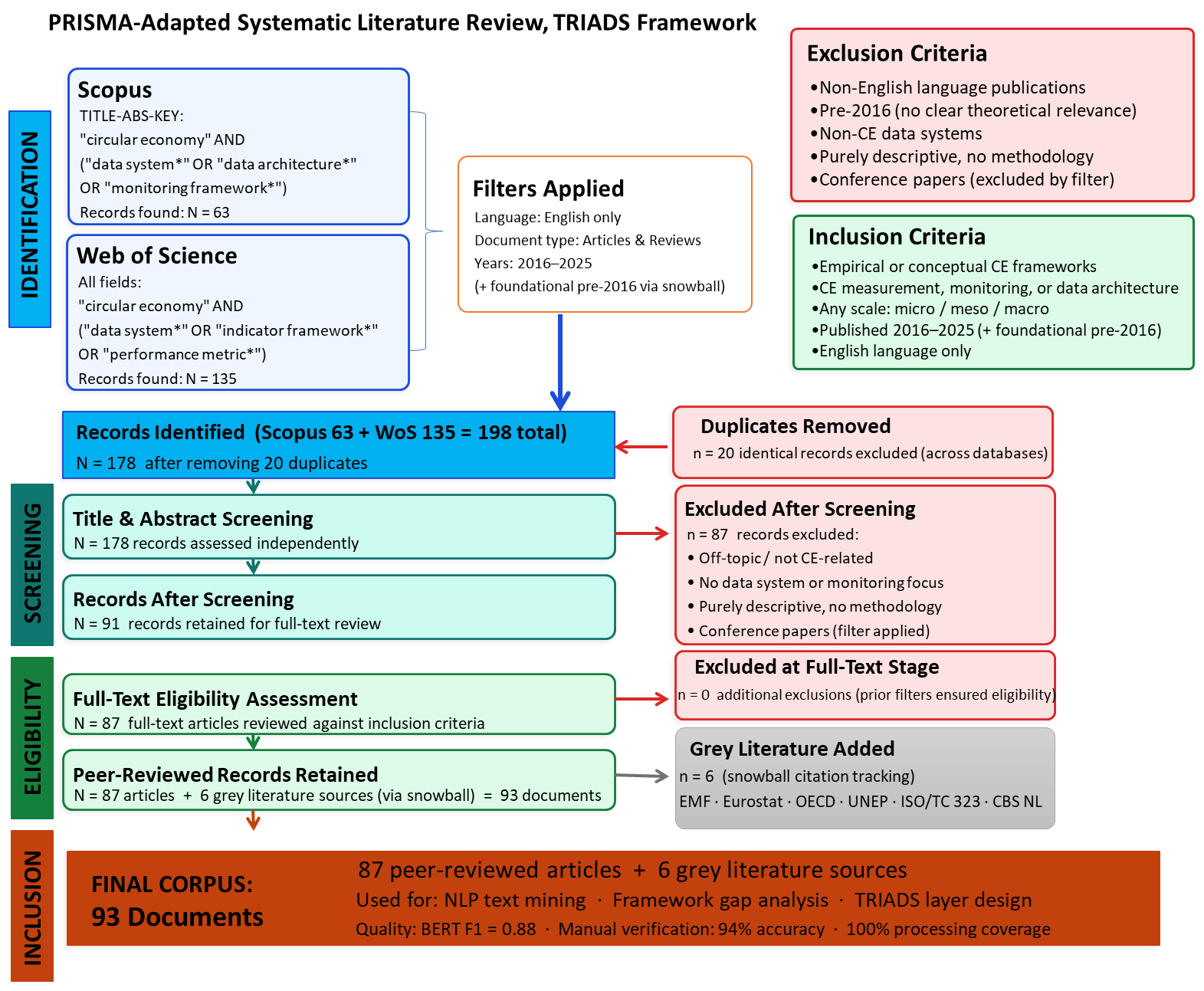
This systematic literature search was conducted and reported in accordance with PRISMA 2020 adapted guidelines, consistent with conceptual framework development studies. The first phase used a comprehensive literature review to identify gaps and inconsistencies in CE data systems, forming the foundation for a strategic roadmap on monitoring, data architecture, and indicator modeling. To ensure broad and relevant coverage, an advanced keyword query was executed across Scopus and Web of Science, using combinations such as “Circular Economy,” “data architecture,” “CE indicators,” “CE dataset,” and “MCDA in circular systems.” From an initial pool of over 178 articles, filters based on relevance, publication years (2016–2025), and alignment with the study’s scope refined the dataset to178 core sources.
This selection is further strengthened through citation tracking and grey-literature screening across peer-reviewed articles, including policy reports and working papers from platforms such as the Ellen MacArthur Foundation. The outcome was a structured knowledge base composed of peer-reviewed literature and institutional insights (93 documents). This served not only to inform the design logic of the proposed CE data framework, but also to clarify specific indicator-related gaps that this research aims to address.
Beyond identifying structural and methodological gaps, this literature base is systematically referenced throughout subsequent phases, particularly in the conceptual modeling and indicator design components (
Section 2.2) and during methodological validation (
Section 2.3). This curated knowledge set ensures continuity, traceability, and coherence across the research design. The time window of 2016–2025 was deliberately selected, as 2016 marks a critical inflection point in CE policy and data literature following the launch of the EU Circular Economy Action Plan; studies predating this threshold were included only where they constituted foundational theoretical contributions. The full search protocol is summarized in
Table 3.
This systematic literature review was conducted and reported in accordance with the PRISMA (Preferred Reporting Items for Systematic Reviews and Meta-Analyses) 2020 guidelines. The review was not prospectively registered, as it constitutes a conceptual framework development study, rather than a clinical or intervention review.
Records were excluded if they (i) were not published in English; (ii) predated 2016 without constituting foundational CE contributions; (iii) addressed non-CE data systems; or (iv) reported purely descriptive case studies without methodological contribution. Full-text retrieval was performed for all 87 records passing title/abstract screening; none were excluded at this stage, yielding a final corpus of 87 peer-reviewed articles supplemented by 6 grey literature documents via snowball citation tracking. A visual summary of this PRISMA-compliant literature review protocol and keyword network is presented in
Figure 1, and yielded 93 documents that formed the analytical foundation for framework development. These documents underwent text analysis and data preparation processes to extract key insights, identify indicator gaps, and establish the conceptual basis for CE data system design. This process, illustrated in
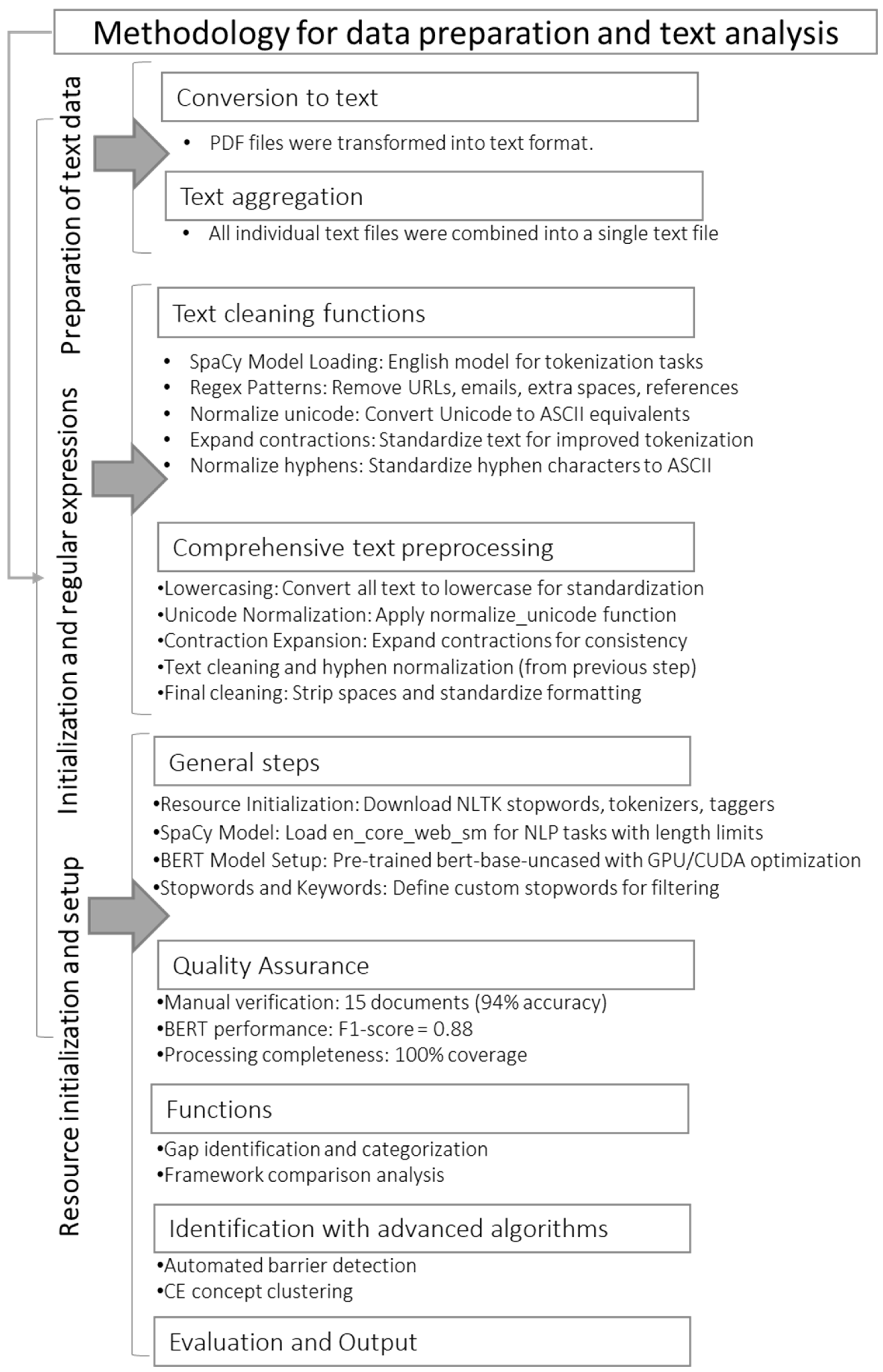
Figure 2, employed advanced natural-language processing techniques to ensure comprehensive coverage of CE concepts and methodological approaches.
Figure 2 illustrates the text analysis methodology applied to the 93 selected CE literature documents. The four-phase process progressed from data preparation (PDF conversion and text aggregation) through inclusive preprocessing (using SpaCy, NLTK, and BERT models for cleaning and normalization) to resource initialization (loading NLP libraries and custom stop words) and, finally, advanced analysis functions for concept extraction and pattern recognition.
This approach ensured that insights from the literature base were comprehensively captured and structured, directly informing the three core framework development phases: conceptual architecture design (
Section 2.2.1), strategic logic development (
Section 2.2.2), and indicator development processes (
Section 2.2.3). The text analysis outcomes provided the conceptual and literature-based foundation for the TRIADS model components presented in
Section 3, particularly in identifying and selecting evaluation criteria and benchmark frameworks.
TRIADS employs a systematic design-implementation approach.
Section 2.2 presents the design methodology—conceptual architecture, strategic logic, and indicator framework blueprints.
Section 2.3 details the implementation methodology—operational procedures for data system deployment, indicator extraction, and framework validation.
2.2. Framework Design Methodology
After the literature analysis, this section outlines the methodology employed to develop the TRIADS framework, which comprised three sequential design steps that transform literature insights into an operational CE data system architecture. For terminological clarity, a distinction is maintained throughout this manuscript: ‘conceptual framework’ refers to the overarching theoretical scaffold that organizes research concepts and their relationships at an abstract level and ‘conceptual architecture’ refers to the structural blueprint specifying components, layers, and their interactions within the TRIADS system design. These terms are not used interchangeably. Each development step corresponds to specific research outputs presented in Results:
Step 1: Conceptual framework development → Results 3.1: Conceptual architecture design.
Step 2: Strategic logic development → Results 3.2: Logic implementation.
Step 3: Indicator development process → Results 3.3: TRIADS indicator development framework.
2.2.1. Step 1: Conceptual Framework Development
The conceptual architecture was developed through a three-phase methodology grounded in design science research principles, ensuring a systematic progression from identified gaps to a validated architectural design. Requirement extraction identified key design needs, modularity, multi-stakeholder integration, and governance support, from the literature gap analysis. Building upon these requirements, the architecture development phase utilized layered design patterns and systems-thinking principles to establish coherence across the data, process, and governance layers. Finally, the framework underwent a dual validation process that integrated internal consistency checks focusing on utility, quality, and efficacy, alongside theoretical alignment with established CE frameworks, including the 9Rs, material flow analysis, and industrial ecology. This methodology ensures systematic progression from identified gaps to validated architectural design.
2.2.2. Step 2: Strategic Logic Development of TRIADS
Building on the conceptual architecture, the strategic implementation logic was developed to address operational deployment challenges identified in existing CE frameworks. The process followed four main components: (1) framework analysis to detect fragmentation patterns, contextual limitations, and architectural inconsistencies, informing the design of a logic model that accommodates system complexity, institutional diversity, and sector-specific priorities [
65]; (2) a multi-phase development mechanism comprising contextual boundary assessment, opportunity matching, system positioning within value chains, and priority pathway definition; (3) a multi-actor coordination framework that assigns roles to leaders (drivers), partners (implementers), and enablers (facilitators), supporting both bottom-up and top-down modes through hybrid governance; and (4) validation and refinement through consistency checks with CE principles and stakeholder feedback, to ensure applicability across different institutional contexts and territorial scales. This approach establishes the foundation for indicator development by aligning strategic objectives with measurement frameworks.
2.2.3. Step 3: Indicator Development Process
The indicator development process within TRIADS is designed to apply a structured Multi-Criteria Decision Analysis (MCDA) workflow consisting of three integrated techniques: (1) Delphi consultation rounds for expert consensus on indicator relevance and institutional feasibility; (2) Analytic Hierarchy Process (AHP) for criteria weighting, enabling pairwise comparison of strategic, operational, and data-readiness dimensions; and (3) Technique for Order of Preference by Similarity to Ideal Solution (TOPSIS) for final indicator ranking, supported by Fuzzy Logic for uncertainty handling in data-scarce contexts. The indicator selection process follows the sequence: literature-driven extraction → stakeholder validation (Delphi) → multi-criteria evaluation (AHP-TOPSIS) → finalization. It should be noted that detailed empirical outputs of this workflow, including full AHP weight matrices, are part of the implementation-phase future research agenda; the current study proposes and defines this methodology as a design-phase contribution [
12]. The process further includes multi-criteria evaluation based on analytical assessment of goal-directed fit, clarity, feasibility, and data availability, alongside interdependency modeling, to identify causal and systemic links among indicators and improve coherence [
5]. Additionally, the methodology incorporates uncertainty management by addressing data gaps with expert judgment and advanced models, and concludes with triangulated data sourcing that combines literature, grey sources, dashboards (Eurostat, EMF), and practitioner consultations. These components work within iterative validation cycles to ensure indicator relevance, measurability, and alignment with broader sustainability frameworks, while maintaining flexibility across different scales, domains, and governance levels.
2.3. TRIADS Integration Methodology
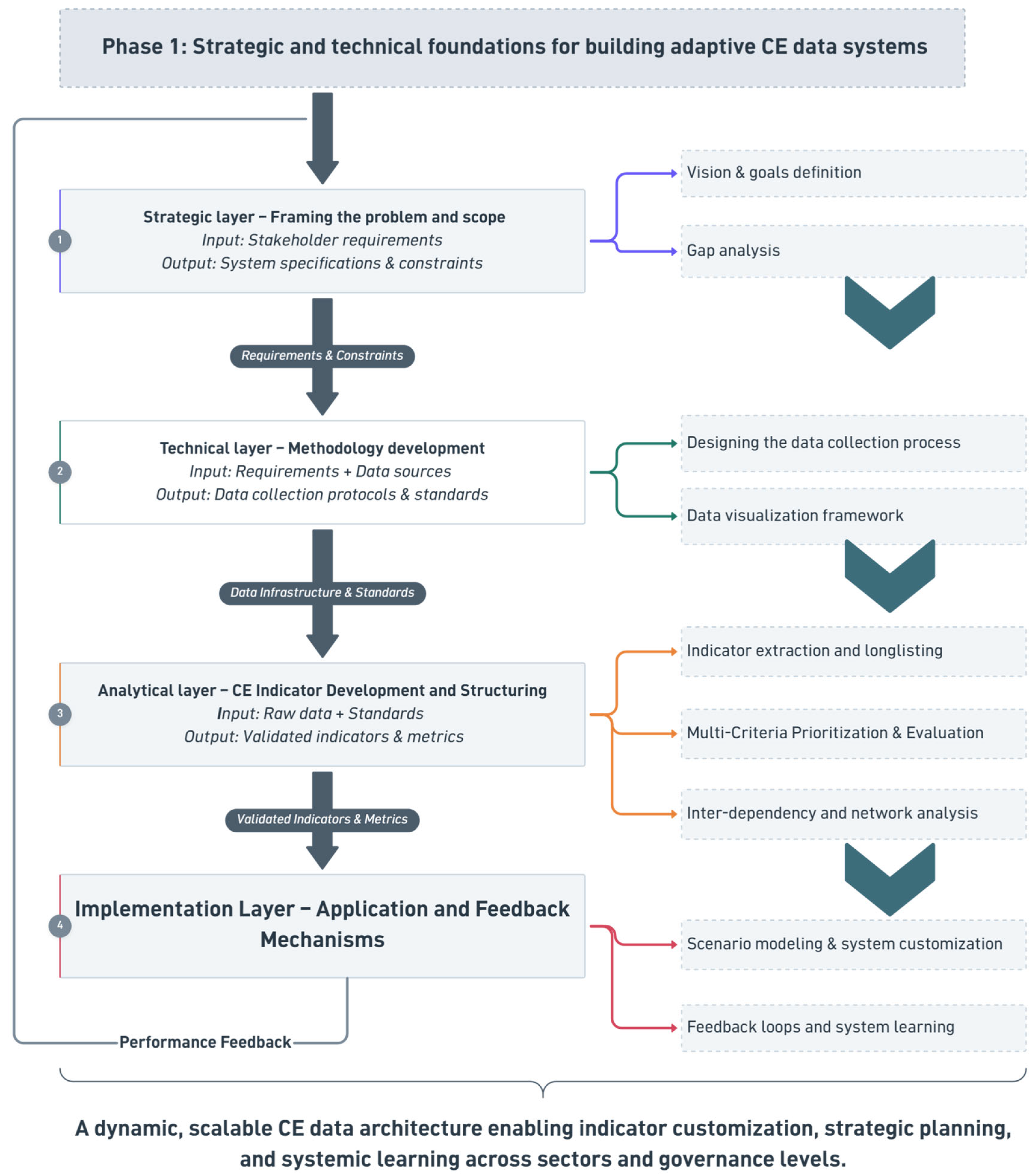
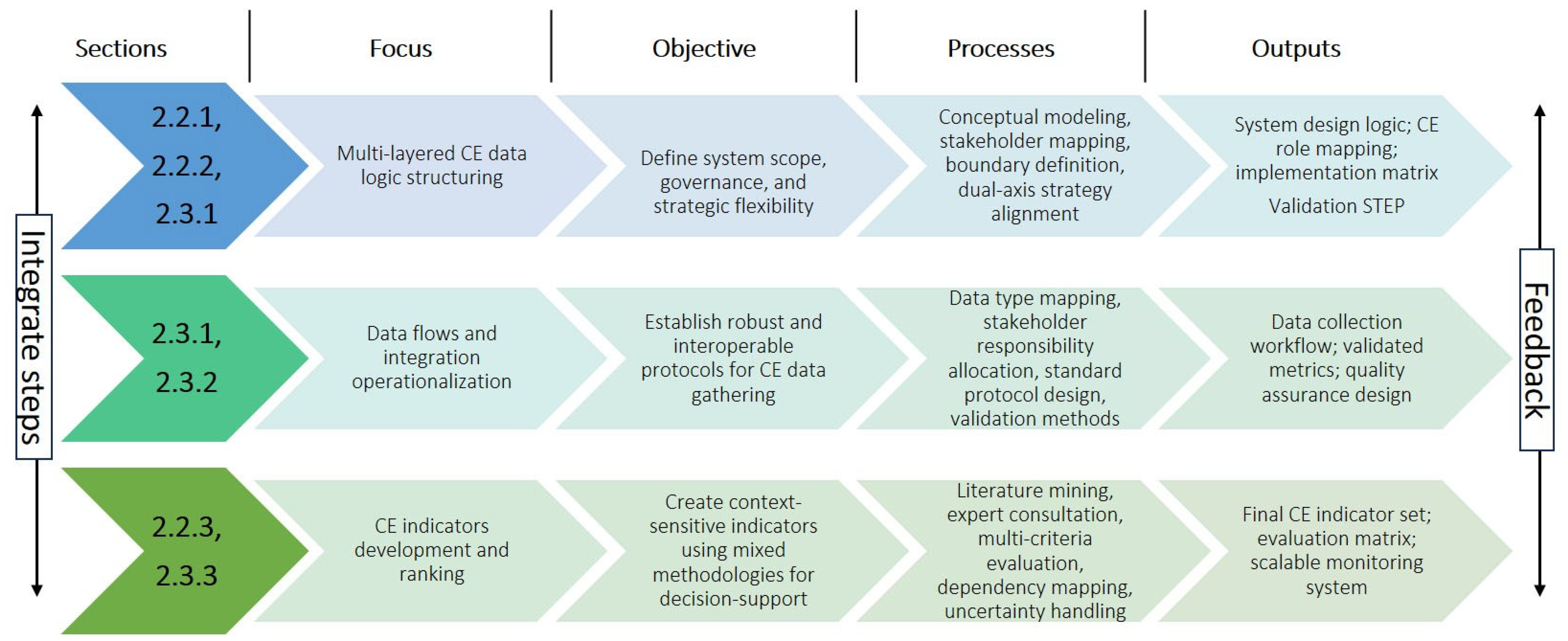
This section outlines a structured method for integrating the TRIADS framework components, transitioning from design to synthesis (see
Figure 3). Based on earlier analyses, it shows how to integrate components into systems tailored to specific priorities and capacities, supporting adaptive synthesis across sectors and governance levels. Structured according to the logic of “Why (Strategic architecture) → What (Data-indicator integration) → How (Multi-component synthesis) “, this three-tier methodology provides structured procedures for CE framework integration, ensuring consistency across components. The validation approach is structured across three complementary streams: (1) methodological triangulation, integrating NLP/BERT text analysis, content analysis, and MCDA to verify internal consistency and logical coherence of the framework components; (2) data source triangulation, systematic cross-referencing of peer-reviewed literature (91 articles), institutional reports (6 grey literature documents from EMF, Eurostat, OECD, UNEP, ISO/TC 323, and CBS Netherlands), and sector white papers to ensure theoretical depth and contextual relevance; and (3) strategic reasoning triangulation, multiple internal review cycles confirming that each framework layer addresses a specific structural gap identified in
Section 1.1. The 20 evaluation criteria used to compare TRIADS against 13 frameworks were derived independently through this SLR process, not designed post hoc to favor TRIADS, ensuring the evaluation is not self-referential.
2.3.1. Phase 1: Strategic Architecture-Integration Methodology Data Systems
This goal-directed architecture within the TRIADS framework defines procedures for synthesizing components (strategic, technical, and analytical) and ensuring alignment with sustainability mandates [
66]. The integration methodology incorporates three core components:
Institutional role-mapping procedures (leaders, enablers, and partners).
Ecosystem dynamics-integration methods (incorporating systemic interactions.
Dual-axis planning framework application (thematic domains and territorial scales).
As visualized in
Figure 3, the approach follows a multi-layered structure consisting of strategic, technical, analytical, and implementation components.
The phase focuses on defining a flexible multi-layer system consisting of
Strategic Layer—Framing the Problem and Scope
This layer establishes integration procedures for strategic context elements (developed in
Section 2.2.1 and
Section 2.2.2), focusing on systematic implementation of vision frameworks and boundary definitions. The methodology addresses key operational questions: “What is the long-term goal of CE implementation?” and “Where do we want to be in 5–10 years?”
Building on conceptual foundations (
Section 2.2.1), the approach analyzes barriers in existing CE practices and data maturity, then identifies regulatory, technical, and institutional obstacles, including standardization gaps, data fragmentation, and coordination limitations.
Technical Layer—Methodology Development
This layer translates the planned vision into a structured technical architecture [
52] by specifying core design components through data domain classification, typology development, and architectural framework organization. The operationalization of this architecture involves integrating waste-stream categorization procedures with material-flow mapping protocols, to ensure granular resource tracking. Complementing these processes, the framework embeds energy-consumption classification methods and spatial-data-integration models to capture the multidimensional nature of circular systems. The resulting sequential workflow coordinates selection, collection, validation, normalization, and categorization procedures, ensuring overarching methodological coherence and reliability [
25,
26].
Analytical Layer—CE Indicator Development and Structuring
Building on data structuring procedures (Technical Layer), this layer transforms structured data into decision-support frameworks through comprehensive indicator development protocols [
40]. The approach bridges technical specifications and implementation through indicator extraction, validation, and prioritization workflows across domains and scales.
Dynamic Framework Design: the methodology introduces methodical extraction procedures:
Automated processing protocols for institutional and scientific sources.
Policy-integration analysis workflows.
Taxonomical mapping based on CE principles.
Validation methodology incorporates structured expert consultation ensuring contextual relevance, implementation feasibility, and stakeholder alignment [
12]. Prioritization considers strategic relevance, scalability, and interdependencies, incorporating uncertainty and feedback loops [
30,
54].
Implementation Layer—Application, Replicability, and Feedback Mechanisms
This layer ensures the transferability and adaptability of the analytical framework through structured deployment and feedback loops, emphasizing standardization and customization across sectoral, territorial, and organizational scales. To facilitate testing policy and investment strategies, the layer incorporates scenario modeling [
67] supported by standardized documentation and metadata, to ensure system replication. The technical foundation of this replication relies on indicator metadata sheets specifying definitions, units, sources, and periodicity, integrated alongside standardized data workflow templates and dashboard design patterns. To maintain long-term relevance, continuous feedback from users, analysts, and policymakers is institutionalized through periodic indicator revision cycles [
68,
69] and regular stakeholder review sessions [
24]. These efforts are further aligned with broader sustainability frameworks, such as the SDGs [
5,
65], enabling the framework to adapt to shifting policy priorities and evolving institutional capacities. Ultimately, this modular design ensures the methodology remains a transferable and foundational model for optimization-focused systems.
2.3.2. Phase 2: Data Collection and Standardization Methodology of TRIADS
Building on the goal-directed architecture (
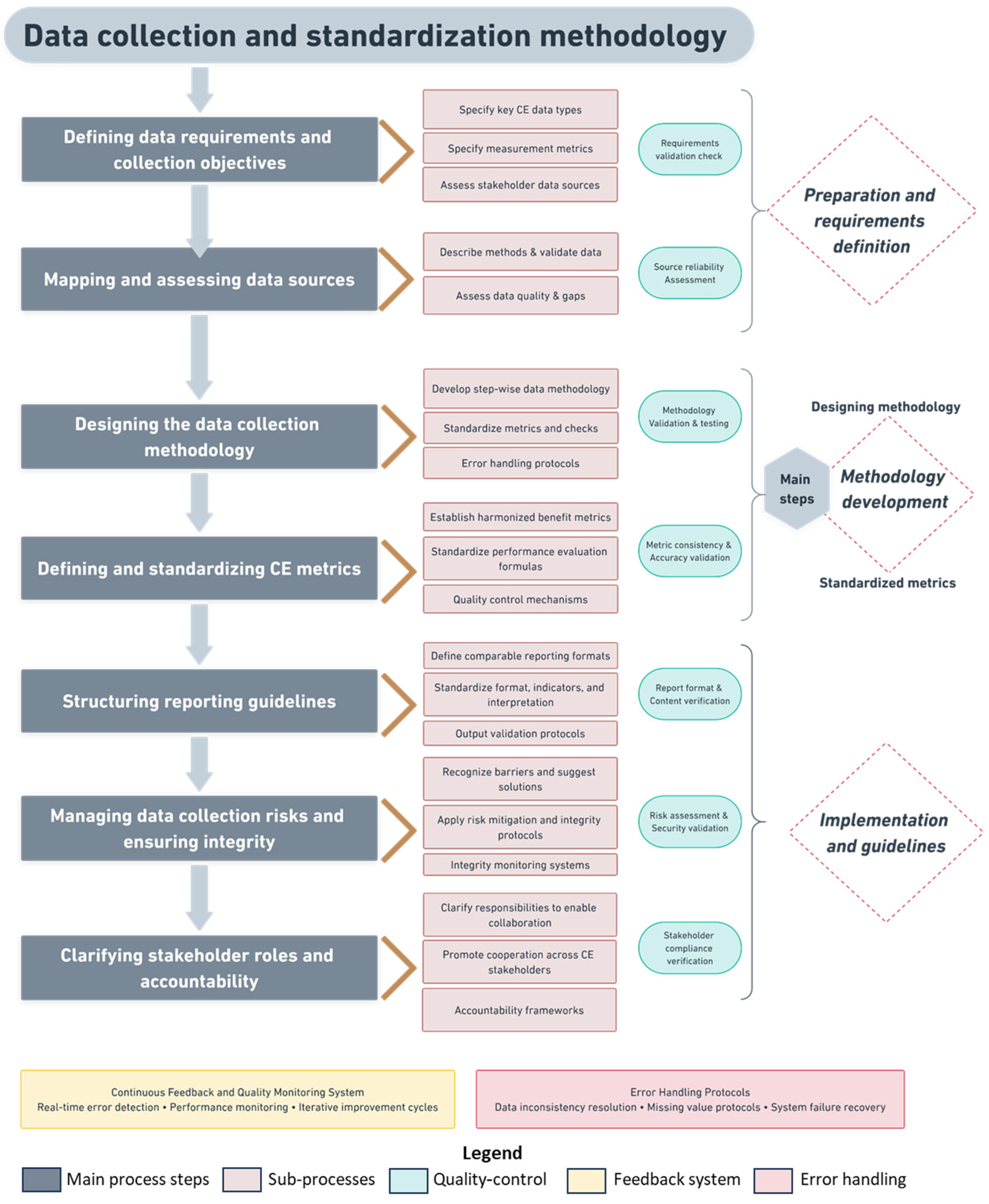
Section 2.3.1), this phase outlines systematic methods for designing standardized, component-based, and interoperable data workflows adaptable to different institutional and sectoral contexts (
Figure 4). It addresses how foundational architectural specifications can be translated into coherent data integration protocols through structured methodological approaches.
This phase focuses on seven main operational pillars:
Defining Data Requirements and Collection Objectives
This foundational step establishes procedures for data needs specification and purpose definition within the Circular Economy (CE) data system methodology. The methodology specifies data granularity requirements and spatial boundary measurements to ensure long-term tracking compatibility. Furthermore, these procedures establish temporal frequency-collection protocols, providing a robust methodological foundation for data system development through structured requirement-definition processes [
9,
70].
Mapping and Assessing Data Sources
Building upon these requirements, this step defines a structured methodology for evaluating data across diverse stakeholders, including municipalities, enterprises, ports, and waste agencies. The evaluation process begins with a comprehensive accessibility and format assessment, followed by the identification of coverage gaps and a review of update cycles. To ensure legal and operational viability, the methodology incorporates ownership mapping and legal access design, which are further reinforced by stringent quality-control and assurance procedures. This integrated approach enables the identification and refinement of reliable, CE-aligned data sources, essential for effective performance monitoring [
42].
Designing the Data Collection Methodology
This component outlines the technical protocol development for data acquisition and processing within Circular Economy (CE) monitoring frameworks. The methodology begins by establishing technology integration protocols that encompass sensor deployment and platform utilization strategies, which are subsequently translated into deployment strategies tailored for facilities, urban environments, and sector-specific infrastructure contexts. Central to this phase is the design of step-by-step data handling procedures, including the determination of measurement frequencies, specification of collection methods, development of integration logic, and the formalization of metadata structuring protocols. To ensure reliability, the process incorporates a validation technique framework that integrates calibration routines, benchmarking tests, and cross-source reconciliation protocols [
59,
71].
Defining and Standardizing CE Metrics
This component provides a systematic methodology for developing CE-specific metrics, informed by literature synthesis and expert consultation. The process involves establishing calculation-method-specification protocols for each metric, alongside clearly defined measurement-unit standardization procedures. Furthermore, the methodology focuses on normalization logic development to ensure cross-sectoral and temporal consistency. These foundational steps provide a structured basis for the indicator modeling, evaluation, and prioritization processes detailed in Phase 3, ensuring metric development through literature-based evidence integration and expert validation [
72,
73].
Structuring Reporting Guidelines
The template development procedures integrate core field specification protocols to standardize indicators, timeframes, and sources. This is complemented by output structure-design methodologies for tables, charts, and geospatial overlays, as well as the establishment of benchmark and threshold procedures for performance reference. Additionally, metadata annex protocols are incorporated to ensure documentation and traceability. This structure supports data integration, dashboards, and CE scorecards for continuous monitoring and decision-making [
42,
74].
Managing Data Collection Risks and Ensuring Integrity
Establishes systematic risk-mitigation methodology addressing data environment vulnerabilities. The approach incorporates the following:
GDPR standards adherence and privacy protection protocols.
Cybersecurity control implementation and cloud-based security strategies.
Risk management procedures for data inconsistency, missing values, and access limitations.
Safeguard methodology includes pseudonymization protocols, multi-layer encryption procedures, and fallback mechanisms, ensuring system resilience and trustworthiness [
72,
75].
Clarifying Stakeholder Roles and Accountability
This methodology formalizes roles and responsibilities in CE data systems through structured protocols for accountability, reporting, and validation. Building on governance principles (
Section 2.3.1), it operationalizes role mappings to ensure institutional alignment and coordinated implementation [
71]. A seven-stage framework translates goals into actionable data procedures, integrating collection, standardization, and stakeholder coordination, while balancing technical precision with institutional flexibility.
As illustrated in
Figure 4, this integrated approach ensures a scalable, replicable, and robust data collection system for consistent performance monitoring, facilitating data categorization and normalization aligned with CE typologies. Furthermore, the methodology leverages advanced visualization tools—such as urban mine maps, node–link–place diagrams, and dynamic dashboards—to provide both operational teams and stakeholders with actionable insights [
5,
26,
30].
2.3.3. Phase 3: TRIADS Indicator Development, Prioritization, and Packaging
This phase establishes a structured, replicable framework designed for developing CE indicators for integration into decision-making tools and real-time monitoring platforms [
40]. Indicators are methodically prioritized and categorized into core, custom, and composite sets, using advanced analytical techniques, ensuring adaptability to different sectors, governance levels, and institutional contexts [
60,
70,
76]. Addressing the central question of how circular performance should be measured and prioritized across systems, the framework supports dynamic, context-sensitive metric development.
The initial stage combines indicator extraction and systematic organization. Literature protocols are extended through AI-assisted NLP mining and expert knowledge collection, followed immediately by classification using CE frameworks (9R hierarchies and material flow mapping) and metadata standardization covering definitions, calculation methods, and measurement units.
Evaluation and prioritization of indicators constitute the analytical core, where the methodology extends MCDA approaches (referenced in
Section 2.2.3) through specialized assessment procedures. The framework integrates Delphi consultation rounds for expert consensus, alongside AHP weighting and TOPSIS ranking methodologies to handle complex trade-offs, while utilizing Fuzzy Logic for uncertainty handling [
40,
77].
Finally, the finalization and packaging define three-tier categorization procedures for developing core, custom, and master lists. This step focuses on implementation readiness through database formatting and API development protocols [
7]. These outputs allow users to select indicators based on needs, scale, and priorities. The framework prepares for integration into CE data ecosystems through databases, dashboards, and API-ready outputs, ensuring effective use in decision-support systems. Its design is critically assessed within the CE assessment literature, highlighting internal coherence, methodological improvements, and comparative advantages, thereby confirming both theoretical and practical validity.
2.4. Validation and Triangulation for the Final Version
The study employs a triangulated validation approach focused on designing a roadmap, rather than empirical testing. This process incorporates methodological triangulation, integrating content analysis, NLP, and MCDA, to verify internal consistency and logical coherence ([
42],
Section 2.1). It is further supported by data source triangulation, which involves reviewing diverse sources—including peer-reviewed literature, institutional reports, and sector white papers—to ensure theoretical depth and contextual relevance [
57,
72]. Additionally, strategic reasoning triangulation is utilized through multiple internal reviews to confirm that the framework addresses structural gaps and meets CE data system needs, emphasizing clarity, scalability, and usability [
43,
74].
This validation process strengthens design integrity, exposes inconsistencies in CE data reporting, and underscores the need for harmonized data structures and standardized monitoring [
38,
72,
78]. Findings from this triangulation informed the three-phase data system model presented in
Figure 5.
The progression through the stages, from the literature foundation (comprising 93 systematically selected sources) through framework design (
Section 2.2) and implementation methodology (
Section 2.3) to triangulated validation (
Section 2.4), establishes a robust approach for TRIADS development. The framework’s multi-phase, adaptable, and methodologically coherent logic offers a strong basis for implementation, addressing systemic CE challenges with flexible tools. These outputs allow users to select indicators based on needs, scale, and priorities, ensuring effective use in decision-support systems and confirming both theoretical and practical validity.
2.5. Scalability, Transferability, and Uncertainty Management
To support broad adoption of the TRIADS model across diverse institutional and geographical contexts, this section addresses three critical design considerations: modular scalability, contextual transferability, and uncertainty management.
TRIADS is designed with modular architecture, allowing adoption at multiple scales—from individual municipalities to cross-regional networks. Three layers of transferability can be distinguished. Universal elements, applicable across all contexts, include core layer principles (strategic road mapping, data governance, and stakeholder mapping), metadata standards for indicators, the MCDA-based prioritization logic, and the four-stage indicator development process. These elements can be adopted without modification across cities, industrial parks, and port authorities. Context-specific elements requiring local adaptation include custom indicator lists (e.g., municipal waste recovery rates vs. port logistics efficiency), stakeholder role assignments (leaders, enablers, and partners vary by institutional context), data source configurations (IoT sensors, municipal registries, and enterprise reporting), and regulatory compliance protocols (GDPR vs. local data protection laws).
Regarding replication logic across settings, for a city context, TRIADS would be applied beginning with boundary definition (urban metabolic flows), then data source mapping (waste agencies, utility providers, and mobility operators), followed by indicator selection from the Core List supplemented by city-specific Custom indicators, and finally dashboard integration with municipal decision-support tools. For a regional industrial symbiosis context, the same architecture is applied at meso-scale, with the Technical Layer focusing on material exchange flows between industrial actors and the Analytical Layer using the 9R hierarchy to assess circularity depth across value chains. For port logistics contexts, TRIADS supports real-time tracking of material throughput, reverse logistics performance, and waste-to-resource conversion rates.
Uncertainty management in TRIADS operates across three dimensions. Regarding data uncertainty, missing data situations are addressed through expert judgment protocols (Delphi consultation) and triangulated data sourcing, combining official statistics, enterprise self-reporting, and grey literature. Conflicting data sources are reconciled through cross-source validation and flagged in indicator metadata sheets. Proxy indicators are defined for contexts where primary data is unavailable. Concerning NLP/AI bias and limitations, the use of SpaCy, NLTK, and BERT introduces potential biases including publication-language bias, domain-specific terminology gaps, and model-performance limitations, for emerging CE concepts. These risks were mitigated through manual verification of 15 documents (94% accuracy rate), BERT F1-score validation (0.88), and custom stop word filtering. Researchers should note that AI-assisted indicator mining is a support tool, not a replacement for expert judgment. Finally, regarding ethical considerations, researchers implementing Delphi consultations or stakeholder interviews should obtain informed consent, ensure anonymity of expert responses, and comply with applicable institutional review requirements. Data shared by private enterprises should be governed by data sharing agreements specifying access rights, anonymization protocols, and usage restrictions. Public–private data ownership boundaries should be explicitly defined in the governance framework (Layer 1, Strategic Layer).
The following section presents the results of the TRIADS model development across its three layers, translating the methodological design outlined above into a structured and operational CE data system architecture.
3. Results
This section summarizes the TRIADS framework outcomes, covering conceptual design, strategic implementation, and indicator development. It presents a systematic approach to CE data architecture and performance measurement for context-sensitive transition planning across various scales and domains.
The results presented in this section derive directly from the three-step design methodology outlined in
Section 2.2.
Section 3.1 (Conceptual Architecture Design) presents the outputs of Step 1 (conceptual framework development via design science research principles).
Section 3.2 (Strategic Logic Implementation) presents the outputs of Step 2 (strategic logic development).
Section 3.3 (TRIADS Indicator Development Framework) presents the outputs of Step 3 (indicator development via MCDA, Delphi, and text mining). This explicit mapping ensures traceability between methodological inputs and reported findings.
3.1. Conceptual Architecture Design
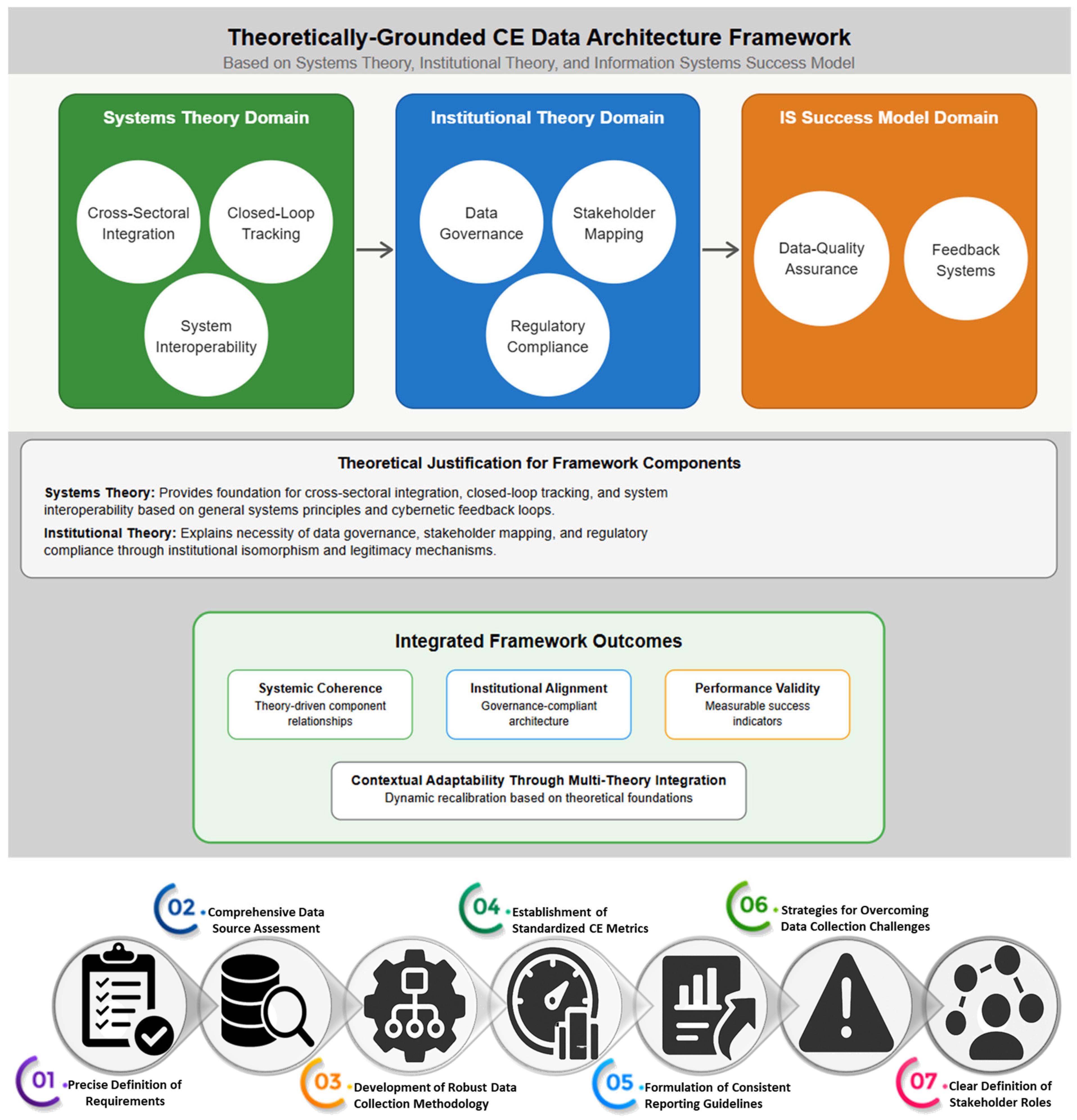
The conceptual architecture stands out from existing CE frameworks by offering systemic coherence, flexibility, and contextual adaptability, allowing dynamic recalibration to evolving CE goals or regional constraints [
79].
Key features include cross-sectoral integration for benchmarking logistics, waste, and energy flows; a closed-loop focus on material reintegration beyond recycling; and foundational pillars such as data governance, stakeholder mapping, interoperability, and regulatory compliance (see
Figure 6).
This architecture forms the foundation for TRIADS’ sequencing, data collection, and indicator design, ensuring technical, managerial, and regulatory alignment within unified circular-transition planning.
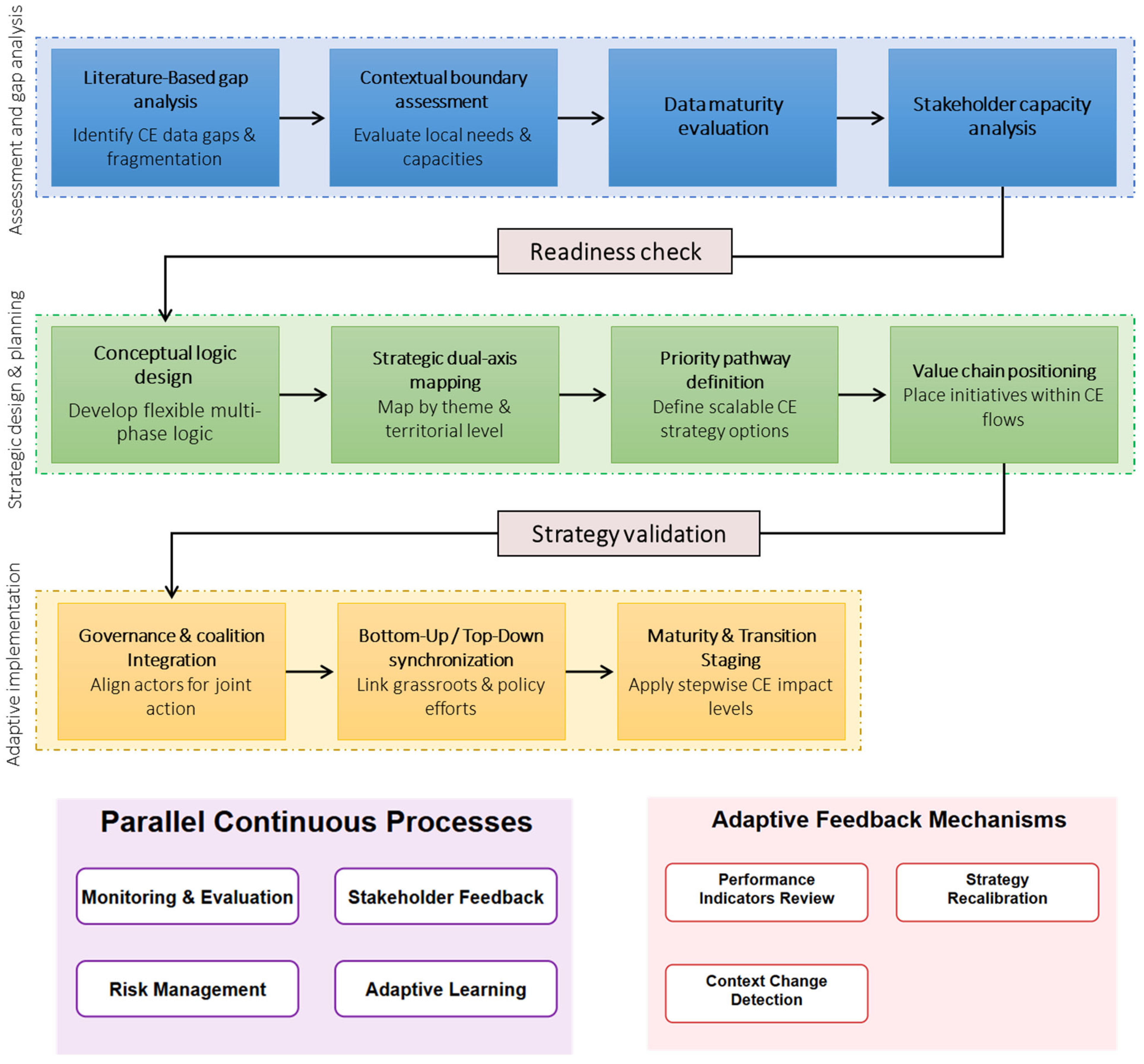
3.2. Strategic Logic Implementation
The strategic logic development produced a comprehensive implementation framework characterized by three core features. First, a Multi-Dimensional Structure represents CE decision-making through phased, replicable layers adaptable to different data-maturity levels. Second, Dual-Axis Mapping incorporates strategic mapping covering thematic dimensions and operational scales (local to cross-regional strategies), ensuring coherent planning (see
Section 3.3.1). Finally, System Integration Capabilities allow for the detection of maturity gaps and leverage points, integrating resource loops and governance networks to support scalable systemic architecture. The logical flow is illustrated in
Figure 7, summarizing interconnected phases for adaptive implementation and maturity scaling.
3.3. TRIADS Indicator Development Framework
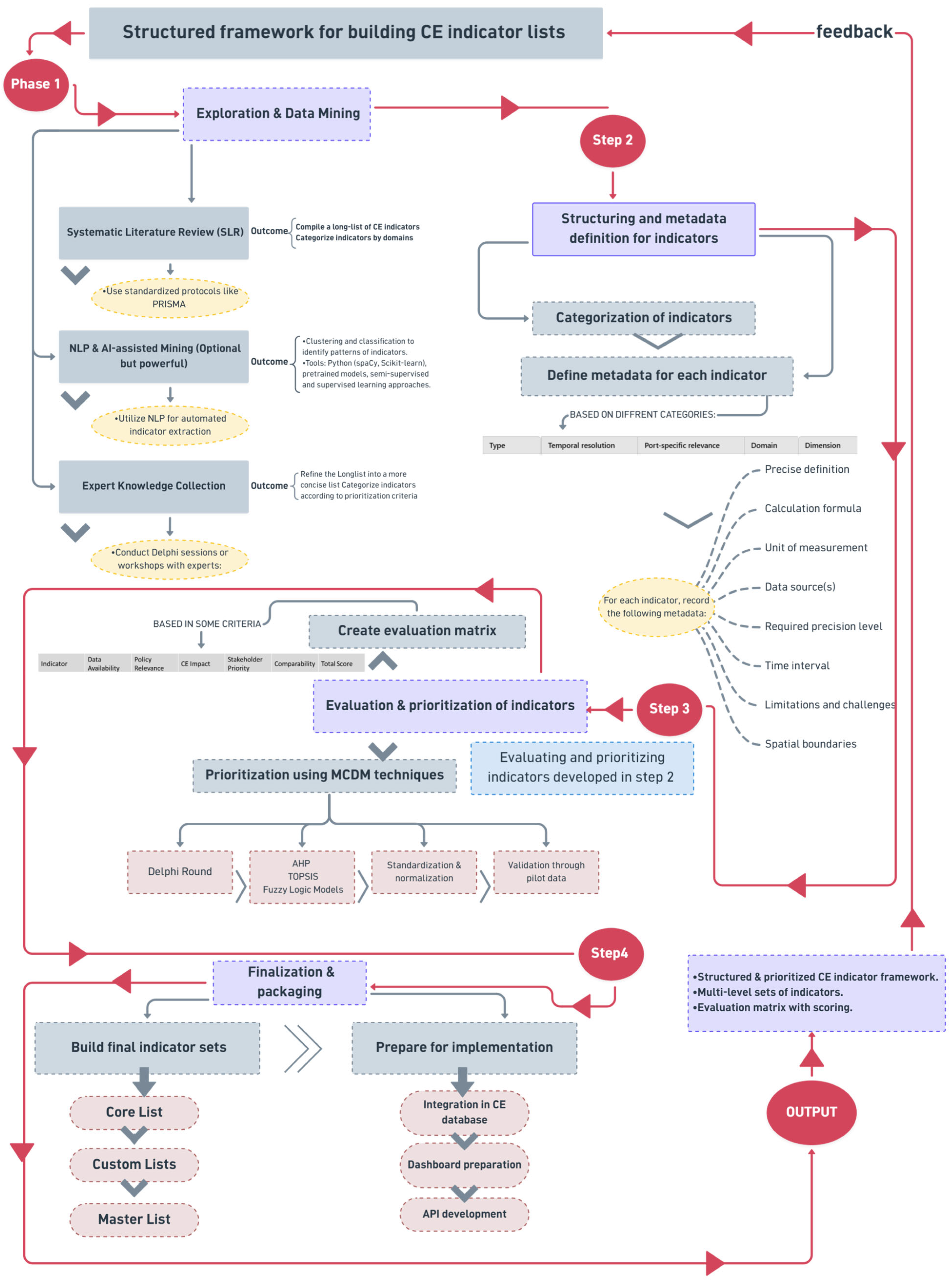
It should be noted that the TRIADS indicator development framework proposed here is conceptual and theoretical in nature. The contribution lies in providing a structured and transferable model, rather than reporting empirical validation metrics. The development process consists of a four-stage framework for systematic CE indicator creation and prioritization, as demonstrated in
Figure 8.
3.3.1. Framework Architecture Outcomes
The proposed framework establishes a systematic progression through four distinct stages, to ensure a robust, adaptable, and implementation-ready environment for CE monitoring.
Step 1 (Indicator Collection) combines a comprehensive literature review with AI-assisted text mining and expert input to generate a multi-dimensional indicator list categorized by theme and system boundary.
Step 2 (Structured Organization) focuses on clustering these indicators using established CE classification schemes (such as 9R hierarchies), enriching them with standardized metadata to ensure consistency and cross-system transferability.
Step 3 (Multi-Criteria Evaluation) utilizes advanced scoring matrices to assess metrics based on data availability, strategic relevance, and stakeholder alignment, facilitating a transparent comparative analysis.
Step 4 (Implementation Packaging) delivers the final decision-ready indicator sets, complete with technical specifications for database architecture, dashboard visualization, and API integration.
This structured sequence ensures that the resulting evaluation system is both scientifically grounded and operationally scalable.
3.3.2. Evaluation and Prioritization
The framework recommends that indicators be evaluated and prioritized through a rigorous, structured analytical approach. This begins with Scoring Matrix Development, which facilitates the comparison of potential metrics across key criteria such as data availability, strategic relevance to CE goals, stakeholder alignment, and cross-context applicability. This matrix serves as a transparent tool for the comparative scoring of indicators, integrating both qualitative expert judgments and quantitative data-driven inputs.
Subsequently, a Holistic Prioritization Workflow is employed to interpret matrix scores and generate ordered indicator sets. The indicator-prioritization workflow within TRIADS incorporates expert consultation, AHP-based weighting, score normalization, and validation protocols. Following Delphi-based expert consensus, candidate indicators are evaluated against four weighted criteria—Data Availability, Strategic Relevance, Stakeholder Alignment, and Cross-Context Applicability—using AHP pairwise comparison matrices to derive criteria weights. TOPSIS then ranks indicators by their relative proximity to an ideal solution, with Fuzzy Logic applied where expert judgment introduces linguistic uncertainty. The output is a ranked, context-specific indicator set, rather than a universal list. No fixed numerical outputs are presented here, as AHP weights and TOPSIS scores are context-dependent, and vary across implementation settings. Empirical application and quantitative sensitivity analysis are designated as future research goals.
3.3.3. Output Categories
The framework delivers three structured indicator types (final stage):
Core Lists: universal indicators, such as the Material Circularity Index (MCI), applicable across diverse global contexts for general benchmarking.
Custom Lists: context-tailored metrics designed for specific regional or sectoral needs, such as municipal-waste-recovery rates or specialized energy-efficiency flows.
Master Lists: inclusive, consolidated reference sets that integrate indicators from multiple established CE frameworks for deep comparative analysis.
To ensure the practical utility of these categories, the framework incorporates robust Technical Integration and Adaptive Functionality. Technical integration is achieved through standardized database formatting, dashboard protocols, and API-ready outputs, enabling seamless embedding into existing monitoring systems. Furthermore, the framework demonstrates high adaptability, maintaining operational flexibility across multiple scales (from local to regional), diverse domains (including logistics, waste, and energy), and various governance levels.
3.3.4. Implementation Readiness and Key Capabilities
The TRIADS framework is designed to ensure a high proposed implementation pathway, by providing structured procedures for deployment, including database integration, dashboard protocols, and API-ready outputs. This architecture is developed to facilitate seamless integration with existing systems, while maintaining data integrity and advanced analytics. Furthermore, the framework establishes a dedicated decision-support pathway, through which customized and scalable CE metrics can be generated to meet specific contextual requirements.
Beyond its technical structure, the proposed framework offers several strategic capabilities intended to enhance operational value. It is capable of incorporating stakeholder feedback mechanisms to ensure transparency throughout the indicator lifecycle and is designed to provide a clear analytical differentiation between CE-compliant actions and conventional resource-intensive models. Additionally, the framework’s potential for alignment with broader sustainability goals, such as the UN SDGs, ensures that local monitoring efforts can remain globally relevant. By integrating these features, TRIADS is intended to empower decision-makers to create context-sensitive evaluation systems that are both strategically aligned and methodologically scalable, as conceptualized in
Figure 8.
To illustrate the operational logic of TRIADS across different contexts, two illustrative application scenarios are presented below. While these are not empirical implementations, they demonstrate how the three-layer framework can be applied to real-world CE monitoring challenges.
Illustrative Application Scenario 1: Municipal Waste and Circular Procurement Program. A medium-sized European city seeks to implement a circular procurement policy and requires a monitoring system to track progress. Data sources include municipal waste-collection records, a procurement contracts database, Eurostat regional-waste statistics, and utility energy-consumption data. A federated data architecture is selected (Layer 2), connecting city waste management systems with procurement databases via standardized API protocols, with privacy compliance following GDPR guidelines. Core indicators (Layer 3) include the Material Circularity Index (MCI), municipal solid-waste recycling rate, and secondary material content in public procurement contracts. Custom indicators include circular procurement spending as a percentage of total public procurement and reuse-center utilization rates. As a decision output, the municipal government can track circular contracts year-on-year, benchmark against peer cities using the Core List, and adjust procurement thresholds using MCDA-derived priority weights.
Illustrative Application Scenario 2: Regional Industrial Symbiosis Monitoring. A regional authority overseeing an eco-industrial park requires a structured system to monitor material exchanges and measure circularity depth. Data sources include industrial material-flow declarations, energy exchange records, water reuse registrations, and waste-to-resource transaction logs. A centralized data hub is established at the park authority level (Layer 2), collecting standardized quarterly reports from tenant firms, with blockchain-assisted traceability for material exchange verification. Core indicators (Layer 3) include industrial symbiosis-exchange rate, energy recovery ratio, and water reuse efficiency. Custom indicators include symbiosis revenue generated, and CO2 avoided, through symbiosis flows. As a decision output, the regional authority can identify bottlenecks in material loops, prioritize investments in new symbiosis connections, and report CE performance to national authorities using the standardized Master List format.
4. Discussion
The study presents a theory-driven roadmap that identifies gaps to guide CE indicator development, data design, and monitoring, evaluating TRIADS for coherence, relevance, and scalability. To make the differentiation of TRIADS from existing frameworks immediately transparent, the five most distinguishing criteria are summarized here: (1) integrated indicator prioritization—no existing framework among the 13 reviewed combines Delphi, AHP, TOPSIS, and Fuzzy Logic in a unified ranking workflow; (2) AI/NLP-assisted indicator mining—automated concept extraction from large literature corpora is absent in all 13 reviewed frameworks (coverage: 3.8%); (3) adaptive feedback architecture—structured feedback loops connecting implementation back to indicator revision are only partially addressed by existing frameworks (coverage: 65.3%); (4) uncertainty management tools—explicit protocols for missing data, conflicting sources, and model uncertainty are addressed by only 7.6% of reviewed frameworks; and (5) modular multi-scale transferability—explicit replication protocols for cities, industrial parks, ports, and regions.
4.1. Framework Validity and Strategic Utility
The conceptual architecture follows a stepwise reasoning process, from defining purpose (Why), to designing process logic (How), and, finally, identifying measurable outcomes (What). This trajectory directly reflects principles of Systems Thinking [
80,
81] and Design Thinking [
82,
83], which are effective for complex CE transitions [
1,
70].
Structurally, the three phases of the framework correspond to the logic of layered system architectures: Phase 1 lays the strategic and architectural foundation (vision + architecture), Phase 2 focuses on the operational and data infrastructure (Segmented data logic), and Phase 3 acts as the analytical engine (MCDA-based indicator framework).
This phased structure aligns conceptually with the DIKW Pyramid (Data → Information → Knowledge → Wisdom) [
84,
85], where raw data is transformed into tactical insight. It also mirrors Layered Decision Support Systems [
86], where conceptual framing, operational inputs, and evaluative intelligence are arranged across feedback-enabled tiers [
40].
A wide body of literature supports each of these methodological components individually;
Table 4 summarizes how each methodological layer aligns with validated approaches in the CE literature, enhancing both academic legitimacy and practical replicability.
It is acknowledged that evaluating TRIADS against criteria derived within the same study creates a potential for self-referential assessment. This limitation has been mitigated through three measures: (1) the 20 evaluation criteria were derived through the independent review process prior to framework design, as documented in
Table 3; (2) the derivation methodology aligns with established practices in CE framework-comparison research [see references in
Table 4]; and (3) an independent expert-panel evaluation of both criteria and framework scoring is identified as a priority for the next research phase.
Table 4 aligns each TRIADS methodological component with independently published CE studies, demonstrating that each element is grounded in prior validated work, rather than constructed solely to support the proposed framework.
As shown in
Table 4, the framework draws robust methodological support from established CE literature, with each element grounded in validated approaches. Its strategic value, however, extends beyond merely reproducing existing methods. The framework emphasizes the systematic integration of their strengths, while simultaneously addressing shared limitations. Whereas prior studies offered valuable yet fragmented insights, the current framework consolidates these contributions into a coherent, structured methodology. This approach enhances the impact of individual studies, highlighting, for example, [
87] for their architectural perspective and [
32] for technical innovation, while bridging gaps that previously restricted isolated applications. The framework unifies methods to connect CE theory with practical implementation, ensuring both rigor and applicability.
4.2. Identified Gaps Resolution: Comparative Framework Analysis
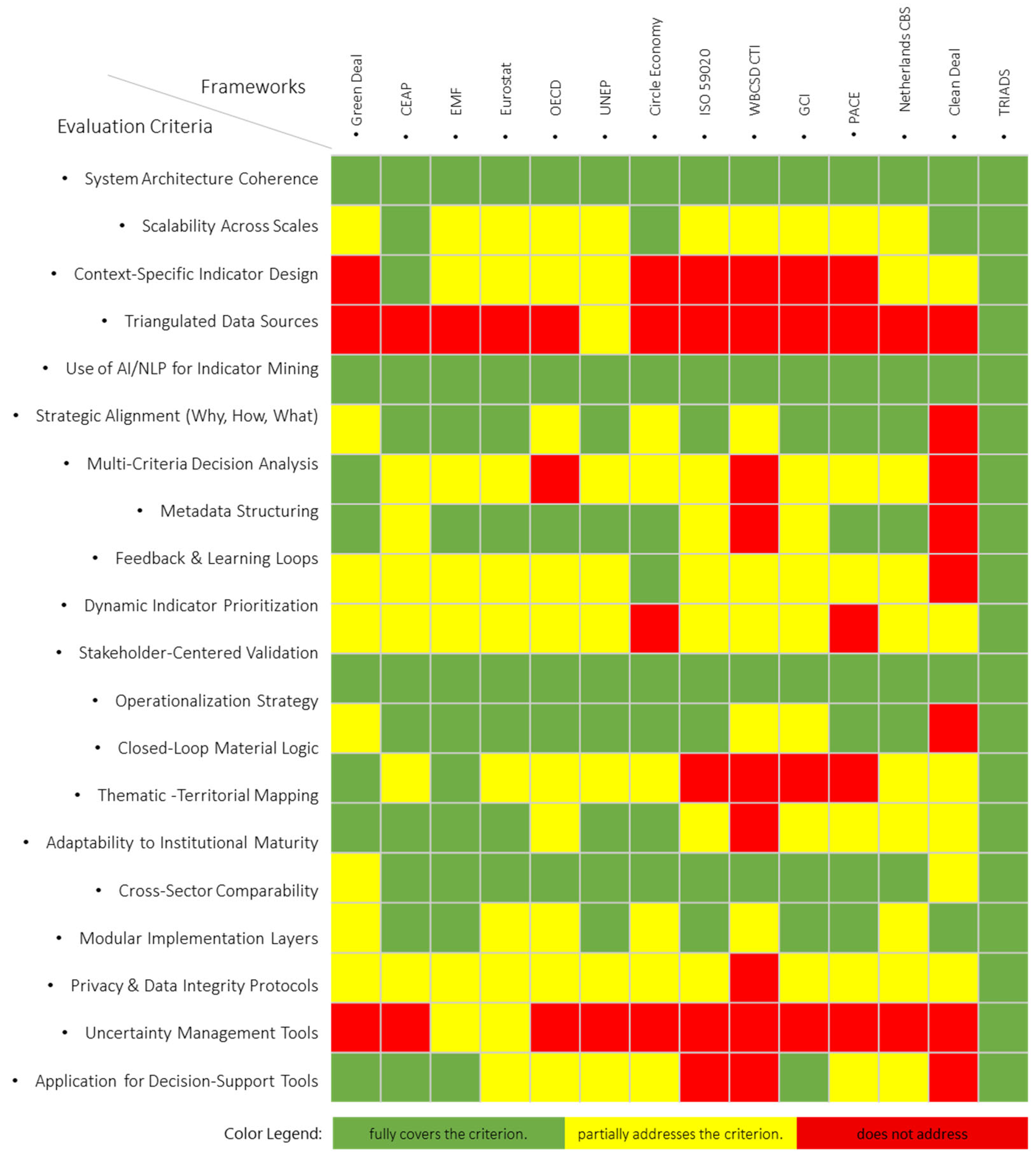
To rigorously validate the contributions of the proposed framework, this section conducts a structured comparative analysis against thirteen leading CE assessment frameworks, as shown in
Figure 9. These frameworks, each presented in
Appendix A Table A1, are selected based on the three core criteria established in
Section 3.1: (1) institutional authority and international legitimacy, (2) recency and methodological relevance, and (3) breadth of CE application across policy, industry, and urban systems. The selection process involved data mining and text mining methods, as illustrated in
Figure 1 and
Figure 2.
Each selected framework represents a top-tier reference in CE monitoring, issued by globally recognized organizations and reflecting diverse approaches, from material flow accounting and input–output models to emerging MCDA- and AI-enabled methodologies. Their inclusion ensures comparative evaluation based on the most influential, diverse, and methodologically robust references currently in use.
To assess how well existing frameworks address core methodological and structural challenges, this study builds upon the systematic literature review and bibliometric mapping of ninety-seven academic and institutional sources conducted in
Section 3.1. As established in
Section 3.1, these sources reflect the critical components of effective CE monitoring systems, and align directly with the three-phase structure of the proposed framework: (1) strategic design, (2) data architecture, and (3) indicator development.
The selection of these twenty evaluation criteria is directly informed by the literature-identified gaps across current CE frameworks, as methodically documented in the foundational analysis of
Section 3.1 and data mining based on
Figure 2. A comparative matrix and heatmap (
Figure 9;
Appendix A Table A1) illustrate the performance of each of the thirteen frameworks and the proposed TRIADS model across the twenty evaluation criteria, enabling transparent visualization of relative strengths and gaps.
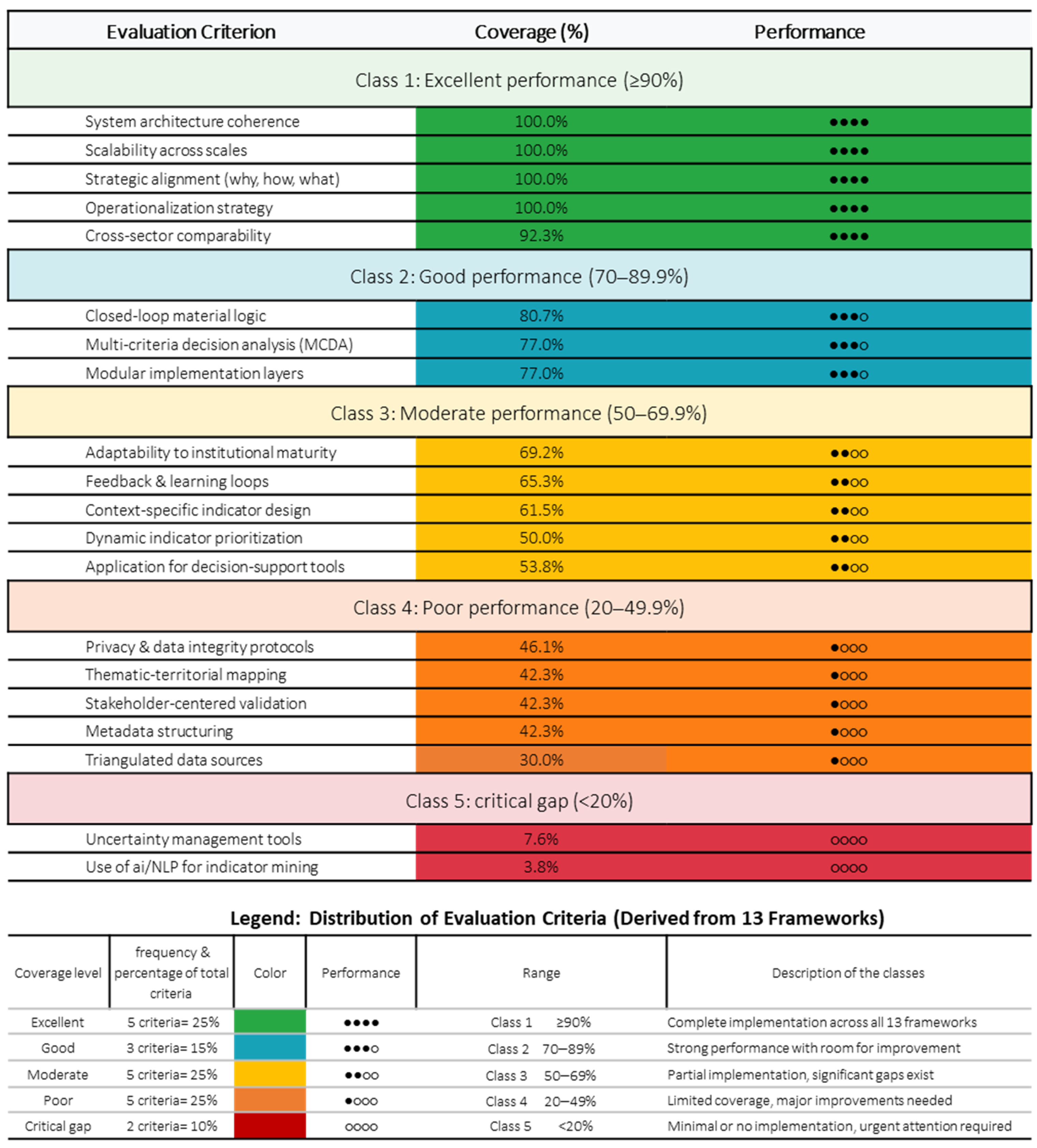
The distribution of evaluation criteria across performance classes highlights substantial gaps in the 13 reviewed frameworks (see
Figure 10). Although a limited share of criteria (40% in Classes 1–2) demonstrate strong or acceptable performance, the majority (60% in Classes 3–5) fall short of comprehensive coverage. This imbalance reveals that while foundational aspects are generally well established, more advanced and integrative dimensions remain insufficiently addressed.
Notably, over one-third of the criteria (35% in Classes 4–5) show poor to critical performance, exposing serious deficiencies in methodological depth, technological integration, and operational applicability. Even the moderate class (25% of criteria) reflects only partial implementation, underscoring a lack of systematic attention to several key dimensions.
A comparative review of thirteen major CE frameworks reveals important insights into the design maturity and coherence of CE efforts. Despite their maturity in policy structure, the frameworks lack analytical intelligence and dynamic feedback capabilities. The main gaps in current frameworks are presented in
Figure 10. These gaps, which previous research also mentioned, include the following:
Lack of dynamic, priority-based indicator systems [
59,
92].
Insufficient metadata and data governance integration [
43,
74,
93].
Absence of modular architecture for cross-sector comparability [
87].
Limited use of AI-based mining and uncertainty-handling tools [
48,
63].
Figure 10 presents the aggregated coverage levels and performance classifications based on
Figure 9.
These results indicate that existing frameworks have not been able to fully operationalize all evaluation criteria, based on
Figure 9 and
Figure 10, leaving critical areas underdeveloped or overlooked. The newly proposed framework directly addresses these shortcomings by incorporating the neglected dimensions, thereby closing performance gaps and enabling a more holistic and balanced evaluation. Consequently, evaluation criteria require targeted interventions to ensure holistic coverage and responsiveness, particularly in areas such as technological integration, stakeholder engagement, and adaptive management systems.
These findings underscore a gap between the strategic and cognitive maturity of CE systems. Although frameworks have achieved policy maturity in foundational elements, most implementation criteria need substantial advancement to attain inclusive coverage and operational effectiveness in complex institutional contexts. Addressing this gap calls for integrated frameworks capable of overcoming these deficiencies through unified methodological architectures and advanced technological capabilities.
Answers to Research Questions:
RQ1: What structural and methodological gaps exist in current CE indicator frameworks and data infrastructures?
Based on comparative analysis of thirteen frameworks (
Section 4.2) and the gap assessment matrix (
Section 2.2,
Section 3.2 and
Section 4.1), the comparative matrix reveals that while most existing frameworks partially address evaluation criteria, none comprehensively fulfill the complete set of structural and methodological requirements (
Figure 9 and
Figure 10). Additional structural deficiencies encompass inadequate stakeholder-engagement methodologies and weak adaptive-management systems, as outlined in the framework assessment results.
Each criterion highlights essential capabilities for a scalable, adaptive, and decision-relevant CE system, including strategic alignment, interoperable data layers, and AI/NLP-driven adaptive indicators.
RQ2: How can a replicable data framework be designed to support both local initiatives and scalable CE transitions?
The TRIADS Framework provides response through its three-layered architecture (
Section 2.3.1) and integrated methodology (
Section 2.3.2 and
Section 2.3.3). Implementation results (
Section 3.2 and
Section 3.3) and evaluation outcomes analysis (
Section 3.3.1) demonstrate that this modular design is conceptually structured to support multi-scale transitions. The framework architecture (
Figure 8) illustrates the detailed approach, while validation results (
Section 4.1) support its conceptual effectiveness.
The TRIADS Framework addresses strategic, architectural, and analytical dimensions, positioning it as a robust model for CE data systems and policy, while its conceptual structure supports use in other systemic and integrated management approaches.
Integrated indicator prioritization: no existing framework combines Delphi, AHP, TOPSIS, and Fuzzy Logic in a unified indicator-ranking workflow. Existing frameworks (Eurostat, EMF) provide indicator lists, but not structured prioritization methods.
AI/NLP-assisted indicator mining: TRIADS introduces automated concept extraction from large literature corpora, enabling systematic indicator longlisting. This capability is absent in all 13 reviewed frameworks (coverage: 3.8%).
Adaptive feedback architecture: TRIADS embeds structured feedback loops connecting implementation performance back to indicator revision and system recalibration. This is only partially addressed by existing frameworks (coverage: 65.3%).
Uncertainty management tools: TRIADS explicitly addresses missing data, conflicting sources, and model uncertainty, a critical gap identified in the comparative analysis (coverage: 7.6% across reviewed frameworks).
Modular multi-scale transferability: TRIADS provides explicit replication protocols for different contexts (cities, industrial parks, ports, and regions), whereas most frameworks focus on a single governance level.
These capabilities collectively address what existing frameworks leave underdeveloped: the ability to move from strategic intention to operational, decision-ready CE data infrastructure.
5. Conclusions
This study constitutes an essential first step toward establishing a unified and coherent framework for CE, providing the theoretical foundation necessary for subsequent empirical testing and practical application. The proposed TRIADS Framework addresses existing theoretical and methodological gaps in CE monitoring through a three-layered, scalable, and adaptive architecture suitable for both policy settings and innovation environments.
A comparative assessment of thirteen prominent CE frameworks (
Section 4.2) revealed significant limitations, particularly in advanced technological integration and adaptive management. TRIADS overcomes these shortcomings through an integrated design that aligns with established development pathways while offering enhanced coherence and adaptability. Its conceptual validity rests on a combination of structured literature reviews and AI/NLP-supported analysis, ensuring robustness across strategic, architectural, and analytical dimensions (
Section 3.2,
Section 3.3.1 and
Section 4.1).
A key limitation of the current study is the absence of a pilot case study or empirical implementation. This is a deliberate scope boundary consistent with design science research conventions, where conceptual validation precedes empirical validation. Empirical testing of TRIADS in a real CE data system context, including a quantitative sensitivity analysis of the indicator prioritization outputs, is identified as the primary next research step. Additionally, the language restriction to English-language publications may introduce publication bias, and the applicability of TRIADS to SME contexts and diverse cultural–institutional settings remains to be validated.
Initial applications across four CE domains—urban systems, industrial parks, regional policy initiatives, and innovation ecosystems—demonstrate the framework’s adaptability. These exploratory cases illustrate capabilities such as real-time material tracking, participatory monitoring, multi-level governance coordination, and lightweight tools for circular start-ups.
Future research should include expert reviews, pilot projects, and case studies, to assess operational feasibility. The reliance on English-language publications may limit cross-regional generalizability. Moreover, the applicability to SMEs and the potential for cultural adaptation across diverse institutional settings remain insufficiently explored. Such triangulated validation would advance the framework from conceptual robustness toward empirical maturity, strengthening its applicability across diverse urban and institutional contexts.
Moreover, the successful application of TRIADS depends heavily on high-quality data, which is often lacking in many national and regional contexts. On the technical side, AI/NLP performance is contingent upon training-data quality; integration complexity increases with system scale, and real-time automation capabilities remain untested.
Future research should, therefore, advance TRIADS from conceptual design to operational maturity through a phased agenda:
Short-term Priorities (1–2 years): TRIADS should undergo empirical validation through pilot projects in cities, industrial parks, and policy institutions to test operational feasibility and robustness. Cross-cultural contextualization studies are also needed to assess adaptability across diverse socio-economic and institutional settings. This phase covers empirical validation and cross-regional applicability, laying the foundation for practical application.
Medium-term Development (3–5 years): research should focus on integrating emerging technologies such as blockchain, IoT, digital twins, and machine learning, to enable real-time monitoring, predictive analytics, and automation (integration with emerging technologies). Comparative effectiveness studies should also be conducted to benchmark TRIADS against alternative CE frameworks, evaluating efficiency, adaptability, and stakeholder acceptance (comparative effectiveness studies).
Long-term Vision (5+ years): this should evolve toward global standardization initiatives and AI-driven autonomous monitoring (global standardization). SME-focused adaptations should be explored, to ensure applicability in contexts with limited data infrastructure. Integration with digital twin technologies will support systemic CE transition modeling and enable informed governance and policy-making.
By following this research agenda, TRIADS can progress from conceptual design to empirical maturity, enhancing its global applicability and policy relevance. The framework bridges theory and practice to provide a solid foundation for robust CE data systems in complex global transition contexts.
The fundamental contribution of TRIADS extends beyond incremental improvements to existing CE methodologies; it establishes a new paradigm for operationalizing adaptive circularity. Through its unified architecture that seamlessly integrates strategic vision, technical infrastructure, and intelligent analytics, the framework’s distinctive value lies in its methodological coherence, contextual replicability, and future-oriented design that anticipates evolving sustainability governance requirements. By providing a scalable foundation for real-time circular economy monitoring and decision-making, TRIADS represents a strategic advancement toward standardized, yet flexible, circularity measurement across diverse implementation contexts.