Article

Flexural Performance of Polypropylene Fibre-Reinforced Recycled Aggregate Concrete Beams

1
Department of Construction and Real Estate, School of Civil Engineering, Southeast University, Nanjing 211189, China
2
Ningbo Ningda Engineering Construction Supervision Co., Ltd., Ningbo 315211, China
3
Department of Civil Engineering, Faculty of Engineering, Universiti Malaya, Kuala Lumpur 50603, Malaysia
4
Department of Engineering and Management, International College, Krirk University, No. 3 Soi Ramintra 1, Ramintra Road, Anusawari, Bang Khen, Bangkok 10220, Thailand
*
Author to whom correspondence should be addressed.
These authors contributed equally to this work.
Sustainability 2026, 18(12), 5812; https://doi.org/10.3390/su18125812 (registering DOI)
Submission received: 13 May 2026 / Revised: 31 May 2026 / Accepted: 3 June 2026 / Published: 7 June 2026
(This article belongs to the Section Green Building)

Abstract

This study investigates the effects of polypropylene fibre content on the workability and compressive strength of recycled aggregate concrete (RAC), as well as the flexural behaviour of RAC beams. The results indicate that recycled aggregates adversely affect the mechanical properties of concrete and reduce the crack resistance, stiffness retention, and crack-control capacity of concrete beams. Although polypropylene fibres reduce mixture workability, they improve the mechanical properties of recycled concrete and enhance the flexural behaviour of recycled concrete beams. The contribution of polypropylene fibres is mainly reflected in improved crack control and post-peak behaviour, whereas their effect on ultimate load-bearing capacity remains relatively limited. In addition, the improvement provided by the fibres does not increase proportionally with fibre dosage. A moderate fibre content can effectively balance load-bearing capacity, deformation capacity, and crack control, whereas excessive fibre addition may weaken the reinforcement effect because of poor fibre dispersion and reduced matrix uniformity. These findings provide useful guidance for evaluating the flexural performance and potential engineering applications of fibre-reinforced recycled aggregate concrete beams.

1. Introduction

With the acceleration of urban renewal, building demolition, and infrastructure reconstruction, the amount of construction waste continues to increase. In this context, crushing, screening, and reprocessing waste concrete into recycled aggregates for new concrete production have become important pathways for the green transformation of building materials [1]. Recycled aggregate concrete offers clear advantages by reducing natural aggregate extraction and decreasing the amount of construction waste sent to landfills. However, recycled aggregates generally contain adhered old mortar [2] and more pores, microcracks, and interfacial transition zones (ITZs) [3], which can make the mechanical properties and durability of recycled aggregate concrete inferior to those of ordinary concrete [4]. Previous studies have indicated that the quality, replacement ratio, particle size, and water absorption of recycled aggregates significantly affect the performance of recycled aggregate concrete [5,6]. Silva et al. [7] and Behera et al. [8] reported that the performance decline of recycled aggregate concrete is mainly caused by the heterogeneity of recycled aggregates and the more complex multi-interface structure. Xiao et al. [9] and Ahmed et al. [10] reported that this performance degradation can be mitigated and that recycled aggregate concrete is feasible for structural applications.
As typical flexural components, beams are important for evaluating the interaction between reinforcement and concrete [11]. Previous studies have shown that recycled concrete beams generally follow the basic flexural behaviour of ordinary reinforced concrete beams under loading, but they also exhibit lower initial cracking loads, faster crack development, larger deflections, and more pronounced stiffness degradation [12,13]. Based on flexural tests of reinforced recycled concrete beams, Sato et al. [14] and Ignjatović et al. [15] reported that recycled aggregates did not change the basic failure mode but reduced crack resistance and structural stability.
Fibre reinforcement is considered an effective method for improving the tensile performance of concrete and controlling crack development [16,17]. Fibres can improve crack resistance and toughness by bridging cracks, delaying crack propagation, and promoting stress redistribution after matrix cracking [18,19]. Among the available fibre types, polypropylene fibres offer low density, corrosion resistance, relatively low cost, and good construction adaptability, making them suitable for concrete applications [20,21]. Kakooei et al. [22] reported that polypropylene fibres have a limited effect on compressive strength but can significantly improve crack resistance. Xie et al. [23] and Yao et al. [24] further pointed out that fibre reinforcement is more effective in improving tensile performance, crack resistance, and toughness than in increasing compressive strength. Das et al. [25] systematically investigated the effects of polypropylene fibres on recycled concrete and found that fibres may reduce workability, whereas an appropriate dosage can improve mechanical properties, particularly tensile and flexural properties. Wei et al. [26] demonstrated, from the perspectives of static loading, impact resistance, and microstructure, that polypropylene fibres can alter crack-propagation paths and improve the energy-dissipation capacity of recycled concrete. Yu et al. [27] reported that polypropylene fibres can increase peak stress, peak strain, and fracture energy to a certain extent. Ye et al. [28], Zhang et al. [29], and Liu et al. [30] also confirmed the positive role of polypropylene fibres in improving the flexural performance and deformation control of recycled concrete. However, excessive fibre content may lead to fibre clumping, reduced workability, and decreased reinforcement efficiency.
Although polypropylene fibre-reinforced recycled aggregate concrete has been widely studied, several issues remain unclear. First, existing research mostly focuses on the material-level mechanical properties or the ultimate bearing capacity of components, with less attention paid to the coordinated evolution of crack width, deflection, stiffness degradation, concrete strain, stirrup strain, and longitudinal tensile reinforcement strain throughout the loading process. Second, the contribution of polypropylene fibres in recycled aggregate concrete beams is still commonly interpreted as strength enhancement, whereas their more important structural role may involve crack control, stress redistribution, delayed damage development, and improved post-cracking ductility. Third, the dosage effect of polypropylene fibres in recycled aggregate concrete beams has not been fully elucidated, especially in the medium-to-high content range, where beneficial crack-bridging effects and adverse effects related to workability loss and fibre dispersion may coexist.
From the perspective of engineering applications, the evaluation of whether recycled aggregate concrete beams can be used as structural components should not be limited to their ultimate bearing capacity. During the service and failure stages, greater attention should be paid to crack-control capacity, stiffness retention, deformation capacity, and ductility reserve [31,32]. Therefore, the role of polypropylene fibres in recycled aggregate concrete should not be simply understood as “improving strength.” More importantly, polypropylene fibres can improve matrix integrity through crack bridging and stress redistribution [33,34], delay crack localization, alleviate strain concentration in tensile reinforcement, and enhance the post-cracking energy-dissipation and damage-delay capacities of the component.
Against this background, this study investigates the influence of polypropylene fibre content on the workability and basic mechanical properties of recycled aggregate concrete and further evaluates its effect on the flexural performance of recycled aggregate concrete beams. The selected polypropylene fibre volume fractions of 0.4%, 0.6%, and 0.8% were intended not only to compare different fibre contents but also to cover the medium-to-high content range. Within this range, fibre bridging, reduced workability, and possible fibre agglomeration may coexist. This dosage design therefore helps determine whether increasing fibre content continuously improves beam performance or whether an optimal balance exists between crack control and fibre dispersion.

2. Experiment

2.1. Materials and Mixture Proportions

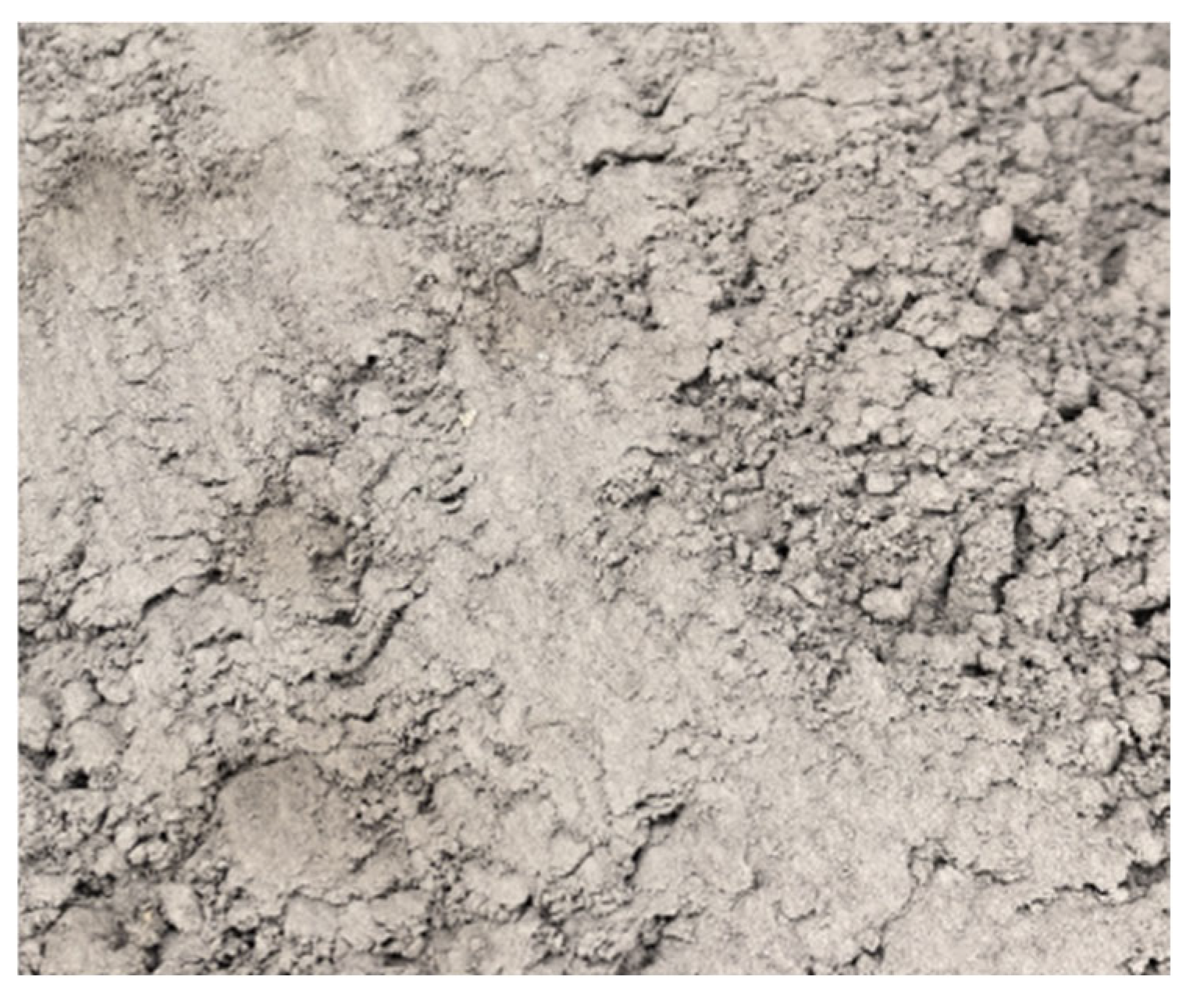
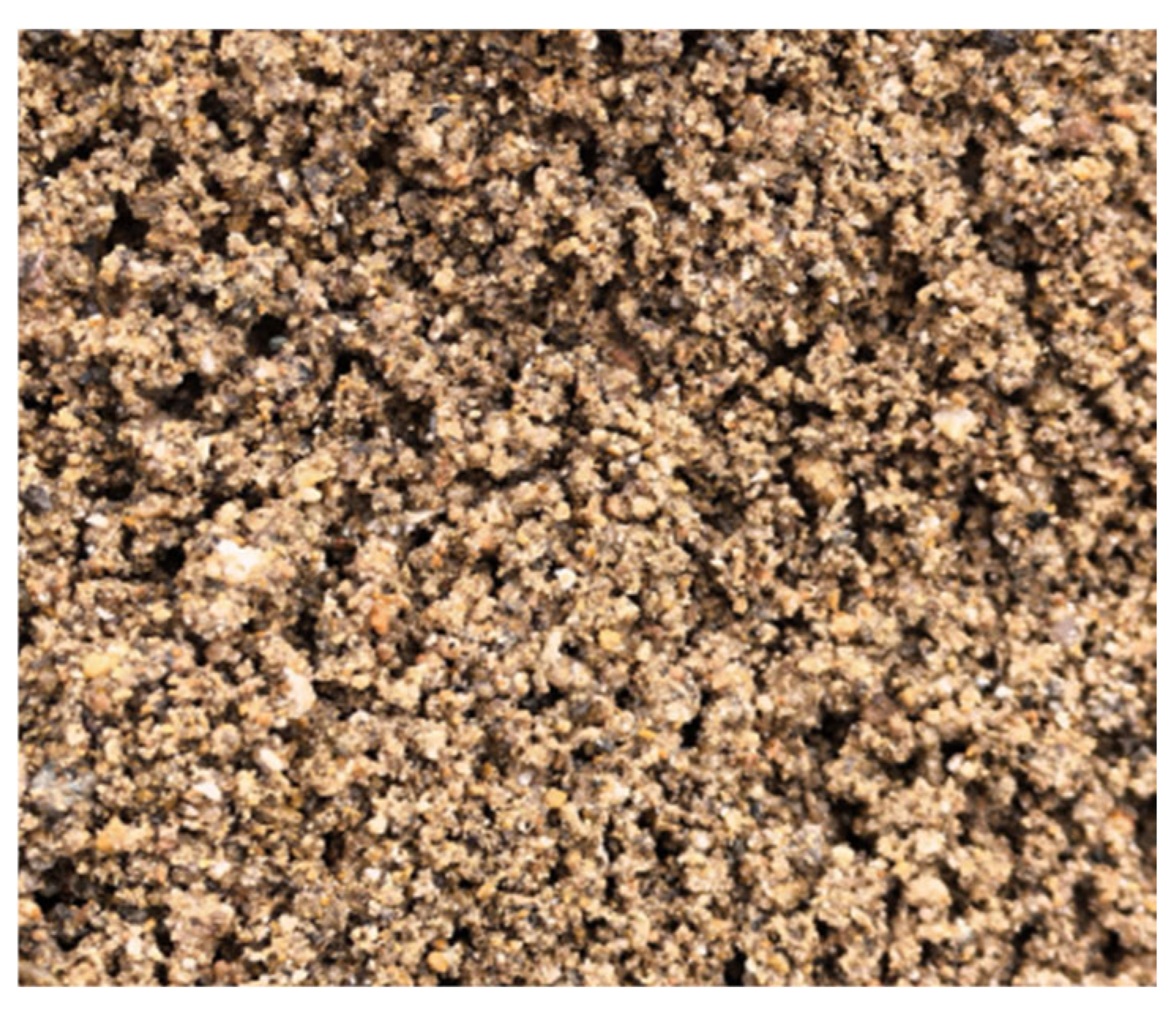
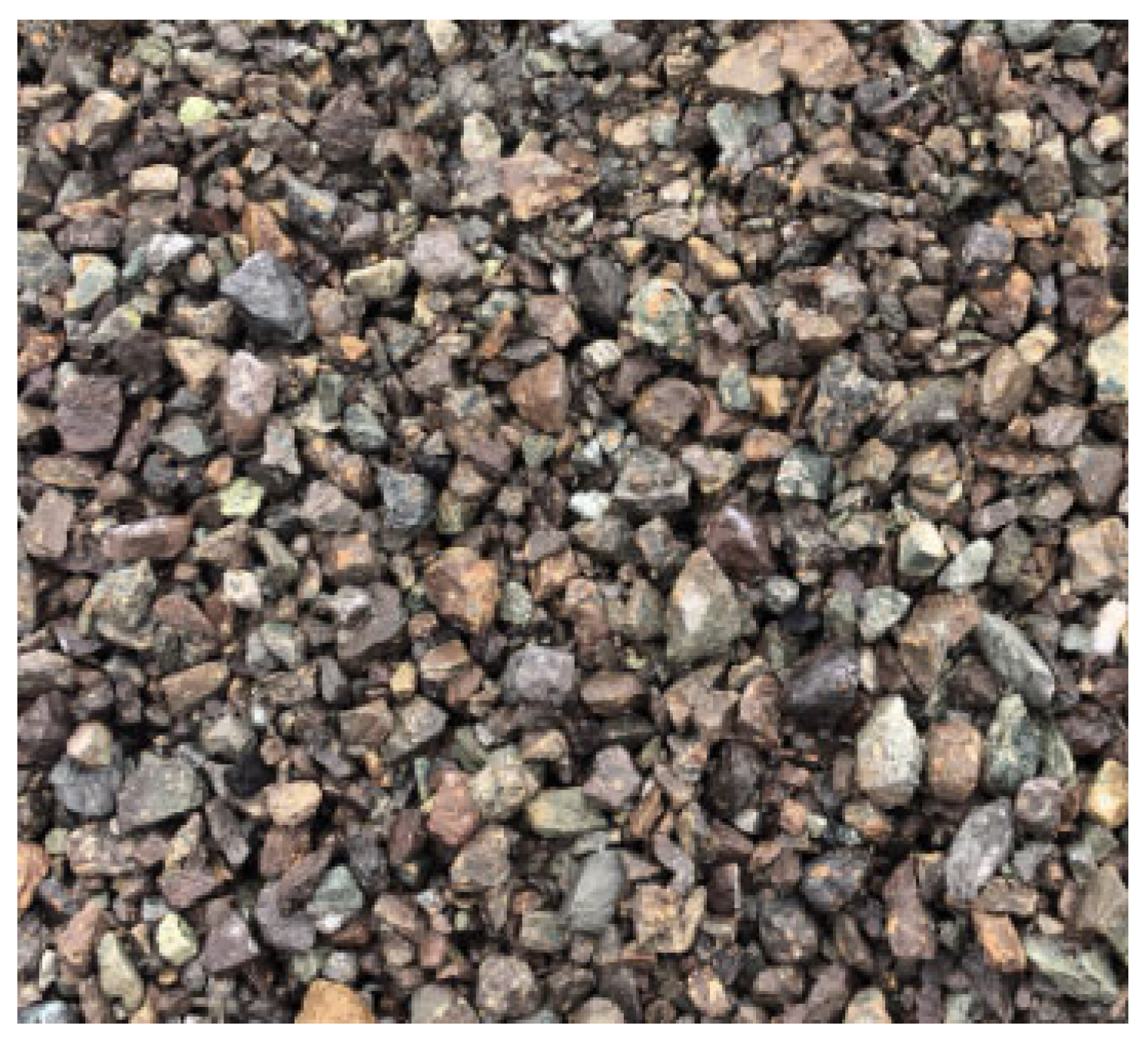
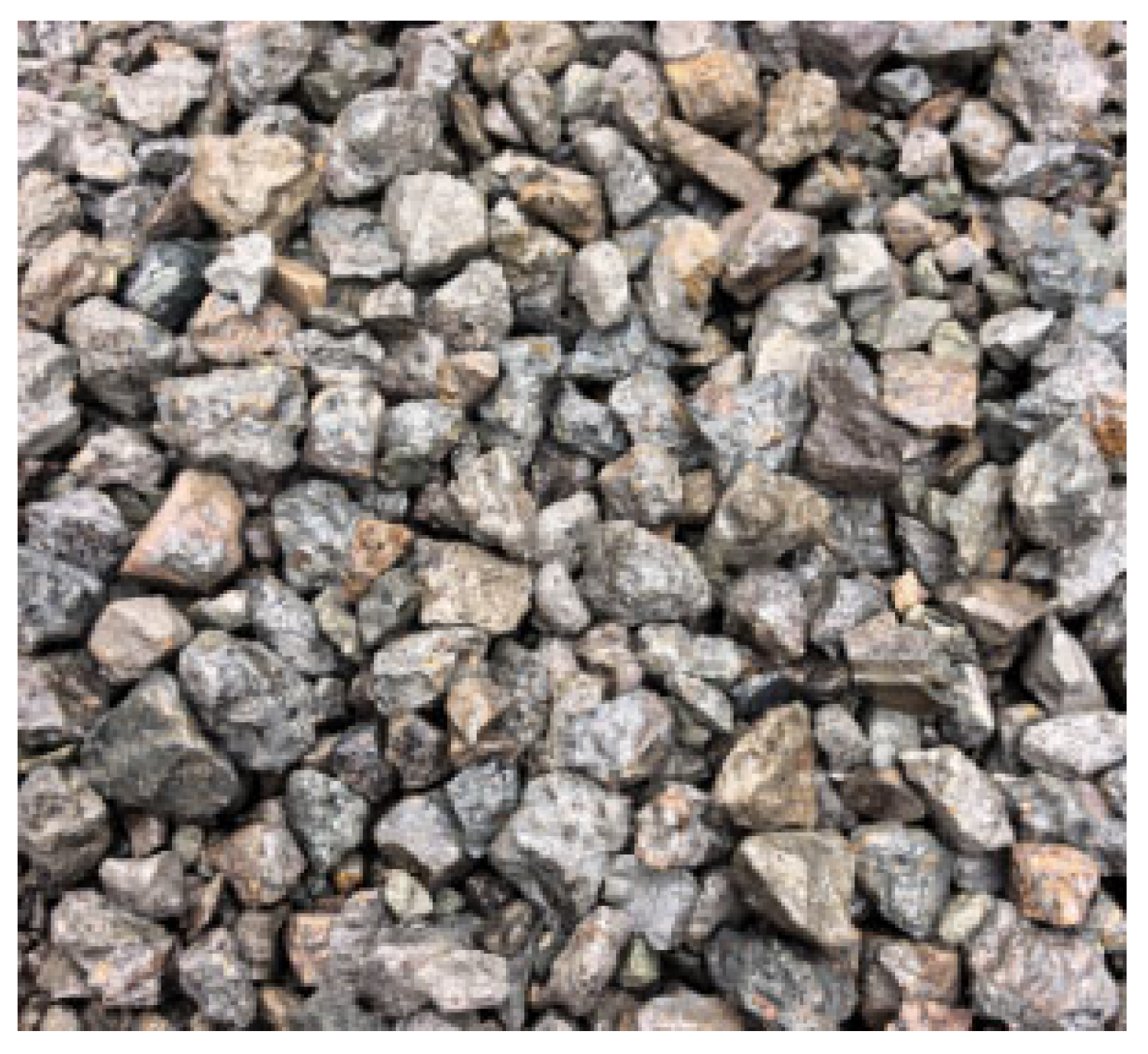
The cement used was P·O42.5R ordinary Portland cement (Figure 1), with 3-day compressive and flexural strengths of 27.1 MPa and 5.5 MPa, respectively, and 28-day compressive and flexural strengths of 52 MPa and 8.5 MPa, respectively. The fine aggregate was natural river sand with an apparent density of 2660 kg/m3, a bulk density of 1650 kg/m3, and a fineness modulus of 3.5, as shown in Figure 2. The coarse aggregates included natural coarse aggregate (NCA) and recycled coarse aggregate (RCA), as shown in Figure 3 and Figure 4. The RCA was obtained from demolished concrete with an original strength grade of approximately C30–C40 and was processed by crushing, screening, and washing. The RCA used in this study had a continuous particle-size distribution of 5–20 mm. Visible impurities were removed before mixing; the residual contamination level was below 1% by mass, and the attached old-mortar content was approximately 30–35% by mass. The apparent densities of NCA and RCA were 2600 kg/m3 and 2650 kg/m3, respectively; their water absorption rates were 0.6% and 1.8%, respectively; and their crushing indices were 9% and 12%, respectively. The higher water absorption and crushing index of RCA indicate the presence of old adhered mortar and internal microcracks, which are important factors affecting the interfacial transition zone and cracking response of RAC.
The steel bars used in this study were HPB300-6, HRB400-8, and HRB400-14, and their mechanical properties are shown in Table 1 [35,36]. The polypropylene fibre was produced by Xi’an Wanda Engineering Materials Co., Ltd., as shown in Figure 5. The fibre had a length of 15 mm, an equivalent diameter of 27 μm, a tensile strength of 521 MPa, and an elongation at break of 26%. The strain gauges used in this study included steel strain gauges and concrete strain gauges. The size of the steel strain gauges was 2.8 mm × 3 mm, with a resistance of 118 Ω and a sensitivity coefficient of 1.91. The size of the concrete strain gauge was 80 mm × 3 mm, with a resistance of 120 Ω and a sensitivity coefficient of 2.20.
The target compressive strength of recycled aggregate concrete (RAC) was 40 MPa. The design mix proportions of the concrete are shown in Table 2. In the NC group, 100% natural coarse aggregate was used; in the RC and RCF groups, the natural coarse aggregate was fully replaced by RCA by mass. Before mixing, both NCA and RCA were adjusted to a saturated surface-dry condition so that the effective water-to-cement ratio remained 0.40 for all mixtures. Therefore, the comparisons among groups reflect the effects of RCA replacement and fibre content rather than differences in effective mixing water. The concrete was mixed as follows: the dry aggregates and cement were first blended; fibres were then added gradually in several portions; dry mixing continued until no visible fibre clumps remained; and water was finally added for further mixing.

2.2. Specimen Design

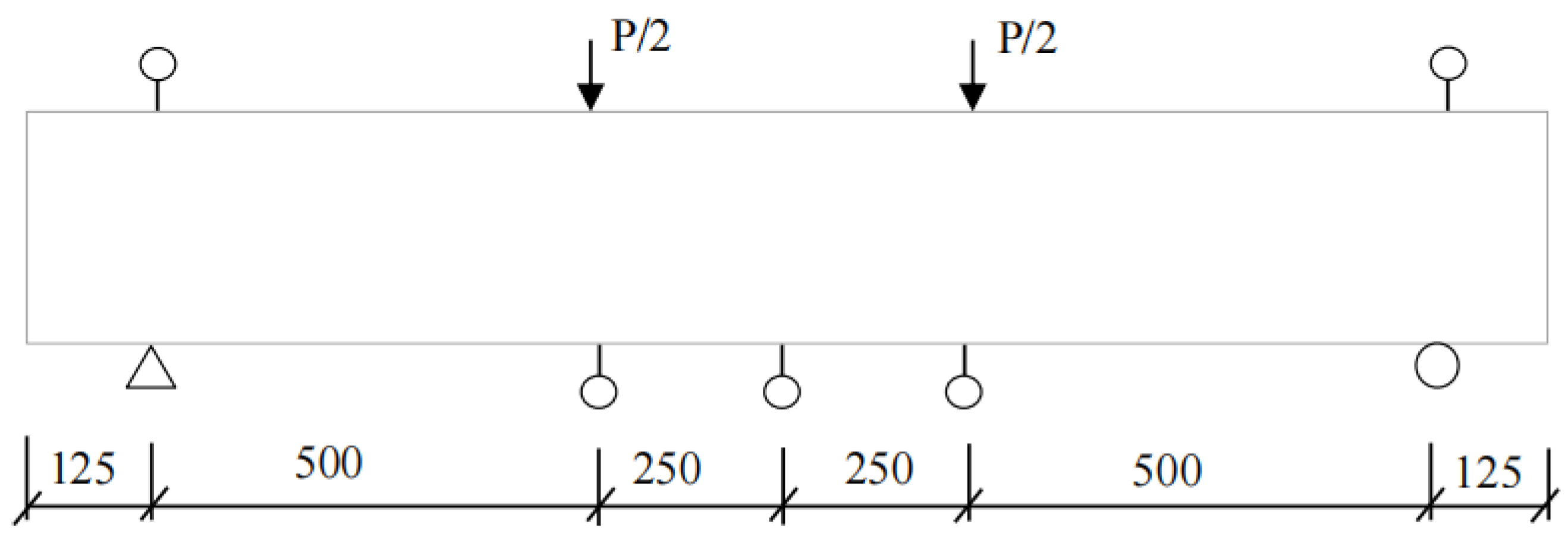
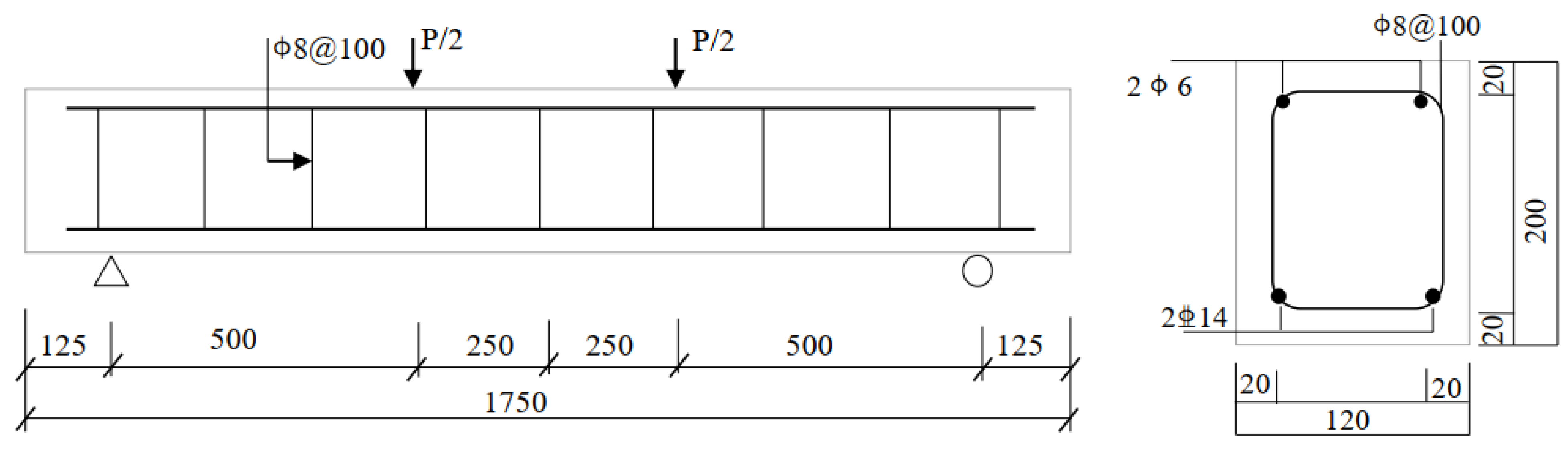
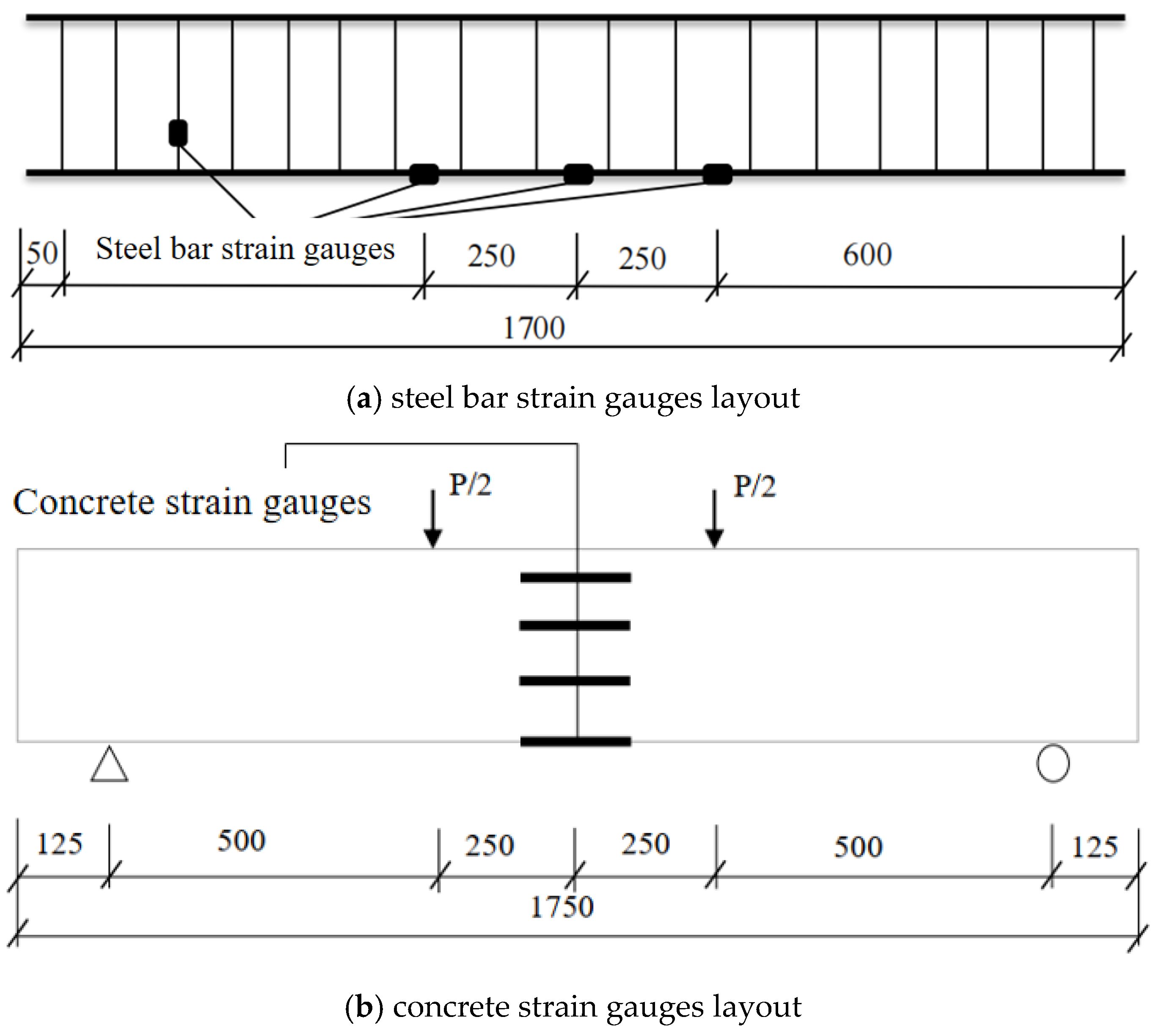
For the compressive-strength test, three 100 mm × 100 mm × 100 mm cubes were prepared for each mixture, and the average value was reported. For the beam test, one reinforced beam was prepared for each mixture because of the size and cost of the structural tests; therefore, the beam results are interpreted as comparative trends rather than formal statistical conclusions. Four RAC beams and one natural aggregate concrete (NC) beam were produced. Each beam had a cross-section of 120 mm × 200 mm, a total length of 1750 mm, a clear span of 1500 mm, and a concrete cover thickness of 20 mm (Figure 6). The bottom longitudinal reinforcement consisted of two HRB400-14 bars, and the stirrups were HRB400-8 bars spaced at 100 mm. The reinforcement ratio of the tensile longitudinal bars was approximately 1.56% when calculated with an effective depth of about 165 mm. The strain gauges were arranged on the steel bars and concrete surfaces as shown in Figure 7 [37]. The origin of the longitudinal coordinate was taken at the left support; the mid-span section was located at x = 750 mm. Concrete strain gauges were placed at the mid-span section along the beam depth to capture the strain gradient, and displacement sensors were placed at both supports and at mid-span to obtain net mid-span deflection.
The loading configuration was designed to produce flexure-dominated behaviour. The shear span was 500 mm, giving a shear-span-to-effective-depth ratio of approximately 3.03, which is generally favourable for flexural failure. A simplified sectional check based on the measured steel and concrete strengths indicated that the nominal shear resistance of the stirrup-reinforced section exceeded the shear demand corresponding to the observed peak loads.

2.3. Test Plan

2.3.1. Performance Testing of the Concrete Mixtures

The workability of the freshly mixed concrete was measured using the standard slump test. During the test, fresh concrete was placed into a slump cone in layers and uniformly compacted by tamping. The slump cone was then slowly and vertically lifted, and the vertical settlement of the concrete mixture was measured as the slump value. For fibre-reinforced concrete mixtures with low slump, the slump value was used only as a comparative indicator of workability loss. The cohesiveness, water retention, bleeding, and visible fibre agglomeration of the mixtures were also observed. The 0.8% fibre mixture showed very low deformability and poor placing ability, indicating that a Vebe-consistency or compacting-factor test would be more suitable for future low-slump fibre RAC mixtures.

2.3.2. Concrete Cube Compressive Strength Test

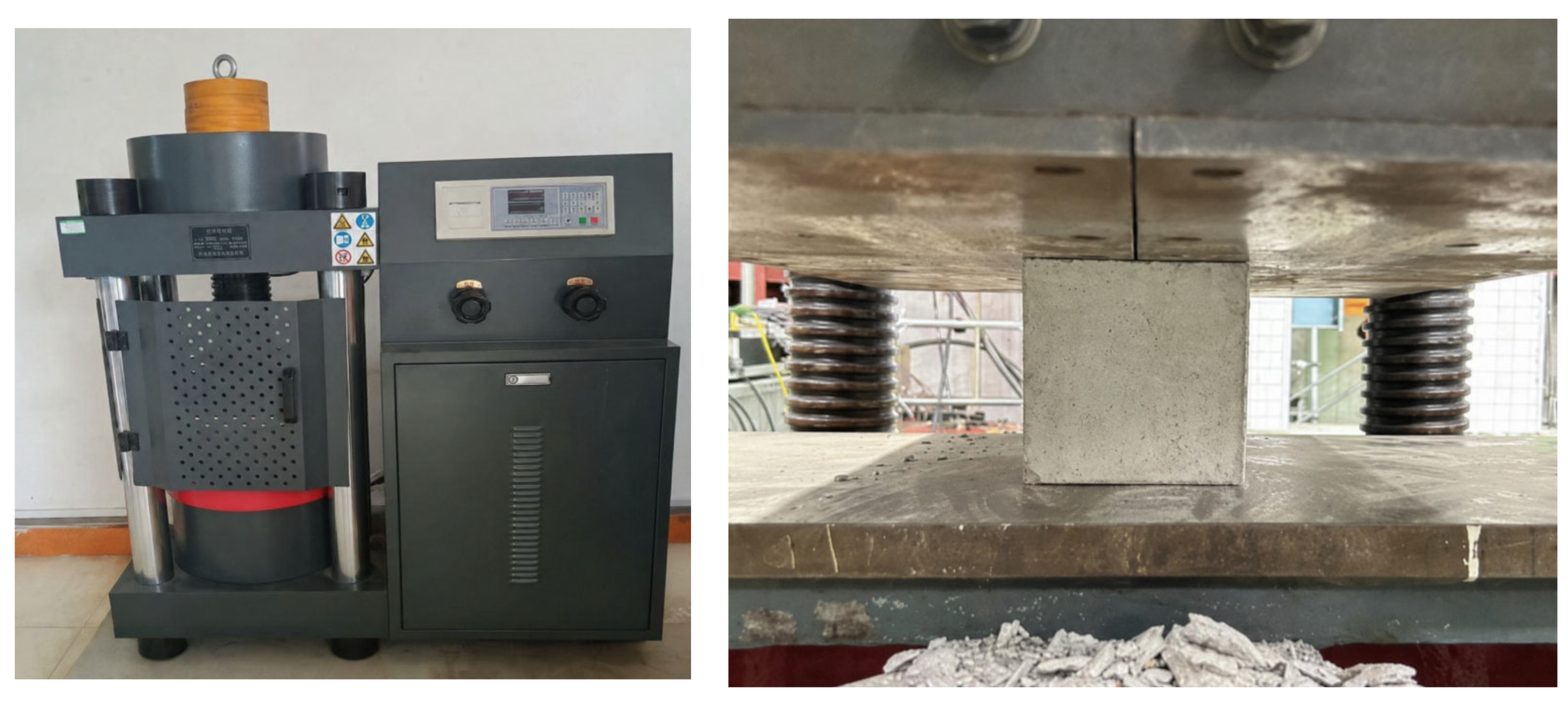
After casting, the cube specimens were covered and cured for 24 h before demoulding and then cured under standard conditions for 28 days. At the specified age, the specimens were placed in a hydraulic servo pressure testing machine and loaded uniformly at a rate of 0.5 MPa/s until failure [38]. The maximum failure load was recorded, and the compressive strength was calculated accordingly. Three parallel cube specimens were tested for each mixture, and the reported compressive strength was the average value. Before calculating the average value, the variability of the cube test results was checked, as shown in Figure 8.

2.3.3. Flexural Performance Tests of the Concrete Beams

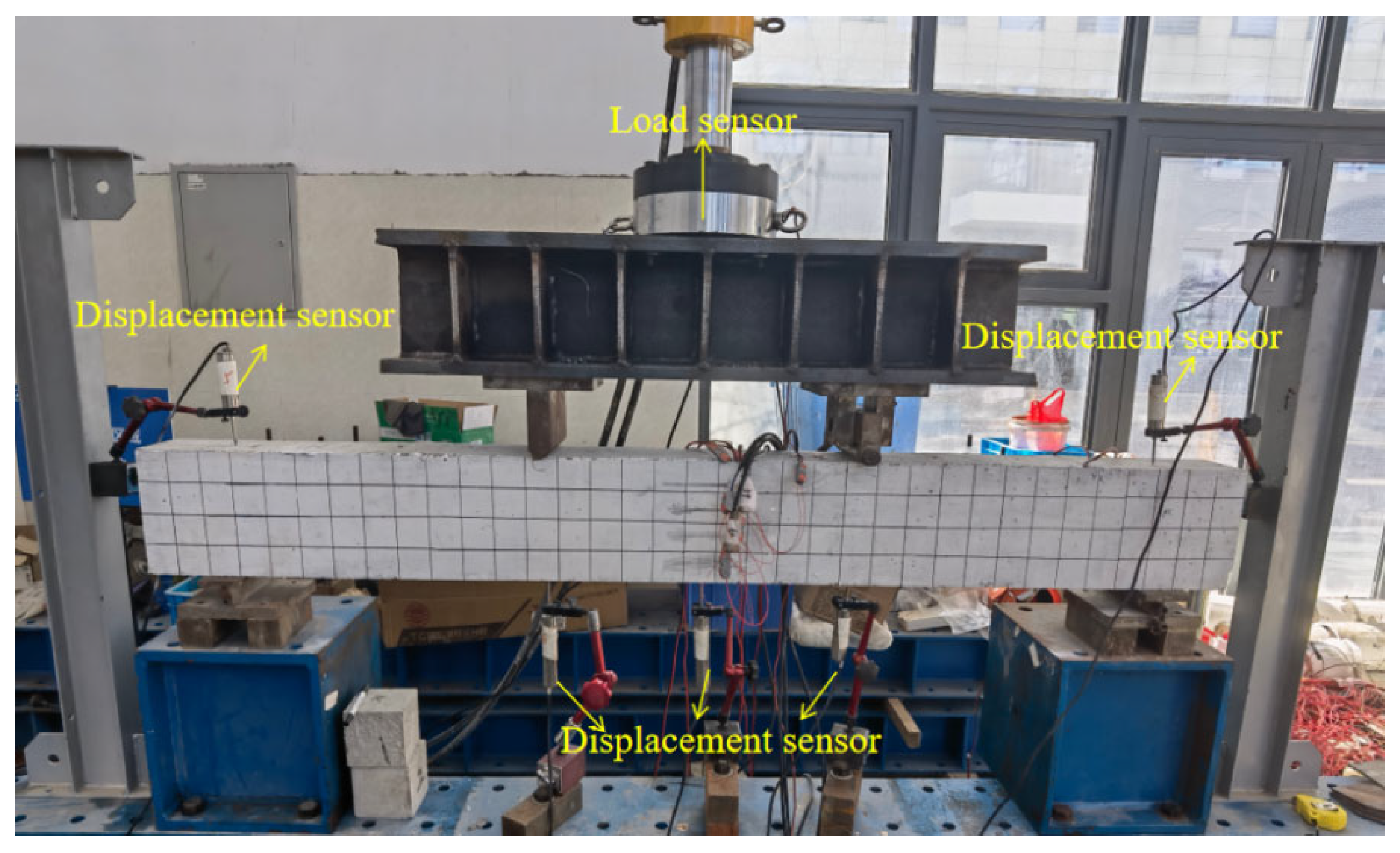
The four-point bending test was performed using a hydraulic servo testing machine, as shown in Figure 9. The load was applied through two symmetrical loading points. In the initial loading stage, the load was increased in steps of 5% to 10% of the estimated ultimate load, and the loading rate was controlled at approximately 0.2 kN/s to observe crack initiation and development. When the specimen approached the estimated cracking or ultimate load, the loading rate was reduced, and the crack width, deflection, and strain data were recorded with greater care. The test was terminated when any of the following conditions was met: the load dropped to approximately 85% of the peak load; obvious crushing occurred in the compression zone; the main crack rapidly propagated and widened; or the mid-span deflection continued to increase while the load no longer increased. Before loading, displacement sensors were installed at the mid-span and at both supports of the beam to obtain the net mid-span displacement. The layout of the displacement sensors is shown in Figure 10.

3. Experimental Results and Discussion

3.1. Concrete Mixture Workability

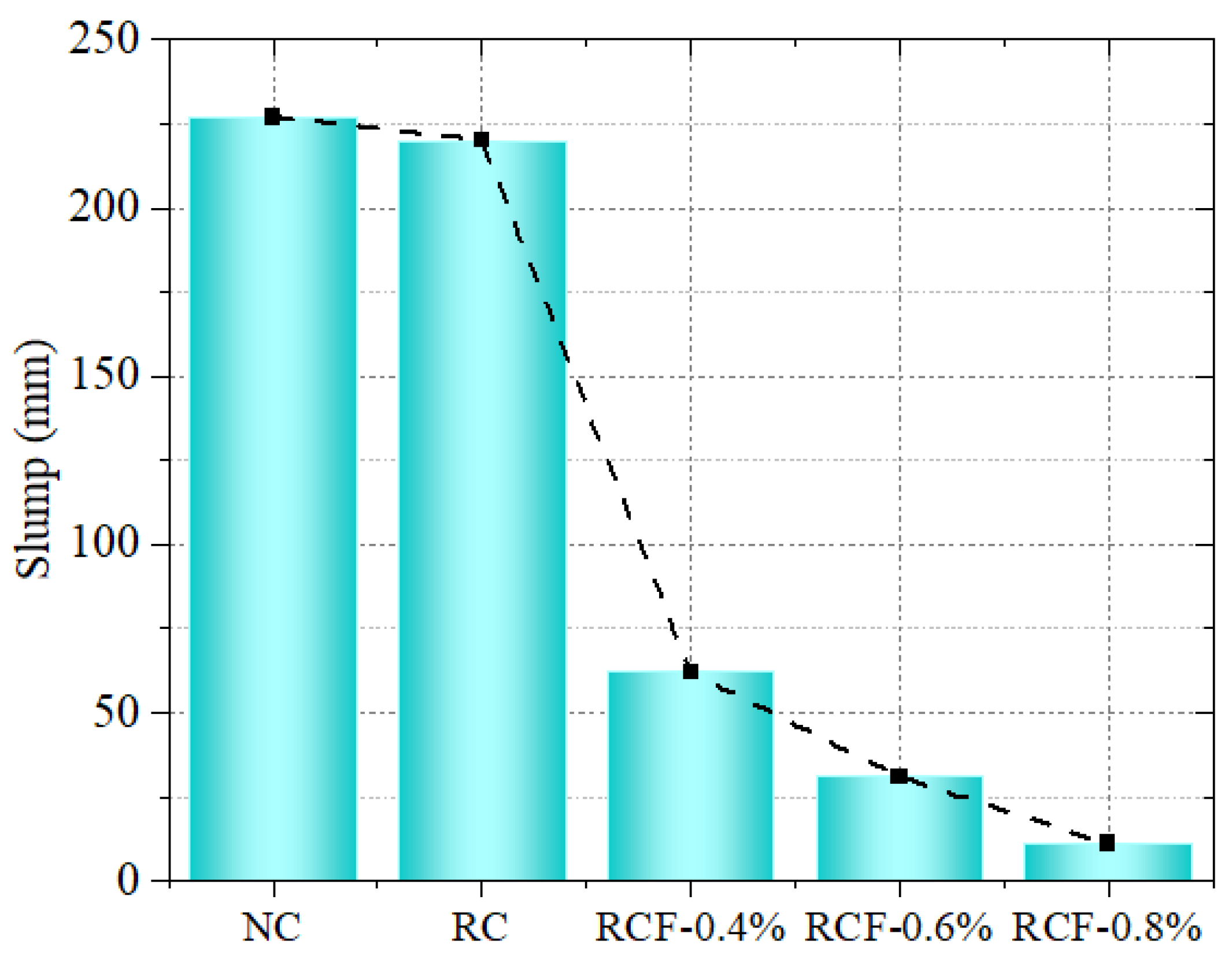
The slump of each concrete mixture is shown in Figure 11. The slump of recycled concrete was only slightly lower than that of ordinary concrete, decreasing by 3.1%. Because old mortar adhered to the surface of the recycled aggregate, RCA had relatively high water absorption, which reduced the amount of free water in the mixture and slightly lowered the slump. However, because the recycled aggregate had reached a saturated surface-dry state before mixing, the slump reduction was not significant.
After polypropylene fibres were added, the slump of the recycled concrete mixtures decreased significantly. When the fibre content was 0.4%, the slump decreased to 62 mm, representing a decrease of 71.8%. When the fibre content increased to 0.6%, the slump further decreased to 31 mm, and when the fibre content reached 0.8%, the slump was only 11 mm. Compared with recycled concrete without fibres, the slump of recycled concrete with 0.8% fibre content decreased by 209 mm, indicating that high fibre content substantially reduced mixture workability. This reduction occurs because polypropylene fibres form a randomly distributed three-dimensional network in concrete, increasing interlocking and internal friction between aggregate and mortar and hindering particle flow. In addition, fibres have a large specific surface area, and part of the slurry wraps around the fibre surface, thereby reducing the lubricating effect of the slurry on aggregate particles.

3.2. Concrete Compressive Strength

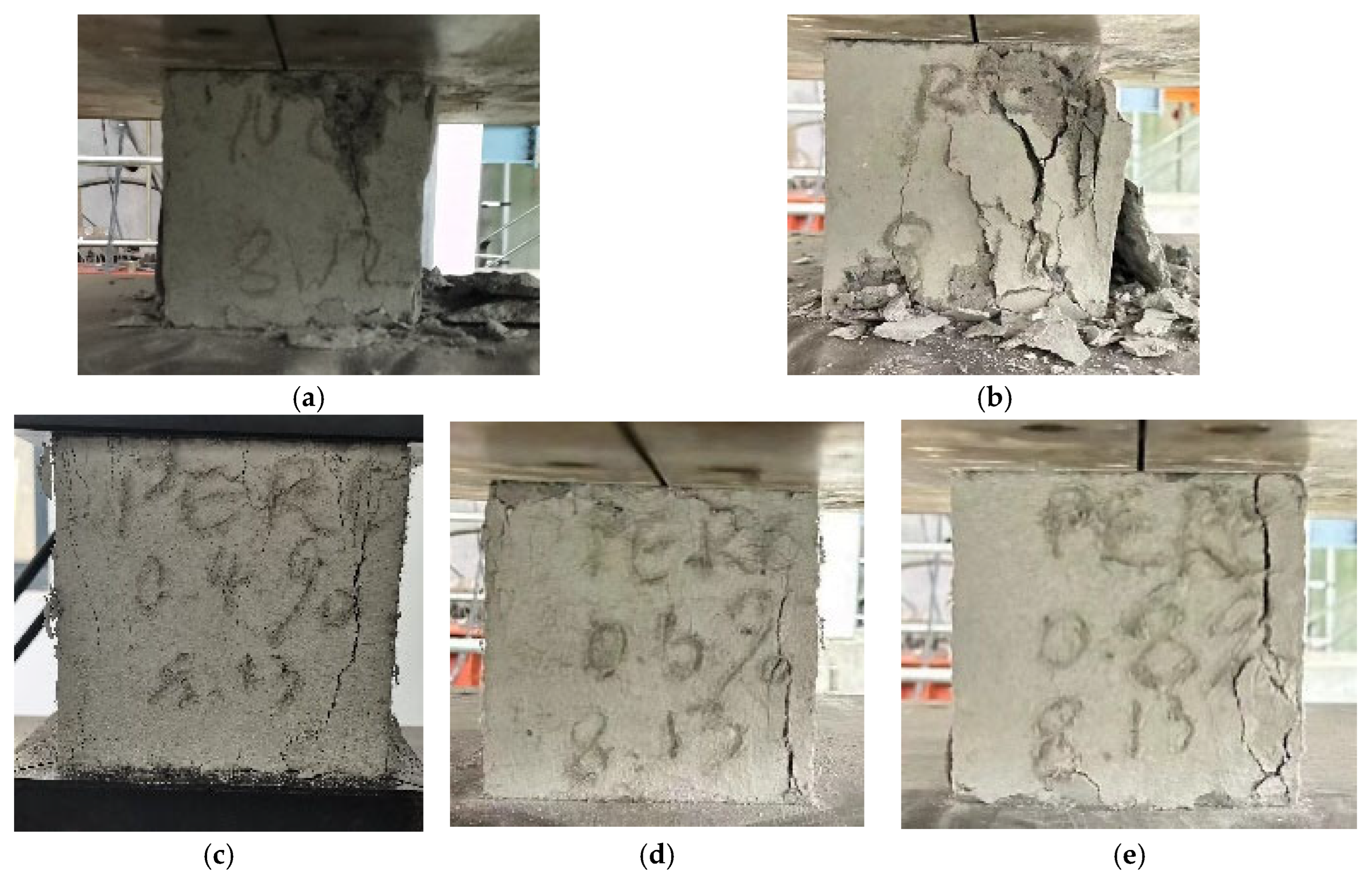
The failure modes of the concrete samples are shown in Figure 12. In the early loading stage, no obvious cracks appeared in the samples. As the load increased, cracks appeared near the peak load, and small pieces of concrete detached from the surfaces of some specimens. The ordinary and recycled concrete samples showed similar crack development, with multiple cracks appearing and propagating rapidly, indicating brittle failure. After polypropylene fibres were added, crack development slowed markedly, and the specimens maintained better integrity during failure, indicating more ductile behaviour. Polypropylene fibres hindered crack development through bridging.
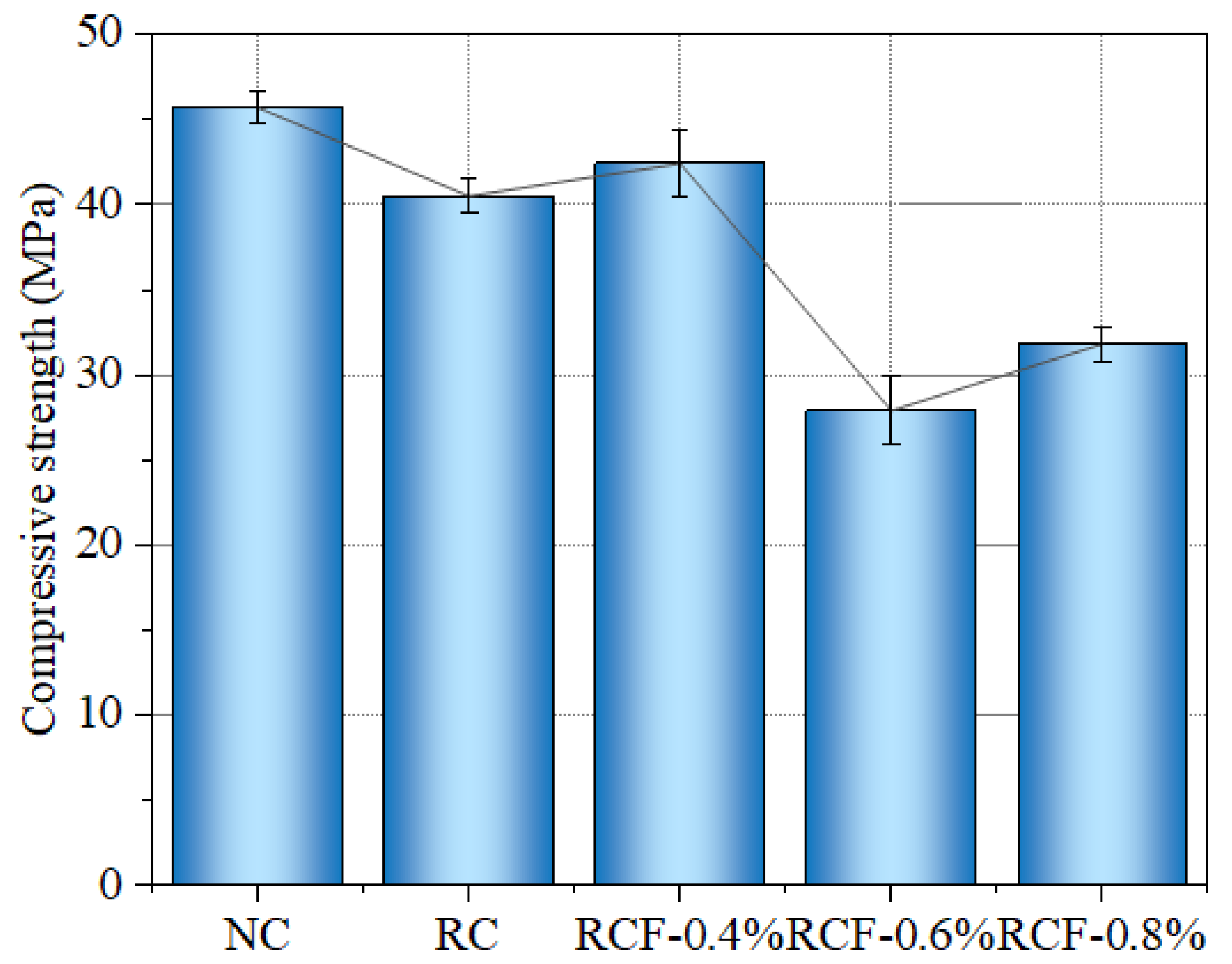
The compressive strengths of the different concrete samples are shown in Figure 13. The addition of recycled aggregates reduced the compressive strength of concrete. The compressive strength of recycled concrete was 40.5 MPa, which was 5.2 MPa lower than that of ordinary concrete, corresponding to a decrease of approximately 11.4%. This reduction can be attributed to the pores and microcracks in recycled aggregates, which lower the strength of the aggregate itself and weaken the interfacial transition zone between the aggregate and new cement paste.
After the addition of polypropylene fibres, the compressive strength first increased but then decreased. When the fibre content was 0.4%, the compressive strength increased to 42.4 MPa, which was 4.7% higher than that of the untreated recycled concrete; when the fibre content increased to 0.6% and 0.8%, the compressive strength decreased below that of the recycled concrete without fibres. An appropriate amount of polypropylene fibres can suppress microcrack propagation and improve internal integrity through bridging. When the dosage was too high, however, fibres became entangled and aggregated within the concrete, ultimately reducing its compressive performance.

3.3. Flexural Performance of the Concrete Beams

3.3.1. Failure Mode and Flexural Test Results

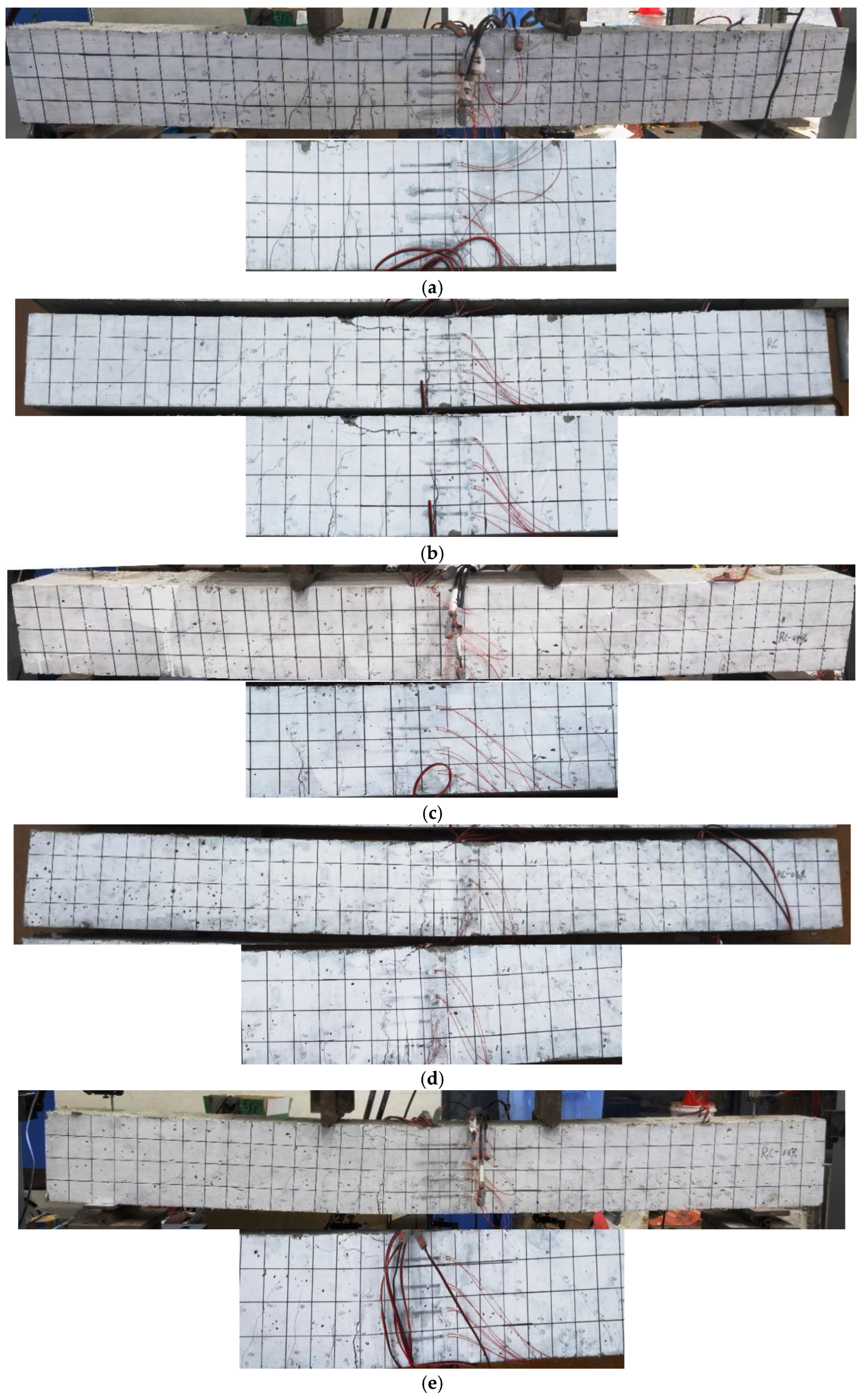
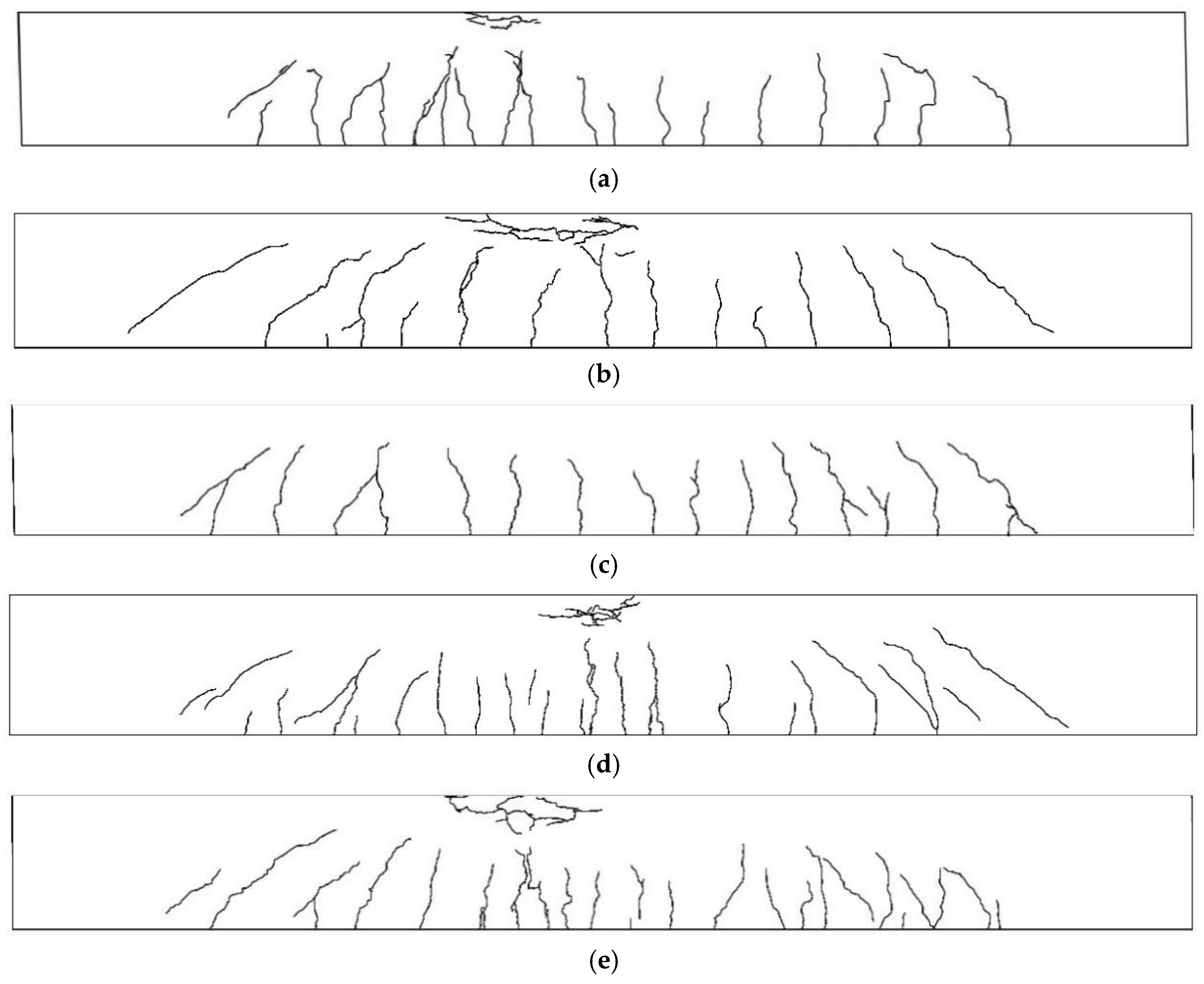
The observed failure modes and crack distributions of the beam specimens are shown in Figure 14 and Figure 15, respectively. The flexural test results are summarized in Table 3. The beam specimens generally experienced flexural crack initiation, crack propagation toward the compression zone, increasing reinforcement strain, and final failure accompanied by concrete crushing or rapid widening of the main crack. Although the overall failure process was similar among specimens, the different mixtures showed clear differences in cracking load, diagonal-crack initiation load, peak load, maximum crack width, and mid-span deflection.
The addition of polypropylene fibres noticeably changed the flexural performance and crack-evolution characteristics of the beam specimens. The initial flexural cracking load of the RCF-0.4% beam was 3 kN, which was lower than that of the RC beam. This unusually low initial cracking load may be related to the sensitivity of initial cracking to local defects, uneven fibre distribution, differences in compaction, and the heterogeneity of old mortar attached to recycled coarse aggregate near the tensile zone. However, after cracks formed, fibres bridged the crack surfaces and reduced the maximum crack width from 3.40 mm in the RC beam to 1.45 mm, corresponding to a decrease of 57.4%. This result indicates that the main function of the 0.4% fibre dosage was post-cracking crack control rather than enhancement of the initial cracking load.
When the fibre content reached 0.6%, the flexural cracking load of the beam was 7 kN, and the peak load was approximately 49 kN. Compared with the RC beam, the maximum crack width decreased from 3.40 mm to 1.80 mm, a reduction of 47.1%. Meanwhile, the mid-span deflection increased to 25.1 mm. This indicates that 0.6% fibre content can improve the deformation capacity and post-cracking ductility of the beam specimen but does not significantly increase the peak load.
When the fibre content increased to 0.8%, the initial flexural cracking load reached 9 kN, which was the same as that of the RC beam. However, its peak load decreased to 47 kN, and the maximum crack width was 3.40 mm. Given that the slump of this mixture was only 11 mm, excessive fibre content may offset the crack-bridging effect by reducing workability, promoting local fibre aggregation, and lowering matrix density. Therefore, the reinforcement effect of polypropylene fibres does not increase proportionally with fibre content.
Overall, the NC beam exhibited the highest peak and initial cracking loads and the smallest maximum crack width. The RC beam exhibited lower crack resistance, wider cracks, and greater deflection, indicating that recycled coarse aggregate adversely affects the service performance of beams. The peak bearing capacity of fibre-reinforced RAC beams did not continuously increase with fibre content, but the 0.4% and 0.6% fibre groups showed improved crack-width control and deformation capacity after cracking. This finding suggests that the main function of polypropylene fibres is not to directly increase ultimate flexural capacity but to improve post-cracking stress behaviour through crack bridging.
Additional quantitative indicators were calculated from the data in Table 3. Taking the NC beam as the reference, the peak load retention rates of the RC, RCF-0.4%, RCF-0.6%, and RCF-0.8% beams were 94.4%, 90.7%, 90.7%, and 87.0%, respectively. Taking the RC beam as the reference, the maximum crack widths of the RCF-0.4% and RCF-0.6% beams decreased by 57.4% and 47.1%, respectively, whereas the RCF-0.8% beam did not show a reduction in maximum crack width. Compared with the NC beam, the mid-span deflection ratios of the RC, RCF-0.4%, RCF-0.6%, and RCF-0.8% beams were 1.64, 1.32, 2.15, and 1.70, respectively. These indicators suggest that fibre addition mainly improves crack control and deformation capacity, whereas its effect on peak bearing capacity is relatively limited.

3.3.2. Load–Displacement Relationship

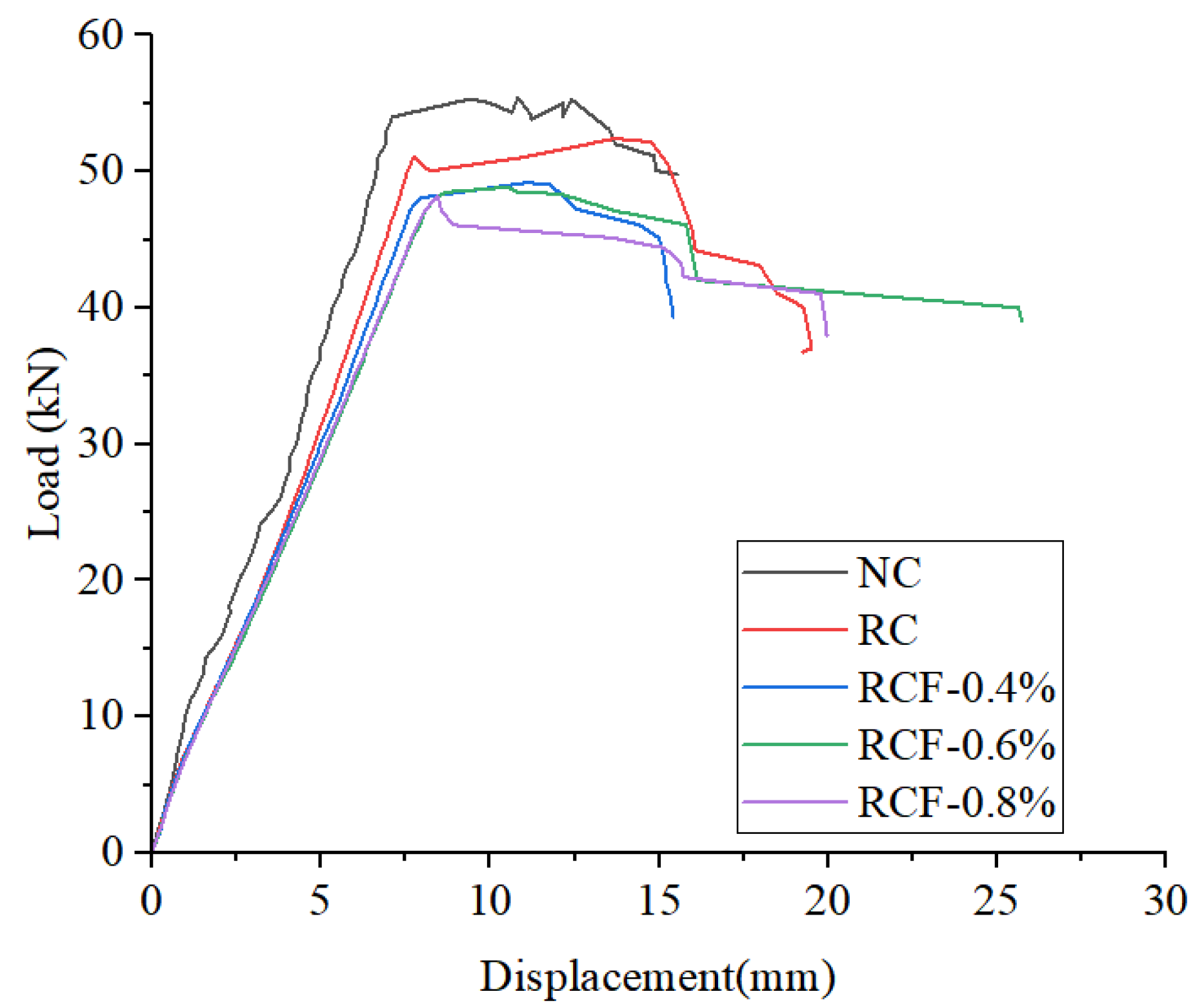
Load–displacement curves of the concrete beam are shown in Figure 16. The load–displacement curves can be divided into three stages: an elastic rising stage, a nonlinear crack-development stage, and a descending stage. In the initial loading stage, the curves are approximately linear, indicating that the beams mainly behaved elastically and that the initial stiffness difference was not yet significant. After cracking, stiffness degradation became more pronounced. The RC beam experienced faster stiffness loss than the NC beam because RCA introduced old mortar, pores, microcracks, and weaker interfacial transition zones. After polypropylene fibres were added, the overall curve shape remained similar, but the descending branches became smoother, indicating that the fibres contributed to crack bridging and tension-stiffening after matrix cracking.
Compared with the NC beam, the RC beam had a slightly lower peak load and faster post-peak attenuation, indicating weaker flexural stability. The peak load of the fibre-reinforced beams did not increase significantly; their peak-load retention rates ranged from 87.0% to 90.7% of that of the NC beam. However, the crack widths of the RCF-0.4% and RCF-0.6% beams were much smaller than that of the RC beam, and the RCF-0.6% beam had the greatest deformation capacity. This behaviour can be explained by the crack-bridging effect of polypropylene fibres. After the main crack forms, fibres transfer tensile stress between the two crack surfaces, promote stress redistribution, reduce strain concentration in the steel bars, and delay rapid damage localization. Therefore, the main contribution of fibres lies in post-cracking energy dissipation and delayed failure rather than a proportional increase in peak load.
The 0.4% fibre dosage had already restrained crack development, although its crack-control effect remained limited. The 0.6% fibre dosage performed better in terms of peak load and smoothness of the descending branch, indicating that an appropriate increase in fibre content improved flexural capacity and toughness. Although the 0.8% fibre dosage provided good residual flexural capacity, its peak load decreased, indicating that a high fibre content may improve ductility and energy dissipation but does not continuously enhance peak flexural capacity.

3.3.3. Concrete Strain

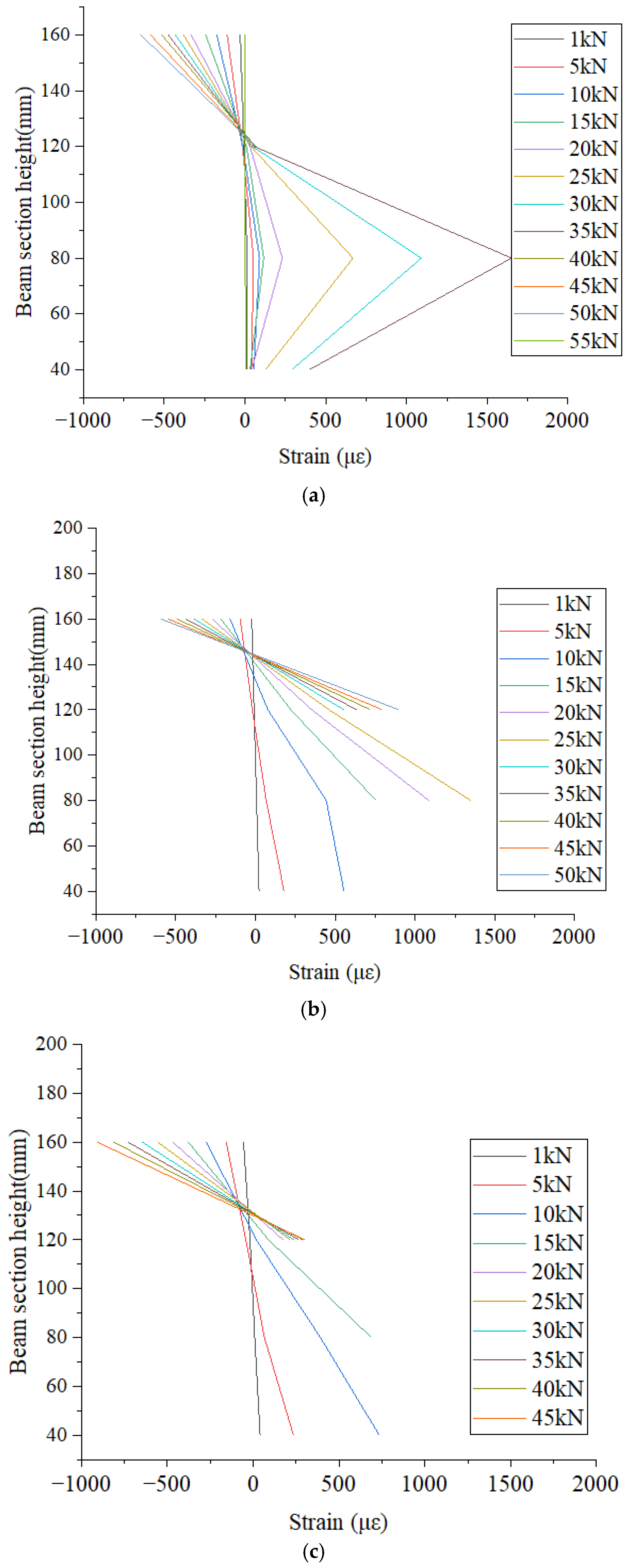
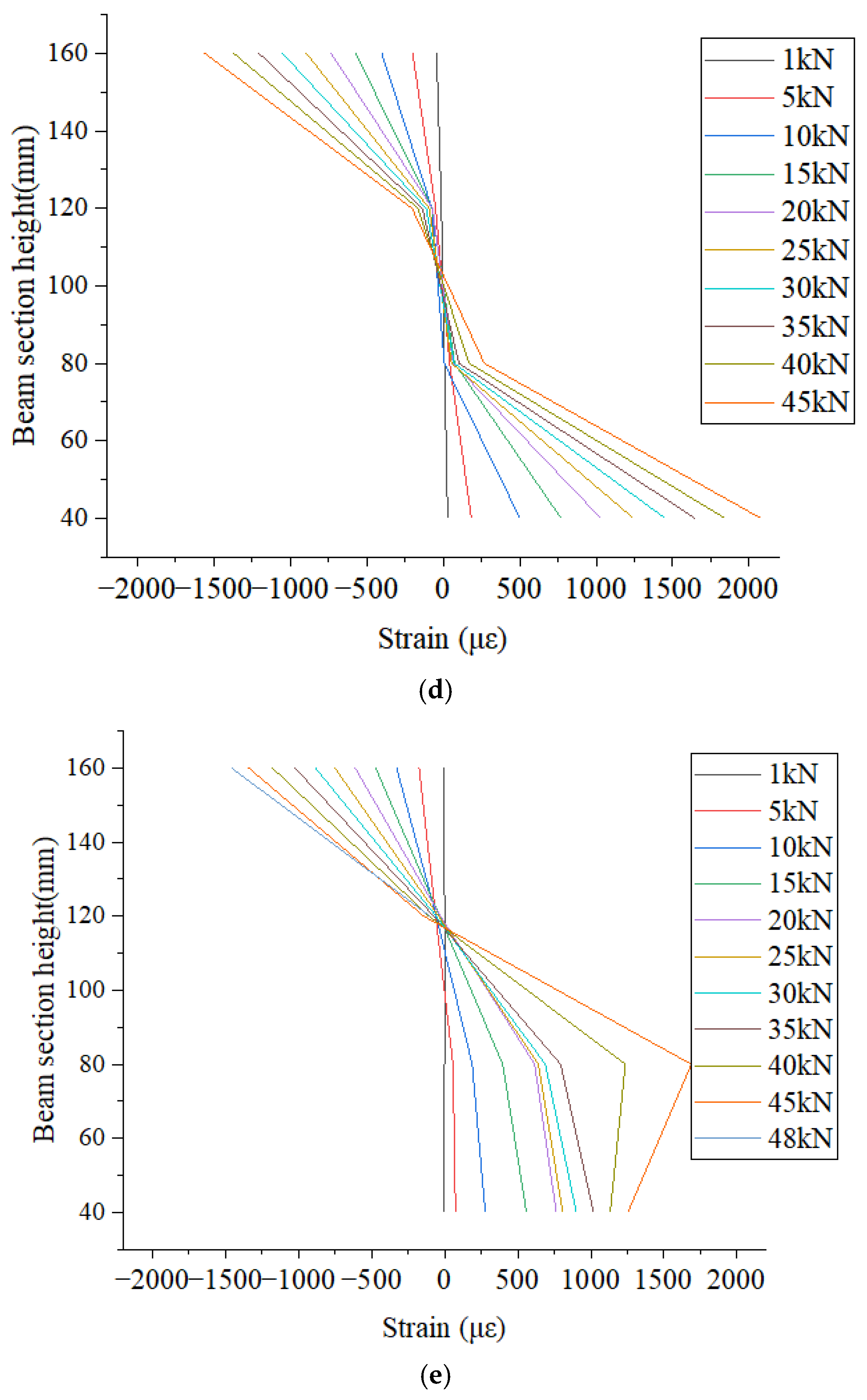
The concrete strain distribution along the beam depth is shown in Figure 17. During the selected loading stages, the measured strain values at the mid-span section were approximately linear, indicating that the plane-section assumption was generally applicable within the measured range. Linear fitting of the measured strain distributions at representative loading stages showed that the coefficient of determination was usually higher than 0.95 before severe cracking; however, the fitting quality decreased when the main cracks became localized.
As the load increased, the neutral axis gradually moved upward, and the height of the compression zone decreased accordingly. The NC beam exhibited good strain coordination, whereas the RC beam showed more pronounced local stiffness degradation after cracking. After fibres were added, the strain development of the beam section became smoother because fibre bridging improved stress transmission in the tensile zone and helped maintain sectional deformation compatibility. However, because the number of strain measurement points was limited, the strain analysis should be regarded as supporting evidence rather than complete proof that the entire beam satisfied the plane-section assumption throughout loading.

3.3.4. Steel Bar Strain

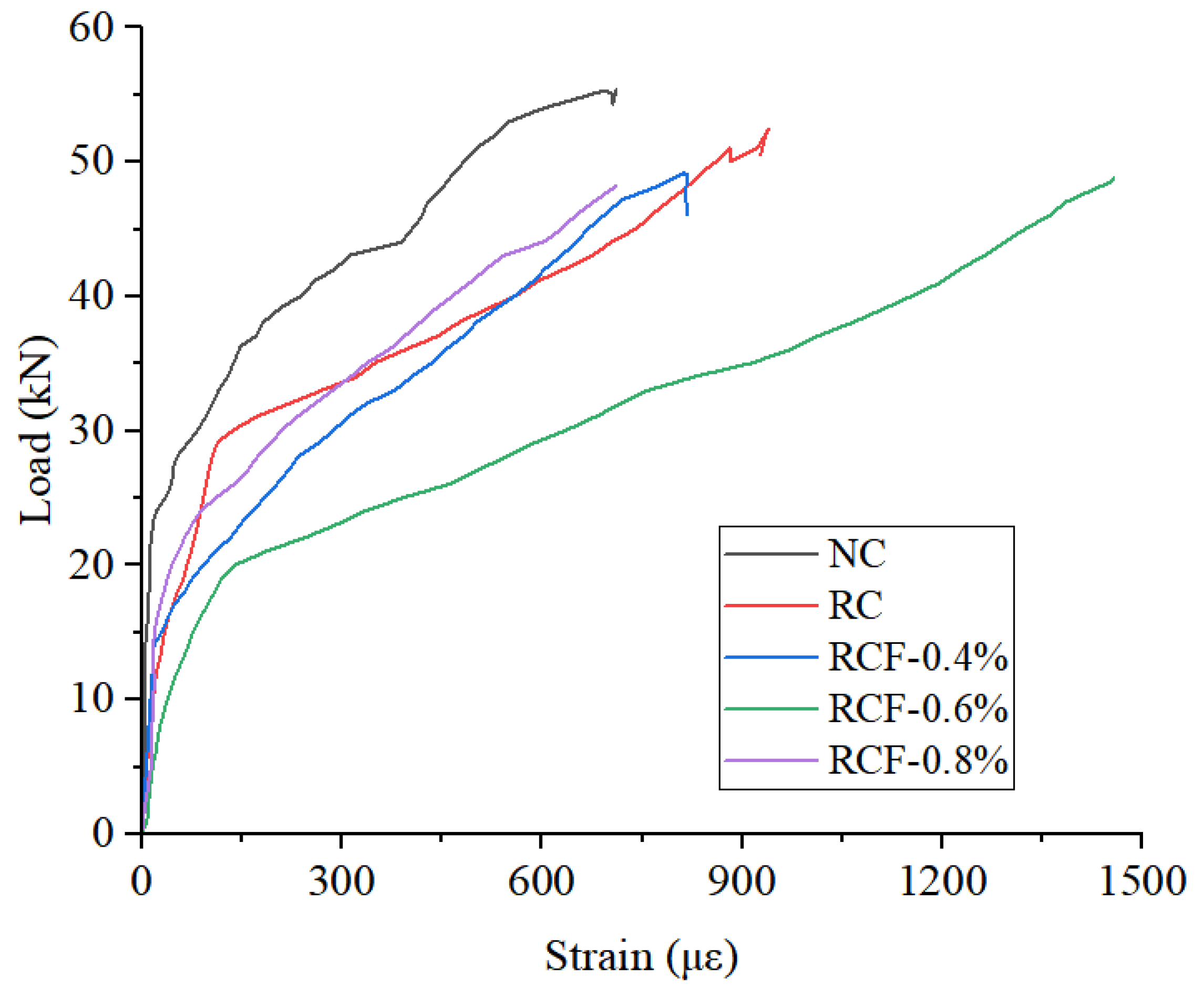
The load–stirrup strain curves of the beam specimens are shown in Figure 18. The overall response pattern was similar for all specimens and can be roughly divided into two stages. Before the appearance of diagonal cracks, stirrup strain increased slowly because the concrete still carried most of the internal force. After cracks formed, stirrup strain increased rapidly, indicating that the contribution of the stirrups to shear-force transmission became more significant as the diagonal cracks developed.
Before cracking, the slow-growth stage of strain in fibre-reinforced RAC beams was longer than that in the RC beam. This result indicates that fibre bridging delayed crack opening and reduced the rate at which the reinforcement entered the rapid stress-increase stage. This improvement is related to the fibre–matrix interaction and the tension-stiffening effect within the cracked tensile zone.
At a moderate fibre content, fibres can suppress crack development, improve stress transmission between concrete and steel bars, and thereby reduce local strain concentration. When the fibre content was too high, the slope of the strain curve for some stirrups increased at certain stages. This may be attributed to reduced fibre-dispersion uniformity, local fibre aggregation, and lower matrix density, which decreased local stress-transfer efficiency.
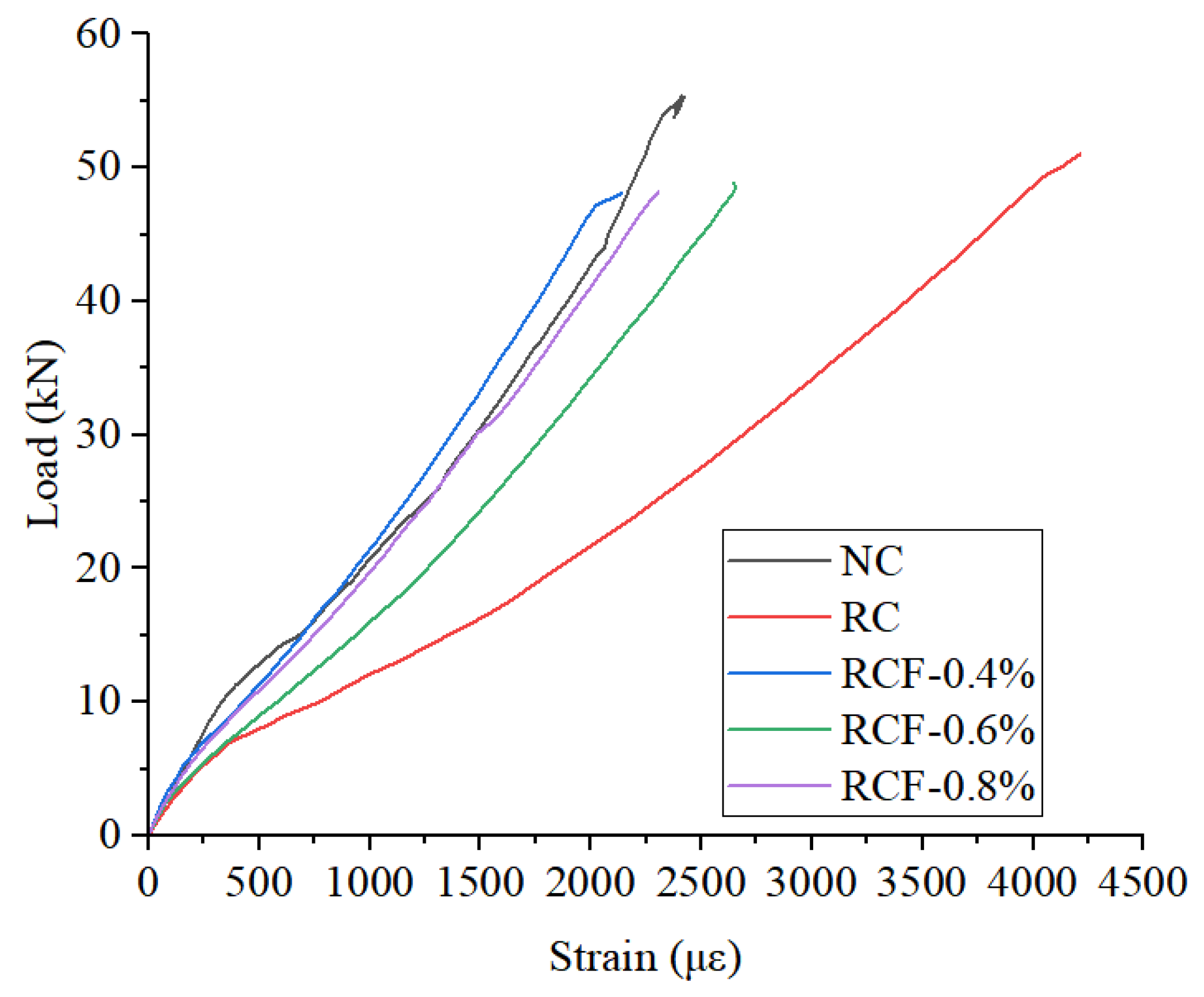
The load–longitudinal reinforcement strain curves are shown in Figure 19. As the load increased, the longitudinal reinforcement strain continued to increase and showed clear stage-dependent characteristics. Before cracking, the longitudinal reinforcement strain increased slowly. After cracking, the tensile concrete in the cracked zone gradually lost its tensile contribution, and the tensile force was increasingly carried by the longitudinal reinforcement; consequently, the strain growth rate increased significantly.
After cracking, the strain development in the longitudinal tensile steel bars of the RC beam reflected its lower matrix stiffness and weaker interfacial bonding. In contrast, fibre-reinforced RAC beams exhibit better deformation coordination after cracking. This occurs because fibres can transmit tensile stress across cracks and enhance the tension-stiffening effect of concrete between cracks, thereby slowing the sudden increase and concentration of strain in the longitudinal tensile steel bars and improving post-cracking steel–concrete interaction.
As the fibre content increased, the slope of the strain curve of longitudinal tensile steel bars after cracking did not show a monotonic decreasing trend. This result indicates that the fibre content has an appropriate range. At a moderate fibre content, fibres can effectively delay crack propagation and reduce longitudinal steel strain concentration. However, when the fibre content is too high, reduced dispersion uniformity and possible fibre agglomeration may decrease concrete compactness, thereby weakening the ability of fibres to restrain longitudinal steel strain development.

3.4. Practical Engineering Implications and Limitations

The results indicate that polypropylene fibres can be used in RAC beams when the design objective is to control crack width and improve post-cracking deformation capacity. However, the severe slump reduction at a fibre content of 0.8% indicates that high fibre contents may not be suitable for on-site casting unless additional fibre-dispersion measures, optimized mix proportions, or suitable water-reducing agents are adopted. From a practical perspective, a fibre content of 0.4% to 0.6% appears more reasonable for balancing the workability and crack control of concrete. This study did not examine the cost of fibre addition, long-term durability, shrinkage, freeze-thaw behaviour, or repeated-loading performance. These issues should be evaluated before large-scale engineering application. More importantly, only one beam specimen was tested for each configuration because of the size, cost, and instrumentation requirements of the structural tests. Consequently, the comparisons among beam groups should be regarded as descriptive evidence of observed trends rather than statistically significant proof. Future research should include at least three replicate beams for each configuration and should combine statistical analysis with reliability-based evaluation to confirm the effects of fibre content on cracking load, peak load, deflection capacity, crack width, and strain development.

4. Conclusions

(1)
After replacing natural coarse aggregate with 100% recycled coarse aggregate, the compressive strength of concrete decreased from 45.7 MPa to 40.5 MPa, a decrease of 11.4%. Meanwhile, the cracking load of the beam specimens decreased from 15 kN to 9 kN, and the maximum crack width increased from 1.22 mm to 3.40 mm, indicating that recycled coarse aggregate reduced the crack resistance and service performance of the beam.
(2)
Polypropylene fibres significantly reduced the workability of concrete mixtures. When the fibre content was 0.4%, 0.6%, and 0.8%, the slump decreased to 62 mm, 31 mm, and 11 mm, respectively. Therefore, excessively high fibre contents are not recommended unless additional dispersion and workability-control measures are adopted.
(3)
The enhancement effect of polypropylene fibres on peak bearing capacity was relatively limited, but the fibres improved post-cracking crack control. Compared with RC beams, the maximum crack width of RCF-0.4% and RCF-0.6% beams decreased by 57.4% and 47.1%, respectively. Among these beams, the RCF-0.6% beam exhibited the greatest mid-span deflection capacity, indicating better post-cracking deformation and energy-dissipation capacities.
(4)
The initial cracking load of the RCF-0.4% beam was abnormally low, which may be related to the sensitivity of initial cracking to local defects, fibre dispersion, differences in compaction degree, and heterogeneity of old mortar attached to the surface of recycled coarse aggregate. Therefore, the fibre-reinforcement effect should be evaluated not only by the initial cracking load but also by crack width, deformation capacity, and post-peak response.
(5)
Strain analysis showed that the addition of recycled aggregates and fibres did not change the basic flexural behaviour of reinforced concrete beams. However, fibres improved stress transmission after cracking, delayed the rapid mobilization of stirrups, and alleviated strain concentration in the longitudinal bars, thereby improving stress coordination and delaying failure.

Author Contributions

T.W.: Writing–original draft, Writing–review & editing, Data curation. X.Y.: Investigation, Methodology, Writing–original draft, Resources. T.S.: Conceptualization, Methodology, Writing–original draft, Writing–review & editing, Supervision, Funding acquisition. All authors have read and agreed to the published version of the manuscript.

Funding

This research received no external funding.

Institutional Review Board Statement

Not applicable.

Informed Consent Statement

Not applicable.

Data Availability Statement

The data presented in this study are available on request from the corresponding author.

Conflicts of Interest

Xu Yue was employed by the Ningbo Ningda Engineering Construction Supervision Co., Ltd. The remaining authors declare that the research was conducted in the absence of any commercial or financial relationships that could be construed as a potential conflict of interest”.

References

  1. Huang, X.; Su, T.; Wang, J.; Cao, F.; Wang, C. Bond performance of corroded steel reinforcement and recycled coarse aggregate concrete after freeze–Thaw cycles. Sustainability 2023, 15, 6122. [Google Scholar] [CrossRef]
  2. Su, T.; Wu, J.; Yang, G.; Jing, X.; Mueller, A. Shear behavior of recycled coarse aggregate concrete beams after freezing and thawing cycles. ACI Struct. J. 2019, 116, 67–76. [Google Scholar] [CrossRef]
  3. Gong, S.; Wang, T.; Hasan, M.M.; Mei, X.; Tan, Z.; Su, T.; Cao, F. Effect of polypropylene fiber and nano-silica on the compressive strength and frost resistance of recycled brick aggregate concrete. Nanotechnol. Rev. 2023, 12, 20230174. [Google Scholar] [CrossRef]
  4. Yang, W.; Liu, L.; Wu, W.; Zhang, K.; Xiong, X.; Li, C.; Huang, Y.; Zhang, X.; Zhou, H. A review of the mechanical properties and durability of basalt fiber recycled concrete. Constr. Build. Mater. 2024, 412, 134882. [Google Scholar] [CrossRef]
  5. Poon, C.S.; Shui, Z.H.; Lam, L. Effect of microstructure of ITZ on compressive strength of concrete prepared with recycled aggregates. Constr. Build. Mater. 2004, 18, 461–468. [Google Scholar] [CrossRef]
  6. Etxeberria, M.; Vázquez, E.; Marí, A.; Barra, M. Influence of amount of recycled coarse aggregates and production process on properties of recycled aggregate concrete. Cem. Concr. Res. 2007, 37, 735–742. [Google Scholar] [CrossRef]
  7. Silva, R.V.; de Brito, J.; Dhir, R.K. Properties and composition of recycled aggregates from construction and demolition waste suitable for concrete production. Constr. Build. Mater. 2014, 65, 201–217. [Google Scholar] [CrossRef]
  8. Behera, M.; Bhattacharyya, S.K.; Minocha, A.K.; Deoliya, R.; Maiti, S. Recycled aggregate from C&D waste and its use in concrete: A breakthrough towards sustainability in construction sector: A review. Constr. Build. Mater. 2014, 68, 501–516. [Google Scholar]
  9. Xiao, J.; Li, W.; Fan, Y.; Huang, X. An overview of study on recycled aggregate concrete in China, 1996–2011. Constr. Build. Mater. 2012, 31, 364–383. [Google Scholar] [CrossRef]
  10. Ahmed, H.; Tiznobaik, M.; Huda, S.B.; Islam, M.S.; Alam, M.S. Recycled aggregate concrete from large-scale production to sustainable field application. Constr. Build. Mater. 2020, 262, 119979. [Google Scholar] [CrossRef]
  11. Zhao, J.; Jiang, Y.; Li, X. Flexural behavior of concrete beams reinforced with high-strength steel bars after exposure to elevated temperatures. Constr. Build. Mater. 2023, 382, 131317. [Google Scholar] [CrossRef]
  12. Tošić, N.; Torrenti, J.M.; Sedran, T.; Ignjatović, I. Toward a codified design of recycled aggregate concrete structures: Background for the new fib Model Code 2020 and Eurocode 2. Struct. Concr. 2021, 22, 2916–2938. [Google Scholar] [CrossRef]
  13. Xiao, J.; Cheng, Z.; Zhou, Z.; Wang, C. Structural engineering applications of recycled aggregate concrete: Seismic performance, guidelines, projects and demonstrations. Case Stud. Constr. Mater. 2022, 17, e01520. [Google Scholar] [CrossRef]
  14. Sato, R.; Maruyama, I.; Sogabe, T.; Sogo, M. Flexural behavior of reinforced recycled concrete beams. J. Adv. Concr. Technol. 2007, 5, 43–61. [Google Scholar] [CrossRef]
  15. Ignjatović, I.S.; Marinković, S.B.; Mišković, Z.M.; Savić, A.R. Flexural behavior of reinforced recycled aggregate concrete beams under short-term loading. Mater. Struct. 2013, 46, 1045–1059. [Google Scholar] [CrossRef]
  16. Naaman, A.E.; Reinhardt, H.W. Proposed classification of HPFRC composites based on their tensile response. Mater. Struct. 2006, 39, 547–555. [Google Scholar] [CrossRef]
  17. Di Prisco, M.; Plizzari, G.; Vandewalle, L. Fibre reinforced concrete: New design perspectives. Mater. Struct. 2009, 42, 1261–1281. [Google Scholar] [CrossRef]
  18. Li, V.C.; Stang, H. Micromechanics of crack bridging in fibre-reinforced concrete. Mater. Struct. 1993, 26, 486–494. [Google Scholar] [CrossRef]
  19. Banthia, N.; Gupta, R. Hybrid fiber reinforced concrete: Fiber synergy in high strength matrices. Mater. Struct. 2004, 37, 707–716. [Google Scholar] [CrossRef]
  20. Abdulkareem, O.M.; Alshahwany, R.; Mousa, A. Durability of polypropylene fiber reinforced concrete: Literature review. Electron. J. Struct. Eng. 2022, 22, 14–28. [Google Scholar] [CrossRef]
  21. Ahmad, J.; Burduhos-Nergis, D.D.; Arbili, M.M.; Alogla, S.M.; Majdi, A.; Deifalla, A.F. A review on failure modes and cracking behaviors of polypropylene fibers reinforced concrete. Buildings 2022, 12, 1951. [Google Scholar] [CrossRef]
  22. Kakooei, S.; Akil, H.M.; Jamshidi, M.; Rouhi, J. The effects of polypropylene fibers on the properties of reinforced concrete structures. Constr. Build. Mater. 2012, 27, 73–77. [Google Scholar] [CrossRef]
  23. Xie, J.; Kou, S.C.; Ma, H.; Long, W.J.; Wang, Y.; Ye, T.H. Advances on properties of fiber reinforced recycled aggregate concrete: Experiments and models. Constr. Build. Mater. 2021, 277, 122345. [Google Scholar] [CrossRef]
  24. Yao, X.; Pei, Z.; Zheng, H.; Guan, Q.; Wang, F.; Wang, S.; Ji, Y. Review of mechanical and temperature properties of fiber reinforced recycled aggregate concrete. Buildings 2022, 12, 1224. [Google Scholar] [CrossRef]
  25. Das, C.S.; Dey, T.; Dandapat, R.; Mukharjee, B.B.; Kumar, J. Performance evaluation of polypropylene fibre reinforced recycled aggregate concrete. Constr. Build. Mater. 2018, 189, 649–659. [Google Scholar] [CrossRef]
  26. Wei, F.; Li, L.; Zhu, Y.; Zhao, Y. Experimental study on mechanical performance and microstructure of polypropylene fiber recycled concrete. KSCE J. Civ. Eng. 2023, 27, 3060–3073. [Google Scholar] [CrossRef]
  27. Yu, Y.; Yang, X.; Tang, Y. Damage constitutive model of polypropylene-fibre-reinforced recycled aggregate concrete. Mag. Concr. Res. 2024, 76, 535–547. [Google Scholar] [CrossRef]
  28. Ye, P.; Chen, Z.; Su, W. Mechanical properties of fully recycled coarse aggregate concrete with polypropylene fiber. Case Stud. Constr. Mater. 2022, 17, e01352. [Google Scholar] [CrossRef]
  29. Zhang, L.; Li, X.; Li, C.; Zhao, J.; Cheng, S. Mechanical properties of fully recycled aggregate concrete reinforced with steel fiber and polypropylene fiber. Materials 2024, 17, 1156. [Google Scholar] [CrossRef]
  30. Liu, G.; Claramunt, J.; Hunger, M.; Tošić, N.; de la Fuente, A. Effect of coarse recycled aggregate with embedded fibres on the mechanical properties and microstructure of polypropylene fibre-reinforced concrete. Mater. Struct. 2024, 57, 241. [Google Scholar] [CrossRef]
  31. Gu, Z.; Wang, J.; Gao, D.; Zhao, J. Effects of steel fibers on the flexural behavior of recycled concrete beam: Testing and analysis. J. Build. Eng. 2024, 85, 108718. [Google Scholar] [CrossRef]
  32. Abushanab, A.; Alnahhal, W. Flexural behavior of reinforced concrete beams prepared with treated wastewater, recycled concrete aggregates, and fly ash. Structures 2022, 45, 2067–2079. [Google Scholar] [CrossRef]
  33. Zhu, L.; Wen, T.; Tian, L. Size effects in compressive and splitting tensile strengths of polypropylene fiber recycled aggregate concrete. Constr. Build. Mater. 2022, 341, 127878. [Google Scholar] [CrossRef]
  34. Wang, J.; Li, Y.; Qiu, Z.; Zhang, Y. Experimental research on compressive properties of recycling polypropylene fiber recycled coarse aggregate concrete. J. Build. Eng. 2023, 76, 107403. [Google Scholar] [CrossRef]
  35. GB 1499.1-2024; Standardization Administration of China. Steel for the Reinforcement of Concrete—Part 1: Hot-Rolled Plain Bars. China Standards Press: Beijing, China, 2024. (In Chinese)
  36. GB 1499.2-2024; Standardization Administration of China. Steel for the Reinforcement of Concrete—Part 2: Hot-Rolled Ribbed Bars. China Standards Press: Beijing, China, 2024. (In Chinese)
  37. GB 50010-2010; Ministry of Housing and Urban-Rural Development of China. Code for Design of Concrete Structures. China Architecture & Building Press: Beijing, China, 2010. (In Chinese)
  38. Zhao, Y.; Jiang, S.; An, Z.; Luo, B. Experimental Investigation of the Bearing-Deformation Behavior of Broken Rocks in Goafs Under Various Influencing Factors. Appl. Sci. 2026, 16, 4276. [Google Scholar] [CrossRef]
Figure 1. Cement.
Figure 1. Cement.
Sustainability 18 05812 g001
Figure 2. Sand.
Figure 2. Sand.
Sustainability 18 05812 g002
Figure 3. Natural coarse aggregate.
Sustainability 18 05812 g003
Figure 4. Recycled coarse aggregate.
Sustainability 18 05812 g004
Figure 5. Polypropylene fibre.
Sustainability 18 05812 g005
Figure 6. Beam size and reinforcement diagram.
Sustainability 18 05812 g006
Figure 7. Schematic diagram of the strain gauge layout. (a) steel bar strain gauges layout (b) concrete strain gauges layout.
Sustainability 18 05812 g007
Figure 8. Compressive strength test.
Sustainability 18 05812 g008
Figure 9. Beam loading device.
Sustainability 18 05812 g009
Figure 10. Schematic diagram of the displacement sensor layout.
Sustainability 18 05812 g010
Figure 11. Slump.
Figure 11. Slump.
Sustainability 18 05812 g011
Figure 12. Failure mode of the cubic sample. (a) NC; (b) RC; (c) RCF-0.4%; (d) RCF-0.6%; (e) RCF-0.8%.
Sustainability 18 05812 g012
Figure 13. Compressive strength.
Sustainability 18 05812 g013
Figure 14. Observed failure modes of the beams. (a) NC; (b) RC; (c) RCF-0.4%; (d) RCF-0.6%; (e) RCF-0.8%.
Sustainability 18 05812 g014
Figure 15. Crack distribution and typical crack patterns of the beams. (a) NC; (b) RC; (c) RCF-0.4%; (d) RCF-0.6%; (e) RCF-0.8%.
Sustainability 18 05812 g015
Figure 16. Load–displacement curve of the concrete beam.
Sustainability 18 05812 g016
Figure 17. Concrete strain distribution. (a) NC; (b) RC; (c) RCF-0.4%; (d) RCF-0.6%; (e) RCF-0.8%.
Sustainability 18 05812 g017aSustainability 18 05812 g017b
Figure 18. Relationship between load and stirrup strain.
Sustainability 18 05812 g018
Figure 19. Relationship between load and longitudinal reinforcement strain.
Sustainability 18 05812 g019
Table 1. Properties of steel bars.
TypeDiameter,
mm
Yield Strength,
MPa
Tensile Strength,
MPa
Modulus of Elasticity, MPa
HPB300-663455302.1 × 105
HRB400-884406302.0 × 105
HRB400-14144306052.0 × 105
Table 2. Design mixture proportions of the concrete.
TypeCement, kg/m3Water, kg/m3NCA, kg/m3RCA, kg/m3Sand, kg/m3Fibre Content, %
NC4501801080 690
RC450180 1080690
RCF-0.4%450180 10806900.4%
RCF-0.6%450180 10806900.6%
RCF-0.8%450180 10806900.8%
Note: The fibre content refers to the volume fraction of polypropylene fibre. The listed water is the effective mixing water used for calculating the water-to-cement ratio; any additional water used for pre-wetting recycled coarse aggregate was not included.
Table 3. Test results.
TypeMid-Span Cracking Load, kNMid-Span Deflection, mmPeak Load, kNMaximum Crack Width, mm
NC1511.68541.22
RC919.2513.4
RCF-0.4%315.4491.45
RCF-0.6%725.1491.8
RCF-0.8%919.9473.4
Disclaimer/Publisher’s Note: The statements, opinions and data contained in all publications are solely those of the individual author(s) and contributor(s) and not of MDPI and/or the editor(s). MDPI and/or the editor(s) disclaim responsibility for any injury to people or property resulting from any ideas, methods, instructions or products referred to in the content.