Shaping Sustainable Urban Development: Spatiotemporal Evolution and Drivers of Newly Established Digital Enterprises in Hangzhou, China


Abstract
1. Introduction
2. Literature Review and Theoretical Framework
2.1. Literature Review
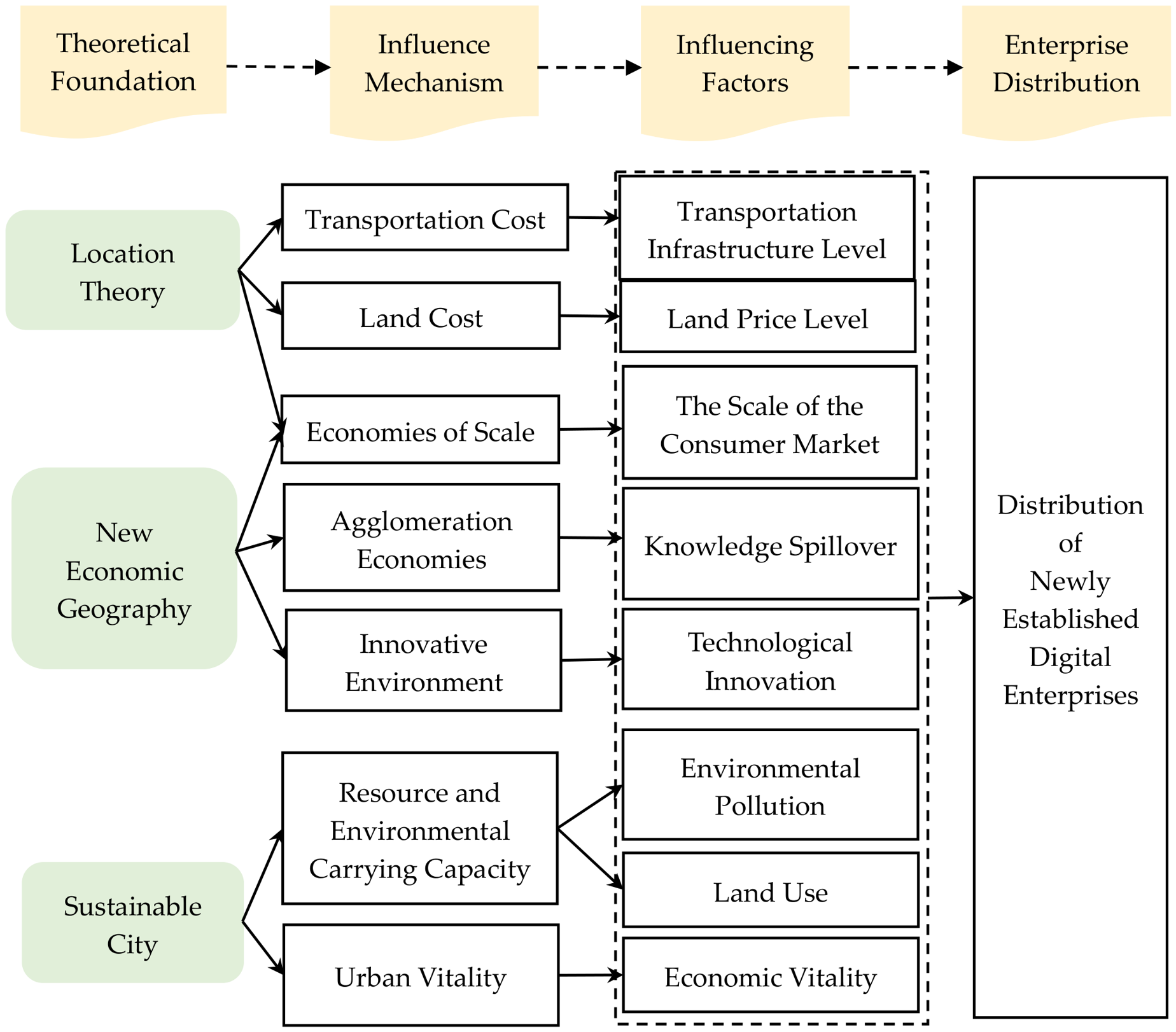
2.2. Theoretical Framework
3. Area, Data and Methods
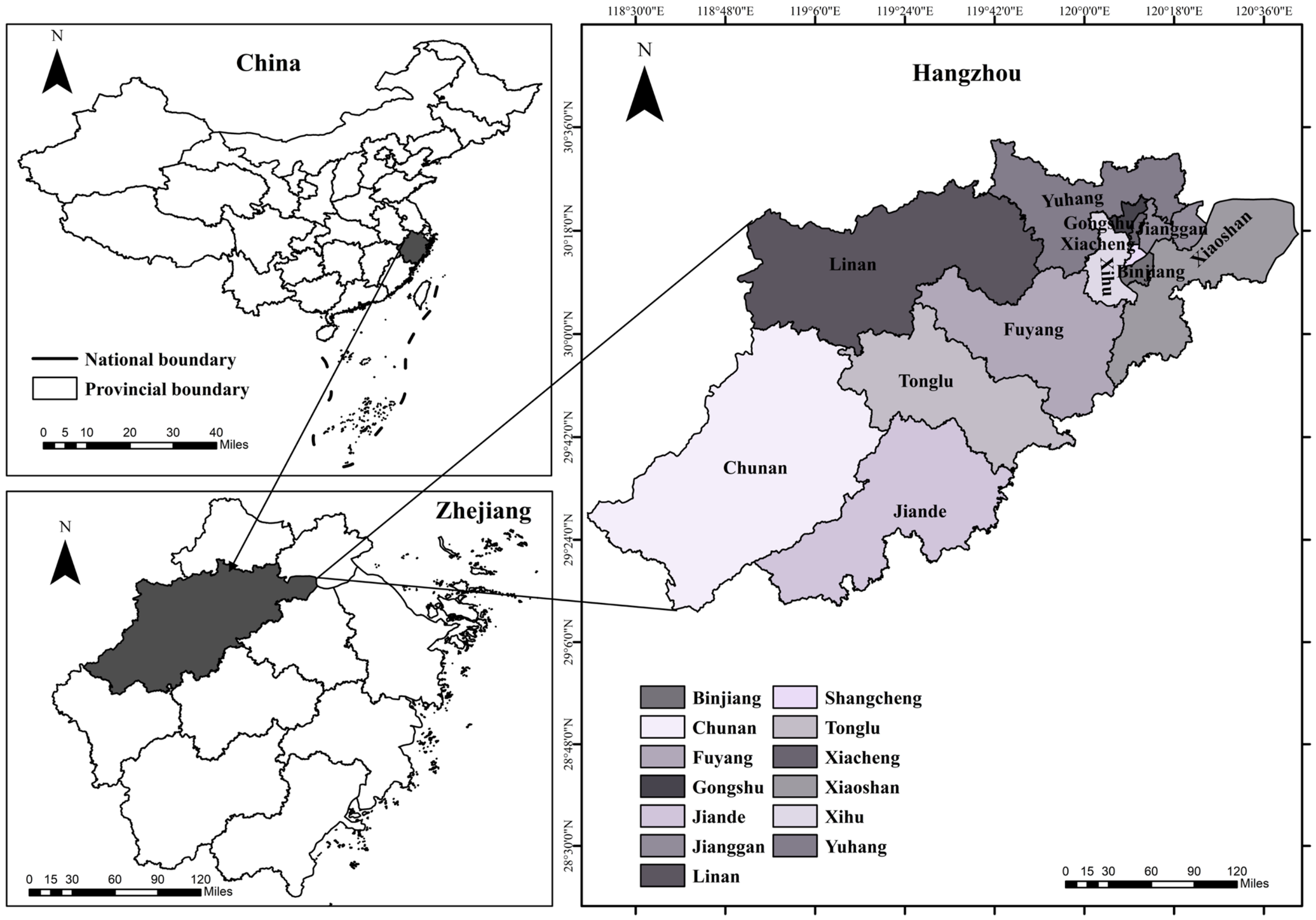
3.1. Study Area
3.2. Data Sources and Processing
3.3. Research Methods
- (1)
- Kernel Density Estimation
- (2)
- Standard Deviation Ellipse
- (3)
- Nearest Neighbor Index
- (4)
- Geodetector
- (5)
- Multiscale geographically weighted regression (MGWR)
4. Results
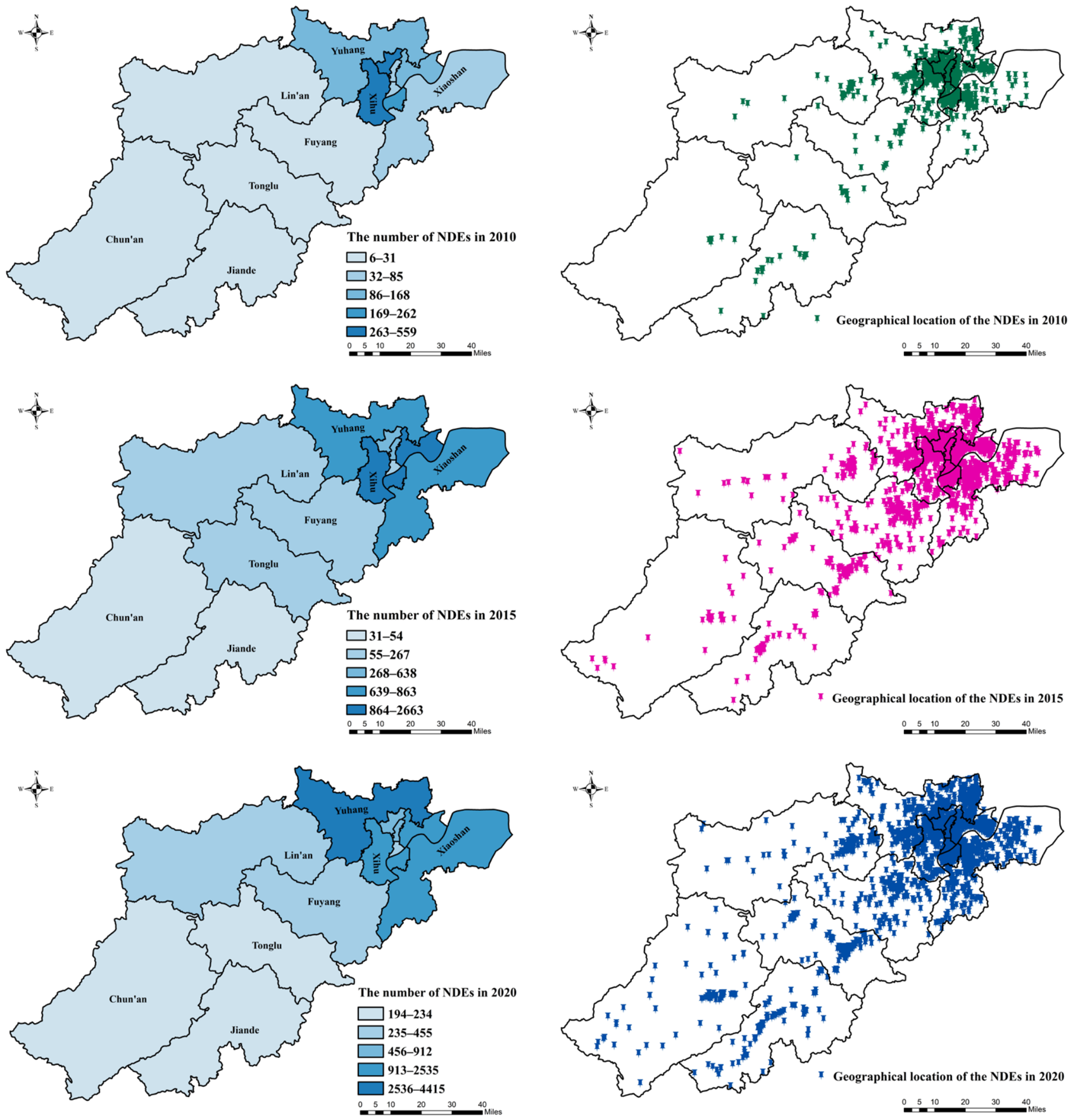
4.1. Spatiotemporal Distribution Pattern of NDEs
4.1.1. Current Spatial Distribution of NDEs
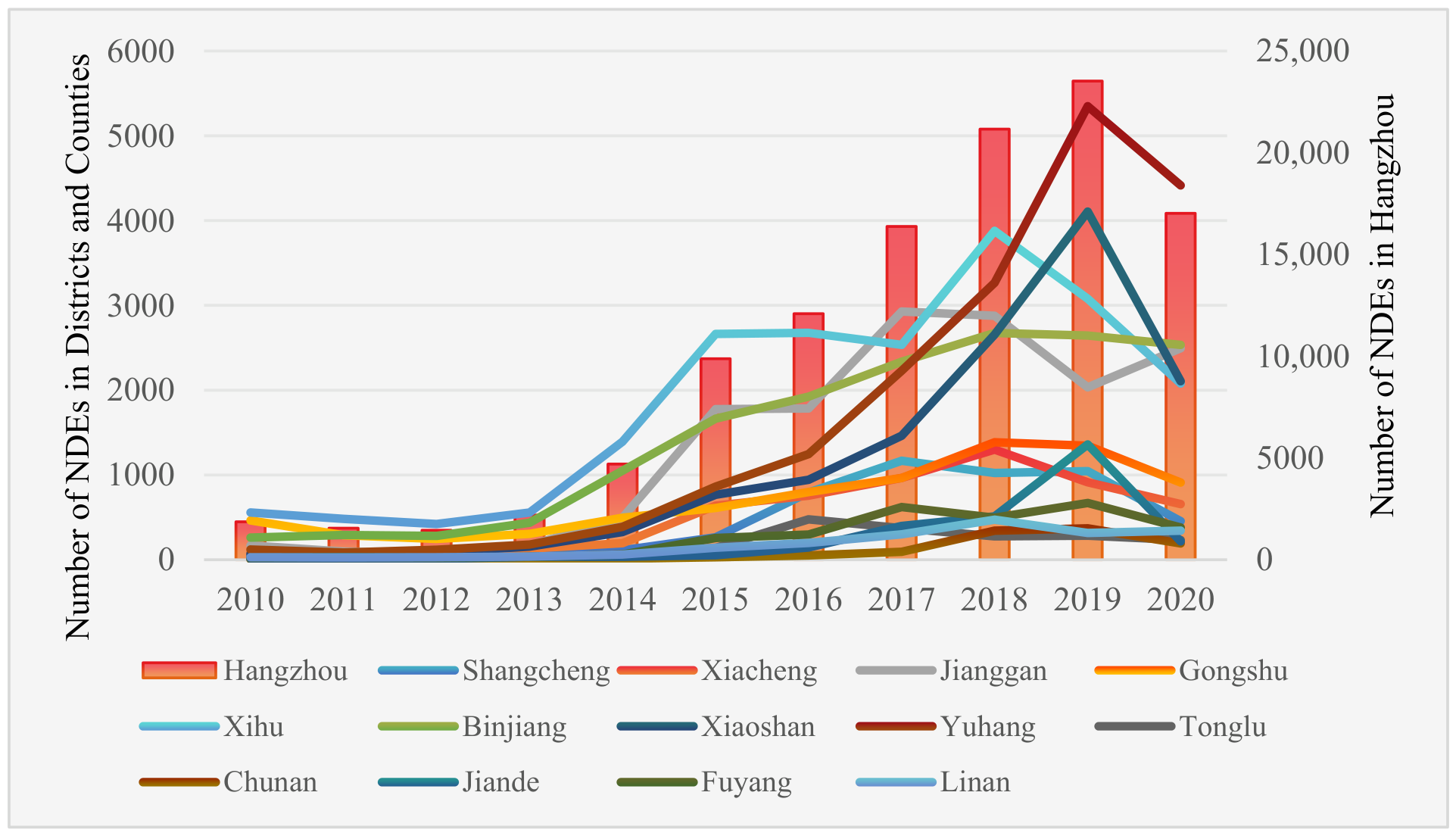
4.1.2. Spatiotemporal Evolution Characteristics of NDEs
4.1.3. Spatiotemporal Evolution Direction of NDEs
4.1.4. Spatiotemporal Agglomeration Characteristics of NDEs
4.2. Influencing Factors of the Spatial Distribution of NDEs
4.2.1. Variable Selection
4.2.2. Factor Detection Results
4.2.3. Factor Interaction Detection Results
4.3. Spatial Heterogeneity of Influencing Factors Based on MGWR
4.3.1. Comparison of Local Regression Models
4.3.2. Analysis of Spatial Heterogeneity of Influencing Factors
5. Conclusions and Policy Implications
5.1. Conclusions
- (1)
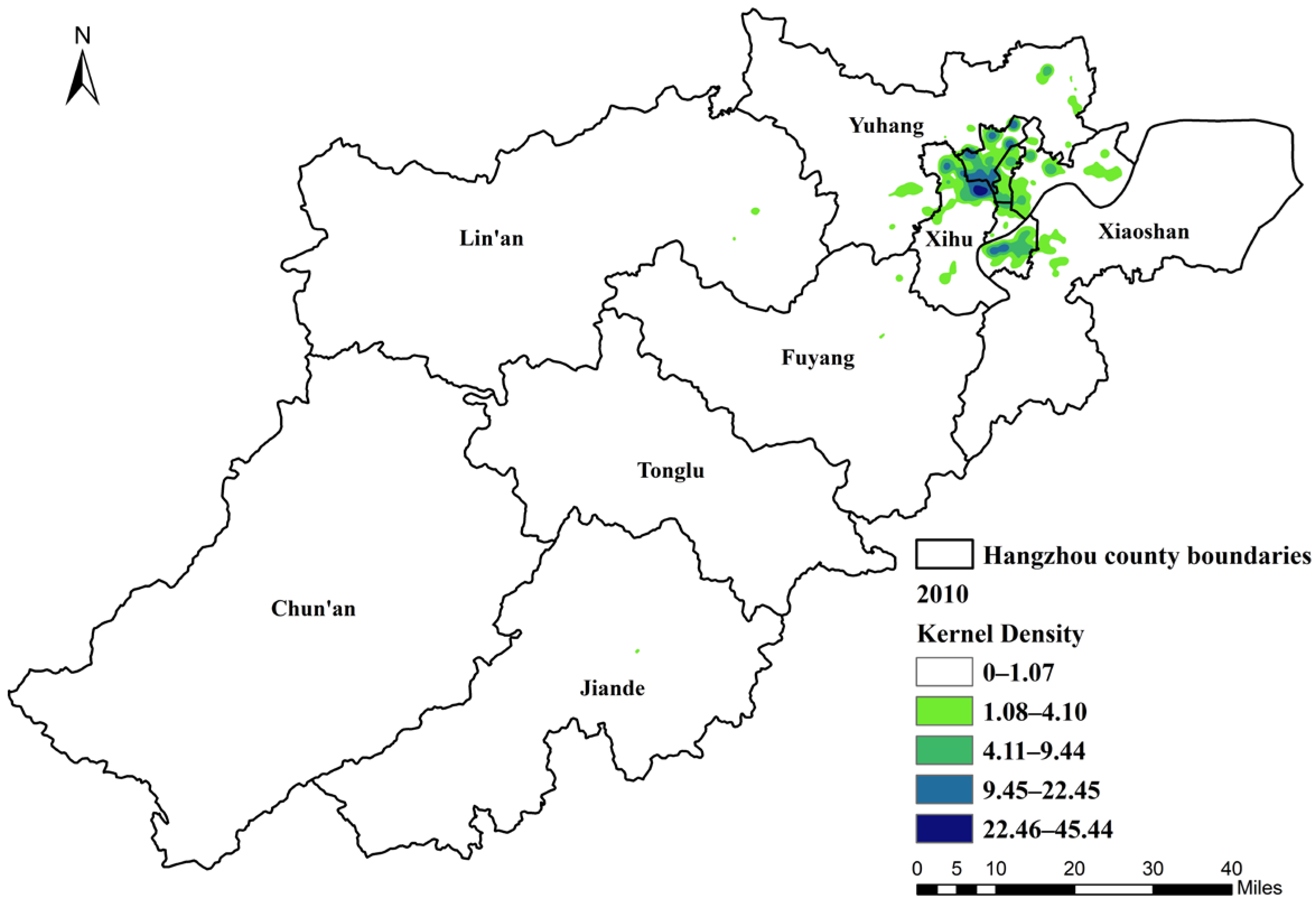
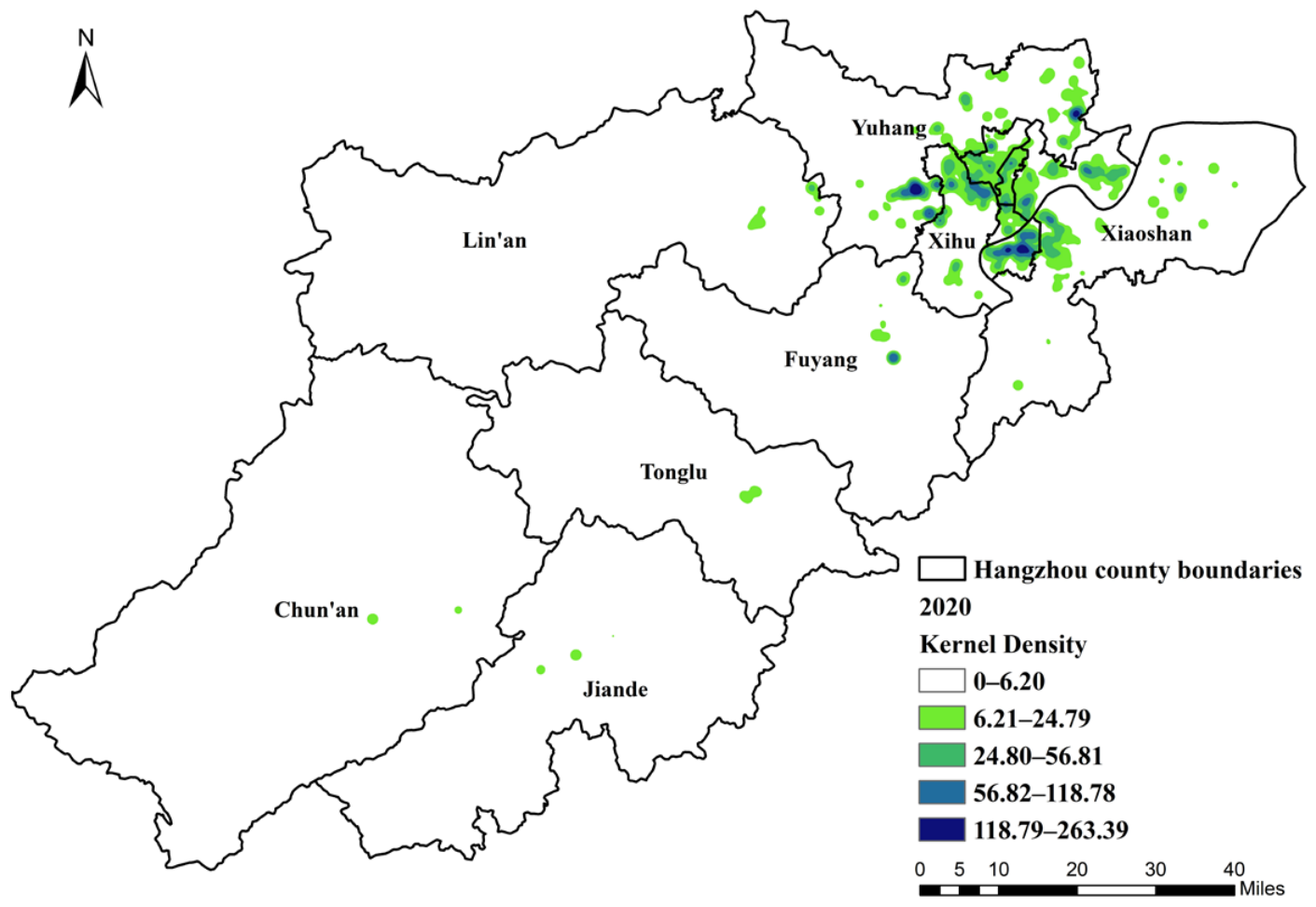
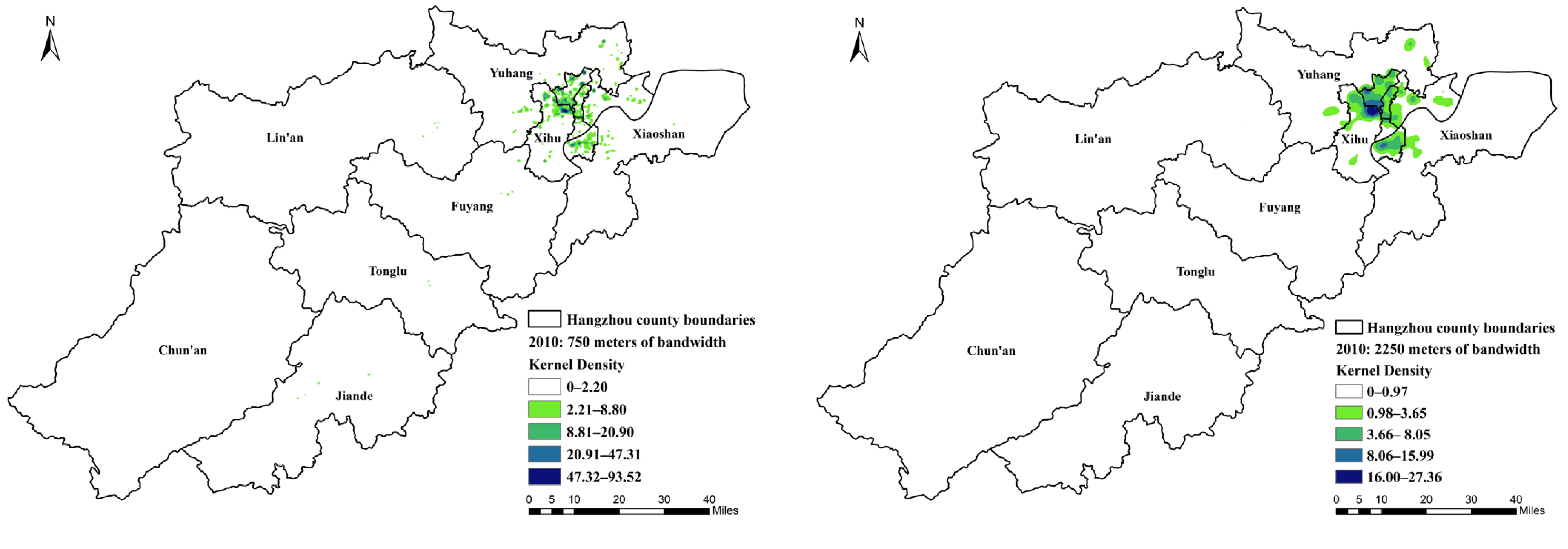
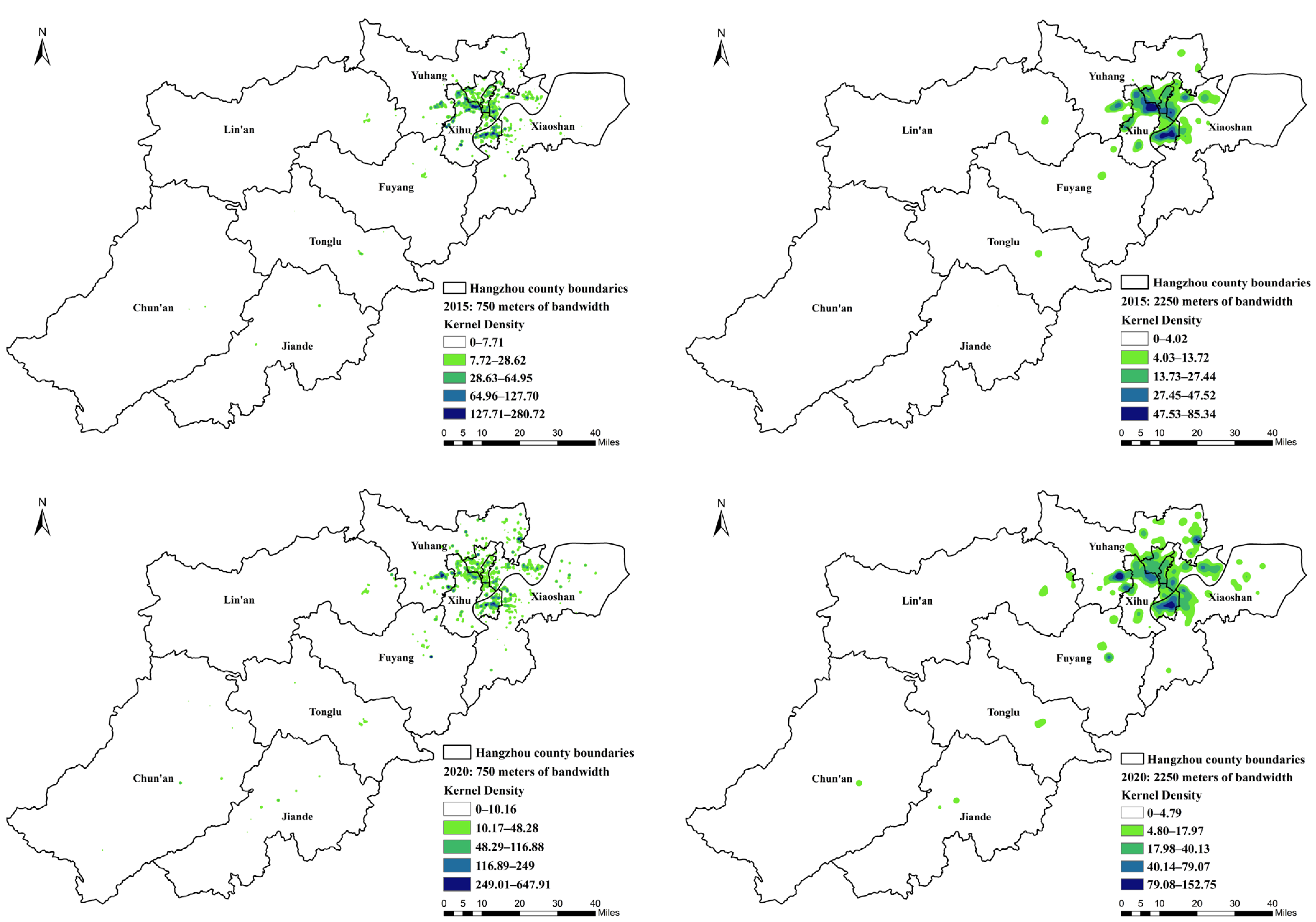
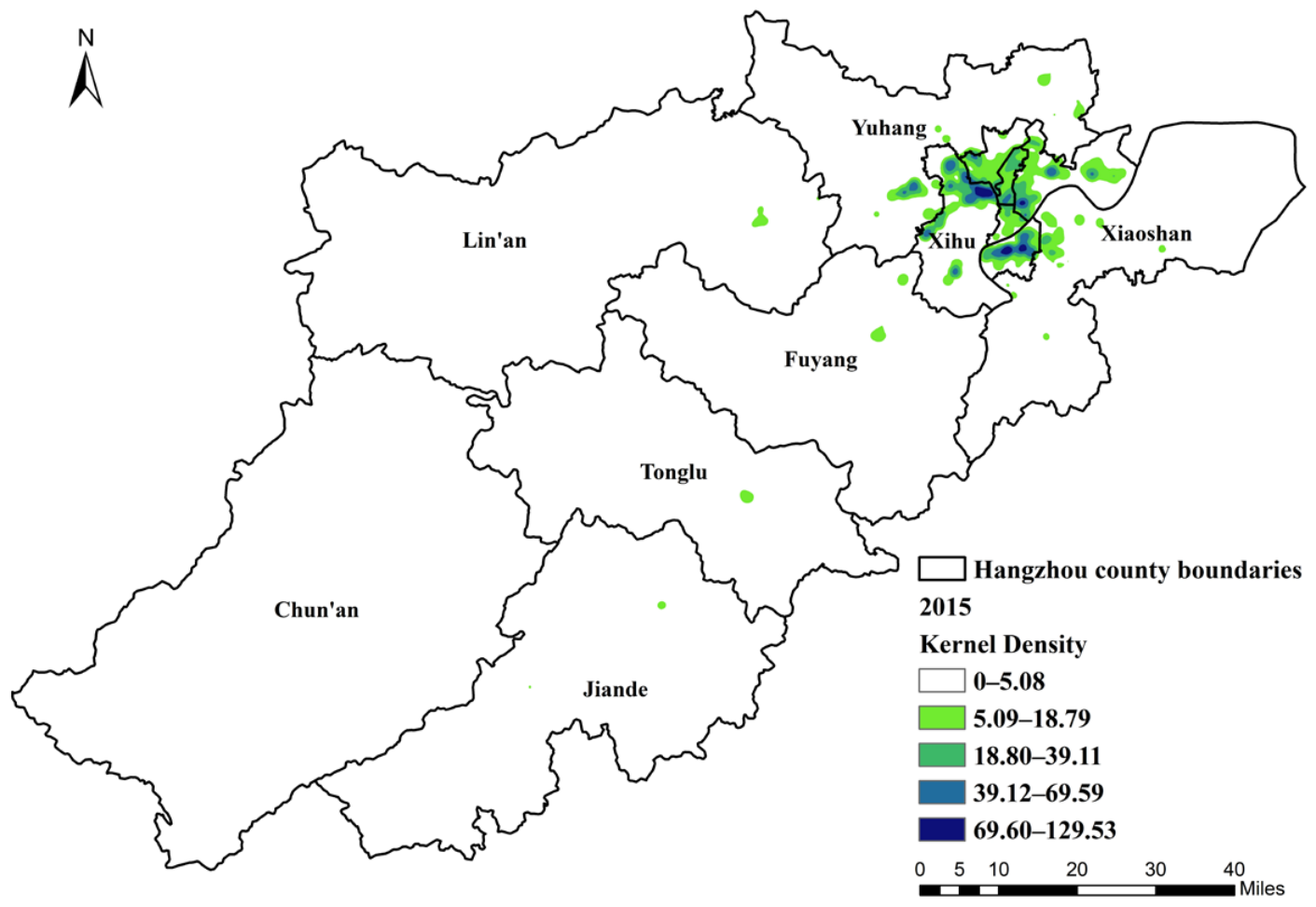
- The spatial pattern of NDEs transformed significantly. It evolved from a “single-core diffusion” pattern in 2010 to a “dual-core emergence” pattern in 2015, and finally to a “dual-core with multiple centers and axial contiguous development” pattern by 2020. Yuhang District emerged as a second growth pole alongside the traditional core. However, spatial inequality widened: the density gap between urban cores and peripheral counties (e.g., Tonglu, Chun’an) persisted, indicating that polycentric development does not automatically ensure balanced sustainability.
- (2)
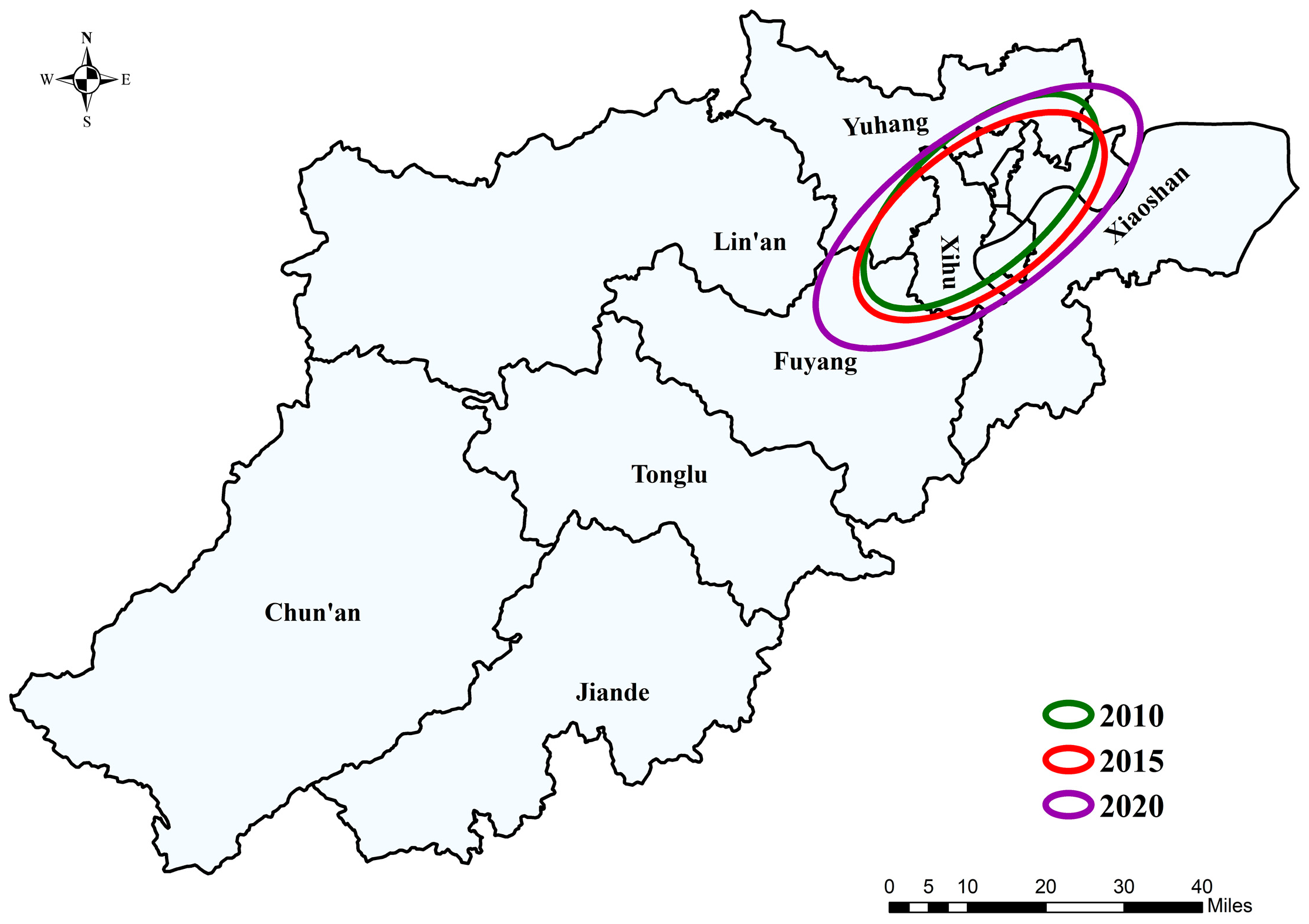
- The spatial expansion of NDEs followed a northeast–southwest orientation, with growth intensity decreasing toward the southwest periphery. Over the decade, the overall agglomeration intensity of NDEs in the city increased steadily.
- (3)
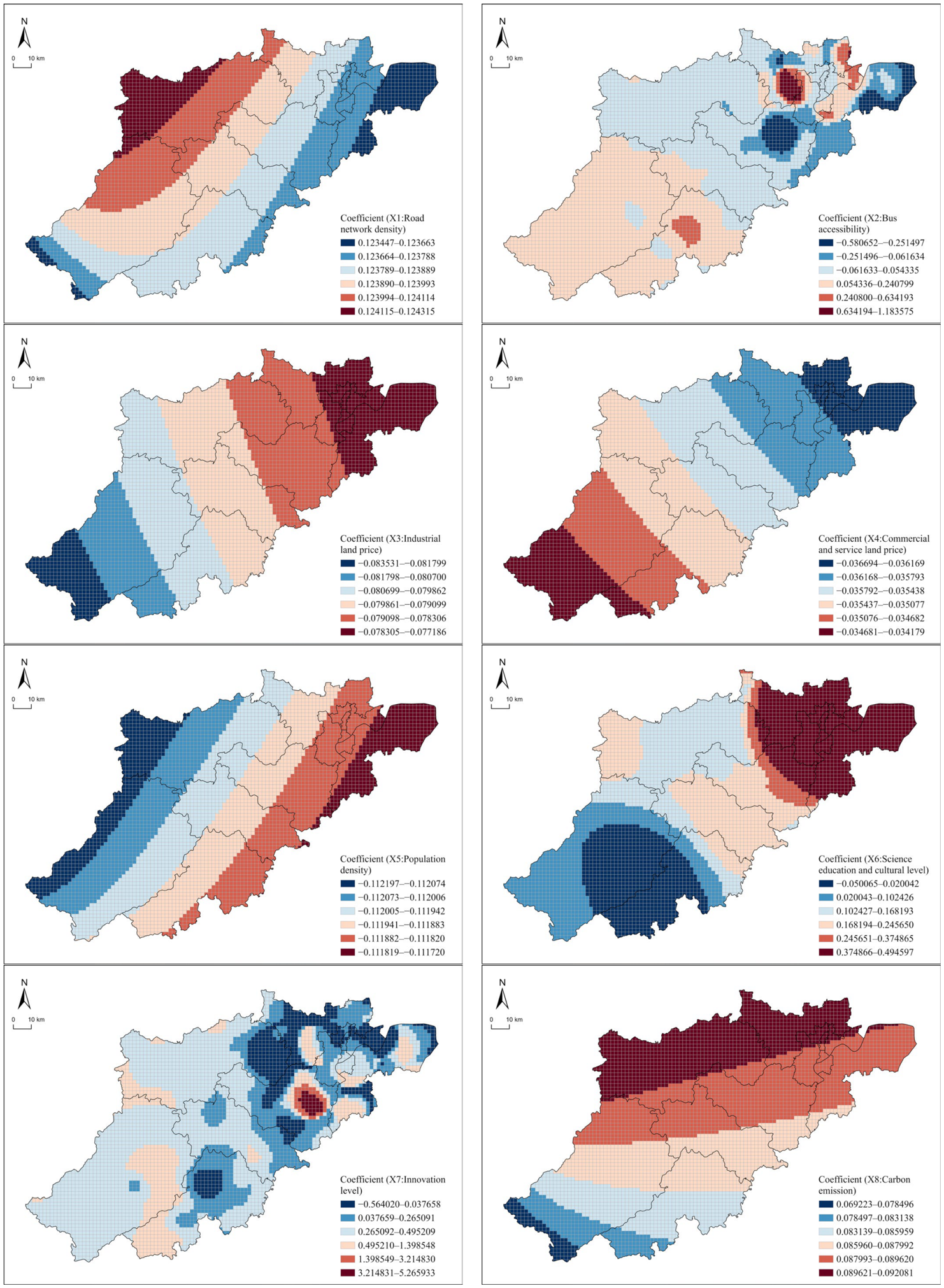
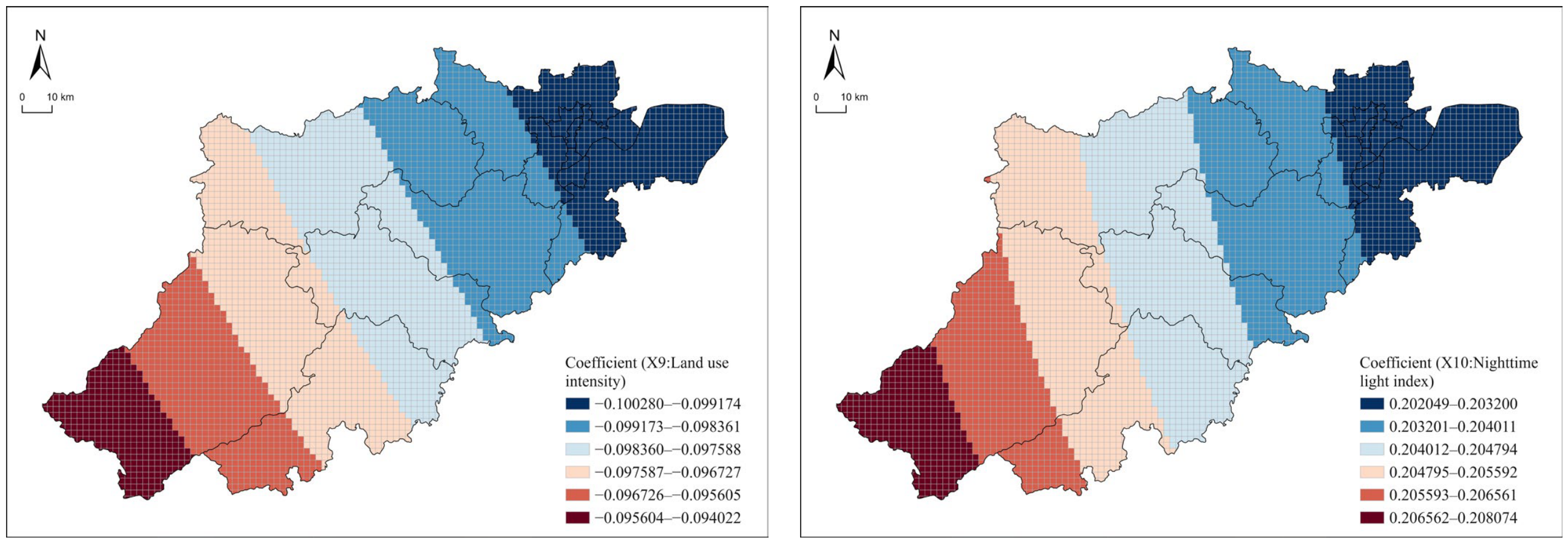
- The spatial distribution of NDEs is shaped by both global and local drivers with distinct scale effects. Global drivers include road network density, land prices, population density, carbon emissions, land use intensity, and the nighttime light index. Among these, economic vitality (the nighttime light index) exerts the strongest positive effect, while land costs and population density show negative effects, reflecting cost-squeeze and decentralized locational preferences.
5.2. Policy Implications
5.3. Research Limitations and Prospects
Author Contributions
Funding
Institutional Review Board Statement
Informed Consent Statement
Data Availability Statement
Conflicts of Interest
Appendix A
Appendix A.1


Appendix A.2

| Variable | Estimate | Std Error | t Value | p Value | VIF |
|---|---|---|---|---|---|
| Intercept | 11.965 | 2.329 | 5.138 | 0.001 | / |
| Road network density | 0.001 | 0.000 | 3.379 | 0.001 | 6.805 |
| Bus accessibility | 0.312 | 0.066 | 4.690 | 0.001 | 4.088 |
| Industrial land price | 0.002 | 0.000 | 5.896 | 0.001 | 1.355 |
| Commercial and service land price | −0.000 | 0.000 | −2.111 | 0.035 | 2.460 |
| Population density | −0.004 | 0.000 | −8.784 | 0.001 | 4.647 |
| Science, education, and cultural level | 0.257 | 0.014 | 18.643 | 0.001 | 4.259 |
| Innovation level | 0.018 | 0.001 | 21.667 | 0.001 | 1.341 |
| Carbon emission | 0.000 | 0.000 | 6.796 | 0.001 | 1.267 |
| Land use intensity | −0.065 | 0.011 | −5.696 | 0.001 | 5.065 |
| Nighttime light index | 0.630 | 0.059 | 10.723 | 0.001 | 5.109 |
References
- Dinh, D.V. Digital economy and the electronic payment behavior: An empirical analysis. Transnatl. Corp. Rev. 2024, 16, 200078. [Google Scholar] [CrossRef]
- Wang, Q.; Zhang, F.; Li, R.; Sun, J. Does artificial intelligence promote energy transition and curb carbon emissions? The role of trade openness. J. Clean. Prod. 2024, 447, 141298. [Google Scholar] [CrossRef]
- Hund, A.; Wagner, H.T.; Beimborn, D.; Weitzel, T. Digital innovation: Review and novel perspective. J. Strateg. Inf. Syst. 2021, 30, 101695. [Google Scholar] [CrossRef]
- Peng, Y.; Tao, C. Can digital transformation promote enterprise performance?—From the perspective of public policy and innovation. J. Innov. Knowl. 2022, 7, 100198. [Google Scholar] [CrossRef]
- Tian, H.; Li, Y.; Zhang, Y. Digital and intelligent empowerment: Can big data capability drive green process innovation of manufacturing enterprises? J. Clean. Prod. 2022, 377, 134261. [Google Scholar] [CrossRef]
- Schumpeter, J.A. The Theory of Economic Development; Harvard University Press: Cambridge, MA, USA, 1934. [Google Scholar]
- Fernald, J.G. Productivity and potential output before, during, and after the great recession. NBER Macroecon. Annu. 2015, 29, 1–51. [Google Scholar] [CrossRef]
- Monaghan, S.; Tippmann, E.; Coviello, N. Born digitals: Thoughts on their internationalization and a research agenda. J. Int. Bus. Stud. 2020, 51, 11–22. [Google Scholar] [CrossRef]
- Ansong, E.; Boateng, R. Surviving in the digital era-business models of digital enterprises in a developing economy. Digit. Policy Regul. Gov. 2019, 21, 164–178. [Google Scholar] [CrossRef]
- Wang, S. Design and optimisation of an enterprise digital management system based on IoT monitoring. Comput. Intell. Neurosci. 2022, 2022, 3264485. [Google Scholar] [CrossRef]
- Xu, Q.; Zhong, M.; Dong, Y. Digital economy and risk response: How the digital economy affects urban resilience. Cities 2024, 155, 105397. [Google Scholar] [CrossRef]
- Yang, X.; Li, H.; Zhang, J.; Niu, S.; Miao, M. Urban economic resilience within the Yangtze River Delta urban agglomeration: Exploring spatially correlated network and spatial heterogeneity. Sustain. Cities Soc. 2024, 103, 105270. [Google Scholar] [CrossRef]
- Zheng, Q.; Nian, F.; Shen, G.; Sun, Y.; Ding, M.; Yuan, H. On spatial synergy of market-driven industry convergence in cities: The case of Hangzhou, China. Appl. Geogr. 2025, 185, 103801. [Google Scholar] [CrossRef]
- Artz, G.M.; Kim, Y.; Orazem, P.F. Does agglomeration matter everywhere? New firm location decisions in rural and urban markets. J. Reg. Sci. 2016, 56, 72–95. [Google Scholar]
- Fritsch, M.; Aamoucke, R. Fields of knowledge in higher education institutions, and innovative start-ups: An empirical investigation. Pap. Reg. Sci. 2017, 96, S1–S28. [Google Scholar] [CrossRef]
- Carlton, D.W. The location and employment choices of new firms: An econometric model with discrete and continuous endogenous variables. Rev. Econ. Stat. 1983, 65, 440–449. [Google Scholar] [CrossRef]
- Weber, A. On the Location of Industries; University of Chicago Press: Chicago, IL, USA, 1929. [Google Scholar]
- Lösch, A. The Economics of Location; Yale University Press: New Haven, CT, USA, 1954. [Google Scholar]
- Pred, A. Behaviour and Location: Foundation for a Geographic and Dynamic Location Theory; C.W.K. Gleerup: Lund, Sweden, 1967. [Google Scholar]
- Scott, W.R. Institutions and Organizations: Ideas, Interests, and Identities; Sage Publications: Thousand Oaks, CA, USA, 2014. [Google Scholar]
- Feldman, M.P.; Audretsch, D.B. Innovation in cities: Science-based diversity, specialization and localized competition. Eur. Econ. Rev. 1999, 43, 409–429. [Google Scholar] [CrossRef]
- Dadashpoor, H.; Yousefi, Z. Centralization or decentralization? A review on the effects of information and communication technology on urban spatial structure. Cities 2018, 7, 194–205. [Google Scholar] [CrossRef]
- Zhu, W.; Chen, J. The spatial analysis of digital economy and urban development: A case study in Hangzhou, China. Cities 2022, 123, 103563. [Google Scholar] [CrossRef]
- Gao, Y.; Wang, C.; Geng, H. Digital creative industries in the Yangtze River Delta: Spatial diffusion and response to regional development strategy. Sustainability 2025, 17, 7437. [Google Scholar] [CrossRef]
- Hou, M.; Cui, X.; Zhao, X.; Zhang, S.; Jin, Z.; Han, Y.; Xi, Z. Does digital economy assist integration of cultural and tourism industries in China? Evidence from spatial and non-linear perspectives. Sustain. Futures 2025, 10, 100924. [Google Scholar] [CrossRef]
- Zhang, J.; Fu, Y.; Zhang, B. Research on the Firm Spatial Distribution and Influencing Factors of the Service-Oriented Digital Industry in Yangtze River Delta. Sustainability 2022, 14, 14902. [Google Scholar] [CrossRef]
- Mao, F.; Gao, Y.; Zhou, C. Evolution characteristics of spatial patterns of digital industry and its driving factors in the Yangtze River Economic Belt. Geogr. Res. 2022, 6, 1593–1609. [Google Scholar]
- Lee, H.S.; Pattnaik, C.; Gaur, A.S. Internationalization of I-business firms: The role of distance on location choice. J. Bus. Res. 2023, 164, 114010. [Google Scholar] [CrossRef]
- Liu, Y.; Zhang, Y.; Xie, X.; Mei, S. Affording digital transformation: The role of industrial Internet platform in traditional manufacturing enterprises digital transformation. Heliyon 2024, 10, e28772. [Google Scholar] [CrossRef]
- Shen, M.; Li, H.; Ma, L.; Wu, J. Next stop innovation: Subway stations opening and spatial agglomeration of high-tech enterprises. China Econ. Rev. 2025, 94, 102585. [Google Scholar] [CrossRef]
- Jiang, Z.; Lei, L.; Zhang, J.; Wang, C.; Ye, S. Spatio-temporal evolution and location factors of port and shipping service enterprises: A case study of the Yangtze River Delta. J. Transp. Geogr. 2023, 106, 103515. [Google Scholar]
- Riesener, M.; Schukat, E.; Wang, S.; Engeln, C. Data assessment for effective regional factory location selection. Procedia CIRP 2026, 138, 957–961. [Google Scholar] [CrossRef]
- Akın, B.; Seyfettinoğlu, Ü.K. Factors determining the location decision: Analysis of location choice preferences of the ICI-1000 companies with the nested logit model. Cent. Bank Rev. 2022, 22, 57–75. [Google Scholar] [CrossRef]
- Li, H.; Chai, J.; Qian, Z.; Chen, H. Cooperation strategies when leading firms compete with small and medium-sized enterprises in a potentially competitive market. J. Manag. Sci. Eng. 2022, 7, 489–509. [Google Scholar] [CrossRef]
- Gokan, T.; Kichko, S.; Thisse, J.F. How do trade and communication costs shape the spatial organization of firms? J. Urban Econ. 2019, 113, 103191. [Google Scholar] [CrossRef]
- Compagnucci, L.; Spigarelli, F.; Sernani, P.; Frontoni, E.; Seri, P. A systematic literature review of business-to-business platforms for the digital transformation of the manufacturing industry: Taking stock and advancing through research. Technovation 2025, 148, 103330. [Google Scholar] [CrossRef]
- Prettner, K.; Strulik, H. The lost race against the machine: Automation, education, and inequality in an R&D-based growth model. SSRN Electron. J. 2017, 329, 1439–2305. [Google Scholar]
- Krugman, P. Increasing returns and economic geography. J. Polit. Econ. 1991, 99, 483–499. [Google Scholar] [CrossRef]
- Surana, A.; Chavan, M.; Kumar, V.; Chirico, F. The internationalization process: A contextual analysis of Indian ibusiness firms. Int. Bus. Rev. 2024, 33, 102255. [Google Scholar] [CrossRef]
- Wang, Q.; Sun, J.; Pata, U.K.; Li, R.; Kartal, M.T. Digital economy and carbon dioxide emissions: Examining the role of threshold variables. Geosci. Front. 2024, 15, 101644. [Google Scholar] [CrossRef]
- Zhang, F.; Zhang, J.; Gao, Y.; Wang, Z. How does optimizing the business environment affect the capital flows between northern and southern China? From the perspective of enterprises’ location choice for out-of-town investment. Int. Rev. Financ. Anal. 2024, 94, 103295. [Google Scholar] [CrossRef]
- Wen, H.; Yu, H.; Lee, C.C. Spatial imbalance in the digital era: How the digital economy affects urban sprawl in China. Appl. Econ. 2025, 57, 5992–6005. [Google Scholar] [CrossRef]
- Li, Z.; Liu, Y. Research on the Spatial Distribution Pattern and Influencing Factors of Digital Economy Development in China. IEEE Access 2021, 9, 63094–63106. [Google Scholar] [CrossRef]
- Zhao, Y.; Zheng, Y.; Fang, Z. The effects of digital economy on manufacturing resource allocation efficiency across Chinese cities: A spatial economic perspective. Appl. Econ. 2025, 57, 9837–9852. [Google Scholar] [CrossRef]
- Huang, B.; Wu, B.; Barry, M. Geographically and temporally weighted regression for modeling spatio-temporal variation in house prices. Int. J. Geogr. Inf. Sci. 2010, 24, 383–401. [Google Scholar] [CrossRef]
- Shao, C.; Lv, C.; Ning, J.; Gao, Y.; Cui, Y. The impact of China’s manufacturing industry transfer on the comprehensive efficiency of pollution and carbon emissions reduction: An empirical analysis using a spatial panel model. Energy Econ. 2025, 148, 108624. [Google Scholar] [CrossRef]
- Dai, H.; Hu, L.; Zhu, X.; Zhang, P.; Wang, Y.; Guo, X. Assessing the spatio-temporal impacts of digital economy drivers on carbon emission intensity: An interactive geographically and temporally weighted regression framework. Environ. Sustain. Indic. 2026, 29, 101104. [Google Scholar] [CrossRef]
- Wang, Y.; Zhou, J.; Zhang, R. Market accessibility, agglomeration, and spatial location of digital enterprises. Int. Rev. Econ. Financ. 2025, 98, 103842. [Google Scholar] [CrossRef]
- Yang, S.; Chen, Y.; Chen, H.; Ye, B.; Shao, S. Digital enterprise distribution and green total factor productivity: A spatial agglomeration perspective. Environ. Impact Assess. Rev. 2025, 112, 107832. [Google Scholar] [CrossRef]
- Marcon, E.; Puech, F. Evaluating the geographic concentration of industries using distance-based methods. J. Econ. Geogr. 2003, 3, 409–428. [Google Scholar] [CrossRef]
- Wang, S.; Tang, D.; Zhang, Z.; Zhao, X. High-speed transport infrastructure and labor distribution: International lessons on spatial-temporal governance structures. J. Transp. Geogr. 2026, 134, 104660. [Google Scholar] [CrossRef]
- Xie, D.; Han, Y.; Fahad, S. Land supply constraints and firm innovation: Evidence from China’s minimum industrial land price policy. Econ. Anal. Policy 2026, 91, 711–729. [Google Scholar] [CrossRef]
- Tare, A.; Nefs, M.; Koomen, E.; Verhoef, E. Spatial drivers of logistics development in the Netherlands. J. Transp. Geogr. 2024, 121, 104047. [Google Scholar] [CrossRef]
- Presutti, M.; Boari, C.; Majocchi, A.; Molina-Morales, X. Distance to customers, absorptive capacity, and innovation in high-tech firms: The dark face of geographical proximity. J. Small Bus. Manag. 2019, 57, 343–361. [Google Scholar] [CrossRef]
- Zhang, R.; Ji, C.; Tan, L.; Sun, Y. Evaluation and construction of the capacities of urban innovation chains based on efficiency improvement. PLoS ONE 2022, 17, e0274092. [Google Scholar] [CrossRef]
- Borsekova, K.; Koróny, S.; Vaňová, A.; Vitálišová, K. Functionality between the size and indicators of smart cities: A research challenge with policy implications. Cities 2018, 78, 17–26. [Google Scholar] [CrossRef]
- Zhang, D.; Lin, Y.; Zhang, J.; Han, R.; Li, L. The spatial distribution patterns and influencing factors of China’s newborn digital enterprises. J. Clean. Prod. 2023, 423, 138893. [Google Scholar] [CrossRef]
- Zhang, C.; Dong, X.; Zhang, Z. Spatiotemporal Dynamic Distribution, Regional Differences and Spatial Convergence Mechanisms of Carbon Emission Intensity: Evidence from the Urban Agglomerations in the Yellow River Basin. Int. J. Environ. Res. Public Health 2023, 20, 3529. [Google Scholar] [CrossRef]
- Li, K.; Liu, L.; Chen, L.; Li, R.; Feng, H. Uneven progress and spatiotemporal dynamics of industrial carbon unlocking in China: A perspective of the sustainable development goals. Energy 2026, 351, 140816. [Google Scholar] [CrossRef]
- Wang, H.; Wang, F.; Lv, H.; Yu, Z. Analysis of spatiotemporal variations and driving forces of NDVI based on random forest and Geodetector: A case study of the Heihe river basin in China. Ecol. Indic. 2026, 184, 114710. [Google Scholar] [CrossRef]
- Brunsdon, C.; Fotheringham, A.S.; Charlton, M.E. Geographically Weighted Regression: A Method for Exploring Spatial Nonstationarity. Geogr. Anal. 1996, 28, 281–298. [Google Scholar] [CrossRef]
- Hu, D. Identification of Shrinking Cities on the Main Island of Taiwan Based on Census Data and Population Registers: A Spatial Analysis. ISPRS Int. J. Geo-Inf. 2021, 10, 694. [Google Scholar] [CrossRef]
- Yang, L.; Liu, Y.; Liu, Y.; Liu, R. Spatial-temporal dynamics and drivers of ecosystem service interactions along the Yellow River area in Shaanxi Province. J. Clean. Prod. 2025, 496, 145095. [Google Scholar] [CrossRef]
- Chen, Y.W.; Likuo, H.C.; Pai, J.T.; Ning, F.S.; Sho, K. Spatiotemporal variation analysis of the correlation between transit-oriented-development and retail distribution in Taipei, Taiwan. Transp. Res. Interdiscip. Perspect. 2026, 36, 101884. [Google Scholar] [CrossRef]




| Standard Deviation Ellipse Parameters | 2010 | 2015 | 2020 |
|---|---|---|---|
| Rotation angle θ | 49.046 | 53.755 | 54.207 |
| Area | 1291.157 | 1372.543 | 2105.632 |
| Major axis (km) | 29.309 | 29.857 | 39.316 |
| Minor axis (km) | 14.024 | 14.635 | 17.050 |
| Eccentricity | 0.522 | 0.510 | 0.566 |
| Year | Observed Mean Distance/m | Expected Mean Distance/m | NNI Ratio | Z Value | p Value |
|---|---|---|---|---|---|
| 2010 | 308.754 | 1249.039 | 0.247 | −57.499 | 0.000 |
| 2015 | 90.350 | 808.800 | 0.112 | −160.632 | 0.000 |
| 2020 | 52.939 | 615.166 | 0.086 | −213.195 | 0.000 |
| Type | Variable | Description |
|---|---|---|
| Transportation Infrastructure Level | X1: Road network density | Total length per unit area of road (km/km2) |
| X2: Bus accessibility | Bus stop total per grid cell (Nos) | |
| Land Cost | X3: Industrial land price | Grid-level average industrial land price per square meter (yuan/m2) |
| X4: Commercial and service land price | Grid-level average commercial and service land price per square meter (yuan/m2) | |
| Scale of the Consumer Market | X5: Population density | Population density within the grid (persons/km2) |
| Knowledge Spillover | X6: Science, education, and cultural level | Number of science, education, and cultural service facilities within the grid (Nos) |
| Technological Innovation | X7: Innovation level | Number of granted patents within the grid (Nos) |
| Environmental Pollution | X8: Carbon emission | Total carbon emissions within the grid (ton) |
| Land Use | X9: Land use intensity | Land use intensity index within the grid |
| Economic Vitality | X10: Nighttime light index | Nighttime light index within the grid |
| X1 | X2 | X3 | X4 | X5 | X6 | X7 | X8 | X9 | X10 | |
|---|---|---|---|---|---|---|---|---|---|---|
| q value | 0.261 | 0.336 | 0.115 | 0.091 | 0.330 | 0.390 | 0.411 | 0.229 | 0.172 | 0.335 |
| p value | 0.01 | 0.01 | 0.01 | 0.01 | 0.01 | 0.01 | 0.01 | 0.01 | 0.01 | 0.01 |
| Variable | X1 | X2 | X3 | X4 | X5 | X6 | X7 | X8 | X9 | X10 |
|---|---|---|---|---|---|---|---|---|---|---|
| X1 | 0.261 | |||||||||
| X2 | 0.399 | 0.336 | ||||||||
| X3 | 0.332 | 0.380 | 0.115 | |||||||
| X4 | 0.288 | 0.390 | 0.168 | 0.091 | ||||||
| X5 | 0.367 | 0.386 | 0.376 | 0.346 | 0.330 | |||||
| X6 | 0.431 | 0.411 | 0.421 | 0.418 | 0.475 | 0.390 | ||||
| X7 | 0.482 | 0.501 | 0.488 | 0.434 | 0.500 | 0.514 | 0.411 | |||
| X8 | 0.306 | 0.378 | 0.271 | 0.236 | 0.343 | 0.414 | 0.473 | 0.229 | ||
| X9 | 0.275 | 0.365 | 0.252 | 0.188 | 0.341 | 0.410 | 0.433 | 0.261 | 0.172 | |
| X10 | 0.372 | 0.411 | 0.364 | 0.339 | 0.388 | 0.442 | 0.481 | 0.342 | 0.342 | 0.335 |
| Model Indicators | MGWR | GWR |
|---|---|---|
| RSS | 1609.640 | 2075.116 |
| AICc | 8572.344 | 9438.825 |
| R2 | 0.643 | 0.539 |
| Adj. R2 | 0.626 | 0.530 |
| Variable | Mean | Standard Deviation | Minimum | Median | Maximum | Bandwidth |
|---|---|---|---|---|---|---|
| Intercept | −0.031 | 0.001 | −0.032 | −0.031 | −0.030 | 275,688.23 |
| Road network density | 0.124 | 0.000 | 0.123 | 0.123 | 0.124 | 275,688.23 |
| Bus accessibility | 0.039 | 0.157 | −0.581 | 0.041 | 1.184 | 12,165.53 |
| Industrial land price | −0.080 | 0.001 | −0.084 | −0.080 | −0.077 | 275,688.23 |
| Commercial and service land price | −0.035 | 0.001 | −0.037 | −0.035 | −0.034 | 275,688.23 |
| Population density | −0.112 | 0.000 | −0.112 | −0.112 | −0.112 | 275,688.23 |
| Science, education, and cultural level | 0.183 | 0.164 | −0.050 | 0.158 | 0.495 | 34,603.16 |
| Innovation level | 0.347 | 0.431 | −0.564 | 0.333 | 5.266 | 12,165.53 |
| Carbon emission | 0.088 | 0.003 | 0.069 | 0.088 | 0.092 | 213,478.96 |
| Land use intensity | −0.098 | 0.001 | −0.100 | −0.098 | −0.094 | 275,688.23 |
| Nighttime light index | 0.205 | 0.001 | 0.202 | 0.205 | 0.208 | 275,688.23 |
Disclaimer/Publisher’s Note: The statements, opinions and data contained in all publications are solely those of the individual author(s) and contributor(s) and not of MDPI and/or the editor(s). MDPI and/or the editor(s) disclaim responsibility for any injury to people or property resulting from any ideas, methods, instructions or products referred to in the content. |
© 2026 by the authors. Licensee MDPI, Basel, Switzerland. This article is an open access article distributed under the terms and conditions of the Creative Commons Attribution (CC BY) license.
Share and Cite
Zhang, D.; Tian, C.; Zhang, J.; Wen, H. Shaping Sustainable Urban Development: Spatiotemporal Evolution and Drivers of Newly Established Digital Enterprises in Hangzhou, China. Sustainability 2026, 18, 5745. https://doi.org/10.3390/su18115745
Zhang D, Tian C, Zhang J, Wen H. Shaping Sustainable Urban Development: Spatiotemporal Evolution and Drivers of Newly Established Digital Enterprises in Hangzhou, China. Sustainability. 2026; 18(11):5745. https://doi.org/10.3390/su18115745
Chicago/Turabian StyleZhang, Danxia, Chuanhao Tian, Juanfeng Zhang, and Haizhen Wen. 2026. "Shaping Sustainable Urban Development: Spatiotemporal Evolution and Drivers of Newly Established Digital Enterprises in Hangzhou, China" Sustainability 18, no. 11: 5745. https://doi.org/10.3390/su18115745
APA StyleZhang, D., Tian, C., Zhang, J., & Wen, H. (2026). Shaping Sustainable Urban Development: Spatiotemporal Evolution and Drivers of Newly Established Digital Enterprises in Hangzhou, China. Sustainability, 18(11), 5745. https://doi.org/10.3390/su18115745