Article

Spatial Differentiation and Service-Driven Mechanisms of County-Level Tourism Efficiency in Fujian Province, China

College of Landscape Architecture and Art, Fujian Agriculture and Forestry University, Fuzhou 350002, China
*
Author to whom correspondence should be addressed.
Sustainability 2026, 18(11), 5709; https://doi.org/10.3390/su18115709
Submission received: 9 April 2026 / Revised: 13 May 2026 / Accepted: 2 June 2026 / Published: 4 June 2026
(This article belongs to the Section Tourism, Culture, and Heritage)

Abstract

Efficiency is a key indicator for evaluating how effectively tourism inputs are converted into outputs. Clarifying the spatial differentiation and driving mechanisms of county-level tourism efficiency can inform regional tourism development and the optimization of resource allocation. Taking counties in Fujian Province, excluding Jinmen County, as the basic unit of analysis, this study constructs a multidimensional input–output indicator system covering tourism, dining, accommodation, transportation, shopping, and entertainment. It applies Data Envelopment Analysis (DEA) to measure county-level tourism efficiency, uses Global Moran’s I and Getis-Ord Gi* hotspot analysis to identify spatial differentiation patterns, and employs GeoDetector to examine key driving factors and their interaction effects. The results show that the average tourism efficiency of county-level units in Fujian is 0.708, indicating a moderate overall level with marked regional polarization. Technical efficiency is relatively high, with an average of 0.873, whereas disparities in scale efficiency represent the main constraint on overall efficiency. Spatially, tourism efficiency displays a pattern of “hot in the north and cold in the south”. Interaction analysis further indicates a shift from resource dependence to service value-added, with dining, entertainment, and shopping exerting stronger effects than tourism resources alone. These findings provide empirical support for optimizing tourism spatial supply and promoting coordinated regional development.

1. Introduction

Tourism is a crucial driver for the high-quality development of local economies. A review of data from 2023 shows that per capita tourism expenditure in China accounted for 8.89% of personal disposable income, reflecting tourism’s dual role as both a basic need and a vehicle for a higher quality of life for residents. How to optimize the distribution of regional tourism resources and further leverage the tourism industry’s role in driving high-quality regional development has become a key focus for governments and relevant industry management departments [1]. From the perspective of geography and land science, tourism development is essentially a dynamic process involving the allocation of spatial resources and the optimization of land use. The tourism sector is not solely reliant on the direct land-use types that are conducive to scenic areas and attractions; spatial layout and functional integration of supporting service facilities are also of pivotal importance. Such facilities encompass accommodation, dining, transportation, shopping and entertainment. This factor has been demonstrated to have a significant impact on the intensity of land resource utilization and the efficiency of output. In light of these considerations, it is imperative to undertake a systematic evaluation of tourism efficiency and its spatial differentiation characteristics at the county level. The optimization of the spatial layout of tourism resources and service facilities, the enhancement of land-use efficiency, and the further leveraging of the tourism industry’s role in promoting high-quality regional development have become core issues requiring urgent attention from governments and relevant administrative departments.
Fujian Province, leveraging its unique resource foundation of “integration of mountains and seas” and “shared cultural roots between Fujian and Taiwan”, has made the county-level tourism industry a core driver for promoting high-quality development of the local economy. However, there is a notable disparity in the development of county-level tourism across the province. Coastal counties have leveraged a positive cycle of “visitor attraction–service provision–consumption conversion”, positioning themselves as high-efficiency tourism areas. While inland mountainous regions possess abundant ecotourism resources, they are constrained by the rigid requirements of ecological protection red lines and permanently protected farmland. The development of tourism infrastructure is confronted with dual challenges: namely, a scarcity of land quotas and fragmented land-use approval processes. Furthermore, the inadequate transportation infrastructure that facilitates access to regional tourism resources has resulted in these areas being constrained by a spatial mismatch between abundant resources and sparse services [2,3]. This “coastal–inland” dichotomy is indicative of the gradient differences in natural endowments between mountainous and coastal regions. Furthermore, it reveals disparities in land development rights and imbalances in land-use efficiency resulting from the “Three Zones and Three Lines” framework established by national spatial planning. Moreover, the synergies among factors related to the local tourism industry have yet to be realized. Against the dual backdrop of high-quality tourism development and the restructuring of the national spatial planning system, what is the actual state of county-level tourism efficiency in Fujian Province? What characteristics does its spatial differentiation pattern exhibit? The following research question will be explored: how can the dichotomy between mountainous and coastal areas be broken down by optimizing spatial planning controls and land resource allocation? The objective is to leverage the synergistic role of land resources in enhancing tourism efficiency. In addition, further research is required to ascertain how the synergistic effects of various factors on tourism efficiency can be enhanced. These questions still urgently require theoretical explanations or more reliable empirical evidence.
This study focuses on the spatial units at the county level in Fujian Province, constructing a multidimensional indicator system for tourism industry development factors. Using the Data Envelopment Analysis model, it measures county-level tourism efficiency. The study combines the Global Moran’s I index and Getis-Ord Gi* spatial analysis methods to reveal spatial differentiation patterns and employs the geographical detector model to analyze the multi-factor driving mechanisms of tourism efficiency at the county level. The goal of the study is to quantify the efficiency of tourism resource allocation in Fujian’s counties. The study seeks to enhance the level of synergy among tourism factors in order to address the imbalance in county-level tourism efficiency and to promote the coordinated development of tourism across Fujian’s mountain and coastal regions.

2. Theoretical Basis

2.1. Definition of the Concept of Tourism Efficiency

In academic research, “tourism efficiency” is a fundamental and constantly evolving core concept. Its most basic and widely accepted definition originates from economics and management, namely, measuring the “ratio of inputs to outputs” to maximize tourism products, services, economic value, or social welfare using limited resources (such as tourism resources, service facilities, and transportation accessibility) [2,4,5]. Essentially, tourism efficiency aims to determine whether resources in tourism activities are utilized most effectively and allocated most rationally; consequently, it is often used to assess the tourism industry’s capacity to transform resources. It is important to emphasize that the tourism efficiency addressed in this paper is not a simple single-output indicator such as visitor numbers or tourism revenue, but rather the comprehensive capacity to transform multidimensional inputs—including tourism resources, service facilities, and transportation accessibility—into tourism consumption and economic output.

2.2. The Service-Driven Spatial System for County-Level Tourism

In the era of globalization and post-industrialization, the tourism industry—as a significant socio-economic phenomenon—is undergoing profound transformations in both form and substance [6,7,8]. In China, with the deepening implementation of the rural revitalization strategy and the growing demand for leisure among the public, “county-level tourism”, which takes the county-level administrative division as its basic unit, is facing unprecedented development opportunities and has become a key driver of regional economic transformation and integrated urban-rural development. However, the traditional resource-oriented, scenic-area-centered development model is no longer capable of meeting the demands of the new era. Tourists are no longer passive consumers of landscapes but active seekers of experiences and co-creators of value. This shift implies that the competitiveness of county-level tourism no longer depends solely on the number of high-level scenic areas within a jurisdiction, but rather on the ability to provide tourists with a comprehensive service experience covering the entire process from “arrival–recreation–stay–consumption–departure”. Consequently, tourism activities can essentially be understood as a service-based spatial system composed of resource attraction, consumer services, and comprehensive support. Based on the structure of the tourism industry chain and the characteristics of tourist consumption behavior, this can be specifically divided into six dimensions: tourist attractions, food and beverage support, accommodation, transportation systems, shopping facilities, and entertainment services. Tourist attractions stimulate visitor demand by shaping the destination’s image and appeal; the transportation system plays a vital role in connecting various functional nodes within the county, with its accessibility and organizational efficiency directly influencing tourists’ spatial mobility and sightseeing pace; accommodation facilities extend tourists’ stay duration, thereby converting short-term visitor flows into sustained local consumption; and consumer services such as dining, shopping, and entertainment not only enrich the tourist experience but also extend the tourism consumption chain, transforming tourists’ diverse consumption behaviors during their stay into economic value for the county. The synergy among these elements within this spatial system ultimately determines the comprehensive competitiveness and sustainable development capacity of county-level tourism.

2.3. Research Progress and Limitations

Tourism efficiency reflects the sustainable development potential and comprehensive industrial competitiveness of regional tourism [9,10]. At macro levels such as national, provincial, and key cities, existing studies have explored the spatial distribution characteristics and spatiotemporal evolution patterns of tourism efficiency in Chinese cities, with in-depth studies conducted on specific regions such as coastal provinces and key tourist cities, as well as on specific sectors such as rural tourism and tourism-driven poverty alleviation [11,12]. Progress has also been made in optimizing tourism efficiency under ecological coordination and resource–environmental constraints, laying a solid foundation for theoretical study and policy formulation on tourism efficiency. Regarding the identification of influencing mechanisms, existing studies have generally emphasized the positive driving role of factors such as resource endowments, infrastructure, transportation accessibility, policy support, and ecological environment quality on tourism efficiency.
Concurrently, with the advancement of spatial analysis tools, methods such as spatial econometrics, geographically weighted regression (GWR), and geographic detectors have been widely applied to reveal the spatial heterogeneity of efficiency and the complex interactions among influencing factors, significantly enriching the empirical pathways in tourism efficiency studies. International studies also exhibit characteristics of advancing across multiple scales, types, and methodologies [13]. Examples include regional efficiency measurements for tourism powerhouses such as Spain and France [14], cross-national comparisons of specific tourism destinations like European coastal destinations [15,16], and operational efficiency analyses of micro-business formats such as hotels and travel agencies [17,18]. In addition, studies have explored how the conversion of locational advantages, information accessibility, and infrastructure synergies relate to tourism-oriented green development [19,20,21], thereby forming efficiency evaluation frameworks centered on input–output relationships and oriented toward system-wide coordination [22,23,24,25].
Overall, although existing studies have made substantial progress in both efficiency measurement and mechanism analysis, three limitations remain. First, county-level tourism economies are still insufficiently characterized in a fine-grained manner. Given that the county seat has become a key spatial carrier in China’s new-type urbanization, more empirical evidence using counties as the basic analytical unit is urgently needed. Second, the prevailing tendency in the study of tourism is to focus on individual factors, with insufficient attention being paid to the intricate interplay among the six constituent elements of tourism. Third, research methodologies are often limited in scope. In studies of county-level tourism efficiency, for instance, a single method frequently struggles to simultaneously address both efficiency measurement and the explanation of spatial mechanisms.
In order to address these gaps, this study proposes a three-dimensional framework, which comprises the following elements: “efficiency measurement–pattern identification–mechanism explanation”. Focusing on county-level tourism, it treats the six tourism elements and related supporting facilities as core variables, applies DEA and spatial analytical methods to identify efficiency differentiation across grassroots spatial units, and uses the GeoDetector model to examine spatial configuration and coupling relationships. In doing so, the study moves beyond a single-factor explanation and clarifies how interactions among the six elements jointly shape tourism efficiency (Figure 1).

3. Materials and Methods

3.1. Study Area

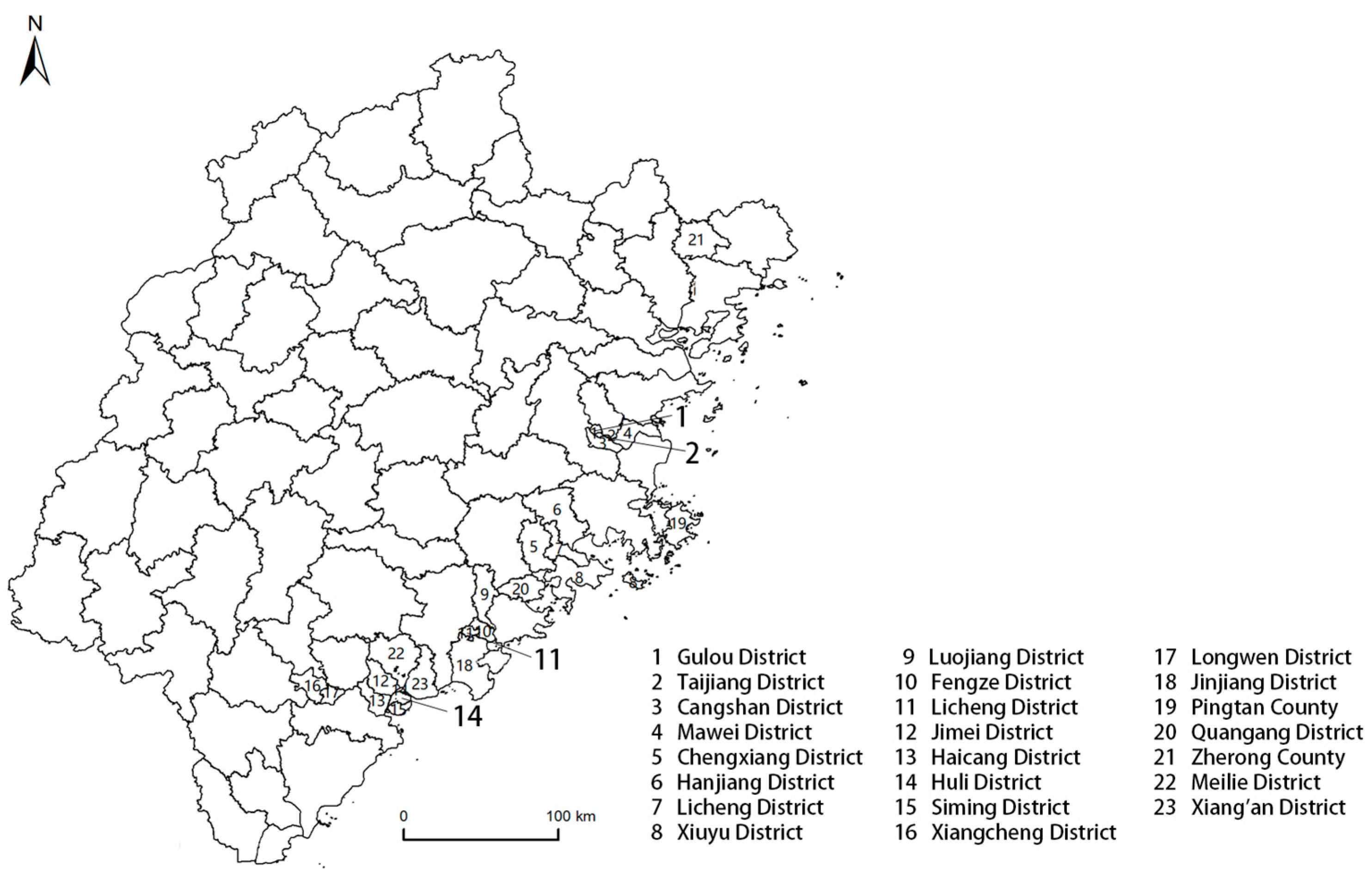
Fujian Province is located on China’s southeastern coast and serves as a key gateway linking the two sides of the Taiwan Strait. The region possesses a considerable locational advantage, combining both mountain and sea resources and a diverse cultural heritage. The province is dominated by mountainous and hilly terrain, with a land area of about 124,000 km2 and a maritime area of about 136,000 km2, forming the distinctive landscape pattern often described as “eight parts mountains, one part water, and one part farmland”. Tourism resources exhibit the characteristics of “mountain–sea synergy and cultural diversity”. The eastern coastal region centers on coastal tourism and cultural heritage sites such as Gulangyu Island and Quanzhou’s Song-Yuan World Maritime Trade Center. The western mountainous area leverages the Wuyi Mountains World Cultural and Natural Heritage site, Danxia landforms, and Hakka culture to form a composite ecological and cultural resource belt (Figure 2).

3.2. Data Sources

Data were compiled for 83 county-level units (counties, county-level cities, and urban districts) in Fujian Province from officially released Statistical Communiqués on National Economic and Social Development, statistical yearbooks, the Fujian Provincial Department of Culture and Tourism website, open geospatial datasets, and OpenStreetMap. For counties with limited missing observations, spatial interpolation was applied, with estimates informed by growth trends in adjacent counties. Pearson correlation tests were then used to verify the goodness-of-fit between interpolated results and observed patterns.

3.3. Indicator System Construction

To systematically elucidate the spatial variation patterns and underlying driving mechanisms of tourism efficiency across county-level regions in Fujian Province, this study adopts a comprehensive perspective encompassing the tourism industry chain and consumption processes. By selecting indicators from the “six key tourism elements”, it establishes a “multi-dimensional input–dual-output” evaluation framework for tourism efficiency and employs the Data Envelopment Analysis (DEA) model to measure the efficiency levels of county-level tourism.

3.3.1. Input Indicator

The study selects investment indicators across six core dimensions—tourist attractions, catering support, accommodation guarantees, transportation systems, shopping facilities, and entertainment services—to comprehensively reflect the resource base, service provision capacity, and tourism carrying capacity of county-level tourism development.
For the tourism attraction dimension, the number of 2A-rated or higher attractions in each county was selected. Attractions are the core draw of tourism activities; their ratings and numbers directly reflect the level of tourism resources and supply capacity. Compared to the total number of A-rated attractions, 2A-rated or higher attractions have more stable market demand and a stronger visitor reception infrastructure, effectively representing the core appeal of county-level tourism.
For the food-and-beverage support dimension, the density of food-and-beverage support, such as restaurants, hotels, food streets, and dessert shops, is selected. Food-and-beverage supports are an important component of the tourism experience; a higher density indicates a county’s stronger ability to meet tourists’ dining needs, reducing the time tourists spend searching for food and improving overall service efficiency.
The Accommodation Capacity dimension measures the density of lodging facilities such as hotels, inns, and homestays. Accommodation capacity directly reflects a county’s tourism reception capability; a reasonable supply structure can meet the overnight needs of diverse visitor groups, extend their stay duration, and thereby influence the conversion efficiency of tourism revenue.
The Transportation System dimension utilizes a comprehensive transportation accessibility index for scenic areas. This index is derived from a combined evaluation of external transportation accessibility to scenic areas and intra-city transfer accessibility within the county. Transportation serves as the bridge connecting source markets with destinations. The level of accessibility determines the ease with which tourists can enter the county and move within it, forming the spatial foundation of tourism efficiency.
For the shopping facilities dimension, the density of physical commercial venues—such as shopping malls, supermarkets, convenience stores, specialty stores, shopping centers, and wholesale markets—is selected. Shopping consumption is a key driver of tourism revenue growth; well-developed shopping facilities can stimulate tourists’ spending potential and boost tourism economic output.
The entertainment services dimension measures the density of entertainment venues such as KTVs, theaters, nightclubs, internet cafes, and campgrounds. Entertainment services enrich visitors’ non-consumptive experiences, enhance the overall appeal of county-level tourism, extend visitor stay durations, and indirectly stimulate consumption.
Overall, the aforementioned six categories of indicators correspond to key functional modules such as tourism attraction, tourism reception, transportation support, and consumption extension, and can comprehensively reflect the core input factors required for the operation of the county-level tourism industry.

3.3.2. Output Indicator

In terms of output indicators, this paper selects the number of tourist arrivals and total tourism revenue as the core output indicators for measuring tourism efficiency. Specifically, the number of tourist arrivals primarily reflects the scale of the county’s tourism market and its ability to attract visitors, while total tourism revenue reflects the economic benefits of tourism and the level of conversion of tourism consumption. These two indicators characterize the comprehensive output characteristics of tourism development from the perspectives of “economies of scale” and “economic benefits”, respectively, and effectively reflect the actual effectiveness of converting tourism investments into economic performance (Table 1).
The DEA model emphasizes the relationship between relative efficiency in inputs and outputs; therefore, input indicators must reflect the level of resource and service provision in tourism, while output indicators must reflect the market benefits and economic returns generated by tourism activities. The indicator system constructed in this paper effectively meets the basic requirements of the DEA model regarding the input–output structure and possesses strong theoretical validity and practical explanatory power.
To reduce redundancy among highly correlated service facility indicators, Pearson correlation analysis and variance inflation factor diagnostics were conducted before the DEA estimation. Indicators with severe overlap were not simultaneously entered into the DEA model, while the full set of six tourism elements was retained for the GeoDetector analysis to examine their explanatory and interaction effects. This design allows the DEA model to focus on input–output efficiency estimation while the GeoDetector model further identifies the spatial mechanism of element coupling.

3.4. Study Methodology

3.4.1. Data Envelopment Analysis

Data Envelopment Analysis, as a nonparametric efficiency measurement theory and method, demonstrates unique advantages in evaluating the relative efficiency of Decision Making Units (DMUs) characterized by multiple inputs and multiple outputs [26]. By constructing a production frontier, this method compares each DMU’s actual performance against optimal production practices, thereby identifying efficient and inefficient DMUs while quantifying the efficiency improvement potential of the latter [27]. In a tourism efficiency study, technical efficiency (TE), scale efficiency (SE), and overall efficiency (OE) form the core dimensions for evaluating the effectiveness of resource allocation and utilization within tourism systems [28].
Technical efficiency is a measure of the maximum output capacity of a tourism system through management optimization and resource integration under a given level of tourism infrastructure investment. Its value ranges between 0 and 1, with a value closer to 1 indicating a higher utilization of existing tourism resources. A value of 1 signifies the achievement of Pareto optimality. Scale efficiency focuses on whether the current operating scale of the tourism system is aligned with market conditions and the area’s resource and environmental carrying capacity. When a system operates under increasing returns to scale, a moderate expansion of tourism-supporting investments can yield disproportionately larger output gains; conversely, under decreasing returns to scale, excessive investment may lead to underutilized facilities and resource wastage, limiting the conversion of inputs into economic benefits. Overall efficiency, defined as the product of technical efficiency and scale efficiency, provides an integrated measure of operational performance and resource allocation efficiency for the tourism system.
Depending on the optimization objective, DEA models are commonly categorized as input-oriented or output-oriented. The input-oriented model (BCC) focuses on minimizing input factors at a given output level, making it suitable for scenarios where resources are relatively scarce or cost control is highly demanding. The output-oriented model (CCR) focuses on maximizing output efficiency through enhanced management and operational capabilities within a fixed input scale, making it particularly suitable for growth stages that prioritize market expansion and scale development. In considering the practical characteristics of tourism development, it is important to recognize that increases in supporting facility inputs do not necessarily translate into proportional output growth. Indeed, there may be variable returns to scale (VRS). For example, in some development stages, the doubling of investment in county-level tourism facilities may not result in proportional growth in output, and could even lead to a decline in marginal output due to exceeding market absorption capacity or management bottlenecks. To address this, the study employs the BCC (Banker, Charnes, Cooper) model with variable returns to scale to analyze the spatial variation in tourism efficiency across counties in Fujian Province.

3.4.2. Geographical Detector Model

GeoDetector is built on the premise that spatial differentiation in an outcome variable is consistent with the spatial stratification of its driving factors. By comparing the variance within different spatial stratification units against the overall variance, it determines whether an explanatory variable can significantly account for the spatial distribution pattern of the dependent variable. It further characterizes the interactive enhancement or weakening effects among multiple factors, making it suitable for regional economic-tourism systems like the one studied here, which exhibit significant spatial heterogeneity. GeoDetector consists of two core components: factor detection and interaction detection. Factor detection quantifies the explanatory power of an individual driver for the spatial differentiation of county-level tourism efficiency. Interaction detection overlays the stratifications of two factors to form a joint partition, computes the interaction statistic q (X1 ∩ X2), and compares it with the single-factor q(X1) and q(X2) values to determine whether the interaction exhibits two-factor enhancement, nonlinear enhancement, single-factor attenuation, or independence. This reveals the composite mechanism through which multiple factors jointly shape the spatial pattern of county-level tourism efficiency.

4. Results

4.1. County-Level Tourism Economy Development in Fujian Province

In 2023, Fujian Province received a total of 688.55 million tourist visits, generating a total tourism revenue of 690.96 billion yuan. This paper employed SPSS 27.0 statistical analysis software to conduct a descriptive statistical analysis of tourist visitation numbers and tourism revenue across the province’s 83 counties. The results are shown below (Table 2).
With regard to tourist arrivals, the minimum recorded figure was 1.44 million, while the maximum was 56.70 million, indicating a considerable range that reflects substantial disparities among counties. The mean value was 8.30 million, which was higher than the median value of 6.93 million. The standard deviation of 7.14 million was close to the mean, suggesting a high degree of data dispersion and a pronounced imbalance in the distribution. With regard to the revenue generated by tourism, the minimum recorded value was 1.20 billion yuan, and the maximum was 86.02 billion yuan, thus demonstrating a considerable range. The mean value was 8.33 billion yuan, which is higher than the median value of 6.11 billion yuan. The standard deviation was 9.96 billion yuan, which is greater than the mean, further indicating significant differences in the level of tourism economic development among counties.
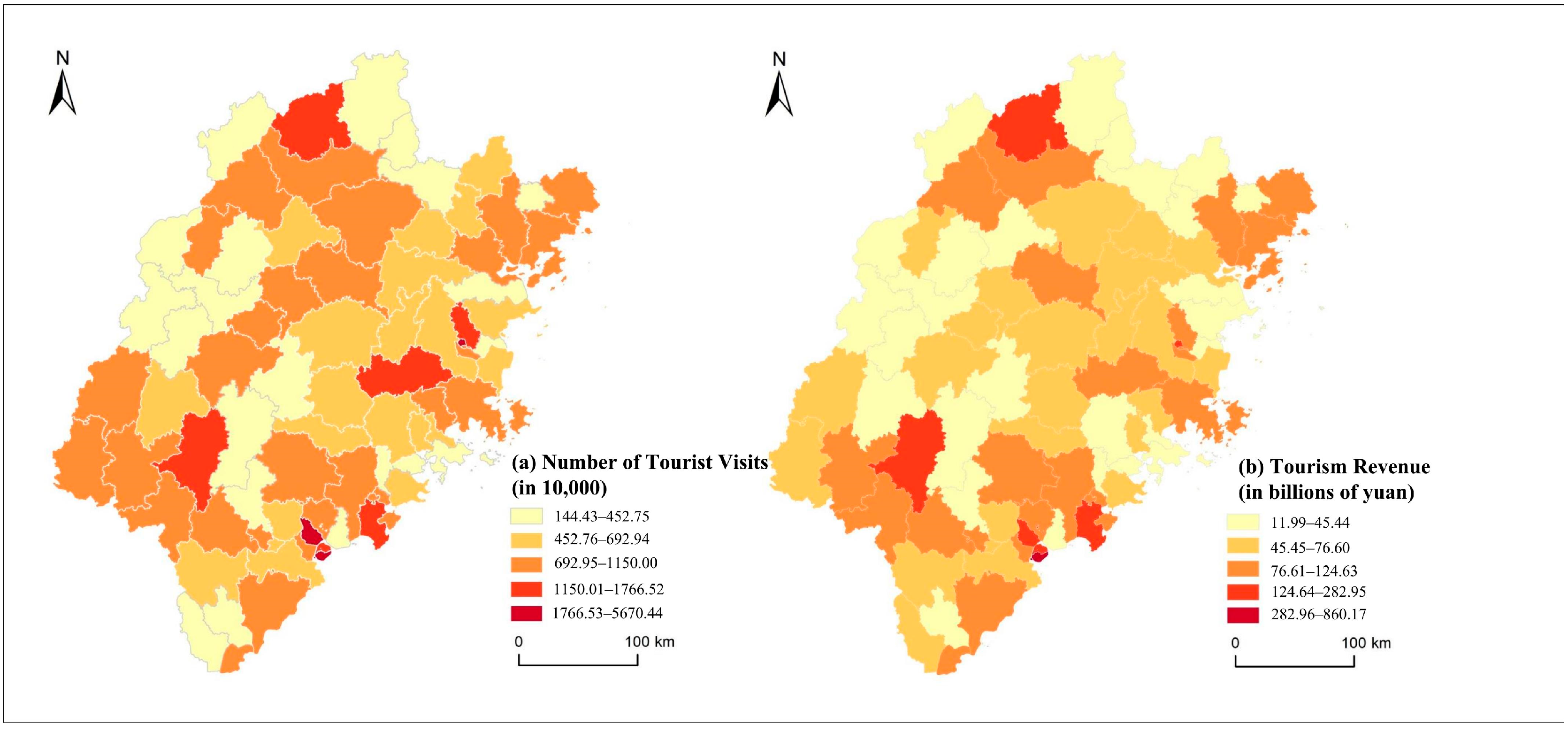
A thorough investigation of the data reveals that both sets of data exhibit a typical right-skewed distribution. This indicates that a small number of leading counties have significantly raised the overall average due to their high visitor numbers and tourism revenue, while the majority of counties remain in the low-to-medium range. Indeed, more than half of the counties have visitor numbers below 7 million and tourism revenue below 6.1 billion yuan. This distribution pattern is indicative of the marked imbalance in the development of county-level tourism in Fujian Province, which manifests spatially as a “dual-core leadership, gradient diffusion” pattern. On the one hand, the coastal core counties of Siming District in Xiamen and Gulou District in Fuzhou have formed significant growth poles. The top ten counties collectively accounted for 31.37% of the province’s total visitor arrivals and 36.20% of tourism revenue (Table 3 and Table 4), thus demonstrating a pronounced “head effect”. Conversely, although the western and northern regions of Fujian have formed localized growth points by leveraging high-quality tourism resources (such as Wuyi Mountain), their overall development remains relatively lagging due to constraints in transportation accessibility and service infrastructure (Figure 3). Consequently, the disparity between these regions and the leading coastal counties has further widened.
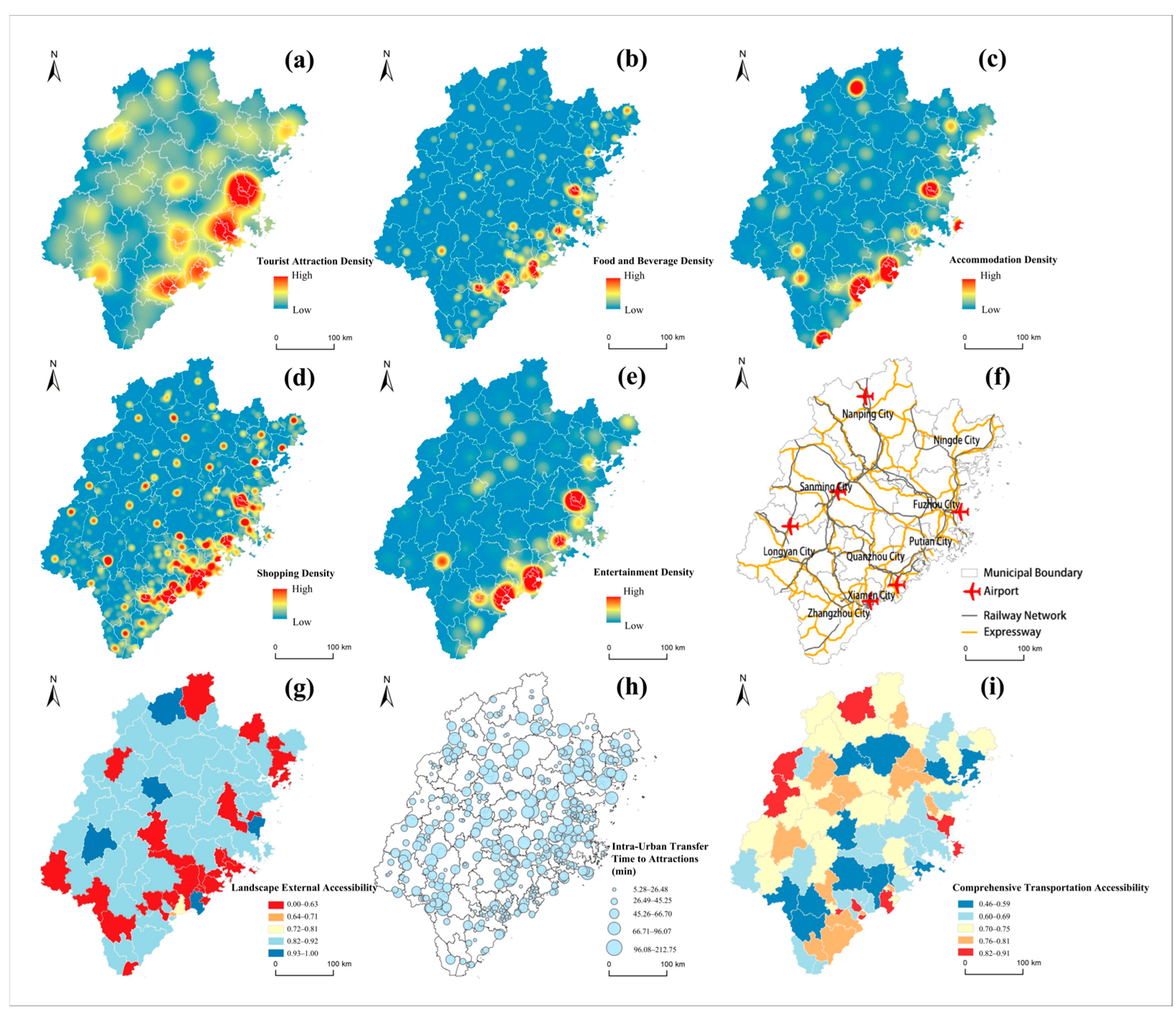
At the level of county-scale tourism components, Fujian recorded 496 A-grade tourism attractions rated 2A and above in 2023, which were primarily concentrated in coastal cities, including Fuzhou, Xiamen, and Quanzhou. The portfolio includes 11 5A attractions, 125 4A attractions, 272 3A attractions, and 88 2A attractions (Table 5), forming a “spindle-shaped” hierarchy with the middle tiers dominating. Food-and-beverage and accommodation facilities are highly concentrated in southern Fujian, where they account for more than 55% of the provincial total, with Jinjiang serving as a core county-level node for catering provision and Siming District as the core node for accommodation supply. Retail and entertainment facilities show clear coastal polarization; Quanzhou, Xiamen, and Fuzhou together account for 54% of the province’s total. Fujian’s tourism transport system is structured primarily around road and rail, with air services as a supplementary network, and accessibility varies markedly across space. In northern Fujian, county-level rail networks are relatively well developed, giving these areas a clear advantage in external connectivity. In southern Fujian, the presence of extensive expressway networks has been observed to result in a notable enhancement of internal accessibility. However, this phenomenon is concomitant with significant disparities in intra-regional connectivity, giving rise to a distinctive pattern of “strong and weak connectivity” that exists in close proximity (Figure 4).

4.2. County-Level Tourism Efficiency and Scale Performance in Fujian Province

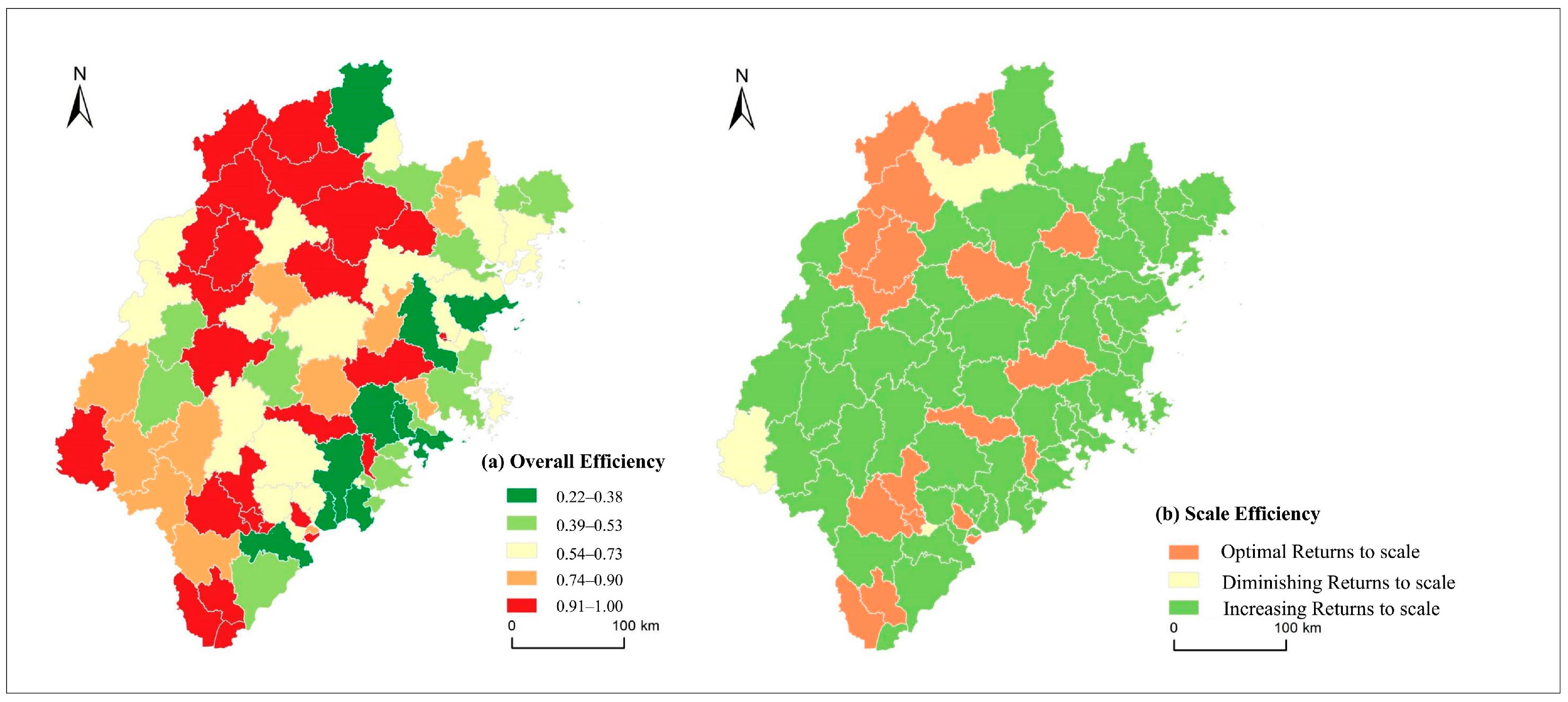
Using the BCC model under the variable returns to scale (VRS) assumption, this study measured overall tourism efficiency, technical efficiency, and scale efficiency for 83 county-level units in Fujian Province for 2023. Overall efficiency and scale performance were then classified into five categories using the Jenks natural breaks method and visualized through spatial mapping (Figure 5). In addition, county-level disparities in the efficiency indicators were quantified using descriptive statistics such as the standard deviation and coefficient of variation (Table 6).
The technical efficiency of county-level tourism in Fujian is generally high and relatively even across space, whereas scale efficiency shows much stronger spatial disparity. The mean technical efficiency (0.873) exceeds the mean scale efficiency (0.795), and technical efficiency is less dispersed (CV = 0.146, compared with 0.254 for scale efficiency). This indicates that uneven scale allocation is the primary bottleneck constraining further improvements in overall tourism efficiency. For example, coastal counties such as Jinjiang and Siming District in Xiamen benefit from strong locational advantages and concentrated supporting facilities, forming a coupled “high scale–high technology” efficiency structure. These leading areas continuously lift regional overall efficiency and exhibit a clear growth-pole effect. By contrast, inland counties in western Fujian are constrained by weaker transport accessibility and a low share of high-grade tourism attractions, which restricts the expansion of the tourism scale and results in a structural mismatch of “rich resources but low efficiency”. Moreover, despite the generally high level of technical efficiency across the province, barriers to spatial diffusion remain pronounced, particularly in western Fujian, where multiple counties continue to exhibit technical inefficiency. This suggests that technological spillovers are constrained by both physical geography and institutional conditions, making mountain–coastal coordination difficult to realize.
Overall tourism efficiency is also highly polarized, raising concerns about spatial equity. The mean overall efficiency across counties is 0.708, yet only 19 counties lie on the DEA-efficient frontier, accounting for 22.89% of the total. While Fujian’s county-level tourism economy has a measurable foundation, polarization is pronounced: more than half of the counties fall below the provincial mean. The coefficient of variation (CV) of 0.347 indicates significant efficiency disparities among counties, highlighting pronounced spatial differentiation. From a subregional perspective, the southern Fujian tourism zone has nearly half of its counties on the efficient frontier, reflecting strong advantages in location and resource agglomeration. In contrast, western Fujian shows persistently low efficiency, with no county reaching the optimal level, pointing to weaker integration of tourism elements and limited output capacity. At the individual-county scale, Xiuyu District records an overall efficiency of only 0.22, highlighting inadequate input–output configuration and ongoing challenges for regional coordination.
Technical efficiency performs well overall, but spatial gradients remain. The average technical efficiency of county-level tourism in Fujian Province is 0.873, which is substantially higher than the level of overall efficiency. Meanwhile, the relatively low coefficient of variation (CV = 0.146) indicates limited inter-county variation, suggesting that the technical configuration of tourism-related factors is comparatively balanced across counties. Overall, 29 counties are technically efficient, representing 34.94% of the total. Southern Fujian contains the largest number of technically efficient counties, whereas no technically efficient counties are found in western Fujian, revealing clear weaknesses in tourism production technology and input–factor combinations in that subregion.
Scale efficiency is dominated by incremental expansion, with insufficient coordination in scale allocation. The average scale efficiency of county tourism in Fujian Province is 0.795. Among all counties, 19 achieve an optimal scale configuration, representing 22.89% of the total, whereas most of the remaining counties experience varying degrees of scale loss. The scale efficiency of counties in Fujian Province is primarily characterized by increasing returns, with such counties mainly located along the eastern coast and in the central–western area; only three counties—Jianyang District, Wuping County, and Longwen District—show decreasing returns to scale. Overall, these patterns suggest that county-level tourism in Fujian is currently in a development stage where improving efficiency largely depends on appropriately expanding and better aligning operational scale.

Robustness Test

To verify the reliability and stability of the tourism efficiency measurement results for counties in Fujian Province, this paper conducted robustness tests on the DEA results. Considering that the DEA model’s measurement results may be influenced by indicator selection and model specifications, this paper employs a “modified indicator system combined with rank correlation tests” for validation. Specifically, based on the original indicator system, the “shopping facilities” indicator was removed to reconstruct the input–output system, and the BCC model was reapplied to calculate the comprehensive tourism efficiency of 83 counties in Fujian Province for 2023. Subsequently, a Spearman rank correlation analysis was conducted between the robustness test results and the original calculation results. The results indicate that the rankings of comprehensive county-level tourism efficiency derived from the two calculations exhibit a high degree of consistency, with a Spearman correlation coefficient exceeding 0.90 and passing the 1% significance level test. This suggests that the ranking results of county-level tourism efficiency remain largely stable across different indicator systems, demonstrating that the DEA measurement results in this study possess strong robustness and reliability.
Overall, the spatial differentiation patterns and regional characteristics of county-level tourism efficiency in Fujian Province did not undergo significant changes due to the adjustment of indicators, further validating the reliability of the research conclusions.

4.3. Spatial Differentiation of County-Level Tourism Efficiency in Fujian Province

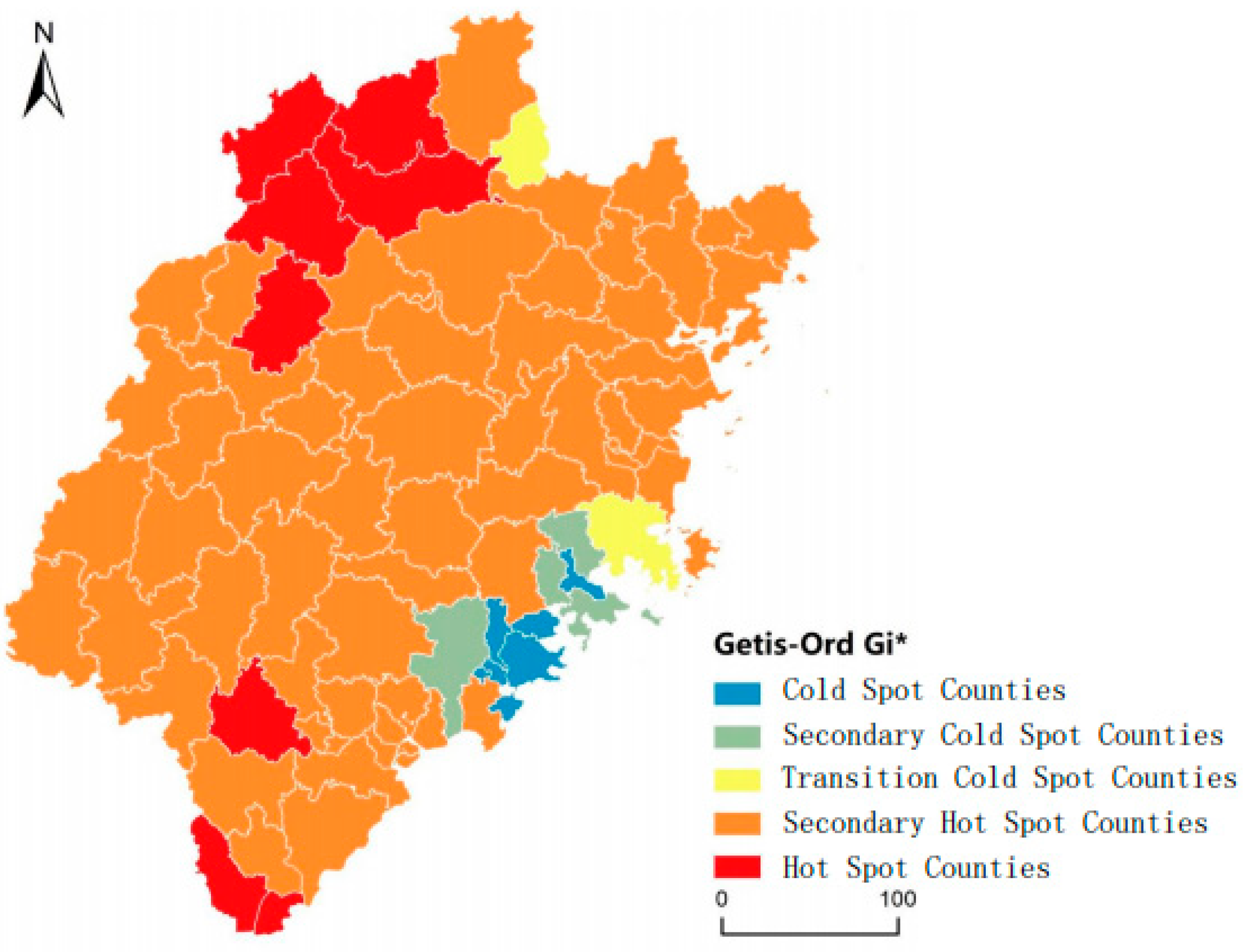
To examine the spatial differentiation of county-level tourism efficiency in Fujian Province, this study combines the Global Moran’s I statistic with the local Getis-Ord Gi* index to quantitatively assess spatial association. The results show that the Global Moran’s I for overall county tourism efficiency is 0.159 (Z = 2.139, p < 0.05), indicating a weak but statistically significant positive spatial autocorrelation. In other words, high-efficiency counties and low-efficiency counties exhibit a certain degree of spatial clustering; however, the overall strength of spatial dependence remains limited. This indicates that while there is a certain degree of spatial correlation in the efficiency of county-level tourism in Fujian Province, strong regional linkages and spillover effects have not yet emerged. The development of county-level tourism is characterized more by localized clustering than by overall coordination, reflecting that the efficiency of the county-level tourism industry may be influenced by a combination of local factors such as resource endowments, service density, and consumer infrastructure. Based on the hot-spot analysis using the Getis-Ord Gi* index, the spatial distribution of county-level tourism efficiency in Fujian Province exhibits a distinct “hot in the north, cold in the south” pattern of differentiation. Hotspots are concentrated in northern Fujian, particularly in Guangze County, Wuyishan City, Jianyang District, and Shaowu City, forming a spatially contiguous high-efficiency cluster. In contrast, cold spots are mainly concentrated in parts of the southern Fujian coastal zone, particularly in Quanzhou, where they include Luojiang District, Quangang District, and Hui’an County, as well as in several county-level units of Putian, thereby forming distinct low-efficiency depressions within the provincial tourism system (Figure 6).
Northern Fujian’s hotspot counties are surpassing efficiency thresholds through a “resources–industry formats–culture” integrative model. First, by capitalizing on scarce, high-quality resources, Wuyishan City leverages its status as a World Cultural and Natural Heritage site to build a composite development pathway that links Danxia landforms, the tea industry value chain, and study-tourism programs. Using carriers such as tea museums and rock-tea workshops, it tightly integrates natural scenery with tea culture and forms a premium model characterized by “landscape consumption plus cultural value addition”. Second, Shaowu City emphasizes the adaptive activation of cultural heritage through place-making and scene reconstruction. Centered on Heping Ancient Town, it incorporates intangible cultural heritage (ICH) experiences, including Nuo dance performances and woodblock printing, thereby creating an immersive consumption setting that combines static heritage display with participatory cultural engagement. Third, Guangze County and Jianyang District extend the ecological value chain by drawing on high forest coverage and a strong ecological baseline to develop a dual-track product mix of “wellness tourism plus study tourism”, providing a clear and replicable route for converting ecological resources into tourism benefits and offering practical examples for improving county-level overall tourism efficiency.
In contrast, cold-spot counties in southern Fujian are constrained by multiple forms of structural lock-in, resulting in pronounced low-efficiency depressions. Cold-spot areas such as Luojiang District, Quangang District, Hui’an County, Fengze District, and Shishi City face persistent constraints in tourism development. Quangang District is shaped by an industry structure dominated by manufacturing; long-term underinvestment and insufficient planning for culture-and-tourism integration have led to lagging supporting facilities that fail to meet visitor needs. Shishi City has a strong commercial base, yet it has not effectively transformed trading and retail advantages into distinctive tourism products, and innovation in tourism business formats has progressed slowly. Luojiang and Fengze, meanwhile, have experienced over-commercialization in historic districts, leading to product homogenization and weakened cultural experience, which substantially undermines destination attractiveness and overall tourism performance.

4.4. Driving Mechanisms of County-Level Tourism Efficiency in Fujian Province

4.4.1. Detection of Driving Factors

The GeoDetector model is utilized as the underlying framework for this study, with six categories of variables serving as explanatory factors. These categories encompass tourism attractions, food-and-beverage support, accommodation capacity, transport systems, shopping facilities, and entertainment services. The study employs these variables to identify their roles in driving the spatial differentiation of overall county tourism efficiency in Fujian (Table 7). All factors pass significance tests (p < 0.001), indicating statistically robust explanatory power.
Food-and-beverage support (q = 0.160), entertainment services (q = 0.159), and shopping facilities (q = 0.147) show the strongest effects and emerge as the dominant drivers of higher tourism efficiency. Tourism attractions (q = 0.107) and accommodation capacity (q = 0.082) follow, suggesting that the agglomeration of scenic resources and basic reception capacity remain essential supports for efficiency gains; the “touring” and “staying” segments continue to play a measurable role in forming county-level tourism benefits. By comparison, the transport system has the weakest explanatory power (q = 0.015). Given Fujian’s relatively high overall accessibility and its already well-developed transport network, the marginal contribution of transport improvements to tourism efficiency appears to be diminishing. However, this does not mean that the transportation system is unimportant; on the contrary, the relatively low independent q-value of transport suggests that accessibility alone does not directly generate tourism efficiency. Transport functions more as an enabling infrastructure: its efficiency effect is activated only when it is combined with attractions, accommodation, and consumption-oriented services.
It is noteworthy that tourism resources, which function as the primary physical conduit for tourism activities, currently exert a considerably diminished influence on the overall efficiency of tourism when compared to the quality of service provision within specific consumption segments, such as food and beverage, entertainment, and shopping. This shift indicates a clear paradigm transition in Fujian’s county-level tourism development, from “resource dependence” toward “service value addition”. In this context, tourism consumption segments centered on dining, entertainment, and shopping are progressively replacing tourism resources themselves as the critical breakthrough points for enhancing the comprehensive efficiency of the local tourism industry. This does not negate the role of tourism resources as the foundation of tourism development; rather, it underscores that industry management and planning agencies should pay closer attention to the combined and configurational effects of tourism-related elements within the destination system.

4.4.2. Interaction Effects Among Driving Factors

To further unpack the mechanisms driving the spatial differentiation of county-level tourism efficiency in Fujian Province, this study applies the interaction detector module of GeoDetector to conduct a systematic analysis of the synergistic effects among the main driving factors (Table 8). The explanatory power (q value) of every two-factor interaction exceeds the corresponding single-factor effects, indicating that tourism efficiency differentiation is fundamentally produced by coordinated interactions among elements within a complex system. Based on the comparative relationship between interaction intensity and the sum of single-factor contributions, interactions can be grouped into two types: bi-factor enhancement and nonlinear enhancement.
Bi-factor enhancement refers to cases where the joint explanatory power of two factors does not exceed the sum of their individual effects, yet positive synergy still emerges through resource complementarity and functional coordination. Most factor pairings fall into this category, including interactions between tourism attractions and food-and-beverage support, tourism attractions and entertainment services, accommodation capacity and shopping facilities, and food-and-beverage support and entertainment services. This pattern indicates that combining different tourism services with resource-based elements provides a strong impetus for efficiency improvement.
Nonlinear enhancement describes interactions where the joint explanatory power is substantially greater than the simple sum of the two single factors, revealing multiplier effects and spatial spillovers generated by element integration. Typical examples include tourism attractions × transport systems, food-and-beverage support × transport systems, accommodation capacity × transport systems, and transport systems × entertainment services. These results suggest that improvements in the transport network can significantly raise overall tourism efficiency when they operate in tandem with other core tourism elements.
Overall, improvements in county-level tourism efficiency in Fujian rely more on deep coordination among tourism attractions, the transport system, and multiple supporting services. At the same time, the findings also highlight practical constraints in certain areas, including inadequate supporting facilities and suboptimal spatial layouts, which limit the full realization of synergies among multiple factors.

4.4.3. Mechanism Interpretation

From the perspective of single-factor effects, food and beverage support, entertainment services, and shopping facilities, as major consumption-oriented components, have emerged as the key drivers of improved county-level tourism performance in Fujian. This shift signals that Fujian’s tourism industry is moving away from a conventional resource-endowment model toward a service- and experience-oriented development trajectory. As visitor demand upgrades, personalized and immersive experiences are increasingly shaping county tourism markets. Locally distinctive cuisine, diverse interactive entertainment programs, and well-developed retail provision can effectively raise visitors’ willingness to spend and overall satisfaction, thereby supporting sustained growth in the county-level tourism economy.
At the same time, tourism attractions and accommodation capacity remain essential supports for higher tourism efficiency because they underpin the “touring–staying” stages of the travel chain. A-grade tourism attractions rated 2A and above, supported by high-quality resources and relatively complete service facilities, continue to function as core attractions and the main carriers of tourist flows. In parallel, strong accommodation provision not only improves comfort and extends length of stay, but also creates conditions for expanding consumption settings and increasing comprehensive tourism benefits. At the county scale, diversified and higher-quality lodging options help prolong visitor stays and stimulate additional on-site spending, playing a substantive role in the structure of tourism revenues.
The transport system shows a relatively weak standalone effect, partly because Fujian’s county-level transport networks are already highly accessible and well developed, meaning that transport is no longer the primary constraint on tourism development. However, interaction analysis demonstrates that transport exhibits much stronger effects when combined with other factors, highlighting its strategic role as a “connector infrastructure” for improving tourism efficiency. Specifically, when transport systems work in tandem with 2A-and-above tourism attractions, they reduce spatial frictions, expand the attractions’ market catchment, and improve the conversion efficiency of resource attractiveness into realized visits. When coordinated with service facilities such as dining, retail, and entertainment, transport enables efficient visitor circulation and strengthens the capacity of consumption settings to absorb and convert tourist flows—producing a chain effect from transport-enabled inflow to consumption conversion. This nonlinear synergy substantially enlarges the space for efficiency gains and confirms the importance of integrating multiple elements to enhance overall tourism performance.
There is also evident synergy between high-grade tourism attractions rated 2A and above and food and beverage support. Once higher-level attractions draw large visitor volumes, high-quality dining services can further extend length of stay, improve satisfaction with the travel experience, and stimulate additional consumption demand. This coupling not only increases total tourism spending but also reinforces destination image and brand competitiveness through positive word-of-mouth, generating multi-dimensional improvements in visitor satisfaction, consumption conversion rates, and overall tourism efficiency.

5. Discussion

The findings of this study suggest that the efficiency of county-level tourism in Fujian Province demonstrates notable spatial heterogeneity, characterized by a discernible “hot north, cold south” pattern. This finding offers an interesting contrast to the “coastal–inland” efficiency dichotomy commonly found in tourism economics. A large body of research at the provincial or city level suggests that coastal regions often exhibit higher tourism efficiency due to their locational advantages, well-developed infrastructure, and high market accessibility. However, in this study, some coastal counties in Southern Fujian have instead emerged as efficiency hotspots—this “anomalous” phenomenon suggests that: At the county level, traditional locational advantages may be offset by certain factors, while marginal mountainous areas can achieve development through localized resource–service integration. Further analysis reveals that this spatial pattern is not driven by a single factor, but rather by the combined influence of multiple factors, including tourism attractions, food-and-beverage support, accommodation capacity, transport systems, shopping facilities, and entertainment services. In particular, the interactive reinforcement effects observed among these driving factors suggest that improvements in county-level tourism efficiency depend not only on the enhancement of individual factors but also on the synergistic allocation and functional integration of various tourism elements.
In order to reduce the misallocation of tourism resources and further enhance county-level tourism efficiency, the following targeted recommendations are proposed:
First, county-level tourism economies should optimize both the scale and composition of tourism inputs. Resources should be channeled toward advantaged areas and high-potential links in the tourism value chain, while indiscriminate expansion and low-quality, repetitive construction should be avoided. This approach can more effectively unlock scale efficiency gains and raise overall efficiency.
Second, the provision of supporting services needs to be strengthened. Given the strong efficiency effects of consumption-side segments—such as food and beverage, entertainment, and shopping—local authorities should prioritize upgrading service quality, diversifying tourism business formats, and developing distinctive experience-based products. These actions can extend visitors’ length of stay, improve consumption conversion rates, and facilitate consumption upgrading.
Third, planning should promote coordinated development across tourism elements by fully recognizing the foundational and enabling role of transport systems. Stronger physical connections and closer spatial coordination are needed between transport infrastructure and tourism attractions, accommodation facilities, and service facilities such as dining establishments. Through optimized factor combinations and efficient inter-linkages, counties can amplify overall benefits and activate network effects.
Fourth, a place-based approach is essential for more balanced regional development. From the perspective of land use and spatial planning, in response to the “warm north, cold south” spatial pattern, tourism efficiency hotspots—such as the counties in northern Fujian—need to shift their land use from a “resource-oriented” to a “service-oriented” model in future development. While the protection of ecological spaces is of paramount importance, it is equally crucial to allocate a proportion of land for tourism service facilities, including food and beverage, accommodation, and leisure and entertainment activities. This allocation should be moderate. Doing so will optimize land-use structure and functional integration around scenic areas, promote the spatial expansion and in-depth development of tourism consumption scenarios, further enhance comprehensive output efficiency per unit of land, and establish an integrated “resources–business formats–culture” model to consolidate and strengthen their efficiency advantages.
Conversely, Minnan and other underdeveloped regions are characterized by a discrepancy between “resource abundance” and “service density”. The scarcity of land designated for tourism-oriented service functions has been shown to impede the aggregation and conversion efficiency of tourism elements. Consequently, within the context of national spatial planning, it is imperative to judiciously repurpose low-efficiency industrial land and underutilized commercial spaces. The transformation of portions of this land into distinctive homestays, cultural and creative businesses, and experiential consumption spaces can be achieved through “renewal of existing stock” rather than “incremental expansion”. This approach will enhance the adaptability and flexibility of land use, promote the spatial integration of tourism resources and service supply, and ultimately achieve synergistic and sustainable development of tourism efficiency in mountain–sea regions.

6. Conclusions

6.1. Main Research Outcomes

Situated against the backdrop of the broader transition of China’s tourism sector from conventional sightseeing toward deeper, experience-based consumption, this study takes Fujian Province as a case study area and uses counties as the basic spatial units. By constructing a three-dimensional analytical framework integrating efficiency measurement, pattern diagnosis, and mechanism identification, and by applying DEA, spatial autocorrelation analysis, and GeoDetector, this study investigates the spatial differentiation of tourism efficiency and the multi-factor synergies underlying its variation. The study aims to provide theoretical grounding and practical references for optimizing the spatial supply of tourism, addressing efficiency imbalances, and promoting coordinated development between mountainous and coastal areas. The main conclusions are as follows:
First, county-level tourism efficiency in Fujian shows structural imbalance and clear spatial differentiation. In terms of efficiency composition, mean technical efficiency is substantially higher than mean scale efficiency, indicating that uneven scale allocation is the principal constraint on improving overall efficiency.
Second, from a spatial perspective, hotspot analysis shows that county-level overall tourism efficiency exhibits localized clustering of high- and low-value areas, revealing a pronounced pattern of spatial differentiation characterized by “hot in the north and cold in the south”.
Third, county tourism is shifting from “resource dependence” toward “service value addition”, and element synergies are strong. Consumption- and experience-related factors, particularly food-and-beverage support, entertainment services, and shopping facilities, play a dominant role in shaping the spatial differentiation of county-level tourism efficiency, exhibiting stronger explanatory power than tourism attractions and accommodation capacity. The transport system has relatively weak independent explanatory power, yet it performs prominently in interaction effects. Interaction detection shows that all factor pairings exhibit either bi-factor enhancement or nonlinear enhancement, confirming that efficiency gains result from coordinated multi-element coupling. In particular, nonlinear enhancement is evident in interactions of transport accessibility with tourism attractions, food-and-beverage support, accommodation capacity, and entertainment services, highlighting the key “multiplier effect” of transport connectivity in integrating and optimizing other tourism elements and improving overall operational performance. In addition, the coupling between 2A-level and above tourism attractions and food-and-beverage support plays a meaningful role in improving visitor satisfaction and consumption conversion.
Unlike traditional studies, which often focus on provincial regions, urban agglomerations, or major tourist cities, this paper shifts the spatial scale of tourism efficiency research to the county level, thereby expanding the theoretical and empirical scope of tourism geography at the grassroots administrative level. Additionally, by constructing a multidimensional input–output indicator system based on the “six elements of tourism”, this study breaks away from the traditional analytical paradigm centered on single resource endowments or unidimensional inputs. Methodologically, this study employs a combination of the Data Envelopment Analysis (DEA) model and the Geographical Detector model to quantitatively measure tourism efficiency levels, revealing the mechanisms through which various driving factors and their interactions influence tourism efficiency.
At the practical level, the findings provide scientific guidance for the high-quality development of county-level tourism and regional coordination in Fujian Province. On the one hand, this study assists local governments in optimizing the scale and structure of tourism resource investments, enhancing resource allocation efficiency, and promoting the transformation of the tourism industry from resource-dependent to service-driven; on the other hand, the study highlights the synergistic role of consumer service elements such as dining, shopping, entertainment, and transportation, offering significant insights for improving the county-level tourism service system and enhancing the overall visitor experience. Furthermore, the study provides a decision-making basis for Fujian Province to address disparities in tourism efficiency between coastal and inland areas, promote collaboration between mountainous and coastal regions, and foster coordinated regional development. It guides the rational allocation of tourism resources, infrastructure, and public services to relatively underdeveloped areas, thereby further promoting the balanced, coordinated, and sustainable development of county-level tourism.

6.2. Limitations and Future Research

Nevertheless, the present study is not without its limitations. First, the study’s reliance on cross-sectional data precludes it from revealing the dynamic evolution of county-level tourism efficiency in Fujian Province or the long-term effects of its driving mechanisms. In future research, dynamic monitoring and attribution analysis of county-level tourism efficiency could be conducted using long-term time series data.
Second, as 2023 marked the first full year of China’s comprehensive economic recovery in the post-pandemic era, the tourism market experienced significant “revenge travel”, as pent-up travel demand was released all at once. Consequently, both tourism volume and consumption levels surged abnormally in the short term. This unique context may have, to some extent, inflated tourism efficiency levels in certain regions, resulting in findings that exhibit temporary characteristics.
Furthermore, the factors influencing tourism efficiency are complex and diverse. In future analyses, it would be beneficial to incorporate additional relevant elements, such as cultural soft power, the policy environment, and the level of smart tourism applications.

Author Contributions

Conceptualization, K.L. and T.W.; Methodology, K.L., J.M. and R.H.; Software, R.H.; Validation, J.M., W.Z. and R.H.; Formal analysis, K.L., J.M. and W.Z.; Investigation, J.M., W.Z. and R.H.; Resources, J.M., W.Z. and R.H.; Data curation, J.M. and W.Z.; Writing—original draft, J.M., W.Z. and R.H.; Writing—review & editing, K.L. and T.W.; Visualization, W.Z. and R.H.; Supervision, K.L. and T.W.; Funding acquisition, K.L. All authors have read and agreed to the published version of the manuscript.

Funding

This research was funded by the Fujian Provincial Young and Middle-aged Teachers Education and Research Project (Social Science Category), grant number JAS25031 (Project title: Spatial Spillover Effect of Regional Integrated Development Strategy on Tourism Industry Efficiency—A Case Study of Two Collaborative Development Zones in Fujian Province). The APC is funded by the above-mentioned research project.

Institutional Review Board Statement

Not applicable.

Informed Consent Statement

Not applicable.

Data Availability Statement

The original contributions presented in this study are included in the article. All original geospatial datasets used in the analysis are publicly accessible from official open data platforms. The raw processed data supporting the conclusions of this article will be made available on request from the corresponding author.

Conflicts of Interest

The authors declare no conflict of interest.

References

  1. Li, M.; Fan, Y.; Guo, C.; Li, X. Tourism Prosperity and High-Quality Economic Development. Int. Rev. Econ. Financ. 2025, 101, 104246. [Google Scholar] [CrossRef]
  2. Gu, D.; Xu, D.; Yu, F.; Hou, B. Spatiotemporal Evolution and Mechanisms of Tourism Efficiency and Its Decomposition: Evidence from 63 Counties in Zhejiang, China. PLoS ONE 2024, 19, e0297522. [Google Scholar] [CrossRef]
  3. Liu, L.; Luo, J. The Spatio-Temporal Evolution and Influencing Factors of the Coupling Coordination Degree between Tourism Supply and Demand in the Yangtze River Economic Belt. Comput. Urban Sci. 2024, 4, 42. [Google Scholar] [CrossRef]
  4. Sánchez-Sánchez, F.J.; Sánchez-Sánchez, A.M. Evaluating the Efficiency and Determinants of Mass Tourism in Spain: A Tourist Area Perspective. Port. Econ. J. 2022, 23, 111–145. [Google Scholar] [CrossRef]
  5. Di Matteo, D.; Ferrara, A.R. Are Authenticity Labels Effective for Local Tourism Efficiency? A Regression Discontinuity Design Approach. J. Cult. Econ. 2025, 49, 747–775. [Google Scholar] [CrossRef]
  6. Yin, Y. Efficiency Evaluation and Enhancement Path of Sports Tourism in the Chengdu-Chongqing Economic Circle: An Empirical Study Based on the DEA-Tobit Model. Acad. J. Bus. Manag. 2025, 7, 41–48. [Google Scholar] [CrossRef]
  7. Flegl, M.; Lozano, C.; Matulova, M.; Cerón-Monroy, H. Investigating Tourism Efficiency of Beach Touristic Centers in Mexico: Application of Dynamic Two-Stage DEA Model and Fuzzy Time Series Forecasting. Cent. Eur. J. Oper. Res. 2025, 34, 323–347. [Google Scholar] [CrossRef]
  8. Graziano, T.; Ruggiero, L. From Periphery to Growth Pole (and Back Again?): Late Industrialism, Smart Strategies and Tourism in South-Eastern Sicily. Reg. Stud. Reg. Sci. 2023, 10, 89–105. [Google Scholar] [CrossRef]
  9. Liao, Z.; Zhang, L.; Wang, X.; Liang, S. Structural Characteristics and Influencing Factors of a Spatial Correlation Network for Tourism Environmental Efficiency in China. Sci. Rep. 2024, 14, 2658. [Google Scholar] [CrossRef]
  10. Yang, C.; Xia, Y.; Lam, J.F.I.; Chen, H.; Chen, H. Analyzing the Tour‘ism Efficiency and Its Influencing Factors of China’s Coastal Provinces. PLoS ONE 2024, 19, e0299772. [Google Scholar] [CrossRef]
  11. Lu, F.; Ren, H.; Zhai, X. Spatio-Temporal Evolution and Influencing Factors of Culture and Tourism Integration Efficiency in Shandong Province, China under High-Quality Development. PLoS ONE 2022, 17, e0277063. [Google Scholar] [CrossRef]
  12. Wu, Y.; Xu, A.; Wang, C.; Shi, Y. Spatial and Temporal Evolution and Influencing Factors of Tourism Eco-Efficiency in Fujian Province under the Target of Carbon Peak. Sci. Rep. 2023, 13, 23074. [Google Scholar] [CrossRef] [PubMed]
  13. Kabil, M.; AbdAlmoity, E.A.; Csobán, K.; Dávid, L.D. Tourism Centres Efficiency as Spatial Unites for Applying Blue Economy Approach: A Case Study of the Southern Red Sea Region, Egypt. PLoS ONE 2022, 17, e0268047. [Google Scholar] [CrossRef]
  14. Ibarrondo-Dávila, M.P.; Vela-Victoria, J.; Campos-Alba, C.M.; Pérez-López, G. Efficiency Differences in the Tourist Accommodation Sector in Spain According to the Type of Establishment: A Metafrontier Analysis. Rev. Contab. 2025, 28, 329–338. [Google Scholar] [CrossRef]
  15. Fernández-Macho, J.; González, P.; Virto, J. How Specialized Are Coastal Tourism Destinations in Europe? J. Destin. Mark. Manag. 2024, 31, 100856. [Google Scholar] [CrossRef]
  16. Puertas Medina, R.M.; Martín Martín, J.M.; Guaita Martínez, J.M.; Serdeira Azevedo, P. Analysis of the Role of Innovation and Efficiency in Coastal Destinations Affected by Tourism Seasonality. J. Innov. Knowl. 2022, 7, 100163. [Google Scholar] [CrossRef]
  17. Pervan, M.; Babic, P. Evaluation of Efficiency and Its Determinants in Croatian Hotel Industry. Int. J. Econ. Stat. 2021, 9, 108–115. [Google Scholar] [CrossRef]
  18. Kishimbo, L.J.; Mnzava, B.E.; Patel, G. Efficiency of Hotels Using Data Envelopment Analysis in Dar Es Salaam, Tanzania. Commun. Appl. Nonlinear Anal. 2025, 32, 590–603. [Google Scholar] [CrossRef]
  19. Shen, W.; Chen, Y.; Cao, W.; Yu, R.; Cheng, J. Coupling and Interaction Mechanism between Green Urbanization and Tourism Competitiveness Based an Empirical Study in the Yellow River Basin of China. Sci. Rep. 2024, 14, 13167. [Google Scholar] [CrossRef]
  20. Huang, X.; Liu, J. Beyond Skyline and Borders: Unraveling the Evolution and Drivers of Tourism Green Development Efficiency in the Beijing–Tianjin–Hebei Urban Agglomeration, China. J. Geogr. Sci. 2024, 34, 1761–1796. [Google Scholar] [CrossRef]
  21. Wu, Y.; Jia, Z.; Yu, T. Tourism and Green Development: Analysis of Linear and Non-Linear Effects. Int. J. Environ. Res. Public Health 2022, 19, 15907. [Google Scholar] [CrossRef]
  22. Chen, Q.; Chen, W.; Wu, D.; Zheng, L.; Li, J. Spatiotemporal Evolution and Influencing Factors of Tourism Development Efficiency in the Yangtze River Economic Belt, China. J. Clean. Prod. 2022, 379, 134722. [Google Scholar] [CrossRef]
  23. Zhang, H.; Duan, Y.; Wang, H.; Han, Z.; Wang, H. An Empirical Analysis of Tourism Eco-Efficiency in Ecological Protection Priority Areas Based on the DPSIR-SBM Model: A Case Study of the Yellow River Basin, China. Ecol. Inform. 2022, 70, 101720. [Google Scholar] [CrossRef]
  24. Güney, G.; Topçuoğlu, Ö.; Bozkurt, E. Tourism Efficiency: Bootstrap-Data Envelopment and Tobit Panel Data Analysis. J. Tour. Gastron. Stud. 2023, 11, 2171–2186. [Google Scholar] [CrossRef]
  25. Zhao, J.; Pan, J.; Tan, L. Sustainable Evaluation of Ecotourism in the Yangtze River Delta Urban Agglomeration: A System Coordination Perspective. Sustain. Oper. Comput. 2025, 6, 57–70. [Google Scholar] [CrossRef]
  26. Zhang, X.; Wu, S. Efficiency Evaluation and Spatio-Temporal Differentiation Analysis of Tourism Industry in Cities Along the Beijing Hangzhou Grand Canal Based on Three-Stage DEA. Sage Open 2024, 14, 21582440241300557. [Google Scholar] [CrossRef]
  27. Guo, Y.; Cao, Z. A Study on the Tourism Efficiency of Tourism Destination Based on DEA Model: A Case of Ten Cities in Shaanxi Province. PLoS ONE 2024, 19, e0296660. [Google Scholar] [CrossRef] [PubMed]
  28. Liao, Z.; Wang, L. Spatial Differentiation and Influencing Factors of Red Tourism Resources Transformation Efficiency in China Based on RMP-IO Analysis. Sci. Rep. 2024, 14, 10761. [Google Scholar] [CrossRef]
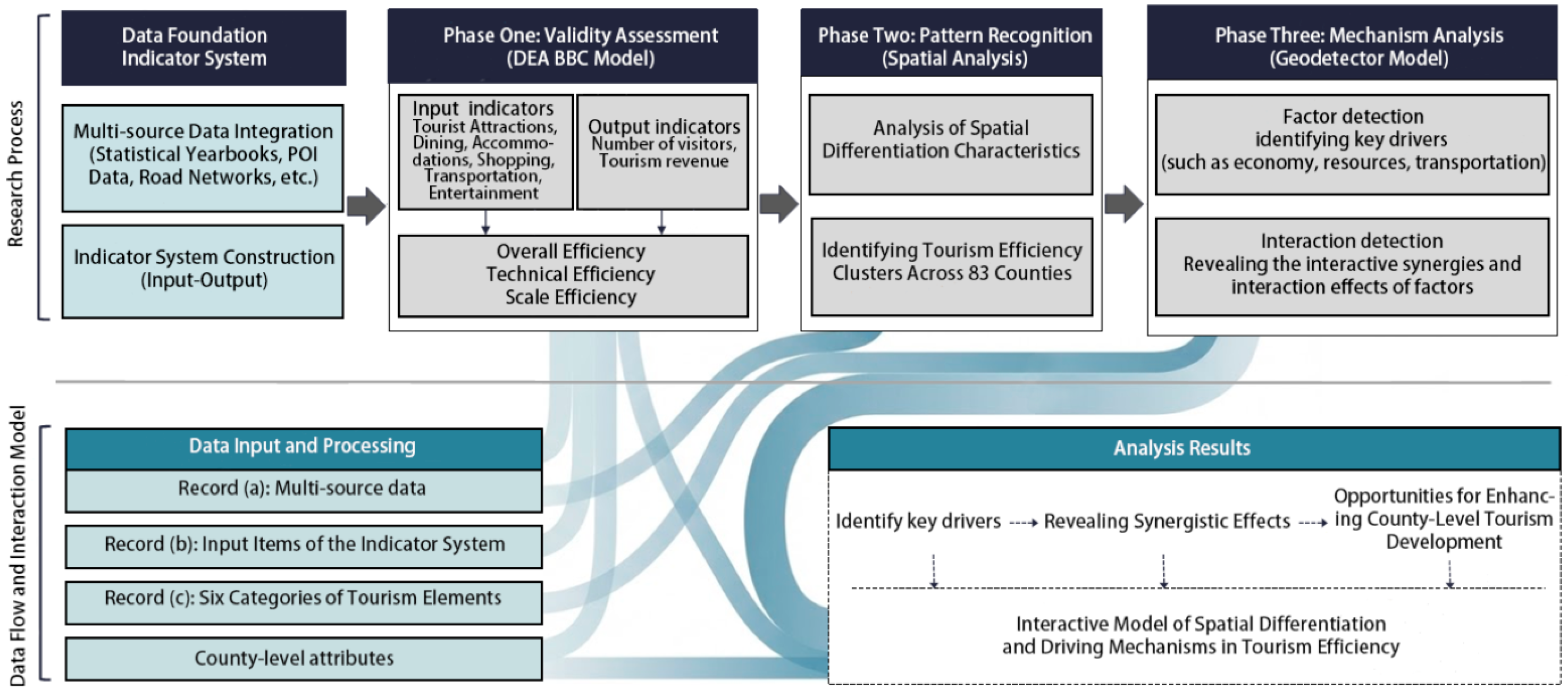
Figure 1. Framework of analysis.
Sustainability 18 05709 g001
Figure 2. Study area.
Sustainability 18 05709 g002
Figure 3. (a) Number of tourist visits in counties of Fujian; (b) Tourism revenue in counties of Fujian.
Sustainability 18 05709 g003
Figure 4. (a) Spatial distribution of county-level tourist attraction in Fujian; (b) Spatial distribution of county-level food and beverage in Fujian; (c) Spatial distribution of county-level accommodation in Fujian; (d) Spatial distribution of county-level shopping in Fujian; (e) Spatial distribution of county-level entertainment in Fujian; (f) Spatial distribution of county-level transportation system in Fujian; (g) Spatial distribution of county-level landscape external accessibility in Fujian; (h) Spatial distribution of county-level intra-urban transfer time to attractions in Fujian; (i) Spatial distribution of county-level comprehensive transportation accessibility in Fujian.
Sustainability 18 05709 g004
Figure 5. (a) Overall efficiency of county tourism; (b) Scale efficiency of county tourism.
Sustainability 18 05709 g005
Figure 6. Spatial distribution of cold hot spots for county tourism efficiency in Fujian.
Sustainability 18 05709 g006
Table 1. Evaluation index system of county tourism efficiency in Fujian.
Target LayerPrimary IndicatorSecondary IndicatorsData Source
Input factorsTourist AttractionNumber of 2A-rated or higher scenic spots (PCs)Official Website of the Fujian Provincial Department of Culture and Tourism, Open Map Data
Catering SupportDensity of Food and Beverage Establishments (Restaurants, Inns, Food Courts, Dessert Shops, etc.) (PCs·km2)
Housing GuaranteeDensity of accommodation facilities such as hotels, inns, and homestays (PCs·km2)
Shopping FacilitiesDensity of physical commercial establishments such as shopping malls, supermarkets, convenience stores, specialty stores, shopping centers, and wholesale markets (PCs·km2)
Entertainment ServicesDensity of entertainment venues such as KTVs, theaters, nightclubs, internet cafes, and campgrounds (PCs·km2)
Transportation SystemThe comprehensive accessibility of a tourism attraction is determined by evaluating both external accessibility and intra-area transfer accessibility.Open Street Map
Factors of productionTourism AttractionNumber of Tourist Visits (in 10,000)Statistical Bulletin on National Economic and Social Development Statistical Yearbook
Tourism Economic OutputTourism Revenue (in billions of yuan)
Table 2. Descriptive statistics on tourist visits and tourist revenue in Fujian Province’s counties in 2023.
VariableSample SizeMinimum ValueMaximum ValueMeanStandard DeviationMedian
Number of Tourist Visits (million)831.4456.708.307.146.93
Tourist Revenue (billion yuan)831.2086.028.339.966.11
Table 3. Top 10 counties in Fujian Province by number of tourist visits and their percentage.
RankingCounty-LevelNumber of Tourist Visits (in Ten Thousand)Percentage (%)
1Siming District5670.448.24%
2Gulou District2905.214.22%
3Jimei District2841.674.13%
4Huli District1766.522.57%
5Xinluo District1616.432.35%
6Yongtai County1525.502.22%
7Jinjiang City1400.002.03%
8Wuyishan City1368.141.99%
9Jin’an District1344.001.95%
10Xiangcheng District1150.001.67%
Total21,587.9131.37%
Table 4. Top 10 counties in Fujian Province by tourism revenue and their percentage.
RankingCounty-LevelTourism Revenue (in Billions of Yuan)Percentage (%)
1Siming District860.1712.45%
2Huli District282.954.10%
3Gulou District239.343.46%
4Wuyishan City201.802.92%
5Jinjiang City190.002.75%
6Xinluo District185.472.69%
7Jimei District184.702.67%
8Zhangpu County124.631.80%
9Xiangcheng District117.001.69%
10Yanping District115.461.67%
Total2501.5236.20%
Table 5. Frequency distribution of 2A-level and above tourism attractions in Fujian Province in 2023.
Tourism Attractions LevelFrequency DistributionPercentage (%)
2A8817.74
3A27254.84
4A12525.20
5A112.22
Total496100
Table 6. Statistics on the difference in tourism benefits of counties in Fujian.
Benefit DimensionMinimum ValueMaximum ValueMeanStandard DeviationCoefficient of Variation
Overall efficiency0.22010.7080.2460.347
Technical efficiency0.60510.8730.1270.146
Scale efficiency0.30710.7950.2020.254
Table 7. Detection results of factors influencing tourism efficiency in counties of Fujian.
Driving FactorsTourist AttractionFood-and-Beverage SupportAccommodation CapacityTransport SystemsShopping FacilitiesEntertainment Services
q-value0.1070.1600.0820.0150.1470.159
p-value0.0000.0000.0000.0000.0000.000
Table 8. Interaction results and types of detection factors.
Interaction ItemInteractionSum of Single-Factor EffectsInteraction Type
tourist attraction ∩ food-and-beverage support0.1810.267Dual-factor enhancement
tourist attraction ∩ accommodation capacity0.1470.189Dual-factor enhancement
tourist attraction ∩ transport systems0.1940.122Nonlinear Enhancement
tourist attraction ∩ shopping facilities0.1700.254Dual-factor enhancement
tourist attraction ∩ entertainment services0.1780.266Dual-factor enhancement
food-and-beverage support ∩ accommodation capacity0.1800.242Dual-factor enhancement
food-and-beverage support ∩ transport systems0.2370.175Nonlinear Enhancement
food-and-beverage support ∩shopping facilities0.1680.307Dual-factor enhancement
food-and-beverage support ∩ entertainment services0.1690.319Dual-factor enhancement
accommodation capacity ∩ transport systems0.1870.097Nonlinear Enhancement
accommodation capacity ∩ shopping facilities0.1620.229Dual-factor enhancement
accommodation capacity ∩ entertainment services0.1780.241Dual-factor enhancement
transport systems ∩ shopping facilities0.2220.162Nonlinear Enhancement
transport systems ∩ entertainment services0.2420.174Nonlinear Enhancement
shopping facilities ∩ entertainment services0.1700.306Dual-factor enhancement
Disclaimer/Publisher’s Note: The statements, opinions and data contained in all publications are solely those of the individual author(s) and contributor(s) and not of MDPI and/or the editor(s). MDPI and/or the editor(s) disclaim responsibility for any injury to people or property resulting from any ideas, methods, instructions or products referred to in the content.