Review

Interactions Between Mycorrhizal Fungi and Mycorrhiza Helper Bacteria: Mechanisms, Ecological Functions, and Potential Applications in Sustainable Agriculture and Ecological Restoration

Engineering Research Center of Agricultural Microbiology Technology, Ministry of Education & Heilongjiang Provincial Key Laboratory of Plant Genetic Engineering and Biological Fermentation Engineering for Cold Region & Key Laboratory of Microbiology, School of Life Sciences, College of Heilongjiang Province, Heilongjiang University, Harbin 150080, China
*
Authors to whom correspondence should be addressed.
Sustainability 2026, 18(11), 5643; https://doi.org/10.3390/su18115643
Submission received: 24 April 2026 / Revised: 1 June 2026 / Accepted: 2 June 2026 / Published: 3 June 2026

Abstract

The interaction between mycorrhizal fungi and mycorrhiza helper bacteria (MHB) constitutes a critical symbiotic interface that drives key functions within terrestrial ecosystems, profoundly influencing plant nutrient acquisition, stress resilience, and soil ecological processes. Although mycorrhizal symbiosis has been extensively studied, the complex interactive network between these fungi and MHB—which act as functional “enhancers” and “stabilizers”—and its systemic application potential remains insufficiently integrated and elucidated. This review aims to provide a comprehensive overview of advances in this field. First, it delineates the functional traits of major mycorrhizal fungal types and their inherent functional reliance on MHB. Subsequently, it dissects the core mechanisms underlying mycorrhizal fungi–MHB interactions through four interconnected dimensions: signal recognition, nutrient exchange, physical association, and defensive synergy. This analysis reveals the foundation for constructing a stable plant–fungus–bacteria functional continuum. Furthermore, the review comprehensively evaluates the empirical applications and demonstrated efficacy of this interactive system in enhancing agricultural productivity, promoting forestry cultivation, and advancing ecological restoration. Finally, by identifying prevailing research gaps spanning molecular mechanisms to field applications, it offers a critical perspective on future research priorities. It also discusses strategies for fostering interdisciplinary innovation to accelerate biotechnology development based on this symbiotic partnership, aiming to provide novel microbial solutions for addressing global challenges such as agricultural sustainability and ecosystem recovery.

1. Introduction

Mycorrhizal fungi represent a pivotal microbial group in terrestrial ecosystems, forming symbiotic associations with approximately 80–90% of land plant species [1,2]. This symbiotic partnership not only facilitates plant nutrient acquisition by extending hyphal networks into the soil beyond the root zone [3], but also plays a central role in the biogeochemical cycling of key elements such as carbon, nitrogen, and phosphorus [4]. Concurrently, mycorrhizal fungi significantly enhance plant resilience to diverse environmental stresses, including drought, salinity, heavy metal contamination, and pathogen attack [5,6]. It is noteworthy that certain mycorrhizal fungi, such as arbuscular mycorrhizal fungi (AMF), possess limited saprotrophic capabilities and lack key functional genes, like those encoding phytases required for organic phosphorus degradation. Consequently, they rely on synergistic interactions with other soil microorganisms to achieve nutrient mobilization and environmental adaptation [7].
Mycorrhiza helper bacteria (MHB) are a functional group of soil bacteria that promote the growth of mycorrhizal fungi, enhance the formation of mycorrhizal symbioses, and optimize symbiotic functionality. Ubiquitously inhabiting the mycorrhizosphere, hyphosphere, and the surfaces or interiors of fungal spores, MHB act as a crucial role of the mycorrhizal symbiosis. Through multifaceted interactions with mycorrhizal fungi, they compensate for fungal functional deficiencies and reinforce the stability of the symbiotic consortium [8,9]. Delving into the mechanisms governing mycorrhizal fungi–MHB interactions not only advances our understanding of the co-evolutionary dynamics among soil microbes but also paves new avenues for reducing reliance on chemical fertilizers and pesticides, boosting crop and forest productivity, and rehabilitating degraded ecosystems. This holds substantial practical significance for advancing sustainable agriculture and ecological conservation [10].
Since the conceptualization of MHB, related research has evolved from initial strain isolation and identification to in-depth mechanistic investigation. Early studies employed in vitro co-culture techniques to screen for MHB strains with defined promoting functions, including members of Pseudomonas and Bacillus genera [11,12]. The advent of modern molecular biology tools, such as metagenomic sequencing and fluorescence in situ hybridization (FISH), has further unveiled the diversity of MHB communities and the specificity of their ecological niches [13,14]. The application of omics technologies, including transcriptomics and metabolomics, has provided powerful means to elucidate signal transduction and metabolic coordination during their interactions [10,15]. Currently, this field is characterized by interdisciplinary convergence, integrating research approaches from microbial ecology, molecular biology, and agroecology [16,17]. Nonetheless, several scientific challenges await resolution, particularly concerning the core signaling pathways underlying their interactions, the mechanisms of co-adaptation under environmental stress, and the technical bottlenecks hindering industrial application.
To address these gaps, this review adheres to a logical framework of “basic traits—interaction mechanisms—ecological applications—research prospects.” This review aims to consolidate fragmented knowledge and construct a coherent narrative framework based on a comprehensive survey of the literature. The article will focus on addressing three central scientific questions: (1) What are the molecular underpinnings and ecological drivers of the specific interactions between MHB and mycorrhizal fungi? (2) How do they achieve co-adaptation under complex environmental stresses? (3) What are the key technical constraints and optimization strategies for translating this interactive system into industrial applications?
This review synthesizes peer-reviewed English and Chinese literature published between January 2000 and April 2025, retrieved from Web of Science, PubMed, Scopus, and CNKI. Key search terms included: mycorrhizal fungi, mycorrhiza helper bacteria (MHB), plant–microbe interaction, sustainable agriculture, ecological restoration. Screening criteria: peer-reviewed original articles and reviews focused on mycorrhiza–bacteria interactions, with clear experimental evidence or mechanistic data. Exclusion criteria: non-peer-reviewed reports, abstract-only papers, and studies without direct relevance to MHB–mycorrhizal interactions. Evidence synthesis: findings were categorized by mycorrhizal type, mechanism, and experimental scale; evidence strength was classified as direct experimental evidence, indirect evidence, or speculative inference. The review adopts a narrative synthesis rather than a strict meta-analytic approach.

2. Types of Mycorrhizae and Ecological Functions of Mycorrhizal Fungi

A mycorrhiza is a mutualistic symbiotic structure formed between plant roots and fungi. Based on morphological characteristics, fungal taxa, and host plant types, mycorrhizae are primarily categorized into four major types: Arbuscular Mycorrhiza (AM), Ectomycorrhiza (ECM), Ericoid Mycorrhiza (ErM), and Orchid Mycorrhiza (OM) [18]. Among these, AM and ECM are associated with the vast majority of terrestrial plants. They are the most widespread in nature and exhibit the most significant ecological functions. Consequently, they constitute the central focus of current research on the ecological roles of mycorrhizae and their interactive mechanisms with MHB.

2.1. Arbuscular Mycorrhizal Fungi (AM Fungi, AMF)

Arbuscular mycorrhizal fungi (AM, phylum Glomeromycota) form the most widespread plant–fungal symbiosis, associating with over 70% of terrestrial plant species, including major crops such as maize, wheat, and rice. Their symbiotic structures include intraradical arbuscules, the primary site for nutrient exchange, and an extensive extraradical hyphal network that explores soil beyond the root depletion zone, greatly enhancing plant phosphorus and water uptake [19]. Unlike ectomycorrhizal fungi, AMF lack the ability to decompose complex organic matter and are therefore highly dependent on synergistic interactions with rhizosphere bacteria, particularly MHB, for nutrient mobilization and environmental adaptation [20]. AMF belong to the phylum Glomeromycota, an ancient fungal lineage in which nearly all members form symbiotic relationships with plants. Representative core genera include Rhizophagus, Gigaspora, and Funneliformis. The symbiotic association between AMF and plants dates back approximately 450 million years to the early colonization of land by plants, and is recognized as a significant force in the evolution of terrestrial ecosystems [21].
Upon establishing symbiosis with host plant roots, AMF form two characteristic structures. The first is the intraradical arbuscule, a finely branched, tree-like structure formed by fungal hyphae within root cortical cells through repeated dichotomous branching. This structure serves as the primary interface for bidirectional nutrient exchange (e.g., phosphorus and carbon) between the partners, with its extensive surface area greatly enhancing exchange efficiency [22]. The second is an extensive network of extraradical hyphae that extends into the soil. These hyphae are responsible not only for water and nutrient absorption but also for connecting different plant individuals, forming an underground “mycelial network” that facilitates inter-plant resource transfer and signaling [23].
AMF form symbioses with over 70% of terrestrial plant species, including most crops, herbaceous plants, and some woody species. Their most prominent function is the marked enhancement of plant phosphorus uptake. Soil phosphorus is often immobilized and exhibits poor mobility, whereas AMF extraradical hyphae can penetrate soil pores inaccessible to roots, effectively acquiring and translocating phosphorus to the plant [24]. Furthermore, AMF are involved in the transport of other elements such as nitrogen, copper, and zinc. They also enhance host tolerance to various adversities, including drought, salinity, heavy metal toxicity, and soil-borne diseases, by improving plant water status and modulating the balance of endogenous hormones like abscisic acid and strigolactones [25,26]. Notably, most AMF genomes lack key enzyme systems for degrading complex organic matter, such as cellulases and lignin peroxidases. However, some variability may exist among AMF taxa, and the degree of functional dependence on MHB can vary with ecological context. Consequently, AMF have a limited innate capacity to directly utilize organic nutrients from the soil [7]. This functional constraint is a primary driver for forming close interactions with MHB possessing phosphorus-solubilizing and mineralization capabilities.

2.2. Ectomycorrhizal Fungi (ECM Fungi, ECMF)

ECMF primarily originate from the Basidiomycota and Ascomycota phyla, exhibiting extremely high species diversity with over 20,000 described species. Well-studied and common genera include Laccaria, Tuber, and Pisolithus [27]. ECMF associate with only about 2% of vascular plant species. However, these are predominantly important tree species from families like Pinaceae, Fagaceae, and Salicaceae, granting ECMF a dominant role in global forest ecosystems [28].
ECMF form highly organized symbiotic organs with host roots. A defining feature is the mantle, a dense sheath of fungal tissue enveloping the young root, which acts as both a physical protective layer and a storage site for carbohydrates and nutrients. Within the root cortex intercellular spaces, fungal hyphae proliferate to form the Hartig net, creating an extensive interface for exchange. Compared to AMF, ECMF typically produce thicker, more robust extraradical hyphae (or rhizomorphs), conferring a greater capacity for long-distance soil exploration and resource transport [29].
ECMF function as “ecosystem engineers” in the forest subsurface. A core function is their potent capacity for organic matter decomposition. By secreting a suite of extracellular enzymes (e.g., laccases, cellulases and proteases), ECMF can directly degrade complex organic materials in the soil, such as leaf litter, lignin, and humic substances. This process releases and allows absorption of locked-in nitrogen, phosphorus, and other nutrients, which are subsequently supplied to the host tree. This role is particularly crucial in temperate and boreal forests where nitrogen is often a primary limiting factor. Additionally, the fungal mantle and rhizomorphs enhance tree water retention. Through mechanisms like chelation and compartmentalization, they also bolster host resistance to soil stresses such as aluminum toxicity and heavy metal contamination [28]. Although ECMF possess some saprotrophic ability, the efficiency and scope of their nutrient mobilization under nutrient-poor or stress conditions are significantly enhanced by synergistic interactions with MHB (e.g., bacteria with nitrogen-fixing or phosphorus-solubilizing traits). Together, they maintain the efficiency and stability of the symbiotic system [30].

2.3. Ericoid Mycorrhizal Fungi (ErM Fungi, ErMF)

ErMF primarily belong to the Ascomycota, with core genera including Rhizoscyphus and Oidiodendron, though a minority are basidiomycetes [31]. They exhibit high host specificity, predominantly forming symbioses with plants in the family Ericaceae (e.g., heathers, blueberries and cranberries) [32,33]. ErMF form a characteristic intracellular mycorrhiza. Fungal hyphae penetrate root hair or epidermal cells, repeatedly branching intracellularly to form dense hyphal coils, which constitute the main site for nutrient exchange. Unlike AMF or ECMF, ErMF do not form arbuscules or mantles and Hartig nets, representing a structurally simpler form [34].
ErMF are key to plant adaptation to acidic, nutrient-poor, organic-rich soils (e.g., peatlands and alpine tundra). Their core ecological function lies in a powerful capacity for organic matter degradation. ErMF secrete an array of extracellular enzymes (e.g., proteases, chitinases and phosphatases) that directly decompose complex organic residues (like keratin and chitin) in the soil, releasing bound nitrogen and phosphorus for host plant uptake [35]. This capability allows ericaceous plants to thrive in extreme soils where most other plants cannot survive [36].
Research on MHB within the ErMF system is currently extremely limited. Given the extreme nature of ErMF habitats and their unique nutrient acquisition strategy, investigating whether specific bacterial partners exist to assist organic matter degradation or fungal adaptation to high acidity represents a promising research frontier.

2.4. Orchid Mycorrhizal Fungi (OM Fungi, OMF)

OMF are a polyphyletic group, primarily derived from basidiomycete families such as Tulasnellaceae and Ceratobasidiaceae, as well as some ascomycetes [37]. OMF form an endomycorrhiza with orchid plants. Fungal hyphae invade root cortical cells and coil to form characteristic intracellular hyphal pelotons. These pelotons are later digested by the plant, serving as a primary nutrient source, especially for orchid seedlings. This “digestive-supply” mode is a hallmark of this symbiosis [38,39].
OMF are essential for orchid survival, particularly during seed germination and seedling establishment. Orchid seeds are minute and lack endosperm. Their germination depends entirely on carbon, nitrogen, and other nutrients supplied by OMF, constituting a mycobacterotrophic or partially mycobacterotrophic relationship. OMF continue to contribute to nutrient acquisition in adult plants, especially in nutrient-poor environments [40].
Studies have isolated plant growth-promoting bacteria from orchid rhizospheres and mycorrhizas. These bacteria may indirectly influence orchid growth by producing phytohormones, solubilizing phosphorus, or suppressing pathogens [41,42,43]. However, whether these bacteria qualify as true MHB—defined by their direct, specific promotion of OMF infection, growth, and symbiotic function—remains unclear. Investigating the role of bacteria within the highly specialized “orchid-OMF” symbiotic system represents a new frontier for unraveling the complexity of these tripartite interactions.
The major characteristics, ecological functions, and MHB dependence of the four mycorrhizal types are summarized in Table 1 for clear comparison.

3. Classification, Ecological Niches, and Functional Traits of MHB

MHB strictly refers to bacteria that directly promote mycorrhizal fungal growth and/or mycorrhiza formation. Although some MHB also exhibit plant growth-promoting rhizobacteria (PGPR) traits, the term is reserved for strains with confirmed specific effects on the fungal partner; general PGPR are excluded unless their specificity for mycorrhizal fungi has been validated. MHB do not constitute a strict taxonomic unit but rather represent a functionally defined group of environmental microorganisms. They are commonly found in specific microhabitats associated with mycorrhizal symbiotic systems, where they regulate fungal growth and development, promote symbiosis establishment, and optimize ecological functions through direct or indirect mechanisms. Current classification of MHB primarily relies on two complementary perspectives: phylogenetic relationship and functional orientation.

3.1. Classification Systems for MHB

Based on phylogenetic relationships, MHB can be divided into Gram-negative bacteria (e.g., Pseudomonas and Burkholderia) and Gram-positive bacteria (e.g., Bacillus and Streptomyces). Gram-negative bacteria are common MHB groups, among which Pseudomonas [44] and Burkholderia [45,46] have been relatively well-studied. These bacteria typically exhibit active secondary metabolism, excelling in secreting organic acids, siderophores, and phytohormones, and play prominent roles in phosphorus solubilization, pathogen inhibition, and growth stimulation.
Gram-positive bacteria also constitute an important component of MHB, with Bacillus [47] and Streptomyces [48] being notable representatives. They often produce structurally diverse antimicrobial compounds such as lipopeptides and polyketides, effectively suppressing root pathogens, and directly promote hyphal growth by synthesizing vitamins and other growth factors.
Based on their core roles at different stages of the symbiotic relationship between mycorrhizal fungi and plants, MHB can be functionally categorized into two major groups: (1) Mycorrhization helper bacteria, which promote the establishment of the symbiotic relationship; and (2) Mycorrhiza function helper bacteria, which enhance the functionality of the established symbiotic consortium [49].
The core function of mycorrhization helper bacteria is to directly facilitate the establishment of the mycorrhizal symbiosis, a role that spans the entire process from spore germination and hyphal growth to root colonization. These bacteria can stimulate spore germination by producing specific signaling molecules (e.g., the volatile compound 2-methylisoborneol or the phenolic compound hypaphorine), a process often dependent on direct physical contact between the bacterium and the spore [17,44]. In promoting hyphal growth, MHB can significantly accelerate hyphal elongation and branching, thereby enhancing fungal infectivity towards plant roots [47]. This is achieved through mechanisms including auxin (e.g., IAA) secretion, provision of essential vitamins (e.g., thiamine), or by improving the fungal microenvironment via phosphorus solubilization, ethylene production, and pathogen inhibition [11,50]. Furthermore, MHB can modulate fungal metabolic profiles at the molecular level, optimizing the pre-symbiotic state [51].
Mycorrhiza function helper bacteria, in contrast, primarily function after symbiosis establishment to reinforce and expand consortium functionality. Nutritionally, they crucially complement the functional limitations of mycorrhizal fungi, for instance by secreting phosphatases (e.g., phytase) to mineralize organic phosphorus [52], or by providing nitrogen via biological nitrogen fixation [53]. Defensively, these bacteria synthesize diverse antimicrobials (e.g., bacillysin and phenazines), effectively inhibiting soil-borne pathogens like Fusarium and Phytophthora [54]. Their formed biofilms also aid in niche occupation and outcompeting harmful microbes [55,56]. Additionally, they assist the consortium in drought resistance by secreting exopolysaccharides and synthesizing osmolytes like proline, and mitigate environmental toxicity by chelating or transforming heavy metal ions [51].

3.2. Ecological Niche Characteristics and Functions of MHB

Core Niches: MHB are primarily enriched in the mycorrhizosphere (the soil region influenced jointly by plant roots and mycorrhizal fungal hyphae) and the hyphosphere (the narrow, micrometer-scale zone of soil surrounding and influenced by fungal hyphae) [57]. The hyphosphere represents the foremost frontier for physical contact and material exchange between fungi and bacteria. It is characterized by steep gradients in nutrients like carbon and nitrogen, making it a critical site for MHB functional expression. Furthermore, specific MHB are frequently isolated from the surfaces, interiors of fungal spores, and even sporocarps [58].
Niche Determinants: The community composition of MHB results from a combined selection by biotic and abiotic factors. The fungal species is the primary determinant. For instance, the hyphosphere of AMF is often dominated by bacteria from the phylum Firmicutes [10], whereas ECMF tend to preferentially recruit Actinobacteria [5]. The host plant exerts indirect regulation through root exudates. Finally, soil environmental conditions (e.g., pH, nutrient availability and pollution status) impose the ultimate selective pressure. For example, in phosphorus-deficient soils, the relative abundance of MHB taxa harboring phosphorus-solubilizing genes increases significantly [59,60].
Traditional Cultivation and Functional Validation: Early research relied primarily on in vitro co-cultivation for screening. For instance, soil bacteria were co-cultured with target mycorrhizal fungi on agar plates to observe whether they promoted fungal spore germination, hyphal growth, or altered colony morphology. Putative functions of primary isolates were further verified through physiochemical assays, such as phosphate-solubilizing halo tests and phytohormone detection [61,62].
Modern Molecular Ecological Techniques: Culture-independent techniques have vastly expanded our understanding of MHB. High-throughput sequencing (e.g., 16S rRNA gene amplicon sequencing and metagenomics) is employed to analyze the community structure and functional gene profiles of MHB in the mycorrhizosphere/hyphosphere [63,64]. FISH coupled with confocal microscopy allows direct visualization of the colonization patterns and spatial distribution of specific MHB on fungal hyphae [65]. Transcriptomics and metabolomics provide insights into the dynamic responses during MHB-fungal interactions at the gene expression and metabolite levels [10]. The integration of these methods enables a more comprehensive understanding of MHB across scales—from population and individual to molecular levels.

4. Core Mechanisms of Mycorrhizal Fungi–MHB Interactions

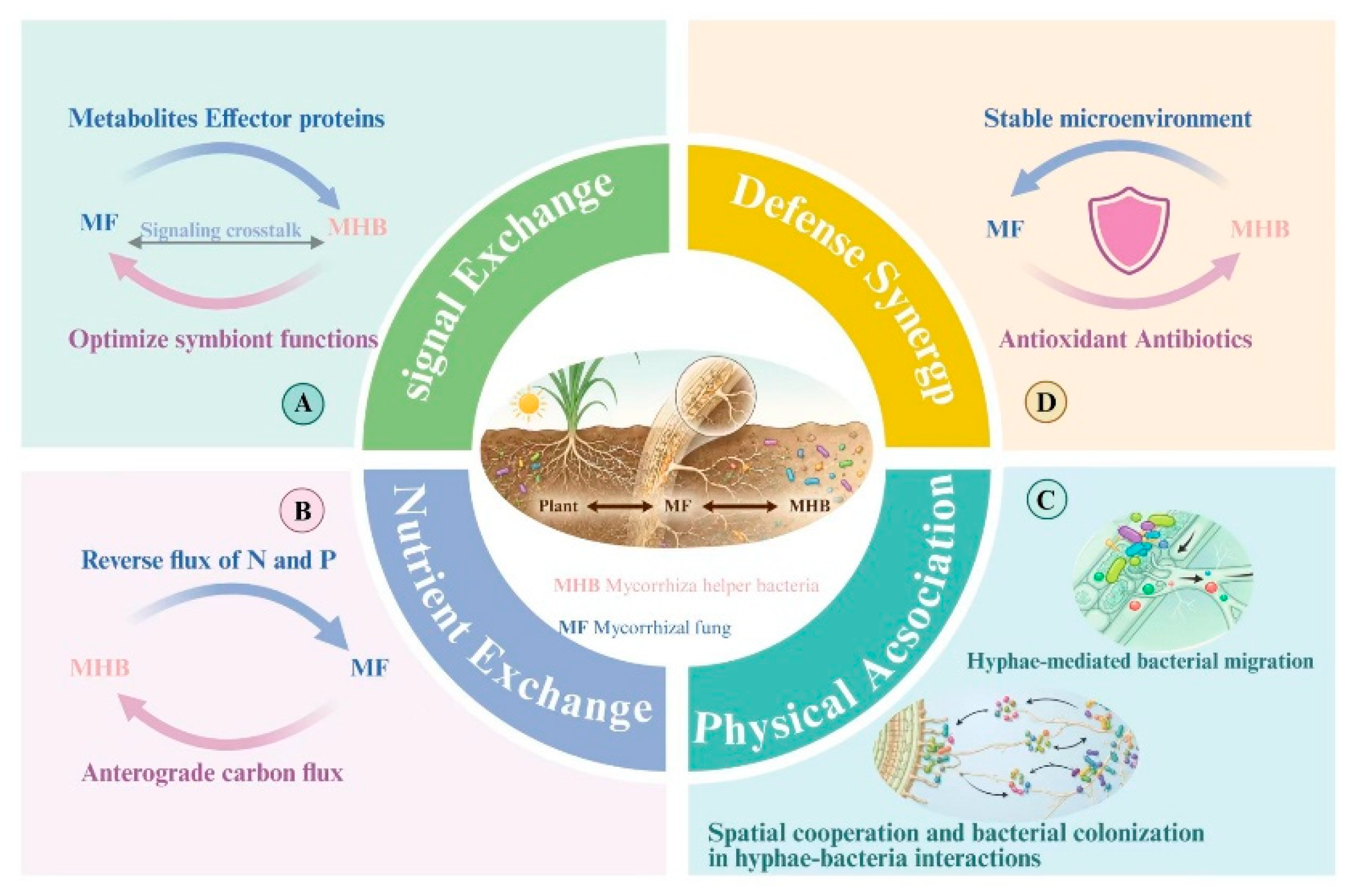
Figure 1 provides a conceptual overview of the four interconnected dimensions underlying mycorrhizal fungus–MHB interactions: signal exchange, nutrient exchange, physical association, and defense synergy.

4.1. Signal Exchange: Chemical Dialogue and Molecular Regulation

4.1.1. Signal-Mediated Recruitment of MHB by Mycorrhizal Fungi

Mycorrhizal fungi recruit MHB primarily by releasing a suite of chemical substances. These exudates function along a gradient, ranging from basal nutrients to specific signal molecules. The continuous secretion of sugars (e.g., glucose and fructose) and organic acids by fungal hyphae provides essential carbon and energy for MHB growth, forming the foundational basis for their initial enrichment in the hyphosphere [66]. Certain sugar molecules, such as trehalose [30,67] and fructose [68], function beyond mere nutrition; they act as signals that regulate the transcription of symbiosis-related functional genes (e.g., phosphatase genes) in specific MHB like Rahnella and Pseudomonas.
In addition to providing basal nutrition, fungi directly modulate the chemotactic behavior and physiological functions of MHB by secreting specific metabolites. For instance, plant-derived strigolactones, which are perceived by AMF, also act as key chemoattractants for MHB. AMF can modulate the rhizosphere gradient of strigolactones to indirectly recruit MHB [57]. This mechanism of long-distance recruitment via diffusible chemical signals appears widespread. Research shows that the ectomycorrhizal fungus Tuber borchii releases a novel lectin into the environment. This protein specifically attracts Rhizobium bacteria and enriches them on the fungal hyphal surface, thereby promoting initial bacterial colonization [69]. These findings indicate that the active secretion of signal molecules by fungi for precise recruitment of mutualistic bacteria is a crucial preliminary step in establishing symbiotic relationships.
Beyond small-molecule metabolites, fungi also secrete a class of effector proteins that enable more direct cross-kingdom regulation of MHB. These proteins can enter bacterial cells or act on their immediate environment. For example, the SP7 effector secreted by AMF has been shown under heterologous expression conditions to enter bacterial cells and interact with bacterial transcription factors, but whether this occurs during natural tripartite symbiosis remains to be confirmed [70,71,72]. Other studies indicate that proteins like RiSLM produced by AMF can modify fungal cell wall components (e.g., chitin), reducing their likelihood of recognition by the plant immune system. This indirectly creates favorable conditions for stable MHB colonization [73]. The secretion of such effector proteins reflects a deep-level mechanism by which fungi actively shape their symbiotic microbiome.
Building upon successful recruitment and initial interaction, MHB can further construct highly organized “biofilm” structures on the fungal hyphal surface. This physical integration marks the transition of the interaction into a more stable and synergistic phase. Studies confirm that biofilms formed by MHB on the hyphae of certain AMF are a key factor enabling stable, persistent bacterial colonization [74]. This biofilm microenvironment serves a dual ecological function. On one hand, it provides a physical barrier for the internal bacterial community, offering a protective niche against environmental stresses such as desiccation, harmful substances, or protozoan grazing. On the other hand, the biofilm fosters close contact and division of labor among different bacterial taxa, facilitating the formation of functionally complementary sub-communities. This enhances the collective efficiency in performing tasks like nutrient mobilization and signal exchange, ultimately significantly boosting the environmental adaptability and ecological function of the entire fungal–bacterial symbiotic consortium [75].

4.1.2. Fungistimulatory and Functional Optimization by MHB

The promotion of mycorrhizal fungi by MHB is a continuous process that spans both the establishment and subsequent functional optimization of the symbiotic consortium. Their mechanisms of action can be primarily categorized, based on temporal sequence and functional focus, into two overarching aspects: promoting symbiosis establishment and optimizing symbiotic function.

4.1.3. Promoting Symbiosis Establishment

MHB assist mycorrhizal fungi in completing early development and host colonization through multiple mechanisms. Their primary role is the stimulation of spore germination and early growth. Since the early report by Mosse, research has shown that various MHB and their metabolites effectively promote spore germination. The mechanisms include the production of volatile (e.g., CO2 and 2-methylisoborneol) and non-volatile signal molecules, as well as the provision of key carbon sources (e.g., raffinose). These factors can act individually or synergistically to accelerate spore maturation and the germination process [76,77]. For instance, specific strains of Burkholderia and Pseudomonas can significantly increase the germination rate and initial hyphal growth of Glomus and Rhizophagus spores through such mechanisms [78].
Secondly, MHB promote hyphal growth and enhance root colonization ability. This promotion likely stems from multiple direct and indirect pathways: direct pathways include the secretion of phytohormones like auxins; indirect pathways involve ameliorating the rhizosphere microenvironment, such as by increasing plant-available phosphorus through solubilization, activating trace elements via siderophore secretion, and suppressing competition from soil-borne pathogens [79]. Studies indicate that the presence of Pseudomonads and Paenibacilli can significantly increase the hyphal growth rate of mycorrhizal fungi and their colonization level in host roots (e.g., potato and sorghum) [79,80]. Notably, this growth-promoting effect may be more pronounced under stress conditions like drought, highlighting the potential value of MHB in assisting the symbiotic consortium to cope with environmental adversity [79].

4.1.4. Optimizing Symbiotic Function

Following symbiosis establishment, MHB further optimize the functional efficiency of the mycorrhiza through nutritional and metabolic interactions. A core mechanism is the enhancement of nutrient acquisition capacity. MHB can compensate for the limitations of mycorrhizal fungi (especially AMF) in directly degrading complex organic matter. For example, MHB with phosphate-solubilizing functions (e.g., Enterobacter and Bacillus subtilis) can mobilize insoluble inorganic or organic phosphorus in soil, creating a synergistic effect with the mycorrhizal fungus that significantly enhances phosphorus uptake by the host plant [7]. Research on endobacteria associated with ECMF like Boletus confirms that such bacteria possess nitrogen-fixing and phosphate-solubilizing capabilities, and their metabolites effectively promote fungal hyphal growth and nutrient absorption [81].
On another front, MHB contribute to a stable interactive microecology through biofilm formation. Biofilms not only provide a protective niche for the MHB themselves against biotic and abiotic stresses but also enhance persistent bacterial colonization on the hyphal surface, thereby promoting material exchange and signal communication between the partners. For instance, Pseudomonas putida can form biofilms on the hyphae or spores of mycorrhizal fungi; this physical association underpins its plant-growth-promoting functions, such as phosphate solubilization and disease suppression [82].
Furthermore, MHB can regulate the metabolic state of mycorrhizal fungi at the molecular level. The presence of endobacteria can influence fungal fatty acid composition, protein expression profiles, and the synthesis of stress-response proteins. This optimizes metabolic flux, making the fungus better adapted to the symbiotic growth state and reducing unnecessary stress responses [51]. This profound level of metabolic regulation signifies that the MHB–fungal interaction has progressed from simple behavioral facilitation to deep cellular metabolic integration.
In summary, the action of MHB on mycorrhizal fungi is a continuous, multi-stage, and multi-layered process. From the initial stimulation of spore germination, through mid-phase support for hyphal growth and colonization, to the later-stage enhancement of nutrient acquisition efficiency and metabolic regulation, MHB consistently act as crucial “symbiosis promoters.” They comprehensively strengthen the vitality and functionality of mycorrhizal fungi, ultimately elevating the adaptability and productivity of the entire plant–fungus–bacteria symbiotic system.

4.2. Nutrient Exchange: Resource Complementarity and Cycling

Within the mycorrhizal symbiosis system, plants, mycorrhizal fungi, and bacteria do not exist in isolation. Instead, they form a functionally integrated “plant–mycorrhizal fungus–bacteria” continuum via the mycorrhizal and hyphospheric interfaces [1]. In this continuum, the exchange of carbon and mineral nutrients follows a clear principle of resource complementarity: plants provide photosynthetic carbon to drive the system, mycorrhizal fungi expand the absorption space and create the exchange interface through their extensive hyphal networks, and MHB utilize their unique biochemical functions to mobilize insoluble nutrients. Through tight metabolic coupling, these three partners achieve highly efficient material cycling across different biological kingdoms.

4.2.1. Carbon (C) Flow: From Plant to Fungus to MHB

Photosynthetic carbon serves as the fundamental energy source propelling the entire continuum. Plants allocate 4% to 20% of their fixed carbon to AMF colonizing their roots [57]. Within the intraradical hyphae, carbon is primarily stored and transported as lipids; in the extraradical hyphae extending into the soil, some lipids are converted into soluble sugars via gluconeogenesis [83]. These sugars (e.g., fructose and glucose), along with other organic acids and amino acids, constitute “hyphal exudates” released into the hyphosphere micro-domain [84].
These hyphal exudates play two crucial roles. First, as high-energy substrates, they provide the core carbon source and energy for the growth and metabolism of MHB. For instance, Rahnella aquatilis can preferentially utilize fructose secreted by AMF for glycolysis, efficiently generating ATP to support its phosphorus-solubilizing functions [68,85]. Stable isotope tracing experiments have confirmed that photosynthetic carbon can be rapidly transferred through AMF hyphae to the soil and assimilated by hyphosphere bacteria [66,86]. Second, specific sugar molecules (e.g., fructose) can act as signaling molecules, inducing the expression of functional genes in MHB, thereby precisely regulating the metabolic state of the bacteria while providing nutrition [68]. This dual “nutrient and signal” property of hyphal exudates forms the chemical foundation for the stable maintenance of the continuum.

4.2.2. Reverse Flow of Nitrogen (N) and Phosphorus (P): From MHB to Fungus to Plant

In contrast to the direction of carbon flow, mineral nutrients such as nitrogen and phosphorus in the soil primarily rely on mobilization by MHB, followed by uptake and transport via mycorrhizal fungi, ultimately being delivered to the plant.
Nitrogen sources within the continuum are complex, involving both the mineralization of organic nitrogen by MHB and specialized biological nitrogen fixation. Studies confirm that mycorrhizal fungi can enhance the decomposition of complex organic matter (e.g., chitin) by the microbial community surrounding their extraradical hyphae, thereby synergistically promoting the release of organic nitrogen [87]. Some bacteria associated with AMF hyphae have been confirmed to carry nitrogenase genes (nifH), suggesting a potential pathway for supplementing nitrogen nutrition through biological nitrogen fixation [57]. However, competition for available nitrogen sources also exists between fungi and soil microorganisms; this interplay of competition and collaboration shapes the nitrogen transformation processes in the hyphosphere [88].
The functional complementarity between mycorrhizal fungi and MHB is most evident in the phosphorus cycle. Although AMF can secrete acid phosphatases, their genomes lack key enzyme genes for mineralizing stable organic phosphorus compounds like phytate [89]. This functional gap is addressed by MHB: phosphate-solubilizing bacteria can secrete alkaline phosphatases, phytases, etc., mineralizing organic phosphorus into absorbable inorganic phosphate [57,84]. Fungi not only induce the expression of bacterial phosphatase genes by secreting signaling molecules like fructose [68], but their hyphal networks also act as “highways,” facilitating the directional migration of phosphate-solubilizing bacteria to organic phosphorus hotspots, enabling in situ mobilization and efficient uptake [7]. Subsequently, the mobilized inorganic phosphorus is absorbed via high-affinity phosphate transporters (e.g., RiPT7) on the fungal hyphal membrane, converted into polyphosphate for long-distance transport, and ultimately transferred to the plant [90].

4.2.3. Integration and Regulation of Carbon–Nutrient Exchange Within the Continuum

Mycorrhizal fungi regulate the community structure and activity of MHB through the quality and quantity of their exudates; conversely, the nutrient mobilization efficiency of MHB provides feedback influencing the carbon investment strategy of the fungi. For example, under low phosphorus conditions, fungi may secrete more fructose to recruit and activate phosphate-solubilizing bacteria, thereby optimizing the “return” on carbon investment [68]. This reciprocal regulation, based on resource exchange, ensures the stability and functional resilience of the “plant–fungus–bacteria” continuum in fluctuating environments. It represents the core mechanism by which the mycorrhizal symbiotic system enhances the nutrient acquisition efficiency of host plants.

4.3. Physical Association: Colonization and Dispersal Synergy

4.3.1. Bacterial Colonization on Fungal Hyphae

The colonization of MHB on hyphal surfaces is a highly specific and active process. Biofilm formation signifies not merely physical attachment but the establishment of a stable functional consortium. The biofilm matrix, composed of extracellular polysaccharides and specific proteins (e.g., TasA) secreted by MHB, effectively retains moisture, protects against protozoan grazing, and serves as a microenvironment for quorum sensing, coordinating bacterial group behavior. Notably, fungi are not passive recipients but actively select for specific MHB. Research indicates that AMF hyphae and roots can selectively assemble their own microbiomes from the surrounding soil, with certain bacterial genera (e.g., Devosia) consistently enriched on hyphae, revealing the fungal agency in shaping its own “symbiotic sphere” [53]. This selectivity is likely mediated by the aforementioned chemical signaling. A more intimate interaction involves fungal endo-colonization, where some MHB enter fungal cells internally by secreting cell wall-degrading enzymes (e.g., chitinases), forming an endophytic association. This intimate relationship transcends surface-level mutualism and may involve deep integration at the genetic and metabolic pathway levels.

4.3.2. Fungal Highway-Mediated Bacterial Dispersal

The extraradical hyphal network of mycorrhizal fungi provides an efficient “fungal highway” for the dispersal of MHB in the soil [91]. This physical conduit mechanism significantly expands the functional boundaries of the interaction: it enables MHB to rapidly travel along hyphae to reach dispersed nutrient resource patches (e.g., organic phosphorus hotspots), achieving precise spatial positioning and task union [7]. This tight spatial association, facilitated by the physical channel, forms the foundation for their highly efficient functional synergy. For instance, studies confirm that when mycorrhizal fungi and phosphate-solubilizing bacteria (e.g., Bacillus megaterium) form a consortium in the rhizosphere via this physical association, they can significantly optimize soil microenvironment properties such as phosphatase activity and organic acid secretion. This elevates the functional efficiency of nutrient mobilization to a level unattainable by single inoculations [92]. This clearly demonstrates that the sustainable ecological functions achieved by the “fungus–bacteria” consortium are rooted in the physical collaborative framework provided by the hyphal network.

4.4. Defense Synergy: Symbiont Protection and Stress Adaptation

4.4.1. MHB-Mediated Defense for Mycorrhizal Fungi

MHB can protect mycorrhizal fungi from pathogens. Their antimicrobial protection functions are diverse, including direct secretion of antibiotics to inhibit pathogens, as well as competition for nutrients and niche exclusion of harmful microorganisms. Regarding stress alleviation, MHB action mechanisms include: external secretion of chelators to immobilize heavy metals; internalization and transformation of pollutants; and synthesis of antioxidants such as glutathione to assist fungi in scavenging reactive oxygen species (ROS) and mitigating oxidative damage [5,10].

4.4.2. Fungal-Mediated Defense for Bacteria

Fungi provide MHB with a protected ecological niche. The hyphosphere microenvironment offers relatively stable humidity, pH, and abundant carbon sources, creating a refuge for bacteria. More importantly, fungi can actively enhance the defensive capabilities of their bacterial partners. Research has found that mycorrhizal fungi can specifically recruit bacteria with beneficial functions to the root zone; these recruited bacteria can subsequently endophytically colonize the plant roots, thereby gaining more direct protection. This “hitchhiking” strategy significantly enhances the survival and functional persistence of MHB [53,93].

4.4.3. Synergistic Induction of Plant-Induced Systemic Resistance (ISR)

The consortium formed by mycorrhizal fungi and MHB can more effectively activate plant systemic immunity through synergistic action. This induction is not a simple additive effect but exhibits synergistic efficacy. For example, specific AM fungus-associated bacteria have been shown to act synergistically with mycorrhizae to strongly promote both plant growth and nitrogen acquisition, with effects far exceeding those of inoculating either the fungus or the bacterium alone [94]. The synergistic defense function of AMF–MHB consortia is achieved through complementary molecular and physiological mechanisms. MHB contribute directly to pathogen suppression by secreting a range of antimicrobial compounds, including lipopeptides, phenazines, and siderophores, which inhibit the growth of soil-borne pathogens such as Fusarium and Rhizoctonia [95]. These bacteria also form biofilms on fungal hyphae, creating a physical barrier that prevents pathogen attachment and invasion [49]. Concurrently, AMF modulate plant defense signaling pathways, such as the salicylic acid (SA) and jasmonic acid pathways, to trigger induced systemic resistance (ISR). The molecular basis for this synergy may lie in the fungi and MHB activating complementary yet interacting segments of the plant defense signaling network, resulting in stronger protection than either partner alone [96]. To clarify the reliability of the mechanisms discussed, we systematically evaluated and categorized the supporting evidence into three levels, as summarized in Table 2.

5. Community Ecological Theory and Systemic Functions of Mycorrhizal Fungus–MHB Interactions

5.1. Stress-Driven Mutualism Enhancement

Classical soil microbial ecology theory has long been dominated by the competitive exclusion principle, emphasizing interspecific competition under resource limitation as the primary driver of community assembly. However, recent research has revealed the central role of mutualistic symbiotic relationships, particularly the obligate mutualism dependent on resource exchange between mycorrhizal fungi and MHB. In stressful habitats such as those characterized by nutrient deficiency, drought, or pollution, the functional dependence of mycorrhizal fungi on their bacterial partners increases significantly. The two form stable survival alliances through the exchange of carbon sources and mineral nutrients. This metabolism-complementary mutualism becomes a key mechanism for communities to resist environmental stress and maintain functional stability [48,98]. This understanding has prompted a paradigm shift. Soil microbial communities are no longer viewed merely as collections of pure competitors but are understood as self-organizing systems supported by multiple mutualistic networks. Within this system, mycorrhizal fungi actively select and recruit functionally compatible MHB by secreting signaling molecules such as strigolactones, thereby constructing a mutualistic microhabitat in the hyphosphere. This active, positive interaction-based community assembly process is a vital source of resilience for belowground ecosystems.

5.2. Multifaceted Ecological Functions of Mycelial Networks

The extensive mycelial networks formed by mycorrhizal fungi essentially constitute core biological infrastructure regulating belowground ecological processes. Their primary function is serving as a physical matrix mediating the cross-plant transport of materials and information [99]. Common mycorrhizal networks (CMNs) can not only redistribute water and nutrients, but the latest research confirms their ability to transmit systemic defense signals such as jasmonic acid (JA). This enables connected plants to preemptively recruit rhizosphere bacteria with antimicrobial functions, achieving group-level immune priming [100]. This exemplifies the advanced functionality of mycorrhizal networks in integrating tripartite “plant–fungus–bacteria” dialogue.
Secondly, the mycelial network is an active platform for chemical regulation and biological assembly. The chemical gradients formed by mycelial exudates (e.g., specific sugars and organic acids) screen and condition the surrounding bacterial community, leading to significant differentiation in the taxonomy and function of hyphosphere bacteria. Ultimately, this interaction network, dominantly constructed by fungi, profoundly influences the dynamics of aboveground plant communities.
Different mycorrhizal types exert opposing ecological effects through their networks: arbuscular mycorrhizal networks generally promote plant species coexistence, whereas the more host-specific ectomycorrhizal fungal networks tend to reinforce monoculture dominance. MHB further amplifies this top-down regulatory effect by enhancing the functions of their associated fungi.

5.3. Systemic Transformation in Agricultural Application

Based on community mutualistic network theory, the application paradigm for sustainable agriculture needs to shift from pursuing the immediate effects of single inoculants towards fostering soil symbiotic systems with inherent resilience and multifunctionality. This transformation is first reflected in inoculation strategies, moving from single strains towards synthetic microbial communities (SynComs) designed based on principles of niche complementarity and positive interactions. For instance, a SynCom aimed at enhancing phosphorus cycling would require the systematic integration of AMF providing transport pathways, MHB responsible for mineralization and solubilization, and helper bacteria improving the micro-environment, to construct a stable, interacting, and functionally redundant micro-ecosystem [101]. The feasibility of this strategy has been empirically demonstrated. Wang et al. constructed a SynCom consisting of AMF and three phosphate-solubilizing bacteria, which increased phosphorus uptake by 42% in maize grown in phosphorus-deficient soil, an effect significantly superior to single-strain inoculation [60]. Furthermore, Anckaert et al. reported consistent synergistic effects of AMF-MHB co-inoculation under both greenhouse and field conditions, providing a practical basis for the commercial development of SynComs [10].
Secondly, agronomic management practices should aim to maintain and promote belowground networks. This includes protecting the physical structure of mycelia by reducing tillage, maintaining host continuity through diversified cropping, and optimizing fertilization (e.g., reducing phosphorus while increasing organic inputs) to preserve plant dependence on symbiosis, thereby creating a suitable habitat for the microbial network. Specifically, long-term no-till farming can increase AMF hyphal length by 30–60%, subsequently enhancing crop phosphorus uptake efficiency [23]. Diversified crop rotations (e.g., maize-soybean-wheat) significantly improve the species diversity and root colonization rate of mycorrhizal fungi compared to monoculture [14]. In terms of fertilization management, reducing phosphorus application by 30% combined with organic manure increases AMF community abundance and functional activity without compromising crop yield [57]. These practices have been validated in multiple cropping systems and offer actionable parameters for growers.
Finally, this paradigm necessitates an update in crop breeding philosophy. The crop’s ability to “manage” its rhizosphere microbiome, particularly the genetic traits for recruiting beneficial symbiotic partners (such as the capacity to secrete specific root exudate signals), should become an important breeding objective. Editing key symbiotic signaling pathways to create “microbe-friendly” varieties that more efficiently construct mutualistic networks represents a cutting-edge direction for translating belowground ecological theory into breeding practice [102]. In maize, modulating the expression of strigolactone biosynthesis genes enhances AMF colonization and improves phosphorus uptake efficiency [24]. In soybean, certain genotypes secrete isoflavonoids that specifically enrich MHB, thereby increasing symbiotic efficiency [53]. Although commercially available varieties with optimized symbiotic traits have not yet been developed, these findings indicate that improving crop “symbiotic potential” through marker-assisted selection or gene editing is both theoretically feasible and practically promising.
Quantifying and integrating the ecosystem services provided by this microbial network—such as carbon sequestration, nutrient optimization, and enhanced stress tolerance—will form the scientific basis for promoting green agricultural policies. Current bottlenecks include the instability of field performance, the complexity of strain-cultivar-environment interactions, and the lack of standardized product preparation technologies. Feasible solutions include establishing regional strain banks, developing high-throughput screening platforms for SynCom formulation, and promoting public–private partnerships to accelerate product translation. In summary, translating community mutualistic network theory into agricultural practice requires coordinated progress in SynCom design, agronomic management, and variety improvement, supported by interdisciplinary empirical research and industrial collaboration.

6. Ecological and Applied Implications of Mycorrhizal Fungus–MHB Interactions

6.1. Impacts on Agricultural Production

The synergistic interactions between mycorrhizal fungi and MHB profoundly influence agricultural productivity and the sustainable development of agroecosystems through multiple mechanisms, including nutrient acquisition, yield improvement, disease suppression, stress tolerance, and soil quality enhancement.
In terms of nutrient acquisition and yield improvement, MHB promote mycorrhizal fungal root colonization, thereby expanding the nutrient uptake interface [103]. For instance, Pseudomonas fluorescens can promote AMF colonization on tomato roots, subsequently significantly increasing leaf phosphorus content and plant mineral nutrition levels to promote growth [104]. Duponnois et al. co-inoculated Glomus intraradices with a Pseudomonas-like MHB on Acacia senegal and found that mixed inoculation significantly increased plant biomass and mycorrhizal colonization rate compared to single inoculations [105]. Awasthi et al. found that co-inoculation of indole-3-acetic acid (IAA)-producing Pantoea strain MTP 17 and Glomus mosseae in Bacopa monnieri significantly increased the mycorrhizal colonization rate, plant N/P/K nutrient uptake, and biomass accumulation compared to single inoculation [106]. Similarly, Bacillus amyloliquefaciens can also enhance AMF colonization, boosting biomass and photosynthetic efficiency of white clover and common vetch [107]. In reported case studies, co-inoculation often reduces chemical fertilizer input by 10–30% in greenhouse trials and 5–20% in field conditions, with yield increases ranging from 10 to 35% depending on crop species, soil fertility, and inoculant combinations [10,60]. These values represent case-specific observations and are not generalized across all systems; meta-analytic confirmation is currently lacking.
Regarding disease suppression, MHB-derived antimicrobial substances and biofilm formation inhibit soil-borne pathogens. Antimicrobial peptides and phloroglucinol effectively inhibit Fusarium oxysporum and Rhizoctonia spp. [95,108]. Field trials confirm that co-inoculation of AMF and Pseudomonas monteilii significantly reduces root rot and wilt incidence in Coleus forskohlii [109].
For abiotic stress tolerance, the consortium enhances plant resilience to drought, salinity, and heavy metal contamination. Rhizophagus intraradices mitigates arsenic-induced oxidative damage and reduces arsenic accumulation in soybean [110]. Under drought, synergistic interaction between Russula sp. and Burkholderia sp. maintains plant survival [111].
In terms of soil quality improvement, co-inoculation improves soil physicochemical properties and microbial community structure. In diesel-contaminated soil, co-inoculation of Suillus tomentosus and P. putida enhances degradation efficiency [112]. Inoculation with Curtobacterium citreum and AMF increases sedge biomass and alters metal mobility [113]. Synergistic metabolites reduce harmful microbes and increase beneficial diversity, supporting long-term soil fertility [114].

6.2. Impacts on Forestry Cultivation

In forest ecosystems, ECMF and MHB form tightly integrated physical and functional consortia. These consortia not only significantly influence the early establishment of seedlings but also play a crucial role in maintaining the long-term health and stability of the entire forest ecosystem.
The specific synergy between ECMF and MHB is central to improving seedling quality and afforestation survival rates. During the nursery stage, MHB promote the infection and colonization of host roots by ECMF through various mechanisms. For example, P. monteilii HR13 can significantly enhances the radial hyphal growth of Pisolithus sp., thereby improving its colonization on the roots of Acacia seedlings [105]. This facilitation is particularly important for fungi with inherent physiological deficiencies. For instance, Laccaria bicolor S238N, which cannot synthesize thiamine, relies on the MHB P. fluorescens BBc6R8 to provide thiamine during the pre-symbiotic growth phase to compensate for this defect [30]. Shinde et al. reported that the synergistic interaction between P. fluorescens SBW25 and L. bicolor promotes mycorrhization of poplar (Populus) roots and suppresses the host root’s antifungal defense response, thereby increasing symbiotic efficiency [115]. MHB can also assist fungi in successfully colonizing root tissues by inducing lateral roots [47] and suppressing excessive defense responses in the host plant [116]. Poole et al. isolated Burkholderia and Rhodococcus strains that promote root growth of Scots pine (Pinus sylvestris) [117]; Wu et al. found that inoculation with Bacillus cereus significantly increases the number of lateral roots in Japanese black pine (Pinus thunbergii Parl.) [81]. At the molecular level, some MHB (e.g., P. fluorescens BBc6R8) may utilize a type III secretion system to inject effector proteins into the host to promote mycorrhiza formation [118]. The “seedling mycorrhization” technology supported by these mechanisms significantly promotes root system development, enhances nutrient reserves and stress tolerance, and lays a solid foundation for subsequent transplanting. Under harsh site conditions such as saline–alkaline land or mine reclamation areas, co-inoculation of ECMF and MHB synergistically alleviates nutrient deficiency and heavy metal stress, thereby effectively improving afforestation survival rates.
The ECMF-MHB interaction network is a cornerstone of belowground ecosystem functional stability in forests. First, this interaction greatly optimizes forest nutrient cycling: ECMF possess the ability to decompose complex organic matter, and associated MHB further stimulate extracellular enzyme activity, jointly enhancing the decomposition of recalcitrant compounds such as lignin and cellulose, and continuously releasing nitrogen, phosphorus, and other nutrients to support long-term forest productivity [119]. Second, this interaction helps maintain forest biodiversity and system resilience. ECM root tips create unique ecological niches for specific bacterial communities, whose microbial composition is functionally and taxonomically distinct from that of the surrounding soil [120]. Fungi attract and selectively enrich beneficial MHB by secreting signaling substances like trehalose [30], while quorum-sensing signals produced by MHB may be perceived and responded to by fungi, forming a dynamic cross-kingdom dialogue that regulates the microbial community structure in the mycorrhizosphere [119]. These stable and diverse microhabitats, shaped under fungal influence, provide resources and refuge for numerous soil microorganisms. This enhances the resilience of the entire forest ecosystem against disturbances such as pest and disease outbreaks, thereby safeguarding its biodiversity and functional stability.

6.3. Impacts on Ecological Restoration

The mycorrhizal fungus–MHB consortium holds promise for restoring degraded ecosystems, including mine spoils, heavy metal-contaminated sites, saline–alkaline lands, and post-fire or eroded areas. In such harsh environments, mycorrhizal fungi improve plant establishment by extending nutrient-absorbing hyphal networks, while MHB contribute by solubilizing immobilized nutrients, chelating or transforming toxic metals, and producing phytohormones that alleviate stress [97,112].
Several case studies have demonstrated the feasibility of this approach. For heavy metal-contaminated soils, co-inoculation of AMF with metal-resistant bacteria has been shown to enhance Pb immobilization and improve plant stress tolerance [121]. In manganese-degraded mining soils, co-inoculation of Rhizobium and AMF enabled successful establishment of Mimosa caesalpiniaefolia [122]. For iron ore tailings rehabilitation, co-inoculation of AMF and Rhizobia reshaped microbial ecology, increased biomass, and enhanced phosphorus solubilization and uptake [123]. In saline–alkaline soils, the combination of a salt-resistant PGPB, AMF, and the halophyte Aeluropus littoralis reduced soil salinity by plant salt uptake and improved soil pore structure, accelerating salt leaching by rainfall [124]. Similarly, AMF symbiosis drove recruitment of beneficial rhizosphere bacteria, reshaping the microbiome and synergistically improving herbage growth in saline–alkaline soils [125]. For degraded grasslands, co-inoculation of nitrogen-fixing bacteria and AMF promoted Leymus chinensis growth and supported sustainable grassland restoration in semi-arid regions [126]. In cadmium-contaminated soil, co-inoculation of AMF and MHB altered the cucumber rhizosphere fungal community and reduced Cd contamination [127]. Furthermore, co-inoculation of compost with AMF and endophytic bacteria alleviated drought stress and improved soil quality in maize [128].
Key challenges for restoration applications include: (1) persistence of the introduced consortium after planting, as inoculants often decline once the host plant is established—a concern highlighted in assessments of commercial AMF inoculants [129]; (2) compatibility with native soil microbiota, which may outcompete or antagonize the introduced strains; (3) the need for site-specific strain selection, as MHB that perform well in one soil may fail in another; and (4) long-term monitoring to assess both ecological benefits (e.g., biodiversity recovery) and potential risks (e.g., unintended spread of non-native microbes).
Future research should prioritize the development of regionally adapted SynComs and low-cost delivery methods (e.g., seed coating or biochar-based carriers) for large-scale restoration projects, drawing on insights from synergistic effects observed in saline–alkaline and heavy metal-contaminated systems.

7. Conclusions and Future Perspectives

Mycorrhizal fungi and MHB construct a stable “plant–fungus–bacteria” functional continuum through intricate chemical dialogue, reciprocal nutrient exchange, close physical association, and synergistic defense mechanisms. This symbiotic system plays an indispensable role in enhancing plant productivity, increasing ecosystem resilience, and driving soil element cycling. Although its theoretical value and application potential are widely recognized, and composite inoculants based on this system have shown preliminary success in agriculture and ecological restoration, a significant knowledge gap and technical bottleneck persist between deep mechanistic understanding and reliable product development. Issues such as the stability of inoculant effects, the specificity of strain interactions, and long-term ecological safety fundamentally stem from our insufficient knowledge of this complex cross-kingdom symbiotic system.

7.1. Key Research Questions for the Future

Below, we propose several core scientific questions that need to be addressed to promote a deeper understanding of tripartite interaction mechanisms and guide future research directions.
(1) Molecular basis of specificity:
What are the key signaling molecules that mediate partner selection between mycorrhizal fungi and MHB? Do conserved “common language” signals exist across different mycorrhizal types, or are there private signals that enforce specificity?
(2) Community assembly rules in the hyphosphere:
How do mycorrhizal fungi actively shape their associated MHB communities from the bulk soil microbiome? What determines the balance between active recruitment and passive filtering?
(3) Cascading effects of multi-trophic interactions:
How do higher trophic levels (protozoa, nematodes) influence the function of the mycorrhizal fungus–MHB consortium? Can these interactions be harnessed for ecosystem management?
(4) Bridging the lab-to-field gap:
What are the most effective strategies to translate mechanistic understanding into robust field applications? This includes developing synthetic microbial communities (SynComs) with predictable performance, improving formulation and delivery, and validating efficacy across multiple environments and cropping systems.
Answering these questions will require interdisciplinary approaches integrating synthetic biology, single-cell technologies, and ecological modeling.

7.2. Limitations and Challenges for Translation

Despite the promising potential, several obstacles hinder the widespread application of mycorrhizal fungus–MHB consortia.
(1) Inconsistent field performance: The beneficial effects observed in controlled greenhouse experiments often diminish under field conditions due to variable soil properties, climate, and competition from native microbes. For instance, yield responses to co-inoculation can range from negative to strongly positive depending on the crop variety and soil phosphorus status.
(2) Strain specificity: Not all MHB are compatible with all mycorrhizal fungi; some bacterial strains may even inhibit fungal growth. The molecular basis of specificity remains poorly understood, making it difficult to predict effective pairings a priori.
(3) Competition with native microbiota: Introduced MHB must establish themselves in a complex soil microbiome where resident bacteria and fungi may occupy similar niches. Their long-term survival and function are often low unless they are well-adapted to the local conditions.
(4) Biosafety and regulatory concerns: Many MHB strains (e.g., Pseudomonas, Bacillus) are not inherently pathogenic, but the release of non-native or genetically modified strains raises ecological safety questions, such as horizontal gene transfer or disruption of native microbial networks. Regulatory frameworks for microbial inoculants vary across countries and are often stringent, increasing product development costs.
(5) Formulation and shelf life: Developing stable, easy-to-use formulations that maintain viability of both fungal spores and bacterial cells over long periods is technically challenging. Most current products are limited to a short shelf life and require cold chain logistics.
Exploring these questions requires not only sustained efforts in traditional disciplines like microbiology, plant science, and ecology but also deep integration with emerging fields such as synthetic biology, bioinformatics, and materials science. Only through this kind of interdisciplinary, convergent innovation can we ultimately break through cognitive and technological barriers, translating fundamental research on the mycorrhizal fungus–MHB symbiotic system into viable green solutions for ensuring food security, restoring ecological environments, and addressing climate change.

Author Contributions

Conceptualization, S.G. and R.L.; writing—original draft preparation, S.G. and X.S.; writing—review and editing, J.G.; G.S. and Z.Y.; project administration, G.S. and Z.Y.; funding acquisition, Z.Y. All authors have read and agreed to the published version of the manuscript.

Funding

This work was supported by the Young Scientists Fund of the National Natural Science Foundation of China [grant number 32501697], the China Postdoctoral Science Foundation [grant number 2025M771923], and Heilongjiang Province provincial colleges and universities basic scientific research business expenses scientific research projects [grant number 2024-KYYWF-0136].

Institutional Review Board Statement

Not Applicable.

Informed Consent Statement

Not Applicable.

Data Availability Statement

No new data were created or analyzed in this study.

Conflicts of Interest

The authors declare no conflicts of interest.

References

  1. Duan, S.; Jin, Z.; Zhang, L.; Declerck, S. Mechanisms of Cooperation in the Plants-Arbuscular Mycorrhizal Fungi-Bacteria Continuum. ISME J. 2025, 19, wraf023. [Google Scholar] [CrossRef]
  2. Tedersoo, L.; Bahram, M.; Zobel, M. How Mycorrhizal Associations Drive Plant Population and Community Biology. Science 2020, 367, eaba1223. [Google Scholar] [CrossRef]
  3. Brundrett, M.C.; Tedersoo, L. Evolutionary History of Mycorrhizal Symbioses and Global Host Plant Diversity. New Phytol. 2018, 220, 1108–1115. [Google Scholar] [CrossRef]
  4. Kiers, E.T.; Duhamel, M.; Beesetty, Y.; Mensah, J.A.; Franken, O.; Verbruggen, E.; Fellbaum, C.R.; Kowalchuk, G.A.; Hart, M.M.; Bago, A.; et al. Reciprocal Rewards Stabilize Cooperation in the Mycorrhizal Symbiosis. Science 2011, 333, 880–882. [Google Scholar] [CrossRef] [PubMed]
  5. Deveau, A.; Bonito, G.; Uehling, J.; Paoletti, M.; Becker, M.; Bindschedler, S.; Hacquard, S.; Hervé, V.; Labbé, J.; Lastovetsky, O.A.; et al. Bacterial–Fungal Interactions: Ecology, Mechanisms and Challenges. FEMS Microbiol. Rev. 2018, 42, 335–352. [Google Scholar] [CrossRef]
  6. Bahadur, A.; Batool, A.; Nasir, F.; Jiang, S.; Mingsen, Q.; Zhang, Q.; Pan, J.; Liu, Y.; Feng, H. Mechanistic Insights into Arbuscular Mycorrhizal Fungi-Mediated Drought Stress Tolerance in Plants. Int. J. Mol. Sci. 2019, 20, 4199. [Google Scholar] [CrossRef] [PubMed]
  7. Jiang, F.; Zhang, L.; Zhou, J.; George, T.S.; Feng, G. Arbuscular Mycorrhizal Fungi Enhance Mineralisation of Organic Phosphorus by Carrying Bacteria along Their Extraradical Hyphae. New Phytol. 2021, 230, 304–315. [Google Scholar] [CrossRef]
  8. Garbaye, J. Tansley Review No. 76 Helper Bacteria: A New Dimension to the Mycorrhizal Symbiosis. New Phytol. 1994, 128, 197–210. [Google Scholar] [CrossRef] [PubMed]
  9. Frey-Klett, P.; Garbaye, J. Mycorrhiza Helper Bacteria: A Promising Model for the Genomic Analysis of Fungal–Bacterial Interactions. New Phytol. 2005, 168, 4–8. [Google Scholar] [CrossRef]
  10. Anckaert, A.; Declerck, S.; Poussart, L.-A.; Lambert, S.; Helmus, C.; Boubsi, F.; Steels, S.; Argüelles-Arias, A.; Calonne-Salmon, M.; Ongena, M. The Biology and Chemistry of a Mutualism between a Soil Bacterium and a Mycorrhizal Fungus. Curr. Biol. 2024, 34, 4934–4950.e8. [Google Scholar] [CrossRef]
  11. Yang, Z.; Dong, H.; Zhang, S.; Jiang, J.; Zhu, H.; Yang, H.; Li, L. Isolation and Identification of Mycorrhizal Helper Bacteria of Vaccinium uliginosum and Their Interaction with Mycorrhizal Fungi. Front. Microbiol. 2023, 14, 1180319. [Google Scholar] [CrossRef]
  12. Adeleke, R.; Dames, J.F. Kalaharituber pfeilii and Associated Bacterial Interactions. S. Afr. J. Bot. 2014, 90, 68–73. [Google Scholar] [CrossRef]
  13. Wang, F.; Kertesz, M.A.; Feng, G. Phosphorus Forms Affect the Hyphosphere Bacterial Community Involved in Soil Organic Phosphorus Turnover. Mycorrhiza 2019, 29, 351–362. [Google Scholar] [CrossRef]
  14. Van Der Heijden, M.G.A.; Martin, F.M.; Selosse, M.; Sanders, I.R. Mycorrhizal Ecology and Evolution: The Past, the Present, and the Future. New Phytol. 2015, 205, 1406–1423. [Google Scholar] [CrossRef]
  15. Kurth, F.; Feldhahn, L.; Bönn, M.; Herrmann, S.; Buscot, F.; Tarkka, M.T. Large Scale Transcriptome Analysis Reveals Interplay between Development of Forest Trees and a Beneficial Mycorrhiza Helper Bacterium. BMC Genom. 2015, 16, 658. [Google Scholar] [CrossRef]
  16. Gupta, S.K.; Chakraborty, A.P. Mycorrhiza Helper Bacteria: Future Prospects. Int. J. Res. Rev. 2020, 7, 387–391. [Google Scholar]
  17. Fernández Bidondo, L.; Colombo, R.; Bompadre, J.; Benavides, M.; Scorza, V.; Silvani, V.; Pérgola, M.; Godeas, A. Cultivable Bacteria Associated with Infective Propagules of Arbuscular Mycorrhizal Fungi. Implications for Mycorrhizal Activity. Appl. Soil Ecol. 2016, 105, 86–90. [Google Scholar] [CrossRef]
  18. Bonfante, P. The Future Has Roots in the Past: The Ideas and Scientists That Shaped Mycorrhizal Research. New Phytol. 2018, 220, 982–995. [Google Scholar] [CrossRef] [PubMed]
  19. Kokkoris, V. Mycelial Dynamics in Arbuscular Mycorrhizal Fungi. New Phytol. 2026, 249, 691–713. [Google Scholar] [CrossRef] [PubMed]
  20. Formenti, C.; Mauromicale, G.; Pandino, G.; Lombardo, S. Arbuscular Mycorrhizal Fungi Mitigate Crop Multi-Stresses Under Mediterranean Climate: A Systematic Review. Agronomy 2026, 16, 113. [Google Scholar] [CrossRef]
  21. Hoysted, G.A.; Kowal, J.; Jacob, A.; Rimington, W.R.; Duckett, J.G.; Pressel, S.; Orchard, S.; Ryan, M.H.; Field, K.J.; Bidartondo, M.I. A Mycorrhizal Revolution. Curr. Opin. Plant Biol. 2018, 44, 1–6. [Google Scholar] [CrossRef]
  22. Bonfante, P.; Venice, F. Mucoromycota: Going to the Roots of Plant-Interacting Fungi. Fungal Biol. Rev. 2020, 34, 100–113. [Google Scholar] [CrossRef]
  23. Bowles, T.M.; Barrios-Masias, F.H.; Carlisle, E.A.; Cavagnaro, T.R.; Jackson, L.E. Effects of Arbuscular Mycorrhizae on Tomato Yield, Nutrient Uptake, Water Relations, and Soil Carbon Dynamics under Deficit Irrigation in Field Conditions. Sci. Total Environ. 2016, 566–567, 1223–1234. [Google Scholar] [CrossRef]
  24. Smith, S.E.; Jakobsen, I.; Grønlund, M.; Smith, F.A. Roles of Arbuscular Mycorrhizas in Plant Phosphorus Nutrition: Interactions between Pathways of Phosphorus Uptake in Arbuscular Mycorrhizal Roots Have Important Implications for Understanding and Manipulating Plant Phosphorus Acquisition. Plant Physiol. 2011, 156, 1050–1057. [Google Scholar] [CrossRef]
  25. Rodriguez, R.J.; Henson, J.; Van Volkenburgh, E.; Hoy, M.; Wright, L.; Beckwith, F.; Kim, Y.-O.; Redman, R.S. Stress Tolerance in Plants via Habitat-Adapted Symbiosis. ISME J. 2008, 2, 404–416. [Google Scholar] [CrossRef]
  26. Abdel-Salam, E.; Alatar, A.; El-Sheikh, M.A. Inoculation with Arbuscular Mycorrhizal Fungi Alleviates Harmful Effects of Drought Stress on Damask Rose. Saudi J. Biol. Sci. 2018, 25, 1772–1780. [Google Scholar] [CrossRef]
  27. Beimforde, C.; Schäfer, N.; Dörfelt, H.; Nascimbene, P.C.; Singh, H.; Heinrichs, J.; Reitner, J.; Rana, R.S.; Schmidt, A.R. Ectomycorrhizas from a Lower Eocene Angiosperm Forest. New Phytol. 2011, 192, 988–996. [Google Scholar] [CrossRef]
  28. Deveau, A.; Plett, J.M.; Legué, V.; Frey-Klett, P.; Martin, F. Communication Between Plant, Ectomycorrhizal Fungi and Helper Bacteria. In Biocommunication of Fungi; Witzany, G., Ed.; Springer: Dordrecht, The Netherlands, 2012; pp. 229–247. [Google Scholar]
  29. Veneault-Fourrey, C.; Martin, F. Mutualistic Interactions on a Knife-Edge between Saprotrophy and Pathogenesis. Curr. Opin. Plant Biol. 2011, 14, 444–450. [Google Scholar] [CrossRef] [PubMed]
  30. Deveau, A.; Brulé, C.; Palin, B.; Champmartin, D.; Rubini, P.; Garbaye, J.; Sarniguet, A.; Frey-Klett, P. Role of Fungal Trehalose and Bacterial Thiamine in the Improved Survival and Growth of the Ectomycorrhizal Fungus Laccaria bicolor S238N and the Helper Bacterium Pseudomonas fluorescens BBc6R8. Environ. Microbiol. Rep. 2010, 2, 560–568. [Google Scholar] [CrossRef] [PubMed]
  31. Brundrett, M.C. Mycorrhizal Associations and Other Means of Nutrition of Vascular Plants: Understanding the Global Diversity of Host Plants by Resolving Conflicting Information and Developing Reliable Means of Diagnosis. Plant Soil 2009, 320, 37–77. [Google Scholar] [CrossRef]
  32. Yang, H.; Zhao, X.; Liu, C.; Bai, L.; Zhao, M.; Li, L. Diversity and Characteristics of Colonization of Root-Associated Fungi of Vaccinium uliginosum. Sci. Rep. 2018, 8, 15283. [Google Scholar] [CrossRef]
  33. Wei, X.; Chen, J.; Zhang, C.; Pan, D. A New Oidiodendron maius Strain Isolated from Rhododendron fortunei and Its Effects on Nitrogen Uptake and Plant Growth. Front. Microbiol. 2016, 7, 1327. [Google Scholar] [CrossRef]
  34. Bougoure, D.S.; Parkin, P.I.; Cairney, J.W.G.; Alexander, I.J.; Anderson, I.C. Diversity of Fungi in Hair Roots of Ericaceae Varies along a Vegetation Gradient. Mol. Ecol. 2007, 16, 4624–4636. [Google Scholar] [CrossRef]
  35. Martino, E.; Morin, E.; Grelet, G.; Kuo, A.; Kohler, A.; Daghino, S.; Barry, K.W.; Cichocki, N.; Clum, A.; Dockter, R.B.; et al. Comparative Genomics and Transcriptomics Depict Ericoid Mycorrhizal Fungi as Versatile Saprotrophs and Plant Mutualists. New Phytol. 2018, 217, 1213–1229. [Google Scholar] [CrossRef]
  36. Leopold, D.R. Ericoid Fungal Diversity: Challenges and Opportunities for Mycorrhizal Research. Fungal Ecol. 2016, 24, 114–123. [Google Scholar] [CrossRef]
  37. McCormick, M.K.; Taylor, D.L.; Whigham, D.F.; Burnett, R.K. Germination Patterns in Three Terrestrial Orchids Relate to Abundance of Mycorrhizal Fungi. J. Ecol. 2016, 104, 744–754. [Google Scholar] [CrossRef]
  38. Fay, M.F. Orchid Conservation: How Can We Meet the Challenges in the Twenty-First Century? Bot. Stud. 2018, 59, 16. [Google Scholar] [CrossRef] [PubMed]
  39. Genre, A.; Lanfranco, L.; Perotto, S.; Bonfante, P. Unique and Common Traits in Mycorrhizal Symbioses. Nat. Rev. Microbiol. 2020, 18, 649–660. [Google Scholar] [CrossRef] [PubMed]
  40. Rasmussen, H.N.; Rasmussen, F.N. Orchid Mycorrhiza: Implications of a Mycophagous Life Style. Oikos 2009, 118, 334–345. [Google Scholar] [CrossRef]
  41. Herrera, H.; Sanhueza, T.; Novotná, A.; Charles, T.C.; Arriagada, C. Isolation and Identification of Endophytic Bacteria from Mycorrhizal Tissues of Terrestrial Orchids from Southern Chile. Diversity 2020, 12, 55. [Google Scholar] [CrossRef]
  42. Yang, S.; Zhang, X.; Cao, Z.; Zhao, K.; Wang, S.; Chen, M.; Hu, X. Growth-promoting Sphingomonas paucimobilis ZJSH 1 Associated with Dendrobium officinale through Phytohormone Production and Nitrogen Fixation. Microb. Biotechnol. 2014, 7, 611–620. [Google Scholar] [CrossRef]
  43. Wang, X.; Yam, T.W.; Meng, Q.; Zhu, J.; Zhang, P.; Wu, H.; Wang, J.; Zhao, Y.; Song, X. The Dual Inoculation of Endophytic Fungi and Bacteria Promotes Seedlings Growth in Dendrobium catenatum (Orchidaceae) under In Vitro Culture Conditions. Plant Cell Tissue Organ Cult. 2016, 126, 523–531. [Google Scholar] [CrossRef]
  44. Li, X.; Zhao, R.; Li, D.; Wang, G.; Bei, S.; Ju, X.; An, R.; Li, L.; Kuyper, T.W.; Christie, P.; et al. Mycorrhiza-Mediated Recruitment of Complete Denitrifying Pseudomonas Reduces N2O Emissions from Soil. Microbiome 2023, 11, 45. [Google Scholar] [CrossRef]
  45. Spatafora, J.W.; Chang, Y.; Benny, G.L.; Lazarus, K.; Smith, M.E.; Berbee, M.L.; Bonito, G.; Corradi, N.; Grigoriev, I.; Gryganskyi, A.; et al. A Phylum-Level Phylogenetic Classification of Zygomycete Fungi Based on Genome-Scale Data. Mycologia 2016, 108, 1028–1046. [Google Scholar] [CrossRef]
  46. Taktek, S.; St-Arnaud, M.; Piché, Y.; Fortin, J.A.; Antoun, H. Igneous Phosphate Rock Solubilization by Biofilm-Forming Mycorrhizobacteria and Hyphobacteria Associated with Rhizoglomus irregulare DAOM 197198. Mycorrhiza 2017, 27, 13–22. [Google Scholar] [CrossRef]
  47. Wang, Y.-H.; Hou, L.-L.; Wu, X.-Q.; Zhu, M.-L.; Dai, Y.; Zhao, Y.-J. Mycorrhiza Helper Bacterium Bacillus pumilus HR10 Improves Growth and Nutritional Status of Pinus thunbergii by Promoting Mycorrhizal Proliferation. Tree Physiol. 2022, 42, 907–918. [Google Scholar] [CrossRef]
  48. Jin, Z.; Jiang, F.; Wang, L.; Declerck, S.; Feng, G.; Zhang, L. Arbuscular Mycorrhizal Fungi and Streptomyces: Brothers in Arms to Shape the Structure and Function of the Hyphosphere Microbiome in the Early Stage of Interaction. Microbiome 2024, 12, 83. [Google Scholar] [CrossRef] [PubMed]
  49. Sangwan, S.; Prasanna, R. Mycorrhizae Helper Bacteria: Unlocking Their Potential as Bioenhancers of Plant–Arbuscular Mycorrhizal Fungal Associations. Microb. Ecol. 2022, 84, 1–10. [Google Scholar] [CrossRef] [PubMed]
  50. Klinsukon, C.; Ekprasert, J.; Boonlue, S. Using Arbuscular Mycorrhizal Fungi (Gigaspora margarita) as a Growth Promoter and Biocontrol of Leaf Blight Disease in Eucalyptus Seedlings Caused by Cylindrocladium quinqueseptatum. Rhizosphere 2021, 20, 100450. [Google Scholar] [CrossRef]
  51. Lumini, E.; Bianciotto, V.; Jargeat, P.; Novero, M.; Salvioli, A.; Faccio, A.; Bécard, G.; Bonfante, P. Presymbiotic Growth and Sporal Morphology Are Affected in the Arbuscular Mycorrhizal Fungus Gigaspora margarita Cured of Its Endobacteria. Cell Microbiol. 2007, 9, 1716–1729. [Google Scholar] [CrossRef]
  52. Wang, L.; Zhang, L.; George, T.S.; Feng, G. A Core Microbiome in the Hyphosphere of Arbuscular Mycorrhizal Fungi Has Functional Significance in Organic Phosphorus Mineralization. New Phytol. 2023, 238, 859–873. [Google Scholar] [CrossRef]
  53. Zhang, C.; van der Heijden, M.G.A.; Dodds, B.K.; Nguyen, T.B.; Spooren, J.; Valzano-Held, A.; Cosme, M.; Berendsen, R.L. Correction: A Tripartite Bacterial-Fungal-Plant Symbiosis in the Mycorrhiza-Shaped Microbiome Drives Plant Growth and Mycorrhization. Microbiome 2024, 12, 30. [Google Scholar] [CrossRef] [PubMed]
  54. Tedersoo, L.; Sánchez-Ramírez, S.; Kõljalg, U.; Bahram, M.; Döring, M.; Schigel, D.; May, T.; Ryberg, M.; Abarenkov, K. High-Level Classification of the Fungi and a Tool for Evolutionary Ecological Analyses. Fungal Divers. 2018, 90, 135–159. [Google Scholar] [CrossRef]
  55. Bianciotto, V.; Andreotti, S.; Balestrini, R.; Bonfante, P.; Perotto, S. Mucoid Mutants of the Biocontrol Strain Pseudomonas fluorescens CHA0 Show Increased Ability in Biofilm Formation on Mycorrhizal and Nonmycorrhizal Carrot Roots. Mol. Plant-Microbe Interact. 2001, 14, 255–260. [Google Scholar] [CrossRef]
  56. Cruz, A.F.; Ishii, T. Arbuscular Mycorrhizal Fungal Spores Host Bacteria That Affect Nutrient Biodynamics and Biocontrol of Soil-Borne Plant Pathogens. Biol. Open 2012, 1, 52–57. [Google Scholar] [CrossRef] [PubMed]
  57. Zhang, L.; Zhou, J.; George, T.S.; Limpens, E.; Feng, G. Arbuscular Mycorrhizal Fungi Conducting the Hyphosphere Bacterial Orchestra. Trends Plant Sci. 2022, 27, 402–411. [Google Scholar] [CrossRef]
  58. Pandit, A.; Adholeya, A.; Cahill, D.; Brau, L.; Kochar, M. Microbial Biofilms in Nature: Unlocking Their Potential for Agricultural Applications. J. Appl. Microbiol. 2020, 129, 199–211. [Google Scholar] [CrossRef]
  59. Wang, L.; George, T.S.; Feng, G. Concepts and Consequences of the Hyphosphere Core Microbiome for Arbuscular Mycorrhizal Fungal Fitness and Function. New Phytol. 2024, 242, 1529–1533. [Google Scholar] [CrossRef]
  60. Wang, G.; Jin, Z.; George, T.S.; Feng, G.; Zhang, L. Arbuscular Mycorrhizal Fungi Enhance Plant Phosphorus Uptake through Stimulating Hyphosphere Soil Microbiome Functional Profiles for Phosphorus Turnover. New Phytol. 2023, 238, 2578–2593. [Google Scholar] [CrossRef]
  61. Vieira, F.C.S.; Nahas, E. Comparison of Microbial Numbers in Soils by Using Various Culture Media and Temperatures. Microbiol. Res. 2005, 160, 197–202. [Google Scholar] [CrossRef]
  62. Deveau, A.; Palin, B.; Delaruelle, C.; Peter, M.; Kohler, A.; Pierrat, J.C.; Sarniguet, A.; Garbaye, J.; Martin, F.; Frey-Klett, P. The Mycorrhiza Helper Pseudomonas fluorescens BBc6R8 Has a Specific Priming Effect on the Growth, Morphology and Gene Expression of the Ectomycorrhizal Fungus Laccaria bicolor S238N. New Phytol. 2007, 175, 743–755. [Google Scholar] [CrossRef] [PubMed]
  63. Phelan, V.V.; Moree, W.J.; Aguilar, J.; Cornett, D.S.; Koumoutsi, A.; Noble, S.M.; Pogliano, K.; Guerrero, C.A.; Dorrestein, P.C. Impact of a Transposon Insertion in phzF2 on the Specialized Metabolite Production and Interkingdom Interactions of Pseudomonas aeruginosa. J. Bacteriol. 2014, 196, 1683–1693. [Google Scholar] [CrossRef]
  64. Lin, M.; Xiong, H.; Xiang, X.; Zhou, Z.; Liang, L.; Mei, Z. The Effect of Plant Geographical Location and Developmental Stage on Root-Associated Microbiomes of Gymnadenia conopsea. Front. Microbiol. 2020, 11, 1257. [Google Scholar] [CrossRef]
  65. Tarkka, M.T.; Herrmann, S.; Wubet, T.; Feldhahn, L.; Recht, S.; Kurth, F.; Mailänder, S.; Bönn, M.; Neef, M.; Angay, O.; et al. OakContig DF 159.1, a Reference Library for Studying Differential Gene Expression in Quercus robur during Controlled Biotic Interactions: Use for Quantitative Transcriptomic Profiling of Oak Roots in Ectomycorrhizal Symbiosis. New Phytol. 2013, 199, 529–540. [Google Scholar] [CrossRef]
  66. Zhou, J.; Chai, X.; Zhang, L.; George, T.S.; Wang, F.; Feng, G. Different Arbuscular Mycorrhizal Fungi Cocolonizing on a Single Plant Root System Recruit Distinct Microbiomes. mSystems 2020, 5, e00929-20. [Google Scholar] [CrossRef]
  67. Calvaruso, C.; Turpault, M.-P.; Leclerc, E.; Frey-Klett, P. Impact of Ectomycorrhizosphere on the Functional Diversity of Soil Bacterial and Fungal Communities from a Forest Stand in Relation to Nutrient Mobilization Processes. Microb. Ecol. 2007, 54, 567–577. [Google Scholar] [CrossRef]
  68. Zhang, L.; Feng, G.; Declerck, S. Signal beyond Nutrient, Fructose, Exuded by an Arbuscular Mycorrhizal Fungus Triggers Phytate Mineralization by a Phosphate Solubilizing Bacterium. ISME J. 2018, 12, 2339–2351. [Google Scholar] [CrossRef]
  69. Cerigini, E.; Palma, F.; Barbieri, E.; Buffalini, M.; Stocchi, V. The Tuber borchii Fruiting Body-Specific Protein TBF-1, a Novel Lectin Which Interacts with Associated Rhizobium Species. FEMS Microbiol. Lett. 2008, 284, 197–203. [Google Scholar] [CrossRef] [PubMed][Green Version]
  70. Kloppholz, S.; Kuhn, H.; Requena, N. A Secreted Fungal Effector of Glomus intraradices Promotes Symbiotic Biotrophy. Curr. Biol. 2011, 21, 1204–1209. [Google Scholar] [CrossRef] [PubMed]
  71. Zeng, T.; Holmer, R.; Hontelez, J.; te Lintel-Hekkert, B.; Marufu, L.; de Zeeuw, T.; Wu, F.; Schijlen, E.; Bisseling, T.; Limpens, E. Host- and Stage-Dependent Secretome of the Arbuscular Mycorrhizal Fungus Rhizophagus irregularis. Plant J. 2018, 94, 411–425. [Google Scholar] [CrossRef]
  72. Snelders, N.C.; Rovenich, H.; Petti, G.C.; Rocafort, M.; Van Den Berg, G.C.M.; Vorholt, J.A.; Mesters, J.R.; Seidl, M.F.; Nijland, R.; Thomma, B.P.H.J. Microbiome Manipulation by a Soil-Borne Fungal Plant Pathogen Using Effector Proteins. Nat. Plants 2020, 6, 1365–1374. [Google Scholar] [CrossRef]
  73. Zeng, T.; Rodriguez-Moreno, L.; Mansurkhodzaev, A.; Wang, P.; Van Den Berg, W.; Gasciolli, V.; Cottaz, S.; Fort, S.; Thomma, B.P.H.J.; Bono, J.; et al. A Lysin Motif Effector Subverts Chitin-triggered Immunity to Facilitate Arbuscular Mycorrhizal Symbiosis. New Phytol. 2020, 225, 448–460. [Google Scholar] [CrossRef]
  74. Scheublin, T.R.; Sanders, I.R.; Keel, C.; Van Der Meer, J.R. Characterisation of Microbial Communities Colonising the Hyphal Surfaces of Arbuscular Mycorrhizal Fungi. ISME J. 2010, 4, 752–763. [Google Scholar] [CrossRef]
  75. Rozmoš, M.; Bukovská, P.; Hršelová, H.; Kotianová, M.; Dudáš, M.; Gančarčíková, K.; Jansa, J. Organic Nitrogen Utilisation by an Arbuscular Mycorrhizal Fungus Is Mediated by Specific Soil Bacteria and a Protist. ISME J. 2022, 16, 676–685. [Google Scholar] [CrossRef]
  76. Mosse, B. The Establishment of Vesicular-Arbuscular Mycorrhiza under Aseptic Conditions. J. Gen. Microbiol. 1962, 27, 509–520. [Google Scholar] [CrossRef] [PubMed]
  77. Hildebrandt, U.; Ouziad, F.; Marner, F.-J.; Bothe, H. The Bacterium Paenibacillus validus Stimulates Growth of the Arbuscular Mycorrhizal Fungus Glomus intraradices up to the Formation of Fertile Spores. FEMS Microbiol. Lett. 2006, 254, 258–267. [Google Scholar] [CrossRef]
  78. Sundram, S.; Meon, S.; Seman, I.A.; Othman, R. Symbiotic Interaction of Endophytic Bacteria with Arbuscular Mycorrhizal Fungi and Its Antagonistic Effect on Ganoderma boninense. J. Microbiol. 2011, 49, 551–557. [Google Scholar] [CrossRef] [PubMed]
  79. Viveganandan, G.; Jauhri, K.S. Growth and Survival of Phosphate-Solubilizing Bacteria in Calcium Alginate. Microbiol. Res. 2000, 155, 205–207. [Google Scholar] [CrossRef] [PubMed]
  80. Bharadwaj, D.P.; Lundquist, P.-O.; Alström, S. Arbuscular Mycorrhizal Fungal Spore-Associated Bacteria Affect Mycorrhizal Colonization, Plant Growth and Potato Pathogens. Soil Biol. Biochem. 2008, 40, 2494–2501. [Google Scholar] [CrossRef]
  81. Wu, X.-Q.; Hou, L.-L.; Sheng, J.-M.; Ren, J.-H.; Zheng, L.; Chen, D.; Ye, J.-R. Effects of Ectomycorrhizal Fungus Boletus edulis and Mycorrhiza Helper Bacillus cereus on the Growth and Nutrient Uptake by Pinus thunbergii. Biol. Fertil. Soils 2012, 48, 385–391. [Google Scholar] [CrossRef]
  82. Qiu, W.; Kang, J.; Ye, Z.; Yang, S.; Tu, X.; Xie, P.; Ge, J.; Ping, W.; Yuan, J. Arbuscular Mycorrhizal Fungi Build a Bridge for Soybeans to Recruit Pseudomonas putida. New Phytol. 2025, 246, 1276–1292. [Google Scholar] [CrossRef]
  83. Duan, S.; Feng, G.; Limpens, E.; Bonfante, P.; Xie, X.; Zhang, L. Cross-Kingdom Nutrient Exchange in the Plant–Arbuscular Mycorrhizal Fungus–Bacterium Continuum. Nat. Rev. Microbiol. 2024, 22, 773–790. [Google Scholar] [CrossRef] [PubMed]
  84. Zhang, L.; Xu, M.; Liu, Y.; Zhang, F.; Hodge, A.; Feng, G. Carbon and Phosphorus Exchange May Enable Cooperation between an Arbuscular Mycorrhizal Fungus and a Phosphate-solubilizing Bacterium. New Phytol. 2016, 210, 1022–1032. [Google Scholar] [CrossRef]
  85. Zhang, L.; Fan, J.; Feng, G.; Declerck, S. The Arbuscular Mycorrhizal Fungus Rhizophagus irregularis MUCL 43194 Induces the Gene Expression of Citrate Synthase in the Tricarboxylic Acid Cycle of the Phosphate-Solubilizing Bacterium Rahnella aquatilis HX2. Mycorrhiza 2019, 29, 69–75. [Google Scholar] [CrossRef]
  86. Kakouridis, A.; Yuan, M.; Nuccio, E.E.; Hagen, J.A.; Fossum, C.A.; Moore, M.L.; Estera-Molina, K.Y.; Nico, P.S.; Weber, P.K.; Pett-Ridge, J.; et al. Arbuscular Mycorrhiza Convey Significant Plant Carbon to a Diverse Hyphosphere Microbial Food Web and Mineral-associated Organic Matter. New Phytol. 2024, 242, 1661–1675. [Google Scholar] [CrossRef]
  87. Bukovská, P.; Bonkowski, M.; Konvalinková, T.; Beskid, O.; Hujslová, M.; Püschel, D.; Řezáčová, V.; Gutiérrez-Núñez, M.S.; Gryndler, M.; Jansa, J. Utilization of Organic Nitrogen by Arbuscular Mycorrhizal Fungi—Is There a Specific Role for Protists and Ammonia Oxidizers? Mycorrhiza 2018, 28, 465. [Google Scholar] [CrossRef]
  88. Jansa, J.; Forczek, S.T.; Rozmoš, M.; Püschel, D.; Bukovská, P.; Hršelová, H. Arbuscular Mycorrhiza and Soil Organic Nitrogen: Network of Players and Interactions. Chem. Biol. Technol. Agric. 2019, 6, 10. [Google Scholar] [CrossRef]
  89. Tisserant, E.; Malbreil, M.; Kuo, A.; Kohler, A.; Symeonidi, A.; Balestrini, R.; Charron, P.; Duensing, N.; Frei Dit Frey, N.; Gianinazzi-Pearson, V.; et al. Genome of an Arbuscular Mycorrhizal Fungus Provides Insight into the Oldest Plant Symbiosis. Proc. Natl. Acad. Sci. USA 2013, 110, 20117–20122. [Google Scholar] [CrossRef] [PubMed]
  90. Zhang, Y.; Feng, H.; Druzhinina, I.S.; Xie, X.; Wang, E.; Martin, F.; Yuan, Z. Phosphorus/Nitrogen Sensing and Signaling in Diverse Root–Fungus Symbioses. Trends Microbiol. 2024, 32, 200–215. [Google Scholar] [CrossRef] [PubMed]
  91. Kohlmeier, S.; Smits, T.H.M.; Ford, R.M.; Keel, C.; Harms, H.; Wick, L.Y. Taking the Fungal Highway: Mobilization of Pollutant-Degrading Bacteria by Fungi. Environ. Sci. Technol. 2005, 39, 4640–4646. [Google Scholar] [CrossRef]
  92. An, X.; Liu, J.; Liu, X.; Ma, C.; Zhang, Q. Optimizing Phosphorus Application Rate and the Mixed Inoculation of Arbuscular Mycorrhizal Fungi and Phosphate-Solubilizing Bacteria Can Improve the Phosphatase Activity and Organic Acid Content in Alfalfa Soil. Sustainability 2022, 14, 11342. [Google Scholar] [CrossRef]
  93. Zhao, R.; He, G.; Zhou, D.; Li, X.; Kuyper, T.W.; Zhang, F.; Zhang, J. Arbuscular Mycorrhizal Fungi Enhance Nitrate Ammonification in Hyphosphere Soil. New Phytol. 2025, 248, 2516–2527. [Google Scholar] [CrossRef]
  94. Liu, Y.; Zhang, H.; Wang, J.; Gao, W.; Sun, X.; Xiong, Q.; Shu, X.; Miao, Y.; Shen, Q.; Xun, W.; et al. Nonpathogenic Pseudomonas Syringae Derivatives and Its Metabolites Trigger the Plant “Cry for Help” Response to Assemble Disease Suppressing and Growth Promoting Rhizomicrobiome. Nat. Commun. 2024, 15, 1907. [Google Scholar] [CrossRef] [PubMed]
  95. Abirami, G.; Durgadevi, R.; Velmurugan, P.; Ravi, A.V. Gene Expressing Analysis Indicates the Role of Pyrogallol as a Novel Antibiofilm and Antivirulence Agent against Acinetobacter baumannii. Arch. Microbiol. 2021, 203, 251–260. [Google Scholar] [CrossRef]
  96. Boyno, G.; Rezaee Danesh, Y.; Çevik, R.; Teniz, N.; Demir, S.; Demirer Durak, E.; Farda, B.; Mignini, A.; Djebaili, R.; Pellegrini, M. Synergistic Benefits of AMF: Development of Sustainable Plant Defense System. Front. Microbiol. 2025, 16, 1551956. [Google Scholar] [CrossRef]
  97. Nanjundappa, A.; Bagyaraj, D.J.; Saxena, A.K.; Kumar, M.; Chakdar, H. Interaction between Arbuscular Mycorrhizal Fungi and Bacillus spp. in Soil Enhancing Growth of Crop Plants. Fungal Biol. Biotechnol. 2019, 6, 23. [Google Scholar] [CrossRef]
  98. Yu, L.; Zhang, H.; Zhang, W.; Liu, K.; Liu, M.; Shao, X. Cooperation between Arbuscular Mycorrhizal Fungi and Plant Growth-Promoting Bacteria and Their Effects on Plant Growth and Soil Quality. PeerJ 2022, 10, e13080. [Google Scholar] [CrossRef] [PubMed]
  99. Trivedi, P.; Leach, J.E.; Tringe, S.G.; Sa, T.; Singh, B.K. Plant–Microbiome Interactions: From Community Assembly to Plant Health. Nat. Rev. Microbiol. 2020, 18, 607–621. [Google Scholar] [CrossRef] [PubMed]
  100. Zhang, X.; Jin, X.; Li, J.; Dini-Andreote, F.; Li, H.; Khashi U Rahman, M.; Du, M.; Wu, F.; Wei, Z.; Zhou, X.; et al. Common Mycorrhizal Networks Facilitate Plant Disease Resistance by Altering Rhizosphere Microbiome Assembly. Cell Host Microbe 2025, 33, 1765–1778.e7. [Google Scholar] [CrossRef]
  101. Arif, I.; Batool, M.; Schenk, P.M. Plant Microbiome Engineering: Expected Benefits for Improved Crop Growth and Resilience. Trends Biotechnol. 2020, 38, 1385–1396. [Google Scholar] [CrossRef]
  102. Zhang, Y.; Jing, M.; Lyu, L.; Nie, L.; Xu, X.; Sun, R.; Xu, X.; Chen, S.; He, S.; Zhang, Y.; et al. Principles for Rigorous Design and Application of Synthetic Microbial Communities. Adv. Sci. 2025, 13, e14750. [Google Scholar] [CrossRef] [PubMed]
  103. Leyva-Rojas, J.A.; Coy-Barrera, E.; Hampp, R. Interaction with Soil Bacteria Affects the Growth and Amino Acid Content of Piriformospora indica. Molecules 2020, 25, 572. [Google Scholar] [CrossRef] [PubMed]
  104. Gamalero, E.; Trotta, A.; Massa, N.; Copetta, A.; Martinotti, M.G.; Berta, G. Impact of Two Fluorescent Pseudomonads and an Arbuscular Mycorrhizal Fungus on Tomato Plant Growth, Root Architecture and P Acquisition. Mycorrhiza 2004, 14, 185–192. [Google Scholar] [CrossRef]
  105. Duponnois, R.; Plenchette, C. A Mycorrhiza Helper Bacterium Enhances Ectomycorrhizal and Endomycorrhizal Symbiosis of Australian Acacia species. Mycorrhiza 2003, 13, 85–91. [Google Scholar] [CrossRef]
  106. Awasthi, A.; Soni, S.K.; Laxmi; Bajpai, A. Indole-3-Acetic Acid-Producing Pantoea Strain MTP 17 and Glomus mosseae Synergistically Improve the Growth, Yield and Bacoside Content of Bacopa monnieri. Discov. Plants 2024, 1, 14. [Google Scholar] [CrossRef]
  107. Xie, L.; Lehvävirta, S.; Timonen, S.; Kasurinen, J.; Niemikapee, J.; Valkonen, J.P.T. Species-Specific Synergistic Effects of Two Plant Growth—Promoting Microbes on Green Roof Plant Biomass and Photosynthetic Efficiency. PLoS ONE 2018, 13, e0209432. [Google Scholar] [CrossRef] [PubMed]
  108. Janssens, T.K.S.; Tyc, O.; Besselink, H.; De Boer, W.; Garbeva, P. Biological Activities Associated with the Volatile Compound 2,5-Bis(1-Methylethyl)-Pyrazine. FEMS Microbiol. Lett. 2019, 366, fnz023. [Google Scholar] [CrossRef] [PubMed]
  109. Singh, R.; Soni, S.K.; Kalra, A. Synergy between Glomus fasciculatum and a Beneficial Pseudomonas in Reducing Root Diseases and Improving Yield and Forskolin Content in Coleus forskohlii Briq. under Organic Field Conditions. Mycorrhiza 2013, 23, 35–44. [Google Scholar] [CrossRef]
  110. Li, H.; Chen, X.W.; Wong, M.H. Arbuscular Mycorrhizal Fungi Reduced the Ratios of Inorganic/Organic Arsenic in Rice Grains. Chemosphere 2016, 145, 224–230. [Google Scholar] [CrossRef]
  111. Reis, F.; Magalhães, A.P.; Tavares, R.M.; Baptista, P.; Lino-Neto, T. Bacteria Could Help Ectomycorrhizae Establishment under Climate Variations. Mycorrhiza 2021, 31, 395–401. [Google Scholar] [CrossRef]
  112. Bonfante, P.; Venice, F.; Lanfranco, L. The Mycobiota: Fungi Take Their Place between Plants and Bacteria. Curr. Opin. Microbiol. 2019, 49, 18–25. [Google Scholar] [CrossRef]
  113. Pandino, G.; Abbate, C.; Scavo, A.; Di Benedetto, D.; Mauromicale, G.; Lombardo, S. Co-Inoculation of Arbuscular Mycorrhizal Fungi and Plant Growth Promoting Bacteria Improves Plant Growth and Yield of Globe Artichoke (Cynara cardunculus scolymus). Sci. Hortic. 2024, 335, 113365. [Google Scholar] [CrossRef]
  114. Molineux, C.J.; Connop, S.P.; Gange, A.C. Manipulating Soil Microbial Communities in Extensive Green Roof Substrates. Sci. Total Environ. 2014, 493, 632–638. [Google Scholar] [CrossRef] [PubMed]
  115. Shinde, S.; Zerbs, S.; Collart, F.R.; Cumming, J.R.; Noirot, P.; Larsen, P.E. Pseudomonas fluorescens Increases Mycorrhization and Modulates Expression of Antifungal Defense Response Genes in Roots of Aspen Seedlings. BMC Plant Biol. 2019, 19, 4. [Google Scholar] [CrossRef]
  116. Lehr, N.A.; Schrey, S.D.; Bauer, R.; Hampp, R.; Tarkka, M.T. Suppression of Plant Defence Response by a Mycorrhiza Helper Bacterium. New Phytol. 2007, 174, 892–903. [Google Scholar] [CrossRef] [PubMed]
  117. Poole, E.J.; Bending, G.D.; Whipps, J.M.; Read, D.J. Bacteria Associated with Pinus sylvestrisLactarius rufus Ectomycorrhizas and Their Effects on Mycorrhiza Formation In Vitro. New Phytol. 2001, 151, 743–751. [Google Scholar] [CrossRef]
  118. Cusano, A.M.; Burlinson, P.; Deveau, A.; Vion, P.; Uroz, S.; Preston, G.M.; Frey-Klett, P. Pseudomonas fluorescens BBc6R8 Type III Secretion Mutants No Longer Promote Ectomycorrhizal Symbiosis. Environ. Microbiol. Rep. 2011, 3, 203–210. [Google Scholar] [CrossRef]
  119. Frey-Klett, P.; Burlinson, P.; Deveau, A.; Barret, M.; Tarkka, M.; Sarniguet, A. Bacterial-Fungal Interactions: Hyphens between Agricultural, Clinical, Environmental, and Food Microbiologists. Microbiol. Mol. Biol. Rev. 2011, 75, 583–609. [Google Scholar] [CrossRef]
  120. Frey-Klett, P.; Chavatte, M.; Clausse, M.; Courrier, S.; Roux, C.L.; Raaijmakers, J.; Martinotti, M.G.; Pierrat, J.; Garbaye, J. Ectomycorrhizal Symbiosis Affects Functional Diversity of Rhizosphere Fluorescent Pseudomonads. New Phytol. 2005, 165, 317–328. [Google Scholar] [CrossRef] [PubMed]
  121. Bender, L.A.; Demarco, C.F.; Pieniz, S.; Carlos, F.S.; Quadro, M.S.; Andreazza, R. An Integrated Approach to Pb Bioremediation: Role of Bacteria in Enhancing Phytoremediation. Sustainability 2025, 17, 1386. [Google Scholar] [CrossRef]
  122. Maia, E.P.V.; Garcia, K.G.V.; de Souza Oliveira Filho, J.; Pinheiro, J.I.; Filho, P.F.M. Co-Inoculation of Rhizobium and Arbuscular Mycorrhiza Increases Mimosa caesalpiniaefolia Growth in Soil Degraded by Manganese Mining. Water Air Soil Pollut. 2023, 234, 289. [Google Scholar] [CrossRef]
  123. Zhou, L.; Zhu, S.; Wu, J.; Wang, W.; Zhao, Z.; Hao, X.; Wang, J.; Yu, W.; Li, Y.; Liang, J. Co-Inoculation of Arbuscular Mycorrhizal Fungi and Rhizobia Reshapes Microbial Ecology and Nutrient Metabolism to Rehabilitate Iron Ore Tailings. Environ. Res. 2026, 299, 124325. [Google Scholar] [CrossRef] [PubMed]
  124. Zarei, M.; Malekzadeh, E.; Movahedi Naeini, A. Bio-Amelioration of Saline Soil Using Aeluropus littoralis, Arbuscular Mycorrhizal Fungus (AMF), and Salt-Resistant PGPB. J. Agric. Sci. Technol. 2024, 28, 731–745. [Google Scholar]
  125. Zhang, Z.; Ding, S.; Diao, F.; Jia, B.; Shi, Z.; Guo, W. AMF Symbiosis Drives the Rhizosphere Microbiome to Synergistically Improve Herbage Growth in Saline–Alkaline Soils. Land Degrad. Dev. 2024, 35, 3663–3674. [Google Scholar] [CrossRef]
  126. Ren, S.; Liu, Y.; Liu, Y.; Yu, H.; Xu, M. Combination of Nitrogen-Fixing Bacteria and Mycorrhizal Fungi Promotes Leymus chinensis Growth and Bioremediation of Degraded Grasslands in Semi-Arid Regions. Plant Soil 2025, 511, 1575–1595. [Google Scholar] [CrossRef]
  127. Pan, X.; Ibrahim, M.; Zhou, L.; Ullah, A.; Ali, A.; Gao, D. Synergistic Effects of Arbuscular Mycorrhizal Fungi and Mycorrhiza Helper Bacteria Alter Cucumber Rhizosphere Fungal Community and Reduce Soil Cadmium Contamination. J. Fungi 2026, 12, 129. [Google Scholar] [CrossRef]
  128. Ech-Chatir, L.; Ouhaddou, R.; Ikan, C.; Boutasknit, A.; Hashem, A.; Avila-Quezada, G.D.; Abd_Allah, E.F.; Meddich, A. Co-Inoculation of Compost with Arbuscular Mycorrhizal Fungi and Endophytic Bacteria to Alleviate the Adverse Impact of Drought Stress in Maize. Pak. J. Bot. 2025, 57, 4. [Google Scholar] [CrossRef]
  129. Basiru, S.; Hijri, M. The Potential Applications of Commercial Arbuscular Mycorrhizal Fungal Inoculants and Their Ecological Consequences. Microorganisms 2022, 10, 1897. [Google Scholar] [CrossRef] [PubMed]
Figure 1. Schematic diagram of the core interaction mechanisms between mycorrhizal fungi and mycorrhiza helper bacteria. The diagram illustrates four interconnected dimensions: (A) signal-mediated recruitment and cross-kingdom regulation; (B) carbon-driven nutrient exchange with reverse fluxes of nitrogen and phosphorus; (C) biofilm formation and hyphal network-mediated bacterial dispersal; and (D) cooperative defense against biotic and abiotic stresses through antibiotic production and stress alleviation. MF, mycorrhizal fungi. MHB, mycorrhiza helper bacteria.
Sustainability 18 05643 g001
Table 1. Characteristics, ecological functions, and functional Dependence on MHB of major mycorrhizal types.
Feature/DimensionArbuscular Mycorrhiza (AM)Ectomycorrhiza (ECM)Ericoid Mycorrhiza (ErM)Orchid Mycorrhiza (OM)
Representative Fungal TaxaGlomeromycota (e.g., Rhizophagus and Gigaspora)Basidiomycota/Ascomycota (e.g., Laccaria and Tuber)Primarily Ascomycota (e.g., Rhizoscyphus)Basidiomycota (e.g., Tulasnellaceae)
Host Plants~80% of terrestrial plants (most crops, herbs)~2% (woody trees: Pinaceae, Fagaceae, etc.)Ericaceae family (e.g., blueberries and heather)Orchidaceae family
Typical StructuresArbuscules, extraradical mycelial networkMantle, Hartig netIntracellular hyphal coilsIntracellular hyphal pelotons (digested)
Core Ecological FunctionsExtends phosphorus uptake; enhances stress toleranceDecomposes organic matter; mobilizes N/P; confers stress resistanceDegrades complex organic matter (in acidic, nutrient-poor soils)Supplies carbon/nutrients to germinating seeds and adult plants
Inherent Functional LimitationsWeak saprotrophic capability; lacks key genes for organic P mineralization (e.g., phytase)Efficiency of nutrient mobilization may be limited under specific conditionsUnderstudied; potentially adaptation to extreme acidityDependent on host-provided specific environment
Core Demand for MHBHigh dependence: Organic P mineralization, N transformationSynergistic enhancement: N2-fixation, P solubilization, colonization promotionPotential need: Assistance in organic matter degradation, acid tolerancePossible role: Growth promotion, pathogen inhibition, symbiosis facilitation
Primary Application ContextsField crop agriculture, ecological restorationForestry, mine land reclamationSpecialty horticulture (e.g., blueberries), acidic soil remediationRare orchid conservation, artificial propagation
Table 2. Summarizes the strength of evidence for key mechanisms discussed in Section 4, classified as direct experimental evidence, indirect/correlative evidence, or speculative/hypothetical.
Mechanism CategorySpecific ClaimEvidence TypeFungal GroupBacterial TaxaHost SystemValidation ApproachExperimental ScaleRepresentative
References
Signal exchange–recruitmentFungal exudates (fructose, trehalose) act as chemoattractants for MHBDirectLaccaria bicolor S238N, Rhizophagus irregularisPseudomonas,
Rahnella aquatilis
Douglas fir
in vitro
Medicago sativa, Daucus carota
Chemotaxis assays, gene expression (qPCR)Lab/
Greenhouse
[30,66,67,68,84]
Strigolactones (plant-derived) modify MHB behaviorDirectRhizophagus irregularisBacillus, PseudomonasMedicago truncatulaChemotaxis, functional gene inductionLab[57]
AMF effector SP7 enters bacterial cells and regulates transcriptionSpeculativeGlomus intraradicesNot specified (in vitro only)Nicotiana benthamianaHeterologous expression only; no evidence in natural symbiosisLab[70,71,72]
Nutrient exchangeMHB mineralize organic P via phosphatases/phytasesDirectRhizophagus irregularisSphingoaurantiacus, Gemmatimonas, Rahnella aquatilisMedicago truncatula
Medicago sativa, Daucus carota
Enzyme activity assay, gene expression, mutant analysisLab/greenhouse[52,57,60,84]
Fructose from AMF upregulates bacterial phytase geneDirectRhizophagus irregularisRahnella aquatilisin vitroqPCR, enzyme activity, bacterial reporterLab[68]
Hyphae transport MHB to organic P hotspots (“fungal highway”)DirectRhizophagus irregularisRahnella aquatilisZea maysMicroscopy, isotope tracing, compartmented systemsLab[7]
MHB fix N2 and provide N to mycorrhizal fungusIndirectRhizophagus irregularisDevosia sp.Prunella vulgarisnifH gene detection, 15N tracing (limited direct evidence)Lab/greenhouse[53,57]
Physical associationMHB form biofilms on fungal hyphaeDirectGlomus intraradicesOxalobacteraceae,
Pseudomonas putida
in vitro
Glycine max
Microscopy (FISH, CLSM), biofilm stainingLab/greenhouse[74,82]
Mycelial network acts as dispersal vector for bacteriaDirectFusarium oxysporumAchromobacter sp.in vitro microcosmChemotaxis and compartmented microcosmsLab[91]
Defense synergyMHB chelate heavy metals to reduce toxicityDirectFunneliformis mosseaeBacillusCapsicum annuum L.
Solanum lycopersicum L.
Metal speciation analysis, bioaccumulation assayLab/field[51,97]
Disclaimer/Publisher’s Note: The statements, opinions and data contained in all publications are solely those of the individual author(s) and contributor(s) and not of MDPI and/or the editor(s). MDPI and/or the editor(s) disclaim responsibility for any injury to people or property resulting from any ideas, methods, instructions or products referred to in the content.