1. Introduction
Since the 20th century, the world has experienced an unprecedented and rapid urbanization process. Population and economic activities have become highly concentrated in urban areas [
1]. This concentration constitutes the core driving force reshaping the global economic geography. During this process, the inherent contradiction between population growth and resource environments has intensified, emerging as a universal challenge restricting global sustainable development. The United Nations 2030 Agenda for Sustainable Development explicitly emphasizes the necessity to make cities inclusive, safe, resilient, and sustainable (SDG 11). It also advocates overcoming development bottlenecks by building resilient infrastructure, promoting inclusive and sustainable industrialization, and fostering innovation (SDG 9). As the world’s largest developing country, China has completed massive urbanization expansion over the past few decades. Furthermore, China has established urban agglomerations (UAs) as the core spatial carriers for population and industrial layout to participate in global competition [
2].
However, unlike the lengthy natural evolution observed in developed Western nations, the high-density spatial agglomeration within Chinese UAs generates immense economies of scale while simultaneously exerting pressure approaching the carrying capacity threshold on regional ecosystems. Frequent negative externalities, including water degradation, intensified urban heat island effects, and surging carbon emissions, have further highlighted the inherent contradiction between population growth and environmental resources [
3,
4]. China’s economy is currently undergoing a comprehensive historical transition from high-speed growth to high-quality development (HQD). During this transitional period, accurately measuring and optimizing the coupling coordination state between population and environmental systems has become a core proposition for resolving regional sustainability challenges [
5]. Addressing this issue is not only crucial for China but also provides a highly applicable reference value for other developing countries navigating the intersection of rapid industrialization and urbanization.
Academia has a long history of exploring the interactive relationship between population and the environment (P-E). Early classical theories primarily viewed population as a pure consumer of the ecological environment, emphasizing the absolute squeezing effect of scale expansion on environmental carrying capacity [
6]. With the evolution of environmental economics, the mainstream perspective has gradually shifted toward a non-linear approach based on the Environmental Kuznets Curve (EKC). This view posits that after crossing a specific economic turning point, technological progress and industrial upgrading induced by population agglomeration will compensate for and even restore environmental quality [
7,
8]. Based on this consensus, numerous empirical studies have widely utilized the coupling coordination degree (CCD) model to measure human-land relationships across various regions [
9,
10].
Nevertheless, an in-depth review of the existing literature reveals three significant limitations regarding analytical perspectives, dimensions, and mechanism resolution. First, macro-level averages often obscure the multi-scale spatial game within UAs. Existing studies predominantly treat UAs as homogeneous entities for macro-evaluation, neglecting the complex hierarchical gradients composed of super/mega cities and large cities within them [
11]. From the perspective of spatial economics, it remains empirically ambiguous whether core cities drive the synergistic development of surrounding areas through spatial spillover effects or form a single-core siphon effect relying on administrative and capital advantages, thereby creating an agglomeration shadow. The current lack of multi-scale spatial analysis prevents academia from uncovering the true operational state and the risk of peripheral hollowing-out within the “core-periphery” system of UAs [
12].
Second, static evaluation frameworks easily overlook the dynamic bottleneck shifts in system constraints. Traditional research generally assumes that ecological deterioration is the absolute shortcoming restricting the HQD of UAs [
13]. However, the strict top-down implementation of carbon reduction targets and environmental inspection policies in recent years has significantly consolidated regional ecological bottom lines. Under the intervention of environmental regulation, acting as a fast-moving variable, the underlying resistance to system coordination has likely shifted from ecological bottom-line deficits to missing population dividends, such as low labor productivity and a shortage of scientific and technological talent [
14]. The existing literature lacks a micro-level diagnosis of this bottleneck shift process.
Finally, linear driving force measurements struggle to capture complex spatial interaction mechanisms. When investigating the driving factors of coordinated development, previous studies frequently relied on static regression models to identify the marginal contribution of single variables. This methodology not only struggles to avoid endogeneity biases but also overlooks the non-linear enhancement effects that may occur when different driving factors spatially overlap [
15].
Given these limitations, this study selects six typical UAs in China as research samples, with a temporal span from 2011 to 2023. We construct an evaluation indicator system encompassing population economic vitality and multi-dimensional environmental conditions. To deeply decode the multi-scale heterogeneous characteristics of the UA system’s coupling evolution, this study comprehensively applies the Relative Development Index (RDI), the Modified Coupling Coordination Degree (MCCD), Kernel Density Estimation (KDE), the optimal parameters-based geographical detector (OPGD), and the Obstacle Degree Model (ODM).
The marginal contributions of this study are primarily reflected in three aspects. First, by establishing a dual-scale analytical framework integrating the macro-UA level and the micro-city hierarchy, this paper quantitatively verifies the siphon and synergistic effects between core and peripheral cities. This approach reveals the single-core polarization trap facing central and western UAs, thereby providing Chinese experience for global metropolitan governance. Second, this paper breaks through traditional environmental determinism and utilizes microdata to prove for the first time that the constraints on regional HQD have historically shifted from ecological bottom lines to population dividends, profoundly resonating with the global sustainable development agenda. Third, this study utilizes the OPGD to uncover the declining driving efficacy of traditional infrastructure. Furthermore, we identify a non-linear enhancement mechanism formed by the deep intertwining of economic fundamentals and technological innovation, providing entirely new empirical support for the formulation of differentiated regional policies.
2. Literature Review and Theoretical Mechanism Analysis
2.1. Theoretical Evolution and Evaluation Paradigms of P-E Coupling
Identifying the equilibrium boundary between human activities and the natural environment represents a core proposition in sustainability science. Early pessimistic schools, grounded in the resource scarcity hypothesis, posited that the disorderly expansion of urban populations would inevitably lead to the depletion of ecological carrying capacity and subsequent system collapse [
16]. However, modern spatial economics and urban ecology have gradually deconstructed this simplistic linear opposition. Current perspectives suggest that urban systems are complex giant systems characterized by high adaptability and dynamic feedback [
17]. Research indicates that the moderate concentration of populations into UAs not only significantly reduces the per capita infrastructure costs for public pollution control but also accelerates the iteration of green technologies through knowledge spillovers, thereby providing endogenous momentum for environmental improvement [
18].
Regarding quantitative evaluation paradigms, the CCD model has been widely applied in multi-dimensional spatial empirical evaluations due to its ability to intuitively characterize the interdependence and co-evolution of different subsystems [
19]. Despite these fruitful applications, traditional CCD models are prone to creating a “coordination illusion” when processing extreme values within the indicator system. This illusion occurs when an extremely high score in one subsystem masks the absolute decline of another [
20]. Furthermore, concerning the exploration of driving mechanisms, most studies remain limited to cluster descriptions of macro-phenomena or simple panel regressions [
21]. Few studies have combined the OPGD, which reflects spatial differentiation, with the ODM, which drills down to underlying indicators. This methodological fragmentation makes it difficult for existing literature to delineate a complete logical chain extending from macro-dynamic reshaping to the shift in micro-level bottlenecks.
2.2. Spatial Games Within UAs and the Theoretical Divergence of Siphon and Synergy Effects
As advanced spatial organizational forms transcending single administrative boundaries, the patterns of factor flow within UAs directly determine the upper limit of regional coupling coordination. According to the “core-periphery” theory of NEG, capital, technology, and high-quality labor spontaneously flow into core super/mega cities driven by the pursuit of high agglomeration economies [
22].
During the early or rapid expansion stages of UA development, this asymmetric factor flow often manifests as a strong single-core siphon effect. The prosperity of core cities is frequently built upon the appropriation of resources and environmental factors from surrounding secondary cities. This dynamic may leave peripheral areas trapped in an agglomeration shadow, characterized by simultaneous population loss and industrial downgrading, which subsequently poses a risk of peripheral hollowing-out to the overall system coordination [
23]. However, as core cities reach maturity, rising land rents, increased congestion costs, and stringent environmental regulations compel non-core functions to decentralize. At this stage, facilitated by modern transportation networks, spatial spillover effects begin to dominate. Core cities then drive the synergistic evolution of surrounding areas through industrial chain restructuring and technology transfer [
24]. At present, China hosts UAs at various developmental stages, providing an ideal empirical environment to verify the spatial heterogeneity of siphon traps and synergistic dividends.
Furthermore, it is imperative to adopt a dynamic evolutionary perspective to understand this spatial game. While static administrative and physical capital advantages heavily drove the single-core siphon effect in the early stages, the continuous proliferation of the digital economy and digital infrastructure over the past decade has fundamentally reshaped regional factor flows. Recent studies highlight that in the era of the digital economy, technology spillovers and knowledge exchange no longer rely exclusively on geographical proximity. Empowered by remote collaboration and algorithmic networks, the spatial friction of physical distance is significantly declining. Consequently, the traditional rigid “core-periphery” hierarchy is gradually giving way to a more flat and interconnected “node networking” paradigm, offering peripheral cities a novel pathway to digitally bypass the traditional agglomeration shadow.
2.3. Theoretical Mechanism Reconstruction and the Structural Transition of the Environmental Kuznets Curve
This study proposes a mechanism concerning the dynamic evolution of human-land relations within the HQD framework. Specifically, systemic constraints exhibit a temporal shift driven by the structural transition of EKC. Traditional EKC theory primarily addresses the decoupling of economic growth and environmental pollution. However, system coordination resistance changes after the environmental system crosses a specific structural threshold. This threshold typically indicates the initial completion of ecological restoration [
25].
Environmental governance acts as a fast-moving variable. Top-down administrative mandates and end-of-pipe treatment investments can rapidly establish an ecological baseline. Subsequently, the marginal utility of physical environmental remediation diminishes. The primary barrier to system coordination then shifts toward institutional costs. These costs are closely associated with factor mobility and the realization of human capital dividends.
High-quality population development functions as a slow-moving variable. It relies heavily on endogenous market evolution and sustained institutional cultivation. During this advanced EKC stage, overcoming coordination limits requires more than ecological defense. It necessitates reducing institutional friction to facilitate the spatial coupling of human capital.
Furthermore, in the context of high-quality development, a mere accumulation of human capital stock does not inherently equate to sustainable growth. True system coordination requires deep adaptability among the population, industry, and public services. The coupling coordination holds substantive meaning only when the demographic structure accurately aligns with the city’s functional positioning—for instance, core cities focusing on intensive R&D and local innovation, while secondary node cities specialize in technology transfer and advanced manufacturing. Reducing institutional friction to achieve this structural alignment is the core mechanism for overcoming the middle-income trap in urban agglomerations.
4. Results and Analysis
4.1. Evolution of Comprehensive Evaluation Levels for Population and Environment Subsystems
We utilized the global entropy weight method, incorporating time variables to calculate the comprehensive scores for the
subsystem and the
subsystem of six major UAs in China from 2011 to 2023. Based on the overall evolutionary characteristics (
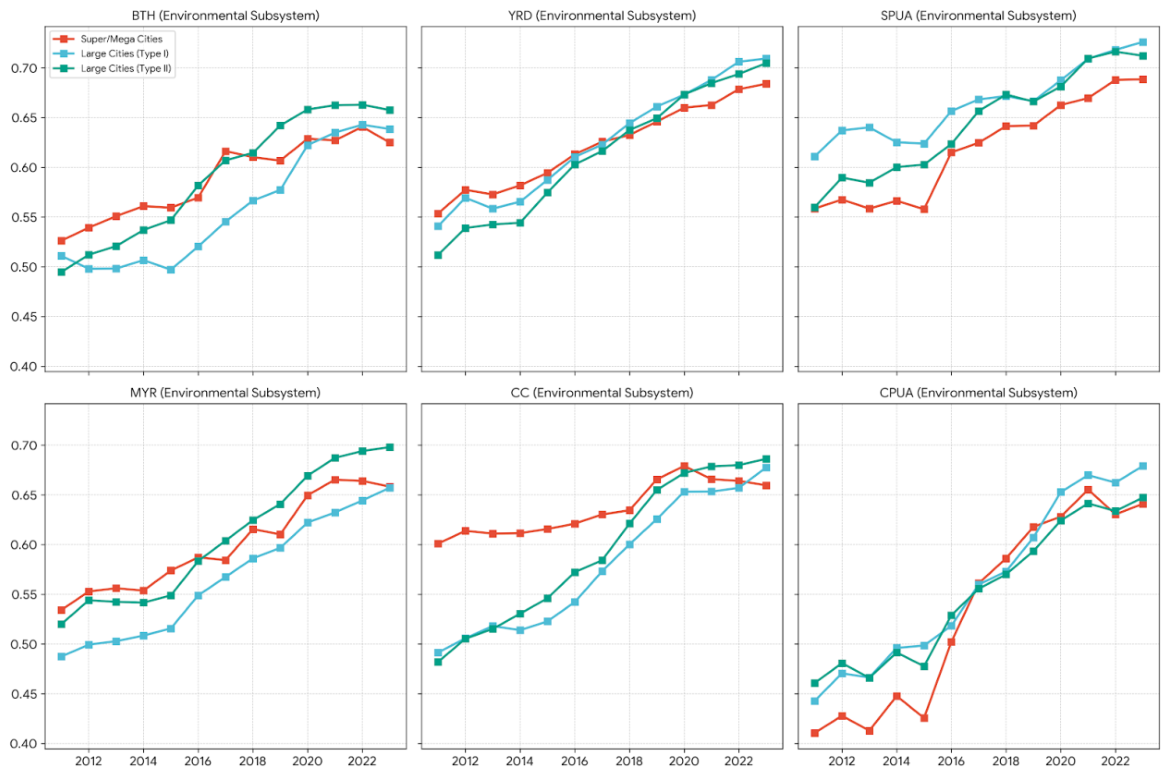
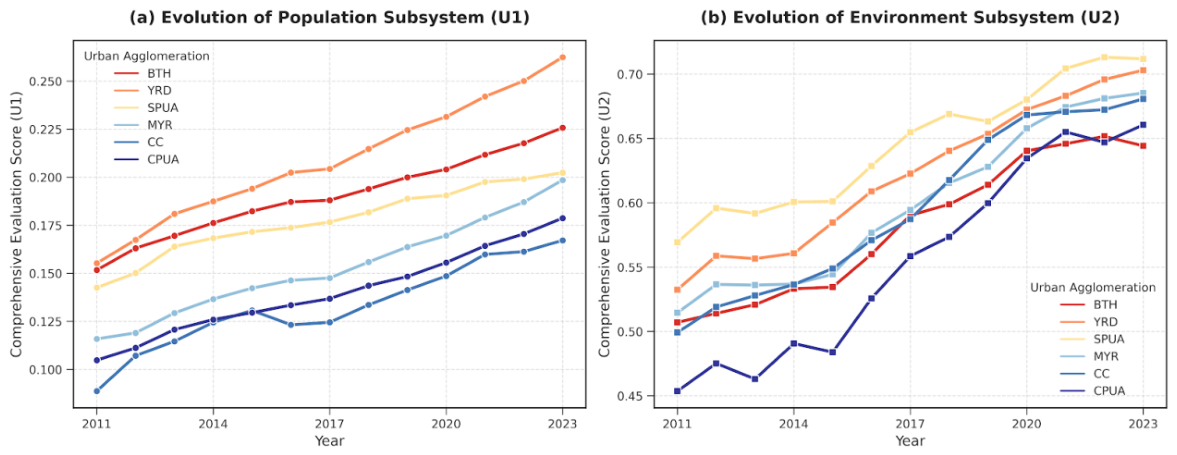
Figure 1a,b) and the differentiation across city size gradients within each UA (
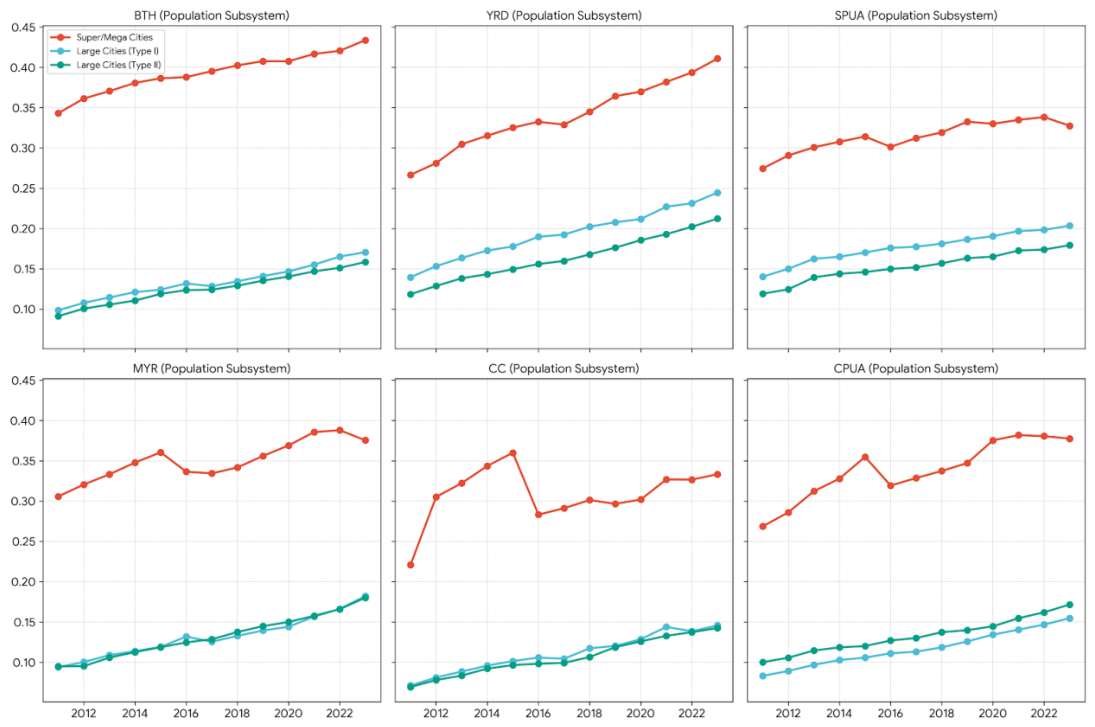
Figure 2 and
Figure 3), the two subsystems exhibit distinct evolutionary logics.
4.1.1. Hierarchical Differentiation and Central Agglomeration Characteristics of Population Subsystem Evolution
As shown in
Figure 1a, the mean
scores for all UAs exhibited a steady upward trend during the observation period, yet with significant spatial non-equilibrium characteristics. YRD and BTH consistently remained in the first tier, while central and western UAs, such as CPUA and MYR, despite faster growth rates, showed significant lags in absolute values. The evolutionary trends by city size in
Figure 2 reveal a distinct tier-locking effect within the
system. In all UAs, the
scores of super/mega cities significantly outperformed those of Type I and Type II large cities. In particular, in CC and BTH, the slope of the
curve for high-tier cities was notably higher than that of other small and medium cities. These findings validate the agglomeration theory in spatial economics, suggesting that during the HQD stage, central cities leverage their collaborative advantages in industry-university-research and public service premiums to continuously siphon high-level scientific talent and high-end industries. Consequently, the human capital dividend concentrates at central nodes and faces rigidity in diffusing downward.
4.1.2. Bottom Convergence and Inclusive Characteristics of Environment Subsystem Evolution
In contrast to the polarization observed in the population system,
demonstrated a significant homogenized convergence trend between 2011 and 2023. As illustrated in
Figure 1b and
Figure 3,
scores across all regions accelerated after the implementation of the “New Environmental Protection Law” in 2015, with the spatial gap between different city tiers narrowing considerably by the end of the period. This phenomenon of bottom rebound and comprehensive convergence reflects the institutional effectiveness of top-down environmental regulations, such as the “Air Pollution Prevention and Control Action Plan” and central environmental inspections [
33]. Notably, in SPUA and CPUA, the
scores of some Type II large cities even surpassed those of super/mega cities. This indicates that small and medium cities, benefiting from lower population densities and superior ecological foundations, exhibit greater resilience in environmental carrying capacity once basic environmental infrastructure gaps are filled.
These evolutionary patterns reflect differences in second-order driving mechanisms. Environmental governance, acting as a fast-moving variable heavily dependent on administrative mandates and capital investment, has driven small and medium cities to achieve rapid quality improvements through environmental infrastructure spending. However, such fiscal inputs may exert a crowding-out effect on soft public services like basic education and healthcare. Given that the population HQD process is a slow-moving variable reliant on endogenous evolution, homogenized environmental improvement has not effectively reversed the unidirectional siphon effect of core cities. Instead, it may have intensified the polarization process through hidden fiscal crowding-out mechanisms. Comparative analysis reveals that the human-land relationship in Chinese UAs is undergoing a historic shift from environmental constraints to population quality constraints [
2]. Currently, the environmental system has generally crossed high-score thresholds and achieved synchronized improvement across all city tiers, while the population system remains locked in a hierarchical sequence determined by city size, with means lingering at low levels. This structural contradiction between environmental homogenization and population polarization is the primary factor leading to system maladjustment.
4.2. Spatial Heterogeneity and Temporal Evolution of RDI
To further measure the evolutionary differences between the population and environment subsystems, this study introduces the RDI model. This indicator objectively reflects the constraint characteristics of UAs in the HQD process. According to the theoretical standards defined previously, an RDI > 1.2 indicates that regional population development relatively lags behind the level of environmental improvement.
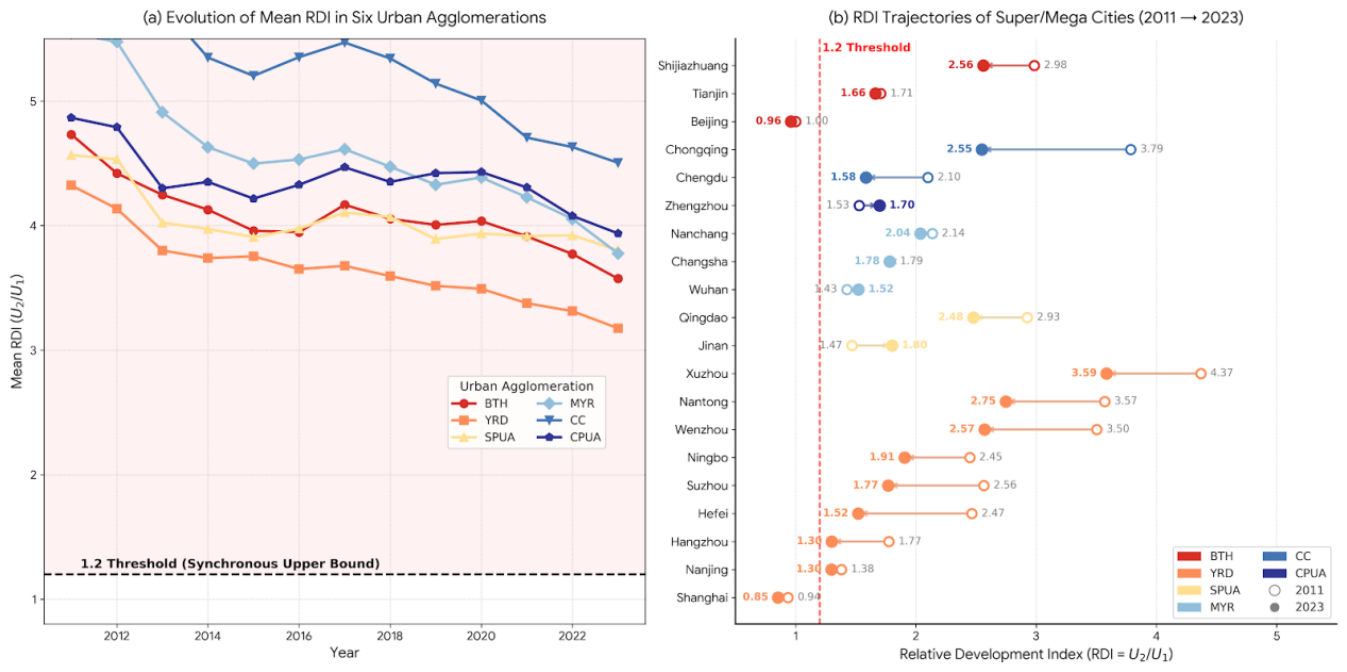
The macro-evolutionary trends in
Figure 4a show that the mean RDI of the six major UAs from 2011 to 2023 exhibited a structural characteristic of high environment and low population. During the observation period, the mean RDI of all UAs generally remained above the 1.2 threshold, with the means of some central and western UAs maintaining a higher range of 3.0 to 4.0. This indicates that, following the implementation of environmental regulation policies such as the new Environmental Protection Law, the ecological environmental carrying capacity of various regions has significantly improved. In contrast, due to the longer cycles required for human capital accumulation and labor productivity enhancement, the accumulation of human capital and the optimization of social structures have gradually become the primary factor restricting the system’s MCCD from leaping to a higher level [
34].
The evolutionary trajectories of super/mega cities in
Figure 4b show that the arrows for most core cities point to the left. This reflects that their RDI is gradually decreasing, indicating a narrowing trend in the developmental gap of population quality relative to environmental carrying capacity. However, with the exception of Beijing and Shanghai, which were in the synchronous development range of 0.8 to 1.2 in 2023 (RDI = 0.96 and 0.85, respectively), the majority of core cities still face certain coordination pressures [
35].
Specifically, core cities in the eastern region, such as Hangzhou (1.30) and Nanjing (1.30), have approached the synchronous development threshold of 1.2, but under the current classification, they still exhibit characteristics of relatively lagging population development. In the central and western regions, the RDI values of the MYR core, Wuhan (1.52), and the CC cores, Chengdu (1.58) and Chongqing (2.55), remain significantly higher than those of eastern core cities, demonstrating a typical state of lagging population development. These inter-regional and inter-tier differences indicate significant evolutionary asynchrony in non-world-class head cities [
19]. This asynchronous development between subsystems objectively forms the foundation for the spatial heterogeneity of the overall regional MCCD.
4.3. Spatiotemporal Evolution and Spatial Polarization Characteristics of MCCD
Based on identifying the evolutionary differences in the subsystems, this study utilized the MCCD model to calculate the coupling degree (C) and coupling coordination degree (D) of the six major UAs in China from 2011 to 2023, and combined it with the raincloud plot to identify internal polarization characteristics.
4.3.1. High-Level Equilibrium of Macro Interaction Intensity and Overall Improvement of Synergistic Quality
From the evolutionary trajectory of interaction intensity, the bidirectional effects between UA subsystems have generally deepened.
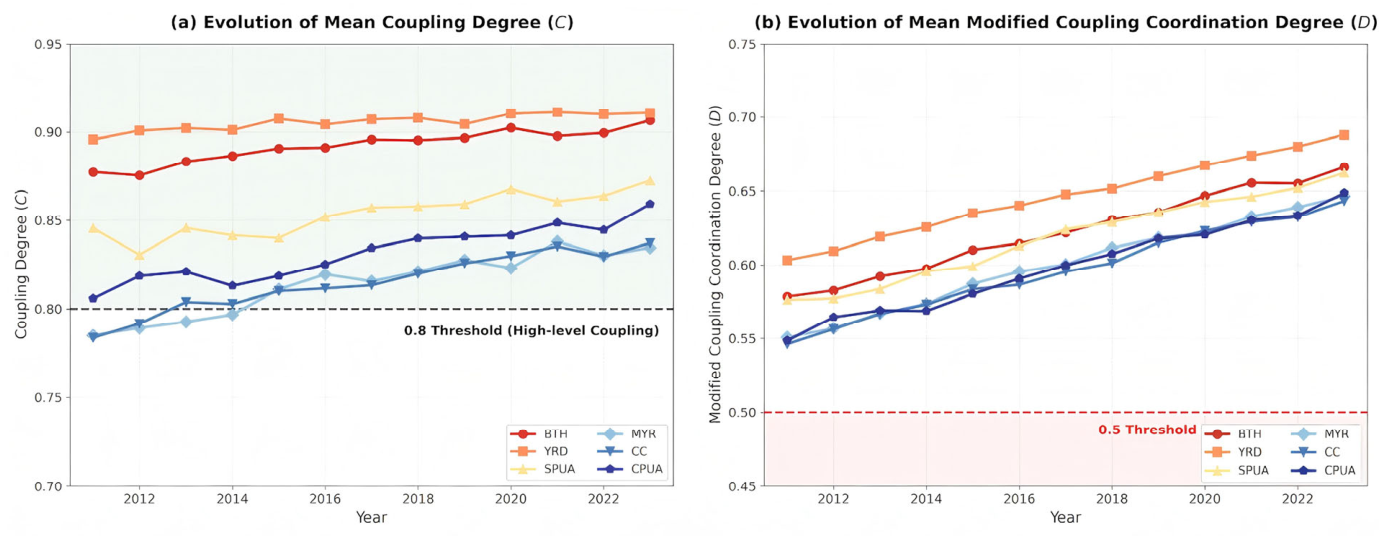
Figure 5a shows that the average
C value of the six major UAs steadily increased during the observation period, generally breaking through the 0.8 threshold around 2018. This indicates that a high-intensity interaction mechanism has formed between population factor flow and regional environmental capacity during the HQD process. Notably, this interaction mechanism exhibits significant spatial homogeneity, with the
C value trajectories of cities across all tiers highly overlapping (generally within the [0.75, 0.95] range). This suggests that the interaction intensity between systems has weakened scale differences, achieving a high-level equilibrium [
36].
The
D value, which reflects the synergistic quality of the system, also showed an overall improving trend macroscopically.
Figure 5b shows that in 2011, the average
D values of all UAs concentrated in the [0.42, 0.48] range, on the verge of maladjustment. By 2023, the mean values of all regions had crossed the coordination threshold of 0.5, climbing towards the primary and intermediate coordination stages [
37].
4.3.2. Distribution Broadening and Tier-Locking Effects Beneath Mean Improvements
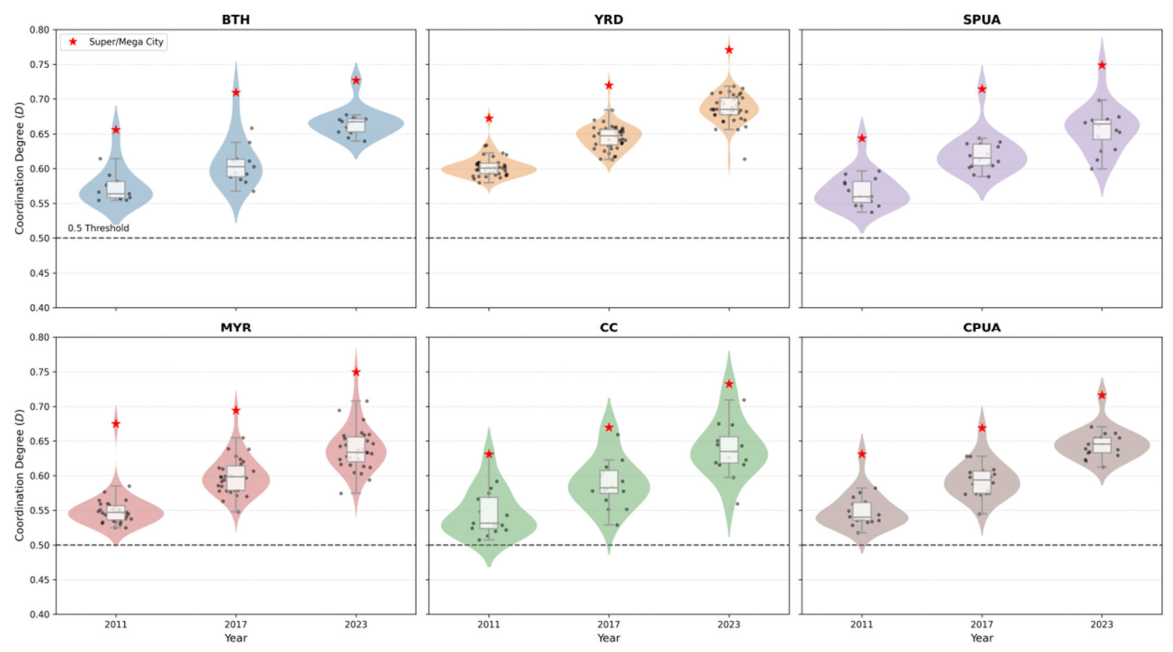
To analyze the micro-structure behind the improvement in macro means, this study utilized a raincloud plot (
Figure 6) to composite the probability density and individual dispersion characteristics of
D. Observing the statistical morphology, the probability density curves of UAs experienced a shift from high concentration to broad extension during the observation period. In 2011, the distribution morphology of each region was extremely steep, with data highly converging around the maladjustment range of 0.45, exhibiting obvious low-level homogeneity. By 2023, the peaks of the curves shifted downward and the bases broadened significantly, with regions such as YRD and BTH evolving distinct long-tail distribution characteristics. This broadening of probability density statistically reveals a hidden trend beneath the improving macro means. Specifically, the synergistic trajectories of individual node cities within UAs exhibit significant asynchrony. As a result, the internal developmental gaps are substantially widening [
38].
The evolutionary characteristics of the underlying micro-scatter points further reveal the polarization mechanism dominated by city tiers. The individual scatter points in
Figure 6 isolate a distinct “club convergence” characteristic. Nodes representing super/mega cities (red markers), relying on resource agglomeration advantages, climbed to a high-level synergistic range of approximately 0.8 in 2023, becoming the absolute core driving the mean improvement. However, the advancement of Type I and Type II large cities (black scatter points) within the same spatial units was slow. In particular, in CC, MYR, and CPUA, a large number of small and medium cities consistently lingered near the coordination threshold of 0.5. This unilateral advancement of core cities and the low-level locking of peripheral prefecture-level cities collectively led to the discrete spatial distribution.
Synthesizing the above characteristics reveals that the coupling coordination of population and environment systems in Chinese UAs is not only a dynamically improving process but also a spatial reorganization process accompanied by structural differentiation. The first-mover advantages of core cities have not naturally translated into efficient spillovers to surrounding areas. This spatial non-equilibrium derived from differences in city tiers necessitates that future regional comprehensive planning must shift towards differentiated governance strategies based on the developmental foundations of node cities.
4.4. Spatial Correlation and Geographical Pattern Evolution
After analyzing the spatiotemporal evolution and internal polarization characteristics of MCCD, this study further explores the interactive spillover effects of node cities in the six UAs in geographical space. Based on the inverse distance squared spatial weight matrix, we calculated the Global Moran’s I of D for 131 sample cities from 2011 to 2023 to test the spatial dependence of the regional synergistic development level.
Table 6 presents the calculation results over the years. During the observation period, the Global Moran’s
I values for all years were greater than 0, the corresponding
Z-statistics were all above 3.8, and the
p-values all passed the significance test at the 1% confidence level. This characteristic confirms that the synergistic development level of the population and environment systems in the six Chinese UAs is not randomly distributed in geographical space but exhibits significant positive spatial correlation. Observing the temporal evolutionary trajectory, the Global Moran’s
I fluctuated upward from 0.174 in 2011 to 0.253 in 2023. The growth trend of this index indicates a continuously strengthening spatial agglomeration among node cities. Cities with high synergistic levels tend to cluster geographically. Conversely, cities with low synergistic levels exhibit pronounced spatial locking characteristics.
The enhancement of spatial autocorrelation further corroborates the geographical logic of regional synergistic evolution. High-tier cities in the eastern core areas have driven geographically adjacent cities to improve their coordination levels through industrial chain extension and technology spillovers, forming relatively stable high-synergy agglomeration areas. Some inland peripheral cities, constrained by the factor siphon of central cities, find it difficult to independently complete industrial structure upgrading and environmental governance, thereby falling into low-level spatial locking. This spatial polarization phenomenon reflects a spatial dynamic where siphoning and synergy coexist. Core cities have achieved synergy with surrounding cities in environmental governance and the dispersion of traditional industries, but significant siphoning effects still exist for high-quality factors such as high-end R&D talent and financial capital. This core-periphery factor flow pattern may exacerbate the risk of secondary cities falling into an “agglomeration shadow.”
4.5. Analysis of the Driving Mechanism for Synergistic Development Based on OPGD
Based on the driving factor system encompassing economic, social, policy, and technological dimensions constructed previously, this study further applies the OPGD model to reveal the underlying driving mechanisms leading to the unbalanced evolution of the regional system.
To avoid the masking effect of temporal averaging on spatial heterogeneity, we utilized the cross-sectional data from three representative policy nodes. By conducting spatial discretization and geographical heterogeneity detection on cross-sectional data from 2011, 2017, and 2023,
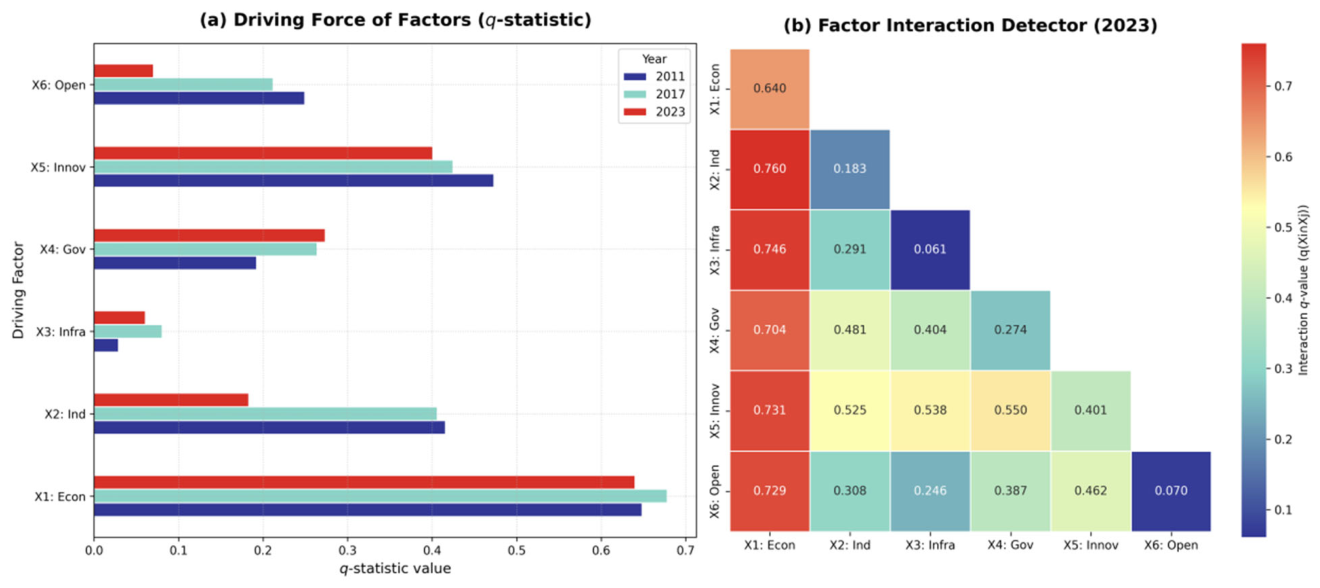
Figure 7a illustrates the temporal evolution of the single-factor driving force (
q-statistic). The results indicate that the economic development level
and technological innovation
consistently occupied a dominant position, with their q values stabilizing at high levels of around 0.65 and 0.45, respectively, during the observation period. This confirms that a solid economic foundation and active innovation momentum are the core driving forces promoting the high-level coupling of the regional population and environment [
39].
Notably, the driving explanatory power of infrastructure construction
consistently remained at a low level (none exceeding 0.10). This statistical evidence indicates that the traditional spatial pull model relying on the physical expansion of large-scale infrastructure has exhibited significant diminishing marginal utility at the current stage [
40]. When a regional transportation network reaches high saturation, compressed transportation costs promote industrial spillovers. However, this compression also weakens the physical barriers that help peripheral cities retain core factors. Consequently, core cities accelerate their siphoning of high-quality human and innovative resources from secondary node cities.
Meanwhile, the q value of the degree of government intervention steadily increased from 0.192 in 2011 to 0.274 in 2023. This confirms that in areas highly susceptible to market failures, such as ecological environmental restoration and the equalization of public services, the macro-control of local governments is playing an increasingly important safeguarding role.
The two-factor interaction detection results (
Figure 7b) reveal the non-linear enhancement characteristics stimulated by factor superposition. In 2023, the interactive q value of any two driving factors was strictly greater than the explanatory power of their respective single factors, primarily manifesting as bivariate enhancement and non-linear enhancement. In particular, the interaction between economic development level and technological innovation
had the highest explanatory power, constituting the strongest driving force for the synergistic evolution of the system. Furthermore, infrastructure
, which had a weak single-factor explanatory power, achieved a significant multiplier-level leap in its q value after interacting with technological innovation
or government intervention
. This indicates that traditional hardware infrastructure must be combined with soft technological innovation inputs and institutional design to reactivate its positive spatial spillover effects on coordinated regional development.
4.6. Obstacle Factors and Spatiotemporal Diagnosis of the Synergistic Evolution of Population and Environment Systems
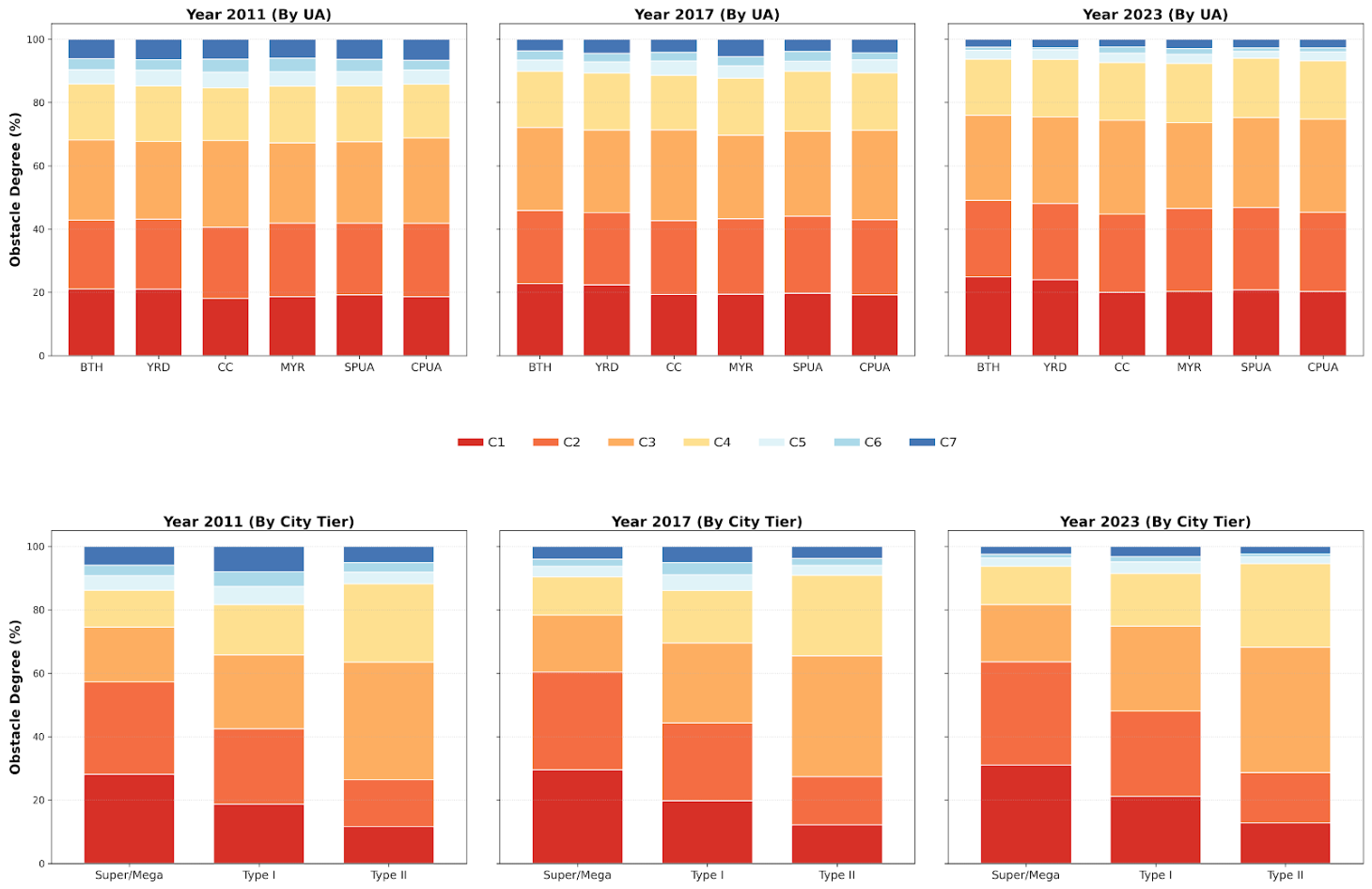
To identify the constraining factors in the synergistic evolution of the population and environment systems in Chinese UAs, this study introduces the ODM to diagnose the obstacle factors in 2011, 2017, and 2023 from the dual dimensions of geospatial patterns and city tier differentiation. By constructing a comprehensive diagnosis matrix (
Figure 8), this study analyzes the evolutionary characteristics of coupling resistance in terms of temporal evolution, spatial heterogeneity, and tier differentiation.
4.6.1. Temporal Evolution Characteristics of Obstacle Factors
Observing the longitudinal evolutionary trend in
Figure 8, the system resistance exhibits a transition from the dual constraints of population and environment to a primary constraint from the population system. During the observation period, the obstacle degrees of the population subsystem criterion layers, namely population agglomeration (C1), population structure (C2), and public services (C3), expanded significantly, gradually accounting for over 80% of the total obstacle degree. This indicates that as the urbanization process enters its middle and late stages, optimizing population structure and improving the quality of public services have become the primary factors constraining the high-quality coupling of the system. In contrast, the resistance of the environment subsystem decreased significantly. The obstacle degrees of resource consumption (C5), environmental pollution (C6), and ecological governance (C7) continuously shrank, reflecting that the direct constraining force of environmental factors on regional synergistic evolution is weakening year by year.
4.6.2. Spatial Heterogeneity Diagnosis from the Perspective of Urban Agglomerations
The upper panel of
Figure 8 reveals the spatial differentiation characteristics of the resistance structure among different UAs. In the eastern core areas represented by BTH and YRD, the primary obstacles have long been concentrated in population agglomeration (C1) and population structure (C2). With the high concentration of factors in high-tier cities, the overload of population density poses continuous pressure on the comprehensive carrying capacity of these cities. By contrast, in the inland UAs represented by CPUA and CC, the proportions of public services (C3) and social security (C4) in their obstacle structures are significantly higher than those in the eastern regions. This indicates that although inland UAs face relatively lower environmental pressure, the lag in public resource allocation has become the primary shortcoming restricting their advancement towards a high-level coordination range.
4.6.3. Structural Differentiation from the Perspective of City Tiers
The lower panel of
Figure 8 further deconstructs the structural differentiation phenomenon of the system from the perspective of administrative tiers. The obstacle factors of super and mega cities are highly concentrated in the dimension of population agglomeration (C1), reflecting the issue of diminishing marginal efficiency in high-tier cities caused by high population density. In contrast, the primary obstacles for Type II large cities stem from the relative inadequacy of public services (C3) and social security (C4). Although such cities possess abundant ecological space, the insufficient perfection of social infrastructure limits their attractiveness to high-quality factors, presenting an imbalanced characteristic of factor loss and resource idleness.
However, it is crucial to recognize the profound structural heterogeneity within these Type II large cities. Certain non-provincial regional central cities endowed with unique technological or industrial advantages—such as Mianyang (China’s Science City) in the CC urban agglomeration and Wuhu (an advanced manufacturing hub) in the YRD—exhibit strong resilience against the “siphon trap.” By leveraging their specialized industrial niches and targeted S&T resource allocations, these node cities can effectively transform into “secondary growth poles.” Their emergence plays a pivotal role in counterbalancing the single-core siphoning effect of megacities and facilitates the evolutionary transition of urban agglomerations from a monocentric structure toward a more resilient, polycentric “node networking” paradigm.
Synthesizing the diagnosis results from the above spatiotemporal and tier dimensions, the coupling coordination of population and environment systems in Chinese UAs has surpassed physical environmental constraints and entered a structurally bottlenecked period centered on human factors. Breaking through this bottleneck requires the spatial governance path to shift from universal end-of-pipe environmental governance to differentiated targeted strategies based on the characteristics of node cities. The eastern core areas urgently need to alleviate agglomeration pressure through population dispersion and structural optimization, whereas inland and small-to-medium-sized cities must shift their strategic focus to the precise input of public services and social security, thereby eliminating the structural shortcomings that hinder the system from advancing towards high-quality coupling.
4.7. Robustness Checks and Sensitivity Analysis
To further verify the reliability of the aforementioned spatiotemporal evolution patterns and driving mechanism conclusions, this study conducted robustness checks from three dimensions: replacing the spatial weight matrix, testing threshold sensitivity, and lagging core variables.
First, replace the spatial weight matrix. In the baseline models of spatial autocorrelation testing and OPGD, this study primarily relied on the inverse distance squared spatial weight matrix. To rule out the possibility that the measurement of spatial spillover effects is affected by a single weight definition, we replaced it with a K-Nearest Neighbors (KNN) weight matrix (setting ) for re-estimation. The results show that the Global Moran’s I of the synergistic evolution of population and environment systems in the six UAs remains significantly positive at the 1% confidence level, and the spatial differentiation pattern of high-level agglomeration has not fundamentally changed.
Second, threshold sensitivity testing. In the stage division of relative development degree and coupling coordination degree (D), this study conducted a drift test on the established empirical thresholds. The results indicate that under the perturbation of parameter fine-tuning, the evolutionary trend of core cities taking the lead in entering the high-level range, as well as the basic characteristic of small and medium-sized cities facing public service shortages, maintains high consistency.
Third, lag processing of core explanatory variables. Considering that macroeconomic driving factors may have a time-lag effect on the synergistic system, this study lagged all driving factors in the OPEG model by one period () and re-detected them. The results confirm that economic foundation and technological innovation remain the dominant driving forces, and the conclusion that traditional infrastructure construction has weak driving power remains robust.
Fourth, Time-Window Sensitivity Test excluding external shocks. Considering that the severe external shocks between 2020 and 2022 significantly disturbed normal population mobility and economic activities, there is a risk that the observed structural transitions might be a short-term statistical artifact. To eliminate this bias, we conducted a sensitivity test by excluding the data from the 2020–2022 period and recalculating the core models (RDI and ODM). The restricted sample results consistently demonstrate that the transition of system constraints—from physical environmental pressures to human capital and social service bottlenecks—remains highly stable and significant. This confirms that the shift toward a talent-driven dividend is a long-term, endogenous structural evolution rather than a transient anomaly caused by specific external shocks.
5. Discussion
5.1. Theoretical Dialog on the Historical Shift in Core Constraining Factors
In the past decade of research on the interaction between urbanization and the ecological environment in China, academia has generally considered environmental pollution and resource depletion as the primary bottlenecks restricting high-quality regional development. However, based on the obstacle degree diagnosis, this study yielded a finding with distinct stage characteristics: the comprehensive obstacle degree of traditional environmental dimensions has converged to below 10%, while the population subsystem, represented by population structure and public services, has become the primary resistance to system synergy. This finding captures a historical turning point in the developmental stage of Chinese UAs. On the one hand, since the comprehensive implementation of ecological civilization system reforms in 2015, top-down environmental inspections and end-of-pipe governance investments have fundamentally repaired the ecological baseline, corroborating the academic hypothesis that the inflection point of China’s Environmental Kuznets Curve (EKC) has arrived ahead of schedule. On the other hand, this phenomenon exposes that under the model where land urbanization outpaces population urbanization, cities experience significant lags in the provision of soft public goods such as education and healthcare. The marginal contribution of this study lies in quantitatively confirming the novel asynchronous state of “environment leading, population lagging” through the RDI, and further revealing the heterogeneity of this time lag among cities of different tiers, thereby providing new empirical evidence for re-examining human-land relations in the new era. This indicates that environmental governance, as a “fast variable” relying on administrative directives, has rapidly filled the gaps; whereas the demographic dividend, a “slow variable” highly dependent on market and institutional nurturing, has become the new system resistance due to its sluggish evolution.
5.2. Mechanistic Reflection on the Diminishing Marginal Utility of the “Large Infrastructure” Model
When exploring the external driving mechanisms of coordinated regional development, traditional spatial economics theories and corresponding policy practices often rely heavily on fixed asset investments, such as transportation network expansion and new city construction, to drive factor mobility. However, the calculation results based on the OPGD indicate that the single-factor driving force of infrastructure construction is at the lowest level among all macro variables. This statistical finding offers profound theoretical implications: against the backdrop of highly saturated hardware facilities like high-speed rail networks and highways in core UAs, the spillover effects generated by the continuous expansion of physical space have exhibited a significant trend of diminishing marginal utility.
It is imperative to acknowledge that this diminishing marginal utility exhibits profound spatial structural heterogeneity. The globally low driving force of traditional infrastructure in the OPGD model is largely diluted by the saturation effect in mature eastern UAs. In regions like the YRD and BTH, physical infrastructure is indeed approaching saturation, making institutional “soft connectivity” more urgent. Conversely, in central and western inland UAs (such as the Chengdu-Chongqing UA), the density and accessibility of transportation networks remain the indispensable physical foundation for overcoming geographical barriers, facilitating factor mobility, and avoiding premature de-industrialization. Therefore, the driving utility of infrastructure must be evaluated based on the specific developmental stage of the UA.
In a monocentric spatial structure, overly advanced transportation investment often causes peripheral node cities to fail in achieving “borrowed size”; instead, it accelerates the loss of high-quality factors, exacerbating their risk of falling into an “agglomeration shadow.” The driving engine of regional synergy has substantially given way to the economic development level and technological innovation .
Supported by the robust interactive explanatory power of “Economic development
Technological innovation” revealed in the OPGD analysis, this study posits a critical mechanism. In the advanced stages of urbanization, traditional physical hard connectivity, if devoid of soft docking, risks degrading into a siphon pipeline that funnels high-quality resources from peripheral areas to core cities. Hardware infrastructure can only break this zero-sum game and transform into a genuine spillover channel when it is superimposed with soft technological networks driven by knowledge spillovers and digital empowerment. Specifically, as the digital economy proliferates, the evolutionary path of urban agglomerations is transitioning towards “node networking.” Peripheral hollowing is therefore not an absolute destiny but a transitional risk. By actively embedding into digital collaboration networks, secondary node cities can remotely access high-end innovative elements from core cities, overcoming the constraints of physical distance. This transition from physical spatial expansion to digital “soft connectivity” represents the fundamental mechanism for mitigating the single-core siphon trap and achieving high-quality regional coupling. Furthermore, recent international studies highlight that transitioning to digital and smart urban networks is critical for mitigating environmental externalities and enhancing urban green land use efficiency globally [
41,
42]. The proliferation of the digital economy not only optimizes resource allocation but also systematically reduces institutional friction, transforming the ‘core-periphery’ zero-sum game into an inclusive technological spillover framework.
5.3. Research Limitations and Future Prospects
Although this study strives for rigor in its evaluation system and measurement models, limited by the availability of macro-statistical data, the spatial scale of this paper primarily focuses on the prefecture-level city. Considering that the synergistic evolution within UAs often exhibits more granular spatial heterogeneity at the county level or even on micro-spatial grids, future research could leverage remote sensing imagery and multi-source big data to downscale the research and depict more precise local synergy networks.
Furthermore, the driving mechanism analysis in this study focuses on macroeconomic and social attribute variables, without incorporating specific major policy shocks into the model as quasi-natural experiments. Subsequent research could combine difference-in-differences (DID) models or spatial regression discontinuity design (Spatial RDD) to further accurately identify the net causal effects of specific policy instruments, such as carbon emission trading or household registration system reforms, on the high-level coupling of the population and environment systems.
Secondly, regarding the evaluation indicator system, this study exclusively employed the objective Entropy Weighting method to prevent human bias across the massive 13-year panel dataset of 131 highly heterogeneous cities. However, as a purely data-driven approach, this method may occasionally overemphasize data variability and lack theoretical priors. Future research could benefit significantly from integrating subjective expert-based approaches (such as the Analytic Hierarchy Process, AHP) with objective algorithms to establish a more theoretically guided, reliable, and robust combined weighting system.
Finally, constrained by the availability of continuous long-panel data at the prefecture level, the current evaluation framework still heavily relies on traditional human capital stock proxies (e.g., the number of college students). As urbanization enters a deep-water phase, future research must urgently shift the evaluative focus towards the “adaptability among population, industry, and public services.” Incorporating deeper institutional and structural indicators—such as the gap between registered (hukou) and permanent populations, the degree of citizenization of the floating population, and effectively distinguishing between “transit innovation” and “local innovation”—will be paramount to accurately deciphering the substantive coupling mechanisms within complex urban systems.
6. Conclusions and Policy Implications
6.1. Main Conclusions
Taking 131 node cities in six major UAs as the research object, and based on calculating the fundamental scores of the population and environment subsystems from 2011 to 2023, this study comprehensively applied RDI, OPGD, and ODM to deeply deconstruct the spatiotemporal geographical patterns and driving mechanisms of regional synergistic evolution. Four core conclusions are drawn:
First, the macro-coupling trend has achieved an overall leap, but UAs exhibit significant “core-periphery” spatial polarization. During the observation period, the coupling coordination degree (D) of all UAs successfully crossed the low-level antagonism stage and entered a benign coordination range. However, regional developmental gaps face the risk of solidification. Eastern core areas such as the YRD and BTH exhibit a strong leading trend relying on first-mover advantages; the Global Moran’s I test further reveals that high-level and low-level cities present increasingly strengthened homogeneous agglomeration characteristics in geographical space, causing central and western inland UAs like CC and CPUA to fall into a typical Matthew effect and hierarchical lock-in.
Second, the temporal characteristics of system evolution have undergone a fundamental shift, reshaping the traditional evolutionary path of “environmental constraints.” The evolutionary trajectory of the RDI indicates that under the intervention of the national ecological civilization strategy, the restoration speed of environmental carrying capacity in major UAs has substantially surpassed the marginal growth rate of population inflow. This succession exhibits significant tier differences among cities. Relying on robust financial and governance capacities, high-tier super and mega cities have entered an advanced successional stage featuring a leading environment and a relatively lagging population. In contrast, the asynchronous characteristics of the vast secondary node cities remain relatively mild.
Third, the external driving engine has entirely shifted from “physical space expansion” to a dual drive of “endogenous innovation and economic foundation.” The OPGD results confirm that the traditional physical space expansion model has exhibited significant diminishing marginal utility, and the single-factor spatial driving force relying on infrastructure construction has dropped to a marginal level. Conversely, the economic foundation and technological innovation constitute the absolute core engines driving the regional transition to green and low-carbon, and their non-linear interactive enhancement effect is the most significant; simultaneously, the macro-control of local governments plays an increasingly critical role in addressing market failures and providing public service safety nets.
Fourth, internal synergistic resistance has entirely converged on the population subsystem and exhibits significant structural differentiation among cities of varying tiers and locations. The comprehensive obstacle degree of traditional environmental pressures and pollution governance has dropped below 10% in all sample cities. The population subsystem constitutes the absolute primary source of resistance and exhibits extreme tier mismatch. For super and mega cities in BTH and YRD, the primary obstacle stems from the dilution of high-level human capital and social structural tension caused by the massive influx of the floating population, where population scale expansion produces a dilution effect on existing innovation resources. In contrast, the core shortcomings of Type I and Type II large cities in the central and western inland areas are concentrated in the severe scarcity of soft public services such as basic education and healthcare, as well as social security levels, constituting a critical constraint that makes it difficult for them to gather high-level factors.
In summary, the evolutionary trajectory of Chinese UAs—shifting from “environmental bottom-line governance” to “human capital quality dividends”—captures a fundamental transition in system constraints during advanced urbanization. These findings offer forward-looking cautionary insights for other Global South nations (e.g., India and Vietnam) currently navigating the nexus of rapid urban expansion. It emphasizes that in formulating long-term sustainable development strategies, these nations should bypass the conventional “pollute first, treat later” or “material-centric” traps by preemptively integrating human-centric factor coupling and institutional alignment into their policy frameworks.
6.2. Policy Implications
To directly translate the empirical findings of the Obstacle Degree Model (ODM) into actionable governance strategies, we have established a logical mapping matrix (
Table 7). This matrix aligns the primary systemic constraints with targeted policy tools tailored to specific spatial scales and city tiers, ensuring that our policy recommendations are rigorously evidence-based.
Based on the spatial interaction characteristics and the historical shift in bottleneck constraints revealed in this study, the governance paradigm must pivot. To break the current structural imbalances within UAs and promote the transition toward deep human-land coupling, policymakers must transcend the traditional mindset of “physical spatial expansion or contraction.” Instead, the core policy focus must urgently shift toward reducing “institutional friction” to facilitate the spatial coupling of high-quality factors. Accordingly, this paper proposes the following four policy recommendations:
Empirical results clearly indicate that urban agglomeration development must reduce path dependence on land-based finance and traditional fixed-asset investments. Local governments at all levels should optimize the structure of hardware investment according to their specific spatial realities. For mature eastern UAs, resources should be decisively directed towards digital networks, knowledge, and green technology R&D. However, for central and western UAs, it remains crucial to strategically fill the gaps in physical transportation infrastructure to establish the fundamental pathways for factor exchange. The interactive enhancement effect of the economy and technology should be fully utilized to establish cross-city green technology property rights trading markets, replacing physical “hard connectivity” with institutional “soft integration” to activate total factor productivity and technology spatial spillovers.
- 2.
Implement tier-differentiated governance aligned with SDG 11 to promote structural optimization in super cities and public service capacity building in small and medium-sized cities.
Given the differentiated resistance characteristics of cities of varying scales, homogeneous urbanization policies must be abandoned. For super and mega cities in BTH and YRD, the core task is not merely physical population decongestion, but rather reducing institutional friction to optimize the human capital structure. This requires dismantling institutional barriers to talent mobility and implementing inclusive settlement policies (Hukou reform) to bridge the gap between registered and permanent populations. By systematically dispersing low-value-added industries to the periphery, these cities can alleviate the dilution effect caused by structural crowding and convert their demographic scale into a genuine talent dividend. For the numerous Type I and Type II secondary node cities, the focus of local finance must decisively shift from extensive physical spatial expansion to soft public services, massively expanding the supply of high-quality basic education and medical resources. By narrowing the public welfare gap with core cities, they can construct vital anchors for in situ urbanization.
- 3.
Break the governance inertia of “prioritizing space over population” and establish a reverse allocation mechanism coupling resources with population mobility.
In the new stage where physical environmental shortcomings have been largely repaired, the spatial planning of UAs must establish the absolute priority of population structure optimization and public welfare enhancement. When drafting the new round of territorial spatial planning, a reverse constraint mechanism of “determining population by public services” should be introduced. It must ensure that the allocation quotas for newly added construction land, affordable housing, and educational/medical resources are dynamically linked to the actual inflow scale of the permanent population and the evolutionary trend of aging, thereby mitigating the structural lag on the supply side of social public services and creating truly people-centric resilient cities.
- 4.
Construct cross-regional benefit-sharing networks to break inefficient spatial lock-in and mitigate the monocentric siphoning trap.
Addressing the Matthew effect and the hierarchical lock-in risk of central and western UAs exposed in the spatial autocorrelation tests, national and provincial levels must reconstruct the interest distribution pattern within UAs in top-level design. Core cities must be prevented from excessively siphoning peripheral factors. Efforts should explore the establishment of cross-administrative tax-sharing systems and dual-accounting mechanisms for output value. Substantive institutional dividends should be utilized to incentivize core areas to actively direct high-end R&D, modern manufacturing, and high-quality public service resources toward secondary node cities trapped in the “agglomeration shadow,” ultimately realizing spatial inclusiveness and balanced full-domain evolution within UAs.