Article

Production and Characterization of Pellets from Blends of Residual Biomass of Pinus Wood and Coffee Straw

by
Shoraia Germani Winter
1,
Antônio José Vinha Zanuncio
2,*,
Raquel Julia Cipriano dos Santos
3,
Angélica de Cássia Oliveira Carneiro
3,
Bárbara Lopo de Lima
1,
Amélia Guimarães Carvalho
2,
Fernanda de Jesus Jorge
3,
Iara Fontes Demuner
3,
Letícia Costa Peres
3 and
Thaynara Silva Vieira
3
1
Institute of Chemistry, Federal University of Uberlândia, Uberlândia 38408-100, MG, Brazil
2
Institute of Agricultural Sciences, Federal University of Uberlândia, Monte Carmelo 38500-000, MG, Brazil
3
Department of Forestry Engineering, Federal University of Viçosa, Viçosa 36570-000, MG, Brazil
*
Author to whom correspondence should be addressed.
Sustainability 2026, 18(11), 5586; https://doi.org/10.3390/su18115586
Submission received: 15 April 2026 / Revised: 22 May 2026 / Accepted: 29 May 2026 / Published: 2 June 2026
(This article belongs to the Section Resources and Sustainable Utilization)

Abstract

The world’s energy matrix faces challenges in replacing fossil fuels and reducing greenhouse gas emissions. Pellet production is effective for the correct disposal of agricultural waste through the production of biofuels. The objective of this work was to produce and characterize pellets from blends of pine and coffee straw residues, in addition to their compliance with ISO 17225-6/2021. The biomasses were subjected to analysis of dry and wet base moisture, bulk density, upper and lower calorific value (HCV and LCV dry), immediate, structural and elemental chemistry, chloride content, and thermogravimetric behavior. The pellets were produced in nine blends with the Amandus Kahl pellet mill, model 14-175, being submitted to analysis of productivity, moisture in dry and wet base, HCV and LCV dry, chloride, immediate chemistry, hardness, diameter and length, durability and percentage of fines, the analyses were compared by the Scott-knott test at the level of 95% probability. The blends that presented the best overall performance were 100% pine and a mixture of 87.5% pine and 12.5% coffee straws, especially for the higher calorific value (20.65 and 20.65 MJ/kg), moisture (8.98 and 9.17%), and ash (0.22 and 1%), but had limitations regarding mechanical durability (96.74 and 97.12%). The use of blends in pellet production is promising to promote the sustainable use of agricultural waste and the generation of clean energy.

1. Introduction

The world’s energy matrix is dependent on non-renewable sources, such as oil and its derivatives [1]. The use of non-renewable fuels contributes to greenhouse gas emissions [2], aggravating climate change and remaining one of the major environmental challenges [3]. Therefore, the demand for renewable energy grows and drives research and use of agro-industrial and forestry residues [4,5]. From this perspective, initiatives to transform waste materials into clean energy sources promote a circular, sustainable, and efficient energy model.
Brazil is the world’s largest producer and exporter of coffee, responsible for a third of production. Due to this, the coffee growing sector has great economic and social importance, with 2.25 million hectares destined to cultivation and a production of 58.81 million bags processed in 2024, which generates about R$ 66.50 billion in total gross revenue [6,7]. The large production of coffee leads to a large amount of waste generated, as 50% of the weight of harvested coffee is converted into waste, comprising husk, parchment, and green beans [8,9]. These wastes cause environmental problems, such as contamination of soil and water bodies when incorrectly managed [10].
The densification of biomass for pellet production is an alternative to the problems caused by incorrect disposal. This process increases the density of the material and, consequently, the energy density and homogeneity, and decreases humidity, increasing combustion efficiency [11,12]. There are also operational and logistical benefits, such as lower labor costs and less transport and storage space [13].
Biofuels generated from biomass can be considered carbon-neutral fuel, since the CO2 released in burning is absorbed during the photosynthesis process in biomass growth [14]. There are several types of biomass that can be used, but the characteristics vary from each other and can directly influence the quality of the pellets, as is the case of higher ash content and lower melting point in non-wood biomass, such as agricultural residues, high moisture content, particle size variability, so the use of blends with woody biomass makes it possible to overcome these limitations [15,16,17,18].
Pellets are a sustainable and efficient alternative source of energy, as they are a solid biofuel that can be produced with various biomasses [19]. In Brazil, the production increased by 850% between the years 2015 and 2021, for both domestic consumption and export, so that the production potential is more than 765 thousand tons per year when looking at wood pellets only [20]. The expansion of this production depends on studies of new biomasses aimed at pellet production, either to reduce dependence on fuels from fossil sources or to supply sectors with high energy demand with quality raw material [21].
Due to the growing need for clean energy and the use of agricultural waste, the objective of this work was to study the transformation of coffee straw into pellets, using Pinus sp. in different blends as a way to overcome the already known limitations of coffee straw. The resulting pellets meet the quality standards of ISO 17225-6 [22] for commercialization and establish a high-value application for this large-scale agricultural waste.

2. Materials and Methods

2.1. Biological Material

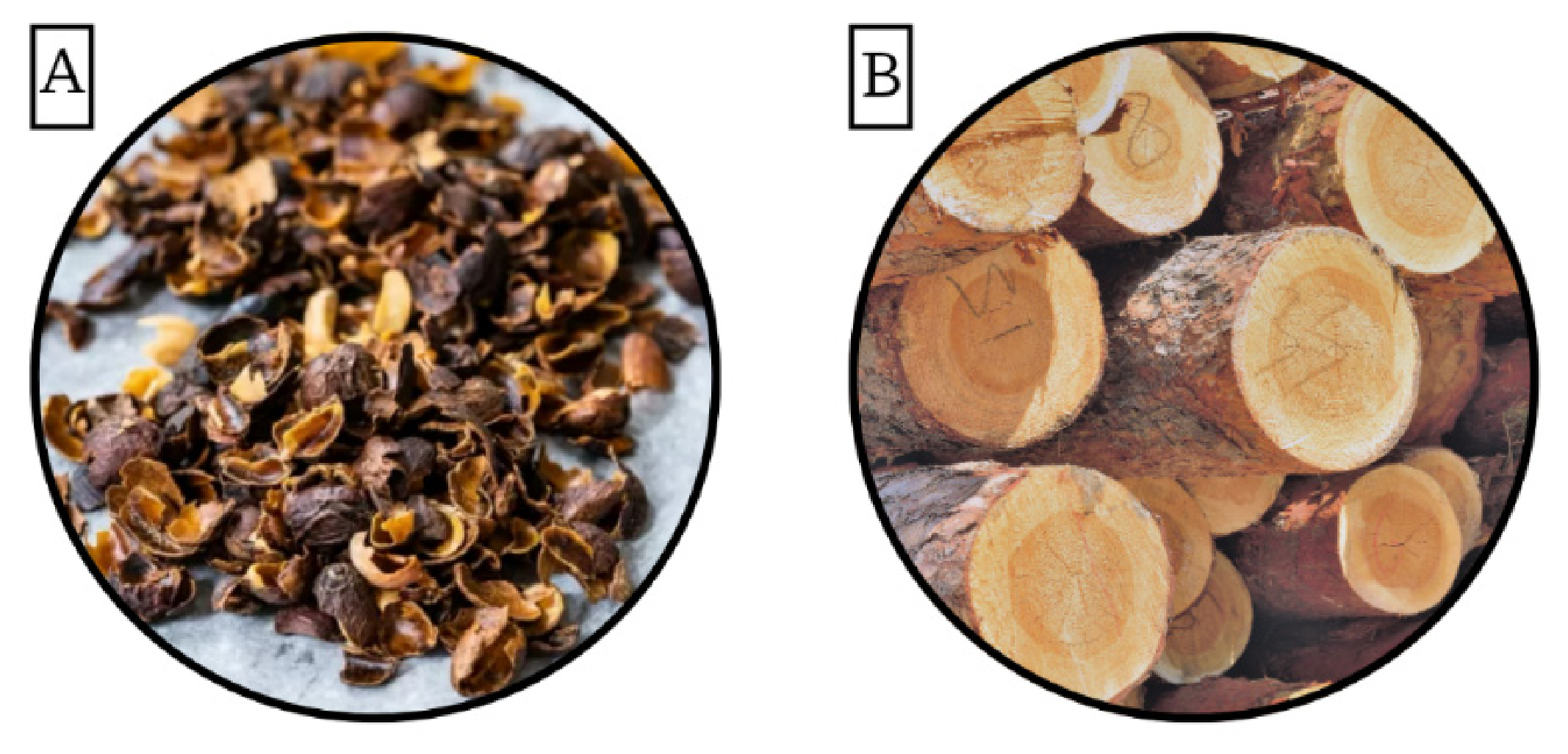
The raw materials used were coffee straw and pine waste (Figure 1). The coffee straw was composed of the coffee husk, pulp, pergolum, and silver skin, parts of the coffee fruit removed after the processing of the coffee bean. The pine residues were obtained from Pinus sp. wood processing at the Wood Panels and Energy Laboratory (LAPEM) of the Federal University of Viçosa (DEF/UFV).

2.2. Biomass Characterization

The two biomasses were dried in the sun. The coffee straw was sieved using a 1.77 mm sieve, and the material retained was destined for the experiment. The pine shavings were crushed with a TMF 2660 shredder (TMF, Santa Cataria, SC, Brazil). To perform the physicochemical characterizations, the material was ground in a Willey mill, and the material retained in the 60-mesh sieve was used for the tests.
The bulk density was determined according to DIN EN 15103 [23]. The higher calorific value (HCV) was obtained according to DIN EN 14918 [24] from an adiabatic calorimetric pump. The lower calorific value on a dry basis (LCVdry) was calculated from Equation (1) according to studies by Hafford et al. [25].
L C V   d r y = H C V 2.443 × 8.936 h y d r o g e n   c o n t e n t 100
The proximate analysis was performed according to ASTM D1762-84 [26], thus obtaining the contents of volatile materials, ash, and fixed carbon. The chloride content was obtained using the methodology described in the Association [27] with the aid of a DM-23 digital pH meter (Digimed, São Paulo, SP, Brazil). The elemental chemical composition was determined using the Vario Micro Cube CHNS (Elementary®, Langenselbold, Germany), and the oxygen was obtained through Equation (2), according to DIN EN 15296 [28].
O x i g e n = 100 C a r b o n + N i t r o g e n + H y d r o g e n + S u l f u r + A s h
The structural chemical composition and extractive contents of the biomasses were determined from the TAPPI 264 om-88 standard [29]. Insoluble lignin was measured using the Klason method, according to TAPPI T 222 om-88 [30], while soluble lignin was obtained by spectrometry according to TAPPI um-250 [31], and total lignin was obtained from the sum of both values. The holocellulose content was obtained through Equation (3).
H o l o c e l l u l o s e = 100 E x t r a c t i v e s   c o n t e n t + T o t a l   l i g n i n + A s h
The thermogravimetric analysis was carried out following the ASTM E1131-20 standards [32] using the DTG-60H thermogravimetric analyzer (Shimadzu, Kyoto, Japan) in a nitrogen atmosphere with a flow rate of 50 mL/min, with a heating rate of 10 °C/min in a range of 25 °C to 600 °C.
The moisture in the dry base and wet base of the Pinus residues was calculated according to DIN EN 147741 [33], and the moisture in the dry base and wet base of the coffee straw was obtained from the Embrapa methodology for aromatic plants, due to coffee being an oilseed plant with a high content of extractives, which could volatilize during drying and affect evaluations [34].

2.3. Pellet Production

The pellet production was carried out in 9 treatments, which are shown in Table 1. Pellets (1.5 kg) were produced for each treatment in an Amandus Kahl laboratory pellet mill. The pellet mill productivity (kg/h) was calculated from the pellet mass collected in 1 min.

2.4. Pellet Characterization

The length (mm) and diameter (mm) were obtained with a digital caliper according to DIN EN 16127 [35]. The bulk density was determined according to DIN EN 15103 [23], while the durability and percentage of fines were obtained with the Ligno-Tester equipment, according to DIN EN 15210-1 [36].
The moisture content of the pellets was obtained according to DIN EN 147741 [33]; the values of immediate chemistry, chloride, and elemental analysis were made using the same methodology as the tests for the biomass. To classify the pellets, the ISO 17225-6 standard [22] was used to compare the properties found with those required for the commercialization of the pellets.

2.5. Experimental Design

The experiments followed a completely randomized design (CRD) consisting of 9 treatments with 2 replications each. The data obtained were subjected to the Shapiro–Wilk normality test, Bartlett’s homogeneity of variance test, and analysis of variance (ANOVA). When a significant effect was observed among the variables, the Scott–Knott test was applied at 95% probability. Statistical analyses were performed using the R software (version 4.3.2) [37].

3. Results

3.1. Biomass Characterization

Table 2 presents the mean values of the properties of the residual biomasses from coffee straw and pine for pellet production.
Table 3 presents the structural composition (extractives, soluble lignin, insoluble lignin, total lignin, and holocellulose) of coffee straw and pine.
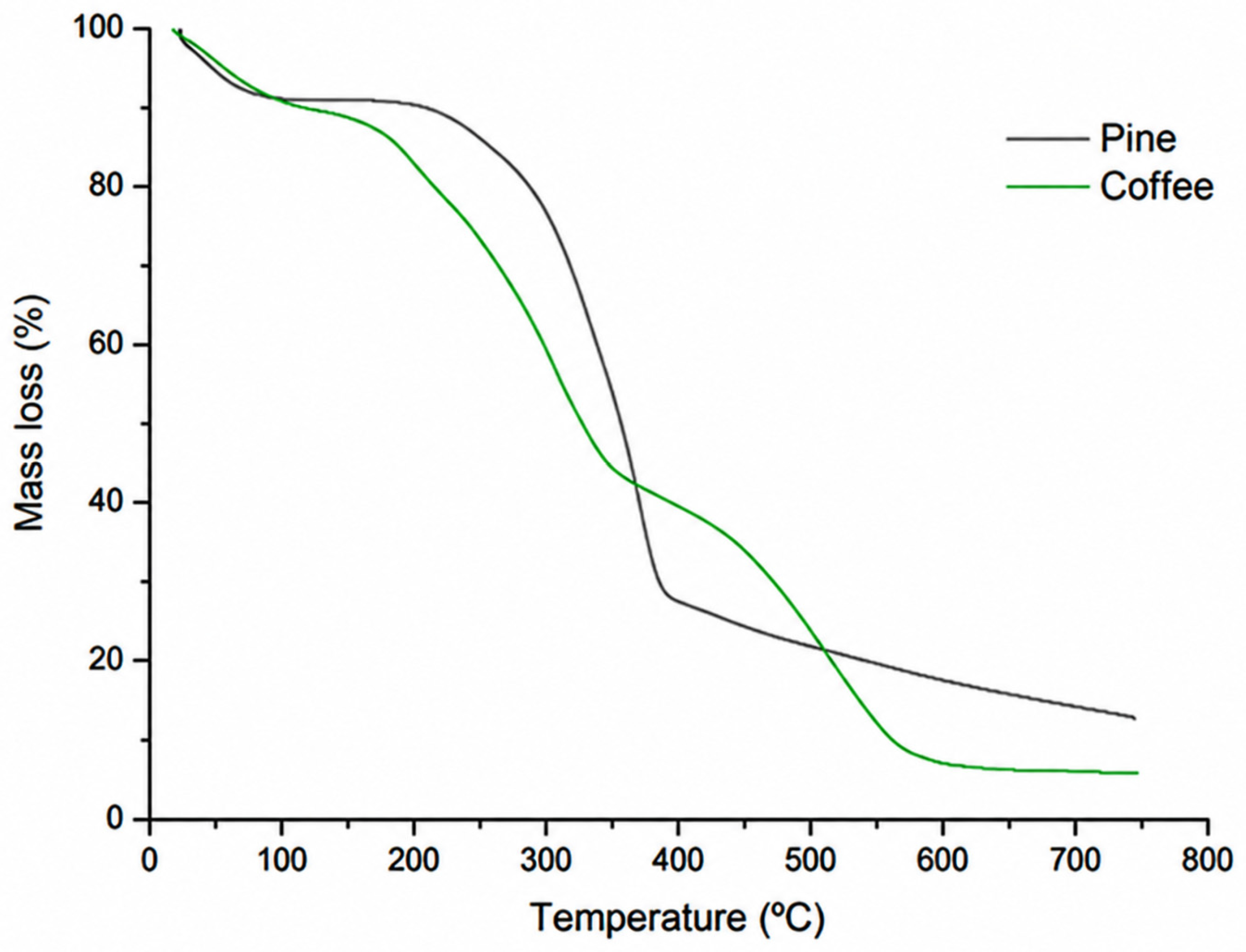
Figure 2 shows the mass loss curves obtained from the thermogravimetric analysis of Pinus and coffee straw, where differences in the thermal behavior and stability of each biomass can be observed.

3.2. Pellet Characterization

The analysis of productivity during pelletization is shown in Table 4, where it can be observed that the pellet compositions influenced the pelletization process and consequently the productivity.
The parameters length and diameter are presented in Table 5, where it can be observed that the pellet composition influenced the dimensions.
The increase in coffee straw content up to 50% led to a decrease in bulk density, but with higher proportions of coffee straw, density increased such that 100% coffee straw was comparable to 100% Pinus (Table 6).
Table 7 presents the mean values of fines and durability for the different blends of coffee straw and Pinus.
The presented moisture values of the pellets indicate a gradual increase in moisture content on both dry basis and wet basis with the increasing proportion of coffee straw in the blends, ranging from 8.98% (P1) to 10.5% (C9) on a dry basis (Table 8).
The proximate chemical composition of the pellets revealed a progressive reduction in volatile matter content and an increase in ash and fixed carbon contents with the increasing proportion of coffee straw in the blends (Table 9).
Elemental analysis and chloride content of the pellets showed that the blend composition systematically influenced the distribution of chemical elements, especially carbon, nitrogen, and chlorine (Table 10).
The values of higher heating value (HHV) and lower heating value on a dry basis (LHV dry) demonstrate the influence of blend composition on the energy performance of the pellets (Table 11).

4. Discussion

4.1. Biomass Characterization

The bulk density of pine is higher than that of coffee straw, and this can be understood when observing that pine is a woody biomass, while coffee straw is an agricultural residue from coffee fruit, thus having anatomical differences regarding the presence of long fibers, thicker cell walls, and a high proportion of lignifying components in pine. Bulk density is an important factor; it influences the logistics of transporting biomass, its storage, and transformation into pellets, since higher densities allow working with a smaller volume of material when compared to the same weight and lower density [38].
The higher calorific value (HHV) is related to the heat generation potential of the material, and it was possible to observe that pine wood has the highest PCS, of 20.65 MJ/kg, which was already expected due to the higher amounts of hydrogen and carbon, elements that have a direct impact on heat generation [39]. The values found for HHV are in line with those found for Pinus by Tiwari et al. [40] (19.5 ± 0.4 Mj/kg) and by Stolarski, Krzyzaniak, and Olba-Ziety [41] (20.31 MJ/kg for Pinus wood and 19.94 Mj/kg for Pinus waste). For the coffee straw, the HHV exceeded the 17.92 MJ/kg reported by Carneiro et al. [42], but was close to that found in the Biomass Atlas of Minas Gerais [43], which was 18.26 MJ/kg. Furthermore, the coffee straw HHV was higher than the 18.10 MJ/kg benchmark cited by Stolarski et al. [41].
The moisture of the material is an important factor for the use of biomass as solid biofuels, since high humidity decreases the lower calorific value, while high or low humidity hinders the process of agglomeration of the material and consequently the formation of pellets [44,45].
The volatile material of the pine (83.42%) was higher than that of the coffee straw (74.15%), which indicates that the pine is easier to ignite [46]. The ash content impacts the burning process and the behavior inside the boiler or furnace; high ash levels can lead to the extinguishing of flames, blocking the circulation of oxygen necessary for burning, and leading to degradation of the burning site. The pine has an advantage due to the low ash content (0.22%). Coffee straw has an ash content of 6.40%, presenting values lower than those found by Arango-Agudelo et al. [47] (7.95%) and by Otoni et al. [48] (7.8%). Pine was close to that found by Nayak, Bhatt, and Bhushan [5], which ranged from 0.26% to 4.5%. It highlights that for the same biomass, the place of production and management can lead to large differences in composition and the importance of studies in situ.
The chloride content of the biomasses (Table 2) presented relatively low values for both raw materials, being 0.014% for coffee straw and 0.17% for pine wood, with no statistically significant difference between them (p > 0.05). Despite this, it is observed that pine presented a higher absolute value than coffee straw, which deserves attention from an operational point of view. Chlorine is a critical element in combustion processes, as it tends to react with alkali metals, especially potassium, to form chlorides with a low melting point, such as KCl, which favor the sintering of ash, scale, and corrosion of metal surfaces in boilers and burners. Even at low concentrations, its effect can be enhanced in continuous combustion systems. In this context, the results indicate that, although both biomasses have chloride levels compatible with energy use, the use of blends can be strategically interesting, since it allows diluting the chlorine content of pine wood with coffee straw, reducing operational risks and contributing to greater stability of the burning process [49,50].
Carbon and hydrogen are linked to calorific value, contributing to a greater production of energy and heat during burning [39], so the carbon and hydrogen contents for pine, 53.78% and 6.73%, demonstrate a favorable constitution compared to 44.18% and 5.54% for coffee straw. When compared with the carbon and hydrogen results found by other authors, the pine studied presented higher levels, since Tiwari et al. [40] found 52.9% and 5.7%, while for coffee straw, the carbon value was close to Díaz-Jiménez and Moya [51] (44.9%), and hydrogen was below their reported value of 6.3%.
The nitrogen and sulfur contents are related to the generation of nitrogen oxides and sulfur oxides, bringing environmental risks due to toxicity, health risks to people who handle the boilers and burners, and the ability of these oxides to form acids that cause rapid wear and tear on the boilers and burners [39]. The values of sulfur and nitrogen of pine (0.08% and 1.37%) were lower than those of coffee straw (0.11% and 1.53%), which demonstrates that higher percentages of coffee straw result in higher amounts of oxides and harmful acids.
The structural composition of a biomass is an indicator of the calorific value and its behavior during burning, since lignin has a higher calorific value and a more uniform burning due to its composition and chemical organization, while holocellulose has a lower calorific value and faster thermal degradation [52,53]. Thus, it is possible to observe that the pine had the highest content of total lignin (31.75%), as well as the highest HHV (20.65%), while the coffee straw had the lowest content of lignin (24.1%) and HHV (18.10%). These differences were already expected due to the fact that the pine is a wood and the coffee straw is an agricultural residue, meaning they have different functions and structures.
The mass-loss curves obtained by thermogravimetric analysis (TGA) for pine wood and coffee straw show marked differences in the thermal behavior of the two biomasses. Pine presented a well-defined main degradation event, characteristic of woody biomass, predominantly associated with the thermal decomposition of holocellulose and, at higher temperatures, of lignin, which indicates greater thermal stability and a more predictable burning process. In contrast, coffee straw exhibited two distinct mass-loss events, reflecting its more heterogeneous nature and the presence of high levels of extractives, volatile organic compounds, and minerals, typical of agricultural residues. The first event can be associated with the volatilization of extractives and initial degradation of more thermolabile components, while the second corresponds to the decomposition of the remaining lignocellulosic fraction. This more complex thermal behavior of coffee straw explains its lower thermal stability compared to pine and is directly related to the higher ash levels observed, which can negatively influence the control of combustion. Thus, the TGA results reinforce the thermal superiority of pine as an energy biomass and justify the use of blends, in which the wood contributes to making the burning more stable and homogeneous.

4.2. Pellet Characterization

The pellet mill yield (Table 4) was significantly influenced by the composition of the biomass used, and it was observed that the treatment with 100% pine (P1) had the lowest yield (15.95 kg/h), differing statistically from the other treatments. The addition of coffee straws, even in low proportions, promoted a significant increase in productivity, with values above 21 kg/h in all blends, indicating better performance of the pelleting process. This behavior may be associated with the physicochemical characteristics of the coffee straw, such as higher extractive content and fixed carbon, which can act as natural binding agents, reducing friction in the matrix channel and facilitating the formation of pellets [13,42]. In addition, the higher plasticity of agricultural biomass, when compared to pine wood, tends to improve the flow of the material during compression, resulting in a higher production rate. The results demonstrate that the use of blends not only expands the possibilities of using agro-industrial residues but also contributes to the operational optimization of the pellet mill, making the process more efficient from a production point of view.
The mean values of diameter and length of the pellets presented in Table 5 indicate that the diameter was not significantly influenced by the composition of the biomasses, remaining close to 6.4 mm in all treatments, within the limits established by ISO 17225-6 [22] for non-timber pellets. This behavior was expected, since the diameter is mainly determined by the pellet mill matrix, which imposes a fixed geometric constraint during the process. On the other hand, the length of the pellets showed significant variation between the treatments, without an increasing or linear behavior as a function of the proportion of coffee straws. A gradual increase in length is observed up to the PC6, PC7, and PC8 treatments, followed by a reduction in the C9 treatment (100% coffee straws). This oscillation can be attributed to operational factors, such as momentary instabilities in the cutting of the pellets at the exit of the die and variations in the behavior of the material during extrusion, characteristics often associated with the adjustment and dynamics of the pellet mill. Thus, the differences observed in length seem to be more related to the mechanical and operational conditions of the equipment than to the intrinsic properties of the biomasses used, since a consistent pattern associated with the composition of the blends was not identified.
The pellet produced with 100% Pinus (P1) exhibited a high bulk density (718.16 kg/m3), a value statistically equal to that obtained for the treatment with 100% coffee straw (C9), indicating that both biomasses, when used individually, enable the formation of well-compacted pellets.
Studies such as those by Hossain et al. [54] and Arroyo Dagobeth et al. [55] observed similar behavior in mixed-feedstock pellets, concluding that the presence of biomasses with different characteristics results in greater compaction difficulty and consequently lower density, indicating that in such cases, material homogenization with respect to particle size may be necessary.
With the increase in the participation of the coffee straw above 62.5%, a gradual recovery of bulk density was observed, which suggests greater homogeneity of the material and a possible binding effect of the extractives present in this residue, favoring the cohesion of the particles under compression. From the logistical point of view, even the treatments with lower density presented values compatible with the energy use, reinforcing the technical feasibility of the blends and the importance of adjusting the composition to optimize the physical properties of the pellets.
The gradual increase in the share of coffee husks increased the fines content, with values ranging from 0.12% in treatment P1 to 0.46% in C9. This behavior can be attributed to the greater structural fragility of the coffee husk, in addition to the greater heterogeneity of the agricultural residue. Drobniak et al. [56] found similar results in the comparison of timber and non-timber pellets, where the use of agricultural residual biomass demonstrated a higher content of fines.
The mechanical durability increased consistently with the increase in the coffee husk, reaching the highest values in the PC8 and C9 treatments (99.39% and 99.75%, respectively). This result suggests that the high levels of extractives present in the coffee husk act as natural binding agents, increasing the cohesion between the particles and the resistance of the pellet to abrasion. Thus, despite the increase in fines, the greater durability indicates pellets that are structurally more resistant to transport and movement [11].
When observed, the treatments presented fines levels lower than the limits established by ISO 17225-6 [22], not compromising the quality of the fuel. The results show that the use of blends allows for improving the mechanical durability of the pellets, even with a moderate increase in the fines, reinforcing the potential of the coffee husk as a complementary component to the pine in the production of energetically and mechanically adequate pellets.
The moisture of the pellets in the different treatments is directly related to the intrinsic characteristics of the raw materials, since the coffee straw has a higher natural moisture content compared to pine wood. As the pelleting process does not promote a significant reduction in moisture, the observed values predominantly reflect the composition of the materials used. Despite the increase, all treatments remained below the maximum limits established by ISO 17225-6 [22], indicating that the incorporation of coffee straws, even in larger proportions, does not compromise the quality of the pellets in terms of this parameter.
The treatments with the highest percentage of pine showed the highest levels of volatile materials, favoring ignition and flame stability, in addition to lower ash contents, which is desirable from an operational point of view. On the other hand, the increase in coffee straws resulted in a significant increase in ash content, reflecting the higher concentration of minerals in this agricultural biomass, while promoting an increase in fixed carbon, indicating a higher solid fraction available for prolonged combustion. These results demonstrate that the use of blends allows for a balance of energy and operational characteristics, since pine wood contributes to ash reduction and better ignition, while coffee straw increases the burning period, evidencing the complementary potential of the two biomasses in pellet production [57].
The treatments with a higher proportion of pine had higher carbon and hydrogen contents, reflecting greater energy potential, while the increase in the participation of coffee straws resulted in a progressive increase in nitrogen and, in smaller proportions, sulfur contents, elements associated with the formation of undesirable gaseous emissions during combustion. In relation to chloride, there was a significant reduction in the content with the increase in coffee straw in the blends, going from higher values in the treatments rich in pine to lower concentrations in the treatments with a higher proportion of agricultural waste. This behavior indicates a complementary effect of the materials, since the incorporation of the coffee straw contributes to mitigating the chlorine content, an element associated with the corrosion of equipment and the formation of deposits on the thermal exchange surfaces. Thus, the results reinforce that the use of pine and coffee straw blends allows combining high energy potential with the reduction in critical components to combustion, favoring the pellets with better environmental and operational performance.
The P1 treatment (100% pine) showed the highest values of HHV (20.65 MJ/kg) and LCV dry (18.98 MJ/kg), directly reflecting the higher carbon and hydrogen content of this biomass. As the proportion of coffee straws was increased, a gradual and statistically significant reduction in these parameters was observed, with the HHV decreasing from 20.33 MJ/kg in PC2 to 19.38 MJ/kg in PC5, reaching 18.10 MJ/kg in the C9 treatment (100% coffee straws). The same behavior was observed for LCV dry, which ranged from 18.73 MJ/kg (PC2) to 17.81 MJ/kg (PC5), reaching 16.65 MJ/kg at C9. This reduction is associated with the lower energy density of the coffee straw, due to its lower carbon (44.74%) and hydrogen (5.59%) contents and higher ash content, when compared to pine wood. Despite this gradual decrease, all treatments showed LCV dry higher than the minimum limit of 14.5 MJ/kg required by ISO 17225-6 [22], indicating that even pellets with high proportions of coffee straws maintain adequate energy potential for use as solid biofuel.
For pellets to be commercialized, they must comply with the parameters established by ISO 17225-6 [22], which specifies the required parameters for the commercialization of non-woody biomass pellets. For better visualization and comparison between the results obtained in this study and the ISO 17225-6 [22] parameters, Table 12 presents the results achieved and how each treatment interacts with the standard.
The results show that the pellets produced in all treatments are within the specifications of ISO 17225-6 [22], which means that they can be marketed in the international market. The pellets produced in the PC5, PC6, PC7, and PC8 treatments presented the best overall results in the regulation, which allows them to be marketed in category A, while the pellets of the P1, PC2, PC3, PC4, and C9 treatments obtained good results, but due to characteristics of ash content, chloride and/or mechanical durability, they should be marketed in category B. These findings demonstrate that mixed materials achieve high quality, since the different constitutions of the raw materials allow one to make up for the weakness of the other.


5. Conclusions

The characterization of coffee straw and pine wood showed that both biomasses have potential for energy use, with superiority of pine wood in terms of calorific value and lower ash content, while coffee straw has higher ash and moisture content, requiring adjustments to fully meet the regulatory requirements. The production of pellets from nine blends showed that the gradual incorporation of coffee straws systematically alters the physical and energetic properties of the solid biofuels obtained.
The pellets produced with 100% pine wood (P1) and with 87.5% pine and 12.5% coffee straw (PC2) showed the best overall performance, with high calorific value, low moisture and ash contents, although with occasional limitations regarding mechanical durability in relation to the reference values of ISO 17225-6/2021. On the other hand, the treatments with higher proportions of coffee straws resulted in an increase in ash, moisture, and fines content, while contributing to an increase in the durability of the pellets, indicating a compromise between energy quality, physical integrity, and regulatory adequacy.
Using blends of coffee straw and pine residue is a promising strategy for the sustainable use of agro-industrial waste, enabling the generation of a solid biofuel with properties compatible with market standards, especially in intermediate proportions of coffee straws. For future studies, the optimization of pelleting conditions, the evaluation of pre-processing treatments of coffee straw aiming at reducing the ash content, and the analysis of performance in real combustion systems, in order to consolidate the technical and environmental feasibility of these pellets in the renewable energy matrix, are recommended.

Author Contributions

Conceptualization: A.J.V.Z., A.d.C.O.C. and A.G.C.; methodology: S.G.W., R.J.C.d.S., F.d.J.J., I.F.D., L.C.P. and T.S.V.; formal analysis: S.G.W., R.J.C.d.S., F.d.J.J., I.F.D. and T.S.V.; writing—original draft preparation: S.G.W., R.J.C.d.S., I.F.D. and L.C.P.; writing—review and editing: S.G.W., B.L.d.L., F.d.J.J. and T.S.V.; supervision: A.J.V.Z. and A.G.C.; investigation: S.G.W.; B.L.d.L. and L.C.P.; validation: A.J.V.Z., A.d.C.O.C. and B.L.d.L.; resources: A.d.C.O.C. and A.G.C. All authors have read and agreed to the published version of the manuscript.

Funding

This work was supported by the Fundação de Amparo à Pesquisa do Estado de Minas Gerais (FAPEMIG) under grant numbers APQ-04100-23, APQ-05311-24, and APQ-05431-24. The authors are grateful to MCTI/FINEP/FNDCT (Grant No. 0966/24, Ref. 01.25.0086.00) and the National Council for Scientific and Technological Development (CNPq) (Process No. 444395/2024-5) for their financial support. Additionally, the authors would like to thank the Rede de Laboratórios Multiusuário (RELAM/PROPP) at the Federal University of Uberlândia for providing the equipment and technical support necessary for the experiments.

Institutional Review Board Statement

Not applicable.

Informed Consent Statement

Not applicable.

Data Availability Statement

The original contributions presented in this study are included in the article. Further inquiries can be directed to the corresponding author.

Conflicts of Interest

The authors declare no conflicts of interest. The funders had no role in the design of the study; in the collection, analyses, or interpretation of data; in the writing of the manuscript; or in the decision to publish the results.

References

  1. International Energy Agency. World Energy Outlook. France. 2023. Available online: https://www.iea.org/reports/world-energy-outlook-2023 (accessed on 9 December 2025).
  2. Energy Research Company (Brazil). National Energy Balance: Summary Report 2024. Base Year 2023. Brazil. 2024. Available online: https://www.gov.br/mme/pt-br/assuntos/secretarias/sntep/publicacoes/balanco-energetico-nacional/ben-2024 (accessed on 9 December 2025).
  3. Panchal, B.; Su, C.H.; Fu, C.C.; Wu, S.J.; Juan, H.Y. Ecofriendly and cost-effective biodiesel production from water containing feedstocks through electrolysis—A review. Fuel Process. Technol. 2025, 276, 108277. [Google Scholar] [CrossRef]
  4. Kamil, M.; Ramadan, K.M.; Olabi, A.G.; Al-Ali, E.I.; Ma, X.; Awad, O.I. Economic, technical, and environmental viability of biodiesel blends derived from coffee waste. Renew. Energy 2020, 147, 1880–1894. [Google Scholar] [CrossRef]
  5. Nayak, A.; Bhatt, R.; Bhushan, B. Technological challenges, research advancements and future prospects towards valorization of pine wastes. Biomass Bioenergy 2026, 204, 108413. [Google Scholar] [CrossRef]
  6. Ministry of Agriculture. Livestock and Supply (MAPA). Coffee Executive Summary. Available online: https://www.conab.gov.br/info-agro/safras/cafe/boletim-da-safra-de-cafe (accessed on 9 December 2025).
  7. CONAB—National Supply Company. Monitoring the Brazilian Coffee Crop; National Supply Company: Brasília, Brazil, 2025.
  8. Yepes, W.U.; Pernalete, M.J.G. Review: Use of residues from the coffee agro-industry in the manufacture of polymer matrix composite materials. Prospectiva 2021, 19, 2. [Google Scholar]
  9. Ninlaphong, P.; Iamsaard, K.; Kullachonphuri, S.; Soilueang, P.; Chomkaew, Y.; Nakdee, M.; Uttarotai, T.; Chen, Y.; Khongdee, N. Physicochemical characterization of coffee pulp-derived biochar and its effects on soil abiotic and biotic properties. Clean. Waste Syst. 2025, 12, 100341. [Google Scholar] [CrossRef]
  10. Urugo, M.M.; Getachew, P.; Lambe, B.T.; Yohannis, E.; Afework, A.; Meteke, N.; Yasin, S.; Milkias, M.; Tola, Y.B.; Abera, T.T.; et al. Mohammed. Green valorization of coffee industry residues: Emerging innovations and their role in sustainable food and feed applications. Appl. Food Res. 2025, 5, 101181. [Google Scholar] [CrossRef]
  11. Mack, R.; Schön, C.; Kuptz, D.; Hartmann, H.; Brunner, T.; Obernberger, I.; Behr, H.M. Influence or pellet length, content of fines, and moisture content on emission behavior of wood pellets in a residential pellet stove and pellet boiler. Biomass Convers. Biorefin. 2022, 14, 26827–26844. [Google Scholar] [CrossRef]
  12. Kamperidou, V. Quality Analysis of Commercially Available Wood Pellets and Correlations between Pellets Characteristics. Energies 2022, 15, 2865. [Google Scholar] [CrossRef]
  13. He, H.; Wang, Y.; Sun, W.; Sun, Y.; Wu, K. Effects of different biomass feedstocks on the pelleting process and pellet qualities. Sustain. Energy Technol. Assess. 2024, 69, 103912. [Google Scholar] [CrossRef]
  14. Kien, N.S.T.; Dobashi, R.; Shoyama, M.; Kwangseok, C. Analysis of dust explosion hazards and risk assessment of dust from biomass fuel: Wood pellets. Fire Saf. J. 2026, 163, 104771. [Google Scholar] [CrossRef]
  15. Fukuda, S.; Sanduang, J.; Krerkkaiwan, S. Torrifiede biomass pellet production from rubber wood and corn waste in pilot-scale vibrating torrefaction system. Fuel Process. Technol. 2026, 287, 108452. [Google Scholar] [CrossRef]
  16. Lekrungroenggid, N.; Usaborisut, P.; Pruengam, P. Evaluation the quality of pellets durian peel waste: Potencial and carbon footprint on production. Sustain. Chem. Clim. Action 2026, 8, 100196. [Google Scholar] [CrossRef]
  17. Jasinskas, A.; Kleiza, V.; Minajeva, A.; Mieldazys, R.; Vaiciukevicius, E. Utilization of Agricultura Residues and Their Mixtures for Energy Conversion and Creation of Empirical Model from Determination of Biofuel Pellet Characteristics. Process 2026, 14, 1189. [Google Scholar] [CrossRef]
  18. Kamperidou, V.; Terzopoulou, P. Co-Pelletization of Lavender Waste and Pine-Wood for Sustainable Fuel Pellet Production. Forests 2025, 16, 1455. [Google Scholar] [CrossRef]
  19. Garcia, D.P.; Caraschi, J.C.; Ventorim, G.; Prates, G.A.; Protássio, T.D.P. Quality of Brazilian biomass pellets for residential heating: Standards of ISO 17225. Braz. J. Wood Sci. 2018, 9, 43–53. [Google Scholar] [CrossRef]
  20. Lima Filho, R.R.d. Nota Técnica: Conjuntura e Expectativas: Pellets de Madeira e Madeira Para Lenha. Confederação da Agricultura e Pecuária do Brasil (CNA). nº 30. 2022. Available online: https://cnabrasil.org.br/publicacoes/conjuntura-e-expectativas-pellets-de-madeira-e-madeira-para-lenha (accessed on 10 December 2025).
  21. Rimantho, D.; Hidayah, N.Y.; Pratomo, V.A.; Saputra, A.; Akbar, I.; Sundari, A.S. The strategy for developing wood pellets as sustainable renewable energy in Indonesia. Heliyon 2023, 9, e14217. [Google Scholar] [CrossRef]
  22. ISO 17225-6; Solid Biofuels—Fuel Specifications and Classes—Part 6: Graded Non-Woody Pellets. International Organization for Standardization: Geneva, Switzerland, 2021.
  23. EN 15103; Solid Biofuels—Determination of Bulk Density. Deutsches Institut für Normung: Berlin, Germany, 2010.
  24. EN 14918; Solid Biofuels- Method for the Determination of Calorific Value. Deutsches Institut für Normung: Berlin, Germany, 2010.
  25. Hafford, L.M.; Ward, B.J.; Weimer, A.W.; Linden, K. Fecal sludge as a fuel: Characterization, cofire limits, and evalution of quality improvement measures. Water Sci. Technol. 2018, 78, 12. [Google Scholar] [CrossRef] [PubMed]
  26. ASTM D1762-84; Standard Test Method for Chemical Analysis of Wood Charcoal. American Society for Testing and Materials: Philadelphia, PA, USA, 2013.
  27. American Public Health Association; American Water Works Association. Standard Methods for the Examination of Water and Wastewater; American Public Health Association: Washington, DC, USA, 1989. [Google Scholar]
  28. EN 15296; Solid Biofuels—Conversion of Analytical Results from one Basis to Another. Deutsches Institut für Normung: Berlin, Germany, 2011.
  29. TAPPI—Technical Association of the Pulp and Paper Industry. TAPPI Test Methods T 264 om-88: Preparation of Wood for Chemical Analysis; Tappi Technology Park: Atlanta, GA, USA, 1996; Volume 1. [Google Scholar]
  30. TAPPI—Technical Association of the Pulp and Paper Industry. TAPPI T-222 om-88: Acid—Insoluble Lignin in Wood and Pulp; Tappi Technology Park: Atlanta, GA, USA, 1999. [Google Scholar]
  31. TAPPI—Technical Association of the Pulp and Paper Industry. TAPPI UM 250: Acid-Soluble Lignin in Wood and Pulp; Tappi Technology Park: Atlanta, GA, USA, 2000. [Google Scholar]
  32. ASTM E1131-20; Standard Test Method for Compositional Analysis by Thermogravimetry. American Society for Testing and Materials: Philadelphia, PA, USA, 2020.
  33. EN 147741; Determination of Moisture Content—Oven Dry Method—Part2: Total Moisture—Simplified Method. Deutsches Institut für Normung: Berlin, Germany, 2009.
  34. EMBRAPA. Comunicado Técnico 136: Método para Determinação de Umidade de Plantas Aromáticas. EMPRAPA Agroindústria Tropical. 2008. Available online: http://www.infoteca.cnptia.embrapa.br/infoteca/handle/doc/664011 (accessed on 10 July 2025).
  35. EN 16127; Solid Biofuels—Determination of Length and Diameter of Pellets. Deutsches Institut für Normung: Berlin, Germany, 2012.
  36. EN 15210-1; Solid Biofuels—Determination of Mechanical of Pellets and Briquettes. Deutsches Institut für Normung: Berlin, Germany, 2010.
  37. R Core Team. R: A Language and Environment for Statistical Computing; Version 4.3.2; R Foundation for Statistical Computing: Vienna, Austria, 2023; Available online: https://www.R-project.org (accessed on 20 December 2023).
  38. Awasthi, D.; Pal, K.; Patra, T.K.; Gakkhar, N.; Toor, A.P. Biomass densification pathaways for India: An overview on technologies, characterization. testing. challenges and economics. Energy Sustain. Dev. 2026, 90, 101878. [Google Scholar] [CrossRef]
  39. Pereira, A.B.; Zanuncio, A.J.; Carvalho, A.G.; de Cassia Oliveira Carneiro, A.; De Castro, V.R.; Carvalho, A.M.; Lopes, O.P.; Branco-Vieira, M.; Ferreira, M.V.; de Assunção, R.M.; et al. Sustainable Solid Biofuel Production: Transforming Sewage Sludge and Pinus sp. Sawdust into Resources for the Circular Economy. Sustainability 2024, 16, 4554. [Google Scholar] [CrossRef]
  40. Tiwari, M.; Dirbeba, M.J.; Lehmusto, J.; Yrjas, P.; Vinu, R. Kinetic evoluation of high-pressure pyrolysis of biomass using distributed activation energy model. J. Environ. Chem. Eng. 2025, 13, 119049. [Google Scholar] [CrossRef]
  41. Stolarski, M.J.; Krzyżaniak, M.; Olba-Zięty, E. Properties of Pellets from Forest and Agricultural Biomass and Their Mixtures. Energies 2025, 18, 3137. [Google Scholar] [CrossRef]
  42. Carneiro, A.D.; Zanuncio, A.J.; Carvalho, A.G.; Jorge, J.A.; dos Santos, R.J.; Demuner, I.F.; Peres, L.C.; Winter, S.G.; de Castro, V.R.; Branco-Vieira, M.; et al. Sustainable Production of Coffee Husk Pellets: Applying Circular Economy in Waste Management and Renewable Energy Production. Resources 2025, 14, 26. [Google Scholar] [CrossRef]
  43. Reis, R.J.d.; Reis, L.S.d. Biomass Atlas of in Minas Gerais; Rona Gráfica e Editora: Belo Horizonte, Brazil, 2017. [Google Scholar]
  44. Jariyaboon, R.; Benmad, A.; Kurniawan, E.; Wongpattanaphon, J.; Kongjan, P. Characteristics of sugarcane bagasse-based produced by pelletization and pyrolysis. Biomass Convers. Biorefinery 2026, 16, 87. [Google Scholar] [CrossRef]
  45. Gendek, A.; Aniszewska, M.; Tylek, P.; Szewczyk, G.; Krilek, J.; Čabalová, I.; Malaťák, J.; Bradna, J.; Szakálos-Mátyás, K. The Influence of Material and Process Parameters on Pressure Agglomeration and Properties of Pellets Produced from Terrified Forest Logging Residues. Materials 2026, 19, 317. [Google Scholar] [CrossRef]
  46. Setter, C.; Ataíde, C.H.; Mendes, R.F.; De Oliveira, T.J. Influence of particle size on the physico-mechanical and energy properties of briquettes produced with coffee husks. Environ. Sci. Pollut. Res. 2021, 28, 8215–8223. [Google Scholar] [CrossRef]
  47. Arango-Agudelo, E.; Rendón-Muñoz, Y.; Cadena-Chamorro, E.; Santa, J.F.; Buitrago-Sierra, R. Evoluation of Colombian Coffee Waste to Produce Antioxidant Extracts. BioResources 2023, 18, 5703–5723. [Google Scholar] [CrossRef]
  48. Otoni, J.P.; Matoso, S.C.; Pérez, X.L.; da Silva, V.B. Potential for agronomic and environmental use of biochars derived from different organic waste. J. Clean. Prod. 2024, 449, 141826. [Google Scholar] [CrossRef]
  49. Nunes, L.J.R. Combustibility of Portuguese shrubland species: Analysis of corrosion, fouling, and slagging indices. Biofuels 2026, 17, 1–18. [Google Scholar] [CrossRef]
  50. Köning, D.; Ströhle, J.; Epple, B. Investigation on the formation of nitrogen, sulfur and chlorine species in air and oxy-fuel combustion of biomass in a semi-industrial combustion chamber. Fuel Process. Technol. 2025, 277, 108303. [Google Scholar] [CrossRef]
  51. Díaz-Jiménez, E.; Moya, R. The Effects of Jatropha curcas and Ricinus communis Seeds Addition on Coffee Pulp Waste Pellets as Fuel. Waste Biomass Valorization 2022, 13, 3071–3084. [Google Scholar] [CrossRef]
  52. Sygula, E.; Ciolkosz, D.; Bialowiec, A. The significance of structural components of lignocellulosic biomass on volatile organic compounds presence on biochar—A review. Wood Sci. Technol. 2024, 58, 859–886. [Google Scholar] [CrossRef]
  53. Onokwai, A.O.; Ajisegiri, E.S.A.; Okokpujie, I.P.; Ibikunle, R.A.; Oki, M.; Dirisu, J.O. Characterization of lignocellulose biomass based on proximate, ultimate, structural composition, and thermal analysis. Mater. Today Proc. 2022, 65, 2156–2162. [Google Scholar] [CrossRef]
  54. Hossain, T.; Jones, D.S.; Godfrey, E.; Saloni, D., III; Sharara, M.; Hartley, D.S. Characterizing value-added pellets obtained from blends of miscanthus, corn stover, and switchgrass. Renew. Energy 2024, 227, 120494. [Google Scholar] [CrossRef]
  55. Arroyo Dagobeth, E.D.; Otero Meza, D.D.; Cabello Eras, J.J.; Moya Rodríguez, J.L.; Salcedo Mendoza, J.G. Co-Pelletization of Rice Husk and Corncob Residues: Evaluation of Physicochemical Properties and Combustion Performace. Recycling 2025, 10, 173. [Google Scholar] [CrossRef]
  56. Drobniak, A.; Jelonek, Z.; Widziewicz-Rzońca, K.; Mastalerz, M.; Schimmelmann, A.; Jelonek, I. Domestic combustion of biomass pellets: Example from Poland. Int. J. Coal Geol. 2025, 304, 104757. [Google Scholar] [CrossRef]
  57. Setter, C.; Borges, F.A.; Cardoso, C.R.; Mendes, R.F.; Oliveira, T.J. Energy quality of pellets produced from coffee residue: Characterization of the products obtained via slow pyrolysis. Ind. Crops Prod. 2020, 154, 112731. [Google Scholar] [CrossRef]
Figure 1. Coffee straw (A) and pine wood (B). Source: Personal archive.
Sustainability 18 05586 g001
Figure 2. Thermogravimetric analysis of Pinus and coffee straw biomasses.
Sustainability 18 05586 g002
Table 1. Blends of coffee straw and pine wood.
TreatmentBlend Proportions
Coffee StrawPinus Wood
P10.0%100.0%
PC212.5%87.5%
PC325.0%75.0%
PC437.5%62.5%
PC550.0%50.0%
PC662.5%37.5%
PC775.0%25.0%
PC887.5%12.5%
C9100.0%0.0%
Table 2. Average values of biomass properties.
Properties Coffee StrawPine Wood
Bulk density (kg/m3)249.90 b295.97 a
High calorific value (MJ/kg)18.10 a20.65 a
Lower calorific value (dry basis) (MJ/kg)16.65 a18.98 b
Moisture (wet basis) (%)9.50 a8.24 b
Moisture (dry basis) (%)10.5 a8.98 b
Volatile material (%)74.15 b83.42 a
Ashes (%)6.40 a0.22 b
Fixed Carbon (%)19.45 a16.36 b
Chloride (%)0.014 a0.17 a
Carbon (%)44.18 a53.78 b
Hidrogen (%)5.54 a6.73 b
Nitrogen (%)1.53 a1.37 a
Sulfur (%)0.11 a0.08 a
Oxygen (%)42.25 a37.85 b
Means followed by the same lowercase letter do not differ from each other at the 5% significance level according to the Scott–Knott test.
Table 3. Structural composition of coffee straw and Pinus wood.
Structural CompositionCoffee StrawPinus Wood
Extractives (%)34.08 a13.14 b
Insoluble lignin (%)20.81 a31.13 b
Soluble lignin (%)3.29 a0.62 b
Total lignin (%)24.1 a31.75 b
Holocellulose (%)11.31 b23.13 b
Means followed by the same lowercase letter do not differ from each other at the 5% significance level according to the Scott–Knott test.
Table 4. Average productivity of each treatment.
TreatmentProductivity (kg/h)
P115.95 a
PC222.07 b
PC321.64 b
PC421.71 b
PC522.63 b
PC622.47 b
PC722.57 b
PC821.88 b
C921.41 b
Means followed by the same lowercase letter do not differ from each other at the 5% significance level according to the Scott–Knott test.
Table 5. Mean values for diameter and length.
TreatmentParameter (%)
Diameter (mm)Length (mm)
P1 6.39 a18.54 c
PC2 6.40 a18.90 b
PC3 6.36 a19.20 b
PC4 6.40 a19.33 b
PC5 6.38 a 19.22 b
PC6 6.41 a19.54 a
PC7 6.40 a19.47 a
PC8 6.43 a19.92 a
C9 6.38 a17.94 d
Means followed by the same lowercase letter do not differ from each other at the 5% significance level according to the Scott–Knott test.
Table 6. Average values of bulk density.
TreatmentBulk Density (kg/m3)
P1718.16 a
PC2666.94 c
PC3649.36 e
PC4637.11 f
PC5634.85 f
PC6635.53 f
PC7657.40 d
PC8679.07 b
C9712.76 a
Means followed by the same lowercase letter do not differ from each other at the 5% significance level according to the Scott–Knott test.
Table 7. Average values of fines, durability, and hardness.
TreatmentParameter
Fines (%)Durability (%)Hardness (kg)
P10.12 c96.74 c20.21 a
PC20.15 c97.12 c13.93 b
PC30.25 b98.21 b9.69 c
PC40.31 a97.09 c7.81 d
PC50.43 a97.70 b5.70 e
PC60.37 a98.02 b5.26 e
PC70.40 a97.68 b4.99 e
PC80.42 a99.39 a5.75 e
C90.46 a99.75 a5.50 e
Means followed by the same lowercase letter do not differ from each other at the 5% significance level according to the Scott–Knott test.
Table 8. Average moisture content values on a dry and wet basis.
TreatmentMoisture Content (Dry Basis) (%)Moisture Content (Wet Basis) (%)
P18.98 b 8.24 b
PC29.17 b8.40 b
PC39.36 b8.56 b
PC49.55 b8.72 b
PC59.74 b8.88 b
PC69.93 a9.03 a
PC710.12 a9.19 a
PC810.31 a9.35 a
C910.5 a9.50 a
Means followed by the same lowercase letter do not differ from each other at the 5% significance level according to the Scott–Knott test.
Table 9. Mean proximate analysis values of the treatments.
TreatmentProximate Analysis (%)
Volatile MatterAshesFixed Carbon
P1 83.42 a0.22 i16.36 b
PC2 82.26 a1.00 h16.75 b
PC3 81.10 b1.77 g17.14 b
PC4 79.94 c2.54 f17.52 b
PC5 78.78 c3.31 e17.91 b
PC6 77.63 d4.09 d18.29 a
PC7 76.47 d4.86 c18.68 a
PC8 75.31 e5.63 b19.06 a
C9 74.15 e6.40 a19.45 a
Means followed by the same lowercase letter do not differ from each other at the 5% significance level according to the Scott–Knott test.
Table 10. Average values of elemental analysis and chloride content.
TreatmentParameter (%)
CHNSOChloride
P153.185.970.260.0640.300.17 a
PC251.686.330.240.0640.690.15 a
PC351.186.430.330.0640.230.13 b
PC450.196.510.540.0740.140.11 b
PC548.446.140.730.0741.310.09 c
PC648.446.050.670.0640.700.07 c
PC746.975.781.010.0741.320.05 c
PC846.125.731.160.1141.260.03 c
C944.745.591.570.1141.580.01 c
Means followed by the same lowercase letter do not differ from each other at the 5% significance level according to the Scott–Knott test.
Table 11. Higher heating value (HHV) and lower heating value on a dry basis (LHV dry).
TreatmentHHVLCV dry
P120.65 a18.98 a
PC220.33 a18.73 a
PC320.01 b18.39 a
PC419.69 b18.05 a
PC519.38 c17.81 b
PC619.06 c17.51 b
PC718.74 d17.24 b
PC818.42 d16.93 b
C918.10 d16.65 b
Means followed by the same lowercase letter do not differ from each other at the 5% significance level according to the Scott–Knott test.
Table 12. Compliance of blend pellets with ISO 17225-6 [22].
ParameterQuality StandardTreatment
ABP1PC2PC3PC4PC5PC6PC7PC8C9
Diameter (mm)6.0–10.0AAAAAAAAA
Length (mm)3.15 < L ≤ 403.15 < L ≤ 50AAAAAAAAA
Moisture content (%)≤12.0≤15.0AAAAAAAAA
Ashes (%)≤6.0≤10.0AAAAAAAAB
Lower heating value (dry basis) (MJ/kg)≥14.5AAAAAAAAA
Sulfur (%)≤0.2≤0.3AAAAAAAAA
Nitrogen (%)≤1.5≤2.0AAAAAAAAB
Chloride (%)≤0.1≤0.3BBBBAAAAA
Mechanical durability (%)≥97.5≥96BBABAAAAA
Fines (%)≤2.0≤3.0AAAAAAAAA
Disclaimer/Publisher’s Note: The statements, opinions and data contained in all publications are solely those of the individual author(s) and contributor(s) and not of MDPI and/or the editor(s). MDPI and/or the editor(s) disclaim responsibility for any injury to people or property resulting from any ideas, methods, instructions or products referred to in the content.