1. Introduction
Climate change and rising carbon dioxide (CO
2) emissions pose serious challenges to sustainable economic development across countries. Rapid industrialization, energy-intensive production, and weak institutional enforcement have intensified environmental degradation, particularly in emerging and developing economies [
1]. While many governments have introduced environmental regulations and climate policies, their effectiveness varies widely, suggesting that governance quality plays a critical role in shaping environmental outcomes [
2]. Existing studies show that environmental regulation and governance influence CO
2 emissions through policy enforcement, technological innovation, and industrial structure adjustment [
3,
4]. However, governance does not operate in isolation. Strategic behaviour among governments, institutional incentives, and regional competition can weaken regulatory effectiveness and lead to pollution spillovers, thereby increasing emissions [
5,
6]. These findings highlight that environmental sustainability depends on regulatory stringency and also on institutional quality and governance effectiveness. Despite its recognized importance, governance remains a complex and multidimensional concept, making its empirical assessment across countries particularly challenging.
Carbon intensity, defined as CO
2 emissions per unit of economic output, is widely used as a key indicator of environmental sustainability because it captures the efficiency of economic activity in generating emissions [
7,
8]. CO
2 emissions per capita provide important insights into the distributional and welfare dimensions of environmental pressure by normalizing emissions by population size. Together, total emissions, carbon intensity, and emissions per capita provide complementary perspectives on environmental performance across countries. In addition, human development and macroeconomic conditions also play an important role in shaping environmental outcomes. Education, health, income inequality, population dynamics, and digital access influence energy demand, consumption behavior, and production structures [
9]. Similarly, macroeconomic scale, fiscal capacity, financial conditions, and trade openness affect investment in cleaner technologies and governments’ ability to implement environmental regulations. Liu et al. [
10] find that governance quality significantly shapes the relationship between economic growth and CO
2 emissions within the Environmental Kuznets Curve framework.
Despite these insights, most empirical studies analyze governance, human development, or macroeconomic factors in isolation and often rely on country-specific or region-specific samples. As a result, the literature lacks a comprehensive framework that jointly incorporates governance, human development, and macroeconomic conditions within a global cross-country setting. Moreover, most existing studies rely on linear econometric models that may fail to capture nonlinear relationships, interaction effects, and threshold behavior across countries with different institutional and development characteristics. To address these limitations, this study applies a machine learning approach to examine how governance quality, human development, and macroeconomic factors jointly shape CO2 emissions and carbon intensity across countries. Machine learning methods provide greater flexibility than traditional econometric models by allowing complex and nonlinear relationships to emerge directly from the data.
Despite the growing literature on environmental sustainability, three major gaps remain. First, most studies examine governance, human development, or macroeconomic factors separately rather than within an integrated framework. Second, existing research largely relies on linear econometric models, which fail to capture nonlinear and threshold effects. Third, there is limited cross-country evidence using globally representative datasets that incorporate institutional, social, and structural variables simultaneously. This study addresses these gaps by applying a machine learning framework to a large global dataset, enabling the identification of complex relationships across countries.
This study proposes a unified, data-driven framework to analyze environmental sustainability by jointly considering governance indicators, environmental factors, human development variables, and macroeconomic and financial conditions. Using data covering 195 countries, the study applies a machine learning model to identify key drivers of CO2 emissions and carbon intensity across diverse national contexts. The proposed framework is designed to be globally applicable and to provide policy-relevant insights for countries at different stages of development.
Accordingly, this study aims to examine how governance quality, human development, macroeconomic conditions, and energy structure jointly influence CO2 emissions and carbon intensity across countries. Specifically, the study addresses four research questions: (1) How does governance quality affect CO2 emissions across countries? (2) What role do human development and social factors play in shaping emissions? (3) How do macroeconomic and financial conditions influence environmental sustainability? and (4) Can machine learning models effectively capture nonlinear relationships in cross-country emission patterns?
2. Literature Review
2.1. Carbon Intensity and Economic Growth
Carbon intensity is widely used to measure how efficiently an economy generates output while limiting carbon emissions. Shen and Lin [
11] examine the relationship between carbon intensity regulation and green growth in China, focusing on green total factor productivity. The authors explain that carbon intensity reflects how efficiently economic output is produced with lower carbon emissions. This concept aligns with the idea of green growth, where economic development is expected to reduce environmental pressure over time. The findings suggest that carbon intensity regulation does not have a statistically significant impact on green total factor productivity at the national level. This result suggests that reducing carbon intensity through regulation does not automatically lead to improvements in green productivity across all regions. The authors emphasize that economic structure and regional development conditions play an important role in shaping the effectiveness of carbon intensity policies. The study also provides important evidence of regional heterogeneity in the relationship between carbon intensity regulation and green development.
Wang et al. [
12] investigate the relationship between carbon emissions, carbon intensity and economic growth in China’s iron and steel industry. The study shows that energy use, electrification and energy efficiency contribute positively to decouple emissions from growth. The results indicate that technological and energy structure factors are crucial for reducing carbon intensity in heavy industries. Zhang et al. [
13] analyze carbon intensity dynamics in China and ASEAN countries using decoupling and decomposition methods. Their results show that GDP per capita is the main driver of emissions growth, while reductions in energy intensity help reduce carbon intensity. These findings highlight the importance of energy efficiency and structural transformation in achieving low-carbon growth.
2.2. Governance Quality and Environmental Outcomes
A growing literature examines the relationship between governance quality and environmental performance. Asongu et al. [
14] analyze the interaction between globalization, governance, and CO
2 emissions in Sub-Saharan Africa and find that improved governance quality, particularly regulatory quality and rule of law, helps mitigate the environmental impact of trade openness. Agyeman et al. [
15] examine the relationship between governance quality and carbon emissions in African countries while accounting for tourism, foreign direct investment and economic growth. Panel data from 27 countries were used in this study. The authors find that better governance, particularly government effectiveness, rule of law, and control of corruption, significantly reduces carbon emissions and carbon intensity. The results also show that tourism and foreign direct investment can increase emissions when governance is weak. The study highlights the critical role of institutional quality in achieving lower carbon intensity and sustainable development.
Wen et al. [
16] investigate the role of governance quality in shaping the relationship between financial development and carbon dioxide emissions in G20 countries. Panel data and the STIRPAT framework were used in this study. The authors find that financial development initially increases emissions but later contributes to emission reduction as economies mature. The results also show that strong governance enhances the ability of financial development to lower carbon emissions and carbon intensity. Borozan and Borozan [
17] examine the impact of governance quality on CO
2 emissions in Croatia using six World Governance Indicators from 1996 onward. A nonparametric kernel regression approach was used in this study, and it shows that governance effectiveness and the rule of law play a significant role in reducing CO
2 emissions. Other governance dimensions showed weaker or insignificant effects. However, the results also indicate that the magnitude of governance effects is relatively small compared to economic growth and final energy consumption, which remain the dominant drivers of emissions. This study highlights the nonlinear nature of the governance–emissions relationship and emphasizes that governance improvements alone may not be sufficient to achieve substantial emission reductions without parallel changes in energy use and economic structure.
2.3. Human Development, Inequality, and Environmental Sustainability
Human development and social factors are increasingly recognized as important determinants of environmental outcomes. Hao [
9] finds that education, health, and human development significantly influence climate change outcomes across countries. Liu et al. [
10] show that governance quality shapes the relationship between economic growth and CO
2 emissions, suggesting that institutional capacity interacts with human development.
Li et al. [
18] examine the driving factors of carbon intensity in a developing economy by focusing on Pakistan. The study applies an integrated framework that combines production decomposition index decomposition and spatial–temporal analysis using sector-level data from the agriculture industry and services between 2006 and 2019. Carbon intensity is decomposed into multiple effects, including economic efficiency, energy use efficiency, structural effects and GDP gap effects. The results show that economic efficiency and energy use efficiency play a positive role in reducing carbon intensity, while structural inefficiencies and output gaps weaken emission performance, particularly in agriculture and services. The study highlights strong sectoral heterogeneity and emphasizes that carbon intensity reduction in developing economies requires targeted sector-specific strategies rather than uniform policies. This study contributes to the literature by demonstrating that institutional and structural weaknesses significantly constrain environmental efficiency in developing countries.
2.4. Macroeconomic, Financial, and Structural Factors
Macroeconomic and financial conditions play a central role in shaping environmental sustainability. Wang and Su [
19] analysed how economic growth can be decoupled from carbon emissions at the global level using data from 192 countries. The Tapio decoupling model, together with Kaya identity and LMDI decomposition methods were used to identify the drivers behind decoupling outcomes. The results show that developed countries tend to move toward stable weak decoupling and even strong decoupling, while most developing countries do not exhibit a clear decoupling pattern. The analysis finds that energy intensity reduction is the most important factor promoting decoupling, whereas rising income levels offset these gains, especially in developing countries. This highlights the central role of energy efficiency in reducing carbon intensity. The findings emphasize that energy intensity, economic growth level and development stage strongly shape carbon intensity outcomes. The global scope of the study supports the use of cross-country datasets and advanced modelling approaches. Zhang and Ke [
20] analyze how green finance influences carbon intensity in China by considering the moderating and threshold role of capital accumulation. Provincial panel data were used for the data analysis. The study finds that green finance significantly reduces carbon intensity measured as CO
2 emissions per unit of GDP. This effect is nonlinear and depends on the level of capital stock per capita. Green finance becomes more effective only after certain capital thresholds are reached, and the impact is stronger in economically advanced regions. The findings suggest that financial development and capital accumulation must progress together for green finance to effectively support low-carbon development.
Omri et al. [
21] investigate whether good governance moderates the relationship between financial development and carbon dioxide emissions in Saudi Arabia using annual data from 1996 to 2016. The study examines multiple indicators of financial development alongside political and institutional governance measures. The results show that financial development on its own tends to increase carbon dioxide emissions, while governance quality also exhibits a positive direct effect on emissions. However, the interaction between financial development and good governance produces a negative net effect on carbon emissions, indicating that financial sector growth reduces emissions when supported by strong political and institutional governance. The study highlights the critical role of governance quality in transforming financial development into a tool for lowering carbon intensity and improving environmental sustainability. These studies suggest that macroeconomic stability, fiscal capacity, and financial development condition a country’s ability to reduce emissions and transition toward low-carbon growth.
Jiao et al. [
22] analyze how green technology affects carbon intensity across Chinese industries. The study predicts carbon intensity as a key indicator of low-carbon development because it measures carbon emissions relative to economic output. This approach highlights whether economic growth becomes cleaner through technological progress. The paper provides a clear framework for evaluating environmental sustainability alongside industrial performance by focusing on carbon intensity rather than total emissions. The authors examine both direct effects of green technology innovation and indirect effects through vertical spillovers between industries. The study finds that green technology significantly reduces carbon intensity, using panel data from multiple industrial sectors and an extended STIRPAT model. This evidence supports the use of advanced modeling approaches such as machine learning to capture nonlinear and heterogeneous relationships between technology innovation management capacity and carbon intensity. Zhou et al. [
23] examine who shapes carbon intensity in China and how different economic actors influence its change. The study adopts a demand-side perspective and introduces the aggregate embodied intensity indicator, which links embodied emissions with embodied value added. The authors identify how regions demand types and sectors contribute to national carbon intensity. Multi-regional input–output analysis and structural decomposition methods were used for the analysis. The results show that developed provinces’ investment demand and the construction sector have played dominant roles in shaping China’s carbon intensity. The findings show that carbon intensity is driven by production efficiency and also by consumption patterns and interregional economic linkages. This supports the inclusion of economic structure demand side variables and regional characteristics when modelling CO
2 per GDP.
Wang and Yan [
24] examine the impact of environmental regulation intensity on green total factor productivity in China’s manufacturing industries while considering the role of carbon emissions. The study finds that stricter environmental regulation reduces carbon emissions and improves green productivity, with carbon footprint acting as a mediating channel. The effects vary across pollution-intensive industries, which indicates strong heterogeneity. The findings support the view that effective environmental regulation can lower carbon intensity while promoting sustainable economic performance. Huang et al. [
9] examine carbon intensity as a key indicator of low-carbon development in China. The study explains that carbon intensity reflects the relationship between economic output and carbon emissions rather than total emissions alone. The authors argue that carbon intensity is more suitable for policy analysis because it links environmental outcomes directly with economic performance. The authors apply an intensity difference in differences method to measure policy effect, using data from prefecture-level cities. The results show that carbon intensity constraints significantly improve carbon emission efficiency by reducing growth pressure on local governments. This finding suggests that lower growth targets can help reduce carbon intensity by encouraging cleaner production structures and more efficient energy use. This study is relevant for cross-country carbon intensity prediction because it highlights governance-related mechanisms behind changes in carbon intensity. It also shows that carbon intensity responds differently across regions and development levels, which supports the use of nonlinear and heterogeneous modelling approaches in future cross-country studies.
Amir et al. [
25] examine the decoupling relationship between industrial carbon emissions, carbon intensity and economic growth in Pakistan. The authors apply Tapio decoupling elasticity and a decoupling volatility index using industry-level data from 1991 to 2018. The study evaluates both the strength and stability of the relationship between economic growth and carbon emissions. The results show that Pakistan’s industry experienced periods of expansive negative decoupling and strong decoupling, which indicates that emissions and growth did not always move together. This study shows that carbon intensity dynamics depend on technological change scale effects and structural transformation. The findings suggest that economic growth alone does not determine emissions outcomes and that instability in decoupling can increase carbon intensity over time. Sarpong and Bein [
26] investigate the relationship between good governance and CO
2 emissions in oil- and non-oil-producing countries in Sub-Saharan Africa using a dynamic panel approach. Their findings show that good governance generally reduces CO
2 emissions, but its effects differ across country types. In oil-producing countries, strong business regulation, fiscal management, and fiscal policy significantly reduce emissions. These governance factors are associated with higher emissions in non-oil-producing countries due to weaker institutional capacity. The study highlights strong heterogeneity in the governance–emissions relationship and emphasizes that effective institutional structures are essential for achieving environmental sustainability in developing regions.
Despite growing global efforts to reduce carbon dioxide (CO2) emissions, environmental sustainability outcomes vary widely across countries. Many economies continue to experience rising emissions alongside economic growth, indicating that existing policy and development strategies are not uniformly effective. Understanding the drivers of CO2 emissions, therefore, remains a critical challenge for both researchers and policymakers. Recent empirical studies have examined the determinants of environmental sustainability by focusing on individual dimensions, such as governance quality, environmental regulation, human development, or macroeconomic and financial factors. While these studies provide valuable insights, they typically analyze these dimensions in isolation and often rely on country-specific or region-specific samples. As a result, the literature lacks a comprehensive, unified framework that simultaneously incorporates governance, environmental, human development, and macroeconomic factors within a global, cross-country setting. Moreover, there is limited evidence on whether a single analytical framework can be applied consistently across countries with different institutional and development conditions.
Recent studies rely on linear econometric models, which may fail to capture nonlinear and heterogeneous relationships between governance and environmental outcomes. To address this limitation, this study applies a machine learning approach to examine how governance, human development, and macroeconomic factors jointly shape CO2 emissions and carbon intensity across countries. The analysis provides policy-relevant insights into the institutional and socio-economic drivers of environmental sustainability. Most existing studies employ linear econometric models that impose restrictive assumptions and may fail to capture nonlinear relationships, interaction effects, and threshold behaviour across countries. Machine learning methods offer a flexible alternative by allowing complex and heterogeneous relationships to emerge directly from the data.
This study proposes a unified, data-driven framework to analyze environmental sustainability by jointly considering governance indicators, environmental factors, human development variables, and macroeconomic and financial conditions. Using data covering 195 countries, the study applies a machine learning approach to identify key drivers of CO2 emissions and carbon intensity across diverse national contexts. The proposed framework is designed to be globally applicable, providing a methodological foundation that can be used for comparative analysis and policy evaluation across countries at different stages of development.
2.5. Global and European Policy Context Factors
Environmental sustainability and carbon reduction have become central priorities within global governance frameworks and international development agendas. International agreements such as the Paris Climate Agreement and the United Nations Sustainable Development Goals (SDGs) emphasize the importance of reducing greenhouse gas emissions while ensuring sustainable economic development and social welfare [
27,
28,
29]. These frameworks encourage countries to strengthen institutional quality, environmental governance, regulatory coordination, and energy transition policies to achieve long-term carbon neutrality objectives. The increasing urgency of climate change mitigation has further highlighted the need for integrated policy approaches that combine governance effectiveness, technological innovation, financial development, and environmental regulation [
30].
Within this global context, the European Union (EU) has emerged as one of the leading regions in implementing coordinated climate governance strategies. The European Green Deal represents a comprehensive framework designed to achieve climate neutrality by 2050 through renewable energy expansion, energy efficiency improvements, industrial decarbonization, and sustainable financial mechanisms [
31]. In addition, the Carbon Border Adjustment Mechanism (CBAM) has been introduced to reduce carbon leakage and encourage cleaner production systems both within and outside the EU [
32]. These policy initiatives demonstrate how institutional coordination, regulatory quality, and governance capacity can significantly influence environmental sustainability outcomes.
Recent studies suggest that governance quality plays a critical role in determining the effectiveness of environmental policies and carbon reduction strategies. Strong institutions improve environmental outcomes by enhancing policy enforcement, reducing corruption, increasing transparency, and promoting efficient allocation of environmental investments [
33]. Countries with higher governance effectiveness and stronger regulatory quality are generally more successful in reducing carbon intensity and improving energy efficiency. In contrast, weak governance systems often limit the implementation capacity of environmental regulations and hinder progress toward low-carbon development [
34].
Financial and macroeconomic policies also interact closely with governance structures in shaping environmental sustainability outcomes. Green finance initiatives, climate-related investments, and sustainable industrial policies require stable macroeconomic conditions and effective institutional support mechanisms [
35]. Previous studies indicate that countries with stronger fiscal capacity and better governance are more capable of supporting renewable energy transitions and environmentally sustainable technological innovation [
36]. Moreover, environmental policy effectiveness differs substantially across countries because institutional structures, economic development levels, and energy dependence vary significantly between developed and developing economies [
19].
The European experience further demonstrates that environmental sustainability policies are more effective when supported by integrated institutional frameworks and long-term governance coordination. Kotseva-Tikova and Dvorak [
27] argue that EU member states have increasingly aligned climate governance with recovery planning, sustainable finance, and digital transformation strategies to improve environmental resilience and reduce carbon emissions. These findings reinforce the importance of governance quality and institutional coordination in achieving environmental sustainability goals across diverse national contexts.
The global and European policy literature highlights that environmental sustainability cannot be explained solely through economic growth or energy consumption patterns. Instead, governance quality, institutional effectiveness, macroeconomic stability, and human development interact jointly to shape environmental outcomes. Given the heterogeneity of institutional and development conditions across countries, machine learning approaches provide a flexible analytical framework capable of identifying nonlinear relationships, threshold effects, and complex interactions among these determinants. Therefore, incorporating governance, development, and macroeconomic dimensions within a unified cross-country framework is essential for understanding variations in CO2 emissions and carbon intensity across countries.
3. Methodology
This study employs a comprehensive cross-country panel dataset. The dataset covers 195 countries across multiple years, forming an unbalanced panel due to differences in data availability across indicators and countries. The broad country coverage includes developed, developing, and least-developed economies, ensuring global representativeness and allowing the proposed framework to be applicable across diverse institutional and economic contexts. All variables are compiled from internationally recognized and harmonized sources, primarily the World Development Indicators (WDI) and the Worldwide Governance Indicators (WGI) databases. These sources ensure cross-country comparability, consistency over time, and reliability for empirical analysis. The dataset is structured as an annual unbalanced panel from 1996 onward, reflecting differences in data availability across countries and indicators.
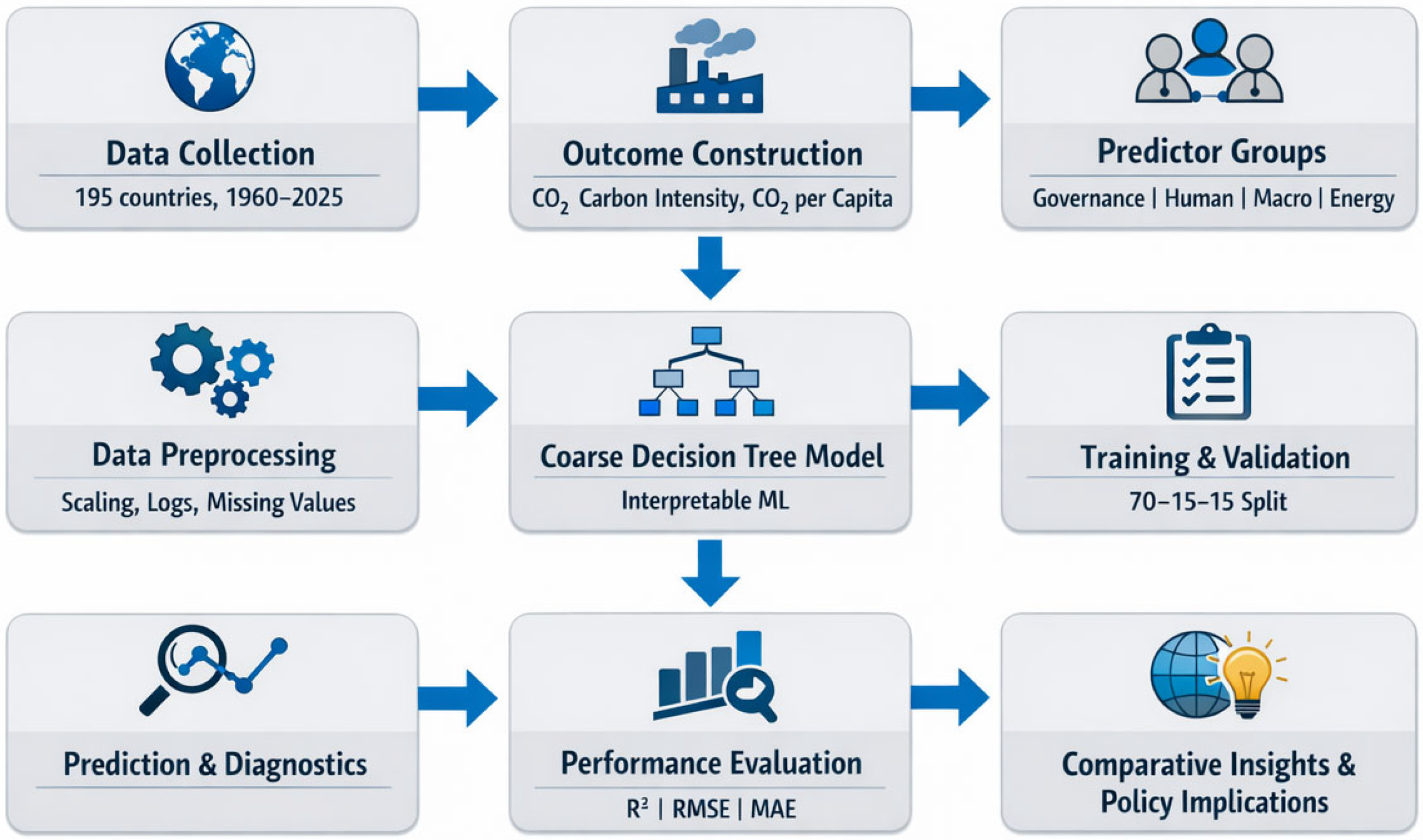
Figure 1 illustrates the end-to-end workflow, from data collection across 195 countries to outcome construction (CO
2 emissions, carbon intensity, and CO
2 per capita), organization of predictors (governance, human, macroeconomic, and energy factors), and data preprocessing. A coarse decision-tree model is trained and validated using a 70–15–15 data split, followed by prediction and diagnostic checks. Model performance is evaluated using R
2, RMSE, and MAE, enabling comparative insights and policy-relevant implications.
Unlike traditional econometric approaches that impose linearity assumptions, machine learning models are particularly suitable for capturing complex, nonlinear, and high-dimensional relationships in environmental data. Recent studies highlight that machine learning provides superior predictive performance and reveals hidden interaction effects that are often overlooked in conventional models [
37,
38]. In the context of environmental sustainability, where relationships between governance, development, and emissions are inherently nonlinear and heterogeneous across countries, machine learning offers a more flexible and robust analytical framework.
3.1. Environmental Indicators
The primary environmental outcome variable is carbon dioxide (CO2) emissions, measured in metric tons and representing emissions from fossil fuel combustion and industrial processes. CO2 emissions are widely used as a standard indicator of environmental degradation and climate pressure.
3.1.1. Carbon Intensity
Carbon intensity is employed as a core indicator to measure the emissions efficiency of economic activity. It captures the amount of carbon dioxide emissions generated per unit of economic output and is constructed as follows:
where
i denotes the country;
t denotes the year.
Carbon intensity measures the efficiency with which an economy produces output in relation to its carbon emissions. Lower values of carbon intensity indicate cleaner production processes and improved energy efficiency, whereas higher values imply greater environmental pressure per unit of economic output. This variable is widely used in the environmental economics literature to assess progress toward low-carbon growth. A new variable, Carbon Intensity, is constructed and added to the dataset for subsequent empirical analysis.
3.1.2. CO2 Emissions per Capita
To account for demographic differences and distributional aspects of environmental pressure, CO
2 emissions per capita are computed. This indicator measures the average emissions burden per individual and is defined as
This normalization allows meaningful comparison of emissions across time by adjusting for population growth. CO2 emissions per capita provide insights into welfare-related environmental impacts and the intensity of emissions at the individual level. The resulting variable, CO2 per capita, is included in the dataset to complement aggregate emissions and efficiency-based measures.
3.1.3. Log Carbon Intensity
Carbon intensity often exhibits right-skewness and heteroskedasticity; a logarithmic transformation is applied to improve the statistical properties of the variable. Log carbon intensity is constructed as
The log transformation stabilizes variance, reduces the influence of extreme values, and enhances the performance of econometric and machine-learning models. This transformed measure is particularly useful for regression-based inference and predictive modeling. The resulting variable, Log Carbon Intensity, is included in the dataset and used in robustness and advanced empirical analyses. These indicators allow the analysis to capture environmental performance from efficiency, welfare, and scale perspectives.
3.2. Governance Indicators
Governance quality is captured using five institutional indicators drawn from the Worldwide Governance Indicators framework. Government effectiveness measures the quality of public services and the effectiveness of policy formulation and implementation. Political stability and absence of violence reflect the likelihood of political instability or conflict that could disrupt policy continuity. The rule of law captures confidence in legal institutions and the enforcement of rules and contracts. Regulatory quality measures the government’s ability to design and implement sound policies and regulations that support sustainable development. Voice and accountability reflect the extent of citizen participation, freedom of expression, and accountability mechanisms. All governance indicators are measured on a standardized scale, where higher values indicate stronger institutional quality. Together, these variables represent the political, legal, and regulatory dimensions of governance that are theoretically and empirically linked to environmental policy enforcement and carbon emission outcomes. The use of tree-based models mitigates concerns related to multicollinearity among governance indicators.
3.3. Human Development and Social Indicators
The dataset includes a broad set of indicators reflecting human development, social structure, and inequality. The aim is to capture the human and social dimensions of environmental sustainability. These indicators comprise the Human Capital Index, life expectancy at birth, government expenditure on education (% of GDP), government health expenditure (% of GDP), and individuals using the internet (% of population), which together represent the quality of education, health, and digital access.
Demographic pressures are captured through population density, total population, and rural population (% of total population), while social inequality and deprivation are measured using the Gini index and the multidimensional poverty headcount ratio (%). Collectively, these variables reflect education, health outcomes, digital connectivity, demographic structure, income inequality, and poverty, all of which are closely linked to energy consumption behaviour, production patterns, and environmental outcomes across countries.
3.4. Macroeconomic and Financial Indicators
The macroeconomic and fiscal environment is represented by a set of indicators that capture economic scale, stability, and government financial capacity. These variables include gross domestic product (GDP) measured in current US dollars, annual inflation rate, real interest rate, risk premium on lending, and trade in services as a percentage of GDP, which together reflect overall economic size, price stability, cost of capital, and openness to international markets.
In addition, tax revenue (% of GDP), central government debt (% of GDP), and government expenditure (% of GDP) are included to capture the fiscal capacity and budgetary behaviour of governments. Collectively, these indicators represent macroeconomic stability, financial conditions, and fiscal space, all of which are closely linked to production intensity, investment in cleaner technologies, and a country’s ability to design and enforce effective environmental regulations.
3.5. Machine Learning Framework
This study employs a machine learning approach to examine how governance quality, human development, and macroeconomic factors jointly influence CO2 emissions and carbon intensity. To capture nonlinear relationships and threshold effects without imposing restrictive functional form assumptions, a decision tree-based regression model is employed.
Specifically, a Coarse Decision Tree model is used to balance predictive accuracy and interpretability. By limiting tree depth and the number of splits, the coarse structure reduces the risk of overfitting while allowing clear interpretation of decision rules. This property is particularly important for policy-oriented environmental analysis, where transparency and interpretability are essential.
3.5.1. Decision Tree Regression Model
A decision tree (DT) is a supervised, non-parametric machine learning algorithm widely used for classification and prediction tasks due to its simplicity, interpretability, and ability to handle both numerical and categorical data. Structurally, a decision tree consists of a root node, internal decision nodes, and terminal leaf nodes, where each internal node represents a decision rule based on feature values, and each leaf node corresponds to a class label or prediction outcome [
37]. The core objective of a decision tree algorithm is to iteratively partition the dataset into homogeneous subsets by selecting the most informative features at each split. This selection is commonly guided by impurity or information measures such as the Gini index, information gain, or gain ratio, which quantify how well a feature separates the classes [
37]. The splitting process continues until predefined stopping criteria, such as maximum tree depth, minimum samples per leaf, or purity threshold, are met.
One of the major strengths of decision trees lies in their interpretability. The rule-based structure allows domain experts to trace predictions back to a sequence of logical conditions, making DTs particularly attractive for critical applications where explainability is essential. For instance, in smart factory environments and industrial control systems, decision trees have demonstrated strong performance in classifying encrypted SCADA network traffic, offering both high accuracy and low computational overhead [
34]. Their fast training and prediction speeds further make them suitable for real-time intrusion detection systems. However, conventional decision trees are prone to overfitting, especially when the tree grows excessively deep and captures noise in the training data. To mitigate this issue, tree complexity is often controlled through pruning or by limiting the number of splits, which leads to different variants such as fine, medium, and coarse decision trees [
37].
3.5.2. Coarse Decision Tree
A coarse decision tree is a simplified variant of the standard decision tree characterized by a small number of splits and shallow depth, resulting in fewer terminal leaf nodes. In coarse trees, the maximum number of splits is intentionally restricted, producing broader decision boundaries and reduced model complexity [
37]. As reported by Asante-Okyere et al. [
37], coarse decision trees typically exhibit lower classification accuracy compared to fine or optimized trees; however, they offer improved robustness and reduced variance.
3.5.3. Data Preprocessing
All variables are subjected to a unified data preprocessing procedure before model estimation. Variables measured on different scales are normalized using min–max scaling to improve model performance. Variables exhibiting strong skewness, including GDP and CO2 emissions, are examined and transformed using logarithmic scaling where appropriate to reduce heteroskedasticity. Outliers are identified and treated to prevent undue influence on model estimation. Throughout the preprocessing stage, the panel structure of the data, organized by country and year, is preserved.
3.5.4. Model Training and Validation
The dataset is divided into training and testing subsets using a 70-15-15 split to evaluate out-of-sample predictive performance. Model training is conducted on the training set, while validation is performed on the testing set. Cross-validation is applied to ensure robustness and reduce the risk of overfitting. The model estimation process preserves the country–year structure of the panel data, ensuring that predictions reflect cross-country and temporal variation.
3.5.5. Model Evaluation Metrics
Model performance is evaluated using standard regression metrics. The coefficient of determination (R2) is used to assess explanatory power, Root Mean Squared Error (RMSE) measures prediction accuracy, and Mean Absolute Error (MAE) captures average prediction error. Mean Absolute Percentage Error (MAPE) is reported for completeness; however, it is sensitive to zero or near-zero CO2 emission values. Consequently, greater emphasis is placed on MAE, RMSE, and R2, which provide more reliable measures of predictive accuracy in emissions datasets.
3.6. Data Sources and Construction
The dataset is constructed using publicly available data from the World Development Indicators (World Bank) and Worldwide Governance Indicators. Historical data from 1996 onward are obtained directly from WDI. For recent years where full data are not available, projections and interpolations are applied based on available trends. The dataset used in this study was compiled and accessed through a publicly available repository (Kaggle), which aggregates and harmonizes data from multiple international sources. All variables were cross-checked for consistency, and missing values were handled using standard interpolation techniques.
The selection of indicators is grounded in the environmental economics and sustainability literature. Governance indicators reflect institutional capacity to enforce environmental regulation. Human development indicators capture socio-economic drivers of energy demand. Macroeconomic variables represent scale and financial capacity effects, while energy structure variables directly influence emissions. This multi-dimensional approach ensures comprehensive coverage of the key determinants of environmental sustainability identified in prior studies.
4. Results
4.1. China’s CO2 Emissions, Carbon Intensity, and Emissions per Capita
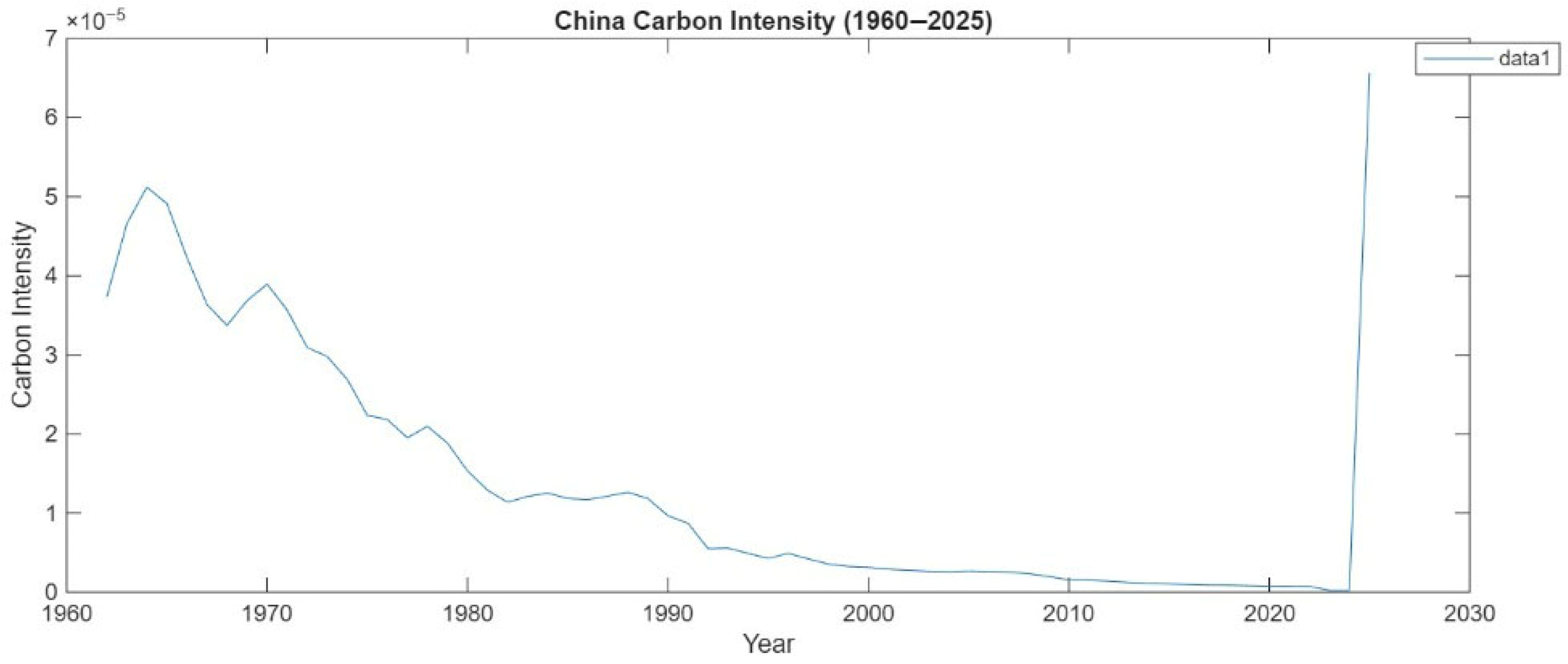
Figure 2 illustrates the evolution of China’s carbon intensity. Carbon intensity shows a clear long-term declining trend, indicating a steady improvement in the efficiency with which economic output is produced relative to carbon emissions. During the early decades (1960s–1970s), carbon intensity remained relatively high and volatile, reflecting an energy-intensive growth path. From the late 1970s onward, a persistent decline is observed, suggesting gradual improvements in production efficiency, energy use, and structural transformation.
After the 1990s, the decline became more pronounced and stable, indicating sustained progress in reducing emissions per unit of output despite continued economic expansion. The sharp spike observed at the end of the series likely reflects data irregularities or sudden changes in the denominator or numerator used to compute carbon intensity, rather than a structural reversal of the long-term trend. The figure highlights a strong decoupling between economic growth and emissions intensity over time.
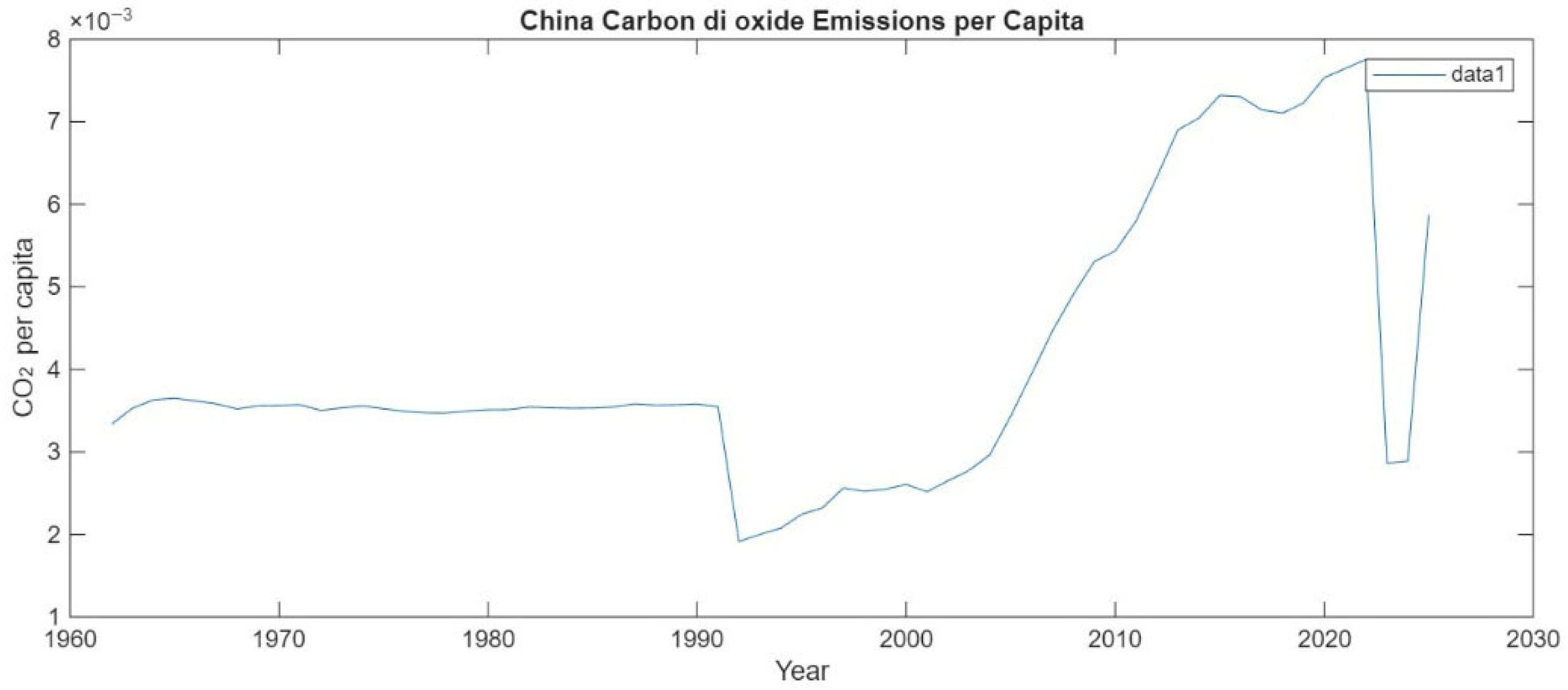
Figure 3 presents China’s carbon-di-oxide emissions per capita over the same period. In contrast to carbon intensity, emissions per capita exhibit a generally increasing trend, particularly after the early 2000s. Between the 1960s and late 1980s, per capita emissions remained relatively stable, indicating limited growth in individual emission levels. A noticeable decline occurs in the early 1990s, followed by a sustained and rapid increase from the 2000s onward. This rise reflects growing energy consumption per person associated with economic expansion, urbanization, and rising living standards. The sharp drop observed near the end of the period, followed by partial recovery, suggests short-term disruptions or data breaks rather than a permanent structural change. The figure shows that while production has become more carbon-efficient, the average emissions burden per individual has increased over time.
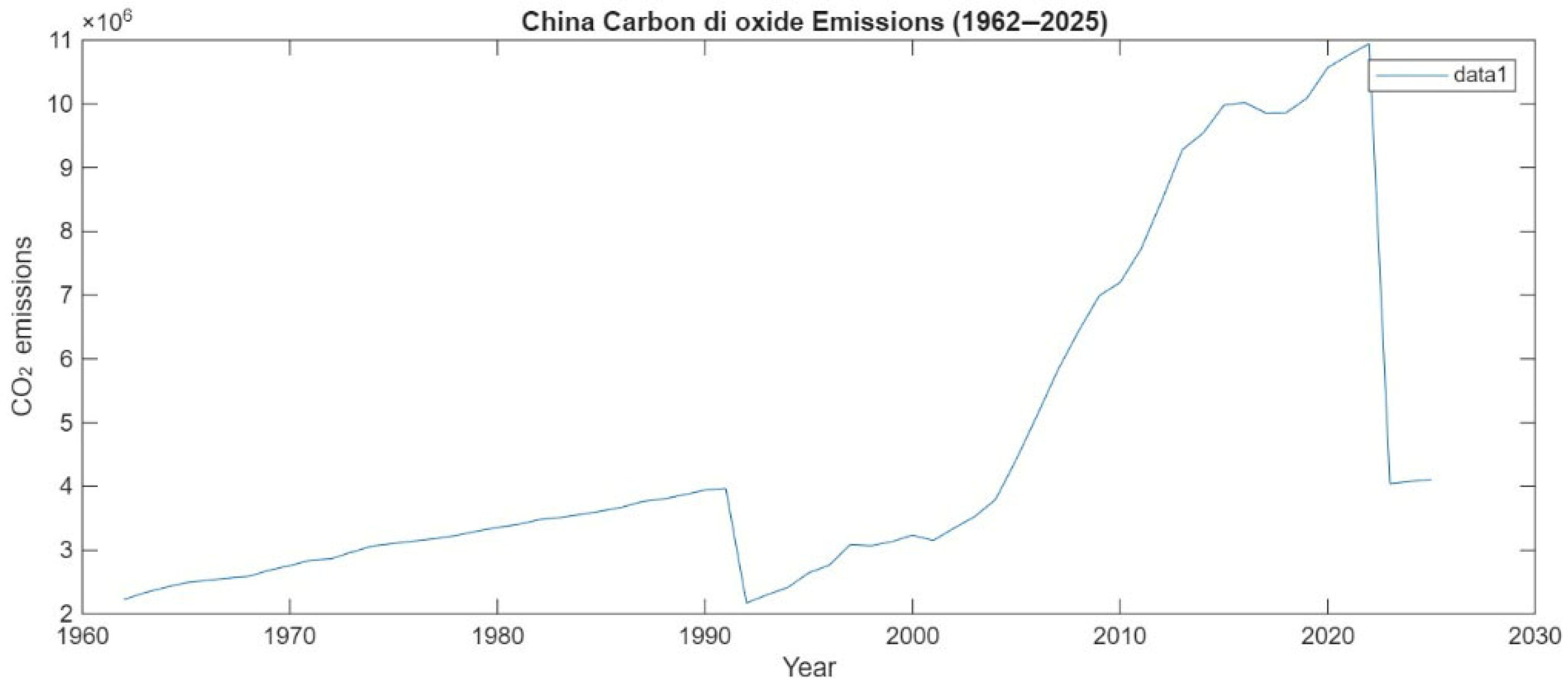
Figure 4 shows the trajectory of China’s total CO
2 emissions from 1962 to 2025. Total emissions increase steadily from the 1960s through the late 1980s, followed by a temporary decline in the early 1990s. After this period, emissions rise rapidly, especially from the early 2000s onward, reflecting large-scale industrialization and expansion of energy demand. The sharp growth phase highlights the strong scale effect of economic expansion, where total emissions increase despite improvements in carbon intensity. The sudden drop near the end of the series, similar to that observed in emissions per capita, likely reflects data disruptions or exceptional short-term shocks rather than a long-term reversal. Overall, the figure confirms that total emissions have grown substantially over time, driven primarily by economic scale and energy consumption.
4.2. India’s CO2 Emissions, Carbon Intensity, and Emissions per Capita
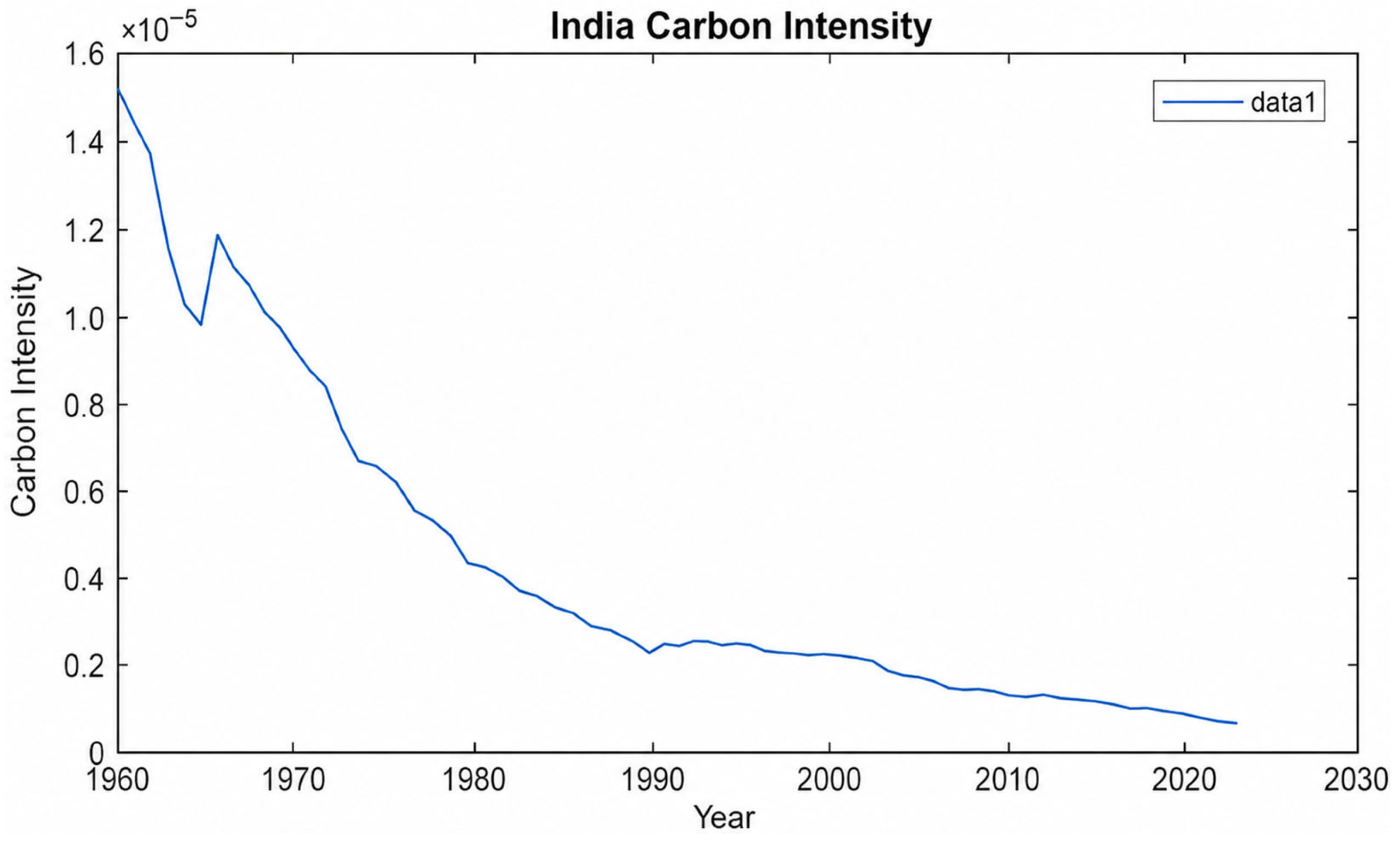
Figure 5 shows a clear long-run decline in India’s carbon intensity from 1960–2023, indicating a sustained improvement in emissions efficiency (CO
2 per unit of GDP). Carbon intensity is relatively high in the early decades and falls sharply through the 1970s and early 1980s. From the mid-1980s onward, the decline continues more gradually, with a comparatively stable downward path after the 1990s. Overall, this pattern suggests that, over time, India produced economic output with progressively lower emissions intensity, consistent with improvements in energy efficiency and structural change in production.
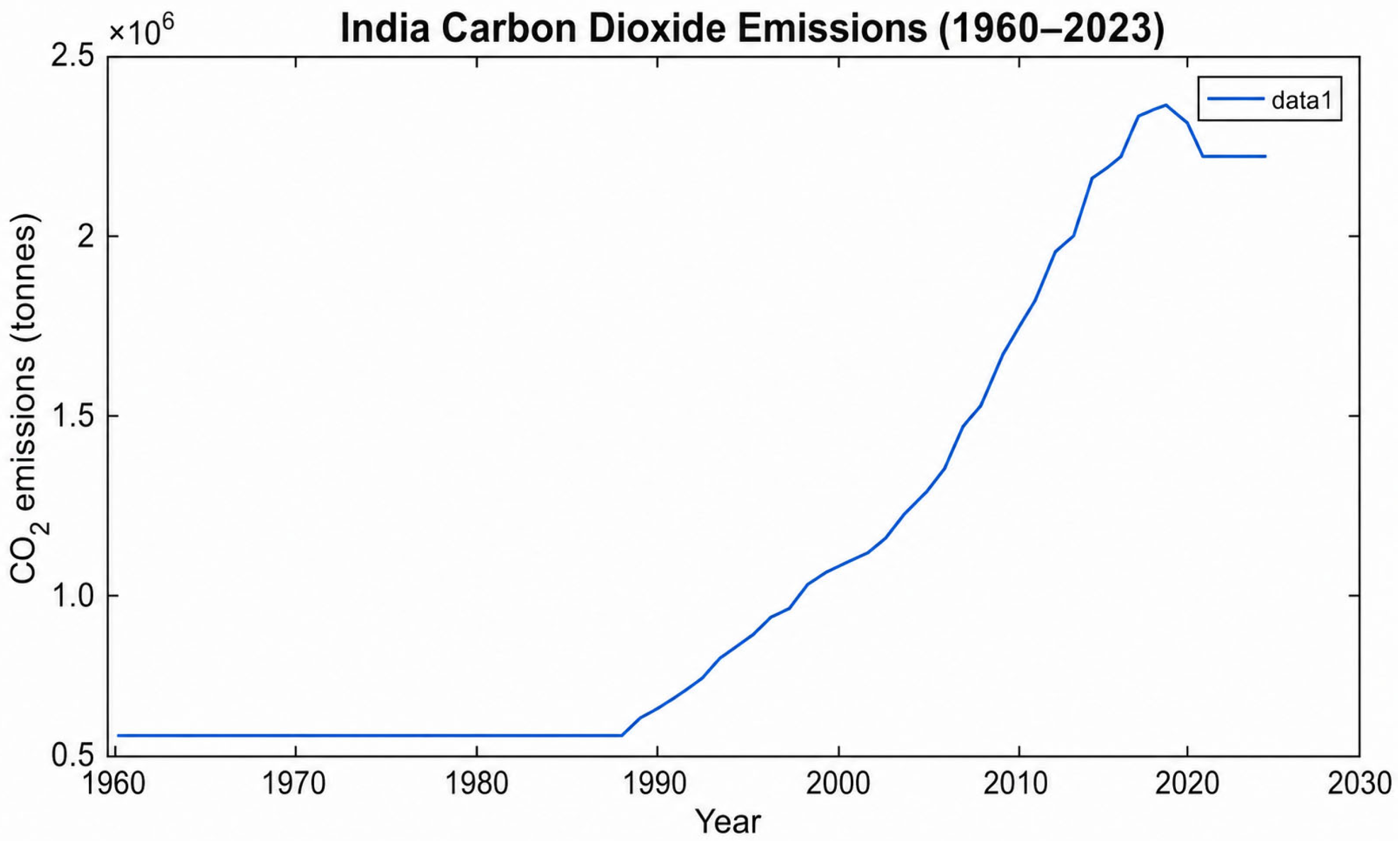
Figure 6 displays a strong upward trend in India’s aggregate emissions, particularly after the early 1990s. Emissions remain comparatively low and flat in the earlier period, followed by a sustained increase that accelerates during the 2000s and 2010s. The series reaches its highest levels in the late 2010s, with a small decline visible near the end of the sample. This indicates that the scale effect of economic expansion and rising energy demand increased total emissions despite the long-run reduction in carbon intensity.
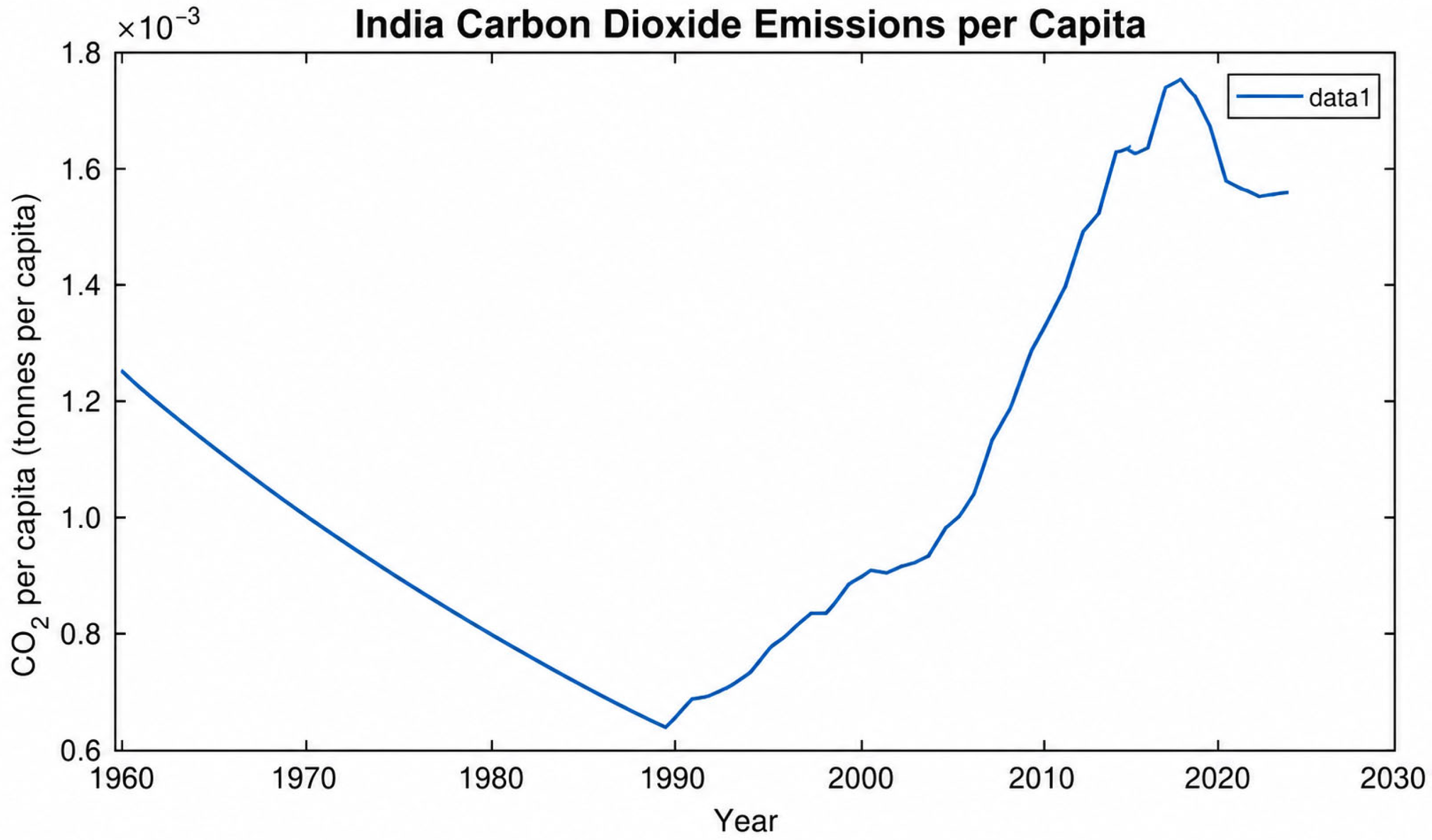
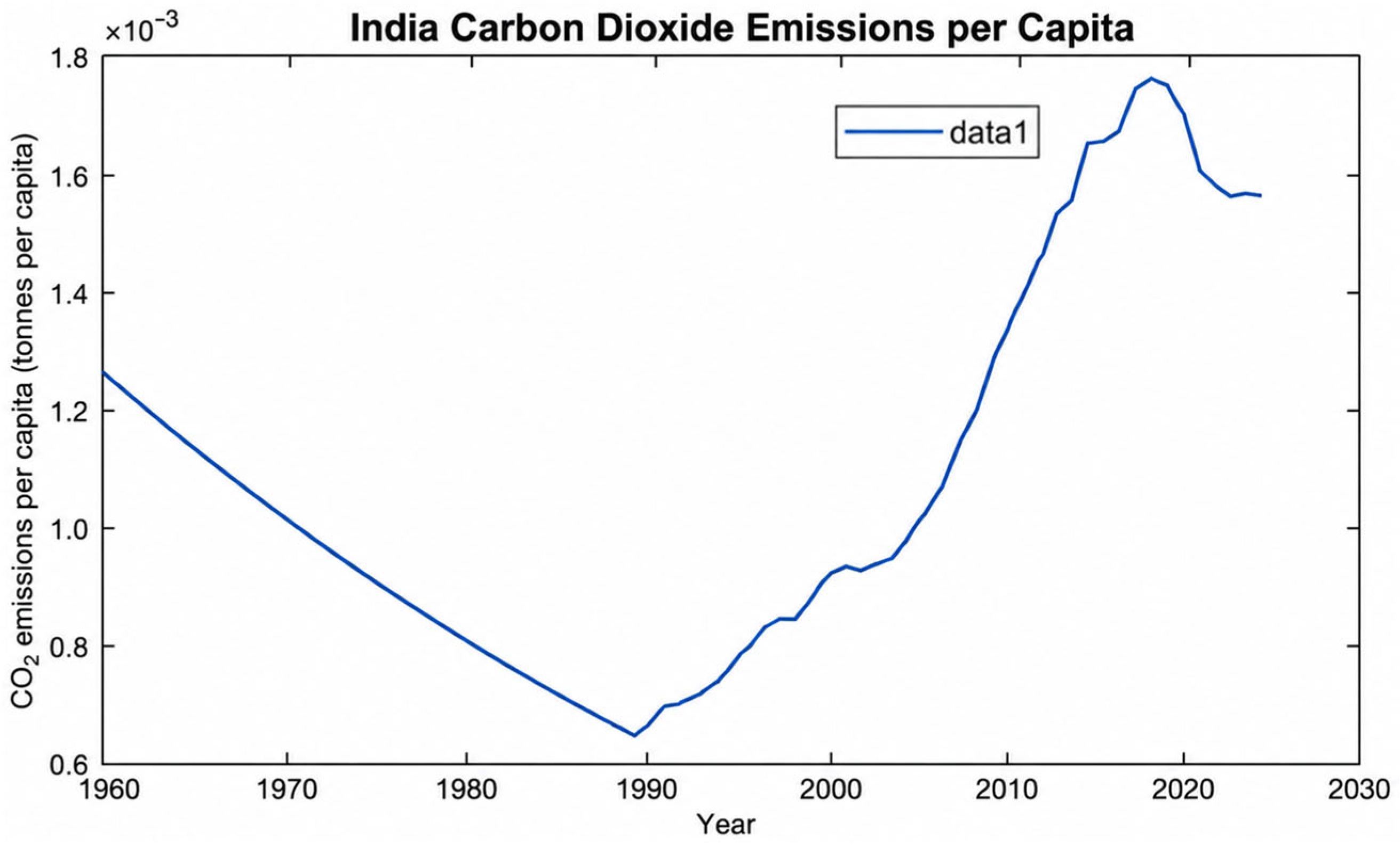
Figure 7 provides a welfare-normalized view of emissions. Per capita emissions decline from 1960 through around 1990, after which they rise steadily and peak in the late 2010s, followed by a modest reduction near the end of the period. This suggests that individual-level emissions burden increased during the high-growth decades, even as emissions efficiency (carbon intensity) improved.
4.3. USA’s CO2 Emissions, Carbon Intensity, and Emissions per Capita
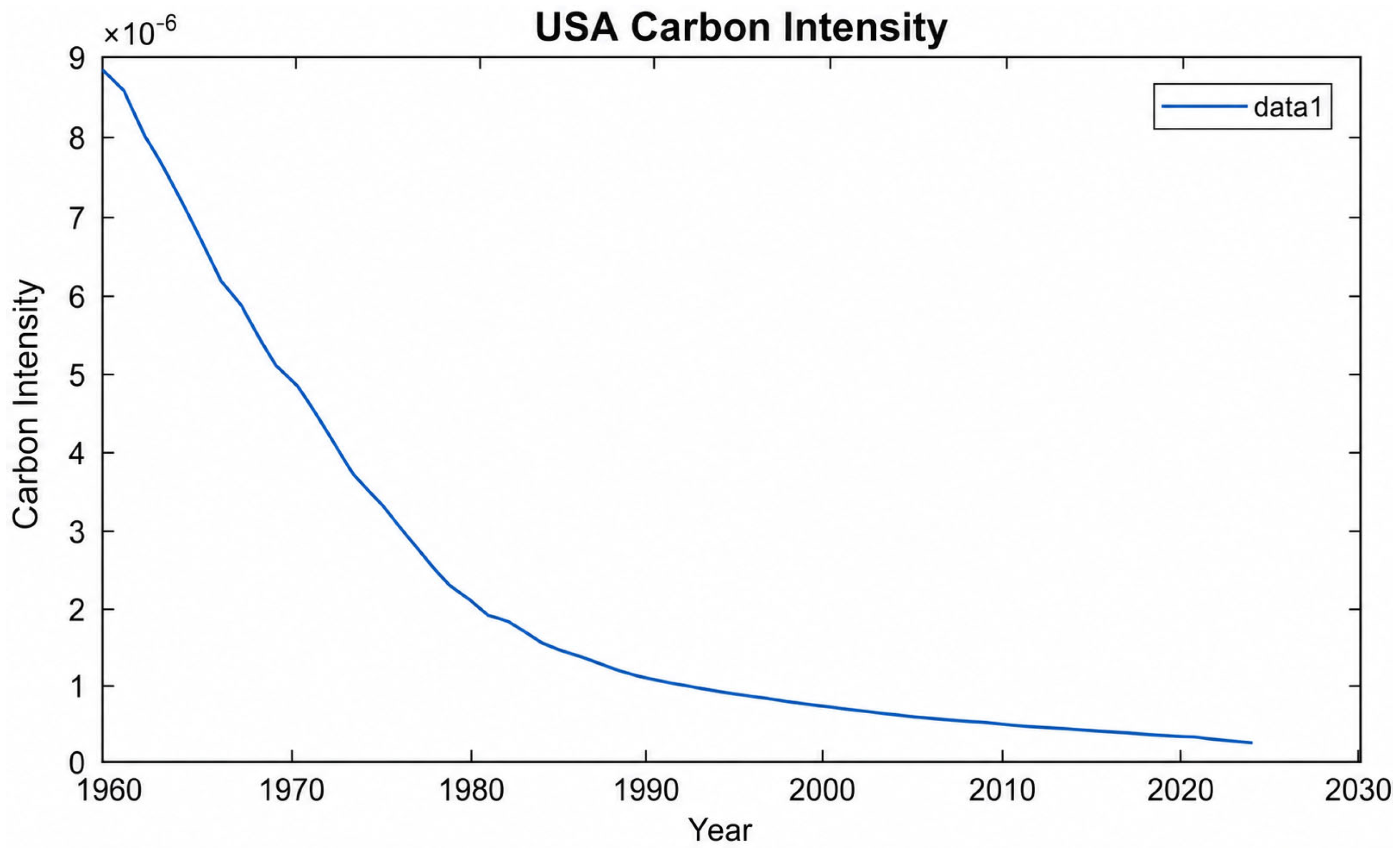
Figure 8 shows a strong and persistent decline in the USA’s carbon intensity over the full period. The steepest reduction occurs between the 1960s and the early 1980s, followed by a continued gradual decline through the 1990s and 2000s, reaching very low levels by the 2020s. This long-run pattern indicates sustained improvements in emissions efficiency, consistent with a progressive decoupling of emissions intensity from economic output.
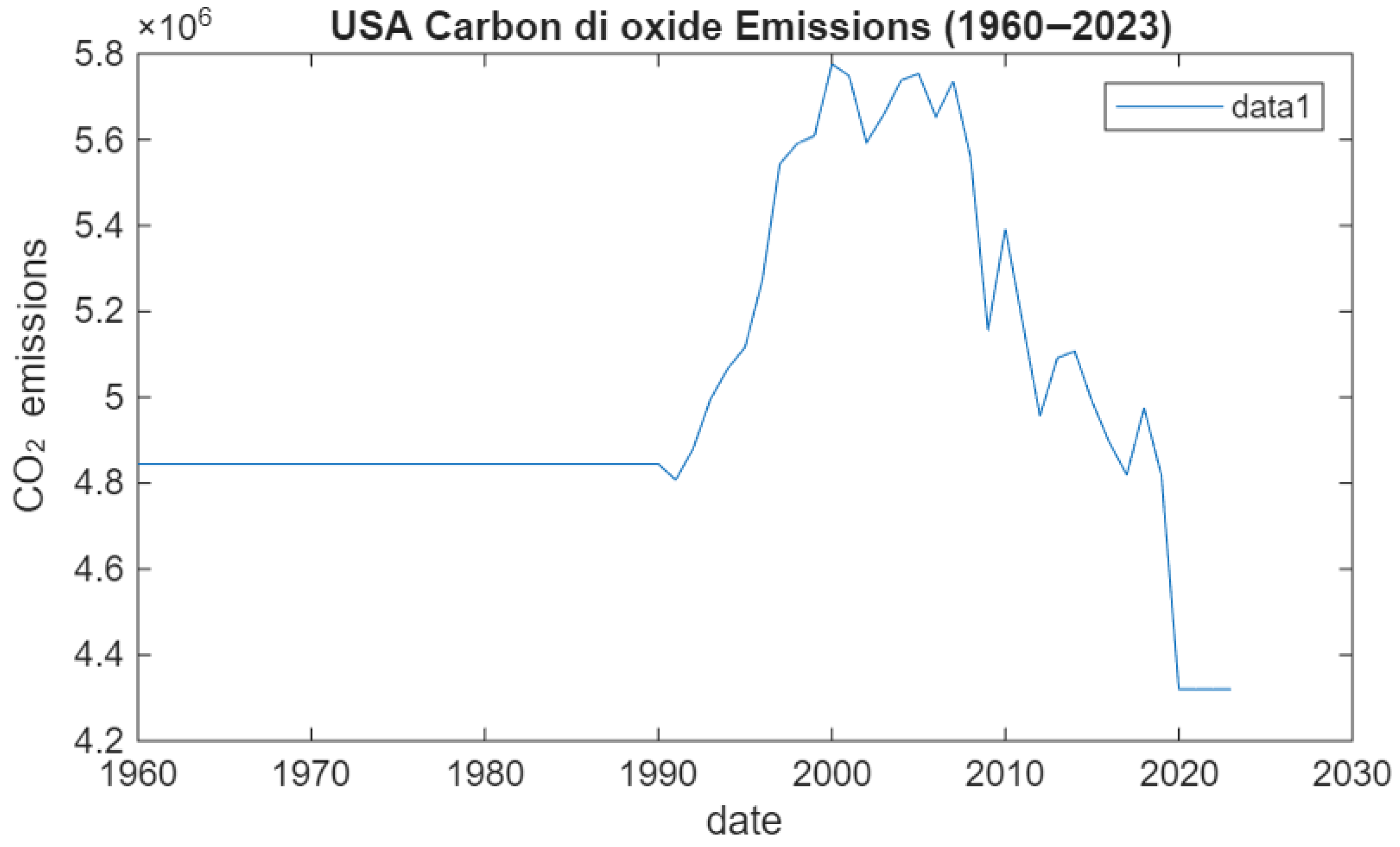
Figure 9 indicates that aggregate emissions are relatively stable at a high level through much of the earlier period, followed by an increase from the early 1990s to a peak around the late 1990s/early 2000s. After the peak, emissions trend downward, with a noticeable drop near the end of the sample and a lower plateau thereafter. This trajectory suggests that, unlike India, the USA exhibits a clearer turning point where total emissions begin to decline while carbon intensity continues to fall.
Figure 10 shows a long-run downward trend from 1960 onward. Per capita emissions decline steadily through the 1960s–1980s, remain relatively flat with minor fluctuations around the 1990s/early 2000s, and then fall further in the post-2005 period, reaching their lowest levels in the 2020s. This indicates a declining per-person emissions burden over time, aligning with the concurrent reduction in carbon intensity.
The Coarse Decision Tree Regression models are used to predict CO2 emissions across countries. Separate models are estimated for governance indicators, human development and social factors, macroeconomic and financial variables, and environmental and energy structure factors. Across all specifications, the models demonstrate strong predictive performance, confirming the relevance of institutional, socio-economic, and structural determinants in explaining cross-country emission patterns. Validation results indicate consistently high explanatory power, with R2 values ranging from 0.90 to 0.99 across model specifications. Absolute-error-based metrics (RMSE and MAE) remain moderate relative to the scale and heterogeneity of global CO2 emissions, indicating reliable out-of-sample performance.
4.4. Governance Indicators and CO2 Emissions
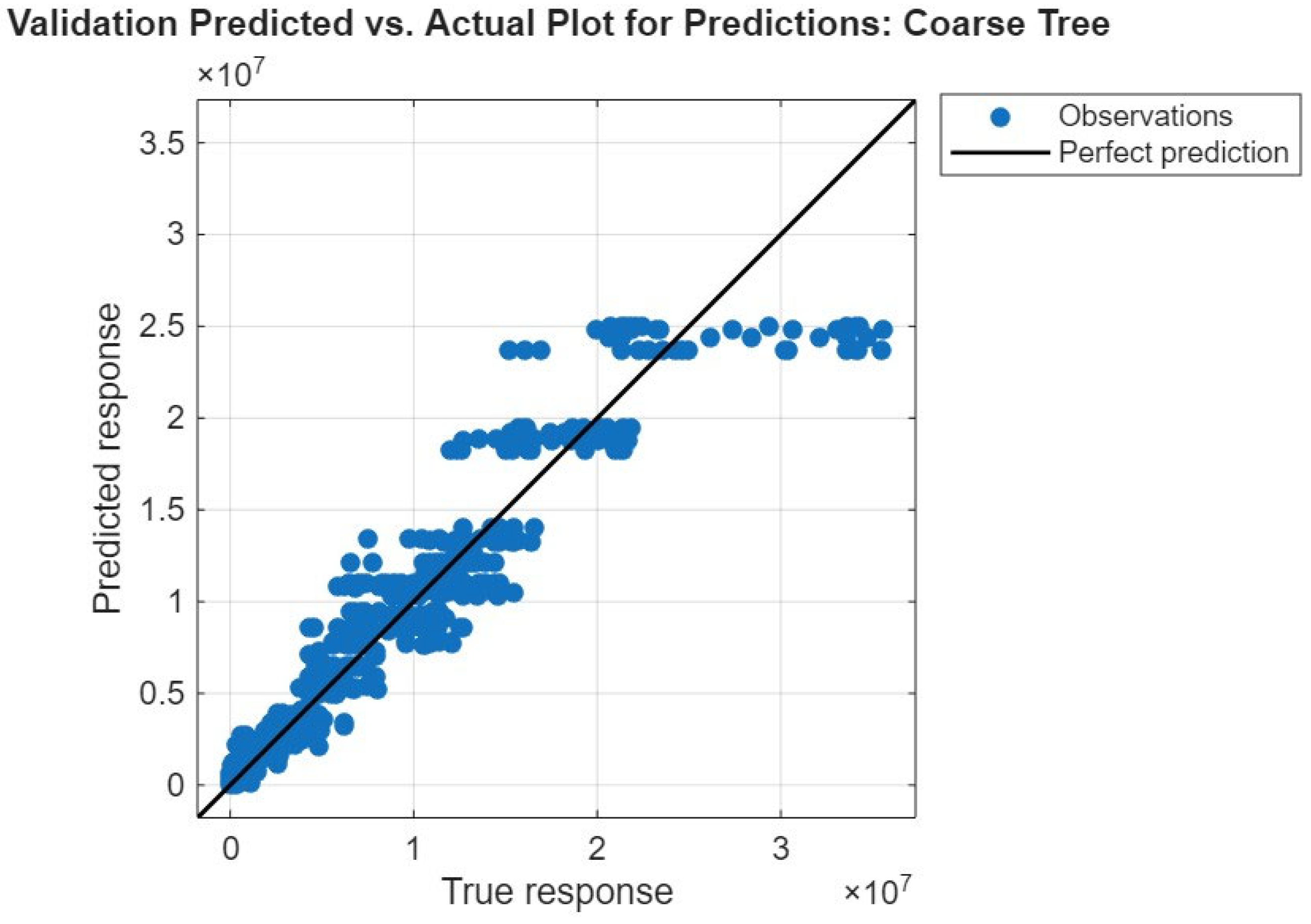
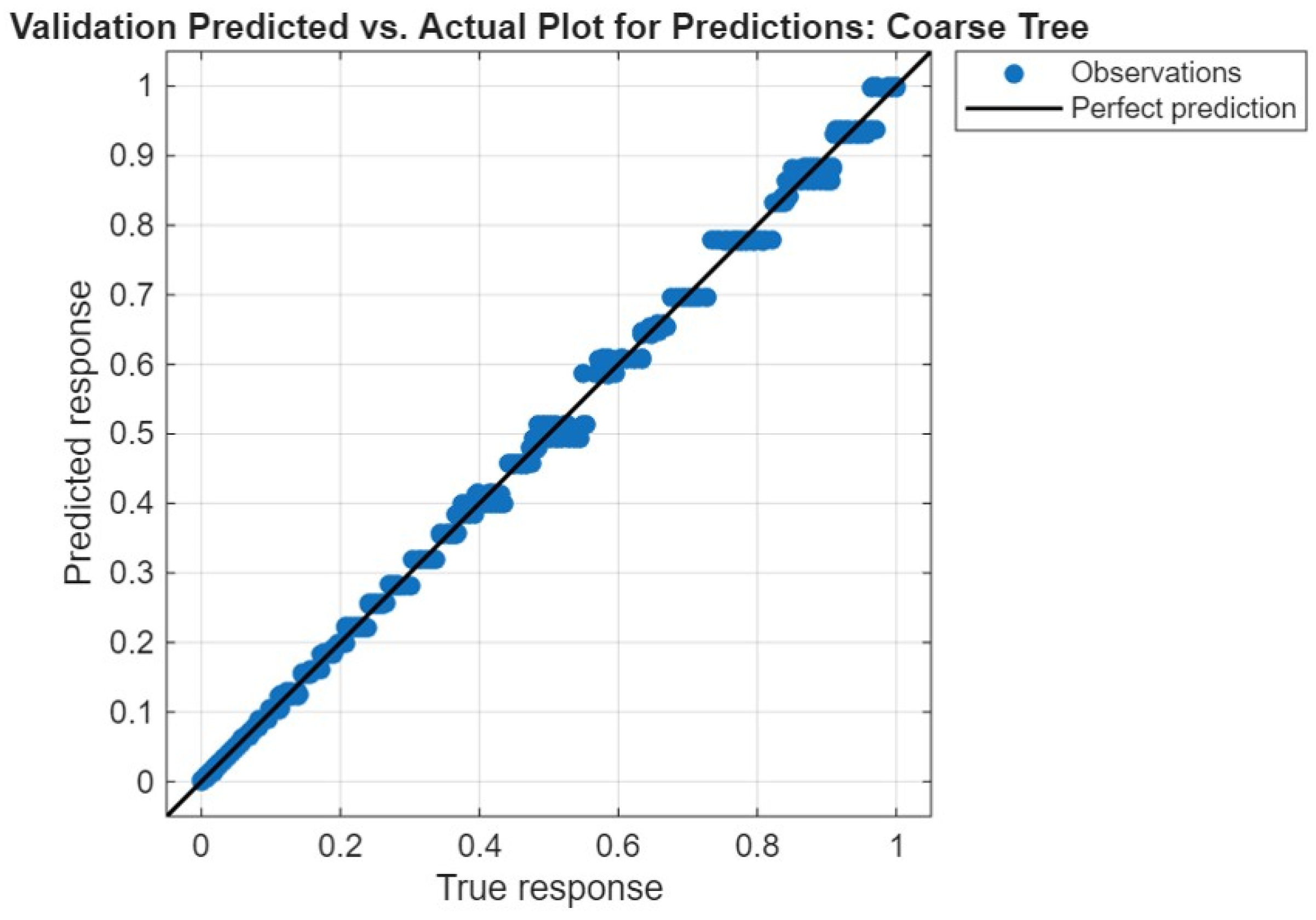
Figure 11 presents the validation predicted-versus-actual CO
2 emissions for the governance-based model. The observations are tightly clustered along the 45-degree line, indicating a close correspondence between predicted and observed emissions and confirming the strong predictive capacity of governance indicators.
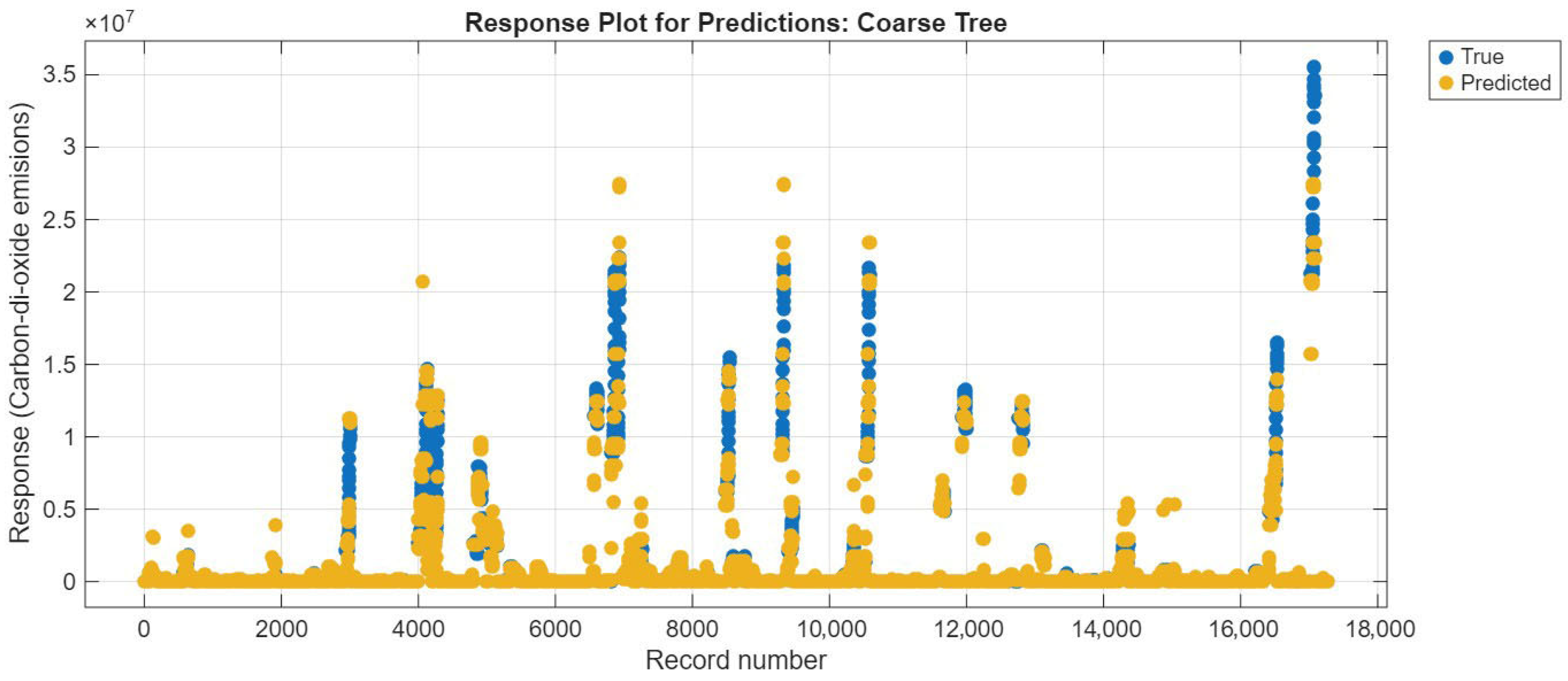
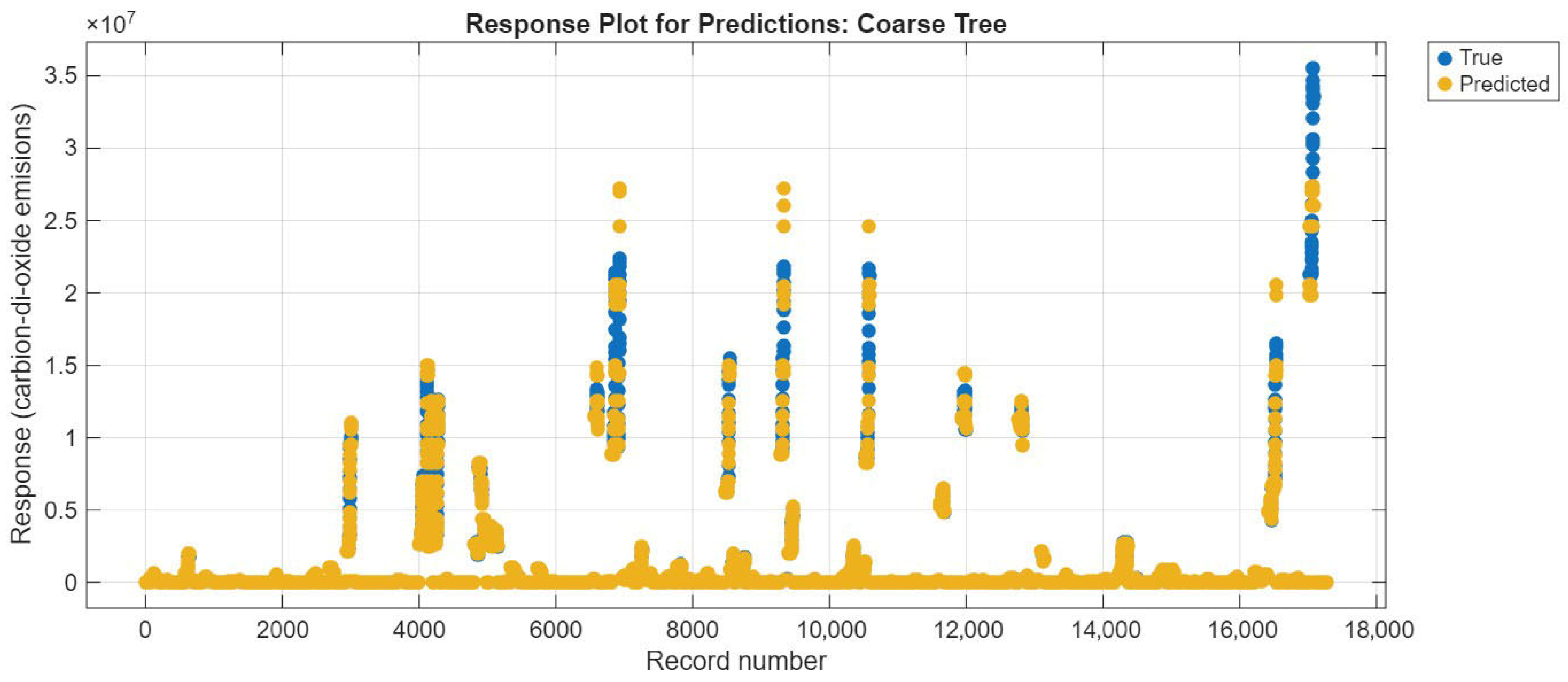
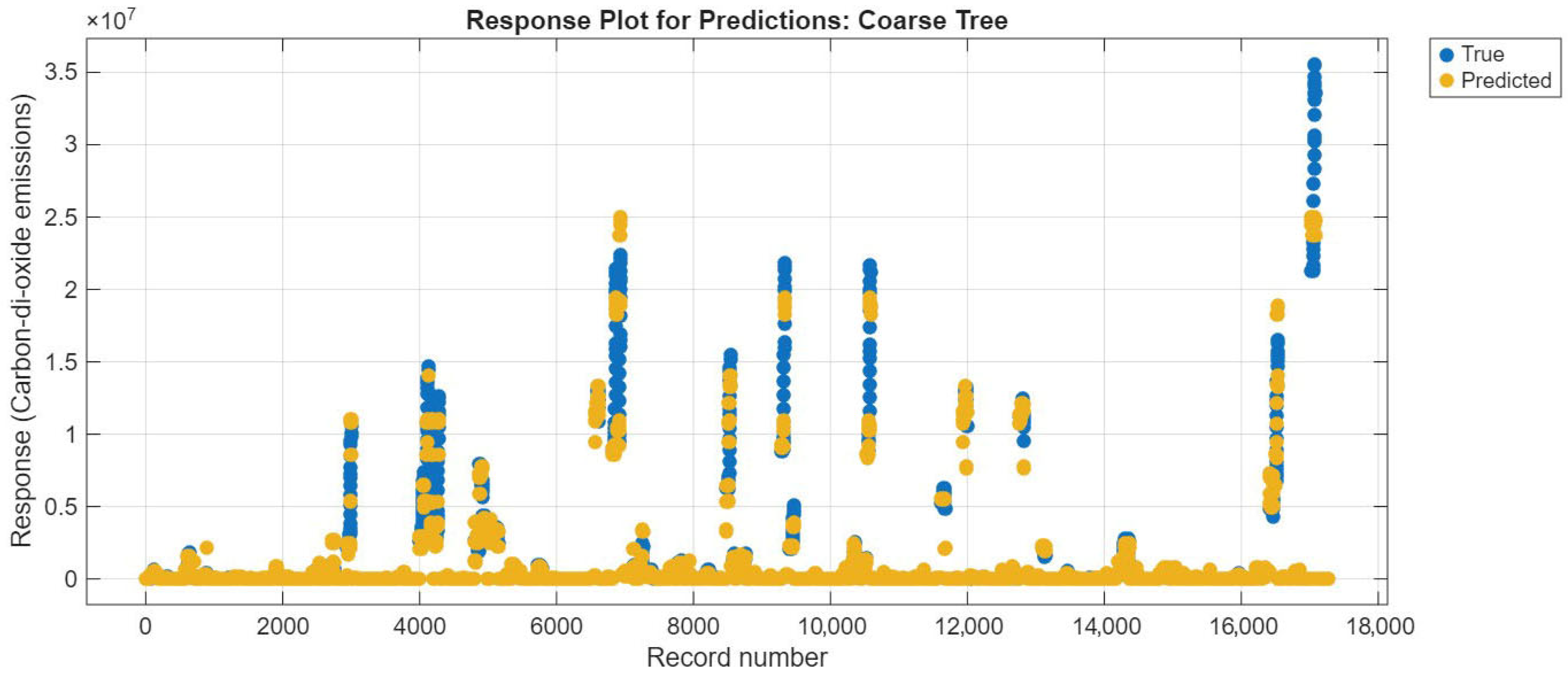
Figure 12 illustrates the response plot comparing true and predicted emissions across observations. The predicted values closely track actual emissions across the entire range, including high-emission regimes. Some dispersion is observed at extreme emission levels; however, the overall alignment remains strong. The high validation R
2 value of 0.99 indicates that governance indicators alone explain nearly all observed variation in CO
2 emissions across countries. Countries characterized by poorer regulatory quality, lower government effectiveness, and weaker rule of law tend to exhibit substantially higher emission levels, while stronger institutional environments are associated with lower predicted emissions.
Importantly, the tree-based structure captures nonlinear and threshold effects, suggesting that improvements in governance yield particularly strong emission reductions once institutional quality exceeds certain critical levels. These findings support the theoretical argument that effective governance enhances environmental policy enforcement, reduces regulatory evasion, and improves compliance with environmental standards.
The validation results indicate that the governance-based Coarse Decision Tree model performs exceptionally well in predicting CO2 emissions. The validation R-squared value of 0.99 shows that nearly 99% of the variation in CO2 emissions is explained by the governance indicators included in the model, reflecting an outstanding goodness of fit and highlighting the strong explanatory power of institutional quality in shaping emission outcomes. The model’s Root Mean Squared Error (RMSE) of 3.06 × 10⁵ suggests that prediction errors remain reasonably small when evaluated against the large magnitude and cross-country variability of CO2 emissions. This level of accuracy is particularly notable given the parsimonious and interpretable structure of the model. Consistent with this result, the Mean Squared Error (MSE) of 9.39 × 10¹⁰ reflects the presence of high-emission countries in the dataset but remains aligned with the very high R2 value, indicating no major loss of predictive reliability at extreme emission levels. The Mean Absolute Error (MAE) of 35,596 further confirms that, on average, predicted emissions deviate only modestly from observed values, which is relatively small in a global dataset characterized by substantial heterogeneity in emission scales.
In addition to its strong predictive accuracy, the model demonstrates high computational efficiency. The Coarse Decision Tree achieves a prediction speed of approximately 1.4 million observations per second, making it well-suited for large cross-country panel datasets. The training time of only 1.52 s further reflects the computational simplicity and scalability of the approach. Moreover, the compact model size of approximately 16 kB (compact) and 6 kB (coder) indicates a lightweight and interpretable structure, which is particularly advantageous for transparency, reproducibility, and policy-oriented environmental analysis.
4.5. Human Development and Social Factors
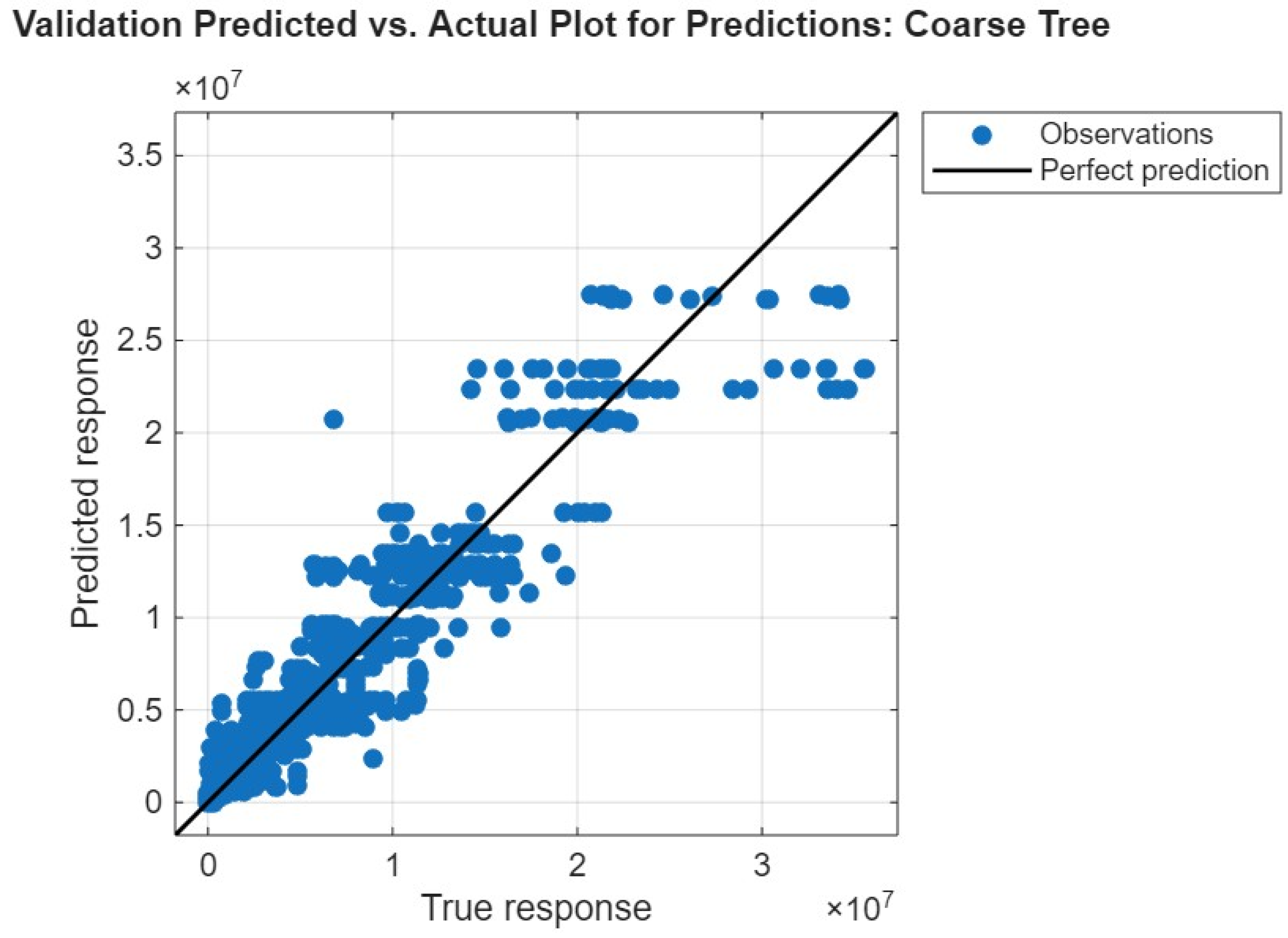
Figure 13 presents the predictive performance of the human development and social factors model. The validation results indicate strong explanatory power, with an R
2 value of 0.95, confirming that demographic structure, social inequality, and human capital significantly influence CO
2 emissions across countries. The predicted-versus-actual plot shows a dense clustering of observations along the perfect prediction line, although dispersion increases at higher emission levels. This pattern reflects the indirect and heterogeneous pathways through which human development affects emissions.
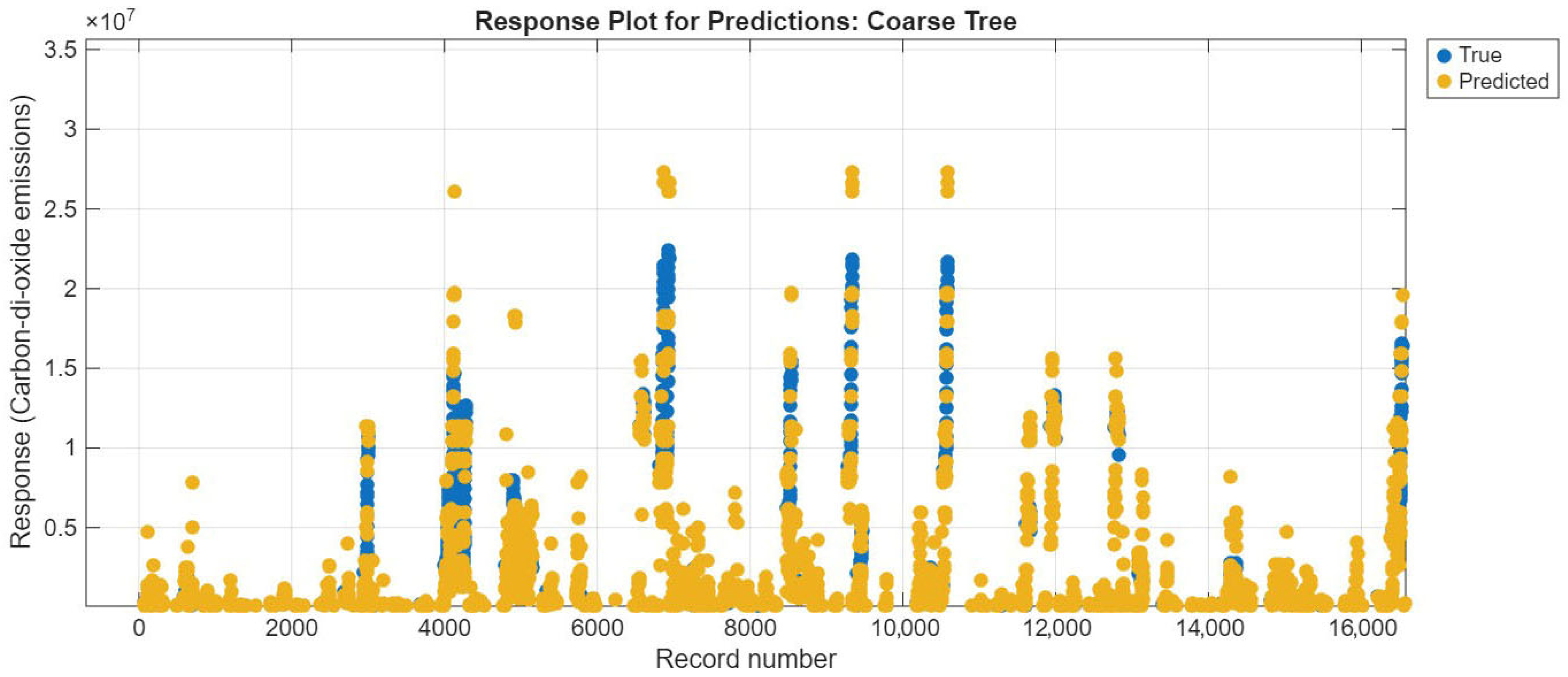
The response plot (
Figure 14) reveals that population size, population density, and income inequality are strongly associated with higher emissions, reflecting increased consumption demand and pressure on energy systems. In contrast, higher levels of human capital, education expenditure, health spending, and digital access are associated with lower predicted emissions at comparable levels of economic activity. The model achieves a Root Mean Squared Error (RMSE) of 6.18 × 10
5 and a Mean Absolute Error (MAE) of 1.37 × 10
5, indicating moderate prediction errors relative to the wide dispersion of CO
2 emissions in the global dataset. The Mean Squared Error (MSE) of 3.82 × 10
11 reflects the presence of high-emission observations but remains consistent with the high explanatory power of the model.
The response plot offers further insight into the underlying relationships. Countries with larger populations, higher population density, and greater income inequality tend to exhibit higher CO2 emissions, reflecting increased consumption demand and pressure on energy systems. In contrast, higher levels of human capital, education attainment, health expenditure, and digital access are associated with lower predicted emissions at comparable levels of economic activity. These patterns suggest that improvements in human development enhance energy efficiency, support cleaner production processes, and facilitate the adoption of low-carbon technologies.
4.6. Macroeconomic and Financial Factors
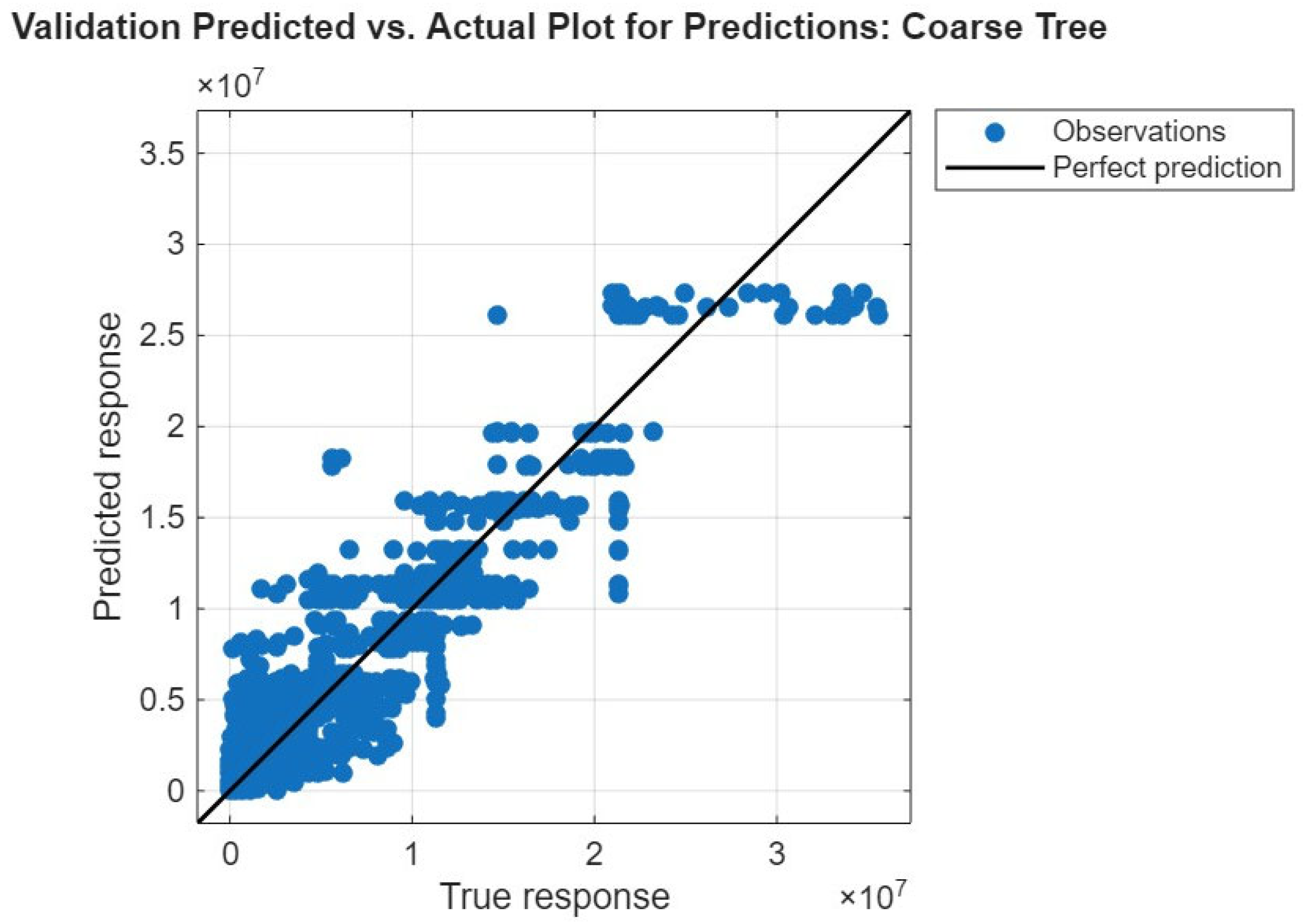
Figure 15 illustrates the performance of the Coarse Decision Tree model based on macroeconomic and financial indicators. The validation R
2 value of 0.90 indicates strong but comparatively weaker predictive performance than the governance-based model, reflecting the more indirect and scale-driven influence of macroeconomic factors on emissions. The predicted-versus-actual plot (
Figure 16) shows a clear positive relationship between predicted and observed emissions, although greater dispersion is observed at higher emission levels. This suggests that macroeconomic variables capture broad emission trends but are less precise in predicting extreme outcomes without complementary institutional or structural information.
The Root Mean Squared Error (RMSE) of 8.74 × 10⁵ and Mean Absolute Error (MAE) of 2.49 × 10⁵ are larger than those observed in the governance model, reflecting the substantial scale effects and cross-country heterogeneity inherent in macroeconomic data. High-emission economies contribute disproportionately to prediction errors, which is further reflected in the Mean Squared Error (MSE) of 7.64 × 10¹¹.
The macroeconomic model remains efficient from a computational perspective. The model achieves a prediction speed of approximately 790,000 observations per second with a training time of 1.20 s. The larger model size (approximately 48 kB compact) relative to the governance model reflects the greater complexity required to capture interactions among macroeconomic and financial variables. These results confirm that macroeconomic scale and fiscal capacity are fundamental drivers of CO2 emissions, but their effects are more diffuse and nonlinear than those of governance quality. Economic growth alone tends to increase emissions, while macroeconomic stability and effective fiscal management condition a country’s ability to transition toward environmentally sustainable growth paths. This underscores the importance of combining macroeconomic policy with strong institutional frameworks to achieve meaningful emission reductions.
4.7. Environment and Energy Structure Factors
Figure 17 presents the results of the environment and energy structure model. The validation R
2 value of 0.97 indicates that environmental and energy-related variables explain a substantial share of cross-country variation in CO
2 emissions.
Figure 18 shows a clear positive relationship between predicted and observed emissions, although greater dispersion is observed at higher emission levels. The validation results indicate strong predictive performance of the environment and energy structure model. The validation R-squared value of 0.97 suggests that approximately 97% of the variation in CO
2 emissions is explained by environmental and energy-related factors. This high explanatory power confirms that energy structure and environmental conditions are central determinants of emission levels across countries. The Root Mean Squared Error (RMSE) of 5.15 × 10
5 and Mean Absolute Error (MAE) of 1.13 × 10
5 indicate moderate prediction errors relative to the wide dispersion of emissions observed globally. The Mean Squared Error (MSE) of 2.61 × 10
11 reflects the presence of high-emission countries but remains consistent with the strong goodness of fit indicated by the R
2 value.
Further insights are provided by the response plot, which compares true and predicted CO2 emissions across all observations. The predicted values closely follow the actual emissions throughout the dataset, including periods of sharp emission increases. Countries with higher electricity consumption, fossil-fuel-based energy use, and intensive land-use patterns tend to exhibit significantly higher emissions. In contrast, countries with greater renewable energy consumption, higher access to electricity through cleaner energy sources, and larger shares of forest land are associated with lower predicted emissions. These patterns highlight the importance of energy mix composition and land-use structure in shaping carbon emission trajectories. From a computational perspective, the environment and energy structure model remains efficient, with a prediction speed of approximately 410,000 observations per second and a training time of 2.50 s. The relatively larger model size (approximately 38 kB compact) reflects the increased complexity required to capture interactions among multiple environmental and energy-related variables.
The results demonstrate that energy structure and environmental characteristics are among the most influential drivers of CO2 emissions, operating through both direct energy consumption channels and indirect land-use and resource-use pathways. The strong predictive performance and nonlinear patterns observed in the figures underscore the critical role of transitioning toward cleaner energy systems, improving renewable energy adoption, and promoting sustainable land-use practices in achieving long-term emission reductions.
The findings are consistent with global evidence suggesting that governance quality plays a critical role in reducing emissions, particularly in developed economies. The observed patterns in China, India, and the USA reflect broader global trends, where developing countries experience increasing emissions due to scale effects, while developed countries show signs of decoupling. These results align with studies on global decoupling and environmental transition.
4.8. Comparative Insights Across Models
A comparison across model specifications reveals that governance quality emerges as the most powerful predictor of CO2 emissions, followed by environmental and energy structure factors, human development indicators, and macroeconomic conditions. While economic scale and energy use directly drive emissions, institutional quality conditions how effectively countries translate economic and social development into environmentally sustainable outcomes. These findings suggest that emission reduction strategies are most effective when structural and economic policies are supported by strong governance institutions and inclusive human development.
5. Discussion
This study provides new evidence on the determinants of environmental sustainability by integrating governance quality, human development, macroeconomic conditions, and energy structure within a unified machine learning framework. The findings reveal that governance quality is the most influential predictor of CO2 emissions across countries, followed by energy structure, human development, and macroeconomic factors. This section interprets these results in light of existing theory and empirical literature.
The dominant role of governance quality supports institutional theory, which emphasizes that effective regulatory frameworks, the rule of law, and government effectiveness are critical for enforcing environmental policies and reducing emissions. The strong predictive performance of governance indicators suggests that institutional capacity not only shapes policy design but also determines the extent to which environmental regulations are implemented and enforced. This finding is consistent with prior studies showing that weak governance leads to regulatory evasion, pollution leakage, and ineffective environmental policies, particularly in developing economies.
The results reveal clear nonlinear and threshold effects, particularly in governance and energy-related variables. These findings suggest that improvements in institutional quality or energy structure do not produce uniform effects across all countries. Instead, environmental benefits become more pronounced after certain critical levels are reached. This supports the notion of “threshold-dependent sustainability transitions,” where incremental improvements may have limited impact until structural or institutional conditions reach a tipping point. Such nonlinear dynamics are difficult to capture using traditional econometric models, thereby highlighting the advantage of machine learning approaches in environmental analysis. The study uses an unbalanced cross-country panel dataset; the train-test split may still contain temporal and cross-country dependencies that are difficult to fully eliminate in global environmental datasets. Although cross-validation procedures were applied to improve robustness, future studies could employ country-blocked or time-series validation frameworks to further reduce potential data leakage and improve out-of-sample forecasting reliability.
The role of human development and social factors highlights the importance of inclusive and capability-driven growth. Higher levels of education, health, and digital access are associated with lower emissions at comparable levels of economic activity, suggesting that human capital enhances energy efficiency and facilitates the adoption of cleaner technologies. At the same time, population size, density, and inequality contribute to higher emissions through increased consumption demand and pressure on natural resources. These findings align with the broader sustainability literature, which emphasizes the dual role of human development as both a driver and mitigator of environmental pressure.
Macroeconomic and financial factors primarily influence emissions through scale effects. Economic growth, trade openness, and financial development tend to increase emissions, particularly in the absence of strong institutional frameworks. However, the results also indicate that macroeconomic stability and fiscal capacity can support environmental sustainability when combined with effective governance. This interaction suggests that economic growth alone is insufficient for reducing emissions and must be accompanied by institutional and structural reforms.
Energy structure emerges as a key structural determinant of environmental outcomes. Countries with high reliance on fossil fuels and energy-intensive production exhibit significantly higher emissions, while those with greater adoption of renewable energy and sustainable land-use practices show lower emissions. These findings reinforce the importance of transitioning toward cleaner energy systems and improving energy efficiency as central components of climate policy.
The country-level analysis of China, India, and the United States reflects broader global patterns. Developing economies such as China and India exhibit declining carbon intensity alongside rising total emissions, indicating a partial decoupling driven by efficiency improvements but dominated by scale effects. In contrast, developed economies such as the United States demonstrate both declining carbon intensity and stabilizing or reducing emissions, reflecting more advanced stages of structural transformation and stronger institutional frameworks. These patterns are consistent with global evidence on environmental transition and decoupling.
The findings demonstrate that environmental sustainability is shaped by complex and interdependent relationships among institutional, socio-economic, and structural factors. The use of machine learning provides a flexible and robust framework for capturing these dynamics, offering valuable insights for both researchers and policymakers.
6. Policy Implications
The findings of this study have important implications for policymakers seeking to achieve environmental sustainability and reduce carbon emissions across diverse national contexts.
Strengthening governance quality should be a central priority in environmental policy design. The results show that institutional factors such as government effectiveness, regulatory quality, and rule of law are the most powerful determinants of emission outcomes. Policymakers should focus on improving institutional capacity, enhancing transparency, and reducing corruption to ensure effective implementation of environmental regulations. Without strong governance, even well-designed environmental policies may fail to achieve desired outcomes.
Policies should recognize the nonlinear and threshold nature of environmental improvements. Incremental reforms may not yield significant emission reductions unless they are sufficiently strong to push systems beyond critical thresholds. This suggests that policymakers should adopt comprehensive and coordinated reforms rather than isolated measures. For example, combining regulatory enforcement with investments in clean energy and human capital can produce more substantial and sustained environmental benefits.
Promoting human development is essential for achieving long-term sustainability. Investments in education, healthcare, and digital infrastructure can reduce emissions indirectly by improving energy efficiency, fostering innovation, and encouraging environmentally responsible behavior. At the same time, policies should address inequality and demographic pressures, which can increase environmental stress if left unmanaged.
Macroeconomic and financial policies should be aligned with environmental objectives. While economic growth is necessary for development, it must be decoupled from emissions through targeted interventions. Governments should use fiscal tools such as green taxation, subsidies for renewable energy, and sustainable public investment to guide economic activity toward low-carbon pathways. Financial systems should also support green innovation and environmentally sustainable projects.
Accelerating the transition to clean energy systems is critical. The strong influence of energy structure on emissions highlights the need for policies that promote renewable energy adoption, improve energy efficiency, and reduce dependence on fossil fuels. This includes investments in renewable energy infrastructure, support for technological innovation, and the development of sustainable land-use practices.
International cooperation and knowledge sharing are essential for addressing global environmental challenges. The variation in emission patterns across countries suggests that policy solutions must be tailored to national contexts while drawing on global best practices. Lessons from regions with strong institutional frameworks, such as the European Union, can provide valuable guidance for developing countries seeking to improve governance and environmental performance.
Achieving environmental sustainability requires an integrated policy approach that combines strong governance, inclusive human development, sound macroeconomic management, and structural transformation of energy systems. The evidence from this study underscores that isolated policy measures are insufficient; instead, coordinated and multi-dimensional strategies are necessary to effectively reduce emissions and support sustainable development.
7. Conclusions
This study investigates the determinants of environmental sustainability by examining how governance quality, human development, macroeconomic conditions, and environmental and energy structure factors influence CO2 emissions across countries. Using a large cross-country panel dataset and a machine learning framework, the analysis provides new insights into the complex and nonlinear relationships shaping global emission patterns. The results show that governance quality plays a central role in explaining differences in CO2 emissions across countries. Stronger institutions, reflected in higher government effectiveness, regulatory quality, and rule of law, are consistently associated with lower predicted emissions. These findings suggest that effective governance enhances environmental policy enforcement and compliance, leading to better environmental outcomes. Importantly, the results also reveal nonlinear effects, indicating that governance improvements become particularly effective once institutional quality reaches certain thresholds.
Human development and social factors also significantly influence emission outcomes. Countries with larger populations, higher population density, and greater income inequality tend to exhibit higher emissions, while higher levels of human capital, education, health expenditure, and digital access are associated with lower emissions at comparable levels of economic activity. These findings highlight the importance of inclusive development policies that improve human capabilities while reducing environmental pressure. Macroeconomic and financial factors are found to shape emissions primarily through scale effects. Economic growth and higher income levels tend to increase emissions, while fiscal capacity and macroeconomic stability can moderate this relationship. However, the results indicate that macroeconomic factors alone are less effective in explaining emission differences without strong institutional support. Environmental and energy structure factors emerge as key structural drivers of emissions. Higher fossil fuel use, electricity consumption, and intensive land-use patterns are associated with higher emissions, whereas greater renewable energy use and forest coverage contribute to lower predicted emissions. These findings underline the importance of energy transition and sustainable land-use practices for long-term emission reduction.
The study demonstrates that environmental sustainability cannot be achieved through isolated policy measures. Instead, it requires a coordinated approach that combines strong governance, human development, sound macroeconomic management, and structural changes in energy and environmental systems. This study offers a transparent and policy-relevant framework for understanding the drivers of CO2 emissions and supports the design of more effective and institutionally grounded climate policies across countries.