1. Introduction
Sustainability educators are increasingly being called upon to contribute to preparing students to address pressing global challenges such as climate change, social inequities, and sustainable development, as articulated in the United Nations Sustainable Development Goals (SDG) 4.7. In response, sustainability educators have increasingly turned to competency-based approaches to guide curricular design [
1] and to develop assessment strategies that meaningfully capture student learning related to sustainability challenges [
2,
3]. For instance, some scholars have emphasized assessment practices that foster reflection, ownership of learning, and agency—capacities widely viewed as essential for navigating complex sustainability and climate action contexts [
4].
Because sustainability education inherently spans multiple disciplines and problem domains, the concept of “sustainability competencies” provides a useful organizing framework focused on the aptitudes required to address sustainability challenges across diverse contexts [
1,
5,
6]. At the same time, this concept is used in multiple ways across the literature, with different scholars emphasizing cognitive, normative, interpersonal, and action-oriented dimensions to varying degrees [
1,
6]. This conceptual breadth reflects the interdisciplinary nature of sustainability education and reveals the flexibility of competency frameworks as tools for understanding learning outcomes across diverse contexts. Rather than emphasizing topic-specific content knowledge, sustainability competencies highlight capacities needed to engage with complex socio-environmental problems, including navigating multiple disciplines, recognizing diverse values and perspectives, anticipating long-term impacts, and working collaboratively to design and implement effective responses. An additional benefit of this competency-based approach is its potential to connect educational aims with skills relevant to career readiness and workforce development [
7,
8]. A widely cited synthesis of this literature initially identified five core sustainability competencies [
6]: systems thinking; strategic; interpersonal; normative (values-thinking); and anticipatory (futures thinking) competence. Subsequent synthesis expanded this framework to include intrapersonal, integration, and implementation competence [
1].
In addition to the sustainability competencies, other frameworks have emerged to capture the skills needed for sustainability development, including recognition of the importance of general and professional competencies [
1], such as communication and critical thinking, and cross-sectional competencies that serve as tools to carry out sustainability action, such as policy, marketing, finance, or sociology [
9]. Additionally, more workforce-oriented frameworks describe “green skills,” which refer to the essential knowledge and abilities needed for green transitions or circular economies, such as waste management, battery technology, or industrial ecology [
9,
10,
11]. While sustainability competency and related skill frameworks are increasingly used to organize curricula, considerably less is known about how students themselves interpret, prioritize, and articulate sustainability-related learning. This gap is meaningful for education oriented toward SDG 4.7: preparing students to act on sustainability challenges requires not only the development of competencies, but also that learners recognize, integrate, and meaningfully “own” those competencies as part of their own understanding of sustainability and climate-related action.
A growing body of research recognizes self-assessment surveys and reflective writing as important assessment approaches in sustainability education [
12,
13,
14,
15], complementing more traditional evaluation methods such as performance observation, concept mapping, conventional tests, coursework, and case study-based assessments [
2,
16]. Reflection has long been recognized as a pedagogical tool and been adopted as a form of summative assessment [
17]. Reflective learning exercises are commonly understood as forms of self-assessment through which students engage in metacognitive processes such as monitoring their learning, evaluating their understanding, and reassessing prior knowledge [
12,
15,
18,
19]. Such metacognitive activity has been associated with integration of knowledge across contexts and with students’ ability to connect abstract concepts to concrete learning experiences [
20]. In the context of sustainability education, reflection may therefore support students’ sense-making and foster ownership of the competencies developed through applied learning activities and diverse contexts [
20,
21,
22,
23].
Beyond cognitive outcomes, reflective practices have also been shown to support the development of professional identity, learner agency, and students’ capacity to articulate sustainability-related knowledge in academic, civic, and professional contexts [
15,
24]. But there may be limitations to reflective assessment. Some have raised concerns regarding the reliability of students as evaluators of their own competence [
2], the performative nature of assessed reflection [
17] and the tendency for reflective writing to remain superficial or conform to grading expectations [
25,
26]. Some also question whether reflective skills can be taught or measured [
26]. In response to these critiques, strategies have been suggested to develop reflective skills, such as incorporating reflective assessment exercises throughout the course with explicit instructions and expectations [
2,
12,
17,
26].
Despite these potential limitations, reflection can be particularly important for helping students make sense of course material in general education sustainability courses, where students often enter with diverse educational backgrounds, uneven motivation, and varying levels of engagement with sustainability and climate issues. Research suggests that general education courses are frequently perceived by students as disconnected from their primary fields of study, leading to fragmented learning and limited integration across courses [
27]. In response, higher education scholars have emphasized integrative learning approaches, such as portfolio-oriented pedagogies, which structure learning around the intentional collection, reflection on, and connection of learning experiences across courses and contexts, allowing students to situate sustainability learning within broader personal and social narratives [
14,
28]. From this perspective, reflective and portfolio-oriented assessments function not only as a pedagogical strategy aligned with SDG 4.7 goals, but also as an analytic lens for understanding how students interpret and make meaning of sustainability learning oriented toward real world challenges.
While reflection can help guide students to organize and make sense of their learning, sustainability competencies are often developed through active learning, especially when students have repeated chances to apply ideas in different settings. A range of teaching tools have been shown to be effective, including case studies, interdisciplinary team teaching, concept mapping, service learning, project-oriented learning, problem-based learning, and simulations [
29,
30]. These approaches give students opportunities to work with real problems, learn with and from peers, and practice teamwork, communication, and problem-solving. They also allow students to take more ownership of what they know by applying course concepts to a particular problem, rather than mainly receiving them through lecture. Active learning is therefore a good fit for sustainability education because it helps students navigate complexity, co-create understanding through discussion, and connect course material to lived and professional contexts [
31]. In turn, putting learning into practice can increase participation and engagement and make key ideas more memorable [
32,
33].
Synthesizing and extrapolating from this background, this study examines what structured reflective self-assessment can reveal about sustainability learning. Reflection has been widely recognized as an effective instructional and assessment tool that supports metacognitive processing and integrative learning across contexts [
15,
18]. Rather than using reflection only for evaluation, students’ reflective work is treated here as a window into how they make sense of course material, including what knowledge and skills they perceive as important and how they connect those takeaways to specific learning experiences. This perspective aligns with scholarship emphasizing the role of reflection in fostering learner agency and the integration of knowledge into personally meaningful frameworks [
14,
15,
24,
34]. The analysis therefore attends to what students appear to be “owning” in their reflections by examining how sustainability competencies and related skills are articulated, emphasized, or remain implicit when competencies function as frameworks for understanding rather than as formal evaluation criteria. In this sense, the focus is not on measuring levels of competence, but on how students interpret and engage the concept of competency itself. Prior research has noted both the potential and limitations of reflective assessment in revealing student understanding [
2,
17] and this study builds on that work by examining patterns of presence and absence in student narratives.
To explore how students articulate sustainability competencies, sustainability-related skills, and the learning experiences they associate with their development, this study examines an end-of-semester reflective assignment in an introductory general education sustainability course. Rather than testing causal hypotheses about learning outcomes, we seek to identify meaningful patterns, including systematic absences, in student self-assessments of sustainability learning. The primary aim, then, is to uncover how reflective self-assessment contributes to understanding sustainability competency development in higher education contexts aligned with SDG 4.7 and climate action priorities. The findings will also highlight both the potential and the limits of reflective and portfolio-oriented assessment as approaches for illuminating how learners make sense of, and take ownership of, sustainability learning in higher education.
Guided by this framing, we address the following research questions. To enhance analytical clarity, each question is structured into subcomponents that distinguish key dimensions of student reflection, including competencies, skills, and learning experiences, and that guide the organization of our analysis.
- RQ1:
What sustainability competencies and skills do students articulate having acquired when asked to reflect and self-assess their learning in a general education introduction to sustainability course?
- RQ1a:
Which sustainability competencies do students self-identify?
- RQ1b:
Which skills do students self-identify?
- RQ2:
What does reflective self-assessment reveal about the connections students are making between their learning experiences and their perceived competency acquisition?
- RQ2a:
Which learning experiences do students associate with specific sustainability competencies?
- RQ3:
What competencies, skills, and forms of sustainability knowledge do students self-identify as their sustainability workforce qualifications through guided reflection?
- RQ3a:
Which competencies and skills are emphasized in professional narratives?
- RQ3b:
Which learning experiences are integrated into these narratives?
2. Materials and Methods
To answer these research questions, this study draws on analysis of an introductory sustainability course offered at a large public university in the United States. In 2022, the university revised its general education (GE) curriculum, establishing sustainability as one thematic option through which students could fulfill the GE goal of developing a deeper understanding of a complex 21st century topic. In response to this GE revision, an existing “Introduction to Sustainability” course, previously designed as a core requirement for sustainability majors, was adapted to serve a diverse general education audience, with varying levels of prior exposure to sustainability and differing levels of interest in the topic. The course is interdisciplinary and team-taught by an economist and a sociologist and includes an applied lab component to support experiential engagement across multiple sustainability contexts. The course revision created an instructional context in which reflective self-assessment could be incorporated as a vital tool in examining how students encounter sustainability not as a disciplinary specialization, but as a broadly applicable framework for understanding social, economic, and environmental challenges. Elements of portfolio thinking were also incorporated into the course as part of the broader assessment design, as described below.
The resulting course was a 4-credit offering comprising two 80 min lectures each week, along with a weekly 2 h lab session. The six lab sections (approximately 25 students each) accompanying the 150-seat large lecture component allowed for in-depth examination of case studies drawn from a variety of contexts. These weekly labs were facilitated by the two faculty instructors, an instructional support staff member, and a graduate teaching associate who rotated among lab sections over the course of the semester. These labs provided opportunities for students to engage in active learning activities and discussion designed to foster deeper learning. Substantively, the course introduced sustainability through a three-pillar framework encompassing environmental, economic, and social dimensions [
35,
36], and examined key themes within each pillar. Course content then explored several applied contexts, including water, climate, and land use, to illustrate interactions among the three pillars. Lectures were taught by instructors from different disciplinary backgrounds, with sustainability competencies introduced early in the term as a general organizing framework and referenced selectively in subsequent lectures and labs. For example, modules addressing the circular economy emphasize systems structure and material flows within interconnected social-environmental systems.
Labs were designed to expose students to the application of sustainability concepts and tools across diverse contexts. Individual lab activities varied in their emphasis on specific sustainability competencies, with some activities focused primarily on a single competency and others integrating multiple competencies. For example, an early lab introduced students to systems-thinking and asked student teams to map transportation systems, while a later lab involved teams pitching sustainability innovations, requiring students to describe systems dynamics, a vision of the future, a plan for implementation, and values motivating the effort.
Table 1 summarizes the topics and learning activities highlighted in each of the 12 lab sessions to provide insight into the course’s organizational structure.
2.1. Course Design: Assessment
As the course was redesigned for a general education audience, particular attention was given to how student learning related to sustainability competencies could be examined. In earlier iterations of the course, assessment relied on a mix of case analysis, short written responses, and conventional examinations. For this revised general education offering, an additional focus was to understand how students interpreted and articulated their perceived learning, including the competencies and skills they identified as salient and the course experiences they associated with those developments.
Given that this course could represent students’ primary, and in some cases only, exposure to sustainability concepts during their undergraduate education, reflective self-assessment was selected as an approach capable of surfacing how students made sense of sustainability learning, rather than attempting to directly measure competence attainment. Reflective writing was therefore treated as a method for eliciting student narratives about learning, enabling analysis of which competencies, skills, and experiences were acknowledged or absent in those narratives.
This approach also aligns with our institution’s commitment to portfolio thinking and to the use of ePortfolios within the general education curriculum. Within this institutional context, we designed our primary reflective assignment to produce a portfolio-ready artifact for inclusion in students’ ePortfolio. Rather than treating reflections as a stand-alone end-of-term exercise only, the assignment was designed to generate an artifact that could be revisited at later points in the undergraduate experience. As implemented, then, the end-of-semester reflective assignment served three purposes. It functioned as a course assessment, produced a portfolio-ready artifact documenting job-relevant skills and knowledge, and generated qualitative data for examining how students perceived sustainability learning and competency development.
2.2. Participants and Context
The analysis draws on student responses to an end of semester reflective assignment. The course initially enrolled 150 students, but after attrition, 144 students (primarily first and second year undergraduates), completed this assessment. Eighty-three percent of students indicated they were taking the course to fulfill a general education requirement. Consistent with its general education designation, students came from a wide range of majors: over 26 percent were in engineering fields; 26 percent in business/economics/finance; and roughly a quarter were in environmental/sustainability, health, or physical sciences. Only 11 percent of enrolled students were pursuing a sustainability major, while 12 percent reported pursuing a sustainability minor and 15 percent indicated they were considering one. When asked about their level of interest in sustainability, 49 percent reported being very interested; 48 percent somewhat interested; and 3 percent not at all interested.
2.3. End of Semester Reflective Assignment
At the end of the semester, students completed a graded reflective assignment consisting of three parts. The prompts are reproduced verbatim below:
Identify a sustainability competency, write 3 bullet points describing how you learned about it/developed this competency in [this course].
Identify 3 skills you have developed in [this course], at least two of which should be sustainability specific. You need not have mastered the skill, but believe you are making progress on it.
Imagine you are applying for an internship this summer and one of the desired qualifications is “familiarity with sustainability and sustainability concepts.” Write a paragraph describing your sustainability qualifications for this need (250 words or less). Write your paragraph as though it is part of a cover letter you are submitting to this prospective employer. Be attentive to things you know as well as practical ways you have applied sustainability concepts via labs and homework.
This assignment was designed to serve both as an assessment and as an artifact suitable for inclusion in students’ ePortfolios. Prior to completing the assignment, students were introduced to sustainability competencies through a dedicated lecture reviewing relevant course content, supported by summary materials such as those presented in
Table 1. Students also engaged with externally oriented materials, including a Microsoft (2022) report “Closing the Sustainability Skills Gap” [
11] and guidance from LinkedIn on highlighting skills in professional profiles. Students were encouraged to consider how their responses, including reflective paragraphs and identified skills, might be represented in professional contexts such as LinkedIn profiles and preserved as ePortfolio artifacts. LinkedIn was incorporated into the prompt as a framing device because it is a widely recognized professional platform where users are expected to articulate competencies, skills, and experiences in ways legible to employers. As such, it offered an authentic setting through which students could translate their sustainability learning into professional narratives.
From an analytic standpoint, the reflective prompts were designed to elicit students’ own articulation of sustainability learning and skill development rather than objective measures of competency attainment. By asking students to self-identify competencies, skills and relevant learning experiences, the assignment provided insight into which aspects of the course students engage with, what they recalled as meaningful, and how they connected sustainability concepts to professional narratives. Because responses were open ended and students were free to select which competencies, skills, and learning experiences to emphasize, the resulting data reflect patterns in student interpretation and sense-making shaped by the instructional context rather than conformity to a prescribed instructor rubric.
2.4. Data Preparation
This study was reviewed by The Ohio State University Institutional Review Board (Office of Responsible Research Practices) and determined to be exempt from human subjects review under Exempt Category 1 (educational research in established classroom settings). As determined by the IRB, informed consent was not required for this retrospective analysis of standard classroom assessment data. All student responses were deidentified prior to analysis to minimize risk to participants. As this research continues, formal informed consent procedures are being incorporated into subsequent course offerings to support the ongoing use of student work.
Working with this deidentified assessment data, we then qualitatively reviewed the student responses to quantify the frequency that various competencies, skills, sustainability concepts, and learning experiences were identified. Data coding involved both deductive and inductive approaches. Initial coding categories were informed by the sustainability competency framework and the structure of the assignment prompts, while additional categories were developed inductively from patterns in the student responses. Across the three prompts, codes were organized into four primary analytic categories: sustainability competencies (e.g., systems, futures, and values thinking); general and professional skills (e.g., communication, teamwork); sustainability concepts and tools (e.g., life cycle assessment, circular economy), and learning experiences (e.g., specific labs, lectures, and assignments).
Responses were systematically reviewed and coded by one author, with the resulting coding matrix subsequently reviewed by the second author to confirm consistency and interpretation. In many cases, coding was straightforward, as students explicitly named competencies, skills, or learning experiences (for example, direct references to systems thinking). In other instances, interpretation was required to associate student descriptions with relevant course elements or constructs. For example, when a student referred to a “Model UN” exercise, this reference was coded as the World Climate Simulation which we knew this to be.
While the same coding framework was applied across all prompts, the analytic focus varied by research question: RQ1 emphasized identification of competencies and skills; RQ2 examined connections between competencies and learning experiences; and RQ3 analyzed how competencies, skills, and concepts were integrated into professional narratives. Frequency counts were then generated to document how often particular competencies, skills, concepts, and learning experiences were referenced across the dataset. The unit of analysis was the individual student’s response, and responses could—and frequently did—include multiple coded elements. This was especially common for responses to prompts two and three, which encouraged students to describe multiple skills and learning experiences. Frequency counts are therefore interpreted as indicators of salience in student reflective narratives rather than as measures of competency attainment.
3. Results
3.1. RQ1a: Sustainability Competencies Identified
To address the first research question, identifying which sustainability competencies students most frequently identified, we analyzed responses to prompt #1. Students were asked to name a sustainability competency and describe how they engaged with or learned about it during the course.
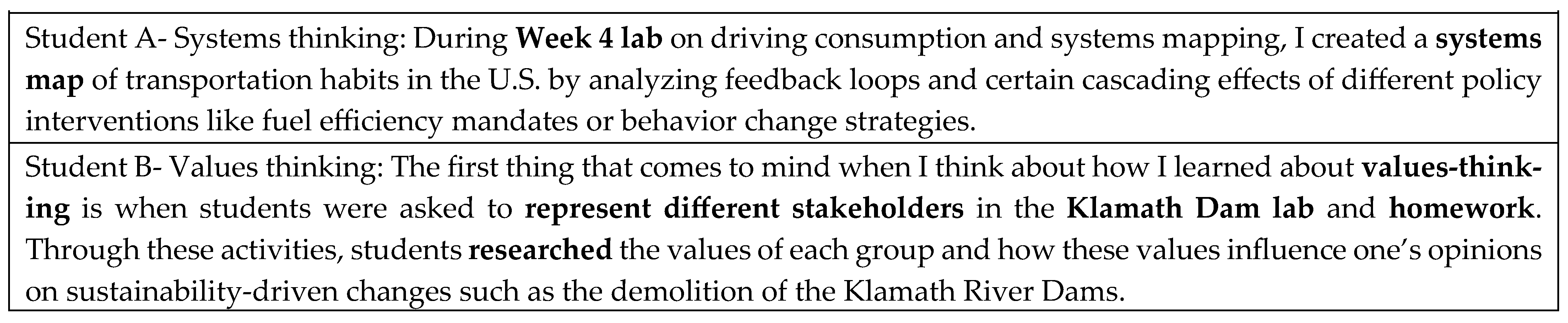
Figure 1 provides two examples of student responses to prompt #1 with coded elements bolded. Systems thinking was the most frequently described competency, identified by two-thirds of the students (95 out of 142), followed by values thinking (21 students) and futures thinking (17 students) (
Table 2). Other competencies were referenced less frequently.
3.2. RQ1b: Skills Identified
To identify the skills students reported acquiring through the course, we analyzed responses to assignment prompt #2. Students were primed to think about skills through background materials related to LinkedIn and the representation of skills in personal profiles. Students identified a combination of skills aligned with the sustainability competency frameworks as well as more general and professional competencies (
Table 3).
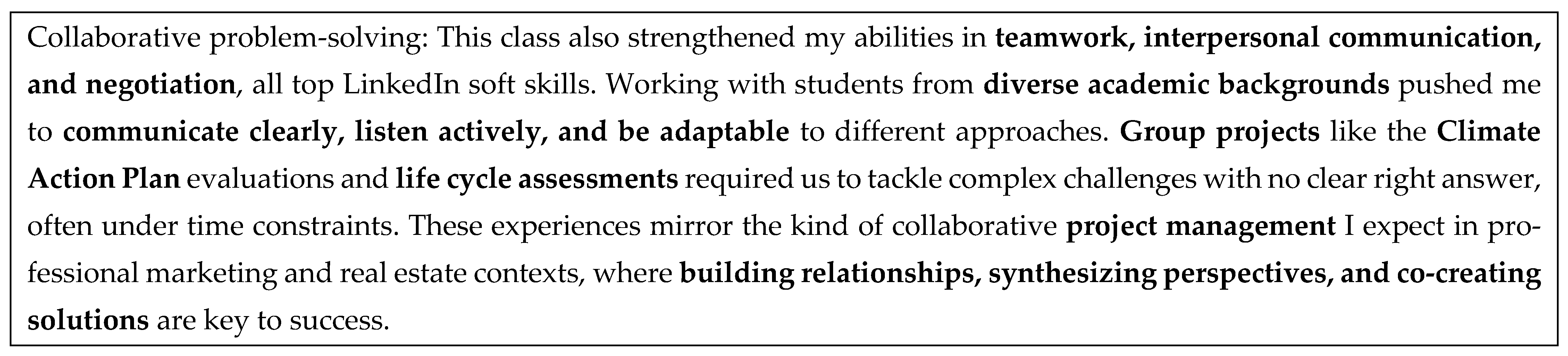
Figure 2 provides an example of one student’s skill description with coded elements bolded.
The most frequently identified skills were communication (48 students), teamwork (44), problem-solving (42), and systems thinking (33), with critical thinking and research or analytical skills also frequently referenced (approximately 18 each) (
Table 3). Notably, the most frequently identified skills spanned both sustainability specific competencies (for example, systems-thinking) and more general or professional competencies (for example, communication, teamwork, and problem solving), suggesting that students did not sharply distinguish between sustainability competencies and broadly transferable skills in their reflective narratives.
To further interpret patterns in skill articulation, individual skill descriptors were grouped into broader analytic categories. For example, references to communication, presentation skills, public speaking, and writing were grouped as variants of professional communication competence. Using this grouping, 58 unique students referenced at least one aspect of professional communication, with some students identifying more than one of these skills in their narratives. Similarly, teamwork, collaboration, and negotiation were grouped as interpersonal skills, revealing that 59 unique students identified one or more of these skills. These interpersonal skills were not interpreted as interpersonal competence aligned with the sustainability competency of the same name; rather, students appeared to frame them as general or professional capabilities applicable across contexts, including but not limited to sustainability-related work.
Variants of research and analytical skills were also frequently articulated, with 48 unique students using terms such as research, data analysis, or analytical skills. In addition, students referenced values-oriented skills in multiple ways, including perspective-taking, stakeholder analysis, values-thinking, and empathy, with 24 unique students identifying at least one of these elements. These variations indicate that students often expressed values-related skills implicitly, rather than explicitly labeling them using sustainability competency terminology.
Some students also identified skills associated with specific sustainability tools or frameworks covered by the course (
Table 4), although these were referenced less frequently than general or professional skills. Life cycle assessment (N = 12), cost–benefit analysis (N = 8), sustainability literacy (N = 8), and circular economy (N = 8) were all noted by a subset of students. These tool and framework-oriented skills were typically referenced in connection with a particular lab activity and were framed at an introductory level, reflecting students’ early exposure rather than claims of mastery.
3.3. RQ2a: Competencies and Learning Experiences
Shifting focus to our second research question, what reflection reveals about connections between learning experiences and perceived competency acquisition, we further analyze responses to the first assignment prompt. Students generally associated specific sustainability competencies with particular labs and lab-related learning experiences (
Table 2), with some references to assignments or lectures.
Table 5 summarizes the competencies mentioned by 10 or more students that were anchored in classroom learning experiences, including labs, assignments, lecture topics, and nonspecific course elements (e.g., group discussion, roleplay, reflective writing).
Overall, among the 95 students identifying systems thinking acquisition, students referenced learning activities 247 times: 156 references to specific labs or associated lab learning activities (see
Table 1 for lab descriptions); 57 lecture topics; and 34 class assignments. While all labs were mentioned at least once in relation to systems thinking, the most frequently referenced course elements included labs and associated learning experiences explicitly focused on systems concepts, such as the life cycle assessment lab and the World Climate Simulation lab (
Table 2). Students also identified two lectures, one detailing the three pillars concept of sustainability and another focused on circular economies, and one assignment, a systems mapping assignment assigned as follow-up to the system-oriented lab.
Values thinking, the second most frequently referenced competency (identified by 21 students), was often associated with the World Climate Simulation lab, as well as labs focused on Klamath Dam removal, reviews of climate action plans, and land-use decision-making. These labs offered active learning exercises or required analysis of primary sources that challenged students to explore the role of values, consider tradeoffs and examine the differing goals and perspectives of stakeholders in a sustainability challenge. No lectures or assignments were consistently referenced. Among the 21 students identifying futures thinking, the Design the Future lab, Innovation lab and the World Climate simulation lab were most frequently referenced. Again, lecture topics and assignments were not consistently referenced. Together, these data indicate that contextual, case-based learning experiences frequently served as salient reference points that students associated with their competency acquisition.
3.4. RQ3a: Workforce Qualifications and Competencies/Skills
To address the final research question regarding how students articulated sustainability-related competencies, skills, and learning experiences in a professional narrative context, we analyzed responses to the third assignment prompt, which asked students to craft cover-letter paragraphs. These data reveal the sustainability workforce qualifications students deemed professionally relevant. Responses were reviewed to identify references to sustainability competencies, general and professional skills, sustainability concepts, tools, and specific course elements.
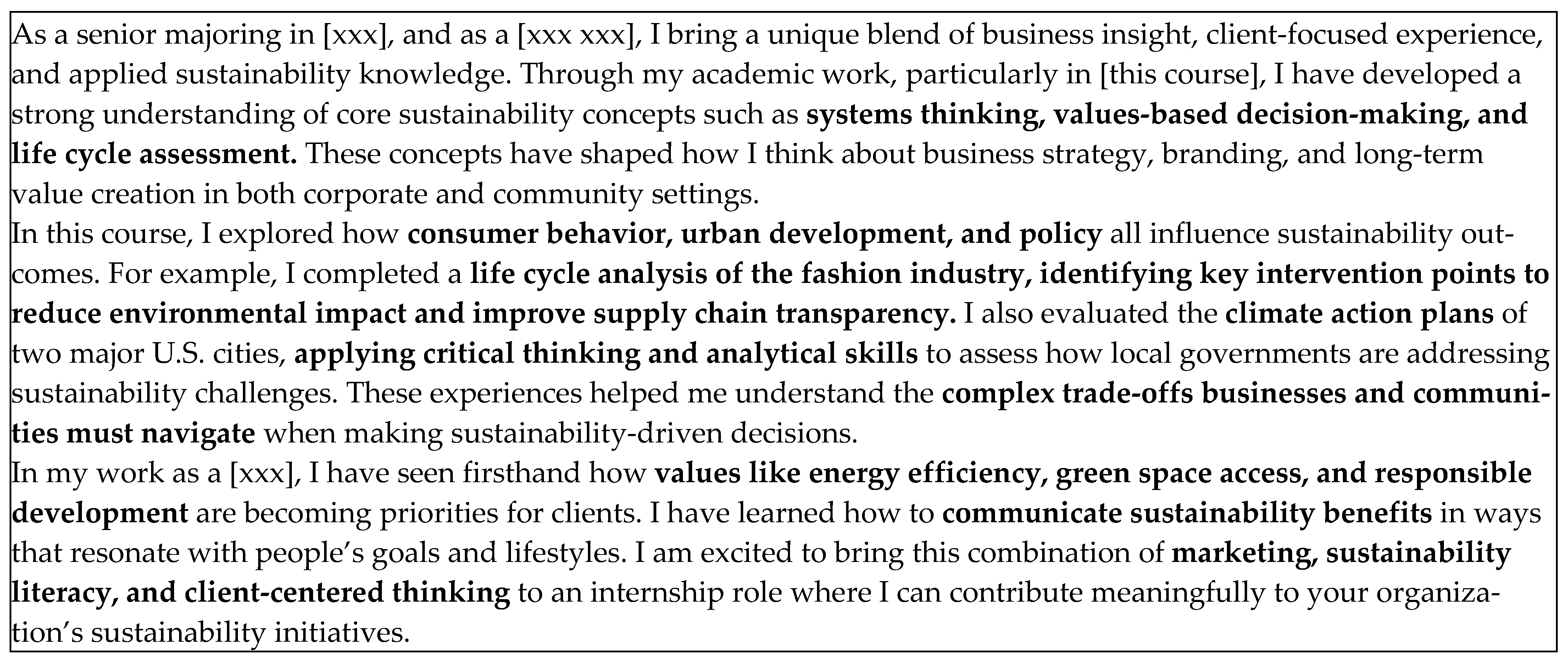
Figure 3 provides an example of a student paragraph with coded elements bolded. Summary counts of coded references are reported in
Table 6.
Across the 142 submitted cover-letter paragraphs, we identified 350 references to competencies and competency adjacent skills, yielding an average of approximately three competency-related elements (sustainability, professional, and general competencies) per paragraph. Systems thinking was the most frequently referenced sustainability competency, with over half of students identifying it. Futures thinking, values thinking, and communication were each referenced by approximately one-fifth of students. In addition to competency referents, students frequently referenced sustainability concepts and tools. There were 360 references of this type, with the three pillars definition of sustainability (53 students), life cycle assessment (39 students), and circular economy (31 students) most frequently noted.
3.5. RQ3b: Learning Experiences Integrated into Workforce Qualifications Narratives
While the prompt recommended students be attentive to the practical ways they applied sustainability competencies, the reflective paragraphs were often rich in narrative references to these applications.
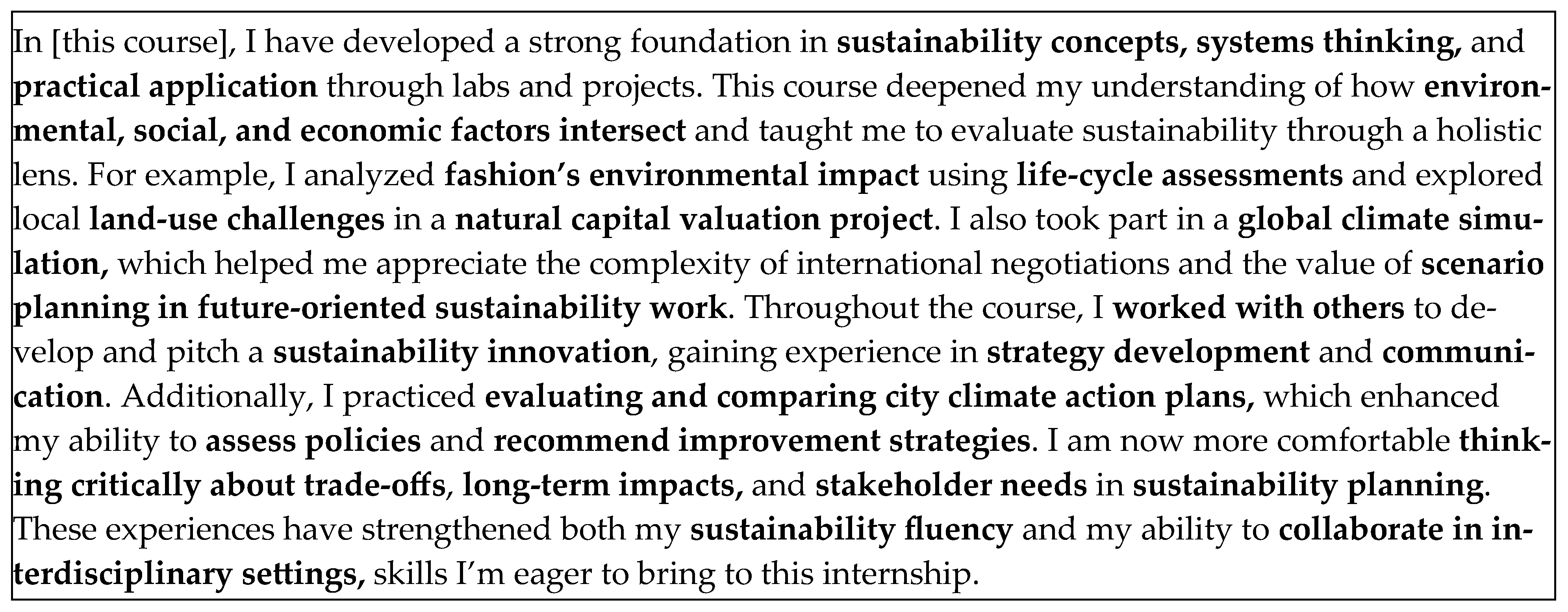
Figure 4 includes a second sample paragraph, while
Table 7 identifies how frequently specific labs and associated assignments are referenced. The Innovation Project lab was referenced most frequently. In their narratives, students associated this group project with teamwork, in-depth investigation of sustainability innovations, and the articulation of persuasive arguments about project merits and potential impacts. The World Climate Simulation lab, the Fashion and life cycle assessment lab, and the lab involving review of large city climate action plans were also frequently referenced, reinforcing the prominence of applied and case-based experiences in students’ professional articulations of sustainability learning.
4. Discussion
We examine what reflective self-assessment reveals about students’ sustainability competence, the experiences students identify as shaping that competence, and how they translate learning into workforce-relevant narratives. Across prompts, students most often identified systems thinking, anchored their learning primarily in lab-based active learning contexts, and described professional skills (communication, teamwork, problem-solving) even more frequently than sustainability-specific tools. These patterns show that reflection can reveal sustainability competence development as well as sense-making frameworks through which students interpret and take ownership of that development, consistent with prior scholarship describing reflection as a metacognitive and integrative learning process [
12,
15,
24].
Although our analysis was inductive and did not specify formal hypotheses, some patterns in student responses aligned with our expectations based on the literature and our course design, while other patterns extended beyond what we anticipated. We expected students to primarily focus on sustainability competencies and analytic tools emphasized in the course. Instead, many students connected their course learning not only to sustainability-specific themes but also to broader career-readiness themes, such as professional skills. In the following paragraphs, we examine each research question in greater depth, interpreting observed patterns and noting alignment with prior scholarship.
4.1. RQ1: Competencies and Skills Identified
In response to RQ1a, students most frequently identify systems thinking, followed at lower rates by values thinking and futures thinking. This pattern is consistent with both the prominence of systems thinking in sustainability education [
37] and our instructional emphasis on analyzing sustainability challenges as interconnected systems across course contexts. By contrast, the comparatively lower emphasis on values thinking is noteworthy, given its importance for sustainability-related decision-making and evaluation. While values thinking was addressed throughout the course, its terminology and representations were not always presented with the same coherence or consistency as systems thinking. This difference may have made values thinking less salient during reflection.
This pattern may also reflect the structure of the reflective prompt, which asked students to select and elaborate on a single competency. Limiting responses to one competency may have encouraged deeper engagement with a dominant or clearly articulated concept such as systems thinking, while discouraging discussion of competencies that students experienced as more diffuse or less explicitly articulated. Allowing students to discuss multiple competencies might surface additional references to values thinking, but it could also lead to more superficial or performative responses. This tension reflects a broader challenge in reflective self-assessment design [
17]: balancing space for authentic sense-making with the risk that responses are shaped primarily by adherence to a grading rubric. Future research might experimentally explore variations in prompt design and how these shape the ways students construct and explain their understanding.
When given the flexibility to identify a broader set of competencies and skills in our second reflective prompt (RQ1b), students identified sustainability specific themes, while also consistently emphasizing general and professional skills, such as communication, teamwork, and problem-solving. Considered alongside the findings for RQ1a, this finding suggests students do not sharply distinguish between sustainability competencies and transferable skills in their reflective narratives. We did not initially expect such widespread acknowledgment of these general and professional skills, as we anticipated students would focus more narrowly on sustainability-specific competencies and course content. While the LinkedIn reference materials assigned as pre-reading may have shaped how students framed their responses, this pattern nonetheless supports a broader interpretation: students appear to be connecting sustainability learning with the development of career-ready skills, rather than focusing solely on sustainability-specific content. This outcome aligns with calls for competency-based, workforce-aligned education [
7,
8].
A final observation related to RQ1b concerns students’ references to sustainability-specific tools and concepts. Across the 142 student responses, life cycle assessment, cost–benefit analysis, and the circular economy were referenced a total of 28 times. These tools and concepts were introduced within specific lab contexts and not central to subsequent labs. In contrast, general, professional, and sustainability competencies were emphasized and applied across a wider range of labs and contexts. This difference in frequency suggests that students may be less inclined to claim discrete tools as competencies when exposure is limited or context specific.
At the same time, students did draw on these tools and concepts when given opportunities to provide concrete examples of their learning. References to sustainability tools were woven into internship cover letter narratives, where students often used specific techniques to illustrate broader competencies, such as problem-solving, analysis, or applied decision-making. Thus, while students were less likely to explicitly claim expertise in sustainability tools, they nonetheless utilized these examples when articulating what they were able to do and how they could apply their learning in practice. If a course goal is for students to confidently identify specific tools and techniques as part of their sustainability skill set, these findings suggest that repeated application across multiple contexts and more explicit workforce-oriented framing may be necessary.
4.2. Linking Competencies and Learning Experiences
In relation to RQ2a, student reflections overwhelmingly anchored competency and skill acquisition in lab settings where context-specific sustainability challenges were addressed through active learning activities. Far fewer students connected their reflections to lecture topics or other course assignments. This pattern suggests that students most readily make sense of sustainability competencies when those competencies are enacted through hands-on engagement with real or simulated problems, consistent with prior findings and arguments in the literature [
29,
30,
38,
39].
One possible explanation is that lab activities required students to engage competencies in observable ways, such as negotiating trade-offs, analyzing alternatives, or communicating recommendations, providing concrete episodes to draw upon during reflection. For example, lab exercises regularly required students to communicate individually and collaboratively through presentations, written reflections, and simulated negotiation activities. Several assignments also involved teamwork and were structured around a specific real-world context, an associated sustainability challenge (such as water management or dam removal), and alternative problem-solving strategies. Although these activities were not explicitly framed as opportunities to develop general or professional competencies, students nonetheless recognized and claimed these skills through their proposed LinkedIn keyword selections. Another explanation for the impact of active learning activities is that labs may have been more salient or memorable for students. Anecdotal conversations with students outside of this reflective assessment suggest that students found the lab experiences more engaging than the lectures. Future research could examine this more systematically by directly comparing how lecture-based and lab-based learning environments shape students’ reflective sense-making and claims of competence.
Considering RQ1a, RQ1b and RQ2a together, these findings suggest that contextually grounded sustainability instruction that emphasizes active learning can support students’ development and recognition of transferable skills alongside core sustainability competencies. In this case, reflective self-assessment surfaced forms of learning that extend beyond explicit course themes and illustrated how students can interpret sustainability education not only as knowledge about environmental systems, but also as preparation for broader professional and civic roles.
More broadly, these findings underscore the pedagogical value of reflective self-assessment as a tool for revealing where students locate meaningful learning within a course. In this case, reflection surfaced a strong association between perceived competency development and active learning contexts, reinforcing prior research that emphasizes experiential and problem-centered approaches in sustainability education [
29,
30,
38]. For general education courses serving students from diverse majors and academic backgrounds, varied applied learning contexts may be particularly important for helping students connect sustainability concepts to experiences they find relevant and meaningful.
4.3. RQ3: Workforce Narratives
In relation to RQ3a, students produced particularly rich and integrated narratives when prompted to write a hypothetical internship cover letter describing their sustainability-related competencies, skills, and knowledge. Of the three reflective prompts used in the assignment, the cover letter prompt provided the most open-ended opportunity for students to demonstrate ownership of course content and to situate their learning within a future professional role. On average, students referenced approximately 2.5 competencies or closely related skills and an additional 2.5 sustainability-specific tools or concepts, for a total of about five distinct elements per letter. In relation to RQ3b, students frequently anchored these references in specific course contexts, most often drawing on lab-based activities to illustrate what they knew and were able to do. A wide range of labs was referenced across responses, indicating that different applied learning contexts resonated with different students.
From the perspective of SDG 4.7 and its emphasis on preparing the future sustainability workforce, asking students to reflect on their learning through hypothetical employment contexts shows promise. This future-oriented reflection not only reinforces conceptual learning but also invites students to take ownership of their developing sustainability competencies, envision their application beyond the classroom, and consider how such competencies may inform action in real-world contexts. At the same time, employment-oriented prompts may also encourage strategic self-presentation, suggesting that reflective prompt design is an important consideration for generating specific and authentic reflections [
24,
34]. A potential extension of this approach, particularly in curricula that incorporate portfolio learning, is to intentionally guide students in the creation of reflective artifacts that can be added to their ePortfolios [
14,
28]. Doing so allows these artifacts to be revisited and reinterpreted over time, supporting students as they make connections across their broader university learning experiences.
5. Conclusions
We conclude by considering some of the limitations of this work and future research possibilities, the utility of reflection for course diagnostics and improvements, and our final takeaways concerning the role of reflective self-assessment in teaching sustainability. Several limitations should be considered when interpreting these findings. The data come from a single course at one institution, which limits generalizability. Our primary evidence is students’ reflective writing, which is self-reported and may be influenced by social desirability, perceived grading expectations, and the framing introduced through prompts and pre-reading materials, including LinkedIn-oriented language. In addition, the prompt structure constrained what students could plausibly include (for example, asking students to select only one competency), which may have shaped the distribution of competencies and skills that students named. Finally, reflective artifacts provide insight into how students perceive and narrate competence, but they do not independently verify performance or depth of mastery, and we did not triangulate reflections with direct assessments or longitudinal follow-up.
Future research could address these limitations by comparing reflective self-assessment with performance-based measures of sustainability competence and by experimentally testing how prompt design influences student responses. In our case, the cover letter prompt elicited richer evidence of synthesis, while the single-competency prompt may have been overly limiting. Finally, longitudinal work could examine whether reflective artifacts, especially when preserved in student portfolios, are later revisited and translated into coursework choices, internship behaviors, or early career narratives.
While our focus has primarily been on reflection and what it reveals about student learning, these reflections also provide important feedback on course learning that can be a diagnostic tool for instructors. In this case, reflections are helping our instructional team see where the course design made some learning outcomes more “visible” and easier for students to name than others. For example, systems thinking was emphasized with consistent terminology and repeated framing across labs and associated materials, while values thinking was present but less consistently signaled, which may have reduced its salience in reflection. The patterns of students explicitly identify general and professional competence (such as communication, teamwork, and problem solving) makes sense, but the current course design is not explicit in naming and achieving those learning outcomes. More conscious attention to these competencies and outcomes should further improve student recognition of the skills and their confidence.
In summary, this study advances our understanding of reflective self-assessment and its potential as a tool for evaluating student learning and students’ ownership of that learning. These findings suggest that reflective assessment, particularly when paired with experiential learning and workforce-oriented prompts, can help students integrate sustainability learning into coherent narratives of capability aligned with the intent of SDG 4.7. When incorporated into portfolio-oriented curricula, such reflective artifacts may further support integrative learning by enabling students to revisit and reinterpret sustainability learning over time. More broadly, reflective self-assessment offers value both as a window into student sense-making and as a tool for instructors to align course design with intended sustainability learning outcomes.