


Abstract
This study examines the association between digital payments adoption and reliance on cash in Latin America and the Caribbean (LAC), as well as its potential implications for financial inclusion. Using microdata from the 2021 Global Findex Survey for 17,498 adults, logit models and average marginal effects are estimated to assess this relationship according to income, gender, age, education, rural-urban location, and internet access. The results show that the use of digital payments is associated with a lower probability (9.7 percentage points) of using cash, a statistically significant and robust effect among different population groups. People with less education, older age, and limited access to the internet are more dependent on cash, while income differences are less pronounced than expected. Counterfactual simulations consistently show lower reliance on cash among digital payment users, regardless of socioeconomic status. The study provides new microeconomic evidence for the LAC by quantifying the association between digital payments and cash use and analyzing its heterogeneity between socioeconomic groups. Sustainable financial inclusion is not measured by a composite indicator or as an independent variable; it is used as an interpretative framework to analyze whether the adoption of digital payments is associated with less dependence on cash and greater interaction with formal financial channels. Policy implications suggest strengthening payment interoperability, digital trust, financial education, and consumer protection to expand integration into formal financial channels.
1. Introduction
The digital transformation of financial systems has become one of the most significant structural changes in the global economy, especially thanks to the rapid expansion of financial technology (FinTech) and digital payments. Digital payments, defined as non-monetary and electronically executed transactions, have evolved from a complementary financial instrument to a central mechanism to promote financial inclusion, economic formalization and sustainable development, especially in its social and institutional dimension related to SDGs 8, 10 and 16 [1,2]. Its adoption not only reduces transaction costs and improves efficiency, but also strengthens transparency, tax traceability and access to formal financial services, contributing to more resilient and inclusive economic systems [3,4,5]. However, in Latin America and the Caribbean (LAC), the transition to digital finance remains uneven. Despite significant advances in financial inclusion, cash continues to dominate daily transactions due to high levels of informality, income inequality, unequal access to banking, and persistent digital divides in rural and urban areas [6,7].
According to the Global Findex 2021 Database, although account ownership in LAC has increased significantly in recent years, nearly half of adults in the region still rely primarily on cash for everyday transactions, and only about 40% have made or received a digital payment [8]. Structural barriers such as unstable internet connectivity, low smartphone penetration in rural areas, low financial education, and limited trust in formal institutions continue to limit the effective use of digital financial services [9,10,11].
Brazil has established itself as one of the most successful cases thanks to the implementation of the PIX instant payment system, which accelerated real-time and low-cost transactions and significantly expanded financial access [12,13]. Other countries in the region have different but equally relevant experiences. In Mexico, the platform “Cobro Digital CoDi” was introduced by Banco de México to promote instant payments through QR codes and mobile transfers; However, adoption has been slower than expected due to low financial literacy, informality, and persistent barriers to trust in digital transactions [14]. On the other hand, Chile shows a more mature digital payments ecosystem, supported by higher banking penetration, greater institutional trust and wider adoption of fintech, although significant inequalities persist between older adults and low-income groups [15]. In Argentina, digital payments have expanded rapidly through virtual wallets and fintech platforms such as Mercado Pago, especially in response to inflationary pressures and the search for transactional efficiency, although macroeconomic instability and regulatory uncertainty continue to affect long-term financial inclusion results [16,17]. This regional heterogeneity in regulation, infrastructure, and user behavior makes LAC an especially relevant context for examining how digital payments influence financial behavior and the transition to cashless economies.
From a conceptual perspective, this study defines sustainable financial inclusion as the process by which individuals and firms have access to and effective use of appropriate financial services in a manner that is economically viable, socially inclusive, and consistent with long-term development goals [2]. Sustainable financial inclusion is not measured in this study by a composite indicator or as an independent empirical variable. It is used as an interpretive framework to analyze whether the adoption of digital payments is associated with less reliance on cash and greater interaction with formal financial channels. A reduction in the use of cash can be interpreted as an indication of greater integration into the formal financial system—which is the behavioral dimension of financial inclusion—but that interpretation is conceptual and indirect: the model estimates only the probability of using cash. Sustainable financial inclusion, in its social and institutional dimension (SDGs 8, 10 and 16), provides the framework for interpreting that outcome, not for measuring it [18]. In this regard, digital payments play a central role by enabling continuous participation in the formal financial system, facilitating access to credit histories, improving the efficiency of government transfers, and reducing reliance on informal and cash transactions [19].
While previous studies have extensively analyzed the determinants of digital payment adoption, most of the literature focuses on access conditions, demographic determinants, or experiences in a single country, especially in advanced economies or specific cases such as Brazil’s PIX system [17,20]. Few studies at the micro level quantify the extent to which digital payments reduce reliance on cash among different socioeconomic groups in LAC using comparable regional evidence. This represents a major gap in research, as understanding whether digital payments are associated with the use of cash is essential to assessing their actual contribution to sustainable financial inclusion. Adoption alone does not necessarily imply effective financial inclusion if people continue to rely predominantly on informal and cash transactions [21]. Therefore, measuring the relationship between digital payments and cash provides a stronger empirical basis for assessing the sustainability and inclusiveness of financial digitalization.
The objective of this study is to analyze the relationship between digital payments and the transition to a cashless economy in LAC using microdata from the 2021 Global Findex Survey for 17,498 adults across the region. Specifically, the study examines whether the use of digital payments reduces the likelihood of using cash and how this relationship varies according to income quintile, gender, age, educational level, rural-urban location, and internet access. To estimate this effect, we apply a logit model with average marginal effects and predictive margins, allowing us to construct counterfactual scenarios that compare individuals who use digital payments with those who do not, while controlling for key sociodemographic and structural characteristics. This methodological approach allows quantifying the association between the use of digital payments and the probability of using cash, and exploring how this association varies between socioeconomic groups. The relationship with broader processes of financial inclusion is conceptual and indirect: less reliance on cash may be an indication of greater integration into formal financial systems, but the model does not measure sustainable financial inclusion as an empirical outcome.
The empirical results show that the use of digital payments is associated with a 9.17 percentage point reduction in the probability of using cash, a statistically significant and robust association across all population groups. People with lower education, older age, and limited internet access remain significantly more likely to rely on cash, while income differences become less pronounced once digital access and financial behavior are considered. Predictive margin simulations further show that the reduction associated with the use of digital payments is not concentrated in higher-income groups, suggesting that digitalization may be linked to broader financial inclusion even in structurally unequal environments.
This study contributes to the literature in three main ways. First, it provides new comparative evidence at the micro level for LAC on the association between the use of digital payments and less reliance on cash, an aspect that remains little explored in previous research. Second, it contributes to the conceptual discussion on financial inclusion by showing that the use of digital payments is associated with a lower probability of cash use, a behavioral measure closer to the effective use of financial services than simple access indicators. Third, it offers relevant policy implications for strengthening interoperable payment systems, improving digital trust, expanding financial education, and protecting consumers to move towards greater financial inclusion, with the clarification that this study provides evidence on the use of cash as an indirect proxy, not on sustainable financial inclusion as a measured variable. These findings are especially relevant to Sustainable Development Goals (SDGs) 8, 10 and 16, which link inclusive economic growth, reducing inequalities and building transparent and accessible financial institutions to sustainable development in emerging economies [22,23].
The article is organized as follows: Section 2 reviews the literature and develops the hypotheses of the study. Section 3 describes the methodological framework and data sources. Section 4 presents and interprets the empirical results. Section 5 discusses the findings and their policy implications for promoting financial inclusion and reducing reliance on cash in the context of sustainability. Finally, Section 6 concludes the study by summarizing the main contributions, exposing the limitations, and suggesting avenues for future research.
2. Literature Review and Hypothesis Development
2.1. Digital Payments and Financial Inclusion
Digital payments are broadly defined as electronic transfers executed without cash using a variety of instruments such as cards, mobile wallets, instant payment systems, QR codes, and internet banking platforms [24]. They also include instant account-to-account (A2A) payment schemes connected to card networks and mobile money ecosystems, increasingly integrated into super apps and marketplace platforms. Conceptually, digital payments represent a subset of digital financial services that enable the remote, interoperable, and programmable transfer of value with auditable data trails, thereby improving transaction efficiency and generating opportunities for financial inclusion [6].
Empirical evidence suggests that digital payments can catalyze economic formalization, support the growth of e-commerce, and incentivize the dynamism of small businesses. These effects are often associated with increases in GDP and broader national development, contributing to the economic dimension of sustainability [25]. However, the impact of digital payments adoption depends on contextual factors, including the degree of connectivity, competition in financial services, and consumer trust in digital channels [21]. In LAC, regional studies highlight that modern, interoperable payment pathways and effective public–private coordination are critical to scaling adoption beyond urban elites and addressing the region’s persistent reliance on cash transactions [26], thus promoting more inclusive and sustainable financial ecosystems.
The demographic characterization of digital payment users in LAC reveals a clear concentration among young, urban, and better-educated people who tend to have formal employment and bank accounts. For example, microdata from Peru [27] show that people between the ages of 25 and 40, with higher levels of education and employment in formal markets, are the most frequent users of digital payments, underscoring the reinforcing role of human capital and employment status in adoption patterns. Higher levels of financial trust, both in institutions and digital channels, further increase the likelihood of adopting these payment mechanisms, suggesting that digital trust is a key factor for inclusion in the region [3] and a necessary condition for the sustainability of digital financial systems.
Fintech’s expansion in LAC has further accelerated the adoption of digital payments. The industry has scaled rapidly thanks to payment-centric business models, taking advantage of instant payment avenues and the growth of e-commerce. The fintech ecosystem was initially concentrated in Brazil and Mexico, with spillovers into Colombia, Argentina and Chile [6]. However, platform concentration remains heavily dependent on internet connectivity, which may inadvertently reinforce exclusion for low-income users and micro-merchants operating in less connected environments [28]. In addition, the regulatory frameworks governing digital payments vary between countries, reflecting different financial realities, central bank guidelines, and national priorities. Effective regulation must balance privacy, cybersecurity and fraud prevention with the need to maintain consumer trust and promote innovation in digital financial ecosystems in a way that supports long-term sustainability.
Specifically, Brazil offers the most prominent regional case with the introduction of PIX, the country’s fastest-growing instant payment service (FPS), created by the Central Bank of Brazil. PIX enables individuals, businesses, and government entities to send and receive payments in seconds, at any time, thus promoting lower transaction costs, increased security, and a better customer experience [12]. Since its launch in 2020, PIX has transformed the retail payments landscape in Brazil by fostering market competition, improving efficiency, and promoting financial inclusion [20]. In the aftermath of COVID-19, adoption increased thanks to simplified addressing mechanisms (keys), zero-price transactions for individuals, and 24/7 real-time settlement. As a result, PIX transformed consumer payment preferences and altered competitive dynamics in the financial services sector. The comparative analyses emphasize Brazil’s regulatory trajectory, progressing from open banking to open finance alongside PIX, as a potential model for large-scale inclusive digital payments ecosystems across the LAC region [28], highlighting its relevance as a model for sustainable digital financial development.
The literature shows that digital payments are not only instruments of transactional efficiency and financial inclusion, but also key factors of cash substitution. By reducing transaction costs, increasing convenience, and improving payment interoperability, digital payments create the conditions needed to decrease reliance on cash and accelerate the transition to cashless economies.
2.2. Use of Cash and the Cashless Transition
Cash plays a marginal role in a cashless economy, which relies on electronic transactions using cards, mobile wallets, QR codes, instant A2A payments, and internet banking [29]. Contemporary payment infrastructures generate data-rich transaction records that are auditable and programmable, linking payments to identity, credit, and even utilities [30]. This promotes transparency, traceability, and accountability in financial ecosystems, advantages that are difficult to achieve with cash and essential to strengthen institutional and economic sustainability.
The transition to cashless systems also reduces the costs of cash handling (e.g., logistics, security, and settlement delays), limiting informality and tax evasion. Improves financial inclusion by enabling remote transactions without relying on physical branches [31], contributing to a more efficient and sustainable allocation of resources. For LAC, where cash continues to dominate everyday transactions, especially among low-income and rural populations, the expansion of digital payments acts both as a precursor and catalyst for the advancement of cashless societies [32]. However, the success of this transition depends largely on inclusive regulatory frameworks, robust digital infrastructure, and user trust, demonstrating that the path from digital payments adoption to cashless transformation depends on socio-economic realities and governance capacity, which are central concerns in sustainability science [33].
Empirical evidence illustrates these dynamics across the LAC. In Brazil, the adoption of PIX has restructured market competition, with adoption correlated with changes in banks’ financial models, product diversification, and accelerated cash shifting [13]. In Mexico, studies link financial inclusion through digital payments and cashless adoption with improvements in socioeconomic indicators, reinforcing the argument that inclusive digitalization supports well-being by reducing transaction costs, enabling safer savings, and expanding access to formal services, thereby contributing to social sustainability [34].
However, significant heterogeneity persists across the region. Differences in income, geography, and access to services determine the pace of adoption, while cash remains unstable in everyday use. International evidence further reveals that institutional trust is a fundamental determinant of cashless adoption, in line with international findings suggesting that electronic payments reduce informal activity by creating audit trails and decreasing anonymity [35]. This, in turn, improves transparency and fosters greater trust in financial institutions and systems, both prerequisites for cashless transitions in the LAC [3]. Therefore, the transition to cashless societies is highly dependent on the ability of digital payment systems to replace cash in everyday transactions, especially among low-income and rural populations where cash remains dominant.
2.3. Digital Payments, Cash Substitution, and Sustainability
The literature on digital payments and cashless economies reveals a strong interdependence. Although digital payments form the technological and institutional backbone of cashless transactions, the broader transition to cashless societies reflects systemic changes in consumer behavior, regulatory innovation, and market structures [36], all of which are central elements in the transitions towards sustainability. The shift from cash to digital payments has been repeatedly linked to greater transactional efficiency, reduced friction in the shadow economy, greater fiscal capacity, and widespread financial inclusion when transaction costs decrease and acceptance expands among micro, small, and medium-sized enterprises (MSMEs) [35].
In LAC, the expansion of digital payments through mobile wallets, instant payment systems, and interoperable platforms has laid the foundation for reducing reliance on cash. Conversely, the move towards a cashless economy strengthens digital payment ecosystems by generating network effects, reducing costs, and reinforcing trust in formal financial channels [37]. This reciprocal relationship highlights that digital payments drive cashless adoption, while the political and cultural drive towards cashless societies sustains and scales digital payment infrastructures within a broader framework of sustainable development.
At the regional level, post-pandemic evidence shows an increase in the use of accounts for salary payments and an accelerated growth of mobile wallets and applications for online and face-to-face purchases. However, significant gaps persist between income levels, geographic areas, and formality status, with perceived security and merchant acceptance among the main barriers. Policy-oriented research in LAC emphasizes that digital payments can reduce inclusion gaps when governments and large platforms generate network effects through mass-market use cases (e.g., social transfers, public transport, and utility payments) and when transaction costs, commissions, and chargebacks are transparent and predictable.
Significantly, trust acts as a key bridging variable between the adoption of digital payments and the movement of cash, and plays a critical role in ensuring the sustainability of digital financial ecosystems [38]. A recent study in several countries in LAC shows that greater financial confidence significantly increases the likelihood of using digital payments [3]. By implication, data protection, effective fraud redress, and transparent governance are not ancillary but central to achieving sustainable cashless progress. This evidence underscores that interoperable, low-cost payment channels must be accompanied by strong consumer protection and cyber resilience to prevent reversals in adoption following fraud incidents or system outages.
At the same time, successful transitions in LAC depend not only on technological availability, but also on inclusion-oriented policies that ensure that rural populations, micro-entrepreneurs, and low-income users are not excluded from the benefits of digital financial transformation [37]. Therefore, the literature suggests that increased adoption of digital payments is associated with cash substitution by reducing the need for physical cash in everyday transactions. As digital payment infrastructures become more accessible, interoperable and reliable, households and businesses are more likely to replace cash with electronic alternatives, strengthening the transition to a cashless economy. Based on theoretical and empirical evidence, digital payments are expected to facilitate the use of cash by reducing reliance on physical currency and increasing the use of electronic transactions. Therefore, the hypothesis of this study is formulated as follows:
H1.
People who use digital payments are less likely to rely on cash transactions.
3. Research Methodology
3.1. Data
To analyze the relationship between digital payments in the use of cash, we rely on the Global Findex Survey 2021. This survey, developed by the World Bank in collaboration with Gallup, is the main international source on financial inclusion. It collects representative information from more than 140 countries on access to and use of formal and informal financial services, including accounts, savings, credit, digital payments, and insurance. It is conducted every three years through interviews with adults aged 15 and over, using a standardized methodology that allows for international and temporal comparisons [39]. Due to its global coverage and rigor, it is widely used to analyze the determinants and gaps in financial inclusion in different economic and social contexts, making it especially suitable for assessing structural patterns in access to financial services and their implications for inclusive development.
For this research, variables related to the use of digital payments and cash were used. To measure the use of digital payments, the survey question was used: Have you made or received a digital payment in the last year? Digital payments comprise transactions made with mobile money, debit or credit cards, or mobile phones to transfer funds from an account. To measure cash use, the cash option questions were used for some services. Do you use cash to make payments for services, send or receive domestic remittances, receive salaries, receive government transfers or pensions, or receive payments for agricultural products? These measures allow a direct comparison between traditional and digital payment instruments, capturing patterns of payment instrument use in individual financial behavior. The sample includes individuals from the following Latin American and Caribbean countries (18) available in the 2021 Global Findex Survey: Argentina, Bolivia, Brazil, Chile, Colombia, Costa Rica, Dominican Republic, Ecuador, El Salvador, Guatemala, Honduras, Jamaica, Mexico, Nicaragua, Paraguay, Peru, and Uruguay. In total, the analytical sample comprises 17,498 adults distributed among these 18 countries, ensuring a broad and comparable regional representation. These countries were selected because they provide harmonized and comparable microdata on digital payments and cash use across the region. The year 2021 was selected because it represents the most recent international wave of the Global Findex database and captures financial behavior after the COVID-19 pandemic, a period characterized by the accelerated digitization of payments and changes in transactional habits throughout the LAC. In addition, the 2021 wave incorporates more detailed and specific variables on the adoption and use of digital payments, including digital transactions related to commerce, utilities, and government, which were not available with the same level of granularity in previous editions of the survey.
Table 1 presents descriptive statistics for the main variables of interest—cash use and digital payments—along with control variables that describe individual characteristics such as gender, age, income quintile, educational level, area of residence, and internet access. The variables are dichotomous, taking the value 1 if they meet a specific characteristic and 0 otherwise. The inclusion of these control variables allows us to identify disparities in access and use between population groups, which is essential to analyze the inclusion of digital financial adoption. In addition, focusing on Latin America and the Caribbean (LAC) allows the study to capture dynamics in a region characterized by high levels of inequality, informality and heterogeneous access to financial services. In this context, the dataset provides a relevant basis for examining how the use of digital payments is associated with the likelihood of cash use among different population groups.
Table 1.
Descriptive statistics.
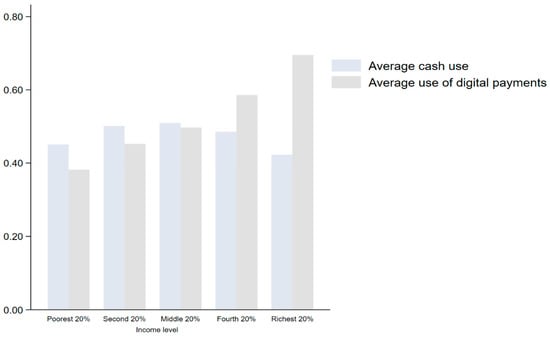
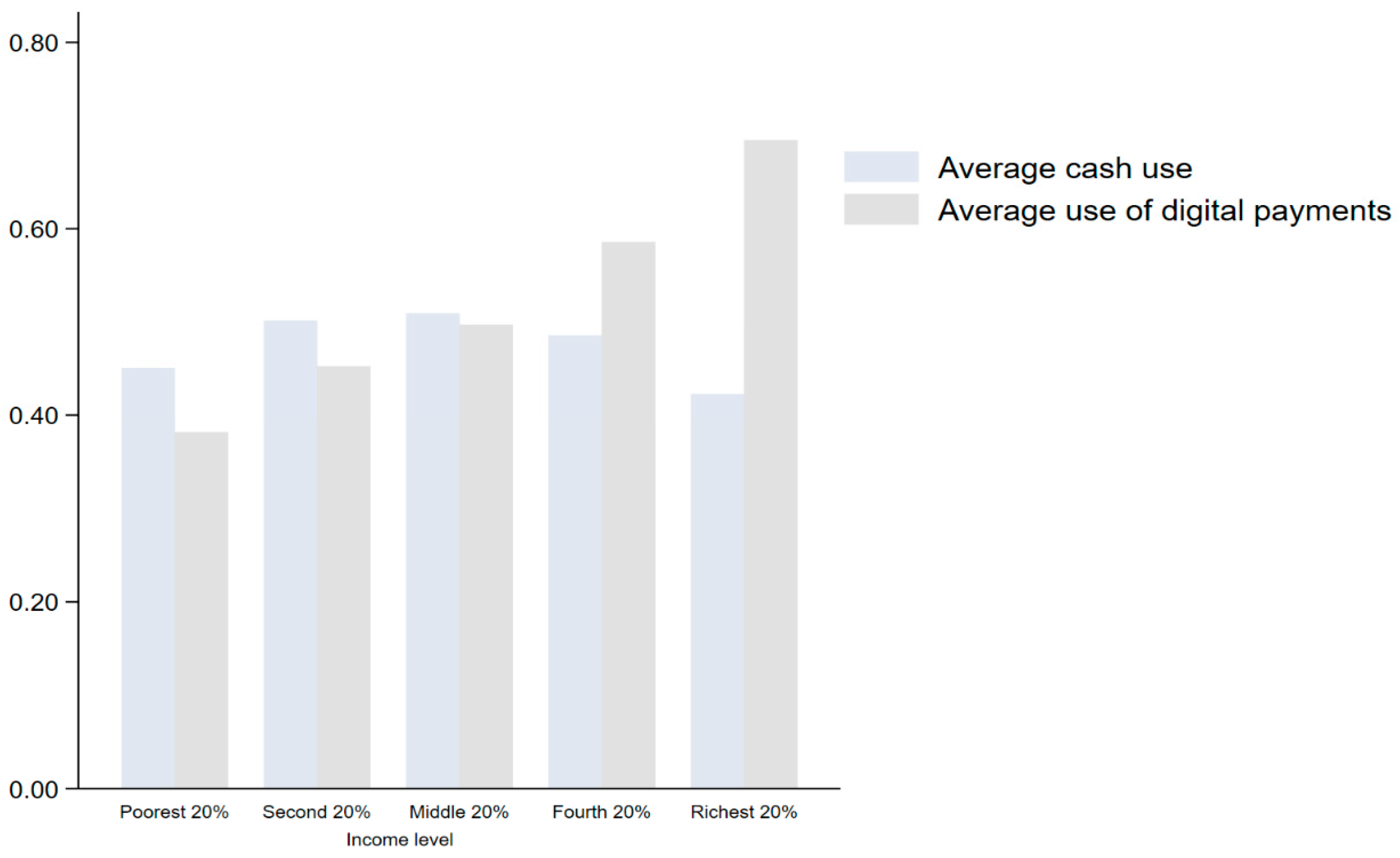
The descriptive statistics of the main variables of interest in this study, presented in Figure 1, show that in LAC, an average of 47% of the population reported having used cash for transactions in 2021. This relatively high prevalence highlights the persistence of cash as the dominant payment instrument in the region, reflecting structural factors such as informality, accessibility, and transaction habits. By income quintile, the richest individuals are, on average, the least likely to use cash (42%), followed by the poorest (45%), while those in the middle- and lower-middle-income groups show the highest use of cash (50%), suggesting that cash dependence is not exclusively associated with poverty but also with behavioral and market frictions affecting middle-income groups. When it comes to digital payments, an average of 54% of the LAC population uses them for transactions. By income quintile, the use of digital payments is highest among the richest group (69%), followed by the upper-middle-income group (58%), while the poorest quintile shows the lowest adoption rate (38%), indicating the presence of significant gaps in access and use closely linked to income-related restrictions.
Figure 1.
Average Cash Use and Digital Payments by Income Quintile in LAC.
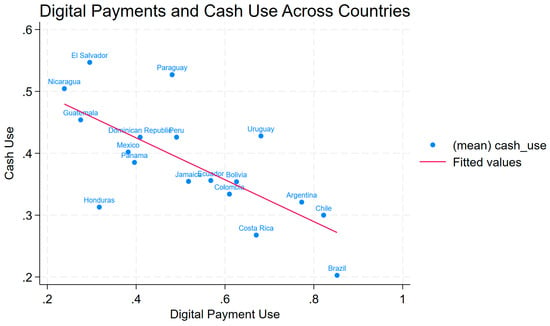
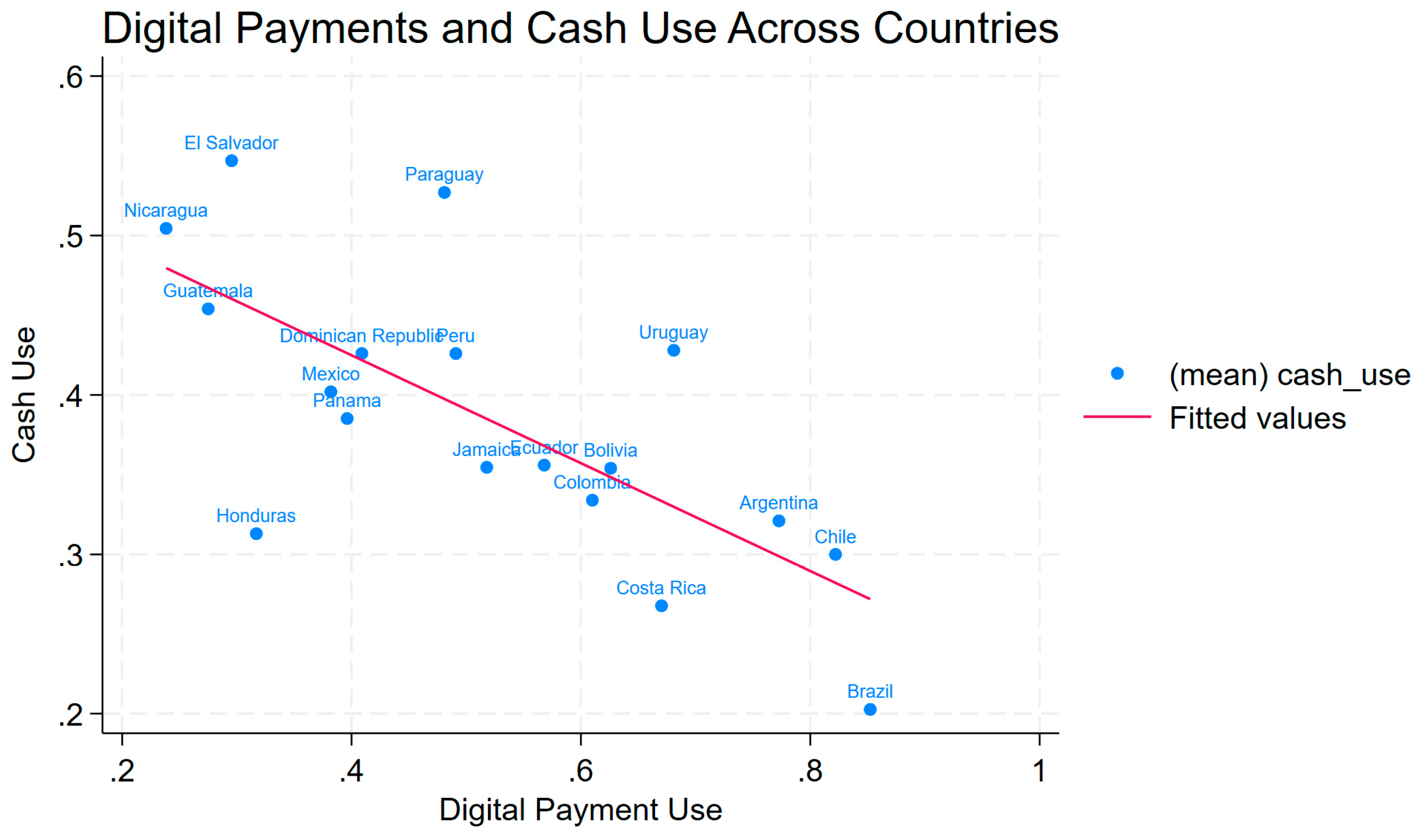
Appendix A Table A1 presents the sample’s country-level characterization of digital payment adoption and cash use in Latin America and the Caribbean, while Figure 2 illustrates the relationship between the two variables across countries. A negative association is observed, suggesting that countries with higher levels of digital payment use tend to show less reliance on cash transactions, in line with the empirical framework developed in the study. Descriptive evidence reveals substantial heterogeneity in payment behavior and financial digitalization across the region. Countries such as Brazil, Chile, Argentina, Uruguay, Costa Rica, and Bolivia show relatively high levels of digital payment adoption and less reliance on cash, while Nicaragua, Guatemala, El Salvador, and Honduras show less digitization and greater reliance on cash. A group of countries, such as Colombia, Ecuador, Peru, Jamaica, Paraguay, Dominican Republic, Panama, and Mexico, shows intermediate patterns between digital payments and the use of cash. These differences between countries support the inclusion of fixed effects by country and provide additional motivation to explore heterogeneous effects between groups of countries in the empirical analysis.
Figure 2.
Relationship between the adoption of digital payments and the use of cash in different countries.
In addition, pairwise correlation analyses and Inflation Factor of Variance (FIV) tests were performed to assess the degree of association between explanatory variables and identify potential multicollinearity problems. Correlation coefficients are usually low to moderate, and all FIV values remain well below conventional thresholds, indicating that there is no evidence of severe multicollinearity. The corresponding results are reported in the Appendix B Table A2 and Table A3 to ensure the completeness and transparency of the empirical analysis.
3.2. Methodology
This study employs a quantitative econometric approach to estimate the relationship between the adoption of digital payments and the likelihood of using cash in LAC. Since the dependent variable is binary, taking the value of 1 if the individual uses cash and 0 otherwise, a logit model is estimated.
A logit specification was chosen because it is suitable for modeling dichotomous outcomes and limits the predicted probabilities to the interval. Compared to linear probability models, the logit model captures the nonlinear relationship between explanatory variables and the probability of observing the outcome of interest. A probit specification was also considered; however, both models generally produce very similar estimated marginal effects in binary choice contexts. The logit model was preferred because it facilitates the estimation and interpretation of the average marginal effects (SMA) and predictive probabilities, which are the main focus of this study .
A multinomial specification was not implemented because the objective of the analysis is not to model multiple mutually exclusive payment instruments, but to assess whether the use of digital payments is associated with a lower probability of relying on cash transactions. Therefore, the binary specification is consistent with the research objective and the structure of the available data.
The econometric specification is expressed as follows:
where
represents the binary dependent variable that indicates whether the individual uses cash;
denotes the vector of explanatory variables, including the use of digital payments and socioeconomic controls;
is the vector of parameters to be estimated.
In addition, the model incorporates fixed effects by country to control for unobserved heterogeneity among LAC countries, including differences in financial infrastructure, regulatory frameworks, institutional development, and digital payments ecosystems. The inclusion of fixed effects by country helps isolate the association between the adoption of digital payments at the individual level and the use of cash, while reducing the potential bias arising from structural differences between countries.
The model is estimated using the maximum likelihood estimate. In addition, all estimates incorporate the sample weights provided by the Global Findex Survey to ensure representativeness at both the national and regional levels. Robust standard errors are employed to reduce potential heteroskedasticity issues.
Since logit coefficients are expressed in nonlinear terms and are not directly interpretable as changes in probability, it is estimated that average marginal effects (AME) facilitate economic interpretation. The AME measures the mean change in the probability of using cash associated with changes in the explanatory variables, keeping all other factors constant. This approach allows for direct interpretation of the estimated effects in terms of probability, which is particularly useful for assessing the magnitude of the association between digital payments and the likelihood of cash use.
The mean marginal effect for continuous variables is defined as:
where corresponds to the logistic density function .
For binary explanatory variables, marginal effects are interpreted as the mean discrete change in the predicted probability when the variable changes from 0 to 1. The study reports average marginal effects across the sample for all explanatory variables included in the model.
To complement the regression analysis, predictive margins and counterfactual simulations are estimated. These simulations compare the predicted probability of using cash between people who use digital payments and those who do not, keeping other explanatory variables constant. This strategy allows us to analyze how the relationship between digital payments and the use of cash varies according to income level, age, gender, education, area of residence and internet access.
Specifically, six scenario simulations are constructed:
- The likelihood of using cash depends on the adoption of digital payments across income quintiles.
- The likelihood of using cash depends on the adoption of digital payments across all age groups. The likelihood of using cash depends on the adoption of digital payments by gender.
- The likelihood of using cash depends on the adoption of digital payments based on educational level.
- The likelihood of using cash depends on the adoption of digital payments in rural and urban areas.
- The likelihood of using cash depends on the adoption of digital payments based on internet access.
In addition, tests of variance inflation factors (FIVs) were performed to evaluate possible problems of multicollinearity between explanatory variables. The results indicate that multicollinearity is not a concern, as all FIV values remain below conventional thresholds.
This methodological framework allows for a more detailed assessment of the heterogeneity in payment behavior among socioeconomic groups and provides an intuitive interpretation of the association between digital payments and cash use in LAC.
Finally, several limitations of the empirical strategy must be recognized. First, the analysis is based on cross-sectional observational data, which limits the possibility of establishing associations between the adoption of digital payments and cash. Second, the binary variables available in the Global Findex database do not capture the frequency or intensity of payment usage. Third, omitted variable bias may persist due to unobservable behavioral characteristics such as confidence, risk preferences, or informal working conditions. Fourth, although country-specific fixed effects are included to explain structural differences among LAC economies, significant heterogeneity related to institutional quality, financial regulation, and digital infrastructure may still be partially missed. Finally, the empirical analysis focuses on partnerships at the individual level and does not directly incorporate macroeconomic or institutional indicators that may also influence payment behavior across countries.
In this study, sustainability is understood in its social and institutional dimension, with particular emphasis on the sustainability of financial systems: their ability to operate efficiently, transparently, inclusively, and resiliently over time. This interpretation is aligned with Sustainable Development Goals (SDGs) 8 (decent work and economic growth), 10 (reduced inequalities), and 16 (strong institutions), and is the dimension of sustainability recognized in the digital finance and financial inclusion literature to which this work is ascribed. The environmental dimension of sustainable development is beyond the scope of this analysis, since the variables available in the Global Findex do not allow it to be approximated. Within this framework, sustainable financial inclusion is not operationalized as an independent empirical variable: the model estimates only the probability of cash use. Its relationship to sustainable financial inclusion is indirect—less reliance on cash can be an indicator of greater integration into formal financial systems—and that interpretation is made at the conceptual level, not as a measured outcome.
4. Results
The aim of this study is to analyze the relationship between digital payments and the transition to a cashless economy in LAC using data from the 2021 Global Findex Survey. The analysis disaggregates the survey data according to respondents’ main socioeconomic variables, such as gender, age, income quintile, education level, area of residence, and internet access, to estimate the likelihood of using digital payments using a logit model and calculate their marginal effects. In addition, the study simulates different digital payment adoption scenarios using predictive margins with a 95% confidence interval, providing insights into how structural and demographic factors are associated with the likelihood of using cash and adopting digital payments. This approach allows for a nuanced understanding of the behavioral and structural determinants that drive or limit digital financial inclusion in the region by linking access conditions, capabilities, and socioeconomic heterogeneity to observed payment patterns. It should be noted that sustainable financial inclusion is not measured in this study by means of a composite indicator or as an independent empirical variable: it is used as an interpretative framework to analyze whether the adoption of digital payments is associated with less dependence on cash and greater interaction with formal financial channels. The model estimates only the probability of using cash; Its relationship with sustainable financial inclusion is indirect and conceptual.
4.1. Regression Results
According to the AME (Table 2) of the estimated logit model, the use of digital payments is associated with a reduction of 9.17 percentage points in the probability of using cash, compared to those who do not use digital payments, keeping other explanatory variables constant. This result is statistically significant and is consistent with the hypothesis that the use of digital payments is associated with less reliance on cash. In the context of LAC, where e-wallets, mobile transfers, and payment apps have expanded rapidly, this pattern suggests that digital financial tools may be associated with a reduction in the use of cash when access and usability conditions are met. This association is consistent with financial formalization processes, although the model does not allow direct causality to be established.
Table 2.
Results of model estimates.
Regarding the rest of the control variables, being a woman is associated with a reduction of 2.4 percentage points in the probability of using cash, keeping other explanatory variables constant. This effect is statistically significant and suggests that, on average, women are less likely than men to use cash, which may reflect better access to inclusive financial tools, an outcome consistent with the equity dimension of social sustainability (SDG 10).
Regarding age, SMAs suggest a nonlinear relationship between age and cash use. On average, an extra year of age increases the likelihood of using cash by about 1.1 percentage points; however, this effect is progressively attenuated with age, as shown by the negative and statistically significant quadratic term. This pattern may be due to young and middle-aged generations maintaining a heavy reliance on cash, while adults, despite having grown up in a cash-dominated environment, face increasing mobility limitations or rely on family members to make payments, reducing their relative use of cash in later life [27]. This result reflects differences in the life cycle of technological exposure and adaptation to digital environments.
In addition, the AME indicates that, compared to people with a university education, those with a primary education are 10.7 percentage points more likely to use cash. By comparison, those with secondary education are 8.9 percentage points more likely. Both effects are statistically significant and indicate greater adherence to the use of cash among people with a lower level of education. This result can be interpreted in the context of LAC as a reflection of the gaps in financial and digital literacy. Those with lower levels of education tend to face greater barriers to using formal financial services and therefore rely more on cash as their primary means of payment, reinforcing the relevance of human capital in expanding effective access to digital tools.
The results of the income quintiles indicate that, compared to individuals in the poorest 20% of the population (Q1), individuals belonging to the second, third and fourth income quintiles show a significantly higher probability of using cash compared to individuals in the poorest 20% of the population (Q1). In particular, the marginal effects suggest that belonging to the second quarter, third quarter, and fourth quarter increases the probability of cash use by approximately 5.1, 6.7, and 4.9 percentage points, respectively. One possible explanation is that middle-income people tend to participate more actively in everyday market transactions, combining traditional and digital payment methods, while operating in environments where cash is still widely accepted and used. In contrast, the coefficient associated with the richest quintile (Q5) is not statistically significant, which could reflect that people with higher incomes have greater access to formal financial services and digital payment instruments, reducing their dependence on cash transactions once other socioeconomic characteristics are controlled.
According to AME, internet access is associated with a 7.4 percentage point lower probability of using cash than among those who do not have such access. This statistically significant result indicates that digital connectivity facilitates the adoption of alternative payment methods instead of cash. In the case of LAC, where the expansion of digital infrastructure has been accompanied by the widespread use of smartphones and mobile payment applications, access to the internet represents a key condition to reduce barriers to entry and promote the use of digital financial instruments and strengthen the underlying infrastructure that supports digital inclusion.
Overall, the results suggest that the use of digital payments is associated with less reliance on cash and greater interaction with formal financial channels in different LAC population groups. These patterns are consistent with financial inclusion and digital integration processes linked to the social dimension of sustainability, particularly in terms of access to and use of formal financial services.
In addition, regression estimates were made by groups of countries according to their degree of digitization of payments, which are reported in the Appendix C Table A4. Marginal effects results indicate that the use of digital payments remains negative and statistically significant across all country groups, suggesting a strong association between the adoption of digital payments and lower cash use regardless of the level of financial digitalization. In particular, this association is more pronounced in countries with high digitalization (−12.9 pp) but remains statistically and economically relevant in countries with medium (−6.8 pp) and low (−8.4 pp) digitization, reinforcing the generalization of the negative association between digital payments and cash use in heterogeneous contexts in the region. This subgroup analysis responds to the significant structural heterogeneity among LAC economies and shows that the findings are not exclusive to the most digitized countries.
4.2. Results of Simulation of Scenarios on the Probability of Using Cash Based on the Use of Digital Payments
Since cash payments and digital payments are part of an interrelated set of payment options, people do not choose payment instruments in isolation; instead, they combine them based on cost, acceptance, trust, accessibility, and other factors. This study simulates alternative scenarios to assess whether the use of digital payments is associated with a reduction in the probability of using cash or with the coexistence of both payment instruments. By comparing people who use digital payments with those who do not, controlling for other characteristics, the analysis provides an intuitive and policy-relevant measure of association patterns between payment methods and their implications for financial behavior in various population groups.
In this context, six scenarios are estimated to estimate the probability of cash use, depending on whether the person uses digital payments, while taking into account structural and demographic characteristics whose heterogeneity is central to assessing the social and institutional dimension of sustainability.
- Scenario 1. The probability of using cash, conditioned on whether or not to use digital payments, depends on people’s income level.
- Scenario 2. The probability of using cash depends on whether or not you use digital payments, depending on the age of the people.
- Scenario 3. The likelihood of using cash depends on whether or not you use digital payments, depending on the gender of the people.
- Scenario 4. The probability of using cash depends on whether or not you use digital payments, depending on people’s educational level.
- Scenario 5. Probability of using cash, conditioned on whether or not to use digital payments, depending on the area of residence of the people.
- Scenario 6. Probability of using cash, conditioned on whether or not to use digital payments, depending on people’s availability of internet access.
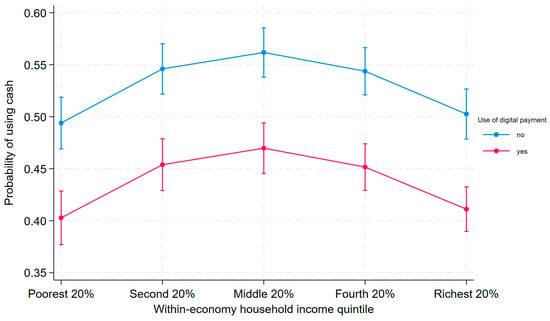
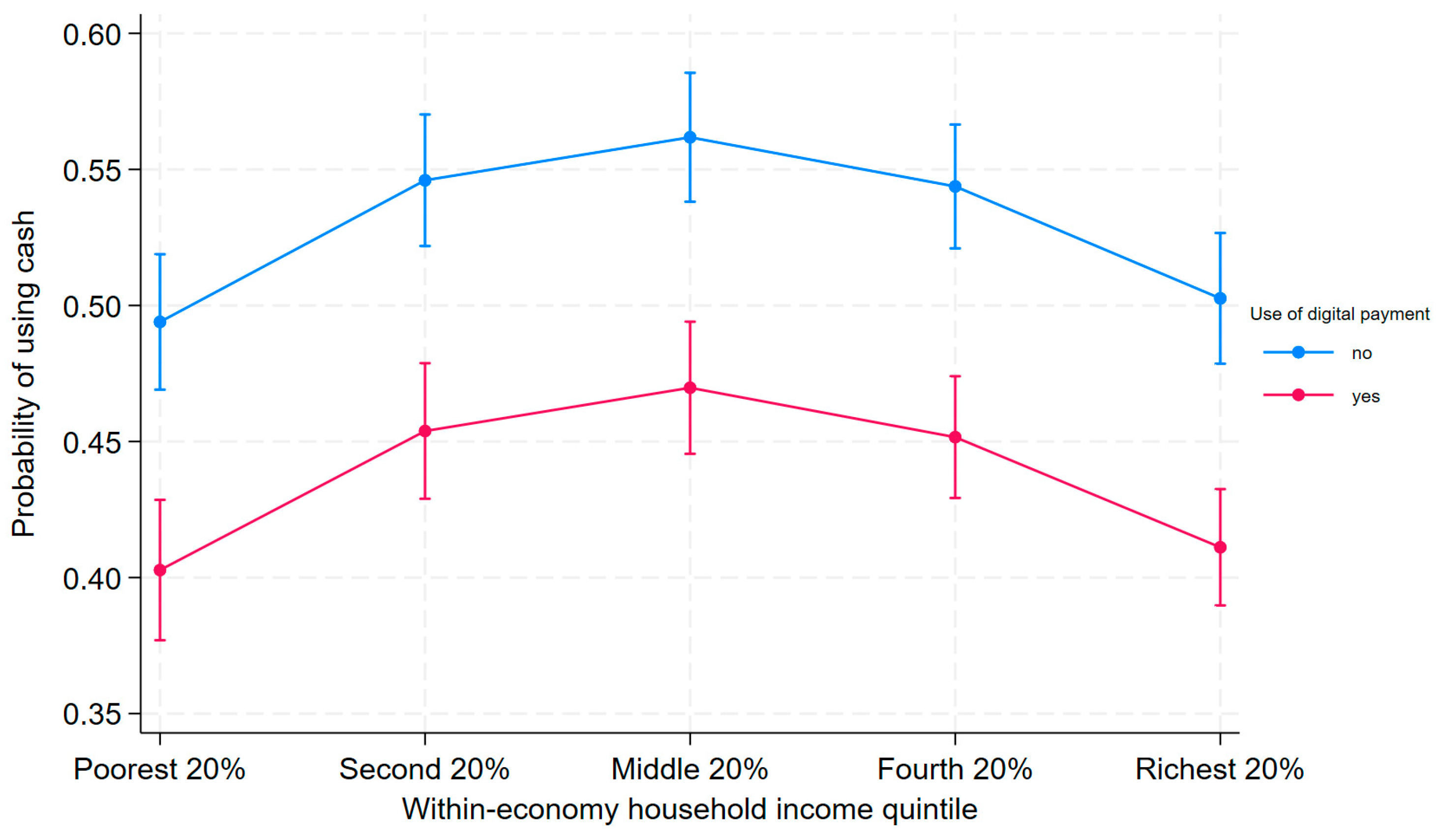
The results show a consistent association between the adoption of digital payments and a lower likelihood of using cash across all income quintiles (Figure 3). In lower-income households, the estimated probability of using cash decreases by more than 9 percentage points among those who use digital payments, a pattern that is similar in the middle and high quintiles. These results suggest that the lower reliance on cash associated with digital payments is not concentrated exclusively in higher-income groups, but is observed throughout the socioeconomic distribution. Persistent differences between groups could reflect inequalities in digital access, technological capabilities, and level of formal financial integration.
Figure 3.
Likelihood of using cash under the criteria for using digital payments and by income level.
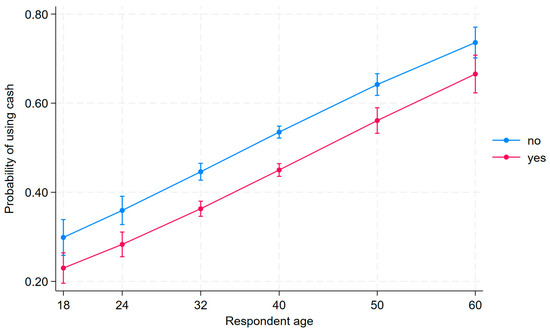
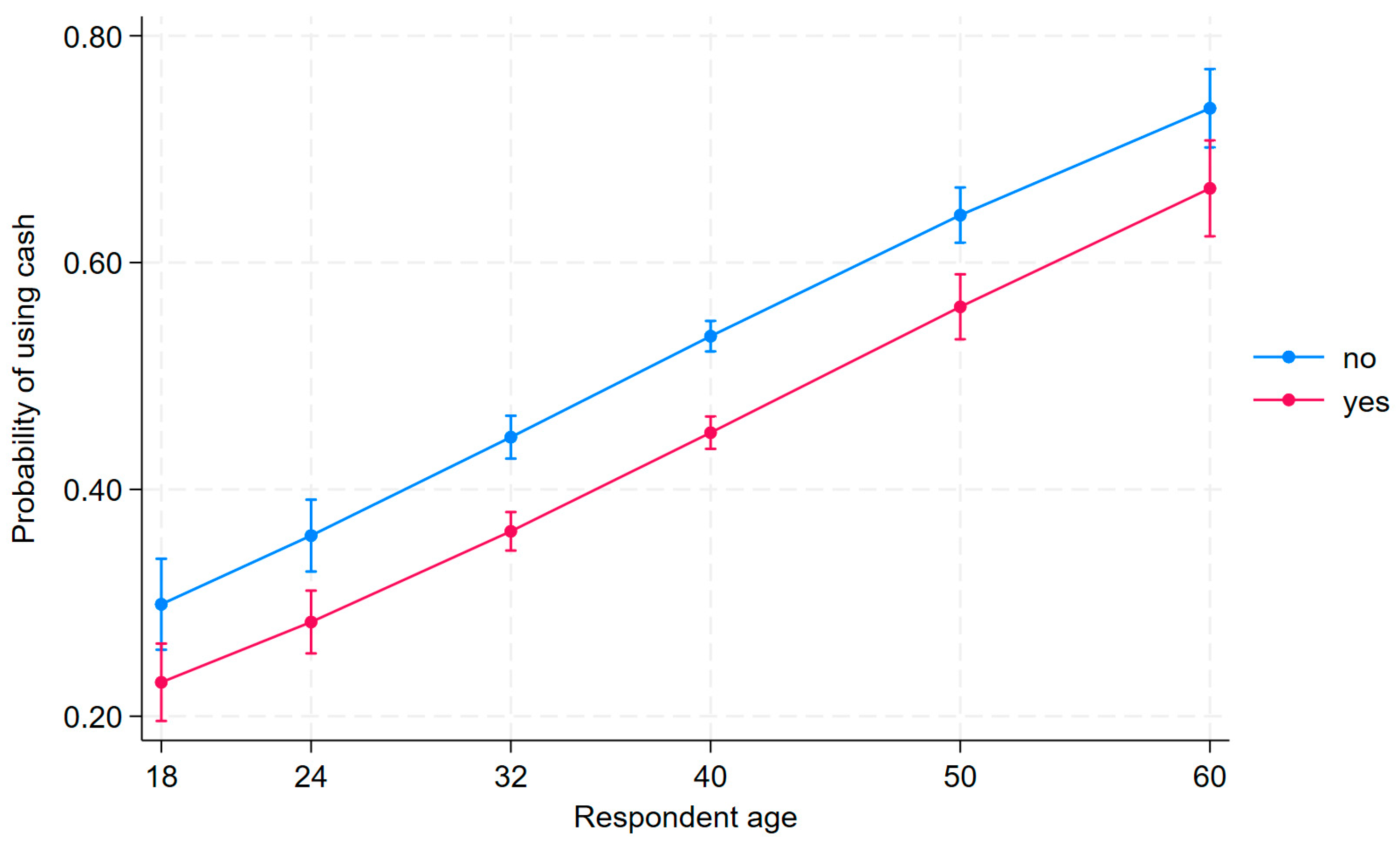
The results show that the use of digital payments is consistently associated with a lower likelihood of using cash across all age groups (Figure 4). Although reliance on cash progressively increases with age, the adoption of digital payments reduces the likelihood of cash by 6.9 to 8.5 percentage points over the life cycle. The differences are more pronounced in adults and older ages, suggesting that, even among traditionally cash-dependent populations, digital payments are associated with lower use of this means of payment. Overall, the results indicate that the association between financial digitalization and lower cash use is widespread and not exclusive to younger groups.
Figure 4.
Probability of using cash under the criteria of use of digital payments and seniority.
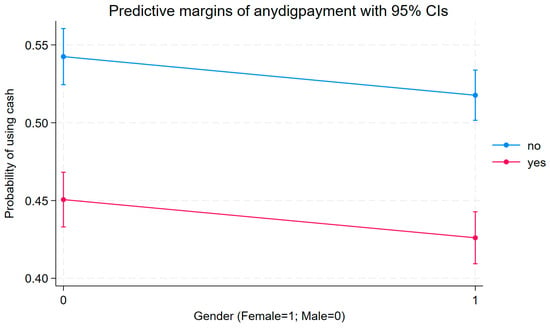
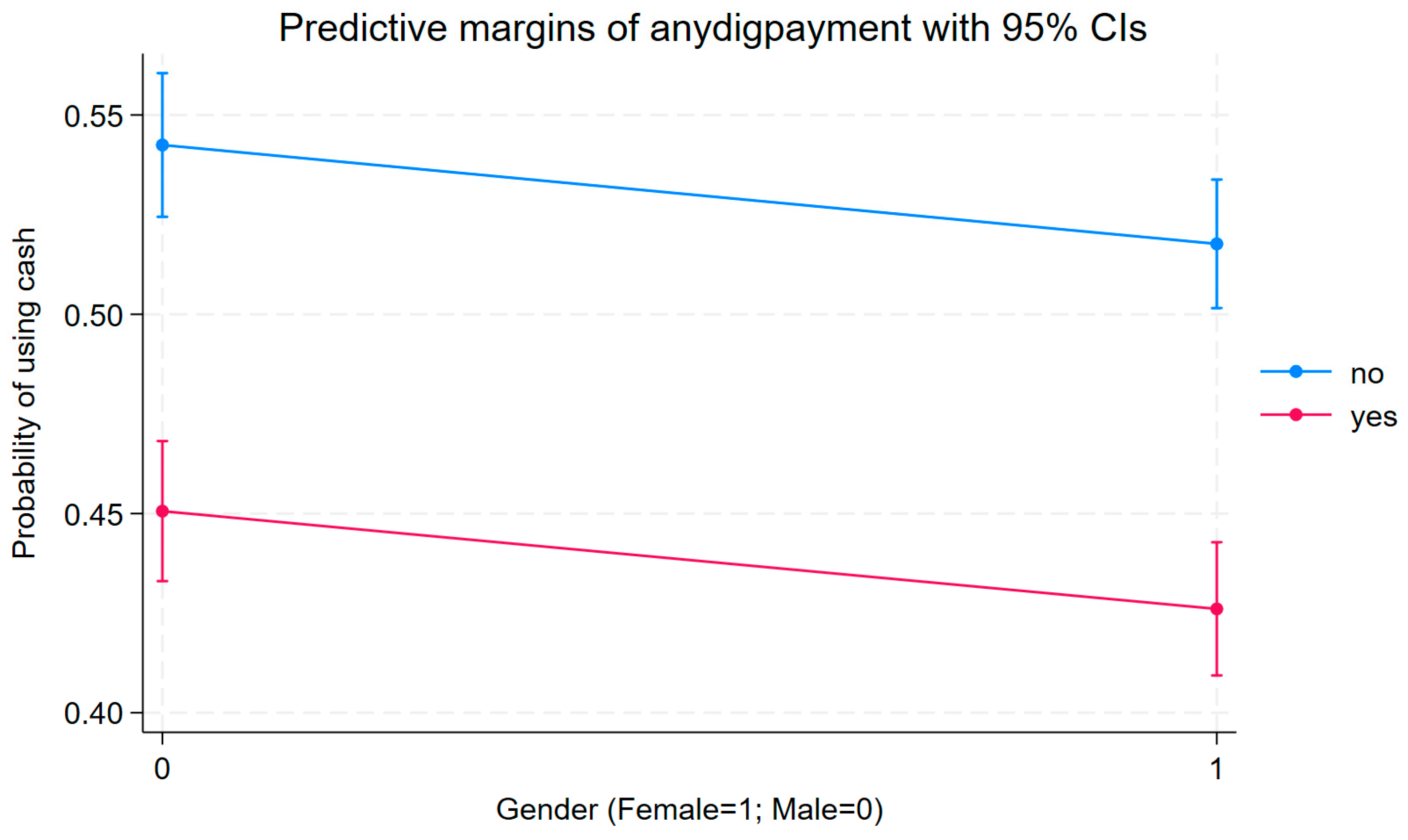
The results show that the adoption of digital payments is associated with a similar reduction in the likelihood of using cash in both men and women (Figure 5). Although men have a slightly higher initial dependence on cash, both groups reduce their use by approximately 9 percentage points when adopting digital payments. This suggests that the relationship between digital payments and lower cash use is relatively homogeneous across genders in the region [38].
Figure 5.
Probability of using cash under the criteria of use of digital payments and gender.
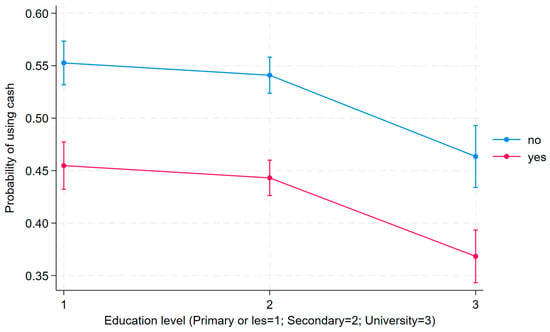
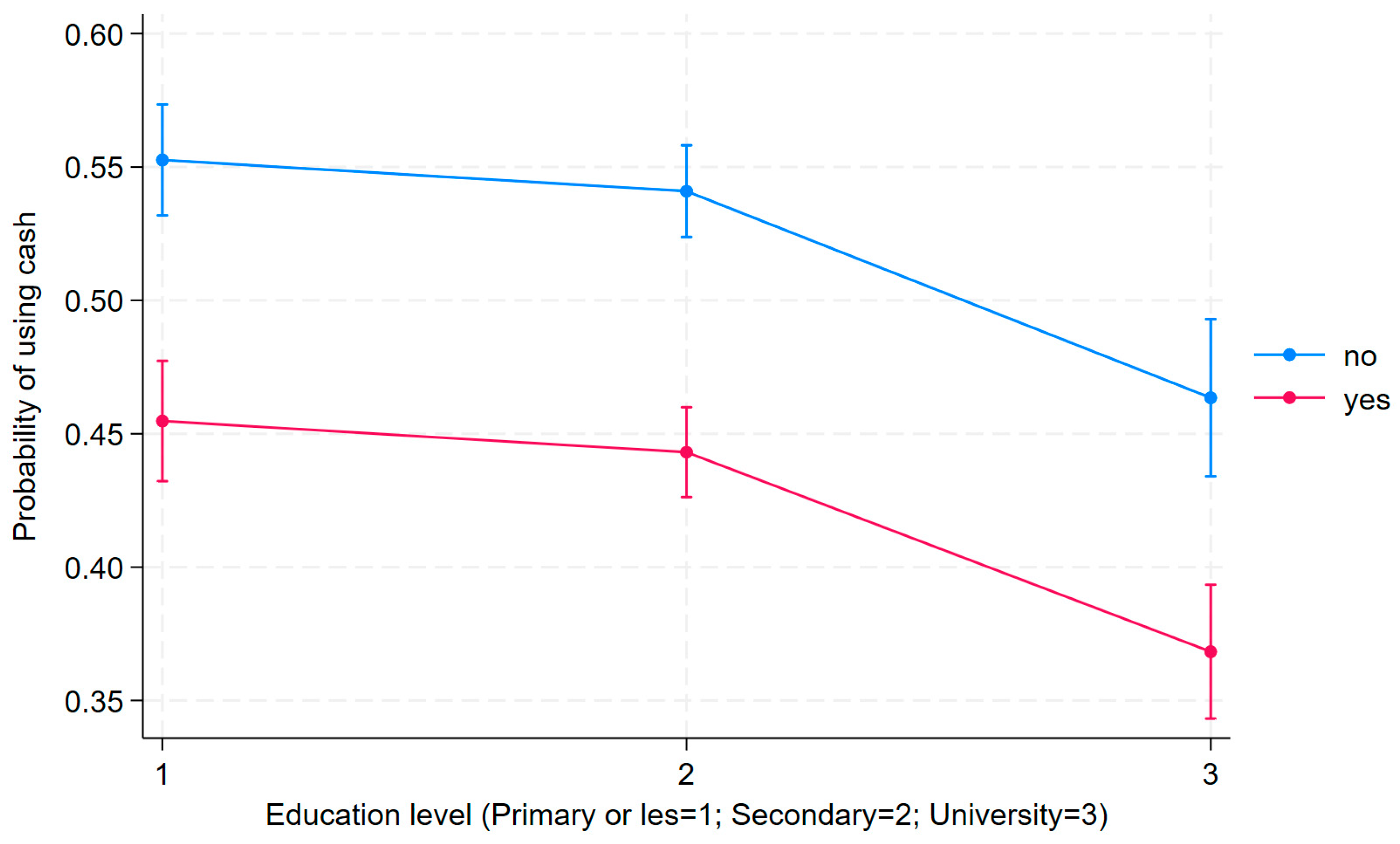
The results show that the adoption of digital payments is associated with a lower likelihood of using cash at all educational levels, with close reductions of around 9.5–9.8 percentage points (Figure 6). However, people with a lower level of education have a greater general dependence on cash, while those with a university education show a lower use of this means of payment. Taken together, the results suggest that, although educational gaps persist, the association between digital payments and lower cash use is consistent across all groups.
Figure 6.
Probability of using cash under the criteria of use of digital payments and educational level.
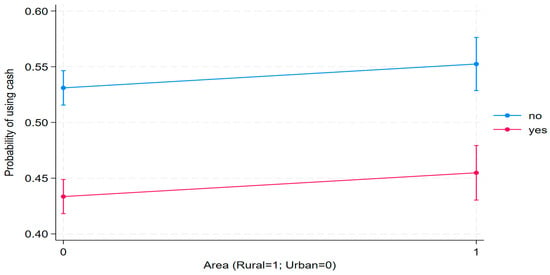
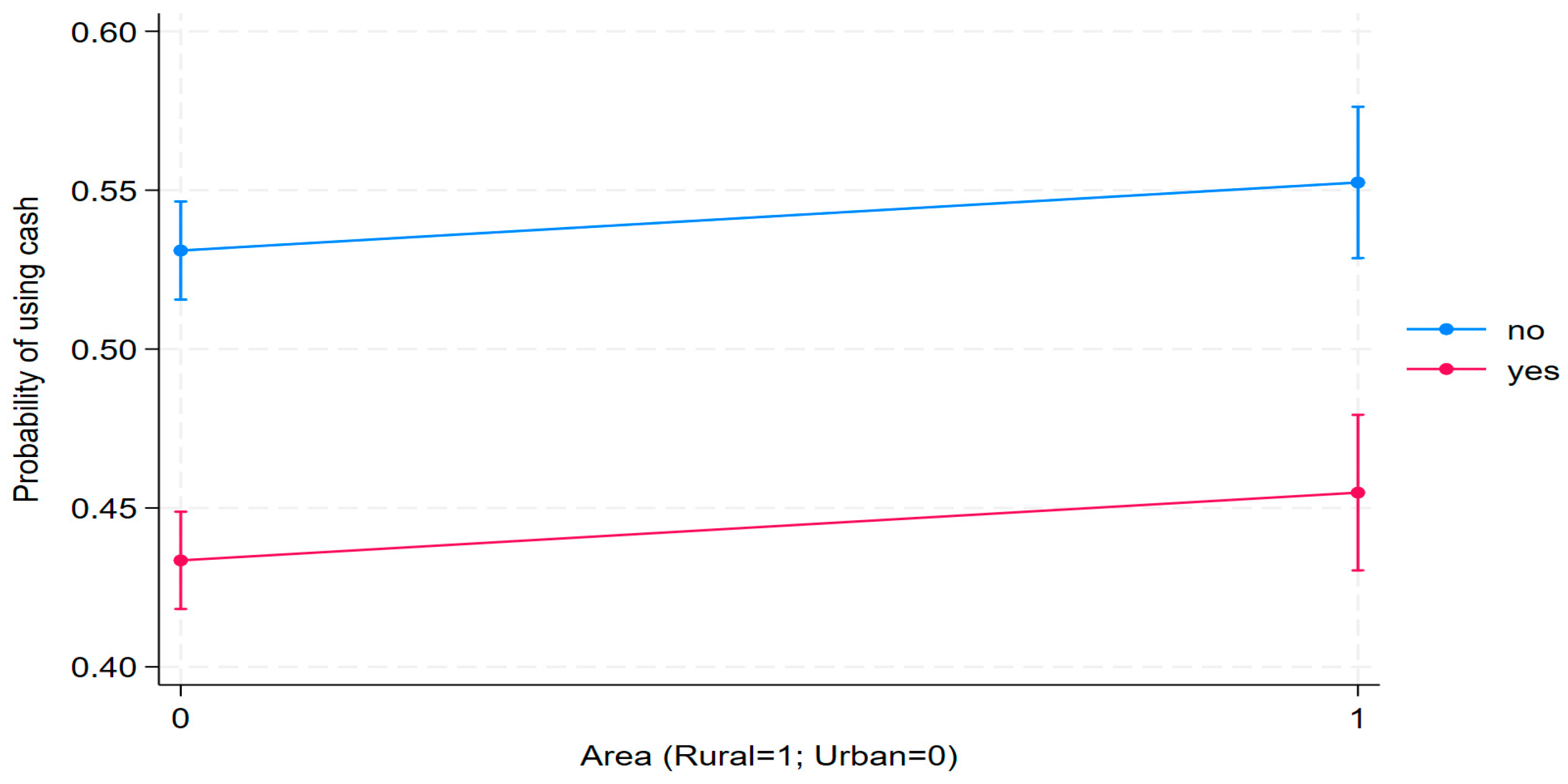
The results show that the adoption of digital payments is associated with a lower likelihood of using cash in both rural and urban areas (Figure 7). Although rural households maintain a greater structural dependence on cash, the reduction associated with the use of digital payments is similar in both areas. This suggests that digital payments could contribute to reducing territorial gaps in access to and use of formal financial services, despite persistent differences in infrastructure and digital connectivity.
Figure 7.
Probability of using cash under the criteria of digital payment and Rural/urban area.
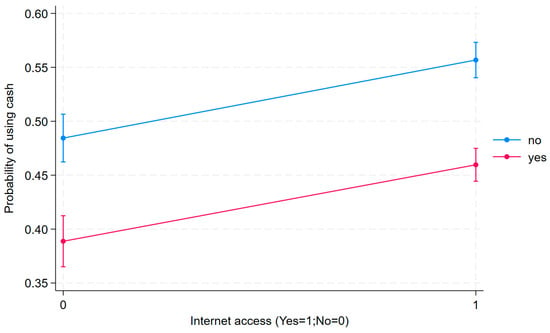
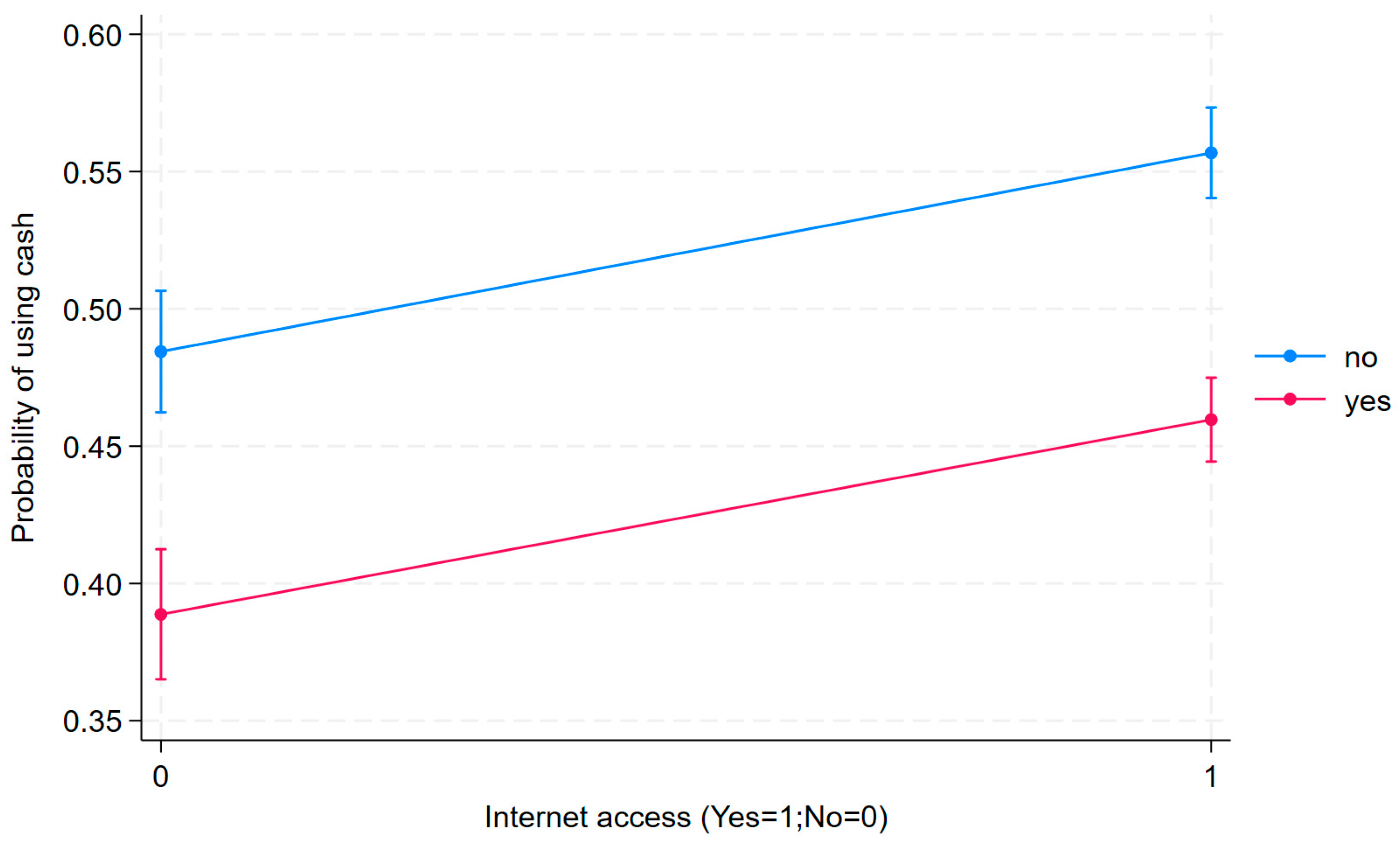
The results show that internet access is associated with less reliance on cash and that the adoption of digital payments reinforces this pattern (Figure 8). The reduction in the likelihood of using cash is similar between people with and without internet access, suggesting that the association between digital payments and lower cash use is relatively homogeneous across different connectivity contexts. However, digital connectivity continues to be a relevant structural factor in expanding access to and use of digital financial services.
Figure 8.
Probability of using cash under the criteria of digital payments and internet access.
Taken together, the simulations show that people who use digital payments are less likely to be predicted to use cash across all groups analyzed. Although differences associated with income, age, education, geographic location, and digital access persist, the overall pattern suggests that the use of digital payments is consistently associated with less reliance on cash in LAC. These results are consistent with financial inclusion and digital integration processes related to the social dimension of sustainability, particularly in terms of access to and use of formal financial services.
5. Discussion of the Results
The results show that the use of digital payments is associated with a reduction of 9.17 percentage points in the probability of using cash in LAC, a statistically significant and consistent result in all the scenarios analyzed, which confirms the hypothesis raised. The observational design of the study does not allow strict causal relationships to be established; The findings reflect robust statistical associations.
In addition, the findings of this research are consistent with previous international evidence showing that digital payments accelerate the reduction in cash use by reducing frictions in transactions, decreasing transaction costs, and increasing convenience for users. Studies on Brazil’s PIX system show that instantaneous, low-cost payment infrastructures significantly reduce reliance on cash and improve transactional efficiency, especially in retail purchases and peer-to-peer transfers [12,20]. Similar evidence has been reported in India with UPI and in China with mobile payment ecosystems, where digital platforms have substantially displaced cash in everyday transactions [40,41]. In line with these experiences, our results suggest that in LAC, the use of digital payments is associated with a statistically significant reduction in the likelihood of using cash in everyday transactions. However, a key difference is that in LAC, the transition is more gradual and structurally conditioned: labor informality, regulatory fragmentation, and connectivity gaps create frictions that are not present to the same extent in highly digitized economies [39].
From a socioeconomic perspective, the results cover income, age, gender and educational levels. In particular, the difference in the estimated probability of using cash between users and non-users of digital payments is relatively similar between the lowest and highest income quintiles. This pattern suggests that the association between digital payments and less reliance on cash is not concentrated exclusively in higher-income groups. In terms of public policy, the results highlight the importance of expanding access to digital infrastructure and financial education to promote a more equitable adoption of digital payment tools. These findings are consistent with debates on financial inclusion and equitable access to formal financial services linked to the social dimension of sustainability.
Previous studies in emerging economies show that the adoption of digital payments is strongly conditioned by structural factors such as internet access, smartphone ownership, digital literacy, and merchant acceptance [17,42]. Rural households and low-income users often remain disproportionately dependent on cash due to weak infrastructure and limited access to formal financial services [43,44]. Our findings confirm that LAC follows a similar pattern, in which digital payments expand unevenly across socioeconomic groups and can reinforce exclusion if connectivity gaps and affordability constraints are not adequately addressed through public policies. This result is also consistent with evidence from Peru and Mexico, where digital adoption is concentrated among young, urban, and formally employed people [45,46].
The results by age confirm the existence of a non-linear relationship: although the probability of using cash increases with age, the reduction associated with the use of digital payments remains between 9 and 12 percentage points in all cohorts. This qualifies the argument that digital adoption is exclusively generational. The Literature on Digital Financial Trust [47]. It suggests that the determining factor is not age per se, but exposure to accessible interfaces and the perception of safety, implying that usability and trust interventions can reduce the age gap more efficiently than waiting for generational change.
Similarly, gender differences are marginal, indicating that digitalization has closed the usage gap between men and women and contributes to reducing structural inequalities in access to financial tools, an important element for inclusive development.
In terms of educational level, people with lower levels of education are more likely to use cash, which may reflect deficiencies in digital literacy and financial confidence. However, within each educational group, digital payments significantly reduce reliance on cash, implying that their relationship is not determined by educational attainment, but by exposure to accessible and reliable digital channels, suggesting that exposure to accessible digital channels matters more than educational attainment per se in reducing reliance on cash.
On the other hand, the Analysis by area of residence and internet access highlights two key points. First, the rural-urban gap persists, with increased use of cash in rural areas, a result consistent with the objectives of reducing territorial inequalities (SDG 10) and with recent evidence on the role of mobile wallets in contexts of low banking penetration [6]. Second, the reduction is observed even among those who do not have access to the internet, which can be explained by the use of offline technologies and local payment networks.
Taken together, the findings show that digital payments are associated with a lower likelihood of using cash. Sustainable financial inclusion is not measured in this study by a composite indicator or as an independent empirical variable. It is used as an interpretive framework to analyze whether the adoption of digital payments is associated with less reliance on cash and greater interaction with formal financial channels [3,27]. In the social and institutional dimension of sustainability, aligned with SDGs 8, 10 and 16, the documented association is consistent with more efficient, accessible and transparent financial systems, although the model does not allow this implication to be established in a causal way.
Finally, financial trust emerges as a central determinant of digital payment adoption. Higher levels of trust in financial institutions and digital channels significantly increase the likelihood of using digital payments, while fraud risks, privacy concerns, and weak consumer protections reduce the willingness to replace cash with electronic alternatives [47]. In the LAC context, our results confirm that trust operates not only as a behavioral factor, but also as an institutional condition to sustain the long-term adoption of digital payments and reduce reliance on cash [3,27]. However, digitalization alone does not guarantee financial inclusion. Structural barriers such as limited access to the internet, low financial education and unequal access to digital tools remain significant constraints [17,48]. Therefore, moving towards less cash-dependent economies in a socially sustainable manner—in the sense of SDGs 10 and 16—requires not only technological innovation, but also effective regulation, consumer protection, and inclusion policies that prevent vulnerable populations from being left out of the digital financial transformation [2,49].
Despite the associated benefits, the digitization of payments comes with risks that deserve critical attention. Increased reliance on digital infrastructure increases exposure to cybersecurity threats, wire fraud, operational disruptions, and data privacy breaches. In LAC, where financial cyber resilience frameworks are still nascent in several countries, these risks can amplify the vulnerability of low-income households, which are less able to absorb losses from digital fraud [3,6]. In addition, if cash alternatives are reduced too quickly without sufficient digital infrastructure, there is a risk of excluding segments with limited connectivity, low digital literacy, or low institutional trust. A financially sustainable transition therefore requires not only expanding access to digital payments, but also ensuring their security, operational resilience and the preservation of alternatives for the most vulnerable groups.
6. Conclusions
This study analyzed the effect of digital payments on the probability of cash use in LAC, employing a logit model and an approach based on AME and probabilities predicted from the Global Findex 2021. Based on the model’s estimates, counterfactual scenarios were constructed to directly compare the probability of cash use between people who use and those who use digital payments, while keeping other relevant characteristics constant. This empirical strategy provides a clear and comparable framework for quantifying the association between the use of digital payments and reliance on cash in heterogeneous contexts.
The main empirical finding is that the use of digital payments is associated with a reduction of 9.17 percentage points in the probability of using cash, a robust result in all socioeconomic groups analyzed: income quintiles, age groups, genders, educational levels, rural and urban areas, and levels of internet connectivity. This homogeneity is itself a relevant scientific result: it suggests that the association is not restricted to groups of greater economic capacity or connectivity, which distinguishes it from the patterns documented in other developing regions during early phases of digitalization. The results suggest that digital payments are a key tool to promote economic formalization, improve transactional efficiency, and expand financial inclusion [38]. The study also provides an analysis of heterogeneity between countries grouped by level of digitalization, showing that the negative association between digital payments and cash use remains in all three groups, although with a greater magnitude in highly digitalized economies, suggesting that the effect does not depend on a minimum threshold of digital development to manifest itself.
Sustainable financial inclusion is not measured in this study by a composite indicator or as an independent empirical variable: it is used as an interpretive framework to analyze whether the adoption of digital payments is associated with less reliance on cash and greater interaction with formal financial channels [50]. The results are consistent with that direction (less reliance on cash may reflect greater integration into formal financial systems) but that implication is conceptual and indirect, not a measured outcome. The relevant sustainability dimension in this study is social and institutional, aligned with SDGs 8, 10 and 16.
The results also document the persistence of structural gaps: older people, people with a lower level of education and living in rural areas have a greater baseline dependence on cash. These gaps do not disappear with the simple availability of digital payments; they reflect deficits in connectivity, institutional trust and digital literacy [27] which constitute barriers to entry prior to adoption. The study identifies them empirically, but overcoming them requires specific policies beyond the scope of this analysis.
For governments and central banks in countries with low digitalization, such as Guatemala, El Salvador and Nicaragua, the priority should be the deployment of interoperable and low-cost payment infrastructures, following the models of PIX (Brazil) or CoDi (Mexico). For financial regulators across the region, regulatory frameworks should balance innovation with consumer protection, cybersecurity, and operational transparency of payment service providers [29,31]. For those responsible for financial inclusion programs, the results suggest that digital literacy programs focused on older adults, people with low levels of education, and rural households can be more effective if they prioritize the accessibility of interfaces and the construction of institutional trust over conceptual training. Finally, given that the reduction associated with the use of digital payments is observed even among those who do not have access to the internet, it is worth exploring the scaling of offline and low-data solutions as a way of inclusion for the most disconnected segments.
Future research could address these limitations by: (1) using panel data or successive waves of surveys to establish causal inference and analyze the temporal evolution of adoption; (2) the design of instrumental variables that correct the selection bias between adopters and non-adopters of digital payments; and (3) the incorporation of variables of institutional trust, labor informality and perception of digital risk, which the Global Findex does not include but which the literature identifies as relevant determinants of adoption.
This study has five limitations that should be considered when interpreting the results. (1) Cross-sectional data and causal inference: the analysis is based on the 2021 wave of the Global Findex, a cross-section that does not allow causal relationships to be identified. The direction of the partnership—whether digital payments reduce the use of cash or whether cashless users adopt digital payments earlier—cannot be determined by this design. (2) Binary variable: both the dependent variable (uses cash) and the main independent variable (uses digital payments) are dichotomous, which makes it impossible to capture the intensity, frequency or diversity of instruments. (3) Omitted variables: Unobservable factors such as individual trust in financial institutions, risk preferences, labor informality, and the local regulatory environment can bias the estimators. (4) Institutional heterogeneity across countries: although fixed effects by country are included, differences in regulatory quality, digital infrastructure, and supervisory capacity among the 18 economies may remain partially unobserved and limit the comparability of coefficients. (5) Absence of a dynamic dimension: the data do not allow us to analyze the temporal evolution of adoption or to assess whether the documented effects are consolidated, reversed or amplified over time. Future research with panel data or with future waves of the Global Findex could address these limitations and provide more robust causal evidence on the mechanisms of the transition to less cash-dependent economies in LAC.
Author Contributions
Conceptualization, J.R. and A.B.T.-P.; methodology, J.R.; software, J.R.; validation, J.R. and A.B.T.-P.; formal analysis, J.R. and A.B.T.-P.; research, J.R. and A.B.T.-P.; resources, J.R. and A.B.T.-P.; data curation, J.R.; writing—preparation of the original draft, J.R. and A.B.T.-P.; writing—revision and editing, J.R. and A.B.T.-P.; visualization, J.R. and A.B.T.-P.; supervision, J.R. and A.B.T.-P.; project management, J.R. and A.B.T.-P.; acquisition, J.R. and A.B.T.-P. All authors have read and agreed to the published version of the manuscript.
Funding
We are grateful to the University of the Americas UDLA, which financially supported this research (546.B.XVI.25).
Institutional Review Board Statement
Not applicable.
Informed Consent Statement
Not applicable.
Data Availability Statement
The data is available at the following link: https://www.bancomundial.org/es/publication/globalfindex (accessed on 5 February 2026).
Conflicts of Interest
The authors do not declare any conflict of interest. Funders had no role in study design, data collection, analysis, or interpretation, writing the manuscript, or deciding to publish the results.
Abbreviations
The following abbreviations are used in this manuscript:
| AME | Medium marginal effects |
| A2A | Account by account |
| FPS | Faster payment service |
| Fintech | Financial technology |
| LAC | Latin America and the Caribbean |
| SMEs | Micro, Small and Medium Enterprises |
Appendix A
Table A1.
Countries descriptive data.
Appendix B
Table A2.
Correlation matrix.
Table A3.
Variance inflation factors.
Appendix C
Table A4.
Marginal effects by country groups by degree of digitalization.
References
- Demirgüç-Kunt, A.; Klapper, L.; Singer, D.; Ansar, S.; Hess, J. The Global Findex Database 2017: Measuring Financial Inclusion and Opportunities to Expand Access to and Use of Financial Services. World Bank Econ. Rev. 2020, 34, S2–S8. [Google Scholar] [CrossRef] [Scilit]
- Ozili, P.K. Financial inclusion research around the world: A review. Forum Soc. Econ. 2021, 50, 457–479. [Google Scholar] [CrossRef] [Scilit]
- Rubio, J.; Tulcanaza-Prieto, A.B. Digital Payments Trust in Latin America and the Caribbean. Economies 2025, 13, 140. [Google Scholar] [CrossRef] [Scilit]
- Rubio, S.; Tulcanaza-Prieto, A.B. Determinants of Financial Inclusion in Ecuador: A Logit Approach. Economies 2025, 13, 34. [Google Scholar] [CrossRef] [Scilit]
- Arner, D.; Barberis, J.; Buckley, R.; Law, U.; Arner, D.W.; Buckley, R.P. The Evolution of Fintech: A New Post-Crisis Paradigm? Georget. J. Int. Law 2016, 47, 1271–1319. [Google Scholar] [CrossRef] [Scilit]
- IDB Lab; World Economic Forum. Accelerating Digital Payments in Latin America and the Caribbean; World Economic Forum: Cologny, Switzerland, 2022. [Google Scholar] [CrossRef] [Scilit]
- Economic Commission for Latin America and the Caribbean (ECLAC). A Real and Effective Digital Transformation Can Help Latin America and the Caribbean Overcome the Traps That Prevent Its Development. 2024. Available online: https://www.cepal.org/es/comunicados/transformacion-digital-real-efectiva-puede-ayudar-america-latina-caribe-superar-trampas (accessed on 11 May 2026).
- Beck, T.; Demirguc-Kunt, A.; Peria, M.S.M. Reaching out: Access to and Use of Banking Services across countries. J. Financ. Econ. 2023, 85, 234–266. [Google Scholar] [CrossRef] [Scilit]
- OECD. OECD/INFE 2020 International Survey of Adult Financial Literacy; OECD: Paris, France, 2020; Available online: https://www.oecd.org/financial/education/launchoftheoecdinfeglobalfinancialliteracysurveyreport.html (accessed on 9 February 2020).
- International Monetary Fund. Ecuador: Financial System Stability Assessment; International Monetary Fund: Washington, DC, USA, 2023; Available online: https://www.imf.org/en/Publications/CR/Issues/2023/09/21/Ecuador-Financial-System-Stability-Assessment-539348 (accessed on 11 May 2026).
- Tan, T.-L.; Lu, M.-P.; Kosim, Z. The mediating effect of digital financial inclusion on gender differences in digital financial literacy and financial well-being: Evidence from Malaysian households. Nvestment Manag. Financ. Innov. 2025, 22, 11–24. [Google Scholar] [CrossRef] [Scilit]
- Amboage, G.B.; Monteiro, G.F.d.A.; Bortoluzzo, A.B. Technological adoption: The case of PIX in Brazil. Innov. Manag. Rev. 2024, 21, 198–211. [Google Scholar] [CrossRef] [Scilit]
- Barbosa, N.A.D.; Tessmann, M.S.; de Guimarães e Souza, G.J.; Fonseca, R.D. And when the government innovates? An analysis of Brazilian banks’ efficiency after the Pix. J. Financ. Regul. Compliance 2025, 33, 657–672. [Google Scholar] [CrossRef] [Scilit]
- Amezcua, B. The use of electronic payments with CoDi in Mexico. Vinculatégica EFAN 2020, 6, 1111–1119. [Google Scholar] [CrossRef] [Scilit]
- Castañeda, F.; Ormazábal, F.; Cisternas, C. Sociodemographic Determinants of Financial Literacy Levels. Stud. Bus. Econ. 2022, 17, 44–61. [Google Scholar] [CrossRef] [Scilit]
- Tuesta, D.; Sorensen, G.; Haring, A.; Cámara, N. Financial Inclusion and Its Determinants: The Argentine Case. BBVA Reseach. Working Paper. No. 15. 2015. pp. 1–28. Available online: https://www.bbvaresearch.com/wp-content/uploads/2015/01/WP_15-04_Inclusion-Financiera_Argentina.pdf (accessed on 11 May 2026).
- Frost, J.; Gambacorta, L.; Huang, Y.; Shin, H.S.; Zbinden, P. BigTech and the changing structure of financial intermediation. Econ. Policy 2020, 34, 761–799. [Google Scholar] [CrossRef] [Scilit]
- Allen, F.; Demirguc-Kunt, A.; Klapper, L.; Peria, M.M.S.M. The foundations of financial inclusion: Understanding ownership and use of formal accounts. J. Financ. Intermediation 2016, 27, 1–30. [Google Scholar] [CrossRef] [Scilit]
- Beck, T.; Demirgüç-Kunt, A.; Levine, R. Finance, inequality and the poor. J. Econ. Growth 2022, 12, 27–49. [Google Scholar] [CrossRef] [Scilit]
- Leal, A.; Haase, M. Instant Payments and Banks: The Impact of Pix on Bank Branches in Brazil. Rev. Econ. Ens. 2025, 40, 146–171. [Google Scholar] [CrossRef] [Scilit]
- Demirguc-Kunt, A.; Klapper, L.; Singer, D.; Ansar, S.; Hess, J. The Global Findex Database 2017: Measuring Financial Inclusion and the Fintech Revolution; World Bank: Washington, DC, USA, 2018. [Google Scholar] [CrossRef] [Scilit]
- United Nations Development Programme. Financial Inclusion of Young People in Informal Conditions in Ecuador with A Gender Approach. 2019. Available online: https://ecuador.unwomen.org/es/digital-library/publications/2022/01/resumen-ejecutivo-inclusion-financiera-de-personas-jovenes-en-condicion-de-informalidad-en-ecuador-con-enfoque-de-genero (accessed on 2 January 2026).
- Batista, A.A.; Francisco, A.C. Organizational Sustainability Practices: A Study of the Firms Listed by the Corporate Sustainability Index. Sustainability 2018, 10, 226. [Google Scholar] [CrossRef] [Scilit]
- Ramayanti, R.; Rachmawati, N.A.; Azhar, Z.; Nik Azman, N.H. Exploring intention and actual use in digital payments: A systematic review and roadmap for future research. Comput. Hum. Behav. Rep. 2024, 13, 100348. [Google Scholar] [CrossRef] [Scilit]
- Tulcanaza-Prieto, A.B.; Cortez-Ordoñez, A.; Rivera, J.; Lee, C.W. Is Digital Literacy a Moderator Variable in the Relationship Between Financial Literacy, Financial Inclusion, and Financial Well-Being in the Ecuadorian Context? Sustainability 2025, 17, 2476. [Google Scholar] [CrossRef] [Scilit]
- Anagnostopoulos, I.; Sails, T.; Alexandrou, G. FinTechs, BigTechs and diminishing bank franchise values: Stakeholder perspectives on a disruptive emerging financial ecosystem. Technol. Forecast. Soc. Change 2025, 212, 123924. [Google Scholar] [CrossRef] [Scilit]
- Aurazo, J.; Vega, M. Why people use digital payments: Evidence from micro data in Peru. Lat. Am. J. Cent. Bank. 2021, 2, 100044. [Google Scholar] [CrossRef] [Scilit]
- Feyen, E.; Alonso Gispert, T.; Kliatskova, T.; Mare, D.S. Financial Sector Policy Response to COVID-19 in Emerging Markets and Developing Economies. J. Bank. Financ. 2021, 133, 106184. [Google Scholar] [CrossRef] [Scilit]
- Srouji, J.; Torre, D. The Global Pandemic, Laboratory of the Cashless Economy? Int. J. Financ. Stud. 2022, 10, 109. [Google Scholar] [CrossRef] [Scilit]
- Ibrahim, N.A.; Kamal, R.; Nipo, D. Society’s Growing Preference for Cashless Transactions Over Cash. Int. J. Acad. Res. Bus. Soc. Sci. 2024, 14, 2355–2370. [Google Scholar] [CrossRef] [Scilit]
- Schomburgk, L.; Belli, A.; Hoffmann, A.O.I. Less cash, more splash? A meta-analysis on the cashless effect. J. Retail. 2024, 100, 382–403. [Google Scholar] [CrossRef] [Scilit]
- Raya, J.M.; Vargas, C. How to become a cashless economy and what are the determinants of eliminating cash. J. Appl. Econ. 2022, 25, 543–562. [Google Scholar] [CrossRef] [Scilit]
- Alfonso, V.; Kamin, S.; Zampolli, F. Central bank digital currencies (CBDCs) in Latin America and the Caribbean. Lat. Am. J. Cent. Bank. 2025, 6, 100140. [Google Scholar] [CrossRef] [Scilit]
- Briano-Turrent, G. The effect of financial inclusion on economic and social indicators in Mexico. Lat. Am. J. Cent. Bank. 2025, 6, 100161. [Google Scholar] [CrossRef] [Scilit]
- García-Merino, J.D.; San-Jose, L.; San-Martin, N. Determinants in adopting cashless payments in Europe: A multilevel analysis. Financ. Innov. 2025, 11, 76. [Google Scholar] [CrossRef] [Scilit]
- Srouji, J. Digital Payments, the Cashless Economy, and Financial Inclusion in the United Arab Emirates: Why Is Everyone Still Transacting in Cash? J. Risk Financ. Manag. 2020, 13, 260. [Google Scholar] [CrossRef] [Scilit]
- Aggarwal, K.; Malik, S.; Mishra, D.; Paul, D. Moving from Cash to Cashless Economy: Toward Digital India. J. Asian Financ. Econ. Bus. 2021, 8, 43–54. [Google Scholar] [CrossRef]
- Rafee, M.; Ramesh, V.; Asan, S.; Kolar, A.B.; Zaheed, M. A Survey on Implications of Cashless Payments on the Spending Patterns of Urbanites in the Era of Digital India. Int. J. Early Child. Spec. Educ. 2022, 14, 2040–2048. [Google Scholar] [CrossRef]
- World Bank. The Global Findex Database 2025. 2025. Available online: https://www.worldbank.org/en/publication/globalfindex (accessed on 10 September 2025).
- Becha, H.; Kalai, M.; Houidi, S.; Helali, K. Digital financial inclusion, environmental sustainability and regional economic growth in China: Insights from a panel threshold model. J. Econ. Struct. 2025, 14, 4. [Google Scholar] [CrossRef] [Scilit]
- Huang, X.; Dong, J.; Li, X. Fintech, technological innovation and regional economic growth: Theoretical modeling and empirical evidence. China Econ. Rev. 2025, 91, 102397. [Google Scholar] [CrossRef] [Scilit]
- Klapper, L.; Singer, D.; Starita, L.; Norris, A. The Global Findex Database 2025: Connectivity and Financial Inclusion in the Digital Economy. 2025. Available online: http://hdl.handle.net/10986/43438 (accessed on 10 January 2026).
- Sahay, R.; Cihak, M.; N’Diaye, P.M.; Barajas, A.; Ayala Pena, D.B.; Bi, R.; Gao, Y.; Kyobe, A.J.; Nguyen, L.; Saborowski, C.; et al. Rethinking Financial Deepening: Stability and Growth in Emerging Markets. Staff. Discuss. Notes 2015, 2015, 1–42. [Google Scholar] [CrossRef] [Scilit]
- Sahay, R.; Allmen, U.; Lahreche, A.; Khera, P.; Ogawa, S.; Beaton, K. The Promise of Fintech Financial Inclusion in the Post COVID-19 Era. Dep. Pap. 2020, 2020, 1–83. [Google Scholar] [CrossRef] [Scilit]
- González-Núñez, J.; Mariné-Osorio, F.J.; Domínguez, S. Financial literacy is a construct: An ordered logit approximation in Mexico. Cogent. Econ. Financ. 2024, 12, 2391941. [Google Scholar] [CrossRef] [Scilit]
- Náñez Alonso, S.L.; Jorge-Vazquez, J.; Arias, L.G.; Nogal, N.M.d. What Factors Are Limiting Financial Inclusion and Development in Peru? Empirical Evidence. Economies 2024, 12, 93. [Google Scholar] [CrossRef] [Scilit]
- Morgan, P.J.; Long, T.Q. Financial literacy, financial inclusion, and savings behavior in Laos. J. Asian Econ. 2020, 68, 101197. [Google Scholar] [CrossRef] [Scilit]
- Chen, S.; Doerr, S.; Frost, J.; Gambacorta, L.; Shin, H.S. The Fintech Gender Gap. BIS Working Papers No. 931. 2021. pp. 1–40. Available online: https://www.bis.org/publ/work931.pdf (accessed on 13 January 2026).
- Sakyi-Nyarko, C.; Ahmad, A.H.; Green, C.J. The role of financial inclusion in improving household well-being. J. Int. Dev. 2022, 34, 1606–1632. [Google Scholar] [CrossRef] [Scilit]
- Ul-Duran, S.; Iqbal, M.; Naveed, S.; Massacci, A.; Saleem, I. Sustainable financial inclusion through social progress and regularity quality interaction—Implication for least developed countries. Res. Int. Bus. Financ. 2025, 76, 102811. [Google Scholar] [CrossRef] [Scilit]

Disclaimer/Publisher’s Note: The statements, opinions and data contained in all publications are solely those of the individual author(s) and contributor(s) and not of MDPI and/or the editor(s). MDPI and/or the editor(s) disclaim responsibility for any injury to people or property resulting from any ideas, methods, instructions or products referred to in the content. |
© 2026 by the authors. Licensee MDPI, Basel, Switzerland. This article is an open access article distributed under the terms and conditions of the Creative Commons Attribution (CC BY) license.