1. Introduction
Ghana’s bioeconomy is strongly anchored in agriculture, forestry, and fisheries, which together form the backbone of national economic activity, rural livelihoods, and export revenues. These sectors generate substantial volumes of biomass and organic residues, yet remain constrained by resource inefficiencies, limited value addition, and fragmented governance across value chains. In this context, systems-oriented approaches provide an important basis for identifying inefficiencies, improving circularity, and supporting national priorities such as job creation, food security, and climate resilience [
1,
2,
3]. The bioeconomy represents a structural shift from linear production models towards systems based on biological resources, regenerative processes, and circular resource flows [
4,
5]. Its systemic character lies in the interdependence of ecological, economic, and social processes, where outputs from one stage (e.g., agricultural residues) can serve as inputs for others through bio-based processing and industrial applications [
5]. However, these interdependencies also introduce trade-offs, particularly in land-use allocation and resource competition. The circular economy paradigm provides a complementary framework, emphasising resource efficiency, value retention, and closed-loop systems across production chains [
6,
7]. Recent studies further highlight that governance structures and value-chain coordination are critical for enabling effective circular bioeconomy transitions.
In emerging economies such as Ghana, the application of these approaches is constrained by structural and institutional limitations. Biomass data remain fragmented and inconsistent, particularly for agricultural residues and informal recovery streams, limiting the ability to assess resource availability and utilisation. At the same time, governance fragmentation across sectors, including agriculture, forestry, fisheries, and industry, reduces policy coherence and weakens coordination across value chains. Technological and innovation capacity also remains uneven, with limited scaling of waste valorisation and industrial symbiosis models. These challenges are further compounded by the central role of smallholder and informal actors, whose inclusion is essential for both system efficiency and socio-economic resilience. Despite increasing attention to the bioeconomy in Sub-Saharan Africa, existing studies remain constrained by three key limitations. First, most analyses are sector-specific, focusing on individual value chains (e.g., agriculture, forestry, or waste management) without integrating biomass flows, governance structures, and actor dynamics within a unified system framework. Second, methodological approaches are largely descriptive, lacking structured analytical frameworks that enable system-level diagnosis, comparison, or replication. Third, quantitative assessments of biomass utilisation efficiency, leakage rates, and circularity performance remain limited, particularly in data-constrained contexts dominated by informal systems.
This study addresses these limitations by developing a systems-oriented analytical framework that integrates material flow assessment, actor-network mapping, governance assessment, and innovation systems analysis. The framework introduces indicative metrics, including residue utilisation rates and biomass leakage rates, to enable structured and comparative evaluation of bioeconomy performance. By linking high-volume biomass streams with institutional coordination failures and technological constraints, the study advances beyond descriptive reviews and provides a replicable approach for diagnosing circularity gaps and system inefficiencies in emerging bioeconomies.
Analytical Framework
This study adopts a systems-oriented analytical framework to examine Ghana’s bioeconomy as an interconnected socio-technical system linking biomass production, processing, governance, and innovation. The framework integrates principles from circular economy theory, socio-technical transition research, and the bioeconomy governance literature to enable a structured assessment of resource flows, actor configurations, and institutional conditions. Bioeconomy systems are conceptualised as multi-level configurations comprising four interdependent dimensions: (i) core production and value-chain actors (e.g., farmers, processors, traders, and waste managers), (ii) framework actors (e.g., policymakers, research institutions, financial actors, NGOs, and civil society), (iii) material and energy flows, and (iv) institutional and technological infrastructures shaping coordination, innovation, and regulation. This perspective aligns with circular economy approaches that emphasise material loop closure and value retention, while also incorporating governance-oriented frameworks highlighting coordination and sustainability constraints [
7,
8,
9,
10,
11]. From a transitions perspective, bioeconomy development is understood as a multi-level process involving interactions between niche innovations, established systems, and broader socio-economic conditions.
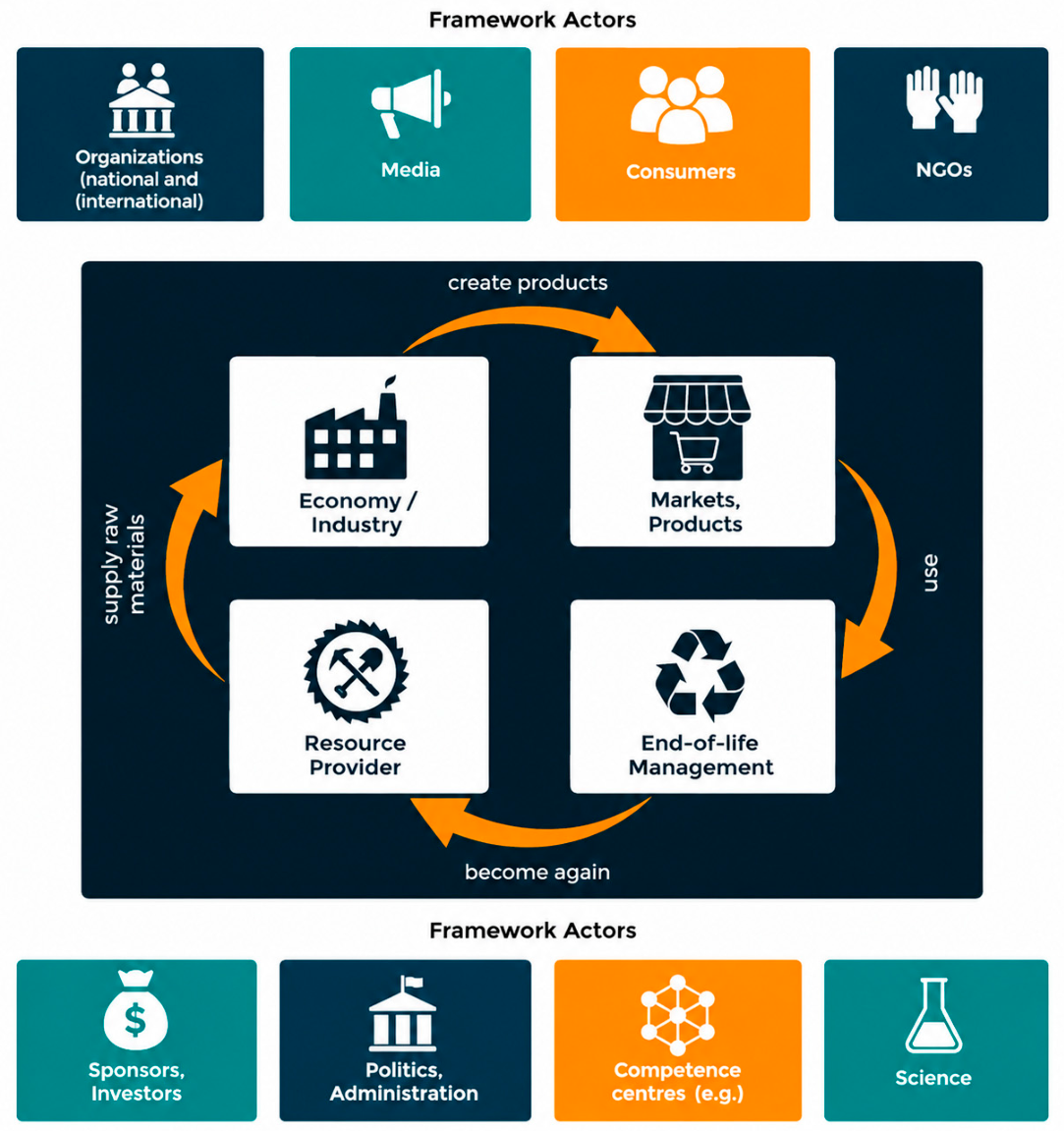
Figure 1 illustrates the conceptual structure adopted in this study [
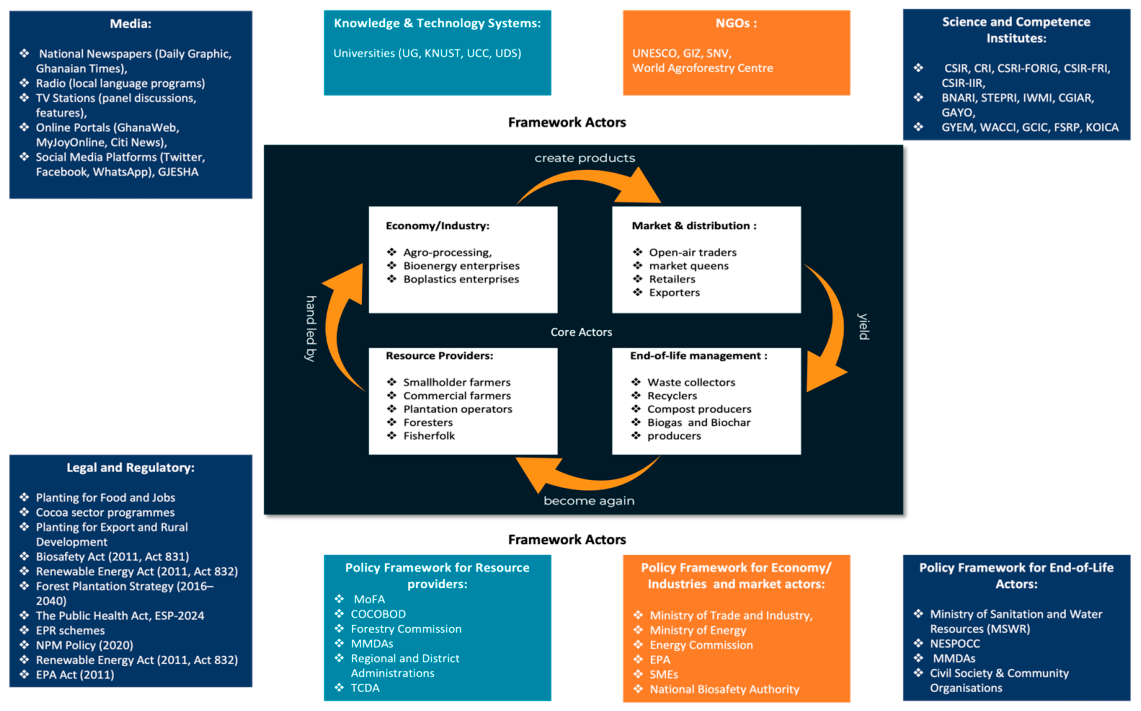
7], distinguishing value-chain dynamics at the system core from enabling governance and societal conditions. Biomass flows circulate through production, processing, markets, and end-of-life management, while policy, finance, and research shape system direction and innovation trajectories. Feedback loops connect material performance with institutional adaptation, influencing system resilience and transformation capacity.
Structural constraints continue to limit systemic integration of these conceptual advances. Inconsistent biomass accounting [
12] and fragmented policy implementation [
13] undermine coordinated resource management. Technological pathways such as advanced biorefining remain constrained by existing infrastructure and market conditions, requiring aligned investment and policy support. Institutional quality and societal legitimacy further shape adoption, with participatory governance and transparent communication playing key roles [
8,
14,
15]. Aligning bioeconomy strategies with sustainability frameworks can enhance both legitimacy and system performance [
16,
17]. For Ghana, effective adaptation requires reliable biomass data, cross-sectoral coordination, and institutional alignment across agriculture, forestry, fisheries, and industry [
1,
18]. Agricultural residues and informal recovery streams remain insufficiently quantified, and governance fragmentation constrains policy coherence. Integrated monitoring systems linking biomass availability, environmental impacts, economic value creation, and social outcomes are therefore critical for enabling circular integration. Operationally, the framework applies four complementary analytical lenses: (i) a material flow perspective to identify biomass streams and circularity gaps, (ii) an actor-network perspective to examine coordination dynamics, (iii) an institutional perspective to assess policy coherence and governance structures, and (iv) an innovation systems perspective to evaluate technological capacity and diffusion. Together, these components enable a systemic diagnosis of transition constraints and leverage points, particularly in data-constrained and institutionally fragmented contexts.
2. Methodological Approach
This study adopts a semi-systematic, systems-oriented analytical approach to examine the structure and sustainability of Ghana’s bioeconomy. The methodology combines material flow assessment with stakeholder and value-chain mapping, governance analysis, and innovation system evaluation. The objective is to develop an integrated, evidence-based understanding of how biomass is produced, utilised, and lost across interconnected value chains, rather than to perform a fully quantified material flow analysis. The analysis is based on a structured review of the literature that is often sector-specific, descriptive, and fragmented across disciplines. Previous studies rarely integrate biomass flow perspectives with governance structures and actor dynamics, limiting their ability to identify system-level inefficiencies and coordination gaps. In addition, the lack of structured analytical frameworks and comparable indicators constrains reproducibility and policy relevance.
The analysis is based on a structured review of the peer-reviewed literature, policy documents, and statistical datasets. Sources were collected from major academic databases (e.g., Scopus, Web of Science, and Google Scholar) and complemented by national and international reports (e.g., FAO, Ghana Statistical Service, and sectoral ministries). Selection criteria prioritised relevance to biomass production, residue generation, governance structures, and bioeconomy development in Ghana and comparable contexts. Where multiple data sources existed, values were cross-checked and synthesised; however, due to differences in reporting years, definitions, and system boundaries, the resulting estimates should be interpreted as indicative rather than harmonised. The methodological framework is organised into six analytical steps:
Step 1: System Boundary Definition and Sectoral Scope
System boundaries were defined across major biomass-producing sectors, including cocoa, cassava, maize, plantain, oil palm, and shea. These boundaries were analysed across four dimensions: material flows, actor networks, governance structures, and technological systems.
Step 2: Stakeholder and Value Chain Mapping
Key actors were identified and categorised into core actors (e.g., producers, processors, traders, waste handlers) and framework actors (e.g., policymakers, researchers, financial institutions). The analysis focused on identifying coordination gaps and structural fragmentation across value chains.
Step 3: Material Flow Assessment and Circularity Analysis
Biomass flows were assessed to identify major residue streams, utilisation pathways, and leakage points. Due to data constraints—particularly in informal systems—the assessment relies on literature-derived parameters and aggregated estimates rather than mass-balanced modelling. The aim is to identify relative inefficiencies and circularity opportunities.
Step 4: Governance and Institutional Assessment
Policy and institutional frameworks were analysed across relevant sectors to assess policy coherence, overlaps, and coordination gaps, and their implications for system performance.
Step 5: Science, Technology, and Innovation Analysis
Technological and innovation capacity was assessed through indicators such as technology availability, infrastructure, and private-sector engagement, to identify constraints affecting circular bioeconomy scaling.
Step 6: Data Triangulation and Validation
Findings were validated through triangulation of multiple data sources. Where discrepancies occurred, conservative assumptions were applied to avoid overinterpretation, particularly in informal sectors.
To support comparative interpretation across biomass systems, indicative system-level metrics were derived from aggregated biomass production and residue estimates compiled from the literature and national datasets. The residue utilisation rate refers to the proportion of generated biomass residues that are currently recovered, reused, or valorised through pathways such as animal feed, composting, bioenergy, or industrial processing. Conversely, the biomass leakage rate represents the share of residues that remain unmanaged, are openly burned, dumped, or otherwise lost from productive use. In addition, processing concentration patterns were interpreted qualitatively based on the relative degree of value-chain organisation, aggregation, and downstream processing observed across sectors. These metrics are not intended as precise engineering indicators or harmonised mass-balance calculations; rather, they provide comparative and system-level approximations that support the identification of structural inefficiencies, circularity gaps, and differences in value-chain integration across sectors.
3. Results: Structure of Ghana’s Bioeconomy
From a systems-analysis perspective, core actors are those directly engaged in the production, processing, exchange, and end-of-life handling of biological resources. They include primary producers (farmers, foresters, fisherfolk), biomass-processing industries, market and distribution actors (traders, retailers, exporters), and end-of-life actors (waste collectors, recyclers). These actors operate within feedback loops where residues and by-products can either leak from the system or be recirculated through valorisation pathways. In Ghana, these actor categories take distinct forms shaped by a largely informal agricultural economy, a growing agro-processing base, and export-oriented certified chains.
Figure 2 illustrates the Ghana-specific configuration of core and framework actors, highlighting the interactions between production, processing, market distribution, and end-of-life management within the bioeconomy system. Framework actors including policymakers, research institutions, financial actors, NGOs, and civil society shape enabling conditions and system directionality, but do not directly handle biomass [
7,
11]. Distribution systems combine informal networks and urban wholesale markets (e.g., Accra, Kumasi, Tamale) with formal export channels. Export commodities, particularly cocoa and timber, typically move through more standardised value chains. In contrast, domestic food and biomass flows remain more fragmented, which has implications for traceability, quality control, and coordinated residue valorisation.
Stakeholder engagement among framework actors is therefore central to Ghana’s bioeconomy transition. Diverse interests and perceptions influence strategic priorities and implementation pathways, and inclusive governance is repeatedly identified as a condition for legitimacy and effective system coordination [
8]. Evidence from transition and governance studies further suggests that integrating local knowledge can improve decision quality and alignment with context-specific needs [
19,
20]. However, persistent governance challenges particularly the need for coherent policies and alignment across institutions continue to constrain coordinated action and may reinforce social inequalities if not addressed [
19,
21,
22,
23]. The interaction between core and framework actors becomes visible in key system pressures, including high post-harvest losses in staple crops and persistent inefficiencies in residue management (e.g., cocoa pod husks and sawdust), which together reduce circularity and limit value retention [
24,
25]. Strengthening coordination can improve resource efficiency and enable circular feedback loops, such as conversion of organic waste into compost or energy carriers that support agricultural production and reduce leakage from the system.
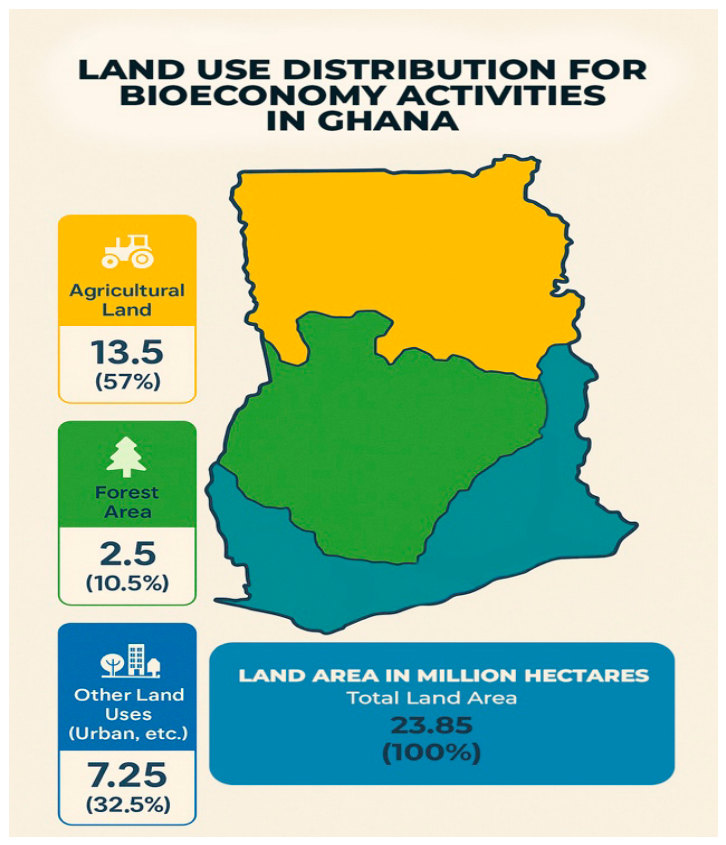
Ghana’s land-use structure further conditions bioeconomy dynamics. Based on a national land area of 23.85 million hectares, agricultural land accounts for approximately 13.5 million hectares (≈57%), underscoring the dominant role of agriculture in biomass supply and rural livelihoods [
26,
27]. As shown in
Figure 3, this distribution highlights the strong concentration of biomass production within agricultural systems and its implications for resource flows and land-use pressure within Ghana’s bioeconomy. Forest areas cover approximately 2.5 million hectares (≈10.5%), supporting timber value chains and biodiversity-related ecosystem services, while the remaining ≈7.25 million hectares (≈32.5%) are under other uses, including settlements and infrastructure. This configuration highlights the intersection of economic production, ecosystem integrity, and spatial planning within Ghana’s emerging bioeconomy [
28].
3.1. Biomass Flows and Circularity Gaps
Biomass production in Ghana is dominated by smallholder, largely informal systems. FAO (2023) estimates that 85–90% of farm holdings are under 2 hectares, and these producers collectively form the backbone of national food production and biomass supply [
29]. A smaller number of medium-to-large commercial farms and plantation systems particularly in oil palm and rubber contribute disproportionately to agro-industrial raw materials and export volumes [
29]. Production actors also include fisherfolk and forest-dependent communities supplying fish, timber, fuelwood, and non-timber forest products, although crop systems remain the primary source of biomass in national terms. Across sectors, circularity gaps are reinforced by constrained access to finance, markets, and technology among smallholders, alongside limited processing and valorisation infrastructure. Policy interventions and official development assistance seek to raise productivity and sustainability outcomes, including through agroforestry and organic practices that strengthen resilience and reduce environmental pressure [
28]. At the same time, expanding agro-processing and residue conversion into feed and bioenergy demonstrates emerging circular potential, though the scale remains limited and uneven across regions and crops [
30]. Renewables integration, particularly biogas and residue-based energy, remain a strategic opportunity for aligning biomass management with SDG-oriented development objectives.
3.1.1. Agriculture
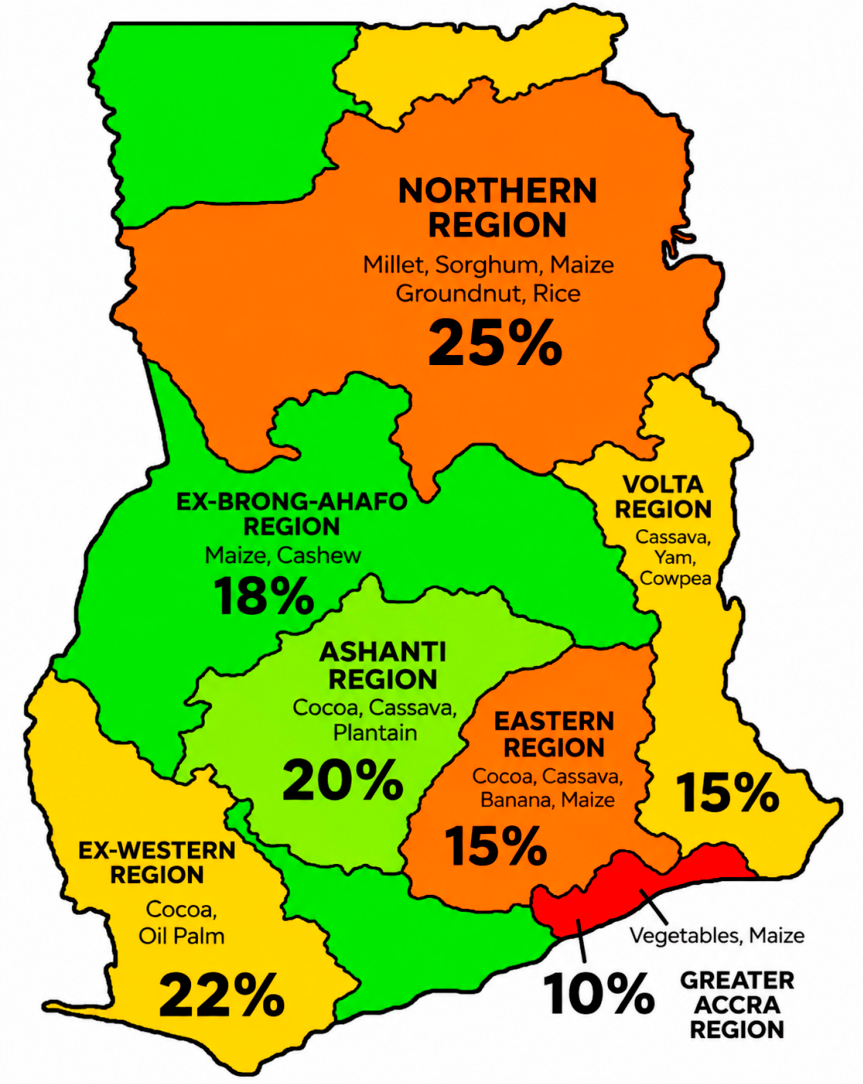
Ghana’s agricultural landscape is intricately shaped by its diverse climatic and ecological zones, which range from the humid forest regions in the south to the arid savanna of the north. Approximately 57% of national land is classified as agricultural land (≈136,000 km
2), with around 5.8 million hectares under cultivation [
31]. A bimodal rainfall regime in the south supports two cropping seasons, whereas northern systems are largely unimodal, increasing sensitivity to rainfall variability. These spatial differences influence crop distribution, residue generation, and the feasibility of biomass recovery. Southern systems are dominated by cocoa alongside staple crops such as cassava, plantain, and maize, while northern regions focus on cereals and legumes under rain-fed conditions. Transition zones combine food crops with emerging cash crops such as cashew, and coastal systems support drought-tolerant crops and irrigated horticulture [
32]. This regional structure generates substantial biomass streams, but recovery remains constrained by logistical, technological, and institutional limitations. As illustrated in
Figure 4, agricultural production is spatially uneven across regions, influencing both residue generation patterns and the feasibility of biomass recovery.
Post-harvest losses particularly in staple crop systems reduce both food availability and biomass quality for secondary uses, while limited aggregation and processing capacity restrict circular utilisation. As a result, biomass availability does not directly translate into effective resource flows, highlighting a structural gap between residue generation and utilisation. To assess system-level circularity, this study focuses on six key crops, cocoa, cassava, maize, plantain, oil palm, and shea, which dominate biomass production and residue generation and are sufficiently documented to support comparative analysis [
33]. These crops produce high-volume residues (e.g., cocoa pod husks, cassava peels, maize stover, plantain pseudostems, oil palm mill residues, and shea shells) that represent priority streams for circular bioeconomy applications. However, the practical utilisation of these residues is shaped by spatial dispersion, seasonality, and physico-chemical characteristics. Processing residues tend to be more concentrated and therefore more recoverable, whereas field residues remain dispersed and difficult to collect. High moisture content and rapid degradation further constrain recovery, particularly for cassava residues. In addition, competing on-farm uses such as mulching, feed, and household energy reduce the volume of biomass available for industrial applications. These constraints indicate that biomass availability is not equivalent to biomass accessibility. Improving circular integration therefore requires targeted interventions at aggregation points, including local preprocessing, storage, and densification, alongside alignment with food security and land-use priorities.
Table 1 provides a comparative overview of major crops, associated residue streams, and current versus potential utilisation pathways, forming the analytical basis for assessing biomass circularity across key value chains. The full national crop portfolio table is provided in the
Supplementary Information (S2.2). Detailed crop-by-crop residue narratives, including the residue-conversion parameters and ratio assumptions used in this review (e.g., cocoa husk: bean ratios, cassava peel fractions, maize residue shares, oil-palm EFB fractions, and shea yield/waste ranges), are documented in the
Supplementary Information (S2.4 and S2.6).
A comparative assessment of the six priority crops reveals that biomass utilisation efficiency differs significantly across value chains. Export-oriented systems such as cocoa and oil palm exhibit relatively higher levels of processing concentration and value chain organisation; however, by-product utilisation remains limited, with large volumes of residues such as cocoa pod husks and empty fruit bunches not systematically valorised. In contrast, staple crop systems including cassava, maize, and plantain generate substantial residues but are characterised by fragmented supply chains and weak recovery mechanisms, resulting in higher levels of biomass leakage. As illustrated in
Figure 5, residue volumes in several cases equal or exceed primary product outputs, particularly in cassava and cocoa systems, underscoring the magnitude of unutilised biomass streams. These differences reflect underlying structural conditions. Export crops benefit from more formalised market structures, stronger institutional support, and integration into global supply chains, which facilitate primary processing but provide limited incentives for residue utilisation. Conversely, staple crop systems are dominated by smallholder and informal actors, where dispersed production, limited aggregation infrastructure, and weak linkages to industrial processing constrain circular integration. These findings indicate that circularity gaps in Ghana’s bioeconomy are not driven by biomass availability alone, but by systemic inefficiencies in logistics, coordination, and technological access. This highlights the need for value-chain-specific interventions, alongside system-level improvements in aggregation, processing capacity, and institutional alignment.
3.1.2. Forestry
Ghana’s forestry sector plays a dual role as an economic resource base and ecological system, providing timber (e.g., mahogany, teak) and non-timber forest products such as shea nuts and rattan that support livelihoods and export markets [
39,
40]. However, the sector is under significant pressure, with forest cover declining at approximately 3.2% annually due to deforestation and illegal logging [
39,
40]. Forests currently account for about 10.5% of Ghana’s land area (≈2.5 million hectares), considerably below global benchmarks, indicating increasing resource vulnerability. Timber extraction remains a dominant activity, with annual harvests of approximately 3–4 million m
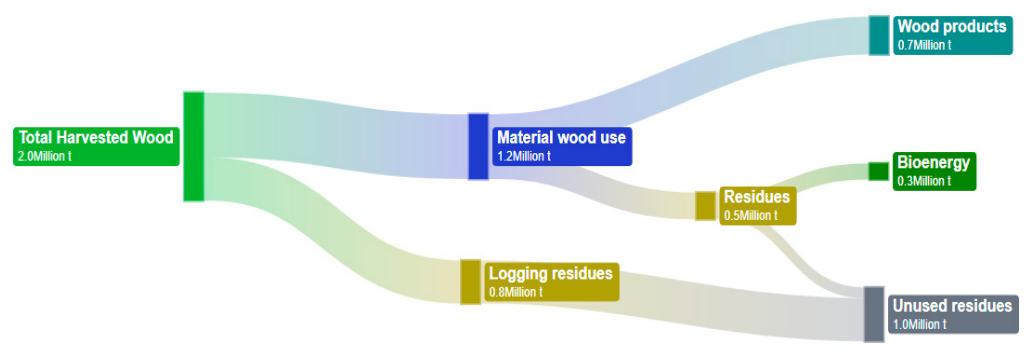
3 (≈2 million tonnes) [
41,
42]. Of this, only about 50% is converted into marketable products such as lumber and plywood, while 40–50% is lost during logging and sawmilling due to processing inefficiencies [
41,
42]. An estimated 495,000 tonnes of wood residues, including sawdust, shavings, off-cuts, and bark are generated annually [
43], much of which remains underutilised despite its potential for value addition [
42,
43]. As illustrated in
Figure 6, a substantial proportion of harvested timber is lost along the processing chain, with residues forming a significant but underutilised biomass stream.
In the energy sector, a portion of these residues is used for low-value energy applications such as firewood and charcoal, with emerging use in wood pellet production [
43,
44,
45]. Given that approximately 70% of rural households rely on wood-based fuels for cooking [
44,
45], wood residues represent an important secondary energy source. However, utilisation remains largely informal and inefficient, limiting both energy recovery potential and resource efficiency [
42,
45]. These patterns indicate a structural inefficiency in the forestry value chain, where substantial volumes of biomass are lost before reaching higher-value applications. Improving circularity therefore depends on enhanced processing efficiency, upgraded milling technologies, and the development of structured value chains for residue recovery and conversion [
41,
42,
43]. Beyond timber production, forestry systems contribute to broader bioeconomy functions, including medicinal plant supply and ecosystem services [
39]. Agroforestry systems further illustrate opportunities for integrating production and sustainability. For example, cocoa-based agroforestry has been shown to enhance biodiversity, improve soil quality, and increase resilience to climate variability, while stabilising farm incomes [
39]. Initiatives such as the Modified Taungya System (MTS) demonstrate how combining tree planting with agricultural production can support both conservation and livelihood objectives. This evidence indicates a clear mismatch between biomass generation and utilisation efficiency within the forestry sector, with circularity potential constrained by technological, logistical, and institutional limitations [
40,
41,
42].
3.1.3. Fisheries and Aquaculture
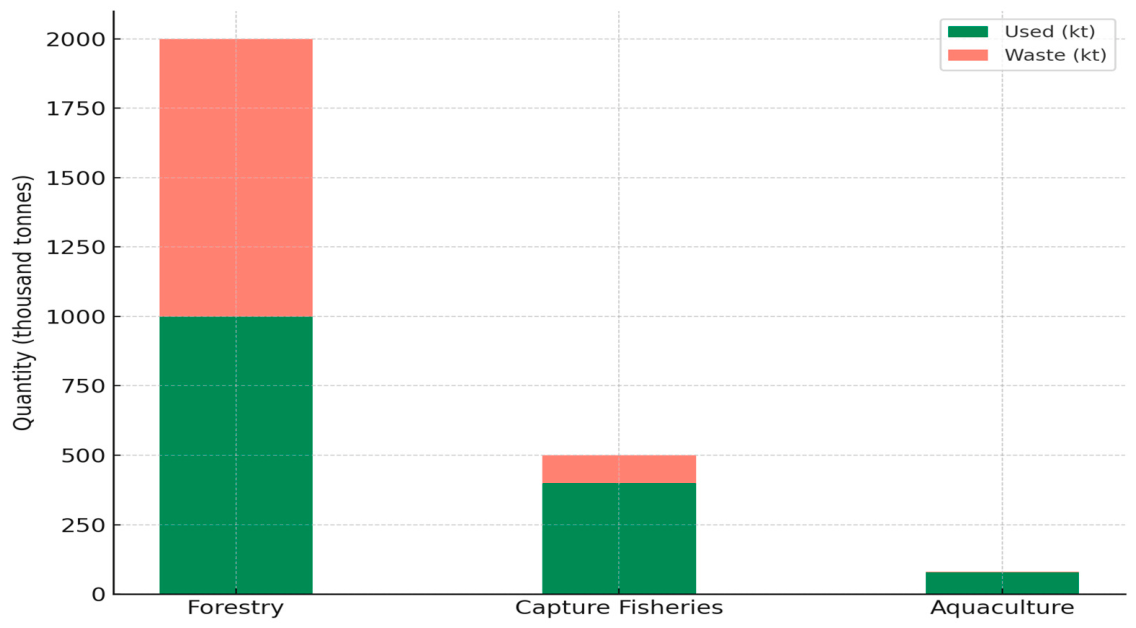
The fisheries and aquaculture sectors are also critical components of Ghana’s bioeconomy, contributing to food security, employment, and livelihoods. The sector is dominated by small-scale fisheries, which account for approximately 4.5% of national GDP and support around 10% of the population engaged in fishing, processing, and marketing activities. Ghana’s marine and inland fisheries produce an estimated 400–500 thousand tonnes of fish annually, with most of the catch entering domestic consumption and local markets. However, the sector is characterised by significant inefficiencies, primarily in the form of post-harvest losses and discards. It is estimated that 20–30% of fish in small-scale fisheries is lost due to inadequate cold storage, poor handling practices, and limited processing infrastructure. Additional losses occur through bycatch and discards in industrial fisheries, contributing to resource inefficiency and reduced value retention. Fish processing plays an important role in mitigating losses, with approximately 70–80% of domestic catch preserved through smoking and drying. These practices do not eliminate waste entirely, as a proportion of fish is downgraded or spoiled before reaching markets. Processing also generates by-products such as heads, guts, and scales, which are only partially utilised for animal feed or discarded, indicating further circularity gaps within the system.
Aquaculture has emerged as a strategic response to declining marine fish stocks and increasing demand. Production has expanded from approximately 76,600 tonnes in 2018 to an estimated 100–130 thousand tonnes in recent years, primarily through tilapia and catfish farming [
46]. Unlike capture fisheries, aquaculture production is largely directed toward market consumption, with relatively low material losses. However, inefficiencies persist in the form of uneaten feed, fish mortalities, and nutrient-rich effluents, which are not systematically recovered or integrated into circular systems. These patterns indicate that, while the fisheries sector demonstrates relatively high primary utilisation compared to other biomass systems, significant inefficiencies remain concentrated in post-harvest handling and processing stages. In contrast, aquaculture systems exhibit higher conversion efficiency but limited integration of waste streams. Addressing these gaps requires improvements in cold-chain infrastructure, processing technologies, and the development of value chains for fish by-products and aquaculture residues. As illustrated in
Figure 7, fisheries systems exhibit relatively high primary utilisation rates compared to other biomass sectors, although inefficiencies persist in post-harvest losses and by-product recovery.
3.2. Processing and Conversion Industries
Ghana’s bioeconomy is supported by its agriculture and natural resource sectors, which contribute about one-fifth of GDP and employ a substantial share of the labour force. This provides a strong resource base for bio-based processing and conversion industries. Cocoa processing represents one of the most established examples of domestic value addition. Although Ghana has historically exported raw cocoa beans, approximately 30–40% of cocoa is now processed locally into cocoa butter, liquor, and powder. Installed grinding capacity exceeds 500,000 tonnes per year, although actual utilisation remains considerably lower at around 210,000 tonnes, reflecting supply, financing, and market constraints. This gap between installed and utilised capacity shows that processing infrastructure alone does not guarantee system efficiency. Cocoa processing also generates shells, husks, and other by-products that can be used for bioenergy, compost, biochar, and soil amendments, but these streams remain only partially valorised. The shea sector shows a similar transition from raw commodity export toward domestic processing. Ghana produces about 150,000 tonnes of shea nuts annually, while approximately 30–40% is processed domestically into shea butter.
In 2022, shea butter exports reached about 38,800 tonnes, valued at US
$92.6 million, reflecting growing processing capacity and international demand. Industrial facilities and women-led cooperatives both contribute to this value chain, while by-products such as shea cake and shells offer further potential for bioenergy and organic inputs. Oil palm, coconut, and other agro-processing sectors further illustrate Ghana’s expanding bio-based industrial base. Ghana ranks among Africa’s palm oil producers, with firms such as the Ghana Oil Palm Development Company managing large plantation and processing assets [
47]. Palm oil exports in 2022 were valued at about US
$39.8 million according to World Bank WITS trade data, indicating an established regional market for palm-based products. Processing generates residues such as palm kernel shells, fibres, empty fruit bunches, and palm oil mill effluent, some of which are already used for boiler fuel, mulch, or biogas, while higher-value applications such as pellets, activated carbon, biochar, and biocomposites remain underdeveloped [
48]. Coconut shells and fibres present similar opportunities for activated carbon, biomaterials, and biodegradable packaging.
Ghana’s processing landscape therefore has a dual structure. Formal industrial capacity is concentrated around major nodes such as Accra–Tema, Kumasi, and selected plantation areas, while small-scale and informal processors dominate gari production, artisanal palm oil milling, shea butter production, and fish smoking. This duality is important for circularity: formal processors often generate concentrated residue streams that are easier to recover, whereas informal processors produce dispersed residues that require aggregation, preprocessing, and technical support. The analysis indicates that Ghana’s main constraint is not the absence of processing activity, but the weak integration of processing residues into higher-value circular pathways. Strengthening bio-based conversion therefore requires improved capacity utilisation, decentralised preprocessing systems, stronger SME support, and clearer links between industrial processing, residue recovery, and market development.
Table 2 presents a structured overview of selected processing and conversion actors, highlighting their operational scale, residue generation, and current versus potential valorisation pathways. The full processing-company inventory is available in the
Supplementary Information (S4.1).
3.3. Market and Distribution
Agricultural production in Ghana primarily takes place in rural areas. It is predominantly small-scale and informal; about 85% of the rural workforce is engaged in agriculture, with women playing a major role, especially in agro-processing and trade. However, the main consumption and trading centres are urban, creating a geographic disconnect. Traditionally, multiple intermediaries link rural farmers to urban consumers: farmers often sell to village traders or “market queens”, who in turn sell to wholesalers in city markets, and finally to retailers. This long chain of middlemen tends to compress farmers’ earnings (each intermediary takes a margin). For example, a smallholder may only receive a fraction of the final retail price of produce after accounting for transport and broker costs. Recognising this, initiatives have emerged to shorten supply chains and bridge the rural–urban gap. One approach is the promotion of farmers’ markets in or near cities, where producers can sell directly to consumers. Pilot farmers’ markets in Ghana have shown success in cutting out the long intermediary chain, allowing farmers to obtain fairer prices and urban buyers to access fresh produce more cheaply. This direct marketing model also facilitates feedback between consumers and producers and can stimulate production of higher-quality or speciality goods. Despite such innovations, most farmers still rely on traditional marketing channels due to limited direct access to urban buyers. Thus, improving the efficiency of existing chains remains important alongside new models.
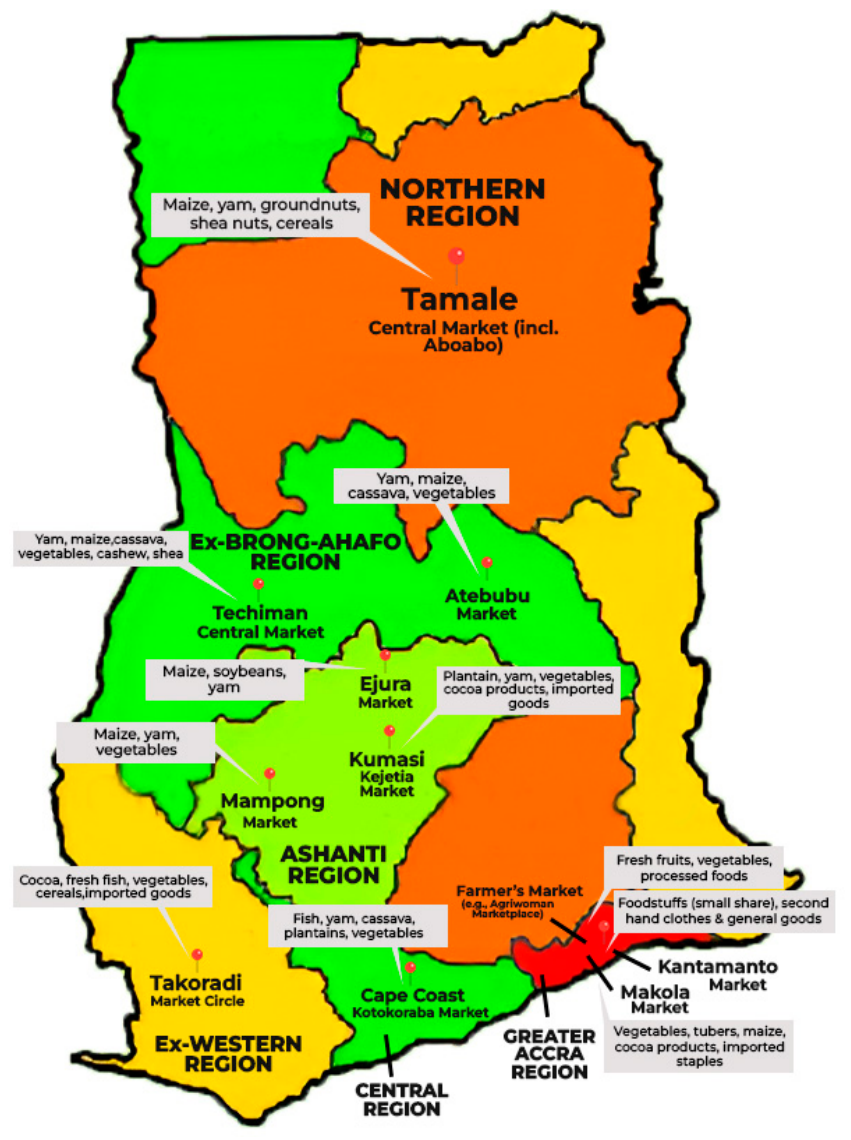
Ghana’s internal market is organised around a network of regional hubs that connect dispersed production zones with major consumption centres. In the north, Tamale functions as a primary aggregation hub, with markets such as Tamale Central Market and Aboabo Market facilitating bulk trade in cereals, tubers, and legumes. Techiman, located in the Bono East Region, serves as a key intermediary node linking northern production zones with southern demand centres, and is recognised as one of the largest agricultural markets in West Africa. In the south, Kumasi and Accra operate as major distribution centres, with markets such as Kejetia (Kumasi) and Makola (Accra) acting as final aggregation and redistribution points. These hubs collectively form an integrated national market system that enables commodity flows across regions while reinforcing spatial concentration of value addition. As illustrated in
Figure 8, the spatial organisation of market hubs creates a north–south flow structure in which value addition and price formation are concentrated in urban centres, reinforcing asymmetries in market access for rural producers.
Significant structural barriers to market participation persist. Farmers in remote areas face high transport costs, weak infrastructure, and dependence on intermediaries, while women engaged in small-scale processing often lack access to credit and price information. The absence of price stabilisation mechanisms for non-traditional crops increases income volatility. Cooperatives and farmer-based organisations, such as Kuapa Kokoo, provide aggregation and bargaining support but face operational and financial constraints. Policy responses combine infrastructure investment, including rural market development and feeder road improvements, with support for direct marketing systems. At the same time, Ghana’s marketing structure remains strongly farmgate-oriented for export crops such as cocoa, where COCOBOD regulates pricing through Licensed Buying Companies. In contrast, crops such as shea and cashew rely on decentralised aggregation systems, where limited bargaining power and high transaction costs reduce producer returns.
3.4. End-of-Life Management
End-of-life management represents a critical stage in Ghana’s bioeconomy, where large volumes of organic waste remain insufficiently recovered or valorised. Ghana generates approximately 12,710 tonnes of municipal solid waste daily, of which about 66% is organic or biodegradable [
49,
50]. However, only about 40% of this waste is formally collected, while a substantial proportion of liquid waste (≈80%) is improperly disposed of, contributing to environmental pollution and public health risks [
49,
50]. Similar challenges in municipal waste management systems have been widely documented in Ghana [
51]. The absence of systematic waste segregation and recycling practices results in widespread open dumping, burning, and uncontrolled disposal. Organic waste including food waste and agricultural residues such as cocoa pod husks and maize cobs is frequently lost through these pathways, reducing its potential for circular utilisation and contributing to emissions and urban flooding [
49]. These patterns indicate that end-of-life stages represent a major leakage point in Ghana’s biomass system.
Several initiatives demonstrate the potential for resource recovery. Facilities such as the JVL–YKMA Recycling Plant and the Accra Compost and Recycling Plant (ACARP) convert organic waste into compost and fuel products, although operational challenges particularly feedstock contamination and limited capacity utilization, constrain their impact [
50,
52]. Private-sector actors, including Safisana and Zoomlion Ghana Ltd., have further introduced waste-to-energy solutions, producing biogas and organic fertilisers from municipal and agricultural waste streams [
52,
53]. Despite these developments, resource recovery remains spatially concentrated and limited in scale. Most valorisation activities are located in urban areas, while rural systems lack access to infrastructure, technology, and organised collection systems. As a result, significant volumes of organic waste remain unmanaged across both urban and rural contexts. These findings indicate that the end-of-life stage is characterised by low recovery efficiency and weak integration into circular value chains. Limited segregation, infrastructure gaps, and fragmented institutional arrangements constrain the conversion of organic waste into bio-based products, reinforcing system-level inefficiencies across the bioeconomy [
50,
52,
53].
3.5. Understanding the Bioeconomy Biomass Flows in Ghana
To synthesise the diverse sectoral evidence presented in
Section 3.1.1,
Section 3.1.2 and
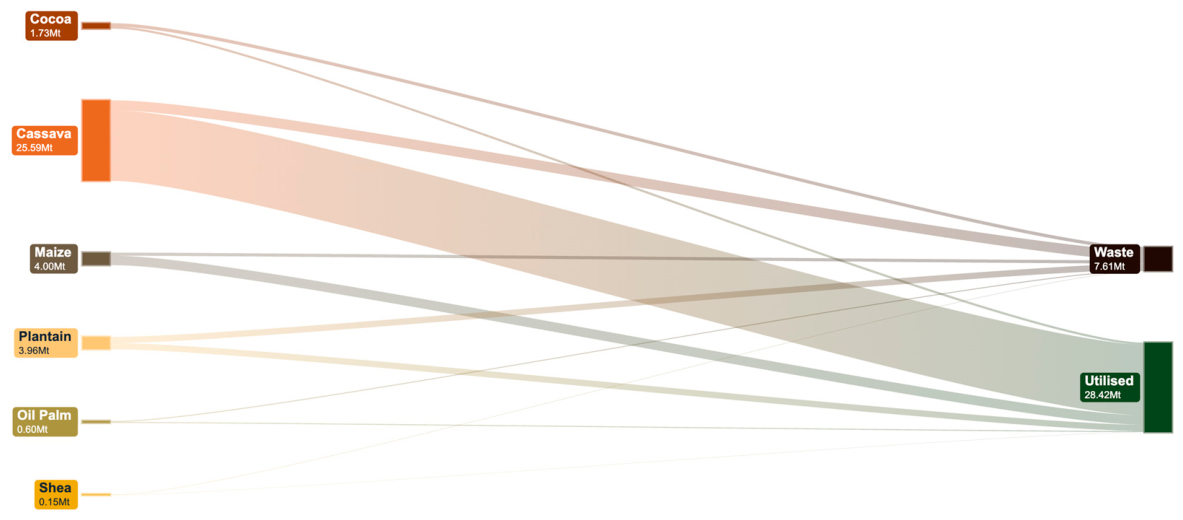
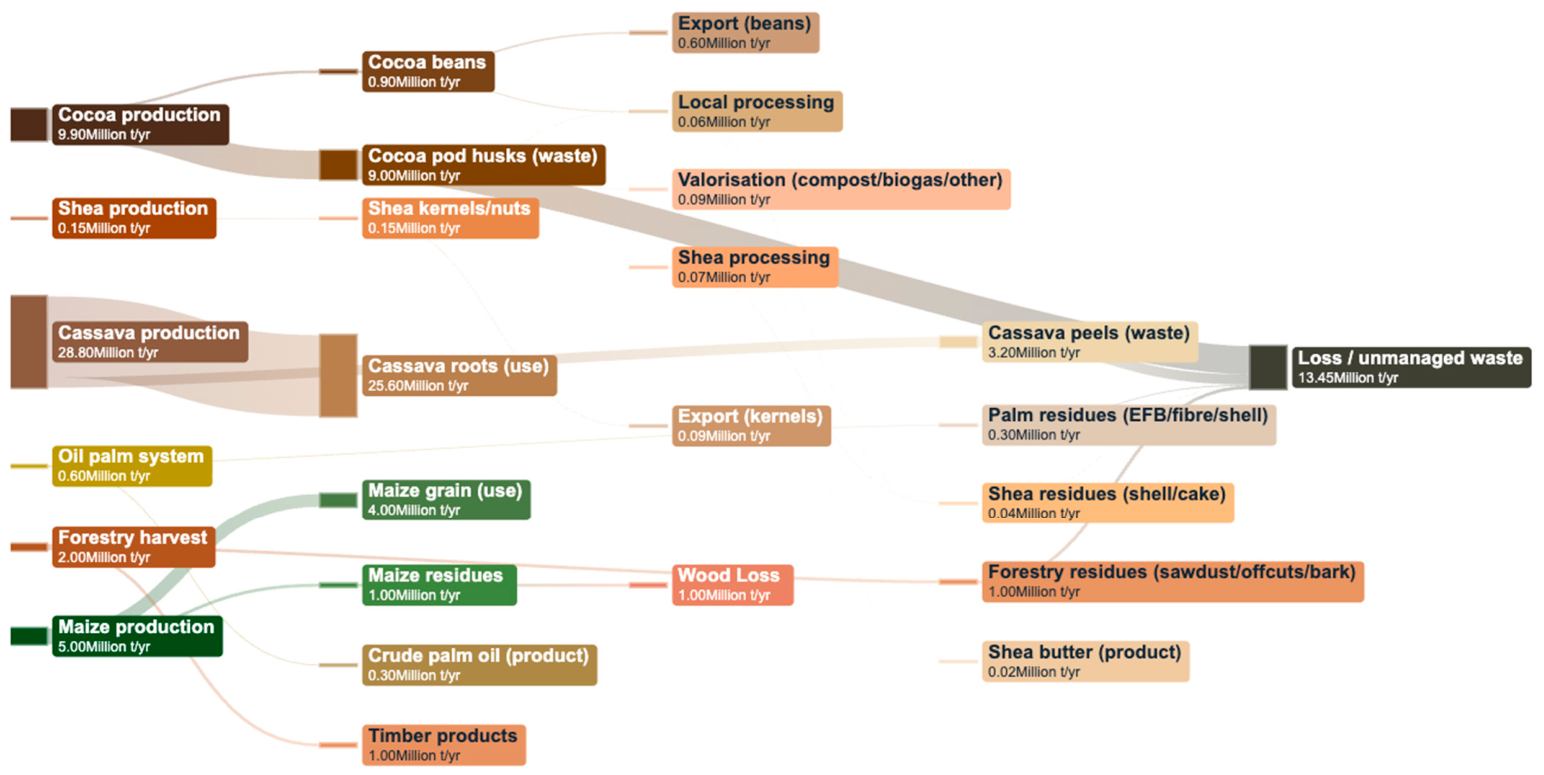
Section 3.1.3, an integrated biomass flow assessment was conducted and visualised through a consolidated Sankey diagram (
Figure 9). The diagram provides a system-level representation of Ghana’s bioeconomy by tracing major biomass streams from primary production through processing, distribution, consumption, and end-of-life management, while explicitly highlighting waste generation, losses, and existing valorisation pathways. This integrative perspective constitutes a central analytical result of the study, as the Sankey diagram (
Figure 9) enables the quantification and visualisation of biomass flows, leakage points, and underutilised resource streams across the system.
Cocoa production, at approximately 0.9–1.0 Mt of beans annually, generates a disproportionate waste stream of roughly 9 Mt of cocoa pod husks. Despite their significant energetic and material potential, only about 1% of these husks are currently valorised, with the majority left to decompose on farms or burned. Cassava production, estimated at around 25.6 Mt per year, similarly produces substantial residues, particularly peels, amounting to approximately 2.6–3.8 Mt annually. These residues are only partially reused as animal feed or compost, while large volumes remain unmanaged, representing a major leakage point in the system. Maize production (≈4–5 Mt per year) generates cobs, husks, and stover corresponding to roughly 20–30% of total biomass. While maize cobs are relatively well integrated into livestock feeding systems, a significant share of maize stover is either burned in fields or left to decay, resulting in lost opportunities for energy recovery or soil amendment. Oil palm processing yields about 0.3 Mt of crude palm oil annually, accompanied by comparable or greater quantities of empty fruit bunches, fibres, shells, and palm oil mill effluent, much of which remains underexploited, particularly in artisanal processing contexts. Shea nut processing (≈75 kt of kernels per year) produces around 30 kt of shea butter alongside approximately 45 kt of shells and press cake, which are predominantly burned as low-efficiency fuel or discarded. Plantain production (≈3.9–4.0 Mt) leaves an estimated 40–50% of total plant biomass unused after harvest, representing a largely untapped source of fibrous material and organic matter.
Forestry and fisheries reinforce this pattern: timber harvesting of approximately 2 Mt annually generates around 1 Mt of sawmill and logging residues, while capture fisheries (≈450–500 kt per year) experience post-harvest losses of 20–30% due to inadequate cold storage and handling. Livestock manure represents an additional substantial biomass stream, though it remains largely unquantified and unmanaged. Across all sectors, dominant leakage points occur at harvest and primary processing stages, where large volumes of residues exit the system without structured recovery. In contrast, flows entering valorisation pathways such as composting, biogas production, animal feed, or material reuse remain comparatively small, highlighting the limited integration of circular bioeconomy principles in practice. At the same time, the flow analysis reveals clear opportunities for circularity. Residues such as cocoa pod husks, cassava peels, maize stover, palm residues, shea shells, and forestry by-products could be redirected into bioenergy, compost and biochar production, animal feed, or bio-based materials [
9]. Redirecting even a modest share of these streams into valorisation pathways would significantly reduce system leakages and strengthen feedback loops between production, processing, and agriculture. The Sankey diagram demonstrates that Ghana’s bioeconomy is constrained not by biomass availability, but by insufficient downstream processing, coordination, and valorisation capacity, pointing to agro-processing expansion, decentralised bioenergy and composting, and improved institutional coordination as key leverage points for a more circular and resource-efficient system. These findings are consistent with previous assessments highlighting Ghana’s substantial biomass resource base and its potential for bioenergy generation from agricultural residues [
5,
12].
From a comparative perspective, the magnitude of biomass underutilisation observed in Ghana exceeds that reported in more mature bioeconomy systems, where residue recovery rates are significantly higher due to integrated value chains and advanced processing infrastructure. While Ghana exhibits high biomass availability, conversion efficiency remains low, reflecting structural constraints in logistics, technology adoption, and institutional coordination. A cross-sector analysis further reveals that these inefficiencies are not uniform across value chains. Export-oriented systems such as cocoa demonstrate relatively higher levels of processing concentration and organisational structure; however, by-product utilisation remains extremely limited, with less than 1% of cocoa pod husks currently valorised. In contrast, staple crop systems such as cassava and maize are characterised by both high residue generation and weak recovery mechanisms, resulting in substantially higher levels of biomass leakage. These differences can be attributed to structural variations in value chain organisation. Cocoa benefits from more formalised market structures, stronger institutional support, and integration into global supply chains, which facilitate primary processing and value retention. However, these systems remain narrowly focused on core product extraction, with limited incentives or infrastructure for by-product utilisation. Conversely, cassava and maize systems are dominated by smallholder and informal actors, with fragmented supply chains, limited aggregation capacity, and weak linkages to industrial processing, leading to higher inefficiencies in residue recovery. This comparison demonstrates that inefficiencies in Ghana’s bioeconomy are shaped by differences in market structure, institutional support, and technological access across sectors. Addressing these disparities requires targeted, value-chain-specific interventions, alongside broader system-level improvements in coordination, infrastructure, and policy alignment.
3.6. Governance and Institutional Fragmentation (Framework Actors)
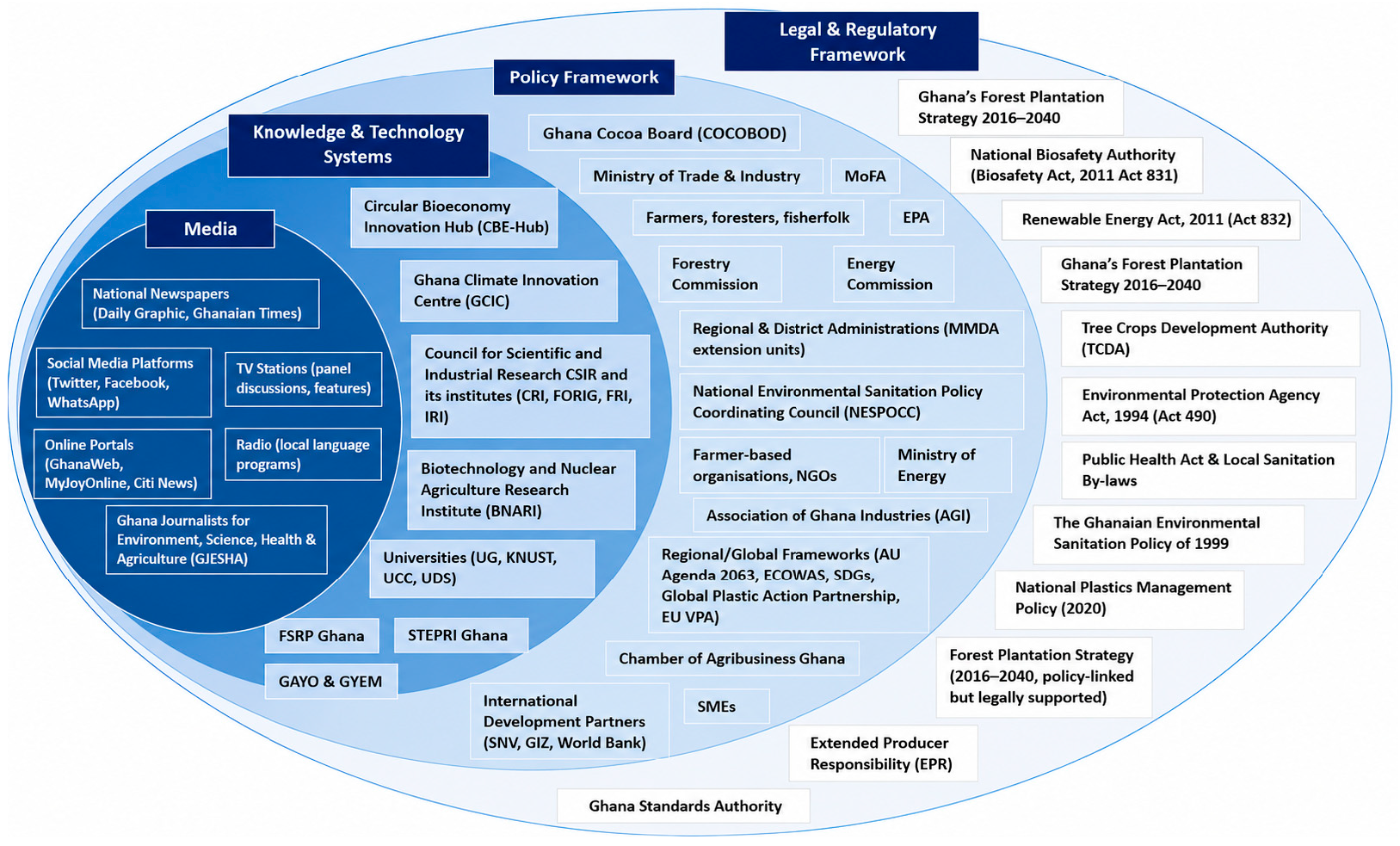
The analysis of framework actors demonstrates that governance fragmentation constitutes a structural constraint on the effective functioning of Ghana’s bioeconomy. As illustrated in
Figure 10, the system is characterised by the involvement of multiple stakeholder groups including government institutions, private-sector actors, research organisations, financial actors, and local communities whose roles are distributed across policy formulation, regulation, knowledge generation, and implementation. However, these roles remain weakly coordinated, resulting in limited system integration. Public institutions exert significant influence over regulatory and policy domains, particularly across agriculture, energy, and environmental management. Coordination across sectors remains limited, leading to fragmented policy implementation and weak alignment between biomass production, processing, and end-of-life management systems. This institutional misalignment contributes directly to inefficiencies in resource utilisation and constrains the development of circular bioeconomy pathways.
The results further indicate that governance challenges are reinforced by uneven stakeholder integration and capacity asymmetries. While local communities play a central role in biomass production and informal recovery systems, their participation in formal decision-making processes remains limited, reducing the effectiveness and contextual relevance of policy interventions [
19,
20]. At the same time, private-sector actors face constraints related to infrastructure gaps, limited access to finance, and regulatory uncertainty, which restrict their ability to scale bio-based solutions. These dynamics highlight that existing governance limitations arise not from a lack of policy frameworks, but from weak coordination mechanisms, overlapping institutional mandates, and the absence of a unified bioeconomy strategy. As a result, policy efforts often operate in parallel rather than in an integrated manner, limiting their capacity to support system-wide circularity and resource efficiency [
21,
22,
23].
3.6.1. Policy, Legal and Regulatory Framework for Resource Providers
Production actors (e.g., farmers, foresters, fisherfolk) form the base of Ghana’s bioeconomy, and the policy framework addressing their needs is centred on agricultural and natural resource development. The Ministry of Food and Agriculture (MoFA) is a key institution driving agricultural modernisation and promoting value addition at the farm level. Programmes such as Planting for Food and Jobs and Planting for Export and Rural Development aim to increase biomass production while strengthening linkages between primary producers and downstream value chains through improved inputs, extension services, and rural infrastructure. Complementary institutions reinforce this framework. The Ghana Cocoa Board (COCOBOD) regulates the cocoa sector and supports productivity and diversification of cocoa by-products, while the Forestry Commission manages forest resources and promotes plantation development for timber and biomass supply. Together, these interventions reflect a policy orientation towards production intensification and resource mobilisation within the bioeconomy.
Governance of production actors operates across multiple administrative levels, from national ministries to regional and district authorities. Local governments (Metropolitan, Municipal, and District Assemblies MMDAs) play a critical role in implementation by facilitating extension delivery, allocating land for biomass-related activities (e.g., community woodlots and urban agriculture), and supporting local-level coordination. These efforts are complemented by civil society organisations and farmer-based groups, which contribute to knowledge transfer, capacity building, and the adoption of sustainable practices such as agroforestry and climate-smart agriculture. Coordination across this multi-level structure remains limited. Policies targeting production are not consistently aligned with processing capacity and market development, creating risks of increased biomass supply without corresponding value addition or resource efficiency gains. Fragmentation across institutional levels further constrains effective implementation, particularly where local execution capacities are uneven.
The legal framework governing production actors is similarly fragmented. Ghana does not have a unified bioeconomy law; instead, production activities are regulated through sector-specific instruments embedded in agricultural, environmental, and land-use legislation. While these instruments collectively support bioeconomic activities, their implementation often remains siloed, limiting overall system effectiveness. For example, the Biosafety Act, 2011 (Act 831) establishes a regulatory framework for biotechnology, enabling the controlled adoption of improved crop varieties while ensuring environmental and health safeguards. In the forestry sector, legal provisions promote sustainable resource management, supported by initiatives such as the Forest Plantation Strategy (2016–2040) and international agreements on legal timber trade. Enforcement of these regulatory instruments remains uneven, particularly in smallholder and informal production systems. Limitations in monitoring capacity, institutional fragmentation, and weak coordination across agencies constrain effective implementation. These findings indicate that governance challenges at the production level are driven less by policy gaps than by coordination and enforcement limitations, which in turn affect biomass utilisation efficiency and the integration of production systems within the broader bioeconomy [
21,
22,
23].
3.6.2. Policy, Legal and Regulatory Framework for Processing and Conversion Industries
Processing and conversion industries constitute a central component of Ghana’s bioeconomy, linking primary biomass production with value-added products and energy systems. Policy responsibility is primarily distributed between the Ministry of Trade and Industry, which oversees agro-processing and industrial development, and the Ministry of Energy, which leads bioenergy initiatives, including biofuel blending and biomass-based power generation. Strategic frameworks such as the National Bioenergy Strategy (2014) reflect policy recognition of the interdependence between agricultural feedstock availability and energy conversion systems, particularly in balancing energy security and food system priorities. Regulatory oversight is further supported by institutions such as the Energy Commission and the Environmental Protection Agency (EPA), which establish technical standards, licensing requirements, and environmental safeguards for bio-based industries. In parallel, fiscal instruments including tax exemptions and import duty reductions for renewable energy and agro-processing equipment have been used to lower entry barriers and stimulate investment in biomass conversion technologies. Industrialisation programmes, notably the “One District, One Factory” initiative, have also contributed to expanding processing capacity and decentralising value addition across regions. Collectively, these measures indicate an enabling policy environment aimed at strengthening domestic processing and industrial diversification.
The development of processing industries is characterised by a combination of formal agro-industrial firms and a growing base of small- and medium-sized enterprises. Large-scale actors, including multinational companies such as Cargill and Olam, have expanded cocoa processing capacity, while domestic enterprises and cooperatives are increasingly active in cassava, oil palm, coconut, and shea value chains. Industry associations, including the Association of Ghana Industries and the Chamber of Agribusiness Ghana, play a supporting role by facilitating coordination, advocacy, and the development of bio-based business clusters. Financial institutions and international investors are also contributing to sector growth through emerging green financing mechanisms, while development programmes such as the West Africa Agricultural Productivity Programme have supported technology transfer and process efficiency improvements. Legal and regulatory frameworks further shape the operating environment for conversion industries. The Renewable Energy Act, 2011 (Act 832) established key incentives, including feed-in tariffs and renewable energy targets, providing a basis for investment in biomass-based power generation. Regulatory requirements enforced by the Energy Commission ensure compliance with technical and operational standards, particularly for facilities utilising agricultural residues and organic waste streams. Emerging policy instruments, including the draft Biofuel Policy, aim to formalise domestic markets for biofuels, although implementation remains in progress. In addition, the Ghana Standards Authority is developing technical standards for bio-based products, including compost and bioplastics, reflecting gradual institutional adaptation to evolving bioeconomy sectors.
Trade and investment regulations also play a role in shaping processing dynamics. Incentive structures under national investment frameworks support agro-processing and renewable energy projects through tax relief and equipment import exemptions. Export management mechanisms, particularly under the Tree Crops Development Authority (TCDA), seek to regulate commodity flows and promote domestic value addition in sectors such as cashew and rubber. Environmental compliance is enforced through EPA permitting systems, requiring processing facilities to adhere to regulations on emissions, effluent discharge, and waste management. While these policy and regulatory instruments provide a structured framework for industry development, their effectiveness depends on coordination across sectors and alignment with upstream biomass supply systems. Processing industries rely on consistent feedstock availability, stable regulatory conditions, and functional linkages with agricultural production systems. Limitations in coordination across agricultural, industrial, and environmental policy domains may therefore constrain the scalability and efficiency of biomass conversion pathways. These findings suggest that strengthening cross-sectoral policy alignment and improving implementation coherence remain critical for enabling processing industries to contribute effectively to a more integrated and circular bioeconomy system.
3.6.3. Policy, Legal and Regulatory Framework for End-of-Life Actors
End-of-life actors, including waste collectors, recyclers, and operators involved in biomass recovery, are increasingly recognised within Ghana’s policy framework as key components of a circular bioeconomy. Institutional responsibility is led by the Ministry of Sanitation and Water Resources, supported by national strategies such as the Revised Environmental Sanitation Policy (ESP) (2024) (
https://www.google.com/url?sa=t&source=web&rct=j&opi=89978449&url=https://moleconference.org/wp-content/uploads/2024/10/2024.10.07-GM-GHA-ESP_Presentation-5478.pdf&ved=2ahUKEwiZ18WooMSUAxVyRvEDHZaLLxkQFnoECB8QAQ&usg=AOvVaw1sJtVFlMFJMPVCprcpt4A4, 15 March 2026), which explicitly integrates circular economy principles by reframing waste as a resource. The policy emphasises resource recovery, improved waste service coverage, and behavioural change to enhance material valorisation across municipal, plastic, and organic waste streams [
54]. Instruments such as Extended Producer Responsibility (EPR) schemes further aim to shift part of the financial and operational burden of waste management to producers, aligning with existing frameworks including the Hazardous and Electronic Waste Act (2016) and emerging plastics policies [
54]. Implementation of these policies relies on multi-level governance structures. Metropolitan, Municipal and District Assemblies (MMDAs) are responsible for waste collection and service delivery, while national coordination mechanisms, including the National Environmental Sanitation Policy Coordinating Council (NESPOCC), aim to address institutional fragmentation. Public–private partnerships play an important role in operationalising waste-to-resource pathways, with facilities such as the Accra Compost and Recycling Plant (ACARP) demonstrating the conversion of municipal waste into compost, recyclable materials, and refuse-derived fuel [
54]. Additional support is provided by civil society organisations and international development partners through pilot projects, capacity building, and policy engagement. These efforts reflect increasing alignment with international sustainability frameworks, including SDG 12, which emphasises sustainable consumption and production.
The legal framework governing end-of-life management remains fragmented, as no single comprehensive waste management law exists. Instead, responsibilities are distributed across multiple legal instruments. The Public Health Act and local by-laws regulate waste disposal practices, while environmental assessment regulations require approval for large-scale treatment facilities. The Renewable Energy Act (2011) indirectly supports waste valorisation by recognising waste-to-energy projects within the national energy framework. However, regulatory provisions for specific biomass streams, particularly agricultural residues and animal waste, remain limited. Existing legislation provides general guidance on waste handling but lacks detailed standards for storage, treatment, and utilisation of these materials [
52,
55]. These regulatory gaps contribute to the persistence of informal waste management practices, including open burning and uncontrolled disposal of agricultural residues. While policy frameworks promote composting and resource recovery, enforcement remains inconsistent, and monitoring capacity is constrained. In the case of animal waste, the absence of clear regulatory standards for manure management further reinforces reliance on informal practices, limiting opportunities for structured valorisation through composting or biogas systems [
52,
55]. As a result, substantial biomass streams remain underutilised, reducing the effectiveness of circular bioeconomy strategies. The recent Environmental Sanitation Policy developments indicate a gradual shift toward strengthening circularity within the regulatory system. Initiatives such as the National Plastics Management Policy (2020) and Ghana’s participation in the Global Plastic Action Partnership reflect increasing policy commitment to waste reduction and resource recovery. However, many of these measures remain at the policy or pilot stage and require further translation into enforceable regulations. Strengthening coordination across environmental, agricultural, and energy policy domains, alongside improving enforcement mechanisms and market incentives, will be critical for enabling end-of-life actors to contribute effectively to biomass valorisation and system integration [
52,
56].
3.7. Knowledge and Technology Systems
The advancement of the bioeconomy in Ghana is closely linked to the role of science, technology, and research in generating knowledge, adapting innovations to local conditions, and supporting skilled human capital for bio-based industries. Ghana has an established network of research institutions and universities that contribute to bioeconomy-related R&D. The Council for Scientific and Industrial Research (CSIR) is a central public research organisation, comprising multiple institutes working across sectors relevant to bioeconomy development. For example, the CSIR-Crops Research Institute (CSIR-CRI) focuses on improving crop yields and resilience, including high-starch cassava and grain legumes, supporting biomass supply for food and industrial uses. The CSIR-Food Research Institute contributes to food processing and agro-waste utilisation, while the CSIR-Forestry Research Institute of Ghana (CSIR-FORIG) addresses sustainable forestry and bioenergy from wood residues. Additional contributions are made by the CSIR-Institute of Industrial Research (CSIR-IIR) and the Biotechnology and Nuclear Agriculture Research Institute (BNARI), which focus on applied technologies for biomass conversion. These include biodigesters, biomass drying systems, and microbial processes for waste treatment. Collaboration among research institutions and with public and private actors supports the application of these technologies. For instance, CSIR-IIR and BNARI contribute to initiatives such as the Circular Bioeconomy Innovation Hub, where technologies for composting, biogas, and biomass conversion are tested and demonstrated.
Ghana’s universities are also pivotal research actors within the national bioeconomy knowledge system, contributing to research, innovation, and human capital development. The University of Ghana hosts specialised centres such as the West Africa Centre for Crop Improvement (WACCI), which advance research in crop genetics and biotechnology to improve agricultural productivity. The Kwame Nkrumah University of Science and Technology (KNUST) contributes through engineering and applied sciences, with research spanning biofuels, natural fibre-based materials, bioplastics, and environmental technologies. For example, research at KNUST has explored the conversion of agro-residues such as palm kernel shells into activated carbon and biochar for water treatment and soil applications. Other institutions, including the University of Cape Coast and the University for Development Studies, contribute to domain-specific areas such as fisheries science, renewable energy, and agroforestry. Beyond formal institutions, emerging innovation ecosystems including hubs, maker spaces, and private laboratories support experimentation with locally adapted solutions, such as organic inputs and digital tools to reduce post-harvest losses.
Ghana’s research capacity, however, remains constrained by limited investment, with R&D expenditure estimated at approximately 0.3–0.4% of GDP. Policy frameworks such as the Science, Technology and Innovation (STI) Policy (revised in 2017 and 2022) recognise this gap and prioritise the role of science and innovation in supporting industrialisation and sustainability transitions. Within this context, biotechnology and bio-discovery represent important areas of emerging research. Studies on locally adapted microbial strains, including Lactobacillus and yeast species, demonstrate potential for fermentation-based processes and biorefinery applications, while ongoing bio-prospecting of plant and marine resources supports pharmaceutical and nutraceutical development. In addition to research generation, universities play a central role in capacity building and knowledge transfer. Academic programmes in biotechnology, renewable energy, agro-processing, and environmental science contribute to the development of skilled professionals for bio-based industries. Extension systems further connect research outputs to practice by facilitating the dissemination of innovations such as improved crop varieties and processing technologies. Science and technology actors therefore underpin bioeconomy development by enabling technological adaptation, improving process efficiency, and supporting the transition from experimental applications to scalable implementation.
This knowledge and innovation ecosystem is increasingly complemented by a diverse set of initiatives spanning policy, research, private sector engagement, and community-led action. The Circular Bioeconomy Innovation Hub (CBE-Hub), coordinated by the International Water Management Institute and the CGIAR, promotes waste-to-resource valorisation and capacity building through living labs. Similarly, the Ghana Climate Innovation Centre supports climate-smart enterprises in renewable energy, waste management, and sustainable agriculture. At the regional level, Ghana participates in the West Africa Food System Resilience Programme, which focuses on irrigation, seed systems, and climate-smart technologies for key crops. Public–private partnerships further reinforce this ecosystem. Initiatives involving AstraZeneca and the Circular Bioeconomy Alliance support agroforestry-based land restoration, while programmes led by UNESCO and KOICA integrate biodiversity conservation with livelihood development in areas such as the Bia Biosphere Reserve. At the grassroots level, youth-led organisations including Green Africa Youth Organization and Ghana Youth Environmental Movement promote waste-to-value initiatives and environmental advocacy. These initiatives illustrate a multi-scalar transition in Ghana’s bioeconomy, linking international partnerships, national strategies, and local innovation systems. Importantly, they demonstrate a gradual shift toward circular models that reposition organic and agricultural residues as inputs for new value chains, while simultaneously supporting rural livelihoods and climate resilience.
3.8. Media
Within Ghana’s bioeconomy system, media actors function as an important interface between policymakers, stakeholders, and the public, shaping awareness, discourse, and accountability. Ghana’s media landscape, characterised by high radio penetration and expanding digital platforms facilitates the rapid dissemination of information on sustainability, agricultural practices, and bioeconomy innovations. Traditional outlets such as national newspapers (e.g., Daily Graphic and Ghanaian Times) and broadcast media regularly report on agricultural developments, environmental challenges, and policy initiatives, thereby informing public understanding of bioeconomy-related processes [
33,
57].
Radio remains particularly influential in rural contexts, where programmes delivered in local languages provide practical information on topics such as composting, improved seed varieties, and market access. These platforms serve as key knowledge-transfer mechanisms, translating scientific and technical information into accessible formats for farmers and local actors. Television and public discussions further contribute by bringing issues such as renewable energy, waste management, and climate change into mainstream discourse, reinforcing the visibility of bioeconomy-related transitions. Media actors also play a critical accountability role. Investigative reporting has exposed environmental malpractices, including illegal logging and pollution, thereby influencing regulatory responses and public scrutiny. At the same time, coverage of climate variability and its impacts on agriculture has strengthened awareness of the need for resilience-oriented strategies, indirectly supporting bioeconomy initiatives. Organised networks such as the Ghana Journalists for Environment, Science, Health and Agriculture (GJESHA) further institutionalise this role by promoting informed reporting and advocating stronger environmental action [
57].
The expansion of digital media has introduced new dynamics into the communication landscape. Online platforms and social media channels enable rapid information exchange, stakeholder engagement, and the dissemination of innovations, particularly among younger and urban populations. These platforms are increasingly used by government agencies, research institutions, and entrepreneurs to communicate research findings, showcase technologies, and promote circular practices. However, the growing influence of digital media also introduces risks related to misinformation, particularly on complex topics such as biotechnology, where inaccurate reporting can shape public perception and policy debates. The media systems contribute to the bioeconomy by facilitating knowledge diffusion, shaping public discourse, and enhancing institutional accountability. Their effectiveness depends on the quality of science communication, the accessibility of information, and the capacity to translate complex technical concepts into context-relevant narratives that support informed decision-making.
3.9. Mapping Framework Actor Influence Across Bioeconomy Functions in Ghana
Understanding how influence is distributed across actors and functions is essential for diagnosing coordination gaps and structural constraints within Ghana’s bioeconomy system. Influence in this context refers to the capacity of different actor groups to shape decisions, allocate resources, implement activities, or regulate outcomes across core bioeconomy functions, spanning primary production, processing, market coordination, innovation, governance, and end-of-life management.
Table 3 presents a structured synthesis of the relative influence of key actor groups across core functions within Ghana’s bioeconomy system. Levels of influence are defined as follows: High (H): direct control over decision-making and resource allocation (>70% influence within the function); Moderate (M): partial influence with shared control (30–70%); Low (L): limited or indirect influence (<30%); None (N): no significant involvement.
The matrix maps actor categories against key bioeconomy functions, illustrating how influence is distributed across the value chain and its enabling systems. Influence is assessed based on the capacity of actors to shape decisions, allocate resources, and regulate outcomes within each function. The results reveal clear functional asymmetries. Resource providers dominate feedstock production but have limited influence downstream. Processing actors are concentrated in value addition, while traders play a central role in aggregation and market coordination. Public institutions exert strong influence in governance functions but show weaker integration across operational stages, and research actors remain concentrated in innovation with limited linkage to large-scale deployment. The matrix therefore highlights structural imbalances and coordination gaps, particularly at the interfaces between production, processing, innovation, and end-of-life management. It serves as a diagnostic tool for identifying leverage points to improve policy coherence, cross-sector coordination, and system integration within Ghana’s bioeconomy.
4. Discussion
4.1. System-Level Inefficiencies and Circularity Gaps
The system-level analysis reveals that Ghana’s bioeconomy is not constrained by biomass availability, but by low levels of downstream utilisation efficiency and weak circular integration. Across the six major crop systems analysed, residue generation is substantial, yet only a limited fraction is recovered or valorised. For instance, cocoa production is estimated to generate approximately 9 Mt of cocoa pod husks annually, of which less than 1% is currently utilised. Similarly, cassava processing produces an estimated 2.6–3.8 Mt of peels per year, with only partial recovery for feed or low-value applications. To better characterise these inefficiencies, three indicative system-level metrics are derived from the analysis. First, available evidence suggests that residue utilisation rates remain relatively low across major biomass streams, often below 10% in many value chains. Second, the biomass loss or leakage rate exceeds 60%, driven by post-harvest losses, uncollected residues, and unmanaged waste streams. Third, the processing concentration factor reveals strong asymmetry between export-oriented and domestic value chains, with higher levels of value retention observed in cocoa processing compared to staple crop systems such as cassava and maize. These findings highlight a fundamental structural imbalance: while upstream biomass production is strong, midstream and downstream system component, particularly aggregation, processing, and valorisation, remain underdeveloped. As a result, Ghana’s bioeconomy continues to exhibit predominantly linear resource flows despite significant circularity potential. Across all biomass systems, inefficiencies are primarily driven by three structural factors: (i) spatial dispersion of residues, which limits aggregation and increases transaction costs; (ii) weak coordination between production and processing actors, resulting in disconnected value chains; and (iii) limited technological adoption, particularly in decentralised processing and storage. These inefficiencies reduce overall system performance by lowering resource recovery rates, increasing biomass leakage, and constraining circular feedback loops. Similar patterns have been observed in other Sub-Saharan African contexts, where high biomass availability coexists with low utilisation efficiency due to comparable structural constraints. This study extends the existing literature by quantifying these inefficiencies at system level and linking them to governance and institutional dynamics, thereby providing a more integrated understanding of circularity gaps in emerging bioeconomies.
4.2. Sectoral Asymmetries and Comparative Positioning
The analysis further reveals pronounced asymmetries across biomass value chains. Export-oriented sectors, such as cocoa, demonstrate relatively higher levels of processing concentration and integration within global markets. However, even within these systems, by-product utilisation remains minimal. In contrast, staple crop systems, including cassava and maize are characterised by both high residue generation and weak recovery mechanisms, resulting in higher levels of system loss. These asymmetries reflect structural differences in market organisation, investment levels, and institutional support. Export-oriented sectors benefit from established value chains and access to international markets, whereas domestic biomass systems remain fragmented and largely informal. Consequently, opportunities for value addition and circularity are unevenly distributed across the bioeconomy. When benchmarked against comparable biomass-based economies, Ghana exhibits significantly lower levels of circular integration. In countries such as Indonesia and Malaysia, oil palm systems achieve residue utilisation rates exceeding 40–60%, supported by integrated processing infrastructure and established biomass-to-energy pathways. Similarly, Brazil’s sugarcane sector demonstrates high circularity through the large-scale use of bagasse for bioenergy and industrial applications. This aligns with previous studies highlighting the role of bioenergy in supporting rural development and resource recovery in Ghana [
58]. In contrast, Ghana’s biomass systems remain at an early stage of circular transition, where resource recovery is limited and value chains are weakly integrated.
4.3. Governance Constraints and Transition Pathways
A central finding of this study is that governance fragmentation constitutes a major barrier to system efficiency and integration within Ghana’s bioeconomy. Although multiple policy frameworks exist across agriculture, energy, environment, and industry, these operate largely in isolation, with limited mechanisms for coordination. This institutional misalignment contributes directly to inefficiencies, particularly at the interfaces between production, processing, and waste management, where biomass flows are most vulnerable to loss. The actor mapping analysis reinforces this conclusion. Public institutions exert strong influence in regulatory and policy domains; however, their capacity to facilitate system-wide coordination remains limited. At the same time, private-sector actors, although active in processing and commercial activities, lack the scale and integration necessary to drive systemic transformation. The absence of intermediary institutions or coordination platforms further constrains collaboration across actors and limits the alignment of incentives across the value chain.
As a result, biomass production policies are often not aligned with waste management or energy recovery strategies, regulatory overlaps create uncertainty for private-sector investment, and no single institutional actor is responsible for system-wide optimisation. This fragmentation perpetuates inefficiencies and restricts the development of integrated circular bioeconomy systems. Addressing these structural constraints requires targeted interventions at key system leverage points rather than isolated sectoral improvements. Three priority areas emerge. First, the development of decentralised aggregation and processing infrastructure is critical to reduce biomass losses and enable local value addition. Enhancing residue collection systems, along with preprocessing technologies such as drying and densification, can significantly improve resource recovery and utilisation. Second, strengthening policy coherence and institutional coordination is essential. The establishment of a coordinated bioeconomy framework or national strategy would facilitate alignment across sectors, reduce governance fragmentation, and create a more predictable environment for investment and innovation. Third, enhancing innovation systems and technology diffusion is necessary to bridge the gap between research institutions and industry. Scaling locally adapted bio-based technologies will be key to improving system performance and enabling the transition towards circular resource use. Importantly, these interventions must be adapted to the realities of smallholder-dominated systems, where informality, resource constraints, and spatial dispersion shape implementation pathways. In this context, decentralised and modular solutions are likely to offer greater scalability, resilience, and inclusivity than centralised industrial models.
4.4. Contribution, Transferability, and Limitations
This study contributes to the literature by advancing a systems-based analytical framework that integrates biomass flow assessment, governance structures, and actor dynamics within a unified approach. By moving beyond conventional sector-specific assessments, the framework enables the identification of cross-cutting inefficiencies, circularity gaps, and coordination failures that constrain bioeconomy performance at the system level. The approach is particularly relevant for emerging economies with limited data availability, as it combines quantitative flow analysis with qualitative system mapping to generate policy-relevant and actionable insights. While the empirical focus is on Ghana, the structural characteristics identified, high biomass availability, fragmented governance, and limited processing capacity are common across many Sub-Saharan African contexts. The framework therefore offers a transferable methodology for diagnosing bioeconomy systems and informing policy, investment, and strategic planning in comparable environments. Despite these contributions, the study is subject to several limitations. The analysis relies primarily on secondary data, which may vary in quality, completeness, and temporal consistency across sectors. In addition, biomass flow estimates and utilisation rates are constrained by data availability, particularly within informal and smallholder-dominated systems, where reporting is limited. Future research should prioritise the collection of primary data and more detailed, sector-specific assessments to improve the accuracy and robustness of system-level analyses. Longitudinal studies are also needed to capture temporal dynamics and evaluate the impact of policy and technological interventions over time. Furthermore, the development of refined quantitative indicators of circularity, alongside techno-economic and environmental assessments of biomass valorisation pathways, would strengthen the evidence base for advancing sustainable bioeconomy transitions.
5. Conclusions
This study demonstrates that Ghana’s bioeconomy is characterised by high biomass availability but low system efficiency, with substantial volumes of agricultural, forestry, and organic residues remaining underutilised. Quantitative analysis indicates that residue utilisation rates remain below 10% across major biomass streams, while biomass leakage exceeds 60%, particularly at production and primary processing stages. Key residue streams, including cocoa pod husks (~9 million tonnes annually) and cassava residues (2.6–3.8 million tonnes), are only marginally valorised, highlighting significant circularity gaps across the system. The findings show that these inefficiencies are not driven by resource scarcity, but by structural constraints embedded within the system. These include fragmented governance, weak coordination among actors, limited aggregation and processing infrastructure, and insufficient technological capacity. As a result, although Ghana’s bioeconomy involves a wide range of interconnected actors across production, processing, distribution, and end-of-life stages, these interactions remain only partially integrated, and critical feedback loops, particularly those related to waste valorisation and knowledge transfer are not fully developed.
The analysis confirms that Ghana’s bioeconomy holds substantial potential for sustainable development. The country’s strong biological resource base, combined with emerging agro-processing activities and public–private initiatives, provides a foundation for value addition, rural employment, and environmental benefits. Realising this potential requires a transition from fragmented and linear systems towards more coordinated and circular bioeconomic structures. From a systems perspective, three key leverage points emerge. First, the valorisation of biomass residues represents a major opportunity to improve resource efficiency and generate new economic value. Large volumes of agricultural by-products remain underutilised due to logistical and technological constraints, indicating the need for investment in aggregation systems and decentralised processing solutions. Second, strengthening institutional coordination is essential. Ghana’s current policy landscape is characterised by sectoral fragmentation, with agriculture, energy, environment, and innovation policies operating in parallel rather than in alignment. The development of an integrated national bioeconomy strategy would provide a coherent framework to guide cross-sectoral coordination, manage trade-offs, and support long-term system transformation. Third, enhancing research and innovation capacity is critical. Current R&D expenditure, estimated at approximately 0.3–0.4% of GDP, remains significantly below global averages, limiting the country’s ability to develop and scale locally adapted bio-based technologies.
By integrating material flow assessment with governance and actor-network perspectives, this study contributes a systems-based analytical framework for diagnosing bioeconomy performance in emerging economies. The framework enables the identification of cross-cutting inefficiencies, circularity gaps, and coordination failures that are often overlooked in sector-specific analyses. While the empirical focus is on Ghana, the structural characteristics identified high biomass availability, fragmented governance, and limited processing capacity are common across many Sub-Saharan African contexts, supporting the transferability of the approach. This analysis is subject to several limitations. The study relies primarily on secondary data, which may vary in quality and temporal consistency, and biomass flow estimates are constrained by limited data availability, particularly within informal systems that dominate large parts of the bioeconomy. In addition, the use of aggregated sectoral data means that the estimates should be interpreted as indicative rather than precise, and local heterogeneity is not fully captured.
Future research should address these limitations through primary data collection, stakeholder engagement, and region-specific material flow analyses to improve the accuracy of biomass estimates and better capture system dynamics. Further work is also needed to refine quantitative indicators of circularity, assess the techno-economic feasibility of biomass valorisation pathways, and examine the governance conditions required to support implementation of a more integrated and circular bioeconomy. The findings indicate that Ghana’s bioeconomy remains at an early stage of circular transition, where targeted system-level interventions, particularly in coordination, infrastructure development, and innovation, can significantly improve resource efficiency, value retention, and sustainability outcomes.