


Abstract
Water scarcity is a major constraint to agricultural productivity in arid and semi-arid regions, yet its implications for communal goat production systems remain insufficiently documented. This study assessed communal goat farmers’ perceptions of water scarcity and identified factors influencing this challenge in the Eastern Cape, South Africa. A structured questionnaire was administered to 218 smallholder goat farmers, and data were analysed using SPSS (v29). A ranking index was employed to prioritise production constraints, goat functions, and water sources. Additionally, water samples from dams, streams, and rainwater were analysed for key physicochemical parameters. Results showed that theft (index = 0.233) was the most important production constraint, followed by parasites/diseases (0.219), predators (0.211), and water scarcity (0.187), which consistently ranked fourth across seasons. Despite this ranking, farmers perceived water scarcity to have substantial impacts on production, including increased disease prevalence (46.3% severe), mortality (45.0% severe), reduced weight at maturity (61.9% severe), increased trekking distance to water sources (59.2% severe), and reduced feed quality (54.6% severe). Farmers generally perceived water as clean and non-saline; however, laboratory analysis revealed poor quality, with pH values ranging from 9.14 to 10.72 and turbidity exceeding recommended thresholds (<5 NTU) in most dam and stream samples. Water accessibility was limited, with goats travelling an average of 5.85 km to dams and 7.71 km to streams. Key drivers of water scarcity included reduced rainfall (50.9%), lack of government intervention (49.1%), and drying of dams (40.4%). The study highlights a critical mismatch between perceived and actual water quality and demonstrates the multidimensional impacts of water scarcity on goat health, productivity, and welfare. Future research requires longitudinal studies linking water quality to goat health outcomes, intervention research on farmer education, low-cost water-treatment technologies, governance studies of water infrastructure, and economic analyses quantifying productivity losses.
1. Introduction
Goats hold the distinction of being the second-most populous livestock species globally, behind sheep [1]. With a long history of association with humans since the advent of agriculture and animal domestication, goats hold significant socio-economic importance. Their versatile nature enables them to offer a range of products and services to individuals worldwide, particularly in developing nations. This includes generating income from their sales, the source of meat, especially during traditional ceremonies, sources of milk, skins, and sometimes wool (cashmere or mohair) (Marius [2]). In addition, the egested faeces and urine could also serve as valuable sources of manure for resource-limited farmers.
Water is essential for the vital processes within an animal’s body, comprising approximately 40% to 70% of their body weight, depending on age and fat content [3]. Providing adequate water for livestock often presents significant challenges, mainly due to limited and unpredictable rainfall, especially during dry seasons, worsening water scarcity [4]. Moreover, an animal’s water requirements are highly variable, differing substantially between species; for instance, small ruminants like sheep and goats are more resistant to water scarcity compared to larger ruminants [5]. While specific quantities vary, the literature suggests that beef production generally has a considerably larger water footprint than sheep or goat production, indicating higher water demands for cattle [6]. Water intake can vary significantly even among animals of the same breed, influenced by factors such as body weight, physiological status (e.g., lactation or growth rate), activity level, dietary moisture content, and environmental conditions. For example, the water intake of lactating dairy cows is strongly influenced by milk production, body weight, and environmental temperature. Higher temperatures tend to increase water consumption. Water intake can vary significantly even among animals of the same breed, influenced by factors such as body weight, physiological status (e.g., lactation or growth rate), activity level, dietary moisture content, and environmental conditions. For example, the water intake of lactating dairy cows is strongly influenced by milk production, body weight, and environmental temperature. Higher temperatures tend to increase water consumption [7].
Water scarcity is a pressing global crisis that affects both agriculture and human populations, particularly in developing countries. Prolonged drought conditions, economic growth, aridity, frequent droughts, and an increasing human population are among the factors contributing to this challenge [8,9]. Although not widely acknowledged as a constraint to goat production and productivity, water scarcity is emerging as a significant obstacle, particularly in light of the impacts of climate change [10].
Despite the vital role that goats play in resource-limited farming systems, there is a lack of documentation on farmers’ perceptions of water shortages in goat production [11,12]. When faced with water scarcity, communal goat farmers’ flock management, feeding strategies, and flock health are all significantly impacted.
Communal goat farmers in regions such as the Eastern Cape perceive water scarcity as a critical challenge, directly impacting their livelihoods and the well-being of their livestock [13]. They report significant difficulties in securing adequate water for their animals, often observing direct consequences such as decreased animal health and, in many cases, animal deaths due to insufficient water or feed [14]. Farmers also perceive that a lack of water and/or food negatively affects the productivity and overall welfare of their goats [14]. Beyond the immediate animal welfare concerns, they experience broader economic repercussions, including increased costs for animal feed [15]. Many smallholder farmers attribute the increasing water shortages to climate change, noting warmer, drier conditions and reduced rainfall [14,15]. This lived experience of water scarcity profoundly shapes their flock management and feeding strategies, making water access and quality a paramount concern for their farming operations [16].
This study addresses critical knowledge gaps in understanding perceptions of water scarcity among communal farms. First, while water scarcity is widely recognized as a constraint to agricultural production [17], its impacts on communal goat farming systems remain poorly documented, particularly in the Eastern Cape province, where goats hold significant cultural and economic value [18]. Second, understanding farmers’ perceptions is essential because these perceptions shape management decisions and adaptation [19]; any disconnect between perceived and actual water quality could lead to poor animal health outcomes and reduced productivity. Third, the findings will provide evidence-based guidance for policymakers, extension services, and development agencies seeking to design targeted interventions that address both biological and economic dimensions of water scarcity in semi-arid environments.
To provide a robust analytical lens for this investigation, this study is guided by three complementary theoretical frameworks from economics and behavioral science that help explain how farmers’ perceptions of water scarcity influence their management decisions and economic outcomes. Bounded Rationality Theory [20] recognizes that human decision-making is constrained by limited access to information, cognitive limitations, and time constraints. In our context, this explains why farmers may rely on perceived rather than objective water quality: they make satisficing (good-enough) rather than optimizing decisions. When a farmer uses water that tests high in pH (9.14–10.72) but looks and tastes normal, they are not being “irrational”; they are making the best decision possible given their information constraints. Risk Perception Theory [21] explains how people assess and respond to hazards based on psychological factors rather than objective probabilities. Farmers’ perceptions of water scarcity risks are shaped by personal experience, cultural beliefs (traditional knowledge about water sources), trust in institutions, and the nature of the risk itself. Invisible threats, such as pH, are less feared than visible ones, such as predators or theft. The Sustainable Livelihoods Framework [22] positions farmers’ perceptions as a mediating variable between external shocks and livelihood outcomes. Farmers possess five types of capital, human (education), social (networks), natural (water), physical (infrastructure), and financial (income), that shape how they perceive and respond to water scarcity. A farmer with various income sources may view water scarcity as less severe because they can afford alternatives. Conversely, those with limited education (42.8% in this study) may lack awareness of the risks associated with water quality. These frameworks inform our analysis of how socioeconomic factors moderate the relationship between water stress and farmer decision-making, providing insights into the economic rationality underlying apparent perception discrepancies. Based on these theories, we position farmers’ perceptions as the critical intermediate variable linking objective water conditions to behavioral responses and ultimately to production outcomes.
Based on these gaps, therefore, the study aims to assess communal goat farmers’ perceptions of the impact of water scarcity and to identify the factors influencing this challenge in Alice town and surrounding villages within Raymond Mhlaba Municipality, Eastern Cape, South Africa.
2. Materials and Methods
2.1. Ethical Approval
Ethical clearance was submitted and approved by the University of Fort Hare Inter-Faculty Human Research Ethics Committee [Approval number: MPE031SMNY01].
2.2. Study Site Description
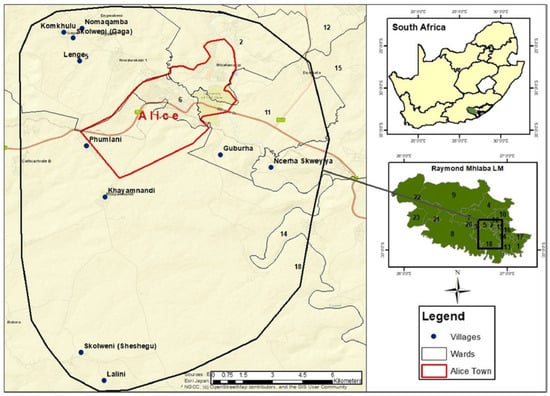
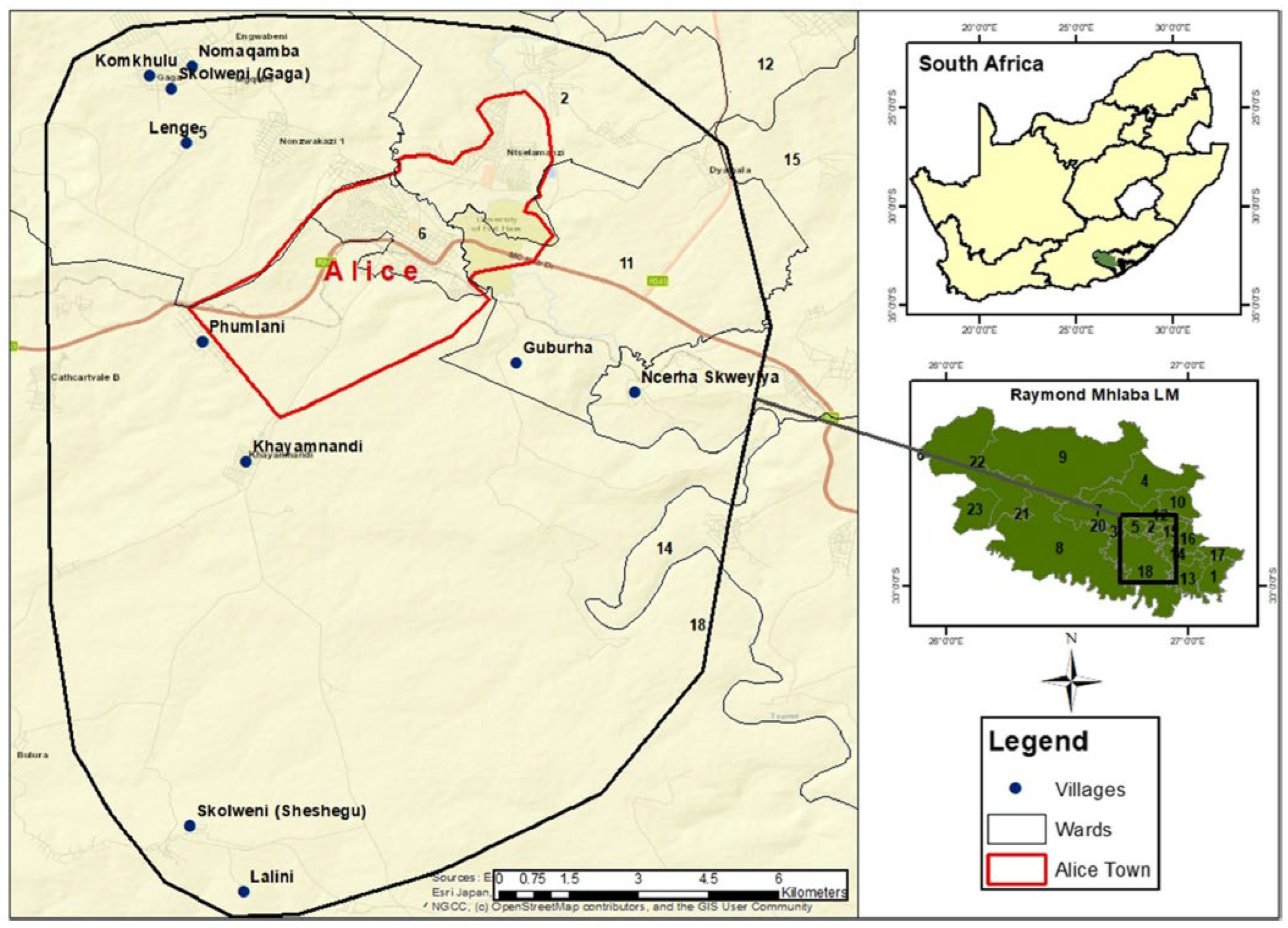
The study was conducted in the Nkonkobe region, specifically in Alice town and its surrounding communal villages within Raymond Mhlaba Municipality. The Nkonkobe region is a predominantly rural municipality comprising 21 administrative wards, covering an estimated area of 3725 km2. with an average population density of 43 persons per kilometre [22]. The major towns within the Nkonkobe region are Alice, Middle Drift, Fort Beaufort, and Seymour. Approximately 72% of the population resides in rural areas and farming areas, while the remaining 28% reside in the urban settlements [22]. The municipality is characterized by a dispersed settlement pattern, with small, developed urban centres, surrounded by widely scattered, underdeveloped rural villages. This spatial configuration presents significant challenges and escalates the costs associated with providing basic infrastructure and essential services. The region experiences a semi-arid climate with mean monthly temperatures ranging from 6.2 °C to 20.8 °C in July and 17.2 °C to 36.0 °C in February. Rainfall is concentrated in a wet summer season extending from October to April, followed by a dry winter season during the remaining months. The average annual precipitation typically does not exceed 600 mm. The study location is illustrated in Figure 1.
Figure 1.
Map of Raymond Mhlaba Municipality study area. Adopted from [23].
2.3. Sampling and Sample Size Determination
Smallholder goat farmers were chosen for the study through a purposive sampling strategy. This technique selects participants based on their knowledge and involvement in goat farming. Purposive sampling is commonly used in agricultural and rural development studies, in which respondents are selected based on specific characteristics that align with the research objectives [24]. The study was conducted in Alice town and its surrounding communal villages within Raymond Mhlaba Municipality in the Eastern Cape Province of South Africa. Villages with a high concentration of communal goat farmers were identified with the assistance of local agricultural officers and traditional leaders. Within the selected villages, goat-owning households were randomly selected to participate in the survey. Only households owning a minimum of ten goats (including kids, bucks, and does) were considered eligible for the study. Ultimately, a total of 218 household heads who consented to participate were obtained as the sample size using Cochran’s Equation (1) for categorical data.
where Z is the Z-score at 95% confidence (1.96), p is the assumed proportion of households engaged in goat farming (0.8, based on provincial livestock statistics an), and e is the margin of error (0.05), q = 1 − p, and e is the margin of error (0.05). This formula is well established for determining sample sizes in agricultural surveys [25].
Heads of households, goat keepers, and elderly community members were targeted for interviews, using approaches recommended to capture diverse perspectives in smallholder farming systems [26]. Data were collected using a well-structured interview and an administered questionnaire, which captured information on household demographics, the roles and functions of goats, production practices and constraints, water accessibility and quality, as well as factors influencing water scarcity. Face-to-face interviews were conducted in Xhosa to ensure farmers fully understood the questions. Additionally, transect walks were undertaken in each village’s grazing areas and around water sources to identify, explore, and observe the various water sources utilised by the community, following participatory rural appraisal techniques [27].
2.4. Questionnaire Development and Validation
The questionnaire was developed based on the literature on farmers’ perception of climate change and water scarcity, and its impact on livestock production [28]. It covered household demographics, the roles and functions of goats, constraints on goat production, perceptions of water scarcity, factors influencing water scarcity, water quality assessment, and the distance from water sources. To ensure validity and reliability, the instrument was pilot tested with 20 farmers outside the study zones, and modifications were made for clarity and contextual relevance. Internal consistency of trait preference items was assessed using Cronbach’s alpha, which yielded a value of 0.82, indicating high reliability.
2.5. Data Collection and Analysis
The collected data were coded and cleaned in Microsoft Excel, after which descriptive statistics were expressed as frequency and percentages and were generated using SPSS (version 29).
The relative importance of each preference or attribute was estimated by computing the index of ranking, as explained by [29], i.e., ranking index = sum (3 × rank 1 + 2 × rank 2 + 1 × rank 3) for individual preference/sum (3 × rank 1 + 2 × rank 2 + 1 × rank 1) for overall preferences.
Farmers were asked to rank the roles and functions of keeping goats, major goat production constraints, and water sources for goats. The ranking index method of [30] was adopted. Farmers assigned ranks to traits (1 = most important, n = least important), which were then weighted using Equation (2):
where nr is the number of responses for rank r and n is the maximum rank. The index values were used to generate relative importance scores, with higher values indicating stronger rankings among farmers.
Descriptive statistics (frequencies, percentages) were generated using SPSS v29 to analyze perceptions of water quality according to seasons, the impact of water scarcity on goat production, and factors influencing water scarcity.
Information on water accessibility was also obtained through the structured questionnaire administered to goat farmers. Respondents were asked to estimate the average distance (in kilometers) and time (in minutes) required to reach major water sources, including dams, boreholes, and streams, used for watering their goats. These self-reported measures were intended to capture farmers’ perceptions of physical water accessibility and its implications for livestock production.
The responses were coded and entered into a spreadsheet for analysis. Descriptive statistics, including the mean and standard deviation, were computed to summarize the average distance and time to each water source. These indicators were further interpreted alongside farmers’ perceptions of water scarcity.
Triplicate water samples were collected from selected water sources in clean sampling bottles, and the sources were identified with assistance from local community members. A total of 10 water samples were collected from 3 different water sources (sampling sites), namely: streams, rainwater, and dams. The samples were immediately transported to the laboratory for physiochemical analysis, placed in a cooler (fridge), and analysed within 2 h of collection to minimize changes in physiochemical properties and ensure the reliability of the results. A multiparameter water quality meter (HI98194, Hanna Instruments, Woonsocket, RI, USA) was used to determine physicochemical parameters of water, including:
- Electrical conductivity EC (Salinity indicator µS/cm).
- Total dissolved solids (TDS) (derived from EC measurements).
- Turbidity NTU (Suspended sediments indicator, desirable <5 NTU for livestock water) NTU.
- Temperature (measured in °C),
- pH (Acidity/alkalinity expected to range from for livestock: 6.5–8.5) of each water sample analysed.
The multi-perimeter device used to measure physicochemical parameters was calibrated before measurements were taken using a standard buffer solution, according to the manufacturer’s instructions, to ensure measurement accuracy.
3. Results
3.1. Socio-Demographic Variables of Respondents
The socio-demographic profile of the participants is summarized in Table 1. Notably, 60.1% of the farmers identified as male, and 28% of households were composed of individuals aged 41–50. The data also revealed low literacy levels: 42.8% of respondents had either no formal education or completed only elementary school. On average, households consisted of more than 5 members. The source of household income was highest for salaries/pensions (40.8%), followed closely by social grants (32.6%). Furthermore, a significant proportion of respondents (41.3%) had 5 to 10 years of experience in goat farming, indicating a substantial level of proficiency in this range.
Table 1.
Sociodemographic variables of the respondents.
3.2. Roles and Functions of Goats
Table 2 presents the roles and functions of goats, as ranked by communal farmers. Traditional ceremonies/ritual purposes were ranked as the primary husbandry purposes by the respondents. Other purposes include income generation, investment purposes, and meat production, among others, in descending order of interest.
Table 2.
Role and function of goats according to the ranking by communal farmers.
3.3. Goat Production Constraints
Table 3 summarises the predominant hindrances to goat production across the major seasons in the surveyed areas. Chief among the obstacles is theft. Parasites and predators come second and third, while water scarcity is ranked fourth.
Table 3.
Major goat production constraints according to the ranking system in the dry communal areas as influenced by season.
3.4. Water Sources for Goats
Table 4 clearly outlines the primary water sources utilized for goats in the surveyed areas. Dams emerged as the predominant water source for goats, followed by taps, rainwater, and rivers/streams. This consistent pattern persisted across all seasons, except for spring.
Table 4.
Ranking of water sources for communal goats as influenced by seasons.
3.5. Perception of Water Quality
The perception of water quality by communal farmers in all seasons (summer, winter, spring, and autumn) is presented in Table 5. Most respondents perceived water quality as clean in Autumn (63.3%) and spring (59.6%). The majority of respondents perceived water as ’not salty’ in summer (79.8%), autumn (66.5%), spring (66.1%), and winter (63.8%). None of the respondents perceived the water as muddy in any season.
Table 5.
Perception of water quality according to season.
3.6. Perception of the Impact of Water Scarcity on Goat Production
Table 6 shows the impact of water scarcity on goat production. The respondents perceived disease prevalence (46.3%), increased mortality (45.0%), reduced cost of production (55.5%), reduced weight at the age of maturity (61.9%), increased distance to the water source (59.2%), delayed age of kidding (35.8%), and reduced feed quality (54.6%) as some of the major impact of water scarcity on goat production. Other impacts as perceived by the respondents include reduced meat quality (42.7%), reduced water quality (56.0%), increased kid mortality (50.9%), and reduced litter size and number (55.5%).
Table 6.
Perceived impact of water scarcity on goat production by communal farmers.
3.7. Factors Influencing Water Scarcity
Table 7 shows factors that influence water scarcity. The respondents cited reduced rainfall patterns (50.9%), lack of government intervention (49.1%), dam drying (40.4%), and increased distance from water sources (49.1%) as some of the factors influencing water scarcity.
Table 7.
Factors influencing the challenge of water scarcity.
3.8. Water Quality Assessment of Major Water Sources in the Sampled Area
Table 8 shows the mean values of physicochemical parameters for ten water samples taken in three different areas. The pH for all the water samples ranged from 9.14 to 10.72 indicating alkaline conditions. The temperature (15.86–21.35 °C) for all samples falls within a normal range. All the samples have relatively low levels of electrical conductivity (22.0–702.0 µS/cm). The turbidity (NTu) was low for RW1 (3.3) and RW2 (3.7). However, the turbidity for dam1(10.4), dam 2 (40.1), Dam3(33.8), Dam4(49.6), Dam5(18.43), Dam6(6.6), Dam7(33.1) and SW (60.10) were relatively high.
Table 8.
Water quality assessment.
3.9. Distance from the Water Sources
The estimated average distances and time between places of residence and the nearest water sources are presented in Table 9. The one-way mean distance and the corresponding time to boreholes were 1.37 km and 2.24 min. The average distance travelled by goats from their households to dams and rivers/streams was 5.85 km and 7.71 km, respectively. The average time to dams and rivers/streams was 12.55 min and 16.31 min, respectively.
Table 9.
One-way mean trip and travel time needed to access the water sources.
4. Discussion
The socio-demographic profile of the participants reveals a farming community predominantly composed of males. This aligns with observations in other smallholder livestock farming contexts in Southern Africa, where men often play a prominent role in livestock management due to cultural norms and labor demands [31,32]. However, the notable presence of 33.9% female farmers suggests an evolving dynamic within rural livelihoods, indicating increased female engagement in goat production, which can contribute to household income and food security [33]. Studies across sub-Saharan Africa have documented a similar trend, with women’s participation in small ruminant production increasing as men migrate to urban areas for employment [34,35]. This gender dynamic has implications for extension services, as women may have different information needs and access constraints as compared to their male counterparts [36].
Most respondents were aged 41–50 years (28.0%), with those over 50 years comprising 40.25 of the sample, indicating that middle-aged adults are key actors who likely leverage their accumulated experience and stable social standing in this agricultural sector [37]. This age distribution is consistent with patterns observed in other rural African communities, where younger individuals increasingly pursue non-farm livelihoods, leaving older individuals to manage livestock production [38,39]. The aging farmer population poses challenges for the adoption of technology and the long-term sustainability of communal farming systems [40]. The prevalence of households with more than five members underscores the potential for readily available family labour to support livestock activities [41], although it reflects the high dependency ratios characteristic of rural households in developing regions [42].
The educational profile, with 42.8% of respondents having no formal education or only elementary schooling, is a significant finding. Such limited educational attainment can impede the adoption of modern livestock management practices and access to technical knowledge, potentially constraining productivity gains [31,43]. Studies show that the years spent in school and participation in agricultural extension services influence both information acquisition and the adoption of sustainable land management practices [44]. Literacy can also be positively associated with practices like fencing [45]. Older farmers, despite potentially lower levels of formal education, may possess more traditional knowledge of animal diseases and management practices [46].
Economically, household income largely derived from salaries/pensions (40.8%) and social grants indicates a semi-subsistence economy. This pattern is typically found in rural areas of South Africa, where social grants provide a stable income base that supports agricultural production [47]. In these contexts, livestock, particularly goats, often serve as supplementary sources of livelihood rather than primary income generators, highlighting their importance as multifunctional assets that enhance household resilience [48]. The substantial proportion of households relying on social grants (32.60) suggests that government support plays a critical role in enabling continued participation in goat farming despite resource constraints [47,49].
A significant proportion of respondents had between 5 and 10 years of experience in goat farming, suggesting an established base of practical knowledge within the community. This level of experience is comparable to that reported in other communal farming areas in South Africa [50,51]. Experienced farmers often develop sophisticated local knowledge about water sources, grazing patterns, and animal health management that can inform research and extension priorities [46].
Goats were identified to serve multiple socio-economic and cultural roles within the surveyed communal farming communities. Traditional ceremonies/ritual purposes were ranked as the primary husbandry objective. This underscores the deep cultural and spiritual significance of goats, a finding consistent with the literature emphasizing their symbolic role in ancestral rituals, the payment of bride price, and community events across various African cultures [12,52,53,54,55]. This cultural integration complements their significant economic functions, including income generation through sales, meat provision for home consumption, and the use of manure in crop systems [54,56]. The multifunctionality of goats thus demonstrates their integral role in sustaining rural livelihoods and food security, justifying efforts to enhance their production efficiency [53,54].
Analysis of production constraints revealed that stock theft is the most severe impediment to goat farming in the surveyed area. This finding reflects broader regional challenges where socio-economic factors often contribute to livestock theft, posing significant threats to farmers’ livelihoods and economic stability [57]. The lack of proper demarcations of communal grazing lands can make livestock theft a severe problem [32]. Parasites and predators ranked closely behind, emphasizing the persistent need for robust veterinary support services and improved animal management practices to mitigate these biological threats [58,59,60]. Diseases and parasites are commonly reported as major causes of mortality in small ruminant production in Africa [59,61]. Water scarcity, though ranked fourth overall, remains a critically important constraint, especially given its direct influence on animal welfare, health, and productivity, particularly during dry seasons or drought periods [62]. While indigenous goats may exhibit some adaptation to water stress, their impact is undeniable and warrants serious attention.
Dams emerged as the primary water source for goats, consistent with regional patterns where dams often provide accessible, albeit seasonally variable, water for livestock. Taps and natural rivers/streams constitute secondary sources, with seasonal fluctuations impacting their reliability and quality. These findings underscore the crucial importance of reliable water infrastructure and its regular maintenance to support sustainable goat production.
A striking discrepancy was observed between farmers’ perceptions of water quality and objective physicochemical assessments. Farmers largely perceived water quality as clean, particularly in autumn and spring, attributing this to calmer weather, reduced algal growth, and improved water clarity. However, laboratory analysis contradicted this perception, revealing elevated pH levels (9.14–10.72) and high turbidity, both of which fall outside recommended standards for livestock water consumption. For instance, water for domestic use should ideally have a pH range of 6.5 to 8.5. A pH this high can influence blood pH and acid-base balance in goats [63,64,65]. with high dietary cation-anion differences affecting metabolism and potentially impacting overall health and well-being [66,67]. While some studies show goats having a higher rumen pH than cattle on similar diets, highlighting species-specific differences [68]. Persistent high alkalinity in drinking water can contribute to metabolic issues [69]. Similar discrepancies between stakeholder perceptions and scientific water quality assessments have been reported in other studies, highlighting the importance of scientific indicators for accurate assessment [70]. This divergence highlights the urgent need for targeted educational interventions that enhance farmers’ understanding of physicochemical water quality indicators and their long-term effects on animal well-being and production efficiency [71,72]. Bridging this gap is essential for promoting the adoption of sustainable water management practices and ensuring optimal animal health.
Factors contributing to water scarcity, as cited by farmers, include reduced rainfall patterns and drying dams, reflecting documented climatic trends of erratic precipitation in Southern Africa [73]. The identified lack of effective governmental intervention further underscores the governance and infrastructure challenges identified in regional assessments [74]. Water insecurity is a growing challenge for livestock in developing countries.
The substantial average travel distances to water sources, particularly for dams (5.85 km, 12.55 min) and rivers/streams (7.71 km, 16.31 min), impose considerable physical and energetic demands on goats. While boreholes are closer (1.37 km, 2.24 min), their inaccessibility to resource-limited farmers means goats frequently endure much longer journeys to alternative water points. These long travel distances contribute to increased stress and higher energy expenditure and can significantly impair overall production efficiency, potentially affecting final meat quality [75]. Studies have shown that water deprivation impacts animal welfare and productivity, with goats showing physiological and behavioural responses to water restrictions [4,14,15,76,77,78]. For instance, prolonged thirst can represent a serious welfare problem for grazing animals [76]. Local goat breeds are recognized for their ability to withstand significant water restrictions; however, even these limitations can still impact their productivity and welfare [4,15,77,78]. These findings underscore the critical need for more accessible and reliable water sources to alleviate stress on both livestock and farmers, thereby enhancing the sustainability of communal farming systems.
5. Conclusions
This study assessed perceptions of water scarcity among communal goat farmers in Raymond Mhlaba, Eastern Cape Province, and compared them with objective physicochemical measurements.
The research reveals a captivating blend of socioeconomic, environmental, and management factors that impact goat farming in this semi-arid region. Notably, water scarcity is a substantial challenge, consistently ranking fourth among production constraints. This underscores a persistent issue farmers face year-round and highlights the resilience needed to succeed in such conditions. Farmers viewed the water as mostly “clean” and “not muddy.” However, objective measurements showed that 6 out of 7 dam samples and stream water did not meet acceptable turbidity standards (below 5 NTU), with some values reaching 60.1 NTU. Additionally, all samples displayed systematically elevated pH levels, ranging from 9.14 to 10.72, which is above the livestock water guidelines of 6.5 to 8.5. Reduced rainfall is a significant concern for farmers, accounting for 50.9% of their emphasis. However, institutional factors, especially the lack of government intervention, are also crucial, representing 49.1% of their concerns. This indicates that water scarcity is influenced not only by biophysical constraints but also by governance and infrastructure issues.
The distance to water sources significantly impacts the welfare and productivity of grazing animals. On average, animals are located 5.85 km from dams and 7.71 km from streams. These distances tend to increase seasonally as water sources in peripheral areas become depleted. Additionally, sociodemographic challenges affect farmers’ ability to manage these issues. For instance, 29.4% of farmers have only completed elementary school, and 13.8% have no formal education. 32.6% of the population depends on government social grants for income, and 40.4% are 50 years old or older. These factors limit their understanding of the risks associated with water quality and hinder their ability to invest in necessary adaptation infrastructure.
Based on these findings, specific policy interventions are recommended. First, considering the average walking distances of 5.85 km to dams and 7.71 km to streams, new boreholes should be prioritized in villages where distances exceed 5 km. Additionally, rainwater harvesting tanks should be installed at households with elderly farmers, who represent 40.4% of the sample and face the greatest physical burden.
Second, to address the perception gap where 63.3% of farmers believe the water is “clean” despite pH levels ranging from 9.14 to 10.72, extension services should conduct demonstrations on pH testing using simple test strips. Furthermore, training materials should be developed in isiXhosa to explain the link between water quality and the goat health problems that farmers are already observing, such as increased mortality (45.0%) and reduced weight (61.9%). Given that 49.1% of farmers reported a lack of government intervention, municipalities should establish formal water user committees with defined maintenance responsibilities. Additionally, they should provide small matching grants in which communities contribute labor for dam repairs. Fourth, since 42.8% of farmers have low levels of education, image-based guides and peer-led extension services should be used instead of text-heavy materials. Finally, water quality monitoring should be implemented at all major water points, with pH and turbidity testing conducted quarterly. The results should be linked to veterinary records to track health impacts over time. These targeted actions address the specific constraints identified in this study and provide clear guidance for those responsible for implementation.
6. Future Research Directions
Based on these findings, several priority areas for future research emerge:
- ➢
- Longitudinal studies are essential for monitoring seasonal variations in water quality and for establishing causal relationships with goat health and productivity.
- ➢
- Research on interventions should assess farmer education programs designed to improve perceptions of water quality and management practices.
- ➢
- Research into affordable, community-oriented water treatment technologies may offer effective solutions for managing high turbidity and elevated pH levels in livestock water.
- ➢
- Research on governance and institutions should focus on policy mechanisms, infrastructure maintenance, and the roles of traditional leadership and municipal governments in managing water resources.
- ➢
- Comparative studies in various agro-ecological zones of Southern Africa can help assess the applicability of these findings and determine specific adaptation strategies for each context.
- ➢
- Economic analyses are essential for quantifying productivity losses from water scarcity and providing evidence to support investment decisions in water infrastructure.
- ➢
- Collaborative action research that involves farmers in designing and testing solutions can merge scientific and indigenous knowledge to promote more sustainable interventions.
These findings have implications beyond South Africa, particularly for arid and semi-arid regions globally, where smallholder livestock production faces similar water challenges.
Author Contributions
Conceptualisation, O.F.A. and Z.M.; methodology, R.M., O.F.A. and Z.M.; software, R.M.; validation, O.F.A. and Z.M.; formal analysis, R.M.; investigation, R.M.; resources, O.F.A. and Z.M.; data curation, R.M.; writing draft preparation, R.M.; writing—review and editing, R.M., O.F.A. and Z.M.; visualisation, R.M.; supervision, O.F.A. and Z.M.; project administration, O.F.A.; funding acquisition, Z.M. All authors have read and agreed to the published version of the manuscript.
Funding
The National Research Foundation (NRF) funded this research, South Africa, grant number PMDS230621119553.
Institutional Review Board Statement
The study was conducted in accordance with the Declaration of Helsinki, and approved by the University of Fort Hare Inter-Faculty Human Research Ethics Committee (Approval number: MPE031SMNY01, on 5 July 2024).
Informed Consent Statement
Informed consent was obtained from all subjects involved in the study.
Data Availability Statement
The original contributions presented in this study are included in the article. Further inquiries can be directed to the corresponding author.
Acknowledgments
During the preparation of this work, the author used Answer AI and Grammarly to improve the clarity, readability, and grammatical accuracy of the manuscript. After using these tools, the author carefully reviewed and edited the content as necessary and takes full responsibility for the final version of the work and its content.
Conflicts of Interest
The authors confirmed that there is no conflict of interest.
Abbreviations
| SW | Stream water |
| RW | Rainwater |
| EC | Electrical conductivity |
| NTU | Nephelometric turbidity unit |
| TDS | Total dissolved solids |
References
- Vickery, H.M. The Behaviour and Welfare of Goat Kids During the Milk Feeding Stage and Weaning Transition. Ph.D. Thesis, University of Reading, Reading, UK, 2023. [Google Scholar] [CrossRef]
- Marius, L.N.; Shipandeni, M.N.T.; Togarepi, C. Review on the status of goat production, marketing, challenges and opportunities in Namibia. Trop. Anim. Health Prod. 2021, 53, 30. [Google Scholar] [CrossRef] [Scilit]
- Panicker, A. Agriculture and Climate Change: Challenges Ahead. 2025. Available online: https://books.google.com/books?id=fjJBEQAAQBAJ (accessed on 7 September 2025).
- Akinmoladun, O.F.; Muchenje, V.; Fon, F.N.; Mpendulo, C.T. Small Ruminants: Farmers’ Hope in a World Threatened by Water Scarcity. Animals 2019, 9, 456. [Google Scholar] [CrossRef] [Scilit]
- Akinmoladun, O.F.; Fon, F.N.; Mpendulo, C.T.; Okoh, O. Performance, heat tolerance response, and blood metabolites of water-restricted Xhosa goats supplemented with vitamin C. Transl. Anim. Sci. 2020, 4, 1113–1127. [Google Scholar] [CrossRef] [Scilit]
- Patra, A.K.; dos Santos Ribeiro, L.P.; Yirga, H.; Puchala, R.; Goetsch, A.L. Influence of the concentration and nature of total dissolved solids in brackish groundwater on water intake, nutrient utilization, energy metabolism, ruminal fermentation, and blood constituents in different breeds of mature goats and sheep. Sci. Total Environ. 2024, 907, 167949. [Google Scholar] [CrossRef] [Scilit]
- Tulu, D.; Hundessa, F.; Gadissa, S.; Temesgen, T. Review on the influence of water quality on livestock production in the era of climate change: Perspectives from dryland regions. Cogent Food Agric. 2024, 10, 2306726. [Google Scholar] [CrossRef] [Scilit]
- Zaveri, E.; Damania, R.; Engle, N. Droughts and Deficits: The Global Impact of Droughts on Economic Growth; World Bank: Washington, DC, USA, 2023. [Google Scholar] [CrossRef] [Scilit]
- Nabi, Z.; Kumar, D.; Manzoor, J. Human migration and climate change: A traumatic experience. In The Climate Change Crisis and Its Impact on Mental Health; Global Scientific Publishing: Hershey, PA, USA, 2024; pp. 85–95. [Google Scholar] [CrossRef] [Scilit]
- Sikiru, A.B.; John, M.O.; Ambali, M.I.; Muhammad, I.R.; Egena, S.S.A.; Olatunbosun, R.B. Draught Animal Power for Climate-Smart Farming in Semi-Arid and Arid Nigeria: Challenges and Opportunities. Ann. Arid Zone 2023, 62, 197–210. [Google Scholar] [CrossRef] [Scilit]
- Mdletshe, Z.M.; Ndlela, S.Z.; Nsahlai, I.V.; Chimonyo, M. Farmer perceptions on factors influencing water scarcity for goats in resource-limited communal farming environments. Trop. Anim. Health Prod. 2018, 50, 1617–1623. [Google Scholar] [CrossRef] [Scilit]
- Monau, P.I.; Visser, C.; Nsoso, S.J.; Van Marle-Köster, E. Phenotypic and genetic characterization of indigenous Tswana goats. S. Afr. J. Anim. Sci. 2019, 48, 925. [Google Scholar] [CrossRef] [Scilit]
- Bahta, Y.T.; Nyaki, S.A. Livelihood Vulnerability from Drought among Smallholder Livestock Farmers in South Africa. Hydrology 2024, 11, 137. [Google Scholar] [CrossRef] [Scilit]
- Larrondo, C.; Guevara, R.D.; Calderón-Amor, J.; Munoz, C.; Cáceres, C.; Alvarado, M.; Fresno, M.; Di Pillo, F. One Welfare: Assessing the Effects of Drought and the COVID-19 Pandemic on Farmers’ Well-Being and Their Perception of Goats’ Welfare. Animals 2023, 13, 3297. [Google Scholar] [CrossRef] [Scilit] [PubMed]
- Larrondo, C.; Leiva, J.; de la Cruz-Cruz, L. Dairy goat welfare in semi-intensive production systems and drought conditions. Anim. Welf. 2021, 30, 371–379. [Google Scholar] [CrossRef] [Scilit]
- Amenu, K.; Markemann, A.; Valle Zárate, A. Water for human and livestock consumption in rural settings of Ethiopia: Assessments of quality and health aspects. Environ. Monit. Assess. 2013, 185, 9571–9586. [Google Scholar] [CrossRef] [Scilit] [PubMed]
- Zarei, Z.; Karami, E.; Keshavarz, M. Co-production of knowledge and adaptation to water scarcity in developing countries. J. Environ. Manag. 2020, 262, 110283. [Google Scholar] [CrossRef] [Scilit]
- Slayi, M.; Maphosa, V.; Fayemi, O.P.; Mapfumo, L. Farmers’ perceptions of goat kid mortality under communal farming in Eastern Cape, South Africa. Trop. Anim. Health Prod. 2014, 46, 1209–1215. [Google Scholar] [CrossRef] [Scilit] [PubMed]
- Talanow, K.; Topp, E.N.; Loos, J.; Martín-López, B. Farmers’ perceptions of climate change and adaptation strategies in South Africa’s Western Cape. J. Rural Stud. 2021, 81, 203–219. [Google Scholar] [CrossRef] [Scilit]
- Simon, H.A. A behavioral model of rational choice. Q. J. Econ. 1955, 69, 99–118. [Google Scholar] [CrossRef] [Scilit]
- Slovic, P. Perception of risk. Science 1987, 236, 280–285. [Google Scholar] [CrossRef] [Scilit]
- Chari, M.M.; Hamandawana, H.; Zhou, L. Using geostatistical techniques to map adaptive capacities of resource-poor communities to climate change: A case study of Nkonkobe Local Municipality, Eastern Cape Province, South Africa. Int. J. Clim. Change Strateg. Manag. 2018, 10, 670–688. [Google Scholar] [CrossRef] [Scilit]
- Slayi, M.; Zhou, L.; Tyasi, T.L.; Jaja, I. A community-based intervention approach to control disease outbreaks and climate-related deaths in communally raised goat kids in the Eastern Cape Province, South Africa. Trop. Anim. Health Prod. 2022, 54, 140. [Google Scholar] [CrossRef] [Scilit]
- Etikan, I.; Musa, S.A.; Alkassim, R.S. Comparison of convenience sampling and purposive sampling. Am. J. Theor. Appl. Stat. 2016, 5, 1–4. [Google Scholar] [CrossRef] [Scilit]
- Adam, A.M. Sample size determination in survey research. J. Sci. Res. Rep. 2020, 26, 90–97. [Google Scholar] [CrossRef] [Scilit]
- Kerr, R.B.; Snapp, S.; Chirwa, M.; Shumba, L.; Msachi, R. Participatory research on legume diversification with Malawian smallholder farmers for improved human nutrition and soil fertility. Exp. Agric. 2007, 43, 437–453. [Google Scholar] [CrossRef] [Scilit]
- Dooley, K.E.; Dobbins, C.; Edgar, L.D. Using participatory rural appraisal for a community needs assessment in Timor-Leste. J. Int. Agric. Ext. Educ. 2018, 25, 63–73. [Google Scholar] [CrossRef] [Scilit]
- Akinmoladun, O.F.; Ntonga, S.; Mpetile, Z.; Ikusika, O.O.; Mpendulo, C.T. Perception of resource-limited livestock farmers on adaptation management strategies in drought-prone rural areas in Eastern Cape province, South Africa. Afr. J. Food Agric. Nutr. Dev. 2024, 24, 25143–25159. [Google Scholar] [CrossRef] [Scilit]
- Zewdu, A.; Alemayehu, K.; Wondifraw, Z. Breeding practices and farmers trait preferences on indigenous dairy cattle production in East Gojjam Zone, Ethiopia. Asian J. Agric. Food Sci. 2018, 6, 1. Available online: https://www.academia.edu/download/115835034/2708.pdf (accessed on 12 August 2025).
- Bett, R.C.; Kosgey, I.S.; Kahi, A.K.; Peters, K.J. Analysis of production objectives and breeding practices of dairy goats in Kenya. Trop. Anim. Health Prod. 2009, 41, 307–320. [Google Scholar] [CrossRef] [Scilit]
- Tshikolomo, K.A.; Nesamvuni, A.E.; Petja, M.; Van Niekerk, J.; Mpandeli, N.S. Livestock Farmer Demography and Adaptive Capacity to Climate Change and Variability in Limpopo and Mpumalanga Province of South Africa. Technium Soc. Sci. J. 2022, 27, 870–898. [Google Scholar] [CrossRef] [Scilit]
- Manganyi, B.; Jourdain, D.; Karuaihe, S. Preferences for index-based pasture insurance: A choice experiment in Limpopo Province, South Africa. Agrekon 2024, 63, 148–165. [Google Scholar] [CrossRef] [Scilit]
- Tsvuura, S.; Mudhara, M.; Chimonyo, M. Gender-Differentiated Contribution of Goat Farming to Household Income and Food Security in Semi-arid Areas of Msinga, South Africa. J. Agric. Sci. 2021, 13, 73. [Google Scholar] [CrossRef] [Scilit]
- Kinati, W.; Temple, E.C.; Baker, A.D.; Najjar, D. Small ruminant value chain and empowerment: A gendered baseline study from Ethiopia. Front. Sustain. Food Syst. 2023, 7, 1165792. [Google Scholar] [CrossRef] [Scilit]
- Omondi, I.; Njuguna-Mungai, E.; Derseh, M.B.; Teufel, N.; Galiè, A.; Njiru, N.; Kariuki, E.; Mulema, A.A. Gender relations and women’s empowerment in small-scale irrigated forage production in Ethiopia. PLoS ONE 2024, 19, e0309927. [Google Scholar] [CrossRef] [Scilit]
- Gemechu, F. Determinants of Women Farmers’ Access to Agricultural Extension Services in Ethiopia: A Review. Advances 2023, 4, 2. Available online: https://www.researchgate.net/publication/372228879 (accessed on 12 August 2025). [CrossRef] [Scilit]
- Siririka, N.A.T.; Charamba, V.; Mupangwa, J.; Shipandeni, M.N.T.; Kahumba, A. Climate change adaptation strategies among smallholder livestock farmers in Namibia’s Omaheke Region, Namibia. Discov. Sustain. 2025, 6, 179. [Google Scholar] [CrossRef] [Scilit]
- Abay, K.A.; Asnake, W.; Ayalew, H.; Chamberlin, J.; Sumberg, J. Landscapes of opportunity: Patterns of young people’s engagement with the rural economy in sub Saharan Africa. J. Dev. Stud. 2021, 57, 594–613. [Google Scholar] [CrossRef] [Scilit]
- Bryceson, D.F. Gender and generational patterns of African deagrarianization: Evolving labour and land allocation in smallholder peasant household farming, 1980–2015. World Dev. 2019, 113, 60–72. [Google Scholar] [CrossRef] [Scilit]
- Yu, Y.; Zhang, J.; Zhang, K.; Xu, D.; Qi, Y.; Deng, X. The impacts of farmer ageing on farmland ecological restoration technology adoption: Empirical evidence from rural China. J. Clean. Prod. 2023, 430, 139648. [Google Scholar] [CrossRef] [Scilit]
- Umar, B.B. Adapting to Climate Change Through Conservation Agriculture: A Gendered Analysis of Eastern Zambia. Front. Sustain. Food Syst. 2021, 5, 748300. [Google Scholar] [CrossRef] [Scilit]
- Vijayakumar, S. An Empirical Study on the Nexus of Poverty, GDP Growth, Dependency Ratio and Employment in Developing Countries. J. Compet. 2013, 5, 67–82. [Google Scholar]
- Mafukata, M.A. Skills-based constraints and complexities affecting small-scale communal cattle farmer entrepreneurs in Vhembe District. Int. J. Res. Bus. Soc. Sci. 2015, 4, 11–27. [Google Scholar] [CrossRef] [Scilit]
- Oduniyi, O.S.; Tekana, S.S. Does Information Acquisition Influence the Adoption of Sustainable Land Management Practices? Evidence From Mpumalanga Province South Africa. Front. Sustain. Food Syst. 2021, 5, 769094. [Google Scholar] [CrossRef] [Scilit]
- Tschopp, M.; Ceddia, M.G.; Inguaggiato, C.; Bardsley, N.O.; Hernández, H. Understanding the adoption of sustainable silvopastoral practices in Northern Argentina: What is the role of land tenure? Land Use Policy 2020, 99, 105092. [Google Scholar] [CrossRef] [Scilit]
- Ngoshe, Y.B.; Etter, E.; Gomez Vazquez, J.P.; Thompson, P.N. Knowledge, attitudes, and practices of communal livestock farmers regarding animal health and zoonoses in far northern KwaZulu Natal, South Africa. Int. J. Environ. Res. Public Health 2023, 20, 511. [Google Scholar] [CrossRef] [Scilit]
- Malatji, D.P.; Antwi, M.A. The utilization of State old age Grant by smallholder farmers in Mopani district, Limpopo Province, South Africa. Cogent Soc. Sci. 2024, 10, 2377396. [Google Scholar] [CrossRef] [Scilit]
- Mathinya, V.N.; Franke, A.C.; van de Ven, G.W.J.; Giller, K.E. Can small-scale farming systems serve as an economic engine in the former homelands of South Africa? Front. Sustain. Food Syst. 2023, 7, 1222120. [Google Scholar] [CrossRef] [Scilit]
- Zaca, F.N.; Wale, E.; Chipfupa, U. The relationship between social grant dependence and on farm entrepreneurial behaviour: Evidence from smallholder farmers in KwaZulu Natal, South Africa. Heliyon 2025, 11, e43811. [Google Scholar] [CrossRef] [Scilit]
- Ntshangase, Z.M. Factors affecting household goat farmers’ market participation and commercialization in Zululand District, KwaZulu Natal Province, South Africa. In Factors Affecting Household Goat Farmers’ Market Participation; IntechOpen: London, UK, 2021. [Google Scholar] [CrossRef] [Scilit]
- Segakoeng, M. Farmer perceptions on goat kids pre weaning mortality in communal systems. Front. Anim. Sci. 2025, 7, 1729041. [Google Scholar] [CrossRef] [Scilit]
- Marandure, T.; Makombe, G.; Dzama, K.; Hoffmann, W.; Mapiye, C. Towards a system-specific framework for the sustainability evaluation of low-input ruminant meat production systems in developing countries. Ecol. Indic. 2018, 85, 1081–1091. [Google Scholar] [CrossRef] [Scilit]
- Monau, P.; Raphaka, K.; Zvinorova-Chimboza, P.; Gondwe, T. Sustainable Utilization of Indigenous Goats in Southern Africa. Diversity 2020, 12, 20. [Google Scholar] [CrossRef] [Scilit]
- Andre Mataveia, G.; Visser, C.; Sitoe, A. Smallholder Goat Production in Southern Africa: A Review. In Goat Science—Environment, Health and Economy; IntechOpen: London, UK, 2023. [Google Scholar] [CrossRef] [Scilit]
- Khowa, A.A.; Tsvuura, Z.; Slotow, R.; Kraai, M. The utilisation of domestic goats in rural and peri-urban areas of KwaZulu-Natal, South Africa. Trop. Anim. Health Prod. 2023, 55, 204. [Google Scholar] [CrossRef] [Scilit] [PubMed]
- Byaruhanga, C.; Oluka, J.; Olinga, S. Socio-economic Aspects of Goat Production in a Rural Agro-pastoral System of Uganda. Univers. J. Agric. Res. 2015, 3, 203–210. [Google Scholar] [CrossRef] [Scilit]
- Hangara, G.N.; Teweldemedhin, M.Y.; Groenewald, I.B. Major constraints for cattle productivity and managerial efficiency in communal areas of Omaheke Region, Namibia. Int. J. Agric. Sustain. 2011, 9, 495–507. [Google Scholar] [CrossRef] [Scilit]
- Visser, C. A review on goats in southern Africa: An untapped genetic resource. Small Rumin. Res. 2019, 176, 11–16. [Google Scholar] [CrossRef] [Scilit]
- Armson, B.; Ekiri, A.B.; Alafiatayo, R.; Cook, A.J. Small Ruminant Production in Tanzania, Uganda, and Ethiopia: A Systematic Review of Constraints and Potential Solutions. Vet. Sci. 2020, 8, 5. [Google Scholar] [CrossRef] [Scilit]
- Airs, P.M.; Ventura-Cordero, J.; Gwiriri, L.C.; Tinsley, J.H.I.; Mvula, W.; Lee, M.R.F.; van Wyk, J.A.; Nalivata, P.C.; Takahashi, T.; Morgan, E.R.; et al. Goat health and management for improved smallholders’ livelihoods in central Malawi—A socioeconomic analysis of rural households. Small Rumin. Res. 2023, 229, 107114. [Google Scholar] [CrossRef] [Scilit]
- Badjibassa, A.; Dominique, O.; Pamela, A.B.; Benjamin, D.R.; Curtis, P.V.T.; Johann, S.; Albert, S. Characterization of goat production systems in two agro-ecological zones of Burkina Faso, West Africa. Int. J. Livest. Prod. 2023, 14, 69–83. [Google Scholar] [CrossRef] [Scilit]
- Tsheole, M.; Mlambo, V.; Mwanza, M. A Survey of Production Systems, Management and Marketing Strategies for Tswana Goats in Semiarid Areas around Mafikeng, North West Province. J. Hum. Ecol. 2016, 56, 139–142. [Google Scholar] [CrossRef] [Scilit]
- Tharwat, M. Alterations in acid-base balance, blood gases, and hematobiochemical profiles of whole-blood and thoracic fluid in goats with contagious caprine pleuropneumonia. Vet. World 2021, 14, 1874–1878. [Google Scholar] [CrossRef] [Scilit]
- Belanche, A.; Palma-Hidalgo, J.M.; Jiménez, E.; Yáñez-Ruiz, D.R. Enhancing rumen microbial diversity and its impact on energy and protein metabolism in forage-fed goats. Front. Vet. Sci. 2023, 10, 1272835. [Google Scholar] [CrossRef] [Scilit]
- Kamal, M.A.; Khalaf, M.A.; Ahmed, Z.A.M.; ELjakee, J.; Mahmoud, H.; Alhotan, R.A.; Hussein, E.O.; Galik, B.; Saleh, A.A. Effects of Drinking Water Quality Parameters on Egyptian Cattle Farm Performance Indicators. Vet. Med. Sci. 2025, 11, e70261. [Google Scholar] [CrossRef] [Scilit]
- Do Nguyen, D.K.; Semsirmboon, S.; Chaiyabutr, N.; Thammacharoen, S. Effects of Low Dietary Cation and Anion Difference on Blood Gas, Renal Electrolyte, and Acid Excretions in Goats in Tropical Conditions. Animals 2022, 12, 3444. [Google Scholar] [CrossRef] [Scilit] [PubMed]
- Semsirmboon, S.; Do Nguyen, D.K.; Chaiyabutr, N.; Poonyachoti, S.; Lutz, T.A.; Thammacharoen, S. High Dietary Cation and Anion Difference and High-Dose Ascorbic Acid Modify Acid–Base and Antioxidant Balance in Dairy Goats Fed under Tropical Conditions. Animals 2023, 13, 970. [Google Scholar] [CrossRef] [Scilit] [PubMed]
- Taghipoor, M.; Delattre, M.; Giger-Reverdin, S. A novel modelling approach to quantify the response of dairy goats to a high-concentrate diet. Sci. Rep. 2020, 10, 20376. [Google Scholar] [CrossRef] [Scilit] [PubMed]
- Nagar, P.; Sharma, A.; Kumar, V. Metabolic disorders in livestock due to water quality: A comprehensive review. Indian J. Anim. Res. 2024. [Google Scholar]
- Okumah, M.; Yeboah, A.S.; Bonyah, S.K. What matters most? Stakeholders’ perceptions of river water quality. Land Use Policy 2020, 99, 104824. [Google Scholar] [CrossRef] [Scilit]
- Hammond Wagner, C.R.; Greenhalgh, S.; Niles, M.T.; Zia, A.; Bowden, W.B. Evaluating water quality regulation as a driver of farmer behavior: A social-ecological systems approach. Ecol. Soc. 2020, 25, art35. [Google Scholar] [CrossRef] [Scilit]
- Rodrigo-Comino, J.; López-Vicente, M.; Kumar, V.; Rodríguez-Seijo, A.; Valkó, O.; Rojas, C.; Pourghasemi, H.R.; Salvati, L.; Bakr, N.; Vaudour, E.; et al. Soil Science Challenges in a New Era: A Transdisciplinary Overview of Relevant Topics. Air Soil Water Res. 2020, 13, 7491. [Google Scholar] [CrossRef] [Scilit]
- Al-Barakeh, F.; Khashroum, A.O.; Tarawneh, R.A.; Al-Lataifeh, F.A.; Al-Yacoub, A.N.; Dayoub, M.; Al-Najjar, K. Sustainable Sheep and Goat Farming in Arid Regions of Jordan. Ruminants 2024, 4, 241–255. [Google Scholar] [CrossRef] [Scilit]
- Ruiz-Colmenero, M.; Bàllega, A.; Andón, M.; Terré, M.; Devant, M.; Antón, A.; Rosenbaum, R.K.; Targa, A.; Núñez, M. Challenges When Assessing Water-Related Environmental Impacts of Livestock Farming: A Case Study of a Cow Milk Production System in Catalonia. Water 2024, 16, 1299. [Google Scholar] [CrossRef] [Scilit]
- Xu, K.; Yang, K.; Yang, Y.; Wu, W.; Zhou, C. Supplementation of feed and water after long-duration road transportation: The effects on welfare and rumen fermentation in goats. Front. Vet. Sci. 2023, 10, 5666. [Google Scholar] [CrossRef] [Scilit]
- Battini, M.; Renna, M.; Giammarino, M.; Battaglini, L.; Mattiello, S. Feasibility and Reliability of the AWIN Welfare Assessment Protocol for Dairy Goats in Semi-extensive Farming Conditions. Front. Vet. Sci. 2021, 8, 731927. [Google Scholar] [CrossRef] [Scilit]
- Mpendulo, C.T.; Akinmoladun, O.F.; Ikusika, O.O.; Chimonyo, M. Effect of hydric stress on intake, growth performance and nutritional status of Nguni goats. Ital. J. Anim. Sci. 2020, 19, 1071–1078. [Google Scholar] [CrossRef] [Scilit]
- Lemoine, M.; Delagarde, R. Drinking water intake, milk production, and grazing behaviour of alpine dairy goats in response to daytime water restriction on temperate pastures. J. Therm. Biol. 2023, 117, 103720. [Google Scholar] [CrossRef] [Scilit] [PubMed]

Disclaimer/Publisher’s Note: The statements, opinions and data contained in all publications are solely those of the individual author(s) and contributor(s) and not of MDPI and/or the editor(s). MDPI and/or the editor(s) disclaim responsibility for any injury to people or property resulting from any ideas, methods, instructions or products referred to in the content. |
© 2026 by the authors. Licensee MDPI, Basel, Switzerland. This article is an open access article distributed under the terms and conditions of the Creative Commons Attribution (CC BY) license.