Article

Performance Evaluation of Solar-Powered Groundwater Pumping Systems in Rural Communities of Greater Giyani Municipality, Limpopo, South Africa


by
Nebojsa Jovanovic
1,
Seemole S. Shika
1,
Sagwati E. Maswanganye
2 and
Munashe Mashabatu
1,*
1
Department of Earth Sciences, University of the Western Cape, Bellville 7535, South Africa
2
Fynbos Node, South African Earth Observation Network, NRF, Cape Town 7700, South Africa
*
Author to whom correspondence should be addressed.
Sustainability 2026, 18(10), 4981; https://doi.org/10.3390/su18104981 (registering DOI)
Submission received: 21 March 2026 / Revised: 19 April 2026 / Accepted: 8 May 2026 / Published: 15 May 2026

Abstract

Large portions of rural population in South Africa lack access to basic water and sanitation. This advocates for urgent interventions in support of water supply. This study assessed the performance of solar-powered groundwater pumping systems established at nine pilot sites in rural areas of Greater Giyani Municipality (Limpopo, South Africa). Performance assessment indicators, namely weather, groundwater abstraction, power supply, water supply, water quality, number of beneficiaries and farm productivity, were monitored (2023–2024). Increased groundwater abstraction reduced groundwater levels by 0.4–11 m, depending on the monitored borehole. This was replenished by above-average rainfall in 2023 (≈650 mm). Power supply and pump discharge rates were stable with generally low fluctuations at recommended pumping rates (0.5–2.0 L s−1). Groundwater quality was generally fit to marginal for irrigation and drinking. High levels of NO3 and total organic carbon, especially in the proximity of villages, mandated the installation of mini water treatment plants for drinking water. The implementation of solar-powered groundwater pumping schemes was generally successful, with more than 5000 villagers benefiting directly from the interventions, whilst smallholder farms turned into commercial and financially viable enterprises. Long-term monitoring of bio-physical and socio-economic drivers is essential to ensure long-term sustainability of the solar-powered groundwater pumping systems.

1. Introduction

In many developing regions, rural and irrigation water access is constrained by unreliable power supply, consistent rise in diesel prices, and the fossil fuel-based pumping that is associated with an environmental burden [1,2,3]. Domestic and agriculture water supply in such areas heavily relies on groundwater, yet conventional grid and diesel pumps face high life cycle costs, greenhouse gas emissions, and fuel supply risks [3,4]. Over the years, solar photovoltaic (PV) water pumping and hybrid systems that combine grid electricity with PV have emerged as promising alternatives, particularly in regions such as sub-Saharan Africa [5,6,7]. Such systems could contribute to equitable access to safe and affordable drinking water in rural remote communities, according to the targets of the Sustainable Development Goal 6 [8]. However, to guide policy and investment, sturdy performance evaluations of these solar and hybrid groundwater pumping systems remain essential, especially under field conditions.
Greater Giyani Municipality in Limpopo, South Africa, faces various development challenges, including insufficient water infrastructure, inadequate access to electricity, and the occurrence of frequent droughts [9]. These challenges negatively impact agricultural productivity and water security. Research in rural areas of Greater Giyani Municipality has been conducted for a number of years to alleviate water scarcity problems. An initial project investigated improved methods of irrigation and crop management on smallholder farms. By making use of a transdisciplinary approach and co-designing innovations with the community, this project paved the way for intensification of agriculture on smallholder farms [10]. Subsequent projects investigated shallow groundwater abstraction to supply water to emerging farmers [11,12] as well as the hydrological dynamics of non-perennial river systems [13,14]. The research found that sand river shallow groundwater could represent a useful reserve during periods of drought, and it can be used sustainably, provided recharge occurs during occasional flood events (1–2 times per year). Over the duration of these research projects, demonstration farms in Greater Giyani Municipality were turned from subsistence production into semi-commercial small business enterprises, thereby contributing to job creation and food security. More intensive agricultural production required more inputs, water in particular. This was addressed through the provision of groundwater boreholes on smallholder farms. However, a new challenge then emerged: the increased cost of groundwater pumping and energy either in the form of costly electricity bills or fuel for power generators. This triggered the necessity of introducing cheap and clean solar energy to close the loop of the water–energy–food nexus.
Research was subsequently conducted on the feasibility of utilizing solar energy to power groundwater pumps for both smallholder farms and for drinking water supply to villages [15,16]. The main purpose of this feasibility study was to assess the geophysical, technical, engineering, socio-economic, environmental and financial feasibility of the use of alternative water sources (e.g., groundwater and non-perennial river sand banks) and the establishment of solar-powered groundwater pumping systems to provide secure domestic and agricultural water to rural communities of Greater Giyani Municipality. The main outcomes of the feasibility study were that solar-powered groundwater pumps could be beneficial to water security, agricultural production, local communities, and gender equity. The region is suitable in terms of the amount of solar radiation (4.9 kWh/m2/d on average corresponding to a photovoltaic power output of 1589.3 kWh/kWp), agricultural productivity, and market potential. However, water resources in the area are scarce, and they need to be managed sustainably to avoid groundwater drawdown beyond sustainable recovery levels. The feasibility study also pointed out at nine potential pilot sites for the implementation phase. Technical designs and financials were compiled for each of the pilot sites, and an infrastructural implementation project commenced in 2023. The main expected contributions of the implementation program were to build on existing infrastructure, train communities in taking ownership, facilitate small businesses, complement local economic development and spin-off activities such as commerce (spare parts, agricultural products and inputs etc.) and services (advisory services, operation and maintenance of water supply systems, transport of produce, etc.). In addition, a performance evaluation of the solar-powered groundwater pumping systems was recommended.
The research question in the current study is as follows: can the implementation of solar-powered groundwater pumping schemes be a workable practice to supply safe and secure drinking and agricultural water in drought-prone rural areas that do not have access to bulk water supply? The aim of the current study was to evaluate the performance of nine pilot sites equipped with solar-powered groundwater pumping schemes in Greater Giyani Municipality. The study demonstrated and assessed the real-world performance of such schemes to determine their fitness as long-term interventions for water security and agricultural development.

2. Review of Solar-Powered Groundwater Pumping Applications

Solar PV pumping systems couple a PV generator with an electric motor, pump and power electronics to abstract groundwater for irrigation, livestock and domestic uses [1,6,17]. A comprehensive review on the advances in solar technology in support of food production is provided in [18]. The review outlined the need for field experiments to address context-specific challenges, e.g., land use, microclimatic and shading effects, and economic analysis to inform farmers’ decisions. Over the years, reviews have consistently identified solar PV pumping as an environmentally friendly, economically competitive and technically mature practice, compared to diesel and grid-based pumps in weak-grid or remote areas [4,19]. Solar-powered groundwater pumping systems are particularly conducive where solar radiation is relatively predictable and high, and grid electricity is costly [3,17]. Standalone PV systems can be reliably used to supply water in off-grid contexts, as long as the systems are correctly sized for groundwater depth, local solar irradiance, and daily water demand [20,21]. Detailed sizing procedures account for seasonal solar radiation and rainfall, total dynamic head, and water demand, and they have shown that solar PV pumping is highly suitable where sites are decentralized several kilometres from the grid and annual rainfall exceeds roughly 300–400 mm [4]. Studies conducted in Libya and Egypt demonstrated that well-designed solar-powered groundwater pumping systems can accommodate a large share (often >90%) of seasonal irrigation water demand and reliably provide domestic water [17,21,22,23].
Field studies and simulations commonly report PV performance ratios between 50 and 75%, pump efficiencies in the 57–66% range, and significant reductions in pumping costs relative to grid or diesel electricity [2,3,4,21]. Techno-economic and life-cycle analyses highlighted significant cuts in carbon emissions and reduced maintenance (and operating costs), while pumping costs for diesel are often several times higher than those for solar PV [24,25,26]. However, the rapid diffusion of solar-powered groundwater pumping for irrigation is associated with sustainability concerns [5,27,28,29]. Subsidies and credit schemes in Morocco, India, and Yemen have accelerated adoption, often without measures to regulate groundwater abstraction, attracting risks of over-pumping and, therefore, resource depletion [4,5]. Closas and Rap [5] argued that solar-powered irrigation policies must be coupled with groundwater monitoring, demand management, and targeted incentives to ensure long-term sustainability.
Hybrid water pumping systems integrate solar PV with another energy source such as utility grid, wind, or diesel among others to address the intermittency of solar radiation while improving service reliability [7,19,30]. Hybrid PV–grid systems allow pumps to operate on solar power during the day and switch to grid supply when irradiance is insufficient. This ensures continuous water delivery for multi-purpose community schemes while reducing the need for electrochemical storage [7,30]. Community water supply case studies in East Africa indicated that hybrid PV–grid pumping can obtain competitive levelized costs of energy and attractive internal rates of return, especially when compared with either standalone PV or grid-only pumping [30]. Recent reviews of hybrid renewable energy water pumping systems affirmed their suitability for rural and remote applications [7,19]. For municipalities with partial grid coverage, such as South African rural districts, PV–grid hybrid groundwater pumping offers a pathway to leverage existing grid infrastructure while cutting electricity consumption and improving resilience to tariff increases and load-shedding [31,32].
Performance assessment of these solar and hybrid pumping systems spans electrical, energy, hydraulic, environmental and economic dimensions. Field and simulation research typically evaluate daily and seasonal pumped volumes, system and pump efficiencies, performance ratios, and energy losses and relate these indicators to solar irradiance, ambient and module temperatures, total dynamic head, and control strategies [3,17]. For PV arrays, effective energy yield and performance ratio are widely used to benchmark system performance against nameplate capacity, while at pump level, wire-to-water efficiency captures the conversion of electrical input to hydraulic output [20,23]. Research conducted in Egypt has shown strong correlations between solar irradiance and instantaneous flow rate, with PV system efficiencies in the 13–15% range and pump efficiencies of about 60–65% [17,21]. These efficiency rates often exceed conservative design assumptions. Assessments in Libya and Upper Egypt confirmed that properly sized systems can deliver higher flow rates over multiple years and that climate and operating conditions (e.g., solar irradiance and temperature) significantly affect daily output and the cost of water pumped [17,21,22]. The technical factors affecting the performance of solar-powered pumping systems are summarized and discussed in [33]. They are solar array size and configuration; operation of controllers for power, pump and motor; type of pump and motor; required pumping head; and ambient conditions such as solar irradiance, temperature, and orientation. A paper by [34] confirmed the relevance of these technical factors but also reviewed methodologies for optimization and control strategies for solar-powered pumping systems. A recent review [35] highlighted the future role that smart control solutions can play in optimizing the operations of hybrid renewable energy systems, such as the application of algorithms, fuzzy logic, artificial neural networks, the Internet of Things, and artificial intelligence. Likewise, ref. [36] discussed the application of soft computing methods to optimize the maximum power point tracking controller for solar panels’ power and the induction motor controller that regulates the operations of the pump. Performance evaluations conducted over the years have increasingly included environmental and socio-economic metrics. For example, a comparative economic analysis between large five large solar-powered irrigation systems in the Mediterranean region was conducted using experimental data [37]. Studies comparing solar PV pumps with grid-connected electric and diesel pumps have reported dramatically lower carbon footprints for solar pumping and substantial reductions in annualized and per-unit pumping costs [2,24,26]. Community assessments and farmer surveys have indicated high user satisfaction, almost negligible operating costs, and positive impacts on income and livelihood security when solar-powered pumping systems are reliable and well supported [2].
However, a recent study on external support for solar-powered water pumping in rural areas underscored that long-term functionality depends on the availability and quality of technical support, spare parts, and institutional arrangements at system, programme, and sector levels [15]. Gaps remain in planning for end-of-life management of PV components and in designing support models for multi-use systems. Studies from Africa and comparable semi-arid regions indicated that solar PV and PV–grid hybrid groundwater pumping systems can provide reliable, low-carbon, and economically attractive water supplies in rural communities provided systems are properly sized, operated, and supported [1,22,30]. However, performance is highly context-specific, depending on local solar resources, aquifer characteristics, borehole yields, grid quality, institutional capacity, and user practices.

3. Materials and Methods

3.1. Description of Study Area and Pilot Sites

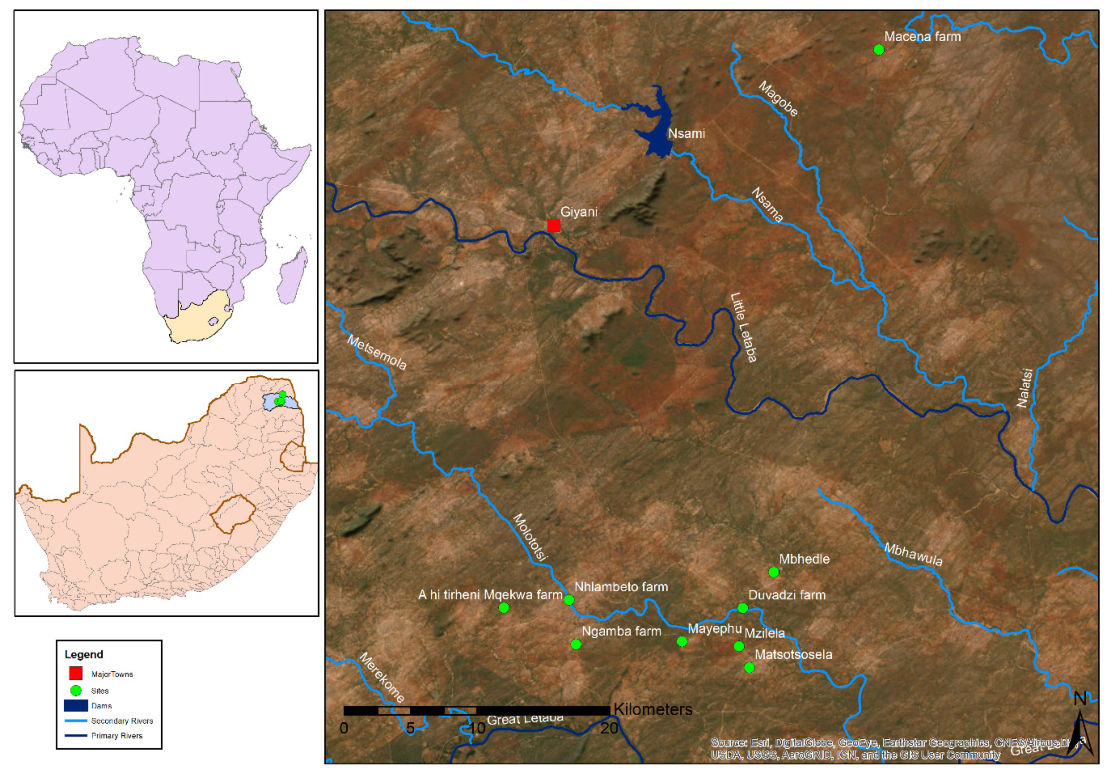
Nine pilot sites were equipped with solar-powered groundwater pumping systems, phased in from 2023 to 2025. The sites are geographically located within Greater Giyani Municipality (Mopani District Municipality, South Africa) (Figure 1). All pilot sites are located to the South of Giyani Town, with the exception of Macena farm, which is located North-East of Giyani beyond the Nsami Dam. The population in Greater Giyani Municipality is relatively evenly distributed throughout the study area, living both in urban areas (Giyani) and in surrounding rural villages and settlements. Agriculture is an important activity contributing to the gross domestic product thanks to the favourable climate, nutrient-rich soils, variety of products, and potential in processing agricultural products. Most of the rainfed cultivation and cattle herding are practised as subsistence farming on communal lands. Irrigated agriculture makes a significant contribution to the economy and is a major user of water. Farmers who practice irrigation in the study area market their crops through both formal and informal markets (hawkers, local markets, supermarkets and national fresh produce markets). Agricultural land in the Greater Giyani Municipality is predominantly government land, and it is administered by chiefs through the Permission to Occupy (PTO) system of land tenure. Because of lacking/intermittent water and electricity supply, it was anticipated that decentralized groundwater supply and solar energy would definitely benefit livelihoods and improve sanitation, hygiene, and health.
Greater Giyani Municipality has a summer rainfall sub-tropical climate, although climatic conditions vary considerably due to variations in elevation. The average annual temperature ranges from about 18 °C in the higher-elevation western areas to more than 28 °C in the eastern parts, with an average of 25.5 °C. Maximum temperatures are experienced in January, and minimum temperatures occur in July. The area receives between 200 and 450 mm a−1 of rainfall, predominantly during summer. Rainfall occurs in a single rainy season running from October to March, mostly in January and February. Rainfall is strongly influenced by the topography along the west–east gradient. The topography of the study area is characterized by undulating hills, with altitude ranging from 392 to 466 m.a.s.l.
Figure 1 also displays the river network. The only perennial river in the area is the Greater Letaba River. All pilot sites are located along the Molototsi River to the south of Giyani, with the exception of Macena, which is located north-east of Giyani and the Nsami Dam, in the proximity of the Shingwedzi River. The land use/cover is predominantly shrubland (mopani trees), cultivated subsistence land, and urban settlements (sparse villages). A large part of the catchment consists of arable land with subsistence farming dominating over commercial farming. Communal grazing is also common, and it may lead to soil erosion due to over-stocking.
The area is at the interface between the granitic–greenstone of the KaapVaal Craton and the metamorphic formations (predominantly gneiss rocks, but also schist) of the Southern Marginal zone of the Limpopo Mobile Belt [38]. Soils are predominantly medium-textured in the form of loamy sands, usually moderately productive, and well-drained. Fractured rock aquifers are dominant, with groundwater depths generally between 15 and 20 m. Shallow aquifers are encountered along the alluvial planes. Borehole yields are typically moderate to high, often yielding more than 2 L s−1. Groundwater quality is generally good to marginal for agricultural purposes. Limited groundwater development may be feasible, given groundwater is abstracted below harvest potential, groundwater yields and quality are reasonable, and groundwater contributes little to baseflow [39]. The increase in groundwater use could provide the opportunity for limited expansion of the water supply.
Pilot sites’ characteristics and descriptions of interventions are summarized in Table 1. The water requirements in Table 1 were calculated from the original baseline estimated in the feasibility study [15]. Table 1 also indicates the sources of water, borehole coordinates, and altitude. The purpose of the interventions at each site was defined based on the needs expressed by the communities and stakeholder engagement workshops. For the first four sites proposed to boost drinking water supply, the needs of the communities mainly related to the lack or intermittence of bulk water supply (e.g., Mzilela and Matsotsosela), the distance that the villagers are compelled to walk to the water delivery point (e.g., Mbedle), and the cost of diesel to pump water (e.g., Matsotsosela). The site in Dzumeri–Nhlambeto farm is the only site where a mixed water use was proposed (i.e., drinking water supply to part of Dzumeri and agricultural water supply to Nhlambeto farm). The last four sites were proposed for agricultural development (Table 1). They are located on generally well-established farms with emerging farmers organized in cooperatives under PTO. The problems occurring ranged from low-pressure heads (e.g., Ngamba farm) to high electricity bills (e.g., A hi Tirheni Mqekwa farm).
Table 1 summarizes the description of the interventions and the time when the infrastructure was established and the solar-powered pumps started operating. All nine pilot sites had operating boreholes and/or some infrastructure established. For the first four sites, the water supply system served the community and livestock. They were equipped with hybrid solar/electricity systems, Jojo tanks, and small water treatment plants. Nhlambeto farm (mixed water use) required the drilling of a new borehole on the farm premises and the installation of a steel tank. The sites for agricultural water use were equipped with solar-powered groundwater pumping systems and provided with drip irrigation laterals. Whilst large storage facilities were already available at A hi Tirheni Mqekwa and Macena, steel tanks were installed at Ngamba and Duvadzi farms. The design of the pumping schemes and storage facilities was based on daily water demand for the month of peak water requirements (Table 1). The utilization of natural and artificial reservoirs (e.g., sand river water or sand river dam) was investigated in [11], especially for periods of prolonged droughts; however, these measures imply the need for a full environmental impact assessment according to South African regulations.

3.2. Performance Assessment Methodology

In order to evaluate the performance of solar-powered groundwater pumping systems, a list of indicators was developed and is summarized in Table 2. This represents a standard data collection set for both agricultural farms and drinking water supply to villages. Weather data are the driving element in the system, and they are required when interpreting groundwater recharge and recovery following rainfall events and the effects of drought; when calculating crop water requirements on farms; and when determining the energy available to power solar panels (solar radiation). Weather data were obtained daily with automatic weather stations [40], whilst manual plastic rain gauges were installed at some of the pilot sites to collect event-based records of rainfall.
Static groundwater levels and groundwater drawdown are two performance indicators that are fundamentally required when assessing the sustainability of groundwater utilization [41]. For this purpose, groundwater levels were measured in boreholes with manual dip meters on a monthly or pumping-event basis. All groundwater abstraction took place from fractured rock aquifers. Pump flow tests were conducted on a quarterly basis. Measurements of discharge rate were carried out with a bucket of known volume (20 L) and stopwatch to measure how long it takes for the bucket to fill up (L s−1). Measurements were repeated three times, and the average pumping flow rate was calculated.
The reliability of the solar panels (power supply component) was determined through voltage measurements at the solar panels and control boxes with a manual voltmeter on a quarterly or more frequent basis (Table 2). The components of the solar energy system such as the panels, controller, inverters, batteries, cables, and connections are prone to aging, which may result in a decline in the performance of the system over time. The power supply component is important in ensuring the longevity of the system. There are factors that may affect the performance of the solar energy system; these may include environmental factors, the design and component selection, installation, aging, operation, and maintenance. When the system is not performing as designed, single components can be checked to identify the issue within the system and troubleshooting. Hourly measurements were also conducted on some days to evaluate the performance of the power supply system throughout the span of the day. For this purpose, power supply (from the control box) and pump discharge rates were recorded on an hourly basis. This was assessed in winter and summer, while evaluating the optimal times of the day that generate the highest power and corresponding pump discharge rates at the pilot sites.
The water supply system was assessed by measuring and recording water abstractions with a volume meter installed on the main pipeline on a pumping event basis (daily or longer) (Table 2). Water quality was determined through in situ water sampling from boreholes with appropriate pumps or directly from the water source via taps. Electrical conductivity (EC), totals dissolved solids (TDS), pH, and water temperature were measured weekly with handheld manual meters (multi-function water quality tester, Bell & Paton Pty (Ltd), Honeydew, South Africa) by sampling water from the water source. Laboratory analyses of physical and chemical water properties were conducted at regular intervals (quarterly, depending on the water quality variables) to determine the water’s fitness for drinking and agricultural use. Once the results from the laboratory were provided, a comparison was made between the observed results and the South African water quality guidelines SANS 241 for drinking water to determine whether the water was of sufficient quality for domestic purposes.
Concerning socio-economic factors, the main indicator was the number of people supplied with drinking water (Table 2). For the agricultural pilot sites, overall farm productivities were considered. The information on crops planted, areas, crop seasons (planting and harvest dates), crop yields, and income was obtained from the farmers, whereas the volume of water used was recorded with the volume meter. As far as possible, data were obtained to calculate total income per area cultivated, total water use per area cultivated, and total income per amount of water used.
Alongside quantitative data of performance indicators, qualitative information was collected through training workshops with farm managers and borehole operators. A Workmanship Quality Checklist was used to ascertain that installations followed best practices, were robust, and met safety requirements, whilst a Maintenance Checklist was compiled to assess the maintenance status of the system.
Data were collected from June 2023 to the end of 2024. However, not all data collection commenced at the same time, because the construction of infrastructure was phased in at the pilot sites (Table 1). The research team followed strict guidelines and protocols in data collection. Where data were collected by the community, the research team ensured that community members were well trained in data collection and recording (e.g., rainfall data with a manual rain gauge, voltage readings, and water quality measurements with manual handheld meters) through two formal training workshops, where guidelines and log sheets were made available to water operators in the communities.

4. Results and Discussions

4.1. Weather Conditions

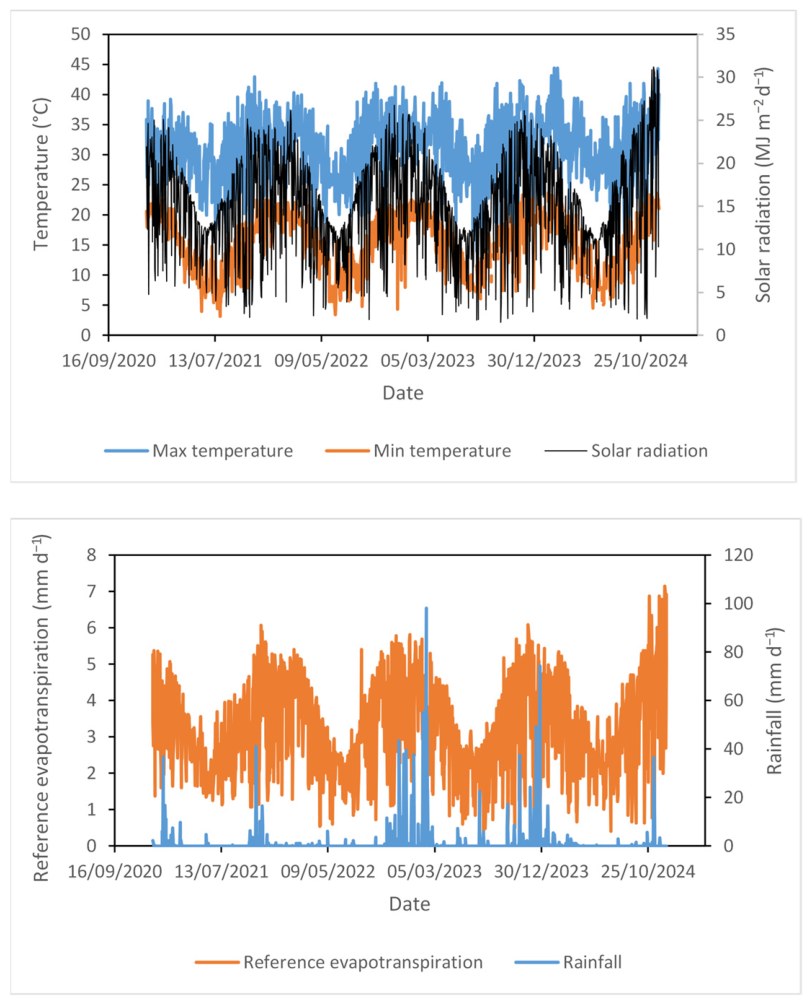
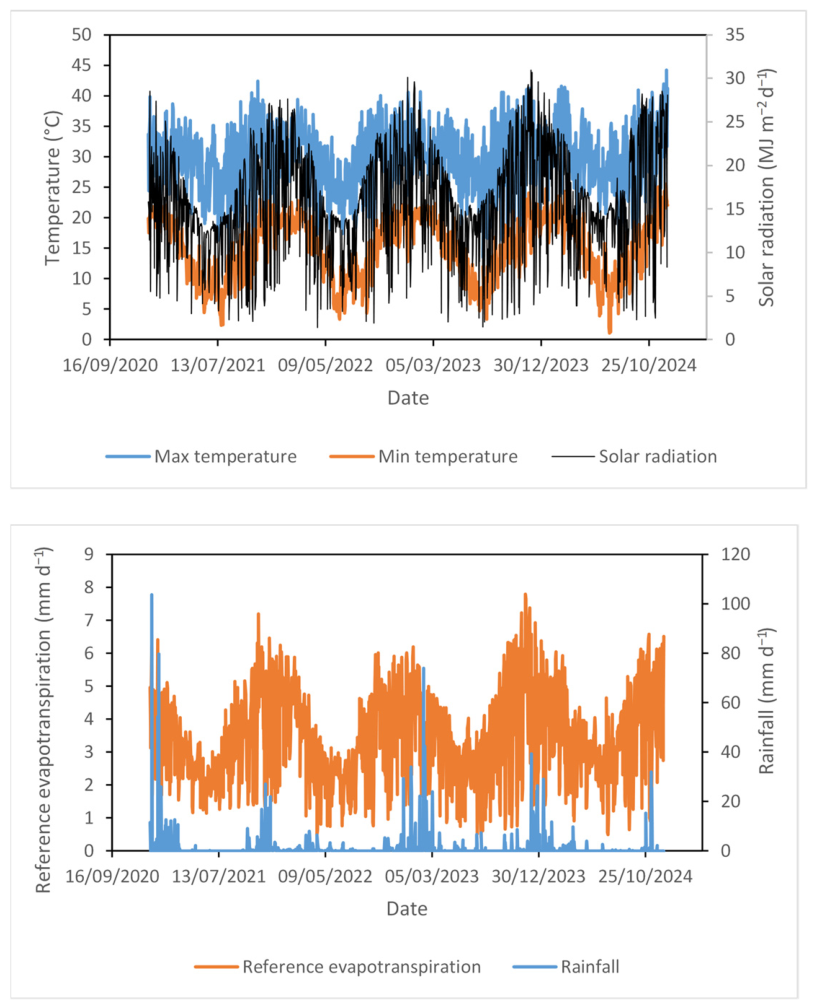
The Agricultural Research Council [40] provided weather data from 1 January 2021 to 31 December 2024 from standard automatic weather stations at Gravelotte Primary School (Lat: −23.9386; Long: 30.61899; Alt: 590 m) and ZZ2 BHB farm (Lat: −23.5779; Long: 30.14135; Alt: 671 m). Weather data collected at Gravelotte Primary School and ZZ2 BHB are presented in Figure 2 and Figure 3, respectively. During 2021–2024, the average maximum temperature at Gravelotte was measured to be 31.1 °C, and the average minimum temperature was 15.4 °C (Figure 2). Average solar radiation was 14.8 MJ m−2 d−1 (1.5–31.2 MJ m−2 d−1). Average annual rainfall for 2021–2024 was 409 mm (266 mm in 2021, 299 mm in 2022, 828 mm in 2023 and 243 in 2024). Average reference evapotranspiration was 3.2 mm d−1, ranging from 0.4 to 7.2 mm d−1 (Figure 2). At ZZ2 BH, the average maximum temperature was measured to be 29.8 °C, and the average minimum temperature was 15.0 °C (Figure 3). Average solar radiation was 15.5 MJ m−2 d−1 (1.4–30.9 MJ m−2 d−1). Average annual rainfall for 2021–2024 was 454 mm (635 mm in 2021, 175 mm in 2022, 648 mm in 2023 and 352 mm in 2024). The highest rainfall event of 104 mm d−1 occurred on 6 January 2021. Average reference evapotranspiration was 3.5 mm d−1 (0.2–7.8 mm d−1). At both weather stations, it was noted that heatwaves are common during summer (maximum temperatures > 35 °C and minimum temperatures > 25 °C), with peaks of reference evapotranspiration. Solar radiation levels are conducive to solar power supply for most of the year, whilst rainfall is highly variable, with 2023 being a particularly wet year (Figure 2 and Figure 3).

4.2. Water Abstraction and Supply

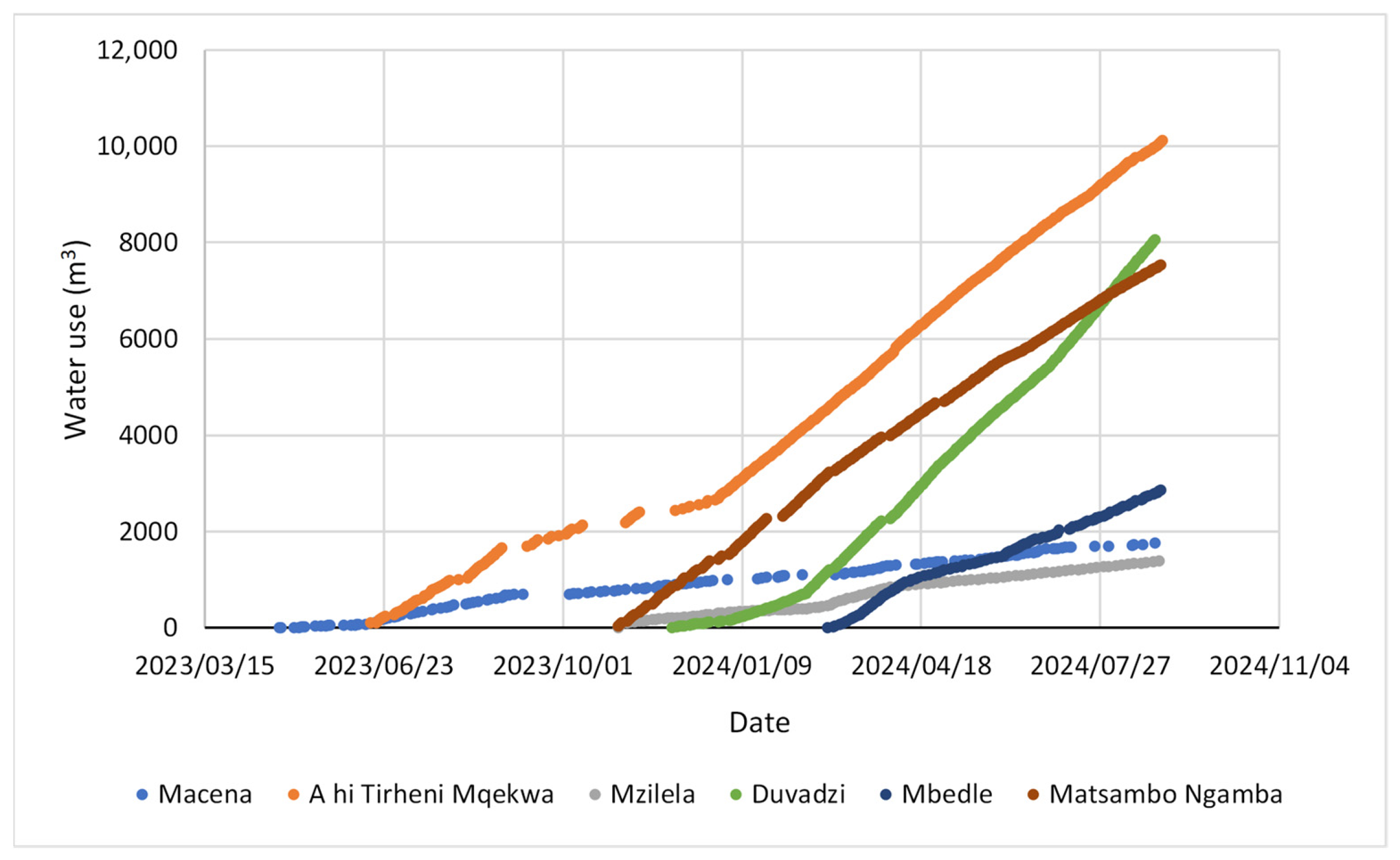
Cumulative volumes of water abstracted are presented in Figure 4 for the period of monitoring at six pilot sites. It is evident from Figure 4 that A hi Tirheni Mqekwa, a fully operating commercial farm, abstracted >10,000 m3 of water (June 2023–August 2024), which was distributed to land via balancing reservoirs. Duvadzi and Matsambo Ngamba are also commercial farms that abstracted large volumes of water for irrigation. All three farms have supplementary sources of water from other boreholes. Macena is a small-scale cooperative subsistence farm that abstracted <2000 m3 during the period of monitoring. The village of Mbedle made full use of groundwater, abstracting almost 3000 m3 from installation in February 2024 until August 2024. Mzilela village abstracted <2000 m3, as its water supply is complemented by other borehole pumps operating with grid electricity (it is also the smallest in terms of population). Installations at two pilot sites took place late in 2024 (Matsotsosela village and Nhlambeto farm), and no records of water abstraction were available. The village of Mayephu did not record water use due to a faulty water volume meter.
The water supply systems usually operated with 2.2 kW motorized pumps delivering recommended pumping rates of 0.5–2.0 L s−1 for 8–12 h per day, depending on the pilot site and based on pumping tests at the production boreholes. The exception was the pilot site at Matsotsosela, where the recommended pumping rate was 0.2 L s−1 for 4 h per day (2 h in the morning and 2 h in the evening to allow groundwater recovery), due to groundwater depth (pump installed at 135 m depth) and a poorly conductive aquifer. All groundwater pumping took place from fractured rock aquifers. Comparatively, the groundwater yield from the highly conductive Molototsi River sand banks (Figure 1) was found to be >3 L s−1. Pump discharge rates measured with a bucket and stopwatch did not vary dramatically between seasons and on an hourly basis.
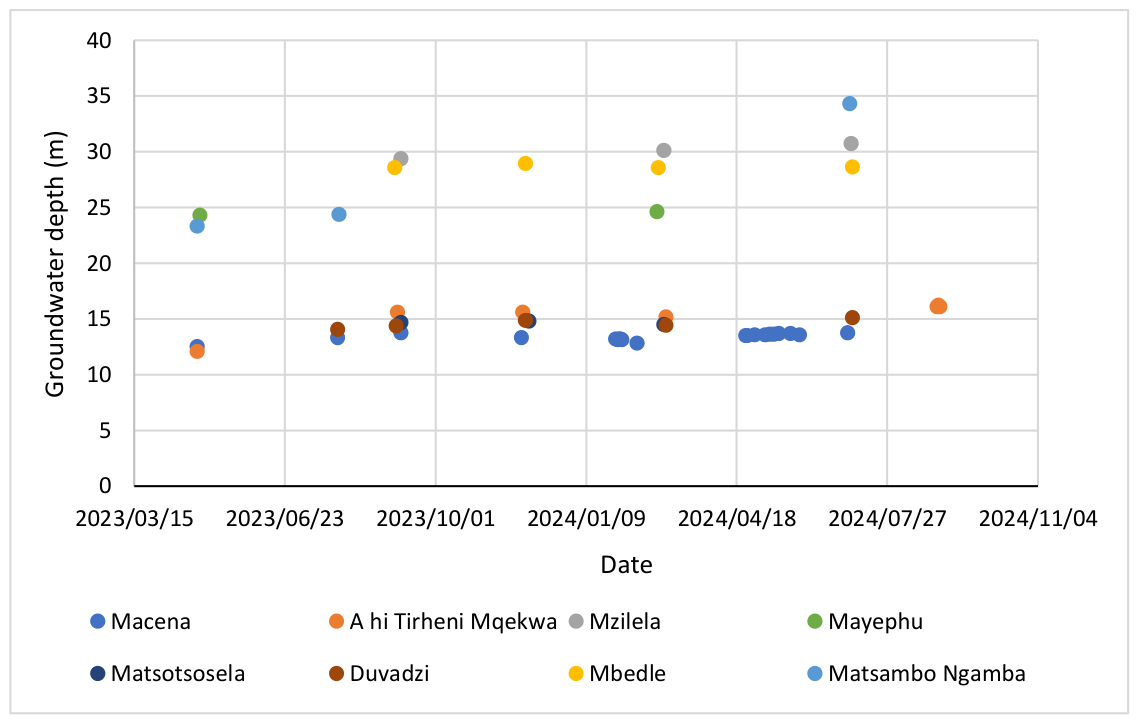
Rest groundwater depths measured with manual dip meters had a general tendency to increase over the period of measurement; however the drawdown levels were not a cause of major concern (Figure 5). The mitigating factor was the above-average wet year of 2023, which replenished the groundwater reserve. Long-term monitoring is therefore essential to detect the response of the aquifer during drought periods. The largest drawdown was recorded at Matsambo Ngamba agricultural site (~11 m, borehole no. H14-1923), followed by A hi Tirheni Mqekwa (~4 m; borehole no. H14-1378); however, the farms can make use of alternative boreholes to rest and provide groundwater recovery. Groundwater depths appeared to be well managed at other agricultural and drinking water pilot sites.

4.3. Power Supply

All solar power supply systems were equipped with batteries and a hybrid system to allow for the use of grid electricity in case of malfunctioning solar panels or during hours of cheap electricity. The exception was Macena, where the solar power supply system fed the groundwater pump directly by means of an on/off switch. At this site, pumping can take place for long daytime hours in summer. In winter, pumping can take place from about 12:00 to 15:00, when the solar panels receive sufficient solar energy. Beyond these hours, due to solar inclination, the power is not sufficient, and the control system switches off the pump automatically. The solar panel array is installed on the roof of a packhouse at a slight incline, and it cannot be arranged differently for security reasons.
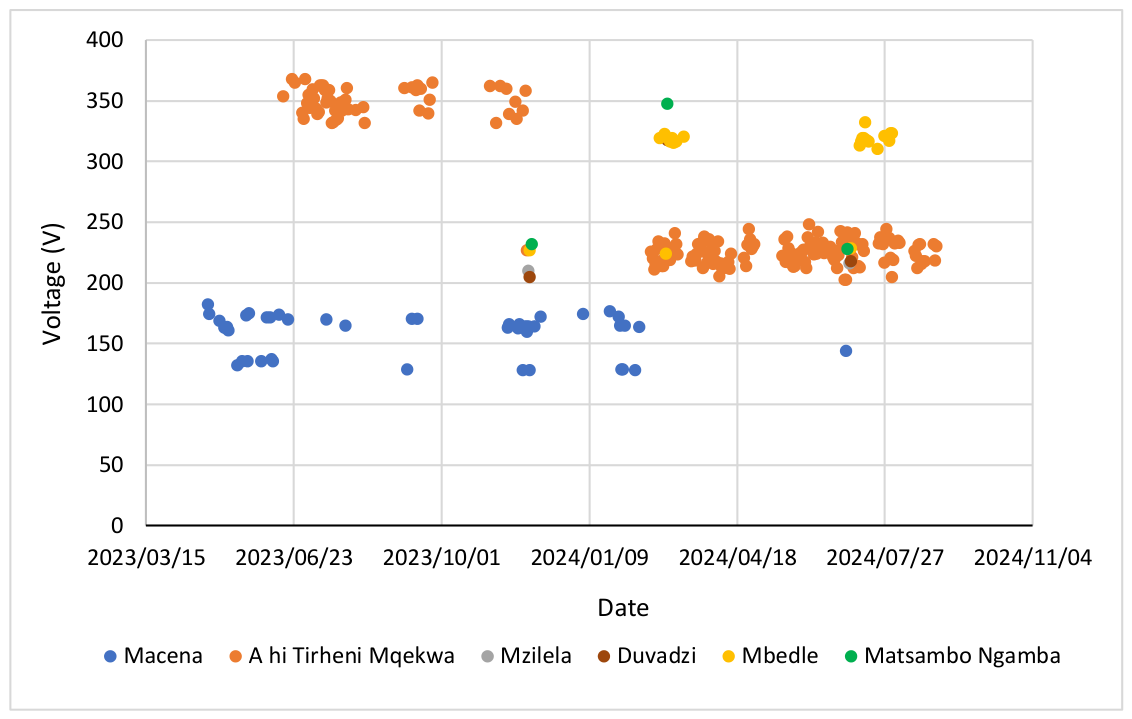
In South Africa, single-phase voltage systems operate at 220–240 V, whilst multi-phase voltage systems provide up to 400 V. At each pilot site, voltage was measured with manual voltmeters at appropriate and accessible measuring points to determine the stability and durability of power supply. Figure 6 shows that the voltage records were quite stable within the expected operating ranges during the period of performance assessment, and they depended on single- or multi-phase power supply. The jumps in voltage were recorded at times when adjustments to the single/multi-phase system were introduced (e.g., A hi Tirheni Mqekwa, Matsambo Ngamba and Mbedle). For example, the original solar panel array orientation at A hi Tirheni Mqekwa had to be readjusted in November 2023 to provide better power supply and flow rates to the groundwater pump. Stable voltage readings in Figure 6 are a testament to the proper functioning of the solar panels and stable power supply, generally +/−10%. Voltage was also measured on an hourly basis on some days in winter and summer to determine possible fluctuations in power supply over the course of the day. The hourly voltage fluctuations were within the +/−10% range, and they did not dramatically affect pump discharge rates.

4.4. Ground Water Quality

Groundwater samples were collected quarterly to ascertain the temporal and seasonal variability of groundwater quality. Table 3 presents the analyses of laboratory tests conducted on groundwater sampled on 1–5 July 2024 (winter dry season). Laboratory analyses for all groundwater sampling campaigns are available from the authors. The results of the laboratory analyses (Table 3) were compared to the South African National Standard SANS 241 of 2015 to determine the fitness of water quality for domestic use [42]. The figures in red in Table 3 indicate parameter values that are not within the SANS 241 thresholds. Whilst pH values were within the prescribed standards for all water sources, the sites at Ngamba and Duvadzi farm and Matsotsosela village had elevated EC, in particular due to elevated Na and Cl. This makes it essential to monitor potential salinization of soil and groundwater resources over time. Groundwater in the proximity of villages (draining water from villages) had particularly high NO3 levels beyond the legal mandatory standard (<48.7 mg L−1 NO3) due to lack of sanitation and waste collection services, the use of pit latrines in households, and high concentrations of animals. This was especially the case for the villages of Mbedle, Mayephu, Mzilela, and Macena farm. The spike in NO3 concentration at borehole H14-1815 in Mayephu was due to the vicinity of an animal kraal (<30 m). This was noted to the ward councillor before the enclosed kraal area was removed, and a groundwater protection area was established at the community’s initiative, in which no activity is allowed. Elevated total organic carbon (TOC) levels were generally recorded during the summer rainfall season, but the values were within the acceptable standard in winter (Table 3), possibly due to dilution that occurs following the rainy season. By far the best water quality source is the water retained in the sand alluvial aquifer (Nhlambeto farm at Dzumeri, Table 3). This was consistently measured throughout the monitoring period, and it confirms previous results that water quality in the river sand banks approaches rainwater quality as it originates from direct vertical recharge via rainfall [15]. All parameters for the river sand sample were within the standard limits with the exception of colour due to high turbidity. Concerning heavy metals, elevated concentrations beyond the allowable threshold were seldom recorded, except occasionally elevated Al, Mn and Fe, the origin of which is thought to be natural.
Water source quality measurements with multi-meter probes were conducted frequently during the monitoring period to identify any possible trends in contamination. The measurements indicated that EC was generally between 70 and 165 mS m−1, which is an acceptable to marginal range for irrigation water use [43] and drinking water (South African National Standard SANS 241). Exceptions were Matsambo Ngamba and Duvadzi farms, with EC ranging between 257 and 380 mS m−1. Recorded values of pH were between 6.15 and 8.67, within acceptable range according to standards.
As a result of the water quality tests, a number of measures were implemented. At the village pilot sites where water is used for drinking (Mayephu, Mzilela, Matsotsosela and Mbedle), a four-step ion exchange water purification system was installed: (i) water softening with coarse salt to reduce carbonates and alkalinity; (ii) a fibre glass vessel to capture suspended sediments and solids; (iii) a carbon vessel to reduce organic chemicals; and (iv) ion exchange resin to adsorb cations and anions. At the two farms with particularly saline water (Matsambo Ngamba and Duvadzi), blending with fresher water from other sources is practiced by mixing in the water storage facilities. Sampling for laboratory analysis of microbiological vectors in source water needs to be conducted at least monthly or in case of emergency, especially for drinking water. However, due to logistical reasons, it was not possible to sample and analyse for microbiological contaminants. A groundwater monitoring program needs to be established by the Municipality, which would allow for rapid microbiological analysis of water source samples in the area, in view of future remediation through provision of a sewage scheme and refuse collection services.

4.5. Socio-Economic Indicators

Solar-powered groundwater pumping schemes were implemented in rural areas of Greater Giyani Municipality in support of safe and secure water supply. It was estimated that the accomplishment of these interventions directly benefited >5000 Giyani community members that were previously lacking a safe and secure water supply. This figure was calculated based on the population of the villages of Mayephu (1940 people), Mzilela (1150), Matsotsosela (2300) and Mbedle (1230), which total 6620 people. It is expected that the new water supply system will not serve the entire population of Mzilela (as some residents use water from boreholes powered by grid electricity). However, some residents of Dzumeri are supplied with water from Nhlambeto farm based on a formal agreement. The communities in the village pilot sites were informed about different financing options for self-operation and maintenance of the systems (organization in cooperatives; saving groups; pay-per-use, etc.). The communities leaned towards a financing model with a savings account, where they would contribute voluntarily or through sponsorships towards a common account depending on the individuals’ purchasing abilities (e.g., Mbedle village). At the same time, this would ensure more equitable access to water and prevent the common practice of water abstraction and re-sale by community members, absenteeism from schools, and the burden placed on women and girls in association with water collection from distant sources.
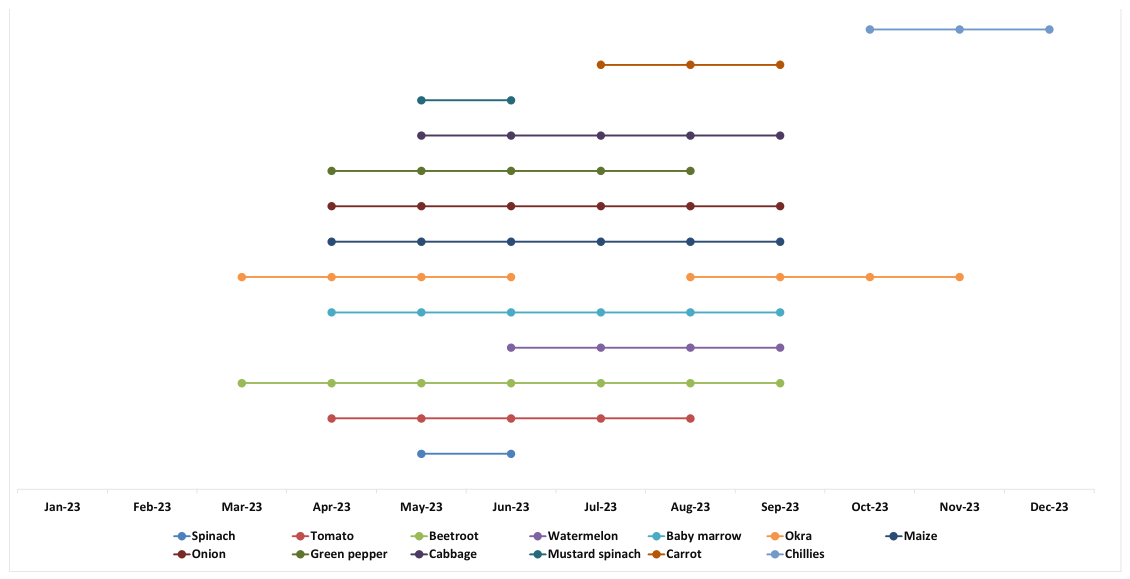
Agricultural water productivity usually requires the measurements of crop yields, income, and water use per crop. Given the large variety of crops cultivated during the season on the pilot site farms, it was not possible to conduct measurements for each individual crop cultivated on small portions of land, as this would have required dedicated experiments. An example of a cropping pattern on A hi Tirheni Mqekwa farm is shown in Figure 7 for the winter 2023 season. Water use was measured with one water meter serving the entire farm, and it was not possible to meter water for each individual crop/plot as dozens of water meters would have been needed. In addition, the water abstracted and metered was stored in reservoirs and tanks, with uncertainty regarding when and how much of it was used for each individual crop/plot. Occasionally, some farms used multiple sources of water to refill storage tanks/reservoirs. For these reasons, an overall farm productivity figure was calculated to primarily provide an idea of the financial benefits derived from the interventions and the water utilization. Overall farm productivity is ultimately what the farmers are interested in, regardless of the gains and losses from individual crops, which depend on weather, crop management (irrigation, fertilization, pest control), the market, and other risks. Based on data collected on the piloting farms, overall farm productivity was expressed as total income per cultivated area (EUR/ha), total water use per cultivated area (m3/ha), and total income per volume of water used (EUR/m3) per season. The results are summarized in Table 4.
A few considerations should be made. With many crops being grown during the season, not all farming areas were cultivated at the same time; rather, cultivation took place on small plots, usually <1 ha. The farm areas cultivated simultaneously depended on the cropping patterns and the overlaps of crop growth seasons. The income was calculated based on the sales (gross income). It did not include costs and expenses (e.g., labour, fertilizer, chemicals, etc.), and it did not include government subsidies. The sale records were not always available and/or the farmers did not always sell all products. Therefore, Table 4 is not a direct representation of all the crops produced; it is a representation of the crops that were sold. Some of the crops were not of a good enough quality to be sold, whilst others were given to the workers on the farm.
Water was not applied to all farming areas simultaneously; it was instead applied to individual crops/plots based on the farmers’ irrigation scheduling, farm management, crop stages, and crop water requirements. Rainfall contributions were not accounted for in the calculations; however, water use is likely to be reduced during the wet season and increase during the dry season, periods of drought, and high crop water requirements. Income per ha and water use per ha (Table 4) depended on the cultivated areas, type of crops, their growth stages and water requirements, and farm management practices. An evident tendency was that as the water supply was implemented on the farms, the income per ha increased and the water use per ha also increased. Macena farm tended to have a low income and low water use because they cultivated only a few small plots during the 2023 and 2024 seasons. Although A hi Tirheni Mqekwa farm used little metered water per ha in 2023, they obtained substantial income per ha. The year 2023 was a particularly wet year with above-average rainfall (≈650 mm; Figure 3), resulting in less groundwater use. In addition, they may have used additional sources of water. In 2024, the income per ha increased, and the water use per ha also increased at A hi Tirheni Mqekwa. This confirms the dependence of the farm on water, the increasing income, and the fully commercial nature of the enterprise. Substantial savings in electricity bills were also reported (up to EUR 313 per month). Likewise, Duvadzi and Ngamba farms are en route to becoming fully commercial and financially self-sustainable. The water use per ha at Duvadzi and Ngamba in the 2023/24 season was high and similar to that of A hi Tirheni Mqekwa, although the incomes per ha lagged behind. However, not all sales could be accounted for at Duvadzi and Ngamba farms. Consequently, the highest total income per water used was recorded at A hi Tirheni Mqekwa, especially in 2023 (29.79 EUR/m3), because of less irrigation water use due to high rainfall. The second highest total income per water used was recorded at Macena (2.31–2.57 EUR/m3); however, the total value of income was low because small areas were cultivated. Duvadzi and Ngamba displayed the least total income per water used (1.39 and 0.80 EUR/m3, respectively); however, not all sales were accounted for in the book-keeping. These data demonstrate the success of the pilot sites in their first two years of operation; however, the future financial sustainability of the enterprises can only be determined through detailed economic data and analysis in the long term.
Farm pilot sites tended to easily take ownership of and responsibility for the water supply system as they saw a direct benefit in the form of greater water availability, extension of irrigated areas, and increased sales and profits. On the other hand, village pilot sites have many beneficiaries and users of water, and they found it more difficult to coordinate themselves and assume individual responsibility. The water users saw the benefits of using water, but they did not see a financial incentive to take responsibility for the water supply system. It is generally advisable that pilot sites supplying drinking water have one or more champions that are willing and trained to run the water supply systems.
A particular challenge was the sharing of water by multiple users in cases when one or more large water users exist (farms) and many small water users (family households, livestock) (e.g., Nhlambeto farm). The question of how to share the available water and how to charge for it may lead to conflicting situations. In the particular instance of Nhlambeto, it was proposed that a co-management plan be made between the farmer, community, and the local municipality and that a written agreement be made that would satisfy the interested parties. The farmer would undertake all management, maintenance, and repair work and make surplus water available to the community. The farmer would reap the benefits from the agricultural products, whilst the community would benefit from employment on the farm. The farmer would, however, be the intermediary water supplier, and he would not be in a position to provide a water treatment plant and clean water for drinking. The local municipality would need to step in and manage the water purification system. In this way, co-ownership and co-management of the water supply system could be secured between the farmer, community, and local municipality.
The interventions opened the opportunity for a multitude of small businesses that can be ignited along the water value-chain. These range from operation and management of water supply systems, water service provision, plumbing and electrical services, to agricultural extension services, transport of products, composting/biochar production, hydroponics material production, and supply, etc. However, initial financial support in the form of capital investment or subsidies is often essential for the setup of private business.
Security is always a concern when new infrastructure is built and established. In particular, water pumps and solar panels are critical equipment that may be attractive to thieves because they are reusable and resaleable items. Attention was devoted as much as possible to securing the equipment. Solar panels were mounted on roofs in order to be less accessible, and they were protected with several layers of barb wire and fences; pumps and pump-houses were enclosed in fenced areas; and in some instances (e.g., A hi Tirheni Mqekwa), alarm systems were installed with motion sensors and remote camera control. As well as securing the infrastructure physically, awareness was raised amongst the communities on common ownership. The equipment was handed over to the communities, and they had a joint responsibility to secure it and protect it from possible intruders. To this effect, an interesting concept (running an awareness-raising crusade at community level) was proposed.

4.6. Community Training

Upon installation of the infrastructure at the nine pilot sites, it was essential to build capacity for the operation and maintenance of equipment in order to facilitate the communities’ ownership of the infrastructure upon completion of the project. This was an essential action to ensure the long-term sustainability of the interventions. Ownership of the water supply schemes by the communities implies that they are sufficiently equipped with the knowledge that is essential to operate, maintain, and troubleshoot the systems. In addition, they should be have the capacity to independently manage the groundwater resource, groundwater quality, solar panels, water treatment mini plants, multiple water uses, and the socio-economic benefits derived from the schemes. This should ensure that the water supply schemes will be both environmentally and socio-economically sustainable for the next 20 years, which is the estimated life span of the interventions. For this purpose, three one-day workshops were organized: (i) solar-powered pump operation and maintenance; (ii) agricultural water skills; and iii) data-driven solar-powered pump operation and maintenance. The target audience of the workshops consisted of community members at the nine pilot sites, in particular the water managers (one borehole operator and assistant from each of the nine sites), farmers, and local government officials involved in the day-to-day operations of the solar-powered groundwater pumps (Mopani District Department of Agriculture and Department of Water and Sanitation). The training workshops were driven by the assumption that the operators and local authorities in attendance are both willing and determined to undergo training and take up responsibilities in the operation and maintenance of the solar-powered groundwater supply systems and perceptive of techniques for saving water. Training manuals and data log sheets were developed, printed, elucidated, and distributed at the workshops.
The first workshop on operation and maintenance focused on the solar-powered groundwater pumping systems, how they were designed, their functioning, and the monitoring equipment required to take the necessary measurements to assess performance. The second workshop on agricultural water skills provided information on good agricultural practices and issues and challenges to look out for. A practical demonstration of monitoring and use of equipment that was supplied to the pilot sites was delivered (taking groundwater depth measurements with dip meters, measurements of pump flow rates, taking water quality readings with EC/pH handheld meters, and measuring voltage with voltmeters). The purpose of the last workshop on data-driven operation and maintenance was to deliver a short course on operation and maintenance of solar-powered groundwater pumping systems using real data collected at the pilot sites. In addition, this particular training had a particular focus on interpretation of data so that when water managers and operators monitor the performance indicators over time, they acquire the ability to interpret and understand changes over time.

5. Conclusions

Decentralized solar-powered groundwater supply systems were tested at nine pilot sites in rural South Africa. Such water supply schemes are decentralized in terms of water sources (groundwater boreholes) and power supply (solar energy). Different levels of success were achieved at the nine pilot sites. This is because each pilot site had different bio-physical and socio-economic settings, needs, technical designs, and water requirements. More than 5000 community members benefited directly from the newly installed solar-powered groundwater supply schemes. Community members in the rural villages were provided with improved access to drinking water on community taps. At the same time, the solar-powered groundwater supply systems contributed to the alleviation of poverty and improved water utilization, community resilience, and economic growth in local and women-led enterprises. A financing model with a common and voluntary savings account appeared to be a feasible model for ensuring the long-term financial viability.
Likewise, the infrastructure on the five agricultural pilot sites led to farming enterprises becoming fully self-sustained and economically viable commercial farms (A hi Tirheni Mqekwa, Duvadzi and Ngamba). These farms substantially increased the number of permanent and seasonal employees working on the farm thanks to the reliable source of water for irrigation. The new interventions, therefore, strengthened the local smallholder agricultural sector and, with food products produced locally, they strengthened food security in the rural area. With a more secure water source available, emerging farmers tended to increase the irrigated areas and the number of crops. This burgeoned profits, but it also implied increased groundwater abstraction. Groundwater recharge from occasional flood events is essential to render abstraction sustainable. This makes regular groundwater monitoring a critical practice for the long-term sustainability of water supply systems to avoid groundwater drawdown beyond sustainable recovery levels. Water treatment is essential for drinking water supply, especially due to high NO3 and TOC detected. Other constituents, such as heavy metals, pH and salinity, will also have to be monitored regularly. Technologies for small-scale water treatment should be further investigated for their efficiency and cost-effectiveness, as well as water chlorination. Formal monitoring programs will have to be instituted by the Municipality, involving sampling and laboratory analyses for physical, chemical, and microbiological parameters. Long-term monitoring of both bio-physical and socio-economic drivers is indispensable to ensure the long-term sustainability of the interventions. This will be required to assess actual economic and environmental impacts, the durability of the systems, and the effects of climate variability and droughts.
It is essential that community engagement and participation take place at all stages to enable communities, water institutions, local authorities, and local supply chains to coordinate while considering of cultural, tribal, and language barriers and opportunities. An interesting follow-up case study could be conducted at the pilot site at Nhlambeto, where water use conflicts manifested when water users of different size were in need of water supply services. Capacity building and training of communities are vital components of such projects if we are to facilitate hand-over of ownership of infrastructure, operation, and maintenance. These newly established systems are not meant to replace bulk water supply; however, they can be integrated with bulk water supply where possible. The implementation of such systems is therefore a “no-regret” action because it augments the water supply and supplements water during periods of drought. Given the successes achieved in this study in providing water supply services to communities in dire need of drinking/agricultural water, it is strongly recommended that such urgent interventions be extended to other sites on a large scale. Such expansion could result in tangible impacts on the economy within the next few years, depending on the scale and speed of implementation.

Author Contributions

Conceptualization, N.J., S.S.S. and S.E.M.; Methodology, N.J., S.S.S. and S.E.M.; Validation, N.J., S.E.M. and M.M.; Formal analysis, N.J., S.S.S., S.E.M. and M.M.; Investigation, N.J., S.S.S. and M.M.; Resources, N.J.; Data curation, N.J. and S.S.S.; Writing—original draft, N.J. and M.M.; Writing—review and editing, S.S.S., S.E.M. and M.M.; Visualization, N.J. and S.E.M.; Supervision, N.J.; Project administration, N.J.; Funding acquisition, N.J. All authors have read and agreed to the published version of the manuscript.

Funding

The authors acknowledge the Water Research Commission and the Government of Flanders for funding project No. C2021_2022-01119 and the Reference Group of the project for their input.

Institutional Review Board Statement

Ethical review and approval were waived for this study. In South Africa, there are mandatory ethical review requirements for specific types of research. For instance, situations involving drug trials on human participants (based on: “South African Good Clinical Practice Guidelines”, https://health.gov.za/wp-content/uploads/2021/10/nhrec-train_gcp.pdf (accessed on 15 April 2026). According to Protection of Personal Information (POPI) Act and Academy of Science of South Africa (ASSAf) Code of Conduct for research, https://inforegulator.org.za/wp-content/uploads/2020/07/Government-Gazzette-dated-12-May-.pdf (accessed on 16 April 2026), personal information is defined as any information that relates to an identifiable, living individual or an identifiable, existing juristic person. Furthermore, it also states that “Statistical analysis that is done on anonymous or aggregated information is not subject to the Code, because it does not involve identifiable Personal Information.” This study is a non-interventional study. No sensitive data was collected, and all data were anonymous. Moreover, this study did not involve any interference with the health, psychological well-being, or privacy of the participants. In light of the above, this study does not fall within the category of research requiring ethics committee approval.

Informed Consent Statement

The participants were verbally informed of the purpose of the project, the purpose of training, and the expectation that they would be able to manage the water supply schemes independently upon conclusion of the training at the end of the project.

Data Availability Statement

The original contributions presented in this study are included in the article. Further inquiries can be directed to the corresponding author.

Acknowledgments

The project partners Tsogang Water and Sanitation and AWARD (Association for Water and Rural Development) are acknowledged for their support and collaboration. Special thanks to the stakeholders and beneficiaries in Giyani that played a fundamental role in the success of the project: the village communities, farmers, Mopani District Municipality, and the Limpopo Provincial Government. The Agricultural Research Council is acknowledged for providing weather data.

Conflicts of Interest

Author Sagwati E. Maswanganye was employed by the company NRF-South African Earth Observation Network. The remaining authors declare that the research was conducted in the absence of any commercial or financial relationships that could be construed as a potential conflict of interest.

References

  1. Aliyu, M.; Hassan, G.; Said, S.A.; Siddiqui, M.U.; Alawami, A.T.; Elamin, I.M. A Review of Solar-Powered Water Pumping Systems. Renew. Sustain. Energy Rev. 2018, 87, 61–76. [Google Scholar] [CrossRef]
  2. Habib, S.; Liu, H.; Tamoor, M.; Zaka, M.A.; Jia, Y.; Hussien, A.G.; Zawbaa, H.M.; Kamel, S. Technical Modelling of Solar Photovoltaic Water Pumping System and Evaluation of System Performance and their Socio-Economic Impact. Heliyon 2023, 9, e16105. [Google Scholar] [CrossRef]
  3. Pachaivannan, P.; Manimuthu, S.; Jegadeesan, V. Comparative Energy Performance Analysis of Solar Water Pumping Systems across Diverse Climate Zones. J. Eng. Res. 2024, 13, 923–937. [Google Scholar] [CrossRef]
  4. Hilarydoss, S. Suitability, Sizing, Economics, Environmental Impacts and Limitations of Solar Photovoltaic Water Pumping System for Groundwater Irrigation—A Brief Review. Environ. Sci. Pollut. Res. 2023, 30, 71491–71510. [Google Scholar] [CrossRef]
  5. Closas, A.; Rap, E. Solar-Based Groundwater Pumping for Irrigation: Sustainability, Policies, and Limitations. Energy Policy 2017, 104, 33–37. [Google Scholar] [CrossRef]
  6. Gevorkov, L.; Domínguez-García, J.L.; Romero, L.T. Review on Solar Photovoltaic-Powered Pumping Systems. Energies 2022, 16, 94. [Google Scholar] [CrossRef]
  7. Ahmed, M.M.; Bawayan, H.M.; Enany, M.A.; Elymany, M.M.; Shaier, A.A. Modern Advancements of Energy Storage Systems Integrated with Hybrid Renewable Energy Sources for Water Pumping Application. Eng. Sci. Technol. Int. J. 2025, 62, 101967. [Google Scholar] [CrossRef]
  8. United Nations Department of Economic and Social Affairs. The Sustainable Development Goals Report 2025; United Nations: New York, NY, USA, 2025. [Google Scholar]
  9. Nembilwi, N.; Chikoore, H.; Kori, E.; Munyai, R.B.; Manyanya, T.C. The Occurrence of Drought in Mopani District Municipality, South Africa: Impacts, Vulnerability and Adaptation. Climate 2021, 9, 61. [Google Scholar] [CrossRef]
  10. Froebrich, J.; Ludi, E.; Bouarfa, S.; Rollin, D.; Jovanovic, N.; Roble, M.; Ajmi, T.; Bahri, H.; Albasha, R.; Bah, S.; et al. Transdisciplinary Innovation in Irrigated Smallholder Agriculture in Africa: Insights from a Multi Case-Study Approach. Irrig. Drain. 2020, 69, 6–22. [Google Scholar] [CrossRef]
  11. Jovanovic, N.; Bugan, R.D.H.; Lebea, T.J.; Ayisi, K.; Kena, M.; Mushadu, W.; Du Preez, D.; Walker, D.; Whitehead, R. Riparian Shallow Groundwater Utilization for Small-Holder Irrigation in the Mopani District (Limpopo Province); Water Research Commission Project No. 2426/1/18; Water Research Commission: Pretoria, South Africa, 2018. [Google Scholar]
  12. Walker, D.; Jovanovic, N.; Bugan, R.; Abiye, T.; Du Preez, D.; Parkin, G.; Gowing, J. Alluvial Aquifer Characterisation and Resource Assessment of the Molototsi Sand River, Limpopo, South Africa. J. Hydrol. Reg. Stud. 2018, 19, 177–192. [Google Scholar] [CrossRef]
  13. Maswanganye, S.E.; Dube, T.; Jovanovic, N.; Mazvimavi, D. Use of Multi-Source Remotely Sensed Data in Monitoring the Spatial Distribution of Pools along Non-Perennial Rivers. Geocarto Int. 2022, 37, 10970–10989. [Google Scholar] [CrossRef]
  14. Maswanganye, S.E.; Dube, T.; Jovanovic, N.; Kapangaziwiri, E.; Mazvimavi, D. Assessment of the Spatiotemporal Dynamics of the Hydrological State of Non-Perennial River Systems. Water SA 2024, 50, 32–44. [Google Scholar] [CrossRef]
  15. Jovanovic, N.; Willoughby, A.; Mpambo, M.; Phasha, K.; Rikhotso, R. Feasibility Assessment and Sustainability Evaluation of Water Supply Options for Implementation in Drought Affected Areas of Giyani; Water Research Commission Project No. C2020.2021-00718; Water Research Commission: Pretoria, South Africa, 2022. [Google Scholar]
  16. Jovanović, N.; Mpambo, M.; Willoughby, A.; Maswanganye, S.E.; Mazvimavi, D.; Petja, B.; Molose, V.; Sifundza, Z.; Phasha, K.; Ngoveni, B.; et al. Feasibility of Solar-Powered Groundwater Pumping Systems in Rural Areas of Greater Giyani Municipality (Limpopo, South Africa). Appl. Sci. 2023, 13, 3859. [Google Scholar] [CrossRef]
  17. Ahmed, N.M.; Hassan, A.M.; Kassem, M.A.; Hegazi, A.M.; Elsaadawi, Y.F. Reliability and Performance Evaluation of a Solar PV-Powered Underground Water Pumping System. Sci. Rep. 2023, 13, 14174. [Google Scholar] [CrossRef]
  18. Agyekum, E.B. A Comprehensive Review of Two Decades of Research on Agrivoltaics, a Promising New Method for Electricity and Food Production. Sustain. Energy Technol. Assess. 2024, 72, 104055. [Google Scholar] [CrossRef]
  19. Angadi, S.; Yaragatti, U.R.; Suresh, Y.; Raju, A.B. Comprehensive Review on Solar, Wind and Hybrid Wind-PV Water Pumping Systems—An Electrical Engineering Perspective. CPSS Trans. Power Electron. Appl. 2021, 6, 1–19. [Google Scholar] [CrossRef]
  20. Dlimi, S.; Ouissaaden, F.I.; El Moussaoui, N.; Kamel, H.; El Moutaouakil, A.; Baghaz, E.; Khoukh, A.; Limouny, L. Modeling, Simulation and Efficiency Assessment of a Direct Coupled Water Pumping PV System in Semi-Arid Coastal Areas. Energy Convers. Manag. X 2024, 23, 10062. [Google Scholar] [CrossRef]
  21. Abd Allah, W.E.; Tawfik, M.A. Design and Operating Assessment of Solar PV Underground Water Pumping System in Upper Egypt. Misr J. Agric. Eng. 2019, 36, 565–586. [Google Scholar] [CrossRef]
  22. Maka, A.O.; Chaudhary, T.N.; Hasan, A.; Gatou, A. In-Situ Performance Evaluation of Photovoltaic Solar Water Pumping System in the Rural Region. J. Mech. Energy Eng. 2019, 3, 69–76. [Google Scholar] [CrossRef]
  23. Elrefai, M.; Hamdy, R.A.; El Zawawi, A.; Hamad, M.S. Design and Performance Evaluation of a Solar Water Pumping System: A Case Study. In Proceedings of the Eighteenth International Middle East Power Systems Conference (MEPCON), Cairo, Egypt, 27–29 December 2016; IEEE: Cairo, Egypt, 2016. [Google Scholar] [CrossRef]
  24. Santra, P. Performance Evaluation of Solar PV Pumping System for Providing Irrigation through Micro-Irrigation Techniques Using Surface Water Resources in Hot Arid Region of Indi. Agric. Water Manag. 2021, 245, 106554. [Google Scholar] [CrossRef]
  25. Chandel, S.S.; Naik, M.N.; Chandel, R. Review of Performance Studies of Direct Coupled Photovoltaic Water Pumping Systems and Case Study. Renew. Sustain. Energy Rev. 2017, 76, 163–175. [Google Scholar] [CrossRef]
  26. Chahartaghi, M.; Nikzad, A. Exergy, Environmental, and Performance Evaluations of a Solar Water Pump System. Sustain. Energy Technol. Assess. 2021, 43, 100933. [Google Scholar] [CrossRef]
  27. Shah, T.; Rajan, A.; Rai, G.; Verma, S.; Durga, N. Solar pumps and South Asia’s energy-groundwater nexus: Exploring implications and reimagining its future. Environ. Res. Lett. 2018, 13, 11. [Google Scholar] [CrossRef]
  28. Bastakoti, R.; Raut, M.; Thapa, B. Groundwater Governance and Adoption of Solar-Powered Irrigation Pumps: Experiences from the Eastern Gangetic Plains; World Bank Group: Washington, DC, USA, 2020. [Google Scholar] [CrossRef]
  29. Kafle, K.; Balasubramanya, S.; Stifel, D.; Khadka, M. Solar-powered irrigation in Nepal: Implications for fossil fuel use and groundwater extraction. Environ. Res. Lett. 2024, 19, 8. [Google Scholar] [CrossRef]
  30. Katongole, I.; Nuhu Shuaibu, A.; Palanikumar, S.; Sendegeya, A. Performance Analysis of a Hybrid Solar Photovoltaic—Grid Water Pumping System. KIU J. Sci. Eng. Technol. 2023, 2, 105–114. [Google Scholar] [CrossRef]
  31. Al-Smairan, M.; Khawaldeh, H.; Shboul, B.; Almomani, F. Techno-enviro-economic analysis of grid-connected solar powered floating PV water pumping system for farmland applications: A numerical design model. Heliyon 2024, 10, e37888. [Google Scholar] [CrossRef] [PubMed]
  32. Omar, M. Design and economic evaluation of grid-connected PV water pumping systems for various head locations. Energy Eng. 2025, 122, 561–576. [Google Scholar] [CrossRef]
  33. Li, G.; Jin, Y.; Akram, M.W.; Chen, X. Research and Current Status of the Solar Photovoltaic Water Pumping System—A Review. Renew. Sustain. Energy Rev. 2017, 79, 440–458. [Google Scholar] [CrossRef]
  34. Muhsen, D.H.; Khatib, T.; Nagi, F. A Review of Photovoltaic Water Pumping System Designing Methods, Control Strategies and Field Performance. Renew. Sustain. Energy Rev. 2016, 68, 70–86. [Google Scholar] [CrossRef]
  35. Bawayan, H.M.; Enany, M.A.; Elymany, M.M.; Shaier, A.A.; Ahmed, M.M. Control Strategies of Hybrid RESsfor Off-Grid Water Pumping Technologies: An Overview. Sci. Afr. 2025, 29, e02856. [Google Scholar]
  36. Saady, I.; Majout, B.; Adouairi, M.S.; Karim, M.; Bossoufi, B.; Almalki, M.M.; Alghamdi, T.A.H. Soft Computing Approaches for Photovoltaic Water Pumping Systems: A Review. Clean. Eng. Technol. 2024, 22, 100800. [Google Scholar] [CrossRef]
  37. Carrelo, I.B.; Almeida, R.H.; Narvarte, L.; Martinez-Moreno, F.; Carrasco, L.M. Comparative Analysis of the Economic Feasibility of Five Large-Power Photovoltaic Irrigation Systems in the Mediterranean Region. Renew. Energy 2020, 145, 2671–2682. [Google Scholar] [CrossRef]
  38. Holland, M. Hydrological Characterization of Crystalline Basement Aquifers Within the Limpopo Province, South Africa. Ph.D. Thesis, University of Pretoria, Pretoria, South Africa, 2011. [Google Scholar]
  39. Department of Water Affairs. Classification of Water Resources and Determination of the Resource Quality Objectives in the Letaba Catchment; Department of Water Affairs: Pretoria, South Africa, 2014. [Google Scholar]
  40. Moeletsi, M.E.; Myeni, K.; Kaempffer, L.C.; Ermaak, D.; De Nysschen, G.; Henningse, C.; Nel, I.; Rowswell, D. Climate Dataset for South Africa by the Agricultural Research Council. Data 2022, 7, 117. [Google Scholar] [CrossRef]
  41. Woolf, K.; McGibbon, D.; Misrole, M.; Mkali, A.; Flugel, T. Guidance Document on Groundwater Data Collection: Final Document; Water Research Commission Project No. TT 905/22; Water Research Commission: Pretoria, South Africa, 2023. [Google Scholar]
  42. SANS 241-2:2015; Drinking Water—Part 2: Application of SANS 241-1. South African Bureau of Standards: Pretoria, South Africa, 2015.
  43. Department of Water Affairs and Forestry. South African Water Quality Guidelines: Agricultural Use (Irrigation); Department of Water Affairs and Forestry: Pretoria, South Africa, 1996; Volume 4. [Google Scholar]
Figure 1. Geographical location of the nine pilot sites in relation to South Africa and Giyani Town on an ESRI world imagery base map.
Sustainability 18 04981 g001
Figure 2. Daily weather variables measured at the automatic weather station in Gravelotte from 1 January 2021 to 31 December 2024.
Sustainability 18 04981 g002
Figure 3. Daily weather variables measured at the automatic weather station in ZZ2 BHB from 1 January 2021 to 31 December 2024.
Sustainability 18 04981 g003
Figure 4. Cumulative water use (abstraction) at the pilot sites measured with water volume meters from installation until August 2024.
Sustainability 18 04981 g004
Figure 5. Groundwater depths recorded at the pilot sites with manual dip meters from April 2023 to August 2024.
Sustainability 18 04981 g005
Figure 6. Voltage of the power supply system measured at the pilot sites with manual voltmeters from April 2023 to August 2024.
Sustainability 18 04981 g006
Figure 7. Cropping pattern at A hi Tirheni Mqekwa farm during winter 2023.
Sustainability 18 04981 g007
Table 1. Summary of pilot site locations and type of intervention.
VillageSiteWater RequirementsSource of WaterCoordinatesAltitude (m)Groundwater Depth
(m)
Interventions and Time of Establishment
(m3 d−1)(m3 a−1)LatitudeLongitude
MbedleVillage population = 123030.8 *11,242Borehole unnumbered−23.546751°30.834089°41928–29Drinking water supply (November 2023;)
solar-powered groundwater pumping hybrid system. Fifteen 10,000 L Jojo tanks. Ion exchange treatment plant with 5250 L Jojo tank.
MayephuVillage population = 194048.5 *17,702.5Borehole No.
H14-1815
−23.589623°30.778480°41624Drinking water supply (April 2023);
solar-powered groundwater pumping hybrid system on borehole No. H14-1815. Ion exchange treatment plant with 5250 L Jojo tank and tap. The additional borehole No. H14-1816 is also operating.
Borehole No.
H14-1816
−23.58959°30.77815°416-
MzilelaVillage population = 115028.8 *10,512Borehole No. MZI004−23.589362°30.811259°42729Drinking water supply (November 2023);
solar-powered groundwater pumping hybrid system. Ion exchange treatment plant with 5250 L Jojo tank and tap.
MatsotsoselaVillage population = 230057.5 *20,987.5Borehole No.
MATS001
−23.607484°30.824026°41714.5Drinking water (August 2024);
solar-powered groundwater pumping hybrid system. Ion exchange treatment plant with 5250 L Jojo tank and tap. Livestock trough.
DzumeriNhlambeto Primary Agricultural Cooperative58.9 **21,863.5New borehole drilled−23.563085°30.699916°43020 ***Drinking + agricultural water supply (August 2024);
new 60 m borehole drilled. Solar-powered groundwater pumping hybrid system installed on an aluminium housing. 10,000 L Jojo tank; drip-irrigation laterals.
DzumeriMatsambo Ngamba Projects33.912,373.5Borehole No. H14-1923−23.591568°30.707299°45823–25Agricultural water supply (April 2023);
solar-powered groundwater pumping hybrid system.
A hydroponics system (ARC) and aquonic wastewater treatment system (Prana) were also installed, powered by the solar panels. Wastewater from the aquonic system is used to water a grassed area. A 180 m3 steel storage tank. The additional borehole No. 2 on the farm is also operating; drip irrigation laterals.
Borehole No. 2−23.591784°30.707116°45915–17
Dzumeri (Daniel Ravalela)A hi Tirheni Mqekwa Primary Agricultural Cooperative 33.912,373.5Borehole No.
H14-1378
−23.566887°30.657573°46615.6Agricultural water supply (April 2023);
solar-powered groundwater pumping hybrid system. Two 10,000 L Jojo tanks. Motion sensors and remote video alarm system; drip irrigation laterals.
LolokaDuvadzi Youth Organic Agricultural Cooperative33.912,373.5Borehole No.
H14-1702
−23.56712°30.81966°39212.25Agricultural water supply (November 2023);
solar-powered groundwater pumping hybrid system. A 100 m3 steel storage tank. Drip-irrigation laterals.
MuyexeMacena Primary Agricultural Cooperative33.912,373.5Borehole No. 2−23.187820°30.911963°44612–13.5Agricultural water supply (April 2023);
solar-powered groundwater pumping system. One 10,000 L Jojo tank. Motion sensors alarm system; drip-irrigation laterals.
* Calculated as population × 25 L/person/d. ** Calculated as farm water requirement + requirement of 1000 people (fraction of population of Dzumeri). *** Depth of water strike.
Table 2. Performance indicators for solar-powered groundwater systems measured at nine pilot sites in Greater Giyani Municipality from June 2023 to August 2024.
System ComponentIndicatorMeasurements
MethodLocationFrequency
WeatherWeather data and rainfallWeather stationWeather station networkDaily
Rain gaugesOn-siteEvent-based
Water abstractionStatic groundwater levelsManual dip meterBoreholes Quarterly, before pumping
Groundwater drawdownManual dip meterBoreholes Before and after pumping events
Pump flow ratesPump discharge testsBoreholes Quarterly
Power supplyVariabilityVoltmeterControl boxHourly, weekly
DurabilityVoltmeterSolar panels, control boxQuarterly
Water supplyWater volumeWater volume meterMain pipelineDaily
Water qualitypH, EC, TDSManual measurements with hand-held meter Boreholes Weekly
Microbiological parametersEmergency planBoreholes Not conducted
Physico-chemical propertiesSampling and laboratory analysesBoreholes Quarterly
Hourly system performanceDischarge rateHourly bucket filling methodBoreholesSeasonal
Power supply variabilityHourly voltmeter readingsControl box
Socio-economicNumber of people supplied with waterInformation from community and censusPilot villagesYearly
Farm productivityCrop yields, farm profits, water usedPilot farmsSeasonal
Table 3. Groundwater quality analysis results for nine pilot sites measured in July 2024. Values in red are not compliant with the South African National Standard for drinking water (SANS 241).
AnalysisMatsambo
Ngamba (H14-1923)
MbedleMayephu
(H14-1815)
DuvadziMzilelaA hi Tirheni
Mqekwa farm
Macena FarmMatsotsosela 1Nhlambeto 2SANS 241
EC (mS/m) (25 °C)206.2144.0166.3262.0118.5100.2101.7203.228.0≤170
pH (25 °C)7.917.777.707.997.968.188.047.3357.275≥5 and ≤9.7
TDS (ppm) @ 25 °C10317208321310593501509783140≤1200
Colour (Hazen)<2.0<2.0<2.02.3<2.03.62.23.369.5<15
F (mg/L)0.630.400.540.990.370.580.280.9680.14≤1.5
Cl (mg/L)433.36219.86133.78600.5167.0931.0160.04319.6516.74≤300
SO4 (mg/L)34.0432.7770.7963.1932.7711.9523.4734.524.67≤500 (health)
≤250 (aesthetic)
PO4 (mg/L)n.dn.dn.dn.dn.dn.dn.dn.dn.d.-
NO2 (mg/L)n.dn.dn.dn.dn.dn.dn.d--≤2.96
Br (mg/L)0.930.650.601.700.460.200.320.910.07-
NO3 (mg/L)32.3890.08221.2526.5097.494.1567.9934.990.53≤48.7
Li (mg/L)b.c.s0.05b.c.s0.06b.c.sb.c.sb.c.s---
Na (mg/L)201.32181.7077.42283.2257.21120.2258.89335.40720.15≤200
NH4 (mg/L)n.d.n.d.n.d.n.d.n.d.n.d.n.d.n.d.n.d.≤1.5
K (mg/L)5.804.492.5412.044.994.831.394.063.80-
Mg (mg/L)95.1455.83103.84123.6193.5030.3678.9664.838.60-
Ca (mg/L)111.3954.93135.78116.1968.7832.0355.7771.8720.67-
TOC [mg/L]2.62.73.63.82.93.63.7-6.6≤10
B (µg/L)128.4143.890.9313.399.7110.276.4--≤2400
Al (µg/L)2.301.038.941.321.371.200.830.69805.14≤300
V (µg/L)19.5222.6132.989.9122.1120.6632.76--≤200
Cr (µg/L)0.211.051.020.121.340.150.51--≤50
Mn (µg/L)55.710.4623.0420.080.1460.630.2768.2612.81≤400 (health)
≤100 (aesthetic)
Fe (µg/L)7.152.7020.187.341.401.034.0940.74453.66≤2000 (health)
≤300 (aesthetic)
Co (µg/L)0.250.090.150.080.120.310.06--≤500
Ni (µg/L)1.461.171.310.333.660.401.54--≤70
Cu (µg/L)0.920.682.640.961.201.480.421.931.98≤2000
Zn (µg/L)8.9121.2020.550.624.781.612.87621.121.25≤5000
As (µg/L)0.520.630.680.701.890.367.22--≤10
Se (µg/L)0.781.480.913.040.840.271.28--≤40
Sr (µg/L)1200.5507.4579.51406.9358.1300.9264.1---
Mo (µg/L)2.280.523.243.782.685.410.74---
Cd (µg/L)0.0340.0070.0430.0060.0110.0080.006--≤3
Sn (µg/L)<LOQ<LOQ<LOQ<LOQ<LOQ<LOQ<LOQ---
Sb (µg/L)0.680.570.530.620.510.590.55--≤20
Ba (µg/L)307.4542.1087.82160.2529.7112.0619.92--≤700
Hg (µg/L)0.020.020.020.01<LOQ0.020.02--≤6
Pb (µg/L)<LOQ<LOQ0.19<LOQ<LOQ<LOQ<LOQ--≤10
U (µg/L)5.394.734.4818.163.4915.350.98--≤30
1 Measured in May 2022. 2 Sample collected in sand river in April 2025.
Table 4. Total income per ha, total water use per ha, and total income per m3 water used at the pilot farms for each cropping season.
FarmPeriodTotal Income per Area Cultivated (EUR/ha)Total Water Used per Area Cultivated (m3/ha)Total Income per Water Used (EUR/m3)
MacenaWinter 2023303.971322.31
MacenaSummer 2023/24362.581412.57
A hi Tirheni MqekwaWinter 20236633.9222329.79
A hi Tirheni MqekwaSummer 2023/249691.3910189.52
DuvadziSummer 2023/241399.7910081.39
Matsambo NgambaSummer 2023/24859.8610680.80
Disclaimer/Publisher’s Note: The statements, opinions and data contained in all publications are solely those of the individual author(s) and contributor(s) and not of MDPI and/or the editor(s). MDPI and/or the editor(s) disclaim responsibility for any injury to people or property resulting from any ideas, methods, instructions or products referred to in the content.