1. Introduction
Digital transformation is changing labor markets, workforce structures, and skill requirements across the world. These changes are especially important for countries seeking to strengthen human capital and maintain stable employment under technological transformation. Although the direct effect of artificial intelligence (AI) on unemployment remains difficult to measure, AI-related technologies are increasingly associated with workforce adaptation, digital skills development, and labor market resilience.
This study examines unemployment dynamics in Kazakhstan in the context of human capital development and workforce adaptation under digital transformation. The main aim is to analyze unemployment trends, assess future labor market dynamics using predictive analytics, and interpret these patterns in relation to demographic structure, education, and policy measures. The empirical analysis uses labor market and demographic data from the Bureau of National Statistics of Kazakhstan (BNS), including unemployment rates for 2010–2025 and demographic indicators such as births, deaths, migration balance, and total population [
1,
2,
3,
4].
According to official BNS data, more than 2.43 million citizens of Kazakhstan (11.8% of the total population) belong to the 16–24 age group. This demographic is expected to play an important role in the future labor market. At the same time, digital transformation and the growing use of AI-related technologies may gradually influence workforce structures and skill requirements, including in emerging economies such as Kazakhstan. As a result, education and training in digital competencies are increasingly viewed as important components of workforce preparedness. The World Economic Forum’s “Future of Jobs Report 2025” identifies AI, data analysis, cybersecurity, and technology literacy among the fastest-growing skill areas through 2030 [
5].
According to BNS data, the unemployment rate in Kazakhstan was 4.6% in the second quarter of 2025, which was 0.1 percentage points lower than during the same period of the previous year. Kazakhstan measures unemployment according to the methodology of the International Labour Organization (ILO), where the unemployment rate is defined as the share of unemployed individuals within the total labor force.
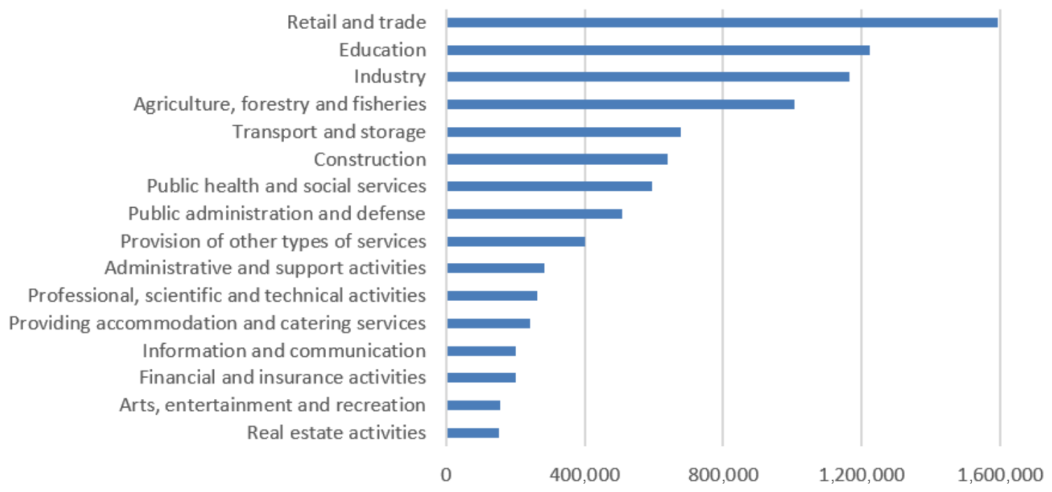
According to ILO estimates, the global unemployment rate was approximately 4.9% in 2024, while Kazakhstan reported a comparable level of around 4.7%, indicating relatively stable labor market conditions. Based on BNS survey data, approximately 9.3 million people were employed across different sectors of the economy, including retail and trade, education, industry, agriculture, transport, and construction [
6,
7,
8].
The sectoral structure of employment shows that traditional industries continue to dominate the national economy, while technology-intensive sectors remain comparatively smaller. This composition suggests that labor market transformations associated with digitalization are likely to occur gradually rather than through rapid shifts in aggregate unemployment indicators. A detailed distribution of employment by economic activity is presented in
Figure 1.
As shown in
Figure 1, employment in Kazakhstan remains concentrated in traditional sectors such as retail and trade, education, industry, and agriculture, while technology-intensive sectors account for a comparatively smaller share of total employment. This structure suggests that the effects of digital transformation on labor market outcomes are likely to emerge gradually. Therefore, AI-related changes are more appropriately interpreted in terms of evolving skill requirements and workforce adaptation rather than as direct drivers of unemployment dynamics.
The growing importance of workforce adaptation is also reflected in international policy discussions. In 2025, the United Nations Development Programme (UNDP) published the Human Development Report entitled “A Matter of Choice: People and Possibilities in the Age of AI”, which highlights the potential of AI-driven technologies to influence economic and social development. According to the report, Kazakhstan has a Human Development Index (HDI) score of 0.837 and ranks 60th out of 193 countries, placing it among countries with high human development [
9].
From a theoretical perspective, labor market changes associated with technological development are often interpreted through the frameworks of skill-biased technological change and task-based transformation. These approaches suggest that technological progress does not uniformly reduce employment. Instead, it reshapes job structures by automating routine tasks while increasing demand for high-skilled and non-routine cognitive work. As a result, labor market outcomes depend on the balance between job displacement, job creation, and workforce adaptability.
The transition associated with AI adoption is gradual and differs across countries depending on economic, institutional, and educational conditions. While AI-related technologies may transform certain occupations, they may also contribute to the emergence of new roles in data-driven and technology-intensive sectors. For example, the development and deployment of AI systems require specialists such as data engineers, analysts, and machine learning professionals, which may partially offset labor displacement in traditional industries.
It should be emphasized that this study does not attempt to establish a direct causal relationship between AI education and unemployment reduction. Due to the limited availability of national-level indicators related to AI education, skill formation, and AI adoption, these factors are considered within a broader contextual framework. The empirical component focuses on the analysis and forecasting of unemployment trends, while the discussion interprets the findings in relation to human capital development and workforce adaptation.
Existing studies suggest that AI-related technological change may have mixed effects on labor markets. While automation may reduce demand for certain routine occupations, it may also contribute to the creation of new roles and skill requirements in technology-intensive sectors [
10,
11]. However, the scale and direction of these effects remain uncertain and may differ across countries and industries. This uncertainty makes long-term labor market forecasting particularly challenging.
Therefore, this study provides a statistical and contextual analysis of unemployment dynamics in Kazakhstan, examines demographic and structural labor market patterns, and discusses policy-relevant measures aimed at strengthening workforce adaptability and human capital development under digital transformation. The study is particularly relevant to Sustainable Development Goal 8 (Decent Work and Economic Growth), which emphasizes inclusive employment, workforce resilience, and sustainable economic development [
12].
2. Materials and Methods
This study uses official BNS data to analyze unemployment dynamics and broader labor market conditions in Kazakhstan. The dataset covers the period from 2010 to 2025 and includes unemployment rates, demographic indicators, and key labor market statistics for the second quarter of 2025.
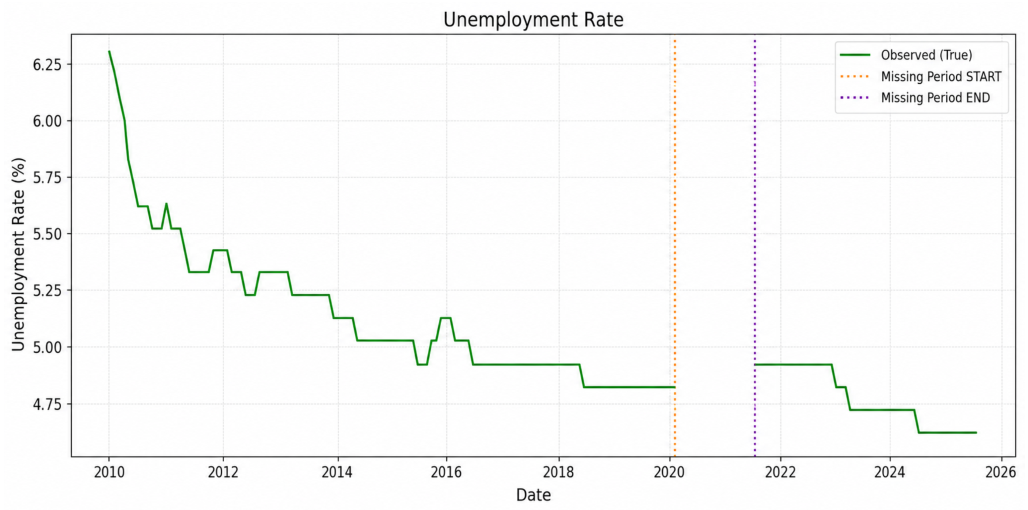
The unemployment time series was based on monthly data from January 2010 to August 2025, comprising 173 observations. A 15-month data gap was identified for the period from April 2020 to June 2021. To ensure continuity of the time series, the missing values were estimated using a SARIMA model trained on historical data up to March 2020. This approach was selected because SARIMA can capture temporal dependencies and preserve the overall structure of the series.
The imputed values were used only to reconstruct a continuous series for forecasting purposes. The objective was to estimate unemployment dynamics for the period from September 2025 to August 2028 using historical data from 2010 to 2025. The observed and missing segments of the unemployment time series are shown in
Figure 2.
The imputed values were used exclusively to reconstruct a continuous time series for forecasting purposes. To reduce potential bias, model evaluation and comparison were performed only on observed data segments, using the period from July 2021 to August 2025 for validation. Since the reconstructed series contains imputed values, the forecasting results should be interpreted as indicative trends rather than precise predictions.
Data analysis was conducted using spreadsheet software and the Python programming language (Python 3.11). The analysis employed pandas 2.2.2, NumPy 1.26.4, and Matplotlib 3.8.4 for data processing and visualization. Three forecasting approaches were evaluated for time series analysis: LightGBM 4.5.0, Prophet 1.1.5, and SARIMA implemented using statsmodels 0.14.2. The implementation details are provided in the Kaggle notebooks referenced in the “Data Availability Statement” section.
The time series was divided into training and validation segments according to temporal ordering. The models were trained on historical data up to March 2020, while the period from July 2021 to August 2025 was used for validation. Forecasting performance was evaluated using the Mean Absolute Error (MAE) metric due to its interpretability for unemployment rate prediction. This approach reflects a realistic forecasting setting and avoids data leakage between training and validation stages.
The forecasting framework is based on a univariate time series approach, where unemployment rates are modeled using historical observations only. This approach allows for consistent analysis of temporal dynamics without introducing additional uncertainty associated with heterogeneous explanatory variables.
3. Results
3.1. Time Series Forecasting of Unemployment Rate in Kazakhstan
Three commonly used forecasting approaches were evaluated for unemployment rate prediction: LightGBM, Prophet, and SARIMA. A summary of the models is presented in
Table 1. Forecasting performance was assessed using the Mean Absolute Error (MAE) metric due to its interpretability in measuring deviations between predicted and observed unemployment values.
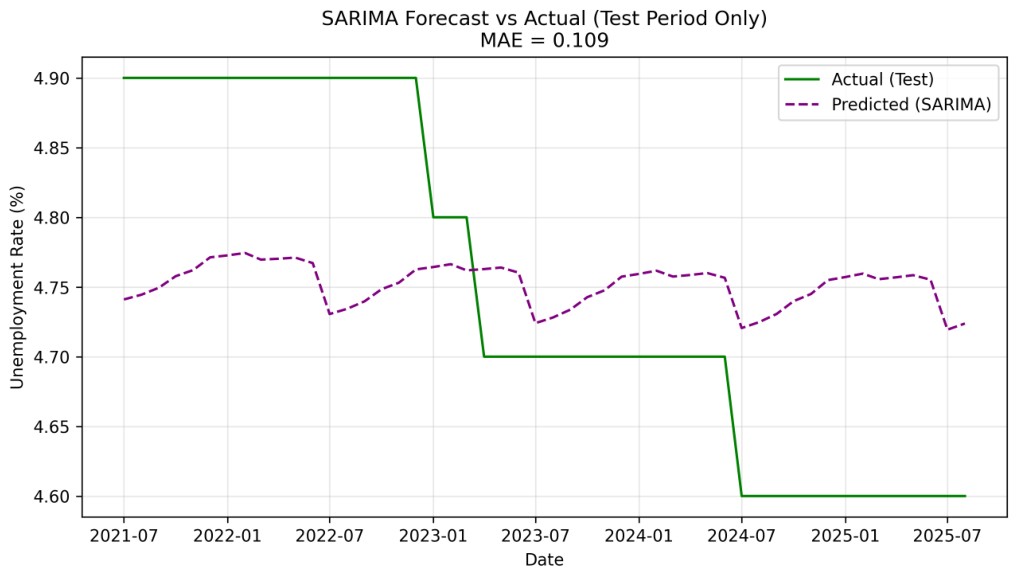
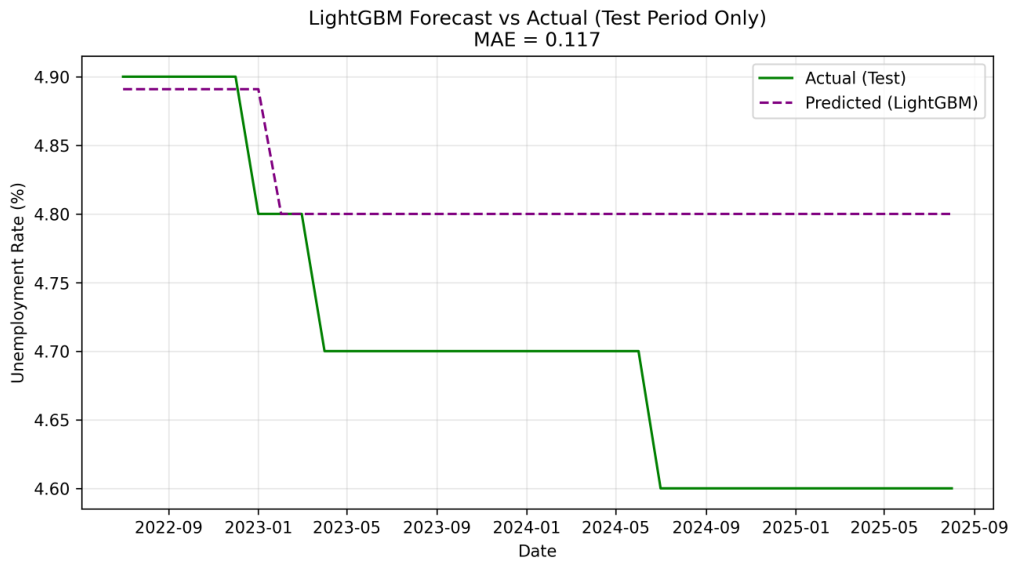
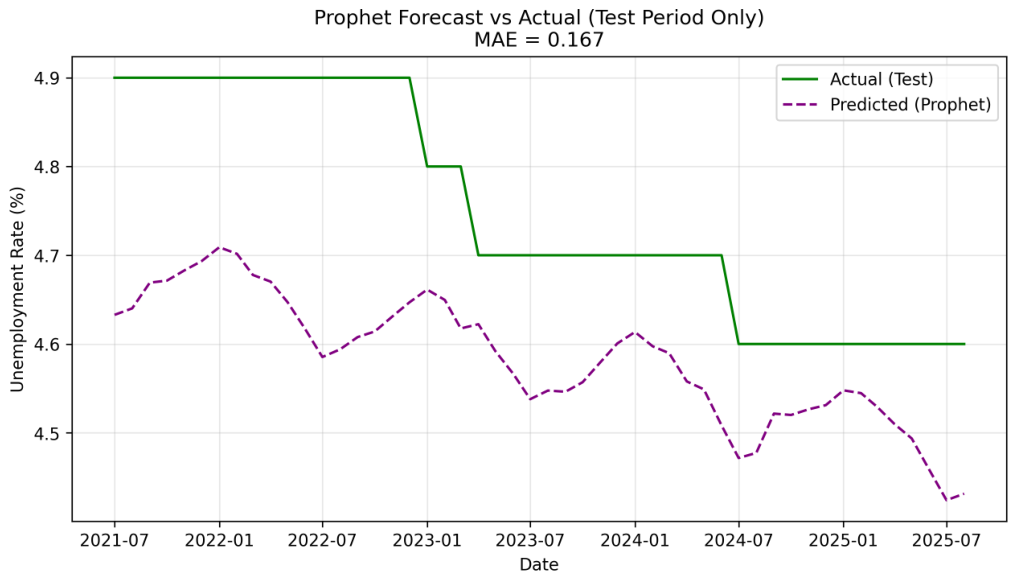
Based on the results presented in
Table 2 and
Figure 3,
Figure 4 and
Figure 5, SARIMA demonstrated the best forecasting performance among the evaluated models, achieving the lowest MAE value of 0.109. This result indicates that SARIMA provided the most accurate unemployment forecasts within the evaluated experimental setting. The comparatively lower performance of the LightGBM and Prophet models may be associated with the limited size of the dataset and the relatively short time series available for training and validation.
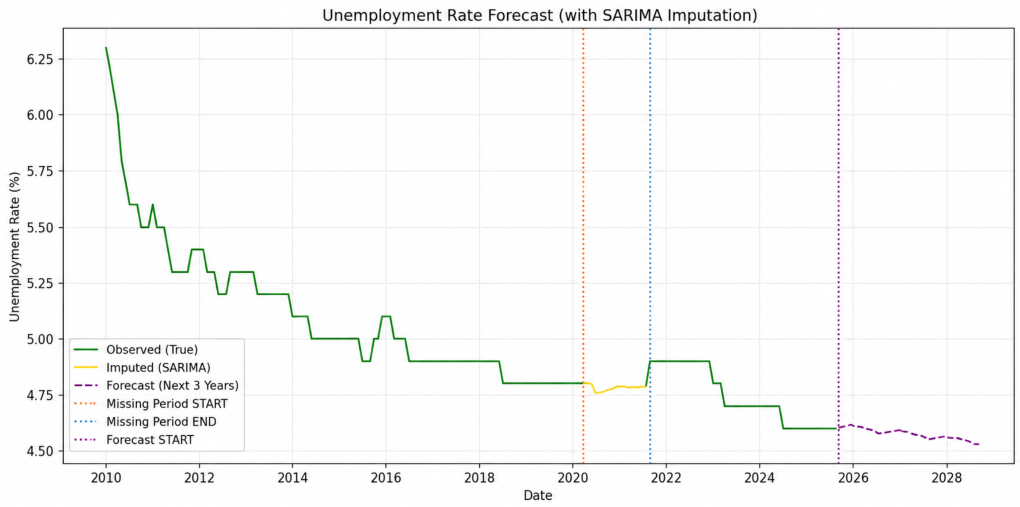
The SARIMA model was subsequently used to estimate missing unemployment values for the period from April 2020 to June 2021 and to generate forecasts for the period from September 2025 to August 2028. The resulting unemployment rate projections for Kazakhstan are presented in
Figure 6.
The forecast indicates a gradual decline in the unemployment rate from 4.60% in September 2025 to 4.49% by August 2028. Overall, the projected change corresponds to a decrease of 0.11 percentage points over the three-year period, suggesting relatively stable labor market conditions.
3.2. General Demographics Analysis
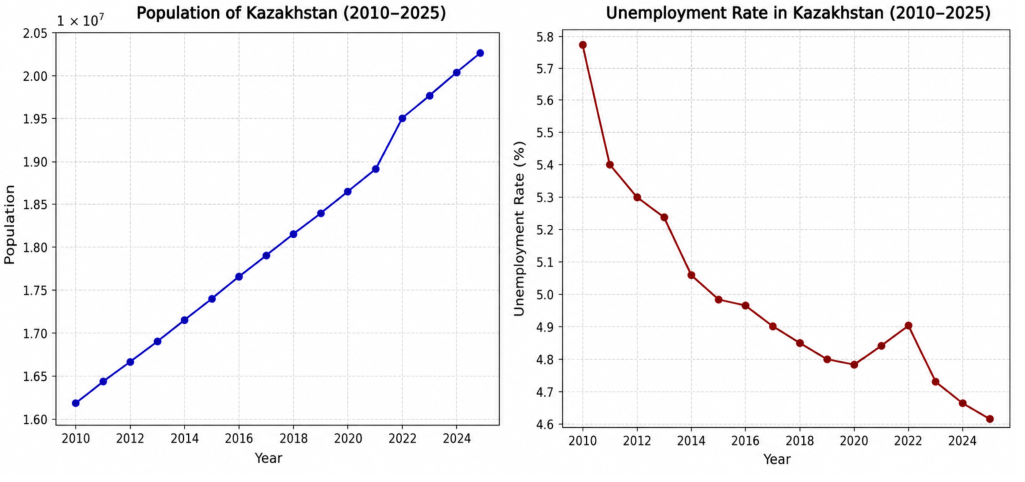
Figure 7 illustrates changes in Kazakhstan’s population and unemployment rate over the period from 2010 to 2025. During this period, the population increased steadily, with an average annual growth rate of 1.51%. By 2025, the total population had increased by approximately 25% compared to 2010. Over the same period, the unemployment rate declined from 5.78% to 4.60%, indicating gradual improvement in labor market conditions.
A temporary increase in unemployment was observed during 2020–2022, which may be associated with the economic and labor market disruptions related to the COVID-19 pandemic and the post-pandemic recovery period in Central Asia [
16].
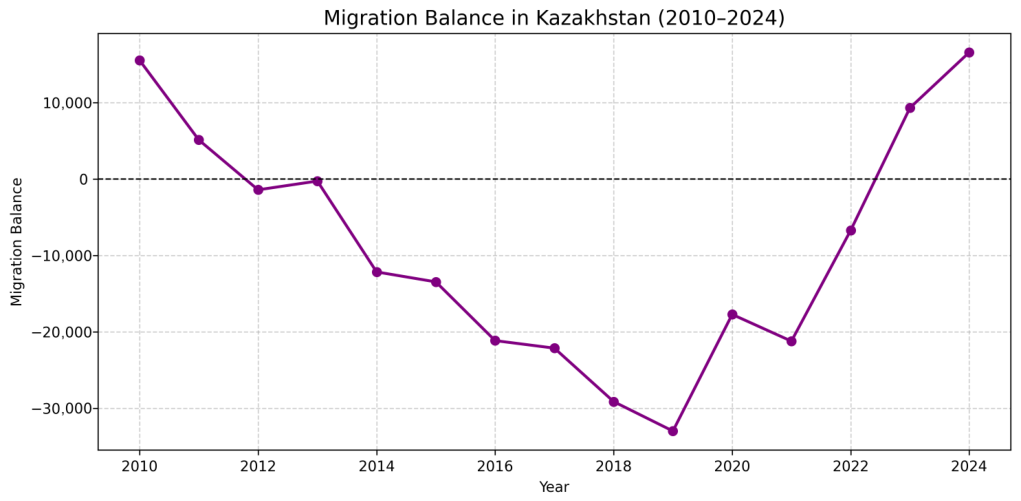
Kazakhstan’s external migration balance changed from a net inflow of 15,516 individuals in 2010 to a net outflow exceeding 33,970 in 2019, representing the largest migration loss during the observed period. Since 2020, the trend has gradually shifted, and by 2023–2024 the migration balance had returned to positive values. In 2024, Kazakhstan recorded a positive net migration balance of 16,550 individuals.
This shift may be associated with several interacting factors, including regional geopolitical changes, redirected migration flows from Russia and other CIS countries, and national migration and labor policies that increased Kazakhstan’s attractiveness within the region [
17].
Figure 8 presents the external migration balance in Kazakhstan for the period from 2010 to 2024.
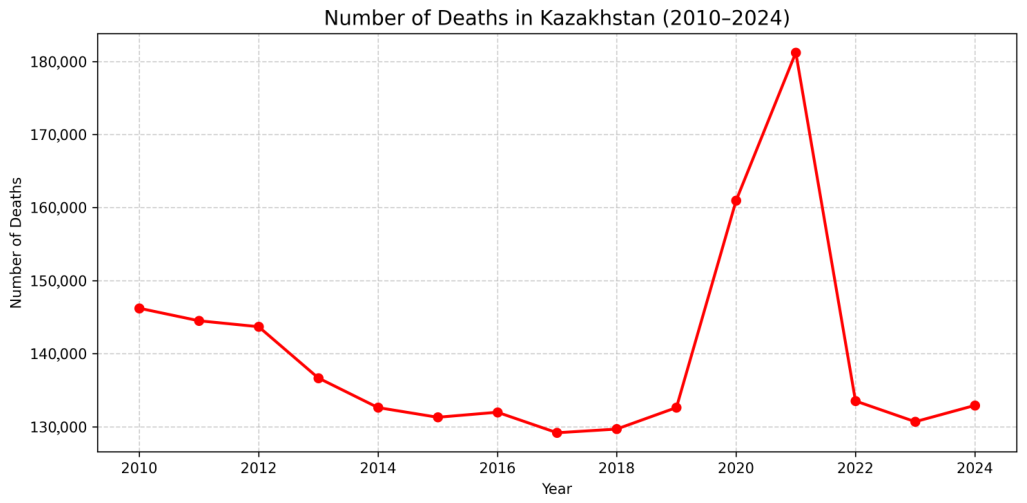
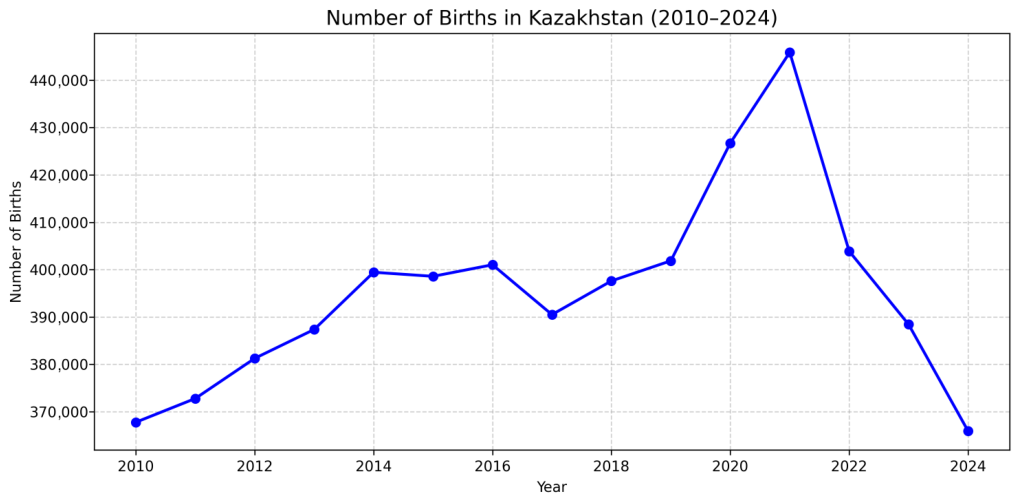
According to
Figure 9 and
Figure 10, the number of births in Kazakhstan increased from 367,785 in 2010 to 445,875 in 2021, representing the highest value during the observed period. After 2021, births declined to 365,923 by 2024, corresponding to a decrease of nearly 20% over three years. This decline may be associated with post-pandemic economic uncertainty, rising living costs, and delayed family formation.
During the observed period, annual mortality levels remained relatively stable within the range of approximately 130,000–145,000 deaths. A temporary increase in mortality during 2020–2021 may be associated with the COVID-19 pandemic and related pressure on healthcare systems. If the decline in birth rates continues over the long term, it may affect future population growth dynamics in Kazakhstan.
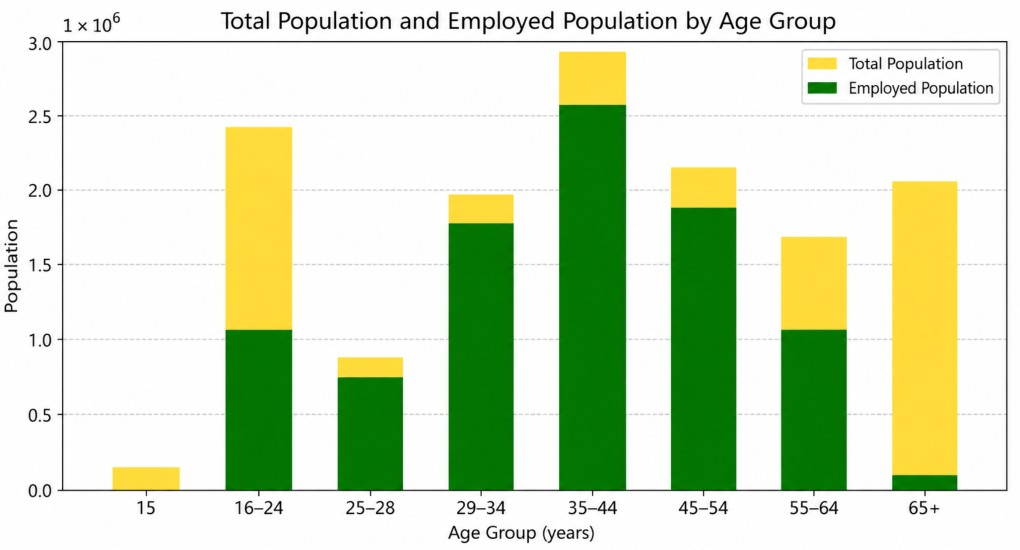
Figure 11 illustrates the distribution of the total and employed population across working-age groups in Kazakhstan as of Q2 2025. The largest employed group consists of individuals aged 35–44 years (2.59 million), followed by the 45–54 and 29–34 age groups.
Among individuals aged 16–24 years, approximately 1.07 million out of 2.43 million are employed. Although a substantial share of this age group remains economically inactive, this pattern is largely associated with participation in secondary and higher education. For the 2025–2026 academic year, more than 678 thousand students were enrolled across 116 higher education institutions.
The results also indicate a strong concentration of employment among individuals aged 29–54 years, suggesting that Kazakhstan’s labor market is primarily supported by mid-career workers. This pattern reflects both demographic structure and the current distribution of economic opportunities across age groups. At the same time, increasing migration inflows and demographic growth may contribute to higher labor market competition, while certain sectors may continue to experience shortages of qualified specialists.
These demographic and structural patterns provide important context for interpreting unemployment dynamics, as labor market outcomes are influenced not only by macroeconomic trends, but also by population structure, migration flows, and age-specific workforce participation.
3.3. Unemployed Population Analysis
The total number of unemployed individuals in Kazakhstan was estimated at 448,791, including 210,028 men (46.8%) and 238,763 women (53.2%). According to the BNS survey for Q2 2025, the most frequently reported reason for unemployment was the inability to find suitable employment, affecting 120,763 individuals (26.9% of all unemployed). This pattern may indicate the presence of structural and frictional unemployment factors, including skills mismatch and limited job opportunities.
The second largest category was voluntary resignation, accounting for 103,778 individuals (23.1%), with a slightly higher proportion among men. Unemployment associated with enterprise liquidation, bankruptcy, or staff reduction affected 46,433 individuals (10.3%), reflecting ongoing economic restructuring processes.
Women were more strongly represented in unemployment categories associated with housekeeping and family-related responsibilities. These differences may reflect the influence of traditional gender roles and care responsibilities on labor market participation.
These disparities may also be associated with broader socioeconomic and regional factors, including unequal access to education and training, differences in regional development, and migration patterns affecting labor supply and demand. Variations in employment opportunities between urban and rural areas may further reinforce existing inequalities. Overall, these patterns highlight the importance of inclusive labor market policies that address both structural and social dimensions of workforce participation.
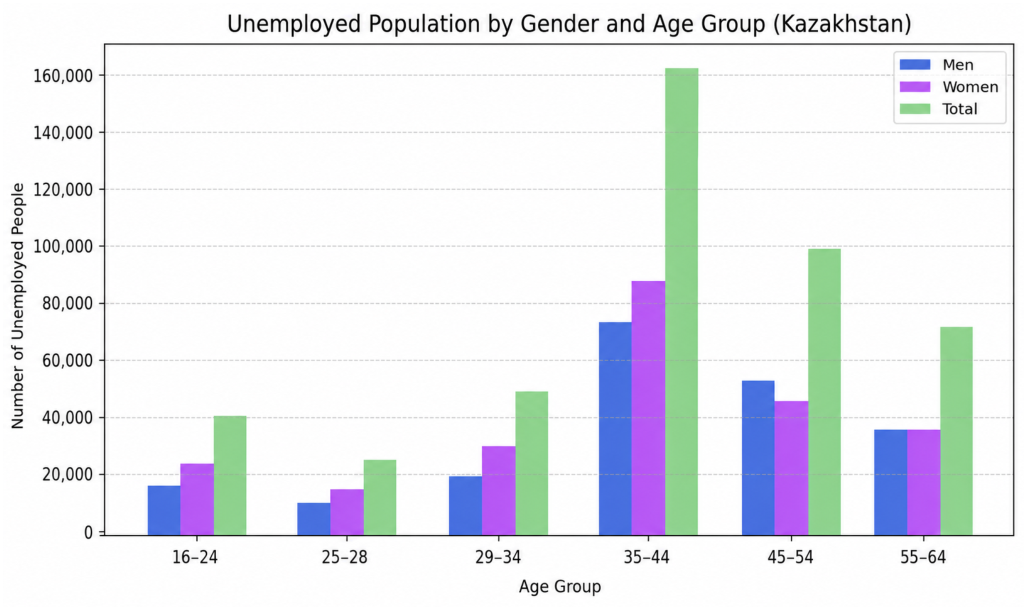
The largest unemployed age group in Kazakhstan was 35–44 years, comprising 162,555 individuals, followed by the 45–54 and 29–34 age groups. Youth unemployment (16–24 years) accounted for 40,736 individuals, suggesting the presence of barriers to labor market entry among younger populations. Women demonstrated higher unemployment levels across most age groups, particularly among individuals aged 16–24, 29–34, and 35–44 years.
Figure 12 presents the distribution of the unemployed population by gender and age group. According to BNS methodology, economically inactive individuals may include those engaged in education, homemaking, retirement, or affected by health-related limitations.
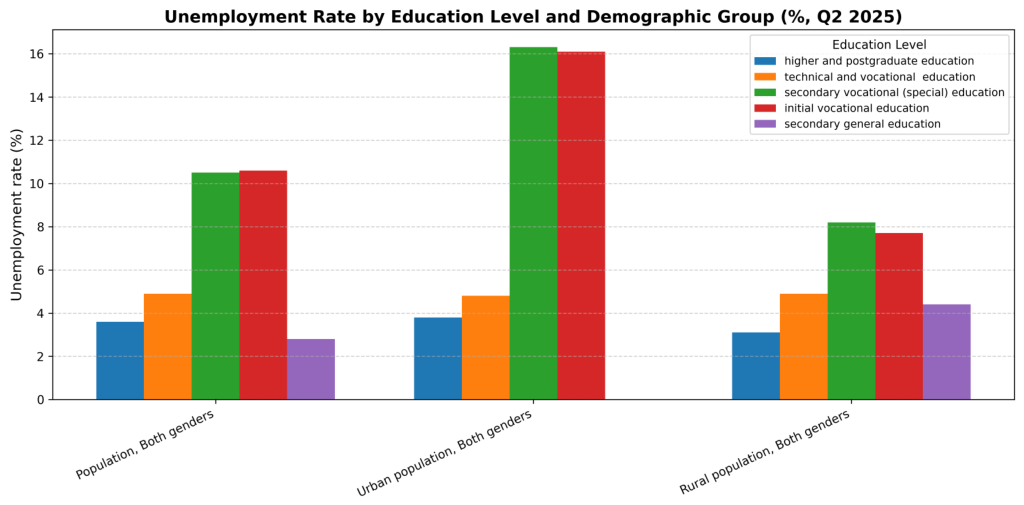
Individuals with higher and postgraduate education demonstrated the lowest unemployment rates (3.6% overall, 3.2% for men, and 3.8% for women). In contrast, higher unemployment levels were observed among individuals with secondary and initial vocational education, where unemployment rates reached approximately 10.5–10.6%.
In urban areas, unemployment was particularly pronounced among vocational education categories (16.1–16.3%), with women slightly more affected than men. In rural areas, unemployment rates for these categories were lower (7.7–8.2%), although a similar gender pattern remained evident.
These findings suggest that educational attainment is strongly associated with labor market outcomes across demographic groups. Higher education appears to be linked with greater labor market stability, whereas vocational education categories experience comparatively higher unemployment levels.
Figure 13 presents unemployment rates by education level and demographic group in Kazakhstan.
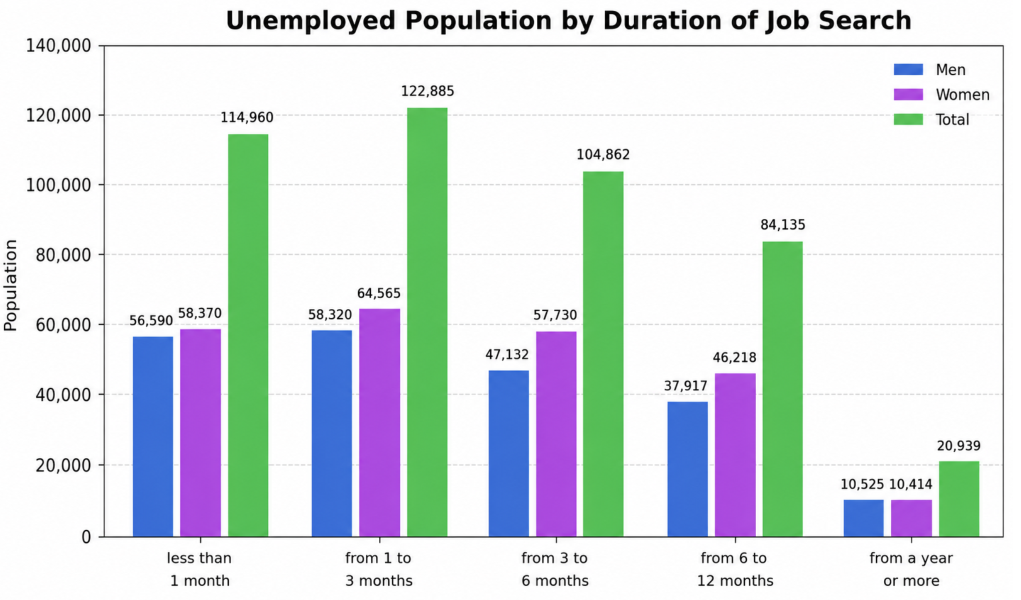
Figure 14 illustrates the distribution of the unemployed population in Kazakhstan by duration of job search. Short-term job seekers (less than one month) accounted for 114,960 individuals (25.6%), while the largest category consisted of individuals searching for employment for 1–3 months (123,831 individuals, 27.6%). Long-term job search lasting one year or more affected 20,939 individuals (4.7%), with a relatively balanced distribution between men and women.
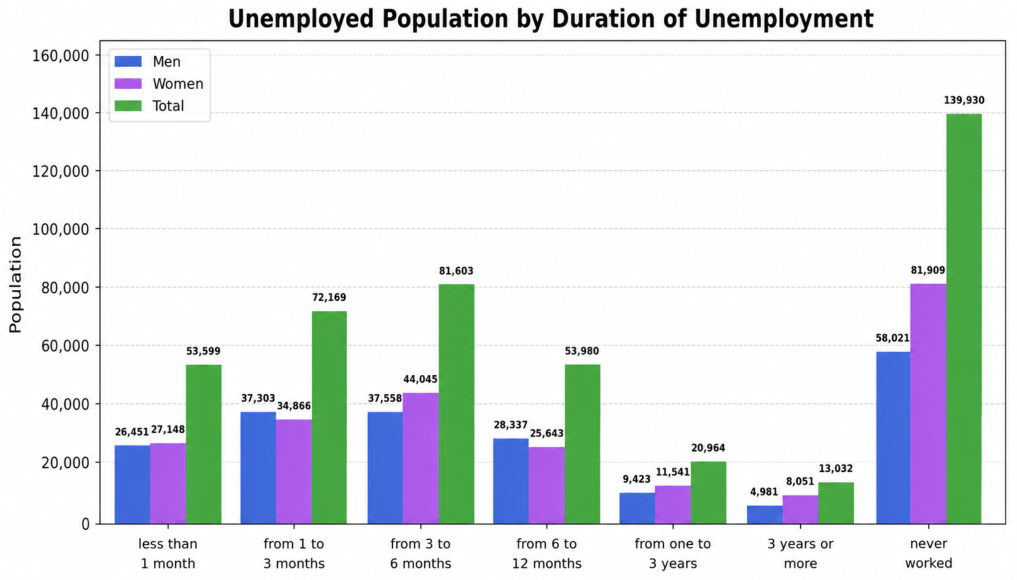
Figure 15 presents the distribution of unemployment by duration of unemployment status. The largest category consisted of individuals who had never previously worked (139,930 individuals, 32.2%), predominantly representing young people entering the labor market for the first time. This pattern suggests the presence of structural challenges related to school-to-work transition and initial employment opportunities.
From a structural perspective, different age groups may demonstrate varying levels of adaptability to digitalization and AI-related technologies. Younger individuals are generally more engaged with new technologies through education and training systems, although they may also face barriers when entering the labor market. Mid-career workers represent an important group for retraining and upskilling initiatives, while older age groups may experience greater difficulties adapting to rapid technological change. These patterns suggest that demographic structure plays an important role in shaping labor market adaptation under digital transformation.
Overall, the findings indicate that unemployment dynamics in Kazakhstan are influenced by a combination of demographic, educational, and structural factors. Labor market outcomes should therefore be interpreted within a broader context of workforce development and technological transformation rather than as the result of a single factor.
3.4. Active Programs Supporting Labor Market Development in Kazakhstan
Kazakhstan has implemented several policy initiatives aimed at supporting workforce development and labor market adaptation under digital transformation. These measures include the “Digital Bridge 2025” forum focused on AI and digital technologies in Central Asia [
18], the establishment of a governmental body responsible for AI and digital development [
19], the development of the Alem.AI innovation center [
20], and the adoption of regulatory initiatives related to AI technologies [
21].
These initiatives reflect broader efforts to strengthen digital infrastructure, workforce preparedness, and technological development in Kazakhstan. Programs such as Tech Orda and Astana Hub are intended to support workforce adaptation and digital skills development. Tech Orda provides subsidized IT training through private educational institutions, while Astana Hub functions as a national innovation and startup ecosystem that supports technology entrepreneurship, digital education, and workforce upskilling initiatives in Kazakhstan. In the context of ongoing technological change, countries that adapt more effectively to digital transformation may be better positioned to strengthen labor market resilience and workforce adaptability.
Table 3 summarizes selected programs aimed at addressing structural labor market challenges, including youth employment, skills mismatch, digital skills development, and workforce adaptation.
From a practical perspective, digital and AI-related technologies may help address certain labor market challenges. For example, adaptive learning systems and digital educational platforms can support personalized training and reduce skills mismatch among job seekers. Data-driven job matching systems may also improve the efficiency of employment services by connecting candidates with vacancies that better correspond to their skills and experience. In regions with limited access to educational resources, digital learning tools may expand opportunities for workforce development and reduce regional disparities in employment outcomes.
Similar approaches have been observed internationally, where digital upskilling initiatives and technology-supported training platforms have been used to support employability and workforce transition under changing labor market conditions [
5,
10].
In addition to existing initiatives, broader policy measures may further support labor market adaptation under technological transformation. These measures may include retraining programs for mid-career workers, stronger collaboration between educational institutions and industry, and the development of innovation ecosystems aligned with labor market needs. Such approaches may contribute to more inclusive and sustainable workforce transitions.
4. Discussion
The results indicate a generally stable labor market in Kazakhstan, with a gradual decline in unemployment over the observed period. Forecasting results suggest that this trend may continue in the coming years. However, the projected changes remain relatively modest and should be interpreted as indicative of stabilization rather than substantial structural transformation.
Because the forecasted unemployment values vary within a relatively narrow range, minor fluctuations should be interpreted with caution, as they may fall within the margin of model uncertainty.
Demographic factors, including population growth, migration processes, and age-specific employment patterns, play an important role in shaping labor market dynamics. In particular, the growing share of the youth population (16–24 years) highlights the importance of effective labor market integration to reduce the risk of structural unemployment.
In the context of ongoing digital transformation, labor markets are influenced by complex and sometimes contradictory processes. Technological developments, including AI-related technologies, may contribute to increased efficiency and the automation of certain tasks, while also creating demand for new skills and occupations. Recent studies suggest that the effects of AI adoption on employment may vary across sectors, occupations, and demographic groups [
26]. In particular, younger workers entering highly technology-exposed occupations may experience additional challenges during periods of rapid technological transition. These trends highlight the importance of adaptive education systems, workforce development, and digital skills training.
At the same time, recent labor market changes cannot be attributed solely to AI-related developments. Broader structural factors, including demographic trends, sectoral transformation, migration processes, and evolving skill requirements, also play an important role in shaping employment outcomes.
Government initiatives in Kazakhstan, including programs focused on youth employment, IT training, and entrepreneurship, may contribute to strengthening workforce adaptability under digital transformation. In recent years, Kazakhstan has increased policy attention toward digitalization and AI-related development, including initiatives aimed at expanding digital competencies and aligning education with labor market needs [
27]. Such measures are important for supporting long-term labor market resilience and workforce adaptation. The programs summarized in
Table 3 illustrate selected policy initiatives related to human capital development and digital skills formation.
From a broader perspective, the relationship between technological progress and employment may be interpreted through concepts such as Jevons’ paradox, where improvements in efficiency can increase overall demand rather than simply reduce labor requirements [
28]. Examples including AI-assisted medical diagnostics and systems such as AlphaFold suggest that technological advancements may complement human expertise in certain domains rather than fully replace it [
29,
30].
The forecasting models used in this study (SARIMA, LightGBM, and Prophet) are primarily based on historical data patterns and may not fully capture structural labor market changes. Rapid technological developments, policy interventions, and external shocks can introduce uncertainties that are not reflected in model-based forecasts. Therefore, the forecasting results should be interpreted as baseline estimates rather than precise projections of future labor market conditions.
Limitations. This study has several limitations. First, the dataset contains a missing period that required model-based imputation, which may introduce additional uncertainty into the analysis. Second, the forecasting approach is based on a univariate time series model and does not incorporate additional explanatory variables such as demographic indicators, education, or policy measures. Third, advanced validation techniques, including cross-validation and prediction intervals, were not applied. Finally, the study does not include direct quantitative indicators related to AI education, skill formation, or AI adoption, and therefore considers these aspects within a broader contextual framework. Accordingly, the results should be interpreted as indicative and exploratory rather than definitive.
5. Conclusions
This study examined labor market dynamics in Kazakhstan using time series forecasting and demographic analysis to assess unemployment trends through 2028. The results indicate a generally stable labor market, with forecasted unemployment values showing only modest variation over the projected period. Among the evaluated forecasting approaches, SARIMA demonstrated the best predictive performance, suggesting that classical statistical models may remain effective for unemployment forecasting under conditions of limited and partially incomplete labor market data.
The findings show that unemployment dynamics in Kazakhstan are influenced not only by macroeconomic conditions, but also by demographic structure, migration processes, educational attainment, and workforce composition. In particular, the growing share of the youth population highlights the importance of effective labor market integration and workforce development strategies.
A key contribution of this study is the integration of unemployment forecasting with demographic and workforce adaptation analysis in the context of an emerging economy undergoing digital transformation. Rather than interpreting AI-related technologies as direct drivers of unemployment, the study emphasizes their role within a broader process of workforce adaptation, digital skills development, and changing labor market requirements.
The analysis also highlights the role of policy initiatives aimed at strengthening workforce preparedness under technological transformation. Programs such as Tech Orda, which provides subsidized IT training, and Astana Hub, a national innovation and startup ecosystem supporting digital entrepreneurship and workforce upskilling, illustrate ongoing efforts to support labor market adaptation and human capital development in Kazakhstan.
Overall, the results suggest that long-term labor market resilience will depend on the ability of education systems, workforce policies, and innovation initiatives to adapt to changing technological and demographic conditions. These findings are relevant to broader discussions on Sustainable Development Goal 8 (Decent Work and Economic Growth), particularly in relation to inclusive employment, workforce resilience, and sustainable economic development under digital transformation.



 ,
,