Article

Application of UAV Thermal Imaging for Preliminary Screening of Large Geothermal Areas: Assessing Limitations of Uncalibrated Data in Low-Temperature Hydrothermal Systems (Croatia Case Studies)

Croatian Geological Survey, Ulica Milana Sachsa 2, 10000 Zagreb, Croatia
*
Author to whom correspondence should be addressed.
Sustainability 2026, 18(10), 4848; https://doi.org/10.3390/su18104848
Submission received: 31 March 2026 / Revised: 7 May 2026 / Accepted: 9 May 2026 / Published: 12 May 2026
(This article belongs to the Special Issue Groundwater Management, Pollution Control and Numerical Modeling)

Abstract

Thermal imaging was utilized across three hydrothermal systems in Croatia for preliminary screening of low-temperature surface hydrothermal manifestations, particularly subthermal springs (13–20 °C). This study assessed the effectiveness of this remote sensing method for initial geothermal surveys and monitoring of surface geothermal anomalies. The methodology integrated GIS tools (Esri, Redlands, CA, USA) to identify potential zones of subthermal water outflow using thermal orthomosaics derived from the photogrammetric reconstruction of thermal infrared images. Thermal images were acquired using a fixed-wing eBee Plus RTK unmanned aerial vehicle (UAV) (senseFly Ltd., Cheseaux-sur-Lausanne, Switzerland) equipped with a senseFly thermoMap camera (senseFly Ltd., Cheseaux-sur-Lausanne, Switzerland) and processed using Pix4Dmapper software. Due to COVID-19 restrictions, the intended methodology was simplified by discarding temperature calibration. Temperature calibration of thermal images was performed only for a few smaller areas to address discrepancies between measured ground temperatures and temperature values depicted in the maps. The methodology was validated near the Daruvar hydrothermal system, where a thermal anomaly corresponding to the subthermal spring location was visually detected, demonstrating the applicability of the method for surface investigation of low-temperature geothermal systems. No new subthermal or thermal springs were discovered. In total, 45.35 km2 was surveyed over 9 days, making this a viable and low-cost methodology for preliminary exploration. However, limitations, including the narrow time window for thermal data acquisition, regulatory requirements for drone flights, and subjectivity of the methods used, were identified.

1. Introduction

Geothermal energy, derived from thermal energy stored within the Earth’s subsurface, is a pivotal element in the European Union’s ambitious transition to clean energy, as outlined in the European Green Deal [1,2]. As a renewable energy source, it offers a clean alternative to conventional energy generation methods, free from combustion, thereby facilitating compliance with environmental standards and regulations [3]. The utilization and characteristics of geothermal resources are directly linked to the geological and hydrogeological settings of the associated geothermal systems [4,5]. When heat transfer in geothermal systems involves water in either its liquid or vapor state, the system is classified as hydrothermal [6,7]. A hydrothermal system is considered low-temperature when the fluid in the aquifer has a temperature below 90–100 °C, making it insufficient for electrical energy production [8,9]. To ensure sustainable use of such systems, which are dominantly recharged by precipitation, it is crucial to understand the factors governing geothermal resources at the system level. A thorough identification of all discharge features in the system aids in refining existing conceptual models and assessing groundwater balance, thereby enhancing our comprehension of regional and local hydrogeology [10].
In the Croatian part of the Pannonian Basin System (PBS), natural thermal springs fed by Mesozoic carbonate aquifers are observed at two dozen localities, with temperatures of up to 62 °C [11]. Thermal springs are discharge features of the hydrothermal system, which include recharge in the mountainous hinterland and the circulation of water through a geothermal aquifer, where water is heated due to an elevated heat flow from the Earth. A higher-than-average geothermal gradient (49 °C/km) in this region is due to the specific tectonic setting of PBS, where the lithosphere is thinned due to Miocene back-arc extension, allowing sufficient heat flow (76 mW/m2) from the asthenosphere to the surface [12,13,14].
Two common thresholds are often utilized in the absence of widely accepted definitions for thermal water, thermal springs, and related terms such as cold, warm, and hot springs. These thresholds include the average local air temperature and the human body temperature, making springs with temperatures of more than 5 °C above the mean annual air temperature thermal [15,16]. This definition has a clear limitation: a spring with a temperature of 5 °C qualifies as thermal in colder regions, whereas a spring in the tropics must reach 20 °C to meet the criteria. Considering the climatic conditions of the area where springs occur is essential. Thermal springs in the Pannonian region of Croatia are classified using a modified balneological scale [17]. This scale includes subthermal (13–20 °C), hypothermal (20–34 °C), homeothermal (34–38 °C), and hyperthermal (>38 °C) categories, which are based on their relation to human body temperature—whether they are cooler, similar, or warmer. This modification is applied at the lower end of the scale (subthermal), covering springs with temperatures above the average air temperature in the Pannonian region, where most natural thermal springs are located.
Remote sensing techniques have a long history in geothermal prospecting and monitoring through satellite and manned aerial aircraft imaging [18,19,20,21,22,23,24,25,26]. The resolution of such data is low in the case of satellite acquisitions. Aerial imaging can bring high resolutions, but the cost is also high. With recent developments and the increased availability of unmanned aerial vehicles (UAVs) equipped with thermal cameras, thermal image resolution can be very high while keeping costs low. UAVs equipped with infrared thermal imaging (TIR) have been used for surveying geothermal systems; however, this was mainly reserved for high-temperature geothermal sites [27,28,29]. In this study, a UAV was used to survey large areas in search of potential outflow zones of subthermal water in the hinterlands of thermal springs in Croatia. A crucial part of this study was testing a UAV with a thermal camera for this application and ensuring that thermal and spatial resolutions were adequate for the task.
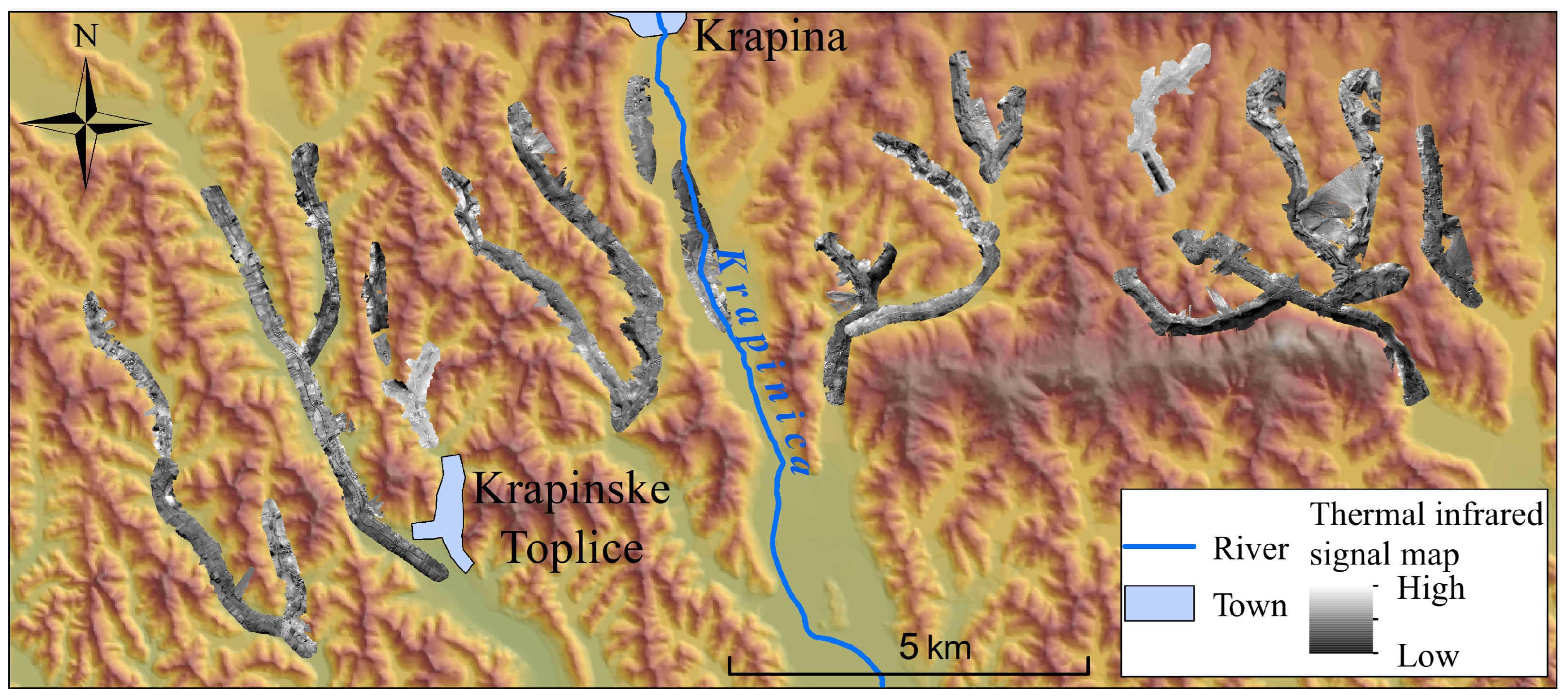
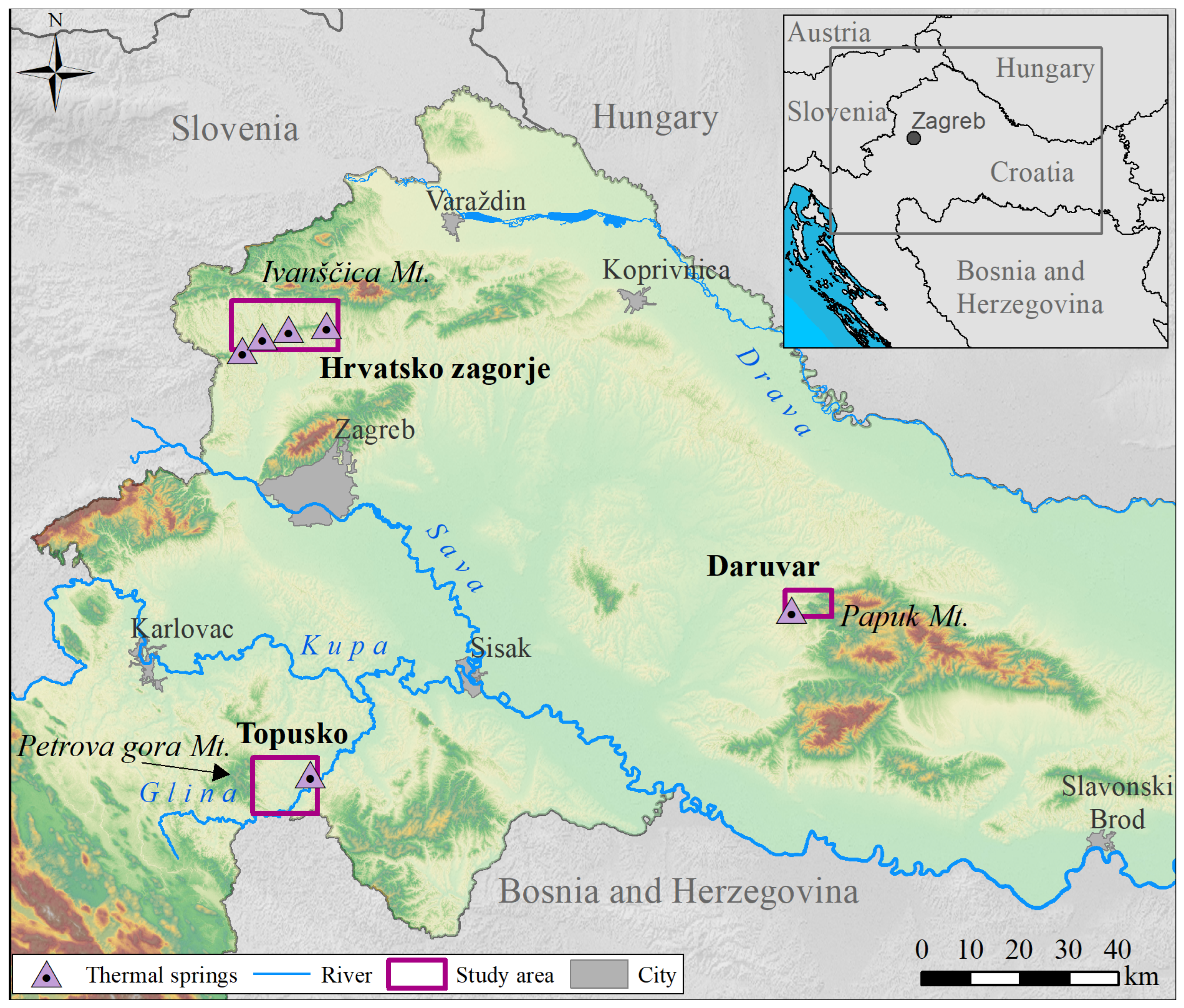
This study focused on three distinct hydrothermal systems in Croatia, Daruvar, Hrvatsko zagorje, and Topusko (Figure 1), aiming to explore the potential presence of surface thermal anomalies and evaluate the effectiveness of the proposed method for prospecting such anomalies in low-temperature geothermal systems. These thermal anomalies could help identify subthermal springs in the hinterlands, representing diffuse discharge from the system, and should be included in their conceptual models. To verify the proposed methodology, thermal imaging was conducted on a subthermal spring near the Daruvar hydrothermal system and known thermal springs within the respective systems.

2. Materials and Methods

2.1. Study Areas

Remote sensing surveys were planned to cover areas between the recharge and discharge areas of Daruvar, Hrvatsko zagorje, and Topusko hydrothermal systems (Figure 1). All three study areas are situated in the central continental part of Croatia, along the SW edge of the PBS. They are characterized by mild relief and a well-developed stream grid. Climatologically, this area is classified within the continental climate category Cfb (temperate climate), which is characterized by cold winters, warm to hot summers, and the absence of a distinct dry season [30,31,32,33].
These three hydrothermal systems are distinguished by their unique geological and hydrogeological characteristics, as well as the extent of prior investigations and the availability of historical research data. Before 2023, no scientific research had been published on the Topusko hydrothermal system (THS). Hrvatsko zagorje and Daruvar are the sites with the next highest number of scientific publications. Daruvar’s hydrothermal system (DHS) has the most available data. In contrast, THS is the least studied and harbors many uncertainties regarding its conceptual model, which was recently improved [34]. Thermal water from these localities, characterized as hyperthermal, contains CaHCO3 and Ca-MgHCO3 hydrochemical facies, indicating an interaction between water originating from meteoric resources and limestone–dolomite aquifers [35,36,37,38,39,40]. Geothermal aquifers are covered by confining and semi-confining beds of low-permeability Neogene deposits (i.e., clays, marls, conglomerates, sandstones, clay-marls, and silt). The bottom layers of the aquifers are crystalline bedrocks, which are characterized by clastic development of Upper Palaeozoic and Lower Triassic layers (i.e., granitoids, conglomerates, schists, shales, mica sandstones, and siltites) [41].
The thermal springs of the DHS are located in Daruvar town (161 masl), along the western slopes of Papuk mountain (614 masl), which represents the recharge area. Located in the Toplica River Valley, a tributary of the Ilova River, Daruvar borders the Lonja–Ilova depression to the east [42,43]. The average annual temperature in Daruvar is 11.3 °C, and the annual rainfall is 957 mm [44]. Thermal water temperature varies between 38 and 50 °C across springs and seasons [45].
The investigated area of the Hrvatsko zagorje hydrothermal system (HZHS) lies in the central part of Krapina-Zagorje County, corresponding to the geographical region of Hrvatsko zagorje. To the north, it is bordered by Strahinjčica (with Sušec summit at 846 masl) and the western edge of the Ivanščica mountains, while the Krapina River Valley borders it to the south. Thermal springs in this region, including Tuheljske (33 °C), Krapinske (43 °C), Šemničke (29 °C), and Sutinske Toplice (28 °C) (i.e., Toplice meaning thermal springs), are situated at elevations ranging from 150 masl in the western portion of the study area to 170 masl in the eastern section [36]. The microclimatic conditions suggest a continental humid climate, moderately warm summers and cold, rainy winters, influenced by the Pannonian Plain and mountain ranges such as the Alps and the Dinarides. Annual precipitation averages 977 mm, with an average temperature of 11.1 °C [44]. Hrvatsko zagorje is among Croatia’s most densely populated regions, offering an appealing climate, excellent transport links to Central Europe, and natural attractions that draw settlement and health tourism [46].
Thermal springs in Topusko are the second warmest in Croatia, with a temperature of up to 53 °C [47,48] and a historical outflow of 25 L/s [49,50]. They are located in a depression along the eastern slopes of Petrova gora Mt. (Petrovac peak, 507 masl). On the southern side, the research area is bounded by the valley of the river Glina and its tributaries, which also marks the border with the neighboring country of Bosnia and Herzegovina. The relief is characterized by small hills and hummocks, with an average height of 300–500 m. The previously assumed recharge area was west of Petrova gora Mt., where Triassic carbonates crop out [36], while [39] proposed recharge occurred south of Topusko. During the Croatian Homeland War (1991–1995), the area of Topusko suffered enormous destruction, resulting in the loss of some research data from the 1980s when the wells were drilled to extract thermal water from the shallow aquifer (80–250 m depth) [51,52].

2.2. Methodology

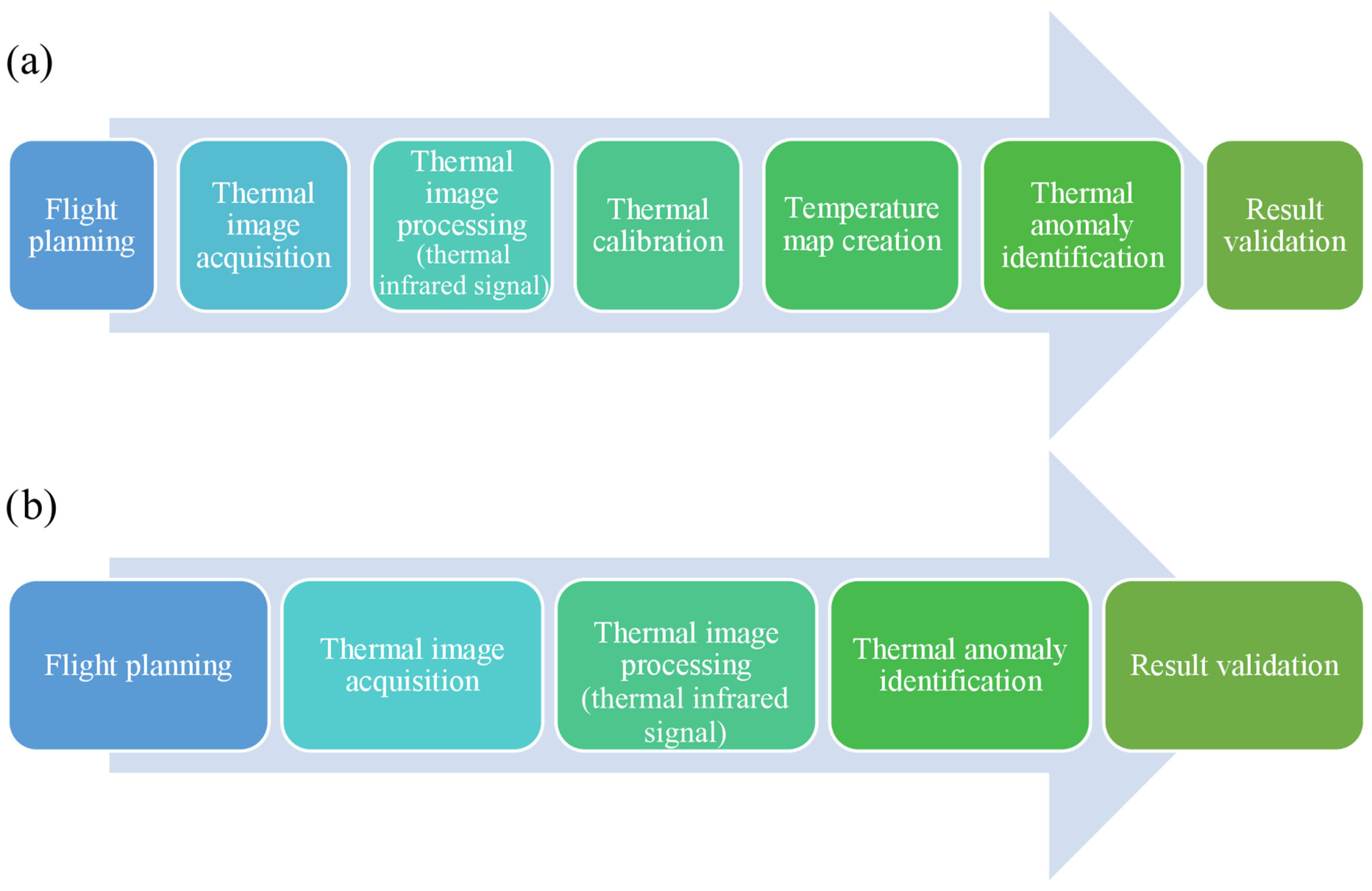
The presented methodology was used to visually identify potential outflow zones of subthermal water in the hinterlands of thermal springs. This approach uses GIS tools (ArcMap 10.2, Esri, Redlands, CA, USA) to interpret and analyze thermal infrared signals or temperature maps. These maps are derived through photogrammetric reconstruction of thermal infrared (TIR) images captured by a thermal sensor integrated into a UAV. Two workflows were used in this study (Figure 2). The first involved using ground control points (GCPs) for spatial correction and thermal control points (TCPs) for thermal calibration (Figure 2a). This was the originally intended method; however, due to COVID-19 restrictions, it was applied only to a smaller portion of the acquired data. The second method was simplified without GCPs and TCPs (Figure 2b). This method was used for the majority of the acquired data, as it does not require additional crew to handle GCPs and TCPs.

2.2.1. Flight Planning

The fixed-wing eBee Plus RTK, equipped with a senseFly thermoMap thermal imaging camera, flies automatically based on flight missions programmed in the eMotion 3 software version 3.5.0., senseFly Ltd., Cheseaux-sur-Lausanne, Switzerland. The user defines the target area on a map, along with the flight altitude and the desired image overlap. Due to thermal images having lower resolution than standard RGB images, a high overlap is required for successful photogrammetric processing. Therefore, the planned lateral overlap was 70%, and the longitudinal overlap was 90%. The spatial resolution of the final TIR map depends on the flight altitude. As all the study areas are characterized by undulating terrain, the flight altitude must be specified as altitude above ground (AGL). The planned altitude for most flights was set at 79 m above the ground level (mAGL). Based on the thermoMap camera sensor size and focal length, the theoretical spatial resolution of the acquired thermal images was 15 cm/pixel. Since fixed-wing UAVs cannot rapidly change flight altitude, the actual flight altitude is mostly higher, and hence, the resulting image resolution is lower. To plan a mission at an altitude above ground, it is essential to have access to a high-quality digital terrain model (DTM). As with most other flight mission software, eMotion uses a globally available DTM acquired from SRTM (Shuttle Radar Topography Mission) with a 3 arc-second resolution (approximately 90 m) [53]. Given the planned flight altitude of 79 mAGL and considering the terrain characteristics of the study areas, such a resolution was insufficient to ensure safe flight operations. To overcome this limitation, several UAV flights were conducted using a standard RGB camera (S.O.D.A., senseFly Ltd., Cheseaux-sur-Lausanne, Switzerland) camera, at higher altitudes to generate reliable digital surface models (DSMs) through photogrammetric processing [54]. The resulting DSMs were compared with the available DTM of Croatia, with a grid size of 25 m, provided by the State Geodetic Administration. The comparison showed that the available 25 m resolution DTM was sufficient for safe flight planning of UAV missions equipped with a thermoMap camera.
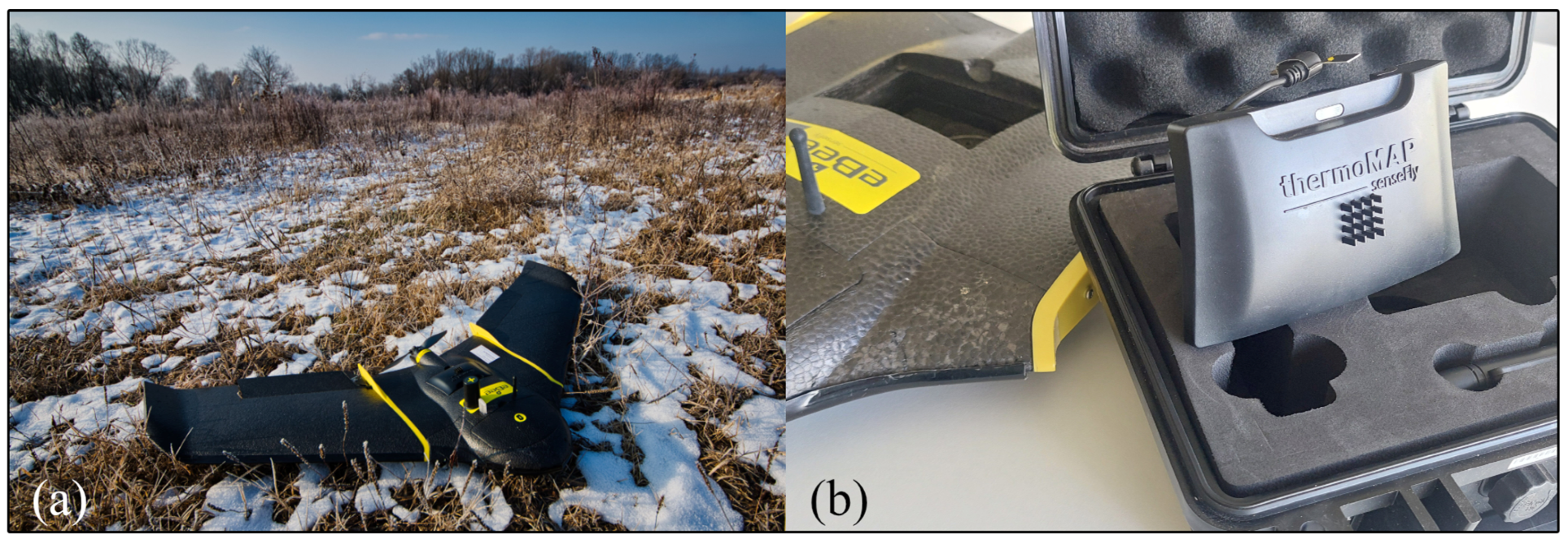
Other considerations include safe take-off and landing positions. Both operations depend on wind conditions, as it is preferable for the UAV to take off and land into the wind. The eBee Plus UAV is designed to land on its belly, requiring a flat, soft surface of a specific size and an obstacle-free approach corridor (Figure 3a). Additionally, a continuous radio connection must be maintained with the UAV throughout the entire flight to enable a timely response to emergencies and effective management of flight duration. Covering large areas was not feasible under visual line of sight (VLOS) flying conditions, especially considering the eBee Plus UAV’s flight time of up to 60 min and its capacity to cover long distances in a single flight. Therefore, the requisite permits for flying beyond the visual line of sight (BVLOS) were obtained for this purpose.

2.2.2. Thermal Image Acquisition

Thermal images were acquired using the senseFly thermoMAP thermal camera (Figure 3b), which records wavelengths in the thermal infrared range of the spectrum (7.5–13.5 µm). The sensor is not cooled; however, the camera includes an internal temperature sensor, which enables the camera to perform automatic thermal calibration during the flight at predefined waypoints. If the temperature readings from the sensor are not stable during calibration, the UAV enters a circling pattern and waits for the temperature to stabilize. The resolution of the images is 640 × 512 pixels, with a temperature resolution of 0.1 °C (Table 1). The thermal sensor in the camera captures thermal infrared (TIR) images in TIFF format, which are geotagged using the UAV’s onboard GNSS receiver.
Data acquisition is most effective during the winter, the coldest period of the year, as it provides maximum thermal contrast between subthermal water, surface, and air temperatures. Ideally, measurements should be conducted during nighttime or early morning [55,56,57]. However, nighttime operations were not possible due to safety concerns and permit restrictions. Flights were conducted during the winter daytime, whenever weather conditions allowed (low wind speeds and high visibility).
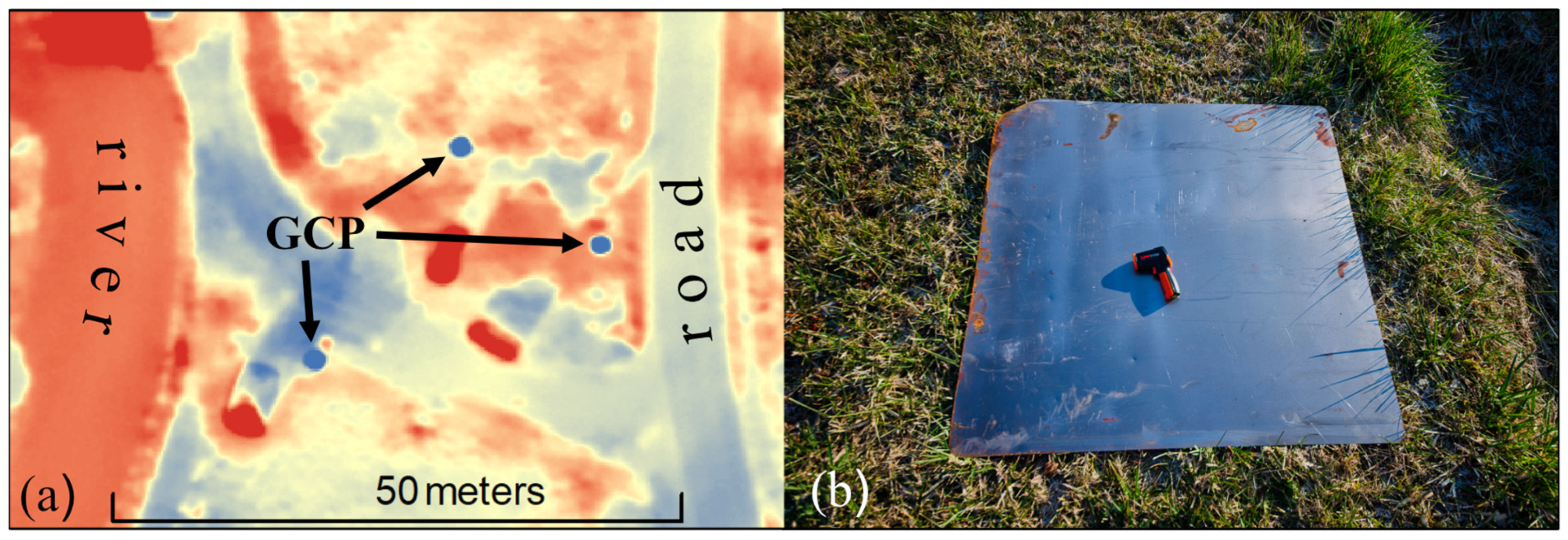
Initially, GCPs and TCPs were intended to be used for all surveyed sub-areas. However, due to COVID-19 restrictions at the time of thermal imaging, they were used only in several smaller areas. Thin metal plates measuring 1 × 1 m were used for GCPs, as their high reflectivity makes them easily identifiable in TIR images. Water bodies were intended to provide the main TCPs, and their temperature was measured using Hobo 8K Pendant temperature data loggers (Onset Computer Corporation, Bourne, MA, USA). Easily recognizable features, such as road surfaces, were also used as TCPs, with temperatures measured using a digital infrared thermometer (LOMVUM, Hangzhou, China) (Figure 4b). The positions of all GCPs and TCPs were recorded with a GNSS device (K3, Kolida instrument co., LTD, Guangzhou, China) using CROPOS reference stations, yielding an accuracy of 0.02 m horizontally and 0.04 m vertically [58].

2.2.3. Thermal Image Processing

The thermal images acquired were processed using the photogrammetry software Pix4Dmapper ver. 4.6.4 (Pix4D SA, Lausanne, Switzerland; [59]) following an existing workflow tailored for the senseFly thermoMAP camera. Thermal maps were generated in the form of thermal infrared signal maps (Figure 4a), expressed in digital numbers (DNs) representing the magnitude of the TIR radiance, as well as indexed temperature maps derived by Pix4Dmapper. The latter were formulated under assumptions of emissivity and standard atmospheric conditions. Thermal infrared signal maps represent the quantity of infrared radiation, primarily controlled by the temperature of the observed object. The temperature map, generated during thermal image processing, is a TIFF image containing single-band, floating-point values representing absolute temperature in degrees Celsius. The georeferenced thermal images and the derived products were analyzed using analytical tools provided by the geographic information system (GIS) ESRI ArcMap 10.2.1 [60].

2.2.4. Thermal Orthomosaic Calibration

This step was not performed in areas without TCPs. Ground-measured temperatures of TCPs were correlated with corresponding DN values from the thermal infrared signal maps. A linear regression model was developed using Microsoft Excel software. If a strong correlation exists between the variables and this relationship is well-represented by the linear regression model, the radiometric values of individual pixels in the TIFF images are corrected using the derived empirical linear equation [61,62,63,64]. As a result, calibrated temperature maps are produced in degrees Celsius. Due to significant variations in environmental conditions, a universal equation cannot be applied to images acquired at different times and locations. Therefore, different empirical equations must be developed to account for changing environmental conditions across various study areas [65].

2.2.5. Thermal Anomaly Identification

Identification of potential thermal anomalies would ideally be performed by applying temperature thresholds within the desired range on the calibrated temperature maps, thereby isolating potential anomalies. However, since calibrated temperature maps were not produced for the majority of the investigated area, thermal anomaly identification was based on visual inspection of derived thermal infrared signal maps (i.e., areas without TCPs, and thus, without temperature calibration). Consequently, it was not possible to automatically exclude thermal anomalies, as DN values are not uniform across different areas. Thermal anomalies were identified through visual interpretation using ESRI ArcMap software. This was greatly facilitated by overlaying temperature/thermal infrared signal maps with topographic datasets (topographic and orthophoto maps, DTM, stream networks, etc.) to exclude anomalies associated with other non-geothermal sources (buildings, reflective surfaces, vegetation, etc.). Detected thermal anomalies that could not be attributed to known sources were marked and subsequently verified in the field.

2.2.6. Method Testing and Validation

The presented methodology was applied and validated in well-known thermal spring areas within the Topusko and Hrvatsko zagorje hydrothermal systems, as well as the small subthermal spring Isić near the Daruvar hydrothermal system.

3. Results

Thermal imaging was conducted in winter 2022 across the Daruvar, Topusko, and Hrvatsko zagorje hydrothermal systems. Due to the ongoing COVID-19 pandemic at the time, all fieldwork was carried out by a minimal crew of two people. Consequently, GCPs and TCPs were not used in most surveyed sub-areas.

3.1. Daruvar Hydrothermal System

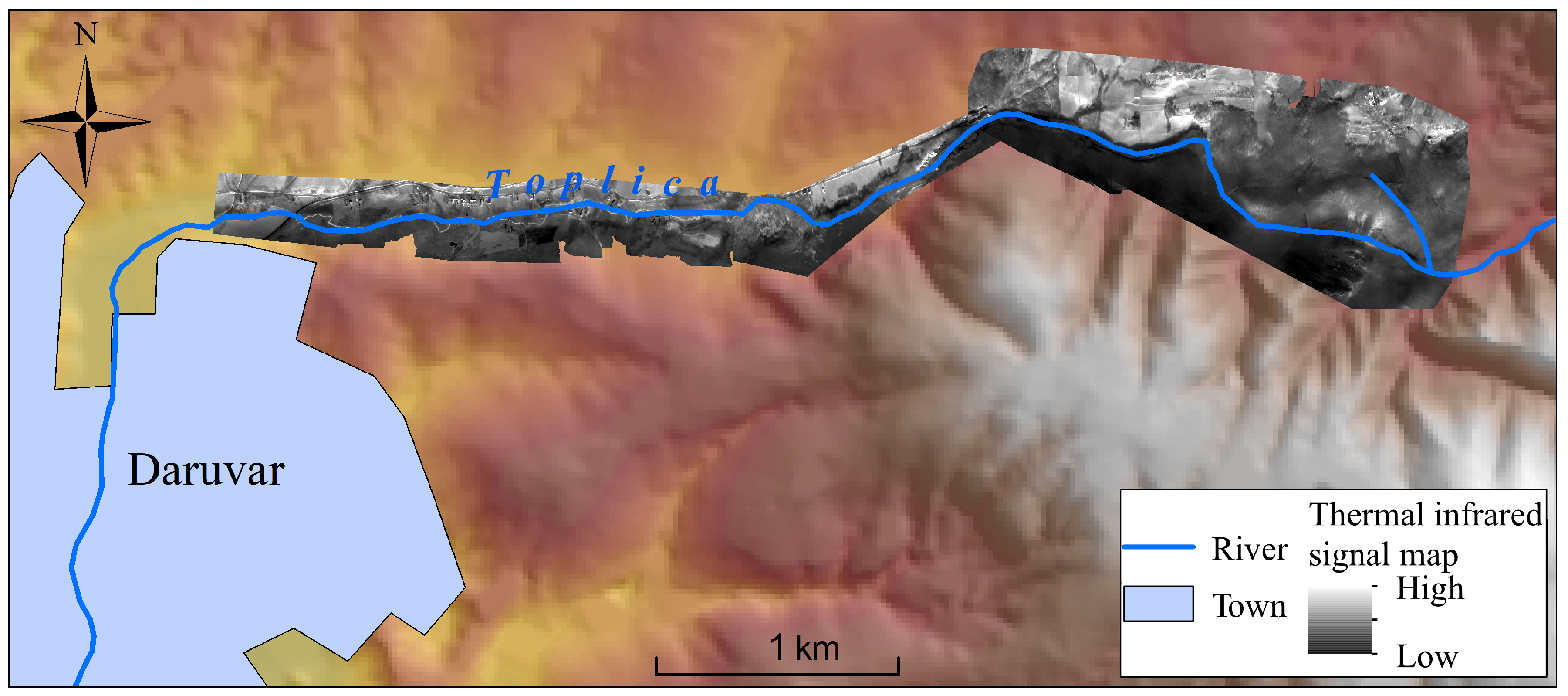
Thermal imaging of the area near the Daruvar thermal springs was conducted through four flights on 12 January 2022, resulting in 2.82 km2 of thermal infrared signal maps with an average Ground Sampling Distance (GSD) of 25.54 cm/pixel (Figure 5). The targeted sub-area, the Toplica Valley, was selected due to its orientation perpendicular to the geological structures and groundwater flow direction, extending from the recharge area of the Daruvar hydrothermal system to the discharge area of thermal springs. No subthermal springs were identified through the visual inspection of thermal anomalies.
Additionally, a 0.4 km2 area located 10 km south of the town of Daruvar, featuring the subthermal spring Isić, was imaged for method validation purposes.
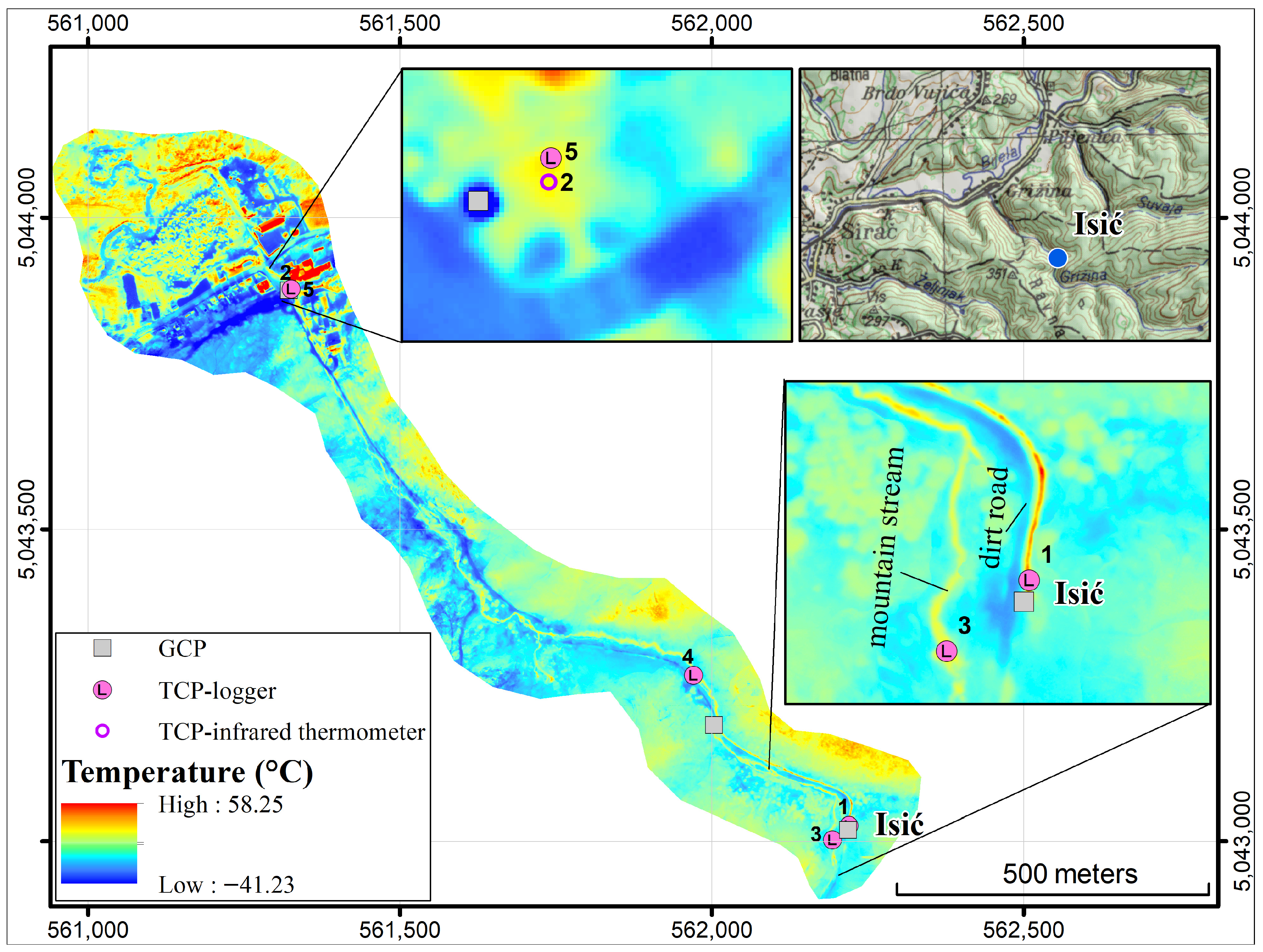
The Isić spring is located in a deep forested ravine adjacent to a stream. Its temperature was measured in situ at 15 °C. The average annual air temperature for the nearby town of Daruvar is 11.3 °C (period 2013–2021, [44]). This indicates that Isić is a subthermal spring within the vicinity of the DHS. The spring discharge was estimated at 5–6 L/s. Three 1 × 1 m metal plate GCPs were used. Four temperature loggers were placed in the spring and the stream, which acted as TCPs, with one additional water temperature measurement taken using a digital infrared thermometer. The entire ravine containing the Isić spring was imaged in a single flight, using the same flight parameters applied to the other study areas. The air temperature during the flight was approximately 5 °C under sunny weather conditions.
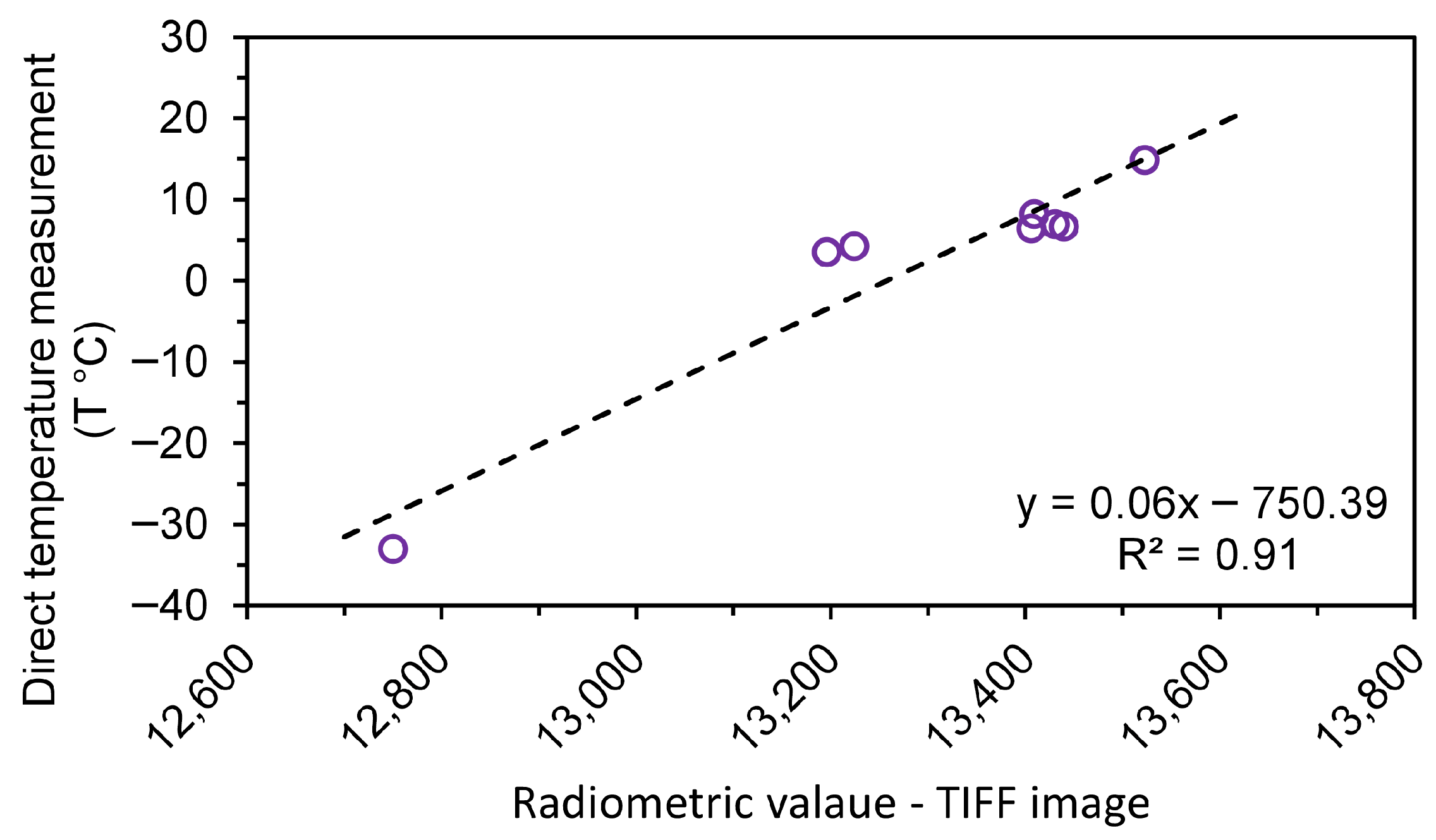
The radiometric values extracted from the thermal infrared signal maps were plotted against in situ ground measurements (Figure 6). The highest temperatures in this dataset correspond to the outflow of warm water from the subthermal Isić spring, while the lowest temperatures were recorded in the stream. Based on the correlation coefficient (r = 0.92) and coefficient of determination (R2 = 0.847), the obtained linear regression model shows a strong positive linear relationship between radiometric values extracted from the thermal image and direct temperature measurements. Therefore, the following radiometric calibration equation was used to calibrate the temperature map:
T (°C) = 0.07 × R − 916.37,
where T (°C) is the absolute temperature in degrees Celsius, and R is the radiometric value in the TIFF thermal infrared signal maps.
The data in Table 2 show an average temperature difference of 25.59 °C between UAV-recorded temperatures (derived by processing in Pix4Dmapper) and ground-measured temperature points. This indicates that the temperatures obtained by the UAV are relative unless properly calibrated.
Figure 7 shows the calibrated thermal map (temperature map) of the Isić spring area in degrees Celsius, with a maximum temperature of approximately 58.25 °C (sunlit rooftops) and a minimum temperature of −41.23 °C (sky reflection from the GCP). Positive thermal anomalies are visually indicated in red, representing areas or objects radiating more heat than their surrounding areas, which are shown in blue. A thermal anomaly was visually identified on the temperature map at the exact location of the subthermal spring Isić. It is important to note that the thermal infrared signal maps exhibit the same visual appearance as calibrated temperature maps. This observation highlights the potential of employing remote sensing methods for geothermal exploration.

3.2. Topusko Hydrothermal System

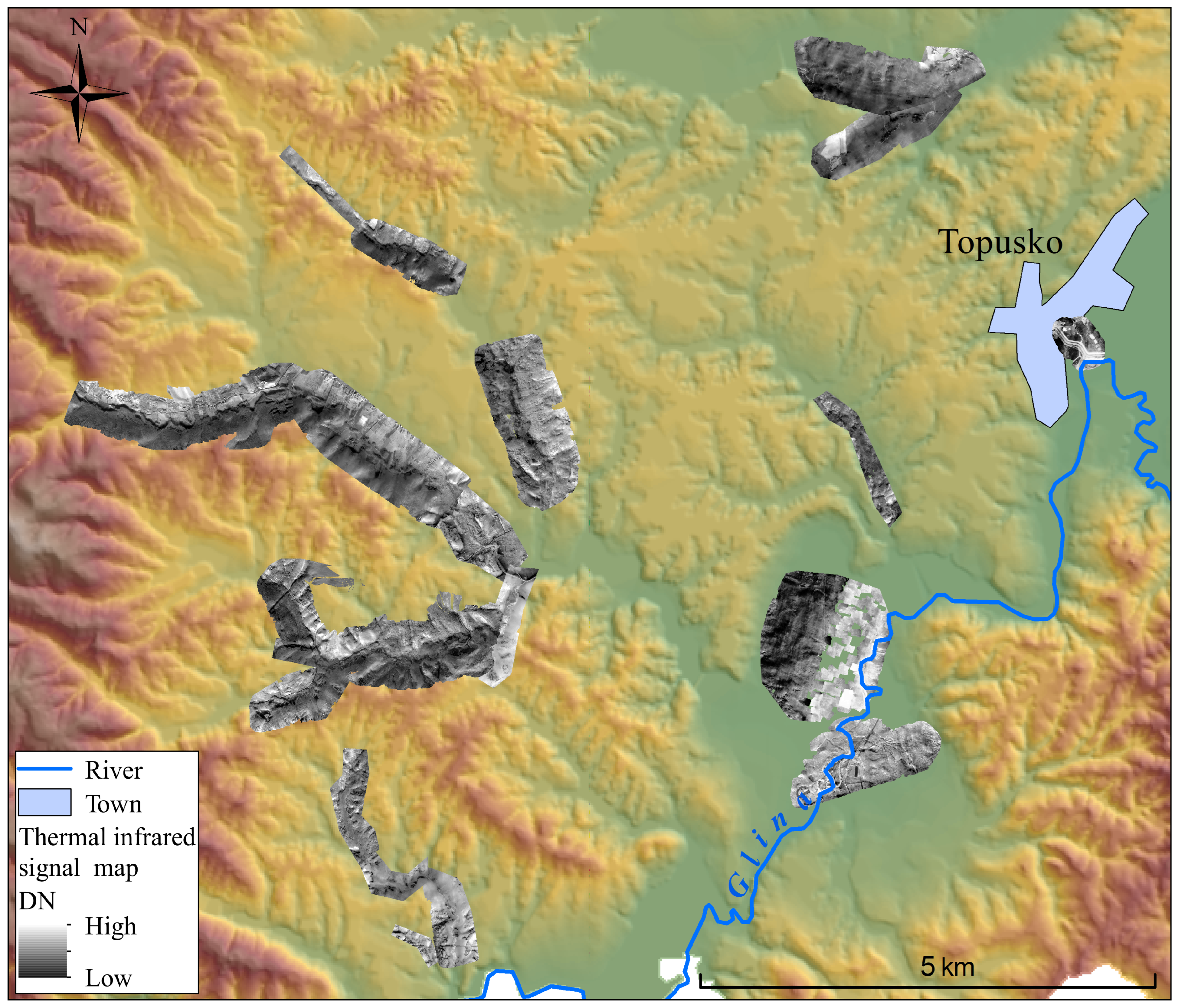
Thermal imaging took place from 13–19 January 2022, with a total of 24 flights. An area of 21.37 km2 was captured, with a GSD of 21.03 cm (Figure 8). The targeted sub-areas for thermal image acquisition were hypsometrically lower regions (i.e., valleys) between the thermal springs in Topusko and the eastern slopes of Petrova gora Mt., based on the assumption that the recharge area is located west of Petrova gora Mt. [36,39].
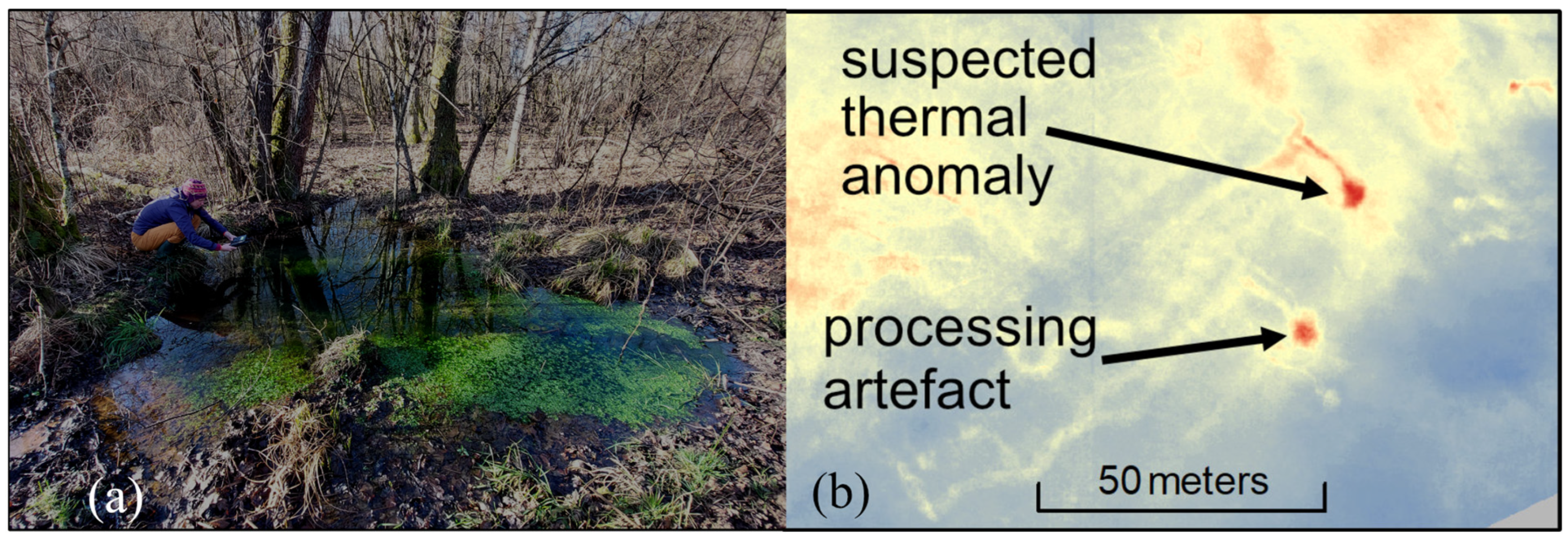
The surveyed area is sparsely populated, has limited road infrastructure, and is predominantly covered by forest; therefore, GCPs were not used in most of the surveyed sub-areas. As a result, a visual inspection of the thermal infrared signal maps was conducted, leading to identification of 26 suspected thermal anomalies. Field verification showed that none of them were subthermal or thermal springs. In most cases, they were regular springs (Figure 9a) or slow-flowing water bodies heated by solar radiation. Artifacts from the photogrammetric processing of TIR images were also observed, especially in areas with dense vegetation (Figure 9b).
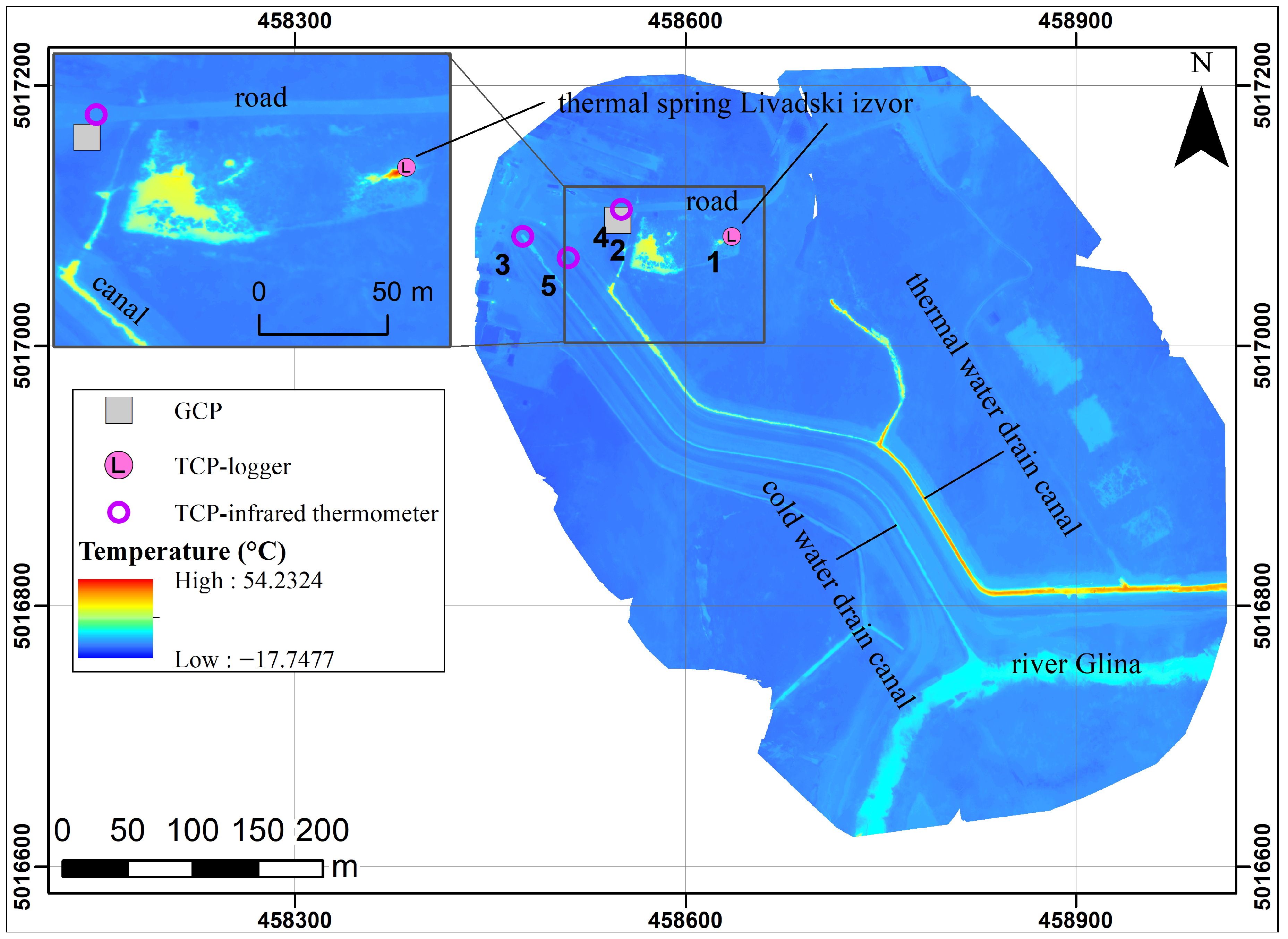
In addition to identifying potential subthermal spring areas, the thermal spring area in Topusko was surveyed, featuring a well-known thermal spring, Livadski izvor [48], to evaluate the reliability of the UAV imaging methodology. The area was imaged under ideal conditions during a cloudy early morning, with an air temperature of −3 °C. Four TCPs were used in the calculation to calibrate the obtained temperature map. One was a direct temperature measurement of the thermal spring (TCP 1—T = 53 °C), while other measurements were taken from the stream (T = 4.7 °C), dirt road (TCP 2—T = −2.1 °C), and the grass (TCP 3—T = −3.5 °C) (Figure 10). Following the previously described methodology, the radiometric calibration equation used to calibrate thermal images is as follows:
T (°C) = 0.03 × R − 419,
where T (°C) is the absolute temperature in degrees Celsius, and R is the radiometric value of TIFF thermal images. Figure 10 shows the calibrated thermal map (temperature map) of the area in degrees Celsius.

3.3. Hrvatsko Zagorje Hydrothermal System

The data acquisition in the area of Hrvatsko zagorje was conducted from 8–14 February 2022, with a total of 31 flights (Figure 11). The surveyed area covered 20.77 km2 with a GSD of 18.60 cm.
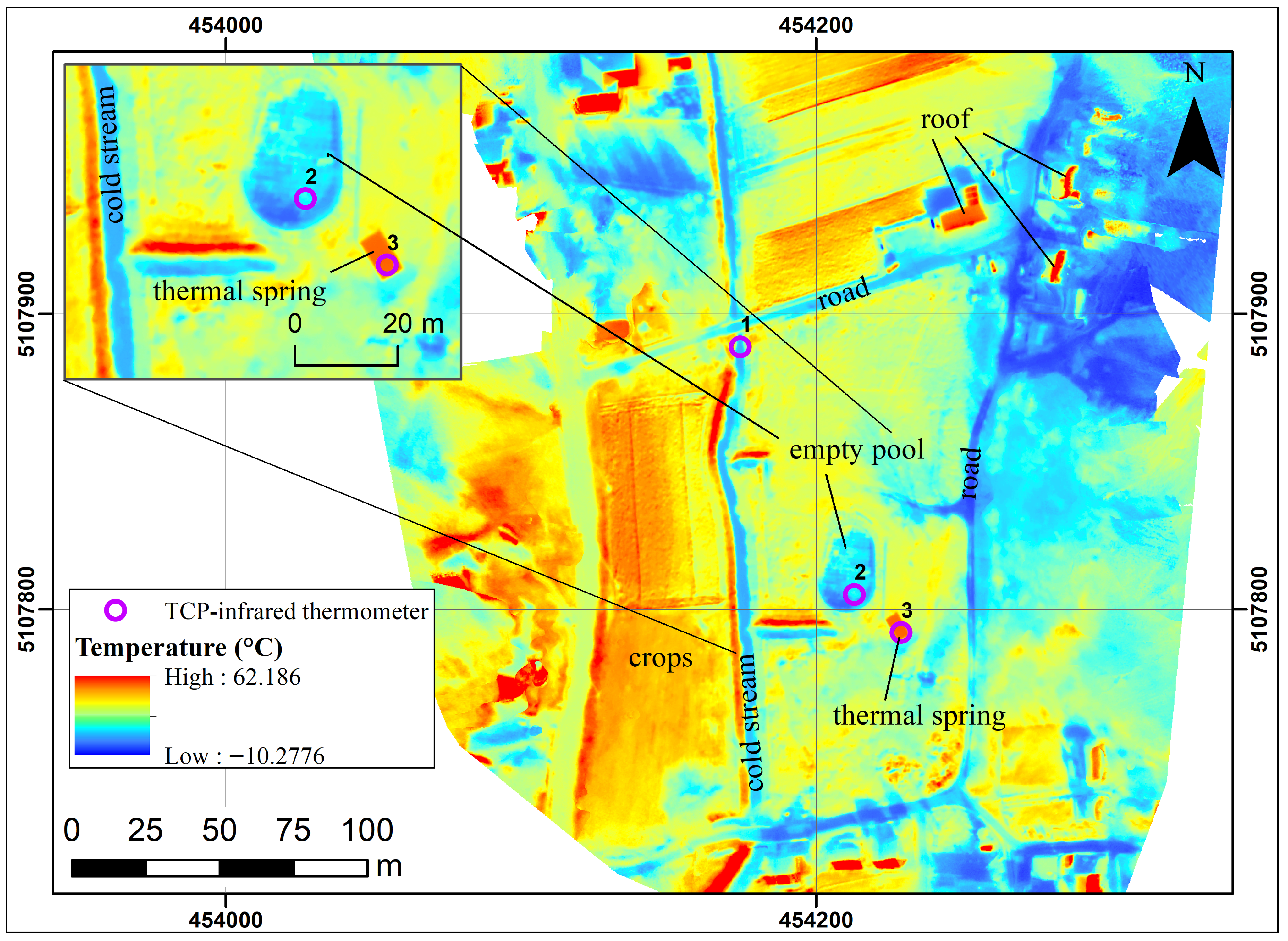
In addition to identifying potential subthermal spring areas, the thermal spring area of Šemničke Toplice was surveyed to evaluate the UAV thermal imaging methodology. The flight was conducted in the late morning under sunny conditions, with an air temperature of 2 °C. Three thermal control points were used in the calculation to calibrate the resulting thermal maps (orthomosaic). These included a direct temperature measurement of the thermal spring pool (TCP 1; T = 20.5 °C), an empty pool (TCP 2; T = 8 °C), and a cold stream upstream from the thermal influence (TCP 3; T = 4.5 °C) (Figure 12). Following the previously described methodology, the radiometric calibration equation used to calibrate thermal images is as follows:
T (°C) = 0.03 × R − 386,
where T (°C) is the absolute temperature in degrees Celsius, and R is the radiometric value of TIFF thermal images.

4. Discussion

Thermal imaging using a UAV did not identify any new subthermal or thermal springs in the study areas. This may indicate either a true absence of such springs or limitations in the method’s effectiveness. To assess the method’s performance, known thermal springs were used for validation purposes. These ranged from the high-temperature and high-discharge Livadski izvor thermal spring in the Topusko hydrothermal system (Figure 10) to the low-temperature and low-discharge Isić spring near the Daruvar hydrothermal system (Figure 7). The high visibility of the Livadski izvor thermal spring in the UAV-derived thermal maps is not surprising, as similar springs have been studied with equivalent equipment [62]. By contrast, the Isić spring has modest temperature and discharge. It is located in a forested deep ravine, which represents an unfavorable setting for UAV imaging. Vegetation obscures the ground from the camera, hindering photogrammetric processing. Complex relief can further hinder photogrammetric processing, particularly for low-resolution thermal images. Moreover, UAVs are unlikely to strictly follow variations in the terrain, especially fixed-wing types, which can lead to a reduced spatial resolution. Despite these limitations, the Isić subthermal spring is clearly visible in the thermal map. This provides confidence that the presented methodology is viable for low-temperature geothermal exploration.
Three study areas were imaged over a total of nine days, resulting in 45.35 km2 of thermal infrared signal maps. However, certain compromises were necessary to achieve this timeframe. Data acquisition in winter was essential to ensure sufficient thermal contrast between spring water and ambient temperature, as well as reduced vegetation cover. Depending on climatic conditions, periods of suitable cold temperatures can be limited. In addition, UAV operations are highly dependent on weather conditions. Cold temperatures reduce battery life and, therefore, flight times. Flying is not possible under conditions such as high wind or fog, which is common in winter if there is no wind. For this reason, every opportunity with favorable weather had to be fully exploited. Nighttime operations would be preferable [66,67,68], but they require special flight permits that were not available for this study. Flights were conducted throughout the day, including in clear sunny conditions, which are not optimal for thermal imaging. This introduces challenges in later analysis, as numerous temperature hotspots are generated in the maps. Many of them can be easily dismissed as relating to human-made objects by overlapping thermal signal maps with topographic GIS layers (orthophotos, digital elevation models, and topographic maps). However, sunlight on slow-flowing water, stream banks, hillslopes, and vegetation can produce thermal anomalies that complicate later analyses. The difference between cloudy and sunny conditions is clear in the examples shown in Figure 10 (cloudy) and Figure 12 (sunny). Of the 26 detected thermal anomalies, 4 (15%) can be attributed to vegetation artifacts. Although vegetation is significantly reduced during winter, it is still present and introduces problems in the processing workflow, particularly when warmed by solar radiation; such conditions should therefore be avoided. Additionally, increasing image overlap may help mitigate these effects, but it also extends flight time. The higher resolution of RGB sensors facilitates photogrammetric processing under challenging conditions. The combined use of thermal and RGB sensors enables the transfer of derived exterior orientation parameters from RGB to thermal imagery, thereby improving the accuracy and reliability of thermal maps [26,69]. Consequently, the use of integrated RGB and thermal sensor systems is recommended, especially for surveying large vegetated areas.
In addition to climate and weather factors, GCPs and TCPs also significantly impact the method’s practicality. In UAV thermal imaging, GCPs are desirable for achieving spatial accuracy, while TCPs are mandatory for thermal calibration. Both aspects must be evaluated for each specific use case. Spatial accuracy achieved without GCPs, relying only on the UAVs onboard GNSS, was satisfactory for the purposes of this study. The omission of thermal calibration had a more significant impact on subsequent analyses. Although the manufacturer of the thermal camera specifies absolute temperatures as an output, this is subject to multiple influencing factors (as acknowledged by the manufacturer) and is rarely fully achievable [70]. This is especially true for thermal cameras designed for UAV applications, where size and weight constraints necessitate certain compromises, such as the absence of sensor cooling and reduced sensor size. Without TCPs with known temperatures, the thermal maps contained inaccurate temperature values. In such a case, thermal infrared signal maps were used; for visual inspection, they provide equivalent functionality, as the relationship between thermal infrared signals and temperature is linear [61,63]. However, this introduces ambiguity into the analysis, making it more intricate and subjective. The absence of TCPs also introduces the possibility of unchecked thermal drift. To address this, sufficient sensor warm-up time was allocated prior to data acquisition to stabilize detector temperature (usually, the time required for flying to the start of the mission block was sufficient). In-flight shutter-based thermal calibration was performed at the start of the mission and at the beginning of each flight line. The UAV circled at the spot and continued when the sensor temperature was stable.
Of the 26 detected thermal anomalies, 22 (85%) were attributed to normal springs or slow-moving bodies of water. TCPs can remedy this, but their use in the field can be logistically challenging. They can be simple to implement when the surveyed area is easily accessible and a separate field crew is available to deploy them. However, in areas distant from road infrastructure, working with GCPs and TCPs becomes very time-consuming. Each GCP/TCP has to be positioned before the flight, and its position must be measured using a GNSS device. Finding suitable locations for their placement can be challenging in forested areas, where the view of the sky is obstructed. When used for thermal calibration, their temperature must be measured at the time of imaging or recorded continuously using data loggers. All GCPs and TCPs have to be collected after the flight. Due to the lower spatial resolution of thermal cameras compared to standard RGB cameras, the GCPs must be significantly larger. This also makes them more difficult to handle in the field. While thin metal plates measuring 1 × 1 m proved readily identifiable in thermal imagery, their deployment at significant distances from roadways presented logistical challenges. Alternatively, placing them in close proximity to roads posed risks of theft, as evidenced by incidents encountered during this study.
As all thermal imaging was performed during the COVID-19 lockdown, the field crew was reduced to a minimum (one or two persons). GCPs and TCPs were used only in locations where they could be easily deployed in close vicinity to UAV take-off and landing sites, or in areas with known thermal springs for method validation. The omission of GCPs and TCPs dramatically accelerated field data acquisition. However, the main drawback of their omission is an increased uncertainty in analyzing thermal infrared signal maps. Since accurate temperature values are unknown, visually identified potential thermal spring areas must be verified in the field. Whether GCPs are used or not requires an evaluation beforehand, depending on the characteristics of the studied area, including its geomorphological, geological, and hydrogeological properties, as well as the feasibility of investing more time in initial data acquisition versus subsequent field verification of suspected areas. Where feasible, the use of GCPs and TCPs should be preferred, as they add value through the generation of calibrated temperature maps. If the imaged area is accessible, the use of temperature-controlled TCPs can provide the highest calibration accuracy and should, therefore, be the preferred option [71].
Using UAVs to explore geothermal sites requires appropriate flying permits, which are dependent on local regulations and the parameters of the planned flight mission. To survey larger areas, BVLOS operations are required in most cases. Obtaining such permits can be both time-consuming and challenging.
Despite the above-described challenges, UAVs equipped with thermal cameras have proven to be a valuable tool for geothermal exploration. Surveying such large areas would not be feasible using traditional ground-based investigation methods. Furthermore, UAV-based surveys produce TIR imagery as a result, which can be analyzed in the future. Thus, the present findings can be evaluated, and new ones can be derived. Using TIR images for other applications can provide added value.
Although this study did not identify previously unknown thermal or subthermal springs, it cannot be concluded with certainty that none exist within the study area. Verification of known thermal springs in the area, especially the subthermal spring Isić (~5 L/s at 15 °C), provides credibility to the applied methodology. The comparison between DN values, derived temperatures, and field measurements represents a quantitative assessment of the method’s performance (Table 2). The observed discrepancies (up to 27.83 °C) highlight the limitations of absolute temperature retrieval, while the consistent detection of relative thermal anomalies demonstrates the method’s suitability for preliminary screening purposes. However, additional case studies are needed to assess the reliability of the method. This is particularly relevant for the simplified approach without thermal calibration, which relies only on thermal infrared signal maps for analysis. Additionally, imaging under sunlight reduces reliability by introducing numerous temperature hotspots that may obscure lower-intensity geothermal manifestations. Further testing should be conducted to assess the reliability of the method.

5. Conclusions

A fixed-wing eBee Plus RTK UAV, equipped with a senseFly thermoMap thermal imaging camera, was used to survey three low-temperature hydrothermal systems in Croatia: Topusko, Hrvatsko zagorje, and Daruvar hydrothermal systems. Overall, 45.35 km2 of thermal infrared signal maps were generated over nine days of flights conducted during winter 2022, with a minimal crew of one or two operators. Most of the area was imaged using a simplified procedure without GCPs and TCPs. The effectiveness of the method was successfully evaluated by imaging known thermal and subthermal springs within the studied hydrothermal systems. Although no new subthermal or thermal springs were discovered, the results demonstrate that large areas can be preliminarily screened for such features using a minimal budget and crew.
A UAV equipped with a thermal camera was evaluated for research purposes in low-temperature geothermal exploration over large areas. The use of GCPs and TCPs is necessary to achieve spatial accuracy, in particular, to enable reliable thermal calibration. Despite the claims of thermal camera manufacturers, accurate temperature values in derived thermal maps cannot be obtained without calibration using TCPs of known temperature. Even without TCPs and calibrated temperature maps, potential subthermal and thermal springs can be identified from thermal infrared signal maps. However, this can only take the form of a preliminary visual screening, since the method relies on visual inspection and is therefore subjective. As the true temperatures are unknown in such cases, field verification is required. The extent to which GCPs and TCPs are used should be carefully evaluated for each application, as their deployment significantly increases the complexity of UAV operations. Nevertheless, their use is recommended whenever feasible, as they enhance the accuracy and overall value of the resulting temperature maps.

Author Contributions

Conceptualization, T.F., M.P. and S.B.; methodology, T.F.; software, T.F. and M.P.; validation, T.F. and M.P.; investigation, T.F.; data curation, T.F. and M.P.; writing—original draft preparation, T.F. and M.P.; writing—review and editing, T.F., M.P. and S.B.; visualization, T.F. and M.P.; project administration, M.P. and S.B.; funding acquisition, S.B. All authors have read and agreed to the published version of the manuscript.

Funding

This research was funded by the Croatian Science Foundation (HRZZ) under grant number UIP-2019-04-1218. The authors thank the H2020-WIDESPREAD-05-2017-Twinning project (GeoTwinn, project ID: 809943) for support.

Institutional Review Board Statement

Not applicable.

Informed Consent Statement

Not applicable.

Data Availability Statement

Data are available on request from the authors.

Conflicts of Interest

The authors declare no conflicts of interest. The funders had no role in the design of the study; in the collection, analyses, or interpretation of the data; in the writing of the manuscript; or in the decision to publish the results.

Abbreviations

The following abbreviations are used in this manuscript:
UAVsUnmanned aerial vehicles
GCPsGround control points
TCPsThermal control points
PBSPannonian Basin system
THSTopusko hydrothermal system
DHSDaruvar hydrothermal system
HZHSHrvatsko zagorje hydrothermal system
AGLAltitude above ground
mAGLMeters above ground level
DSMDigital surface model
DTMDigital terrain model
VLOSVisual line of sight
BVLOSBeyond visual line of sight
TIRThermal infrared imaging
GSDGround sampling distance

References

  1. Aliyu, S.; Garba, M.M. Review on Current Global Geothermal Energy Potentials and the Future Prospects. Int. J. Adv. Sci. Res. Eng. 2019, 5, 133–140. [Google Scholar] [CrossRef]
  2. European University Institute; Belmans, R.; Conti, I.; Ferrari, A.; Galdi, G.; Hancher, L.; Kneebone, J.; Meeus, L.; Nouicer, A.; Olczak, M.; et al. The EU Green Deal, 2022 ed.; Hancher, L., Nouicer, A., Reif, V., Meeus, L., Eds.; European University Institute: Florence, Italy, 2022. [Google Scholar] [CrossRef]
  3. Rybach, L. Geothermal energy: Sustainability and the environment. Geothermics 2003, 32, 463–470. [Google Scholar] [CrossRef]
  4. Moeck, I.S. Catalog of geothermal play types based on geologic controls. Renew. Sustain. Energy Rev. 2014, 867–882. [Google Scholar] [CrossRef]
  5. Zarrouk, S.J.; McLean, K. Geothermal systems. In Geothermal Well Test Analysis; Elsevier: Amsterdam, The Netherlands, 2019; pp. 13–38. [Google Scholar] [CrossRef]
  6. Ojha, L.; Karunatillake, S.; Karimi, S.; Buffo, J. Amagmatic hydrothermal systems on Mars from radiogenic heat. Nat. Commun. 2021, 12, 1754. [Google Scholar] [CrossRef]
  7. Khodayar, M.; Björnsson, S. Conventional Geothermal Systems and Unconventional Geothermal Developments: An Overview. Open J. Geol. 2024, 14, 196–246. [Google Scholar] [CrossRef]
  8. Bowen, R. Geothermal Resources, 2nd ed.; Springer: Dordrecht, The Netherlands, 1989. [Google Scholar] [CrossRef]
  9. Williams, C.F.; Reed, M.J.; Anderson, A.F. Updating the Classification of Geothermal Resources. In Proceedings of the Thirty-Sixth Workshop on Geothermal Reservoir Engineering; Stanford University: Stanford, CA, US, 2011. [Google Scholar]
  10. Anderson, M.; Woessner, W.; Hunt, R. Applied Ground Water Modeling: Simulation of Flow and Advective Transport; Academic Press: Cambridge, MA, USA, 2015. [Google Scholar]
  11. Borović, S.; Borović, S.; Marković, T.; Larva, O.; Brkić, Ž.; Mraz, V. Mineral and Thermal Waters in the Croatian Part of the Pannonian Basin. In Mineral and Thermal Waters of Southeastern Europe, 1st ed.; Papic, P., Ed.; Springer: Cham, Switzerland, 2016; pp. 31–45. [Google Scholar] [CrossRef]
  12. Bošnjak, R.; Čubrić, S.; Golub, M.; Grabovski, K.; Jelić, K. Geoen—Program Korištenja Geotermalne Energije [Geoen—Programme of Geothermal Energy Utilization]; Energy Institute “Hrvoje Požar”: Zagreb, Croatia, 1998; 124p. [Google Scholar]
  13. Lenkey, L.; Dövényi, P.; Horváth, F.; Cloetingh, S.A.P.L. Geothermics of the Pannonian basin and its bearing on the neotectonics. EGU Stephan Mueller Spec. Publ. Ser. 2002, 3, 29–40. [Google Scholar] [CrossRef]
  14. Horváth, F.; Musitz, B.; Balázs, A.; Végh, A.; Uhrin, A.; Nádor, A.; Koroknai, B.; Pap, N.; Tóth, T.; Wórum, G. Evolution of the Pannonian basin and its geothermal resources. Geothermics 2015, 53, 328–352. [Google Scholar] [CrossRef]
  15. Pentecost, A.; Jones, B.; Renaut, R.W. What is a hot spring? Can. J. Earth Sci. 2003, 40, 1443–1446. [Google Scholar] [CrossRef]
  16. Goldscheider, N.; Mádl-Szőnyi, J.; Erőss, A.; Schill, E. Review: Thermal water resources in carbonate rock aquifers. Hydrogeol. J. 2010, 18, 1303–1318. [Google Scholar] [CrossRef]
  17. Kovačić, M.; Perica, R. The degree of geothermal water utilization in the Republic of Croatia. Croat. Waters 1998, 25, 355–361. (In Croatian) [Google Scholar]
  18. Pierce, K.L.; Survey, U.S.G. Evaluation of infrared imagery applications to studies of surficial geology—Yellowstone Park. In Open-File Report; U.S. Geological Surve: Reston, VA, USA, 1968. [Google Scholar] [CrossRef]
  19. Mongillo, M.A. Aerial thermal infrared mapping of the Waimangu-Waiotapu geothermal region, New Zealand. Geothermics 1994, 23, 511–526. [Google Scholar] [CrossRef]
  20. Kruse, F. Characterization of Active Hot-Springs Environments Using Multispectral and Hyperspectral Remote Sensing. In Proceedings of the Twelfth International Conference and Workshops on applied Geologic Remote Sensing, Denver, CO, USA, 17–19 November 1997; Volume 1, pp. 214–221. [Google Scholar]
  21. Lagios, E.; Vassilopoulou, S.; Sakkas, V.; Dietrich, V.; Damiata, B.; Ganas, A. Testing satellite and ground thermal imaging of low-temperature fumarolic fields: The dormant Nisyros Volcano (Greece). ISPRS J. Photogramm. Remote Sens. 2007, 62, 447–460. [Google Scholar] [CrossRef]
  22. Haselwimmer, C.; Prakash, A. Thermal Infrared Remote Sensing of Geothermal Systems. In Thermal Infrared Remote Sensing: Sensors, Methods, Applications; Kuenzer, C., Dech, S., Eds.; Springer: Dordrecht, The Netherlands, 2013; pp. 453–473. [Google Scholar] [CrossRef]
  23. Heasler, H.; Jaworowski, C. Hydrothermal monitoring of Norris Geyser Basin, Yellowstone National Park, USA, using airborne thermal infrared imagery. Geothermics 2018, 72, 24–46. [Google Scholar] [CrossRef]
  24. Seward, A.; Ashraf, S.; Reeves, R.; Bromley, C. Improved environmental monitoring of surface geothermal features through comparisons of thermal infrared, satellite remote sensing and terrestrial calorimetry. Geothermics 2018, 73, 60–73. [Google Scholar] [CrossRef]
  25. Carbajal-Martínez, D.; Peiffer, L.; Hinojosa-Corona, A.; Trasviña-Castro, A.; Arregui-Ojeda, S.M.; Carranza-Chávez, F.J.; Flores-Luna, C.; Méndez-Alonzo, R.; Inguaggiato, C.; Casallas-Moreno, K.L. UAV-based thermal imaging and heat output estimation of a coastal geothermal resource: La Jolla beach, Baja California, Mexico. Renew. Energy 2021, 168, 1364–1376. [Google Scholar] [CrossRef]
  26. Sedano-Cibrián, J.; Pérez-Álvarez, R.; de Luis-Ruiz, J.M.; Pereda-García, R.; Salas-Menocal, B.R. Thermal Water Prospection with UAV, Low-Cost Sensors and GIS. Application to the Case of La Hermida. Sensors 2022, 22, 6756. [Google Scholar] [CrossRef]
  27. Nishar, A.; Richards, S.; Breen, D.; Robertson, J.; Breen, B. Thermal infrared imaging of geothermal environments by an unmanned aerial vehicle (UAV): A case study of the Wairakei-Tauhara geothermal field, Taupo, New Zealand. Renew. Energy 2016, 86, 1256–1264. [Google Scholar] [CrossRef]
  28. Bjornsson, G.; Grimsson, G.; Sigurdsson, A.; Laenen, V.S. Thermal Mapping of Icelandic Geothermal Surface Manifestations with a Drone. In Proceedings of the 44th Workshop on Geothermal Reservoir Engineering; Stanford University: Stanford, CA, USA, 2019; pp. 1–8. [Google Scholar]
  29. Rodriguez-Gomez, C.; Kereszturi, G.; Reeves, R.; Rae, A.; Pullanagari, R.; Jeyakumar, P.; Procter, J. Lithological mapping of Waiotapu Geothermal Field (New Zealand) using hyperspectral and thermal remote sensing and ground exploration techniques. Geothermics 2021, 96, 102195. [Google Scholar] [CrossRef]
  30. Köppen, W. Das geographische System der Klimate. In Handbuch der Klimatologie; Köppen, W., Geiger, G., Eds.; Gebrüder Borntraeger: Berlin, Germany, 1936; pp. 1–44. [Google Scholar]
  31. Peel, M.C.; Finlayson, B.L.; McMahon, T.A. Updated world map of the Köppen-Geiger climate classification. Hydrol. Earth Syst. Sci. 2007, 11, 1633–1644. [Google Scholar] [CrossRef]
  32. Zaninović, K.; Gajić-Čapka, M.; Perčec Tadić, M.; Vučetić, M.; Milković, J.; Bajić, A.; Cindrić, K.; Cvitan, L.; Katušin, Z.; Kaučić, D.; et al. Klimatski Atlas Hrvatske/Climate Atlas of Croatia 1961–1990, 1971–2000; Državni Hidrometeorološki Zavod: Zagreb, Croatia, 2008; 200p. [Google Scholar]
  33. Arnfield, A.J. Köppen Climate Classification. Encyclopaedia Britannica 2023. Available online: https://www.britannica.com/science/Koppen-climate-classification (accessed on 11 April 2024).
  34. Pavić, M. Multidisciplinary Approach to Conceptual Modelling of Topusko Hydrothermal System. Ph.D. Thesis, University of Zagreb, Zagreb, Croatia, 2024. [Google Scholar]
  35. Jamičić, D.; Vragović, M.; Matičec, D. Osnovna Geološka Karta SFRJ. Tumač za List Daruvar [Basic Geological Map of SFRY 1:100000, Guide for the Daruvar Sheet]; Institut za Geološka Istraživanja: Zagreb, Croatia; Geološki Zavod: Zagreb, Croatia; Savezni Geološki Zavod: Beograd, Yugoslavia, 1989. (In Croatian) [Google Scholar]
  36. Šimunić, A.; Hećimović, I. Mineral and Thermal Waters of the Republic of Croatia; Croatian Geological Survey: Zagreb, Croatia, 2008. (In Croatian) [Google Scholar]
  37. Borović, S. Integrated Hydrogeological-Hydrogeochemical Model of Daruvar Geothermal Aquifer. Ph.D. Thesis, Faculty of Mining, Geology and Petroleum Engineering, Zagreb, Croatia, 2015. [Google Scholar]
  38. Marković, T.; Borović, S.; Larva, O. Geochemical characteristics of thermal waters of Hrvatsko zagorje. Geol. Croat. 2015, 68, 67–77. [Google Scholar] [CrossRef]
  39. Pavić, M.; Pola, M.; Matoš, B.; Mišić, K.; Kosović, I.; Pavičić, I.; Borović, S. A conceptual and numerical model of fluid flow and heat transport in the Topusko hydrothermal system. Geol. Croat. 2024, 77, 289–308. [Google Scholar] [CrossRef]
  40. Kosović, I.; Matoš, B.; Pavičić, I.; Pola, M.; Mileusnić, M.; Pavić, M.; Borović, S. Geological modeling of a tectonically controlled hydrothermal system in the southwestern part of the Pannonian basin (Croatia). Front. Earth Sci. 2024, 12, 1401935. [Google Scholar] [CrossRef]
  41. Korolija, B.; Živaljević, T.; Šimunić, A. Osnovna Geološka Karta SFRJ 1:100 000, List Slunj. L33–104 [Basic Geological Map of SFRY 1:100000, Geology of the Slunj Sheet L33–104]; Institut za Geološka Istraživanja: Zagreb, Croatia; Geološki Zavod: Sarajevo, Bosnia and Herzegovina; Savezni Geološki Zavod: Beograd, Yugoslavia, 1980. (In Croatian) [Google Scholar]
  42. Roglić, J. Obilježja prirodne osnove [Characteristics of the natural basis]. In Geografija SR Hrvatske—Obilježja Prirodne Osnove; Crkvenčić, I., Ed.; Školska Knjiga: Zagreb, Croatia, 1974; pp. 44–92. (In Croatian) [Google Scholar]
  43. Borović, S.; Pola, M.; Bačani, A.; Urumović, K. Constraining the recharge area of a hydrothermal system in fractured carbonates. Geothermics 2019, 82, 128–149. [Google Scholar] [CrossRef]
  44. DHMZ. Monthly Values and Extremes; Državni Hidrometeorološki Zavod [Croatian Meteorological and Hydrological Service]: Zagreb, Croatia, 2021; Available online: https://meteo.hr/index_en.php (accessed on 18 January 2021).
  45. Kosović, I. Multidisciplinary Investigations for the Hydrogeological Parametrization of Fractured Carbonate Aquifers: The Case Study of the Daruvar Hydrothermal System. Ph.D. Thesis, University of Zagreb, Zagreb, Croatia, 2024. [Google Scholar]
  46. Borović, S.; Marković, I. Utilization and tourism valorisation of geothermal waters in Croatia. Renew. Sustain. Energy Rev. 2015, 44, 52–63. [Google Scholar] [CrossRef]
  47. Pavić, M.; Kosović, I.; Pola, M.; Urumović, K.; Briški, M.; Borović, S. Multidisciplinary Research of Thermal Springs Area in Topusko (Croatia). Sustainability 2023, 15, 5498. [Google Scholar] [CrossRef]
  48. Pavić, M.; Briški, M.; Pola, M.; Borović, S. Hydrogeochemical and environmental isotope study of Topusko thermal waters, Croatia. Environ. Geochem. Health 2024, 46, 133. [Google Scholar] [CrossRef] [PubMed]
  49. Bać, J.; Herak, M. Prijedlog Određivanja Užih i Širih Zaštitnih Zona Termomineralnih Izvora u Hrvatskoj [Recommendation for Determination of Wider and Narrow Protection Zones for Thermo-Mineral Springs in Croatia]; Unpublished report; Institute for Geological Research: Zagreb, Croatia, 1962; 147p. (In Croatian) [Google Scholar]
  50. Bahun, S.; Raljević, B. Mineralna, Termalna i Ljekovita Vrela [Mineral and Thermal Springs]; Unpublished report; Institute for Geological Research: Zagreb, Yugoslavia, 1969; p. 4769/5. (In Croatian) [Google Scholar]
  51. Čubranić, A. Osmatranje Termalnih Voda u Topuskom [Monitoring of Thermal Waters in Topusko]; Unpublished report; INA-Projekt, OOUR Kompleksna Geološka Istraživanja: Zagreb, Croatia, 1984. (In Croatian) [Google Scholar]
  52. Šegotić, B.; Šmit, I. Studija Optimirane Energetske Učinkovitosti Korištenja Geotermalnih Voda [Study of Optimized Energy Efficiency of Geothermal Water Use]; Unpublished report; Termoinženjering-Projektiranje: Zagreb, Croatia, 2007. (In Croatian) [Google Scholar]
  53. Farr, T.G.; Rosen, P.A.; Caro, E.; Crippen, R.; Duren, R.; Hensley, S.; Kobrick, M.; Paller, M.; Rodriguez, E.; Roth, L.; et al. The shuttle radar topography mission. Rev. Geophys. 2007, 45, 2. [Google Scholar] [CrossRef]
  54. Aber, J.S.; Marzolff, I.; Ries, J.B. Photogrammetry. In Small-Format Aerial Photography; Aber, J.S., Marzolff, I., Ries, J.B., Eds.; Elsevier: Amsterdam, The Netherlands, 2010; pp. 23–39. [Google Scholar] [CrossRef]
  55. Zhang, Q.; Li, Y.; Yang, L.; Zhang, Y.; Li, Z.; Chen, X.; Han, J. Thermal-visible stereo matching at night based on Multi-Modal Autoencoder. Infrared Phys. Technol. 2024, 136, 105010. [Google Scholar] [CrossRef]
  56. Infrared Knowledge. Available online: https://www.gst-ir.net/news-events/infrared-knowledge/320.html (accessed on 29 April 2024).
  57. News Article. Available online: https://www.mileseey.net/news/list/3314.html (accessed on 29 April 2024).
  58. State Geodetic Administration; Bosiljevac, M. (Eds.) CROPOS—Users’ Manual; Republic of Croatia: Zagreb, Croatia, 2024; ISBN 978-953-293-100-6. Available online: https://www.cropos.hr/download (accessed on 21 November 2024).
  59. Pix4D Support Article—115005738363. Available online: https://support.pix4d.com/hc/en-us/articles/115005738363 (accessed on 21 November 2024).
  60. Introducing ArcGIS 101. Available online: https://www.esri.com/news/arcwatch/0410/arcgis10.html (accessed on 29 April 2024).
  61. Gómez-Candón, D.; Virlet, N.; Labbé, S.; Jolivot, A.; Regnard, J.-L. Field phenotyping of water stress at tree scale by UAV-sensed imagery: New insights for thermal acquisition and calibration. Precis. Agric. 2016, 17, 786–800. [Google Scholar] [CrossRef]
  62. Harvey, M.C.; Rowland, J.V.; Luketina, K.M. Drone with thermal infrared camera provides high resolution georeferenced imagery of the Waikite geothermal area, New Zealand. J. Volcanol. Geotherm. Res. 2016, 325, 61–69. [Google Scholar] [CrossRef]
  63. Sagan, V.; Maimaitijiang, M.; Sidike, P.; Eblimit, K.; Peterson, K.T.; Hartling, S.; Esposito, F.; Khanal, K.; Newcomb, M.; Pauli, D.; et al. UAV-based high resolution thermal imaging for vegetation monitoring, and plant phenotyping using ICI 8640 P, FLIR Vue Pro R 640, and thermomap cameras. Remote Sens. 2019, 11, 330. [Google Scholar] [CrossRef]
  64. Kelly, J.; Kljun, N.; Olsson, P.O.; Mihai, L.; Liljeblad, B.; Weslien, P.; Klemedtsson, L.; Eklundh, L. Challenges and best practices for deriving temperature data from an uncalibrated UAV thermal infrared camera. Remote Sens. 2019, 11, 567. [Google Scholar] [CrossRef]
  65. Wan, Q.; Smigaj, M.; Brede, B.; Kooistra, L. Optimizing UAV-based uncooled thermal cameras in field conditions for precision agriculture. Int. J. Appl. Earth Obs. Geoinf. 2024, 134, 104184. [Google Scholar] [CrossRef]
  66. Brailo, C.; Churchill, M.; Bechtold, T.; Blake, K.; Zuza, R. Small unoccupied aerial systems (UAS) and thermal cameras in geothermal exploration and operational fields; a review of UAS equipment and case study at Brady Geothermal Field, Nevada, USA. In Proceedings of the 50th Workshop on Geothermal Reservoir Engineering; Stanford University: Stanford, CA, USA, 2025; Available online: https://pangea.stanford.edu/ERE/db/GeoConf/papers/SGW/2025/Brailo.pdf (accessed on 15 April 2026).
  67. Polat, N.; Memduhoğlu, A.; Kaya, Y. Accurate terrain modeling after dark: Evaluating nighttime thermal UAV-derived DSMs. Drones 2025, 9, 430. [Google Scholar] [CrossRef]
  68. Ji, M.; Xu, Y.; Zhu, S.; Zhang, Y.; Xin, Y.; Mo, Y. Exploring the potential of UAV-based thermal imagery for monitoring diurnal variations in the microscale urban thermal environment. Energy Build. 2025, 347, 116375. [Google Scholar] [CrossRef]
  69. Messmer, J.; Groos, A.R. A low-cost and open-source approach for supraglacial debris thickness mapping using UAV-based infrared thermography. Cryosphere 2024, 18, 719–746. [Google Scholar] [CrossRef]
  70. eBee PDF Document; p. 13. Available online: https://pdf.agriexpo.online/pdf/sensefly/ebee/170212-5751-_13.html (accessed on 22 November 2024).
  71. Han, X.; Thomasson, J.A.; Swaminathan, V.; Wang, T.; Siegfried, J.; Raman, R.; Rajan, N.; Neely, H. Field-based calibration of unmanned aerial vehicle thermal infrared imagery with temperature-controlled references. Sensors 2020, 20, 7098. [Google Scholar] [CrossRef]
Figure 1. Geographical position of three study areas within hydrothermal systems in Croatia (Daruvar, Hrvatsko zagorje, and Topusko).
Sustainability 18 04848 g001
Figure 2. The complete (a) and simplified (b) workflow. The first workflow was intended to be used for the whole study, but COVID-19 restrictions during the field work made this impossible.
Sustainability 18 04848 g002
Figure 3. SenseFly eBee Plus RTK fixed-wing UAV after landing (a) and senseFly thermoMAP thermal camera (b).
Sustainability 18 04848 g003
Figure 4. Thermal infrared signal map with GCPs (a) and a metal plate used as a GCP with an infrared thermometer (b).
Sustainability 18 04848 g004
Figure 5. Thermal imagery acquired in the Daruvar hydrothermal system, showing thermal orthomosaic (gray).
Sustainability 18 04848 g005
Figure 6. Scatter plot of radiometric value from TIR imagery and corresponding direct temperature measurements (T °C).
Sustainability 18 04848 g006
Figure 7. Calibrated temperature map of Grižina Valley with subthermal spring Isić (15 °C), ground control points, and the location of subthermal spring Isić.
Sustainability 18 04848 g007
Figure 8. Thermal imagery acquired for the Topusko hydrothermal system, showing a thermal orthomosaic (gray).
Sustainability 18 04848 g008
Figure 9. (a) A spring with a water temperature of 11 °C is visible on the thermal infrared signal map (b), along with the processing artifact (ghosting effect of the spring).
Sustainability 18 04848 g009
Figure 10. Calibrated temperature map of Livadski izvor thermal spring area.
Sustainability 18 04848 g010
Figure 11. Thermal imagery acquired in the Hrvatsko zagorje hydrothermal system, showing thermal orthomosaics (gray).
Sustainability 18 04848 g011
Figure 12. Calibrated temperature map of Šemničke Toplice thermal spring area.
Sustainability 18 04848 g012
Table 1. SenseFly thermoMAP manufacturer specifications.
Specifications
Resolution640 × 512 px
Focal length9 mm
Spectral range7.5–13.5 µm
Thermal sensitivity0.1 °C
Accuracy±5 °C
Operating altitude75–150 m
Ground resolution at 75 m14 cm/pixel
Temperature calibrationIn-flight; automatic
FormatTIFF images + MP4 videos
Table 2. Ground temperature measurements extracted from the TIFF imagery and radiometric values derived from TIR images used for thermal calibration. Residuals were calculated as the difference between calibrated temperatures and in situ measurements. The mean absolute error (MAE) of the calibration was 1.08 °C, with a root mean square error (RMSE) of 1.30 °C.
PointLocationT (°C) Measured In SituDN ValueT (°C)
Uncalibrated
T (°C)
Calibrated
T (°C)
Residual
T (°C) Difference
1Subthermal spring Isić—logger14.913,522.6235.2314.25−0.6520.19
2Stream (digital measurement)6.513,406.0634.066.23−0.2727.83
3Logger—cold stream6.713,439.3134.398.521.8225.87
4Logger—middle stream8.213,409.134.096.44−1.7627.65
5Logger—stream valley713,430.3834.37.910.9126.39
Disclaimer/Publisher’s Note: The statements, opinions and data contained in all publications are solely those of the individual author(s) and contributor(s) and not of MDPI and/or the editor(s). MDPI and/or the editor(s) disclaim responsibility for any injury to people or property resulting from any ideas, methods, instructions or products referred to in the content.