Article

Community Perception and Mitigation Strategies for Macro Litter in Escravos Estuary, Southern Nigeria


by
Amarachi Paschaline Onyena
1,
Boluwatifemi Joshua Osunnibu
1,
Kabari Sam
2,* and
Akaninyene Joseph
3
1
Department of Environmental Management and Pollution, Faculty of Environmental Management, Nigeria Maritime University, Okerenkoko 332105, Delta State, Nigeria
2
Faculty of Science and Health, University of Portsmouth, University House, Winston Churchill Ave, Portsmouth PO1 2UP, UK
3
School of Engineering and Technology, The University of New South Wales, Canberra, ACT 2600, Australia
*
Author to whom correspondence should be addressed.
Sustainability 2026, 18(10), 4842; https://doi.org/10.3390/su18104842
Submission received: 31 January 2026 / Revised: 13 March 2026 / Accepted: 8 May 2026 / Published: 12 May 2026

Abstract

Macro litter is a global environmental challenge with ecological, social, and economic implications for coastal zones such as the Escravos Estuary in Nigeria. This study examined community perceptions and mitigation preferences using a structured survey administered to 161 residents of the Escravos Estuary. Results indicated that awareness levels were substantial, with most respondents (76.6%) recognising macro litter as a major environmental concern. Macro litter was widely perceived to impose negative livelihood impacts, particularly among fishing-dependent households, where damaged gear, reduced catch rates, and income loss were frequently reported. Business-related effects were also identified, with most respondents (78.4%) noting increased operational costs and reduced customer patronage (58.0%) associated with littered surroundings. Social perceptions reinforced these findings, with some respondents (59.3%) strongly agreeing that macro litter poses a present and future environmental risk. Most respondents (79.0%) acknowledged the daily impacts of macro litter on quality of life. Ordinal analyses indicated limited demographic differentiation in awareness levels, although gender demonstrated a weak association. These findings suggest that awareness and concerns were broadly distributed within the surveyed population. Community-driven strategies received strong support, as most respondents (96.9%) affirmed the effectiveness of cleanups and supported policies promoting reusable products over single-use plastics. Building on these findings, a phased implementation roadmap is proposed, integrating community mobilisation, livelihood-sensitive interventions, infrastructure strengthening, regulatory enforcement, and measurable monitoring indicators. Such locally grounded strategies are essential for reducing macro litter through participatory approaches in estuarine systems while enhancing socioeconomic resilience and environmental sustainability.

1. Introduction

West African estuaries, particularly those of the Niger Delta, are ecologically productive and economically strategic systems that support artisanal fisheries, mangrove-dependent livelihoods, and riverine trade networks. However, increasing anthropogenic pressures, including intensified fishing activity, tourism, mismanaged waste, and industrial operations, have heightened environmental degradation in these systems. In addition, elevated recreational and coastal activities have been associated with increased litter accumulation, adversely affecting marine ecosystems [1]. Studies in coastal environments, particularly in developing economies, indicate an increase in macro litter, primarily plastics, discarded fishing gear, and abandoned debris emerging as a significant concern [2,3].
Macro litter (>5 mm), which often includes solid, manufactured waste accumulating along coastlines and within oceans, is mainly land-based. It constitutes a serious environmental issue, with diverse sources and wide-ranging ecological and economic impacts [4]. Macro litter arises from various sectors and sources, including industrial activities, fisheries, tourism, and land-based waste driven by human activities [5]. However, studies indicate that plastics constitute the predominant component of marine macro-litter, which often accounts for about 80% of total debris [6], and their environmental persistence contributes to the deterioration of water quality and deleterious impacts on marine biota through ingestion, entanglement, and habitat alteration [6,7].
Since the mid-20th century, global plastic production has increased exponentially. This is because the market is readily available, considering that it is cost-effective, lightweight, and easy to use. Increased use of plastic, especially in developing countries where waste management legislation and practice are weak, results in increased plastic waste generation. For instance, globally, between 1950 and 2024, an estimated 7000 million tonnes of plastic waste accumulated from 9200 million tonnes produced worldwide [8]. Annually, an additional 19–23 million tonnes of plastic enter aquatic ecosystems, contributing to an estimated oceanic plastic load of 75–199 million tonnes. Without intervention, this volume could nearly triple by 2040, aggravating existing environmental challenges [8]. Once introduced into marine environments as components of macro litter, plastic debris can fragment into smaller particles through environmental degradation processes, contributing to long-term environmental persistence and associated ecological impacts [9]. Expanding global plastic production, combined with persistent waste management challenges, has intensified concerns about marine accumulation, and it has been estimated that, if current trends persist, the volume of plastics in the oceans could exceed that of fish by 2050 [10,11]. Other non-plastic debris, including cigarette butts, metals, and glass, adds to the complexity of macro litter management, though its environmental persistence and impacts differ from those of plastics [7].
Plastic components within macro litter may facilitate the transport of environmental contaminants in marine systems, reinforcing broader ecological concerns associated with persistent waste [12,13,14]. Studies indicate that marine debris has impacted over 690 species, with plastics implicated in 92% of recorded encounters. Notably, 17% of these species are listed as near threatened or higher on the International Union for Conservation of Nature (IUCN) Red List, highlighting the conservation risks associated with exposure to macro litter in marine environments [15]. The economic impacts of macro litter extend to the fishery and tourism sectors, thereby hindering regional and local household income. For instance, beach litter deters tourists, while fisheries incur losses from reduced fish stocks and damaged equipment [16]. Also, cleanup efforts impose significant financial burdens on local governments, highlighting the urgency for sustainable waste management systems.
The adverse effects of macro litter have sparked global concern due to their ecological, economic, and social implications [17]. Although land-based and marine-based activities contribute to the plastic composition of macro litter, land-based sources reportedly account for about 75% of plastic components of macro litter, caused by mismanaged waste, run-off, sewage overflows, and direct disposal of items such as plastic bags and bottles into waterways [18]. Within the Sub-Saharan African region, particularly in Nigeria, insufficient waste management infrastructure increases the impacts of macro litter pollution. Disposal methods such as open burning release harmful toxins, thereby creating an additional layer of environmental and public health risks [19].
Marine-based activities also contribute significantly to macro litter, particularly through fishing, tourism, and maritime traffic. Abandoned fishing gear, often termed “ghost gear,” accounts for a substantial portion of macro litter and continues to trap marine organisms, disrupting ecosystem goods and services, and threatening biodiversity [18,20]. Waste from maritime operations further increases seabed pollution, creating long-term challenges for marine conservation [21].
Public perception plays a significant role in addressing macro litter [22]. Awareness of the environmental and socioeconomic impacts could influence attitudes and human behaviours, thereby influencing participation in mitigation efforts, consistent with the Theory of Planned Behaviour, which links attitudes, social norms, and perceived behavioural control to action [23]. However, in many Sub-Saharan African countries, such as Nigeria, inadequate infrastructure, weak regulatory enforcement, and limited public awareness constrain effective waste management and exacerbate the challenges posed by macro litter [24]. The Escravos Estuary in Southern Nigeria exemplifies these challenges, where clustered settlement patterns within densely populated and geographically isolated riverine communities, combined with industrial activities such as oil and gas exploration, contribute to persistent macro litter pressures [25].
The Escravos Estuary is characterised by extensive mangrove ecosystems typical of the Niger Delta region, which are critical for biodiversity conservation and ecological resilience [26]. However, limited empirical research has examined community-level awareness and perceptions of macro litter within this mangrove-dominated system. Understanding how residents perceive environmental and socioeconomic impacts is essential, as such perceptions can influence environmental behaviour and support for mitigation initiatives. This study examines community perceptions of macro litter pollution and proposes practical mitigation strategies for managing macro litter in the Escravos Estuary. The research seeks to (1) evaluate community awareness and attitudes toward macro litter; (2) explore the economic and social impacts of macro litter on local residents and businesses; and (3) facilitate the development of community-led strategies to address macro litter pollution. The study situates macro litter within the lived socioeconomic conditions of a resource-dependent estuarine system, thereby extending beyond litter quantification to consider behavioural and governance aspects of mitigation. By integrating local perspectives into context-specific solutions, the research contributes to advancing macro litter management in estuarine communities of the Global South.

2. Materials and Methods

2.1. Description of Study Area

The Escravos Estuary coastline in southern Nigeria, located at the apex of the Gulf of Guinea and connected to the Atlantic Ocean, serves as a critical navigation route for oil and gas exploration and shipping activities. Predominantly covered by mangrove forests, this area connects island communities, including Okerenkoko, Kurutie, Kunukunuma, Tebijor, Oporosa, and Benikruku Areton (Figure 1). The settlements are riverine and geographically isolated, accessible primarily by motorised boat (approximately 150-horsepower engines), with travel to the nearest major city requiring about 70–80 min under normal conditions. Historically, parts of the island communities experienced periods of insecurity associated with oil exploration and production activities, resulting in fluctuating settlement patterns and relatively low permanent residency among older age groups. Currently, residents are mainly farmers and fisherfolk residing in dispersed riverine settlements, with population clusters concentrated in community centres such as Okerenkoko and Kurutie, with limited infrastructural development [27]. Waste management measures are therefore traditional and range from minimal to non-existent, with open-water waste disposal practices persisting due to the absence of formal waste management systems [28].
The study focused on Okerenkoko and Kurutie, which are coastal communities along the Escravos Estuary. Both communities hold significant economic importance in the area due to their proximity to oil and gas facilities and the use of their waterways for shipping of raw materials, transportation and oil platforms. Since the establishment and commencement of a federal university in Kurutie and Okerenkoko in 2015 and 2018, respectively, population influx has increased, contributing to heightened waste generation in an already infrastructure-deficient environment.

2.2. Data Collection

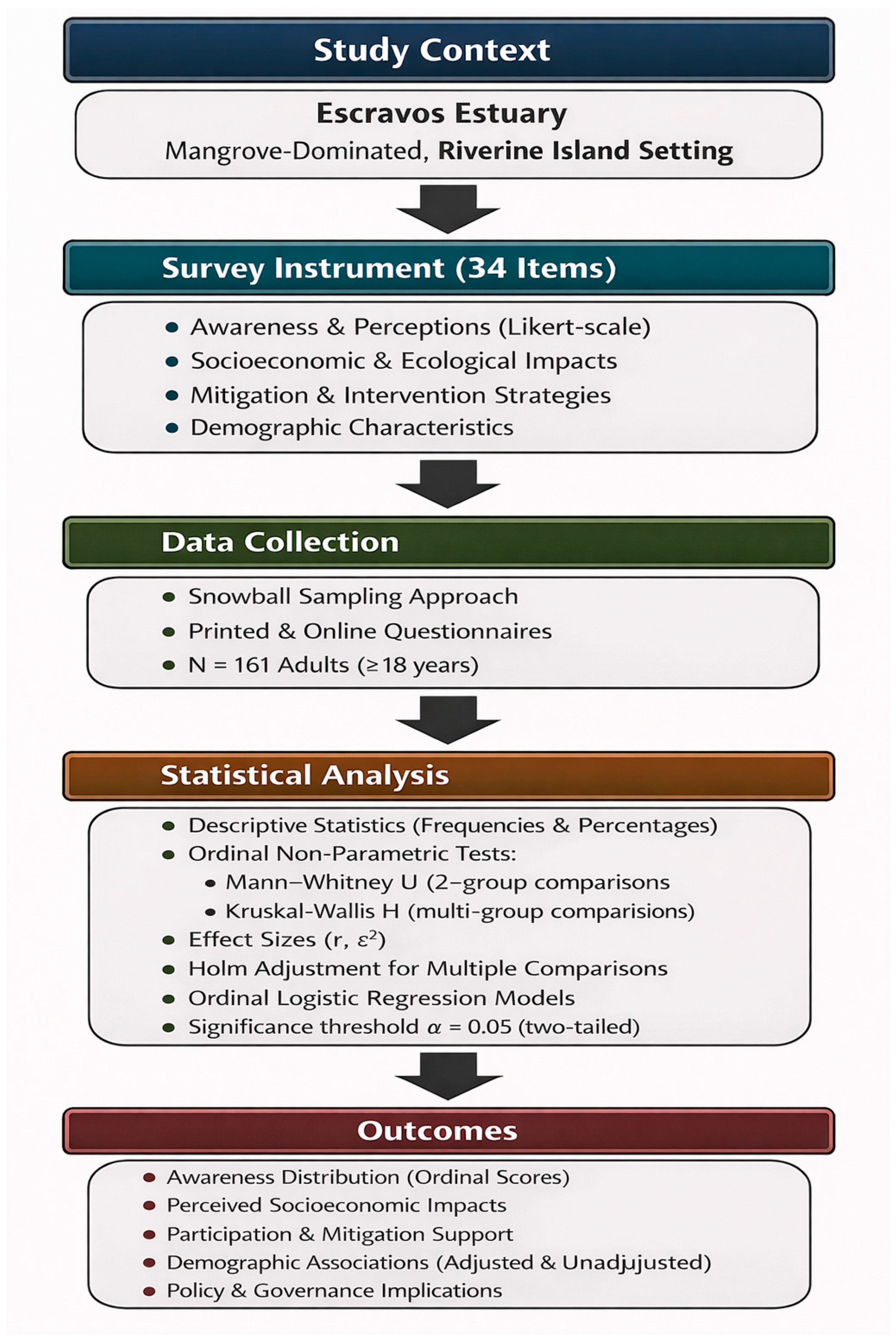
The conceptual framework and sequential stages of the survey design, data collection, statistical analysis, and outcomes are summarised in Figure 2. A survey tool comprising 34 questions was developed for the study (See Supplementary File). The questionnaire was divided into three sections covering community awareness and perception of macro litter, socioeconomic and ecological impacts, and intervention for addressing macro litter.
Prior to the survey, a pilot test was conducted with five residents to assess the clarity, contextual relevance, and overall suitability of the questions [29]. Feedback from the pilot informed minor revisions to improve clarity and focus on the aim of the study. The final questionnaire was distributed in two formats: printed copies were handed to individuals with limited digital access, and an online version via Google Forms for online respondents between June and August 2024. To broaden participation, the survey was shared through community networks and social media platforms (e.g., WhatsApp), targeting residents, students, and staff within Okerenkoko and Kurutie communities.
Prior to the actual survey, participants were assured of confidentiality and provided informed consent, with the option to withdraw from the survey at any time. Participation was restricted to adults (≥18 years) who currently resided in Okerenkoko or Kurutie. Respondents were community residents, students, and staff. For students and staff, a minimum residency period of two years was required to ensure familiarity with local environmental conditions. Participation was entirely voluntary, and no financial or material compensation was provided. No vulnerable populations were specifically recruited.
Following the approach outlined by Hartley et al. [5], a snowball mechanism was adopted to reach respondents (i.e., participants identified other residents who met the study criteria and were willing to participate), facilitating access within a dispersed riverine setting [30]. This approach was appropriate given the absence of a formal sampling frame and the geographically isolated nature of the island communities. The demographic composition of respondents reflects the contemporary structure of the island population, where university-affiliated residents constitute a significant proportion of active inhabitants following the establishment of the federal university. Within this period, 161 valid responses were collected.
The snowball sampling approach and distribution through university-affiliated networks resulted in a respondent pool weighted toward students and younger residents. Although individuals engaged in fishing and related livelihoods were included, occupational representation was not proportionally stratified. Accordingly, findings reflect perceptions within the surveyed population rather than a statistically representative occupational distribution of the wider community.

2.3. Data Analysis

Responses were transcribed into Microsoft Excel and analysed using IBM SPSS Statistics version 20. Descriptive statistics (frequencies and percentages) were used to summarise sociodemographic characteristics and response distributions across all survey items.
Given that the primary outcome variables were measured on five-point Likert scales, responses were treated as ordinal. No composite indices were constructed; each survey item was analysed independently. Group differences in ordinal responses were assessed using the Mann–Whitney U test for binary predictors (e.g., gender) and the Kruskal–Wallis H test for multi-category predictors (e.g., age group, education level, occupation). Effect sizes were calculated using r for Mann–Whitney U tests and epsilon-squared (ε2) for Kruskal–Wallis tests to evaluate the magnitude of observed differences.
To further examine demographic predictors of key ordinal outcomes, separate ordinal logistic regression models were conducted for three outcome domains: (i) awareness of macro litter, (ii) perceived socioeconomic impacts, and (iii) willingness to participate in community-based mitigation initiatives. Age, gender, education, and occupation were entered as independent variables in each model. Odds ratios (ORs) and 95% confidence intervals (CIs) were reported. Given the number of statistical comparisons conducted, Holm-adjusted p-values were applied to control for family-wise error. Statistical significance was set at p < 0.05.

3. Results and Discussion

3.1. Sociodemographic Characteristics of Respondents

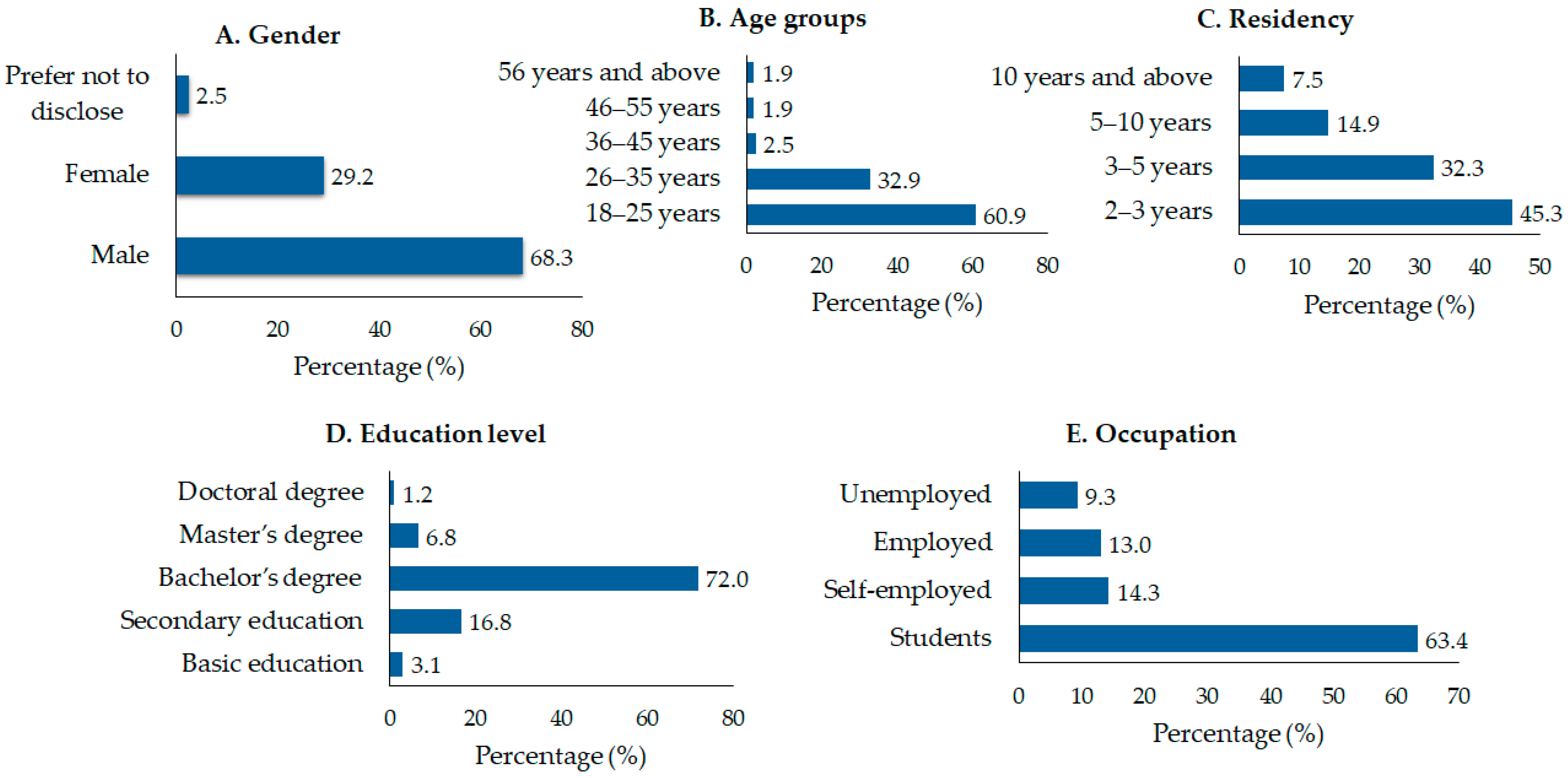
Out of 161 valid responses, most participants were male (68.3%), followed by female (29.2%), with 2.5% preferring not to disclose their gender (Figure 3). The predominance of male respondents suggests lower participation of women in environmental surveys and activities within the study area. A higher proportion of male respondents participated in the survey. While this may reflect local participation dynamics in community engagements, it may also limit the representation of women’s perspectives, particularly given their important roles in household waste management and fishery-related activities in coastal communities. This finding reflects patterns noted by Sam and Zibima [31], who observed limited female involvement in environmental programmes in parts of the Niger Delta. Enhancing gender inclusivity in community-based initiatives remains important, as women often maintain close interactions with local environmental resources through livelihood and household activities [32,33].
Age distribution revealed that most respondents were young adults; 60.9% were aged 18–25 years, 32.9% were 26–35 years, and only 6.9% were above 35 years. This dominance of younger participants aligns with observations by Lachance and Przygoda [34], who reported that youth tend to be more engaged in environmental matters, often facilitated by exposure to digital resources and environmental education.
Occupationally, students made up 63.4% of the sample, followed by self-employed (14.3%), employed (13.0%), and unemployed respondents (9.3%). This reflects the academic context of the study population and highlights the prominent involvement of younger, educated demographics (Gen Z). In terms of education, nearly three-quarters of respondents reported holding a bachelor’s degree, highlighting the potential role of formal education in influencing environmental awareness and attitudes [35,36].
The demographic composition reflects the institutional context of the study area and the current resident structure of the island community. While respondents included individuals engaged in fishing, trading, and other livelihoods, the distribution was weighted toward younger and university-affiliated residents, consistent with the sampling approach described in Section 2.2.
Gender demonstrated a statistically significant association with awareness (Mann–Whitney U = 1840.00, p = 0.003, r = 0.23), indicating a small-to-moderate effect size. Age group showed a borderline association (Kruskal–Wallis H = 9.06, df = 4, p = 0.060, ε2 = 0.03), although this did not meet the α = 0.05 threshold (Table 1). Occupation was not significantly associated with awareness (Kruskal–Wallis H = 3.05, df = 3, p = 0.383, ε2 < 0.01).
Education level was statistically significant in the unadjusted Kruskal–Wallis analysis (H = 11.43, df = 4, p = 0.022, ε2 = 0.04). However, this association did not remain significant after Holm correction for multiple comparisons. In ordinal logistic regression models including age, gender, education, and occupation simultaneously, education did not emerge as a significant independent predictor of awareness. These findings indicate that awareness scores were broadly similar across most demographic categories within the surveyed population, with gender showing the most consistent association.

3.2. Community Awareness and Perception of Macro Litter Pollution

The study revealed that macro litter awareness was relatively high among respondents (Table 2). Approximately 76.6% of participants agreed or strongly agreed that they were aware of macro litter issues in their communities. Similarly, most respondents (79.7%) agreed or strongly agreed that macro litter constitutes a major environmental issue and that it poses a future environmental threat. These findings suggest that surveyed residents demonstrated substantial awareness of macro litter challenges. Although most respondents endorsed the upper categories of the Likert scale, 23.4% selected neutral or lower response categories for awareness, indicating that familiarity with macro litter issues was not uniformly distributed across the surveyed population. However, high awareness alone may not necessarily translate into sustained behavioural change without accessible waste management options and institutional support.
Empirical evidence from global studies supports the observation that awareness directly influences action. For example, community-led programmes in the United States and Taiwan have shown that heightened awareness correlates with higher public participation in marine debris clean-up and compliance with local waste policies [37,38]. However, the translation of awareness into sustained behavioural change often depends on the availability of adequate waste management infrastructure and institutional support. Previous studies in the Niger Delta region have documented constraints in waste segregation, collection, and recycling, noting that poor infrastructure and inconsistent waste management services hinder effective waste management practices [39,40]. Although some residents reportedly practice waste separation, such efforts may be constrained by inadequate collection coverage, limited recycling facilities, and irregular waste transport systems [41]. Comparable evidence of ineffective waste management and associated water quality deterioration has been reported in neighbouring estuarine communities [28,42], illustrating how infrastructural gaps can intensify pollution pressures in aquatic environments.
This situation suggests that awareness without adequate institutional and infrastructural support cannot yield actionable steps for sustainable macro litter management. Instead, it risks reinforcing a perception that individual effort has little impact, especially when improperly managed waste inevitably re-enters the marine environment. Similarly, analyses of marine litter governance frameworks emphasise that effective mitigation requires not only public engagement but also coordinated policy instruments, institutional capacity, and regulatory enforcement mechanisms [43].
The high baseline awareness observed in this study could serve as a resource for intervention. In other coastal regions, such as Cape Verde, community-led initiatives have successfully mobilised informed residents as advocates for stewardship and sustainable practices [44,45]. In the Escravos Estuary, those who already demonstrate strong awareness could serve as local champions in peer-to-peer sensitisation campaigns, amplifying the message and motivating broader participation. Within the surveyed population, awareness scores were generally elevated across demographic categories, with limited differentiation by age, occupation, or education (Table 1). Ordinal logistic regression analysis (Supplementary Table S4) further indicated that gender remained a significant predictor of awareness after adjustment for age, education, and occupation, whereas other demographic variables were not independently associated with awareness levels. However, public understanding of environmental risks can influence whether awareness translates into sustained behavioural change [46].
The relatively consistent awareness levels observed across demographic groups imply that awareness-oriented interventions may be broadly applicable within the community context studied. At the same time, gender-sensitive approaches may enhance participation and inclusivity, particularly given the roles women often play in waste handling, household management, and resource-dependent activities. Comparative studies from other regions indicate that regional and contextual factors can shape public perceptions of macro litter and associated policy support [47], highlighting the importance of situating awareness within local governance and sociocultural areas.

3.3. Socioeconomic and Social Impacts of Macro Litter

Macro litter was widely perceived by respondents to have substantial socioeconomic effects for communities, households, and businesses in the Escravos Estuary (Table 3). Approximately 79.0% of respondents agreed or strongly agreed that macro litter has a negative impact on the local economy, while 98.2% recognised significant socioeconomic and ecological impacts of litter. Similarly, 79.0% of respondents indicated that macro litter pollution undermines economic well-being, indicating strong awareness of the material and financial costs associated with macro litter in daily life (Table 3). The findings collectively demonstrate that macro litter in the Escravos Estuary is understood not only as an environmental issue, but as a lived socioeconomic concern embedded within local livelihood systems.
Respondents identified specific pathways through which macro litter affects economic life. Among respondents engaged in fishing-related livelihoods, entanglement of nets and damage to fishing gear were a major concern, with 79% indicating income impacts linked to gear damage (Table 4). Such damage reduces catch efficiency, forces frequent repairs or replacement of equipment, and leads directly to lower household income. A further 58.7% of respondents reported reduced earnings due to contamination of fishing grounds, while 77.8% of respondents perceived macro litter as contributing to long-term poverty in estuarine communities (Table 4). These findings reflect perceived socioeconomic effects rather than empirically demonstrated causal poverty outcomes.
These findings highlight the way environmental degradation translates into socioeconomic vulnerability, potentially intensifying economic vulnerability among households with limited livelihood diversification. Macro litter has also been linked to boating hazards in Niger Delta waterways, where debris obstructs navigation and increases the risk of mishaps, posing dangers for sea transport and marine businesses [48]. These risks not only compromise the safety of operators but also add another layer of cost and instability for communities that depend on riverine and coastal transport for trade, fishing, and mobility [49,50].
The economic burden is compounded by the limited availability of alternative livelihoods in the study area. Communities already characterised by limited livelihood alternatives depend heavily on marine resources for income and subsistence. Thus, disruption to fishing, seafood processing, or water-based trade directly translates into food insecurity and worsening poverty. These results are consistent with findings from other coastal regions, where environmental degradation has been shown to disproportionately affect vulnerable households, reinforcing cycles of deprivation [51]. For fishers in particular, macro litter is not simply an inconvenience but a direct threat to operational stability, productivity, and long-term economic resilience.
The impacts extend beyond fisheries to small-scale commerce and service businesses within the estuary. Nearly 78.4% of business owners reported that litter increases operational costs (Table 4), primarily through the need for additional labour or resources to clean up waste around their premises. Customer satisfaction was also identified as being directly linked to environmental cleanliness, with 58.0% of respondents noting that litter discourages patronage in shops and market stalls (Table 4). These findings indicate that macro litter affects not only natural resource users but also the broader local economy by reducing the attractiveness and competitiveness of businesses. A degraded environment, therefore, translates into diminished income opportunities across multiple sectors, reinforcing the need for integrated waste management approaches. These findings highlight that macro litter is not solely an environmental concern but a direct operational constraint for small-scale enterprises operating within the estuary. Increased cleaning costs, reduced patronage, and diminished environmental aesthetics translate into tangible economic pressures for local businesses. Although occupational representation was not proportionally stratified, business operators were included in the sample, and their responses indicate that macro litter has implications beyond fisheries, affecting the broader local commercial ecosystem.
Social impacts were reported with equal intensity, with 59.3% of respondents strongly agreeing that macro litter represents a future environmental threat (Table 4). Moreover, 79.0% identified it as an issue that directly affects their daily lives (Table 4). Respondents described reduced community pride and social frustration arising from the persistence of litter in shared spaces. Previous research shows that visible marine litter strongly influences public perceptions of coastal ecosystem integrity and community wellbeing across different demographic groups and can motivate collective calls for improved management actions [52]. Community engagement and awareness campaigns, including those facilitated through digital platforms, have been shown to enhance public concern about coastal litter and encourage environmental stewardship behaviours [53]. Similar findings in island and coastal ecosystems indicate that residents often view persistent litter as a significant social and environmental burden, shaping perceptions of local environmental quality and collective responsibility [54]. These findings are corroborated by other studies and indicate that macro litter disrupts economic activity and undermines wellbeing, cohesion, and confidence in environmental management systems [55].
The analysis revealed that occupation and education were significantly associated with perceptions of socioeconomic impacts. Statistical analysis indicated that occupation was significantly associated with perceived socioeconomic impacts (Kruskal–Wallis H = 12.736, p = 0.0052), with respondents engaged in fishing and related livelihoods reporting stronger perceived economic burdens. Education was significant in the unadjusted analysis but did not remain significant after correction for multiple comparisons. Gender and age were not significant predictors of perceived impacts. These findings suggest that perceptions of socioeconomic effects were most pronounced among those directly dependent on marine resources. The association between occupation and perceived socioeconomic impacts may reflect what environmental sociology describes as experiential knowledge, whereby individuals directly engaged in fishing and resource-dependent activities develop context-specific environmental awareness through routine interaction with ecological change and resource use dynamics [56]. Such lived experience can influence risk perception and sensitivity to environmental degradation beyond formal informational exposure. Likewise, the influence of educational attainment on recognition of impacts is consistent with perspectives suggesting that access to information and social capital can structure how environmental risks are interpreted and articulated, as discussed in work on environmental privilege [57]. Adjusted ordinal regression indicated that education level was independently associated with perceived socioeconomic impacts (Supplementary Table S4), with respondents of higher educational attainment more likely to endorse stronger impact perceptions. These findings suggest that lived ecological dependence and educational exposure influence how macro litter impacts are understood within coastal communities.
These findings align with evidence from other global studies, as Shen et al. [58] demonstrated that the economic toll of macro litter is most acute in occupations directly tied to resource use. Honorato-Zimmer et al. [55] further highlighted that social consequences compound existing inequalities, leaving marginalised communities more vulnerable to environmental degradation. In the Escravos Estuary, macro litter is perceived as both an ecological threat and a socioeconomic burden, reinforcing concerns about economic vulnerability and community resilience. Although respondents included individuals engaged in fishing and related livelihoods, the occupational distribution of the sample was not proportionally stratified; therefore, livelihood-related findings reflect perceptions within the surveyed population.
The environmental justice perspective emphasises that coastal and riverine communities in the Global South often bear disproportionate environmental burdens despite contributing relatively little to global waste production. Research shows that pollution and marine debris disproportionately affect resource-dependent populations and economically marginalised populations, shaping both exposure and capacity to respond [59]. Empirical studies in mangrove-dependent coastal communities similarly illustrate how marine litter burdens intersect with social inequities and wellbeing concerns in the Global South [60]. Evidence from African riverine ecosystems further demonstrates how waste burdens interact with systemic service gaps and socioeconomic vulnerability, highlighting the importance of equitable environmental governance [61,62].
Hence, these results indicate the need for coordinated policies that integrate environmental management with socioeconomic development. Investment in waste management infrastructure such as receptacles, segregation systems, and recycling facilities would help reduce the burden on fishers, traders, and households and contribute to environmental quality. In parallel, complementary education and community engagement strategies could strengthen the role of local participation and enhance the effectiveness of mitigation efforts. Addressing ecological and socioeconomic aspects of macro litter would enable policymakers to reduce the structural vulnerabilities and foster long-term resilience in estuarine communities facing persistent pollution pressures.

3.4. Community-Based Initiatives and Strategies of Macro Litter Pollution

The study examined community-driven initiatives that could improve macro litter and local waste management practices. Overall, there was strong support for community-led approaches, with 96.9% of respondents agreeing or strongly agreeing that such initiatives can be effective (Table 5). This demonstrates substantial support among surveyed residents for local action in mitigating macro litter pollution.
A large proportion of respondents (78.4%) expressed willingness to participate in community clean-up exercises, highlighting the potential for mobilising local labour to address macro litter. Similarly, 78.4% supported policies encouraging the replacement of single-use plastics with biodegradable or reusable products. This indicates readiness to align community practices with broader waste reduction policies. At the behavioural level, 59.3% of respondents reported actively picking up litter to prevent it from entering the estuary, while 58.7% of them supported stricter enforcement of existing waste management regulations. In addition, most respondents (79.7%) agreed that establishing local community groups dedicated to waste management would strengthen grassroots action and enhance the effectiveness of existing interventions. These results are consistent with evidence from other coastal regions, where local engagement in waste segregation, neighbourhood clean-ups, and household recycling initiatives significantly reduced macro litter input [63]. The relatively high awareness levels observed in Section 3.2 may therefore provide a foundation for scaling participatory interventions.
Despite this broad support, about one-fifth of respondents expressed neutrality or negative positions regarding participation or enforcement measures (Table 5). This suggests that while overall engagement is substantial, participation is not uniform across the surveyed population. Sustained behavioural change may therefore require targeted engagement strategies that address motivational and structural barriers.
Demographic analysis indicated that age was significantly associated with willingness to participate (Kruskal–Wallis H = 11.682, p = 0.019), with younger respondents reporting higher levels of engagement. Education was significant in the unadjusted analysis; however, this association did not remain significant after correction for multiple comparisons. Gender was not significantly associated with willingness to participate (Mann–Whitney U = 2972.0, p = 0.081). In the adjusted ordinal logistic regression model (Supplementary Table S4), none of the demographic variables remained statistically significant predictors of willingness to participate. This suggests that participation intent was broadly distributed across demographic categories within the surveyed population.
While unadjusted analyses indicated higher engagement among younger respondents and those with higher educational attainment, these associations were not independently sustained after adjustment. Nevertheless, the observed trends are consistent with findings by Lachance and Przygoda [34], who emphasised the role of youth and education in advancing sustainable practices, while also highlighting the need to design interventions that harness participation from all demographic groups. The association between education and willingness to participate may reflect differences in perceived behavioural efficacy and civic engagement capacity, whereby individuals with higher educational exposure feel more confident contributing to organised environmental initiatives, consistent with evidence that environmental education strengthens participatory behaviour [64]. Stronger engagement among younger respondents may relate to generational differences in environmental identity formation and digital mobilisation. These findings suggest that willingness to participate is influenced not only by awareness but also by perceived capacity to act and access to participatory platforms within the community.

4. Implications for Mitigation Strategies and Developing Community-Led Initiatives to Address Macro Litter Pollution

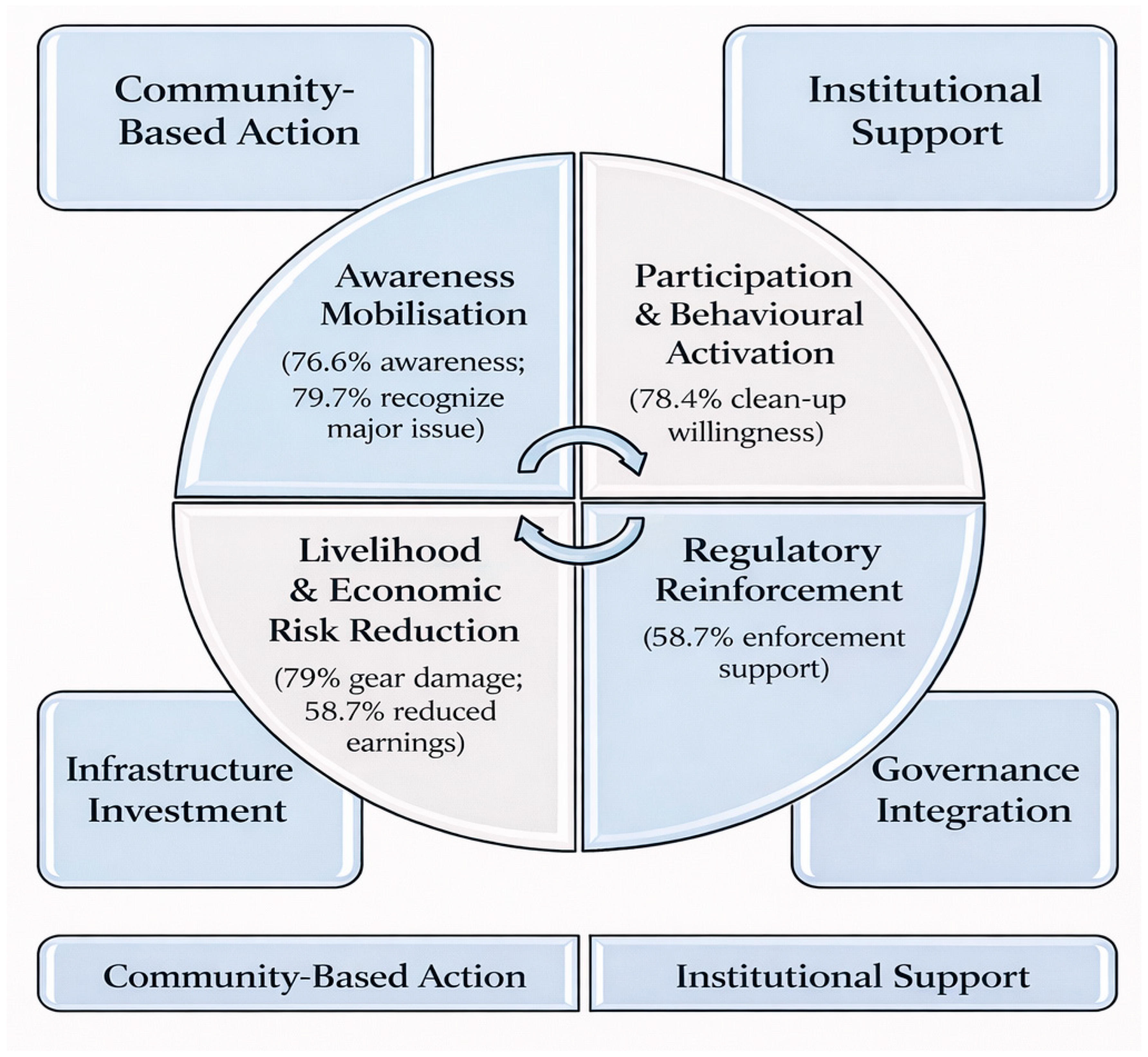
The survey findings provide an evidence-based foundation for designing site-specific mitigation strategies in the Escravos Estuary (Figure 4).
The observed high levels of awareness and widespread recognition of macro litter as an environmental concern suggest that the community possesses an existing cognitive foundation upon which interventions can be built. Nevertheless, awareness alone is unlikely to produce sustained behavioural change without complementary improvements in waste management systems and institutional support.
Community engagement is central to addressing macro litter pollution in the Escravos Estuary and fostering a sustainable environmental culture. Translating awareness into sustained action requires structured communication and participatory mechanisms that reinforce pro-environmental behaviours across demographic groups. Targeted outreach through workshops, local forums, and digital platforms can strengthen public understanding of the environmental and socioeconomic consequences of litter and support inclusive participation in mitigation efforts.
Given the strong willingness to participate in clean-up activities and support for reusable product policies, interventions should prioritise structured community mobilisation. Youth engagement is particularly strategic, as younger respondents demonstrated stronger participation tendencies. Although gender was not a statistically significant predictor of participation, inclusive design remains important to ensure that women, who are actively involved in fishing, farming, and household waste management, are equitably integrated into governance processes. More importantly, increased awareness alone may be insufficient to achieve sustained behavioural change if not complemented with sustainable waste management systems. Strengthening institutional support through improved collection, disposal, and monitoring mechanisms would enhance the impact of community-based initiatives. The geographic isolation of the Escravos Estuary, where many communities are primarily accessible by water transport, may pose logistical challenges for conventional waste collection systems. Consequently, appropriate management approaches adapted to riverine environments will be important for improving waste management effectiveness in the study area.
Institutional reinforcement through strengthening collection, disposal, and monitoring systems would enhance the effectiveness of community-based initiatives. Considering the riverine and boat-access nature of the study area, decentralised waste aggregation points accessible through water transport may be more feasible than conventional land-based collection models. Partnerships between local authorities, the federal university, and nearby oil and gas operators could facilitate periodic water-based waste retrieval and infrastructure provision. Such approaches are particularly appropriate in estuarine island regions where conventional municipal systems face logistical constraints. Governments at local and regional levels should therefore prioritise infrastructure development alongside awareness programmes to foster sustainable waste management. Establishing regular community clean-up events could generate both immediate and long-term benefits. Such events, involving schools, local volunteers, community associations, and non-governmental organisations (NGOs), would remove litter, raise awareness, and foster a sense of collective responsibility that strengthens social cohesion. Partnerships with local organisations, including NGOs, businesses, and government agencies, could enhance these efforts. Importantly, evidence shows that frameworks which integrate gender, inclusion, and diversity make nature-based solutions more effective in cities, and applying similar principles could strengthen coastal interventions in the Escravos Estuary [65].
Livelihood-sensitive interventions are also required. With most respondents reporting gear damage and indicating reduced earnings from contaminated fishing grounds, mitigation strategies should integrate economic resilience components. Targeted support for fishers and small-scale businesses, through protective gear initiatives, organised litter retrieval from fishing zones, and micro-incentive schemes, would directly address the economic aspects of macro litter identified in this study.
Behavioural activation mechanisms can further translate willingness into sustained action. Educating residents on proper waste management and recycling practices can reduce littering. This initiative could begin with the establishment of citizen science (e.g., environment clubs) in colleges and social centres (e.g., markets) to drive good environmental stewardship for sustainability [66]. For example, businesses in community markets could be encouraged to use reusable materials instead of single-use plastics to promote sustainable living and minimise plastic waste. Incentive programmes could be initiated to further motivate individuals and businesses to actively participate in litter reduction efforts. This could include, for example, if a community member picks and returns 10 kg worth of plastic bottles, they have access to 20 litres of potable water. These programmes may include recognition awards, discounts, or grants for sustainable projects, creating a culture of environmental stewardship.
A monitoring and reporting system is also essential for identifying pollution hotspots and tracking progress in litter reduction. The local government, whose remit includes water and sanitation, could develop a scheme in collaboration with community stakeholders to monitor macro litter over four quarters annually to reduce adverse behaviour, reduce macro litter, and adopt potential strategies that could be adopted to optimise sustainability. Engaging community members in data collection for environmental monitoring would create green jobs, encourage citizen science, provide valuable data and increase involvement and awareness of environmental issues in their locality.
Effective policy reform is crucial to tackling the root causes of macro litter pollution and ensuring lasting solutions. This requires not only the enforcement of local regulations on waste disposal but also the active involvement of communities in promoting sustainable behaviours. Collaboration with local authorities and stakeholders can drive the introduction of stricter waste management systems and encourage businesses to adopt environmentally responsible practices. Policy frameworks should also prioritise socioeconomic measures, with targeted incentives that support fishers, traders, and other resource-dependent groups whose livelihoods are most affected by macro litter, while reducing reliance on unsustainable waste practices.
Community involvement in environmental decision-making is critical to the success of any environmental programme [27]. Residents’ voices should be heard in the discussions of policies that would affect the Escravos Estuary. This can be achieved through public forums, surveys, and active participation in local government meetings and community engagement platforms. Empowering the community to contribute to policymaking would strengthen policies, improve compliance, and generate broader public support and adherence to environmental initiatives.

4.1. Strategies for Effective Macro Litter Management

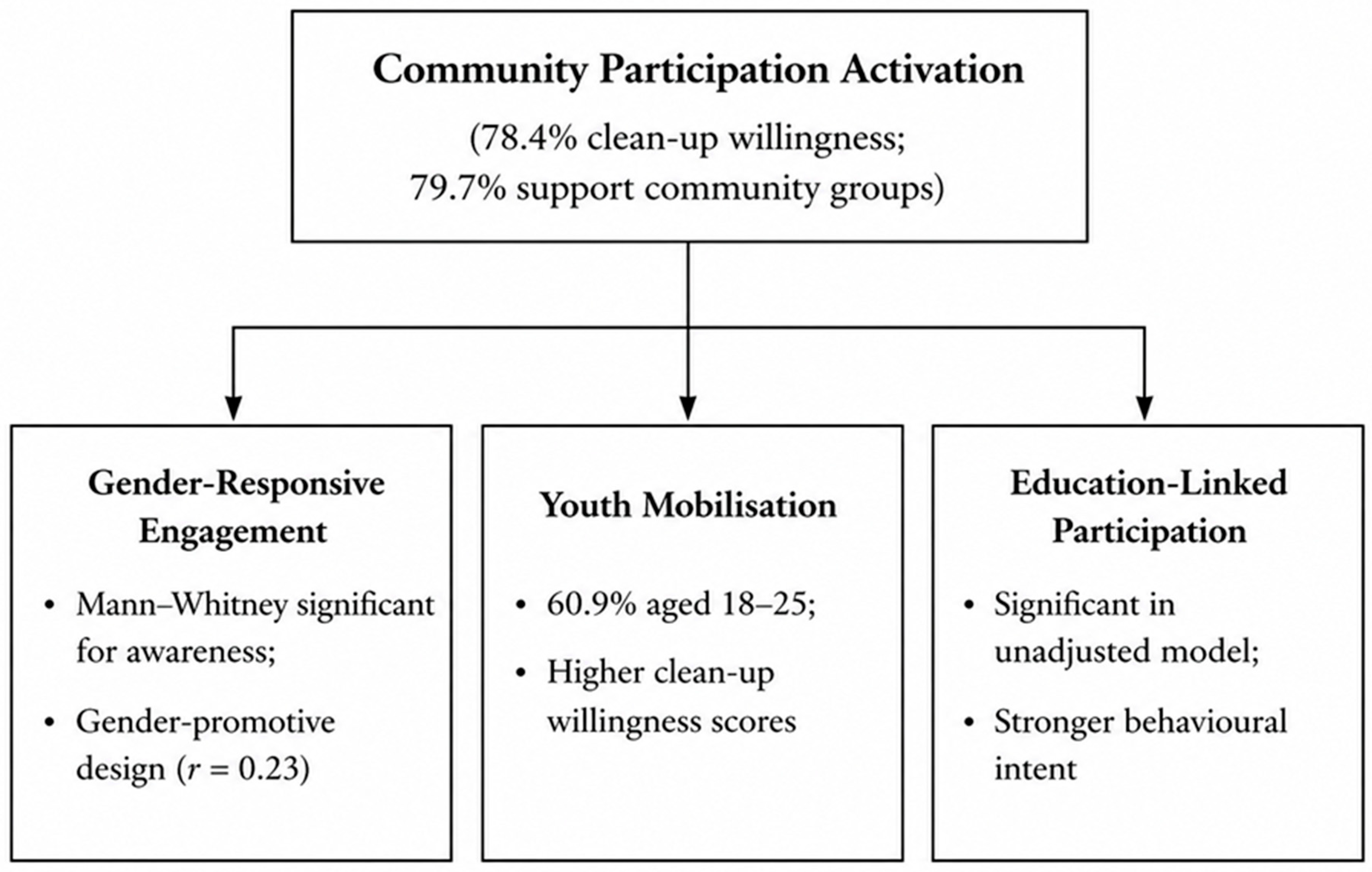
Building on the demographic and behavioural patterns identified in Section 3.1 and Section 3.4, Figure 5 presents an operational participation activation model that translates statistical findings into structured engagement strategies.
The first strategy emphasises ensuring gender inclusiveness in environmental initiatives. Although gender was not a significant predictor of willingness to participate, awareness scores differed modestly between male and female respondents. This suggests that participation frameworks should not assume uniform engagement pathways across genders. Designing inclusive leadership structures and ensuring representation of women in local waste committees may enhance legitimacy and improve implementation outcomes [67]. Given women’s involvement in fishing, trading, and household waste management, structured inclusion strengthens programme relevance and social equity.
The second strategy focuses on engaging the younger population, not because of strong statistical differences, but because of their demonstrated willingness to participate in clean-up activities and their strong digital presence. Developing programmes and campaigns that resonate with young individuals can leverage their creativity, energy, and social media engagement. Although statistical tests showed only borderline differences for age, the youth remain valuable contributors to awareness campaigns and long-term behavioural changes toward litter reduction and environmental sustainability.
The third strategy highlights the importance of tailoring interventions based on educational backgrounds, which showed a statistically significant influence in the unadjusted analysis. Customising initiatives to align with the educational levels and experiences of target groups ensures that activities and messages are relevant and accessible. Education-specific interventions maximise participation and strengthen the effectiveness of programmes, enabling individuals from diverse educational backgrounds to contribute meaningfully to addressing macro litter issues. Together, these strategies offer a comprehensive, inclusive approach to tackling litter problems, fostering community involvement, and achieving sustainable environmental outcomes.
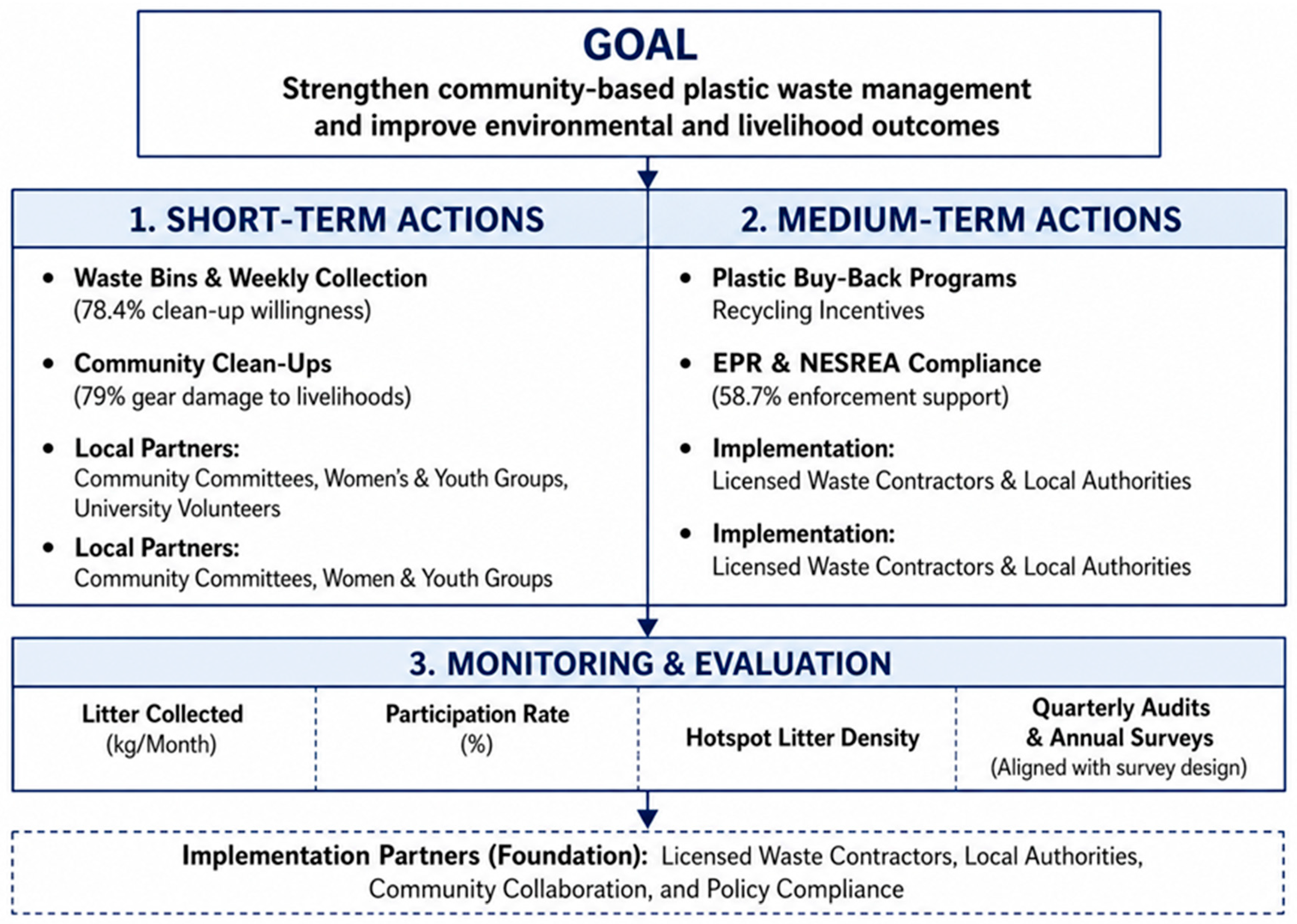
To translate these strategies into practice, a phased implementation roadmap is recommended (Figure 6). In the short term, priority should be given to behavioural mobilisation and institutionalising regular community sanitation practices. Converting expressed willingness into action can be achieved through structured weekly or monthly clean-up exercises coordinated by development committees, women’s associations, youth groups, and university volunteers. Reinforcing pro-environmental norms through visible participation and local leadership would help consolidate awareness into sustained behavioural change.
In the medium term, infrastructural and regulatory measures should be strengthened. Strategically located waste receptacles combined with clearly defined collection schedules in Okerenkoko and Kurutie would reduce indiscriminate disposal into the estuary. Incentive-based mechanisms, such as plastic buy-back programmes implemented in collaboration with licenced waste contractors, could further encourage waste recovery. Alignment with Nigeria’s Extended Producer Responsibility (EPR) framework, administered by the National Environmental Standards and Regulations Enforcement Agency (NESREA), would enhance regulatory coherence and institutional backing. Given that the majority of respondents supported stricter enforcement, institutional backing appears socially acceptable within the surveyed population.
In the longer term, sustained effectiveness requires measurable indicators and adaptive governance. Progress should be tracked using indicators such as (i) quantity of litter collected per month (kg), (ii) household participation rates in clean-up initiatives (%), (iii) compliance with scheduled waste collection, and (iv) reduction in litter density at identified hotspots. Quarterly hotspot audits combined with annual perception surveys would enable longitudinal tracking and feedback into policy adjustment cycles. Integrating community-based monitoring enhances transparency, strengthens accountability, and maintains engagement momentum. The present study provides a cross-sectional assessment of community perceptions during the survey period; therefore, future longitudinal studies are recommended to evaluate the long-term effectiveness of proposed mitigation strategies.

4.2. Study Limitations

The respondent pool included a higher proportion of young adults and university-affiliated residents, reflecting both the demographic dynamics of the island following the establishment of the federal university and the snowball distribution approach employed in this study. Although community members engaged in fishing, trading, and other livelihoods were represented, occupational categories were not proportionally stratified. Permanent residency among older age groups remains relatively limited in the study area, which further influenced the demographic profile of respondents.
As a perception-based survey using non-probability sampling, the study provides insight into prevailing views within the current resident population rather than a statistically representative cross-section of all occupational or demographic groups across the broader coastal region. Nonetheless, the findings remain analytically relevant for understanding macro litter perceptions within a rapidly evolving estuarine island community scenario.

5. Conclusions

This study examined community awareness, perceived socioeconomic impacts, and support for mitigation strategies related to macro litter in the Escravos Estuary, Southern Nigeria. Moving beyond litter quantification, it provides insight into how estuarine island communities interpret macro litter through socioeconomic, behavioural, and governance perspectives. The findings offer regionally tailored strategies guidance for macro litter management in riverine systems of the Global South, where environmental degradation intersects with livelihood dependence and infrastructural constraints.
Macro litter was widely perceived as both an environmental and economic concern. Respondents reported livelihood pressures linked to damaged fishing gear, reduced catches, and increased household and business costs, highlighting the vulnerability of resource-dependent communities to persistent litter accumulation. While awareness levels were generally high and broadly distributed across demographic groups, sustained mitigation will require structural improvements in waste management systems alongside continued community engagement.
Strong support for community-driven initiatives, clean-up participation, and regulatory reinforcement demonstrates social readiness for action. Translating this readiness into durable outcomes, however, depends on coordinated infrastructure development, institutional backing, inclusive participation frameworks, and measurable monitoring mechanisms. Integrating livelihood-sensitive strategies with enforcement and incentive-based approaches will be critical in reducing both ecological degradation and socioeconomic strain.
Although the study employed non-probability sampling and reflects prevailing views within the surveyed population, it contributes empirical insight into community-level macro litter perceptions in the Niger Delta, an area where such data remain limited. Future research should adopt stratified sampling designs to enhance demographic representation, examine longitudinal impacts of mitigation interventions, and evaluate policy effectiveness under evolving governance conditions.
Strengthened collaboration among government agencies, community groups, businesses, and civil society actors will be essential for sustaining macro litter reduction in the Escravos Estuary. Addressing macro litter in estuarine environments requires not only environmental management but also integrated governance that aligns ecological protection with economic resilience and community participation.

Supplementary Materials

The following supporting information can be downloaded at: https://www.mdpi.com/article/10.3390/su18104842/s1, Table S1. Sociodemographic Characteristics of Respondents (Questions 1–5) N = 161; Table S2. Response Distribution for Likert-Scale Items (Questions 6–34); Table S3. Summary of Ordinal Logistic Regression Models; Table S4. Ordinal Logistic Regression Models for Key Outcomes (Complete-Case Analysis, N = 157).

Author Contributions

Writing—original draft, review and editing, Supervision, Project administration, Methodology, Conceptualisation: A.P.O., Writing—original draft, Methodology, Investigation, Data curation: B.J.O., Writing—Review and Editing: K.S., Data analysis, Writing—Review and Editing: A.J. All authors have read and agreed to the published version of the manuscript.

Funding

This research received no external funding.

Institutional Review Board Statement

This study was conducted in accordance with the ethical standards of the Nigeria Maritime University Research Ethics Committee. Ethical approval was granted by the Nigeria Maritime University Ethics Committee (2024ResearchProject/EMP11; on 1 August 2024).

Informed Consent Statement

Informed consent was obtained from all individual participants included in the study. Participants were assured of confidentiality and informed that their participation was voluntary, with the right to withdraw at any time. Participants provided consent for the anonymised data collected in this study to be used for research purposes and for publication. No identifying information about individual participants has been disclosed.

Data Availability Statement

The original contributions presented in this study are included in the article/Supplementary Material. Further inquiries can be directed to the corresponding author.

Acknowledgments

The authors are grateful to the anonymous reviewers that improved the quality of this work.

Conflicts of Interest

The authors declare that there are no known financial interests or personal relationships that could be perceived as influencing the work presented in this paper.

References

  1. Matias, T.P.; Leonel, J.; Imperador, A.M. A systemic environmental impact assessment on tourism in island and coastal ecosystems. Environ. Dev. 2022, 44, 100765. [Google Scholar] [CrossRef]
  2. Le, V.G.; Nguyen, H.L.; Nguyen, M.K.; Lin, C.; Hung, N.T.Q.; Khedulkar, A.P.; Hue, N.K.; Trang, P.T.T.; Mungray, A.K.; Nguyen, D.D. Marine macro-litter sources and ecological impact: A review. Environ. Chem. Lett. 2024, 22, 1257–1273. [Google Scholar] [CrossRef]
  3. Galgani, F.; Hanke, G.; Maes, T. Global distribution, composition and abundance of marine litter. In Marine Anthropogenic Litter; Bergmann, M., Gutow, L., Klages, M., Eds.; Springer: Cham, Switzerland, 2015; pp. 29–56. [Google Scholar]
  4. Sheavly, S.B.; Register, K.M. Marine debris & plastics: Environmental concerns, sources, impacts and solutions. J. Polym. Environ. 2007, 15, 301–305. [Google Scholar] [CrossRef]
  5. Hartley, B.L.; Pahl, S.; Veiga, J.; Vlachogianni, T.; Vasconcelos, L.; Maes, T.; Doyle, T.; Metcalfe, R.D.A.; Öztürk, A.A.; Di Berardo, M.; et al. Exploring public views on marine litter in Europe: Perceived causes, consequences and pathways to change. Mar. Pollut. Bull. 2018, 133, 945–955. [Google Scholar] [CrossRef]
  6. Fulke, A.B.; Bhanushali, S.; Jadhav, H. Global marine plastic pollution: Sources, distribution, implications on human health and mitigation strategies. Cont. Shelf Res. 2025, 296, 105578. [Google Scholar] [CrossRef]
  7. Hahladakis, J.N. Delineating the global plastic marine litter challenge: Clarifying the misconceptions. Environ. Monit. Assess. 2020, 192, 267. [Google Scholar] [CrossRef]
  8. UNEP. Plastic Pollution and Marine Litter. 2024. Available online: https://www.unep.org/topics/ocean-seas-and-coasts/ecosystem-degradation-pollution/plastic-pollution-marine-litter (accessed on 3 October 2024).
  9. Dumbili, E.; Henderson, L. The challenge of plastic pollution in Nigeria. In Plastic Waste and Recycling; Letcher, T.M., Ed.; Academic Press: Cambridge, MA, USA, 2020. [Google Scholar] [CrossRef]
  10. Getor, R.Y.; Mishra, N.; Ramudhin, A. The role of technological innovation in plastic production within a circular economy framework. Resour. Conserv. Recycl. 2020, 163, 105094. [Google Scholar] [CrossRef]
  11. World Wildlife Fund (WWF-UK). Will There be More Plastic than Fish in the Sea? WWF My Footprint. 2025. Available online: https://www.wwf.org.uk/myfootprint/challenges/will-there-be-more-plastic-fish-sea (accessed on 22 August 2025).
  12. Abdulai, P.M.; Sam, K.; Onyena, A.P.; Ezejiofor, A.N.; Frazzoli, C.; Ekhator, O.C.; Udom, G.J.; Frimpong, C.K.; Nriagu, J.; Orisakwe, O.E. Persistent organic pollutants and heavy metals in Ghanaian environment: A systematic review of food safety implications. Environ. Monit. Assess. 2024, 196, 376. [Google Scholar] [CrossRef]
  13. Camacho, M.; Herrera, A.; Gómez, M.; Acosta-Dacal, A.; Martínez, I.; Henríquez-Hernández, L.A.; Luzardo, O.P. Organic pollutants in marine plastic debris from Canary Islands beaches. Sci. Total Environ. 2019, 662, 22–31. [Google Scholar] [CrossRef]
  14. Bakir, A.; O’Connor, I.A.; Rowland, S.J.; Hendriks, A.J.; Thompson, R.C. Relative importance of microplastics as a pathway for the transfer of hydrophobic organic chemicals to marine life. Environ. Pollut. 2016, 219, 56–65. [Google Scholar] [CrossRef]
  15. Gall, S.C.; Thompson, R.C. The impact of debris on marine life. Mar. Pollut. Bull. 2015, 92, 170–179. [Google Scholar] [CrossRef]
  16. Watkins, E.; Brink, P.; Withana, S.; Mutafoglu, K.; Schweitzer, J.P.; Russi, D.; Kettunen, M. Marine Litter: Socio-Economic Study—Scoping Report; Institute for European Environmental Policy: London, UK, 2015; Available online: https://wedocs.unep.org/20.500.11822/26014 (accessed on 4 November 2024).
  17. Napper, I.E.; Thompson, R.C. Plastic debris in the marine environment: History and future challenges. Glob. Chall. 2020, 4, 1900081. [Google Scholar] [CrossRef]
  18. Thushari, G.G.N.; Senevirathna, J.D.M. Plastic pollution in the marine environment. Heliyon 2020, 6, 8. [Google Scholar] [CrossRef]
  19. UN Environment. Mapping of Global Plastics Value Chain and Plastics Losses to the Environment: With a Particular Focus on Marine Environment; United Nations Environment Programme: Nairobi, Kenya, 2018; Available online: https://www.unep.org/resources/report/mapping-global-plastics-value-chain-and-plastics-losses-environment-particular (accessed on 4 November 2024).
  20. Angiolillo, M.; Di Lorenzo, B.; Farcomeni, A.; Bo, M.; Bavestrello, G.; Santangelo, G.; Cau, A.; Mastascusa, V.; Cau, A.; Sacco, F.; et al. Distribution and assessment of marine debris in the deep Tyrrhenian Sea (NW Mediterranean Sea, Italy). Mar. Pollut. Bull. 2015, 92, 149–159. [Google Scholar] [CrossRef]
  21. Spedicato, M.T.; Zupa, W.; Carbonara, P.; Fiorentino, F.; Follesa, M.C.; Galgani, F.; García-Ruiz, C.; Jadaud, A.; Ioakeimidis, C.; Lazarakis, G.; et al. Spatial distribution of marine macro-litter on the seafloor in the northern Mediterranean Sea: The MEDITS initiative. Sci. Mar. 2019, 83, 257–270. [Google Scholar] [CrossRef]
  22. Wang, Y. On the cognitive processes of human perception with emotions, motivations, and attitudes. Int. J. Cogn. Inform. Nat. Intell. 2007, 1, 1–13. [Google Scholar] [CrossRef]
  23. Ajzen, I. The theory of planned behavior. Organ. Behav. Hum. Decis. Process. 1991, 50, 179–211. [Google Scholar] [CrossRef]
  24. Miguel, I.; Santos, A.; Venâncio, C.; Oliveira, M. Knowledge, concerns and attitudes towards plastic pollution: An empirical study of public perceptions in Portugal. Sci. Total Environ. 2024, 906, 167784. [Google Scholar] [CrossRef] [PubMed]
  25. Onyena, A.P.; Nkwoji, J.A.; Chukwu, L.O. Sediment characteristics and ecological quality evaluation of a brackish creek using AZTI’s Marine Biotic and Bentix Indices. Aquat. Sci. 2023, 85, 108. [Google Scholar] [CrossRef]
  26. Onyena, A.P.; Sam, K.S. Mangrove biodiversity conservation in Nigeria: A holistic approach to ecosystem resilience. In Proceedings of the 5th Annual Conference/General Meeting of the Nigerian Institution of Environmental Engineers (NIEE), Rivers State Chapter on Engineering for Sustainable Development, Port Harcourt, Nigeria, 22 November 2023; Nigerian Institution of Environmental Engineers: Port Harcourt, Nigeria, 2023; pp. 36–50. [Google Scholar]
  27. Sam, K.; Coulon, F.; Prpich, G. Use of stakeholder engagement to support policy transfer: A case of contaminated land management in Nigeria. Environ. Dev. 2017, 24, 50–62. [Google Scholar] [CrossRef]
  28. Sam, K.S.; Onyena, A.P.; Erieegha, O.J.; Eze, F. Water quality evaluation using water quality index and pollution model in selected communities in Gbaramatu Kingdom, Niger Delta, Nigeria. Afr. J. Environ. Sci. Technol. 2023, 17, 118–134. [Google Scholar] [CrossRef]
  29. Bujang, M.A.; Omar, E.D.; Foo, D.H.P.; Hon, Y.K. Sample size determination for conducting a pilot study to assess reliability of a questionnaire. Restor. Dent. Endod. 2024, 49, e3. [Google Scholar] [CrossRef] [PubMed]
  30. Sam, K.; Zabbey, N.; Vincent-Akpu, I.F.; Komi, G.; Onyagbodor, P.O.; Babatunde, B.B. Socio-economic baseline for oil-impacted communities in Ogoniland: Towards a restoration framework in Niger Delta, Nigeria. Environ. Sci. Pollut. Res. 2024, 31, 25671–25687. [Google Scholar] [CrossRef]
  31. Sam, K.; Zibima, T. Inclusive environmental decision-making in a developing nation: Insights from the Ogoni remediation project, Niger Delta, Nigeria. Environ. Manag. 2024, 73, 323–337. [Google Scholar] [CrossRef]
  32. Guha, S. Women, gender equality, and environmental justice. In Gender, Environment, and Human Rights: An Intersectional Exploration; IGI Global: Hershey, PA, USA, 2025; pp. 245–268. [Google Scholar]
  33. de Siqueira, L.P.; Tedesco, A.M.; Meli, P.; Diederichsen, A.; Brancalion, P.H. Gender inclusion in ecological restoration. Restor. Ecol. 2021, 29, e13497. [Google Scholar] [CrossRef]
  34. Lachance, J.; Przygoda, M. Scientific data in the ecological commitment of young people in the digital age. Interdiscip. J. Environ. Sci. Educ. 2021, 17, e2229. [Google Scholar] [CrossRef]
  35. Hnatyuk, V.; Pshenychna, N.; Kara, S.; Kolodii, V.; Yaroshchuk, L. Education’s role in fostering environmental awareness and advancing sustainable development within a holistic framework. Multidiscip. Rev. 2024, 7, 2024spe012. [Google Scholar] [CrossRef]
  36. Imran, M.; Almusharraf, N.; Abdellatif, M.S. Education for a sustainable future: The impact of environmental education on shaping sustainable values and attitudes among students. Int. J. Eng. Pedagog. 2024, 14, 6. [Google Scholar] [CrossRef]
  37. Baechler, B.R.; De Frond, H.; Dropkin, L.; Leonard, G.H.; Proano, L.; Mallos, N.J. Public awareness and perceptions of ocean plastic pollution and support for solutions in the United States. Front. Mar. Sci. 2024, 10, 1323477. [Google Scholar] [CrossRef]
  38. Liu, T.K.; Chang, H.; Chen, Y.S. Public awareness of marine environmental quality and its relationship to policy support on marine waste management. Mar. Pollut. Bull. 2023, 195, 115456. [Google Scholar] [CrossRef] [PubMed]
  39. Mbah, C.A.; Nma, O.A.J. Environmental sustainability and home management practices in the Niger Delta: An empirical study of waste management and recycling. J. Mater. Sci. Res. Rev. 2025, 8, 834–844. [Google Scholar]
  40. Idomeh, J.E.; Sam, K.; Ekperusi, A.O.; Isokpehi, N.A. Potable drinking water in Nigeria’s coastal communities: Insights from physico-chemical and bacteriological properties assessment of Kurutie’s water and distribution systems. Ethiop. J. Environ. Stud. Manag. 2024, 17, 16–28. [Google Scholar]
  41. Dąbrowska, J.; Sobota, M.; Świąder, M.; Borowski, P.; Moryl, A.; Stodolak, R.; Kucharczak, E.; Zięba, Z.; Kazak, J.K. Marine waste—Sources, fate, risks, challenges and research needs. Int. J. Environ. Res. Public Health 2021, 18, 433. [Google Scholar] [CrossRef] [PubMed]
  42. Asionye, E.I.; Bariweni, A.P.; Idome, J.E.; Onyena, A.P. Assessment of physicochemical and microbiological qualities of potable water sources in Okorenkoko, Delta State Nigeria. J. Life Bio Sci. Res. 2023, 4, 31–39. [Google Scholar] [CrossRef]
  43. Raubenheimer, K.; McIlgorm, A. Can the Basel and Stockholm Conventions provide a global framework to reduce the impact of marine plastic litter? Mar. Policy 2018, 96, 285–290. [Google Scholar] [CrossRef]
  44. Fraisl, D.; See, L.; Bowers, R.; Seidu, O.; Fredua, K.B.; Bowser, A.; Meloche, M.; Weller, S.; Amaglo-Kobla, T.; Ghafari, D.; et al. The contributions of citizen science to SDG monitoring and reporting on marine plastics. Sustain. Sci. 2023, 18, 2629–2647. [Google Scholar] [CrossRef]
  45. Abrokwah, S.; Akuoko, I.S.G.; Akwetey, M.F.A.; Olendo, M.I.; Kershaw, P.; Aheto, D.W. Achieving sustainable source reduction of marine litter for ocean conservation in West Africa: Insights from single-use plastic consumers in Liberia. Mar. Policy 2024, 159, 105937. [Google Scholar] [CrossRef]
  46. Henderson, L.; Green, C. Making sense of microplastics? Public understandings of plastic pollution. Mar. Pollut. Bull. 2020, 152, 110908. [Google Scholar] [CrossRef]
  47. Van Oosterhout, L.; Dijkstra, H.; Van Beukering, P.; Rehdanz, K.; Khedr, S.; Brouwer, R.; Duijndam, S. Public perceptions of marine plastic litter: A comparative study across European countries and seas. Front. Mar. Sci. 2022, 8, 784829. [Google Scholar] [CrossRef]
  48. Erumaka, O.P.F.; Anyanwu, O.J.; Ikeogu, V.N.; Nwosu, E.N. Assessing ship-based accidents on ferries in the Niger Delta. Int. J. Marit. Interdiscip. Res. 2025, 7, 149–181. [Google Scholar]
  49. Mendes, A.A.; Fonseca, A.L.; Vargas, C.P. Litter pollution impact on fishing activity in southern Brazil. Reg. Stud. Mar. Sci. 2024, 73, 103510. [Google Scholar] [CrossRef]
  50. Waileruny, W.; Uneputty, P.A.; Hehanussa, K.G.; Matruty, D.J.; Sabandar, A.M.O.; Matrutty, D.D. Impact of marine debris on fishing operation at Ambon Bay. IOP Conf. Ser. Earth Environ. Sci. 2023, 1207, 012017. [Google Scholar] [CrossRef]
  51. Nabi, R.U.; Hoque, A.; Rahman, R.A.; Mustafa, S.; Kader, A. Poverty profiling of the estuarine set bag net fishermen community in Bangladesh. Res. World Econ. 2011, 2, 2–20. [Google Scholar] [CrossRef][Green Version]
  52. Herrera, M.; Pita, P.; Castelo, D.; Almeida, C.M.R.; Ramos, S.; Villasante, S. Public perceptions of marine litter and impacts on coastal ecosystem services in Galicia (Spain). Mar. Policy 2023, 155, 105742. [Google Scholar] [CrossRef]
  53. Emirzade, K.; Huseyinoglu, M.F. The impact of social media activities on marine and coastal litter in Cyprus. Sustainability 2025, 17, 4821. [Google Scholar] [CrossRef]
  54. Ferreira, J.C.; Monteiro, R.; Vasconcelos, L.; Duarte, C.M.; Ferreira, F.; Santos, E. Perception of citizens regarding marine litter impacts: Collaborative methodologies in island fishing communities of Cape Verde. J. Mar. Sci. Eng. 2021, 9, 306. [Google Scholar] [CrossRef]
  55. Honorato-Zimmer, D.; Weideman, E.A.; Ryan, P.G.; Thiel, M. Amounts, sources, fates and ecological impacts of marine litter and microplastics in the Western Indian Ocean region: A review and recommendations for actions. Oceanogr. Mar. Biol. 2022, 60, 533–589. [Google Scholar]
  56. Hind, E.J. A review of the past, the present, and the future of fishers’ knowledge research: A challenge to established fisheries science. ICES J. Mar. Sci. 2015, 72, 341–358. [Google Scholar] [CrossRef]
  57. Rajapaksa, D.; Islam, M.; Managi, S. Pro-environmental behavior: The role of public perception in infrastructure and the social factors for sustainable development. Sustainability 2018, 10, 937. [Google Scholar] [CrossRef]
  58. Shen, M.; Mao, D.; Xie, H.; Li, C. The social costs of marine litter along the East China Sea: Evidence from ten coastal scenic spots of Zhejiang Province, China. Sustainability 2019, 11, 1807. [Google Scholar] [CrossRef]
  59. Bennett, N.J.; Alava, J.J.; Ferguson, C.E.; Blythe, J.; Morgera, E.; Boyd, D.; Côté, I.M. Environmental (in) justice in the Anthropocene ocean. Mar. Policy 2023, 147, 105383. [Google Scholar] [CrossRef]
  60. McMullen, K.; Tirapé, A.; Calle, P.; Vandenberg, J.; Alvarado-Cadena, O.; Ota, Y.; Domínguez, G.A.; Alava, J.J. Marine litter and social inequities entangle Ecuadorian mangrove communities: Perceptions of plastic pollution and well-being concerns in Puerto Hondo and Isla Santay, Ecuador. Mar. Policy 2023, 157, 105857. [Google Scholar] [CrossRef]
  61. Arabi, S.; Neehaul, Y.; Sparks, C. Impacts and threats of marine litter in African seas. In The African Marine Litter Outlook; Springer International Publishing: Cham, Switzerland, 2022; pp. 91–136. [Google Scholar]
  62. Kalina, M.; Kwangulero, J.; Ali, F.; Abera, Y.G.; Tilley, E. “Where does it go?”: Perceptions and problems of riverine and marine litter amongst South Africa and Malawi’s urban poor. PLoS Water 2022, 1, e0000013. [Google Scholar] [CrossRef]
  63. Iñiguez, M.E.; Conesa, J.A.; Fullana, A. Marine debris occurrence and treatment: A review. Renew. Sustain. Energy Rev. 2016, 64, 394–402. [Google Scholar] [CrossRef]
  64. Ballard, H.L.; Lindell, A.J.; Jadallah, C.C. Environmental education outcomes of community and citizen science: A systematic review of empirical research. Environ. Educ. Res. 2024, 30, 1007–1040. [Google Scholar] [CrossRef]
  65. Delbaere, B.; Barboza, E.P.; Van Rafelghem, E.; Potter, K.; McCabe, E.; McBeth, Á.; Utkarsh, S.; Rudd, K.; de Osso Fuentes, M.J.F.; Duarte, A.; et al. The development of a Gender, Inclusion and Diversity Framework for inclusive Nature-based Solutions in cities. Res. Dir. One Health 2024, 2, e1. [Google Scholar] [CrossRef]
  66. Zabbey, N.; Kpaniku, N.C.; Sam, K.; Nwipie, G.N.; Okoro, O.E.; Zabbey, F.G.; Babatunde, B.B. Could community science drive environmental management in Nigeria’s degrading coastal Niger Delta? Prospects and challenges. Environ. Dev. 2021, 37, 100571. [Google Scholar] [CrossRef]
  67. Chakraborty, S. Women’s leadership in environmental dialogue: A human rights approach. In Gender, Environment, and Human Rights: An Intersectional Exploration; IGI Global: Hershey, PA, USA, 2025; pp. 17–32. [Google Scholar]
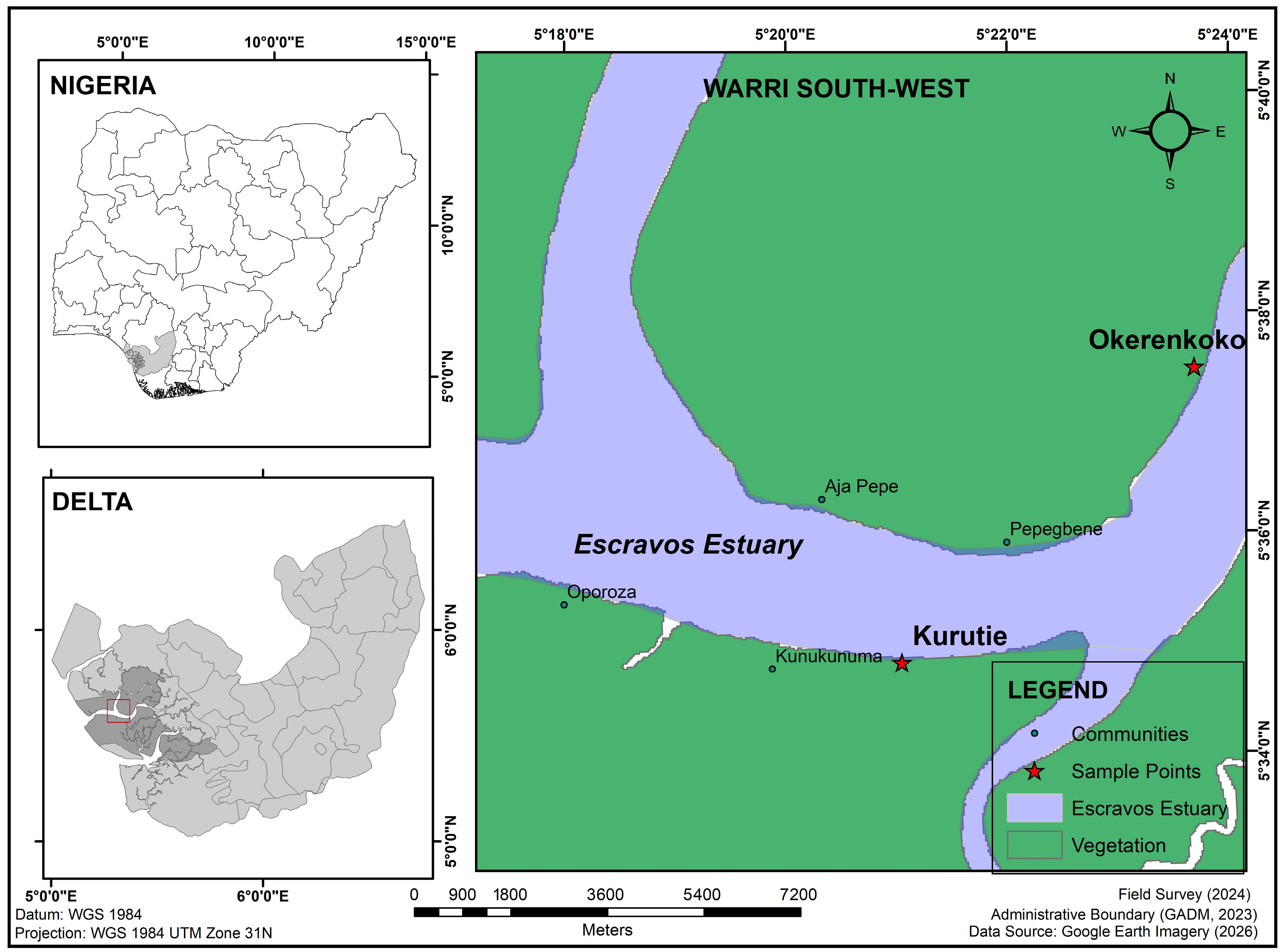
Figure 1. Escravos Estuary, southern Nigeria, showing the study area of Okerenkoko and Kurutie along the estuarine coastline.
Sustainability 18 04842 g001
Figure 2. Data collection and analysis approach.
Sustainability 18 04842 g002
Figure 3. Sociodemographic characteristics of surveyed respondents (n = 161, 2024).
Sustainability 18 04842 g003
Figure 4. Conceptual mitigation framework for macro litter management in the Escravos Estuary, supported by community and infrastructural systems.
Sustainability 18 04842 g004
Figure 5. Evidence-based operational model illustrating demographic drivers of community participation in macro litter mitigation.
Sustainability 18 04842 g005
Figure 6. Phased Implementation Roadmap for Macro Litter Mitigation in the Escravos Estuary. The model presents short-term actions, medium-term policy-aligned measures, and monitoring indicators, highlighting coordinated roles of community groups, local authorities, and waste contractors.
Sustainability 18 04842 g006
Table 1. Demographic predictors of awareness (ordinal awareness score; n = 161) in the Escravos Estuary.
VariableTest AppliedStatistic (df)Effect Sizep-ValueInterpretation
GenderMann–Whitney UU = 1840.00r = 0.230.003Significant
Age groupKruskal–Wallis HH = 9.06 (df = 4)ε2 = 0.030.060Not significant
OccupationKruskal–Wallis HH = 3.05 (df = 3)ε2 < 0.010.383Not significant
EducationKruskal–Wallis HH = 11.43 (df = 4)ε2 = 0.040.022Significant
Significant at α = 0.05. Effect sizes are reported as r for Mann–Whitney U tests and ε2 for Kruskal–Wallis tests. p-values are two-tailed. Education was significant in the unadjusted analysis; however, this association did not remain significant after Holm correction for multiple comparisons.
Table 2. Community awareness and perceptions of macro litter issues in the Escravos Estuary.
VariableStrongly Agree (%)Agree (%)Neutral (%)Disagree (%)Strongly Disagree (%)Total Agreement (%)
High level of awareness of macro litter issues38.937.713.07.43.076.6
Macro litter is a major environmental issue59.320.411.26.22.979.7
Macro litter poses a future environmental threat40.138.911.86.23.079.0
Table 3. Perceived socioeconomic impacts of macro litter in the Escravos Estuary (N = 161).
VariableStrongly Agree (%)Agree (%)Neutral (%)Disagree (%)Strongly Disagree (%)Total Agreement (%)
Impacts of macro litter on local economy39.539.512.46.81.879.0
Socioeconomic and ecological impacts60.537.71.20.60.098.2
Macro litter pollution affects economic wellbeing39.539.511.87.41.879.0
Total Agreement (%) represents the combined proportion of respondents selecting “Agree” and “Strongly Agree.” Percentages may not total 100 due to rounding.
Table 4. Respondents’ perceptions of the Socioeconomic Impacts of Macro Litter on Livelihoods, Businesses, and Daily Life (N = 161).
VariableStrongly Agree (%)Agree (%)Neutral (%)Disagree (%)Strongly Disagree (%)Total Agreement (%)
Perceived impacts of macro litter on household income and fisheries
Damage to fishing gear reduces income45.333.712.46.81.879.0
Reduced earnings due to contaminated fishing grounds28.630.120.515.55.358.7
Macro litter contributes to long-term poverty4136.810.68.13.577.8
Perceived impacts of macro litter on local businesses
Business operations affected by litter40.438.012.46.82.478.4
Customer satisfaction linked to cleanliness31.027.021.014.36.758.0
Perceived impacts of macro litter as a threat and its impact on daily life
Macro litter represents a future threat59.320.011.26.23.379.3
Macro litter affects daily life41.637.412.46.22.479.0
Total Agreement (%) represents the combined proportion of respondents selecting “Agree” and “Strongly Agree”.
Table 5. Community-led initiatives and willingness to participate in mitigation activities.
VariableStrongly Agree (%)Agree (%)Neutral (%)Disagree (%)Strongly Disagree (%)Total Agreement (%)
Effectiveness of community-led initiatives39.557.42.50.60.096.9
Willingness to participate in community cleanups40.138.312.46.23.078.4
Support for policies encouraging reusable products41.037.412.46.23.078.4
Actively pick up litter to prevent river entry31.028.321.112.47.259.3
Support stricter enforcement of regulations33.025.720.512.48.458.7
Establishment of community groups for waste management46.633.110.06.24.179.7
Total Agreement (%) represents the combined proportion of respondents selecting “Agree” and “Strongly Agree”.
Disclaimer/Publisher’s Note: The statements, opinions and data contained in all publications are solely those of the individual author(s) and contributor(s) and not of MDPI and/or the editor(s). MDPI and/or the editor(s) disclaim responsibility for any injury to people or property resulting from any ideas, methods, instructions or products referred to in the content.