1. Introduction
Recent advances in intelligent transport systems (ITS) have enabled the collection and analysis of large-scale operational data in public transport. In Slovenia, such data are generated within the Integrated Public Passenger Transport (IJPP) system, which provides nationwide ticketing and validation infrastructure.
In July 2020, a nationwide fare-free regional public transport ticket for residents aged 65 and over was introduced within the IJPP system. The free ticket represents a permanent policy measure enabling unlimited use of regional bus and rail services for the target population. This intervention significantly changed public transport conditions and created a unique context for analysing behavioural responses using operational data. For transport planners, the measure represents both an opportunity and a challenge, as limited prior evidence exists for forecasting demand following large-scale fare-free interventions.
Despite growing interest in fare-free public transport policies, empirical evidence based on large-scale operational ITS data remains limited, particularly at the national level. Existing studies often rely on survey data, short-term observations or single-city case studies, providing only partial insight into behavioural responses among older adults. In particular, little research examines how structural, service-level and spatial factors shape regional differences in elderly public transport demand following pricing interventions.
This study addresses this gap by examining regional variation in fare-free public transport demand using nationwide smart-card data. The following research question is addressed: Which structural factors explain regional variation in fare-free public transport demand among older adults?
The Slovenian case is particularly relevant, as the policy is nationwide, permanent and targeted at a clearly defined population group, while comprehensive smart-card validation data are available for analysis. Using back-office smart-card data combined with publicly available socio-economic, service and spatial indicators, the study examines how pricing interacts with service supply, accessibility, car ownership and regional characteristics in shaping public transport demand among older adults.
Rather than treating fare-free policy as the sole driver, the study conceptualizes pricing as an enabling condition within a broader set of structural determinants of public transport demand. Unlike most existing studies, which rely on survey data or single-city analyses, this study uses nationwide smart-card validation data combined with structural indicators to explain regional variation in fare-free public transport demand within a unified national policy framework.
This paper contributes to the literature in three ways:
It provides one of the first nationwide empirical assessments of fare-free public transport demand based on full smart-card validation data, moving beyond typical single-city or survey-based studies.
It systematically links fare-free demand to structural regional determinants, including service supply, accessibility, car ownership and socio-economic conditions.
It demonstrates how regional variation in demand emerges within a unified national policy framework, highlighting the role of local conditions in shaping policy outcomes.
The remainder of the paper is structured as follows.
Section 2 reviews the literature on elderly mobility, fare-free policies and ITS-based demand analysis.
Section 3 presents the study context, data and methodology.
Section 4 reports the results, focusing on relationships between selected indicators and demand.
Section 5 discusses the findings, limitations and implications, while
Section 6 concludes the paper.
2. Literature Review
2.1. Determinants of Elderly Mobility
Population ageing has intensified research on mobility needs and travel behaviour among older adults. Previous studies consistently show that elderly mobility is shaped by multiple interacting factors rather than a single determinant [
1,
2]. Individual characteristics such as health status, retirement, lifestyle and income influence the propensity to travel, while changing activity patterns often result in fewer but more flexible trips compared to younger populations [
3,
4,
5,
6]. At the same time, reduced car use with age increases the relevance of alternative modes, particularly public transport [
7,
8,
9].
Socio-economic conditions also play an important role. Income levels influence travel frequency and mode choice, although the relationship is not linear, as accessibility and service quality often moderate pricing effects [
10,
11,
12,
13].
2.2. Spatial Context and Regional Differences
The spatial context represents a key structural determinant of elderly mobility. Research highlights significant differences between urban and rural areas, where population density, accessibility and transport supply vary substantially [
14,
15,
16]. Higher density environments generally provide greater accessibility and more modal options, supporting public transport use, whereas dispersed rural settings often reinforce car dependence and limit alternatives [
17,
18].
Regional socio-economic development, settlement structure and connectivity therefore contribute to uneven mobility outcomes among older populations [
19,
20,
21]. These findings suggest that public transport demand among the elderly cannot be explained without considering spatial context and regional heterogeneity.
2.3. PT Service and Pricing Interventions
PT service characteristics constitute a central determinant of elderly travel behaviour, as availability, accessibility, reliability and user experience, together with service frequency and network coverage, influence whether public transport becomes a viable mobility option [
21,
22].
Fare-free and subsidized public transport policies are commonly introduced to reduce financial barriers and increase ridership among older adults [
23,
24]. Policy reports and empirical studies indicate that such pricing interventions typically lead to increased public transport use; however, the magnitude and composition of these changes vary considerably across contexts and user groups [
25,
26,
27,
28,
29].
Empirical evidence further shows that the effectiveness of fare-free policies depends not only on service availability but also on policy design. For example, the fare-free system in Tallinn, implemented as a full urban scheme, resulted in only modest increases in ridership, with changes largely concentrated among existing users [
29]. Similarly, Bull et al. [
28] find that fare-free policies tend to produce limited behavioural change when service supply remains unchanged. In contrast, concessionary schemes targeting specific user groups, such as the United Kingdom’s policy for older adults, demonstrate more consistent increases in public transport use, although these effects remain strongly conditioned by service provision [
30]. This indicates that fare-free policies operate as enabling measures, whose impact is mediated by both service characteristics and the specific form of policy implementation. Different forms of fare-free public transport (FFPT) schemes are summarized in
Table 1.
2.4. ITS Data and Demand Analysis
Advances in intelligent transport systems (ITS) have enabled the use of large-scale operational and smart-card data for analysing travel behaviour and supporting transport planning processes [
31]. Such data provide objective insights into actual usage patterns and allow the evaluation of policy interventions beyond traditional survey-based approaches [
32,
33].
Smart-card data allow the reconstruction of travel patterns, monitoring of system performance and analysis of demand dynamics over time. However, most ITS-based studies remain limited to single metropolitan areas or specific transport networks, and relatively few integrate operational data with socio-economic and spatial indicators to explain regional differences in demand [
32,
33,
34,
35].
2.5. Synthesis and Research Gap
Overall, the literature indicates that elderly public transport demand emerges from the interaction of individual characteristics, socio-economic conditions, spatial context and service supply, with pricing acting as an important but not sufficient driver [
2,
8]. While fare-free policies generally increase ridership, the extent of this increase varies across contexts, suggesting that structural conditions play a key role in shaping demand [
25,
28,
29].
Despite advances in ITS data analysis, limited empirical evidence integrates fare-free policy evaluation with large-scale operational data and structural regional indicators at the national level. In particular, the role of regional heterogeneity in shaping demand responses among older adults remains insufficiently understood [
28,
29,
32].
Previous studies indicate that service supply, accessibility and car ownership moderate behavioural responses to pricing interventions, leading to heterogeneous regional variation in demand. This conceptual framing guides the selection of indicators and supports the empirical analysis.
This study addresses this gap by combining smart-card validation data with socio-economic, service and spatial indicators to examine how fare-free public transport interacts with structural determinants of mobility across regions within a unified national system.
3. Methodology
In line with the conceptual framing outlined in the literature review, the study operationalizes elderly public transport demand through a set of regional indicators representing policy uptake, public transport service supply, socio-economic characteristics and spatial context. This structure guides the selection of variables and the analytical approach used to examine relationships between determinants and realized fare-free public transport demand.
3.1. Field of Research
Introduction of IJPP free ticket
The introduction of a fare-free ticket within the IJPP system in July 2020 represented a large-scale policy intervention affecting regional public transport provision at the national level. While fare-free public transport schemes are widely documented, their implementation varies considerably in terms of scope, target groups and temporal restrictions, as shown in
Table 1. Most existing examples are limited to urban systems, pilot programs or time-restricted access. The Slovenian IJPP policy therefore represents a structurally distinct policy context that extends beyond typical city-level applications of fare-free public transport [
24]. The specificity of the measure studied is reflected in the following characteristics:
Permanent measure and unlimited use for users;
Type of public transport, i.e., regional public transport;
The area of implementation of the measure, i.e., at national level;
Change in offer, i.e., free use of the entire IJPP system without restrictions;
Specific target group of beneficiaries.
The introduction of a free ticket represented a significant change in the service, resulting in a substantial increase in demand for intercity public transport, as confirmed by the analysis of IJPP data. By the end of 2023, the number of free ticket holders amounted to 314,098, or 59.2% of all beneficiaries, while validations with a free ticket in 2023 accounted for 23.7% of all IJPP validations [
24]. Although the fare-free policy was introduced in 2020, comparable pre-intervention smart-card data are not available at the same level of detail and consistency. Therefore, the analysis focuses on a cross-sectional assessment of regional differences in 2023 and does not allow conclusions on whether these patterns emerged after the policy or reflect pre-existing conditions.
Slovenia and IJPP System
In Slovenia, regional public transport is carried out within the IJPP system, which covers the entire regional public transport network. IJPP, a national project established in September 2016 by the Ministry of Infrastructure of Slovenia, aims to provide a unified public transport system with integrated ticketing and harmonised tariff conditions regardless of the operator or mode. In 2023, the IJPP covered approximately 5500 stops and around 3000 lines, with approximately 700,000 registered users and about 20 million validations [
36].
In this study, Slovenia was spatially divided into twelve statistical regions (hereafter referred to as regions), which represent the official territorial units used for national-level statistical reporting by the Statistical Office of the Republic of Slovenia (SURS) [
37]. These regions were selected as the unit of analysis because they provide the most consistent level at which operational transport data and external socio-economic indicators can be integrated, ensuring full national coverage and comparability across spatial units. While the number of observations is limited (
n = 12), the results should be interpreted as indicative of structural patterns rather than statistically generalisable relationships. At the same time, the use of statistical regions represents a spatial abstraction that may conceal intra-regional variation in accessibility and service provision.
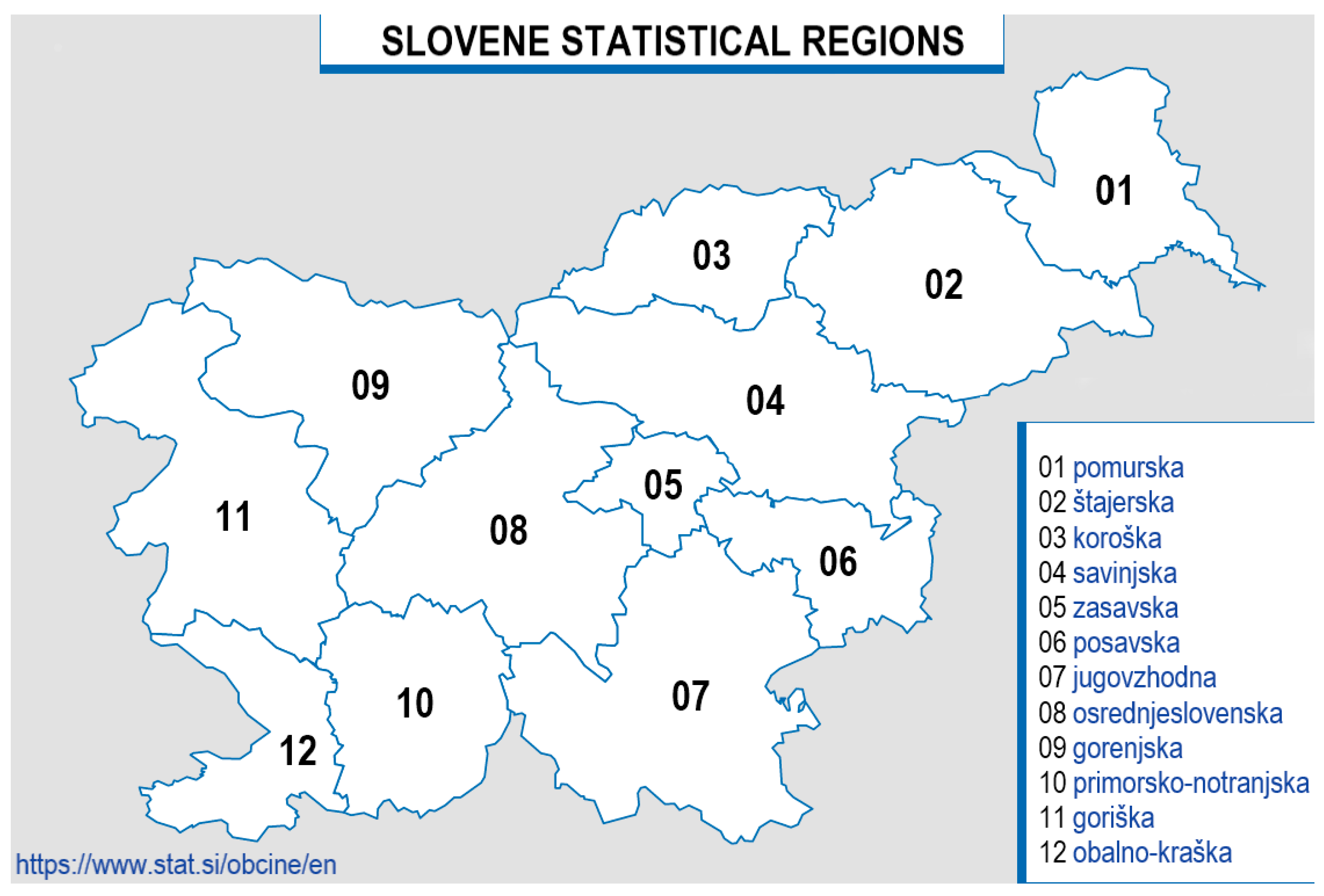
Figure 1 shows the spatial distribution of Slovenia by statistical regions, while
Table 2 presents selected regional characteristics. Surface and population values are expressed as shares of the national total, while pension beneficiaries are presented as both absolute values and shares within each region. Slovenia covers 20,272 km
2 and has a population of approximately 2.1 million, corresponding to an average population density of 104 inhabitants/km
2.
The descriptive statistics reveal substantial variation between regions, particularly in absolute terms. The Osrednjeslovenska region stands out with the highest values in several key indicators, including population density, GDP per capita, and the total number of public transport rides and validations. These high values reflect its role as the capital region and the largest urban and economic centre in Slovenia.
At the same time, it is important to distinguish between different types of indicators. Absolute values such as total validations, number of ticket holders, and total rides are strongly influenced by population size, while other indicators capture different functional dimensions of regional activity (e.g., tourism intensity or service provision).
When indicators are normalised per population or per number of beneficiaries, these differences become less pronounced. In particular, usage-based indicators (e.g., validations per 1000 beneficiaries and rides per 1000 inhabitants) show that Osrednjeslovenska does not exhibit the highest levels of usage intensity. Instead, some smaller regions display comparatively higher normalised values, indicating more intensive use of public transport relative to their population size.
This highlights the importance of distinguishing between absolute and normalised indicators when interpreting regional differences. A detailed overview is provided in
Table S1.
3.2. Data Collection
Smart-card data were obtained from the IJPP back-office system following a structured data extraction process. This included prior understanding of the database structure, definition of extraction parameters, and data export performed by the system administrator. Given the scale of the dataset (approximately 500,000 purchase records and 10 million validation records for the analysed four-month period in 2023), data were exported using Crystal Reports, a reporting tool for extracting structured data from relational databases. The exported data were subsequently imported into a relational database environment and processed using structured query language (SQL) to derive relevant variables for analysis. Due to the size and structure of the dataset, data processing was conducted using database tools, as standard spreadsheet-based tools have limited capacity for handling datasets of this scale.
The research included data on purchase transactions, activation and validation of tickets. Every ticket issue transaction is recorded as a purchase, the first use as activation, and each subsequent use as validation [
24]. For the study, a 100% sample of activities was obtained over a four-month period from 1 July to 31 October 2023. The dataset therefore represents a full population sample of recorded IJPP smart-card activity within the study period.
The fare-free policy was monitored over a longer period following its introduction in 2020; however, the year 2023 was selected for detailed analysis as it reflects a stable phase of policy implementation, avoiding initial adaptation effects. The selected four-month period reflects the availability of complete and consistent operational records for that time period. While this ensures comparability across regions, it may not fully capture seasonal variation in travel behaviour. Extending the analysis would require incomplete or partially processed datasets, reducing comparability.
Raw transactional data were aggregated at the regional level to ensure that personal data of individual users were not disclosed, in line with the General Data Protection Regulation (GDPR). External indicators were obtained from official national administrative and statistical databases, including the Statistical Office of the Republic of Slovenia (SURS), the Pension and Disability Insurance Institute of Slovenia (ZPIZ), and the Open Data Slovenia Portal (OPSI), and were harmonised at the regional level [
37,
38,
39].
While general statistical data on public transport usage are publicly available, detailed transactional smart-card data are restricted and accessible only upon approval from the competent authority, in line with data protection requirements. The data were accessed under the condition that they would be used exclusively for the purposes of this research.
3.3. Indicators and Analytical Approach
In line with the conceptual framework developed in the literature review, elderly public transport demand is understood as the outcome of interacting social, economic, service and spatial factors rather than pricing alone. Based on this framework, a set of indicators representing socio-economic, service and spatial determinants of elderly public transport demand was defined. Socio-economic indicators included the share of pension beneficiaries, car ownership among older adults, and income-related variables (average pension and GDP per capita). Service-related indicators captured the availability of public transport, while spatial context was represented by population density as a proxy for the level of urbanisation. Data on beneficiaries and holders of free tickets were included to capture policy uptake. As travel purpose and destination choice may also be influenced by tourism, an indicator of regional tourist activity was added. For the identified indicators, the expected direction of correlation with demand was defined; a positive relationship was anticipated for most indicators, except for the proportion of personal car ownership.
The dependent variable (validations per 1000 beneficiaries) represents the intensity of public transport use among eligible users, capturing realised travel behaviour rather than mere entitlement to free travel. Normalisation per 1000 beneficiaries was applied to ensure comparability across regions with different population sizes. A similar normalisation approach was applied to selected independent variables expressed in absolute terms. The indicator reflects average usage intensity at the regional level and does not capture the distribution of use among individual users; higher values may therefore reflect either widespread usage or more intensive use by a smaller group of frequent users.
In the study, correlations with the demand for a free ticket were determined for each of the indicators for Slovenia at the regional level. In the performed linear regressions, the indicators represented the independent variable x, while the dependent variable y represented the demand. To determine the interdependence or correlation, a correlation analysis was performed for the variables, i.e., indicators and demand. In the study, two variables were considered in each analysis.
While some indicators capture overlapping socio-economic dimensions (e.g., GDP per capita and pension levels), they were retained to examine whether macro-level and household-level conditions differ in their association with fare-free public transport demand. While simplified, the use of population density as a proxy enables consistent comparison across regions in the absence of harmonised functional urban–rural classifications at the regional level.
Table 3 summarises the indicators included in the correlation analysis, together with their reference periods and data sources.
Variables can be correlated, indicating a relationship, or uncorrelated, indicating no relationship. If the condition of linearity, homoscedasticity, and normality is determined or met for the variables, Pearson’s formula is used to determine the correlation coefficient [
40]. Pearson’s correlation coefficient (r) was used to assess the strength and direction of linear relationships between demand and selected indicators. The coefficient ranges between −1 and 1, where values closer to the extremes indicate stronger associations.
Following confirmation of linearity, simple linear regression was applied to examine relationships between fare-free public transport demand and selected indicators [
40]. The formula for Pearson’s correlation coefficient is
Pearson’s correlation coefficient (r) ranges from −1 to 1, with higher absolute values indicating stronger linear associations between variables. The strength of relationships was interpreted using the following thresholds:
The analysis is exploratory in nature and aims to identify relationships between fare-free public transport demand and selected structural indicators rather than establish causal effects. Given the nationwide coverage of the dataset and the limited number of observations at the regional level (n = 12), the analysis prioritizes interpretability and comparability across regions over model complexity. In this context, more complex multivariate models would risk overfitting and unstable estimates, supporting the use of bivariate correlation and simple regression for this exploratory assessment.
The analysis is exploratory and based on aggregated regional data, which capture structural patterns rather than individual behavioural responses and may conceal intra-regional variation in service provision and accessibility. In addition, smart-card validation data reflect observed usage but do not capture trip purpose, unmet travel demand or unvalidated trips.
4. Results
This section presents the empirical results of the analysis, focusing on regional variation in fare-free public transport demand and its relationship with selected structural indicators.
Table 4 presents regional demand levels and deviations from the national average, revealing substantial spatial heterogeneity in usage intensity, while
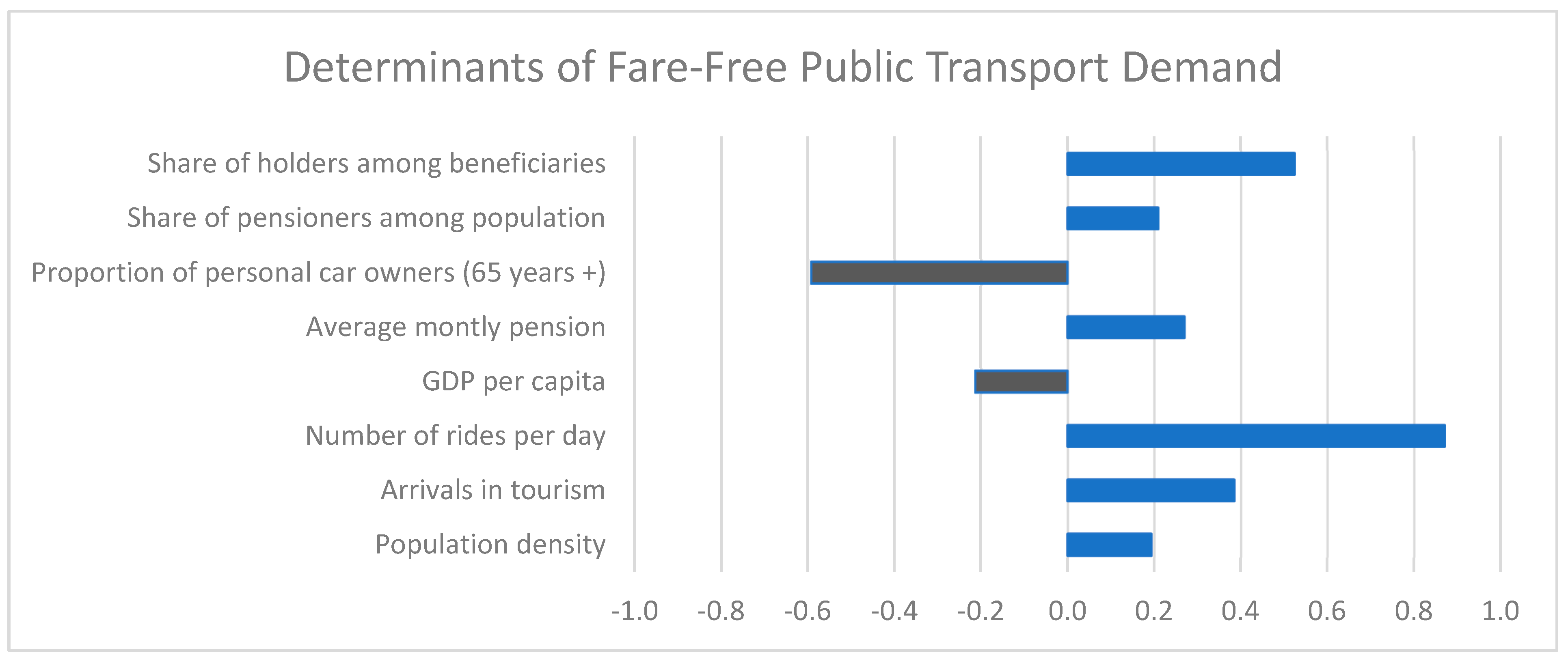
Figure 2 illustrates the observed correlations between selected indicators and fare-free public transport demand.
To ascertain relationships between selected indicators and fare-free public transport demand, linear regressions were performed at the regional level. Indicator values are presented in
Table S2, while regression results are summarized in
Table 5. All reported correlations were examined for statistical significance; however, due to the limited number of observations (
n = 12), results suggest general patterns rather than definitive conclusions.
Social determinants
Social indicators showed heterogeneous relationships with demand. The share of free ticket holders among beneficiaries exhibited a moderate positive correlation (r = 0.525). The share of pension beneficiaries demonstrated a weak positive association (r = 0.210). In contrast, the proportion of personal car ownership among older adults displayed a moderate negative correlation (r = −0.592), representing the strongest relationship within the social indicators.
Economic determinants
Economic indicators demonstrated limited association with demand. Average pension levels were weakly positively correlated (r = 0.271), while GDP per capita showed a weak negative relationship (r = −0.213).
Service and spatial determinants
Service-related indicators showed the strongest associations. The number of IJPP rides per 1000 inhabitants exhibited a strong positive correlation with demand (r = 0.872), representing the highest observed relationship among all indicators. Tourism activity showed a close to moderate positive association (r = 0.386), while the level of urbanisation exhibited a weak positive correlation with demand (r = 0.194).
5. Discussion
The results indicate substantial regional variation in fare-free public transport demand, suggesting that usage intensity is not uniformly distributed across the national system. While the analysis is based on bivariate relationships, the results allow for the identification of key structural determinants associated with demand. The results are broadly consistent with findings reported in previous studies on public transport demand and fare-free policies, particularly regarding the role of service provision, car ownership and structural conditions [
24,
25,
30,
32].
The strong positive association between service supply and demand (
r = 0.872) suggests that the availability of public transport plays a central role in enabling fare-free usage. Regions with higher service provision tend to exhibit higher usage intensity [
24,
25]. The analysis does not account for qualitative aspects of service provision (e.g., reliability, comfort), which may also influence observed demand and require further investigation.
The moderate negative relationship between car ownership and demand (
r = −0.592) suggests a substitution effect between private and public transport [
11,
22,
25]. This relationship may also reflect unobserved factors such as spatial accessibility or lifestyle preferences, which are not captured in the current dataset.
In contrast, economic indicators show weak associations with demand, indicating that income-related factors play a limited role once financial barriers to public transport use are removed [
25,
30,
31]. Further research is needed to assess whether this pattern remains consistent across different temporal and spatial contexts.
The weak relationship between population density and demand suggests that urban–rural structure alone does not explain differences in usage intensity. The use of population density as a proxy represents a simplification, and more detailed spatial classifications should be considered in future analyses. Similar findings emphasise that travel behaviour is shaped by multiple interacting spatial and accessibility-related factors [
4,
19,
20,
35].
Taken together, these findings indicate that fare-free policy alone is insufficient to explain regional variation in demand. Instead, usage intensity emerges from the interaction between service supply, car ownership and broader structural characteristics [
4,
25,
30,
32]. In the case of Slovenia, fare-free public transport demand appears to be structurally mediated rather than uniformly induced by pricing changes.
Given the limited number of observations (n = 12), the results should be interpreted with caution and understood as indicative of structural patterns rather than statistically generalisable relationships. Further research using longitudinal data and more detailed spatial disaggregation would be required to confirm these relationships.
The analysis is subject to several limitations. First, the use of a four-month observation period may not fully capture seasonal variation in travel behaviour. Second, the analysis is based on aggregated regional data, which limits the ability to examine intra-regional differences in service provision and accessibility. Third, the exploratory methodological approach, based on bivariate relationships and a limited number of observations (N = 12), restricts the ability to draw causal conclusions. In addition, smart-card validation data reflect observed usage but do not capture trip purpose, unmet travel demand, or the distribution of usage among individual users. These limitations should be considered when interpreting the results and highlight the need for further research using longitudinal and more disaggregated data.
6. Conclusions
This study provides a nationwide empirical assessment of fare-free public transport demand by combining smart-card validation data with structural regional indicators. The findings demonstrate that while fare-free pricing expands access to public transport, it does not automatically translate into increased usage across regions.
Rather than acting as a standalone driver, fare-free policy functions as an enabling condition, whose effectiveness depends on the broader structural context, particularly service availability and accessibility. This highlights that pricing measures alone are insufficient to achieve substantial shifts in travel behaviour without adequate service provision.
From a planning perspective, the results suggest that fare-free policies should be integrated with improvements in service supply and network accessibility to generate meaningful and sustained demand effects. In this sense, the study contributes to a more nuanced understanding of fare-free public transport as part of a wider system of interdependent factors shaping mobility behaviour.
Although the analysis is based on Slovenia, the findings point to general mechanisms that are relevant for other regions implementing similar policies, particularly the interaction between pricing, service provision and spatial context.
Future research should extend the analysis longitudinally and incorporate more spatially disaggregated data in order to examine the stability of observed relationships and better capture variations in travel behaviour across different contexts.
Author Contributions
Conceptualization, D.H. and R.E.; Methodology, D.H. and R.E.; Software D.H. and R.E.; Validation, D.H. and R.E.; Formal Analysis, D.H. and R.E.; Investigation, D.H.; Resources, D.H.; Data Curation, D.H. and R.E.; Writing—Original Draft Preparation, D.H.; Writing—Review and Editing, R.E.; Visualization, D.H.; Supervision, R.E.; Project Administration, D.H.; Funding Acquisition, D.H. All authors have read and agreed to the published version of the manuscript.
Funding
The authors also acknowledge the support of the project LIFE IP CARE4CLIMATE (LIFE17 IPC/SI/000007)—co-financed by the European LIFE Programme and the Climate Change Fund of the Republic of Slovenia.
Institutional Review Board Statement
Not applicable.
Informed Consent Statement
Not applicable.
Data Availability Statement
Restricted data are available from the authors upon reasonable request, as they were provided exclusively for the purposes of this research.
Acknowledgments
Ministry of the Environment, Climate and Energy of the Republic of Slovenia, Transport Policy Directorate and SŽ-Potniški promet, d.o.o. for access to the IJPP system data base.
Conflicts of Interest
The authors declare no conflicts of interest.
References
- Hubers, C.; Lyons, G. New technologies for the old: Potential implications of living in later life for travel demand. Transp. Policy 2013, 30, 220–228. [Google Scholar] [CrossRef]
- Haustein, S.; Siren, A. Older people’s mobility: Segments, factors, trends. Transp. Rev. 2015, 35, 466–487. [Google Scholar] [CrossRef]
- Truong, L.T.; Somenahalli, S. Exploring mobility of older people: A case study of Adelaide. In Proceedings of the Australasian Transport Research Forum 2011, Adelaide, Australia, 28–30 September 2011; pp. 1–18. [Google Scholar]
- Mattson, J. Travel Behavior and Mobility of Transportation-Disadvantaged Populations: Evidence from the National Household Travel Survey, DP-258; Upper Great Plains Transportation Institute, North Dakota State University: Fargo, ND, USA, 2012. [Google Scholar]
- Jones, V.C.; Johnson, R.M.; Rebok, G.W.; Roth, K.B.; Gielen, A.; Molnar, L.J.; Pitts, S.; DiGuiseppi, C.; Hill, L.; Strogatz, D.; et al. Use of alternative sources of transportation among older adult drivers. J. Transp. Health 2018, 10, 284–289. [Google Scholar] [CrossRef]
- Fatima, K.; Moridpour, S.; De Gruyter, C.; Saghapour, T. Elderly sustainable mobility: Scientific paper review. Sustainability 2020, 12, 7319. [Google Scholar] [CrossRef]
- Yang, Y.; Xu, Y.; Rodriguez, D.A.; Michael, Y.; Zhang, H. Active travel, public transportation use, and daily transport among older adults. J. Transp. Health 2018, 9, 288–298. [Google Scholar] [CrossRef]
- Böcker, L.; van Amen, P.; Helbich, M. Elderly travel frequencies and transport mode choices. Transportation 2017, 44, 831–852. [Google Scholar] [CrossRef]
- Mifsud, D.; Attard, M.; Ison, S. To drive or to use the bus? J. Transp. Geogr. 2017, 64, 23–32. [Google Scholar] [CrossRef]
- Jurdak, R. The impact of cost and network topology on urban mobility. PLoS ONE 2013, 8, e79396. [Google Scholar] [CrossRef]
- Kim, S.; Ulfarsson, G.F. Travel mode choice of the elderly. Transp. Res. Rec. 2004, 1894, 117–126. [Google Scholar] [CrossRef]
- Su, F.; Bell, M.G.H. Transport for older people: Characteristics and solutions. Res. Transp. Econ. 2009, 25, 46–55. [Google Scholar] [CrossRef]
- Su, F.M. Understanding and Satisfying Older People’s Travel Demand. Doctoral Dissertation, Imperial College London, London, UK, 2007. [Google Scholar]
- Bridgman, J. The health impact of rural transport deprivation. J. Transp. Health 2018, 9, S11–S12. [Google Scholar] [CrossRef]
- Luz, G.; Portugal, L. Understanding transport-related social exclusion. Transp. Rev. 2022, 42, 503–525. [Google Scholar] [CrossRef]
- Al-Thani, S.K.; Amato, A.; Koç, M.; Al-Ghamdi, S.G. Urban sustainability and livability: An analysis of Doha’s urban-form and possible mitigation strategies. Sustainability 2019, 11, 786. [Google Scholar] [CrossRef]
- Ranković Plazinić, B.; Jović, J. Mobility and transport potential of elderly in rural areas. J. Transp. Geogr. 2018, 68, 169–180. [Google Scholar] [CrossRef]
- Truong, L.T.; Somenahalli, S.V.C. Exploring frequency of public transport use among older adults. Travel Behav. Soc. 2015, 2, 148–155. [Google Scholar] [CrossRef]
- Hu, X.; Wang, J.; Wang, L. Travel behavior of elderly people. Procedia 2013, 96, 873–880. [Google Scholar]
- Habib, K.N. Mode choice and travel distance demand of older people. Transportation 2015, 42, 143–161. [Google Scholar] [CrossRef]
- Balcombe, R.; Mackett, R.; Paulley, N.; Preston, J.; Shires, J.; Titheridge, H.; Wardman, M.; White, P. The Demand for Public Transport: A Practical Guide; TRL: Crowthorne, UK, 2004. [Google Scholar]
- Coughlin, J. Longevity, lifestyle and transport demand. Public Work. Manag. Policy 2009, 13, 301–311. [Google Scholar] [CrossRef]
- Paulley, N.; Balcombe, R.; Mackett, R.; Titheridge, H.; Preston, J.; Wardman, M.; Shires, J.; White, P. The effects of fares, quality of service, income and car ownership. Transp. Policy 2006, 13, 295–306. [Google Scholar] [CrossRef]
- Hojski, D.; Hazemali, D.; Lep, M. Fare-free public transport travel demand based on e-ticketing. Sustainability 2022, 14, 5878. [Google Scholar] [CrossRef]
- Grzelec, K.; Jagiełło, A. The effects of the selective enlargement of fare-free public transport. Sustainability 2020, 12, 6390. [Google Scholar] [CrossRef]
- Kębłowski, W. Why (not) abolish fares? Exploring the global geography of fare-free public transport. Transportation 2020, 47, 2807–2835. [Google Scholar] [CrossRef]
- UITP. Full Free Fare Public Transport: Objectives and Alternatives; Policy Brief; UITP: Brussels, Belgium, 2020. [Google Scholar]
- Bull, O.; Muñoz, J.C.; Silva, H.E. The impact of fare-free public transport on travel behavior: Evidence from a randomized controlled trial. Reg. Sci. Urban Econ. 2021, 86, 103616. [Google Scholar] [CrossRef]
- Cats, O.; Susilo, Y.O.; Reimal, T. The prospects of fare-free public transport: Evidence from Tallinn. Transportation 2017, 44, 1083–1104. [Google Scholar] [CrossRef]
- Andrews, G.; Parkhurst, G.; Shaw, J.; Susilo, Y. The grey escape: Investigating older people’s use of the free bus pass. Transp. Plan. Technol. 2012, 35, 3–15. [Google Scholar] [CrossRef]
- Lin, Y.; Wang, P.; Ma, M. Intelligent transportation system (ITS): Concept, challenge and opportunity. In Proceedings of the 2017 IEEE 3rd International Conference on Big Data Security on Cloud, Beijing, China, 26 May 2017; pp. 167–172. [Google Scholar]
- Pelletier, M.P.; Trépanier, M.; Morency, C. Smart card data use in public transit: A literature review. Transp. Res. Part C 2011, 19, 557–568. [Google Scholar] [CrossRef]
- Kurauchi, F.; Schmöcker, J.D. Public Transport Planning with Smart Card Data; CRC Press: Boca Raton, FL, USA, 2017. [Google Scholar]
- Iliopoulou, C.; Kepaptsoglou, K. Combining ITS and optimization in public transportation planning: State of the art and future research paths. Eur. Transp. Res. Rev. 2019, 11, 39. [Google Scholar] [CrossRef]
- Ewing, R.; Cervero, R. Travel and the built environment: A meta-analysis. J. Am. Plan. Assoc. 2010, 76, 265–294. [Google Scholar] [CrossRef]
- Public Passenger Transport Management Company (DUJPP). Areas of Operation. Available online: https://www.dujpp.si/podrocja_delovanja.html (accessed on 22 March 2025).
- Statistical Office of the Republic of Slovenia (SURS). Statistical Database. Available online: https://pxweb.stat.si/SiStat (accessed on 9 May 2024).
- Zavod za Pokojninsko in Invalidsko Zavarovanje Slovenije (ZPIZ). Available online: https://www.zpiz.si (accessed on 10 May 2024).
- Ministry of Public Administration of the Republic of Slovenia. OPSI—Open Data Slovenia Portal. Available online: https://podatki.gov.si (accessed on 10 May 2024).
- Skiera, B.; Reiner, J.; Albers, S. Regression analysis. In Handbook of Market Research; Homburg, C., Klarmann, M., Vomberg, A., Eds.; Springer: Cham, Switzerland, 2022. [Google Scholar]
- Šparl, P. Statistika UN: Zapiski Predavanj; Faculty of Organizational Sciences, University of Maribor: Maribor, Slovenia, 2010. [Google Scholar]
| Disclaimer/Publisher’s Note: The statements, opinions and data contained in all publications are solely those of the individual author(s) and contributor(s) and not of MDPI and/or the editor(s). MDPI and/or the editor(s) disclaim responsibility for any injury to people or property resulting from any ideas, methods, instructions or products referred to in the content. |