1. Introduction
The formation and process of composite sustainability indices have become a prescribed approach for depicting the multivariate phenomenon which could not be expressed by a single indicator at least in most empirical settings. In this regard, assessing sustainability requires recognizing its multidimensional nature and the normative implications associated with the selection and weighting, as well as their aggregation of variables [
1]. It has been noted that composite indicators must be structured in such a way as to integrate heterogeneous dimensions without necessarily compromising conceptual coherence [
2]. Furthermore, approaches based on environmental assessment frameworks have, in several cases, shown that human pressures already exceed the levels that natural systems can sustain, which necessitates a rethinking of traditional measurement frameworks [
3]. Common techniques used to test three-dimensional sustainability frameworks have led to their empirical validation. Among these techniques, factor analysis and principal component analysis stand out, having resulted in the empirical validation of some [
4], thus providing greater statistical power to the indices developed in the urban context. Therefore, the current debate no longer revolves around the existence or lack of data, but rather around the methodological architecture on which their synthesis is based.
This debate has been gradually expanded by both international and regional comparative analyses, which, in practice, have extended it to different empirical realities. Indeed, the experience related to the measurement of urban performance with composite indicators highlights the evidence that sustainability is frequently associated with tools able to integrate environmental and social objectives with economic ones, especially in the context of the Sustainable Development Goals [
5]. Moreover, the application of multidimensional deprivation indices in the European context highlights the evidence that socioeconomic phenomena should be addressed by considering both individual and contextual factors [
6]. From the global point of view, the construction of environmental indices for the G20 countries highlights the evidence of structural differences between developed and emerging economies, which should be addressed with methodologies that are both comparable and consistent, and sufficiently robust in terms of statistical evidence [
7]. Finally, the application of the assessment of sustainability in the European context with standardization techniques and multi-criteria methodologies highlights the evidence that different methodologies can lead to convergent results if there is consistency in the selection of the indices [
8].
However, methodological analysis and criticism of these aggregation tools have shown that the construction of rankings can be influenced by conceptual and technical decisions that significantly alter the results. Rigorous processes for selecting and validating indicators, supported by exploratory and confirmatory factor analysis, have been considered essential for ensuring internal consistency and construct validity [
9]. Meanwhile, the incorporation of intervals and ranges in the construction of composite indicators has made it possible to explicitly capture the uncertainty associated with the data and aggregation [
10]. Critical studies have shown that differences in conceptual frameworks can produce unstable or even contradictory rankings among environmental indices [
11]. Furthermore, the use of three-dimensional multivariate analysis to study the relationship between corruption and performance on the SDGs has highlighted the structural complexity of the data and the importance of robust models [
12]. These contributions have strengthened the emphasis on methodological transparency, sensitivity analysis, and conceptual coherence.
Finally, sectoral approaches and thematic applications demonstrate that sustainability assumes particular characteristics when assessed in situ. Regarding urban transportation, composite indices allow for analysis of the multiple effects that strategic investments provide in terms of environmental, social and economic dimensions through the incorporation of prospective scenarios and multi-criteria evaluation [
13]. Similarly, the assessment of regional energy potential using hierarchical clustering and machine learning techniques has demonstrated the utility of combining classification methods and predictive modeling for territorial planning [
14]. Furthermore, the proposal for a sustainable development index that incorporates explicit ecological limits has redefined the relationship between human development and environmental efficiency, introducing a strong sustainability perspective [
15]. Taken together, these sectoral approaches reinforce the idea that composite indices not only describe complex realities but also guide strategic decisions and contribute to an integrated understanding of sustainability at different levels of analysis.
The structural re-evaluation of the Sustainable Society Index (SSI) is particularly relevant in the current context, characterized by demanding climate commitments, accelerated energy transitions, and geopolitical tensions that affect the economic and environmental sustainability of the countries analyzed. While recent literature has explored ways to validate composite indices using multivariate techniques, these contributions have not specifically assessed the internal structure of the SSI. Therefore, rather than proposing a new index, this study empirically examines the structural coherence of the SSI using an integrated approach that combines Multiple Factor Analysis and Cluster Analysis.
There remains an analytical gap regarding how economic, social, and environmental dimensions are shaped when they interact under strict ecological constraints. While the use of composite indices has facilitated the creation of comparative rankings, little attention has been paid to the underlying structure that underpins these rankings. Therefore, this study employs a robust multivariate approach applied to the Sustainable Society Index to identify development patterns and assess their structural implications in the context of increasing climate pressure.
2. Literature Review
Recent studies on the development of composite sustainability indicators have particularly stressed the need for developing methodological frameworks that are robust and consistent in aggregating heterogeneous information. Within this framework, approaches based on multi-criteria methods have been developed for striking an appropriate balance between transparency and statistical robustness in selecting and aggregating indicators [
2]. The development of global indicators for sustainable development goals has also emphasized the need for developing aggregation structures consistent with the multidimensionality of sustainable development [
16]. The debate on alternative methods for aggregating weights has shown that policy choices are critical in arriving at the final results [
17], and the development of composite indices for a few countries has also emphasized the role of statistical techniques in ensuring international comparability [
18]. Overall, these studies have emphasized that methodological architecture is the essential core of composite sustainability measurement. However, these studies are significantly different in the criteria for weighting and aggregation methods adopted for arriving at the final results, thereby creating variability in the results and limiting direct comparability among them.
These methodological advancements have been applied in international and regional comparative analyses in specific empirical contexts, thus making it possible to compare the performance of different regions on the basis of standardized criteria. The evaluation of sustainability in Europe through composite indicators has shown the benefits of applying standardized criteria in combination with aggregation techniques in order to reveal structural patterns in the data [
8]. The development of an index for public transportation systems in Latin America has shown the benefits of integrating environmental, social, and economic dimensions in order to compare different urban contexts in heterogeneous regions [
19]. Moreover, recent studies have applied composite indicators in order to compare sustainable urban mobility interventions, thus showing the importance of applying robust quantitative frameworks in urban strategic planning [
13]. Resilient urban agriculture has shown the benefits of applying multidimensional indices in urban evaluation [
20]. Thus, comparability is not only related to data availability, but also to the structural consistency of the aggregation model.
At the same time, methodological literature has delved deeper into robustness analysis and the critique of rankings derived from composite indices. It has been noted that variations in aggregation assumptions can produce unstable rankings, a phenomenon described as “rickety rankings” in the environmental field [
11]. The development of indices that incorporate sensitivity to trade-offs between dimensions has sought precisely to mitigate these structural distortions [
21]. Furthermore, the integration of green growth indicators into composite frameworks has highlighted the need to empirically validate the internal consistency of the dimensions considered [
22]. The formulation of systematic processes for selecting and validating indicators using multi-criteria techniques has reinforced the importance of statistically grounding each stage of index construction [
9]. This body of evidence underscores that methodological transparency and sensitivity analysis are necessary conditions for lending credibility to the results obtained. However, most of these studies focus on specific applied scenarios, leaving open the need for systematic structural evaluations of consolidated global indices.
In terms of sectoral approaches, the application of composite indices to particular contexts has enabled the exploration of certain aspects of sustainability with greater analytical depth. The identification of the location for rural renewable energy projects through the application of composite indices is an example that illustrates the potential of the approach to support strategic decision-making processes [
23]. Complementarily, the assessment of the safety, sustainability, and circularity aspects of emerging technologies highlights the potential of the synthetic indices approach to support decision-making processes [
24]. The assessment of sustainable digital readiness in small and medium-sized industrial enterprises also illustrates the potential of the approach in terms of the relevance of the application of composite indices in the assessment of technological transitions from the perspective of sustainability criteria [
25]. The above thematic approaches illustrate the potential of the construction of composite indices not only from the perspective of global approaches but also from the perspective of sectoral approaches.
Recent studies have used multivariate methods and dimensionality reduction techniques to identify sustainability patterns internationally. Lamichhane et al. [
26] used principal component analysis as part of a specific benchmarking assessment, while Saraiva and Caiado [
27] and Bruzzy et al. [
28] applied multidimensional indicators along with cluster analysis to define development groups. Although these studies make significant contributions to the theoretical approaches to analysis, they do not explore the structural internal consistency of a single index such as the Sustainable Society Index (SSI). Therefore, this study provides complementary insights into the empirical validity of SSI’s multivariate architecture. Finally, a broader review of the concepts of sustainability measurement has reinforced the necessity for integrated models that incorporate human development, environmental performance, and resource efficiency. It has been suggested that sustainable development measurement should be based on composite measurements that incorporate multiple dimensions of well-being at once [
29]. The application of multidimensional measurement to global development assessment has reinforced the necessity for integrated models of environmental, economic, and social performance within a holistic model [
30]. The creation of composite indices that incorporate innovation and sustainability has extended the scope of measurement to include the relationship between competitiveness and environmental performance [
31]. Furthermore, a review of evaluation frameworks has reinforced the necessity for consistency in methodology when applying composite measurement tools [
32].
Despite these methodological advances, the literature has increasingly recognized that important analytical challenges remain regarding the internal coherence and empirical reliability of sustainability indices. Sustainability frameworks may underestimate trade-offs between dimensions, particularly when economic performance is implicitly assumed to compensate for environmental pressures. In addition, the reliance on international databases, such as those provided by the FAO or the World Bank, can introduce biases associated with methodological heterogeneity, differences in statistical availability, and cross-country comparability constraints. These limitations suggest that beyond constructing composite indicators, it is necessary to examine the structural relationships among their constituent dimensions.
In this context, integrating Multiple Factor Analysis and cluster analysis enables an evaluation of the index’s internal architecture beyond its purely classificatory capacity. This body of literature provides a basis upon which the structural analysis of the Sustainable Society Index is constructed, reinforcing the necessity to review consistency and structural validation using multivariate methods.
3. Methodology
This section describes the procedure adopted to examine the structural coherence of the Sustainable Society Index (SSI), in line with the study’s objective and the theoretical discussion previously presented on the construction, validation, and critical analysis of composite sustainability indices. The methodological approach does not aim to reconstruct the original index, but rather to subject its conceptual architecture to a rigorous process of systematization, statistical analysis, and multivariate evaluation, ensuring consistency among the dimensions, units, and orientations of the indicators.
3.1. Data Structure and Indicators
The analysis is based on the 2021 version of the SSI, which is based on a conceptual framework that identifies three main dimensions of sustainability: Human Wellbeing, Environmental Wellbeing, and Economic Wellbeing. Each of these three dimensions is further divided into sub-dimensions that are made up of a set of quantitative indicators based on existing international data from agencies such as the FAO, WHO, World Bank, IEA, and IMF, among others. The analysis is based on a total of 21 indicators, which are grouped into three blocks of the following indicators: nine indicators are related to human wellbeing (Sufficient Food, Healthy Life, Good Governance, etc.), seven are related to environmental wellbeing (Biodiversity, Energy Use, Greenhouse Gases, etc.), and five are related to economic wellbeing (Genuine Savings, GDP, Public Debt, etc.). The database for the 2021 version includes a total of 53 countries, which are considered for analysis. The empirical analysis was conducted using a balanced cross-country sample, ensuring complete data availability across all SSI indicators. This selection preserves comparability among dimensions and avoids distortions associated with missing observations in multivariate structural analysis. The study adopts a cross-sectional design based on the 2021 SSI dataset, allowing the examination of sustainability configurations under a common temporal reference.
This form is also an explicit expression of a three-dimensional structure, which is consistent with the classical paradigm of strong sustainability. However, the heterogeneity of units of measurement is a technical problem that needs to be addressed before any form of multivariate analysis is undertaken. Therefore, the first methodological phase consisted of arranging the data in a matrix form, where each country is an observation and each indicator a variable, maintaining the hierarchical structure of the index. However, the relationship between this conceptual structure and the statistical structure of the data has not been explored using any form of multivariate analysis.
3.2. Data Preprocessing and Standardization
However, due to the different scales and magnitudes of the SSI indicators, a preprocessing phase was carried out to achieve statistical comparability among them. Standardization is an important phase in the analysis of composite indices, especially when evaluating the structural consistency of these indices by methods such as PCA and/or MFA.
The Min-Max method of scaling was selected for this purpose. This method normalizes the variables into a standardized range of 0 to 1. The advantage of this method is that it allows value 1 to denote the best relative performance recorded and value 0 to denote the least favorable relative performance among the dataset considered. This procedure is suitable for variables with conceptually limited ranges such as those that make up the SSI, since it allows preserving the relative proportionality between countries and facilitates comparability in the subsequent multivariate analysis. The Min-Max was used to homogenize heterogeneous units and polarities among the SSI indicators, ensuring metric comparability before multivariate analysis. The MFA’s block normalization does not rescale individual variables but rather balances the relative contribution of each thematic dimension. Consequently, both steps address different methodological requirements and do not constitute redundant double standardization.
The decision to use this method is based on two conditions. The first is to maintain the consistent logic of interpreting sustainability concepts and practices, where high value indicates a better state of being than low value. The second is to prevent any distortion that may result from heterogeneous units and/or extreme values. This is an important phase in ensuring that relationships are not artificially created among variables due to differences in scale.
3.3. Handling Polarity and Scaling
A particularly relevant methodological aspect of the SSI is the coexistence of indicators with positive and negative polarity relative to the concept of sustainability. While some variables directly reflect desirable states for example, Renewable Energy or Education, others measure pressures, risks, or deficits, such as the prevalence of malnutrition, unemployment, or greenhouse gas emissions.
In line with the logic of composite indices, the polarity of eight indicators was reversed, as their original interpretation implies that high values represent less sustainable situations. These include Sufficient Food (prevalence of malnutrition), Population Growth, Renewable Water Resources (relative consumption), Consumption (ecological footprint), Energy Use, Greenhouse Gases, Employment (defined as unemployment), and Public Debt.
The inversion process has been achieved by applying the inverted Min-Max transformation method in a way that guarantees a positive association in all cases between a high value and a positive contribution to sustainability. This approach ensures a unified approach in interpreting all variables in a way that is consistent in the subsequent analysis.
3.4. Multivariate Structural Analysis (MSA)
The analytical framework focuses on evaluating the internal structural coherence of the SSI, emphasizing dimensional relationships and latent configurations within the existing index architecture. Once the standardization and polarity reversal process was completed, multivariate structural analysis techniques were used to assess the internal consistency of the SSI as well as the correspondence between the conceptual architecture and the latent statistical structure. Multiple Factor Analysis (MFA) was used to take into account the block structure, with the assessment of the contribution of the various dimensions to the common factor space.
This type of multivariate analysis does not modify the initial configuration of the SSI but rather submits it to an intense structural analysis. If the principal components confirm the initial hypothesis on the three-dimensional structure, the conceptual consistency of the index is validated; on the contrary, the appearance of different groupings suggests the opening of a space for reflection on the robustness and internal consistency of the instrument. In this perspective, we assessed the eigenvalues, the proportion of the explained variance, the factor loadings, as well as the contribution of the various dimensional blocks to the common factor space.
In summary, the methodology adopted combines conceptual systematization, statistical homogenization, and multivariate analysis to critically examine the structure of the Sustainable Society Index, while maintaining consistency with the developed theoretical framework and the central objective of the study.
4. Results
This section presents the results obtained from the analysis of the 2021 edition of the Sustainable Society Index (SSI), based on a sample of 53 countries included in the index’s official dataset. The data were organized according to the SSI’s three-dimensional structure and subjected to the standardization and polarity reversal process described in the methodology, ensuring statistical comparability among the 21 indicators analyzed. Based on this refined dataset, the descriptive analysis, correlation analysis, factor analysis, and structural classification of countries are subsequently conducted.
4.1. Descriptive Characterization of the Indicators
The procedure starts with a descriptive characterization of the 21 indicators on their original SSI scale, in order to identify patterns of dispersion, asymmetry, and heterogeneity, before applying the standardization and dimensionality reduction procedures, as indicated in the Methodology.
The descriptive statistics of interest, as shown in
Table 1, and a graphical representation of the distribution and relative variability of each indicator, as shown in
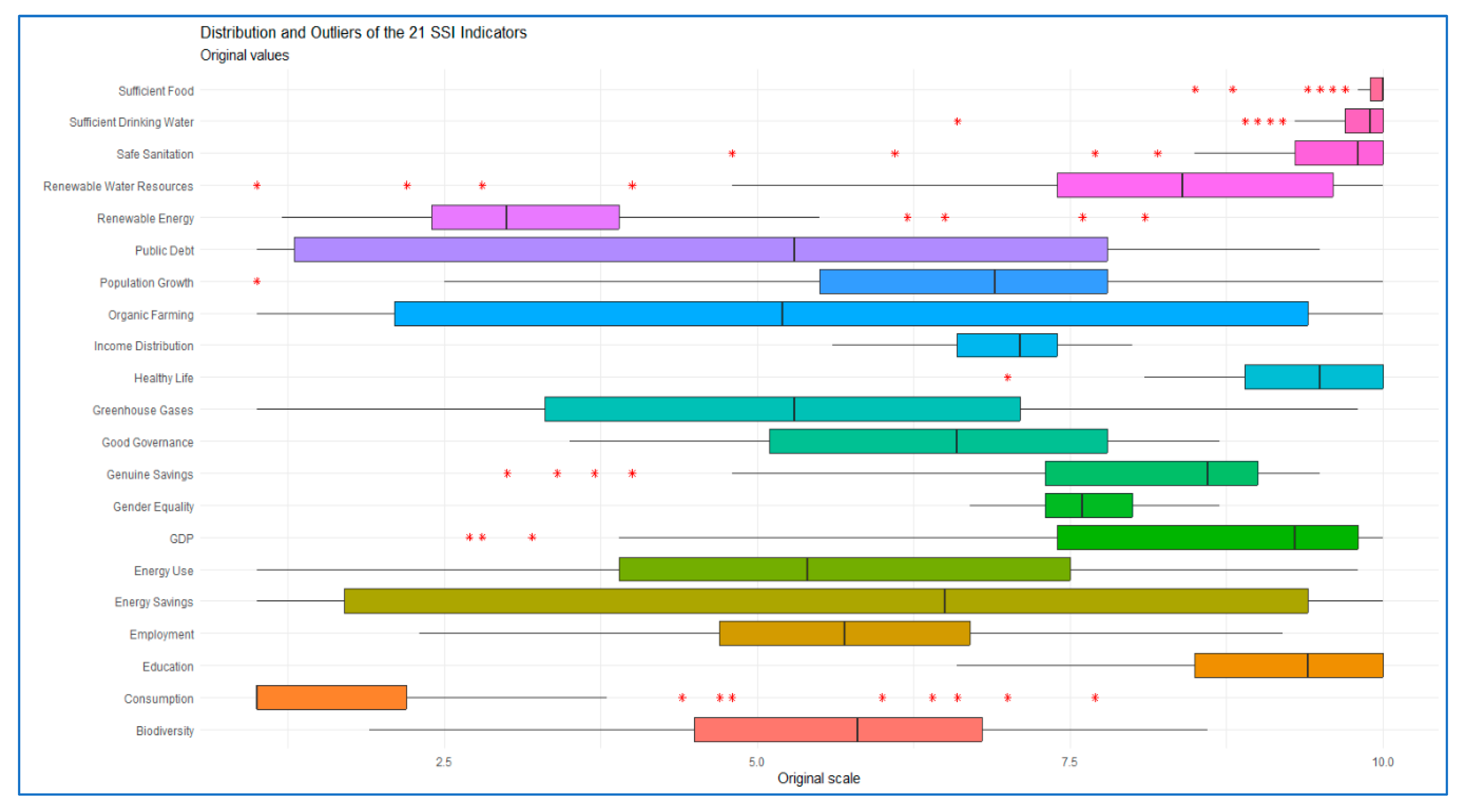
Figure 1, indicate a great deal of heterogeneity in terms of means and dispersion of the SSI dimensions, with higher variability in the environmental and economic blocks, as well as the presence of asymmetry and outliers.
It is important to point out that, as shown in
Table 1, these statistics refer to the original SSI scale. However, as will be seen in the next section, where the Multiple Factor Analysis procedure is applied, it is performed on a normalized and polarity-adjusted matrix, following the Min-Max procedure, in order to achieve statistical homogeneity and consistency in direction, since a great deal of heterogeneity in terms of scales and magnitudes could affect any subsequent multivariate procedure if not appropriately addressed.
Figure 1 presents the distribution and outliers of the 21 SSI indicators in their original scale using boxplots. Overall, the results reveal substantial heterogeneity across dimensions, highlighting significant differences in country performance. Indicators such as Sufficient Food, Sufficient Drinking Water, Healthy Life, and Education exhibit high median values and relatively low dispersion, suggesting a more homogeneous and consistent performance among countries. In contrast, variables including Public Debt, Organic Farming, Energy Savings, and Renewable Water Resources display wider interquartile ranges and extended distributions, reflecting high levels of structural variability.
Additionally, several indicators—particularly Consumption, GDP, Renewable Water Resources, and Safe Sanitation—present noticeable outliers, indicating the presence of countries with extreme performances relative to the global distribution. These patterns point to significant disparities in economic, social, institutional, and environmental conditions across countries. From a methodological standpoint, the observed variability, asymmetry, and multidimensional structure of the data justify the application of multivariate techniques such as Multiple Factor Analysis (MFA) and Cluster Analysis.
Overall, the figure confirms the complexity and heterogeneity of the dataset, supporting the use of advanced multivariate approaches to uncover latent structures and classify countries according to their sustainability characteristics.
4.2. Correlation Structure Among Indicators
After the original distribution of the data had been characterized, it was time to analyze the bivariate relationships using the normalized and polarity reversed matrix.
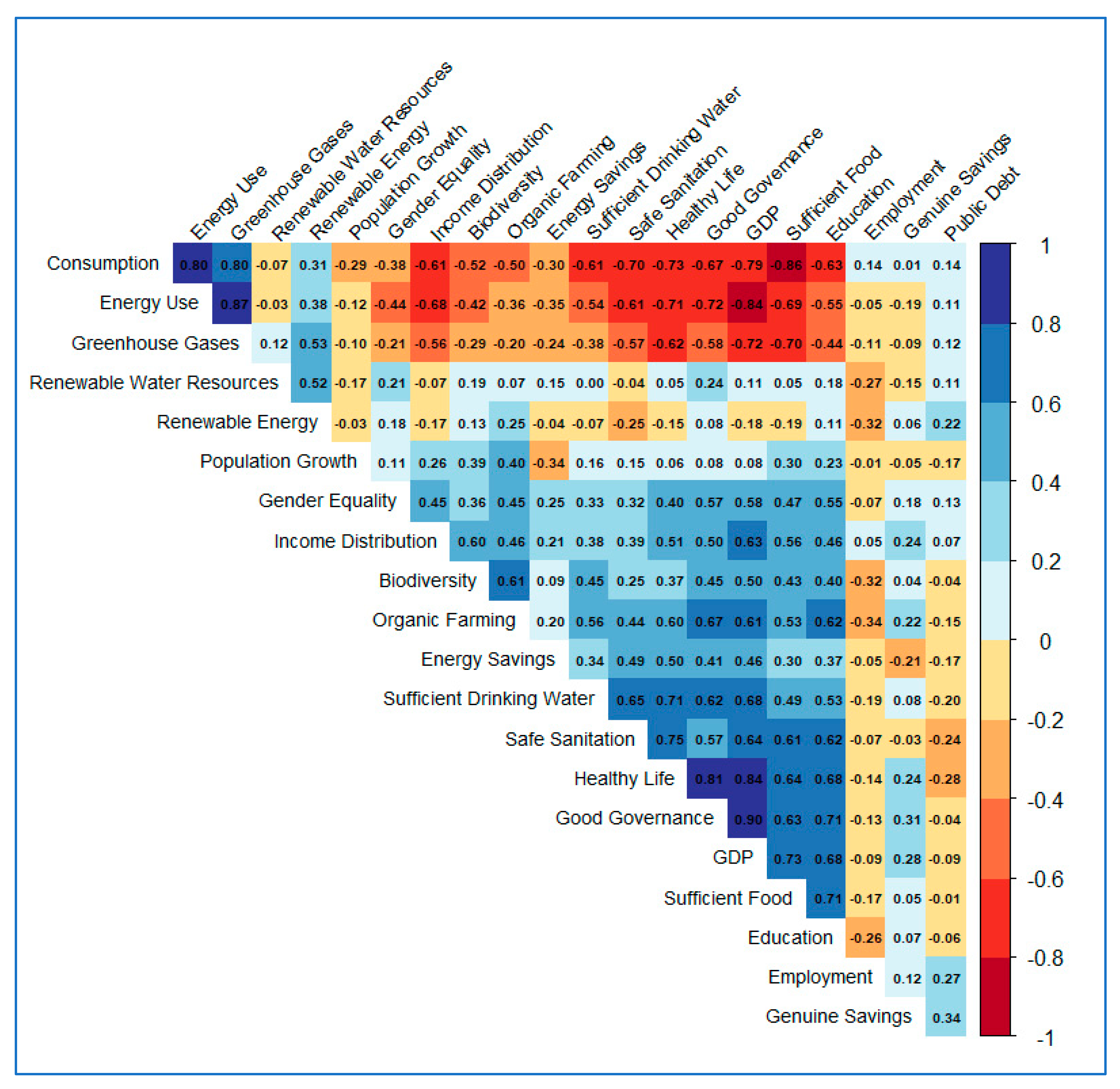
Table 2 shows the most relevant correlations, while
Figure 2 shows the correlation matrix among the SSI indicators, using the heat map representation to visually identify the correlations. The results show the presence of structural dependence among the different indicators, thus confirming the existence of systematic covariation among the different dimensions, including the human, environmental, and economic ones. The existence of relevant correlations eliminates the possibility of statistical independence among the variables and technically validates the appropriateness of the application of the Multiple Factor Analysis. Correlational analysis is not only descriptive; it is also technically indispensable for the dimensional reduction.
4.3. Factor Model Fit and Component Extraction
Before proceeding with dimensionality reduction using Multiple Factor Analysis (MFA), the suitability of the data matrix was evaluated to determine whether there were sufficient relationships among the variables to justify the analysis. For this purpose, Bartlett’s Sphericity Test was applied, which tests the null hypothesis that the correlation matrix is an identity matrix (i.e., that the variables are uncorrelated with one another). Results are shown in
Table 3.
This result confirms that the 21 indicators included in the 2021 SSI possess a strong underlying correlation structure, ensuring that the application of factor analysis methods to aggregate information and derive sustainability dimensions is statistically valid and robust. Furthermore, to verify the proportion of common variance extracted among the 21 SSI indicators, the Kaiser–Meyer–Olkin (KMO) index of sample adequacy was also computed. The KMO index value was found to be 0.80, thereby confirming the suitability of the data matrix for factor analysis.
Finally,
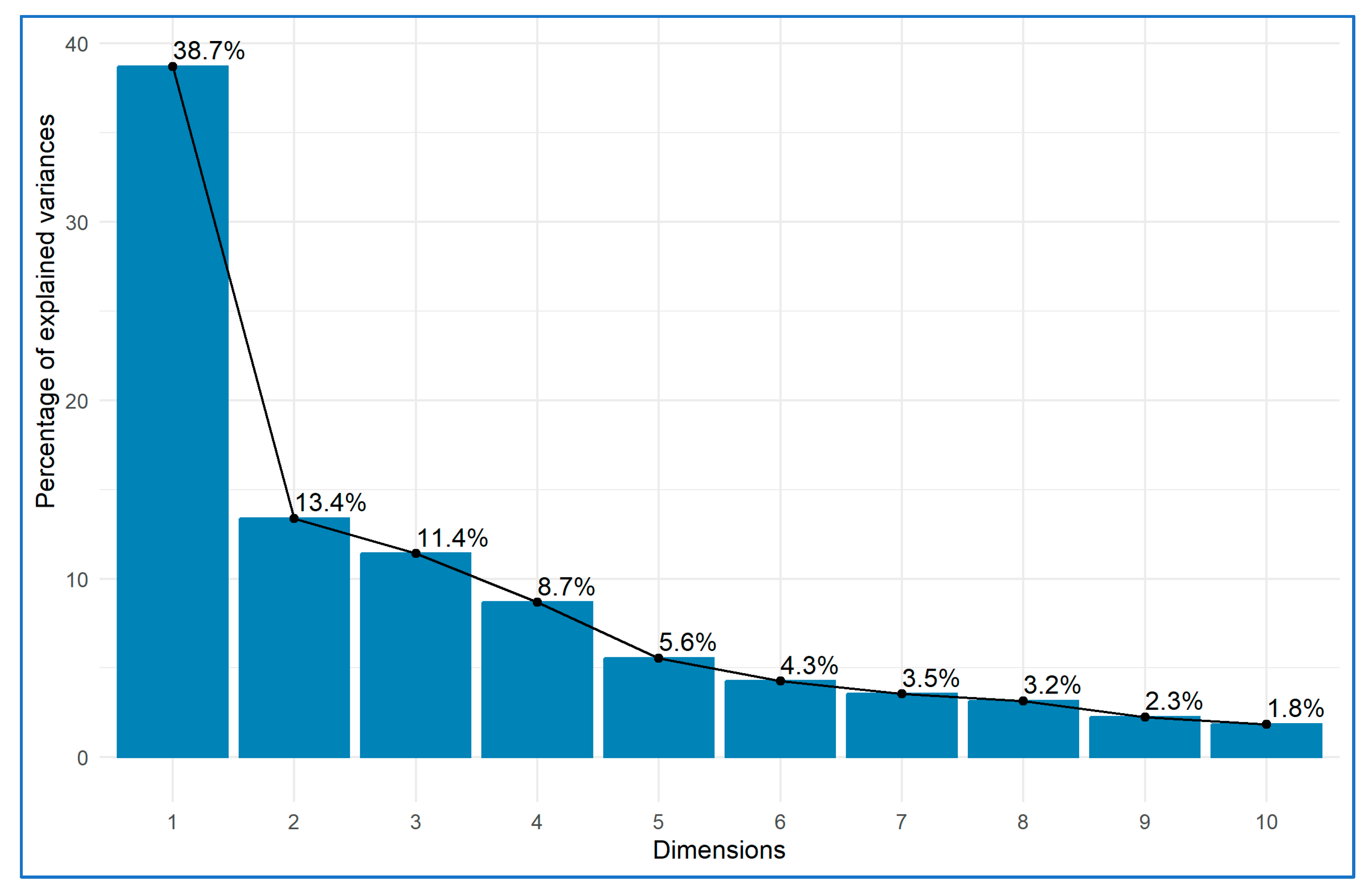
Table 4 presents a summary of the eigenvalues and proportion of variance extracted by each dimension, while
Figure 3 presents a graphical representation of the cumulative variance extracted. This enables us to determine the optimal number of dimensions that synthesize information contained in the 21 SSI indicators. Although only one dimension has an eigenvalue greater than 1, the retention of three dimensions was based on the cumulative proportion exceeding 60%, the stability of the factor loadings, and the consistency with the three-dimensional conceptual architecture of the SSI. Since the purpose of the analysis was not to identify an unknown latent structure but rather to empirically evaluate the internal consistency of a theoretically established model, the decision was based on a structural validation approach rather than a purely exploratory criterion, in line with previous applications of the MCI in comparative country studies [
26,
27].
Although the three retained dimensions explain approximately 63% of the total variance, this level is consistent with multivariate analyses of complex socio-environmental systems, where residual variability reflects structural heterogeneity. The aim was to identify stable and interpretable structural patterns aligned with the SSI framework rather than to exhaustively decompose minor variance components; therefore, alternative higher-dimensional or pure exploration solutions were not pursued. The proportion explained allows us to capture the dominant structural axes without attempting to exhaust the residual diversity inherent in the phenomenon analyzed.
4.4. Factor Structure of the SSI and Dimensional Contribution (MFA)
In order to specifically examine the relative contribution of each conceptual block to the common factor space, Multiple Factor Analysis (MFA) is carried out by following the dimensional structure of the methodology.
In this sense,
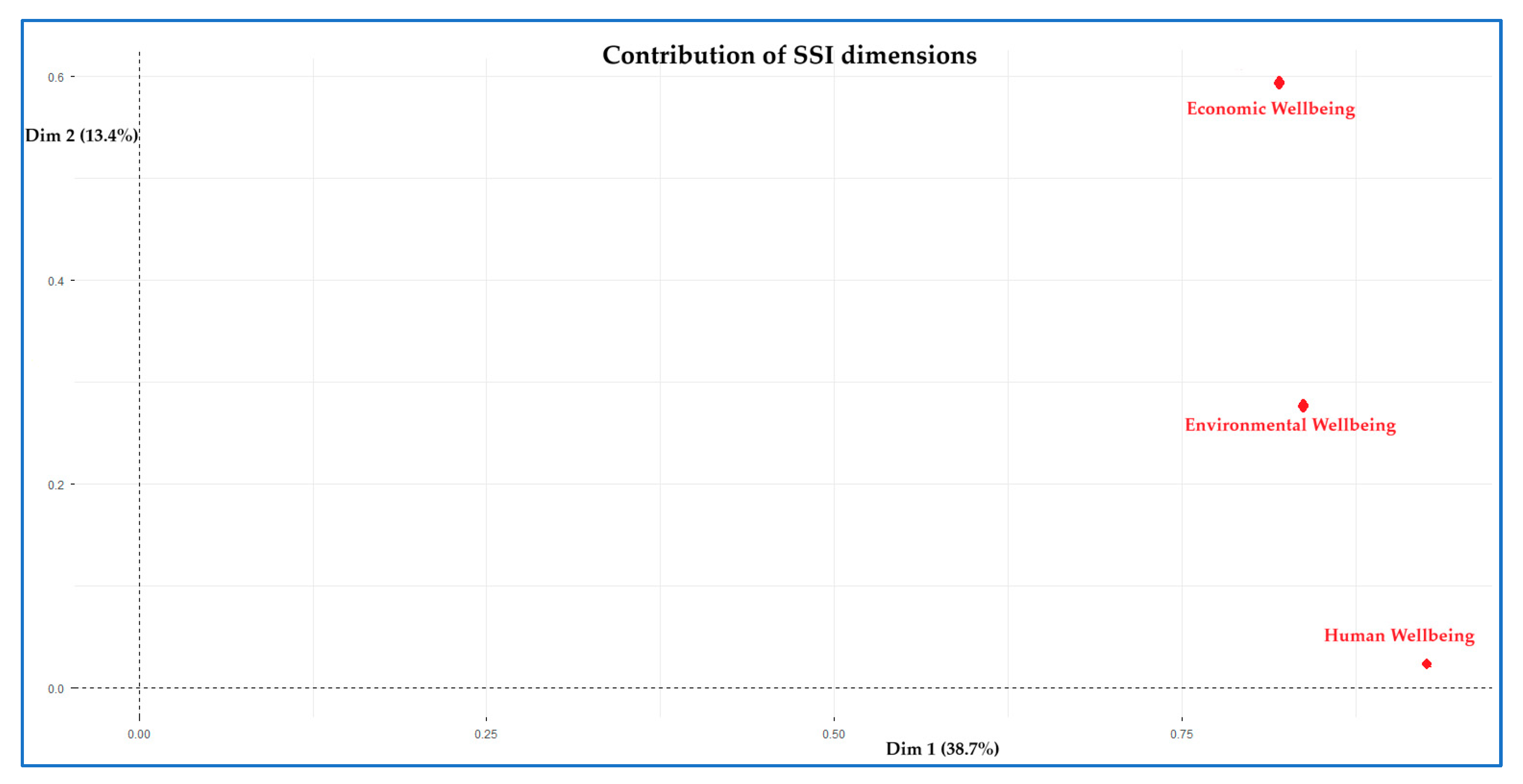
Table 5 shows the distribution of the three dimensions of the SSI. It is possible to note the greater concentration of the economic well-being dimension in the second and third dimensions, while the distribution of the human and environmental well-being dimensions is more balanced in the first factor. From this configuration, it is possible to note the non-redundancy of the three-dimensional structure of the SSI. Indeed, the three blocks contribute to the multivariate model.
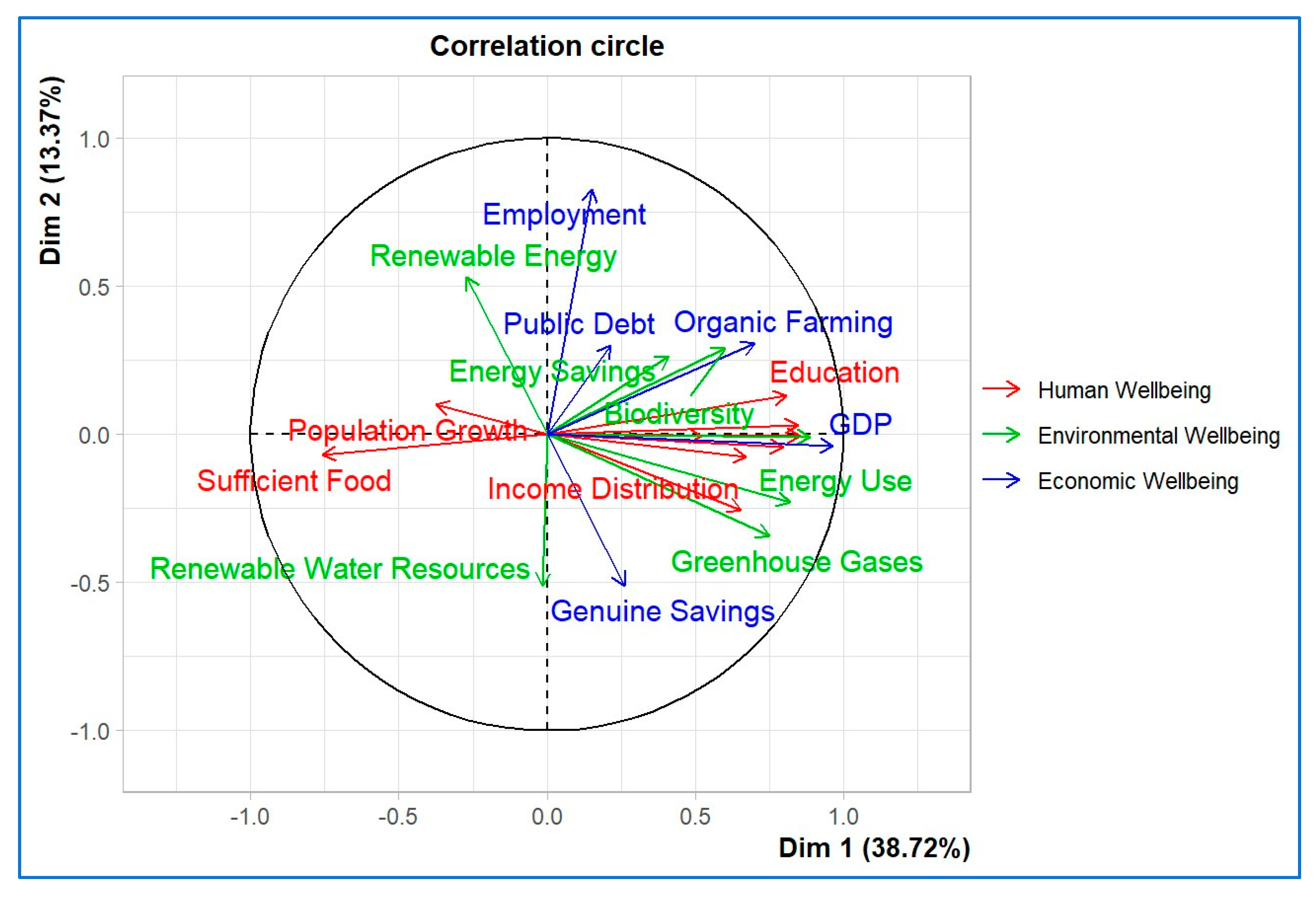
Figure 4 enables the observation of the orientation and the proximity of the indicators in the reduced space. It is possible to note the groupings of the indicators in relation to the theoretical dimensions.
Figure 5 shows the contribution of each block to the factor axes. It is possible to note the differentiated and complementary contribution of the different blocks.
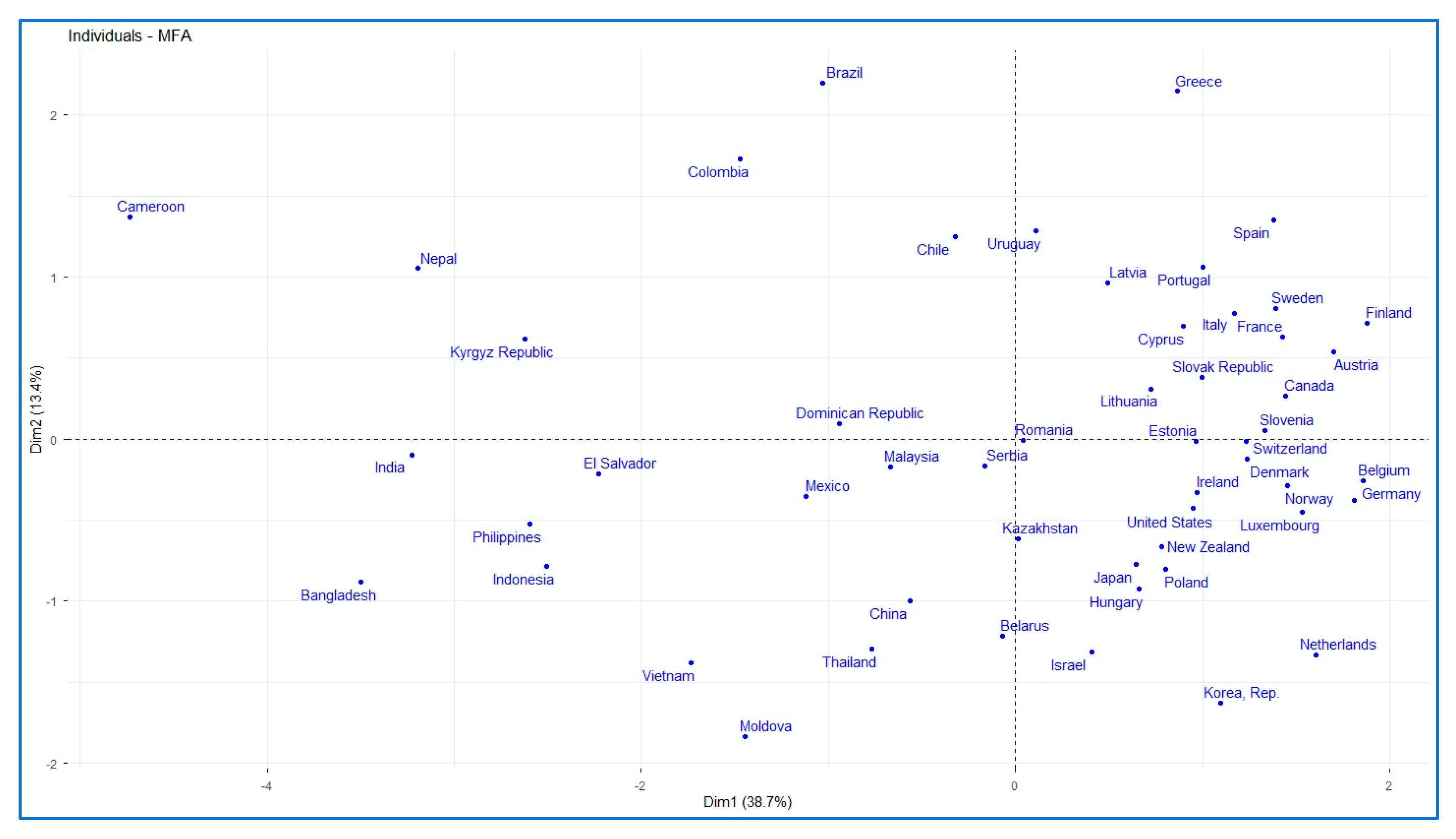
Figure 6 shows the location of the countries in the factor plane. It is possible to note the clustering effects, which can be related to the cluster classification. From this set of results, it is possible to evaluate the consistency between the conceptual dimensions of the SSI. Indeed, it is possible to verify if the dimensions overlap.
4.5. Structural Classification of Countries
Subsequently, a Hierarchical Principal Component Analysis (HCPC) was carried out to determine and differentiate different patterns of sustainability among the 53 countries. Although MFA provides a continuous and graphical representation of relationships between variables and countries, HCPC permits the objective partitioning of these observations into typologies or groups of coherent observations based on shared statistical properties.
The three-cluster solution resulted from maximizing intergroup inertia and the interpretability of the resulting structure to distinguish differentiated patterns of sustainability consistent with the three-dimensional conceptual structure of the SSI, based on the minimization of internal variability.
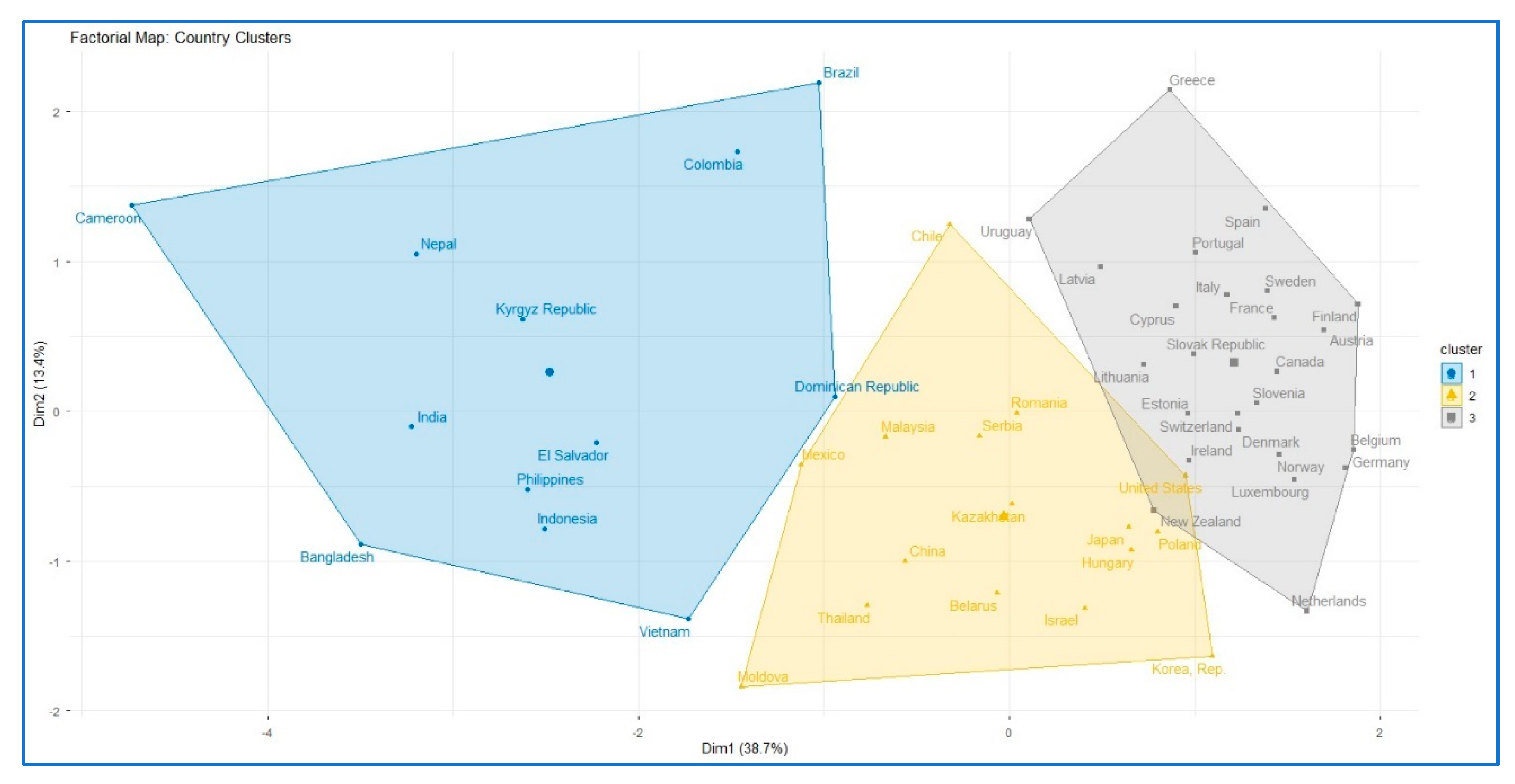
Figure 7 illustrates the distribution of countries on the MFA map by cluster. The results clearly distinguish between the different groups:
- ➢
Structural differences: The profiles reveal significant contrasts in economic development, governance quality, and sustainability indicators.
- ➢
Geographic distribution: There is a marked trend where highly developed economies are concentrated in Group 3, while developing economies predominate in Group 1.
The analysis reveals that the 53 countries are not randomly distributed, but instead, they tend to fall into specific clusters depending on the structural differences in the balance of human well-being, economic development, and environmental sustainability. The three development regimes are identified by the HCPC method: the first regime consists of countries with low economic development and institutional capacity, accompanied by low environmental pressure and high population growth; the second regime consists of industrializing economies, characterized by high environmental pressure and intermediate socioeconomic performance; the third regime consists of highly developed countries, characterized by high levels of human development, good governance, and better environmental performance.
Furthermore,
Table 6 lists the quantitative variables characterizing each cluster, in order of the values of the v-test. This measure can be used to determine which variables have the most impact in differentiating the groups from the overall average. The negative values of GDP, Energy Use, and Greenhouse Gases in Cluster 1 suggest economies with low production intensity and low pressure on the environment, but with structural problems in economic development. The values in Cluster 2 suggest differences related to energy transitions and intermediate performance, while in Cluster 3, the values of Good Governance, Healthy Life, Education, and GDP are significantly higher, indicating structural characteristics in human and development aspects. Taken together,
Table 6 helps us understand that the classification does not reflect marginal differences, but rather systematic patterns of structural divergence among countries.
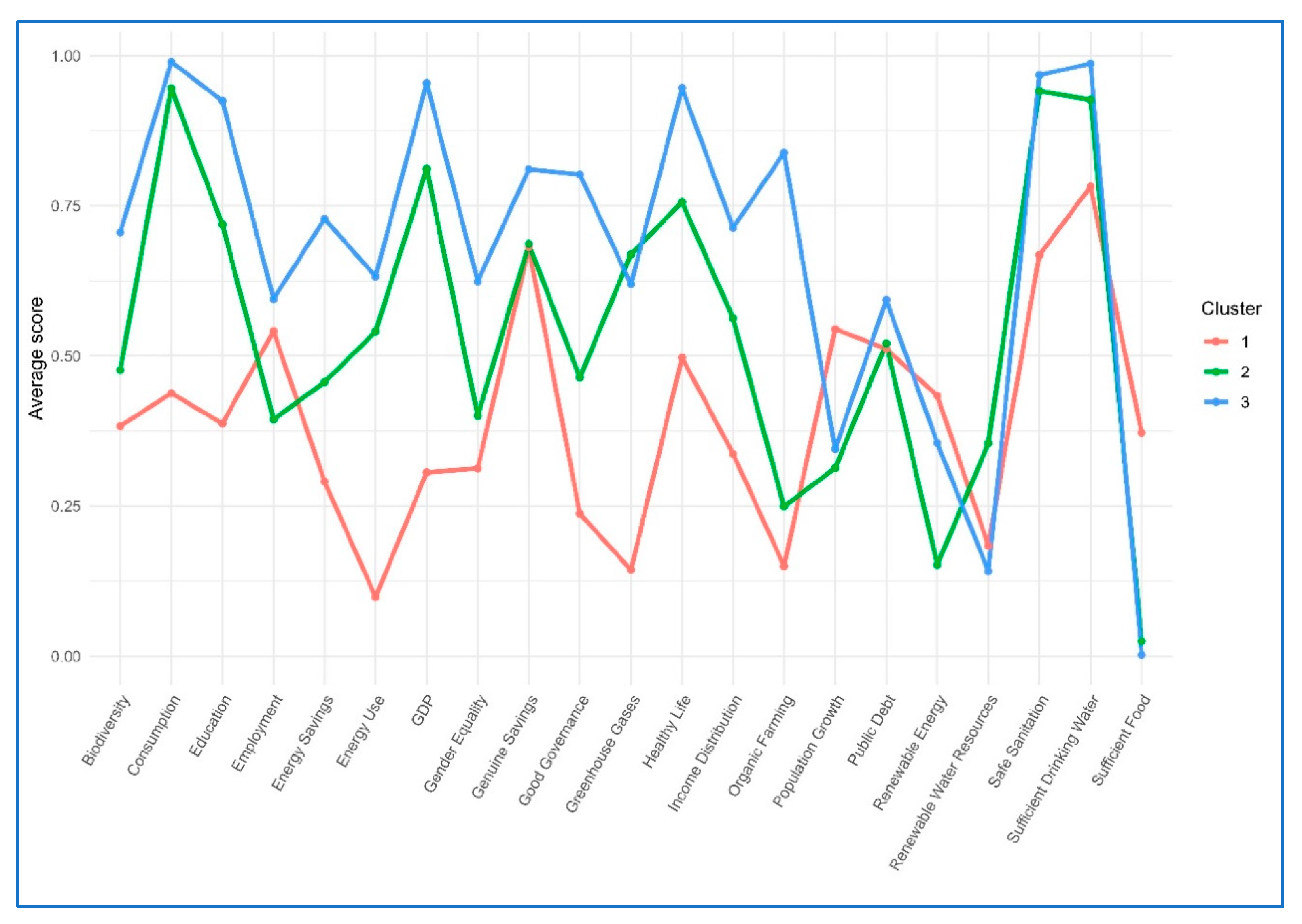
Figure 8 presents the average values of the sustainability indicators for each group, allowing for a visual comparison of their relative performance across the economic, social, and environmental dimensions.
By synthesizing the means of the variables by cluster, these profiles offer a concise representation of the structural differences between the groups, while also allowing us to identify which indicators best explain the different development patterns observed in the countries analyzed.
Figure 8, which presents cluster profiles, highlights three distinct trajectories of development and sustainability. The composition of the clusters reveals patterns consistent with the three-dimensional structure identified in the factor analysis. Cluster 1 groups economies with relatively lower levels of economic development and limited institutional capacity, characterized not only by low levels of energy consumption and emissions but also by weaknesses in social and institutional indicators. Cluster 2 comprises countries with more resource-intensive production structures, where economic growth is associated with greater environmental pressures and an incomplete transition toward sustainable energy models. Cluster 3 brings together highly developed economies with robust institutional frameworks, high levels of human well-being, and more advanced integration of environmental practices, suggesting more balanced structural configurations between development and sustainability.
Table 7 presents the complete distribution of the 53 countries across the three resulting clusters. This classification allows for an observation of the geo-economic coherence of the groups and facilitates the comparative interpretation of the sustainability regimes identified in the factor space.
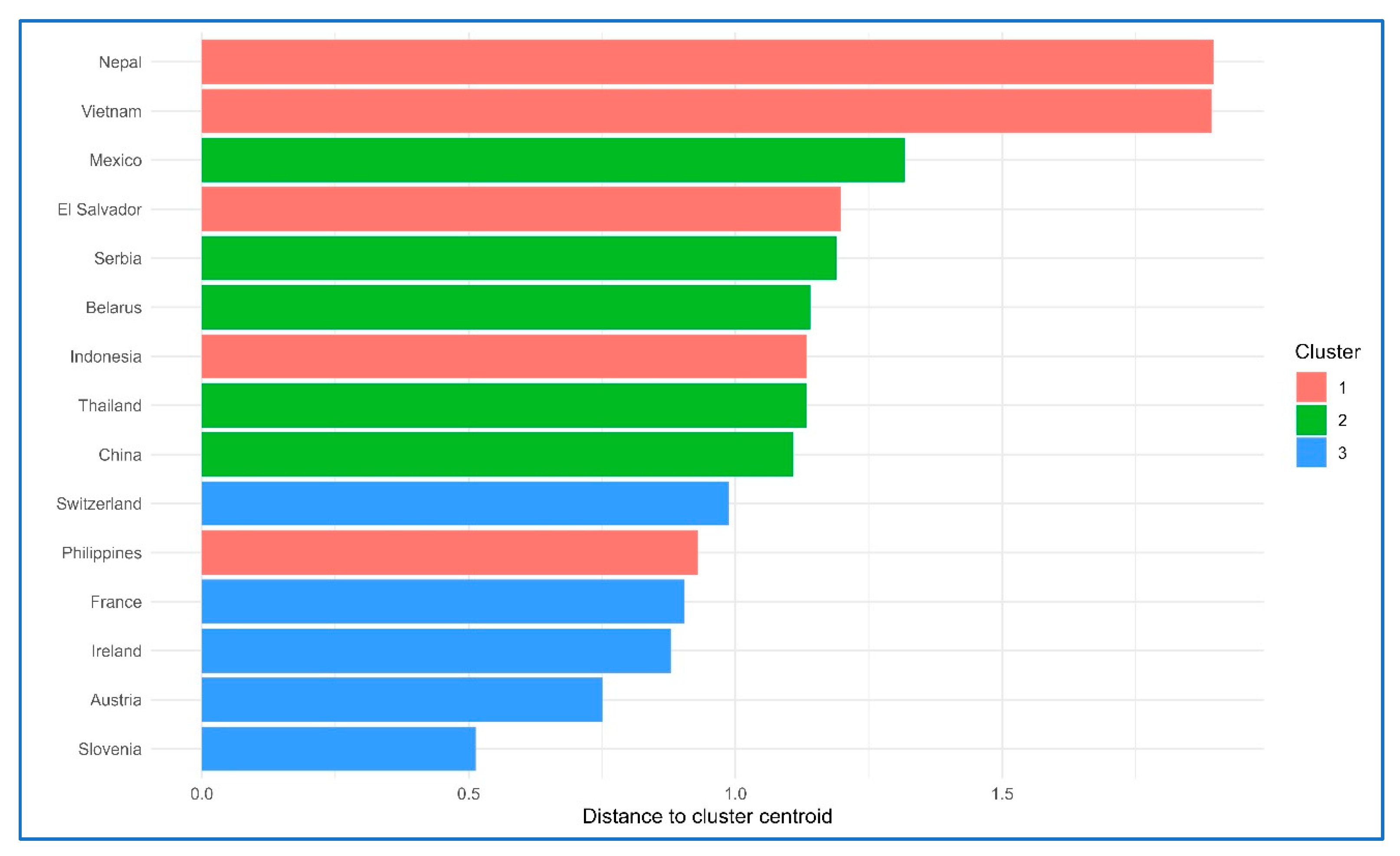
Figure 9 shows the countries closest to the centroid of each group, representing the most typical cases within each group. Shorter distances indicate a higher degree of representativeness within the group. The results show that Slovenia, the Philippines, and China are the most representative countries of groups 3, 1, and 2, respectively.
5. Discussion
The empirical data extracted from the structural analysis of the Sustainable Society Index confirms that, far from being a linear feature of sustainability, the latter reveals itself as a latent factor of a decidedly multidimensional nature. The retention of the three components of the SSI, in light of the cumulative variance of over 60%, the graphical criterion of sedimentation, and the conceptual consistency of the factor structure with the SSI’s tripartite design, seem to confirm that the human, environmental, and economic dimensions of sustainability are not only supported by normative principles but also by statistical evidence. In this respect, the results are consistent with the literature on composite indices, which stresses the importance of matching the normative structure of the indices with their statistical structure in order to avoid unstable or artificial results. The consistency of the factors suggests that the SSI has successfully captured structural relationships rather than spurious correlations among heterogeneous variables.
This is further evidenced by correlational analysis and factor suitability. The existence of systematic covariation in these important indicators—governance, health, education, and economic performance—may indicate that human well-being and capacity tend to crystallize into a coherent form of development. At the same time, relationships in energy consumption, emissions, and resource usage reveal a persistent tension in the balance of economic performance and environmental consequences. Bartlett’s test and KMO indexes verified that these relationships do not simply occur in a random fashion; rather, they occur in a matrix form in which sufficient common variance is present to support a dimensional reduction. Multivariate analysis is not simply a tool for synthesizing information; rather, it is a tool that reveals the existence of structural regimes of sustainability. The methodological discussion on robustness and transparency is concretely verified in this analysis, as it is shown that the latent structure of the SSI is statistically defensible.
In turn, the Multiple Factor Analysis enabled the investigation of the internal dynamics of the dimensions, which highlighted the dominant role played by the level of economic well-being on the first factors, with environmental factors being more important in the following dimensions. Such a pattern indicates that sustainable development is not equally represented in the space factor, with complex configurations including both economic benefits and environmental pressures. Indeed, this pattern is in line with recent research that highlights the coexistence of high levels of human development with important environmental impacts, which contradicts the idea of convergence towards strong sustainability. From this point of view, the SSI not only provides a way to compare the performance of different countries but also to identify the structural paths linking growth, well-being, and environmental pressures.
Cluster analysis enables the interpretation of specific structural configurations within the factorial space of the SSI. Cluster 1 cannot be considered a set of economies with low GDP, but a set of systems characterized by a lower level of productive complexity and institutional capacity, where lower environmental pressure is more a function of structural limitations than of the establishment of sustainable strategies. Cluster 2 illustrates a set of intermediate trajectories, where the availability of natural resources coexists with energy matrices and environmental transitions, a tension that is characteristic of ongoing processes of industrialization. Cluster 3, on the contrary, illustrates a more integrated structure, where human development, economic performance, and governance correlate with environmental performance. This balance, however, is a function of technological and institutional sophistication, not lower absolute consumption. Overall, these clusters support the notion that global sustainability is a structurally heterogeneous, not a linear, phenomenon. From a practical perspective, this classification could become a useful tool for policymakers and international sustainability discussion groups. It allows for distinguishing types that exhibit structural similarities across countries and facilitates the identification of areas requiring intervention based on relevant multidimensional profiles. Although the availability of comparable international datasets enables cross-national comparisons, potential structural biases may arise from statistical differences, diverse regional development models, and cultural perceptions of sustainability. International indicators derived from global datasets may not fully capture national priorities or institutional configurations; therefore, caution is required when interpreting sustainability rankings. Expanding on this analysis, the cluster classification proposed in this study provides policymakers with a framework for designing context-specific strategies aligned with the characteristics of each sustainability cluster. Countries belonging to the same cluster may benefit from coordinated policies emphasizing environmental transformation, institutional strengthening, or social development. However, using standardized international sources can have limiting effects related to measurement standards, reporting capacities, and regional diversity at the statistical level. Future research could explore this scenario further by establishing designs that allow for long-term comparisons of results and assessing the sensitivity of the identified patterns to changes in indicator selection.
In this sense, it is appropriate to establish a parallel with other methodological developments in recent times, which have addressed the assessment of sustainability from similar multivariate perspectives. Indeed, there are some recent studies where techniques of dimensionality reduction are employed to assess sustainability in countries and regions. Lamichhane et al. [
26] propose a goal-specific PCA to assess the sustainability of OECD countries, providing a synthetic overview, although focused on building aggregate components. Another example is Jain & Mohapatra [
33], who propose a composite environmental index for emerging economies using a multidimensional PCA-based method, prioritizing the comparison of results. Finally, Adambekova et al. [
34] incorporates selection criteria such as AIC and LASSO before employing PCA, reinforcing refinement techniques. However, these studies are focused on optimizing aggregation and/or ranking, whereas this study does not limit itself to simply synthesizing information but instead assesses the structural consistency of the index using Multiple Factor Analysis, validating the specific contribution of each conceptual dimension and reinforcing consistency, which transcends simple ranking performance.
Other studies have focused on finding territorial typologies through clustering methods applied to a set of multidimensional indicators. Saraiva & Caiado [
27] propose a combination of PCA and K-means to identify global development patterns, whereas Çağlar and Gürler [
35] propose a cluster analysis to classify countries based on their progress toward achieving SDGs, showing similar results at a global level. In a similar direction, Bruzzi et al. [
28] propose an integration of a multidimensional index with clustering techniques to overcome classical rankings in environmental sustainability. Nevertheless, in these studies, dimensional reduction and classification are typically performed as two separate steps in the methodology, whereas a deeper evaluation of the specific contribution of each conceptual block to the common factor space is not considered. In contrast, in our work, thanks to the integration of MFA and HCPC, it is possible to include dimensional validation and structural typology within a single methodology, allowing for a deeper understanding of the meaning of clusters as specific configurations based on the index’s internal architecture, rather than merely as a statistical segmentation.
6. Conclusions
The purpose of this research is to empirically assess the structural coherence of the Sustainable Society Index (SSI 2021) by a multivariate approach based on multiple factor analysis and hierarchical clustering in a reduced space. The results have shown that the three-dimensional structure of the index, based on human, environmental, and economic well-being, not only fits a conceptual framework but is also consistent with the underlying structure of the data. The appropriateness of the sample for factor analysis is supported by KMO statistics and Bartlett’s sphericity test. The extraction of three components of the data, even though it is not supported by eigenvalue greater than one for each dimension, is also consistent with the cumulative proportion of explained variance and interpretative coherence of the factor space, which supports the internal coherence of the index.
The 53 countries were classified into three clusters, and the results revealed different structural patterns that cannot be reduced to an ordinal scale. Instead of defining positions on a ranking scale, the approach allowed for identifying sustainability regimes with specific geo-economic profiles. The first cluster includes countries with lower productive complexity and institutional constraints, which affect their social and environmental performance at the same time. The second cluster includes countries with intermediate trajectories characterized by a relationship of tension between economic growth and environmental pressure. The third cluster includes countries with higher levels of human well-being, institutional performance, and environmental externalities. This typology has shown that sustainability does not follow a linear and homogeneous path, but responds to different structural configurations, thus offering a more analytical interpretation of the SSI and extending its interpretative power compared to more descriptive approaches.
From a methodological point of view, it can be noted that the results of the investigation confirm the need to carry out an independent structural validation of composite indices, which can strengthen their scientific credibility. The application of the MFA and cluster analysis techniques can provide a powerful methodology to assess the internal consistency of multidimensional indices and to uncover hidden patterns in the data, which might not have been immediately apparent in the construction of the index. This methodology can be generalized to other international systems of measurement in the areas of sustainable development, governance, and socioeconomic performance. It can also be noted that the investigation opens an interesting line of research that could explore issues related to the temporal stability of the results and methodological contrast effects, in order to assess the robustness of the results. In this sense, an important agenda can be consolidated, not only in the area of measuring sustainability but also in the area of critically assessing the statistical underpinnings of the concept.