Article

Factors Affecting Farmers’ Adoption of Biofertilizers in the North Central U.S.
Ness School of Management and Economics, South Dakota State University, Brookings, SD 57007, USA
*
Author to whom correspondence should be addressed.
Sustainability 2026, 18(10), 4750; https://doi.org/10.3390/su18104750
Submission received: 22 April 2026 / Revised: 4 May 2026 / Accepted: 7 May 2026 / Published: 10 May 2026

Abstract

Biofertilizers, or microbial fertilizers, are designed to restore soil biological functions that have been degraded by long-term reliance on chemical fertilizers. Although their availability in the United States has increased, adoption among farmers remains limited. To assess the current adoption patterns and the factors influencing farmers’ decisions, we conducted a survey of 1119 producers across Minnesota, Nebraska, North Dakota, and South Dakota in 2022. Results show that only 15% of farmers currently use biofertilizers, yet 88% of adopters intend to continue using them. Among non-adopters, 20% expressed interest in trying biofertilizers within the next 3 years, indicating substantial potential for market growth. Regression analysis reveals that younger farmers, larger-scale operations, and those who place greater importance on workshops as a learning platform are more likely to adopt biofertilizers. Adoption is also strongly associated with the use of complementary conservation practices, including cover crops, no tillage, and soil nutrient testing. These findings suggest that biofertilizer use is embedded within broader conservation management strategies rather than being an isolated decision. To support wider adoption, we recommend integrating biofertilizers into existing cost-share programs, such as the Conservation Stewardship Program, and expanding extension efforts through workshops and field demonstrations to provide practical, experience-based learning opportunities.

1. Introduction

The farmland in the United States is losing its topsoil ten times faster than it can be replenished, resulting in an annual economic loss of approximately $1.72 billion [1,2]. This loss can be partly attributed to the overuse of chemical fertilizers, which disrupt beneficial organisms that maintain soil structure and fertility, rendering soil more vulnerable to erosion [3,4,5]. In addition, the unabsorbed chemical fertilizer, carried by rainwater in soil particles to nearby water bodies, could cause various health and economic issues [6]. It is, therefore, increasingly vital to reduce chemical fertilizer use and preserve agricultural lands and water bodies [7].
In recent years, several initiatives, such as the Organic Transition Initiative, Streamlined Nutrient Management Initiative, and the Nitrogen Reduction Incentive Act (NiRIA), have been introduced to reduce fertilizer use and promote long-term environmental sustainability [8,9]. For example, in Nebraska, the NiRIA provides $10–15 to farmers who reduce their chemical fertilizer by either 15% of their baseline rate or 40 lb per acre [9]. To reduce chemical fertilizer use without sacrificing crop yields, it requires restoration of the soil biological functions disrupted by decades of reliance on chemical inputs.
Biofertilizers, also known as microbes or microbial fertilizers, are developed to restore biological functions and microbial diversity, which are often lost due to long-term intensive use of chemical fertilizers [10,11,12]. Instead of supplying nutrients directly, biofertilizers introduce or replenish beneficial soil microorganisms, such as nitrogen-fixing bacteria, phosphate-solubilizing bacteria, and mycorrhizal fungi, which enhance nutrient cycling and improve plant nutrient acquisition [13,14]. Biofertilizers can also improve nitrogen-use efficiency, stimulate root growth, and increase phosphorus availability, enabling chemical fertilizer application rates to reduce by 25–50% [15,16]. When used jointly with chemical fertilizer, biofertilizer has been shown to increase maize yield by up to 50% [17]. It has also been shown that biofertilizers are more effective in enhancing nutrient availability when used in conjunction with complementary practices, such as cover cropping [18].
With numerous private companies now involved in the production and commercialization process, the availability of biofertilizers has substantially increased in recent years [19]. Despite this growing accessibility, their adoption among U.S. farmers remains limited. As of 2021, only 0.5% of the 316.2 million total U.S cropland were cultivated with inputs like biofertilizers [20,21]. The adoption of biofertilizers could be hampered by factors such as lack of storage facilities, inconsistent performance, and potential contamination [22,23,24,25]. Additionally, most biofertilizers act selectively, making it challenging to develop a type suitable for all soils and climates. Climatic conditions can also lead to variability in the efficacy of these microbial products [26,27].
To further boost the use of biofertilizer, a better understanding about the drivers of biofertilizer adoption is crucial. Despite the rapid expansion of the U.S. biofertilizer market, which has become the largest globally, the existing literature is primarily focused on biofertilizer adoption in Southern Asia [28,29]. To our knowledge, no study has been carried out to examine the biofertilizer adoption rate or drivers of biofertilizer use among crop producers in the U.S. Our study fills in such a gap by examining the factors influencing the adoption of biofertilizer, both in terms of current adoption status and likelihood of adoption in the future, among crop producers in the North Central U.S.

2. Data and Methodology

2.1. Survey Description

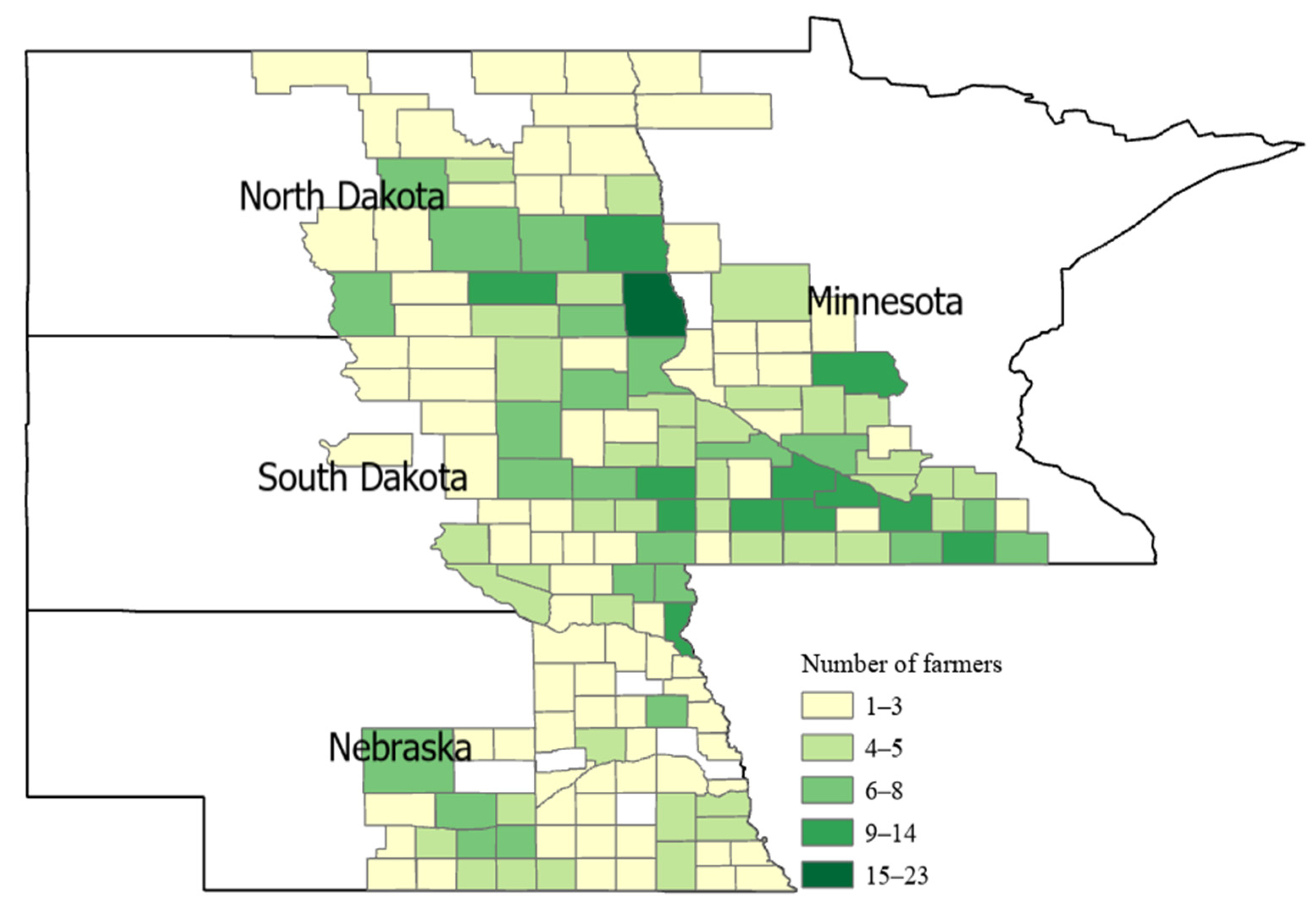
Between July and September 2022, we carried out a fertilizer usage survey among crop producers in four states of the North Central U.S.: Minnesota, Nebraska, North Dakota, and South Dakota (Figure 1). In these four states, our survey covered the major production regions of row crops, primarily corn and soybeans, for which fertilizer use is essential. Our survey sample comprises 1119 respondents from our 2021 survey, based on a sample of 6000 farmers (1500 per state) with at least 100 corn acres purchased from https://www.dynata.com/. More details about the 2021 survey can be found in Wang & Cheye [30].
We conducted the 2022 survey in four waves using a Tailored Design Method [31]. The initial mailing included a pre-notification letter with a link to complete the questionnaire online, accompanied by a $2 bill as an incentive. In the second wave, we mailed hard copies of the questionnaire along with prepaid return envelopes. This was followed by a reminder and a thank-you postcard in the third wave. A final follow-up was conducted in the fourth wave, where a second copy of the questionnaire and a return envelope were sent. After removing 64 ineligible participants, such as those no longer engaged in farming or with undeliverable addresses, a total of 654 valid responses were obtained from the 1055 eligible sample. This indicates a response rate of about 62%.

2.2. Data Description

Two variables were used to capture farmers’ current and future intended biofertilizer usage, which served as the dependent variables in the model. First, we asked farmers whether they currently use biofertilizers, with two options to choose from: ‘yes’ or ‘no’. This was followed by a question asking about their likelihood of using biofertilizers in the next 3 years, with five selection options: ‘very likely’, ‘unlikely’, ‘neutral’, ‘likely’, and ‘very likely’.
Based on producers’ answers to these two questions, we categorized them into four mutually exclusive groups: committed, at-risk, aspiring, and resistant. Among these, the committed group contains current adopters who were likely or very likely to continue using biofertilizers over the next 3 years, while the at-risk group refers to the current adopters who did not indicate they were likely/very likely to continue; conversely, the aspiring group contains non-adopters that indicated that they were likely/very likely to consider biofertilizer usage in the next 3 years, and the resistant group refers to the non-adopters who indicated otherwise. By jointly considering current behavior and future intentions, we capture the full spectrum of adoption dynamics, which not only identifies farmers currently adopting or intending to adopt but also highlights the target population to promote the usage of biofertilizer in the near future, as well as those at risk of discontinuing the practice.
The explanatory variables that potentially affect farmers’ current and future adoption decisions of biofertilizer are categorized into farmer characteristics, farm characteristics and management, perception and information source, and soil or weather characteristics (Table 1). Under the farmer characteristics category, we assessed the age and education of farmers. Studies have shown that the age of farmers plays an influential role in the adoption of new practices, as younger farmers are often less risk-averse when compared to older farmers [32,33]. In addition, younger farmers tend to have a longer planning horizon, making them more willing to invest. The average age of the survey respondents was 60 years, which is slightly higher compared to the national average of 58 years based on the 2022 U.S. agricultural census data.
We included education as an explanatory variable, hypothesizing that more educated farmers are more likely to adopt biofertilizer practices than their less educated counterparts, as the former in general acquire knowledge faster and thus are more likely to learn and try new innovations [34]. Education takes four discrete values from 1 to 4, ranging from farmers with less than a high school degree to those with advanced degrees. The average education level of 2.11 implies that farmers had on average received college or technical school education.
Under farm characteristics and management category, it was hypothesized that farmers with higher gross sales generally have more financial capacity to invest in new, potentially risky technologies and innovations [35,36]. The inclusion of gross sales in six categories (1 = ‘<$50,000’; 2 = ‘$50,000–$99,999’; 3 = ‘$100,000–$249,999’; 4 = ‘$250,000–$499,999’; 5 = ‘$500,000–$999,999’; 6 = ‘>$1,000,000’) aims to explain how the scale of farm operations influences the adoption of biofertilizer. The survey respondents had an average score of 4.18, corresponding to annual sales of $250,000 to $499,999.
Adoptions of other conservation practices were also captured, as some conservation practices, such as cover crops and biofertilizer, could be complementary and therefore more effective when used together. Moreover, adoption of conservation practices could be viewed as an indicator of farmers’ stewardship mindset. We included four conservation practices—no tillage, cover crops, manure application, and variable rate fertilizer (VRF) application—in the model as explanatory variables, with 0 and 1 denoting non-adopters and adopters of the corresponding practices, respectively. Among the listed practices, no tillage was the most adopted practice with a 53% adoption rate, followed by manure (38%) and VRF (37%), while cover crops was the least adopted practice with a 23% adoption rate. Furthermore, the effectiveness of biofertilizer use depends heavily on the survival of live microbes [37]. Conditions like high soil pH or salinity can kill or inhibit beneficial bacteria or fungi introduced. Therefore, soil testing plays a critical role in helping farmers make decisions about biofertilizer use. Based on our survey, soil nutrient testing was adopted by a 61% of the respondents.
Under the farmer perception and information source category, we included farmers’ agreement to pass their farmland to the next generation, measured in five scales, with 1 to 5 standing for agreement levels ranging from ‘strongly disagree’ to ‘strongly agree’. The average value was 4.15, implying an overall agreement to pass the farmland on to future generations. In general, farmers intending to pass land to next generations have a stewardship mindset and are more likely to care about the long-term soil health of their land and are therefore more likely to adopt conservation farming practices such as biofertilizer use [38,39,40].
Furthermore, the trust in different information sources when learning new practices could also play an influential role in farmers’ use of conservation practices [40]. Two sources in learning, daylong workshops and articles/fact sheets, are included, with 1 to 5 ranging from ‘not important’ to ‘very important’. The average responses for workshops (2.44) and articles (3.17) indicated that farmers in general prefer to read articles rather than attending daylong workshops.
Soil characteristic variables, such as saline condition and land capability class, could also affect biofertilizer adoption decisions. Biofertilizers could help improve plant tolerance to sodic conditions, which, if not treated, would significantly reduce crop productivity [41,42]. The percentages of sodic soil were captured using six scales, with 1 to 6 standing for values ranging from ‘0%’ to ‘more than 30%’, to check how the severity of saline/sodic conditions may compel farmers to use biofertilizer to mitigate such adverse effects. An average value of 2.05 indicated that farmers had on average 1–5% of their fields as having saline/sodic issues. Additionally, we use land capability classes (LCCs) to capture differences in land productivity. The land capability classification system is a global framework developed by the U.S. Department of Agriculture (USDA) that categorizes agricultural land into eight classes (I–VIII) based on the degree of limitations for sustained crop production, with class I and II lands representing the most productive soils with few or no constraints, and class VIII lands being unsuitable for cultivation [43]. As such, farmers with predominantly class I and II land, which account for 72% of fields in our sample, may perceive less need to change their practices, potentially making them less likely to adopt biofertilizers.
Weather conditions have been shown to positively influence the adoption of certain conservation practices, such as variable fertilizer application [44]. Therefore, we included local weather conditions, captured by average temperature and precipitation over the past 10 years, as potential factors that affect farmers’ willingness to adopt biofertilizer. Regions with higher average precipitation experience recurring soil moisture stress and nutrient leaching, which can heighten awareness of fertilizer inefficiency because waterlogged soils reduce nutrient uptake and increase perceived yield risks [45]. For example, soil moisture negatively influenced the adoption of cover crops [46]. Overall, the growing-season (May–September) temperature in our study area was 12.92 Celsius degrees and the precipitation averaged 479.56 mm.

2.3. Model Description

To examine factors influencing farmers’ adoption of biofertilizers, we used a multinomial logistic regression (MNL) model, which allows analysis of multiple discrete groups to capture their distinct behavioral outcomes. Similar approaches have been used by Aguiar-Noury et al. [47] and Han & Niles [48] to analyze the adoption patterns of various sustainable agricultural practices. The model follows a random utility framework, in which farmer i derives utility from belonging to category j. The latent utility associated with each category is specified as:
U i j = X i β j + ε i j
where i denotes an individual farmer observation; j = 1, 2, 3, and 4 denotes a specific group (committed, at-risk, aspiring, and resistant); X i is a vector of all observable characteristics of farmer i; β j is a vector of parameters associated with group j; and ε i j is a stochastic error term capturing unobserved factors. Farmer i is assigned to adoption group j if the utility derived from that group exceeds the utilities associated with all other groups. Although these utilities are not directly observable, the probability that farmer i belongs to adoption group j can be derived from Equation (2) following Cramer (2003) [49]:
P Y i = j = exp X i β j m = 1 4 exp X i β m
where the numerator exp X i β j represents the exponentiated utility of belonging to one of the adoption group j for farmer i. The denominator m = 1 4 exp X i β m sums the exponentiated utilities across all four adoption groups through the summation index m, ensuring that the probabilities across all groups sum to one. The error terms in Equation (1) are assumed to follow an independently and identically distributed Type I extreme value distribution, which yields the logistic probability form in Equation (2). Model parameters were estimated using maximum likelihood estimation (MLE) in STATA 17. The model also assumes independence of irrelevant alternatives (IIA), which was confirmed to hold across all adoption groups using the Hausman–McFadden test. When this assumption holds, the four adoption groups are sufficiently distinct from one another, and the marginal effects correctly show how each explanatory variable influences the probability that a farmer is classified into each group.
Because the coefficients β j in Equation (2) represent the log odds of a farmer belonging to adoption group j relative to the reference group rather than changes in probabilities, we computed the marginal effects to evaluate how each explanatory variable influences the probability of farmers belonging to each adoption pathway. We let k denote a specific explanatory variable in X i . By taking the derivative of P Y i = j from Equation (2) with respect to variable X k , the marginal effect is given by:
P Y i = j X i k = P Y i = j β j k m = 1 4 β m k P Y i = m
where X i k X i is the kth explanatory variable, with k = 1, 2, …, k indexing all explanatory variables in X i ; β j k is its coefficient for adoption group j; and β m k is the same coefficient for adoption group m derived directly from Equation (2). The term m = 1 4 β m k P Y i = m is therefore the probability-weighted average of the coefficients across all four adoption groups. The derivatives sum to zero across all adoption groups, meaning that a change in an explanatory variable redistributes probability mass across the four adoption pathways, so that any increase in the probability of belonging to one adoption group is necessarily offset by corresponding decreases across the remaining groups [49]. Average marginal effects were computed and reported in STATA 17.

3. Results and Discussion

3.1. Adoption of Biofertilizers

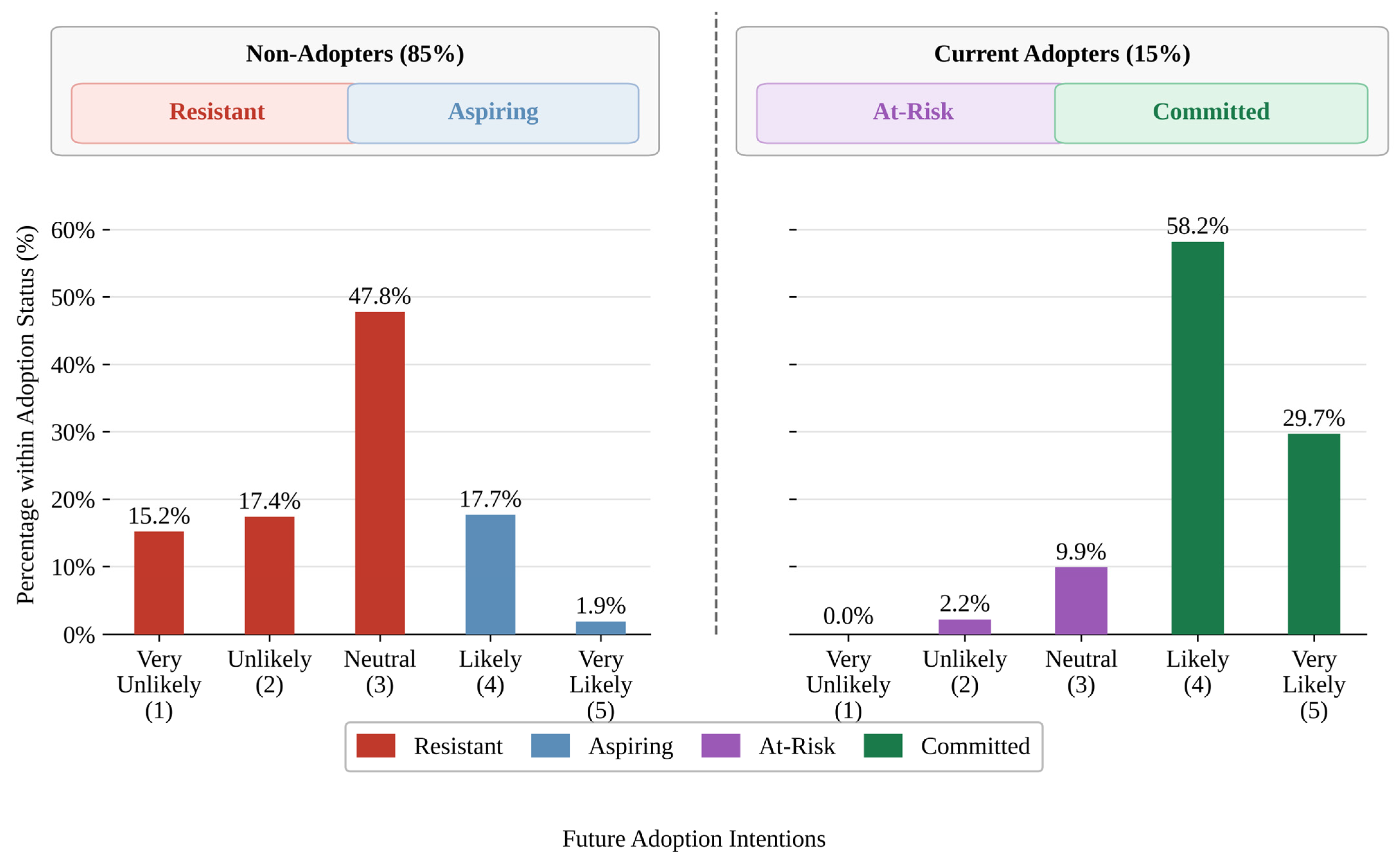
The use of biofertilizers remains limited in our study area, with only 15% of surveyed farmers identifying themselves as adopters. This adoption rate aligns with broader estimates for the United States, where it is reported that only 15% of U.S. soybean cropland area has been treated with microbial inoculant [50]. Among the current adopters, 88% were likely to continue biofertilizer usage for the next 3 years (Figure 2). Even among the non-adopters, 20% reported a willingness to use biochar in the next 3 years, implying a potential growth in biochar use in the future. In this regard, our survey finding also aligns with the modest projected growth for the agricultural microbe market, which is expected to increase from $242 billion in 2022 to $364.3 billion in 2027 at a compound annual growth rate of 7.4% [51].
Based on a 1 to 5 scale ranging from very unlikely to very likely, the average value for future adoption was 2.95, indicating a neutral attitude toward future use. Only 10% and 2% of the adopters reported they were neutral and unlikely to use biofertilizer in the next 3 years, respectively, in contrast to about 48% and 17% of the non-adopters who were neutral and unlikely to use this practice (Figure 2). The difference in future adoption intentions between adopters and non-adopters indicated that firsthand experience with biofertilizer use will likely reinforce farmers’ positive perceptions about its benefits. Therefore, to increase future adoption rate of biofertilizer, strategies that increase awareness, showcase tangible benefits, and facilitate access to biofertilizers could be used.

3.2. Factors Affecting the Adoption of Biofertilizers Among Farmers

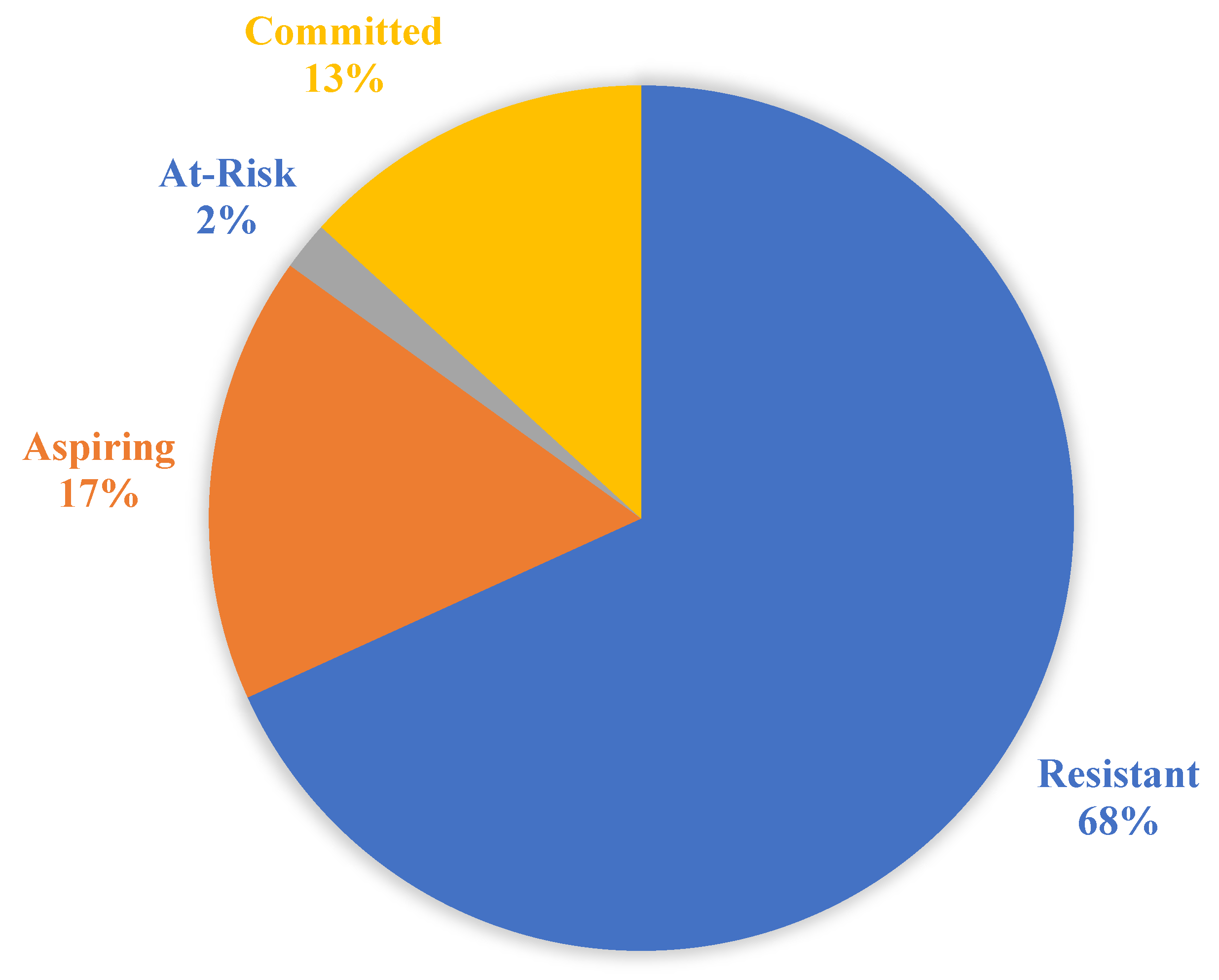
The marginal effects estimate from the multinomial logistic regression model for factors affecting farmers across biofertilizer adoption groups are presented in Table 2. Among the four groups of farmers (Figure 3), the majority (68.2%) are resistant, 16.7% are aspiring adopters, 1.8% are at-risk, and 13.3% are committed users. The disproportionately small share of at-risk farmers reduces the statistical power to detect significant predictors for this group in our regression analysis.

3.2.1. Farmer Characteristics

Farmer age shows a negative and significant effect on adoption commitment while exerting a positive and significant effect on the resistant group. This implies that older adopters are less likely to sustain the use of biofertilizers, and that older non-adopters are more inclined to resist adoption. This finding is expected, as older farmers are generally more risk-averse, making them less willing to experiment with new agricultural inputs such as biofertilizers. Furthermore, older farmers have shorter planning horizons and are therefore less inclined to invest in practices (e.g., organic fertilizers and biofertilizers) that require considerable time to generate measurable agronomic benefits [32,33].
Education plays a dual role among adoption groups, where a one-unit increase in educational level increases the probability of aspiring adopters by 4.6% but reduces the probability of committed adopters by 6.5%. This implies that the effect of education varies by adoption group. Among non-adopters, education fosters openness to try new agricultural practices, as more educated farmers are generally more receptive to innovation and less constrained by entrenched practices; conversely, among adopters, it equips them with the analytical capacity to critically evaluate the cost benefit of inputs, making them more selective about which practices to sustain and more likely to substitute biofertilizers with other productivity-enhancing alternatives that offer clearer or more immediate returns. Similarly, the previous literature has found that educated farmers are unlikely to use practices such as organic fertilizers [52,53].

3.2.2. Farm Characteristics and Management Practices

Gross sales, which reflect farm size, have a positive and significant effect on sustained biofertilizer adoption. Specifically, one-level increase in gross sales increases the probability of belonging to the committed group by 2.6%. This finding reveals that the ability to sustain biofertilizer use over time appears to be a privilege of large-scale farming. Similarly, Prokopy et al. [54] observed that larger farms with higher gross sales are more likely to adopt conservation practices than smaller farms. In addition, higher gross sales also promotes farmers’ adoption of biochar [40]. This could be caused by the uneven access to information on novel conservation practices between larger and smaller farms, which limits smaller farms’ ability to implement these practices.
Considering the role of various conservation practices on biofertilizer adoption, we found that cover crops increased the committed use of biofertilizer by 6.0%, suggesting that farmers already integrating cover crops into their farming systems are more likely to sustain biofertilizer use. In this regard, Dragičević et al. [18] also found that, when combined with biofertilizers, cover crops are more effective at increasing soil nutrient concentrations and crop yields. In addition, no tillage had a negative and significant relationship among resistant farmers, reducing the probability of resistance to their use by 7.9%. This implies that farmers who have already adopted no tillage are more open to adopting complementary practices such as biofertilizer, suggesting that producers already engaged in conservation practices are more open to adopting additional sustainable [55]. Similarly, the practice of soil nutrient testing reduced the probability of resistance group by 9.0% and increased the probability of aspiring adopters by 6.4%, suggesting that farmers employing precision soil management tools are more open to considering biofertilizer use in the future. This finding is corroborated by Cruz and Dias [56], that combining biofertilizers with precision technologies is more efficient and increases crop productivity. It is likely that farmers who have already been actively working with different methods to reduce chemical fertilizer usage are more willing to try biofertilizers as an additional option [57].

3.2.3. Sources of Information

The source of information plays a critical role in shaping farmers’ awareness and adoption decisions regarding biofertilizers. Participation in workshops was found to reduce the probability of belonging to the resistant group by 4.6% while simultaneously increasing the probability of committed adoption by 2.9%, suggesting that hands-on learning experiences not only reduces resistance but also reinforce long-term commitment to biofertilizer use. This dual effect underscores the effectiveness of workshops in reinforcing producers’ desires to adopt conservation practices such as biofertilizer. Similarly, Mgendi [58] found that demonstration training is among the most effective ways to increase farmers’ agricultural innovating practices. According to Tensi et al. [59] and Kassem et al. [60], farmers’ practical knowledge and understanding of biofertilizer application, along with their perceived credibility of information source, play an important role in their adoption decisions.

3.2.4. Soil and Weather Characteristics

Farmers reporting saline or sodic soil conditions are 3.1% less likely to be resistant and 2.5% more likely to be classified as aspiring adopters. Biofertilizer has been proven useful in alleviating salinity stress in their fields by improving soil structure and plant tolerance [11,12,42]. This finding is therefore intuitive, as farmers struggling with deteriorating soil conditions have a stronger incentive to seek alternative solutions that can restore soil health and productivity. Additionally, we found that higher average precipitation increases the probability of being classified as aspiring adopters. Farmers in regions with higher average precipitation may have experienced more variable fertilizer responses, which in turn encouraged them to experiment with alternative inputs such as biofertilizers [45]. This pattern is consistent with findings from a survey of farmers in the U.S. Midwest, where weather-related agronomic uncertainty has similarly motivated the adoption of alternative conservation practices [61].

3.3. Policy Implications

While the current biofertilizer adoption rate remains low, there is potential for its usage to continue to grow. Future outreach activities could offer more training opportunities, in the form of workshops, to engage farmers and to provide them with real life examples on how biofertilizers could be integrated with farming practices. Additionally, we recommend promoting the use of biofertilizer among farmers who have already used some conservation practices, as biofertilizer could be used as a complementary practice to achieve the conservation goal. This can be done through the incorporation of biofertilizers into existing cost-share programs that promote the use of conservation practices, such as the USDA’s Conservation Stewardship Program or state-level soil health initiatives. For example, biofertilizer use could be promoted as a complementary practice for cover crops, as both have similar environmental benefits, including reducing excess nutrient application and minimizing runoff.
Our findings show that biofertilizer has been used as a strategy to address saline soil conditions, which is common among several regions in the U.S., especially in the Western U.S. and parts of the Northern Great Plains. To further promote the use of biofertilizer in these affected regions, outreach activities could help farmers gain a better understanding towards the use of biofertilizer in reducing salt stress. Precipitation encouraging interest only and not continued use indicate the need not only for targeted extension programs that provide farmers with clear guidance on when and where biofertilizers are agronomically suitable, but also for further research and product development aimed at improving biofertilizer efficacy under high soil moisture conditions.

4. Conclusions

This study examined factors influencing adoption of biofertilizer, a promising but infrequently used practice among North Central U.S. crop producers. Based on their current use and future intentions, we classified farmers into four groups. The majority (68.2%) were resistant non-adopters with no intention of trying biofertilizers, while 16.7% were aspiring adopters who expressed willingness to adopt within the next 3 years. Additionally, 13.3% were committed to continuing their use, while a small share (1.8%) was at risk of discontinuing use. Importantly, our findings revealed that biofertilizer adoption is not an isolated decision but is linked to other conservation practices, such as cover cropping and no tillage, implying that policies that promote integrated sustainable management strategies may reinforce adoption across different farmer groups.
Challenging field conditions, such as presence of saline/sodic soils, were found to reduce resistance and increase willingness to try biofertilizer in the near future, suggesting that agronomic constraints can serve as a catalyst for farmers’ openness to biological alternatives. Furthermore, our findings show that workshops reduce resistance and reinforce committed use, implying that educational programs through workshops and field demonstrations that provide credible, practical knowledge are crucial in building farmers’ confidence towards biofertilizer adoption. In particular, programs that demonstrate biofertilizers’ usefulness in addressing challenging field challenges, as well as in their complementariness with existing conservation practices, will likely promote biofertilizer usage among interested farmers.
A limitation of this study is our usage of only binary adoption decisions, which does not account for the intensity of adoption in terms of the percentage of acres adopted or the frequency of adoptions throughout the years. To build on this work, future research should go beyond the binary decision to examine the factors driving adoption intensity, exploring how the scale and commitment of biofertilizer use on farms are influenced. Meanwhile, future studies could examine farmer-perceived constraints and benefits of biofertilizer use, and how such perceptions might shape or sustain their future adoption decisions. Furthermore, similar studies on biofertilizer could be carried out in a broader geographical scope with other agricultural production regions in the U.S. to illustrate differences or similarities across regions.

Author Contributions

Conceptualization, A.O. and T.W.; Methodology, A.O.; Software, A.O.; Formal analysis, A.O.; Investigation, A.O. and T.W.; Data curation, T.W.; Writing—original draft, A.O.; Writing—review & editing, T.W.; Supervision, T.W.; Project administration, T.W.; Funding acquisition, T.W. All authors have read and agreed to the published version of the manuscript.

Funding

Financial support for this research was provided by the U.S. Department of Agriculture, Natural Resources Conservation Service (Grant No. G17AC00337), and by the U.S. National Science Foundation through the EPSCoR program (Cooperative Agreement No. 2416911).

Institutional Review Board Statement

This study was conducted in accordance with the Declaration of Helsinki and was approved by the Institutional Review Board of South Dakota State University (IRB approval no. IRB-2207002-EXM; approval date: 19 July 2022).

Informed Consent Statement

Informed consent was obtained from all subjects involved in the study.

Data Availability Statement

The datasets analyzed during the current study are not publicly available due to the confidentiality requirements from the Institutional Review Board (IRB) of South Dakota State University.

Conflicts of Interest

The authors declare no conflicts of interest.

References

  1. Natural Resources Defense Council (NRDC). Soil Erosion 101. Available online: https://www.nrdc.org/stories/soil-erosion-101 (accessed on 31 January 2026).
  2. Chen, L.; Rejesus, R.M. The impact of soil erosion on agricultural land values in the US Midwest. In Proceedings of the 2023 Annual Meeting, Washington, DC, USA, 23–25 July 2023. [Google Scholar]
  3. Pretty, J. Agricultural sustainability: Concepts, principles and evidence. Philos. Trans. R. Soc. B Biol. Sci. 2008, 363, 447–465. [Google Scholar] [CrossRef] [PubMed]
  4. Molina-Santiago, C.; Matilla, M.A. Chemical fertilization: A short-term solution for plant productivity? Microb. Biotechnol. 2019, 13, 1311. [Google Scholar] [CrossRef]
  5. Environmental Protection Agency. Sources and Solutions: Agriculture. Available online: https://www.epa.gov/nutrientpollution/sources-and-solutions-agriculture (accessed on 31 January 2026).
  6. Wang, T.; Fan, Y.; Xu, Z.; Kumar, S.; Kasu, B. Adopting cover crops and buffer strips to reduce nonpoint source pollution: Understanding farmers’ perspectives in the US Northern Great Plains. J. Soil Water Conserv. 2021, 76, 475–486. [Google Scholar] [CrossRef]
  7. World Bank. Climate Smart Agriculture. Available online: https://www.worldbank.org/en/topic/climate-smart-agriculture (accessed on 31 January 2026).
  8. USDA. USDA’s Organic Transition Initiative in Action. Available online: https://www.usda.gov/about-usda/news/blog/usdas-organic-transition-initiative-action (accessed on 25 January 2026).
  9. Nebraska Legislature. Legislative Bill 1368: Nitrogen Reduction Incentive Act; Nebraska Legislature: Lincoln, NE, USA, 2024.
  10. Khairunnisa, N.A.; Siswanti, D.U. Effect of biofertilizer and salinity stress on productivity and vitamin C levels of Amaranthus tricolor L. Biog. J. Ilm. Biol. 2021, 9, 146–155. [Google Scholar] [CrossRef]
  11. de Souza, M.V.P.; de Sousa, G.G.; da Silva Sales, J.R.; da Costa Freire, M.H.; da Silva, G.L.; de Araújo Viana, T.V. Saline water and biofertilizer from bovine and goat manure in the Lima bean crop. Rev. Bras. Ciênc. Agrár. 2019, 14, e5672. [Google Scholar] [CrossRef]
  12. Li, R.; Sun, B.; Song, M.; Yan, G.; Hu, Q.; Bai, Z.; Wang, J.; Zhuang, X. Improvement of saline soil properties and Brassica rapa L. growth using biofertilizers. Sustainability 2024, 16, 2196. [Google Scholar] [CrossRef]
  13. Suyal, D.C.; Soni, R.; Sai, S.; Goel, R. Microbial inoculants as biofertilizer. In Microbial Inoculants in Sustainable Agricultural Productivity; Springer: New Delhi, India, 2016; Volume 1, pp. 311–318. [Google Scholar]
  14. Malusá, E.; Vassilev, N. A contribution to set a legal framework for biofertilisers. Appl. Microbiol. Biotechnol. 2014, 98, 6599–6607. [Google Scholar] [CrossRef]
  15. Bejarano-Herrera, W.F.; Marcillo-Paguay, C.A.; Rojas-Tapias, D.F.; Estrada-Bonilla, G.A. Effect of mineral fertilization and microbial inoculation on cabbage yield and nutrition: A field experiment. Agronomy 2024, 14, 210. [Google Scholar] [CrossRef]
  16. Adesemoye, A.O.; Torbert, H.A.; Kloepper, J.W. Plant growth-promoting rhizobacteria allow reduced application rates of chemical fertilizers. Microb. Ecol. 2009, 58, 921–929. [Google Scholar] [CrossRef] [PubMed]
  17. Brahmaprakash, G.P.; Sahu, P.K. Biofertilizers for sustainability. J. Indian Inst. Sci. 2012, 92, 37–62. [Google Scholar]
  18. Dragičević, V.; Simić, M.; Dolijanović, Ž.; Đorđević, S.; Stoiljković, M.; Dimkić, I.; Brankov, M. Combined effect of cover crops and bio-fertilizer on sustainable popcorn maize production. Front. Plant Sci. 2024, 14, 1250903. [Google Scholar] [CrossRef] [PubMed]
  19. Santos, F.; Melkani, S.; Oliveira-Paiva, C.; Bini, D.; Pavuluri, K.; Gatiboni, L.; Mahmud, A.; Torres, M.; McLamore, E.; Bhadha, J.H. Biofertilizer use in the United States: Definition, regulation, and prospects. Appl. Microbiol. Biotechnol. 2024, 108, 511. [Google Scholar] [CrossRef]
  20. Irwin, S. Estimating Total Crop Acres in the US. Farmdoc Dly. 2021, 11, 91. [Google Scholar]
  21. Research and Markets. North America Biofertilizer—Market Share Analysis, Industry Trends & Statistics, Growth Forecasts (2025–2030). Available online: https://www.researchandmarkets.com/report/north-america-biofertilizer-market (accessed on 31 January 2026).
  22. Herrmann, L.; Lesueur, D. Challenges of formulation and quality of biofertilizers for successful inoculation. Appl. Microbiol. Biotechnol. 2013, 97, 8859–8873. [Google Scholar] [CrossRef]
  23. Yadav, A.K.; Chandra, K. Mass production and quality control of microbial inoculants. Proc. Indian Natl. Sci. Acad. 2014, 80, 483–489. [Google Scholar] [CrossRef]
  24. Nosheen, S.; Ajmal, I.; Song, Y. Microbes as biofertilizers, a potential approach for sustainable crop production. Sustainability 2021, 13, 1868. [Google Scholar] [CrossRef]
  25. Kumar, S.; Diksha; Sindhu, S.S.; Kumar, R. Biofertilizers: An ecofriendly technology for nutrient recycling and environmental sustainability. Curr. Res. Microb. Sci. 2022, 3, 100094. [Google Scholar] [CrossRef]
  26. Timmusk, S.; Behers, L.; Muthoni, J.; Muraya, A.; Aronsson, A.-C. Perspectives and challenges of microbial application for crop improvement. Front. Plant Sci. 2017, 8, 49. [Google Scholar] [CrossRef]
  27. Fasusi, O.A.; Cruz, C.; Babalola, O.O. Agricultural sustainability: Microbial biofertilizers in rhizosphere management. Agriculture 2021, 11, 163. [Google Scholar] [CrossRef]
  28. Dhakal, P.; Devkota, S.; Timilsina, R.H. Factors affecting the adoption of biofertilizers in Chitwan District, Nepal. J. Pharmacogn. Phytochem. 2018, 7, 3050–3054. [Google Scholar]
  29. Bodake, H.D.; Gaikwad, S.P.; Shirke, V.S. Study of constraints faced by the farmers in adoption of bio-fertilizers. Int. J. Agric. Sci. 2009, 5, 292–294. [Google Scholar]
  30. Wang, T.; Cheye, S. 2021 Midwestern Producer Survey Descriptive Results. Midwestern Farm and Producer Surveys and Policy Briefs. 2022; Volume 1. Available online: https://openprairie.sdstate.edu/midwestfarmsurvey/1 (accessed on 31 January 2026).
  31. Dillman, D.A.; Smyth, J.D.; Christian, L.M. Internet, Phone, Mail, and Mixed-Mode Surveys: The Tailored Design Method; Wiley: Indianapolis, IN, USA, 2014. [Google Scholar]
  32. Carlisle, L. Factors influencing farmer adoption of soil health practices in the United States: A narrative review. Agroecol. Sustain. Food Syst. 2016, 40, 583–613. [Google Scholar] [CrossRef]
  33. Liu, X.; Pattanaik, N.; Nelson, M.; Ibrahim, M. The choice to go organic: Evidence from small US farms. Agric. Sci. 2019, 10, 1566–1580. [Google Scholar] [CrossRef][Green Version]
  34. Oli, D.; Gyawali, B.; Acharya, S.; Oshikoya, S. Factors influencing learning attitude of farmers regarding adoption of farming technologies in farms of Kentucky, USA. Smart Agric. Technol. 2025, 10, 100801. [Google Scholar] [CrossRef]
  35. Brown, W.M.; Ferguson, S.M.; Viju-Miljusevic, C. Farm size, technology adoption and agricultural trade reform: Evidence from Canada. J. Agric. Econ. 2020, 71, 676–697. [Google Scholar] [CrossRef]
  36. McFadden, J.; Lim, K. Precision Agriculture Use Increases with Farm Size and Varies Widely by Technology. Available online: https://www.ers.usda.gov/data-products/charts-of-note/chart-detail?chartId=110550 (accessed on 31 January 2026).
  37. Shahzad, M.; Hayat, R.; Mujtaba, G.; Rehman, W.U.; Nadeem, M. Biofertilizers in sustainable agriculture: Mechanisms, applications, and future prospects. Discov. Agric. 2025, 3, 224. [Google Scholar] [CrossRef]
  38. Lippsmeyer, M.; Langemeier, M.; Mintert, J.; Thompson, N. Factors Impacting Succession Planning. Farmdoc Dly. 2023, 13, 163. [Google Scholar]
  39. Daniele, B.-C. The farm succession effect on farmers’ management choices. Land Use Policy 2024, 137, 107014. [Google Scholar] [CrossRef]
  40. Wang, T.; Wiltse, D.; Viskupic, F.; Oyebanji, A. Promoting awareness and adoption of biochar as a soil amendment: Effect of message framing. Renew. Agric. Food Syst. 2026, 41, e5. [Google Scholar] [CrossRef]
  41. Shrivastava, P.; Kumar, R. Soil salinity: A serious environmental issue and plant growth promoting bacteria as one of the tools for its alleviation. Saudi J. Biol. Sci. 2014, 22, 123. [Google Scholar] [CrossRef]
  42. Liu, Y.; Xun, W.; Chen, L.; Xu, Z.; Zhang, N.; Feng, H.; Zhang, Q.; Zhang, R. Rhizosphere microbes enhance plant salt tolerance: Toward crop production in saline soil. Comput. Struct. Biotechnol. J. 2022, 20, 6543–6551. [Google Scholar] [CrossRef] [PubMed]
  43. Quandt, A.; Herrick, J.; Peacock, G.; Salley, S.; Buni, A.; Mkalawa, C.C.; Neff, J. A standardized land capability classification system for land evaluation using mobile phone technology. J. Soil Water Conserv. 2020, 75, 579–589. [Google Scholar] [CrossRef]
  44. Wang, T.; Jin, H.; Sieverding, H.; Kumar, S.; Miao, Y.; Rao, X.; Obembe, O.; Nafchi, A.M.; Redfearn, D.; Cheye, S. Understanding farmer views of precision agriculture profitability in the US Midwest. Ecol. Econ. 2023, 213, 107950. [Google Scholar] [CrossRef]
  45. Pawar, A.R.; Patil, S.S.; Patil, M.B.; Mahadule, P.A.; Gade, K.A.; Arunachalam, T.; Mahajan, V.B. Effects of Waterlogging on microbial activity, soil nutrient availability, nutrient uptake, and yield of tolerant and sensitive onion genotypes. Front. Plant Sci. 2025, 16, 1692450. [Google Scholar] [CrossRef]
  46. Adhikari, R.K.; Wang, T.; Jin, H.; Ulrich-Schad, J.D.; Sieverding, H.L.; Clay, D. Farmer perceived challenges toward conservation practice usage in the margins of the Corn Belt, USA. Renew. Agric. Food Syst. 2023, 38, 14. [Google Scholar] [CrossRef]
  47. Aguiar-Noury, F.; Buckley, C.; Hynes, S. Transition from chemical fertilizers to sustainable swards: What determines farmers’ adoption decisions for clover and multi-species swards? Agric. Syst. 2025, 224, 104202. [Google Scholar] [CrossRef]
  48. Han, G.; Niles, M.T. An adoption spectrum for sustainable agriculture practices: A new framework applied to cover crop adoption. Agric. Syst. 2023, 212, 103771. [Google Scholar] [CrossRef]
  49. Cramer, J.S. Logit Models from Economics and Other Fields; Cambridge University Press: Cambridge, UK, 2003. [Google Scholar]
  50. Santos, M.S.; Nogueira, M.A.; Hungria, M. Microbial inoculants: Reviewing the past, discussing the present and previewing an outstanding future for the use of beneficial bacteria in agriculture. AMB Express 2019, 9, 205. [Google Scholar] [CrossRef] [PubMed]
  51. BCC Research. Microbial Products: Technologies, Applications and Global Markets. Available online: https://www.bccresearch.com/market-research/biotechnology/microbial-products-technologies-applications-and-global-markets-report.html (accessed on 26 January 2026).
  52. Wang, Y.; Zhu, Y.; Zhang, S.; Wang, Y. What could promote farmers to replace chemical fertilizers with organic fertilizers? J. Clean. Prod. 2018, 199, 882–890. [Google Scholar] [CrossRef]
  53. Chojnacka, K.; Moustakas, K.; Witek-Krowiak, A. Bio-based fertilizers: A practical approach towards circular economy. Bioresour. Technol. 2020, 295, 122223. [Google Scholar] [CrossRef] [PubMed]
  54. Prokopy, L.S.; Towery, D.; Babin, N. Adoption of Agricultural Conservation Practices: Insights from Research and Practice; Purdue Extension: West Lafayette, IN, USA, 2014. [Google Scholar]
  55. Langemeier, M.; Balchhaudi, A. Adoption of conservation practices and farm goals. Farmdoc Dly. 2025, 15, 140. [Google Scholar]
  56. Cruz, C.; Dias, T. Integrating biofertilizers and precision agriculture. Open Access Gov. 2023, 40, 450–451. [Google Scholar] [CrossRef]
  57. Griffin, T.W.; Traywick, L. The role of variable rate technology in fertilizer usage. J. Appl. Farm Econ. 2020, 3, 6. [Google Scholar] [CrossRef]
  58. Mgendi, G.; Mao, S.; Qiao, F. Does agricultural training and demonstration matter in technology adoption? The empirical evidence from small rice farmers in Tanzania. Technol. Soc. 2022, 70, 102024. [Google Scholar] [CrossRef]
  59. Tensi, A.F.; Ang, F.; Van Der Fels-Klerx, H.J. Behavioural drivers and barriers for adopting microbial applications in arable farms: Evidence from the Netherlands and Germany. Technol. Forecast. Soc. Change 2022, 182, 121825. [Google Scholar] [CrossRef]
  60. Kassem, H.S.; Alotaibi, B.A.; Aldosri, F.O.; Muddassir, M. Exploring the relationship between information-seeking behavior and adoption of biofertilizers among onion farmers. Agronomy 2021, 11, 1258. [Google Scholar] [CrossRef]
  61. Upadhaya, S.; Arbuckle, J.G. Examining factors associated with farmers’ climate-adaptive and maladaptive actions in the U.S. Midwest. Front. Clim. 2021, 3, 677548. [Google Scholar] [CrossRef]
Figure 1. County-level distribution of respondents based on a 2022 farmer survey in four North Central U.S. states.
Sustainability 18 04750 g001
Figure 2. Likelihood of biofertilizer usage in the next 3 years, based on a 2022 farmer survey in four North Central U.S. states.
Sustainability 18 04750 g002
Figure 3. Classification of farmers into biofertilizer adoption groups.
Sustainability 18 04750 g003
Table 1. Description of explanatory variables used in the multinomial logistic regression.
CategoryVariableDescriptionNMeanStd DevMinMax
Farmers’ CharacteristicsAgeAge of farmer in years62760.0012.272492
EducationHighest education level completed (1 = ‘High school or less’; 2 = ‘Some college, technical school’; 3 = ‘4-year college degree’; 4 = ‘Advanced degree’)6362.110.8314
Farm Characteristics and ManagementGross salesWhat is the level of your gross farm/ranch sales in a typical year?
(1 = ‘<$50,000’; 2 = ‘$50,000–$99,999’; 3 = ‘$100,000–$249,999’; 4 = ‘$250,000–$499,999’; 5 = ‘$500,000–$999,999’; 6 = ‘>$1,000,000’)
6034.181.2816
No tillageUse of no tillage practice on your farmland? (0 = ‘No’; 1 = ‘Yes’)6250.530.5001
Cover cropsUse of cover crop practice on your farmland? (0 = ‘No’; 1 = ‘Yes’)6500.230.4201
ManureUse of manure on your farmland? (0 = ‘No’; 1 = ‘Yes’)6500.380.4901
Soil nutrient testingUse of soil nutrient testing on your farmland? (0 = ‘No’; 1 = ‘Yes’)6500.610.4901
VRFUse of variable rate fertilizer practice on your farmland? (0 = ‘No’; 1 = ‘Yes’)6500.370.4801
Farmers’ Attitudes/Perceptions and Information SourcesGenerational usePerspective on plans to pass on farmland to the next generation (1 = ‘Strongly disagree’; 2 = ‘Disagree’; 3 = ‘Neutral’; 4 = ‘Agree’; 5 = ‘Strongly agree’)6324.150.8615
WorkshopsImportance of daylong workshops in learning new farm practices (1 = ‘Not important’; 2 = ‘Slightly important’; 3 = ‘Somewhat important’; 4 = ‘Quite important’; 5 = ‘Very important’)6212.441.1715
ArticlesImportance of articles or factsheets in learning new farm practices (1 = ‘Not important’; 2 = ‘Slightly important’; 3 = ‘Somewhat important’; 4 = ‘Quite important’; 5 = ‘Very important’)6323.171.0615
Soil and
Weather Characteristics
Saline soilPercentage of cropland that had saline or sodic condition (1 = ‘0%’; 2 = ‘1–5%’; 3 = ‘6–10%’; 4 = ‘11–20%’; 5 = ‘21–30%’; 6 = ‘More than 30%’)6002.051.1816
LCC12Land capability class I and II6490.720.2501
PrecipitationTen-year average precipitation in millimeters (mm) (May–September)650479.5675.98340.25636.55
TemperatureTen-year average temperature in Celsius (May–September)65012.921.189.5515.79
Table 2. Average marginal effects estimate of the multinomial logistic regression.
VariableResistantAspiringAt-RiskCommitted
Farmers’ CharacteristicsAge0.005 ***
(0.002)
−0.001
(0.001)
−0.001
(0.001)
−0.004 ***
(0.001)
Education0.024
(0.027)
0.046 **
(0.022)
−0.005
(0.008)
−0.065 ***
(0.0201)
Farm Characteristics/ManagementGross sales−0.021
(0.017)
−0.004
(0.014)
−0.002
(0.005)
0.026 **
(0.013)
No tillage−0.079 *
(0.047)
0.043
(0.039)
0.003
(0.013)
0.033
(0.034)
Cover crops−0.039
(0.051)
−0.031
(0.045)
0.010
(0.013)
0.060 **
(0.033)
Manure0.024
(0.044)
−0.032
(0.037)
−0.002
(0.012)
0.009
(0.031)
Soil nutrient testing−0.090 **
(0.046)
0.064 *
(0.039)
−0.011
(0.013)
0.037
(0.035)
VRF−0.067
(0.042)
0.053
(0.035)
0.002
(0.012)
0.0107
(0.0322)
Farmers’ Attitudes/Perceptions and Information SourcesGenerational use−0.033
(0.025)
0.018
(0.025)
−0.001
(0.021)
0.016
(0.019)
Workshop−0.046 **
(0.019)
0.020
(0.016)
−0.003
(0.006)
0.029 **
(0.014)
Article−0.003
(0.021)
0.006
(0.006)
−0.001
(0.006)
−0.003
(0.015)
Soil and
Weather Characteristics
Saline soil condition−0.031 *
(0.018)
0.026 *
(0.015)
−0.004
(0.006)
0.009
(0.013)
LCC I and II−0.058
(0.086)
0.047
(0.074)
0.008
(0.025)
0.003
(0.060)
Temperature0.008
(0.025)
−0.020
(0.021)
−0.004
(0.007)
0.017
(0.018)
Precipitation−0.001
(0.003)
0.0001 **
(0.001)
−0.001
(0.001)
−0.001
(0.003)
Number of observations = 490Prob > chi2 = 0.0013Log-likelihood = −403.8628
Note: *, **, and *** represent p < 0.10, p < 0.05, and p < 0.01, respectively. Standard errors are presented in brackets under each of the estimated values.
Disclaimer/Publisher’s Note: The statements, opinions and data contained in all publications are solely those of the individual author(s) and contributor(s) and not of MDPI and/or the editor(s). MDPI and/or the editor(s) disclaim responsibility for any injury to people or property resulting from any ideas, methods, instructions or products referred to in the content.