Article

Sustainable Business Model Innovation in Social Enterprises: An Institutional Logic Perspective

1
School of Economics and Management, Hunan University of Technology, Zhuzhou 412007, China
2
School of Management, Jinan University, Guangzhou 510632, China
*
Author to whom correspondence should be addressed.
Sustainability 2026, 18(1), 97; https://doi.org/10.3390/su18010097
Submission received: 6 November 2025 / Revised: 10 December 2025 / Accepted: 17 December 2025 / Published: 21 December 2025

Abstract

Sustainable business model innovation in social enterprises (SEs) is a crucial means of enhancing social welfare, yet its mechanisms remain underexplored. This paper aims to reveal how different institutional logics drive the sustainable business model innovation in SEs at various stages of their lifecycle. In order to achieve this goal, an exploratory longitudinal single-case study approach was employed to systematically analyze the development trajectory of a typical Chinese SE. Our findings indicate that SEs are influenced by different institutional logics over time and achieve sustainable business model innovation through differentiated resource orchestration strategies. During the founding stage, driven by public welfare logic, SEs establish the service-oriented business model through resource building. During the growth stage, by introducing market logic, SEs develop the platform-based business model through resource bundling. During the integration stage, SEs further embed government logic and build the ecosystem-based business model through resource leveraging. In doing so, we are able to expand on the understandings of sustainable business model innovation in SEs and the impact of institutional logic on such innovation.

1. Introduction

SEs (SEs) have grown rapidly worldwide in recent years [1], emerging as a vital organizational form for driving social innovation [2]. They address social issues through commercial means [3] and play a pivotal role in community care, poverty alleviation, healthcare, environmental protection, educational equity, and employment promotion [4]. Although there is still disagreement among academics over the conceptual definition of SEs [5,6], they are widely recognized as hybrid organizations integrating market and public welfare logics [7,8]. The coexistence of multiple institutional logics enables SEs to access novel combinations of knowledge, resources, and practices, thereby fostering innovation and strategic transformation [9,10]. This is crucial for achieving their sustainability [11].
Most existing research focused on the conflicts and complexity arising from multiple institutional logics in SEs [12,13], ignoring the impact of interactions among different logics on value creation. Some studies have found that SEs adopt differentiated value creation strategies under the influence of different institutional logics [14,15], but have not conducted an in-depth analysis of this process [16]. As the logic of corporate value creation, the business model is a tool to integrate key resources and capabilities to achieve sustainability [17]. To adapt to dynamic external environments, SEs must continuously adjust institutional logics [12] and enhance resource orchestration capabilities [18]. In doing so, they can create multiple values, thereby achieving sustainable business model innovation [19]. However, limited research has attempted to analyze the mechanisms of sustainable business models in SEs from an institutional logic perspective. Therefore, the following research question is proposed: How do different institutional logics drive SEs to achieve sustainable business model innovation?
To explore the mechanisms of sustainable business model innovation in SEs, there is a need to link institutional logic, resource orchestration, and sustainable business model innovation, and analyze the theoretical relationship among them. One theoretical perspective that can inform our inquiry is the developmental stages of the enterprise life cycle [20]. The adjustment of institutional logic, the selection of resource orchestration strategies, and the evolution of business model innovation in SEs are all consistent with the growth process of enterprise lifecycle theory [21]. These are also attempts by SEs to respond to the needs of different stakeholders and pursue sustainability. This perspective is helpful because it explicitly emphasizes that SEs at different stages of development face distinct institutional logics [22], and their resources, capabilities, and business models evolve accordingly [23]. Thus, the enterprise lifecycle perspective may be useful to explore the process by which different institutional logics drive sustainable business model innovation in SEs [24].
To address this research question, a typical Chinese SE was selected—Shenzhen Canyou Group Joint Stock Company (hereinafter referred to as “CY”)—to conduct a longitudinal case study. This SE is led and operated by disabled people, with a social mission to solve the employment problem of people with disabilities through internet technology [25]. To adapt to changes in both internal and external environments, it continuously refines institutional logic and utilizes resource orchestration strategies to achieve sustainable business model innovation. After more than two decades of development, it has expanded from photocopying services into multiple business areas, including software development, BIM design, and life sciences. By analyzing its long-term archival records, the sequential associations and causal mechanisms among the institutional logic, resource orchestration, and sustainable business model innovation in SEs can be clearly revealed. This helps address the gaps in dynamic evolution and the specificity of the Chinese context. Therefore, studying the mechanisms of sustainable business model innovation in this extreme case may be theoretically illuminating.
The rest of this study is structured as follows. Section 2 provides an overview of the literature on institutional logic, resource orchestration, and sustainable business model innovation in SEs. Section 3 describes the methodology, including the research approach, case selection, data collection and analysis. Section 4 presents research findings and analyzes how different institutional logics drive sustainable business model innovation across different stages of the enterprise lifecycle. Section 5 discusses the findings. Section 6 concludes the theoretical and practical implications, limitations, and directions for future research.

2. Background

2.1. Institutional Logic of SEs

Institutional logic refers to the stable institutional arrangements and corresponding action mechanisms within a domain that induce and shape the behavioral patterns of actors in that domain [26]. Building on this definition, Thornton and Ocasio (2008) further interpret institutional logic as a historically constructed social framework comprising practices, assumptions, values, beliefs, and rules [27]. They argue that institutional logics constitute the concrete practices and symbolic structures. In addition, they believe institutional logics govern individual behavior and organizational norms within a domain, and can endow social reality with meaning.
In general, different institutional logics compete or even conflict with one another, but they may also evolve and coexist over the long term [28]. Against an increasingly complex backdrop, SEs pursuing sustainability must actively respond to the logical demands of diverse stakeholders. This necessitates the formation of different types of institutional logics to guide internal decision-making and model innovation [3]. Drawing on existing research, this study defines the institutional logic of SEs as the primary action logic and the institutional norms they adhere to during organizational operations.
Most scholars contended that SEs incorporate two fundamentally distinct institutional logics: public welfare logic and market logic [11]. Public welfare logic refers to the logic by which SEs create social value, address social issues, and drive social innovation and transformation. It emphasizes democratic self-governance and pursues the maximization of social welfare [29]. Market logic, by contrast, refers to the pursuit of economic returns through commercial and market-oriented operations, emphasizing efficiency, adherence to market principles, and the maximization of profits [30,31]. In the Chinese context, SEs are also influenced by government logic [32]. Government logic refers to the collaboration of cross-departmental resources and the optimization of institutional voids by SEs [33]. It emphasizes rules and proceduresand pursues maximizing the effectiveness of public services [34]. While these studies contribute to understanding the variety of institutional logics within SEs [35], the question of how institutional logics influence SEs’ value creation remains to be explored.

2.2. Sustainable Business Model Innovation in SEs

Sustainable business model innovation refers to the systematic reconfiguration of key business model elements—including value proposition, value creation, and value capture—guided by sustainability principles [36]. Its ultimate aim is to harmonize economic, social, and environmental values while minimizing negative environmental impacts [37,38]. In terms of value proposition, it integrates the diverse values of economic, social, and environmental dimensions, with a stronger emphasis on environmentally friendly value propositions [39]. Regarding value creation, organizations necessitate the coordination of diverse stakeholders, including employees, suppliers, governments, communities, and the natural environment. Additionally, organizations can achieve collaborative cooperation by building value co-creation networks or ecosystems [40]. With respect to value capture, the organization’s encompass financial performance and social impact. These returns also explicitly incorporate measurable environmental performance, such as carbon reduction, energy efficiency, and enhanced resource circularity [41]. In this process, sustainable business models can be categorized into diverse forms, including service-based, subscription-based, platform-based, and ecosystem-based models. These types encompass pathways ranging from single-value creation to multi-stakeholder collaborative co-creation [42,43,44]. In particular, ecosystem-based business models emphasize the systematic creation and capture of environmental value through symbiotic collaboration.
Sustainable business model innovation in SEs exhibits unique characteristics. SEs are hybrid organizations on the nonprofit-for-profit continuum [1,45]. Their value propositions are primarily driven by social missions (e.g., healthcare or educational accessibility). There is a growing need to integrate clear environmental responsibilities into SEs’ core purpose [46,47]. Their value creation relies on integrating public welfare resources, market resources and environmental resources (e.g., green technologies). Their value capture requires balancing social objectives, economic viability and ecological benefits [48]. From an institutional logic perspective, SEs operate within a hybrid institutional environment where market logic and public welfare logic intersect. The conflict and integration of these differing institutional logics significantly influence their business model choices and evolution [49]. In this process, institutional logic not only shapes the value orientation of SEs but also indirectly drives business model innovation by influencing their resource management approaches and capacity-building pathways [18,19].
Previous research has indicated that SEs need to integrate, allocate, and utilize internal and external resources guided by institutional logics. In doing so, they can address practical challenges such as difficult resource acquisition, dispersed stakeholders and increasingly stringent environmental constraints [50,51]. At the same time, dynamic capabilities play a crucial mediating role between institutional logics and business model innovation [52,53]. It enables SEs to perceive environmental changes, capture new opportunities, and promptly reconfigure their resource and capability portfolios. When SEs coordinate resources and capabilities within an institutional logic framework, their business models become more adaptive and innovative [54]. This not only enhances organizational resilience but also achieves social value, economic value and environmental value [49].

2.3. Resource Orchestration in SEs

Resource orchestration refers to the systematic process by which enterprises enhance competitive advantage through the dynamic coordination and allocation of internal and external resources [50]. Serving as the core link between resource management and dynamic capabilities, it plays a pivotal role in value creation and capture [55]. Resource orchestration typically encompasses three interconnected stages: structuring, bundling, and leveraging [56]. Resource structuring involves building resource portfolios through acquisition, accumulation, and divestiture to establish the foundation for subsequent organizational activities, including talent recruitment, knowledge acquisition, and physical asset accumulation [57]. Resource bundling involves integrating resources through stabilization, enrichment, and expansion to form specific capabilities, serving as the critical link in transforming resources into capabilities [58]. Resource leveraging is the process by which organizations mobilize, coordinate, and deploy resources and capabilities to generate tangible value, representing the final stage in realizing resource value [56]. Notably, resource orchestration is not a static process but evolves continuously in response to an organization’s lifecycle stage, changes in the external environment, and adjustments to strategic objectives [52].
Research on resource orchestration in SEs remains nascent. Some studies have examined this issue from an institutional logic perspective, such as analyzing how SEs acquire scarce resources through network embeddedness and partnerships in hybrid institutional environments [59], or revealing shifts in resource allocation strategies under institutional pressures [3,29]. However, most of these studies focus on static resource elements or partial strategies, lacking an in-depth investigation into the evolution pathways of resource structuring, bundling, and leveraging under multiple institutional logics. Other studies have indicated that resource orchestration plays a crucial role in driving the dual value creation of SEs [8,60]. For instance, SEs can optimize resource allocation efficiency, enhance organizational learning capabilities, and strengthen adaptability through resource orchestration, thereby fostering business model innovation [61]. Nevertheless, limited research has examined how SEs continuously advance business model innovation through resource orchestration within complex and dynamic institutional environments.

3. Methodology

3.1. Research Approach

To better understand the mechanisms of sustainable business model innovation in SEs within the Chinese institutional context, a longitudinal single-case study approach was selected for this study. The main reasons were as follows. First, case studies focus on answering “how” and “why” questions, and can provide a rich description of the phenomenon and its contexts [62]. This makes them well-suited for examining the question of how SEs achieve sustainable business model innovation under different institutional logics. Second, single-case studies are appropriate for investigating extreme, unique, and underexplored phenomena [63]. This research question addressed herein pertains to an exceptionally rare phenomenon that remains insufficiently explored. Third, longitudinal case approaches are particularly suitable for studying highly complex, multi-level, and dynamically evolving issues [64]. A longitudinal single-case study allows deep immersion in a single enterprise, enabling conceptual and theoretical construction of how events emerge, evolve, and conclude over time from a process perspective [65]. This facilitates revealing the dynamic evolution of institutional logics, resource orchestration, and sustainable business models across different development stages of SE.

3.2. Case Selection

CY was selected as the case for three reasons. First, the case is typical. Founded by Zheng Weining in 1997, CY has evolved into a cluster comprising forty SEs, two listed companies, and a charitable foundation, cumulatively assisting thousands of people with disabilities in securing stable employment. At the same time, CY has not only achieved CMMI Level 5 certification, the highest standard in the software industry, but also received the inaugural International Social Enterprise Award. Therefore, it is widely regarded as a benchmark organization for SE in China. Because it possesses both stable commercial operational capabilities and prominent social welfare attributes, it serves as a prime example for studying the institutional logic and sustainable business model innovation in SEs.
Second, the case aligns with the principle of theoretical sampling. This study aims to explore how different institutional logics drive the sustainable business model innovation in SEs. The development trajectory of CY clearly illustrates this dynamic process. Its institutional logic underwent a complete evolutionary path: from a public welfare logic during the founding stage, to the market logic during the growth stage, and finally to the government logic during the integration stage. Under the influence of these different institutional logics, CY collaborated with diverse actors to integrate internal and external resources. Consequently, its sustainable business model has evolved from providing labor services for people with disabilities into an innovation ecosystem encompassing training, employment, and entrepreneurial incubation for this population.
Third, case data is accessible. Through academic affiliations, we can conduct semi-structured in-depth interviews with the management, core business personnel, and employees with disabilities of CY to obtain first-hand key information such as decision-making processes and resource allocation. Simultaneously, CY offers abundant publicly available information. We can acquire extensive secondary data, including CY’s development history, business operation data, collaborative project information, and social impact assessment reports. The collection channels are its official website, annual social responsibility reports, authoritative media coverage, government regulatory announcements, and relevant academic literature.
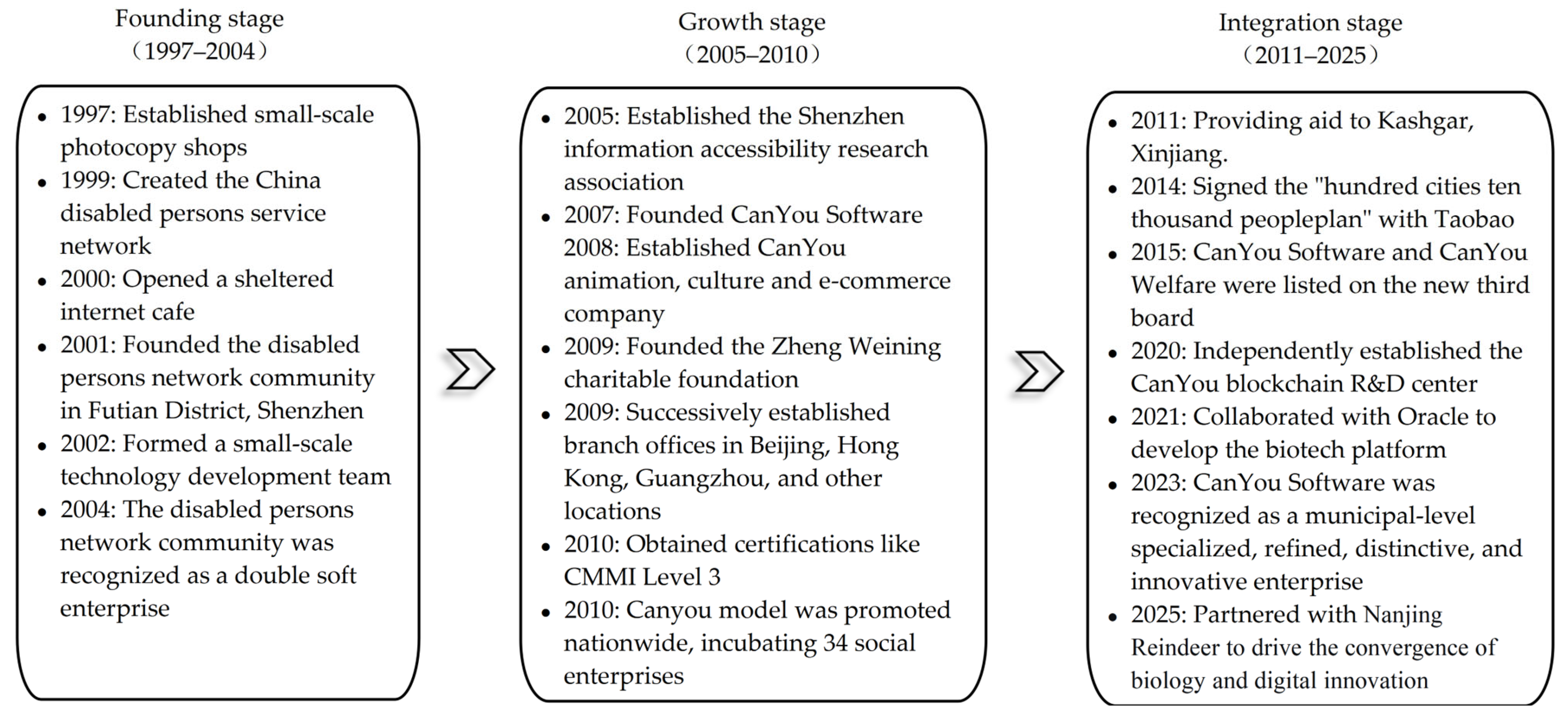
Previous research has categorized the growth trajectories of SEs based on their life cycles, analyzing the institutional pressures, resource requirements, and strategic choices they face at different stages. For instance, Chen et al. (2022) divided SE development into founding, growth, and maturity stages, revealing the legitimacy-building processes across these stages [22]. Drawing on existing literature and the practical context of Chinese SEs, the development process of CY was divided into three stages (see Figure 1). Seeking survival after the registration was the founding stage. Establishing multiple subsidiaries was the growth stage. Forming a group company to explore synergistic collaboration was the integration stage.

3.3. Data Collection

Extensive materials and research literature on the sustainability of CY are abundant (see Table 1). Relevant reports, interview transcripts, and academic publications are relatively easy to access. This study collects a substantial amount of primary data (12.5%) and secondary data (87.5%) through multiple data sources. As long as the collected secondary data is logical, relevant to addressing the research questions, and sufficiently comprehensive, it can serve as a viable data source for the case analysis [66].
The literature materials comprise three main components:
(1)
Official corporate documents. A systematic content analysis method was employed to obtain ten articles relevant to the research questions from the official website of CY (http://www.canyousoftware.com/index.aspx, accessed on 20 August 2025) and the official website of the Zheng Weining Charity Foundation (http://www.zwncf.org.cn/, accessed on 26 August 2025). The information primarily includes CY’s mission statements, development history, market partnership announcements, and technical collaboration projects.
(2)
Academic publications. A thematic search method was adopted. Systematic searches were conducted on platforms such as CNKI, Wanfang, Web of Science, and Google Scholar. These keywords, such as “social enterprise,” “CY,” “business model innovation,” and “institutional logic”, were used. The literature included in the study focused on CY’s sustainable development or institutional logic research, while literature irrelevant to the research theme was excluded. A total of 13 academic papers were included.
(3)
Patent information. A keyword search method was used to collect one patent document related to CY. We searched authoritative databases such as the National Intellectual Property Administration (https://www.cnipa.gov.cn/, accessed on 1 September 2025) and the WIPO Patentscope platform (https://patentscope.wipo.int/, accessed on 6 September 2025), and achieved 39 patent records.
The archival records include three major categories:
(1)
Interview transcripts. We obtained five publicly available character interviews and two face-to-face interviews. The founder’s statement mainly originated from character interviews. For example, “Zheng Weining: Every Life Should Bloom” was from CC Forum (https://tv.sohu.com/v/dXMvMjYzMTIxMDE0Lzk2MzExNzg3LnNodG1s.html, accessed on 12 September 2025). Although the questions in these interviews were not designed for this study, they provided rich information relevant to the research topic. During the face-to-face interviews, participants were informed of the research purpose, confidentiality measures, audio recording arrangements, the principle of voluntary participation, and the right to withdraw at any time. All interviewees signed informed consent forms. Each interview lasted 60–90 min. It was audio-recorded with permission, transcribed verbatim, and verified by the interviewees. In authorized interview records, all personal identifiers were anonymized.
(2)
News reports. A total of 18 newspaper articles were collected. They were verified by cross-referencing publication dates, media credibility, and consistency with other data sources. For example, the article “Focus on CY: From a Small Workshop to the World’s Largest High-Tech Social Enterprise Cluster” was published by Phoenix Net on 12 March 2018 (https://news.ifeng.com/c/7fZqxBohPdF, accessed on 20 September 2025).
(3)
Corporate introduction videos. Seven videos were downloaded from platforms such as Mango TV, CCTV.com, and Sohu Video (see Table S1). They were transcribed, organized, and coded. Examples include “Five Disabled Individuals Founded a Tech Company, Now Providing High-End Employment for Over 5000 Disabled Individuals” (https://www.mgtv.com/b/407406/17833819.html?cxid=p9cw5wcr3, accessed on 30 September 2025). All videos originated from verifiable public channels, with transparent release dates and source accounts.
According to case study guidelines, non-academic literature sources can be regarded as valid secondary data when they are credible and align with analytical objectives [67]. All data were integrated into a case study database. To ensure internal validity and robustness, these data were analyzed through triangulation. Furthermore, to enhance traceability and rigor, all direct quotations in this study are annotated with their original source types.

3.4. Data Analysis

Data analysis employed the inductive thematic analysis method proposed by Gioia et al. (2013) [68]. Prior research lacked evidence on the relationship between institutional logic, resource orchestration, and sustainable business model innovation in SEs. Therefore, adopting an inductive approach facilitated exploring this connection from complex organizational phenomena. Data analysis was conducted in three stages, supported by explicit coding consistency checks and cross-source validation mechanisms.
First, first-order constructs were refined through open coding. To ensure the reliability and consistency of the coding, a dual-researcher independent back-to-back coding approach was adopted. Initially, two researchers separately conducted open coding on approximately 20% of the randomly sampled textual data. Then, they compared and discussed the extracted first-order constructs. For any first-order constructs where discrepancies arose, both parties referred to a third researcher’s input. This process led to the joint development of a detailed coding manual. Subsequently, following this manual, the two researchers independently performed open coding on the remaining 80% of the data. They continued to expand and revise the first-order constructs. The open coding primarily focused on the evolutionary patterns of institutional logic, resource orchestration strategies, and specific manifestations of sustainable business model innovation in SEs.
Second, second-order themes were derived through axial coding. The research team consolidated first-order constructs with similar connotations into second-order themes. To enhance the reliability of the coding, cross-source corroboration was employed. Each theme required support from at least two different types of data sources, such as interviews paired with media reports. Event timelines, policy shifts, and business developments were meticulously verified. At the same time, particular attention was paid to discrepancies among coders. By revisiting original contexts, repeatedly comparing findings, and re-examining coding definitions, all disagreements were resolved through discussion. The objective of this stage was to distill key themes from the extensive array of first-order constructs that reflected institutional logic, resource orchestration, and sustainable business model innovation.
Finally, selective coding was employed to refine composite dimensions and articulate the process model. Related second-order themes were further synthesized into higher-order aggregated dimensions. These dimensions can find theoretical support in existing literature on institutional logic, resource orchestration, and sustainable business model innovation. Throughout this process, continuous triangulation was conducted, repeatedly cross-referencing the aggregated dimensions with case materials and existing literature. Ultimately, a process model was developed, illustrating how institutional logic drives resource orchestration to foster sustainable business model innovation. The core logic can be summarized as follows: Under the influence of different institutional logics, SEs tend to adopt distinct resource orchestration strategies, resulting in varied types of sustainable business models.

4. Findings

This study examined CY. First, its sustainable business model innovation process during the founding stage was analyzed. Following the same methodology, the growth and integration stages were analyzed. Finally, based on the case analysis findings, a process model was constructed.

4.1. Founding Stage: Service-Oriented Business Model Driven by Public Welfare Logic

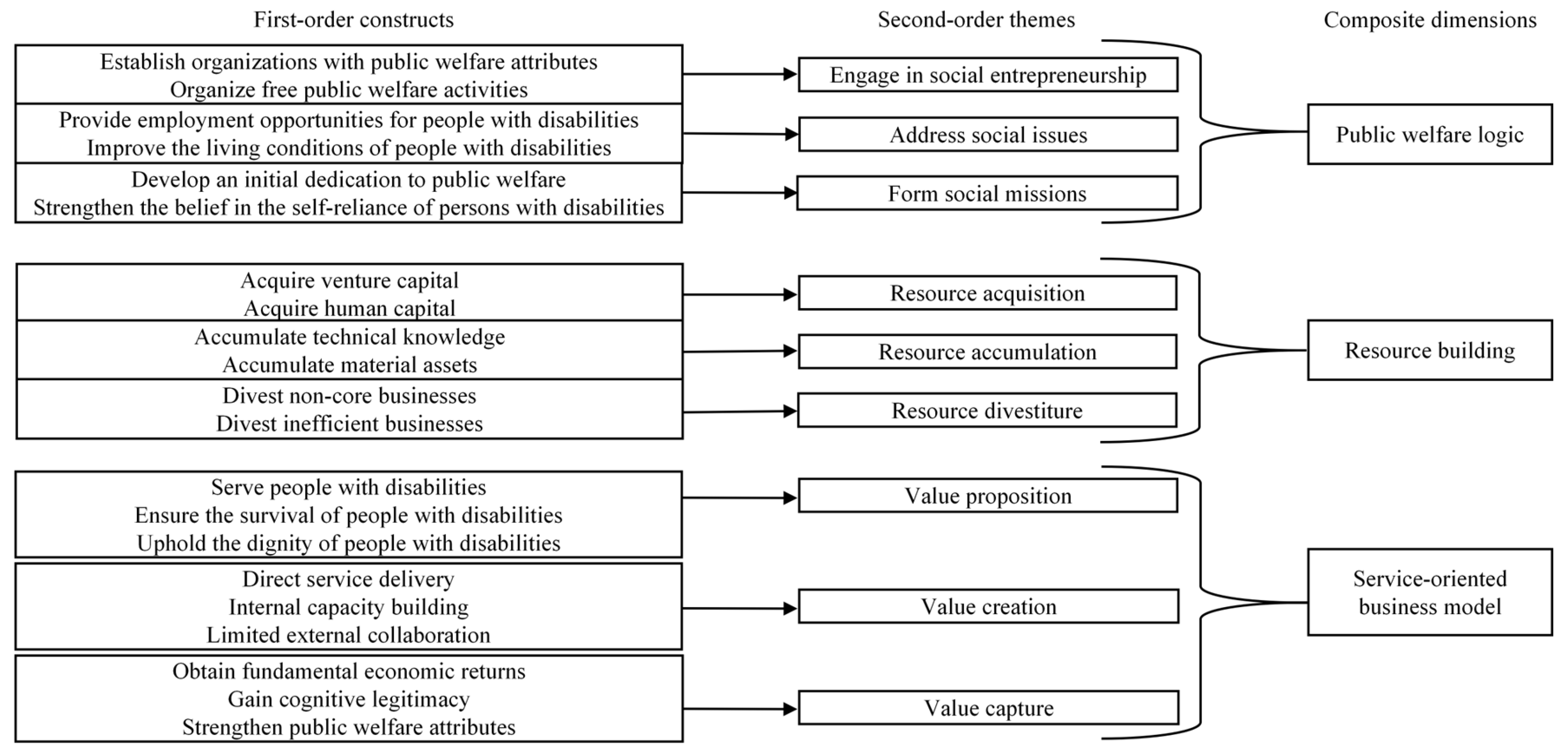
Data coding results indicated that during the founding stage, the SE engaged in resource-building behaviors influenced by public welfare logic, subsequently forming a service-oriented business model. The relevant data structure is illustrated in Figure 2.

4.1.1. Single Institutional Logic: Public Welfare Logic

During its founding stage, CY developed a public welfare logic influenced by the individual characteristics of its social entrepreneurs and the external institutional context. Specifically, founder Zheng Weining was deeply aware of the employment challenges faced by people with disabilities due to his own physical disability. He gradually conceived the idea of “changing the way we live” and sought to improve the living conditions of disadvantaged groups through entrepreneurship. In Shenzhen—an economic zone adjacent to Hong Kong with an open institutional environment—new concepts like the internet, philanthropy, and SEs gained early traction. After attending a lecture by Nokia’s president on internet development, Zheng keenly recognized the internet’s potential to facilitate non-physical labor employment for people with disabilities, further solidifying his core belief that “people with disabilities can support themselves.” Thus, CY established a public welfare logic centered on promoting self-reliance among people with disabilities in its formative stages.
“Leveraging the power of the internet, we can break free from the fate of relying on families, society, or the state for support. By creating employment opportunities for people with disabilities, we enable them to participate in social labor, exchange value, and live with dignity.”
(founder of CY, character interview)

4.1.2. Resource Orchestration Strategy: Resource Building

Guided by this public welfare logic, CY shaped its initial resource foundation through deliberate resource-building actions, encompassing material asset accumulation, talent recruitment, and knowledge acquisition. In the early days, Zheng Weining leveraged his mother’s inheritance of 300,000 yuan in cash, a computer, and a property as his initial material base. Harnessing the connectivity and enabling power of internet platforms, he launched a social entrepreneurship practice.
“In 1997, I had a computer and envisioned starting a computer interest group. I contacted the Shenzhen Volunteer Association and recruited four active individuals with disabilities from their network.”
(founder of CY, character interview)
To attract more computer talent, Zheng Weining identified the latent skills of his peers with disabilities. Meanwhile, he recruited college graduates with disabilities to jointly develop accessible web interfaces. For instance, after discovering Liu Yong’s rapid typing speed and computer proficiency, he assigned him to lead the team in web development. He also hired Li Hong, a disabled graduate of Peking University, and leveraged his computer programming skills to identify programming job opportunities suitable for people with disabilities.
“I heard through the grapevine about a disabled person named Liu Yong who used to work at a typing agency, typing 200 characters per minute. Seeing his proficiency, I thought he had potential.”
(founder of CY, character interview)
In terms of knowledge acquisition, Zheng Weining and his co-founders continuously deepened their understanding of internet technology. On one hand, they gained contextual knowledge about how disabled users interact with the internet labor market by participating in web design competitions. On the other hand, they self-taught specialized knowledge in law, business management, and internet technology to enhance their entrepreneurial capabilities.
“In the early days, our employees had relatively low educational backgrounds. With no qualified mentors available, we studied relentlessly day and night, poring over books on internet technology. Once one person mastered a skill, they would share it continuously until every employee was trained.”
(senior management A of CY, character interview)

4.1.3. Sustainable Business Model Type: Service-Oriented Business Model

Driven by a public welfare logic, CY established a service-oriented business model through resource-building activities. Specifically, centered on the core value proposition of “serving people with disabilities,” CY established small-scale photocopy shops, the China Disabled Persons Service Network, sheltered internet cafes, and free computer training programs. These initiatives provided employment opportunities, daily living information, and skill support to address survival and development challenges faced by people with disabilities. Simultaneously, CY leveraged internet technology to reconstruct the human capital of people with disabilities, empowering them toward self-reliance and self-strengthening.
“The Chinese name “Canyou” means “friends of persons with disabilities,” while its English connotation is “you can.” Thus, CY’s mission is to solve employment challenges for persons with disabilities, enabling each to live with dignity and joy.”
(official corporate document, CY official website)
At the value creation level, CY integrated disability resources, expanding from basic typing and photocopying services into software development, website construction, and beyond. On one hand, skill training transformed individuals with disabilities into professionals proficient in computer operations and internet technologies, making them core participants in value creation. On the other hand, CY systematically mobilized Shenzhen-based graduates with disabilities, converting their underutilized human capital into certified ICT skills. These skills served both the organization’s own operations and were exported to external client networks, forming a “training-employment-service” value creation chain.
From a value acquisition perspective, CY’s financial returns primarily stemmed from monetizing website traffic, internet café revenues, and internet services, providing foundational support for organizational operations. Non-financial value is manifested in solving employment challenges for people with disabilities, gaining social recognition, and achieving positive social impact. This dual acquisition of economic returns and social recognition ensured the sustainability of the service-oriented business model and reinforced its public welfare attributes and social legitimacy.
“Thanks to its comprehensive, timely, and service-oriented content delivered in an engaging format, the China Disabled Persons Service Network operated smoothly. Within its first year, it set the record for the highest click-through rate among global disability welfare websites.”
(news report, Shenzhen Economic Daily)
Overall, guided by a public welfare logic, CY continuously accumulated material resources, human capital, and knowledge assets while divesting non-core businesses like photocopying. This enabled the construction of the enterprise’s foundational technical capabilities. By establishing a business model centered on the value proposition of “serving persons with disabilities,” it not only addressed the livelihood and employment challenges of local disabled individuals but also generated economic benefits and gained societal recognition.

4.2. Growth Stage: Platform-Based Business Model Driven by Dual Institutional Logics

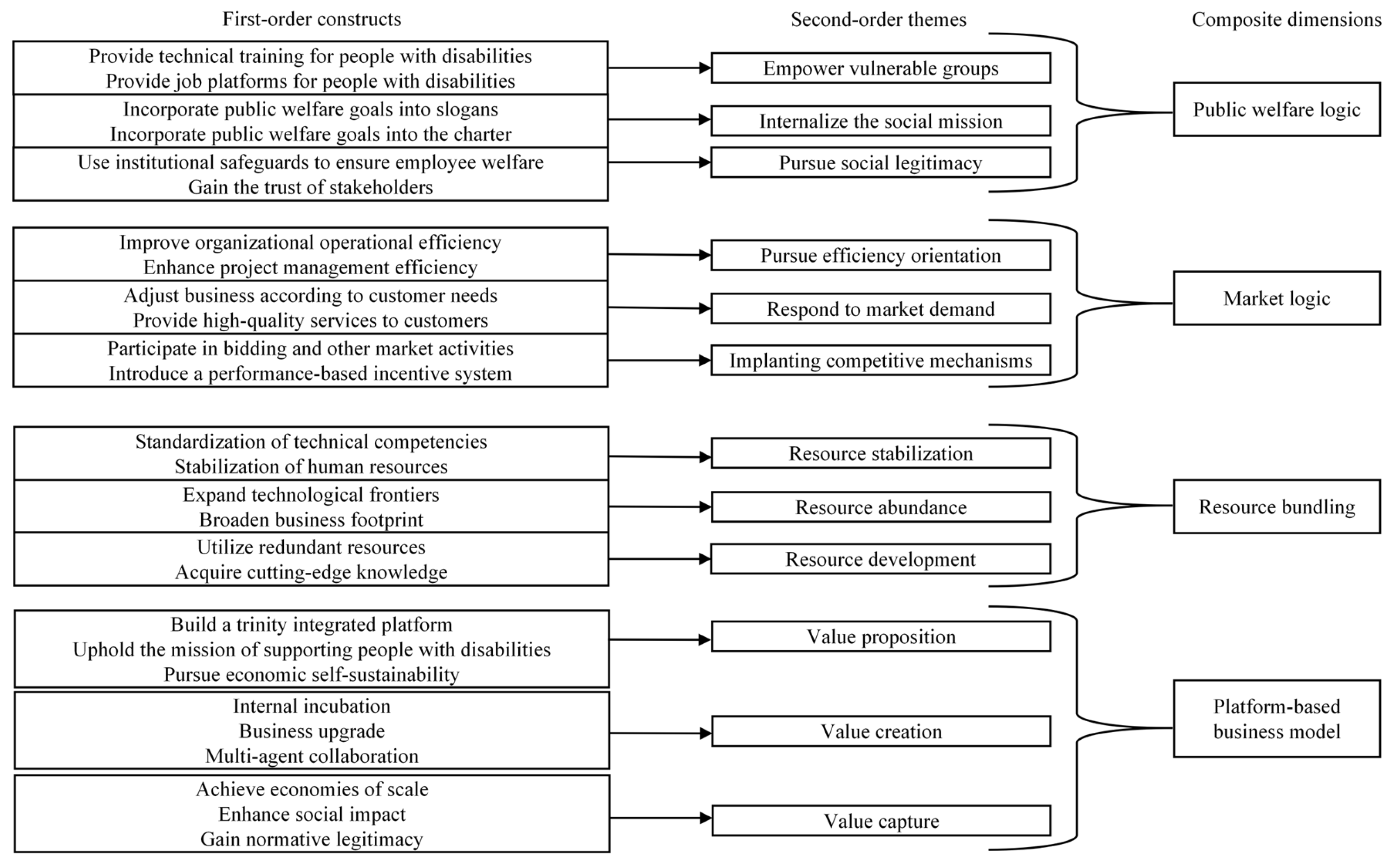
Data coding results indicated that during the growth stage, SEs engaged in resource bundling under the influence of both public welfare and market logics, subsequently forming a platform-based business model. The relevant data structure is shown in Figure 3.

4.2.1. Dual Institutional Logics: Public Welfare Logic and Market Logic

During the growth stage, internal operational challenges and external market pressures jointly triggered a restructuring of CY’s institutional logic, forming a dual framework where public welfare logic and market logic coexist. Specifically, despite CY’s expanding organizational scale, its business architecture, technical capabilities, and management team failed to optimize synchronously. This led to overlapping subsidiary operations, gaps in core technologies, and severe financial crises. Simultaneously, under pressure from stringent corporate registration procedures and market review mechanisms, management recognized that a single public welfare logic could no longer sustain the organization’s development. Introducing market-oriented operational models became imperative. Consequently, while preserving its social mission of empowering persons with disabilities, CY expanded its business scope through market-driven operations, creating a closed-loop system where social mission and economic self-sustainability mutually reinforce each other.
“After founding the Zheng Weining Charitable Foundation in 2009, CY launched a SE incubation program to address social issues through commercial means. By developing competitive products and services, we achieve sustainable operations, create social value, and advance societal progress.”
(news report, China Philanthropy Times)

4.2.2. Resource Orchestration Strategy: Resource Bundling

Driven by both public welfare and market logic, CY employed a resource bundling strategy. It stabilized, enriched, and expanded fragmented technology, human capital, and knowledge. Then, all resources were transformed into sustainable core competencies. In terms of resource stability, public welfare logic guided CY to institutionalize established quality systems. Alongside operational manuals for employees with disabilities, it also created reliable, replicable production and service models. Market logic, meanwhile, drove the integration of human resources from the disabled community with adaptive technology resources, enabling disabled employees to rapidly acquire marketable skills.
“Through computer networks, people with disabilities can overcome their physical limitations. They dedicate more time and energy to software development than non-disabled counterparts. This enables them to provide high-quality outsourcing services to companies like IBM, Huawei, Intel, and Microsoft.”
(news report, China Quality News Network)
Regarding resource abundance, CY’s strategy focused on internet technology. Through technology bundling, it had secured national and world-class technical certifications, forming highly efficient synergies in system design, integration, and operations. This not only enhanced the marginal utility of individual technical modules but also secured long-term contracts with governments and multinational corporations for CY. Meanwhile, the credibility gained from certifications reinforced the public welfare logic, solidifying its moral authority within the disability community.
“After obtaining certifications like CMMI Level 3, Canyou Software Co., Ltd. (Shenzhen, China) secured aerospace engineering software projects from national ministries.”
(founder of CY, character interview)
“Shenzhen Zheng Weining Charity Foundation’s High-Tech Training and Employment Program for Disabled Youth also gained significant support from social organizations.”
(news report, Phoenix News)
In resource development, CY bundled idle or underutilized resources with new demands to enhance resource leveraging and expanded service capabilities. For instance, the “Customized Training System” for individuals with severe disabilities (originally serving only internal staff) was integrated with the government’s “Community-Based Home Employment Program for Persons with Disabilities,” transforming redundant training resources into community-facing service capacity. Additionally, employees were organized to study advanced technologies and management knowledge from renowned enterprises. By combining acquired technical expertise with internal governance models, they have developed the replicable “Canyou Model”.
“CY’s animation designers frequently visited our company website, demonstrating remarkable learning enthusiasm and passion. Therefore, I invited them to Shanghai for complimentary advanced training. Within less than six months, they completed all courses and then taught their peers.”
(former global vice president of Autodesk, character interview)

4.2.3. Sustainable Business Model Type: Platform-Based Business Model

Driven by the dual institutional logics, CY formed a platform-based business model through resource bundling. On one hand, it leveraged internet technology to expand employment opportunities for people with disabilities, helping them realize their self-worth. On the other hand, it continuously enhanced e-commerce operations and software outsourcing capabilities to meet young people’s demands for comics and e-commerce. By building a trinity integrated platform—with a charitable foundation at the decision-making apex and dual-wheel drive from social organizations and SEs—CY upheld its social mission while responding to market needs, forming a dual-value system of disability empowerment and commercial services.
“Currently, CY has established a comprehensive platform encompassing a charitable foundation, a cluster of social organizations, and a cluster of SEs. This not only creates employment opportunities for thousands of people with disabilities but also consistently delivers high-quality products and services to clients.”
(official corporate document, CY official website)
In terms of value creation, CY leveraged platform-based organizational design to build a multi-stakeholder value co-creation network. Internally, it had incubated over 40 SEs—including Canyou Software (http://www.canyousoftware.com/, accessed on 20 August 2025) and Canyou E-commerce—achieving transformative upgrades from basic photocopying services to software development, animation culture, and e-commerce operations. Externally, strategies such as recruiting university volunteers and targeted training for disabled STEM professionals integrated universities, tech companies, and social organizations into a collaborative resource ecosystem. This systematic resource integration and capacity enhancement ensured the market competitiveness of its ITO/BPO services. At the same time, they provided comprehensive, lifelong support for employees with disabilities through mechanisms like the “retirement support system” and “free room and board.”
“Supported by the Shenzhen Volunteer Association, the fleet employs volunteer drivers who provide compassionate transportation services to individuals with disabilities through hotline reservations. With technical upgrades from partner companies, all five minivans are equipped with lift platforms for wheelchair accessibility.”
(ordinary employee of CY, face-to-face interview)
CY’s value creation exhibits a dual-cycle model of financial returns and social impact. Financially, it expanded its business scope through software outsourcing and e-commerce operations to enhance profitability, with two SEs achieving public listings. Regarding social impact, CY provided employment for over 5000 individuals with disabilities, received international SE awards and government support, and established industry benchmarks. Furthermore, the majority of profits were allocated to public welfare funds and enterprise development, creating a virtuous cycle where profits sustained charitable initiatives and ensured the continuous operation of the platform business model.
“Unlike typical companies, CY reinvests all earnings into hiring more employees with disabilities—we retain no profits.”
(founder of CY, character interview)
In summary, driven by both public welfare and market logics, CY had progressively built technological scalability through resource bundling—stabilizing existing technical assets, diversifying collaborative networks, and pioneering cross-sector service scenarios. This had crystallized into a business model centered on the value proposition of “creating a trinity-integrated platform.” While meeting market demands and enhancing organizational competitiveness, it provided persons with disabilities with an institutionalized pathway to self-actualization. This approach balanced financial returns with social impact, ultimately driving the enterprise toward sustainability under dual institutional logics.

4.3. Integration Stage: Ecosystem-Based Business Models Guided by Multiple Institutional Logics

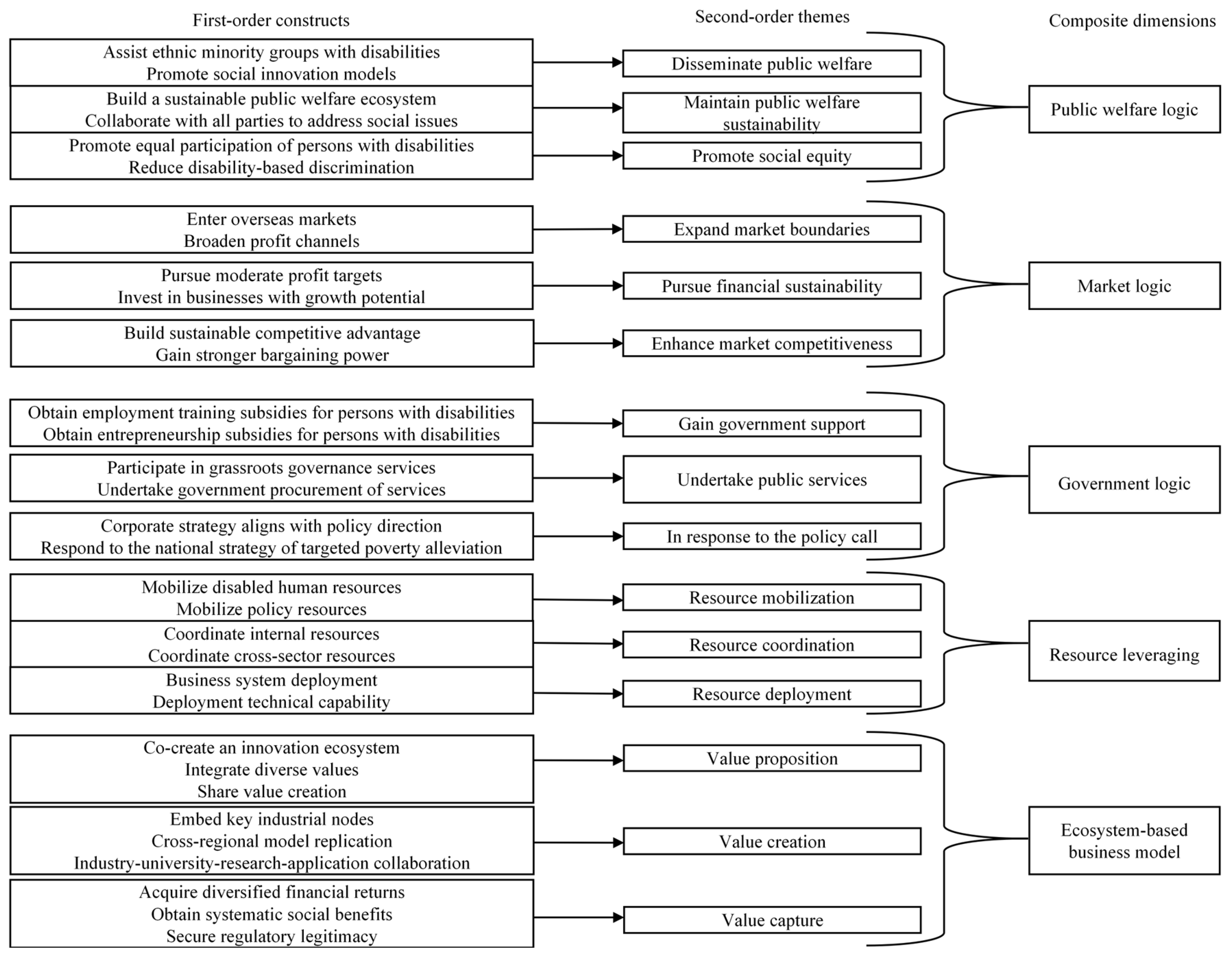
Data coding results indicated that SEs in the integration stage engaged in resource leveraging behaviors influenced by public welfare logic, market logic, and government logic, thereby forming an ecosystem-based business model. The relevant data structure is shown in Figure 4.

4.3.1. Multiple Institutional Logics: Public Welfare, Market, and Government Logics

During the integration stage, under the dual influence of internal organizational transformation and external institutional change, CY gradually incorporated government logic, establishing a multi-logic framework where public welfare, market, and government logics coexist. Internally, to expand social impact and achieve financial sustainability, CY deepened its organizational mission, adjusted development strategies, and strengthened internal-external collaborations to disseminate successful practices.
“CY will fulfill its mission of “promoting equal participation and inclusive sharing for people with disabilities.” It will integrate resources for persons with disabilities to undertake global high-tech outsourcing projects and replicate its sustainable social innovation model nationwide.”
(official corporate document, CY official website)
Externally, the Chinese government and society have increasingly prioritized disability causes. Enhanced policy support has provided institutional safeguards for disabled employment, creating new development opportunities for CY. At the same time, CY has responded to the Shenzhen Municipal Government’s call for Xinjiang assistance, providing employment support to local persons with disabilities.
“Over the past decade, Shenzhen has successively introduced multiple policies related to disability affairs, prioritizing CY in support measures and project funding. “
(news report, China Quality News Network)
“To give back to society, we responded to the municipal Party committee and government’s call by dispatching key employees to Xinjiang to establish Kashgar Canyou.”
(senior management A of CY, character interview)

4.3.2. Resource Orchestration Strategy: Resource Leveraging

Driven by public welfare logic, market logic, and institutional logic, CY achieved strategic transformation of organizational capabilities through resource leveraging—mobilizing, coordinating, and deploying technical, human, and policy resources. This manifested first as systematic resource mobilization. Internally, it established shared knowledge pools and technical training systems to convert the skill potential of employees with disabilities into tangible productivity. Externally, it leveraged policy resources (such as disability employment support policies) and mobilized external resources like high-tech enterprises and social organizations to build a technological innovation network.
“Boya Xinxing will once again invest to collaborate with Canyou Software in building an information platform, driving management model upgrades, enhancing efficiency, reducing costs, and taking substantial steps toward intelligent and automated operations.”
(official corporate document, CY official website)
Regarding resource coordination, CY implemented integrated production-living arrangements and a partnership system. These measures could deepen internal collaboration and stimulate R&D innovation among employees with disabilities. It also collaborated with domestic and international tech companies like Oracle, Microsoft, and Reindeer Bio. They jointly explored applications of blockchain, ERP, and cloud computing technologies in both public welfare and commercial contexts. Additionally, it coordinated R&D resources from universities and research institutions to form a collaborative innovation network.
“In January 2024, Canyou Bio, as a collaborating institution, secured approval for the major project “Prospective Intervention Study for the Prevention and Treatment of Diabetic Macrovascular Complications” under the National Key R&D Program/Science and Technology Innovation 2030, jointly proposed with West China Hospital of Sichuan University.”
(official corporate document, CY official website)
Finally, CY converted integrated resources into tangible value through strategic deployment. By establishing a blockchain R&D center, it built secure business systems to support corporate digital transformation. Focusing on cutting-edge fields like digital twins and the metaverse, it recruited elite teams of people with disabilities to tackle high-tech innovation and undertook digital engineering projects. It had even launched an IT-themed town project, leveraging industrial cluster effects to disseminate and implement technological resources.
“By deeply integrating IoT, digital twins, blockchain, and biotechnology, we have developed the proprietary ‘Digital Twin Operations Platform for Cellular Drug Factories’.”
(senior management B of CY, face-to-face interview)

4.3.3. Sustainable Business Model Type: Ecosystem-Based Business Model

Driven by multiple institutional logics, CY has formed an ecosystem-based business model through resource leveraging. Centered on the core value proposition of “co-building an innovation ecosystem,” this model emphasized the deep integration of social, economic, and environmental dimensions. Socially, it advocated an inclusive philosophy of equality between persons with disabilities and non-disabled individuals. Economically, it monetized technology through software manufacturing, biotechnology, and related businesses. Environmentally, it leveraged digital technology to optimize energy consumption and reduce carbon emissions. Simultaneously, it implemented environmental innovation projects to integrate green practices into product development. By sharing values and technological philosophies, it established a multifaceted value system where public welfare missions, technological innovation, and ecosystem-based conservation converge.
“CY believe people with disabilities and non-disabled individuals are equal and can achieve independent economic status and income through employment. Moving forward, CanYou Software will embrace the new wave of digital development, focusing on green technological innovation and customer-value services. We will collaborate with all parties to jointly build an ecosystem chain for innovative and integrated development.”
(official corporate document, CY official website)
In value creation, CY integrated diverse stakeholders to build an ecosystem-based network. First, it focused on fields like BIM design and digital twins to drive the research, development, and application of green technologies. For example, the BIM green design team develops energy-efficient design solutions for construction projects, helping clients reduce carbon emissions during both the construction and operational phases. Second, it fostered innovation diffusion through intrapreneurship. At the same time, it replicated the accessible “micro-society” model across Cambodia, Kashgar, and Hainan, forming a value-co-creation system featuring collaborative R&D, knowledge sharing, and scaled training. Third, CY collaborated with diverse stakeholders to build a sustainability-oriented synergy network. For instance, it developed an intelligent water management system for Shenzhen City, enabling real-time water quality monitoring, leakage alerts, and precision water supply. This effectively enhanced water resource utilization efficiency and reduced waste. Additionally, it co-established a biopharmaceutical innovation base with Guangxi Province, actively advancing the vision of a global community of health for all.
In this process, the public welfare logic unleashed the potential of persons with disabilities in green technology R&D and application. The market logic enhanced the operational efficiency of the green industry chain. The government logic injected institutional resource support into environmental projects. Together, these three drove the deep integration of CY’s social service chain, industrial cluster and environmental protection chain.
“Having preliminarily realized the vision of high-tech employment for persons with disabilities, CY will advance boldly by engaging in deep technological collaborations with top domestic research institutions. This will better address the multifaceted demands of diversifying charitable initiatives and maximizing social benefits, enabling high technology, philanthropy and environmental sustainability to coexist and thrive.”
(official corporate document, ZHENG WEINING CHARITY FOUNDATION official website)
CY’s value acquisition manifested through a hybrid revenue model. Financial returns stemmed from software outsourcing, biotechnology patent licensing and international business expansion. Social returns were manifested in providing employment for tens of thousands of people with disabilities, transforming societal stereotypes about disability, and promoting the equal integration of people with disabilities into society, thereby generating extensive social impact. Environmental returns were reflected in improved resource utilization efficiency, reduced energy consumption and carbon emissions. Meanwhile, CY provided replicable green development solutions for the industry through technological innovation and project implementation. At the institutional level, the enterprise further solidified its legitimacy through government certifications (e.g., National High-Tech Enterprise), policy support (as a model for targeted poverty alleviation), and international recognition (e.g., AABB Quality System Certification). In profit distribution, CY consistently reinvested earnings into disability welfare (free accommodation and retirement support), technological R&D (cutting-edge investments like digital twins) and environmental initiatives (smart transformation of ecological engineering). It created a closed-loop ecosystem of commercial self-sustainability, social empowerment, environmental governance and an institutionally reinforced ecosystem.
“After over two decades of dedicated effort, CY has successfully established and developed a world-class high-tech employment platform for persons with disabilities. In the future, while advancing the cause of disability assistance, we are committed to integrating green development principles throughout the entire industry chain, contributing to environmental sustainability.”
(official corporate document, Zheng Weining Charity Foundation official website)
In summary, through the combined forces of public welfare logic, market logic, and institutional logic, CY has progressively built technological innovation capabilities. Specifically, it mobilized internal and external resources. Then. It coordinated multi-stakeholder collaboration and deployed technological innovations. This has formed an ecosystem-based business model centered on the value proposition of “co-building an innovation ecosystem.” While meeting the needs of diverse stakeholders and enhancing the company’s core competitiveness, it empowered people with disabilities to achieve self-worth through innovative employment. This approach balanced economic returns, social benefits, eco-environmental protection and institutional recognition, demonstrating the feasibility of sustainability for SEs operating within a multi-logic institutional logics.

5. Discussion

5.1. Institutional Logics Evolution in SEs

SEs are hybrid organizations that integrate heterogeneous institutional logics from diverse domains [7,45,69]. Most existing research suggests that conflicting demands imposed by different institutional logics may jeopardize SE operations and their legitimacy among external stakeholders [70]. However, this study finds that SEs’ sustainability does not stem from passive compromise with institutional conflicts but rather benefits from the active, dynamic co-evolution of different logics. Specifically, influenced by internal and external contextual factors across different developmental stages, the institutional logics of SEs exhibit a clear three-stage process of compatible evolution. This finding effectively validates Greenwood et al.’s (2010) theoretical hypothesis that institutional complexity can yield positive outcomes [71].
During the founding stage, social entrepreneurs with entrepreneurial vigilance identify significant unmet social needs. By mobilizing internal mission-driven commitment and external institutional resources, they institutionalize the public welfare logic within the organization. For instance, the founder of CY integrated personal resources with external policy opportunities to establish a stable value orientation centered on “promoting self-reliance among persons with disabilities,” laying a solid foundation for the organization’s legitimacy.
During the growth stage, to address operational challenges and market competition pressures, SEs transition from a singular public welfare logic to a dual system where public welfare and market logics coexist. This transition represents a strategic adaptation by SEs to environmental pressures. This transformation represents a strategic adaptation by SE to environmental pressures. Cases demonstrated that when public welfare logic alone cannot sustain organizational survival (e.g., during financial crises), market logic embedded itself through mechanisms like customer orientation and commercial operations. The two logics formed a complementary rather than conflicting relationship, jointly ensuring the organization’s economic and social sustainability.
During the integration stage, confronting more complex institutional environments, SEs capture policy windows to organically integrate government logic into their existing dual-logic framework, achieving a synergistic leap toward a multi-logic system. For instance, under China’s strengthened disability support policies, CY adjusted its strategy and structure to deeply integrate policy resources and digital economy trends with its public welfare mission and market capabilities. This created new value spaces across borders and industries, achieving synergistic co-creation of economic, social, and policy value.
This process demonstrates that interactions between institutional logics in SEs are not zero-sum games but dynamic, mutually reinforcing processes. Through proactive strategic responses, SEs transform external institutional pressures into core drivers for business model innovation and sustainability.

5.2. Resource Orchestration Strategies in SEs

The development of SEs requires a certain resource base [72]. From the perspective of resource orchestration theory, SEs’ sustainability is a process of dynamically coordinating and allocating internal and external resources [50]. If SEs can effectively build, bundle, and leverage valuable resources, these assets will provide sustainable support for their value creation [73,74]. Across the enterprise lifecycle, SEs adopt differentiated resource orchestration strategies under varying institutional logics.
During the founding stage, SEs guided by public welfare logic adopt resource-building strategies to accumulate critical resources, divest non-core assets, and shape their fundamental survival and service capabilities. Taking CY as an example, it progressively built the resource foundation for providing technical services by accumulating physical assets (computers), human capital (disabled programmers), and knowledge assets (ICT courses tailored for people with disabilities). It divested low-value businesses like traditional photocopying, achieving an initial transition from survival to development.
During the growth stage, to balance social mission and market pressures, SEs stabilize, enrich, and expand heterogeneous internal and external resources. Then, these resources are bundled to hard-to-imitate core competencies [73]. By integrating university research resources, corporate technological resources, and human resources from the disabled community, CY developed a synergistic capability encompassing “technology R&D-service delivery-employment incubation.” This approach not only enabled CY’s market competitiveness but also strengthened its public welfare empowerment.
During the integration stage, to navigate increasingly complex institutional environments and achieve scaled impact, the SEs employed resource leveraging strategies such as mobilization, coordination, and deployment [50], transforming existing capabilities into tangible value. By activating its internal technical resources, CY strengthened its foundational capabilities. It then coordinated resources and capabilities across diverse stakeholders, including governments and multinational corporations. CY also deployed integrated resources precisely in cross-domain scenarios, such as Cambodia’s digital governance project and disability-training initiatives in Kashgar. Through these efforts, CY ultimately achieved triple value acquisition—economic returns, social inclusion, and policy compliance.
In summary, SEs’ sustainability is fundamentally a process of dynamically constructing competitive advantages through differentiated resource orchestration strategies driven by institutional logic. In the founding stage, public welfare logic guided resource construction, enabling SEs to build foundational capabilities. During the growth stage, dual institutional logics drove resource bundling, allowing SEs to achieve capability leapfrogging. In the integration stage, multiple synergistic institutional logics enabled resource leveraging, promoting value transformation. Across these stages, SEs continuously convert internal and external resources into sustainable economic, social, and institutional value through precise resource orchestration. These processes ultimately ensure the resilience of their missions.

5.3. Sustainable Business Model Innovation Pathways in SEs

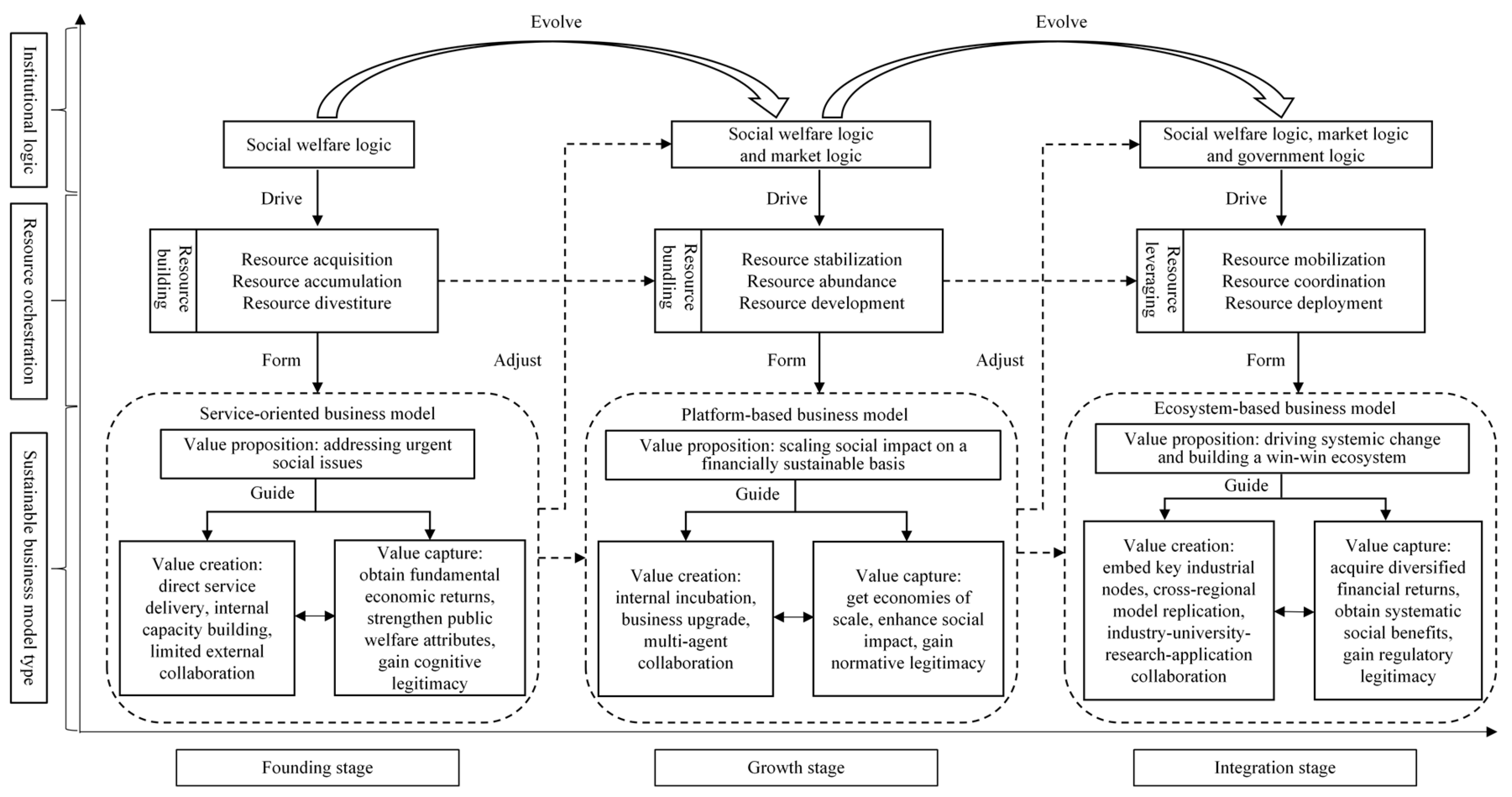
Sustainable business model innovation in SEs relies on timely and effective interaction between institutional logic and resource orchestration [18,19]. This interaction exhibits distinct phased evolution characteristics. Specifically, SEs continuously adjust their value propositions under the influence of dominant institutional logics at different developmental stages. Consequently, they adopt corresponding resource orchestration strategies to create and capture multiple values, thereby forming heterogeneous types of sustainable business models.
During the founding stage, the public welfare logic dominates, driving SEs to form a value proposition centered on “solving pressing social problems.” Guided by this logic, SEs adopt resource-building strategies [50], acquiring and accumulating key resources (e.g., CY utilizing initial funding and computers) to establish foundational capabilities for direct service delivery. Value capture manifests as limited financial returns and preliminary social recognition, forming a “service-oriented business model” that achieves an initial equilibrium between social mission and organizational survival.
During the growth stage, SEs incorporate market logic, forming dual institutional logics that drive their value proposition to evolve into “expanding social impact on a foundation of financial sustainability.” Guided by this logic, SEs adopt resource bundling strategies [58], facilitating multi-user group interaction (e.g., CY incubating multiple SEs and collaborating with high-tech companies) to build stronger synergistic capabilities [75]. Their value capture expands to include scaled economic returns and networked social capital, forming a “platform-based business model” that achieves synergistic growth in economic and social value.
During the integration stage, the deep embedding of governmental logic enables multiple institutional logics (public welfare-market-government) to achieve symbiosis, driving the SE’s value proposition to evolve into “leading systemic change and building a win-win ecosystem.” Guided by this vision, SEs adopt resource leveraging strategies [56], deploying core competencies across broader geographic and industrial domains (e.g., CY expanding internationally and entering biotechnology) to unlock ecosystem-wide value. Their value capture manifests as compound financial returns, systemic social benefits, comprehensive environmental benefits, and institutional authority gains. It formed an “ecosystem-based business model” and ultimately achieved a high degree of unity among commercial competitiveness, social impact, environmental protection and policy legitimacy.
This evolution path demonstrates that sustainable business model innovation in SEs is not a static outcome but a dynamic, proactive adaptation process. By proactively identifying and responding to shifts in institutional logic, enterprises can precisely adjust their resource orchestration strategies. This enables an orderly evolution of their business models. They transition from service-oriented models that address single social issues. They eventually develop into ecosystem-oriented models that tackle systemic challenges. These ecosystem models exhibit stronger resilience and greater sustainability.
Finally, a process model for sustainable business model innovation in SEs from an institutional logic perspective was created (see Figure 5).

6. Conclusions

How do different institutional logics drive SEs to achieve sustainable business model innovation? To address this question, this study employed a longitudinal single-case research method to analyze the relationship between institutional logic, resource orchestration, and sustainable business model innovation in SEs across distinct phases. Findings revealed that SEs would adopt differentiated resource orchestration strategies when confronting diverse institutional logics. Then, it achieved progressive innovation—transitioning from service-oriented to platform-based, and ultimately to ecosystem-driven business models. This process generates multidimensional value integrating social, economic, and environmental dimensions. It also reveals a core pathway for SEs to attain sustainable development within China’s strong institutional environment.

6.1. Theoretical Implications

The theoretical significance of this study manifests in three dimensions. First, while prior research predominantly focused on conflicts among multiple institutional logics and corresponding coping strategies [69,76,77]. This study further revealed the compatibility characteristics and dynamic evolution mechanisms of multiple institutional logics within Chinese SEs. Second, it demonstrated how institutional logic influenced resource orchestration in SEs. We find that SEs do not passively adapt to institutional pressures. Instead, they proactively transform institutional logic into sustainable innovative capabilities by constructing, bundling, and leveraging resources. Third, the study analyzed the process mechanisms through which institutional logics facilitated sustainable business model innovation in SEs, addressing calls to examine value creation mechanisms in diverse contexts [16,78].

6.2. Practical Implications

This study explored how SEs adapted their institutional logics across developmental stages to navigate dynamic environments and selected appropriate resource orchestration strategies for business model innovation. The findings offer significant practical insights for promoting SEs sustainability, primarily manifested in three aspects.
First, the institutional logic evolution mechanism revealed in this study demonstrates a certain degree of transferability across different national institutional contexts. Although the roles of governments, regulatory intensity, and levels of support vary among countries, SEs universally need to seek a balance between public welfare logic and market logic. They should adjust resource allocation in response to institutional pressures. Therefore, this research can help inspire SEs in other institutional environments to dynamically adjust their institutional logic structures and resource strategies based on macro-level institutional differences.
Second, the relationship between institutional logic evolution and resource orchestration revealed in this study is applicable to technology-based SEs. At the same time, it offers valuable insights for SEs in other sectors. Although industries differ in their resource endowments, SEs commonly face shared challenges such as mission robustness, resource constraints, and stakeholder complexity when navigating multiple institutional logics. Therefore, SEs in non-technological fields also need to adopt resource orchestration strategies to translate institutional logic into drivers of sustainable development.
Third, CY did not monopolize its achievements. On the contrary, it proactively shared successful development experiences, advanced technological concepts, and co-created value perspectives with broader stakeholders by building an innovation ecosystem. This created greater social and economic value. Thus, SEs can achieve value co-creation by strengthening social network development. They can also construct a new ecosystem of deep cooperation and mutual benefits.

6.3. Research Limitations and Future Directions

This study constructed a process model for sustainable business model innovation in SEs through an in-depth analysis of the exceptionally successful case of CY. While the model offers insightful implications, its generalizability is subject to certain boundary conditions. Therefore, future research could extend the findings in the following directions.
First, examining the impact of different institutional environments on the evolution of institutional logics. The Chinese government plays a leading role in social governance and economic development. This provides a structural foundation for the deep integration of “government logic” in SEs. In institutional environments where government influence is relatively weaker, community logic or professional logic may partially substitute for the functions of government logic observed in this study. Future research could analyze cases from markedly different institutional contexts, such as Europe, North America, Southeast Asia, or Africa. For example, researchers can explore how the interactive patterns and evolutionary trajectories of institutional logics shift under environments involving different government roles, market mechanisms, and civil society forces. This will further test the cross-context explanatory power of the institutional logic evolution mechanisms proposed in this study.
Second, analyzing the sustainable business model innovation mechanisms in other types of SEs. The core dynamic mechanism revealed in this study—sequentially adjusting resource orchestration in response to the evolution of institutional logics—offers significant insights for understanding SEs in other sectors (e.g., agriculture, education, eldercare). However, SEs across different industries vary considerably in their technological capabilities and resource structures, which may lead to distinct resource orchestration strategies. Therefore, future research could conduct comparative analyses of different types of SEs to uncover how industry-specific characteristics influence the process of translating institutional logic into sustainable business models. Examining these variations will help enhance the generalizability of the theoretical model proposed in this study.
Third, addressing success bias. This study focused on a case that ultimately achieved exceptional achievements, which may introduce “success bias”. For instance, certain dynamic mechanisms (such as resource orchestration strategies and the capacity to coordinate institutional logics) might not manifest in SEs that have failed or underperformed. Future research could incorporate cases of SEs that have experienced operational stagnation, transformation failure, or an inability to balance institutional logics. By examining these cases, researchers could explore the conditions under which resource orchestration mechanisms fail to function effectively, why conflicts among institutional logics remain unresolved, and how lessons from unsuccessful organizations can inversely validate the process model proposed in this study. Investigating failed or less successful cases for contrast will effectively counterbalance the limitations of “success narratives”. It can also help distill more universally applicable necessary conditions for SEs success, as well as early warning signals of potential risks in SEs.
Fourth, verifying and deepening the research findings. This study primarily employed a longitudinal single-case study, the validity of which needs to be tested across broader contexts. Future research can advance in at least two directions. On the one hand, conducting large-sample empirical studies to test and quantitatively analyze the theoretical propositions proposed in this paper (such as the driving effect of specific institutional logic combinations on particular resource orchestration strategies). This will further enhance the robustness and explanatory power of the theory. On the other hand, carrying out cross-case comparative research. Future research can select cases that contrast with CY in key dimensions (such as institutional logic and resource endowments) to refine and develop the theoretical framework of this study through replication and extension logic.

Supplementary Materials

The following supporting information can be downloaded at: https://www.mdpi.com/article/10.3390/su18010097/s1, Table S1. Information on the Corporate Introduction Videos of CanYou Group.

Author Contributions

Conceptualization, H.D. and J.H.; Methodology, H.D. and Y.W.; Formal analysis, H.D.; Data curation, H.D. and Z.W.; Writing—original draft, H.D. and Z.W.; Writing—review and editing, H.D. and J.H.; Visualization, H.D. and Y.W. All authors have read and agreed to the published version of the manuscript.

Funding

This research was funded by the Department of Education Scientific Research Project of Hunan Province, China (Grant No. 24B0535).

Institutional Review Board Statement

The study was conducted in accordance with the Declaration of Helsinki, and approved by the Ethics Committee of Ethics Committee of School of Economics and Management, Hunan University of Technology (protocol code 24B0535 and date of approval 30 October 2025).

Informed Consent Statement

Informed consent was obtained from all subjects involved in the study.

Data Availability Statement

The data presented in this study are available on request from the corresponding author.

Conflicts of Interest

The authors declare no conflicts of interest.

References

  1. Klarin, A.; Suseno, Y. An Integrative Literature Review of Social Entrepreneurship Research: Mapping the Literature and Future Research Directions. Bus. Soc. 2023, 62, 565–611. [Google Scholar] [CrossRef]
  2. Calò, F.; Sancino, A.; Scognamiglio, F. Social enterprise and social entrepreneurship in the Public Administration (PA) scholar field: A bibliometric analysis and some conceptual considerations. Public Manag. Rev. 2024, 26, 3013–3039. [Google Scholar] [CrossRef]
  3. Pache, A.C.; Santos, F. Inside the Hybrid Organization: Selective Coupling as a Response to Competing Institutional Logics. Acad. Manag. J. 2013, 56, 972–1001. [Google Scholar] [CrossRef]
  4. Weerawardena, J.; Mort, G.S.; Salunke, S.; Knight, G.; Liesch, P.W. Editorial and Research Agenda: JBR Special Issue on Business Model Innovation in Social Purpose Organizations. J. Bus. Res. 2021, 125, 592–596. [Google Scholar] [CrossRef]
  5. Bacq, S.; Janssen, F. The Multiple Faces of Social Entrepreneurship: A Review of Definitional Issues Based on Geographical and Thematic Criteria. Entrep. Reg. Dev. 2011, 23, 373–403. [Google Scholar] [CrossRef]
  6. Canestrino, R.; Ćwiklicki, M.; Magliocca, P.; Pawełek, B. Understanding Social Entrepreneurship: A Cultural Perspective in Business Research. J. Bus. Res. 2020, 110, 132–143. [Google Scholar] [CrossRef]
  7. Doherty, B.; Haugh, H.; Lyon, F. Social Enterprises as Hybrid Organizations: A Review and Research Agenda. Int. J. Manag. Rev. 2014, 16, 417–436. [Google Scholar] [CrossRef]
  8. Battilana, J.; Lee, M. Advancing Research on Hybrid Organizing—Insights from the Study of Social Enterprises. Acad. Manag. Ann. 2014, 8, 397–441. [Google Scholar] [CrossRef]
  9. Ocasio, W.; Radoynovska, N. Strategy and Commitments to Institutional Logics: Organizational Heterogeneity in Business Models and Governance. Strateg. Organ. 2016, 14, 287–309. [Google Scholar] [CrossRef]
  10. Reay, T.; Hinings, C.R. Managing the Rivalry of Competing Institutional Logics. Organ. Stud. 2009, 30, 629–652. [Google Scholar] [CrossRef]
  11. Battilana, J.; Sengul, M.; Pache, A.C.; Model, J. Harnessing Productive Tensions in Hybrid Organizations: The Case of Work Integration Social Enterprises. Acad. Manag. J. 2015, 58, 1658–1685. [Google Scholar] [CrossRef]
  12. Xu, Y.; Zhu, C. The Strategic Evolution of Institutional Logics Across Social Entrepreneurial Process: A Multiple Case Study. Entrep. Res. J. 2025, 15, 429–457. [Google Scholar] [CrossRef]
  13. Fu, J.S.; Zhang, Y.; Li, X.; Wang, Q. Institutional Complexity and Social Innovation: The Case of Chinese Social Enterprises. J. Bus. Ethics 2025, 182, 1–20. [Google Scholar] [CrossRef]
  14. Ferry, L.; Wegorowski, P.; Andrews, R. Hybridity, Institutional Logics and Value Creation Mechanisms in the Corporatisation of Social Care. Br. Account. Rev. 2024, 56, 101244. [Google Scholar] [CrossRef]
  15. Jakob, E.A.; Sundermeier, J. A Taxonomy of Hybrid Value Logics—How Social Enterprises Combine Institutional Logics Differently. Bus. Soc. 2025, 0, 1–40. [Google Scholar] [CrossRef]
  16. Son, H.; Lee, J.; Chung, Y. Value Creation Mechanism of Social Enterprises in Manufacturing Industry: Empirical Evidence from Korea. Sustainability 2018, 10, 46. [Google Scholar] [CrossRef]
  17. Treptow, I.C.; Kneipp, J.M.; Gomes, C.M.; Kruglianskas, I.; Favarin, R.R.; Fernandez-Jardón, C.M. Business Model Innovation for Sustainable Value Creation in Construction Companies. Sustainability 2022, 14, 10101. [Google Scholar] [CrossRef]
  18. Choi, S.B.; Lee, S.M.; Lee, H.; Lee, S.Y. Entrepreneurial Orientation, Resource Orchestration Capability, and Environmental Dynamics: Enhancing Firm Performance. Sustainability 2020, 12, 5415. [Google Scholar] [CrossRef]
  19. Davies, I.A.; Doherty, B. Balancing a Hybrid Business Model: The Search for Equilibrium at Cafédirect. J. Bus. Ethics 2019, 157, 1043–1066. [Google Scholar] [CrossRef]
  20. Mosca, L.; Gianecchini, M.; Campagnolo, D. Organizational Life Cycle Models: A Design Perspective. J. Org. Des. 2021, 10, 3–18. [Google Scholar] [CrossRef]
  21. Bretos, I.; Bouchard, M.J.; Zevi, A. Institutional and Organizational Trajectories in Social Economy Enterprises: Resilience, Transformation and Regeneration. Ann. Public Coop. Econ. 2020, 91, 351–358. [Google Scholar] [CrossRef]
  22. Chen, X.; He, Y.; Wang, L.; Xiong, J.; Jiang, R.J. The Legitimization Process of Social Enterprises across Developmental Stages: Two Case Studies. J. Bus. Res. 2022, 148, 203–215. [Google Scholar] [CrossRef]
  23. Bacq, S.; Eddleston, K.A. A Resource-Based View of Social Entrepreneurship: How Stewardship Culture Benefits Scale of Social Impact. J. Bus. Ethics 2018, 152, 589–611. [Google Scholar] [CrossRef]
  24. De Silva, M.; Al-Tabbaa, O.; Khan, Z. Business Model Innovation by International Social Purpose Organizations: The Role of Dynamic Capabilities. J. Bus. Res. 2021, 125, 733–749. [Google Scholar] [CrossRef]
  25. Yu, X. Social Enterprise in China: Driving Forces, Development Patterns and Legal Framework. Soc. Enterp. J. 2011, 7, 9–32. [Google Scholar] [CrossRef]
  26. Thornton, P.H. The Rise of the Corporation in a Craft Industry: Conflict and Conformity in Institutional Logics. Acad. Manag. J. 2002, 45, 81–101. [Google Scholar] [CrossRef]
  27. Thornton, P.H.; Ocasio, W. Institutional Logics. In The Sage Handbook of Organizational Institutionalism; Greenwood, R., Oliver, C., Sahlin, K., Suddaby, R., Eds.; Sage Publications: London, UK, 2008; Volume 3, pp. 99–128. [Google Scholar]
  28. Besharov, M.L.; Smith, W.K. Multiple Institutional Logics in Organizations: Explaining Their Varied Nature and Implications. Acad. Manag. Rev. 2014, 39, 364–381. [Google Scholar] [CrossRef]
  29. Pache, A.C.; Santos, F.M. When Worlds Keep on Colliding: Exploring the Consequences of Organizational Responses to Conflicting Institutional Demands. Acad. Manag. Rev. 2021, 46, 640–659. [Google Scholar] [CrossRef]
  30. Battilana, J.; Dorado, S. Building Sustainable Hybrid Organizations: The Case of Commercial Microfinance Organizations. Acad. Manag. J. 2010, 53, 1419–1440. [Google Scholar] [CrossRef]
  31. Agarwal, N.; Chakrabarti, R.; Prabhu, J.C.; Saranga, H. Managing Dilemmas of Resource Mobilization through Jugaad: A Multi-Method Study of Social Enterprises in Indian Healthcare. Strat. Entrepr. J. 2020, 14, 419–443. [Google Scholar] [CrossRef]
  32. Xing, Y.; Liu, Y.; Lattemann, C. Institutional Logics and Social Enterprises: Entry Mode Choices of Foreign Hospitals in China. J. World Bus. 2020, 55, 100974. [Google Scholar] [CrossRef]
  33. Parthiban, R.; Qureshi, I.; Bandyopadhyay, S.; Bhatt, B.; Jaikumar, S. Leveraging ICT to Overcome Complementary Institutional Voids: Insights from Institutional Work by a Social Enterprise to Help Marginalized. Inf. Syst. Front. 2020, 22, 633–653. [Google Scholar] [CrossRef]
  34. Liu, Y.; Zhang, C.; Jing, R. Coping with Multiple Institutional Logics: Temporal Process of Institutional Work during the Emergence of the One Foundation in China. Manag. Organ. Rev. 2016, 12, 387–416. [Google Scholar] [CrossRef]
  35. Smith, W.K.; Gonin, M.; Besharov, M.L. Managing Social-Business Tensions: A Review and Research Agenda for Social Enterprise. Bus. Ethics Q. 2013, 23, 407–442. [Google Scholar] [CrossRef]
  36. Geissdoerfer, M.; Vladimirova, D.; Evans, S. Sustainable Business Model Innovation: A Review. J. Clean. Prod. 2018, 198, 401–416. [Google Scholar] [CrossRef]
  37. Bocken, N.M.P.; Schuit, C.S.C.; Kraaijenhagen, C. Experimenting with a Circular Business Model: Lessons from Eight Cases. Environ. Innov. Soc. Transit. 2019, 28, 79–95. [Google Scholar] [CrossRef]
  38. Foss, N.J.; Saebi, T. Business Models and Business Model Innovation: Between Wicked and Paradigmatic Problems. Long Range Plan. 2018, 51, 9–21. [Google Scholar] [CrossRef]
  39. Lüdeke-Freund, F.; Carroux, S.; Joyce, A.; Massa, L.; Breuer, H. The Sustainable Business Model Pattern Taxonomy—45 Patterns to Support Sustainability-Oriented Business Model Innovation. Sustain. Prod. Consum. 2018, 15, 145–162. [Google Scholar] [CrossRef]
  40. Bocken, N.M.P.; Geradts, T.H.J. Barriers and Drivers to Sustainable Business Model Innovation: Organization Design and Dynamic Capabilities. Long Range Plan. 2020, 53, 101950. [Google Scholar] [CrossRef]
  41. Armstrong, R.M.; Grobbelaar, S.S.S. Sustainable business models for social enterprises in developing countries: A conceptual framework. Manag. Rev. Q. 2023, 73, 787–840. [Google Scholar] [CrossRef]
  42. Täuscher, K.; Laudien, S.M. Understanding platform business models: A mixed methods study of marketplaces. Eur. Manag. J. 2018, 36, 319–329. [Google Scholar] [CrossRef]
  43. Sun, F.; Li, J.; Bai, F.P. Mechanism of digital business model innovation for common prosperity: Based on resource orchestration perspective. Chin. Manag. Stud. 2025, 19, 734–757. [Google Scholar] [CrossRef]
  44. Pellikka, J.; Lähdesmäki, B. Designing sustainable ecosystem business models in the regional context. J. Innov. Manag. 2024, 12, 197–218. [Google Scholar] [CrossRef]
  45. Drencheva, A.; Au, W.C. Bringing the family logic in: From duality to plurality in social enterprises. J. Bus. Ethics 2023, 182, 77–93. [Google Scholar] [CrossRef]
  46. Komatsu Cipriani, T.; Deserti, A.; Kleverbeck, M.; Rizzo, F.; Terstriep, J. Business models & social innovation: Mission-driven versus profit-driven organisations. Int. Rev. Appl. Econ. 2020, 34, 541–566. [Google Scholar] [CrossRef]
  47. Santos, F.; Pache, A.C.; Birkholz, C. Making hybrids work: Aligning business models and organizational design for SEs. Calif. Manag. Rev. 2015, 57, 36–58. [Google Scholar] [CrossRef]
  48. McMullen, J.S.; Warnick, B.J. Should we require every new venture to be a hybrid organization? J. Manag. Stud. 2016, 53, 630–662. [Google Scholar] [CrossRef]
  49. Roundy, P.T.; Brockman, B.K.; Bradshaw, M. The resilience of entrepreneurial ecosystems. J. Bus. Ventur. Insights 2018, 8, 99–104. [Google Scholar] [CrossRef]
  50. Sirmon, D.G.; Hitt, M.A.; Ireland, R.D. Resource orchestration to create competitive advantage: Breadth, depth, and life cycle effects. J. Manag. 2011, 37, 1390–1412. [Google Scholar] [CrossRef]
  51. Di Domenico, M.; Haugh, H.; Tracey, P. Social bricolage: Theorizing social value creation in social enterprises. Entrepren. Theory Pract. 2010, 34, 681–703. [Google Scholar] [CrossRef]
  52. Teece, D.J. Business models and dynamic capabilities. Long Range Plan. 2018, 51, 40–49. [Google Scholar] [CrossRef]
  53. Khan, K.U.; Atlas, F.; Ghani, U.; Akhtar, S.; Khan, F. Impact of intangible resources (dominant logic) on SMEs innovation performance, the mediating role of dynamic managerial capabilities: Evidence from China. Eur. J. Innov. Manag. 2021, 24, 1679–1699. [Google Scholar] [CrossRef]
  54. Vurro, C.; Dacin, M.T.; Perrini, F. Institutional antecedents of partnering for social change: How institutional logics shape cross-sector social partnerships. J. Bus. Ethics 2010, 94, 39–53. [Google Scholar] [CrossRef]
  55. Helfat, C.E.; Martin, J.A. Dynamic managerial capabilities: Review and assessment of managerial impact on strategic change. J. Manag. 2015, 41, 1281–1312. [Google Scholar] [CrossRef]
  56. Carnes, C.M.; Chirico, F.; Hitt, M.A.; Huh, D.W.; Pisano, V. Resource orchestration for innovation: Structuring and bundling resources in growth- and maturity-stage firms. Long Range Plan. 2017, 50, 472–486. [Google Scholar] [CrossRef]
  57. Sirmon, D.G.; Hitt, M.A.; Ireland, R.D. Managing firm resources in dynamic environments to create value: Looking inside the black box. Acad. Manag. Rev. 2007, 32, 273–292. [Google Scholar] [CrossRef]
  58. Kor, Y.Y.; Mesko, A. Dynamic managerial capabilities: Configuration and orchestration of top executives’ capabilities and the firm’s dominant logic. Strat. Manag. J. 2013, 34, 233–244. [Google Scholar] [CrossRef]
  59. Bohn, H.J., Jr.; Roelfs, D.J. How hybrid institutional logics matter: The importance of trust and embeddedness in neighborhood revitalization collaborations. J. Appl. Soc. Sci. 2020, 14, 145–161. [Google Scholar] [CrossRef]
  60. Dufays, F.; Huybrechts, B. Where do hybrids come from? Entrepreneurial team heterogeneity as an avenue for the emergence of hybrid organizations. Int. Small Bus. J. 2016, 34, 777–796. [Google Scholar] [CrossRef]
  61. Lumpkin, G.T.; Moss, T.W.; Gras, D.M.; Kato, S.; Amezcua, A.S. Entrepreneurial processes in social contexts: How are they different, if at all? Small Bus. Econ. 2013, 40, 761–783. [Google Scholar] [CrossRef]
  62. Eisenhardt, K.M.; Graebner, M.E. Theory building from cases: Opportunities and challenges. Acad. Manag. J. 2007, 50, 25–32. [Google Scholar] [CrossRef]
  63. Råbu, M.; Binder, P.E. The single case study is a crucial bridge between research and practice. J. Contemp. Psychot. 2025, 55, 119–126. [Google Scholar] [CrossRef]
  64. Kozlowski, S.W.; Chao, G.T.; Grand, J.A.; Braun, M.T.; Kuljanin, G. Advancing multilevel research design: Capturing the dynamics of emergence. Organ. Res. Methods 2013, 16, 581–615. [Google Scholar] [CrossRef]
  65. Geels, F.W. Technological transitions as evolutionary reconfiguration processes: A multi-level perspective and a case-study. Res. Policy 2002, 31, 1257–1274. [Google Scholar] [CrossRef]
  66. Rabinovich, E.; Cheon, S. Expanding Horizons and Deepening Understanding via the Use of Secondary Data Sources. J. Bus. Logist. 2011, 32, 303–316. [Google Scholar] [CrossRef]
  67. Yin, R.K. Case Study Research and Applications: Design and Methods, 6th ed.; Sage Publications: London, UK, 2018; pp. 68–92. [Google Scholar]
  68. Gioia, D.A.; Corley, K.G.; Hamilton, A.L. Seeking Qualitative Rigor in Inductive Research: Notes on the Gioia Methodology. Organ. Res. Methods 2013, 16, 15–31. [Google Scholar] [CrossRef]
  69. Laasch, O. Beyond the Purely Commercial Business Model: Organizational Value Logics and the Heterogeneity of Sustainability Business Models. Long Range Plan. 2018, 51, 158–183. [Google Scholar] [CrossRef]
  70. Spanuth, A.; Urbano, D. Exploring Social Enterprise Legitimacy Within Ecosystems From an Institutional Approach: A Systematic Literature Review and Research Agenda. Int. J. Manag. Rev. 2024, 26, 211–231. [Google Scholar] [CrossRef]
  71. Greenwood, R.; Raynard, M.; Kodeih, F.; Micelotta, E.R.; Lounsbury, M. Institutional Complexity and Organizational Responses. Acad. Manag. Ann. 2011, 5, 317–371. [Google Scholar] [CrossRef]
  72. Marques, C.; Carvalho, H. How Do Social Enterprises Respond Operationally to Conflicting Demands? A Resource-Based View. J. Small Bus. Enterp. Dev. 2024, 31, 542–560. [Google Scholar] [CrossRef]
  73. Busch, C.; Barkema, H. Align or Perish: Social Enterprise Network Orchestration in Sub-Saharan Africa. J. Bus. Ventur. 2022, 37, 106187. [Google Scholar] [CrossRef]
  74. Bocken, N.M.P.; de Pauw, I.; Bakker, C.; van der Grinten, B. Leveraging Social and Intellectual Capital for Social Entrepreneurship: A Model for Sustainable Business Practices in an Uncertain Environment. Sustainability 2025, 18, 46. [Google Scholar] [CrossRef]
  75. Gawer, A. Bridging Differing Perspectives on Technological Platforms: Toward an Integrative Framework. Res. Policy 2014, 43, 1239–1249. [Google Scholar] [CrossRef]
  76. Gümüsay, A.A.; Smets, M.; Morris, T. “God at Work”: Engaging Central and Incompatible Institutional Logics Through Elastic Hybridity. Acad. Manag. J. 2020, 63, 124–154. [Google Scholar] [CrossRef]
  77. Persaud, A.W.; Nelson, H.W.; Satterfield, T. Reconciling Institutional Logics Within First Nations Forestry-Based SEs. Organ. Environ. 2022, 35, 394–413. [Google Scholar] [CrossRef]
  78. Yi, L.-H.; Weng, J.; Hsieh, Y.-C.A.; Tsai, W.-J. Exploring Diversity of Hybrid Business Models: Institutional Logic Perspective on Social Enterprises. Acad. Manag. Proc. 2022, 2022, 15511. [Google Scholar] [CrossRef]
Figure 1. Key events and stages in the development of CY (Source: Authors’ development).
Sustainability 18 00097 g001
Figure 2. Data structures for the founding stage (Source: Authors’ elaboration).
Sustainability 18 00097 g002
Figure 3. Data structures for the growth stage (Source: Authors’ elaboration.).
Sustainability 18 00097 g003
Figure 4. Data structures for the integration stage (Source: Authors’ elaboration.).
Sustainability 18 00097 g004
Figure 5. A process model of sustainable business model innovation in SEs from an institutional logic perspective (Source: Authors’ development.).
Sustainability 18 00097 g005
Table 1. Data collection records for the SE in the case study.
Data TypeSpecific DataData Acquisition MethodData Volume
Literature materialsOfficial corporate documentsCY official website, website of Zheng Weining Charity Foundation10 introductory articles
Academic publicationsCNKI, Wanfang, WOS, and other literature retrieval platforms13 academic papers
Patent informationDomestic and international patent database service platforms1 patent document
Archival recordsInterview transcriptsCharacter interviews and Face-to-Face interviewing7 transcribed texts
News reportsXinhua Net, Guangzhou Daily, Phoenix Net, and other media outlets18 news articles
Promotional videosMango TV, CCTV.com, Sohu Video, and other platforms7 video recordings
Disclaimer/Publisher’s Note: The statements, opinions and data contained in all publications are solely those of the individual author(s) and contributor(s) and not of MDPI and/or the editor(s). MDPI and/or the editor(s) disclaim responsibility for any injury to people or property resulting from any ideas, methods, instructions or products referred to in the content.