1. Introduction
Due to their high durability and low price, plastics continue to find common application in numerous branches of industry, including in packaging, where their surfaces are often modified with various coatings. This is inherently accompanied by an increase in the quantities of generated plastic waste, which has a negative impact on the environment and human health. The persistence of conventional plastics represents a major challenge for waste management and circular-economy strategies. Petroleum-based plastics, such as polyvinyl chloride (PVC), polypropylene (PP), polyvinylidene chloride (PVdC), polyethylene (PE), high-density and low-density polyethylene (HDPE and LDPE), polystyrene (PS) and polyethylene terephthalate (PET) are still widely used in the production of packaging, including food packaging. Due to their water barrier properties, plastics are used in coating and laminating processes for various surfaces. In many packaging materials, these plastics are further modified with surface coatings to provide barrier or protective functionality, which introduces an additional layer of environmental concern [
1]. In particular, an important problem associated with plastic-based coatings is their low biodegradability. The biodegradation time of petroleum-based plastics ranges from tens to thousands of years [
2]. Furthermore, plastics may penetrate into the environment and undergo biodegradation into microplastics, which ultimately pose a further hazard to humans by accumulating in further parts of the trophic chain [
3,
4]. In addition to the environmental burden caused by microplastics, many packaging systems also rely on surface coatings, which themselves may pose environmental concerns due to their persistence [
5,
6]. A wide range of polymers is applied for this purpose, including polyethylene-, polypropylene- or PET-based layers, as well as more specialized barrier coatings, such as polyamide or latex dispersions. Within this group, coatings containing perfluorinated compounds (PFCs), including perfluoroalkyl substances (PFASs), have been especially widespread. These compounds have low surface energy and exhibit repellent properties towards both water and oils. For this reason, they are commonly utilized for the treatment of various types of material. However, it was revealed that these compounds are characterized by very high environmental persistence, therefore they are often referred to as “forever chemicals” [
7]. Long-chain PFASs contain fluoroalkyl chains with six or more carbon atoms and very stable carbon-fluorine bonds that influence the compounds’ low susceptibility to biodegradation [
8]. Other studies demonstrated that PFASs with alkyl chain lengths of five carbon atoms or fewer are also very stable and toxic [
9]. For this reason, these impregnates are currently being displaced in favor of natural impregnates that are susceptible to biodegradation. Examples of such impregnates include plant and animal wax, among which beeswax, carnauba wax and candelilla wax are most often used. Depending on the geographical location, plant wax of local origins is used as well, such as, e.g., ouricury wax, esparto wax, bamboo wax, rice bran wax and Japanese wax [
10].
Alternative hydrophobic coatings should originate from sustainable resources, and they should decompose into non-toxic products via biodegradation [
2]. Wax coatings on leaves became the inspiration for studies on the potential for using wax to develop hydrophobic coatings characterized by biodegradability and no toxicity. The strong hydrophobicity of natural epicuticular waxes arises from their composition, which includes a complex mixture of long-chain aliphatic molecules and triterpenoids that inherently create water-repellent chemical structures [
11]. Moreover, the crystalline micro- and nanotubular architectures formed by plant waxes on leaf surfaces significantly decrease surface wettability and thereby promote superhydrophobic performance [
12]. In the work by Saji [
13], these coatings were called “biomimetic superhydrophobic surfaces” (SHPCs). Saji [
13] conducted a synthetic review of the latest research on man-made “superhydrophobic” surfaces and coatings that incorporated natural or synthetic hydrocarbon wax, but also wax with additions, such as ceramic nanomaterials and carbon nanostructures. SHPC surfaces are effectively produced on various substrates, such as metal, paper, textile, wood or different polymers, ceramics and composites. Preparing SHPC surfaces with the desired properties can be a challenge, particularly if they are limited by environmental factors [
13].
The role of natural plant wax is primarily to protect the plant effectively from water loss, mechanical damage, UV radiation and parasites. Due to its physico-chemical properties, natural wax finds increasingly more frequent application in the packaging industry. Considering that wax originates from various environments, its types also differ significantly in chemical composition. Given the above, they can exhibit considerable differences in the crystallization process and functional properties. It was observed that using a mixture of various types of wax can improve the final properties of wax-based composites. The analysis of various wax mixtures conducted by Garriga [
14] confirmed that a 20% addition of one component relative to the other significantly alters the phase behaviour. According to Garriga [
14], natural waxes differ in their thermal and mechanical characteristics, and these differences influence how effectively they function as surface coatings. Small variations in wax composition were shown to alter the crystallization behaviour and barrier performance of wax-coated paper, underscoring the importance of tailoring wax formulations for packaging applications. Natural animal and plant wax constitutes a mixture of long-chain fatty acids, esters, aliphatic alcohols and hydrocarbons. On the other hand, mineral wax is composed primarily of paraffin hydrocarbons [
15].
Due to its properties, wax has many industrial applications. Natural wax coatings used in industry differ in hydrophobicity and spreadability, as well as chemical and metabolic stability. The different chemical compositions and viscosities of wax enable the production of wax coatings with various textures and property modifications, including, e.g., luster [
16].
Given that plant wax is of natural origins, it is considered to be biodegradable. The biodegradation of waxes occurs with microorganisms that are able to degrade them through processes of pseudo-permeability, adhesion, biosurfactant production, enzyme secretion, and wax adsorption through direct contact [
17]. The literature includes few reports on the susceptibility of selected types of plant wax to biodegradation. A literature source analysis reveals insufficient information regarding the level of biodegradation for individual types of natural wax. For example, several studies have investigated the use of carnauba wax in biodegradable coatings. Devi et al. [
18], by combining biopolymers, such as chitosan, starch and gelatin, with carnauba wax, have developed a biodegradable packaging film [
18]. A biodegradable superhydrophobic coating based on polylactic acid (a nontoxic and biodegradable polymer) and carnauba wax was also obtained by Wang et al. [
19]. There is insufficient information on the biodegradation rate of waxes such as those from soy, rapeseed, palm wax or ceresin, as well as on synthetic and natural wax mixtures. Therefore, in the context of replacing persistent PFAS-based coatings, natural waxes are increasingly investigated as sustainable hydrophobic surface treatments [
2,
13].
The novelty of this paper lies in analyzing the biodegradation level of both wax beads alone, as well as cardboard covered with coatings produced from single types of wax and wax mixtures. The study was expanded to include a detailed analysis of the wax coating surfaces before and after biodegradation, which made it possible to indicate the biodegradation directions for the individual wax types and their mixtures. The test results offer a significant contribution to the expansion of knowledge on synthetic and natural wax, as well as the phase behaviour of its mixtures. The test results may find application in the materials industry, given its high demand for the development of alternative hydrophobic coatings, particularly in the context of designing bio-based coatings aligned with circular-economy and sustainability principles.
3. Results and Discussion
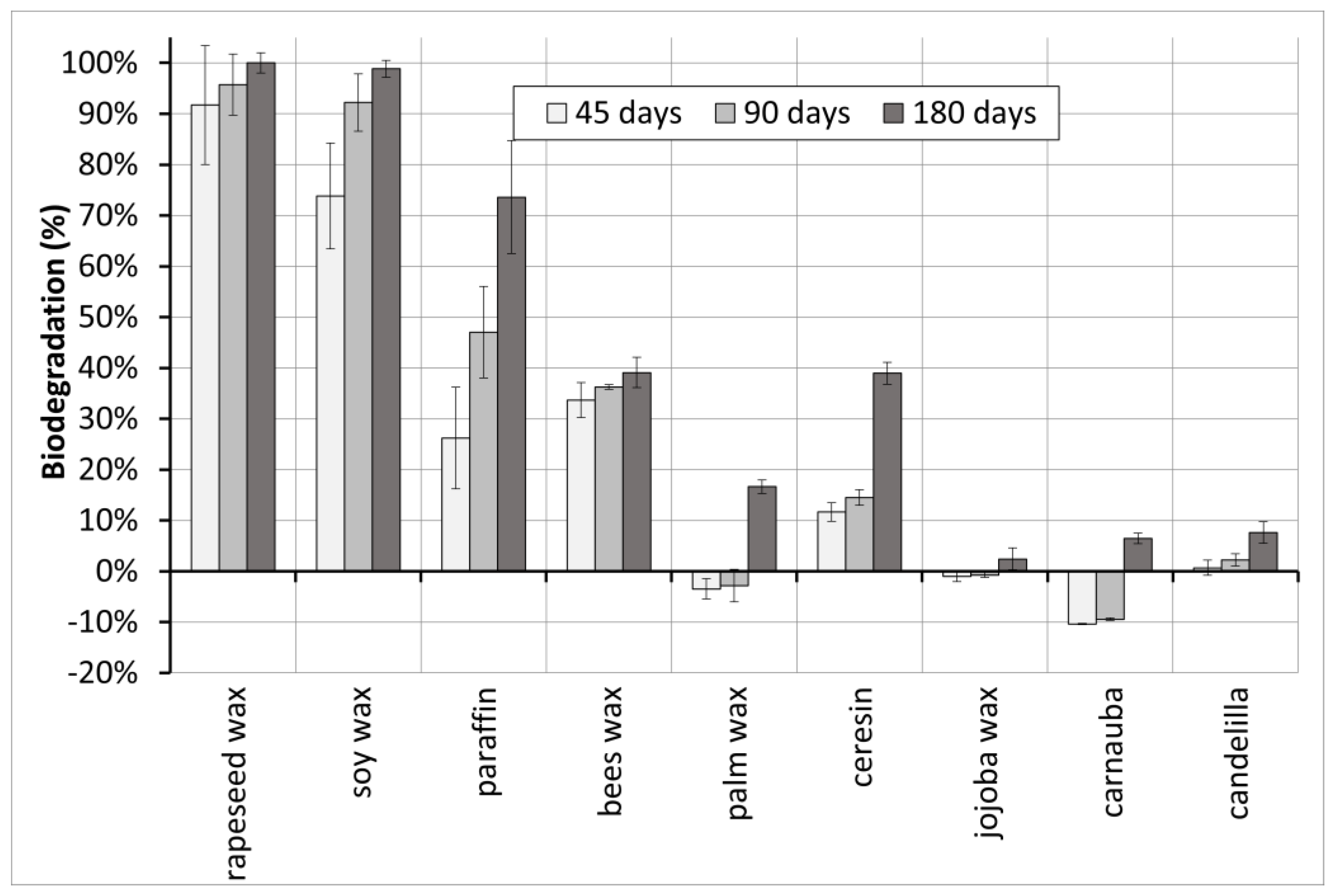
The wax bead biodegradation testing revealed that rapeseed and soy wax are the most susceptible to biodegradation.
A two-factor ANOVA was conducted, with the type of wax beads (nine types) and the biodegradation time (45, 90, and 180 days) as factors. The analysis revealed a significant effect of both the wax type and the biodegradation time on the degree of degradation (
p < 0.05). Specifically, the type of wax had a highly significant impact, indicating strong differences in degradation depending on the wax used. These findings suggest that both the chemical nature of the wax in the bulk form as well as the duration of composting play a crucial role in the biodegradation process (
Table 1).
On the 45th day, a mass decrement of 92% and 74% was observed for rapeseed and soy wax, respectively. On the 90th day, the rapeseed wax bead degraded by 96%. On the 180th day, the wax bead underwent total degradation. In the case of the soy wax, 99% of the wax bead underwent degradation on the 180th day (
Figure 1).
Soft wax such as rapeseed and soy wax consists of hydrogenated natural plant oils. Triglycerides present in wax constitute a nutrient medium for microorganisms, thereby facilitating biodegradation.
The high rate of degradation is advantageous in terms of minimizing the environmental persistence of wax residues after disposal. However, such rapid biodegradability also substantially limits the functional applicability of these soft waxes as coating materials for packaging or transport, as their insufficient durability may compromise the integrity of the protective barrier during storage and handling. This raises the possibility that the coating could begin to degrade prematurely, before the product reaches its intended use phase.
Beeswax is characterized by an average biodegradation potential. After 45 days, the biodegradation achieved 34% while, in the successive testing periods, it increased by a further 2–3%, reaching 39% on the 180th day (
Figure 1). Beeswax contains a significant number of esters, alcohols and free acids, all of which undergo biodegradation easily, though more slowly than hydrogenated oils.
A literature source analysis reveals insufficient information regarding the level of biodegradation for individual types of natural wax. This study demonstrated that hard waxes such as candelilla and carnauba wax undergo degradation only to a minor degree over 180 days of composting in a medium rich in nutrients and composting inoculum. This is due to the complex composition of such wax. The candelilla wax composition is similar to that of synthetic wax, such as, e.g., microcrystalline wax. The proportion by weight for candelilla wax components is as follows: hydrocarbons (42%), wax, resin and sitosterol esters (39%), lactones (6%), free wax and resin acids (8%), and free wax and resin alcohols (5%) [
20]. The primary components of candelilla wax are linear-chain hydrocarbons with a number of carbon atoms mostly within C29–C33, of which n-hentriacontane (C31) constitutes over 80% of the total number of n-alkanes in the candelilla wax. Acid and alcohol esters with even carbon chains (C28–C34), sterols, resins and mineral substances constitute < 1 wt.% of the candelilla wax composition [
21]. The high hydrocarbon content in the candelilla wax affects its slower degradation rate.
On the other hand, carnauba wax consists of a complex mixture of esters, free alcohols, aliphatic acids, aromatic acids, free ω-hydroxycarboxylic acids, hydrocarbons (paraffins) and triterpene diols, where over 80% of the composition includes aliphatic esters and cinnamic acid diesters. Aliphatic esters contain C26 medium-chain monocarboxylic acids and C32 medium-chain monohydroxy alcohols. Para-hydroxycinnamic acid constitutes about 75% of the aromatic acids in carnauba wax [
22].
The presence of para-hydroxycinnamic acid affects the carnauba wax degradation rate. In industry, cinnamic acid is often utilized as a biocide. Cinnamic acid degradation can occur by oxidation with and without oxygen [
23]. Oxygen-free phenol acid degradation processes are poorly understood, but they are typically associated with β-oxidation reactions. Oxygen-free conditions often lend themselves only to a partial degradation of cinnamic acid by the reduction of the double bond in the side cinnamic acid chain with the participation of bacteria such as
Clostridium (
C. celerecrescens,
C. xylanolyticum,
C. glycolicum,
C. aerotolerans) and
Pseudomonas (
P. putida,
P. cepacia,
P. stutzeri). Under oxygen conditions, the process is carried out by bacteria such as
Pseudomonas (
Pseudomonas sp. 132,
Pseudomonas acidovoraus,
P. fluorescens AN103) as well as thermophilic bacilli such as
Bacillus (
Bacillus sp. AB066336 and Z26929,
Bacillus vulcani).
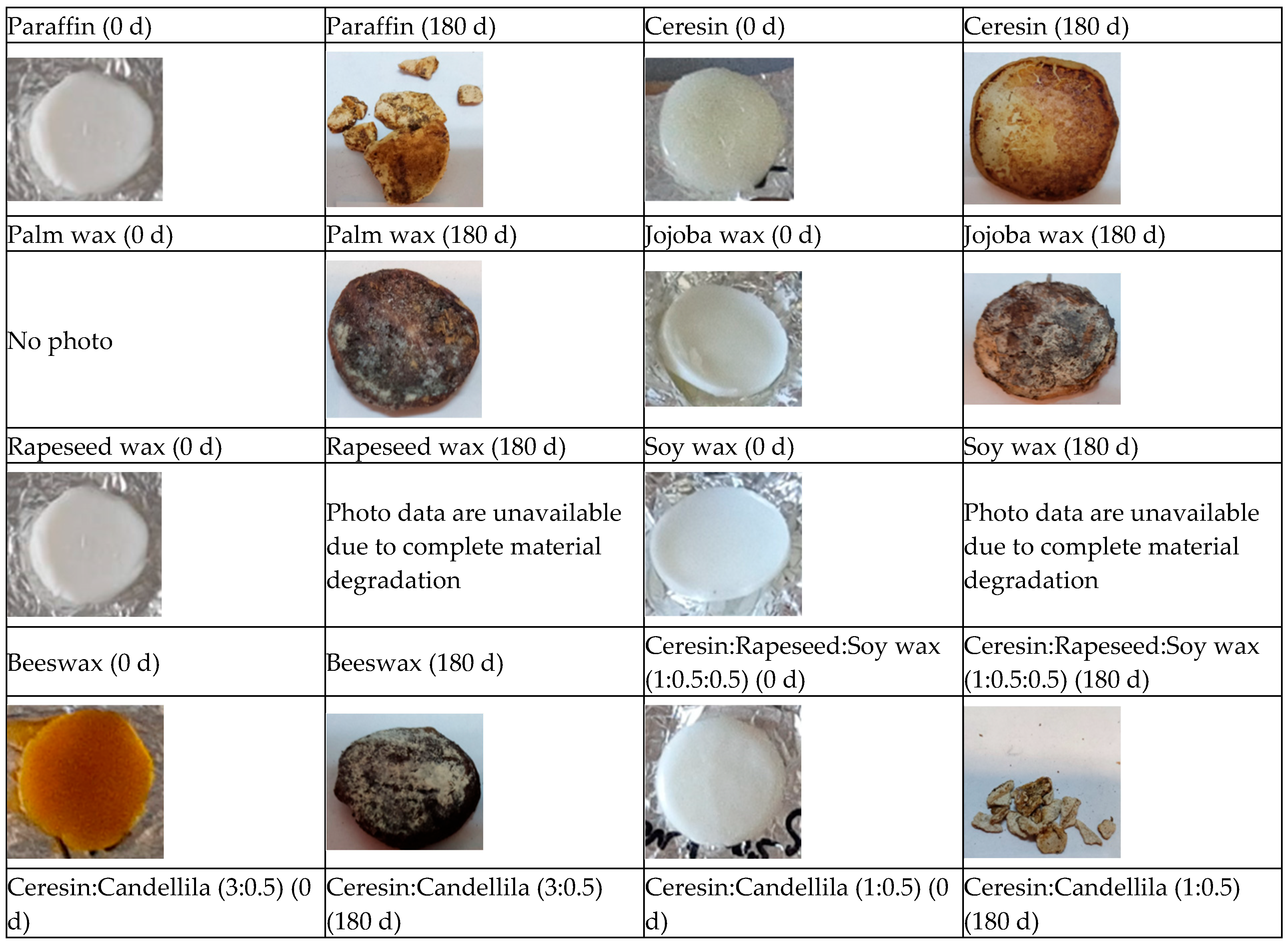
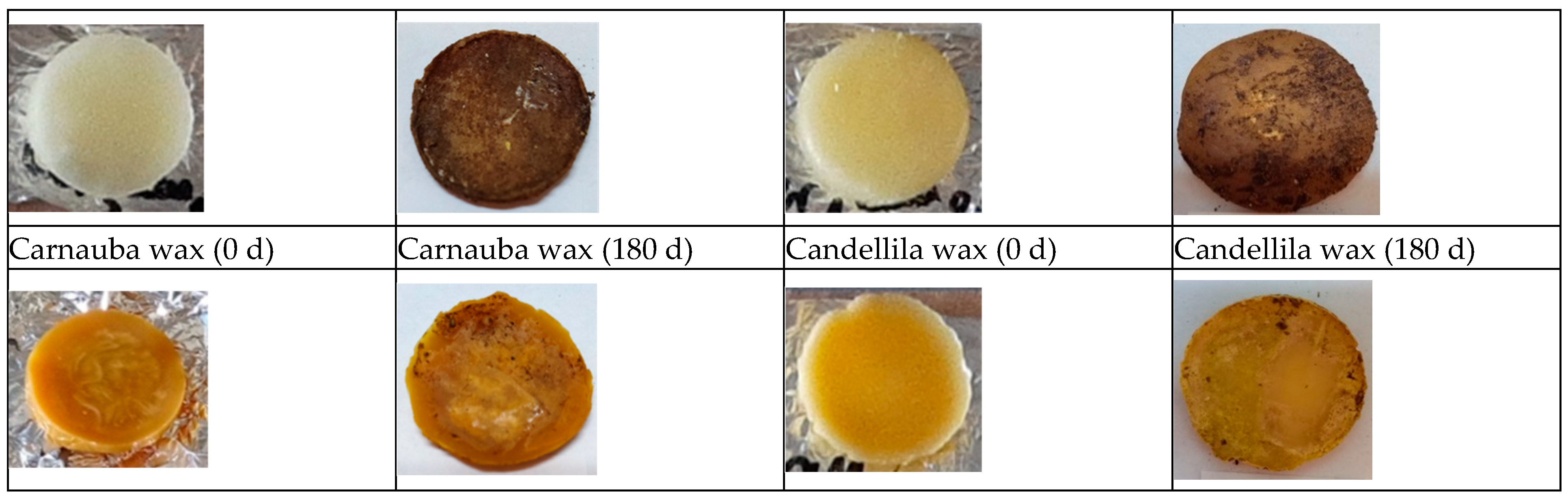
In the case of carnauba wax, an increase in the bead mass was observed in the first testing period. The carnauba wax bead surface was covered with a slight layer of bloom (
Figure 2), which led to a mass increment of the tested sample. In the 6th month of testing, the bead mass decreased by 6% relative to the initial mass. In the case of candelilla wax, the mass decrement after 180 days of degradation was <10%. A low mass decrement was also observed for jojoba and palm wax.
Refined jojoba oil contains 97% of monounsaturated esters, linear-chain acids and alcohols with great molecular masses (C16-C24-C26). Studies by McDonough et al. [
24] using the OECD 301B Ready Biodegradation Test revealed that jojoba wax and beeswax undergo biodegradation, as confirmed by the release of 84.8 ± 4.8 and 84.9 ± 2.2% of CO
2 on the 80th day of the process.
This study demonstrated that the jojoba wax bead is poorly biodegradable. The biodegradation efficiency after 6 months of the composting process was 2%. Palm wax is characterized by a similarly low biodegradation rate. In the first testing period, an increment in the palm wax bead mass was observed whereas, in the 6th month, the biodegradation level was 17%. It should be emphasized that the biodegradation test used by McDonough et al. [
24] is based on the biodegradation of waxes in an aerobic aquatic environment by activated sludge microorganisms. The conditions of biodegradation differ significantly from those used in aerobic composting. In the McDonough et al. [
24] test, waxes were the only available sources of carbon and energy, and activated sludge microorganisms metabolized the wax material, producing CO
2 or incorporating C into biomass. Moreover, the authors focused on microparticles, while the present study examined waxes in their bulk form. This study demonstrates that wax beads sorb organic and mineral particles during composting, thereby forming physical barriers that impede microbial access and reduce biodegradation rates. This phenomenon contributed to the discrepancy between our results and those of McDonough et al. [
24], who reported significantly higher biodegradation rates for jojoba and beeswax under their test conditions. These differences are consistent with broader methodological issues documented in the literature. Ruggero et al. [
25] report significant variability between standard biodegradation protocols, particularly between methods based on disintegration and those relying on CO
2 evolution. Disintegration tests, such as those described in ISO standards (ISO 16929 [
26] and ISO 20200 [
27]), require washing, drying, and sieving steps, which may influence mass-based measurements, especially for materials that interact strongly with composting residues. In contrast, mineralization tests quantify CO
2 but are more demanding technically and may not fully capture surface-level transformations in materials that develop sediment layers during composting.
Paraffin and ceresin wax are mixtures of hydrogen and carbon, and they exhibit a lower potential for biodegradation than fatty acids, triglycerides, alcohols and esters. While the laboratory tests revealed that some microorganisms can metabolize paraffin wax under the appropriate oxygen conditions, these conditions are not found in normal terrestrial and marine environments. The tests also demonstrated that microcrystalline wax and Vaseline are less biodegradable than paraffin wax. Suaria et al. [
28] indicate that there is insufficient information on wax biodegradation, and some types of wax, particularly paraffin wax, constitute marine sediment pollutants.
Studies by Zhang et al. [
29] showed that, under optimal conditions (FeSO4 metal ion concentration of 0.01 g, temperature of 30 °C, (NH
4)
2SO
4 nitrogen source concentration of 1.5 g/L, and a carbon to nitrogen ratio of 10:1), paraffin wax undergoes degradation in 54.86% over 11.2 days.
Pseudomonas sp. strain PW-1 was isolated, which was capable of degrading 1050 mg of paraffin wax, using it as the only source of carbon in 1000 mL of a minimum cultivation medium.
This study revealed that the composting process degrades paraffin wax in the form of beads with an efficiency of 26% after 45 days, 47% after 90 days and 74% after 6 months. Ceresin wax underwent degradation to a lower degree. After 6 months, the degradation efficiency was 39%.
Paraffin differs substantially from natural waxes with respect to its surface and electrokinetic properties. Chibowski et al. [
30] demonstrated that paraffin particles dispersed in water, as well as in inorganic electrolyte solutions, exhibit very low ζ -potential values, which do not originate from ionizable functional groups on the surface but rather from the adsorption of ions from the surrounding solution. The authors clearly stated that paraffin is electrostatically chemically inert, and that the measured ζ-potential is not directly related to the intrinsic surface chemistry of the wax. Furthermore, Liu et al. [
31], investigating oil-in-water nano-emulsions of paraffin oil stabilized with non-ionic surfactants (Tween 80/Span 80), observed a negative ζ-potential of the emulsion droplets that was strongly dependent on the pH of the system. These findings indicate that, in the case of paraffin-based emulsions, the ζ-potential is primarily determined by the dispersion medium and surface-active additives rather than by the paraffin itself.
Furthermore, it was found that a layer of organic and inorganic matter sediments would accumulate on certain types of wax, which hindered gas and microorganism penetration to the wax bead surface and influenced the wax degradation rate. A thick sediment layer was observed on the surfaces of jojoba and palm wax. A layer of lower thickness covered the beads formed from ceresin wax, as well as the ceresin, candelilla and paraffin wax mixture. Carnauba and candelilla wax were characterized by a minimal sediment layer on the surface. The sediment on the beeswax bead surface differed from the sediments on the jojoba and palm wax beads. The beeswax bead was covered with mycelium hyphae of black and white color (
Figure 2).
The conducted tests demonstrated that, under conditions close to natural, wax biodegradation efficiency will differ depending on the type of wax and its capability for organic and inorganic matter adhesion on the surface. Soft wax, such as rapeseed and soy wax, underwent quick biodegradation, which was accelerated by the influence of high temperature (40 °C), which enhanced the wax melting and availability as a source of carbon for microorganisms. Palm wax is a wax of medium hardness and higher melting point relative to rapeseed and soy wax. It was observed that this wax exhibited adhesive properties, as it was covered by a layer of the compost present in the biodegradation chamber. The generated bloom layer limited the oxygen access and the influence of biotic and abiotic factors on the degradation. On the other hand, beeswax was covered with mycelium hyphae, as it contains the highest quantities of nutrients for microorganisms. The presence of mycelium indicates that beeswax is used as a source of carbon by microorganisms, but this makes the beeswax bead degradation impossible by abiotic factors or with the co-participation of other microorganisms.
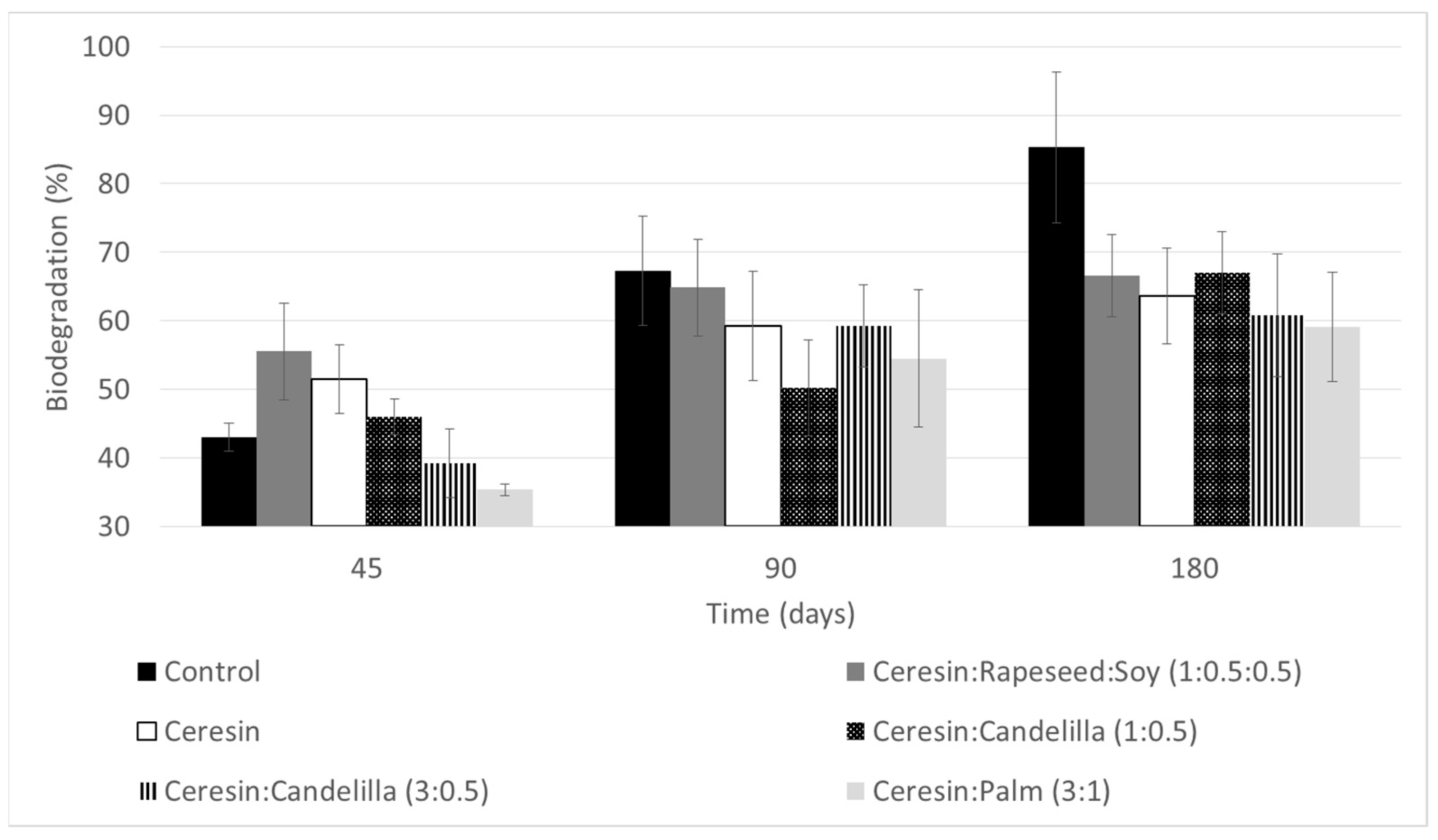
The testing revealed that coating cardboard with soy and rapeseed wax accelerates the cardboard biodegradation process. On the 45th day, a greater mass decrement was observed for the samples coated with such wax relative to the uncoated control sample. On the 90th and 180th day, the differences became smaller, resulting from the fact that the majority of the rapeseed and soy wax coating had already undergone biodegradation (
Figure 3). The inhibitory effect previously attributed to palm wax is strongly dependent on the physical form of the material. Palm wax in bulk form exhibits reduced biodegradation due to the formation of a thick sediment layer. This layer physically shields the wax from oxygen and microbial contact, effectively slowing down the biodegradation process. In contrast, palm wax applied as a thin coating does not generate such a protective sediment layer. The film’s thickness is small, the surface is continuously exposed, and oxygen and microorganisms can readily penetrate the wax layer, leading to markedly higher biodegradation. Consequently, substrates coated with palm wax, such as cardboard, showed > 80% degradation after 180 days, which stands in sharp contrast to the behavior observed for bulk wax beads.
A two-way ANOVA was performed to examine the influence of wax type (nine individual waxes in thick-layer form) and biodegradation time (45, 90, and 180 days) on the degree of degradation (
Table 2). The results showed that both factors had a statistically significant effect on biodegradation. The type of wax significantly affected the degradation level (
p = 0.004), indicating that different waxes, when applied as thick layers, vary in their resistance to biodegradation. The biodegradation time also had a highly significant impact (
p = 1 × 10
−5), confirming that longer composting leads to more advanced degradation.
The jojoba wax exhibited the lowest biodegradation potential. The degradation of cardboard coated with jojoba wax was lower than for the uncoated cardboard, and on the 180th day amounted to 60% (
Figure 3).
Cardboard coated with hard wax, such as ceresin, carnauba, paraffin or beeswax, is characterized by a lower biodegradation rate relative to uncoated cardboard. On the 45th day, it was observed that the biodegradation of cardboard coated with such wax was higher relative to the control cardboard but, on the successive days, the uncoated cardboard biodegradation progressed more quickly. On the 180th day, the uncoated cardboard underwent degradation in 85.2%, whereas the cardboard coated with ceresin, carnauba, paraffin and beeswax degraded to a level of 63.7%, 59.0%, 72.9% and 66.7% respectively (
Figure 3). Cardboard coated with carnauba wax exhibited the lowest degradation rate.
A two-way ANOVA was conducted for samples coated with mixtures of different waxes (five combinations). The results are presented in
Table 3.
The type of wax mixture used as a thick layer to cover the cardboard did not significantly affect biodegradation (p = 0.092), suggesting no strong differences between the tested mixtures in terms of their biodegradability. However, the biodegradation time remained a significant factor (p = 0.001), indicating that, regardless of mixture type, degradation progressed significantly over time.
These findings imply that time is the dominant factor in the degradation of mixed wax coatings, while differences between specific mixtures were not statistically conclusive in this study (
Table 3).
The sample coated with a ceresin-palm wax mixture (3:1) was also characterized by low biodegradation, at a level of 59.1% on the 180th day (
Figure 4). The testing demonstrated that the wax coating degradation rate can be modified through the addition of soft wax to hard wax. Cardboard coated with ceresin wax underwent degradation by 59.3% on the 90th day, while an addition of rapeseed and soy wax mixture increased the biodegradation by 5.5%, whereas a palm wax mixture led to a respective decrease in biodegradation by 4.8%.
The biodegradation potential of wax-coated cardboard can be described in the following order: rapeseed > soy > palm > paraffin > bees = ceresin-rapeseed-soy = ceresin-candelilla > ceresin > jojoba > ceresin-palm. The above demonstrates that palm wax addition to ceresin wax inhibits the biodegradation of ceresin. On the other hand, addition of wax such as rapeseed, soy or candelilla wax accelerates the ceresin degradation (
Figure 5).
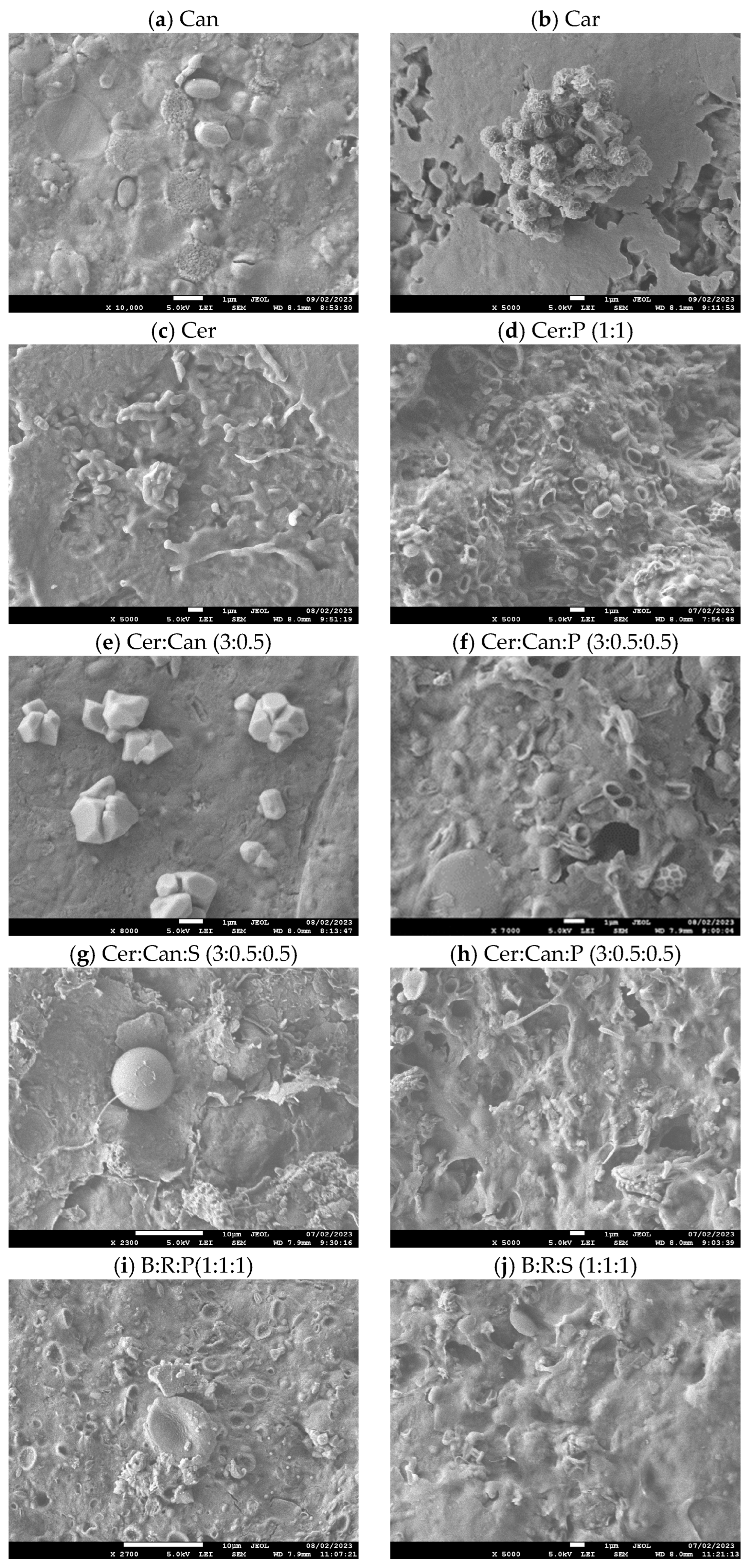
Surface analysis by SEM performed for the coated cardboard pieces subjected to composting revealed that the wax coating structure changes after 180 days. The candelilla wax is characterized by a smooth, epidermal structure with micro-coarse features (
Supplementary Materials Figure S1a), which exhibits the presence of cracking after the degradation process (
Supplementary Materials Figure S2a). The cracking process was also observed after the degradation of beeswax mixed with the soft wax (
Supplementary Materials Figure S2j). Singular bacillus-shaped bacterial cells with a width of 0.5–0.6 μm and a length of 1–1.2 μm are visible as well, attached to the wax surface by extracellular polymeric substances (EPS) (
Figure 5a). The limited candelilla wax adhesiveness forces microorganisms to develop mechanisms allowing them to adhere to the coating surface. The phenomenon is known and, as demonstrated by Husain et al. [
32], microorganisms exhibit a limited ability for growing on n-alkanes, though through metabolic changes and the production of hair-like structures (fimbriae), an over threefold increase in their cell adhesion can be achieved. It was also reported that lipopolysaccharides secreted by microorganisms on cell surfaces increase the cell affinity for alkanes. Salunkhe et al. [
33] report that bacilli of the species
Serratia marcescens,
Pseudomonas aeruginosa and
Bacillus subtilis are capable of degrading plant wax. On the other hand, Arunkumar et al. [
17] indicate that wax-degrading bacterial species include
Pseudomonas,
Alcaligenes,
Micrococcus,
Nocardia,
Corynebacteria,
Arthrobacter,
Bacillus,
Rhodococcus and
Proteus.
Wax degradation proceeds by pseudo-solubilization, biosurfactant production, enzyme secretion, extracellular polymeric substance secretion for better adhesion to the wax surface, and by wax adsorption inside the bacterial cells [
17]. Given the high hydrophobicity of wax, bacteria secrete solubilisates, biosurfactants and EPS to increase their adhesion. These mechanisms are strongly influenced by the physico-chemical properties of the wax surface, among which surface charge, expressed as electrokinetic ζ-potential, plays a crucial role. The ζ-potential governs electrostatic interactions between microbial cells and solid surfaces and has been demonstrated to be a key parameter controlling bacterial adhesion. Smith et al. [
34] demonstrated that decreasing the negative ζ-potential of a substrate can increase bacterial adhesion by more than 200–300%, even when bacterial surface charge remains constant, indicating that electrostatic repulsion between negatively charged bacteria and negatively charged substrates is a dominant factor controlling attachment. Consequently, wax coatings exhibiting strongly negative ζ-potential values are expected to inhibit initial microbial adhesion, whereas coatings with weakly negative or near-neutral surface charge may facilitate microbial colonization and subsequent biodegradation.
Circular deformations in the wax layer were observed in the structure of candelilla wax after three months of degradation (
Figure 5a). The wax structure in this spot exhibits an irregular surface, which indicates the activity of external active substances from bacterial cells present in the vicinity. Candelilla wax in lipid nanostructures is characterized by relatively low ζ-potential values of approximately −3.5 mV, indicating limited electrostatic repulsion against negatively charged bacterial cells [
35]. This improves cell–surface contact, facilitating EPS anchoring, biosurfactant accumulation, and subsequent pseudo-solubilization of the wax. The degradation of candelilla wax thus appears to proceed predominantly via biologically driven mechanisms involving enhanced adhesion and extracellular solubilization rather than surface erosion alone. The candelilla wax degradation is conducted by bacilli following their secretion of extracellular substances facilitating adhesion to the hydrophobic wax surface and by the secretion of solubilisates that increase the wax solubility. The solubilization molecules are in the form of tiny vesicles (micelles) and, by orienting themselves with the hydrophobic part inside and the hydrophilic part outside, they generate a hydrophobic medium inside the micelle. Lipophilic substances can penetrate into the micelle and become water-soluble due to the presence of the envelope. These pseudo-insoluble submicron droplets are formed by extracellular lipids produced by bacterial cells, and they generate micro- or macroemulsions in the wax layer.
Although the observed surface changes suggest processes such as pseudo-dissolution, biosurfactant secretion and enzymatic degradation, these mechanisms could only be confirmed through dedicated spectroscopic analysis. Bucio et al. [
15] demonstrated that spectroscopic methods, particularly FTIR, are highly effective for examining structural modifications in wax coatings, including oxidation processes and compositional changes. FTIR analysis can be used to detect chemical alterations within the wax matrix and to identify microbial metabolites or degradation products. Incorporating FTIR investigations into future research would therefore be essential for elucidating microorganism–surface interactions and understanding the biodegradation of wax coatings at the molecular level.
The structure of the carnauba wax directly after application to the cardboard is heterogeneous, with numerous orifices (
Supplementary Materials Figure S1b). It underwent significant deformation after 90 days of degradation. Clear cracking and coarseness, as well as numerous cavities and losses in the structure, can be observed (
Supplementary Materials Figure S2b). Single bacterial cells are not present on the surface, but aggregates composed of wax crystals can be found instead (
Figure 5b).
The carnauba wax degradation proceeds primarily through surface erosion caused by abiotic factors, with less prominent additional degradation by microbiological decomposition. The test results are convergent with the observation of carnauba wax bead surfaces, where no presence of bloom in the form of mycelium or deposited organic and inorganic matter on the surface was found.
Carnauba wax is characterized by a distinctly negative zeta potential in dispersion systems and lipid nanoparticle formulations. Madureira et al. [
36] demonstrated that solid lipid nanoparticles produced from carnauba wax exhibited ζ-potential values in the range of −38 to −40 mV, indicating strong electrostatic repulsion and reduced microbial adhesion to the wax surface.
The tests demonstrated that bacillus-shaped bacteria are capable of producing biosurfactants that enable their adhesion to the palm wax surface. After the biodegradation process, the palm wax coating exhibited the presence of cavities (
Figure 5d,f,h–i) generated as a result of biosurfactant secretion by the bacteria, which facilitated their adhesion to the wax surface and access to the carbon substrate in the wax. The effects of biosurfactant secretion are not limited locally, but applicable to the entire wax layer surface. The tests indicated that adsorbed plant pollen originating from the composting mixture prepared for the testing purposes was found only on the surfaces of wax mixtures with palm wax (
Figure 5d,f).
Tests involving wax bead degradation demonstrated that, unlike other wax, palm wax beads were covered by a thick layer formed from organic and inorganic matter. This accumulation suggests enhanced adhesion of microorganisms and their metabolites. Palm wax is known for its high crystallinity and heterogeneous surface structure, which may provide favorable sites for microbial attachment. In addition, the secretion of biosurfactants by bacteria participating in the biodegradation process of palm wax c further increase the adhesive properties of the wax layer. In order to confirm this phenomenon and clarify the underlying mechanism, it would be advisable to extend future research to include surface charge analysis and detailed surface chemistry.
Before biodegradation, the ceresin wax structure is similar to the carnauba wax layer. The wax surface is coarse, orifices can be found, and the wax layers are arranged as flakes (
Supplementary Materials Figure S1c). After 3 months of degradation it was observed that the ceresin wax coating surface was colonized by mycelium hyphae together with spores (
Supplementary Figure S2c and
Figure 5c).
As a result of the palm wax addition to the ceresin wax, the wax coating surface structure became smooth with numerous micro-coarse features (
Supplementary Materials Figure S1d). Micro-losses of the coating surface were observed during the degradation process (
Supplementary Materials Figure S2d), as well as numerous cellular imprints, together with fine organic and inorganic matter deposited on the surface.
Furthermore, adding candelilla wax to the ceresin wax in a proportion of 0.5:3 made the surface smoother and with micro-coarse features (
Supplementary Materials Figure S1e), whereas during biodegradation the coating underwent cracking, similar to the coating formed from candelilla wax alone (
Supplementary Materials Figure S2e). The presence of numerous adsorbed mineral particles with rhomboid shapes was observed on the ceresin–candelilla (3:0.5) coating surface (
Figure 5e).
The tests indicated that the surface of the wax layer formed from a mixture containing beeswax exhibited the greatest irregularity and the presence of numerous cavities (
Supplementary Materials Figure S1i,j). Beeswax is characterized by a unique crystalline and amorphous structure. Long hydrocarbon chains form a crystalline network with empty spaces constituting the amorphous zone that contains the liquid wax components. As reported by Yao et al. [
37], due to its amorphism, beeswax is incapable of forming a stable lamellar structure, most likely due to the presence of certain long chains and complex molecules, such as hydroxy-polyesters, which hinder the final crystallization of the monoesters in the beeswax. Beeswax is not water-soluble, though it is soluble in oils. Due to this structural heterogeneity and the relatively low ζ-potential values of approximately −10 mV reported for beeswax-based nanostructures, beeswax surfaces provide favorable conditions for microbial adhesion. The negative character of the ζ-potential was attributed to the presence of free fatty acids and carboxyl functional groups inherent to the beeswax structure [
38,
39].
The coating formed from a mixture including beeswax, as well as soft wax such as rapeseed and soy wax, exhibits a regular structure (
Supplementary Materials Figure S1j). The addition of soft wax to the beeswax increases the plasticity of the coating, thereby enhancing its adhesion to the cardboard surface.
The tests revealed that a wax mixture composed of ceresin and candelilla wax in a proportion of 3:0.5 exhibits a smooth structure (
Supplementary Materials Figure S1e,g) that undergoes cracking and spalling as a result of the biodegradation process (
Supplementary Materials Figure S2e,g), similar to the case of the pure candelilla wax coating. Furthermore, it was observed that numerous amorphous wax crystals appear on the surface of this wax mixture during the biodegradation process, with a single crystal diameter of 0.5–1 μm, and 2 μm for agglomerates composed of 2–4 crystals (
Supplementary Materials Figure S2e,g and
Figure 5e).
Similar to beeswax, ceresin is not water-soluble, though it is soluble in fats. A soy wax addition increased the plasticity of the coating. Morphic changes of the wax after degradation were also observed. The wax structure adopted the shape of crystalline tubes (
Supplementary Materials Figures S1c and S2c and
Figure 5c).
An important complement to the present study would be the determination of electrokinetic (ζ) potential, as Wojciechowski and Kłodzińska et al. [
40] highlight the importance of this parameter for interpreting the adhesion of microorganisms to the surfaces of biodegradable polymers. Their results show that a positively charged surface can enhance electrostatic interactions with negatively charged bacteria, and that the magnitude of this charge can be adjusted through the use of suitable coating modifiers. Consequently, incorporating ζ-potential analysis of wax-based coatings in future work would enable a more accurate analysis of surface–microorganism interactions, which is crucial for understanding the biodegradation behavior of these coatings.




 ,
,