Abstract
Agroforestry, a sustainable land management system, integrates trees with crops and livestock, providing substantial benefits in terms of social, economic, and environmental sustainability. However, its adoption remains limited due to multiple barriers. This systematic review analyzes 148 peer-reviewed studies published between 1980 and 2024 to synthesize evidence on agroforestry’s contributions to livelihood improvement, income diversification, soil and water conservation, biodiversity enhancement, and climate mitigation, while also identifying barriers at micro (household), meso (institutional/market), and macro (policy) levels. Findings show that environmental benefits dominate the literature, whereas economic and social dimensions, as well as adoption barriers, are comparatively understudied, with only nine papers focusing specifically on barriers. The review highlights high initial costs, limited technical capacity, weak markets, inadequate extension support, and restrictive policies as persistent obstacles inhibiting broader adoption. Addressing these structural constraints, particularly at the meso and macro levels, is crucial to scaling up agroforestry as a viable sustainability strategy.
1. Introduction
The global population is projected to reach 8.5 billion by 2030 and 10 billion by 2050, with increases of 10% and 26%, respectively, from present levels [1]. This rapid population growth increases the demand for food, posing a significant challenge to global food security. Meeting this demand will require a more than 70% increase in food production compared to present conditions [2]. With around 40% of the world’s land currently dedicated to agriculture and no significant increase in arable land, food production must be intensified on existing land [3]. This pressure has led many farmers and producers to adopt unsustainable agricultural practices, including excessive use of fertilizers and pesticides, monoculture farming, and overexploitation of natural resources [4]. While these practices may temporarily increase yields, they contribute to long-term environmental degradation, including soil erosion, greenhouse gas emissions, and biodiversity loss [5]. Additionally, if we continue adopting these practices, an estimated 90% of the Earth’s soil could be degraded by 2050, seriously affecting future agricultural productivity and threatening global food insecurity [6,7,8]. Human activities have already exceeded six of the nine planetary boundaries, threatening the stability of global socio-economic systems [9], imposing a significant risk to the sustainability of food production [10]. The continued deterioration of these boundaries, like freshwater use, land systems change, and bio-geochemical flows, further leads to resource scarcity and climate-related threats in agriculture [9]. To address these growing environmental challenges within safe planetary boundaries, there is an urgent need to adopt sustainable solutions that prioritize efficient resource use, enhance soil health, improve livelihoods, and increase yields while maintaining ecological balance. The European Commission (EC) and the Food and Agriculture Organization (FAO) advocate for the widespread adoption of sustainable practices to mitigate climate risks and improve agricultural productivity [4,11,12]. Rather than focusing solely on short-term yields, a multifunctional agricultural system is needed to integrate broader societal and environmental goals, which promote resilience against climate change while protecting natural resources [13]. Therefore, we require production systems that can enhance both agronomic productivity and environmental sustainability. Agroforestry is an emerging sustainable solution that combines trees and crops to provide different social, economic, and environmental benefits [14].
Agroforestry Systems (AFs) is a sustainable land management practice that includes the integration of trees, crops, pastures, and livestock within the same land, either together or in rotation [15]. Agroforestry is now understood as an approach that combines agriculture and forestry, recognizing their benefits when they interact with each other [16]. It is widespread multifunctional land use practices that cover about 43% of agricultural land globally [17]. The United Nations recognizes it as a key strategy for restoring degraded lands and improving soil health, promoting biodiversity, enhancing soil fertility, and encouraging sustainable land use [17,18]. Agroforestry has different types, including alley cropping, silvopasture, windbreaks, riparian buffers, forest farming, and urban food forests, which are practiced worldwide [19]. It provides multiple benefits across social, economic, and environmental dimensions, bridging agriculture and environment, and helping to restore ecosystems while contributing to sustainability [16,20,21].
Sustainability is a broad term that is understood as the balanced integration of social, economic, and environmental dimensions. These three dimensions are the major pillars of sustainability, which are interrelated with each other. Social sustainability helps to maintain cultural values, equity, and human well-being. Economic sustainability supports improved livelihoods and profitability, and environmental sustainability provides long-term functioning of natural resources to ensure their availability for future generations [22]. Agroforestry lies at the intersection of these three dimensions and is identified as a sustainable practice as it is environmentally sound, economically viable, and socially accepted. Environmentally, it conserves biodiversity, enhances soil health, improves water quality, sequesters carbon, supports microbial activity, and provides habitat for pollinators, such as bees, thereby enhancing food security [23,24,25,26]. Economically, it provides diversified income sources from the trees, which yield fruits, fuelwood, fodder, and timber, offering a stable income to farmers [27]. Providing diverse resources such as food, fiber, and fruits not only preserves natural resources but also enhances the economic growth of communities [28,29,30]. Furthermore, it reduces the economic risk associated with crop failure and supports long-term crop productivity [31]. Socially agroforestry also strengthens rural communities by improving food security, increasing productivity, enhancing rural livelihoods, offering a stable income, and enhancing resilience against climate challenges [32,33,34]. Agroforestry provides a deeper connection between people and their land, promoting long-term sustainability in agricultural practices [34]. As a sustainable alternative to conventional farming, agroforestry reduces environmental degradation while maintaining productivity. It supports ecosystem services, conserves natural resources, and improves the livelihoods of smallholder farmers, particularly in rural areas [24,35]. By integrating different elements of the landscape, agroforestry creates a balanced system that benefits the environment, society, and the economy [36]. Its ability to enhance both agricultural sustainability and rural development makes it an emerging solution for ensuring long-term food security and ecological balance [16,33]. Agroforestry is particularly effective in agricultural lands that are vulnerable both environmentally and economically. By offering benefits that enhance soil health, biodiversity, and rural livelihoods, agroforestry has the potential to address key sustainability challenges while also encouraging farmers to adopt more resilient land use practices [7,27,37,38,39]. Approximately half of the developing countries employ some agroforestry practices to mitigate the effects of climate change [40]. Hence, it is not incorrect to state that agroforestry is adopted universally, but its benefits are highly dependent on temporal and spatial scales [41]. Over the past few decades, numerous studies have demonstrated the multiple benefits of agroforestry. However, those studies showed specific benefits of agroforestry. Their research has primarily focused on either the social, economic, or environmental benefits of agroforestry, often treating these aspects separately [6,38,42,43,44]. Several reviews on agroforestry have been done already, but they are limited in scope and synthesize findings only from the perspective of either social, economic, or environmental benefits [44]. The overall socio-economic and environmental benefits of agroforestry remain scattered and unclear [7,27,44]. Therefore, an integrated assessment of all three dimensions is necessary.
Despite the multiple benefits of agroforestry systems, the adoption rate remains very low [45]. Based on the 2022 U.S. Census of Agriculture, only 1.7% of U.S farms reported adopting agroforestry, showing a slow increase of 6% from 2017 to 2022 [46]. The slow adoption of agroforestry is attributed to various social, economic, and biophysical barriers that affect the ability and willingness of farmers [45,47]. Lack of awareness, poor market facilities, high initial costs, increasing threats of climate change, and poor government support, such as subsidies, are some of the significant barriers affecting farmers’ decisions to adopt agroforestry [36,48,49,50]. While these studies have explored different adoption barriers, they often emphasize limited economic and technical constraints, with limited attention to the interconnected social and institutional barriers faced by smallholder farmers. This leads to lower adoption rates among farmers, which increases concerns about the barriers preventing them from adopting agroforestry. Identifying barriers at various levels, from the individual to the state, helps us develop practical solutions or strategies that increase the widespread adoption of agroforestry. Hence, an overall synthesized paper is needed that discusses all socio-economic and environmental benefits, along with addressing their barriers to adoption. To address this gap, this study systematically reviews peer-reviewed literature from 1980 to 2024 to provide an integrated overview of agroforestry’s benefits and the barriers limiting its adoption. It synthesizes evidence on the social, economic, and environmental contributions of agroforestry and examines the constraints that restrict uptake across different levels. The review categorizes major benefits, identifies recurring themes in adoption barriers, and highlights gaps that warrant further research.
This analysis provides a comprehensive assessment of the combined social, economic, and environmental benefits of agroforestry, while identifying key micro-, meso-, and macro-level barriers. The review addresses the following questions:
- What socio-economic and environmental benefits of agroforestry are reported?
- How do these benefits support long-term sustainability?
- Why are farmers not adopting agroforestry practices despite several benefits?
- What types of barriers exist at micro, meso, and macro levels?
The study also compares its findings with earlier agroforestry reviews. Although research on agroforestry’s socio-economic and environmental dimensions has grown in the past decade, it remains narrow in scope. Existing reviews often focus on specific contexts, for example, ref. [51] examines only soil-based ecosystem services, leaving the broader picture fragmented. A synthesized evaluation of benefits and barriers across multiple scales has been lacking. This paper fills that gap by integrating the socio-economic and environmental literature with the adoption-barriers literature to provide a more complete understanding of both the motivations for and constraints to agroforestry adoption
This paper first outlines the methodology used for identifying, screening, and selecting relevant articles, followed by an overview of the reviewed literature. By integrating insights from interdisciplinary research and review papers, this paper provides a comprehensive synthesis of the multifaceted benefits of agroforestry and the various barriers that exist at different levels to its adoption, emphasizing its role in shaping a more sustainable and resilient future.
2. Methodology
2.1. The PRISMA Approach
The systematic literature review was conducted in accordance with the guidelines of the Preferred Reporting Items for Systematic Reviews and Meta-Analyses (PRISMA). Using the PRISMA approach provides rigorous guidelines for improving the transparency and clarity of systematic reviews. It includes identification from systematic multiple databases, screening of the studies, eligibility criteria, and inclusion of the studies in the systematic reviews [52]. The initial phase of the review involves identifying relevant databases, followed by screening the identified articles and verifying their eligibility against our research objectives. Finally, after a full-text analysis, articles that met all the criteria were selected for final review [53].
2.2. Database Identification and Screening
This study was conducted using a qualitative and quantitative literature review approach [54] to describe and expand the current knowledge on agroforestry [55]. Articles were searched from Scopus and Google Scholar databases on 12 June 2024, focusing on peer-reviewed research papers published between 1980 and 2024. These databases were selected because they provide a wide coverage of peer-reviewed articles related to agroforestry and are widely recommended for systematic reviews because of their rigorous indexing standards [56]. Additionally, the articles published in English were included as the post search refinement because of the language capacity of the author, and most of the research articles related to agroforestry were published in the English language.
The search mostly targeted titles, abstracts, and keywords to identify relevant articles. The papers were selected focusing on agroforestry practices that provide either social, economic, or environmental benefits, leading to sustainability among small farmers. Furthermore, it includes a paper that examines the barriers influencing adoption and the barriers farmers face when implementing agroforestry.
The review articles were selected based on the following criteria:
- (i)
- The study focuses on at least one of the agroforestry or its different types
- (ii)
- Different benefits (social, economic, and environmental) to the small farmers
- (iii)
- Addressing challenges or adoption barriers of agroforestry
The selection of keywords was done through a step-by-step refinement process. Initial terms were developed from concepts found in agroforestry-related literature, which include words such as agroforestry, social benefits, economic benefits, Environmental benefits, and Adoption barriers. After screening the initial results of the retrieved articles, additional synonyms and related terms were added to expand the coverage. This iterative refinement continued until additional search gave no new themes. These additions were guided by review studies conducted by [57], where search terms were adjusted frequently based on scoping results to ensure the keywords are complete and comprehensive.
To refine the search for articles, two basic Boolean operations (OR and AND) were used to combine different search terms. Quotation marks (“”) were used to retrieve specific combinations of words/phrases, while an asterisk (*) was used to retrieve articles with relevant variations of specific words:
Scopus search key: (TITLE-ABS-KEY (“agroforestry*” OR “tree-crop interaction” OR “agroforestry types*”) AND TITLE-ABS-KEY (“sustainability*”) OR TITLE-ABS-KEY (“social benefits”) OR TITLE-ABS-KEY (“economic benefits”) OR TITLE-ABS-KEY (“environmental benefits”) AND TITLE-ABS-KEY (“challenges*”) OR TITLE-ABS-KEY (“adoption barriers*”)) AND PUBYEAR > 1980 AND PUBYEAR ≤ 2024 AND (LIMIT-TO (LANGUAGE, “English”)).
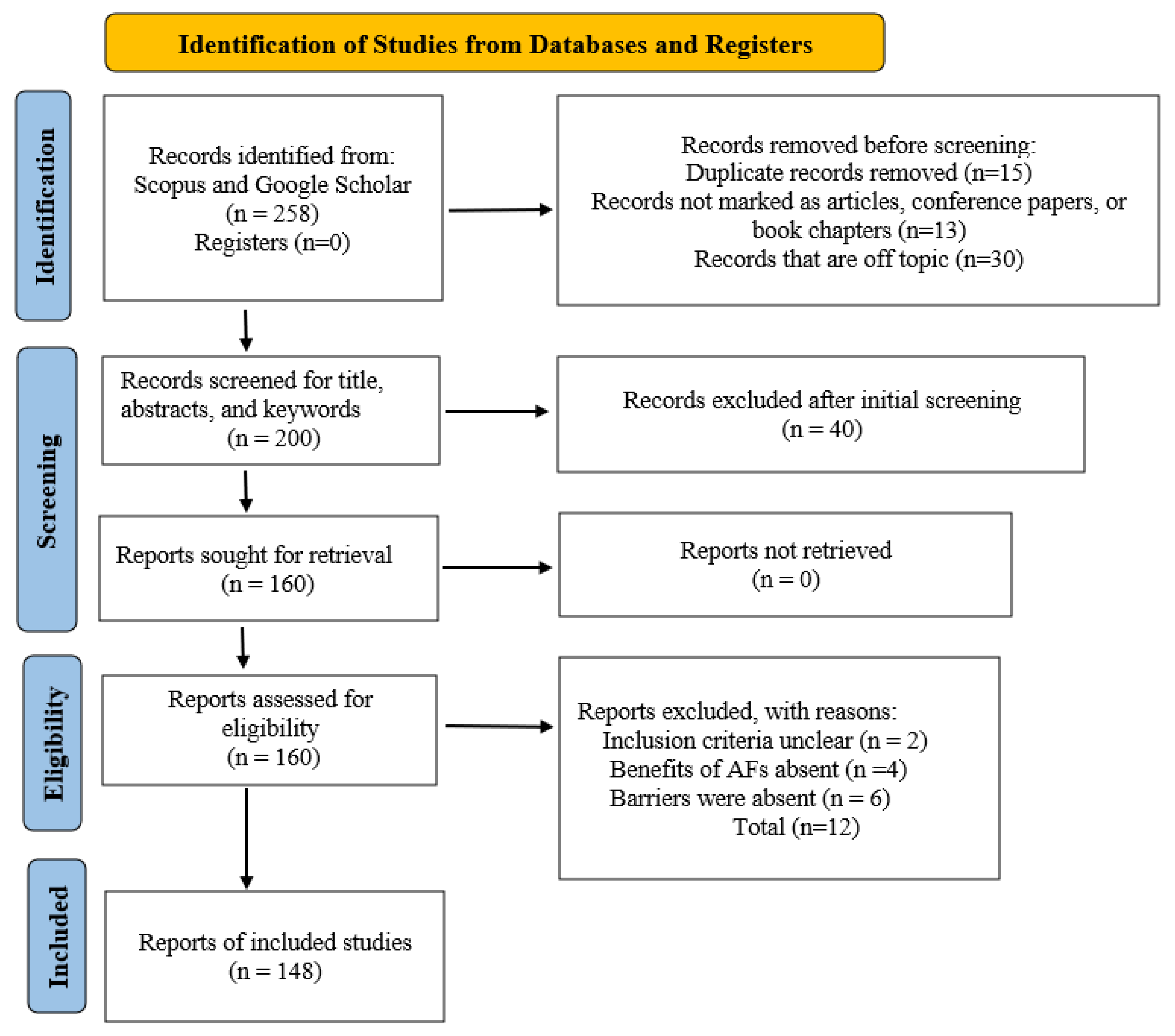
Based on the chosen set of keywords as the initial set of inclusion criteria, a total of 258 articles from databases, Scopus, and Google Scholar were initially retrieved. After removing 28 duplicate articles, 30 non-article-type articles, and 30 off-topic articles, 200 unique articles were screened for titles and abstracts from both databases. To minimize bias during title and abstract screening, two authors independently reviewed these articles and jointly discussed which articles should be included and excluded. Decisions were coded as 1 (included) and 0 (excluded). Disagreement between reviewers during screening was resolved through discussion with a third reviewer to ensure consistency. Additionally, to see the reliability of our screening process, the inter-rater reliability was measured using Cohen’s kappa. The resulting k = 0.63 shows substantial agreement between reviewers, suggesting a reliable screening process for this review. During this screening, 40 articles were excluded based on their (i) non-coverage of our research objectives, (ii) absence of original empirical data, (iii) no focus on adoption barriers, and (iv) emphasis on mixed crop-livestock practices rather than agroforestry. As a result, a total of 160 articles remained, which were subsequently screened for a full-text review.
2.3. Eligibility: Inclusion and Exclusion Criteria
The inclusion criteria focused on peer-reviewed articles, case studies, meta-analyses, and review papers that include the benefits or barriers related to agroforestry adoption. The primary focus was to shortlist those papers that primarily discussed the benefits of agroforestry and the adoption barriers. However, during the full-text review process, we found that not all articles accurately present the exact agroforestry practices and their benefits or challenges. Thus, 12 additional articles that were not detected during the first round of abstract screening were excluded using the earlier exclusion criteria. Hence, a final selection of 148 publications was made for full-text analysis. The data was inserted into the Excel form and was shared by all. The data comprises the year of publication, country or region, agroforestry practices, the social, economic, and environmental benefits of agroforestry, and conclusions on different challenges or barriers to adoption. To maintain consistency with our data extraction, we developed a coding framework with the assistance of existing agroforestry literature and alignment with our research questions. This framework comprises main categories and subcategories of social, economic, and environmental benefits, as well as adoption barriers. While reviewing full texts, we found some studies include benefits and barriers in detail. Hence, added those details as subcodes within the already existing categories or structure. The final Excel sheets were reviewed by the research team to ensure accurate classification and the avoidance of double-counting of benefits and barriers.
Data analysis was conducted in two main steps. First, we performed a deductive analysis using existing theories to categorize and interpret findings from previous studies. Then, we employed thematic analysis to identify, describe, and categorize both evident and latent ideas related to benefits and adoption barriers [58]. Figure 1 below illustrates the detailed methodological process, from article identification to article inclusion, for the Systematic Literature Review, as outlined in the PRISMA 2020 flowchart guidelines. A detailed protocol including search strategy, eligibility criteria, screening, and coding framework for systematic review has been registered with the Open Science Framework (OSF), and it is available online: https://osf.io/7znrp (accessed on 21 November 2025).
Figure 1.
PRISMA 2020 flow diagram showing identification, screening, eligibility, and inclusion of studies for systematic review [53].
3. Results
This section presents the results from the qualitative and quantitative analyses. In the quantitative section, geographical locations, publications by year, single benefits and barriers, and combined benefits with barriers are presented. In the qualitative analyses, thematic analysis was employed to identify, analyze, and report themes within the qualitative data.
3.1. Quantitative Analysis
3.1.1. Geographical Locations of Reviewed Articles
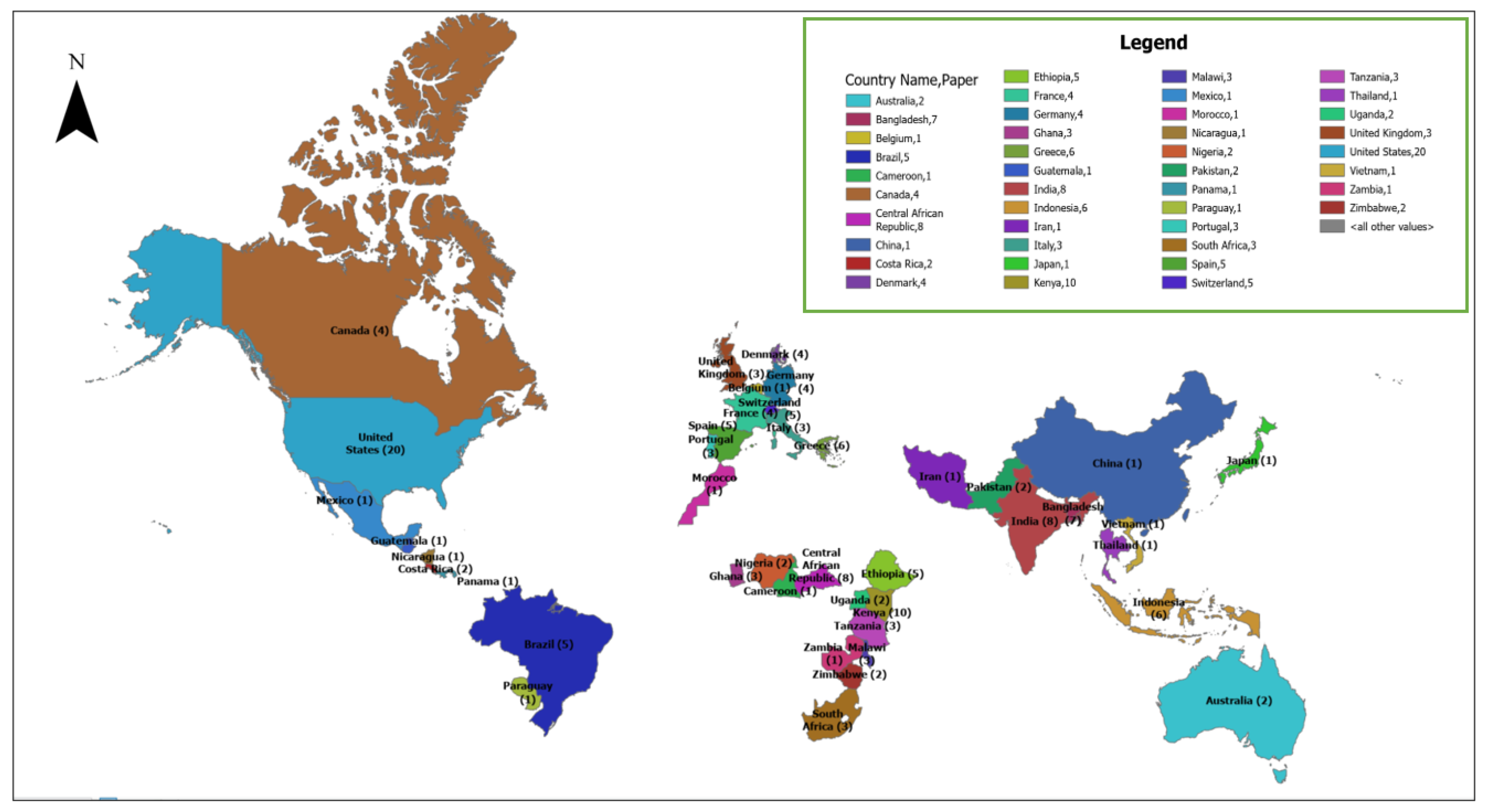
The number of articles that address the benefits of agroforestry, along with the challenges or barriers to adopting these practices, has been spreading around the globe. Our review analysis consists of total 148 full text studies which comprised major research papers, review papers, and case studies distributed across 47 different countries. The higher concentrations of articles were present from Africa and Western Europe, each contributing more than 30 papers. North America, specifically the United States, also represents a higher number of articles, along with South Asia. In contrast, Central and Eastern Europe, and the Middle East have very few articles related to agroforestry. The geographic distribution of these studies is illustrated in Figure 2, which maps their locations worldwide.
Figure 2.
Map showing the geographical locations of the reviewed articles.
3.1.2. Publication per Year
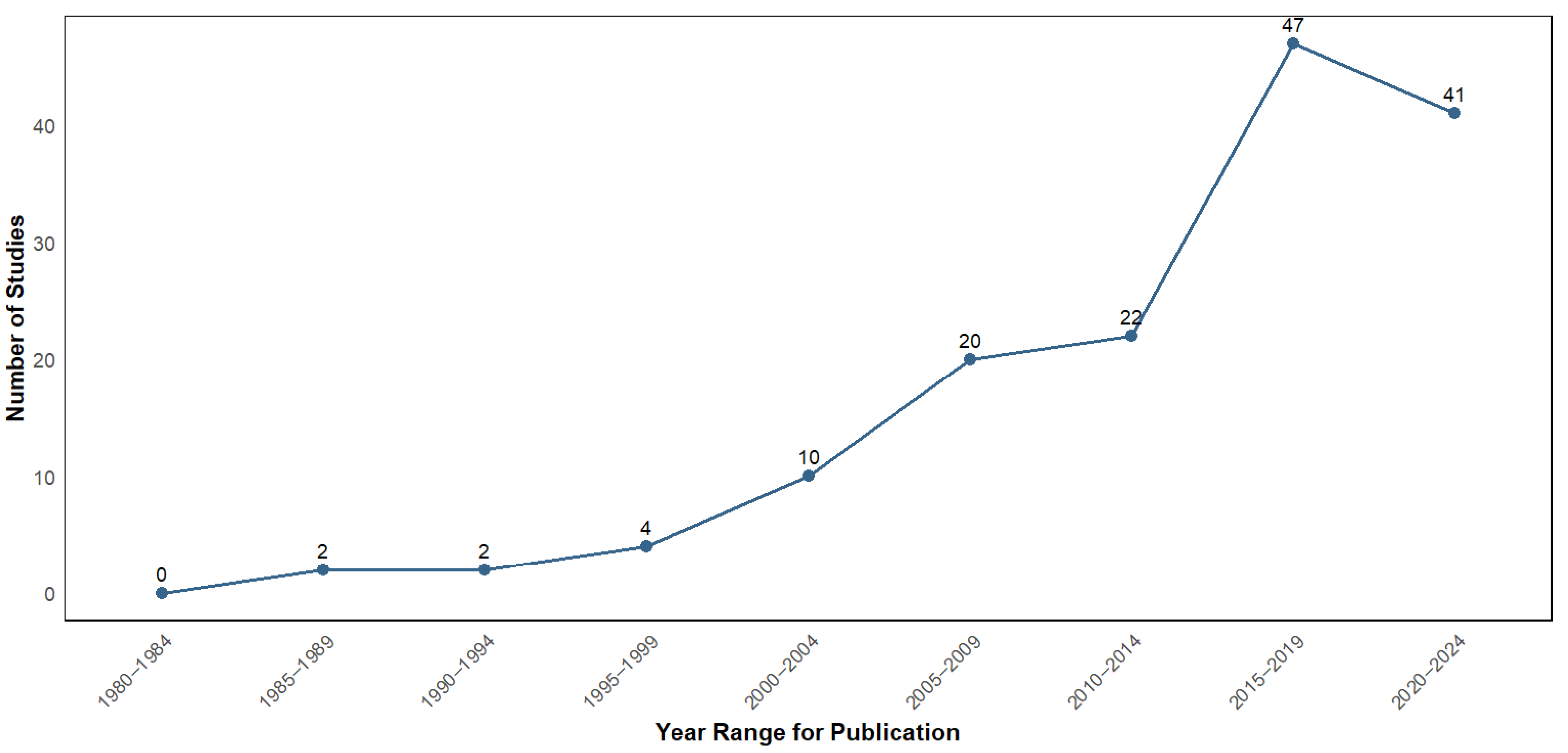
Figure 3 shows the number of publications over time, showing changes in research work related to agroforestry. Within 148 articles, the number of papers rises during 2010–2019, and reaches 47, which shows the pattern or trends of agroforestry-related studies. This trend slightly decreased to 41 articles during 2020–2024, as shown in the detailed line graph in Figure 3.
Figure 3.
Publication Trends in Agroforestry-Related Research (1980–2024).
3.1.3. Reviewed Articles Consisting of Social, Economic, and Environmental Benefits with Their Barriers to Adoption
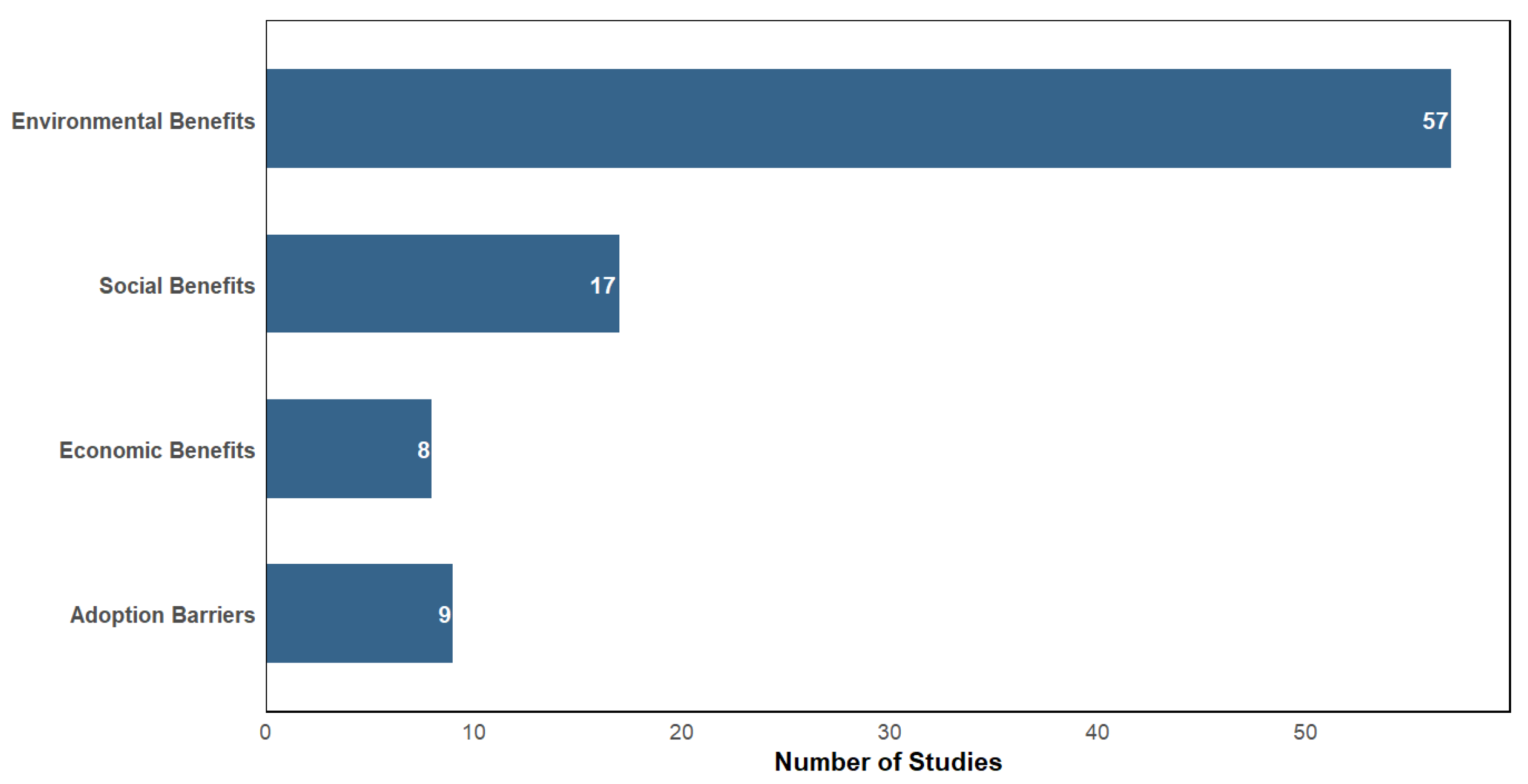
The results of our full-text synthesis showed that out of 148 articles, most articles included environmental benefits, with 57 articles, followed by social benefits, with 17 articles. In contrast, very few articles (eight) discuss the economic benefits of agroforestry systems, where only nine articles discuss the barriers to adopting agroforestry. Detailed information about single domain studies is shown in Figure 4.
Figure 4.
Number of Reviewed Articles Consisting of Social, Economic, and Environmental Benefits and Adoption Barriers.
3.1.4. Reviewed Articles Consisting of Combined Benefits
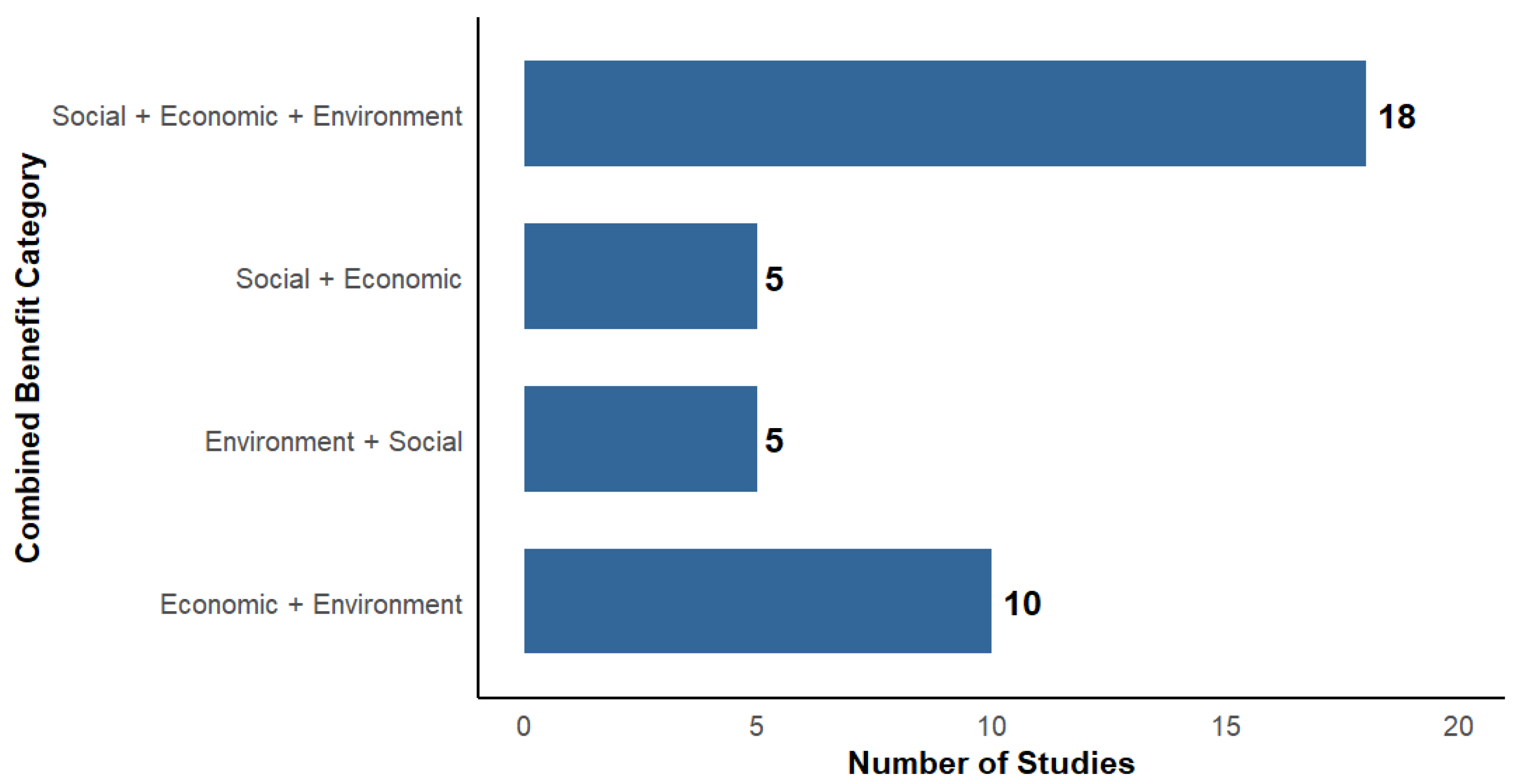
Our results show that out of 148 total studies, only 38 of them were reported to discuss more than one benefit domain and therefore were eligible for the combined benefit synthesis. Within this subset, 18 studies discussed all three benefits categories (Social, Economic, and Environmental), showing their direct contribution to sustainability. While ten studies focus on both economic and environmental benefits, five articles combine social and economic benefits, and another five articles highlight both environmental and social benefits, as presented in Figure 5.
Figure 5.
Number of Reviewed Articles Having Combined Benefits.
3.1.5. Reviewed Articles Consisting of Combined Benefits, Including Barriers
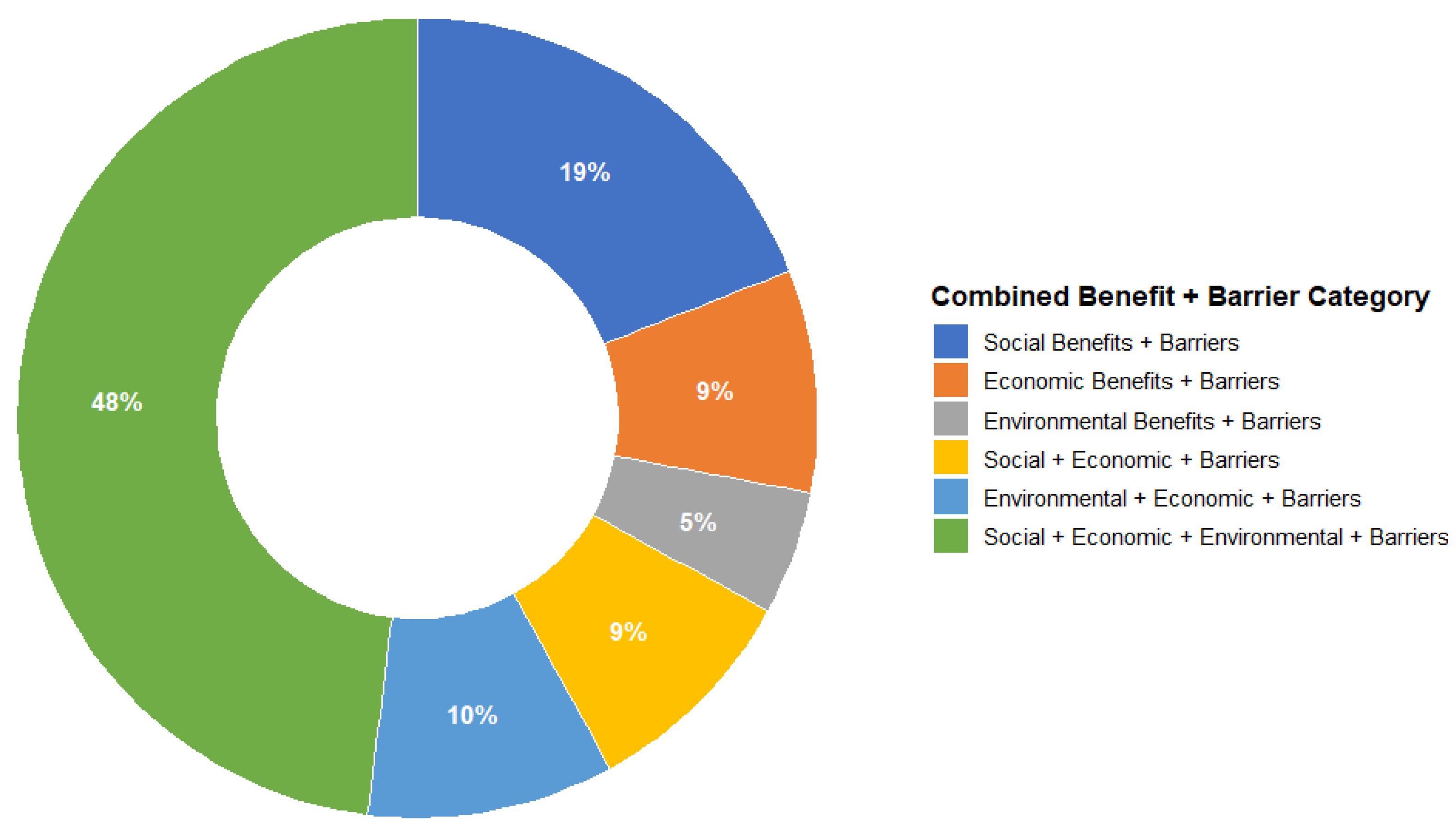
Finally, our analysis also considers those studies which discussed combined benefits, with listing barriers to adoption within them. Out of 148 full text syntheses studies, 19 studies were found to have combined benefits alongside adoption barriers. Our analysis further showed that more than 48% of the analyzed articles included all social, economic, and environmental benefits and barriers. While 19% of articles include social benefits and barriers, followed by 10% in environmental and economic benefits, with barriers. The economic benefits with barriers and socio-economic benefits with barriers were found in 9% of articles. The lowest coverage was found by environmental benefits and barriers in 5% articles, as shown in Figure 6.
Figure 6.
Number of Reviewed Articles with Combined Benefits Consisting of Barriers to Adoption.
3.2. Qualitative Analysis: Explored Benefits of Agroforestry from Reviewed Articles
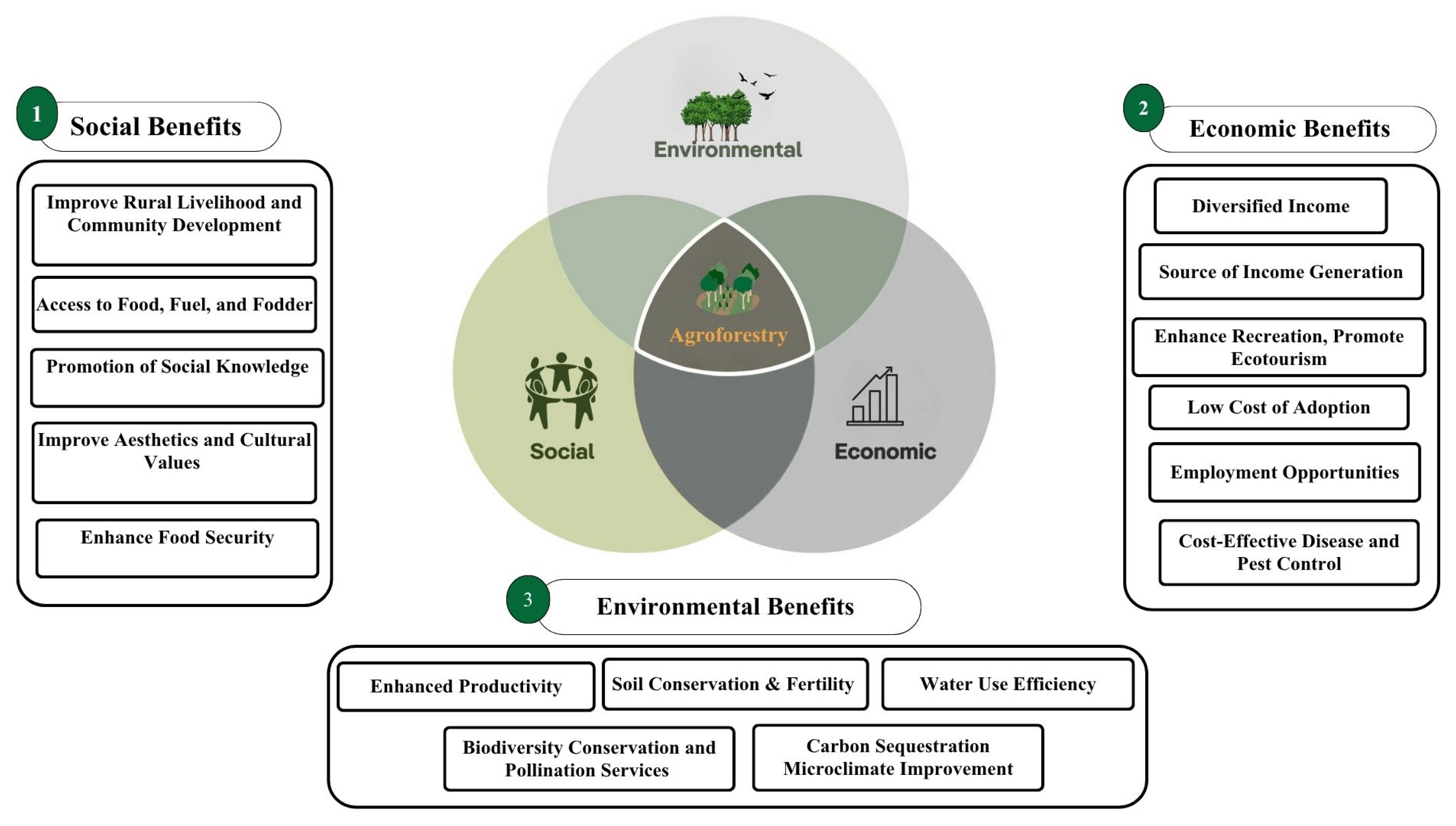
The research findings highlight the significant benefits of agroforestry systems in enhancing farmers’ livelihoods by providing them with improved access to essential resources. The agroforestry farms comprise a diverse range of plant species, highlighting the multifaceted nature of agroforestry practices and their ability to meet diverse agricultural and ecological needs, resulting in increased production of food, fodder, fuel, and fiber [59]. Moreover, agroforestry aims to enhance environmental characteristics, such as soil and water conservation, biodiversity, and climate change mitigation, while increasing farmers’ income and resilience. In addition to meeting a community’s daily needs, they play a significant role in promoting soil and water conservation, improving the biodiversity of flora and animals, regulating microclimates, mitigating and adapting to climate change, and restoring the environment [60,61]. Synthesizing the selected papers for full-text review, the benefits of agroforestry are categorized into three themes: social, economic, and environmental benefits, facilitating easier organization of the scattered literature and a better understanding of their contributions towards sustainability in the long run. The overall synthesized benefits from reviewed articles are presented in Figure 7, which includes the social, economic, and environmental benefits of agroforestry systems.
Figure 7.
Integrated Social, Economic, and Environmental Benefits Synthesized from Reviewed Articles.
3.2.1. Social Benefits
Improve Rural Livelihood and Community Development
Agroforestry is a sustainable approach that addresses land use issues while enhancing the ability of smallholder farmers to withstand floods and droughts, benefiting both the environment and local communities [62]. Trees in agroforestry systems provide essential resources such as food, fuel, and fodder, contributing to economic stability and environmental sustainability [63]. Furthermore, agroforestry provides multiple benefits, including timber production, soil enrichment, carbon sequestration, water purification, and biodiversity conservation [64,65]. By incorporating trees on farms, agroforestry reduces community reliance on forest resources for firewood, fodder, construction materials, and farm tools, promoting sustainable resource use [66]. It improves livelihood by ensuring food security and providing clean bioenergy, making them a key part of sustainable rural development. Farmers rely on agroforestry systems not only for their daily benefits but also for the valuable ecosystem services they offer in support of human well-being [67]. Additionally, selling trees products with crops improves household income, thereby improving the overall living standards of producers. Pruning trees for firewood helps prevent deforestation while maintaining the ecosystem services [68]. For instance, a study on agroforestry in Kenya showed that agroforestry improved living standards by increasing income, productivity, and environmental health, thereby significantly enhancing rural livelihoods [69]. In addition to this, agroforestry provides access to forestry resources, which improves their livelihood security [70] and creates new job opportunities for low-income farmers, including women [7,71]. Further, it provides rural employment, empowers women, and enhances community engagement by developing stronger and more resilient communities [72].
Access to Food, Fuel, and Fodder
Agroforestry plays a significant role in providing access to food, fuel, and fodder, helping to sustain rural livelihoods. Research conducted in parkland agroforestry has shown that around 62% of households engage in agroforestry to obtain animal fodder, firewood, fencing, and farming tools, while the remaining 38% primarily seek fodder, shade, and firewood [73]. Notably, 68% of households believe trees in parkland agroforestry systems reduce pressure on natural forests for fuelwood, contributing to ecosystem stability. Beyond reducing forest dependence, agroforestry also mitigates vulnerability to seasonal food and fodder shortages, providing farmers with a sustainable way to intensify agricultural production despite limited resources [74]. These practices support biomass production for local energy without compromising food security. Agroforestry contributes between 20% and 70% of fuelwood production across different regions [64]. In Kenya and other sub-Saharan African countries, agroforestry has enhanced household income, promoted food security, and provided fuelwood [60]. Specifically, in the Embu and Kereita counties of Kenya, 40% of households fulfilled all their firewood needs from agroforestry farms [75]. Similarly, a study on parkland Agroforestry found that 75% of household energy needs were met by trees on farms, reducing deforestation and environmental degradation [73]. The benefits of agroforestry extend beyond just fuelwood supply. A study revealed that 90.1% of respondents obtained food and fruits from their agroforestry systems, while 60.96% utilized these systems for traditional medicine for both humans and livestock. Further, 11.96% of respondents relied on agroforestry for timber, poles (27.2%), and fodder (12.6%) [67]. Furthermore, the provisioning needs of farmers, such as food, medicine, wood, and fuelwood, were adequately met through agroforestry practices [37]. A research study has shown that integrating Piper chaba into agroforestry systems and consuming it can provide nutrition and therapeutic benefits due to its medicinal properties [76]. Research findings revealed a correlation between the presence of agroforestry and the consumption of Vitamin A-rich fruits and vegetables, as well as a higher meat consumption rate resulting from silvo-pastoral practices [77]. This has improved the well-being of farmers adopting agroforestry systems, enhancing the social aspects through agroforestry systems [27]. Overall, agroforestry emerges as a sustainable land management strategy, meeting the growing demand for fuel, food, and fodder while mitigating environmental degradation and enhancing the social aspects of farming.
Promotion of Social Knowledge
Agroforestry plays a significant role in preserving cultural traditions and social knowledge by integrating trees that carry spiritual, ritual, or historical significance. For example, research conducted in Dehesa systems highlights the role of agroforestry in supporting local traditions, protecting cultural heritage, and creating job opportunities in rural communities [78]. Agroforestry promotes collaboration among different groups, including local communities and refugees, and strengthens social bonds [79]. Further, it also provides a platform for knowledge sharing among farmers, where they exchange ideas on tree crop selection, soil management practices, and different farming techniques [27]. This exchange of information enhances agricultural practices and builds a stronger social harmony. A study conducted in Thailand found that gathering among small forest communities was a regular tradition, where they collectively discuss their problems, rediscover traditional wisdom, integrate new knowledge, and share knowledge through peer-to-peer discussions and community participation [80]. Such discussion plays a significant role in generating human capital through the acquisition of technical knowledge and fostering social capital by developing trust, networks, and committee involvement, which collectively enhance livelihood improvement [81]. Thus, agroforestry practices not only support sustainable farming but also strengthen social ties and preserve cultural knowledge across generations.
Improve Aesthetics and Cultural Values
Agroforestry enhances the beauty and aesthetics of the landscape, making it more attractive to visitors compared to monoculture [82]. Agroforestry not only supports sustainable land use options but also provides visually appealing environments with green spaces, seasonal blossoms, and diverse species, making farms more attractive to both residents and visitors [83]. It offers various cultural services, including recreation, ecotourism, heritage value, spiritual interactions, and aesthetic values, while conserving diverse species and habitats [82,84]. AFs provide some of the great aesthetic values, including flora and faunal diversity, as well as the shade and canopy layers of the trees [41]. This practice represents indigenous values over time and preserves various cultural, social, economic, and ecological aspects of heritage within society [85]. Different recreational opportunities, including birdwatching, nature hikes, hunting, foraging, wildlife observation, fishing, horse riding, stargazing, camping, and evening walks, are also offered by agroforestry systems [86,87]. A survey found that 92.4% of participants agreed that agroforestry provides at least one recreational service to household members, offering an average of more than four such services to landowners [86]. These recreational activities not only diversify farmers’ income but also improve human health through sports and wildlife activities [82]. Beyond aesthetics, agroforestry plays a key role in preserving cultural values and heritages linked with traditional land management. By maintaining diverse agroecosystems, agroforestry helps sustain heritage farming and reinforces the cultural identity of rural communities [20]. Agroforestry promotes ecotourism, supports spiritual and recreational interactions, and contributes to biodiversity conservation, further strengthening its cultural significance [84]. Hence, agroforestry and its recreational and aesthetic benefits are closely intertwined.
Enhance Food Security
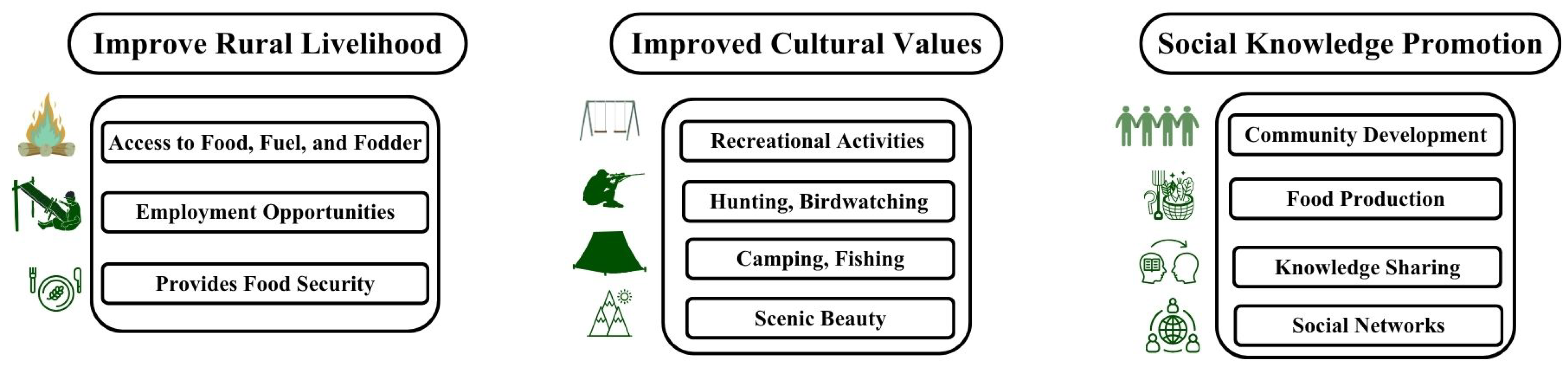
Agroforestry helps improve food security through diverse income streams, increased farm productivity, and reduced risk related to climate change and market fluctuations [88]. By integrating trees, crops, or livestock on their farms, farmers can access a stable food supply while generating additional income to purchase other essential foods [89]. Such diversification helps to reduce reliance on single-crop farming, making food available throughout the year [90]. Moreover, climate-resilient practices like forest farming and alley cropping significantly contribute to food security by maintaining yields even during extreme weather events [71,74]. It prevents farmers from experiencing total crop failure and provides additional financial support, helping them recover quickly from economic losses. For example, a research study conducted in Western Kenya demonstrated that agroforestry reduced food insecurity by 25% during droughts and floods, with each household having access to sufficient food [90]. Along with direct food production, agroforestry enhances food security through improving soil health, increasing nutrient availability, and increasing productivity [91]. Additionally, the fruit trees and crops in these systems provide a year-round food supply, offering dietary benefits [87]. A study has shown that integrating apple trees into agroforestry systems significantly contributes to improving income and food security, as well as increasing educational opportunities for farming families [92]. Thus, agroforestry serves as a sustainable strategy for strengthening food security while enhancing overall livelihoods. Figure 8 provides the synthesized social benefits offered by agroforestry systems from reviewed articles.
Figure 8.
Different Types of Social Benefits Provided by Agroforestry Systems.
3.2.2. Economic Benefits
Diversified Income
Agroforestry diversifies farmers’ income sources by providing both short-term and long-term financial stability. It helps generate multiple revenue streams through the integration of trees and crops, as well as diversifying crops in the field [66]. The selling of fruits, timber, and other tree products not only increases household income but also provides opportunities for health and education [79]. Different varieties of trees, including those that produce fruits, nuts, fodder, and medicinal plants, generate multiple income streams through marketable products while enhancing food security [64,71]. Agroforestry will provide access to locally homegrown foods and fodder for animals, which reduces the overall costs for farmers [37,76]. Besides direct income, agroforestry supports economic growth through value-added product processing and marketing initiatives. Agroforestry provides access to a range of tree crops, wood products, seeds, non-timber forest products, food, nuts, vegetables, mushrooms, forage, and other resources, which diversifies the income of smallholder farmers [38,93]. Farmers can commercialize these products at higher prices, which strengthens the rural economy and provides stability against market fluctuations [94]. Furthermore, these systems contribute to environmental sustainability by enhancing soil health through carbon sequestration, thereby increasing the natural capital on their farms [65,95]. Overall, agroforestry offers small farmers diversified income opportunities, mitigating the risk of market fluctuations while promoting sustainable rural development.
Source of Income Generation
Agroforestry increases farmers’ income by integrating high-value crops with staple crops, enabling them to sell multiple products at higher prices [96]. By producing wood and non-wood energy sources, farmers generate additional revenue while reducing forest degradation. A study conducted in Latin America’s arid and semi-arid regions shows that farmers practicing agroforestry had higher incomes than those depending solely on conventional farming [62]. Combining different crops into the systems enhances productivity, reduces dependence on external farm inputs, and provides stability against market fluctuations [27,62]. The sale of fresh fruits and vegetables, timber, and value-added products such as jam, jelly, wine, or whiskey at local markets provides additional income-generating opportunities [97]. A study in Brazil reveals that farmers supplying produce from agroforestry to public schools through the National School Feeding Program reduces household food expenses [98]. Similarly, a research study found that 91.3% of farmers adopted agroforestry mainly for financial benefits, 74.6% for fodder production, and 40% for fuelwood [99]. Additionally, agroforestry is also economical in terms of saving energy and time. A study shows that households adopting agroforestry spend significantly less time collecting firewood, 1.56 h per week, compared to non-adopters (3.4 h), thereby having extra time for other income-generating activities [71]. Furthermore, agroforestry also has the potential to offer financial incentives through carbon sequestration programs; for instance, the Clean Development Mechanism (CDM) under the Kyoto Protocol provides payments to farmers for adopting and promoting agroforestry practices [100]. Moreover, integrating fast-growing trees, such as hybrid poplars (Populus spp.), and high-value trees, like black walnuts (Juglans nigra L.), agroforestry can significantly boost farmer income compared to traditional monocultures [101]. Agroforestry generates income by protecting crops from severe weather events and climatic conditions, serving as a windbreak and balancing land for both economic and ecological benefits [27]. From a risk management perspective, agroforestry systems offer lower financial risk and more stable returns than monoculture farming [38,102,103]. Thus, in terms of output and stable income, agroforestry systems can offer combined market and non-market products and ecosystem services that ensure both short-term income and long-term security [42].
Enhance Recreation, Promote Ecotourism
Agroforestry offers a wide range of recreational and ecotourism opportunities, including wild foraging, hunting, wildlife observation, walking or hiking, fishing, off-road recreation, horseback riding, and camping [86]. These activities not only improve health and recreational opportunities but also provide additional income for farmers through sports and wildlife [82]. Integrating multipurpose trees into agroforestry enhances recreational activities and reduces production costs, improving the overall profitability of their farms [6,7]. In Ethiopia, fruit-based agroforestry systems play a significant role in livelihood improvement through recreational activities and contribute to household income, promoting ecotourism [104]. For instance, a study in Italy shows that agroforestry systems have high values for eco-tourism in the New Forest in England, as compared to monoculture [105,106]. Since tourism is increasing, the aesthetic and recreational opportunities provided by agroforestry have an excellent scope for uplifting the economic status [107]. It improves the rural farmer’s economy by supporting the farmers’ local engagement and conserves tree species with access to local food, fodder, and fuel wood, strengthening farmer’s livelihood capital [108]. Thus, when trees and crops are well-planned and managed on the field, it enhances economic stability and improves the socioeconomic status of small farmers [109,110].
Low Cost of Adoption
Agroforestry is a sustainable way to intensify farming practices while enhancing food security with minimum external inputs and effective crop-livestock integration [37]. In modern agricultural practices, the use of heavy machinery can damage soil structure, accelerate decomposition, and lead to nutrient loss through leaching and volatilization, ultimately resulting in nutrient imbalances. In contrast, agroforestry preserves soil quality, minimizes nutrient runoff, and reduces reliance on chemical pesticides and fertilizers, avoiding environmental degradation and management costs [94]. Agroforestry can be adopted using locally available resources with minimal investment. As natural conditions are provided, most management takes place naturally, which reduces the cost of adoption. It efficiently utilizes the soil and water resources, lowers input costs, improves productivity, and provides economic and environmental stability [96]. Hence, agroforestry serves as a cost-effective strategy for mitigating climate change, enhancing carbon storage, and improving soil health, while increasing productivity and reducing the cost of adoption [74].
Employment Opportunities
Agroforestry offers new job opportunities and markets for landless farmers and rural communities facing unemployment. The production of diverse products, such as fruits, timber, honey, mushrooms, and truffles, in the market, agroforestry enhances rural livelihoods through employment opportunities [111]. It supports small and medium-sized industries through various activities, such as nursery raising, mat weaving, basket making, and honey collection, thereby reducing rural-to-urban migration by providing sustainable income sources [112]. Agroforestry enhances rural farmers’ earnings by incorporating various products into the market and diversifying their products [72,111]. Further studies have shown that agroforestry systems, such as cacao and alder-based farming, generate higher employment rates and provide financial stability from various processing and management processes [113,114]. In addition to this, research conducted by [78] found that forest products, such as acorns, cork, and wood, provide the most tremendous economic benefits, increasing overall farm profitability (0.1455), with additional benefits, like honey, mushrooms, and truffles. These forest products, such as acorns, wood, and cork, were found to contribute to increasing farm profitability with a potential 4.5% positive rate of return [89]. Similarly, the study of alder-based agroforestry in India found that it generates the most employment for society [115]. Hence, the adoption of agroforestry enhances householders’ income through new employment opportunities [97]. Especially for farmers with limited education or job opportunities, agroforestry presents a significant opportunity to secure employment and improve their livelihoods [116].
Cost-Effective Disease and Pest Control
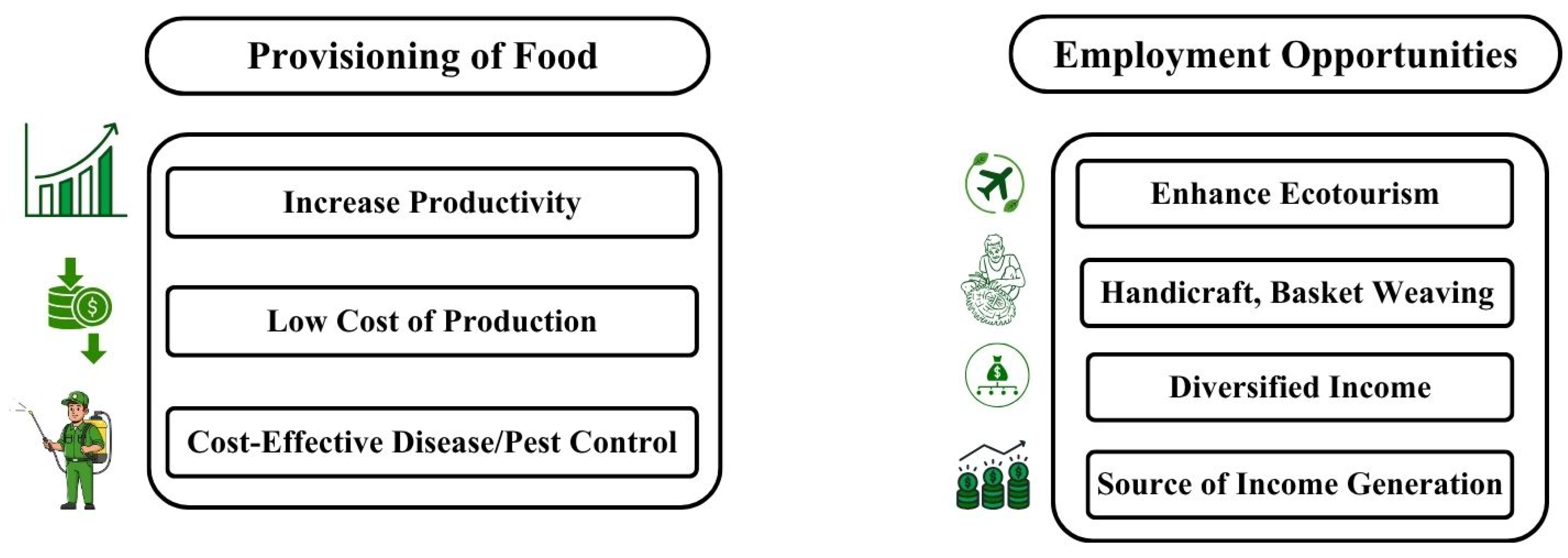
Approximately 37% of U.S. crop yields were damaged by pests, while 20–40% of global crops were lost because of diseases [117]. Chemical pesticides dominate the control of diseases and pests. However, they have various impacts on human health, are expensive, and contribute to the development of resistance, supporting the outbreak of dangerous pests. Therefore, chemical control is neither economically nor environmentally sustainable. Adopting agroforestry promotes the use of natural enemies of pests and diseases as eco-friendly alternatives, thereby reducing crop loss while minimizing environmental harm. Agroforestry reduces the need for expensive inputs, such as fertilizers and pesticides, thereby lowering production costs and improving farm profitability [118]. Agroforestry provides diverse habitats, which limit the spread of pests, weeds, and diseases, thereby reducing crop damage while minimizing the need for heavy pesticide use [68]. Lower pest abundance and damage are observed in perennial agroforestry systems, mainly due to shading and landscape complexity [119]. Trees in agroforestry systems serve as habitats for various species of biodiversity, which act as natural predators, further controlling harmful pests and minimizing the need for pesticides. Trees, hedges, and windbreaks act as physical barriers, controlling pests carried by the wind [120]. Soil microbes in AFS help suppress pathogens, and tree shading reduces disease incidence by modifying microclimates [121]. Agroforestry systems promote natural predators of pests, thereby boosting biocontrol and increasing biodiversity [25]. For example, a research study in Bangladesh shows that by growing Piper chaba (a biocontrol plant) together with several popular tree species, farmers become more financially stable [76]. Agroforestry is a key in providing a ‘win-win’ relationship between crop yield and biocontrol methods [24]. Furthermore, it can provide sources of adult parasitoid food, mating sites, rest and oviposition, and host plant distributions, utilizing techniques such as trap crops/repellent crops [106]. Hence, by reducing input costs and providing a cost-effective approach to control disease and pests, agroforestry seems to be a sustainable farming solution. Figure 9 provides the synthesized economic benefits of agroforestry systems from reviewed articles.
Figure 9.
Different Types of Economic Benefits Provided by Agroforestry Systems.
3.2.3. Environmental Benefits
Enhanced Productivity
Agroforestry enhances productivity by optimizing the utilization of essential growth resources, including light, water, and soil [122]. It offers various ecological benefits and optimizes land productivity with fewer external inputs [37]. Various studies across different regions have shown that agroforestry is more productive and profitable for farmers than traditional monoculture or forestry on the same land. For example, farmers in arid and semi-arid regions reported higher yields from agroforestry practices compared to traditional crop and livestock systems [96]. Research conducted on biomass production further supports these findings. For instance, a study conducted in Cacao Agroforests found that the total biomass (304 t ha−1) significantly exceeded that of food crop fields (85 t ha−1), showing enhanced productivity in agroforestry [113]. Similarly, a study of the land equivalent ratio (LER) focuses on the efficiency of agroforestry in land use. For example, in Denmark, a combined food and energy production system had LER values ranging from 1.14 to 1.34, showing that agroforestry required 14% to 34% less land compared to monoculture for the same output [123]. Another study examining 14 agroforestry practices found that 12 of them had LER values between 0.95 and 1.30, showing their higher productivity as compared to standalone forestry or crop systems [124]. Likewise, other research done in five different pedo-climatic zones with different crops, trees, and grasses showed LER values ranging from 1.36 to 2.00, further showing the benefits of agroforestry in enhancing productivity [125]. Hence, agroforestry is more profitable to farmers than agriculture or forestry for a particular land area [42]. A study conducted at the National Research Centre for Agroforestry found that Aonla-based agroforestry systems with Leucaena and Black gram have a benefit–cost (B:C) ratio of 3.28, indicating higher profitability in marginal lands [126]. Similarly, adopting windbreak plantings has been found to enhance agricultural productivity, reducing crop losses. For instance, in Nebraska, 62% of farmers reported an increase in crop yields due to windbreaks on their farms [127] while in South Dakota, 88% of surveyed farmers experienced similar benefits [128]. The benefits of agroforestry also extend to semi-arid regions in Haryana. Research conducted in Haryana revealed that the integration of trees resulted in a significant enhancement of crop yields compared to open-field farming [129].
Soil Conservation and Enhancing Soil Fertility
Maintenance and enhancement of soil fertility are vital for global food security and sustainability [130]. Soil conservation enhances soil fertility through erosion control, organic matter accumulation, and nutrient preservation, which are supported by agroforestry systems [41]. Research conducted in southern Malawi has found that integrating legume trees into agroforestry systems reduces artificial fertilizer needs by 75%, thereby improving soil properties and providing environmental benefits [14]. The incorporation of trees into farms enhances soil characteristics, including field capacity, organic matter, potassium, phosphorus, and carbon stocks, while also reducing bulk density. This leads to increased water retention, allowing moisture to be released slowly to plants [131,132]. Furthermore, agroforestry enhances soil aggregate stability, soil carbon, soil nitrogen, and soil enzyme activity compared to row crops [133]. The presence of organic matter plays a crucial role in soil aggregation, decreasing bulk density and improving water quality, and air circulation in the rhizosphere, thereby enhancing groundwater recharge and nutrient availability [131]. In agroforestry systems, biomass production is higher than in forests due to reduced competition, which enhances soil organic matter (SOM) content through nutrient recycling [134]. Unlike crop roots, tree roots absorb nutrients that have leached into deeper soil, which are again recycled back into the system through leaf litter, improving soil fertility [135]. Numerous studies demonstrate the benefits of agroforestry in improving soil fertility. For instance, research conducted in central Alberta, Canada, found that agroforestry significantly increased soil organic carbon and nitrogen levels in the 0–10 cm mineral layer [136]. Similarly, the age of agroforestry systems affects soil organic carbon stocks and soil fertility across different soil depths [137]. The study in the Southern United States found that the alley cropping system with pecan and cotton (Gossypium hirsuitum) led to an increase in soil organic matter and microbial biomass, enhancing soil fertility [138]. Another study on an agri-silviculture system found that soil organic carbon increased by 13–16% from its initial value, which was 5 to 6 times higher than in sole cropping systems [126]. In southern Cameroon, tree-based home gardens exhibited higher soil pH, organic matter, calcium, and magnesium levels in cacao agroforestry systems compared to those in secondary forest [113]. Furthermore, the incorporation of legume trees in agroforestry systems enhances soil fertility, stimulates microbial activity, and positively impacts crop yield [139]. Leguminous tree roots and nodules provide significant nitrogen sources to soils through root exudates, mycorrhizal networks, and litter decomposition processes [140]. Diverse plant species boost soil microbial diversity and enrich soil invertebrate populations through diverse leaf litter accumulation [141]. Furthermore, it enhances the growth of arbuscular mycorrhizal fungi, which in turn boosts litter decomposition, thereby increasing plant nutrient availability [37]. Likewise, agroforestry reduces the need for agrochemical use, resulting in lower fertilization compared to annual crops and providing more phosphorus under tree canopies [142,143]. The concentrations of soil carbon and nitrogen were found to be higher near the base of the trees, emphasizing the role of shade trees in increasing soil organic matter, soil pH, CEC, Ca, and Mg, thereby conserving soil and enhancing soil fertility [144]. Trees have an extended growing season compared to most agronomic crops; therefore, trees in an agroforestry system will capture nutrients before and after the primary cropping season, thereby enhancing soil fertility. Hence, soil fertility in agroforestry systems is influenced by increased nitrogen input by N2-fixing trees, improved nutrient availability from tree biomass decomposition, and the uptake of nutrients from deeper soil layers by trees [20].
Enhance Water Use Efficiency and Erosion Control
Trees in an Agroforestry System can significantly affect water availability for crops. The deep roots of trees in the system can increase the rate of water infiltration and water-holding capacity, along with reducing runoff, thereby enhancing soil stability [14,133,145]. Tree roots can absorb nutrients from deep soil layers, reducing the amount of nutrients that could pollute ground and surface water [94,133,146]. For example, agricultural surface runoff can lead to the excessive transfer of sediments, nutrients, and pesticides to water bodies, resulting in eutrophication, as seen in the Gulf of Mexico. Agroforestry systems, particularly riparian buffers, help to counteract non-point source pollution from agricultural fields by reducing surface runoff and increasing infiltration [146]. Trees in agroforestry systems slow down the runoff rate and filter out pollutants before they reach groundwater [145]. Furthermore, integrating trees with crops enhances soil quality through improved infiltration and increased microbial activity [133]. Similarly, agroforestry systems reduce soil erosion by improving its stability. The presence of trees increases organic matter inputs through litterfall and pruning, thereby protecting the soil from erosion and improving its stability [147]. Ground cover from leaf litter and tree mulch intercepts rainfall, decreases the velocity of runoff water, reduces evapotranspiration, and limits soil crusting. These processes reduce the impacts of rainfall, minimize soil degradation, and improve soil structure [148]. Trees further contribute to erosion control by intercepting precipitation, while root biomass and litter accumulation support soil organisms, enhancing soil structure and stability and thereby reducing erosion rates [149]. Agroforestry systems improve water use efficiency by reducing unproductive water loss. For example, research in India and other regions has found that these systems can double the utilization of rainwater compared to annual cropping systems. The combination of crops and trees utilizes soil moisture more efficiently than monoculture, resulting in improved drainage and salinity control [150,151]. For example, research found that water infiltration rates in areas planted with young trees were up to 60 times higher compared to adjacent grazed pastures [152]. Additionally, agroforestry helps prevent wind erosion, with approximately 300 million hectares of farmland globally protected from erosion [153]. A study across Europe found that agroforestry was more effective in controlling erosion than conventional monoculture and forested sites [37].
Biodiversity Conservation and Pollination Services
Agroforestry plays a crucial role in biodiversity conservation by providing habitats for species with tolerance to disturbance, preserving genetic resources, and offering a sustainable alternative to traditional habitat conservation methods. It helps maintain floral and faunal diversity, while also preventing soil degradation and supporting ecosystem resilience [36]. Agroforestry systems incorporating shade coffee and multi-strata cacao support diverse plant and animal communities, resulting in increased overall species richness compared to conventional agricultural practices [14,154]. The integration of trees and shrubs into agrarian landscapes creates a habitat for different species of birds, insects, bats, and other wildlife, further supporting biodiversity conservation [155]. Agroforestry provides floral diversity, foraging resources, and habitats for pollinators, which improves crop pollination and yields [20]. It also serves as an ecological corridor, connecting fragmented habitats and facilitating the movement of species, which is crucial for maintaining genetic diversity and ecosystem stability [24]. The diverse plant structures in agroforestry systems contribute to greater biological diversity in the soil and litter, supporting soil fauna communities that are essential for nutrient cycling and soil health [154]. Agroforestry prevents habitat destruction by reducing erosion and flooding and ultimately benefiting both terrestrial and aquatic species. Further, agroforestry systems can serve as refuges for endangered species, providing critical habitats that support their conservation [113,154]. Besides habitat preservation, agroforestry reduces pesticide exposure and promotes natural pest control. A research study shows higher butterfly diversity and increased pollination services in agroforestry systems as compared to monocultures [156]. Woody plants in AFS provide important resources for bees and other beneficial insects. Trees, hedges, and windbreaks in agroforestry systems create a physical barrier against pests and pathogens while also providing nesting sites for pollinators and beneficial insects [83]. Mixed species of agroforestry systems enhance biodiversity and landscape connectivity through diverse tree and crop species in traditional farmlands [20]. For instance, the interaction of trees and crops is found to increase biodiversity and pollination services, improving ecosystem health, saving on pest control, and influencing crop yield [74]. In a study analyzing the effect of agroforestry on soil fauna, it was found that 70% of the datasets showed an increase in soil abundance, with only two studies having an adverse effect [157]. Field study further demonstrates that agroforestry systems have higher plant diversity, positively contributing to soil microbial diversity [141]. Agroforestry with components like trees, crops, grasses, livestock, etc., provides greater species variety and ecosystem stability. This strengthens food webs, supports pollinators, and enhances biodiversity in the systems [36].
Carbon Sequestration
Adopting agroforestry systems or integrating trees or shrubs has increased the amount of carbon sequestrated compared to monoculture or row crop fields. Agroforestry has both climate-adaptive and mitigation potential, which enhances CO2 sequestration while improving crop productivity and food security [158]. Agroforestry systems have a high potential to sequester carbon due to their increased ability to capture and utilize growth resources [26]. Agroforestry systems sequester carbon and can be sold as carbon credits in the market. Maximizing carbon storage supports extending tree rotation ages and producing durable goods from harvested timber [24]. The carbon sequestration potential of agroforestry varies based on system type, species composition, age, location, environmental factors, and management [40]. A study found that agroforestry systems can sequester carbon, ranging from 0.29 to 15.21 Mg ha−1 yr−1 aboveground and 30–300 Mg C ha−1 up to a 1 m depth in the soil [26]. Another similar study found that agroforestry could sequester carbon between 1.1 and 2.2 (Pg) in vegetation and soil over 50 years from 585 to 1215 million hectares of land in Africa, Asia, and the Americas under agroforestry systems [159]. Ref. [160] found that a 15-year-old field of an agroforestry system increases carbon sequestration from 30 to 70% with a rate of 4.4–10 tons of C ha-1 year-1, accumulating approximately 83.6 tons of carbon per hectare at a 30 cm depth. The trees within these systems absorb CO2 while also reducing emissions of greenhouse gases, such as CH4 and N2O, sequestering between 13 and 41 tons of CO2 equivalent per hectare annually [161]. Overall, agroforestry can store between 12 and 228 Mg of carbon per hectare [40]. For example, research conducted in Belgium shows that the trees increased carbon by 5.3 tons per hectare compared to treeless plots [162]. Furthermore, a study in Canada found that intercropping crops with Poplar resulted in a 6.2-ton increase in soil organic carbon after 21 years [135]. Agroforestry sequesters 2.75 tons of carbon per hectare per year on arable and pastureland, with a lower environmental footprint compared to conventional production systems [134]. For instance, cacao agroforests hold 62% of the carbon stock of primary forests and have diverse plants and microfauna [112]. Recent studies in various Agroforestry Systems under diverse ecological conditions have shown that tree-based agricultural systems store more carbon in deeper soil layers near the trees compared to treeless systems [20]. Tree components in agroforestry systems can be significant sinks of atmospheric carbon, increasing the amount of carbon stored in lands devoted to agriculture while still allowing for the growth of food crops [134]. A meta-analysis of greenhouse gas emissions found that agroforestry can mitigate 27 ± 14 tons of CO2 per hectare per year, and 70% of the sequestered carbon comes from biomass, with the remaining 30% stored in the soil [160]. Similar research on the Poplar and eucalyptus-based agroforestry systems in India found the potential to sequester carbon stocks of 212.7 Mg C ha−1 and 237.2 Mg C ha−1, respectively, for climate change mitigation [163]. Moreover, agroforestry increases the soil organic carbon by 23.7–35.6% compared to traditional crops, with 28-year-old systems having SOC stocks of 65.3–71.6 Mg/ha in the top 1 m soil layer, compared to cropland (52.8 ± 2.6 Mg/ha) [164]. Findings of [158] showed that managed forests store an average carbon of 335 Mg C ha−1, traditional agroforests 145 Mg C ha−1, and pastures 46 Mg C ha−1 in vegetation fields at 40 cm depth. Agroforestry systems can store 19% more soil carbon than cropland or pasture, with subtropical home gardens having the highest carbon stocks both aboveground and belowground [165]. The average carbon stock of agroforestry trees in the sampled plots is 83.7 ± 7.0 t C/ha, including above and below-ground biomass [166]. Shade trees provide diverse litter inputs that increase soil organic matter, leading to improved carbon sequestration and nutrient cycling [167].
Microclimate Improvement
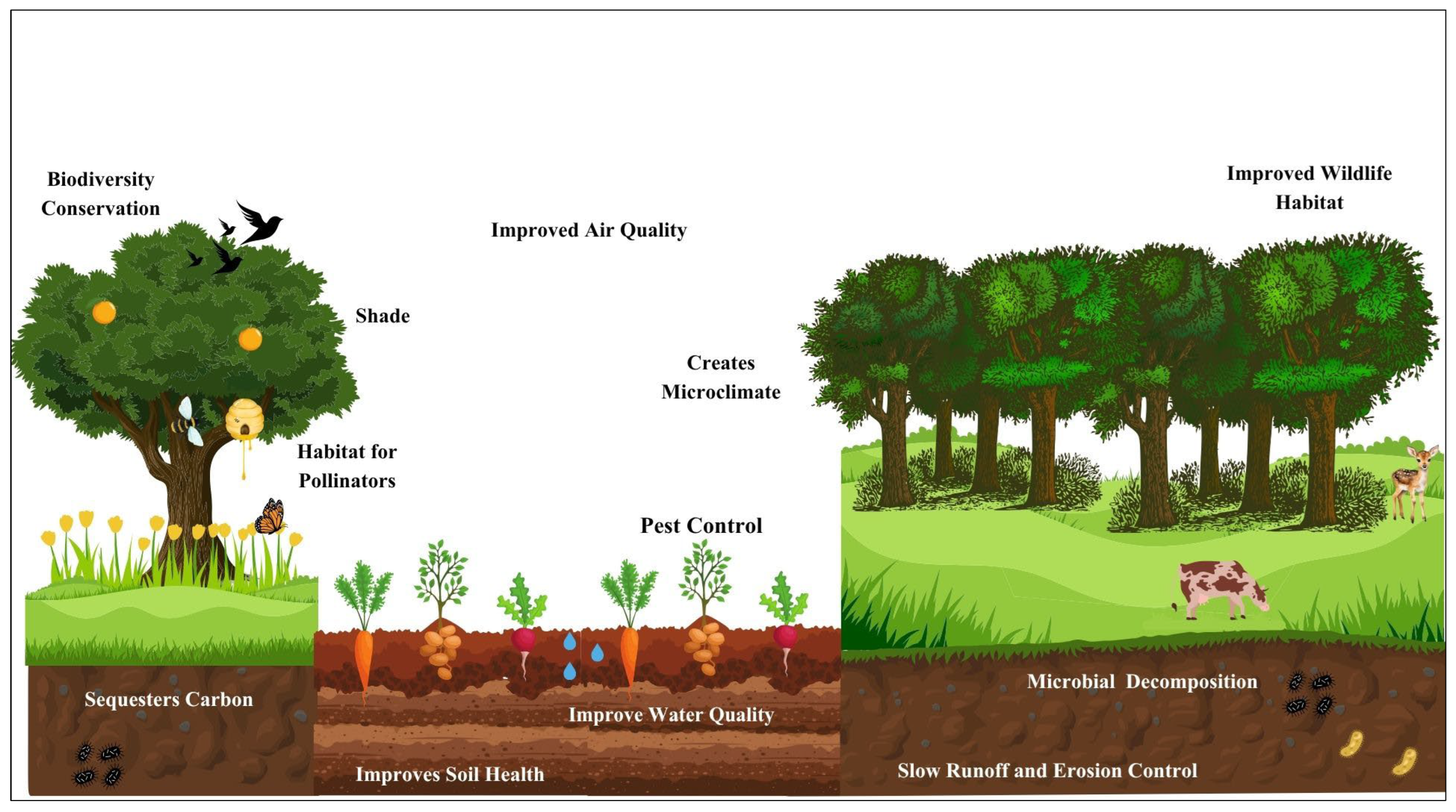
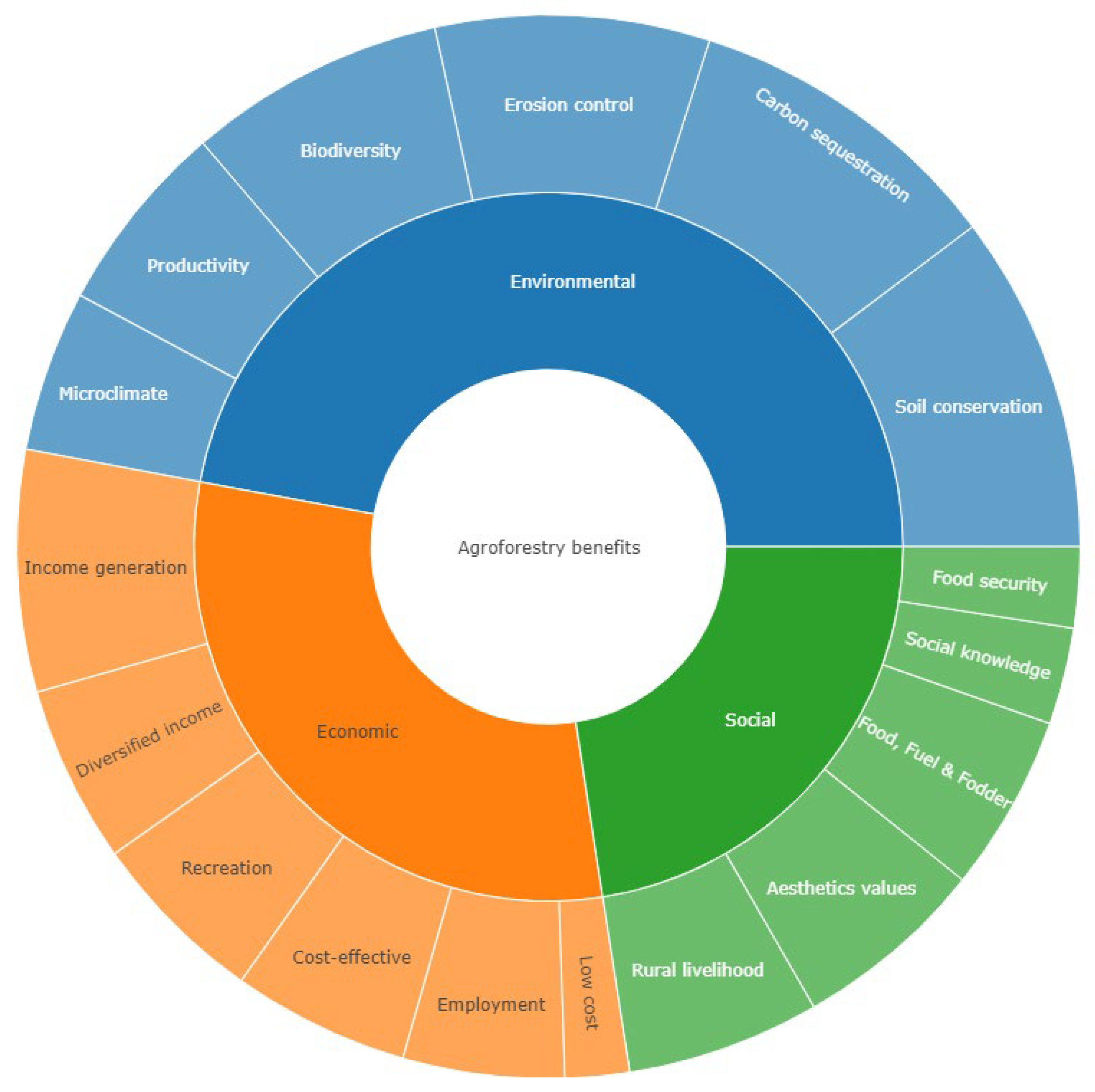
Trees in agroforestry systems alter natural resources like light, wind, humidity, temperature, and water loss [168]. It helps to create a favorable environment for plant growth and animal grazing. The use of trees as shelterbelts in areas that experience high wind or sand movement is a well-established example of microclimate improvement, resulting in improved yields [128]. A research study conducted in India shows that the establishment of micro-shelterbelts in arable lands, by planting tall and fast-growing plant species on the windward side and shorter crops such as vegetables on the leeward side of tall plants, helped to increase the yield of okra by 41% and cowpea by 21% over the control [130]. Generally, the practice of shelter belts has resulted in a 50% reduction in wind erosion magnitude [152]. A research study found that the adoption of shelter belts reduced the amount of soil loss from wind erosion to 184.3 kg/ha, compared to bare soil [130]. Moreover, trees in agroforestry create windbreaks that minimize heat loss during cold seasons and reduce heat stress in summer, further increasing transpiration rate, increasing humidity levels, and maintaining moisture in dry conditions [169]. Additionally, trees in agroforestry provide shade, reduce extreme temperatures in the soil and air, and increase soil nitrogen and carbon concentrations near the trees [24]. However, the beneficial effects of shade trees depend upon the nature of the understory crops. The positive effect is reported for crops that require shading for normal growth, e.g., coffee, black pepper, turmeric, and cacao [20]. These crops will have a direct and significant effect on the yield in the presence of shade. A research study demonstrated that agroforestry systems can effectively protect coffee crops from extreme microclimate and soil moisture fluctuations, offering an economically feasible adaptive strategy for farmers facing climate extremes [170]. Shaded agroforestry coffee systems improve microclimate conditions and deep-water drainage compared to unshaded coffee systems [171]. Hence, agroforestry contributes to improving microclimatic conditions and enhancing crop yields, thereby providing long-term environmental benefits. Figure 10 provides synthesized environmental benefits from reviewed articles. Additionally, Figure 11 shows the detailed evidence map of social, economic, and environmental agroforestry benefits. This figure indicates stronger evidence base for environmental benefits compared to some economic and social benefits.
Figure 10.
Different Types of Environmental Benefits Provided by Agroforestry Systems.
Figure 11.
A sunburst evidence map of agroforestry benefits. The inner ring shows social, economic, and environmental benefits, with segment size proportional to the number of studies reporting at least one benefit in that domain. The outer ring displays specific benefits, with segment size reflecting the number of supporting studies (counts shown by arc length).
3.3. Adoption Barriers to Agroforestry Systems
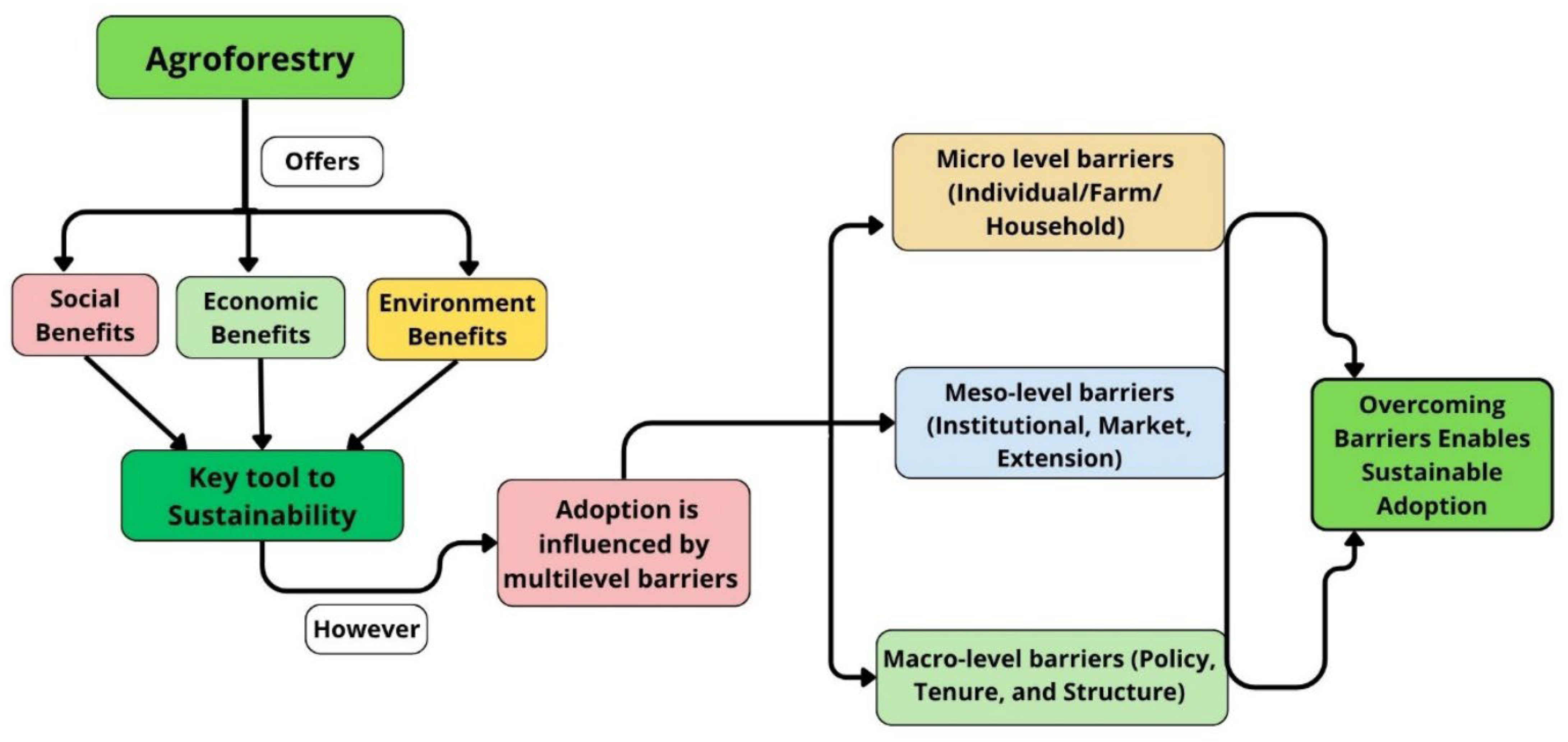
Agroforestry has significant potential for various ecological, social, and economic benefits. Despite its multifaceted benefits, it has not been widely adopted as a practical method among farmers. Data regarding the adoption rate of agroforestry among small farmers in the U.S. is very low. Its adoption is progressing slowly due to various socioeconomic, environmental, and technical obstacles (Figure 12). Several studies have already explored different types of adoption barriers; however, there are no comprehensive studies on these barriers that discuss where and at what level they exist in an agroforestry system. Hence, out of 148 research studies, this review paper thoroughly reviewed nine studies specifically on barriers, and nineteen additional studies which discussed barriers along with benefits. The barriers framework was prepared from the reviewed papers (n = 28) and were classified into three major categories: Micro, Meso, and Macro level barriers, which help us understand which level poses the most challenges for adopting agroforestry systems and which level should be prioritized more for increasing adoption. Each individual study was found to report multiple barriers without clear separation, so citations are presented at the category level instead of by barrier.
Figure 12.
Agroforestry as a Key Tool for Sustainability: A Review of Social, Economic, and Environmental Benefits with Its Multilevel Barriers to Adoption.
3.3.1. Micro-Level Barriers for Adopting Agroforestry Systems
Micro-level barriers refer to factors that occur within individual farmers or at the household level, directly influencing their decision to adopt agroforestry systems on their farms. These barriers mainly include socio-economic barriers, knowledge and technical barriers, and access to resources. Some of those reviewed micro-level barriers, along with supporting studies, are discussed in Table 1.
Table 1.
Micro-level barriers affecting agroforestry adoption at the farm, household, and individual scales, categorized into economic, technical, socio-cultural, and biophysical constraints.
3.3.2. Meso-Level Barriers for Adopting Agroforestry Systems
Meso-level barriers are those challenges that occur at the regional or institutional level, affecting groups of people rather than individual decisions to adopt agroforestry systems. It includes some of the institutional and market-related barriers, as well as various community-related barriers. Some of the reviewed meso-level barriers that affect farmers’ decisions are listed in Table 2.
Table 2.
Meso-level barriers that constrain agroforestry adoption due to institutional shortcomings, weak market and value-chain structures, and inadequate community coordination, underscoring how systemic support gaps hinder farmers’ ability to access information, resources, and functioning markets.
3.3.3. Macro-Level Barriers for Adopting Agroforestry Systems
Macro-level barriers are those challenges that are broad in scope and exist at the national and regional levels. This is much related to the laws, policies, and budgets that affect the adoption decision of large groups of farmers. Generally, these barriers are not in the control of farmers; it is about governance, structure, and systems that turn out to be obstacles. Some of the reviewed macro-level barriers within agroforestry systems are presented in Table 3.
Table 3.
Macro-level barriers to agroforestry adoption rooted in national policy, tenure systems, and structural factors, illustrating how inadequate incentives, unclear regulations, and environmental governance challenges create systemic constraints beyond farmers’ control.
4. Discussion
This review paper aims to synthesize the extensive and fragmented literature on the social, economic, and environmental benefits of agroforestry, as well as its barriers to adoption, in an integrated and structured manner. It demonstrates that agroforestry systems offer multidimensional benefits, encompassing social, economic, and environmental aspects, and integrate these three pillars of sustainability into a unified framework. However, it clearly shows that the adoption of agroforestry practices is lower due to multiple barriers affecting the farmers’ adoption decision. While many papers discuss benefits, very few have mentioned that adoption barriers exist among the farmers. This paper presents a novel approach to understanding barriers at the micro, meso, and macro levels.
The paper demonstrates the temporal increase in publications, with more than 47 research articles published between 2015 and 2019. This increase in publications indicates a growing research interest in agroforestry during this period. An increase in funding opportunities, research interests, publication priorities, and the rise in international collaborations may be some of the reasons behind the growing number of publications. However, the geographical locations of the reviewed articles showed that most research articles were concentrated in Africa and Western Europe, followed by North America. This shows that the evidence base for agroforestry benefits and its barriers to adoption is geographically uneven. Articles from these regions are high because these regions have well-established research institutions for agroforestry (World Agroforestry Centre). Western Europe has a long history of established land use traditions, with strong research funding institutions contributing to research related to climate and biodiversity initiatives. In many African countries, agroforestry provides access to fuelwood, fodder, and fruit, while also enhancing soil fertility and improving rural livelihoods [72,74,75]. Agroforestry is adopted as a tool for poverty reduction, food security, and climate adaptation in African regions [88,166].
Similarly, developed like the United States, Canada has better access to resources and research funding opportunities, which have increased agroforestry research. However, these priorities should be shifted and concentrated within developing countries, where studies are more scattered and needed [14]. These developing countries face numerous barriers, and the successful adoption of agroforestry would add significant value to their livelihoods [48,51]. Additionally, several regions of the world, including Central and Eastern Europe, Russia, and the Middle East, are significantly underrepresented in research, highlighting a notable gap. This lack of representation prevents the development of region-specific recommendations and indicates the geographic areas that future studies should focus on to enhance our global understanding of agroforestry.
Furthermore, our review reveals that among the 148 reviewed articles, approximately 57 articles consistently reported environmental benefits [20], while only eight articles discussed economic benefits [6], and 17 articles addressed social benefits [80]. This highlights the existing gap in the literature because the benefits of agroforestry do not always translate to environmental benefits [43]. Which shows more studies focused on agroforestry and its contribution to sustainability need to be studied. However, in our full-text synthesis, we found that most studies focus on environmental benefits, while very few focus on economic and social benefits, indicating that the strength of evidence is uneven across themes. Although the environmental benefits were largely discussed among the reviewed studies, the environmental benefits, along with their barriers to adoption, are the least discussed. We therefore interpret environmental benefits as more reliable, while their barriers need further research.
Moreover, we tried to review articles from the perspective of combined benefits. From our analysis, we found that socio-economic benefits were discussed in five articles; a similar case was observed with environmental and social benefits. However, economic and environmental benefits were discussed comparatively in higher articles (10). Furthermore, 18 articles were able to discuss all three pillars of sustainability, indicating an increasing interest among researchers [27]. Through the literature, we found that agroforestry offers increased fertility, productivity, improved water quality, carbon sequestration, and soil conservation as major environmental benefits [19,20,24,25,36,42,65,98,123]. Socially, it strengthens rural livelihoods, improves access to food, fodder, and fuel, enhances food security [37,41,60,74,80], and economically provides diversified income and employment with a low adoption cost [6,7,27,33,35,110]. Together, these multidimensional benefits place agroforestry as a promising solution for long-term agricultural sustainability.
Despite these several benefits, adoption is low because these long-term benefits are hindered by short-term barriers. Some of the major barriers, including high initial costs, limited access to credit, and inadequate technical knowledge, discouraged farmers from adopting such practices [46,49,62,124,172,175,187]. These barriers vary across regions at multiple levels. The barriers perceived by one might not be a barrier for others. Farmers are the ultimate decision-makers, and their decisions are voluntary; therefore, understanding the barriers at specific levels is crucial in determining where actual action is needed. Our review analysis revealed that most of the reviewed papers discussed micro-level barriers that exist at the farm, household, and individual levels, which are short-term and relatively easy to address. Although the barriers were less pronounced at the meso (market, institution) and macro (policy, land tenure systems) levels, they are long-term and require strong action to address them. Hence, to increase adoption, more priority must be given to meso- and macro-level barriers compared to micro-level barriers, considering social, economic, and environmental benefits.
5. Conclusions
This review paper found that agroforestry provides social, economic, and environmental benefits, directly contributing to the three pillars of sustainability. We found that research on social and economic benefits was limited compared to research on environmental benefits, indicating that the distribution of available research is not globally balanced. Africa, Western Europe, and Northern America are primarily studied regions with well-established funding institutions and research opportunities; however, other regions, such as the Middle East, Latin America, and parts of Europe, are less well-represented despite their suitable environments.
Hence, the conclusions of this review are drawn from the regions where evidence is concentrated. For underrepresented regions, further study is needed in the future. Full-text review papers with combined benefits demonstrate that many papers highlight the social, economic, and environmental benefits of agroforestry; however, they do not explicitly explain these benefits. Further, our paper discusses the micro, meso, and macro-level classification of adoption barriers. Previous studies have listed the generic barriers, such as financial, institutional, and environmental, but we have organized them systematically. This classification was helpful to policymakers in determining which levels have more barriers in specific regions and need to be prioritized. We found that many studies have discussed micro-level barriers, which are relatively easy to resolve; however, macro-level barriers are the most persistent and least studied. Out of all studies, only nine articles specifically discuss barriers to adoption, while others include barriers to adoption along with other combined benefits of agroforestry. This highlights the importance of prioritizing barriers while considering the benefits of agroforestry. Overall, integrating social, economic, and environmental benefits with barriers in a unified evaluation approach will provide a holistic understanding of agroforestry’s contribution to sustainability, specifically in those regions where evidence is more concentrated.
This study has several limitations that warrant consideration. First, the review synthesizes heterogeneous articles that vary in methods, study locations, time periods, and socio-ecological contexts, making direct comparison difficult. The analysis also reflects only the studies retrieved from SCOPUS and Google Scholar, which may have excluded relevant work from other databases, and the restriction to English-language publications may have overlooked important insights published in other languages. Despite a systematic and iteratively refined search strategy, some relevant studies may still have been missed due to the selection of keywords. Although the review highlights major benefits and barriers, it may not capture more subtle or context-specific insights that remain underreported in the literature, and it does not evaluate strategies for overcoming identified barriers. Additionally, while evidence was synthesized across multiple regions, studies from Central and Eastern Europe and Russia remain underrepresented, despite growing research activity in these areas; these regions should be prioritized in future work. Although the coding framework was collaboratively developed and refined, iterative coding may introduce minor inconsistencies in theme classification. A formal risk-of-bias assessment was not conducted, and all studies were treated equally, regardless of methodological rigor, which limited the interpretation of frequency-based results. Finally, the barrier framework is based on a relatively small number of studies, which may lead to some degree of overgeneralization.
Future research should aim to develop a more comprehensive understanding of agroforestry’s benefits, the barriers that limit its adoption, and the strategies needed to overcome those barriers, using broader databases and more inclusive search strings. Future studies should also adopt more integrative and quantitative approaches, with greater emphasis on developing regions where agroforestry has substantial potential to enhance livelihoods and environmental resilience. Examining how benefits and barriers are distributed across different geographic and socio-economic contexts would generate deeper insights, particularly for resource-deprived regions where agroforestry can contribute significantly to food security and sustainability. Understanding farmers’ attitudes, perceptions, and locally specific constraints will be essential for informing interventions. Because successful implementation of agroforestry requires a participatory approach, identifying and addressing barriers at micro, meso, and macro levels is crucial for accelerating adoption. Future research should also explore how agroforestry systems contribute to achieving the Sustainable Development Goals (SDGs), creating opportunities for more detailed interdisciplinary investigations in the years ahead.
Author Contributions
S.B.: Data curation, methodology, investigation, writing—original draft, formal analysis. S.P.: Software, validation, methodology, writing. S.U.: Supervision, reviewing, and editing, visualization, conceptualization. All authors have read and agreed to the published version of the manuscript.
Funding
This research was funded by USDA Capacity Building Grant (1025631) and USDA EVANS-Allen Project (accession # 7007252).
Institutional Review Board Statement
Not applicable.
Informed Consent Statement
Not applicable.
Acknowledgments
We want to thank the reviewers for their comments and attention to detail, which greatly improved the quality of this manuscript.
Conflicts of Interest
The authors confirm there are no conflicts of interest.
References
- Food and Agriculture Organization of the United Nations (FAO). The Future of Food and Agriculture—Alternative Pathways to 2050; FAO: Rome, Italy, 2018; Available online: https://www.fao.org/3/I8429EN/i8429en.pdf (accessed on 11 October 2025).
- Flies, E.J.; Brook, B.W.; Blomqvist, L.; Buettel, J.C. Forecasting Future Global Food Demand: A Systematic Review and Meta-Analysis of Model Complexity. Environ. Int. 2018, 120, 93–103. [Google Scholar] [CrossRef] [PubMed]
- Ritchie, H.; Roser, M. Half of the World’s Habitable Land Is Used for Agriculture. Available online: https://ourworldindata.org/global-land-for-agriculture (accessed on 10 October 2025).
- Food and Agriculture Organization of the United Nations (FAO); International Fund for Agricultural Development (IFAD); United Nations Children’s Fund (UNICEF); World Food Programme (WFP); World Health Organization (WHO). The State of Food Security and Nutrition in the World 2023: Urbanization, Agrifood Systems Transformation and Healthy Diets Across the Rural–Urban Continuum; FAO: Rome, Italy, 2023; Available online: https://www.fao.org/documents/card/en/c/cc3017en (accessed on 11 October 2025).
- Akanmu, A.O.; Akol, A.M.; Ndolo, D.O.; Kutu, F.R.; Babalola, O.O. Agroecological Techniques: Adoption of Safe and Sustainable Agricultural Practices among the Smallholder Farmers in Africa. Front. Sustain. Food Syst. 2023, 7, 1143061. [Google Scholar] [CrossRef]
- Maia, A.G.; Eusebio, G.d.S.; Fasiaben, M.d.C.R.; Moraes, A.S.; Assad, E.D.; Pugliero, V.S. The Economic Impacts of the Diffusion of Agroforestry in Brazil. Land Use Policy 2021, 108, 105489. [Google Scholar] [CrossRef]
- Iskandar, J.; Iskandar, B.S.; Partasasmita, R. Responses to Environmental and Socio-Economic Changes in the Karangwangi Traditional Agroforestry System, South Cianjur, West Java. Biodiversitas 2016, 17, 332–341. [Google Scholar] [CrossRef]
- United Nations Educational, Scientific, and Cultural Organization (UNESCO). UNESCO Raises Global Alarm on the Rapid Degradation of Soils. 2024. Available online: https://www.unesco.org/en/articles/unesco-raises-global-alarm-rapid-degradation-soils (accessed on 11 October 2025).
- Richardson, K.; Steffen, W.; Lucht, W.; Bendtsen, J.; Cornell, S.E.; Donges, J.F.; Drüke, M.; Fetzer, I.; Bala, G.; von Bloh, W.; et al. Earth Beyond Six of Nine Planetary Boundaries. Sci. Adv. 2023, 9, eadh2458. [Google Scholar] [CrossRef]
- Amundson, R. Soil and Human Security in the 21st Century. Science 2015, 348, 1261071. [Google Scholar] [CrossRef]
- European Commission. The European Commission’s Priorities. 2024. Available online: https://commission.europa.eu/priorities-2024-2029_en (accessed on 11 October 2025).
- Chatterjee, A.; Lal, R.; Wielopolski, L.; Martin, M.Z.; Ebinger, M.H. Evaluation of Different Soil Carbon Determination Methods. Crit. Rev. Plant Sci. 2009, 28, 164–178. [Google Scholar] [CrossRef]
- Charles, H.; Godfray, H.; Garnett, T. Food Security and Sustainable Intensification. Philos. Trans. R. Soc. B Biol. Sci. 2014, 369, 20120273. [Google Scholar] [CrossRef]
- Sheppard, J.P.; Reckziegel, R.B.; Borrass, L.; Chirwa, P.W.; Cuaranhua, C.J.; Hassler, S.K.; Hoffmeister, S.; Kestel, F.; Maier, R.; Mälicke, M.; et al. Agroforestry: An Appropriate and Sustainable Response to a Changing Climate in Southern Africa? Sustainability 2020, 12, 6796. [Google Scholar] [CrossRef]
- Nair, P.R. The Coming of Age of Agroforestry. J. Sci. Food Agric. 2007, 87, 1613–1619. [Google Scholar] [CrossRef]
- Van Noordwijk, M. Agroforestry as Nexus of Sustainable Development Goals. IOP Conf. Ser. Earth Environ. Sci. 2020, 449, 012001. [Google Scholar] [CrossRef]
- Zomer, R.J.; Euro-Mediterraneo, C.; Climatici, C.; Trabucco, A.; Coe, R. Trees on Farms: An Update and Reanalysis of Agroforestry’s Global Extent and Socio-Ecological Characteristics; World Agroforestry Centre: Bogor, Indonesia, 2014. [Google Scholar] [CrossRef]
- Perfecto, I.; Vandermeer, J. Biodiversity Conservation in Tropical Agroecosystems. Ann. N. Y. Acad. Sci. 2008, 1134, 173–200. [Google Scholar] [CrossRef] [PubMed]
- Jose, S.; Udawatta, R.P. Agroforestry and Ecosystem Services; Springer International Publishing: Cham, Switzerland, 2021; ISBN 9783030800604. [Google Scholar]
- Nair, P.K.R. Agroforestry Systems and Environmental Quality: Introduction. J. Environ. Qual. 2011, 40, 784–790. [Google Scholar] [CrossRef] [PubMed]
- Castle, S.E.; Miller, D.C.; Ordonez, P.J.; Baylis, K.; Hughes, K. The Impacts of Agroforestry Interventions on Agricultural Productivity, Ecosystem Services, and Human Well-Being in Low- and Middle-Income Countries: A Systematic Review. Campbell Syst. Rev. 2021, 17, e1167. [Google Scholar] [CrossRef] [PubMed]
- Kuhlman, T.; Farrington, J. What Is Sustainability? Sustainability 2010, 2, 3436–3448. [Google Scholar] [CrossRef]
- Oliver, M.A.; Gregory, P.J. Soil, Food Security and Human Health: A Review. Eur. J. Soil Sci. 2015, 66, 257–276. [Google Scholar] [CrossRef]
- Jose, S. Agroforestry for Ecosystem Services and Environmental Benefits: An Overview. Agrofor. Syst. 2009, 76, 1–10. [Google Scholar] [CrossRef]
- Udawatta, R.P.; Rankoth, L.M.; Jose, S. Agroforestry and Biodiversity. Sustainability 2019, 11, 2879. [Google Scholar] [CrossRef]
- Nair, P.K.R.; Kumar, B.M.; Nair, V.D. Agroforestry as a Strategy for Carbon Sequestration. J. Plant Nutr. Soil Sci. 2009, 172, 10–23. [Google Scholar] [CrossRef]
- Mukhlis, I.; Syamsu Rizaludin, M.; Hidayah, I. Understanding Socio-Economic and Environmental Impacts of Agroforestry on Rural Communities. Forests 2022, 13, 556. [Google Scholar] [CrossRef]
- Martin, T.; Sprunger, C.D. Sensitive Measures of Soil Health Reveal Carbon Stability Across a Management Intensity and Plant Biodiversity Gradient. Front. Soil Sci. 2022, 2, 917885. [Google Scholar] [CrossRef]
- Montgomery, D.R. Soil Health and the Revolutionary Potential of Conservation Agriculture. In Rethinking Food and Agriculture: New Ways Forward; Woodhead Publishing: London, UK, 2021; pp. 219–229. [Google Scholar] [CrossRef]
- Christin, Z.L.; Bagstad, K.J.; Verdone, M.A. A Decision Framework for Identifying Models to Estimate Forest Ecosystem Services Gains from Restoration. For. Ecosyst. 2016, 3, 3. [Google Scholar] [CrossRef]
- Krauss, J. What Is Cocoa Sustainability? Mapping Stakeholders’ Socio-Economic, Environmental, and Commercial Constellations of Priorities. Enterp. Dev. Microfinance 2017, 28, 228–249. [Google Scholar] [CrossRef]
- Coulibaly, J.Y.; Chiputwa, B.; Nakelse, T.; Kundhlande, G. Adoption of Agroforestry and the Impact on Household Food Security among Farmers in Malawi. Agric. Syst. 2017, 155, 52–69. [Google Scholar] [CrossRef]
- Kheiri, M.; Kambouzia, J.; Sayahnia, R.; Soufizadeh, S.; Mahdavi Damghani, A.; Azadi, H. Environmental and Socioeconomic Assessment of Agroforestry Implementation in Iran. J. Nat. Conserv. 2023, 72, 126358. [Google Scholar] [CrossRef]
- Van Noordwijk, M.; Tomich, T.P.; Verbist, B. Negotiation Support Models for Integrated Natural Resource Management in Tropical Forest Margins. Ecol. Soc. 2002, 5, 21. [Google Scholar] [CrossRef]
- Gochera, A.; Worku, H. Mangifera indica (L.) Tree as Agroforestry Component: Environmental and Socio-Economic Roles in Abaya-Chamo Catchments of the Southern Rift Valley of Ethiopia. Cogent Food Agric. 2022, 8, 2098587. [Google Scholar] [CrossRef]
- Jose, S. Agroforestry for Conserving and Enhancing Biodiversity. Agrofor. Syst. 2012, 85, 1–8. [Google Scholar] [CrossRef]
- Willmott, A.; Willmott, M.; Grass, I.; Lusiana, B.; Cotter, M. Harnessing the Socio-Ecological Benefits of Agroforestry Diversification in Social Forestry with Functional and Phylogenetic Tools. Environ. Dev. 2023, 47, 100881. [Google Scholar] [CrossRef]
- Montambault, J.R.; Alavalapati, J.R.R. Socioeconomic Research in Agroforestry: A Decade in Review. Agrofor. Syst. 2005, 65, 151–161. [Google Scholar] [CrossRef]
- Rosenstock, T.; Wilkes, A.; Jallo, C.; Namoi, N.; Bulusu, M.; Suber, M.; Bernard, F.; Mboi, D.; Mulia, R.; Simelton, E.; et al. Making trees count: Measurement, Reporting and Verification of Agroforestry under the UNFCCC. Agric. Ecosyst. Environ. 2018, 284, 106569. [Google Scholar] [CrossRef]
- Albrecht, A.; Kandji, S.T. Carbon Sequestration in Tropical Agroforestry Systems. Agric. Ecosyst. Environ. 2003, 99, 15–27. [Google Scholar] [CrossRef]
- Shrestha, R.P.; Ligonja, P.J. Social Perception of Soil Conservation Benefits in Kondoa Eroded Area of Tanzania. Int. Soil Water Conserv. Res. 2015, 3, 183–195. [Google Scholar] [CrossRef]
- Alavalapati, J.R.; Shrestha, R.K.; Stainback, G.A.; Matta, J.R. Agroforestry Development: An Environmental Economic Perspective. In New Vistas in Agroforestry; Nair, P.K.R., Rao, M.R., Buck, L.E., Eds.; Advances in Agroforestry; Springer: Dordrecht, The Netherlands, 2004; Volume 1, pp. 299–321. [Google Scholar] [CrossRef]
- Köthke, M.; Ahimbisibwe, V.; Lippe, M. The Evidence Base on the Environmental, Economic and Social Outcomes of Agroforestry Is Patchy—An Evidence Review Map. Front. Environ. Sci. 2022, 10, 925477. [Google Scholar] [CrossRef]
- Amare, D.; Darr, D. Farmers’ Intentions Toward Sustained Agroforestry Adoption: An Application of the Theory of Planned Behavior. J. Sustain. For. 2022, 42, 869–886. [Google Scholar] [CrossRef]
- United States Department of Agriculture, National Agricultural Statistics Service (USDA NASS). USDA National Agricultural Statistics Service. 2024. Available online: https://www.nass.usda.gov (accessed on 10 October 2025).
- Mazhar, R.; Ghafoor, A.; Xuehao, B.; Wei, Z. Fostering Sustainable Agriculture: Do Institutional Factors Impact the Adoption of Multiple Climate-Smart Agricultural Practices Among New Entry Organic Farmers in Pakistan? J. Clean. Prod. 2021, 283, 124620. [Google Scholar] [CrossRef]
- Kiyani, P.; Andoh, J.; Lee, Y.; Lee, D.K. Benefits and Challenges of Agroforestry Adoption: A Case of Musebeya Sector, Nyamagabe District in Southern Province of Rwanda. For. Sci. Technol. 2017, 13, 174–180. [Google Scholar] [CrossRef]
- Toth, G.G.; Nair, P.K.R.; Duffy, C.P.; Franzel, S.C. Constraints to the Adoption of Fodder Tree Technology in Malawi. Sustain. Sci. 2017, 12, 641–656. [Google Scholar] [CrossRef]
- Kouassi, J.-L.; Kouassi, A.; Bene, Y.; Konan, D.; Tondoh, E.J.; Kouame, C. Exploring Barriers to Agroforestry Adoption by Cocoa Farmers in South-Western Côte d’Ivoire. Sustainability 2021, 13, 13075. [Google Scholar] [CrossRef]
- Nkomoki, W.; Bavorová, M.; Banout, J. Adoption of Sustainable Agricultural Practices and Food Security Threats: Effects of Land Tenure in Zambia. Land Use Policy 2018, 78, 532–538. [Google Scholar] [CrossRef]
- Miller, D.C.; Ordoñez, P.J.; Brown, S.E.; Forrest, S.; Nava, N.J.; Hughes, K.; Baylis, K. The Impacts of Agroforestry on Agricultural Productivity, Ecosystem Services, and Human Well-Being in Low-and Middle-Income Countries: An Evidence and Gap Map. Campbell Syst. Rev. 2020, 16, e1066. [Google Scholar] [CrossRef]
- Mancin, S.; Sguanci, M.; Andreoli, D.; Soekeland, F.; Anastasi, G.; Piredda, M.; De Marinis, M.G. Systematic Review of Clinical Practice Guidelines and Systematic Reviews: A Method for Conducting Comprehensive Analysis. MethodsX 2024, 12, 102532. [Google Scholar] [CrossRef]
- Page, M.J.; McKenzie, J.E.; Bossuyt, P.M.; Boutron, I.; Hoffmann, T.C.; Mulrow, C.D.; Shamseer, L.; Tetzlaff, J.M.; Akl, E.A.; Brennan, S.E.; et al. The PRISMA 2020 Statement: An Updated Guideline for Reporting Systematic Reviews. BMJ 2021, 371, n71. [Google Scholar] [CrossRef]
- Finfgeld-Connett, D. Use of Content Analysis to Conduct Knowledge-Building and Theory-Generating Qualitative Systematic Reviews. Qual. Res. 2014, 14, 341–352. [Google Scholar] [CrossRef]
- Templier, M.; Paré, G. A Framework for Guiding and Evaluating Literature Reviews. Commun. Assoc. Inf. Syst. 2015, 37, 112–137. [Google Scholar] [CrossRef]
- Gusenbauer, M.; Haddaway, N.R. Which Academic Search Systems Are Suitable for Systematic Reviews or Meta-Analyses? Evaluating Retrieval Qualities of Google Scholar, PubMed, and 26 Other Resources. Res. Synth. Methods 2020, 11, 181–217. [Google Scholar] [CrossRef] [PubMed]
- MacFarlane, A.; Russell-Rose, T.; Shokraneh, F. Search Strategy Formulation for Systematic Reviews: Issues, Challenges and Opportunities. Intell. Syst. Appl. 2022, 15, 200091. [Google Scholar] [CrossRef]
- Guest, G.; MacQueen, K.; Namey, E. Applied Thematic Analysis; SAGE Publications, Inc.: Thousand Oaks, CA, USA, 2014. [Google Scholar] [CrossRef]
- Nkansah-Dwamena, E. Why Small-Scale Circular Agriculture Is Central to Food Security and Environmental Sustainability in Sub-Saharan Africa? The Case of Ghana. Circ. Econ. Sustain. 2023, 4, 995–1019. [Google Scholar] [CrossRef]
- Octavia, D.; Suharti, S.; Murniati; Dharmawan, I.W.S.; Nugroho, H.Y.S.H.; Supriyanto, B.; Rohadi, D.; Njurumana, G.N.; Yeny, I.; Hani, A.; et al. Mainstreaming Smart Agroforestry for Social Forestry Implementation to Support Sustainable Development Goals in Indonesia: A Review. Sustainability 2022, 14, 9313. [Google Scholar] [CrossRef]
- Kumar, B.M.; Takeuchi, K. Agroforestry in the Western Ghats of Peninsular India and the Satoyama Landscapes of Japan: A Comparison of Two Sustainable Land Use Systems. Sustain. Sci. 2009, 4, 215–232. [Google Scholar] [CrossRef]
- Baker, E.; Bezner Kerr, R.; Deryng, D.; Farrell, A.; Gurney-Smith, H.; Thornton, P. Mixed Farming Systems: Potentials and Barriers for Climate Change Adaptation in Food Systems. Curr. Opin. Environ. Sustain. 2023, 62, 101270. [Google Scholar] [CrossRef]
- Patel, S.K.; Sharma, A.; Singh, G.S. Traditional Agricultural Practices in India: An Approach for Environmental Sustainability and Food Security. Energy Ecol. Environ. 2020, 5, 253–271. [Google Scholar] [CrossRef]
- Sharma, N.; Bohra, B.; Pragya, N.; Ciannella, R.; Dobie, P.; Lehmann, S. Bioenergy from Agroforestry Can Lead to Improved Food Security, Climate Change, Soil Quality, and Rural Development. Food Energy Secur. 2016, 5, 165–183. [Google Scholar] [CrossRef]
- Pavlidis, G.; Tsihrintzis, V.A. Environmental Benefits and Control of Pollution to Surface Water and Groundwater by Agroforestry Systems: A Review. Water Resour. Manag. 2018, 32, 1–29. [Google Scholar] [CrossRef]
- Alemagi, D.; Duguma, L.; Minang, P.A.; Nkeumoe, F.; Feudjio, M.; Tchoundjeu, Z. Intensification of Cocoa Agroforestry Systems as a REDD+ Strategy in Cameroon: Hurdles, Motivations, and Challenges. Int. J. Agric. Sustain. 2015, 13, 187–203. [Google Scholar] [CrossRef]
- Iiyama, M.; Neufeldt, H.; Dobie, P.; Njenga, M.; Ndegwa, G.; Jamnadass, R. The Potential of Agroforestry in the Provision of Sustainable Woodfuel in Sub-Saharan Africa. Curr. Opin. Environ. Sustain. 2014, 6, 138–147. [Google Scholar] [CrossRef]
- Calvache, M.F.; Santos, R.; Antunes, P.; Santos-Reis, M. Long-Term Monitoring of Mediterranean Socio-Ecological Systems. Agrofor. Syst. 2021, 95, 459–473. [Google Scholar] [CrossRef]
- Mganga, K.Z.; Musimba, N.K.R.; Nyariki, D.M. Combining Sustainable Land Management Technologies to Combat Land Degradation and Improve Rural Livelihoods in Semi-Arid Lands in Kenya. Environ. Manag. 2015, 56, 1538–1548. [Google Scholar] [CrossRef]
- Akter, R.; Hasan, M.K.; Kabir, K.H.; Darr, D.; Roshni, N.A. Agroforestry Systems and Their Impact on Livelihood Improvement of Tribal Farmers in a Tropical Moist Deciduous Forest in Bangladesh. Trees For. People 2022, 9, 100315. [Google Scholar] [CrossRef]
- Burgess, A.J.; Correa Cano, M.E.; Parkes, B. The Deployment of Intercropping and Agroforestry as Adaptation to Climate Change. Crop Environ. 2022, 1, 145–160. [Google Scholar] [CrossRef]
- Kiptot, E.; Franzel, S.; Degrande, A. Gender, Agroforestry and Food Security in Africa. Curr. Opin. Environ. Sustain. 2014, 6, 104–109. [Google Scholar] [CrossRef]
- Tadele, M.; Birhane, E.; Kidu, G.; G-Wahid, H.; Rannestad, M.M. Contribution of Parkland Agroforestry in Meeting Fuel Wood Demand in the Dry Lands of Tigray, Ethiopia. J. Sustain. For. 2020, 39, 841–853. [Google Scholar] [CrossRef]
- Mbow, C.; Van Noordwijk, M.; Luedeling, E.; Neufeldt, H.; Minang, P.A.; Kowero, G. Agroforestry Solutions to Address Food Security and Climate Change Challenges in Africa. Curr. Opin. Environ. Sustain. 2014, 6, 61–67. [Google Scholar] [CrossRef]
- Njenga, M.; Gitau, J.K.; Iiyama, M.; Jamnadassa, R.; Mahmoud, Y.; Karanja, N. Innovative Biomass Cooking Approaches for Sub-Saharan Africa. Afr. J. Food Agric. Nutr. Dev. 2019, 19, 14066–14087. [Google Scholar] [CrossRef]
- Hemel, S.A.K.; Hasan, M.K.; Akter, R.; Roshni, N.A.; Sayem, A.; Rasul, S.; Islam, M.T. Delving into Piper Chaba- Based Agroforestry System in Northern Bangladesh: Ecosystem Services, Environmental Benefits, and Potential Conservation Initiatives. Trees For. People 2024, 16, 100523. [Google Scholar] [CrossRef]
- Ickowitz, A.; Rowland, D.; Powell, B.; Salim, M.A.; Sunderland, T. Forests, Trees, and Micronutrient-Rich Food Consumption in Indonesia. PLoS ONE 2016, 11, e0154139. [Google Scholar] [CrossRef] [PubMed]
- Parra-López, C.; Sayadi, S.; Garcia-Garcia, G.; Ben Abdallah, S.; Carmona-Torres, C. Prioritising Conservation Actions Towards the Sustainability of the Dehesa by Integrating the Demands of Society. Agric. Syst. 2023, 206, 103613. [Google Scholar] [CrossRef]
- Grosrenaud, E.; Okia, C.A.; Adam-Bradford, A.; Trenchard, L. Agroforestry: Challenges and Opportunities in Rhino Camp and Imvepi Refugee Settlements of Arua District, Northern Uganda. Sustainability 2021, 13, 2134. [Google Scholar] [CrossRef]
- Mungmachon, M.R. Knowledge and Local Wisdom: Community Treasure. Int. J. Humanit. Soc. Sci. 2012, 2, 174–181. [Google Scholar]
- Nath, T.K.; Jashimuddin, M.; Kamrul Hasan, M.; Shahjahan, M.; Pretty, J. The Sustainable Intensification of Agroforestry in Shifting Cultivation Areas of Bangladesh. Agrofor. Syst. 2016, 90, 405–416. [Google Scholar] [CrossRef]
- McAdam, J.H.; Burgess, P.J.; Graves, A.R.; Rigueiro-Rodríguez, A.; Mosquera-Losada, M.R. Classifications and Functions of Agroforestry Systems in Europe; Springer: Dordrecht, The Netherlands, 2009; Volume 6, pp. 21–41. [Google Scholar] [CrossRef]
- Bentrup, G.; Hopwood, J.; Adamson, N.L.; Vaughan, M. Temperate Agroforestry Systems and Insect Pollinators: A Review. Forests 2019, 10, 981. [Google Scholar] [CrossRef]
- Moreno, G.; Aviron, S.; Berg, S.; Crous-Duran, J.; Franca, A.; de Jalón, S.G.; Hartel, T.; Mirck, J.; Pantera, A.; Palma, J.H.N.; et al. Agroforestry Systems of High Nature and Cultural Value in Europe: Provision of Commercial Goods and Other Ecosystem Services. Agrofor. Syst. 2018, 92, 877–891. [Google Scholar] [CrossRef]
- Papanastasis, V.P.; Mantzanas, K.; Dini-Papanastasi, O.; Ispikoudis, I. Traditional Agroforestry Systems and Their Evolution in Greece. In Advances in Agroforestry; Springer: Dordrecht, The Netherlands, 2009; Volume 6, pp. 89–109. [Google Scholar] [CrossRef]
- Barbieri, C.; Valdivia, C. Recreation and Agroforestry: Examining New Dimensions of Multifunctionality in Family Farms. J. Rural Stud. 2010, 26, 465–473. [Google Scholar] [CrossRef]
- Strong, N.; Jacobson, M.G. A Case for Consumer-Driven Extension Programming: Agroforestry Adoption Potential in Pennsylvania. Agrofor. Syst. 2006, 68, 43–52. [Google Scholar] [CrossRef]
- Garrity, D.P.; Akinnifesi, F.K.; Ajayi, O.C.; Weldesemayat, S.G.; Mowo, J.G.; Kalinganire, A.; Larwanou, M.; Bayala, J. Evergreen Agriculture: A Robust Approach to Sustainable Food Security in Africa. Food Secur. 2010, 2, 197–214. [Google Scholar] [CrossRef]
- Shrestha, R.K.; Alavalapati, J.R.R.; Kalmbacher, R.S. Exploring the Potential for Silvopasture Adoption in South-Central Florida: An Application of SWOT-AHP Method. Agric. Syst. 2004, 81, 185–199. [Google Scholar] [CrossRef]
- Thorlakson, T.; Neufeldt, H. Reducing Subsistence Farmers’ Vulnerability to Climate Change: Evaluating the Potential Contributions of Agroforestry in Western Kenya. Agric. Food Secur. 2012, 1, 15. [Google Scholar] [CrossRef]
- Verchot, L.V.; Van Noordwijk, M.; Kandji, S.; Tomich, T.; Ong, C.; Albrecht, A.; Mackensen, J.; Bantilan, C.; Anupama, K.V.; Palm, C. Climate Change: Linking Adaptation and Mitigation through Agroforestry. Mitig. Adapt. Strat. Glob. Change 2007, 12, 901–918. [Google Scholar] [CrossRef]
- Admasu, T.G.; Jenberu, A.A. The Impacts of Apple-Based Agroforestry Practices on the Livelihoods of Smallholder Farmers in Southern Ethiopia. Trees For. People 2022, 7, 100205. [Google Scholar] [CrossRef]
- Duffy, C.; Toth, G.G.; Hagan, R.P.O.; McKeown, P.C.; Rahman, S.A.; Widyaningsih, Y.; Sunderland, T.C.H.; Spillane, C. Agroforestry Contributions to Smallholder Farmer Food Security in Indonesia. Agrofor. Syst. 2021, 95, 1109–1124. [Google Scholar] [CrossRef]
- Nair, V.D.; Graetz, D.A. Agroforestry as an Approach to Minimizing Nutrient Loss from Heavily Fertilized Soils: The Florida Experience. Agrofor. Syst. 2004, 61, 269–279. [Google Scholar] [CrossRef]
- Baig, M.B.; Burgess, P.J.; Fike, J.H. Agroforestry for Healthy Ecosystems: Constraints, Improvement Strategies and Extension in Pakistan. Agrofor. Syst. 2021, 95, 995–1013. [Google Scholar] [CrossRef]
- Krishnamurthy, L.; Krishnamurthy, P.K.; Rajagopal, I.; Peralta Solares, A. Can Agroforestry Systems Thrive in the Drylands? Characteristics of Successful Agroforestry Systems in the Arid and Semi-Arid Regions of Latin America. Agrofor. Syst. 2019, 93, 503–513. [Google Scholar] [CrossRef]
- Escribano, M.; Díaz-Caro, C.; Mesias, F.J. A Participative Approach to Develop Sustainability Indicators for Dehesa Agroforestry Farms. Sci. Total Environ. 2018, 640–641, 89–97. [Google Scholar] [CrossRef]
- Martinelli, G.d.C.; Schlindwein, M.M.; Padovan, M.P.; Vogel, E.; Ruviaro, C.F. Environmental Performance of Agroforestry Systems in the Cerrado Biome, Brazil. World Dev. 2019, 122, 339–348. [Google Scholar] [CrossRef]
- Nawaz, T.H.; Khan, M.F.; Gilani, M.W.; Buajan, M.M.; Iftikhar, S.; Tunon, J.; Wu, N. Potentials of Agroforestry and Constraints Faced by the Farmers in Its Adoption in District Nankana Sahib, Pakistan. Int. J. Dev. Sustain. 2017, 6, 586–593. [Google Scholar]
- Smith, J.; Scherr, S.J. Forest Carbon and Local Livelihoods: Assessment of Opportunities and Policy Recommendations; CIFOR Occasional Paper No. 37; Center for International Forestry Research (CIFOR): Bogor, Indonesia, 2002. [Google Scholar]
- Bellow, J.G.; Hudson, R.F.; Nair, P.K.R. Adoption Potential of Fruit-Tree-Based Agroforestry on Small Farms in the Subtropical Highlands. Agrofor. Syst. 2008, 73, 23–36. [Google Scholar] [CrossRef]
- Hosier, R.H. The Economics of Smallholder Agroforestry: Two Case Studies. World Dev. 1989, 17, 1827–1839. [Google Scholar] [CrossRef]
- Evans, P.T. Designing Agroforestry Innovations to Increase Their Adoptability: A Case Study from Paraguay. J. Rural Stud. 1988, 4, 45–55. [Google Scholar] [CrossRef]
- Adane, F.; Legesse, A.; Welde Amanuel, T.; Belay, T. The Contribution of a Fruit Tree-Based Agro Forestry System for Household Income to Smallholder Farmers in Dale District, Sidama Zone, Southern Ethiopia. Adv. Plants Agric. Res. 2019, 9, 78–84. [Google Scholar] [CrossRef]
- Pardini, A. Agroforestry Systems in Italy: Traditions Towards Modern Management. In Advances in Agroforestry; Springer: Dordrecht, The Netherlands, 2009; Volume 6, pp. 255–267. [Google Scholar] [CrossRef]
- Smith, J.; Pearce, B.D.; Wolfe, M.S. Reconciling Productivity with Protection of the Environment: Is Temperate Agroforestry the Answer? Renew. Agric. Food Syst. 2012, 28, 80–92. [Google Scholar] [CrossRef]
- Pantera, A.; Papadopoulos, A.; Papanastasis, V.P. Valonia Oak Agroforestry Systems in Greece: An Overview. Agrofor. Syst. 2018, 92, 921–931. [Google Scholar] [CrossRef]
- Hanif, M.A.; Roy, R.M.; Bari, M.S.; Ray, P.C.; Rahman, M.S.; Hasan, M.F. Livelihood Improvements Through Agroforestry: Evidence from Northern Bangladesh. Small-Scale For. 2018, 17, 505–522. [Google Scholar] [CrossRef]
- Ibrahim, K.; Wadud, M.A.; Mondol, M.A.; Alam, Z.; Rahman, G.M.M. Impact of Agroforestry Practices on Livelihood Improvement of the Farmers of Char Kalibari Area of Mymensingh. J. Agrofor. Environ. 2011, 5, 77–80. [Google Scholar]
- Grado, S.C.; Husak, A.L. Economic Analyses of a Sustainable Agroforestry System in the Southeastern United States. In Valuing Agroforestry Systems. Advances in Agroforestry; Springer: Dordrecht, The Netherlands, 2004; Volume 2, pp. 39–57. [Google Scholar] [CrossRef]
- Kalaba, K.F.; Chirwa, P.; Syampungani, S.; Ajayi, C.O. Contribution of Agroforestry to Biodiversity and Livelihoods Improvement in Rural Communities of Southern African Regions. In Environmental Science and Engineering; Springer Science and Business Media Deutschland GmbH: Berlin, Germany, 2010; pp. 461–476. [Google Scholar] [CrossRef]
- Brown, S.E.; Miller, D.C.; Ordonez, P.J.; Baylis, K. Evidence for the Impacts of Agroforestry on Agricultural Productivity, Ecosystem Services, and Human Well-Being in High-Income Countries: A Systematic Map Protocol. Environ. Evid. 2018, 7, 24. [Google Scholar] [CrossRef]
- Duguma, B.; Gockowski, J.; Bakala, J. Smallholder Cacao (Theobroma cacao Linn.) Cultivation in Agroforestry Systems of West and Central Africa: Challenges and Opportunities. Agrofor. Syst. 2001, 51, 177–188. [Google Scholar] [CrossRef]
- Kremen, C.; Iles, A.; Bacon, C. Diversified Farming Systems: An Agroecological, Systems-Based Alternative to Modern Industrial Agriculture. Ecol. Soc. 2012, 17, 44. [Google Scholar] [CrossRef]
- Parmar, B.; Vishwakarma, A.; Padbhushan, R.; Kumar, A.; Kumar, R.; Kumari, R.; Kumar Yadav, B.; Giri, S.P.; Kaviraj, M.; Kumar, U. Hedge and Alder-Based Agroforestry Systems: Potential Interventions to Carbon Sequestration and Better Crop Productivity in Indian Sub-Himalayas. Front. Environ. Sci. 2022, 10, 858948. [Google Scholar] [CrossRef]
- Quandt, A.; Neufeldt, H.; McCabe, J.T. Building Livelihood Resilience: What Role Does Agroforestry Play? Clim. Dev. 2018, 11, 485–500. [Google Scholar] [CrossRef]
- Pimentel, D.; Acquay, H.; Biltonen, M.; Rice, P.; Silva, M.; Nelson, J.; Lipner, V.; Giordano, S.; Horowitz, A.; D’amore, M. Environmental and Economic Costs of Pesticide Use. BioScience 1992, 42, 750–760. [Google Scholar] [CrossRef]
- Zhu, X.; Liu, W.; Chen, J.; Bruijnzeel, L.A.; Mao, Z.; Yang, X.; Cardinael, R.; Meng, F.R.; Sidle, R.C.; Seitz, S.; et al. Reductions in Water, Soil, and Nutrient Losses and Pesticide Pollution in Agroforestry Practices: A Review of Evidence and Processes. Plant Soil 2020, 453, 45–86. [Google Scholar] [CrossRef]
- Pumariño, L.; Sileshi, G.W.; Gripenberg, S.; Kaartinen, R.; Barrios, E.; Muchane, M.N.; Midega, C.; Jonsson, M. Effects of Agroforestry on Pest, Disease and Weed Control: A Meta-Analysis. Basic Appl. Ecol. 2015, 16, 573–582. [Google Scholar] [CrossRef]
- Sileshi, G.; Schroth, G.; Rao, M.R.; Girma, H. 5 Weeds, Diseases, Insect Pests, and Tri-Trophic Interactions in Tropical Agroforestry. Ecol. Basis Agrofor. 2007, 73–94. [Google Scholar] [CrossRef]
- Beule, L.; Corre, M.D.; Schmidt, M.; Göbel, L.; Veldkamp, E.; Karlovsky, P. Conversion of Monoculture Cropland and Open Grassland to Agroforestry Alters the Abundance of Soil Bacteria, Fungi and Soil-N-Cycling Genes. PLoS ONE 2019, 14, e0218779. [Google Scholar] [CrossRef]
- Samra, J.S.; Vishwanatham, M.K.; Sharma, A.R. Biomass Production of Trees and Grasses in a Silvopasture System on Marginal Lands of Doon Valley of North-West India 2. Performance of Grass Species. Agrofor. Syst. 1999, 46, 197–212. [Google Scholar] [CrossRef]
- Xu, Y.; Lehmann, L.M.; De Jalón, S.G.; Ghaley, B.B. Assessment of Productivity and Economic Viability of Combined Food and Energy (Cfe) Production System in Denmark. Energies 2019, 12, 166. [Google Scholar] [CrossRef]
- Sereke, F.; Graves, A.R.; Dux, D.; Palma, J.H.N.; Herzog, F. Innovative Agroecosystem Goods and Services: Key Profitability Drivers in Swiss Agroforestry. Agron. Sustain. Dev. 2015, 35, 759–770. [Google Scholar] [CrossRef]
- Lehmann, L.M.; Borzęcka, M.; Żyłowska, K.; Pisanelli, A.; Russo, G.; Ghaley, B.B. Environmental Impact Assessments of Integrated Food and Non-Food Production Systems in Italy and Denmark. Energies 2020, 13, 849. [Google Scholar] [CrossRef]
- Newaj, R.; Rai, P. Aonla-Based Agroforestry System: A Source of Higher Income under Rainfed Conditions. Indian Farming 2005, 55, 24–27. [Google Scholar] [CrossRef]
- Tomczak, K. Changes in Producer Attitudes Towards Windbreaks in Eastern Nebraska, 1983 to 2009. Bachelor’s Thesis, University of Nebraska-Lincoln, Lincoln, NE, USA, 2009. Available online: https://digitalcommons.unl.edu/envstudtheses/1 (accessed on 11 October 2025).
- Ferber, A.E.; Ford, A.L.; McCrory, S.A.; Ferber, A.E.; Ford, A.L. Good Windbreaks Help Increase South Dakota Crop Yields; Agricultural Experiment Station Circular No. 114; South Dakota State College, Agricultural Experiment Station: Brookings, SD, USA, 1955. [Google Scholar]
- Kumar, A.; Bahadur, R. Impact of Multipurpose Trees on Productivity of Barley in Arid Ecosystem. Ann. Arid. Zone 1998, 37, 153–157. [Google Scholar] [CrossRef]
- Fanish, S.A.; Sathya Priya, R. Review on Benefits of Agro Forestry System. Int. J. Agric. Sci. Res. 2013, 2, 80–91. [Google Scholar]
- Abbasi Surki, A.; Nazari, M.; Fallah, S.; Iranipour, R.; Mousavi, A. The Competitive Effect of Almond Trees on Light and Nutrients Absorption, Crop Growth Rate, and the Yield in Almond–Cereal Agroforestry Systems in Semi-Arid Regions. Agrofor. Syst. 2020, 94, 1111–1122. [Google Scholar] [CrossRef]
- Chatterjee, N.; Nair, P.K.R.; Chakraborty, S.; Nair, V.D. Changes in Soil Carbon Stocks across the Forest-Agroforest-Agriculture/Pasture Continuum in Various Agroecological Regions: A Meta-Analysis. Agric. Ecosyst. Environ. 2018, 266, 55–67. [Google Scholar] [CrossRef]
- Udawatta, R.P.; Kremer, R.J.; Adamson, B.W.; Anderson, S.H. Variations in Soil Aggregate Stability and Enzyme Activities in a Temperate Agroforestry Practice. Appl. Soil Ecol. 2008, 39, 153–160. [Google Scholar] [CrossRef]
- Aertsens, J.; De Nocker, L.; Gobin, A. Valuing the Carbon Sequestration Potential for European Agriculture. Land Use Policy 2013, 31, 584–594. [Google Scholar] [CrossRef]
- Bambrick, A.D.; Whalen, J.K.; Bradley, R.L.; Cogliastro, A.; Gordon, A.M.; Olivier, A.; Thevathasan, N.V. Spatial Heterogeneity of Soil Organic Carbon in Tree-Based Intercropping Systems in Quebec and Ontario, Canada. Agrofor. Syst. 2010, 79, 343–353. [Google Scholar] [CrossRef]
- Baah-Acheamfour, M.; Carlyle, C.N.; Bork, E.W.; Chang, S.X. Trees Increase Soil Carbon and Its Stability in Three Agroforestry Systems in Central Alberta, Canada. For. Ecol. Manag. 2014, 328, 131–139. [Google Scholar] [CrossRef]
- Kimaro, O.D.; Desie, E.; Verbist, B.; Kimaro, D.N.; Vancampenhout, K.; Feger, K.H. Soil Organic Carbon Stocks and Fertility in Smallholder Indigenous Agroforestry Systems of the North-Eastern Mountains, Tanzania. Geoderma Reg. 2024, 36, e00759. [Google Scholar] [CrossRef]
- Lee, K.-H.; Jose, S. Soil Respiration and Microbial Biomass in a Pecan-Cotton Alley Cropping System in Southern USA. Agrofor. Syst. 2003, 58, 45–54. [Google Scholar] [CrossRef]
- Sida, T.S.; Baudron, F.; Kim, H.; Giller, K.E. Climate-Smart Agroforestry: Faidherbia Albida Trees Buffer Wheat Against Climatic Extremes in the Central Rift Valley of Ethiopia. Agric. For. Meteorol. 2018, 248, 339–347. [Google Scholar] [CrossRef]
- Isaac, M.E.; Borden, K.A. Nutrient Acquisition Strategies in Agroforestry Systems. Plant Soil 2019, 444, 1–19. [Google Scholar] [CrossRef]
- Araujo, A.S.F.; Leite, L.F.C.; De Freitas Iwata, B.; De Andrade Lira, M.; Xavier, G.R.; Do Vale Barreto Figueiredo, M. Microbiological Process in Agroforestry Systems. A Review. Agron. Sustain. Dev. 2012, 32, 215–226. [Google Scholar] [CrossRef]
- Gnankambary, Z.; Ilstedt, U.; Nyberg, G.; Hien, V.; Malmer, A. Nitrogen and Phosphorus Limitation of Soil Microbial Respiration in Two Tropical Agroforestry Parklands in the South-Sudanese Zone of Burkina Faso: The Effects of Tree Canopy and Fertilization. Soil Biol. Biochem. 2008, 40, 350–359. [Google Scholar] [CrossRef]
- Michel, G.A.; Nair, V.D.; Nair, P.K.R. Silvopasture for Reducing Phosphorus Loss from Subtropical Sandy Soils. Plant Soil 2007, 297, 267–276. [Google Scholar] [CrossRef]
- Ulya, N.A.; Harianja, A.H.; Sayekti, A.L.; Yulianti, A.; Djaenudin, D.; Martin, E.; Hariyadi, H.; Witjaksono, J.; Malau, L.R.E.; Mudhofir, M.R.T.; et al. Coffee Agroforestry as an Alternative to the Implementation of Green Economy Practices in Indonesia: A Systematic Review. AIMS Agric. Food 2023, 8, 762–788. [Google Scholar] [CrossRef]
- Udawatta, R.P.; Garrett, H.E.; Kallenbach, R.L. Agroforestry and Grass Buffer Effects on Water Quality in Grazed Pastures. Agrofor. Syst. 2010, 79, 81–87. [Google Scholar] [CrossRef]
- Udawatta, R.P.; Krstansky, J.J.; Henderson, G.S.; Garrett, H.E. Agroforestry Practices, Runoff, and Nutrient Loss. J. Environ. Qual. 2002, 32, 1214–1225. [Google Scholar] [CrossRef]
- Blanco Sepúlveda, R.; Aguilar Carrillo, A. Soil Erosion and Erosion Thresholds in an Agroforestry System of Coffee (Coffea arabica) and Mixed Shade Trees (Inga Spp and Musa Spp) in Northern Nicaragua. Agric. Ecosyst. Environ. 2015, 210, 25–35. [Google Scholar] [CrossRef]
- Kamau, S.; Barrios, E.; Karanja, N.K.; Ayuke, F.O.; Lehmann, J. Soil Macrofauna Abundance Under Dominant Tree Species Increases along a Soil Degradation Gradient. Soil Biol. Biochem. 2017, 112, 35–46. [Google Scholar] [CrossRef]
- Fahad, S.; Chavan, S.B.; Chichaghare, A.R.; Uthappa, A.R.; Kumar, M.; Kakade, V.; Pradhan, A.; Jinger, D.; Rawale, G.; Yadav, D.K.; et al. Agroforestry Systems for Soil Health Improvement and Maintenance. Sustainability 2022, 14, 14877. [Google Scholar] [CrossRef]
- Lehmann, J.; Weigl, D.; Droppelmann, K.; Huwe, B.; Zech, W. Nutrient Cycling in an Agroforestry System with Runoff Irrigation in Northern Kenya. Agrofor. Syst. 1999, 43, 49–70. [Google Scholar] [CrossRef]
- Palma, J.H.N.; Graves, A.R.; Bunce, R.G.H.; Burgess, P.J.; de Filippi, R.; Keesman, K.J.; van Keulen, H.; Liagre, F.; Mayus, M.; Moreno, G.; et al. Modeling Environmental Benefits of Silvoarable Agroforestry in Europe. Agric. Ecosyst. Environ. 2007, 119, 320–334. [Google Scholar] [CrossRef]
- Carroll, Z.L.; Bird, S.B.; Emmett, B.A.; Reynolds, B.; Sinclair, F.L. Can Tree Shelterbelts on Agricultural Land Reduce Flood Risk? Soil Use and Management. Soil Use Manag. 2004, 20, 357–359. [Google Scholar] [CrossRef]
- Nair, P.K.R.; Garrity, D. Agroforestry—The Future of Global Land Use; Springer: Dordrecht, The Netherlands, 2012; Volume 9, pp. 21–27. [Google Scholar] [CrossRef]
- Santos, M.; Cajaiba, R.L.; Bastos, R.; Gonzalez, D.; Petrescu Bakış, A.L.; Ferreira, D.; Leote, P.; Barreto da Silva, W.; Cabral, J.A.; Gonçalves, B.; et al. Why Do Agroforestry Systems Enhance Biodiversity? Evidence From Habitat Amount Hypothesis Predictions. Front. Ecol. Evol. 2022, 9, 630151. [Google Scholar] [CrossRef]
- Sarvade, S. Agroforestry: Refuge for Biodiversity Conservation. Int. J. Innov. Res. Sci. Eng 2014, 2, 424–429. [Google Scholar] [CrossRef]
- Varah, A.; Jones, H.; Smith, J.; Potts, S.G. Temperate Agroforestry Systems Provide Greater Pollination Service than Monoculture. Agric. Ecosyst. Environ. 2020, 301, 107031. [Google Scholar] [CrossRef]
- Marsden, C.; Martin-Chave, A.; Cortet, J.; Hedde, M.; Capowiez, Y. How Agroforestry Systems Influence Soil Fauna and Their Functions—A Review. Plant Soil 2020, 453, 29–44. [Google Scholar] [CrossRef]
- Kirby, K.R.; Potvin, C. Variation in Carbon Storage among Tree Species: Implications for the Management of a Small-Scale Carbon Sink Project. For. Ecol. Manag. 2007, 246, 208–221. [Google Scholar] [CrossRef]
- Dixon, R.K. Agroforestry Systems: Sources of Sinks of Greenhouse Gases? Agrofor. Syst. 1995, 31, 99–116. [Google Scholar] [CrossRef]
- Kim, D.G.; Kirschbaum, M.U.F.; Beedy, T.L. Carbon Sequestration and Net Emissions of CH4 and N2O Under Agroforestry: Synthesizing Available Data and Suggestions for Future Studies. Agric. Ecosyst. Environ. 2016, 226, 65–78. [Google Scholar] [CrossRef]
- Schroeder, P. Carbon Storage Benefits of Agroforestry Systems. Agrofor. Syst. 1994, 27, 89–97. [Google Scholar] [CrossRef]
- Pardon, P.; Reubens, B.; Reheul, D.; Mertens, J.; De Frenne, P.; Coussement, T.; Janssens, P.; Verheyen, K. Trees Increase Soil Organic Carbon and Nutrient Availability in Temperate Agroforestry Systems. Agric. Ecosyst. Environ. 2017, 247, 98–111. [Google Scholar] [CrossRef]
- Chavan, S.B.; Dhillon, R.S.; Sirohi, C.; Uthappa, A.R.; Jinger, D.; Jatav, H.S.; Chichaghare, A.R.; Kakade, V.; Paramesh, V.; Kumari, S.; et al. Carbon Sequestration Potential of Commercial Agroforestry Systems in Indo-Gangetic Plains of India: Poplar and Eucalyptus-Based Agroforestry Systems. Forests 2023, 14, 559. [Google Scholar] [CrossRef]
- Yadav, G.S.; Kandpal, B.; Das, A.; Babu, S.; Mohapatra, K.; Devi, A.G.; Devi, H.L.; Chandra, P.; Singh, R.; Barman, K. Impact of 28 Year Old Agroforestry Systems on Soil Carbon Dynamics in Eastern Himalayas. J. Environ. Manag. 2021, 283, 111978. [Google Scholar] [CrossRef] [PubMed]
- Shi, L. Agroforestry Systems: Meta-Analysis of Soil Carbon Stocks, Sequestration Processes, and Future Potentials. Land Degrad. Dev. 2018, 29, 3886–3897. [Google Scholar] [CrossRef]
- Tschora, H.; Cherubini, F. Co-Benefits and Trade-Offs of Agroforestry for Climate Change Mitigation and Other Sustainability Goals in West Africa. Glob. Ecol. Conserv. 2020, 22, e00919. [Google Scholar] [CrossRef]
- Schmidt, J.E.; DuVal, A.; Isaac, M.E.; Hohmann, P. At the Roots of Chocolate: Understanding and Optimizing the Cacao Root-Associated Microbiome for Ecosystem Services. A Review. Agron. Sustain. Dev. 2022, 42, 14. [Google Scholar] [CrossRef]
- Van Noordwijk, M. Agroforestry as Part of Climate Change Response. IOP Conf. Ser. Earth Environ. Sci. 2018, 200, 012002. [Google Scholar] [CrossRef]
- Cardinael, R.; Chevallier, T.; Cambou, A.; Béral, C.; Barthès, B.G.; Dupraz, C.; Durand, C.; Kouakoua, E.; Chenu, C. Increased Soil Organic Carbon Stocks under Agroforestry: A Survey of Six Different Sites in France. Agric. Ecosyst. Environ. 2017, 236, 243–255. [Google Scholar] [CrossRef]
- Lin, B.B. Agroforestry Management as an Adaptive Strategy against Potential Microclimate Extremes in Coffee Agriculture. Agric. For. Meteorol. 2007, 144, 85–94. [Google Scholar] [CrossRef]
- de Carvalho, A.F.; Fernandes-Filho, E.I.; Daher, M.; Gomes, L.d.C.; Cardoso, I.M.; Fernandes, R.B.A.; Schaefer, C.E.G.R. Microclimate and Soil and Water Loss in Shaded and Unshaded Agroforestry Coffee Systems. Agrofor. Syst. 2021, 95, 119–134. [Google Scholar] [CrossRef]
- Rosati, A.; Borek, R.; Canali, S. Agroforestry and Organic Agriculture. Agrofor. Syst. 2021, 95, 805–821. [Google Scholar] [CrossRef]
- Brodt, S.B.; Fontana, N.M.; Archer, L.F. Feasibility and Sustainability of Agroforestry in Temperate Industrialized Agriculture: Preliminary Insights from California. Renew. Agric. Food Syst. 2020, 35, 513–521. [Google Scholar] [CrossRef]
- Awoke, M.D.; Hafner, J.; Kimaro, A.A.; Lana, M.A.; Löhr, K.; Sieber, S. Development of an Integrated Assessment Framework for Agroforestry Technologies: Assessing Sustainability, Barriers, and Impacts in the Semi-Arid Region of Dodoma, Tanzania. Int. J. Agric. Sustain. 2023, 21, 2285161. [Google Scholar] [CrossRef]
- Wilson, M.H.; Lovell, S.T. Agroforestry—The Next Step in Sustainable and Resilient Agriculture. Sustainability 2016, 8, 574. [Google Scholar] [CrossRef]
- Bouzekraoui, H.; El Khalki, Y.; Mouaddine, A.; Lhissou, R.; El Youssi, M.; Barakat, A. Characterization and Dynamics of Agroforestry Landscape Using Geospatial Techniques and Field Survey: A Case Study in Central High-Atlas (Morocco). Agrofor. Syst. 2016, 90, 965–978. [Google Scholar] [CrossRef]
- Faulkner, P.E.; Owooh, B.; Idassi, J. Assessment of the Adoption of Agroforestry Technologies by Limited-Resource Farmers in North Carolina. J. Ext. 2014, 52, 30. [Google Scholar] [CrossRef]
- Quinn, C.E.; Quinn, J.E.; Halfacre, A.C. Digging Deeper: A Case Study of Farmer Conceptualization of Ecosystem Services in the American South. Environ. Manag. 2015, 56, 802–813. [Google Scholar] [CrossRef]
- García de Jalón, S.; Burgess, P.J.; Graves, A.; Moreno, G.; McAdam, J.; Pottier, E.; Novak, S.; Bondesan, V.; Mosquera-Losada, R.; Crous-Durán, J.; et al. How Is Agroforestry Perceived in Europe? An Assessment of Positive and Negative Aspects by Stakeholders. Agrofor. Syst. 2018, 92, 829–848. [Google Scholar] [CrossRef]
- Wu, Z.; Xiong, K.; Zhu, D.; Xiao, J. Revelation of Coupled Ecosystem Quality and Landscape Patterns for Agroforestry Ecosystem Services Sustainability Improvement in the Karst Desertification Control. Agriculture 2023, 13, 43. [Google Scholar] [CrossRef]
- Flinzberger, L.; Zinngrebe, Y.; Plieninger, T. Labelling in Mediterranean Agroforestry Landscapes: A Delphi Study on Relevant Sustainability Indicators. Sustain. Sci. 2020, 15, 1369–1382. [Google Scholar] [CrossRef]
- Steenwerth, K.L.; Hodson, A.K.; Bloom, A.J.; Carter, M.R.; Cattaneo, A.; Chartres, C.J.; Hatfield, J.L.; Henry, K.; Hopmans, J.W.; Horwath, W.R.; et al. Climate-Smart Agriculture Global Research Agenda: Scientific Basis for Action. Agric. Food Secur. 2014, 3, 11. [Google Scholar] [CrossRef]
- Hernández-Morcillo, M.; Burgess, P.; Mirck, J.; Pantera, A.; Plieninger, T. Scanning Agroforestry-Based Solutions for Climate Change Mitigation and Adaptation in Europe. Environ. Sci. Policy 2018, 80, 44–52. [Google Scholar] [CrossRef]
- Workman, S.W.; Bannister, M.E.; Nair, P.K.R. Agroforestry Potential in the Southeastern United States: Perceptions of Landowners and Extension Professionals. Agrofor. Syst. 2003, 59, 73–83. [Google Scholar] [CrossRef]
- Current, D.A.; Brooks, K.N.; Ffolliott, P.F.; Keefe, M. Moving Agroforestry into the Mainstream. Agrofor. Syst. 2009, 75, 1–3. [Google Scholar] [CrossRef]
- Islam, K.K.; Fujiwara, T.; Sato, N.; Hyakumura, K. Evolving and Strengthening the Cooperative Approach for Agroforestry Farmers in Bangladesh: Lessons Learned from the Shimogo Cooperative in Japan. Sustainability 2018, 10, 617. [Google Scholar] [CrossRef]
- Valdivia, C.; Barbieri, C.; Gold, M.A. Between Forestry and Farming: Policy and Environmental Implications of the Barriers to Agroforestry Adoption. Can. J. Agric. Econ. 2012, 60, 155–175. [Google Scholar] [CrossRef]
- Smith, M.M.; Bentrup, G.; Kellerman, T.; MacFarland, K.; Straight, R.; Ameyaw, L. Windbreaks in the United States: A Systematic Review of Producer-Reported Benefits, Challenges, Management Activities and Drivers of Adoption. Agric. Syst. 2021, 187, 103032. [Google Scholar] [CrossRef]
- Barlagne, C.; Bézard, M.; Drillet, E.; Larade, A.; Diman, J.-L.; Alexandre, G.; Vinglassalon, A.; Nijnik, M. Stakeholders’ Engagement Platform to Identify Sustainable Pathways for the Development of Multi-Functional Agroforestry in Guadeloupe, French West Indies. Agrofor. Syst. 2023, 97, 463–479. [Google Scholar] [CrossRef]
Disclaimer/Publisher’s Note: The statements, opinions and data contained in all publications are solely those of the individual author(s) and contributor(s) and not of MDPI and/or the editor(s). MDPI and/or the editor(s) disclaim responsibility for any injury to people or property resulting from any ideas, methods, instructions or products referred to in the content. |
© 2025 by the authors. Licensee MDPI, Basel, Switzerland. This article is an open access article distributed under the terms and conditions of the Creative Commons Attribution (CC BY) license.