Article

Green Bellwether: How Do Government Environmental Concerns Influence Corporate Environmental Information Disclosure?

1
School of Economics & Management, China University of Geosciences (Wuhan), Wuhan 430078, China
2
Collaborative Innovation Center for Emissions Trading System Co-Constructed by the Province and Ministry, Hubei University of Economics, Wuhan 430205, China
3
School of Business and Economics, Universiti Putra Malaysia, Serdang 43400, Malaysia
*
Authors to whom correspondence should be addressed.
Sustainability 2026, 18(1), 477; https://doi.org/10.3390/su18010477
Submission received: 28 November 2025 / Revised: 26 December 2025 / Accepted: 30 December 2025 / Published: 2 January 2026

Abstract

In the face of increasingly severe global environmental challenges, corporate environmental information disclosure (CEID) has become a critical link connecting national ecological governance goals with firms’ green development practices. From the perspective of green signaling, this study examines whether government environmental concerns (GEC) in China incentivize CEID and the mechanisms underlying this effect. We theoretically elaborate the transmission pathways and moderating effects of GEC, and measure GEC and CEID indicators using text analysis of local government work reports and corporate annual reports. Based on a series of empirical tests on Chinese A-share listed firms from 2008 to 2023, we find that: (1) GEC can significantly enhance CEID by attracting green investors and fostering greater media scrutiny. (2) Green technological innovation exhibits a masking effect, which reveals a counterintuitive mechanism whereby stringent environmental regulation may divert innovation resources toward pollution control investments. (3) The impact of GEC is positively moderated by external volatility such as climate policy and market uncertainty and internal capabilities such as firms’ digital transformation. (4) Further heterogeneity analysis shows that GEC has a more significant impact on non-state-owned enterprises, enterprises in heavily polluting industries, and those in the mature or declining stage. This study provides a new theoretical lens for understanding the dynamic interplay between institutional pressure and corporate behavioral responses, and offers empirical insights for calibrating the intensity of GEC to maximize incentives for firms to engage in sustainable practices.

1. Introduction

The 28th Conference of the Parties to the United Nations Framework Convention on Climate Change in 2023 once again highlighted corporate responsibilities in enhancing climate transparency [1]. The international community has attempted to establish an environmental governance framework characterized by mandatory disclosure and multi-dimensional supervision. For instance, the European Union’s Corporate Sustainability Reporting Directive requires more than 50,000 large enterprises to disclose the substantive impacts of their business activities on the environment and society [2]. The U.S. Emergency Planning and Community Right-to-Know Act requires relevant enterprises to disclose environmental information throughout the entire chain of production, transportation, use and disposal of toxic chemicals [3]. These administrative constraints indicate that CEID is transitioning to a mandatory requirement [4]. Driven by global climate change concerns and sustainable development concepts such as ESG, CEID has become a prevailing trend for enterprises to fulfill social responsibilities and address stakeholder concerns [5].
CEID represents a strategic response by firms to the environmental preferences and legitimacy expectations of stakeholders [6]. Beyond the public, the government constitutes the most authoritative source of environmental concern. A series of top–down, gradual, government-led institutional reforms, including the Guidelines on Environmental Information Disclosure of Listed Companies issued in 2008 [7], the Measures for the Administration of Enterprise Environmental Information Disclosure in Accordance with the Law implemented in 2022, and the Central Ecological and Environmental Protection Inspection and environmental governance performance evaluation mechanism [8], all reflect the growing government environmental concerns (GEC) [9]. Essentially, GEC captures the degree of government emphasis on environmental issues such as pollution, ecological restoration, and resource utilization efficiency [10]. Serving as a green bellwether, GEC signals that environmental responsibilities must be strictly implemented across society. GEC also reshapes regional development incentives. It influences the allocation of policy resources, adjustments in fiscal expenditure structures, and shifts in regulatory intensity. Therefore, GEC creates a green-oriented regional development pattern that affects firms’ green transition behaviors and their information disclosure decisions within the jurisdiction [11].
Although the government plays an irreplaceable role in the environmental governance system, existing studies have rarely provided a systematic examination of how GEC influences CEID. Most research, grounded in the behavioral theory of the firm, concentrates on the economic consequences of CEID rather than its underlying drivers. Prior studies have explored CEID’s effects on enterprise investment value [12,13], financial performance [14], debt financing costs [15], export sustainability [16], green technological innovation [17,18], and stock price fluctuations [19]. However, by predominantly treating CEID as an independent variable, this stream of literature implicitly assumes that disclosure behavior is exogenous, thereby overlooking how institutional pressure shapes firms’ disclosure decisions. Although several scholars have considered governmental or institutional influences, their conclusions remain fragmented. Liu and Anbumozhi [20] emphasized governmental pressure as a key determinant of disclosure levels, whereas Zeng et al. [21] found that firms’ reputational considerations may outweigh external regulatory pressure. Wang et al. [22] further shifted attention to internal strategic factors, highlighting heterogeneous strategic responses to disclosure requirements. More recent studies have examined regulatory distance [23] or policy enforcement incidents [8], but these analyses either fall outside the Chinese governance context or fail to fully clarify the underlying mechanisms. As a result, the motivations behind CEID among Chinese enterprises remain contested and inconclusive [24]. Meanwhile, research on corporate environmental information tends to focus on specific disclosure subfields, such as carbon information disclosure [25,26], ESG reporting [27], and environmental accounting information disclosure [28]. This segmented perspective may lead to a fragmented understanding of CEID as a comprehensive institutional response. Taken together, existing studies have not sufficiently explained how governmental environmental concerns act as a form of institutional pressure, nor have they articulated the mechanisms through which GEC is translated into firms’ environmental disclosure behaviors. This gap underscores the need for an integrated analytical framework capable of capturing both the institutional origins and the transmission pathways of GEC’s influence on CEID.
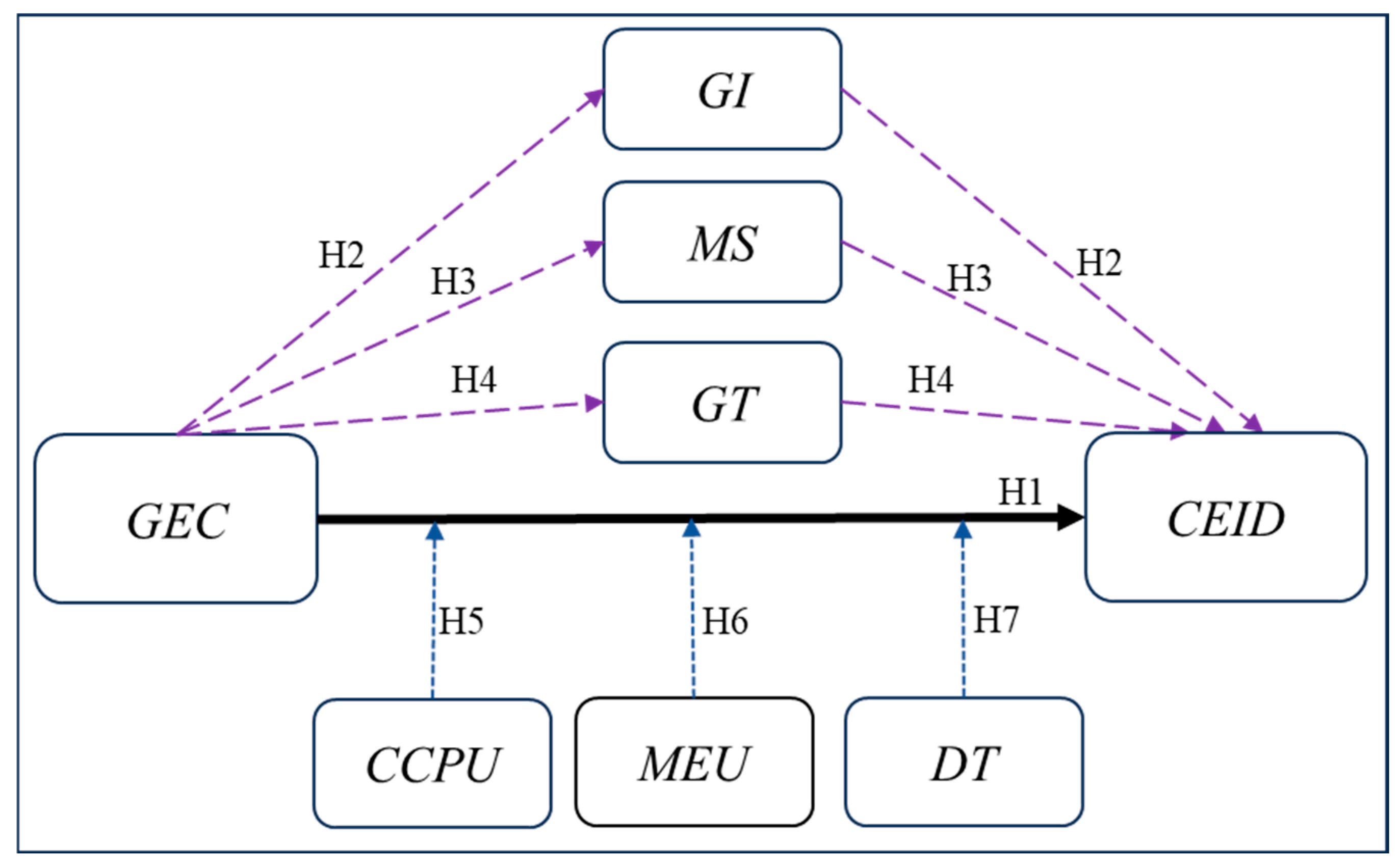
This study intends to investigate whether, and through which mechanisms, GEC influences CEID within China’s unique governance context. Drawing on institutional pressure theory, stakeholder theory, resource dependence theory, and signal transmission theory, we develop an integrated analytical framework that includes multi-level mediation and moderating model. The mediating variables (green investors, media supervision, and green technological innovation) represent distinct pathways through which institutional pressure is transmitted from governmental environmental concerns to firm-level disclosure behaviors. These mechanisms embody how policy signals diffuse through capital markets, social supervision, and internal technological responses. Likewise, the moderating variables (climate policy uncertainty, market environment uncertainty, and digital transformation) capture the contextual conditions under which firms differentially absorb and react to governmental signals. They reflect the contingent nature of institutional influence, suggesting that the effectiveness of GEC depends not only on its intensity but also on the external volatility and internal capability structures faced by firms.
Our empirical results reveal several important findings. First, GEC significantly and consistently enhances CEID, and this effect remains robust after a series of endogeneity controls. Second, capital market and social supervision channels serve as effective transmission mechanisms: green investors and media supervision exert significant mediating effects by transforming governmental environmental signals into firms’ disclosure incentives. Third, green technological innovation exhibits a masking (reverse mediating) effect, suggesting that increased regulatory attention may crowd out substantive innovation in favor of compliance-oriented or symbolic environmental strategies. Fourth, the intensity of the GEC–CEID relationship is contingent upon external and internal conditions, with stronger effects observed when climate policy uncertainty, market uncertainty, or firms’ digital capabilities are higher. In addition, the study uncovers significant heterogeneity in the impact of GEC on CEID. The effect is more pronounced in non-state-owned enterprises, firms in heavily polluting industries, and firms in their maturity or decline stages. These patterns indicate that firms facing stronger legitimacy pressure, regulatory scrutiny, or reputational risks are more sensitive to governmental environmental signals and thus more inclined to enhance their disclosure efforts.
This study makes some contributions that extend existing research. First, unlike prior studies that focus mainly on firm-level drivers or the consequences of CEID [14,29], we identify GEC as a fundamental institutional source shaping disclosure behaviors. This provides a new analytical lens for understanding how top-down attention allocation influences micro-level transparency. Second, while prior research has noted the importance of institutional pressure [30,31], the mechanisms through which governmental expectations are translated into corporate disclosure remain insufficiently articulated. Our contribution lies in unpacking the transmission processes through which GEC influence CEID. By elucidating how governmental intent flows through market signals, social scrutiny, and firms’ internal responses, we provide a coherent macro-to-micro explanation that advances the theoretical understanding of environmental governance. Third, by identifying a reverse mediating effect of green technological innovation, we move beyond the dominant assumption that environmental pressure stimulates innovation [32,33]. Our findings reveal that regulatory concerns may suppress substantive innovation, even if they ultimately enhance CEID. This contributes novel empirical evidence on institutional crowding-out and challenges the universality of the Porter Hypothesis, particularly within transitional and resource-constrained economies. Finally, while prior studies implicitly assume that governmental influence exerts a uniform effect across firms [34,35], our findings indicate that GEC has a stronger impact under two conditions: when external volatility heightens firms’ legitimacy pressures, and when internal capabilities strengthen their ability to respond. Based on the above research, we have clarified how GEC can bring about the actual CEID with high quality. This study enhances the explanatory power of institutional theory and contingency theory in the field of corporate environmental performance.
The remainder of this work is structured as follows: Section 2 presents the theoretical analysis and hypothesis development. Section 3 outlines the research methodology. Section 4 reports and discusses the empirical results. Section 5 concludes the paper and provides implications as well as directions for future research.

2. Theoretical Analyses and Hypotheses Development

2.1. GEC and CEID

The relationship between GEC and CEID reflects how the government’s stance on environmental governance shapes corporate disclosure behavior [36]. According to institutional theory [37], governmental attention creates both coercive and normative pressures. The former derives from stricter laws, higher regulatory standards and intensified enforcement actions. The latter arises from national environmental plans and policy initiatives that establish societal expectations for corporate environmental conduct [38]. Under these conditions, firms tend to adjust their environmental practices to meet evolving external demands.
At the same time, resource dependence theory [39] suggest that firms must secure access to critical external resources such as administrative approvals, subsidies and government–business relations to ensure organizational stability. As GEC increases, the legitimacy pressures faced by firms also intensify. Firms therefore have a stronger incentive to improve their environmental information disclosure so that they can demonstrate compliance with governmental priorities, reduce institutional risk and signal responsible environmental management.
More specifically, heightened GEC elevates the potential regulatory and reputational costs of non-compliance. Firms tend to improve the quality and completeness of CEID to show that they are aligned with increasingly stringent environmental requirements and to communicate their environmental performance to regulators and stakeholders [19,40]. Furthermore, governments influence disclosure behavior through policy guidelines, industry-level standards and reward and punishment system. These tools stimulate comparison and imitation among firms and foster a competitive environment that encourages improvements in environmental transparency [41]. As a result, both the legitimacy motivation for enhancing CEID become stronger.
In summary, GEC strengthens the institutional pressure on firms and encourages them to adopt higher levels of environmental information disclosure. The increasing emphasis placed by governments on environmental issues establishes a clear link between the institutional environment and corporate disclosure practices.
Hypothesis 1 (H1). 
Government environmental concerns have a positive impact on corporate environmental information disclosure.

2.2. Influence Mechanism

2.2.1. Mediating Effects Mechanism

Government behavior often indirectly influences micro-level entities by impacting key participants in the socio-economic system [32]. This study posits that GEC shapes CEID decisions indirectly through multiple channels. First, at the capital market level, an increase in GEC sends clear policy signals to the market, highlighting that environmental compliance risks and environmental performance will receive greater attention [42]. As GEC will change the pricing of environmental performance in the capital market [43], these signals alter the risk-return assessment framework for investors, prompting green investors (GI) who have environmental awareness and preferences to place greater emphasis on the environmental performance and information disclosure levels of enterprises when making investment decisions [44]. The higher the GEC, the more likely the concept of green investment will be reinforced and disseminated, attracting more capital to flow into environmentally responsible enterprises. To identify and evaluate the environmental risks and opportunities of firms, GI will intensify their search for environmental information and exert pressure on companies through investment decisions, voting behaviors, shareholder proposals, and other means, encouraging them to improve the quality of their environmental disclosures [45]. Consequently, GEC has established a capital market intermediary pathway that links the government’s will with CEID by activating and guiding GI behavior.
Second, in terms of social oversight and public opinion, GEC has made environmental issues a focal point of widespread public attention [46]. This is because GEC enhances the sensitivity of the public as a core stakeholder to the environmental performance of enterprises [47]. Government-issued environmental protection policies, law enforcement actions, and publicly disclosed environmental data are all highly newsworthy and prompt the media to devote more resources to environmental investigations and reporting. Media supervision (MS), as a key disseminator of social information and a guide of public opinion, amplifies the signals of the government’s environmental concerns, bringing the environmental practices of enterprises to a broader public audience [48]. Positive media coverage can enhance a company’s image and reputation, whereas negative coverage may lead to reputation damage, a loss of market share, or even legal risks. To mitigate media pressure, protect their corporate reputation, and address the concerns of the public and regulatory bodies, enterprises are more likely to enhance the transparency of their environmental disclosures and proactively communicate their environmental management and performance [29,49]. This shows that GEC has elevated the social significance of environmental issues, thereby activating the supervisory function of the media, with MS becoming a critical social intermediary driving CEID.
Finally, at the level of a firm’s internal capabilities and strategic responses, GEC directly influences the intensity of environmental regulations and compliance requirements faced by firms [50]. In response to these changes, firms must adjust internally and build new capabilities, with a primary focus on green technology innovation (GT). Theoretically, government environmental regulations encourage firms to research and implement green technologies, reducing environmental pollution and improving environmental performance through methods such as clean production and resource recycling [51]. By disclosing the environmental benefits of GT, such as reductions in pollutant emissions, improved resource efficiency, and the successful development of green products, firms can demonstrate their commitment to environmental protection and technological innovation. However, it should be noted that certain forms of GEC, such as excessive reliance on end-of-pipe solutions or insufficient policy stability, may stifle long-term investments in innovative green technologies, causing firms to focus on short-term compliance through end-of-pipe technologies [33]. This suppression of genuinely innovative GT could diminish the environmental performance and related disclosures that firms can make, potentially negatively impacting CEID. Thus, GT serves as an intermediary link between GEC and CEID, involving internal capability building and strategic choices by firms. Its effect may depend on the specific form of GEC and the firm’s response.
Hypothesis 2 (H2). 
Green investors play a positive mediating role between government environmental concerns and corporate environmental information disclosure.
Hypothesis 3 (H3). 
Media supervision plays a positive mediating role between government environmental concerns and corporate environmental information disclosure.
Hypothesis 4a (H4a). 
Green technological innovation plays a positive mediating role between government environmental concerns and corporate environmental information disclosure.
Hypothesis 4b (H4b). 
Green technological innovation plays a reverse mediating role between government environmental concerns and corporate environmental information disclosure.

2.2.2. Moderating Effects Mechanism

The above analysis shows that GEC, as an external driving force, influences CEID through multiple channels. However, this influence is not constant and is moderated by specific conditions. This moderating effect can be divided into two main aspects: the uncertainty of the external environment [52] and the internal response capability of enterprises [31].
First, external environmental uncertainty, such as China’s climate policy uncertainty (CCPU) and business market environment uncertainty (MEU), amplifies the influence of GEC as institutional pressure. In a high-CCPU environment, uncertainties surrounding future regulations, enforcement strength, and even related industrial policies significantly increase the institutional risks and transformation pressures faced by enterprises [53]. In such a context, GEC acts more like an urgent warning signal. To maintain legitimacy in the face of uncertain policy changes, mitigate potential risks, and capitalize on policy benefits, enterprises tend to adopt more proactive and strategic responses [54], with CEID serving as a key means to demonstrate their environmental management capabilities and commitment to future policy directions to relevant stakeholders. In other words, CCPU strengthens the motivation for enterprises to manage institutional relationships and reduce uncertainty risks through disclosures by increasing their survival anxiety and adaptation needs within the policy dimension. Similarly, MEU increases enterprises’ reliance on reputation capital and external trust in the face of intense market competition [55]. When GEC highlights the market value of environmental performance, high MEU compels enterprises to use transparent environmental information disclosures more urgently to gain the trust and support of key market stakeholders, such as consumers, suppliers, and financial institutions, thereby consolidating their market position and responding to shocks from uncertainty [14]. At this point, the emphasis on environmental issues brought about by GEC, combined with the external trust demands triggered by MEU, jointly enhances the motivation for CEID as a tool for market competition and risk management. Therefore, CCPU and MEU, by altering the external risk and opportunity structure in which enterprises operate, positively moderate the effect of GEC on CEID.
Second, the digital transformation (DT) of enterprises constitutes a critical internal capability for responding to external environmental pressures [56]. Whether GEC can be transformed into actual actions by enterprises and the quality of these actions largely depends on the support of internal resources within the enterprise.
DT is not merely the application of technology but also the process of reshaping a company’s capabilities in areas such as data acquisition, processing, analysis, and communication [57]. A high level of DT means that enterprises have a more powerful environmental data monitoring system, more efficient data analysis capabilities, and a more accessible platform for information release. This significantly reduces the cost and technical barriers to CEID and enhances the timeliness, accuracy, and comprehensiveness of disclosures. According to the resource-based view, digital capabilities can be regarded as a unique resource that enables enterprises to better withstand changes in the external environment [58]. Under the framework of contingency theory, enterprise behavior is a comprehensive trade-off between the external environment and internal capabilities. When GEC signals are strong and DT is low, enterprises may face difficulties in making high-quality disclosures due to technical limitations and cost pressures. However, if DT is relatively high, the external pressures brought by GEC can be more easily transformed into internal disclosure actions, which can be presented in a manner that better meets modern communication needs [59]. Therefore, DT provides technical support and operational convenience for transforming GEC into actual CEID by enhancing the ability of enterprises to obtain, process, and communicate environmental information, thus positively moderating the impact of GEC on CEID.
Hypothesis 5 (H5). 
The uncertainty of China’s climate policy positively moderates the relationship between government environmental concerns and corporate environmental information disclosure.
Hypothesis 6 (H6). 
The uncertainty of the enterprise market environment positively moderates the relationship between government environmental concerns and corporate environmental information disclosure.
Hypothesis 7 (H7). 
The digital transformation of enterprises positively moderates the relationship between government environmental concerns and corporate environmental information disclosure.
Based on the above discussion, we have proposed the analysis framework of this paper to demonstrate the analytical logic (Figure 1).

3. Methodology

3.1. Sample and Data

Considering the guidelines issued by the National Environmental Protection Agency of China in 2008 to strengthen environmental supervision of listed companies, this study uses Chinese A-share listed companies from 2008 to 2023 as the initial sample and applies the following screening procedures: (1) Excluding samples of companies with abnormal operations such as ST, *ST, and PT. (2) Excluding samples of companies in the financial industry. (3) Excluding samples with missing or abnormal values for independent variables, dependent variables, and control variables. Finally, this study obtains a total of 40,931 “company-year” observations. To address outliers, all continuous variables are winsorized at the 1st and 99th percentile. Firm-level data is sourced from the China Stock Market and Accounting Research (CSMAR) database or publicly available annual reports.

3.2. Variables

3.2.1. Dependent Variable

Corporate Environmental Information Disclosure (CEID). Referring to Li et al. [60], this paper uses a content scoring method to measure the level of CEID. First, the indicators of CEID for listed companies are designed from four dimensions: environmental management disclosure, environmental regulation and certification disclosure, environmental liability disclosure, and environmental performance and governance disclosure. Second, scoring criteria are determined. Since the first two dimensions are non-monetary indicators, a score of 1 is assigned if disclosed, and a score of 0 if not disclosed. Since the last two dimensions are monetary indicators, a score of 1 is assigned for qualitative disclosure, a score of 2 for quantitative disclosure, and a score of 0 if not disclosed. Finally, the scores for each indicator are summed to represent the level of CEID.

3.2.2. Independent Variable

Government Environmental Concern (GEC). Referring to Wang et al. [61], the government work report can objectively reflect the local government’s attention to environmental governance from the perspective of the planning and goals of ecological and environmental governance. Therefore, this paper uses text analysis methods to quantify the frequency of words related to environmental protection in the government work report. First, 140 environmental keywords are designed from six dimensions: protecting and improving the environment, preventing and controlling pollution and other public hazards, resource conservation, coordinated development and environmental co-governance, promoting ecological civilization construction, and promoting sustainable economic and social development. Second, the frequency of environmental keywords in the government work report texts of various provinces from 2008 to 2023 is statistically analyzed, and standardized using the total number of words in the text. Finally, to enhance the readability of the empirical regression coefficients, in this paper, the standardized word frequencies are all multiplied by 100.

3.2.3. Mediating Variables

Green Investors (GI). GI refers to an investment group dedicated to improving corporate environmental performance, promoting the development of green industries, and reducing environmental risks. Referring to Tang et al. [62], we manually match the “fund entity information table” and the “stock investment detail table” to obtain the detailed fund investment information for listed companies. Then, we manually check whether the “investment objectives” and “investment scope” of each fund include any environment-related terms. If no such terms are found, the company is considered not to have GI and is recorded as 0. If such terms are found, it is considered that the enterprise has GI and the number for the current year is counted. Finally, we increase the number by 1 and take the natural logarithm to represent the GI for that company in the given year.
Media Supervision (MS). The media, by reporting on corporate behaviors such as environmental pollution and resource waste, encourages companies to improve their environmental management. Considering the significant influence of online public opinion in the big data era, and referring to Cormier and Magnan [63], this paper constructs a media attention indicator based on the number of online media reports provided by the CNRDS database, using the Janis–Fadner coefficient (J-F). The formula is as follows:
J F = e 2 e c t 2 ,     e > c e c c 2 t 2 ,     e < c 0 ,     e = c
where  e represents the number of positive reports,  c represents the number of negative reports, and  t is the sum of positive and negative reports. J-F ranges from −1 to 1. The closer the J-F is to 1, the higher the positive media attention faced by the company. Conversely, when the negative attention is higher, the J-F approaches −1. In summary, the larger the absolute value of the J-F, the greater the MS pressure.
Green Technology Innovation (GT). Considering that patent data is publicly accessible and relatively standardized information, the number of green patents directly reflects an enterprise’s R&D investment and technological innovation achievements in the field of green technology. Drawing on Du et al. [64] and Zhang et al. [17], this paper takes the logarithm of the number of green invention patents independently applied for by enterprises in the current year as the indicator of GT.

3.2.4. Moderating Variables

China’s Climate Policy Uncertainty (CCPU). This paper uses the data of CCPU proposed by Ma et al. [65]. Based on the news data released by six mainstream Chinese newspapers including People’s Daily, Guangming Daily, Economic Daily, Global Times, Science and Technology Daily and China News Service from January 2008 to December 2023, Ma et al. [65] uses a deep learning algorithm model to mine words related to CCPU, and construct the annual CCPU index at the national level by counting the occurrence frequency.
Market Environment Uncertainty (MEU). Changes in the external market environment will cause fluctuations in the core business activities of enterprises and ultimately lead to fluctuations in the enterprise’s sales revenue. Therefore, the uncertainty of the market environment can be measured by the fluctuations in the company’s performance. Referring to Liu and Song [66], in order to eliminate the influence of the industry, this paper adopts the standard deviation of the enterprise’s sales revenue in the past five years adjusted by the industry to measure MEU.
Enterprise Digital Transformation (DT). Drawing on Wu et al. [67] and Wu et al. [68], this paper uses Python 3.10 to conduct text analysis on the annual reports of enterprises. Search for and match feature words related to “artificial intelligence technology, blockchain technology, cloud computing technology, big data technology, and digital technology applications”, and calculate the word frequency of these digital keywords. Then, take the proportion of the total digital keywords to the total word frequency of the annual report as the DT index.

3.2.5. Control Variables

Referring to the existing research practices [30,69], this paper incorporates the control variables of enterprise financial characteristics and governance characteristics, including: Enterprise size (Size, the natural logarithm of annual total assets), asset–liability ratio (Lev, total liabilities at the end of the year divided by total assets at the end of the year), net profit margin of total assets (ROA, net profit/average balance of total assets), inventory proportion (INV, the ratio of net inventory to total assets), Growth rate of operating income (Growth, current year’s operating income/previous year’s operating income −1), number of directors (Board, the natural logarithm of the number of board members), dual position integration (Dual, if the chairman and general manager are the same, it is 1; otherwise, it is 0).
Descriptive statistics of key variables are presented in Table 1.

3.3. Model Specification

To test H1, we construct a fixed-effect model to investigate the influence of GEC on CEID. Model (1) is set as follows:
C E I D i , t =   α 0 + α 1 G E C i , t + α 2 C o n t r o l s + F E y e a r + F E f i r m + ε i , t
where  i represents the firm, and  t represents the year.  C E I D stands for the corporate environmental information disclosure level,  G E C represents the government environmental attention in the region where the firm is located, and  C o n t r o l s refers to the set of control variables.  F E y e a r and  F E f i r m represent year and firm fixed effects, respectively.
Based on model (1), we further discuss the mediating effects H2–H4. Referring to Baron and Kenny [70], model (2) and (3) are constructed as follows:
M i , t =   α 2 + β 2 G E C i , t + γ 2 C o n t r o l s + F E y e a r + F E f i r m + ε i , t
C E I D i , t = α 3 + β 3 G E C i , t + δ 3 M i , t + γ 3 C o n t r o l s + F E y e a r + F E f i r m + ε i , t
where  M represents the mediating variable, which specifically includes three items: GI, MS and GT. The meanings of other variables and symbols are consistent with those in model (1).
To test H5–H7 and explore whether the moderating variables have an impact on the main effect, we construct model (4) as follows:
C E I D i , t =   α 4 + β 4 G E C i , t + θ 4 M o d i , t + λ 4 G E C i , t × M o d i , t + γ 4 C o n t r o l s + F E y e a r + F E f i r m + ε i , t
where  M o d represents the moderating variables, specifically including three items: CCPU, MEU, and DT G E C × M o d refers to the interaction item between  G E C   and  M o d θ 4 and  λ 4 are the coefficient values to be estimated. The meaning of other variables and symbols are consistent with those in model (1).

4. Results and Discussion

4.1. Baseline Regression Analysis

The baseline regression results based on Model (1) are presented in Table 2. Column (1) includes only the core explanatory variable GEC. The result (coefficient = 0.209, t-value = 3.13) shows a positive correlation between GEC and CEID at the 1% significance level, indicating that greater government environmental concern is associated with higher levels of corporate environmental information disclosure. It provides initial support for H1. Column (2) introduces control variables based on column (1), and the result (coefficient = 0.207, t-value = 3.13) shows that the positive effect of GEC on CEID still passes the significance level of 1%. Furthermore, the adjusted R2 for column (2) is 0.2351, which is higher than the 0.1338 for column (1), indicating that the addition of control variables improves the explanatory power of the model. Both columns control firm fixed effect and year fixed effect, and the p-value of the F statistic is 0.000, indicating that the model is significantly effective on the whole. The benchmark regression results support the view that government environmental concerns have a significant positive impact on corporate environmental information disclosure, which is consistent with the theoretical expectation of this study. This finding also echoes recent evidence that institutional arrangements promoting environmental governance can effectively enhance firms’ ESG transparency [71]. Our result expands the mainstream CEID literature by showing that disclosure is responsive not only to mandatory regulation but also to variations in governmental attention. This suggests that institutional pressure operates through more subtle channels than formal regulatory requirements alone, providing a more refined understanding of the determinants of CEID.

4.2. Robustness Tests

4.2.1. Adjusting Variable Measurement

To ensure our results are not driven by the specific construction of the core explanatory variable, we conduct a robustness check using an alternative measure for GEC. This re-examination is based on two primary considerations. First, in terms of measurement dimension, we shift from a comprehensive index to a specific environmental issue that has attracted the most public concern, social discussion, and governmental pressure: smog pollution. Second, regarding the level of government, prefecture-level city governments, as the front-line units of environmental governance, may issue work reports that more accurately reflect the concrete intensity of policy implementation and resource allocation. Therefore, in line with Guo and Qiao [72], we collect and process the work reports of prefecture-level municipal governments in China from 2008 to 2023, and use the word frequency of terms related to haze control as a new proxy variable of GEC. As shown in Column (1) of Table 3, the coefficient of GEC is still significantly positive, which supports our baseline finding.

4.2.2. Adding Control Variables

To mitigate concerns about potential omitted variable bias, we augment our baseline model by including an additional set of control variables. At the firm level, we introduce firm age (Age) to control for life-cycle effects, and add a dummy variable for political connections (Polity), which equals one if the firm’s chairman or CEO has a current or former background in government. This variable allows us to disentangle the effect of general environmental concern from the specific influence of political ties, which might grant firms differential access to resources or subject them to greater policy pressure. At the regional level, referring to Wen et al. [35], we include the regional GDP Growth Rate (GDPR) to control for the local business cycle and economic vitality, and Foreign Direct Investment (FDI) to account for the influence of foreign capital and technological spillovers. The results, reported in Column (2) of Table 3, show that the coefficient of GEC remains significantly positive, reinforcing the robustness of our main conclusion.

4.2.3. Excluding Specific Samples

To further test for robustness, we mitigate the influence of potentially anomalous periods and specific industries by excluding certain samples. First, we simultaneously remove three years: 2008, to account for the external shock of the global financial crisis; 2013, to avoid the short-term effects following the promulgation of the landmark “Air Pollution Prevention and Control Action Plan” [73]; and 2020, to control for the structural break caused by the COVID-19 pandemic. Second, since GEC most directly targets heavily polluting industries, we further exclude all firms within these sectors to test whether the policy’s impact is confined to these “primary regulatory targets” [10]. After re-estimating the regression on this subsample, the result, as reported in Column (3) of Table 3, shows that the coefficient of GEC remains significantly positive and is qualitatively consistent with the baseline result. This strongly demonstrates that our conclusion has good generalizability and is not driven by particular macroeconomic shocks or industry-specific samples.

4.3. Endogeneity Concerns

4.3.1. Two-Stage Instrumental Variable Method (2SLS-IV)

To alleviate the endogeneity problem caused by omitted variables and bidirectional causality, we construct the mean of the GEC of the same year and industry as the instrumental variable and re-estimate it using the two-stage least square method (2SLS). Column (1) of Table 4 reports the results of the first-stage regression for the IV approach. The coefficient of the IV is significant at the 1% level, and F-statistic is greater than the rule-of-thumb threshold of 10. Therefore, there is a strong correlation between our endogenous variable and the instrumental variable, indicating that the issue of weak instruments is not present. The Cragg–Donald Wald F-statistic is greater than the critical value for the Stock–Yogo weak identification test at the 10% significance level, further rejecting the null hypothesis of weak instruments. The Kleibergen–Paap rk LM statistic is significant at the 1% level, rejecting the null hypothesis of underidentification, which indicates that the instrumental variable selected in this paper is reasonably valid and reliable. Column (2) presents the results of the second-stage IV regression. The coefficient of GEC remains significantly positive, indicating that even after accounting for endogeneity issues, GEC still has a significant incentivizing effect on CEID. This confirms the reliability of the baseline regression results of this paper.

4.3.2. Propensity Score Matching Method (PSM)

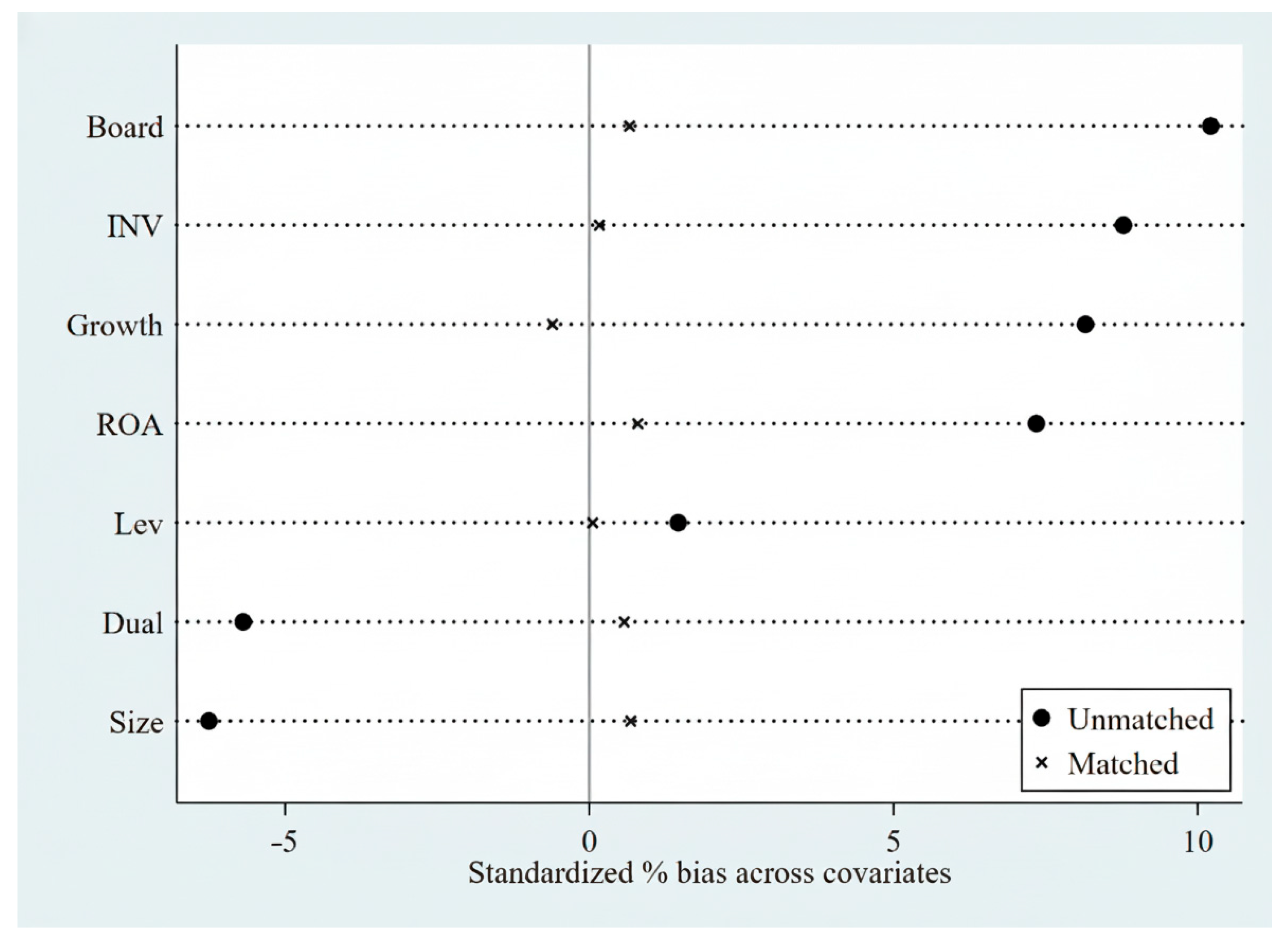
Endogeneity issues caused by sample selection bias are typically tested using the Propensity Score Matching (PSM) method. First, we divide the entire sample into two groups based on the median of GEC, defining companies with high GEC as the treatment group. Second, we use the control variables from the baseline regression as covariates and calculate propensity scores using a logit model. Then, we used the nearest neighbor matching method and the principle that the difference in propensity scores did not exceed 0.05 to find a control group with similar characteristics for the experimental group. After matching, the average treatment effect (ATT) of GEC was significant at the 1% level, and the standardization deviation of the matching variables was significantly reduced (Figure 2), indicating a good matching effect. Finally, columns (3) and (4) of Table 4 show that regardless of whether control variables are added or not, the regression results of 24,965 observations after matching remain consistent with the benchmark regression results, proving that our research conclusion remains robust after overcoming the problem of sample self-selection bias.

4.4. Mediating Effects Analysis

Building on the baseline regression, we employ model (2) and model (3) to systematically investigate the existence of mediating effects. The relevant regression results are reported in Table 5.
The results in columns (1) and (2) show that an increase in GEC effectively attracts the entry of GI, and the participation of GI significantly promotes the improvement of CEID. Meanwhile, the coefficient of GEC remains significant at the 1% level, indicating that GI plays a partial mediating role, thus confirming H2. This influence mechanism manifests as a “policy signal—capital flow—corporate response” transmission chain: First, GEC conveys strong environmental policy signals through policy texts such as government work reports, guiding the capital market to focus on green investment opportunities [74], thereby promoting the aggregation of GI. Second, GI, as a group of professional investors highly sensitive to policy changes, actively identifies and prefers to invest in companies with strong environmental performance, thus optimizing capital allocation. In this transmission process, GI may directly participate in corporate governance through shareholder proposals and other means [62]. Meanwhile, in order to align with long-term green capital support, enterprises may voluntarily disclose more quantitative environmental information to enhance their ESG ratings.
In Column (3), the regression result of GEC on MS indicates that the increase in GEC will significantly enhance the media’s supervision of enterprises’ environmental behaviors, verifying the “agenda setting” effect of environmental policies. Column (4) shows MS plays a partial mediating role in the process of GEC influencing CEID, and the overall effect shows a net positive drive. The above results prove H3. This mechanism indicates that the multiple interactions among the government, media and enterprises play an important role in CEID. First of all, the environmental protection signals can effectively guide media resources to tilt towards the environmental performance of enterprises [48]. This prompts the media to enhance investigative reporting on the environmental compliance of enterprises and expand positive publicity for leading environmental protection enterprises. Secondly, based on the reputation management theory, enterprises show obvious selective response characteristics when facing media: Compared with negative reports, enterprises are more inclined to obtain social recognition by catering to positive evaluations [75] and will actively increase CEID in order to maintain the image of environmental protection benchmarks.
In Column (5), the regression results of GEC on GT indicate that there is a negative relationship. Column (4) shows that GT has a significant positive effect on CEID. Meanwhile, we can find that after considering the GT factor, the coefficient of GEC increases from 0.207 to 0.213. The above situation conforms to the characteristics of the masking effect: GEC will indirectly weaken the promoting effect on CEID by inhibiting GT, thus supporting H4b. This result reveals a counter-intuitive mechanism: Under strong environmental regulations, enterprises may face the predicament of pollution control investment squeezing innovation resources [76]. Although this discovery contradicts the Porter Hypothesis that “environmental regulations promote technological innovation”, it conforms to the institutional escape theory and precisely reflects the unique predicament of environmental governance in developing countries: due to the limited governance resources, enterprises tend to choose low-cost symbolic compliance rather than high-risk substantive innovation [77]. In practice, when GEC intensifies regulatory scrutiny, firms often respond by reallocating limited resources toward pollution control devices, compliance reporting systems, and end-of-pipe treatments. These activities directly satisfy inspection and enforcement requirements but do not fundamentally improve green innovation capacity. For example, enterprises may increase investment in waste gas treatment facilities or cleaner production certifications, while scaling back long-term R&D projects that involve higher uncertainty and longer payback cycles. Such compliance-oriented adjustments meet short-term institutional expectations but fail to generate the type of substantive green innovation anticipated by regulators. This mechanism has significant policy implications: without supportive measures such as stable regulatory horizons, targeted R&D subsidies, or innovation-oriented evaluation criteria, stringent GEC may unintentionally undermine firms’ long-run green innovation potential. Accordingly, both regulatory design and enforcement should aim to reduce compliance uncertainty and incentivize substantive innovation rather than symbolic responses.

4.5. Moderating Effects Analysis

We further use model (4) to test the moderating effect, and the related regression results are reported in Table 6.
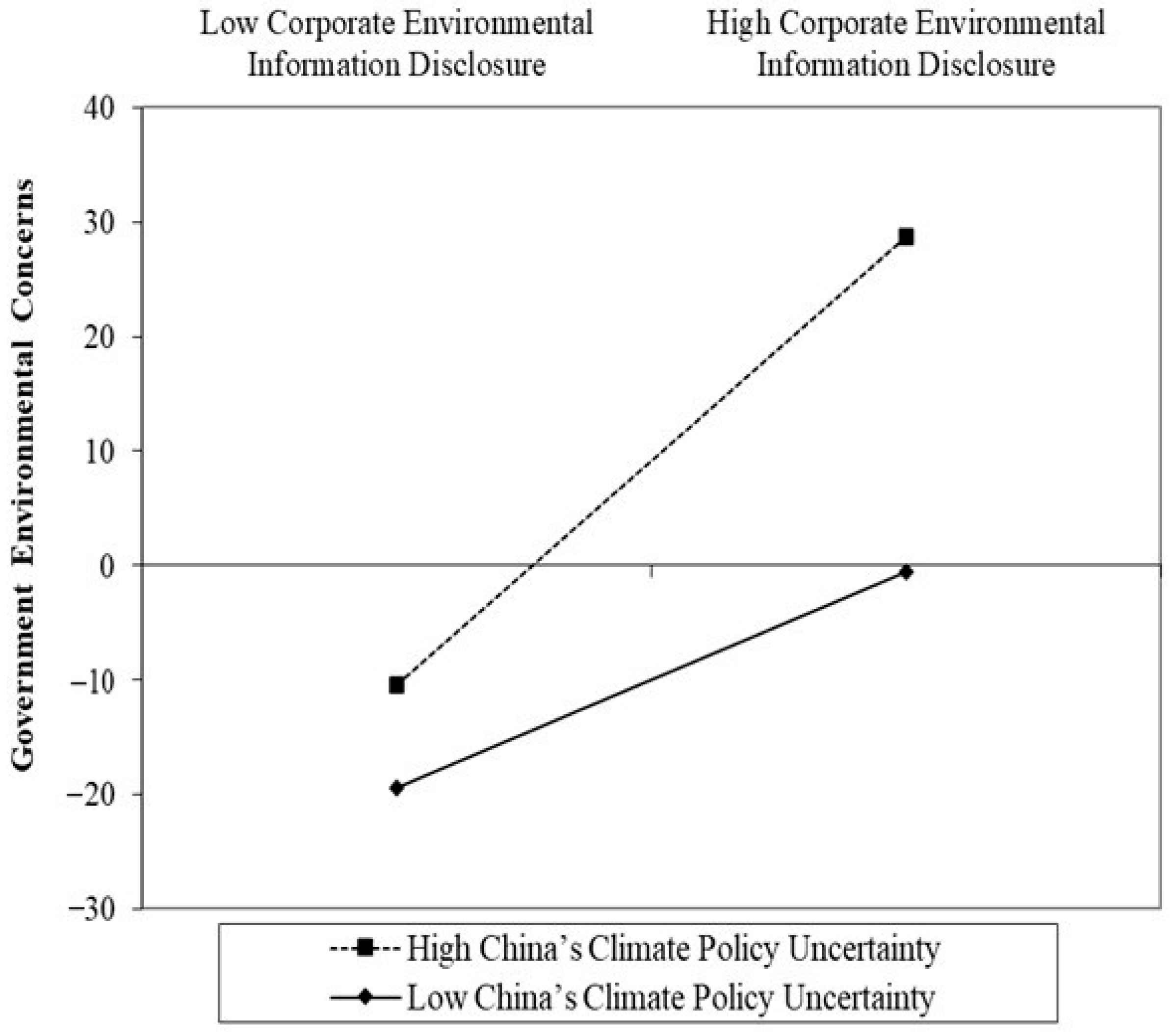
First, we gradually add the moderating variable CCPU and the interaction product term GEC × CCPU. The results of columns (1) and (2) show that the coefficient of GEC × CCPU is statistically significant. To visualize the moderating effects, the interaction plots are constructed using the common approach of setting the moderating variables at one standard deviation above and below their respective means. This method provides an intuitive comparison of how GEC affects CEID under different moderating conditions. As shown in Figure 3, the widening gap between the high- and low-CCPU groups illustrates that as CCPU increases, the slope of the line becomes steeper. Therefore, H5 is supported. At the macroscopic level, the formulation of China’s climate policy involves the balance between long-term carbon neutrality goals and short-term economic and social development needs [78]. Meanwhile, external factors such as geopolitical conflicts and trade protectionism will also lead to more challenges for the Chinese government in responding to climate change, thereby increasing CCPU [79]. Under such circumstances, enterprises will become more sensitive to policy changes. Increasing the disclosure of environmental information (especially actions and achievements in environmental protection) is an important strategy for them to fulfill its social responsibilities and deal with CCPU.
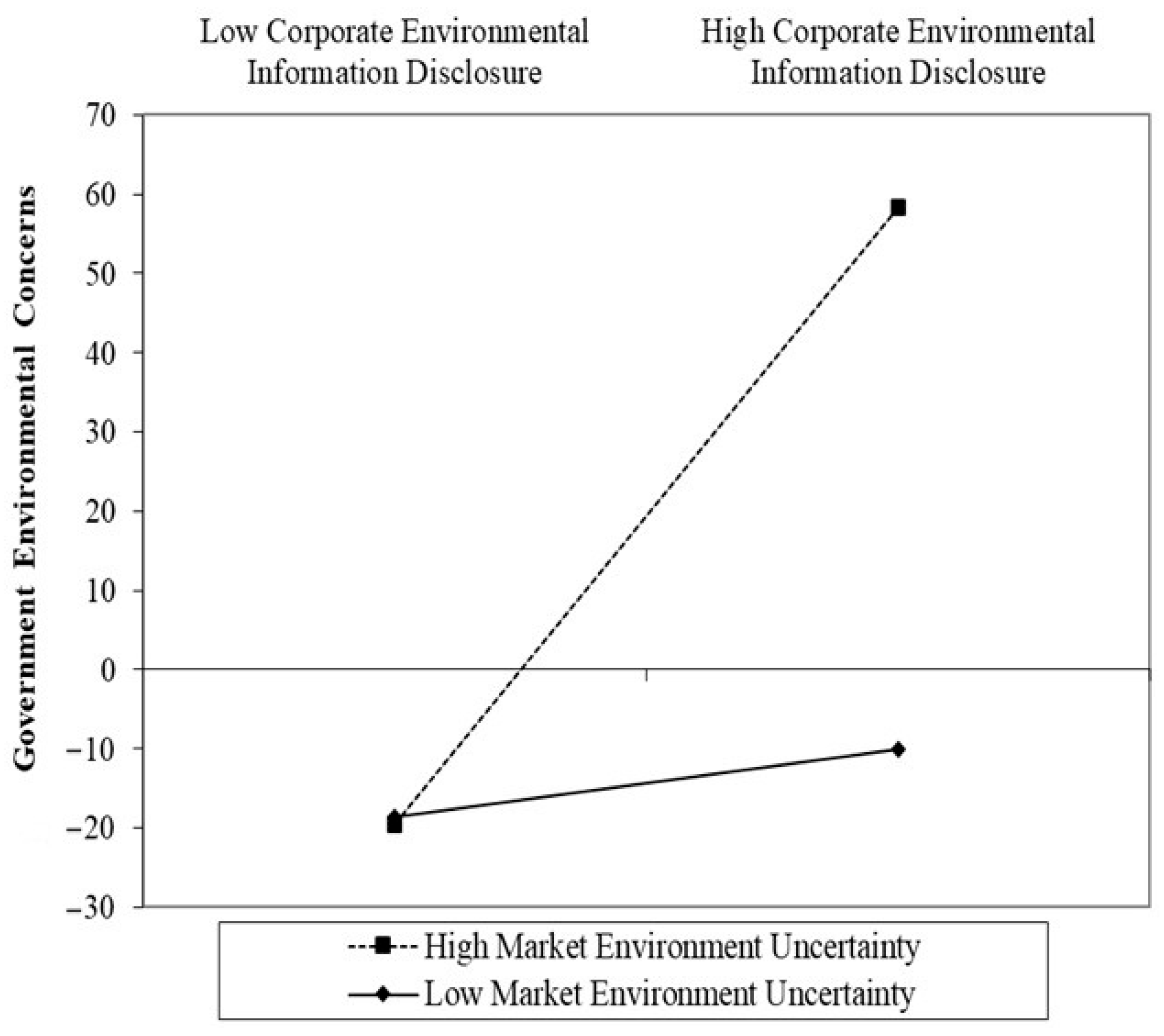
Second, at the meso level, MEU reflects the impact of fluctuations in the external environment on business activities. The results of columns (3) and (4) show that the coefficient of GEC × MEU is statistically significant. Meanwhile, by combining the interaction effect chart (Figure 4), we can prove H6, i.e., the higher the MEU, the stronger the positive effect of GEC on CEID. In addition to risk management perspective, high uncertainty makes enterprises more reliant on external resources, leading them to place greater emphasis on and balance the demands of different stakeholders. As a regulatory entity with powerful authority, the government’s concern for the environment has increased the possibility that “environmental performance” becomes a condition for enterprises to acquire or maintain resources [80]. Through CEID, enterprises can better manage relationships with other stakeholders, influenced by government guidance, thereby maintaining key resources in high MEU situations, and reducing external concerns caused by information asymmetry by proactively disclosing positive environmental information.
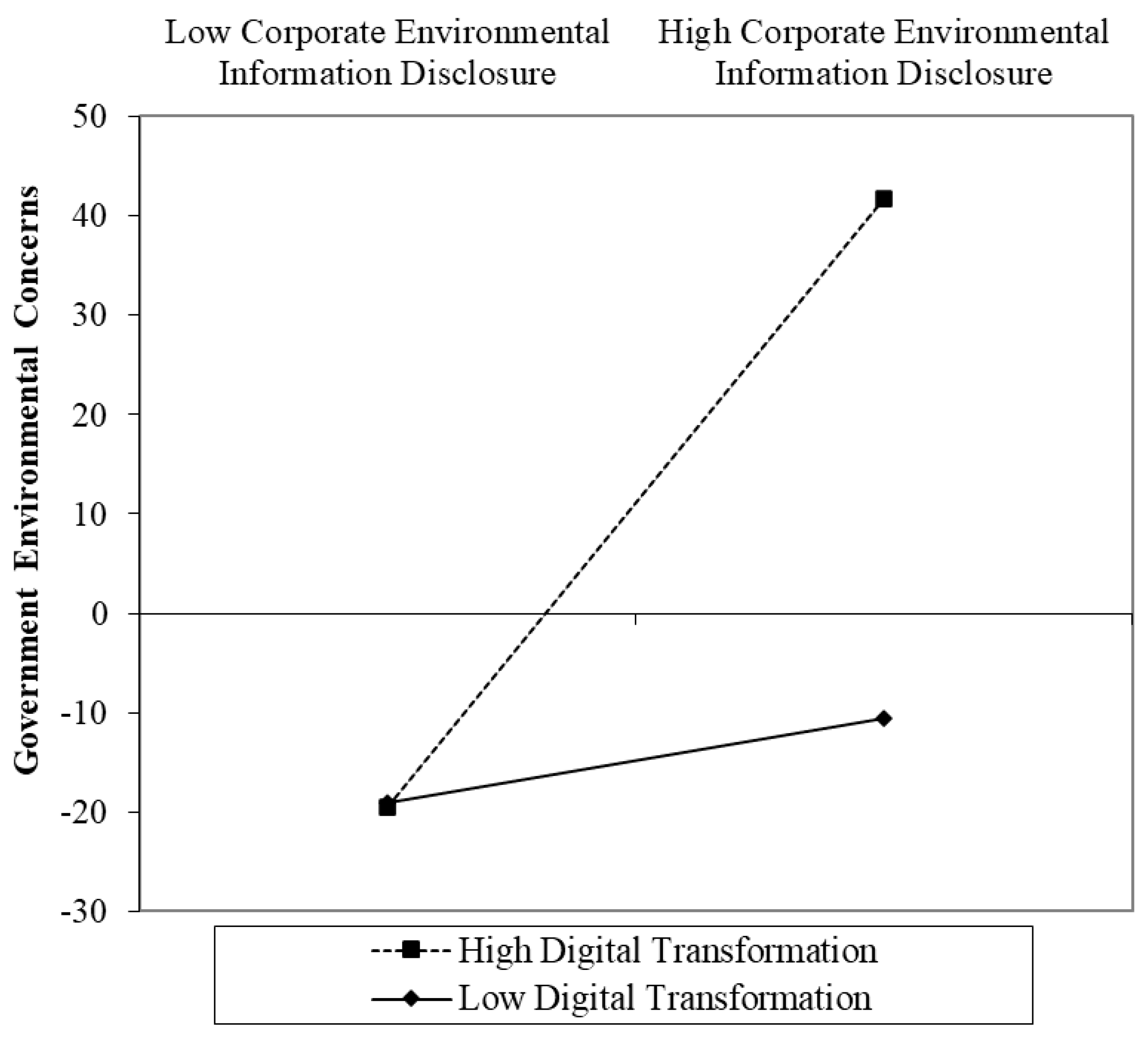
Finally, at the micro level, the results of columns (3) and (4) show that the coefficient of GEC × DT is 0.299 and p-value < 0.01. Meanwhile, combined with the interaction effect diagram (Figure 5), we believe that DT positively moderates the relationship between GEC and CEID, validating H7. On the one hand, from a data perspective, DT utilizes technologies such as IoT sensors and automated monitoring systems, enabling enterprises to accurately and real-time collect high-quality environmental performance data, which forms the foundation of CEID [41]. On the other hand, from an internal management perspective, DT helps enterprises establish an integrated and transparent environmental management system, providing clearer insights into environmental performance, risks, and opportunities [81]. Additionally, digitalizing internal processes facilitates resource coordination and ensures the alignment of disclosed information with actual environmental management. The overall pattern suggests that the translation of governmental environmental concerns into disclosure behavior is increasingly shaped by firms’ technological capacity to process, integrate, and communicate environmental information [82].

4.6. Further Discussion: Heterogeneity Analysis

We also briefly discuss the heterogeneous effects by conducting grouped regressions, with the results presented in Table 7.
First, based on firm ownership, the results in Columns (1) and (2) show that the regression coefficient of GEC is significantly positive for the non-state-owned enterprise (non-SOE) sample but is not significant for the state-owned enterprise (SOE) sample. This indicates that non-SOEs are more responsive than SOEs in CEID when facing GEC. One possible explanation is that SOEs often enjoy implicit government guarantees and stable access to policy resources, which weakens their sensitivity to changes in environmental governance intensity. In contrast, non-SOEs rely more heavily on market mechanisms and external legitimacy to survive and grow. This supports the argument that non-SOEs face greater legitimacy pressure in market competition and in acquiring government resources [83], and thus have stronger incentives to respond to the government’s environmental signals and establish favorable government–business relations.
Second, based on industry pollution attributes, the results in Columns (3) and (4) reveal that the coefficient of GEC is significantly positive for both heavily polluting and non-heavily polluting industry samples. However, the magnitude and significance level of the effect are greater for heavily polluting industries. This suggests that while the impact of GEC is widespread across industries, its promotional effect is more pronounced for heavily polluting firms. These firms are typically identified as key targets of environmental governance and are subject to stricter regulatory standards and more frequent inspections. Moreover, as the critical few under environmental regulation, heavily polluting firms face heightened public scrutiny, regulatory oversight, and financing constraints when GEC increases [84]. Consequently, they have a more urgent need to manage environmental risks, signal compliance, and mitigate reputational damage through CEID.
Third, based on the firm life cycle, the results in Columns (5)–(7) demonstrate that the positive impact of GEC is mainly concentrated in firms in their mature and declining stages, while the effect is insignificant for firms in the growth stage. This might be because, compared with growth-stage enterprises that focus on technological breakthroughs and market share acquisition, mature enterprises are more concerned with maintaining their current market position and managing brand reputation [85]. Therefore, they have more abundant resources and a stronger willingness to transform the government’s environmental concerns into specific disclosure actions.
To sum up, these results not only validate several established expectations regarding legitimacy pressure but also reveal differences that extend the mainstream research. For example, the weaker responsiveness of SOEs challenges the assumption that institutional pressure operates uniformly across ownership forms; likewise, the stronger effect in polluting industries highlights how regulatory salience shapes disclosure incentives. The life-cycle results further indicate that institutional signals interact with firms’ strategic priorities, suggesting that CEID responses reflect both structural constraints and organizational positioning. Together, these insights refine the understanding of how institutional pressure is absorbed across heterogeneous firms and point to new directions for examining CEID as a context-dependent behavioral outcome.

5. Conclusions and Implications

5.1. Conclusions

The study empirically examines the impact of GEC on CEID and its mechanisms using data from Chinese A-share listed companies from 2008 to 2023. The main findings are as follows: First, the benchmark regression indicates that GEC has a significant positive impact on CEID, and this finding still holds after passing the robustness test and endogeneity treatment. This suggests that the government environmental policy signals and regulatory pressure can effectively incentivize firms to improve environmental information transparency. Second, the mediation mechanism analysis reveals a multidimensional transmission path: GEC influences CEID through capital allocation by GI, public opinion pressure by MS, and performance demonstration by GT, where GI and MS play a positive mediating role and GT exhibits a reverse mediating effect. The masking effect suggests that regulatory pressure may inadvertently steer firms toward low-risk, easily reportable, and highly visible environmental actions, crowding out strategic innovation that could produce more sustainable technological progress, thus reducing the real driving effect on CEID. Third, the moderating effect reveals that the impact of GEC on CEID is not fixed: CCPU at the macro-policy level, MEU at the meso-market level, and DT at the micro-firm level all play a positive moderating role, suggesting that the effectiveness of GEC depends not only on the uncertainty of the external environment but also on the internal response ability of enterprises. Finally, the heterogeneity analysis highlights the differential impact of firm characteristics. Relatively speaking, non-state-owned firms, firms in polluting industries, and firms in maturity and decline are more sensitive to GEC. This reflects that the intensity of GEC’s effect on CEID varies structurally due to differences in the nature of enterprise ownership, industry attributes, and life cycle stages. In conclusion, this paper innovatively reveals the profound impact of GEC on CEID, incorporating multiple internal and external factors to analyze the complex interactive mechanisms.

5.2. Theoretical and Practical Implications

5.2.1. Theoretical Implications

This paper deeply analyzes the influence mechanism of GEC on CEID. The theoretical implications are reflected in three key aspects:
First, through the econometric model, the research confirms that GEC, as a significant external institutional pressure, can effectively drive enterprises to improve the level CEID. This not only provides new micro-level evidence based on the Chinese context for the legitimacy theory proposition that “institutional pressure prompts the adjustment of enterprise behavior” but also deepens our understanding of the government’s role in shaping corporate environmental behavior.
Second, this paper innovatively reveals that GEC affects CEID not only through direct channels, but also through multi-dimensional mediating paths. This discovery fills the theoretical gap in the macro–micro connection mechanism in traditional environmental governance research.
Moreover, the reverse mediating effect of green technological innovation challenges the linear assumption of Porter’s hypothesis, highlighting the potential innovation crowding-out effect of environmental regulations in developing countries. This reverse mediating effect can also be understood through the theoretical lenses of institutional escape and compliance substitution [86,87]. Under China’s high-pressure regulatory environment, firms may prioritize meeting externally observable compliance requirements rather than engaging in uncertain, long-cycle, and high-cost substantive innovation. In such contexts, green technological innovation may be strategically redirected toward low-risk, inspection-oriented activities that satisfy regulatory expectations but do not fundamentally enhance firms’ long-term green capabilities. These dynamics help explain why intensified governmental concern may unintentionally suppress substantive green innovation despite improving environmental disclosure.
Finally, by introducing moderating variables, this paper demonstrates that the impact of GEC on CEID varies with the complexity and volatility of the external environment. It also clarifies the boundary role of internal capacity building in shaping policy effectiveness, thus deepening the application of contingency theory in the field of environmental information disclosure.
In conclusion, we provide important inspirations for researchers in related fields to contextualize the understanding of the relationship between institutional pressure and corporate behavioral responses, and also offers theoretical basis for government departments to construct an incentive-compatible environmental governance system.

5.2.2. Managerial and Policy Implications

This research offers valuable insights for constructing a new model of environmental governance characterized by collaboration among the government, enterprises, and society. At the top-level design stage, the government should further enhance its guiding and regulatory role within the environmental governance system. On one hand, it should stimulate companies’ intrinsic motivations through market-based methods such as standardizing climate information disclosure and promoting green investors, while also leveraging the power of social supervision, including media. On the other hand, the government should harness the opportunities presented by digital transformation to shift environmental supervision from post-event punishment to real-time monitoring. More specifically, establishing unified digital disclosure templates, building regional environmental data-sharing platforms, and strengthening cross-departmental coordination could substantially reduce disclosure frictions and improve the comparability of environmental information across firms. Such measures would help create a policy ecosystem that encourages companies to proactively integrate environmental risk management into their core strategies, thereby improving the effectiveness of government governance.
At the same time, the management of enterprises must recognize that actively and truthfully responding to government environmental policy signals and disclosing high-quality environmental information is no longer a simple compliance cost burden, but a strategic measure to enhance corporate social reputation, gain stakeholder trust, attract green investment, manage environmental risks, and even build a long-term sustainable competitive advantage. In practice, enterprises can strengthen internal environmental governance by establishing specialized sustainability management units, integrating digital tools for real-time data collection, and adopting internal audit mechanisms to ensure accuracy and credibility of CEID. Especially under China’s dual-carbon goals, leading enterprises should seize the policy window, integrate environmental information management into the core of their ESG strategy, and transform passive response into active leadership through institutional innovations such as building a digital environmental data middle platform and appointing Chief Sustainability Officers.
It is important to note that the policy paradox uncovered in this study, where environmental regulation may inhibit substantive innovation, alerts policymakers to the need to strike a balance between regulatory intensity and the resilience of enterprises. A more refined regulatory system that combines strict enforcement with supportive instruments such as targeted R&D subsidies, pilot demonstration programs, and streamlined green patent review procedures could mitigate the unintended crowding-out of innovation. These complementary measures can help ensure that enterprises do not fall into the trap of superficial compliance, thus achieving a more effective synergy between environmental protection and high-quality development.

5.3. Limitations and Future Directions

This study focuses on listed companies within China’s A-share market, excluding non-listed enterprises and small- and medium-sized enterprises (SMEs). However, these enterprises may be more sensitive to policy changes, and the research scope can be expanded in the future. Additionally, this paper emphasizes China’s institutional environment, yet the impact of environmental protection policy tools on corporate disclosure behavior may vary across different countries. Future research could explore cross-national comparisons to identify universal patterns and differences.
Furthermore, with advancements in artificial intelligence, the form and quality of environmental information disclosure are undergoing significant changes [88]. Future studies should refine methodological approaches by integrating machine learning-based text analysis, multi-source data fusion (such as satellite monitoring, digital trace data), and causal identification strategies that better address policy endogeneity. Such improvements would allow scholars to more accurately capture the dynamics of environmental governance and to distinguish substantive environmental improvement from symbolic compliance. Longitudinal case studies or mixed-methods designs may also help reveal how firms internalize governmental environmental concerns over time and how disclosure practices evolve in response to institutional change. These directions are likely to become increasingly important as digital and intelligent disclosure continues to expand.

Author Contributions

Conceptualization, W.Z. and H.Y.; methodology, W.Z. and H.X.; software, R.Z.; validation, J.C. and H.X.; formal analysis, W.Z. and R.Z.; investigation, H.X. and J.C.; resources, J.C. and H.Y.; data curation, W.Z.; writing—original draft preparation, W.Z. and H.X.; writing—review and editing, W.Z., R.Z. and H.Y.; visualization, R.Z.; supervision, J.C. and H.Y.; project administration, W.Z. All authors have read and agreed to the published version of the manuscript.

Funding

This research was funded by the National Social Science Foundation of China (Grant No. 25&ZD198, 24CGL100), the National Natural Science Foundation of China (Grant No. 71991482, 72304255), the Humanities and Social Science Fund of Ministry of Education of China (Grant No. 24YJC790163) and the Fundamental Research Funds for National Universities, China University of Geosciences (Grant No. 2025XLB159).

Institutional Review Board Statement

Not applicable.

Informed Consent Statement

Not applicable.

Data Availability Statement

The data presented in this study are available on request from the corresponding author.

Conflicts of Interest

The authors declare no conflicts of interest.

References

  1. van Deursen, M.; Gupta, A. Transparency is what states make of it: Whose climate priorities are reflected in the Paris Agreement’s enhanced transparency framework? Clim. Policy 2024, 24, 1293–1308. [Google Scholar] [CrossRef]
  2. Hummel, K.; Jobst, D. An overview of corporate sustainability reporting legislation in the European Union. Account. Eur. 2024, 21, 320–355. [Google Scholar] [CrossRef]
  3. Li, Q.; Ruan, W.; Shao, W.; Huang, G. Information disclosure in an environmental emergency. Disaster Prev. Manag. Int. J. 2017, 26, 134–147. [Google Scholar] [CrossRef]
  4. Liu, G.; Guo, L. How does mandatory environmental regulation affect corporate environmental information disclosure quality. Financ. Res. Lett. 2023, 54, 103702. [Google Scholar] [CrossRef]
  5. Ngo, T.; Le, T.; Ullah, S.; Trinh, H.H. Climate risk disclosures and global sustainability initiatives: A conceptual analysis and agenda for future research. Bus. Strategy Environ. 2023, 32, 3705–3720. [Google Scholar] [CrossRef]
  6. Zeng, S.X.; Xu, X.D.; Dong, Z.Y.; Tam, V.W. Towards corporate environmental information disclosure: An empirical study in China. J. Clean. Prod. 2010, 18, 1142–1148. [Google Scholar] [CrossRef]
  7. Li, Q.; Wang, S.; He, Z.; Li, H.; Xiang, E. Does stock market index adjustment affect environmental information disclosure? Evidence from China. Int. Rev. Financ. Anal. 2023, 87, 102628. [Google Scholar] [CrossRef]
  8. Pan, L.; Yao, S. Does central environmental protection inspection enhance firms’ environmental disclosure? Evidence from China. Growth Change 2021, 52, 1732–1760. [Google Scholar] [CrossRef]
  9. Li, X.; Guo, F.; Xu, Q.; Wang, S.; Huang, H. Strategic or substantive innovation? The effect of government environmental punishment on enterprise green technology innovation. Sustain. Dev. 2023, 31, 3365–3386. [Google Scholar] [CrossRef]
  10. Chen, J.; Zhu, D.; Ding, S.; Qu, J. Government environmental concerns and corporate green innovation: Evidence from heavy-polluting enterprises in China. Bus. Strategy Environ. 2024, 33, 1920–1936. [Google Scholar] [CrossRef]
  11. Liu, X.; Cifuentes-Faura, J.; Zhao, S.; Wang, L. Government environmental attention and carbon emissions governance: Firm-level evidence from China. Econ. Anal. Policy 2023, 80, 121–142. [Google Scholar] [CrossRef]
  12. Feng, Y.; Guo, B.; Wang, X.; Hu, F. Facilitating or inhibiting? The impact of environmental information disclosure on enterprise investment value. Environ. Sci. Pollut. Res. 2024, 31, 7793–7805. [Google Scholar] [CrossRef]
  13. Liu, X.; Zhang, C. Corporate governance, social responsibility information disclosure, and enterprise value in China. J. Clean. Prod. 2017, 142, 1075–1084. [Google Scholar] [CrossRef]
  14. Wang, S.; Wang, H.; Wang, J.; Yang, F. Does environmental information disclosure contribute to improve firm financial performance? An examination of the underlying mechanism. Sci. Total Environ. 2020, 714, 136855. [Google Scholar] [CrossRef]
  15. Luo, W.; Guo, X.; Zhong, S.; Wang, J. Environmental information disclosure quality, media attention and debt financing costs: Evidence from Chinese heavy polluting listed companies. J. Clean. Prod. 2019, 231, 268–277. [Google Scholar] [CrossRef]
  16. Lu, J.; Li, B.; Li, H.; Zhang, Y. Sustainability of enterprise export expansion from the perspective of environmental information disclosure. J. Clean. Prod. 2020, 252, 119839. [Google Scholar] [CrossRef]
  17. Zhang, K.; Li, J.; Ma, W.; Wang, X. Does environmental information disclosure promote enterprise green technology innovation? PLoS ONE 2024, 19, e0312901. [Google Scholar] [CrossRef]
  18. Zhang, C.; Jin, S. How does an environmental information disclosure of a buyer’s enterprise affect green technological innovations of sellers’ enterprise? Int. J. Environ. Res. Public Health 2022, 19, 14715. [Google Scholar] [CrossRef] [PubMed]
  19. Zhang, Z.; Su, Z.; Wang, K.; Zhang, Y. Corporate environmental information disclosure and stock price crash risk: Evidence from Chinese listed heavily polluting companies. Energy Econ. 2022, 112, 106116. [Google Scholar] [CrossRef]
  20. Liu, X.; Anbumozhi, V. Determinant factors of corporate environmental information disclosure: An empirical study of Chinese listed companies. J. Clean. Prod. 2009, 17, 593–600. [Google Scholar] [CrossRef]
  21. Zeng, S.X.; Xu, X.D.; Yin, H.T.; Tam, C.M. Factors that drive Chinese listed companies in voluntary disclosure of environmental information. J. Bus. Ethics 2012, 109, 309–321. [Google Scholar] [CrossRef]
  22. Wang, H.; Wang, S.; Wang, J.; Yang, F. Does business strategy drive corporate environmental information disclosure? J. Environ. Plan. Manag. 2021, 66, 733–758. [Google Scholar] [CrossRef]
  23. Wang, B.; Ma, Y.; Luo, B.; Shi, D.; Jiang, S. Environmental supervision distance, government-enterprise collusion and corporate environmental information disclosure. Int. Rev. Econ. Financ. 2024, 96, 103710. [Google Scholar] [CrossRef]
  24. Meng, X.H.; Zeng, S.X.; Xie, X.M.; Zou, H.L. Beyond symbolic and substantive: Strategic disclosure of corporate environmental information in China. Bus. Strategy Environ. 2019, 28, 403–417. [Google Scholar] [CrossRef]
  25. Lee, S.Y.; Park, Y.S.; Klassen, R.D. Market responses to firms’ voluntary climate change information disclosure and carbon communication. Corp. Soc. Responsib. Environ. Manag. 2015, 22, 1–12. [Google Scholar] [CrossRef]
  26. Yan, H.; Li, X.; Huang, Y.; Li, Y. The impact of the consistency of carbon performance and carbon information disclosure on enterprise value. Financ. Res. Lett. 2020, 37, 101680. [Google Scholar] [CrossRef]
  27. Yan, J.; Hu, H.; Hu, Y. Does internal control improve enterprise environmental, social, and governance information disclosure? Evidence from China. Corp. Soc. Responsib. Environ. Manag. 2024, 31, 4980–4994. [Google Scholar] [CrossRef]
  28. Liu, Z.; Liu, M. Quality evaluation of enterprise environmental accounting information disclosure based on projection pursuit model. J. Clean. Prod. 2021, 279, 123679. [Google Scholar] [CrossRef]
  29. Luo, Y.; Xiong, G.; Mardani, A. Environmental information disclosure and corporate innovation: The “Inverted U-shaped” regulating effect of media attention. J. Bus. Res. 2022, 146, 453–463. [Google Scholar] [CrossRef]
  30. Meng, X.H.; Zeng, S.X.; Tam, C.M. From voluntarism to regulation: A study on ownership, economic performance and corporate environmental information disclosure in China. J. Bus. Ethics 2013, 116, 217–232. [Google Scholar] [CrossRef]
  31. Tang, Y.; Zhu, J.; Ma, W.; Zhao, M. A study on the impact of institutional pressure on carbon information disclosure: The mediating effect of enterprise peer influence. Int. J. Environ. Res. Public Health 2022, 19, 4174. [Google Scholar] [CrossRef]
  32. Wu, Y.; Tham, J. The impact of environmental regulation, Environment, Social and Government Performance, and technological innovation on enterprise resilience under a green recovery. Heliyon 2023, 9, e20278. [Google Scholar] [CrossRef]
  33. Zhang, Z.; Shi, K.; Gao, Y.; Feng, Y. How does environmental regulation promote green technology innovation in enterprises? A policy simulation approach with an evolutionary game. J. Environ. Plan. Manag. 2025, 68, 979–1008. [Google Scholar] [CrossRef]
  34. Ju, Y.; Hou, H.; Cheng, Y.; Feng, Y. Assessing the impact of government-led green supply chain demonstration on firms’ financial distress: The role of environmental information disclosure quality and supply chain concentration. J. Clean. Prod. 2024, 440, 140786. [Google Scholar] [CrossRef]
  35. Wen, J.; Farooq, U.; Tabash, M.I.; El Refae, G.A.; Ahmed, J.; Subhani, B.H. Government green environmental concerns and corporate real investment decisions: Does financial sector development matter? Energy Policy 2021, 158, 112585. [Google Scholar] [CrossRef]
  36. De Castro, J.O.; Khavul, S.; Bruton, G.D. Shades of grey: How do informal firms navigate between macro and meso institutional environments? Strateg. Entrep. J. 2014, 8, 75–94. [Google Scholar] [CrossRef]
  37. Zucker, L.G. Institutional Theories of Organization. Annu. Rev. Sociol. 1987, 13, 443–464. [Google Scholar] [CrossRef]
  38. Peng, X.; Zhang, R. Corporate governance, environmental sustainability performance, and normative isomorphic force of national culture. Environ. Sci. Pollut. Res. 2022, 29, 33443–33473. [Google Scholar] [CrossRef]
  39. Busch, C.; Barkema, H. From necessity to opportunity: Scaling bricolage across resource-constrained environments. Strateg. Manag. J. 2021, 42, 741–773. [Google Scholar] [CrossRef]
  40. Jiang, Z.; Wang, Z.; Lan, X. How environmental regulations affect corporate innovation? The coupling mechanism of mandatory rules and voluntary management. Technol. Soc. 2021, 65, 101575. [Google Scholar] [CrossRef]
  41. Li, Y.; Zhang, X.; Yao, T.; Sake, A.; Liu, X.; Peng, N. The developing trends and driving factors of environmental information disclosure in China. J. Environ. Manag. 2021, 288, 112386. [Google Scholar] [CrossRef]
  42. Wang, L.; Le, Q.; Peng, M.; Zeng, H.; Kong, L. Does central environmental protection inspection improve corporate environmental, social, and governance performance? Evidence from China. Bus. Strategy Environ. 2023, 32, 2962–2984. [Google Scholar] [CrossRef]
  43. Meng, X.H.; Zeng, S.X.; Shi, J.J.; Qi, G.Y.; Zhang, Z.B. The relationship between corporate environmental performance and environmental disclosure: An empirical study in China. J. Environ. Manag. 2014, 145, 357–367. [Google Scholar] [CrossRef]
  44. Liu, S.; Liu, H.; Chen, X. Does environmental regulation promote corporate green investment? Evidence from China’s new environmental protection law. Environ. Dev. Sustain. 2024, 26, 12589–12618. [Google Scholar] [CrossRef]
  45. Kim, I.; Ryou, J.W.; Yang, R. The color of shareholders’ money: Institutional shareholders’ political values and corporate environmental disclosure. J. Corp. Financ. 2020, 64, 101704. [Google Scholar] [CrossRef]
  46. Li, X.; Hu, Z.; Cao, J.; Xu, X. The impact of environmental accountability on air pollution: A public attention perspective. Energy Policy 2022, 161, 112733. [Google Scholar] [CrossRef]
  47. Zhang, J.; Noman, M.; Ali, A.; Ali, Z.; Qayyum, S.; Khan, A.A.; Sherwani, M. A Moderated Mediation Model Linking Stakeholder Integration to Green Innovation: A Stakeholder Theory Perspective. Bus. Strategy Environ. 2025, 34, 3764–3780. [Google Scholar] [CrossRef]
  48. Li, Z.; Huang, Z.; Su, Y. New media environment, environmental regulation and corporate green technology innovation: Evidence from China. Energy Econ. 2023, 119, 106545. [Google Scholar] [CrossRef]
  49. Chen, H.; Fang, X.; Xiang, E.; Ji, X.; An, M. Do online media and investor attention affect corporate environmental information disclosure? Evidence from Chinese listed companies. Int. Rev. Econ. Financ. 2023, 86, 1022–1040. [Google Scholar] [CrossRef]
  50. Bao, R.; Liu, T. How does government attention matter in air pollution control? Evidence from government annual reports. Resour. Conserv. Recycl. 2022, 185, 106435. [Google Scholar] [CrossRef]
  51. Wu, R.; Lin, B. Environmental regulation and its influence on energy-environmental performance: Evidence on the Porter Hypothesis from China’s iron and steel industry. Resour. Conserv. Recycl. 2022, 176, 105954. [Google Scholar] [CrossRef]
  52. Zhang, Q.; Xiang, Z. New media surveillance, environmental information uncertainty and corporate environmental information disclosure. Int. Rev. Econ. Financ. 2024, 95, 103477. [Google Scholar] [CrossRef]
  53. Zhou, C.; Qi, S.; Li, Y. Environmental policy uncertainty and green transformation dilemma of Chinese enterprises. J. Environ. Manag. 2024, 370, 122891. [Google Scholar] [CrossRef] [PubMed]
  54. Struckell, E.; Ojha, D.; Patel, P.C.; Dhir, A. Strategic choice in times of stagnant growth and uncertainty: An institutional theory and organizational change perspective. Technol. Forecast. Soc. Change 2022, 182, 121839. [Google Scholar] [CrossRef]
  55. Liu, H.; Kim, S.J.; Wang, H.; Kim, K.H. Corporate sustainability management under market uncertainty. Asia Pac. J. Mark. Logist. 2020, 32, 1023–1037. [Google Scholar] [CrossRef]
  56. Wu, W.; Song, J.; Lu, L.; Guo, H. Is managerial ability a catalyst for driving digital transformation in enterprises? An empirical analysis from internal and external pressure perspectives. PLoS ONE 2024, 19, e0293454. [Google Scholar] [CrossRef] [PubMed]
  57. Ardolino, M.; Rapaccini, M.; Saccani, N.; Gaiardelli, P.; Crespi, G.; Ruggeri, C. The role of digital technologies for the service transformation of industrial companies. Int. J. Prod. Res. 2018, 56, 2116–2132. [Google Scholar] [CrossRef]
  58. Khurana, I.; Dutta, D.K.; Ghura, A.S. SMEs and digital transformation during a crisis: The emergence of resilience as a second-order dynamic capability in an entrepreneurial ecosystem. J. Bus. Res. 2022, 150, 623–641. [Google Scholar] [CrossRef]
  59. Zhang, J.; Yang, S.; Wang, Y. How does the level of enterprise digitalization affect value creation and realization? Testing of the dual path of” based on breakthrough” and” tending to compliance”. PLoS ONE 2024, 19, e0305078. [Google Scholar] [CrossRef]
  60. Li, X.; Mo, F.; Li, X. Environmental information disclosure, green finance, and corporate investment efficiency. Financ. Res. Lett. 2025, 82, 107594. [Google Scholar] [CrossRef]
  61. Wang, X.; Liu, W.; Sun, X.; Ahmad, M.; Chen, J. Government ecological concern and its impact on synergistic pollution and carbon reduction: Evidence from China. Gondwana Res. 2025, 141, 180–194. [Google Scholar] [CrossRef]
  62. Tang, H.; Tong, M.; Chen, Y. Green investor behavior and corporate green innovation: Evidence from Chinese listed companies. J. Environ. Manag. 2024, 366, 121691. [Google Scholar] [CrossRef]
  63. Cormier, D.; Magnan, M. The economic relevance of environmental disclosure and its impact on corporate legitimacy: An empirical investigation. Bus. Strategy Environ. 2015, 24, 431–450. [Google Scholar] [CrossRef]
  64. Du, K.; Li, P.; Yan, Z. Do green technology innovations contribute to carbon dioxide emission reduction? Empirical evidence from patent data. Technol. Forecast. Soc. Change 2019, 146, 297–303. [Google Scholar] [CrossRef]
  65. Ma, Y.R.; Liu, Z.; Ma, D.; Zhai, P.; Guo, K.; Zhang, D.; Ji, Q. A news-based climate policy uncertainty index for China. Sci. Data 2023, 10, 881. [Google Scholar] [CrossRef]
  66. Liu, E.X.; Song, Y. ESG Performance, Environmental Uncertainty, and Firm Risk. J. Int. Financ. Manag. Account. 2025, 36, 292–322. [Google Scholar] [CrossRef]
  67. Wu, F.; Hu, H.; Lin, H.; Ren, X. Enterprise digital transformation and capital market performance from the empirical evidence of stock liquidity. Manag. World 2021, 37, 130–144. [Google Scholar] [CrossRef]
  68. Wu, K.; Fu, Y.; Kong, D. Does the digital transformation of enterprises affect stock price crash risk? Financ. Res. Lett. 2022, 48, 102888. [Google Scholar] [CrossRef]
  69. Zhang, R.; Fu, W. Multiple large shareholders and corporate environmental performance. Financ. Res. Lett. 2023, 51, 103487. [Google Scholar] [CrossRef]
  70. Baron, R.M.; Kenny, D.A. The moderator–mediator variable distinction in social psychological research: Conceptual, strategic, and statistical considerations. J. Personal. Soc. Psychol. 1986, 51, 1173. [Google Scholar] [CrossRef]
  71. Gao, D.; Zhou, X.; Wan, J. Unlocking sustainability potential: The impact of green finance reform on corporate ESG performance. Corp. Soc. Responsib. Environ. Manag. 2024, 31, 4211–4226. [Google Scholar] [CrossRef]
  72. Guo, D.; Qiao, L. Government environmental concern and urban green development efficiency: Structural and technological perspectives. J. Clean. Prod. 2024, 450, 142016. [Google Scholar] [CrossRef]
  73. Yu, Y.; Dai, C.; Wei, Y.; Ren, H.; Zhou, J. Air pollution prevention and control action plan substantially reduced PM2.5 concentration in China. Energy Econ. 2022, 113, 106206. [Google Scholar] [CrossRef]
  74. Rizzitello, E.; Piazza, M.; Perrone, G. Unlocking green startup investments: How environmental policy pressures drive Venture Capital funding decisions. Technol. Forecast. Soc. Change 2025, 217, 12415. [Google Scholar] [CrossRef]
  75. Boulhaga, M.; Bouri, A.; Elamer, A.A.; Ibrahim, B.A. Environmental, social and governance ratings and firm performance: The moderating role of internal control quality. Corp. Soc. Responsib. Environ. Manag. 2023, 30, 134–145. [Google Scholar] [CrossRef]
  76. Cordeiro, J.J.; Sarkis, J. Does explicit contracting effectively link CEO compensation to environmental performance? Bus. Strategy Environ. 2008, 17, 304–317. [Google Scholar] [CrossRef]
  77. Gong, T.; Wang, X.; Zhang, L.; Gao, X.; Xie, E. Symbolic or substantial? Different responses of state-owned and privately owned firms to government innovation policies. Technovation 2023, 127, 102827. [Google Scholar] [CrossRef]
  78. Gao, D.; Zhang, T.; Liu, X. The Urban Renewable Energy Transition: Impact Assessment and Transmission Mechanisms of Climate Policy Uncertainty. Energies 2025, 18, 2089. [Google Scholar] [CrossRef]
  79. Du, Q.; Xue, M.; Li, Z.; Du, A.M.; Yang, T. Economic vulnerabilities and sustainability in energy utilities: Managing climate change in the face of geopolitical turmoil. Res. Int. Bus. Financ. 2024, 71, 102436. [Google Scholar] [CrossRef]
  80. Zhang, W.; Luo, Q.; Liu, S. Is government regulation a push for corporate environmental performance? Evidence from China. Econ. Anal. Policy 2022, 74, 105–121. [Google Scholar] [CrossRef]
  81. Fan, J.; Xiao, D.; Xun, M.; Wang, C. Informal environmental regulation and enterprises digital transformation: A study based on the perspective of public environmental concerns. Ecol. Indic. 2024, 163, 112142. [Google Scholar] [CrossRef]
  82. Gao, D.; Tan, L.; Chen, Y. Smarter is greener: Can intelligent manufacturing improve enterprises’ ESG performance? Humanit. Soc. Sci. Commun. 2025, 12, 529. [Google Scholar] [CrossRef]
  83. Luo, X.; Zhang, R.; Liu, W. Environmental legitimacy pressure, political connection and impression management of carbon information disclosure. Carbon Manag. 2022, 13, 90–104. [Google Scholar] [CrossRef]
  84. Liu, H.; Liu, W.; Chen, G. Environmental information disclosure, digital transformation, and total factor productivity: Evidence from Chinese heavy polluting listed companies. Int. J. Environ. Res. Public Health 2022, 19, 9657. [Google Scholar] [CrossRef]
  85. Peng, C.; Fu, W.; Jiang, H.; Zou, Y. The impact of environmental information disclosure on enterprises’ green preference of outbound investment: Evidence from China. Front. Psychol. 2022, 13, 985727. [Google Scholar] [CrossRef]
  86. Tang, P.; Wang, C.; Jiang, Q.; Liu, X.; Wang, J. Symbol or substance? Envi-ronmental regulations and corporate environmental actions decoupling. J. Environ. Manag. 2023, 346, 118950. [Google Scholar] [CrossRef]
  87. Ji, H.; Sheng, S.; Wan, J. Symbolic or Substantive? The Effects of the Digital Transformation Process on Environmental Disclosure. Systems 2024, 12, 197. [Google Scholar] [CrossRef]
  88. Gao, D.; Cai, J.; Wu, K. The smart green tide: A bibliometric analysis of AI and renewable energy transition. Energy Rep. 2025, 13, 5290–5304. [Google Scholar] [CrossRef]
Figure 1. Theoretical framework of this study. Notes: GEC = Government Environmental Concerns; CEID = Corporate Environmental Information Disclosure; GI = Green Investors; MS = Media Supervision; GT = Green Technological Innovation; CCPU = Climate Policy Uncertainty; MEU = Market Environment Uncertainty; DT = Digital Transformation.
Sustainability 18 00477 g001
Figure 2. Standardised bias of covariates.
Sustainability 18 00477 g002
Figure 3. Moderating effects of China’s climate policy uncertainty. Notes: The gradient, t-value and p-value of the slope of the low China’s climate policy uncertainty are 0.540, 3.604, 0.000, respectively. The gradient, t-value and p-value of the slope of the high China’s climate policy uncertainty are 1.120, 2.816, 0.005, respectively.
Sustainability 18 00477 g003
Figure 4. Moderating effects of market environment uncertainty. Notes: The gradient, t-value and p-value of the slope of the low market environment uncertainty are 0.244, 3.101, 0.002, respectively. The gradient, t-value and p-value of the slope of the high market environment uncertainty are 2.223, 3.273, 0.001, respectively.
Sustainability 18 00477 g004
Figure 5. Moderating effects of digital transformation. Notes: The gradient, t-value and p-value of the slope of the low digital transformation are 0.241, 3.633, 0.000, respectively. The gradient, t-value and p-value of the slope of the high digital transformation are 1.747, 8.744, 0.000, respectively.
Sustainability 18 00477 g005
Table 1. Descriptive statistics.
ObsMeanStd. Dev.MinMaxVIF
CEID45,8402.0830.4091.0803.455-
GEC45,8406.8646.6940351.04
GI45,8280.5830.82804.3941.42
MS45,1100.1460.230−111.16
GT45,7950.8171.17207.3801.32
CCPU45,8402.6280.6301.3634.0001.16
MEU33,3880.1490.1460.0011.6951.27
DCG45,7911.3991.41105.0371.19
Size45,84022.1541.33515.57728.6971.80
Lev45,8400.4180.2080.0270.9251.63
ROA45,8400.0410.067−0.3750.2541.53
INV45,8400.1410.13000.7781.13
Growth45,8400.1540.386−0.6533.8081.33
Board45,8402.1200.1991.6092.7081.13
Dual45,8400.2920.455011.07
Table 2. Baseline results.
(1)(2)
CEIDCEID
GEC0.209 ***0.207 ***
(3.13)(3.13)
Size 1.046 ***
(23.29)
Lev −1.252 ***
(−6.31)
ROA 3.820 ***
(9.48)
INV 1.325 ***
(4.35)
Growth −0.211 ***
(−4.04)
Board −0.584 ***
(−3.33)
Dual −0.186 ***
(−2.91)
Constant1.818 ***−18.718 ***
(9.53)(−19.09)
Firm FEYESYES
Year FEYESYES
Obs.45,84045,840
Adj. R20.1340.235
Prob (F-statistic)0.0000.000
Notes: The t-values under the robust standard error are reported in () parentheses. *** p < 0.01.
Table 3. Robustness test.
(1)(2)(3)
CEIDCEIDCEID
GEC0.198 ***0.203 ***0.212 ***
(2.97)(3.05)(2.89)
ControlsYESYESYES
Age 0.018 **
(2.35)
Polity 0.085 *
(1.95)
GDPR 0.302 ***
(3.02)
FDI 0.037 **
(2.15)
Constant1.795 ***−18.632 ***1.809 ***
(9.42)(−18.75)(9.10)
Firm FEYESYESYES
Year FEYESYESYES
Obs.45,84045,84029,283
Adj. R20.2320.2380.229
Prob (F-statistic)0.0000.0000.000
Notes: The t-values under the robust standard error are reported in () parentheses. * p < 0.1; ** p < 0.05; *** p < 0.01.
Table 4. Endogeneity test.
(1)(2)(3)(4)
GECCEIDCEIDCEID
GEC 1.663 ***0.277 ***0.255 ***
(5.73)(2.94)(2.72)
IV0.932 ***
(45.29)
Constant0.312 ***−22.486 ***1.542 ***−19.843 ***
(3.68)(18.37)(5.70)(−14.27)
ControlsYESYESNOYES
Firm FEYESYESYESYES
Year FEYESYESYESYES
Obs.45,53345,53324,96524,965
F-statistic2050.86
Cragg–Donald Wald F statistic 2294.584
[16.38]
Kleibergen–Paap rk LM statistic 1276.983 ***
Notes: The t-values are reported in () parentheses. The critical value of the Stock–Yogo weak instrumental variable recognition F test at the 10% significance level is reported in [] parentheses. *** p < 0.01.
Table 5. Results of the mediating effect test.
(1)(2)(3)(4)(5)(6)
GICEIDMSCEIDGTCEID
GEC0.018 *0.203 ***0.015 ***0.202 ***−0.025 ***0.213 ***
(1.80)(3.06)(4.50)(3.02)(−2.56)(3.21)
GI 0.260 ***
(7.96)
MS 0.528 ***
(5.36)
GT 0.154 ***
(4.52)
Constant−4.865 ***−17.454 ***−0.532 ***−18.180 ***−5.049 ***−17.937 ***
(−32.70)(−17.58)(−10.63)(−18.44)(−35.32)(−18.02)
ControlsYESYESYESYESYESYES
Firm FEYESYESYESYESYESYES
Year FEYESYESYESYESYESYES
Obs.45,82845,82845,11045,11045,79545,795
Adj. R20.15460.23540.13680.23770.17910.2361
Prob (F-statistic)0.0000.0000.0000.0000.0000.000
Notes: The t-values under the robust standard error are reported in () parentheses. * p < 0.1; *** p < 0.01.
Table 6. Results of the moderating effect test.
(1)(2)(3)(4)(5)(6)
CEIDCEIDCEIDCEIDCEIDCEID
GEC0.207 ***0.240 ***0.245 ***0.243 ***0.206 ***0.241 ***
(3.13)(3.54)(3.12)(3.09)(3.11)(3.63)
CCPU3.404 ***3.413 ***
(55.64)(55.68)
GEC × CCPU 0.220 **
(2.25)
MEU −0.512 **−0.511 **
(−2.40)(−2.40)
GEC × MEU 1.168 ***
(2.93)
DT −0.065 **−0.075 ***
(−2.34)(−2.71)
GEC × DT 0.299 ***
(7.94)
Constant−24.066 ***−24.083 ***−18.703 ***−18.604 ***−19.050 ***−19.068 ***
(−25.19)(−25.21)(−16.09)(−16.00)(−19.22)(−19.25)
ControlsYESYESYESYESYESYES
Firm FEYESYESYESYESYESYES
Year FEYESYESYESYESYESYES
Obs.45,84045,84033,38833,38845,79145,791
Adj. R20.23510.23520.21940.21920.24030.2411
Prob (F-statistic)0.0000.0000.0000.0000.0000.000
Notes: The t-values under the robust standard error are reported in () parentheses. ** p < 0.05; *** p < 0.01.
Table 7. Results of heterogeneity analysis.
(1)(2)(3)(4)(5)(6)(7)
Non-State-OwnedState-OwnedPolluting IndustriesNon-Polluting IndustriesGrowth PeriodMaturity PeriodDecline Period
CEIDCEIDCEIDCEIDCEIDCEIDCEID
GEC0.199 **0.1060.185 **0.090−0.0840.439 ***0.359 ***
(2.48)(0.92)(2.19)(1.00)(−0.63)(3.69)(2.89)
Constant−21.751 ***−14.571 ***−22.030 ***−17.114 ***−15.423 ***−21.400 ***−13.857 ***
(−18.84)(−8.20)(−16.31)(−13.02)(−7.84)(−11.93)(−7.07)
ControlsYESYESYESYESYESYESYES
Firm FEYESYESYESYESYESYESYES
Year FEYESYESYESYESYESYESYES
Obs.29,27316,56732,82713,01314,14717,83913,854
Adj. R20.22660.25510.26600.27950.22730.24980.2075
Prob (F-statistic)0.0000.0000.0000.0000.0000.0000.000
Notes: The t-values under the robust standard error are reported in () parentheses. ** p < 0.05; *** p < 0.01.
Disclaimer/Publisher’s Note: The statements, opinions and data contained in all publications are solely those of the individual author(s) and contributor(s) and not of MDPI and/or the editor(s). MDPI and/or the editor(s) disclaim responsibility for any injury to people or property resulting from any ideas, methods, instructions or products referred to in the content.