1. Introduction
The rise in global temperatures, one of the most pressing scientific challenges of the 21st century, poses a significant threat to global ecosystems and socio-economic structures. This phenomenon and its far-reaching consequences are of critical concern not only to the scientific community but also to humanity at large, both at national and international levels [
1]. A primary driver of this issue is the substantial increase in greenhouse gas (GHG) concentrations, particularly carbon dioxide (CO
2), resulting from factors such as fossil fuel consumption, industrialization, population growth, and deforestation [
2,
3,
4,
5]. Since the onset of the Industrial Revolution, CO
2 emissions and other contributing factors have steadily risen, exerting both direct and indirect influences on global temperatures. Evidence from the past half-million years indicates that atmospheric CO
2 concentrations have reached unprecedented levels. According to scientific assessments, the current rate of warming is faster than at any point in at least the past millennium [
6].
At the international level, various initiatives have been undertaken to mitigate environmental degradation and promote global awareness of climate change. Key agreements such as the Kyoto Protocol, the United Nations Framework Convention on Climate Change (UNFCCC), and the Paris Agreement reflect global efforts to address these challenges [
5,
7,
8]. However, despite these initiatives, many international actors have set highly ambitious and, in some cases, unrealistic targets for reducing temperature increases and carbon emissions. Scientific projections offer little optimism; according to the Intergovernmental Panel on Climate Change [
5,
7,
9], developed countries must reduce emissions by 80–95% by 2050 to limit global warming to approximately 2 °C. Moreover, even if anthropogenic GHG emissions were to cease entirely, their long-term effects would persist for centuries.
In response to the global climate crisis, recent sustainability-oriented frameworks, such as the United Nations Sustainable Development Goals (SDGs) and the European Union’s Industry 5.0 agenda, emphasize environmentally sustainable production [
5,
8,
10,
11]. Nonetheless, societal awareness of global warming and its underlying causes remains insufficient [
12]. High-emission countries, including the United States, China, the United Kingdom, and India, which exceed global CO
2 emission standards due to fossil fuel and industrial activities, bear substantial responsibility for climate change [
13]. In line with international climate commitments, Türkiye has also integrated environmental and climate policies into its national agenda.
As a signatory to the 2015 Paris Agreement, Türkiye has committed to reducing the global temperature increase to below 2 °C. Achieving this goal entails significant responsibilities for all participating nations, including Türkiye, which has incorporated climate-related objectives into its policy framework [
7,
11,
14]. To fulfill these commitments, Türkiye has introduced legal regulations and strategic action plans to support climate policies. However, for these strategies to be effective, action plans must be both feasible and adaptable to evolving circumstances. Thus, continuous policy updates and well-designed strategic plans are essential [
10,
15].
In recent years, research on CO
2 emissions and climate change has increasingly leveraged real-time and high-frequency big data streams together with advanced time-series and deep learning models [
4,
16,
17,
18,
19]. Data from IoT sensors, smart grids, satellite-based remote sensing, and digital economic indicators can be integrated to track emission-related dynamics in near real time and to detect short-term shocks or structural breaks that are difficult to capture with traditional annual statistics. In this context, deep sequence models such as LSTM and GRU networks, temporal convolutional networks, and transformer-based time-series architectures have become important tools because they can learn nonlinear temporal dependencies, lag effects, and complex interactions across multiple drivers [
20,
21,
22,
23]. These approaches also enable multi-step forecasting and uncertainty-aware predictions, which are valuable for scenario-based climate planning. Overall, incorporating real-time big data with modern deep time-series models can improve both the timeliness and the predictive reliability of national CO
2 projections and support more responsive, data-driven climate policy design.
Although the existing literature provides useful forecasts of CO
2 emissions, most prior studies rely on univariate models or limited sets of explanatory variables, which prevents a comprehensive understanding of the multidimensional drivers of emissions [
4,
10,
15,
24,
25,
26]. Many of these works employ single forecasting techniques without integrating regression-based interpretation or sensitivity analysis, and they do not jointly project all key socioeconomic and environmental variables before estimating future CO
2 levels [
27,
28,
29,
30]. These limitations indicate a need for multivariate and methodologically integrated approaches that can more accurately capture the combined effects of demographic, economic, and environmental factors.
The present study addresses this gap by developing a unified framework that incorporates time series forecasting, multiple linear regression, and elasticity-based sensitivity analysis. In this context, understanding the factors contributing to global warming and their rate of increase is crucial for the success of Türkiye’s climate policies. Therefore, this study examines the impact of CO2 emissions in Türkiye, with the primary objective of analyzing the key determinants of CO2 emissions and projecting their influence on global temperatures. Specifically, variables such as population, gross domestic product (GDP), CO2 intensity, electricity production, fossil fuel energy consumption, renewable energy consumption, total GHG emissions, and forest area are examined. The study employs time series analysis and multiple linear regression (MLR) methods to forecast the impact of these variables on CO2 emissions by 2030. By employing these methodologies, this research differentiates itself from existing studies in literature. The findings aim to contribute to Türkiye’s climate change policies and support the development of more effective mitigation strategies. The key contributions of the study are summarized below:
This study introduces a comprehensive multivariate forecasting framework that jointly evaluates demographic, economic, environmental and energy-related drivers of CO2 emissions. This integrated approach provides a broader and more accurate representation of emission dynamics compared with earlier studies that rely on univariate or limited-variable models.
It applies, for the first time in Türkiye, a hybrid modeling structure that integrates backward elimination for variable selection, multiple time-series forecasting methods for projecting all explanatory variables, multiple linear regression for CO2 estimation, and elasticity-based sensitivity analysis for measuring the relative influence of each driver.
All explanatory variables are forecasted individually before being included in the CO2 estimation model, allowing the study to assess the comparative impact of each variable under a standardized proportional change.
The analysis uses an updated dataset and a methodological framework aligned with Türkiye’s demographic and energy transition patterns, providing evidence-based insights that support national climate planning toward the 2030 and 2053 targets.
2. CO2 Emissions and Global Warming: Türkiye’s Situation
Türkiye’s stance within the global climate change regime has been a subject of contention since the 1992 Rio Conference. Under the United Nations Framework Convention on Climate Change [
31], adopted at the conference, Türkiye was classified as an Annex I country, signifying an obligation to reduce GHG emissions. Furthermore, as a member of the Organization for Economic Co-operation and Development (OECD), Türkiye was also included in Annex II, which required financial, technological, and capacity-building support for developing nations. However, in the following years, Türkiye contested this classification and was officially removed from Annex II in 2001, thereby relinquishing its obligations as a developed country. Nevertheless, Türkiye remained on the Annex I list as a nation with recognized special circumstances. This classification has hindered Türkiye’s national efforts in combating climate change, limiting its ability to fully benefit from flexibility mechanisms and impeding the development of substantial public awareness on the issue [
32].
Under the framework of the Durban Platform, all nations were required to submit their post-2020 national mitigation commitments, irrespective of their annex classification [
32,
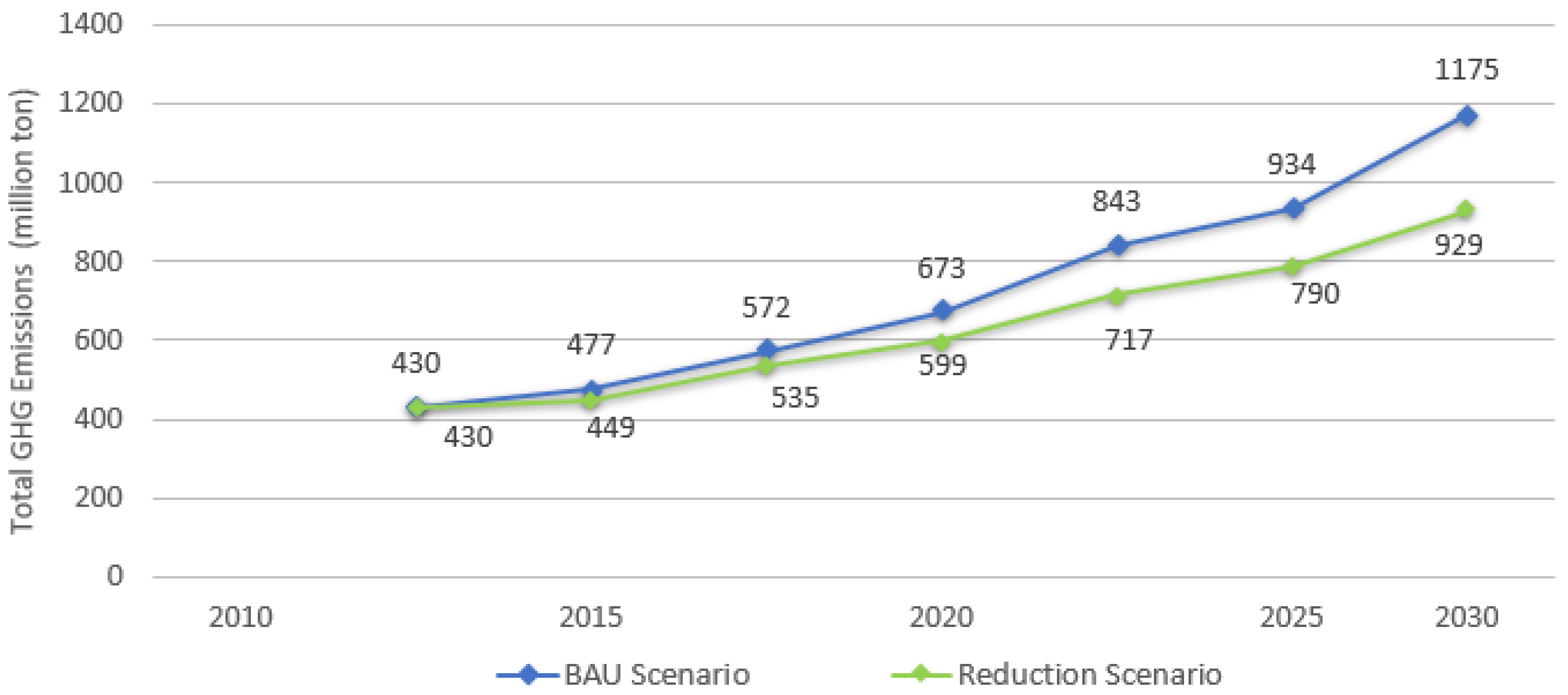
33]. This shift allowed Türkiye to actively engage in setting its national emission reduction targets from a broader perspective. Accordingly, Türkiye submitted its Intended Nationally Determined Contributions (INDC) in 2015, aligning with the objective outlined in Article 2 of the UNFCCC. In this submission, Türkiye committed to reducing GHG emissions by 21% relative to the Business as Usual (BAU) reference scenario by 2030, as illustrated in
Figure 1. The INDC further highlighted Türkiye’s focus on expanding renewable energy sources and transitioning to nuclear energy [
34]. Additionally, Türkiye pledged to enhance energy efficiency and promote low-carbon investments across the industrial, transportation, and urban sectors to achieve further emissions reductions [
34].
The Paris Climate Agreement, which established the post-2020 global climate regime, mandates emission reduction commitments from all signatory countries. The agreement officially entered into force on 5 October 2016, following ratification by at least 55 parties responsible for at least 55% of global GHG emissions. Its primary objective is to limit global temperature increases to below 2 °C by mitigating human-induced GHG emissions. The agreement sets forth provisions for national contributions, emission mitigation, adaptation measures, financial support, technology transfer, and capacity-building mechanisms, taking into account differentiated responsibilities and respective capabilities [
14].
Türkiye signed the Paris Climate Agreement on 22 April 2016, and subsequently ratified it through a Presidential Decree on 7 October 2021. Following the completion of the domestic legal process, the agreement was officially deposited with the UN Secretary-General on 11 October 2021. In conjunction with this ratification, Türkiye announced its national commitment to achieving net-zero emissions by 2053 [
14]. The implementation framework for the agreement was finalized during the United Nations Framework Convention on Climate Change (UNFCCC) Conference of the Parties (COP 26), as documented by UNFCCC (2021) [
35]. At COP 27, Türkiye’s Minister of Environment announced plans to enhance the country’s emissions reduction target to 41% by 2030 and to reach peak emissions by 2038.
4. Related Work
Understanding the relationship between CO
2 emissions and their driving forces has been a central focus of empirical research over the past decade. Existing studies, summarized in
Table 1, show a diverse range of methodological approaches aimed at forecasting emissions and identifying their key determinants. These studies cover various national contexts, including Iran, India, China, Türkiye, the United States, several European nations, and a number of countries in Asia and Africa, where rising carbon emissions and their implications for climate policy have been widely examined [
10,
24,
45,
55,
56,
57].
The literature can be grouped into three main methodological categories. The first category comprises traditional univariate time series models such as ARIMA, Holt-Winters type exponential smoothing, and Grey System models, which were widely used in earlier studies [
26,
28,
30]. These approaches provide useful short and medium-term forecasts but do not incorporate socioeconomic or environmental drivers, which limits their ability to capture structural changes in emission dynamics.
The second category includes multivariate econometric and regression-based approaches, including multiple regression, polynomial regression, and sector-level models [
25,
29,
57]. These studies consider a broader set of explanatory variables, such as population, economic activity, energy use, and environmental indicators, but they generally do not forecast these variables before constructing emission models. As a result, they provide valuable insights into determinant relationships but offer limited capability for long-term scenario-based forecasting.
The third category consists of machine learning and deep learning methods, which have gained prominence in recent years. A variety of models such as ANN, LSTM, GRU, SNN, Random Forest, and Support Vector Regression have been applied to CO
2 forecasting problems [
18,
56,
58,
59,
60,
61]. These methods can capture nonlinear and complex patterns in emission data, although they generally offer limited interpretability in policy oriented contexts. Additionally, most studies in this category rely on univariate emission modeling or apply machine learning directly to CO
2 time series without integrating multivariate projections or structured sensitivity analysis.
Taken together, the existing literature demonstrates significant methodological fragmentation. Many studies rely on univariate forecasting or static regression models, and even the more recent machine learning-based studies rarely integrate both forward projections of explanatory variables and regression-based estimation within a single analytical framework [
18,
60,
62]. Based on the reviewed literature, relatively few studies appear to jointly combine time series forecasting of key socioeconomic and environmental drivers with multiple linear regression and elasticity-based sensitivity analysis. Moreover, few studies attempt to evaluate the relative influence of individual drivers on CO
2 emissions under a standardized and comparable structure.
This study addresses these gaps by introducing a comprehensive multivariate framework that jointly integrates time series forecasting, regression modeling, and elasticity-based sensitivity analysis. By forecasting all major socioeconomic and environmental variables before constructing the CO2 estimation model, this approach provides a more robust and policy-relevant representation of the emission dynamics shaping Türkiye’s future CO2 trajectory. The integrated methodology improves analytical rigor and offers a clearer empirical basis for climate policy design compared with existing studies.
5. Experimental Study
This section outlines the methodological approach employed to analyze and forecast CO
2 emissions based on key economic and environmental variables.
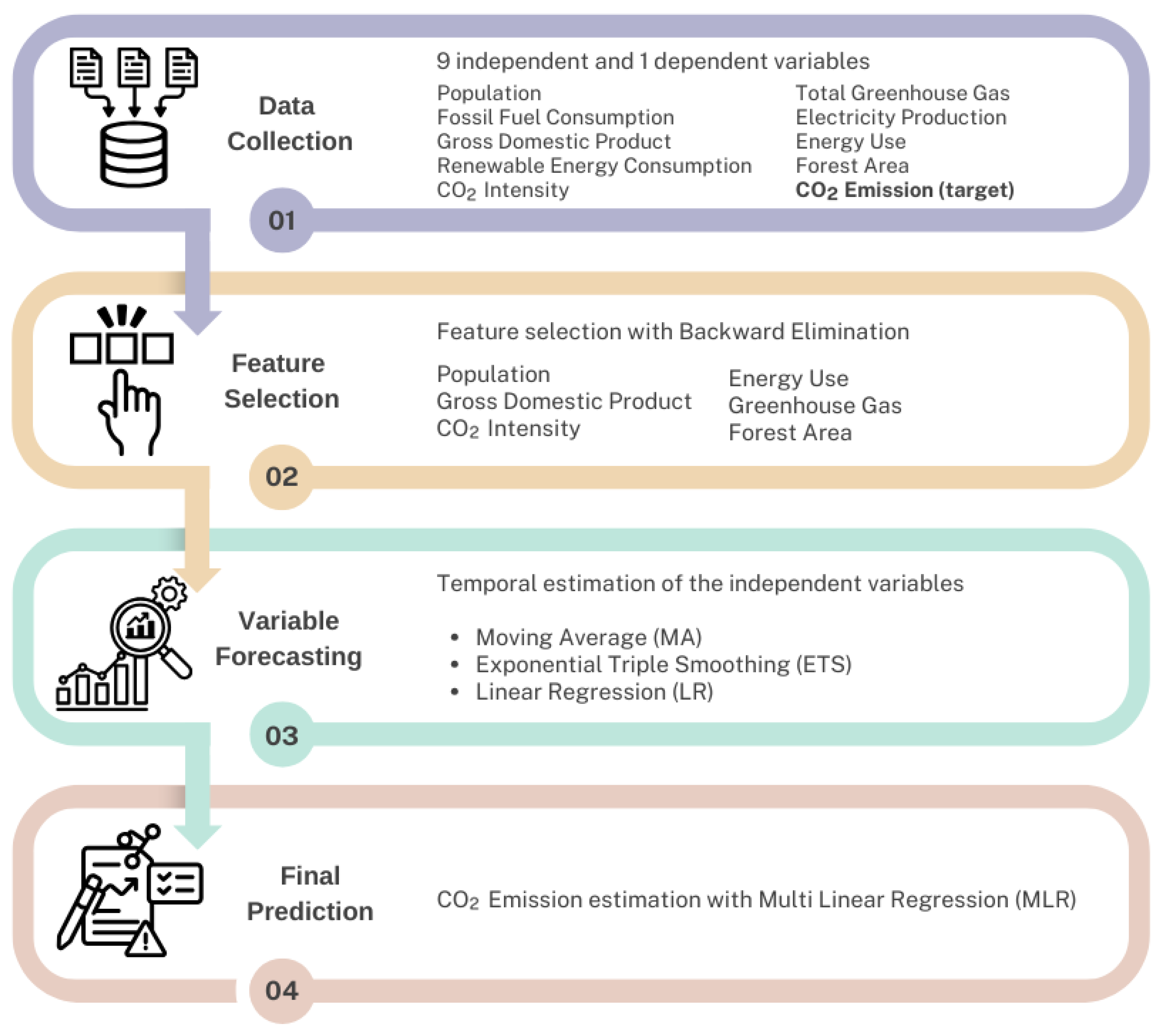
Figure 2 presents the methodological framework of this study, which consists of data collection, data preprocessing, feature selection, regression analysis, and forecasting.
The data collection phase involved gathering key variables from the World Bank. Feature selection via backward elimination identified the most influential factors. Multiple linear regression analyzed their impact on CO2 emissions. Forecasting methods, including Moving Average, Triple Exponential Smoothing, and Linear Regression, were evaluated, with the optimal model selected based on the lowest MAPE and sMAPE values. This methodology provides a systematic approach for analyzing CO2 emissions and serves as a foundation for future research.
5.1. Data Collection and Preprocessing
Experimental data were obtained from the World Bank’s publicly available data repositories [
37]. The dataset includes key variables such as population, GDP, CO
2 intensity, electricity production from oil, gas and coal sources, energy use, fossil fuel energy consumption, renewable energy consumption, total GHG emissions, and forest area to project CO
2 emissions.
Table 2 presents the variables used in the analysis, along with their data availability years, measurement units, and corresponding variable identifiers, providing a clear overview of the dataset structure employed in the study. The data years differ across variables because the World Bank and related international databases provide each indicator with varying update frequencies and historical coverage. As a result, some variables are available up to 2022, while others are only reported until 2015 or 2021 [
37].
As shown in
Table 2, the dataset was divided into dependent and independent variables. CO
2 emissions were designated as the dependent variable, while population, GDP, CO
2 density, electricity production, energy use, fossil fuel energy consumption, renewable energy consumption, total GHG emissions, and forest area were selected as independent variables influencing emission levels. The collected data were organized and prepared for analysis, after which feature selection was applied as a subsequent step to support the development of the MLR model and the time series forecasting procedures [
4,
25,
62].
Before model estimation, all variables underwent a structured preprocessing procedure. The dataset was checked for missing observations, and no gaps requiring imputation were detected. Outliers were examined through visual inspection and standardized residuals, revealing no extreme distortions that would affect model stability. Units of measurement across variables were harmonized to ensure consistency, and no transformation was required because distributions exhibited acceptable skewness for linear modeling. For the time series component, each variable was assessed for long-term trends and seasonal patterns, guiding the selection of the appropriate forecasting technique.
5.2. Feature Selection
The selection of explanatory variables in this study follows well-established empirical evidence linking demographic change, economic growth, energy use, fuel composition, GHG emissions, and land-use patterns to national CO
2 levels. Population and GDP capture macro-level socioeconomic pressures; CO
2 intensity and per capita energy use reflect the carbon content and scale of energy consumption; total GHG emissions indicate overall environmental burden; and forest area represents the natural carbon sink potential of the country. These variables collectively provide a comprehensive basis for modeling CO
2 emission dynamics [
10,
25,
55].
Backward elimination is a widely used technique in feature selection for regression models, aimed at improving model accuracy and interpretability. This process helps in refining the model by removing redundant or irrelevant variables, ensuring that the remaining predictors are truly contributing to the explanation of the dependent variable. The method begins with all candidate variables and iteratively eliminates the least impactful one until only the most significant variables are retained. Initially, a full variable regression is computed, and F-values are assessed for each variable to be eliminated. The variable with the lowest
value is the first candidate for elimination. In the updated model with the remaining (k − 1) variables, the next variable considered for elimination is the one with the lowest
value, excluding the variable identified in the initial step. The
value at each step is calculated using Equation (1).
This equation evaluates how much explanatory power is lost when a specific variable is removed from the model. A lower
value indicates that the variable contributes little to explaining CO
2 emissions and is therefore a candidate for elimination.
Table 3 presents the statistical results of the regression analysis for CO
2 emissions (Y1) from 1990 to 2015, conducted with a 95% confidence interval. The adjusted R
2 value of 0.99 indicates that the selected variables account for nearly all the variation in CO
2 emissions, confirming the effectiveness of the feature selection process. These variables are marked in bold in
Table 3.
Table 3 presents the impact of each variable on CO
2 emissions (Y1). The
p-value analysis shows that Renewable Energy (X7), Fossil Fuel Consumption (X6), and Electricity Production (X4) do not significantly affect Y1. However, based on the variable coefficients, GDP (X2) and Fossil Fuel Consumption (X6) have a negative relationship with CO
2 emissions, while all other variables show a positive influence. The T-statistic and
p-values rank the variables in terms of their relationship with Y1 as follows: X3 > X5 > X9 > X8 > X1 > X2. In the next stage of the analysis, the variables with insignificant effects were removed sequentially. According to
Table 3, the variables were removed in the order X7 > X6 > X4, with X7 being removed first and X4 last. As shown in
Table 4, the regression statistics improved after this removal process, with higher Adjusted R
2 and Significance F values, and a reduction in the Standard Error.
In the final stage of feature selection, a new model was developed where the remaining independent variables provided a better explanation of CO2 emissions (Y1). According to this model, the significant variables for predicting CO2 emissions are X1, X2, X3, X5, X8, and X9. Consistent with the previous analysis, X2 has a negative effect on Y1, based on its coefficient. The ranking of the remaining variables in terms of their impact on Y1, based on the T-statistic and p-values, is as follows: X3 > X5 > X8 > X9 > X1 > X2. Therefore, for predicting Türkiye’s future CO2 emissions, the independent variables included in the model are X1, X2, X3, X5, X8, and X9.
5.3. Time Series Forecasting and Method Selection
Time series forecasting is a method used to predict future values by analyzing historical data, where temporal dependencies such as trends, seasonality, and cyclical behavior are key. The goal is to generate accurate predictions that account for these temporal correlations, aiding decision-making across various domains. We applied time series forecasting to predict nine variables up to 2030, using three methods: moving average, triple exponential smoothing, and linear regression. These three forecasting techniques were selected because they represent complementary approaches for modeling long-term trends in macro-level environmental data. The moving average method provides a simple smoothing mechanism that captures overall trend direction, triple exponential smoothing incorporates level and trend components relevant for energy-related time series, and linear regression is effective when variables display stable linear trajectories over time. More complex methods, such as ARIMA or machine learning-based models, were not used due to limited data length and the absence of consistent seasonal patterns across variables. This ensured that each selected technique remained methodologically appropriate for the dataset.
To evaluate the performance of these methods, we used two metrics: Mean Absolute Percentage Error (MAPE) and Symmetric Mean Absolute Percentage Error (SMAPE). The training dataset from 1990 to 2010 was split into 80% training and 20% test data, with the test set covering 2010 to 2015. This temporal train-test split serves as the appropriate validation approach for time series data, since traditional k-fold cross-validation would break the chronological structure required for forecasting. These metrics helped assess the predictive accuracy of each model, enabling us to identify the most effective method for forecasting future trends. Based on the results of our experiments, we selected the most suitable time series model for our dataset and analysis from the three methods: moving average, triple exponential smoothing, and linear regression.
5.3.1. Moving Average-MA
In time series analysis, random fluctuations in data can obscure underlying trends. To mitigate the effects of these fluctuations, the moving average method, a widely used smoothing technique, is applied to highlight the main trends and patterns. This method, which belongs to the category of averaging techniques, calculates the value of a variable at a specific time by averaging the values from neighboring periods. The unweighted average of previous data points is taken to ensure the model’s consistency with changes in the dataset over time, minimizing any shifts in the forecast. The moving average determines the value of a variable at time t by using the error term (
) at the same period and the lagged values of the error term from previous periods [
63]. The mathematical expression of this approach is given by Equation (2). Although the moving average has widespread use in time series, the success level of efforts to efficiently estimate the parameters in the model has been limited due to the complexity of the Maximum Likelihood Estimation equation [
64].
The MA model describes each observation as the sum of an overall mean and short-term random shocks, including the effect of the previous period’s shock. This allows the model to smooth fluctuations and capture short-term noise patterns in the data. In our analysis, we applied the moving average method to forecast nine independent variables, such as population, GDP, energy use, and others, without focusing on CO2 emissions directly. The method was used to assess the relationships between these variables over time, considering their trends, seasonality, and potential cyclical behavior. By leveraging the moving average technique, we aimed to generate reliable forecasts for these variables up to 2030, using data from 1990 to 2015.
5.3.2. Triple Exponential Smoothing—TES
Triple Exponential Smoothing (TES), or Holt-Winters method, is a time series forecasting technique that accounts for both trends and seasonality. By incorporating three components, overall smoothing, trend smoothing, and seasonal smoothing, it is ideal for data with clear seasonal patterns [
65,
66]. The application of TES allows for the modeling of both trends and seasonal variations simultaneously, offering better predictions for future data points. In our analysis, we used TES to forecast the nine variables, accounting for seasonal and trend patterns, and evaluated the effectiveness of this method in providing reliable predictions up to 2030. The key equations for this approach are as follows:
This method separates a time series into level, trend, and seasonal components and updates each part iteratively as new data arrives. It is well-suited for variables that evolve over time with both trend and seasonal patterns. To implement the Holt-Winters method, at least one full season of data is necessary to determine the initial estimates of the seasonal indices. For this, we estimated the initial trend using the following formula:
where L represents the length of a full seasonal cycle. We recommend using data spanning at least two full seasons (2L periods) to ensure accurate trend estimation. This formula provides the initial estimate of the long-term trend by averaging the rate of change across seasonal periods. It ensures that the TES model begins with a stable and realistic trend component. In the triple exponential smoothing model, the smoothing parameters (α, β, γ) and the seasonal period (L) were estimated through iterative error minimization. For model validation, an 80/20 chronological split (1990–2010 for training and 2010–2015 for testing) was applied [
67,
68]. This approach was applied to the nine variables in our dataset to forecast their values accurately up to 2030.
5.3.3. Univariate Linear Regression—ULR
In this study, regression analysis is used in the context of time series to predict nine independent variables over a specific time period. Specifically, historical data is utilized to model the relationships between these variables and forecast their future values. The approach captures temporal dependencies by incorporating lagged values of independent variables as predictors. This allows the model to learn patterns over time and generate informed estimates for subsequent periods. Regression analysis is a statistical method that examines the relationship between a dependent variable and one or more independent variables. When the analysis involves a single independent variable, it is referred to as univariate regression, whereas the inclusion of multiple variables defines it as multivariate regression. The univariate linear regression equation consists of the constant of the linear function (β
0), the slope of the linear function (β
1), and the error term (ε), represented by the Formula (5):
This equation models how a single predictor influences an outcome by estimating a straight-line relationship between X and Y. It helps capture long-term directional changes in variables with linear temporal patterns.
5.4. Method Selection
To generate forecasts, the collected data comes from various sources with unequal time intervals. An analysis was conducted on the available data to determine the most suitable method for the time series. Following a common practice [
25], 80% of the data was used for training and 20% for testing. Evaluations were performed using three different methods, including LR, MA, and TES, for each dataset, and the prediction performance of each variable is summarized in
Table 5.
This table presents the performance metrics of each time series prediction method across all variables, evaluated using MAPE and SMAPE. The results indicate that X1 exhibits a linear trend and is best modeled using LR, while X2 follows patterns observed in its past data and is best suited for the MA method. In contrast, TES provides a better fit for X3, X5, X8, and X9. These variables are marked in bold in
Table 5.
The results indicated that time series forecasts produced with the TES method were considerably more stable and accurate compared with other approaches used in the regression analysis. Therefore, TES was selected as the primary forecasting technique for generating future values of all variables. This method is particularly suitable for the data structure of the study, as it performs strongly for socioeconomic and environmental indicators that display long-term trend components.
TES-Based Time Series Forecasting of Independent Variables
As a result, the relationships between CO
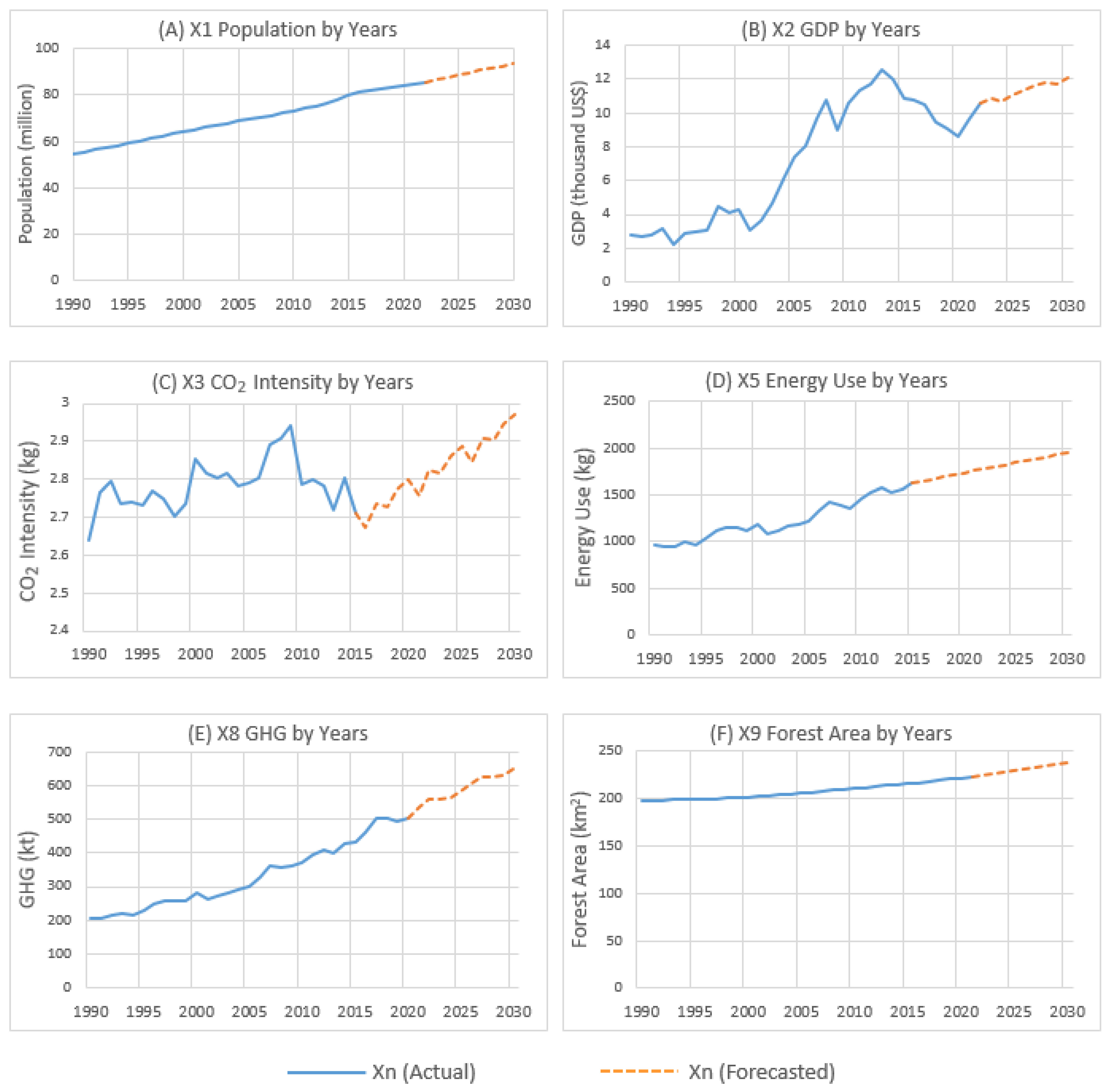
2 emissions and socioeconomic and environmental indicators are examined within a framework that combines time-series projections generated using the TES method. The resulting forecasts clearly illustrate the long-term trajectories and annual evolution of each variable, and the outcomes are presented in
Figure 3 across subpanels A–F. In the graphs, solid lines represent the actual values, while dashed lines indicate the TES-based forecasted values. These projections constitute the fundamental inputs for the sensitivity analysis and CO
2 emission forecasting conducted in the later stages of the study.
Within this framework, the TES model was applied to generate projections for each variable: population (X1) for the 2023–2030 period (
Figure 3A), GDP per capita (X2) for 2023–2030 (
Figure 3B), CO
2 intensity (X3) for 2016–2030 (
Figure 3C), energy use (X5) for 2016–2030 (
Figure 3D), total GHG emissions (X8) for 2021–2030 (
Figure 3E), and forest area (X9) for 2022–2030 (
Figure 3F).
Table 6 summarizes the proportional increases in these variables over their respective forecast horizons.
It should be noted that the specified time ranges correspond to the forecasted values generated by the TES model, whereas the period from 1990 up to the start of the forecast horizon represents actual observed data derived from historical records. Accordingly, each panel in
Figure 3 presents both the realized historical behavior of the variables and their projected trajectories extending to 2030.
Population (X1) projections indicate an expected increase of 9.36% over the 2023–2030 period, exerting direct pressure on CO2 emissions through expanded production and consumption activities. Projections for GDP per capita (X2) suggest a 13.38% increase during the same period, reflecting economic expansion that contributes to higher emission levels via increased industrial output, trade activity, and energy demand.
Projections for CO2 intensity (X3) covering the 2016–2030 period show an estimated increase of 9.65%, indicating that improvements in energy efficiency remain limited and that reliance on carbon-intensive energy sources persists. Similarly, energy use per capita (X5) is projected to rise by 19.94% between 2016 and 2030, highlighting energy consumption as one of the primary drivers of increasing CO2 emissions.
Total GHG emissions (X8) exhibit the highest proportional increase, reaching 32.18% over the 2021–2030 period, underscoring that CO2 emissions are embedded within a broader upward trajectory of GHG emissions. In contrast, forest area (X9) is projected to increase by only 6.17% between 2022 and 2030, suggesting that the expansion of carbon sinks remains insufficient to offset the rapid growth of emission-inducing factors.
In summary, the combined evidence from
Figure 3 and
Table 6 demonstrates that socioeconomic and energy-related drivers of CO
2 emissions are growing at a considerably faster rate than mitigating environmental factors. This pattern indicates that, if current trends persist, CO
2 emissions are likely to continue their upward trajectory in the medium to long-term, highlighting the need for stronger policy interventions focusing on energy efficiency, clean energy transitions, and forest conservation and expansion strategies.
5.5. MLR Experimental Analysis
To forecast the dependent variable Y1, all independent variables were projected for the 1990–2030 period using the selected time series methods, after which a multiple linear regression (MLR) model was constructed to estimate future CO
2 values. In the multiple linear regression model, a significance threshold of 0.05 was applied to assess the statistical relevance of each predictor, ensuring that only variables with a meaningful contribution to CO
2 emissions were retained in the final specification. The multiple linear regression model was evaluated under standard assumptions of linearity, independence of errors, homoscedasticity, and normality of residuals. Diagnostic tests indicated no substantial violations of these assumptions. Multiple linear regression (MLR) was selected because linear models are widely used in national CO
2 projection studies and are well-suited for capturing long-term emission trends. In our framework, the individual dynamics of each variable were already modeled through time series forecasting, and the linear regression stage provides a transparent means of assessing their combined effects. More complex machine learning models can capture nonlinear relationships but offer limited interpretability for policy oriented analysis, which makes the linear approach more appropriate for the objectives of this study. The regression model was evaluated using the same out-of-sample test period, as k-fold cross-validation is unsuitable for time-dependent variables due to the disruption of their chronological order [
4,
25,
69].
The regression analysis results indicate that the model captures nearly all variance in Y1, suggesting a strong predictive capability. To further assess model robustness, supplementary validation metrics were calculated. The model demonstrated an excellent fit, with an R
2 (0.999977), an Adjusted R
2 (0.999973), a Significance F (0.0000), and a residual standard error (RSE) (636.46). Error-based indicators further supported model stability, with an RMSE (579.58792), an MAE (360.77301), a MAPE (0.16226 percent), and a SMAPE (0.16225 percent), indicating consistently low prediction error relative to the magnitude of national CO
2 emission values [
25,
69,
70]. Additionally,
Table 7 provides a detailed overview of how each independent variable influences Y1, highlighting the strength and direction of their relationships based on regression coefficients and statistical significance.
The extremely high R2 values obtained in the regression model arise not from over-fitting, but from the strong linear relationships and the pronounced common temporal trends observed among the socioeconomic and environmental variables. Variables such as population, energy use, total GHG, CO2 intensity, and forest area show sustained upward trajectories over the 1990–2030 period, closely aligning with the long-term rise in national CO2 emissions.
This trend-oriented structure naturally enables the linear model to explain a substantial portion of the variance in CO2 emissions. The temporal trend alignment analysis further indicated that variables such as population, energy use, total GHG, and forest area move in highly similar directions over time, reflecting shared economic and demographic dynamics and leading to strong inter-variable correlations. This trend-driven pattern constitutes the main source of the correlation structure identified in the model.
This outcome demonstrates that the predictors are inherently related due to their macro-level time-series characteristics. The backward elimination procedure contributed to model refinement by ensuring that only six statistically significant predictors were retained in the final specification. Similar studies on national CO
2 projections consistently report very high R
2 values, confirming that such results reflect the strong and stable relationships among long-term macro indicators rather than any modeling deficiency [
17,
25,
56,
57,
61].
Equation (6) represents the final multiple linear regression model derived from
Table 6, summarizing how each significant socioeconomic and environmental variable contributes to CO
2 emissions. The coefficients quantify the direction and magnitude of each variable’s effect, with CO
2 intensity, energy use, and total GHG levels exerting the strongest positive influence on emissions. This model quantifies how each socioeconomic and environmental variable contributes to CO
2 emissions while holding others constant. The signs and magnitudes of the coefficients indicate which factors increase or reduce emissions and by how much.
Analyzing the obtained p-values, it is observed that the variables X1, X2, X3, X5, X8, and X9 are associated with the model. Based on the T-statistic results, the variables’ impact on Y1 is ranked as X8 > X5 > X3 > X9 > X1 > X2. While all variables except X2 exhibit a positive relationship with Y1, X2 (GDP) shows a negative correlation. This finding indicates that, during the examined period, rising economic activity was accompanied by improvements in carbon efficiency. Improvements in energy efficiency, the expansion of cleaner production technologies, and the gradual structural shift of the Turkish economy toward less carbon intensive service oriented sectors may collectively explain why higher GDP corresponds to lower emissions in the model. Additionally, the stronger influence of X8 and X5 compared to the other variables highlights their critical role in shaping future CO2 emission trends, making them key factors to consider in emission reduction strategies.
To evaluate the future trajectory of CO
2 emissions, the MLR-based projection analysis examines their temporal behavior using both actual and forecasted values.
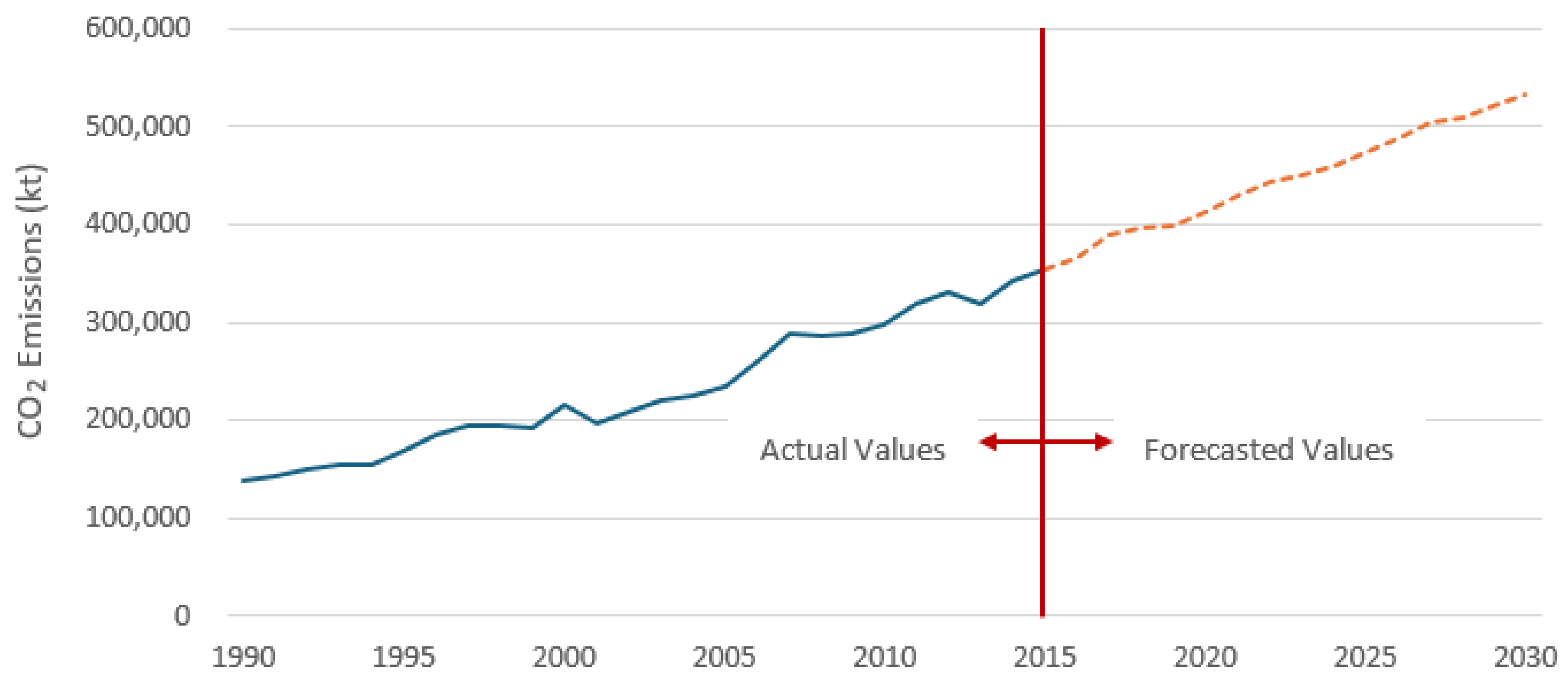
Figure 4 presents the CO
2 emission projections generated with the MLR model, displaying both the actual and forecasted values for the 1990–2030 period. The actual values for 1990–2015 are represented by a solid blue line, whereas the forecasted values after 2015 are shown with an orange dashed line.
The results of the MLR analysis indicate that, based on the long-term dynamics of the explanatory variables, Türkiye’s CO2 emissions are expected to follow an upward trajectory through 2030. Under a no-intervention scenario, the model projects approximately a 50 percent increase in CO2 emissions, exceeding 500 K kt by 2030.
5.6. Elasticity-Based Sensitivity Analysis
In this part of the analysis, an elasticity-based sensitivity analysis was applied to quantitatively evaluate the relative effects of the variables on CO
2 emissions. The elasticity approach was used to calculate the absolute change in CO
2 emissions that occurs when a proportional change is introduced in each independent variable [
71,
72]. Since the variables included in the multiple linear regression model are expressed in different scales (millions of population, thousand kWh of energy use, kt of GHG, etc.), directly comparing the regression coefficients is not meaningful. Therefore, all variables were evaluated under a common reference point, namely a 10 percent increase, and the effects on CO
2 were presented within a comparable framework. The fundamental calculation step of the sensitivity analysis is expressed by the following formula:
In this equation, ΔY represents the absolute change in CO2 emissions (kt CO2), βi denotes the regression coefficient of the respective independent variable, Xi indicates the baseline value of the variable, and p represents the proportional change applied; in this study, p = 0.10. In this way, the change in CO2 emissions resulting from a 10 percent increase in each variable was calculated, and the relative importance of the variables included in the model was revealed.
The results presented in
Table 8 show that the CO
2 Intensity (X3) variable is the most dominant determinant of CO
2 emissions; a 10 percent increase in this variable raises CO
2 levels by 14,090 kt. Energy Use (X5) and Total GHG (X8) also exhibit high positive sensitivity effects, leading to increases of 13,650 kt and 13,449 kt, respectively. The Population (X1) variable moderately increases CO
2 emissions, while the negative coefficient of GDP (X2) indicates that economic growth may slightly reduce CO
2 through gains in energy efficiency and cleaner production technologies. The positive coefficient of Forest Area (X9), on the other hand, reflects not an ecological mechanism but the strong parallel trend it exhibits with CO
2 emissions over time. Therefore, this result should not be interpreted as a causal increase in CO
2.
The direction and impact of each variable in the sensitivity analysis can be summarized as follows: population growth increases CO2 due to higher energy demand and consumption; per capita income slightly reduces CO2 through efficiency gains; CO2 intensity is the strongest driver of emissions as it reflects the carbon content of the energy mix; energy consumption substantially increases CO2 due to the fossil fuel–based structure; total GHGs move in parallel with CO2 as a natural reflection of overall emission levels; and forest area appears positive not due to causality but because of a shared long-term trend. As a result, the elasticity-based sensitivity analysis reveals that CO2 intensity, energy use, and total GHG levels are the most influential factors determining CO2 emissions, indicating that these variables should be prioritized in policy development processes.
6. Discussion
In this study, projections of Türkiye’s CO
2 emissions up to the year 2030 were modeled using MLR and time series forecasting methods. The findings suggest that, under the continuation of current policies and strategies, Türkiye is projected to face a substantial upward pressure on CO
2 emissions. This implies that meeting Türkiye’s commitments under the Paris Climate Agreement will remain challenging unless additional mitigation measures are implemented [
14,
50,
51].
The study identified six key independent variables via backward elimination: population, GDP, CO
2 intensity, per capita energy use, total GHG emissions, and forest area [
26,
28,
59]. All of these variables significantly explain CO
2 emissions with high accuracy. This result confirms that the developed model can serve as a reliable simulation tool for policymakers. In particular, the 32.18% increase in total GHG emissions stands out as a major environmental threat that directly drives CO
2 emissions. This highlights the need for Türkiye to adopt a more integrated climate policy that addresses other GHGs in addition to CO
2. The consistency of these findings with previous national studies reinforces the external validity of the model and supports the robustness of the estimated emission trajectories [
24,
25,
72].
The projected 19.94% increase in per capita energy use indicates insufficient progress in energy efficiency and continued reliance on fossil fuels. This underlines the urgent need to accelerate the transition to a more sustainable energy system. Similarly, the 9.65% increase in CO
2 intensity suggests that carbon-intensive energy sources remain dominant in electricity production. These findings underscore the importance of restructuring Türkiye’s energy portfolio with cleaner and lower-carbon technologies. These results suggest that mitigation policies should be sector-specific, with priority given to energy production, heavy industry, and transport systems where emission reductions yield the highest marginal impact [
11,
55,
60].
The observed negative relationship between GDP and CO
2 emissions indicates that economic growth can, under appropriate conditions, be decoupled from environmental degradation. The negative GDP coefficient is consistent with carbon decoupling, suggesting that green growth strategies may deliver economic gains alongside improved carbon efficiency [
10,
24,
25,
73]. Additionally, the 9.36% increase in population represents a demographic pressure likely to raise energy demand and emissions. This indicates the importance of designing sustainable development strategies aligned with population growth.
The 6.17% increase in forest area appears insufficient to offset rising emissions, underscoring the need for broader afforestation and expanded carbon sink capacity. The limited mitigation effect reflects structural constraints in Türkiye’s land use and carbon sink dynamics, while urban expansion and infrastructure development further increase emissions by raising transport demand and energy intensity. Although forest area has expanded, net sequestration remains modest due to urbanization, land conversion, forest degradation, recurrent wildfires, and long maturation periods for newly afforested lands. In addition, species composition, soil characteristics, and current management practices constrain CO
2 uptake rates. Overall, afforestation alone is unlikely to counterbalance emission growth unless supported by coherent land-use planning, improved ecosystem management, and complementary strategies such as soil carbon enhancement and restoration of degraded lands. Finally, the positive forest-area coefficient should be interpreted as statistical co-movement driven by parallel trends rather than direct ecological causality, requiring caution in macro-level interpretation [
10,
27,
39,
72].
Forecasts show that Türkiye’s emissions will continue to grow through 2030. Since many other countries are also expected to follow similar trends, the global goal of limiting temperature rise to below 2 °C, as outlined in the Paris Agreement, appears increasingly difficult to achieve. This reflects broader implementation challenges within the international climate governance framework. Taken together, these trends suggest that without structural changes in energy systems and industrial processes, economic growth will continue to reinforce long-term emission trajectories. The projections and variable relationships indicate that Türkiye’s climate strategies should be reassessed and supported by realistic, measurable, and actionable targets. Long-term progress in emissions reduction and climate adaptation will depend on scientifically grounded, data-driven, and policy-relevant planning.
This study provides clear theoretical and practical implications within the proposed multivariate forecasting framework. Theoretically, the framework couples time series projections with MLR to propagate future paths of the predictors into CO2 forecasts. Elasticity-based sensitivity analysis then quantifies each driver’s marginal contribution under proportional changes, enabling a ranked interpretation of influence. The results indicate that total GHG emissions, per capita energy use, and population growth dominate the upward pressure on Türkiye’s projected CO2 trajectory. Forest area expansion remains too limited to counterbalance these forces over the projection horizon. The negative GDP coefficient is consistent with a decoupling interpretation under improved carbon efficiency.
Practically, the model’s strong fit and low forecast errors support its use as a transparent, projection-oriented decision-support tool. The findings prioritize interventions that reduce energy demand growth and carbon intensity in the energy system. They also support integrated GHG mitigation beyond CO2 alone. Land-use policy should complement energy measures through effective sink management rather than relying on afforestation as a standalone lever. The proposed framework provides policymakers and researchers with a practical, data-driven basis for climate planning and policy prioritization.
Beyond these findings, several limitations should be considered. Although the analysis relies on official historical statistics, the forecasts do not capture unexpected socio-economic or political shocks. Moreover, the linear specification may not fully represent complex or nonlinear interactions among variables. While the model was validated using data from 1990 to 2015, long-term projections inherently involve uncertainty and should be interpreted as conditional trajectories rather than definitive outcomes.
Potential endogeneity may arise from bidirectional macro-level relationships; however, simultaneity concerns are reduced by projecting each variable independently before the regression stage. The risk of overfitting is considered low as backward elimination yields a parsimonious predictor set supported by strong linear relationships. Although machine learning approaches such as Random Forest and Support Vector Machines can capture nonlinear patterns, their limited interpretability reduces their suitability for policy-oriented analysis and they were therefore not prioritized.
Future research can extend this framework with modern deep learning methods for both forecasting and regression. For forecasting, models such as TCN, LSTM/GRU encoder–decoder, N-BEATS/N-HiTS, and transformer-based forecasters (e.g., Temporal Fusion Transformer) can be tested in a multivariate setting. Probabilistic or quantile forecasting can also be used to report uncertainty bands instead of single-point projections. In addition, integrating real-time big data streams from IoT sensors, smart grids, and remote sensing platforms can improve the timeliness and granularity of emission-related predictors. Edge computing and distributed analytics can further support scalable, low-latency processing of high-frequency data, enabling more responsive and operationally relevant CO
2 monitoring and forecasting pipelines. Emerging monitoring technologies such as satellite-based atmospheric CO
2 retrievals and drone-assisted sensing can provide spatially detailed observations that complement national statistics. Advances in sensor networks, including low-cost CO
2 sensors and continuous emissions monitoring systems (CEMS) for industrial facilities, can also improve measurement coverage and support near real-time validation and calibration of forecasting models [
59,
62,
74,
75].
The regression stage can move beyond static MLR by evaluating nonlinear models. Examples include dynamic regression with lagged exogenous inputs, neural additive models for interpretability, and hybrid pipelines that link deep forecasts of predictors to CO2 outcomes. Robustness should be assessed with rolling-origin evaluation and time-series cross-validation. Finally, scenario analysis can go beyond BAU by defining policy-conditioned pathways for renewables, efficiency improvements, fuel switching, and land-use measures.
7. Conclusions
This study examined the main socio-economic and environmental drivers of Türkiye’s CO2 emissions and produced projections through 2030. Based on multiple regression and time series analysis, the results indicate that, if current trends persist, Türkiye’s CO2 emissions will continue to rise. This upward trajectory makes it challenging to fulfill the national commitments under the Paris Agreement and demonstrates the necessity of strengthening climate policy. When these projections are considered in relation to Türkiye’s 2053 net zero target, they reveal a substantial mitigation gap. Achieving long-term climate objectives will require a sustained and significant reversal of current emission trends, underscoring the need to accelerate decarbonization across energy, transport and industrial sectors.
The statistical findings presented in this study not only quantify the effects of the key drivers of CO2 emissions but also provide an analytical foundation for understanding their policy relevance. Increases in population, per capita energy consumption, CO2 intensity and other greenhouse gases exert upward pressure on emissions, while the limited growth in forest areas is insufficient to offset these effects. The negative relationship between GDP and emissions suggests that economic development, when supported by improvements in technology and efficiency, can be aligned with sustainability objectives. These results indicate that national climate strategies should prioritize reducing emission intensity in the energy system, managing demand growth driven by demographic dynamics and expanding natural carbon sinks.
This study contributes to the literature by offering a comprehensive and high accuracy modeling framework for forecasting national CO2 emissions and identifying priority areas for intervention. The framework is adaptable to other national or regional contexts and supports data driven scenario evaluation. Future research may further advance this work by developing sector specific emission models, expanding scenario-based policy analysis, integrating machine learning approaches into the forecasting structure and incorporating spatially disaggregated assessments to capture regional emission patterns and design more targeted mitigation strategies.