


Abstract
A systematic spatial resilience analysis of population flow networks in underdeveloped mountain towns is essential for sustainable urban–rural integration. Using mobile signaling data from March 2023, this study constructs a population flow network across 69 towns in the Yimeng Mountainous Region. This study proposes a novel targeted-attack framework based on centrality and assesses structural resilience along the three dimensions of efficiency, transitivity, and connectedness. Population flows exhibit a twin-core north–south structure, characterized by a hub-and-spoke system in the south and a self-stabilizing triangular configuration in the north. The network demonstrates strong spatial agglomeration and heterogeneity, with modular clustering revealing four functional modules shaped by administrative boundaries. It exhibits small-world properties, attributed to high transmission efficiency and strong local clustering. The network shows robust resilience to disruptions. Targeted attacks based on betweenness centrality significantly compromise structural resilience; efficiency, transmission, and connectivity change linearly at low attack intensities but decline sharply at higher levels.
1. Introduction
Resilience is the capacity of a complex system to sustain or restore functionality under perturbation [1,2]. The concept of resilience was first used in the field of ecology in 1973 [3]. Since then, the scope of its research has gradually expanded beyond traditional ecological boundaries to include numerous disciplines, such as geography, economics, and sociology [4,5]. Cross-regional flows of people, capital, information, technology, and other functional elements between cities and towns have increased in frequency due to the new urbanization strategy’s accelerated promotion. This has caused the urban system to gradually shift in the direction of networking. The traditional study paradigm has been altered by the frequent interaction between urban and rural elements. The town network, which is based on the theory of “flow space,” has gained a lot of interest as a novel organizational structure for examining regional spatial relationships [6,7].
Within the analytical framework of town networks, the analysis of inter-town linkage data constitutes the core component. Researchers have established a network of inter-town transportation flows [8], information flows [9], economic flows [10,11], population flows [12,13], and other elements for the correlation analysis between towns by using the parametric substitution method [14] or the actual occurrence of various elemental flows [15,16,17]. While the latter concentrates on data parsing and network pattern analysis, the former concentrates on model creation, with the key being the choice of indicator system, indicator weights, and model structure, such as the gravity model. For example, the gravity model has been used to analyze the city network of the Lanxi cluster [18], while cell phone signaling data have been employed to construct population flow networks for studying segregation in US cities [19]. Among these, the town population flow network constructed from large-scale dynamic migration data provides the most effective means to identify and analyze town network structures, integrating economic, social and cultural ties in a highly nuanced, complete and rapidly adaptive form [20]. Therefore, population flow networks are an invaluable and systematic foundation for studying town networks.
The networked development of towns is distinctly double-edged for sustainability. Town networks reshape regional spatial structures by facilitating the orderly flow and efficient allocation of factors [21]. This enables peripheral towns to access more development opportunities through their network connections. However, as risk disturbances intensify, towns are facing mounting pressures from both internal dysfunctions and external shocks, such as financial crises, demographic aging, natural disasters, and geopolitical conflicts [22,23]. The COVID-19 pandemic, a global cyber disruption event, exemplifies the profound impact such disruptions can cause [24]. Towns must remain vigilant against systemic risks transmitted through networks. These risks compound systemic vulnerabilities and pose a major threat to sustainable urban development [25]. Therefore, the integration of regional resilience concepts with network structural analysis has enriched and broadened research on urban–rural network resilience.
The topology of the town network is significantly correlated with the resilience of the regional system [26]. Differences in the density and intensity of inter-town connectivity govern a town’s adaptive, recovery, and transformative capacity as they reshape its network structure. Assessing the resilience and sustainability of town network structures is crucial for understanding inter-town interactions and allowing for a scientific evaluation of the overall network system’s resilience. Most academics have studied topology, network structural resilience, and network function and their interrelationships using both quantitative and qualitative methods based on complex network theory [27,28,29]. They have analyzed the spatial structure of town networks and assessed their structural resilience by measuring topological attributes like degree of aggregation, network efficiency, connectivity, heterogeneity, and hierarchicality [30,31,32]. A study developed an assessment model for the resilience of the urban information, transportation, and economic flow network structure, and proposed an optimization pathway for constructing a preventive mechanism [33]. Only a few scholars have quantified network structure resilience through interruption simulations, which involve repeatedly testing a network’s functional performance after node failures. For instance, the effects of both deliberate attacks and natural disasters on logistics network resilience were examined, and, building on this analysis, a paradigm for its evaluation from a network perspective was developed [34].
The study of town networks progressively transcends the geographical limitations of conventional administrative boundaries due to the increasing cross-regional flow of resource elements. Significant hierarchical expansion characteristics are evident in its research scale, which progressively moves from conventional provincial or municipal administrative units [35] to particular regional spaces with geographic continuity characteristics [36] or policy-oriented boundaries [37], and then extends to micro-spatial units like counties [38]. The theoretical construction of cross-scale spatial correlation is inadequate because the majority of current research focuses on the analysis of town networks in developed regions [39], while the analysis of multidimensional interaction networks among heterogeneous nodes in towns and cities in less developed regions is still lacking. For instance, the relationship between town resilience and population flow networks has been investigated [40]. In a separate context, the resilience features of Nepal’s transportation system following a significant earthquake, along with the effect of damaged roads on the rate of social activity recovery, have also been examined [41]. This study explores methods for analyzing the structural characteristics and resilience of township-scale population flow networks in underdeveloped, mountainous regions. External disturbances are simulated by sequentially removing nodes based on their centrality and recalculating network efficiency, transmissibility, and connectivity.
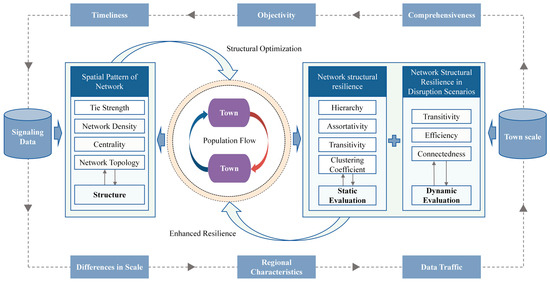
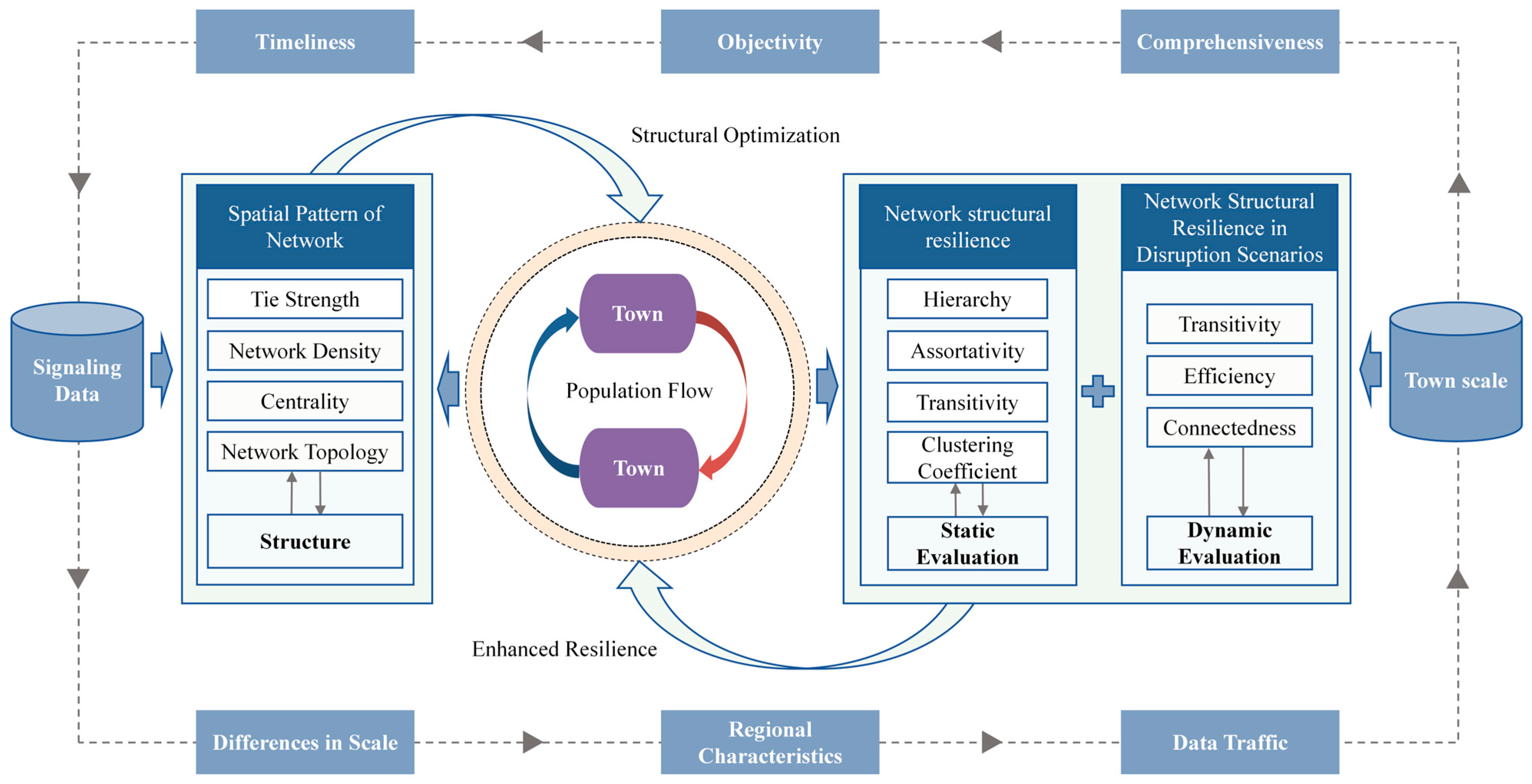
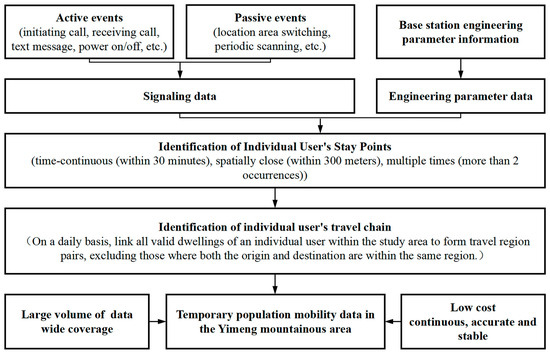
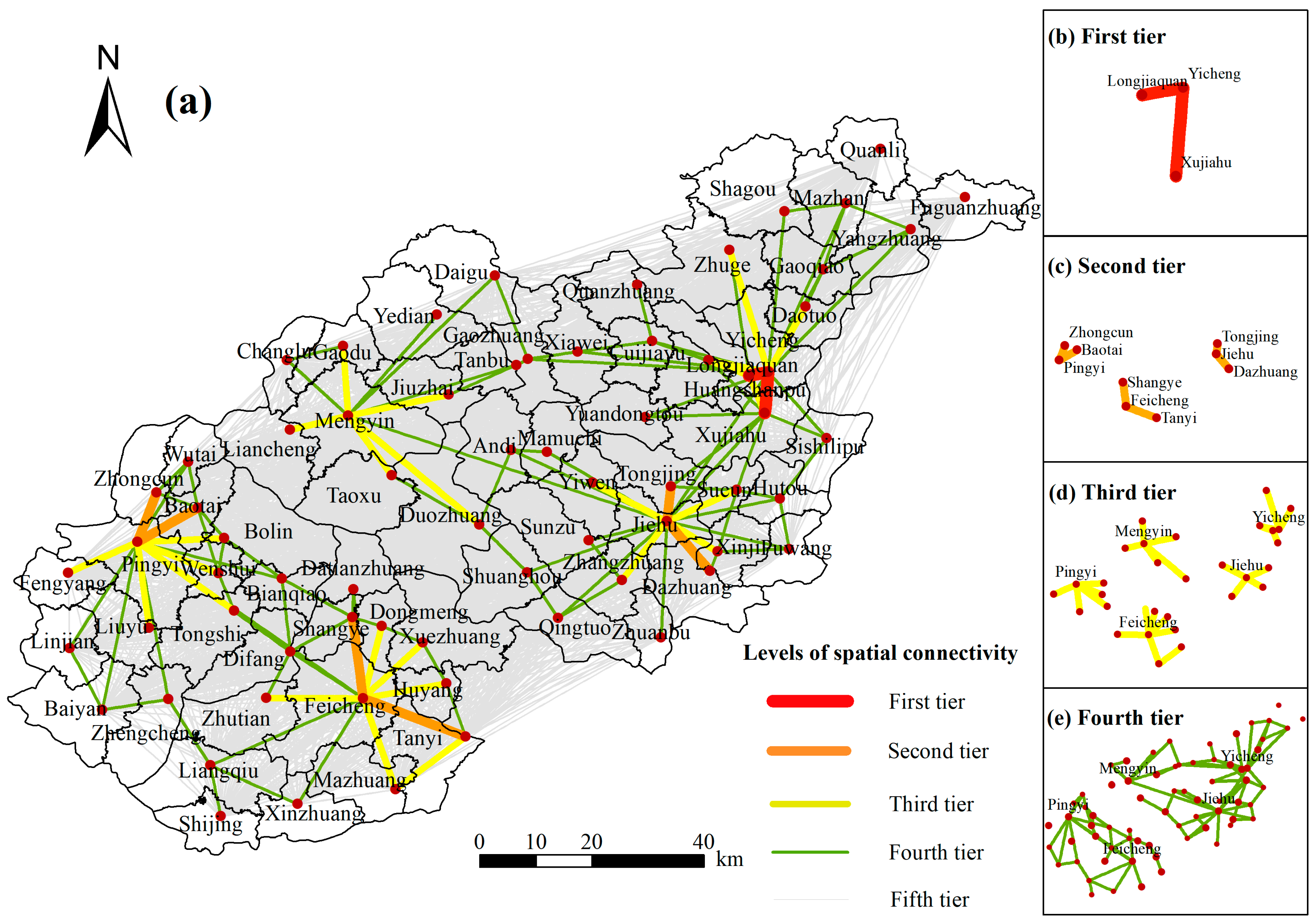
The research objectives and approach of this study are as follows (Figure 1): (1) We analyze the spatial pattern characteristics of the population flow network in the Yimeng Mountainous Region. In this study, we select 69 towns in the underdeveloped Yimeng Mountainous Region for research. Using mobile signaling data, which is known for its timeliness and objectivity, we construct a population flow network for these towns and examined the spatial patterns of the network. (2) We analyze the network topology and structural resilience. This research employs sophisticated network analysis and computer simulations to assess the structural resilience of population flow networks in towns of the Yimeng Mountainous Region. The assessment primarily focuses on key topological metrics, such as hierarchy, assortativity, transitivity, efficiency, and connectedness. (3) We propose optimization strategies for the resilience of town networks in underdeveloped mountainous areas. The findings provide a valuable basis for fostering the development of small and medium-sized towns, promoting regional coordinated development, and advancing sustainable urban–rural growth.
Figure 1.
Research logic and process framework.
2. Data Sources and Research Methods
2.1. Study Area
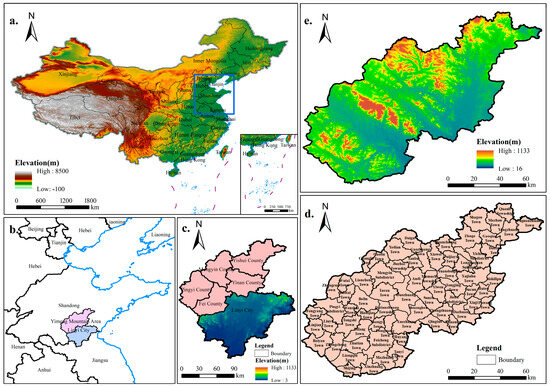
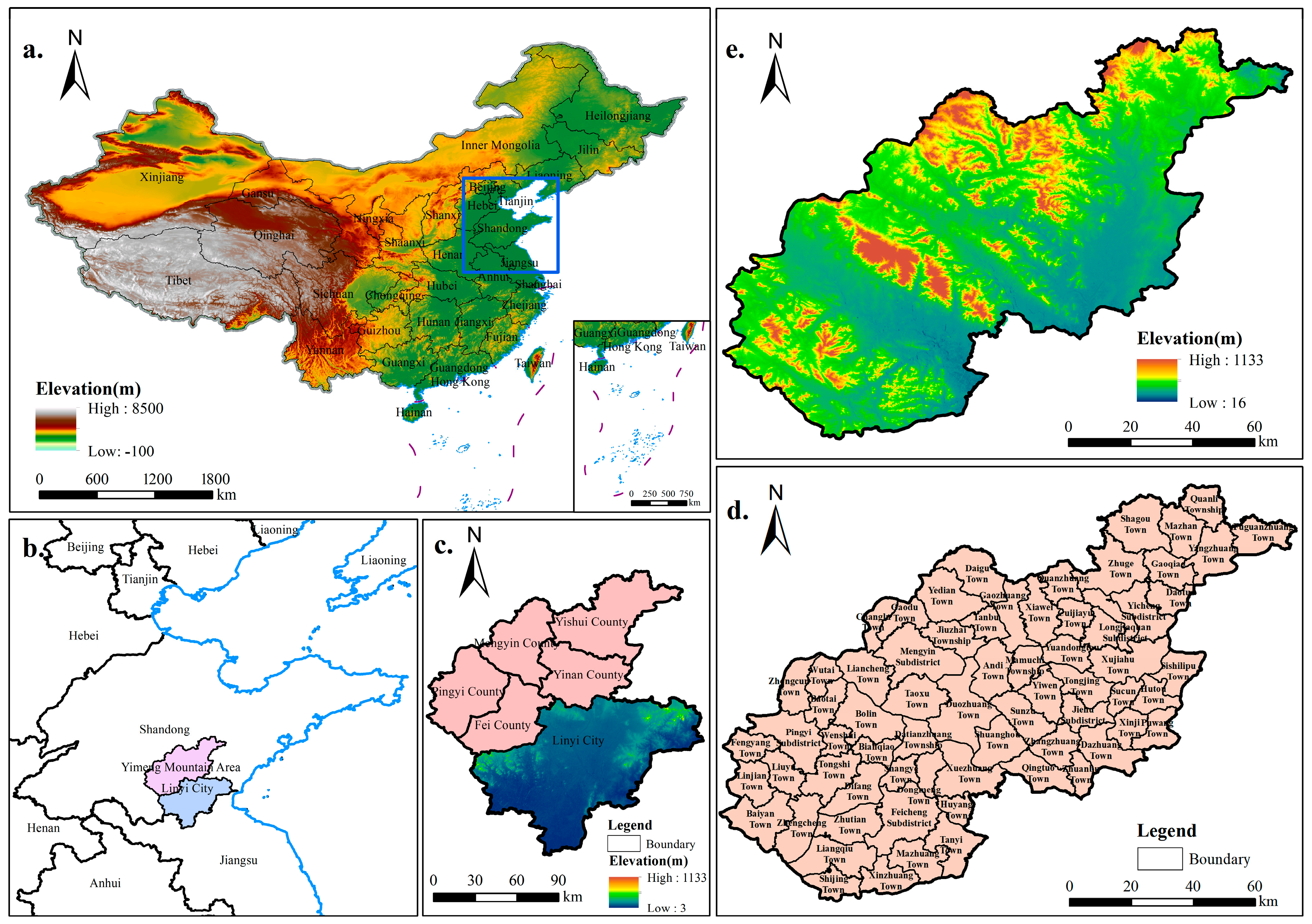
A location of significant geographical and practical importance, the Yimeng Mountainous Region is situated in the southeast of Shandong Province, China’s Luzhongnan hilly region (Figure 2). The Yimeng Mountainous Region’s five counties—Yishui, Mengyin, Yinan, Pingyi, and Fei—with a combined land area of 9243.8 square kilometers, are home to 69 towns, and have a combined population of nearly 4,810,000. With a per capita GDP of 40,400 yuan, well below the national average of 89,400 yuan, and a per capita disposable income ratio of 2.3:1 between urban and rural residents, the Yimeng Mountainous Region is considered underdeveloped due to its significant issues with uneven urban and rural development and insufficient rural development. The Yimeng Mountainous Region’ s geography is characterized by severe fragmentation and is primarily composed of low hills with basins and depressions scattered throughout. The ground is normally slanted from northwest to southeast. Due to the region’s highly undulating topography, the process of transferring elements of the urban network is significantly impacted by the spatial barrier effect. The loss of land, population, and other factors of production in the countryside is a major issue; the transfer of factors of production across the gradient gradually becomes unbalanced, and the sustainable development of cities and towns is challenged. Research on the spatial pattern of town networks and network structure resilience in the Yimeng Mountainous Region is urgently needed, as is an examination of strategies to enhance the resilience of such networks in the area. It is evident that the issue of imbalanced urban development there has a significant impact on the efficient and rational allocation of resources and limits the quality of spatial development.
Figure 2.
Schematic of the study area: (a) shows the location of the study area in China; (b) shows the location of the study area in Shandong Province; (c) shows the location of the study area in Linyi City; (d) shows the 69 towns in the study area; (e) shows the topography of the study area.
2.2. Data Sources and Processing
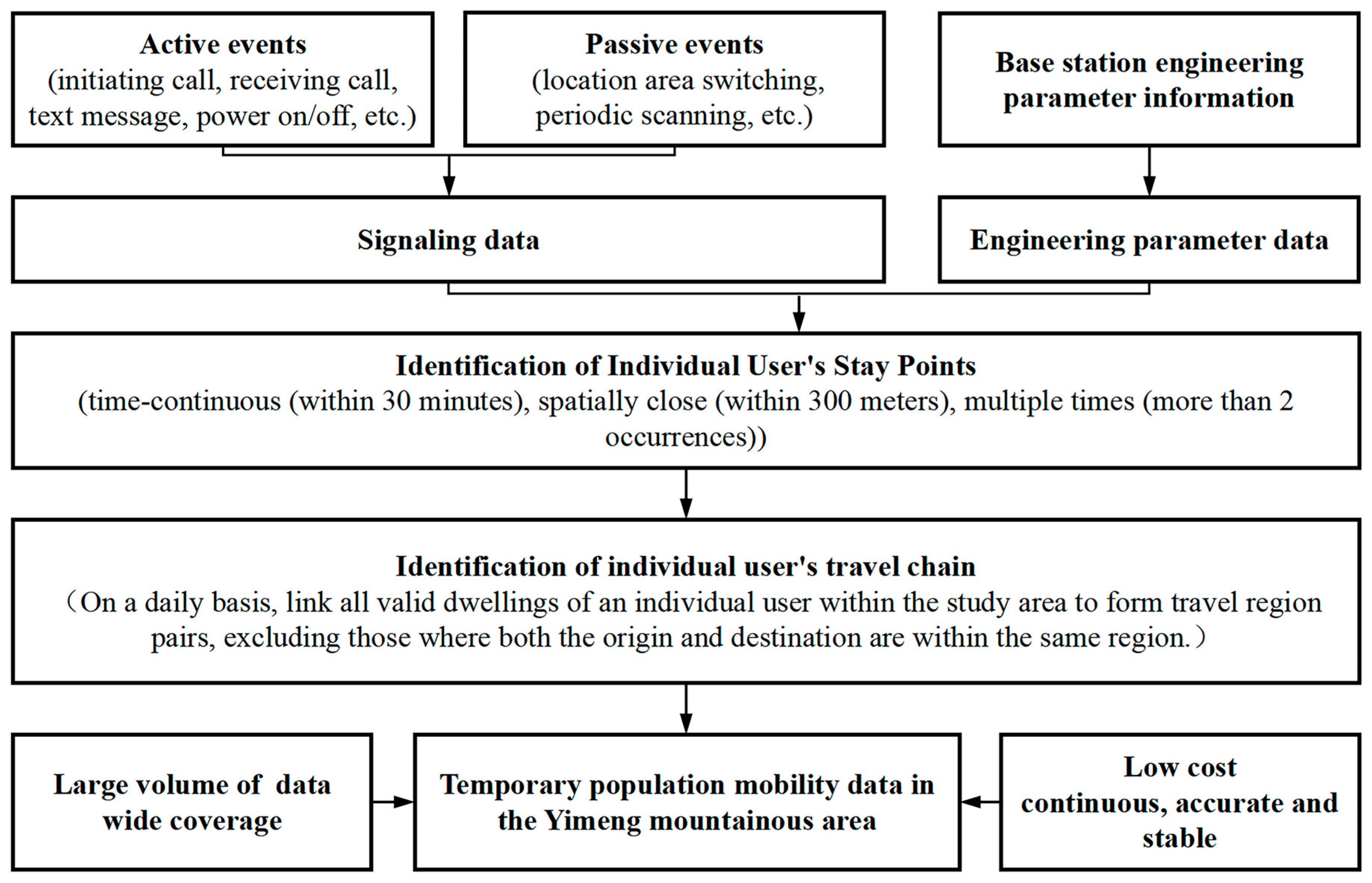
The study data came from Unicom subscribers’ mobile phone signaling data in the Yimeng Mountainous Region’s Fei County, Mengyin County, Pingyi County, Yishui County, and Yinan County that Smart Steps gathered in March 2023. This data included the encrypted unique subscriber identification number (anonymous numbering without personal information), the type of signaling, the time the signaling occurred, and the base station to which the mobile phone was connected at the signaling event. It is not possible to directly determine behavioral features like population movement or the purpose of user actions from mobile phone signaling data. The general law of population flow is considered while establishing the population flow identification rules by analyzing the original mobile phone signaling data and industrial parameters data (Figure 3). (1) Determining the stay points for each user. A stay point is determined by looking at the spatial and temporal distribution of individual user signaling, which will be continuous in time (within 30 min), spatially close (within 300 m), and have many (more than 2) signaling data points for convergence. The decision to adopt a 300 m threshold is informed by Chen et al.’s research [42], which demonstrates that variations in grid cell sizes ranging from 250 to 1500 m have minimal impact on the accuracy of inferring meaningful locations for smartphone users. The selection of the 30 min threshold draws upon the study by Zheng et al. [43]. It is important to note that researchers should ultimately determine the choice of thresholds based on the specific requirements of their research questions. (2) Finding travel linkages for each user. Concatenating all legitimate user stays in the research region yields pairings of locations traversed in terms of days, omitting the portion of origins and destinations that are both in the same area. The user’s current location can be localized based on the base station’s location and the signaling data. Individual positioning data can be used to restore the individual’s travel link information in the time dimension and spatial latitude, allowing for the determination of the population flow’s outflow and inflow locations. 4,660,499 was the final population movement count in the Yimeng Mountainous Region.
Figure 3.
Procedure for identifying population migration data.
2.3. Research Methods
2.3.1. Spatial Autocorrelation Analysis
Both global and local spatial autocorrelation are often employed techniques in spatial autocorrelation analysis, which examines the geographical correlation and spatial differentiation of neighboring geographic features. By computing Moran’s I and p-value, the agglomeration of the town network’s spatial arrangement in the Yimeng Mountainous Region was evaluated. I has a value between −1 and 1, where a value of 1 indicates full spatial positive correlation, a value of 0 indicates spatial random distribution, and a value of −1 indicates spatial negative correlation.
2.3.2. Complex Network Analysis
- 1.
- Network Density
Network density represents the degree of interconnection of the units in direct proportion to one another and reflects the entirety of the object of investigation.
where is the network density, is the number of nodes in the network, and is the strength of the demographic links between nodes and .
- 2.
- Centrality
Degree centrality. Degree centrality, which essentially measures a node’s position in the network and characterizes the degree of node connectedness, is the number of other nodes that are directly connected to the node.
where is the degree centrality; is the number of direct connections of node ; is the total number of nodes in the network.
Betweenness centrality. The percentage of all shortest paths in the network that go through the location is known as betweenness centrality. The more control a node has over the network, the higher its median value.
where is the betweenness centrality; is the total number of shortest paths from node to ; is the number of shortest paths through node .
Closeness centrality. The reciprocal sum of the shortest paths from a node to every other node times the number of other nodes is known as closeness centrality. The degree to which neighboring nodes influence a node is indicated by its closeness degree.
where is the closeness centrality; is the shortest path distance from node to ; is the total number of nodes in the network.
2.3.3. Network Structural Resilience Assessment Metrics
This paper, in conjunction with the research on network structure toughness assessment, assesses the dynamic aspects of network structure toughness from the viewpoints of transitivity, efficiency, and Connectedness under disruption scenarios, as well as the static aspects of network structure toughness from four perspectives: hierarchy, assortativity, Clustering coefficient, and transitivity. The following are the precise computation techniques and evaluation indices (Table 1).
Table 1.
Network structural resilience assessment metrics.
- 1.
- Degree Distribution
According to Crespo [44], a rise in the slope of their distribution indicates a strengthening of hierarchical features among nodes. A higher level of hierarchical structure emphasizes the important role of high-level nodes and induces path dependency in lower-level nodes. When core nodes are attacked, lower-level nodes lose support, reducing the network’s overall resilience.
where denotes the degree of node ; denotes the rank of the degree of node in the network in terms of place order; is a constant; denotes the slope of the degree distribution curve.
- 2.
- Degree Correlation
Network nodes frequently exhibit preference attachment, which is why Newman developed the ideas of homophily and heterophily to differentiate between node preference attachment. Networks with higher assortativity exhibit poorer adaptability and flexibility in the face of external disturbances, resulting in lower resilience levels. Conversely, networks with higher disassortativity demonstrate more flexible node interactions and higher resilience levels. For specific measurements, the degree mean of all directly associated nodes in the neighborhood of each node is calculated:
where is the degree of the neighboring node of node ; is the set of all neighboring nodes of node ; is a constant; and is the degree correlation coefficient.
- 3.
- Average path length
The network’s average path length metric is used to assess transmissibility, and the pass-through route with the lowest connection cost is the shortest path between nodes. The average path length is the mean distance between any two nodes in a network. Shorter connection paths enable elements to circulate faster and at lower costs, allowing the network to adapt rapidly to external disturbances.
where is the average path length of the network; is the number of nodes; and is the shortest connected path from node to node .
- 4.
- Clustering coefficient
The analysis of network agglomeration can be performed using both local and global clustering coefficients. The degree of node clustering throughout the network may be observed by calculating the global clustering coefficient, which is the average of the local clustering coefficients of every node in the network. The local clustering coefficient is a measure that characterizes the degree of aggregation of network nodes. A higher clustering coefficient fosters closer interactions between nodes, which facilitates smoother coordination and cooperation within the network during crises.
where The degree of node is indicated by , the number of edges that are really created between nodes next to node is indicated by , and the local and global clustering coefficients are indicated by and , respectively.
- 5.
- Network efficiency
Network efficiency assesses the total effectiveness of element transfer between nodes in a network. Higher numbers indicate shorter pathways and stronger connectedness, representing the network’s robustness and efficiency.
where is the network efficiency; is the total number of nodes; and is the shortest path length from node to node (0 if not connected).
- 6.
- Largest Connected
Component. The connection integrity of the network as a whole is reflected in the relative size of the largest connected component; greater values show that the network’s main body is connected and that elements can flow effectively, while lower values show the opposite.
where is the relative size of the largest connected component; is the number of nodes in the largest connected component; and is the total number of nodes in the network.
3. Result Analysis
3.1. Characterization of Spatial Patterns
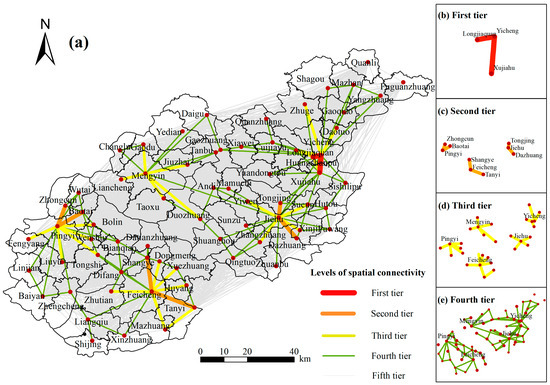
The Yimeng Mountainous Region exhibits a hierarchical structure with notable variations in the degree of population flow among municipalities. Natural Breaks (Jenks) was used to examine the spatial depiction of population flow data in towns and cities in the Yimeng Mountainous Region (Figure 4). The population flow network of towns in the Yimeng Mountainous Region has 3294 spatial correlation paths in total. The population flow of towns is driven by the potential energy difference created by factor agglomeration between towns, which also produces considerable spatial correlation. With spatial differentiation into two major development zones in the north and the south, limited by the geomorphological barrier effect and the disparity in urban and rural development potential, the network as a whole is characterized by a multi-core structure (Figure 4a). Additionally, the intensity of population flow between the zones is significantly weakened. Influenced by geographical proximity and the gravitational pull of regional centers, the southern zone has formed a tight spatial coupling relationship with Linyi’s main urban area. The area exhibits a distinct “hub-and-spoke” structure, creating a dual-core, radial spatial pattern centered around Pingyi and Feicheng subdistricts. The northern zone is a stable, triangular structure comprising complementary industrial functions and interlocking economic factors. Yicheng, Jiehu, and Mengyin subdistricts form its core and create a star-shaped, radial spatial pattern. To create a multi-scale nested flow network, overcome the spatial barriers created by geomorphological isolation and the gradient of development potential, and achieve the balanced distribution of elements and optimization of spatial efficiency between urban and rural areas, it is necessary to reinforce the construction of functional corridors across areas.
Figure 4.
Hierarchical distribution of spatial linkages: (a) Spatial structure of population linkages across all five tiers; (b) Spatial structure of population linkages for Tier 1; (c) Spatial structure of population linkages for Tier 2; (d) Spatial structure of population linkages for Tier 3; (e) Spatial structure of population linkages for Tier 4.
Both Tier 1 and Tier 2 networks exhibit a point-axis development pattern of network organization and a boomerang-shaped spatial pattern (Figure 4b,c). The core turning points of this spatial pattern are all located at the county government seats, namely Yicheng Subdistrict, Pingyi Subdistrict, Jiehu Subdistrict, and Feicheng Subdistrict. With only two town linkage pairs—Yicheng Subdistrict–Longjiaquan Subdistrict and Yicheng Subdistrict–Xujiahu Town—and a single-core pattern with Yicheng Subdistrict at its center, the first-tier network is the area in the Yimeng Mountainous Region with the strongest linkage of urban population flows, with a linkage intensity range of 6210–18,399 trips. Strong industrial complementarities, notable economic synergies, and clear needs for social resource sharing exist between Xujiahu Town, Yicheng Subdistrict, and Longjiaquan Subdistrict. Additionally, there is a lot of population migration in the towns. With a linkage intensity range of 3662–6210 person-times, the second-tier network is the foundation of the town’s population flow network and an extension of the first-tier network. It consists of six town linkage pairs, including Pingyi Subdistrict-Zhongcun Town, Feicheng Subdistrict-Shangye Town, and Jiehu Subdistrict–Tongjing Town. The multi-core pattern centered on Pingyi Subdistrict, Feicheng Subdistrict, and Jiehu Subdistrict has started to gain prominence. Due to their status as the region’s political and economic hubs, the three subdistricts contain more densely populated industrial chains, better-paying jobs, and advanced public service facilities, all of which have a clear population-sucking impact on the nearby towns. With a range of 1391–3662 contacts, the third tier of the network complements the backbone with a “star-shaped” spatial layout and a hub-and-spoke network organization (Figure 4d). Five town connection pairings, such as Mengyin Subdistrict-Zhengcheng Town, Mengyin Subdistrict–Gaodu Town, and Mengyin Subdistrict–Jiuzhai Township, make up a linkage pattern with Mengyin Subdistrict as the core. Of these, the core of Mengyin Subdistrict is starting to develop. Compared to the four core towns previously mentioned, Mengyin Subdistrict has less of an impact on the outlying towns due to topographical constraints. The fourth-tier network, which has a linkage strength of 368–1391, is a further refinement of the association pattern of the first three tier networks (Figure 4e). It identifies the spatial expansion and overall spatial skeleton of the urban population flow network in the Yimeng Mountainous Region and reflects more fine-grained features of the network. With a range of connection intensities between 0 and 368 person-times, the fifth-tier network has the most evenly distributed population connections throughout the Yimeng Mountainous Region. When combined with the first four tiers, it forms a pattern of town-level connections in the region, which is more evenly distributed. In general, there are weak connections between ordinary towns and significant connections between the main towns in the Yimeng Mountainous Region. Therefore, to enhance the structural resilience of population flows among towns in the Yimeng Mountainous Region and to promote sustainable urban–rural development, the supporting role of ordinary towns within the town hierarchy should be strengthened.
3.2. Topology Characterization
The network matrix of population flow in the municipalities of the Yimeng Mountainous Region is derived from the binarized data (the existence of linkage is 1 and vice versa is 0), and Ucinet calculates its network density to be 0.7899. The towns in the Yimeng Mountainous Region have formed a relatively compact population flow network. This network exhibits robust overall connectivity, intensive spatial interactions among towns, and a comparatively stable trajectory of sustainable urban–rural development. The town population flow network in Yimeng Mountainous Region exhibits significant spatial agglomeration characteristics and has spatial positive correlation, according to the global autocorrelation coefficient (Table 2), which was computed from the data of the network. Its Moran’s I was 0.14, with a p-value of 0.0333, which was tested for significance. The first-level network of spatial pattern analysis mutually confirms that Yicheng Subdistrict, Longjiaquan Subdistrict, and Xujiahu Town are high and high agglomeration areas with significant spatial correlation and in the absolute core of agglomeration, according to the local Moran’s I index.
Table 2.
Statistics on spatial autocorrelation indicators.
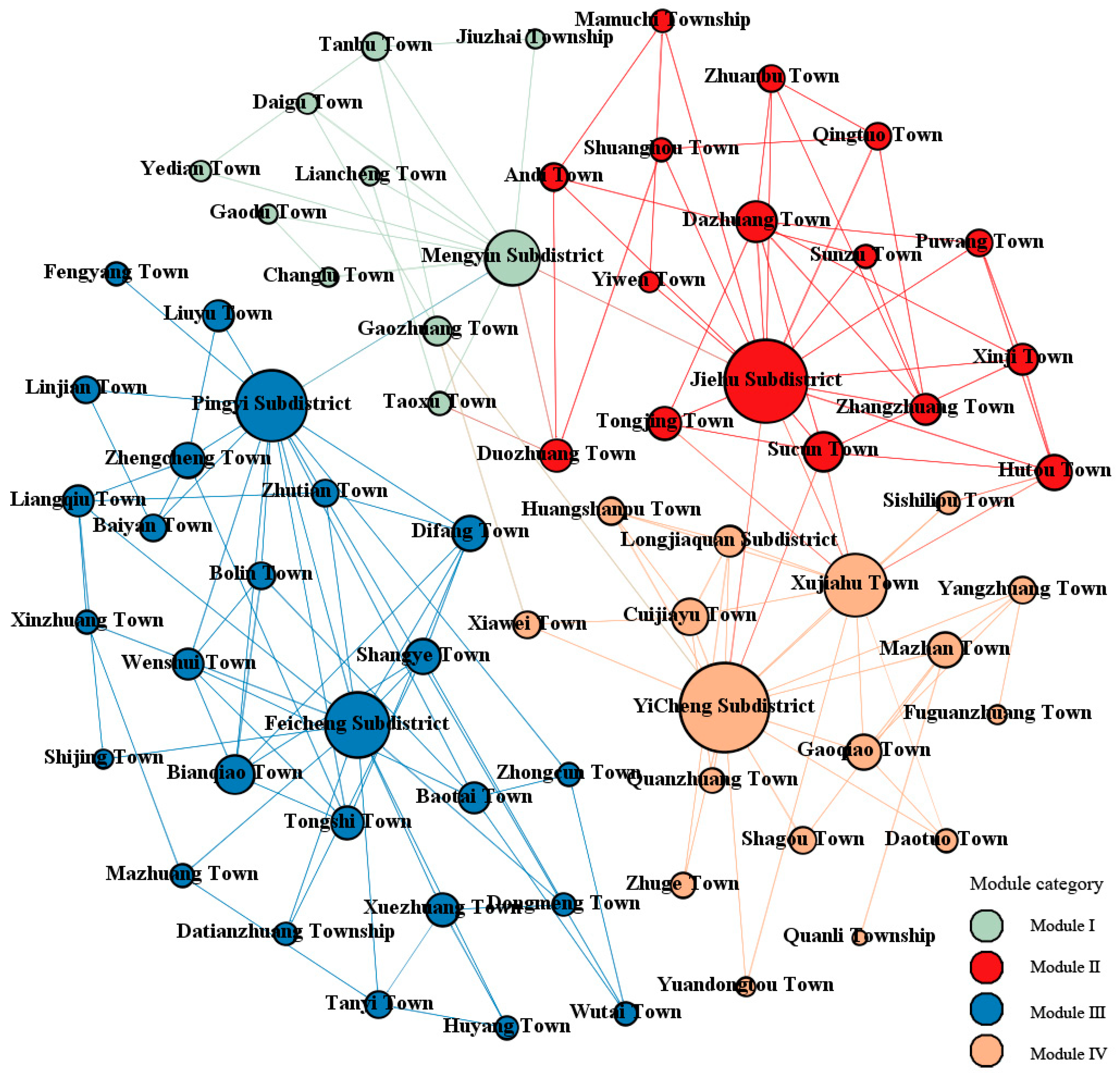
Town status and degree centrality are closely correlated, with more connected towns typically demonstrating greater external connectivity efficacy. Topology optimization for town population flow networks is implemented using the Gephi 0.9.2 platform, which is based on the complex network analysis method. To extract the backbone network that best reflects the system’s core position in the spatial interaction system, the mobility intensity threshold is set at 368. Edge connections with population flow values below the threshold are removed. The Louvain algorithm-based modularization clustering analysis yielded a modularity (Q) value of 0.172, indicating a statistically significant departure from a random network structure. This quantitative result supports the identification of four distinct modules that exhibit notable differences in spatial distribution (Figure 5). There is a notable spatial proximity effect in the modules’ distribution, and the county administrative boundaries’ restricting effect has a major impact on their spatial arrangement. As the main hubs for information sharing and resource flow within the modules, Yicheng Subdistrict, Jiehu Subdistrict, Mengyin Subdistrict, Pingyi Subdistrict, and Feicheng Subdistrict exhibit a high degree of centrality, strong connectivity, and influence within their respective modules. This composite development pattern is known as “urban areas leading—towns synergizing.” It displays a composite pattern of “town synergy-urban area leading” growth.
Figure 5.
Topological structure of the backbone network and module identification.
Mengyin and Jiehu’s subdistricts each adopt a single-center radial structure (Modules I and II), displaying a clear preference bias for spatial interactions and a variety of town linkages. The difference in the development gradient between urban and rural areas, as well as the path-dependence of the flow of resources and factors, can be interpreted as a spatially optimal linking mechanism under the role of the core-edge structure. This leads to a greater tendency to obtain development momentum through the establishment of vertical networks among ordinary towns, while maintaining limited internal connectivity.
Due to the mountainous terrain barrier, Pinyi Subdistrict and Feicheng Subdistrict form a dual-center synergistic development-type structure (Module III). The mountainous terrain forms a relatively independent geographical space for the two subdistricts while also creating a closely interconnected area, serving as a natural barrier. The core corridor extending westward from Linyi’s central urban area consists of Pingyi County and Fei County. Pingyi County functions as a regional gateway city and the western sub-center of Linyi. Owing to its proximity to the main urban area, Fei County directly benefits from economic spillover effects. This spatial structure lays the foundation for high-frequency population flow.
Then, a major and secondary hierarchical structure (Module IV) is formed by Yicheng Subdistrict and Xujiahu Town. Yicheng Subdistrict and Xujiahu Town have established an efficient vertical division of labor through differentiated industrial positioning. Xujiahu Town supplies raw materials and intermediate products that are used directly or indirectly in the manufacturing sector of Yicheng Subdistrict. As a regional service hub, Yicheng Subdistrict boasts a well-developed commercial and logistics system, which provides a broader market for the industrial products from Xujiahu Town. This cluster development model—based on a vertical division of labor within industrial chains—avoids homogeneous competition and enhances the efficiency of resource and factor allocation through the construction of regional value chains. As a result, population flow and economic linkages between the two cores are strengthened, contributing to the formation of an orderly and coordinated spatial structure.
3.3. Network Structural Resilience Assessment
3.3.1. Network Static Structure Toughness Assessment
- 1.
- Hierarchy
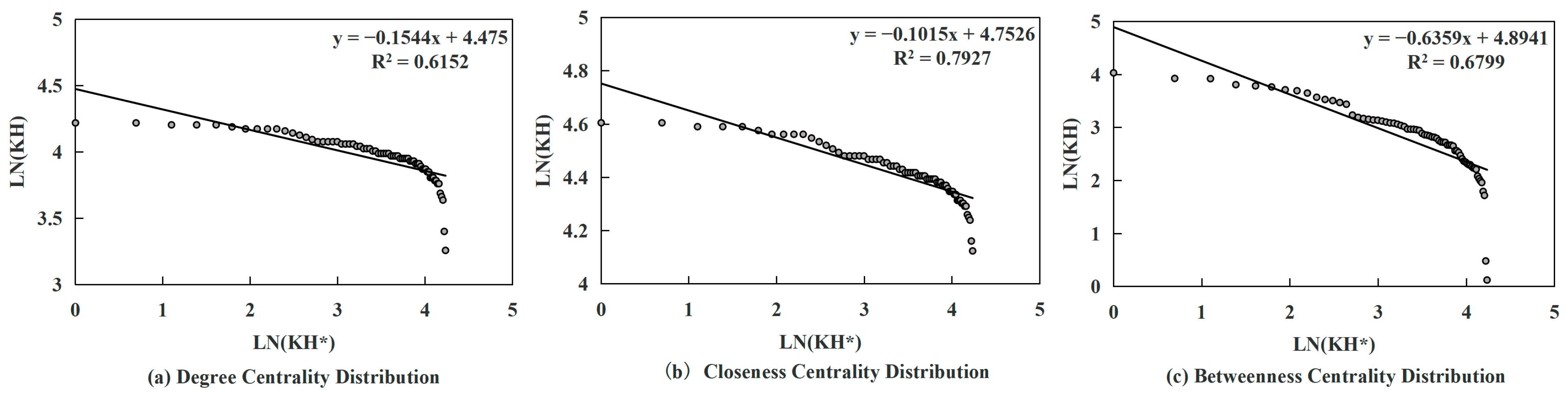
In the assessment of network hierarchy (Figure 6), the slopes |a| of the degree distribution of degree centrality, closeness centrality, and betweenness centrality of the population flow network of towns in the Yimeng Mountainous Region are 0.1544, 0.1015, and 0.6359, respectively, which indicates that the network has a certain degree of hierarchical structure, and that the network is more significantly heterogeneous. The number of connections, location, and control capacity of the towns in the network vary, and the ability of Jiehu Subdistrict, Yicheng Subdistrict, and Pingyi Subdistrict—the core towns—to cluster and radiate with other towns in the area differs significantly from that of the other towns in the network. This disparity, however, shows up differently depending on the centrality metric. While the degree centrality heterogeneity is relatively small, the betweenness centrality heterogeneity is large. This suggests that while the number of connections between towns in the network is relatively uniform, there are notable differences in the control of information, and that the core towns serve as crucial “transit stations” in the network, exerting greater control over population flows. Because removing these crucial nodes can significantly alter the information propagation flow, a network with a higher number of higher betweenness centrality may be more vulnerable to attacks directed at these nodes. However, due to the comparatively more uniform distribution of degree centrality and closeness centrality, the network remains robust in the face of random failures or attacks, and the failure of a few nodes does not lead to the collapse of the entire network.
Figure 6.
Network degree distribution. KH denotes the degree of node H; KH* denotes the rank of the degree of node H in the network in terms of place order.
- 2.
- Assortativity
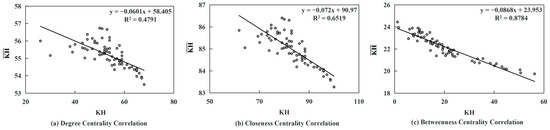
The town population flow network in the Yimeng Mountainous Region has degree correlation coefficients of degree centrality, closeness centrality, and betweenness centrality of −0.0601, −0.072, and −0.0868, respectively, with values less than 0 according to network matching assessment (Figure 7). This suggests that the network exhibits a disassortative mixing pattern, characterized by a significant negative degree correlation and a non-significant assortative tendency. Specifically, core towns tend to form connections with ordinary towns, while ordinary towns display a reduced probability of connecting, a phenomenon that reflects the existence of a hierarchical structure or core-edge organizational pattern in the network. In terms of degree centrality, the network exhibits a relatively flat distribution. This is associated with a significant negative correlation with neighboring towns and diverse linkage patterns. Within this structure, core towns leverage their advantages to drive and radiate influence to ordinary towns, forming a well-organized network with a disassortative mixing pattern. This confirms that core towns function as structural hubs and critical bridges, underpinning both the connectivity and integration of the regional network. Their role as network “bridges” is further validated by the higher correlation coefficient of betweenness centrality compared to closeness centrality. This has a significant siphoning effect on the population of ordinary towns, and residents of ordinary towns continue to migrate to the core towns. The ongoing migration of residents from ordinary towns to core towns strengthens the core-periphery structure. This enables the core towns to consolidate their local linkages while establishing new, long-range connections, thereby enhancing the resilience and connectivity of the entire regional network.
Figure 7.
Network degree correlation.
- 3.
- Transitivity
The population flow network of towns in the Yimeng Mountainous Region has a small average path length, a large average clustering coefficient, and a characteristic small-world impact according to the network transmissibility assessment (Table 3). The streams are provided with a maximum of two nodes in transit between nodes, and the network’s average path length is 1.210. This indicates substantial population mobility within the Yimeng Mountainous Region, which is predominantly characterized by short-distance, inter-urban, and rural flows. This pattern is facilitated by extensive direct linkages between urban and rural areas, resulting in a well-connected network. It also means that every two towns in the Yimeng Mountainous Region can be connected through just 1.210 towns. The actual value is near the random network’s minimum value and within its distribution, suggesting that the nodes have “short path” characteristics similar to those of the random network. When combined with the random network path length statistics, the minimum value is 1, the maximum value is 2, and the distance is 2 in 21% of all cases. The standard deviation is 0.407. The existence of short paths is supported by the average path length’s consistency with the randomized network, even though it is somewhat longer than the minimum. Population flow and other activities can occur because of the network’s improved spatial connectivity, higher transmission efficiency of complementary links, and generally higher interactive exchanges between nodes. The “flow” spreading along this path will also have strong diffusion capacity and accessibility, as well as less resistance and relatively low additional costs.
Table 3.
Statistical table of indicators related to the small world effect.
- 4.
- Clustering Coefficient
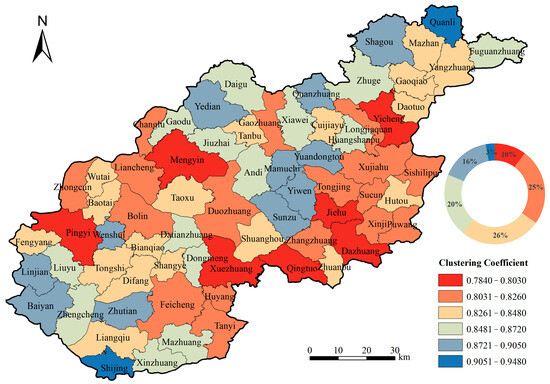
According to the network agglomeration assessment (Figure 8), the population flow network’s average clustering coefficient is 0.844 (Table 3), indicating a strong clustering effect. Most of the network’s core towns are connected to and form small groups with their ordinary nearby towns, while the number of isolated towns is lower. The four core towns at the bottom of the list—Yicheng Subdistrict, Jiehu Subdistrict, Mengyin Subdistrict, and Pingyi Subdistrict—have local clustering coefficients that fall between 0.784 and 0.803, which is significantly less than the average value. This implies that there is more of a one-way relationship between the regular towns and the core towns, and that the degree of proximity between the other towns connected to these four core towns is not relevant. The network structure needs to be enhanced because ordinary towns and cities have fewer connections and interactions with one another and are constrained by their economic, transportation, information, and other circumstances. Notably, Feicheng Subdistrict has a larger local clustering coefficient (0.811) than those of the other four core towns because of the blocking effects of mountain ranges caused by terrain. Geographic proximity dominates the region’s core area, and as distance increases, the power of spatial linkages with external economic units weakens, making cross-scale factor flows more difficult. From a resilience perspective, the goal is to enhance the urban–rural network by strengthening factor coupling and functional nesting. This increases the network’s stress resistance. Concurrently, removing administrative barriers can improve cross-scale synergy and inter-town collaboration.
Figure 8.
Network local clustering coefficients.
3.3.2. Network Dynamic Structural Toughness Evaluation in Interruption Scenarios
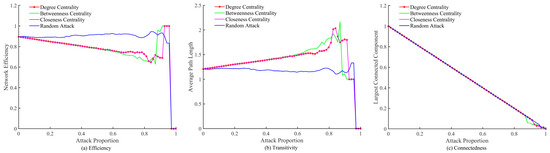
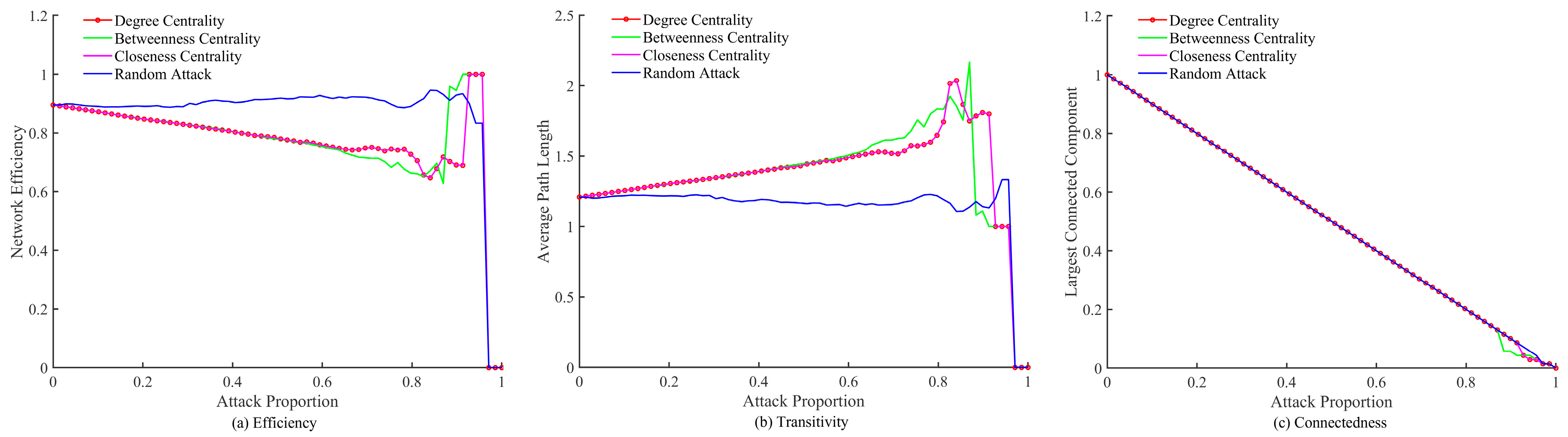
The dynamic simulation of the urban population flow network was conducted on the MATLAB (R2024a) platform. The process began by symmetrizing the binarized matrix and employing a progressive node removal strategy to simulate the cascading failure process, thereby obtaining the evolution of network structural resilience (Figure 9). A composite scenario of random attack and centrality directed attack is designed to address the differences in damage characteristics between natural and man-made disasters. The former simulates non-directed damage, such as weather disasters, using random sampling, while the latter uses node directed removal based on degree centrality, betweenness centrality, and closeness centrality, respectively, to characterize intentional attacks, such as military strikes. We methodically monitored the features of the evolution of the network structural toughness of the population flow in the towns and cities of the Yimeng Mountainous Region by computing the key indicators, such as network efficiency, average path length, and maximum connectivity subgraph during the attack process. The core towns have both high connectivity and short average paths, which results in the overlap of the two indexes of degree centrality and closeness centrality. This is essentially the result of the joint action of network structural characteristics and nodes’ functional needs. The population flow network of towns in the Yimeng Mountainous Region exhibits uniform connectivity, hierarchical characteristics, and small-world effects.
Figure 9.
Changes in network structural toughness metrics under disruption scenarios: (a) Change in network efficiency; (b) Change in average path length; (c) Change in the relative size of the largest connected component.
The network efficiency tends to fluctuate linearly between attack ratios of 0–0.87 and exhibits a cliff-like nonlinear decline at the conclusion, depending on the attack scenario (Figure 9a). This pattern is characteristic of complex systems approaching a critical threshold. The network structure’s heterogeneity and the node functions’ numerous coupling effects during the dynamic evolution are the causes of the local nonlinear phenomenon. In particular, the hierarchical nature of town population flow networks is mapped by discontinuous changes in network efficiency. Examples include the short increase in degree centrality and closeness centrality attacks at attack ratio 0.91, as well as the betweenness centrality attack at attack ratio 0.87. This temporary increase can be interpreted as a resilience mechanism involving redundant path activation. It occurs because the failure of core towns, which act as “structural holes,” disrupts normal flow mediation and forces the network to utilize alternative pathways. However, it may also activate redundant paths, a network reconfiguration capability that enables counterintuitively resilient restoration of the network’s efficiency prior to a certain threshold. The network’s critical phase transition property, however, is revealed by the cliff-like decay at the end of the attack. This abrupt collapse signifies a systemic shift from a connected to a fragmented state. When the attack surpasses the giant clusters’ survival threshold, the remaining nodes exhibit a nonlinear collapse in system efficiency as a result of the hub nodes’ loss of connectivity and integration ability.
Under randomized attack scenarios, the robustness-vulnerability paradox is examined in response to changes in the average path length of population flow networks in towns and cities in the Yimeng Mountainous Region. The attack ratio is less than 0.73 during the pre-random attack period, indicating that the population flow network in towns in the Yimeng Mountainous Region can achieve effective fault tolerance through the redundancy design of the edge nodes (Figure 9b). However, if the attack ratio is near the critical threshold (i.e., 0.96), the path length drops to zero immediately. In contrast, deliberate attacks cause a greater variation in the average path length. When the attack ratio is between 0.0 and 0.64, the average path length tends to change linearly; when the attack ratio exceeds 0.64, the population connection between towns is cut off, the average path length surges nonlinearly, and the network tends to collapse; the network splits into several isolated sub-networks until the network giant cluster completely disintegrates. When the attack ratio reaches the critical thresholds of 0.87 and 0.91, respectively, the average path length exhibits a distinct inflection point, indicating a phase transition in the network structure. At this stage, under targeted attacks based on degree, closeness, and betweenness centrality, the average path length begins to decline sharply across all strategies. This suggests that once the critical threshold is exceeded, the network’s transitivity undergoes a phase transition, precipitating an accelerated collapse of its overall structure.
Since the towns of the Yimeng Mountainous Region have high connectivity between their population flow network nodes, the relationship between the maximum connectivity subgraph and the attack ratio under various attack scenarios tends to change linearly with negligible fluctuations (Figure 9c). This suggests that the network has a high level of structural toughness and is more resilient to different types of attacks. Across many attack situations, the initial changes in the metrics are nearly identical. The metrics decline rate under the betweenness centrality assault, however, is noticeably greater than the metrics decline rate under the other three attack scenarios when the attack ratio hits 0.87. A high degree of network fragmentation and a general propensity to collapse are caused by nodes with a high degree of betweenness centrality, which serve as “bridges” between towns and cities. Their systematic removal immediately breaks the network’s modular connections. Although the steep drop at the end indicates the cascade disintegration caused by a random attack breaching the threshold, the maximum connectivity subgraph curves for random attacks demonstrate super toughness at attack ratios less than 0.96, which is attributed to the masking effect of the degree distribution heterogeneity of this network on random failures.
3.3.3. Network Structural Resilience Optimization Strategy
The following optimization techniques are suggested in conjunction with the findings of this paper’s evaluation of the network structure of population flow’s resilience in the towns of the Yimeng Mountainous Region:
Firstly, highlighting the core and synergizing development. The network structure’s robustness is enhanced by the multi-core network architecture. The Yimeng Mountainous Region has developed primarily around the Pingyi, Feicheng, Yicheng, Jiehu, and Mengyin subdistricts. Core towns occupy pivotal positions within regional networks and should strengthen their radiating and driving effects. It is recommended that a multi-tiered, gradient-based radiation network be established, centered on core towns and enhancing the heterogeneous connections between them and neighboring towns. Priority should be given to unblocking and adding critical links, as well as improving the activation capability of redundant network paths. Therefore, the diffusion effect of core towns should be leveraged to guide neighboring towns in cultivating differentiated functional clusters. This will promote cross-regional integration of factors and sustainable development.
Secondly, development should be differentiated according to local conditions. The current challenges include low clustering coefficients in core towns and insufficient connectivity among ordinary towns within the network. To address these, each area should develop distinctive industries based on local conditions. This approach should be guided by the principle of “one town, one industry, one county, one characteristic.” The goal is to foster a development pattern that is both unique and complementary. The focus is on strengthening industrial linkages and functional collaboration among ordinary towns by establishing a diversified, complementary, and differentiated county-level industrial system. This will create more abundant and stable employment opportunities for urban and rural populations alike, guiding the formation of a balanced, multidirectional population flow pattern. It will alleviate the pressure on specific towns caused by population outflow due to fluctuations in a single industry or external shocks. Ultimately, it will enhance the resilience of the population flow network structure.
Thirdly, factor mobility and cooperative development. Due to the barrier effect of its topography and the influence of administrative boundaries, the Yimeng Mountainous Region is spatially differentiated into two major development zones: the northern and southern regions. Therefore, the direct connections and functional coordination among core towns must be strengthened in order to overcome the impact of geographical and structural fragmentation. Strengthen connectivity between the two regions by enhancing the backbone network of high-speed rail and expressways. Furthermore, upgrading projects for ordinary national and provincial highways should be implemented, while continuous efforts are made to improve the quality and efficiency of rural roads, thereby facilitating the internal circulation of regional resource flows. Building on this foundation, we should actively promote the joint construction and shared use of digital infrastructure and facilitate the deep integration of digital technologies into public services, inter-agency coordination, and social governance. This will promote the seamless flow of people and information within the region, ultimately increasing the frequency of interactions between towns and cities and enhancing the overall resilience of the regional network.
4. Discussion
To mitigate the risk of uncertainty and support the integrated growth of urban and rural areas, it is crucial to investigate the structural resilience of town networks. In the field of structural resilience of urban and rural networks, previous research has produced some findings. The interaction mechanism and resilience assessment of the composite network formed by the population flow in towns and cities in underdeveloped hilly and mountainous regions are not given enough attention in the research, which primarily focuses on the optimization of information and traffic flow networks in urban agglomerations in developed regions or the development of social capital within villages [45,46,47]. This results in a significant discontinuity in the theoretical system when considering regional heterogeneity. In order to compensate for the geographic white space of the related research and enhance the empirical analysis of the network structure toughness from the perspective of the town population flow, this paper uses the underdeveloped Yimeng Mountainous Region as the research object and investigates its network structure toughness based on the population factor flow. This study proposes optimization strategies tailored to the urban network structures of underdeveloped regions to enhance their resilience to sustainable development. In comparison to plains or developed urban areas [48,49], network mobility in the Yimeng Mountainous Region is significantly limited by administrative boundaries and topographical barriers, preventing cross-regional, high-efficiency spatial breakthroughs. The network structure is significantly asymmetric, with a few core cities possessing strong radiating capabilities and connections between most ordinary cities that remain relatively weak. During simulated node failures, core towns had a smaller impact on the overall network structure’s resilience than anticipated. They exhibited different response patterns to external shocks than areas with higher mobility and denser networks. Nonetheless, the network of towns and cities is made up of many different components that interact, is complicated and all-encompassing, and has many dimensions. For instance, the town network’s transportation, economy, information, and people movement data are only one dimension; therefore, in order to quantify the strength of town interactions thoroughly, a number of factors must be introduced. This will be the focus of future study.
5. Conclusions
By building a population flow network in towns within the Yimeng Mountainous Region, this paper examines the spatial structural features of the population flow network in these areas. It also assesses the structural resilience of the population flow network in the Yimeng Mountainous Region from the standpoint of structural resilience. The findings of the study indicate the following:
- (1)
- The population flow network in towns across the Yimeng Mountainous Region exhibits a pronounced north–south differentiation and a multi-core, hierarchical structure, which is significantly influenced by the effects of terrain barriers. The southern zone exhibits a hub-and-spoke pattern, contrasting with the stable triangular configuration in the north, resulting in limited connectivity between the two. Tiers one and two constitute an interconnected backbone, whereas tiers three through five progressively extend to form a balanced support layer. While connections between ordinary towns remain relatively weak, those among core towns are closely maintained.
- (2)
- The town population flow network in the Yimeng Mountainous Region exhibits tight connectivity and pronounced spatial clustering. However, it has not transcended the rigid constraints imposed by administrative boundaries overall. The identification and analysis of functional modules revealed four types radiating outward from core towns, which can be categorized into three structural types: a single-center radiating structure, a dual-center synergistic development structure, and a primary-secondary hierarchical structure.
- (3)
- The Yimeng Mountainous Region’s towns have a network structure of people flow that is both resilient and vulnerable. As pivotal hubs, core towns enhance network efficiency while also intensifying dependence on key nodes and compounding the deficiency in lateral connections. A balanced distribution of degree and closeness centrality ensures redundancy in the network. The small-world effect enables the efficient flow of key elements; however, the low local clustering coefficient may indicate structural vulnerabilities arising from one-way dependencies.
- (4)
- When subjected to simulated attacks, the structural resilience of the population flow network in the towns of the Yimeng Mountainous Region exhibits a distinct temporal evolution. The network exhibits strong resilience against random attacks. The betweenness centrality attack strategy has the most significant impact on network structural resilience under deliberate attacks. During the initial stages of an attack, efficiency, transitivity, and connectedness exhibit gradual changes. As the attack continued, some redundant paths were activated, which caused temporary fluctuations and rebounds in the metrics. Once the threshold is reached, a sharp, nonlinear decline occurs. This triggers a phase transition in the network’s overall functionality, resulting in a rapid loss of structural resilience.
Author Contributions
J.Z.: Formal analysis, Writing—original draft, Writing—review & editing. C.H.: Data curation, Visualization, Writing—review & editing. D.M.: Validation, Funding acquisition, Supervision, Writing—review & editing. L.W.: Methodology, Funding acquisition, Supervision, Writing—review & editing. H.Y.: Supervision, Visualization, Writing—review & editing. All authors have read and agreed to the published version of the manuscript.
Funding
The authors declare that financial support was received for the research and/or publication of this article. This study was supported by the following projects: National Natural Science Foundation of China (Grant No. 42201228); Humanities and Social Sciences Research Project of the Ministry of Education of China (Project No. 24YJA63008); Shandong Provincial Natural Science Foundation (Grant No. ZR2023MD089).
Institutional Review Board Statement
Not applicable.
Informed Consent Statement
Not applicable.
Data Availability Statement
The raw data supporting the conclusions of this article will be made available by the authors on request.
Conflicts of Interest
The authors declare no conflicts of interest.
References
- Yang, Y.B.; Liu, W. Resilience Analysis of Maritime Silk Road Shipping Network Structure under Disruption Simulation. J. Mar. Sci. Eng. 2022, 10, 617. [Google Scholar] [CrossRef] [Scilit]
- Borsekova, K.; Nijkamp, P.; Guevara, P. Urban resilience patterns after an external shock: An exploratory study. Int. J. Disaster Risk Reduct. 2018, 31, 381–392. [Google Scholar] [CrossRef] [Scilit]
- Holling, C.S. Resilience and stability of ecological systems. Annu. Rev. Ecol. Syst. 1973, 4, 1–23. [Google Scholar] [CrossRef] [Scilit]
- Huang, L.Y.; Wang, J.; Cheng, H.G. Spatiotemporal changes in ecological network resilience in the Shandong Peninsula urban agglomeration. J. Clean. Prod. 2022, 339, 130681. [Google Scholar] [CrossRef] [Scilit]
- Reardon, T.; Heiman, A.; Lu, L.; Nuthalapati, C.S.R.; Vos, R.; Zilberman, D. “Pivoting” by food industry firms to cope with COVID-19 in developing regions: E-commerce and “copivoting” delivery intermediaries. Agric. Econ. 2021, 52, 459–475. [Google Scholar] [CrossRef] [Scilit]
- Xiao, R.R.; Xiao, T.; Zhao, P.J.; Zhang, M.Z.; Ma, T.Y.; Qiu, S.K. Structure and resilience changes of global liquefied natural gas shipping network during the Russia-Ukraine conflict. Ocean. Coast. Manag. 2024, 252, 107102. [Google Scholar] [CrossRef] [Scilit]
- Tang, X.F.; Cao, Y.F.; Lin, W.H.; Chu, J.L.; Li, J.L. Structural resilience analysis of rural networks based on complex network theory. Front. Earth Sci. 2025, 19, 291–303. [Google Scholar] [CrossRef] [Scilit]
- Liu, Z.Z.; Chen, H.; Liu, E.Z.; Hu, W.Y. Exploring the resilience assessment framework of urban road network for sustainable cities. Phys. A Stat. Mech. Appl. 2022, 586, 126465. [Google Scholar] [CrossRef] [Scilit]
- Ma, H.T.; Xu, X.F.; Li, X.Z.; Liu, J.Y. Towards innovation resilience through urban networks of co-invention: A case study of cities in China. Front. Earth Sci. 2022, 10, 974219. [Google Scholar] [CrossRef] [Scilit]
- Miao, C.; Na, M.; Chen, H.; Ding, M. Urban resilience evaluation based on entropy-TOPSIS model: A case study of county-level cities in Ningxia, Northwest China. Int. J. Environ. Sci. Technol. 2025, 22, 4187–4202. [Google Scholar] [CrossRef] [Scilit]
- Yang, X.D.; Li, H.L.; Zhang, J.Y.; Niu, S.Y.; Miao, M.M. Urban economic resilience within the Yangtze River Delta urban agglomeration: Exploring spatially correlated network and spatial heterogeneity. Sustain. Cities Soc. 2024, 103, 105270. [Google Scholar] [CrossRef] [Scilit]
- Pan, J.; Lai, J. Spatial pattern of population mobility among cities in China: Case study of the National Day plus Mid-Autumn Festival based on Tencent migration data. Cities 2019, 94, 55–69. [Google Scholar] [CrossRef] [Scilit]
- Li, Z.R.; Chen, W.; Liu, W.; Cui, Z. Urban Internal Network Structure and Resilience Characteristics from the Perspective of Population Mobility: A Case Study of Nanjing, China. ISPRS Int. J. Geo-Inf. 2024, 13, 331. [Google Scholar] [CrossRef] [Scilit]
- Sun, L.; Chen, Z.H.; Li, Y.F.; Kawasaki, T. Evaluating impacting factors of economic resilience across major Japan port cities. Urban Clim. 2024, 55, 101903. [Google Scholar] [CrossRef] [Scilit]
- Liu, Y.W.; Liao, W. Spatial Characteristics of the Tourism Flows in China: A Study Based on the Baidu Index. ISPRS Int. J. Geo-Inf. 2021, 10, 378. [Google Scholar] [CrossRef] [Scilit]
- Kong, X.; Zhang, R.; Lin, F.; Jiang, P.; Zhang, Y. Integrating human mobility and rural multifunction to identify village types in metropolitan suburbanization. J. Rural Stud. 2025, 119, 103776. [Google Scholar] [CrossRef] [Scilit]
- Tian, L.; Zhang, X.; Shaw, D.; Fu, P. An analysis of population movements to characterize China’s differentiated countryside: The case of Chengdu. J. Rural Stud. 2026, 122, 103943. [Google Scholar] [CrossRef] [Scilit]
- Tong, H.L.; Shi, P.J.; Luo, J.; Liu, X.X. The Structure and Pattern of Urban Network in the Lanzhou-Xining Urban Agglomeration. Chin. Geogr. Sci. 2020, 30, 59–74. [Google Scholar] [CrossRef] [Scilit]
- Nilforoshan, H.; Looi, W.; Pierson, E.; Villanueva, B.; Fishman, N.; Chen, Y.L.; Sholar, J.; Redbird, B.; Grusky, D.; Leskovec, J. Human mobility networks reveal increased segregation in large cities. Nature 2023, 624, 586–592. [Google Scholar] [CrossRef] [Scilit] [PubMed]
- Rajput, A.A.; Mostafavi, A. Latent sub-structural resilience mechanisms in temporal human mobility networks during urban flooding. Sci. Rep. 2023, 13, 10953. [Google Scholar] [CrossRef] [Scilit] [PubMed]
- Huang, X.Y.; Wang, Z.W.; Pang, Y.; Tian, W.J.; Zhang, M. Static Resilience Evolution of the Global Wood Forest Products Trade Network: A Complex Directed Weighted Network Analysis. Forests 2024, 15, 1665. [Google Scholar] [CrossRef] [Scilit]
- Yadav, N.; Chatterjee, S.; Ganguly, A.R. Resilience of Urban Transport Network-of-Networks under Intense Flood Hazards Exacerbated by Targeted Attacks. Sci. Rep. 2020, 10, 10350. [Google Scholar] [CrossRef] [Scilit]
- Zhang, J.Q. Digital economy, green finance, and economic resilience. PLoS ONE 2025, 20, e0314028. [Google Scholar] [CrossRef] [Scilit] [PubMed]
- Wang, Z.G.; Hao, X.C.; Du, X.S.H.; Ding, H.; Xie, Z.W. Measurement of economic resilience under the COVID-19 based on nighttime light remote sensing: Case of Hubei province. PLoS ONE 2024, 19, e0307613. [Google Scholar] [CrossRef] [Scilit] [PubMed]
- Li, X.X.; Wang, H.M.; Kharrazi, A.; Fath, B.D.; Liu, G.J.; Liu, G.; Xiao, Y.; Lai, X.Y. A network analysis of external shocks on the dynamics and resilience of the global staple food trade. Food Secur. 2024, 16, 845–865. [Google Scholar] [CrossRef] [Scilit]
- Liang, W.; Wang, D.Q.; Gao, L.Q.; Li, C.Y. Study on the impact of China’s urban agglomerations’ tiered spatial structure on regional economic resilience. PLoS ONE 2025, 20, e0314538. [Google Scholar] [CrossRef] [Scilit]
- Abedini, A.; Aram, F.; Khalili, A.; Mirzaei, E. Recognition and Evaluating the Indicators of Urban Resilient by Using the Network Analysis Process. Urban Sci. 2022, 6, 31. [Google Scholar] [CrossRef] [Scilit]
- Liu, Y.; Wang, X.; Song, C.; Chen, J.; Shu, H.; Wu, M.; Guo, S.; Huang, Q.; Pei, T. Quantifying human mobility resilience to the COVID-19 pandemic: A case study of Beijing, China. Sustain. Cities Soc. 2023, 89, 104314. [Google Scholar] [CrossRef] [Scilit]
- Zhao, N.; Zhang, Y.; Chen, X.; Xiao, J.; Lu, Y.; Zhai, W.; Zhai, G. Resilience measurement and enhancement of population mobility network in Beijing-Tianjin-Hebei urban agglomeration under extreme rainfall impact. J. Transp. Geogr. 2025, 126, 104253. [Google Scholar] [CrossRef] [Scilit]
- Liu, H.; Li, X.M.; Gong, Y.L.; Li, S.B.; Cong, X.P. Resilience Evolution of Urban Network Structures from a Complex Network Perspective: A Case Study of Urban Agglomeration along the Middle Reaches of the Yangtze River. J. Urban Plan. Dev. 2025, 151, 05024042. [Google Scholar] [CrossRef] [Scilit]
- Wu, J.; Zhu, J. Risk Transmission and Resilience of China’s Corn Import Trade Network. Foods 2025, 14, 1401. [Google Scholar] [CrossRef] [Scilit]
- Qu, J.; Wang, H.; Zhang, Z.; Xu, Z.; Han, Y.; Dong, B. Construction of multifunctional composite networks and resilience evaluation under multiple attack scenarios: A case study of the Yangtze river delta. Environ. Sustain. Indic. 2025, 27, 100829. [Google Scholar] [CrossRef] [Scilit]
- Wei, S.M.; Pan, J.H. Resilience of Urban Network Structure in China: The Perspective of Disruption. ISPRS Int. J. Geo-Inf. 2021, 10, 796. [Google Scholar] [CrossRef] [Scilit]
- Ma, J.C.; Jiang, Z.Q.; Ma, Y.J.; Dai, Y.H. Community Structure and Resilience of the City Logistics Networks in China. Mathematics 2023, 11, 4352. [Google Scholar] [CrossRef] [Scilit]
- Chen, H.R.; Zhou, R.Y.; Chen, H.; Lau, A. Static and dynamic resilience assessment for sustainable urban transportation systems: A case study of Xi’an, China. J. Clean. Prod. 2022, 368, 133237. [Google Scholar] [CrossRef] [Scilit]
- Tang, L.Y.; Liu, C.C.; Wang, Y. Unveiling the role of social networks: Enhancing rural household livelihood resilience in China’s Dabie Mountains. J. Geogr. Sci. 2025, 35, 335–358. [Google Scholar] [CrossRef] [Scilit]
- Ban, Y.; Wang, Y.; Chen, X.H.; Wei, L.Q. Synergistic Patterns of Urban Economic Efficiency and the Economic Resilience of the Harbin-Changchun Urban Agglomeration in China. Sustainability 2023, 15, 102. [Google Scholar] [CrossRef] [Scilit]
- Ning, L.; Sheng, S.Q.; Meng, Y. The interplay and synergistic relationship between urban land expansion and urban resilience across the three principal metropolitan regions of the Yangtze River Basin. Sci. Rep. 2024, 14, 31868. [Google Scholar] [CrossRef] [Scilit]
- Wang, T.T.; Yao, C.Y.; Wei, Q. Resilience Assessment and Influencing Factors of Chinese Megacities. Sustainability 2023, 15, 6770. [Google Scholar] [CrossRef] [Scilit]
- Liu, W.B.; Hou, Q.; Xie, Z.H.; Mai, X. Urban Network and Regions in China: An Analysis of Daily Migration with Complex Networks Model. Sustainability 2020, 12, 3208. [Google Scholar] [CrossRef] [Scilit]
- Aydin, N.Y.; Duzgun, H.S.; Wenzel, F.; Heinimann, H.R. Integration of stress testing with graph theory to assess the resilience of urban road networks under seismic hazards. Nat. Hazards 2018, 91, 37–68. [Google Scholar] [CrossRef] [Scilit]
- Chen, Q.; Poorthuis, A. Identifying home locations in human mobility data: An open-source R package for comparison and reproducibility. Int. J. Geogr. Inf. Sci. 2021, 35, 1425–1448. [Google Scholar] [CrossRef] [Scilit]
- Zheng, Y.; Zhang, L.; Xie, X.; Ma, W.-Y. Mining interesting locations and travel sequences from GPS trajectories. In Proceedings of the 18th international conference on World, Madrid, Spain, 20–24 April 2009; Association for Computing Machinery: New York, NY, USA, 2009; pp. 791–800. [Google Scholar]
- Crespo, J.; Suire, R.; Vicente, J. Lock-in or lock-out? How structural properties of knowledge networks affect regional resilience. J. Econ. Geogr. 2014, 14, 199–219. [Google Scholar] [CrossRef] [Scilit]
- Wang, L.; Liu, H.; Liu, Q. China’s city network based on Tencent’s migration big data. Acta Geogr. Sin. 2021, 76, 853–869. [Google Scholar]
- Liu, W.; Chen, R. Migration Networks Pattern of China’s Floating Population from the Perspective of Complex Network. Chin. Geogr. Sci. 2024, 34, 327–341. [Google Scholar] [CrossRef] [Scilit]
- Zhao, Y.; Gao, Y. Spatial patterns and trends of inter-city population mobility in China—Based on Baidu migration big data. Cities 2024, 151, 105124. [Google Scholar]
- Boucherie, L.; Maier, B.F.; Lehmann, S. Decoupling geographical constraints from human mobility. Nat. Hum. Behav. 2025, 9, 2564–2575. [Google Scholar] [CrossRef] [Scilit] [PubMed]
- Cao, Y.; Hua, Z.; Chen, T.; Li, X.; Li, H.; Tao, D. Understanding population movement and the evolution of urban spatial patterns: An empirical study on social network fusion data. Land Use Policy 2023, 125, 106454. [Google Scholar] [CrossRef] [Scilit]

Disclaimer/Publisher’s Note: The statements, opinions and data contained in all publications are solely those of the individual author(s) and contributor(s) and not of MDPI and/or the editor(s). MDPI and/or the editor(s) disclaim responsibility for any injury to people or property resulting from any ideas, methods, instructions or products referred to in the content. |
© 2026 by the authors. Licensee MDPI, Basel, Switzerland. This article is an open access article distributed under the terms and conditions of the Creative Commons Attribution (CC BY) license.