Article

Impact of Artificial Intelligence Technology on the Sustainable Development Performance of Agricultural Enterprises

School of Business Administration, Guizhou University of Finance and Economics, Guiyang 550025, China
*
Author to whom correspondence should be addressed.
Sustainability 2026, 18(1), 431; https://doi.org/10.3390/su18010431 (registering DOI)
Submission received: 3 December 2025 / Revised: 26 December 2025 / Accepted: 30 December 2025 / Published: 1 January 2026
(This article belongs to the Section Sustainable Agriculture)

Abstract

The wide application of artificial intelligence (AI) technology is reshaping the production methods and governance models of agricultural enterprises, laying a solid foundation for them to achieve sustainable development goals. This study examines 245 agricultural listed enterprises on China’s A-share market from 2012 to 2023 as the research sample and uses the double fixed effects model to investigate the impact and mechanism of AI technology on the sustainable development performance (SDP) of agricultural enterprises. Research has found that AI technology has significantly enhanced the SDP of agricultural enterprises. After tests for endogeneity and robustness, the conclusion remains valid. Mechanism tests show that AI technology can enhance the SDP of agricultural enterprises by promoting green innovation and improving the quality of internal control. Through the analysis of moderating effects, it is found that both the information technology background of senior executives and their green background can positively moderate the relationship between AI technology and the SDP of agricultural enterprises. Heterogeneity tests revealed that AI technology has a more significant effect on enhancing the SDP of non-state-owned, small and medium-sized, and processing and manufacturing agricultural enterprises, alongside those in regions with high environmental regulations. The research provides empirical evidence for AI empowering agricultural enterprises’ sustainable development and offers targeted actionable insights to advance agricultural modernization and green transformation.

1. Introduction

Global sustainable development has become a major issue that the world urgently needs to address together. Against the backdrop of rising pressure on food security and the continuous intensification of climate change, it is particularly crucial to explore a new path that takes into account agricultural growth, food security and environmental protection. Agriculture is not only the fundamental industry for the stable operation of the global food system and ecosystem, but also a key sector in achieving the United Nations Sustainable Development Goals (SDGs) such as “Zero Hunger”, “climate action”, and “Sustainable Production and consumption” [1]. Agricultural enterprises are the core entities of agricultural modernization and the development of the agricultural industry. They are an important force in promoting the transformation of agriculture from a carbon source to a carbon sink and achieving sustainable development [2,3]. In recent years, the number of agricultural enterprises in China has grown rapidly, and new types of agricultural business entities have been continuously expanding. By 2023, the number of agricultural enterprises across the country had exceeded 2.5 million. A total of over 1.07 million organizations were providing agricultural socialized services, covering an area of over 1.97 billion mu and serving more than 91 million small-scale farmers. The scope of services has extended from food crops to cash crops, and from crop cultivation to the entire chain of animal husbandry and agricultural product processing. The role of these agricultural enterprises in ensuring stable production and supply, increasing farmers’ income and upgrading industries is becoming increasingly prominent. It can be seen from this that the sustainable development performance of agricultural enterprises not only concerns the long-term survival and competitiveness of the enterprises themselves, but also plays a crucial role in the high-quality development of agriculture, food security and the construction of agricultural ecological civilization.
However, compared with enterprises in other industries, the SDP of agricultural enterprises shows obvious industry particularities and shortcomings. In terms of economic performance, agricultural enterprises are highly dependent on land, climate and natural conditions, with long operating cycles and large price fluctuations, and their economic stability is significantly insufficient [4]. In terms of environmental performance, agricultural enterprises are not only significant sources of resource consumption and non-point source pollution, but also shoulder the tasks of ecological protection and carbon sink construction. Their environmental governance pressure is high and the cost is large [5]. In terms of social responsibility performance, agricultural enterprises are deeply bound with rural communities and small-scale farmers. However, there are still weak links in food safety management, supply chain responsibility, and farmers’ income increase mechanisms [6]. Facing the complex situation where the three goals of economy, environment and social responsibility coexist and are mutually restrictive, the traditional agricultural operation model has become difficult to meet the requirements of sustainable development. The theory of ecological modernization emphasizes the use of advanced technologies to enhance resource efficiency and pollution control capabilities, thereby achieving the coordinated development of the economy and the environment. It provides important inspiration for agricultural enterprises to solve the three-dimensional sustainable development problems.
Artificial intelligence technology, with its advantages in intelligent perception, data analysis, predictive optimization and process control, is a key technology that drives agriculture to transform from resource-intensive to knowledge-intensive and from a carbon emitter to a major carbon sink. It is profoundly changing the development model of global agriculture [7]. AI technology can not only effectively enhance the efficiency of agricultural resource utilization, but also reduce the natural risks and management costs faced by agricultural production, promoting agriculture to gradually shift from experience-driven to data-driven. On the one hand, AI can improve the financial performance of agricultural enterprises by enhancing production efficiency, optimizing resource allocation and reducing costs [8,9]. The intelligent decision-making system and data analysis system after the introduction of AI can help enterprises achieve higher accuracy in production planning, market forecasting, investment management and risk prevention and control, thereby enhancing profitability and operational efficiency. On the other hand, AI can maximize the efficiency of input usage, reduce excessive use of pesticides and fertilizers, monitor carbon emissions, and promote innovation in green production models [10]. In addition, AI can enhance the ability of agricultural enterprises to fulfill their social responsibilities by making supply chains transparent, tracking food safety, and improving the stability of product quality [11]. A key question has begun to draw attention: Can AI technology help agricultural enterprises balance economic performance, environmental performance and social responsibility performance simultaneously, thereby comprehensively enhancing their sustainable development level? If possible, through which channels can the SDP of agricultural enterprises be improved? Answering the above questions holds significant theoretical value and practical significance for agricultural enterprises to achieve sustainable development.
Therefore, this paper uses 245 listed agricultural enterprises in China from 2012 to 2023 as the research sample, takes the SDP of agricultural enterprises as the entry point, and adopts the double fixed effects model to investigate the impact and mechanism of action of AI technology on the SDP of agricultural enterprises. The main contributions of this study are as follows: Firstly, unlike previous studies that only focused on the economic performance of all sample enterprises or manufacturing enterprises with AI, this study takes agricultural enterprises as the research object and explores the impact of AI on the SDP of agricultural enterprises, enriching the research results on the impact of AI technology from the perspective of sustainable development. Secondly, from the perspective of innovation empowerment and internal management, this study incorporates green innovation and internal control quality into the unified analysis framework of AI and agricultural enterprise SDP, verifies the transmission mechanism of green innovation and internal control quality in the impact of AI on agricultural enterprise SDP, and deepens related research. Thirdly, considering that the background characteristics of senior executives have a significant impact on the strategic choices of enterprises, this study, based on the high-ladder theory, selects the green background and information technology background of senior executives as moderating variables, and depicts the core motivation of AI technology empowering the SDP of agricultural enterprises at a deeper level. Finally, this paper deeply identifies the heterogeneous impact of AI technology application on the SDP of agricultural enterprises from four aspects: property rights nature, environmental regulations, enterprise scale and enterprise type, providing empirical support for agricultural enterprises to effectively enhance their sustainable development capabilities by leveraging AI technology in different scenarios.

2. Literature Review

Artificial intelligence refers to intelligent technologies that use machine learning, deep learning and other technical means to imitate human thinking and behavior and undertake some of the work traditionally performed by humans in organizations [12]. At present, research on the impact of AI technology usage is divided into two levels: macro and micro. At the macro level, most of the focus is on the impact of the use of AI technologies represented by industrial robots on employment and the economy. In terms of employment, scholars have found that AI technology poses the greatest risk of replacing tasks with thinking attributes [13]. Although AI has reduced the demand for regular occupational labor, it has increased the demand for labor in management, technical and other fields [14,15]. In terms of the economy, scholars believe that AI can not only enhance productivity and promote the agglomeration of productive service industries [16], but also improve the efficiency of resource allocation and facilitate green economic growth [17]. In recent years, the economic impact of AI at the micro level has become an important research topic in the fields of management and information systems. Relevant research mainly focuses on the impact of AI technology application on enterprise performance [18], innovative development [19,20], and production efficiency [21,22].
Enterprise sustainable development performance refers to the comprehensive performance of an enterprise in pursuing economic development while taking into account environmental sustainability and fulfilling social responsibilities to achieve long-term value creation. As an emerging digital technology, there is still a lack of systematic research on how AI affects enterprise SDP at present. Only a few studies discuss from the perspective of single economic effects such as financial performance [8], social responsibility [23] or environmental performance [18]. From the perspective of economic performance, existing research generally emphasizes the significant role of AI in enhancing the operational efficiency and resource allocation capabilities of enterprises. Some scholars have found that the impact on the financial performance of AI enterprises has an inverted U-shaped relationship [9]. Some scholars have further confirmed that AI promotes economic benefits by upgrading the labor force structure of enterprises and enhancing production efficiency [8]. However, the above-mentioned studies mostly explain the impact of AI on economic performance from the perspectives of resource efficiency, labor force structure and production process optimization, and pay less attention to the key role of the internal governance mechanism of enterprises. Given that AI can significantly enhance the quality of internal control within enterprises by improving information transparency, strengthening risk identification capabilities, and optimizing management processes, and thereby improving business performance, it can be seen that the quality of internal control may be an important channel through which AI influences the economic performance of enterprises. However, the existing literature still pays limited attention to this issue.
From the perspective of environmental performance, a large number of studies have revealed that AI can enhance enterprises’ green innovation capabilities and is regarded as an important technical foundation for promoting the improvement of environmental performance. Wang et al. [24] pointed out that intelligent manufacturing technology brings significant green dividends by promoting green technological innovation. Liu et al. [25] further discovered that AI enhances the environmental performance of enterprises by reducing operating costs and alleviating financing constraints. Li [26] also confirmed that industrial intelligence can improve the level of environmental information disclosure and emission control of enterprises. These studies show that AI plays a significant role in helping enterprises achieve energy conservation and emission reduction, pollution control and green production. In terms of social responsibility performance, some studies have begun to focus on the role of AI in enhancing corporate social responsibility fulfillment and strengthening the ability to manage stakeholder relationships. Existing studies have shown that AI has a stronger promoting effect on corporate social responsibility in highly competitive and highly polluting industries [23]. Meanwhile, AI helps to reduce information asymmetry in corporate social responsibility disclosure, improve the management level of enterprises in areas such as employee protection and consumer rights protection, and thereby enhance their commitment to social responsibility [11].
Meanwhile, some scholars have conducted research on the application of artificial intelligence in the agricultural sector. On the one hand, it has been proven that artificial intelligence can deeply empower the upgrading of the entire agricultural industry chain. Through intelligent perception, big data analysis, and algorithm optimization, it plays a key role in scenarios such as precise planting and intelligent pest and disease control, significantly increasing grain production [27,28]. On the other hand, the role of artificial intelligence technology in promoting agricultural carbon emissions, strengthening food quality traceability, and adapting to climate change has also been verified [29,30]. However, most of the existing research focuses on the macro level of agricultural development, and the discussion on agricultural enterprises still needs to be deepened.
Overall, although existing literature has provided important clues for understanding the relationship between AI and enterprise performance, most current research focuses on the impact of AI on individual performance, and mostly pays attention to enterprises in the entire industry, manufacturing or high-tech industries, with insufficient attention paid to agricultural enterprises, which are highly dependent on resources, highly sensitive to the environment and have weak governance. In particular, the micro-mechanisms by which AI influences the SDP of agricultural enterprises through internal control quality, green innovation and other mechanisms have not yet been systematically studied. To address the aforementioned issues, this paper combines AI technology with the SDP of agricultural enterprises, exploring how agricultural enterprises can utilize AI technology to better balance economic, environmental and social benefits. This not only meets the inherent requirements of the enterprises’ own transformation and upgrading, but is also a key measure for moving towards the global sustainable development governance goal.

3. Theoretical Analysis and Research Hypotheses

3.1. AI Technology and Agricultural Enterprise SDP

According to the resource-based theory, an enterprise is essentially a collection of various resources. If these resources are not handled properly, it often reduces the flexibility of the enterprise and affects its strategic decisions. AI technology is a technological transformation approach in which enterprises utilize intelligent algorithms, deep learning, and data analysis tools to automate, intelligently, and precisely manage their production and operation processes. The resource management capabilities derived from AI technology possess the characteristics of value, scarcity, non-imitability and organizational embedding, which can create competitive advantages for enterprises [31]. On the one hand, AI technology helps enhance the economic performance of enterprises. Firstly, AI technology achieves precise management of the entire production process by deeply analyzing data from business links such as procurement, production, logistics and sales, which helps to reduce the operating costs of enterprises. Through intelligent prediction and optimal resource allocation, enterprises can reduce raw material waste, improve equipment utilization efficiency, and thereby enhance the economic efficiency of the production process. Secondly, the automation and autonomous decision-making functions of AI have enhanced the intelligence level of production lines, reduced reliance on high-intensity manual labor, and helped lower labor costs and alleviate efficiency bottlenecks in labor-intensive links. More importantly, AI technology has enhanced the transparency of business operation processes [32]. By using intelligent monitoring systems to record real business data, enterprises can enhance their credit level in financial institutions, encourage them to allocate more funds to expand production and investment scales, and help improve their economic performance.
On the other hand, AI technology helps improve the environmental and social responsibility performance of enterprises. Firstly, AI technology has a significant green attribute. Its core production factor is not traditional energy or resources, but reusable data, reducing the reliance on and consumption of natural resources from the source. Secondly, the application of AI in the production environment can optimize the process flow, enhance the efficiency of energy and resource utilization [33], achieve precise monitoring and dynamic management of pollutant emissions, and thereby reduce the adverse impact of enterprise production activities on the environment. Through the AI-driven precise input system, enterprises can reduce the excessive use of resources such as pesticides, fertilizers and energy, and improve the efficiency of green production [34]. In addition, AI can achieve real-time monitoring of environmental changes throughout the product life cycle and the production process, thereby reducing resource waste and illegal emissions, and lowering environmental risks [26]. Finally, AI technology also helps to enhance the social responsibility performance of enterprises. The application of AI technology in areas such as product inspection, quality analysis, and safety traceability enable enterprises to conduct real-time monitoring and risk identification of production, processing, and circulation links, reducing the probability of quality and safety accidents and helping enterprises better fulfill their social responsibilities [23]. Meanwhile, AI technology can promote transparent collaboration and information sharing among the various entities in the supply chain, thereby enhancing the information visualization and responsibility traceability of agricultural enterprises at each link of the supply chain [35]. Thus, the following hypotheses are put forward:
Hypothesis 1.
AI technology can significantly enhance the SDP of agricultural enterprises.

3.2. Mechanism Analysis

3.2.1. The Mediating Role of Green Innovation

On the one hand, AI technology provides an important technical foundation for the development of green innovation in agricultural enterprises. Firstly, AI technology can help enterprises accurately identify opportunities for green improvement and reduce the uncertainty of green technology exploration by collecting and processing massive amounts of data on soil, climate, resource consumption, etc., in agricultural production in real time. On the basis of a significant improvement in knowledge acquisition and environmental perception capabilities [10], agricultural enterprises are more likely to discover innovative paths for green production processes, green product designs, and green management methods. In addition, the automated simulation, intelligent prediction and optimization algorithms of AI can effectively reduce the cost of green R&D, improve the efficiency of green innovation, and enable enterprises to promote the development and application of energy-saving, consumption-reducing and emission-reducing efficiency-increasing technologies more quickly and steadily [25].
On the other hand, green innovation, as a key driving force for enterprises to achieve environmentally friendly, resource-conserving and socially responsible development, is an important way for agricultural enterprises to enhance their SDP [36]. Firstly, green innovation directly enhances the environmental performance of enterprises by improving processes, optimizing inputs, and reducing pollution emissions, enabling agricultural enterprises to more effectively reduce the use of chemical fertilizers and pesticides, save water resources, and control carbon emissions, thereby strengthening ecological friendliness. In addition, green innovation has enhanced product quality and food safety standards, and strengthened the transparency and responsibility control of the supply chain, which helps enterprises fulfill their social responsibilities, increase public trust and market reputation. From an economic perspective, the energy conservation and efficiency improvement, cost reduction, and competitive advantages of green products brought about by green innovation [37] can further enhance the profitability and operational resilience of enterprises, achieving a win-win situation of economic and ecological benefits. Thus, the following hypotheses are put forward:
Hypothesis 2a.
Green innovation plays a mediating role between AI technology and the SDP of agricultural enterprises.

3.2.2. The Mediating Role of Internal Control Quality

Internal control quality is an important component of the corporate governance system and plays a crucial role in enhancing the operational transparency, risk management capabilities, and sustainable development level of agricultural enterprises. Firstly, AI technology enhances internal supervision and risk identification capabilities, establishing a more efficient, real-time and precise internal control system for agricultural enterprises [38]. Based on big data analysis and automated monitoring technology, AI can significantly reduce the problems of untimely and inaccurate information collection in traditional agricultural production and operation processes, thereby enhancing the effectiveness of environmental monitoring, financial verification and process management in internal control [39]. Secondly, high-quality internal control can reduce resource waste, enhance operational efficiency, and play a guiding role in supply chain management, financial decision-making, and investment efficiency. For agricultural enterprises, the strengthening of internal control can not only effectively reduce financial risks caused by natural disasters, market fluctuations or improper management [40], but also enhance the sustainability of financial performance by improving capital utilization efficiency and long-term operational stability [41].
Thirdly, the improvement of internal control quality can be achieved by standardizing production processes, strengthening resource management and monitoring pollution emissions, enabling enterprises to implement green production systems more effectively [42]. Strengthening internal control helps to reduce the waste and abuse of pesticides, fertilizers and other inputs in agricultural production, thereby lowering the environmental load and enhancing the level of ecological protection. Finally, the improvement of internal control has enhanced the standardization of enterprises in food safety, product quality management and the fulfillment of supply chain responsibilities, which is conducive to reducing food safety incidents and product quality risks. At the same time, high-quality internal control helps protect employees’ rights and interests, standardize labor management behaviors, and enables agricultural enterprises to perform more stably in terms of social responsibility. A sound internal control system can also enhance the transparency of enterprise information disclosure [43], strengthen communication between the enterprise and external stakeholders, and thereby improve the enterprise’s social reputation and public trust. Therefore, the following hypotheses are put forward:
Hypothesis 2b.
The quality of internal control plays a mediating role between AI technology and the SDP of agricultural enterprises.

3.3. The Moderating Effect of Executive Background

According to the theory of top management, the values, knowledge structure and experience background of senior executives can significantly influence the decision-making direction and resource allocation tendency of enterprises [44]. For agricultural enterprises, if senior executives have experience in environmental protection institutions, professional education in ecological agriculture, working experience in green enterprises or research experience in green technologies, they are more likely to develop a strong sense of ecological values and environmental responsibility, and thus pay more attention to the strategic significance of AI technology in green transformation and sustainable development [45]. Firstly, executives with a green background understand the vulnerability of agricultural ecosystems and the significance of green production. They are more inclined to utilize AI technology to enhance the efficiency of enterprise resource utilization, reduce pollution emissions, and promote sustainable operations. Therefore, under the guidance of such executive traits, the application of AI technology in agricultural production is not only more comprehensive but also more environmentally oriented. Secondly, executives with a green background usually pay more attention to the social feedback of food safety and supply chain transparency. Driven by green awareness, executives are more willing to encourage enterprises to utilize AI technology to enhance food safety monitoring, improve product quality tracking systems and optimize social responsibility management. Furthermore, executives with a green background are more inclined to view digital technology as a booster for environmental protection investment, sustainable operation and green innovation in terms of strategy, making the investment in AI technology more focused on long-term performance rather than maximizing short-term profits.
Executives with an IT background, due to their higher understanding and application capabilities of digital technology, are more likely to identify and promote the in-depth application of AI technology in agricultural enterprises, thereby enhancing the sustainable development capabilities of enterprises [46]. Firstly, executives with an IT background possess higher technical sensitivity and cognitive abilities, enabling them to more accurately assess the potential value of AI in agricultural production and operation management [47]. They are more inclined to proactively promote the deployment of intelligent monitoring, intelligent decision-making and automation systems in agricultural production. This technology-driven governance style can amplify the promoting effect of AI technology on sustainable development in the economic dimension. Secondly, executives with an IT background pay more attention to the application scenarios of technologies such as data transparency, digital governance of the supply chain, and intelligent tracking of food safety. Therefore, they are better at using AI to enhance the quality of information disclosure, supply chain transparency, and product traceability of enterprises. In addition, executives with an IT background can more easily understand the use of AI for green applications such as energy-saving monitoring, precise fertilization, and intelligent irrigation, and promote enterprises to integrate AI into environmental management systems to reduce energy waste and ecological pollution. Thus, the following hypotheses are put forward:
Hypothesis 3a.
Executives with a green background can positively strengthen the relationship between AI technology and the SDP of agricultural enterprises.
Hypothesis 3b.
Executives with an information technology background can positively strengthen the relationship between AI technology and the SDP of agricultural enterprises.
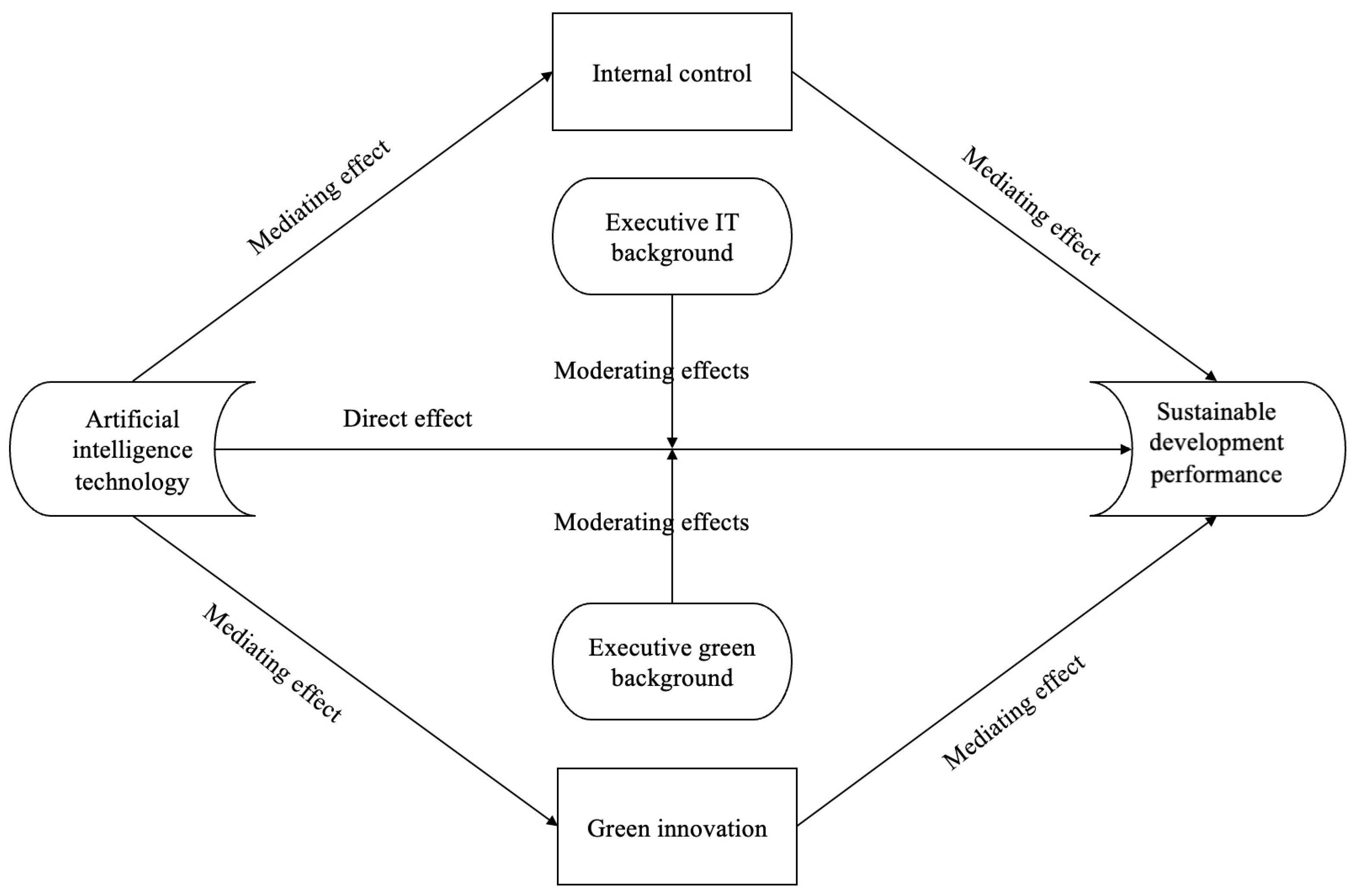
The theoretical model (Figure 1) of this study is as follows:

4. Methods and Data

4.1. Sample Selection and Data Sources

This article takes A-share-listed companies related to agriculture from 2012 to 2023 as the research object, mainly including eight sub-industries: agriculture, forestry, animal husbandry, fishery, agricultural, forestry, animal husbandry and fishery services, processing of agricultural and sideline food, food manufacturing, and manufacturing of wine, beverages and refined tea. The reason for choosing 2012 as the starting year of this article is that from that year on, the data disclosure of artificial intelligence technology by listed agricultural companies in China was relatively complete. All enterprise-level data are sourced from the CSMAR Database, while the enterprise patent application data is from the China Patent Database. After deleting the abnormal enterprise samples such as ST and *ST categories, 245 enterprises and 1816 valid observations were finally obtained.

4.2. Variable Description

4.2.1. Explained Variable

Regarding Sustainable Development Performance (SDP) of Agricultural enterprises according to the definition of enterprise sustainable development performance, this study refers to the practice of Zhang and Xi [48], divides the sustainable development performance of agricultural enterprises into two dimensions: economic performance and environmental social responsibility performance, and adopts the net profit margin on total assets (ROA) as the indicator to measure economic performance. The total score (ESRP) of the environmental and social responsibility dimension in Huazheng ESG Ratings measures environmental and social responsibility performance. On this basis, these two indicators are standardized, and then the standardized indicators are transformed into dual performance [49]. This composite indicator integrates economic performance (ROA) and environmental and social responsibility performance (ESRP) into a unified dimension, which not only reflects the core demand of enterprise profitability but also takes into account the sustainable development goals of environmental friendliness and social responsibility. The numerical range is from 0 to 1. The higher the value, the better the performance of sustainable development. The specific formula is:
S D P = ( 1 R O A E S R P ) × R O A × E S R P 1

4.2.2. Explanatory Variable

Regarding artificial intelligence technology (AI) in existing research, there are mainly the following methods for measuring the application level of AI technology at the enterprise level: The first is to measure based on the intensity of AI talent investment [50]. This method identifies the number of employees with AI-related skills through an employee resume database or job information, and then calculates the proportion of AI talents to depict the intensity of an enterprise’s investment in AI technology. However, it is limited by the difficulty in obtaining data, the lag in updates, and the possible ambiguity in job descriptions. The second approach is to measure an enterprise’s level of AI technology research and development or accumulation based on the number of AI-related patents [8]. This method emphasizes the independent technological innovation output of enterprises in the field of AI, which can reflect their technological reserves and R&D capabilities. However, its drawback lies in the difficulty of capturing the wide application of AI in the actual operation of enterprises, especially for those enterprises that adopt more mature external AI solutions, it is not comprehensive enough. The third method is to measure the AI word frequency in the company’s annual report text [51,52]. This method, through text mining of the annual reports of listed companies, calculates the frequency of AI-related terms to measure the attention and application of AI technology by enterprises. It can more comprehensively reflect the situation of enterprises incorporating AI into their business strategies and actual operations. At the same time, it has the advantages of strong data accessibility and stable time series. Therefore, this paper draws on the practice of Li et al. [51], extracts the words containing AI technology in the full text of the annual reports of listed companies, calculates the number of AI technology words mentioned by each enterprise in the annual report each year, and performs logarithmic processing by adding 1 to the frequency of AI technology words to represent the application level of AI technology in agricultural enterprises.

4.2.3. Mechanism Variables

Green Innovation (GI): Given that invention patents are typical representatives of enterprise innovation, this article uses the green invention patents of enterprises to measure green innovation. Compared with the number of patent applications that may fail or be “watered down”, the number of authorized patents better reflects the maturity and market value of innovation. Therefore, this paper uses the number of authorized green invention patents to measure the level of green innovation of enterprises. For the screening of green patents of listed companies, this article first examines the patent authorization situation of agricultural listed enterprises from the search page of the National Intellectual Property Administration of China. The IPC classification numbers of the patents are manually searched, and then the green patent IPC classification numbers in the “International Patent Green Classification List” launched by the World Intellectual Property Organization in 2010 are used to match the types of enterprise-level patents retrieved from the China National Intellectual Property Administration, thereby obtaining the number of green patents authorized by the enterprise each year. This study takes the patents of alternative energy production, waste management and energy conservation as the specific projects of green patents. Internal control quality (IC). This study selects the Dibo Internal Control Index as the proxy indicator for measuring the internal governance of enterprises [53,54]. This index covers five aspects: the implementation results of enterprise strategies, operating returns, the authenticity and completeness of information disclosure, the legality and compliance of operations, and asset security. The higher the score, the higher the level of internal control.

4.2.4. Moderating Variables

Executive Green Background (EGB): Referring to the research of Wang et al. [45], it is indicated by whether the enterprise executives have an environmental protection background. Specifically, if at least one member of the executive team has an environmental protection background, the value is 1; otherwise, it is 0. The original data on the environmental protection background of the executive is sourced from the personal resume information disclosed in the company’s annual report. If keywords such as “environment, environmental protection, green, greening, ecology, cleanliness, low carbon, energy conservation, sustainability, new energy, new materials, environmental management, and environmental assessment” appear, it indicates that the executive has an environmental protection background.
Executive Information Technology Background (EITB):This study distinguishes executives from two aspects: their educational background and working experience. Among them, an information technology education background refers to having professional backgrounds in electronic information, computer science, e-commerce, information and computing science, information management and information systems, information resource management, etc. Information technology job experience refers to the working experience in information technology, information management, information construction, software development, electronic engineering, e-commerce, Internet of Things, cloud computing, etc. When an executive has the above educational or employment experience, the information technology background is assigned a value of 1; otherwise, it is assigned a value of 0 [46].

4.2.5. Control Variables

This paper, referring to existing studies [48,55], introduces a series of control variables that may affect the SDP of enterprises, specifically including: enterprise Size, measured by the natural logarithm of total assets. Cashflow position is the ratio of net cash flows from operating activities to total assets. The proportion of independent directors (Indep) is expressed as the ratio of the number of independent directors of an enterprise to the total number of board members. The number of Board members (Board) is expressed as the natural logarithm of the total number of board members. The Growth of an enterprise is expressed by the year-on-year growth rate of its operating income. Institutional shareholding ratio (Inst) refers to the proportion of shares held by institutional investors to the total number of shares. Equity Balance is the ratio of the sum of the shareholding ratios of the second to the fifth largest shareholders to the shareholding ratio of the largest shareholder. Financial leverage (Lev) is measured as the ratio of total liabilities to total assets.

4.3. Model Setting

To examine the impact of AI technology on the SDP of agricultural enterprises, the following model is constructed:
S D P i , t = α 0 + α 1 A I i , t + α n X i , t + μ i + δ t + ε i , t
Secondly, to further examine the mediating role of green innovation and internal control quality between AI technology and the SDP of agricultural enterprises, the mediating effect model is constructed as follows:
M i , t = φ 0 + φ 1 A I i , t + X i , t + μ i + δ t + ε i , t
S D P i , t = γ 0 + γ 1 A I i , t + γ 2 M i , t + γ n X i , t + μ i + δ t + ε i , t
Finally, to investigate the moderating effect between the green background of senior executives and their information technology background, a model containing interaction terms is constructed as follows:
S D P i , t = ψ 0 + ψ 1 A I i , t + ψ 2 W i , t + ψ 3 A I i , t × W i , t + ψ n X i , t + μ i + δ t + ε i , t
Among them, i represents the sample enterprise, t represents the year, α , φ , γ , ψ are the variable estimation coefficients, and M represents the mediating variable, including green innovation (GI) and internal control quality (IC). W represents moderating variables, including executive Green Background (EGB) and Executive Information Technology Background (EITB). X i , t are the control variable groups.   μ i and δ t respectively represent the individual fixed effect and the year fixed effect. ε i , t represents the random disturbance term.

4.4. Descriptive Statistical Analysis

Table 1 presents the descriptive statistical results of the research variables. It can be seen that the mean value of the SDP of agricultural enterprises is 0.4079 and the standard deviation is 0.1594, indicating that the polarization of the SDP of the sample enterprises is relatively obvious, and there is already a certain gap in the SDP of different enterprises. The average value of AI technology is 0.6845, and the standard deviation is 2.0347. That is, on average, the level of AI technology in the sample enterprises is relatively low. The descriptive statistical results of the remaining variables are basically consistent with those in the existing literature. Furthermore, the analysis of the variance inflation factor showed that the VIF of all regression models was less than the critical value of 10, so there was no serious collinearity problem among the explanatory variables.

5. Empirical Results

5.1. Benchmark Regression Analysis

Table 2 reports the regression results of AI technology on the SDP of agricultural enterprises. Columns (1) and (2), respectively, show the regression results with only the core explanatory variable and with the addition of control variables. The coefficient values of the core explanatory variable AI are both significant at the 1% level. Column (3) also takes into account the fixed effects of enterprises and years. The coefficient value of AI technology is 0.0049, which is still significant at the 1% level. This indicates that AI technology can effectively improve the SDP of agricultural enterprises, and Hypothesis H1 is verified.

5.2. Robustness Test

5.2.1. Dual Machine Learning Model

Dual machine learning has gradually become an important method for robustness testing due to its significant advantages in handling high-dimensional data and complex nonlinear relationships. Based on this, this paper divides the samples at a ratio of 1:4 and re-estimates them using the random forest algorithm. The results in column (1) of Table 3 show that the coefficient of AI technology is still significantly positive at the 1% level, further confirming the promoting effect of AI technology on the SDP of agricultural enterprises, indicating that the research conclusion of this paper has good robustness.

5.2.2. Instrumental Variables

To alleviate the endogeneity problem caused by the potential reverse causality between AI application and the SDP of agricultural enterprises, this study selected the mean value of AI technology application of other enterprises in the same industry as the instrumental variable (IV) and conducted a regression analysis based on the two-stage least squares method. On the one hand, the AI technology levels of other enterprises within the same industry reflect the effects of peer learning and technology diffusion, which influence the AI adoption decisions of key enterprises. On the other hand, the improvement of SDP in agricultural enterprises depends on internal factors such as their own resource allocation, production and operation efficiency, and green innovation capabilities. However, the AI technology level of peer enterprises can only play an indirect role by influencing the AI application decisions of their own enterprises, meeting the selection requirements of instrumental variables. The regression results in columns (2) and (3) of Table 3 show that in the first stage of regression, the coefficient of the instrumental variable IV passed the significance test at the 1% level, and both the LM statistic and the Wald F statistic passed the test, indicating that the instrumental variable meets the conditions of correlation and exogeneity, and the problem of weak instrumental variables is excluded. In the second stage of regression, the AI technology coefficient was significantly positive at the 1% level, further confirming its robust promoting effect on the SDP of agricultural enterprises.

5.2.3. Adjust the Fixed Effect

Due to the fact that the industry and industrial policies issued each year will have an impact on the SDP level of enterprises, and the support provided by AI technology to different sub-sectors of agricultural enterprises varies. To control industry factors, this paper further controls “year × industry” in the benchmark regression model. The results are shown in column (4) of Table 3. The regression coefficient of AI technology for the SDP of agricultural enterprises remains significantly positive at the 1% level, indicating that the previous research results have not been changed after controlling for industry factors.

5.2.4. Replace the Explanatory Variable

To ensure the reliability of the results, this study uses the logarithm of the number of AI-related patent applications plus one to measure the AI technology level of enterprises [8]. The regression results are shown in column (5) of Table 3. The coefficient values of the AI technology remain significantly positive, consistent with the conclusion of the benchmark regression, indicating that the results are robust.

5.3. Test of Influence Mechanism

To examine the mechanism by which AI technology promotes SDP in agricultural enterprises, this paper, respectively, introduces green innovation and internal control quality into models (3) and (4) for regression. According to the results in columns (1) and (2) of Table 4, the coefficient values of AI technology and green innovation are both significantly positive at the 1% level, indicating that AI technology can enhance the SDP of agricultural enterprises by promoting green innovation, thus verifying Hypothesis 2a. According to the results in columns (3) and (4) of Table 4, the coefficient values of AI technology and internal control quality are significantly positive at the 1% level, indicating that AI technology can increase the SDP of agricultural enterprises by improving the quality of internal control. Hypothesis 2b has been verified. Further analysis shows that high-level internal control can provide institutional guarantees for green innovation and reduce innovation risks. Meanwhile, the transformation and implementation of green innovation achievements can force the optimization of the internal control system. The two form a collaborative empowerment mechanism, jointly enhancing the promoting effect of AI technology on the sustainable development performance of agricultural enterprises.

5.4. Test of Moderating Effect

The values and professional backgrounds of corporate executives will profoundly influence the enterprise’s understanding and application direction of artificial intelligence technology. To clarify the regulatory mechanism by which AI technology affects the SDP of agricultural enterprises, this study turns its perspective to the background characteristics of senior executives. The coefficient of the interaction term (AI × EGB) between AI technology and the green background of executives in column (1) of Table 5 is 0.0062, which is significant at the 1% level. This indicates that the green background of executives plays a positive moderating role in the impact of AI technology on the SDP of agricultural enterprises. That is, executives with a green background are more concerned about environmental protection and sustainable development goals. It is easier to embed AI technology into key links such as green production, environmental monitoring and social responsibility management, thereby amplifying the promoting effect of AI on the sustainable development performance of enterprises. Hypothesis 3a is verified. The coefficient of the interaction term (AI × EITB) between AI technology and the information technology background of executives in column (2) of Table 5 is 0.0474, which is significant at the 5% level, indicating that the information technology background of executives positively reinforces the impact of AI technology on the SDP of agricultural enterprises. That is, executives with an IT background can more effectively identify the application scenarios of AI, promote the deep integration of AI technology with the production and operation as well as governance processes of enterprises, and reduce the uncertainty and trial-and-error costs of technology application. Hypothesis 3b is verified.

5.5. Heterogeneity Analysis

To further explore whether the impact of artificial intelligence technology on the SDP of agricultural enterprises varies due to the characteristics of the enterprises and institutional constraints, this paper conducts a heterogeneity analysis from four aspects: property rights nature, environmental regulations, enterprise scale, and enterprise type, in order to reveal the similarities and differences in SDP among different types of enterprises empowered by artificial intelligence technology.

5.5.1. Heterogeneity Test Based on the Nature of Property Rights of Agricultural Enterprises

According to the different ownership of enterprises, this paper classifies the agricultural enterprise samples into state-owned enterprises and non-state-owned enterprises. It can be seen from columns (1) and (2) of Table 6 that the coefficient value of the core explanatory variable AI of state-owned enterprises is 0.0034, which is not significant. The coefficient value of AI in non-state-owned enterprises is 0.0071, which is significantly positive at the 1% level. This difference may stem from the fact that non-state-owned enterprises are confronted with more intense market competition, have relatively weaker resource endowments, and are more inclined to enhance resource utilization efficiency and reduce costs through AI technology to gain a competitive edge. State-owned enterprises, however, have abundant resource endowments and relatively less market competition pressure, thus lacking the motivation to apply AI technology.

5.5.2. Heterogeneity Test Based on Environmental Regulations

Considering that the intensity and strength of government environmental regulations can affect the behavioral choices of local agricultural enterprises, this paper divides the samples into two groups based on the median level of environmental regulations in the cities where agricultural enterprises are located for regression analysis. The results are shown in columns (3) and (4) of Table 6. In cities with a relatively high level of environmental regulation, the estimated coefficient of the core explanatory variable AI technology is 0.0064, which is significant at the 1% level. In cities with a relatively low level of environmental regulation, the estimated coefficient of AI technology is not significant. The reason for this result might be that enterprises in regions with high environmental regulations are under stronger institutional pressure and need to optimize production processes and reduce pollution emissions through AI technology to meet environmental regulatory requirements. Meanwhile, the government’s green technology subsidy policies in regions with high environmental regulations have become more complete, reducing the cost of enterprises’ AI transformation and further enhancing the enabling effect of AI technology.

5.5.3. Heterogeneity Test Based on the Scale of Agricultural Enterprises

Large enterprises and small and medium-sized enterprises have significant differences in their comprehensive endowment conditions, which may lead to differences in their application goals, strategies, and investments in AI technology. Columns (1) and (2) of Table 7 show that in the sample of large enterprises, the impact of AI technology on the SDP of agricultural enterprises is not significant. Among the samples of small and medium-sized enterprises, AI technology has a significant positive impact on the SDP of enterprises. This is mainly attributed to the fact that small and medium-sized agricultural enterprises are more significantly restricted by resources such as funds and technical talents, and have a more urgent demand for AI technology. The application of AI technology can quickly address its shortcomings in production planning, resource allocation, risk prevention and control, etc., and the effect of transforming into sustainable development performance is more direct. However, large enterprises have abundant resource endowments, and the performance base under the traditional model is relatively high. As a result, the marginal improvement effect of AI technology is relatively insignificant.

5.5.4. Heterogeneity Test Based on the Types of Agricultural Enterprises

To further explore whether there are differences in the impact of AI technology on the SDP of agricultural enterprises in different types of enterprises, this study divided the agricultural enterprise samples into two groups: planting enterprises and processing and manufacturing enterprises. The regression results in columns (3) and (4) of Table 7 show that the coefficient value of AI technology for planting enterprises is 0.0007, which is not significant. The coefficient value of AI technology for manufacturing and processing enterprises is 0.0046, which is significant at the 5% level. The possible reasons are that the production of planting enterprises is highly dependent on natural conditions, the application of AI technology is easily disturbed by external factors such as climate and soil, and the standardization degree of the production process is low, with limited efficiency in technology transformation. The production processes of processing and manufacturing enterprises are standardized and highly controllable. AI technology has higher adaptability in scenarios such as intelligent sorting and process optimization, and can be more efficiently transformed into sustainable development performance.

6. Discussions and Conclusions

6.1. Discussions

In the era of digital intelligence, enhancing the SDP of agricultural enterprises is of great significance for promoting the coordinated development of the agricultural economy, society and environment. As an important engine driving the digital and intelligent upgrade of enterprises, it is worth in-depth exploration whether the application of AI technology in agricultural enterprises can effectively promote their SDP. The benchmark regression results show that for every one standard deviation increase in the level of artificial intelligence, the sustainable development performance of agricultural enterprises correspondingly improves by 0.001. This result is consistent with the research conclusion that digital technology enhances the financial and environmental performance of enterprises [8,18]. Unlike the traditional experience-driven agricultural operation model, AI, with its advantages such as intelligent recognition, predictive analysis, and optimal resource allocation, enables agricultural enterprises to benefit simultaneously in terms of economic gains, environmental governance, and social responsibility fulfillment. This indicates that AI technology has become an important technical foundation for the green transformation of agriculture. Mechanism tests show that green innovation and the quality of internal control are important paths for AI to promote SDP in agricultural enterprises. This finding echoes the existing research views that AI technology enhances green innovation capabilities [25] and improves the quality of corporate governance [39]. On the one hand, AI promotes breakthroughs in green technologies through precision agriculture, intelligent emission monitoring and other means. On the other hand, it enhances the internal control level of enterprises by strengthening information transparency and risk identification capabilities. Together, they improve the sustainability performance of agricultural enterprises.
Further moderating effect results show that both the green background of executives and their information technology background have strengthened the positive relationship between AI technology and the SDP of agricultural enterprises. This result supports the view of the high-ladder theory that the values and ability structure of managers affect the strategic effectiveness of enterprises [56]. Executives with green awareness or technical capabilities can better understand the value of AI in green governance and business optimization, thereby promoting enterprises to apply AI technology more proactively and effectively. Finally, heterogeneity analysis indicates that the promoting effect of AI technology on non-state-owned agricultural enterprises and enterprises in regions with high environmental regulations is more significant. Among them, the marginal effect of AI technology in non-state-owned enterprises is 2.09 times that of state-owned enterprises, and the marginal effect in regions with high environmental regulations is 48.8% higher than that in regions with low environmental regulations. This is related to the fact that enterprises with a weaker resource foundation or those facing higher institutional pressure are more inclined to adopt new technologies to gain a competitive edge. Overall, the conclusions of this study not only verify the economic, social and environmental benefits of AI technology in the agricultural sector, but also reveal the multi-dimensional influence mechanisms of AI in green innovation, corporate governance, manager characteristics and policy environment, providing a more systematic theoretical explanation framework for understanding how digital technology empowers sustainable agricultural development.
Compared with existing studies, the possible marginal contributions of this paper are reflected in the following aspects: Firstly, this study takes agricultural enterprises as the research object and explores the impact of AI on the SDP of agricultural enterprises, enriching the research results on the impact of AI technology from the perspective of sustainable development. Secondly, from the perspective of innovation empowerment and internal management, this study incorporates green innovation and internal control quality into the unified analysis framework of AI and agricultural enterprise SDP, verifies the transmission mechanism of green innovation and internal control quality in the impact of AI on agricultural enterprise SDP, and deepens related research. Thirdly, based on the high-ladder team theory, this study selects the green background and information technology background of senior executives as moderating variables to more deeply depict the core motivation of AI technology empowering the SDP of agricultural enterprises.
Although this study has conducted a rich theoretical analysis and empirical test on the relationship between AI technology and the SDP of agricultural enterprises, there are still some research limitations. First, this study selected agricultural listed companies on China’s A-share market from 2012 to 2023 as samples. However, the sample size of listed companies is limited and cannot fully cover a large number of small and medium-sized agricultural enterprises that are not listed but play an important role in the agricultural industrial chain. Therefore, future research could consider introducing a broader sample of agricultural enterprises, such as leading agricultural enterprises and small and medium-sized agricultural enterprises, to enhance the applicability and explanatory power of the research conclusions. Secondly, this study reveals the main paths through which AI technology affects the SDP of agricultural enterprises from the perspectives of green innovation and internal control, and explores the impact of management characteristics on the empowerment effect of AI by taking the background characteristics of senior executives as the entry point. However, the mechanism of action of AI technology may be more complex. For instance, its potential impact on aspects such as resource allocation efficiency, information transparency, and knowledge diversity has not yet been incorporated into systematic analysis. Meanwhile, this study focused on exploring the promoting effect of artificial intelligence on the sustainable development performance of agricultural enterprises, but failed to fully consider some potential restrictive factors. On the one hand, the cost of technological investment remains a significant challenge for many agricultural enterprises when applying AI, especially for small and medium-sized enterprises, which are under considerable financial pressure. On the other hand, data security issues have had a significant impact on the digital transformation of enterprises, especially against the backdrop of the increasing application of big data and AI. Data privacy and security problems urgently need to be addressed. Future research should pay more attention to how to remove these obstacles and promote the wide application of AI technology in the agricultural field.

6.2. Conclusions

This study takes 245 agricultural listed enterprises on China’s A-share market from 2012 to 2023 as the research sample and uses the double fixed effects model to investigate the impact of AI technology on the SDP of agricultural enterprises. The research findings are as follows: (1) AI technology has significantly enhanced the SDP of agricultural enterprises. This conclusion remains valid even after using the instrumental variable method to correct potential endogeneity issues, adopting different methods to measure the SDP of enterprises, replacing the estimation model, and adjusting the sample range. (2) The results of the mechanism test show that green innovation and the quality of internal control are important paths for AI technology to promote SDP in agricultural enterprises. (3) The moderating effect shows that both the green background of senior executives and their information technology background can positively moderate the relationship between the application of AI technology and the SDP of agricultural enterprises. The heterogeneity results show that compared with state-owned enterprises, regional enterprises with low environmental regulation intensity, large-scale enterprises and planting enterprises, the positive impact of AI technology on the SDP of agricultural enterprises is stronger in non-state-owned, high-environmental-regulation, small and medium-sized enterprises and processing and manufacturing enterprises. Based on this, the following suggestions are put forward:
First, the government should formulate and implement a policy framework to support the digital transformation of agricultural enterprises, especially in the initial stage when the cost of technological investment is relatively high and lower the threshold for agricultural enterprises to adopt AI technology through tax incentives and subsidy policies. At the same time, data protection and privacy regulations should be strengthened to ensure that data security and privacy are safeguarded. In addition, efforts should be made to promote infrastructure construction in the agricultural sector, especially the improvement of information technology infrastructure, to provide a fair technological development platform for small and medium-sized agricultural enterprises.
Second, agricultural enterprises should, in light of their own characteristics, formulate clear digital transformation strategies and fully utilize AI technology to enhance production efficiency, reduce costs and promote green innovation. Enterprises should enhance the digital capabilities of their management and employees through technical training and talent introduction. In addition, enterprises need to enhance data management and security protection, establish an effective data governance system, and ensure the long-term effectiveness and compliance of AI technology. Farmers should enhance their learning and application of digital technologies, especially the application of AI in precision agriculture, data monitoring and other fields. In addition, farmers can join agricultural cooperatives to share digital resources and technologies, reduce the limitations brought by the digital divide, and maximize production benefits.
Third, research institutions should enhance the research and development of digital technologies in the agricultural field. Research institutions should also provide technology transfer platforms to assist agricultural enterprises in applying scientific research achievements to production. Through cooperative projects, training and other means, they should enhance the acceptance and application capabilities of new technologies by farmers and agricultural enterprises. Financial institutions should provide flexible green financial products for agricultural enterprises, such as green loans and low-interest loans, to address the issue of capital shortage during their digital transformation process. Meanwhile, financial institutions should enhance the risk assessment of agricultural enterprises’ digital transformation and design specialized credit products to support technological investment.


Author Contributions

Conceptualization, X.L. (Xiaolin Li) and L.L.; methodology, X.L. (Xiaolin Li) and X.L. (Xiang Li); software, X.L. (Xiaolin Li) and X.L. (Xiang Li); validation, L.L., X.L. (Xiang Li) and Z.W.; formal analysis, X.L. (Xiaolin Li) and L.L.; data curation, X.L. (Xiaolin Li), X.L. (Xiang Li) and Z.W.; writing—original draft preparation, L.L. and X.L. (Xiaolin Li); writing—review and editing, L.L., X.L. (Xiang Li) and Z.W. All authors have read and agreed to the published version of the manuscript.

Funding

This study is supported by the Key Project of Science and Technology of Chongqing Municipal Education Commission, grant number KJZD-K202404201; Philosophy and Social Science Planning Project of Guizhou Province, grant number 21GZYB62.

Institutional Review Board Statement

Not applicable.

Informed Consent Statement

Not applicable.

Data Availability Statement

The data presented in this study are available on request from the corresponding author.

Conflicts of Interest

The authors declare no conflicts of interest.

References

  1. Sachs, J.D.; Schmidt-Traub, G.; Mazzucato, M.; Messner, D.; Nakicenovic, N.; Rockström, J. Six transformations to achieve the sustainable development goals. Nat. Sustain. 2019, 2, 805–814. [Google Scholar] [CrossRef]
  2. Luo, J.; Hu, M.; Huang, M.; Bai, Y. How does innovation consortium promote low-carbon agricultural technology innovation: An evolutionary game analysis. J. Clean. Prod. 2023, 384, 135564. [Google Scholar] [CrossRef]
  3. Xu, M.; Wang, X.; Chen, K. Leveraging agricultural production organizations to reduce fertilizer use: Evidence from China. Food Policy 2025, 133, 102891. [Google Scholar] [CrossRef]
  4. Hong, X.; Chen, Q.; Wang, N. The impact of digital inclusive finance on the agricultural factor mismatch of agriculture-related enterprises. Financ. Res. Lett. 2024, 59, 104774. [Google Scholar] [CrossRef]
  5. He, L.; Zhou, L.; Qi, J.; Song, Y.; Jiang, M. The Role of Digital Finance Embedded in Green Agricultural Development: Evidence from Agribusiness Enterprises in China. Land 2024, 13, 1649. [Google Scholar] [CrossRef]
  6. Vveinhardt, J.; Stonkutė, E.; Sroka, W. Discourse on corporate social responsibility in the external communication of agricultural enterprises. Eur. J. Int. Manag. 2019, 13, 864–879. [Google Scholar] [CrossRef]
  7. Louta, M.; Banti, K.; Karampelia, I. Emerging technologies for sustainable agriculture: The power of humans and the way ahead. IEEE Access 2024, 12, 98492–98529. [Google Scholar] [CrossRef]
  8. Chen, K.; Chen, X.; Wang, Z.A.; Zvarych, R. Does artificial intelligence promote common prosperity within enterprises?—Evidence from Chinese-listed companies in the service industry. Technol. Forecast. Soc. Change 2024, 200, 123180. [Google Scholar] [CrossRef]
  9. Zhang, W.; Fu, S.; Chiu, Y.B.; Hsiao, C.Y.L. Artificial intelligence, digital inclusive finance, and financial performance: Dynamic threshold insights from renewable energy enterprises. Energy Econ. 2025, 148, 108687. [Google Scholar] [CrossRef]
  10. Jiang, L.; Xuan, Y.; Zhang, K. Unlocking innovation potential: The impact of artificial intelligence transformation on enterprise innovation capacity. Eur. J. Innov. Manag. 2025, 28, 4112–4131. [Google Scholar] [CrossRef]
  11. Cheng, Z.; Yang, G. The Impact of Artificial Intelligence on Corporate ESG Greenwashing. Socio-Econ. Plan. Sci. 2025, 103, 102351. [Google Scholar] [CrossRef]
  12. Wang, Q.; Zhang, F.; Li, R.; Sun, J. Does artificial intelligence promote energy transition and curb carbon emissions? The role of trade openness. J. Clean. Prod. 2024, 447, 141298. [Google Scholar] [CrossRef]
  13. Han, Y.; Huang, Y. Does Artificial Intelligence Lead to Human Resource Slack? Evidence from China. Financ. Res. Lett. 2025, 84, 107803. [Google Scholar] [CrossRef]
  14. Xue, M.; Cao, X.; Feng, X.; Gu, B.; Zhang, Y. Is college education less necessary with AI? Evidence from firm-level labor structure changes. J. Manag. Inf. Syst. 2022, 39, 865–905. [Google Scholar] [CrossRef]
  15. Shen, Y.; Zhang, X. The impact of artificial intelligence on employment: The role of virtual agglomeration. Humanit. Soc. Sci. Commun. 2024, 11, 122. [Google Scholar] [CrossRef]
  16. Xie, X.; Yan, J. How does artificial intelligence affect productivity and agglomeration? Evidence from China’s listed enterprise data. Int. Rev. Econ. Financ. 2024, 94, 103408. [Google Scholar] [CrossRef]
  17. Feng, C.; Ye, X.; Li, J.; Yang, J. How does artificial intelligence affect the transformation of China’s green economic growth? An analysis from internal-structure perspective. J. Environ. Manag. 2024, 351, 119923. [Google Scholar] [CrossRef] [PubMed]
  18. Wu, W.; Zhang, Y. Artificial intelligence innovation and environmental performance: Unraveling the complex roles of application and method innovation across enterprise sizes. Technol. Forecast. Soc. Change 2025, 218, 124211. [Google Scholar] [CrossRef]
  19. Tian, H.; Zhao, L.; Yunfang, L.; Wang, W. Can enterprise green technology innovation performance achieve “corner overtaking” by using artificial intelligence?—Evidence from Chinese manufacturing enterprises. Technol. Forecast. Soc. Change 2023, 194, 122732. [Google Scholar] [CrossRef]
  20. Gao, Y.; Liu, S.; Yang, L. Artificial intelligence and innovation capability: A dynamic capabilities perspective. Int. Rev. Econ. Financ. 2025, 98, 103923. [Google Scholar] [CrossRef]
  21. Gao, X.; Feng, H. AI-driven productivity gains: Artificial intelligence and firm productivity. Sustainability 2023, 15, 8934. [Google Scholar] [CrossRef]
  22. Lei, L.; Feng, H.; Ren, J. Artificial Intelligence, Human Capital and Firm-Level Total Factor Productivity. Financ. Res. Lett. 2025, 85, 107897. [Google Scholar] [CrossRef]
  23. Yang, Y.; An, R.; Song, J. Impact of enterprise artificial intelligence on social responsibility: Evidence from text analysis. Financ. Res. Lett. 2025, 75, 106868. [Google Scholar] [CrossRef]
  24. Wang, A.; Luo, K.; Nie, Y. Can artificial intelligence improve enterprise environmental performance: Evidence from China. J. Environ. Manag. 2024, 370, 123079. [Google Scholar] [CrossRef] [PubMed]
  25. Liu, Y.; Wang, B.; Song, Z. Promoting or inhibiting: The impact of artificial intelligence application on corporate environmental performance. Int. Rev. Financ. Anal. 2025, 97, 103872. [Google Scholar] [CrossRef]
  26. Li, S. Heterogeneous effects of artificial intelligence orientation and application on enterprise green emission reduction performance. Int. Rev. Econ. Financ. 2025, 104, 104609. [Google Scholar] [CrossRef]
  27. Stolarz, M. Integration of Plant Electrophysiology and Time-Lapse Video Analysis via Artificial Intelligence for the Advancement of Precision Agriculture. Sustainability 2025, 17, 5614. [Google Scholar] [CrossRef]
  28. Subeesh, A.; Mehta, C.R. Automation and digitization of agriculture using artificial intelligence and internet of things. Artif. Intell. Agric. 2021, 5, 278–291. [Google Scholar] [CrossRef]
  29. Yazıcı, A.M.; Öztırak, M.; Bayram, V.; Dogan, M. Artificial Intelligence in Agriculture: A Pathway to Improved Environmental Outcomes? Sustain. Dev. 2025, early view. [Google Scholar] [CrossRef]
  30. Leal Filho, W.; Gbaguidi, G.J. Using artificial intelligence in support of climate change adaptation Africa: Potentials and risks. Humanit. Soc. Sci. Commun. 2024, 11, 1657. [Google Scholar] [CrossRef]
  31. Krakowski, S.; Luger, J.; Raisch, S. Artificial intelligence and the changing sources of competitive advantage. Strateg. Manag. J. 2023, 44, 1425–1452. [Google Scholar] [CrossRef]
  32. Zhao, X.; Zhai, G.; Charles, V.; Gherman, T.; Lee, H.; Pan, T.; Shang, Y. Enhancing enterprise investment efficiency through artificial intelligence: The role of accounting information transparency. Socio-Econ. Plan. Sci. 2024, 96, 102092. [Google Scholar] [CrossRef]
  33. Li, J.; Ma, S.; Qu, Y.; Wang, J. The impact of artificial intelligence on firms’ energy and resource efficiency: Empirical evidence from China. Resour. Policy 2023, 82, 103507. [Google Scholar] [CrossRef]
  34. Yang, K.; Kuang, J. How artificial intelligence applications enhance enterprise green total factor productivity? A perspective on human-machine matching and labor skill structure. Econ. Anal. Policy 2025, 87, 926–947. [Google Scholar] [CrossRef]
  35. de Sousa Jabbour, A.B.L.; Laguir, I.; Stekelorum, R.; Gupta, S. The nexus of artificial intelligence and sustainability performance: Unveiling the impact of supply chain transparency and customer pressure on ethical conduct. J. Environ. Manag. 2025, 379, 124847. [Google Scholar] [CrossRef] [PubMed]
  36. Singh, S.K.; Del Giudice, M.; Chierici, R.; Graziano, D. Green innovation and environmental performance: The role of green transformational leadership and green human resource management. Technol. Forecast. Soc. Change 2020, 150, 119762. [Google Scholar] [CrossRef]
  37. Chen, Y.S. The positive effect of green intellectual capital on competitive advantages of firms. J. Bus. Ethics 2008, 77, 271–286. [Google Scholar] [CrossRef]
  38. Xu, Y.; Dong, W.; Liang, X.; Xu, Y. Internal control of enterprise green production and legal protection of intellectual property based on organizational behavior theory under artificial intelligence. J. Comput. Methods Sci. Eng. 2025, 25, 28–42. [Google Scholar] [CrossRef]
  39. Cheng, W.; Li, C.; Zhao, T. The stages of enterprise digital transformation and its impact on internal control: Evidence from China. Int. Rev. Financ. Anal. 2024, 92, 103079. [Google Scholar] [CrossRef]
  40. Wang, K.; Liu, L.; Deng, M.; Feng, Y. Internal control, environmental uncertainty and total factor productivity of firms—Evidence from Chinese capital market. Sustainability 2022, 15, 736. [Google Scholar] [CrossRef]
  41. Geng, D.; Lai, K.H.; Zhu, Q. Eco-innovation and its role for performance improvement among Chinese small and medium-sized manufacturing enterprises. Int. J. Prod. Econ. 2021, 231, 107869. [Google Scholar] [CrossRef]
  42. Lu, Y.; Xu, C.; Zhu, B.; Sun, Y. Digitalization transformation and ESG performance: Evidence from China. Bus. Strategy Environ. 2024, 33, 352–368. [Google Scholar] [CrossRef]
  43. Shang, Y.; Raza, S.A.; Huo, Z.; Shahzad, U.; Zhao, X. Does enterprise digital transformation contribute to the carbon emission reduction? Micro-level evidence from China. Int. Rev. Econ. Financ. 2023, 86, 1–13. [Google Scholar] [CrossRef]
  44. Kanashiro, P.; Rivera, J. Do chief sustainability officers make companies greener? The moderating role of regulatory pressures. J. Bus. Ethics 2019, 155, 687–701. [Google Scholar] [CrossRef]
  45. Wang, M.; Wang, J.; Chi, Y.; Yuan, J. The spillover effect of customer executives’ environmental background on suppliers’ green innovation. Int. Rev. Financ. Anal. 2025, 104, 104284. [Google Scholar] [CrossRef]
  46. Liu, J.; Li, J.; Wang, S. Do Executives with IT Backgrounds Influence the Selection of Corporate Auditors in the Context of Digital Innovation?—An Examination from a Sustainability Perspective. Sustainability 2025, 17, 8911. [Google Scholar] [CrossRef]
  47. Cao, S.; Wu, Y. Executives’ IT background and corporate digital technology innovation: Evidence from Chinese microenterprises. PLoS ONE 2025, 20, e0320844. [Google Scholar] [CrossRef]
  48. Zhang, W.; Xi, B. The effect of carbon emission trading on enterprises’ sustainable development performance: A quasi-natural experiment based on carbon emission trading pilot in China. Energy Policy 2024, 185, 113960. [Google Scholar] [CrossRef]
  49. Zang, J.; Li, Y. Technology capabilities, marketing capabilities and innovation ambidexterity. Technol. Anal. Strateg. Manag. 2017, 29, 23–37. [Google Scholar] [CrossRef]
  50. Fan, C.; Liao, X.; Yang, X. Artificial intelligence and enterprise total factor productivity: A human capital requirement perspective. Int. Rev. Econ. Financ. 2025, 104, 104661. [Google Scholar] [CrossRef]
  51. Li, C.; Xu, Y.; Zheng, H.; Wang, Z.; Han, H.; Zeng, L. Artificial intelligence, resource reallocation, and corporate innovation efficiency: Evidence from China’s listed companies. Resour. Policy 2023, 81, 103324. [Google Scholar] [CrossRef]
  52. Wu, Q.; Wu, Y. Artificial intelligence technology, financing constraints, and tourism enterprise value. Financ. Res. Lett. 2025, 86, 108817. [Google Scholar] [CrossRef]
  53. Wu, X.; Zeng, S. R&D investment, internal control and enterprise performance—An empirical study based on the listed companies in China of the core industry of the digital economy. Sustainability 2022, 14, 16700. [Google Scholar]
  54. Huang, P.; Jiao, Y.; Li, S. Impact of internal control quality on the information content of social responsibility reports: A study based on text similarity—Evidence from China. Int. J. Account. Inf. Syst. 2022, 45, 100558. [Google Scholar] [CrossRef]
  55. Zeng, X.; Rojniruttikul, N. The impact of the forward-looking strategy on the sustainable development of enterprises under the background of digital economy—Based on dynamic regulation. Sustainability 2025, 17, 272. [Google Scholar] [CrossRef]
  56. Hambrick, D.C.; Mason, P.A. Upper echelons: The organization as a reflection of its top managers. Acad. Manag. Rev. 1984, 9, 193–206. [Google Scholar] [CrossRef]
Figure 1. Theoretical model.
Sustainability 18 00431 g001
Table 1. Descriptive statistical results.
VariableMeanSDMinMaxVIF
SDP0.40790.159400.9285
AI0.68452.03470371.01
Size22.12661.053619.289526.33161.41
Cashflow0.07080.0820−0.52820.68291.13
Indep37.88446.380414.2907801.39
Board2.13410.18901.38632.83321.45
Growth0.19550.3002−0.910682.69921.01
Inst0.47460.23850.01640.94541.27
Balance0.68270.610703.73061.09
Lev0.36690.18830.00841.28971.14
Table 2. Benchmark regression results.
VariablesSDPSDPSDP
(1)(2)(3)
AI0.0095 ***0.0050 ***0.0049 ***
(5.50)(2.70)(2.64)
Size 0.0769 ***0.0729 ***
(9.45)(7.22)
Cashflow −0.0548−0.0586
(−1.22)(−1.33)
Indep −0.0009−0.0006
(−1.04)(−0.72)
Board −0.0367−0.0405
(−1.20)(−1.33)
Growth −0.00010.0004
(−0.06)(0.34)
Inst −0.1240 ***−0.1100 ***
(−3.31)(−2.94)
Balance −0.0180 *−0.0081
(−1.75)(−0.80)
Lev −0.1270 ***−0.1459 ***
(−3.81)(−4.39)
_cons0.4003 ***−1.0649 ***−0.9797 ***
(58.87)(−5.66)(−4.54)
Individual-FENONOYES
Year-FENONOYES
N181618161816
R20.0110.0740.117
Note: *** and * represent the significance level of 1% and 10%, respectively. T-values in parentheses.
Table 3. Robustness test results.
VariablesSDPAISDPSDPSDP
(1)(2)(3)(4)(5)
AI0.0039 ** 0.0048 ***0.0052 ***0.0169 **
(2.45) (2.69)(2.82)(2.46)
IV 0.8618 ***
(3.30)
ControlsYESYESYESYESYES
Individual/YearYESYESYESYESYES
Industry × YearNONONOYESNO
LM statistic 86.876 ***
Wald F statistic 120.525
(16.38)
N18161816181618161816
R2/0.3070.1260.1260. 227
Note: *** and ** represent the significance level of 1%, 5%, respectively. T-values in parentheses.
Table 4. Mechanism test results.
VariablesGISDPICSDPSDP
(1)(2)(3)(4)(5)
AI0.0151 ***0.0046 ***0.0013 **0.0047 ***0.0046 ***
(2.71)(2.64)(2.010)(2.60)(2.62)
GI 0.0133 **
(2.04)
IC 0.0640 ***
(2.70)
GI × IC 0.0081 **
(2.55)
_cons−0.4994−0.9764 ***−1.0244 ***−0.9140 ***−0.9135 ***
(−0.64)(−4.52)(−4.44)(−4.22)(−4.31)
ControlsYESYESYESYESYES
Individual-FEYESYESYESYESYES
Year-FEYESYESYESYESYES
N18161816181618161816
R20.0230.1170.0760.1210.122
Note: *** and ** represent the significance level of 1% and 5%, respectively. T-values in parentheses.
Table 5. Moderating effect result.
VariablesSDPSDP
(1)(2)
AI0.0079 ***0.0048 ***
(3.11)(2.63)
EGB0.0057 **
(2.19)
AI × EGB0.0062 ***
(2.81)
EITB 0.0537 *
(1.84)
AI × EITB 0.0474 **
(2.37)
_cons−0.9723 ***−0.9810 ***
(−4.49)(−4.54)
ControlsYESYES
Individual-FEYESYES
Year-FEYESYES
N18161816
R20.0230.117
Note: ***, ** and * represent the significance level of 1%, 5% and 10%, respectively. T-values in parentheses.
Table 6. Results of heterogeneity analysis I.
VariablesSDPSDPSDPSDP
(1)(2)(3)(4)
AI0.00340.0071 ***0.0064 ***0.0043
(1.47)(3.50)(3.33)(1.08)
_cons−1.2570 ***−0.6618 **−0.7638 ***−1.2052 ***
(−3.98)(−2.18)(−2.93)(−3.09)
ControlsYESYESYESYES
Individual-FEYESYESYESYES
Year-FEYESYESYESYES
N6871129908908
R20.1440.1250.1540.100
Note: *** and ** represent the significance level of 1% and 5%, respectively. T-values in parentheses.
Table 7. Results of heterogeneity analysis II.
VariablesSDPSDPSDPSDP
(1)(2)(3)(4)
AI0.00020.0072 ***0.00070.0046 **
(0.06)(3.18)(0.10)(2.40)
_cons−1.2792 ***−1.3535 ***−0.7615−0.8227 ***
(−3.10)(−3.49)(−1.45)(−3.50)
ControlsYESYESYESYES
Individual-FEYESYESYESYES
Year-FEYESYESYESYES
N9139031641652
R20.1330.1160.2630.138
Note: *** and ** represent the significance level of 1% and 5%, respectively. T-values in parentheses.
Disclaimer/Publisher’s Note: The statements, opinions and data contained in all publications are solely those of the individual author(s) and contributor(s) and not of MDPI and/or the editor(s). MDPI and/or the editor(s) disclaim responsibility for any injury to people or property resulting from any ideas, methods, instructions or products referred to in the content.