Article

Comparative Machine Learning-Based Techniques to Provide Regenerative Braking Systems with High Efficiency for Electric Vehicles

1
Department of Electronics and Automation, Cardak Organize Industrial Region Vocational School, Pamukkale University, Pamukkale, Denizli 20160, Turkey
2
Department of Electric and Electronics Engineering, Faculty of Engineering, Pamukkale University, Pamukkale, Denizli 20160, Turkey
*
Author to whom correspondence should be addressed.
Sustainability 2026, 18(1), 414; https://doi.org/10.3390/su18010414 (registering DOI)
Submission received: 19 November 2025 / Revised: 14 December 2025 / Accepted: 18 December 2025 / Published: 1 January 2026

Abstract

Electric vehicles rely on regenerative braking as a means of improving energy efficiency and extending driving range. However, the optimization of torque distribution between regenerative and mechanical braking remains a challenging aspect. This study investigates machine learning techniques for predicting braking torque in light EVs with a view to improving energy recovery and reducing mechanical brake usage. For this purpose, a simulation model was developed in MATLAB/Simulink to generate a data set of 113,622 points based on speed, acceleration, road grade, vehicle weight, and road condition. Four supervised ML algorithms—Linear Regression, K-Nearest Neighbors, Decision Tree, and Random Forest—were trained and evaluated using R2, MSE, RMSE, and MAE metrics. To verify the results under WLTP Class 1 driving conditions, a test was conducted on a hardware test platform for the best model. The findings indicate that Random Forest achieved the highest level of accuracy with an R2 value of 0.97 in the simulation and an R2 value of 0.98 in the experimental validation. These findings support the hypothesis that ML-based torque prediction is a promising approach for real-time EV braking control. Also, this study supports sustainable transportation by improving energy recovery and reducing environmental impact through advanced AI-based braking strategies.

1. Introduction

Transportation constitutes a fundamental pillar of global economic development; however, conventional vehicles remain a major source of greenhouse gas emissions and environmental degradation. In response to these challenges, electric vehicles (EVs) have emerged as a viable and sustainable alternative, offering significant reductions in emissions alongside improved energy efficiency [1]. Despite these advantages, large-scale adoption of EVs is constrained by inherent limitations such as restricted driving range and extended charging durations, which continue to pose critical concerns for both manufacturers and end-users [2]. Consequently, enhancing energy recovery during braking has become imperative to extend vehicle range and improve overall system efficiency [3].
To address this issue, regenerative braking systems have been introduced as an effective solution. These systems convert the vehicle’s kinetic energy during deceleration into electrical energy, subsequently storing it within the battery. This mechanism not only reduces dependence on mechanical braking components but also minimizes energy losses and prolongs brake life [4]. To achieve optimal regenerative braking performance, it is essential to ensure precise torque distribution between regenerative and mechanical braking modes, whilst also considering the principles of safety and stability [5]. Recent advancements in hierarchical control for independently driven EVs highlight the trade-off between energy conservation and dynamic stability [6]. Building on this, dual-model predictive control frameworks have been proposed to jointly enhance efficiency and handling in distributed-drive EVs. The aim of these frameworks is to concurrently enhance energy efficiency and handling stability in distributed-drive electric vehicles (DDEVs) [7].
Extensive research has been conducted to explore various strategies for energy recovery in electric vehicles. Initial efforts focused on conventional control methodologies, such as rule-based and fuzzy logic controllers (FLC), which have demonstrated notable success in improving energy recovery performance [8]. For example, FLCs have been reported to achieve energy-saving improvements exceeding 15% under typical driving cycles and surpassing 40% under specific driving scenarios [9]. However, a significant limitation of these traditional methods is their constrained adaptability across diverse road conditions, driving profiles, and vehicle parameters.
Building on these foundational principles, recent studies have focused on developing sophisticated control and optimization techniques. The integration of machine learning (ML) and artificial intelligence (AI) methods has emerged as a highly promising approach to increase regenerative braking efficiency, particularly under dynamic and unpredictable driving conditions [10]. These adaptive methodologies facilitate real-time decision-making and adaptive control, which are crucial for maximizing energy recuperation and, consequently, extending the vehicle’s driving range. Moreover, recent contributions have highlighted the efficacy of ML-based methodologies for the optimization of braking energy recovery, consistently demonstrating superior performance in comparison to conventional approaches. Furthermore, the employment of sophisticated real-time optimization algorithms has yielded notable enhancements, with certain strategies achieving over 50% enhancement in energy recovery efficiency while concurrently ensuring the maintenance of braking stability [11]. In essence, comparative analyses consistently demonstrate that energy recovery is most effective in urban environments, where it can account for up to 20% of the total trip energy [12]. The following table summarizes the research findings based on machine learning (ML) and rule-based algorithms, as well as the results of studies related to regenerative braking that have been conducted in recent years (Table 1).
These advancements underscore the rapid evolution of regenerative braking strategies and highlight the relevance of ML-based approaches for optimizing braking energy recovery. ML algorithms exhibit the capacity to model complex non-linear relationships between vehicle dynamics and braking torque, enabling accurate predictions and real-time control. Nevertheless, existing studies often remain confined to simulation environments or single driving conditions, leaving gaps in generalization, experimental validation, and integration into practical EV control architectures.
To address these gaps, the present study employs machine learning algorithms—Linear Regression (LR), K-Nearest Neighbors (KNN), Decision Tree (DT), and Random Forest (RF)—to predict torque in regenerative braking systems. The selection of these algorithms is based on a multifaceted evaluation that encompasses their predictive accuracy, interpretability, and computational efficiency. This ensures the feasibility of these algorithms for real-time applications in electric vehicle technology. More complex approaches, such as Support Vector Machines and ensemble boosting, are not considered due to their high tuning complexity and computational demands. Conversely, unsupervised techniques like PCA and GMM are excluded in view of the study’s focus on torque prediction as opposed to dimensionality reduction or clustering. The principal innovation of this work lies in its dual-output torque prediction framework, which has been tailored for light EVs. This is combined with a parametric simulation methodology and hardware validation under WLTP conditions. In contrast to previous studies that have focused on single torque estimation or have relied exclusively on simulations, this research proposes a scalable approach that integrates machine learning with experimental verification. This approach represents a significant advancement in the field of practical regenerative braking control.
Within this scope, the remainder of the paper is organized as follows. Section 2 provides a brief overview of EV dynamics, regenerative braking, and driving cycles. Section 3 explains the fundamental principles of the ML methods used in the study and outlines the evaluation criteria for these methods. Section 4 gives the details of the construction of the data set obtained by the simulations. In Section 5, the training results of the ML models are presented and compared with each other, based on the results obtained. Section 6 includes an experimental setup to compare models in terms of their performance. Finally, Section 7 discusses and comments on the actual results obtained and trained on the ML-based data set, evaluating the most efficient and highest performing driving profiles.
The present study aims to address these gaps by means of five key contributions:
  • It introduces a comparative framework for multiple ML algorithms—Linear Regression, K-Nearest Neighbors, Decision Tree, and Random Forest—trained on a data set generated from realistic driving profiles and vehicle dynamics.
  • It validates the models not only through simulation but also on a hardware test platform under WLTP Class 1 conditions, ensuring real-world applicability.
  • It demonstrates that Random Forest achieves superior predictive performance (R2 = 0.97 in simulation and R2 = 0.98 in external validation), highlighting its potential to reduce mechanical braking and enhance energy recovery, paving the way for integration into real-time EV braking control strategies.
  • It proposes a dual-output prediction approach for both regenerative and mechanical braking torque, using a feature space tailored for light EVs (speed, acceleration, road grade, vehicle weight, and road condition), which is rarely addressed in prior studies.
  • It outlines a conceptual framework for real-time integration of ML-based torque prediction into EV braking control loops, bridging the gap between algorithmic performance and practical implementation.

2. Modeling of an EV

Most of the research on EVs involves the utilization of mathematical modeling techniques, which enable the efficient and cost-effective simulation of a variety of methodologies. To model the dynamic behavior of EVs accurately, it is essential that all vehicle components are described mathematically in detail.

2.1. Vehicle Dynamics

All dynamic equations have mathematical formulas that describe the movement of EVs. These equations for EVs depend on a few variables, including the vehicle’s engine/electric machine power, battery capacity, coefficient of friction, and other elements. These formulas are used to determine the position, speed, acceleration, and other physical properties of the vehicle. Also, they are used to estimate the efficiency and energy consumption of the vehicle.
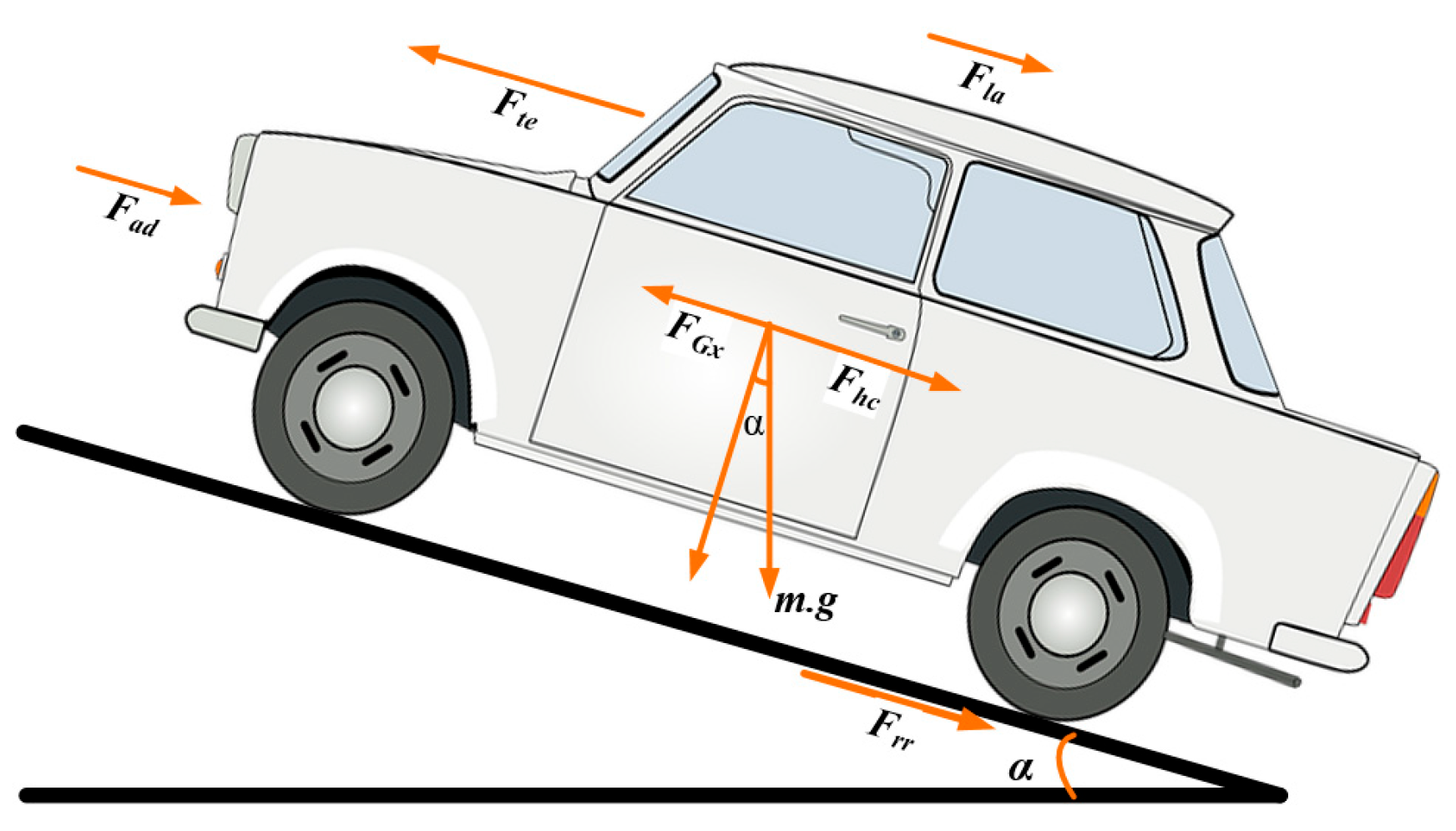
In Figure 1, all forces acting on the vehicle are given [19]. The total force ( F t e ) acting on the vehicle can be expressed as follows.
F t e = F a d + F l a + F r r + F G x    
where F a d is the aerodynamic force, F l a is the acceleration force, F r r is the rolling friction force, and F G x is the road grade resistance force.
The aerodynamic force ( F a d ), caused by air resistance acting on the vehicle’s surface, is calculated using the following equation.
F a d = 1 2 A   C d   ρ V 2  
where C d is the drag coefficient, A ( m 2 ) is the front surface area of the vehicle, and ρ ( k g 3 m ) is the density of air.
The acceleration force ( F l a ) can be expressed as
F l a = m   d d t   V = m   a
where a m s 2 is the linear acceleration of the vehicle, V m s is its speed, and m k g is its mass.
In Equation (4), the road grade angle of the road is denoted by α and the gravitational force is denoted by g . The value of the road grade resistance force ( F G x ), which is a component of the force acting on the vehicle due to gravity and in the direction of movement of the vehicle, varies according to the road grade angle of the road on which the vehicle is located.
F G x = m   g   sin α  
The rolling friction force ( F r r ) is influenced by the weight of the vehicle, the acceleration of gravity, and the rolling resistance coefficient ( K r ). F r r can be expressed in Equation (5).
F r r = K r   m   g  
As a result, the total net force acting on the vehicle ( F t e ) is equal to the sum of all forces.
F t e = m   a + 1 2   C d   A   ρ   V 2 + K r   m   g + m   g   sin α
With the sum of the forces acting on the vehicle and the wheel radius, the demanded moment can be calculated by formula given in Equation (7).
T =   F t e   r
The required motor power is also calculated by following equation using the total force and speed relationship.
P =   F t e   V
Finally, assuming that the moment of deceleration of the EV is time interval [t1, t2], the maximum recoverable energy can be calculated as follows.
W = t 1 t 2   T   ω   d t

2.2. Regenerative Braking

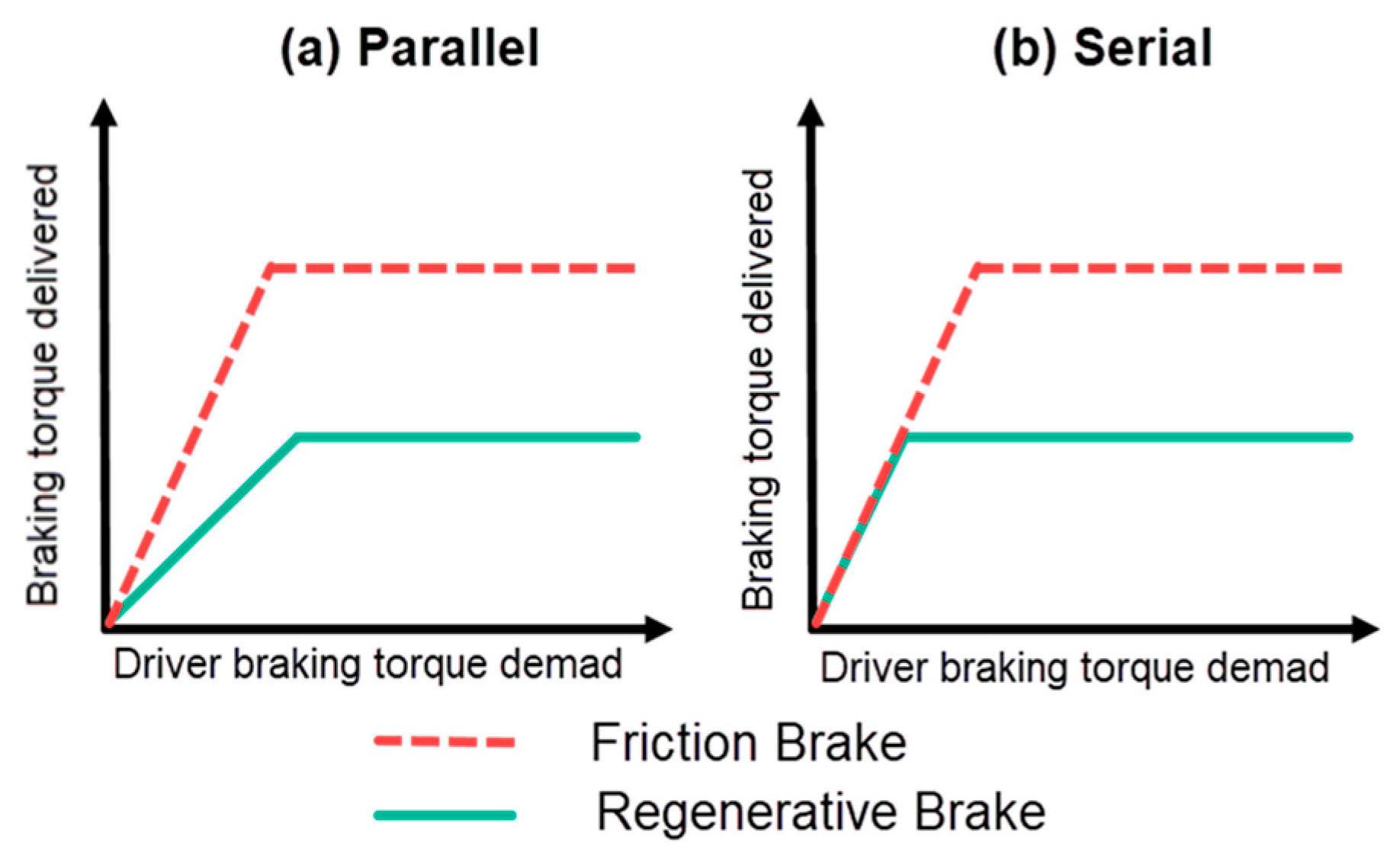
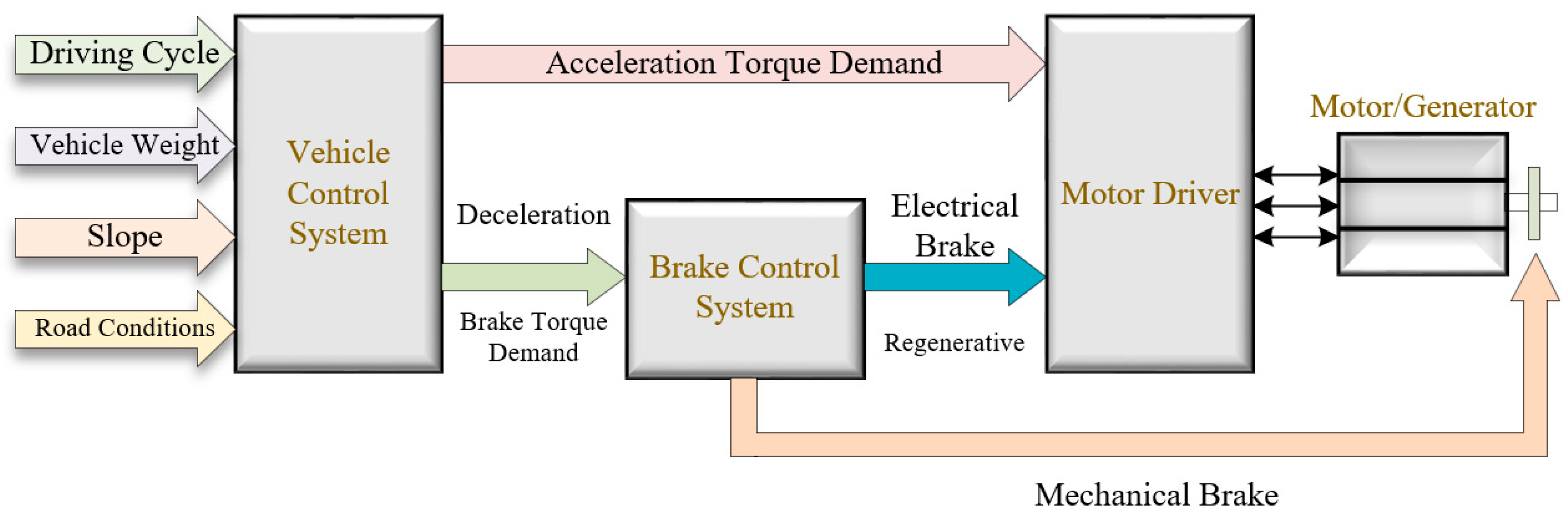
Regenerative braking is one of the methods for improving energy efficiency in EVs. The kinetic energy of the vehicle in braking or slowing down is recovered and converted into electrical energy by means of the electrical motor acting as a generator, which is employed as a truck system in EVs. This mechanism enables the vehicle to maintain motion while feeding the recovered energy back into the battery. Additionally, regenerative braking outlasts traditional braking systems in terms of brake life and energy loss. The distribution of braking demand between the use of mechanical or regenerative braking strategies, as well as the front and rear wheels of a vehicle, allows for the classification of regenerative braking systems into two distinct categories, as shown in Figure 2. Regenerative braking is the main technique of a series braking strategy. However, if the regenerative braking is not sufficient, the mechanical brake provides additional braking force. In contrast, the parallel braking strategy can be defined as a method of simultaneous implementation of both mechanical and regenerative braking in specific conditions. Still, it is difficult to control the two braking systems at the same time, and mechanical braking is not remarkably effective.

2.3. Driving Profiles and Cycles

Driving profiles and cycles are time-based data sets of speed data of the vehicle that vary across national borders based on several factors such as traffic density, road conditions, and driving habits. Many national and international organizations have created and published several different driving profiles. Ref. [20] reports the characteristics of several driving profiles, as summarized in Table 2, which are commonly utilized in environmental assessment studies to represent national traffic conditions.
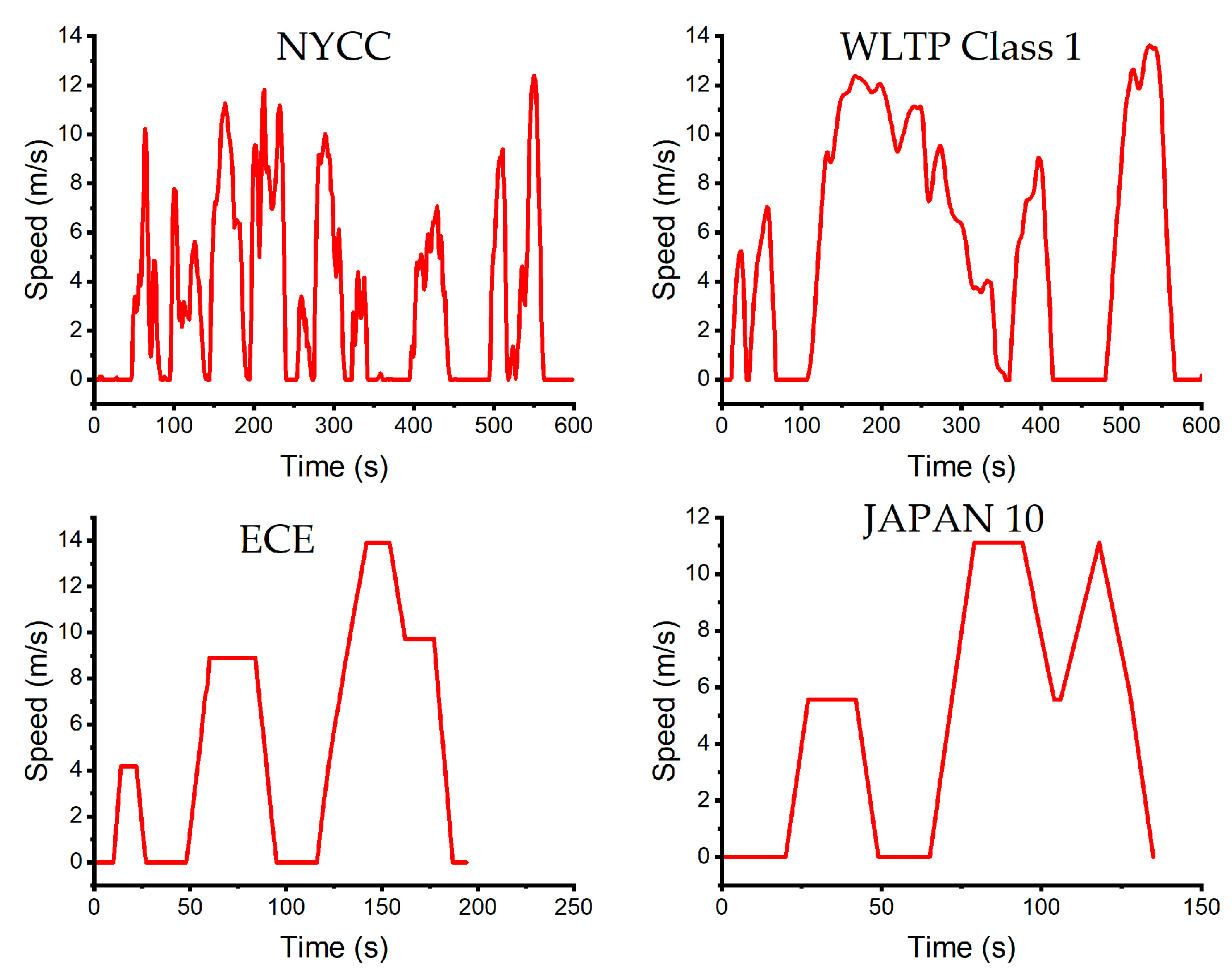
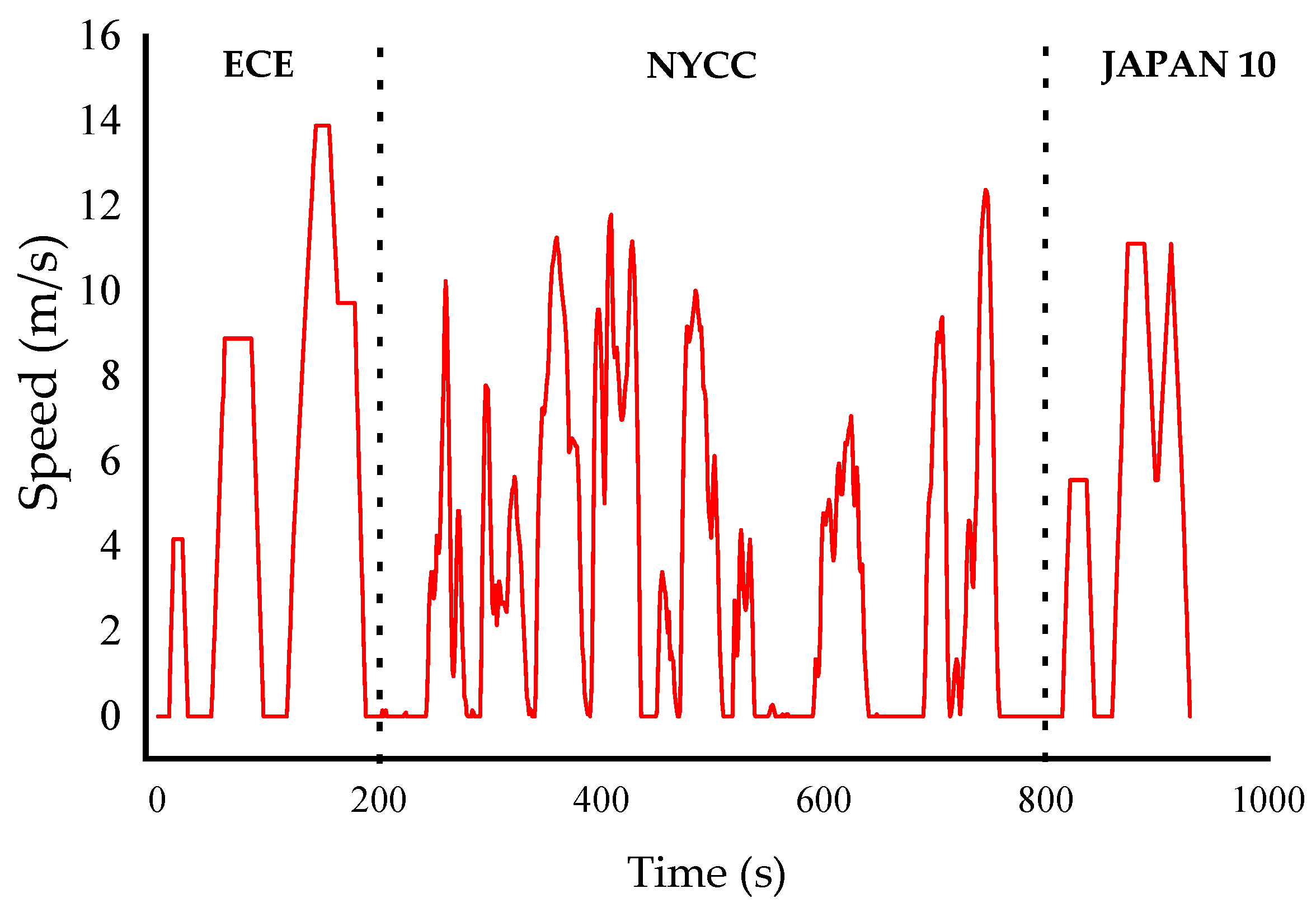
The ECE and JAPAN-10 driving profiles are designed to simulate urban driving conditions, which typically require a smooth and consistent driving style at low speeds. The data set illustrates the behavior of vehicles undergoing moderate acceleration and deceleration. In contrast, the NYCC driving profile indicates conditions of dense traffic, which require vehicles to move at a relatively high speed and to stop and start frequently. In such instances, vehicles demonstrate a higher level of aggression in their driving behavior. In contrast to this, the WLTP driving profile is a combination of the aforementioned profiles and represents an average driving scenario as shown in Figure 3.

3. Machine Learning Algorithms

In the field of AI, ML is defined as the process by which computers learn from training data. The objective of ML is to identify patterns and relationships within data sets by applying mathematical techniques. These techniques use data analysis to identify results and inform decision-making. The accuracy of the results depends on the amount of data and the experience of the analyst. Applying ML to large and complex data sets allows challenging the problems.
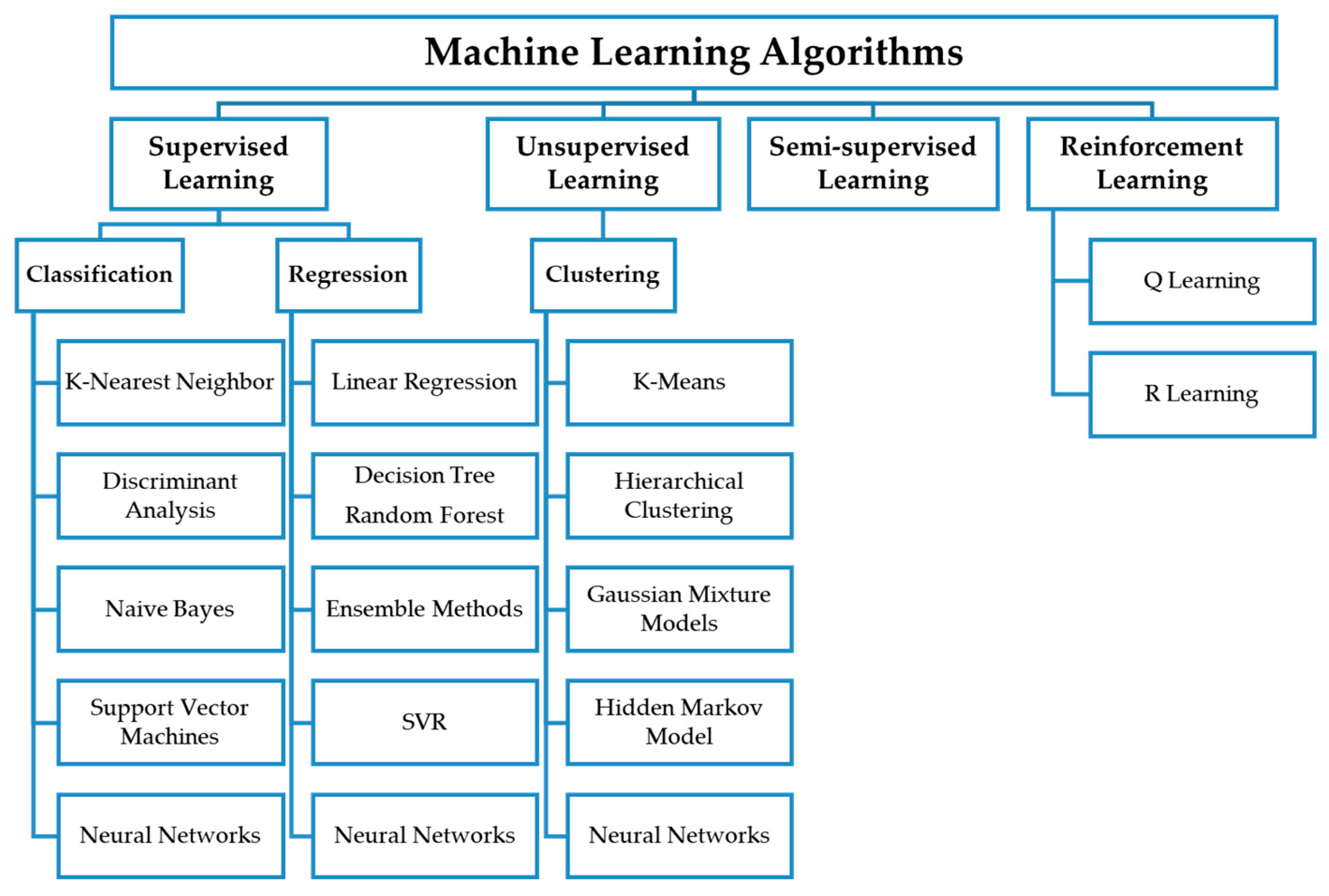
One method deriving insights from data is ML. The selection of an appropriate learning model is dependent on the characteristics of the data set and the desired outcomes. In the basic framework, four different learning models can be considered: supervised, unsupervised, semi-supervised, or reinforcement; the classification of the models is given in Figure 4. One of the most popular ML approaches is supervised learning. This approach is applicable when the label assigned to each data point in the data set is known. In this way, the algorithm can recognize the relationships between the data and predicted labels for a new data set. Regression and classification are two tasks where supervised learning is particularly effective.
In this study, four AI algorithms, namely LR, RF, KNN, and DT, are preferred for investigating regenerative braking systems in EVs.

3.1. Linear Regression

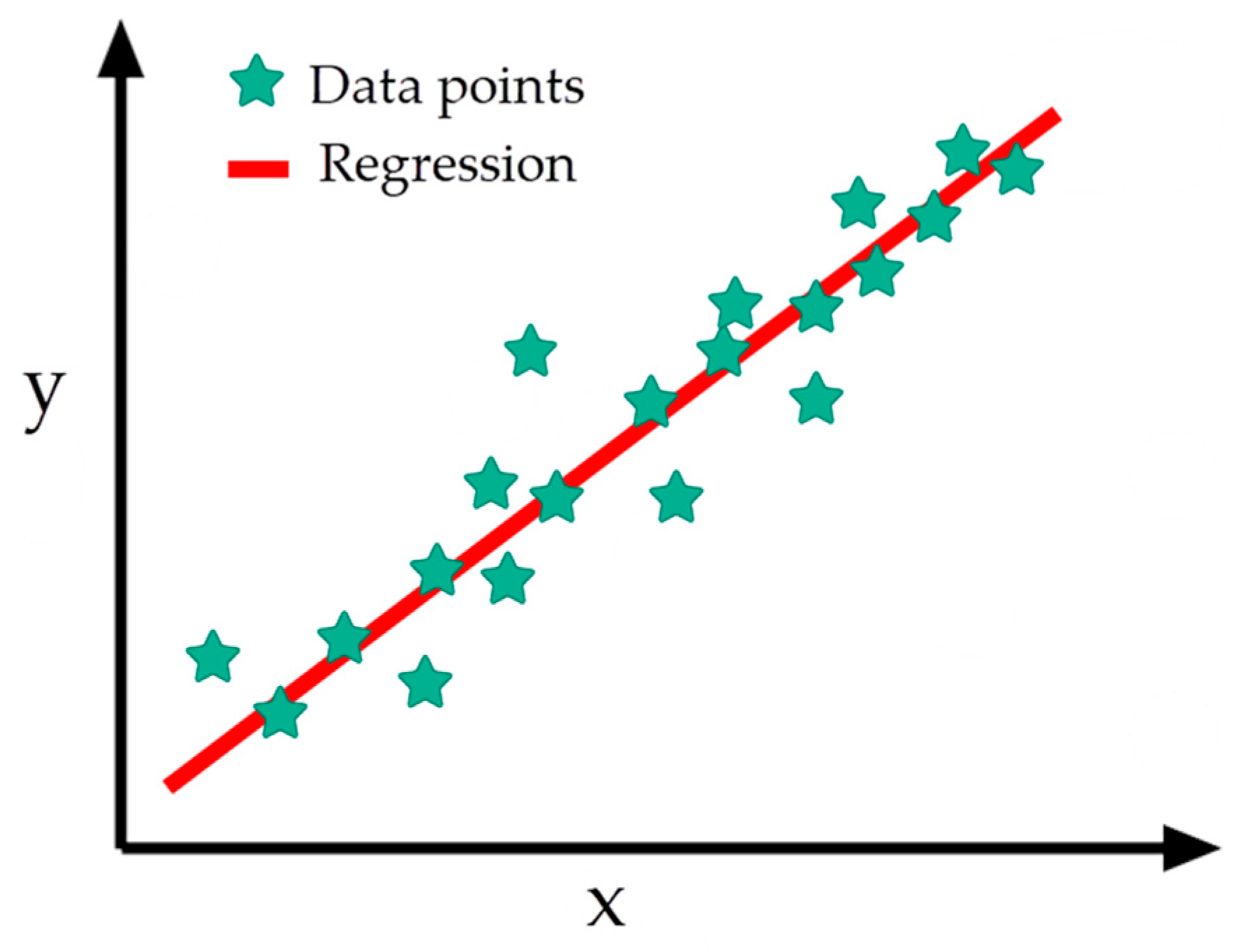
A statistical modeling technique, LR, is used to identify the relationship between variables and to use this relationship to predict the effect of one variable on another. The fundamental assumption of LR is that there is a linear relationship between the dependent and the independent variables. This approach involves the construction of a linear equation that represents the relationship between the two variables, x and y, as shown in Figure 5.
The observations within the data set are then used to solve this linear equation, resulting in the calculation of the coefficients and the constant terms. This allows the relationship between the dependent and independent variables to be explained.
y = β 0 +   β 1 x 1 +   β 2 x 2 + + β n x n + ε
where
y : dependent or predicted variable
x i : independent variables
β i : constant terms representing road grade coefficient for each argument
ε : model’s random error term

3.2. KNN Algorithm

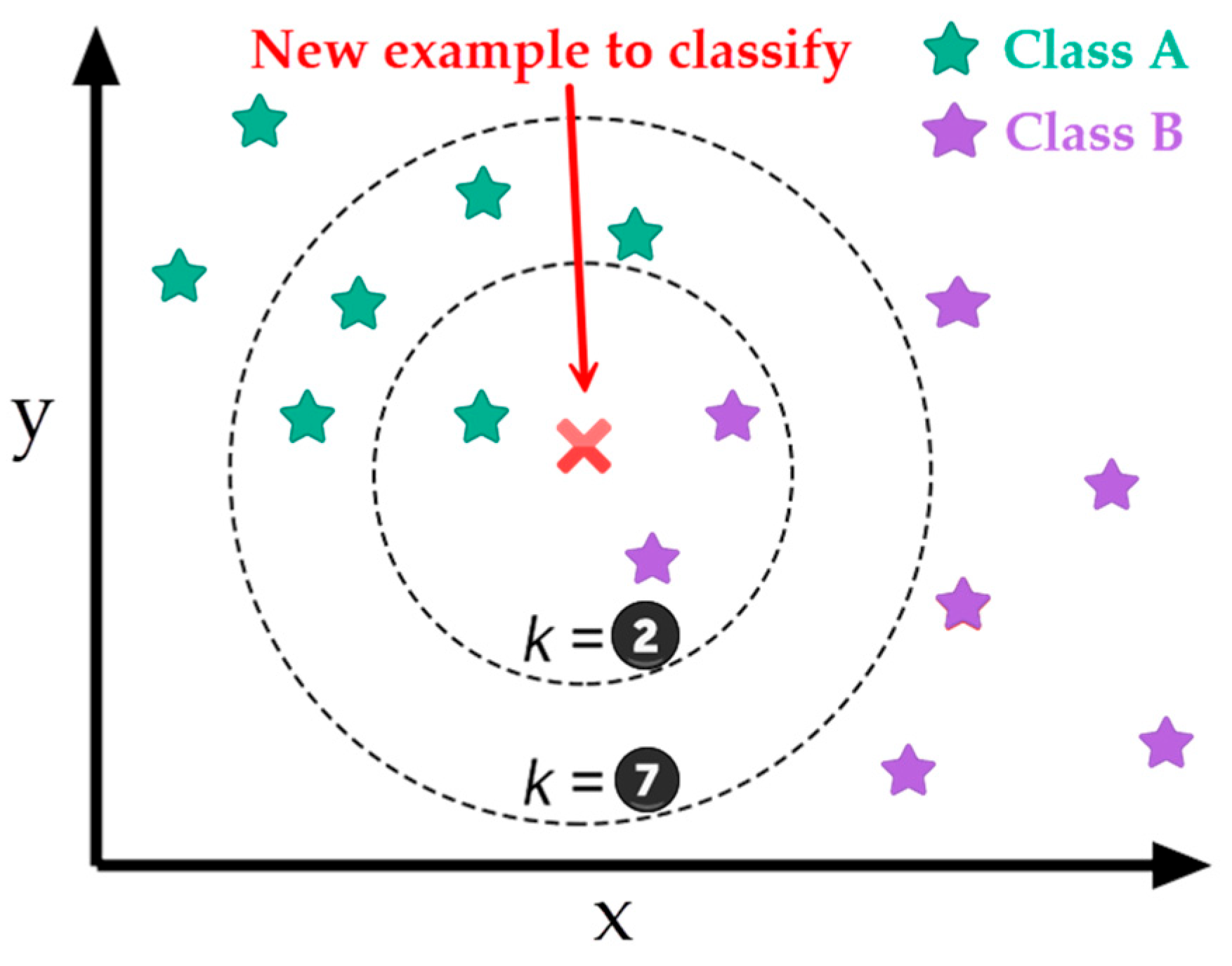
An ML technique that is employed for regression and classification problems is the KNN algorithm. Essentially, the algorithm assigns a label or prediction to a data point based on the values or labels of its nearest neighbors (Figure 6). The KNN algorithm is used to arrange the data points according to their spatial position. The algorithm identifies the KNN of a given data point, which is then used to predict the label or value of that point. In other words, the KNN algorithm uses a process of classifying or predicting using the labels or values of its KNN.
y = 1 k   n = 1 N   b n

3.3. Decision Tree Algorithm

DT algorithm represents an ML technique that is employed for the purpose of classification and regression. In essence, the algorithm builds a Decision Tree from the attributes within the data set and then uses that tree to categorize data points or predict their values. The DT technique is employed for the classification of data points or the prediction of their values, based on the features of the independent variables present in the data set. The algorithm generates a tree structure consisting of the target variables, which represent the classes in classification problems or the target values in regression problems, and the features present in the data set. The tree structure is used to either predict or categorize the values of the data points. The DT algorithm facilitates understanding the structure of features and target variables in the data set, as well as defining complex decision boundaries and visualizing relationships. A further application of the DT algorithm is the understanding and identification of the key features within a given data set.
H x = p x   log 2 p x
G a i n S , x = H S P x   H x
P(x) represents the percentage of samples that have a particular feature, whereas H(x) denotes the entropy value associated with feature x, as defined in Equation (12). To illustrate, if we had ten data points and four of them were selected for abrupt braking, the P(x) value would be 4/10. The entire data set, referred to as S, and a specific subset, referred to as x, are represented by the terms in Equation (13). It is important to reduce the entropy value to create optimal partitions within the DT algorithm.
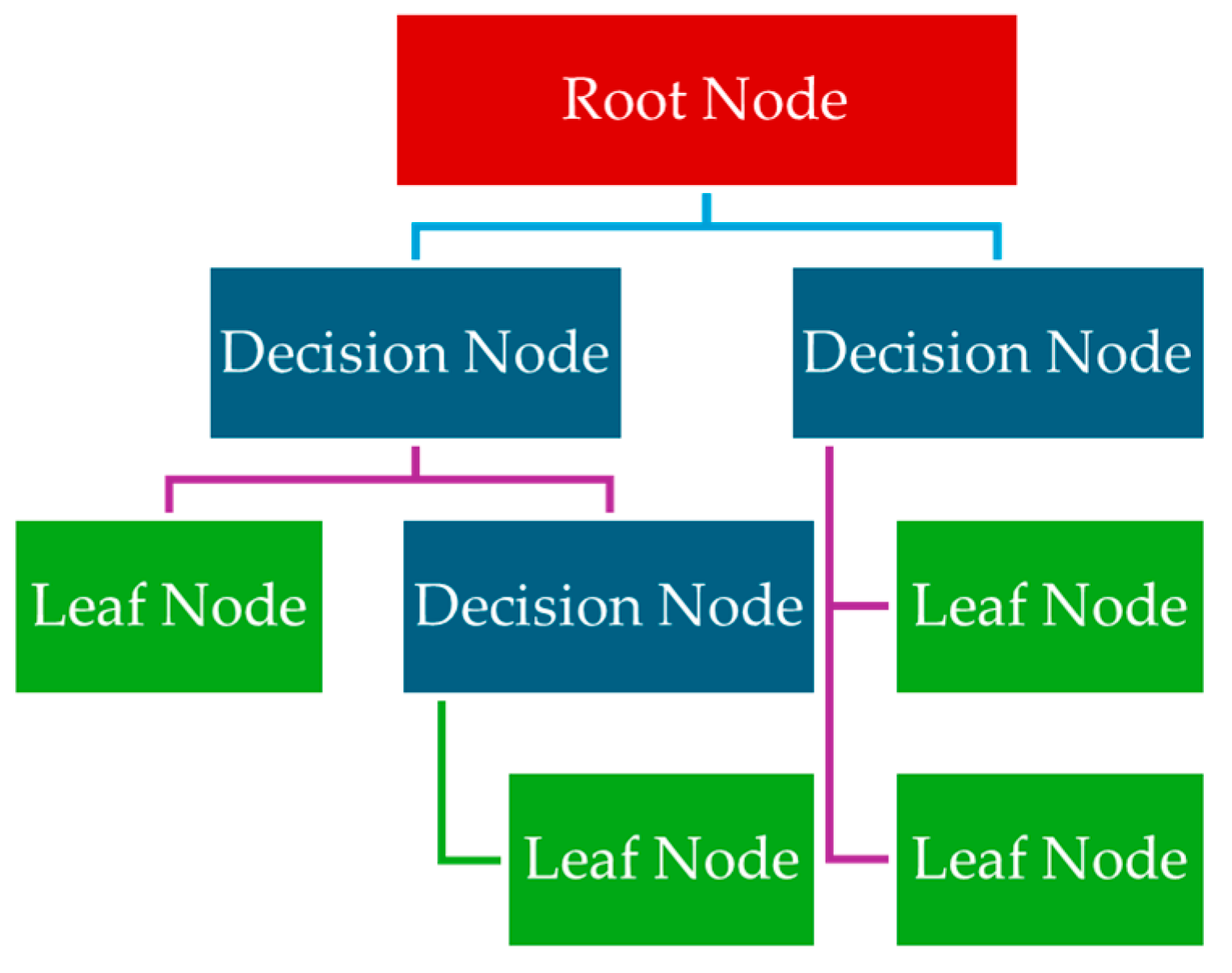
The process of dividing the root node into leaf nodes in a DT algorithm can be explained as follows: The root node represents the entirety of the data set. It serves as the origin of the tree, shown in Figure 7. A decision node represents a feature dividing the information into two or more groups. The course of each observation is determined by the split based on the value of the feature.

3.4. Random Forest Algorithm

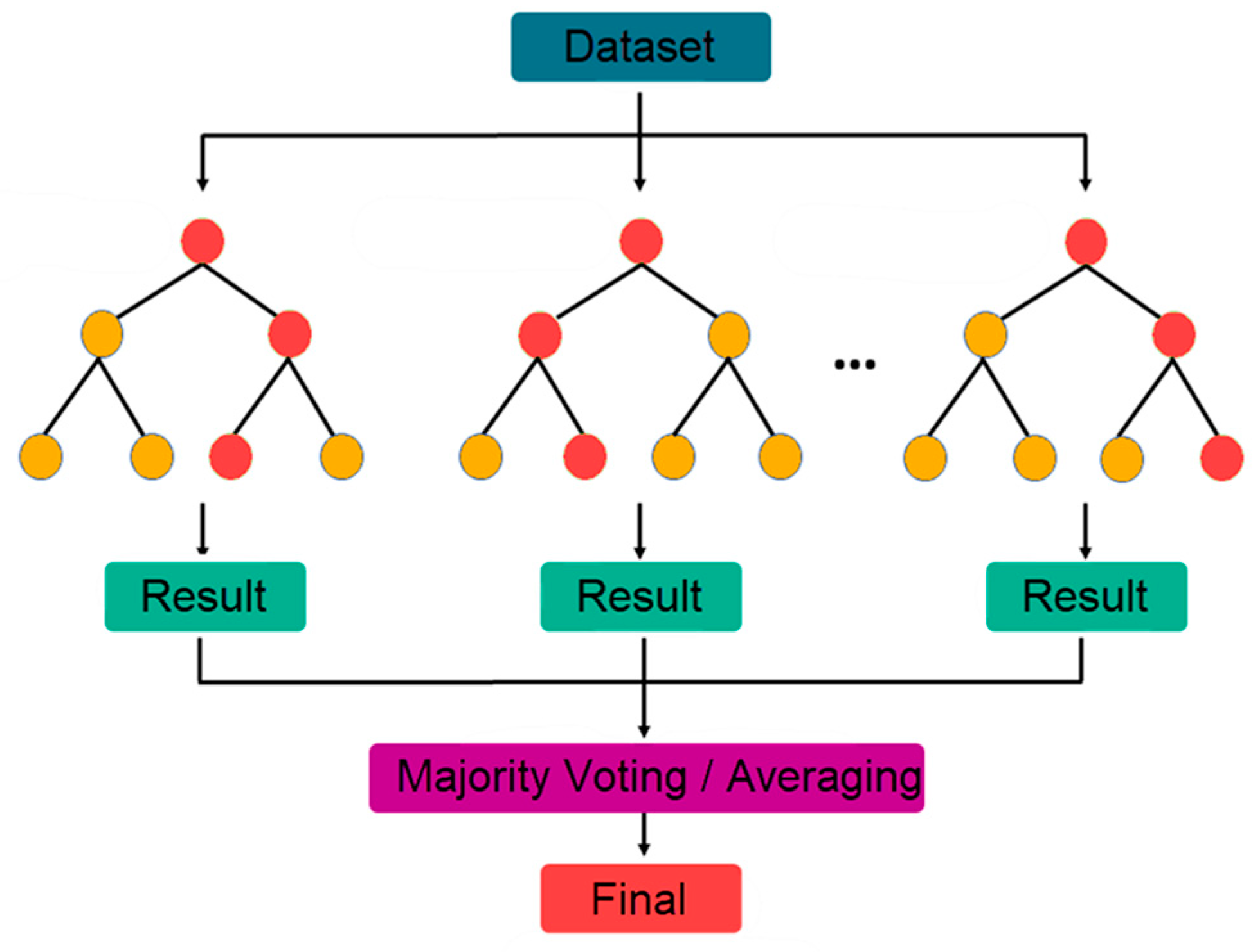
A ML algorithm designed for classification and regression problems is referred to as a RF algorithm. In the ensemble learning technique known as RF, multiple DTs are integrated to form a unified model. Each DT is trained individually before the resulting predictions are combined, as depicted in Figure 8.
The training of any DT within a RF algorithm is achieved through the random selection of features and the implementation of random sampling, a process also referred to as bootstrapping. To train each DT in this manner, a variety of sample data set and feature subsets are employed. Subsequently, more reliable and stable predictions for classification or regression problems are obtained by combining the predictions of these trees.
The RF performs well on high-dimensional data sets and is relatively robust against overfitting. In addition, the RF algorithm is useful for identifying the relative importance of features and elucidating the relationships within a data set. The RF algorithm is widely used in the fields of classification, regression, and feature selection because its properties facilitate its use in a variety of applications.

3.5. Performance Evaluation Criteria of the Algorithms

The objective of ML algorithms is to ascertain the relationship between variables in a data set collected from specific scenarios, with the aim of predicting outcomes for unknowns. To assess the efficacy and precision of the algorithms and ascertain which model is the most effective, it is necessary to use a set of measurement metrics. The efficacy of the model is evaluated through regression analysis, using metrics such as the mean. In this study, the following error metrics are employed: the coefficient of determination (R2), mean square error (MSE), root mean square error (RMSE), and mean absolute error (MAE).

3.5.1. R-SQUARE

In the context of learning algorithms, the coefficient of determination (R2) is defined as a metric to measure how close the data is to the regression line. The R2 coefficient is defined for values within the interval [0, 1]. The highest level of prediction accuracy is represented by the number 1, while the lowest level is represented by the number 0.
The sum of mean differences ( S M D ) is calculated by the formula:
S M D   =   i N   y i y m e a n 2
where y i is the actual data, y m e a n is the average of the predicted data, and N is the amount of data.
The calculation of the sum of squares of error (SSE) is expressed by the formula:
S S E   =   i N   y i     y i   2
where y i is the predicted data.
The coefficient of determination R2 is calculated by the formula:
R 2   =   1     S S E S M D

3.5.2. MSE

MSE is a statistical measure of the difference between predicted and observed data. It shows the difference in average square error between the original and predicted values. It determines the variance of the residuals. In instances where the error amounts are comparable and relatively proximate, the MSE can be used. Conversely, the application of MSE may be inadvisable in instances where the magnitude of the errors exceeds the mean and the number of errors is on the rise. In such cases, MAE may be a more appropriate measure. MSE is calculated by the formula:
M S E   =   1 N   i N   y i     y i     2

3.5.3. RMSE

RMSE is a statistical measure that quantifies the distance between the regression line and the actual data set, representing the standard deviation of prediction errors. The value of the RMSE can range from zero to infinity. A value of zero indicates a perfect model with no errors. The RMSE is calculated using with the formula:
R M S E   =     1 N   i N   y i     y i     2

3.5.4. MAE

The MAE is a statistical measure and simple calculation and has an intuitive nature, making it one of the most widely used error metrics in practice. The MAE is calculated as the average vertical distance between each actual value and the regression line that best fits the data set as follows:
M A E   =   1 N   i N     y i     y i  
The MAE value can range from zero to infinity. Unlike the MAE, the RMSE metric assigns greater weight to relatively large errors. Therefore, in circumstances where large errors are to be avoided, it is advisable to consider the RMSE value.

4. Creating a Data Set and Its Training

4.1. Simulation Model

The simulation model shown in Figure 9 is designed using the MATLAB/Simulink R2025b environment, which includes both mechanical and electronic models based on dynamic equations of an EV. It allows ML algorithms to synthetically generate the training and test data required for model generation.
The input and output variables essential for developing a learning model are identified in Table 3. The input variables consist of road gradient, vehicle weight, speed, acceleration, and road condition. In this study, the coefficient of rolling friction within the mathematical model is defined as a representation of the road condition, specifically the variable indicating whether the road is asphalt, mud, or soil. For output variables, the torque of the electrical motor and the mechanical brakes are considered. One of the output components, motor torque, includes both the positive torque value necessary for acceleration and the negative torque value essential for deceleration when the motor is employed for regenerative braking when behaving as a generator. If the regenerative braking torque is inadequate during deceleration, the mechanical braking torque—the other output component—is employed to adjust the mechanical brake.

4.2. Descriptions and Data Set Preparation

To achieve the aims of this paper, it is essential to create a data set that is within the operating limits of the test system. This involves careful selection and pre-processing of the data to ensure that it accurately reflects the conditions under which the test system operates. In this way, the reliability and validity of the results can be maintained, providing a solid basis for subsequent analysis and conclusions. For this purpose, the analysis is conducted for driving standards, road conditions, vehicle speeds, and driving profiles. Table 4 describes the limits of the variables in the data set to be created. The European urban normal driving profile (ECE), the aggressive urban driving profile (NYCC), and the Japanese urban moderately aggressive driving profile (JAPAN 10) are selected as speed data for the light EVs and are shown in Figure 10. The hybrid speed profile is representative of real-world scenarios as it covers a range of speeds and driving profiles.

4.3. Model Training

In the field of ML, a sub-category of AI, learning-based algorithms are used to enable systems to learn from data and improve their performance over time without being obviously programmed. This field encompasses a variety of techniques and methodologies aimed at creating models that can make predictions or decisions based on the input data. Among these techniques, supervised learning is a prominent approach where the model is trained on a labeled data set, meaning that each training example is paired with an output label. Within the supervised learning category, there are several algorithms that are commonly used due to their effectiveness and versatility. Four such algorithms are LR, KNN, DT, and RF.
Once the input–output data has been created and some basic data cleanings have been completed to ensure the quality and consistency of the data set, the data are then divided into training and test data. The data cleaning process involves the removal of any duplicate values, the handling of missing values, and the normalization of the data in preparation for analysis. A total of 113,622 data points are utilized in the study, thereby providing a robust data set for training and evaluation purposes. Of the total data points, 30% are allocated to the test group, which is used to evaluate the performance of the model on previously unused data, while the remaining 70% are allocated to the training group, which is used to train the model. For each model, the 30/70 partitioning is repeated 10 times to ensure robustness, and hyperparameter selection is conducted using grid search. This division ensures that the model can be properly validated, and their performances accurately assessed, preventing overfitting and ensuring that the model generalizes well to new, previously unseen data.

5. Training Results

5.1. Findings of the Linear Regression Algorithm

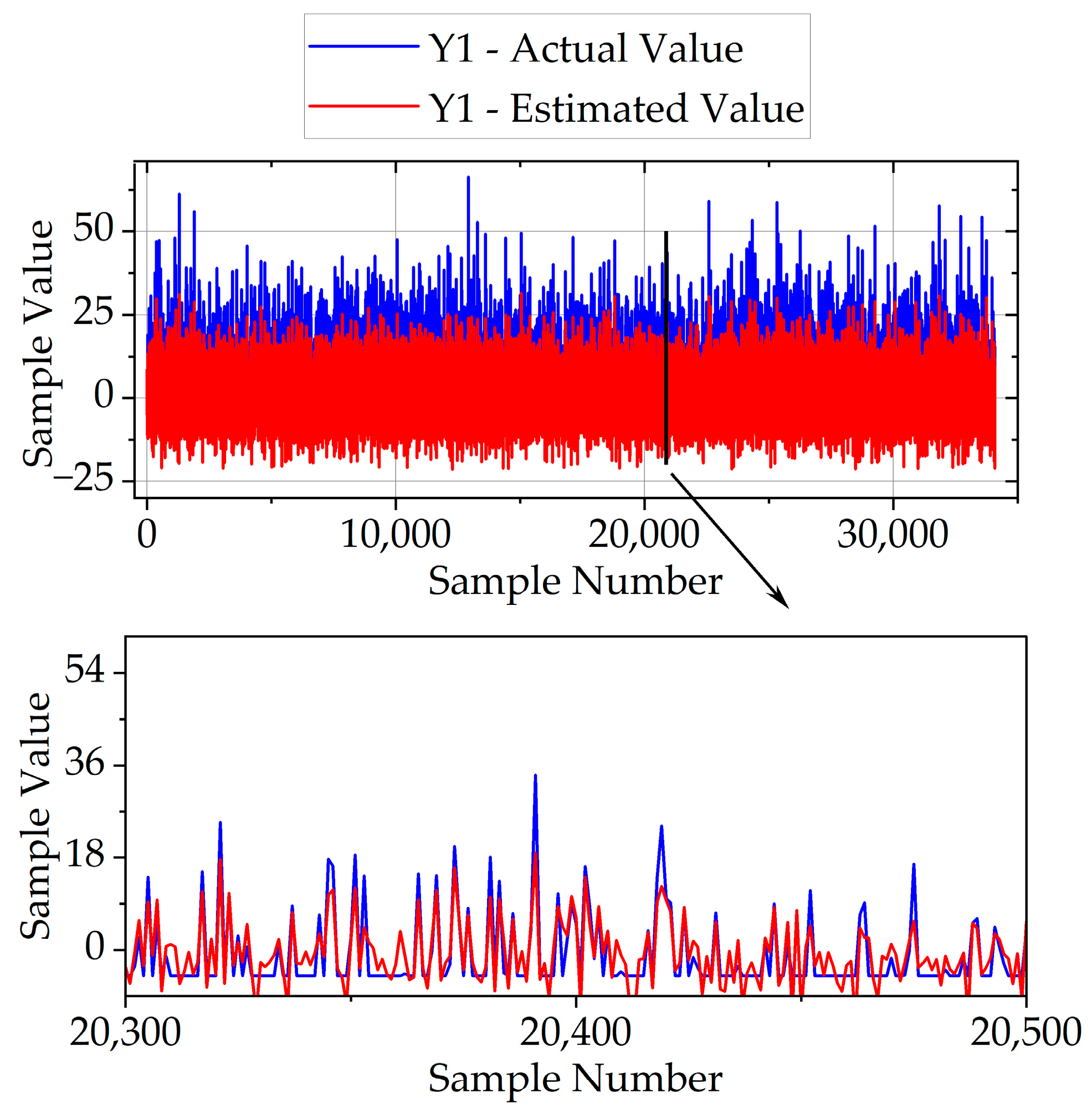
The LR algorithm is a supervised learning algorithm that belongs to the category of regression algorithms. It is particularly suited to cases where the dependent and independent data have a linear relationship. The differences between the actual and estimated Y1 outputs can be attributed to inaccurate predictions, which is an unfavorable outcome, as shown in Figure 11.
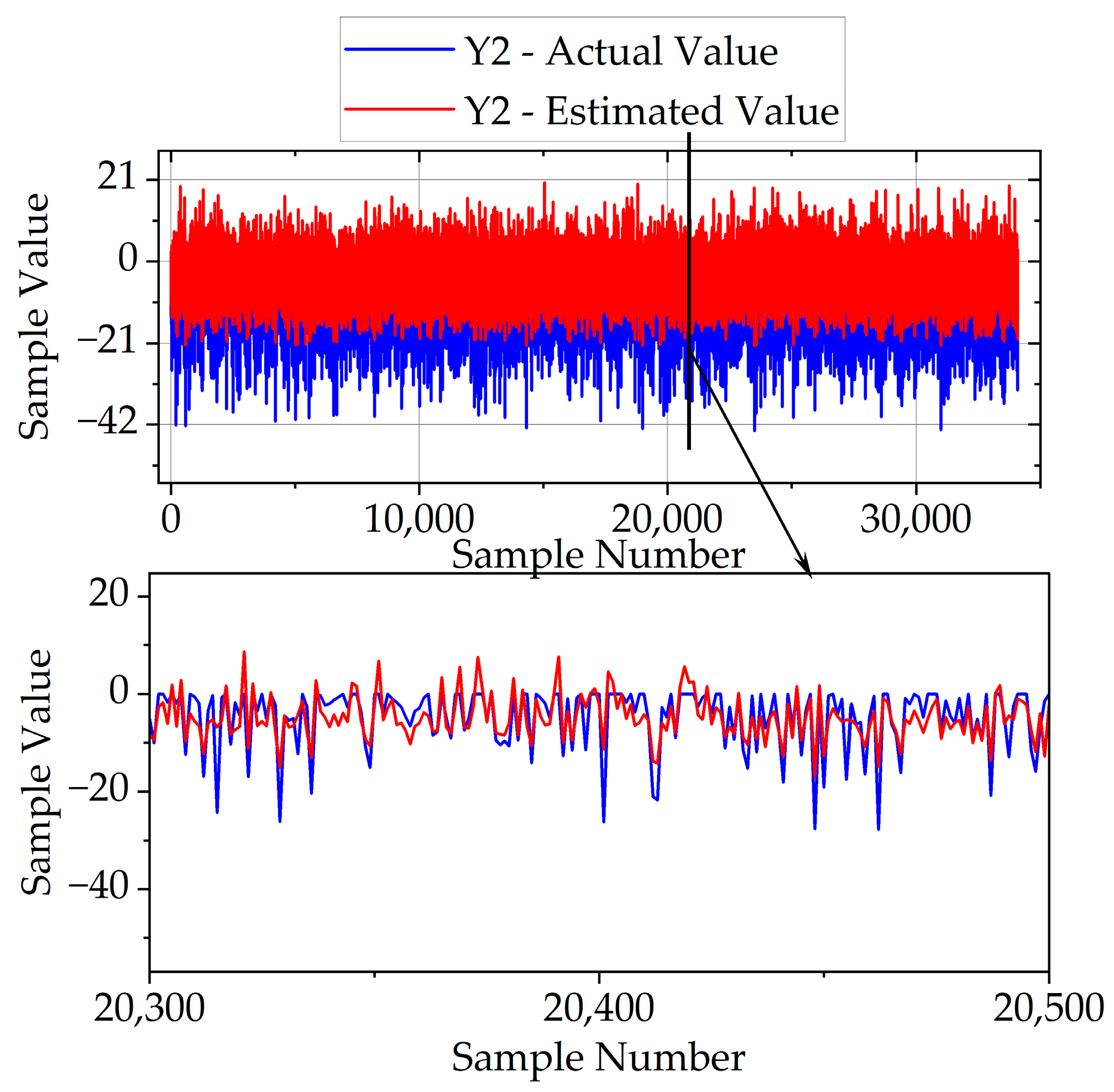
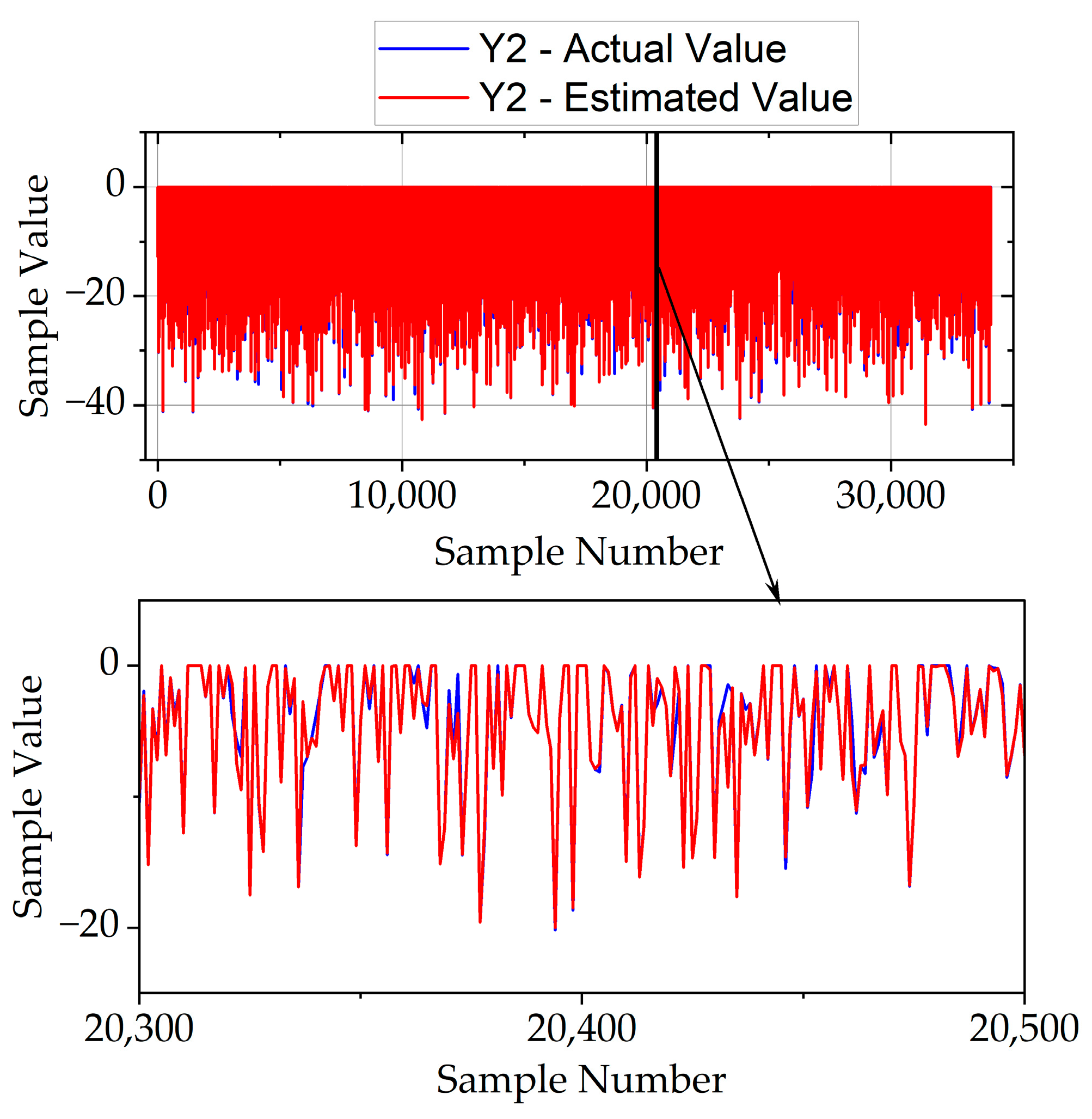
Figure 12 shows the discrepancies between the actual and predicted values of the Y2 output data. The output data reveals that the vehicle is operating at an unacceptable power level, which could lead to loss of stability and potentially dangerous results.
The performance metrics of the model created with LR are calculated as follows: R2 0.67, MSE 16.54, RMSE 4.07, and MAE 3.08. These values are presented in Table 5.

5.2. Findings of the KNN Algorithm

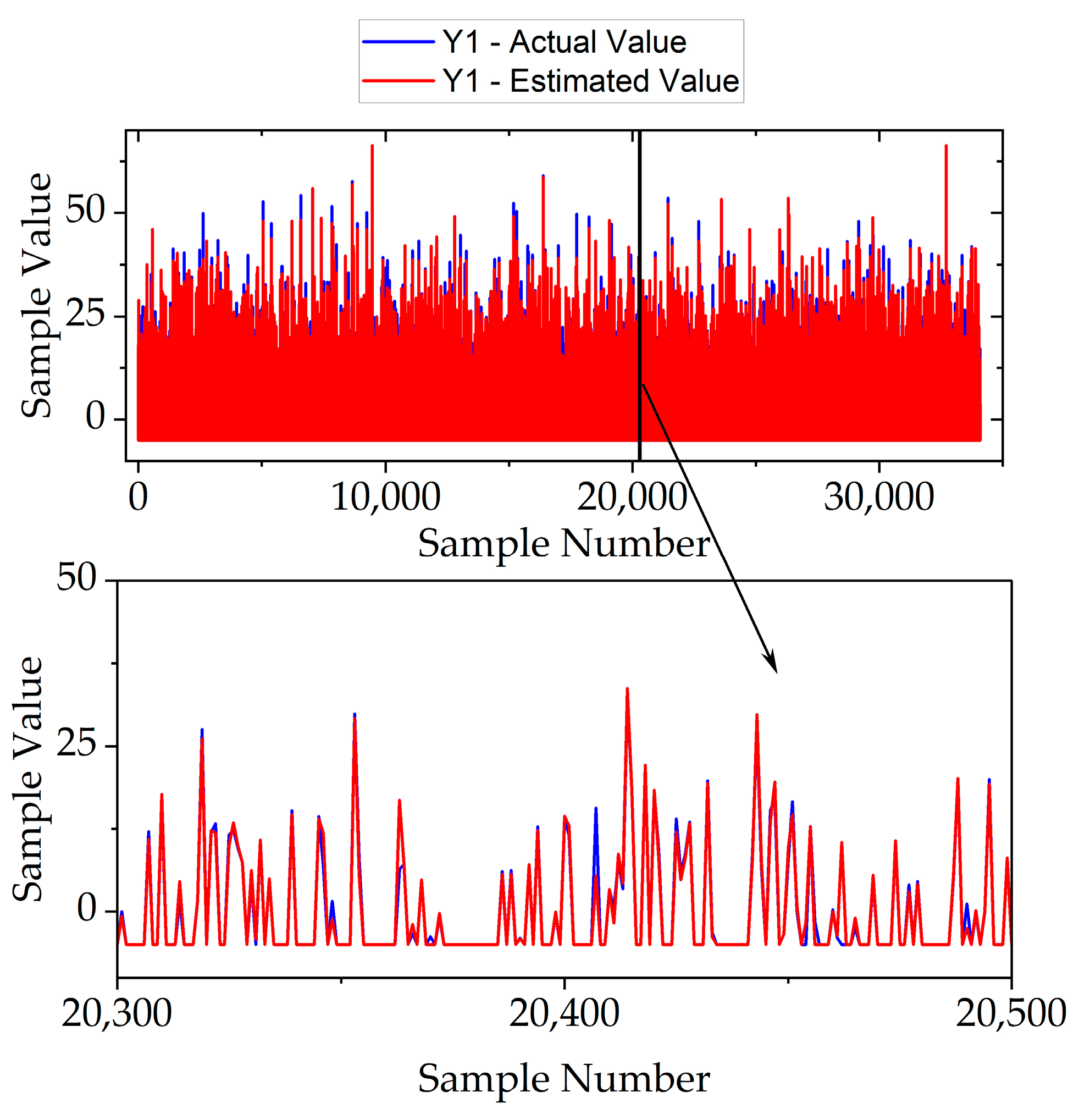
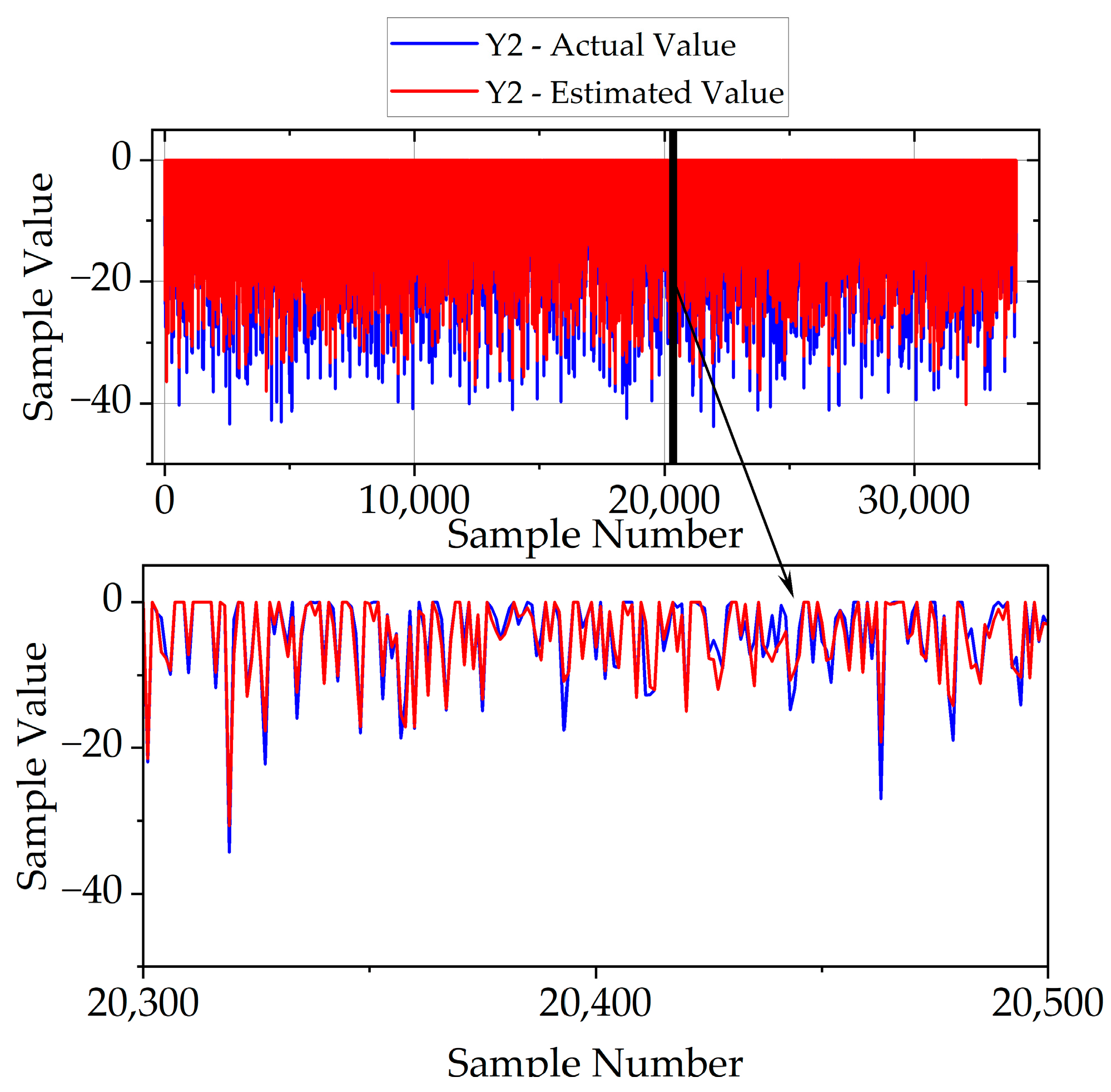
A supervised ML algorithm based on the nearest neighbor principle is the KNN algorithm. The KNN algorithm identifies K-Nearest Neighbors within the given data set, calculates the distances between each neighbor and the target value, and then averages these distances to predict the target value. The optimal results for this study have been obtained when k is set to 2. The outputs of the model generated by the KNN algorithm, comparing actual and predicted data, are presented in Figure 13 for output data Y1 and Figure 14 for output data Y2.
The performance metrics of the model created with KNN are calculated as follows: R2 0.86, MSE 7.15, RMSE 2.67, and MAE 1.37. These values are presented in Table 6.

5.3. Findings of Decision Tree Algorithm

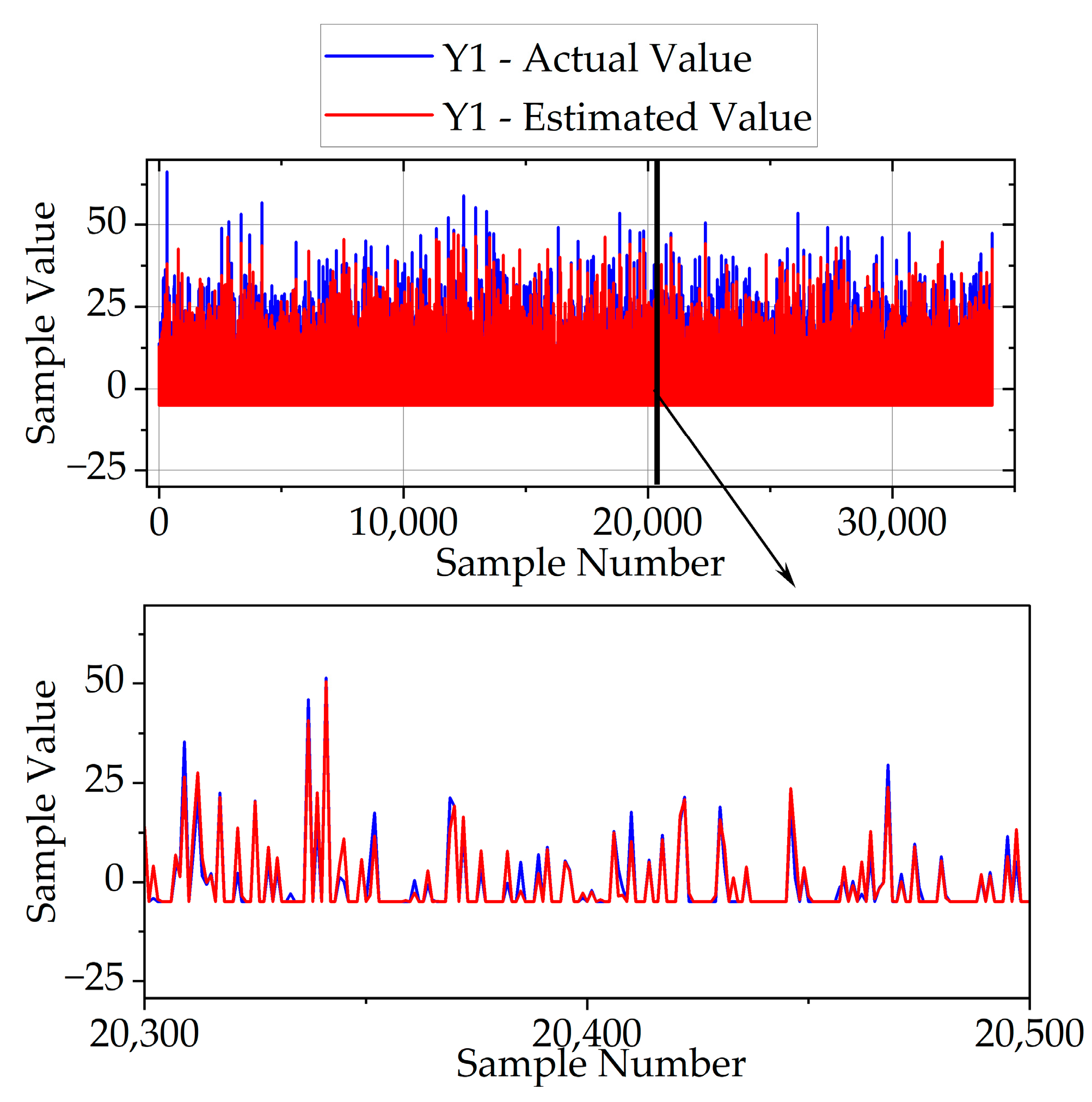
A class of supervised ML algorithms, designated as DT algorithms, is frequently selected when the data exhibits a non-linear distribution. In comparing actual and forecast data, the model constructed using the DT algorithm is illustrated in Figure 15 for output data Y1 and in Figure 16 for output data Y2. The model created with the DT algorithm performs the duty better than the models created with the LR and KNN algorithms.
The performance metrics of the model created with DT are calculated as follows: R2 0.96, MSE 1.94, RMSE 1.39, and MAE 0.46. These values are presented in Table 7.

5.4. Findings of Random Forest Algorithm

A combination of DTs constitutes the ML algorithm designated as the RF algorithm, which belongs to the category of supervised learning algorithms. The algorithm takes the endpoints of multiple DTs, performs a voting process, and then determines the outcome of the prediction.
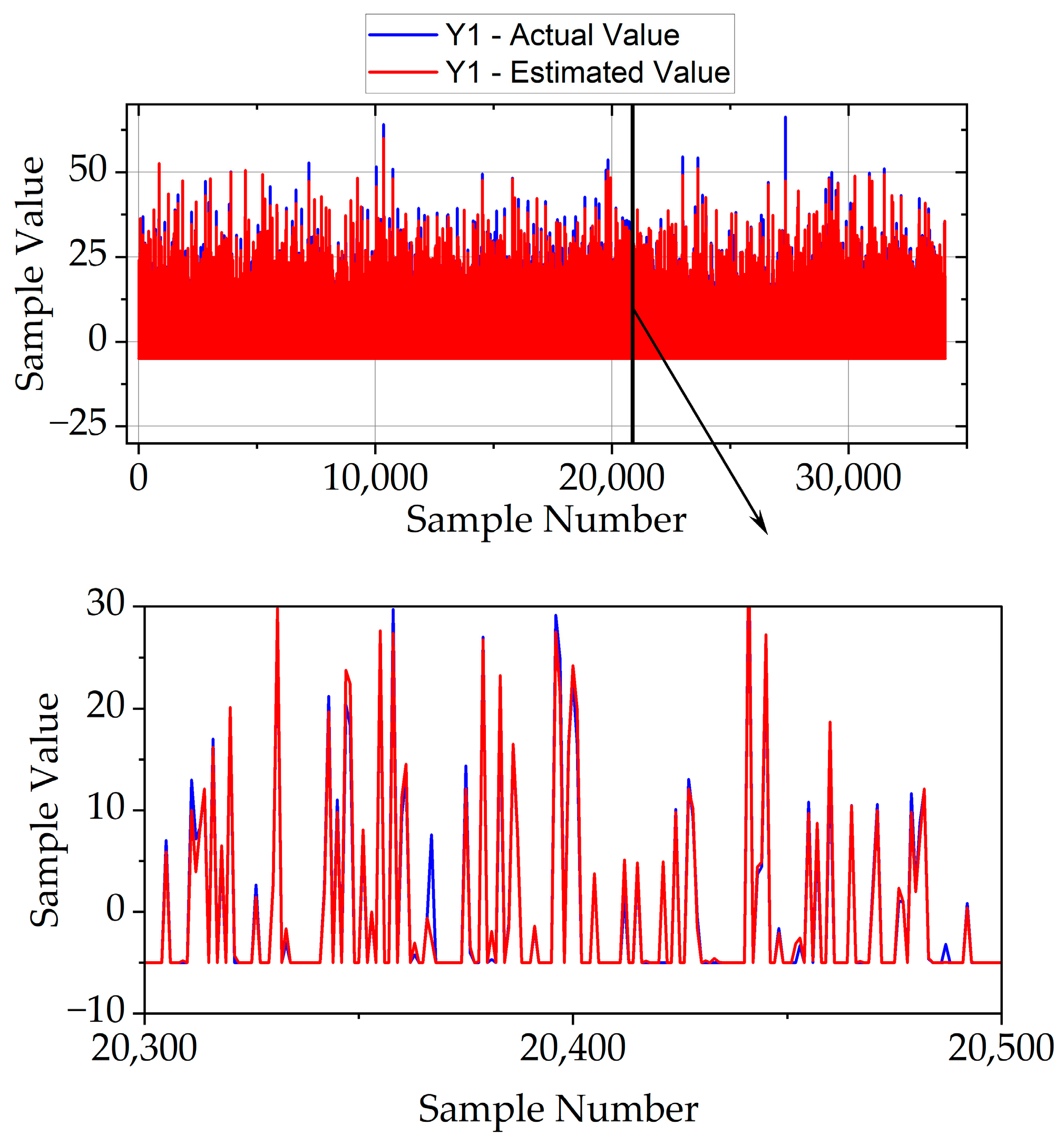
In the model created with the RF algorithm, Figure 17 shows the comparison of the predicted actual value for the Y1 output and Figure 18 shows the predicted actual value for the Y2 output. With this model, a better result is obtained compared to the models created with LR, KNN, and DT algorithms.
The performance metrics of the model created with RF are calculated as follows: R2 0.97, MSE 1.39, RMSE 1.18, and MAE 0.41. These values are presented in Table 8.

5.5. Performance Evaluation of the Simulated Algorithms

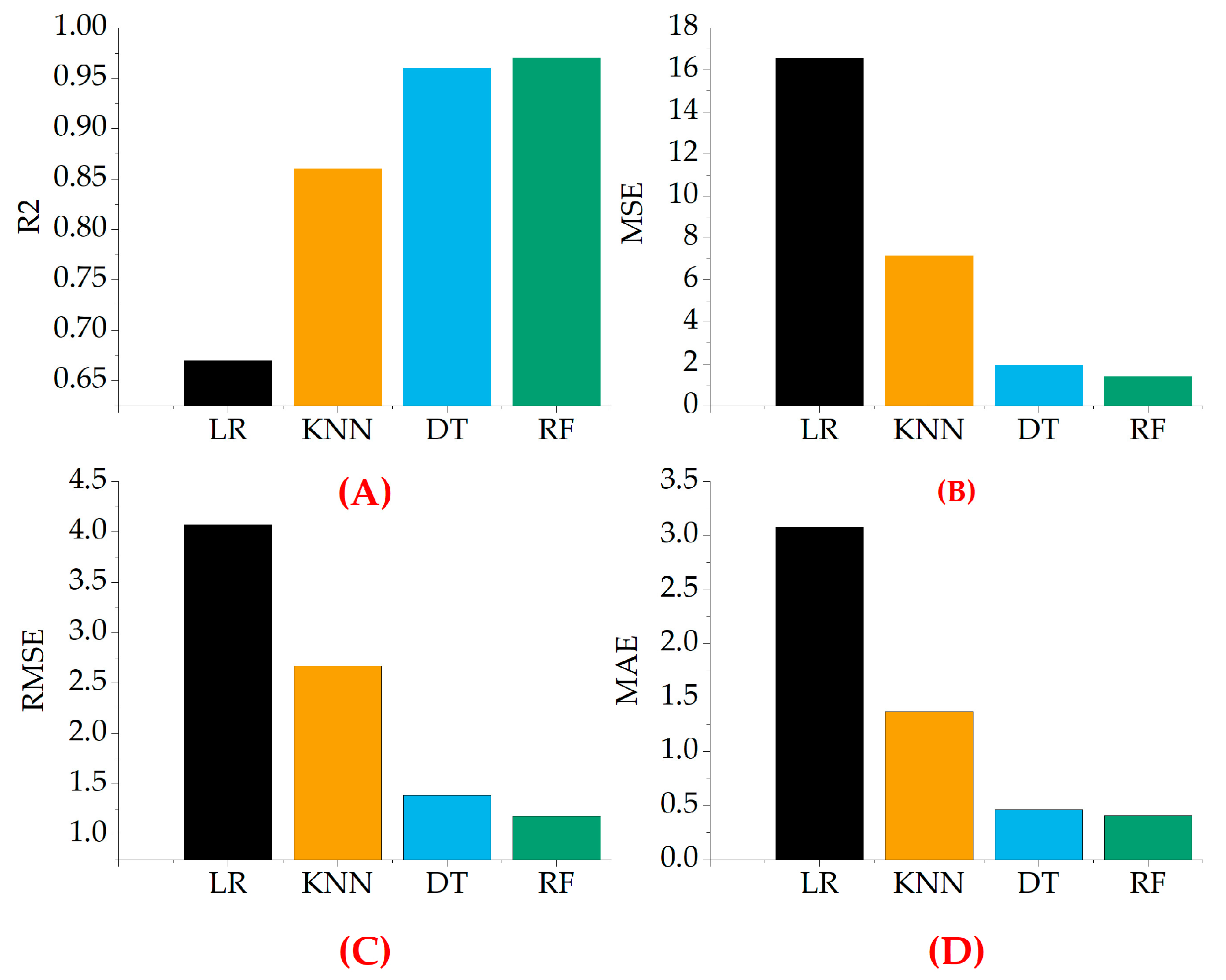
As indicated in the paper, the efficiency of the developed regenerative energy control algorithms is analyzed using a set of metrics, and the results are presented. Given the non-linear relationship between the independent and dependent variables in the prepared data set, the LR model is observed to demonstrate the least optimal performance when evaluating the results. Although the KNN method yields slightly superior findings in comparison to the LR algorithm, the results are nevertheless deemed inadequate. In consideration of the evaluated performance criteria, the DT and RF algorithms are identified as the most effective in comparison to the other algorithms. The RF algorithm demonstrates optimal performance, with an R2 of 0.97, an MSE of 1.39, an RMSE of 1.18, and an MAE of 0.41 in comparison to the other algorithms. The performance parameters of the algorithms are presented in Figure 19.

6. Experimental Study

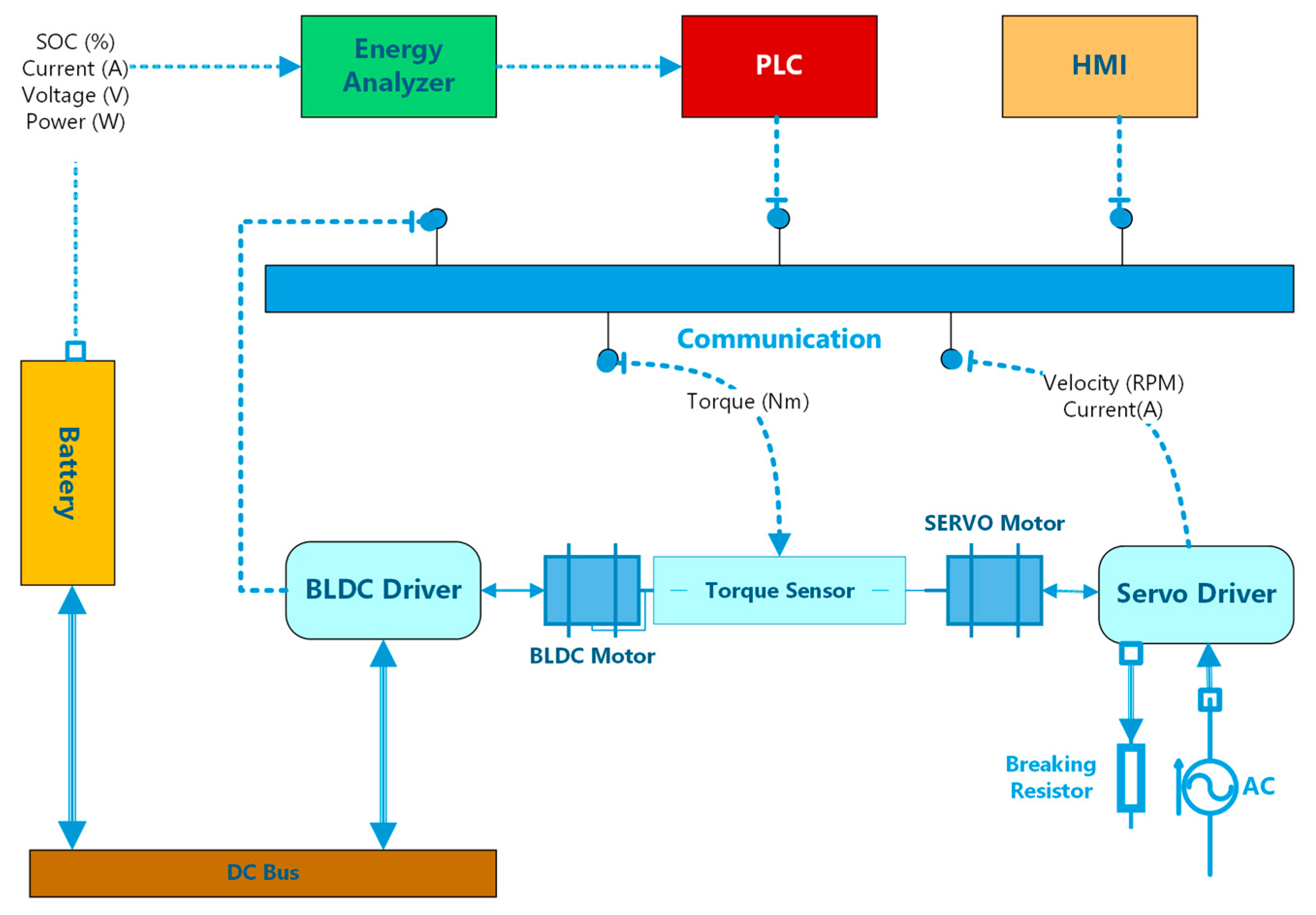
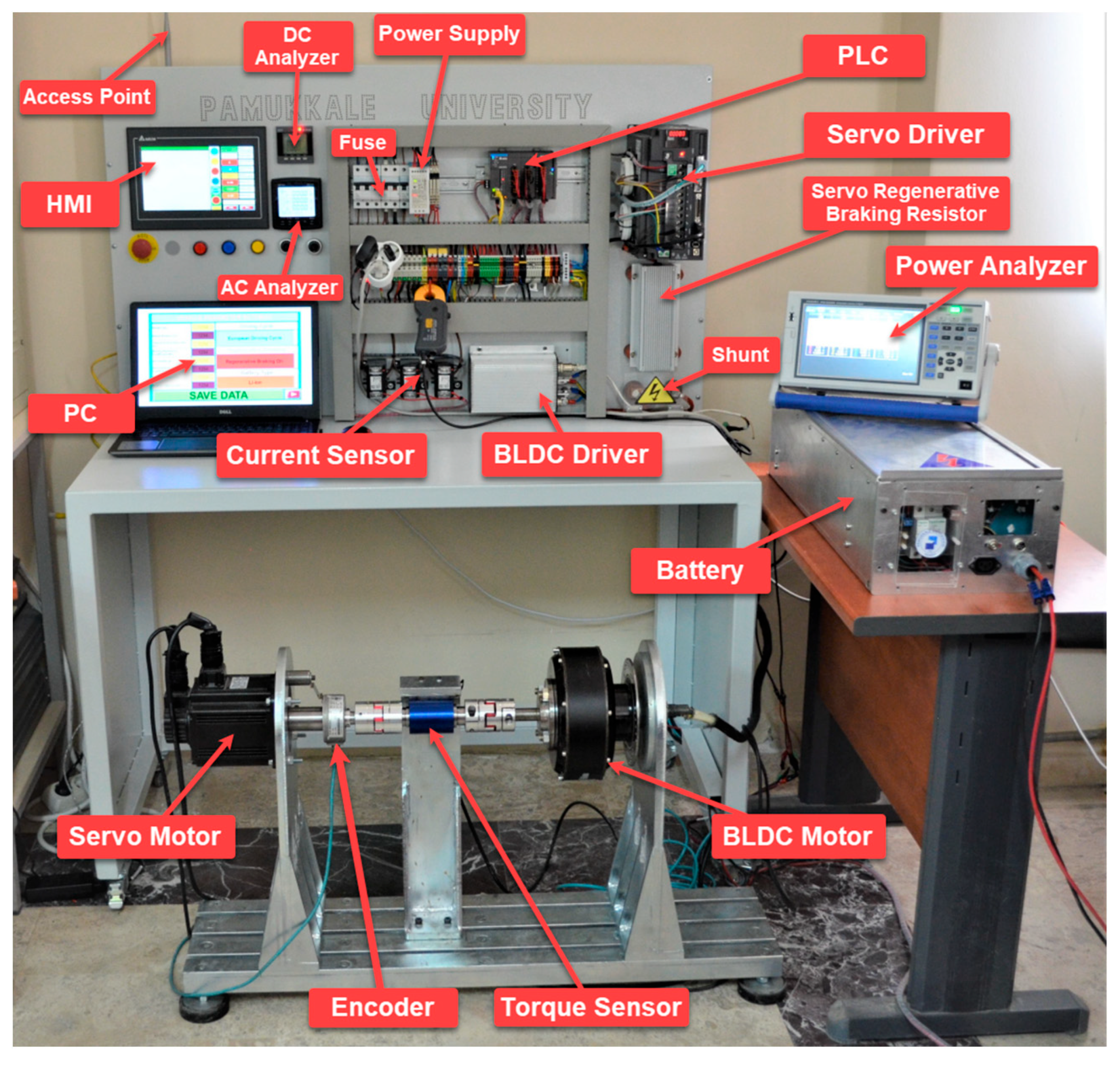
Considering the EV components as shown in Figure 20 and Figure 21, the test platform has been designed to test the energy efficiency of an EV under real road conditions [21].
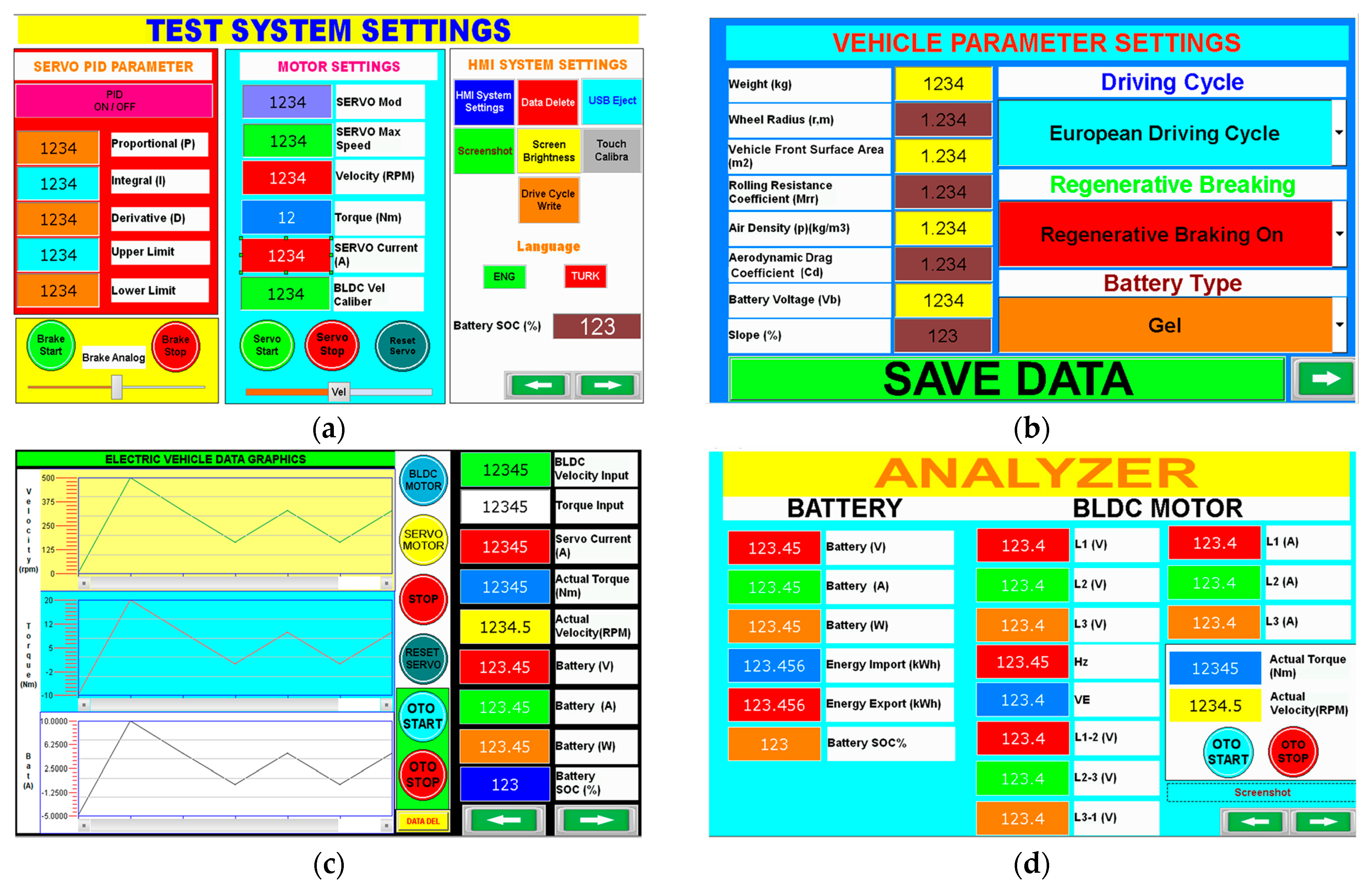
In test studies, the rapid and precise acquisition of data is of paramount importance. To achieve this, high-reliability devices commonly used in the industry are employed in the test system. Moreover, for advanced academic study in future, a programmable logic controller (PLC) device and a human–machine interface (HMI) with flexible programming capabilities are used to enable data collection and processing.
The experimental setup consists of a 2 kW power brushless DC motor (BLDC) with a motor speed of 750 rpm and an operating voltage of 96 V, which acted as the motor for the EV. In addition, a high-accuracy servo motor and motor driver are included to generate the forces acting on the vehicle. The design also featured six parallel batteries with a capacity of 60 Ah and a cell voltage of 13.2 V, serving as the energy source for the electric motor. To measure the necessary parameters, an AC analyzer, DC analyzer, torque sensor, and power analyzer are integrated into the design.
The HMI page design for the test platform is shown in Figure 22. Figure 22a displays the page where necessary settings are made, such as servo operation mode, PID coefficient parameter settings for the braking system, manual control of the servo motor, writing driving profiles, language options, and other HMI system settings. Figure 22b shows the page where vehicle parameter values such as weight, wheel radius, and front surface area are entered for calculating vehicle dynamic equations, as well as driving cycle selection, regenerative mode selection, and battery selection. The data HMI screen, shown in Figure 22c, is used to operate the test platform and start the experiment by entering vehicle parameters, driving profiles, and regenerative mode information. Additionally, Figure 22d presents the “Analyzer” page designed to observe changes in electrical values of the battery and the motor during the test system operation. All the data observed through the HMI can be recorded and saved in Excel format using AI-based algorithms.
Table 9 presents the parameters of the low-power urban vehicle used in the simulation studies.
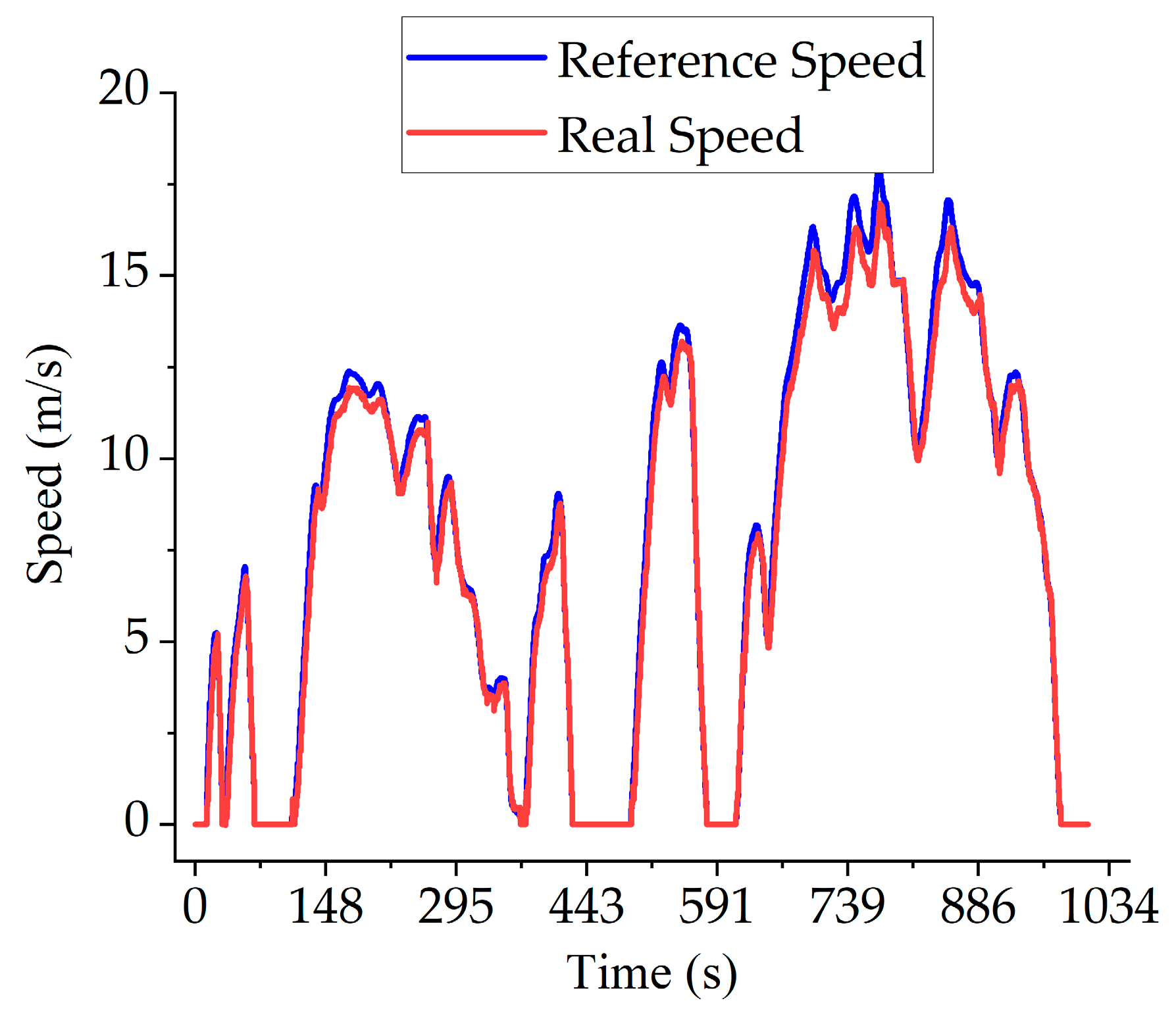
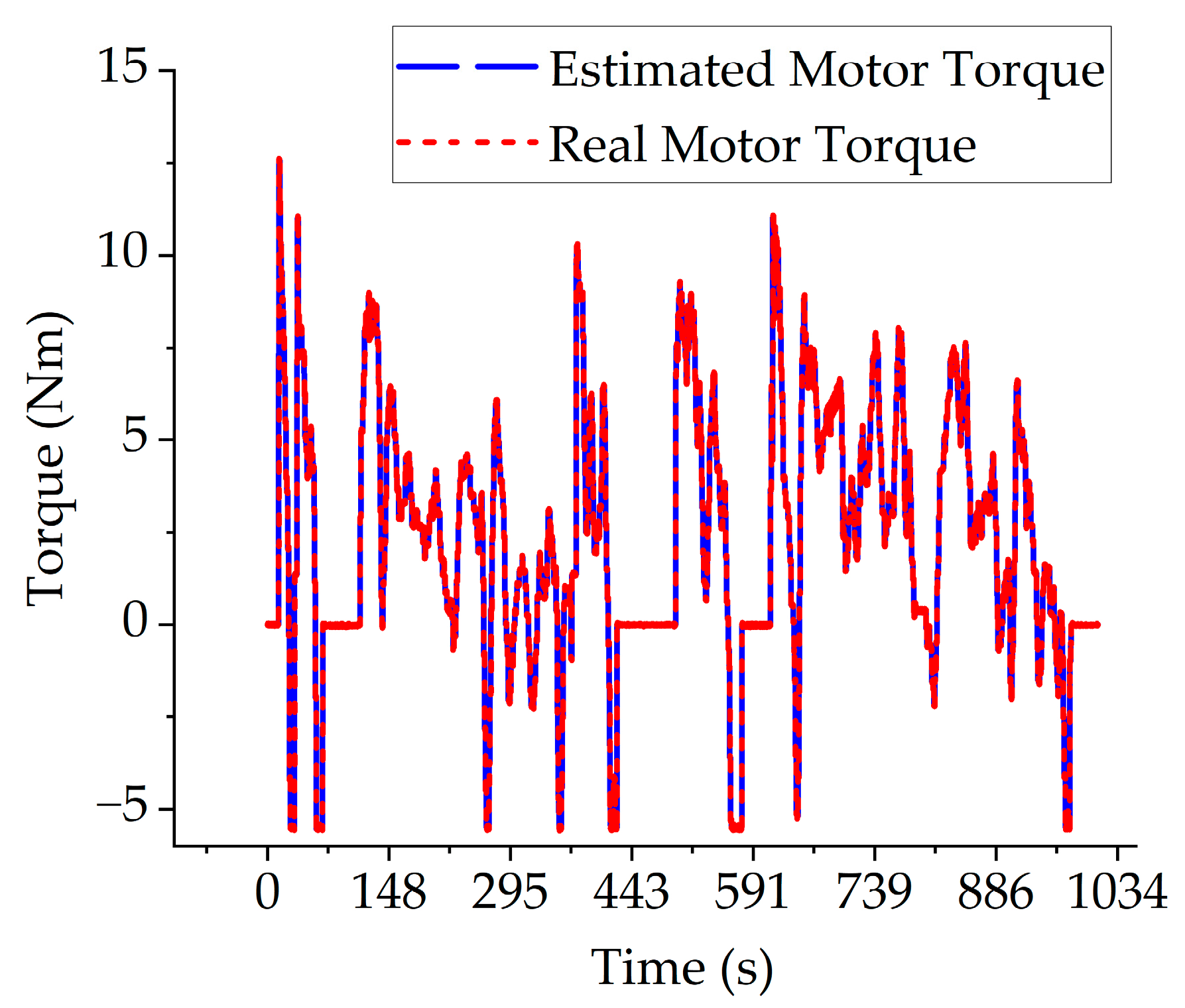
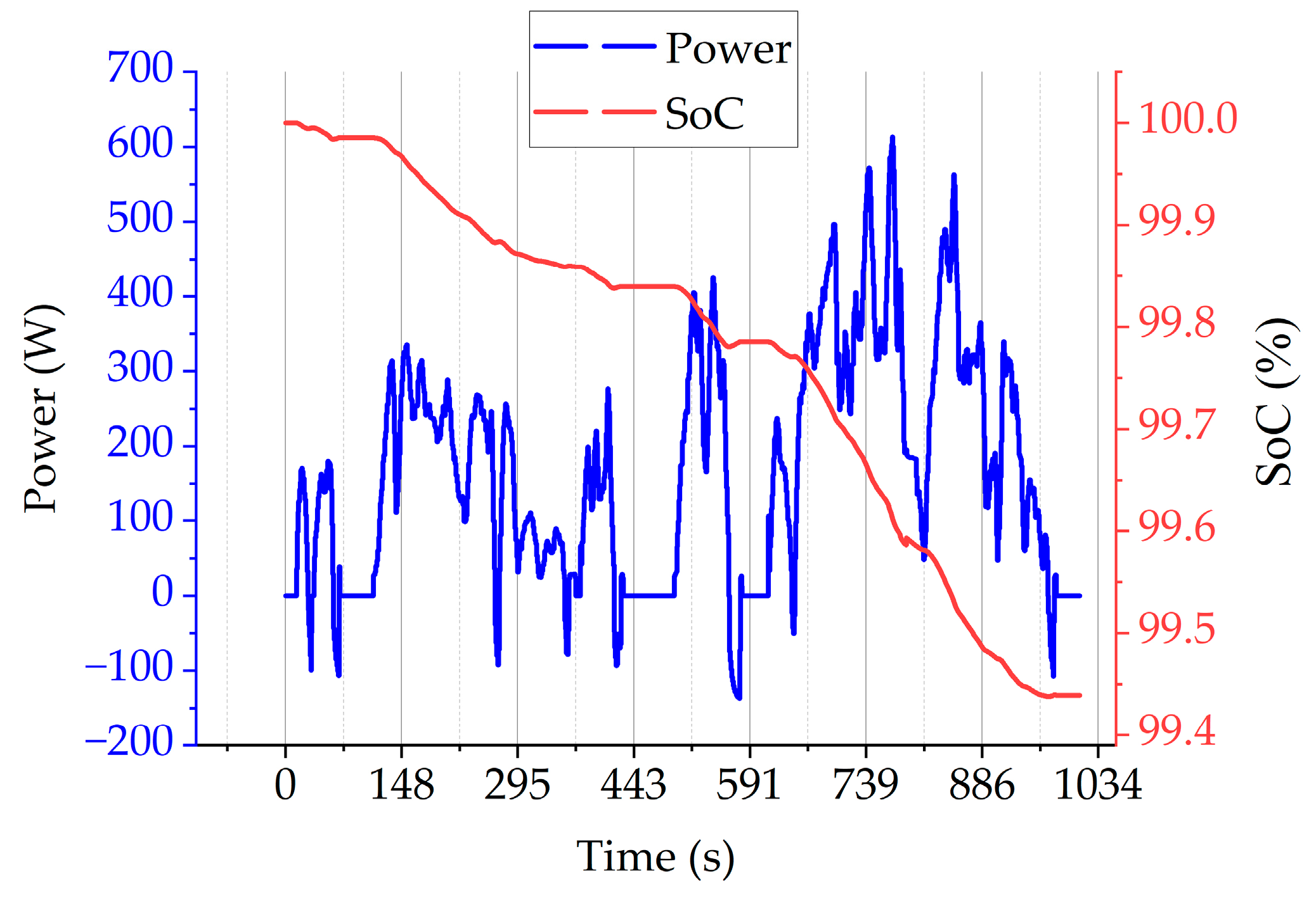
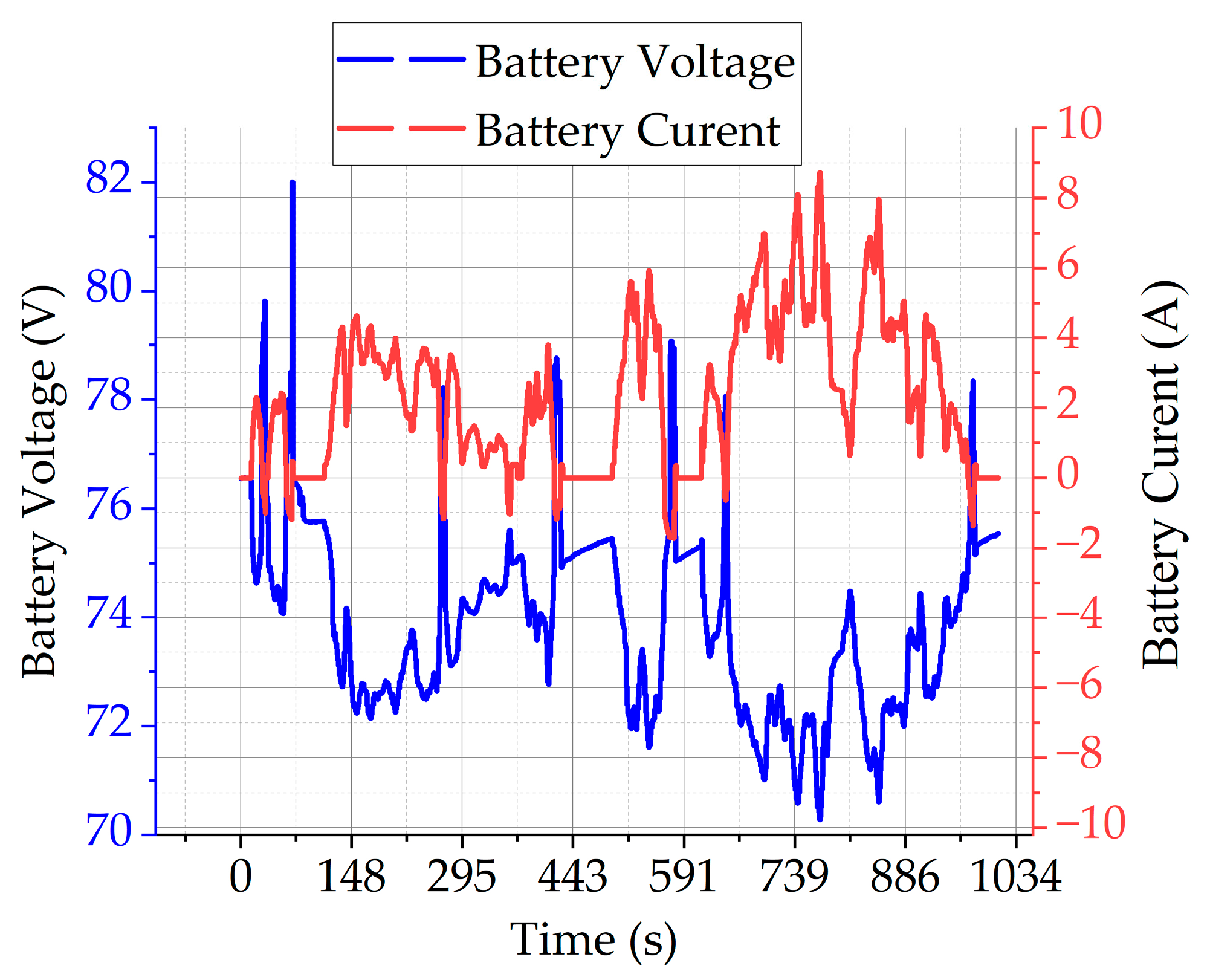
The efficiency of the RF learning model for regenerative energy control is evaluated by using a different data set, the WLTP Class 1 data set, which is a globally harmonized light vehicle data set. The data set is selected for evaluation purposes as it is not included in either the training or test data sets used in the model development process. The model, created using the RF algorithm, is executed on the designed test system running in Python 3.11.0 codes. As the result of the simulations, the model follows the reference speed in the driving profile and demonstrates the desired acceleration and deceleration capabilities in the test platform given in Figure 23. Furthermore, the observed torque of the motor is compared to the estimated torque, which is generated by the learning model as shown in Figure 24. When the motor generates a positive torque, this result in an increase in vehicle speed. In contrast, the generation of negative torque allows the activation of either regenerative braking or mechanical braking. The performance values are compared with the state-of-charge (SoC) value calculated from Figure 25. It is observed that during the regenerative braking process, the SoC value increases because of the energy flows to the battery. The battery current and voltage diagram, as shown in Figure 26, indicates that there is an increase in the battery voltage and a negative battery current during the regenerative braking process.
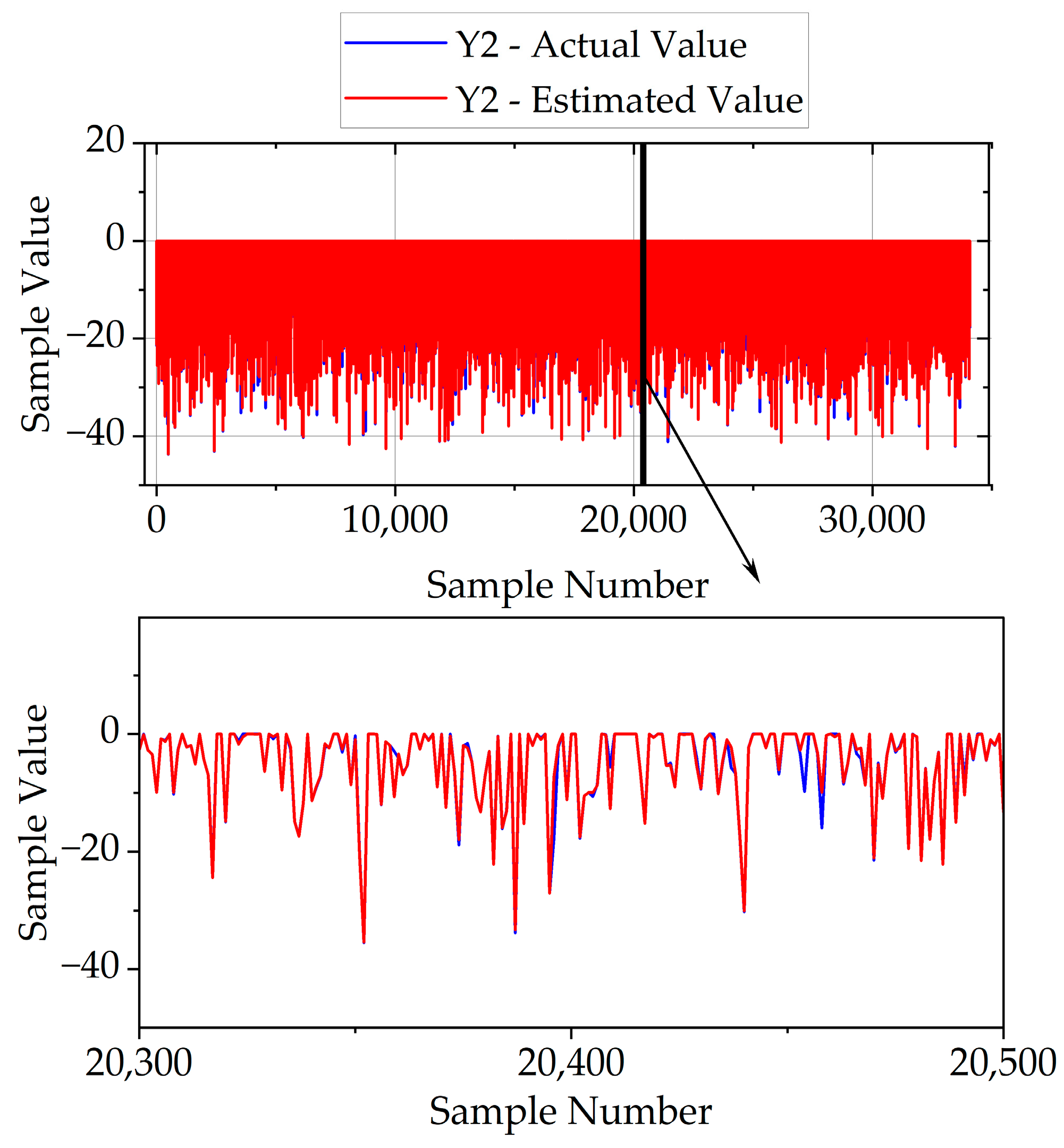
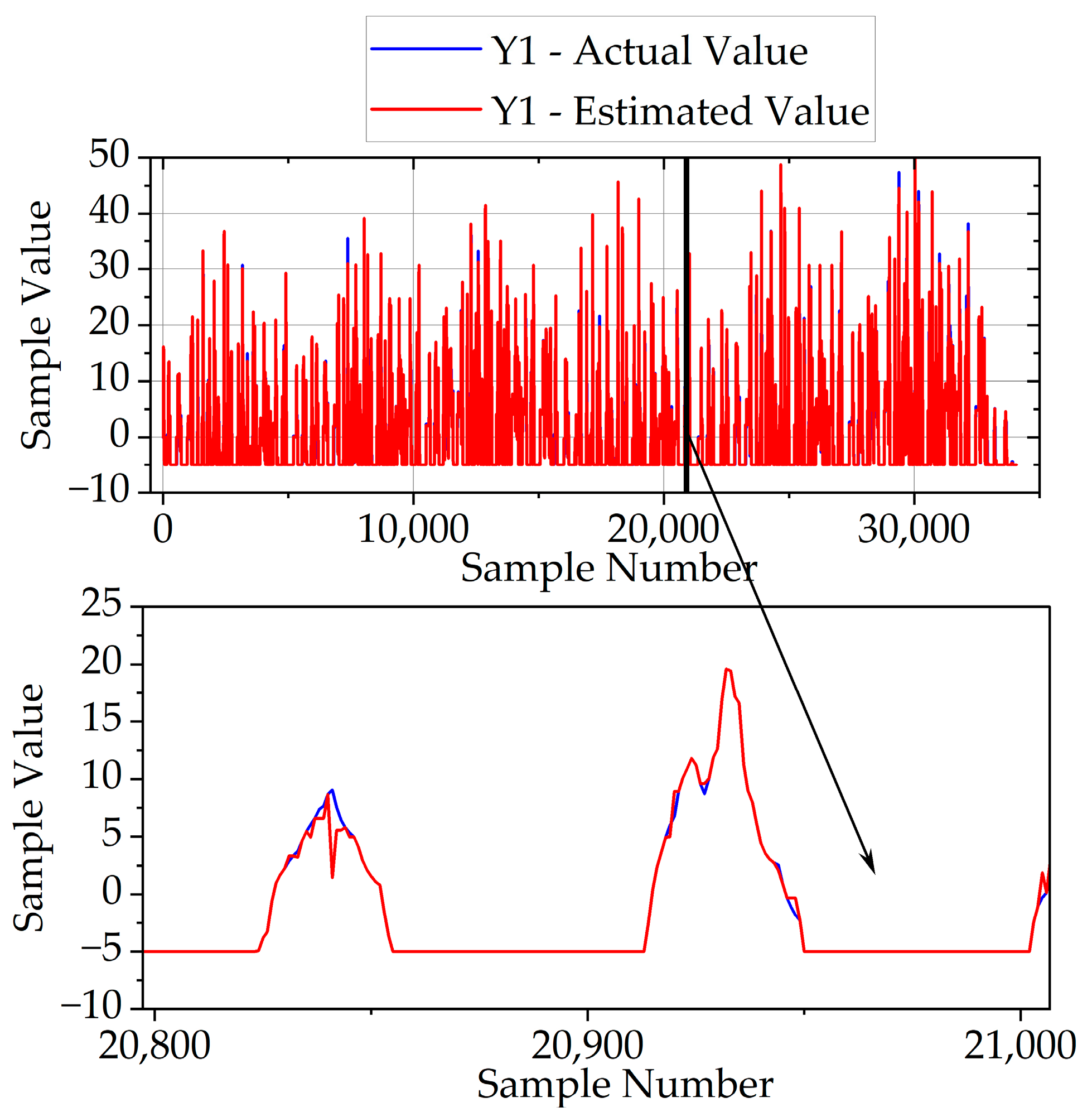
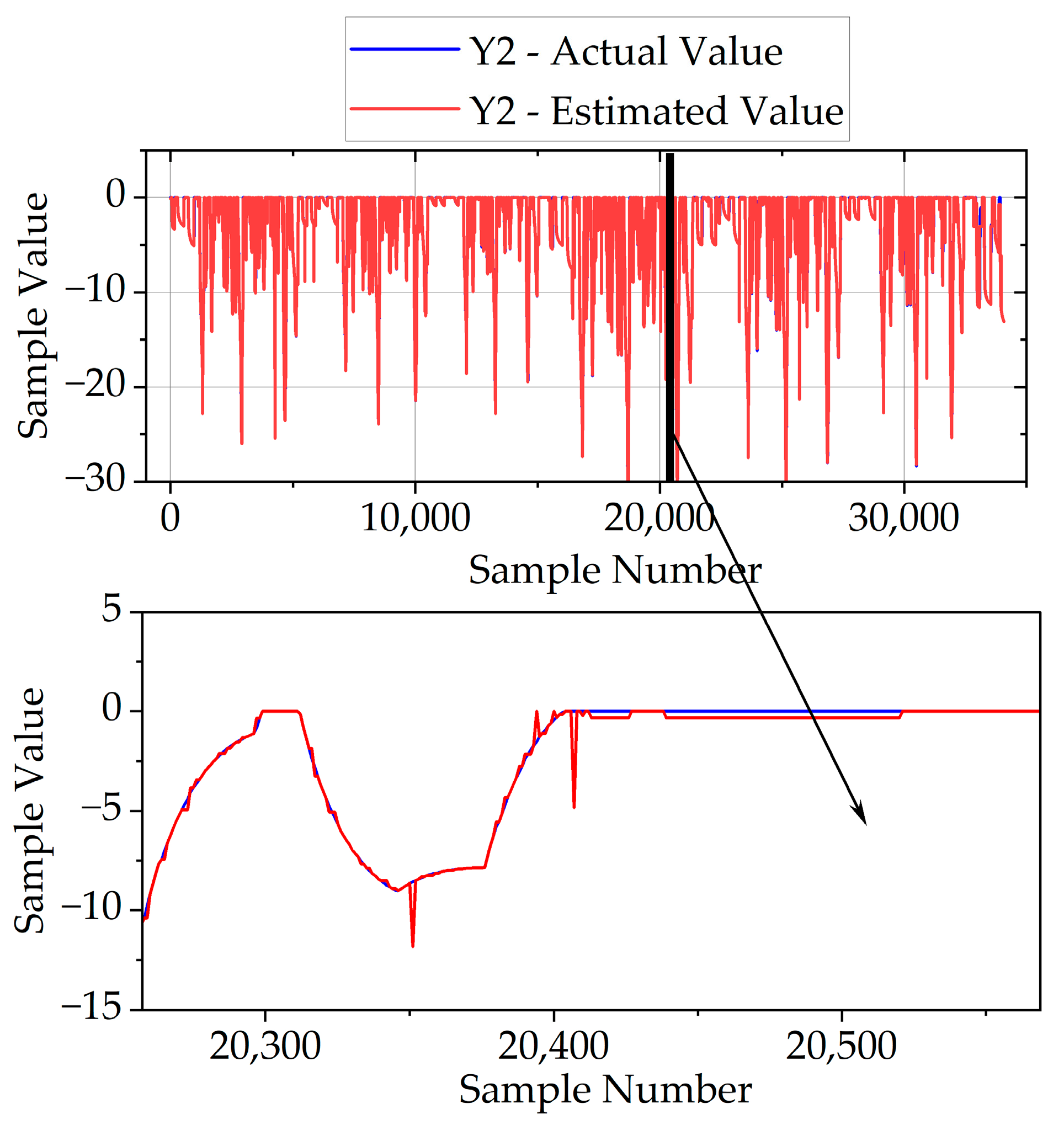
The application of the RF algorithm to the external data set of the WLTP Class 1 driving profile yields the results shown in Figure 27 and Figure 28, which represent the results of the model construction. The model demonstrates an accurate prediction of the data, with minimal discrepancy between the predicted and actual values observed for the Y1 and Y2 data sets.
Table 10 shows the performance metrics obtained by evaluating the model against the WLTP Class 1 criteria. An R2 value of 0.98 indicates a high degree of predictive performance when examining the performance metrics. The effectiveness of the model is also observed by other metrics with low error values. The performance metrics of the model created with RF are calculated as follows: R2 0.98, MSE 0.78, RMSE 0.88, and MAE 0.27.

7. Conclusions

The present study aims to compare the prediction performance of four machine learning algorithms—LR, K-NN, DT, and RF—for the estimation of regenerative braking torque in light EVs. A MATLAB/Simulink-based simulation framework is developed, and data sets are split into 70% training and 30% testing subsets. The performance of the model is evaluated using a variety of performance metrics, including R2, MSE, RMSE, and MAE. Non-linear system characteristics result in LR demonstrating the least optimal performance, while RF exhibits the highest level of accuracy (R2 = 0.97, MSE = 1.39, RMSE = 1.18, MAE = 0.41). Furthermore, these findings are validated through hardware-in-the-loop experiments, which employed a WLTP Class 1 driving cycle. The RF algorithm exhibits enhanced performance (R2 = 0.98, MSE = 0.78, RMSE = 0.88, MAE = 0.27) and demonstrates effective speed tracking and an improved balance between regenerative and mechanical braking.
The proposed RF-based approach offers significant potential for reducing mechanical braking and maximizing energy recovery, thereby supporting real-time energy management in EVs. The methodology is adaptable to various vehicle types, motor characteristics, battery technologies, and driving cycles, ensuring practical applicability.

7.1. Contribution to Sustainability

By implementing AI-driven regenerative braking strategies, this research minimizes energy loss during deceleration, extends driving range, and reduces dependence on fossil fuels. Real-time optimization decreases brake wear and maintenance costs, contributing to environmental and economic sustainability. These outcomes align with global sustainability goals by promoting cleaner transportation systems and supporting the transition toward smart cities.

7.2. Future Work

Future research will focus on:
  • Exploring advanced algorithms (e.g., SVM, PCA, GMM) for improved predictive accuracy
  • HIL/embedded real-time deployment, battery/inverter constraints, SoC/temperature coupling.
  • Quantitative validation under varying braking intensities, battery state-of-charge levels, and temperature conditions
  • Detailed modeling of battery constraints, inverter dynamics, and motor characteristics
  • Integration of hybrid energy storage systems combining batteries and ultra-capacitors
  • Real-time implementation of ML-based torque prediction in embedded controllers

Author Contributions

Conceptualization, O.B. and M.T.; methodology, O.B.; software, M.T.; validation, M.T.; investigation, O.B.; data curation, O.B.; writing—original draft preparation, O.B.; writing—review and editing, M.T.; visualization, M.T.; supervision, O.B.; project administration, O.B.; funding acquisition, O.B. All authors have read and agreed to the published version of the manuscript.

Funding

This research was funded by Pamukkale University Scientific Research Projects Coordination Office with project number 2020FEBE044.

Institutional Review Board Statement

Not applicable.

Informed Consent Statement

Not applicable.

Data Availability Statement

The original contributions presented in this study are included in the article. Further inquiries can be directed to the corresponding author.

Acknowledgments

We would like to express our deep gratitude to Selami Kesler, our research supervisor, for his patient guidance, enthusiastic encouragement, and useful critiques of this research work.

Conflicts of Interest

The authors declare no competing interests.

References

  1. Morgan, J. Electric Vehicles: The Future We Made and the Problem of Unmaking It. Camb. J. Econ. 2020, 44, 953–977. [Google Scholar] [CrossRef]
  2. Shrestha, S.; Baral, B.; Shah, M.; Chitrakar, S.; Shrestha, B.P. Measures to Resolve Range Anxiety in Electric Vehicle Users. Int. J. Low-Carbon Technol. 2022, 17, 1186–1206. [Google Scholar] [CrossRef]
  3. Szumska, E.M. Regenerative Braking Systems in Electric Vehicles: A Comprehensive Review of Design, Control Strategies, and Efficiency Challenges. Energies 2025, 18, 2422. [Google Scholar] [CrossRef]
  4. Jurgen, R. (Ed.) Electric and Hybrid-Electric Vehicles; SAE International: Warrendale, PA, USA, 2002; pp. 99–105. ISBN 978-0-7680-0833-3. [Google Scholar]
  5. Ergun, O.; Cayci, N.O.; Dincmen, E.; Istif, I. Optimum Torque Distribution During Regenerative Braking in a Fully Electrical Vehicle via Dynamic Programming. In Proceedings of the 2023 7th International Symposium on Multidisciplinary Studies and Innovative Technologies (ISMSIT), Ankara, Turkiye, 26 October 2023; pp. 1–6. [Google Scholar]
  6. Liang, J.; Wang, F.; Feng, J.; Zhao, M.; Fang, R.; Pi, D.; Yin, G. A Hierarchical Control of Independently Driven Electric Vehicles Considering Handling Stability and Energy Conservation. IEEE Trans. Intell. Veh. 2024, 9, 738–751. [Google Scholar] [CrossRef]
  7. Liang, J.; Feng, J.; Fang, Z.; Lu, Y.; Yin, G.; Mao, X.; Wu, J.; Wang, F. An Energy-Oriented Torque-Vector Control Framework for Distributed Drive Electric Vehicles. IEEE Trans. Transp. Electrif. 2023, 9, 4014–4031. [Google Scholar] [CrossRef]
  8. Paterson, J.; Ramsay, M. Electric Vehicle Braking by Fuzzy Logic Control. In Proceedings of the Conference Record of the 1993 IEEE Industry Applications Conference Twenty-Eighth IAS Annual Meeting, Toronto, ON, Canada, 2–8 October 1993; Volume 3, pp. 2200–2204. [Google Scholar] [CrossRef]
  9. Yin, Z.; Ma, X.; Su, R.; Huang, Z.; Zhang, C. Regenerative Braking of Electric Vehicles Based on Fuzzy Control Strategy. Processes 2023, 11, 2985. [Google Scholar] [CrossRef]
  10. Prakash, Z. Integration of AI and ML in Regenerative Braking for Electric Vehicles: A Review. Front. Artif. Intell. 2025, 8, 1626804. [Google Scholar] [CrossRef] [PubMed]
  11. Jiang, B.; Zhang, X.; Wang, Y.; Hu, W. Regenerative Braking Control Strategy of Electric Vehicles Based on Braking Stability Requirements. Int. J. Automot. Technol. 2021, 22, 465–473. [Google Scholar] [CrossRef]
  12. Szumska, E.M.; Jurecki, R. The Analysis of Energy Recovered during the Braking of an Electric Vehicle in Different Driving Conditions. Energies 2022, 15, 9369. [Google Scholar] [CrossRef]
  13. Prasanth, B.; Paul, R.; Kaliyaperumal, D.; Kannan, R.; Venkata Pavan Kumar, Y.; Kalyan Chakravarthi, M.; Venkatesan, N. Maximizing Regenerative Braking Energy Harnessing in Electric Vehicles Using Machine Learning Techniques. Electronics 2023, 12, 1119. [Google Scholar] [CrossRef]
  14. Xu, J.; Xiao, W. Research on Braking Intention Recognition Algorithm for Pure Electric Vehicles Based on Adaboost. In Proceedings of the Third International Conference on Electronic Information Engineering and Data Processing (EIEDP 2024), Kuala Lumpur, Malaysia, 5 July 2024; Jabbar, M.A., Lorenz, P., Eds.; SPIE: Bellingham, WA, USA, 2024; p. 233. [Google Scholar]
  15. Yu, Z.; Feng, H.; Meng, Y.; Xu, E.; Wu, Y. Braking Energy Management Strategy for Electric Vehicles Based on Working Condition Prediction. AIP Adv. 2022, 12, 015220. [Google Scholar] [CrossRef]
  16. Anh, N.T.; Chen, C.-K.; Liu, X. An Efficient Regenerative Braking System for Electric Vehicles Based on a Fuzzy Control Strategy. Vehicles 2024, 6, 1496–1512. [Google Scholar] [CrossRef]
  17. Tang, M.; Zhang, X. Optimal Regenerative Braking Control Strategy for Electric Vehicles Based on Braking Intention Recognition and Load Estimation. IEEE Trans. Veh. Technol. 2024, 73, 3378–3392. [Google Scholar] [CrossRef]
  18. Gupta, G.; Sudeep, R.; Ashok, B.; Vignesh, R.; Kannan, C.; Kavitha, C.; Alroobaea, R.; Alsafyani, M.; AboRas, K.M.; Emara, A. Intelligent Regenerative Braking Control With Novel Friction Coefficient Estimation Strategy for Improving the Performance Characteristics of Hybrid Electric Vehicle. IEEE Access 2024, 12, 110361–110384. [Google Scholar] [CrossRef]
  19. Hayes, J.G.; Goodarzi, G.A. Electric Powertrain: Energy Systems, Power Electronics & Drives for Hybrid, Electric and Fuel Cell Vehicles; John Wiley & Sons Ltd.: Hoboken, NJ, USA, 2018; ISBN 9781119063667. [Google Scholar]
  20. Barlow, T.J.; Latham, S.; Mccrae, I.S.; Boulter, P.G. A Reference Book of Driving Cycles for Use in the Measurement of Road Vehicle Emissions; TRL Published Project Report; TRL: Crowthorne, UK, 2009. [Google Scholar]
  21. Kesler, S.; Boyaci, O.; Tumbek, M. Design and Implementation of a Regenerative Mode Electric Vehicle Test Platform for Engineering Education. Sustainability 2022, 14, 14316. [Google Scholar] [CrossRef]
Figure 1. Forces acting on the vehicle.
Sustainability 18 00414 g001
Figure 2. Braking strategies of Evs. (a) Parallel, (b) serial.
Sustainability 18 00414 g002
Figure 3. Different driving cycles for the tests.
Sustainability 18 00414 g003
Figure 4. Taxonomy of ML algorithms.
Sustainability 18 00414 g004
Figure 5. LR algorithm working visualization.
Sustainability 18 00414 g005
Figure 6. KNN algorithm working visualization.
Sustainability 18 00414 g006
Figure 7. Principle of the Decision Tree structure.
Sustainability 18 00414 g007
Figure 8. Principle of the Random Forest structure.
Sustainability 18 00414 g008
Figure 9. Simulation model of the EV model.
Sustainability 18 00414 g009
Figure 10. A complex road profile considered.
Sustainability 18 00414 g010
Figure 11. Comparison of estimated and actual values from data set of Y1 in LR.
Sustainability 18 00414 g011
Figure 12. Comparison of estimated and actual values from data set of Y2 in LR.
Sustainability 18 00414 g012
Figure 13. Comparison of estimated and actual values from data set of Y1 in KNN.
Sustainability 18 00414 g013
Figure 14. Comparison of estimated and actual values from data set of Y2 in KNN.
Sustainability 18 00414 g014
Figure 15. Comparison of estimated and actual values from data set of Y1 in DT.
Sustainability 18 00414 g015
Figure 16. Comparison of estimated and actual values from data set of Y2 in DT.
Sustainability 18 00414 g016
Figure 17. Comparison of estimated and actual values from data set of Y1 in RF.
Sustainability 18 00414 g017
Figure 18. Comparison of estimated and actual values from data set of Y2 in RF.
Sustainability 18 00414 g018
Figure 19. Comparison of the algorithms in terms of the criteria; (A) R2, (B) MSE, (C) RMSE, (D) MAE.
Sustainability 18 00414 g019
Figure 20. The principal schema of the experimental setup.
Sustainability 18 00414 g020
Figure 21. The implemented test setup.
Sustainability 18 00414 g021
Figure 22. HMI screens of the test setup (a) system parameter page (b) vehicle parameter page (c) speed-torque monitoring page (d) battery and BLDC motor monitoring page.
Sustainability 18 00414 g022
Figure 23. Comparison of the measured and reference vehicle speed.
Sustainability 18 00414 g023
Figure 24. Comparison of the measured and estimated motor torque value.
Sustainability 18 00414 g024
Figure 25. Measured values of power and SoC.
Sustainability 18 00414 g025
Figure 26. Measured current and voltage values of the battery.
Sustainability 18 00414 g026
Figure 27. Estimated and actual measured values of Y1 data.
Sustainability 18 00414 g027
Figure 28. Estimated and actual measured values of Y2 data.
Sustainability 18 00414 g028
Table 1. Comparison and discussion of regenerative braking systems for EVs.
ReferenceAlgorithmsDriving CyclesFeature SetEnergy Recovery
Impact
Limitations
[9]Fuzzy logicNEDC, WLTC, FTP,
CLTC-P, NYCC
Speed, brake intensity>15% Rule-based approach lacks adaptability,
no ML comparison
[11]Optimization algorithmUDDS, NEDCBrake strength, front/rear distribution, torque limits>51.9% recovery vs.
ADVISOR strategy
Idealized cycle-tracking,
limited real-world variability,
no experimental validation
[13]ANN, RF, DTFTP, HWFET,
NEDC, WLTP
Speed, acceleration, brake demand,
SoC
59%No hardware validation,
limited driving profiles,
single torque focus
[14]AdaBoostLab tests across speedsAcceleration, pedal displacement/force; RF for feature selectionHigh accuracy for
intent regen level selection
Limited data set
[15]Decision Tree (C4.5) + LSTM + PSOReal-vehicle data,
WLTC/CLTC segments
Condition label, braking strength, torque/speed demand19.1% recovery,
15.8% energy-use reduction (per 100 km)
Limited classes,
complex pipeline,
generalization needed
[16]Fuzzy controlNEDC, WLTC,
FTP-72/75
Speed,
deceleration,
SoC
13% (WLTC),
16% (NEDC),
30% (FTP)
Controller gains need tuning across vehicles,
battery limits not co-optimized
[17]WOA-SVMECE R13Brake displacement, pedal speedBraking energy recovery increases by 28.16% to 113.04% on different road conditionsLimited feature set
[18]Fuzzy logic control and adaptive neuro-fuzzy inference systemFTP 75+US06,
JCOB+WHVC+CEDC,
Artemis Rural and Urban
Brake force,
speed,
acceleration,
tire angular rate
Fuel economy, improvements of about 0.282%, 0.437%, and 0.345%Limited feature set
Proposed StudyLR, KNN, DT, RFSimulation and hardware
(WLTP Class 1)
Speed, acceleration, road grade, vehicle weight, road conditionDemonstrated RF model with R2 = 0.98; potential to reduce mechanical brakingIncludes experimental
validation,
dual torque prediction,
real-time applicability assessment
Table 2. Driving profiles in different cycles [20].
NYCCWLTP Cl-1Japan-10ECE
Number of Pauses18923
Pause Time (s)2102033964
Distance (km)1.911.4217.440.99
Average Speed (km/h)11.4128.517.5718.26
Duration (s)5981022137195
Maximum Speed (km/h)44.58444050
Maximum Deceleration (m/s2)−2.64−1−0.81−0.83
Maximum Acceleration (m/s2)2.680.760.811.06
Average Acceleration (m/s2)0.620.690.670.64
Average Deceleration (m/s2)−0.61−0.78−0.65−0.75
Table 3. Input and output parameters used in learning algorithms.
Input/OutputsDefined Parameters
X1InputSpeed (m/s)
X2InputAcceleration (m/s2)
X3InputRoad grade (%)
X4InputVehicle weight (kg)
X5InputRoad condition (asphalt, mud, soil)
Y1OutputMotor torque (Nm)
Y2OutputMechanical brake torque (Nm)
Table 4. Limitations of the data set.
Inputs/OutputsData Range
Speed0 m/s–13.88 m/s
Acceleration−2.637 m/s2–2.682 (m/s2)
Road grade−3%, 0%, 3%
Vehicle weight150 kg–200 kg
Road condition(Asphalt, Mud, Soil)
Motor torque−5 Nm–30 Nm
Mechanical brake torque−30 Nm–0 Nm
Table 5. LR algorithm metric values.
Performance CriteriaCalculated Value
R20.67
MSE16.54
RMSE4.07
MAE3.08
Table 6. KNN algorithm measurement values.
Performance CriteriaCalculated Value
R20.86
MSE7.15
RMSE2.67
MAE1.37
Table 7. Measurement values from the DT algorithm.
Performance CriteriaCalculated Value
R20.96
MSE1.94
RMSE1.39
MAE0.46
Table 8. Measured performance values from the RF algorithm.
Performance CriteriaCalculated Value
R20.97
MSE1.39
RMSE1.18
MAE0.41
Table 9. Vehicle Parameters used in the test system.
ParametersValues
Drag Coefficient (Cd)0.3
Rolling Resistance Coefficient (Kr)0.012
Front Surface Area of the Vehicle (A)1.64 m2
Weight (M)200 kg
Bulk Density of Air (Ρ)1.2 kg/m3
Climbing Angle (Θ)−3, 0, 3
Gravitational Acceleration (G)9.81 m/s2
Table 10. Performance measurements of the RF algorithm.
Performance CriteriaCalculated Value
R20.98
MSE0.78
RMSE0.88
MAE0.27
Disclaimer/Publisher’s Note: The statements, opinions and data contained in all publications are solely those of the individual author(s) and contributor(s) and not of MDPI and/or the editor(s). MDPI and/or the editor(s) disclaim responsibility for any injury to people or property resulting from any ideas, methods, instructions or products referred to in the content.