Review

An Ecologically Sustainable Approach to Solid-Phase Microextraction Techniques Using Deep Eutectic Solvents


Institute of Chemistry and Technical Electrochemistry, Faculty of Chemical Technology, Poznan University of Technology, Berdychowo 4, 60-965 Poznan, Poland
*
Author to whom correspondence should be addressed.
Sustainability 2026, 18(1), 402; https://doi.org/10.3390/su18010402
Submission received: 21 November 2025 / Revised: 27 December 2025 / Accepted: 30 December 2025 / Published: 31 December 2025
(This article belongs to the Section Sustainable Materials)

Abstract

Deep eutectic solvents (DESs) have attracted significant attention as eco-friendly and sustainable alternatives to conventional, often toxic, organic solvents. They are easy to synthesize, and their tunable physicochemical properties enable their application in microextraction techniques for a wide range of analytes. However, some DESs may exhibit thermal instability, and their high viscosity or solubility can influence the extraction efficiency. Despite these limitations, in recent years, DESs have been successfully used in multiple roles in solid-phase microextraction (SPME). They may be used to functionalize or modify sorbent materials, thereby forming composite sorbents with enhanced performance. Moreover, DESs can be combined with polymers to produce hybrid materials with improved extraction capabilities. Additionally, DESs can act as porogens within SPME sorbents, increasing sorption capacity and, consequently, extraction efficiency. They can also serve as green desorption solvents, replacing traditional volatile organic solvents during the recovery of analytes from sorbent materials. This review synthesizes current knowledge on the implementation of DESs in SPME techniques, critically evaluating their primary advantages and inherent limitations. The novelty of this review lies in the assessment of DES-based SPME through the metrics of greenness and sustainable chemistry. Furthermore, the review identifies research perspectives and priorities to advance DES-based SPME, including: the integration of predictive modeling (COSMO-RS, machine learning) to elucidate DES-analytes interactions; the adoption of 3D printing for the precision fabrication of DES-based sorbents; the standardization of DES-based SPME performance; and the exploration of natural DESs for in vivo SPME in biomedical applications.

1. Towards an Ecologically Sustainable Approach to Sample Preparation

Sample preparation is considered a crucial and often the most time-consuming stage in the entire analytical procedure. It involves appropriate sample modification to determine the analytes contained therein with the highest possible accuracy and precision using the selected instrumental technique. During the sample preparation stage, it is advisable to eliminate potential interferences. Therefore, sample preparation often involves the modification of a particularly complex matrix and extraction of analytes to dissolve, purify, or preconcentrate samples, which may yield better analytical parameters [1,2].
Another essential aspect is incorporation of green practices into the sample preparation stage, especially during purification or preconcentration of samples. When addressing these challenges, current trends related to the principles of Green Analytical Chemistry (GAC) [3], Green Sample Preparation (GSP) [4], and White Analytical Chemistry (WAC) [5] should be taken into account. It should be emphasized that standard criteria for green analytical methods should include:
  • direct, automated, miniaturized, and multi-analyte approach,
  • minimum sample size and number of samples processed,
  • reduction in the consumption of chemical reagents and waste generation,
  • reduction in threats and risks,
  • increasing work safety and environmental friendliness [6].
Therefore, any new methodological solutions introduced by scientists into analytical procedures, both at the stages of isolation and preconcentration of analytes as well as during final analysis, are focused on the improvement of the parameters influencing the performance of these procedures while taking the principles of GAC, GSP, and WAC into consideration [3,4,5].
Microscale and microextraction techniques undoubtedly meet the requirements for high levels of purification and preconcentration. For years, the trend in sample preparation has been focused on two main directions: liquid phase microextraction (LPME) [7,8] and microextraction techniques based on sorbents, among which solid-phase microextraction (SPME) is the most widely used [9,10]. The selection of an appropriate extraction phase is paramount in microextraction, as the affinity between the sorbent and the analytes governs the overall efficiency of the analytical procedure. Extractants and sorbents should exhibit characteristics relevant to the safety of analysts, such as non-flammability, non-toxicity, safety of use, and biocompatibility. In addition, other features related to material preparation include utilizing ecological synthesis methods, minimizing energy consumption, and developing recyclable or reusable products. Furthermore, to fully align with WAC principles, it is essential to consider preparation costs, scalability, and the use of locally sourced, renewable raw materials [9,11].

2. Sorbent-Based Microextraction Techniques

From an ecological assessment perspective, SPME techniques are more popular than LPME due to the broad range of possibilities to synthesize solid materials and the ability to tailor selectivity towards specific groups of analytes. Sorbents used in microextraction techniques enable the extraction of many compounds through their varied surface functionalities while limiting or even eliminating organic solvents throughout the analytical procedure. The sorption material may be packaged in small devices (e.g., cartridges, syringes, tubes, pipette tips), coated on a support, or dispersed in a sample matrix [9,10,11]. Sorbent-based microextraction techniques can therefore be divided into three main groups (Figure 1) depending on the support-sorbent system:
(1)
techniques based on a support coated sorbent: hollow fiber solid-phase microextraction (HF-SPME), stir bar sorptive extraction (SBSE), thin film solid-phase microextraction (TF-SPME), membrane solid-phase microextraction (M-SPME),
(2)
techniques based on a sorbent-packaged support: micro solid-phase extraction (μSPE), pipette tip solid-phase microextraction (PT-SPME), in tube solid-phase microextraction (IT-SPME), microextraction by packed sorbent (MEPS),
(3)
dispersion techniques: dispersive micro solid-phase extraction (d-μSPE), magnetic dispersive micro solid-phase extraction (M-d-μSPE), matrix solid-phase dispersion (MSPD) [9,10,11].

3. Solid-Phase Microextraction

Solid-phase microextraction (SPME), introduced by Pawliszyn et al. in 1990 [12], remains a milestone of GAC by eliminating the need for organic solvents during sample preparation. SPME is a simple technique which integrates the sampling, preconcentration and extraction in a single stage. The technique has garnered significant attention in the analysis of environmental and biological samples, and in vivo analysis [13,14,15,16,17,18]. From the perspective of GAC and GSP principles, the solvent-free nature of SPME is crucial, as is the minimal use or absence of solvent in the desorption step, along with the possibility of reusing the support–sorbent system after purification and conditioning [13,17]. Over the past three and a half decades, research has focused on enhancing SPME efficiency through the development of novel support geometries and advanced sorbent materials, alongside the integration of automated and miniaturized systems [13,17,19].

3.1. Geometry of Support in SPME

Over the years, many support geometries have been introduced using SPME technology. After the classic fiber, flat support, rods, tubes, and cylinders were proposed [20]. Each new SPME support geometry proposal aimed to increase the sorbent surface area or facilitate repeatable sorbent application, which should ultimately translate into increased analyte extraction efficiency. Among the many possibilities, it is worth paying special attention to the TF-SPME technique [21,22].
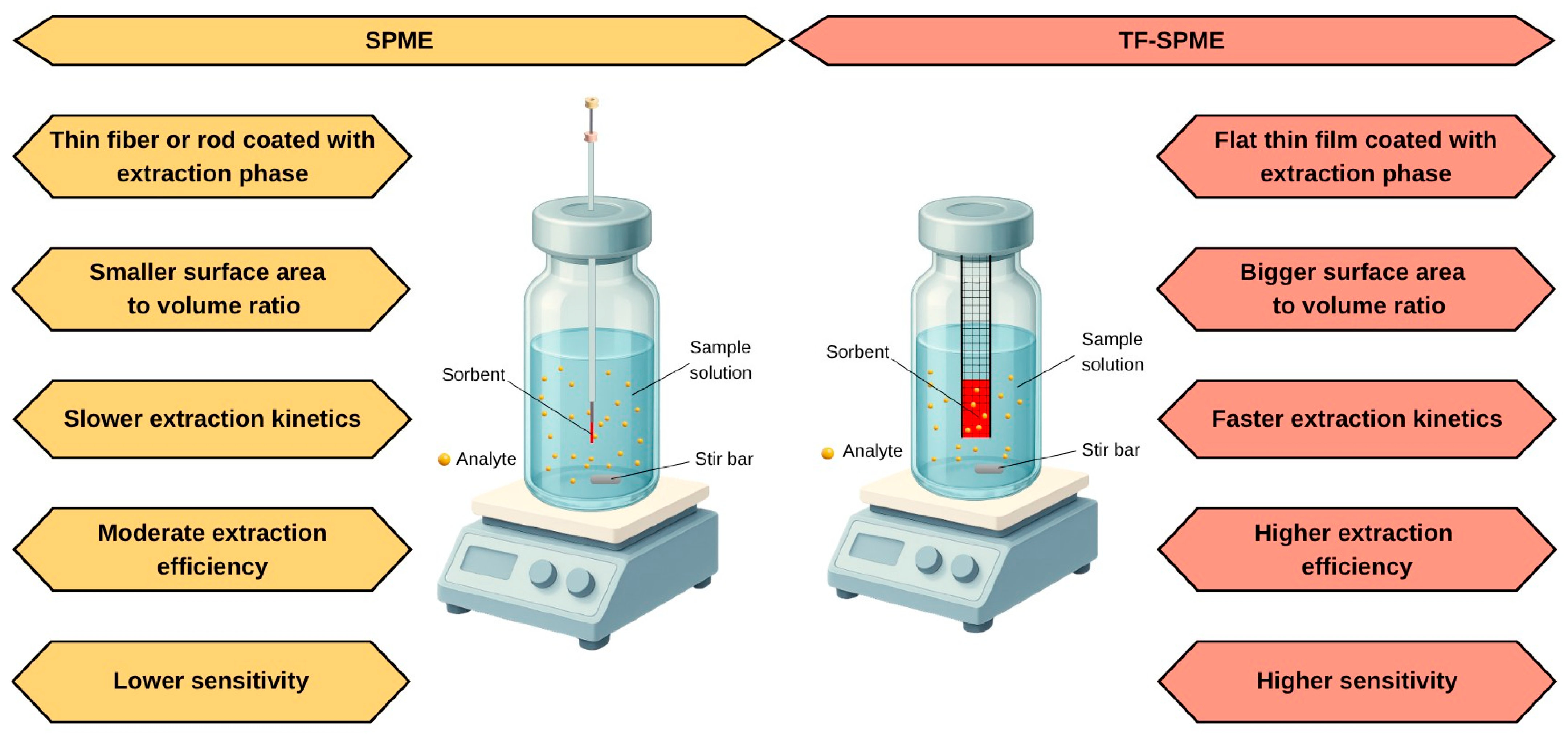
The first device for TF-SPME was proposed in 2003 by Bruheim, Liu, and Pawliszyn [21]. The extraction phase consisted of a PDMS membrane mounted on a stainless-steel support. During the sorption process, the membrane was deployed as an unfolded sheet which, in conjunction with the metal rod, assumed a flag-like geometry. The applied modification of the extraction phase shape increased its surface area and volume compared to fiber SPME, thereby improving analyte extraction efficiency. The geometry of the PDMS membrane facilitated its placement onto a metal holder, enabling seamless integration into gas chromatography systems for thermal desorption [23,24]. Comparison of fiber SPME and thin film SPME techniques was presented in Figure 2.
Since then, many modifications have been made, both in the shape of the supports and in the materials from which they are made, i.e., carbon nets, stainless steel mesh or blades, paper, cork, as well as in the automation of the extraction system [21,22,23,24,25,26].
In 2009, Pawliszyn et al. [26] presented an automated solution, which enabled simultaneous extraction of analytes from 96 samples, and the developed TF-SPME device, in which the sorbent was applied to stainless steel plates. This confirmed the practicality of the technique [26]. The suitability of TF-SPME devices for trace level analysis and the possibility to conduct convenient in situ sampling make it competitive with fiber SPME [20,22,24,27].
In tube solid-phase microextraction (IT-SPME) was introduced to streamline the integration of SPME with liquid chromatography while addressing the inherent flaws of traditional fiber-based methods. Unlike standard SPME fibers, which often suffer from mechanical fragility, poor efficiency, and coating degradation, IT-SPME utilizes a fused silica capillary as the extraction tool. To enhance performance, advanced capillary designs—such as those featuring rod monoliths or sorbent-filled structures—are frequently employed. This technique operates by passing microliter amounts of a sample through the capillary, where analytes are adsorbed and preconcentrated onto a solid phase prior to determination [2,28,29].
Hollow fiber solid-phase microextraction (HF-SPME) utilizes a porous hollow fiber membrane to concentrate analytes from complex samples [2,30,31]. In the three-phase configuration—also referred to as hollow fiber solid–liquid phase microextraction (HF-SLPME)—the sorbent is impregnated within the pores of fibers using a compatible organic solvent. The process involves a donor phase (aqueous sample), a sorbent phase (the membrane), and an aqueous acceptor phase (buffer), allowing for direct enrichment without a dedicated desorption step. Conversely, in the two-phase setup, the sorbent is applied as a coating on the surface of fibers. HF-SPME is a highly effective technique due to its ability to handle intricate matrices while providing superior enrichment factors [30,31].
The geometry of the SPME support is vital for extraction efficiency, mainly because it allows the sorbent surface to develop and improves the contact between the SPME system and the measuring device.

3.2. Development of Sorbents in SPME

From the perspective of GAC, GSP, or WAC principles, the sorbent should be effective in subsequent extraction/desorption cycles to minimize waste generation, except for single-shot extraction, which is limited by the capabilities of devices. The selectivity of many sorbents can be increased by modifying their original structure with additional functional groups, which may convert them into more versatile sorption materials across different extraction variants and improve their effectiveness towards analytes of varying polarity [2,11,32].
Sorbents should be characterized by high selectivity, superior sorption capacity, and robust mechanical, thermal, and chemical stability. Because extraction efficiency and kinetics depend directly on the affinity of analytes for the sorbent, precise material selection is critical. Recent advancements in materials chemistry have introduced diverse classes of materials to microextraction techniques, characterized by high specific surface areas, excellent wettability, ease of functionalization, and the presence of appropriate chemical groups [32,33,34].
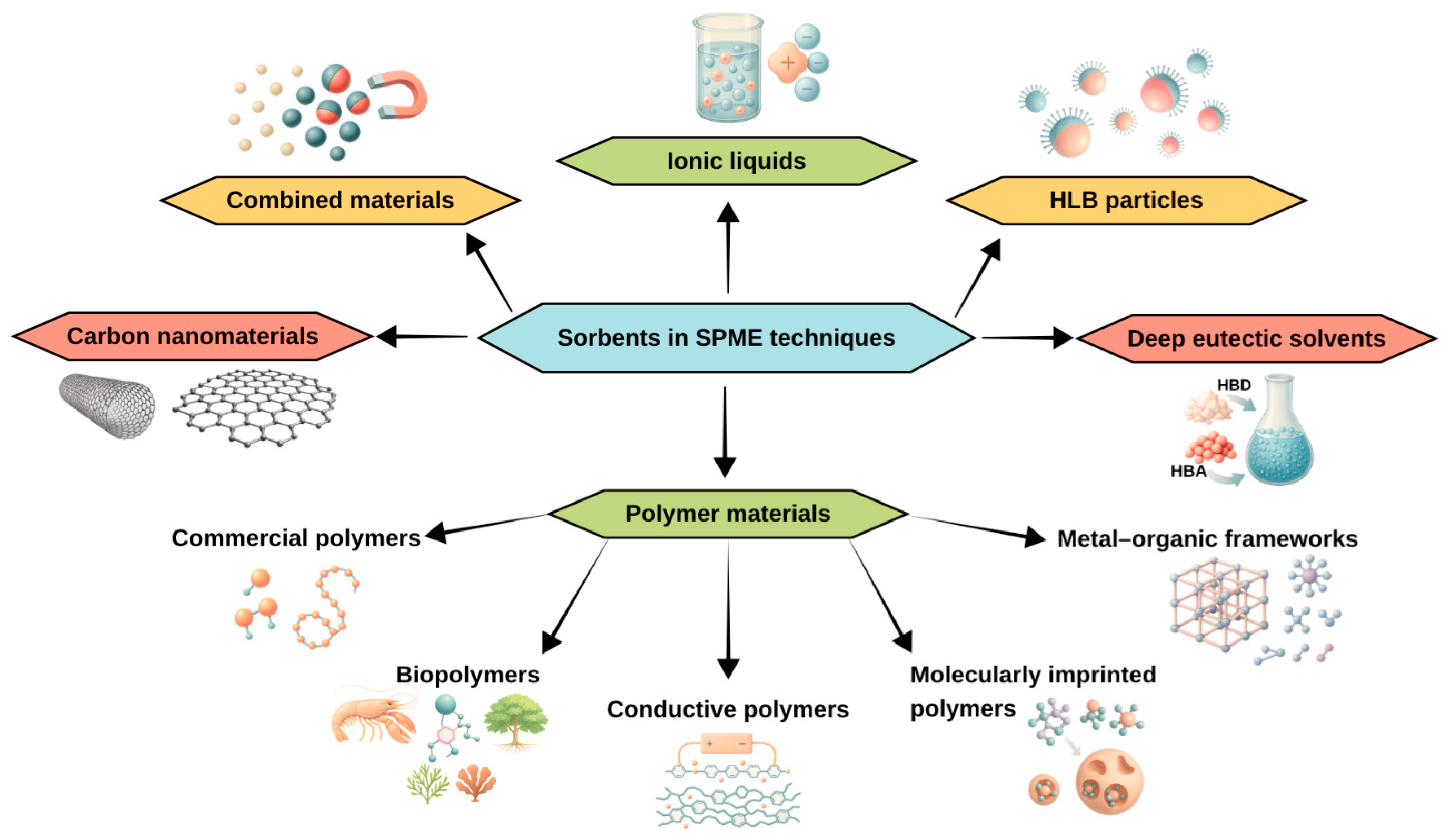
Sorption materials currently used for miniaturized sample preparation techniques can be divided into the following groups:
(1)
Commercial polymers, including polydimethylsiloxane (PDMS), a mixture of polydimethylsiloxane and divinylbenzene (PDMS/DVB), a mixture of polydimethylsiloxane and carboxyl (PDMS/CAR), polyacrylonitrile (PAN) [35].
(2)
Biopolymers, including cellulose, agarose, and chitosan [36,37].
(3)
Conductive polymers, e.g., polyaniline (PANI) and polyphenylenevinylene (PPV), polypyrrole (PPy), polyethylene dioxythiophene (PEDOT) [38,39].
(4)
Metal–organic frameworks (MOFs) are porous crystalline polymers composed of metal cations or secondary building units (SBUs) integrated into a network. SBUs are polynuclear metal clusters where coordination bonds link metal ions with organic functional groups, such as carboxylates [40,41].
(5)
Molecularly imprinted polymers (MIPs), i.e., biomimetic materials that possess “imprints” of their molecular matrices, due to which they can selectively bind specific analytes. MIPs are formed by polymerizing monomers around a standard molecule, which is then removed, leaving specific voids [42,43,44].
(6)
Carbon nanomaterials (CNMs) comprise a group of different allotropic carbon structures, which include graphene (G) or carbon nanotubes (CNTs) [45,46,47],
(7)
Ionic liquids (IL) and polymeric ionic liquids (PILs) [48,49],
(8)
Hydrophilic-lipophilic balance (HLB) particles, i.e., molecules that include both a water-attracting (hydrophilic) part and a fat-attracting (lipophilic) part [50],
(9)
Combined materials: e.g., magnetic nanoparticles with one or more of the materials mentioned above (Figure 3).
Sorbents used in SPME, although widely used, may exhibit limited analyte selectivity, limited reusability and lack biodegradability. These limitations prompt scientists to search for new, more effective and environmentally friendly sorbents, and recently these are increasingly often sorbents based on DESs.

4. Deep Eutectic Solvents—Definition and Properties

Deep eutectic solvents (DESs) were pioneered by Abbott et al. in 2003 [51,52]. These substances are defined as eutectic mixtures composed of at least one hydrogen bond acceptor (HBA) and one hydrogen bond donor (HBD). The formation of hydrogen bonds is a critical factor in the synthesis of these mixtures, as it directly influences the achievement of the eutectic point [52].
Hydrogen bond donors are most often carboxylic acids, amines, alcohols, and carbohydrates. However, ammonium and imidazolium chlorides and bromides, as well as the most popular one, choline chloride, are used as hydrogen bond acceptors. The virtually infinite design potential of DESs arises from the ability to synthesize them using a vast array of donor-acceptor pairing—s across a diverse range of molar ratios. DESs have properties similar to those of ionic liquids. Still, they can be synthesized much more easily and quickly without the need for purification, and are cheaper, less toxic, non-flammable, and often biodegradable. A defining characteristic of DESs is the significant decreases in the melting point at the eutectic composition relative to the individual precursors. This thermal behavior is primarily driven by the establishment of a hydrogen-bonding network between donor and acceptor [53,54,55,56,57].
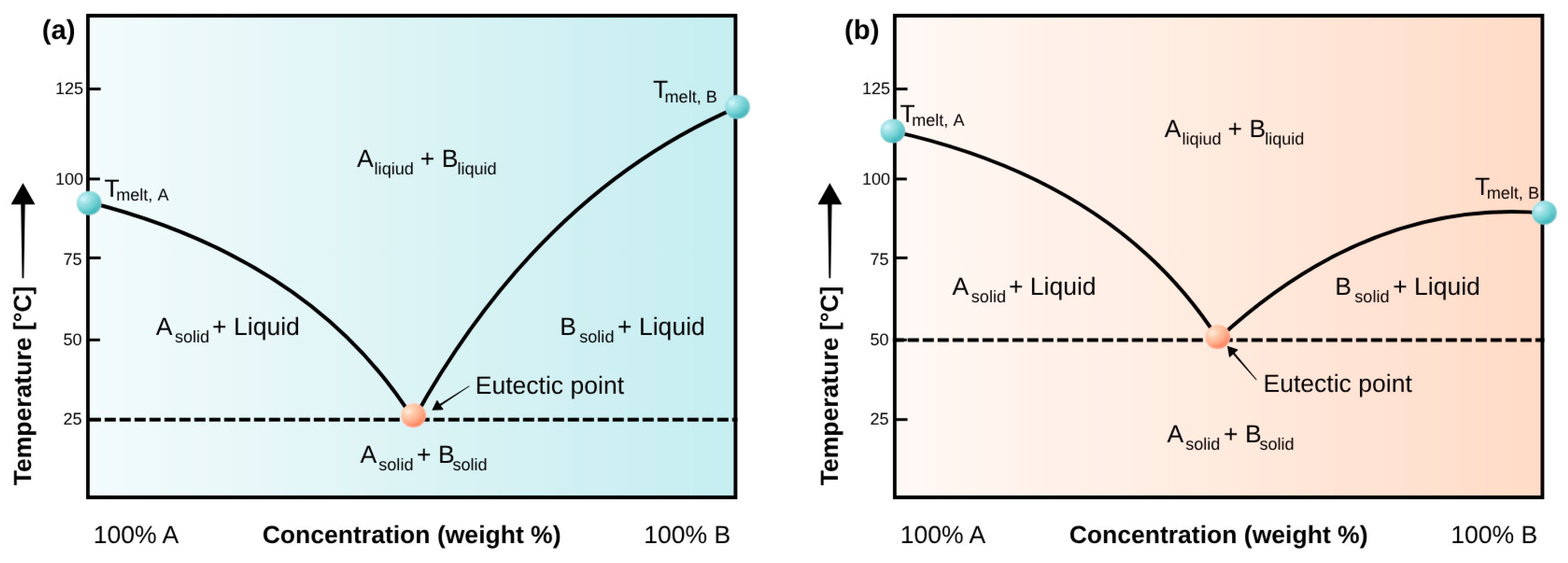
The eutectic point determines the state of matter of DESs, and although they occur mainly in the liquid state at room temperature, this does not exclude their solid state of matter. Eutectic diagrams for the liquid and solid eutectic mixture are shown in Figure 4. Such eutectics in these systems enable their use as extraction media, both as extractants and sorbents [55,57].
The concept of ‘natural deep eutectic solvents’ (NADESs) was first proposed by Verpoorte et al. in 2011 [58]. These solvents are characterized as eutectic mixtures formed by HBDs and HBAs derived from primary metabolites found within the cells of living organisms. The most commonly used HBAs are choline chloride (ChCl) and betaine, as well as amino acids and acetylcholine chloride. However, carboxylic acids, including fatty acids, amino acids, or carbohydrates, are used as HBDs. Beyond the standard attributes of DESs, NADESs are distinguished by their superior ecological profile; they are characterized as fully sustainable solvents that are biocompatible and predominantly biodegradable [59,60,61].
For many years, DESs have served as reliable extraction media within the framework of LPME techniques, such as dispersive liquid–liquid microextraction (DLLME), single-drop microextraction (SDME), and hollow fiber liquid-phase microextraction (HF-LPME). They are a green alternative to volatile, often toxic organic extractants and not always green ionic liquids [62]. In sorbent-based microextraction techniques, DESs are not yet widely used, but given their potential for solidification at room temperature, their capability in this context is significant [63].

5. Deep Eutectic Solvents in Approaches to SPME Techniques

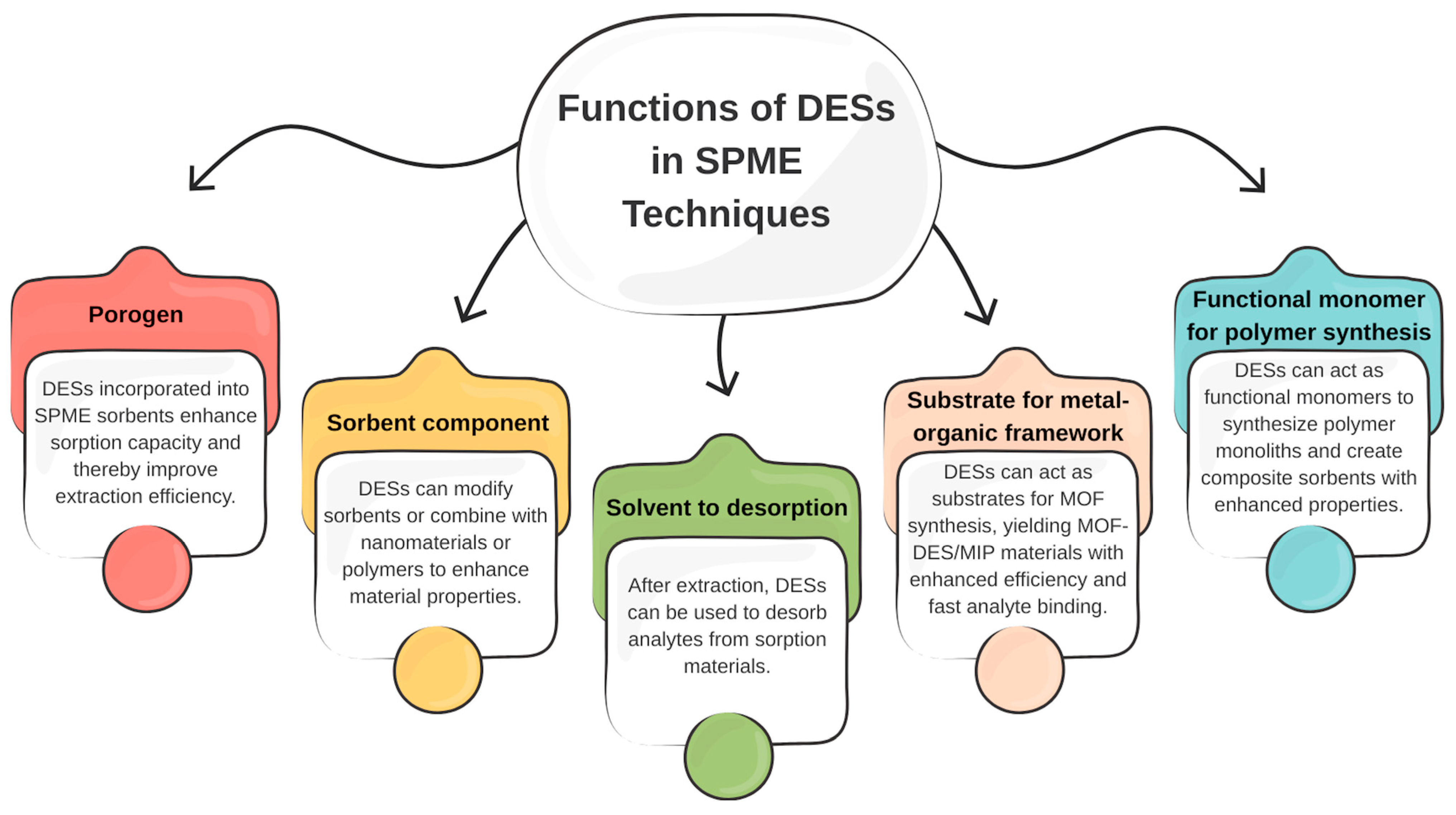
Since the debut of the first SPME device, numerous advancements—such as modified geometries, automation, and the development of selective sorbents—have been introduced to enhance extraction efficiency [64,65,66,67]. While DESs are traditionally associated with LPME, their application in solvent-free methods has grown significantly in recent years, where they now serve several vital roles within the SPME techniques. They can be used to functionalize or modify sorption materials, creating a new type of composite sorbent with improved properties. They are also used in combination with nanomaterials or polymers to create hybrid fibers for microextraction. DESs can also act as a porogen, added to the SPME sorbent, to increase its sorption capacity and thus extraction efficiency. In addition, DESs can act as a reaction medium during the synthesis or preparation of the sorbent itself. After extraction, DESs can be used to desorb analytes from sorption materials [68,69,70,71,72,73,74,75,76,77,78,79,80,81,82,83,84,85,86,87,88,89]. The main functions of DESs in SPME techniques are shown in Figure 5.
While the application of DESs in SPME is a burgeoning field, they offer significant promise for developing task-specific sorbents tailored to the selective extraction of particular analytes. A comprehensive overview of the scientific literature on the use of DESs in SPME techniques is presented in Table 1 [68,69,70,71,72,73,74,75,76,77,78,79,80,81,82,83,84,85,86,87,88,89].

5.1. DESs as Porogens

Zhou et al. [68] introduced one of the pioneering uses of DESs in SPME. Their approach involved the synthesis of a hybrid inorganic-organic monolith that incorporated star-shaped mesoporous silica nanoparticles (SMSNs). Using a binary solvent consisting of a mixture of a deep eutectic solvent and an ionic liquid, a poly(butyl methacrylate and ethylene glycol dimethacrylate) monolith with incorporated SMSNs exhibited a homogeneous structure. A mixture of IL (3-hexyl-1-methylimidazolium tetrafluoroborate, [HMIM]BF4) and DES (choline chloride:ethylene glycol, 1:2), which showed excellent dispersibility for SMSN, was used as a binary porogen. Optimization of the sorbent composition was performed, including SMSN content, cross-linking monomer content, and binary solvent composition. Good extraction efficiency using the new monolith was achieved by preconcentration and determination of polycyclic aromatic hydrocarbons (PAHs) and nonsteroidal anti-inflammatory drugs (NSAIDs) by SPME with capillary electrochromatography (CEC), achieving a precision (as relative standard deviation (RSD)) of less than 3%. Compared to the corresponding SMSN-free monolith, the performance of SPME-CEC improved approximately six-fold [68].
Li et al. [69] introduced a DES (ethyl 4-hydroxybenzoate:methyltrioctylammonium chloride, 2:1) as a functional additive in the sol–gel fabrication of PDMS fiber. The addition of hydrophobic DES yielded a more porous PDMS surface on the fiber, significantly improving the extraction efficiency. The proposed PDMS-DES material was used for the extraction and determination of volatile organic compounds such as toluene, ethylbenzene, and o-xylene by SPME—gas chromatography with flame ionization detector (GC-FID). PDMS-DES fibers showed a 3 times higher analytical signal than a commercial 100 μm thick PDMS fiber coating. From the perspective of the ecological sustainability of the proposed material, it is essential to use it more than 60 times in subsequent SPME cycles [69].
Wang et al. [70] introduced an innovative SPME sorbent based on a thermostable graphene aerogel. This material was synthesized by functionalizing graphene oxide with a NADES (choline chloride:glucose, 1:2). The process yielded a three-dimensional aerogel with significant porosity, which was subsequently utilized as an effective coating for SPME fibers. Under optimized conditions for the SPME-GC-MS/MS method, recoveries in the range of 80–108% were achieved. Precision was in the range of 5.8–20%. The developed method was used to extract and determine polychlorinated naphthalenes (PCNs) in shrimp [70].
A similar solution was the synthesis of a three-dimensional, porous, DES-modified graphene aerogel (3D DES-GA). This material was used as a fiber coating for SPME, enabling repeated use of the fiber with the coating (≥160 uses) and very good precision (RSD 2.4–6.6%) for a single fiber. The developed SPME-GC-MS/MS method enabled high-throughput extraction of PCNs from fish samples, obtaining high enrichment factors ranging from 1225 to 4652. The authors attributed the extraction efficiency of the SPME fiber coated with 3D DES-GA to strong π-π stacking, electrostatic and hydrophobic interactions, and to the addition of DES (choline chloride:urea, 1:2), which increased the porosity of the aerogel [71].
Monnier et al. [72] investigated the use of DESs—both hydrophilic and hydrophobic—as green alternatives to conventional organic solvents like toluene. In their study, a DES (formic acid:L-menthol, 1:1) served as the porogen for creating monolithic SPME fibers based on MIPs. The resulting polymer, synthesized with propazine as a template, methacrylic acid as a monomer, and ethylene glycol dimethacrylate as a crosslinker, proved highly effective for the selective extraction of triazine herbicides from soil. This method achieved relative recoveries between 75.7% and 120.1% [72].

5.2. DESs as Functional Monomers

Zhang et al. [73] developed an organic-inorganic hybrid monolith by integrating titanium dioxide (TiO2) nanotubes with a hydrophilic DESs. The composite matrix (GMA-DESs-EGDMA) was created through in situ polymerization, utilizing glycidyl methacrylate (GMA) and a DES (choline chloride:methacrylic acid, 1:2) as functional monomers. The DES served as a novel hydrophilic component that reduced non-specific protein adsorption while boosting overall adsorption capacity. Furthermore, GMA was included to facilitate easy chemical modifications via its epoxy groups. By combining TiO2—noted for its high surface area and hydroxyl density—with the hydrogen-rich DES, the researchers increased the available hydrogen bonding sites, significantly enhancing the hydrophilicity of materials and extraction kinetics. A synergistic effect between TiO2 and the DES monomer was demonstrated, significantly enhancing the extraction efficiency with the new sorbent. When the DES monomer was added, protein recovery increased by 32%, suggesting that the hydrophilic DES monomer can effectively improve the sorption of target proteins on the resulting monolith. However, with the simultaneous addition of TiO2 and DES, the recovery increased to 98.6% (RSD < 3.1%), representing an improvement of more than 60% and suggesting a synergistic effect. Furthermore, the proposed monolithic column coated with TiO2-poly(GMA-DES-EGDMA) was used to specifically capture proteins from rat liver and then to determine them by HPLC-MS/MS.
The results indicated that the developed monolith was an effective material for isolating the protein species of interest, based on the pI values of the target proteins, and that the monolithic polymer column system could be used up to 24 times [73]. In a study proposed by Wang et al. [74], a novel DES-based monolithic polymer column was developed specifically for IT-SPME. Unlike traditional methods where the sorbent is attached to a support, this approach involved synthesizing the polymer monolith directly inside a polyether ether ketone (PEEK) tube. The inner surface of tubes was first modified with polydopamine to improve adhesion. The monolith itself was created using a DES (choline chloride:itaconic acid, 1:1.5), which functioned as the monomer for the polymerization process. The proposed IT-SPME high-performance liquid chromatography with ultraviolet detection (HPLC-UV) method exhibited nearly 100% extraction efficiency and excellent precision (RSD < 4.3%) for selected NSAIDs in both lake water and human plasma samples. High recovery values and very good precision confirm that the developed method based on monolithic poly(DES-EGDMA) columns can be used to determine NSAIDs even in complex matrices. Furthermore, the authors suggest that by changing the composition of DESs, polymer sorbents can be obtained for the selective extraction of different groups of analytes [74].
Li and Row [75] proposed a ternary deep eutectic solvent (TDES) (choline chloride:3,4-dihydroxybenzoic acid:ethylene glycol, 1:1:2). TDES was employed as both the matrix and functional monomer to develop MIPs. This sorbent was specifically designed for the enrichment and quantification of 3,4-dihydroxybenzoic acid (3,4-DHBA) in Ilex chinensis Sims. By integrating the TDES-MIP into a miniaturized SPME combined with HPLC-UV, the method demonstrated high precision (RSD < 4.2%) and excellent recovery rates between 87% and 102% [75].

5.3. DESs as Substrate to MOFs

Another material based on the combination of DES (choline chloride:ethylene glycol, 2:1) and MIP was proposed by Mirzajani et al. [76]. The authors engineered both hollow and monolithic fibers fabricated based on a metal–organic framework structure incorporating deep eutectic solvents and molecularly imprinted polymers (MOF-DES/MIP). The obtained materials were used to extract phthalate esters by solid-phase microextraction using a protected hollow fiber liquid membrane (HFLMP-SPME), and the extracts were then analyzed by GC-FID. Under optimized conditions, precision (as RSD) was obtained in the range of 2.6–3.4% and recovery was in the range of 95.5–100%. The developed procedure was successfully used to determine phthalate esters in yogurt, water, and edible oil samples. The undoubted advantage of the developed material is its ability to be used more than 80 times [76].
An interesting modification of the SPME technique is multiple monolithic fiber solid -phase microextraction (MMF-SPME), which uses an integrated fiber. For this purpose, a monolithic fiber was synthesized from a MOF-DES/MIP. DES (choline chloride:ethylene glycol, 2:1) was used as a substrate for synthesizing MOFs in the polymer phase of a molecular matrix. Compared to MOF or MIP, the MOF-DES/MIP system is characterized by high efficiency, rapid binding kinetics, and analyte dissociation within the polymer structure, thereby improving the positioning of target analytes and increasing the rate of analyte binding within the polymer. The newly established method proved effective in identifying amphetamine and modafinil derivatives within unauthorized dietary supplements. It demonstrated high reliability, with recovery rates between 95.1% and 104.6% and a precision level (as RSD) consistently under 4.7%. Moreover, the developed sorption material can be used up to 60 times without compromising extraction efficiency [77].
A similar MMF-SPME system was proposed by Kardani et al. [78] using monolithic fibers instead of a single fiber. The authors fabricated MMF using a MOF-DES/MIP. The material was subsequently used to obtain a single thin fiber and then combined five thin fibers to obtain the MMF-SPME system. The developed method was used to enrich and determine 39 antibiotics, including 12 quinolones, 9 tetracyclines, and 18 sulfonamides in meat and dairy products, with recovery rates ranging from 95% to 100% and precision in the range of 2.8–5.6% [78].

5.4. DESs as Sorbent Components

Asghari et al. [79] introduced a sorbent consisting of calcium alginate (CA) aerogel beads modified with DES (choline chloride: polyethylene glycol, 1:1). To increase the efficiency of analyte extraction, the authors ‘encapsulated’ DES in calcium alginate beads. The extraction efficiency of the new sorbent CA/(ChCl:EG, 1:1) was compared with that of unmodified CA. SPME conditions were optimized, including sorbent mass, sample volume, sample pH, extraction time, and desorption time. The proposed sorbent was used in SPME to preconcentrate 5-hydroxymethylfurfural (HMF) from coffee samples, yielding significantly higher recoveries (78.5–102.2%) and precision (2.5–4.7%), which was clearly more advantageous than using the aerogel without DES. Moreover, it can be assumed that the combination of CA and DES aerogel allows for the development of an ecological sorption material, which the authors confirmed by determining the greenness of the developed analytical procedure using the Complex Green Analytical Procedure Index (Complex GAPI) and Analytical Eco-Scale (AES) [79].
A new solution for SPME was also proposed by Karimi et al. [80], who immobilized DES (choline chloride:thiourea, 1:2) on the surface of graphene oxide (GO) nanoplates and then reinforced them inside the pores of the hollow fiber. The resulting hybrid DES/GO material was used in HF-SPME with flame atomic absorption spectrometry (F-AAS) to determine trace amounts of Ag(I) in hair samples, wastewater, and ore achieving good RSD (below 3.5%) and an EF of 200 [80].
Asiabi et al. [81] proposed a composite material for use in electrochemically controlled in tube solid-phase microextraction (EC-IT-SPME). The composite material consisted of polypyrrole and DES (choline chloride:urea, 1:2). The material was synthesized via electrochemical deposition onto the interior surface of a stainless-steel capillary, which functioned as the working electrode. In this setup, the coated capillary acted as the anode for anion exchange, while a platinum electrode served as the cathode for cation exchange. Losartan was extracted from liquid samples by applying a positive potential as the fluid passed through the electrode. Subsequently, the analyte was electrochemically desorbed and quantified using HPLC-UV. Assessments of the composite material demonstrated high extraction efficiency along with excellent mechanical and chemical durability, maintaining stability across a broad pH range (both acidic and alkaline). The material was reused over 450 times without any decrease in extraction efficiency, making it a highly sustainable, efficient, and ecological sorbent. Its extraction capacity was 1.5 times higher compared to the commercial polypyrrole sorbent. Under optimal conditions, losartan was determined with very good precision (as RSD) in the range of 1.9–4.6% [81].
Sorption paper phases may seem like an unusual solution, but they have gained popularity due to the low cost and sustainable nature of the cellulose substrate. However, the durability of the resulting phase may be limited by the type of coating used to isolate the analytes. According to research by Lopez-Ruiz et al., the durability issues typically associated with cellulose-based sorption papers can be addressed by using a DES as a coating. The authors developed a DES (thymol:vanillin, 1:1), which was applied to cellulose strips to create a thin-film extraction phase.
This method was used to isolate triazine herbicides from environmental water samples (well and river water) for subsequent GC-MS analysis. The study reported high accuracy, with relative recoveries between 90% and 106% and precision (RSD) below 14.7%. FT-IR analysis showed that the hydroxyl groups of the cellulose interact with the DES to form a stable, semi-solid phase while preserving the solvent’s core properties. Although the strips are not reusable—as the coating is entirely dissolved during analysis—their biodegradability makes them an eco-friendly and sustainable choice for sample preparation [82].
Werner et al. [83,84,85,86,87] proposed a series of analytical procedures using DES, NADES, and appropriate composite materials, such as DES/PDMS or NADES/waste cork, as sorbents in thin film SPME. The authors designed and synthesized an extensive group of DESs and NADESs that met the definition of eutectic mixtures, i.e., they were formed by combining HBA and HBD, connected by hydrogen bonds, which reduced the melting point (eutectic point), to only 55–69 °C. Therefore, the proposed DESs were solids at room temperature and not liquids, as DESs commonly occur. This provided opportunities to use these compounds as sorbents in solvent-free microextraction techniques. The synthesized solid DESs underwent preliminary screening to evaluate their physical state, solubility in aqueous and organic media, mechanical integrity when supported, and thermal stability.
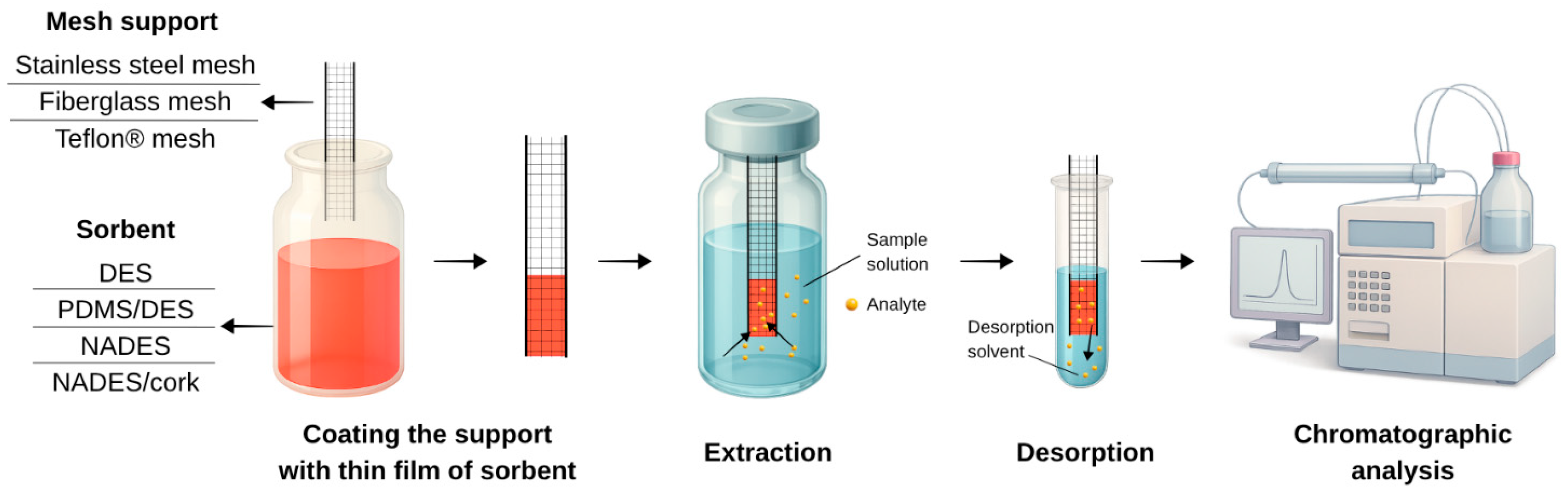
In the next step, the immersion method was used to deposit a thin film of the obtained solid DESs on a support, which was a stainless-steel mesh, a fiberglass mesh, or a Teflon® mesh cut to repeatable dimensions, which guaranteed obtaining an appropriate and repeatable sorption surface [83,84,85,86,87]. At this stage, it was necessary to test the mechanical strength of the sorbents against the intense shaking required during both the extraction and desorption stages of the analytes. The sorbent filled the meshes of the mesh completely, and the thickness of the sorbent layer was equal to the thickness of the material from which the mesh was made, i.e., from 280 to 400 μm [83].
The study compared two types of DES-based sorbents used for extracting parabens from water samples. Initially, a DES (trihexyltetradecylphosphonium chlorid:1-docosanol, 1:2) was applied to a grid. While this setup provided solid precision (3.6–6.5%) and recovery rates (68.1–91.4%), its durability was low, as it could only be reused three times. To enhance stability, researchers developed a composite material by incorporating the DES into a PDMS using the sol–gel method. This modification maintained the original analytical performance (precision and recovery) while significantly boosting the sorbent’s lifespan, allowing it to be used for up to 10 cycles [84].
A similar solution was to use DES (THTDPCl:DcOH:PDMS, 1:3:0.25), which enabled the preparation of a composite material with a very stable structure. This material was applied in the form of a thin film to a fiberglass mesh and used as a sorbent for the preconcentration and determination of fifteen endocrine disrupting compounds (EDCs) such as methylparaben, ethylparaben, propylparaben, butylparaben, benzylparaben, bisphenol A, bisphenol S, bisphenol F, bisphenol AF, bisphenol E, bisphenol B, triclosan, triclocarban, butylated hydroxyanisole and butylated hydroxytoluene. These analytes were washed from diapers into synthetic urine and then extracted onto DES (THTDPCl:DcOH:PDMS, 1:3:0.25), which was applied as a thin film onto fiberglass meshes, and determined by LC-MS/MS, with a precision of 2.5–10.3% [85].
Following the trend in demand for ecologically sustainable and safe sorbents, subsequent research focused on synthesizing and applying room-temperature solid NADES [86] and NADES/biowaste cork composite materials [87] in analytical procedures. To this end, Werner et al. [86] prepared a series of 14 ecologically balanced, room temperature solid NADESs. They tested the NADESs for the first time by applying them as a thin film to fiberglass meshes. In this method, NADES (acetylcholine chloride:1-docosanol, 1:3) was used as the sorbent. The developed TF-SPME/HPLC-UV method with NADES as the sorbent achieved extraction recoveries ranging from 82% to 96%, with RSDs below 6.1%. The proposed NADES exhibited good mechanical stability, enabling efficient extraction for 16 cycles with a recovery of at least 77%. The ecological aspect of the developed method was assessed using the ComplexMoGAPI protocol and received a score of 85/100. This method was used to determine popular sweeteners and preservatives in flavored waters and functional beverages [86].
The use of biowaste, either directly or in composite systems, is not a new concept [90]. In the approach proposed by Werner et al. [87], a group of six room-temperature solidifying NADES was tested by combining them with a powdered waste plug. Taking into account the extraction efficiency of UV fitters from lake water samples (collected at beaches during the summer and winter seasons), NADES (betaine chloride:1-eicosanol, 1:3), combined with powdered cork at a mass ratio of 15:1, was used to obtain a thin film on a Teflon mesh®. RSD was below 4.6% and extraction recovery was in the range of 84–92% after sample preconcentration. The proposed composite material, NADES (BeCl:EiOH, 1:3) and cork, exhibited good mechanical stability in water and organic solvents, enabling effective extraction of UV filters for at least 10 extraction/desorption cycles [87]. The general scheme of TF-SPME using NADES and NADES-based composite materials as sorbents on mesh supports is shown in Figure 6.
Quintanilla et al. [88] proposed to obtain a thin layer by solvent casting, using cellulose triacetate (CTA) as the polymer and a DES as the sorption phase. Lidocaine, menthol, dodecanoic acid, and camphor were tested as components of a manufactured DES-based thin film. The highest extraction efficiency for organophosphorus pesticides (OPPs) was obtained with a film containing 70% (wt.) CTA and 30% DES (dodecanoic acid:lidocaine, 2:1). The experiment was conducted in two configurations: a suspended film and a pipette tip. The precision was satisfactory, ranging from 3 to 14%, and the proposed material could be used 5 times in extraction/desorption cycles with very good recovery [88].

5.5. DESs as Desorption Media

Another possibility is the use of DESs as effective, ecologically sustainable solvents for analyte desorption before determination. Ghani et al. [89] synthesized a three-dimensional, porous, and highly environmentally friendly coating via the in situ growth of agarose-chitosan nanostructures on a graphene oxide (ACGO) surface. They used it as a sorbent in the TF-SPME technique to extract chlorophenols from agricultural wastewater, honey, and tea samples. The authors used DES (choline chloride:tetraethylammonium chloride, 1:1) as a desorption solvent. Under optimized conditions, RSD ranged from 2.8 to 5.9%. The EF values for the tested analytes were obtained in the range of 33.4–35.8. The prepared agarose-chitosan-graphene oxide with a hydrophilic polymer network and a large GO surface area increases the availability of binding sites. Furthermore, the toxic solvents used in the desorption step have been replaced by non-toxic DES [89].

6. Greenness and Sustainability Metrics

The more steps and reagents involved in an analytical procedure, the less environmentally friendly it can become. Therefore, reducing unnecessary or repetitive steps is crucial for green and sustainable analytical chemistry. Hence, indicators have been developed to quantify the environmental performance of analytical procedures [91]. One of the oldest indicators, proposed in 2002, is the National Environmental Methods Index (NEMI) [92]. The Analytical Eco-Scale serves as a specialized metric that calculates a final score by deducting penalty points from a base of 100 for any non-green parameters [93]. In contrast, the Green Analytical Procedure Index (GAPI) offers a comprehensive evaluation of the entire analytical workflow, encompassing sampling, preparation, reagents, instrumentation, and final analysis. This method utilizes multi-criteria decision analysis to generate a visual profile for each step, represented by a symbol composed of five pentagrams [94]. GAPI has been further improved and, under the name ComplexGAPI, also accounts for the environmental performance of materials and chemicals for the next stage of analysis [95], and ComplexMoGAPI, additionally with a numerical scale from 0 to 100 [96]. Another method for environmental impact assessment is the Analytical GREEnness Metric Approach (AGREE), along with AGREEprep—tools designed to evaluate the greenness. These metrics assess parameters based on the principles of GAC and GSP, providing a score on a scale from 0 to 1. The resulting pictograms for AGREE and AGREEprep visually represent the final ecological performance of the overall analytical procedure and the sample preparation stage, respectively [97].
When using DESs in SPME techniques, scientists often neglect to determine environmental performance using the metrics mentioned above. In several examples of analytical procedures involving a DES-based SPME step, the authors assessed environmental performance using one of the available greenness metrics (see Table 1). The application of DESs yielded high greenness scores, ranging from 70 to 90 out of 100, for the evaluated methods, as assessed using environmental green assessment tools such as ComplexMoGAPI or the Analytical Eco-Scale [79,85,86,87]. Others simply described their use of “green solvent extraction” or called the proposed method ‘environmentally friendly’, without confirming this using the aforementioned greenness metrics.
With sustainability in mind, analytical tools such as the Sample Preparation Metric Sustainability (SPMS) are used to assess miniaturization, low energy consumption, the use of renewable materials, and the potential for fiber reuse [98]. This tool is consistent with both the GAC principles and the Sustainable Development Goals. From a sustainability perspective, essential aspects include mass efficiency, carbon footprint, E-factor (lower solvent volume, less waste), and life-cycle assessment (LCA), which assesses environmental impact from raw material to disposal [19,99]. Evaluating the toxicity and biodegradability of sorbents, energy savings through automation, and the reusability of sorbents used in SPME is also important. Table 2 compares sorbents commonly used in various SPME systems and possible systems with DES additions, focusing on their advantages and disadvantages in the context of GAC and sustainable solutions [32,33,63,64].
The main advantages of using DESs in SPME include high extraction efficiency and selectivity, often superior to conventional solvents. This stems from the ability to design both the properties of DESs and their interactions with analytes. DESs are environmentally friendly (low toxicity/non-toxicity, high biodegradability, especially for DESs of natural origin). DESs are also inexpensive and easy to synthesize with 100% atom savings. A disadvantage of DESs is their high viscosity, which can hinder mass transfer, complicate extraction/desorption, and, in some cases, impede sample separation from the matrix. However, in this case, an appropriate DES design can also reduce their viscosity. Furthermore, the number of commercially available DES-coated supports is currently limited compared to sorbents used in SPME. DESs are presently the subject of interdisciplinary research. Therefore, claims of ‘greenness’ may sometimes be exaggerated due to gaps in data regarding the thermal and mechanical properties and stability of specific DESs [63,64].
DESs can be considered highly sustainable compounds. Many DESs are derived from natural, renewable, and biocompatible components. They are considered a more environmentally friendly alternative to organic solvents due to their low toxicity and high biodegradability. However, a complete life-cycle assessment for some industrial applications suggests that the regeneration process is crucial to their overall sustainability [64,98,99].
The readiness level of DESs in SPME can be described as low to medium (laboratory/research scale). The use of DESs in SPME is an area of active scientific research. Most studies demonstrate successful laboratory-scale applications for specific analyses (e.g., environmental pollutants, food contaminants, drugs in plasma). Although significant potential exists, broad industrial application and widespread commercial availability of DES-based SPME systems remain limited. Further research is needed to scale up the process and standardize commercial applications [99,100,101].
The evaluation of the greenness and sustainability of DES-based SPME should be mandatory, utilizing specialized metrics such as AGREEprep, ComplexMoGAPI, and SPMS. These tools move beyond the general assumption that DESs are inherently ‘green’ by providing a quantitative assessment of their actual environmental impact.
AGREEprep is a specialized metric focused on evaluating the sample prepa-ration stage aim to promote more sustainable laboratory practices in accordance with the principles of GAC and GSP. AGREEprep helps assess environmental impact by identifying the strengths and weaknesses of sample preparation methods, including energy consumption and waste production [97]. Meanwhile, ComplexMoGAPI is particularly valuable for DES-SPME because its hexagonal indicators account for the synthesis of the DES and DES-based sorbents themselves, ensuring the entire reagent lifecycle is considered [96]. SPMS focuses specifically on the extraction process, excluding the detection stage. By prioritizing parameters such as extractant nature, reusability, and extraction time, it is ideal for comparing different microextraction techniques [98].
By assigning specific weights to criteria like reusability and reagent toxicity, these metrics allow researchers to verify whether a DES-based method offers a genuine sustainability advantage over traditional analytical procedures.

7. Future Trends in the Development of DESs-Based SPME

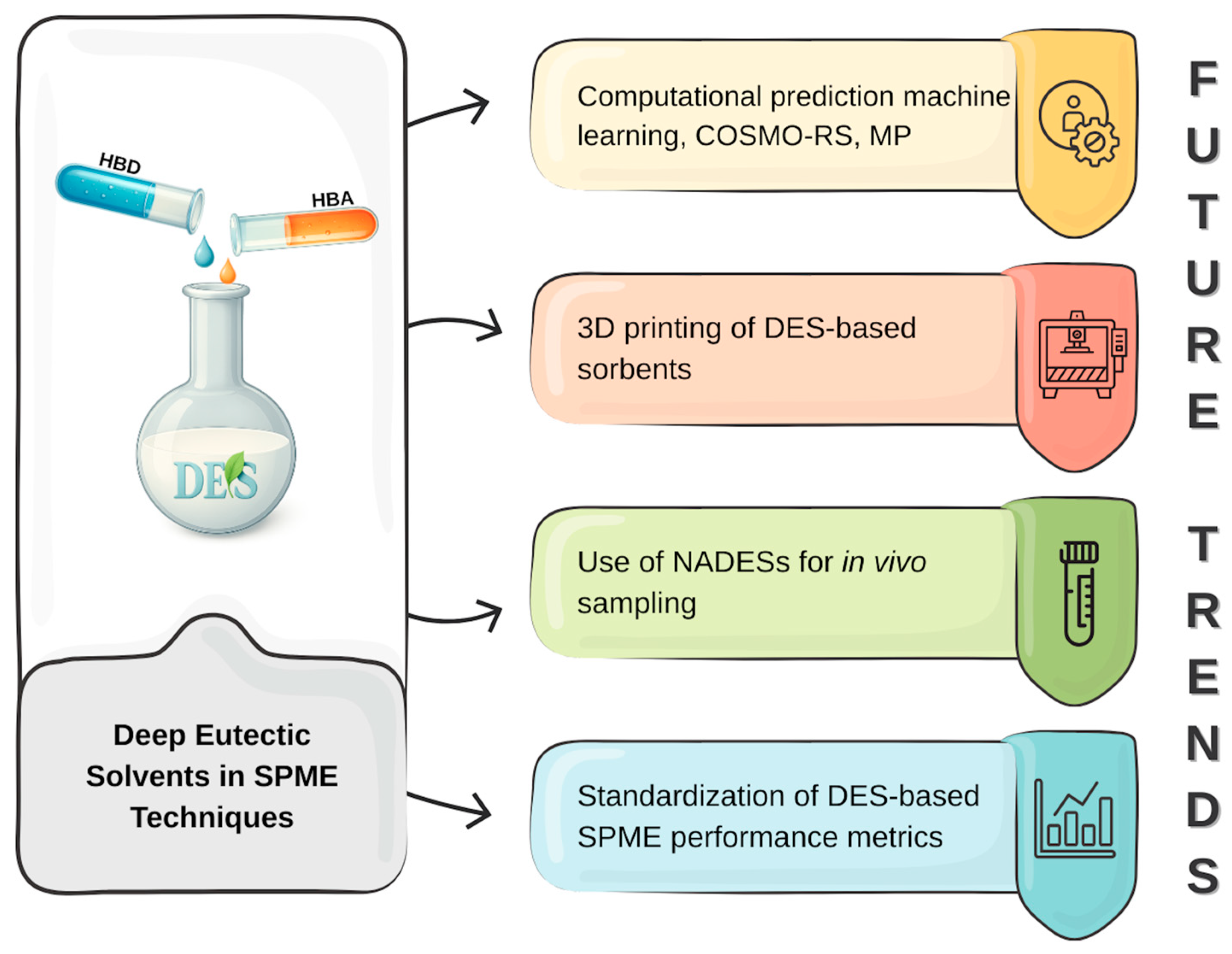
Further research will focus on developing more efficient and stable materials, exploring combinations of materials, and integrating these sorbents into practical, large-scale systems. Although the use of DESs in SPME techniques is not yet widespread, several aspects have the potential to significantly impact the field, providing eco-friendly and sustainable sample preparation solutions (Figure 7).
One of these is the prediction of interactions between DESs and analytes, which relies heavily on computational modeling techniques. These include molecular dynamics (MD) models [102] and the Conductor-like Screening Model for Real Solvents (COSMO-RS) [103,104]. These methods aid in understanding the underlying mechanisms and in designing specific DESs for specific applications, including extraction. MD simulations reveal the relative influence of various forces, such as van der Waals interactions and hydrogen bonds, on the total binding energy. Therefore, they can be used to optimize the molar ratios of DES components for maximum yield, study the structural arrangements of DESs, and predict physical properties such as density and viscosity [102]. COSMO-RS, on the other hand, is a theoretical method used to indicate the selectivity and efficiency of various DESs for target analytes. This method analyzes molecular interactions to guide the DES design process, aiming to improve extraction efficiency based on polarity and molecular volume [104].
Another predictive and design tool is machine learning (ML), which can help unlock the full potential of DESs, moving beyond the slow process of trial and error. ML models analyze complex data to predict key properties (viscosity, conductivity, solubility, etc.), identify optimal HBA-HBD mixtures to determine the best composition for a given application, and even discover new DESs for specific applications, significantly accelerating the development of sustainable chemistry [105,106].
3D printing of sorbents is a relatively new trend in sample preparation. It leverages additive manufacturing to create highly efficient and customized materials [107]. Therefore, 3D printing enables the creation of complex, monolithic structures with designed channel dimensions and hierarchical porosity, as well as improved mass and heat transfer efficiency compared to previously used sorbents. Furthermore, the ability to 3D print SPME sorbents allows for the creation of customized, highly reproducible sorbents and carriers with tailored geometry and chemical properties, offering advantages over previously known carrier/sorbent systems. The ability to design and print a carrier/sorbent system provides improved performance, including high adsorption capacity, rapid kinetics, good cyclic performance, as well as thermal and mechanical stability. Moreover, post-printing processing steps such as carbonization, activation, or functionalization can be applied to improve the sorbent’s properties and stability [107,108,109]. Combining the ability to design DES properties suitable for printing into SPME carriers can significantly improve the environmental sustainability of this process and alleviate existing limitations.
The next step should be standardization of DES-based SPME performance metrics. Standardization includes consistent protocols for sorbent coating preparation, extraction parameters (time, temperature, mixing), assay methods, and validation. SPME standardization often focuses on factors such as fiber stability, mass transfer, reusability, and matrix effects to ensure comparable results. When a broad and diverse group of compounds, such as DESs, is introduced into SPME systems, standardization will undoubtedly be a formidable challenge [110].
NADESs are a subgroup of DESs widely used for the extraction of bioactive compounds from biological and plant samples for in vitro analysis and for pharmaceutical and cosmetic applications. However, research regarding the use of NADESs in vivo has primarily focused on their role as potential drug carriers to enhance the solubility, stability, and bioavailability of poorly soluble natural products. General evaluations of cell culture models have shown low cytotoxicity at selected NADES concentrations, confirming their potential biomedical applications. Considering the above achievements, future trends may focus on the use of NADES-based SPME techniques in both in vitro and in vivo systems, which could contribute to the development of biomedical applications. [111,112].

8. Conclusions

The application of DESs in solid-phase microextraction represents a breakthrough step toward more green, sustainable and tunable analytical chemistry. To fully unlock potential of DESs, the next decade of research must focus on development of covalent attachment strategies or on the use of porous host frameworks (such as MOFs or functionalized biopolymers) will be crucial to overcome the mechanical fragility of DESs coatings. This will ensure that the high reuse cycles (>450) mentioned in the literature become a standard rather than an exception. Moreover, utilizing machine learning and computational chemistry (e.g., COSMO-RS) will allow for the design of DES with optimized viscosity and thermal stability, reducing the current “trial-and-error” approach in DESs synthesis as well as predict interactions between DESs and analytes. Future efforts should also prioritize the compatibility of DES-based sorbents with automated SPME devices and thermal desorption units. Overcoming the challenges of thermal degradation will allow DES to compete directly with commercial fibers, e.g., PDMS.
In summary, while DESs are currently in the “optimization phase,” their chemical diversity provides an almost unlimited possibilities for analysts. By bridging the gap between material science and analytical chemistry, DES-based SPME is poised to become the trend in studies of eco-friendly, biocompatible and sustainable group of materials and development of high-precision and efficient analytical procedures, in the coming years.

Author Contributions

Conceptualization, J.W.; Investigation, J.W. and D.M.; Resources, J.W.; Data curation, D.M.; Writing—original draft preparation, J.W. and D.M.; Writing—review and editing, J.W. and D.M.; Visualization, D.M.; Supervision, J.W. All authors have read and agreed to the published version of the manuscript.

Funding

This research was funded by the Polish Ministry of Science and Higher Education, grant number 0911/SBAD/2506.

Institutional Review Board Statement

Not applicable.

Informed Consent Statement

Not applicable.

Data Availability Statement

No new data were created or analyzed in this study. Data sharing is not applicable to this article.

Conflicts of Interest

The authors declare no conflicts of interest.

Abbreviations

The following abbreviations are used in this manuscript:
GACGreen Analytical Chemistry
GSPGreen Sample Preparation
WACWhite Analytical Chemistry
LPMELiquid phase microextraction
SPMESolid-phase microextraction
HF-SPMEHollow fiber solid-phase microextraction
SBSEStir bar sorptive extraction
TF-SPMEThin film solid-phase microextraction
M-SPMEMembrane solid-phase microextraction
μSPEMicro solid-phase extraction
PT-SPMEPipette tip solid-phase microextraction
IT-SPMEIn tube solid-phase microextraction
MEPSMicroextraction by packed sorbent
d-μSPEDispersive micro solid-phase extraction
M-d-μSPEMagnetic dispersive micro solid-phase extraction
MSPDMatrix solid-phase dispersion
HF-SLPMEHollow fiber solid–liquid microextraction
PDMSPolydimethylsiloxane
DVBDivinylbenzene
CARCarboxyl
PANPolyacrylonitrile
PANIPolyaniline
PPVPolyphenylenevinylene
PPyPolypyrrole
PEDOTPolyethylene dioxythiophene
MOFsMetal–organic frameworks
SBUsSecondary building blocks
MIPsMolecularly imprinted polymers
CNMsCarbon nanomaterials
GGraphene
CNTsCarbon nanotubes
ILIonic liquids
PILsPolymeric ionic liquids
HLBHydrophilic-lipophilic balance
DESsDeep eutectic solvents
HBDHydrogen bond donor
HBAHydrogen bond acceptor
NADESsNatural deep eutectic solvents
ChClCholine chloride
DLLMEDispersive liquid–liquid microextraction
SDMESingle-drop microextraction
HF-LPMEHollow fiber liquid phase microextraction
SMSNsStar-shaped mesoporous silica nanoparticles
PAHsPolycyclic aromatic hydrocarbons
NSAIDsNonsteroidal anti-inflammatory drugs
CECCapillary electrochromatography
RSDRelative standard deviation
GC-FIDGas chromatography with flame ionization detector
GC-MS/MSGas chromatography with tandem mass spectrometry
PCNsPolychlorinated naphthalenes
3D DES-GAThree-dimensional deep eutectic solvent modified graphene aerogel
GMAGlycidyl methacrylate
EGDMAEthylene glycol dimethylacrylate
HPLC-MS/MSHigh-performance liquid chromatography with tandem mass spectrometry
PEEKPolyether ether ketone
HPLC-UVHigh-performance liquid chromatography with ultraviolet detection
TDESTernary deep eutectic solvent
3,4-DHBA3,4-dihydroxybenzoic acid
HFLMP-SPMESolid-phase microextraction using hollow fibers with a liquid membrane-protected
MMF-SPMEMultiple monolithic fiber solid-phase microextraction
CACalcium alginate
PEGPolyethylene glycol
HMF5-hydroxymethylfurfural
Complex GAPIComplex Green Analytical Procedure Index
AESAnalytical Eco-Scale
GOGraphene oxide
F-AASFlame atomic absorption spectrometry
EC-IT-SPMEElectrochemically in tube controlled solid-phase microextraction
GC-MSGas chromatography with mass spectrometry
THTDPClTrihexyltetradecylphosphonium chloride
DcOH1-docosanol
EDCsEndocrine disrupting compounds
LC-MS/MSLiquid chromatography with tandem mass spectrometry
ComplexMoGAPIComplex modified Green Analytical Procedure Index
BeClBetaine chloride
EiOH1-eicosanol
CTACellulose triacetate
OPPsOrganophosphorus pesticides
ACGOAgarose-chitosan nanostructures on a graphene oxide
EFEnrichment factor
NEMINational Environmental Methods Index
GAPIGreen Analytical Procedure Index
AGREEAnalytical GREEnness Metric Approach
SPMSSample Preparation Metric Sustainability
LCALife-cycle assessment
MDMolecular dynamics
COSMO-RSConductor-like Screening Model for Real Solvents
MLMachine learning

References

  1. Martínez-Pérez-Cejuela, H.; Gionfriddo, E. Innovative Sample Preparation Strategies for Emerging Pollutants in Environmental Samples. Annu. Rev. Anal. Chem. 2025, 18, 73–95. [Google Scholar] [CrossRef]
  2. Krumplewski, W.; Rykowska, I. New Materials for Thin-Film Solid-Phase Microextraction (TF-SPME) and Their Use for Isolation and Preconcentration of Selected Compounds from Aqueous, Biological and Food Matrices. Molecules 2024, 29, 5025. [Google Scholar] [CrossRef]
  3. Sajid, M.; Płotka-Wasylka, J. Green Analytical Chemistry Metrics: A Review. Talanta 2022, 238, 123046. [Google Scholar] [CrossRef] [PubMed]
  4. López-Lorente, Á.I.; Pena-Pereira, F.; Pedersen-Bjergaard, S.; Zuin, V.G.; Ozkan, S.A.; Psillakis, E. The Ten Principles of Green Sample Preparation. TrAC Trends Anal. Chem. 2022, 148, 116530. [Google Scholar] [CrossRef]
  5. Hussain, C.M.; Hussain, C.G.; Keçili, R. White Analytical Chemistry Approaches for Analytical and Bioanalytical Techniques: Applications and Challenges. TrAC Trends Anal. Chem. 2023, 159, 116905. [Google Scholar] [CrossRef]
  6. Saura-Cayuela, M.; Lara-Torres, S.; Pacheco-Fernández, I.; Trujillo-Rodríguez, M.J.; Ayala, J.H.; Pino, V. Green Materials for Greener Food Sample Preparation: A Review. Green Anal. Chem. 2023, 4, 100053. [Google Scholar] [CrossRef]
  7. Rutkowska, M.; Płotka-Wasylka, J.; Sajid, M.; Andruch, V. Liquid–Phase Microextraction: A Review of Reviews. Microchem. J. 2019, 149, 103989. [Google Scholar] [CrossRef]
  8. Faraji, H. Advancements in Overcoming Challenges in Dispersive Liquid-Liquid Microextraction: An Overview of Advanced Strategies. TrAC Trends Anal. Chem. 2024, 170, 117429. [Google Scholar] [CrossRef]
  9. Trujillo-Rodríguez, M.J.; Pacheco-Fernández, I.; Taima-Mancera, I.; Díaz, J.H.A.; Pino, V. Evolution and Current Advances in Sorbent-Based Microextraction Configurations. J. Chromatogr. A 2020, 1634, 461670. [Google Scholar] [CrossRef]
  10. Ntorkou, M.; Zacharis, C.K. Sorbent-Based Microextraction Combined with GC-MS: A Valuable Tool in Bioanalysis. Chemosensors 2025, 13, 71. [Google Scholar] [CrossRef]
  11. Abbasi, S.; Ammar Haeri, S. Biodegradable Materials and Their Applications in Sample Preparation Techniques–A Review. Microchem. J. 2021, 171, 106831. [Google Scholar] [CrossRef]
  12. Arthur, C.L.; Pawliszyn, J. Solid Phase Microextraction with Thermal Desorption Using Fused Silica Optical Fibers. Anal. Chem. 1990, 62, 2145–2148. [Google Scholar] [CrossRef]
  13. Piri-Moghadam, H.; Ahmadi, F.; Pawliszyn, J. A Critical Review of Solid Phase Microextraction for Analysis of Water Samples. TrAC Trends Anal. Chem. 2016, 85, 133–143. [Google Scholar] [CrossRef]
  14. Hou, X.; Wang, L.; Guo, Y. Recent Developments in Solid-Phase Microextraction Coatings for Environmental and Biological Analysis. Chem. Lett. 2017, 46, 1444–1455. [Google Scholar] [CrossRef]
  15. Zheng, J.; Kuang, Y.; Zhou, S.; Gong, X.; Ouyang, G. Latest Improvements and Expanding Applications of Solid-Phase Microextraction. Anal. Chem. 2023, 95, 218–237. [Google Scholar] [CrossRef]
  16. Sajid, M.; Khaled Nazal, M.; Rutkowska, M.; Szczepańska, N.; Namieśnik, J.; Płotka-Wasylka, J. Solid Phase Microextraction: Apparatus, Sorbent Materials, and Application. Crit. Rev. Anal. Chem. 2019, 49, 271–288. [Google Scholar] [CrossRef]
  17. Pawliszyn, J. Handbook of Solid Phase Microextraction; Elsevier: London, UK, 2012. [Google Scholar]
  18. Lord, H.; Zhang, X.; Musteata, F.M.; Vuckovic, D.; Pawliszyn, J. In vivo solid-phase microextraction for monitoring intravenous concentrations of drugs and metabolites. Nat. Protoc. 2011, 6, 896–924. [Google Scholar] [CrossRef] [PubMed]
  19. Tintrop, L.K.; Salemi, A.; Jochmann, M.A.; Engewald, W.R.; Schmidt, T.C. Improving Greenness and Sustainability of Standard Analytical Methods by Microextraction Techniques: A Critical Review. Anal. Chim. Acta 2023, 1271, 341468. [Google Scholar] [CrossRef] [PubMed]
  20. Cudjoe, E.; Vuckovic, D.; Hein, D.; Pawliszyn, J. Investigation of the Effect of the Extraction Phase Geometry on the Performance of Automated Solid-Phase Microextraction. Anal. Chem. 2009, 81, 4226–4232. [Google Scholar] [CrossRef]
  21. Bruheim, I.; Liu, X.; Pawliszyn, J. Thin-Film Microextraction. Anal. Chem. 2003, 75, 1002–1010. [Google Scholar] [CrossRef]
  22. Jiang, R.; Pawliszyn, J. Thin-Film Microextraction Offers Another Geometry for Solid-Phase Microextraction. TrAC Trends Anal. Chem. 2012, 39, 245–253. [Google Scholar] [CrossRef]
  23. Emmons, R.V.; Tajali, R.; Gionfriddo, E. Development, Optimization and Applications of Thin Film Solid Phase Microextraction (TF-SPME) Devices for Thermal Desorption: A Comprehensive Review. Separations 2019, 6, 39. [Google Scholar] [CrossRef]
  24. Olcer, Y.A.; Tascon, M.; Eroglu, A.E.; Boyacı, E. Thin Film Microextraction: Towards Faster and More Sensitive Microextraction. TrAC Trends Anal. Chem. 2019, 113, 93–101. [Google Scholar] [CrossRef]
  25. Grandy, J.J.; Boyacı, E.; Pawliszyn, J. Development of a Carbon Mesh Supported Thin Film Microextraction Membrane As a Means to Lower the Detection Limits of Benchtop and Portable GC/MS Instrumentation. Anal. Chem. 2016, 88, 1760–1767. [Google Scholar] [CrossRef]
  26. Mirnaghi, F.S.; Chen, Y.; Sidisky, L.M.; Pawliszyn, J. Optimization of the Coating Procedure for a High-Throughput 96-Blade Solid Phase Microextraction System Coupled with LC–MS/MS for Analysis of Complex Samples. Anal. Chem. 2011, 83, 6018–6025. [Google Scholar] [CrossRef]
  27. Vasiljevic, T.; Gómez-Ríos, G.A.; Li, F.; Liang, P.; Pawliszyn, J. High-throughput quantification of drugs of abuse in biofluids via 96-solid-phase microextraction–transmission mode and direct analysis in real time mass spectrometry. Rapid Commun. Mass Spectrom. 2019, 33, 1423–1433. [Google Scholar] [CrossRef] [PubMed]
  28. Grecco, C.F.; de Souza, I.D.; Carvalho Oliveira, I.G.; Costa Queiroz, M.E. In-Tube Solid-Phase Microextraction Directly Coupled to Mass Spectrometric Systems: A Review. Separations 2022, 9, 394. [Google Scholar] [CrossRef]
  29. Kataoka, H. In-Tube Solid-Phase Microextraction: Current Trends and Future Perspectives. J. Chromatogr. A 2021, 1636, 461787. [Google Scholar] [CrossRef]
  30. Dong, W.C.; Song, M.Y.; Zheng, T.L.; Zhang, Z.Q.; Jiang, Y.; Guo, J.L.; Zhang, Y.Z. Development of an hollow fiber solid phase microextraction method for the analysis of unbound fraction of imatinib and N-desmethyl imatinib in human plasma. J. Pharm. Biomed. Anal. 2024, 250, 116405. [Google Scholar] [CrossRef] [PubMed]
  31. Prosen, H. Applications of Hollow-Fiber and Related Microextraction Techniques for the Determination of Pesticides in Environmental and Food Samples—A Mini Review. Separations 2019, 6, 57. [Google Scholar] [CrossRef]
  32. Lashgari, M.; Yamini, Y. An Overview of the Most Common Lab-Made Coating Materials in Solid Phase Microextraction. Talanta 2019, 191, 283–306. [Google Scholar] [CrossRef]
  33. Maciel, E.V.S.; de Toffoli, A.L.; Neto, E.S.; Nazario, C.E.D.; Lanças, F.M. New Materials in Sample Preparation: Recent Advances and Future Trends. TrAC Trends Anal. Chem. 2019, 119, 115633. [Google Scholar] [CrossRef]
  34. Godage, N.H.; Gionfriddo, E. Use of Natural Sorbents as Alternative and Green Extractive Materials: A Critical Review. Anal. Chim. Acta 2020, 1125, 187–200. [Google Scholar] [CrossRef] [PubMed]
  35. Bragg, L.; Qin, Z.; Alaee, M.; Pawliszyn, J. Field Sampling with a Polydimethylsiloxane Thin-Film. J. Chromatogr. Sci. 2006, 44, 317–323. [Google Scholar] [CrossRef]
  36. Werner, J.; Zgoła-Grześkowiak, A.; Grześkowiak, T.; Frankowski, R. Biopolymers-Based Sorbents as a Future Green Direction for Solid Phase (Micro)Extraction Techniques. TrAC Trends Anal. Chem. 2024, 173, 117659. [Google Scholar] [CrossRef]
  37. Pacheco-Fernández, I.; Allgaier-Díaz, D.W.; Mastellone, G.; Cagliero, C.; Díaz, D.D.; Pino, V. Biopolymers in Sorbent-Based Microextraction Methods. TrAC Trends Anal. Chem. 2020, 125, 115839. [Google Scholar] [CrossRef]
  38. Turazzi, F.C.; Morés, L.; Carasek, E.; Barra, G.M.d.O. Polyaniline-silica Doped with Oxalic Acid as a Novel Extractor Phase in Thin Film Solid-phase Microextraction for Determination of Hormones in Urine. J. Sep. Sci. 2023, 46, 2300280. [Google Scholar] [CrossRef]
  39. Aziz-Zanjani, M.O.; Mehdinia, A. Electrochemically Prepared Solid-Phase Microextraction Coatings—A Review. Anal. Chim. Acta 2013, 781, 1–13. [Google Scholar] [CrossRef] [PubMed]
  40. Rocío-Bautista, P.; Pacheco-Fernández, I.; Pasán, J.; Pino, V. Are Metal-Organic Frameworks Able to Provide a New Generation of Solid-Phase Microextraction Coatings?—A Review. Anal. Chim. Acta 2016, 939, 26–41. [Google Scholar] [CrossRef]
  41. Omarova, A.; Bakaikina, N.V.; Muratuly, A.; Kazemian, H.; Baimatova, N. A Review on Preparation Methods and Applications of Metal–Organic Framework-Based Solid-Phase Microextraction Coatings. Microchem. J. 2022, 175, 107147. [Google Scholar] [CrossRef]
  42. Turiel, E.; Martín-Esteban, A. Molecularly Imprinted Polymers-Based Microextraction Techniques. TrAC Trends Anal. Chem. 2019, 118, 574–586. [Google Scholar] [CrossRef]
  43. Díaz-Álvarez, M.; Turiel, E.; Martín-Esteban, A. Recent Advances and Future Trends in Molecularly Imprinted Polymers-based Sample Preparation. J. Sep. Sci. 2023, 46, 2300157. [Google Scholar] [CrossRef]
  44. Hijazi, H.Y.; Bottaro, C.S. Molecularly Imprinted Polymer Thin-Film as a Micro-Extraction Adsorbent for Selective Determination of Trace Concentrations of Polycyclic Aromatic Sulfur Heterocycles in Seawater. J. Chromatogr. A 2020, 1617, 460824. [Google Scholar] [CrossRef]
  45. Maciel, E.V.S.; Mejía-Carmona, K.; Jordan-Sinisterra, M.; da Silva, L.F.; Vargas Medina, D.A.; Lanças, F.M. The Current Role of Graphene-Based Nanomaterials in the Sample Preparation Arena. Front. Chem. 2020, 8, 664. [Google Scholar] [CrossRef]
  46. Wang, X.; Liu, B.; Lu, Q.; Qu, Q. Graphene-Based Materials: Fabrication and Application for Adsorption in Analytical Chemistry. J. Chromatogr. A 2014, 1362, 1–15. [Google Scholar] [CrossRef]
  47. Quintanilla, I.; Perelló, C.; Merlo, F.; Profumo, A.; Fontàs, C.; Anticó, E. Multiwalled Carbon Nanotubes Embedded in a Polymeric Matrix as a New Material for Thin Film Microextraction (TFME) in Organic Pollutant Monitoring. Polymers 2023, 15, 314. [Google Scholar] [CrossRef] [PubMed]
  48. Patinha, D.J.S.; Silvestre, A.J.D.; Marrucho, I.M. Poly(Ionic Liquids) in Solid Phase Microextraction: Recent Advances and Perspectives. Prog. Polym. Sci. 2019, 98, 101148. [Google Scholar] [CrossRef]
  49. Mei, M.; Huang, X.; Chen, L. Recent Development and Applications of Poly (Ionic Liquid)s in Microextraction Techniques. TrAC Trends Anal. Chem. 2019, 112, 123–134. [Google Scholar] [CrossRef]
  50. Grandy, J.J.; Singh, V.; Lashgari, M.; Gauthier, M.; Pawliszyn, J. Development of a Hydrophilic Lipophilic Balanced Thin Film Solid Phase Microextraction Device for Balanced Determination of Volatile Organic Compounds. Anal. Chem. 2018, 90, 14072–14080. [Google Scholar] [CrossRef]
  51. Abbott, A.P.; Capper, G.; Davies, D.L.; Rasheed, R.K.; Tambyrajah, V. Novel Solvent Properties of Choline Chloride/Urea Mixtures. Chem. Commun. 2003, 39, 70–71. [Google Scholar] [CrossRef] [PubMed]
  52. Abbott, A.P.; Boothby, D.; Capper, G.; Davies, D.L.; Rasheed, R.K. Deep Eutectic Solvents Formed between Choline Chloride and Carboxylic Acids: Versatile Alternatives to Ionic Liquids. J. Am. Chem. Soc. 2004, 126, 9142–9147. [Google Scholar] [CrossRef] [PubMed]
  53. Vanda, H.; Dai, Y.; Wilson, E.G.; Verpoorte, R.; Choi, Y.H. Green Solvents from Ionic Liquids and Deep Eutectic Solvents to Natural Deep Eutectic Solvents. C. R. Chim. 2018, 21, 628–638. [Google Scholar] [CrossRef]
  54. Smith, E.L.; Abbott, A.P.; Ryder, K.S. Deep Eutectic Solvents (DESs) and Their Applications. Chem. Rev. 2014, 114, 11060–11082. [Google Scholar] [CrossRef]
  55. Martins, M.A.R.; Pinho, S.P.; Coutinho, J.A.P. Insights into the Nature of Eutectic and Deep Eutectic Mixtures. J. Solut. Chem. 2019, 48, 962–982. [Google Scholar] [CrossRef]
  56. Hansen, B.B.; Spittle, S.; Chen, B.; Poe, D.; Zhang, Y.; Klein, J.M.; Horton, A.; Adhikari, L.; Zelovich, T.; Doherty, B.W.; et al. Deep Eutectic Solvents: A Review of Fundamentals and Applications. Chem. Rev. 2021, 121, 1232–1285. [Google Scholar] [CrossRef]
  57. Omar, K.A.; Sadeghi, R. Physicochemical Properties of Deep Eutectic Solvents: A Review. J. Mol. Liq. 2022, 360, 119524. [Google Scholar] [CrossRef]
  58. Choi, Y.H.; van Spronsen, J.; Dai, Y.; Verberne, M.; Hollmann, F.; Arends, I.W.C.E.; Witkamp, G.-J.; Verpoorte, R. Are Natural Deep Eutectic Solvents the Missing Link in Understanding Cellular Metabolism and Physiology? Plant Physiol. 2011, 156, 1701–1705. [Google Scholar] [CrossRef]
  59. Dai, Y.; van Spronsen, J.; Witkamp, G.-J.; Verpoorte, R.; Choi, Y.H. Natural Deep Eutectic Solvents as New Potential Media for Green Technology. Anal. Chim. Acta 2013, 766, 61–68. [Google Scholar] [CrossRef] [PubMed]
  60. Craveiro, R.; Aroso, I.; Flammia, V.; Carvalho, T.; Viciosa, M.T.; Dionísio, M.; Barreiros, S.; Reis, R.L.; Duarte, A.R.C.; Paiva, A. Properties and Thermal Behavior of Natural Deep Eutectic Solvents. J. Mol. Liq. 2016, 215, 534–540. [Google Scholar] [CrossRef]
  61. Espino, M.; de los Ángeles Fernández, M.; Gomez, F.J.V.; Silva, M.F. Natural Designer Solvents for Greening Analytical Chemistry. TrAC Trends Anal. Chem. 2016, 76, 126–136. [Google Scholar] [CrossRef]
  62. Andruch, V.; Kalyniukova, A.; Płotka-Wasylka, J.; Jatkowska, N.; Snigur, D.; Zaruba, S.; Płatkiewicz, J.; Zgoła-Grześkowiak, A.; Werner, J. Application of Deep Eutectic Solvents in Analytical Sample Pretreatment (Update 2017–2022). Part A: Liquid Phase Microextraction. Microchem. J. 2023, 189, 108509. [Google Scholar] [CrossRef]
  63. Werner, J.; Zgoła-Grześkowiak, A.; Płatkiewicz, J.; Płotka-Wasylka, J.; Jatkowska, N.; Kalyniukova, A.; Zaruba, S.; Andruch, V. Deep Eutectic Solvents in Analytical Sample Preconcentration Part B: Solid-Phase (Micro)Extraction. Microchem. J. 2023, 191, 108898. [Google Scholar] [CrossRef]
  64. Tomé, L.I.N.; Baião, V.; da Silva, W.; Brett, C.M.A. Deep Eutectic Solvents for the Production and Application of New Materials. Appl. Mater. Today 2018, 10, 30–50. [Google Scholar] [CrossRef]
  65. Wagle, D.V.; Zhao, H.; Baker, G.A. Deep Eutectic Solvents: Sustainable Media for Nanoscale and Functional Materials. Acc. Chem. Res. 2014, 47, 2299–2308. [Google Scholar] [CrossRef]
  66. Tang, B.; Zhang, H.; Row, K.H. Application of Deep Eutectic Solvents in the Extraction and Separation of Target Compounds from Various Samples. J. Sep. Sci. 2015, 38, 1053–1064. [Google Scholar] [CrossRef]
  67. Carriazo, D.; Serrano, M.C.; Gutiérrez, M.C.; Ferrer, M.L.; del Monte, F. Deep-Eutectic Solvents Playing Multiple Roles in the Synthesis of Polymers and Related Materials. Chem. Soc. Rev. 2012, 41, 4996–5014. [Google Scholar] [CrossRef] [PubMed]
  68. Zhou, X.-J.; Zhang, L.-S.; Song, W.-F.; Huang, Y.-P.; Liu, Z.-S. A Polymer Monolith Incorporating Stellate Mesoporous Silica Nanospheres for Use in Capillary Electrochromatography and Solid Phase Microextraction of Polycyclic Aromatic Hydrocarbons and Organic Small Molecules. Microchim. Acta 2018, 185, 444. [Google Scholar] [CrossRef]
  69. Li, T.; Song, Y.; Xu, J.; Fan, J. A Hydrophobic Deep Eutectic Solvent Mediated Sol-Gel Coating of Solid Phase Microextraction Fiber for Determination of Toluene, Ethylbenzene and o-Xylene in Water Coupled with GC-FID. Talanta 2019, 195, 298–305. [Google Scholar] [CrossRef]
  70. Wang, X.; Han, Y.; Cao, J.; Yan, H. Headspace Solid-Phase-Microextraction Using a Graphene Aerogel for Gas Chromatography–Tandem Mass Spectrometry Quantification of Polychlorinated Naphthalenes in Shrimp. J. Chromatogr. A 2022, 1672, 463012. [Google Scholar] [CrossRef]
  71. Li, P.; Wang, Z.; Han, D.; Han, Y.; Yan, H. A Three-Dimensional Hierarchical Porous Graphene Aerogel as a Fiber Coating for Headspace Solid-Phase Microextraction: Enhancing the Enrichment and Detection of Polychlorinated Naphthalenes in Fish. Talanta 2024, 274, 125913. [Google Scholar] [CrossRef]
  72. Monnier, A.; Díaz-Álvarez, M.; Turiel, E.; Martín-Esteban, A. Evaluation of Deep Eutectic Solvents in the Synthesis of Molecularly Imprinted Fibers for the Solid-Phase Microextraction of Triazines in Soil Samples. Anal. Bioanal. Chem. 2024, 416, 1337–1347. [Google Scholar] [CrossRef]
  73. Zhang, X.; Chai, M.-H.; Wei, Z.-H.; Chen, W.-J.; Liu, Z.-S.; Huang, Y.-P. Deep Eutectic Solvents-Based Polymer Monolith Incorporated with Titanium Dioxide Nanotubes for Specific Recognition of Proteins. Anal. Chim. Acta 2020, 1139, 27–35. [Google Scholar] [CrossRef]
  74. Wang, R.; Li, W.; Chen, Z. Solid Phase Microextraction with Poly(Deep Eutectic Solvent) Monolithic Column Online Coupled to HPLC for Determination of Non-Steroidal Anti-Inflammatory Drugs. Anal. Chim. Acta 2018, 1018, 111–118. [Google Scholar] [CrossRef] [PubMed]
  75. Li, G.; Row, K.H. Selective Extraction of 3,4-Dihydroxybenzoic Acid in Ilex Chinensis Sims by Meticulous Mini-Solid-Phase Microextraction Using Ternary Deep Eutectic Solvent-Based Molecularly Imprinted Polymers. Anal. Bioanal. Chem. 2018, 410, 7849–7858. [Google Scholar] [CrossRef] [PubMed]
  76. Mirzajani, R.; Kardani, F.; Ramezani, Z. Fabrication of UMCM-1 Based Monolithic and Hollow Fiber—Metal-Organic Framework Deep Eutectic Solvents/Molecularly Imprinted Polymers and Their Use in Solid Phase Microextraction of Phthalate Esters in Yogurt, Water and Edible Oil by GC-FID. Food Chem. 2020, 314, 126179. [Google Scholar] [CrossRef] [PubMed]
  77. Kardani, F.; Khezeli, T.; Shariati, S.; Hashemi, M.; Mahdavinia, M.; Jelyani, A.Z.; Rashedinia, M.; Noori, S.M.A.; Karimvand, M.N.; Ramezankhani, R. Application of Novel Metal Organic Framework-Deep Eutectic Solvent/Molecularly Imprinted Polymer Multiple Monolithic Fiber for Solid Phase Microextraction of Amphetamines and Modafinil in Unauthorized Medicinal Supplements with GC-MS. J. Pharm. Biomed. Anal. 2024, 242, 116005. [Google Scholar] [CrossRef]
  78. Kardani, F.; Mirzajani, R.; Tamsilian, Y.; Kiasat, A. The Residual Determination of 39 Antibiotics in Meat and Dairy Products Using Solid-Phase Microextraction Based on Deep Eutectic Solvents@UMCM-1 Metal-Organic Framework /Molecularly Imprinted Polymers with HPLC-UV. Food Chem. Adv. 2023, 2, 100173. [Google Scholar] [CrossRef]
  79. Asghari, Z.; Sereshti, H.; Soltani, S.; Rashidi Nodeh, H.; Hossein Shojaee AliAbadi, M. Alginate Aerogel Beads Doped with a Polymeric Deep Eutectic Solvent for Green Solid-Phase Microextraction of 5-Hydroxymethylfurfural in Coffee Samples. Microchem. J. 2022, 181, 107729. [Google Scholar] [CrossRef]
  80. Karimi, M.; Dadfarnia, S.; Haji Shabani, A.M. Hollow FIbre-Supported Graphene Oxide Nanosheets Modified with a Deep Eutectic Solvent to Be Used for the Solid-Phase Microextraction of Silver Ions. Int. J. Environ. Anal. Chem. 2018, 98, 124–137. [Google Scholar] [CrossRef]
  81. Asiabi, H.; Yamini, Y.; Shamsayei, M.; Mehraban, J.A. A Nanocomposite Prepared from a Polypyrrole Deep Eutectic Solvent and Coated onto the Inner Surface of a Steel Capillary for Electrochemically Controlled Microextraction of Acidic Drugs Such as Losartan. Microchim. Acta 2018, 185, 169. [Google Scholar] [CrossRef]
  82. López-Ruiz, I.; Lasarte-Aragonés, G.; Lucena, R.; Cárdenas, S. Deep Eutectic Solvent Coated Paper: Sustainable Sorptive Phase for Sample Preparation. J. Chromatogr. A 2023, 1698, 464003. [Google Scholar] [CrossRef]
  83. Werner, J.; Zgoła-Grześkowiak, A.; Grześkowiak, T. Development of Novel Thin-film Solid-phase Microextraction Materials Based on Deep Eutectic Solvents for Preconcentration of Trace Amounts of Parabens in Surface Waters. J. Sep. Sci. 2022, 45, 1374–1384. [Google Scholar] [CrossRef]
  84. Werner, J.; Grześkowiak, T.; Zgoła-Grześkowiak, A. A Polydimethylsiloxane/Deep Eutectic Solvent Sol-Gel Thin Film Sorbent and Its Application to Solid-Phase Microextraction of Parabens. Anal. Chim. Acta 2022, 1202, 339666. [Google Scholar] [CrossRef]
  85. Chabowska, A.; Werner, J.; Zgoła-Grześkowiak, A.; Płatkiewicz, J.; Frankowski, R.; Płotka-Wasylka, J. Development of Thin Film SPME Sorbents Based on Deep Eutectic Solvents and Their Application for Isolation and Preconcentration of Endocrine-Disrupting Compounds Leaching from Diapers to Urine. Microchem. J. 2024, 199, 110023. [Google Scholar] [CrossRef]
  86. Werner, J.; Mysiak, D. Development of Thin Film Microextraction with Natural Deep Eutectic Solvents as ‘Eutectosorbents’ for Preconcentration of Popular Sweeteners and Preservatives from Functional Beverages and Flavoured Waters. Molecules 2024, 29, 4573. [Google Scholar] [CrossRef]
  87. Werner, J.; Płatkiewicz, J.; Mysiak, D.; Ławniczak, Ł.; Płotka-Wasylka, J. Natural Deep Eutectic Solvent Mixed with Powdered Cork as a Green Approach for Thin Film SPME and Determination of Selected Ultraviolet Filters in Lake Waters. Green Anal. Chem. 2025, 13, 100256. [Google Scholar] [CrossRef]
  88. Quintanilla, I.; Fontàs, C.; Anticó, E. Deep Eutectic Solvents Incorporated in a Polymeric Film for Organophosphorus Pesticide Microextraction from Water Samples. Anal. Chim. Acta 2024, 1318, 342940. [Google Scholar] [CrossRef] [PubMed]
  89. Ghani, M.; Jafari, Z.; Raoof, J.B. Porous Agarose/Chitosan/Graphene Oxide Composite Coupled with Deep Eutectic Solvent for Thin Film Microextraction of Chlorophenols. J. Chromatogr. A 2023, 1694, 463899. [Google Scholar] [CrossRef] [PubMed]
  90. Werner, J.; Frankowski, R.; Grześkowiak, T.; Zgoła-Grześkowiak, A. Green Sorbents in Sample Preparation Techniques—Naturally Occurring Materials and Biowastes. TrAC Trends Anal. Chem. 2024, 176, 117772. [Google Scholar] [CrossRef]
  91. Bystrzanowska, M.; Tobiszewski, M. Assessment and design of greener deep eutectic solvents—A multicriteria decision analysis. J. Mol. Liq. 2021, 321, 114878. [Google Scholar] [CrossRef]
  92. National Environmental Methods Index (NEMI). Available online: https://www.nemi.gov/home/ (accessed on 15 December 2025).
  93. Gałuszka, A.; Migaszewski, M.; Konieczka, P.; Namieśnik, J. Analytical Eco-Scale for assessing the greenness of analytical procedures. TrAC Trends Anal. Chem. 2012, 37, 61–72. [Google Scholar] [CrossRef]
  94. Płotka-Wasylka, J. A new tool for the evaluation of the analytical procedure: Green Analytical Procedure Index. Talanta 2018, 181, 204–209. [Google Scholar] [CrossRef] [PubMed]
  95. Płotka-Wasylka, J.; Wojnowski, W. Complementary green analytical procedure index (ComplexGAPI) and software. Green Chem. 2021, 23, 8657–8665. [Google Scholar] [CrossRef]
  96. Mansour, F.R.; Omer, K.M.; Płotka-Wasylka, J. A total scoring system and software for complex modified GAPI (ComplexMoGAPI) application in the assessment of method greenness. Green Anal. Chem. 2024, 10, 100126. [Google Scholar] [CrossRef]
  97. Wojnowski, W.; Tobiszewski, M.; Pena-Pereira, F.; Psillakis, E. AGREEprep—Analytical greenness metric for sample preparation. TrAC Trends Anal. Chem. 2022, 149, 116553. [Google Scholar] [CrossRef]
  98. González-Martín, R.; Gutiérrez-Serpa, A.; Pino, V.; Sajid, M. A tool to assess analytical sample preparation procedures: Sample preparation metric of sustainability. J. Chromatogr. A 2023, 1707, 464291. [Google Scholar] [CrossRef]
  99. Caldeira, C.; Abbate, E.; Moretti, C.; Mancini, L.; Sala, S. Safe and sustainable chemicals and materials: A review of sustainability assessment frameworks. Green Chem. 2024, 26, 7456–7477. [Google Scholar] [CrossRef]
  100. Zaib, Q.; Eckelman, M.J.; Yang, Y.; Kyung, D. Are deep eutectic solvents really green?: A life-cycle perspective. Green Chem. 2022, 24, 7924–7930. [Google Scholar] [CrossRef]
  101. Nejrotti, S.; Antenucci, A.; Pontremoli, C.; Gontrani, L.; Barbero, N.; Carbone, M.; Bonomo, M. Critical Assessment of the Sustainability of Deep Eutectic Solvents: A Case Study on Six Choline Chloride-Based Mixtures. ACS Omega 2022, 7, 47449–47461. [Google Scholar] [CrossRef]
  102. Shayestehpour, O.; Zahn, S. Efficient Molecular Dynamics Simulations of Deep Eutectic Solvents with First-Principles Accuracy Using Machine Learning Interatomic Potentials. J. Chem. Theory Comput. 2023, 19, 8732–8742. [Google Scholar] [CrossRef]
  103. Mahavishnu, G.; Kannaiyan, S.K. Using COSMO-RS in the design of deep eutectic solvents for improving the solubilization of water insoluble drugs. J. Mol. Liq. 2025, 436, 128211. [Google Scholar] [CrossRef]
  104. Wang, K.; Peng, D.; Alhadid, A.; Minceva, M. Assessment of COSMO-RS for Predicting Liquid–Liquid Equilibrium in Systems Containing Deep Eutectic Solvents. Ind. Eng. Chem. Res. 2024, 63, 11110–11120. [Google Scholar] [CrossRef]
  105. López-Flores, F.J.; Ramírez-Márquez, C.; González-Campos, J.B.; Ponce-Ortega, J.M. Machine Learning for Predicting and Optimizing Physicochemical Properties of Deep Eutectic Solvents: Review and Perspectives. Ind. Eng. Chem. Res. 2025, 64, 3103–3117. [Google Scholar] [CrossRef]
  106. Sharma, A.; Garg, A.; Li, L.; Chatterjee, I.; Lee, B.; Garg, A. Machine learning for deep eutectic solvents: Advances in property prediction and molecular design. J. Mol. Liq. 2025, 437, 128317. [Google Scholar] [CrossRef]
  107. Hsieh, S.A.; Shamsaei, D.; Ocaña-Rios, I.; Anderson, J.L. Batch Scale Production of 3D Printed Extraction Sorbents Using a Low-Cost Modification to a Desktop Printer. Anal. Chem. 2023, 95, 13417–13422. [Google Scholar] [CrossRef]
  108. Szynkiewicz, D.; Ulenberg, S.; Georgiev, P.; Hejna, A.; Mikolaszek, B.; Bączek, T.; Baron, G.V.; Denayer, J.F.M.; Desmet, G.; Belka, M. Development of a 3D-Printable, Porous, and Chemically Active Material Filled with Silica Particles and its Application to the Fabrication of a Microextraction Device. Anal. Chem. 2023, 95, 11632–11640. [Google Scholar] [CrossRef] [PubMed]
  109. Díaz-Álvarez, M.; Turiel, E.; Martín-Esteban, A. Natural deep eutectic solvent-based liquid phase microextraction in a 3D-Printed millifluidic flow cell for the on-line determination of thiabendazole in juice samples. Anal. Chim. Acta 2025, 1339, 343617. [Google Scholar] [CrossRef]
  110. Ningsun Zhou, S.; Zhang, X.; Ouyang, G.; Es-haghi, A.; Pawliszyn, J. On-Fiber Standardization Technique for Solid-Coated Solid-Phase Microextraction. Anal. Chem. 2007, 79, 1221–1230. [Google Scholar] [CrossRef]
  111. Huang, M.M.; Loong Yiin, C.; Mun Lock, S.S.; Fui Chin, B.L.; Othman, I.; Syuhada binti Ahmad Zauzi, N.; Herng Chan, Y. Natural deep eutectic solvents (NADES) for sustainable extraction of bioactive compounds from medicinal plants: Recent advances, challenges, and future directions. J. Mol. Liq. 2025, 425, 127202. [Google Scholar] [CrossRef]
  112. Sánchez-Argüello, P.; Martín-Esteban, A. Ecotoxicological assessment of different choline chloride-based natural deep eutectic solvents: In vitro and in vivo approaches. Environ. Res. 2025, 284, 122202. [Google Scholar] [CrossRef]
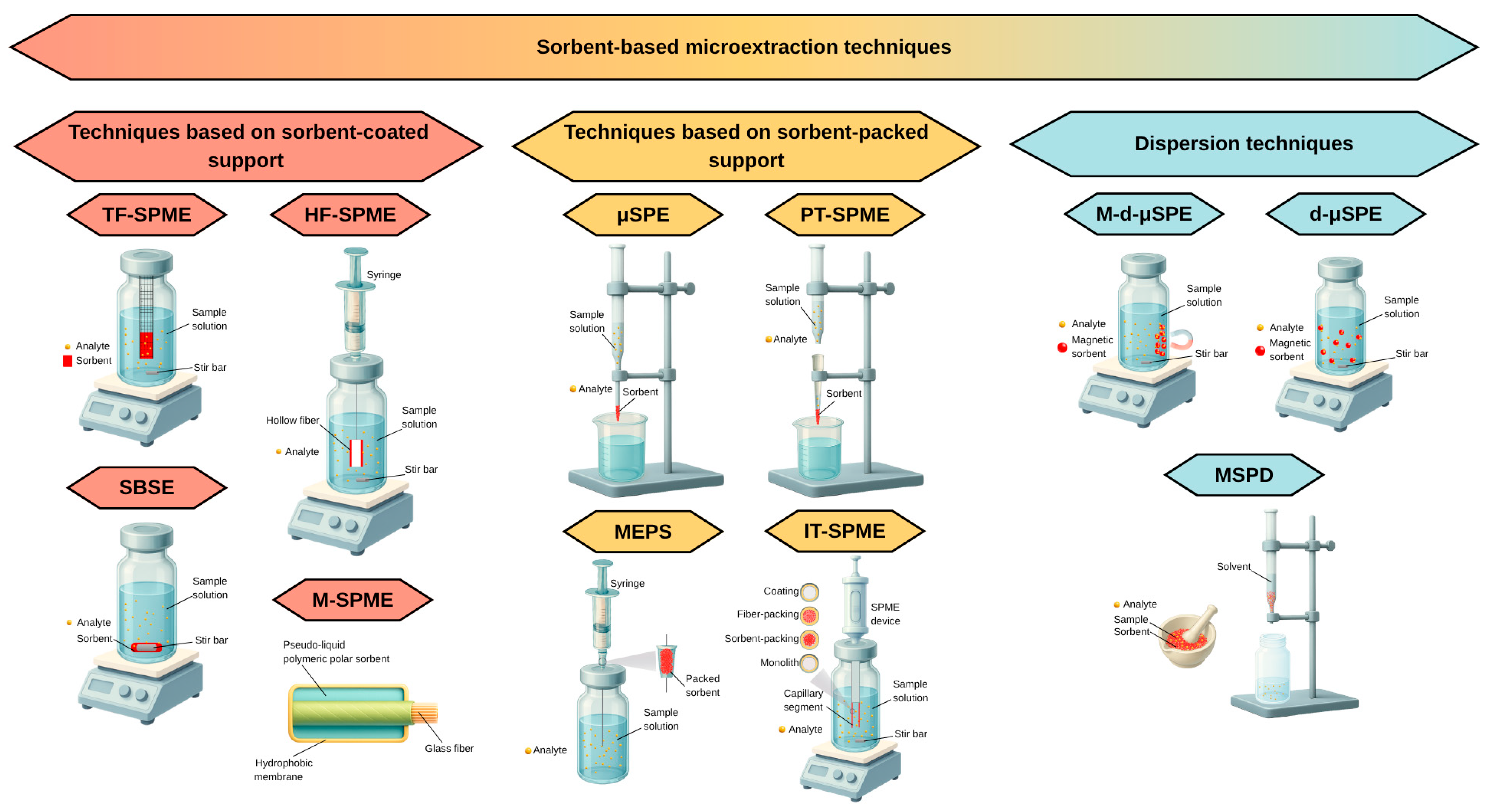
Figure 1. Types of SPME techniques depending on the support-sorbent system.
Sustainability 18 00402 g001
Figure 2. Comparison of fiber SPME and thin film SPME techniques.
Sustainability 18 00402 g002
Figure 3. Groups of sorptive materials used in miniaturized sample preparation.
Sustainability 18 00402 g003
Figure 4. Eutectic diagrams for liquid (a) and solid (b) eutectic mixture.
Sustainability 18 00402 g004
Figure 5. Functions of DESs in SPME techniques.
Sustainability 18 00402 g005
Figure 6. Scheme of proposed TF-SPME with DES-based sorbents and composite materials.
Sustainability 18 00402 g006
Figure 7. Future trends for using DESs in SPME techniques.
Sustainability 18 00402 g007
Table 1. Approaches of DESs in SPME techniques.
Extraction
Method
SupportCoating MaterialDES (HBA:HBD,
Molar Ratio)
Approach of DESReuse
of Material
AnalytesSamplesDetectionEFRSD
[%]
Environmental MetricsRef.
SPMEMonolithic columnSMSN/BMA/EGDMA/
DES
(ChCl:EG, 1:2)Porogen- *PAHs
NSAIDs
Lake watersCEC- *<3.0Not
reported
[68]
SPMEFiber Gel-sol PDMS-DES(EP:MTOACl, 2:1)Porogen>60 timesToluene
Ethylbenzene
o-Xylene
WatersGC-FID7.6
20.4
17.1
6.7
4.5
4.2
Not
reported
[69]
SPMEFiber GA/NADES(ChCl:Glu, 1:2)Porogen- *PCNsShrimpGC-MS/MS410–15535.8–20Environmentally friendly method[70]
SPMEFiber 3D DES-GA(ChCl:urea, 1:2)Porogen≥160 timesPCNsFishGC-MS/MS1225–46522.4–6.6Environmentally friendly sorbent synthesis[71]
SPMEMonolithic fiberDES/MIP(FA:menthol, 1:1)Porogen15 timesHerbicidesSoilsHPLC-DAD- *- *Analytical Eco-Scale
71 out of 100
[72]
SPMEMonolithic columnTiO2-poly(GMA-DES-EGDMA)(ChCl:MAA, 1:2)Functional monomer for polymer synthesis24 timesProteinsRat liverHPLC-MS/MS22–282.2–3.1Not
reported
[73]
IT-SPMEMonolithic columnpoly(DES-EGDMA)(ChCl:IA, 1:1.5)Functional monomer for polymer synthesis- *NSAIDsPlasma,
water
HPLC-UV98–1031.9–4.3Not
reported
[74]
mini-SPMENeedle of syringeTDES-MIP(ChCl:3,4-DHBA:EG, 1:1:2)Template and functional monomer in MIPs synthesis6 times3,4-DHBAIlex chinensis
Sims
HPLC-UV- *<4.2Not
reported
[75]
HFLMP-SPMEHollow fiber, Monolithic fiberMOF-DES/MIP(ChCl:EG, 2:1)Substrate for MOF>80 timesPhthalate estersYogurt, water,
edible oil
GC-FID441–4462.6–3.4Not
reported
[76]
MMF-SPMEMonolithic fiberMOF-DES/MIP(ChCl:EG, 2:1)Substrate for MOF60 timesAmphetamines
Modafinil
Unauthorized medical supplementsGC-MS159–1631.0–4.7Green extraction solvent[77]
MMF-SPMEMonolithic fiberMOF-DES/MIP(ChCl:EG, 2:1)Substrate for MOF- *35 AntibioticsMeat, dairy productsHPLC-UV162–1932.8–5.6Not
reported
[78]
SPMEAerogel beadsCA/DES(ChCl:PEG, 1:1)Sorbent component- *HMFCoffeeHPLC-UV- *2.5–4.7ComplexGAPI
Analytical Eco-Scale
[79]
HF-SPMEHollow fiberGO/DES(ChCl:thiourea, 1:2)Sorbent component- *Ag(I)Water, ore,
hair
FAAS2003.5Environmentally friendly method[80]
EC-IT-SPMECapillary tubesPPy/DES(ChCl:urea, 1:2)Sorbent component>450 timesLosartanWater, urine, plasmaHPLC-UV- *2.4–4.6Not
reported
[81]
TF-SPMEpaperDES(thymol:vanillin, 1:1)SorbentNot reusableHerbicidesCreek, underground well waterGC-MS- *7.4–14.7Green extraction solvent[82]
TF-SPMEStainless steel meshDES(THTDPCl:DcOH, 1:2)Sorbent3 timesParabensLake water, river waterHPLC-UV166–1833.6–6.5Environmentally friendly method[83]
TF-SPMEStainless steel meshSol–gel PDMS/DES(THTDPCl:DcOH, 1:2)Sorbent component10 timesParabensLake water, river waterHPLC-UV174–1862.7–4.5Not
reported
[84]
TF-SPMEFiberglass meshPDMS/DES(THTDPCl:DcOH, 1:3)Sorbent component- *Parabens, PreservativesDiapersLC-MS/MS- *2.5–10.3GAPI[85]
TF-SPMEFiberglass meshNADES(AcChCl:DcOH, 1:3)Sorbent16 timesSweeteners, PreservativesFunctional beverages, flavored watersHPLC-UV59–645.7–7.4Complex-MoGAPI
84 out of 100
[86]
TF-SPMETeflon® meshNADES/
biowaste cork
(BeCl:EiOH, 1:3)Sorbent component10 timesLake watersUV filtersHPLC-UV- *3.6–7.4ComplexMoGAPI
85 out of 100
[87]
S-TFME
PT-TFME
Suspended film
Pipette tip
CTA/DES(DcA:lidocaine, 2:1)Sorbent component5 timesOrganophosphorus pesticidesWaterGC-MS- *3–14Environmentally friendly method[88]
TF-SPMEfilmACGO(ChCl:TEACl, 1:1)Solvent to desorption- *ChlorophenolsAgricultural waste water, honey, teaGC-MS33.4–35.82.8–5.9Not
reported
[89]
*—not given; 3,4-DHBA—3,4-dihydroxybenzoic acid; AcChCl—acetylcholine chloride; ACGO—graphene oxide coated agarose/chitosan; BeCl—betaine chloride; BMA—butyl methacrylate; CA—calcium alginate; CEC—capillary electrochromatography; ChCl—choline chloride; CTA—cellulose triacetate; DAD—diode array detector; DcA—dodecanoic acid; DcOH—1-docosanol; DES—deep eutectic sorbent; EC-IT—electrochemically controlled in tube; EF—enrichment factor; EG—ethylene glycol; EGDMA—ethylene glycol dimethylacrylate; EiOH—1-eicosanol; EP—ethyl 4-hydroxybenzoate; FA—formic acid; FAAS—flame atomic absorption spectroscopy; FID—flame ionization detection; GA—graphene aerogel; GC—gas chromatography; Glu—glucose; GMA—glycidyl methacrylate; GO—graphene oxide; HF—hollow fiber; HFLMP—hollow fiber liquid membrane-protected; HMF—5-hydroxymethylfurfural; HPLC—high-performance liquid chromatography; IA—itaconic acid; LC—liquid chromatography; MAA—methacrylic acid; MIPs—molecularly imprinted polymers; MMA—methylmetacrylate; MMF—multiple monolithic fiber; MOF—metal–organic framework; MS—mass spectrometry; MS/MS—tandem mass spectrometry; NADES—natural deep eutectic solvents; NSAIDs—non-steroidal anti-inflammatory drugs; PAHs—polycyclic aromatic hydrocarbons; PCNs—polychlorinated naphthalenes; PDMS—polydimethylsiloxane; PEG—poly(ethylene glycol); PT—pipette tip; PPy—polypyrrole; RSD—relative standard deviation; SMSN—stellated mesoporous silica nanoparticles; SPME—solid-phase microextraction; TDES—ternary deep eutectic solvent; TEACl—tetraethylammonium chloride; TF—thin-film; THTDPCl—trihexyl(tetradecyl)phosphonium chloride; UV—ultraviolet spectroscopy.
Table 2. Comparison of DESs and other sorbents in SPME [33,63,64].
AdvantagesDisadvantages
DESs
in SPME
  • Ability to tune properties, such as viscosity, polarity, etc., by changing hydrogen bond donors/acceptors to achieve specific analyte binding.
  • Biodegradable, biocompatible, low-toxicity, often derived from renewable resources.
  • Simple synthesis from inexpensive materials.
  • Suitable for complex matrices, can provide higher selectivity and efficiency.
  • Low vapor pressure, which improves laboratory safety and reduces air pollution.
  • Less well-known than conventional sorbents, potentially fewer commercial options initially.
  • May have higher viscosity or lower mechanical strength.
  • May exhibit instability under extreme pH and high-temperature conditions.
Other sorbents in SPME
  • Wide range of commercially available materials with varying polarities (C18, polymers, etc.).
  • Often characterized by excellent structural integrity and surface area (e.g., activated carbon).
  • High performance in many applications.
  • High mechanical strength.
  • Some sorbents, such as silica, may be less environmentally friendly; separation with activated carbon can be difficult.
  • Properties are fixed, unlike DES, which limits optimization options.
  • High-quality commercial sorbents and activated carbon can be expensive.
Disclaimer/Publisher’s Note: The statements, opinions and data contained in all publications are solely those of the individual author(s) and contributor(s) and not of MDPI and/or the editor(s). MDPI and/or the editor(s) disclaim responsibility for any injury to people or property resulting from any ideas, methods, instructions or products referred to in the content.