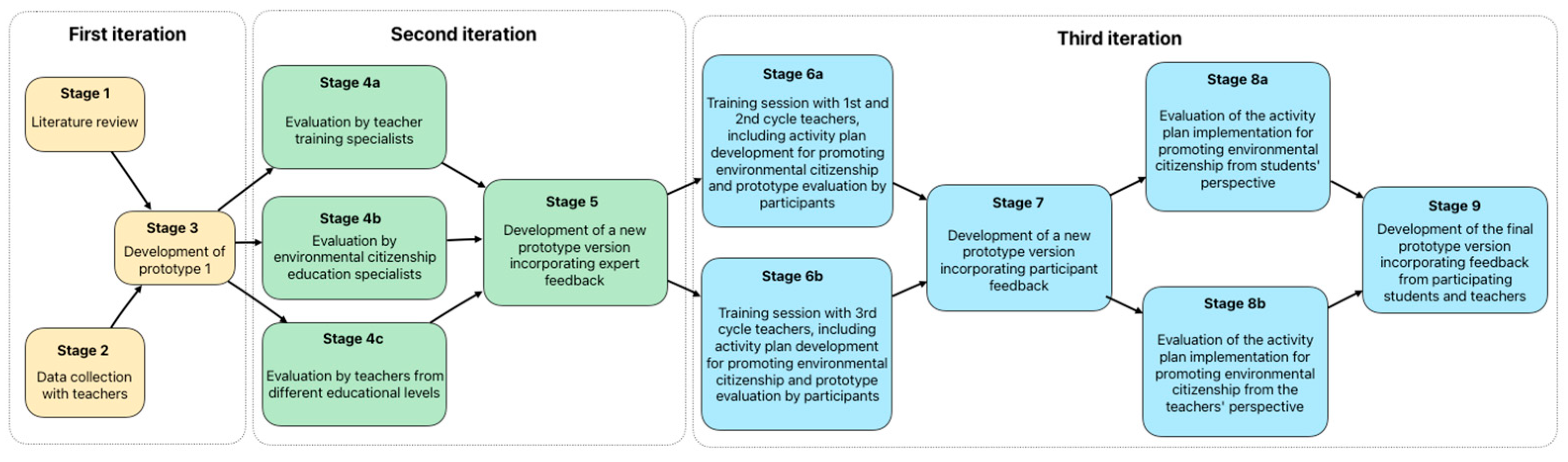
An in-depth analysis of the 32 responses, which were coded and systematised, revealed four central axes of recommendations for improving the prototype. These axes, which structure the presentation of the results that follow, are: (1) the need for greater pedagogical consistency; (2) the demand for an ethical and critical foundation for EC; (3) the importance of adjustments to the course design to guarantee a feasible immersion; (4) the proposal of strategies for sustainability and institutional engagement.
3.1. Aiming for Pedagogical Consistency
The analysis of the experts’ responses reveals a tension between the conceptual validation of the methodologies proposed in prototype 1 and the need to refine their focus and operationalisation. It is important to mention that the participants were sent a list of the core methodologies informed by the literature review (stage 1 of the DBR). These strategies, such as collaborative learning, experiential learning, outdoor learning, and reflective practices, were selected because the mapping in the empirical literature demonstrated their effectiveness in promoting competences such as environmental literacy, critical thinking and transformative action [
37]. In addition, the evaluation questions for the prototype directly asked for an assessment of its suitability (see Q1 and Q2).
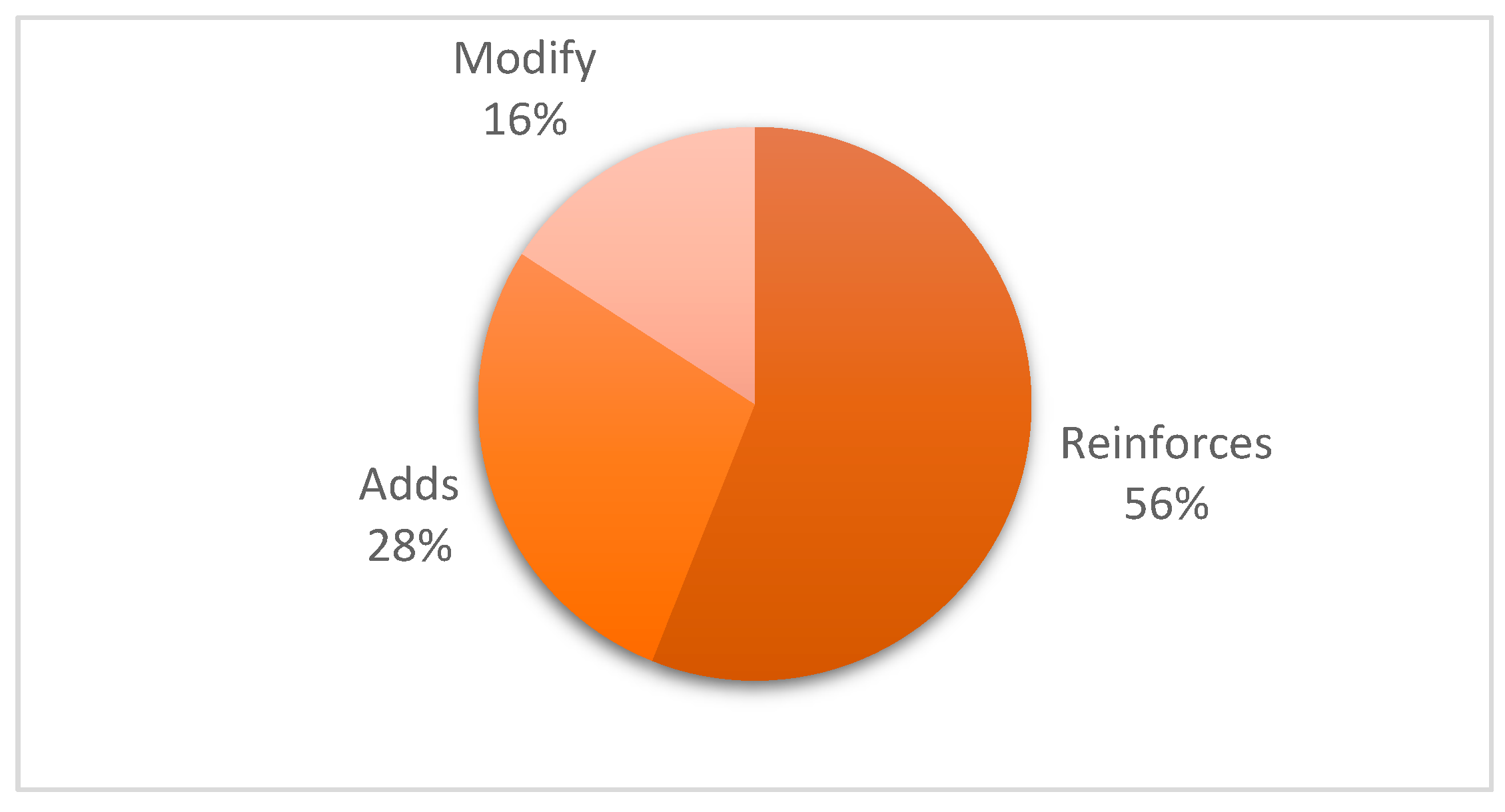
Figure 2 illustrates how the types of contribution were distributed specifically in the ‘Methodology’ category, allowing us to identify patterns of reinforcement, addition and modification.
A broad validation of the proposed methodologies was thus evident, with 56% of the UR reinforcing them. When the methodologies were explicitly named, the UR was assigned to a specific subcategory, considering that direct mention could give different nuances to the interpretation of the results (as will be shown below). The modifications were mostly associated with the implementation format, such as the need to adjust the workload or extend the debate time within a given topic, while the additions focused on the objectives and the articulation of the phases, bringing specific suggestions of activities to be incorporated, such as the use of role-playing games, controversy maps and co-design methodologies to encourage the protagonism of the participants.
The case of PBL illustrates these dynamics well: two UR of reinforcement and three of modification were identified. The modifications were concentrated in two distinct situations: (i) expert E6 suggested removing PBL, not because she rejected the methodology itself, but because she considered it to be not very distinctive in relation to others already mentioned (such as community-based learning or experiential learning); and (ii) expert E1 defended the focus on “one or two specific pedagogies (for example, PBL)”, reinforcing PBL as an example of a structuring methodology. Analytically, these suggestions indicate that while PBL is conceptually validated as a potent strategy for fostering critical thinking and agency, its implementation requires precise scaffolding to avoid cognitive overload and ensure it serves a distinct pedagogical purpose within the prototype.
Outdoor learning also received specific attention, with comments focusing on temporal and logistical adjustments to ensure its viability. This validation of its relevance dialogues with the literature, which highlights both the benefits of outdoor learning for teacher well-being and engagement [
56,
57], as well as its potential to deepen understanding of ecological systems and foster pro-environmental attitudes [
58,
59]. Critically, however, experts warned against ‘episodic’ outdoor activities that lack curricular integration, reinforcing the need for these experiences to be structurally linked to the investigation of local socio-environmental issues.
In addition, the experts mentioned other methodologies, such as Service-Learning (E11; E6), Action Competence Learning and Socio-Scientific Inquiry-Based Learning (SSIBL) (E9), which are known in the literature to be powerful for developing EC [
35]. In the same direction, Citizen Science was highlighted (E21) as it favours the democratisation of scientific knowledge [
60].
To operationalise these methodologies, specific strategies and techniques were suggested, such as simulations, controversy mapping (E3), comparative case analysis (E4) and data collection in the field (E25), the relevance of which has also been discussed in recent studies [
38,
61].
The alignment of the prototype with these active methodologies aims specifically at fostering Action Competence, understood as the integration of knowledge, values and skills with the willingness and perceived capacity to act on controversial issues [
35]. This emphasis is supported empirically, as higher levels of action competence are associated with a greater likelihood of manifesting EC in practice [
62]. In this perspective, environmental activism is not a ‘theory-free practice’, but a collective, inquiry-driven and democratic process of addressing socio-environmental problems—one that positions students as critical producers of knowledge rather than passive recipients [
5,
34].
The relevance of visual documentation was also emphasised, such as digital portfolios and logbooks (E3; E26), practices supported by evidence that reflective mechanisms of this nature favour professional teacher development [
63].
This wealth of suggestions, however, brought a central challenge to the design: how to integrate multiple approaches without creating a fragmented training experience? This risk of cognitive overload, when different methodologies are presented without a clear purpose, is a recurring warning in the literature on effective teacher education design [
64]. The meta-analysis by Sims et al. [
65] reinforces this perspective by showing that successful training should integrate theory and practice in a progressive way, allowing teachers to consolidate new ways of teaching.
Therefore, to respond to both the wealth of contributions from experts and the structural warnings in the literature, the decision was made to structure the course around two central and structuring methodologies: PBL and Case Study. The others were kept as references and examples, presented at specific moments to broaden the participants’ repertoire without jeopardising the cohesion of the experience.
In addition, it was suggested that the training programme be anchored in the teachers’ reality (E27; E15) and that the EC activities developed throughout the course be mandatory (E27), ensuring that the training process and the professional context are linked. The importance of debating the school’s limits and potential in the face of socio-environmental problems was also highlighted (E18), as well as the need to discuss assessment methods and the use of AI (E9) as an auxiliary tool in the construction of criteria and grids (E12; E25).
These contributions were accompanied by warnings about potential difficulties. The main concern centred on the lack of a sufficiently solid initial theoretical and critical basis, which could compromise the consistency of the entire programme. Experts, especially from the teachers’ group, emphasised the need to include an expository-dialogued moment at the beginning of the course, in order to guarantee mastery of structuring concepts such as critical environmental education and socio-environmental justice (E27; E18). This demand for grounding was reinforced by the suggestion to link the case studies to national reference documents (E21) and to include explicit debates on ethics, philosophy and critical thinking (E26; E27), forming a conceptual foundation to guide subsequent practices. The absence of this basis was identified as the origin of other practical risks, such as the dispersion of strategies, imprecision in application, potential “pressure on teachers” and a potential driver for the “depoliticization” risks (see
Section 1.2), where practices become fragmented and purely instrumental. We will go into this in more detail in
Section 3.2.
Based on this analytical process, the modifications to the prototype aimed to enhance pedagogical consistency (RQ2). The course is organised around two core methodologies, case studies and PBL, which will cover topics such as assessment, stakeholder support, the relationship with the SDG and the curriculum (including national reference documents), and the critical use of technologies and AI, allowing teachers to integrate theory and practice reflectively. Outdoor Learning will take place through a field trip to observe and collect data on local socio-environmental problems.
The application of the EC-promoting activity developed by the participants is a compulsory component, and they can count on mentoring support. Various moments of debate and reflection based on the case studies allow participants to draw up a personal plan in line with their interests, objectives and challenges, relating the content to teaching practice and making them co-participants in the training process. The critical component of the training, including debates on different definitions of EC and ethical-political dilemmas, will be detailed in the next section.
3.2. The Demand for an Ethical and Critical Foundation for Environmental Citizenship
Analysing the answers to question 7 revealed a set of recommendations that point to the need to strengthen the critical and ethical dimension of EC in the prototype. The experts suggested including references from critical environmental education and moral philosophy, in order to put a strain on the classic notion of citizenship and broaden reflection on values, principles and ethical-political dilemmas. These proposals reinforce the critical-emancipatory nature of the prototype, which problematises the political and ethical reasons and implications of teaching in EC [
5,
11].
The contributions dialogue with criticisms of the liberal and anthropocentric nature of modern citizenship, which is often associated with the marginalisation of vulnerable groups and the separation between humans and nature [
30,
66,
67]. In this sense, proposals such as ecological meta-citizenship [
7] and forestry [
68,
69] offer alternatives that integrate biocentric ethics, environmental justice and political engagement, challenging the human-nature dualism that renders structural injustices invisible, positioning EC critically. This basis supports the need for a more robust conceptual foundation in the prototype, capable of articulating dimensions beyond the conceptual.
To move beyond the limitations of liberal models—which tend to individualise responsibility and obscure structural inequalities—EC must be framed as a political project grounded in justice and structural transformation. Recent contributions in science education reinforce this imperative: justice-centred perspectives argue that environmental problems are inseparable from racialised, economic and territorial inequities, requiring teaching that explicitly addresses their structural origins [
70]. Complementing this, critical-decolonial standpoints [
32,
33] emphasise the need to examine the historical and political forces shaping socio-environmental conflicts, preventing their reduction to mere behavioural choices or apolitical competencies.
Furthermore, Gandolfi [
31] argues that socio-scientific issues cannot be deeply understood without recognising how scientific knowledge and authority are embedded in power relations. This reinforces the need for EC to cultivate teachers’ critical reading of environmental problems, engaging with the political nature of science itself. Consequently, pedagogical approaches must foreground structural determinants and the economic systems underpinning environmental degradation [
35,
67]. While ENEC acknowledges the importance of identifying these structural causes [
5,
37], the experts’ recommendations highlight the specific need for a clearer political vocabulary that enables teachers to address such contentious issues without collapsing into partisan framings.
Another set of recommendations concerned the introduction of ethical and philosophical foundations. E26 proposed including issues of moral philosophy, with questions such as “Which life is worth living?”, capable of provoking questions about how teachers understand their work. E19 emphasised that the course should explore teachers’ values, beliefs and previous experiences, while E2 stressed the importance of helping them to “clarify their own values and actions in terms of local and global environmental issues”. These recommendations converge with critical pedagogy [
24] and critical environmental education literature, which understands teachers as agents of social transformation [
3,
71,
72]. Considering the ethical-political dilemmas of the sciences is a possible way of overcoming superficial approaches and developing critical and emancipatory competences [
27,
29]. This orientation aligns with recent calls to reimagine science education by confronting the historical injustices, power relations and structural inequalities inherent to scientific knowledge [
31], thus preparing teachers to guide students in understanding science as socially embedded and politically consequential.
This vision of the teacher as a transforming agent is based on the principle that every pedagogical action is, in itself, a political act, as it expresses values that mould students’ perception of the world [
24]. However, the materialisation of this dimension in everyday school life is complex and multifaceted. On the one hand, engaged teachers can develop robust practices with activist components without recognising them as such. On the other hand, many environmental education practices end up not transcending individual actions [
27,
28,
29].
This duality between powerful but unnamed action and action that is limited to the superficial seems to be fuelled by a set of interconnected barriers. On a conceptual level, the narrow interpretation of EC, which translates into a “lack of theoretical clarity” (E25) and a tendency to favour awareness-raising over transformative action [
26,
29], is a primary obstacle. In addition, in terms of dispositions, the perception of low empowerment on the part of teachers directly feeds the “fear of tackling controversial topics” and the “preference for safe approaches” (E32), either because of the difficulty in recognising the activist potential of their own practice or because of scepticism about the school’s ability to produce results. This aligns with wider empirical evidence (as seen in 1.2) showing that teachers often prioritise non-controversial outputs—such as building benches [
27]—and ‘tread carefully’ to avoid institutional pushback [
28]. Fundamentally, these resistances are not merely individual but reflect broader structural and cultural barriers associated with initial training and school culture [
73], contributing to a process of depoliticization [
29], which together limit the exercise of genuinely critical and political teaching. In this sense, adopting a justice-centred pedagogy becomes relevant [
70]: by framing socio-scientific issues as matters of social justice, it provides a coherent basis for confronting structural inequalities, embedding ecological concerns in broader struggles for equity. At the same time, this framework helps to recognise that even modest activities can constitute meaningful dimensions of action competence [
34,
35], empowering teachers and students to envision collective, systemic transformation.
In this context, E3’s suggestion to “add training in activism and communication skills” highlights the perception that education for EC faces a double challenge: broadening the conceptual framework and, at the same time, strengthening teacher empowerment. Although the speech itself is brief, it opens up space to discuss the need to make visible work that dialogues with the critical tradition of environmental education, but which differs by emphasising EC as its own field.
By articulating rights, responsibilities and political participation, EC shifts the focus from ecological awareness to the formation of subjects capable of intervening in social and environmental disputes. From this perspective, training in activism and communication skills reaffirms education as a political and emancipatory act [
24], emphasises the centrality of the political dimension in teacher training [
74,
75,
76] and situates EC as an exercise in critical and situated participation [
22,
34,
36]. By shifting the focus from individual accountability to collective processes, teacher empowerment is strengthened, creating the conditions for teachers to recognise themselves as political subjects capable of challenging hegemonic narratives and opening up paths to fairer socio-environmental alternatives.
The realisation of this training proposal, however, requires the construction of a clear pedagogical architecture that faces basic obstacles. The need, pointed out by E25, to “make it clear from which perspective of environmental education the work is inserted”, refers to a deeper challenge than a simple lack of theory. This difficulty is often rooted in the very “philosophical barrier of the human/environment dichotomy” [
66]. Overcoming this anthropocentric vision thus becomes a path towards transformative pedagogy, implying a biocentric turn. It is from this ethical repositioning that practical suggestions, such as anchoring training in real socio-environmental challenges and valuing dissent (E18), gain real meaning and critical potential.
It has already been mentioned that experts have proposed some activities and methodologies to flesh out this vision, such as the use of controversy mapping as a technique for dealing with complex problems [
61], and SSIBL, which favours ethical debate and critical engagement [
35,
77]. These approaches bring the professional development of teachers closer to science education that is effectively geared towards socio-environmental justice [
73].
These contributions were incorporated into Prototype 2 in a structured way. Phase 1 now includes a module on different visions of EC, as well as an analysis of the ethical and political dilemmas associated with EC education in teaching practice. The changes bring the prototype into line with the recommendations of experts and contemporary literature, consolidating training that aims not just to transmit methodologies, but to train teachers as critical intellectuals and agents of socio-environmental transformation.
3.3. Adjustments to the Workload, Modality and Pace for a Feasible Immersion
Analysing the contributions relating to the format of the course (n = 45 references) revealed three main axes: time, division of phases and modality. Time was the most debated aspect, with 24 modifications and 11 reinforcements, signalling a central tension over the sufficiency of the 30 h envisaged in prototype 1.
Table 6 shows the quantitative distribution of contributions.
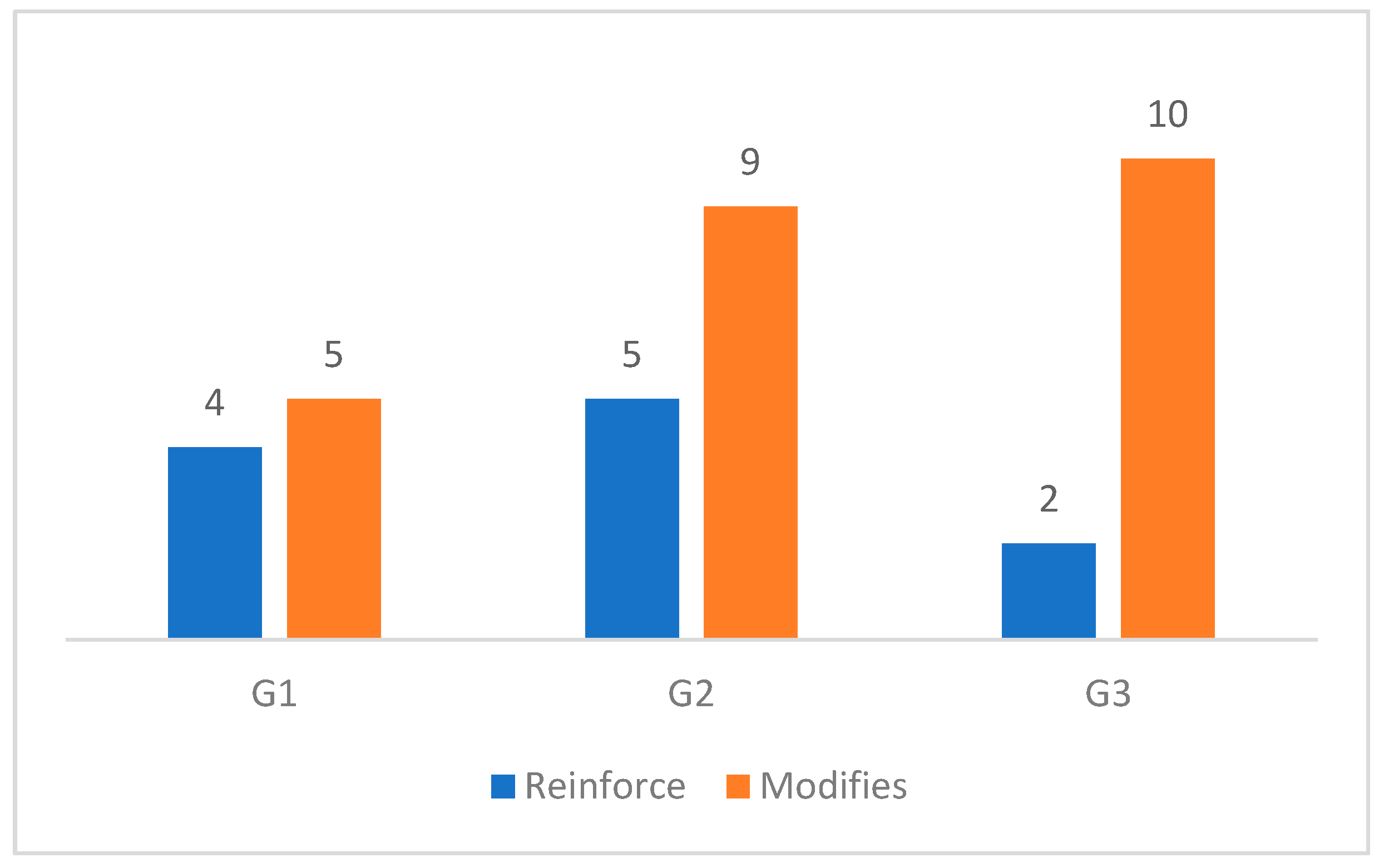
However,
Figure 3 shows that there was a divergence between groups of experts. Specialists in EC (G1) and teacher training (G2) considered the 30 h to be adequate, focusing their suggestions on internal adjustments to the distribution of time. On the other hand, specialists practising teachers (G3) considered the workload to be insufficient, emphasising the need for additional time to carry out field trips and to meet the minimum workload required for formal accreditation and progression in the teaching career.
The division of the phases also received suggestions (5 modifications, 11 reinforcements and 3 additions), especially the extension of Phase 1 to include ethical dilemmas and theoretical foundations (as mentioned in the previous section), and the reinforcement of the phase dedicated to the field visit. E26 pointed out that organising these experiences “always takes a lot of work because of bureaucratic issues and agreeing on common dates”, which reinforces the need for greater flexibility in terms of time.
The hybrid modality was widely validated (21 reinforcements; 8 modifications; 6 additions), with a consensus that field activities and immersive experiences cannot be replaced by online sessions. E9 suggested that the first and last sessions should be face-to-face, in order to “establish a connection and evaluate in person”. As an alternative in cases of logistical unfeasibility, E27 proposed the use of “virtual museums”, guaranteeing meaningful experiences even without physically travelling.
The hybrid model thus emerges as a pragmatic solution that balances the flexibility of online with the irreducibility of face-to-face in activities that involve embodied learning and community building. Recent evidence confirms that hybrid training programmes (b-learning) favour engagement and the collaborative development of skills, as long as they include meaningful face-to-face interactions, institutional support and spaces for shared reflection [
78,
79,
80]. The combination of virtual and face-to-face sessions in Prototype 2, therefore responds both to the need for flexibility and to the experiential and relational dimension essential to EC training.
There were also reservations about bringing together teachers from different levels of education. E24 suggested “adapting strategies with the different levels of education in mind”, while E27 emphasised the difficulty of working simultaneously with primary and secondary school teachers. E21 emphasised the importance of explaining, in Phase 3, interdisciplinary strategies adapted to the 1st Cycle of Basic Education (6 to 9 years old students), considering the mono-teaching characteristic of this level. The literature supports this concern: heterogeneous groups can enrich learning by exchanging perspectives, but they require differentiated strategies and structured collaboration to avoid dispersion and unequal participation [
81,
82]. By making adapted strategies explicit in Phase 3, the model responds to the practical limitations pointed out and reinforces the value of dialogue between cycles, which is fundamental for curriculum integration and the development of a shared professional culture.
They reaffirm the value of experiential and situated learning, the effectiveness of which depends on sufficient time for the reflective appropriation of new practices [
83,
84]. Recent reviews indicate that time is one of the most important factors determining the effectiveness of teacher development programmes, and it is essential to guarantee multiple opportunities for practice, reflection and feedback over extended periods [
85,
86].
Thus, the extension to 50 h is in line with empirical evidence that associates longer programmes with deeper and more sustainable pedagogical changes. Prototype 2 was therefore redesigned as a 50 h course in a hybrid modality, divided into four phases: Phase 1 (8 h): extended to include ethical-political dilemmas and personal training plans; Phase 2 (8 h): incorporated two days of compulsory face-to-face immersion, guaranteeing the non-substitutability of field experiences; Phase 3 (18 h): prioritised the production of didactic sequences and their application in the classroom; Phase 4 (8 h): consolidated socialisation and evaluation, with digital portfolios, focus groups and a final evaluation.
These modifications respond directly to the difficulties identified, such as the condensed workload, the unfeasibility of online for immersive practices and the heterogeneity of the audience, and incorporate the proposed solutions, making the course more feasible, coherent and sustainable.
3.4. Strategies for Sustainability and Institutional Engagement
The experts’ contributions revealed a central concern with the longevity of the programme and overcoming the bureaucratic and cultural barriers present in the school environment. The most frequently anticipated difficulties were institutional resistance, a shortage of time and resources and the perception that environmental activities could be treated as “extras” rather than an integral part of the curriculum. As E22 warned, without the necessary support, learning runs the risk of being lost “in the roller coaster that is everyday school life, with its curricular demands and internal assessments”. They also pointed out the difficulty of maintaining teaching commitment over time, given professional saturation (E3), and the fragility of community partnerships and communities of practice without a support structure and prior trust (E26, E8). These observations echo what Wenger [
87,
88] describes as the challenge of transforming individual learning into sustainable institutional practices within communities of practice.
To meet these challenges, the proposals converged on a sustainability strategy based on three interdependent pillars: (1) institutional engagement, (2) community partnerships and (3) the creation of long-term support structures.
The first pillar, institutional engagement, focuses on the need to guarantee internal support. To this end, the experts recommended a “prior sensitisation phase aimed at managers and educational authorities” (E3) and the involvement of management positions in the course itself, so as to avoid the training falling on isolated teachers (E5). In addition, E5 emphasised that implementation becomes more viable when the school participates as a whole, and not just through individual teachers, highlighting the importance of including school managers in the process. In addition, the need to strengthen the school’s democratic culture was emphasised, including discussions about the role of school councils, parents’ associations and student unions in solving environmental problems (E22). The concern with whole-school engagement is consistent with recent studies showing that institutional commitment and leadership participation are decisive for embedding sustainability practices into school culture [
89].
The second pillar focuses on community partnerships, extending the support network beyond the school walls. Proposals included involving the community from the earliest stages, through joint projects with local players and alliances with organisations and entities related to environmental causes (E3), as well as incorporating specific strategies to involve families and social collectives (E3). Also highlighted was the need for greater clarity on how this integration will be operationalised—which social actors will participate, at what time and for what purpose (E27). Another critical point was the realisation that collaboration can only be sustained by previously established bonds of trust (E26), which requires participatory methodologies that bring school and community together in co-design processes. This concern was reinforced by doubts about how teacher training will address the promotion of these partnerships (E8). To summarise, the pillar shows that community integration is promising but requires methodological detail and continuous relational investment. This view is consistent with Sarid et al. [
90], who argue that communities of practice and open schooling initiatives strengthen collaborative networks of mutual support and co-authorship between teachers and community actors, making teacher learning a collective, situated and socially rooted process.
The third pillar focuses on support structures for long-term sustainability. Unlike training courses that end without continuity, this prototype was praised for proposing the consolidation of communities of practice as a differentiator (E17; E5). Recommendations included creating a collaborative repository of activities and resources as a permanent digital platform (E3, E7), as well as setting up ongoing support networks, including in virtual format (E21). Formal accreditation of the course was pointed out as a critical factor in legitimising the training and linking it to progression in the teaching career (E23, E29). Above all, sustainability would depend on the consolidation of an autonomous community of practice, capable of generating leaders to continue the work (E17, E28). Such communities favour the sharing of ideas, critical reflection and collaborative learning, fostering a culture of adaptability and innovation [
91,
92]. Furthermore, results show that teacher-led communities of practice can serve as sustainable infrastructures enabling long-term inclusive and pedagogical change, even in contexts of institutional constraints [
93].
In response, Prototype 2 was enriched with actions aimed at strengthening these three pillars. A preliminary leadership sensitisation phase was designed (pillar 1), Phase 4 now includes the creation of a digital repository (pillar 3), and the process of formal accreditation of the course (pillar 3), considered a critical success factor, was started. These changes aim to ensure that the course is not a one-off event, but the starting point for an ongoing learning community, institutionally legitimised and sustained by support networks [
88].