Article

The Digital Economy and Sustainable Development Goals: A Predictive Analysis of the Interconnections Between Digitalization and Sustainability in China

Department of Economics, Xi’an Jiaotong University, Xi’an 710049, China
Sustainability 2026, 18(1), 375; https://doi.org/10.3390/su18010375 (registering DOI)
Submission received: 1 October 2025 / Revised: 21 December 2025 / Accepted: 23 December 2025 / Published: 30 December 2025

Abstract

This study empirically investigates the impact of the digital economy on sustainable development, with a particular focus on the mediating role of green innovation. Using panel data from 420 regional observations in China, we employ an advanced econometric panel including a two-way fixed effects model, mediation analysis, threshold regression, and instrumental variable (2SLS) techniques to address potential endogeneity. The findings confirm a significant positive direct relationship between the digital economy and sustainable development. Mediation analysis reveals that the digital economy fosters green innovation, which in turn drives sustainable development, accounting for about 17.12% of the total causal effect. A key novelty is our identification of a significant threshold effect: specifically, using a threshold model with 2SLS techniques, we find that sustainability benefits from digitalization are nonlinear and much higher in regions with higher institutional quality. Overall, this study advances the literature by moving beyond a simple direct link to reveal both the underlying causal mechanism and the contingent condition critical for nuanced policy insights.

1. Introduction

The rapid rise in the digital economy is marked by technologies such as the Internet of Things, artificial intelligence, and big data, among others, which are fundamentally reorganizing economic and social mechanisms [1]. At the same time, efforts toward achieving the United Nations Sustainable Development Goals (SDGs) aim to address environmental degradation, social inequality, and economic instability [2]. In China, these two transformative forces are occurring with unprecedented scale and speed [3]. The government actively promotes initiatives such as “Digital China” and “Ecological Civilization,” alongside its commitment to the SDGs. This creates a critical context for investigating the synergies and tensions between digitalization and sustainability [4]. This research aims to empirically analyze the complex interconnections between the expansion of China’s digital economy and its progress toward achieving the SDGs, with the specific objective of identifying the pathways through which technological advancement can support sustainable outcomes [5].
A substantial body of literature has established theoretical links between information and communication technology (ICT) and sustainable development [6]. Seminal works have argued that digitalization can enable sustainability. This is primarily through mechanisms such as dematerialization, enhanced efficiency, and circular economy models [7]. Recent empirical studies have begun to quantify these relationships. They often find a positive correlation between ICT development and environmental or economic indicators [8]. For example, research shows that digital tools can optimize energy grids and reduce carbon emissions in smart city contexts. However, a significant gap persists. Much existing scholarship remains siloed, focusing on isolated environmental aspects (like CO2 emissions) or broad economic gains. This fails to capture the holistic multi-dimensional nature of the 17 SDGs [9]. Furthermore, causal identification is often insufficient. While many studies find correlations, few establish the robust causal pathways required for effective policy design [10].
Despite the advances, the existing literature lacks a nuanced nation-specific analysis for a context as unique and influential as China. While some studies have examined China’s digital economy [11] or its sustainability policies separately, comprehensive analyses that integrally link the two are scarce. The Chinese model, with its distinct state-led approach to technological development and sustainability governance, may yield interconnections that differ significantly from patterns observed in Western economies [12]. The context-dependent nature of the digitalization–sustainability nexus is frequently overlooked in generalized models, resulting in a critical knowledge gap [13]. Understanding these dynamics within China is not merely an academic exercise but a necessity, given the country’s profound impact on global digital trends and sustainable development progress.
This research aims to fill these gaps by providing a comprehensive and forward-looking analysis tailored to the Chinese context. We move beyond siloed approaches and construct a robust framework that evaluates the impact of digital economy indicators across the key pillars of eco-economic sustainability: environmental and economic performance. The study’s originality stems from its rigorous econometric design. This approach enables us to address a pivotal question: What specific causal mechanisms (both direct and mediated) link the digital economy to SDG performance, and how do they vary across different governance contexts? This work makes three theoretical contributions. First, it contributes to the discussion on technology and sustainability by testing current theories in a unique state-capitalist context. This may result in a new contextual model. Second, it adds value to the sustainable development community by providing a methodological approach. We apply advanced causal inference techniques to SDG evaluation, helping to transition the field from description to foresight. Lastly, it empirically illuminates the causal mechanisms of green digitalization, employing instrumental variable (IV) techniques to address endogeneity and provide unbiased estimates of the mechanism’s strength and sustainable performance. The applied contributions are also important. The findings will provide Chinese policymakers with a solid evidence base for creating more effective and integrated policies that promote digital innovation and sustainability without unintended side effects.
The structure of this paper is as follows: Section 2 provides a comprehensive literature review. It synthesizes knowledge on the digital economy, the SDGs, and their intersections. Section 3 describes the research methods, including the data sources, variable selection, and the predictive modeling techniques used. Section 4 reports the key findings from our empirical analysis, including causal effects and threshold estimations. Section 5 discusses these findings and interprets their implications for the existing literature and the Chinese context. Finally, Section 6 concludes by summarizing the core insights, outlining policy recommendations, and suggesting future research avenues.

2. Literature Review

2.1. The Digital Economy: Definitions and Dimensions

Digital technology is evolving at an unprecedented pace. It has a profound impact that fundamentally transforms traditional economic activities and influences environmental sustainability [14]. The digital economy, characterized by rapid operation, high intelligence, and strong interconnectivity [15], moves beyond the linear “resources-production-consumption-waste” model. It propels the economic system toward a development path that balances resource conservation with circular utilization and optimized adjustments [16]. Information technology platforms disrupt structural foundations by enabling real-time resource allocation, product lifecycle coordination, and industrial chain optimization [17]. As a result, resource consumption decreases and energy efficiency improves across technological management, enterprise operations, and governance systems [18].
The conceptual boundaries of the digital economy remain fluid. However, consensus exists around its core characteristic: economic value creation fundamentally derived from digital technologies [19]. Ren et al. [20] and Xiao et al. [21] laid the groundwork by envisioning an emerging economy driven by networked intelligence and digital infrastructure. The term has evolved into more formal definitions. The Organization for Economic Co-operation and Development (OECD) characterizes it as encompassing all economic activities that rely on or are significantly enhanced by digital inputs [22], including digital technologies, infrastructure, services, and data [23]. This broad scope moves beyond measuring the ICT sector alone. It now encompasses the pervasive digitization of traditional industries and the emergence of platform-based business models. The inherent complexity in definition is mirrored by measurement challenges [24,25].
For this study, we construct a comprehensive digital economy index (DEI) using a multidimensional indicator system. This system captures both the foundational capacity and transformative impact of digitization. The index moves beyond basic connectivity metrics and includes four critical dimensions. These are digital infrastructure (incorporating next-generation indicators like 5G base station density [24] and fiber optic network coverage) [25], digital industry scale (measuring the value-added output of core ICT sectors) [26], innovation and human capital (capturing R&D expenditure and talent concentration in digital fields), and digital technology application (assessing the penetration of AI, IoT, and big data analytics across traditional industries) [27]. This framework is particularly relevant for China’s context. Regional digital development disparities reflect not just basic internet access but also significant differences in advanced infrastructure deployment [28], industrial digitization depth, and innovation capacity—factors crucial for investigating the digital economy’s relationship with sustainable development outcomes.
Academic and policy analyses often construct multidimensional frameworks to capture the essence of the digital economy [29]. These frameworks typically focus on foundational pillars such as digital infrastructure, which includes metrics like broadband penetration rates and server capacity. They also consider digital industrialization, measured by the value-added output of the ICT sector itself, and industrial digitization, which assesses the integration and application of technologies like artificial intelligence, the Internet of Things, and big data analytics within conventional economic sectors [30]. The Chinese context presents a particularly potent and distinct case study of this evolution. The scale and state-directed nature of its digital transformation is propelled by national strategies like “Made in China 2025” and “Digital China.” The global rise in its domestic technology giants further represents a unique model of digital development [31].
This model, referred to as “platform socialism” or state-led digital capitalism, assigns the government a pivotal role in guiding innovation and markets, thereby forming an institutional setting that shapes digitization in a manner distinct from Western liberal economies [32].

2.2. Sustainable Development Goals: A Framework for Assessment

In 2015, the United Nations adopted a comprehensive framework of 17 Sustainable Development Goals (SDGs). The 2030 Agenda on Sustainable Development, endorsed by member states, was created as a blueprint for a better and more sustainable future. The key strength of this framework is its integrated and holistic nature. It clearly acknowledges complex interdependencies and synergies between economic progress, social inclusion, and environmental protection [33]. Aiming to promote decent work and economic growth (SDG 8), foster industry, innovation, and infrastructure (SDG 9), reduce inequality (SDG 10), and combat climate change (SDG 13) are all interconnected and cannot be pursued in isolation [34].
However, this very comprehensiveness creates significant methodological challenges for researchers [35]. A common critique is that operationalizing the 2030 agenda leads to a siloed approach. Research often focuses on a single goal or a narrow set of indicators, missing the systemic trade-offs and synergies that are central to the SDG framework [36]. As a result, quantitative studies often construct composite indices or select a limited set of proxy variables to represent the broader concept. These risks present an incomplete or distorted view of a nation’s progress across all dimensions of sustainability [37]. The methodological tension between holistic ambition and practical measurement remains a central challenge. Research designs must strive to account consciously for the multidimensionality of sustainability as embodied by the SDGs [38].

2.3. The Nexus Between Digitization and Sustainability

In China, the concept of “sustainable development” is an imported one. The term was first formally proposed in 1987 by the Brundtland Commission’s report “Our Common Future”. Since then, Chinese-style sustainable development has developed its own trajectory and localized expression logic [39]. Guided by the United Nations’ “Rio Declaration” and “Agenda 21”, China officially established sustainable development as a national strategy in 1994 with the publication of the “China Agenda 21”. This marked the start of constructing policy systems, including ecological civilization construction, green development, and resource-conserving eco-friendly societies [40]. Academia has also engaged in theoretical interpretations and practical implementations of sustainable development. Special emphasis has been placed on holistic coordination, intergenerational equity, and environmental capacity in Chinese-style sustainable development [41].
With the emergence of a new era, ecological civilization has become a key national development priority in China. As a result, the country has taken a more systematic and deeper approach to interpreting the concept of sustainable development [42]. In 2012, the 18th National Congress of the Communist Party of China formally identified sustainable development as a fundamental pillar for building a moderately prosperous society. It was also proposed as a way to create an environmentally friendly and resource-efficient society [43]. Since 2015, green development has been the primary focus of national policies. These include the 13th Five-Year Plan for ecological and environmental protection, as well as the 14th Five-Year Plan with goals through 2035 [44].
The theoretical and empirical literature describes a dualistic relationship between digitalization and sustainable development. It outlines significant enabling pathways as well as substantial constraining forces [45]. On the one hand, digital technologies are theorized to be powerful enablers of sustainability transitions. Dematerialization enables the replacement of physical products and processes with digital equivalents. Additionally, efficiency gains from smart grids, intelligent transportation systems, and precision agriculture are expected to decouple economic growth from environmental degradation [46]. Mobile money and digital finance initiatives have demonstrated their ability to promote financial inclusion, a key aspect of SDG 8. E-learning and telemedicine can improve access to quality education (SDG 4) and healthcare (SDG 3), especially for remote and marginalized communities [47].
Big data analytics and the Internet of Things provide vital infrastructure for circular economy models. They enable improved tracking, maintenance, remanufacturing, and recycling of materials, directly supporting SDG 12 on responsible consumption and production [48]. On the other hand, research highlights key trade-offs and negative externalities. The rebound effect means efficiency gains can reduce costs, but also increase overall consumption of energy or resources. This can partially or fully offset the environmental benefits of digital solutions [49]. The digital economy itself has a substantial material footprint. The production, operation, and disposal of hardware and data centers all contribute to pollution, energy consumption, and electronic waste. This poses a direct challenge to SDG 13 on climate action [50]. Most critically, the benefits of digitization are not distributed equally. Without intentional governance, the digital revolution can worsen socioeconomic inequalities (SDG 10). New digital divides can arise based on skills, geography, or income. Labour markets can be disrupted, and market concentration can increase in the hands of a few powerful platform corporations [51].

2.4. Critical Gap in the Context of China

While the global literature offers a valuable foundational understanding of the potential linkages between digitization and sustainability, empirical research focused specifically on China remains relatively underdeveloped and exhibits several critical limitations [52]. The existing body of work, though growing, tends to adopt a notably narrow analytical focus. A predominant number of studies focus on examining the relationship between a single, often simplistic, digital indicator, such as internet penetration rate or the size of the ICT sector, and a singular sustainability outcome, most frequently carbon dioxide emissions [53]. This reductionist approach fails to capture the multifaceted nature of both the digital economy, which is a complex, multi-layered system, and the SDGs, which constitute an integrated and indivisible framework. There is a pronounced scarcity of comprehensive, holistic studies that attempt to assess the simultaneous and systemic impact of digitalization of sustainability within China’s unique socio-political context [54]. Furthermore, the temporal dimension of existing research is almost exclusively retrospective, relying on historical data to establish correlational relationships. To our knowledge, prior studies fail to employ advanced causal inference techniques to address endogeneity and heterogeneity simultaneously. Specifically, there is a pronounced scarcity of studies that robustly assess the nonlinear conditional effects of digitalization or identify the unbiased causal mechanisms (mediation) in China [55]. It is this critical gap—the need for a comprehensive, multidimensional, and robust causal analysis specifically tailored to the distinct realities of China’s state-led digital capitalism—that the present research seeks to address, thereby contributing a more nuanced and policy-relevant understanding [56].

2.5. Theoretical Framework

This study builds its theoretical foundation on the idea that the digital economy (DE) acts as a general-purpose technology [57]. It permeates economic sectors and directly supports sustainable development (SD) by enhancing resource efficiency, spreading technology, and improving environmental governance [58]. The direct impact is explained by innovation diffusion theory [59]. This theory explains how digital technologies facilitate the optimization of energy and material use, promoting transparent and data-driven governance.
We also theorize an important indirect pathway through green innovation (GI). Following the Porter Hypothesis [60], we suggest that the digital economy lowers the costs and barriers to environmental innovation. It directs technological change toward green outcomes. This forms a chain where digital solutions drive real sustainability gains through the use of low-carbon technologies and circular economy approaches. However, linking the Digital Economy (DE) and Sustainable Development (SD) presents tough econometric challenges. The main issue is endogeneity. This can come from reverse causality, where regions with better SD attract more DE investment, or omitted variable bias, such as political will that affects both DE and SD. Our framework addresses these biases by using instrumental variable methods.
The success of this process depends on the institutional context. Based on Institutional Theory [61], our framework posits that local governance capacity serves as a key moderating factor, thereby creating a nonlinear relationship. We argue that digital changes do not happen in isolation. Their benefits become much greater in regions with strong institutions. Good governance, effective regulation, and skilled public administration are essential for directing digital investments and managing transitions. These factors ensure the connection between digitalization and green innovation is effective. This integrated framework, therefore, provides a nuanced model. It shows that the digital economy’s impact on sustainability is shaped by both green innovation and the quality of institutions.

3. Methodology

3.1. Model Construction

To analyze the digital economy’s role, we adopt the Information and Communication Technology for Development (ICT4D) framework, using its principles to show how the widespread adoption and utilization of digital technologies serve as the mechanism to stimulate economic growth, enhance social inclusion, and ultimately achieve sustainable development. This supports our hypothesis that the digital economy has a direct influence on sustainable development by improving resource efficiency, encouraging low-carbon growth, and enhancing governance.
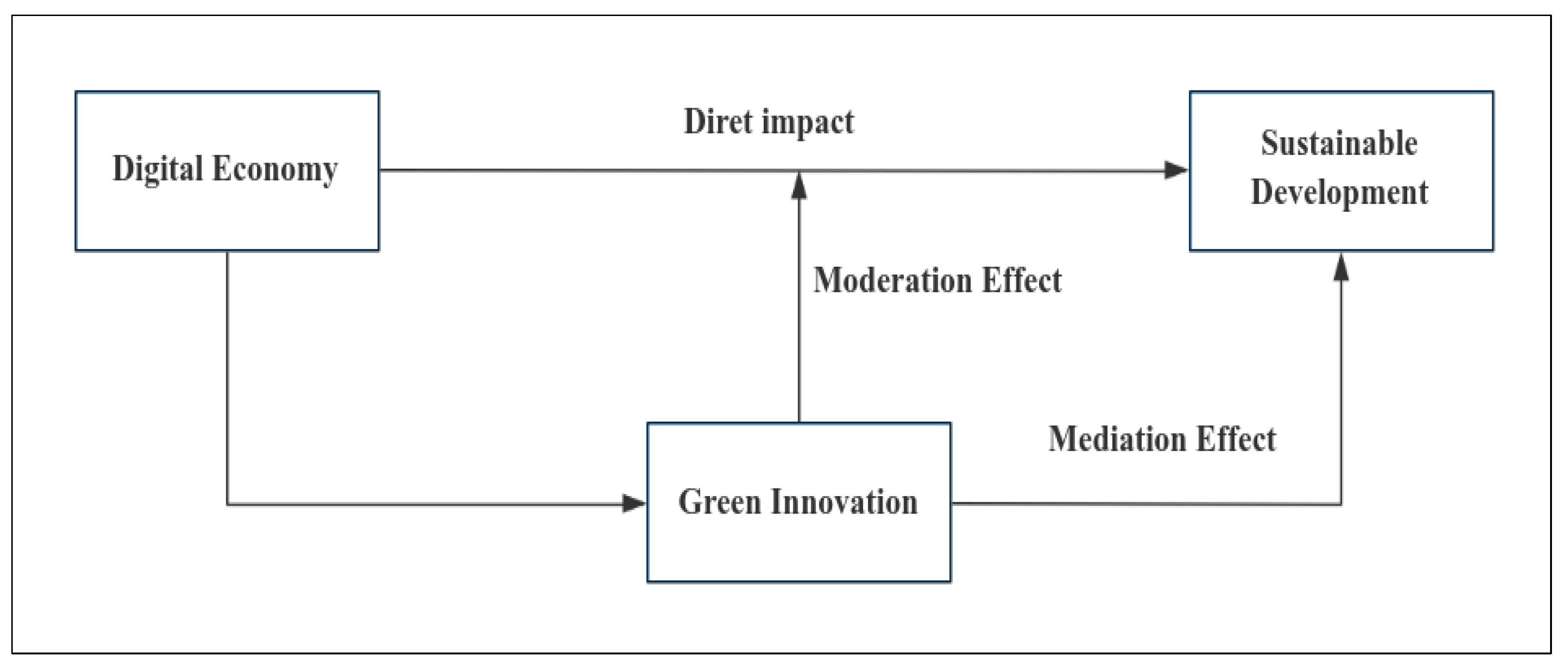
The Sustainable Development construct uses the UN Sustainable Development Goals (SDGs). For green innovation, we utilize the Porter Hypothesis, which posits that environmental regulations can stimulate innovation and offset compliance costs. This theory supports our view that green innovation boosts green development by focusing innovation on sustainable solutions. Our conceptual framework, shown in Figure 1, presents a three-way relationship. It details how the digital economy affects green sustainable development directly and indirectly. Green innovation serves as a mediating factor. Building on innovation diffusion theories, we also suggest that green innovation could be a moderator. Varying levels of innovative ability may strengthen or weaken the digital economy’s impact on sustainable outcomes.

3.1.1. Mediating Variable Model

To further test the mediating effect of green innovation in the process of promoting sustainable development in digital economy, we construct the following mediating variable regression model (Formulas (1)–(3)):
G ovs i , t = α 0 + α 1 D i g i i , t + α 2 Z i , t + μ i + δ t + ε i , t
I n n o   s i , t = β 0 + β 1 D i g i i , t + β 2 Z i , t + μ i + δ t + ε i , t
Govs i , t = γ 0 + γ 1 D i g i i , t + γ 2 I n n o i , t + γ 3 Z i , t + μ i + δ t + ε i , t
Model (1) estimates the direct impact of the digital economy on sustainable development performance. Model (2) examines the digital economy’s effect on green innovation. Model (3) uses both as explanatory variables to investigate whether green innovation mediates the relationship between digital economic activity and sustainable development. Evidence of mediation appears if, in Model (3), the coefficient of the digital economy is lower than in Model (1), and green innovation remains significant.
  • G ovs i , t : the level of sustainable development in the year of each region, reflecting green governance performance or the comprehensive performance of SDGs;
  • D i g i i , t : the level of digital economy development, which is the core explanatory variable.
  • I n n o s i , t : the level of green innovation, which is the mediating variable, is usually measured by the number of green patents, green R&D expenditure, etc.
  • Z i , t : control variable vector, including per capita GDP, industrial structure, education level, urbanization rate, etc.
  • μ i : regional fixed effects, controlling for unobservable regional differences.
  • δ t : time fixed effects, controlling for policy and environmental changes in different years.

3.1.2. Threshold Regression Model

We employ the panel threshold regression technique to examine the potential heterogeneous effects of the digital economy on sustainable development performance. This method enables the determination of potential nonlinear relationships by establishing whether the effect of the digital economy on sustainability outcomes varies significantly between the various factors that can be characterized by the threshold variables. The model specification allows the marginal effect of digital economic development to change in discrete steps across a threshold variable with an empirically estimated critical value, thereby quantifying the differences in the effects of different states of development or institutional environments.
The model is set as below:
Govs i , t = φ 0 + φ 1 D i g i i , t × I ( A d j i , t θ ) + φ 2 D i g i i , t × I ( A d j i , t > θ ) + φ 3 Z i , t + μ i + ε i , t
The model is as follows:
The two groups in the sample are defined by whether the actual values of the threshold variable are less than or equal to the critical value or whether they are higher than the critical value. The segmented regression terms capture the marginal impact of the digital economy variables on sustainable economic development performance in different segments around the threshold. If the influence coefficient is high, then there is a significant threshold effect.
Symbol Description:
  • Govs i , t : the level of sustainable development in the region (dependent variable).
  • D i g i i , t : the level of DE.
  • A d j i , t : threshold variable, indicating the regulating environment (such as the development level of green finance, the intensity of environmental regulation, local governance capacity, etc.).
  • θ : the optimal threshold estimated by the model.
  • I ( ) : indicator function, which is 1 if the condition is true and 0 otherwise.
  • Z i , t : set of control variables.
  • μ i : regional fixed effects.
  • ε i , t : random disturbance term.

3.2. Variable Measurement and Elucidation

3.2.1. Measurement of Digital Economy

To assess regional digital economy development, this study establishes a multidimensional indicator system that captures digital infrastructure, digital industry scale, innovation and human capital, and digital technology application. The system balances data accessibility with academic rigor, evaluating both the digital infrastructure coverage and technological integration into economic activities. By considering both the digital economy’s penetration across sectors and its widespread adoption, it provides a comprehensive assessment of regional digitalization capabilities.
Prior studies have noted that basic penetration metrics (internet users, mobile users) often reach saturation in developed Chinese regions, limiting their ability to capture heterogeneity. Therefore, our “internet development level” primarily utilizes next-generation metrics such as 5G base station density, fiber optic network coverage, and broadband penetration rate. In the dimension of digital financial inclusion, this study directly incorporates the Digital Financial Inclusion Index (DFII) provided by Peking University (PKU), which is widely accepted in Chinese economic literature. This composite index measures digitalization across provinces, overcoming the limitations of using a single labor-market proxy.

3.2.2. Sustainable Development Measurement

To obtain and assess the regional sustainable development performance across China’s regions, this study constructs a comprehensive indicator system aligned with the UN Sustainable Development Goals (SDGs). The index integrates both economic and environmental sustainability indicators using publicly available data to ensure comparative feasibility, as shown in Table 1.
The system uses positive indicators, where higher values indicate better performance, and negative indicators, where lower values are preferred. To combine these into a single Sustainable Development Index (SDI), a two-step quantitative process was used. First, min–max normalization was used to make all indicators dimensionless and comparable. Second, the entropy weight method was used to assign weights objectively, based on the informational value of each indicator. This avoided subjective bias in aggregation.
The weighting scheme assigns higher weight to indicators that exhibit higher variation across regions. These indicators offer better discriminatory power in evaluation. The main indicator categories are weighted as follows: economic output indicators (per capita income and GDP) are about 0.35, industrial and consumption structure 0.25, and environmental performance (including pollution control and green coverage) 0.40. This shows that both economic and environmental factors are strongly represented in the final SDI, which is the weighted sum of all the normalized indicators. Table A1 in the Appendix A lists the exact entropy weights for each indicator to ensure transparency and allow others to replicate the results.
Before the complex econometric evaluation, we conducted a basic observational analysis. We examined the spatial distribution of the SDI and the Digital Economy Index across Eastern, Central, and Western China. A preliminary positive correlation is clear: regions with a higher Digital Economy Index, mainly in the East, tend to have a higher SDI. This pattern supports conducting regression analysis. It visually demonstrates that digitalization and sustainability are closely linked, with the strength of the relationship varying by development tier.

3.2.3. Mediating Variables and Control Variables

To conduct an empirical test of the theoretical pathway through which the digital economy affects sustainable development via green innovation, the present study includes one main mediating variable and a set of control variables. Green innovation is the mediating variable, operationalized as the natural logarithm of the sum of green invention patents and the green utility model patents of entities in each province. This indicator is a much-used proxy in the literature to estimate the regional output of environment-focused technological innovation and a region’s ability to produce low-carbon technologies, equipment, and processes.
To reduce the bias of the net influence of the digital economy and guarantee the stability of the estimated relationships, a set of control variables is applied. In addition to the mediating variable, the study introduces local governance capacity as the threshold variable to investigate potential nonlinear effects. These variables capture all the other basic macroeconomic and social variables that might play concurrent roles in the sustainable development performance of a province. Per capita GDP balances out the general level of economic growth and resources at their disposal to utilize in sustainability projects. The industrial structure (ratio of tertiary to secondary sector value-added) reflects how far a region has moved toward a potentially less polluting and service-based economy. The urbanization rate accounts for the pressures and efficiencies associated with population concentration in urban areas. The education level is included as a proxy for human capital, which is critical for both adopting digital technologies and driving innovation. Furthermore, Foreign Direct Investment (FDI) controls for the potential spillover effects of foreign capital, technology, and management practices on sustainability. Urban compactness (population density) is used to control for the agglomeration effects and specific environmental challenges of densely populated areas. Finally, science and technology expenditure as a share of total fiscal outlays measures the government’s direct commitment to fostering innovation.

3.3. Data Sources and Sample Description

This study employed a balanced panel dataset of 30 provincial-level regions in China (excluding Tibet, Hong Kong, Macao, and Taiwan due to data limitations) covering the period 2009–2022, for a total of 420 observations. The timeframe captures China’s phase of rapid digitalization and strengthened environmental governance following the launch of the broadband China strategy. Data were obtained from authoritative sources, including the China Statistical Yearbook, the China Environmental Statistical Yearbook, the National Bureau of Statistics, and the Peking University Digital Financial Inclusion Index. The dataset was strongly balanced, ensuring uniform coverage across regions and years. Given the relatively short time dimension (T = 14) compared to the cross-sectional units (N = 30), potential non-stationarity issues typical of long time series were less critical. To ensure robustness, the study applied two-way fixed effects (FE) estimation with Driscoll–Kraay standard errors, which correct for heteroskedasticity, serial correlation, and cross-sectional dependence. All statistical analyses were conducted using Stata 17.0, encompassing fixed effects, mediation, instrumental variables (2SLS), and panel threshold regression models following Hansen’s (1999) framework [62].

4. Findings

4.1. Descriptive Statistics

This study serves three primary purposes. First, it offers a clear overview of the central tendency, dispersion, and range of the key variables across Chinese provinces, highlighting the significant regional disparities in digital economy development, green innovation capacity, and sustainable development performance that are central to the research question(Table 2). Second, it enables an initial bivariate examination of the relationships posited in the conceptual framework, providing preliminary evidence of potential linkages between the Digital Economy Index, the mediating variable of green innovation, and the dependent variable of the Sustainable Development Index(Table 3).

4.2. Baseline Regression: The Direct Impact of the Digital Economy

A baseline regression analysis is critical to reveal the essence of the relationship under scrutiny in this study: the direct effect of the (DE) on (SD). Although the correlation analysis revealed a positive bivariate relationship, it failed to control for confounding factors or to provide circumstances in which all other factors remain constant. The multivariate regression with a fixed effects model isolates the net influence of the (DEI) on the (SDI), controlling for the major factors, including economic growth, industrial structure, urbanization, and human capital.
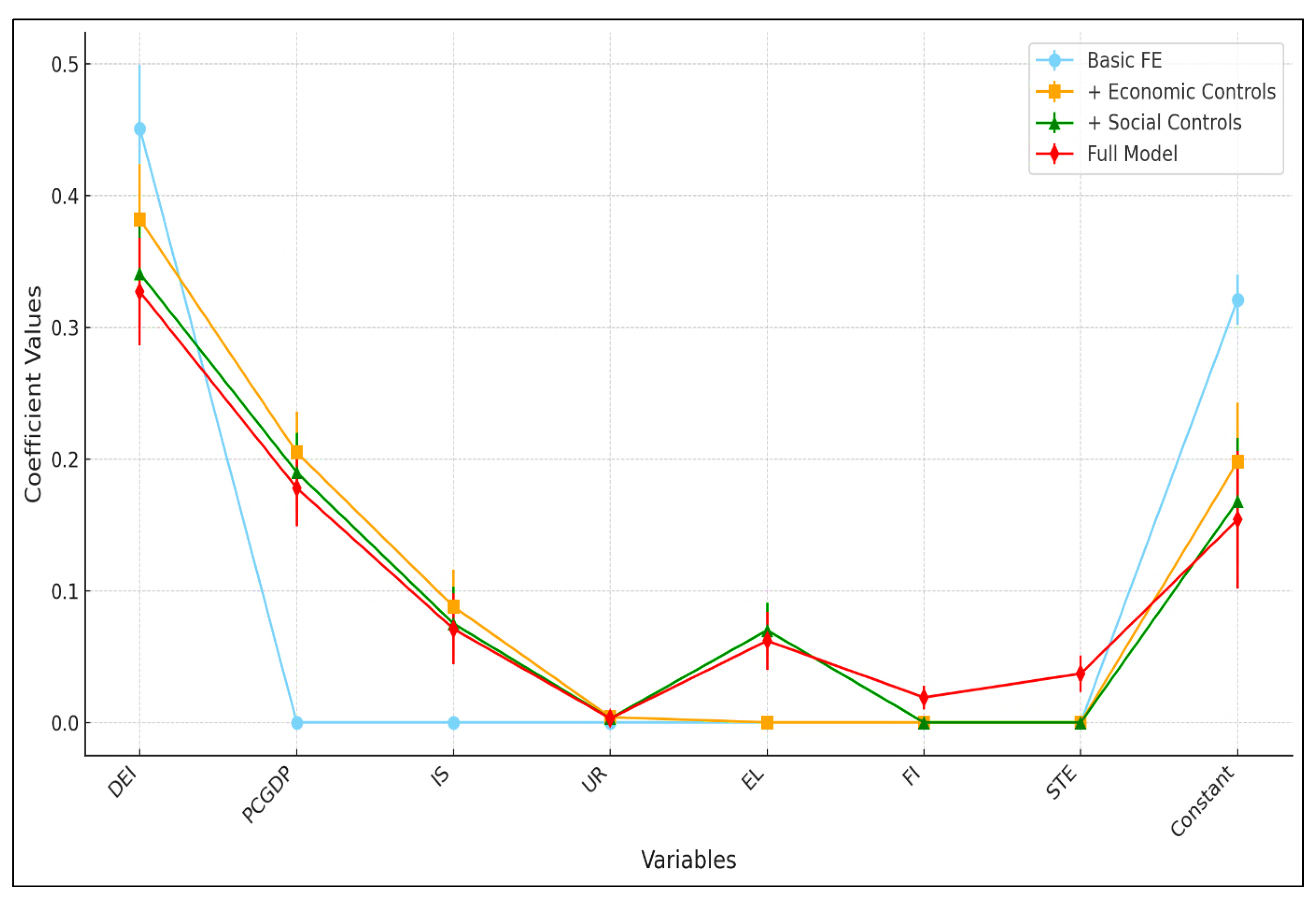
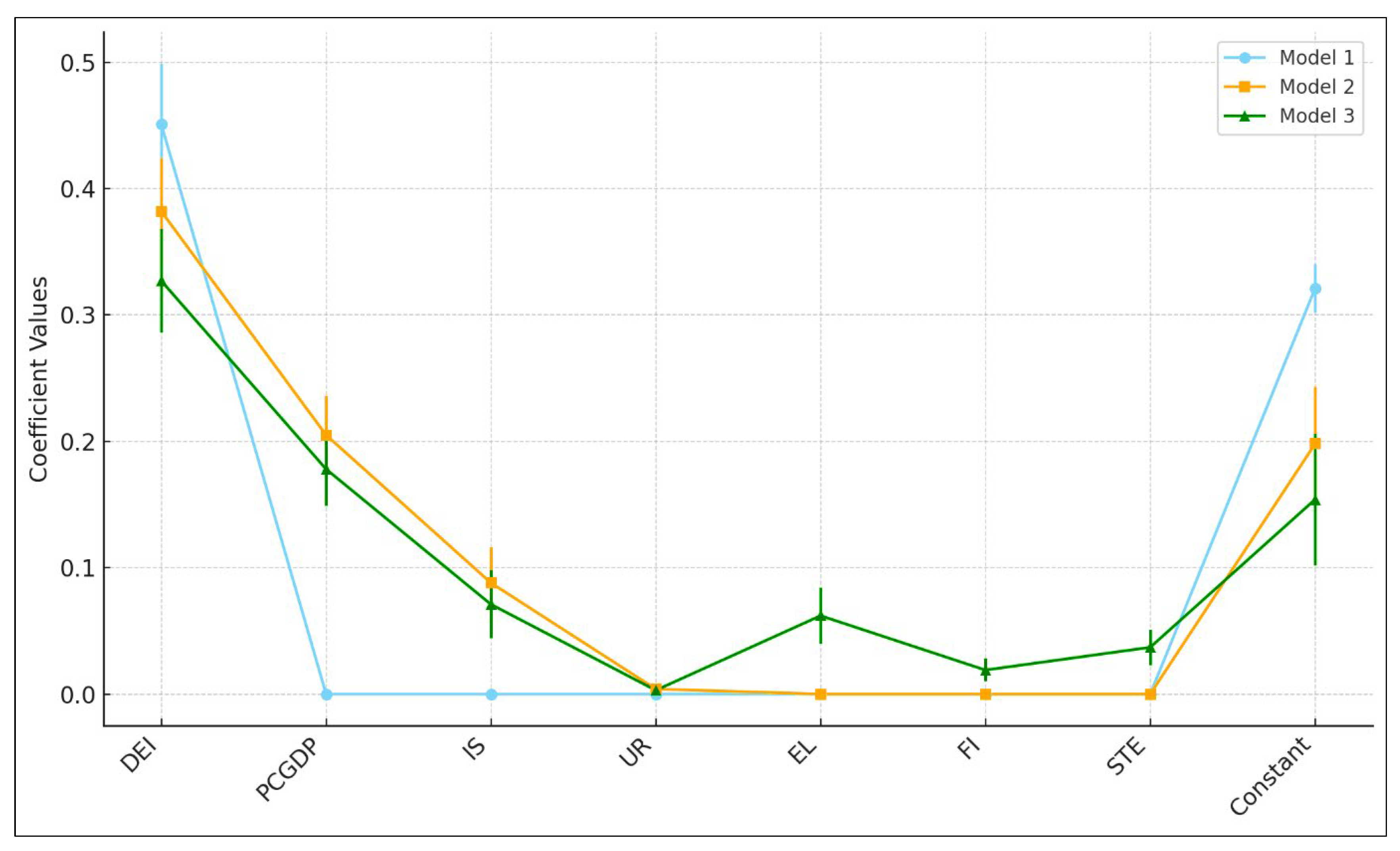
Table 4 shows that the DEI coefficient in Model 1 is 0.451 (p < 0.01) and drops to 0.382 (p < 0.01) and 0.327 (p < 0.01) in Models 2 and 3, respectively, reflecting the expected attenuation of the effect with the addition of comprehensive controls, a tendency toward a constant but weaker correlation with additional variables. The per capita GDP (log), industrial structure, urbanization rate, education level, foreign investment, and scientific and technological expenditure are identified as important variables with positive coefficients, but the largest impact is from the GDP (0.205, p < 0.01) and urbanization rate (0.004, p < 0.01). The R2 values improve to 0.781 in Model 3, compared to 0.685 in Model 1, as additional controls are added. The coefficient of the Digital Economy Index remains 0.327 *, with a Driscoll–Kraay standard error of (0.040) **, which is virtually identical to the clustered-robust value.
The coefficients consistently show a significant positive association; it is crucial to note that these fixed effects estimates may suffer from endogeneity bias (reverse causality or omitted variables) (Table 5). Figure 2 displays the coefficients for key variables such as DEI, per capita GDP (PCGDP), and industrial structure (IS), among others. Each model’s coefficient values are represented by lines, while error bars indicate the standard errors for each coefficient.
To better illustrate the regression results of the baseline model with fixed effects and various control variables, Figure 3 provides a visual summary of these findings.
Table 6 shows that multicollinearity is not a serious concern in the full regression model. Each VIF score is below the standard threshold of 10, as well as the conservative level of 5. Thus, the per capita GDP (log) has the highest VIF at 3.12, followed by the Digital Economy Index at 2.85. The other variables have VIF values between 1.42 for science and technology expenditure (%) and 2.64 for the education level. The overall mean VIF of 2.3 further confirms that the level of multicollinearity is quite acceptable, as the value is well below the critical value of 10 and close to one.
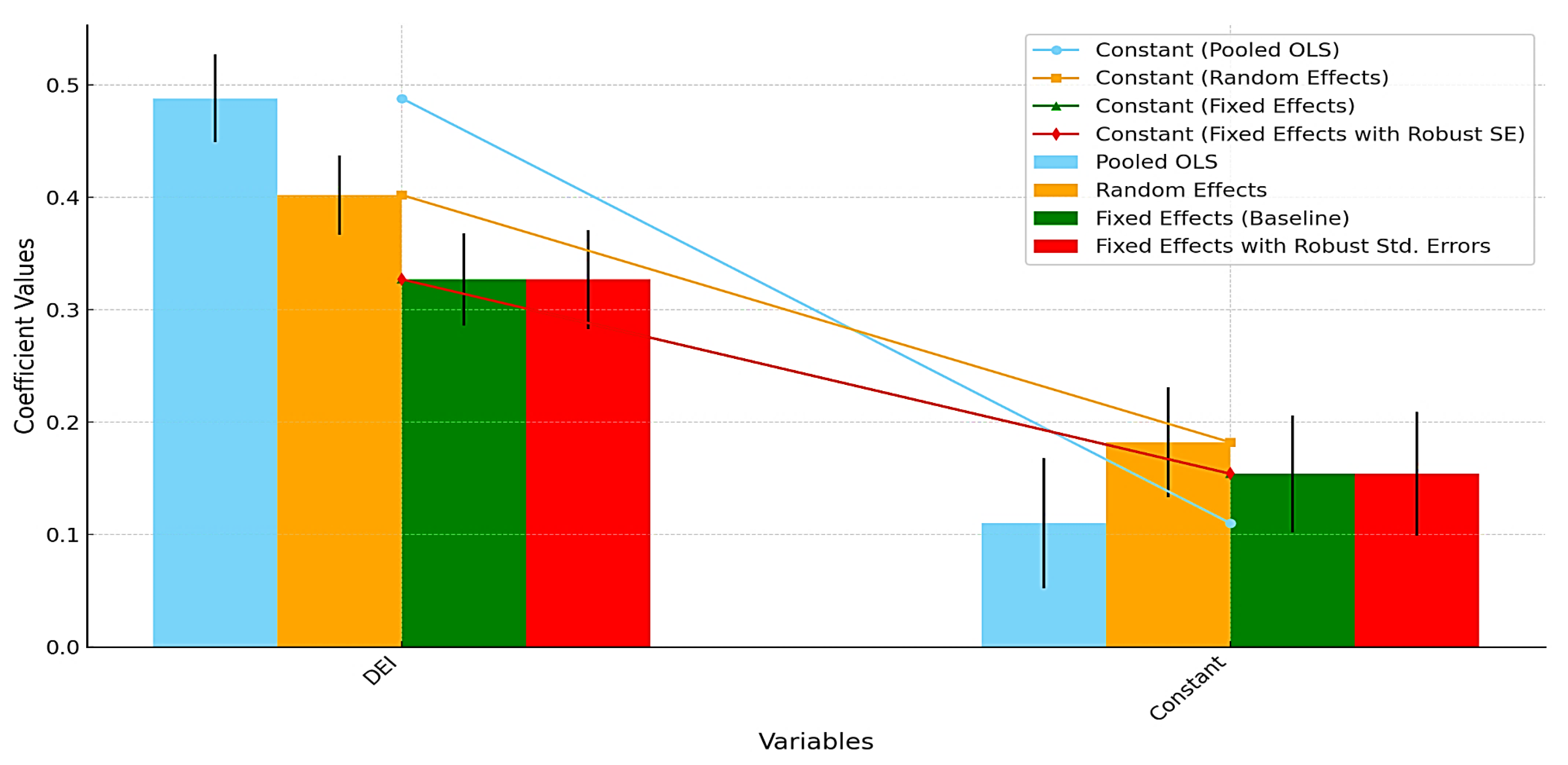
Table 7 shows positive effects across all estimation methods. The effect size decreases as the models become more rigorous. The pooled OLS has the largest effect (0.488, p < 0.1). Random effects (0.402, p < 0.1) and fixed effects (0.327, p < 0.1) show smaller but significant results. The Hausman test (p = 0.000) strongly rejects the null hypothesis and confirms that the fixed effects are the best option. The 0.327 coefficient in column (4), with robust standard errors, confirms the stability of our baseline. The fixed effects coefficient (0.327) is lower than the OLS and random effects estimates (0.488 and 0.402). This suggests the simpler models suffered from upward bias due to unobserved regional heterogeneity. Still, the FE model may face endogeneity bias, such as reverse causality, where sustainable regions attract digital investment. We treat these results as showing a robust association.
Figure 4 presents the results from several estimation methods for the Digital Economy Index (DEI) in relation to sustainable development. We include four models: pooled OLS, random effects, fixed effects (baseline), and fixed effects with robust standard errors. Bar charts display the coefficients for each model, with error bars showing the standard errors. The constants for each model are shown in line plots, allowing a clear comparison across methods.

4.3. Mediation Effect Analysis: The Role of Green Innovation

Establishing the direct impact of the digital economy on sustainable development is crucial, but it provides an incomplete picture of the underlying causal mechanisms. This section explores the core theoretical proposition of this study: that green innovation serves as a critical transmission channel, translating digital advancements into tangible sustainability outcomes. The mediation analysis moves beyond the “if” to explore the “how,” testing the hypothesis that the digital economy fosters sustainable development not only directly through efficiency gains and improved governance but also indirectly by stimulating the development and adoption of green technologies.
Table 8 shows that the DEI has a significant total effect on SD of 0.327 (p < 0.01). Furthermore, the DE strongly predicts green innovation (GI), with a coefficient of 0.458 (p < 0.01). When both DE and GI are included in the model, DE’s direct effect on SD reduces to 0.271 (p < 0.01), while GI exhibits a significant positive effect on SD (0.122, p < 0.01). These results confirm partial mediation. Specifically, the mediation effect is calculated as 0.458 × 0.122 = 0.056, representing approximately 17.1% of the total effect. Throughout all specifications, all control variables maintain the expected signs and significance.
Table 9 shows a statistically significant z-value of 5.091 for the indirect effect, and the narrow 95% confidence interval [0.034, 0.078] confirms a partial mediation pathway. Because these coefficients are obtained from the fixed effects model, they are subjected to endogeneity. The mediation effect of 17.12% shows that the overall influence of DE on SDI is mediated by green innovation. The indirect route (DE→GI→SD) is 0.056 (p < 0.01), and the direct one is 0.271 (p < 0.01). The digital economy has a total impact of 0.327 on sustainable development, which validates that the direct or indirect pathways are significant. The direct effect is strong and significant at 0.271 (p < 0.001), with a total effect of 0.327, which matches the baseline estimate in Table 7. Green innovation accounts for about 17.12% of the total effect of the digital economy on sustainable development. These results show clear evidence of partial mediation.

4.4. Threshold Effect Analysis: Identifying Nonlinearities

This subsection challenges the above assumption in order to uncover critical nonlinearities and contingent conditions. The threshold analysis moves the discussion from asking if and how the digital economy matters to understanding when and under what conditions its impact is strongest. It tests the hypothesis that the effect of digitalization is not uniform. Instead, it depends on a region’s attainment of certain developmental, regulatory, or institutional thresholds. Identifying these tipping points provides a more nuanced and actionable understanding than a single average effect.
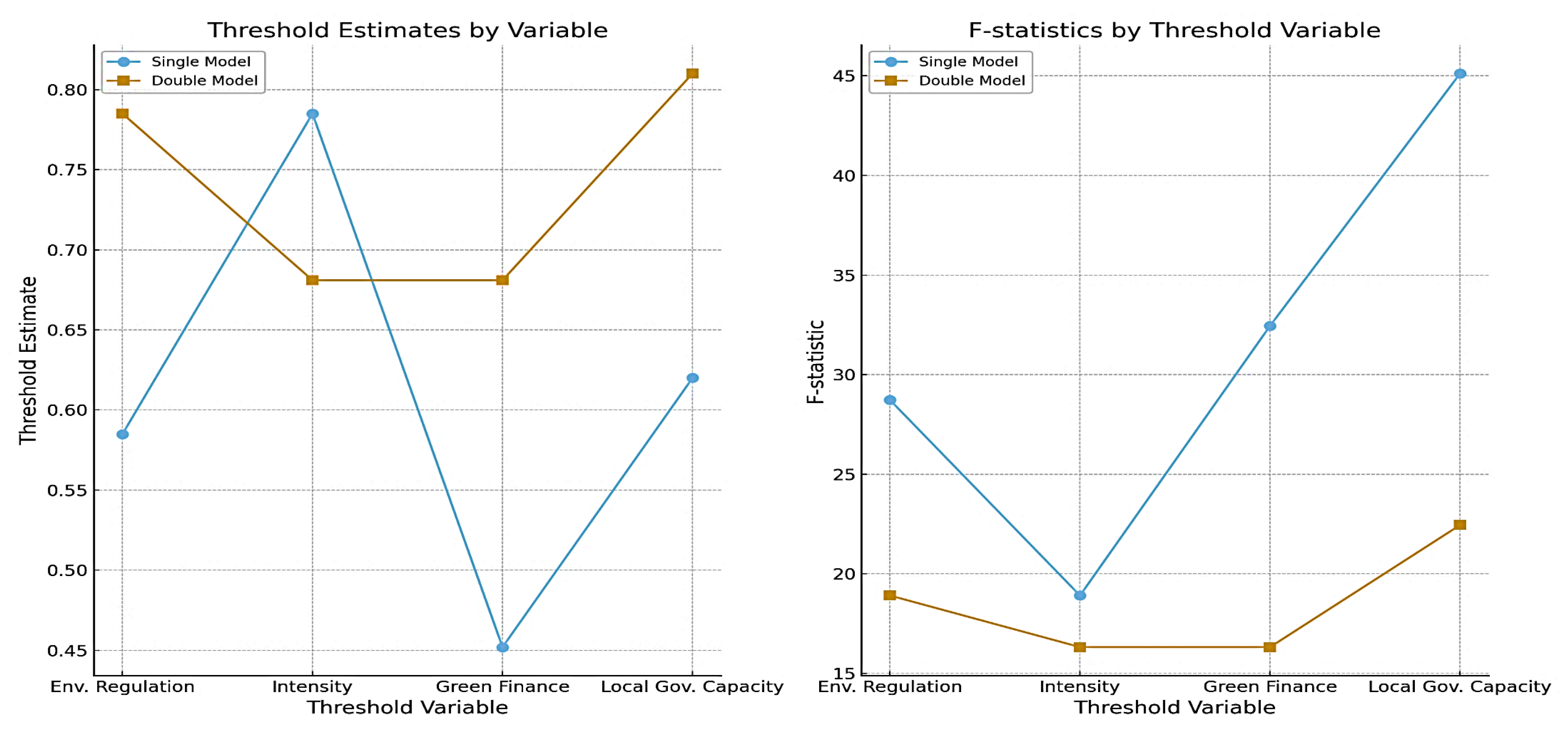
Table 10 reveals significant nonlinear relationships between the digital economy and sustainable development, with local governance capacity emerging as the most statistically robust threshold variable. For environmental regulation intensity, the single-threshold model is statistically significant (F = 28.73, p = 0.027), with an estimated threshold value of 0.585. In contrast, the double-threshold model fails to achieve significance (p = 0.215). Similarly, green finance development exhibits a significant single threshold at 0.452 (F = 32.45, p = 0.013), but no evidence of double thresholds is found (p = 0.342). Most notably, local governance capacity demonstrates the strongest threshold effect, with a highly significant single-threshold model (F = 45.12, p = 0.003), confirming that the impact of the digital economy on sustainable development is not linear but rather depends on the quality of regional institutions. This threshold value is estimated at 0.620, and the double-threshold specification remains insignificant (p = 0.105).
Figure 5 analyzes the impact of the digital economy on sustainable development using both single- and double-threshold models for environmental regulation intensity, green finance, and local governance capacity. The line charts illustrate each threshold estimate, while the spline charts show the corresponding F-statistics.
Table 11 shows a threshold effect, indicating that the impact of the digital economy on sustainable development depends on the quality of local governance. In areas where the governance quality is below the threshold of 0.620 (Regime 1), the Digital Economy Index has a positive and statistically significant effect (coefficient = 0.158, p < 0.05). When the governance quality exceeds this threshold (Regime 2), the effect becomes much stronger (coefficient = 0.419, p < 0.01), about 165% higher (2.65 times) than in regions with lower governance quality. This difference highlights that strong institutions greatly increase the sustainability benefits of digitalization.

4.5. Subgroup Analysis: Regional Heterogeneity Between Developed and Underdeveloped Regions

To uncover potential structural disparities in the relationship between the digital economy and sustainability, we conducted a subgroup analysis. We segmented the sample into developed and underdeveloped regions based on the median per capita GDP. This analysis is critical, as it moves beyond national averages to examine whether the impact of digitalization and its transmission mechanisms is uniformly effective across different economic contexts. As a result, the findings yield more targeted and policy-relevant insights.
Table 12 reveals high structural heterogeneity in the relationship between the digital economy and sustainable development. The core finding is that the direct impact of the Digital Economy Index is substantially stronger in developed regions (0.395, p < 0.01) than in underdeveloped regions (0.218, p < 0.01). This suggests that the sustainability returns on digital investments are significantly amplified in economically advanced contexts. Similarly, the efficacy of green innovation as a mediating channel is more potent in developed regions (coefficient of 0.145 vs. 0.087). Furthermore, several key enablers, such as a modernized industrial structure, foreign investment, and science and technology expenditure, are involved.
Table 13 shows that the mechanisms of the digital economy’s impact also exhibit significant regional heterogeneity. The mediation effect of green innovation is both larger in magnitude and accounts for a larger proportion of the total effect in developed regions (16.5%) than in underdeveloped regions (12.8%).
This suggests that developed regions are more effective at translating digital advancements into environmentally friendly technological progress. Most strikingly, the nonlinear threshold effect based on governance capacity is only statistically significant in developed regions. These regions surpass the governance threshold by more than (140% or 2.40 times) that of the digital economy (from 0.201 to 0.482).

4.6. Robustness Checks and Endogeneity Tests

The preceding analyses establish a compelling narrative of causation. However, the potential for endogeneity bias, such as reverse causality or omitted variables, threatens the validity of any causal inference. It is plausible that more sustainable regions are better positioned to invest in and adopt digital technologies. An unobserved factor, such as regional innovation culture, may drive both digitalization and sustainability. This subsection rigorously addresses these concerns to fortify the credibility of the core findings. We employed a series of robustness checks, including alternative variable constructions and model specifications, to ensure the validity of our findings. We also used a formal instrumental variable (IV) approach to test whether the identified relationships hold under different methodological and logical assumptions.
Table 14 demonstrates the remarkable stability of our core findings across alternative model specifications and measurement approaches. When employing a principal component analysis-based alternative measure for the Digital Economy Index (correlated at 0.89 with the original), the coefficient remains highly significant at 0.301 (p < 0.01), closely aligning with our baseline estimate of 0.327. The use of lagged independent variables to address potential reverse causality yields a consistent coefficient of 0.289 (p < 0.01), while the system GMM estimation designed to account for dynamic panel bias produces a coefficient of 0.312 (p < 0.01), with supporting statistics confirming instrument validity (AR (2) p = 0.342, Hansen J p = 0.215).
Table 15 demonstrates a statistically significant relationship between the DE and SDI. The first stage shows that our instrument (historical internet penetration) strongly predicts digital economy development (coefficient = 0.722, p < 0.01). The second stage indicates that a one-unit increase in the DEI leads to a 0.395-unit improvement in the SDI (p < 0.05), while controlling for green innovation and other factors. All diagnostic statistics confirm the instrument’s validity and strength.

5. Discussion

The findings of this study present a robust and nuanced empirical account of the relationship between the digital economy and sustainable development. Our analysis confirms a substantial positive direct effect. This result aligns with a growing body of international evidence [63,64], which posits digitalization as a general-purpose technology. It supports the theoretical proposition that digitalization fosters sustainability through enhanced resource efficiency and optimized processes. However, our finding that a supportive socio-economic context, characterized by a higher per capita GDP, an advanced industrial structure, and a skilled workforce, significantly amplifies this relationship adds a critical layer of nuance. This suggests that the benefits of the digital transition are not automatic but contingent upon pre-existing developmental advantages. That factor is sometimes underemphasized in more technologically deterministic literature.
Moving beyond the direct relationship, the mediation analysis provides critical insight into a fundamental mechanism. The significant indirect pathway via green innovation, accounting for 17.12% of the total effect, reveals that the digital economy is a potent catalyst for technological change. This finding provides strong empirical validation for theoretical models proposed by authors such as Shang et al. [65], who argue that digital platforms are key enablers of eco-innovation. By reducing information costs and facilitating data-driven research and development, digitalization actively steers technological development in a greener direction. The relative magnitude of this mediating effect provides a quantifiable advancement over prior studies that identified the link qualitatively but lacked precise estimation of its contribution within the total causal pathway [66], thereby solidifying the view of innovation as a central transmission mechanism.
However, there is no uniform linearity. The threshold regression analysis unveils a critical contingency, demonstrating that the potency of the digital economy is heavily dependent on the institutional environment. The identified single threshold, based on local governance capacity, reveals a significant disparity in returns on digital investments. Below a certain threshold of governance quality, the impact of the digital economy on sustainability is positive but subdued. Beyond this tipping point, however, the effect more than doubles and becomes much stronger. This suggests that advanced digital infrastructure and technologies alone are insufficient to unlock their full potential for sustainability. Their effectiveness depends on sound institutions, effective regulation, and capable public administration. These foundations steer digitalization toward societal goals, manage its disruptions, and ensure the benefits are widely distributed.
Our findings both corroborate and refine the existing body of literature on this topic. The significant positive direct effect of the digital economy aligns with the work of authors such as [67,68], who also identified digitalization as a key driver of resource efficiency and sustainable growth. The mediation role of green innovation provides empirical validation for the theoretical propositions. Digital technologies act as an enabling platform for eco-innovation. However, our threshold analysis, which shows the critical contingency of governance capacity, introduces a crucial nuance [69].
The overall SDI built using the EWM weights (see Appendix A Table A1) places strong emphasis on environmental factors. The high weights given to emissions and energy intensity indicators show that the index can capture the main regional differences in sustainable performance.

6. Conclusions

Based on the empirical analysis, this study concludes that the digital economy is a strong driver of sustainable development in China. The results demonstrate a significant positive relationship, which holds under stringent tests and various models. The research also reveals how digital progress leads to sustainability via green innovation. This demonstrates that digital and green transitions mutually support one another. Policies that boost one can help the other. However, the benefits of digitalization depend on the local institutional environment. Where the governance quality is low, the gains are limited. Once a certain level of institutional capacity is reached, the positive effects increase sharply. This research makes a key theoretical contribution by proving a dual-pathway model. First, green innovation serves as an important link, demonstrating how digital advances contribute to sustainability. This extends beyond simple correlation and supports the Porter Hypothesis, demonstrating that digitalization can stimulate green innovation. Second, determining a clear threshold effect for local governance challenges tech-only views. It demonstrates that digital benefits depend on meeting specific institutional standards, thereby supporting institutional theory.

Limitations and Future Research

This study has several limitations that suggest areas for future research. First, as the findings use regional data from China, their generalizability may be limited. Future studies could test this framework in other national or cross-country settings. Second, while robust, our measures of the digital economy and green innovation would benefit from more granular firm-level data or varied metrics. The key limitation is the inability to identify which specific institutional mechanisms drive the threshold effect of governance capacity. While governance capacity matters, the index used cannot specify elements such as regulatory quality, policy coherence, or civic engagement that unlock the digital economy’s potential. Future research should use qualitative or mixed-methods approaches to clarify which governance levers policymakers should target.


Funding

This research received no external funding.

Institutional Review Board Statement

Not applicable.

Informed Consent Statement

Not applicable.

Data Availability Statement

The data presented in this study are available on request from the corresponding author.

Conflicts of Interest

The author declares no conflict of interest.

Appendix A

Table A1. Entropy Weights for the Sustainable Development Index (SDI)–Entropy Weight Method (EWM).
No.IndicatorDirectionInformation Entropy (eⱼ)Difference Coefficient (1 − eⱼ)Weight wᵢ (%)
1GDP per Capita (Log)Positive0.91240.087618.32
2Fixed Asset Investment (% of GDP)Positive0.94510.054911.48
3Energy Consumption IntensityNegative0.87320.126826.51
4Industrial SO2 Emissions (tons/value-added)Negative0.90150.098520.60
5Green Coverage Rate of Built-up Area (%)Positive0.92880.071214.89
6Urban–Rural Income Ratio (Negative Indicator)Negative0.95430.04578.20
Total 100.00

References

  1. Liu, Y.; Yang, Y.; Zhang, X.; Yang, Y. The impact of technological innovation on the green digital economy and development strategies. PLoS ONE 2024, 19, e0301051. [Google Scholar] [CrossRef]
  2. Irajifar, L.; Chen, H.; Lak, A.; Sharifi, A.; Cheshmehzangi, A. The nexus between digitalization and sustainability: A scientometrics analysis. Heliyon 2023, 9, e15172. [Google Scholar] [CrossRef]
  3. Vărzaru, A.A. The Digital Economy and Sustainable Development Goals: A Predictive Analysis of the Interconnection Between Digitalization and Sustainability in EU Countries. Systems 2025, 13, 398. [Google Scholar] [CrossRef]
  4. Xu, J.; She, S.; Liu, W. Role of digitalization in environment, social and governance, and sustainability: Review-based study for implications. Front. Psychol. 2022, 13, 961057. [Google Scholar] [CrossRef]
  5. Wu, W.; Xu, Z.; Zenchenko, S.; Strielkowski, W. Does sustainable digital economy have implications for climate change? Novel evidence in the context of sustainable energy technologies. Sustain. Energy Technol. Assess. 2023, 60, 103524. [Google Scholar] [CrossRef]
  6. Luo, S.; Yimamu, N.; Li, Y.; Wu, H.; Irfan, M.; Hao, Y. Digitalization and sustainable development: How could digital economy development improve green innovation in China? Bus. Strategy Environ. 2023, 32, 1847–1871. [Google Scholar] [CrossRef]
  7. Liu, Y.; Dong, F.; Yu, J.; Liu, A. Examining the impact of digital economy on environmental sustainability in China: Insights into carbon emissions and green growth. J. Knowl. Econ. 2024, 15, 18044–18080. [Google Scholar] [CrossRef]
  8. Zhao, F.; Xu, Z.; Xie, X. Exploring the role of digital economy in enhanced green productivity in China’s manufacturing sector: Fresh evidence for achieving sustainable development goals. Sustainability 2024, 16, 4314. [Google Scholar] [CrossRef]
  9. Teng, Z.; He, Y.; Qiao, Z. Exploring the synergistic effects of digitalization and economic uncertainty on environmental sustainability: An investigation from China. Sustainability 2023, 15, 11997. [Google Scholar] [CrossRef]
  10. Sun, T.; Di, K.; Shi, Q. Digital economy and carbon emission: The coupling effects of the economy in Qinghai region of China. Heliyon 2024, 10, e26451. [Google Scholar] [CrossRef] [PubMed]
  11. Xu, G.; Peng, S.; Li, C.; Chen, X. Synergistic evolution of China’s green economy and digital economy based on LSTM-GM and grey absolute correlation. Sustainability 2023, 15, 14156. [Google Scholar] [CrossRef]
  12. Yang, W.; Chen, Q.; Guo, Q.; Huang, X. Towards sustainable development: How digitalization, technological innovation, and green economic development interact with each other. Int. J. Environ. Res. Public Health 2022, 19, 12273. [Google Scholar] [CrossRef]
  13. Herman, E. The interplay between digital entrepreneurship and sustainable development in the context of the EU digital economy: A multivariate analysis. Mathematics 2022, 10, 1682. [Google Scholar] [CrossRef]
  14. Ji, K.; Liu, X.; Xu, J. Digital economy and the sustainable development of China’s manufacturing industry: From the perspective of industry performance and green development. Sustainability 2023, 15, 5121. [Google Scholar] [CrossRef]
  15. Li, J.; Shi, Y.; Song, X. The dynamics of digitalization and natural resources in shaping the sustainable development agenda in BRICS-T nations. Resour. Policy 2024, 91, 104866. [Google Scholar] [CrossRef]
  16. Wang, Y.; Zhou, H.; Zhang, Y.; Sun, X. Role of entrepreneurial behavior in achieving sustainable digital economy. Front. Public Health 2022, 10, 829289. [Google Scholar] [CrossRef] [PubMed]
  17. Pigola, A.; da Costa, P.R.; Carvalho, L.C.; Silva, L.F.d.; Kniess, C.T.; Maccari, E.A. Artificial intelligence-driven digital technologies to the implementation of the sustainable development goals: A perspective from Brazil and Portugal. Sustainability 2021, 13, 13669. [Google Scholar] [CrossRef]
  18. Wei, X.; Zhang, J.; Lyulyov, O.; Pimonenko, T. The role of digital economy in enhancing the sports industry to attain sustainable development. Sustainability 2023, 15, 12009. [Google Scholar] [CrossRef]
  19. Yang, Q.; Shahbaz, P. Boosting regional sustainability under digital economy environment: Exploring the moderating role of digital finance in China. Pol. J. Environ. Stud. 2024, 33, 5407–5427. [Google Scholar] [CrossRef]
  20. Ren, S.; Li, L.; Han, Y.; Hao, Y.; Wu, H. The emerging driving force of inclusive green growth: Does digital economy agglomeration work? Bus. Strategy Environ. 2022, 31, 1656–1678. [Google Scholar] [CrossRef]
  21. Xiao, Y.; Wu, S.; Liu, Z.Q.; Lin, H.J. Digital economy and green development: Empirical evidence from China’s cities. Front. Environ. Sci. 2023, 11, 1124680. [Google Scholar] [CrossRef]
  22. Yang, Y. (Ed.) Digital Economy and the Sustainable Development of ASEAN and China; World Scientific: Singapore, 2022; Volume 9. [Google Scholar] [CrossRef]
  23. Huang, C.; Wang, C.; Rani, T.; Rehman, S.A.U. Digitalization’s role in shaping climate change, renewable energy, and technological innovation for achieving sustainable development in top Asian countries. Energy Environ. 2024, 35. Online ahead of print. [Google Scholar] [CrossRef]
  24. Ahmed, M.; Beddu, S.; Itam, Z.; Alanimi, F.B.I. State of the Art Compendium of Macro and Micro Energies. Adv. Sci. Technol. Res. J. 2019, 13, 89–100. [Google Scholar] [CrossRef]
  25. Xin, Y.; Chang, X.; Zhu, J. How does the digital economy affect energy efficiency? Empirical research on Chinese cities. Energy Environ. 2024, 35, 1703–1728. [Google Scholar] [CrossRef]
  26. Gao, S.; Yang, X.; Long, H.; Zhang, F.; Xin, Q. The sustainable rural industrial development under entrepreneurship and deep learning from digital empowerment. Sustainability 2023, 15, 7062. [Google Scholar] [CrossRef]
  27. Kwilinski, A. The relationship between sustainable development and digital transformation: Bibliometric analysis. Virtual Econ. 2023, 6, 56–69. [Google Scholar] [CrossRef] [PubMed]
  28. Man, J.; Liu, J.; Cui, B.; Sun, Y.; Sriboonchitta, S. Coupling and coordination between digital economy and urban–rural integration in China. Sustainability 2023, 15, 7299. [Google Scholar] [CrossRef]
  29. Li, J.; Zhan, G.; Dai, X.; Qi, M.; Liu, B. Innovation and optimization logic of grassroots digital governance in China under digital empowerment and digital sustainability. Sustainability 2022, 14, 16470. [Google Scholar] [CrossRef]
  30. Bachmann, N.; Tripathi, S.; Brunner, M.; Jodlbauer, H. The contribution of data-driven technologies in achieving the sustainable development goals. Sustainability 2022, 14, 2497. [Google Scholar] [CrossRef]
  31. Liu, Z.; Zhang, X.; Wang, J.; Shen, L.; Tang, E. Evaluation of coupling coordination development between digital economy and green finance: Evidence from 30 provinces in China. PLoS ONE 2023, 18, e0291936. [Google Scholar] [CrossRef]
  32. Ali, Z.A.; Zain, M.; Hasan, R.; Al Salman, H.; Alkhamees, B.F.; Almisned, F.A. Circular economy advances with artificial intelligence and digital twin: Multiple-case study of Chinese industries in agriculture. J. Knowl. Econ. 2025, 16, 2192–2228. [Google Scholar] [CrossRef]
  33. Xin, C.; Fan, S.; Mbanyele, W.; Shahbaz, M. Towards inclusive green growth: Does digital economy matter? Environ. Sci. Pollut. Res. 2023, 30, 70348–70370. [Google Scholar] [CrossRef] [PubMed]
  34. Gupta, S.; Rhyner, J. Mindful application of digitalization for sustainable development: The Digitainability Assessment Framework. Sustainability 2022, 14, 3114. [Google Scholar] [CrossRef]
  35. Qian, W.; Liu, Y.; Dong, Y. The impact of the agricultural digital economy on China’s sustainable development of agricultural exports—Based on the perspective of internal drive and external incentive. Environ. Dev. Sustain. 2025. Online ahead of print. [Google Scholar] [CrossRef]
  36. Shu, H.; Zhan, L.; Lin, X.; Zhou, X. Coordination measure for coupling system of digital economy and rural logistics: Evidence from China. PLoS ONE 2023, 18, e0281271. [Google Scholar] [CrossRef]
  37. Chu, H.; Ning, Y.; Qie, X. Measurement and spatial correlation analysis of the development level of the digital economy in the Yangtze River delta urban agglomeration. Sustainability 2023, 15, 13329. [Google Scholar] [CrossRef]
  38. Camodeca, R.; Almici, A. Digital transformation and convergence toward the 2030 Agenda’s sustainable development goals: Evidence from Italian listed firms. Sustainability 2021, 13, 11831. [Google Scholar] [CrossRef]
  39. Gupta, S.; Campos Zeballos, J.; del Río Castro, G.; Tomičić, A.; Andrés Morales, S.; Mahfouz, M.; Osemwegie, I.; Sessi, V.P.C.; Schmitz, M.; Inyaregh, M.; et al. Operationalizing Digitainability: Encouraging Mindfulness to Harness the Power of Digitalization for Sustainable Development. Sustainability 2023, 15, 6844. [Google Scholar] [CrossRef]
  40. Wang, J.; Ma, X.; Zhang, J.; Zhao, X. Impacts of digital technology on energy sustainability: China case study. Appl. Energy 2022, 323, 119329. [Google Scholar] [CrossRef]
  41. Barykin, S.E.; Sergeev, S.M.; Kapustina, I.V.; Fedotov, A.A.; Matchinov, V.A.; Plaza, E.D.L.P.; Mottaeva, A.B.; Sharkova, A.V.; Borisova, A.Y.; Karmanova, A.E. Environmental Sustainability and Digital Transformation of Socio-Economic: Quality of Life Perspective. J. Environ. Assess. Policy Manag. 2023, 25, 2350001. [Google Scholar] [CrossRef]
  42. Xu, G.; Hou, G.; Zhang, J. Digital Sustainable Entrepreneurship: A Digital Capability Perspective through Digital Innovation Orientation for Social and Environmental Value Creation. Sustainability 2022, 14, 11222. [Google Scholar] [CrossRef]
  43. Cao, Z.; Peng, L. The impact of digital economics on environmental quality: A system dynamics approach. SAGE Open 2023, 13, 21582440231219350. [Google Scholar] [CrossRef]
  44. Su, J.; Su, K.; Wang, S. Evaluation of digital economy development level based on multi-attribute decision theory. PLoS ONE 2022, 17, e0270859. [Google Scholar] [CrossRef] [PubMed]
  45. Hassani, H.; Huang, X.; MacFeely, S.; Entezarian, M.R. Big Data and the United Nations Sustainable Development Goals (UN SDGs) at a Glance. Big Data Cogn. Comput. 2021, 5, 28. [Google Scholar] [CrossRef]
  46. Apata, O. Exploring the nexus between digital transformation and sustainability. In Proceedings of the 2024 IEEE Conference on Technologies for Sustainability (SusTech), Portland, OR, USA, 14–17 April 2024; IEEE: New York, NY, USA, 2024; pp. 120–127. [Google Scholar] [CrossRef]
  47. Yin, S.; Liu, L.; Mahmood, T. New trends in sustainable development for Industry 5.0: Digital green innovation economy. Green Low-Carbon Econ. 2024, 2, 269–276. [Google Scholar] [CrossRef]
  48. Agrawal, R.; Wankhede, V.A.; Kumar, A.; Upadhyay, A.; Garza-Reyes, J.A. Nexus of circular economy and sustainable business performance in the era of digitalization. Int. J. Prod. Perform. Manag. 2022, 71, 748–774. [Google Scholar] [CrossRef]
  49. Fowdur, T.P.; Indoonundon, M.; Hosany, M.A.; Milovanovic, D.; Bojkovic, Z. Achieving sustainable development goals through digital infrastructure for intelligent connectivity. In AI and IoT for Sustainable Development in Emerging Countries: Challenges and Opportunities; Springer International Publishing: Cham, Switzerland, 2022; pp. 3–26. [Google Scholar]
  50. Gariba, M.I.; Rehman, F.U.; Prokop, V.; Giglio, C. Be digital to be sustainable! The mediating role of sustainable supply chain practices in triggering the effects of digitalisation on Sustainable Development Goals in the European Union. Oeconomia Copernic. 2024, 15, 1383–1425. [Google Scholar] [CrossRef]
  51. Beier, G.; Niehoff, S.; Ziems, T.; Xue, B. Sustainability aspects of a digitalized industry—A comparative study from China and Germany. Int. J. Precis. Eng. Manuf.-Green Technol. 2017, 4, 227–234. [Google Scholar] [CrossRef]
  52. Liu, Z.; Liu, J.; Osmani, M. Integration of digital economy and circular economy: Current status and future directions. Sustainability 2021, 13, 7217. [Google Scholar] [CrossRef]
  53. Deng, X.; Bakhsh, S.; Ali, K.; Anas, M. How does green investment, financial inclusion, and digitalization drive environmental sustainability in China? A perspective based on quantile-on-quantile regression and wavelet coherence analysis. Environ. Dev. Sustain. 2024, 27, 29743–29774. [Google Scholar] [CrossRef]
  54. Vărzaru, A.A.; Bocean, C.G.; Simion, D.; Berceanu, D.; Mangra, M.G. Digital revolution, sustainability, and government revenues: A transversal analysis of how digital transformation and sustainable practices impact government revenues. Systems 2023, 11, 546. [Google Scholar] [CrossRef]
  55. Han, X.; Zhang, J. Business model innovation paths of manufacturing oriented towards green development in the digital economy. Int. J. Environ. Res. Public Health 2022, 19, 16454. [Google Scholar] [CrossRef] [PubMed]
  56. Geng, Y.; Zheng, Z.; Ma, Y. Digitization, perception of policy uncertainty, and corporate green innovation: A study from China. Econ. Anal. Policy 2023, 80, 544–557. [Google Scholar] [CrossRef]
  57. Bresnahan, T.F.; Trajtenberg, M. General purpose technologies “Engines of growth”? J. Econom. 1995, 65, 83–108. [Google Scholar] [CrossRef]
  58. Shapiro, J.S. The environmental bias of trade policy. Q. J. Econ. 2021, 136, 831–886. [Google Scholar] [CrossRef]
  59. Rogers, C.R. Toward becoming a fully functioning person. In Perceiving, Behaving, Becoming: A New Focus for Education; Harper & Row: New York, NY, USA, 1962; pp. 21–33. [Google Scholar]
  60. Porter, M.E.; Van der Linde, C. Toward a new conception of the environment-competitiveness relationship. J. Econ. Perspect. 1995, 9, 97–118. [Google Scholar] [CrossRef]
  61. North, D.C. Institutions, Institutional Change and Economic Performance; Cambridge University Press: Cambridge, UK, 1990. [Google Scholar]
  62. Hansen, B.E. Threshold effects in non-dynamic panels: Estimation, testing, and inference. J. Econom. 1999, 93, 345–368. [Google Scholar] [CrossRef]
  63. Liu, B.; Wang, T.; Zhang, J.; Wang, X.; Chang, Y.; Fang, D.; Yang, M.; Sun, X. Sustained sustainable development actions of China from 1986 to 2020. Sci. Rep. 2021, 11, 8008. [Google Scholar] [CrossRef]
  64. Liu, H.; Zhu, Q.; Khoso, W.M.; Khoso, A.K. Spatial pattern and the development of green finance trends in China. Renew. Energy 2023, 211, 370–378. [Google Scholar] [CrossRef]
  65. Shang, H.; Chen, R.; Li, Z. Dynamic sustainability capabilities and corporate sustainability performance: The mediating effect of resource management capabilities. Sustain. Dev. 2020, 28, 595–612. [Google Scholar] [CrossRef]
  66. Lu, H.T.; Li, X.; Yuen, K.F. Digital transformation as an enabler of sustainability innovation and performance—Information processing and innovation ambidexterity perspectives. Technol. Forecast. Soc. Change 2023, 196, 122860. [Google Scholar] [CrossRef]
  67. Cui, L.; Jin, Z.; Li, Y.; Wang, Y. Effects of control mechanisms on supply chain resilience and sustainability performance. Aust. J. Manag. 2023, 48, 323–340. [Google Scholar] [CrossRef]
  68. Yao, T.; Li, J. Environmental sustainability performance assessment in relation to visibility in African regions with interpretable machine learning. J. Clean. Prod. 2023, 428, 139414. [Google Scholar] [CrossRef]
  69. Zhao, R.; Li, X.; Wang, Y.; Xu, Z.; Xiong, M.; Jia, Q.; Li, F. Assessing resilience of sustainability to climate change in China’s cities. Sci. Total Environ. 2023, 898, 165568. [Google Scholar] [CrossRef] [PubMed]
Figure 1. Conceptual framework.
Sustainability 18 00375 g001
Figure 2. Impact of the DE on SDG (with standard errors).
Sustainability 18 00375 g002
Figure 3. Regression results for the baseline model with fixed effects and controls.
Sustainability 18 00375 g003
Figure 4. Results of alternative estimation methods for the impact of the digital economy on sustainable development.
Sustainability 18 00375 g004
Figure 5. Threshold effect analysis of the digital economy’s impact on sustainable development.
Sustainability 18 00375 g005
Table 1. Digital Economy Index and Sustainable Development Index indicators.
ConstructDimensionIndicatorUnit/MeasureDirection
Digital Economy Index (DEI)Digital Infrastructure5G Base Station DensityUnits per 10,000 people(+)
Fiber Optic Cable LengthKilometers per 100 sq. km(+)
Mobile Phone UsersPer 100 population(+)
Digital Industry ScaleValue-added of ICT Sector% of GDP(+)
E-commerce Transaction VolumeTotal sales (logarithm)(+)
Innovation & Human CapitalR&D Expenditure in Digital Sector% of Total R&D Expenditure(+)
Employment in Computer Services% of total employment(+)
Digital Technology ApplicationInternet Development LevelComprehensive Index(+)
Sustainable
Development
Index (SDI)
Economic SustainabilityGDP Per Capita (Log)Yuan (logarithm)(+)
Fixed Asset Investment% of GDP(+)
Environmental PerformanceEnergy Consumption Intensity(−)
Industrial SO2 EmissionsTons/Industry Value-added(−)
Green Coverage Rate% of Urban Built-up Area(+)
Table 2. Descriptive statistics of key variables.
VariableMeanStd. Dev.MinMax
Dependent Variable
Sustainable Development Index0.5120.1780.150.885
Core Explanatory Variable
Digital Economy Index0.4030.2210.0550.932
Mediating Variable
Green Innovation (Patent Count, log)5.8721.6542.39.21
Control Variables
Per Capita GDP (log)1.3450.5670.212.88
Industrial Structure (Tertiary/Secondary)1.020.450.42.5
Urbanization Rate (%)58.7512.3432.189.6
Education Level185.2105.645.3520.1
Foreign Investment (log)3.9871.4561.0996.908
Urban Compactness (log)5.6780.7893.9127.235
Science & Technology Expenditure (%)2.151.080.505.80
Threshold Variables
Local Governance Capacity (Log)
3.520.452.14.1
Table 3. Correlation matrix.
Variable(1)(2)(3)(4)(5)(6)(7)(8)(9)(10)
Sustainable Development Index1
Digital Economy Index0.6721
Green Innovation (log)0.7150.6981
Per Capita GDP (log)0.7450.6320.81
Industrial Structure0.5810.5230.550.4871
Urbanization Rate0.6030.590.590.6550.4211
Education Level0.6630.710.730.6880.5020.5631
Foreign Investment (log)0.5880.6450.660.7120.3850.610.5941
Sci. & Tech. Expenditure (%)0.5240.5870.610.4980.4010.3520.5330.4211
Local Governance Capacity (log)0.6520.5870.7190.8110.5090.6010.6820.7310.5431
Table 4. Direct impact of the DE on SDG.
Variable(1) Model 1(2) Model 2(3) Model 3(4) Driscoll Kraay
Digital Economy Index0.451 *** (0.048)0.382 *** (0.042)0.327 *** (0.041)0.327 * (0.040) **
Per Capita GDP (log) 0.205 *** (0.031)0.178 *** (0.029)-
Industrial Structure 0.088 ** (0.028)0.071 ** (0.027)-
Urbanization Rate 0.004 *** (0.001)0.003 *** (0.001)-
Education Level 0.062 ** (0.022)-
Foreign Investment (log) 0.019 * (0.009)-
Sci. & Tech. Expenditure (%) 0.037 ** (0.014)-
Constant0.321 *** (0.019)0.198 *** (0.045)0.154 ** (0.052)-
Fixed Effects
Region FEYesYesYes
Year FEYesYesYes
Observations420420420
R-squared0.6850.7520.781
Note: Robust standard errors in parentheses. Columns (1)–(3) clustered at provincial level; column (4) uses Driscoll–Kraay standard errors (robust to heteroscedasticity, autocorrelation, and cross-sectional dependence). *** p < 0.01, ** p < 0.05, and * p < 0.10.
Table 5. Regression results for the baseline model.
VariableBasic FEEconomic ControlsSocial ControlsFull Model (All Controls)
Digital Economy Index0.451 * (0.048)0.382 * (0.042)0.341 * (0.041)0.327 *** (0.041)
Per Capita GDP (log) 0.205 *** (0.01)0.190 *** (0.03)0.178 *** (0.029)
Industrial Structure 0.088 ** (0.028)0.075 ** (0.01)0.071 ** (0.027)
Urbanization Rate 0.004 *** (0.004)0.003 *** (0.001)0.003 *** (0.01)
Education Level 0.070 *** (0.021)0.062 ** (0.020)
Foreign Investment (log) 0.019 * (0.0009)
Sci. & Tech. Expenditure (%) 0.037 ** (0.014)
Constant0.321 *** (0.019)0.198 *** (0.045)0.168 *** (0.048)0.154 ** (0.052)
Fixed Effects
Region FEYesYesYesYes
Year FEYesYesYesYes
Observations420420420420
R-squared (R2)0.6850.7520.7720.781
Note: ***, **, and * denote statistical significance at the 1%, 5%, and 10% levels, respectively.
Table 6. Variance inflation factor (VIF) analysis for multicollinearity.
VariableVIF Score (Full Model)1/VIF
Digital Economy Index2.850.351
Per Capita GDP (log)3.120.321
Education Level2.640.379
Urbanization Rate2.310.433
Industrial Structure1.980.505
Foreign Investment (log)1.750.571
Sci. & Tech. Expenditure (%)1.420.704
Mean VIF2.3
Table 7. Results of alternative estimation methods.
VariablePooled OLSRandom EffectsFixed Effects (Baseline)Fixed Effects with Robust Std. Errors
Digital Economy Index0.488 *0.402 *0.327 ***0.327 ***
(0.039)(0.035)(0.041)(0.044)
Control VariablesYesYesYesYes
Constant0.110 *0.182 ***0.154 **0.154 **
(0.058)(0.049)(0.052)(0.055)
Observations420420420420
R-squared0.7210.7340.7810.781
Hausman Test (p-value)--0.000-
Note: ***, **, and * denote statistical significance at the 1%, 5%, and 10% levels, respectively.
Table 8. Mediation effect analysis: the role of green innovation.
VariableSustainable Development (Direct Effect)Green Innovation (Mediator)Sustainable Development (Full Mediation Model)
Digital Economy Index0.327 *** (0.041)0.458 *** (0.052)0.271 *** (0.039)
Green Innovation (log) 0.122 *** (0.018)
Per Capita GDP (log)0.178 *** (0.029)0.225 *** (0.037)0.151 ***(0.028)
Industrial Structure0.071 ** (0.027)0.085 ** (0.034)0.061 * (0.026)
Urbanization Rate0.003 *** (0.001)0.002 * (0.001)0.003 *** (0.001)
Education Level0.062 ** (0.022)0.089 *** (0.028)0.051 ** (0.021)
Foreign Investment (log)0.019 * (0.009)0.015 (0.012) 0.017 * (0.009)
Sci. & Tech. Expenditure (%)0.037 ** (0.014)0.102 *** (0.018)0.025 (0.014)
Constant0.154 ** (0.052)−0.211 * (0.066)0.180 *** (0.05)
Fixed Effects
Region FEYesYesYes
Year FEYesYesYes
Observations420420420
R-squared0.7810.7520.798
Note: ***, **, and * denote statistical significance at the 1%, 5%, and 10% levels, respectively.
Table 9. Results of the mediation effect test.
PathwayCoefficientStd. Errorz-Valuep-Value95% Confidence Interval
LowerUpper
Indirect Effect (DE -> GI -> SD)0.0560.0115.09100.0340.078
Direct Effect (DE -> SD)0.2710.0396.94900.1950.347
Total Effect0.3270.0417.97600.2470.407
Proportion Mediated17.12%
Table 10. Empirical results of the threshold effect.
Threshold
Variable
ModelThreshold
Estimate
F-Statisticp-Value **10% Critical Value5% Critical Value1% Critical Value
Environmental Regulation intensity Single0.58528.7300.02722.15025.89033.450
Double0.78518.9100.21524.67028.11035.880
Green Finance DevelopmentSingle0.45232.4500.01321.98025.12032.740
Double0.68116.3200.34223.45027.56036.010
Local Governance CapacitySingle0.62045.1200.00322.87026.43034.100
Double0.81022.4500.10525.10029.87038.220
Note: ** denote the p-value corresponding to the F-statistic for testing the significance of the threshold.
Table 11. Local governance capacity as a threshold effect.
VariableCoefficientStd. ErrorT-Statistic
Regime 1: Low Governance (GOV ≤ 0.620)
Digital Economy Index0.158 **(0.063)2.51
Regime 2: High Governance (GOV > 0.620)
Digital Economy Index0.419 ***(0.048)8.73
Control Variables
Per Capita GDP (log)0.162 ***(0.03)5.4
Industrial Structure0.065 **(0.028)2.32
Urbanization Rate0.003 ***(0.001)3
Education Level0.055 **(0.023)2.39
Foreign Investment (log)0.017 *(0.009)1.89
Sci. & Tech. Expenditure (%)0.031 **(0.015)2.07
Constant0.142 ***(0.054)2.63
Fixed Effects
Region Fixed EffectYes
Year Fixed Effect Yes
Threshold Estimate (γ)0.620
Observations420
R-squared0.793
Note: ***, **, and * denote statistical significance at the 1%, 5%, and 10% levels, respectively.
Table 12. Subgroup regression results: developed vs. underdeveloped regions.
VariableDeveloped RegionsUnderdeveloped Regions
Digital Economy Index0.395 ***0.218 ***
(0.051)(0.062)
Green Innovation (log)0.145 ***0.087 **
(0.022)(0.035)
Control Variables
Per Capita GDP (log)0.152 ***0.191 ***
(0.035)(0.042)
Industrial Structure0.082 **0.045
(0.033)(0.041)
Urbanization Rate0.002 **0.003 **
(0.001)(0.001)
Education Level0.058 **0.061 *
(0.026)(0.032)
Foreign Investment (log)0.021 *0.011
(0.011)(0.013)
Sci. & Tech. Expenditure (%)0.041 **0.022
(0.017)(0.02)
Constant0.138 **0.165 **
(0.062)(0.073)
Fixed Effects
Region FEYesYes
Year FEYesYes
Observations210210
R-squared0.8150.742
Note: ***, **, and * denote statistical significance at the 1%, 5%, and 10% levels, respectively.
Table 13. Mediation and threshold effects by subgroup.
AnalysisDeveloped RegionsUnderdeveloped Regions
Mediation Analysis
Indirect Effect (DE -> GI -> SD)0.065 ***0.028 **
Proportion Mediated16.50%12.84%
Threshold Analysis
Threshold Variable (Governance)Significant (p < 0.01)Not Significant
Coefficient in High-Governance Regime0.482 ***-
Coefficient in Low-Governance Regime0.201 **
Note: ***, ** denote statistical significance at the 1%, 5%, levels, respectively.
Table 14. Robustness checks with alternative measures and specifications.
Model SpecificationCore Variable: Digital Economy Coefficient (Std. Error)Green Innovation Coefficient (Std. Error)Key Test Statistic/Note
Baseline Model (for comparison)0.327 * (0.041) **0.122 * (0.018) **
1. Alternative DE Measure:0.301 *** (0.046)0.115 *** (0.020)Correlation with original index = 0.89
(Principal Component Analysis)
2. Lagged Independent Variables0.289 *** (0.043)0.105 *** (0.019)All IVs lagged by one period
* (t − 1) *
3. System GMM Estimation0.312 *** (0.068)0.118 ** (0.047)AR (2) p-value = 0.342; Hansen J p-value = 0.215
(Dynamic Panel)
4. Exclusion of Key Regions0.334 *** (0.045)0.125 *** (0.019)Beijing, Shanghai, Guangdong excluded
(Megacities)
Note: ***, **, and * denote statistical significance at the 1%, 5%, and 10% levels, respectively.
Table 15. Instrumental variable (2SLS) regression results.
VariableFirst Stage: Digital Economy IndexSecond Stage: Sustainable
Development Index
Coefficient (Robust Std. Error)Coefficient (Robust Std. Error)
Instrumental Variable
Historical Internet Penetration0.722 *** (0.105)
Endogenous Regressor
Digital Economy Index 0.395 ** (0.162)
Mediating Variable
Green Innovation (log) 0.121 *** (0.021)
Diagnostic StatisticsFirst StageSecond Stage
F-statistic (excluded instrument)47.25 ***
Partial R20.452
Kleibergen-Paap rk LM statistic 25.73 ***
Cragg-Donald Wald F statistic 47.15 ***
Hansen J statistic (Over-ID) 0.281
[p-value] [0.596]
Fixed Effects & ControlsYesYes
Region Fixed Effects
Year Fixed Effects
Full Control Vector
Observations420420
R-squared0.7000.632
Note: ***, ** denote statistical significance at the 1%, 5%, levels, respectively.
Disclaimer/Publisher’s Note: The statements, opinions and data contained in all publications are solely those of the individual author(s) and contributor(s) and not of MDPI and/or the editor(s). MDPI and/or the editor(s) disclaim responsibility for any injury to people or property resulting from any ideas, methods, instructions or products referred to in the content.